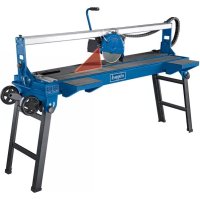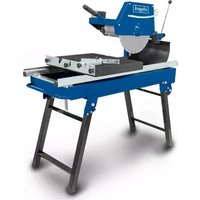
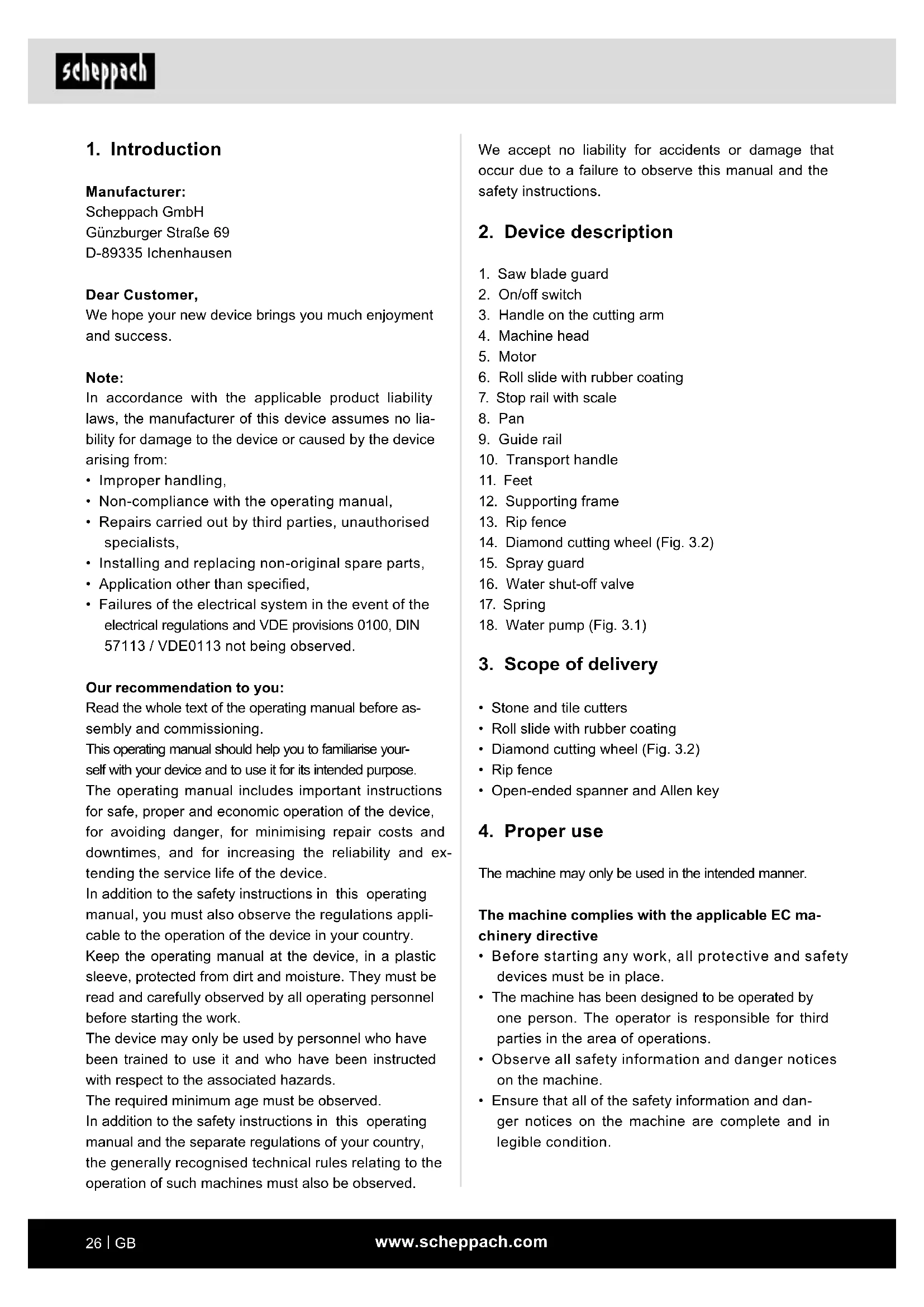
HSM3500 - Slicer SCHEPPACH - Free user manual and instructions
Find the device manual for free HSM3500 SCHEPPACH in PDF.



| Product type | Tile cutter (concrete blocks/tiles) |
| Brand | Scheppach |
| Model | HSM3500 |
| Dimensions (L x W x H) | 1150 x 520 x 1210 mm |
| Weight | 72 kg |
| Power supply | 230 V~ / 50 Hz |
| Power input | 2200 W |
| Operating mode | S6 40% (intermittent operation) |
| Insulation class | B |
| Protection rating | IP54 |
| Diamond blade | Diameter 360 mm, bore 25.4 mm |
| No-load speed | 2800 rpm |
| Max. cutting length | 700 mm |
| Max. cutting height at 90° | 110 mm |
| Max. cutting height at 45° | 72 mm |
| Cutting table | 535 x 430 mm |
| Main functions | Wet cutting, roller carriage, angle stop 0°-45°, head pivoting, fixed/variable depth |
| Maintenance and cleaning | Drain water after use, clean tank and pump, lubricate moving parts |
| Safety | PRCD (residual current device <30 mA), blade guard, emergency stop, gloves, goggles, mask |
| Spare parts and repairability | Diamond blades, carbon brushes, guides; repair by qualified electrician |
| General information | Household use only, not professional; manual 396 pages |
Frequently Asked Questions - HSM3500 SCHEPPACH
User questions about HSM3500 SCHEPPACH
0 question about this device. Answer the ones you know or ask your own.
Ask a new question about this device
Download the instructions for your Slicer in PDF format for free! Find your manual HSM3500 - SCHEPPACH and take your electronic device back in hand. On this page are published all the documents necessary for the use of your device. HSM3500 by SCHEPPACH.
USER MANUAL HSM3500 SCHEPPACH
natural_image
Industrial machine with a cutting cutter and workbench, no visible text or symbols
Made in P.R.C.
HSM3500
| DE | SteintrennmaschineOriginalbetriebsanleitung | 6 |
| GB | Stone cutting machineTranslation of original instruction manual | 24 |
| FR | Coupe carreauxTraduction des instructions d'origine | 39 |
| IT | Separatrice per pietreLa traduzione dal manuale di istruzioni originale | 55 |
| NL | Steen splitterVertaling van de originele gebruikshandleiding | 71 |
| ES | Sierra de mamposteríaTraducción del manual de instrucciones original | 87 |
| PT | Máquina para corte de alvenaria e pedraTradução do manual de operação original | 103 |
| CZ | Řezačka kamenePřeklad originálního návodu k obsluze | 119 |
| SK | Stroj na oddelenie kameňovPreklad originálneho návodu na obsluhu | 134 |
| HU | Kődaraboló gépEredeti használati utasítás fordítása | 149 |
| PL | Maszyna do cięcia kamieniaTłumaczenie oryginalnej instrukcji obsługi | 164 |
| HR | Stroj za rezanje kamenjaPrijevod originalnog priručnika za uporabu | 180 |
| SI | Žaga za kamenPrevod originalnih navodil za uporabo | 194 |
| EE | KivilõikemasinOriginaalkältusjuhendi tõlge | 208 |
| LT | Akmens pjovimo staklèsOriginalios naudojimo instrukcijos vertimas | 222 |
| LV | Akmens zāgisOriginālas lietošanas instrukcijas tulkojums | 236 |
| SE | StenskärmaskinÖversättning av original-bruksanvisning | 251 |
| FI | KivisirkkeliKäännös alkuperäisestä käyttöohjeesta | 265 |
| DK | StenskæremaskineOversættelse fra den oprindelige betjeningsvejledning | 280 |
| NO | Stein- og flisekutterOversettelse av den originale brukerveiledningen | 294 |
| BG | Машина за рязане на плочки и камъкПревод на оригиналното ръководство за експлоатация | 308 |
| GR | Кóфтяє петрає кай плакібішвМетафраєн тоу прштотúппо тшв обнулишв хрі́юнє | 325 |
| RO | Maşină de tăiat piatră și gresie și faianțăTraducere din manualul de exploatare original | 342 |
| RS | Sekač za kamen i pločicePrevod originalnog uputstva za upotrebu | 358 |
| TR | Taş ve fayans kesiciOrijinal kullanım talimatı çevirisi | 373 |
1
2
natural_image
Circular object with radial gradient pattern, labeled '3.2' and '14' (no text or symbols on the object itself)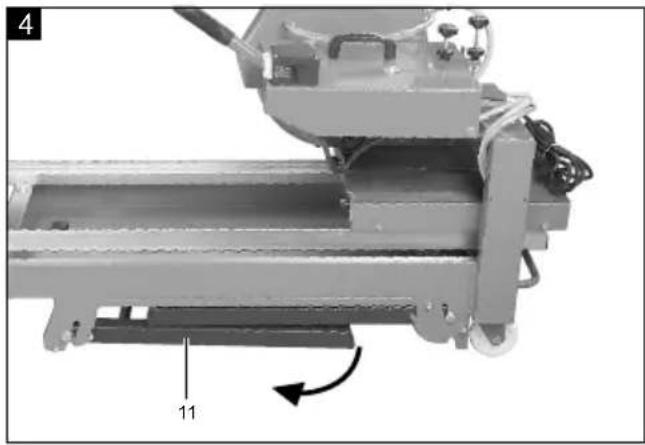
natural_image
Mechanical assembly diagram showing a lever mechanism with labeled component 11 (no text or symbols beyond labels)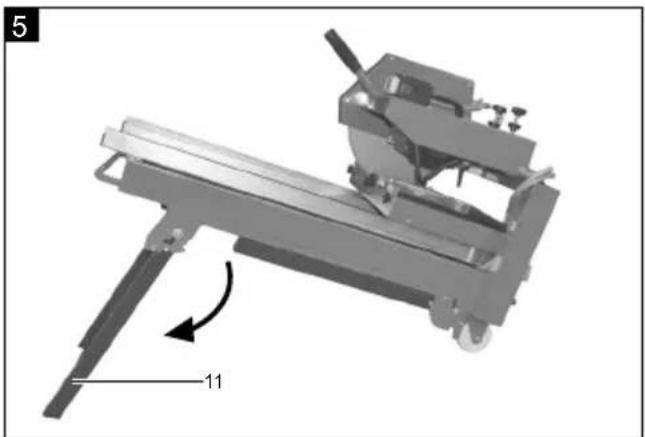
natural_image
Mechanical assembly diagram showing a lever mechanism with labeled component '11' and directional arrow (no text or symbols beyond labels)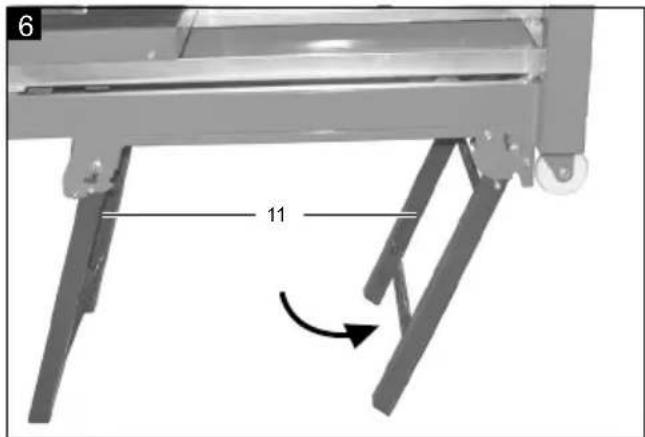
natural_image
Mechanical device with attached pulley and mounting holes, no visible text or symbols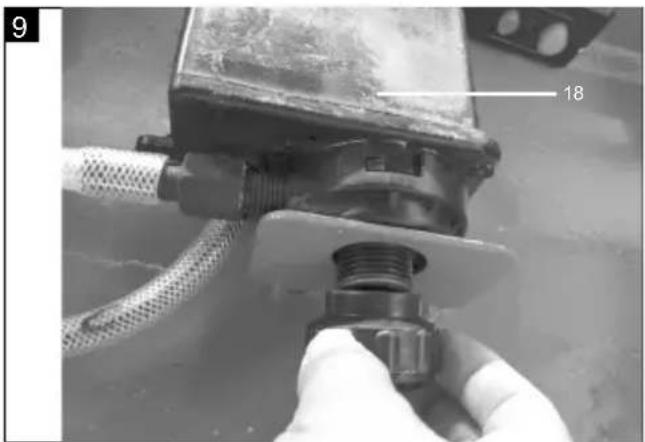
natural_image
Close-up of a hand holding a mechanical component with a hose and threaded connector (no visible text or symbols)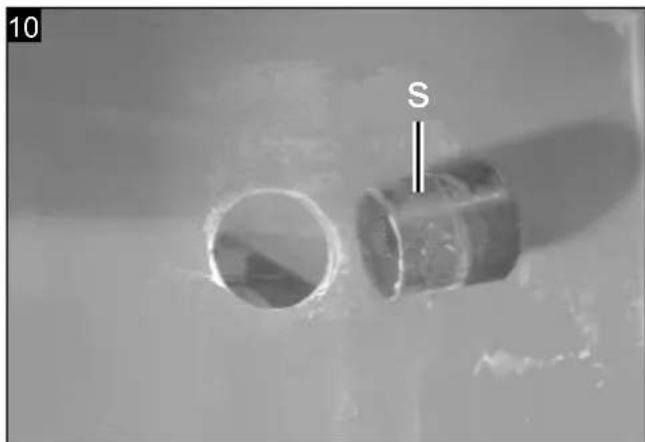
natural_image
Close-up of a cylindrical mechanical component with a circular hole and a labeled 'S' (no text or symbols beyond label)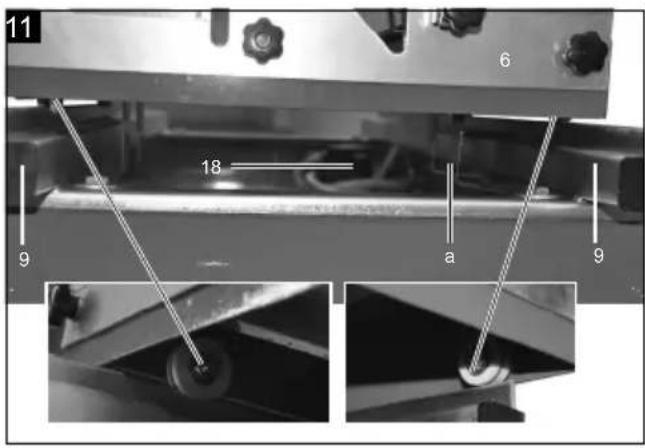
natural_image
Close-up of a mechanical control panel with two buttons and a dial, no visible text or symbols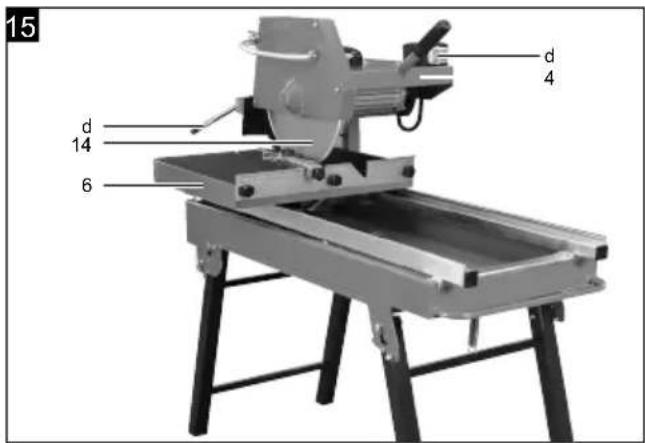
natural_image
Close-up of a mechanical assembly with hoses and connectors (no visible text or symbols)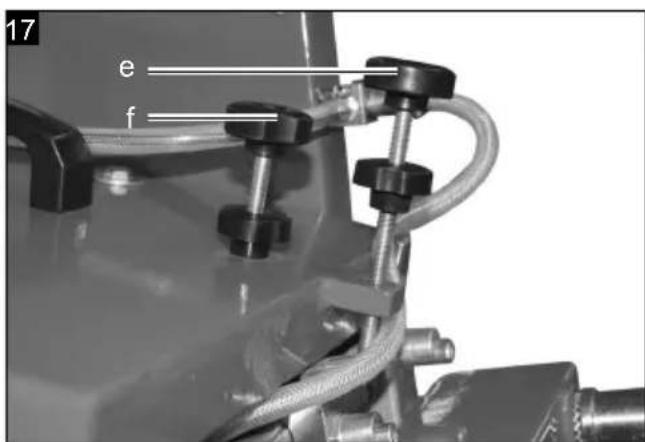
natural_image
Mechanical device with labeled part '4' on a workbench (no visible text or symbols beyond label)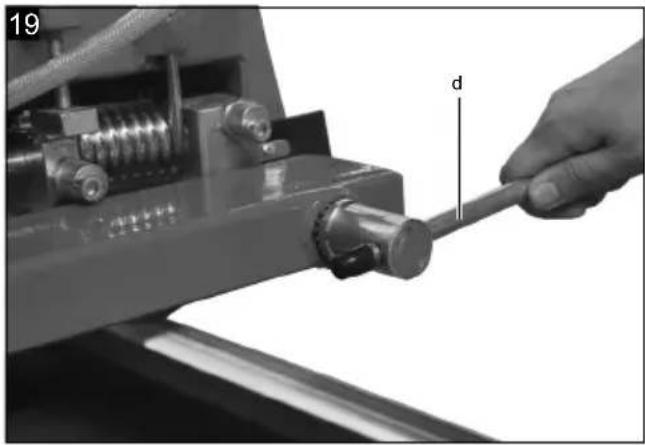
natural_image
Close-up of a hand using a tool to adjust or install a mechanical component, no visible text or symbols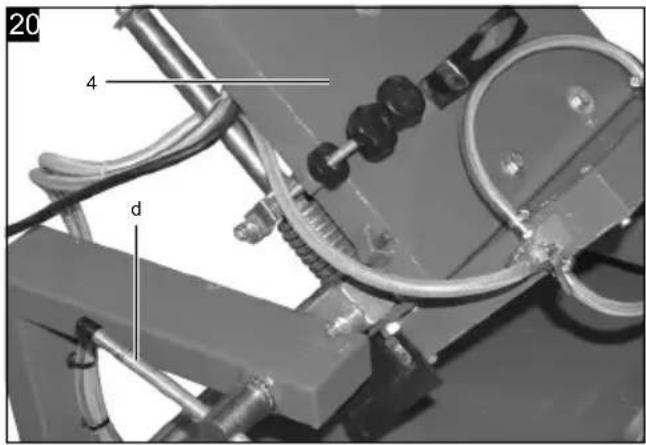
natural_image
Close-up of a mechanical component with labeled parts (1, 14) and directional arrows indicating features, no readable text or symbols beyond labels.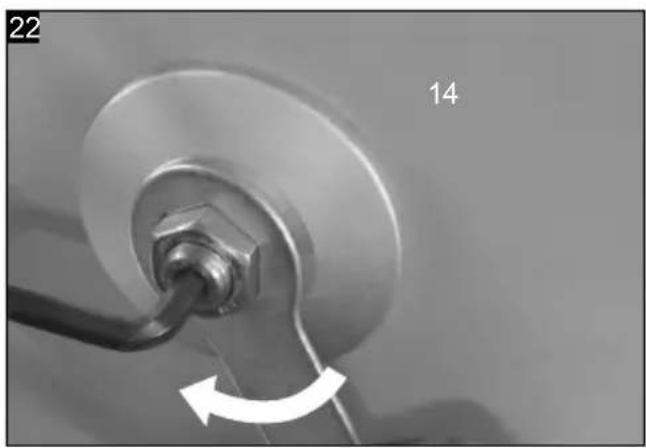
natural_image
Close-up of a mechanical component with a curved arrow indicating rotation (no text or symbols)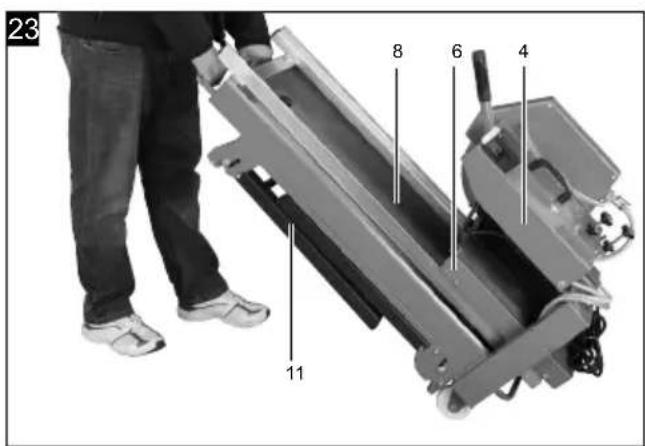
flowchart
graph TD
    A["motor"] --> B["protector"]
    B --> C["terminal block"]
    C --> D["switch"]
    D --> E["pump"]
    E --> F["Ground"]
    style A fill:#f9f,stroke:#333
    style B fill:#ccf,stroke:#333
    style C fill:#cfc,stroke:#333
    style D fill:#fcc,stroke:#333
    style E fill:#cff,stroke:#333
natural_image
Close-up of a black electrical outlet plug with two pins and a cable (no visible text or symbols)Günzburger Straße 69
D-89335 Ichenhausen
Verehrter Kunde,
Homepage: https://www.scheppach.com/de/service
Explanation of the symbols on the device
Symbols are used in this manual to draw your attention to potential hazards. The safety symbols and the accompanying explanations must be fully understood. The warnings themselves will not rectify a hazard and cannot replace proper accident prevention measures.
 | Before commissioning, read and observe the operating manual and safety instructions! |
 | Wear protective gloves! |
 | Wear eye protection! |
 | Wear hearing protection! |
 | Wear dust protection! |
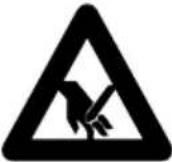 | Do not reach into cutting wheel while it is running! |
| △ Attention! | We have marked points in these operating instructions that impact your safety with this symbol. |
 | The product complies with the applicable European directives. |
 | The product complies with the applicable Serbian directives. |
Table of contents: Page:
- Introduction....26
- Device description 26
- Scope of delivery 26
- Proper use 26
- Safety instructions 27
- Technical data.... 31
- Unpacking....31
- Before commissioning 31
- Operation 32
- Assembly 32
- Commissioning 33
- Operating/working notes 33
- Work complete.... 34
- Transport (Fig. 23) 34
- Electrical connection 34
- Maintenance 35
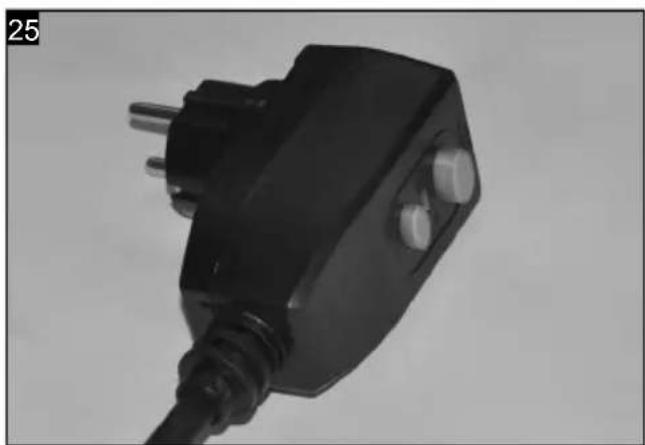
- Additional notes for residual current circuit breakers (Fig. 25)....35
- Disposal and recycling....37
- Troubleshooting 38
- Declaration of conformity 389
1. Introduction
Manufacturer:
Scheppach GmbH
Günzburger Straße 69
D-89335 Ichenhausen
Dear Customer,
We hope your new device brings you much enjoyment and success.
Note:
In accordance with the applicable product liability laws, the manufacturer of this device assumes no liability for damage to the device or caused by the device arising from:
- Improper handling,
• Non-compliance with the operating manual,
• Repairs carried out by third parties, unauthorised specialists,
• Installing and replacing non-original spare parts,
• Application other than specified, - Failures of the electrical system in the event of the electrical regulations and VDE provisions 0100, DIN 57113 / VDE0113 not being observed.
Our recommendation to you:
Read the whole text of the operating manual before assembly and commissioning.
This operating manual should help you to familiarise yourself with your device and to use it for its intended purpose.
The operating manual includes important instructions for safe, proper and economic operation of the device, for avoiding danger, for minimising repair costs and downtimes, and for increasing the reliability and extending the service life of the device.
In addition to the safety instructions in this operating manual, you must also observe the regulations applicable to the operation of the device in your country.
Keep the operating manual at the device, in a plastic sleeve, protected from dirt and moisture. They must be read and carefully observed by all operating personnel before starting the work.
The device may only be used by personnel who have been trained to use it and who have been instructed with respect to the associated hazards.
The required minimum age must be observed.
In addition to the safety instructions in this operating manual and the separate regulations of your country, the generally recognised technical rules relating to the operation of such machines must also be observed. We accept no liability for accidents or damage that occur due to a failure to observe this manual and the safety instructions.
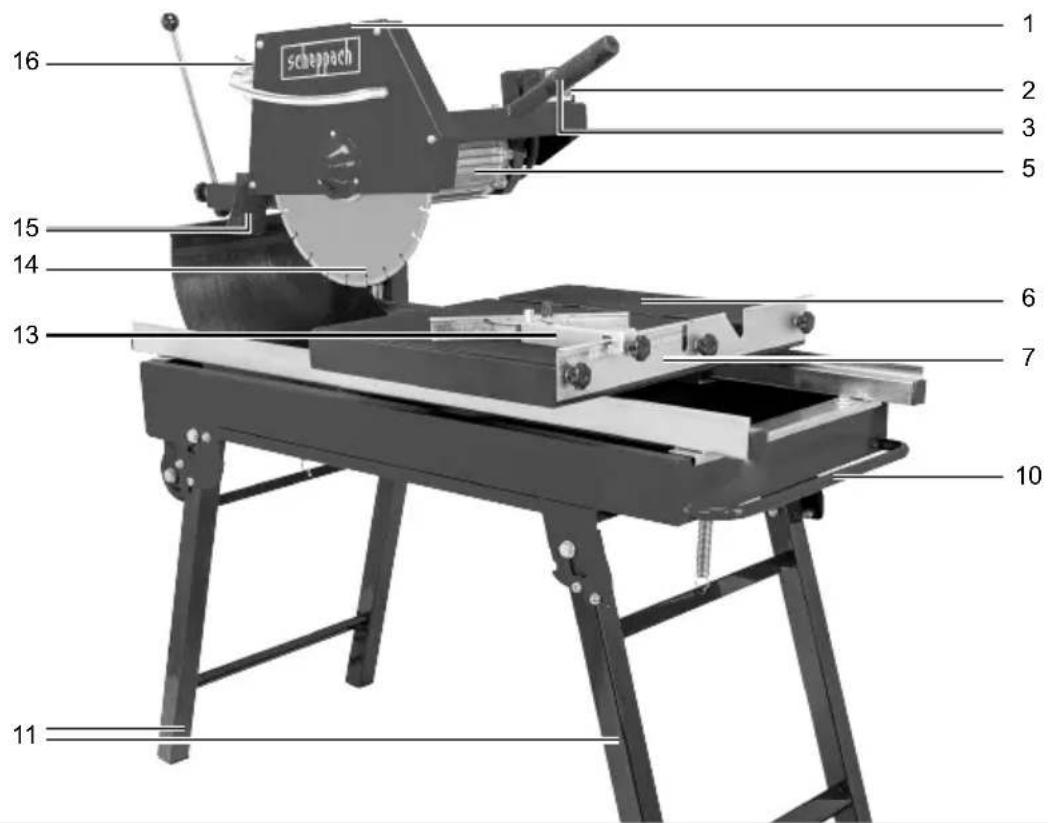
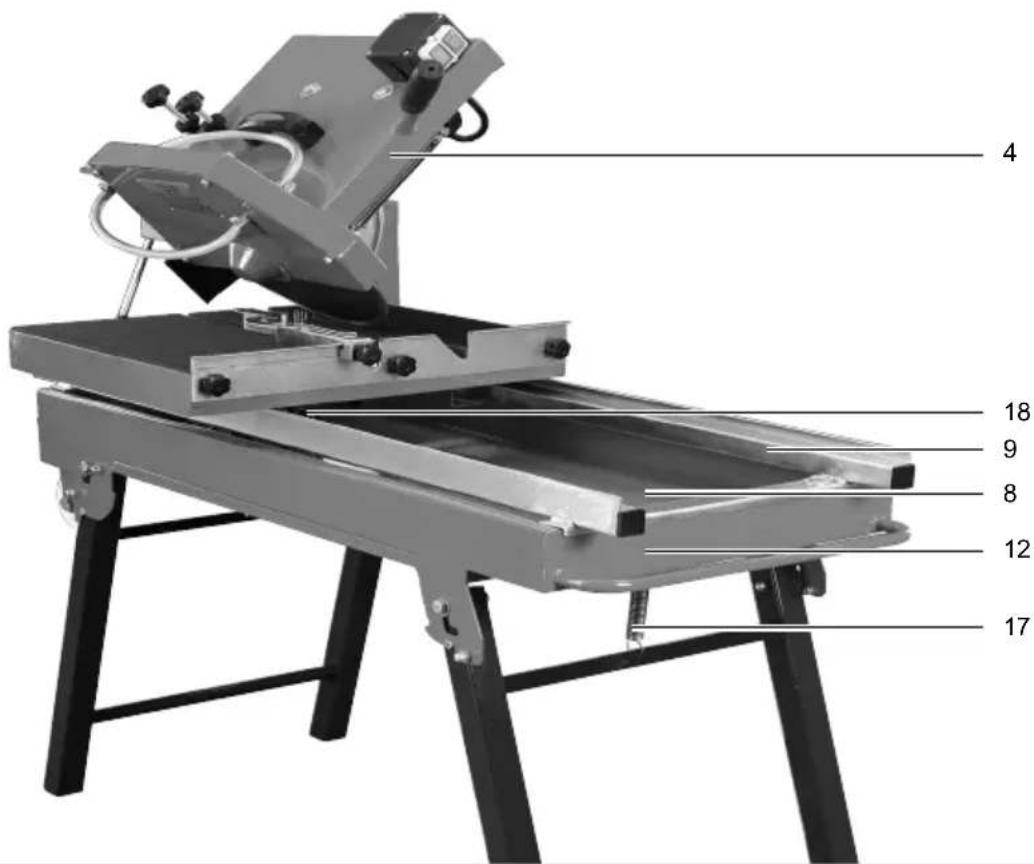
2. Device description
- Saw blade guard
- On/off switch
- Handle on the cutting arm
- Machine head
- Motor
- Roll slide with rubber coating
- Stop rail with scale
- Pan
- Guide rail
- Transport handle
- Feet
- Supporting frame
- Rip fence
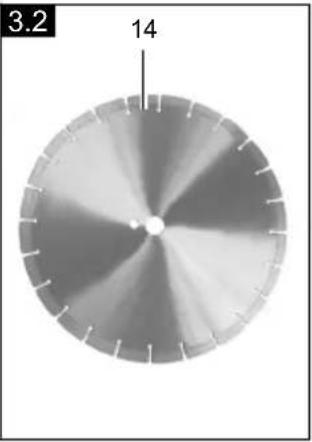
- Diamond cutting wheel (Fig. 3.2)
- Spray guard
- Water shut-off valve
- Spring
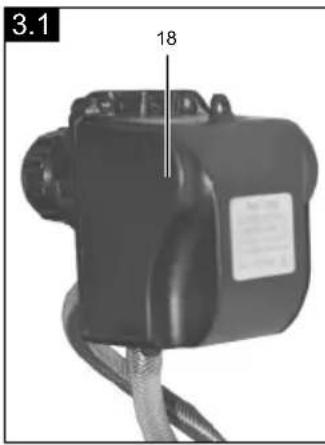
- Water pump (Fig. 3.1)
3. Scope of delivery
- Stone and tile cutters
• Roll slide with rubber coating
• Diamond cutting wheel (Fig. 3.2) - Rip fence
- Open-ended spanner and Allen key
4. Proper use
The machine may only be used in the intended manner.
The machine complies with the applicable EC machinery directive
- Before starting any work, all protective and safety devices must be in place.
- The machine has been designed to be operated by one person. The operator is responsible for third parties in the area of operations.
- Observe all safety information and danger notices on the machine.
-
Ensure that all of the safety information and danger notices on the machine are complete and in legible condition.
-
The machine with the offered tool and accessories is exclusively designed for the cutting of tile and concrete blocks with a cutting height of up to 110 mm. The cutting of metal and wood is not permitted.
- Do not exceed or not reach the maximum and minimum dimensions of the workpieces to be machined.
- Only use the machine when in a technically faultless condition, appropriately and in compliance with the operating manual and with full knowledge of safety and hazards! In particular, rectify malfunctions that could impair safety immediately (or commission rectification works accordingly)!
- The safety, operating and maintenance specifications of the manufacturer, as well as the dimensions specified in the technical data, must be observed.
- Relevant accident prevention regulations and other generally recognized safety and technical rules must also be observed.
- The machine may only be used, maintained or repaired by persons who are familiar with it and have been informed of the dangers. The manufacturer shall not be liable for damage resulting from unauthorised changes to the machine.
- The machine may only be operated with original accessories and original tools from the manufacturer.
Despite use as intended, specific risk factors cannot be entirely eliminated. Due to the design and layout of the machine, the following risks remain:
- Reaching into the running diamond cutting wheel.
- Contact with the diamond cutting wheel in the uncovered area.
• Ejection of workpieces and workpiece parts. - Ejection of a faulty diamond attachment of the cutting wheel.
- Hearing damage when the necessary hearing protection is not used.
- Injury to the eyes when eye protection is not used. Any use beyond this is improper use. The manufacturer is not responsible for the resulting damages; the user solely bears the risk.
Please note that our equipment was not designed with the intention of use for commercial or industrial purposes. We assume no guarantee if the device is used in commercial or industrial applications, or for equivalent work.
5. Safety instructions
Working with the stone and tile cutter can be dangerous if the correct and safe working procedures are not followed. As with all machines, working with the product involves certain risks. Treating the machine with respect and caution will significantly reduce the danger of injury. If the usual safety measures are ignored, this may result in injury to the operator. Safety equipment such as protective devices, safety goggles, dust masks and hearing protection can reduce the danger of injury. However, even the best protection is no match for miscalculation, carelessness or inattention. Always use common sense and caution in the workshop. If a procedure feels dangerous, don't try it. Consider an alternative approach that feels more secure. Remember: Your physical safety is your personal responsibility. This machine was designed for certain jobs.
We strongly recommend that you do not modify the machine and that you do not use it for applications for which it was not designed. If you are unsure about any point, ask your dealer before you start work with the product.
Warning: Failure to follow these instructions can result in serious injury.
Attention! The following basic safety measures must be observed when using power tools for protection against electric shock, and the risk of injury and fire.
Read and observe these instructions before using the device.
- Keep the work area orderly Disorder in the work area results in risk of accidents.
- Take environmental influences into account Do not expose power tools to rain. Do not use power tools in a damp or wet environment. Ensure good lighting. Do not use power tools in the vicinity of combustible fluids or gases.
- Protect yourself from electric shock Avoid body contact with earthed parts, for example pipes, heaters, ovens, refrigerators.
- Keep away from children! Do not let other people touch the tool or the cable, keep them away from your work area.
-
Store your tools safely Unused tools should be stored in a dry, locked room and out of reach of children.
-
Do not overload your tools They work better and more safely in the specified output range.
-
Use the correct tool Do not use tools that are too weak or attachments for tough tasks. Do not use tools for purposes and work for which they are not intended; for example, do not use a hand-held circular saw to fell trees or cut branches.
-
Wear suitable work clothing Do not wear loose clothing or jewellery. They can be caught by moving parts. Rubber gloves and anti-slip footwear are recommended when working outdoors. Tie long hair back in a hair net.
-
Wear safety goggles Use a respiratory mask when working with dust.
-
Do not misuse the cable Do not carry the tool by the cable and do not use it to pull the connector out of the socket. Protect the cable from heat, oil and sharp edges.
-
Secure the workpiece Use the clamping devices or a bench vice to hold the workpiece in place. It is thus held more securely than with your hand and allows the machine to be operated with both hands.
-
Do not overstretch your standing area Avoid an abnormal posture. Make sure that you have secure footing and always maintain your balance.
-
Take care of your tools Keep your tools sharp and clean so that you can work well and safely. Follow the maintenance instructions and the instructions for tool changes. Check the connector and the cable regularly and have it replaced by a recognised specialist when damaged. Check extension cables regularly and replace them when damaged. Keep the handle dry and free of oil and grease.
-
Pull out the mains plug When not in use, before maintenance and when changing tools, such as saw blade, drill bit and machine tools of all kinds.
-
Do not leave a tool key inserted Before switching on, make sure that keys and adjusting tools are removed.
-
Avoid inadvertent starting Do not carry tools connected to the mains with your finger on the switch. Make sure that the switch is switched off when connecting to the mains.
-
Extension cable outdoors Only use approved and appropriately identified extension cables for use outdoors.
-
Always remain attentive Observe your work. Proceed sensibly. Do not use the tool if you are distracted.
-
Check your device for damage Carefully inspect protective devices or other parts with minor damage to ensure that they function correctly and as intended prior to continued use of the tool. Check whether the moving parts function properly, that they do not jam or whether parts are damaged. All parts must be correctly fitted and all conditions must be fulfilled to ensure fault-free operation of the device. Damaged protective devices and parts should be repaired properly or replaced by a customer service workshop unless otherwise specified in the operating manual. Damaged switches must be replaced at a customer service workshop. Do not use any tools on which the switch cannot be switched on and off.
-
Attention! For your own safety, only use accessories and additional equipment that are indicated in the operating manual or have been recommended or indicated by the tool manufacturer. Use of other tool attachments or accessories that those recommended in the operating manual or in the catalogue could represent a personal danger to you.
-
Only have repairs carried out by a qualified electrician This power tool conforms to the applicable safety regulations. Repairs may only be carried out by a qualified electrician, otherwise accidents may occur for the operator.
-
Connect the dust extraction device If there are fixtures for connecting dust vacuum devices, make sure that they are connected and used.
⚠ WARNING! This power tool generates an electromagnetic field during operation. This field can impair active or passive medical implants under certain circumstances. In order to prevent the risk of serious or deadly injuries, we recommend that persons with medical implants consult with their physician and the manufacturer of the medical implant prior to operating the power tool.
Store the safety instructions safely.
SPECIAL SAFETY INSTRUCTIONS
Attention! This stone and tile cutter is designed for wet cutting. The mesh may be used with a non-segmented diamond cutting wheel.
- Wet hands: Do not touch the machine's electrical components (e.g. switches) with wet hands.
- Plug connectors: All plug connectors must be stored in a dry place and must not be placed on the floor.
• Cooling of the cutting wheel: Make sure that the cutting wheel is cooled with water during the entire cutting process.
- Dry cutting: Never perform dry cuts with cutting wheels designed for wet cutting.
- Dust protection: Always wear a dust protection mask when cutting tiles.
- Diamond cutting wheels: Do not push the tile into the machine faster than it can be cut by the cutting wheel.
- Use only cutting wheels whose speed is at least 3000 rpm.
- Selecting the cutting wheel: Select the diamond cutting wheel according to the material to be cut.
- Fitting the cutting wheel: Before fitting the cutting wheel, check the spindle, spindle nut and flanges for damage, wear or looseness. Change damaged or worn parts immediately.
- Direction of rotation of the cutting wheel: Check the direction of the arrow on the cutting wheel, the direction of the arrow must match with the direction of rotation of the motor shaft.
- Cutting wheel spindle: Ensure that the diameter of the hole in the cutting wheel matches the diameter of the cutting wheel spindle on the machine.
- Cutting wheel guard: Only operate the stone and tile cutter with the cutting wheel guard properly attached and adjusted.
- Cutting wheel speed: Do not exceed the cutting wheel's secured operating speed.
- Grinding with the cutting wheel: Do not attempt to use the cutting wheel for grinding work, for example, to grind the edge of a cut tile. Do not make any radius or round cuts either. This tile cutter is suitable for domestic use only.
- Stop time of the cutting wheel: The cutting wheel takes 20 seconds to come to a complete stop after it is switched off. Wait for the cutting wheel to come to a complete stop, then take the mains plug out of the socket. Only then should you touch the cutting wheel of the machine, if necessary.
- Avoid touching the rotating cutting wheel while the machine is in operation.
- The power tool must never be used without the supplied PRCD plug.
- Keep water away from electrical parts of the tool and from persons in the work area!
- If the plug or connection lead is damaged, it must be replaced by the manufacturer or its authorised customer service.
- Technical changes that alter the properties (e.g. speed) may only be carried out by the manufacturer in order to meet the requirements of the safety regulations.
- Store the safety instructions safely.
Special safety instructions for stone cutting machines
- Place the stone cutting machine on a level work surface with stable footing before using it. Ensure that there is sufficient room for freedom of movement.
- In order to avoid a dust hazard, the machine may only be used in the wet area.
• Always fill the pan with water before working.
- The machine may only be operated in sufficiently ventilated rooms.
Attention! Never leave the motor running in closed or spatially-constrained rooms. The exhaust gases contain toxic carbon monoxide!
- As a basic rule, switch on the equipment before material contact.
- The elevated safety regulations for wet operation apply for this stone cutting machine. All safety measures to prevent elevated contact voltages must be applied.
- Electrical cable wires may not come into contact with water or water vapour.
- Before commencing work, check the equipment and mains cable for damage.
- Check whether the moving parts function faultlessly and do not jam and make sure that no parts are damaged.
- The mains voltage must match the specifications on the type plate of the machine.
- Only use approved extension cables for use outdoors.
- When using a cable reel, completely unwind the cable in order to prevent the cable from heating up.
- When working outside, the electrical outlet must be equipped with a residual current circuit breaker.
- Observe the motor and diamond cutting wheel direction of rotation.
- Only cut one workpiece at a time.
- The cut path must be kept of obstacles above and below.
• Make sure that you can remove cut workpieces from the cutting wheel from the side in order to ensure that avoid becoming entangled.
- Only work with diamond cutting wheels which are exclusively suitable for wet cutting.
- Use diamond cutting wheels which are the correct size.
- Keep you hands, fingers and arms away from the rotating cutting wheel. Always maintain sufficient clearance from the diamond cutting wheel.
- Replace faulty diamond cutting wheels immediately. Deformed or cracked cutting wheels may not be used.
- Only use diamond cutting wheels recommended by the manufacturer which conform to EN 13236. The use of any type of saw blades is prohibited.
- Make sure that a suitable diamond cutting wheel for the material to be cut is selected.
- Do not use the stone cutting machine without safety equipment.
• Always switch off the machine and pull out the mains plug for the correction of errors or removal of jammed workpieces. Only remove the jammed workpiece after doing so.
- Protect the diamond cutting wheel from impact and jarring. Do not subject it to any lateral pressure.
- Do not stress the device to the extent that it is brought to a stop.
- Wear suitable personal protective equipment (PPE).
- Hearing protection to avoid the risk of becoming hearing impaired.
Attention! Noise can be harmful to the health. If the permissible noise level of 80 dB(A) is exceeded, hearing protection must be worn.
- Respiratory protection to avoid the risk of inhaling harmful dust.
- Eye protection to avoid the risk of injuring the eyes.
- Gloves are recommended when handling raw materials and shoes with non-slip soles when working outdoors.
- Diamond cutting wheels must always be carried in a container whenever practical.
- This machine may only be operated by persons who are familiar with stone cutting machines.
- Errors in the machine, including all covers and protective devices must be reported to the person responsible for safety as soon as they are discovered.
- Do not leave the device running unattended.
ADDITIONAL SAFETY INSTRUCTIONS
Read all instructions before operating this product!
Workstation
To avoid the risk of injury, machine damage, fire and shock, ensure that your workstation
• is protected from damp, moisture and rain,
• is free of flammable gases and liquids,
- is childproof – use padlocks and main switches when the machine is not in operation;
- is clean and empty,
• is well-ventilated and well-lit.
The operating person
Common sense and caution are factors that cannot be fitted into a machine. These factors are the responsibility of the operator. Please remember:
- Avoid physical contact with earthed surfaces, such as pipes or radiators.
- Stay alert. Do not work on the machine if you are tired.
- Do not operate the product under the influence of alcohol or drugs.
- Read the warning notices to determine whether your judgement or reflexes could be impaired.
- Do not wear loose clothing or jewellery that could get caught in rotating parts.
• Non-slip footwear is recommended.
- Protect long hair with suitable means.
- Wear eye and ear protection. Always wear:
- ANSI-approved dust masks.
- Hearing protection.
- Keep your balance at all times.
- Do not stand over the machine while it is running.
Residual risks
The machine has been built according to the state-of-the-art and the recognised technical safety requirements. However, individual residual risks can arise during operation.
- Danger of injury for fingers and hands due to the running cutting tool with improper guiding of the workpiece.
- Risk to health due to dust. It is essential that personal protective equipment, such as eye protection, is worn.
- Injuries due to a defective diamond cutting wheel. Check the integrity of the diamond cutting wheel regularly.
- Danger of injury for fingers and hands when changing the cutting wheel. Wear suitable work gloves.
- Danger of injury when the machine is switched on from the running cutting wheel.
- Hazard due to electrical power, with the use of improper electrical connection cables.
- Danger to health from running cutting wheel due to long hair and loose clothing. Wear personal protective equipment such as a hair net and close-fitting work clothing.
• Furthermore, despite all precautions having been met, some non-obvious residual risks may still remain. - Residual risks can be minimised if the "Safety Instructions" and the "Intended Use" together with the operating manual as a whole are observed.
6. Technical data
Dimensions L x W x H 1150 x 520 x 1210 mm
| Cutting table 535 x 430 mm | |
| Diamond cutting wheel ø 360 mm | |
| Hole ø 25.4 mm | |
| Speed 2800 rpm | |
| Weight 72 kg | |
| Cutting length max. | 700 mm |
| Cutting height 90° max. | 110 mm |
| Cutting height 45° max. | 72 mm |
| Motor | 230 V~ / 50 Hz |
| Rated input | 2200 W |
| Operating mode* | S6 40% |
| Insulation material class | B |
| Protection category | IP54 |
Subject to technical changes!
*Operating mode – S6 40%
Operating mode S6 is a uninterrupted, periodic mode. The mode comprises of a start-up period, a time with constant load and an idle time. The operating time is 10 mins, the relative duty cycle is 40% of the operating time.
Noise data
The noise at the workplace can exceed 85 dB (A). In this case, noise protection measures are required for the user (wear hearing protection!).
Sound power level in dB
| Sound pressure L_pA | 72 dB |
| Sound power L_wA | 82 dB |
| Measurement uncertainty K_pA | 3 dB |
7. Unpacking
ATTENTION!
The device and the packaging material are not children's toys! Do not let children play with plastic bags, films or small parts! There is a danger of choking or suffocating!
- Open the packaging and carefully remove the device.
- Remove the packaging material, as well as the packaging and transport safety devices (if present).
- Check whether the scope of delivery is complete.
- Check the device and accessory parts for transport damage. In the event of complaints the carrier must be informed immediately. Later claims will not be recognised.
- If possible, keep the packaging until the expiry of the warranty period.
- Familiarise yourself with the product by means of the operating manual before using for the first time.
- With accessories as well as wearing parts and replacement parts use only original parts. Spare parts can be obtained from your specialist dealer.
- When ordering please provide our article number as well as type and year of manufacture for the product.
8. Before commissioning
Before using the cut-off saws, carefully read the instructions provided in this manual.
Read the usage instructions:
Read the instructions for use carefully before setting up or operating the tile cutter or performing any procedures on it.
Dangerous electrical voltage
Caution! Switch off the power supply before making any adjustments to the tile cutter.
Hazard due to sudden start-up
Caution! The tile cutter may suddenly restart after a power outage.
Replace cracked diamond wheels.
- Familiarise yourself with your machine. Familiarize yourself with its use and limitations, but also with the specific potential hazards.
-
Inspect the machine carefully for damage to be sure it will perform as intended. If in doubt, replace the part.
-
Make sure that the switch is OFF before inserting the plug into the socket.
• Make sure that the machine has been cleaned and lubricated properly. - Before commissioning, check the machine for damaged parts and determine whether these parts function properly and fulfil their intended function.
- Check the alignment of all moving parts, all fixing parts, and any other conditions which may impede proper operation. Any damaged part must be repaired or replaced by a specialist immediately.
- Do not use the machine if a switch cannot be switched on and off properly.
9. Operation
- Place the machine on a level, non-slip floor.
- Check that the voltage on the data plate matches the existing voltage, and only then connect the plug to the mains.
- Before switching on, the cutting wheel must be able to rotate freely.
Attention: The cutting wheel must always be cooled with water.
Attention: Cutting wheel runs on.
Do not brake the cutting wheel by applying lateral pressure.
- During normal use, the motor housing may become hot.
- Do not force the machine or an accessory to do the work of a larger industrial machine. It does a better job with the performance it was designed for.
- Make all machine settings with the machine switched off.
- Never leave the machine unattended when it is running.
- When shutting down, only leave the machine after it has come to a complete standstill.
• Always switch the machine off before unplugging the mains plug.
• Always unplug the mains plug. Never pull the plug out of the socket using the cable. - Do not use a cutting wheel that does not match the specified sizes.
- Never carry the machine by the cable.
If you are not sure whether working conditions are safe or unsafe, do not work with the machine.
10. Assembly
10.1 Assembly (Fig. 4 - 10)
Your machine is not completely assembled for packaging reasons.
At least two people are required to construct the device!
- Remove the machine from the packaging and place carefully to one side on the ground.
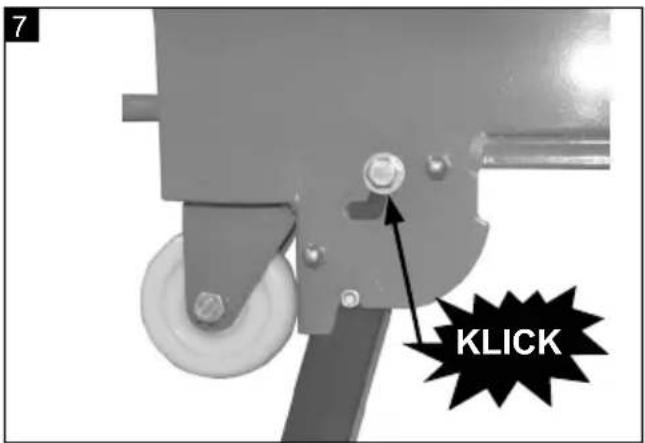
- First, fold out the foot (11) on the side without transport rollers until it reaches the end stop, until the screw engages in the elongated hole as shown in Fig. 7. Make sure that the foot is locked in place and does not fold up again!
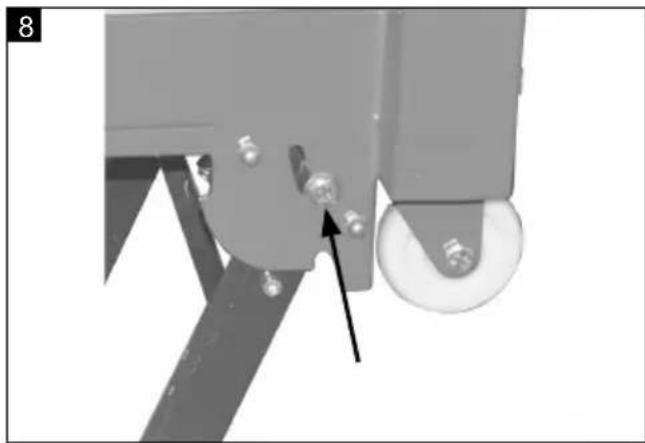
- Repeat the process for the second foot (Fig. 8).
- Place the machine on the feet.
- Use the cable ties provided to fix the water pipe hose and the cable to the device housing. (Fig. 10.2)
- Insert the water pump (18) into the water pan holder and insert the sealing plug(s) into the water tank drain (8). (Fig. 9, 10)
- Fill the pan with water so that the pump (18) is always covered with water (even during operation).
Attention!
The water pump may never run dry. It must always be covered with water during operation.
10.2 Mounting the roll slide (Fig. 11)
- Place the roll slide (cutting table) (6) on the roll table guide rail (9); in the process, the frame (a) of the two right guide rollers covers the guide rail. Simply place the two left guide rollers on the guide rail.
- When you are standing in front of the stone cutting machine, the scale must face towards you. The 90° cutting wheel gap is to the left in the roll slide (6), the 45° cutting wheel gap is to the right.
- The cutting table must roll easily. Make sure that all four rollers are on the guide rail (9).
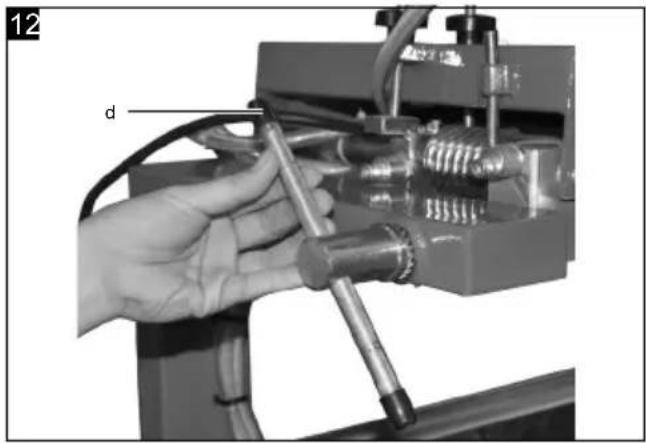
10.3 Mounting the lever screw for the cutting head pivoting device (Fig. 12)
- Remove the hexagon screw with a 30 mm open-ended spanner.
- Fit the lever screw (d) of the cutting head pivoting device on the thread and tighten it.
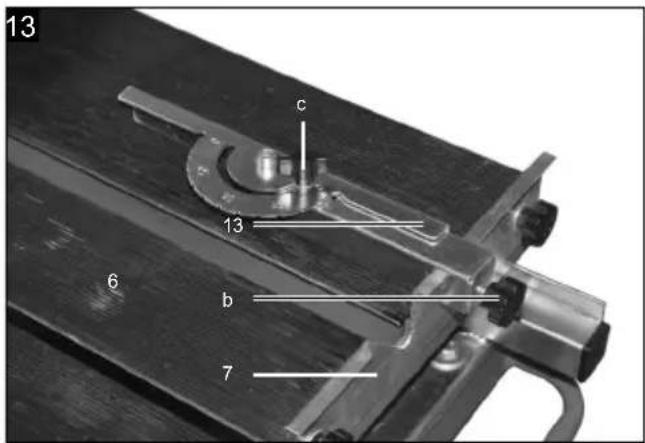
10.4 Mounting the rip fence (Fig. 13)
-
Place the rip fence (13) on the stop rail with scale (7) on the roll slide (6).
-
Align the rip fence (13) at the appropriate distance to the cutting wheel (14).
-
Fix the rip fence (13) by tightening the locking lever (b).
11. Commissioning
ATTENTION!
Always make sure the device is fully assembled before commissioning!
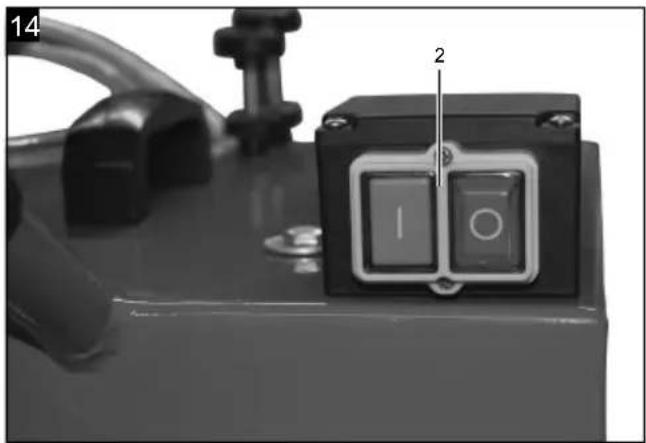
On/Off switch (Fig. 14)
To switch on, press "I" on the On/Off switch (2).
Before starting the cutting process, wait until the cutting wheel has reached the maximum speed and the cooling water pump (18) has delivered the water to the cutting wheel.
To switch off, press the "0" on the switch (2). (Fig. 14).
Note:
After switching on the saw, first pay attention to the direction of rotation of the diamond cutting wheel. Observe the direction of the arrow on the machine!
Attention! The water pump (18) starts up automatically with the drive motor (5) is switched on! You can regulate the water flow to the diamond cutting wheel (14) with the shut-off valve (16).
12. Operating/working notes
ATTENTION!
Always make sure the device is fully assembled before commissioning!
12.1 90° cuts (Fig. 13)
- Loosen the wing screw (c).
- Set the cross-cut fence (13) to 90° and retighten the wing screw (c).
- Tighten the wing screw (b) to fix the cross-cut fence (13) in place.
- Switch on the machine with the On/Off switch (2).
- Push the workpiece against the stop (13) and slide it against the diamond cutting wheel (14) with the roll slide (6) and cut it is one piece.
- Switch off the machine again.
12.2 45° diagonal cut (Fig. 13)
- Loosen the wing screw (c).
-
Set the cross-cut fence (13) to 45^ and retighten the wing screw (c).
-
Tighten the wing screw (b) to fix the cross-cut fence (13) in place.
- Make a cut as described under "90° Cuts".
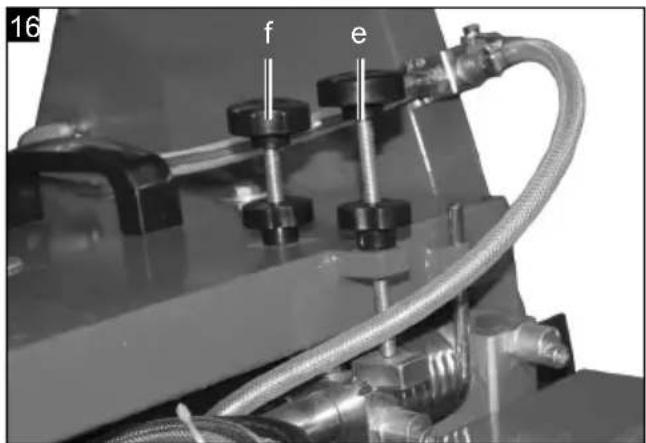
12.3 Cutting with a fixed cutting depth (Fig. 15, 16)
The cutting head (4) is fixed in place for this cut. The workpiece is pushed against the diamond cutting wheel (14) with the roll slide (6) and cut in one complete piece. When cutting, ensure a consistent pressure adapted to the motor output!
- Unscrew the star knob screw (e) on the cutting head unit (4) and push the cutting arm upwards.
- Place the workpiece to be cut on the roll slide (6) and place the stationary cutting wheel (14), with a full segment, loosely on the workpiece.
- Pull the workpiece back with the roll slide (6) far enough that the diamond cutting wheel (14) can be lowered somewhat.
- Fix the desired cutting depth with the star knob screw (e).
- Lock the cutting depth with the star knob screw (f) on the cutting head unit (4).
Attention! Always hold and/or press the guided workpiece on the corresponding workpiece stop (7 + 13).
Attention! Wait until the cooling water has reached the cutting wheel (14).
12.4 Cutting with a non-fixed cutting depth (Fig. 16, 17)
A non-fixed cutting depth is recommended for easier cutting of larger cutting depths. In the process, less stress is placed on the motor (5) and the diamond cutting wheel (14) is preserved.
The workpiece is moved back and forth with the roll slide (6) under the non-fixed cutting head for this cut. In the process cutting head (4) is pressed downward with the right hand.
- Unscrew the star knob screw (e) on the cutting head unit (4) and push the cutting arm upwards.
- Fix the desired cutting depth with the star knob screw (f).
-
Lower the cutting head unit (4) with the diamond cutting wheel.
-
Leave the star knob screw (e) unscrewed.
Attention! It should be possible to lower the diamond cutting wheel (14) approx. 3 mm below the upper edge of the roll slide (6). The diamond cutting wheel may not touch the roll slide.
12.5 Cutting with the cutting head – pivot device / mitre cuts (Fig. 18-20)
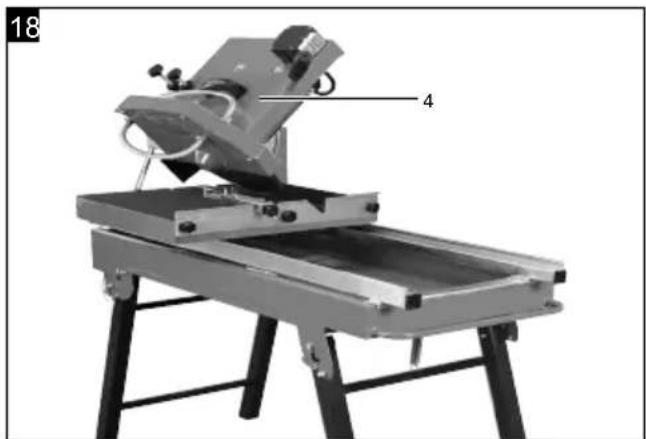
Unscrew the cutting head pivot device with the lever screw (d) and pivot the cutting head (4) 45^ to the stop. Re-tighten the lever.
Attention! Check the stop setting before you begin cutting. The diamond cutting wheel may not touch the roll slide.
Make a cut as described under "90° Cuts".
12.6 Replacing the diamond cutting wheel (Fig. 17, 18, 21, 22)
Attention!
Pull out the mains plug.
Caution!
- Danger of cuts on the diamond cutting wheel!
- Wear gloves when replacing the diamond cutting wheel.
-
Check the cutting wheel for direction of rotation, concentricity and possible damage!
-
Pull out the mains plug.
- Unscrew the star knob screw (e) on the cutting head unit (4) and push the cutting arm upwards completely. Lock the cutting arm with the star knob (f) on the cutting head unit (4) (Fig. 17).
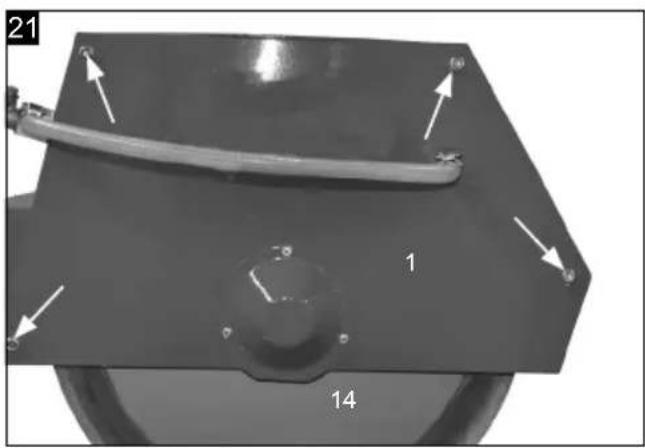
- Unscrew and remove the four screws on the blade's protective cover (1) and remove the protective cover. Note: It is not necessary to disconnect the water hose on the protective cover. Carefully fold the protective cover down.
- Hold the cutting shaft in place with the Allen key supplied and unscrew the clamping nut with the open-ended spanner (included in the scope of delivery). Left-handed thread! Carefully remove the clamping nut, the pressure flange and the diamond cutting wheel (14).
- Before installing the new diamond cutting wheel (14), clean the cutting shaft and the battery flange with a rag or brush. Attention! Do not use any cleaning agents which can corrode the components.
Attention! When installing the new diamond cutting wheel, proceed in the reverse sequence. Make sure that the direction of rotation is correct! (Insert the diamond cutting wheel – ARROW DIRECTION – in the operating side on the flange holder). The arrow direction on the cutting wheel and the protective cover must match.
-
Re-mount the saw blade guard (1).
-
Check the concentricity by briefly starting up the machine and then switching it off again.
Attention!
- Operation of the stone cutting machine is not permitted without the protective cover!
- When fixing the blade, make sure that the diamond cutting wheel does not "wobble".
- Ensure the firm seating of the water hoses on the protective cover.
13. Work complete
⚠ Attention!
Pull out the mains plug.
Clean the machine after work is complete.
Drain the water after each use. To do this, remove the sealing plug (s) from the basin (8).
The basin (8) and the water pump (18) must be regularly cleaned of dirt, otherwise the pump or pipes will become clogged and the cooling of the diamond cutting wheel (14) will not be ensured.
Rinse the basin (8) and the water pump (18) with clean water after use.
14. Transport (Fig. 23)
⚠ Attention!
Pull out the mains plug.
Observe the following for transporting the stone cutting machine:
- Lift off the roll slide (6) and transport it separately.
- Lock the cutting head unit (4)
• Empty the water pan (8) and the cooling system. - Fold the supporting feet (11) as described in (Fig. 4-7) and use the transport rollers for the transport.
15. Electrical connection
The electrical motor installed is connected and ready for operation. The connection complies with the applicable VDE and DIN provisions. The customer's mains connection as well as the extension cable used must also comply with these regulations.
Damaged electrical connection cables
The insulation on electrical connection cables is often damaged.
Causes are:
- Pressure points, where connection cables are passed through windows or doors.
- Kinks where the connection cables have been improperly fixed or routed.
- Places where the connection cables have been cut due to being driven over.
• Insulation damage due to being ripped out of the wall outlet.
• Cracks due to the insulation ageing.
Such damaged electrical connection cables must not be used and are life-threatening due to the insulation damage.
Check the electrical connection cables for damage regularly. Ensure that the connection cables are disconnected from electrical power when checking for damage.
Electrical connection cables must comply with the applicable VDE and DIN provisions. Only use connection cables of the same designation.
The printing of the type designation on the connection cable is mandatory.
AC motor 230 V\~/ 50 Hz
• Mains voltage 230 Volt / 50 Hz.
- Mains power connection and extension leads must be 3-core = P + N + SL. - (1/N/PE).
- Extension cables must have a minimum cross section of 1.5mm^2 .
- The mains power connection must be protected with a max. 16 A fuse.
16. Maintenance
⚠ Attention!
Disconnect the mains plug before carrying out any maintenance work.
- Clean the machine after work is complete.
- Replace the worn cutting wheels.
- Replace damaged protective devices.
- Dust and contamination must be removed from the machine regularly. Cleaning is best done with a cloth or brush.
-
All moving parts must be re-lubricated periodically.
-
Do not use corrosive agents for cleaning the plastic.
- The pan (8) and coolant pump (18) must be regularly cleaned of dirt, otherwise the cooling of the diamond cutting wheel (14) is not guaranteed.
• Re-commission and inspect all safety equipment. - Maintenance and repair tasks may only be performed by qualified personnel.
Connections and repairs
Connections and repair work on the electrical equipment may only be carried out by electricians.
Please provide the following information in the event of any enquiries:
• Type of current for the motor
• Machine data - type plate
Ordering spare parts
Please provide the following information when ordering spare parts:
- Device type
• Device article number
• Device ID number
- Replacement part number of the required replacement part
Service information
With this product, it is necessary to note that the following parts are subject to natural or usage-related wear, or that the following parts are required as consumables.
Wearing parts*: Diamond cutting wheels, carbon brushes, table and cutting head guides
* may not be included in the scope of delivery!
Spare parts and accessories can be obtained from our Service Centre. To do this, scan the QR code on the front page.
17. Additional notes for residual current circuit breakers (Fig. 25)
Please note the following important notes on commissioning and handling.
Please ensure that it is, even if you give this product to a third party. This operating manual should therefore be kept for future reference.
Safety instructions!
- For safety and approval reasons (CE), unauthorised conversion and/or modification of the product is not permitted. Never disassemble the product.
- The product is not suitable for children's hands. Children are not able to assess the dangers involved in handling electrical units. Therefore, take particular care in the presence of children.
- The assembly of the product corresponds to protection class 1. Only a proper mains socket with a protective earth (230V\~/50Hz) from the public power supply may be used as a power source.
- In commercial and industrial facilities, the accident prevention regulations of the German employers' liability insurance association for electrical plants and operating equipment must be observed.
- In schools, training institutions, hobby and self-help workshops, the operation of the product is to be supervised by trained personnel.
- Handle the product with care. It will be damaged by knocks, impacts or falling from a low height.
- Never use the product if it is brought from a cold to a warm room. The resulting condensation can, under certain circumstances, destroy the product.
- Allow the product to warm up to room temperature before connecting it to the mains voltage. This may take several hours.
- Do not touch the product with damp or wet hands.
• Make sure that the insulation of the entire product is neither damaged nor destroyed. - If the product is not used for a length of time, disconnect it from the mains voltage and unplug it from the socket.
- Avoid the following environmental conditions at the installation site or during transport:
Exposure to moisture or high humidity. Extreme cold or heat. Dust or flammable gases, fumes or solvents. Heavy vibrations.
Strong magnetic fields, such as near machines or speakers.
Commissioning of the residual current circuit breaker:
- The residual current circuit breaker is equipped with a test button.
The function should be checked before each operation and at regular intervals (at least 1x a week). - If the residual current circuit breaker does not switch off properly during this test, it does not provide protection for people! The unit must then be replaced immediately!
- Damage caused by non-compliance with this operating manual will void the warranty. We do not accept liability for consequential damage.
- Check the product for damage before each use!
If you identify any damage, the product must not be connected to the mains voltage!
- After pressing the orange reset button, the device is ready for operation. Before operating, please check the release using the red "Test" button.
- Plug the residual current circuit breaker into the socket.
- Press the orange reset button.
- A red symbol appears in the window to indicate that it is ready for operation.
- Press the red "Test" button. In this case, a fault current is simulated.
- When functioning properly, the circuit breaker disconnects the consumer from the mains. This is indicated in the window by the red symbol going out.
- Protection for humans and animals can only be guaranteed if the system is functioning properly.
- The reset button must be pressed again to operate.
• The consumer can now be plugged in.
Technical data:
| Release fault current < 30 mA |
| Power supply 230 - 240 V~ / 50 Hz |
| Load capacity 16A (3680 W) |
| Number of poles 2-pole switching |
| Backup fuse 16 A |
| Protection category IP54 |
| Dimensions 126 x 50 x 88 mm |
Proper use!
The portable residual current circuit breaker with no-voltage release is designed for wet grinders and similar electrical appliances in the home.
It is simply connected between the power supply and the consumer, thus providing optimum protection against touching live parts and against the machine restarting after the power has been restored.
• Always operate the machine with the supplied residual current circuit breaker.
18. Disposal and recycling
Notes for packaging


The packaging materials are recyclable. Please dispose of packaging in an environmentally friendly manner.
Notes on the electrical and electronic equipment act (ElektroG)
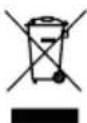
Waste electrical and electronic equipment does not belong in household waste, but must be collected and disposed of separately!
- Used batteries or rechargeable batteries that are not installed permanently in the old device must be removed non-destructively before disposal! Their disposal is regulated by the battery act.
- Owners or users of electrical and electronic devices are legally obliged to return them after use.
- The end user is responsible for deleting their personal data from the old device being disposed of!
- The symbol of the crossed-out dustbin means that waste electrical and electronic equipment must not be disposed of with household waste.
-
Waste electrical and electronic equipment can be handed in free of charge at the following places:
-
Public disposal or collection points (e.g. municipal works yards).
- Points of sale of electrical appliances (stationary and online), provided that dealers are obliged to take them back or offer to do so voluntarily.
- Up to three waste electrical devices per type of device, with an edge length of no more than 25 centimetres, can be returned free of charge to the manufacturer without prior purchase of a new device from the manufacturer or taken to another authorised collection point in your vicinity.
- Further supplementary take-back conditions of the manufacturers and distributors can be obtained from the respective customer service.
- If the manufacturer delivers a new electrical device to a private household, the manufacturer can arrange for the free collection of the old electrical device upon request from the end user. Please contact the manufacturer's customer service for this.
- These statements only apply to devices installed and sold in the countries of the European Union and which are subject to the European Directive 2012/19/EU. In countries outside the European Union, different regulations may apply to the disposal of waste electrical and electronic equipment.
19. Troubleshooting
| Fault Possible cause Remedy | ||
| Diamond cutting wheel is loose after the engine is switched off | Fixing nut not tight enough Tighten | fixing nut |
| Engine does not start | Mains fuse blown Check mains fuse | |
| Extension lead defective Replace extension lead | ||
| Connection to the motor or switch not OK | Have this checked by an electrician | |
| Engine or switch faulty Have this checked by an electrician | ||
| The motor has no power | Cross section of the extension cable insufficient | See Electrical connection, the fuse responds |
| Overload Check tool | ||
| The diamond cutting wheel is blunt | Replace the diamond cutting wheel with a new one | |
| Engine switches off during work | The engine switches off due to overloading, e.g. from excessive cutting depth | Wait until the engine has cooled down (5-10 minutes), then switch it on again |
| The pump shuts off | The pump switches off due to overloading, e.g. due to heavy contamination | Immediately shut down the machine. Clean the pump and restart the machine after approx. 5-10 minutes. Attention! Never perform dry cuts! |
| The cutting process is not optimal | The cutting wheel is too heavily stressed | Use a suitable cutting wheel, reduce cutting pressure |
| Diamond segments are too dull Sharpen the cutting wheel | ||
| The cutting wheel has overheated due to insufficient cooling water | Optimise the cooling water supply | |
Günzburger Straße 69
D-89335 Ichenhausen
Cher client,
Günzburger Straße 69
D-89335 Ichenhausen, Germania
Egregio cliente,
Günzburger Straße 69
D-89335 Ichenhausen
Geachte klant,
10.1 Montage (afb. 4 - 10)
Günzburger Straße 69
Günzburger Straße 69
Günzburger Straße 69
D-89335 Ichenhausen
Vážený zákazníku,
Günzburger Straße 69
D-89335 Ichenhausen
Vážený zákazník,
Günzburger Straße 69
D-89335 Ichenhausen
Kedves Ügyfelünk!
Günzburger Straße 69
D-89335 Ichenhausen
Szanowny Kliencie,
Günzburger Straße 69
D-89335 Ichenhausen
Poštovani kupci,
Günzburger Straße 69
D-89335 Ichenhausen
Spoštovani kupec,
želimo vam veliko veselja in uspeha pri delu z vašo novo napravo.
Napotek:
Günzburger Straße 69
D-89335 Ichenhausen
Austatud klient!
SPETSIAALSED OHUTUSJUHISED
EDASISED OHUTUSJUHENDID
10.2 Veerekelgu monteerimine (joon. 11)
Günzburger Straße 69
D-89335 Ichenhausen
Gerbiamas kliente,
KITI SAUGOS NURODYMAI
Günzburger Straße 69
Günzburger Straße 69
D-89335 Ichenhausen
Bästa kund!
Günzburger Straße 69
D-89335 Ichenhausen
Arvoisa asiakas,
Günzburger Straße 69
D-89335 Ichenhausen, Tyskland
Kære kunde,
Poltal 2-polet kobling
Forsikring 16 A
Beskyttelsesgrad IP54
Dimensioner 126 x 50 x 88 mm
Tilsigtet brug!
Günzburger Straße 69
D-89335 Ichenhausen
Kjære kunde,
Günzburger Straße 69
D-89335 Ichenhausen, Германия
Уважаеми клиенти,
Günzburger Straße 69
D-89335 Ichenhausen
Αξιότιμε πελάτη,
Günzburger Straße 69
D-89335 Ichenhausen
Stimate client,
Günzburger Straße 69
D-89335 Ichenhausen
Poštovani kupče,
Günzburger Straße 69
D-89335 Ichenhausen
İthalatçı:
EU Declaration of Conformity
| 2000/14/EG_2005/88/EG | |
| Noise: measured LWA= xx dB; guaranteed LVIA= xx dB | |
| Annex V | |
| Annex VI | |
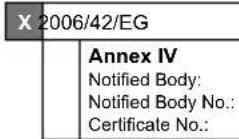
| 2016/1628/EU | |
| Emission. No: |
Standard references:
EN 12418:2021; EN 60204-1:2018; EN IEC 55014-1:2021; EN IEC 55014-2:2021; EN IEC 61000-3-2:2019/A1:2021; EN 61000-3-3:2013/A2:2021
This declaration of conformity is issued under the sole responsibility of the manufacturer.
The object of the declaration described above fulfils the regulations of the directive 2011/65/EU of the European Parliament and Council from 8th June 2011, on the restriction of the use of certain hazardous substances in electrical and electronic equipment.
Subject to change without notice
Documents registrar: Niko Vraschek
Günzburger Str. 69, D-89335 Ichenhausen
EU Declaration of Conformity
Standard references:
EN 12418:2021; EN 60204-1:2018; EN IEC 55014-1:2021; EN IEC 55014-2:2021; EN IEC 61000-3-2:2019/A1:2021; EN 61000-3-3:2013/A2:2021
This declaration of conformity is issued under the sole responsibility of the manufacturer.
The object of the declaration described above fulfils the regulations of the directive 2011/65/EU of the European Parliament and Council from 8th June 2011, on the restriction of the use of certain hazardous substances in electrical and electronic equipment.
Subject to change without notice
Documents registrar: Vraschek Niko
Günzburger Str. 69, D-89335 Ichenhausen
EU Declaration of Conformity
Standard references:
EN 12418:2021; EN 60204-1:2018; EN IEC 55014-1:2021; EN IEC 55014-2:2021; EN IEC 61000-3-2:2019/A1:2021; EN 61000-3-3:2013/A2:2021
This declaration of conformity is issued under the sole responsibility of the manufacturer.
The object of the declaration described above fulfils the regulations of the directive 2011/65/EU of the European Parliament and Council from 8th June 2011, on the restriction of the use of certain hazardous substances in electrical and electronic equipment.
Subject to change without notice
Documents registrar: Vraschek Niko
Günzburger Str. 69, D-89335 Ichenhausen
EU Declaration of Conformity
AB uygunluk beyanı
CE
Scheppach GmbH, Günzburger Str. 69, D-89335 Ichenhausen
| DE | erklärt folgende Konformität gemäß EU-Richtlinien und Normen für den Artikel | RO | declară următoarea conformitate corespunzător directivelor și normelor UE pentru articolul |
| GB | hereby declares the following conformity under the EU Directive and standards for the following article | GR | đenlăvlei tnu akolouh Σuμρόφωση σύμφωνα με tnu Oδηγία EE kai ta πρότυπα για to προϊόν |
| BG | декларира съответното съответствие съгласно Дирек-тива на EC и норми за артикул | TR | Burada açıklanan ürünün geleçli yönetmeliklere ve standartlara uygun oldugunu tamamen kendi sorumluluğumuz altında beyan ediyoruz. |
| RS | potvrđuje sledeću usklađenost prema smernicama EZ i normama za artikal |
Article name: STONE CUTTING MACHINE - HSM3500
Ürün Tanım:
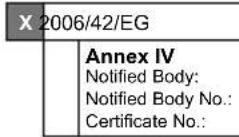

Standard references:
EN 12418:2021; EN 60204-1:2018; EN IEC 55014-1:2021; EN IEC 55014-2:2021; EN IEC 61000-3-2:2019/A1:2021; EN 61000-3-3:2013/A2:2021
This declaration of conformity is issued under the sole responsibility of the manufacturer.
The object of the declaration described above fulfils the regulations of the directive 2011/65/EU of the European Parliament and Council from 8th June 2011, on the restriction of the use of certain hazardous substances in electrical and electronic equipment.
Subject to change without notice
Documents registrar: Vraschek Niko Günzburger Str. 69, D-89335 Ichenhausen
Garantie DE
Apparent defects must be notified within 8 days from the receipt of the goods. Otherwise, the buyer loses its rights of claim due to such defects are invalidated. We guarantee for our machines in case of proper treatment for the time of the statutory warranty period from delivery in such a way that we replace any machine part free of charge which provably becomes unusable due to faulty material or defects of fabrication within such period of time. With respect to parts not manufactured by us we only warrant insofar as we are entitled to warranty claims against the upstream suppliers. The costs for the installation of the new parts shall be borne by the buyer. The cancellation of sale or the reduction of purchase price as well as any other claims for damages shall be excluded.
Garantie FR
Apparent defects must be notified within 8 days from the receipt of the goods. Otherwise, the buyer's rights of claim due to such defects are invalidated. We guarantee for our machines in case of proper treatment for the time of the statutory warranty period from delivery in such a way that we replace any machine part free of charge which provably becomes unusable due to faulty material or defects of fabrication within such period of time. With respect to parts not manufactured by us we only warrant insofar as we are entitled to warranty claims against the upstream suppliers. The costs for the installation of the new parts shall be borne by the buyer. The cancellation of sale or the reduction of purchase price as well as any other claims for damages shall be excluded.
Záruka CZ
Apparent defects must be notified within 8 days from the receipt of the goods. Otherwise, the buyer is rights of claim due to such defects are invalidated. We guarantee for our machines in case of proper treatment for the time of the statutory warranty period from delivery in such a way that we replace any machine part free of charge which provably becomes unusable due to faulty material or defects of fabrication within such period of time. With respect to parts not manufactured by us we only warrant insofar as we are entitled to warranty claims against the upstream suppliers. The costs for the installation of the new parts shall be borne by the buyer. The cancellation of sale or the reduction of purchase price as well as any other claims for damages shall be excluded.
Garantii EE
Apparent defects must be notified within 8 days from the receipt of the goods. Otherwise, the buyer's rights of claim due to such defects are invalidated. We guarantee for our machines in case of proper treatment for the time of the statutory warranty period from delivery in such a way that we replace any machine part free of charge which provably becomes unusable due to faulty material or defects of fabrication within such period of time. With respect to parts not manufactured by us we only warrant insofar as we are entitled to warranty claims against the upstream suppliers. The costs for the installation of the new parts shall be borne by the buyer. The cancellation of sale or the reduction of purchase price as well as any other claims for damages shall be excluded.