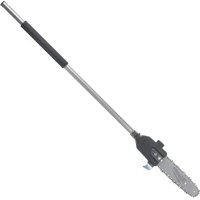
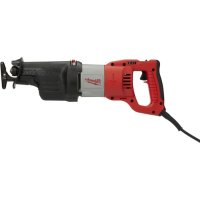
M18 FOPHCSA - Electric saw MILWAUKEE - Free user manual and instructions
Find the device manual for free M18 FOPHCSA MILWAUKEE in PDF.



| Product type | Cordless pruning saw head |
| Model | M18 FOPHCSA |
| Brand | Milwaukee |
| Battery voltage | 18 V |
| No-load speed (low/medium/high) | 0-3330 / 0-3920 / 0-4500 min⁻¹ |
| Chain speed at no load | 8.6 m/s |
| Guide bar length | 254 mm |
| Usable cutting length | 230 mm |
| Chain oil tank capacity | 140 ml |
| Weight (according to EPTA, with battery 2.0-12.0 Ah) | 5.1 - 6.2 kg |
| Weight without battery | 4.7 kg |
| Working temperature range | -18 °C to +50 °C |
| Recommended battery type | M18B..., M18HB..., M18FB... (Li-Ion) |
| Recommended charger | M12-18..., M1418..., M18... |
| Sound pressure level (without extension) | 84.6 dB(A), uncertainty K = 3 dB(A) |
| Sound power level (without extension) | 94.6 dB(A), uncertainty K = 3 dB(A) |
| Vibration (front handle) | 1.78 m/s², uncertainty K = 1.5 m/s² |
| Vibration (rear handle) | 1.37 m/s², uncertainty K = 1.5 m/s² |
| Intended use | Pruning, limbing, cutting branches and small trunks (wood only) |
| Safety | Chain brake, guide bar cover, insulated grip surfaces, anti-kickback protection |
| Lubrication | Vegetable-based chain oil recommended for pruning; keep tank > 1/4 full |
| Chain tension | Gap of ~3 mm between chain and bar; check regularly |
| Spare parts (chain) | Ref. 4932471329 |
| Spare parts (guide bar) | Ref. 4932480170 |
Frequently Asked Questions - M18 FOPHCSA MILWAUKEE
User questions about M18 FOPHCSA MILWAUKEE
0 question about this device. Answer the ones you know or ask your own.
Ask a new question about this device
Download the instructions for your Electric saw in PDF format for free! Find your manual M18 FOPHCSA - MILWAUKEE and take your electronic device back in hand. On this page are published all the documents necessary for the use of your device. M18 FOPHCSA by MILWAUKEE.
USER MANUAL M18 FOPHCSA MILWAUKEE
natural_image
3D rendering of a mechanical tool with a long handle and chain-like blade (no text or symbols)M18 FOPH-CSA
Original instructions
The illustration shows the application head M18 FOPH-CSA connected to the Milwaukee powerbase M18 FOPH2. This application head may only be operated in connection with the powerbase shown here. Depending on the equipment package you have purchased various application heads. Other application heads and powerbases can be purchased separately.
• Everyopoinon / Aneveryopoinon
• Ρύθμοη ταχύτητας
• Αλλαγή μπαταρίας
natural_image
Mechanical component diagram showing a chain being inserted into a housing (no text or symbols visible)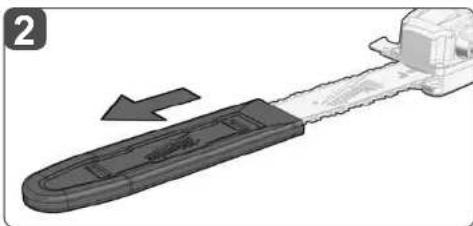
natural_image
Diagram of a mechanical component with an arrow indicating direction, no visible text or symbols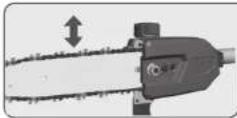
Chain Tension Adjustment
natural_image
Diagram of a chain saw with a hammer and screw, showing blade motion (no text or symbols)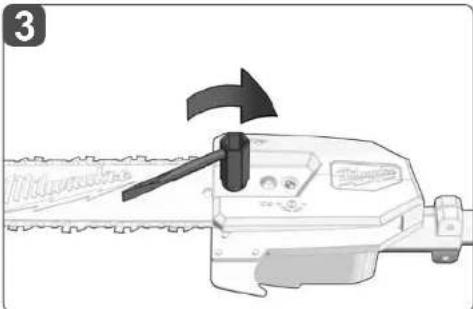
natural_image
Illustration of a chainsaw with a lever and blade, showing motion direction (no text or symbols)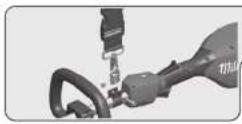
natural_image
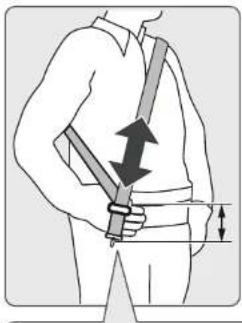
Illustration of a person wearing a belt buckle with arrows indicating upward motion (no text or symbols)
natural_image
Close-up of a white electrical plug with a black arrow pointing to a cable or connector (no text or symbols visible)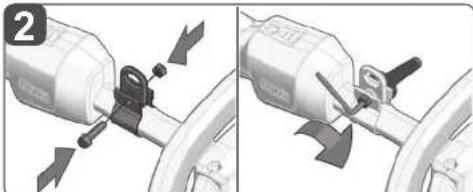
natural_image
Mechanical assembly diagram showing two stages of a vehicle wheel with adjustment knobs and arrows indicating motion (no text or symbols)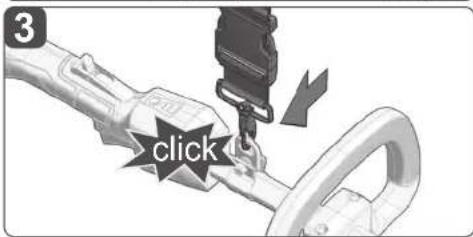
Adjust the soap. The carabiner should be a hand's width below your hip.
Gut einstellen. Der Karabner solbe sich eine Handbrett unter der Hürhe bei denen.
Réglez le namais. Le mousqueton doit se trouver en
cessous de la taille à une distance équivalante à la
acre d'une male
Regolare la cintura. Il meschettone dovrebbe troversi a un
caime scotto banca.
Ajustar la correa. El mosquetón se debería encontrar a un
salmo por cucapo de la cultura.
Ajuste o dinto. O mosquetão deve encontrar-se um palmo
alveio da pintura.
Riem instellen. De karabijnhaak dert zich een hand breed onder de heup te bevinden.
Juste remmen. Karatinhagen skal were en hands bredde under cirche.
Still in belte. Karabinkroken skal befirme seg en
handpakde under hollens.
Ställa in remmen. Karbinhaken bör sitta en handsbredd under höten.
Saadā hīhma. Karciniuson on clava kaden leveyden
voran lant on alapuole la.
Руботи воле. То ате́рите днестро до стрета во
відоста на телів в кішн опо то уход.
Kemeni avarlayn. Karabna, belin bir kany ahında buürmaldır.
Naslarne si gponuh. Karabina by měla být umistréná pod
bekem na šíku nýký.
Nastarte si popruh Karabina by mala byt umiestná pod
bokom na šíňu ruky.
Regulacja pasa. Karabnek pownten znajdować się na szerokość doni porże, biodra
Alipsa be a neveder. A karabner egy lenyer szessettme a oslo álat eve.
Nastaste pes. Karabin se mora "arajad eno dian pos
bekom.
Remen podesri. Karakinska kuka bi se trebala nalaziti jednu žinu nike ispod sukova
Nerogulājot joctu. Karabīro jāsbrodas rokas platumā zem gurra
Nustatykla drizą. Karabinas turėy zūū per plaštakos ploj Žemiau Kulu.
Regulserige firma. Karasi n peao o rema käe laiuset puisacest a lcool
Стрепулируйте ремень Карабин должен находиться на шижень падо-и ниже башка.
Регулирайте юлана. Карабинства трябла да се намира на една план разстояние под хълбеза.
Regiați cureava. Caracăna trebuie să se ate la o distanță de o palmă sub sold.
Прилаподете то решенот. Касобинерот треба да биде на широс-на од една рака под вашите испосы.
Відсутокте ремнь. Карабін позичен знаєдитись на цикону дого-і ніжчес пізса.
Podeshe pojas. Karaciner bi trebac ili za dužinu jsedne nike ispod luka.
Regulioni mpn. Grejme sigürese duhet te jelé sanje dore ren jetuaia
مقد ل hazard. بج أر白酒ن ل Hatchه لخاطر اند لصر مدة أر عریف
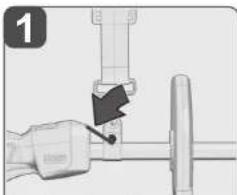
natural_image
Mechanical assembly diagram showing a pipe connection with a black arrow indicating a specific component (no text or symbols present)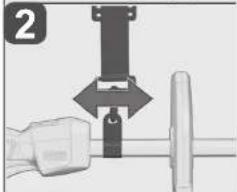
natural_image
Mechanical assembly diagram showing a clamping device with a lever and shaft (no text or symbols)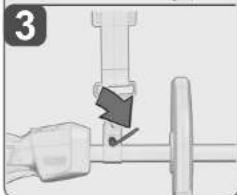
natural_image
Diagram of a pipe joint with a black arrow indicating a force or movement (no text or symbols present)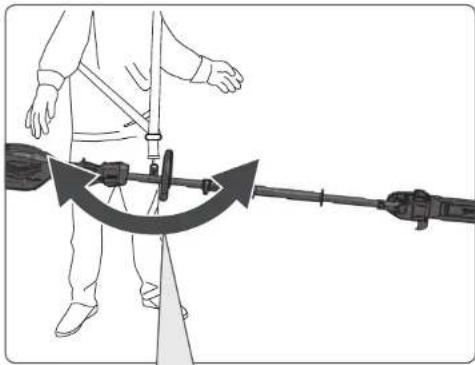
natural_image
Illustration of a person using a rope to lift a pole, showing motion direction (no text or symbols)Level the appliance.
Geral ausbalancieren.
Medre rapparen a niveau.
Blanciare i dispositivo.
Nivelar el aparalo
Deixe o dispositivo terminar a oscilação
podular.
perdural.
Apparaal utilinen.
Afbalancér maskinen.
Vatre apparalet.
Balarsera maskiren.
Asela and vaakasutraan.
Metokimton puxanis
Cibota callormas d
Pístroj výrověte.
Pristroj vyrovnajte.
Wyważanie urządzenia.
Lenditse k a keszulekel.
Poravnate napravo. Naoravu balancirati.
Izidzsvarojel ierič.
Subalansuokite jrengiri.
Ligutage seatel edas-tagasi.
Вариата устройство.
Низспирайте уседа.
Pendulati aparatul
Низелирајте го уредот.
Надайте пристрою стабільного положення.
Sáčekaja da sa uređaj zaustavi
Lévizni paisien.
الزه لحفر بارج.
Do not wear simultaneously multiple belt harnesses and/or shoulder harnesses.
Sie gleichzeitig mehrere Sicherheitsgurte und/oder Schulbergurte Tragen.
Ne jamais porter plusieurs jamais et/ou beudriers en même temps.
Non indossare mai più di una immacatura di sicurezza
e/o una tracolla contemporaneamente.
No llevar puestos simultáreamente varios cinturones de seguridad y/o correas de hombres.
Nunca use dois centos de segurança etou correa do ombro ao mesmo tempo.
Draag noch meer dan een veilgeidshamas en/of schoudenem tegeijk.
Brug aldig flere sikkerhodsseler ogreler skulderrømme sambig.
Ha aikri på deg 1 ore sikkerhetsbeter ogteller skukierbeter sambio.
Där adrig tillera säkerhetsbåtar ochveller azelremmar samtidigt.
Aá kcskaar kýjša useamola turavči jala
ckavarnovitä.
Μη χρησμοποιείν πολόρεμας δίνες ασφακείας ή δίνες υωση συμεράνες.
Hiçbir zaman birden fazla erniyet kemeni veiveya emuz kayısı lakmeyiniz.
Nikdy nencste současně více bezpečnostních popruhu
anebo ramenní popruhy.
Nikdy nenoste súčasne viaceré bezpečnostné pásy a' alebo ramenné pásy.
Nigcy nie należy zakładac więcej niż jeune
op zęzy bezni
jocnoczesnie.
Egyszerre ne hasznáton több biztonság hevedert és vagy válhevedert.
Nikoli ne nosite već varnostnih pasov in all ramenski pasov.
Ne ostte stovremeno više sigurnosnih pojaseva ili ramerih traka.
Venlakus nead relietojet vairak par vienu drošbas jostu univai plecu aiksu.
Низлаш не носеле повете ситуации Anti-rene Anti- Anti-rene Anti- Anti-rene Anti- Anti-rene Anti- Anti-rene Anti- Anti-rene Anti- Anti-rene Anti- Anti-rene Anti- Anti-rene Anti- Anti-rene Anti- Anti-rene Anti- Anti-rene Anti- Anti-rene Anti- Anti-rene Anti- Anti-rene Anti- Anti-rene Anti- Anti-rene Anti- Anti-rene Anti- Anti-rene Anti- Anti-rene Anti- Anti-rene Anti-Rene Anti-Rene Anti-Rene Anti-Rene Anti-Rene Anti-Rene Anti-Rene Anti-Rene Anti-Rene Anti-Rene Anti-Rene Anti-Rene Anti-Rene Anti-Rene Anti-Rene Anti-Rene Anti-Rene Anti-Rene Anti-Rene Anti-Rene Anti-Rene Anti-Rene Anti-Rene Anti-Rene Anti-Rene Anti-Rene Anti-Rene Anti-Rene Anti-Rene Anti-Rene Anti-Rene Anti-Rene Anti-Rene Anti-Renere Anti-Rene Anti-Rene Anti-Rene Anti-Rene Anti-Rene Anti-Rene Anti-Rene Anti-Rene Anti-Rene Anti-Rene Anti-Rene Anti-Rene Anti-Rene Anti-Rene Anti-Rene Anti-Rene Anti-Rene Anti-Rene Anti-Rene Anti-Rene Anti-Rene Anti-Rene Anti-Rene Anti-Rene Anti-Rene Anti-Rene Anti-Rene Anti-Rene Anti-Rene Anti-Rene Anti-Rene Anti-Rene Anti-ReneAntiReneAntiReneAntiReneAntiReneAntiReneAntiReneAntiReneAntiReneAntiReneAntiReneAntiReneAntiReneAntiReneAntiReneAntiReneAntiReneAntiReneAntiReneAntiReneAntiReneAntiReneAntiReneAntiReneAntiReneAntiReneAntiReneAntiReneAntiReneAntiReneAntiReneAntiReneAntiReneAntiReneAntiRenereAntiRenereAntiRenereAntiRenereAntiRenereAntiRenereAntiRenereAntiRenereAntiRenereAntiRenereAntiRenereAntiRenereAntiRenereAntiRenereAntiRenereAntiRenereAntiRenereAntiRenereAntiRenereAntiRenereAntiRenereAntiRearonAnterineAnterineAnterineAnterineAnterineAnterineAnterineAnterineAnterineAnterineAnterineAnterineAnterineAnterineAnterineAnterineAnterineAnterineAnterineAnterineAnterineAnterineAnterineAnterineAnterineAnterineAnterineAnterineAnterineAnterineAnterineAnterineAnterineAnterineAnerateAnterineAnterineAnterineAnterineAnterineAnterineAnterineAnterineAnterineAnterineAnterineAnterineAnterineAnterineAnterineAnterineAnterineAnterineAnterineAnterineAnterineAnterineAnterineAnterineAnterineAnterineAnterineAnterineAnterineAnterineAnterineAnterineAnterine
Quick release:
In case of imminent danger, the device must be jetlsoned quickly. To do this, open the lock and set down the device. Practise quick release. Do not throw the device during practice!
Schnellabwurf
Hold only on the gripping surfaces
natural_image
Illustration of a handheld device with a black handle and connector, connected to a metallic connector (no text or symbols present)Insulated gripping surface


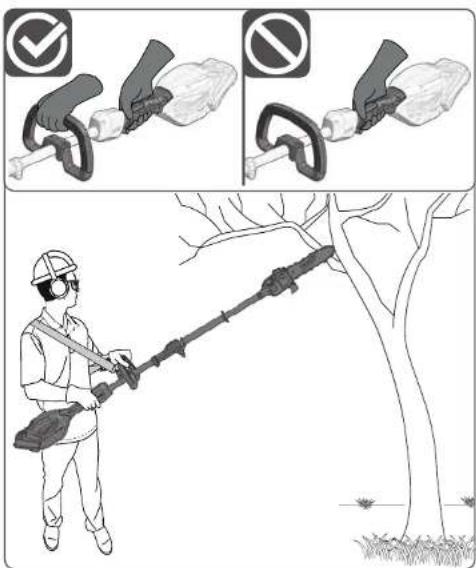
15 m minimum distance to electrical power lines and to other persons!
Do not work on ladder!
Arge footage redell!
natural_image
Simple line drawing of a tree with a horizontal branch and a vertical pole, no text or symbols present.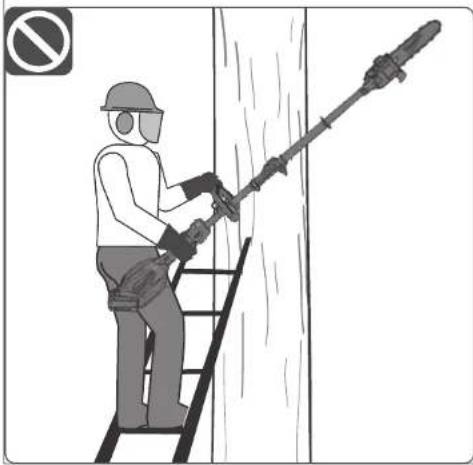
natural_image
Illustration of a worker using a long-handled tool on a ladder, with no visible text or symbolsSaw blade must be larger than wood!
Use caution when saving springsoles - for information see text section.
natural_image
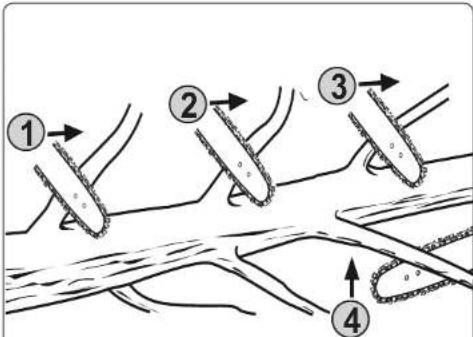
Simple line drawing of a pipe with leaves and a small structure, no text or symbols presentCutting sequence when pruning
Cutting sequence when Irving.

natural_image
Illustration of a chain saw cutting into a wire with an upward arrow, no text or symbols present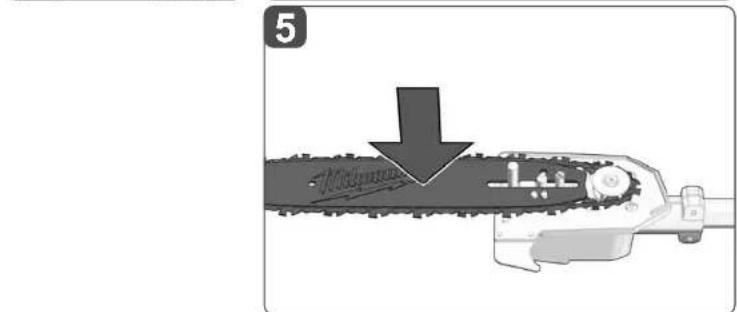
natural_image
Diagram of a mechanical tool with a downward arrow indicating motion or force (no text or symbols present)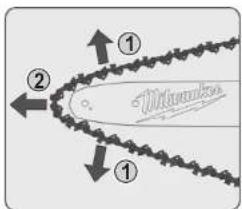
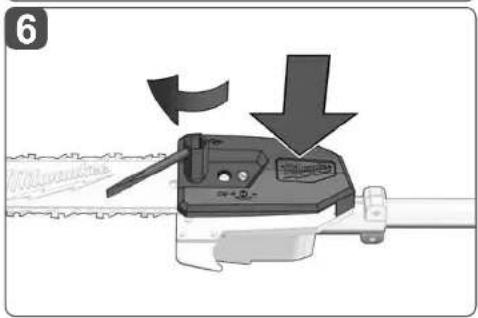
natural_image
Diagram of a mechanical device with downward arrows indicating motion or force, no text or symbols present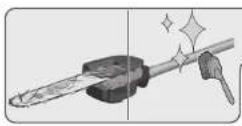
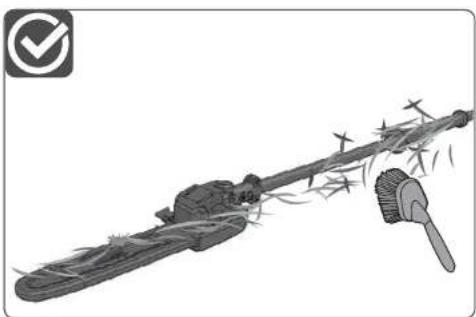
natural_image
Diagram of a cleaning brush with a brush and cleaning rod, showing mechanical components and dust (no text or symbols)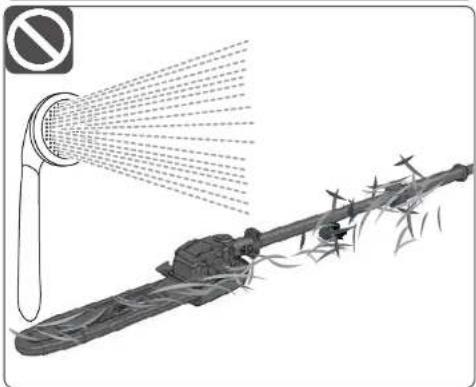
natural_image
Illustration of a spray gun spraying water onto a mechanical device (no text or symbols)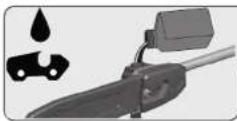
If level less than 1/4 than reffi || chain oil.
natural_image
Diagram of a mechanical device with a black component and an arrow indicating direction (no text or symbols)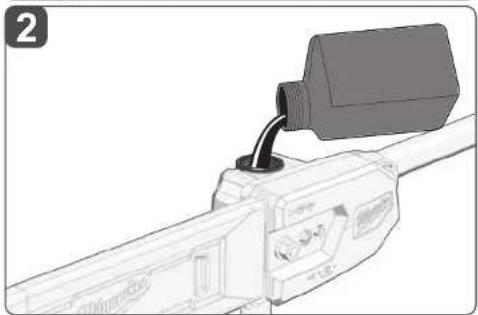
natural_image
Diagram of a mechanical device with a black component inserted, showing no text or symbols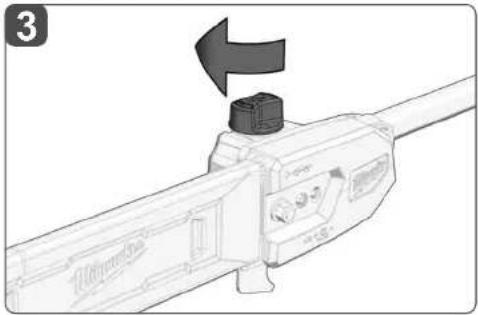
natural_image
Diagram of a mechanical device with a black component and directional arrow, no visible text or symbols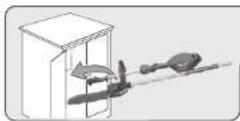
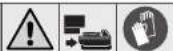
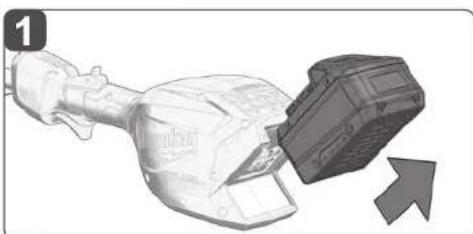
natural_image
3D rendering of a mechanical component with an arrow indicating direction (no text or symbols)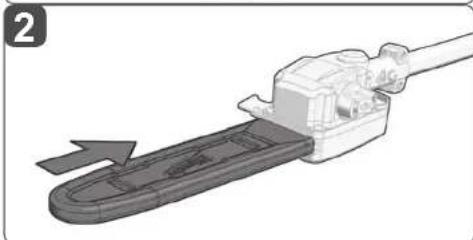
natural_image
Mechanical component diagram showing a chain being inserted into a cable (no text or symbols visible)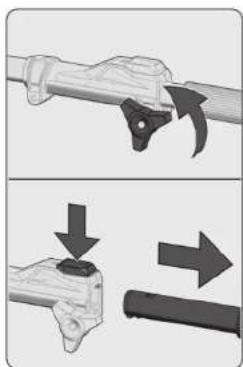
natural_image
Two-step diagram showing a hand holding a tool with arrows indicating motion or movement (no text or symbols present)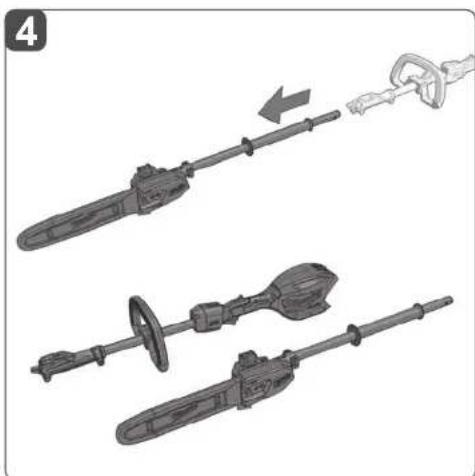
natural_image
Three-step illustration of a mechanical tool with a handle and lever mechanism, showing progressive assembly (no text or symbols)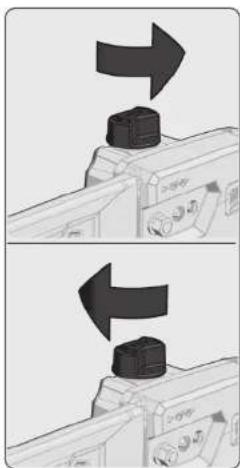
natural_image
Two-panel diagram showing a device with a black cap and directional arrows indicating motion (no text or symbols)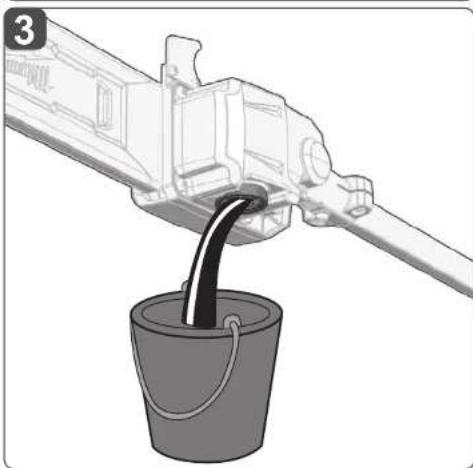
natural_image
Illustration of a bucket pouring liquid into a mechanical structure (no text or symbols)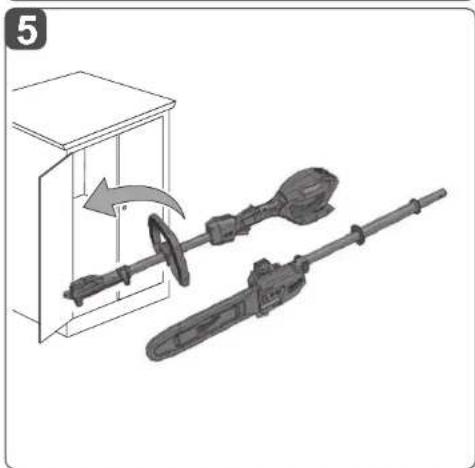
natural_image
Illustration of a mechanical device with a rotating lever and a long-handled tool, shown without any text or symbols.

The M18 POPH-EXA, available as an accessory, can be used as an extension.
3
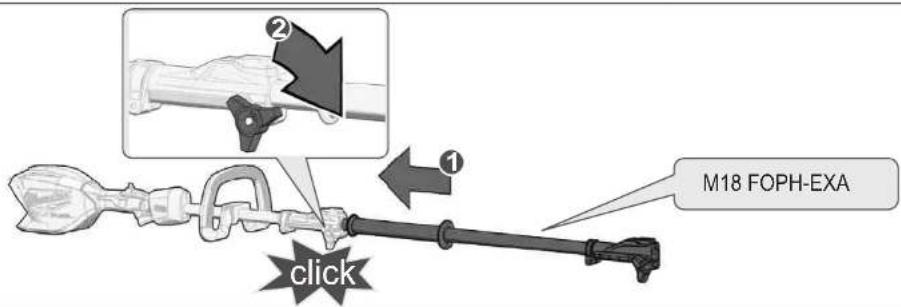
3
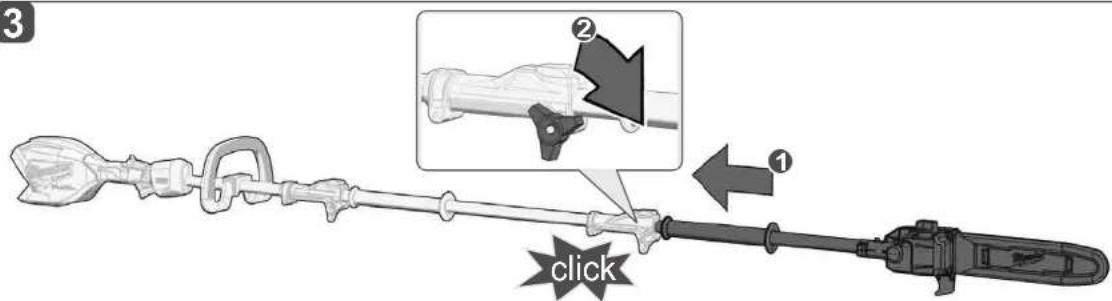
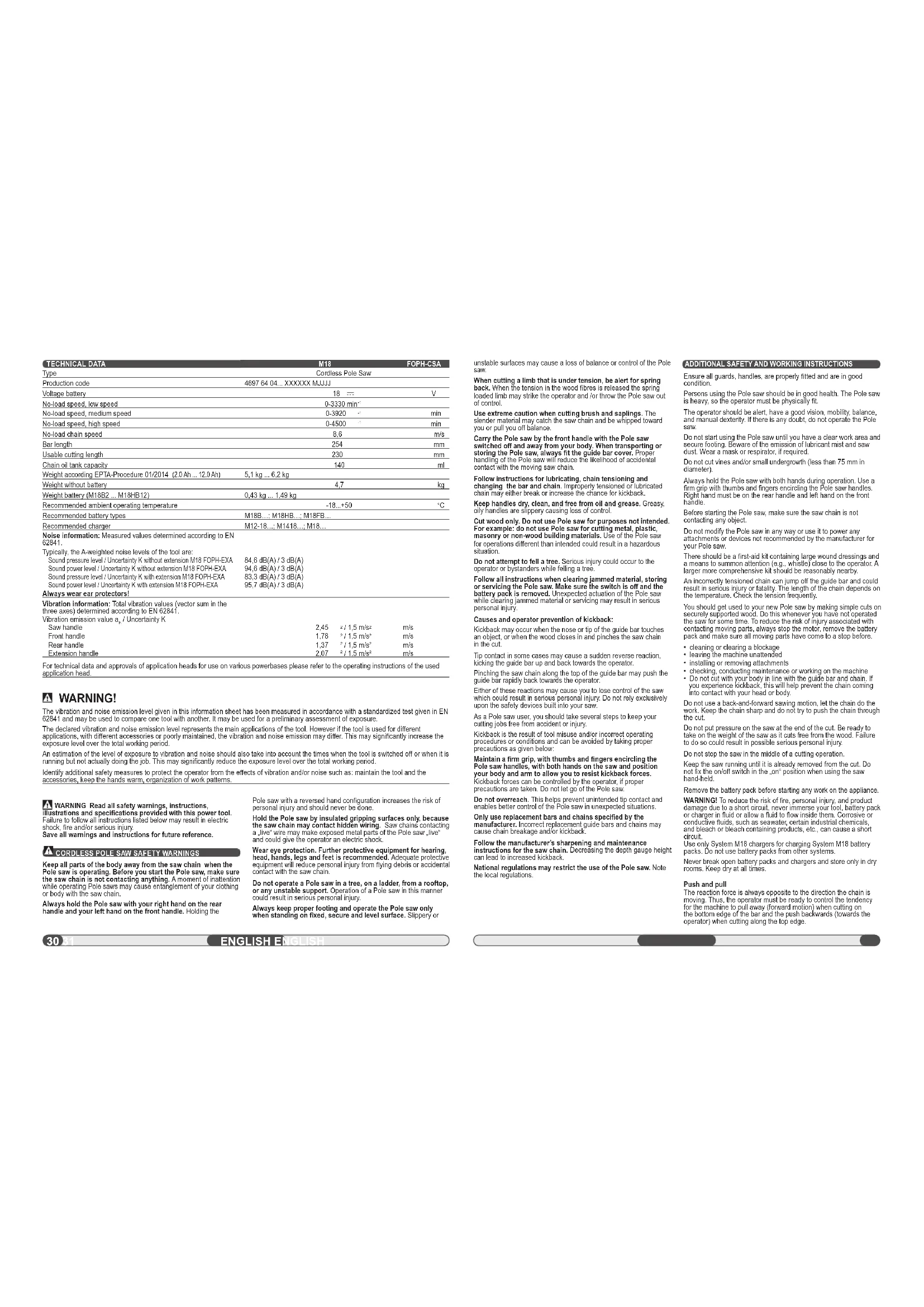
| TECHNICAL DATA | M18 | FOPH-CSA | |
| Type | Cordless Pole Saw | ||
| Production code | 4697-64 04...XXXXXX MJJJJ | ||
| Voltage battery | 18 --- | V | |
| No-load speed, low speed | 0-3330 min ^-1 | ||
| No-load speed, medium speed | 0-3920 ^-1 | min | |
| No-load speed, high speed | 0-4500 ^-1 | min | |
| No-load chain speed | 8.6 | m/s | |
| Bar length | 254 | mm | |
| Usable cutting length | 230 | mm | |
| Chain oil tank capacity | 140 | ml | |
| Weight according EPTA-Procedure 01/2014 (2.0 Ah ... 12.0 Ah) | 5.1 kg ... 6.2 kg | ||
| Weight without battery | 4.7 | kg | |
| Weight battery (M18B2 ... M18HB12) | 0.43 kg ... 1.49 kg | ||
| Recommended ambient operating temperature | -18...+50 | °C | |
| Recommended battery types | M18B... M18HB... M18FB... | ||
| Recommended charger | M12-18... M1418... M18... | ||
| Noise information: Measured values determined according to EN 62841. | |||
| Typically, the A-weighted noise levels of the tool are: | |||
| Sound pressure level / Uncertainty K without extension M18 FOPH-EXA | 84.6 dB(A) / 3 dB(A) | ||
| Sound power level / Uncertainty K without extension M18 FOPH-EXA | 84.6 dB(A) / 3 dB(A) | ||
| Sound pressure level / Uncertainty K with extension M18 FOPH-EXA | 83.3 dB(A) / 3 dB(A) | ||
| Sound power level / Uncertainty K with extension M18 FOPH-EXA | 95.7 dB(A) / 3 dB(A) | ||
| Always wear ear protectors! | |||
| Vibration information: Total vibration values (vector sum in the three axes) determined according to EN 62841. | |||
| Vibration emission value a , /Uncertainty K | |||
| Saw handle | 2.45 ^1/1.5 m/s^2 | m/s | |
| Front handle | 1.78 ^1/1.5 m/s^2 | m/s | |
| Rear handle | 1.37 ^1/1.5 m/s^2 | m/s | |
| Extension handle | 2.07 ^1/1.5 m/s^2 | m/s | |
For technical data and approvals of application heads for use on various powerbases please refer to the operating instructions of the used application head.
WARNING!
The vibration and noise emission level given in this information sheet has been measured in accordance with a standardized test given in EN 62841 and may be used to compare one tool with another. It may be used for a preliminary assessment of exposure.
The declared vibration and noise emission level represents the main applications of the tool. However if the tool is used for different applications, with different accessories or poorly maintained, the vibration and noise emission may differ. This may significantly increase the exposure level over the total working period.
An estimation of the level of exposure to vibration and noise should also take into account the times when the tool is switched off or when it is running but not actually doing the job. This may significantly reduce the exposure level over the total working period.
Identify additional safety measures to protect the operator from the effects of vibration and/or noise such as: maintain the tool and the accessories, keep the hands warm, organization of work patterns.
WARNING Read all safety warnings, instructions, illustrations and specifications provided with this power tool. Failure to follow all instructions listed below may result in electric shock, fire and/or serious injury.
Save all warnings and instructions for future reference.
CORDLESS POLE SAW SAFETY WARNINGS
Keep all parts of the body away from the saw chain when the Pole saw is operating. Before you start the Pole saw, make sure the saw chain is not contacting anything. A moment of inattention while operating Pole saws may cause entanglement of your clothing or body with the saw chain.
Always hold the Pole saw with your right hand on the rear handle and your left hand on the front handle. Holding the
Pole saw with a reversed hand configuration increases the risk of personal injury and should never be done.
Hold the Pole saw by insulated gripping surfaces only, because the saw chain may contact hidden wiring. Saw chains contacting a "live" wire may make exposed metal parts of the Pole saw "live" and could give the operator an electric shock.
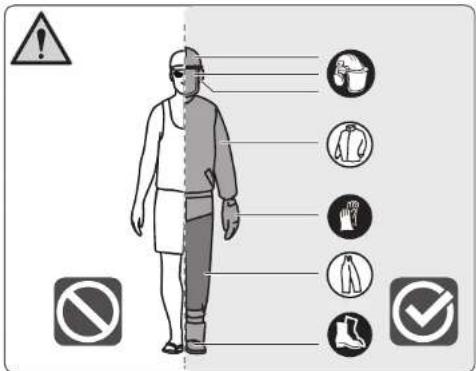
Wear eye protection. Further protective equipment for hearing, head, hands, legs and feet is recommended. Adequate protective equipment will reduce personal injury from flying debris or accidental contact with the saw chain.
Do not operate a Pole saw in a tree, on a ladder, from a rooftop, or any unstable support. Operation of a Pole saw in this manner could result in serious personal injury.
Always keep proper footing and operate the Pole saw only when standing on fixed, secure and level surface. Slippery or
unstable surfaces may cause a loss of balance or control of the Pole S&W.
When cutting a limb that is under tension, be alert for spring back. When the tension in the wood fibres is released the spring loaded limb may strike the operator and/or throw the Pole saw out of control.
Use extreme caution when cutting brush and saplings. The slender material may catch the saw chain and be whipped toward you or pull you off balance.
Carry the Pole saw by the front handle with the Pole saw switched off and away from your body. When transporting or storing the Pole saw, always fit the guide bar cover. Proper handling of the Pole saw will reduce the likelihood of accidental contact with the moving saw chain.
Follow instructions for lubricating, chain tensioning and changing the bar and chain. Improperly tensioned or lubricated chain may either break or increase the chance for kickback.
Keep handles dry, clean, and free from oil and grease. Greasy, oily handles are slippery causing loss of control.
Cut wood only. Do not use Pole saw for purposes not intended. For example: do not use Pole saw for cutting metal, plastic, masonry or non-wood building materials. Use of the Pole saw for operations different than intended could result in a hazardous situation.
Do not attempt to fell a tree. Serious injury could occur to the operator or bystanders while felling a tree.
Follow all instructions when clearing jammed material, storing or servicing the Pole saw. Make sure the switch is off and the battery pack is removed. Unexpected actuation of the Pole saw while clearing jammed material or servicing may result in serious personal injury.
Causes and operator prevention of kickback:
Kickback may occur when the nose or tip of the guide bar touches an object, or when the wood closes in and pinches the saw chain in the cut.
Tip contact in some cases may cause a sudden reverse reaction, kicking the guide bar up and back towards the operator.
Pinching the saw chain along the top of the guide bar may push the guide bar rapidly back towards the operator.
Either of these reactions may cause you to lose control of the saw which could result in serious personal injury. Do not rely exclusively upon the safety devices built into your saw.
As a Pole saw user, you should take several steps to keep your cutting jobs free from accident or injury.
Kickback is the result of tool misuse and/or incorrect operating procedures or conditions and can be avoided by taking proper precautions as given below:
Maintain a firm grip, with thumbs and fingers encircling the Pole saw handles, with both hands on the saw and position your body and arm to allow you to resist kickback forces. Kickback forces can be controlled by the operator, if proper precautions are taken. Do not let go of the Pole saw.
Do not overreach. This helps prevent unintended tip contact and enables better control of the Pole saw in unexpected situations.
Only use replacement bars and chains specified by the manufacturer. Incorrect replacement guide bars and chains may cause chain breakage and/or kickback.
Follow the manufacturer's sharpening and maintenance instructions for the saw chain. Decreasing the depth gauge height can lead to increased kickback.
National regulations may restrict the use of the Pole saw. Note the local regulations.
ADDITIONAL SAFETY AND WORKING INSTRUCTIONS
Ensure all guards, handles, are properly filled and are in good condition.
Persons using the Pole saw should be in good health. The Pole saw is heavy, so the operator must be physically fit.
The operator should be alert, have a good vision, mobility, balance, and manual dexterity. If there is any doubt, do not operate the Pole saw.
Do not start using the Pole saw until you have a clear work area and secure footing. Beware of the emission of lubricant mist and saw dust. Wear a mask or respirator, if required.
Do not cut vines and/or small undergrowth (less than 75 mm in diameter).
Always hold the Pole saw with both hands during operation. Use a firm grip with thumbs and fingers encircling the Pole saw handles. Right hand must be on the rear handle and left hand on the front handle.
Before starting the Pole saw, make sure the saw chain is not contacting any object.
Do not modify the Pole saw in any way or use it to power any attachments or devices not recommended by the manufacturer for your Pole saw.
There should be a first-aid kit containing large wound dressings and a means to summon attention (e.g., whistle) close to the operator. A larger more comprehensive kit should be reasonably nearby.
An incorrectly tensioned chain can jump off the guide bar and could result in serious injury or fatality. The length of the chain depends on the temperature. Check the tension frequently.
You should get used to your new Pole saw by making simple cuts on securely supported wood. Do this whenever you have not operated the saw for some time. To reduce the risk of injury associated with contacting moving parts, always stop the motor, remove the battery pack and make sure all moving parts have come to a stop before.
- cleaning or clearing a blockage - leaving the machine unattended
- installing or removing attachments
- checking, conducting maintenance or working on the machine - Do not cut with your body in line with the guide bar and chain. If you experience kickback, this will help prevent the chain coming into contact with your head or body.
Do not use a back-and-forward sawing motion, let the chain do the work. Keep the chain sharp and do not try to push the chain through the cut.
Do not put pressure on the saw at the end of the cut. Be ready to take on the weight of the saw as it cuts free from the wood. Failure to do so could result in possible serious personal injury.
Do not stop the saw in the middle of a cutting operation. Keep the saw running until it is already removed from the cut. Do not fix the on/off switch in the ,on* position when using the saw hand-held.
Remove the battery pack before starting any work on the appliance.
WARNING! To reduce the risk of fire, personal injury, and product damage due to a short circuit, never immerse your tool, battery pack or charger in fluid or allow a fluid to flow inside them. Corrosive or conductive fluids, such as seawater, certain industrial chemicals, and bleach or bleach containing products, etc., can cause a short circuit.
Use only System M18 chargers for charging System M18 battery packs. Do not use battery packs from other systems.
Never break open battery packs and chargers and store only in dry rooms. Keep dry at all times.
Push and pull
The reaction force is always opposite to the direction the chain is moving. Thus, the operator must be ready to control the tendency for the machine to pull away (forward motion) when cutting on the bottom edge of the bar and the push backwards (towards the operator) when cutting along the top edge.
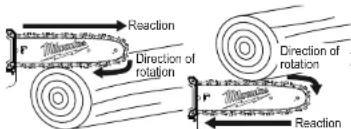
Saw jammed in the cut
Stop the Pole saw and make it safe. Do not try to force the chain and bar cut of the cut as this is likely to break the chain, which may swing back and strike the operator. This situation normally occurs because the wood is incorrectly supported which forces the cut to close under compression, thereby pinching the blade. If adjusting the support does not release the bar and chain, use wooden wedges or a lever to open the cut and release the saw. Never try to start the Pole saw when the guide bar is already in a cut or kerf.
Skating / Bouncing
When the Pole saw falls to dig in during a cut, the guide bar can begin hopping or dangerously skidding along the surface of the log or branch, possibly resulting in the loss of control of the Pole saw. To prevent or reduce skating or bouncing, always use the saw with both hands make sure the saw chain establishes a groove for cutting. Never cut small, if exibble branches or brushes with your Pole saw. Their size and fit exiblity can easily cause the saw to bounce towards you or bind up with enough force to cause a kickback. The best tool for that kind of work is a hand saw, pruning shears, an axe or other hand tools.
Personal protective equipment (see page 16)
Wear a helmet at all times when operating the machine. A helmet, equipped with mesh visor, can help reduce the risk of injury to the face and the head if kickback occurs. Wear ear protectors. Exposure to noise can cause hearing loss.
Good quality personal protective equipment, as used by professionals, will help reduce the risk of injury to the operator. The following items should be used when operating the machine:
Safety helmet
should comply with EN 397 and be CE marked
Hearing protection
should comply with EN 352-1 and be CE marked
Eye and face protection
should be CE marked and comply with EN 166 (for safely glasses) or EN 1731 (for mesh visors)
Gloves
should comply with EN381-7 and be CE marked
Leg protection (chaps)
should comply with EN 381-5, be CE marked and provide allround protection
Chain saw safety boots
should comply with EN ISO 20345:2004 and be marked with a shield depicting a Chain saw to show compliance with EN 381-3. (Occasional users may use steel toe-cap safety boots with protective gaiters which conform to EN 381-9 if the ground is even and there is little risk of tripping or catching on undergrowth)
Chain saw jackets for upper body protection
should comply with EN 381-11 and be CE marked
SAFETY DEVICES
WARNING! Consequences of improper maintenance, removal or modification of safety features like the chain catcher, guide bar, low kick-back saw chain may cause the safety features to not function correctly, thus increasing the potential for serious injury.
Low kick-back saw chain
A low-kick-back saw chain helps to reduce the possibility of a kickback event. The rakers (depth gauges) ahead of each cutter
can minimize the force of a kick-back reaction by preventing the cutters from digging in too deeply. Only use replacement guide bar and chain combinations recommended by the manufacturer. As saw chains are sharpened, they lose some of the low kickback qualities and extra caution is required. For your safety, replace saw chains when cutting performance decreases.
Guide Bar
Generally, guide bars with small radius tips have somewhat lower potential for kick-back. You should use a guide bar and matching chain which is just long enough for the job. Longer bars increase the risk of loss of control during sawing. Regularly check the chain tension. When cutting smaller branches (less than the full length of the guide bar) the chain is more likely to be thrown off if the tension is not correct.
INSTRUCTIONS CONCERNING THE PROPER TECHNIQUES FOR LIMBING AND CROSS-CUTTING
Understanding the forces within the wood
When you understand the directional pressures and stresses inside the wood you can reduce the "pinches" or at least expect them during your cutting. Tension in the wood means the fi bers are being pulled apart and if you cut in this area, the "kerf" or cut will tend to open as the saw goes through. If a log is being supported on a saw horse and the end is hanging unsupported over the end, tension is relaxed to support the back of the weight of the opening ranging from stretching the fi bers. We premise, the underside of the log will be in compression and the fi bers are being pushed together, if a cut is made in this area, the kerf will have the tendency to close up during the cut. This would pinch the blade.
Pruning (see picture section)
WARNING! If the limbs to be pruned are out of the reach of the Pole saw, hire a professional to perform the pruning. Failure to do so could result in serious personal injury.
Pruning is trimming limbs from a live tree.
- Work slowly, keeping both hands on the tool with a firm grip. Always make sure your footing is secure and your weight is distributed evenly on both feet.
- Do not cut from a ladder, this is extremely dangerous. Leave this operation for professionals.
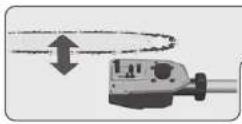
- During use, right hand holding power unit should not rise above chest height. Holding power head higher is difficult to control against kickback forces. When pruning trees it is important not to make the finishing cut next to the main limb or trunk until you have cut off the limb further out to reduce the weight. This prevents stripping the bark from the main member.
• Underbuck the branch 1/3 through for your first cut. - Your second cut should overbuck to drop the branch on. Now make your finishing cut smoothly and neatly against the main member so the bark will grow back to seal the wound.
Pull Hook
Use the pull hook to grab the trimmed branches and pull them from the tree canopy.
Limbing a tree
Limbing is removing the branches from a fallen tree. When limbing, leave larger lower limbs to support the log off the ground. Remove the small limbs in one cut. Branches under tension should be cut from the bottom up to avoid binding the Pole saw.
Cutting springpoles
A springpole is any log, branch, rooted stump, or sapling which is bent under tension by other wood so that it springs back if the wood holding it is cut or removed.
WARNING! Springpoles are dangerous and could strike the operator, causing the operator to lose control of the Pole saw. This could result in severe or fatal injury to the operator. This should be done by trained users.
ADDITIONAL SAFETY WARNINGS
Some regions have regulations that restrict the use of the machine. Check with your local authority for advice.
Never allow children or people unfamiliar with the instructions to use the machine. Local regulations may restrict the age of the operator.
Ensure before each use that all controls and safety devices function correctly. Do not use the machine if the "off" switch does not stop the motor.
Do not wear loose fitting clothing, short trousers, or jewellery of any kind.
Secure long hair so it is above shoulder level to prevent entanglement in moving parts.
Beware of thrown, flying, or falling objects. Keep all bystanders, children, and animals at least 15 m away from the work area.
Do not operate in poor lighting. The operator requires a clear view of the work area to identify potential hazards.
Use of hearing protection reduces the ability to hear warnings (shouts or alarms). The operator must pay extra attention to what is going on in the work area.
Operating similar tools nearby increases both the risk of hearing injury and the potential for other persons to enter your work area
Keep firm footing and balance. Do not overreach.
Overreaching can result in loss of balance and can increase the risk of kickback.
Keep all parts of your body away from any moving part.
Inspect the Pole saw before each use. Check for correct operation of all controls. Check for loose fasteners, make sure all guards and handles are properly and securely attached. Replace any damaged parts before use.
Do not modify the machine in any way or use parts and accessories which are not recommended by the manufacturer.
WARNING! If the machine is dropped, suffers heavy impact or begins to vibrate abnormally, immediately stop the machine and inspect for damage or identify the cause of the vibration. Any damage should be properly repaired or replaced by an MILWAUKEE service station.
Do not dispose of used battery packs in the household refuse or by burning them. Milwaukee Distributors offer to retrieve old batteries to protect our environment.
Do not store the battery pack together with metal objects (short circuit risk).
Use only System M18 chargers for charging System M1B battery packs. Do not use battery packs from other systems.
Battery acid may leak from damaged batteries under extreme load or extreme temperatures. In case of contact with battery acid wash it off immediately with soap and water. In case of eye contact rinse thoroughly for at least 10 minutes and immediately seek medical attention.
RISK REDUCTION
It has been reported that vibrations from handheld tools may contribute to a condition called Raynaud's Syndrome in certain individuals. Symptoms may include tingling, numbness, and blanching of the fingers. usually apparent upon exposure to cold. Hereditary factors, exposure to cold and dampness, diet, smoking and work practices are all thought to contribute to the development of these symptoms. There are measures that can be taken by the operator to possibly reduce the effects of vibration:
Keep your body warm in cold weather. When operating the unit wear gloves to keep the hands and wrists warm.
After each period of operation, exercise to increase blood circulation Take frequent work breaks. Limit the amount of exposure per day. Protective gloves available from professional chain saw retailers are designed specifically for chain saw use which give protection, good
grip and also reduce the effect of handle vibration. These gloves should comply with EN 381-7 and must be CE marked.
If you experience any of the symptoms of this condition, immediately discontinue use and see your doctor.
WARNING! Injuries may be caused, or aggravated, by prolonged use of a tool. When using any tool for prolonged periods, ensure you take regular breaks.
TRANSPORTATION AND STORAGE
Stop the product, remove the battery, and allow it to cool before storing or transporting.
Clean all foreign materials from the product. Store the product in a cool, dry, and well-ventilated place that is inaccessible to children. Keep away from corrosive agents, such as garden chemicals and de-icing salts. Do not store outdoors.
Fit the guide bar cover before storing the attachment and during transportation.
For transportation in vehicles, secure the product against movement or falling to prevent injury to persons or damage to the product.
RESIDUAL RISK
Even when the product is used as prescribed, it is still impossible to completely eliminate certain residual risk factors. The following hazards may arise in use and the operator should pay special attention to avoid the following:
- Injury caused by contact with the blades. Contact with the blades can cause serious injury. Keep the blade away from yourself and others. Cover it with the blade protector whenever you are not cutting.
• Injury caused by vibration
Hold the product by designated handles and restrict working time and exposure.
• Exposure to noise can cause hearing injury
Wear ear protection and limit exposure.
- Injury due to flying debris
Wear eye protection, heavy long trousers, gloves and substantial footwear at all times.
SPECIFIED CONDITIONS OF USE
The cordless Pole saw is only intended for use outdoors.
The Pole saw is not suitable felling trees!
For safety reasons, the Pole saw must be adequately controlled by using two-handed operation at all times.
The Pole saw is designed for cutting branches, trunks, logs, and beams of a diameter determined by the cutting length of the guide bar. It is only designed to cut wood.
Do not use the Pole saw for any purpose not listed in the specified conditions of use. It is not to be used for professional tree services. The Pole saw is not to be used by children or by persons not wearing adequate personal protective equipment and clothing.
WARNING! When using the Pole saw, the safety rules must be followed. For your own safety and that of bystanders, you must read and fully understand these instructions before operating the Pole saw. You should attend a professionally organized safety course in the use, preventative actions, fi rst-aid, and maintenance of Pole saws. Please keep these instructions safe for later use.
WARNING! Pole saws are potentially dangerous tools. Accidents involving the use of Pole saws often result in loss of limbs or death. It is not just the Pole saw that is the hazard. Falling branches, toppling trees, and rolling logs can all kill. Diseased or rotting timber poses additional hazards. You should assess your capability of completing the task safely. If there is any doubt, leave it to a professional tree surgeon.
Do not use this product in any other way as stated for normal use.
NOTES FOR LI-ION BATTERIES
Use of Li-Ion batteries
Battery packs which have not been used for some time should be recharged before use.
Temperatures in excess of 50°C (122°F) reduce the performance of the battery pack. Avoid extended exposure to heat or sunshine (risk of overhealing).
The contacts of chargers and battery packs must be kept clean.
For an optimum life-time, the battery packs have to be fully charged, after used.
To obtain the longest possible battery life remove the battery pack from the charger once it is fully charged.
For battery pack storage longer than 30 days:
Store the battery pack where the temperature is below 27°C and away from moisture
Store the battery packs in a 30% - 50% charged condition Every six months of storage, charge the pack as normal.
Battery protection for Li-Ion batteries
In extremely high torque, binding, stalling and short circuit situations that cause high current draw, the tool will vibrate for about 5 seconds, the fuel gauge will flash, and then the tool will turn OFF. To reset, release the trigger.
Under extreme circumstances, the internal temperature of the battery pack could raise too much. If this happens, the fuel gauge will flash until the battery pack cooled down. After the lights go off, the work may continue.
Transport of Li-Ion batteries
Lithium-ion batteries are subject to the Dangerous Goods Legislation requirements.
Transportation of those batteries has to be done in accordance with local, national and international provisions and regulations.
• The user can transport the batteries by road without further requirements.
- Commercial transport of Lithium-Ion batteries by third parties is subject to Dangerous Goods regulations. Transport preparation and transport are exclusively to be carried out by appropriately trained persons and the process has to be accompanied by corresponding experts.
When transporting batteries:
- Ensure that battery contact terminals are protected and insulated to prevent short circuit.
- Ensure that battery pack is secured against movement within packaging.
- Do not transport batteries that are cracked or leak. Check with forwarding company for further advice
MAINTENANCE
Adding the chain lubricating oil (see picture section)
WARNING! Never work without chain lubricant. If the saw chain is running without lubricant, the guide bar and the saw chain can be damaged. It is essential to frequently check the oil level in the oil level gauge and before starting to use the Pole saw.
Keep the reservoir more than 14 full to ensure sufficient oil is available for the job.
Note: It is recommended to use a vegetable based chain oil when pruning trees. Mineral oil may harm trees. Never use waste oil automotive oil, or very thick oils. These could damage the Pole saw. Clear surface around the oil cap to prevent contamination.
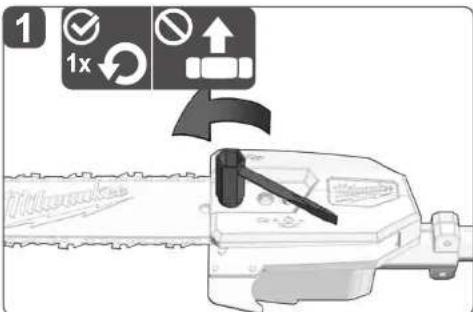
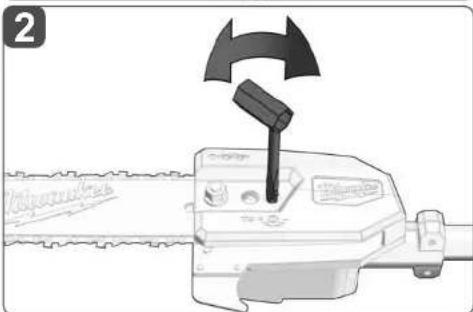
Adjusting the chain tension (see picture section)
WARNING! The saw chain is sharp. Always wear protective gloves when performing maintenance to the chain.
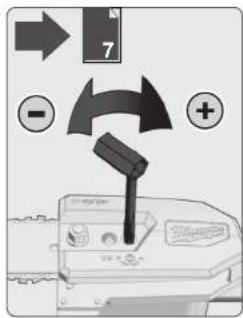
The chain tension is correct when the gap between the cutter in the chain and the bar is about 3 mm. Pull the chain in the middle of the
lower side of the bar downwards (away from the bar) and measure the distance between the bar and the chain cutlers. Tighten the bar mounting nuts by turning it counter clockwise.
Note Do not over tension the chain - excess tension will cause excessive wear and will reduce the life of the chain and could damage the bar. New chains could stretch and loosen during initial use. Remove battery pack and check chain tension frequently during the first two hours of use. The temperature of the chain increases during normal operation causing the chain to stretch. Check the chain tension frequently and adjust as required. A chain tensioned while warm may be too tight upon cooling. Make sure that the chain tension is correctly adjusted as specified in these instructions.
Chain and Bar
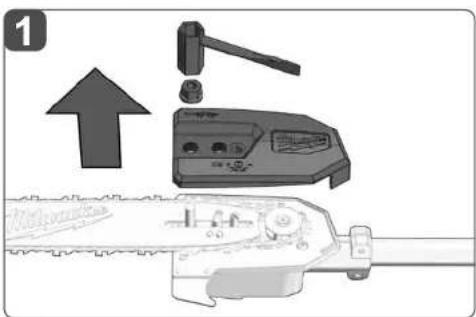
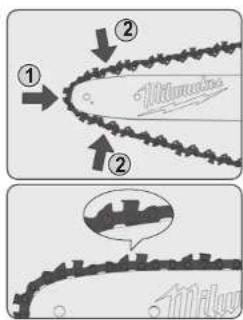
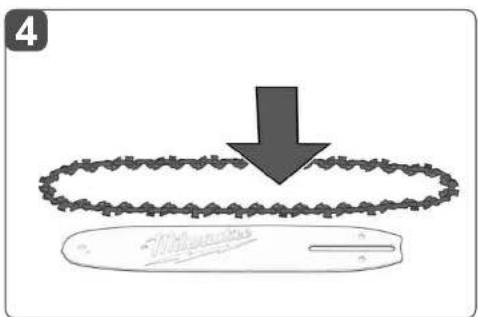
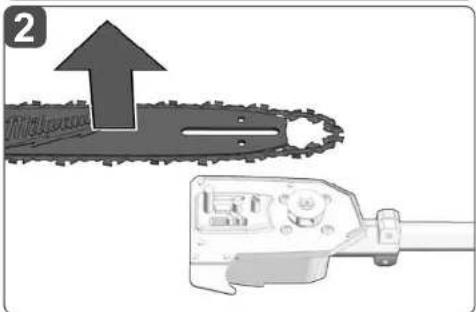
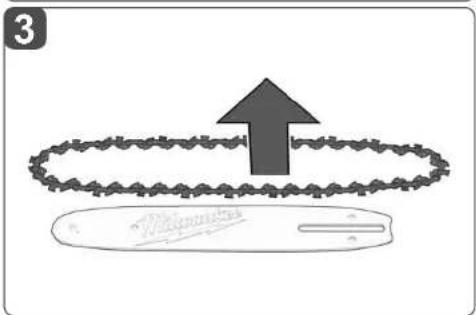
After every few hours of use, remove the drive cover, guide bar and chain and clean thoroughly using a soft bristle brush. Ensure oiling hole on bar is clear of debris. When replacing dull chains with sharp chains it is good practice to flip the chain bar from bottom to top.
Maintenance schedule
The following listed work must be done at least daily!
Chain tension Before each use and frequently
Chain sharpness Before each use, visual check
For damaged parts Before each use, visual check
For loose fasteners Before each use, inspect and clean
Guide Bar After each use, inspect and clean
Complete saw Every 5 hours of operation or after each use, complete check
ACCESSORIES
Use only Milwaukee accessories and Milwaukee spare parts. Should components need to be replaced which have not been described, please contact one of our Milwaukee service agents (see our list of guarantee/service addresses).
If needed, an exploded view of the tool can be ordered. Please state the machine type printed as well as the six-digit No. on the label and order the drawing at your local service agents or directly at: Techtronic Industries GmbH, Max-Eyth-Straße 10, 71384 Winnenden, Germany.
Replacement parts (bar and chain)
Chain 4932471329
Guide Bar 4932480170
SYMBOLS
Please read the instructions carefully before starting the machine.
CAUTION! WARNING! DANGER!
Remove the battery pack before starting any work on the machine.
Wear gloves!
Always wear protective clothing and footwear
Wear a protective helmet.
Wear ear protectors!
Use safety glasses.
Always use two hands when operating.
Wear upper body protection.
Wear leg protection.
Keep bystanders at least 15 m away during use.
Keep tool at least 15 m away from electric power lines.
Avoid contact with bar tip.
DANGER Beware of kickback
Chain Oil Reservoir
Chain Direction.
Chain Tension Adjustment
Do not use in the rain or leave outdoors while it is raining.

Do not dispose of waste batteries, waste electrical and electronic equipment as unsorted municipal waste. Waste batteries and waste electrical and electronic equipment must be collected separately. Waste batteries, waste accumulators and light sources have to be removed from equipment. Check with your local authority or retailer for recycling advice and collecting point.
According to local regulations retailers may have an obligation to take back waste batteries and Waste electrical and electronic equipment free of charge. Your contribution to re-use and recycling of waste batteries and waste electrical and electronic equipment helps to reduce the demand of raw materials.
Waste batteries, in particular containing lithium and waste Electrical and electronic equipment contain valuable, recyclable materials, which can adversely impact the environment and the human health, if not disposed of in an environmentally compatible manner.
Delete personal data from waste equipment, if any.
No-load speed
Voltage
Direct Current
European Conformity Mark
UK Conformity Mark
Ukraine Conformity Mark
EurAsian Conformity Mark
Beenbescherming (chaps)
LET OP! WAARSCHUWING! GEVAAR!

EurAsian-symbol van overeenstemming.
| TEKNISKE DATA | M18 | FOPH-CSA | |
| Type | Batteridrevet gronsav | ||
| Produktionsnummer | 4597-64-04...XXXXXX MJJJJ | ||
| Batterispending | 18 --- | V | |
| Tompangshastighed, lav hastighed | 0-3330 min-1 | ||
| Tompangshastighed, middel hastighed | 0-3920 -1 | min | |
| Tompangshastighed, hej hastighed | 0-4500 -1 | min | |
| Hastighed for kæden I tomgang | 8.6 | m/s | |
| Faringsskinnelænge | 254 | mm | |
| Anvendelig snitænge | 230 | mm | |
| Kaedeolie tankindhold | 140 | ml | |
| Vægt svaror til EPTA-procedure 01/2014 (2.0 Ah ... 12.0 Ah) | 5,1 kg ... 6,2 kg | ||
| Vægt uden batteri | 4,7 | kg | |
| Vægt batteri (M18B2 ... M18HB12) | 0,43 kg ... 1,49 kg | ||
| Anbefalet temperatur under arbejet | -18...-50 | °C | |
| Anbefalede batterityper | M18B.... M18HB.... M18FB.... | ||
| Anbefalede poladere | M12-18... M1418... M18... | ||
The following described
In addition, the average value (in dollars)
For 1850, 127.14 of drug
large stock component
Second Edition book has. Effects on copy
Ovard Enermer Dog, Erisso og Tens
Hele seven River gang grohsaven mail valley
[Non-Text]
[Non-Text]
[Non-Text]
[Non-Text]
[Non-Text]
[Non-Text]
[Non-Text]
[Non-Text]
[Non-Text]
(1) AD = BD = 1
The Ground Truth image displays a single, solid horizontal line. According to Rule 2 (UNDERSCORE & LINE RULES), if the GT contains lines used for stylistic emphasis or as background elements (like ruled paper), the OCR result must ignore them. The provided OCR content is "____", which consists of four underscores. This is incorrect because underscores are not equivalent to a solid line and are not permitted under the “Stylistic/Background Lines (Ignore)” rule. The OCR has hallucinated underscores where none should exist in the GT, violating the “Stylistic/Background Lines (Ignore)” rule. Therefore, the OCR result is inconsistent with the Ground Truth.
[Non-Text]
[Non-Text]
[Non-Text]
[Non-Text]
[Non-Text]
[Non-Text]
[Non-Text]
[Non-Text]
(1) AD = BD = 1
m = 311
m - 1 0 ;
(1) AD = BD = 1
[Non-Text]
[Non-Text]
[Non-Text]
[Non-Text]
[Non-Text]
[Non-Text]
[Non-Text]
[Non-Text]
[Non-Text]
[Non-Text]
[Non-Text]
[Non-Text]
[Non-Text]
[Non-Text]
[Non-Text]
[Non-Text]
[Non-Text]
[Non-Text]
[Non-Text]
[Non-Text]
[Non-Text]
[Non-Text]
[Non-Text]
[Non-Text]
[Non-Text]
| TEKNISKE DATA | M18 | FOPH-CSA | |
| Type | Batteridrevet grensag | ||
| Produksjonsnummer | 4597 64 04...XXXXXX MJJJJ | ||
| Batterispenning | 18 --- | V | |
| Turtall ved tomgang, lavt turtall | 0-3330 min ^-1 | ||
| Turtall ved tomgang, middels turtall | 0-3920 | min | |
| Turtall ved tomgang, heyt turtall | 0-4500 | min | |
| Kjedehastighet uten motstand | 8.6 | m/s | |
| Lengde fenngskinne | 254 | mm | |
| Ulnytbar snittlengde | 230 | mm | |
| Volum olistank | 140 | ml | |
| Vektl honhold til EPTA-Prosodyren 01/2014 (2.0 Ah ... 12.0 Ah) | 5,1 kg ... 6,2 kg | ||
| Vektl uten byttebatteri | 4,7 | kg | |
| Vektl akkumulator (M18B2 ... M18HB12) | 0,43 kg ... 1,49 kg | ||
| Anbefalt omgivelsestemperatur under arbeid | -18...-50 | °C | |
| Anbefalte baterityper | M18B.... M18HB.... M18FB.... | ||
| Anbefalte ieder | M12-18... M1418... M18... | ||
Sage stammer under spenning
DALŠI BEZPEČNOSTNÍ A PRACOVNÍ POKYNY
DALSIE BEZPEČNOSTNÉ A PRACOVNÉ POKYNY
WYPOSAŻENIE DODATKOWE
UPORABA V SKLADU Z NAMEMBNOSTJO
OSTALE SIGURNOSNE I RADNE UPUTE
Provjenle jesu li svi štlnici ispravno montirani i u ispravnom stanju. Osobe koje rukuju pilom za grane morale bi biti dobrog zdravlja. Pila za grane je taška, pa rukovatelj mora biti u dobrcj tjelesnoj kondiciji. Rukovatelj mora biti brz, okretan, imati dobar vid, ravnotežu i spretne ruke. Postojie li nedcunios, pilu za grane ne korisiti
Ne uključujte pilu dok nemate čistu radnu površnu i čvrsto uporište. Obralite pozornosl na ispuštanje para sredstva za podmazivanje i piljevine. Ako je potrebno, nosite masku ili respirator.
DODATNE SIGURNOSNE UPUTE
The Ground Truth image displays a single, solid horizontal line. According to Rule 2 (UNDERSCORE & LINE RULES), if the GT contains lines used for stylistic emphasis or as background elements (like ruled paper), the OCR result must ignore them. The provided OCR content is "____", which consists of four underscores. This is incorrect because underscores are not equivalent to a solid line and are not permitted under the “Stylistic/Background Lines (Ignore)” rule. Outputting underscores for a stylistic line violates the rule and constitutes an error. Therefore, the OCR result is inconsistent with the Ground Truth.
-
EDASISED OHUTUS- JA TÖÖJUHISED
The image is too blurry to recognize any text content.
الجزير والغيب
The quick brown fox jumps over the lazy dog.
EC DECLARATION OF CONFORMITY
We declare as the manufacturer under our sole responsibility that the product described under "Technical Data" fulfills all the relevant regulations and directives listed below and that the following harmonized standards have been used.
DÉCLARATION CE DE CONFORMITÉ
DEKLARACJA ZGODNOŚCI WE
Winnenden, 2024-08-31

Martin Landner
Managing Director

Authorized to compile the technical file
GB-DECLARATION OF CONFORMITY
We declare as the manufacturer under our sole responsibility that the product described under "Technical Data" fulfills all the listed below relevant regulations and that the following designated standards have been used.
S.I. 2008'1597 (as amended)
S.I. 2016/1091 (as amended)
S.I. 2012/3032 (as amended)
S.I. 2001/1701 (as amended)
BS EN 62841-1:2015+A11:2022
BS EN ISO 11680-1:2021
BS EN IEC 55014-1:2021
BS ENTEC 55014-2:2021
BS ENTEC 65000.2018
Winnenden, 2024-08-31

Martin Landhem
Managing Director
Techtronic Industries GmbH
Max-Eyth-Straße 10
71364 Winnender
Germany
Authorized to compile the technical file:
Techtronic Industries (UK) Ltd
Parkway
Marlow SL7 1YL
UK
Copyright 2024
Techtronic Industries GmbH
Max-Eyth-Str. 10
71364 Winnenden
Germany
+49 (0) 7195-12-0
www.milwaukeetool.eu
Techtronic Industries (UK) Ltd
Parkway
Marlow SL7 1YL
UK
(10.24)
4931 4701 80
- M18 FOPH-CSA
- Quick release:
- Schnellabwurf
- WARNING!
- CORDLESS POLE SAW SAFETY WARNINGS
- ADDITIONAL SAFETY AND WORKING INSTRUCTIONS
- Push and pull
- Saw jammed in the cut
- Skating / Bouncing
- Personal protective equipment (see page 16)
- Safety helmet
- Hearing protection
- Eye and face protection
- Gloves
- Leg protection (chaps)
- Chain saw safety boots
- Chain saw jackets for upper body protection
- SAFETY DEVICES
- Low kick-back saw chain
- Guide Bar
- INSTRUCTIONS CONCERNING THE PROPER TECHNIQUES FOR LIMBING AND CROSS-CUTTING
- Understanding the forces within the wood
- Pruning (see picture section)
- Pruning is trimming limbs from a live tree.
- Pull Hook
- Limbing a tree
- Cutting springpoles
- ADDITIONAL SAFETY WARNINGS
- RISK REDUCTION
- TRANSPORTATION AND STORAGE
- RESIDUAL RISK
- SPECIFIED CONDITIONS OF USE
- NOTES FOR LI-ION BATTERIES
- Use of Li-Ion batteries
- Battery protection for Li-Ion batteries
- Transport of Li-Ion batteries
- MAINTENANCE
- Adding the chain lubricating oil (see picture section)
- Adjusting the chain tension (see picture section)
- Chain and Bar
- Maintenance schedule
- ACCESSORIES
- Replacement parts (bar and chain)
- SYMBOLS
- Beenbescherming (chaps)
- Sage stammer under spenning
- DALŠI BEZPEČNOSTNÍ A PRACOVNÍ POKYNY
- DALSIE BEZPEČNOSTNÉ A PRACOVNÉ POKYNY
- WYPOSAŻENIE DODATKOWE
- UPORABA V SKLADU Z NAMEMBNOSTJO
- OSTALE SIGURNOSNE I RADNE UPUTE
- DODATNE SIGURNOSNE UPUTE
- EDASISED OHUTUS- JA TÖÖJUHISED
- الجزير والغيب
- EC DECLARATION OF CONFORMITY
- DÉCLARATION CE DE CONFORMITÉ
- DEKLARACJA ZGODNOŚCI WE
- GB-DECLARATION OF CONFORMITY
Brand : MILWAUKEE
Model : M18 FOPHCSA
Category : Electric saw