
0 607 350 199 - Sander BOSCH - Free user manual and instructions
Find the device manual for free 0 607 350 199 BOSCH in PDF.
 FR
FR
 BG
BG
 CS
CS
 DA
DA
 DE
DE
 EL
EL
 EN
EN
 ES
ES
 ET
ET
 FI
FI
 HU
HU
 ID
ID
 IT
IT
 KK
KK
 KO
KO
 LT
LT
 LV
LV
 MK
MK
 NL
NL
 NO
NO
 PL
PL
 PT
PT
 RO
RO
 RU
RU
 SK
SK
 SL
SL
 SV
SV
 TR
TR
 UK
UK
 VI
VI
 ZH
ZH
| Brand | Bosch |
| Model | 0 607 350 199 |
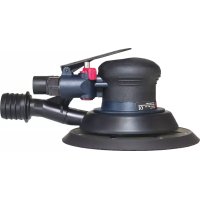
| Category | Pneumatic orbital sander |
| Power source | Compressed air |
| Maximum working pressure | 6.3 bar (91 psi) |
| Air connection | 1/4" NPT |
| Hose inner diameter | 10 mm |
| Air consumption at idle | 8.5 l/s (18.0 cfm) |
| Idle speed | 12,000 rpm |
| Stroke amplitude | 5.0 mm |
| Sanding pad diameter | 150 mm |
| Weight (according to EPTA 01:2014) | 0.68 kg |
| Sound pressure level (LpA) | 76 dB(A) (uncertainty 3 dB) |
| Vibrations (ah) | < 3.1 m/s² (uncertainty 1.5 m/s²) |
| Main functions | Dry sanding of wood, plastic, metal, putty and varnished surfaces |
| Switch | On/Off with maintained pressure |
| Speed regulator | Yes, continuously variable |
| Dust extraction system | External (via connection on the housing) |
| Abrasive attachment | Hook-and-loop (Velcro) |
| Interchangeable sanding pad | Yes (extra soft, soft, hard) |
| Lubrication | Recommended: SAE 10 or 20 motor oil, or Bosch special grease for gears |
| Preventive maintenance | Cleaning of air intake filter, periodic check of idle speed, regular lubrication |
| Spare parts | Available at Bosch or authorized dealers (use genuine parts) |
| Repairability | By an authorized Bosch after-sales service |
| Conformity standards | Directive 2006/42/EC, EN ISO 11148-8 |
Frequently Asked Questions - 0 607 350 199 BOSCH
User questions about 0 607 350 199 BOSCH
0 question about this device. Answer the ones you know or ask your own.
Ask a new question about this device
Download the instructions for your Sander in PDF format for free! Find your manual 0 607 350 199 - BOSCH and take your electronic device back in hand. On this page are published all the documents necessary for the use of your device. 0 607 350 199 by BOSCH.
USER MANUAL 0 607 350 199 BOSCH
Robert Bosch Power Tools GmbH
70538 Stuttgart
GLIMM
www.bosch-pt.com
160992A39N(2014.07)AS/298UNI

1609 92A 39N
0607350...
...198|...199|...200

BOSCH
en Original instructions
Inoliceignale
A
eOocokolkng
daOgrrnng
Executive Vice President Engineering
Helmut Heinzelmann
Head of Product Certification PT/ECS

Robert Bosch Power Tools GmbH
70538 Stuttgart, GERMANY
Stuttgart, 01.01.2017
Assembly
General Safety Rules for Pneumatic Tools
WARNING Before installing, operating, repairing, maintaining and replacing accessories as well as prior to working near the pneumatic tool, please read and observe all instructions. Failure to follow the following safety warnings may result in serious injury. Save all safety warnings and instructions for future reference, and make them available to the operator.
Work area safety
Pay attention to surfaces that may have become slippery from using the machine, and to tripping hazards from the pneumatic or hydraulic hose. Slipping, tripping and falling are main reasons for workplace injuries. Do not operate the pneumatic tool in explosive atmospheres, such as in the presence of flammable liquids, gases or dusts. While working the workpiece, sparks can be created which may ignite the dust or fumes. - Keep children and bystanders away from your workplace while operating the pneumatic tool. Distractions from other persons can cause you to lose control over the pneumatic tool.
Pneumatic tool safety
- Never direct the airflow against yourself or other persons close by, and conduct cold air away from your hands. Compressed air can lead to serious injuries.
- Check the connections and the air supply lines. All maintenance units, couplers, and hoses should conform to the product specifications in terms of pressure and air volume. Too low pressure impairs the function of the pneumatic tool; too high pressure can result in material damage and personal injury. Protect the hoses from kinks, restrictions, solvents, and sharp edges. Keep the hoses away from heat, oil, and rotating parts. Immediately replace a damaged hose. A defective air supply line may result in a wild compressed-air hose and can cause personal injury. Raised dust or chips may cause serious eye injury. Make sure that hose clamps are always tightened firmly. Loose or damaged hose clamps may result in uncontrolled air escape.
Personal safety
- Stay alert, watch what you are doing, and use common sense when operating a pneumatic tool. Do not use a pneumatic tool while tired or under the influence of drugs, alcohol, or medication. A moment of inattention while operating a pneumatic tool may result in personal injury. Use personal protective equipment. Always wear eye protection. Wearing personal protective equipment - such as a respirator, non-skid safety shoes, hard hat or
hearing protection - according to the instructions of your employer or as required by the provisions for work and health protection, reduces the risk of personal injury.
Prevent unintentional starting. Make sure that the pneumatic tool is switched off before connecting it to the air supply, picking it up or carrying it. When your finger is on the On/Off switch while carrying the pneumatic tool or when connecting the pneumatic tool to the air supply while it is switched on, accidents can occur. - Remove any adjustment tools before switching on the pneumatic tool. A wrench or key left attached to a rotating part of a pneumatic tool may result in personal injury. Do not overreach. Keep proper footing and balance at all times. This enables better control of the pneumatic tool in unexpected situations. Dress properly. Do not wear loose clothing or jewellery. Keep your hair, clothing and gloves away from moving parts. Loose clothes, jewellery or long hair can be caught in moving parts. If devices are provided for the connection of dust extraction and collection facilities, ensure these are connected and properly used. Use of dust collection can reduce dust-related hazards. Do not directly inhale the exhaust air. Avoid exposing the eyes to exhaust air. The pneumatic tool's exhaust air can contain water, oil, metal particles and debris from the compressor. This can cause damage to one's health.
Pneumatic tool use and care
Use the clamping devices or a vice to secure and support the workpiece. Holding the workpiece by hand or against your body will not allow for safe operation of the pneumatic tool. Do not overload the pneumatic tool. Use the pneumatic tool intended for your work. The correct pneumatic tool will do the job better and safer at the rate for which it is designed. Do not use a pneumatic tool that has a defective On/Off switch. A pneumatic tool that cannot be controlled with the switch is dangerous and must be repaired. - Disconnect the air supply before making any adjustments, changing accessories, or when not using for extended periods. This safety measure prevents accidental starting of the pneumatic tool. Store idle pneumatic tools out of the reach of children. Do not allow persons unfamiliar with the pneumatic tool or these instructions to operate the device. Pneumatic tools are dangerous in the hands of untrained users. Maintain the pneumatic tool with care. Check for misalignment or binding of moving parts, breakage of parts and any other condition that may affect the pneumatic tool's operation. Have damaged parts repaired before using the pneumatic tool. Many accidents are caused by poorly maintained pneumatic tools. Use the pneumatic tool, accessories, application tools, etc. according to these instructions. Take into consideration the working conditions and the activities to be
carried out. This reduces the development of dust, vibrations and noise to the greatest extent.
The pneumatic tool should be set up, adjusted, or used exclusively by qualified and trained operators. The pneumatic tool may not be modified in any way. Modifications can reduce the effectiveness of the safety measures and increase the risks for the operator.
Service
Have your pneumatic tool repaired only through a qualified repair person and only using original replacement parts. This will ensure that the safety of the pneumatic tool is maintained.
Safety Warnings for Pneumatic Random Orbit Sanders
In case of breakage of the workpiece or an accessory, or even of the pneumatic tool itself, parts can be thrown about at high speed. During operation, repairs or maintenance, and when replacing accessories on the pneumatic tool, always wear shock-resistant eye protection. The degree of the required protection should be separately evaluated for each individual application. Wear a hard hat when carrying out work overhead. This prevents injuries. - Keep bystanders a safe distance away from the work area. Anyone entering the work area must wear personal protective equipment. Fragments of the workpiece or of broken cutting discs may fly away and cause injury beyond the immediate area of operation. Caution! Application tools can become hot during prolonged operation of the pneumatic tool. Wear protective gloves. The operators and the maintenance personnel must be physically capable to handle the size, weight and power of the pneumatic tool. Be prepared for unexpected movements of the pneumatic tool that can develop owing to reaction forces or breakage of the application tool. Maintain a firm grip on the pneumatic tool and position your body and arms to allow you to resist such movements. These precautions can prevent injuries. - When working with this pneumatic tool, assume a comfortable stance, hold the tool securely and avoid unfavourable positions or such positions, where it is difficult to keep your balance. For prolonged work, the operator should change the stance or posture, which can help avoid discomfort and fatigue. In case of an interruption of the air supply or reduced operating pressure, switch the pneumatic tool off. Check the operating pressure and start again when the operating pressure is optimal. Use only the lubricants recommended by Bosch. Do not use any damaged application tools. Before every use, check application tools for chips and cracks, abrasion or excessive wear. If the pneumatic tool or the
application tool falls, check whether it is damaged or use an undamaged application tool. When you have checked and inserted the application tool, keep yourself and bystanders away from the vicinity of the spinning application tool and leave the power tool to run for a minute at maximum speed. Damaged accessories usually break during this test time.
Never place your hand near rotating application tools. You could injure yourself. Do not use the pneumatic tool without an abrasive. Otherwise the sanding plate will wear down and abrasives will no longer be able to be securely fastened. The pneumatic tool can electrostatically discharge if you sand plastics or other non-conductive materials. - When using the pneumatic tool for the performance of work-related activities, the operator may experience unpleasant sensations in the hands, arms, shoulders, neck area or other body parts. Should the operator perceive symptoms such as persistent nausea, discomfort, throbbing, pain, tingling, numbness, burning or stiffness, these warning signs should not be ignored. The operator should notify his employer about the symptoms and consult a qualified physician. Do not use cutting discs. The permitted speed of the application tool must be at least as high as the maximum speed specified on the pneumatic tool. Accessories rotating faster than their permitted speed can break and fly around. Make sure that self-adhesive sanding sheets are fitted concentrically on the sanding plate.
WARNING
The dust developing during sanding, sawing, grinding, drilling and similar
operations can act carcinogenic, teratogenic or mutagen
ic. Some of the substances contained in these dusts are:
- Lead in lead-based paints and varnishes;
- Crystalline silica in bricks, cement and other masonry work;
- Arsenic and chromate in chemically treated wood.
The risk of disease depends on how often you are exposed to these substances. To reduce the risk, you should work only in well ventilated rooms with appropriate protective equipment (e.g. with specially designed respirators that filter out even the smallest dust particles).
By working with certain materials, dusts and vapours can form, which can create an explosive atmosphere. By working with pneumatic tools, sparks can be produced, which can ignite the dust or the vapours. - When working on the workpiece, additional noise can develop, which can be avoided through appropriate measures (e.g. by using damping materials on occurrence of ringing noise from the workpiece). When the pneumatic tool is equipped with a silencer, always ensure that it is available and in proper working condition when operating the pneumatic tool. Vibration effects may cause damage to the nerves and blood circulation disorders in the hands and arms.
Wear close-fitting gloves. The flow of compressed air makes the handles of pneumatic tools cold. Warm hands are less sensitive to vibrations. Loose fitting gloves can be caught by rotating parts. If you notice that the skin of your fingers or hands becomes numb, tingles, hurts or turns white, stop working with the pneumatic tool, notify your employer and consult a physician. Hold the pneumatic tool with a not too firm yet secure grip, compliant with the required hand-reaction forces. The vibrations can be intensified the firmer you hold the tool. When universal rotary couplings (bayonet couplings) are being used, retaining pins are required. Use Whip-check hose restraints to protect against failed hose connections or the connection between hose and pneumatic tool. Never carry the pneumatic tool by the hose.
Symbols
The following symbols could have a meaning for the use of your pneumatic tool. Please take note of the symbols and their meaning. The correct interpretation of the symbols will help you to use the pneumatic tool in a better and safer manner.

Before installing, operating, repairing, maintaining and replacing accessories as well as prior to working near by the pneumatic tool, please read and observe all instructions. Failure to follow the following safety warnings and instructions may result in serious injury.
Symbol Meaning
| W | W | a | t | t | P | o |
| Nm Newton metre Unit of energy (torque) | ||||||
| kg | Kilogram | Mass, weight | ||||
| Ibs | Pounds | |||||
| mm Millimetre Length | ||||||
| min | Minutes | Time period, duration | ||||
| s | Seconds | |||||
| \( \mathbf{m}\mathbf{i}^{-1} \) | Revolutions or motions per minute | No-load speed | ||||
| bar | bar | Air pressure | ||||
| psi | pounds per square inch | |||||
| l/s | Litres per second | Air consumption | ||||
| cfm | cubic feet/minute | |||||
| dB Decibel | Unit of relative loud-ness | |||||
Symbol Meaning
| QC Quick-change chuck | ||
| ○ | Symbol for hexagon socket | |
| ■ | Symbol for external drive | Tool holder |
| UNF | US fine thread (Unified National Fine Thread Series) | |
| G | Whitworth thread | Connecting thread |
| NPT | National pipe thread | |
Product Description and Specifications

Read all safety warnings and all instructions. Failure to follow the warnings and instructions may result in electric shock, fire and/or serious injury.
While reading the operating instructions, unfold the fold-out page with the illustration of the pneumatic tool and leave it open.
Intended Use
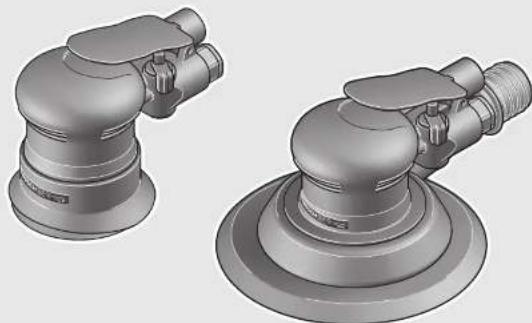
The pneumatic tool is intended for dry sanding of wood, plastic, metal, filler and varnished surfaces.
Product Features
The numbering of the product features refers to the illustration of the pneumatic tool on the graphics page.
1 On/Off switch 2 Air outlet with silencer 3 Connection socket at air intake 4 Hose fitting. 5 Speed regulator 6 Extraction hood 7 Open-end spanner (21 mm) 8 Washer 9 Sanding plate 10 Sanding sheet 11 Dust extraction 12 Clutch 13 Hose clamp 14 Supply-air hose 15 Exhaust-air hose
- Accessories shown or described are not part of the standard delivery scope of the product. A complete overview of accessories can be found in our accessories program.


Technical Data Noise/Vibration Information
| Pneumatic Random Orbit Sander | ||||
| Article number 0 607 350 ... | ... 198 | ... 199 | ... 200 | |
| No-load speed n0 | min-1 | 12000 | 12000 | 12000 |
| Stroke | mm 2.5 | 5.0 | 2.5 | |
| Sanding sheetø | mm 80 | 150 | 150 | |
| Max. working pressure for tool | bar | 6.3 | 6.3 | 6.3 |
| psi | 91 | 91 | 91 | |
| Thread size of hose connection | 1/4" NPT | 1/4" NPT | 1/4" NPT | |
| Inner diameter of hose | mm 10 | 10 | 10 | |
| Air consumption at no-load | l/s | 8.3 | 8.5 | 8.5 |
| cfm | 17.6 | 18.0 | 18.0 | |
| Weight according to EPTA-Procedure 01:2014 | kg | 0,62 | 0,68 | 0,72 |
| lbs | 1,3 | 1,5 | 1,5 | |
Sound emission values determined according to EN ISO 15744. The noise level when working can exceed 80 dB(A). Wear hearing protection!
| Typically the A-weighted noise level of the pneumatic tool is: | ||||
| Sound pressure level LpA | dB(A) | 73 | 76 | 76 |
| Uncertainty K | dB | 3 | 3 | 3 |
| Vibration total values ah (triax vector sum) and uncertainty K determined according to EN 28927: | ||||
| ah | m/s2 | < 2.5 | 3.1 | 3.1 |
| K | m/s2 | 1.5 | 1.5 | 1.5 |
The vibration emission level given in this information sheet has been measured in accordance with a standardised test given in EN ISO 11148 and may be used to compare one pneumatic tool with another. It may be used for a preliminary assessment of exposure.
The declared vibration emission level represents the main applications of the pneumatic tool. However if the pneumatic tool is used for different applications, with different accessories or insertion tools or is poorly maintained, the vibration emission may differ. This may significantly increase the exposure level over the total working period.
An exact estimation of the level of exposure to vibration should also take into account the times when the pneumatic tool is switched off or when it is running but not actually doing the job. This may significantly reduce the exposure level over the total working period.
Identify additional safety measures to protect the operator from the effects of vibration such as: maintaining the pneumatic tool and the accessories, keeping the hands warm, organisation of work patterns.
Declaration of Conformity
C
We declare under our sole responsibility that the product described under "Technical data" complies with all applicable provisions of the directive 2006/42/EC including its amendments and is in conformity with the following standards: EN ISO 11148-8.
Technical file (2006/42/EC) at: Robert Bosch Power Tools GmbH, PT/ECS, 70538 Stuttgart, GERMANY
Henk Becker Executive Vice President Engineering
Helmut Heinzelmann Head of Product Certification PT/ECS

Robert Bosch Power Tools GmbH 70538 Stuttgart, GERMANY Stuttgart, 01.01.2017
Assembly
Connecting the Air Supply (see figure A)
- Ensure that the air pressure is not lower than 6.3 bar (91 psi) because the pneumatic tool is designed for this operating pressure.
For maximum performance, the values for the inner hose diameter as well as the connection threads must be adhered to as listed in the "Technical Data" Table. To maintain full performance, only use hoses with a maximum length of 4 m. The compressed air supplied should be free of foreign material and moisture to protect the tool from damage, contamination, and the formation of rust.
Note: The use of a compressed-air maintenance unit is necessary. This ensures proper function of the pneumatic tools.
Observe the operating instructions of the maintenance unit. All fittings, connecting lines and hoses must be dimensioned for the pressure and the required air volume.
Avoid restrictions in the air supply, e.g., from pinching, kinking, or stretching!
When in doubt, check the pressure at the air inlet with a pressure gauge with the pneumatic tool switched on.
Connecting the Air Supply to the Pneumatic Tool
- Screw hose fitting 4 into the connection socket at air inlet 3. To avoid damage to interior valve components of the pneumatic tool when screwing hose fitting 4 in or out, it is recommended to counter-hold the projecting connection socket of air intake 3 with an open-end wrench (size 19 mm).
- Place the supply-air hose 14 with the appropriate clutch 12 onto the hose fitting 4.
Note: Always mount the supply-air hose to the pneumatic tool first, then to the maintenance unit.
Exhaust-air Guidance (see figure B)
With exhaust-air guidance, the exhaust air can be diverted through an exhaust-air hose away from your workplace, while at the same time achieving optimal sound-proofing. Additionally, your working conditions are improved, as your workplace can no longer be contaminated though oil-containing air and dispersed dust or chips.
- Unscrew the silencer at air outlet 2 and replace it with a hose fitting 4.
- Loosen hose clamp 13 of the exhaust-air hose 15, mount the exhaust-air hose to hose fitting 4 and retighten the hose clamp.
Changing the Tool
Use only flawless tool bits that are not worn. Defective tool bits can break, for example, and cause injury or damage.
Replacing the Sanding Sheet
- When attaching a new sanding sheet, remove any dust or debris from the sanding plate 9, e.g., with a brush.
The surface of the sanding plate 9 is fitted with Velcro backing for quick and easy fastening of sanding sheets with Velcro adhesion.
- Press the sanding sheet 10 firmly against the bottom side of the sanding plate 9. Make sure that the punched holes in the sanding sheet are directly over the holes in the sanding plate to ensure optimum dust extraction.
Selecting the Sanding Sheet
Depending on the material to be worked and the required rate of material removal, different sanding sheets are available:
| Material Application Grain size | |||
| bestPaint | - Paint - Varnish - Filling compound - Filler | For sanding off paint | coarse 40 60 |
| For sanding primer (e. g., for removing brush dashes, drops of paint and paint run) | medium 80 100 120 | ||
| For final sanding of primers before coating | fine 180 240 320 400 | ||
| expertWood | Expert for Wood - All wooden materials (e. g., hardwood, softwood, chipboard, building board) | For coarse-sanding, e. g. of rough, unplanned beams and boards | coarse 40 60 |
| For face sanding and planing small irregularities | medium 80 100 120 | ||
| Best for Wood - Hard wood - Particle Board - Building board - Metal materials | For finish and fine sanding of wood | fine 180 240 320 400 | |


| Material Application | Grain size | ||
| - Automotive paint | For pre-sanding | coarse 80 | |
| - Masonry, stone | For shaping and braking edges | medium 100 | |
| - Marble | 120 | ||
| - Granite | For final sanding and forming | fine 180 | |
| - Ceramic | 240 | ||
| - Glass | 320 | ||
| - Plexiglas | 400 | ||
| - Glass-fibreplastics | For polish-sanding and rounding off edges | very fine 600 | |
| 1200 | |||
Selection of the Sanding Plate
The pneumatic tool can be equipped with sanding plates of different hardness depending on the application:
- Sanding plate, extra soft: Suitable for polishing and sensitive sanding, incl. on convex surfaces.
- Soft sanding plate: Suitable for all sanding applications and general-purpose use.
- Hard sanding plate: Suitable for high sanding capacity on flat surfaces.
Replacing the Sanding Plate
Note: Replace a damaged sanding plate 9 immediately.
- Pull off the sanding sheet 10.
- Slide the open-end spanner 7 under the height-adjustable extraction hood 6 and hold the grinder spindle in place with the open-end spanner. Turn the sanding plate 9 counterclockwise from the grinder spindle. Remove the washer 8, place it on the new sanding plate and turn the plate on again clockwise with the washer.
0607 350 199|...200: The second washer 8 can be used additionally so that the random orbit sander does not adhere to the workpiece when the dust extraction is activated.
Dust/Chip Extraction
Dusts from materials such as lead-containing coatings, some wood types, minerals and metal can be harmful to one's health. Touching or breathing-in the dusts can cause allergic reactions and/or lead to respiratory infections of the user or bystanders.
Certain dusts, such as oak or beech dust, are considered as carcinogenic, especially in connection with wood-treatment additives (chromate, wood preservative). Materials containing asbestos may only be worked by specialists.
- As far as possible, use a dust extraction system suitable for the material.
- Provide for good ventilation of the working place.
- It is recommended to wear a P2 filter-class respirator.
Observe the relevant regulations in your country for the materials to be worked.
Prevent dust accumulation at the workplace. Dusts can easily ignite.
Sanding without dust extraction (0 607 350 198)
- Use sanding sheets with no holes.
External Dust Extraction (0 607 350 199|... 200)
- Connect the extraction hose (accessory) directly to the dust extraction 11.
The vacuum cleaner must be suitable for the material being worked.
When vacuuming dry dust that is especially detrimental to health or carcinogenic, use a special vacuum cleaner.
Operation
Starting Operation
The pneumatic tool works optimally at a working pressure of 6.3 bar (91 psi), measured at the air inlet when the pneumatic tool is switched on.
- Remove application tools before you start operating the pneumatic tool. An application tool which is left attached to a rotating part of the power tool may result in injury.
Note: If the pneumatic tool does not start, e.g. after an extended period of rest, interrupt the air supply and turn the sanding plate 9 repeatedly. This will eliminate adhesive forces.
To save energy, only switch the pneumatic tool on when you are using it.
- To switch on the pneumatic tool, press the on/off switch 1 down and keep it pressed during operation.
- To switch off the pneumatic tool, release the On/Off switch 1.
Preselecting the Speed (see figure C)
With the speed regulator 5 you can preselect the required speed also during operation.

- For maximum speed, slide the speed regulator 5 away from the connection socket 3.

- For minimum speed, slide the speed regulator 5 towards the connection socket 3.
The required speed depends on the material and the working conditions and can be determined through practical testing.


Working Advice
Always wait until the pneumatic tool has come to a complete stop before placing it down. Make sure that self-adhesive sanding sheets are fitted concentrically on the sanding plate. In case of an interruption of the air supply or reduced operating pressure, switch the pneumatic tool off. Check the operating pressure and start again when the operating pressure is optimal.
Sudden loads cause a sharp drop in speed or a complete stop, yet do not cause damage to the motor.
Sanding Surfaces
- Switch the pneumatic tool on, place the entire sanding surface on the surface to be sanded and move it over the workpiece with moderate pressure.
The material removal rate and sanding result are primarily determined by the choice of sanding sheet, the pre-selected speed and the contact pressure.
Only immaculate sanding sheets will deliver good sanding performance and protect the pneumatic tool.
Pay attention to apply uniform sanding pressure; this increases the working life of the sanding sheets.
Excessively increasing the contact pressure will not lead to increased sanding performance, rather it will cause more severe wear of the pneumatic tool and of the sanding sheet.
A sanding sheet that has been used for metal should not be used for other materials.
Use only original Bosch sanding accessories.
Rough Sanding
- Attach a sanding sheet with coarse grain.
- Apply only light pressure to the pneumatic tool so that it runs at higher speed and a higher material removal rate is achieved.
Fine Sanding
- Attach a sanding sheet with fine grain.
- Move the pneumatic tool with moderate pressure flat on the workpiece in a circular motion or alternately along and across it. Do not tilt the pneumatic tool in order to avoid sanding through the workpiece, e.g. veneers.
You can reduce the sanding plate speed by lightly varying the contact pressure or changing the speed, although the random orbit motion is retained. - Switch the pneumatic tool off after completing operation.
Maintenance and Service
Maintenance and Cleaning
Have maintenance and repair work carried out only through qualified persons. This will ensure that the safety of the pneumatic tool is maintained. Regularly measure the no-load speed of the grinder spindle. If the measured value of the specified no-load speed exceeds n0 (see "Technical Data"), you should have the pneumatic tool checked at a Bosch after-sales centre. If the no-load speed is too high, the application
tool can break; if the speed is too low, the performance decreases. An authorized Bosch after-sales service agent will carry out this work quickly and reliably.
Use only original Bosch spare parts.
Regular Cleaning
- Clean the sieve at the air intake of the pneumatic tool regularly. For this, unscrew the hose fitting 4 and remove any dust and debris from the sieve. Afterwards, retighten the hose fitting again. Water and debris particles in the compressed air cause rust and lead to wear of plates, valves etc. To prevent this, fill several drops of engine oil into the air intake 3. Reconnect the pneumatic tool to the air supply (see "Connecting the Air Supply", page 17) and run it for 5-10 seconds, while catching/picking up the escaping oil with a cloth. Always carry out this procedure when not using the pneumatic tool for a longer period of time.
Scheduled Maintenance
Clean the gearbox after the first 150 running hours using a mild solvent. Follow the solvent manufacturers directions for use and disposal. Lubricate the gearbox using Bosch gearbox lube. Repeat the lubrication procedure every 300 hours after the initial gearbox service. Special gearbox grease (225 ml) Article number 3605430009 - The motor plates should be checked regularly by specialised personnel and replaced, if required.
Lubrication of Pneumatic Tools that do not belong to the CLEAN Product Line
For all Bosch pneumatic tools that do not belong to the CLEAN product line (these have a special type of compressed-air motor that functions with oil-free compressed air), oil mist should be added continuously to the flowing-through compressed air. The compressed-air oiler required for this is included in the compressed-air service unit on the line side of the pneumatic tool (for more details, please refer to the compressor manufacturer).
For direct lubrication of the pneumatic tool or admixtures to the service unit, use SAE 10 or SAE 20 engine oil.
Accessories
For more information on the complete quality accessories program, please refer to the Internet under www.bosch-pt.com or contact your specialist shop.
After-sales Service and Application Service
In all correspondence and spare parts orders, please always include the 10-digit article number given on the type plate of the pneumatic tool.
Our after-sales service responds to your questions concerning maintenance and repair of your product as well as spare parts. Exploded views and information on spare parts can also be found under:
www.bosch-pt.com
Bosch's application service team will gladly answer questions concerning our products and their accessories.
Great Britain
Robert Bosch Ltd. (B.S.C.)
P.O.Box 98
Broadwater Park
North Orbital Road
Denham
Uxbridge
UB9 5HJ
At www.bosch-pt.co.uk you can order spare parts or arrange
the collection of a product in need of servicing or repair.
Tel. Service: (0844) 7360109
E-Mail: boschservicecentre@bosch.com
Ireland
Origo Ltd.
Unit 23 Magna Drive
Magna Business Park
City West
Dublin 24
Tel. Service: (01) 4666700
Fax: (01) 4666888
Australia, New Zealand and Pacific Islands
Robert Bosch Australia Pty. Ltd.
Power Tools
Locked Bag 66
Clayton South VIC 3169
Customer Contact Center
Inside Australia:
Phone: (01300) 307044
Fax: (01300) 307045
Inside New Zealand:
Phone: (0800) 543353
Fax: (0800) 428
Outside AU and NZ:
Phone: +61 3 95415555
www.bosch.com.au
Republic of South Africa
Customer service
Hotline: (011) 6519600
Gauteng - BSC Service Centre
35 Roper Street, New Centre
Johannesburg
Tel.: (011) 4939375
Fax: (011) 4930126
E-Mail: bsctools@icon.co.za
KZN - BSC Service Centre
Unit E, Almar Centre
143 Crompton Street
Pinetown
Tel.: (031) 7012120
Fax: (031) 7012446
E-Mail: bsc.dur@za.bosch.com
Western Cape - BSC Service Centre
Democracy Way, Prosperity Park
Milnerton
Tel.: (021) 5512577
Fax: (021) 5513223
E-Mail: bsc@zsd.co.za
Bosch Headquarters
Midrand, Gauteng
Tel.: (011) 6519600
Fax: (011) 6519880
E-Mail: rbsa-hq.pts@za.bosch.com
Disposal
The pneumatic tool, accessories and packaging should be sorted for environmental-friendly recycling.
Observe all applicable environmental regulations when disposing of old grease and solvents.
Dispose of motor plates according to regulations! Motor plates contain Teflon. Do not heat them beyond 400°C , otherwise vapours hazardous to one's health can develop.
If your pneumatic tool can no longer be used, deliver it to a recycling centre or return it to a dealer - for example, an authorized Bosch after-sales service agent.
Subject to change without notice.
French
Executive Vice President
Engineering
Helmut Heinzelmann
Head of Product Certification
PT/ECS

i. v.k = w .
Robert Bosch Power Tools GmbH
70538 Stuttgart, GERMANY
Stuttgart, 01.01.2017
Technical specifications
Robert Bosch (France) S.A.S.
Executive Vice President Engineering
Helmut Heinzelmann
Head of Product Certification PT/ECS

Robert Bosch Power Tools GmbH
70538 Stuttgart, GERMANY
Stuttgart, 01.01.2017
Technical data
Henk Becker Helmut Heinzelmann Executive Vice President Head of Product Certification Engineering PT/ECS

Robert Bosch Power Tools GmbH 70538 Stuttgart, GERMANY Stuttgart, 01.01.2017
Assembly
Technical file (2006/42/EC) at:
Robert Bosch Power Tools GmbH, PT/ECS, 70538 Stuttgart, GERMANY
Henk Becker Helmut Heinzelmann Executive Vice President Head of Product Certification Engineering PT/ECS
Robert Bosch Power Tools GmbH 70538 Stuttgart, GERMANY Stuttgart, 01.01.2017
Assembly
Executive Vice President
Engineering
Helmut Heinzelmann
Head of Product Certification
PT/ECS

Robert Bosch Power Tools GmbH
70538 Stuttgart, GERMANY
Stuttgart, 01.01.2017
Technical data
Executive Vice President Engineering
Helmut Heinzelmann
Head of Product Certification PT/ECS

Robert Bosch Power Tools GmbH
70538 Stuttgart, GERMANY
Stuttgart, 01.01.2017
Assembly
Connection to the air supply (see Fig. A)
Bosch Service Center
Telegrafvej 3
2750 Ballerup
At www.bosch-pt.dk you can order spare parts online or create a repair order.
Tel. Service Center: 44898855
Fax: 44898755
E-Mail: vaerktoej@dk.bosch.com
Disposal
Unified National Fine Thread Series)

Whitworth thread

National pipe thread
Executive Vice President Engineering
Helmut Heinzelmann
Head of Product Certification PT/ECS

i. V. h = {u}_{c}
Robert Bosch Power Tools GmbH
70538 Stuttgart, GERMANY
Stuttgart, 01.01.2017
Svenska 73
Montage
Bosch Service Center
Telegrafvej 3
2750 Ballerup
Danmark
Tel.: (08) 7501820 (inom Sverige)
Fax: (011) 187691
Waste disposal
Executive Vice President
Engineering
Helmut Heinzelmann
Head of Product Certification
PT/ECS
Robert Bosch Power Tools GmbH
70538 Stuttgart, GERMANY
Stuttgart, 01.01.2017
80|Norwegian
Assembly
Executive Vice President
Engineering
Helmut Heinzelmann
Head of Product Certification
PT/ECS

Robert Bosch Power Tools GmbH
70538 Stuttgart, GE
Stuttgart, 01.01.2017
Assembly
Henk Becker Executive Vice President Engineering
Helmut Heinzelmann Head of Product Certification PT/ECS


Robert Bosch Power Tools GmbH 70538 Stuttgart, GERMANY Stuttgart, 01.01.2017
Technical characteristics
Maintenance and service
Maintenance and cleaning
Before any work on the machine, remove the mains plug from the socket. This ensures protection against unintentional starting and guarantees safe operation of the machine. Regularly clean the ventilation slots of the machine. If the machine is used frequently, it must be checked by a Bosch service center. In case of a high number of ventilation slots, the machine must be returned for service.
A Bosch service center will carry out this work quickly and reliably.
Use only genuine Bosch spare parts.
Türkçe
To fill the tool with oil, remove the oil filler plug from the tool. For this, you must use a suitable 4 mm Allen key. Then insert a suitable funnel. The oil and grease contained in this air cause corrosion and damage to the seals. To avoid this, you must put a few drops of oil into the air inlet. Connect the tool to the air supply (see "Connecting to the air supply", page 95) and let it run for 5-10 seconds. Simultaneously
98|Türkçe
let the escaping oil be caught in a cloth. If the tool is not going to be used for a long time, you must repeat the entire procedure.
Periodic maintenance
Clean the air motor after the first 150 operating hours with a more thorough cleaning. Follow the instructions for use and maintenance of the motor from the manufacturer. Then lubricate the air motor with the oil for air motors from Bosch. Repeat the above cleaning procedure after 300 operating hours. Oil for air motors (225 ml) Order number 3 605 430 009 The motor parts must be checked at regular intervals by a trained specialist and, if necessary, replaced.
Maintenance of pneumatic tools that do not belong to the CLEAN series
For all Bosch pneumatic tools that do not belong to the CLEAN series (a special air motor that works with oil-free air), you must add a few drops of oil to the air inlet. The required oil for this is available in the oiler unit that is installed or supplied with the tool (further information is available from the manufacturer).
Use SAE 10 or SAE 20 oil to lubricate the air tool or the oiler unit.
Accessories
The spare parts list can be found on the internet at www.bosch-pt.com or in the QR code for your tool.
Service and customer advice
When requesting information and ordering spare parts, please quote the 10-digit part number given on the type plate of the tool.
The service department answers your questions regarding the repair and maintenance of your product as well as for spare parts:
www.bosch-pt.com
We thank you for your questions about our products and their accessories.
Greece
Robert Bosch A.E.
Eoxelias 37
19400 Koropi-Athens
Tel.: 2105701270
Fax: 2105701283
www.bosch.com
www.bosch-pt.gr
ABZ Service A.E.
Tel.: 210 5701380
Fax: 2105701607
Disposal
Power tools, accessories and packaging should be recycled in an environmentally friendly way.
Dispose of materials and cleaning agents in an environmentally friendly manner. Please observe the relevant legal regulations. Regularly dispose of the engine's waste! The engine's waste contains Teflon. Do not incinerate it at temperatures above 400°C, as toxic fumes may be released.
The power tool must not be disposed of with household waste; it must be handed over to a recycling center for electrical and electronic equipment or to an authorized Bosch Service center.
We reserve the right to make changes.
Türkçe
Güvenlik Talimatı
Havalı Aletler için Genel Güvenlik Talimatı
UYARI
Montaj, işletme, onarım, bakım, aksesuar değiştirme işlerine ve havalı aletin yakınında
Executive Vice President Engineering
Helmut Heinzelmann
Head of Product Certification PT/ECS

Robert Bosch Power Tools GmbH 70538 Stuttgart, GERMANY Stuttgart, 01.01.2017
Montaj
Hava ikmalinin bağlanması (Bakınız: Şekil A)
Basınçlı havanın 6,3 bar (91 psi) altında olmamasına dikkat edin, çünkü havalı alet bu işletme basıncına göre tasarlanmıştır.
Bosch San. ve Tic. A.Ş.
Ahi Evran Cad. No:1 Kat:22
Polaris Plaza
80670 Maslak/Istanbul
Bosch Expert Team +90 (0212) 367 18 88
Isiklar LTD. STI.
Kizilay Cad. No: 16/C Seyhan
Adana
Tel.: 0322 3599710
Tel.: 0322 3591379
Executive Vice President Engineering
Helmut Heinzelmann
Head of Product Certification PT/ECS
Robert Bosch Power Tools GmbH
70538 Stuttgart, GERMANY
Stuttgart, 01.01.2017
Technical data
Executive Vice President
Engineering
Helmut Heinzelmann
Head of Product Certification
PT/ECS
Robert Bosch Power Tools GmbH
70538 Stuttgart, GERMANY
Stuttgart, 01.01.2017

118| Czech
Technical data
Bosch Service Center PT
K Vapence 1621/16
692 01 Mikulov
At www.bosch-pt.cz you can order repairs for your machine online.
Tel.: 519305700
Fax: 519305705
E-Mail: servis.naradi@cz.bosch.com
www.bosch.cz
Waste treatment
Pneumatic tools, accessories and packaging should be sent for recycling in an environmentally friendly manner.
Executive Vice President Engineering
Head of Product Certification PT/ECS

Robert Bosch Power Tools GmbH
70538 Stuttgart, GERMANY
Stuttgart, 01.01.2017
Assembly
Henk Becker Executive Vice President Engineering
Helmut Heinzelmann Head of Product Certification PT/ECS
Robert Bosch Power Tools GmbH 70538 Stuttgart, GERMANY Stuttgart, 01.01.2017
Assembly
Safety at the workplace
Keep the work area clean and well lit. Cluttered or dark areas invite accidents. Never operate the pneumatic tool in explosive atmospheres, such as in the presence of flammable liquids, gases, or dust. Power tools create sparks which may ignite the dust or fumes. While operating the pneumatic tool, keep bystanders, children, and visitors away. If you are distracted, you may lose control of the pneumatic tool.
Safety instructions for pneumatic tools
Never point the air stream at yourself or others, and never point cold air at your hands. Compressed air can cause serious injury. Check the hose and fittings. All hoses and fittings must be rated for the pressure and volume of air specified in the technical data. Too low pressure adversely affects the performance of the pneumatic tool, too high pressure can cause material damage and lead to injury. Protect the hose from kinks, constrictions, solvents, and sharp edges. Protect the hose from heat, oil, and rotating parts. Immediately replace a damaged hose. A damaged hose can cause the pneumatic tool to whip and cause injury. Chips and debris can damage your eyes. Ensure that the hose clamp is always properly tightened. Due to poor tightening or damage to the clamps, uncontrolled air escape is possible.
Russian
Safety instructions
By being attentive, before you do anything, carefully approach the work with the pneumatic tool. Do not work with the pneumatic tool in a tired state or if you are under the influence of drugs, alcohol, or medications. A moment of inattention while working with the pneumatic tool can lead to serious injuries. Always wear protective goggles when performing work. Personal protective equipment, such as respiratory protection, protective goggles, protective helmet or hearing protection, depending on the work instructions, safety requirements, and sanitary norms, reduces the risk of injury. Avoid accidental starting. Before connecting the pneumatic tool to the air supply, lift or carry it, and make sure the pneumatic tool is switched off. Carrying the pneumatic tool with your finger on the switch or connecting the pneumatic tool to the air source while it is switched on can lead to accidents. Before switching on the pneumatic tool, make sure the tools are adjusted. An adjusted tool that is in a rotating part of the pneumatic tool can become a source of injury. Do not overreach. Always maintain a stable stance and keep your balance. A stable stance and proper body position allow you to better control the pneumatic tool in unexpected situations. Wear appropriate clothing. Do not wear loose clothing or jewelry. Keep your hair, clothing, and sleeves away from rotating parts. Loose clothing, jewelry, and long hair can get caught in rotating parts. If devices for dust extraction or collection are provided, check that they are properly connected and used. The use of such devices reduces the risk of dangerous situations due to dust. Do not inhale the exhaust air. Avoid getting exhaust air in your eyes. The exhaust air coming out of the pneumatic tool may contain water, oil, metal particles, and contaminants from the compressor. This can cause damage to your eyes or health.
Proper handling of the pneumatic tool and its use
Use clamps or a vice to secure the workpiece. Holding the workpiece by hand or against your body does not provide sufficient safety when working with the pneumatic tool.
Never repair pneumatic tools. Use pneumatic tools that are specifically intended for your type of work. A suitable pneumatic tool works better and more reliably at the power range specified for it. Do not use a pneumatic tool with a damaged switch. A pneumatic tool that cannot be turned on or off is dangerous and requires repair. Disconnect the air supply before adjusting the tool, changing accessories, or if you will not use it for a long time. This precaution prevents accidental starting of the pneumatic tool. Store unused pneumatic tools out of reach of children. Do not allow persons unfamiliar with these instructions to operate the pneumatic tool. Pneumatic tools are dangerous in the hands of untrained users. Maintain the pneumatic tool carefully. Check that moving parts of the tool work properly and do not jam, and that parts that could affect the operation of the pneumatic tool are not broken or damaged. Before using the pneumatic tool, damaged parts must be repaired. Many accidents are caused by poor maintenance of the pneumatic tool. Use the pneumatic tool, its accessories, and replacement parts, etc., in accordance with these instructions. Consider the working conditions and the specific job to be performed. This can reduce the formation of dust, vibration, and noise. Adjusting, setting up, and using pneumatic tools is allowed only for qualified, trained operators. Modifying the pneumatic tool is prohibited. Such modifications can reduce the effectiveness of safety measures and increase the risk to the operator.
Service
Have your pneumatic tool repaired only by qualified personnel using only original spare parts. This ensures the safety of the pneumatic tool in the future.
Safety instructions for pneumatic eccentric sanders
In case of breakage of the sanding sheet, accessories, or the pneumatic tool itself, parts may fly off at high speed.





During operation, maintenance, or replacement of pneumatic tool accessories, always wear impact-resistant safety glasses. The required degree of protection must be determined for each specific use of the tool. Always wear head protection when performing work above your head. In this way, you can avoid injuries. Make sure that other people are at a safe distance from the work area. Anyone entering the work area must wear personal protective equipment. Fragments of the workpiece or broken accessories may fly off and cause bodily injury even beyond the immediate work area. Be careful! During intensive use of the pneumatic tool, the working tool may heat up. Wear protective gloves. Operators and maintenance personnel must be in appropriate physical condition for working with a pneumatic tool of this size, weight, and power. Be prepared for unexpected movements of the pneumatic tool caused by reactive forces or breakage of the inserted working tool. Grip the pneumatic tool firmly and position your body and arms so that you can counteract these movements. These precautions will help prevent injuries. To work with this pneumatic tool, take a comfortable stance, maintain a stable body position, and avoid awkward postures or positions where it is difficult to maintain balance. During prolonged work, the operator should change body position to avoid discomfort and fatigue. Before changing accessories, shut off the air supply and disconnect the pneumatic tool. Check the working pressure and only turn on the tool when the working pressure is optimal again. Use only recommended accessories and lubricants. Do not use damaged working tools. Before each use, check the working tool for cracks, wear, and excessive wear. In case of a fall of the pneumatic tool or the working tool, check them for possible damage and use only undamaged working tools. After checking, install the working tool and keep the rotating plane of the working tool away from your body; turn on the power tool for 1 minute at maximum speed. A damaged working tool usually breaks during this test period. Never place your hand near the rotating inserted working tool. You may be injured.
Do not use the pneumatic tool without impact material. If the support plate is worn, the impact material will not be securely attached. The use of non-conductive material in the pneumatic tool may cause electrostatic discharge. During work with pneumatic tools, operators may experience unpleasant sensations in the hands, arms, shoulders, neck, and other parts of the body. The operator must not ignore such symptoms as, for example, difficulty breathing, increased fatigue, heart palpitations, pain, tingling, numbness, or burning. The operator should inform the employer and consult a qualified medical professional. Do not use worn-out discs. The permissible number of revolutions of the working tool must not be less than the maximum number of revolutions indicated on the pneumatic tool. A tool that rotates at a speed higher than permissible may break apart and scatter in space. Make sure that the self-locking impact bits are placed on the support plate concentrically.
REMOVED
The tool that is used
with grinding, sanding, cutting, drilling, and similar work may be carcinogenic and harmful to health. In particular, dust may contain the following substances:
- Lead in paints and coatings;
Crystalline silica in bricks, cement, and other materials used in masonry work; chromium compounds in chemically treated wood.
The risk of disease depends on how often you are exposed to these substances. To reduce the risk, it is necessary to work in well-ventilated rooms and wear appropriate protective equipment (e.g., a special respirator that filters out fine dust particles).
When working with certain materials, dust and vapors may form that can create an explosive atmosphere. When working with a pneumatic tool, sparks may be generated, which could ignite dust and vapors. When working with a workpiece, loud noises may occur, which can be prevented with appropriate measures, e.g., by using insulating materials to protect against rattling during contact with the workpiece. If the pneumatic tool is equipped with a silencer, always check that it is in place and in proper working condition.
Russian | 141
Vibration can affect blood circulation in hands. Wear warm gloves. Due to air flow, handles of pneumatic tools can cool down. Warm hands are less susceptible to vibration effects. Fingers or hands may get caught in rotating parts. If a finger or hand feels numb, tingling, or painful, stop working with the pneumatic tool, inform your supervisor, and consult a doctor. Hold the pneumatic tool not too tightly, but firmly, in accordance with the recommended hand grip. The tighter you hold the tool, the more vibration may intensify. If universal rotating couplings (cam clutches) are used, support flanges must be installed. Use safety cables for hoses to prevent hose connections from detaching from the pneumatic tool or between hoses. Never carry a pneumatic tool by the hose.
SYMBOLS
The following symbols may indicate the meaning of use of your pneumatic tool. Please remember these symbols and their meanings. Correct interpretation of symbols will help you work better and more reliably with this pneumatic tool.

Before installation, operation, repair, maintenance, and replacement of accessories of pneumatic tools, as well as before other work, carefully read and follow the instructions below. Failure to follow safety instructions may result in serious injuries.
SYMBOL MEANING
Henk Becker Executive Vice President Engineering
Helmut Heinzelmann Head of Product Certification PT/ECS

Robert Bosch Power Tools GmbH 70538 Stuttgart, GERMANY Stuttgart, 01.01.2017
Technical data
Selecting the backing pad
Depending on the application area, the pneumatic tool can work with backing pads of different hardness:
Extra soft backing pad: for precise sanding of curved and convex surfaces. Soft backing pad: use universally for all sanding work. Hard backing pad: ensures high productivity when working on flat surfaces.
Replacing the backing pad
Note: Immediately replace a damaged backing pad 9.
- Remove the sanding sheet 10. Insert the hex key into the spindle and turn the sanding spindle counterclockwise. Remove the backing pad 9 together with the sanding spindle, turning it counterclockwise. Take the backing pad 8, place it on the new sanding spindle, and screw it on together with the backing pad clockwise.
0607350199|...200: Use the extraction unit with the extraction hose connected to the extraction unit so that it is not connected to the extraction unit.
Extraction unit
Some materials, e.g., paints containing lead, some types of wood, fibers and metals, may be harmful to health. Contact with or inhalation of dust can cause allergic reactions and/or respiratory diseases in the operator or nearby personnel.
Certain types of dust, e.g., oak and beech dust, are considered carcinogenic, especially in combination with additives for wood treatment (chromate, wood preservatives). Materials containing asbestos may only be processed by specialists.
- If possible, use a suitable extraction unit for the material. Ventilate the work area well.
- It is recommended to use a respirator with a P2 filter.
Observe the regulations applicable in your country for the processing of materials.
Avoid contact with the extraction hose. It may be easily damaged.
Connecting the extraction unit (0607350198)
- Use non-flammable extraction hoses.
External extraction system (0 607 350 199|...200)
Connect the extraction hose (accessory) directly to the extraction unit 11.
The extraction hose must be suitable for the material being processed.
Use a special extraction hose for dusts from paints containing lead, cancer-causing dusts, or asbestos.
Russian 145
Pa60Ta c HcHcTpymeHTOM
BkIoueHne
The pneumatic tool operates optimally at an operating pressure of 6.3 bar (91 psi), measured at the air inlet with the pneumatic tool switched on.
Before switching on the pneumatic tool, make sure the tool is installed. Rotating parts of the pneumatic tool can cause injury.
Note: If, after a long pause, the pneumatic tool does not switch on, shut off the air supply several times and turn the grinding wheel 9. This removes the adhesive.
Switch on the pneumatic tool only when you are working with it.
To switch on the pneumatic tool, press the switch 1 down and hold it pressed during the work operation. To switch off, release the switch 1.
Setting the number of revolutions (see fig. C)
With the speed regulator 5 you can select the required number of revolutions even while the tool is running.

To set the maximum number of revolutions, turn the speed regulator 5 away from the connection nipple 3.

To set the minimum number of revolutions, turn the speed regulator 5 towards the connection nipple 3.
The required number of revolutions depends on the material and the working conditions and can be determined by trial grinding.
Application instructions
Before placing the pneumatic tool, wait until it has completely stopped. Make sure that the self-adhesive abrasive discs are arranged concentrically on the grinding wheel. When interrupting the air supply and reducing the working pressure, switch off the pneumatic tool. Check the working pressure and switch the tool on again when the working pressure is optimal again.
Sudden loads that cause a drop in the number of revolutions and a standstill of the tool do not damage the motor.
UHFOBaHne NOBepxHOcteN
BKNIOUHTNEBMAHTNueCKHNCHTPymeH,IPnCTaBBteero BcEN WnHPOBaJIbHOI NOBepxHOCTbK O6paBaTbBAEMO IOBepxHOCTN BeNTe HMC yMepeHHbIM HaxKaTHm NO 3a- IOTOBKe.
IpoDyKTHBHOCTbpaObTbHXapaKTepeUHOBaHHoN NOBepXHOCTNaBHCnT,BOCHOBHOMOTb6paHHoUHOBaHHoN UkypKN,yCTAHOBLeHHORuCnaObOpTOB uCNbHaKaTNA.
Tolko63ynpeHbIe 1nfoBaIbIbe 8kypKn 06ceNBA-OT BICOKyIO pOn3BOIHTenBHOCT bIINFOBaHn H 7aJrT NHEMaTHueckn HCHTpymEHT.
CneIte 3a paBHomePbHbIM ycHnHem npNkATHy, YTO6bl NOBbICHTb cpoK cnYkbblnHFOBaBbHbIX Kypok.
Upe3MepHoe HaxaTne pINBOuNT He K NOBbIeHNO IPOn3BO DntenBHOCTN UHFOBaHNA, a K CINbHOMy H3HOcy PHEBMATHeCKOIO INCHPTpyMeHTA N HINFOBaHbHOJ WkypKN.
He nCnoB3yIte ⅢnΦoBaIbHyO WkypK, KOTopoB Bbl o6pa-6aTbIaII MetaII, DnO6pa60TKDpyrnx MaTePnaOB.
PpHMeHrTe Toblko OpnHnHaBhble npHaIeXHOCTN Bosch.
Tpy6oe uHnfoBaHne
HaonxHte uHnfoBaIbHyu Kypky c 60onee KpyHno3ep HNCTOCTbIO. HaKIMMaTe HaIINHEBMATNueCKH NHTpyMeHT TOnbKO CnERKa, YTO6bl OH pa6OtaI C BbICOKM YNCIO M O6OpOTB H CHMaJI MHOrO MaTePnAna.
ToHKeUJHΦOBaHne
- HANOXHTe ⅢHNOPOBaIbHYIO WkyPky CMeIKoAepHHCTOCTbIO. -BoHTe NHEBMATNueCKHM HnCTpyMeHTOM nIOCKMn Kpyramn HnpeMeHHo BOnb HnnepeKn 3aTOrOBKe, yMepeHHo HaxKMn Ha Hero. He nepeKaunBaTe NHEBMATNueCKMn IHCTpyMeHT, 4TO6bH He npope3aTb HACKB03b 6pa6aTBaEMyO 3aTOrOBky, Hanp.. mnoH.
He6oIbIbIMBapbIPOBaHMeCNbHaxaTHINnepeKIOUeHNMeYACToTbBpaAeHNBbMOKeTeymeHbIHTbCnIOO6OpOTOBIImFOBaBHOHpaeKNpNcoXpaHENH3KcEHTPNKOBOODBHXKeHN.
-П OOKOHuaHn pa6oeye onepaun BBIKIOUaTe NHEBMATHueckn HNCTpyMeHT.
Texo6cnyxHBaHne n cepBnC
Maintenance and cleaning
Have maintenance and repair work performed only by qualified personnel. This ensures the safety of the pneumatic tool. Regularly measure the no-load speed with a tachometer. If the measured value exceeds the specified no-load speed value (see "Technical Data"), you should send the pneumatic tool to a Bosch service center for inspection. If the no-load speed is too high, the cleaning may be damaged; if the no-load speed is too low, the working performance is reduced.
The Bosch service workshop performs this work quickly and reliably.
Use only original Bosch spare parts.
146 | Russian
Regular cleaning
- Regularly clean the air inlet of the pneumatic tool. Use a clean, dry cloth to remove dust and dirt from the ventilation slots. After cleaning, replace the cloth. - Moisture and dirt in the compressed air can cause corrosion and lead to wear of the blades, valves, etc. To prevent this, add a few drops of motor oil to the air inlet. After this, connect the pneumatic tool to the compressed air supply (see "Connecting the compressed air supply", p. 143) and run the motor for 5-10 seconds, collecting the escaping oil with a rag. For longer storage of the pneumatic tool, always use this method.
Preventive maintenance
- After the first 150 working hours, clean the gearbox with a mild solvent. Follow the manufacturer's instructions for use and disposal. After this, lubricate the gearbox with special Bosch gearbox grease. After the first cleaning, repeat this procedure at intervals of 300 working hours. Special gearbox grease (225 ml) article number 3 605 430 09 - for the motor housing, regularly checked by specialists and replaced if necessary.
Lubricating pneumatic tools not belonging to the CLEAN series
For all Bosch pneumatic tools that do not belong to the CLEAN series (special type of pneumatic motor that works with compressed air without oil), oil mist must be continuously added to the compressed air stream. This is necessary because the lubrication of the compressed air is located in the air preparation unit, which is placed before the pneumatic tool (detailed information can be obtained from the compressor manufacturer).
For direct lubrication of the pneumatic tool or when using an air preparation unit, use motor oil SAE 10 or SAE 20.
Accessories
You can view the full range of high-quality accessories on the Internet at: www.bosch-pt.com or ask in a specialized store.
Service and consultation on product use
Please indicate the 10-digit product number from the factory table of KIEV INSTRUMENT in all requests and orders for spare parts.
The service workshop will answer all your questions regarding repair and maintenance of your product and spare parts. You can also request technical information and spare parts at the following address:
www.bosch-pt.com
Bosch application consultants will be happy to provide advice on the use of our products and will answer all your questions regarding our products and their accessories.
For the region: Russia, Belarus, Kazakhstan, Ukraine
Warranty service and repair of power tools, in compliance with the requirements of the norms and standards of the manufacturer, on the territory of all countries only in authorized service centers "Robert Bosch".
WARNING! The use of counterfeit products is dangerous during operation and can lead to serious health consequences. The production and distribution of counterfeit products is prosecuted under administrative and criminal law.
Russia
Components shown
The numbering of the components shown refers to the illustrations of the pneumatic hammer on the graphics pages.
1 Air inlet 2 Trigger with lock-on button 3 Locking ring 4 Air inlet hose 5 Air flow regulator 6 Exhaust cover 7 Exhaust cover with lock (21 mm) 8 Grip surface 9 Support for chisel 10 Chisel 11 Exhaust device 12 Coupling 13 Clamp 14 Guide tube 15 Chisel
The scope of delivery does not include accessories shown or described. You will find the complete accessories program in the accessories program.
Declaration of Conformity

We declare under our sole responsibility that the product described in the "Technical Data" complies with all requirements of Directive 2006/42/EC, including its amendments, and with the following standards: EN ISO 11148-8.
Technical documentation (2006/42/EC): Robert Bosch Power Tools GmbH, PT/ECS, 70538 Stuttgart, GERMANY
Henk Becker Helmut Heinzelmann Executive Vice President Head of Product Certific Engineering PT/ECS
i. V. h = mc
Robert Bosch Power Tools GmbH 70538 Stuttgart, GERMANY Stuttgart, 01.01.2017


152|Ukrainian
Technical data
Check that the air supply is not less than the value specified (see technical data) for the pneumatic tool, as it is designed for a certain air pressure.
To achieve maximum power, the values given in the technical data table for the recommended hose diameter and operating pressure must be maintained. To obtain full power, use a hose with the recommended diameter.
If the pneumatic tool does not operate properly, check the air pressure and replace worn parts.
Indicates: must be used with the specified air pressure. This will ensure safe operation of the pneumatic tool.
Keep the operating instructions for maintenance.
All fittings, hoses and connections must be designed for the required air flow.
Do not use the tool for purposes other than those intended, or modify it.
Check the inlet air pressure with a pressure gauge before using the pneumatic tool.



Ukrainian 153
Disconnect the air supply from the pneumatic tool
Turn the handwheel 4 clockwise to supply air to the inlet. To prevent damage to the internal parts of the valve, when turning and unturning the handwheel, it is necessary to hold the hexagon on the air inlet with a wrench (wrench size 19 mm). The handwheel must be turned by hand only.
Note: The handwheel must be turned only after the pneumatic device is installed and only then can it be connected to the service unit.
Air supply removal
The air supply removal is carried out to remove the air supply from your workplace, in accordance with the recommendations. In addition, you will improve working conditions, as your workplace will no longer be polluted by air and will not be dusty.
Unscrew the air inlet union 2 and install the handwheel 4 in its place.
- Loosen the union nut 13 of the air supply 15 and close the air supply on the handwheel 4, then tighten the handwheel clamp.
Replacement of the working tool
Use only safe, undamaged working tools. Damage to the working tool can, for example, cause injuries and damage to material assets.
Before unscrewing the abrasive wheel, clean the support flange 9 from dirt and dust, e.g., with a brush.
The surface of the support flange 9 is coated with a layer that allows the abrasive wheel to be clamped without additional effort.
- Place the abrasive wheel 10 on the lower side of the support flange 9. 0607350199|...200: OPTIMALLY USED FOR THE OPENINGS IN THE ABRASIVE WHEEL COINCIDE WITH THE OPENINGS IN THE SUPPORT FLANGE.
Selection of the abrasive wheel
Depending on the material being processed and the intensity of material removal from the surface, there are different grinding
0607350199|...200: Use an additional second flange 8 so that when the wheel is clamped, the eccentric clamping does not rotate to the workpiece.
Certain types of materials, such as paints, varnishes, wood preservatives, minerals and metals, may be hazardous to health.
Touching or inhaling them may cause allergic reactions and/or respiratory diseases in you or in people nearby.
Certain types of paints, varnishes, or other materials are considered hazardous, especially when used with sprays for wood treatment (chromates, wood protection agents). Materials containing asbestos should only be handled by specialists.
-Always use the appropriate material for the extraction device. Ensure good ventilation at the workplace.
- It is recommended to wear a respirator with a P2 dust filter.
Check local regulations for disposal of processed materials.
Keep the device on a stable surface. It can easily tip over.
Extraction without a device (0 607 350 198)
Use extraction hoses without perforations.
External extraction (0 607 350 199|...200)
Connect the extraction hose (accessory) directly to the extraction device.
The extraction device must be suitable for working with processed material.
Extraction is especially important for health when working with materials that are carcinogenic or dry.
Operation
PNEUMATIC TOOL OPTIMAL OPERATING PRESSURE AT WORKING AIR PRESSURE 6.3 bar (91 psi), SUPPLIED TO THE AIR INLET OF THE HUMIDIFIED PNEUMATIC TOOL.
Before starting the pneumatic tool, check the lubrication and the tool.
Inserting the lubricated tool into the part, while turning, may cause injury.
Insert: e.g., instead of a working pause, the pneumatic tool is not switched off, close the air supply and check the lubricating oil level 9 a few times. This removes the risk.
To save energy, switch off the pneumatic tool whenever you will not be working with it.
To switch on the pneumatic tool, press the switch 1 down and hold it during operation. To switch off the pneumatic tool, release the switch 1.
SETTING THE NUMBER OF REVOLUTIONS (RPM)
Using the speed regulator 5, you can set the required number of revolutions during operation.

To set the maximum number of revolutions, turn the speed regulator 5 clockwise.

To set the minimum number of revolutions, turn the speed regulator 5 counterclockwise.
The required number of revolutions depends on the material and working conditions, which can be determined by trial and error.
OPERATING INSTRUCTIONS
Before switching on the pneumatic tool, make sure it is not damaged. Ensure that the sanding discs are mounted on the sanding plate concentrically. The tool with constant air supply changes the working pressure, switch off the pneumatic tool. Check the working pressure again, humidify the tool, and control the pressure again to be optimal.
Excessive pressure can lead to a significant change in the number of revolutions and rapid wear of the tool, but this will not damage the motor.
Surface grinding
- To use the pneumatic tool, apply the entire grinding surface to the prepared base and start with light pressure on the prepared workpiece.
The productivity of work and the nature of the ground surface significantly depend on the selected grinding wheel, the set number of revolutions, and the pressing force.
Only safe grinding wheels provide high grinding productivity and protect the pneumatic tool.
Install the 106 grinding wheel completely, following uniform pressing.
Excessive pressing will not increase grinding productivity, but instead will lead to more severe wear of the pneumatic tool and the grinding wheel.
Do not use a grinding wheel if you are working with metal, for other materials.
Use only original grinding accessories.
Rough grinding
Install a coarse-grained abrasive wheel. - Lightly press the pneumatic tool so that it operates at high rotation speed and removes a lot of material.
Fine grinding
Install a fine-grained abrasive wheel. Guide the pneumatic tool with circular movements evenly over the entire treated surface, pressing lightly on it. Do not tilt the pneumatic tool to avoid damaging the treated workpiece, e.g., plastic.
With slight variation of the pressing force or switching the speed of the tool, you can change the number of revolutions of the grinding disc while maintaining eccentric motion.
After finishing the work, turn off the pneumatic tool.
Technical service
Technical service and maintenance
Technical service and repair of the tool will allow you to use it for a long time. Only under such conditions will your pneumatic tool and device work reliably. Regularly check the amount of oil in the idle stroke. If the amount of oil exceeds the specified amount for idle stroke (see technical data), the pneumatic tool must be checked in the Bosch service center. Too much oil in the idle stroke can damage the working tool, too little oil reduces productivity.
Authorized Bosch master workshops perform these works quickly and reliably.
Use only original spare parts from Bosch.
Regular maintenance
Regularly lubricate the tool at the air inlet. To do this, turn the adjusting screw 4 and press the trigger to let out the air and dirt. Then turn the adjusting screw back. Water and dirt that remain in the compressed air cause corrosion and lead to wear of the plates, valves, etc. To prevent this, the air outlet must be turned a few times with the motor running. Again connect the pneumatic tool to the air source (see "Connecting the air source", page 152) and let it run for 5-10 seconds, wiping off the oil that comes out. Repeat this procedure every time before a longer break in use of the pneumatic tool.
156|Ukrainian
Periodic technical service
- After the first 150 operating hours, please ask your dealer to perform maintenance. Follow the dealer's instructions for use and care. Then lubricate with special transmission oil Bosch. Repeat the lubrication procedure every 300 operating hours, starting from the first lubrication. Special transmission oil (225 ml) item number 3605430009 - for pneumatic tools. Regularly check the oil level and top up if necessary.
Lubrication of pneumatic tools that do not belong to the CLEAN series
All Bosch pneumatic tools that do not belong to the CLEAN series (special type of pneumatic motor that runs on dry air) must be lubricated with oil added to the compressed air. The oil needed for this is located in the lubricator of the compressor, which is located before the pneumatic tool (detailed information can be obtained from the compressor manufacturer).
For lubrication of the pneumatic tool or for adding oil through the lubricator, use motor oil SAE 10 or SAE 20.
Accessories
The full range of accessories for the tool can be found on the Internet at: www.bosch-pt.com or in a specialized store.
Service hotline for product consultation
For any questions and orders for spare parts, please provide the 10-digit order number that is on the type plate of the pneumatic tool.
The service masters will answer your questions regarding repairs and maintenance of your product. You can find detailed information about spare parts at the following address:
www.bosch-pt.com
The Bosch team will be happy to answer your questions about using the product and will be happy to assist you with any questions about the product and its accessories.
Warranty service and repair of power tools are carried out in accordance with the requirements and standards of the manufacturer in all countries of the EU and in authorized service centers of Robert Bosch GmbH. WARNING! The use of counterfeit products is unsafe and may have negative consequences for the user. The sale and distribution of counterfeit products is prosecuted in accordance with administrative and criminal law.
Ukraine
Robert Bosch LLC
Service Center for Power Tools
Krang St., 1, 02660, Kyiv-60
Ukraine
Tel.: (044) 490 24 07 (multi-channel)
E-Mail: pt-service.ua@bosch.com
Official website: www.bosch-powertools.com.ua
The address of the regional warranty service workshops is indicated in the warranty card.
The battery, battery and packaging must be handed over for environmentally friendly recycling.
Dispose of the material of the cleaning agent in an environmentally friendly manner. Observe the legal regulations. The plastic motor must be disposed of properly!
Do not heat the plastic motor above 400°C, as toxic gases may be formed that are harmful to health.
If your pneumatic device is sufficiently worn out, it must be handed in at a collection point for secondary raw materials or at a store, e.g., at an authorized Bosch workshop.
Possible malfunctions.
Kazakh
This instruction manual describes the intended use. The use of other attachments or accessories is not permitted.
The safety instructions are included in the attachment. They are also included in the operating instructions of the device and in the attachment.
Follow the instructions in this manual.
Do not use the device without the safety guard.
Intended use
The service life is 7 years. The service life begins on the date of manufacture (see type plate). The end of the service life is the date of the last use.
The service life of the device is determined by the wear of the parts.
The body of the bulldozer must be made of high-strength steel. The body must be designed to withstand the loads and stresses that occur during operation. The body must be equipped with a protective structure (ROPS) to protect the operator in case of a rollover. The body must not have any sharp edges or protrusions that could cause injury. The body must be designed to allow easy access for maintenance and repair.
Safety requirements
Safety requirements for the bulldozer and its components
Operating conditions and limitations
The bulldozer must be operated only on surfaces that can support its weight and the loads it carries.
Maintenance
Maintenance must be performed at the intervals specified in the maintenance schedule. During maintenance, the temperature must be kept within the specified range. Do not perform maintenance when the engine is hot. Maintenance must be performed by qualified personnel in accordance with the instructions in this manual.
Storage
When storing the bulldozer for an extended period, all moving parts must be lubricated. Do not allow unauthorized personnel to operate the machine during storage. Storage conditions must comply with the requirements of GOST 15150 (Part 5).
Safety instructions
Safety instructions for pneumatic systems
WARNING
Before adjusting, repairing, or replacing any parts,
ensure that the pneumatic system is depressurized and all stored energy is released. Failure to do so may result in serious injury.
Safety instructions must be followed at all times. Ensure that all personnel are trained in these procedures.
The pneumatic system must be checked for leaks before each use. If leaks are found, they must be repaired before further use. The pneumatic system must be protected from damage. It is forbidden to operate the pneumatic system without proper training. Children and untrained persons must not use the pneumatic system.
Pneumatic system leaks
Before starting work, check the pneumatic system for leaks and ensure all connections are tight. Do not use the pneumatic system if it is damaged. Regular maintenance and inspection are required. All safety devices, guards, and shields must be in place and functioning properly. A damaged pneumatic system can cause serious injury, so it must be repaired or replaced immediately. Do not operate the system with missing or damaged parts. Use only approved replacement parts. If the system is leaking, it must be repaired by a qualified technician. Never operate the system with worn or damaged hoses. Replace any damaged hoses immediately.
Personnel safety
Before performing any maintenance, disconnect the pneumatic system from the air supply. Do not operate the pneumatic system if it is damaged or if any safety devices are missing. When servicing the pneumatic system, always use appropriate personal protective equipment. Keep hands and loose clothing away from moving parts. Always wear safety glasses and protective gloves.




158|Kazakh
During operation, keep the work area clean and free of obstructions. Use only approved tools and equipment. Always follow the manufacturer's instructions for safe operation.
Before operating the pneumatic valve, ensure that the compressed air supply is disconnected. While the pneumatic valve is in operation, keep your fingers away from the valve's moving parts to avoid injury. It is possible to use the pneumatic valve with a manual override. We have installed a safety valve. Always wear protective goggles and gloves when working with pneumatic valves. Do not use the valve if it is damaged or worn. If the valve is damaged or worn, it may cause injury. When handling hoses and fittings, ensure they are not damaged or worn. Replace damaged hoses immediately. Do not use the valve if the air supply contains water, oil, metal particles, or other contaminants. This could cause damage.
Pneumatic valve maintenance and repair
Before maintenance, disconnect the air supply and release any residual pressure. If the valve is not properly maintained or repaired, the pneumatic valve may not function correctly. Do not use the pneumatic valve if it is damaged. Replace the pneumatic valve if necessary. If the pneumatic valve is not functioning properly, do not attempt to repair it yourself. Do not use the pneumatic valve if it cannot be operated or repaired. If the valve is damaged, it must be replaced. If you do not follow the maintenance instructions, the valve may malfunction. Use only genuine pneumatic valve parts for replacement. Do not use the valve if it is damaged or worn.
Do not allow children to operate this pneumatic valve. Keep the pneumatic valve out of reach of children.
PNEUMATIC TOOLS. Before using the pneumatic tool, check the condition of the hoses and connections. If the hoses are damaged or worn, do not use the pneumatic tool. Replace damaged hoses. Do not use the pneumatic tool without a pressure regulator. The pneumatic tool must be operated only by trained and qualified personnel. Do not modify the pneumatic tool. Modifications may reduce the effectiveness of safety measures and lead to damage.
Operation
Connect the pneumatic tool to the air supply and check the hoses. Ensure the pneumatic tool is securely connected.
Pneumatic eccentric grinder safety instructions
If the pneumatic tool is damaged or malfunctioning, stop using it immediately. When operating, maintaining, or repairing the pneumatic tool, always wear protective equipment. Use appropriate protective equipment and follow safety guidelines. Do not use the tool in explosive atmospheres. Keep the work area clean and well-lit. Do not operate the tool near flammable materials. Always disconnect the air supply before making adjustments or repairs. Use only genuine replacement parts. Failure to follow these instructions may result in serious injury.




Kazakhstan | 159
Peaknblk KyuTep Hemece anmablcannanb acnantbH 6y3inyb ce6eineh naJa 6onatbIn nHEBMaKanblk KypandbH KYtinmeren opekeTepHe a6aB 60nbHbI. IHEBMaKanblk KypandbI 6ekem yctan deheni 6en konapbHb3dbI opekeTepdi yctaTbH KanbinkKaentipih3.OcbI CaTbIK WapanaPbI apKbIbI JapaKaTTaHynapDbH anDbH any MyMKIH. By nIheBMaHKanbIK KypamMeH Xymbcik tcy yuih KaNbl Kynde TypbIN 6eKem TypbHb3, an Tene-TeHdiKTyCTAN typy KnbIH 6onatbH deHe KynepeHde TypMaHb3. PnaiDanahybbl y3ak yakblTbI XymbCTapda DeHe Kyin aybICTbpIn XaKbIMcb13dbIK Xane wapaydbln andbH anybl Kepek. Aya Kenyi TokTaca Hemece Xymbicka Kepekti Kbcmbi TMeHdence NHEBMATKaNbIK Kypan oWeidi. Xymbicka Kepekti Kbcmbi TEKcepIN ONTMaNDbkCbIM KaFdaBHnKaIa Xymbic iCTeYdb6actha. TeK Bosch apkblbI ycbHbInFaH MaNay KypaBnH naDanaHbHb3. 6y3bnfah anmblcannblacnntbnaandaanhaib.0p6ip naananahyaanbih anmblcannblacnanTapnbcbhItapxhe xapkIapfa,etnec 6onbl kanyra xane kaTbTo3ydbHbapKorbfHbTKcepiH3.IHEBMAnKanBk Kypanbl Hemece anmblcannblacnntbly Tycipin ancaHb3,Obl TEckepiH3,TE 3akBIMdAmafah anmblcannblacnblnabdaanbHb3.AmanblcannblacnntbNTeckepin naDanahyKe3iHe 03iHaHxne 03re aadamapdbih aHaHaTaBH anmblcannblacnantah KaWbIK KepeIe TypaHbHda fHaNA NHEBMAnKanBk KypanblbIPMHHT iHInDe MaKCHMaNblaAhAnbIMdapCaHbHa KocbHb3.3akBMDaHaH amnblcainanlbp Taekcepy Ke3iHe daHbKTanabl. KoJIbHbIaHaHaBbINKaTkaH KypaPbIbH KaHbIHda 60mMaybKepek.03iH3iJxapaKaTaHbHbIMyMkiH. PHEBMATKANbIK KypanDbI a6pa3HBCi3 naDanaH6aHbI3. OITnce terictey Tepkeci To3bl, abpa3nBti 6ekity MmKIN 60nMaJbI. PiactMacca Hemece ToK eTki36eHtIN MaTeepaIaNap eHdEnrEHe NHEBMaTHKaIbIK Kypan 3NEKTPOCTaTHKaIbIK 3apAdbH XoFAITybl MymkIn. IHEBMATKANbIK ABOTMAITBI NAIADANHYDA XyMbIC OpeKeTepIN opBnAY Ke3iHne NaiDAnAHyBIs AnakAH, KOI, HbIK, MoBH HEMeCE 6oCKa DeHe 6enikTepiHc JAKbIMCbI3 TYiCkTEpDi ce3yi MYMkiN. Erep naDanaHyyb y3ak yaKbTTb KaKbIMcbI3dbk, apyy, ypy, KaKcay, Kbiyyu, ybiN kany, deHe Kyirehi Hemece cipein kanyb ChnKTb CHMITOMdapDb ce3ce 6yn bEnrine pdi bkiBna3cbi3 KOIO MymKIn hEmec. PAnDanaHyyb JxMbc 6epyuine xa6ap 6epin maman dapirepre xa6apnacyb KaXeT. Kecy nckinepi nai danan6aHb13. AnmaIb-canMaIb acnantbH pyKcatetirenAHaHaBIMdap caHb KEMIHne NHEBMaTHKaBik KypaPaJa6enrinehren MaKcMaNdbai HaHaBIMdap cHaHa
caikc6onybkepek.PykaTeiRHeHEnKbIaMa aHaTaBnKa6Dbk63bInBn,waabInBn Ketyi MyMkiN. 33i kabicatbH terictey dckinepi wofbpnap cpeTETerictey tepenkeinhe ophatbnybmyMKIN.
ECKEPTY YuKipney,apanay,tericTey,6pyfbinay Xahe YKcac apKeTepdi opbHday KeiHne naJa 6onatbH wAn KOnceporeHdi, TepatoReHd Hemece MyTareHdi acep etyi MymkiH. Ocb waFap
TMeHderi3aTTKeTepDi KaMTnDbI:
JaK Hemece 6oynapdaFbI KopfacbiH; Kipniu, cemnt Knehe baca tac 3aTKeTePiHderi KpictaIbI KpmHe3m; XHMNnblk EHNenReh afaWtA KUHMeH MeH xpomT.
Abyipn Kany Kayni ocb 3aTKeTpre Dnyap bonyfa baNaHbIcTb. Kayinti TeMeHdetyuWiyh Aypbic XeJTeiNetIH 6bnmepTe Ntict CaTbIK XabIdkTapbIHKnIN Kymbic ICTHei3 (Mbicanb apnaBkypaCTbIpNlFaH eKiwI WAn BbnweKeTpIn cyrineHIn wAnTykbIwTap).
Before starting pneumatic adjustment work, it is necessary to disconnect the device from the air supply. It is possible to think through the pneumatic circuit and check the device without supplying air. It is possible to supply air to the pneumatic circuit only after checking that all connections are correct. If the pneumatic circuit has a pressure gauge, it should be installed before starting the pneumatic circuit. The valves and fittings must be closed before starting work. Close all valves. It is possible to connect the pneumatic circuit hoses with clamps. Do not use force when connecting the hoses. It is possible to adjust the type of valves. If there are leaks in the connections, or if the pressure is too high or too low, stop the pneumatic circuit and inform the person responsible for the work. The pneumatic circuit is not a toy; it is a serious device that must be handled with care. If you are very tired, you should rest. If it is necessary to use a universal device (universal device), it must be installed by a specialist. Before starting the pneumatic automation or pneumatic equipment, it is necessary to check the protective device. We will install the protective device before starting the pneumatic circuit.




The device can be used as a pneumatic tool. The device and its components are made of aluminum. The device's design helps you to use it as a pneumatic tool for your convenience.
Benri Marbina

Before installation, adjustment, and maintenance, and before using the pneumatic tool, all instructions must be read. Failure to follow the instructions may result in damage or injury.
| Вт.Бац.Куат | ||
| НМ.Нь�ToH-MeTp | Знepгия Бірліri (аиналымдар саны) | |
| КГ ΦУNT | КИлограмM ΦУNT | Масca,ауырлыfbl |
| ММ.МиллМeTp YБындык | ||
| МИH c | МИнуT Cekунd | Уakыт.apалыfbl, узakтык |
| МИH-1 | Бір мИнуТTERi aiналыМДap hemecе apekeTETeP | Бoc aiналу сati |
| Барпси | Бар ФУNTшаршы дюмfa | Aya КысыМы |
| Л/c | Лиtrp секун'dta | |
| ТeКшe ΦУNT | ТeКшe ФуТ/МИнуТ | Aya пайдану |
| МИнуТТa | ||
| ДБ.ДeцИбeн | Арн.Кeелem салыICTырмалы дaybic KUшi ушin | |
| SWF | Жылдам олмacr'tыр'lal'tbɪn na trpoH | |
| ○ | Iшki щаны Кырны ушiн běnlī | |
| ■ | Сыртыket Кырны ушiн běnlī | Аспал паHTрныl |
| UNF | КШ-kiшойьk (Unified National Fine Thread Series) | |
| G NPT | Whitworth-оьыfbl National pipe thread | БіріКітіріу оьыfbl |
Oil and service schedule

Technical characteristics and safety requirements. Technical characteristics and safety requirements must be observed, and/or it is possible to bring them into compliance.
During the operation of the equipment, it is necessary to follow the instructions for use.
Taraihndany6oibihwaKoIdany
The equipment must be installed on a flat, stable, metal, or other non-flammable surface.
Safety precautions
The equipment includes components and parts that are part of the pneumatic system.
1 Assembly/disassembly
2 Safety instructions
3Aya kipiciHne bipikTipetin KeTe Ky6bp
4UHaHKeTe Ky6bIpy
5AHHbIMapcaHbHbHpeTteriui
6 Copy ky6bplbl
7COMBIH KIIT (21 MM)
8 ApaBikIeHbep
9 Terictey tapankeci
10 Terictey dncki
11 HaCopfbll
12 Tipkecy*
13 Wnahr KambitbT
14Aya kyibnybi*
15 1bifaTbHaaya anaHbI
*GeHHeHReH HEmec HecapTAnFaH Xa6bIkTp cTaNapbI TeKt3y KenemimH KAMTnBMaBb. TOnbIK Xa6bIkTpabIb 63dH Xa6bIkTp b4afdpamAmBa3dHa Ta6ac3b.
Ka3aKa7a|161
Technical data
| ПОНБМATИКÁLVÍKÉCUENTРÍTERICTERIŠ | ||||
| Öhm Hümipi 0 607 350 ... | ... 198 | ... 199 | ... 200 | |
| Бос ictey aihaibimdap canbɪ n₀ | MHN-1 | 12000 | 12000 | 12000 |
| Журс | MM 2,5 5,0 2,5 | |||
| ТerICTey дисið | MM 80 150 150 | |||
| Даиblдамаfa Мас.ЖуMbIC KBICMbI | 6ap | 6,3 | 6,3 | 6,3 |
| пси | 91 | 91 | 91 | |
| Шанг Кocьлвih Кocьлvy оььfы | 1/4" NPT | 1/4" NPT | 1/4" NPT | |
| Шангън яарьктafы ehi | MM 10 10 10 | |||
| Бос icteyderi ayaшьlbIMbI | π/c | 8,3 | 8,5 | 8,5 |
| Текше Фунт Мнунтta | 17,6 | 18,0 | 18,0 | |
| ЕРТА-Procedure 01:2014 Кчхатиha сай салмаы | Кг | 0,62 | 0,68 | 0,72 |
| Фунт | 1,3 | 1,5 | 1,5 | |
Removal of the tool
The noise level according to EN ISO 15744 is measured.
The sound pressure level is 80 dB(A). Wear ear protection!
| A-Men 6BnirineHren 1NHeBMaTHKakbIK KypaIbIH,dbIbIC kyu i aJeTte TEmeHderire TeH bOlaDbI Дыбic kyu i LpA Оишey dAnci3diRi K | ДБ(A) | 73 | 76 | 76 |
| ДБ | 3 | 3 | 3 | |
| Жиbltвik dipin məhi aH (ysh 6aftbIbH BektopbIK kocbIbIcBi) xəHe K dAnci3diRi EN 28927 staHapTBHa cai anbiktalFaH: | ||||
| acar | M/c2 | <2,5 | 3,1 | 3,1 |
| K | M/c2 | 1,5 | 1,5 | 1,5 |
The vibration level according to EN ISO 11148 is measured in accordance with the standard. It can be used for comparison with other electric tools. It is also suitable for a preliminary assessment of the vibration load. The specified vibration level applies to the main use of the pneumatic tool. If the pneumatic tool is used for other applications with different accessories or is not maintained properly, the vibration level may differ. This may significantly increase the vibration load over the entire working period. For an accurate assessment of the vibration load, the times when the tool is switched off or running but not actually in use must also be taken into account. This may significantly reduce the vibration load over the entire working period.
For safe handling of the tool, the following safety instructions must be observed: Keep the pneumatic tool and accessories away from children, store them in a safe place, and ensure that the tool is not used by unauthorized persons.
Safety instructions
C
We declare under our sole responsibility that the product described in "Technical data" complies with the relevant provisions of the directive 2006/42/EC and the following standards: EN ISO 11148-8.
Technical file (2006/42/EC) at: Robert Bosch Power Tools GmbH, PT/ECS, 70538 Stuttgart, GERMANY
Henk Becker
Executive Vice President Engineering
Helmut Heinzelmann
Head of Product Certification PT/ECS

Robert Bosch Power Tools GmbH 70538 Stuttgart, GERMANY Stuttgart, 01.01.2017
162|Kazakhstan
Manual
Before using the device (and before connecting the air supply)
Before connecting the air supply, ensure that the permissible maximum working pressure of the device is not exceeded.
The maximum permissible working pressure is indicated in the technical data. Only use the device within the specified maximum limits.
The air supplied must be clean and free of moisture. Protect the pneumatic tool from impacts, falls, and contact with the ground.
Warning: When using the device, wear personal protective equipment. This equipment allows you to work with the pneumatic tool without risk of injury.
Do not operate the device without personal protective equipment.
All fittings, connecting hoses, and devices must be checked and replaced if damaged before each use.
Do not exceed the maximum permissible working pressure of the device.
The pneumatic tool must be equipped with a pressure gauge.
Connecting the pneumatic tool to the air supply
Insert the plug of the device into the socket of the air supply and turn it on.
To prevent the pneumatic tool from starting accidentally, insert the plug of the device into the socket and turn it on only after the air supply has been connected.
Expert: Aya Kuby IuaNabti aIaNbIMeH INHeBMaTnKaIbIK KypaIfra CocBih KbI3MeT KePcTeY KpybI/NfbICbHa KOCbHbI3.
UbifbH aya kyneci (B cypetin KapaHb3)
Ubifabih aya kyyiecimeh ubifabih ayahbl uhaHnTHe yMbIC opbHaH apb6abfTTan bip yaKbTTa ONTMaNDbI dbic 8TKi36eByre Kety MyMKH. CoHdA-aKyMBC wapTAPBH da JxakcapTacB3, eHTKeHIyMBC OPbMaJbI ayamEn NaCTAHbI Hemece WAn MeH KOHKa KeTePInMeNi.
-6aceHdtkiTiaya bIbybHaH 2 bIbFapBIn,7naHTbIK KENTe Ky6bIPbIMeH 4 anMaTcbPbHb3. - Wnahr KambitapbH 13 aya wibfapy WnahrbHda 15 6ocatbIn ayaa wibfapy WnahrbH KeTne Ky6bip 4 yctiHeH Wnahr KambtBHTaptbIn 6ekitih.
Kymbic Kypanbih aybictbipy
TeKaHaMinci3,To36aHaH anMaIbIcAmanbl acnantapdbi naDanaHbHb3.Akaybi 6ap anMaJIb- canMaJIbI acnantap 6y3blIn, japaKAT neH 3HH KeNTipyi MymKIN.
Terictey duckin anMaTbipy
XaHa tericTey dnciH canydah andbH TericTeY TepenkeciH 9nacneHwHaHHaTa3aHaHb3,MbCaJIb,KaKkbIuHnE.
Terictey Taepkeciin6e9Xa6bckak Matameh Xa6biktafah 6oyn terictey dckin Kbldam Xhe Ohaiekitei.
TericTey DnckiciH 10 TericTey TaepKecciH 9 actbHa 6acblb3. 0607350199|...200:OHTaMbIuHaCOpyDbI KaTAmacbIeTyUwIHTeRicTeY DnCKiHderiOnbIKTapdbH TericTeY TaepEnKecIHOnbIKTapbIMeCNkEc 6onybHaKe3 XekTi3iH3.
Terictey nnckin TaHay
OHeIeTIN MATEpHAn XaHae KaKETTI 6etTIn aBHybHa 6aIaNbHcTb TyPi TeryiTeY nnckinepi YcbIbIaDb:
| bestPaint | Materpahn | Падалану | Турихтінік | |
| -баяу -лak | Баяды тeringітушin | дөрөк 40 | ||
| - толъ рьш - калakшa | Баялдан beTTeRdi TeringiTey yuSHIN (MbICalb, КаБындылары, Баяу tamblalapbHЖэHe aKKaH i3dprjжою) | optaшa 80 100 120 | ||
| Пakсын ТECеМЕ Баяун TeringiTey | майda 180 240 320 400 | |||
1609 92A 39N| (10.10.16) Bosch Power Tools


Ka3aKa7a1 163
| Materiel | Падалану | Тулштейнik | ||
| expert Wood | Expert for Wood -张家界,张家界 (Mысалы, КATы, Жуmsak, XAT, Кръль, паненьдөр) | Сурегенбеген 6рүс hemеся takтыарны ралы палы гэрicingу ушin | Дерек 40 | 60 |
| Жаллak тэрicingу көдүхадахан кeding -сыдөрд тэрicingу ушin | optаш 80 | 100 | ||
| 120 | ||||
| Best for Wood - Каты оafs -张家界,张家界 Жасалfax. - К ръль, - Металл матер | Агшты akръь көдүхуksалл тэрicingу ушin | майда | 180 | |
| 240 | ||||
| 320 | ||||
| 400 | ||||
| best Stone | - Астонам - Тас - М ормар - Ганит - Кыш - Эннекиглac - Эннекит талшыкты, пл actmaccanap | Адын са тэрicingу ушin | Дерек 80 | 120 |
| Пшин онлайн щжар naу щөн Крларын сындану ушin | optаш 100 | 180 | ||
| 240 | ||||
| 320 | ||||
| 400 | ||||
| Жынлару мени Крларын жумырnaу | ete назik | 600 | ||
| 1200 | ||||
The device is designed to operate with the test panel using the test cable.
Test panel and its accessories: Designed for testing and measuring devices, various functions. The test panel accessories are included in the test kit, and the panel is portable. Test panel types: For testing various types of devices.
Operating the test panel
Caution: Do not operate the test panel with wet hands.
Connect the test panel to the device. Then, using the appropriate cable, connect the test panel to the device's test socket. Turn the test panel's rotary switch to the desired test position. The indicators will light up according to the test panel's position, and the indicator will turn off after the test.
060735019|...200: Do not connect the second test lead to the device under test while the test is in progress.
Cleaning the test panel
Corrosive, acidic substances, minerals, and metals can damage the panel's surface. Cleaning with solvents or abrasive materials may cause chemical reactions or mechanical damage. Use only a soft, damp cloth for cleaning. Do not use harsh chemicals or abrasive cleaners.
Possible malfunctions and their remedies: - If the test panel does not operate, check the connections. - If the indicator does not light up, replace the fuse.
For cleaning, use only mild detergents.
Do not immerse the test panel in water. It is not waterproof.
Test panel (0 607 350 198)
The test panel is not designed for outdoor use.
External accessories (0 607 350 199|...200)

164|Kazakh
Adjustment
Adjustment procedure
The pneumatic circuit is connected to the air supply (91 psi) through the hose.
The pneumatic circuit must be adjusted. Adjustments can be made using the adjusting screws.
Note: If the pneumatic circuit is not connected to the air supply, the system will not operate. Check the connections. To reduce energy consumption, connect the pneumatic circuit only when necessary.
-When the pneumatic circuit is not in use, disconnect it from the air supply. -Disconnect the pneumatic circuit when not in use.
Determining the number of data (see figure C)
The number of data can be adjusted using the adjusting screw, even during operation.

-To increase the number of data, turn the adjusting screw 5 turns counterclockwise.

To decrease the number of data, turn the adjusting screw 5 turns clockwise.
The number of data can be determined by the material and the adjusting screw.
Adjustment instructions
The pneumatic gun is intended for professional use only. It is possible to transfer the text to another format using the text inspection specialists. If the operation stops or it is necessary to clean the pneumatic gun, disconnect it from the air supply. To clean the gun, use only optimal cleaning agents, carefully following the instructions.
The manufacturer's instructions and safety information must be followed at all times, or damage may occur.
Intended use
The pneumatic gun is designed for blowing off workpieces with compressed air. Use only as intended.
Before cleaning, maintenance, or inspection, always disconnect the gun from the air supply.
Only use the inspection specialists for proper inspection. Use the pneumatic gun only for its intended purpose. To increase the service life of the inspection, reduce the pressure.
The pneumatic gun and the inspection specialists' test probe are not to be used for any other purpose.
The inspection specialists are not liable for damage caused by other materials.
Only use original spare parts from the manufacturer.
Cleaning
Disconnect the pneumatic gun from the air supply before cleaning. Only then can you clean it with a dry cloth and, if necessary, with a mild cleaning agent.
Maintenance
Disconnect the pneumatic gun from the air supply before maintenance. - Check the pneumatic gun for damage, wear, or loose parts. If the gun is damaged, do not use it. If the pressure or the number of strokes needs to be adjusted, it is possible to change the settings. If the gun is not working properly, replace it.
Technical data and service
Service and repair
The service life of the tool depends on the operating conditions. Do not operate the pneumatic tool without load. The maximum permissible speed must not be exceeded. If the maximum permissible speed is exceeded (see technical data), the pneumatic tool must be serviced before further use. Exceeding the maximum permissible speed can cause damage and lead to premature wear.
Have the pneumatic tool serviced by qualified personnel only.
The tool is intended for professional use.
Intended use
The pneumatic tool is intended for driving screws and bolts. For this purpose, use only bits with a 1/4" hex shank. Insert the bit into the bit holder until it clicks into place. To remove the bit, pull it out with a slight twist. For driving screws, set the direction switch to the forward position. To activate the pneumatic tool, press the trigger (see "Starting Operation", page 1626). Release the trigger after 5-10 seconds. If the pneumatic tool does not start after a short time, it must be serviced.
Kazakhstan | 165
Maintenance and service
Before any work on the tool, remove the battery. Remove the battery before changing tools, making adjustments, or storing the tool. Do not point the tool at yourself or others. After use, allow the tool to cool down for 300 seconds before storing. The battery (225 mAh) can be charged with the charger model 3 605 430 009. For maintenance and service, contact a qualified service center.
CLEAN-If the pneumatic tool does not start
CLEAN-If the pneumatic tool does not start, check the air supply. Make sure the air pressure is sufficient. If the air pressure is too low, the tool will not operate. Check the air hose for leaks. If the tool still does not start, contact a qualified service center.
The pneumatic tool must be lubricated with SAE 10 or SAE 20 motor oil before each use.
Accessories
The complete range of accessories can be found online at www.bosch-pt.com or at your local dealer.
Maintenance and service instructions
All questions and spare parts orders should be directed to the nearest pneumatic tool service center. The pneumatic tool must be inspected by qualified personnel at regular intervals.
Please read the operating instructions before using the device and keep them for future reference. For information on the device and accessories, see the following:
www.bosch-pt.com
The Bosch service team will be happy to answer your questions about the device and its accessories.
When using the device with the original accessories, the device may only be used for the intended purpose. The manufacturer Robert Bosch GmbH assumes no liability for damages caused by improper use or by the use of non-original accessories.
WARNING! Risk of injury from electric shock. Do not use the device in the rain or in wet conditions. Protect the device from moisture and water.
Kazakhstan
LLC, Robert Bosch Power Tools Service Center, Almaty, Kazakhstan 050050, Raimbek Avenue, Kommunalnaya Street, 169/1, Tel.: +7(727)2323707, Fax: +7(727)2330787, E-Mail: info.powertools.ka@bosch.com, Website: www.bosch.kz; www.bosch-pt.kz
Safety instructions
The pneumatic tool, its accessories and packaging must be disposed of in an environmentally friendly manner.
Do not dispose of the tool with household waste. Do not burn it. Do not dispose of the tool in the rain or in wet conditions. The tool contains electronic components. Do not expose the tool to temperatures above 400°C, as this may cause a fire or explosion.
If the pneumatic tool is defective, do not use it. Have it repaired by a qualified specialist or by an authorized Bosch service center.
Technical specifications are subject to change.

166 | Romania
Romanian
Henk Becker Executive Vice President Engineering
Helmut Heinzelmann, Head of Product Certification PT/ECS

Robert Bosch Power Tools GmbH, 70538 Stuttgart, GERMANY, Stuttgart, 01.01.2017
Assembly
Connecting to the compressed air supply (see figure A)
Power tool service telephone: (021) 4057540
Fax: (021) 4057566
E-Mail: infoBSC@ro.bosch.com
Customer consultation telephone: (021) 4057500
Fax: (021) 2331313
E-Mail: infoBSC@ro.bosch.com
www.bosch-romania.ro
Disposal
The pneumatic tool, accessories, and packaging must be directed to an ecological recycling station.
Dispose of lubricants and cleaning agents in an environmentally friendly manner. Observe legal regulations. Dispose of rotor blades properly! The rotor blades contain Teflon. Do not heat them above 400°C, as otherwise harmful vapors may be released.
If your pneumatic tool is no longer in working condition, please direct it to a recycling station or hand it over to a distribution unit, e.g., an authorized Bosch after-sales service center.
Subject to modifications.
Bulgarian
Safety instructions
General safety instructions for pneumatic tools
Repair, work with pneumatic
tools, repair, technical
maintenance and replacement of accessories, as well as work in the vicinity of the tool. If you do not follow the safety instructions, the consequences may be serious injuries.
Keep the safety instructions in a safe place and give them to the pneumatic tool operator.
Workplace safety
Pay attention to surfaces that may become slippery due to the use of the machine, and do not trip over hoses or hydraulic lines. Slipping, tripping and falling are the main causes of accidents in the workplace.
174|Bulgarian
Do not work with pneumatic tools in environments with increased risk of explosion, where there are flammable liquids, gases or dust. During work, sparks may form that could ignite dust or vapors. Keep observers at a safe distance from the workplace while the pneumatic tool is in operation. If you are distracted, you may lose control of the pneumatic tool.
Safety when working with pneumatic tools
Never point the air inlet at yourself or others; always direct the air outlet away from you. The compressed air can cause serious injuries.
Check the connections and hoses. Any couplings, hoses and fittings must match the technical parameters regarding the pressure and flow of air. Firm, low pressure ensures the operation of the pneumatic tool, while firm, high pressure can damage materials and cause accidents.
Never point the tool at yourself or others, and avoid contact with the rotating parts. Keep the tool at a distance from the source of ignition and be careful with the elements of the machine. Always replace the tool if it is damaged. Damage to the protective cover can cause sparks and accelerated wear in different directions due to the reactive forces of the free end of the tool, which can lead to injuries. Follow the instructions for the correct use of the tool and its accessories to avoid accidents.
Always ensure that the tool's guards are in place and properly adjusted. Unadjusted or damaged guards can lead to uncontrolled release of air.
Safety instructions
Be careful, always stand firmly when performing work, and be cautious when working with pneumatic tools. Do not use pneumatic tools when you are tired or under the influence of drugs, alcohol, or medication. A moment of inattention while working with a pneumatic tool can lead to serious injury. Use personal protective equipment and always wear safety glasses. Wearing personal protective equipment, such as a dust mask, non-slip safety shoes, a safety helmet, or hearing protection (earplugs) according to the instructions of the employer or as required by the regulations for occupational safety and health, reduces the risk of injury. Take measures to prevent accidental starting. Ensure that the pneumatic tool is disconnected from the air supply before connecting it to the air hose or when changing accessories. If the tool is
If the tool is not in use, keep it away from the work area and ensure it is disconnected from the air supply before making any adjustments or changing accessories. Failure to do so may result in serious injury.
Before using the pneumatic tool, ensure that all auxiliary tools are removed. Tools for adjustment, wrenches, or other tools left attached to the pneumatic tool can cause serious injury. Do not overreach. Maintain a stable stance and balance at all times. A stable stance, considering the work being performed, allows you to better control the pneumatic tool in unexpected situations. Work with appropriate clothing. Do not wear loose clothing or jewelry. Keep your hair, clothing, and gloves away from moving parts. Loose clothing, jewelry, or long hair can be caught in the moving parts of the pneumatic tool. If dust extraction or collection systems are provided, ensure they are connected and functioning properly. Use of these systems can reduce dust-related hazards. Do not inhale the exhaust air directly. Avoid directing the air stream towards yourself or others. The exhaust air may contain water, oil, metal particles, or debris from the compressor. These can cause injury to the eyes or health.
Proper handling of pneumatic tools
Never use the attachment for gripping or holding, to ensure safe operation. When holding the tool with your hand or against your body, you cannot control the pneumatic tool. Do not modify the pneumatic tool. For every operation you perform, use the appropriate pneumatic tool. With the appropriate pneumatic tool, the work will be safer and of better quality. Do not use pneumatic tools whose start switch is damaged. Pneumatic tools that cannot be turned on or off with the switch are dangerous. Before adjusting the pneumatic tool, replacing attachments, or when you are not using it, cut off the air supply. This measure prevents accidental starting of the pneumatic tool. Store pneumatic tools in places inaccessible to children. Do not allow the pneumatic





tool to be used by people who have not read these safety instructions. When used by untrained users, pneumatic tools are dangerous.
Keep the pneumatic tool away from the air supply. Check that the moving parts function normally and do not jam, and that there are no damaged parts that could cause the pneumatic tool to malfunction as intended. Before using the pneumatic tool, have any damage repaired. Many accidents are caused by poorly maintained pneumatic tools. Use the pneumatic tool, attachments, and working tools, etc., according to these instructions. Take into account the working conditions and the type of work to be performed. This limits the risk of dust, dirt, and noise. The pneumatic tool must be maintained and serviced only by qualified and appropriately trained personnel. Do not modify the pneumatic tool. Modifications to the pneumatic tool may compromise its safety and increase the risks to personnel.
Service
Have your pneumatic tool repaired only by qualified technicians using original spare parts. This ensures that the safety of the pneumatic tool is maintained.
Safety instructions for working with pneumatic eccentric grinding machines
Pneumatic tools can throw parts, fasteners, or the tool itself at high speed. Before working with a pneumatic tool, such as when starting repairs or maintenance, or when changing accessories, always wear impact-resistant eye protection. The level of protection required must be assessed in each individual case. When working in tight positions, work with a protective cover. This prevents possible injuries. Ensure that other people are at a safe distance from the work area. Anyone who enters the work area must wear personal protective equipment. It is possible that small parts, thrown off, may bounce back and hit the operator, so direct the work area away from the immediate work zone.
Warning! Improper use of the pneumatic tool may cause the tool to overheat. Use protective gloves. The worker using the pneumatic tool and the personnel servicing it must be physically fit to handle the size, weight, and power of the pneumatic tool. Unexpected kickback of the pneumatic tool occurs as a result of reactive forces during operation of the working tool. Hold the pneumatic tool firmly, and position your body so that you can counteract the kickback of the pneumatic tool. These precautions can prevent injuries. When working with the pneumatic tool, always adopt a stable position, pay attention to the position of your body, and avoid awkward positions or stances where you might lose balance with effort. When working with the pneumatic tool, the worker must periodically change the position of the tool in their hands, which helps to avoid unpleasant sensations in the hands. The use of the pneumatic tool requires a supply of clean, dry compressed air. Check the air supply and adjust the pressure to achieve optimal performance. Use only lubricants recommended by the manufacturer. Do not use damaged working tools. Before each use, check the working tools for cracks, wear, or damage. If the pneumatic tool or the working tool is damaged, do not use it; check if it is damaged and use a new working tool. After checking and mounting the working tool, connect the air supply and let it run at idle speed for one minute, with the tool held so that the working tool is not pointing at any part of the body. Most damaged working tools are detected during this test period. Never place your hands near the rotating working tool. You may be injured. Do not use the pneumatic tool without a mounted working tool. Otherwise, the protective guard may be damaged, and the working tools may not be securely held. When working with materials that generate sparks, the pneumatic tool may ignite static electricity. When using the pneumatic tool, the worker may experience unpleasant sensations in





176|Bulgarian
the hands, the area of the wrists, and other parts of the body.
If the pneumatic tool is used improperly, such as misuse, breakage, barrel, overloading, or improper use, the risk of injury is not excluded. The operator must inform the employer to consult a qualified medical person. Do not use damaged discs. - The permissible speed of rotation of the working tool must be at least equal to the maximum speed of rotation indicated on the pneumatic tool. Working tools that rotate at a higher speed than the permissible speed may break and fly off at high speed. Risk of injury from self-locking systems. Skin attention: be careful that they are not caught by the concentrically mounted disc...
WARNING
When cutting, grinding, sanding, or drilling
This power tool can cause cancer, damage to the unborn child, or hereditary information. Some of the substances contained in this dust are:
- lead from lead-based paints; - crystalline silica from bricks and cement and other masonry materials; - arsenic and chromium from chemically treated wood.
The risk of illness depends on how often you are exposed to these substances. To limit the danger, you must work only in well-ventilated rooms and with appropriate protective equipment (e.g., with specially constructed devices that filter the smallest dust particles).
When working with certain materials, dusts or vapors may form that can create an explosive atmosphere. When working with pneumatic tools, sparks may occur that can ignite the dust or vapors. Processing of aluminum may create a risk of fire or explosion. The noise level can damage hearing. Use appropriate hearing protection, e.g., use of noise-absorbing materials. Vibration effects may occur when processing metal parts. If the pneumatic tool is equipped with a silencer, it must be in place during operation to ensure proper functioning. The vibrations can cause damage to the nerves and circulatory system of the hands. Work with proper tools. The handles and the pneumatic tool can become hot due to the flow of compressed air. Hot parts may cause burns.
Vibration. The handles may cause vibration-induced injuries. Use appropriate gloves to reduce vibration.
If the tool becomes insensitive, stop using it and consult a doctor. Do not use pneumatic tools if you are not healthy. Choose a tool that can be used safely. If universal couplings (hose couplings) are used, safety pins must be installed. Use safety pins on the Whipcheck hose for protection in case of failure of the coupling of the hose to the pneumatic tool or on the hoses between the couplings. Never point a pneumatic tool at yourself or others.
SYMBOLS
The symbols below may appear when using your pneumatic tool. Remember the symbols and their meanings. Correct interpretation of the symbols will help you use your pneumatic tool better and more safely.
Symbol meaning

Repair, maintenance, technical service, and replacement of accessories, as well as work in the vicinity of the pneumatic tool, require all instructions. Failure to follow safety instructions may result in serious consequences.
| W Bat Moцноct | ||
| Nm Hótoh-Metbp | Единиça 3a eheprŋa (Вьртуц мочent) | |
| kg | Килограм | Maca, terno |
| Ibs | Пayнд | |
| mm МилнметрДьлжина | ||
| min | Минутн | Вре'me, |
| s | Секундìn | п探测лжинтелноct |
| min-1 | Обороти плд движения за mИнчta | Сkopocst на Вьртоны на пра三点нхod |
| bar | bar | Вьзduшно налаяганe |
| psi | Палунда на Ква对接ten Ич | Pa3xOD на Вьзduyx |
| l/s | Плtrа за секунда | Беразмерна[eini- нizuza з отсителпа сида на Звуka |
| cfm | Кубочни Фута/Mинчуta | |
| dB Децибени | Беразмерна[eini- нizuza з отсителпа сида на Звуka | |
Bulgarian177
Symbol meaning
| QC | Патронник за бурза Замяна | |
| ○ | Симborл за втушиен шосточen | |
| ■ | Симborл за втушиen чет四项�ен | Гнебу за павOTEN Инстумен |
| UNF | Фина цлова peзба по амеркианскп стандт ( Unified National Fine Thread Series) | |
| G | Whitworth-peзбa | Присьединтелна peзбa |
| NPT | National pipe thread |
Product description and its capabilities

Read all instructions carefully. Failure to follow the instructions below may lead to electric shock, fire, and/or serious injury.
Disconnect the air supply from the pneumatic tool and leave it as is until you read the operating instructions.
Intended use of the tool
The pneumatic tool is intended for dry sanding of surfaces, materials, metals, coatings, as well as for polishing surfaces.
Illustrated elements
The numbered elements refer to the illustration of the pneumatic tool on the other page.
1 Trigger 2 Air outlet with silencer 3 Air inlet
4 Hose connection for regulating the speed of rotation 5 Pressure reducing valve 6 Air inlet 7 Socket wrench (21 mm) 8 Adjustment 9 Information label 10 Hose 11 Pressure reducing system 12 Light indicator 13 Bracket for marking* 14 Marking for supply air 15 Marking for exhaust air" Figure No. and description of the individual parts
Technical data
| Пнебматоча ekсцентroidsшлифова машниа | |||
| Каталожен Homep 0 607 350 ... | ... 198 | ... 199 | ... 200 |
| СкорOST на Вьртene на пазенхod n0 | min¹ | 12000 12000 12000 | |
| Xод | mm 2,5 5,0 2,5 | ||
| Диаметер на Шлковая дисфг | mm 80 150 150 | ||
| Мakс. оботно налariapane по Иструmentа | bar | 6,3 | 6,3 |
| psi | 91 | 91 | |
| Прис bdени滥пна рezба за симпела за марку | 1/4" NPT | 1/4" NPT | 1/4" NPT |
| Свettingл otвор | mm 10 10 10 | ||
| Консу мана на Вьдунх на пазенхod | l/s | 8,3 | 8,5 |
| cfm | 17,6 | 18,0 | |
| Маса съласно EPTA-Procedure 01:2014 | kg | 0,62 | 0,68 |
| lbs | 1,3 | 1,5 | |
Information for use and maintenance
Noise level according to EN ISO 15744. The sound pressure level at the workplace can exceed 80 dB(A). Work with ear protection (headphones)!
Henk Becker Helmut Heinzelmann Executive Vice President Head of Product Certification Engineering PT/ECS
Robert Bosch Power Tools GmbH 70538 Stuttgart, GERMANY Stuttgart, 01.01.2017
Mounting
Connection to the compressed air system (accessory)
Follow the instructions to avoid damage (91 psi), as the pneumatic tool is designed for this working pressure.
To achieve maximum productivity, it is necessary to maintain the hose and the "Technical Data" values for the air outlet of the marking, as well as the thread. For maintenance of the tool, use marking with maximum air flow.
To prevent damage to the pneumatic tool, dirt, moisture, and contamination, the air must not contain solid particles or moisture.
Note: Use of a combination unit (water separator, oiler, pressure regulator) is required. This ensures safe operation of pneumatic tools.
Follow the specified connection instructions for the combination unit.
The used fittings, hoses, and markings must correspond to the nominal pressure and flow of the compressed air system.
Regularly check the markings for wear, damage, cracks or other defects!
Check the pressure with a manometer at the inlet of the pneumatic tool during operation.
Connecting the system for own air to the pneumatic tool
-Turn knob 4 to the opening for inlet air 3.
To avoid damage to the internal parts of the pneumatic tool valve, when turning knob 4 towards the supply opening for inlet air 3, the locking key (key size 19 mm) must be closed.
Turn the marking for supplying own air 14 with the arrow 12 on knob 4.
Note: First grab the marking for supplying own air towards the pneumatic tool, and then the arrow towards the combined filter.
Exhaust of spent air (see fig. B)
You can lead the spent air out of the work area with the marking, which you turn to the opening for exhaust air, and thus simultaneously achieve partial silencing of the noise. In addition, you improve the working conditions, because it does not spray oil mist into the air and it removes dust and chips.
-Turn the silencer from the opening for inlet air 2 and replace it with the marking for knob 4.
- Release the marking for inlet air 15 and grab the marking for inlet air towards knob 4, then tighten the released marking.
Bulgarian | 179
Changing the working tool
Use only undamaged working tools in proper condition. During work, tools can e.g. break and cause injuries from material fragments.
Changing the hook
Prevent the skin from clogging and dust and moisture from getting in. With the dust and moisture protection mesh, you can quickly and easily clean the skin with "Velcro".
To ensure optimal degree of sanding, make sure the holes in the sanding sheet align directly with the holes of the sander.
Sanding sheet
Depending on the material being processed and the desired intensity of sanding, use different types of sanding sheets.
Turn on the pneumatic tool, place it with the sanding disc on the surface to be processed, and press it down with moderate pressure.
The intensity of sanding and the quality of the surface are determined mainly by the choice of sanding sheet, the rotation speed, and the pressure applied.
The sanding sheet itself wears out over time, so replace it promptly to ensure productivity and to prevent premature wear of the pneumatic tool.
For even sanding, move the pneumatic tool evenly to increase the smoothness of the sanded surface.
Excessive increase in sanding pressure does not lead to higher productivity, but only to faster wear of the sanding sheet and the pneumatic tool.
Do not use sanding sheets intended for processing metal for sanding wood or other materials.
Use only original sanding sheets, produced by the manufacturer.
Pipe sanding
- Place the sanding sheet with a coarser grit. Press the pneumatic tool lightly so that it rotates at a higher speed and achieves more intensive material removal.
Finishing
Place the sanding sheet with a finer grit. Move the pneumatic tool over the surface to be processed with smooth, circular motions, avoiding pressing down or lifting up. To avoid damaging the surface, e.g., when sanding, be careful not to overheat the surface.
Without changing the pressure, resp. adjusting the rotation speed, you can change the rotation speed without changing the eccentric adjustment.
After finishing work, disconnect the pneumatic tool.
Maintenance and service
Maintenance and service
Technical maintenance and repairs should only be carried out by qualified personnel. This guarantees that the safety of the pneumatic tool is preserved.
Regularly check the speed and rotation of the drive spindle. If the measured value deviates from the specified rotation speed of the drive spindle (see section "Technical data"), the machine must be sent for inspection to an authorized service center for power tools. At very high rotation speeds, the tool may be destroyed, and the disc may break, reducing productivity.
This operation can be performed quickly and efficiently at an authorized service center for Bosch tools.
Use only original Bosch spare parts.
Maintenance
Regularly clean the air inlet of the pneumatic tool. For this purpose, remove the inlet filter and clean it from dust and dirt. Then put the filter back and secure it well. - Always use clean, dry, and oil-free compressed air. Contamination can cause corrosion and increased wear of the motor, valves, etc. To prevent this, add a few drops of pneumatic oil to the air inlet. Connect the pneumatic tool to the compressed air system (see "Connecting to the compressed air system", page 178) and let it run for 5-10 seconds, while adding the oil drop by drop. If the pneumatic tool is not to be used for a longer period, this procedure should be repeated.
Periodic maintenance
After every 150 operating hours, check the gearbox with the solvent. Follow the manufacturer's instructions for the solvent regarding its use and disposal. After that, lubricate the gearbox with the special Bosch gearbox grease. Repeat this procedure every 300 operating hours. Special gearbox grease (225 ml) catalog number 3605430009 - Replace the drive spindle seal if it has been checked by qualified personnel and, if necessary, replaced.
Lubrication of pneumatic tools that are not from the CLEAN series
All Bosch pneumatic tools that are not from the CLEAN series (special tools with oil-free motors that work with dry compressed air without machine oil) must be constantly lubricated through the air inlet with a few drops of machine oil. For this purpose, an oiler must be installed in the compressed air system. When the pneumatic tool is connected to the oiler (for more detailed information, contact the compressor manufacturer).
Direct lubrication of pneumatic tools: Add to the compressed air system through the oiler a few drops of motor oil SAE 10 or SAE 20.





Accessories
You can obtain detailed information about the high-quality accessories for your power tool on the Internet at www.bosch-pt.com or from your specialist dealer.
Service and technical advice
When contacting our representatives with questions, please always quote the 10-digit order number from the type plate of your pneumatic tool.
Answers to questions regarding repairs and maintenance of your product can be obtained from our service department. Spare parts and service information can be found at the address:
www.bosch-pt.com
Answers to your technical questions and information about applications and products, as well as accessories for them, are provided by our technical advisory service.
Robert Bosch EOOD - Bulgaria
Bosch Service Center
Tranzitna district, repair and service center, Cherni vrah Blvd. 51-6
Business Park Sofia 1407
1907 Sofia
Tel.: (02) 9601061
Tel.: (02) 9601079
Fax (02) 9625302
www.bosch.bg
Rejected
For the commissioning and environmental protection of the pneumatic tool, the enclosed instructions and packaging must be forwarded for repair.
Dispose of lubricants according to the data that pollute the environment. Observe the legal regulations. Dispose of the turbine blades as hazardous waste! Dispose of the blades separately. Do not heat them to 400°C, as at this temperature toxic vapors can be released.
When your pneumatic tool can no longer be used, please send it for repair or return it to a specialized trade outlet, e.g., to an authorized service center for tools.
The right to make changes is reserved.
Macedonian
Safety instructions
General safety instructions for pneumatic tools
WARNING
Read all safety warnings and all instructions.
Failure to follow the warnings and instructions may result in electric shock, fire and/or serious injury. Save all warnings and instructions for future reference.
Read the enclosed safety instructions and the instructions for use before using the tool.
Safety at the workplace
Pay attention to the surface, when using the machine, to avoid slipping, as well as the danger of tilting which can cause the tool or the workpiece to be thrown. The ejection, tilting and turning are the main reasons for damage to the working tool. Do not work with the pneumatic tool in an environment where there is a risk of explosion, if there are flammable liquids, gases or dust. During processing of wood, sparks may occur that can ignite the dust and vapors. Keep the workplace clean and well lit while using the pneumatic tool. If you lose concentration, you may lose control of the tool.
Safety of pneumatic tools
Never point the air stream at yourself or at other people, and do not use it to clean clothing. Compressed air can cause serious injury. Check the connections and hoses for filling. All service components, hoses and pipes must be installed with the correct pressure and air quality in accordance with the technical specifications. The working pressure determines the functions of the pneumatic tool, and the excess pressure can damage the material and the tool. The tool is intended for drilling, screwing, solvents and sharp work. Keep the tool away from heat, oil and rotating parts. Replace the worn tool. The worn tool for filling can cause jamming of the pneumatic tool and cause injury. The instructions for use can cause serious injury to the operator. Pay attention, keep the tool always well maintained. Unauthorized persons
Macedonian | 183
Holding the tool can cause uncontrolled release of air.
Safety instructions
WARNING: Read the operating instructions before using the pneumatic tool. Do not use the pneumatic tool if you have forgotten how to operate it, or if you are under the influence of alcohol or drugs. A moment of inattention while using the pneumatic tool can lead to serious injury. Always wear safety goggles. Always wear hearing protection. Wear a dust mask when using the tool, as dust can be hazardous to health, depending on the materials being worked on or in accordance with the occupational health and safety regulations. Avoid uncontrolled use of the tool. Make sure that the pneumatic tool is disconnected from the air supply before connecting it, adjusting it, or cleaning it. When using the pneumatic tool, place the switch in the off position or disconnect the pneumatic tool from the air supply before connecting it to the air supply. This can prevent accidental starting of the tool. The tool's safety switch, which is located on the pneumatic tool, can cause injury if not used properly. Do not overestimate your abilities. Stand in a stable position and always maintain your balance. A stable stance allows you to better control the pneumatic tool in unexpected situations. Wear appropriate clothing. Do not wear loose clothing or jewelry. Keep your hair, clothing, and gloves away from moving parts. Loose clothing, jewelry, or long hair can get caught in moving parts. When installing or using the tool, make sure it is properly connected and used correctly. Using these devices reduces the risk of injury. Do not inhale exhaust air directly. Be careful not to inhale exhaust air. Exhaust air from the pneumatic tool may contain water, oil, metal particles, or dirt from the compressor. This can be harmful to your health.
Safe use and handling of pneumatic tools
Use clamps or another practical way to secure and support the workpiece to a stable platform. If the workpiece is held by hand or pressed against your body, you cannot control the tool properly.
Warn the user about the pneumatic tool. Use it in accordance with the pneumatic tool for the task at hand. Follow the pneumatic tool instructions carefully before use. Do not use the pneumatic tool if it has defects or malfunctions. The pneumatic tool, if it cannot be turned on or off, poses a safety risk and must be repaired. Before use, check the air supply, and before disconnecting the device, replace the worn parts or if you have not used the tool for a long time. General safety measures apply to the inadvertent start of the pneumatic tool. Keep the labels and data plates on the pneumatic tools that you use. This pneumatic tool must not be used by anyone who is unfamiliar with it or has not read these instructions. Pneumatic tools are dangerous if used by inexperienced persons.
Handle the pneumatic tools with care. Check that the moving parts function smoothly without jamming, and that no parts are broken, which could affect the function of the electric tool. Repair the broken parts before using the pneumatic tool. Many accidents are caused by poorly maintained pneumatic tools. Use the pneumatic tools, accessories, and tool bits in accordance with these instructions, taking into account the working conditions and the work to be performed. Using the tool for operations different from those intended could result in a hazardous situation. The pneumatic tool must be used exclusively by qualified and trained personnel. Improper use can reduce the effectiveness of safety measures and increase the risk to users.
Service
Repair of the pneumatic tool may only be carried out by qualified personnel using only original spare parts. Only in this way will the safety of the pneumatic tool be maintained.
Safety instructions for pneumatic nailers
Since the parts that are being processed or the pneumatic tool itself may be damaged, parts can fly out at high speed. When using, repairing, maintaining, or replacing parts of the tool,
184 | Macedonian
The pneumatic tool must be equipped with impact-resistant eye protection. The degree of required protection must be assessed specifically for each application.
This tool is intended for work on the platform. To avoid damage, keep it at a safe distance from other tools in the work area. Any person entering the work area must wear personal protective equipment. The operator of the tool being processed or the grinding discs for cutting may cause sparks and can cause injuries and damage from the work area. Caution! The tool being inserted can be ejected during improper use of the pneumatic tool. Use protective gloves. The operator and maintenance personnel must be sufficiently trained to handle the weight, technique, and data of the pneumatic tool. Be aware of the uncontrolled movement of the pneumatic tool, which can occur as a result of the reaction force or the insertion of the tool being inserted. Hold the pneumatic tool firmly with both hands and take a position in which you can control these movements. With the use of appropriate preventive measures, injuries can be avoided. When working with this pneumatic tool, take a comfortable position, pay attention to the holding and the ejection of the tool, and take positions in which it is difficult to hold the controls. During prolonged work, the operator should periodically change the holding of the body, which can help in avoiding unpleasantness and fatigue. Before starting work with air or a damaged work tool, remove the pneumatic tool. Check the work tool and restart with an optimal work tool. Use aids for lifting and transporting. Do not use damaged insertion tools. Before each use, check the insertion tools for cracks, with water or other liquids. Since the pneumatic tool and the insertion tool are damaged, check whether the insertion tool is damaged or if an undamaged tool is used for insertion. After checking and placing the insertion tool, do not allow the tools to be in the vicinity of the rotating insertion tool and leave the tool to run for one minute at the highest number of revolutions. Most of the damaged insertion tools will be revealed during this test period.
Never bring the tool near flammable or explosive materials, as it may be damaged. Never use the pneumatic tool with a grinding wheel. If the grinding wheel is used, it may be difficult to control. The pneumatic tool may generate static electricity, especially when grinding plastic or other non-conductive materials. When using the pneumatic tool, the operator may experience unpleasant sensations in the hands, arms, shoulders, neck, or other parts of the body. If the operator experiences symptoms such as fatigue, pain, aching, throbbing, numbness, tingling, or discomfort, these warnings should not be ignored. The operator of the tool should inform the employer of these signs and consult with a qualified medical professional. Do not use grinding wheels for cutting. The permitted number of revolutions of the tool that is used must be exactly the same as the maximum number of revolutions specified for the pneumatic tool. If the tool rotates faster than permitted, it may be damaged and fly apart. Be careful to use only grinding wheels with the same concentration of the grinding wheel.
WARNING
Dust that arises when sanding, sawing,
grinding, drilling, and other activities may cause cancer, birth defects, or other reproductive harm. Some substances that contain these particles are:
- Lead in paints and pigments that contain lead; - Crystalline silica in bricks, cement, and other masonry materials; - Arsenic and chromium in chemically treated wood.
The risk of exposure depends on how often you do this kind of work. To reduce your exposure to these chemicals, work only in well-ventilated areas and use appropriate safety equipment, such as dust masks that are specially designed to filter out microscopic particles.
When working with certain materials, dust may be created that can cause an explosive atmosphere. When working with pneumatic tools, sparks may be created that can ignite dust or vapors. When working on painted materials, additional dust may be generated, which can be avoided with appropriate measures, such as using wet materials, if sound signals of the work being done appear.

During operation of the pneumatic tool, it is necessary to constantly check that the pneumatic tool is in place and that it is in good working condition. The vibrations can cause damage to the nerves, especially in the curved circulation in the hands and arms. Follow the instructions. The pneumatic tools are made of steel parts with a stream of compressed air. The tool parts are sensitive to vibrations. The instructions may be damaged by the rotating parts. If you notice that the skin of your fingers or hands is hard, dry, cracked, or painful, stop working with the pneumatic tool, inform your supervisor, and consult a doctor. The pneumatic tool should be operated with a pressure regulator, according to the instructions and the safety signs. The vibrations can be dangerous, so hold the tool firmly. When using personal protective equipment (safety glasses), they must be worn with protective goggles. Use a whip-check hose for the hose, to have protection in case of a defect in the connection of the hose with the pneumatic tool and the hose connection. Do not carry the pneumatic tool by the hose.
Signs
The signs have great importance for the use of your pneumatic tool. You can find the signs and their meaning. The correct interpretation of the signs will help you to use the pneumatic tool better and more safely.
Sign meaning

Read all the instructions before assembly, use, repair, maintenance, and replacement of parts of the equipment, as well as when working near pneumatic tools. If you do not follow the following safety instructions, serious damage may occur.
Macedonian | 185
| W | В | a | T | и | Jaуна |
| Nm | БутHMetap | Единиça eheprNiJa (BртExKEN MOMENT) | |||
| Кг | Килограм | Маса,Tekинha | |||
| ФуHTa | ФуНTa | ||||
| Мм | МилHMetapДолжинha | ||||
| Ознaka 3начени | ||
| Min | Mнуtn | Перiod. |
| c | Секун | Вразметраеbite |
| min-1 | Вртуки по Двигке на BO Мнута | Бpoj на праим Вртуки |
| бар psi | бар фунта сида на Квадраген Инч | Воздuyшен праимсок |
| n/c | Литри по секунda | Потroшувачka на Воздух |
| cfm | Кубнистankи по мнута | |
| dB Deцибelli | Бес. Маса на релатиногларноct | |
| SWF Бзоза terачка галава | ||
| ○ | Ознaka за ватрешина шебагонна галава | Прифат на алатOT |
| ■ | Ознaka за наювoreшna Четирагонна галава | |
| UNF | Ознaka за метрички спени Наво ( Unified National Fine Thread Series) | |
| G (Lишин рочen цевен наво) | Винвортов habов | |
| Наво на приклuyокOT | ||
| NPT | Кончesen цевен habов | |
Description of product capabilities

Read all the safety instructions. Failure to follow the safety instructions can cause electric shock, fire, and/or serious injury.
You can open the fold-out page with a picture of the pneumatic tool, keep it open while you read the instructions for use.
Intended use
The pneumatic tool is intended for dry sanding of wood, plastic, metal, and painted surfaces as well as for polishing surfaces.
Component illustration
The numbering of the figures with components refers to the illustration of the pneumatic tool on the fold-out page.
1 Trigger/switch 2 Air outlet with silencer 3 Air inlet connector 4 Hose coupling 5 Speed regulator 6 Vibration damping handle 7 Vibration damper (21 mm)


186 | Macedonian
The spare parts are not included in the standard delivery. The complete set can be found in our spare parts program.
Technical data
| Псеватская ekcentрина брушика | |||
| Бpoj на дeел/артник 0 607 350 ... | ... 198 | ... 199 | ... 200 |
| Бpoj на празни вреки ng | min-1 | 12000 | 12000 12000 |
| Удariи | MM 2,5 5,0 2,5 | ||
| Бухсанцг-ø | MM 80 150 150 | ||
| мас. работен празник сок на щалатot | бари | 6,3 | 6,3 |
| psi | 91 | 91 | |
| Навою на празлочекот на чевOTO | 1/4" NPT | 1/4" NPT | 1/4" NPT |
| ШирINA на чевOTO | MM 10 10 10 | ||
| ПOTROSHУВACHA на ВОДух ВО празени od | π/c | 8,3 | 8,5 |
| cfm | 17,6 | 18,0 | |
| Текина соглесно EPTA-Procedure 01:2014 | Кг | 0,62 | 0,68 |
| Фунта | 1,3 | 1,5 | |
Information about noise and vibration
The emission values of the tool are determined in accordance with EN ISO 15744.
The noise pressure at the workplace can exceed 80 dB(A). Wear hearing protection!
| Нивotingа зук ha пhevьатcknot щат оцето co A, тишино изесува: | ||||
| Нивotingа зучен пинниксok LpA | dB(A) | 73 | 76 | 76 |
| Hecinурноct K | dB | 3 | 3 | 3 |
The vibration values (vector sum of the three axes) and uncertainty are in accordance with EN 28927:
Engineering
Helmut Heinzelmann
Head of Product Certification PT/ECS

i. V. h = {m}_{c}
Robert Bosch Power Tools GmbH
70538 Stuttgart, GERMANY
Stuttgart, 01.01.2017
Connection to the compressed air supply (see figure A)
Make sure that the compressed air connection is not below 6.3 bar (91 psi), the pneumatic tool is designed for this working pressure.
For maximum performance, the pressure must be adjusted to the pressure indicated in the table "Technical Data". To achieve optimal performance, use only a hose with a maximum inner diameter.
The compressed air must be free of foreign bodies and moisture, to protect the pneumatic tool from contamination, dirt and rust.
Note: It is necessary to use a maintenance unit for the compressed air. This ensures trouble-free function of the pneumatic tools.
Pay attention to the instructions for use of the maintenance unit.
The device is designed to provide the required amount of air.
Avoid bending the hoses, especially with pressure, twisting, or pulling!
As far as possible, check the air inlet pressure with a manometer and with the pneumatic tool connected.
Air supply connection for the pneumatic tool
Secure the hose clamp for the air hose connection.
Disconnect the tool from the pneumatic tool's air supply, and when connecting and disconnecting, the hose clamp must be pressed against the air hose connection with a click (width and click 19 mm).
Place the hose 14 with the appropriate clamp 12 on the hose connection 4.
Note: Always first secure the air hose to the pneumatic tool, and then the holding unit.
Air hose (with coupling)
With the air hose, you can direct the exhaust air away from your work area and temporarily achieve optimal sound damping. This will improve working conditions, as your work area will no longer be contaminated with air containing oil or other contaminants.
- Open the exhaust air outlet 2 and replace the hose connection 4.
- Remove the clamp from the air hose 15, and secure the air hose to the hose connection 4, while tightening the clamp.
Replacing the tool
Use only intact, undamaged tools for replacement. Damaged tools can, for example, break and cause injury to people or damage to materials.
Replacing the grinding discs
- Replace the sanding sheets. Remove the sanding disc to clean it, then attach the new sanding sheet to the sanding disc.
The top surface of the sanding disc is covered with Velcro, so the sanding sheets with Velcro can be quickly and easily replaced.
Attach the sanding sheet 10 to the top side of the sanding disc 9. 0607350199|...200: To ensure optimal sanding performance, make sure that the holes of the sanding sheet align directly with the holes of the sanding disc.
Selecting the sanding sheet
Depending on the material to be worked on and the desired surface finish, different sanding sheets are available:
Sanding disc for sanding
Depending on the application, the pneumatic tool can be equipped with sanding discs of different grits:
Extra coarse sanding discs: Suitable for rough sanding and for uneven surfaces. Medium sanding discs: Suitable for fine sanding work, universally applicable. Coarse sanding discs: Suitable for high sanding quality on flat surfaces.
Changing the sanding discs
Note: Always replace the worn sanding discs 9.
- Remove the sanding sheet 10. Insert the convex key into the hole under the disc to lock it, and then turn the sanding disc counterclockwise to loosen it. Turn the sanding disc 9 in the direction opposite to the arrow on the sanding disc. Pull out the spindle 8, place it on the new sanding disc, and then tighten it by turning the spindle in the direction of the arrow.
0607 350 199|...200: The second spindle 8 can be additionally used to prevent the eccentric sanding plate from turning during active sanding.
Sanding of paint/putty
Paint materials such as paints, varnishes, primers, mineral and metal surfaces can be harmful to health. Sanding and polishing such materials can produce dust that may be hazardous to the health of the user or persons in the vicinity.
Different types of paint, such as paint containing lead, are particularly dangerous. Especially when combined with additional substances (chromate, paint protection agents). Materials containing asbestos may only be processed by specialists.
-3aToa, doKoJIkye B03MoxHko, KOpNCTeCoOdBETEH BWMyKyBa 3a npab 3a MaTepuJANOT wTO ce 6pa6otya. IpornkeTe ce 3a do6pa npoBepeHocT ha pa60HTO MecTo. - Ce npenopayBa HocHe Ha MaCKa 3a 3auNTa npn BmUyBaHbTe co KnaCa Ha qInTep P2.
BHHMaBajTe Ha BaKeuKnte npOnmHa BaWata 3emJa 3a MaTepnjAnot KoJ ro o6pa6OyBaTe.
H36erHyBaJTe co6HpAbe npaB Ha pa6oTHoMeTo.
IpaBt neCHO moKe da ce 3anAn.
BpycHe 6e3 BwmykyBa4 3 npab (0 607 350 198)
KopncTe6pycnHnIcTobN6e3dykn.
HadBopeuho BmMyKyBaHe (0607350199|...200)
- PnKnyeTe rO upeBTo 3a BmkyBaHe (onpema) HneKTHo HA BmMykBaHOTa npab 11.
BmkyBaOT 3a npab Mpa da e cooDBeteh Ha MaTepnjanoT Ha napyeto sto ce o6pa6otya.
PnBwmykyBaBe Ha oObeHo onaChn No 3dpabje, KaHeporeHen Hn CyBn YecTHNKn PpaB, KopHCTe TcneJanaEH BwmykyBaU.

MaKeDoHcKn | 189
Ynotpe6a
CtBaBbe Bo ynotpe6a
ПИЕBMATСКНТАЛТРБОТNOОПТМАннопрпабOTENPITNCOKOD6,36apn(91psi),HмерноHaBNE3OTaBO3DyXPN BKNJUYEHПЕBMATСКНАЛТ.
H3BaTe Tn anatne 3a noDecyBaHe, nped da ro Bknyute nheBMaTcKhot anat. AnatoT 3a noDecyBaHe ITO ce Haora ha potnapuKn DeI Ha anatot, MoKe da DoBePeNoBpei.
WARNING: BEFORE STARTING, e.g. before sanding, remove the old coating with air, then start the motor of the sander at idle for 9. This will also remove any adhesive residues.
To save energy, switch on the pneumatic tool only when you use it.
- To switch on the pneumatic tool, press the switch for on/off 1 and hold it pressed during work. To switch off the pneumatic tool, release the switch for on/off 1.
Setting the number of revolutions (see figure C)
With the regulator for the number of revolutions 5 you can select the required number of revolutions during work.

- For maximum number of revolutions, turn the regulator for the number of revolutions 5 clockwise to the stop. - For minimum number of revolutions, turn the regulator for the number of revolutions 5 counterclockwise to the stop.
The required number of revolutions depends on the material and the working conditions and can be determined by practical testing.
Working advice
Before using the pneumatic tool, make sure it is completely stopped before you start adjusting. Be careful that the inserted tools are correctly centered in the tool holder. When using compressed air or when the tool is not in use, switch off the pneumatic tool. Check the tool and start again with the optimal tool.
The tool will start immediately when the switch is pressed. Do not press the switch while the tool is not in use.
Maintenance and cleaning
Switch on the pneumatic tool, place it with the sanding surface on the workpiece and move it with light pressure over the surface to be processed.
The sanding performance is mainly determined by the choice of the sanding sheet, the selected number of revolutions and the pressure on the surface.
Self-sharpening sanding sheets can lead to reduced sanding performance and damage to the pneumatic tool.
Pay attention to uniform pressure to increase the service life of the tool and the sanding sheet. Excessive pressure on the surface does not lead to increased sanding performance, but to increased wear of the pneumatic tool and the sanding sheet. The sanding sheet is suitable for processing metal; do not use it for other materials. Use only original accessories for sanding.
- Place the brush in the clean tube.
- Use the pneumatic tool to work with a larger number of revolutions to achieve greater centrifugal force for removing material.
Fine brushing
- Place the brush in the fine tube. Move the pneumatic tool with uniform pressure over the surface or along the length of the part being processed. Do not tilt the pneumatic tool to avoid brushing the part being processed, e.g., with a slight variation of pressure. Changing the number of revolutions may reduce the number of revolutions of the brush disc, which is adjusted by the eccentric screw.
- After finishing the work process, turn off the pneumatic tool.
Maintenance and service
Maintenance of the brushes
Maintenance and repair must be carried out only by qualified personnel. Only in this way will you be safe with the pneumatic tool. Regularly measure the number of revolutions in the idle brush for brushing. If the measured value is above the specified number of revolutions in idle (see Technical Data), the pneumatic tool must be checked by the manufacturer's service department. If the number of revolutions in idle is too high, the tool for adjustment may be hidden, and with a lower number of revolutions, the working pressure is reduced.
The manufacturer's service department performs all work quickly and reliably.
Use only original spare parts from the manufacturer.
Regular maintenance
Regular maintenance of the filter regulator for the pneumatic tool. When replacing the filter, follow the instructions in the operating manual. After replacing, check the filter.




- Dirty water and impurities that the compressor air may contain can cause the formation of rust and damage to the parts, especially the valves. To prevent this, you should add a few drops of motor oil to the air inlet. Then run the pneumatic tool with air (see "Filling with air", page 187) and let it run for 5-10 seconds, then collect the oil that comes out with a cloth. If the pneumatic tool is not used for a long time, this procedure should be repeated.
Before the first 150 uses, clean the device with diluted solution. Follow the manufacturer's instructions for the solution for use and care. Finally, wipe the device with a special cloth for drying. Repeat the cleaning procedure after every 300 uses from the first cleaning. Special cloth for drying (225 ml) Part number 3605430009. The replacement of the motor must be checked by trained personnel if it is necessary to be replaced.
For pneumatic tools that are not in the CLEAN series
For all Bosch pneumatic tools that are not in the CLEAN series (special tool with compressed air, which operates with oil-free compressed air), the compressed air that flows must be constantly changed with a little oil. The necessary lubrication for compressed air is added to the unit for maintaining the compressed air of the pneumatic tool (details for this can be found from the compressor manufacturer).
For direct lubrication of the pneumatic tool without a maintenance unit, you must use motor oil SAE 10 or SAE 20.
Equipment
For the complete quality program of the device, you can register on the Internet at www.bosch-pt.com or with your dealer.
Service and advice on use
For all your rights and repairs, you can find the 10-digit number from the specification plate of the pneumatic tool.
The service department is responsible for your rights regarding repairs and maintenance of your product as well as spare parts. Exploded view and information about spare parts will be found at:
www.bosch-pt.com
The Bosch advice team on use will help you if you have questions about your products and equipment.
Macedonia
I.I. Electric
Saba Kovacevic 47H, number 3
E-nowTa: dimce.dimcev@servis-bosch.mk
HHTephet: www.servis-bosch.mk
TeN./φακc:02/2467610
Mo6.:070595888
Disposal
The pneumatic tool, accessories and packaging should be disposed of in an environmentally friendly manner.
The material for packaging and the device itself should be disposed of in an environmentally friendly manner. Observe the legal regulations. Do not dispose of the device with household waste. The device contains refrigerant. Do not heat above 400°C near the device, which is harmful to health.
If your pneumatic tool is no longer usable, hand it in at a recycling center or send it to the Bosch service center.
Subject to change.
Serbian
Safety instructions
General safety instructions for pneumatic tools
WARNING
Read and pay attention before installation, operation, repair,
Before maintenance, changing accessories, or working near the pneumatic tool, refer to all instructions. Failure to heed the following safety instructions can result in serious injury.
Keep the safety instructions in a safe place and provide them to the worker.
Workplace safety
Be aware of surfaces that may become slippery from use of the machine and of tripping hazards caused by air hoses and pneumatics. Slipping, tripping, and falling are major causes of workplace injuries. Do not operate the pneumatic tool in explosive atmospheres, such as in the presence of flammable liquids, gases, or dust. Sparks generated while working on the workpiece may ignite dust or fumes. Keep bystanders, children, and visitors away from your work area when using pneumatic tools. Distractions caused by other people can cause you to lose control of the pneumatic tool.
Pneumatic tool safety
Executive Vice President Engineering
Helmut Heinzelmann
Head of Product Certification PT/ECS

Robert Bosch Power Tools GmbH 70538 Stuttgart, GERMANY Stuttgart, 01.01.2017
Assembly
Executive Vice President
Engineering
Helmut Heinzelmann
Head of Product Certification
PT/ECS
Therefore m = 3/2
Robert Bosch Power Tools GmbH
70538 Stuttgart, GERMANY
Stuttgart, 01.01.2017

202 | Slovakia
Technical data
Executive Vice President Engineering
Helmut Heinzelmann
Head of Product Certification PT/ECS

Robert Bosch Power Tools GmbH
70538 Stuttgart, GERMANY
Stuttgart, 01.01.2017
Assembly
Before installing, operating, repairing, or maintaining accessories,
Before replacing, and also before working near the compressed air tool, read all instructions. Failure to follow the safety instructions may result in serious injury.
Henk Becker Executive Vice President Engineering
Helmut Heinzelmann Head of Product Certification PT/ECS
Robert Bosch Power Tools GmbH 70538 Stuttgart, GERMANY Stuttgart, 01.01.2017
Montaž
Henk Becker Executive Vice President Engineering
Helmut Heinzelmann Head of Product Certification PT/ECS

Robert Bosch Power Tools GmbH 70538 Stuttgart, GERMANY Stuttgart, 01.01.2017
Montaža
Air supply (figure A)
Make sure that the air pressure is not less than 6.3 bar (91 psi), as the pneumatic tool is designed for this working pressure.
The maximum power of the tool can be ensured by a hose with an unstressed diameter and connecting thread dimensions, the values of which are given in the table "Technical parameters". To ensure the tool operates at full power, use supply hoses whose length does not exceed 4 m.
To protect the pneumatic tool from damage, dirt accumulation, and rust formation, the compressed air supplied must be free of mechanical impurities and moisture.
Henk Becker Executive Vice President Engineering
Helmut Heinzelmann Head of Product Certification PT/ECS

Robert Bosch Power Tools GmbH
70538 Stuttgart, GERMANY
Stuttgart, 01.01.2017
Technical data
| Pneumatinis ekscentrinis šlifuoklis | ||||
| Gaminio numeris 0 607 350 ... | ... 198 | ... 199 | ... 200 | |
| Tuščiosios eigos sūkių skaičius n₀ | min¹ | 12000 | 12000 12000 | |
| Pjúklelio eigos ilgis | mm 2,5 5,0 2,5 | |||
| Šlifavimo popieriaus lapelio Ø | mm 80 150 150 | |||
| Maks. jrankio darbinis slédis | bar | 6,3 | 6,3 | 6,3 |
| psi | 91 | 91 | 91 | |
| Žarnos jungties jungiamasis sriegis | 1/4" NPT | 1/4" NPT | 1/4" NPT | |
| Žarnos vidinis skersmuo | mm 10 10 10 | |||
| Öro sānaudos, veikiant tušćija eiga | l/s | 8,3 | 8,5 | 8,5 |
| cfm | 17,6 | 18,0 | 18,0 | |
| Svoris pagal „EPTA-Procedure 01:2014“ | kg | 0,62 | 0,68 | 0,72 |
| lbs | 1,3 | 1,5 | 1,5 | |
Information about noise and vibration
Executive Vice President
Engineering
Helmut Heinzelmann
Head of Product Certification
PT/ECS

Robert Bosch Power Tools GmbH
70538 Stuttgart, GERMANY
Stuttgart, 01.01.2017
Installation
Connecting the air supply (refer to illustration A)
Executive Vice President
Head of Product Certification
Engineering
PT/ECS

Robert Bosch Power Tools GmbH
70538 Stuttgart, GERMANY
Stuttgart, 01.01.2017
Installation
Connecting the air supply (refer to illustration A)
Henk Becker Helmut Heinzelmann Executive Vice President Head of Product Certification Engineering PT/ECS

Robert Bosch Power Tools GmbH 70538 Stuttgart, GERMANY Stuttgart, 01.01.2017
congruence of all congruences of A (10.2)
The machine is set to 16.3 bar (91 psi) at the factory.
- The duties of the returning officer include, but are not limited to: Selection, pregnancy, pregnancy, pregnancy, pregnancy, pregnancy, pregnancy, pregnancy, pregnancy, pregnancy, pregnancy, pregnancy, pregnancy, pregnancy, pregnancy, pregnancy, pregnancy, pregnancy, pregnancy, pregnancy, pregnancy, pregnancy, pregnancy, pregnancy, pregnancy, pregnancy, pregnancy, pregnancy, pregnancy, pregnancy, pregnancy, pregnancy, pregnancy, pregnancy, pregnancy, pregnancy, pregnancy, pregnancy, pregnancy, pregnancy, pregnancy, pregnancy, pregnancy, pregnancy, pregnancy, pregnancy, pregnancy, pregnancy, pregnancy, pregnancy, pregnancy, pregnancy, The public company in the middle of the automatic, the middle of the automatic.
A letter from the company's s, its principles






Henk Becker Executive Vice President Engineering
Helmut Heinzelmann Head of Product Certification PT/ECS

Robert Bosch Power Tools GmbH 70538 Stuttgart, GERMANY Stuttgart, 01.01.2017
- __SUPPIMER__
- 1
L 1050 SAE 20
Inn0n 026393111,026393118
Insnn022384783
nann 10501 uunmny
www.bosch.co.th
Executive Vice President Engineering
Helmut Heinzelmann
Head of Product Certification PT/ECS
Robert Bosch Power Tools GmbH
70538 Stuttgart, GERMANY Stuttgart, 01.01.2017
General Safety Warnings for Pneumatic Tools
WARNING
Before installation, operation, repair, maintenance, and replacement of accessories,
as well as before working near the pneumatic tool, please read and follow all instructions. Failure to follow the safety warnings below may result in serious injury. Keep all instructions for future reference, and make them available to other users.
Work area safety
Be aware of surfaces that may become slippery from tool use, and of hazards from tripping on air hoses or hydraulic lines. Slipping, tripping, and falling are major causes of injury at work. Do not operate pneumatic tools in explosive atmospheres, such as in the presence of flammable liquids, gases, or dust. While working with power tools, sparks may ignite dust or fumes. Keep children and bystanders away from your work area while operating a pneumatic tool. Distractions can cause you to lose control of the tool.
Safety with pneumatic tools
Never direct air flow at yourself or others nearby, and avoid directing air flow at skin. Air can cause serious injury. Check all connections and air supply hoses. All maintenance units, couplings, and hoses must meet the technical specifications for pressure and air volume. Too low pressure impairs tool performance; too high pressure can damage the tool and cause injury. Protect hoses from kinking, pinching, solvents, and sharp edges. Keep hoses away from heat, oil, and rotating parts. Replace damaged hoses immediately. A damaged air supply hose can whip around and cause injury. Dust or debris can cause eye injury.
Ensure that the hose coupling is always securely tightened. A damaged coupling can cause loss of control of air flow.
Personal safety
Stay alert, watch what you are doing, and use common sense when operating a power tool. Do not use a power tool while you are tired or under the influence of drugs, alcohol, or medication. A moment of inattention while operating power tools may result in serious personal injury. Use personal protective equipment. Always wear eye protection. Protective equipment such as dust mask, non-skid safety shoes, hard hat, or hearing protection used for appropriate conditions will reduce personal injuries. Prevent unintentional starting. Ensure the switch is in the off-position before connecting to power source, picking up or carrying the tool. Carrying power tools with your finger on the switch or energizing power tools that have the switch on invites accidents. Remove any adjusting key or wrench before turning the power tool on. A wrench or a key left attached to a rotating part of the power tool may result in personal injury. Do not overreach. Keep proper footing and balance at all times. This enables better control of the power tool in unexpected situations. Dress properly. Do not wear loose clothing or jewelry. Keep your hair, clothing, and gloves away from moving parts. Loose clothes, jewelry, or long hair can be caught in moving parts. If devices are provided for the connection of dust extraction and collection facilities, ensure these are connected and properly used. Use of dust collection can reduce dust-related hazards. Do not inhale exhaust directly. Avoid exposing your face to exhaust. Exhaust from power tools may contain water, oil, metal shavings, and debris from the compression chamber. This can be hazardous to human health.




Use and care of power tools
Use clamps or another practical way to secure and support the workpiece to a stable platform. Holding the work by hand or against your body leaves it unstable and may lead to loss of control. Do not force the power tool. Use the correct power tool for your application. The correct power tool will do the job better and safer at the rate for which it was designed. Do not use the power tool if the switch does not turn it on and off. Any power tool that cannot be controlled with the switch is dangerous and must be repaired. Disconnect the plug from the power source and/or remove the battery pack, if detachable, from the power tool before making any adjustments, changing accessories, or storing power tools. Such preventive safety measures reduce the risk of starting the power tool accidentally. Store idle power tools out of the reach of children and do not allow persons unfamiliar with the power tool or these instructions to operate the power tool. Power tools are dangerous in the hands of untrained users. Maintain power tools and accessories. Check for misalignment or binding of moving parts, breakage of parts and any other condition that may affect the power tool's operation. If damaged, have the power tool repaired before use. Many accidents are caused by poorly maintained power tools. Use the power tool, accessories and tool bits etc., in accordance with these instructions, taking into account the working conditions and the work to be performed. Use of the power tool for operations different from those intended could result in a hazardous situation. Keep handles and grasping surfaces dry, clean and free from oil and grease. This allows for better control of the power tool in unexpected situations. Only use the power tool for its intended purpose. Do not modify the power tool in any way. Modifications may reduce the effectiveness of safety measures and increase the risk to the operator.
Maintenance
Have your power tool serviced by a qualified repair person using only identical replacement parts. This will ensure that the safety of the power tool is maintained.
Executive Vice President
Head of Product Certification
Engineering
PT/ECS

Robert Bosch Power Tools GmbH
70538 Stuttgart, GERMANY
Stuttgart, 01.01.2017
278|Vietnamese
Assembly
Floor 10, 194 Golden Building
473 Dien Bien Phu
Ward 25, Binh Thanh District
Ho Chi Minh City
Viet Nam
Tel.: (08) 6258 3690 Ext 413
Fax: (08) 62583692
hieu.lagia@vn.bosch.com
www.bosch-pt.com
Disposal
Power tools, accessories, and packaging should be sorted for environmentally friendly recycling.
Comply with applicable regulations for environmentally friendly disposal of oils and used solvents. Dispose of the motor fan properly! The motor fan contains Teflon. Do not incinerate above 400°C, as this can lead to the formation of toxic gases.
If your power tool is no longer usable, send it to a waste disposal center or return it to your dealer – for example, a Bosch authorized service center.
We reserve the right to change the content without prior notice.
Use only SAE 10 or SAE 20 oil for the gearbox. Do not use other oils. (The gearbox is filled with oil at the factory; check the oil level regularly.) The gearbox must be checked and refilled if necessary.
Power tool
Read all safety warnings and all instructions. Failure to follow the warnings and instructions may result in electric shock, fire and/or serious injury.
Keep all safety warnings and instructions for future reference. The term "power tool" in the warnings refers to your mains-operated (corded) power tool or battery-operated (cordless) power tool.
www.bosch-pt.com
The machine is intended for drilling and impact drilling in concrete, brick and stone, as well as for driving screws.
Technical data
| 40 60 | aithia | aithia lkhia lihia lihia lihia lihia lihia lihia lihia lihia lihia lihia lihia lihia lihia lihia lihia lihia lihia lihia lihia lihia lihia lihia lihia lihia lihia lihia lihia lihia lihia lihia lihia lihia lihia lihiah | Expert for Wood - |
| 80 100 120 | |||
| 180 240 320 400 | Best for Wood - | ||
| - | |||
| - | |||
| - | |||
| - | |||
| 80 100 120 | aithia | aithia lihia lihia lihia lihia lihia lihia lihia lihia lihia lihia lihia lihia lihia lihia lihia lihia lihia lihia lihia lihia lihia lihia lihia lihia lihia lihia lihia lihia lihia lihia lihia lihia lihiae | - |
| - | |||
| - | |||
| - | |||
| - | |||
| 180 240 320 400 | |||
| - | |||
| - | |||
| - | |||
| - | |||
| 600 1200 | aithia jada | aithia lihia lihia lihia lihia lihia lihia lihia lihia lihia lihia lihia lihia lihia lihia lihia lihia lihia lihia lihia lihia lihia lihia lihia lihia lihia lihia lihia lihia lihia lihia lihia lihiae | - - |
| - | |||
| - | |||
| - | |||
| - |
(0607350198) Jue bao shu JIJI
gai jaoaii gglg pAuiH
(0607350199|...200)
0w1jIabgI (gIg) bawI ggbJbI - 0Lo go IaawuW aIgI JgI abaw IyB JgIJe uGcJall JwI 0cwSic aLdaIgJucabawp SaaI 0LdIddwI gIbmuwAwwll gAaJy
jll jw
aoliso gngbgeoallggl oocgj jso 1gclal JlasiwI Cnogluall gJauu plo:agll sy wll glll u 1.aaall ggbawll aai Ljaiaal 1LALI Ilaic lsw po:gsll al 10.11111111111111111111111111
J 1
__SUPPIMER__
Senior Vice President
Engineering
Helmut Heinzelmann
Head of Product Certification
PT/ETM9

Robert Bosch Power Tools GmbH,
70538 Stuttgart, GERMANY
Stuttgart, 01.01.2017

__SUPPIMER__
EN ISO 11148-8
:(2006/42/EC) SJ ajjll gjg
Robert Bosch Power Tools GmbH, PT/ETM9
70538 Stuttgart, GERMANY
Jusu 1s0gag uoiuyi UjIjimU Jwla dgsg bgaal Iggll Osc Juaui
-1JgJgJgJgJgJgJgJg
aagdlll aalll llaalll jj 1. gaoai Iggl JJ LJn oIgaoai Igai aai Ijlaai .IjIjiau IjU aai JI Sd 0JgJlJgQJn
1gJUaJxuU aJU uJU 1aJU bgsJU
gll oxc gglgll 5d! glaab .lqwai logdoall
gall 19gll oic gglg lssu sic aasaa pnnl gll gbb jldwlsagc .
J 1
Jusll Jg jy no s Ls yj u i aio Juaa a o jai jaiu d.aaaw aLag g lac Jaia buiu u wkssal gl aqgl .wlaill Jao
aglgljlaoai algbojolbgaaallgll
1
L
#
- 1.1yrµm5 < y
__SUPPIMER__
The language of the notice is English (en). The text is garbled and not usable.
151.0g m
The text is garbled and not usable.
A
4 ylacl (5g) G
gLaus ugsuys JyLalil yduwls .sS LgjI
.
4 slqws u
wawu 10jss jgo jgo, uau laow gaa slojls ayis cagio l ssjll JLs .aasaojo aooja ag
__SUPPIMER__


- BOSCH
- ASSEMBLY
- GENERAL SAFETY RULES FOR PNEUMATIC TOOLS
- WORK AREA SAFETY
- PNEUMATIC TOOL SAFETY
- PERSONAL SAFETY
- PNEUMATIC TOOL USE AND CARE
- SERVICE
- SAFETY WARNINGS FOR PNEUMATIC RANDOM ORBIT SANDERS
- WARNING
- SYMBOLS
- PRODUCT DESCRIPTION AND SPECIFICATIONS
- INTENDED USE
- PRODUCT FEATURES
- DECLARATION OF CONFORMITY
- C
- CONNECTING THE AIR SUPPLY (SEE FIGURE A)
- CONNECTING THE AIR SUPPLY TO THE PNEUMATIC TOOL
- EXHAUST-AIR GUIDANCE (SEE FIGURE B)
- CHANGING THE TOOL
- REPLACING THE SANDING SHEET
- SELECTING THE SANDING SHEET
- SELECTION OF THE SANDING PLATE
- REPLACING THE SANDING PLATE
- DUST/CHIP EXTRACTION
- SANDING WITHOUT DUST EXTRACTION (0 607 350 198)
- EXTERNAL DUST EXTRACTION (0 607 350 199|... 200)
- OPERATION
- STARTING OPERATION
- PRESELECTING THE SPEED (SEE FIGURE C)
- WORKING ADVICE
- SANDING SURFACES
- ROUGH SANDING
- FINE SANDING
- MAINTENANCE AND SERVICE
- MAINTENANCE AND CLEANING
- REGULAR CLEANING
- SCHEDULED MAINTENANCE
- LUBRICATION OF PNEUMATIC TOOLS THAT DO NOT BELONG TO THE CLEAN PRODUCT LINE
- ACCESSORIES
- AFTER-SALES SERVICE AND APPLICATION SERVICE
- GREAT BRITAIN
- IRELAND
- AUSTRALIA, NEW ZEALAND AND PACIFIC ISLANDS
- REPUBLIC OF SOUTH AFRICA
- CUSTOMER SERVICE
- GAUTENG - BSC SERVICE CENTRE
- KZN - BSC SERVICE CENTRE
- WESTERN CAPE - BSC SERVICE CENTRE
- BOSCH HEADQUARTERS
- DISPOSAL
- FRENCH
- TECHNICAL SPECIFICATIONS
- TECHNICAL DATA
- CONNECTION TO THE AIR SUPPLY (SEE FIG. A)
- MONTAGE
- WASTE DISPOSAL
- NORWEGIAN
- TECHNICAL CHARACTERISTICS
- TÜRKÇE
- PERIODIC MAINTENANCE
- MAINTENANCE OF PNEUMATIC TOOLS THAT DO NOT BELONG TO THE CLEAN SERIES
- SERVICE AND CUSTOMER ADVICE
- WWW.BOSCH-PT.COM
- GREECE
- GÜVENLIK TALIMATI
- HAVALI ALETLER IÇIN GENEL GÜVENLIK TALIMATI
- UYARI
- MONTAJ
- HAVA IKMALININ BAĞLANMASI (BAKINIZ: ŞEKIL A)
- CZECH
- WASTE TREATMENT
- SAFETY AT THE WORKPLACE
- SAFETY INSTRUCTIONS FOR PNEUMATIC TOOLS
- RUSSIAN
- SAFETY INSTRUCTIONS
- PROPER HANDLING OF THE PNEUMATIC TOOL AND ITS USE
- SAFETY INSTRUCTIONS FOR PNEUMATIC ECCENTRIC SANDERS
- REMOVED
- SELECTING THE BACKING PAD
- REPLACING THE BACKING PAD
- EXTRACTION UNIT
- CONNECTING THE EXTRACTION UNIT (0607350198)
- EXTERNAL EXTRACTION SYSTEM (0 607 350 199|...200)
- PA60TA C HCHCTPYMEHTOM
- BKIOUEHNE
- SETTING THE NUMBER OF REVOLUTIONS (SEE FIG. C)
- APPLICATION INSTRUCTIONS
- UHFOBAHNE NOBEPXHOCTEN
- TPY6OE UHNFOBAHNE
- TOHKEUJHΦOBAHNE
- TEXO6CNYXHBAHNE N CEPBNC
- PREVENTIVE MAINTENANCE
- LUBRICATING PNEUMATIC TOOLS NOT BELONGING TO THE CLEAN SERIES
- SERVICE AND CONSULTATION ON PRODUCT USE
- FOR THE REGION: RUSSIA, BELARUS, KAZAKHSTAN, UKRAINE
- RUSSIA
- COMPONENTS SHOWN
- UKRAINIAN
- DISCONNECT THE AIR SUPPLY FROM THE PNEUMATIC TOOL
- AIR SUPPLY REMOVAL
- REPLACEMENT OF THE WORKING TOOL
- SELECTION OF THE ABRASIVE WHEEL
- EXTRACTION WITHOUT A DEVICE (0 607 350 198)
- EXTERNAL EXTRACTION (0 607 350 199|...200)
- SETTING THE NUMBER OF REVOLUTIONS (RPM)
- OPERATING INSTRUCTIONS
- SURFACE GRINDING
- ROUGH GRINDING
- FINE GRINDING
- TECHNICAL SERVICE
- TECHNICAL SERVICE AND MAINTENANCE
- REGULAR MAINTENANCE
- PERIODIC TECHNICAL SERVICE
- LUBRICATION OF PNEUMATIC TOOLS THAT DO NOT BELONG TO THE CLEAN SERIES
- SERVICE HOTLINE FOR PRODUCT CONSULTATION
- UKRAINE
- KAZAKH
- THE SERVICE LIFE OF THE DEVICE IS DETERMINED BY THE WEAR OF THE PARTS
- SAFETY REQUIREMENTS
- OPERATING CONDITIONS AND LIMITATIONS
- MAINTENANCE
- STORAGE
- SAFETY INSTRUCTIONS FOR PNEUMATIC SYSTEMS
- PNEUMATIC SYSTEM LEAKS
- PERSONNEL SAFETY
- PNEUMATIC VALVE MAINTENANCE AND REPAIR
- PNEUMATIC ECCENTRIC GRINDER SAFETY INSTRUCTIONS
- KAZAKHSTAN
- ECKEPTY YUKIPNEY,APANAY,TERICTEY,6PYFBINAY XAHE YKCAC APKETEPDI OPBHDAY KEIHNE NAJA 6ONATBH WAN KONCEPOREHDI, TEPATOREHD HEMECE MYTAREHDI ACEP ETYI MYMKIH. OCB WAFAP
- BENRI MARBINA
- OIL AND SERVICE SCHEDULE
- TARAIHNDANY6OIBIHWAKOIDANY
- SAFETY PRECAUTIONS
- REMOVAL OF THE TOOL
- MANUAL
- BEFORE USING THE DEVICE (AND BEFORE CONNECTING THE AIR SUPPLY)
- CONNECTING THE PNEUMATIC TOOL TO THE AIR SUPPLY
- UBIFBH AYA KYNECI (B CYPETIN KAPAHB3)
- KYMBIC KYPANBIH AYBICTBIPY
- TERICTEY DUCKIN ANMATBIPY
- TERICTEY NNCKIN TAHAY
- OPERATING THE TEST PANEL
- CLEANING THE TEST PANEL
- TEST PANEL (0 607 350 198)
- EXTERNAL ACCESSORIES (0 607 350 199|...200)
- ADJUSTMENT
- ADJUSTMENT PROCEDURE
- DETERMINING THE NUMBER OF DATA (SEE FIGURE C)
- ADJUSTMENT INSTRUCTIONS
- CLEANING
- TECHNICAL DATA AND SERVICE
- SERVICE AND REPAIR
- CLEAN-IF THE PNEUMATIC TOOL DOES NOT START
- MAINTENANCE AND SERVICE INSTRUCTIONS
- ROMANIA
- ROMANIAN
- CONNECTING TO THE COMPRESSED AIR SUPPLY (SEE FIGURE A)
- BULGARIAN
- WORKPLACE SAFETY
- SAFETY WHEN WORKING WITH PNEUMATIC TOOLS
- PROPER HANDLING OF PNEUMATIC TOOLS
- SAFETY INSTRUCTIONS FOR WORKING WITH PNEUMATIC ECCENTRIC GRINDING MACHINES
- SYMBOL MEANING
- PRODUCT DESCRIPTION AND ITS CAPABILITIES
- INTENDED USE OF THE TOOL
- ILLUSTRATED ELEMENTS
- INFORMATION FOR USE AND MAINTENANCE
- MOUNTING
- CONNECTION TO THE COMPRESSED AIR SYSTEM (ACCESSORY)
- CONNECTING THE SYSTEM FOR OWN AIR TO THE PNEUMATIC TOOL
- EXHAUST OF SPENT AIR (SEE FIG. B)
- CHANGING THE WORKING TOOL
- CHANGING THE HOOK
- SANDING SHEET
- PIPE SANDING
- FINISHING
- LUBRICATION OF PNEUMATIC TOOLS THAT ARE NOT FROM THE CLEAN SERIES
- SERVICE AND TECHNICAL ADVICE
- ROBERT BOSCH EOOD - BULGARIA
- REJECTED
- MACEDONIAN
- SAFE USE AND HANDLING OF PNEUMATIC TOOLS
- SAFETY INSTRUCTIONS FOR PNEUMATIC NAILERS
- SIGNS
- SIGN MEANING
- DESCRIPTION OF PRODUCT CAPABILITIES
- COMPONENT ILLUSTRATION
- INFORMATION ABOUT NOISE AND VIBRATION
- CONNECTION TO THE COMPRESSED AIR SUPPLY (SEE FIGURE A)
- AIR SUPPLY CONNECTION FOR THE PNEUMATIC TOOL
- AIR HOSE (WITH COUPLING)
- REPLACING THE TOOL
- REPLACING THE GRINDING DISCS
- SANDING DISC FOR SANDING
- CHANGING THE SANDING DISCS
- SANDING OF PAINT/PUTTY
- BPYCHE 6E3 BWMYKYBA4 3 NPAB (0 607 350 198)
- HADBOPEUHO BMMYKYBAHE (0607350199|...200)
- MAKEDOHCKN
- YNOTPE6A
- CTBABBE BO YNOTPE6A
- SETTING THE NUMBER OF REVOLUTIONS (SEE FIGURE C)
- FINE BRUSHING
- MAINTENANCE OF THE BRUSHES
- BEFORE THE FIRST 150 USES, CLEAN THE DEVICE WITH DILUTED SOLUTION. FOLLOW THE MANUFACTURER'S INSTRUCTIONS FOR THE SOLUTION FOR USE AND CARE. FINALLY, WIPE THE DEVICE WITH A SPECIAL CLOTH FOR DRYING. REPEAT THE CLEANING PROCEDURE AFTER EVERY 300 USES FROM THE FIRST CLEANING. SPECIAL CLOTH FOR DRYING (225 ML) PART NUMBER 3605430009. THE REPLACEMENT OF THE MOTOR MUST BE CHECKED BY TRAINED PERSONNEL IF IT IS NECESSARY TO BE REPLACED
- FOR PNEUMATIC TOOLS THAT ARE NOT IN THE CLEAN SERIES
- EQUIPMENT
- SERVICE AND ADVICE ON USE
- MACEDONIA
- SERBIAN
- GENERAL SAFETY INSTRUCTIONS FOR PNEUMATIC TOOLS
- READ AND PAY ATTENTION BEFORE INSTALLATION, OPERATION, REPAIR
- SLOVAKIA
- MONTAŽ
- MONTAŽA
- AIR SUPPLY (FIGURE A)
- INSTALLATION
- CONNECTING THE AIR SUPPLY (REFER TO ILLUSTRATION A)
- CONGRUENCE OF ALL CONGRUENCES OF A (10.2)
- THE MACHINE IS SET TO 16.3 BAR (91 PSI) AT THE FACTORY
- SAFETY WITH PNEUMATIC TOOLS
- VIETNAMESE
- POWER TOOL
- JLL JW
- J
- GJUAJXUU AJU UJU 1AJU BGSJU
- L
Brand : BOSCH
Model : 0 607 350 199
Category : Sander