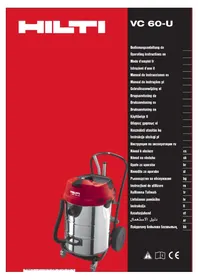
VC 60U - Vacuum Cleaner HILTI - Free user manual and instructions
Find the device manual for free VC 60U HILTI in PDF.

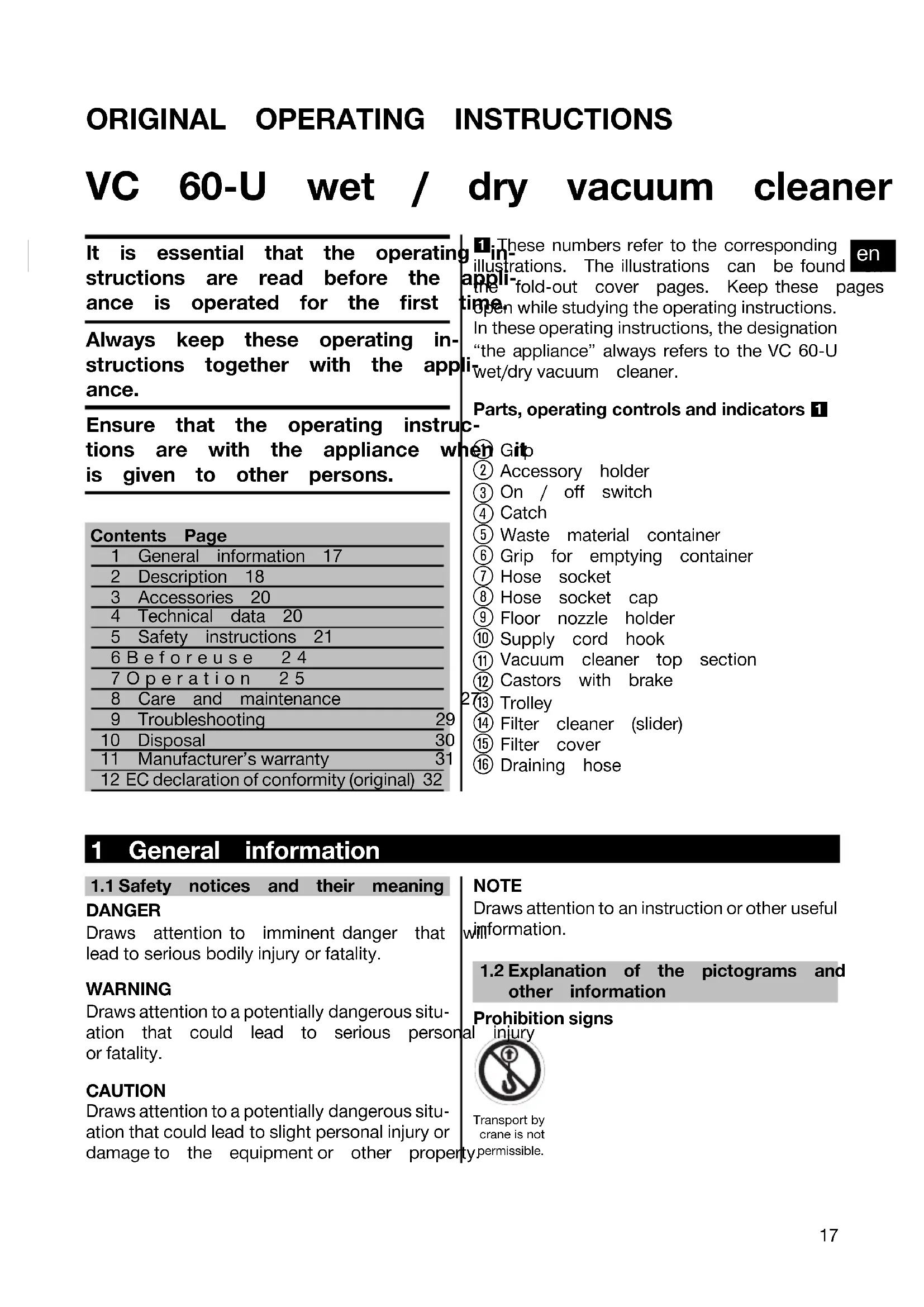


| Product type | Dry and liquid waste vacuum cleaner |
| Brand | Hilti |
| Model | VC 60-U |
| Dimensions (L x W x H) | 680 mm x 520 mm x 1 000 mm |
| Weight | 31 kg (according to EPTA procedure 01/2003) |
| Rated voltage | 110-240 V (depending on version) |
| Power consumption | 950 W to 2 400 W depending on voltage |
| Mains frequency | 50-60 Hz |
| Tank volume | 72 L |
| Filter bag volume | 29 L |
| Water usage capacity | 56 L |
| Max. volumetric flow rate | 2 x 56 L/s |
| Max. vacuum pressure | 0.235 bar (0.208 bar in Switzerland) |
| Suction hose diameter | 36 mm, length 5 m |
| Power cable | 10 m, type H07RN-F 3x1.5 mm² |
| Protection class | Class I (grounding required) |
| Protection type | IP X4 (protected against water splashes) |
| Sound pressure level | 74 dB(A) |
| Vibration (triaxial) | 2.5 m/s² |
| Main functions | Dry/wet vacuuming, automatic filter cleaning, automatic shut-off at max level |
| Safety | Wheel brakes, antistatic flanges, water splash protection, emergency stop |
| Maintenance and cleaning | Filter cleaning by air blast, replacement of flat pleated filter, tank emptying |
| Spare parts and repairability | Flat pleated filter, filter bag, suction hose, accessory kits |
Frequently Asked Questions - VC 60U HILTI
User questions about VC 60U HILTI
0 question about this device. Answer the ones you know or ask your own.
Ask a new question about this device
Download the instructions for your Vacuum Cleaner in PDF format for free! Find your manual VC 60U - HILTI and take your electronic device back in hand. On this page are published all the documents necessary for the use of your device. VC 60U by HILTI.
USER MANUAL VC 60U HILTI
natural_image
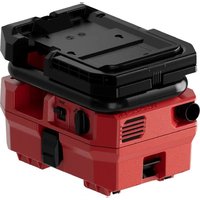
Red and silver HULTI VC SO-U vacuum cleaner on wheels against red background (no text or symbols visible)1
| 2 | 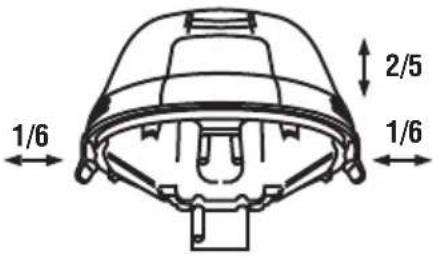 | 3 |  |
| 4 |  | 5 | 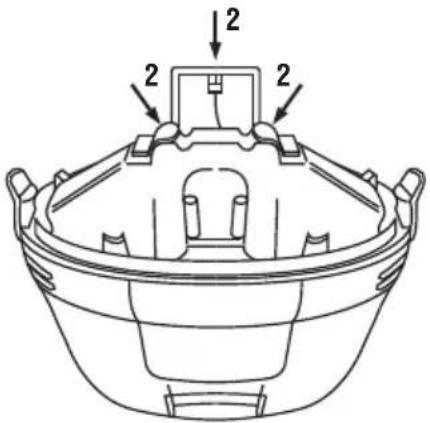 |
| 6 | 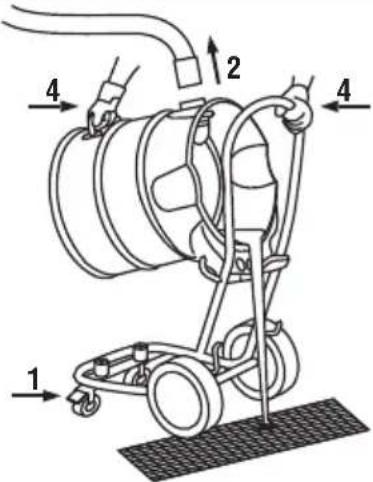 | 7 |   |
| 8 | 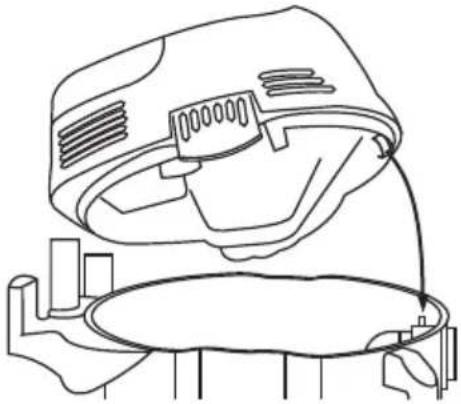 | ||
e|Paolo Luccini
Head of BA Quality and Process Management Business Area Electric Tools & Accessories 01/2012
VC 60-U wet / dry vacuum cleaner
It is essential that the operating structions are read before the a ance is operated for the first ti
Always keep these operating instructions together with the appliance.
Ensure that the operating instructions are with the appliance which is given to other persons.
Contents Page
| 1 | General information 17 |
| 2 | Description 18 |
| 3 | Accessories 20 |
| 4 | Technical data 20 |
| 5 | Safety instructions 21 |
| 6 | Before use 24 |
| 7 | Operation 25 |
| 8 | Care and maintenance |
| 9 | Troubleshooting 29 |
| 10 | Disposal 30 |
| 11 | Manufacturer's warranty 31 |
| 12 | EC declaration of conformity (original) 32 |
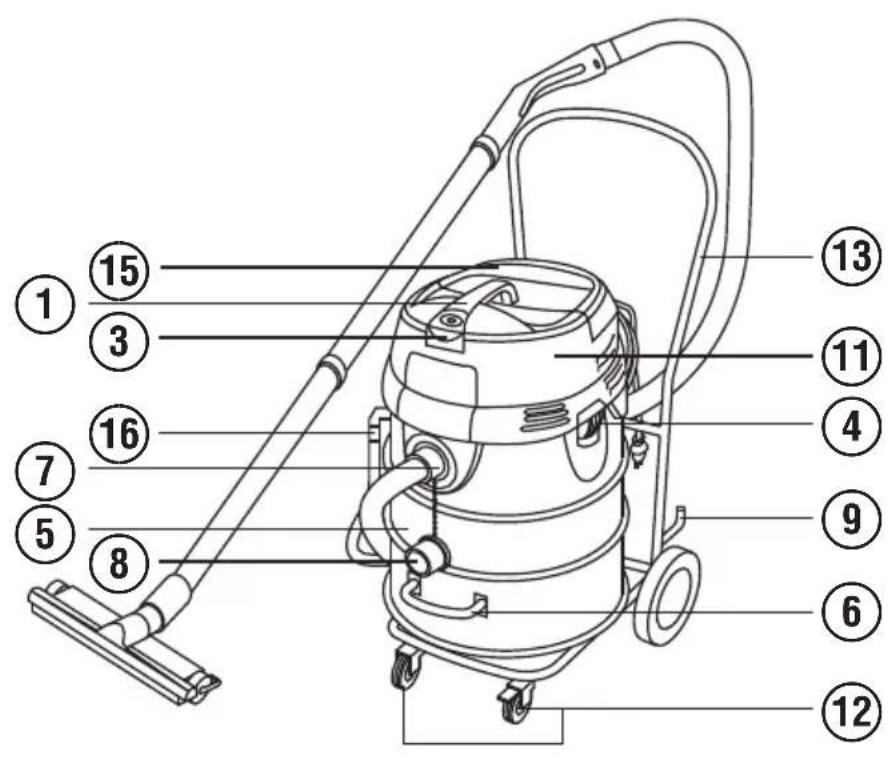
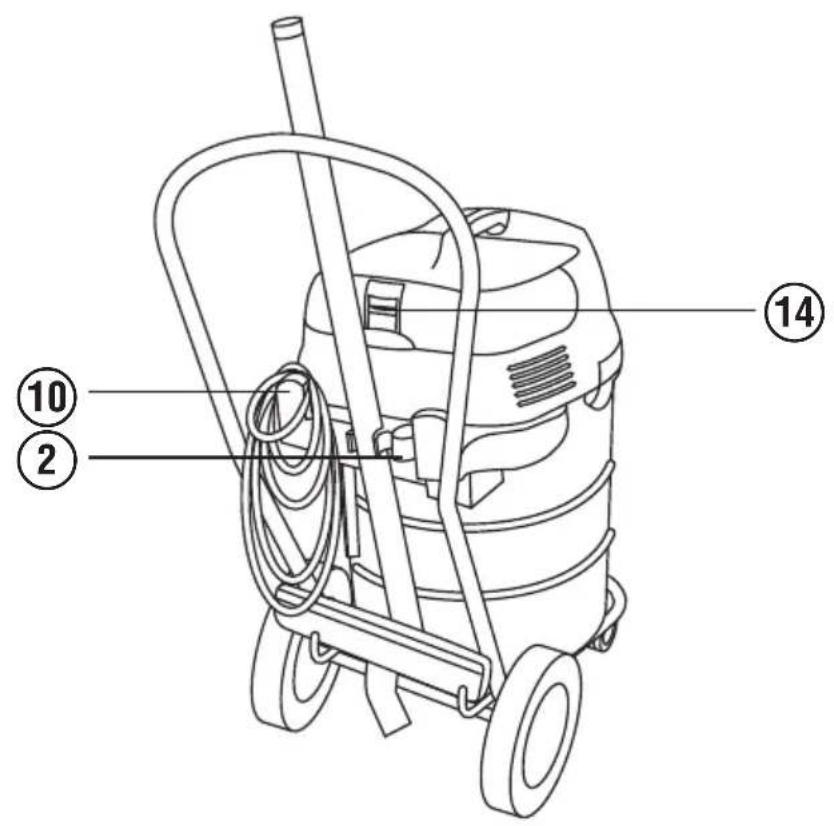
1 These numbers refer to the corresponding illustrations. The illustrations can be found the fold-out cover pages. Keep these p
Open while studying the operating instructions. In these operating instructions, the designation "the appliance" always refers to the VC 60-U wet/dry vacuum cleaner.
Parts, operating controls and indicators 1
en Gitp
② Accessory holder
③ On / off switch
④ Catch
⑤ Waste material container
⑥ Grip for emptying container
⑦ Hose socket
⑧ Hose socket cap
⑨ Floor nozzle holder
⑩ Supply cord hook
⑪ Vacuum cleaner top section
⑫ Castors with brake
2⑬ Trolley
⑭ Filter cleaner (slider)
⑮ Filter cover
⑯ Draining hose
1 General information
1.1 Safety notices and their meaning
DANGER
Draws attention to imminent danger that lead to serious bodily injury or fatality.
WARNING
Draws attention to a potentially dangerous situation that could lead to serious personal or fatality.
CAUTION
Draws attention to a potentially dangerous situation that could lead to slight personal injury or damage to the equipment or other proper
NOTE
Draws attention to an instruction or other useful information.
1.2 Explanation of the pictograms and other information
Prohibition signs
injury

Transport by crane is not permissible.
Warning signs

General warning

Warning: caustic substances

Warning: electricity

Warning: explosive substances
Obligation signs

Wear
protective
clothing

Wear eye protection.

Wear
protective
gloves.

Wear a hard hat.

Wear ear protection.

Wear safety shoes.
Symbols

Read the operating instructions before use.

Return waste material for recycling.
Location of identification data on the appliance
The type designation and serial number can found on the type identification plate on the appliance. Make a note of this data in your erating instructions and always refer to it with making an enquiry to your Hilti representative or service department.
Type:
Generation: 01
Serial no.:
2 Description
2.1 Use of the product as directed
The VC 60-U is a universal industrial vacuum cleaner with an effective filter cleaning system for dry dust. It is suitable for wet and dry vacuum cleaning applications.
The appliance is suitable for collecting the slurry created by wet drilling or wet cutting operations on mineral materials using Hilti diamond coring or Hilti diamond sawing equipment a collecting large quantities of dry mineral dust when working with Hilti diamond grind cutters, rotary hammers and dry cutting core bits.
The appliance may also be used to pick up liquid waste material.
The appliance is suitable for picking up and collecting dry, non-flammable dusts as well as liquids.
Do not use the appliance to pick up explosive substances or glowing, flammable, b aggressive dusts or liquids (e.g. magnesium or aluminium dust, gasoline, solvents, acids, coolants and lubricants, etc.).
Do not operate the appliance when laid on its side (always operate in upright pos The total weight of the appliance including the waste material picked up must not exceed 100 kg.
Do not use the appliance as a substitute for a ladder.
Do not use the appliance for continuous, stationary operation in automatic or semi-automatic systems.
WARNING - The operating personnel must be instructed on how to use the appliance prior to beginning work, they must be informed of any hazards associated with the materials to be picked up and they must be familiar with the correct procedures for safe disposal of the Underwater use is not permissible.
WARNING - Use of the appliance to pick up substances hazardous to the health, i.e. substances for which an M-type or H-type vacuum cleaner is specified, or to pick up oils or liquids with a temperature above 60°C, is not permissible.
Use of the appliance to clean down persons or animals is not permissible.
Use an antistatic suction hose in order to avoid electrostatic effects.
This appliance is suitable for commercial use, e.g. in hotels, schools, hospitals, factories, shops, offices and by rental companies.
The working environment may be as follows: construction site, workshop, renovation, conversion or new construction.
Modification of the appliance or tampering with its parts is not permissible.
Observe the information printed in the operating instructions concerning operation, care and maintenance.
To avoid the risk of injury, use only genuine Hilti tools and accessories.
The appliance and its ancillary equipment may present hazards when used incorrectly by untrained personnel or when used not as directed.
2.2 The items supplied as standard include:
1 Vacuum cleaner with fluted filter and trolley
1 Suction hose complete with rotating connector, nozzle connector and tapered adapter
1 Narrow nozzle
1 Dust bag
1 Accessory set
1 Operating instructions
2.3 Using extension cords
Use only extension cords of a type approved for the application and with conductors of adequate gauge. The appliance may otherwise lose performance and the extension cord may overheat.
Check the extension cord for damage at regular intervals. Replace damaged extensio
Recommended minimum cross section and max. cord length for the VC 60-U:
| Conductor cross section | 1.5 mm2 2.5 mm2 | |
| Mains voltage 110-120 V | 30 m | 50 m |
| Mains voltage 220-240 V | 30 m | 50 m |
Do not use extension cords with a 1.25 mm^2 , 2 mm^2 or 3.5 mm^2 conductor cross section.
2.4 Using extension cords outdoors
When working outdoors, use only extension cords that are approved and correspondi for this application.
2.5 Using a generator or transformer
This appliance may be powered by a generator or transformer when the following is fulfilled: The unit must provide a power output in watts of at least twice the value printed on the type identification plate on the power tool or appliance. The operating voltage must +5% and -15% of the rated voltage at all times, frequency must be in the 50 - never above 65 Hz, and the unit must be equipped with automatic voltage regulation and starting boost.
Never operate other power tools or appliances from the generator or transformer at time. Switching other power tools or appliances on and off may cause undervoltage overvoltage peaks, resulting in damage to the power tool or appliance.
3 Accessories
Spare parts, tools and accessories are available through Hilti sales channels.
| Designation Description |
| Dust bag |
| Fluted filter |
| Suction hose complete with rotating con-3 6 mm, length 5 m nector, nozzle connector and tapered adapter |
| Accessory set 1 bend, 2 extension tubes, 1 floor nozzle with lamellar lips and 1 set of brushes |
| Hose connectors |
| Tapered adapter |
4 Technical data
Right of technical changes reserved.
| Rated voltage | 110 V 1 | 10 V 120 | V 220 | V 230 V | 230 V 240 V | |||||||
| Rated power input | 1,100 W | 950 W | ,200 W | ,200 W | 2,200 W | 2,400 W | ||||||
Information about the appliance and its applications
| Protection class Protection class I | |||||
| Protection class IP X4 protection against sprayed water |
| Mains frequency 50...60 Hz | |
| Weight in accordance with EPTA procedure kg01/2003 | |
| Dimensions (L x W x H) 680 mm x 520 mm x 1,000 mm | |
| Supply cord (length) 10 m | |
| Supply cord (type) | H07RN-F 3 × 1.5mm^2 |
| Max. suction performance (air) | 2x56 l/s |
| Max. vacuum | 0.235 bar (CH: 0.208 bar) |
| Container capacity | 72 l |
| Dust bag capacity | 29 l |
| Effective water capacity | 56 l |
| Suction hose diameter (rotary connector Length 5 m: 36 mm nozzle end; connector at vacuum cleaner end) | |
| Air temperature | -20...+40°C |
Noise and vibration information (measured in accordance with EN 60335-2-69):
| Typical A-weighted emission sound pressure dB (A) level |
| Uncertainty for the given sound level 2.5 dB (A) |
| Triaxial vibration value (vibration vector sum) < 2.5 m/s ^2 |
| Uncertainty (K) is taken into account in the vibration value |
en
5 Safety instructions
5.1 Basic information concerning safety 5.3 Proper organization of the work area
a) In addition to the information relevant to safety given in each of the sections of these operating instructions, the following points must be strictly observed at all times.
b) Read all instructions! Failure to follow by Ensure that the workplace is well vent-all instructions listed below may resulted. Exposure to dust at a poorly ver electric shock, fire and/or serious injury. c) Before use of the appliance together with
a power tool, the operating instructions for the power tool must be read and all safety instructions observed. Keep the work area tidy. Any objects carefully which may cause injury should be removed from the area. Untidiness at the workplace can lead to accidents.
5.2 Requirements to be met by usersd) Store appliances out of reach of child
a) Stay alert, watch what you are doing what not in use. Do not allow persons use common sense when operating the unfamiliar with the appliance or these appliance. Do not use the appliance while instructions to operate it. Appliances are tired or under the influence of drugs, dangerous when used by inexperienced cohol or medication. A moment of inattersons or persons with limited physical, tion while operating appliances may result sensory or mental abilities.
in serious personal injury. b) Use personal protective equipment. Always wear eye protection. Protective equipment such as dust mask, non-skid e) Keep children and other persons away from the area while the appliance is in use. Distractions can cause you to lose control.
safety shoes, hard hat, or hearing f) Do not operate appliances in explosive protection used for appropriate conditions will reduce personal injuries. flammable liquids, gases or dust. Appli-c) If devices are provided for the conncences create sparks which may ignite the tion of dust extraction and collection dust or fumes.
cilities, ensure these are connected and do not allow other persons to touch properly used. Use of dust collection appliance or the extension cord. reduce dust-related hazards. d) The machine is intended for professional use. h) Avoid unusual body positions. Make sure you work from a safe stance and stay balance at all times.
e) The machine may be operated, service wear non-skid shoes. and repaired only by authorized, trained always lead the supply cord, the extension personnel. This personnel must be informed of any special hazards that make rear when working. This will help to be encountered. sion cord and the suction hose away prevent tripping while working.
k) Do not transport the appliance by k or disconnect the plug from the power
1) Check to ensure that the appliance is source before making any adjustments, switched off before plugging the supply changing accessories, or storing cord into a power outlet.
5.4 General safety rules
such preventive safety measures reduce the risk of starting the appliance accidentally.
5.4 General safety rules
a) Use the right appliance for the jo not use the appliance for purposes which it was not intended. Use directed and when in faultless con
b) Never leave the appliance unattended. account the working conditions and the
c) Take the influences of the surrounding work to be performed. Use of appliance area into account. Do not use the application for applications different from those inten- pliance where there is a risk of fire of could result in a hazardous situation. explosion. m) The water level limiting device must k
d) Protect the appliance from frost.
e) CAUTION - Store appliances in a place when not in use. When not in pliances must be stored in a dry, or locked away out of reach of chil
f) CAUTION - Always unplug the sup cord from the power outlet when pliance is not in use (during brea fore cleaning and maintenance and fore changing the filter.
g) Switch the appliance off before transporting it.
h) Check the appliance and its access for any damage. Guards, safety de and any slightly damaged parts m checked carefully to ensure that th
function faultlessly and as intended. Check that moving parts function correctly without sticking and that parts are damaged. All parts must fitted correctly and fulfill all condit necessary for correct operation of the appliance. Damaged guards, safety devices and other parts must be repaired or replaced properly at an authorized service center unless otherwise indicated in the operating instructions.
i) Check that the filter is seated co Check to ensure that the filter is aged.
j) Have your appliance serviced by a ified repair person using only ident replacement parts. This will ensure the safety of the appliance is maint
b) Use the appliance and its accessories for, etc. in accordance with these instructions and in the manner intended for it only as particular type of appliance, taking into ed. account the working conditions and the working work to be performed. Use of appliance for applications different from those intended could result in a hazardous situation. m) The water level limiting device must be cleaned regularly with a brush in accordance with instructions and checked for use, up-of damage.
high place children. Mechanical
ply) Follow the instructions concerning care the and- maintenance.
ks)) Keep the appliance well maintained. be-Check for misalignment or binding of moving parts, breakage of parts and any other condition that may affect operation of the appliance. If damaged,
soridsave the appliance repaired before use. vices Many accidents are caused by poorly just be maintained appliances.
5.6 Electrical

a) The appliance's supply cord plug must match the outlet. Never modify the plug in any way. Do not use any adapter with earthed (grounded) appliances. Un-modified plugs and matching outlets will reduce risk of electric shock.
b) Avoid body contact with earthed or rectly grounded surfaces, such as pipes, undam- radiators, ranges and refrigerators. There is an increased risk of electric sh qual- if your body is earthed or grounded.
c) Do not expose appliances to rain conditions. Water entering an appliance will increase the risk of electric shock
d) Check the appliance's supply cord regular intervals and have it replace a Hilti service center if damage is Check extension cords at regular i vals and replace them if found to aged.
e) Check the condition of the appliance its accessories. Do not operate the pliance and its accessories if dams found, if the appliance is incomplete if its controls cannot be operated lessly.
f) Do not touch the supply cord or extension cord if they are damaged while working. Disconnect the supply cord plug from the power outlet. Damaged supply cords present a risk of electric shock.
g) Damaged or faulty switches must placed at a Hilti service center. Do not use the appliance if it cannot be sw on and/or off correctly.
h) Have the appliance repaired only by a trained electrical specialist (Hilti ser center) using genuine Hilti spare parts. Failure to observe this point may in risk of accident to the user.
i) Do not abuse the cord. Never use the cord for carrying, pulling or unplug the appliance. Keep the cord away heat, oil, sharp edges or moving par Damaged or entangled cords increase risk of electric shock.
j) When operating an appliance outdoor use an extension cord suitable for door use. Use of a cord suitable for use reduces the risk of electric sho
k) In case of an interruption in the electric supply: Switch the appliance of unplug the supply cord.
I) Avoid using extension cords with multi-power outlets and the simultaneous several appliances connected to one sion cord.
m) Never spray the top section of the vacuum cleaner with water: this presen an electrical hazard and may dam a the appliance.
or Connectors on mains power cables, exter ce sion cords or supply cords must provide ck. protection from sprayed water.
at Grip the plug when unplugging the supply ed abrd (do not pull or tug at the supply found).
nter- Never pull the vacuum cleaner by the besupply-cord to a new working po en q) Never operate the appliance when it is
nce dirty or wet. Dust (especially dust from the apconductive materials) or dampness adage hiring to the surface of the appliance onay, under unfavorable conditions, lead faulto electric shock. Dirty or dusty appliances should thus be checked at a H service center at regular intervals, especially if used frequently for working on y conductive materials.
r) Check to ensure that the supply cord does not lie in a puddle of water.
b6.7reMaterial picked up


vice a) Do not use the appliance to pick up mable or explosive dusts (magnesium result or aluminium dust etc.) or dusts which present a health hazard.
b) The appliance is suitable for picking up ging and collecting dry, non-flammable dusts. from c) Do not use the appliance to pick up ts. flammable, explosive or aggressive li- the liquids (coolants and lubricants, gasoline, solvents, acids (pH<5), alkalis (pH>12.5) ors, etc.)
out- a) Switch the appliance off immediately if outdoor foam or liquids escape from it.
ck) Avoid contact with alkaline or acidic liquids. If contact accidentally occurs, off and flush with water. In the event of the liquid coming into contact with the eyes, triple rinse the eyes with plenty of water are use of consult a doctor.
1) Wear protective gloves when using the appliance to pick up hot materials.
^g) Do not pick up objects or materials that could cause injury by piercing through
the dust bag (e.g. pointed or sharp jects).
5.8 Thermal
Do not pick up hot materials (glowing ettes, hot ash, etc.).
5.9 Personal protective equipment






a) The user and any other persons in the vicinity must wear suitable eye protec-
otion, a hard hat, ear protection, protective gloves and safety footwear while the appliance is in use.
b) When working with mineral drilling slurry wear protective clothing and avoid skin contact with the slurry (pH>9: caustic).
6 Beforeuse

CAUTION
The mains voltage must comply with specification given on the type identifier plate. Ensure that the appliance is d nected from the electric supply.
DANGER
Connect the appliance only to properly earthed/grounded power sources.
CAUTION
Always check to ensure that the vacuum cleaner is standing securely. Engage the castor brakes.
CAUTION
When fitting the top section of the cleaner, take care to avoid pinching fingers or damaging the supply cord.
6.1 Use of extension cords and generators or transformers
See section "Description / use of exter cords".
6.2 Operating the appliance for the first time
- Open the two catches.
- Lift the vacuum cleaner top section awa from the waste material container.
the Remove the accessories and packaging cation from the waste material container.
sconNOTE If dry dust is to be collected, fit the dust bag into the waste material contain in accordance with the instructions. - Fit the vacuum cleaner top section onto the waste material container.
- Close the two catches.
- Check to ensure that the vacuum cleaned top section is fitted correctly and secure. Connect the suction hose to the appliance.
6.2.1 Fitting a dust bag for collecting dry dust 2
vacuum open the two catches.
your Lift the vacuum cleaner top section awa from the waste material container.
-
Insert the new dust bag in the waste material container.
-
Press the dust bag sleeve firmly onto the sion hose socket.
-
Fit the vacuum cleaner top section the waste material container.
- Close the two catches.
- Check to ensure that the vacuum topsectionisfittedcorrectlya
- Connect the suction hose to the a
6.3 Transport
DANGER
The appliance may be moved or train only whenthemotorhascometoa complete stop.

cleaner
Do not carry the appliance when it is full waste material.
Empty the appliance before carrying it other location.
en
Do not tip the appliance or lay it on its sport sport after using it to collect water.
7 Operation
CAUTION
Always check to ensure that the vac cleaner is standing securely. Engage castor brakes.
WARNING
In an emergency (e.g. burst filter), st appliance off, disconnect it from the supply and have it checked by a tr specialist before further use.
7.1 Switching on
- Plug the supply cord into the pow
- Check to ensure that the vacuum is standing securely and engage the brakes.
- Press the on / off switch.
7.2 Cleaning the filter 3
The appliance is equipped with a filtering system which removes most of the adhering to the fluted filter.
- Plug the supply cord into the pow
- Check to ensure that the filter clea system is activated (slider in the lo sition).
- Press the on / off switch.
- Cover the end of the hose or the nozzle with the palm of the hand for 5-10 seconds.
The fluted filter will then be cleanematically by a blast of air (a pulse is heard).
7.3 Deactivating the filter cleaning system Check to ensure that the filter cleaning system is deactivated (slider in the upper position when the appliance is used with the narrow nozzle or when used mainly to collect water
witch the 74 electric Picking up dry dust NOTE
Before using the appliance to pick up dry especially dust from mineral materials, always check to ensure that a dust bag / disposable bag (Hilti accessory) is fitted in the container outlet. The material collected can then be disposed cleanly and easily.
CAUTION
The material collected must be disposed in accordance with the applicable regulations.
clean-
NOSE
A fluted filter should always be fitted when era popliteance is used to pick up dry dust.
ning
Care should be taken to ensure that the filter is not damp from previous use with or wet materials. A damp fluted filter will become clogged when dry dust is picked up with the appliance. Accordingly, before being used for picking up dry dust, the fluted filter should be rinsed and allowed to dry or resting with another dry fluted filter.
- Disconnect the suction hose from power tool or nozzle.
- Clean the filter thoroughly.
7.4.1 Changing the dust bag when up dry dust 4
CAUTION
The material collected must be disposed in accordance with the applicable regulations.
- Disconnect the dust bag sleeve from hose socket.
- Close the slider on the dust bag
- Clean the waste material container cloth or hose it down with water.
- Insert a new dust bag in the was container.
- Press the dust bag sleeve firmly o hose socket.
7.5 Picking up liquids
NOTE
A fluted filter should always be fitted appliance is used to pick up liquids and maintenance").
7.5.1 Before picking up liquids 5
- Remove the dust bag / disposal by the waste material container.
- Check the electrodes / level monitor float to ensure that the parts are operating smoothly. Clean the parts brush if necessary.
- Deactivate the automatic filter cleaning system.
7.5.2 When picking up liquids
If possible, use a separate fluted filtering up liquids.
The appliance switches itself off automa when the liquid in the container reaches maximum level.
WARNING
If foaming occurs, switch the appliance immediately and empty the container.
7.5.3 After picking up liquids
- Empty the waste material container and clean it out by hosing it down with w clean the float, clean the electrodes with brush and clean the filter element by w it with the hand after first allowing it t
- Leave the vacuum cleaner top section a ed of container standing separately. This will allow the fluted filter and the container dry.
the 7.6 After finishing work
- Switch the appliance off.
with a Disconnect the supply cord plug from the power outlet. - Roll up the supply cord and hang it c ste material hook.
- Empty the container and clean the appliance by wiping it with a damp cloth.
- Roll up the suction hose.
- Store the appliance in a secure, dry place where it is inaccessible to unauthorized users.
when the
see 7.7 "Care Emptying the waste material container
7.7.1 Emptying dry dust from the waste material container
adDANGER
Check that the bag has not been pierced through by objects which may cause injur clean_and
NOTE with a
It is recommended that the filter is cleaned thoroughly before emptying the waste material container when it contains dry dust. This w increase the life of the filter significantly.
7.7.1.1 Before emptying the waste material container, proceed as follows:
- the Engage the castor brakes.
-
Disconnect the supply cord plug from the power outlet.
3ff Open the two catches. -
Lift the vacuum cleaner top section from the waste material container at place it on a level surface.
7.7.1.2 After emptying the waste mat container, proceed as follows:
CAUTION
When fitting the top section of the cleaner, take care to avoid pinching fingers or damaging the supply cord.
- Fit the vacuum cleaner top section the waste material container and clotwo catches.
- Fit the suction hose securely in the socket.
7.7.2 Emptying liquids from the waste material container
CAUTION
The material collected must be disposed in accordance with the applicable reg- tions.

7.7.2.1 Emptying liquids 6
CAUTION
Do not stand on the lower part of the frame. The waste material container may suddenly tip over, causing injury.
OVAUTION
To avoid pinching the fingers, do not grip the frame at the accessory holder.
erial Check to ensure that the vacuum cleane is standing securely and engage the cas brakes.
vacuum? Disconnect the suction hose from then your socket.
- Remove the accessories from the accessory holder.
onto CAUTION Do notgripthe frame at points se the where it can knock against the waste material container.
hold the waste material container by the emptying grip and tip the container over until empty.
- Clean the edge of the container, the ho socket and the hose connector with a
sed.7.2f2 Draining liquids
Brain off dirty water through the drainage h at a suitable place.
the frame.
8 Care and maintenance
8.1 Cleaning the fluted filter (thorough cleaning)
NOTE
Do not attempt to clean the fluted filt knocking it against a hard object and use pointed instruments. This will reduce life of the fluted filter.
NOTE
Do not use compressed air to clean filter. This may cause tears in the filter
NOTE
The fluted filter is a wearing part. It replaced at least every 6 months and
frequently if the appliance is subject to heat use.
The appliance is equipped with a filter cleaning system which removes most of the dust adhering to the fluted filter.
- the Plug the supply cord into the power ou
- Check to ensure that the filter cleaning system is activated (slider in the lower
ne fluted). -
Press the on / off switch.
-
Cover the end of the hose or the such nozzle with the palm of the hand for a should-10e seconds.
more
- The fluted filter will then be cleaned matically by a blast of air (a pulsat is heard).
NOTE The fluted filter may also be with water and a cloth (do not use pressure cleaning system).
The filter may become clogged with dust if cleaning is neglected, resulting a drop in suction performance. This reduce the life of the fluted filter.
8.2 Changing the fluted filter / exhaust filter
CAUTION
Never use the appliance without a fl filter.
8.2.1 Removing the fluted filter 7
- Disconnect the supply cord plug from the power outlet. Never
- Open the filter cover.
- Remove the fluted filter carefully fro holder.
8.2.2 Fitting the fluted filter
- Clean the filter seal with a cloth.
- Fit the new fluted filter.
- Close the filter cover.
8.3 Opening the appliance for checki
- Engage the castor brakes.
- Disconnect the supply cord plug fro power outlet.
- Open the two catches.
- Lift the vacuum cleaner top section from the waste material container at place it on a level surface.
8.4 Checking the antistatic clip 8
Check the antistatic clip for damage a it replaced by Hilti Service if necessary
8.5 Checking the waste material leve
CAUTION
Check the cut-out contacts and clean with a brush if necessary (if dirty).
Check that the float switch moves freely.
8 auto Closing the appliance
CAUTION
When fitting the top section of the vacuum cleaner, take care to avoid pinching your fingers or damaging the supply cord.
mineralock the seal at the vacuum cleaner g insection and clean it with a cloth if ne will sary.
-
Fit the vacuum cleaner top section onto the waste material container.
st. a rose the two catches. -
Plug the supply cord into the power ou
t8d7 Care of the appliance
CAUTION
Disconnect the supply cord plug from the power outlet.
Never operate the appliance when the ventilation slots are blocked. Clean the ventilation slots carefully using a dry brush. Clean the side of the appliance at regular intervals with cloth. Do not use a spray, high-pressure water jet system, steam pressure cleaning equipment or running water for cleaning. This may negatively affect the electrical safety of the appliances. Always keep the grip surfaces of the appliances free from oil and grease. Do not use clean agents which contain silicone.
The appliance must be handled for cleaning and maintenance in a way that avoids expo ing maintenance personnel and other persons to any hazards. Use filtered forced ventilatio Wear personal protective equipment. Clean the away maintenance area in a way that prevents hardous substances escaping into the surrounding environment.
Vacuum off the outer surfaces of the applia wipe it clean or seal it in suitable contained or material before removing it from an area contaminated with hazardous substances. This will help to avoid distribution of the hazardous dust deposited on it.
When maintenance orrepairsarecarriedout, all contaminated parts which cannot be satisfactorily cleaned must be packed in impermeabl
bags and disposed of incomplete applicable disposal regulations.
The appliance must be subjected to a inspection by Hilti Service or a trained at least once a year to check, for damage to the filter, air leakage, and correct operation of controlling devices.
8.8 Maintenance
WARNING
Repairs to the electrical section of pliance may be carried out only by electrical specialists.
i checke all external parts of the appliance fc damage at regular intervals and check that technical operate faultlessly. Do not operate I appliance if parts are damaged or when the controls for do not function faultlessly. If necessary, the appliance should be repaired by I Service.
en
8.9 Checking the appliance after care and maintenance
the After-carrying out cleaning and maintenance, trained that the vacuum cleaner has been correctly reassembled and that it operates fault lessly.
Test each of the functions.
9 Troubleshooting
| Fault Possible cause Remedy | |
| No suction / reduced tion performance. | the dust / disposal bag is full. Change the dust / dispos bag.See section: 7.4.1 Changing the dust bag when picking up dry dust 4 |
| No fluted filter fitted. Fit a fluted filter. | |
| The fluted filter is clogged with the fluted filter thor- dirt or dust. oughly or replace it if neces- sary.See section: 8.1 Cleaning the fluted filter (thorough cleaning) See section: 8.2 Changing the fluted filter / exhaust air filter | |
| Blockage in the hose, vacuum clean the hose and dust hood.cleaner or power tool dust hood. | |
| The seal between the edge Clean the seal with a cloth or the container and the vacuum replace it.cleaner top section is dirty or defective. | |
| Hole in the suction hose. Fit a new hose. | |
| The filter cover seal is defective the appliance repaired by ive. Hilti Service. | |
| The draining hose is not closed the draining hose pro- properly. properly. | |
| Dust is blown out of appliance. | The fluted filter is not fitted. Fit one fluted filter correctly. rectly. |
| The fluted filter is damaged. Fit a new fluted filter. | |
| The filter seal is damaged. Fit a new fluted filter. | |
| Dust is blown out of the vacuum cleaner top section is not fitted correctly. See section: 6.2 Operating the appliance for the first time | |
| The appliance switches Electrostatic charge is not connected to an itself off or on inadvertsipated correctly; the appliance is connected to an electric shocks (static disarmed/ungrounded power charge). The antistatic clip is damaged. Have the antistatic clip replaced by Hilti Service. Connect the appliance to an earthed/grounded power outlet. | |
| The appliance doesn't start after emptying the container. Dirt. Switch the appliance off, wait 5 sec. and then switch on a general clean the float, the electrodes and the gap between the electrodes. Check to ensure smooth movement. | |
| The motor doesn't restart the mains fuse / circuit breaker. Find the main has been tripped. The container is full. Switch the appliance off. Empty the container. See section: 7.7.1 Emptying dry dust from the waste material container | |
| Voltage fluctuations. The supply voltage impedance is too high. Use a suitable extension cord (see section “Description”). | |
10 Disposal

Most of the materials from which Hilti power tools or appliances are manufactured can be recycled. The materials must be correctly separated before they can be recycled. In many countries, Hilti has already made arrangements for taking back your old power tools or appliances. Ask Hilti customer service or your Hilti representative for further information.

For EC countries only
Disposal of electric tools or appliances together with household waste is negligible.
In observance of the European Directive on waste electrical and electronic and its implementation in accordance with national law, electrical appliances
have reached the end of their life must be collected separately and return
environmentally compatible recycling facility.
en
Disposing of drilling slurry
Disposing of drilling slurry directly into rivers, lakes or the sewerage system without suitable pretreatment presents environmental problems. Ask the local public authorities for information about current regulations. We recommend the following pretreatment:
- Collect the drilling slurry (for example, using a wet-type vacuum cleaner).
- Allow the drilling slurry to settle and dispose of the solid material at a construction waste disposal site (the addition of a flocculent may accelerate the separation process).
- The remaining water (alkaline, pH value > 7) must be neutralized by the addition of an acidic neutralizing agent or diluted with a large volume of water before it is allowed to sewerage system.
11 Manufacturer's warranty
Hilti warrants that the tool supplied is defects in material and workmanship. The ranty is valid so long as the tool is handled correctly, cleaned and serviced erly and in accordance with the Hilti Instructions, and the technical system is tained. This means that only original H sumables, components and spare parts be used in the tool.
This warranty provides the free-of-charge pair or replacement of defective parts the entire lifespan of the tool. Parts repair or replacement as a result of n and tear are not covered by this war
Additional claims are excluded, unless stricter national rules prohibit such exclusion. Operated particular, Hilti is not obligated for direct, incidental or consequential damages losses or expenses in connection with, or mainly by reason of, the use of, or inability to the tool for any purpose. Implied warranty may merchantability or fitness for a particular purpose are specifically excluded.
For repair or replacement, send the tool or only over parts immediately upon discovery of equiring defect to the address of the local Hilti market wear organization provided.
This constitutes Hilti's entire obligation with regard to warranty and supersedes all prior or contemporaneous comments and oral or written agreements concerning warranties.
12 EC declaration of conformity (original)
Designation: Wet / dry vacuum
cleaner
Type: VC 60-U
Generation: 01
Year of design: 2007
We declare, on our sole responsibility, product complies with the following dire and standards: 2006/42/EC, 2004/108/EC, 2011/65/EU, EN 60335-1, EN 60335-2-69 EN ISO 12100.
Hilti Corporation, Feldkircherstrasse 100, FL-9494 Schaan


thatlo thiscini Johannes Wilfried Huber
Head of BA Quality and Process Senior Vice President Management Business Area Electric Tools & Business Unit Diamond Accessories 01/2012 01/2012
Technical documentation filed at:
Paolo Luccini Johannes Wilfried Huber Head of BA Quality and Process Senior Vice President Management Business Area Electric Tools & Business Unit Diamond Accessories 01/2012 01/2012
Paolo Luccini
head of BA Quality and Process
Management
Business Area Electric Tools &
Accessories
01/2012

Johannes Wilfried Huber
Senior Vice President
Business Unit Diamond
01/2012
2100
Paolo Luccini Johannes Wilfried Huber Head of BA Quality and Process Senior Vice President Management Business Area Electric Tools & Business Unit Diamond Accessories 01/2012 01/2012
Head of BA Quality and Process Senior Vice President Management
Business Area Electric Tools & Business Unit Diamond Accessories
01/2012 01/2012 2100.
| etPaolo Luccini Johannes Wilfried Huber | |||||
| en | Head of BA Quality and Process Management | Senior Vice President | |||
| Business Area Electric Tools & Accessories | Business Unit Diamond | ||||
| 01/2012 | 01/2012 | ||||
Paolo Luccini Johannes Wilfried Huber Head of BA Quality and Process Senior Vice President Management Business Area Electric Tools & Business Unit Diamond Accessories 01/2012 01/2012
Head of BA Quality and Process
Management
Business Area Electric Tools &
Accessories
01/2012
Johannes Wilfried Huber
Senior Vice President
Business Unit Diamond
01/2012
Teknisk dokumentation vid:
The image contains no discernible text or characters.
Paolo Luccini Johannes Wilfried Huber Head of BA Quality and Process Senior Vice President Management Business Area Electric Tools & Business Unit Diamond Accessories 01/2012 01/2012
Head of BA Quality and Process Senior Vice President
Management
Business Area Electric Tools & Business Unit Diamond
Accessories
01/2012 01/2012
Paolo Luccini
Head of BA Quality and Process Management Business Area Electric Tools & Accessories 01/2012
Johannes Wilfried Huber Senior Vice President
Business Unit Diamond
01/2012
Paolo Luccini Johannes Wilfried Huber Head of BA Quality and Process Senior Vice President Management Business Area Electric Tools & Business Unit Diamond Accessories 01/2012 01/2012
Head of BA Quality and Process Management
Business Area Electric Tools &
Accessories
01/2012

Johannes Wilfried Huber Senior Vice President
Business Unit Diamond
01/2012
Head of BA Quality and Process
Management
Business Area Electric Tools &
MAccessories
01/2012

Johannes Wilfried Huber
Senior Vice President
Business Unit Diamond
01/2012
Head of BA Quality and Process Senior Vice President Management
Business Area Electric Tools & Business Unit Diamond
Accessories
01/2012
01/2012
| Paolo Luccini | Johannes Wilfried | Huber |
| Head of BA Management | Quality and Process | Senior Vice President |
| Business Area Accessories | Electric Tools & | Business Unit Diamond |
| 01/2012 | 01/2012 |
Head of BA Quality and Process
Management
Business Area Electric Tools &
Accessories
01/2012

Johannes Wilfried Huber
Senior Vice President
Business Unit Diamond
01/2012
Paolo Luccini Johannes Wilfried Huber Head of BA Quality and Process Senior Vice President Management Business Area Electric Tools & Business Unit Diamond Accessories 01/2012 01/2012
Head of BA Quality and Process
Management
Business Area Electric Tools &
Accessories
01/2012

Johannes Wilfried Huber
Senior Vice President
Business Unit Diamond
01/2012
Head of BA Quality and Process
Management
Business Area Electric Tools &
Accessories
01/2012
Johannes Wilfried Huber
Senior Vice President
Business Unit Diamond
01/2012
Head of BA Quality and Process Management
Business Area Electric Tools & Accessories
01/2012

Johannes Wilfried Huber Senior Vice President
Business Unit Diamond
01/2012
Head of BA Quality and Process Management
Business Area Electric Tools & Accessories
01/2012
Business Unit Diamond
01/2012
ALGUPÄRANE KASUTUSJUHEND
Tolmu-/veeimeja VC 60-U
7.5 Vedelike imemine
JUHIS
Paolo Luccini Johannes Wilfried Huber Head of BA Quality and Process Senior Vice President Management Business Area Electric Tools & Business Unit Diamond Accessories 01/2012 01/2012
Tehnilised dokumendid saadaval:
Johannes Wilfried Huber Senior Vice President
Business Unit Diamond
01/2012
Paolo Luccini Head of BA Quality and Process Management Business Area Electric Tools & Accessories 01/2012
المطبوعة الفنية ل:
Head of BA Quality and Process
Management
Business Area Electric Tools &
Accessories
01/2012

Johannes Wilfried Huber
Senior Vice President
Business Unit Diamond
01/2012
Hilti = registered trademark of Hilti Corp., Schaan
W 3421 | 1013 | 00-Pos. 1 | 1
Printed in Germany © 2013
Right of technical and programme changes reserved S. E. & O.
211507 / A3



- e|Paolo Luccini
- VC 60-U wet / dry vacuum cleaner
- en Gitp
- General information
- DANGER
- WARNING
- CAUTION
- NOTE
- Warning signs
- Obligation signs
- Symbols
- Location of identification data on the appliance
- Description
- Use of the product as directed
- The items supplied as standard include:
- Using extension cords
- Using extension cords outdoors
- Using a generator or transformer
- Accessories
- Technical data
- Safety instructions
- General safety rules
- Electrical
- Thermal
- Personal protective equipment
- Beforeuse
- Use of extension cords and generators or transformers
- Operating the appliance for the first time
- Fitting a dust bag for collecting dry dust 2
- Transport
- Operation
- Switching on
- Cleaning the filter 3
- NOSE
- Changing the dust bag when up dry dust 4
- Picking up liquids
- Before picking up liquids 5
- When picking up liquids
- After picking up liquids
- the 7.6 After finishing work
- see 7.7 "Care Emptying the waste material container
- Emptying dry dust from the waste material container
- adDANGER
- NOTE with a
- Before emptying the waste material container, proceed as follows:
- After emptying the waste mat container, proceed as follows:
- Emptying liquids from the waste material container
- Emptying liquids 6
- OVAUTION
- sed.7.2f2 Draining liquids
- Care and maintenance
- Cleaning the fluted filter (thorough cleaning)
- Changing the fluted filter / exhaust filter
- Removing the fluted filter 7
- Fitting the fluted filter
- Opening the appliance for checki
- Checking the antistatic clip 8
- Checking the waste material leve
- auto Closing the appliance
- t8d7 Care of the appliance
- Maintenance
- Checking the appliance after care and maintenance
- Troubleshooting
- Disposal
- Disposing of drilling slurry
- Manufacturer's warranty
- EC declaration of conformity (original)
- Technical documentation filed at:
- ALGUPÄRANE KASUTUSJUHEND
- Tolmu-/veeimeja VC 60-U
- Vedelike imemine
- JUHIS
- المطبوعة الفنية ل:
Brand : HILTI
Model : VC 60U
Category : Vacuum Cleaner