
VC 40-U(M)-Y - Vacuum Cleaner HILTI - Free user manual and instructions
Find the device manual for free VC 40-U(M)-Y HILTI in PDF.


| Product type | Wet and dry debris vacuum |
| Brand | Hilti |
| Model | VC 40-U(M)-Y |
| Dimensions (L x W x H) | 530 mm x 380 mm x 670 mm |
| Weight (according to EPTA 01/2003) | 16.9 kg |
| Tank volume | 36 L (dust), 25 L (water) |
| Mains power supply | 220-240 V, 50/60 Hz, 1200 W |
| Battery power supply | Hilti Li-Ion batteries 36 V (1 or 2) |
| Max volumetric flow rate (air) | 136 m³/h (on mains) |
| Max vacuum pressure | 22 kPa (on mains) |
| Protection class | I |
| Protection type | IPX4 (protected against water splashes) |
| Sound pressure level | 71 dB(A) |
| Suction hose diameter | 36 mm |
| Charging station capacity | 365 W, output 7.2-36 V |
| Main functions | Dry/wet suction, automatic filter cleaning, automatic shut-off at max liquid level, warning signal (class M), integrated charging station, use as transport trolley |
| Included accessories | Antistatic suction hose 36 mm (4.65 m), PE plastic dust bag, filter cartridge |
| Safety | Class M for harmful dusts (OEL ≥ 0.1 mg/m³), automatic shut-off when tank full, level detection, audible signal if insufficient air flow |
| Maintenance and cleaning | Automatic filter cleaning, replacement of filter cartridge and dust bag, cleaning of level detection electrodes |
| Spare parts and repairability | Dust bags (plastic, paper), filter cartridges (PTFE, PES), hoses, push handle, adapter plate; repairs by Hilti Service Center |
| General information | Manufacturer's warranty against material and manufacturing defects, professional use (construction sites, workshops, hospitals, etc.), CE conformity according to directives 2006/42/EC, 2004/108/EC, 2011/65/EU |
Frequently Asked Questions - VC 40-U(M)-Y HILTI
User questions about VC 40-U(M)-Y HILTI
0 question about this device. Answer the ones you know or ask your own.
Ask a new question about this device
Download the instructions for your Vacuum Cleaner in PDF format for free! Find your manual VC 40-U(M)-Y - HILTI and take your electronic device back in hand. On this page are published all the documents necessary for the use of your device. VC 40-U(M)-Y by HILTI.
USER MANUAL VC 40-U(M)-Y HILTI
natural_image
Red industrial vacuum cleaner with black control panel and wheels, displayed against red background (no visible text or symbols)1
2

natural_image
3D rendering of a white toy car with visible wheels and a handle, no text or symbols present3

natural_image
Interior view of a robotic vehicle with open lid and internal compartments (no visible text or symbols)4

natural_image
Black and white toy car with plastic cover, no visible text or symbols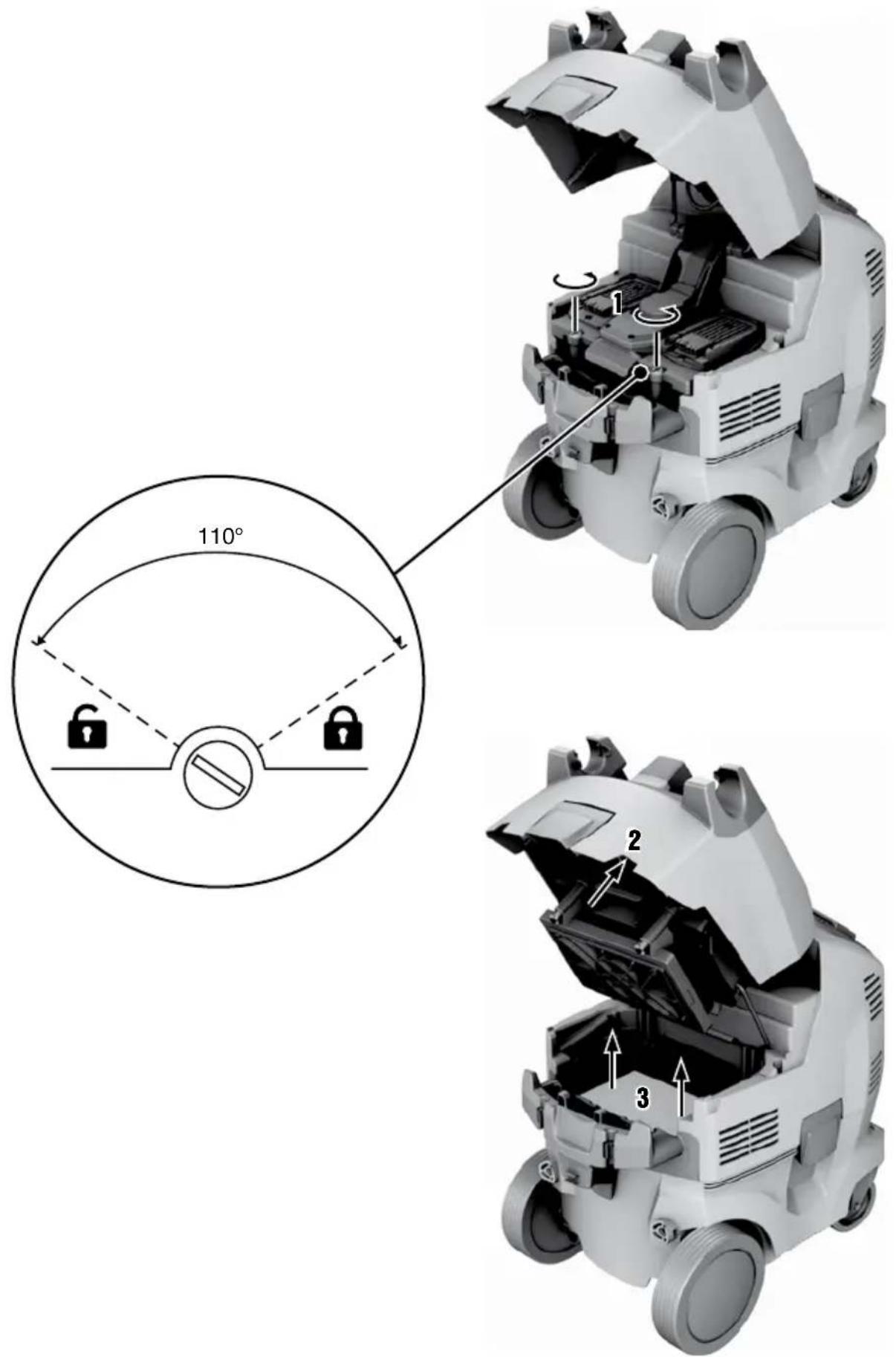
Ge- Generation: 01 pen
Serien Nr.:
de
2 Beschreibung
Head of BA Quality and Process Management
Business Area Electric Tools & Accessories
07/2012

Johannes Wilfried Huber
Senior Vice President
Business Unit Diamond
07/2012
U-Y/VC 40-UM-Y wet / dry vacuum cleaner
It is essential that the operating structions are read before the a ance is operated for the first t
Always keep these operating instructions together with the appliance.
Ensure that the operating instructions are with the appliance which is given to other persons.
Contents Page
| 1 General information 27 | |
| 2 Description 28 | |
| 3 Accessories 30 | |
| 4 Technical data 31 | |
| 5 Safety instructions 32 | |
| 6 Before use 36 | |
| 7 Operation | |
| 8 Care and maintenance | 43 |
| 9 Troubleshooting | 44 |
| 10 Disposal | 47 |
| 11 Manufacturer's warranty | 48 |
| 12 EC declaration of conformity (original) | 49 |
1 These numbers refer to the corresponding illustrations. The illustrations can be found on the fold-out cover pages. Keep these pages open while studying the operating instructions.
In these operating instructions, the designation "the appliance" always refers to the VC 20-U-Y/ VC 20-UM-Y/ VC 40-U-Y/ VC 40-UM-Y wet/dry vacuum cleaners. The information given in these operating instructions applies to all 4 versions unless explicitly stated that it refers only to the VC 20-UM-Y/ VC 40-UM-Y.
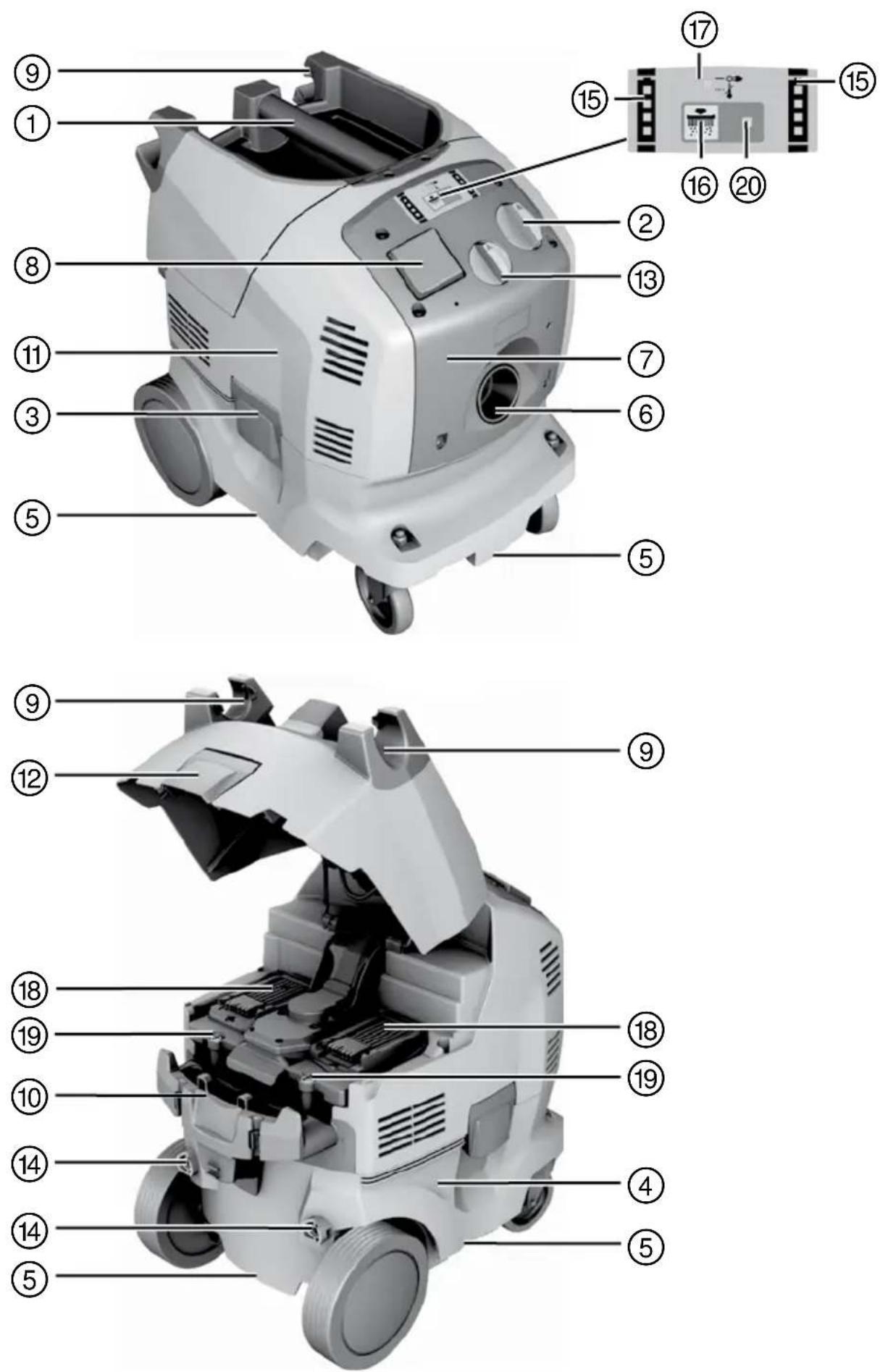
c Parts, operating controls and indicators 1 hen it
① Grip
② Control switch
③ Catch
④ Waste material container
⑤ Gripping areas
⑥ Hose socket
⑦ Cover for hose socket (only VC 20-UM-Y/ VC 40-UM-Y)
⑧ Power outlet for power tools
⑨ Hose holder
310 Supply cord stowage point
⑪ Vacuum cleaner top section
⑫ Battery cover locking clip
⑬ Hose diameter selector switch (only VC 20-UM-Y/ VC 40-UM-Y)
⑭ Pushbar attachment point (pushbar is an accessory)
⑮ Charging status indicator
⑯ Filter cleaning system ON / OFF button
⑰ Charging station status indicator
⑱ Battery compartment (left/right)
⑲ Filter cover retaining screws
⑳ Automatic filter cleaning system status indicator
1 General information
1.1 Safety notices and their meaning
DANGER
Draws attention to imminent danger that will lead to serious bodily injury or fatality.
WARNING
Draws attention to a potentially dangerous situation that could lead to serious personal injury or fatality.
CAUTION
Draws attention to a potentially dangerous situation that could lead to slight personal injury damage to the equipment or other property
NOTE
Draws attention to an instruction or other information.
1.2 Explanation of the pictograms and other information
Prohibition signs

Transport by crane is not permissible.
Warning signs

General warning

Warning: caustic substances

Warning: electricity

Warning: explosive substances
Obligation signs

Wear
protective
clothing

Wear
protective
gloves.

Wear ear protection.

Wear safety shoes.

Wear
respiratory
protection!
Symbols

Read the operating
nstructions
efore use.

Return waste material for recycling.
On the appliance
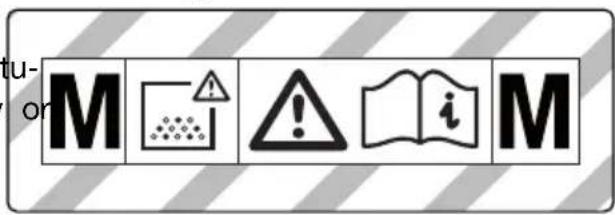
WARNING: This unit contains hazardous dust. Emptying and maintenance, including the removal of the dust bag, may only be carried out by someone who is familiar with the unit and wearing suitable protective gear. Do not switch on the unit until the complete filter system has been installed and the function of the volume-flow control has been tested.
Location of identification data on the appliance
The type designation and serial number can be found on the type identification plate on the appliance. Make a note of this data in your operating instructions and always refer to it when making an enquiry to your Hilti representative or service department.
Type:
Generation: 01
Serial no.:
2 Description
2.1 Use of the product as directed
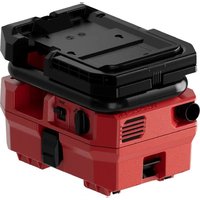
The appliance is a universal industrial vacuum cleaner with an effective filter cleaning system for dry dust. It is suitable for wet and dry vacuum cleaning applications.
The appliance can be powered by the electric mains supply or operated cordlessly using Hilti 36V Li-ion batteries. When powered by the electric mains supply, the appliance can be used simultaneously as a charging station for all Hilti Li-ion batteries (14V/22V/36V). When the adapter plate and pushbar are fitted (accessories), the vacuum cleaner can be used as a trolley to transport up to three Hilti toolboxes.
The appliance is suitable for collecting the slurry created by wet drilling or wet cutting operations on mineral materials using Hilti diamond coring or Hilti diamond sawing equipment and for collecting large quantities of dry mineral dust when working with Hilti diamond grinders and cutters, rotary hammers and dry cutting core bits.
The VC 20-UM-Y and VC 40-UM-Y are suitable for picking up dry and non-flammable dusts, liquids, wood chips or shavings, mineral dusts containing quartz and hazardous dusts with exposure limit values (e.g. MAK or AGW values) ≥ 0.1mg / m3 (dust class M as per I E C / E N 60335-2-69).
Picking up any other hazardous substances is not permissible.
Picking up oil or liquids with a temperature of over 60irc C is not permissible.
When picking up dusts with an exposure limit value, steps must be taken to ensure adequate air exchange in the room if the exhaust air from the appliance is released into the room (please observe the locally applicable regulations).
The appliance must not be used to pick up materials that present a risk of explosion, glow in or burning materials, flammable materials (exception: wood chips or shavings), aggressive dusts (e.g. magnesium or aluminium dust, etc.) or aggressive liquids (e.g. gasoline, solvents, acids, coolants or lubricants, etc.).
Do not operate the appliance when laid on its side (always operate in upright position).
The total weight of the appliance including the waste material picked up must not exceed 80 kg.
Do not stand on the appliance (do not use as a substitute for a ladder).
Do not use the appliance for continuous, stationary operation in automatic or semi-automatic systems.
The operating personnel must be instructed on how to use the appliance prior to beginning work, they must be informed of any hazards associated with the materials to be picked up and must be familiar with the correct procedures for safe disposal of these materials.
Underwater use is not permissible.
Use of the appliance to clean down persons or animals is not permissible.
Use an antistatic suction hose in order to avoid electrostatic effects.
This appliance is suitable for commercial use, e.g. in hotels, schools, hospitals, factories, shops, offices and by rental companies.
Working on materials hazardous to the health (e.g. asbestos) is not permissible.
The working environment may be as follows: construction site, workshop, renovation, conversion or new construction.
Observe the information printed in the operating instructions concerning operation, care and maintenance.
To avoid the risk of injury, use only genuine Hilti tools and accessories.
The appliance and its ancillary equipment may present hazards when used incorrectly by untrained personnel or when used not as directed.
Modification of the appliance or tampering with its parts is not permissible.
Observe the safety rules and operating instructions for the accessories used.
To avoid hazards, use only the approved batteries and chargers.
Do not use the battery as a power source for other unspecified appliances.
2.2 Hose diameter settings (only VC 20-UM-Y/ VC 40-UM-Y)
In order to ensure that the M-function warning signal tone threshold is configured correctly, the hose diameter setting must correspond to the hose diameter used.
2.3 The items supplied as standard include:
1 Appliance with filter element
1 Suction hose complete with hose connector (electrically conductive), hose sleeve and tapered adapter
1 PE VC 20 plastic dust bag
1 Operating instructions
en
2.4 Using extension cords
Use only extension cords of a type approved for the application and with conductors of adec gauge. The appliance may otherwise lose performance and the extension cord may overheat.
Check the extension cord for damage at regular intervals. Replace damaged extension cords.
Recommended minimum conductor cross section and max. cord length for opera appliance in conjunction with an electric tool plugged into the built-in power ou
| Conductor cross section | 1.5 mm 2 2.5 m | m 2 3.5 mm 2 | |
| Mains voltage 220-240 V 20 | m 40 m 50 m |
Use only extension cords equipped with an earth conductor.
Do not use extension cords with a conductor cross section of less than 1.5 mm 2 .
2.5 Using extension cords outdoors
When working outdoors, use only extension cords that are approved and correspondingly mark for this application.
2.6 Using a generator or transformer
This appliance may be powered by a generator or transformer when the following conditions are fulfilled: The unit must provide a power output in watts of at least twice the maximum value printed on the type identification plate on the power tool or appliance. The operating must remain within +5% and -15% of the rated voltage at all times, frequency must be in the -60 Hz range and never above 65 Hz, and the unit must be equipped with automatic voltage regulation and starting boost.
Never operate other power tools or appliances from the generator or transformer at the same time. Switching other power tools or appliances on and off may cause undervoltage and / or overvoltage peaks, resulting in damage to the power tool or appliance.
2.7 Use of accessories
| Accessories Type of use | |
| PE VC 20/40 plastic dust bag Working with mineral materials, wet and dry | |
| Paper dust bag for VC 20/40 | Working with wood |
| PTFE filter element | Wet use and heavy dry use |
| VC 20/40 filter element Mainly dry | |
| PES VC 20/40 filter element Wet and dry | |
| Suction hose, 27 mm dia., length 3.5 m Wet and dry | |
| Antistatic suction hose, 36 mm dia., length 4.65 m | Wet and dry |
en
With the VC 20-UM-Y and the VC 40-UM-Y, use of a dust bag (plastic dust bag or paper bag) is mandatory.
2.8 Charge status of the Li-ion battery during charging
| LEDs light constantly LEDs blink | Charge status in % | |
| LED 1, 2, 3, 4 | - | = 100% |
| LED 1, 2, 3 LED 4 | 75 % to 100% | |
| LED 1, 2 LED 3 | 50 % to 75 % | |
| LED 1 LED 2 | 25 % to 50 % | |
| - | LED 1 | < 25 % |
3 Accessories
Spare parts, tools and accessories are available through Hilti sales channels.
| Designation | Item number, description |
| PE VC 20 plastic dust bag | 203854, M-class vacuum cleaner: working with mineral materials |
| PE VC 40 plastic dust bag | 203852, M-class vacuum cleaner: working with mineral materials |
| Paper dust bag, complete, for VC 20 | 203858, M-class vacuum cleaner: for working with wood |
| Paper dust bag, complete, for VC 40 | 203856, M-class vacuum cleaner: for working with wood |
| PTFE filter element | 436058 |
| VC 20/40 filter element | 203862 |
| PES VC 20/40 filter element | 203863 |
| Suction hose, 27 mm dia., length 3.5 m | 203865 |
| Suction hose, 36 mm dia., length 4.65 m | 203867 |
| Tapered adapter | 203878 |
| VC 20 pushbar | 2044214 |
| VC 40 pushbar | 2047174 |
| Adapter plate | 2044211 |
| Accessory box | 2044212 |
| Accessory set | 2044213, 1 bend, 3 extension tubes, 1 floor nozzle with lamellar lips and 1 set of brushes |
4 Technical data
Right of technical changes reserved.
| Rated voltage | 220...240 V | 220...240V / CH | 220...240V / GB V |
| Rated power input | 1,200 W 1,200 W | 1,200 W 750 W | |
| Maximum load on built-in power outlet for electric tools (if fitted) | 2,000 W 700 W | 1,400 W | |
| Mains connection (type) | H07 RN-F3G 1.5 mm 2 | H07 RN-F3G 1.5 mm 2 | H07 RN-F3G 1.5 mm 2 |
| Power source | AC mains supply (230V) | Battery-powered operation |
| Max. air flow rate, VC 20-U-Y / VC 40-U-Y | 74 l/s 57 l/s | |
| Max. air flow rate,VC 20-UM-Y / VC 40-UM-Y | 136 m3/h 106 m3/h | |
| Max. vacuum,C 20 - U - Y / VC 40 - U - Y | 23 kPa 16.6 kPa | |
| Max. vacuum VC 20-UM-Y,VC 40-UM-Y | 22 kPa 15.6 kPa |
Information about the appliance and its applications
| Protection class Protection class I |
| Protection class IP X4 protection against sprayed water |
Noise information (measured in accordance with EN 60335-2-69):
| Typical A-weighted emission sound pressure71 dB (A) level |
| Uncertainty for the given sound level 2.5 dB (A) |
| Appliance | VC 20-U-Y/ VC 20-UM-Y | VC 40-U-Y/ VC 40-UM-Y |
| Mains frequency | 50 / 60 Hz | 50 / 60 Hz |
| Weight in accordance with EPTA procedure 01/2003 | 15.3 kg / 15.3 kg | 16.9 kg / 16.9 kg |
| Weight of suction hose | 1.3 kg | 1.3 kg |
| Dimensions (L x W x H) | 530 mm x 380 mm x 540 mm | 530 mm x 380 mm x 670 mm |
| Supply cord | 5 m | 5 m |
| Container capacity | 21 l | 36 l |
| Effective dust capacity | 23 kg | 40 kg |
| Effective water capacity | 13.5 l 25 l | |
| Suction hose diameter (rotary connector at nozzle end; connector at vacuum cleaner end) | 36 mm | 36 mm |
| Air temperature | -10...+40°C | -10...+40°C |
| Automatic filter cleaning (can be disabled) approx. every | 15 s 15 s |
Charging station
| Output power 365 W |
| Output voltage 7.2...36 V |
| Control Electronic charging control (microcontroller) |
| Cooling Active cooling |
| Battery Li-ion |
NOTE
Battery charging times are extended if temperatures are too high or too low. Cold temperature may result in the battery not being fully charged.
| Voltage Type | Charging time | For power tools (examples): | |
| 14.4 V B 14/1.6 Li-Ion | 21 min SFC 14-A | ||
| 14.4 V B 14/3.3 Li-Ion | 23 min SFC 14-A | ||
| 21.6 V B 22/1.6 Li-Ion | 21 min SFC 22-A | ||
| 21.6 V B 22/2.6 Li-Ion | 24 min SFH 22-A | ||
| 21.6 V B 22/3.3 Li-Ion | 31 min SFC 22-A | ||
| 36 V B 36/3.0 Li-Ion | 24 min TE 6-A36 | ||
| 36 V B 36/3.9 Li-Ion | 44 min TE 7-A | ||
| 36 V B 36/6.0 Li-Ion | 42 min TE 30-A |
| Battery B 36/6.0 Li-Ion | |
| Rated voltage 36 V | |
| Capacity | 6 Ah |
| Energy capacity | 216 Wh |
| Weight | 1.8 kg |
| Type of cell | Li-ion |
| Temperature monitoring | NTC |
| Deep discharge prevention | Yes |
5 Safety instructions
5.1 General safety instructions
WARNING! Read all safety instructions and other instructions. Failure to follow safety structions and other instructions may result in electric shock, fire and/or serious injury. Ke all safety instructions and other instructions for future reference.
5.1.1 Work area safety
a) Keep your work area clean and well lit.
in- Cluttered or dark working areas invite accidents.
(e) Do not operate appliances in explosive atmospheres, such as in the presence of flammable liquids, gases or dust. Tools
and appliances create sparks which may ignite the dust or fumes.
c) Keep children and other persons a from the area while the heap use. Distractions can cause you to lose control.
5.1.2 Electrical safety
a) The appliance's supply cord plug match the outlet. Never modify the in any way. Do not use any adar with earthed (grounded) appliances. modified plugs and matching outlets will reduce risk of electric shock.
b) Avoid body contact with earthed or grounded surfaces, such as pipes, radiators, ranges and refrigerators. There is an increased risk of electric shock if your body is earthed or grounded.
c) Do not expose appliances to rain conditions. Water entering an appliance will increase the risk of electric shock.
d) Do not abuse the cord. Never use cord for carrying, pulling or unplugging the appliance. Keep the cord away heat, oil, sharp edges or moving pa Damaged or entangled cords increase the risk of electric shock.
e) When operating an appliance outdoors, use an extension cord suitable for outdoor use. Use of a cord suitable for outdoor use reduces the risk of electric shock.
f) If use of the appliance in a damponment cannot be avoided, use a fault circuit interrupter. Use of a gro fault circuit interrupter reduces the risk of electric shock.
5.1.3 Personal safety
a) Stay alert, watch what you are do use common sense when operating appliance. Do not use the appliance while tired or under the influence of drugcohol or medication. A moment of in-tion while operating appliances may result in serious personal injury.
b) Avoid accidental starting. Check that appliance is switched off before you connect it to the electric supply and/or battery and before picking it up doing it. Carrying appliances with your fir
on the switch or plugging in appliances that are already switched on invites accidents.
way Avoid unusual body positions. Keep p l ipaoper eftoing and balance at all times.
This enables better control of the power tool in unexpected situations.
d) Dress properly. Do not wear loose clot ing or jewellery. Keep your hair, en
usting and gloves away from moving part
plugose clothes, jewellery or long hair can be
ter plugs in moving parts.
(1) If devices are provided for the connection of dust extraction and collection facilities, ensure these are connected and properly used. Use of dust collection can reduce dust-related hazards.
ck5.1.4 Use of the appliance
a) Do not overload the appliance. Use the or correct appliance for the work you are doing. The correct appliance will do the job better and safer at the rate for which it is the designed.
b) Do not use an appliance if its switch from defective. An appliance that cannot be rts. controlled by the switch (switched on and off) is dangerous and must be repaired.
c) Disconnect the plug from the power source and/or remove the battery before making any adjustments, changing accessories, or storing the appliance. Such preventive safety measures to reduce the risk of starting the appliance groundidentally.
Store appliances out of reach of children when not n use. Do not allow persons unfamiliar with the appliance or these instructions to operate it. Appliances are dangerous in the hands of untrained users.
ing Maintain the machine carefully. Check the for misalignment or binding of moving parts, breakage of parts and any other ugs, condition that may affect the machine's attention operation. If damaged, have the machine repaired before use. Poor maintenance is the cause of many accidents.
(1) these the appliance and its accessories etc. in accordance with these instruct- r thetions and in the manner intended for or particular type of appliance, taking into nger account the working conditions and the
work to be performed. Use of applia for applications different from those intended could result in a hazardous situation.
5.1.5 Service
Have your appliance serviced by a repair person using only identical replacement parts. This will ensure that the safe the appliance is maintained.
5.2 Additional safety precautions
5.2.1 Personal protective equipment







a) The user and any other persons in vicinity must wear suitable eye protection, a hard hat, ear protection, pive gloves, safety footwear and resory protection while the appliance use or during servicing.
b) When working with mineral drilling wear protective clothing and avoid contact with the slurry (pH>9: caus
5.2.2 Requirements to be met by us
a) The machine may be operated, ser and repaired only by authorized, tr personnel. This personnel must be formed of any special hazards that be encountered.
b) Use extra care when cleaning on
c) Do not put any object into opening not use with any opening blocked; free of dust, lint, hair, and anything may reduce air flow.
5.2.3 Proper organization of the work

a) Ensure that the workplace is well ilated. Exposure to dust at a poorly ve ated workplace may result in damage to health.
K e e p t h e w o r k a r e a t i d y . A which may cause injury should be re- moved from the area. Untidiness at the workplace can lead to accidents.
c) Do not allow other persons to touch a qualification or the extension cord.
ade-Always lead the supply cord, the exten ty ofsion cord and the suction hose away the rear when working. This will help to prevent tripping while working.
e) After finishing the work, always tidy up and stow the supply cord, extension cord and suction hose away securely. This will reduce the risk of tripping and falling.
f) Do not transport the appliance by crar g) Children must be instructed not to play with the appliance.
h) This appliance is not intended for use by persons (including children) with reduced physical, sensory or mental capabilities, or lack of experience and knowledge. The edge, unless they have been given sufficient supervision or instruction concerning use of the appliance by a person responsible for their safety.
lis in
5.2.4 Use and care of the appliance slurnever leave the appliance unattended. skinProtect the appliance from frost. stic). With vacuum cleaners of the class M, take care to ensure that the hose soers cap is fitted when the appliance is traveled or not in use.
aied Check that the filter is seated correctly in- Check to ensure that the filter is undaged.
e) Do not pull the wheels of the vacuum stair cleaner over the supply cord. gs. The water level limiting device must be cleaned regularly with a brush in according to these with instructions and checked for signs of damage.
g) Recharge only with the charger specified by the manufacturer. A charger that is suitable for one type of battery pack may create a risk of fire when used with another battery pack.
h) When battery pack is not in use, keep vent away from other metal objects, like until-paper clips, coins, keys, nails, screws the or other small metal objects, that can make a connection from one terminal
to another. Shorting the battery terminals together may cause burns or a fire.
has been correctly and safely installed and is in compliance with local regulations.
i) Under abusive conditions, liquid may ejected from the battery; avoid con If contact accidentally occurs, flush water. If liquid contacts eyes, addit seek medical help. Liquid ejected from battery may cause irritation or burns.
tactIf you are in doubt about the effective witness of the power outlet's earth/ground tionadynnection, have it checked by a quali n thefied specialist.
j) Do not expose batteries to high temperature or fire. This presen explosion.
c) Check the appliance's supply cord at en m- regular intervals and have it replaced a s aarislibf service center if damage is fou Check extension cords at regular inter- neratels and replace them if found to be to aged:
k) Do not disassemble, squash or inc batteries and do not subject them peratures over 80°C. A risk of sion or injury through contact with caust substances may otherwise result.
fide, Check the condition of the appliance and its accessories. Do not operate the appliance and its accessories if damage found, if the appliance is incomplete or risk if its controls cannot be operated fault lessly.
I) Avoid ingress of dampness. Dampness may cause a short circuit resulting in a of burning injury or fire.
e) Do not touch the supply cord or le texdension cord if they are damaged usewhile working. Disconnect the supply is cord plug from the power outlet. Damaged supply cords present a risk of electric shock.
m) Do not use batteries other than those approved for use with the applicable or appliance. Use of other batteries or of the battery for purposes for which it not intended presents a risk of fire and explosion.
n) Observe the special instructions applicable to the transport, storage and Li-ion batteries.
- The electric supply cord may be replaced with a cord of the type specified the operating instructions.
o) Avoid short-circuiting the battery. Before inserting the battery in the tool or appliance, check that the terminals of the battery and the tool or appliance are free from foreign objects. Short-circuiting the battery terminals presents a risk of fire, explosion or contact with caustic substances.
( org) In case of an interruption in the elec- tric supply: Switch the appliance off ar t- unplug the supply cord.
p) Do not charge or continue to use aged batteries (e.g. batteries with broken parts, bent or pushed-in and pulled-out contacts).
Avoid using extension cords with multiple power outlets and the simultaneous use of several appliances connected to one extension cord.
5.2.5 Mechanical
Follow the instructions concerning care maintenance.
i) close the electric tool power outlet only crack the purposes described in the operating d/or instructions.
5.2.6 Electrical
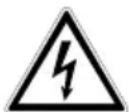
a) Insert the plug in a suitable earthed/grounded power outlet which
j) Never spray the top section of the vacuum cleaner with water: this presents an electrical hazard and may damage and the appliance.
k) Connectors on mains power cables, extension cords or supply cords must provide protection from sprayed water.
I) Grip the plug when unplugging the supl cord (do not pull or tug at the supply cord).
m) Never pull the vacuum cleaner by the supply cord to a new working position
n) Never operate the appliance when dirty or wet. Dust (especially dust conductive materials) or dampness hering to the surface of the appli may, under unfavorable conditions, to electric shock. Dirty or dusty aances should thus be checked at service center at regular intervals, cially if used frequently for working conductive materials.
o) Check to ensure that the supply does not lie in a puddle of water
p) Do not use the power outlet or ies when the hands are wet.
5.2.7 Material picked up


a) Do not use the appliance to pick mable or explosive dusts or dusts present a health hazard (magnesium aluminium dust, asbestos, etc.).
b) A vacuum cleaner of the dust class M is suitable for picking up dry, non-flammable dusts, wood chips or shavings, mineral dusts containing quartz and hazardous substances with an exposure limit value of
it is 0.1mg/m³. The vacuum cleaner must be from equipped with a filter suitable for the ad-hazard classification of the dusts to be ancepicked up.
lead Do not use the appliance to pick up appli-flammable, explosive or aggressive li-a liquids (coolants and lubricants, gasoline, especially solvents, acids (pH<5), alkalis (pH>12.5) oetc.)
d) Switch the appliance off immediately if cord foam or liquids escape from it. r.e) Avoid contact with alkaline or acidic accels, liquids. If contact accidentally occurs, flush with water. In the event of the liquid coming into contact with the eyes, rinse the eyes with plenty of water and consult a doctor.
f) Wear protective gloves when using the vacuum cleaner to pick up hot material with a max. temperature of 60irc C.
Up Do not pick up objects or materials that which could cause injury by piercing through or the dust bag (e.g. pointed or sharp objects).
5.2.8 Thermal
Do not use the vacuum cleaner to pick hot materials with a temperature of over 60°C (glowing cigarettes, hot ash, etc.).
6 Before use

6.1 Using the vacuum cleaner
CAUTION
The mains voltage must comply with the specification given on the type identification plate. Ensure that the appliance is disconnected from the electric supply.
DANGER
Connect the appliance only to properly earthed/grounded power sources.
CAUTION
Always check to ensure that the vacuum cleaner is standing securely. Engage the castor brakes.
CAUTION
When fitting the top section of the vacuum cleaner, take care to avoid pinching your fingers or damaging the supply cord.
6.1.1 Operating the appliance for the time
- Remove the appliance from the packaging and connect the suction hose supplied to the hosesocket.
NOTE Use the class M version for pick up dusts with an exposure limit value of 0.1 mg/m 3 . Fit a plastic dust bag for mid dust or a paper dust bag for wood chip or shavings in the container in accordance with the instructions.
NOTE When used to pick up harmless dusts: Fit a plastic dust bag in the con in accordance with the instructions (see printed instructions).
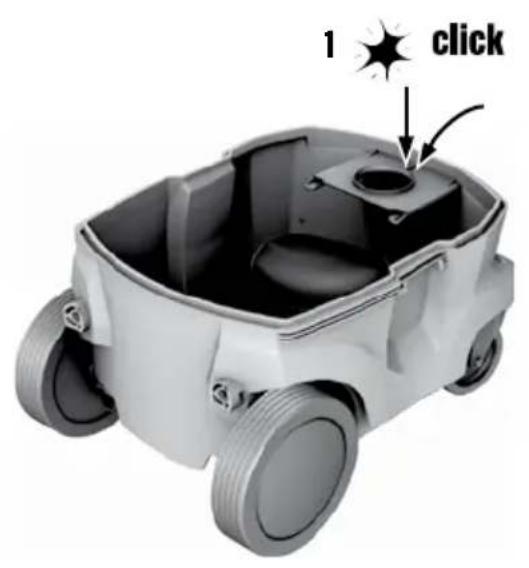
6.1.1.1 Fitting a paper dust bag for up wood chips or shavings 2
- Open the two catches.
- Lift the vacuum cleaner top section away from the waste material container.
- Push the cardboard flange of the paper dust bag into the plastic adapter.
- Engage the plastic adapter with the paper dust bag in the holder pro container.
- Fit the vacuum cleaner top section onto the waste material container.
- Close the two catches.
- Check to ensure that the vacuum cleaner topsection is fitted correctly a
- Connect the suction hose to the applian
6.1.1.2 Fitting the plastic dust bag
- Open the two catches.
- Lift the vacuum cleaner top section away from the waste material container.
- Fit a new plastic dust bag (see instructions printed on it) in the waste material container.
- Fit the vacuum cleaner top section onto the waste material container.
- Close the two catches.
6.2 Charging batteries
6.2.1 Battery use and care
CAUTION
This appliance is designed for use with the specified Hilti batteries. Charging other batteries is not permissible. A risk of personal injury first fire and irreparable damage to the battery and appliance may otherwise result. A caustic liquid may leak from defective batteries. Avoid contact with this liquid.
NOTE
Before inserting the battery, check that the contacts in the charging station are clean a natural free from grease.

Store the battery in a cool, dry place. Never store the battery where it is exposed to the heat of the sun, on a radiator or behind glass, tanger at a window. Batteries that have reached the end of their lifemustbed disposed and correctly to avoid environmental pollution.
p6Ri8g Charging the battery



DANGER
Use only the specified Hilti batteries.
DANGER in the
Charge the batteries only in this appliance or with a Hilti charger.
6.2.2.1 Charging a new battery for the fi time
nCharge the battery fully before using it for the first time.
6.2.2.2 Charging a previously used battery DANGER
Charge the batteries only in this appliance or with a Hilti charger.
Ensure that the outer surfaces of the battery are clean and dry before inserting the battery in the charging station.
6.2.2.3 Recharging Li-ion batteries
CAUTION
Make sure that the outer surfaces of the battery are clean and dry before inserting in the charging station.
Lithium-ion battery packs are ready to use at any time, even when only partially charged.
Charging progress is indicated by the LEDs.
6.2.3 Fitting the battery
DANGER
Use only the specified Hilti batteries.
- Open the battery compartment cover.
- Push the battery into the appliance from the rear as far as it will go and until it heard to engage with a click.
- CAUTION A falling battery may pre ariskofinjurytoyourselforot Before beginning the work, check that t battery is fitted securely to the appliance
6.2.4 Removing the battery 3
- Open the battery compartment cover.
- Press one or both release buttons.
- Pull the battery out of the appliance tow the rear.
6.2.5 Transport and storage of battery packs
If you disconnect a battery pack from the power tool for transport or storage, make sure that the contacts of the battery pack are not she circuited. Remove loose metal parts such as screws, nails, clamps, loose screw bits, wires or metal swarf from the case, toolbox or transport container, or prevent these parts from coming into contact with the battery packs.
Observe national and international transport regulations when shipping battery packs (transportation by road, rail, sea or air).
6.3 Using the vacuum cleaner in battery-powered mode (after charging)
1 Pit one or two batteries of a type specified for use with the appliance, as previously de-scent.
NOTE.
Make sure that the batteries are charged.
6.4 Transport
DANGER
With vacuum cleaners of the class M, ta care to ensure that the hose socket cap fitted when the appliance is transported o not in use.

power
Do not carry the appliance when it is full of waste material.
Empty the appliance before carrying it to another location.
Do not tip the appliance or lay it on its side for transport after using it to collect water.
The tapered adapter can be used to connect both ends of the hose together for transport.
7 Operation
WARNING
For vacuum cleaners of the class M, please note: Vacuum off the outer surfaces of appliance, wipe it clean or seal it in able container or material before remo it from an area contaminated with hal ous substances. All parts of the appl must be regarded as being contamina when they are removed from the haz area and suitable measures must be to avoid spreading dust.
CAUTION
For vacuum cleaners of the class M, please note: CAUTION: Always use a suitable bag. This appliance contains harmful
Emptying or maintenance procedures, including disposal of the dust bag and its contents, may be carried out only by co-respondingly trained specialists wearing the appropriate protective equipment (respirat- and-protection of the class P2 or higher disposable clothing). Do not operate the a detection if the filter system is incomplete. hazardous
CAUTION taken
Always check to ensure that the vacuum cleaner is standing securely. Engage the castor brakes.
dust dust.
7.1 Mains-powered operation
- Plug the supply cord into the power out
- Turn the control switch to the "ON" position.
7.2 Battery-powered operation
NOTE
The appliance may be powered by either one or two 36V batteries. With one battery, running time will be reduced by half.
NOTE
In battery-powered mode, the built-in electric supply socket for power tools cannot be used.
- Insert at least one Hilti 36V 6.0Ah Li-ion battery in a battery compartment.
- Turn the control switch to the "ON" position.
- Charge status is indicated by the LED d play on the appliance during operation.
7.3 Hose diameter setting
(VC 20-UM-Y/ VC 40-UM-Y)
In order to ensure that the M-function warn signal tone threshold is configured correctly, the hose diameter setting must correspond the hosediameter used.
7.4 Using the electric tool power the appliance (applies only to main powered operation)
DANGER
The power outlet is to be used only to corelectric tools directly to the vacuum cleaner
NOTE
Check that the power tool is switched off by plugging it into the power outlet on the vac cleaner.
NOTE
The operating instructions and safety instructions for the power tool plugged into the po outlet on the vacuum cleaner must be observed.
NOTE
Check to ensure that the maximum power drawn by the power tool is below the max permissible output of the power outlet on t vacuum cleaner (please refer to the “Techni data" section of the operating instructions and information printed on the power outlet).
- Plug the vacuum cleaner's supply cord into the power outlet.
- Turn the control switch to the "AUTO" position.
- Switch on the power tool. The vacuum cleaner starts automatically.
NOTE The vacuum cleaner will continue to run for a short time after switching off the power tool in order to ensure that all dust is removed from the suction hose.
7.5 Picking up dry dust
NOTE
Before using the appliance to pick up dry dust, -especially dust from mineral materials, always check to ensure that the correct dust bag (Hilti accessory) is fitted in the container. The material collected can then be disposed of cleanly and easily.
CAUTION
The material collected must be disposed in accordance with the applicable regulations.
CAUTION
Never use the appliance without a filter mentutleton
CAUTION
When fitting the top section of the vacuum cleaner, take care to avoid pinching your fingers or damaging the supply cord.
7.5.1 Automatic filter element cleaning
eNOTE
Don not attempt to clean the filter element by knocking it against a hard object and do not use pointed instruments. This will reduce the life of the filter element.
NOTE
Do not use compressed air to clean the filter element. This may cause tears in the filter material.
NOTE
In the condition of the filter will deteriorate with house. It should be replaced at least every 6 cal
months and more frequently if the appliance subject to heavy use.
NOTE
The filter element cleaning system functions only when a suction hose is connected.
The appliance is equipped with an automatic filter cleaning system which removes most of the dust adhering to the filter element. The ter cleaning system can be switched OFF by pressing the button (16) and switched back ON by pressing the button again. The syste status is shown by the automatic filter clearing system status indicator LED: LED lights the filter cleaning system is active. LED does not light = the filter cleaning system has be deactivated. The filter cleaning system is set to "ON" (active) automatically each time the appliance is switched on.
The filter element is cleaned automatically by blast of air (a pulsating noise is heard).
7.5.2 Changing the paper dust bag
DANGER
Check that the bag has not been p through by objects which may cause
CAUTION
The material collected must be disposed in accordance with the applicable regions.
- Disconnect the supply cord plug from the power outlet.
- Open the two catches.
- Lift the vacuum cleaner top section away from the waste material container.
- Carefully release the mouth of the paper dust bag from the adapter.
- Close the slider on the dust bag sleeve.
- Clean the waste material container with cloth.
- Fit a new dust bag in the waste material container.
- Fit the vacuum cleaner top section onto the waste material container.
- Close the two catches.
7.5.3 Changing the plastic dust bag
DANGER
Check that the bag has not been pierced through by objects which may cause injury.
CAUTION
The material collected must be disposed in accordance with the applicable regulations.
- Disconnect the supply cord plug from the power outlet.
- Open the two catches.
3 Lift the vacuum cleaner top section away from the waste material container. - Use a cable tie to close the plastic dust bag below the punched holes.
- Remove the plastic dust bag.
1-6 . Clean the waste material container with a cloth.
es7. Fit a new plastic dust bag (see instructions printed on it) in the waste material container. - Fit the vacuum cleaner top section onto the waste material container.
y9 a Close the two catches.
2 7.6 Audible signal (VC 20-UM-Y/ VC 40-UM-Y)
For safety reasons, an audible warning signal is emitted when the air speed in the hose drops below 20 m/s. Please refer to the "Troubleshooting" section for possible causes of this problem.
7.7 Picking up liquids
DANGER
Do not use the appliance to pick up hazardous dusts.
DANGER
The supply cord plug must be unplugged from the power outlet and the batteries moved from the appliance before beginning maintenance.
CAUTION
Never use the appliance without a filter ment.
7.7.1 Before picking up liquids
- Remove the dust bag from the waste material container.
4
- Check that the level monitoring electrodes (two metal discs on the underside of the cuum cleaner top section) are clean. If necessary, use a brush to clean these parts
7.7.2 When picking up liquids
If possible, use a separate filter element for applications.
NOTE
If possible, use a Hilti PTFE filter element.
If foaming occurs, switch the appliance off immediately and empty the container.
The appliance switches itself off automatic when the liquid in the container reaches the maximum level.
7.7.3 After picking up liquids
- Open the two catches.
- Lift the vacuum cleaner top section away from the waste material container.
- Empty the container and use a water ho to clean it. Use a brush to clean the e trodes.
7.8 After finishing work
- Switch off the power tool.
- Turn the control switch to the "OFF" position.
- Disconnect the supply cord plug from the power outlet.
- Coil the supply cord around the supply cord storage point.
- Coil the suction hose around the appliance and secure the end of the hose in the holder provided.
- Store the appliance in a secure, dry place where it is inaccessible to unauthorized users.
7.9 Emptying the waste material container CAUTION
Remove all items attached to the adapter plate on the vacuum cleaner top section (e.g. Hilti toolboxes) before emptying the container holding the material picked up. wet
7.9.1 Emptying dry dust from the wa material container
en
7.9.1.1 Before emptying the waste material container, proceed as follows:
ly1. Disconnect the supply cord plug from the power outlet.
2. Lift the vacuum cleaner top section away from the waste material container and place it on a level surface.
7.9.1.2 After emptying the waste material container, proceed as follows:
s€CAUTION
When fitting the top section of the vacuum cleaner, take care to avoid pinching your fingers or damaging the supply cord.
Fit the vacuum cleaner top section onto the waste material container and close the two catches.
7.9.2 Emptying the waste material container when no dust bag is fitted (collecting liquids)
NOTE
The material collected must be disposed of in hose accordance with the applicable regulations.
31 . Hold the container by the grip areas provided and tip it over to empty out its contents.
2. Clean the edge of the waste material container with a damp cloth.
7.10 Using the appliance as a charging station
Overview of the charging station status indicator
| LED lights constantly The appliance is connected to the electric supply and is ready for use. |
| LED blinks The battery is too cold or too hot and is not being charged. The charger switches automatically to charging mode as soon as the battery reaches the required temperature. |
| LED doesn’t light Charger malfunction. Unplug the appliance and then plug it in again. If the LED still doesn’t light, the appliance should be returned to a Hilti Service Center for repair. |
7.10.1 Charging status display
While the green charge status LED on the charging station lights constantly, if one of the two charge status LEDs blinks this indicates that charging is in progress.
7.10.2 Indication of too high / too low temperature
The green charge status LED will blink If the battery is too hot or too cold. At the same time, the LEDs on the battery indicate the charge status of the Li-ion battery.
7.10.3 Indication of a defective battery
Remove the battery from the charging station If the green status LED on the charging station lights constantly but all charge status LEDs do not light. If all charge status LEDs on the bat fail to light even after being activated then the battery is defective. Have the battery tested at a Hilti center.
7.11 Using the appliance as a transport 12 Attaching the DPC 20 (for use with the DG 150 grinder)
- Fit the pushbar, following the assembly instructions provided.
- Attach the adapter plate, following the assembly instructions provided.
- Bring the toolbox retaining bar into the vertical position.
- Slide the grip of the applicable Hilti toolbox over the toolbox retaining bar. Make sure that the lettering on the Hilti toolbox is the right way up.
-
The toolbox retaining bar and the ribs prevent the toolbox from sliding out of place.
NOTE The maximum permissible additional load is 25 kg. Do not stack too many toolboxes one on top of the other. The toolbox retaining bar must always project beyond the grip opening in the uppermost toolbox. -
Fit the pushbar, following the assembly instructions provided.
- Attach the adapter plate, following the assembly instructions provided.
- Make sure that the toolbox retaining bar is engaged in the horizontal position.
Place the DPC 20 in the recess provided. Make sure that the power outlet is facing towards the front. - Secure the DPC 20 with the rubber straps.
8 Care and maintenance
NOTE
All items attached to the vacuum cleaner to section (e.g. Hilti toolboxes) should be removed from the adapter plate before the battery compartment cover is opened.
NOTE
The automatic filter cleaning system should be switched off when the vacuum cleaner used to pick up mineral dust containing qu
CAUTION
For vacuum cleaners of the class M, please note: CAUTION: Always use a suitable bag. This appliance contains harmful or emptying or maintenance procedures, including disposal of the dust bag and contents, may be carried out only by respondingly trained specialists wearing appropriate protective equipment (respiratory protection of the class P2 or his disposable clothing). Do not operate the appliance if the filter system is incompl
8.1 Changing the filter element
CAUTION
Never use the appliance without a ment.
8.1.1 Removing the filter element 5
- Disconnect the supply cord plug from the power outlet.
- Open the filter cover clips.
- Open the battery compartment cover clip
- Remove any batteries from the battery compartment.
- Use a screwdriver to unscrew the two fi cover retaining screws (turn the screws counterclockwise).
- Lift the filter cover by the centrally-positioned grip until it engages in place.
- Remove the filter element carefully.
8.1.2 Fitting the filter element
- Clean the sealing surface with a cloth.
- Fit the new filter element.
-
Close the filter cover by pivoting the cov catch forward.
-
Use a screwdriver to tighten the two filter to cover retaining screws (turn the screws covered clockwise).
- Reinsert any batteries you previously removed.
- Close the battery compartment cover and secure the regulating.
not
8.2 Checking the waste material level Check the cut-out contacts and clean them with a brush if necessary (if dirty).
8.3 Dust Closing the appliance
dQAUTION
When fitting the top section of the vacuum cleaner, take care to avoid pinching your fingers or damaging the supply cord. the
at- Check the seal at the vacuum cleaner top gher and
he. Fit the vacuum cleaner top section onto the waste material container.
- Close the two catches.
8.4 Care of the appliance
filt DANGER
Disconnect the supply cord plug from the power outlet. Remove any batteries from the battery compartment.
Never operate the appliance when the ventilation slots are blocked. Clean the ventilation slots carefully using a dry brush. Clean the outside of the appliance at regular intervals with a cloth. Do not use a spray, high-pressure water-jet system, steam pressure cleaning equipment or running water for cleaning. This may negatively affect the electrical safety of the appliance.
Always keep the grip surfaces of the appliance free from oil and grease. Do not use cleaning agents which contain silicone.
For vacuum cleaners of the class M, please note: The appliance must be handled for cleaning and maintenance in a way that avoids exposing maintenance personnel and other persons to any hazards. Use filtered forced ventilation. Wear personal protective equipment.
Clean the maintenance area in a way that pre-
vents hazardous substances escaping into the surrounding environment.
Vacuum off the outer surfaces of the applia wipe it clean or seal it in suitable container or material before removing it from an area contaminated with hazardous substances. The will help to avoid distribution of the hazardous dust deposited on it.
When maintenanceor repairs are carried out contaminated parts which cannot be satisfactorily cleaned must be packed in impermeable bags and disposed of incomplete applicable disposal regulations.
A vacuum cleaner of the class M must be jected to a technical inspection by Hilti Ser or a trained person at least once a year to check, for example, for damage to the filter air leakage, and to ensure correct operation controlling devices.
8.5 Care of the Li-ion battery
Avoid ingress of moisture.
Charge the battery fully before using it for first time.
In order to achieve maximum battery life, s discharging the battery as soon as a signifi drop in performance is noticed.
NOTE
If use of the tool continues, further battery charge will be stopped automatically before battery cells suffer damage. The tool switch itself off.
Charge the battery with the Hilti charger approved for use with Li-ion batteries.
NOTE
- A conditioning charge (as is required with NiCd batteries) is not necessary.
e- Interruption of the charging procedure has no negative effect on battery life.
nceCharging can be started at any time with no negative effect on battery life. There is no memory effect (as with NiCd batteries).
is- For best results, batteries should be stored busfully charged in a cool dry place. Storing the battery in places subject to high ambient temalperatures (e.g. at a window) has an adverse ct- effect on battery life and increases the rate of file self-discharge.
i a in the wattenyt hoe longer reaches full charge, it may have lost capacity due to aging or over-stressing. It is possible to continue working vicewith a battery in this condition but it should be replaced in good time.
c8.6 Maintenance
WARNING
Repairs to the electrical section of the appliance may be carried out only by trained electrical specialists.
the
Check all external parts of the appliance for damage at regular intervals and check that all controls operate faultlessly. Do not operate the appliance if parts are damaged or when the controls do not function faultlessly. If necessary, the appliance should be repaired by Hilti Service.
8.7 Checking the appliance after care and maintenance
After carrying out cleaning and maintenance, check that the vacuum cleaner has been correctly reassembled and that it operates faultlessly.
Test each of the functions.
9 Troubleshooting
DANGER
In the event of a malfunction, disconnect the supply cord plug from the power outlet. Re any batteries from the battery compartment. The malfunction must be remedied before further use of the appliance.
9.1 Battery and mains-powered operation
| Fault Possible cause Remedy | ||
| The warning tone is activ-The dust bag is full. Change ated (reduced suction performance; VC 20-UM-Y/VC 40-UM-Y). | the dust bag.See section: 7.5.3 Changing the plastic dust bag4See section: 7.5.2 Changing the paper dust bag2 | |
| The filter element is clogged with dirt or dust. | Switch the automatic filter cleaning system on then perform the "power cleaning" procedure: Disconnect the suction hose, cover the suction opening with your hand and keep it covered until three cleaning cycles have been completed.Change the filter element if necessary.See section: 8.1 Changing the filter element | |
| Blockage in the hose, vacuum cleaner or power tool dust hood. | Clean the hose and dust hood. | |
| The hose diameter and hose diameter setting don't correspond. | Set the switch to the correct hose diameter setting.See section: 7.3 Hose diameter setting(VC20-UM-Y/VC40-UM-Y) | |
| Dust is blown out of the appliance. | Dust on the sealing surfaces between the container and top section of the appliance. | Clean the sealing surfaces. |
| The filter element is not fitted correctly. | Remove the filter element and refititcorrectly. | |
| The filter element is damaged. | Fit a new filter element. | |
| The filter seal is damaged. | a new filter element. | |
| The appliance doesn't start or switches itself off after a short time. | The container level monitoring system has been triggered. | Clean the container level monitoring sensors and surrounding area with a brush. |
| No battery is detected, i.e.The battery was inserted and no LED lights or blinks. | removed too quickly. | Pull the battery out, wait approx. 2 seconds, and then re-insert it. |
9.2 Mains-powered operation
| Fault Possible cause Remedy | |
| The motor doesn’t restart. The mains circuit breaker has been tripped. | Reset the circuit breaker. Find the reason for the overload current if it trips again. |
| Fault Possible cause Remedy | ||
| The motor doesn’t restart. The container is full. Switch the appliance off. | ||
| Empty the container.See section: 7.9.2 Emptyingthe waste material containerwhen no dust bag is fitted(collecting liquids) | ||
| The appliance switches itself off or on inadvertently or the user receives electric shocks (static discharge). | Electrostatic charge is not dis-sipated correctly; the appli-ance is connected to an un-earthed/ungrounded power outlet. | Connect the appliance to an earthed/grounded power out-let; use an antistatic hose. |
| The charging station status LED blinks. | The battery is too hot or too cold. | Bring the battery to room temperature. |
| Doesn't switch over to a discharged battery. | No contact. Reinsert the battery. | |
| The battery was not detected. | Remove the battery from the appliance and contact Hilti. | |
| The motor doesn’t run when set to “AUTO”. | The electric tool is faulty or is not plugged in fully. | Check the electric tool for cor-rect operation and plug it in fully. |
| The automatic filter element cleaning system doesn’t work. | No suction hose is connected. | Connect the suction hose. |
| APFC button is in the OF press the APFC button.ition (LED doesn't light). | ||
9.3 Battery-powered operation
| Fault Possible cause | Remedy | |
| The appliance doesn't work. | The wrong battery has been used. | Fit the correct battery. |
| The battery is discharged or fitted incorrectly. | The battery must engage with an audible click or, respectively, needs to be charged. | |
| Electrical fault. Remove the battery from the power tool and contact Hilti Service. | ||
| The battery is too hot or too cold. | Bringthe batterytoroomterperature. | |
| The power tool doesn't work and 1 LED blinks. | The battery is discharged. Change the battery and recharge the discharged battery. | |
| The battery is too hot or too cold. | Bringthe batterytoroomterperature. | |
| The appliance doesn't work and the charging station LED blinks. | The overheating prevention cut-out has been activated. | Allow the power tool to cool down. |
| The battery runs down more quickly than usual. | Battery condition is not optimal. | Have the battery condition checked by Hilti or replace the battery. |
| Fault Possible cause Remedy | ||
| The battery doesn’t engage with an audible clicktery are dirty. | The retaining lugs on the bat- | Clean the retaining lugs and check that the battery engage securely. Contact Hilti Service if the problem persists. |
| The appliance or battery get very hot. | Electrical fault. Switch the tool | off immediately, remove the battery and contact Hilti Service. |
| Doesn't switch over to a fully-charged battery. | No contact. Reinsert the battery. | |
| The battery was not detected. | Remove the battery from the appliance and contact Hilti. | |
| The appliance switches itself off when a battery removed even though a second battery is already fitted. | The battery you removed was is"active", i.e. it was powering the system. | Switch the appliance off and then on again. |
en
10 Disposal
CAUTION
Improper disposal of the equipment may have serious consequences: The burning of plastic components generates toxic fumes which may present a health hazard. Batteries may explode if damaged or exposed to very high temperatures, causing poisoning, burns, acid burns or environmental pollution. Careless disposal may permit unauthorized and improper use of the equipment. This may result in serious personal injury, injury to third parties and pollution of the environment.
CAUTION
Dispose of defective batteries without delay. Keep them out of reach of children. Do not attempt to open or dismantle batteries and do not dispose of them by incineration.
CAUTION
Dispose of the batteries in accordance with national regulations or return them to Hilti.

Most of the materials from which Hilti power tools or appliances are manufactured can be recycled. The materials must be correctly separated before they can be recycled. In many countries, Hilti has already made arrangements for taking back your old power tools or appliances for recycling. Ask Hilti customer service or your Hilti representative for further information.

For EC countries only
Do not dispose of electrical appliances together with household waste.
In observance of the European Directive on waste electrical and electronic equipment and its implementation in accordance with national law, electrical appliances and batteries that have reached the end of their life must be collected separately and returned to an environmentally compatible recycling facility.
Disposing of drilling slurry
Disposing of drilling slurry directly into rivers, lakes or the sewerage system without suitable pretreatment presents environmental problems. Ask the local public authorities for information about current regulations. We recommend the following pretreatment:
- Collect the drilling slurry (for example, using a wet-type vacuum cleaner).
- Allow the drilling slurry to settle and dispose of the solid material at a construction waste disposal site (the addition of a flocculent may accelerate the separation process).
- The remaining water (alkaline, pH value greater than 7) must be neutralized by the addition of an acidic neutralizing agent or diluted with a large volume of water before it is allowed to flow into the sewerage system.
Disposal of drilling dust
The drilling dust collected must be disposed of in accordance with the applicable national regulations.
11 Manufacturer's warranty
Hilti warrants that the tool supplied is free defects in material and workmanship. This warranty is valid so long as the tool is operate handled correctly, cleaned and serviced properly and in accordance with the Hilti Operating Instructions, and the technical system is maintained. This means that only original Hilti consumables, components and spare parts may be used in the tool.
This warranty provides the free-of-charge repair or replacement of defective parts only the entire lifespan of the tool. Parts requiring repair or replacement as a result of normal and tear are not covered by this warranty.
of Additional claims are excluded, unless stringent national rules prohibit such exclusion. In particular, Hilti is not obligated for direct indirect, incidental or consequential damages, losses or expenses in connection with or by reason of, the use of, or inability on the tool for any purpose. Implied warranty of merchantability or fitness for a particular purpose are specifically excluded.
For repair or replacement, send the tool or overlated parts immediately upon discovery of the defect to the address of the local Hilti marketing organization provided.
This constitutes Hilti's entire obligation with regard to warranty and supersedes all prior or contemporaneous comments and oral or written agreements concerning warranties.
12 EC declaration of conformity (original)
Designation: Wet / dry vacuum
cleaner
Type: VC 20-U-Y/VC 20-
UM-Y/VC 40-
U-Y/VC 40-UM-Y
Generation: 01
Year of design: 2012
We declare, on our sole responsibility, that product complies with the following directive and standards: 2006/42/EC, 2004/108/EC, 2011/65/EU, EN 60335-1, EN 60335-2-69, EN 60335-2-29, EN ISO 12100.
Hilti Corporation, Feldkircherstrasse 100, FL-9494 Schaan

Paolo Luccini Johannes Wilfried Huber
Head of BA Quality and Process
Senior Vice President
Management
Business Area Electric Tools &
Business Unit Diamond
sAccessories
07/2012 07/2012
Technical documentation filed at:
| Paolo Luccini Johannes Wilfried | Huber |
| Head of BA Quality and Process Management | Senior Vice President |
| Business Area Electric Tools & Accessories | Business Unit Diamond |
| 07/2012 | 07/2012 |
Head of BA Quality and Process
Management
Business Area Electric Tools &
Accessories
07/2012 s t a t o r e a l i z z a t o i n 07/2012
Senior Vice President
Business Unit Diamond
MANUAL ORIGINAL
Head of BA Quality and Process Management
e Business Area Electric Tools & u
Accessories 07/2012

Johannes Wilfried Huber Senior Vice President
c Business Unit Diamond p l e
07/2012
6.2 Carregar as baterias
Head of BA Quality and Process
Management
Business Area Electric Tools &
Accessories
07/2012
Senior Vice President
Business Unit Diamond
07/2012
Head of BA Quality and Process
Management
Business Area Electric Tools &
Accessories
07/2012
Johannes Wilfried Huber
Senior Vice President
Business Unit Diamond
07/2012
Head of BA Quality and Process Management
Business Area Electric Tools & Accessories
07/2012

Johannes Wilfried Huber Senior Vice President
Business Unit Diamond
07/2012
Head of BA Quality and Process
Management
Business Area Electric Tools &
Accessories
07/2012

Johannes Wilfried Huber
Senior Vice President
Business Unit Diamond
07/2012
Teknisk dokumentation vid:
Head of BA Quality and Process
Management
Business Area Electric Tools &
Accessories
07/2012

Johannes Wilfried Huber Senior Vice President
Business Unit Diamond
07/2012
Head of BA Quality and Process
Management
:Business Area Electric Tools &
Accessories
07/2012 07/2012
Huber
Senior Vice President
Business Unit Diamond
Paolo Luccini Johannes Wilfried Huber Head of BA Quality and Process Senior Vice President Management Business Area Electric Tools & Business Unit Diamond Accessories 07/2012 07/2012
Head of BA Quality and Process
Management
Business Area Electric Tools &
Accessories
07/2012

Johannes Wilfried Huber
Senior Vice President
Business Unit Diamond
07/2012
Head of BA Quality and Process
Management
Business Area Electric Tools &
Accessories
07/2012

Johannes Wilfried Huber
Senior Vice President
Business Unit Diamond
07/2012
Hilti = registered trademark of Hilti Corp., Schaan
W 4223 | 1212 | 00-Pos. 2 | 1
Printed in Germany © 2012
Right of technical and programme changes reserved S. E. & O.
2055199 / A3

- Beschreibung
- U-Y/VC 40-UM-Y wet / dry vacuum cleaner
- c Parts, operating controls and indicators 1 hen it
- General information
- Safety notices and their meaning
- DANGER
- WARNING
- CAUTION
- NOTE
- Explanation of the pictograms and other information
- Prohibition signs
- Warning signs
- Obligation signs
- Symbols
- On the appliance
- Location of identification data on the appliance
- Type:
- Description
- Use of the product as directed
- Hose diameter settings (only VC 20-UM-Y/ VC 40-UM-Y)
- The items supplied as standard include:
- Using extension cords
- Using extension cords outdoors
- Using a generator or transformer
- Use of accessories
- Accessories
- Technical data
- Safety instructions
- General safety instructions
- Work area safety
- Electrical safety
- Personal safety
- ck5.1.4 Use of the appliance
- Service
- Additional safety precautions
- Personal protective equipment
- Requirements to be met by us
- Proper organization of the work
- Mechanical
- Electrical
- Material picked up
- Thermal
- Before use
- Using the vacuum cleaner
- Operating the appliance for the time
- Fitting a paper dust bag for up wood chips or shavings 2
- Fitting the plastic dust bag
- Charging batteries
- Battery use and care
- p6Ri8g Charging the battery
- DANGER in the
- Charging a new battery for the fi time
- Charging a previously used battery DANGER
- Recharging Li-ion batteries
- Fitting the battery
- Removing the battery 3
- Transport and storage of battery packs
- Using the vacuum cleaner in battery-powered mode (after charging)
- NOTE.
- Transport
- Operation
- CAUTION taken
- Mains-powered operation
- Battery-powered operation
- Hose diameter setting
- Using the electric tool power the appliance (applies only to main powered operation)
- Picking up dry dust
- Automatic filter element cleaning
- eNOTE
- Changing the paper dust bag
- Changing the plastic dust bag
- 7.6 Audible signal (VC 20-UM-Y/ VC 40-UM-Y)
- Picking up liquids
- Before picking up liquids
- 4
- When picking up liquids
- After picking up liquids
- After finishing work
- Emptying the waste material container CAUTION
- Emptying dry dust from the wa material container
- Before emptying the waste material container, proceed as follows:
- After emptying the waste material container, proceed as follows:
- s€CAUTION
- Emptying the waste material container when no dust bag is fitted (collecting liquids)
- Using the appliance as a charging station
- Charging status display
- Indication of too high / too low temperature
- Indication of a defective battery
- Using the appliance as a transport 12 Attaching the DPC 20 (for use with the DG 150 grinder)
- Care and maintenance
- Changing the filter element
- Removing the filter element 5
- Fitting the filter element
- Dust Closing the appliance
- dQAUTION
- Care of the appliance
- filt DANGER
- Care of the Li-ion battery
- c8.6 Maintenance
- Checking the appliance after care and maintenance
- Troubleshooting
- Battery and mains-powered operation
- Mains-powered operation
- Disposal
- Disposing of drilling slurry
- Disposal of drilling dust
- Manufacturer's warranty
- EC declaration of conformity (original)
- Technical documentation filed at:
- MANUAL ORIGINAL
- Carregar as baterias
Brand : HILTI
Model : VC 40-U(M)-Y
Category : Vacuum Cleaner