EA0800 - Multitools EGO - Free user manual and instructions
Find the device manual for free EA0800 EGO in PDF.



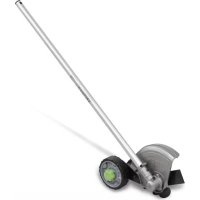
| Product type | Edger attachment for EGO 56V power head |
| Brand | EGO |
| Model | EA0800 |
| Blade length | 20 cm |
| Maximum cutting depth | 75 mm |
| Weight | 2.26 kg |
| Power source | 56V lithium-ion battery (not included) |
| Operating temperature | -15°C to 40°C |
| Storage temperature | -20°C to 70°C |
| Guaranteed sound power level | 95 dB(A) |
| Sound pressure level (operator) | 79.8 to 84 dB(A) depending on power head |
| Vibration (front handle) | 1.2 to 1.6 m/s² (K=1.5 m/s²) |
| Vibration (rear handle) | 1.53 to 2.2 m/s² (K=1.5 m/s²) |
| Compatible power heads | PH1400E, PH1420E, PHX1600 |
| Guide wheel | Yes, depth adjustable |
| Debris flap | Yes, replaceable |
| Wear-resistant chain guide | Yes, removable |
| Box contents | Edger attachment, hex key, multi-function wrench, 2 cotter pins, user manual |
| Maintenance | Clean after use, lubricate gears every 50 hours |
| Warranty | See egopowerplus.eu |
Frequently Asked Questions - EA0800 EGO
User questions about EA0800 EGO
0 question about this device. Answer the ones you know or ask your own.
Ask a new question about this device
Download the instructions for your Multitools in PDF format for free! Find your manual EA0800 - EGO and take your electronic device back in hand. On this page are published all the documents necessary for the use of your device. EA0800 by EGO.
USER MANUAL EA0800 EGO
natural_image
Line drawing of a mechanical lever mechanism with a long shaft and base (no text or symbols)EA0800
EDGER ATTACHMENT
FOR USE ONLY WITH THE 56V LITHIUM-ION POWER HEAD PH1400E/PH1420E/PHX1600
EN Edger attachment 5
DE Rasenkantenschneider-aufsatz 14
FR Accessoire coupe-bordures 25
ES Accesorio para recortar bordes de 36
PT Acessório aparador 47
IT Accessorio bordatore 57
NL Multitool kantensnijder accessoire 67
DK Kantskærertilbehør 78
SE Kantskärare-tillbehör 88
FI Reunaleikkurilisäosa 98
NO Kantskjærer (tilbehør) 108
RU Инструмент для обрезки кромок 118
PL Końcówka do wyrównywania brzegów 130
CZ Nástavec pro ořezávač okrajů trávníků 141
SK Nástavec pre orezávač okrajov trávnika 151
HU Füszegélyvágó tartozék 161
RO Dispozitiv de profilat margini 172
SL Obrezovalnik robov 183
LT Kraštu pjoviklio įtaisas 193
LV Apmalu griezēja papildierīce 203
GR Простартніа акрокофтн 213
TR Kenar düzeltme aparati aksesuari 225
ET Multitööriista servalõikur 235
UK Насадка для обрізання кромок 245
BG Приставка тример за ръбове 256
HR Priključak šišača trave 267
KA 3000b-3369530 3000g888 277
SR Dodatak rubnog trimera 293
BS Priključak obrezivača rubova 303
HE 331
AR ملحق تسوية الحواف 322
natural_image
Illustration of a worker using a manual lawn power tool in a field, with grass and a measuring tool nearby (no text or symbols)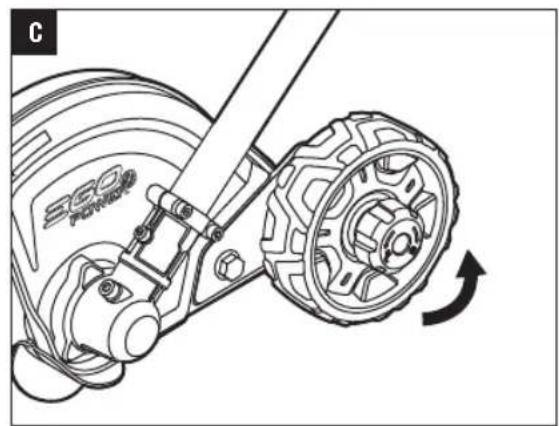
natural_image
Mechanical diagram showing a cam and wheel assembly with rotational motion indicator (no text or symbols)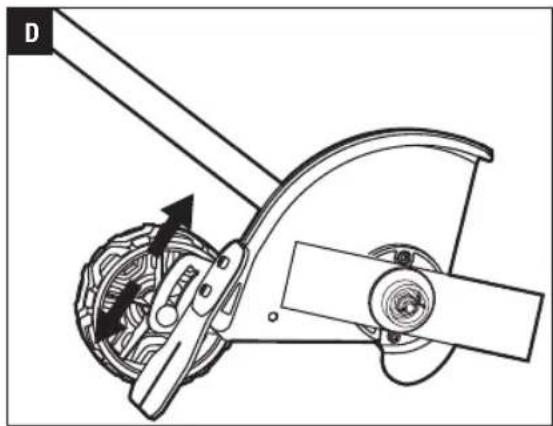
natural_image
Mechanical assembly diagram showing a tool interacting with a gear and cam mechanism (no text or symbols)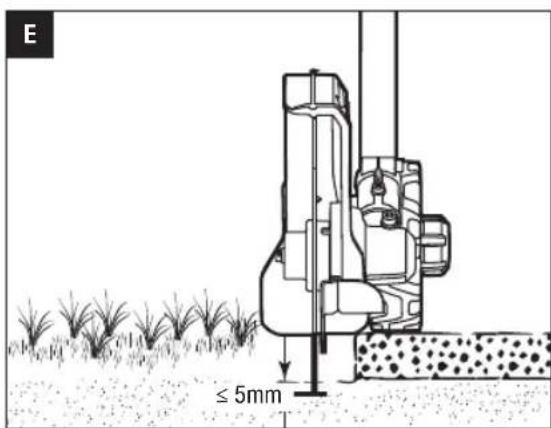
natural_image
Technical line drawing of a firearm with an arrow pointing to the handle (no text or symbols present)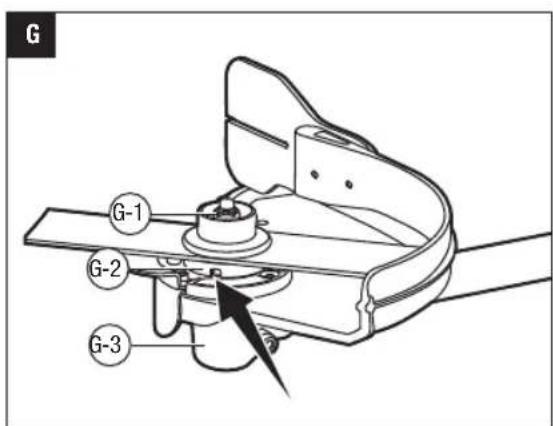
natural_image
Mechanical assembly diagram showing a hand operating a rotating tool with a shaft and base (no text or symbols)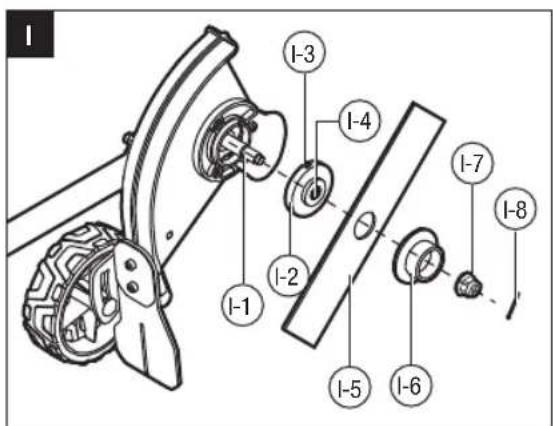
natural_image
Technical line drawing of a mechanical assembly with arrows indicating motion or force direction (no text or symbols)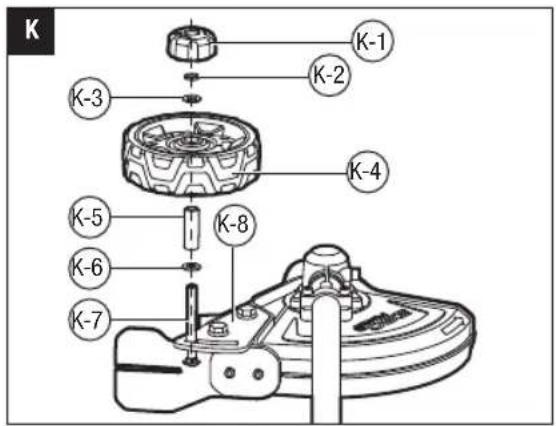
natural_image
Technical line drawing of a mechanical assembly with a tool and gear (no text or symbols)READ ALL INSTRUCTIONS!

READ OPERATOR'S MANUAL
WARNING: To ensure safety and reliability, all repairs and replacements should be performed by a qualified service technician.
SAFETY SYMBOLS
The purpose of safety symbols is to attract your attention to possible dangers. The safety symbols and the explanations with them deserve your careful attention and understanding. The symbol warnings do not, by themselves, eliminate any danger. The instructions and warnings they give are no substitutes for proper accident prevention measures.
WARNING: Be sure to read and understand all safety instructions in this Operator's Manual, including all safety alert symbols such as "DANGER," "WARNING," and "CAUTION" before using this tool. Failure to follow all instructions listed below may result in electric shock, fire, and/or serious personal injury.
SYMBOL MEANING
SAFETY ALERT SYMBOL: Indicates DANGER, WARNING, OR CAUTION. May be used in conjunction with other symbols or pictographs.

The operation of any power tools can result in foreign objects being thrown into your eyes, which can result in severe eye damage. Before beginning power tool operation, always wear safety goggles or safety glasses with side shields and a full face shield when needed. We recommend a Wide Vision Safety Mask for use over eyeglasses or standard safety glasses with side shields.
SAFETY INSTRUCTIONS
This page depicts and describes safety symbols that may appear on this product. Read, understand, and follow all instructions on the machine before attempting to assemble and operate it.
 | Safety Alert | Indicates a potential personal injury hazard. |
 | Read Operator's Manual | To reduce the risk of injury, user must read and understand operator's manual before using this product. |
 | Wear Ear and Eye Protection | Always wear ear protection and safety goggles or safety glasses with side shields and a full face shield when operating this product. |
 | Blade length of edger | Blade length of edger |
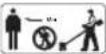 | Keep Bystanders Away | The distance between the machine and bystanders shall be at least 15 m. |
 | Direction of Edger Blade Rotation | Indicates the direction of the edger blade rotation. |
 | Thrown Objects | Edger debris can affect stable footing. Use extreme care when walking in edging area. |
 | Wear Safety Footwear | Wear non-slip safety footwear when using this equipment. |
 | Rotating Cutting Blade | Do not put hands or feet near or under rotating parts. |
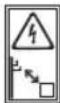 | Keep sufficient distance away from electrical power lines | To prevent electrocution, do not operate within 15m of overhead electrical lines. Contact with or use near power lines may cause serious injury or electric shock resulting in death. |
 | CE | This product is in accordance with applicable EC directives. |
 | UKCA | This product is in accordance with applicable UK legislation. |
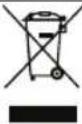 | WEEE | Waste electrical products should not be disposed of with household waste. Take to an authorized recycler. |
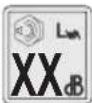 | Noise | Guaranteed sound power level. Noise emission to the environment according to the European community's Directive. |
EN
| V Volt Voltage | |
| mm Millimeter Length or size | |
| cm Centimeter Length or size | |
| kg Kilogram Weight | |
| ... | Direct Current Type or a characteristic of current |
GENERAL MACHINE SAFETY WARNINGS
WARNING! Read all safety warnings, instructions, illustrations and specifications provided with this machine. Failure to follow all instructions listed below may result in electric shock, fire and/or serious injury.
SAVE ALL WARNINGS AND INSTRUCTIONS FOR FUTURE REFERENCE.
The term "machine" in the warnings refers to your mains-operated (corded) machine or battery-operated (cordless) machine.
WORK AREA SAFETY
- Keep work area clean and well lit. Cluttered or dark areas invite accidents.
- Do not operate machines in explosive atmospheres, such as in the presence of flammable liquids, gases or dust. Machines create sparks which may ignite the dust or fumes.
- Keep children and bystanders away while operating a machine. Distractions can cause you to lose control.
ELECTRICAL SAFETY
■ Machine plugs must match the outlet. Never modify the plug in any way. Do not use any adapter plugs with earthed (grounded) machines. Unmodified plugs and matching outlets will reduce risk of electric shock.
- Avoid body contact with earthed or grounded surfaces, such as pipes, radiators, ranges and refrigerators. There is an increased risk of electric shock if your body is earthed or grounded.
■ Do not operate the machine in rain or wet conditions. Water entering the machine may increase the risk of electric shock or malfunction that could result in personal injury.
- Do not abuse the cord. Never use the cord for carrying, pulling or unplugging the machine. Keep cord away from heat, oil, sharp edges or moving parts. Damaged or entangled cords increase the risk of electric shock.
- When operating a machine outdoors, use an extension cord suitable for outdoor use. Use of a cord suitable for outdoor use reduces the risk of electric shock.
- If operating a machine in a damp location is unavoidable, use a ground fault circuit interrupter (GFCI) protected supply. Use of a GFCI reduces the risk of electric shock.
PERSONAL SAFETY
- Stay alert, watch what you are doing and use common sense when operating a machine. Do not use a machine while you are tired or under the influence of drugs, alcohol or medication. A moment of inattention while operating machines may result in serious personal injury.
■ Use personal protective equipment. Always wear eye protection. Protective equipment such as a dust mask, non-skid safety shoes, hard hat or hearing protection used for appropriate conditions will reduce personal injuries.
■ Prevent unintentional starting. Ensure the switch is in the off-position before connecting to power source and/or battery pack, picking up or carrying the machine. Carrying machines with your finger on the switch or energizing machines that have the switch on invites accidents.
■ Remove any adjusting key or wrench before turning the machine on. A wrench or a key left attached to a rotating part of the machine may result in personal injury.
■ Do not overreach. Keep proper footing and balance at all times. This enables better control of the machine in unexpected situations.
■ Dress properly. Do not wear loose clothing or jewelry. Keep your hair and clothing away from moving parts. Loose clothes, jewelry or long hair can be caught in moving parts.
- If devices are provided for the connection of dust extraction and collection facilities, ensure these are connected and properly used. Use of dust collection can reduce dust-related hazards.
- Do not let familiarity gained from frequent use of machines allow you to become complacent and ignore machine safety principles. A careless action can cause severe injury within a fraction of a second.
MACHINE USE AND CARE
- Do not force the machine. Use the correct machine for your application. The correct machine will do the job better and safer at the rate for which it was designed.
■ Do not use the machine if the switch does not turn it on and off. Any machine that cannot be controlled with the switch is dangerous and must be repaired.
■ Disconnect the plug from the power source and/or remove the battery pack, if detachable, from the machine before making any adjustments, changing accessories, or storing machines. Such preventive safety measures reduce the risk of starting the machine accidentally.
■ Store idle machines out of the reach of children and do not allow persons unfamiliar with the machine or these instructions to operate the machine. Machines are dangerous in the hands of untrained users.
- Maintain machines and accessories. Check for misalignment or binding of moving parts, breakage of parts and any other condition that may affect the machine's operation. If damaged, have the machine repaired before use. Many accidents are caused by poorly maintained machines.
- Keep cutting machines sharp and clean. Properly maintained cutting machines with sharp cutting edges are less likely to bind and are easier to control.
■ Use the machine, accessories and machine bits etc. in accordance with these instructions, taking into account the working conditions and the work to be performed. Use of the machine for operations different from those intended could result in a hazardous situation.
- Keep handles and grasping surfaces dry, clean and free from oil and grease. Slippery handles and grasping surfaces do not allow for safe handling and control of the machine in unexpected situations.
BATTERY MACHINE USE AND CARE
■ Recharge only with the charger specified by the manufacturer. A charger that is suitable for one type of battery pack may create a risk of fire when used with another battery pack.
■ Use machines only with specifically designated battery packs. Use of any other battery packs may create a risk of injury and fire.
- When battery pack is not in use, keep it away from other metal objects, like paper clips, coins, keys, nails, screws or other small metal objects, that can make a connection from one terminal to another.
Shorting the battery terminals together may cause burns or a fire.
■ Under abusive conditions, liquid may be ejected from the battery; avoid contact. If contact accidentally occurs, flush with water. If liquid contacts eyes, additionally seek medical help.
Liquid ejected from the battery may cause irritation
or burns.
- Do not use a battery pack or machine that is damaged or modified. Damaged or modified batteries may exhibit unpredictable behavior resulting in fire, explosion or risk of injury.
■ Do not expose a battery pack or machine to fire or excessive temperature. Exposure to fire or temperature above 130 °C may cause explosion.
■ Follow all charging instructions and do not charge the battery pack or machine outside the temperature range specified in the instructions.
Charging improperly or at temperatures outside the specified range may damage the battery and increase the risk of fire.
IMPORTANT SAFETY INSTRUCTIONS
WARNING! When using electric gardening appliances, basic safety precautions should always be followed to reduce the risk of fire, electric shock, and personal injury, including the following:
READ CAREFULLY BEFORE USE
KEEP FOR FUTURE REFERENCE
DANGER! Do not rely on the tool's insulation against electric shock. To reduce the risk of electrocution, never operate the machine in the vicinity of any wires or cables (power, etc.) which may carry electric current.
CAUTION! Wear appropriate personal hearing protection during use. Under some conditions and durations of use, noise from this product may contribute to hearing loss.
Training
- Read the instructions carefully. Be familiar with the controls and the proper use of the equipment.
■ Never allow children or people unfamiliar with these instructions to use the edger. Local regulations may restrict the age of the operator.
■ Never edge while people, especially children, or pets are nearby. - Keep in mind that the operator or user is responsible for accidents or hazards occurring to other people or their property.
Preparation
■ While edging, always wear eye and ear protection, substantial foot wear, and long trousers.
■ Thoroughly inspect the surface where the equipment is to be used and remove all stones, sticks, wires, bones and other foreign objects.
EN
■ Before using, always visually inspect to see that the blades, blade bolt and cutter assembly are not worn or damaged. Replace worn or damaged blades and bolts in sets to preserve balance.
Operation
■ Edge only in daylight or in good artificial light.
■ Always be sure of your footing on slopes.
■ Walk, never run.
■ Use extreme caution when reversing or pulling the edger toward you.
■ Make sure the blade has stopped before crossing surfaces other than grass and when transporting the edger to and from the area to be edged.
■ Never operate the edger with defective, missing or incorrectly fitted guards.
■ Do not change the motor governor settings or overspeed the motor.
■ Start the switch on the motor carefully according to instructions and with feet well away from the blade(s).
- Do not tilt when switching on the motor, unless the edger has to be tilted for starting. In this case, do not tilt it more than absolutely necessary and lift only the part which is away from the operator.
- Do not start the motor when a bystander is standing in front of the blade(s).
■ Do not put hands or feet near or under rotating parts.
■ Always switch off the motor and disconnect from the battery:
1) Before clearing blockages;
2) Before checking, cleaning or working on the blade(s);
3) After striking a foreign object: Inspect the blade(s) for damage and make repairs before restarting and operating the edger;
4) If edger starts to vibrate abnormally (check immediately).
■ Stop the motor whenever you leave the edger;
■ Do not charge the battery pack in rain, or in wet locations.
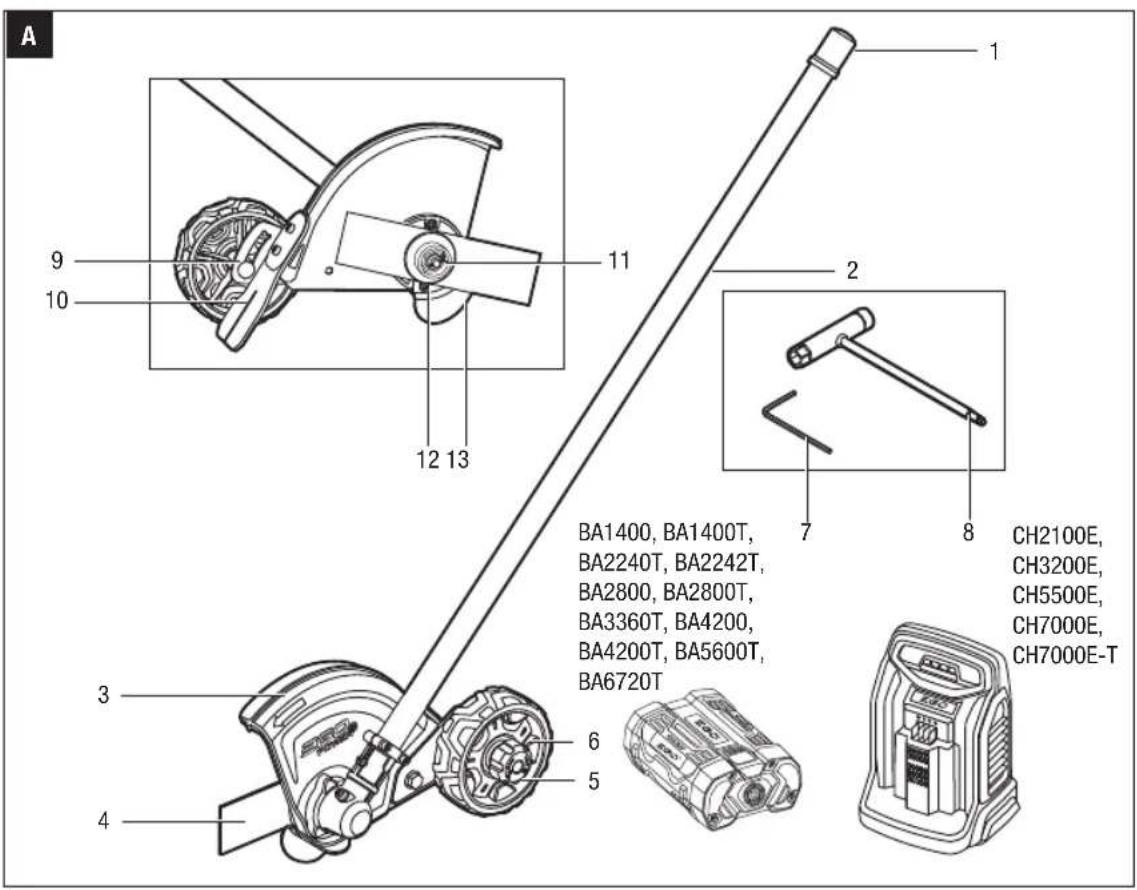
■ Use only with battery packs and chargers listed in fig. A
■ The battery pack must be removed from the appliance before it is scrapped.
■ The battery shall be disposed of safely.
■ Do not dispose of the battery in a fire. The cells may explode. Check with local authorities for possible special disposal instructions.
■ Do not open or mutilate the battery. Released electrolyte is corrosive and may cause damage to the eyes or skin. It may be toxic if swallowed.
■ Exercise care in handling batteries in order not to short the battery with conducting materials such as rings, bracelets, and keys. The battery or conductor may overheat and cause burns.
■ Battery tools do not have to be plugged into an electrical outlet; therefore, they are always in operating condition. Be aware of possible hazards even when the tool is not operating. Take care when performing maintenance or service.
■ Do not wash with a hose; avoid getting water in motor and electrical connections.
Maintenance and storage
- Keep all nuts, bolts and screws tight to be sure the equipment is in safe working conditions.
■ Replace worn or damaged parts.
■ Do not attempt to repair the machine unless you are competent to do so.
■ Use only manufacturer-recommended replacement parts and accessories.
■ Disconnect the machine from the battery before carrying out maintenance or cleaning work. - Inspect and maintain the machine regularly. Have the machine repaired only by an authorized repairer.
■ When not in use, store the machine out of the reach of children.
■ If situations occur that are not covered in this manual, use care and good judgment. Contact the EGO Service Center for assistance.
■ Save these instructions. Refer to them frequently and use them to instruct others who may use this tool. If you loan this tool to someone else, also loan these instructions to them to prevent misuse of the product and possible injury.
SAVE THESE INSTRUCTIONS
NOTE: SEE YOUR POWER HEAD OPERATOR'S MANUAL FOR ADDITIONAL SPECIFIC SAFETY RULES.
SPECIFICATIONS
| Blade Length 20 cm | ||
| Edging Depth Up to 75 mm | ||
| Weight 2.26 kg | ||
| Operating Temperature -15°C-40°C | ||
| Storage Temperature -20°C-70°C | ||
| Measured sound power level L_WA | 92.4 dB(A)K=2.07 dB(A)(PH1400E) | |
| 90.7 dB(A)K=1.46 dB(A)(PH1420E) | ||
| 90 dB(A)K=1.3 dB(A)(PHX1600) | ||
| Sound pressure level at operator's ear L_PA | 79.8 dB(A)K=3 dB(A)(PH1400E) | |
| 81.2 dB(A)K=3 dB(A)(PH1420E) | ||
| 84 dB(A)K=3 dB(A)(PHX1600) | ||
| Guaranteed sound power level L_WA (according to 2000/14/EC) | 95 dB(A) | |
| Vibration a_h | Front-assist Handle | 1.2 m/ s^2 K=1.5 m/ s^2 (PH1400E) |
| 1.95 m/ s^2 K=1.5 m/ s^2 (PH1420E) | ||
| 1.6 m/ s^2 K=1.5 m/ s^2 (PHX1600) | ||
| Rear Handle | 2.2 m/ s^2 K=1.5 m/ s^2 (PH1400E) | |
| 1.66 m/ s^2 K=1.5 m/ s^2 (PH1420E) | ||
| 1.53 m/ s^2 K=1.5 m/ s^2 (PHX1600) | ||
■ The above parameters are tested and measured equipped with power head PH1400E/PH1420E/PHX1600;
■ The declared vibration total value has been measured in accordance with a standard test method and may be used for comparing one tool with another;
■ The declared vibration total value may also be used in a preliminary assessment of exposure.
NOTICE: The vibration emission during actual use of the power tool can differ from the declared value in which the tool is used; In order to protect the operator, user should wear gloves and ear protectors in the actual conditions of use.
PACKING LIST
| PART NAME QUANTITY | |
| Edger Attachment | 1 |
| Hex Wrench | 1 |
| Multi-Functional Wrench | 1 |
| Cotter Pin | 2 |
| Operator's Manual | 1 |
Recommended Blade
| PART NAME MODEL NUMBER | |
| Edger Blade AEB0800 |
DESCRIPTION
KNOW YOUR EDGER ATTACHMENT (Fig.A)
- End Cap
- Edger Shaft
- Blade Guard
- Blade
- Depth Adjusting Knob
- Guide Wheel
- Hex Wrench
- Multi-Functional Wrench
- Depth Adjusting Guide Bar
- Debris Flap
- Cotter Pin
- Screw to lock guide plate in place
- Guide Plate
ASSEMBLY
⚠ WARNING: If any parts are damaged or missing, do not operate this product until the parts are replaced. Use of this product with damaged or missing parts could result in serious personal injury.
WARNING: Do not attempt to modify this product or create accessories not recommended for use with this edger. Any such alteration or modification is misuse and could result in a hazardous condition leading to possibly serious personal injury.
WARNING: To prevent accidental starting that could cause serious personal injury, always remove the battery pack from the machine when assembling parts.
EN
WARNING: Always wear gloves when mounting or replacing the guard. Take care of the blade on the guard and protect your hand from cutting.
WARNING: Never operate the machine without the guard firmly in place. The guard must always be on the machine to protect the user! When the guard is fixed, never attempt to remove or adjust the guard, if a replacement is needed, it should be performed by a qualified service technician!
CONNECTING THE EDGER ATTACHMENT TO THE POWER HEAD
This edger attachment is designed for use with EGO 56V Lithium-ion Power Head PH1400E/PH1420E/PHX1600.
See "INSTALLING AN ATTACHMENT TO THE POWER HEAD" section in the power head PH1400E/PH1420E/PHX1600 operator's manual.
OPERATION
WARNING: Do not allow familiarity with this product to make you careless. Remember that a careless fraction of a second is sufficient to inflict serious injury.
WARNING: Always wear eye protection, along with hearing protection. Failure to do so could result in objects being thrown into your eyes and other possible serious injuries.
APPLICATIONS
You may use this product for the purpose listed below:
■ Edging around walkways, curbing, flower beds and other similar areas.
NOTICE: The tool is to be used only for its prescribed purpose. Any other use is deemed to be a case of misuse.
Before each use check for damaged/worn parts
Check the blade, guard and front-assist handle and replace any parts that are cracked, warped, bent, or damaged in any away.
WARNING: To prevent serious personal injury, remove the battery pack from the tool before servicing, cleaning, changing attachments or removing material from the unit.
USING THE EDGER ATTACHMENT WITH POWER HEAD
WARNING: Dress properly to reduce the risk of injury when operating this tool. Do not wear loose clothing or jewelry. Wear eye and ear/hearing protection. Wear
heavy, long pants, boots and gloves. Do not wear short pants or sandals or go barefoot. Wear a face mask or dust mask in dusty locations.
WARNING: Clear away all obstacles and solid objects from the work area.
For safe and better operation, put on the shoulder strap across the shoulder. Adjust the shoulder strap in a comfortable operating position.
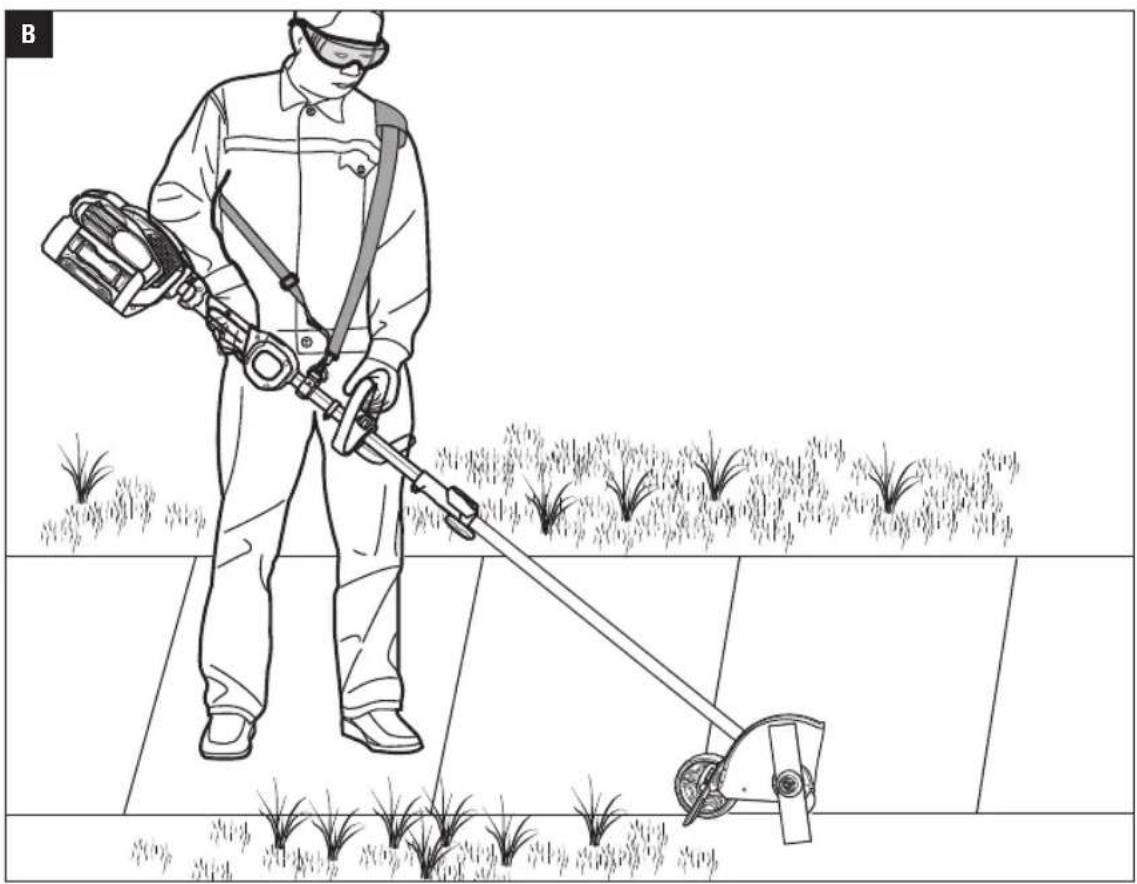
Hold the edger with your right hand on the rear handle and your left hand on the front-assist handle. Keep a firm grip with both hands while operating the tool. The edger should be held at a comfortable position with the rear handle about hip height (Fig. B).
WARNING: The shoulder strap is also a quick release mechanism in hazardous situation. When emergency occurs, take it off from your shoulder immediately, no matter what way the strap is in.
After each use, clean the edger
See the MAINTENANCE section for cleaning instructions.
ADJUSTING DEPTH OF CUT
- Stop the motor and remove the battery pack.
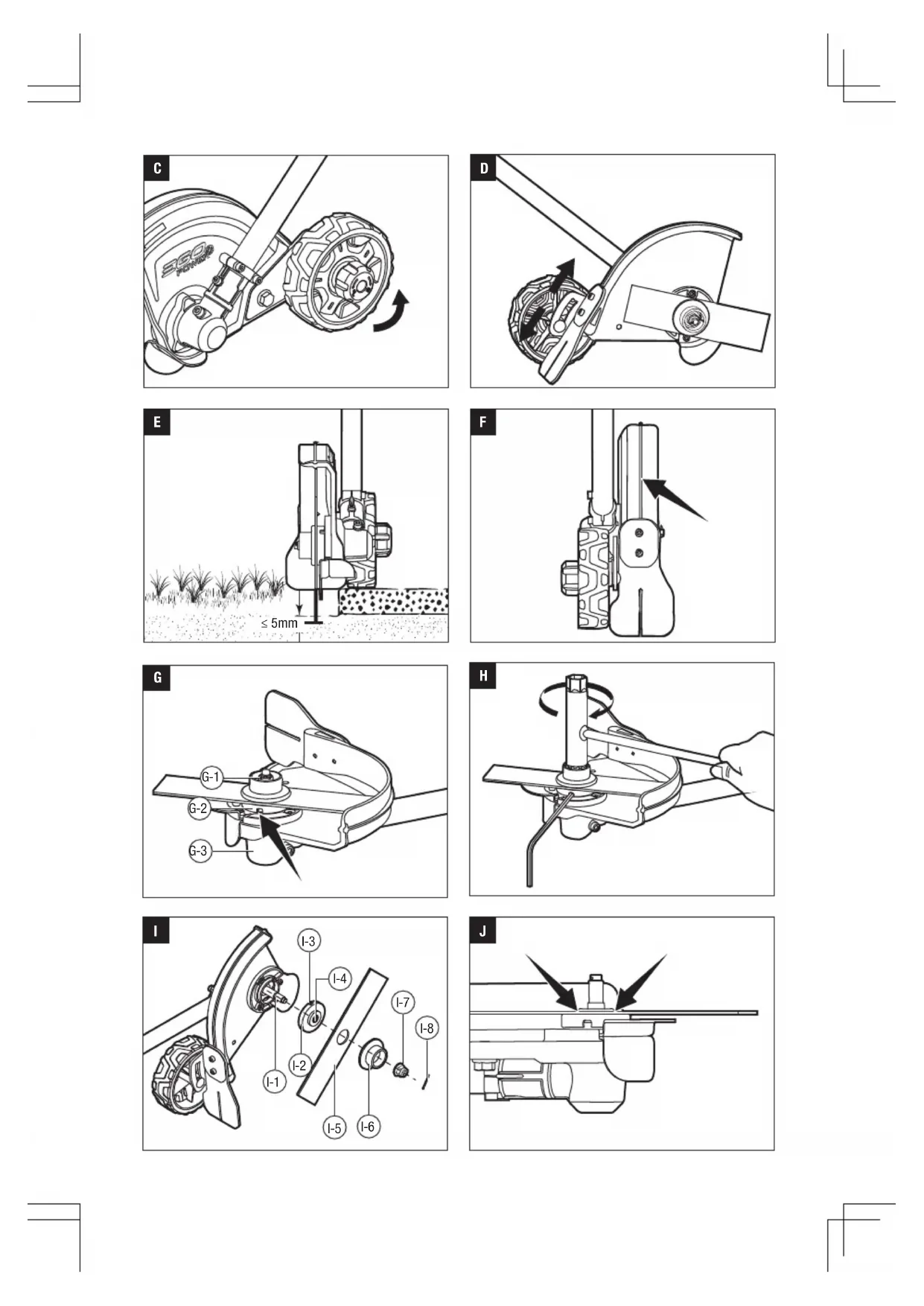
- Loosen the depth-adjusting knob in the direction of the unlocking arrow marked on the knob (Fig. C).
- Move the guide wheel, along the depth-adjusting guide bar, up to increase the depth of cut or down to decrease the depth (Fig. D).
-
Adjust the guide wheel so that the blade just touches the ground or breaks the surface of the soil by no more than 5mm (Fig. E) and then tighten it securely.
-
Standing in the normal working position, check the depth of cut again and correct it if necessary.
TO START/STOP THE TOOL
See "STARTING/STOPPING THE POWER HEAD" section in the power head PH1400E/PH1420E/PHX1600 operator's manual.
OPERATING TIPS
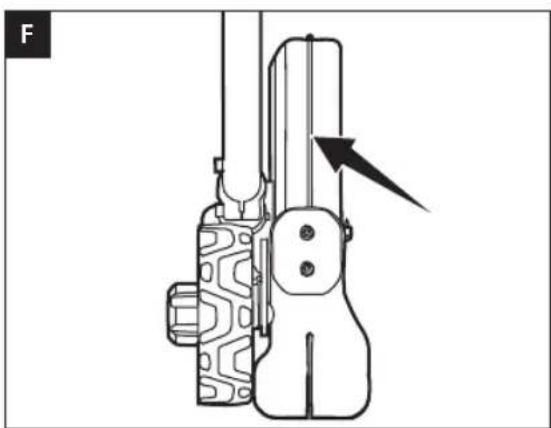
■ Hold and guide the power head so that the blade is vertical. Use the sight line to line the blade up with the edge of the bed (Fig. F).
■ Operate at no more than a normal walking pace. If the blade begins to bog down, you are edging too fast; slow your pace.
■ Always walk forwards when cutting and move the edger forward. Do not pull the edger towards you.
■ Do not force the blade into the ground. Light contact of the blade against the sidewalk edge, curb, etc., is
acceptable and will not damage the edger.
■ Best results are obtained when grass is dry. Avoid edgi
in wet soil or wet grass areas or the blade guard might clog and result in an uneven edge. If the blade guard becomes clogged, stop the motor, remove the battery pack, and remove debris from the blade guard.
MAINTENANCE
WARNING: Before inspecting, cleaning or servicing the unit, stop the motor, wait for all moving parts to stop, and remove the battery pack. Failure to follow these instructions can result in serious personal injury or property damage.
WARNING: When servicing, use only identical replacement parts. Use of any other parts can create a hazard or cause product damage. To ensure safety and reliability, all repairs, other than the items listed in these maintenance instructions, should be performed by a qualified service technician.
GENERAL MAINTENANCE
Avoid using solvents when cleaning plastic parts. Most plastics are susceptible to damage from various types of commercial solvents and may be damaged by their use. Use clean cloths to remove dirt, dust, oil, grease, etc.
CLEAN THE UNIT
■ After each use, clean the debris, clogged soils or grass on the blade and guard with a soft brush. Wipe the edger surface with a clean cloth moistened with a mild soap solution.
■ Use a small brush or a small vacuum cleaner to clean the air vents on the rear housing.
NOTICE: Do not use any strong detergents on the plastic housing or the handle. They can be damaged by certain aromatic oils such as pine and lemon.
REPLACING THE BLADE
WARNING: Do not attempt to straighten or weld a bent or cracked blade-it may break-it must be replaced. Recommend replace only with EGO edger blade, see "Recommended Blade" section.
NOTICE: Replace the blade if its length is no longer sufficient to maintain the necessary ground clearance and obtain the required depth of cut.
⚠ WARNING: Always protect your hands by wearing heavy gloves or wrapping the blade with rags or other materials when performing any maintenance on the edger blade.
Removing the blade
g1. Stop the motor and remove the battery pack.
- Lay the edger on its back so that the blade is facing upwards.
- Wear protective gloves. Use a needle nose pliers (not included) to remove the cotter pin from the motor shaft (Fig. G).
- Rotate the blade to align the slot in the flange with the hole in the gear case (Fig. G).
Fig. G parts description see below:
| G-1 Cotter Pin |
| G-2 Inner Flange |
| G-3 Gear Case |
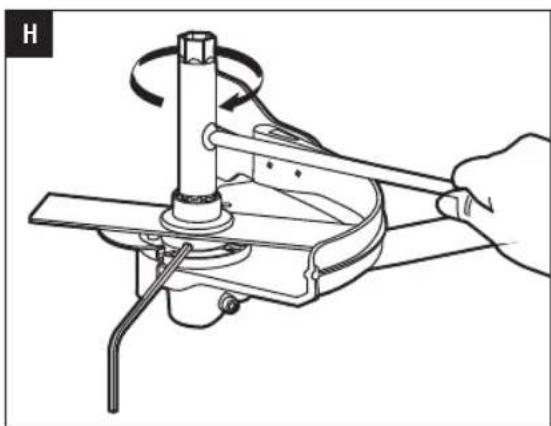
- Insert the hex wrench provided into the aligned holes to act as a stabilizer. Use the multi-functional wrench provided to loosen the nut CLOCKWISE (Fig. H).
- Remove the nut, outer flange, blade and the inner flange from the motor shaft (Fig. I). Check and replace them if they are worn.
Fig. I parts description see below:
| I-1 Motor Shaft I-5 Blade | ||
| I-2 Inner Flange I-6 Outer Flange | ||
| I-3 Slot in the Inner Flange I-7 Nut | ||
| I-4 Bulge on the Inner Flange I-8 Cotter Pin |
Installing the blade
- Position the inner flange onto the motor shaft with bulge facing outwards (Fig. I).
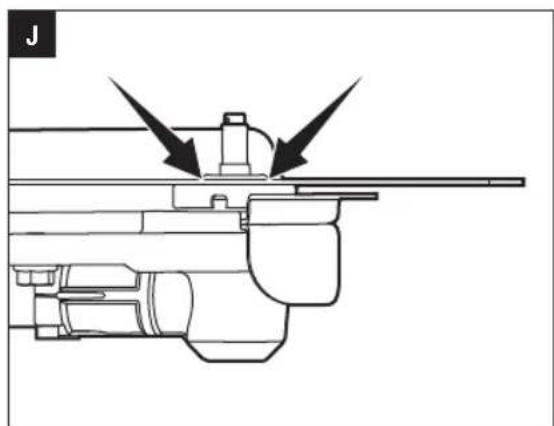
- Install the new blade onto the inner flange, ensuring that the blade is mounted into its place securely (Fig. J).
- Mount the outer flange and the nut onto the shaft, and pre-tighten the nut COUNTERCLOCKWISE by hand.
- Follow the above step 4 & 5 in "Removing the blade" to stabilize the blade to securely tighten the nut in COUNTERCLOCKWISE.
- Insert a new cotter pin supplied into the hole in the motor shaft. Bent the two feet of the pin in opposite directions with a needle nose pliers (not included) (Fig. G).
REPLACING THE GUIDE WHEEL
- Stop the motor and remove the battery pack.
- Lay the edger on its back so that the guide wheel is facing upwards.
- Loosen the depth-adjusting knob in the direction of the unlocking arrow marked on the knob and removing it.
EN
- Remove the spring washer, plain washer 1, guide wheel, bushing and plain washer 2 from the screw pole (Fig. K). Check and replace them if they are worn.
- Mount the screw pole through the depth-adjusting guide bar first, and then mount the plain washer 2, bushing and new wheel, then mount the plain washer 1, spring washer and depth-adjusting knob onto the screw pole in the sequence shown in Fig. K.
Fig. K parts description see below:
| K-1 | Depth Adjusting Knob K-5 | Bushing |
| K-2 | Spring Washer K-6 | Plain Washer 2 |
| K-3 | Plain Washer 1 | K-7 Screw Pole |
| K-4 | Guide Wheel K-8 |
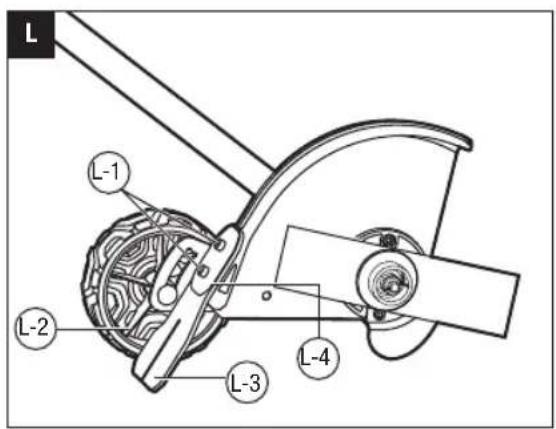
NOTICE: The guide wheel should be mounted with its flat ribs facing inwards (Fig. L).
Fig. L parts description see below:
| L-1 Screws L-3 Debris Flap | |
| L-2 Flat Rib L-4 Fixing Board |
- Lock the depth-adjusting knob.
REPLACING THE DEBRIS FLAP (Fig. L)
- Stop the motor and remove the battery pack.
- Use the hex wrench provided to loosen the two screws.
- Remove the screws, fixing board and worn debris flap.
- Replace with a new debris flap and lock it with the fixing board and the two screws.
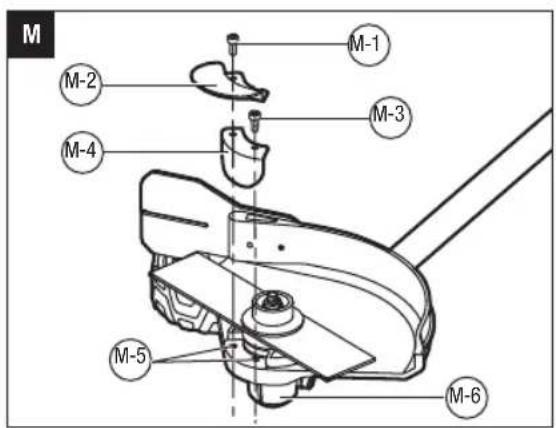
CHECKING AND REPLACING THE ANTI-WEAR PROTECTIVE GUARD/GUIDE PLATE (Fig. M)
Check the anti-wear protective guard and the guide plate for damage before starting the power tool. The anti-wear protective guard must be replaced as soon as the gear case becomes visible.
NOTICE: The gear case may be seriously damaged if you do not replace the anti-wear protective guard as soon as the gear case is visible.
- Stop the motor and remove the battery pack.
- Wear protective gloves. Rotate the blade as necessary to expose the two screws.
- Use the hex wrench provided to loosen the two screws and remove them.
NOTICE: If you just need to replace the guide plate, loosen and remove just the screw 1.
- Replace the deformed or worn anti-wear protective guard/guide plate.
- Assemble the new anti-wear protective guard and guide plate onto the gear case and lock them with the two screws.
Fig. M parts description see below:
| M-1 | Screw 1 | M-4 | Anti-wear Protective Guard |
| M-2 | Guide Plate | M-5 | Mounting Holes |
| M-3 | Screw 2 M-6 | Gear | Case |
REMOVING THE GUIDE PLATE
If you are experienced with this type of edger, or if you find that the guide plate is a hindrance in your edging operation, you may remove the guide plate.
- Loosen and remove screw 1.
- Remove the guide plate.
- Replace and tighten screw 1.
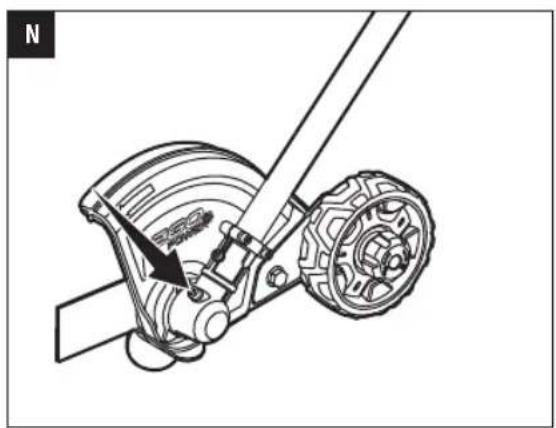
The transmission gears in the gear case need be lubricated periodically with gear grease. Check the gear case grease level about every 50 hours of operation by removing the sealing screw on the side of the case.
If no grease can be seen on the sides of the gear, follow the steps below to fill with gear grease up to 3/4 capacity. Do not completely fill the transmission gears.
- Position the edger upright so that the sealing screw is facing upwards (Fig. N).
- Use the multi-functional wrench provided to loosen and remove the sealing screw. Use a grease syringe (not included) to inject some grease into the screw hole; do not exceed 3/4 capacity.
- Tighten the sealing screw after injection.
STORING THE UNIT
■ Remove the battery pack from the edger
■ Clean the tool thoroughly before storing it.
- If the edger attachment is removed from the power head and stored separately, fit the end cap on the attachment shaft to avoid dirt getting into the coupler.
■ Store the unit in a dry, well-ventilated area, locked-up or up high, out of the reach of children. Do not store the unit on or adjacent to fertilizers, gasoline, or other chemicals.
Protecting the environment
Do not dispose of electrical equipment, used battery and charger into household waste! Take this product to an authorized recycler and make it available for separate collection. Electric machines must be returned to an environmentally compatible recycling facility.

TROUBLE SHOOTING
| PROBLEM | CAUSE SOLUTION | |
| Motor fails to start. | The battery pack is not attached to the power head.No electrical contact between the power head and the battery pack.The battery pack is depleted.The lock-off button and trigger are not depressed simultaneously. | Attach the battery pack to the power head.Remove the battery, check contacts and reinstall the battery pack until it snaps into place.Charge the battery pack with EGO chargers listed in this manual.Press down the lock-off button and hold it, then depress the trigger to turn on the power head. |
| Power head stops during operation. | The motor is overloaded.The battery pack or the power head is too hot.The battery pack is disconnected from the tool.The battery pack is depleted. | The motor will recover when the load is removed. For continuous working, decrease the load of the power head.Allow the battery pack or power heat to cool until the temperature drops below 67°C.Re-install the battery pack.Charge the battery pack with EGO chargers listed in this manual. |
| Uneven edge | Grass or soil edged is too wet.Blade guard is clogged. | Avoid edging in wet soil or wet grass.Stop the motor, remove the battery pack, and remove debris from the blade guard. |
EN
WARRANTY
EGO WARRANTY POLICY
Please visit the website egopowerplus.eu for full terms and conditions of the EGO Warranty policy.
HET APPARAAT SCHOONMAKEN
HET APPARAAT OPBERGEN
RENG∅RING AF APPARATET
UDSKIFTNING AF KNIVEN
OPBEVARING AF APPARATET
SIKKERHET PÅ ARBEIDSOMRÅDET
BEHOLD FOR SENERE BRUK
GENERELT VEDLIKEHOLD
BEZPIECZEŃSTWO W MIEJSCU PRACY
POLITYKA GWARANCYJNA EGO
DÔLEŽITÉ BEZPEČNOSTNÉ POKYNY
三GO
CITIȚI MANUALUL DE INSTRUCTIUNI
UPORABA IN NEGA STROJA
VADPLAKSNES NONEMŠANA
LUGEGE KASUTUSJUHENDIT
ÜLDISED MASINA OHUTUSHOIATUSED
Olulised ohutusjuhised
VAŽNE SIGURNOSNE UPUTE
3m606m00g0s hsd003g0mm, lsbng0mm os ls706m00d1 d3g0g0ds.
q_0h_5z_5w_0w_3z_0b_0z_0q_0h_3z_0f_3z_0o d_0s_6g_8d_5(b_8.A)
65b.G 65h396d0 65h0m0d0s 65h0m0d0s dm396d0m0s d3930m:
| G-1 | Jocmodygns |
| G-2 | doqs d3gmoono |
| G-3 | Jsqs3gdsons Jmmmzo |
65b. I 65b30b00 b5f0m0d0s s0f0n dm30d0m0s f30300:
VAŽNA SIGURNOSNA UPUTSTVA
VAŽNA SIGURNOSNA UPUTSTVA
■ dentalية : Patient's care for the care of patients who are not interested in making a care for the care of patients who are not interested in making a care for the care of patients who are not interested in making a care for the care of patients who are not interested in making a care for the care of patients who are not interested in making a care for the care of patients who are not interested in making a care for the care of patients who are not interested in making a care for the care of patients who are not interested in making a care for the care of patients who are but not interested in making a care for the care of patients who are not interested in making a care for the care of patients who are not interested in making a care for the care of patients who are not interested in making a care for the care of patients who are not interested in making a care for the care of patients who are not interested in making a care for the care of patients who are not interested in making a care for the care of patients who are not interested in making a care for the car
هذه Officiality Teft et tetrach Rmors Salama that I'd not to go. الmentaj. Africa's Government Relations MicroStrategy on the Alaïne and its own and its own مchlorée la total of the United States
תְבָרִי הַלְה
.הכלההוּרָהוּרָהוּרָהוּרָהוּרָהוּרָהוּרָהוּרָהוּרָהוּרָהוּרָהוּרָהוּרָהוּרָהוּרָה:2
natural_image
Line drawing of a manual push tool with a long handle and mechanical components (no text or symbols)EA0800
He
ملحقتسوية الحواف AR


- EA0800
- EDGER ATTACHMENT
- READ ALL INSTRUCTIONS!
- READ OPERATOR'S MANUAL
- SAFETY SYMBOLS
- SYMBOL MEANING
- SAFETY INSTRUCTIONS
- EN
- GENERAL MACHINE SAFETY WARNINGS
- SAVE ALL WARNINGS AND INSTRUCTIONS FOR FUTURE REFERENCE.
- WORK AREA SAFETY
- ELECTRICAL SAFETY
- PERSONAL SAFETY
- MACHINE USE AND CARE
- BATTERY MACHINE USE AND CARE
- IMPORTANT SAFETY INSTRUCTIONS
- READ CAREFULLY BEFORE USE
- KEEP FOR FUTURE REFERENCE
- Training
- Preparation
- Operation
- Maintenance and storage
- SAVE THESE INSTRUCTIONS
- DESCRIPTION
- KNOW YOUR EDGER ATTACHMENT (Fig.A)
- ASSEMBLY
- CONNECTING THE EDGER ATTACHMENT TO THE POWER HEAD
- APPLICATIONS
- Before each use check for damaged/worn parts
- USING THE EDGER ATTACHMENT WITH POWER HEAD
- After each use, clean the edger
- ADJUSTING DEPTH OF CUT
- TO START/STOP THE TOOL
- OPERATING TIPS
- MAINTENANCE
- GENERAL MAINTENANCE
- CLEAN THE UNIT
- REPLACING THE BLADE
- Removing the blade
- Installing the blade
- REPLACING THE GUIDE WHEEL
- REPLACING THE DEBRIS FLAP (Fig. L)
- CHECKING AND REPLACING THE ANTI-WEAR PROTECTIVE GUARD/GUIDE PLATE (Fig. M)
- REMOVING THE GUIDE PLATE
- STORING THE UNIT
- Protecting the environment
- WARRANTY
- EGO WARRANTY POLICY
- HET APPARAAT SCHOONMAKEN
- HET APPARAAT OPBERGEN
- RENG∅RING AF APPARATET
- UDSKIFTNING AF KNIVEN
- OPBEVARING AF APPARATET
- SIKKERHET PÅ ARBEIDSOMRÅDET
- BEHOLD FOR SENERE BRUK
- GENERELT VEDLIKEHOLD
- BEZPIECZEŃSTWO W MIEJSCU PRACY
- POLITYKA GWARANCYJNA EGO
- 三GO
- CITIȚI MANUALUL DE INSTRUCTIUNI
- UPORABA IN NEGA STROJA
- VADPLAKSNES NONEMŠANA
- LUGEGE KASUTUSJUHENDIT
- ÜLDISED MASINA OHUTUSHOIATUSED
- Olulised ohutusjuhised
- VAŽNE SIGURNOSNE UPUTE
- VAŽNA SIGURNOSNA UPUTSTVA
Brand : EGO
Model : EA0800
Category : Multitools