
THS 4218V P4A - Hedge Trimmers GARDENA - Free user manual and instructions
Find the device manual for free THS 4218V P4A GARDENA in PDF.
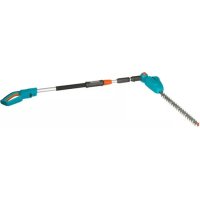

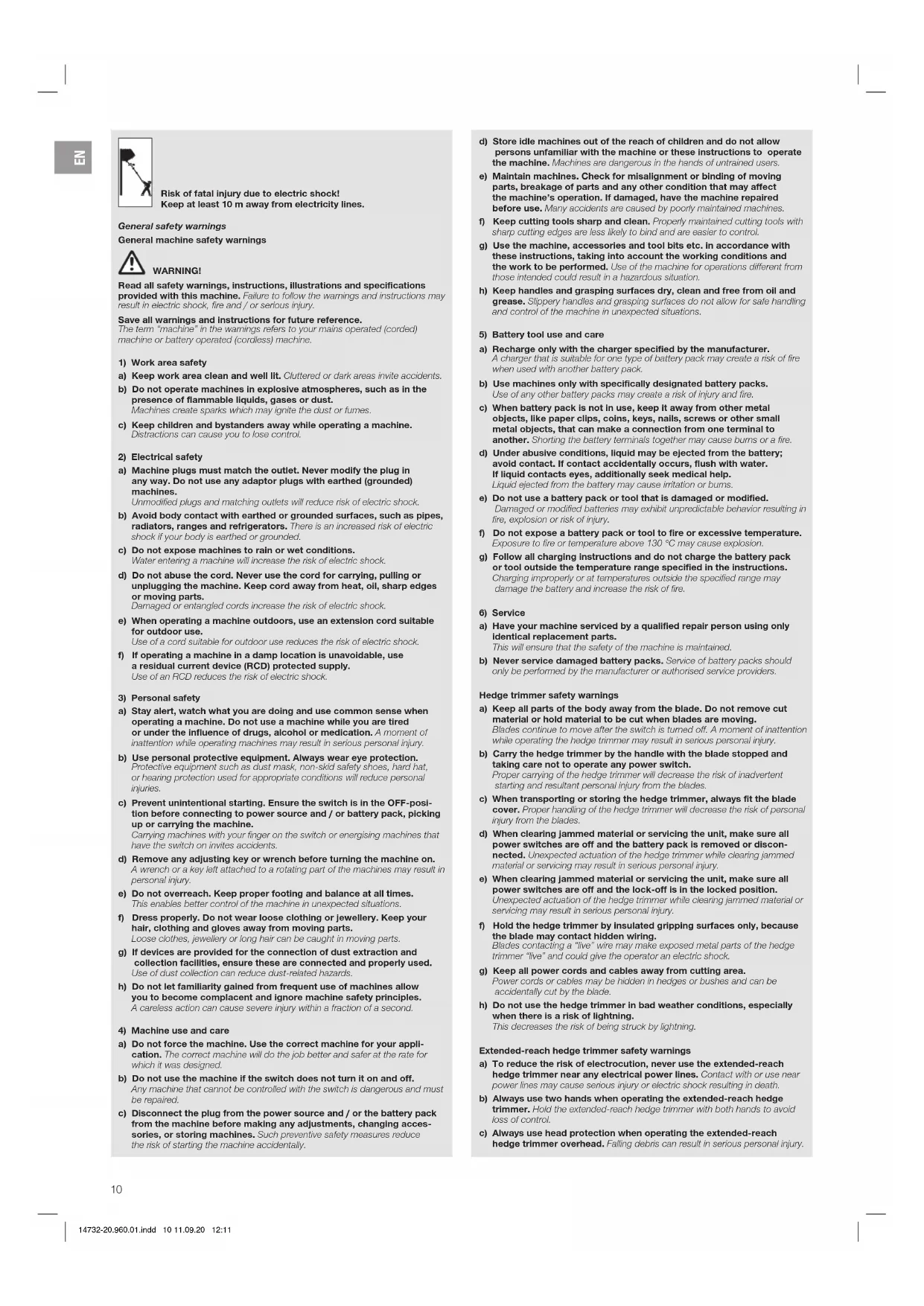


| Product type | Cordless telescopic hedge trimmer |
| Brand | Gardena |
| Model | THS 4218V P4A (ref. 14732) |
| Blade length | 42 cm |
| Max. cutting diameter | 16 mm |
| Telescopic tube extension range | 0 to 50 cm |
| Motor unit tilt | 75° to -60° in 15° increments |
| Blade stroke | 2100 strokes/min |
| Weight (with battery) | 3.4 kg |
| Power supply | Li-Ion 18 V battery, POWER FOR ALL PBA system (2.5 Ah standard) |
| Charger | AL 1810 CV P4A (220-240 V, 50-60 Hz) |
| Charging time (2.5 Ah battery) | 120 min (80%), 154 min (100%) |
| Sound pressure level (LpA) | 72 dB(A) |
| Guaranteed sound power level (LwA) | 90 dB(A) |
| Hand-arm vibration (ah) | 1 m/s² |
| Cutting functions | Side, high vertical, high horizontal, low |
| Safety device | Two switches (start lever + lock button), protective cover |
| Maintenance | Clean with damp cloth, lubricate blade with maintenance oil (ref. 2366) |
| Wear parts | Blade, eccentric drive |
| Warranty | 2 years (excluding wear parts) |
| Optional accessories | Additional battery (ref. 14903/14905), fast charger (ref. 14901) |
Frequently Asked Questions - THS 4218V P4A GARDENA
User questions about THS 4218V P4A GARDENA
0 question about this device. Answer the ones you know or ask your own.
Ask a new question about this device
Download the instructions for your Hedge Trimmers in PDF format for free! Find your manual THS 4218V P4A - GARDENA and take your electronic device back in hand. On this page are published all the documents necessary for the use of your device. THS 4218V P4A by GARDENA.
USER MANUAL THS 4218V P4A GARDENA
Telescopic Battery Hedge Trimmer
FR Mode d'emploi
EN Telescopic Battery Hedge Trimmer
1. SAFETY 9 2. ASSEMBLY 12 3. OPERATION 12 4. MAINTENANCE 12 5. STORAGE 13 6. TROUBLESHOOTING 13 7. TECHNICAL DATA 13 8. ACCESSORIES 14 9. SERVICE/WARRANTY 14
Translation of the original instructions.

This product is not intended for use by persons (including children) with reduced physical, sensory or mental capabilities.
or lack of experience and knowledge, unless they have been given supervision or instruction concerning use of the product by a person responsible for their safety. Children should be supervised to ensure that they do not play with the product. The use of this product by young people under the age of 16 is not recommended.
Intended use:
The GARDENA Telescopic Hedge Trimmer is intended to cut hedges, shrubs and grass coverings in private domestic gardens and allotments.
The product is not intended for long term use.

DANGER! Risk of injury!
Do not use the product to cut lawns / lawn edges, to chop up material or to make compost. Do not use for pond care.
1. SAFETY
IMPORTANT!
Read the operator's manual carefully before use and keep for future reference.
Symbols on the product:


Read operator's manual.

Danger - Keep hands away from blade.

Do not expose to rain.

For the charger:
Remove plug from the mains immediately if the cable is damaged or cut.

Wear eye and ear protection.

Always wear a hard hat.

Remove the Battery before cleaning or maintenance.
Risk of fatal injury due to electric shock! Keep at least 10 m away from electricity lines.
General safety warnings
General machine safety warnings

WARNING!
Read all safety warnings, instructions, illustrations and specifications provided with this machine. Failure to follow the warnings and instructions may result in electric shock, fire and/or serious injury.
Save all warnings and instructions for future reference. The term "machine" in the warnings refers to your mains-operated (corded) machine or battery-operated (cordless) machine.
1) Work area safety a) Keep work area clean and well lit. Cluttered or dark areas invite accidents. b) Do not operate machines in explosive atmospheres, such as in the presence of flammable liquids, gases or dust. Machines create sparks which may ignite the dust or fumes. c) Keep children and bystanders away while operating a machine. Distractions can cause you to lose control.
2) Electrical safety
a) Machine plugs must match the outlet. Never modify the plug in any way. Do not use any adaptor plugs with earthed (grounded) machines. Unmodified plugs and matching outlets will reduce risk of electric shock. b) Avoid body contact with earthed or grounded surfaces, such as pipes, radiators, ranges and refrigerators. There is an increased risk of electric shock if your body is earthed or grounded. c) Do not expose machines to rain or wet conditions. Water entering a machine will increase the risk of electric shock. d) Do not abuse the cord. Never use the cord for carrying, pulling or unplugging the machine. Keep cord away from heat, oil, sharp edges or moving parts. Damaged or entangled cords increase the risk of electric shock. e) When operating a machine outdoors, use an extension cord suitable for outdoor use. Use of a cord suitable for outdoor use reduces the risk of electric shock. f) If operating a machine in a damp location is unavoidable, use a residual current device (RCD) protected supply. Use of an RCD reduces the risk of electric shock. 3) Personal safety a) Stay alert, watch what you are doing and use common sense when operating a machine. Do not use a machine while you are tired or under the influence of drugs, alcohol or medication. A moment of inattention while operating machines may result in serious personal injury. b) Use personal protective equipment. Always wear eye protection. Protective equipment such as dust mask, non-skid safety shoes, hard hat, or hearing protection used for appropriate conditions will reduce personal injuries. c) Prevent unintentional starting. Ensure the switch is in the OFF-position before connecting to power source and / or battery pack, picking up or carrying the machine. Carrying machines with your finger on the switch or energising machines that have the switch on invites accidents. d) Remove any adjusting key or wrench before turning the machine on. A wrench or a key left attached to a rotating part of the machines may result in personal injury. e) Do not overreach. Keep proper footing and balance at all times. This enables better control of the machine in unexpected situations. f) Dress properly. Do not wear loose clothing or jewellery. Keep your hair, clothing and gloves away from moving parts. Loose clothes, jewellery or long hair can be caught in moving parts. g) If devices are provided for the connection of dust extraction and collection facilities, ensure these are connected and properly used. Use of dust collection can reduce dust-related hazards. h) Do not let familiarity gained from frequent use of machines allow you to become complacent and ignore machine safety principles. A careless action can cause severe injury within a fraction of a second. 4) Machine use and care a) Do not force the machine. Use the correct machine for your application. The correct machine will do the job better and safer at the rate for which it was designed. b) Do not use the machine if the switch does not turn it on and off. Any machine that cannot be controlled with the switch is dangerous and must be repaired. c) Disconnect the plug from the power source and / or the battery pack from the machine before making any adjustments, changing accessories, or storing machines. Such preventive safety measures reduce the risk of starting the machine accidentally.
d) Store idle machines out of the reach of children and do not allow persons unfamiliar with the machine or these instructions to operate the machine. Machines are dangerous in the hands of untrained users. e) Maintain machines. Check for misalignment or binding of moving parts, breakage of parts and any other condition that may affect the machine's operation. If damaged, have the machine repaired before use. Many accidents are caused by poorly maintained machines. f) Keep cutting tools sharp and clean. Properly maintained cutting tools with sharp cutting edges are less likely to bind and are easier to control. g) Use the machine, accessories and tool bits etc. in accordance with these instructions, taking into account the working conditions and the work to be performed. Use of the machine for operations different from those intended could result in a hazardous situation. h) Keep handles and grasping surfaces dry, clean and free from oil and grease. Slippery handles and grasping surfaces do not allow for safe handling and control of the machine in unexpected situations.
5) Battery tool use and care
a) Recharge only with the charger specified by the manufacturer. A charger that is suitable for one type of battery pack may create a risk of fire when used with another battery pack. b) Use machines only with specifically designated battery packs. Use of any other battery packs may create a risk of injury and fire. c) When battery pack is not in use, keep it away from other metal objects, like paper clips, coins, keys, nails, screws or other small metal objects, that can make a connection from one terminal to another. Shorting the battery terminals together may cause burns or a fire. d) Under abusive conditions, liquid may be ejected from the battery; avoid contact. If contact accidentally occurs, flush with water. If liquid contacts eyes, additionally seek medical help. Liquid ejected from the battery may cause irritation or burns. e) Do not use a battery pack or tool that is damaged or modified. Damaged or modified batteries may exhibit unpredictable behavior resulting in fire, explosion or risk of injury. f) Do not expose a battery pack or tool to fire or excessive temperature. Exposure to fire or temperature above 130°C may cause explosion. g) Follow all charging instructions and do not charge the battery pack or tool outside the temperature range specified in the instructions. Charging improperly or at temperatures outside the specified range may damage the battery and increase the risk of fire.
6) Service
a) Have your machine serviced by a qualified repair person using only identical replacement parts. This will ensure that the safety of the machine is maintained. b) Never service damaged battery packs. Service of battery packs should only be performed by the manufacturer or authorised service providers.
Hedge trimmer safety warnings
a) Keep all parts of the body away from the blade. Do not remove cut material or hold material to be cut when blades are moving. Blades continue to move after the switch is turned off. A moment of inattention while operating the hedge trimmer may result in serious personal injury. b) Carry the hedge trimmer by the handle with the blade stopped and taking care not to operate any power switch. Proper carrying of the hedge trimmer will decrease the risk of inadvertent starting and resultant personal injury from the blades. c) When transporting or storing the hedge trimmer, always fit the blade cover. Proper handling of the hedge trimmer will decrease the risk of personal injury from the blades. d) When clearing jammed material or servicing the unit, make sure all power switches are off and the battery pack is removed or disconnected. Unexpected actuation of the hedge trimmer while cleaning jammed material or servicing may result in serious personal injury. e) When clearing jammed material or servicing the unit, make sure all power switches are off and the lock-off is in the locked position. Unexpected actuation of the hedge trimmer while cleaning jammed material or servicing may result in serious personal injury. f) Hold the hedge trimmer by insulated gripping surfaces only, because the blade may contact hidden wiring. Blades contacting a "live" wire may make exposed metal parts of the hedge trimmer "live" and could give the operator an electric shock. g) Keep all power cords and cables away from cutting area. Power cords or cables may be hidden in hedges or bushes and can be accidentally cut by the blade. h) Do not use the hedge trimmer in bad weather conditions, especially when there is a risk of lightning. This decreases the risk of being struck by lightning.
Extended-reach hedge trimmer safety warnings
a) To reduce the risk of electrocution, never use the extended-reach hedge trimmer near any electrical power lines. Contact with or use near power lines may cause serious injury or electric shock resulting in death. b) Always use two hands when operating the extended-reach hedge trimmer. Hold the extended-reach hedge trimmer with both hands to avoid loss of control. c) Always use head protection when operating the extended-reach hedge trimmer overhead. Failing debris can result in serious personal injury.
Search hedges and bushes for hidden objects (e.g., wire fences and hidden wires). The use of a residual current device (RCD) with a trip current of 30 mA or less is recommended.
Hold the hedge trimmer with both hands on both handles. The hedge trimmer is intended for use when the user is standing on the ground and not on a ladder or other unstable surface.
Before using the hedge trimmer, make sure that the locking devices of all moving parts (e.g., the extended shaft and the pivot element) are in the locked position.
Additional safety warnings
Battery safety

the safety and general Instructions.
Failure to observe the safety and general instructions may result in electric shock, fire and/or serious injury.
Store these instructions in a safe place. Only use the charger if you can fully evaluate all functions and carry them out without restrictions, or if you have received corresponding instructions.
Supervise children during use, cleaning and maintenance. This will ensure that children do not play with the charger.
Charge only lithium-ion batteries of the POWER FOR ALL system type PBA 18V with a capacity of 1.5 Ah or more (5 battery cells or more). The battery voltage must match the battery charging voltage of the charger. Do not charge any non-rechargeable batteries. Otherwise there is a risk of fire and explosion.

Do not expose the charger to rain or wet conditions. Water entering a power tool will increase the risk of electric shock.
Keep the charger clean. Dirt poses a risk of electric shock. Always check the charger, cable and plug before use. Stop using the charger if you discover any damage. Do not open the charger yourself, and have it repaired only by a qualified specialist using only original replacement parts.
Damaged chargers, cables and plugs increase the risk of electric shock.
Do not operate the charger on an easily ignited surface (e.g. paper, textiles, etc.) or in a flammable environment. There is a risk of fire due to the charger heating up during operation. In order to avoid safety hazards, if the power supply cord needs to be replaced, this must be done by GARDENA or by a customer service centre that is authorised to repair GARDENA power tools.
Do not operate the product while it is charging.
Products sold in GB only: Your product is fitted with a BS 1363/A approved electric plug with internal fuse (ASTA approved to BS 1362). If the plug is not suitable for your socket outlets, it should be cut off and an appropriate plug fitted in its place by an authorised customer service agent. The replacement plug should have the same fuse rating as the original plug. The severed plug must be disposed of to avoid a possible shock hazard and should never be inserted into a mains socket elsewhere.
These safety warnings apply only for lithium-ion batteries of the POWER FOR ALL system PBA 18V. Only use the battery with products of the POWER FOR ALL system manufacturers. This is the only way in which you can protect the battery against dangerous overload. Recharge only with the charger specified by the manufacturer. A charger that is suitable for one type of battery pack may create a risk of fire when used with another battery pack. The battery is supplied partially charged. To ensure full battery capacity, fully charge the battery in the charger before using your power tool for the first time. Keep battery packs out of the reach of children.
Do not open the battery. There is a risk of short-circuiting.
In case of damage and improper use of the battery, vapours may be emitted. The battery can set alight or explode. Ensure the area is well ventilated and seek medical attention should you experience any adverse effects. The vapours may irritate the respiratory system. If used incorrectly or if the battery is damaged, flammable liquid may be ejected from the battery. Contact with this liquid should be avoided. If contact accidentally occurs, rinse off with water. If the liquid comes into contact with your eyes, seek additional medical attention. Liquid ejected from the battery may cause irritation or burns. If the battery is damaged, liquid can be ejected and cover nearby surfaces. Check affected parts. Clean these parts or change them if necessary. Do not short-circuit the battery pack. When the battery pack is not in use, keep it away from other metal objects, like paper clips, coins, keys, nails, screws or other small metal objects, that can make a connection from one terminal to another.
Shorting the battery terminals together may cause burns or a fire.
The battery can be damaged by pointed objects such as nails or screwdrivers or by force applied externally. An internal short circuit may occur, causing the battery to burn, smoke, explode or overheat. Never service damaged battery packs. Service of battery packs should only be performed by the manufacturer or authorized service providers. Protect the battery against heat, e.g. against continuous intense sunlight, fire, dirt, water and moisture.
There is a risk of explosion and short-circuiting.
Only operate and store the battery at an ambient temperature between -20°C and +50°C. Do not leave the battery in your car in the summer, for example. At temperatures of < 0°C some devices may experience a loss of power. Only charge the battery at an ambient temperature which is between 0°C and +45°C. Charging outside of this temperature range can increase the risk of damage to the battery and pose a fire hazard.
Electrical safety

DANGER! Cardiac arrest!
This product makes an electromagnetic field while it operates. This field may under some conditions interfere with active or passive medical implants. To decrease the risk of conditions that can possibly injure or kill, we recommend persons with medical implants to speak with their physician and the medical implant manufacturer before you operate the product.
Only connect charger to the AC voltage specified on the rating plate.
Under no circumstances should an earth be connected to any part of the product. Do not use the product when a thunderstorm is approaching.
Disconnect the product from the mains and disconnect the battery if the product starts to vibrate abnormally. Check immediately. Excessive vibration can cause injury. Protect the battery contacts from moisture.
Personal safety

DANGER! Risk of suffocation!
Small parts can be easily swallowed. There is also a risk that the polybag can suffocate toddlers. Keep toddlers away when you assemble the product.
Only use the product in the manner and for the functions described in these instructions. The operator or user is responsible for accidents or hazards occurring to other people or their property. Pay special attention to the hazard for third parties posed by the increased working radius when the telescopic tube is extended.

DANGER!
When wearing hearing protection, and due to the noise produced by the product, the operator may not notice persons approaching.
Always wear suitable clothing, gloves, and stout shoes.
Avoid contact with the oil of the blade, in particular if you react allergically to it. Check the areas where the hedge trimmer is to be used and remove any wires, hidden electrical cables, and other foreign objects.
All adjustments (inclining the blade head, altering the length of the telescopic tube) have to be made with the sheath in place, and the Hedge Trimmer must not rest on the blade in the process.
Before using the machine and after any impact, check for signs of wear or damage.
Have the appropriate repair work carried out if necessary.
Never attempt to use an incomplete product or one with an unauthorized modification.
Power tool use and care
Know how to stop the product quickly in an emergency. Never hold the product by the protective cover.
Do not use the Hedge Trimmer if the protection equipment are damaged.
Do not use ladders whilst operating the hedge trimmer.
Always use the product when standing on solid ground.
Remove the battery:
before leaving the hedge trimmer unattended for any period; before clearing a blockage; before checking, cleaning or working on the hedge trimmer; - if you hit an object. Do not use your hedge trimmer until you are sure that the entire hedge trimmer is in a safe operating condition; - if the hedge trimmer starts to vibrate abnormally. Check immediately. Excessive vibration can cause injury; before passing to another person.

RISK OF INJURY!
Do not touch the blade.
→ When work is finished or interrupted, refit the protective cover.
All nuts and screws must be firmly tightened to ensure a safe operating condition of the product.
If the product got hot during operation, let it cool down before storage.
The Hedge trimmer must not be stored over 35°C or under direct exposure to sunlight.
Do not store the Hedge Trimmer in places with static electricity.
Beware of falling debris.
Only work in the daylight or when visibility is good.
2. ASSEMBLY
DANGER! Risk of injury! Cuts injury when the pro
Remove the battery and slide the protective cover over the blade before you assemble the product.
To assemble the telescopic handle [Fig. A1/A2]:
- Slide the telescopic tube ② into the motor unit ① until you reach the stop position. The two markings must be opposite from each other.
- Tighten the grey nut ③.
3. OPERATION
DANGER! Risk of injury! Injury when the pro
Wait for the blade to stop, remove the battery and slide the protective cover over the blade before you adjust or transport the product.
To charge the battery [Fig. 01/02/03]:

Note the mains voltage! The voltage of the power source must match the voltage specified on the rating plate of the charger.
For the GARDENA Battery Hedge Trimmer Art. 14732-55 there is no battery and no charger in the scope of delivery.
Thanks to the intelligent charging process, the charge condition of the battery is automatically detected and then charged up with the optimal charge current depending on battery temperature and voltage.
In this way, the battery is treated with care and remains permanently fully charged when it is stored in the charger.
- Push the locking button A and remove the battery B from the battery holder D.
- Connect the battery charger into a mains socket.
- Slide the battery charger ⑥ onto the battery ⑧.
When the battery charge indicator at the charger flashes green, the battery is being charged.
When the battery charge indicator 69 at the charger illuminates permanently green, the battery is completely charged (Charging time, see 7. TECHNICAL DATA).
- Examine the charge status regularly while you charge.
- When the battery ⑧ is completely charged, you can disconnect the battery ⑧ from the charger ⑥.
Meaning of the indication elements:
Indication on the charger:
Flashing of the battery charge indicator: The charging procedure is indicated by flashing of the battery charge indicator.

Continuous lighting of the battery charge indicator (60)

Note: The charging procedure is only possible when the battery temperature is within the allowable charging temperature range, see 7. TECHNICAL DATA.
Continuous lighting of the battery charge indicator indicates that the battery is fully charged or that the temperature of the battery is not within the allowable charging temperature range and can therefore not be charged.
When the battery is not inserted, continuous lighting of the battery charge indicator indicates that the mains plug is inserted in the socket outlet and that the battery charger is ready for operation.
Battery charge status indication on the product [Fig. O4/O12]: After starting the product, the battery charge status indication is displayed for 5 seconds.
Battery charge status Battery charge status indication
| 67 - 100 % charged | ①,② and ③ illuminate green |
| 34 - 66 % charged | ④ and ⑤ illuminate green |
| 11 - 33 % charged | ⑥ illuminates green |
0-10% charged ⑥ flashes green
If the LED ⑥ flashes green, the battery must be charged.
If the error LED is illuminated or flashing, see 6. TROUBLESHOOTING.
Work positions:
The hedge trimmer can be operated in 4 positions.
Side trimming: Telescopic tube retracted [Fig.05]
Vertical trimming at high level: Telescopic tube extended [Fig. O6]
Horizontal trimming at high level: [Fig. O7]
Motor unit tilted by 75° telescopic tube extended
Low trimming: [Fig. O8]
Motor unit tilted by -60° telescopic tube extended
To tilt the motor unit [Fig. 09]:
For trimming at high and low level, the motor unit ① can be tilted at an angle of 75° to -60° in 15° increments.
- Keep both orange buttons ④ pushed and tilt the motor unit ① in the desired direction.
- Release both orange buttons 4 and let the motor unit 1 engage.
To extend the telescopic tube [Fig. O10]:
For cutting at high and low heights, the telescopic pipe ② can be continuously extended by up to 50 cm.
- Loosen the orange nut ⑤.
- Extend the telescopic tube ② to the desired length.
- Tighten the orange nut ⑤ again.
To start the hedge trimmer [Fig. 01/011/012]:
DANGER! Risk of injury!
Risk of injury if the product does not stop when you release the start lever.
Do not bypass the safety devices or switches. For example, do not attach the start lever to the handle.
To start:
The product is provided with a two-switch safety device (start lever with starting lockout) to prevent the product from being turned on by accident.
- Put the battery ⑧ into the battery holder ⑥ until it audibly engages.
- Remove the protective cover from the blade.
- Hold the hedge trimmer with one hand on the insulated gripping surface on the telescopic tube and with the other hand on the handle.
- Slide the starting lockout ① forward and pull the start lever ⑧. The hedge trimmer starts and the battery charge status indication ⑨ is displayed for 5 seconds.
- Release the starting lockout ⑦.
To stop:
- Release the start lever (8). The hedge trimmer stops.
- Slide the protective cover over the blade.
- Push the locking button A and remove the battery B from the battery holder 0.
4. MAINTENANCE
DANGER! Risk of injury!
Injury when the product starts accidentally.
Wait for the blade to stop, remove the battery and slide the protective cover over the blade before you maintain the product.
To clean the Hedge Trimmer:
DANGER! Risk of injury!
Risk of injury and damage to the product.
Do not clean the product with water or with a water jet (in particular high-pressure water jet). Do not clean with chemicals including petrol or solvents. Some can destroy critical plastic parts.
The airflow slots must always be clean.
- Clean the hedge trimmer with a damp cloth.
- Clean the airflow slots with a soft brush (do not use a screwdriver).
- Lubricate the blade with a low viscosity oil (e.g. GARDENA)
Avoid contact with the plastic parts.
To clean the battery and the battery charger:
Make sure that the surface and the contacts of the battery and the battery charger always are clean and dry before you connect the battery charger.
Do not use running water.
→ Battery charger: Clean the contacts and the plastic parts with a soft and dry cloth. → Battery: Occasionally clean the ventilation slots and the terminals on the battery using a soft brush that is clean and dry.
5. STORAGE
To put into storage:
The product must be stored away from children.
- Slide the protective cover over the blade.
- Remove the battery.
- Charge the battery.
- Clean the hedge trimmer, the battery and the battery charger (see 4. MAINTENANCE).
- Store the hedge trimmer, the battery and the battery charger in a dry, enclosed and frost-free place.
Disposal:
(in accordance with RL2012/19/EC)

The product must not be disposed of with normal household waste. It must be disposed of in line with local environmental regulations.
IMPORTANT!
Dispose of the product through or via your municipal recycling collection centre.
Disposal of the battery:

The GARDENA battery contains lithium-ion cells that should not be disposed of with normal household waste at the end of its life.
Li-ion
IMPORTANT!
Dispose of the batteries through or via your municipal recycling collection centre. 1. Discharge the lithium-ion cells completely (contact the GARDENA Service). 2. Protect the contacts on the lithium-ion cells against short circuits. 3. Dispose of the lithium-ion cells properly.
6. TROUBLESHOOTING
DANGER! Risk of injury!
injury when the product starts accidentally.
Wait for the blade to stop, remove the battery and slide the protective cover over the blade before you troubleshoot the product.
Problem Possible Cause Remedy
| Hedge trimmer can no longer be stopped | Start lever is stuck, → | Remove the battery and loosen the start lever. |
| Hedge is not cleanly cut Blade is blunt or damaged, → | Let the blade replaced by the GARDENA Service. | |
| Hedge trimmer vibrates severely | Blade is damaged, → | Switch off the product and let the blade be replaced. |
| Hedge trimmer does not start or stops. LED ①is flashing green [Fig. 04] | Battery is empty, → | Charge the battery. |
Problem Possible Cause Remedy
| Hedge trimmer does not start or stops. Error-LED is illuminated red [Fig. 04] | Battery temperature is outside the permissible temperature range. | → Wait until the battery temperature is between 0 °C – + 45 °C again. |
| There are drops of water or moisture between the battery contacts on the hedge trimmer. | → Remove the water drops / moisture with a dry cloth. | |
| Engine is blocked. | → Remove the obstacle. Start again. | |
| Hedge trimmer does not start or stops. Error-LED is flashing red [Fig. 04] | Product is defective. | → Contact the GARDENA Service. |
| Hedge trimmer does not start or stops. Error-LED is not illuminated [Fig. 04] | Battery is not put completely into the battery holder. | → Put the battery completely into the battery holder until it audiably engages. |
| Battery is defective. | → Replace the battery. | |
| Product is defective. | → Contact the GARDENA Service. | |
| Charging is not possible. Battery charge indicator is continuously illuminated [Fig. 03] | The battery is not connected (correctly). | → Connect the battery to charger correctly. |
| Battery contacts are dirty. | → Clean the battery contacts (e.g. by connecting and disconnecting the battery several times. Replace the battery if necessary. | |
| Battery temperature is outside the permissible charging temperature range. | → Wait until the battery temperature is between 0 °C – + 45 °C again. | |
| Battery is defective. | → Replace the battery. | |
| Battery charge Indicator is not illuminated [Fig. 03] | Mains plug of the charger is not (correctly) plugged in. | → Insert the mains plug into the mains socket (completely). |
| Socket outlet, mains cable or charger is defective. | → Check the mains voltage. Let the charger be checked if necessary by an authorised specialist dealer or the GARDENA Service. |

NOTE: For any other malfunctions please contact the GARDENA service department. Repairs must only be done by GARDENA service departments or specialist dealers approved by GARDENA.
7. TECHNICAL DATA
| Tolscopic Battery Hedge Trimmer | Unit | Value (Art. 14732) |
| Strokes | 1/min | 2100 |
| Length of blade | cm | 42 |
| Tooth gap of blade | mm | 16 |
| Range of extension of the telescopic tube | cm | \( 0 - {50} \) |
| Weight (Including battery) | kg | 3.4 |
| Sound pressure level \( {\mathrm{L}}_{\mathrm{{pA}}}{}^{\mathrm{a}} \) Uncertainty \( {\mathrm{k}}_{\mathrm{{PA}}} \) | dB (A) | 72 3 |
| Sound power level \( {\mathrm{L}}_{\mathrm{{WA}}}{}^{\mathrm{b}} \) : measured/guaranteed Uncertainty \( {\mathrm{k}}_{\mathrm{{WA}}} \) | dB (A) | 87 / 90 3 |
| Hand/arm vibration \( {\mathrm{a}}_{\text{thw }}{}^{\mathrm{c}} \) Uncertainty \( {\mathrm{k}}_{\text{thw }} \) | \( \mathrm{m}/{\mathrm{s}}^{2} \) | 1 1.5 |

NOTE: The stated vibration emission value has been measured according to a standardized test procedure and can be used for comparison of one electric power tool with another. It can also be used for preliminary evaluation of exposure.
The vibration emission value can vary during actual use of the electric power tool.
| System Battery PBA 18V 2.5Ah W-B | Unit | Value (Art. 14903) |
| Battery voltage | V (DC) | 18 |
| Battery capacity | Ah | 2.5 |
| Number of cells (Li-Ion) | 5 |
Appropriate POWER FOR ALL system Battery Chargers: AL 18..CV.
Battery Charger Unit Value (Art. 14900) AL 1810 CV P4A
Mains voltage V (AC) 220-240
Mains frequency Hz 50-60
Rated power W 26
Battery charging voltage V (DC) 18
Max. battery charging
current
mA 1000
Battery charging time 80% /
97-100% (approx.)
PBA 18V 2.0Ah W-B min. 96/124
PBA 18V 2.5Ah W-B min. 120/154
PBA 18V 4.0Ah W-C min. 192/244
Permitted charging
temperature range
Weight according to
EPTA-Procedure 01:2014
°C 0 - 45
kg 0.17
Protection class
//
Appropriate POWER FOR ALL system Batteries: PBA 18V.
8. ACCESSORIES
| GARDENA Maintenance Oil Extends the life of the blade and the battery idling time. | Art. 2366 |
| GARDENA System Battery | Battery for additional duration or for replacement. | Art. 14903 |
| PBA 18V/45 P4A | Art. 14905 | |
| PBA 18V/72 P4A |
| GARDENA Battery Quick Charger for fast charging the POWER FOR ALL Art. 14901 | |
| Charger AL 1830 CV P4A system Batteries PBA 18V..W... |
9. SERVICE/WARRANTY
Service:
Please contact the address on the back page.
Warranty statement:
In the event of a warranty claim, no charge is levied to you for the services provided.
GARDENA Manufacturing GmbH grants a warranty for all original GARDENA new products for two years from the date of original purchase from the retailer, provided that the devices have been for private use only. This manufacturer's warranty does not apply to products acquired second hand. This warranty includes all significant defects of the product that can be proved to be material or manufacturing faults. This warranty is fulfilled by supplying a fully functional replacement product or by repairing the faulty product sent to us free of charge; we reserve the right to choose between these options. This service is subject to the following provisions:
The product has been used for its intended purpose as per the recommendations in the operating instructions. - Neither the purchaser nor a third party has attempted to open or repair the product. - Only Original GARDENA replacement parts and wear parts have been used for operation. - Presentation of the receipt.
Normal wear and tear of parts and components (such as blades, blade fixing parts, turbines, light bulbs, V-belts/toothed belts, impellers, air filters, spark plugs), visual changes, wear parts and consumables are excluded from the warranty.
This manufacturer's warranty is limited to replacement and repair of products in accordance with the abovementioned conditions. The manufacturer's warranty does not constitute an entitlement to lodge other claims against us as a manufacturer, such as for damages. This manufacturer's warranty does not, of course, affect statutory and contractual warranty claims against the dealer/retailer.
The manufacturer's warranty is governed by the law of the Federal Republic of Germany.
In case of a warranty claim, please return the faulty product, together with a copy of the receipt and a description of the fault, with postage paid to the service address.
Consumables:
The blade and excentric drive are consumables and are not included in the warranty.
Batteries adequates POWER FOR ALL: PBA 18V.
8. ACCESSORIES
Remove the battery:
before leaving the appliance unattended for any length of time; before cleaning or clearing a blockage; before checking, cleaning, or working on the appliance; - if you hit an object, do not use the appliance until you have verified that it is in working order; - if the appliance starts to vibrate abnormally, stop it immediately and check it. Excessive vibration can cause injury; before handing the appliance to another person.

→ Always use the correct type of battery for this product.
Do not expose the battery to fire or high temperatures, and do not disassemble it. Keep it away from children.
If the product has been dropped, let it cool down before storing it.
The product must be stored at a temperature below 35°C and not exposed to direct sunlight.
Do not throw the product into fire or water. Keep it away from moisture.
Only work with the light of the lamp or with adequate lighting.
2. ASSEMBLY
DANGER! Risk of personal injury!
Risk of injury from the rotating parts of the product.
→ Remove the battery and the protective cover before starting any work on the product.
Removing the battery [Fig. A1/A2]:
- Important safety instructions for use. Before using this device, you must read the instructions carefully.
- Grey rubber gasket ③.
3. OPERATION
DANGER! Risk of electric shock! Risk of injury to persons in case of careless handling of the device.
DANGER! ELECTRIC SHOCK! Keep a distance of at least 10 m from power lines.
General safety instructions
General safety instructions for working
with power tools

WARNING!
Read all safety instructions, instructions, illustrations and technical specifications for this power tool. Failure to follow the safety instructions and instructions may result in electric shock, fire and/or serious injury.
Keep all safety instructions and instructions for
future use. In the safety instructions, the term "power tool" refers to power tools with mains power (with power cord) and to power tools with battery power (without power cord).
1) Safety at the workplace a) Keep your work area clean and well lit. Cluttered or dark work areas can lead to accidents. b) Do not work with the power tool in explosive atmospheres in which flammable liquids, gases or dusts are present. Power tools create sparks that can ignite dust or fumes. c) When using the power tool, keep children and other persons away. Distractions can cause you to lose control of the device.
2) Electrical safety a) The power cord plug of the power tool must match the outlet. Never modify the plug in any way. Do not use any adapter plugs with earthed (grounded) power tools. Unmodified plugs and matching outlets will reduce risk of electric shock. b) Avoid body contact with earthed or grounded surfaces, such as pipes, radiators, ranges and refrigerators. There is an increased risk of electric shock if your body is earthed or grounded. c) Do not expose power tools to rain or wet conditions. Water entering a power tool will increase the risk of electric shock. d) Do not abuse the cord. Never use the cord for carrying, pulling or unplugging the power tool. Keep cord away from heat, oil, sharp edges or moving parts. Damaged or entangled cords increase the risk of electric shock. e) When operating a power tool outdoors, use an extension cord suitable for outdoor use. Use of a cord suitable for outdoor use reduces the risk of electric shock. f) If operating a power tool in a damp location is unavoidable, use a residual current device (RCD) protected supply. Use of an RCD reduces the risk of electric shock. 3) Personal safety a) Stay alert, watch what you are doing and use common sense when operating a power tool. Do not use a power tool while you are tired or under the influence of drugs, alcohol or medication.

MAINTENANCE AND USER SAFETY INSTRUCTIONS FOR POWER TOOLS MAY LEAD TO SERIOUS INJURIES. b) Use personal protective equipment. Always wear eye protection. Protective equipment such as dust masks, non-skid safety shoes, hard hats, or hearing protection used for appropriate conditions will reduce personal injuries. c) Prevent unintentional starting. Ensure the switch is in the off-position before connecting to power source and/or battery pack, picking up or carrying the tool. Carrying power tools with your finger on the switch or energising power tools that have the switch on invites accidents. d) Remove any adjusting key or wrench before turning the power tool on. A wrench or a key left attached to a rotating part of the power tool may result in personal injury. e) Do not overreach. Keep proper footing and balance at all times. This enables better control of the power tool in unexpected situations. f) Dress properly. Do not wear loose clothing or jewellery. Keep your hair, clothing and gloves away from moving parts. Loose clothes, jewellery or long hair can be caught in moving parts. g) If devices are provided for the connection of dust extraction and collection facilities, ensure these are connected and properly used. Use of dust collection can reduce dust-related hazards. h) Do not let familiarity gained from frequent use of your power tool allow you to become complacent and ignore power tool safety principles. A careless action can cause severe injury within a fraction of a second. 4) Power tool use and care a) Do not force the power tool. Use the correct power tool for your application. The correct power tool will do the job better and safer at the rate for which it was designed. b) Do not use the power tool if the switch does not turn it on and off. Any power tool that cannot be controlled with the switch is dangerous and must be repaired. c) Disconnect the plug from the power source and/or the battery pack from the power tool before making any adjustments, changing accessories, or storing power tools. Such preventive safety measures reduce the risk of starting the power tool accidentally. d) Store idle power tools out of the reach of children and do not allow persons unfamiliar with the power tool or these instructions to operate the power tool. Power tools are dangerous in the hands of untrained users. e) Maintain power tools. Check for misalignment or binding of moving parts, breakage of parts and any other condition that may affect the power tool's operation. If damaged, have the power tool repaired before use. Many accidents are caused by poorly maintained power tools. f) Keep cutting tools sharp and clean. Properly maintained cutting tools with sharp cutting edges are less likely to bind and are easier to control. g) Use the power tool, accessories and tool bits etc. in accordance with these instructions, taking into account the working conditions and the work to be performed. Use of the power tool for operations different from those intended could result in a hazardous situation. h) Keep handles and grasping surfaces dry, clean and free from oil and grease. Slippery handles and grasping surfaces do not allow for safe handling and control of the tool in unexpected situations. 5) Battery tool use and care a) Recharge only with the charger specified by the manufacturer. A charger that is suitable for one type of battery pack may create a risk of fire when used with another battery pack. b) Use power tools only with specifically designated battery packs. Use of any other battery packs may create a risk of injury and fire. c) When battery pack is not in use, keep it away from other metal objects, like paper clips, coins, keys, nails, screws or other small metal objects, that can make a connection from one terminal to another. Shorting the battery terminals together may cause burns or a fire. d) Under abusive conditions, liquid may be ejected from the battery; avoid contact. If contact accidentally occurs, flush with water. If liquid contacts eyes, additionally seek medical help. Liquid ejected from the battery may cause irritation or burns.
If the battery liquid gets into the eyes, rinse them with water and seek medical attention. Liquid ejected from the battery may cause irritation or chemical burns.
e) Do not use damaged or modified batteries. Damaged or modified batteries may behave unpredictably, leading to fire, explosion, or injury. f) Do not expose the battery to fire or excessively high temperatures. Exposure to fire or temperatures above 130°C may cause an explosion. g) Follow the charging instructions and never charge the battery outside the temperature range specified in the instructions. Incorrect charging or charging outside the permitted temperature range may damage the battery and increase the risk of fire.
6) Service
a) Have your power tool serviced by a qualified repair person using only identical replacement parts. This will ensure that the safety of the power tool is maintained. b) Never service damaged batteries. Any service of batteries should be performed only by the manufacturer or authorized service centers.
Safety instructions for hedge trimmers
a) Keep all parts of the body away from the blades. Do not remove cut material or hold material to be cut when blades are moving. Make sure the switch is off when clearing jammed material. A moment of inattention while operating the hedge trimmer may result in serious personal injury. b) Carry the hedge trimmer by the handle with the blade stopped and the switch off. Proper handling of the hedge trimmer will reduce the risk of accidental starting and injury from the blades. c) When transporting or storing the hedge trimmer, always fit the blade cover. Proper handling of the hedge trimmer will reduce the risk of injury from the blades. d) Before clearing jammed material or servicing the hedge trimmer, make sure the switch is off and the battery is removed or disconnected. Accidental starting of the hedge trimmer while clearing jammed material or servicing may result in serious injury. e) Before clearing jammed material or servicing the hedge trimmer, make sure the switch is off and the battery is removed or disconnected. Accidental starting of the hedge trimmer while clearing jammed material or servicing may result in serious injury. f) Hold the hedge trimmer only by insulated gripping surfaces, because the blade may contact hidden wiring. If the blade contacts a live wire, the voltage may be conducted to the metal parts of the tool and cause an electric shock to the operator. g) Keep all parts of the body away from the blades. Do not remove cut material or hold material to be cut when blades are moving. Make sure the switch is off when clearing jammed material. A moment of inattention while operating the hedge trimmer may result in serious personal injury. h) Do not use the hedge trimmer in the rain or in wet conditions. This will reduce the risk of electric shock.
Safety instructions for hedge trimmers with increased working width
a) Danger of death from electric shock. Do not use the cutter near electric cables. Touching the power source or using the tool near live wires can lead to serious injury or death from electric shock. b) Use the cutter with the enlarged working zone, always holding it with both hands. Hold the cutter with the enlarged working zone firmly with both hands to avoid losing control over it. c) When working with the cutter with the enlarged working zone above your head, always wear a helmet. Always wear a helmet when working with the cutter above your head.
Before use, check the condition of the cutting blades (e.g., for damage or wear).
It is recommended to use a residual current device with a tripping current of not more than 30 mA.
Hold the cutter with both hands on both handles.
The cutter is intended for work in which the user stands on the ground and the cutting line is unstable.
Before using the cutter, make sure that all moving parts (e.g., the cutting blade and the guard) are in the locked position.
Additional safety instructions
Safe handling of the cutter

Read all safety instructions and instructions.
Carelessness in following the safety instructions and instructions can lead to electric shock, fire, and serious injury.
Keep these instructions in a safe place. Use the charging device only under the conditions that you can fully understand all functions and perform the work without restrictions or according to the instructions.
→WARNING: Read the operating instructions for the battery charger before use. Make sure that the battery charger is suitable for the battery type. Only charge POWER FOR ALL PBA 18V batteries with a capacity of 1.5 Ah or more (or 5 or more battery cells). The battery voltage must match the charging voltage of the battery charger. Do not charge non-rechargeable batteries. Otherwise, there is a risk of fire and explosion. Protect the device from moisture. Penetration of water into an electrical device increases the risk of electric shock. →Длджгкьдгпсчсгетауногусуггсггв.Вбунэхаагггннннннннннннннннннннннннннннннннннннннннннн HNYCNUCTB6YET OINCHOCHTPNOKENKHINNNEKKTIPYCHKIMTOKOM →Before use, check the charger, cable, and plug. Do not use a damaged charger. Do not open the charger yourself; have it repaired only by qualified personnel using original spare parts. Damaged chargers, cables, and plugs increase the risk of electric shock. →Do not operate the charger on highly flammable surfaces (e.g., paper, textiles, etc.) or in a corrosive environment. Due to the heat generated by the charger during charging, there is a risk of fire. →If the supply cord is damaged, it must be replaced by the manufacturer or its service agent or a similarly qualified person in order to avoid a hazard. Contact the GARDENA service center. →Do not use the device while it is charging. →These safety instructions apply only to POWER FOR ALL PBA 18V batteries. →Use the battery only in products from the POWER FOR ALL system. Only in this way can the battery be protected from dangerous overload. →Charge the battery only in chargers recommended by the manufacturer. A charger that is suitable for one type of battery may create a risk of fire when used with another battery. →The battery is delivered partially charged. To ensure full battery capacity, fully charge the battery in the charger before first use. →Keep batteries out of reach of children. →Do not open the battery.
There is a risk of short circuit.
WARNING! Use of batteries. Batteries must be charged before use. Ensure free access to air and in case of emergency, contact the manufacturer. Do not cover the battery with objects that block ventilation. If the battery is damaged, acid may leak. Avoid contact with it. In case of contact, rinse the affected area with water. If acid gets into eyes, seek medical help. Leaking battery acid can cause skin irritation or chemical burns. If the battery is damaged, acid may leak and damage nearby objects. Check the affected parts. Replace them if necessary. Do not short-circuit the battery. Keep the battery away from paper clips, coins, keys, nails, screws, and other small metal objects that could cause short-circuiting of contacts. Short-circuiting between battery contacts can lead to burns or fire. The battery may be damaged by sharp objects such as nails or screwdrivers, or by external force. This can lead to internal short-circuiting and the battery may overheat, ignite, explode, or leak. Do not install damaged batteries. Maintenance of batteries should only be performed by qualified personnel at a service center.

Keep the battery away from heat sources, such as direct sunlight, open flames, dirt, water, or moisture.
Operate and store the battery only at temperatures from -20°C to +50°C. Do not leave the battery in a car, for example, in summer. At temperatures <0°C, some device types may experience reduced performance. Charge the battery at ambient temperatures in the range from 0°C to +45°C. Charging outside this temperature range may damage the battery or increase the risk of fire.
Electrical safety

DANGER! Stop series!
This device complies with electromagnetic compatibility requirements. In certain environments, this product may affect the function of active or passive medical implants. To avoid dangerous situations that could lead to injury or death to you or others using medical implants, consult your doctor or the implant manufacturer before using this product.
Connect the device only to a mains power supply with the voltage specified on the rating plate.
Do not use the device if it is damaged or if any part of the housing is broken.
Do not operate the device with wet hands.
Disconnect or unplug the battery from the device if it starts to vibrate abnormally. Strong vibrations can cause injuries.
Protect the battery contacts from moisture.
Safety

DANGER! Risk of suffocation
Small parts may be swallowed. Due to the presence of small parts, there is a risk of suffocation for small children. During installation, do not allow small children near the device.
Before using the tool, carefully read the instructions and warnings. The operator or owner is responsible for accidents or risks to other people or property. Do not forget the danger of cutting yourself or animals when working with the cutter with a telescopic handle, behind which the radius of the danger zone increases.

DANGER!
When using the device, be careful due to the sharp moving blades and the risk of injury.
Always wear protective goggles, gloves, and sturdy boots. Avoid contact with oil from the blade, especially if you have allergies. Check the device before use and remove any wire, hidden electrical cables, or other foreign objects. All work on the handle (tilt of the head, telescopic tubes) should only be done with the device switched off, and the cutter should not be adjusted during operation. Before cleaning or maintenance, it is necessary to turn off the tool and remove the battery or other power source if repairs are needed. Never attempt to use the cutter with non-original accessories.
Operation of power tools and their care
Remove the battery before any adjustment or maintenance. Never hold the cutter with your hands. Never work with a cutter that has a damaged guard or missing guard, or with guards installed incorrectly. During work with the cutter, always use protective goggles. Use only original spare parts.
Charging the battery
- Before storing the cutter for any period of time;
- Before clearing a jam;
- Before checking, cleaning, or repairing the machine; if you hit an object, do not use the cutter until you are sure it is in safe working condition; if the cutter vibrates abnormally, check it immediately. Excessive vibration may cause injury.
- Before handing the product to another person.

RISK OF INJURY!
Do not touch the blade.
After finishing work or during pauses, put on the protective cover.
Ensure safe working conditions at all times and keep the work area clean.
During operation, before packing, the tool must be cooled.
Do not store the tool at temperatures above 35 °C or under direct sunlight.
The tool must not be stored in places with electrostatic charge.
Remember about the sharp cutting material.
Work only in sufficient lighting conditions.
Meaning of indicator elements:
Indicator on the charging device:
The blinking light indicates the charging process. The indicator light of the battery charge indicator
of the battery. Indication: The charging process is possible only under conditions where the battery temperature is within the permissible temperature range for charging. See 7. TECHNICAL DATA.
Continuous glow
Charge indicator
Charging
indicator

Continuous glow of the battery charge indicator
indicates that the battery is fully charged. If the battery temperature is outside the permissible temperature range, charging is not possible; the indicator blinks until the battery temperature returns to the permissible range, then charging resumes.
The battery charge indicator lights up continuously to show that the battery is being charged in the charging device.
2. INSTALLATION

DANGER! Risk of injury
Risk of cuts when the device is unintentionally started.
→ Before installing the device, remove the battery and put on protective gloves.
Installing the telescopic handle [Fig. A1/A2]:
1. Insert the telescopic tube 2 into the motor unit (1) until it stops. Both markings must align. 2. Tighten the screw ③
3. OPERATION

DANGER! Risk of injury
The GARDENA battery hedge trimmer art. 14732-55 does not include the battery and charging device in the delivery.
Thanks to the intelligent charging procedure, the battery charge level is automatically detected and charging is carried out optimally depending on temperature and battery voltage.
As a result, the battery is preserved and, when left in the charging device, is always charged to the maximum level.
1. Press the unlocking button A and pull the battery 8 out of the battery compartment ① 2. Connect the battery charging device to a wall socket. 3. Insert the charging device 6 into the battery 8
When the battery charge indicator on the charging device lights up green, the battery is being charged.
When the battery charge indicator on the charging device lights up green continuously, the battery is fully charged.
(See Table 7. Technical Data).
4. Periodically check the battery charge level. 5. When the battery is fully charged, disconnect the battery from the charging device.
Battery charge level indicator P on the device [Fig. 04/12]:
After starting, the battery charge level indicator P activates for 5 seconds.
Battery charge level indicator P battery charge level
| 3apäkéHO Ha 67 - 100 % | ①②③CBOTATCA 3EJIHbIM LEBOTOM |
| 3apäkéHO Ha 34 - 66 % | ①②CBETATCA 3EJIHbIM LEBOTOM |
| 3apäkéHO Ha 11 - 33 % | ①CBETATCA 3EJIHbIM LEBOTOM |
Charged 0-10% Flashes red
If the light flashes green, the battery needs to be charged.
If the light flashes or lights up red, see 6. TROUBLESHOOTING.
Working positions:
The electric scissors can be used in 4 working positions.
Side cutting: [Fig. 05]
Telescopic tube retracted
High vertical extension of the telescopic tube cutting: [Fig. 06]
High horizontal cutting: [Fig. 07]
Motor block tilted at 75°
Telescopic tube extended
Lower cut: [Fig.08]
Motor block tilt -60°
Telescopic tube extended
Motor block tilt [Fig.09]:
The motor block ① can be tilted in steps of 15° from 75° to -60° for low or high cutting.
1. Press and hold the orange buttons ④ and tilt the motor block ① in the desired direction. 2. Release both orange buttons ④ and the motor block (1) will lock in place.
Extending the telescopic tube [Fig.010]:
For high cutting, the telescopic tube ② can be extended without tools up to 50 cm.
1. Pull the orange lever ⑤. 2. Extend the telescopic tube ② to the required length. 3. Push the orange lever (5) back in.
Starting the mower [Fig.01/011/012]:
![GARDENA THS 4218V P4A - Starting the mower [Fig.01/011/012]: - 1](/content/2026/03/491815/images/a9ddfdf44dfb45468b63b80dd94982ed7344e79f9be8d51a4d4a2edcd62d1ee8.jpg)
CAUTION! Risk of injury!
There is a risk of injury if the device stops when the start lever is released.
→ Do not bypass the safety devices for the switch. For example, do not secure the start lever to the handle.
Start:
The hedge trimmer is equipped with a safety device with a two-handed operation (start switch with a lock button that prevents accidental starting).
1. Insert the battery into the battery compartment ① until the latch clicks.
2. Remove the protective cover. 3. Hold the hedge trimmer with one hand on the padded gripping surface of the telescopic tube ②, and the other hand on the handle ⑥. 4. Slide the safety switch cover ⑦ forward and press the start switch ⑧. The trimmer starts and the battery charge indicator lights up for 5 seconds. 5. Release the safety switch cover ⑦
Stopping:
- Release the start switch ⑥. The hedge trimmer stops. 2. Press the protective cover back on. 3. Press the battery release button A and pull the battery (B) out of the battery compartment 0
4. MAINTENANCE
CAUTION! Risk of injury! Risk of cuts when starting the device unintentionally. →Wait for the blades to stop, disconnect the battery, and press the blade cover before performing any maintenance on the device.
Cleaning the hedge trimmer:
CAUTION! Risk of injury! Risk of injury or damage to the device.
→Do not clean the device with running water (especially not with a high-pressure washer). →Do not clean with chemicals, including benzene or solvents. Some substances can destroy the plastic parts.
The ventilation slots must always be kept clean.
1. Clean the hedge trimmer with a damp cloth. 2. Clean the ventilation slots with a soft brush (do not use a screwdriver). 3. Lubricate the blades with low-viscosity oil (e.g., GARDENA Technical Oil 2366). Avoid contact with plastic parts.
Cleaning the battery and the battery charger:
Before cleaning the battery charger, make sure that the contacts of the battery and the charger are clean and dry.
Do not use running water.
→ Battery charging device: wipe contacts with a dry cloth. → Battery: wipe off dirt with a dry cloth. Ventilation slots and battery terminals.
5. STORAGE
When not in use:
The product must be stored out of reach of children.
1. Put the protective cover on the blade. 2. Remove the battery. 3. Charge the battery. 4. Clean the hedge trimmer, battery and battery charger (see 4. MAINTENANCE). 5. Store the hedge trimmer, battery and battery charger in a dry, closed room protected from frost.
DISPOSAL:
(in accordance with Directive 2012/19/EC)

Do not dispose of the product with household waste. It must be disposed of in accordance with local regulations for environmental protection.
IMPORTANT!
→ Dispose of the product through your local recycling center.
Battery disposal:

The GARDENA battery contains a lithium-ion battery that must be disposed of separately from normal household waste at the end of its service life.
Li-ion
IMPORTANT!
→ Dispose of the battery through your local recycling center. 1. Fully discharge the lithium-ion battery (contact the GARDENA service center). 2. Protect the contacts of the lithium-ion battery from short-circuiting. 3. Dispose of the lithium-ion battery properly.
6. TROUBLESHOOTING
WARNING! Risk of injury or cuts if the device is started accidentally.
→Press the battery lock button, remove the battery pack, and put on protective gloves before you troubleshoot.
Problem Possible cause Remedy
7. TECHNICAL DATA
Battery-powered telescopic pole saw (art. 14732) for pruning trees
Stroke rate: 2100 min⁻¹
Bar length: 42 cm
Chain pitch: 3/8"
Chain gauge: 0.050" (1.3 mm)
Weight (including battery): 3.4 kg
Sound pressure level: 72 dB(A) Uncertainty K = 3 dB
Sound power level: 87 dB(A) Uncertainty K = 3 dB
Vibration level: a₁ = 1.5 m/s² Uncertainty K = 1.5 m/s²
Measurement method according to: EN62841-4-2, RL 2000/14/EC

NOTE: The reading of the device was measured in accordance with standard test methods and may be used for
comparison with other devices. The reading may vary during the service life of the power tool.
Battery system: Battery (art. 14903) PBA 18V2.5Ah W-B
Battery voltage V (DC) 18
Battery capacity Ah 2.5
Number of cells (Li-Ion) 5
Compatible battery chargers for POWER FOR ALL batteries: AL 18..CV.
Charger 1.3m. designation (art. 14900) for battery AL 1810CV P4A
Input voltage V (AC) 220-240 Frequency Hz 50-60 Power W 26
Charging voltage of battery V (DC) 18
Max. charging current mA 1000
Charging time of battery 80% /97-100% (approx.)
PBA 18V2.0Ah W-B min 96/124 PBA 18V2.5Ah W-B min 120/154 PBA 18V4.0Ah W-C min 192/244
Permissible temperature range
Charger 1.3m. designation (art. 14900) for battery AL 1810CV P4A
Product class B according to EN ISO 01:2014, kR 0.17
Protection class
□/11
Battery system POWER FOR ALL: PBA18V.
8. ACCESSORIES
Warranty terms:
In the event of a warranty claim, no charge is made for the services provided.
GARDENA Manufacturing GmbH guarantees the proper functioning of all new original GARDENA products for a period of 2 years from the date of first purchase by the end user, provided that the product is used exclusively for private use. This warranty does not apply to products purchased on the secondary market. This warranty covers all material defects that are demonstrably due to errors in materials or manufacturing. The warranty provides for the free restoration of a functioning product by replacing or repairing the defective product sent to us; we reserve the right to choose one of the two options at our discretion. This service is provided under the following conditions:
The product must be used in accordance with its intended purpose and in compliance with the recommendations in the operating instructions. Neither the purchaser nor third parties may attempt to open or repair the product. Only original GARDENA spare parts may be used. - Proof of purchase must be provided.
The warranty does not cover normal wear and tear of parts and components (e.g., blades, blade fasteners, turbines, lighting devices, V-belts and toothed belts, wheels, spark plugs), changes in appearance, as well as consumable and wearing parts.
This manufacturer's warranty is limited to the replacement or repair of the defective product under the conditions stated above. The manufacturer's warranty cannot be the basis for other claims, for example, for compensation for damages. This manufacturer's warranty naturally does not restrict the legal and contractual warranty claims against the dealer/seller.
The manufacturer's warranty is governed by the law of the Federal Republic of Germany.
In the event of a warranty claim, please pay the necessary postage and send the defective product together with a copy of the proof of purchase and a description of the fault to the GARDENA service address.
Wearing parts:
Blades and eccentric drives are wearing parts and are not covered by the warranty.
Manufacturer in the Russian Federation
Manufacturer: GARDENA Germany AB
PO Box 7454, S-103 92 Stockholm, Sweden
Country of manufacture is indicated on the product.
Official importer in the territory
of Russia:
LLC "Husqvarna"
141400, Moscow Region, Khimki, Leningradskoye Shosse 39, Building 6
room No. OB02_04
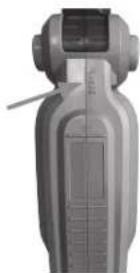
Serial number: A2032
Do not use the trimmer head / trimmer head for grass trimming, see the attached material for instructions. Do not use it for other purposes.
1. SAFETY
WARNING
Read the operating instructions carefully and keep them for future reference. If necessary, you can refer to them later.
Symbols on the product:


Operating instructions.

Keep the tool away from rain and moisture.

Give the tool a break.

For the tool: Unplug the tool from the outlet before making adjustments or repairs.

Use the tool with protective equipment and safety gear for your eyes and ears.

Always wear protective goggles.

Before maintenance or repair, remove the battery.
To avoid electric shock, keep a distance of at least 10 meters from power lines.
General safety instructions
General safety instructions for power tools

WARNING!
Read all safety instructions, instructions, illustrations, and technical specifications provided with this power tool. Failure to follow the instructions and safety instructions may result in electric shock, fire, and/or serious injury.
Keep all safety instructions and instructions for future reference. The term "power tool" in the safety instructions refers to your mains-operated (corded) power tool or battery-operated (cordless) power tool.
1) Work area safety a) Keep your work area clean and well lit. Cluttered or dark areas invite accidents. b) Do not operate power tools in explosive atmospheres, such as in the presence of flammable liquids, gases, or dust. Power tools create sparks which may ignite the dust or fumes. c) Keep children and bystanders away while operating a power tool. Distractions can cause you to lose control. 2) Electrical safety a) Power tool plugs must match the outlet. Never modify the plug in any way. Do not use any adapter plugs with earthed (grounded) power tools. Unmodified plugs and matching outlets will reduce risk of electric shock. b) Avoid body contact with earthed or grounded surfaces, such as pipes, radiators, ranges, and refrigerators. There is an increased risk of electric shock if your body is earthed or grounded. c) Do not expose power tools to rain or wet conditions. Water entering a power tool will increase the risk of electric shock. d) Do not abuse the cord. Never use the cord for carrying, pulling, or unplugging the power tool. Keep cord away from heat, oil, sharp edges, or moving parts. Damaged or entangled cords increase the risk of electric shock. e) When operating a power tool outdoors, use an extension cord suitable for outdoor use. Use of a cord suitable for outdoor use reduces the risk of electric shock. f) If operating a power tool in a damp location is unavoidable, use a residual current device (RCD) protected supply. Use of an RCD reduces the risk of electric shock.
3) Personal safety
4) Maintenance of the electrical tool and its handling
5) Use of the operator's manual and its handling
a) Bybte ybaKhi, cnikyute 3a THM, uo Bn poBite i kepyTece aDopoBm rnydAm npn EKnCNIyatauIe nEeKtPOHCTPymETy. He BkOpNCTOByTE neEeKtPOHCTPymET, KOHN BcTOMNeI a6o nepeSyBaTe nIINBBNOH HApKOTKHe, ANKOrIO A60 NIKapcBkXs zAcOBe. QnHa MHTb HeyBaHKoCTI npn BkOpMCTBHI eNkTPOHCTPymETy MoKe IpaABeCTNo cepKoAaTbPAm. 6) OndraTe 3ac06n IHNDIyAnbHoro 3axNCTy I 3aBKn 3axNCHI OKyHn. HOIHIN 3ac06n IHNDIyAnbHoro 3axNCTy TAKX, RK peCnIpatOp, OKeOB3ne 6eBnE HsT, WIOOM afo 3ac06n oprAHn CNYx, B 3aekHO CT bID Ta BOKOPCTAHn ENEKPOHCTpyMeHTy, 3mEHUYOTb Pn3k OTPMAHHTRAM. B) YHKAKaTE HeHBMNCHO BBeDEHNH B EKCNYATAUIO. NpekoHaiTeC, IO eKTKPOIcHTpymEt BI KKnIOeHHN, nepeTIMK BN HOrO nIKNOuHTe DO IJKepeNa JKBnEHHN Ta / a60 AkyMnRTOpA, 6yTeTe NIDHMAT No OTHPAHCNoPTyBaTN. RkTO pRn peHHeceHHI eKTKPOIcHTpymEt BN TpMaCTe naueb Ha nepeMnKaI a60 nKnIOeHaTe PnCTPm Do JKBnEHHN y NOJNOeHHI "KKnOeHHO", To CE MoKE Prn3BcETn DO HeuacCHO BRnApjy. r) Npeq Tm, kB Bn AKnOHTe enektpoiHcTpymet, BnAnitb perynoBnIHcTpymenT a0 raKOBn KIOU. IHcTpymet a0 KO, Rk3hXoAaBcB e cacttni npctpoio, 0o oebpTaEbCH, MOyIb IpN3BecIn Do TBAIM. A) YNHKAITE HENPABINHORO NOONOHEHNA. CTIte BNEBHeHO I 3ABK- d6epirate INOBARY. 8aRkN LcOMy BN aMOKe T Kpue KOHTPOIOBATI ENKTOPOHCTPMeHTY HecnQdaihix CHTyJiX e) Hocit npdaTHm Oar. He hocit npocToH mOAR aO npkpcn. Obepiraite Bonocc, oar i pykabuKu BID pyxomnx detanei. IpocotopwOaDR, pNkpaCn aO DOBRE BOIOccr MOyTb NotpAHTB BpyxOMXACTHNH. e)KkoMOKH BCTAOHBNn pHCTPOI Dn BIDCMOKTYBAHH Ta BNIOBHO BAHNYTOXHEO6XIHO NIKKIOHTNn npABINbHO BHKOPNCTOB BYA. BUKOPKCTAHN PNOCTBOI Dn BIDCMOKTYBAHH NITy MOKE 3MEHUMTN PIMK BNNKNEHHN HOTPMNHEOHOTOM HeESENIK. H) He IiIte Ce6e Ino3ic0 Be3neKn H He HexTyHe npBnAmn TexHkN 6e3neKn DnEneKtpOHCTpyMeHTB, HABITb KIO nicN 6aRatopaoBO BHKOPcTAAHn BN DoBe 3AeTe, NK BHKOpHcTOByaTH eNEKTPOHCTPYMT. HEdaBCTBO KyBaBbHO 3a MNTb MOKE PNOBcETM DO BaKKX TpaBm. a) He nepebahtaxyIe npctpi. Bkopnctobyte nra cboi pobot TlbnKn enektpolHCTpyMeT, An np3hauhen dna Ibufo. 3BIOOBHM ENKpOHTNcPTpyMeTOM, BN paaowbattmo Kpaue iBaeHHue B 3aahvHemOy danaoho NtoxyHocTe. 6) He BHKOPHCTOBYTE enekTPOHCTPymeHT, BMMKauy AkoRIO 3iC0BaAHMH. HcPTyMeHT, KAAW ME MOXHO BMMKHYTH aBO BMMKHYTH C HeBGEYHM, I HORO CND BIDPEMOHYBATN. b) BHTHnHtB pO3eKn i / a60 bHmltb akymyIaTOp neped hanaWtBuHaHm NpHcTPO, aAMHOKO KOMNKeKTyOuXh ABO nepe ThM, Rk BiKnactn PnHcTPI B CToPOH. Taq saoobnH 3 axoD 3 texHKn BeaeKN DQNOMNYB 3aONOBn 3aONKO My 3aONCYK ENEKTOHCTPOMYHT. r) 36epiraiye nekpohtcypeHn, kMn Bn HKeOpHTyeTeb, no3a DOcAHICTO dIe. He DoABONHe OoCAB, kIi He oBIAHNI 3 EKCHNYATAUIO npHcTOPOAo 60 haoHaAHMH HcTpyKUIMM, KOpHcyBATHC HMI. EneEPOHCTPOMHn HeGesNeuH, NkIo BOHN BRKOPCtOBYKOTCB HeDocBIIHmOCCoAM. 1) PeterbnHO Dornnae 3a eKtpnoHcTpymEnAmu. PpeBpTe, o6 pyxoml qactnnb 6e3doranHH yHKUohyBaN Ta 6e3nepeKoHPOyXANHC, o6 Detani He 6ynn 3nAmah a60 nowKOjHex TAKHM NHom, 0q De npoyntpo BpOby eKtpnoHcTpymEnHTy. Pepe BHKoPCTAHNN pncIPTPO bIpemOnHTye nowKOjHex tETANI. Barato ABAPNI RAANRECTCA YOep3 NOrA OocYROBYBAHN KEPTOHcTpymENITB. e) PkuyI HcTpyMThN NOBHHbYrTOCPTPMH Ta YnCTMM. Hanxho DoTnHpyi DkiyH IHcTpyMTH 3 rOCTPMH pKHyHM KAtAMM MeHbue BACTPNAOTb, Ta HmM JERue KeyBYtM. e) BKNOPICBOYNE ENKPOIHCPTPYMENT, BOOHN IHCTPYMNT, KONN NKTYKOVI TOO BIIOBNOHO IO XH KSAIBOK. Brpaxoyte npn cboMy yMOBnpaI IINBHCTb, OIO BKHGYeTcB. ECKNYATAAIOE KTOPOPTPCHMOHTy U YIXR, H3a3aHOHN B IHCTpykU, MOXIE PNNBECHTO DO BHHKKNHN HeBSNeHHN Cytuayi. n)PyuKa Ta aaxBathi NoepxH MaOToB 6yTH cyXHH, YcHtMM, 6e3OnBBN KOCHNEHTHO Mactna. CnKski pyuKa Ta aaxBathi NoepxH 3MeHxNtB HAdHCTb yPpABHH KOTPOIO 6eKTOHCTpyMHTY BHepeDabvBAMHX CNTAAH a) AkyMnyrTOPI 3APJkAte TINBKn 3apJHnX npHcTPOx, Rk peKOMeHNYTOB BKNPOHNOK. IINa 3ApJHOrO NpOCTPOIO, AKNIM PnDAtTHN IINa NEbHO rNdy AkyMnyrTOI, ICHy HeDeEITBA BHNKKHeHH NIOKEM, NKUO BIH 3AcTOCBOYETCBN 3 INHMN AkyMnyrTOPDA. 6) BeneKtpolHcTpyMeTHax aactocOByTe TInbKn nepeIbaHeHI Ia HIX AkyMnRTOpN. 3ACTOCyIeHH INHIN HIX AkyMnRTOpB MOE CIOpNH NITN NOPAHOHIR I BIKOMKATY HO603NKY FOKOHK. B) UyPmMyTe akymyTOpH, kMn He KopHcyTeEcHb, Ha Bldctahi Bld KauHcApcbKxckInok, MoHT, KKnOIB, rONOK, RBNHTB ao HIXN dpi6hHex MTaneHN ppeMItB, Rk MOxyTB cPNHmTH 3AMKHARHO KHAKTBI, KOPTOKI ZAMHKAHHA KONTAKTIb akymyTAtOPa MOKe PND3BCTNO DO OTIKH YN NOXKO.
r) If the battery is used incorrectly, acid may leak from the battery. Avoid contact with the acid. If contact with acid occurs, rinse with water and seek medical attention. Leaking acid from the battery may cause corrosion or fire. 1) Do not use a damaged or modified battery. Damaged or modified batteries may behave unpredictably, which can lead to fire, explosion, or injury. e) Keep the battery away from moisture and sources of high temperature. High temperatures, such as 130°C, may cause an explosion. c) Follow the instructions for charging under normal conditions. Do not charge the battery or the battery pack outside the temperature range specified in the operating instructions. Incorrect charging or charging outside the permissible temperature range may damage the battery and increase the risk of fire.
6) Maintenance
a) Have the power tool serviced by a qualified repair person using only identical replacement parts. This will ensure that the safety of the power tool is maintained. 6) Under no circumstances should you service damaged batteries yourself. All maintenance must be carried out by the manufacturer or an authorized service center.
Safety instructions for the circular saw
a) Keep guards in place and do not remove them while the tool is in operation. Never operate the tool with any guard or safety device disabled. The tool must only be used with the guards correctly fitted. Any misuse of the hedge trimmer can result in serious injury. b) Carry the hedge trimmer by the handle with the blade stopped, taking care not to operate the throttle trigger when carrying the tool. Proper handling of the hedge trimmer will reduce possible personal injury from the cutter blades. c) When transporting or storing the hedge trimmer, always fit the cutting device cover. Proper handling of the hedge trimmer will reduce possible personal injury from the cutter blades. d) Never cut any material that cannot be identified or perform maintenance without first ensuring that the ignition is switched off and the spark plug cap is removed. Accidental starting of the hedge trimmer while picking up or carrying the tool may result in serious injury. e) Always switch off the hedge trimmer and disconnect the spark plug cap before carrying out any maintenance or cleaning work. Accidental starting of the hedge trimmer while picking up or carrying the tool may result in serious injury. f) Always hold the hedge trimmer with both hands on the handles, as the tool may cause injury to the operator. Contact with the cutter blades, even through the blade guard, may result in injury to hands and fingers and electric shock. g) Always disconnect the hedge trimmer from the power supply before cleaning. The blades may be hidden in the hedge and can be accidentally touched by the tool. h) Do not use the hedge trimmer in poor weather conditions, especially when there is a risk of lightning. This may create a risk of lightning strike.
Safety instructions for hedge trimmers with increased radius
a) Danger of fatal injury from electric shock. Do not use the hedge trimmer with increased radius in the rain or when it is wet. If the tool gets wet or is used in wet conditions, it may result in serious injury or fatal electric shock. b) When using the hedge trimmer with increased radius, always wear protective gloves. When using the hedge trimmer with increased radius, always wear protective gloves. Do not touch the blades with bare hands. Always wear protective gloves when using the hedge trimmer with increased radius.
Keep the tool away from rain and moisture. Do not use the tool in damp or wet conditions (such as in rain or near wet electrical wiring).
It is recommended to use a residual current device (RCD) with a tripping current of 30 mA or less.
Always hold the hedge trimmer with both hands on the handles.
The hedge trimmer is intended for cutting hedges, bushes, and similar vegetation, and for trimming ornamental plants and shrubs.
This manual is recommended to anyone who purchases, operates, or maintains the equipment. It is important to read and understand the safety instructions before use.
Additional safety instructions
Ensure that the equipment is properly grounded.

Follow all safety instructions and other instructions.
Failure to follow the safety instructions and instructions may result in electric shock, fire, and/or serious injury.
Keep the instructions in a safe place.
Read the instructions carefully before using the equipment. Keep the instructions for future reference. If you have any questions, contact the manufacturer.

→Charge the battery only with the charger specified by the manufacturer. →Charge only with the POWER FOR ALL PBA 18V battery charger. Use only chargers with a charging current of at least 1.5 A per battery cell. The battery charger must comply with the battery charging requirements. Do not charge the battery if it is damaged. Keep the battery away from heat sources. Do not use the charger outdoors or in damp conditions. The charger is designed for indoor use only. Protect the charger from moisture and water. Do not use the charger if it has been dropped or damaged. →Before using the charger, check it and the cable for damage. Do not use the charger if it is damaged. Do not open the charger yourself; have it repaired only by qualified personnel using original spare parts. Damage to the charger, cable, or plug can cause electric shock. →Do not use the charger on a flammable surface (e.g., paper, textiles, or similar materials) or in a confined space. The heat generated by the charger can cause a fire hazard. →If the battery is damaged or not used properly, contact the GARDENA service center or an authorized GARDENA dealer. →Do not use the device while charging. →Read the safety instructions for lithium-ion batteries in the POWER FOR ALL PBA 18V system. →Use the battery only in products from the POWER FOR ALL system. Only then can the battery be protected from dangerous overload. →Charge the battery only with the chargers recommended by the manufacturer. If the battery is charged with a charger not intended for it, there is a risk of fire. →The battery is delivered partially charged. To ensure full battery capacity, fully charge the battery before first use. →Store the battery away from direct sunlight. →Do not open the battery. There is a risk of short circuit. →Improper use or storage of the battery can lead to damage. The battery may leak or explode. Ensure proper ventilation, and in case of fire, contact a doctor. The battery may cause burns or chemical burns. →In case of improper use or damage to the battery, hazardous liquids may leak from the battery. Avoid contact with the liquid. If contact occurs, rinse with water. If the liquid gets into the eyes, seek medical attention immediately. Liquid leaking from the battery may cause skin irritation or burns. →In case of damage to the battery, hazardous liquids may leak from the battery. Check the battery for damage. Dispose of it properly if necessary. →Do not short-circuit the battery. Keep the battery away from metal objects such as paper clips, coins, keys, nails, screws, or other small metal objects that could cause contact bridging. Short-circuiting the battery contacts can cause burns or fire. →Do not use sharp objects such as a screwdriver or awl to apply external force to the battery. This can cause internal short circuits, leading to overheating, fire, explosion, or damage to the battery. →For proper use, follow the safety instructions for handling damaged batteries. For servicing, contact the GARDENA service center or an authorized GARDENA dealer.

Charge the rechargeable battery only at the ambient temperature indicated, for example, the type of charger supplied with the device, its voltage, current, and power.
Use and store the rechargeable battery only at an ambient temperature of -20°C to +50°C. Do not place the rechargeable battery, for example, in a car on a hot day. Before use, if the temperature is below 0°C, the product may operate with reduced performance. Charge the rechargeable battery only at an ambient temperature of 0°C to 45°C.
Charging outside the temperature range may damage the rechargeable battery and increase the risk of fire.
Electrical safety

DANGER! Sulfuric acid!
The device contains electromagnetic parts. Under normal conditions, it does not create a harmful effect on the operation of active or passive medical implants. To avoid unsafe situations that may cause injury or death to persons, especially those with medical implants, consult your doctor and the implant manufacturer before using the device.
Do not charge the battery in an explosive atmosphere, such as in the presence of flammable liquids, gases, or dust.
Do not expose the battery to rain or snow, and do not connect the charger to the battery in a wet environment.
Do not use the device in poor weather conditions, as this may cause electric shock.
Turn off the device and disconnect the battery from the device before performing any maintenance. Failure to do so may result in injury.
Protect the battery contacts from moisture.
Personal safety

DANGER! Hearing hazard!
The device can produce loud sounds. There is a risk of hearing damage for small children. Do not allow small children near the device.
Use the device only as described in the instruction manual. Any other use may result in malfunction. The operator or user must be aware of the potential hazards, especially to children or pets, and keep a safe distance from the working area when the device is in operation.

When using the device, it is possible not to notice the danger through the rotating part of the tool, so be careful when working near the side.
Wear protective goggles, gloves, and suitable clothing.
Avoid contact with the blade of the cutting tool, especially if you have it on.
Do not use the cutter without first checking that the cutting blade is properly installed and secured.
When installing the cutting blade, make sure it is correctly positioned on the spindle and tightened with the appropriate wrench. The cutter should be able to rotate freely.
Before using the tool, check that the blade is sharp and free from cracks or damage. If necessary, replace it.
Never operate the tool with a dull blade or a cutter that has been damaged or is not properly balanced.
Use and maintenance of electric tools
Always disconnect the tool from the power source when not in use. Never touch the blade with the tool connected to the power.
Do not use the cutter if the safety guards are not properly installed.
When using the cutter, do not allow your hands to come near the blade.
Use the tool only after placing it on a stable base.
Remove the battery:
- Before any maintenance, disconnect the cutter from the power source; - Before any cleaning:
- Check the power tool for damage before each use. If the tool is damaged, do not use it. Have the tool repaired by a qualified person using only original spare parts. Never use the tool if the switch does not turn it on and off. Any tool that cannot be controlled with the switch is dangerous and must be repaired.
- Before use, check the power cord.

DANGER! RISK OF INJURY!
Do not allow children to touch them. After finishing work or during breaks, remove the battery pack.
All safety warnings and instructions must be read and understood before performing any work.
If the tool is used in a way that could cause injury, stop using it immediately. Do not store the tool in temperatures above 35°C or in direct sunlight. Do not store the tool in places with static electricity. Warning! Material that can break may cause injury. Work only in well-lit conditions.
2. ASSEMBLY

DANGER! Risk of injury! Risk of injury from the tool if it is not handled properly.
Remove the battery pack and place it in the protective cover before storing the tool.
Assembling the telescopic handle [Fig. A1/A2]:
1. Insert the telescopic handle ② into the motor block ① until it stops. The locking buttons ⑧ must be opposite each other. 2. Tighten the locking ring ③.
3. OPERATION

DANGER! Risk of injury! Risk of injury from the tool if it is not handled properly.
Make sure the tool has stopped completely, remove the battery pack, and place it in the protective cover before adjusting, cleaning, or transporting the tool.
Charging the battery pack [Fig. 01/02/03]:

Please observe the voltage! The voltage of the power source must correspond to the data on the nameplate of the charging device.
The delivery scope of the GARDENA battery hedge trimmer, art. 14732-55, does not include the battery and the charging device.
The charging electronics of the battery automatically detect the battery type and charge the battery with the optimal charging current, depending on the temperature and voltage.
To remove the battery, press the release button and pull the battery out of the charging device.
- Press the release button A and pull the battery out of the battery holder ① 2. Connect the charging device ⑥ to the power supply.
- Place the battery onto the charging device ⑧.
If the charge indicator on the charging device lights up red, the battery is being charged.
If the charge indicator on the charging device lights up green, the battery is fully charged.
(See charging time, 7. Technical data).
4. During charging, check the charging status at regular intervals. 5. After full charging, you can remove the battery from the charging device.
Meaning of the symbols:
Indicator on the charging device:
Red indicator light: charging in progress. Green indicator light: battery fully charged.
battery

Battery charge indicator: the battery charge level is displayed by a temperature-compensated indicator. See clause 7, Technical characteristics.
The charge indicator light of the rechargeable battery

No 10000000000000000000000000000000000000000000000000000000000000000000000000000000000000000000000000000
If the rechargeable battery is not installed, the charge indicator light of the rechargeable battery will not light up until the battery is inserted, and the indicator will then operate correctly.
Charge indicator of the rechargeable battery is on the sample [Fig. 04/012]:
When using the sample, the charge indicator of the rechargeable battery is displayed for about 5 seconds.
Charge of the rechargeable battery: charge indicator of the rechargeable battery
| 3apädjenicht ha 67 - 100 % | ①,② ta ③ ropntb 3eJIeHIM CBTJOM |
| 3apädjenicht ha 34 - 66 % | ① ta ② ropntb 3eJIeHIM CBTJOM |
| 3apädjenicht ha 11 - 33 % | ① ropntb 3eJIeHIM CBTJOM |
| 3apädjenicht ha 0 - 10 % | ① δЛИМАС 3eJIeHIM CBTJOM |
If the light flashes green, the rechargeable battery needs to be charged.
If the indicator light is red or flashing, see clause 6, Troubleshooting.
Working position:
The detector can be operated in working positions.
Side view: the telescopic tube is folded [Fig. 05]
High vertical telescopic tube raised with the rod: [Fig. 06]
High horizontal view: the motor unit is installed at an angle of 75°, with the rod: [Fig. 07] The telescopic tube is extended
Low rod: the motor unit is installed at an angle of [Fig. 08] -60°, the telescopic tube is extended
Engine block [Fig. 09]:
For high and low positions, the engine block ① can be tilted from 75° to 60° in steps of 15°.
1. Press the orange buttons ④ and tilt the engine block ① to the desired position. 2. Release the orange buttons ① and let the engine block ① lock into place.
Telescopic tube adjustment [Fig. 010]:
For high and low positions, the telescopic tube ② can be extended without steps up to 50 cm.
1. Loosen the orange clamp 5. 2. Pull out the telescopic tube ② to the required length. 3. Tighten the orange clamp (5) again.
Starting the brush cutter [Fig. 01/011/012]:
![GARDENA THS 4218V P4A - Starting the brush cutter [Fig. 01/011/012]: - 1](/content/2026/03/491815/images/3fdc6df99f20ecf7238dfbf875a3021d2ec74007bc4467e1664aa00b6ff349b2.jpg)
DANGER! Risk of injury! There is a risk of injury if the device does not stop after the start lever is released.
Do not bypass the safety devices or switches. For example, do not hold the start lever by hand.
Starting:
The device is equipped with a full safety device (start lever with lock-off), which protects the device from accidental switching on.
1. Insert the battery into the battery holder until it clicks into place. 2. Remove the protective cover from the cutting attachment.
- Hold the brush cutter with one hand on the insulated handle at the top of the telescopic tube ② or by the handle ⑥.
- Press the lock-off button ⑦ and then pull the start lever ⑧. The brush cutter starts, and the battery charge indicator lights up for 5 seconds. 5. Release the lock-off button ⑦.
Stopping:
- Remove the old battery. 2. Press the locking button and remove the battery from the tool.
- Press the locking button ④ and pull out the battery pack ⑥ from the battery pack holder.
4. Cleaning

DANGER! Danger of injury!
Risk of injury when starting the tool accidentally.
→Before cleaning, make sure the tool is switched off, remove the battery pack and press the locking button on the tool before performing any maintenance.
Cleaning the garden shears:

DANGER! Danger of injury!
Risk of injury and damage to the tool.
→Do not rinse the tool with water or a water jet (especially high pressure). →Do not clean with chemicals, including petrol, or solvents. Some of them can damage important plastic parts.
The ventilation slots must be kept clean.
1. Clean the garden shears with a damp cloth. 2. Clean the ventilation slots with a soft brush (do not use a screwdriver). 3. Lubricate the cutting blades with a light oil (e.g., GARDENA oil, art. no. 2366). Avoid contact with plastic parts.
Cleaning the battery and the battery charger:
Before cleaning the battery charger, make sure that the battery contacts and the charger contacts are clean and dry.
Do not use running water.
→ Battery: Clean the battery contacts with a soft, dry cloth. → Battery: If necessary, clean the ventilation slots and the battery's air vents with a soft, dry cloth.
5. STORAGE
6. TROUBLESHOOTING

DANGER! Risk of injury from electric shock!
Risk of injury when starting the product accidentally.
→ Note: Before any troubleshooting, switch off the product, remove the battery, and wait for the moving parts to stop.
Problem Possible Cause Remedy
| Cádombi cekatop He 3ушиль'tься | Задаэncuckoы вадл. → | Витаян'tь acумларotу 6batapeo i 3вilni'tь nyckoboi bailib. |
| Стейжka лимbonnotу Виглидахеakypatho | Рійчynи писстри татулбся abo пошкохжени. | →Замн'tь рлзжунппсгдri za даломогу серсichoro цentralny GARDENA. |
| Cádombi cekatop сильно bl6pye | Рійчynи писстri пошкохж; н. | →Вимн'tь врiod ta verсрпься do phaxiwirдя заими рixу- чero prinstpoк. |
| Cádombi cekatop He 3anlyckacstbcry abso 3uznna- etbsc. | Akymun'toropha batorer postradkdena. | →Зард'tь acумларotу 6batapeo. |
| Cbitlndioia# 6bIMmac 3elenHm cbTlnom [36bp.04] | ||
| Cádombi cekatop He 3anlyckacstbcrafo 3uznnaRtctc. | Temneparatya akumylnarotnoi batapei bIXKOДТь 3a megii dOmyCTMnOgiДIaIaONHy. | →Зачайte, доки Tempepa- tya akumylnarotnpHбatapei 3hOBY He 3zHXOДTmHETcS B mexkax diIaONHy bID O°C do + 45 °C. |
| Cbitlndioiu nii Indikatop nomnkn K##rOPIH чрвоим CBTlnom [36bp.04] | MIX KOHTAKTAMU akumylnarot- ho batapei caDOSO cekatopa 3zHXOДTcS kprani BODI abo Bonora. | →Вимд'tь краWIл ВОДI/ BOLOGY 3a DOINOMOROIO cyxoi TKaHIMN. |
| Motop zablonokobANO. → | Вимд'tь nepeiKoody. 3aIycitybHOBv. | |
| Cádombi cekatop He 3anlyckacstbcrafo 3uznnaRtctc. | Вирбнеспави. → | Зерн'tь сд о cepeichoro цentry GARDENA. |
| Cbitlndioiu nii Indikatop nomnkn K##rOIIb nomnkn K##rHe roptlb [36bp.04] | Akumylnarotnoa batorer He Повиисю bCTABIneHa y trIMauH akumylnarotnoi batapei. | →Повиисю bCTABIne Akumylnar- torpHy batapeko y trIMauH akumylnarotnpHbatapei, zuob BOHA zaizhenyamaz 3 xapak- TePHIM KIAUdAHNM. |
| Akumylnarotnoa batapei HecnpabHn. | →Зимн'tь akumylnarotHy batapeko. | |
| Вирбнеспави. → | Зерн'tь сд о cepeichoro цentry GARDENA. | |
| Зараджанna In hemoxlinbIM. Indikatop zarady akumy- latarop hoi batapei # roptlb 6beIpenepBHO [36bp.03] | Akumylnarotny batapeko He (неравиьно) bCTABIneHo. | →Паравиьно наadingи akumy- latarophy batapeko Ha zadri- н. писстri. |
| Контaki n akumylnarotnoi batapei 3abpydneho. | →Очирself Kohtaktna akumylnar- torpHy batapeei (hanpivknad, шлaxom bataporazAOBI BCTABKII BITRIYBAHNH akumylnarotnpHbatapei. у раше необidноcti замн'tь akumylnarotny batapeko). |
Problem Possible Cause Remedy
| 3a4djkannha e hemoklunbHM. IIndikatoparapdny akymy- lantropoho batapei ⑥ roptib ⑤ | TEmnpatypa akymylanthropoi batapei BVXODHtB 3a Mekhi dorhyctmorgotemnpatyphoro diapanazhoу zaprdkauHHa. | → 3aueckayte,dochn TEmnpa- typa akymylanthropoi batapei 3hOby He 3haxodmHmetbcr B Mekx Aziapanazhoу BvD 0°C do + 45 °C. |
| b3epepebpno [3o6p. 03] | Akymylanthropo 6batapei hecnprabHa. | → 3amHInbty akymylanthropoy batapeko. |
| IIndikatoparapdny akymy- lantropoho batapei ⑤ He roptib [3o6p. 03] | MpejcseBmi shteKepr zapdAnHoro pmpcTropo He (HeinpabIMbHo) BCTAbeHNo. | → (TobHichtNo) bCTAbeTe Mpejcse- Bni shteKepr do pozetkn. |
| Pocetka, Kaobel jxivblenHHa abo zaprdnmi pmpctrii hecnprabHl. | → PpejeBipte MpejcseKeyby Hanpyr. PpejeBipte B pazi heobxJHDcoHt zapdHnn pmpcTpiB v abtopn3ozbAHoro dlnepaabo abo B ccepiHOMy zehTpor GARDENA. |

NOTE: For any other malfunctions, please contact the GARDENA Service Center. Repair work must only be carried out by GARDENA Service Centers or specialist dealers authorized by GARDENA.
- TECHNICAL DATA
This product is not intended for use by persons (including children) with reduced physical, sensory or mental capabilities, or lack of experience and knowledge, unless they have been given supervision or instruction concerning use of the appliance by a person responsible for their safety. Children should be supervised to ensure that they do not play with the product. The use of this product is only permitted for persons aged 16 and above.
Children should be supervised to ensure that they do not play with the product. The use of this product is only permitted for persons aged 16 and above.
Intended use:
The GARDENA hedge trimmer is intended for trimming hedges, shrubs, and ornamental plants in private gardens.
The product is not suitable for commercial use.

Do not use the product for purposes other than those described in the manual, or for composting. Do not use for jumping or diving.
1. SAFETY INSTRUCTIONS
IMPORTANT!
Read the operating instructions carefully and keep them for future reference.
Symbols on the product:

Read the operating instructions.

Danger - keep hands and feet away.

Do not use in rain.

For the electrical device:
Always disconnect from the power supply if the cable is damaged or cut.

Wear protective goggles.

Wear protective gloves.

Remove the battery before cleaning or maintenance.
Danger to life from electric shock!
Keep a distance of at least 10 m from power lines.
General safety instructions
General safety instructions for electric tools

WARNINGS
Read all safety instructions, instructions, illustrations and technical data provided with this electric tool. Failure to follow all safety instructions, illustrations and technical data may result in electric shock, fire and/or serious injury.
Keep all safety instructions and instructions for future use. The term "electric tool" in the safety instructions refers to your mains-operated (corded) electric tool or battery-operated (cordless) electric tool.
1) Safety in the work area
a) Keep your work area clean and well lit. Cluttered or dark work areas can lead to accidents. b) Do not operate electric tools in explosive atmospheres, such as in the presence of flammable liquids, gases or dust. Electric tools create sparks, which may ignite the dust or fumes. c) Keep children and bystanders away while operating an electric tool. Distractions can cause you to lose control of the tool.
2) Electrical safety
a) Electric tool plugs must match the outlet. Never modify the plug in any way. Do not use any adapter plugs with earthed (grounded) electric tools. Unmodified plugs and matching outlets will reduce risk of electric shock. b) Avoid body contact with earthed or grounded surfaces, such as pipes, radiators, ranges and refrigerators. There is an increased risk of electric shock if your body is earthed or grounded.
c) Do not expose electric tools to rain or wet conditions. Water entering an electric tool will increase the risk of electric shock.
d) Do not abuse the cord. Never use the cord for carrying, pulling or unplugging the electric tool. Keep cord away from heat, oil, sharp edges or moving parts. Damaged or entangled cords increase the risk of electric shock. e) When operating an electric tool outdoors, use an extension cord suitable for outdoor use. Use of a cord suitable for outdoor use reduces the risk of electric shock. f) If operating an electric tool in a damp location is unavoidable, use a residual current device (RCD) protected supply. Use of an RCD reduces the risk of electric shock.
3) Personal safety
Stay alert, watch what you are doing and use common sense when operating an electric tool. Do not use an electric tool while you are tired or under the influence of drugs, alcohol or medication. A moment of inattention while operating electric tools may result in serious personal injury.
3) Personal safety
K) To avoid electric shock, the tool must be protected by an automatic switch. The automatic switch protects against such shocks. a) Be careful, pay attention to what you are doing, and use common sense when working with power tools. Do not use power tools when you are tired or under the influence of drugs, alcohol, or medication.
A moment of inattention while operating power tools may result in serious personal injury.
b) Use personal protective equipment. Always wear eye protection. Protective equipment such as dust mask, non-skid safety shoes, hard hat, or hearing protection used for appropriate conditions will reduce personal injuries.
8) Remove the battery. Before cleaning or servicing the tool, disconnect it from the power source and/or remove the battery. Cleaning and maintenance should be performed only after the tool has been switched off and unplugged. Improper handling of the tool can lead to injury. g) Adjust the settings using the adjustment buttons only when the tool is switched on. Do not leave the tool unattended while it is running. h) Avoid accidental starting. Ensure the switch is in the off position before connecting the tool to the power source and/or inserting the battery. Carrying the tool with your finger on the switch or connecting it while the switch is on can cause accidents. i) Remove any adjusting keys or wrenches before turning the tool on. A wrench or key left attached to a rotating part of the tool can result in personal injury. j) Do not overreach. Keep proper footing and balance at all times. This enables better control of the tool in unexpected situations. k) Dress properly. Do not wear loose clothing or jewelry. Keep your hair, clothing, and gloves away from moving parts. Loose clothes, jewelry, or long hair can be caught in moving parts. l) If devices are provided for the connection of dust extraction and collection facilities, ensure these are connected and properly used. Use of dust collection can reduce dust-related hazards. m) Do not let familiarity gained from frequent use of the tool allow you to become complacent and ignore tool safety principles. A careless action can cause severe injury within a fraction of a second. 4) Tool use and care a) Do not force the tool. Use the correct tool for your application. The correct tool will do the job better and safer at the rate for which it was designed. b) Do not use the tool if the switch does not turn it on and off. Any tool that cannot be controlled with the switch is dangerous and must be repaired. c) Disconnect the plug from the power source and/or remove the battery pack from the tool before making any adjustments, changing accessories, or storing the tool. Such preventive safety measures reduce the risk of starting the tool accidentally. d) Store idle tools out of the reach of children and do not allow persons unfamiliar with the tool or these instructions to operate the tool. Tools are dangerous in the hands of untrained users. e) Maintain tools. Check for misalignment or binding of moving parts, breakage of parts, and any other condition that may affect the tool's operation. If damaged, have the tool repaired before use. Many accidents are caused by poorly maintained tools. f) Keep cutting tools sharp and clean. Properly maintained cutting tools with sharp cutting edges are less likely to bind and are easier to control. g) Use the tool, accessories, and bits, etc., in accordance with these instructions, taking into account the working conditions and the work to be performed. Use of the tool for operations different from those intended could result in a hazardous situation. h) Keep handles and gripping surfaces dry, clean, and free from oil and grease. Slippery handles do not allow for safe handling and control of the tool in unexpected situations. 5) Battery tool use and care a) Recharge only with the charger specified by the manufacturer. A charger that is suitable for one type of battery pack may create a risk of fire when used with another battery pack. b) Use tools only with specifically designated battery packs. Use of any other battery packs may create a risk of injury and fire. c) When the battery pack is not in use, keep it away from other metal objects, like paper clips, coins, keys, nails, screws, or other small metal objects that can make a connection from one terminal to another. Shorting the battery terminals together may cause burns or a fire. d) Under abusive conditions, liquid may be ejected from the battery; avoid contact. If contact accidentally occurs, flush with water. If liquid contacts eyes, additionally seek medical help. Liquid ejected from the battery may cause irritation or burns. e) Do not use a battery pack or tool that is damaged or modified. Damaged or modified batteries may exhibit unpredictable behavior resulting in fire, explosion, or risk of injury. f) Do not expose a battery pack or tool to fire or excessive temperature. Exposure to fire or temperature above 130°C may cause explosion.
K) Never use the tool for any purpose other than that for which it is intended, and never use the tool at temperatures outside the specified range. Follow the operating instructions. Improper use of the tool may cause the material to break and result in injury.
6) Service a) Power tools must be repaired only by qualified specialists using original spare parts. This ensures that the power tool remains safe. b) Never repair a damaged battery pack. All battery pack maintenance must be carried out by the manufacturer or an authorized service center.
Safety instructions for hedge trimmers
a) Keep all parts of the body away from the cutting blade. Do not remove cut material or hold material to be cut when the blades are moving. Make sure the switch is off when clearing jammed material. A moment of inattention while operating the hedge trimmer may result in serious personal injury. b) Carry the hedge trimmer by the handle with the blade stopped and taking care not to operate the power switch. Proper handling of the hedge trimmer will reduce possible personal injury from the blades. c) When transporting or storing the hedge trimmer, always fit the cutting device guard. Proper handling of the hedge trimmer will reduce possible personal injury from the blades. d) Ensure that the switch is in the off position before inserting the battery pack, picking up or carrying the appliance. Carrying the appliance with your finger on the switch or energizing the appliance with the switch on invites accidents. e) Use only the manufacturer's specified charger to charge the battery pack. Using a charger that is not suitable for the battery pack may create a risk of fire. f) When the battery pack is not in use, keep it away from other metal objects, like paper clips, coins, keys, nails, screws or other small metal objects, that can make a connection from one terminal to another. Shorting the battery terminals together may cause burns or a fire. g) Under abusive conditions, liquid may be ejected from the battery; avoid contact. If contact accidentally occurs, flush with water. If liquid contacts eyes, additionally seek medical help. Liquid ejected from the battery may cause irritation or burns. h) Do not use the hedge trimmer in bad weather conditions, especially when there is a risk of lightning. This reduces the risk of being struck by lightning.
Safety instructions for hedge trimmers with extended reach
a) Always use the supplied handle and never hold the tool by the cord. Do not use the tool if the cord is damaged. The tool is double insulated, so it can be used without grounding. b) Work with the handle for cutting with the blade and the guard. The handle for cutting with the blade and the guard is used to obtain a firm grip. c) When working with the cutting blade, always wear eye protection. The guard protects the eyes. The tool may cause serious injury.
Use only the correct type of blade for cutting (e.g., metal or wood cutting blades).
It is essential to use the correct type of blade for the material being cut.
The handle for cutting with the blade has two grips for two hands.
The handle for cutting with the blade has a guard. When cutting, always hold the tool firmly, not on the other side of the guard.
Be careful when using the handle for cutting with the blade, as the protective devices may not be fully effective (e.g., the blade may be exposed).
Follow all safety instructions for using the battery.

Read all safety instructions and warnings.
If the safety instructions and warnings are not followed, there is a risk of electric shock, fire, and/or serious injury.
Keep these instructions. Use the charging device only as described in these instructions and follow all safety warnings.
Charging during use, maintenance, and care. Also, do not use the device with a damaged battery. Charge only with the POWER FOR ALL TIN PBA 18V battery system. The charging voltage must match the voltage specified on the charging device. Do not charge non-rechargeable batteries. There is a risk of explosion.
The charger does not need to be placed on a wall or in a humid environment. Water, spilled or electrically conductive liquids increase the risk of electric shock. Keep the charger away from moisture. The charger must be protected from rain and moisture. Check the charger, cable, and plug before each use. Do not use the charger if you notice any damage. Do not open the charger yourself; it must be repaired only by qualified personnel using original spare parts. Check the charger, cables, and plugs for damage, as they increase the risk of electric shock. Do not place the charger on flammable surfaces (e.g., paper, textiles, etc.) or in environments where it can be covered. There is a risk of fire if the charger is not used properly during charging. If the connection cable is damaged, it must be replaced by GARDENA or the GARDENA service center for electrical tools to avoid safety hazards. Do not use the product while it is charging. These safety instructions apply only to the lithium-ion battery system POWER FOR ALL PBA 18V. Use only the battery packs specified for your product by the manufacturer of the POWER FOR ALL system. This also ensures that the battery packs are charged with the appropriate charger. Charging the battery packs with a charger not intended for them poses a fire hazard. The battery pack is delivered partially charged. To ensure full battery pack capacity, fully charge the battery pack in the charger before first use. Store the battery packs away from heat sources. Do not throw the battery pack into a fire. There is a risk of explosion. If the battery pack is damaged or used improperly, vapors may be emitted. Ventilate the area, and if you feel unwell, seek medical attention. The vapors may irritate the respiratory tract. If the battery pack is damaged, liquid may leak and come into contact with adjacent parts. Check the affected parts. Clean or replace them if necessary. Do not short-circuit the battery pack. The unused battery pack terminals may come into contact with keys, coins, screws, bolts, or other small metal objects, which could bridge the contacts. Short-circuiting the battery pack terminals may cause burns or fire. The battery pack may be damaged by sharp objects such as nails or screwdrivers or by being dropped. This may cause internal short circuits, and the battery pack may catch fire, explode, leak, or overheat. Never repair a damaged battery pack. Any servicing of the battery pack must be performed only by the manufacturer or an authorized service center. Keep the battery pack away from heat sources, e.g., prolonged exposure to sunlight, fire, water, and moisture. There is a risk of explosion and short circuit. Store and use the battery pack only at ambient temperatures between -20°C and +50°C. Do not leave the battery pack in the car in summer, as temperatures above -1°C may reduce performance or cause damage. Charge the battery pack only at ambient temperatures between 0°C and +45°C. Charging at temperatures outside this range may damage the battery pack and increase the risk of fire.
Electrical safety
DANGER! Dangerous voltage!
This product generates an electromagnetic field during operation. This field may interfere with medical implants. To eliminate the risk of serious or fatal injury, persons with medical implants must consult their physician and the implant manufacturer before using this product.
Connect the charging device only to the mains socket with the protective contact.
The appliance must be disconnected from the mains before cleaning.
Do not use the product in a potentially explosive atmosphere.
Remove the product and the battery from the product if you intend to dispose of it. Improper disposal may harm the environment.
Do not touch the contacts of the battery with your hands.
Battery safety
DANGER! Risk of swallowing!
Small parts may be swallowed. The enclosed battery represents a swallowing hazard for small children. Keep small children away during assembly.
Many of the accessories are listed in the table in the instruction manual. The accessories are intended for use with this product. If you use them with other devices, they may be damaged. Be careful not to damage the work area when using the accessories.
DANGER!
The product may be damaged if you use it with other devices.
Wear protective gloves when handling sharp objects, blades, and tools.
Check the contact with the mass to the knife, especially before starting work.
Check the tool, where necessary, to use the knife for cutting various materials, including electrical cables and other similar objects.
All work related to adjustment (tilting the head, changing the blade, etc.) must be carried out with the protective cover installed. The blade must not be installed without the knife.
Before using the knife for impact, the machine must be checked for damage and, if necessary, the necessary repairs must be made.
Do not attempt to work with a dull or damaged blade, or with a blade that has been heated for too long.
Use and maintenance of power tools
You must know how to properly hold the knife for cutting. Never use the knife for cutting live wires.
Do not use the blade when the cutting edges are damaged.
Do not put the knife down during work with the cutting blade for cutting.
Store the product only on stable surfaces.
Battery charging
- The blade must be left without load;
- Before removing the blade;
- Before checking or adjusting the blade, or performing maintenance, disconnect the tool from the power source. The blade may be hot after use, so allow it to cool before handling.
In this case, the tool must be checked immediately.
IMPORTANT: Read the instructions before use.
- Before using the product, read the instructions.
DANGER OF INJURY!
Do not touch the blade.
Always disconnect or switch off before working on the product. Install the protective cover.
All users must wear safety goggles to protect against flying debris and product parts.
If the product is damaged during operation, stop the product immediately and disconnect it before storing.
The blade for cutting must be stored at a temperature not exceeding 35°C and in a dry place.
Do not store the blade for cutting in a place with high humidity.
Be careful of the remaining parts.
Work only in daylight or under good visibility conditions.
2. INSTALLATION
DANGER! Electric shock!
Risk of injury if the product is switched on accidentally.
The installer must place the protective cover over the blade before installing the product.
MOHTAX Ha TeneckonnuHara yact [phr. A1/A2]:
- PbXHETe TNECKONNHNATA Tpb6a ② DO ORpaHHNTENB B CCKNHTA HA EJIKTPOMOTOPA ① PnroTOBA e HcO6xOdmo Da fIKCNPATE DBeTe MPKpOBKnE ENHa CpeUy dpyra. 2.3aterheTe cInbata raika ③
3. OBCJNYKBAHE
OACHOCT! KOHTy3nn!
PnCK OT npraBaHe, aKO npOyKbT Ce BKnIOuH HeBONHO.
→ 3aKaJaTe DOKaTO HOXbT Cnpe, H3BaTe AeKymnATOpHATA 6aTePnI NocTabe TaaunTHnAkanak BbPx HOx, npEn da HAcToPbATE nIn TpaHcnpOpHpate npOyKta.
3apeKdaneHaakymyntopnata6aepn[01/02/03]:

BHIMAHINE!
→06bPheBHHMaHHe HA HanpeXeHHeTo HA mpeXaHa! HanpeXeHHeTo HA n3OuHnKa Ha 3axpaHaBe Hp8Ba Da CbOTBeCTBa Ha nHΦopMaUNrTa HA φnpMeHATA Ta6eNkA Ha 3apRdHTo ycTpoCTBO.
PnGARDENA AkymnaTopha HOKua 3a KINB nneT ApT.14732-55 B DoCTaKaTa He e BKIOUeHa akymnaTopha 6aTeprn I 3aprHNO yctpOCTBO.
HHTIINREHTHMRTnPOUCHa3apeKdaHeaBtOMaTHHOpa3no3HaBA HBIOHOHA3apRnHaAkyMnATOPHataBaTePnIna3apeKdaCOTNMAHnTOKHa3apeKdaHeB3aBNCIMOCCTOTTempePaTpTaHnHanpeKeHHeHOHaakymnATOPHataBaTePn.
ToBa 甲aDn AkyMnyIaTOphATA BatePN IN TH BINHAR OCTaBA HANTBNIHO 3apeHeHA, KOrAto Ce CbXpaHRA B 3apHNO YcTPOICTBO.
1.HaTnCHeteOCB60KJdaBaunu 6yTOH A uN3BaTeAkyMylatopHaTa 6atePn8 (O r THe3DTo 3a 6atePnata. 2.BKIOHOTe sapaHIOY yCTPOINCTBO B KOHTAKHa eJIeKTPnueckata MPeka. 3.ПьзHTe 3apdHOTO yCTPOIcTB0 Bbpxy akymyIaTOpHATA 6aTePnR
KoratoMHnKaunra3a3apeXdaheHaakymyNatopHata 6aTepeHa3apAdHOYcTPOHCTBOMRA3eJeHo,akymyNatop Hata 6aTepeNce3apeXda.
Korato HnHnKaunrta 3a 3apeXdane Ha akymynatopnata batePnHa 3apnHToYcTPOCTBO CBeTN 3eNEHO 6e3 npeKbc- Bahe,akymynatopnata batepna e HanbJHo 3apeJe (6peMe 3a 3apeXdane,BNK7,TEXHNHECKN DAHHN)
4. Check the battery charge level everywhere. 5. When the battery is fully charged, you can disconnect the battery from the charging device.
Meaning of the indicator elements:
Charging indicator:
The indicator light for the recommended charging mode lights up through the indicator. The charging mode is recommended for the battery. The charging mode is possible only if the battery temperature is within the recommended temperature range. See Technical Data.

Constant indicator light for charging the battery

The constant indicator light for charging the battery signals that the battery is being charged or that the battery temperature is outside the permissible temperature range for charging, so charging cannot begin. Wait until the temperature is within the permissible range, then the battery will charge. When the battery is connected, the constant indicator light for charging the battery signals a fault, e.g., a short circuit in the electrical contacts of the charging device. Check the contacts.
Indicator for the charging state of the battery on the product [Fig. 04/O12]:
Before switching on the product, the charging state of the battery is shown for 5 seconds.
Charging state | Indicator for the charging state of the battery
| 67 - 100 % зараздана | ①, ② и ③ CBETT 3eLEHO |
| 34 - 66 % зараздана | ③ и ② CBETT 3eLEHO |
| 11 - 33 % зараздана | ① CBETN 3eLEHO |
| 0 - 10 % зараздана | ③ MURA 3eLEHO |
When the indicator light is green, the battery needs to be charged.
When the indicator light is red, the battery is damaged. Replace the battery.
Working positions:
The tool can be used in 4 working positions.
| Бokobaстпжka: | Тelenекончнахтpb6a |
| [фиг.05] | e пибрана |
| Bùncoka BéptnkaIbHa cTpɪŋkɑ: TenečkonɪyHa pyuKa nɒdɒBXeHa [φɪr. 06] |
| Високароризонтailingha стрик: [фг.07] | Секцura ha eльскрдага тени e по Наклон OT 75°, Телесkonчнахтульba e нэтэрноа |
| Hиьka CTprжka: [Фиг.08] | Секцura ha enektpoDBuratela e понakнон OT - 60°, Телескогнчата Трьба e Истенда |
Tilting the electric hedge trimmer [Fig. 09]:
For high and low cutting, the hedge trimmer head ① can be tilted in steps from 15° to 75° (60°).
1. Remove the orange protective cap from the plug of the electric motor. 2. Insert the orange button ④ and leave the section of the electric motor ① to be exposed.
Adjusting the telescopic tube [Fig. O10]:
For high or low mowing, the telescopic tube ② can be extended up to 50 cm.
- Loosen the orange nut ⑤
- Pull out the telescopic tube ② to the desired length.
- Tighten the orange nut (5) again.
Switching on the hedge trimmer [Fig. 01/011/012]:
DANGER! Risk of injury!
Do not touch the cutting devices. Do not press the switch for switching on towards the body.
Switching on:
The device is equipped with a two-hand safety device (switch with lock button for switching on), which prevents unintentional switching on of the device.
- Insert the battery pack into the battery slot until it clicks into place. 2. Slide the protective cover back
- Hold the hedge trimmer with one hand on the insulated surface of the telescopic tube ②, and the other hand on the handle ⑥
4. Press the lock button ⑦ and then press the switch ⑧. The hedge trimmer starts. The indicator for the charge state of the battery pack is shown for 5 seconds. 5. Release the lock button ⑦.
Switching off:
- Remove the cover ④. Place it on the base for the knife.
- Put the protective cap on the cover.
- Press the release button A and remove the battery from the battery compartment D.
4. MAINTENANCE
DANGER! Electric shock! Risk of injury!
→Disconnect the battery and put the protective cap on it before performing maintenance on the product.
Cleaning the blade for cutting grass:
DANGER! Electric shock!
Danger of injury and risk of damage to the product.
→Do not clean the product with water or a water jet (especially a high-pressure water jet). →Do not clean with chemicals, including petrol or solvents. They may damage important plastic parts.
Ventilation slots must be kept clean.
- Clean the blade for cutting grass with a damp cloth.
- Clean the ventilation slots with a soft brush (do not use a screwdriver). 3. LUBRICATE THE BLADE WITH LOW-VISCOSITY OIL (e.g., GARDENA blade care oil Art. 2366). Avoid contact with plastic parts.
Cleaning the battery or the charging device:
Make sure the surface and contacts of the battery or the charging device are clean and dry before connecting the charging device to the mains.
→ Battery: Keep the contacts of the battery and the device clean and dry. → Battery charger: Keep the ventilation slots and the contacts of the battery charger clean and dry.
5. STORAGE
Storage:
The product must be stored in a dry place.
- Put the protective cap on the battery (see 2. REMOVING THE BATTERY).
- Charge the battery (see 4. TECHNICAL SERVICE). Store the hedge trimmer and the battery charger in a dry, enclosed place protected from frost.
Disposal:
(in accordance with Directive 2012/19/EU)

The product must be disposed of separately from normal household waste. It must be disposed of in accordance with the local regulations for waste disposal.
IMPORTANT!
→ Dispose of the product at your local collection point for recycling.
Disposal of the battery:

The GARDENA battery contains a lithium-ion cell that must be disposed of separately from normal household waste at the end of its service life.
IMPORTANT!
Remove the battery from the device before any maintenance work.
- Leave the lithium-ion cells to fully discharge (contact the GARDENA service center).
- Protect the contacts of the lithium-ion cells against short circuits before disposal.
- Dispose of the lithium-ion cells according to the regulations.
6. TROUBLESHOOTING
DANGER! Electric shock! Risk of injury
→ Pull out the mains plug, remove the battery pack before any work on the product to avoid damage.
Possible cause and remedy
| Hochmußata 3a Jümbil neit He möme da böhe i3kniouche | PbKata 3a Bkniouche e 3aJIa. | → CbaleTe akymylatornophata 6ateRr in oC8oBodTe pHy- kata 3a Bkniouche |
| He ce noIyUaba YIcTo noIpIaBaBeHa He IaIeTa | Hocht E 3aIbIe HIIIN noIpReDeH. | → ObpHete CE KbM cpeBk3a Ha GARDENA 3a CmHA HA HOJa. |
| Hochmußata 3a Jümbil neit BvBipra CImHO | Hocht E noIpReDeH. → | I3kNIOHTe npOduKyta n octa- Bete HoJka Da 3bJe 3aMeHEH. |
| Hochmußata 3a Jümbil neit He ce BkIIOCbA IIIM CImRa. CSeTOnIODaT (1) MItra 3eJIeHO [ΦmR.04] | Akymylatornatha 6ateRr e paarpeDcH. | → 3apeTe akyMylatornatha 6ateRr. |
| Hochmußata 3a Jümbil neit He ce BkIIOCbA IIIM CImRa. CSeTOnIODaT 3a NoIpReDa (2) CBETe YerBHeO [ΦmR.04] | Tempeparypata Ha akymy- latornatha 6ateRr e KsBbH doynCTMnRdHApazOH. | → I3uKaIte DOKATO Tempepa- typata Ha akymylatornatha 6ateRr otHOBO e MeKdy 0°C-+45°C. |
| Mexxdu KOtAKTIte Ha akymyIa- torrHata 6ateRr Ha HOKMuTa 3a Jümbi PnE Mma KaIKKn Boda IIIM BnIa. | → OToIpaTe He KAIKITe BODA/BnARa TcB cCyXa KbPrna. | |
| EInekIpOoiBnIaTeH 1e 6IoKpau.I. | → OToIpaTe IepENITCTBHeO. BkIOUcHte OTHOB. | |
| Hochmußata 3a Jümbil neit He ce BkIIOCbA IIIM CImRa. CSeTOnIODaT 3a NoIpReDa (2) MBra UeRbeHo [ΦmR.04] | IpoDyKtB t e NobpeH. → | O6bHete CE KbM cepBm3 Ha GARDENA. |
| Hochmußata 3a Jümbil neit He ce BkIIOCbA IIIM CImRa. CSeTOnIODaT 3a NoIpReDa (2) He cbETe [ΦmR.04] | Akymylatornatha 6ateRr He e noCTABeHa 3IzIaJIO B rIeZdIto Ha bApertHa. | → PocIabTe akymylatornatha 6ateRr InuIIO B rHe3dIto Ha bApertHa, DOKATO Ta CE ФИКСМСР с ИspakBaHc. |
| Akymylatornatha 6ateRr e nobpeHed. | → 3aMeHete akymylatornatha 6ateRr. | |
| IpoDyKtB t e NobpeHed. → | O6bHete CE KbM cepBm3 Ha GARDENA. | |
| IpoceStb Ha zareJzdaH He e b3mOKeH. IINikuaIaIra 3a zareJzdaHae Ha akymylatornatha 6ateRr (2)CBETe npObl- KunTeHNo [ΦmR.03] | Akymylatornatha 6ateRr He e noCTABeHa (IprabINHO). | → PocIabTe akymylatornatha 6ateRr pIprabINHO bByx 3aIapINO yIcIPOBTO. |
| KOnIaKTHe Ha akymylatornatha 6ateRr ca 3aMbpcEnH. | → PocIabTe KOtAKTIte Ha akymylatornatha 6ateRr (Hapr.чe3 MHRokpTaHO noCTABeHa n I3aBzJDAHe Ha akymylatornatha 6ateRr. pRn HeobXoDMIOCT ZAMHeTe akymylatornatha 6ateRr. | |
| Tempeparypata Ha akymyIa- torrHata 6ateRr e KIbBn DOnyCTMnI dIaIa3OHa He tempepatra Ha zareJzdaHc. | → I3uKaIte DOKATO Tempepa- typata Ha akymylatornatha 6ateRr otHOBO e MeKdy 0°C-+45°C. | |
| Akymylatornatha 6ateRr e nobpeHed. | → 3aMeHete akymylatornatha 6ateRr. |
Possible cause and remedy
Measured sound level: EN62841-4-2 RL 2000/14/EC
NOTE: The vibration emission value of the power tool is measured according to a standardized test method and can be used for comparison with other power tools. This value can be used for a preliminary assessment of exposure. The vibration emission value may vary during actual use of the power tool.
Battery charger type plate value (Art. 14903) PBA 18V 2.5A 9 W-B
| Hansejechen Ha 6aTePnIa V (DC) 18 | |
| KanaunTeHa 6aTePnIa Ah 2,5 | |
| Брои Ha KljetKlte (LiHTHeBo-Монн) | 5 |
Charging device for POWER FOR ALL system: AL 18..CV.
Charging device type plate value (Art. 14900) AL 1870 CV P4A
| Hansepsexe Ha MPexkata V (AC) 220 - 240 | ||
| Yectota Ha MPexkata Hz | 50 - 60 | |
| HOMHANHa MOHOCr | W | 26 |
| Hansepsexe Ha zapejdahe Ha akymylatopnata 6atepnr | V (DC) 18 | |
| Makc. Tok Ha zapejdahe Ha akymylatopnata 6atepnr | mA | 1000 |
| Brame Ha zapejdahe Ha akymylatopnata 6atepnr 80% /97 - 100% (okolo) PBA 18V 2,0Ah W-B | MHN. | 96/124 |
| PBA 18V 2,5Ah W-B | MHN. | 120/154 |
| PBA 18V 4,0Ah W-C | MHN. | 192/244 |
| Ду口气хдмалазон Ha Tem- nepatypa Ha zapejdahe | °C | 0 - 45 |
| Терно сьласно пюцениya EPTA 01:2014 | kg | 0,17 |
| Клac Ha bezoanachocr | [ ] / [ ] | |
Rechargeable batteries suitable for POWER FOR ALL system: PBA 18V.
9. SERVICE/WARRANTY
Service:
Please contact the address on the other side.
Wear parts:
ROBERTO C. RUMBO S.R.L.
Predio Norlog
Lote 7
Benavidez. ZC:1621
Buenos Aires
Husqvarna Australia Pty. Ltd.
Locked Bag 5
Central Coast BC
NSW 2252
Phone: (+61) (0) 24352 7400
customer.service@
husqvama.com.au
Austria/Öster
Husqvarna Austria GmbH
Industriezeile 36
4010 Linz
Tel.: (+43) 732 77 01 01-485
service.gardena@
husqvarnagroup.com
Azerbaijan
Firm Progress
a. Aliyev Str. 26A
1052 Baku
Belarus
Private Enterprise
"Master Garden"
Minsk
Sharangovich str., 7a
Phone: (+375) 17 257-00-33
Mob.: (+375) 29 676-16-09
mg@mastergarden.by
Belgium
Husqvarna Belgium nv
Gardena Division
Leuvensesteenweg 542
Planet II E
1930 Zaventem
Belgium
Bosnia/Herzegovina
SILK TRADE d.o.o.
Industrijska zona Bukva bb
74260 Tešanj
Brazil
Brampton, Ontario L6T 4X3
Phone: (+1) 905 792 93 30
info@gardenacadada.com
Chile
REPRESENTACIONES
JCE S.A.
No207, Song Hong Rd.,
Chang Ning District,
Shanghai
PRC.200335
上海市长宁区淞虹路207号明
基广场B座3楼,邮编:200335
Colombia
Husqvarna Colombia S.A.
Calle 18 No.68 D-31, zona
Industrial de Montevideo
Bogotá, Cundinamarca
Tel. 571 2922700 ext. 105
jairosalazar@
husqvarna.com.co
Costa Rica
Compania Exim
Euroiberoamericana S.A.
Los Colegios, Moravia
8/57 Beliashvili street
0159 Tbilisi, Georgia
Phone: (+995) 322 14 71 71
Great Britain
Husqvarna UK Ltd
Preston Road
Aycliffe Industrial Park
Newton Aycliffe
County Durham
DL56UF
info.gardena@
husqvarna.co.uk
Greece
N.NANAΔΟΝΟΥΑΟΥΑ ΕΒΕ
Λεωφ. Αθηνών 92
Αθήνα
T.K. 104 42
Ελλάδα
Tel. (+30) 210 5193100
info@papadopoulos.com.gr
Hungary
Husqvarna Magyarorszag Kft.
Ezred u. 1-3
1044 Budapest
Telephone: (+36) 1 251-4161
Aycliffe Industrial Park
Newton Aycliffe
County Durham
DL56UF
info.gardena@
husqyama.co.
Italy
Husqvarna Italia S.p.A.
Via Santa Vecchia 15
23868 VALMADRERA (LC)
Phone: (+39) 0341.203.111
assistenza.italia@
lt.husqvarna.com
Japan
Husqvarna Zenoah Co., Ltd.
1-9 Minamidai
Kawagoe
350-1165 Saitama
gardena-jp@
husqvamagroup.com
Kazakhstan
LAMED Ltd.
155/1, Tazhibayevoi Str.
050060 Almaty
IP Schmidt
Abay Avenue 3B
110 005 Kostanay
Korea
Kyung Jin Trading CO., LTD.
107-4, SunDuk Bld.,
YangJae-dong,
Seocho-gu,
Seoul, (zipcode: 137-891)
Phone: (+82) (0)2 574-6300
Kyrgyzstan
Alye Maki
av. Moladaya Guardir J 3
720014
Bishkek
Latvia
Husqvarna Latvija SIA
Ulbrokas 19A
LV-1021 Riga
info@gardena.lv
Lithuania
UAB Husqvarna Lietuva
Ateities pl. 77C
LT-52104 Kaunas
info@gardena.lt
Luxembourg
Magasins Jules Neuberg
Husqvarna New Zealand Ltd.
PO Box 76-437
Manukau City 2241
Phone: (+64) (0) 9 926
support.nz@husqvarna.co.nz
Norway
Husqvarna Norge AS
Gardena Division
Troskenei 36
1708 Sarpsborg
info@gardena.no
Peru
Husqvarna Peru S.A.
Jr. Ramón Cárcamo 710
Lima 1
Tel: (+51) 13320400
ext. 416
juan.remuzgo@
husqvarna.com
Poland
Husqvarna
Poland Spolka z o.o.
ul. Wysockiego 15 b
03-371 Warszawa
Phone: (+48) 223309600
gardena@husqvarna.com.pl
Portugal
Husqvarna Portugal, SA
Lagoa - Albarraque
02-08 Tat Ann Building
Singapore 577185
Phone: (+65) 6253 2277
shiying@hyray.com.sg
Slovak Republic
Husqvarna Cesko s.r.o.
Turkova 2319/5b
149 00 Praha 4 - Chodov
Bezplatna infolinka: 800 154 044
servis@sk.husqvarna.com
Slovenia
Husqvarna Austria GmbH
Industriezeile 36
4010 Linz
Tel.: (+43) 732 77 01 01-485
service.gardena @
husqvarnagroup.com
South Africa
Husqvarna South Africa (Pty) Ltd
Postnet Suite 250
Private Bag X6,
Cascades, 3202, South Africa
Phone: (+27) 33 846 9700
info@gardena.co.za
Spain
Husqvarna Espana S.A.
Calle de Rivas n°10
28052 Madrid
Phone: (+34) 91708 05 00


- EN TELESCOPIC BATTERY HEDGE TRIMMER
- TRANSLATION OF THE ORIGINAL INSTRUCTIONS
- INTENDED USE
- SAFETY
- IMPORTANT
- SYMBOLS ON THE PRODUCT
- WARNING
- HEDGE TRIMMER SAFETY WARNINGS
- EXTENDED-REACH HEDGE TRIMMER SAFETY WARNINGS
- ADDITIONAL SAFETY WARNINGS
- BATTERY SAFETY
- ELECTRICAL SAFETY
- DANGER! CARDIAC ARREST
- PERSONAL SAFETY
- DANGER! RISK OF SUFFOCATION
- DANGER
- POWER TOOL USE AND CARE
- RISK OF INJURY
- ASSEMBLY
- TO ASSEMBLE THE TELESCOPIC HANDLE [FIG. A1/A2]
- OPERATION
- FOR THE GARDENA BATTERY HEDGE TRIMMER ART. 14732-55 THERE IS NO BATTERY AND NO CHARGER IN THE SCOPE OF DELIVERY
- WHEN THE BATTERY CHARGE INDICATOR AT THE CHARGER FLASHES GREEN, THE BATTERY IS BEING CHARGED
- MEANING OF THE INDICATION ELEMENTS
- INDICATION ON THE CHARGER
- BATTERY CHARGE STATUS INDICATION ON THE PRODUCT [FIG. O4/O12]: AFTER STARTING THE PRODUCT, THE BATTERY CHARGE STATUS INDICATION IS DISPLAYED FOR 5 SECONDS
- IF THE LED ⑥ FLASHES GREEN, THE BATTERY MUST BE CHARGED
- WORK POSITIONS
- TO TILT THE MOTOR UNIT [FIG. 09]
- TO EXTEND THE TELESCOPIC TUBE [FIG. O10]
- TO START THE HEDGE TRIMMER [FIG. 01/011/012]
- TO START
- THE PRODUCT IS PROVIDED WITH A TWO-SWITCH SAFETY DEVICE (START LEVER WITH STARTING LOCKOUT) TO PREVENT THE PRODUCT FROM BEING TURNED ON BY ACCIDENT
- TO STOP
- MAINTENANCE
- TO CLEAN THE HEDGE TRIMMER
- THE AIRFLOW SLOTS MUST ALWAYS BE CLEAN
- TO CLEAN THE BATTERY AND THE BATTERY CHARGER
- DO NOT USE RUNNING WATER
- STORAGE
- TO PUT INTO STORAGE
- THE PRODUCT MUST BE STORED AWAY FROM CHILDREN
- DISPOSAL
- DISPOSAL OF THE BATTERY
- LI-ION
- TROUBLESHOOTING
- DANGER! RISK OF INJURY
- TECHNICAL DATA
- ACCESSORIES
- SERVICE/WARRANTY
- SERVICE
- WARRANTY STATEMENT
- CONSUMABLES
- DANGER! RISK OF PERSONAL INJURY
- RISK OF INJURY FROM THE ROTATING PARTS OF THE PRODUCT
- REMOVING THE BATTERY [FIG. A1/A2]
- SAFETY INSTRUCTIONS FOR HEDGE TRIMMERS
- SAFETY INSTRUCTIONS FOR HEDGE TRIMMERS WITH INCREASED WORKING WIDTH
- ADDITIONAL SAFETY INSTRUCTIONS
- SAFE HANDLING OF THE CUTTER
- READ ALL SAFETY INSTRUCTIONS AND INSTRUCTIONS
- KEEP THE BATTERY AWAY FROM HEAT SOURCES, SUCH AS DIRECT SUNLIGHT, OPEN FLAMES, DIRT, WATER, OR MOISTURE
- DANGER! STOP SERIES
- OPERATION OF POWER TOOLS AND THEIR CARE
- CHARGING THE BATTERY
- MEANING OF INDICATOR ELEMENTS
- INDICATOR ON THE CHARGING DEVICE
- INSTALLATION
- INSTALLING THE TELESCOPIC HANDLE [FIG. A1/A2]
- THE GARDENA BATTERY HEDGE TRIMMER ART. 14732-55 DOES NOT INCLUDE THE BATTERY AND CHARGING DEVICE IN THE DELIVERY
- WHEN THE BATTERY CHARGE INDICATOR ON THE CHARGING DEVICE LIGHTS UP GREEN, THE BATTERY IS BEING CHARGED
- BATTERY CHARGE LEVEL INDICATOR P ON THE DEVICE [FIG. 04/12]
- BATTERY CHARGE LEVEL INDICATOR P BATTERY CHARGE LEVEL
- IF THE LIGHT FLASHES GREEN, THE BATTERY NEEDS TO BE CHARGED
- WORKING POSITIONS
- MOTOR BLOCK TILT [FIG.09]
- EXTENDING THE TELESCOPIC TUBE [FIG.010]
- STARTING THE MOWER [FIG.01/011/012]
- CAUTION! RISK OF INJURY
- START
- STOPPING
- THE VENTILATION SLOTS MUST ALWAYS BE KEPT CLEAN
- CLEANING THE BATTERY AND THE BATTERY CHARGER
- WHEN NOT IN USE
- THE PRODUCT MUST BE STORED OUT OF REACH OF CHILDREN
- BATTERY DISPOSAL
- WARRANTY TERMS
- WEARING PARTS
- MANUFACTURER IN THE RUSSIAN FEDERATION
- OFFICIAL IMPORTER IN THE TERRITORY
- OF RUSSIA
- MAINTENANCE OF THE ELECTRICAL TOOL AND ITS HANDLING
- USE OF THE OPERATOR'S MANUAL AND ITS HANDLING
- SAFETY INSTRUCTIONS FOR THE CIRCULAR SAW
- SAFETY INSTRUCTIONS FOR HEDGE TRIMMERS WITH INCREASED RADIUS
- ENSURE THAT THE EQUIPMENT IS PROPERLY GROUNDED
- FOLLOW ALL SAFETY INSTRUCTIONS AND OTHER INSTRUCTIONS
- KEEP THE INSTRUCTIONS IN A SAFE PLACE
- CHARGE THE RECHARGEABLE BATTERY ONLY AT THE AMBIENT TEMPERATURE INDICATED, FOR EXAMPLE, THE TYPE OF CHARGER SUPPLIED WITH THE DEVICE, ITS VOLTAGE, CURRENT, AND POWER
- DANGER! SULFURIC ACID
- DANGER! HEARING HAZARD
- USE AND MAINTENANCE OF ELECTRIC TOOLS
- DANGER! RISK OF INJURY! RISK OF INJURY FROM THE TOOL IF IT IS NOT HANDLED PROPERLY
- ASSEMBLING THE TELESCOPIC HANDLE [FIG. A1/A2]
- THE DELIVERY SCOPE OF THE GARDENA BATTERY HEDGE TRIMMER, ART. 14732-55, DOES NOT INCLUDE THE BATTERY AND THE CHARGING DEVICE
- IF THE CHARGE INDICATOR ON THE CHARGING DEVICE LIGHTS UP RED, THE BATTERY IS BEING CHARGED
- IF THE CHARGE INDICATOR ON THE CHARGING DEVICE LIGHTS UP GREEN, THE BATTERY IS FULLY CHARGED
- MEANING OF THE SYMBOLS
- CHARGE INDICATOR OF THE RECHARGEABLE BATTERY IS ON THE SAMPLE [FIG. 04/012]
- WHEN USING THE SAMPLE, THE CHARGE INDICATOR OF THE RECHARGEABLE BATTERY IS DISPLAYED FOR ABOUT 5 SECONDS
- CHARGE OF THE RECHARGEABLE BATTERY: CHARGE INDICATOR OF THE RECHARGEABLE BATTERY
- IF THE LIGHT FLASHES GREEN, THE RECHARGEABLE BATTERY NEEDS TO BE CHARGED
- WORKING POSITION
- SIDE VIEW: THE TELESCOPIC TUBE IS FOLDED [FIG. 05]
- ENGINE BLOCK [FIG. 09]
- TELESCOPIC TUBE ADJUSTMENT [FIG. 010]
- STARTING THE BRUSH CUTTER [FIG. 01/011/012]
- DANGER! RISK OF INJURY! THERE IS A RISK OF INJURY IF THE DEVICE DOES NOT STOP AFTER THE START LEVER IS RELEASED
- STARTING
- THE DEVICE IS EQUIPPED WITH A FULL SAFETY DEVICE (START LEVER WITH LOCK-OFF), WHICH PROTECTS THE DEVICE FROM ACCIDENTAL SWITCHING ON
- CLEANING
- DANGER! DANGER OF INJURY
- CLEANING THE GARDEN SHEARS
- THE VENTILATION SLOTS MUST BE KEPT CLEAN
- DANGER! RISK OF INJURY FROM ELECTRIC SHOCK
- SAFETY INSTRUCTIONS
- GENERAL SAFETY INSTRUCTIONS
- WARNINGS
- SAFETY IN THE WORK AREA
- SAFETY INSTRUCTIONS FOR HEDGE TRIMMERS WITH EXTENDED REACH
- FOLLOW ALL SAFETY INSTRUCTIONS FOR USING THE BATTERY
- READ ALL SAFETY INSTRUCTIONS AND WARNINGS
- DANGER! DANGEROUS VOLTAGE
- DANGER! RISK OF SWALLOWING
- USE AND MAINTENANCE OF POWER TOOLS
- BATTERY CHARGING
- DANGER OF INJURY
- DO NOT TOUCH THE BLADE
- DANGER! ELECTRIC SHOCK
- MOHTAX HA TENECKONNUHARA YACT [PHR. A1/A2]
- OBCJNYKBAHE
- OACHOCT! KOHTY3NN
- BHIMAHINE
- PNGARDENA AKYMNATOPHA HOKUA 3A KINB NNET APT.14732-55 B DOCTAKATA HE E BKIOUEHA AKYMNATOPHA 6ATEPRN I 3APRHNO YCTPOCTBO
- KORATOMHNKAUNRA3A3APEXDAHEHAAKYMYNATOPHATA 6ATEPEHA3APADHOYCTPOHCTBOMRA3EJEHO,AKYMYNATOP HATA 6ATEPENCE3APEXDA
- MEANING OF THE INDICATOR ELEMENTS
- CHARGING INDICATOR
- INDICATOR FOR THE CHARGING STATE OF THE BATTERY ON THE PRODUCT [FIG. 04/O12]
- BEFORE SWITCHING ON THE PRODUCT, THE CHARGING STATE OF THE BATTERY IS SHOWN FOR 5 SECONDS
- WHEN THE INDICATOR LIGHT IS GREEN, THE BATTERY NEEDS TO BE CHARGED
- TILTING THE ELECTRIC HEDGE TRIMMER [FIG. 09]
- ADJUSTING THE TELESCOPIC TUBE [FIG. O10]
- SWITCHING ON THE HEDGE TRIMMER [FIG. 01/011/012]
- SWITCHING ON
- THE DEVICE IS EQUIPPED WITH A TWO-HAND SAFETY DEVICE (SWITCH WITH LOCK BUTTON FOR SWITCHING ON), WHICH PREVENTS UNINTENTIONAL SWITCHING ON OF THE DEVICE
- SWITCHING OFF
- DANGER! ELECTRIC SHOCK! RISK OF INJURY
- CLEANING THE BLADE FOR CUTTING GRASS
- VENTILATION SLOTS MUST BE KEPT CLEAN
- CLEANING THE BATTERY OR THE CHARGING DEVICE
- THE PRODUCT MUST BE STORED IN A DRY PLACE
- WEAR PARTS
Brand : GARDENA
Model : THS 4218V P4A
Category : Hedge Trimmers