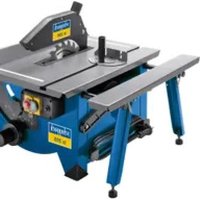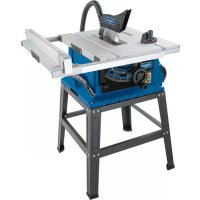
HS105 - Saw SCHEPPACH - Free user manual and instructions
Find the device manual for free HS105 SCHEPPACH in PDF.



| Technical Specifications | SCHEPPACH HS105 table circular saw, motor power 1800 W, blade diameter 250 mm, no-load speed 5000 rpm. |
|---|---|
| Table Dimensions | Aluminum table, dimensions 600 x 800 mm, extendable for larger pieces. |
| Cutting Capacity | Cutting capacity at 90°: 85 mm, cutting capacity at 45°: 60 mm. |
| Usage | Ideal for cutting wood, particle boards, MDF, and similar materials. |
| Maintenance | Regularly check the blade condition, clean the table after each use, lubricate moving parts. |
| Safety | Use safety glasses, gloves, and follow the safety instructions provided in the user manual. |
| General Information | Weight: 32 kg, 2-year manufacturer warranty, compliant with CE safety standards. |
Frequently Asked Questions - HS105 SCHEPPACH
User questions about HS105 SCHEPPACH
0 question about this device. Answer the ones you know or ask your own.
Ask a new question about this device
Download the instructions for your Saw in PDF format for free! Find your manual HS105 - SCHEPPACH and take your electronic device back in hand. On this page are published all the documents necessary for the use of your device. HS105 by SCHEPPACH.
USER MANUAL HS105 SCHEPPACH
Homepage: https://www.scheppach.com/de/service
Explanation of the symbols on the product
Symbols are used in this manual to draw your attention to potential hazards. The safety symbols and the accompanying explanations must be fully understood. The warnings themselves will not rectify a hazard and cannot replace proper accident prevention measures.
| Before commissioning, read and observe the operating manual and safety instructions. | |
| Wear safety goggles. | |
| Wear hearing protection. | |
| Wear dust protection mask. | |
| ATTENTION: Danger of injury! Do not reach into saw blade while it is running. | |
| Cutting height at 90°: 90 mm | |
| Cutting height at 45°: 65 mm | |
| Riving knife thickness: 2 mm | |
| Protection class II (double insulation) | |
| The product complies with the applicable European directives. | |
| The product complies with the applicable Serbian directives. |
Table of contents: Page:
- Introduction 33
- Description of the product 33
- Scope of delivery 33
- Proper use 34
- Safety instructions 35
- Technical data 39
- Unpacking 40
- Layout 40
9.Before commissioning 42 - Operation 42
- Sawing 43
- Cleaning 45
- Transport 46
- Maintenance 46
- Repair & ordering spare parts 47
- Storage 48
- Electrical connection 48
- Disposal and recycling 49
- Troubleshooting 50
- Declaration of conformity 534
1. Introduction
Manufacturer:
Scheppach GmbH
Günzburger Str. 69
D-89335 Ichenhausen
Dear Customer,
We hope your new product brings you much enjoyment and success.
Exclusion of liability
In accordance with the applicable product liability laws, the manufacturer of this product assumes no liability for damage to the product or caused by the product arising from:
- Improper handling,
- Failure to comply with the operating manual,
- Repairs carried out by third parties, unauthorised specialists,
- Installing and replacing non-original spare parts,
Application other than specified. - Failures of the electrical system in the event of the electrical regulations and VDE provisions 0100, DIN 57113 / 0113 not being observed.
Note:
The operating manual is part of this product.
It includes important instructions for the safe, proper and economic operation of the product, for avoiding danger, for minimising repair costs and downtimes and for increasing the reliability and extending the service life of the product. In addition to the safety instructions in this operating manual, you must also observe the regulations applicable to the operation of the product in your country.
Familiarise yourself with all operating and safety instructions before using the product. Only operate the product as described and for the specified areas of application. Keep the operating manual in a good place and hand over all documents when passing the product on to third parties.
2. Description of the product
- Saw blade guard
1a. Locking pin
2. Riving knife
2a. Clamping lever
3. Saw blade
3a. Inner flange
3b. Outer flange
3c. Flange screw
-
Saw table
-
Stop rail
-
Parallel stop
6a. left-hand sight glass
6b. right-hand sight glass
6c. Wing nuts
6d. Washer
6e. Coach bolt
6f. Hexagonal nut
-
Table width extension
-
(Clamping lever) table width extension
-
Front guide rail
-
Reset button
-
Angle adjustment clamp
-
Hand wheel
-
On/off switch
-
STOP switch
-
Machine stand leg
-
Cross member, machine stand (short) (B)
16a. Cross member, machine stand (long) (A)
-
Anti-tip bar
-
Rubber foot
-
Parallel stop clamp
-
Mitre gauge
20a. Locking handle
20b. Stop rail
20c. Wing nut
-
Suction port
-
Table inlay
22a.Grub screws
22b. Locking mechanism
-
Saw blade bearing + ring spanner
-
Mitre gauge storage
-
Carbon brushes
A. Locking nut
B. Hexagon head screw (M6x12)
C. -
D. Ring spanner (10 mm / 13 mm)
E. Ring spanner (10 mm / 21 mm)
F. Push stick
3. Scope of delivery
Item Quantity Designation
| 1 | 1x | Saw blade guard |
| 2 | 1x | Riving knife |
| 6 | 1x | Parallel stop |
| 15 4x Machine stand leg | |
| 16 2x | Cross member, machine stand (short) (B) |
| 16 a 2x | Cross member, machine stand (long) (A) |
| 17 2x Anti-tip bar | |
| 18 4x Rubber foot | |
| 20 1x Mitre gauge | |
| 20b 1x Stop bar (mitre gauge) | |
| A 28x Locking nut | |
| B 28x Hexagon head screw (M6x12) | |
| D 1x Ring spanner (10 mm / 13 mm) | |
| E 1x Ring spanner (10 mm / 21 mm) | |
| F 1x Push stick | |
| 1x Operating manual | |
4. Proper use
The circular table saw is used for the longitudinal and transverse cutting (only with the metre gauge) of all types of timbers and plastic, in accordance with the machine size. It is not permitted to cut any type of round timber.
Only suitable saw blades (HM or CV saw blades) may be used for the machine.
The use of any type of HSS saw blades or cutting wheels is prohibited.
Notes:
Compliance with the regulations, safety instructions, descriptions and notes in this operating manual are part of proper use.
The safety, operating and maintenance specifications of the manufacturer, as well as the dimensions specified in the operating manual, must be observed.
Working on or with the product may only be carried out as described in this operating manual. All other maintenance and repair work not described in these operating instructions must be carried out by a customer service centre.
Please note that our equipment was not designed with the intention of use for commercial or industrial purposes. We assume no guarantee if the device is used in commercial or industrial applications, or for equivalent work.
Other general occupational health and safety-related rules and regulations must be observed.
ATTENTION
When using the product, several safety warnings must be observed to prevent injuries and damage. For this reason, please carefully read the operating manual and the safety instructions. Store this manual in a safe place so that the information is available at any time. If the product is handed over to another person, hand over the operating manual and the safety instructions with it. We accept no liability for accidents or damage that occur due to a failure to observe this operating manual and the safety instructions.
The liability of the manufacturer and resulting damages are excluded in the event of modifications of the machine.
Despite use as intended, specific risk factors cannot be entirely eliminated. Due to the design and layout of the machine, the following risks remain:
- Contact with the saw blade in the exposed sawing area
- Reaching into the running saw blade (cutting injury)
- Kick-back of workpieces and workpiece parts
- Saw blade breakage
- Ejection of faulty carbide parts of the saw blade
- Hearing damage when the necessary hearing protection is not used
- Harmful emissions of wood dusts during use in enclosed areas.
Explanation of the signal words in the operating manual
| DANGER | Signal word to indicate an imminently hazardous situation which, if not avoided, will result in death or serious injury. |
| WARNING | Signal word to indicate a potentially hazardous situation which, if not avoided, could result in death or serious injury. |
| CAUTION | Signal word to indicate a potentially hazardous situation which, if not avoided, could result in minor or moderate injury. |
| ATTENTION | Signal word to indicate a potentially hazardous situation which, if not avoided, could result in product or property damage. |
| NOTE | Signal word to indicate a potentially hazardous situation which, if not avoided, could result in product or property damage. |
5. Safety instructions
General safety information for electric tools
WARNING: Read all safety warnings, instructions, illustrations and specifications provided with this power tool.
Failure to follow all instructions listed below may result in electric shock, fire and/or serious injury.
Save all warnings and instructions for future reference.
The term "power tool" in the warnings refers to your mains-operated (corded) power tool or battery-operated (cordless) power tool.
- Work area safety
a) Keep your work area clean and well-lit. Cluttered or dark areas invite accidents.
b) Do not operate power tools in explosive atmospheres, such as in the presence of flammable liquids, gases or dust. Power tools create sparks which may ignite the dust or fumes.
c) Keep children and bystanders away while operating a power tool. Distractions can cause you to lose control.
- Electrical safety
a) Power tool plugs must match the outlet. Never modify the plugin any way. Do not use any er plugs with earthed (grounded) power tools.
Unmodified plugs and matching outlets will reduce risk of electric shock.
b) Avoid body contact with earthed or grounded surfaces, such as pipes, radiators, ranges and refrigerators.
There is an increased risk of electric shock if your body is earthed or grounded.
c) Do not expose power tools to rain or wet conditions. Water entering a power tool will increase the risk of electric shock.
d) Do not abuse the cord. Never use the cord for carrying, pulling or unplugging the power tool. Keep cord away from heat, oil, sharp edges or moving parts.
Damaged or entangled cords increase the risk of electric shock.
e) When operating a power tool outdoors, use an extension cord suitable for outdoor use. Use of a cord suitable for outdoor use reduces the risk of electric shock.
f) If operating a power tool in a damp location is unavoidable, use a residual current device (RCD) protected supply. Use of an RCD reduces the risk of electric shock.
- Personal safety
a) Stay alert, watch what you are doing and use common sense when operating a power tool. Do not use a power tool while you are tired or under the influence of drugs, alcohol or medication. A moment of inattention while operating power tools may result in serious personal injury.
b) Wear personal protective equipment and always safety goggles. Protective equipment such as a dust mask, non-skid safety shoes, safety helmet or hearing protection used for appropriate conditions will reduce personal injuries.
c) Prevent unintentional starting. Ensure the switch is in the off-position before connecting to power source and/or rechargeable battery, picking up or carrying the tool. Carrying power tools with your finger on the switch or energising power tools that have the switch on invites accidents.
d) Remove any adjusting tools or spanners/keys before turning the power tool on. A wrench or a key left attached to a rotating part of the power tool may result in personal injury.
a) Avoid abnormal postures. Keep proper foot- ing and balance at all times. This enables better control of the power tool in unexpected situations.
f) Wear suitable clothing. Do not wear loose clothing or jewellery. Keep your hair and clothing away from moving parts. Loose clothes, jewellery or long hair can be caught in moving parts.
g) If devices are provided for the connection of dust extraction and collection facilities, ensure these are connected and properly used. Use of dust extraction can reduce dust-related hazards.
h) Do not let familiarity gained from frequent use of tools allow you to become complacent and ignore tool safety principles. A careless action can cause severe injury within a fraction of a second.
4. Power tool use and care
a) Do not force the power tool. Use the correct power tool for your application. The correct power tool will do the job better and safer at the rate for which it was designed.
b) Do not use the power tool if the switch does not turn it on and off. Any power tool that cannot be controlled with the switch is dangerous and must be repaired.
c) Disconnect the plug from the power source and/or remove the battery pack, if detachable, from the power tool before making any adjustments, changing accessories, or storing power tools. Such precautionary measures reduce the risk of starting the power tool accidentally.
d) Store idle power tools out of the reach of children and do not allow persons unfamiliar with the power tool or these instructions to operate the power tool. Power tools are dangerous in the hands of untrained users.
e) Maintain power tools and attachments. Check for misalignment or binding of moving parts, breakage of parts and any other condition that may affect the power tool's operation. If damaged, have the power tool repaired before use. Many accidents are caused by poorly maintained power tools.
f) Keep cutting tools sharp and clean. Properly maintained cutting tools with sharp cutting edges are less likely to bind and are easier to control.
g) Use the power tool, tool attachments and tool bits etc. in accordance with these instructions. Take into account the working conditions and the work to be performed. Use of the power tool for operations different from those intended could result in a hazardous situation.
h) Keep handles and grasping surfaces dry, clean and free from oil and grease. Slippery handles and grasping surfaces do not allow for safe handling and control of the tool in unexpected situations.
5. Service
a) Have your power tool serviced by a qualified repair person using only identical replacement parts. This will ensure that the safety of the power tool is maintained.
WARNING
Danger due to electromagnetic field
This power tool generates an electromagnetic field during operation. This field can impair active or passive medical implants under certain circumstances.
- In order to prevent the risk of serious or deadly injuries, we recommend that persons with medical implants consult with their physician and the manufacturer of the medical implant prior to operating the power tool.
Safety instructions for table saws
Guarding related warnings
a) Keep guards in place. Guards must be in working order and be properly mounted. A guard that is loose, damaged, or is not functioning correctly must be repaired or replaced.
b) Always use saw blade protective cover and riv- ing knife for every through-cutting operation. For through-cutting operations where the saw blade cuts completely through the thickness of the workpiece, the protective cover and other safety devices help reduce the risk of injury.
c) After completing concealed cuts, e.g. notching, separating by changing over or cutting grooves, secure the riving knife in its uppermost end position again. Set the protective cover while the riving knife is in its uppermost end position. The protective cover and riving knife help to reduce the risk of injury.
d) Make sure the saw blade is not contacting the protective cover, riving knife or the workpiece before the switch is turned on. Inadvertent contact of these items with the saw blade could cause a hazardous condition.
e) Adjust the riving knife as described in this instruction manual. Incorrect spacing, positioning and alignment can make the riving knife ineffective in reducing the likelihood of kickback.
f) For the riving knife to work, it must be in the sawing gap. The riving knife is ineffective when cutting workpieces that are too short to be engaged with the riving knife. Under these conditions a kickback cannot be prevented by the riving knife.
g) Use the appropriate saw blade for the riving knife. For the riving knife to function properly, the saw blade diameter must match the appropriate riving knife and the body of the saw blade must be thinner than the thickness of the riving knife and the cutting width of the saw blade must be wider than the thickness of the riving knife.
Cutting procedures warnings
a) DANGER: Never place your fingers or hands in the vicinity of the saw blade or in the sawing area. A moment of inattention or a slip could direct your hand towards the saw blade and result in serious personal injury.
b) Feed the workpiece into the saw blade or cutter only against the direction of rotation. Feeding the workpiece in the same direction that the saw blade is rotating above the table may result in the workpiece, and your hand, being pulled into the saw blade.
c) Never use the litre gauge to feed the workpiece when performing longitudinal cuts and do not use the parallel stop as a length stop when cross cutting with the litre gauge. Guiding the workpiece with the "parallel stop and the litre gauge at the same time increases the likelihood of saw blade binding and kickback.
d) When making longitudinal cuts, always keep the workpiece in full contact with the stop rail and always apply the feed force to the workpiece between the stop rail and the saw blade. Use a push stick when the distance between the fence and the saw blade is less than 150~mm , and use a push block when this distance is less than 50~mm . "Work helping" devices will keep your hand at a safe distance from the saw blade.
e) Use only the push stick provided by the manufacturer or constructed in accordance with the instructions. This push stick provides sufficient distance of the hand from the saw blade.
f) Never use a damaged or cut push stick. A damaged or cut push stick may break causing your hand to slip into the saw blade.
g) Do not perform any operation "freehand". Always use either the parallel stop or the mitre gauge to position and guide the workpiece. "Freehand" means using your hands to support or guide the workpiece, in lieu of a parallel stop or mitre gauge. Freehand sawing leads to misalignment, binding and kickback.
h) Never reach around or over a rotating saw blade. Reaching for a workpiece may lead to accidental contact with the moving saw blade.
i) Provide auxiliary workpiece support to the rear and/or sides of the saw table for long and/or wide workpieces to keep them level. A long and/or wide workpiece has a tendency to pivot on the table's edge, causing loss of control, saw blade binding and kickback.
j) Feed workpiece at an even pace. Do not bend, twist or move the workpiece sideways. If the saw blade jams, turn the tool off immediately, unplug the mains plug then clear the jam. Jamming the saw blade by the workpiece can cause kickback or stall the motor.
k) Do not remove pieces of cut-off material while the saw is running. The material may become trapped between the fence or inside the protective cover and the saw blade pulling your fingers into the saw blade. Turn the saw off and wait until the saw blade stops before removing material.
1) Use a auxiliary parallel stop in contact with the table top when making longitudinal cuts on workpieces less than 2mm thick. A thin workpiece may wedge under the parallel stop and create a kickback.
Kickback - causes and related warnings
Kickback is a sudden reaction of the workpiece due to a pinched, jammed saw blade or misaligned line of cut in the workpiece with respect to the saw blade or when a part of the workpiece binds between the saw blade and the parallel stop or other fixed object.
Most frequently during kickback, the workpiece is lifted from the saw table by the rear portion of the saw blade and is propelled towards the operator. Kickback is the result of saw misuse and/or incorrect operating procedures when using the circular table saw. And can be avoided by taking proper precautions as given below.
a) Never stand directly in line with the saw blade. Always position your body on the same side of the saw blade as the fence. Kickback may propel the workpiece at high velocity towards anyone standing in front and in line with the saw blade.
b) Never reach over or in back of the saw blade to pull or to support the workpiece. Accidental contact with the saw blade may occur or kickback may drag your fingers into the saw blade.
c) Never hold and press the workpiece that is being cut off against the rotating saw blade. Pressing the workpiece being cut off against the saw blade will create a binding condition and kickback.
d) Align the fence to be parallel with the saw blade. A misaligned fence will pinch the workpiece against the saw blade and create kickback.
e) Use a featherboard to guide the workpiece against the table and fence when making nonthrough cuts such as rabbeting, dadoing or resawing cuts. A featherboard helps to control the workpiece in the event of a kickback.
f) Use extra caution when making a cut into blind areas of assembled workpieces. The protruding saw blade may cut objects that can cause kickback.
g) Support large panels to minimise the risk of saw blade pinching and kickback. Large panels tend to sag under their own weight. Support(s) must be placed under all portions of the panel overhanging the table top.
h) Use extra caution when cutting a workpiece that is twisted, knotted, warped or does not have a straight edge to guide it with a mitre gauge or along the fence. A warped, knotted, or twisted workpiece is unstable and causes misalignment of the kerf with the saw blade, binding and kickback.
i) Never cut more than one workpiece, stacked vertically or horizontally. The saw blade could pick up one or more pieces and cause kickback.
j) When restarting the saw with the saw blade in the workpiece, centre the saw blade in the sawing gap so that the saw teeth are not engaged in the material. If the saw blade binds, it may lift up the workpiece and cause kickback when the saw is restarted.
k) Keep saw blades clean, sharp, and with sufficient set. Never use warped saw blades or saw blades with cracked or broken teeth. Sharp and properly set saw blades minimise binding, stalling and kickback.
Table saw operating procedure warnings
a) Turn off the circular table saw and disconnect the power cord when removing the table insert, changing the saw blade or making adjustments to the riving knife or saw blade guard, and when the machine is left unattended. Precautionary measures will avoid accidents.
b) Never leave the circular table saw running unattended. Turn it off and don't leave the tool until it comes to a complete stop. An unattended running saw is an uncontrolled hazard.
c) Locate the circular table saw in a well-lit and level area where you can maintain good footing and balance. It should be installed in an area that provides enough room to easily handle the size of your workpiece. Cramped, dark areas, and uneven slippery floors invite accidents.
d) Frequently clean and remove shavings from under the saw table and/or the dust collection device. Accumulated sawdust is combustible and may self-ignite.
e) The circular table saw must be secured. A circular table saw that is not properly secured may move or tip over.
f) Remove tools, wood scraps, etc. from the table before the circular table saw is turned on. Distraction or a potential jam can be dangerous.
g) Always use saw blades with correct size and shape (diamond versus round) of arbour holes. Saw blades that do not match the mounting hardware of the saw will run off-centre, causing loss of control.
h) Never use damaged or incorrect saw blade mounting means such as flanges, saw blade washers, bolts or nuts. This saw blade mounting material has been specially designed for your saw, for safe operation and optimum performance.
i) Never stand on the circular table saw, do not use it as a stepping stool. You may suffer serious injuries if the power tool tips over or you accidentally come into contact with the saw blade.
j) Make sure that the saw blade is installed to rotate in the proper direction. Do not use grinding wheels, wire brushes, or abrasive wheels on a circular table saw. Improper saw blade installation or use of accessories not recommended may cause serious injury.
Safety instructions for the use of saw blades
- Only use insertion tools if you have mastered their use.
- Observe the maximum speed. The maximum speed specified on the insertion tool may not be exceeded. If specified, observe the speed range.
- Observe the motor / saw blade direction of rotation.
-
Do not use any insertion tools with cracks. Sort out cracked insertion tools. Repairs are not permitted.
-
Clean dirt, grease, oil and water off of the clamping surfaces.
-
Do not use any loose reducing rings or bushes to reduce holes on circular saw blades.
-
Make sure that fixed reducer rings for securing the insertion tool have the same diameter and have at least 1/3 of the cutting diameter.
-
Make sure that fixed reducer rings are parallel to each other.
-
Handle insertion tool with caution. They are ideally stored in the originally package or special containers. Wear protective gloves in order to improve grip and to further reduce the risk of injury.
-
Prior to the use of insertion tools, make sure that all protective devices are properly fastened.
-
Prior to use, make sure that the insertion tool meets the technical requirements of this electric tool and is properly fastened.
-
Only use the supplied saw blade for cutting wood, never for the processing of metals.
-
Use the correct saw blade for the material to be processed.
-
Use only a saw blade with a diameter that matches the specifications on the saw.
-
Use only saw blades that are marked with an equal or higher rotational speed than that marked on the electric tool.
-
Use only saw blades recommended by the manufacturer which conform to EN 847-1, if intended for cutting wood or similar materials.
-
Wear suitable personal protective equipment, such as: - Hearing protection; - Protective gloves when handling saw blades.
-
Only use saw blades recommended by the manufacturer which conform to EN 847-1. Warning! When changing the saw blade, ensure that the cutting width is not smaller and the width of the saw blade disc is not greater than the thickness of the riving knife!
-
When sawing wood and plastics, avoid the saw teeth overheating. Reduce the feed speed in order to avoid the plastic melting.
-
Please note that complicated concealing cuts and cutting of bevels/wedges are not permitted.
-
Do not carry out longitudinal cuts with a slope on the side towards which the slope is being made.
-
When installing or adjusting the parallel stop, ensure that the parallel stop is aligned parallel to the saw blade.
6. Technical data
AC motor. 220-240 V~50 Hz
Power consumption 1800 W (S1) ...2000 W (S6 25%*)
Idle speed _0 4800 rpm
Carbide saw blade 254 x 0 30 x 2.8 mm
Saw blade body thickness. 1.8 mm
Number of teeth 24
Riving knife thickness 2 mm
Min. size of workpiece W x L x H......10 x 50 x 1 mm
Table size 560 x 680 mm
Table size max. 1055 x 680 mm
Cutting height max. 45^ 65 mm
Cutting height max. 0^ 90 mm
Tilting saw blade...from 0^ to 45^ left Mitre angle. -60^ to 60^
Extraction connection. 35 mm
Protection class
Protection class . IPX0
Weight. .ca. 21 kg
^1 : Continuous operation with constant load **S6 25%
Continuous duty with intermittent loading (operating time 10 min.)
In order to avoid impermissible overheating of the motor, the motor should be driven for only 25% of the operating time with the stipulated nominal power and must then continue to run with no load for the remaining 75% of the operating time.
Noise
The noise levels have been determined in accordance with EN 62841.
Sound pressure level L_pA 93.8 dB
Uncertainty K 3 dB
Sound power level L 106.8 dB
Uncertainty K 3 dB
WARNING
Excessive and frequent exposure to noise can lead to hearing damage or hearing loss.
-
Wear hearing protection.
-
Take breaks.
Total vibration emission values (vector sum of three directions) determined per EN 62841.
Vibration parameter:
Vibration ah: ≤ 2.5m / s^2
NOTE: The specified device emissions values have been measured in accordance with a standardised test procedure and can be used for comparison of one electric tool with another.
The specified device emissions values can also be used for an initial estimation of the load.
WARNING: The noise emission values can vary from the specified values during the actual use of the power tool, depending on the type and the manner in which the electric tool is used, and in particular the type of workpiece being processed.
Implement measures to protect against noise nuisance. In doing so, take into account the complete working process, including the times when the power tool is working without load or switched off. Suitable measures include regular maintenance and care of the power tool and the insertion tools, regular breaks as well as proper planning of the working process.
7. Unpacking
DANGER
Danger of choking or suffocating
The packaging material, packaging and transport safety devices are not children's toys. Plastic bags, film and small parts can be swallowed and lead to choking.
-
Keep packaging material, packaging and transport safety devices away from children.
-
Open the packaging and carefully remove the product.
- Remove the packaging material, packaging and transport safety devices (if applicable).
- Check the completeness of the scope of delivery. Customer service must be notified immediately of any complaints. Later claims will not be recognised.
- Check all of the delivered items for transport damage. The transport company must be notified immediately of any complaints. Later claims will not be recognised.
- Keep the packaging until the end of the warranty period.
- Read through the operating manual completely.
- Only use original spare parts and accessories. Original spare parts or accessories can be obtained from your specialist dealer.
- Check that the data on the type plate matches with the mains power data.
8. Layout
WARNING: Remove the mains plug before any maintenance, modification or assembly work on the circular table saw.
Attention!
Always make sure the device is fully assembled before commissioning!
You require the following for assembly:
1x Ring spanner (10 mm / 13 mm) (D)
1x Ring spanner (10 mm / 21 mm) (E)
- Place all supplied parts on a flat surface.
- Group identical parts.
NOTE:
- If connections are secured with a screw (round head/or hexagon), hexagonal nuts and washer, the washer must be placed under the nut.
- Insert screws from the outside to the inside and secure connections with nuts from the inside.
- During assembly, tighten the nuts and bolts only to the extent that they cannot fall off. If you tighten the nuts and screws fully before final assembly, the final assembly cannot be carried out.
8.1 Assembling the machine stand (Fig. 3)
- Place the circular table saw upside down (i.e. on the saw table) on a flat surface.
- Insert the four machine stand legs (15) into the intended recesses in the machine housing.
- Screw them together with a hexagon head screw (B) and a locking nut (A). Use the 10mm ring spanner (D) and the 10mm ring spanner (E) for this.
- Place one machine stand cross member (short) (16) and one machine stand cross member (long) (16a) between the machine stand legs (15) on the inside. Make sure that the long side is positioned to the front and the short side to the side.
- Fasten the machine stand cross members (short) (16) and machine stand cross members (long) (16a) to the machine stand legs (15) using four Hexagon head bolts (B) and four locking nuts (A) each. Use the enclosed 10mm ring spanner (D) to tighten them.
-
Push one rubber foot (18) onto each machine stand leg (15)
-
Mount an anti-tipping bar (17) onto each of the rear machine stand legs (15). Use two Hexagon head bolts (B) and two locking nuts (A) for each. Tighten them using the 10mm ring spanner (D) supplied.
- Carefully turn the product over and place it on the floor.
- Tighten up all the screws.
8.2 Saw blade guard
8.2.1 Removing the table inlay (Fig. 4)
- Set the saw blade (3) to the max. cutting depth, move to the 0^ position and lock in place (see 11.2 and 11.3).
- Open the locking device (22b) by turning it clockwise.
- Remove the table inlay (22) from the saw table (4).
8.2.2 Insert and adjust the riving knife (Fig. 5) Note:
The riving knife (2) must be adjusted before using the machine for the first time.
- Open the clamping lever (2a).
- Push the riving knife (2) into the bracket. NOTE: This step can be omitted if the riving knife (2) has already been inserted.
- Align the riving knife (2) so that a) the distance between the saw blade (3) and the riving knife (2) is max. 3 - 8 mm (Fig. 5) and b) The saw blade (3) is parallel to the riving knife (2).
c) The recesses in the riving knife (2) engage in the pins of the riving knife holder.
d) the hole in the riving knife (2) engages in the pin of the riving knife holder. - Close the clamping lever (2a).
8.2.3 Inserting the table inlay (Fig. 4)
- Place the table inlay (22) in the recess.
- Close the lock (22b) by turning it anti-clockwise.
8.2.4 Fitting the saw blade guard (1) (Fig. 1, 5)
- Drive the saw blade (3) up as far as it will go by turning the hand wheel (12) clockwise until it reaches the stop.
- Press the locking pin (1a) on the saw blade guard (1).
- Insert the pressed locking pin (1a) into the groove of the riving knife (2) and release it.
-
Ensure that the saw blade guard (1) can move freely.
-
Disassembly takes place in reverse order.
WARNING
Danger of injury due to incorrectly mounted saw blade guard
- Before starting sawing, ensure that the saw blade guard (1) lowers automatically onto the material to be sawn.
8.2.5 Check the saw blade guard (Fig. 1, 5)
After fitting, check that the saw blade guard (1) is functioning properly.
- Lift the saw blade guard (1) and then release it.
- The saw blade guard (1) should move back to its starting position automatically.
8.3 Positioning the parallel stop (Fig. 8, 10)
- With the parallel stop clamp (19) open, first place the parallel stop (6) on the rear guide rail and then on the front guide rail (9).
- To change the position of the parallel stop (6), slide the parallel stop (6) with an opened parallel stop clamp (19) along the guide rail.
- In order to fix the parallel stop (6) in the desired position, press the parallel stop clamp (19) all the way down and adjust the tension using the wing nut (6f) if necessary (Fig. 10).
8.4 Fitting the litre gauge (Fig. 9)
- Fit the stop bar (5) on the litre gauge (20) and tighten both wing nuts (20c).
- Insert the litre gauge (20) into the groove of the saw table (4).
- Loosen the locking handle (20a) by turning it anti-clockwise.
- Turn the metre gauge (20) until the arrow points to the required angle.
- Secure this position by turning the locking handle (20a) clockwise.
8.5 Connecting the chip extraction system (Fig. 7) WARNING
Risk of eye injury from swirling chips
- Wear safety goggles.
-
Only operate the product with a suitable chip extraction system. Do not use household vacuum cleaners.
-
Connect a suitable chip extraction system (not included in the scope of delivery) to the suction port (21).
-
Connect the suction hose of a suitable chip extraction system (e.g. a multi-purpose suction device) to the suction port (21).
ATTENTION
Check and clean the suction channels at regular intervals.
9. Before commissioning
9.1 General information
- Check that the product is fully assembled.
- Check that the protective covers are present, installed and functional.
- Check that the switches work as intended.
- Check that the product is on a firm footing.
- Check that the stickers on the product are present and legible. Missing or damaged stickers must be replaced or exchanged.
- Check that the mains voltage and the operating voltage match, see technical data.
- Check that the supply cables, extensions, cable reel etc. are not too long. Otherwise there may be a voltage drop or delayed motor start-up.
- Check that the ambient temperature is observed.
9.2 Product-specific information
- The machine must be securely installed.
- The saw blade (3) must be able to run freely.
- In case of previously machined wood, be aware of any foreign bodies, such as nails or screws, etc.
- Before pressing the ON/OFF switch (13), make sure that the saw blade (3) is fitted correctly, and that moving parts run smoothly.
- Only connect the machine to a correctly installed protective contact socket, with fuse protection of at least 16A.
10. Operation
10.1 Switch (Fig. 1)
10.1.1 On/off switch and STOP switch
- To switch on the saw, press the "I" button on the on/off switch (13). Wait until the saw blade (3) has reached its maximum speed before starting sawing.
- To switch off the saw, press the STOP switch (14) or lift the cover cap and press the "0" button on the on/off switch (13).
10.1.2 Overload protection (Fig. 1)
In the event of overloading, the motor will switch itself off. After a cool-down period (time varies) the motor can be switched back on again.
- Allow the product to cool.
- Press the reset button (10).
- Switch the machine back on as described in 11.1.1.
10.2 Setting the cutting depth (Fig. 1)
The saw blade (3) can be adjusted to the required cutting depth by turning the hand wheel (12).
- Clockwise: Greater cutting depth
- Counter-clockwise: Smaller cutting depth
Check the setting with a test cut.
10.3 Setting the cutting angle (Fig. 11)
Angled cuts of 0^ to 45^ to the left of the parallel stop (6) can be carried out with the circular table saw.
Before making every cut, check that no collision can occur between the parallel stop (6), litre gauge (20) and the saw blade (3).
- Release the angle adjustment clamp (11).
- Push the hand wheel (12) and turn it at the same time to set the required angle on the scale.
- Lock the angle adjustment clamp (11) in the required angle position.
10.4 Adjusting the table inlay (22) (Fig. 4)
The height of the table inlay (22) can be adjusted using the four grub screws (22a).
- Turn the desired grub screw (22a) clockwise to raise the table inlay at the corresponding point.
- To lower the table inlay, turn the grub screw (22a) at the corresponding point anti-clockwise.
10.5 Using the parallel stop
10.5.1 Stop height (Fig. 12)
- Depending on the thickness of the material to be cut, the stop rail (5) must be fitted for thick material (workpiece thickness exceeding 25mm ) and thin material (workpiece thickness below 25mm ).
10.5.2 Fitting/removing the stop rail (Fig. 8, 12)
-
In order to remove the stop rail (5), loosen the two wing nuts (6c) to release the stop rail (5) from the parallel stop (6).
-
Pull the stop rail (5) along the groove and out.
- Remove the locking screws (6e), washers (6d) and wing nuts (6c).
- Installation of the stop rail (5) takes place in reverse order.
10.5.3 Changing the side of the parallel stop (Fig. 8, 12)
- Unscrew the wing nuts (6c) fully.
- Remove the stop rail (5) and reinsert the carriage bolts (6e) on the opposite side of the parallel stop (6).
- Replace the washers (6d) and the wing nuts (6c) and screw them tight.
10.5.4 Check the sight glass (6a) and scale (Fig. 1,8)
- There is a scale on the guide rail at the front of the saw table (4).
To set the parallel stop (6) to a specific dimension, proceed as follows:
- Release the parallel stop clamp (19).
- Move the parallel stop (6) until the desired dimension is visible on the scale of the guide rail in the sight glass (6a/6b).
Note: If the parallel stop to the right of the saw blade is being used, use the right-hand sight glass (6b). If the parallel stop is used to the left of the saw blade, use the left-hand sight glass (6a).
- Push the parallel stop clamp (19) completely down to fix it.
- Make a test cut and measure the sawn-off workpiece.
- If the measurement does not match the scale, proceed as follows:
- Slide the parallel stop (6) to the saw blade (3) and tighten it.
- Loosen the screw on the sight glass (6a).
- Set the sight glass (6a) to zero.
- Tighten the screw.
10.5.5 Setting the cutting width (Fig. 8)
- The parallel stop (6) must be used when cutting sections of wood lengthways.
- The parallel stop (6) can be mounted on both sides of the saw table (4).
- There is a scale on the guide rail at the front of the saw table (4).
To set the parallel stop (6) to a specific dimension, proceed as follows:
-
Release the parallel stop clamp (19).
-
Move the parallel stop (6) until the desired dimension is visible on the scale of the guide rail in the sight glass (6a).
Note: If the parallel stop to the right of the saw blade is being used, use the right-hand sight glass. If the parallel stop is used to the left of the saw blade, use the left-hand sight glass. - Push the parallel stop clamp (19) completely down to fix it.
10.6 Using the mitre gauge (20) (Fig. 1, 9)
Do not slide the stop rail (20b) too far towards the saw blade (3). The distance between the stop rail (20b) and the saw blade (3) needs to be approx. 2 cm.
10.6.1 Adjusting the mitre gauge (Fig. 1, 9)
- Fix the stop rail (20b) to the metre gauge (20) by tightening the wing nut (21c).
- Slide the metre gauge (20) into one of the two guide grooves of the saw table (4).
- Loosen the locking handle (20a) and turn the mitre gauge (20) until the desired angle has been set.
- Turn the locking handle (20a) tight again.
10.7 Extension of the work table for wider cuts (Fig. 1)
To extend the work table of the circular table saw for wider cuts, proceed as follows:
- Open the clamping lever (8) for the table width extension.
- Carefully pull out the table width extension until you reach the desired width. Make sure to extend the widening evenly to avoid jamming.
- Retighten the clamping lever (8).
ATTENTION: Make sure that the table width extension is firmly clamped before switching on the saw. A loosely fitting table width extension can affect the stability of the workpiece and lead to dangerous situations.
11. Sawing
WARNING
Danger of injury due to incorrect mounting
- Check that the product is properly assembled.
- Check the saw blade for mobility and moving parts for ease of movement.
ATTENTION
After switching on the saw, you must wait until the saw blade (3) has reached its maximum speed before making the cut.
11.1 Working instructions
WARNING
Danger of injury!
Improper handling may result in serious injury.
-
Observe and follow the safety and working instructions.
-
When making longitudinal cuts, do not stand in front of the circular table saw, but position yourself at an angle to the cutting path.
Always use the parallel stop for angled cuts. - Use a push rod or wooden push block in order to guide the workpiece past the saw blade. Replace a damaged or worn push stick immediately.
- Secure long workpieces against tilting at the end of the cutting process. Use a roller stand, for example.
After switching on the circular table saw, wait until the saw blade has reached its maximum speed before making the cut. - Only operate the circular table saw with a chip extraction system.
- Carry out a test cut after each new adjustment to check the dimensions set.
- Check and clean the suction channels at regular intervals.
11.2 Carrying out longitudinal cuts (Fig. 13) DANGER!
Saw rectangular workpieces only with the long side on the parallel stop. Never use the short side! Risk of kick-back!
With a longitudinal cut, you cut a workpiece in its longitudinal direction. You must press one edge of the workpiece against the parallel stop (6) and keep it there while the flat side lies on the saw table (4).
- Adjust the parallel stop (6) according to the height of the workpiece and the required width (see 11.5).
- When sawing, the saw blade guard (1) is pushed up and away from the workpiece.
- First switch on the chip extraction system and then the circular table saw.
- Place your hands flat on the workpiece with your fingers closed and slide it along the parallel stop (6) into the saw blade (3).
- Guide the workpiece laterally by holding it tight with the left hand only up to the front edge of the saw blade guard (1).
- Always slide the workpiece to the end of the riving knife (2) using the push stick (F).
11.2.1 Carrying out angled cuts (Fig. 14)
Angled cuts are always carried out using the parallel stop (6). The parallel stop (6) must always be fitted to the right of the saw blade (3). Otherwise, workpieces may become jammed between the parallel stop (6) and the saw blade (3) during sawing, and be ejected at speed.
- Set the saw blade (3) to the required angle (see 11.3).
- Adjust the parallel stop (6) according to the width and height of the workpiece (see 11.5).
- Lower the saw blade guard (1) onto the saw table (4).
- Carry out the cut in accordance with the workpiece width (see 12.2).
11.3 Carrying out cross cuts (Fig. 15)
WARNING
Risk of injury from rotating parts and sharp edges - Hold the guided workpiece firmly.
- Use the litre gauge to push the workpiece forwards until it is completely cut through.
- Set the litre gauge (20) as required (see 11.6.1). If the saw blade (3) should also be tilted, push the litre gauge (20) into the right-hand guide groove. This prevents either your hand or the litre gauge (20) from coming into contact with the saw blade guard (1).
- Lower the saw blade guard (1) onto the saw table (4). When sawing, the saw blade guard (1) is pushed up and away from the workpiece.
- Press the workpiece tight against the metre gauge (20).
- Switch on the chip extraction system and then the circular table saw.
- In order to carry out the cut, push the litre gauge (20) and the workpiece towards the saw blade (3).
11.4 Cutting narrow workpieces (Fig. 16)
Longitudinal cuts of workpieces with a width of less than 120mm must always be made with the aid of a push stick (F).
For short workpieces, the push stick (F) must be used as soon as you start cutting.
- Adjust the parallel stop (6) according to the height of the workpiece and the required width (see 11.5).
-
Place your hands flat on the workpiece with your fingers closed and slide it along the parallel stop (6) into the saw blade (3).
-
Always slide the workpiece to the end of the riving knife (2) using the push stick (F).
11.5 Cutting very narrow workpieces (Fig. 16)
A wooden push block must always be used for longitudinal cuts of very narrow workpieces with a width 50 mm and less. The wooden push block is not included in the scope of delivery! (Available from specialised dealers)
Replace a worn wooden push block in good time.
During sawing, workpieces may become jammed between the parallel stop (6) and the saw blade (3), caught by the saw blade (3) and then ejected at speed. For this reason, the lower guide surface of the parallel stop (6) should be favoured (see Fig. 12).
- Adjust the parallel stop (6) according to the height of the workpiece and the required width (see 11.4).
- Use the wooden push block to push the workpiece against the stop rail (5) and use the push stick (F) to push the workpiece through to the end of the riving knife (2).
11.6 Cutting chipboard
To prevent the cutting edges breaking when cutting chipboard, proceed as follows:
The saw blade (3) must not be set higher than 5mm above the workpiece thickness (see also 11.2).
11.7 After sawing
- Switch off the circular table saw first and then the chip extraction system. The saw blade continues to run for a longer time.
- Disconnect the circular table saw from the mains by pulling the mains plug out of the power socket.
- Do not remove the cut waste on the saw table until the saw blade has returned to its resting position.
- Allow the circular table saw to cool down completely.
11.8 Removing trapped material WARNING
Risk of injury to fingers and hands due to sharp edges - Wear protective gloves.
- If the saw blade is jammed in the workpiece or other blockages occur, proceed as follows: Switch the circular table saw off immediately and remove the mains plug from the socket.
- Use protective gloves and do not touch the saw blade with your bare hands.
12. Cleaning
DANGER
Risk of electric shock due to water entering the interior of the device
- Do not splash the product with water.
WARNING
Risk of injury due to unexpected start-up of the machine
- Remove the mains plug from the socket.
12.1 Clean the product and saw blade guard ATTENTION
Product damage due to inadequate cleaning
- Clean the product thoroughly after each use.
ATTENTION
Product damage due to aggressive solvents or cleaning agents
- Remove coarse dirt with a brush.
-
Clean the product with a damp, clean, lint-free cloth and a little soft soap.
-
Remove dust and chips with a brush after each operation.
- Clean the ventilation openings carefully with a lint-free cloth.
12.2 Clean product with compressed air ATTENTION
Product damage due to the use of excessive pressure on the compressed air device.
Cleaning the product with high pressure from the compressed air device can damage electrical components.
-
Use a compressed air device with a low pressure of max. 2 bar.
-
Ensure a suitable distance from the product.
- Remove heavy soiling with a compressed air device (max. 2 bar).
12.3 Cleaning the chip extraction system
The chip extraction system is not included in the scope of delivery. To clean your chip extraction system properly, follow the operating instructions of the respective manufacturer.
13. Transport
WARNING
Risk of injury due to unexpected start-up of the machine
- Remove the mains plug from the socket.
13.1 General information
- Do not carry the product by the table width extensions (7), but by the saw table itself (4).
- Pack the product to avoid damage during transport. Use the original packaging.
- Protect the product from vibrations and shocks, in particular during vehicular transport.
- Ensure adequate load securing when transporting in a vehicle.
13.2 Product-specific information
- When lifting the product, note its weight (see technical data).
- Always switch off the electrical tool before transport and disconnect it from the power supply.
- Always carry the electric tool with at least one other person, do not carry by the table width extensions. To transport the power tool, lift it by the machine housing.
- Protect the electrical tool from impacts, shocks and severe vibrations, e.g. during vehicular transport.
- Secure the electric tool against toppling and slipping.
- Never use protective devices for handling or transport.
14. Maintenance
WARNING
Risk of injury due to unexpected start-up of the machine
- Remove the mains plug from the socket.
WARNING
Warning of unforeseeable hazards and product damage
- Never carry out unauthorised modifications or repairs to the product that are not described in the operating instructions.
- Do not carry out work described for a specialist workshop.
14.1 General information
- Check the product for loose, worn or damaged components.
- Check the nuts, pins and screws for firm seating.
- Check the covers and protective equipment for damage and correct seating.
- Check the electrical connections. Repair work on the electrical connections may only be carried out by a specialist workshop.
14.2 Oiling the product
- Oil the rotating parts once monthly to extend the life of the tool.
- Do not oil the motor.
14.3 Check and maintain carbon brushes (Fig. 17)
If the machine is new, check the carbon brushes after the first 50 operating hours or if a new brush has been mounted. After the initial check, check every 10 operating hours.
If the carbon is worn down to a length of 6mm or the spring or the shunt wire is burnt or damaged, both brushes must be replaced. If the brushes are found to be usable after removal, they can be reinstalled.
- Tilt the saw blade to 45^ . (see 11.3)
- Place the circular table saw on its side on a flat surface.
- Remove the motor cover by loosening two Phillips screws.
- Release the spring of the carbon brushes (25).
- Pull out the carbon brushes (25) and disconnect the plug.
14.4 Replacing the saw blade
WARNING
Danger of injury! Improper handling of the circular table saw may result in serious injury.
WARNING
Risk of injury due to unexpected start-up of the machine
- Remove the mains plug from the socket.
WARNING
Risk of injury to fingers and hands due to sharp edges
- Wear protective gloves.
14.4.1 Removing the saw blade guard and the table inlay (Fig. 4)
- Press the locking pin (1a) on the saw blade guard (1).
- Hold down the locking pin (1a) and remove the saw blade guard (1) from the groove of the riving knife (2).
- Set the saw blade (3) to the max. cutting depth, move to the 0^ position and lock in place (see 11.3).
- Open the locking device (22b) by turning it clockwise.
- Remove the table inlay (22) from the saw table (4).
14.4.2 Removing the saw blade (Fig. 4, 5, 6)
PREREQUISITE: The saw blade (3) has been set to the maximum cutting depth (see 11.2).
- Place the 21 mm ring spanner (E) on the outer flange (3b) and thus fix the drive shaft.
- Turn the flange screw (3c) anti-clockwise with the 13 mm ring spanner (D) to open the flange screw (3c).
- Hold the saw blade (3) carefully with one hand.
- Remove the flange screw (3c) and the outer flange (3b) from the drive shaft.
- Now remove the saw blade (3) from the drive shaft and carefully draw it up and out of the saw table (4).
14.4.3 Inserting the saw blade (Fig. 6)
- Clean the outer flange (3b) carefully, before fitting a new saw blade (3).
- Clean the inner flange (3a) and reinsert it.
- Place a new saw blade (3) on the drive shaft. Observe the direction of rotation: The cutting angle of the teeth must point in the running direction (forwards). The running direction is usually also marked on the saw blade(3).
- Fit the outer flange (3b) back on the drive shaft. Ensure the correct alignment of the outer flange (3b).
- Tighten the flange screw (3c) on the drive shaft by hand.
- Turn the saw blade (3) carefully in the running direction: It must be precisely centred and must not "wobble". Check that the saw blade (3) and outer flange (3b) are seated correctly. Align the parts once more, if the saw blade is not precisely centred.
WARNING
Warning of unforeseeable hazards and product damage.
-
Check the setting of the saw blade after every saw blade replacement.
-
Hold the outer flange (3b) in place with the 21 mm ring spanner (E).
- Tighten the flange screw (3c) clockwise with the 13 mm ring spanner (D).
- Mount the table inlay (22) and the saw blade guard
(1) (see 9.2.3 and 9.2.4).
- Check that the riving knife (2) is set correctly (see 9.2.2).
15. Repair & ordering spare parts
After repairs or maintenance, make sure that all safety-related parts are installed and are in perfect condition. All parts which may cause injury must be kept where they are inaccessible to children or others.
Attention: According to the German Product Liability Act, no liability is accepted for damage caused by improper repairs or by not using original spare parts.
Such work should be performed by a customer service centre or an authorised specialist. The same applies to accessory parts.
Spare parts and accessories can be obtained from our Service Centre. To do this, scan the QR code on the front page.
Connections and repairs
Connections and repair work on the electrical equipment may only be carried out by electricians.
Please provide the following information in the event of any queries:
Type of current for the motor
Machine data - type plate
15.1 Ordering spare parts
Please provide the following information when ordering spare parts:
- Model designation
- Item number
Type plate data
Spare parts / accessories Article no.:
Sawblade 3901203703
Table inlay. 5901324001
Push stick. 59013209031
Carbon brushes .5901324002
15.2 Service information
With this product, it is necessary to note that the following parts are subject to natural or usage-related wear, or that the following parts are required as consumables.
Wearing parts*: carbon brushes, table inlay, push stick, saw blade
- may not be included in the scope of delivery!
16. Storage
WARNING
Risk of injury due to unexpected start-up of the machine
- Remove the mains plug from the socket.
ATTENTION
Product damage due to incorrect storage
-
Store the product protected against dirt, dust and moisture.
-
Store the product in the original packaging.
-
Store the product in a dark, dry and frost-free place that is inaccessible to unauthorized persons.
- The optimum storage temperature lies between 5^ and 30^ .
- Store the operating manual with the product.
- Drive the saw blade (3) down as far as it will go by turning the hand wheel (12) counter-clockwise until it reaches the stop (see Fig. 1).
- Spare saw blades and the supplied ring spanners (E + D) can be stored in the saw blade + ring spanner storage device (23) provided for this (see Fig. 18).
- The litre gauge (20) can be stored in the holder for the litre gauge (24), which is located on the side of the product (see Fig. 18).
17. Electrical connection
The electrical motor installed is connected and ready for operation. The connection complies with the applicable VDE and DIN provisions. The customer's mains connection as well as the extension cables used must also comply with these regulations.
-
The product fulfils the requirements of EN 61000-3-11 and is subject to special connection requirements. This means that use at any freely selectable connection points is not permitted.
-
The product can cause temporary voltage fluctuations in unfavourable mains conditions.
- The product is only intended for use at connection points that
a) do not exceed a maximum permissible mains impedance Z (Zmax. = 0.395 Ω), or
b) have a mains constant current carrying capacity of at least 100 A per phase. - As the user, you are required to ensure that the connection point at which you wish to operate the product fulfils one of the requirements mentioned, a) or
b). If necessary, consult with your energy supplier in this regard.
17.1 Damaged electrical connection cable
The insulation on electrical connection cables is often damaged.
This may have the following causes:
- Pressure points, where connection cables are passed through windows or doors
- Kinks where the connection cable has been improperly fastened or routed
- Places where the connection cables have been cut due to being driven over
Insulation damage due to being ripped out of the wall socket - Cracks due to the insulation ageing.
Such damaged electrical connection cables must not be used and are life-threatening due to the insulation damage.
Check the electrical connection cables for damage regularly. Ensure that the connection cables are disconnected from electrical power when checking for damage.
Electrical connection cables must comply with the applicable VDE and DIN provisions. Only use connection cables of the same designation.
The printing of the type designation on the connection cable is mandatory.
Connections and repair work on the electrical equipment may only be carried out by electricians.
17.2 AC motor
The mains voltage must be 220 - 240V
- Extension leads up to 25m long must have a cross-section of 1.5mm^2
- Extension leads over 25m long must have a cross-section of 2.5mm^2
Connection type Y
If it is necessary to replace the mains connection cable, this must be done by the manufacturer or their representative to avoid safety hazards.
18. Disposal and recycling
Notes for packaging


The packaging materials are recyclable. Please dispose of packaging in an environmentally friendly manner.
Notes on the electrical and electronic equipment act (ElektroG)
Waste electrical and electronic equipment does not belong in household waste, but must be collected and disposed of separately!
- Used batteries or rechargeable batteries that are not installed permanently in the old device must be removed non-destructively before disposal! Their disposal is regulated by the battery act.
- Owners or users of electrical and electronic devices are legally obliged to return them after use.
- The end user is responsible for deleting their personal data from the old device being disposed of!
- The symbol of the crossed-out dustbin means that waste electrical and electronic equipment must not be disposed of with household waste.
-
Waste electrical and electronic equipment can be handed in free of charge at the following places:
-
Public disposal or collection points (e.g. municipal works yards).
- Points of sale of electrical appliances (stationary and online), provided that dealers are obliged to take them back or offer to do so voluntarily.
- Up to three waste electrical devices per type of device, with an edge length of no more than 25 centimetres, can be returned free of charge to the manufacturer without prior purchase of a new device from the manufacturer or taken to another authorised collection point in your vicinity.
Further supplementary take-back conditions of the manufacturers and distributors can be obtained from the respective customer service.
- If the manufacturer delivers a new electrical device to a private household, the manufacturer can arrange for the free collection of the old electrical device upon request from the end user. Please contact the manufacturer's customer service for this.
These statements only apply to devices installed and sold in the countries of the European Union and which are subject to the European Directive 2012/19/EU. In countries outside the European Union, different regulations may apply to the disposal of waste electrical and electronic equipment.
19. Troubleshooting
| Fault Possible cause Remedy | ||
| Saw blade is loose after the motor is switched off | Fixing nut not tight enough Tighten | fastening nut, right-hand thread |
| Engine does not start | Mains fuse blown Check mains fuse | |
| Extension lead defective Replace | the extension lead | |
| Connection to the engine or switch not OK | Have this checked by an electrician | |
| Engine or switch faulty Have this | checked by an electrician | |
| Motor not supplying power, fuse tripping | Cross section of the extension cable insufficient | see “Electrical connection” |
| Overload due to blunt saw blade | Replacing the saw blade | |
| Burnt areas on the cutting surface | Blunt saw blade Have an authorised sharpening service sharpen the saw blade or replace it | |
| Incorrect saw blade Replace saw | blade | |
| Motor wrong Direction of rotation | Capacitor defective Have this checked by an electrician | |
| Incorrect connection Have an electrician transpose the wall socket poles | ||
10.1 Schakelaar (afb. 1)
8.1 Aluskandmiku monteerimine (joon. 3)
13.1 Üldised juhised
14.1 Üldised juhised
06aCHeHnHa cMbONHTe Bbpxy npOdyKTa
I3noJI3BaHTo Ha CnMBOJN B HAcTOA UTO pBkoBOCTBO CneDbA Da HACOu BNHMaHHeTO Bn KbM eEHTyaJIHN PnCKOBe.CmBONITE 3a 6eONachocT IOBcHEnyTa, KOITo IIN PpUpyKabAT, Tp6Ba Da 6bDaT pa3bpAHn TOUHO. CamTe npDeynpeXdEHn He npEmaxBaT PnCKOBete N He Morat Da 3aMeHr TpABUNHte MepKn 3a npedOTbpaTBAHe Ha 3Noononykn.
| Преши ручке в Ezek讲故事 и спавайе ръковodeвото за Ezek讲故事 и указанята за бezonaцноct. | |
| Hocete predecessor onuila. | |
| Hocete заши ta 3a cnuya. | |
| Hocete пaxов pecnipatop. | |
| ВИМАНЕ: Onashocst ot наразивае! He sbрkaite B дожець ce pexeц дисck. | |
| Височи на рядане pri 90°: 90 mm | |
| Височи на рядане pri 45°: 65 mm | |
| Дебени наразделяший кLIN: 2 mm | |
| Клас на заши ta II (двийни ззолашия) | |
| Пробужт otrogая на priложимITEEbproneiSCNДиpeKTIBN. | |
| Пробужт otrogая на priложимITEсрбSCNДиpeKTIBN. |
CbIbpxaHHe: CtpaHua:
- yBOa 425
- OnicaHne Ha npodykTa 425
- 06em Ha doctaKaTa 426
- YnoTpe6a no npedHa3NaueHne 426
- Yka3aHn 3a 6e3oNaChocT 427
- TexHHueckn daHHN 433
- Pa3onakobahe 433
- KoHcTpkykun 434
- Ipei nyskahe B ekcnnoatauia 436
- YnpaBneHne 436
- P83aHe 438
12.Почесван.. 440 - TpaHcnpTupane 440
- PoiDpBxKa 441
- Pemont n npbuka Ha pe3epBn qactn 442
- Cbxpahene 443
- EneKtpnuecko Cbbp3BaHe 443
- ⅢxBbPnHe n peuKnnpaHe 444
- OTeTpaHraBaHe Ha Heu3npaBHOCTn 445
20.Дeknapaun3a cBoTBcTcBnE 536
1. yboD
Pon3BOnTeI:
Scheppach GmbH
Günzburger Str. 69
D-89335 Ichenhausen,Германя
YBaKaemKnneHTn,
KeIaem Bn MHO rnpaTHN MOMENTn ycHexn npn pa-60tata c Baunr HOB npoDyKT.
N3KJIIOUbaHe Ha OTROBOPHOCT
CbIaCHO DeIcTBaUH 3aKOH 3a npOdyKTOBaT a OTROBOPHOCT, npOn3BOdnteHT Ha To3n npOdyKT He HocN OTROBOPHOCT 3a UeTI, Bb3HNKHAnn NO NnnpaDi T03nypeD, npi:
- HenpaBnJIHO 6opabeHe,
- Hecna3BaHe Ha p'koBOIDCTBOTO 3a ekCnIOaTaun,
- pemOHn OT HeynbHOMOeHN CNEUaJIuCTN, YBBAuN Ce TpeTJNlca,
BrgpaJdaHe I NOdMaHa Ha HeOpuHnHaJIHn pe3epBHN qactn, - ynoTpe6a He no npedHa3NaueHne.
- OTKa3 Ha eJekTpnuCeKaTa mHcTanaCnI npHecna3BaHe Ha npednncaHnra 3a pa6oTa c eJekTpnuCeTBO n pa3npope6bTe Ha 0100, DIN 57113 / 0113.
B3emete noBHHMaHHe:
PbKOBOIDCTBOTO 3a ekcnIIOaTauN e cbctabHa yact OT To3n npOdyKT.
To cIbPka BaxHn yKa3aHn OTHOCHO 6eONaCHATA, npabunHaTn IKOHOMnHaTa pa6ota C npOdyKTA, n3- 6yBaHTo Ha ONaCHOtN, CnectBaHTo Ha pa3XoDn 3a peMOHT, HamaJraBaHTo Ha BpeMeHaTa Ha npctOn n YBeHHuBaHTo Ha HAdEJKHOCTTa N EKCnNoaTaUHOHHn JxIBOT Ha npOdyKTA. B DonbJIHeHne KbM yKa3aHnraTa 3a 6e30NaCHOCT B TOBA pBkoBOdCTBO 3a EKCnNoaTaUN, 3aDbJnxTeINHO Tp8Ba Da cna3BaTe OTHAcUITE ce Do eKcNoaTaUNrTa Ha npOdyKTA npedncaHn BvB BaHaTa CTpaHa.
IpeNi Da 3nOJ3BATE npOyKta, 3aNo3HaIe Ce C BCNU K yka3AHN 3a pa6ota n 6e3oNaChocT. N3no3BaIte npOyKta camo KaKTo e OnUcaHO 3a NocOeHInTe o6- Iactn Ha ynotpe6a. CbXpaHraBte pKOBODCTBOTo 3a EKcPiOaTaCn Ha cnrypHo MRCTo n PpeDaBaTe BCNU DOKymENTn, Korato npEJaBAte npOyKta Ha TpeTu Nua.
2. OnncaHne Ha npOdykTa
- PpeIpa3nteI 3a peXeIy IINCK
1a.OcnpynteH nae
- Pa3dJIeJIaI KInH
2a.Pbkoxbatka 3a CTnCKaHe - Pekceu Dnck
3a. BbtpweH fnaHeu
3b. BbHueh fnaHeu
3c. BnHT ha qnaHeca
4.Пnot3aPra3aHe - Onopha penca
- YcnopeeH orpaHnHTeI
6a. JIABO HApJIOdaTeJIHO np03Opue
6b.Дясно HabIoDAteHNO npO3Opue
6c. KpuiJuaTn raKu
6d.Поллжнашайба
6e. Kpenexhen 6oNT
6f. ⅢeCTOCTeHnraIka - Pa3npuTeH Na nnota
- Pbkoxbatka 3a cTnckaHe (pa3wnpnteHa nIToA)
- HanpaBnaBauaa uHa, oTnped
- BytoH 3a HynpaHe
- 3aTrahe Ha perylnpaHTo Ha bTbna
- PbUHO KOJIeNo
- PpeBkIIOyBaTeJ 3a BkJIIOyBaHe/N3KJIIOyBaHe
14.певкнчытел STOP - Kpak Ha paMaTa
- HanpeHa noOpna Ha doHata pAmKa (Kbca) (B)
16a. HanpeuHa noOpna Ha donHaTa paMka (Dblra) (A) - 3aunTHa ckOba cpeuHaKIOHraBaHe
- Гимен Кразк
- 3aTrahe Ha ycnopeDnna OrpaHnHTeI
- NIneaj 3a HanpeuNo pR3aHe
20a.ФИКСИРашадрьЖкA
20b. Onopha peIca
20c. Kpunuata raika - HakpaHnK 3a npaxoynaBHe
- Bnokka Ha nIota
22a. CekpeTHN BnHTOBe
22b.Блokировka - LaerepyBaHe peKeiDnCK + rnyx rauehen KInou
- NarepyBaHe Ha narepa 3a HanpeuHo p3aHe
- BbIeHOBu YeTkn
A.БлokupaцаЗбнага
B. BnHT c WeCToCTeHHa rna (M6x12)
C. -
D. Tnyx raeuen kniuy (SW10/SW13)
E. Tnyx raeuen kniou (SW10/SW21)
F. INHCTpymEnT 3a 6yTaHe
3. 06em Ha doctabkaTa
P03.БpoHHaMHeOBaHne
| 1 1x Праздацел за рекешия доск | |
| 2 1x Радделяк лимн | |
| 6 1x Устореден ограимочел | |
| 15 4x Кpac на pamata | |
| 16 2x | Нароча поdnopa на долнаха pamka (кьса) (В) |
| 16 a 2x | Нароча поdnopa на долнаха pamka (дьлгa) (A) |
| 17 2x | Зашотна скоба срешу нakлояванe |
| 18 4x Гунен кpac | |
| 20 1x Линал за нарочно рязанe | |
| 20b 1x | Опорна рени(Sионал за нарочно рязанe) |
| A | 28х Бл_OKирашиа зьбна raйка |
| B | 28х ВиNTСшостotingни галва (M6x12) |
| D | 1х Гунх рачен клоч (SW10/SW13) |
| E | 1х Гунх рачen клоч (SW10/SW21) |
| F | 1x Инструмент заconutия |
| 1x Рыковозво за ekсп loатуся | |
Onachoct OT eNeKtpomarHHTHOTo noJe
IIO BpeMe Ha eKcnIioaTaunr To3n eJekTpnueckn HNCTpyMeHT cB3dAba eJekTpomarHHTHO nOJe. Pn onpepeHn ycNoBn TOBa nOJe MOKe Da hapuNn cyHKcnoHnpaHHeTo Ha aKTNBn NIn NaCnBHm MednUHCKn MMJIaHTN.
-3a da ce HamaJIH onaCHOCTTA OT cepno3HnIIN CMbPTOHOCHn HapaHBAHn, npeopbYBaMe Ha IInuca C MeINcHCKn IMnlaHTn Da ce KOHCyTtupat Cbc CBOr Jekap N C npOn3BODnteJHa MeINcHCKn IMnlaHT, ppei eJeKtpuecknT INCTpymENT da 6bDe n3No3BaH.
Yka3aHnna 3a 6e3onacnoct 3a unpkyIpaIte c nnot
Yka3aHn 3a 6e3oNaCHOCT, Cbbp3aHn Cbc 3aunTHn KaNAK
a) Bb3IOxTe MOHTaxHa 3aunTHnKa nak. 3a- uHTHe Kanau Tp6Ba Da ca B n3npaBHO cbCToHne n ca MOHTnpaHn npaBnHo. PaXna- 6eHnTe, NOBpeHn nn HnepaBnHO cyHKnOHnpaun 3auNTn Ka aun Tp6Ba da 6bDat nonpaBeHN nn noDMHeHn.
b) 3a OTP3BaUHTe UAMN BUNHn H3NOJ3BaIte 3aunTHnKaIak HapeXeUng DaCK Ha unpkynpa n pa3deJIaUng KInn. 3a OTP3BaUHTe UAMn, npu konTO peXeUng TaDnck Ha unpkynpa OTP3Ba npes 3raIATA De6eINHa Ho6pa6OTBaHn deTaII, 3auHTnT KaIak N PpeDna3HTe YCTPOCTBa CBexdAto MmHmym pnck O T HapaHBAhe.
c) Cne npKNoBaHe Ha cKpntte pa3pe3n, KaTo Hanp. fAnuBaHe, pa3dene No MeToDa Ha NocJeDoBATEHNO 3aBbPtaHe nn Pa3dene He, 3aKepeTe OTHOBO pa3delaN KInn B Hau-rot PnO My KpaHn NOJoxeHne. IocTabete 3a- uTHNAkan, DOkato pa3delaNt KInn E B Hau-rotpHOTo CN KpaHn NOJoxeHne. 3aHTNnT KAnak n pa3delaNt KInn CBExJaT Do MHNyM pNCKa OT HapAraBaHe.
d) IpeiBkIIOUcBaHe Ha eJIeKtpnueckn HNCTpyMeHt ce yBepete, ye pexeunr DNCK Ha cIpyKJnpa He DoKocBa 3auNTnra Kanak, pa3deJeuNrt KInn nn O6pa6oTBaHna Detai. CnyaHnRT KOHTaKT Ha Te3n KOMNoHEHTn C pexeunr DNCK Ha cIpyKjIpa MoKe Da DOBeDe Do onaHa cnTyauNra.
e) PerynpaTe HOxa 3a pa3KnHbHe Nn 3a- KlnHbHe CbIacHO HactoTO pkoBOcTBO 3a eknloatau. IpeHnte pa3ctOHN, n03n- nnoPabHbAhe Moat Da ca npuHa pa3- DeJnT KInH Da He npedOTbPaTu eEeKTHBHO OTkAT.
f) 3a da moxe pa3deneT Knnn Da pa60n, ToT Tp6Ba Da e B npoena npn p3aHe. Pn pr3aHn B o6pa6oTBaHn DeTaHn, KOtO Ca TBbpDe Kbcn, HOKbT 3a pa3KnHbAe Hn 3akNHBaHe e HeepeKTHBcH, 3a da Moxe Da ce 3aedCTBa. Pn Te3n ObctorTeNCTBa HOKbT 3a pa3KnHbAe Hn 3akNHBaHe He MOxE Da npDoTbPaTN OTkAT.
g) N3noN3BaIte noxOa 3a pa3deJnna Knnh peXeU dNc. 3a da MoKe pa3dEJaT KnH da pa6OT npABINHO, DnAmETbPbT Ha peXeU JaCK Tp6Ba Da e noXoJau 3a cbOTBeTHNa pa3deJau KInH, CTOMaHeHTo OCTpne Ha peXeU JaCK Da e NO-TbHKO OT pa3deJnna KInH, a WnpHaTa Ha 3b6a Da e no-roJMa oT De6eJnHaTa 3b6a Ha pa3- dJeAunKnH.
Yka3aHnna 3a 6e3oNaCHOCT 3a MeToDa 3a pR3aHe
a) ONACHOCT: He np6nKabTe c npctn npbue 6n3o do pexeun aNck nne e 3ohata Ha pnahe. Moment ha HEBHMaHne nn noxnb3BaHe MoKe da Hacoup bKaTa BN KbM pexeun dNcK n da npuHH cepno3Hn HapaHbAHn.
b) BodeTe 6pa6oTBaHn DaTaHn Camo Cpeu y no-cokata Ha BbptHe Ha pexeun Dnck. Nodabahe Ha 6pa6oTBaHn DaTaHn No nocoka Ha BbptHe Ha pexeun DaCK HAD PnOta 3a PnaHe MoKe Da DOBeDe Do ToBa, 6pa6oTBaHnT DeTaHn n PbKaTa Bn Da 6bDat 3axBaHaTu Bpeeun Dnck.
c)ПиHaIbXnPa3pe3HnKOraHe nI3NoJI3BaI-Te orpaHnHTe 3a pI3aHe noI bIbI 3a IIOaBA-He Ha o6pa6oTBaHnI DeTaN, a npi HnpeuHnPra3AHn C orpaHnHTe 3a pI3aHe noI bIbI HNkORA He nI3NoJI3BaIte ycnopeDeH orpaHnTe 3a HaIIbXHo perylnpuAne. EINOBpeMeHHOT BoJeHe Ha o6pa6oTBaHnI DeTaN C ycnopeDeHorpaHnHTe N OpaHnHTe 3a pI3aHe noI bIbI yBeJIuHbA BePOrTHOCTTa OT 3aKNIINBaHe Ha peKeLsYnA DnCK IOTkAT.
d) Korato n3BbPwBaTe HaNbXHn pa3pe3n, BnHarn dpbXte 6pa6oTBaHHn DeTaN B NbJen H KOtAKT c ONOpHaTa peLca N BnHarn npNJaraIe CNla Ha NODaBaHe KbM 6pa6oTBaHHn DeTaN MeKdy ONOpHaTa penCa n pexeunn DnCK. N3non3-BaTe IHCTpyMeHTbT 3a 6yTaHe, aKO pa3cToHneTO MeKdy ONOpHaTa peLca n pexeunn DnCK e NO-MaNKo OT 150 mm, IN NOBHXKeH 6JOK, aKO pa3cToHneTo e NO-MaNKo OT 50 mm. Te3n pa6oTH H NHC7pymEtN NOMarat Da NbPxHnTe pPkata Cn Ha 6e3OnacHO pa3cToHnEOT pexeunn DnCK.
e) N3noJ3BaIte cAmo DoCTaBeHnO O T npOn3BOiTeTne HcTpymEn 3a 6yTaHe nn TaKbB, npOn3-BeDen Cnpope nHcTpkyuHne. HcTpymEnTb 3a 6yTaHe ocNpyra DocTaTbUHO pa3CToHHe MeKdpypbKaTa Bn npexeunna DNCK.
f) Hnkora He n3non3BaIte noBpeH nn 3ap3an HHcTpymeHT 3a 6yTaHe. NOBpeH nn 3ap3an HHcTpymeHT 3a 6yTaHe moKe da ce cUynn n da DoBeDe do ToBa, PbKaTa Bn da nonadHe B pexeunia DnCK.
g) He pa6oTeTe ,cBc cBo6OdHn pBue". BnHar n3- noJ3BaIte ycnopeHnOrpaHnHTeN nn OrpaHnHTeTn 3a p3aHe NOBtBn, 3a da NoCTabnte n BoDITe o6pa6oTBaHn DeTaII. "CbC CBO6OHDn pbue" O3NaHaba, Ye BmecTo C ycnopeHnOrpaHnHTeN nn OrpaHnHTeTn 3a p3aHe NOBtBn, o6pa6oTBaHnT DeTaN ce NOnnnpa nn BODn C pbUeTe. P3aHeto CbC CBO6OdHn Pbue BoDn Do HnPaBnHNO NOpABnBAHe, 3aknnHbaHe n OTkAT.
h) Hnkora He xBaauTe 3oHaTa OKONo nn HaBbptTuaCe peXeU DNCK. NocraHTo KbM o6pa6oTbaH DeTaN MoKe Da DOBeEe Do HeBOJHO DOKOCBaHe Ha BbptTuaCe peXeU DNCK.
i) 3akpenete IbIInTe n/nnn shpOKnte o6pa6oTBAHn DeTaIIIN 3ad n/nnn OTCpaHn Ha nNoTA 3a p3aHe, Taka Ye da ocTaHaT B XOpN3OHTaHNOLOXKeHne. IbIInTe n/nnn shpOKn o6pa6oTBaHn DeTaIIIN ca cKnIOHHn Da ce npeo6bphat Ha pb6a Ha nNoTA 3a P3aHe; TOBa BOIN Do 3ary6a Ha KOHTpO, 3akNINBaHne Ha peXeUg Dnck NnN OTKaT.
j) IopabaTe 6pa6oTBaHnI DeTaJn PJIaBHO. He orbBaTe, He ycykBaTe n He npemecTbaTe 6pa6oTBaHnI DeTaJn HAcTpaHn. Ako peXeunrT DnCK ce 3aknnHn, He3a6abHNO n3KnIOyTe eJeK- Tpueckn HnCTpyMeHT, n3DbPnaTe MpeXOBnI UeKeP n OTCpaHe Te npuHHata 3a 3aklnHBaHeTo. 3aknnHbHeTo Ha peXeunr Ncck npe3 6pa6oTBaHnI DeTaJn MoKe Da DOBeDe Do OTkat nN 6JoknpaHe Na DBiratela.
k) He OTcpaHbAte OTP3aHnMaTePnAn, DOKato cnpKyIpybT pa60t. OTP3aHnT MaTePnAn MoKe Da 3aceDHe MExdy peXeUng DNCK NnOnOpHata peLca NnB 3aUnTHNn KanaK n npn OTcPaHbAHeTo My npbCTnte Bn da ce 3axBaHaT BpeXeUng DNck. N3KnIOyete cnpKyIpa Nn3uKaaiTe pexeUng DNck Da Cnppe, npdN da OTcPaHnTe MaTePnAna.
I)ПинадлбхнрязaineHaobpa6oTBaHnДeТа- 则,KoNTOcaNo-TbHKnOT2mm,H3noN3BaHTe 107bHNHTeJIeHycnopeHOrpaHNUHTe,KoTTOBn3aB KOHTaKT C NOBbPxHOCTTaHaIIOTa. TbHKnteobpa6oTBaHnDeTaN MoRt Da ce 3akIn- HRT MExdyycnopeHnOrpaHNUTeNJa DoOBEdaT DOOTKaT.
OTkAT - npuHH 3a yka3aHnra 3a 6e30anchoct
OTkaTe BHe3aHaTa peaknHa Ho o6pa6oTBaHn DeTaN Bpe3yIiTat Ha 3aKaueH, 3aKInHeH pexeU nck nIu dna-roHaneH pa3pe3 B o6pa6oTBaHn DeTaN NO OTHOWeHne Ha pexeun DaNCK uKO aOCT OT o6pa6oTBaHn DeTaN Ce 3aKInn Mekdy pexeun Dnck N yCnpoeHNr OrpAHnHTeIN nn Dpyr HenoDbXKeH PpeMeT.
B nobueyeto cnuya npn otkaT obpa6oTaHnT detaun ce ynaBryOT 3aHaT aact Ha pekeuia DnCK, BnuRa CE OT nnota 3a py3aHe i Ce N3XBbPnNo No nocoka Ha onepa-topa. OTKaTbTe cneCTBne O T rpeuHa nn HnnpabnHa ynoTpe6a Ha uRkynpa C nnot. ToJ moKe da 6bJe n36erHat Upe3 noxodn npedna3n MepKn, OnncanH no-dony.
a) HnKora He cToIe Ha eHa IHHa CpeXeunia Dnck. BnHar n cToIe ot cTpaHata Ha peXeunia Dnck, Bbpxy KoTo Ce Hamnpa ONOpHata uHa. B cnuyaHa oTKaT, 6pb6oTBaHraT DeTaII MoKe Da 6bJe N3XBpIeH C BnCoka CKopocT KbM XopaTa, KOTo Ca nped nn Ha eHa IHHa CpeXeunia Dnck.
b) HnKora He XBaAaTe 3oHaTa HaI nn 3ad BbpTraunCe peKeu DNck, 3a Da N3DbpNaTe NNnoDnpTe o6pa60BaHnJe Detai. Moke da ceCTnHrHe Do CnyauHo DOKOCBaHe Ha peKeuNnCKnn OTKaT Da DOBeDe Do TOBa, npbCTnTe Bn da 6bDat 3axBaHaTH OpeKeuNn DNck.
c) HnKora He npbXte n HaTnCKaIe O6pa6oTBaHn deTaN, KOTo Tp86Ba Da 6bJe OTp3aH, Cpeuy BbptAunCe peKeu DNck. HATnCKaHeTO Ha 6pa6oTBaHn DaNCK, KOTo Tp86Ba Da 6bJe OTp3aH, KbM peKeUIN DaNCK MoKe Da IOBede DO 3akJINHBaHE NNIOTKAT.
d) Поррав overheе onophata wina ycnopeДно ha pexeиня днck. HeIoIpaBHeHa onOpHa peIca HaTnCKa obpa6OTbAHnI DeTaII KbM pexeuiy dInck N Cb3daBa OTkA.
e) PnCKpHTn Cpe3n (Hanp. fauCyBaHe, npopra3-BAHe nnn pa3dene He ype3 MeToa Ha noCneDoBATEHNO 3aBbPTaHe) n3NoJ3BaIte npTnCKaTeHen rpe6en, 3a Da HACOHTe 06pa6OTBaHHA DetaiN KbM Te3rXa N ONOPHaTa uHa. C nomo-Ita Ha npTnCKatehen rpe6en MoKeTe No-dOppe Do KOHTponuPte 06pa6OTBaHHa DetaiN npn OTkA.
f)БbTe Oco6eHo BHMaTeJHn npn p3aHe Ha HeBnIMnTe 30HN Ha crIobehnte o6pa6oTbaHN DeTain. IOTONReMnT peKeu DnCK MoKe Da peKe npEdMeTu, KOHTo MOrat Da npEdu3BnKaT OTKAT
g) IopnnpaTe rolemn nnoyn, 3a da hamaNte pncKa ot OTkat nopadn 3aknnHeH pekeu dnck. IoneMTE nnoy moat da ce orbHaT noD co6ctBeHoto cn terNo. IIOuynte Tp6Ba da 6bDat noDnpen Hn TaM, KbDeTo NOBbPxHOCTTa Ha IIOTA u3Tbpya.
h)БbTe OcO6eHO BHNMaTeHn npn p3aHeTo Ha 06pa6oTBaHn DeTaJIH, KOHTO ca ycKaHn, Bbp3aHn C Bb3eJ, N3KpNBeHn IIN HAmT npab Pb6, c KOnTO da rH HacoUHTe C OrpaHUnTeI 3a Pa3aHe NOBbJN IN No ONOPHa UINHa. N3KpnBeHnT, Bbp3aHnT C Bb3eN INy ycKaHn 6pa6oTBAH DeTaIn e HeCTaBnEn H BOIn Do HEnpaBnHIO NoPabHBaHe Ha Cpe3a C peXeunr DnCK, 3aKnHHBaHe n OTkAT.
i) Hnkora He pexeTe HAKoKo nOpeDeHn eHN Bbpxy dpyr nn eIN 3aD pyr dTaII. PeXeUHT DnCK MOKe Da yNOBn EINH NNI HAKoKo DeTaINa I da npEn3BnKa OTkT.
j) Ako jeketae OTHOBO Da cTaptnpaTe TpnoH, YnIto pexeui DnCK ce Hamnpa B o6pa6oTBaHnna DeTaII, ZENTpnpaTe peXeunia DnCK B npope3a TaKa, YepeXeunte 3b6n Da He Ce 3aklnnrt B o6pa6oTBaHnna DeTaN. Ako pexeui T nCK ce 3aknnn, o6pa6oTBaHnrt DeTaN MoKe Da ce NOB-DnIHHe N da npEni3Bvka OTkAT, KOrato CInpKyJpbT Ce cTaptnpa OTHOBO.
k) NopdbpkaTe pexeunTe dNCKOBe nCTn, octpn n orpaHneH. Hnkora He n3noJ3BaTe n3KpnBHeH pexeun DNCKOBe nI nppeJe nn DnCKOBe c HanykaHn nIe chyeneH 3b6n. Ocptne nI npaBnHO orpaHneH pexeun DNCKOBe mHmMn3npaT PnCKAOT 3aknnHBAHe. 6NOKPDAHe n OTkAT.
Yka3aHn 3a 6e3oNaCHocT 3a pa6Ota c HactOnHn npKyJnp
a) N3KJIIOUcTe cIpyJyRa p Cnnot n ro pa3eHNHe-Te OT MpeXkata, PpeDN da CHEMeTe BLOXkata Ha nNoTa, CmeHete peXeunr DaNCK, HAcTpoTte pa3-DeJaun KInn Nnn 3aunTHna Kanak Ha peXe-UsnA Dnck n aKO MaunHaTa ue 6bJe ocTabeHa 6e3 Na3Op. PpeDnAs3HnTe MePKn PpeDnTbpatraBAT 3NOONVKN
b) HnKora He octaBnTe cIpypa c nIOT da pa- 6e3 Ha6IOHe. N3KnIOyTe eEKeTpueckn HnCTpyMeH NT He FO OCTaBnTe, DOKaTO He cnpe HanbNo. Pa6oteu 6e3 Ha3Op cIpyra npndctabnaHa HEKOHTPOpHa OpaCHOCT
c) NocTabete unpkyIpa c nnot ha macto, koeto e paBHO n do6pe ocBeteHO n Bbpxy Koeto moKeTe da cTOnTE cTa6nHNO n da na3nte paBHOBeCne. Macto Ha MOHTaX Tp86Ba da npednara DOCTaTBuHO MACTO, 3a Da o6pa6OTBaTe CBO6oDHO DetaiNa, BbnpK pa3Mepa My. Be3nopA DkBT, HeOCBETeHIne pa60THN 3OHn HepabHIne, Xlb3raBn NOOBe MORAT DA DOBEaT Do 3NONOlyKn.
d) PeIOBHO OTCTpaHbAte IbpbHeN CTbproTNn n CTbPROTNn NOI nnota 3a pr3aHe N/nnn ot CnCTeMaT a 3u3BnUaHe Ha npax. HATpyNaHnTe IbpbHeN CTbPROTNn Ca Bb3naIMM N MORaT da ce 3anaT
e) 3akpenete npkyjpa c nnot. HenoDxoJIO 3akpenen Cp nnot moKe da ce npemectnu nn ppeobhe.
f) CHeMeTe peryInpOBbHOTOp npncoc6nene, DbpBeCHHTe OCTaTbU N T.H. OT cIrpKyIpa c nnot, npedn da ro BkIOHTe. OTKNOHeHneTo nn Bb3MOKHOTO 3aKNIHBAHe MOKe Da 6bDaT ONACHN.
g) BnHaHn n3noJ3BaIte peXeU nDcKObe c npaBnHnpa3Mep u c noJxOJaU OTBOp 3a 3axBa-uaHe (Hanp. c oOpMaTa Ha pom6 nn KpbTb). PexeU nDCKObE, KOITo He CTaBt Ha MOHTaXHnTe eIemEnTu Ha cnPkyIpa, He ce BbptT 6aJIaHcNpaHO N BOJr Tdo 3aV6a HA KOHTpon.
h) HnKora He n3noJ3BaIte NOBpeDeH nI rpeWeH MaTePnAa 3a MOHTnpaHe Ha peKeuNr TpNOH, KaTO HAnp. fnaHn, noDIOXHN uAioB, BNHTOBe n raKn. To3n MaTePnAa 3a MOHTnpaHe e KOHcTpynPan cneuaHn 3a Baunu npKynrp, 3a da rapaHTnpa 6eOanacHa paobTa n ONTMaHn npOn3BOINTEHHOCT.
i) HnKora He cToIe Bbpxu upkynpa c nnot n He n3no13BaIte upkynpa c nnot kato Ta6ypetka. Morat da HacTbIaT cepNo3Hn HapaHraBaHHa, aKO eNeKtpUccknT INCTpyMeHT ce npeo6bpHe nn aKO cnUaHbBle3eTe B KOHTAeT C pexueJn DaCK.
j) YBepTeCe, Ye peXeUHrT DnCKe MOHTnpaH B npabunHaTa Nocoka Ha BbptHe. He n3noJ3BaIte uNFOBbUHN DnCKOBe UIN TeHeu YETKc C uNPKyIaPn C pIoT. HenpaBUNHOTo MOHTnpaHe Ha peXeUHrDnCK UIN n3noJ3BaHeto Ha HeoO6peHn akcecoapn MoKe Da npuHn cepNo3- Hn HapaHbAHn.
Yka3aHn 3a 6e3oNaChocT npn 6opabHe c peKeu nCKOBe
1.ИЗПОЛЗВАЙТЕ pa60THи ИСТРУМЕNTи,само korагToCTe OBlaDEJIb 6OpaBeHETo C TЯX.
2. Cb6HnOdaBaIte MaKcMaJIHInTe O6OpOTn. IocOeHInTe Bbpxy pa60THnI INCTpyMeHT MaKcMaJIHnO6OpOTn He 6nBa Da ce npEbnuBaT. Cna3BaIte, aKO e IocOueH, dnaNa3oHa Ha O6OpOTne.
3. Cb6IIOdaBaIte nocokata Ha BbptHe Ha DniratTeJRA Hn Pexeunu DNCK.
4. He n3no3BaTe pa6oTHn IHCTpyMeHTn C nyKHATnH. BpaKyBaTe HanykaHn pa6oTHn IHCTpyMeHTn. PemOHr He ce dOyVcKa.
5. NocCTBaIte NOBbpxHOCTnte 3a 3aTgAHe OT 3a-MbpcBAHn, rpec, MacNo BODa.
6. He n3noI3BaIe Xna6abn peyuIpaun npbCTeHn IIN BtuIkn 3a HamaJIbaHe Ha OTBOpTe Ha cnpKyIparHn DnCKOBe.
- CnédeTe 3a TOBa, ΦиксиранITE peDyциpaUpi npbCTeHn 3a OcNHypRABaHe Ha pa6OTHnI INCHtpy-MENT Da IMaTeEHaKbB DnAmEtbp I noHe 1/3 OT DnAmEtbpHa P83aHe.
- YbepeTe ce, ye fikcnpaHnTe peyu npbcteHn ca ycnpoeHN eINH cnpraMo dpyr.
9.Бopabete cpa60HTne HNCTpyMeHTN BHIMATEHNO. Han-do6pe e da rnc sbxpanhaBte B opnHaHaTa onakOBka nIIN B cneuaJIHn KaIbФn. HocTe npedna3HN pbkABuNc, 3a da noDobpnte cnryphOTO 3axBaUaHe n da HamaJIte pNcKa OT HapaHraBe Oue NOBEye. - Ipeyn ynoTpe6a Ha pa6oTHn HNCTpyMeHTn ce yBepraBaiTe, ye BCNUKn npedna3Hn npncnoc6neHnca 3akpenen npabuHNO.
- Празунуnotpe6ata ce yBepaBaTe, Que n3noI3-BAHnT OT Bac pa6oTeH nHCTpymeHT OTRObApHa TeXnueckte N3NCKBaHnHa To3n eJektpuyeckn INHCTpymeHT n e npabunHO 3akpenen.
12.ИЗПОЛЗВайтЕ ДОCTавеня ржец диссамо за рязано на дыревсану,нкORA зобравOTka HaMetaJIH.
13.ИЗнOLЗВАТЕnpавиNHЯpeжДИСКзмATEPINA.KOЛTO ue ce OБразOTBA. - ɪnəʊnɪzBaɪte pēxeɪ dɪnck c ᶅnʌmæTbP, noɪdxoɪŋaʒ 3aɪnBbɒwBaHata paβɔtA.
- Ⅲπολ3BaItepexeuπικOBe, KONTO ca cbc cb-ⅢTe NII NO-BnCOKN OOBOPTN OT Te3N, NOCOeHNa eNEKTPUeCKN INCTPVMEHT.
- Изразьгайу само пенихове OT рогибовпделя ржецни доскове, конто, по спедни За рязень на Дьрв поюшни матерни OTROВаргт ha EN 847-1.
- Hocete noxdxoadyuni nuchn npedna3n cpectba, kaTo Hnp.: -3aunTa 3a cnyuxa; -npedna3n pbkabu npi 6opabeHe c pexeun nnckoBe.
18.ИЗпОзВаиTe само прелорьани OT пОИЗБODИ-TeЯ рж龟и дИСКOBe,OTROВаряи Ha EN 847-1.ПудунржденHe!При смЯнHa peж龟иДИСКВИМАВaIte 3a TOBa,шИрочиНATA Ha pЯЗаHe Da He eNo-MaNka,a DeбeЛиHATA Ha TЯлOTO HaДИСКaДa He eNo-ГOLЯMa OT DeбeЛиHATA Ha pa3ДeЛЯцИKoINH! - Pn p3aHTo Ha IbPBO nIpaTMac a 36raBaTe nperpbaHe Ha peXeUte 3b6n. HamaTe ckopocTTa Ha noDaBaHe 3a Da n36erHete pa3ToRaHe Ha IIpactMaCata
- ImaIte npeBnD, ye cnoKnCKpnTu pa3pe3n npra- 3aHe Ha Jkne6OBe/KnHOBe He ca pa3peuEHN.
21.He n3BbPwBaIte HaIbXHn p3aHnC hAKnOH KbM CTPaHaT, KbM KOrTO CTe Ce HAcNHOHNI.
22. Korato MOHTnpate nnn perynpate ycnpednna orpaHnHTen, yBepTe ce, ye Toi e npdpBHeN ycnpedNo Ha peKeuia DNCK.
6. TexHnueckn daHHN
Дигател за поменлв тok.....220-240 V~ 50 Hz Консуцьни на[eнергия .....1800 W (S1) .....2000 W (S6 25%) 2000 W (S6 25%) 2000 W (S6 25%) 2000 W (S6 25%) 2000 W (S6 25%) 2000 W (S6 25%) 2000 W (S6 25%) 2000 W (S6 25%*) 2.3.3.3.3.3.3.3.3.3.3.3.3.3.3.3.3.3.3.3.3.3.3.3.3.3.3.3.3.3.3.3.3.3.3.3.3.3.3.3.3.3.3.3.3.3.3.3.3.3.3.
O6opotnHa npa3eH xoJ n 4800 min- TbbpocnilabeH pexue nnck... 254x030x2,8 mm De6eInHa Ha onOpHna dNCK. 1,8mm Bpoi 3b6u
Ie6eHHa Ha peKeuN KnH 2mm Mn. pa3Mep Ha o6pa6oTbAHn
TeaJIxDxB. 10x50x1mm Pa3mepHa nnota . 560x680mm
Pa3Mep Ha IIOTa MaKc. 1055 x 680 mm
BncounHa ha p3aHe mKc. 45^ 65 mm
BncounHa ha p3aHe MaKc. 0^ 90 mm HaknaHau cepekeu Dnck... 0^ do 45^ hanaBO bbl Ha ckocBahe.. -60o 60
Bpb3ka 3a n3cmykBaHe .0 35 mm KnaC Ha 3aunTa. II
Knac Ha 3aunTa IPX0
Terno. 21 kg
^1 HenpeKbchata pa6ota c noctoHHO HatoBapBaHe **S6 25% ..
HenpeKbchatpeKIMc nepNoDUneH TOBap (npoIbJNKeTeJIHOCT Ha zKbJa 10 MN.)
3a da He 3aqrba DBrataTeT HeOnyCTMIO, DBrataTeT MoKe Da ce ekcnloaTnpa 25% ot npoDbNkntenHOCTTa Ha cKbna C NOCOeHOT OHomHaHnHO HatoBapBaHe nCneT TOBA Tp6Ba 75% ot npoDbNkntenHOCTTa Ha cKbna Da npoDbNkDa pa60t 6e3 TOBap.
Uym
CToHocHTe Ha yMa ca onpeJeHe n cbnacho EN 62841.
HnBO Ha 3ByKOBO HnIrahe L .93,8 dB
HeonpeJeHocT K 3 dB
HnBOHa3ByKoBA MouHOCT L WA. 106,8 dB
HeonpeIeIeHocr KwA 3 dB
PNEyUNPEKDEHNE
Tbpe Bucokte nn yectn 3ambpcaHnMOrat da doBeaT do yBpeKahe nn 3ary6a Ha cnyxa.
-Hocete3aunTa3a cnyxa
- PpaBTe NOUBKN.
O6u n cToHocTn Ha Bn6paunTe (BeKTopHa cyMa oT pnte noCOn), onpeJeHeN cbrnaCHO EN 62841.
10.5.5 HactpoKa Ha shnpOuHaTa Ha p3aHe (HnR. 8)
- Pn HaIbXHn pa3pe3n Ha IbpBeHN DeTaun Tp8Ba Da 6bJe n3noJ3BaH ycnpedHn orpaHHTen (6).
- YcnpednT orpaHnHTe (6) MoKe Da ce MOHTupa OT DBeTe CTpaHn Ha Nnota 3a Pra3aHe (4).
Bbpxh HanpablaBaata uHa Ha npedHaTa cTpaHa Ha nnota 3a p3aHe (4) ce HAMnpa ckana.
3a Da HactpoTe yCnpeHnna orpaHnHTen (6) Ha onpe-DeJeHa MApka, npOceHpaTne KaKTo cNeDba:
- Ocbo6oTe 3aTgAHeTo Ha ycnopeHnIgOrpaHnTuTeN (19).
- Ппемecтайу усpenEDня оранчтEN (6),doKaTO KeJHaHATA Мярka Bbpyckanata Ha HanpaBJIЯВaцATA WIna MoKe Ja ce BuДn B Na6IHOdaTeN-HOTO npO3OpYe (6a).
Yka3aHHe: Ako ycnopeHNrT orpaHnHTeN ce n3-103Ba OTJrCHO Ha pexeunr DNCK, n3NO3BATEdCHOTo H6NJoDAteHNo npO3OpYe. Ako ycnopeHNrT oraHnHTeN ce n3NO3Ba OTJrBO Ha pexeunr DNCK, n3NO3BaIte JABOTO H6NJoDAteHNo npO3OpYe.
- HatncheTe 3aTgAreHo Ha ycnpedHnO orpaHnHTen (19)do qKcnpaHe dokpau HaDony.
10.6 N3noJ3BaHe Ha JInHeana 3a HanpeHOp p3aHe (20) (ΦnR. 1, 9)
He 6ytaite onopha tpeca (20b) npekaneHo Mhoro B nocoka ha pexeunia dnck (3).Pa3ctoHneTo Mejdy onophata penca (20b) n pexeuniatnck (3) Tp8Ba da e ok.2 cm.
10.6.1 Hactpoika Ha IInHeana 3a HanpeHNo pR3aHe (Фиr.1,9)
1.ФИКСИРаTe onopHaTa peIca (20b) KbM JInHeaIa 3a HanpeuHo pIzAHe (20), 3aTЯraKn KpUJyAtaTa raIka (21c).
2. NocTabete JInHeana 3a HanpeuHo p3aHe (20) B eINOT DaBata BoDeun XNe6a Ha nIota 3a P3aHe (4).
3. Pa3xna6eTe fukcnpaata Ta dpbXka (20a) n BbpTeTe JInHeana 3a HnpeHNO p3ahe (20),doKaTo JeJaHa Mnpka 3a bIbNa ce Hactpon.
4. 3atertheoTHOBOΦKcnpaaatadpbka (20a).
10.7 yIbJIkaBaHe Ha pa6oTHnI nIoT 3a no-wnpoKn pa3pe3n (ΦnR.1)
3a da ydbjnxnte pa6oTHnHa nIOT Ha cIpyknypa C nIOT 3a no-wnpOKn pa3pe3n, npOeHnpaTe No cIeHNHaunH:
- OTBopete pkoxbatkata (8) Ha pa3wnpnteHa nnota.
-
BhimataEnHo n3dbpnaTe pa3wnpuTeJHa nNoTa,doKATO doCTnHHeTe JKeJaHaTa uInPHa.YBepeTe ce,ye pa3wnpuTeJrT e n3dbpnaH paBHOmePHo,3a da ce n36erHe nop6BaHe.
-
3atertheTe OTHOBOpkoXBatkata (8).
BHIMAHHE: YBepete ce, ye pa3uipnteTnHa nIToTa e 3dpaBO 3aKpeH, npEi Da BkIoUHTe TpnoHa. Xna6abo MOHTnpaH pa3uipTeN Ha nIToMa MoKe da HApuN cTabuHocTt Ha o6pa6oTBaHnJaTeaII N da DoBeDe Do OAnCH CuTyauHn.
11. Pǎ3aHe
PNEyPENKDEHNE
OnachocOT HapaHbAHe npaHn HeinpabnHO MOHTnpaHe
Onachoct ot HapaHbaHe!
Pn HnnpaBnHc 6opabeHe cbIeCTbByBa onachocT O cepno3Hn HapaHbAHn.
-B3emTe noBnHMaHne n cpeBaIte yka3aHnraTa 3a6e3oNaChOCT pa60Ta.
Korato npabnte haNexn pa3pe3n, He 3actabaTe nped cnpkyjpa c nnot, a noD bbl cnprmo p3aHETO.
3a ckocenpa3pe3n BnHaHn n3noJ3BaIte ycnpoeHNy orpaHHuNTen.
- I3noI3BaIte IHCTpymeHT 3a 6yTaHe nnIOBnKHO dbPBO, 3a da noJaTe o6pa6oTBaHnJ DeTaN KbM pexeunI dNcK. He3a6abHo CMeHete NOBpeHnI IN3HOceH IHCTpymeHT 3a 6yTaHe.
OcnrypTe Dblrnte 6pa6oTBaHn Detanu Cpeuy npeo6pbuahe B Kpa Ha p3aHTo. 3a cenTa n3- non3BaTe Hnp. uehep 3a pa3BvBaHe.
CJIeB KIIIOUbaHe Ha cIpyJpa C nIOT n3aKaIte, DOkATO pexEunrT DnCK DOCTnRHe MAKcImaHnTe CN o6OpOt, IpeDn Da n3BbPwnte pa3pe3a.
- I3noI3BaIe Te CnpKyIpa c nIOT cMo cbc cmYkaTeJIHa ype6a.
CneBcKaHObHaCtPoJaH3BbPbWbAteIpo6eHpa3pe3,3a Da npOBepnte HAcTpoEHaTa MApka.
- PpOBePraBte N noCtBaIte peIOBHO KaHaJInte 3a H3CMyKBAHe.
11.2 N3BbPwBaHe Ha HauJIbXHn pa3pe3n (Φnr. 13) ONACHOCT!
Pexete camo npaBoBbHn DeTaNc Dblrata ctpaHa hycnpoeHnOrpaHnHTe.HNKora cKb-cata ctpaHa!OnachOCTOT OKaT!
C NaIbXeH pa3pe3 peXeTe o6pa6oTBaH DeTaN no DblxHa. Pn TOBa eINHrT Pb6 Ha o6pa6oTBaHn Da TaII Tp86Ba Da ce DbpxN HATNCHa KbM ycnpoeHNr ORpaHnHTen (6), DOkato NIOCKATA CTPaHa JEXN Bbpxy INoTa 3a p3aHe (4).
- HacptpoTe ycnopeHnOrpaHnHTen (6) cnopeBnCOuHHaTa Ha o6pa6oTBaHnJeTaJn JKeHaHaTaWnpOuHa (BxK 11.5).
- Пп рязане пedingаителгт 3а ржшья днck (1) ce Bдura OT obpa6oTBaHnЯ DeTaHn.
-
IbpbBO BKJIOHcTe cMyKaTeJIHATA ypeI6a n eDBA cnE TOBa UINPKyIpa C NIOT.
-
NocTabete pbcTe cnc 3c3aTbOpEn npctn nno-CKo Bbpxy o6pa6oTBaHna Detan n ro 6ytaTe no ycnopeDnna orpanuHTen (6) no npodbnxKeHne hapekeun nnck (3).
5.BoTeO6pa6oTBaHnJeTaIcTpaHnUHO,KaTo ro Dbpxnte 3dpaBO C JyBaTa pKa cMo Do npedHn np6Ha npedna3nten3a peKeu nck (1). - Bnarn n36yTbaTe o6pa6oTbHn daTaN do kpar Ha peXeunr dNcK (2)c INCHTpymEnTa 3a 6yTaHe (F).
11.2.1 N3BbPwBaHe Ha ckOceHn pa3pe3n (ΦnR. 14)
CkoceHnTe pa3pe3n no npaBnlo ce n3BbPwBAT npn 13noJI3BaHe Ha ycnpoeHnna OrpaHnHTe (6). YcnpoeHNrT ORpaHnHTe (6) no npinuTpr6Ba da ce MOHTnpaOTdCHO ha pexeunn dNck (3). B npotnbEN cnyaonobpa6oTbaHnTe DeTaIIMMoraT da ce 3aklnHrT MeKdyycnpoeHnna OrpaHnHTe (6) n pexeunn dNck (3) n da 6bDat n3XBpIeHH.
- HacptpoTepeXeunIaNck (3)Ha XeJeaHata MpaKa 3a bbln (BnK 11.3).
- Hactpoite ycnopeednna orpaunnten (6) cnopei shnpouHHata n BncoounHata Ha o6pa6oTBaHn daTaiN (Bxk 11.5).
- CnycheTe npedna3nte 3a pekeuia Nsck (1) Bbpyx nIota 3a p83ane (4).
4.ИЗББРWEte pa3pe3a cnopeД wnpOuHATA Ha obpa-6OTBAHnI DeTaI (BvK 12.2).
11.3 N3BpWbAHe Ha HanpeHn pa3pe3n (Φnr. 15) △ PEPENPPEKDEHNE
OnachocT OT HapaHbAHe nopadn BbpTaun ce yactn n octpn p60be
-ДрькTe 3dрво BodeHЯобapOTBaHДетай.
-
BytaTe 6pa6oTBaHnI DaTain C nHeana 3a HappeHo p3aHe TOnkOba HApPe, Dokato ce OTpeKe HbJHo.
-
HactpoTe IInHeana 3a HanpeuHo p3aHe (20), KaTo e Heo6xOdImo (BIX 11.6.1). Ako peKeIeTnDnck (3) Tp6Ba DOnbHnTeJIHO Da 6bJe NoCTaBeH NOD HaKIOH, IpemeCteTe IInHeana 3a HanpeuHo p3aHe (20) B Decnra HAnpaBnBaUx Kne6. NTo To3N HauHH nTO pKaTa Bn, HnTO IInHeana 3a HanpeuHo p3a-He (20) Ue Bn3aT B KOHTaKT C IpepNa3ntEJa 3a peKeIeJr DNCK (1).
-
CnycheTe npedna3nte 3a pexeuia nck (1) Bbpxy nnota 3a p3ane (4). Ppi p3ane npedna3nteIAT 3a pexeuia nck (1) ce Bnra ot o6pa6oTBAHnJeTaNII.
3.ПиТиСHTe O6pa6OТВaHnЯДeТaɪn 3ДрАБО KБМЛИЗЕАla 3a HanpeuHo рязаHe (20). -
BkHouTe CmyKaTeHHaTa ype6a n eDba cneT OBa HPKVJRApa C NIOI.
- 3a Да ИЗБьршпЕ раЗpe3a, поставе Ли Heana 3a Hanpeuho рязанe (20) n obpa6oTBaHnЯ DeTaI n O nocoka Ha peXeunЯ Dnck (3).
11.4 Paahe Ha TeCHn DeTaJIn (Fur. 16)
HaIbXn pa3pe3n Ha DetaIIc WnpOuHa no120 mm Tp6Ba HnpeMeHNO da ce N3BbPWBat C nOMoTuHa HnCTpyMeHT 3a 6yTaHe (F).
Pn Kbcn 6pb6oTBaHn DeTaHn HNCTpyMeHTbT 3a 6yTaHe (F) Tp6Ba Da ce n3non3Ba OSe OT HaayanoTo Ha pa3pe3a.
- HactpoIte ycnpoeHnO rpaHnHTe (6) cnpoed BncoUHaT ha o6pa6OBtBaHnJeTaun n XeHaHaTa 1mooynHa (Bxk 11.5).
- NocTabete pbcTe cncb3aTbOpEn npbctn nlo-ccko Bbpxo6paobTBaHnJeTaunIro 6ytaite noycnpoeHNrOrpaHnHTen (6)no npodbnKeHneHapeKeeNnDnck(3).
- BnHaHn n36yTbaIte o6pa6oTBaHna detaJI IO kpa Ha peXeunu DNCK (2)c INCHTpymEnTa 3a 6yTaHe (F)
11.5 P3aHe Ha MHOro TcHn DeTaNJN (FInr. 16)
3aHaJIeKHNpa3pe3nHa MHOro TeCHN DeTaIIN C 7HpInha ot 50 mm nnn no-MaJko 3aBnKInTeJHO Tp8Ba da n3noJ3BaTe NOdBnKHO DbpBO. NoDnKHOTo DbpBO He e BkIIOyeHO B o6ema Ha DoCTabKaTAt! (PpeJnara ce OT cneuaJIIN3npAHn TbproBu)
IOnMeHTe CBOeBpeMeHH O3HOceHOTo IOdBxKHO DbPBO. IIO BpeMe Ha p3aHeTo 06pa6OtBaHnTe DeTaN MoRat Da ce 3aknnrT Mekdy ycnpoeHnro OrpAHnHTen (6) n peKeunr NCK (3), Da ce XbaHrT OT peKeunr Dnck (3) n da 6bDat N3XBpNeH. 3aTOBA Hnckata BOdeu a NobbpXHOCT Ha ycnpoeHnro OrpAHnHTen (6) e 3a npednoHTaHe (BxKΦnr.12).
- HactpoiTe ycnopeHnIaOrpaHnHTeI (6) cnopeBnCOuHaTa Ha o6pa6oTBaHnI DaTaN JKeJHaTaIIMOOnHnA (Bxk 11.4).
- C nOMOuTa Ha NOdBnXHOTo DbPBO HATnCHete 6bpa6oTbaHnA DeTaN KbM ONOpHATA peNca (5) n 3-6ytaIe 6pa6oTbaHnA DeTaN C NHCtpyMeNTa 3a 6yTaHe (F) Do KpA Ha pa3dEJIaN KINH (2).
11.6 P83aHe Ha DbPBeCHoJIocNecTa nNoa
3a da ce n36erHe ha3b6BaHe Ha p6a Ha cpe3a npn pr3aHe Ha nnou OT dbpBecn Yactn, npoednpaTe KaKTo CneDbA:
PexeunrT Dnck (3) He Tp6Ba Da e Hactpoeh No-BncoKo OT 5 mm Ha dEbeHnHaTa Ha dTeaHa (BxK CbIo Toyka 11.2).
11.7 CneI OtpaBaHeTo
- Пьрвиклочeteцрkyярас пnotи спед това cmykaTeHnHaTa ype6a.PexeunrДИСК npodnkaBa Da ce DBxKn no INHePcNIA.
2.ИЗкючeteциркуняра c nnot OT eilektprueckaTа Мржа,ИЗдьрвайкшеньсяп OT KOHTAKTA. - Ibpo OTCpaHete OTp3ka OT DeTaNbpyy PnOta 3a p3aHe, KOrato peXeUHT DnCK OTHOBO 3actaHE B NOIOXeHne Ha NOKoN.
- Octabete cnpkyjra pa c nnot da ce oxnaHnbl- HO.
11.8 N3BaXdaHe Ha 3aKJIInHeHnMaTepeHaI
PENPYNPEKDEHNE
OnachocOT HapaHraBe Ha npbCTnTe n dnaHnTe OT octpn pb60be
-Hocete npedna3Hn pbkabu.
Ako pexeunrT dNcK ce 3aknHn B o6pa6oTBaHn deTaI nnCe noBRT dpYn 6nokpAHn, npoueipaTne no cneHNn HauHn: Behdara n3KnIOyete npKyJraP C NIOrN n3DbPnaTe UenCena OT KOHTAKTa.
- N3noI3BaIte npedna3Hn pbkauu, He XbaaaiTepeKeun DaNCK C roJI npBue.
12.Почистванe
ONACHOCT
OnachocOT TOKOB yap npaI npOHKBaHe Ha BOaBb BB TpeHOCCTTa Ha ypeDa
-He npbckaTe npoDyKta c BOda.
PNEpyNPEKDEHNE
OnachocOT HapaHbAbe BCNeIDCTBHe Ha TOKOBu yapn HHeOaKaBaHO 3aJeICTBaHe Ha MaunHaTa
- N3BaTe ΣeNa OT KOHTaTa.
12.1 NocntBaHe Ha npOyKta Ha npEpa3nteHa peKeun DaCK
BHIMAHNE
Iobpejdahe Ha npodykta nopadn HeoctaTbUHO nouCTBaHe
-Почистваite npoodykta cneBcya ynoTpe6a.
BHIMAHNE
Iobpejdahe Ha npOykTa oT arpecbHn pa3TBOpnteHn CpeCTBa 3a NOUcTbaHe
-CbaneTepy6nte3ambpcaBaHnCyeKa.
-Почистайуpeда CBлжха И чьта Кьрna 6e3BласнкС мankо калwo6pa3eH canyH.
- CnEa BCEKa TexHONOruHa onepaunr OTCpaHnBaIte npaxbT nCTpyKknte CYeTa.
2.ПоунctBaHTe BEHTINaIauHnHTe OTbOpN BHMaTeJIHO C Kbpna 6e3 BlnacnHKn.
12.2 NocntBaHe Ha npodykTa C Bb3dyx noHaJaRaHe
BHIMAHHE
IobpeKdaHe Ha npodykta nopadn n3noJ3BaHe Ha TBbp- de BNCOKO HAnraHe Ha NHEBMaTUnHn ypei.
EneKtpnuecknte KOMnoHEnMorat Da 6bDat nobpeDeHN npaDN nouCTBaHe Ha npOdyKa C BncoKo HanraHe HA nHEBMATnUHn ypei.
- 3a ydxbjxabaHe Ha XKbota Ha INHCTpyMeHTa, BeD-HbX MEceHQ Cma3BaIte BbPTruNTe Ce YaactN.
- He cma3BaIte DBrIaTeJIa.
9. Isletime almadan once
9.1 Genel uyarilar
10.1 Salter (Res. 1)
EU Declaration of Conformity
Translation of the original Declaration of Conformity
We declare under our sole responsibility that the product described here complies with the applicable directives and standards.
Item number***
Item designation: Circular table saw HS105
The object of the declaration described here fulfils the regulations of the directive 2011/65/EU of the European Parliament and Council from 8th June 2011, on the restriction of the use of certain hazardous substances in electrical and electronic equipment.
Technical documentation available at:
Brand***
Apparent defects must be notified within 8 days from the receipt of the goods. Otherwise, the buyer loses its rights of claim due to such defects are invalidated. We guarantee for our machines in case of proper treatment for the time of the statutory warranty period from delivery in such a way that we replace any machine part free of charge which provably becomes unusable due to faulty material or defects of fabrication within such period of time. With respect to parts not manufactured by us we only warrant insofar as we are entitled to warranty claims against the upstream suppliers. The costs for the installation of the new parts shall be borne by the buyer. The cancellation of sale or the reduction of purchase price as well as any other claims for damages shall be excluded.
Garantie FR
Apparent defects must be notified within 8 days from the receipt of the goods. Otherwise, the buyer's rights of claim due to such defects are invalidated. We guarantee for our machines in case of proper treatment for the time of the statutory warranty period from delivery in such a way that we replace any machine part free of charge which provably becomes unusable due to faulty material or defects of fabrication within such period of time. With respect to parts not manufactured by us we only warrant insofar as we are entitled to warranty claims against the upstream suppliers. The costs for the installation of the new parts shall be borne by the buyer. The cancellation of sale or the reduction of purchase price as well as any other claims for damages shall be excluded.
Záruka CZ
Apparent defects must be notified within 8 days from the receipt of the goods. Otherwise, the buyer is rights of claim due to such defects are invalidated. We guarantee for our machines in case of proper treatment for the time of the statutory warranty period from delivery in such a way that we replace any machine part free of charge which provably becomes unusable due to faulty material or defects of fabrication within such period of time. With respect to parts not manufactured by us we only warrant insofar as we are entitled to warranty claims against the upstream suppliers. The costs for the installation of the new parts shall be borne by the buyer. The cancellation of sale or the reduction of purchase price as well as any other claims for damages shall be excluded.
Garanti EE
Apparent defects must be notified within 8 days from the receipt of the goods. Otherwise, the buyer's rights of claim due to such defects are invalidated. We guarantee for our machines in case of proper treatment for the time of the statutory warranty period from delivery in such a way that we replace any machine part free of charge which provably becomes unusable due to faulty material or defects of fabrication within such period of time. With respect to parts not manufactured by us we only warrant insofar as we are entitled to warranty claims against the upstream suppliers. The costs for the installation of the new parts shall be borne by the buyer. The cancellation of sale or the reduction of purchase price as well as any other claims for damages shall be excluded.
TapaHua BG
OeBnHn HeoctaTbun Tp6Ba da 6bDat DOKnabHn B pAMKNTe Ha 8 dHn OT NONYuBaHeTo HA cTOKN, B nptOBn CnyuBaHT rSyBn BCakBn npTeHn 3a TaKINBA DepekTN. PpeINaIarame RapaHnHa HauIne MaUNHc nPapBnHOTo NeeyHne Ha cPoka Ha deCTBne Ha KocBeHa rapAHn DaTaTaHa DoCTABKa No TaKbHauHH, Ye Hne 3aMeHN BCa KaCT B pAMKNTe Ha TOBa BpeMe OTKpNBa EEDN B MaTePnAHa JIN H3pa60Tkata Tp6Ba Da 6bDe 6e3NoJe3Ho, 6e3nPaTHo. 3a YactN, KOITo Hne He ce npOn3BeXdA, Hne npABm Camo KaTO rapAHn, KAto IMAME npABo Ha rapAHnOHn INCKOB CpeUy DoCTABuHn. Pa3xOJnte 3a BMkBbaHe Ha HOB Naactn Ha KyuBaVa. Ppeo6pa3yBaHe n HamaJIraBaHe B3emAHn n Dpyr INCKOBte 3a oBe3IeHn, ca n3KnIOueHn.
Garancija RS
Ocigledni nedostaci se moraju prijaviti u roku od 8 dana nakon prijema robe, u suprotnom kopac gubi sva prava u pogledu takvih nedostataka. Za naše masi ne dajemo garanciju tokom trajanja zakonskog garantnog roka od datuma primopredaje, pod uslovom da se sa njima pravilno rukuje, na taj nacin besplatno vršimo zamenu svakog dela masine koji tokom tog perioda postane neupotrebljiv usled greše u materijalu ili proizvodnji. Za delove koje ne proizvodimo sami, dajemo garanciju samu u okviru ostvarivanja garantnih prava koja dobijamo od poddobavljača. Troškove za ugradnju novih delova snosi kopac. Pravo na zamenu i umanjenje i drugi zahtevi za nadoknadu šte ste su isklučeni.
Garantie RO
Defecte evidente trebuie sa fe raporate in termen de 8 zile de la primirea de bunuri, altfel cmparatorul pierde toate cerirele pretru astfel de defece. Oferim o garantie de pe masinile noastre cu un tratament adevat pe durata unei garantiig implicite de la data delrare in asa fel incat vom inlocui ficare parte in acel moment detectabil intr-un rand in material Sau manoperar ar fi inutil, gratuit. Pentru partile care nu ne produc, vom face doar o astfel de garantie, aca cum avem dreptul la pretentii de garantie impotrivara furnizorilor. Costurile preeut introducerea de piesne noi la cmparator. Conversie si reducerea createste alte cererile de despagubire sunt excluse.
yyyunon GR
Epaavw vattwpatw Tnou TpTTEI va KoiVIOIOUVT EYTOG 8 nepw ato thn TnpaalaaTuv eHtopeuATW. dApopetik, ta ikawata buyeris Tc agiwns loyw teioiwv elattwpatw akupwei. EyyuopaTe yia tic mXavec mace peTTTwa katalan the pateia yia to xpovo tnc ek tou voupeio dou evynonat no npadoon me teio to wote va avTKATAOTne iOnIOBDNTOTE epoc dwev unxavn Tou anoddeiyeva th axpnoutei loyew elattwatioku uikou n elattwata ts kataokeunjc meoa ae TEIOA XovIK INEOO Oov apopa Ta Tmuata Tou dev exouv kataoekuaotei ato esac exoume movo yyuatae oooexoume to diakaiwma va tic aigoeic eyyunongevavTIWTPountheutw. Ta eogda yia tnV EvkataotaonTwv veW Tmuatow Bta TpETei va bapuvov tv ovayopant. PteTIEVA ATIOKAEiTaN AKUPON TNC TiWN ANS n meiwn Tns tiunc ayopac, kaow cai OTIOEOHTOTE aaee caiwoeic yia atoCNIOW. H letida triiovou eivai avawipo EIDoc kai Eaipouvtai pnta ato kajia eyyuno.