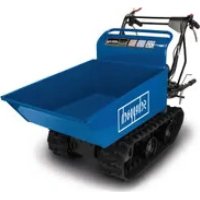
DP4500 - Motorized Wheelbarrow SCHEPPACH - Free user manual and instructions
Find the device manual for free DP4500 SCHEPPACH in PDF.



| Product type | Dumper |
| Brand | Scheppach |
| Model | DP4500 |
| Engine | 4-stroke, 4.1 kW |
| Load capacity | 400 kg |
| Transmission | 3 forward speeds + 1 reverse |
| Ski dimensions (L x W x H) | 840 x 626 x 289 mm |
| Weight | 179 kg |
| Fuel | Unleaded gasoline 90 octane (max 5% ethanol) |
| Fuel tank capacity | 3.6 L |
| Engine oil | SAE 10W-30 |
| Engine oil capacity | 0.6 L |
| Transmission oil | SAE30 / 80W-90 |
| CO2 emission | 811.46 g/kWh |
| Maximum slope | 30° |
| Sound level (pressure) | 79.4 dB(A) |
| Sound level (power) | 99.4 dB(A) |
| Left handle vibration | 10.1 m/s² |
| Right handle vibration | 11.3 m/s² |
| Starting | Recoil starter |
| Engine speed (idle) | 1700 rpm |
| Engine speed (max) | 4000 rpm |
| Engine oil change maintenance | Every 50 hours |
| Air filter maintenance | Every 30 hours |
| Spark plug maintenance | Every 50 hours |
Frequently Asked Questions - DP4500 SCHEPPACH
User questions about DP4500 SCHEPPACH
0 question about this device. Answer the ones you know or ask your own.
Ask a new question about this device
Download the instructions for your Motorized Wheelbarrow in PDF format for free! Find your manual DP4500 - SCHEPPACH and take your electronic device back in hand. On this page are published all the documents necessary for the use of your device. DP4500 by SCHEPPACH.
USER MANUAL DP4500 SCHEPPACH
Homepage: https://www.scheppach.com/de/service
Explanation of the symbols on the equipment
The use of symbols in this manual is intended to draw your attention to possible risks. The safety symbols and the explanations that accompany them must be perfectly understood. The warnings in themselves do not remove the risks and cannot replace correct actions for preventing accidents.
| Read these instructions carefully. | |
| Wear hearing protection. | |
| Wear eye protection. | |
| Tragen Sie Sicherheitsschuhe. | |
| Wear safety gloves. | |
| It is forbidden to remove or to manipulate guards and safety devices. | |
| Do not touch hot machine components. | |
| Do not smoke or have open flames. | |
| Flinging objects can cause injury. | |
| Keep bystanders away. | |
| Do not use the device on slopes with slopes greater than 20°. Danger of tipping! | |
| Poisoning! Only use the device outdoors and never in closed or poorly ventilated rooms. | |
| Secure the device against unintentional switching on before carrying out maintenance and / or repair work. | |
| CE | The product complies with the applicable European directives. |
| ΔΔΔ | The product complies with the applicable Serbian directives. |
| Δ Attention! | In this operating manual, we have used this sign to mark all sections that concern your safety. |
Table of contents: Page:
- Introduction 28
- Device description 28
- Scope of delivery 28
- Intended Use 28
- Safety information 29
- Additional safety instructions 30
- Technical data 32
- Unpacking 33
9.Before starting the equipment 33 - Functions and controls 34
- Cleaning 35
- Transport 35
- Storage 35
- Maintenance 36
- Disposal and recycling 38
- Troubleshooting 39
- Declaration of conformity 402
1. Introduction
Manufacturer:
Scheppach GmbH
GünzburgerstraBe 69
D-89335 Ichenhausen
Dear customer,
We hope you have a lot of fun and success using your new machine.
Note:
According to the applicable product liability laws, the manufacturer of the device does not assume liability for damages to the product or damages caused by the product that occurs due to:
- improper handling,
- noncompliance of the operating instructions,
- repairs by third parties, not by authorized service technicians,
- installation and replacement of non-original spare parts,
non-intended use.
We recommend:
that you read through the entire operating instructions before putting the machine into operation.
These operating instructions are to assist you in getting to know your machine and utilize its proper applications. The operating instructions contain important notes on how you work with the machine safely, expertly, and economically, and how you can avoid hazards, save repair costs, reduce downtime and increase the reliability and service life of the machine. In addition to the safety requirements contained in these operating instructions, you must be careful to observe your country's applicable regulations.
The operating instructions must always be near the machine. Put them in a plastic folder to protect them from dirt and humidity. They must be read by every operator before beginning work and observed conscientiously. Only persons who have been trained in the use of the machine and have been informed of the various dangers may work with the machine. The required minimum age must be observed. In addition to the safety requirements in these operating instructions and your country's applicable regulations, you should observe the generally recognized technical rules concerning the operation of identical machines.
We accept no liability for accidents or damage that occur due to a failure to observe this manual and the safety instructions.
2. Device description
- Engine Switch
- Throttle control
- Right Steering Lever
- Clutch Control Lever
- Left Steering Lever
- Dump Box
- Fixation dump box
- Gear Selection Lever
- Track
- Gearbox
- Oil dipstick
- Choke
- Petrol tap
- screw M8 x 25mm
- Screw 5/16 inch x 30mm
- Oil drain plug
- Oil inlet screw
3. Scope of delivery
a. Dumper DP4500
b. Spark plug socket
c. Instruction bag
d. Operating instructions
4. Intended Use
The machine may only be used in the intended manner. Any use beyond this is improper. The user/operator, not the manufacturer, is responsible for damages or injuries of any type resulting from this. An element of the intended use is also the observance of the safety instructions, as well as the assembly instructions and operating information in the operating manual.
Persons who operate and maintain the machine must be familiar with it and must be informed about potential dangers.
The liability of the manufacturer and resulting damages are excluded in the event of modifications of the machine.
The machine may only be operated with original parts and original accessories from the manufacturer.
Please note that our equipment was not designed with the intention of use for commercial or industrial purposes. We assume no guarantee if the device is used in commercial or industrial applications, or for equivalent work.
5. Safety information
These operating instructions provide places concerning your safety which are marked with this indication:
Furthermore this manual contains other important sections which are marked with the word "Attention!".
Attention!
While using the machine some safety precautions must be observed to prevent injuries and damage. Read the directions with due care. If you give the equipment to any other person, give them these operating instructions as well. We assume no liability for injuries or damages which are a result of non-compliance of this manual and its safety notes.
DANGER
Failure to follow these instructions may cause serious danger to life of danger or fatal injuries.
WARNING
Failure to follow these instructions may cause danger to life or danger of serious injuries.
CAUTION
Failure to follow these instructions may cause light to medium risk of injury.
NOTE
Failure to follow these instructions may cause danger of damage of the engine or other property values.
General safety informations
1. Keep your work area tidy
- Disorder in the work area can lead to accidents.
2. Take environmental influences into account
-
Never work with the machine in enclosed rooms or in rooms with poor ventilation. If the motor runs toxic gases are generated. These gases can be odourless and invisible.
-
Do not expose the device to rain.
-
Do not use power tools in a damp or wet environment.
Take care on your secure footing on uneven ground
Make sure that the work area is well illuminated.
- Never use the machine in highly flammable vegetation or where fire and explosion hazards exist.
- Provide a fire extinguisher in drought conditions (fire hazard).
3. Keep other persons away
- Do not allow other persons to work with the device especially children and young people.
4. Securely store unused tools
- Unused tools should be stored in a dry, elevated or closed location out of the reach of children.
5. Do not overload your device
- They work better and more safely in the specified output range.
6. Wear suitable clothing
- Do not wear wide clothing or jewellery, which can become entangled in moving parts.
- Wear solid working shoes and work gloves. Gloves made out of leather offer good protection.
- Wear protective shoes with steel caps.
Always wear a working suit made out of solid material. - Tie long hair back in a hair net and wear a hardhat
7. Wear personal protective equipment
Always wear a protective headgear, safety goggles, work gloves, non-slip footwear and hearing protection.
8. Avoid abnormal working postures
- In use of the device ensure on your secure footing.
9. Work in full consciousness
- Do not work with the device when you are under the influence of alcohol, drugs, medication or other substances which might compromise the vision, dexterity and judgment.
10. Use the device for its prescribed purpose
- Any other use than intended is deemed to be a case of misuse.
Safety instructions for handling flammable supplies
- Warning!: Petrol is highly flammable:
- Store fuel in containers specifically designed for this purpose.
- Refill the gasoline tank only outdoors and do not smoke meanwhile.
- Add fuel before starting the engine. Never remove the cap of fuel tank or add petrol while the engine is running or when the engine is hot.
- If petrol is spilled, do not attempt to start the engine but move the machine away from the area of spillage and avoid creating any source of ignition until petrol vapours have dissipated.
Replace all fuel tank and container caps securely.
Adding fuel
Always switch off the engine before refuelling.
Attention! Always open the fuel filler cap carefully to decompose slowly the excess pressure.
- Whilst working with the machine high temperatures can attain on the case. Allow the engine to cool before refuelling.
Attention! In case of insufficient cooling of the machine the fuel may ignite and lead to serious burns during refueling.
Make sure not to fill the tank with too much fuel. Immediately remove the fuel and clean the machine when spilling fuel.
Always close the screw plug on the fuel tank in order to avoid loosening which may occur by vibrations when using the machine.
DANGER
Never refuel the engine nearby open flames.
Additional safety instructions while hand-ling with combustion engines
DANGER
Combustion engines constitute a special danger during operation and refuelling. Always read and note the warnings
Failure to do so can lead to serious or even deadly injuries.
- No changes may be made to the device.
- Attention!
Danger of poisoning, Emissions, fuels and lubricants are toxic. Emissions shall not be inhaled.
- Attention!
Risk of burns. Do not touch the exhaust system or drive unit.
- Never operate the machine in non ventilated rooms or in a highly inflammable environment. If you intend to operate the machine in rooms with good ventilation, the exhaust gases must be channelled directly outdoors through an exhaust hose.
Attention! Toxic exhaust gases can escape despite the exhaust hose. Due to the fire hazard, never direct the exhaust hose towards inflammable materials.
- Risk of explosion!
- Never operate the machine in rooms with combustible materials.
- Secure the device against shifting and toppling during transport.
- Make sure that when you refuel the device no fuel is spilt on the engine or exhaust pipe.
- Repairs and adjustment work may only be carried out by authorized trained personnel.
- Do not touch any mechanically driven or hot parts. Do not remove the safety guards.
- The values quoted in the technical data under sound power level (LWA) and sound pressure level (LPA) are emission values and not necessarily reliable workplace values. As there is a correlation between emission and immission levels, the values cannot be taken to reliably determine the possible need for additional precautions. Factors influencing the current immission level of the user/operator include the properties of the work area, other sound sources etc., e.g. the number of machines and other neighboring processes, and the time span over which the user/operator is subjected to the noise. Also, the permitted immission level can vary from country to country. Nevertheless, this information makes it possible for the user to be able to make a better assessment of the dangers and risks involved.
- Never put any items into the ventilation openings. This applies even when the device is switched off. Non-observation may lead to injury, or damage to the device.
- Keep the generator free of oil, dirt and other impurities.
- Ensure the sound absorber and air filter work properly. These parts serve as flame protection in case of misfire.
- Stop the engine:
- whenever you leave the machine
- before refueling
- Always close the fuel valve when the machine is not in operation.
- Never use the choke lever to stop the engine.
6. Additional safety instructions
Remaining hazards
The machine has been built using modern technology in accordance with recognized safety rules. Some remaining hazards, however, may still exist.
Even when all safety measures are taken, some remaining hazards which are not yet evident may still be present.
- Remaining hazards can be minimized by following the safety instructions as well as the instructions in the chapter Authorized use and in the entire operating manual.
Always keep hands away from the work area when the machine is running.
- Thoroughly inspect the area to be worked, keep the working area clean and free of debris to prevent tripping. Operate on a flat level ground.
- Never place any part of your body where it would be in danger if movement should occur during assembly, installation, and operation, maintenance, repairing or moving.
- Keep all bystanders, children, and pets at least 23 meters (75 feet) away. If you are approached, stop the unit immediately.
- Do not mount on dump box and never carry passengers.
- Never park the machine in a place with unstable ground which could give way, particularly when it is full.
- Disengage clutch lever before starting the engine.
- Start the engine carefully according to instructions and with feet well away from the moving parts.
- Never leave the operating position when the engine is running.
- Always hold the unit with both hands when operating. Keep a firm grip on the handlebars. Beware that the machine may unexpectedly bounce upward or jump forward if the machine should strike buried obstacles such as large stones.
- Walk, never run with the machine.
- Do not overload the machine capacity. Drive at a safe speed, adjusting the speed to the slope of the land, the surface conditions of the road, and the weight of the load.
- Use extreme caution when in reverse or pulling the machine towards you.
Exercise extreme caution when operating on or crossing gravel drives, walks, or roads. Stay alert for hidden hazards or traffic.
- On soft ground, drive at the first forward/reverse gear. Do not rapidly accelerate, turn sharply or stop.
Safety informations service / maintenance and storage
- Only original parts may be used for maintenance and accessories.
-
Replace faulty silencers.
-
Before using, always visually inspect to see that the tools are not worn or damaged. Replace worn or damaged elements and bolts. Keep all nuts, bolts and screws tight to be sure the equipment is in safe working condition.
- Regularly check for leakage or traces of abrasion in the fuel system, such as porous pipes, loose or missing clamps and damage to the tank or tank cap. Before use all defects must be repaired.
- Before checking or adjusting the machine or the motor, the ignition plug and the ignition wire respectively must be removed to prevent accidental starting.
Storage
- Never store the equipment with petrol in the tank inside a building where fumes can reach an open flame or spark.
- Allow the engine to cool before storing in any enclosure.
- To reduce the fire hazard, keep the engine, silencer, battery compartment and petrol storage area free of vegetative material and excessive grease.
Long term storage/hibernation
- In case of long term storage drain out the complete fuel. Fuels are chemical compounds which change their properties during prolonged storage. If the fuel tank has to be drained out this should happen outdoors.
WARNING
Improper maintenance or ignoring/ not rectifying a problem during the operation may become a source of danger. Operate your machine only if regularly maintained. Only in this way you can assume that your device is operating safe, economical and without malfunctions.
Do not clean, maintain, setup or repair the machine whilst running. Moving parts may cause serious injuries.
Do not use fuel or other flammable solvents to clean the equipment.
WARNING
Vapours of fuels and solvents may explode.
Refix the security and safety equipment after reparation and maintenance work.
Keep the machine in safe work condition. Especially check the fuel system for tightness.
Always remove any dirt from the cooling fins of the engine.
Residual risks and accident prevention standards. Neglect of ergonomic principles
Negligent handling of personal protective equipment
Negligent handling or omission of the personal protective equipment may cause serious injuries.
- Wear prescribed personal protection equipment.
Human behaviour, misbehaviour
For any work be fully concentrated.
Residual risks - Cannot be entirely excluded.
Electrical residual risks Electrical contact
Touching the spark plug may cause an electrical shock.
- Never touch the spark plug while the engine is running.
Thermal residual risks burns, chilblains
Touching of the exhaust/ case may cause burns.
- allow motor driven machines to cool.
Danger from noise hearing damage
Prelonged unprotected work with the device may cause hearing damage.
Always wear ear-muffs
Danger caused by materials and other substances Contact, inhalation
The emissions of the machine may cause damages to health.
- Only use the motor driven machine outdoors.
Fire, explosion
Fuel is flammable.
- During work and refuelling smoking and open flames are prohibited.
In case of emergency
In case of a possibly occurring accident take the necessary first aid steps as appropriate and obtain qualified medical aid as quickly as possible.
If you obtain aid please give the following informations:
- Where did it happen
- What happened
- How many injured
- Type of injury
- Who is reporting!
7. Technical data
Engine 4.1 kW
| Transmission 3F+1R | |
| Load capacity 400 kg | |
| Box length 840 mm | |
| Box width 626 mm | |
| Box Depth 289 mm | |
| Weight 179 kg | |
| Engine Type 4-stroke engine | |
| Idle speed 1700 rpm | |
| maximum RPM | 4000 rpm |
| Motor Starters | Recoil starter |
| Fuel | Unleaded fuel octane number 90 and max. ethanol of 5% |
| Fuel tank capacity | 3.6 l |
| Required engine oil | SAE 10W-30 |
| Gear oil | SAE30 / 80W-90 |
| CO2 output | 811,46 g/kWh |
| Max. slope | 30° |
| Max. oil tank capacity | 0.6 l |
Subject to technical modifications!
Noise
Warning: Noise can have serious effects on your health. If the machine noise exceeds 85 dB, please wear suitable hearing protection.
Information concerning noise emission measured according to relevant standards:
Sound pressure L_pA = 79.4 dB
Sound power L_wA = 99.4 dB
Uncertainty K_pA = 2 dB
Wear ear-muffs.
The impact of noise can cause damage to hearing. Vibration Left Steering Lever A = 10.1 m/s ^2 Vibration Right Steering Lever A hv = 11.3 m/s Uncertainty KPA = 1.5 m/s
The specified vibration emission value has been measured according to a standardised testing procedure and can be used for comparison of one power tool with another. The specified vibration emission value can also be used for an initial assessment of the load.
WARNING
The vibration emission value can vary from the specified value during the actual use of the power tool, depending on the type and the manner in which the power tool is used. Try to minimise stress from vibrations as low as possible. Some examples of means for reducing the vibration stress are wearing gloves while using the tool and limiting work time. In the process all parts of the operating cycle must be taken into account (such as times in which the power tool is switched off or time in which it is switched on, but is not running under a load). Limit the noise and vibration to a minimum!
8. Unpacking
Remove the transport locks with a suitable tool (e.g. scissors) (not included in the scope of delivery).
Open the packaging and remove the device carefully. Remove the packaging material as well as the packaging and transport bracing (if available)
Check that the delivery is complete. Check the device and its spare parts for possible damage caused by transportation. In the event of complaints, you must contact the distributor without delay. Claims at a later stage will not be accepted. If possible, store the packaging until the warranty period has expired Before handling the device, make yourself familiar with it by reading the operating instructions.
For accessories, consumables and spare parts, only use original parts. Spare parts are available from your stockist.
Include our item number, the device model and year of manufacture in your order.
Attention!
The device and packaging materials are not toys! Children must not be allowed to play with plastic bags, film and small parts! There is a risk of swallowing and suffocation!
9. Before starting the equipment
The following assembly instructions enable you to assemble the machine in just a few minutes.
Steering rod (fig. 3)
Align the drilled holes of the steering rod with the drilled holes of the side parts and secure the steering rod using the screws (1).
ATTENTION!
Always check before starting the engine:
- Check the fuel level and top it up if necessary
- the tank should be at least half filled
- Make sure that the machine has sufficient ventilation
- Make sure that the ignition cable is secured to the spark plug
Condition of the air filter
Condition of the fuel lines - The external bolt connections for tightness
Filling with fuel
Recommended fuel
Fill the only clean fuel with min. 90 octane and max. 5% bio-ethanol content in the fuel tank.
NOTE
Fill tank to no more than 12.5mm (1 / 2^ ) below the bottom of the filler neck to provide space for expansion.
Use only fresh and clean fuel.
Attention!
Water or impurities in the petrol damage the fuel system.
Refuel in a well-ventilated area with the stopped engine. If the engine has been running, allow it to cool first. Never refuel the engine inside a building where gasoline fumes may reach flames or sparks.
Petrol is highly flammable and explosive. You can get burns or other serious injuries when handling fuel.
-
Switch off the engine and keep it away from heat, sparks and flames.
-
Refuelling only outdoors.
- Immediately clean up spilled petrol.
Engine oil
The oil has been drained for transportation. If the oil pan is not filled with oil before starting the engine, this will result in permanent damage and invalidate the engine warranty.
10. Functions and controls
Important!
You must fully assemble the appliance before using it for the first time!
Engine switch (1)
The engine switch (1) enables and disables the ignition system. The engine switch (1) must be in the "ON" position for the engine to run. The engine switch (1) must be in the "OFF" position to stop the engine.
Clutch control lever (4)
Squeeze the control lever, clutch engaged. Release the lever, clutch disengaged.
Throttle control (2)
- It controls engine speed. Put the throttle control (2) on low speed (L) or high speed (H) or an intermediary position between L and H to increase or decrease the speed of engine.
Left steering lever (5)
Operate the lever (5) to turn left.
Right steering lever (3)
Operate the lever (3) to turn right.
Gear selection lever (8)
- It controls forward or reverse movements of the machine.
Tub fixing (7)
To tilt, operate the release on the tilt lever and lift the transport tray using the lever.
NOTE
If full loading or transporting heavy loads, the emptying of the dump box (6) is carried out with the help of a second person.
After emptying the dump box (6) you can lower lower and lock them again.
Starting engine
Cold starts
-
Turn choke lever (12) on the engine to position
-
Set the throttle lever (2) on the handlebar at halfway position.
-
Turn the engine switch (1) on.
-
Set the fuel cock (13) to position

-
Pull the starting rope slowly several times to allow the gasoline to flow into the engine's carburetor.
-
Then hold the start handle firmly and pull rope out a short distance until you feel some resistance.
-
Then pull the rope smoothly and briskly, and allow rope to return gently. Do not let the rope snap back. If necessary, pull the rope several times until the engine starts.
-
Allow the engine to run for several seconds to warm up.
- Allow the engine to run for several seconds to warm up. Then, gradually move chock lever (12) to position
NOTE
Restarting an engine that is already warm from previous running does not normally require use of the choke.
Warm starts

- Set the throttle lever (2) on the handlebar at halfway position.
- Turn the engine switch (1) to pos. "ON".
- Set the fuel cock (13) to the position
- Pull the starting rope slowly several times to allow the gasoline to flow into the engine's carburetor.
- Then pull the rope smoothly and briskly, and allow rope to return gently. Do not let the rope snap back.
Operating
After engine warms up, pull throttle lever to accelerate engine speed.
Engage the required gear and slowly squeeze the clutch control lever. If the gear does not engage straight away, slowly release the clutch lever and try again. In this way the minitransporter will start moving. The minitransporter has the steering levers on the handlebars and this makes steering very easy. To turn right or left, simply operate the corresponding right or left steering lever.
The sensitivity of the steering increases in proportion to the speed of the machine and that with the empty machine, a light pressure on the lever is all that is needed to turn. While when the machine is loaded, more pressure is required.
The minitransporter has a maximum capacity of 400kg . However, it is advisable to assess the load and adjust it according to the ground on which the machine will be used. It is therefore advisable to cover such stretches using low gear and taking extra care. In such situations, the machine should be kept in low gear for the whole stretch.
Avoid sharp turns and frequent changes of direction while driving on the road, in particularly on rough, hard terrains full of sharp, uneven points with a high degree of friction. Even though the unit has rubber tracks, remember to be careful when working in adverse weather conditions (ice, heavy rain and snow) or on types of ground that could make the minitransporter unstable. Please note that as this is a tracked vehicle, it is subject to a considerable pitching movement when passing over bumps, holes and steps.
When the clutch control lever is released, the machine will stop and brake automatically. If the machine is stopped on a steep slope, a wedge should be placed against one of the tracks.
Idle speed
Set throttle control lever (2) to its "L" position to reduce stress on the engine when working is not being performed.
Lowering the engine speed to idle the engine will help extend the life of the engine, as well as conserve fuel and reduce the noise level of the machine.
Stopping engine
Attention!
To stop the engine in an emergency, simply turn the engine switch (1) to the "OFF" position.
Under normal conditions, use the following procedure.
- Move the throttle lever (2) to the "L" position.
- Let engine idle for one or two minutes.
- Turn the engine switch (1) to the "OFF" position.
- Turn the fuel valve lever (13) contrary to the position.
NOTE
Do not move choke control (12) to stop engine. Backfire or engine damage may occur.
11. Cleaning
Caution!
Switch off the motor and pull the spark plug boot from the spark plug before doing any cleaning and maintenance work on the equipment.
Keep all safety devices, air vents and the motor housing free of dirt and dust. Wipe the equipment with a clean cloth or clean it with compressed air at low pressure. We recommend that you clean your device after each use.
Clean the unit regularly with a damp cloth and some soft soap. Do not use cleaning agents or solvents; they may damage the plastic parts of the appliance. Make sure that no water can get inside the unit.
12. Transport
WARNING
Let the engine cool down before transporting the machine or storing indoors to avoid burns or fire hazards. If you want to transport the unit empty the fuel tank before Clean the unit with a brush or a broom of coarse dirt.
13. Storage
Store the device and its accessories in a dark, dry and frost-proof place that is inaccessible to children. The optimum storage temperature is between 5 and 30^ .
Store the power tool in its original packaging.
Cover the power tool to protect it from dust or moisture. Store the operating manual with the power tool.
- Perform all general maintenance, which are in the User's Guide in the Maintenance section.
- Let the fuel out of the tank (Use a commercially plastic fuel pump from the hardware store).
- After the fuel is drained, start the machine.
- Let the machine in idlespeed running until it stops. That cleans the carburetor from the remaining fuel.
- Let the machine cool down. (about 5 minutes)
-
Remove the spark plug.
-
Fill a small amount of 2-stroke engine oil into the firing chamber. Pull out several times the starter cord gently to wet the internal components with the oil.
- Replace the spark plug.
- Clean the outer casing of the machine.
Do not use strong detergents or petroleum based cleaners when cleaning plastic parts. Chemicals can damage plastics. - Store your machine on a straight bottom in a clean, dry building with good ventilation.
Do not store the machine with fuel in a non-ventilated area where fuel fumes may reach flame, sparks, pilot lights or any ignition sources.
Recommissioning
- Remove the spark plug.
- Pull the starter rope out several times. It cleans the fi ring chamber of oil residues.
- Clean the spark plug contacts or install a new spark plug.
- Fill the tank.
14. Maintenance
Caution!
Switch off the motor and pull the spark plug boot from the spark plug before doing any cleaning and maintenance work on the equipment.
Preventive maintenance
Warning
Turn off engine and disengage all command levers. Engine must be cool. Disconnect the spark plug cap from the spark plug.
Inspect the general condition of the unit. Check for loose screws, misalignment or binding of moving parts, cracked or broken parts, and any other condition that may affect its safe operation.
Remove all debris and other materials that may have accumulated to the wheels and unit. Clean after each use. Then use a premium quality lightweight machine oil to lubricate all moving parts.
Never use a "pressure washer" to clean unit. Water can penetrate tight areas of the machine and its transmission case and cause damage to spindles, gears, bearings, or the engine. The use of pressure washers will result in shortened life and reduce serviceability.
Tightening tracks (fig. 8 - 10)
With use, tracks tend to loosen. When operating with loose tracks, they tend to slip over the driving wheel causing it to jump its housing or to work in precarious situation, thus damaging wear to the housing. To check track tightness, proceed as follows.
- Set the machine on a flat surface with compact-ground, better on an asphalt or stone pavement.
- Lift the machine and set it on blocks or supports rated for the weight of the machine so that the tracks are approximately 100mm off the ground.
- Measure the track midline vs. the horizontal line. The reading must not be more than 10-15mm.
If the distance is greater, proceed as follows.
- Use the tipping handle to tip the dump box and set it on blocks or supports rated for the weight of the box.
- Loosen locknut A.
- Tighten bolt B until the correct tightness is restored.
- Secure bolt B by tightening locknut A thoroughly.
- Return the dump box to its original position.
The adjustment of the track and the brakes are linked, therefore be very careful because if the track is overtightened, the braking effect will be lost.
If the adjustment bolt has no more adjustment left, the tracks may haveto be replaced.
Replacing tracks
Check the condition of the tracks periodically. If any track is cracked or frayed, it should be replaced as soon as convenient.
- Dismount the dump box.
- Let the tracks loose enough.
- Replace the tracks in such a way as illustrated in the figure.
- Adjust the tracks to correct tightness.
- Mount the dump box.
your
When removing or installing the tracks, be careful not to get your fingers caught between the track and pulley.
Adjusting clutch
As clutch wears out, the same lever could have a wider opening, being so uneasy to use. This means that it is necessary to adjust the cable, setting clutch lever on its original position acting on the adjustment device and on counter-nut.
Adjusting steering
If you have difficulty steering the unit, you will need to adjust the steering levers (3) + (5) with the special adjusters.
Slacken off the locknut and unscrew the adjusters to eliminate the play in the cable, which can occur after initial use or normal wear.
Be very careful not to unscrew the adjusters too much because this can create another problem: the loss of traction. Remember to tighten the locknut when you have finished.
Lubrication
The gearbox is pre-lubricated and sealed at the factory.
Oil changes (fig. 7)
Changing the transmission oil
The oil must be replaced every 1000 hours with the engine still warm. If necessary leave the engine running for a short time.
- Place a suitable container with a minimum of 2 litre capacity under the oil drain plug (16).
- First, open the oil drain plug (16) and then the oil filler neck (17) and leave the entire engine oil flow.
- Close the oil drain plug (16) again.
- Fill 1.5 litres of clean transmission oil into the oil filler neck (17). To do this, use a gear oil pump with hose. Insert the hose through the opening in the oil filler neck.
Engine Oil
Check the oil level before each use. Remove the oil dipstick (11) and check the machine in horizontal position that the oil level is between the two marks. If necessary, add oil.
Changing the engine oil
The oil must be replaced every 50 hours. For this the motor must be warm and stopped. For this run engine for a short time. Afterwards drain oil into a suitable container. For this purpose remove the dipstick and the oil drain plug.
Maybe take a suitable hose or tube to help. After the oil has been completely drained mount the oil drain plug again, fill in new oil and close the oil filler cap.
Recommended engine oil
SAE 10W-30 or SAE 10W-40 (depending on application temperature).
Dispose of waste oil properly at the local used oil collection point. It is forbidden to discharge waste oil into the ground or mixed with other waste.
Important hint in case of sending the equipment to a service station:
In case of delivery, please note that the unit must be free of oil and fuel to ensure safe shipment.
Air filter
Frequently cleaning of the air filter prevents carburetor malfunction.
Clean the air filter and change air filter inserts
The air filter should be cleaned every 30 hours.
- Remove the air filter cover by loosening the thumb-screw
- Loosen the thumb screw and remove the air filter
- Clean the air filter by tapping, replace if necessary.
- Reassemble in reverse order.
WARNING
NEVER use gasoline or cleaning solvents with a low flash point to clean the air fiiter element. A fire or explosion could result.
Note
Never run the engine without or with a damaged air filter. Dirt gets so into the engine, causing serious engine damage can occur. In this case, seller, and manufacturer disassociate from any warranty.
Check, clean and replace spark plug
Check the spark plug after 10 hours on dirt and grime. If necessary, clean it with a copper wire brush. Maintenance the spark plug after 50 hours of operation.
- Remove the spark plug ignition cable.
- Remove any dirt from the base of the spark plug.
- Use a wrench to remove the spark plug.
- Check the spark plug visually. Remove any debris with a wire brush.
-
Look for discolouration on the top of the spark plug. By default, the colour should be bright.
-
Check the spark plug gap. An acceptable gap width is 0.6 to 0.7mm .
- Remove the spark plug carefully by hand.
- If the spark plug has been inserted, tighten them with a spark plug wrench.
- Attach the spark plug connector at the spark plug.
Note
Loosen spark plug can overheat and damage the engine. And over tightening the spark plug can damage the threads in the cylinder head.
Please note that the following parts of this product are subject to normal or natural wear and that the following parts are therefore also required for use as consumables.
Wear parts*: spark plug, belt
- Not necessarily included in the scope of delivery!
Spare parts and accessories can be obtained from our service centre. To do this, scan the QR code on the cover page.
15. Disposal and recycling
Notes for packaging



The packaging materials are recyclable. Please dispose of packaging in an environmentally friendly manner.
You can find out how to dispose of the disused device from your local authority or city administration.
Fuels and oils
- Before disposing of the unit, the fuel tank and the engine oil tank must be emptied!
- Fuel and engine oil do not belong in household waste or drains, but must be collected or disposed of separately!
- Empty oil and fuel tanks must be disposed of in an environmentally friendly manner.
16. Troubleshooting
The table below contains a list of error symptoms and explains what you can do to solve the problem if your tool fails to work properly. If the problem persists after working through the list, please contact your nearest service workshop.
| Problem Possible Cause | Remedy | |
| Engine fails to start | Spark plug wire disconnected. Attach spark plug wire securely to spark plug. | |
| Out of fuel or state fuel. Fill with clean, fresh gasoline. | ||
| Choke not in open position. Throttle must be positioned at choke for a cold start. | ||
| Blocked fuel line. Clean the fuel line. | ||
| Fouled spark plug. Clean, adjust gap, or replace. | ||
| Engine flooding. Wait a fes minutes to restart, but do not prime. | ||
| Engine runs erratically. | Spark plug wire loose. Connect and tighten spark plug wire. | |
| Unit running on CHoke. Move choke lever to OFF. | ||
| Blocked fuel line or stale fuel. Clean fuel line. Fill tank with clean, fresh gasoline. | ||
| Vent plugged. | Clear vent. | |
| Water or dirt in fuel system. Drain fuel tank. Refill with fresh fuel. | ||
| Dirty air cleaner. | Clean or replace air cleaner. | |
| Improper carburetor adjustment. | Consult the service. | |
| Engine overheats. | Engine oil level low. | Fill crankcase with proper oil. |
| Dirty air cleaner. | Clean air cleaner. | |
| Air flow restricted. | Remove housing and clean. | |
| Carburetor not adjusted properly. | Consult the service. | |
| Machine does not move while engine is running. | Gear is not properly selected. Ensure gear lever is not in-between two different gears. | |
| Driving tracks not tight enough. | Tighten driving tracks. | |
Barredirection (fig.3)
Günzburger Straße 69
D-89335 Ichenhausen
Vázenzý zákaznik,
Zelame Vam ve'la zabavy a uspechov pri praci s Va'sim novym pristrojom.
Poznámka,
Uldised ohutusjuhised
Viktig information for reparation:
Vid returning av maskinen for reparation pa servicestation, observera attenna av sakerhetsskai skavarata tomd pa olja och bensin.
Luftfilter
He noemame OTROBOPHOCT 3a 3IIOJNYK INN UeTIN, Bb3HnKHaJI Nopadn Hecna3BaHe Ha TOBa pKOBODCTBO INN Ha yKa3aHnRA Ta 3a 6e3OnacHOCT.
2. OnscaHne Ha ypeDa
1.Ппекьсвачздагателя
2. JIoCT 3a ra3Ta
3. Decen noct 3a ynpabneneHne
4. loct 3a cbeHHnteIa
5. JIb Ioc3a ynpabJeHne
6. TpaHcnpTeH Kow
7.ФИКСИРанеHaKoWa
8. noc3a n36op Ha npedabka
9. Bepura
10. PeDyKTop
11. Maclon3mepBaTeHa 1eKa
12. Cmykau
13. BeH3nHOB KpaH
14. BnHT M8 x 25 mm
15. BnHT 5/16 oJax 30 mm
16. Ipo6ka 3a u3TOUBAHe Ha MacItoTo
17. PpO6ka 3a nBJIHeHe Ha MaCIO
3. 06em Ha DocTaBkaTa
a.ДьмпepDP4500
b. Knioy 3a 3anaJIntHa CBeu
c. Top6nUka c npHaadneKHOCTN
d. PbKOBOcTBo 3a 06CJyKBaHe
He 3apeKdaTe MaunHata 6JIn3o Do OTKpTN nJaMbU.
CneuaHn npabuHa 3a 6e3onacHocT npn H3noJ3BaHe Ha DBratEn C BbTpewHo ropeHe
ONACHOCT
ДигагеЛNTe C BbTpEshO rOpHe npeDCTaBnBaT Oco6eHa onachocT no Bpeme Ha pa6oTa n npn 3apexK- daHcC TropBO. BnHaru Yetete N cna3BaHTe npeDynpTeJIHnTE yka3aHHe. Hecna3BaHeto IM MOKe da DOBeDe Do CMbpt Nn cepno3Ho HapaHBAhe.
- No ypea He 6nBa Da ce n3BbPwBaT HnKaKBNnpomeH.
2. BHHMaHne!
OnachoctOT OTPaBHe, OTPa6oTeHnTe ra3OBe, rOpNbTa n Cma3oCHnTe MaTePnAaN Ca TOKCNH, OTPa6oTeHnTe ra3OBe He 6nBa Da ce BnWBat.
3. BHHMaHHe!
Onachoct ot n3rapaHna, He DOKOCBaIte CnCTemata 3a OTPa6OTeH ra3OBe n 3aDbNkBaunarperat.
4.He n3non3BaIte ypea B nomeueHna 6e3 npoBeTppeHne HnB IecHO3anlma cpea. Ako ypebT Tp6Ba Da ce n3non3Ba B do6pe npoBeTpBaHn NOMeueHna, Otpa6oTeHnte ra3OBe Tp6Ba Da ce OTBExDaT dIpeKTHo Ha otkpnto ppe3 Mapkyu 3a Otpa6oTeHn ra3OBe. △BHMaHne! Pnpa6oTa CMapkyu 3a Otpa6oTeHnte ra3OBe MOrAT Da CE OTDeJIaT N TOKcUHN OTPa6oTeHn ra3OBe. Iopadn onacHocT OT noXap MapkybT 3a n3ropeHnte ra3OBe HNKora He Tp6Ba Da ce HacoYBa KbM 3anaHmMaTePnAIn.
-
OnachocT oEcknno3n! Hnkora He n3non3BaIte ypeDa B NOMEuEHN C neCHO3anaHMMBeueCTBa.
-
IIO Bpeme Ha TpaHcnpOpTnpaHeTo ypeIbT TpIbBa da ce ocNpyrncpeu xyIb3raHe n ppeo6pbuahe.
-
Пи заразекдане Внимаьт e Д He ce pa3nBa ropINBO Bbpxy DBuraTeЯ nIу acnyxa.
-
Pa6oHTe no peMOHTa n HactpoiKaTa MoaT da ce n3BbPWBat cAmO OT OToPn3uPAH CneuaJIn3u paH nepcoHaI.
-
He DoKocBaIte MexaHnUHO DnHexeIte ce nIropeIte yactn. He CbAJaTe 3auHTHe Ka- nau.
-
CToHocHTe, nocOueHN B TexHnueCKnte daHHn noi HnBO Ha 3ByKOba MoUHOCT (L WA) n HnBO Ha 3ByKOBO HnIraHe (L PA), npEcdTaNbIaBt HnBaHa emCnn n He ca HnpeMeHHo 6e3onacn pa6oT- Hn HnBa.
-
TbI KaTo IMa BpB3Ka MExdy HnBaTa Ha emCnTe n emCnTe, TOBa He MoXe Da Ce I3NoT3Ba Ha-DeJxHO 3a OnpdeJeHHe DAOpBnHTeHNn PpeIa3Hm MepKn, KOtO MoXe Da Ca Heo6xOdUmN.ΦakToprTe, KOnTO OKa3BaT BnA Hne BbPxy TeKyUTo HnBO Ha MMcnTe Ha pa60THnka, BKIOuY-Bat XapaKTEpcntkNte Ha pa60THOTo MAcTo, DpyrN N3ToCHnHa Wym N T.H., KATO HanpImep6pOra HA MaunHInTe n DpyrN CbCeDn NpoceuN npOdbLnKInTeJIHOCTTa Ha BpeMeTO, ppe3 Koeto OnepaTopbTe e N3IoXeH Ha Wym. DOnyCTMoTO HnBO Ha emCnTe CbIo MoXe Da Bapnpa Bpa3nUnHnTe DbpXkABn. BbIpeKn TOBa Ta3n IH-ΦopMaunzIe DaIe Bb3MOxHocT Ha NoI3BaTeIHa MaunHaTa Da I3BbPns NO-d6pa OueHka Ha pNCKOBete n ONaCHOCTNe.
-
Hikora He BkapBaIte npedMeTn BB BeHTnla- zuoHnTe npouen. Toba BaJx n KOraTo ypeBt e n3KnUoyeH. Hecna3BaHeTo Ha ropeCnOmeHaTo- To MoKe Da DoBeDe Do HapaHraBe HnN NobpeDa Ha ypeDa.
-
Пдьркайу рета чст OT macno, Мрсоти npугзамрсаваня.
-
YBepete ce, ye 7yMo3arnyuHtTeIaT N Bb3dyuHnA T pNITbp FyHKcNoHnpat npabnHo. Te3n qactn CnykAT KaTO 3aUHTa OT PnAmbucn npn He npabunHO 3anaBaHe.
15.ИЗкючыnteДВURAteЯ: -BnHaN, KOratoOCTaBATEMaunHata -IpeDn3apeXdaHe c rOpuBO
-
BnHaRn 3aTbApRNe KpaHa 3a rOpINBO, Korato Ma-
-
HnKora He cnnpaTe DnurTaTeNa C Nocta Ha Kap-6ypatopa.
6. Довлнелни уka3аня 3a 6e30 nachoct
OctaTbUHn pUCKOBe
MaunHata e KOHcTpynpaHa cBflacHO HNBOTo Ha pa3BNTHe Ha TexnKata n npn3HaTte npaBnla Ha TexnKa Ha 6e3oNaCHOCT. Bbnpekn TOBA, npn pa6ota Morat Da Bb3HNKHAT OTDeHNH OCTaTBHy PNCKOBe.
- Ocben TOBa, BbIpeKn BCNcKn B3eTn IpeIa3Hm MepKn, MORAT Da CbIeCTByBaT HeBHN OCTaTbHn PnCKOBe.
OCTaTbUHIne pIcKOBe MoRat Da 6bDaT HAmaneHn, aKO 6bDat cna3BaHn rIaBn ,Yka3aHn 3a 6e3oNaCHOCT" n ,ynotpe6a no npedHa3NaYeHne", KaKTo n pbkoBOdCTBOTO 3a ynotpe6a kaTO UraNo.
-ДрькTe рьцete cnданey ot pa6oTHata 30Ha, Korato MaunHaTa pa6Otn.
-
PpOBepeTe BnHMaTeJIHO 3OHaTb, B KOrTo Tpr6Ba Da ce pa6oTu, n PoIbPkaIte pa6oTHaTa 3OHa YnCTa N 6e3 3AmbpcaBAnHra, 3a da npedOTbPaTne Cnyau OT cNbBaHe. Pa6oTe Bbpxy paBHa, IJaKa OCHOBA.
-
IIO Bpeme Ha MOHTaKa, INHCTaJInpaHEno, pa6oTata, NOIdpbXkata, peMOHTa N TpaHCnOpTa HNKORA He NOCTabRyIe YAcTH O T TaNTo CN B No3uZy, B KOrrTO T8 6n 6nA B OnaCHOCT, AKO BB3HNKHe DnBKeHne.
-ДрьхтЕ BCNчК CTpaHnHn H6JIoDAteNi, Deua nDOMaUHn XnBOTHn Ha nohe 23 m (75 cyTa) pa3ctOraHne. CnpTe MaunHaT a He3a6abHo, aKO hAkoI ce np6JnxK.
He ce katepeTe Bbpxy Kowa n He TpaHcnpTupaTe NbTHnU.
Hnkora He napknpaTe MaunHaTa Ha MrcTo c HecTabnHa OCHOBa, KOrTO 6n MoIa Da noDdae, npedmHO KOrato MaunHaTa e HATOBapeHa.
- Ppei n cTaptnpaHTo Ha dBnraTeIa ocbo6oTe IocTa 3a CbeHNHTeJI.
CTapTnpaTe DnRaTeN BHNMaTeJHo CbINaCHO pBkoBOdCTBOTO n dpBXTe KpaKaTa CN daNeu OT DBNXeUHTe Ce YactH.
Hnkora He HanyckaTe MCTOTO 3a 06cnyXbaHe, DOKATO DBURATEENr pa6OTn.
- Pn Bpeme Ha pa6oTa Ta BInHa n DpbkTe ypeDa C DBeTe cn pIe. BInHn XbaaAte 3dpabo NocTa 3a ynpabBJeHne. IMaHTe PpeDnD, He MaunHata MoKe Da OTCKOHy HeOyakBaHo HArope Nn HAnpeD, AKO Tc Ce HA-TbKHe Ha CKPITn PpenTCTBn KATO rONMe KAMbHN.
MaunHaTa BnHaTn Tp6Ba Da ce BoDn C neuexoHa ckopocT.
He npetobapbaTe MaunHaTa. KapaTe a 6be3o-nacha ckopoCT, cbo6pa3eTe ckopocTt a hakloHa Ha TepeHa, CbctOHNTo Ha NbTHaTa Hactnka m TerIto Ha TObapa.
-Бьдete oc6eHNo npedna3nBn, KOraTo n3noJ3BaTe 3aHaTApedabKa NIN DbPnATE MaunHaTa KbM ce6e cn.
-Бьдete oc6eHNo npedna3nVBn, KORato pa6oTnte Bbpxy nIIN pncuate yakbJIeCTN nbTEKn, TpoToapn nIIN yInu. BnHarn BnImaBaIte 3a cKpNTn onacHOCTN n TpaФнka.
Bbpx MyeKa noBa kapaTe c nbpBaTa npedHa/ 3aHa npedAka. He yckopraTe cnHIO, He 3aBNBaTe nIcnpaTe p3KO.
Yka3aHn 3a 6e3onachocT CepBn3/noDpBxKna n cbxpaHeHne
- 3a noДрьЖКИΚАТО РИнадлжНСТИЗПОЛЗВайтсамо оригинаннч actN.
- CmeHeTe deΦeKTHnA Wymo3aNyUHTeJ.
- Ipeyn ynoTpe6a BnHar npOBepaBte ycTponCTBOTO 3a n3HOCBaHe nnIOBpeJa.CmeHete n3-HocEHnte nnIOBpeEne eMeENTn BNHTOBe.3aTeHETe BCNUKn rAKn, 6oNTObE n BNHTOBe, 3a Da ce cnrypHn, ye o6OpuyDbaHeTo e B 6e3OnaCHO pa60THO cbCTOaHHe.
- TOpuBHaTa CnCTema peoOBHO Tp86Ba Da ce npoBepra 3a TeOBe Nn CneN OTe H3HocBaHe, KaTo HAnp. nopBo3HN Tpb6n, pa3Xla6eHn Nn JInCBAu Ni Cko6n N nobpeNi Ha pe3epBoapa N Kanaka Ha pe3epBoapa. IpeNi ynoTpe6a BcUKN DeΦeKtn Tp86Ba Da 6bDat OTCTpaHeHn.
- Ппдд д поверпге ИИн Habрonte ype-da, pecn.Двигателя, Chemete 3anaIteHata cBeu, pecn. KaHeJa 3a 3anaBaHe, 3a Da n36er-heTcnyaHNo CTapTnpaHe.
Cbxpahene
- HnKora He cxbxpanhaBte O6OpyDbaHeto C rOpuBO B pe3epBoapab Crpadi, B KOnTO u3npaehnra MoRaT da OcbIeCTBRT KOHTAKC OTKPNT PnAmbK INN NCKPN.
- ПпсдсьхраненetoВЗТБОЕНО NOMESEHNE OCTaBeTe DBnraTeJIЯ DA n3CTUHe.
- 3a da hamanite onacHocTta OT noXap,dpbKTe Dniratela, ymo3aflnyuHTe,OTdeJeHneTO 3a 6atepyra u MrcToTo 3a cbxpaHeHne Ha rOpIN BO qHCTN OT pactteHN MaTePnaNN N3nnHn Cma3OCHN MaTePnaNN.
No-npoDbJnxTeJIHo cBxpaHHeH/Pe3nMyBaHe
- B cnyaHa no-npOdbIgnteHcBxpaHHe/ npEzIMyBaHne n3ToyeTe zJnOTo rOpNBO. TOpNBaTa ca XmMHeCn CbEINHeHn, KOITno No-tpo - DblKHTeHNo CbXpaHHeHne IpOMeHrT CBOICTBaTa cn. Ako pe3epBoapbT 3a rOpNBO Tpr6Ba da 6bJe n3ToueH, TOBa Tpr6Ba Da CTaBA Ha OTKPITO.
PNEyPEXKDEHNE
HenpaBnHaTa noDpBxKa nn npHe6perBaHTo, pecn. HeOTcPaHbAHeTo Ha npo6Jem MoKe da ce npebbpHe B n3TOUHk Ha ONaCHOCT NO BpeMe Ha pa-60ta. EknpoatnpaIte camo peoBHO n npaBnHO noDpXaHN Maunn. Camo taKa moKeTe da NoctnrHHe Te ynpaBnBaTe 6e3OanCho, IKOHOMuHO n 6e3npo6JemHo ynpaBJIeHne Ha Baunypei.
He nouchBaIte, o6cnyXbaIte, hactpoBaiTe nn peMOHTnpaIte MaunHaTa, Dokato pa60tn. IodBxHnTe qactn MORat da npuHrT cepno3n HapaHbAHn.
He n3noJ3BaIte 6eH3nH nn dpyn 3aapanm pa3- TBOpHTeJI 3a NOUcTbAHe Ha YactnTe Ha MaunHaTa.
PNEyPEXKDEHNE
Iapnte OT ropnbata n pa3TBOpNTeMOra T da eknIIOnpaT.
CneI npKIOUbaHe Ha peMOHTa I NOdPbXkata MoHTnpaIte OTHOBO 3aunTHnTe I npeDna3HnTe ycTpoIcTbHa ypeDa.
O6bphTe BHMaHne Ha HAdEeKdHOTo CbCToHne HaypeDa, NO-CneuHaNo npOBepTe rOpBHaTa cnCTema 3a TeOBe.
Bunharin noocmbaTe oxnackaunepe6paHaDbira-TeTnOT 3aMbpcaHnra.
OcTaTbUHn OaNCHOn 3aUHTHm MepKn IpeHe6perBaHe Ha eProHOMuHNTe npHcUNn HemapInBO n3NoJ3BaHe Ha JNuHn npEdna3Hn CpeDCTBa
HemapnBoto n3noJ3BaHe nn Heu3noJ3BaHeTo HaIyuHnTe npedna3Hn CpeJCTBa MoKe Da DoBeDe Docepno3Hn HapaHyaHn.
-Hocete npenopbunTeHnTe npdna3n cpeCTBa.
YObeKo NOBeHHe, HnpaBnHo NOBeHHe
-BnHaHn Da 6bJeTe HAnbJHo KOHcEHTpnpaHn npn3NbJIHeHHeTo Ha BCuKn 3aJaU.
OctatbHa onaCHOCT HIKORA He MoKe Da 6bJe N3KNIOUeHa.
EneKtpnueckn octaTbHn onachoctn
EneKtpnueckn KOHTAKT
ДOKOCBAHETO Ha HAKpaHnka Ha 3anaHTenHaTa CBeU np pa6oteU DBnraTeN MoKe Ja npuHHeNEKtpueeKn yap.
Hnkora He doKocBaIte HaKpaHnKa Ha 3anaNTeHata CBeu nJn 3anaNTeHTa CBeU np pa6oteU dBVaTeI.
TepMNCHN OCTaBcHn ONaCHOCTN
N3rapaHn, n3Mp3BaHn
ДOKOCBaHTo Ha aycnyxa/Kopnyca MoKe Da npuHnN n3rapaHn.
- Octabete MOTOPHNY ypei da n3ctnHe.
Onachocnt npaui yum
YbpekdaHnHa cnyxa
IpoobJIxNtEnHata He3aunTeHa pa6ota c ypeda MoKe Da doBeDe Do 3aRy6a Ha cnYxa.
-Binharu hocete 3aunta 3a cnyuxa.
OnachocOT 3arotOBKn Ipyrn MaTepnann
KoHTaKT, BdNWBaHe
Otpa6oTeHnTe ra3OBe ot MaunHaTa MoraT da npuHnHT yBpeKdaHe Ha 3dpaBeTo.
- I3noJ3BaIte MOTOpHnY ypeI cAmO Ha OTKpIto
Poxkap,ekcnno3n
TognBTo e noXapoonacHo.
- PnyeHTo n OTKpTnT orbH ca 3a6paHeH no BpeMe Ha pa6Ota n 3apeKdahe c rOpNo.
PobedeHne B cnyaHa 3Jiononyka
B cnyaH na 3nnononyka Tpra6Ba da npednpneMeTe Heo6xOdUMITE Mepkn 3a OKa3BaHe Ha nbpBa nOMoU N Da NOnCKaTe Bb3MOxHO Hau-CKopo KBaIuΦnUpaHa MeDnUHcKa NOMOu.
Ako Tbpcnte nomou, nocoyete cneHaTa HOpMaun:
- Kbde ce e cnyna 3nononykaT
- KaKBO ce e cnyuHIO
- Konko ca paHeHnte
-
KaBbE BnDbT Ha HapaHbBaHnTa
-
Koi ce o6aXda!
7. TexHnueckn daHHN
Dbratel 4,1 kW
TpeWka npn n3MepBaHeTo K pA = 2 dB
Hocete 3aunTa 3a cnlyxa.
Bb3dienctbneto Ha yM MoKe da npuHn 3ary6a Ha cnlyxa.
Bn6paun,dpbkaHa
IocT3a ynpabHeHne, JnBO A _hy = 10,1m / s
Bubpaun,dpbkaHa
IOCT3a ynpabBHeHne, DnCHO A 11,3 m/s²
Pepka npn n3mepBaHeTo K PA= 1,5 m/s²
IocouheHata cTOnHOCT Ha eMNCHTe Bn6paun e n3-Mepeha no CTanapTeH MeToH Ha n3nITbAne H MOKe da 6bJe n3NoJ3BaHa 3a cpaBHeHne C npyra. IocouheHata cTOnHOCT Ha eMNCHTe Bn6paun MoKe da 6bJe n3NoJ3BaHa CbIo 3a nbpBOHaayHa OceHka Ha Bb3DeiCTBNETo.
PNEynpKdEHN
IIO BpeMe Ha DeiCTBnTEJIHOTO I3NOJ3BaHe CTOIHOCTTa Ha EMNCNTe BVpaun MoKe Da Ce pa3NuaBA OT NOCOeHaTa CToHocT, B 3aBNCIMoCT OT BnDa I NaHnHa, NO KOIT OpeBbT Ce I3NoJ3Ba. ONiTaNte Ce Da NODbPkaTe HATOBaPbAHeTo OT BVpaun BB3-MOXHO Ha-MINHMaJIHo. PpImepHn MepK 3a HamaJIyBaHe Ha HATOBaPbAHeTo OT BVpaun Ca HOceHTo HA PbKaBUN pRn ynoTppeBa Ha IHCTpyMeHTa I OrpaHnUbaBe Ha BpeMeTo Ha pa6ota. Ppi TOBa Tpr6BaDa Ce B3emat NoD BHIMAHne BCNUKu qAcTu Ha pa6otHnY cIKbI (HaNPmep BpeMeHaTa, ppe3 KOnTO ypeDbT e N3KJIIOueH, I TaKnBa, B KOnTO ToE BKJIIOueH, Ho pa60tN 6e3 HATOBaPbAHe).
OrpaHnUaBaiTe o6pa3yBaHeTo Ha 7um N Bn6paunTe do MNHMym!
8. Pa3onakobahe
OTctpaHeTe TpaHCnOpTHNe OCNrpyOBKn C NOxOJaU HNCTpymeHT (HAnp. HoKmua) (He e BkIIOueH B o6ema Ha Doctabkata).
OTbOpTe ONaKOBkata N BHIMATENoI3BaTeTe ypeJa.
OTctpaHete onakOBbHnMaTePnAn, KaKTo n onakOBbHnTe n TpaHCnOpTHnTe OcnrypOBKn (ako mTaKaNaBa).
PpOBepe daHn 06embT Ha dOCTaBkata e nIbJeH.
PpOBepTe ypea n npHaIeJXHocHTne 3a nobpeDi O T pAnCnpTnpaHeto. Pn peKnaMaun DoCTabuKbT Tpa6Ba Da 6bJe yBeDoMeH He3a6abHo. Nc-KbChn peKnaMaun He ce npu3HaBAt.
3a npnHaIeJXHOCTN, KaKTo 3a n3HOCBaUc Ne pe-3epBHN YactN, n3NoJI3BaIte cAmO opuHnHaHn YactN.
Pe3epBn yactn moKeTe da cn ha6abnte ot BauncneunaHn3npaH TbproBeu.
Pn npbkyn noocuBai Te Haun Homep Ha apTKyI, KaKTo n Tnna n rOduHaTa Ha npOn3BOcTBO Ha ypea.
△BHUMAHNE!
YpeBnOnaKOBbHnT MaTePnaH He ca nIrpauKa 3a Deca! Deca He 6nBa Da nIrpAraT c nIaCTMaCOBn Top6nKn, fONNO n Dpe6Hn qactN! CbIeCTByBa onaCHOCT OT NOrIbSuaHe n 3aDyUbaAhe!
9. MoNTaX/npeDn nyckaHe B ekCnNoa Taunr
Cbc cneHnTe HNCTpyKuun 3a MOHTaK MoKeTe da MOHTnpaTe MaunHaTa 3a HrKOJIKO MNHyTu.
Ioc3aynpabJeHne (Φnr. 3)
I3paBHeTe OTbOpTe Ha loCTa 3a ynpaBHeHne KbM OTbOpTe Ha CtpaHnHHe TcActu N OcnHypeTe IocTa 3a ynpaBHeHne C BnHTObTe (A).
BHIMAHHE!
Ipei cTaptnpahe Ha DnraTeJ npOBepe:
HIBOTO Ha rOpBTo, npn Hxkd a DonbHeTe -pe3epBoapbT 3a rOpBtpr6Ba da e nohe Ha-noIOBnHa nIeH
- OCNypeTe DoCTaTbUHa BeHTnlaUHa Ha ypeDa
- Ybepete ce, Ye lyjata Ha 3anaJnteHaTa CBeu e 3aKpeneHa KbM 3anaJnteHaTa CBeu
CbCTOARHHeTO Ha Bb3DyUHHnФnTbP
- CbCTOHAHnroPnboPOBOnTe
3dpaBOTO 3akpenBaHe Ha BINTOBITE CbeINHeHn
3apekdahe c ropuBo
PpenopbUHTeHOr npBO
HaIbaiTe cAmO YnCTO rOpIBO C OKTaHOBO YnCIO mH. 90 n MaKc. 5% cbDbpKaHne Ha 6NoeTaHON B pe-3epBoapa 3a rOpIBO.
YKA3AHNE
Pe3epBoaapbT MoKe Da ce TbHn MaKcHmym Do 12,5 mm (1/2") noDdoJIHHa Pb6 Ha TbplOBuHaTa 3a 3apeXdaHe, 3a da ocTaHe MxTo 3a pa3wIpEnHe.
3non3baTe cmo npraCHO, ncto ronpBO.
BHMaHHe!
Bodata Hnnpimecnte B 6eH3nHa NOBpeKdA TROPNB-HATA CNTEMA.
3apekdaaTe c ropuB O Do6pe BeHTnnpaH omeueHne npu N3KnUoyen DBrarTeJ. Ako DBratEnr e pa6oTn HenocepctBeHO npedToBa, nbpBO rO octabete Da n3CTnHe. Hnkora He 3apekDaIte DBrarTeJ B crpaJa, KbJeTO 6eH3nHOBNTe napMORAT Da DOCTHRAT PnAmbucn HInNCKpn.
Beh3nHbTe n3KnHouHTeH0 3anaIIM n ekcnno-3nBeH. Pn 6opabHeTo c rOpBTo MoKe Da noctpaDte OT n3rapaHn IIN dpyrN TeKKn HapaHbAHn.
- N3KIOHcTe DVBrAteJIg rO dpbXkTe daJeU OT To-nnHa, INCKPn INIJaMbU.
3apejdaTe cmo Ha oTKpnto.
-136bpeTe BeHara pa3JIeTna 6EHnH.
BnraTeHNO macNo
MacnoTo e n3toyeHo 3a TpaHcnoptnpaHeto. Ako KapTepbT He ce HanbIHH C MacNo npedn CTaptnpaHTo Ha DBraTeJI, TOBa BOnn Do TpaHn NOBpeN N OTnaDaHe Ha rapaHcNraTa Ha DBraTeJI.
10. Nyckahe B eKcnpoatazaia
BHIMAHNE!
Ppei nuckaHTo B ekcnloataaun 3aIbJnxTeNo crno6eTe HanblnHo ypea!
PpeKbcBaay3aDburatela (1)
PpeKcbaybHa dBuratEna 1)akTNBupa n deaktnBupa 3anaNTenHata CnCTema.
PpeKbcbayt Ha DnBraTeTn (1) Tp86Ba Da e B no3n- nya "ON" 3a da ce cTaptnpa DnBraTeTnT.
PpeKbcbayt HaDburatena(1)Tpr6Ba da e B no3n-ura "OFF",3a da ce n3KnIOuH DburatenaT.
Ioc3a cbeHNHTen4
3aJeCTBaHe Ha NoCTa 3a CbeDInHITeIg (4)-CbeDInHITeIgTe 3auehen.OCbo6oxkDaBaHe Ha NoCTa-CbeDInHITeIgTe pa3eDInHeH.
JIoct 3a ra3Ta (2)
- UnpabJIbBa o6OpOTte Ha DBuratEn. NocTabete IocTa 3a ra3Ta (2)Ha HnCKn (L) nn BucOKn (H) o6OpOTn, 3a Da yBeHNuHTe nn da HamaNTe o6OpOTte Ha DBuratEn.
JIABNoCT3aynpaBneHne(5)
3aJeCTBaIte neBnA NOCT 3a ynpabNHe (5), 3a da 3aBnTe HJIABO.
Decen noct 3a ynpabBneHne (3)
3aDénCTBaIte DecHnIy nOCT 3a ynpabNeHne (3), 3a da 3aBnTe HADrACHO.
Joc3a n36op Ha npedeBka (8)
- YnpabnBa DnHexeHneTo HnpeD nIi Ha3aHa MaunHaTa.
IpeNi n3BbPwBaHe Ha NOUcTbaHe BnHaru N3KIOUvBaIte DnIraTeJI N3BaXJaIe JyIaTa Ha 3aIaINTeJIHATA CBeU.
IopdbpkaIte npedna3Hnte npncnoc6JeHna,BeHTnlaauHOHHTe npouen N Kopnyca Ha DBratelaBb3MOxHO Hau-NCtN OT npax n 3aMbpcBaHna. N3-6bpCbaTe ypeDa c uNCTa Kbpna nnr ro npodyBaIte Cbc CbCTeH Bb3DyX NOd HnCKO HnraHe.
IpenopbVbame da noocTBate ypeDa BeHara cneBcra ya notpe6a.
IOnCTBaIte ypeDa peoOBHO C BlaXHa KbPnA MAnKO MeK canyH. He n3non3BaIte noCtBaU npenapatN IIN pa3TBOpNTeJI; Te 6nxA MoTJ Da pa3aDat NpactMacoBITE Yactn Ha ypeDa. BHIMABAite 3a TOBA, da Hc MOKe Da nonaDHe BOda BB BbTpeuHocCTTa Ha ypeDa.
12. TpaHcNoptnupahe
△PENyPENKDEHNE
IpeDi TpaHcnpOpTnPaHe nIi CbXpaHeHne Ha 3akpnto octabete DBrTaTeHa MaunHaTa da ce Oxlan, 3a Da N36BerHeTe N3rapHnN I da npedotBpaTne NOxap. Ako JeenaTe Da TpaHcnpOpTnPaTe ypeDa, npedBapuTeNo H3npa3Hete 6eH3nHOBnpe3epBoap. POnucTeTe ypeDa c YeTKa IIIN pBChHa YeTKa ot rpyBa-ta Mpbcotn.
13. CbXpaHeHne
CbxaHbAte ypea n HerOBtE akcecoapn Ha TbMHO, cyxo n 3aunTeHO OT 3aMp3BaHe, KaKTo n HeDocTbNHO 3a Deca MactO. ONImaJIHata TemnepaTpya Ha cbxpanHeHne e MeJky 5 n 30°C.
CbXpaHbAaTe HcTpymeHTa BOpuHaHaHaTa onaKOBka.
IokpinyHCTpyMeHTa,3a Da rO 3aunITte OT npax nn Bnara.CbXpaHraBaTe pkoBOdCTBTO 3a yno- tpe6a npn HcTpyMeHTa.
1.ИЗББПЕТЕ BCИЧКОБДРабOTи NO NOДРБЖKA-Ta,ОпсаньраздeIN“ПОДРБЖKA”Ha pБКOBODCTBOTO 3a yINotpe6a.
2.И3TOUeTe rOpBTo OT pe3epBoapa (3a ueIta H3NoJ3BaIte O6nKHOBeHa nlaCTMaCOBa 6eH3nHOBA NOMTa OT Mara3Ha).
- CJIeI KaTo I3ToUHTe rOpNBOTo, CTapTnpaIte Ma-
- Octabete MaunHaTa Da pa6oTu Ha npa3eH XoI, DOKaTo cnpe. Toba nouchTbA Kap6ypatopa oT oc-TaHaNoTo rOpuBO.
- Pn Hxda octabete MaunHaTa da n3CTnHe. (OK. 5 MNHyTu)
- Chemete 3anaTneHaTa CBeu.
- Hane Te eHa HaeHa JbKnKa MoTOpHo MaCNo 3a 2-TaKToBn DnIaTeN B KaMepaTa 3a ropeHe. BHMaTeHn N3DbPnaTe BbKeTo Ha cTApTepa HkoJIKO PbTN, 3a Da CmAxKeTe BbTpEShHrTe KOM- NoHEHTn C MacNoTO.
- MoNTpaIte OTHOBO 3aIaJIHTeHATA CBEU.
- Nocntete BbHnHa Kopnyc Ha MaunHata. H3- NO3BaIte YnCTn napaHn, 3a Da NoCHTe BbHnHata CtpaHa Ha MaunHata I da NpDbPxATE BeHTnlaauOHnTe OTBOPn CBO6oHn OT npenrTCTBn.
Пи NOUICTBAHTo Ha ПЛaCTMaCObN YaCTN He H3NON3BaIte arpeCBHN NOUICTBaU NcPdCTBa HIN NOUICTBaUc NcPeDcTBA Ha HeΦTeHa OCHOBA. XmMkaJIIne MORaT Da NoBpeJr TnlaCTMaCHTe.
- CbxpnaHbAaTe Baata MaunHa Bbpxy paBHe NOB YnCTa n cyxa crpa da c do6pa BeHTnlaa.
△He cIbXpaHbAaTe MaunHaTa C rOpnBO Ha Macto 6e3 BeHTnlaucn, KbdeTo 6eH3nHOBnte napMOrat Da DoCTnHaT Do OTKpNT NAmbk, Nckpn,NNIOTHN NAmbcu Nnn Do dpyrN n3TOUHnCu Ha 3anaBaHe.
NobtopNo nycKaHe B EKcNlOaTaun
- Chemete 3anaJIteJIHaTa CBeU.
2.ИЗдьрайтЕ ВьжETO Ha CTapTepa HЯКОнKO nbTu, 3a Да NOчNTte TOpNBHata KaMepa OT OCTaTbUOT MacNo. - NOnCTeTe KOHTaKTnTe Ha 3anAInTeHnHaTa CBeu nnMOHTnpaIte HOBa CBeu.
- 3apeTe pe3epBoapa.
14. Nopdpbxxka
BhimaHne!
Ipei n3BbPwBaHe Ha noDpBxKa BnHaN n3KIOUyBaIe DnraTeIu n3BaXdaIte Iynata Ha 3anaHtEnHata CBeI.
IopdIbPkaHe Bn3npaBHOCT
PNEpyPExDEHNE
13KnHcyTe DnuratEn I OcBo6oJeTe BCNU NoctOBe 3a ynpabJIeHne. DnuratEnr TpIbBa da e oxJaen.
I3bpaTe JyNATA Ha 3anaJIteHnHa T CBeUOT3aIaJIteHnHa CBeU. IpOBepTe o6UTo cBCTOHe Ha MaunHata. O6bPHeTe BHMAMHe Ha Xna6abNV HHToBe, rpeuHO pa3noJooKeHne uNn 3aKaJaHe Ha DnKeUncCe Yactn, CuynBaHe Ha YaCTn N BCaKO dpyro ycNoBne, KoETO bMOrNo Da 3actpaunb6ezonacHata pa6ota. OtctpaHete BCNUKn UyKn TeNa I dpyrMaTePnAIn, KOnTO ca Ce cb6pAnB KOleNaTn 6noka. NocCTBaIte MaunHata CNeD BCaKO n3noJ3BaHe. CneD TOBa n3noJ3BaIe BVcOKOkayecTBeHO n PdKO MaunHHo MacNO, 3a Da CMAxKeTe BCNUKn DnuKeUnc Ce Yactn.
Hikora He n3noJ3BaIte ypeed 3a noUcTb NOd BnCOKo HJIraHe, 3a da noUcTbATE BaIata MaunHa. B yNtBHeHH 30HN Ha MaunHata N Ha Kopnyca Ha peDyKTopa MoKe Da npOHKHe BOda I Da npuHH NoBpeDN Ha BAIOBE, 3b6H N KOJIeJa, Naepr nn Ha DBrarTeJ. N3noJ3BaHTo Ha ypeDN 3a NoUcTBAHe NOd BnCOKo HJIraHe BOdi DO CbKpaAbaHe Ha EKCnNoaTaCuOHHH XINBOT N 3aTpYdHBA NeChATA NOdPbXka.
06Tgrahe Ha Bepurnte (Hr. 8 - 10)
Pp npapobotaBepnnte nmatcknoHocKbMa3xa6BaHe. Pnpapobota cXna6abn BepnE b3MOxHO npcekaahe npes 3aDbNxBauoTO KOJIeNO,OT KoETO pndcayat B Kopnyca cn, nn npapotB Hecta-6uHNO cbCTOHN,OT KoETO ce CTnra Do n3HOCBaHne NO KOpnyca. PpoednpaTe No CpeDnHaun, 3a da npOBepnTe oTgRaHTo Hn Bepnnte.
- Cnpete MaunHaTa Bbpxy paBHa NOBbpxHocT c KOMnakTHa OCHOBa, Hau-Do6pe Bbpxy acpaNT nn NaBax.
2.Повдиггелу MaunHaTЯ nnoDnpeTe Bbpy Typnyeta nnoNoPc nnoXoJaTa TobapoHocmOCT 3a TernToHa MaunHaTa, Taka Ye BepuIte da ca Ha OKoJ0 100 mm Na 3emTa.
3.Измерete cpeнота Линь На Всргата спразхориэталлота Линь.CToHOCCTa He Tpr6BaДа ce OKnoняВа c noBee ot 10-15 mm.
PpoeDnpaIte no cneHnHaun, aKo cToHocT-Ta e no-roJMa.
1.ИЗнолзвайтелостазисинbaHe,3aДаВигпeTe TpaHcnpTHnKoU,ИroNoДпрeТБbpyTpynetaNIN NOДнорC NOxOДЯuaTOBapOHOCIMOCT3aTERTIOTHaTpaHcnpTHnKoU.
2. Pa3xna6eTe KOHTparaKaTaA.
3. 3aTgAte BnHTa B,doKato ce noCTnHe npabNJHOTO O6TgAhe.
4.Ocnrypete BnHTa B ype3 3dpabo 3atrahe Ha KOHTparaiKaTaA.
- Пивende Te TpaHcnpTHnKoW B nbpBOHaanHata My no3uY.
△Hactpoikkata Ha Bepurnte Hactpoikkata Ha cnpauknte ca B3aM03aBnCmN, 3aTOBa NOxoxkaTe MHO npedna3nBO, Tb' KaTO npT TBpDe CUNHO 6O7raHe Ha Bepurnte cnpuayHrT efeKT ce ry6n.
Ako BnHTbT 3a HacTpOuKa He No3BOnJaNo-HaTaTbSHA HAcTpOuKa, MoKe Da e Heo6xOdima CMHa Ha Bepurnte.
CmHa Ha Bepnnte (Mn. 11-13)
PpOBepBaTe CbCToHHeTo Ha BepuHTe Ha peoBHN HnTepBaHn. Ako daHa Bepura e HanykaHa nnnpotpa, Ta Tp6Ba Da 6bde CMeHeHa Bb3MOxHO Han-CKOPO.
1.ДемоHTираNTe TpaHcNOpTHNЯ KOW.
2. Pa3xna6eTe Bepurnte doctaTbHNO.
3. CmeHe Tepurnte, KaKTo e noka3aHo Ha qnrypata.
4.ObTeHHeBepnnte npabNJHO
5. MoHTnpaIte KyTnraHa KoWa.
An demontaxa nn moctaxa Ha Bepnnte BHIMabaTe Da He 3akJeunte npbctnte cn Mekdy Bepnnte H pembHaTaaia6a.
Hactpoika Ha cbeuHnTeJia
Korato cbeHnHTeTc ce n3HocBa, MoKe Da ce nOny- HnNo-ToJm OTBOp Ha IocTa, C KoETo n3IOn3BaHeTo ce 3aTpudHa. Toba O3NaUaBA, Ye e Heo6xOdmo HAcTPOBaHe Ha XInIoTO n HAcTPOBaHe Ha IocTa Do HerOBata NpBoHaunHa No3uZy Upe3 3aDeiCTBaHe Ha npucnoc6JIeHneTo 3a HAcTPOKa n 3aTjraHe Ha KOHTparaiKaTa.
HactpoikaHaKopMnHToToynpaBJeHne
Ako cpeaate 3aTpydHEnn npu ynpaBnaBaHeTo Ha 6noka, Tp8bVa da perynipate DonbHntenHo nocTOBeTe 3a ynpabneHne (3) + (5) c npncnoc6neHneTo 3a HacTpoKa.
Pa3xna6eTe KOHTparaiKnTe n pa3BnHTeTe npncnoCo6JIeHnTo 3a HacTpoNka, 3a Da OTcTpaHnTe Xna6nHaTa B XnNoTO, KOrTo MoXe Da Ce NOBu CneD nbPbTa yNoTpe6a nnnpaDN HopMaHNO u3HocBaHe.
BHMabaTe Da He pa3BneTe TBbpDe MHORO npncnoc6bnHeTo 3a Hactpoika, Tb KaTO TOBa MoKe Da npuHn npo6JeM ppeKbCBAHeTo Ha DBNXeHNeTo HanpeI.
He 3a6paBnTe da 3aterHete KOHTparaiKnte cneHaCTpoiKaTa.
Cma3BaHe
PeykTopbTe cMa3an H 3aneuataH oue pa6puH.
CmHa Ha MacNoTo
CmHa Ha TpaHcMnCHOHHTo MacIIO (ΦIr.7)
MaCNoTo Tp8Ba Da ce CMeHn Ha BceKn 1000 pa6oT- Hn Yaca B TOIIO CbCTOaHne Pn N3KIOUeH DBrAten. 3a cEHTa Pn HxKa oCTaBeTe DBrAten Ja pa6oTu 3a KpaTko.
- IocTabeTe IOxOJaI npHeMeH cBd C o6eM OTHaH-MaNko 2 NITpa NOI pO6kata 3a H3TOUbaHeHa MacNoTo (16).
- OTbOpTe nbpBO npo6kata 3a n3ToUbaHe Ha MacIto (16) n cneT TOBa uyepea 3a HAnBaHe Ha MacNo (17) n octabeTe ueNTO peDyKTopHo macNo da n3Teue.
- 3aTbopete OTHOBO npo6KaTa 3a N3TOUbaHe Ha Macnoto (16).
HaJIeTe OK.1,5IITpa npRcHOppeyKTopHoMacNo npe3 uyepea 3a HAnBaHe Ha MacNo (17).3a ZeIra n3noJ3BaIte NOMna 3a peDyKtopHo MacNo C mapkyu.BkapaiTe Mapkyua npe3 OTbopa B uye- cepa 3a HAnBaHe Ha MacNo.
BnraTeHmacno
PpOBepaIte HnBTo Ha MacNoTe PpeIN BCaKO n3- noI3BaHe. IVBaTe MaCNOImeMepBaTeHnHaTa UeKa (11) u npx OxpN3oHTaJIHa MaUnHa NpOBepTe DaJIH NHBOTo Ha MacNoTe e MExy DBeTe MapKnIpOBKn. Ako e Heo6xoDIMO, DoJeTIe MacNo.
CmHa Ha DnRaTeHOTo MaNo
MacnoTo Tp6Ba Da ce CmHn Ha BceKn 50 pa6oTHn Yaca B TOIIO CbCTOAHne npn N3KnIOueH DBrAten. 3a CNTA npn Hxka OCTABeTe DBrAten Da pa6oTn 3a KpaTko. CnE ToBa OCTABeTe MacNoTo Da n3Teue B NOxOJaS CbD, KaTO Ce OTcTaHrT MacNON3MepBaTeHNHaT a UeKa n Pp6kata 3a n3TOUbaHe Ha MacNoTo. EBeHTyaHNO 3a yNeCHeHne N3NON3BaTe NoXoDaII MApKyu IIu Tpb6a. CnE KaTO MacNoTo e 6BINO HanbInHO n3TOyeHo, NOCTABeTe OTHO BO Pp6kata 3a N3TOUBAHe Ha MacNoTo, Hane Te PprCHO MacNo I 3aTBOpTe OTBopa 3a HAnBaHe Ha MacNo.
IpenopbHTeHNO ABnraTeHNO MaNo
SAE 10W-30 nJn SAE 10W-40 (B 3aBncmocT OT Temnepepatpata npn n3non3BaHe).
N3xBpIaTe Otpa6oTeHTo MaCNo CbIacHo N3-NCKBaHnTa B MeCTHte NyHKTOBe 3a Cb6ipaHe Ha Otpa6oTeHO MacNo. 3a6paHeO e N3nyckaHTo Ha Otpa6oTeHMaCna B NoYBaTaNIM COTNaDbuN.
Baxho yka3aHne B cnyau Ha peMOHT:
PnBpShaHe Ha ypeDa 3a peMOHT oBbPheTe BHMaHne, ye ot cbo6paXeHn 3a cnpyhOCT ypeDbT Tpr6Ba da Ce n3npaTH 6e3 MacNo n 6eH3nH Ha cepBn3HaTa CTAHn.
Bb3dyuenΦnIITbp
YeCTO NOHCTBaHe Ha Bb3dUyHnIe FmITbP npeDoTbPaTaBA HeN3npaBHOCTn B Kap6ypaTopa.
NoHCTBaHe n CmHa Ha Bb3dyuHHnФnTbp
Bb3dyuHnTΦnITbp Tp8Ba Da ce NouchTaHa BCEKu 30 pa6oTHn Yaca.
- OtcpaHete Kanaka Ha Bb3dyuHnna ФиЛТьр Уpe3 Pa3BvBaHe Ha KpUJyATNa BHT.
Pa3BnTe KpNlUaTna BnHT n OTCpaHete Bb3dYuHnA FNTbp.
- NocTeBb3DyHnHnΦnTbP, KaTO rO n3TyNaTe, CbOTB. npN HxKda CMeHInTe.
Crlno6raBaHTo ce n3BbPwBa B o6paTHa nocJeDoBAteHIOCT
PNEpyPExDEHNE
HNKORA He n3non3BaTe 6eH3nH nn NOcntBaun pa3TbOpn C HnCKa TOUka Ha Bb3PnAmEHaBae 3a No-NCtBAHe Ha BnOKKaTa Ha Bb3DyShnA FnITbp. Bpe3yIaT MoKe Da Bb3HnKHe NOKap nn EKcnIoo3n.
YKA3AHNE
Hnkora He octabraite DnurateIa da pa6oTn 6e nn c noBpeDeHa BnoXka Ha Bb3dyuHn ynnTp. B Dnur- rateIa MoKe Da nonaIHe Mpbcotna, KOrTo Da ro noBpeDu cepNo3Ho. B To3n cnUyau, npOdaBaunTe, KaKTo n PpOn3BOdnteJIte, ce dNtcaHupat OT BCKaKBu rapAHcNOHN ycnyr.
PpOBeRka, noUcTbaHe n CmHa Ha 3aNaIHTenHaTa CBeu
Cne 10 pa6oTHn yaca npOBepete 3anaHtHaTcBee 3a MPbcoTna 3ambpcBaHe. Ako e Heo6xOIMo, nouHCTeTe a MeHa yeTa. O6cnyKeTe 3anaHtHaTcBee Cne d oSe 50 pa6oTHn yaca.
CbaJeIyIaTaHa3anaJIteJHaTa CBeU.
- OTepaHete 3aMbpcBaHnraTa OT OCHOBaTa Ha 3a-nanNTenHaTa Cbeu.
- N3noJ3BaIte raeueH KJIou, 3a da demoHTnpaTe 3anaNTenHaTc BcEu.
- PpOBepeTe Bn3yAnHO 3anaHnTeHnHaTa CbeU. OCTpaHete eBEHTyAnHIne OTnaHnC TeHeHa YetKa.
-Notbpcete 06e3uBETBaHe B rOpHaTa yact Ha 3a-nannteHata CBeU. CtaHapTHO uBebT Tp8Ba da e CBetbl. - PpOBepeTe XJIa6HnHaTa Ha 3aIaJIteJIHnHaTa CBeU. 0,6 - 0,7 mm e npneMnBa XJIa6HnHa Ha 3aIaJIteJIHnHaTa CBeU.
- MoHTupaIte 3anaJInteHata CBeu, BHNMaTeJHo Ha pKa.
CJIeI KaTo NoCTaBnTe 3aNaJIteJIHnTa CBeU, 3aTerHete 3dpaBO CKnOu 3a 3aNaJIteIeHH CBeU. - NocTabete lynata Ha 3anaNTeHata Cbeu Bbpxy 3anaNTeHata Cbeu.
YKA3AHNE
Pa3xna6eHaTa 3anaIteHa CBeu MoKe Da nperepei Ha da NobpeDu DnRaTeJa. A npekaneHTo 3atraHa Ha 3anaIteHaTa CBeu MoKe Da nobpeDu pe3bnte B rIaBaTa Ha cUINHDbpa.
CepBn3Ha HhOpMaun
Tp6Ba da ce nMa npedBnD, ye cneHnTe qactn Ha To3n npOdyKT ca 06eKTHa n3HocBaHe nopadn n3HocBaHe nHa eCTeCTBeHO n3HocBaHe, peCn. CneHNTe qactn Ca Heo6xOdHM KaTO KOHCymATNB.
Бьрзонзоваши ce qactn*: 3anaNTeJHa cBei, peMbK
- He ca BKNIOUeHn 3aIbJIIXTeHNO B O6ema Ha DocTabkata!
Pe3epBn qactn npHaJnxHocTn ce npeJnaraT b HauincaepBn3eH cHTbp. 3a cenTa cKaHpaIte QR KoJa Ha 3aIbNbHata cTpaHnca.
15. ɪəxVBpJIaHeɪpeuKJInpaHe
Yka3aHnHa onaKOBkata

OnakOBbHnTe MaTePnAn MoRat Da ce peuKnipat. MoJ, n3-XBpIeTe OnakOBkata no npnpoDocbo6pa3eH NaH.
MoXeTe Da ce HOpMnpaTe OTHOCHO B3MOX-HocHTe 3a N3XBpJHe Ha N3Ne3nO T ynoTpe6a ypeiN oBaHtE o6uHcKn nI rpaDcKn Blactn.
TopBa Macna
- Ppei Da n3xBpIInTe ypea, pe3epBoapbT 3a ro-pnBO n pe3epBoapbT 3a DnraTeHNO MacNo Tpr6Ba da 6bDat n3npa3HeH!
- TOpBOTO nДВIaTeJIHOTo MaCNo He 6nBa Da ce N3-XBbPnT 3aEHDc C bHTOBITE OTnAdbuN IN B KaHaJIN3aUrTa, a Tp86Ba Da ce Cb6npat N IN3XBbPnT pa3dJIHo!
- Ipa3HnTe pe3epBoapn 3a MacIIO n rOpNBO Tpr6Ba Da ce N3XbPnT NO eKoJOnrHuEN HaHN.
16. OTeTpaHЯBaHe Ha Heu3npaBHOCTn
CneBaata Ta6nua noka3Ba Cmntomte 3a NOBpeN u ONncBA kak Morat da Bu nomorhat, ako MaunHata Bn He pa60t npabuJHo. Ako He MoKeTe Da HamepuTe nOTcTaPAnHe np6bNeMa, CBbpKeTe ce cbc cepBn3.
_X_n Ekkivnon
Apparent defects must be notified within 8 days from the receipt of the goods. Otherwise, the buyer loses its rights of claim due to such defects are invalidated. We guarantee for our machines in case of proper treatment for the time of the statutory warranty period from delivery in such a way that we replace any machine part free of charge which provably becomes unusable due to faulty material or defects of fabrication within such period of time. With respect to parts not manufactured by us we only warrant insofar as we are entitled to warranty claims against the upstream suppliers. The costs for the installation of the new parts shall be borne by the buyer. The cancellation of sale or the reduction of purchase price as well as any other claims for damages shall be excluded.
Garantie FR
Apparent defects must be notified within 8 days from the receipt of the goods. Otherwise, the buyer's rights of claim due to such defects are invalidated. We guarantee for our machines in case of proper treatment for the time of the statutory warranty period from delivery in such a way that we replace any machine part free of charge which provably becomes unusable due to faulty material or defects of fabrication within such period of time. With respect to parts not manufactured by us we only warrant insofar as we are entitled to warranty claims against the upstream suppliers. The costs for the installation of the new parts shall be borne by the buyer. The cancellation of sale or the reduction of purchase price as well as any other claims for damages shall be excluded.
Záruka CZ
Apparent defects must be notified within 8 days from the receipt of the goods. Otherwise, the buyer is rights of claim due to such defects are invalidated. We guarantee for our machines in case of proper treatment for the time of the statutory warranty period from delivery in such a way that we replace any machine part free of charge which provably becomes unusable due to faulty material or defects of fabrication within such period of time. With respect to parts not manufactured by us we only warrant insofar as we are entitled to warranty claims against the upstream suppliers. The costs for the installation of the new parts shall be borne by the buyer. The cancellation of sale or the reduction of purchase price as well as any other claims for damages shall be excluded.
Garanti EE
Apparent defects must be notified within 8 days from the receipt of the goods. Otherwise, the buyer's rights of claim due to such defects are invalidated. We guarantee for our machines in case of proper treatment for the time of the statutory warranty period from delivery in such a way that we replace any machine part free of charge which provably becomes unusable due to faulty material or defects of fabrication within such period of time. With respect to parts not manufactured by us we only warrant insofar as we are entitled to warranty claims against the upstream suppliers. The costs for the installation of the new parts shall be borne by the buyer. The cancellation of sale or the reduction of purchase price as well as any other claims for damages shall be excluded.
TapaHua BG
OeBnHn HeoctaTbun Tp6Ba da 6bDat OOKnabHn B pAMKNTe Ha 8 dHn OT NONYuBaHeto HA CTOKN, B IpOTNBEN Cnyau KynyBaHT rBy6BcKaKNB npTeHm 3a TaKINBA DepekTN. PpeINaIarame RapaHnHa HauNTe MaUNH C npABINHOTo NeeyHe Ha cPoka Ha deCTBne Ha KocBeHa rapAHnOg DaTaTaHa DoCTabKa No TaKbHauHH, Ye Hne 3aMeHN BCRA KaCT B pAMKNTe Ha TOBa BpeMe OTKPUBA EEDN B MaTePNaHa IIN I3pa60TKaTA Tp6Ba Da 6bDe 6e3NoJIe3Ho, 6e3NnAto. 3a AcTn, KOITo Hne He CE npON3BExkdA, Hne npABM Camo KAto rapaHnq, KATO IMAME npABo Ha rapaHnOHn INCKOB CpeUy DOCTabUHn. Pa3XODIne 3a BMkBbaHe Ha HOB Naactn Ha KyuBaVa. PpeOpBa3yBaHe n HamaJIraBaHe B3emAHn n Dpyr INCKOBete 3a oBe3IeHn, ca n3KnIOueHn.
Garancija RS
Ocigledni nedostaci se moraju prijaviti u roku od 8 dana nakon prijema robe, u suprotnom kopac gubi sva prava u pogledu takvih nedostataka. Za naše masne dajemo garanciju tokom trajanja zakonskog garantnog roka od datuma primopredaje, pod uslovom da se sa njima pravilno rukju, na taj način besplatno vršimo zamenu svakog dela masine koji tokom tog perioda postane neupotrebljiv usled greške u materijalu ili proizvodnj. Za delove koje ne proizvodimo sami, dajemo garanciju samu u okviru ostvarivanja garantnih prava koja dobijamo od PODdobavljača. Troškove za ugradnju novih delova snosi kopac. Pravo na zamenu i umanjenje i drugi zahtevi za nadoknadu šte su isklučeni.
Garantie RO
Defecte evidente trebuie sa fe raporate in termen de 8 zile de la primirea de bunuri, altfel cmparatorul pierde toate cerirel penr ustfel de defece. Oferim o garantie de pe masinile noastre cu un tratament aecvat pe durata unei garantiimpicite de la data delvrare in as fe incat vom linocui ficare parte in acel moment detectabil intr-un rand in material Sau manoperar ar fi inutil, gratuit. Pentru partile care nu ne produc, vom face doar o astfel de garantie, ascum avem dreptul la pretentii de garantie impotrivafurnizorilor. Costurile preeutro introducerea de pise noi la comparator. Conversie si reducerea creante s alte cererile de despagubire sunt excluse.
yyyunon GR
Epaavw vattwpatw Tou TpTei va koivtoiouvt avtoc 8 nepw atro thn tapaalaa htw eptopuata wv. diaqopetiká, ta ikawpata buyeris tnc aIiwans loyw teoiw v elattwpatw akupwei. Eyyuopaote yia tic mxaevc mace pittwn katalan an epaetia yia to xpovo ts ek tou voupeipodou evynang ato tv npadoon me teio tro wote va atikataotnei oioobntote mecpos owpeav nuxavn Tou anodeeiyveva axpntutei loyew elattwatikou uikou n elattwputa ts kataokeun cede aetotoia xovikn tiepiodo. Oov apopa Ta tnpata Tou dev exouv kataoekuaotei ato esac exoume movo eyuutai eooov exoume to diakaiwa va tic agiowic eyyunong evavti twv tpountheutw. Ta eoda yia tnV eykataotaon twv veuv tmpatow Tb pTTEI va bapuvovt ov ayopao. Ptei va atokieiata n akupwn tnc tiwns n meiwan tnc tiinc ayopac, kaowc kai ottoieohntote aaee caiwoeic yia atoCniomega. H letida triiovou eiva avawipo iockai gaoivai
Garanti TR
- Explanation of the symbols on the equipment
- Table of contents: Page:
- Introduction
- Manufacturer:
- Dear customer,
- Note:
- We recommend:
- Device description
- Scope of delivery
- Intended Use
- Safety information
- Attention!
- DANGER
- WARNING
- CAUTION
- NOTE
- General safety informations
- Keep your work area tidy
- Take environmental influences into account
- Keep other persons away
- Securely store unused tools
- Do not overload your device
- Wear suitable clothing
- Wear personal protective equipment
- Avoid abnormal working postures
- Work in full consciousness
- Use the device for its prescribed purpose
- Safety instructions for handling flammable supplies
- Adding fuel
- Additional safety instructions while hand-ling with combustion engines
- Additional safety instructions
- Remaining hazards
- Safety informations service / maintenance and storage
- Storage
- Long term storage/hibernation
- Do not clean, maintain, setup or repair the machine whilst running. Moving parts may cause serious injuries.
- Residual risks and accident prevention standards. Neglect of ergonomic principles
- Negligent handling of personal protective equipment
- Human behaviour, misbehaviour
- Electrical residual risks Electrical contact
- Thermal residual risks burns, chilblains
- Danger from noise hearing damage
- Danger caused by materials and other substances Contact, inhalation
- Fire, explosion
- In case of emergency
- If you obtain aid please give the following informations:
- Technical data
- Subject to technical modifications!
- Noise
- Information concerning noise emission measured according to relevant standards:
- Wear ear-muffs.
- Unpacking
- Before starting the equipment
- Steering rod (fig. 3)
- Always check before starting the engine:
- Filling with fuel
- Recommended fuel
- Engine oil
- Functions and controls
- Important!
- Engine switch (1)
- Clutch control lever (4)
- Throttle control (2)
- Left steering lever (5)
- Right steering lever (3)
- Gear selection lever (8)
- Tub fixing (7)
- Starting engine
- Cold starts
- Warm starts
- Operating
- Idle speed
- Stopping engine
- Cleaning
- Caution!
- Transport
- WARNING
- Storage
- Recommissioning
- Maintenance
- Preventive maintenance
- Tightening tracks (fig. 8 - 10)
- If the distance is greater, proceed as follows.
- Replacing tracks
- your
- Adjusting clutch
- Adjusting steering
- Lubrication
- Oil changes (fig. 7)
- Changing the transmission oil
- Changing the engine oil
- Recommended engine oil
- Important hint in case of sending the equipment to a service station:
- Air filter
- Clean the air filter and change air filter inserts
- Check, clean and replace spark plug
- Disposal and recycling
- Notes for packaging
- Fuels and oils
- Troubleshooting
- Barredirection (fig.3)
- Vázenzý zákaznik,
- Poznámka,
- Uldised ohutusjuhised
- Viktig information for reparation:
- Luftfilter
- OnscaHne Ha ypeDa
- 06em Ha DocTaBkaTa
- ONACHOCT
- BHHMaHne!
- BHHMaHHe!
- Довлнелни уka3аня 3a 6e30 nachoct
- OctaTbUHn pUCKOBe
- Yka3aHn 3a 6e3onachocT CepBn3/noDpBxKna n cbxpaHeHne
- Cbxpahene
- No-npoDbJnxTeJIHo cBxpaHHeH/Pe3nMyBaHe
- PNEyPEXKDEHNE
- He nouchBaIte, o6cnyXbaIte, hactpoBaiTe nn peMOHTnpaIte MaunHaTa, Dokato pa60tn. IodBxHnTe qactn MORat da npuHrT cepno3n HapaHbAHn.
- OcTaTbUHn OaNCHOn 3aUHTHm MepKn IpeHe6perBaHe Ha eProHOMuHNTe npHcUNn HemapInBO n3NoJ3BaHe Ha JNuHn npEdna3Hn CpeDCTBa
- YObeKo NOBeHHe, HnpaBnHo NOBeHHe
- EneKtpnueckn octaTbHn onachoctn
- EneKtpnueckn KOHTAKT
- TepMNCHN OCTaBcHn ONaCHOCTN
- N3rapaHn, n3Mp3BaHn
- Onachocnt npaui yum
- YbpekdaHnHa cnyxa
- OnachocOT 3arotOBKn Ipyrn MaTepnann
- KoHTaKT, BdNWBaHe
- Poxkap,ekcnno3n
- PobedeHne B cnyaHa 3Jiononyka
- Ako Tbpcnte nomou, nocoyete cneHaTa HOpMaun:
- TexHnueckn daHHN
- PNEynpKdEHN
- Pa3onakobahe
- △BHUMAHNE!
- MoNTaX/npeDn nyckaHe B ekCnNoa Taunr
- Ioc3aynpabJeHne (Φnr. 3)
- BHIMAHHE!
- Ipei cTaptnpahe Ha DnraTeJ npOBepe:
- 3apekdahe c ropuBo
- PpenopbUHTeHOr npBO
- YKA3AHNE
- BnraTeHNO macNo
- Nyckahe B eKcnpoatazaia
- BHIMAHNE!
- PpeKbcBaay3aDburatela (1)
- Ioc3a cbeHNHTen4
- JIoct 3a ra3Ta (2)
- JIABNoCT3aynpaBneHne(5)
- Decen noct 3a ynpabBneHne (3)
- Joc3a n36op Ha npedeBka (8)
- TpaHcNoptnupahe
- △PENyPENKDEHNE
- CbXpaHeHne
- NobtopNo nycKaHe B EKcNlOaTaun
- Nopdpbxxka
- IopdIbPkaHe Bn3npaBHOCT
- PNEpyPExDEHNE
- 06Tgrahe Ha Bepurnte (Hr. 8 - 10)
- PpoeDnpaIte no cneHnHaun, aKo cToHocT-Ta e no-roJMa.
- CmHa Ha Bepnnte (Mn. 11-13)
- Hactpoika Ha cbeuHnTeJia
- HactpoikaHaKopMnHToToynpaBJeHne
- Cma3BaHe
- CmHa Ha MacNoTo
- CmHa Ha TpaHcMnCHOHHTo MacIIO (ΦIr.7)
- BnraTeHmacno
- CmHa Ha DnRaTeHOTo MaNo
- IpenopbHTeHNO ABnraTeHNO MaNo
- Baxho yka3aHne B cnyau Ha peMOHT:
- Bb3dyuenΦnIITbp
- NoHCTBaHe n CmHa Ha Bb3dyuHHnФnTbp
- PpOBeRka, noUcTbaHe n CmHa Ha 3aNaIHTenHaTa CBeu
- CepBn3Ha HhOpMaun
- ɪəxVBpJIaHeɪpeuKJInpaHe
- Yka3aHnHa onaKOBkata
- TopBa Macna
- OTeTpaHЯBaHe Ha Heu3npaBHOCTn
- _X_n Ekkivnon
- Garantie FR
- Záruka CZ
- Garanti EE
- TapaHua BG
- Garancija RS
- Garantie RO
- yyyunon GR
- Garanti TR
Brand : SCHEPPACH
Model : DP4500
Category : Motorized Wheelbarrow