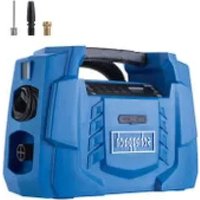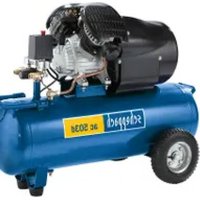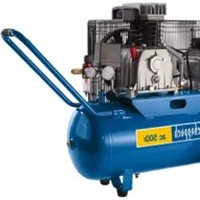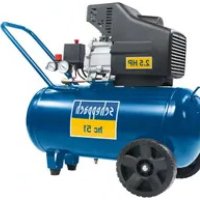
HC51 - Compressor SCHEPPACH - Free user manual and instructions
Find the device manual for free HC51 SCHEPPACH in PDF.

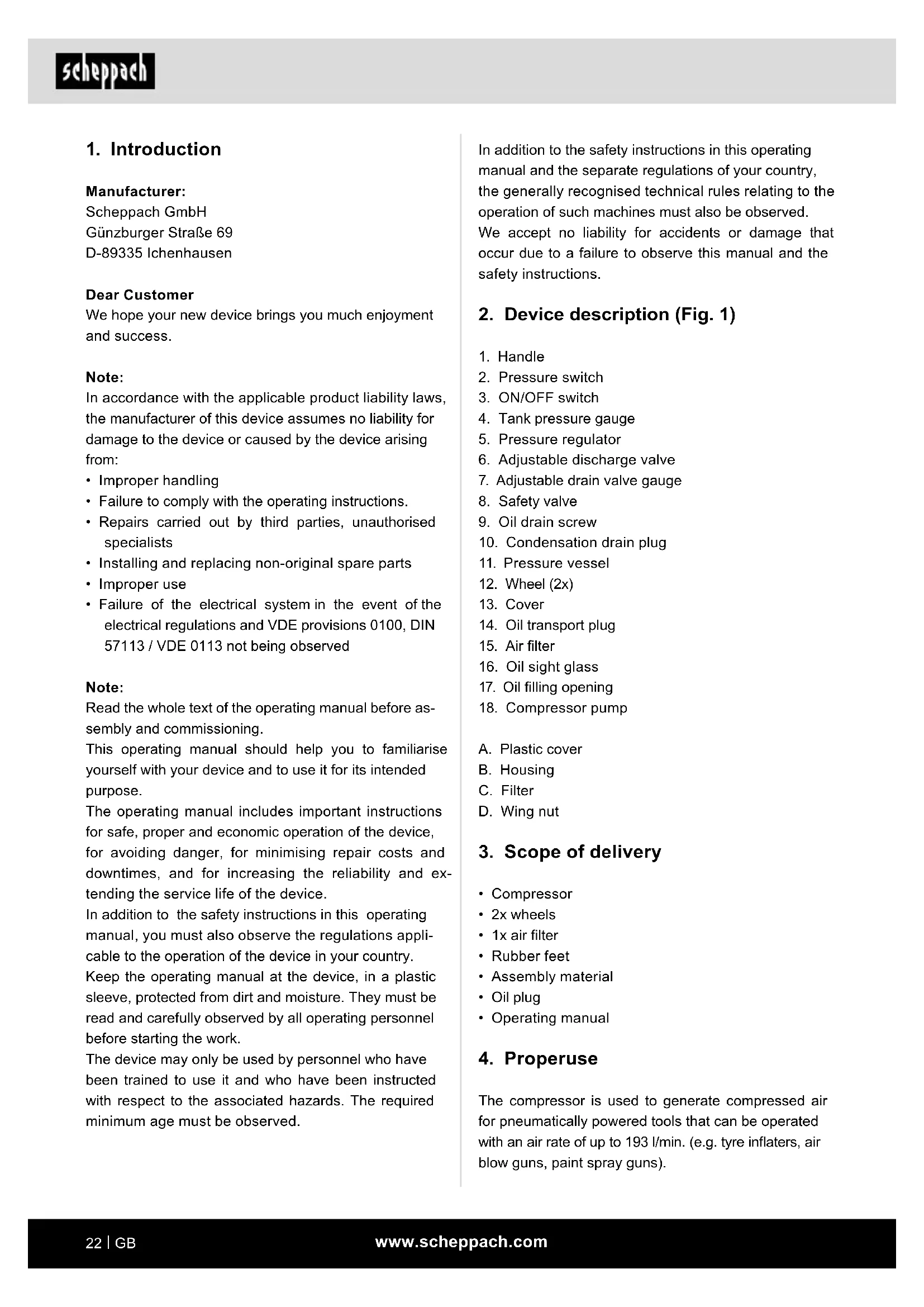


| Technical Specifications | Piston compressor, 2.5 HP power, air flow of 200 L/min, maximum pressure of 8 bars. |
|---|---|
| Usage | Ideal for DIY tasks, tire inflation, compressed air cleaning, and use with pneumatic tools. |
| Maintenance and Repair | Regularly check the oil level, clean the air filter, and drain the water tank. |
| Safety | Wear safety glasses, avoid overloading the compressor, and do not use in damp environments. |
| General Information | Weight 30 kg, dimensions 80 x 30 x 70 cm, 2-year warranty. |
Frequently Asked Questions - HC51 SCHEPPACH
User questions about HC51 SCHEPPACH
0 question about this device. Answer the ones you know or ask your own.
Ask a new question about this device
Download the instructions for your Compressor in PDF format for free! Find your manual HC51 - SCHEPPACH and take your electronic device back in hand. On this page are published all the documents necessary for the use of your device. HC51 by SCHEPPACH.
USER MANUAL HC51 SCHEPPACH
Günzburger Straße 69
D-89335 Ichenhausen
Verehrter Kunde
Homepage: https://www.scheppach.com/de/service
Explanation of the symbols on the device
| Warning - Read the operating manual to reduce the risk of injury. | |
| Wear hearing protection. Excessive noise can result in a loss of hearing. | |
| Wear a dust protection mask. When machining wood and other materials, harmful dust may be generated. Do not machine material containing asbestos! | |
| Wear safety goggles. Sparks created during work or fragments, chippings and dust ejected by the device can cause sight loss. | |
| Warning - Hot surfaces. | |
| Warning against electrical voltage | |
| Warning! The device is equipped with an automated start-up control. Keep third-parties away from the working range of the device! | |
| Do not expose the machine to rain. The device may only be stationed, stored and operated in dry ambient conditions. | |
| Specification of the sound power level in dB | |
| △ Attention! | We have marked points in this operating manual that impact your safety with this symbol! |
| Attention! Prior to initial commissioning, check the oil level and replace the oil sealing plug! | |
| CE | The product complies with the applicable European directives. |
Table of contents: Page:
- Introduction 22
- Device description (Fig. 1) 22
- Scope of delivery 22
- Proper use 22
- Safety instructions 23
- Technical data 25
- Unpacking 26
8.Before commissioning 26 - Assembly and operation 26
- Electrical connection 27
- Cleaning, maintenance and storage 28
- Disposal and recycling 29
- Troubleshooting 31
- Declaration of conformity 303
1. Introduction
Manufacturer:
Scheppach GmbH
Günzburger Straße 69
D-89335 Ichenhausen
Dear Customer
We hope your new device brings you much enjoyment and success.
Note:
In accordance with the applicable product liability laws, the manufacturer of this device assumes no liability for damage to the device or caused by the device arising from:
- Improper handling
- Failure to comply with the operating instructions.
- Repairs carried out by third parties, unauthorised specialists
- Installing and replacing non-original spare parts
- Improper use
- Failure of the electrical system in the event of the electrical regulations and VDE provisions 0100, DIN 57113 / VDE 0113 not being observed
Note:
Read the whole text of the operating manual before assembly and commissioning.
This operating manual should help you to familiarise yourself with your device and to use it for its intended purpose.
The operating manual includes important instructions for safe, proper and economic operation of the device, for avoiding danger, for minimising repair costs and downtimes, and for increasing the reliability and extending the service life of the device.
In addition to the safety instructions in this operating manual, you must also observe the regulations applicable to the operation of the device in your country. Keep the operating manual at the device, in a plastic sleeve, protected from dirt and moisture. They must be read and carefully observed by all operating personnel before starting the work.
The device may only be used by personnel who have been trained to use it and who have been instructed with respect to the associated hazards. The required minimum age must be observed.
In addition to the safety instructions in this operating manual and the separate regulations of your country, the generally recognised technical rules relating to the operation of such machines must also be observed.
We accept no liability for accidents or damage that occur due to a failure to observe this manual and the safety instructions.
2. Device description (Fig. 1)
- Handle
- Pressure switch
- ON/OFF switch
- Tank pressure gauge
- Pressure regulator
- Adjustable discharge valve
- Adjustable drain valve gauge
- Safety valve
- Oil drain screw
- Condensation drain plug
- Pressure vessel
12.Wheel (2x) - Cover
- Oil transport plug
- Air filter
- Oil sight glass
- Oil filling opening
- Compressor pump
A. Plastic cover
B. Housing
C. Filter
D. Wing nut
3. Scope of delivery
- Compressor
- 2x wheels
1x air filter
Rubber feet
Assembly material - Oil plug
- Operating manual
4. Properuse
The compressor is used to generate compressed air for pneumatically powered tools that can be operated with an air rate of up to 193 l/min. (e.g. tyre inflaters, air blow guns, paint spray guns).
The compressor may only be operated in a dry and well ventilated indoor space.
The machine may only be used in the intended manner. Any use beyond this is improper. The user/operator, not the manufacturer, is responsible for damages or injuries of any type resulting from this.
Please note that our equipment was not designed with the intention of use for commercial or industrial purposes. We assume no guarantee if the device is used in commercial or industrial applications, or for equivalent work.
5. Safety instructions
Attention! The following basic safety measures must be observed when using electric tools for protection against electric shock, and the risk of injury and fire. Read all these notices before using the power tool and store the safety instructions well for later reference.
Safe work
-
Keep the work area orderly
-
Disorder in the work area can lead to accidents.
-
Take environmental influences into account
-
Do not expose electric tools to rain.
-
Do not use electric tools in a damp or wet environment. There is a risk of electric shock!
-
Make sure that the work area is well-illuminated.
-
Do not use electric tools where there is a risk of fire or explosion.
-
Protect yourself from electric shock
-
Avoid physical contact with earthed parts (e.g. pipes, radiators, electric ranges, cooling units).
-
Keep away from children!
-
Do not allow other persons to touch the tool and cable, keep them away from your work area.
-
Securely store unused power tools
-
Unused power tools should be stored in a dry, elevated or closed location out of the reach of children.
-
Do not overload your electric tool
-
They work better and more safely in the specified output range.
-
Wear suitable clothing
-
Do not wear wide clothing or jewellery, which can become entangled in moving parts.
Rubber gloves and anti-slip footwear are recommended when working outdoors.
-
Tie long hair back in a hair net.
-
Do not use the cable for purposes for which it is not intended
-
Do not use the cable to pull the plug out of the outlet. Protect the cable from heat, oil and sharp edges.
-
Take care of your tools
-
Keep your compressor clean in order to work well and safely.
- Follow the maintenance instructions.
- Check the connection cable of the electric tool regularly and have it replaced by a recognised specialist when damaged.
-
Check extension cables regularly and replace them when damaged.
-
Pull the connector out of the socket
-
When the electric tool is not in use or prior to maintenance and when replacing tools such as saw blades, drills, cutters.
-
Avoid inadvertent starting
-
Make sure that the switch is switched off when plugging the plug into an outlet.
-
Use extension cables for outdoors
-
Only use approved and appropriately identified extension cables for use outdoors.
-
Only use cable reels in the unrolled state.
-
Always remain attentive
-
Pay attention to what you are doing. Remain sensible when working. Do not use the electric tool when you are distracted.
-
Check the power tool for potential damage
-
Protective devices or other parts with minor damage must be carefully inspected to ensure that they function correctly and as intended prior to continued use of the power tool.
- Check whether the moving parts function faultlessly and do not jam or whether parts are damaged. All parts must be correctly mounted and all conditions must be fulfilled to ensure fault-free operation of the power tool.
- Damaged protective devices and parts must be properly repaired or replaced by a recognised specialist workshop, insofar as nothing different is specified in the operating manual.
- Damaged switches must be replaced at a customer service workshop.
- Do not use any faulty or damaged connection cables.
-
Do not use any electric tool on which the switch cannot be switched on and off.
-
Have your electric tool repaired by a qualified electrician
-
This electric tool conforms to the applicable safety regulations. Repairs may only be performed by an electrician using original spare parts. Otherwise accidents can occur.
-
Attention!
-
For your own safety, only use accessories and additional equipment that are indicated in the operating manual or have been recommended or indicated by the manufacturer. Use of other tools or accessories that those recommended in the operating manual or in the catalogue could represent a personal danger to you.
-
Noise
-
Wear hearing protection when using the compressor.
-
Replacing the connection line
-
If the connection line is damaged, it must be replaced by the manufacturer or an electrician to avoid danger. There is a risk of electric shock.
-
Inflating tyres
-
Check the tyre pressure immediately after filling using a suitable pressure gauge, e.g. at a petrol station.
-
Street-legal compressors in construction site operation
-
Ensure that all hoses and fixtures are suitable for the maximum permissible working pressure of the compressor.
-
Set-up location
-
Only set up the compressor on a flat surface.
-
It is recommended to equip the feed hoses with a safety cable in case of pressure above 7 bar, e.g. using a wire cable.
-
Avoid over-stressing the piping system by using flexible hose connections to prevent kinking.
-
Make sure that the oil cooling devices are kept clean and that the protective devices are kept in good operating condition.
-
Risk of burns from hot oil
-
Wear suitable protective gloves.
-
Never work with the compressor near naked flames.
-
Be careful not to spill oil.
-
Starting the motor is forbidden if the temperature is below 0^ .
-
Warning: Clogged oil filters or valve failure lead to lack of lubrication.
WARNING! This power tool generates an electromagnetic field during operation. This field can impair active or passive medical implants under certain circumstances. In order to prevent the risk of serious or deadly injuries, we recommend that persons with medical implants consult with their physician and the manufacturer of the medical implant prior to operating the power tool.
ADDITIONAL SAFETY INSTRUCTIONS
Observe the corresponding operating manuals of the respective compressed air tools / compressed air attachments! The following general instructions must also be observed:
Safety instructions for working with compressed air and air blow guns
- Ensure there is sufficient distance to the product, at least 2.50m , and keep the compressed air tools / compressed air attachments away from the compressor during operation.
- Compressor pump and lines reach high temperatures during operation. Touching them will cause burns.
- The air which is sucked in by the compressor must be kept free of impurities that could cause fires or explosions in the compressor pump.
- When disconnecting the hose coupling, hold the coupling piece of the hose firmly with your hand. This will ensure that you avoid injuries caused by the hose recoiling.
- Wear safety goggles and a respirator when working with the compressed air pistol. Dusts are harmful to health! Foreign objects or blown off parts can easily cause injuries.
- Do not blow on people or clean clothing whilst on the body with the air blow gun. Danger of injury!
Safety instructions when using spraying attachments (e.g. paint sprayers):
- Keep the spray attachment away from the compressor when filling so that no liquid comes into contact with the compressor.
- Never spray in the direction of the compressor when using the spraying attachments (e.g. paint sprayers). Moisture can lead to electrical hazards!
- Do not process any paints or solvents with a flash point below 55^ C. Risk of explosion!
-
Do not heat up paints or solvents. Risk of explosion!
-
If harmful liquids are processed, filter devices (face masks) are required for protection. Also observe the information on protective measures provided by the manufacturers of such substances.
- The information and labelling of the hazardous substances ordinance affixed to the outer packaging of the processed materials must be observed. If necessary, take additional protective measures, in particular wear suitable clothing and masks.
- Do not smoke during the spraying process or in the working area. Risk of explosion! Paint vapours are also highly flammable.
- Fireplaces, naked flames lights or sparking machinery must not be present or operated.
- Do not store or consume food or drinks in the work area. Paint fumes are harmful to health.
- The working area must be larger than 30m^3 and sufficient air exchange must be ensured during spraying and drying.
- Do not spray into the wind. Always observe the regulations of the local police authorities when spraying flammable or hazardous spraying materials.
- Do not use media such as white spirit, butyl alcohol and methylene chloride in conjunction with the PVC pressure hose. These media destroy the pressure hose.
- The work area must be separated from the compressor so that it cannot come into direct contact with the working medium.
Operation of pressure vessels
- Anyone who operates a pressure vessel must keep this in good working order, operate and monitor it correctly, perform the necessary maintenance and servicing works immediately and implement safety measures as required according to the circumstances.
- The regulatory authority can instruct necessary monitoring measures in individual cases.
- A pressure vessel must not be operated if it exhibits a defect that poses a danger to personnel or third parties.
- Check the pressure vessel for rust and damage each time before use. The compressor shall not be operated if the pressure vessel is damaged or rusty. If you discover damage, please contact the customer service workshop.
Store the safety instructions safely.
Residual risks
The machine has been built according to the state-of-the-art and the recognised technical safety requirements. However, individual residual risks can arise during operation.
- Health hazard due to electrical power, with the use of improper electrical connection cables.
- Furthermore, despite all precautions having been met, some non-obvious residual risks may still remain.
- Residual risks can be minimised if the "Safety Instructions" and the "Intended Use" together with the operating manual as a whole are observed.
- Avoid accidental starting of the machine: the operating button may not be pressed when inserting the plug in an outlet. Use the tool that is recommended in this operating manual. This is how to ensure that your machine provides optimum performance.
- Keep your hands away from the working area when the machine is in operation.
6. Technical data
Mains power connection 230V / 50Hz
| Engine output 1800 W | |
| Operating mode S1 | |
| Compressor speed 2,850 rpm | |
| Pressure vessel volume 50 l | |
| Operating pressure approx. 10 bar | |
| Theo. Suction capability approx. 257 l/min | |
| Theo. Power output | approx. 193 l/min |
| Protection category | IPX2 |
| Device weight | approx. 34 kg |
| Oil | approx. 0.3 l |
| Max. installation altitude (above sea level) | 1000 m |
Subject to technical changes!
Noise data
The noise emission values have been determined in accordance with EN ISO 3744.
Wear hearing protection.
Excessive noise can result in a loss of hearing.
Warning: Noise can have serious effects on your health. If the machine noise exceeds 85 dB, please wear suitable hearing protection.
| Sound power level LWA | 97 dB |
| Sound pressure level LPA | 74.2 dB |
| Uncertainty KwAPA | 2.37 dB |
7. Unpacking
- Open the packaging and carefully remove the product.
- Remove the packaging material, as well as the packaging and transport safety devices (if present).
- Check whether the scope of delivery is complete.
- Check the product and accessory parts for transport damage. In the event of complaints the carrier must be informed immediately. Later claims will not be recognised.
- If possible, keep the packaging until the expiry of the warranty period.
- Familiarise yourself with the product by means of the operating manual before using for the first time.
- With accessories as well as wearing parts and replacement parts use only original parts. Spare parts can be obtained from your specialist dealer.
- When ordering please provide our article number as well as type and year of manufacture for the product.
WARNING!
The product and the packaging material are not children's toys! Do not let children play with plastic bags, films or small parts! There is a danger of choking or suffocating!
8. Before commissioning
- Before connecting the machine, make certain that the data on the type plate matches with the mains power data.
- Prior to initial commissioning, remove the transport plug (14) and fill the compressor pump housing with oil as described in item 8.3.
- Check the device for transport damage. Report any damage immediately to the transport company which was used to deliver the compressor.
-
Install the compressor near the point of consumption.
-
Long air lines and supply cables (extension cable) should be avoided.
- Ensure that the intake air is dry and dust-free.
- Do not deploy the compressor in damp or wet areas.
- Operate the compressor only in suitable areas (well ventilated, ambient temperature +5^ to 40^ ). There must be no dust, acids, vapours, explosive gases or inflammable gases in the room.
- The compressor is designed to be used in dry rooms. It must not be used in areas where splashed water is present.
- The oil level in the compressor pump must be checked before commissioning.
- The compressor may only be used outdoor briefly when the ambient conditions are dry.
- The compressor must always be kept dry and must not be left outdoors after work is complete.
9. Assembly and operation
Attention!
Always make sure the device is fully assembled before commissioning!
9.1 Fitting the wheels (Fig. 4)
- To attach the wheels (12), first guide a washer with the wheel bolt through the wheel. Then add a washer and a hexagonal nut on the inside of the wheel. Now tighten the nut by hand far enough so that the wheel can still rotate.
- Slide the wheel unit through the bracket beneath the tank.
- Attach it with a washer, safety washer and nut and tighten them.
- Repeat this process for the second wheel.
9.2 Fitting the rubber wheels (fig. 5)
Attach the rubber feet to the bracket at the bottom on the front of the tank using the screws, washers and nuts provided.
9.3 Oil (Fig. 2)
Warning: Be sure to check the oil level before the first use!
Operation without oil will cause irreparable damage to the device and will invalidate the warranty.
-
Remove the plastic oil filler plug (14) from the top of the compressor housing crankcase.
-
Fill the crankcase with oil until the oil level in the sight glass (16) reaches up to the centre point of the red circle.
- Reattach the oil new sealing plug, which is included in the scope of delivery (14), and tighten it firmly.
9.4 Air filter (Fig. 6)
Warning: The air filter must be mounted before initial use. Operating without the air filter damages the compressor and voids the warranty.
The air filter (15) is screwed in on the right side of the cylinder and tightened.
9.5 Mains power connection
- The compressor is equipped with a mains cable with an earthed plug. This can be connected to any mains socket 230V 50Hz with an earth contact and that is protected at 16 A.
- Before commissioning, ensure that the mains voltage matches with the operating voltage and the machine's power rating on the type plate.
- Long supply cables, extensions, cable reels, etc. cause a drop in voltage and can impede motor start-up.
- At low temperatures below +5^ , sluggishness may make starting difficult or impossible.
9.6 On/Off switch (Fig. 7)
- Pull the On/off switch (3) upwards to switch on the compressor. Press the ON/OFF switch down to switch off.
9.7 Adjusting the pressure: (Fig. 8)
- The pressure at the manometer (7) is adjusted with the pressure regulator (5).
The pressure set can be utilised by connecting to the quick-coupling (6). - The vessel pressure can be read off at the pressure gauge (4).
9.8 Setting the pressure switch (fig. 1)
The pressure switch (2) is set at the factory. Cut-in pressure approx. 8 bar Cut-out pressure approx. 10 bar
9.9 Thermal protector
The thermal protector is built into the device. If the thermal protector has tripped, proceed as follows:
Pull out the mains plug.
- Wait about two to three minutes.
- Plug the device in again.
- If the device does not start, repeat the process.
- If the device does not start again, switch the device off and on again using the on/off switch (16).
If you have carried out all of the steps above and the device still does not work, contact our service team.
10. Electrical connection
The electrical motor installed is connected and ready for operation. The connection complies with the applicable VDE and DIN provisions. The customer's mains connection as well as the extension cable used must also comply with these regulations.
When working with spray attachments and during temporary use outdoors, the device must be connected to a residual current circuit breaker with a trigger current of 30mA or less.
Damaged electrical connection cable
The insulation on electrical connection cables is often damaged.
This may have the following causes:
- Pressure points, where connection cables are passed through windows or doors.
- Kinks where the connection cable has been improperly fastened or routed.
- Places where the connection cables have been cut due to being driven over.
Insulation damage due to being ripped out of the wall outlet. - Cracks due to the insulation ageing.
Such damaged electrical connection cables must not be used and are life-threatening due to the insulation damage.
Check the electrical connection cables for damage regularly. Ensure that the connection cables are disconnected from electrical power when checking for damage.
Electrical connection cables must comply with the applicable VDE and DIN provisions. Only use connection cables of the same designation.
The printing of the type designation on the connection cable is mandatory.
AC motor:
The mains voltage must be 230V
- Extension cables up to 25m long must have a cross-section of 1.5mm^2
Connections and repair work on the electrical equipment may only be carried out by electricians.
Please provide the following information in the event of any enquiries:
Type of current for the motor
Machine data - type plate
- Motor data - type plate
11. Cleaning, maintenance and storage
Attention!
Pull out the mains plug before carrying out any cleaning or maintenance work! Danger of injury due to electric shocks!
Attention!
Wait until the device has cooled down completely! Danger of burns!
Attention!
Depressurise the device before carrying out any cleaning or maintenance work! Danger of injury!
Attention!
Disconnect the mains plug before carrying out any cleaning work.
11.1 Cleaning
- Keep the device as free of dust and dirt as possible. Rub the device clean with a clean cloth or blow it off with compressed air at low pressure.
- We recommend that you clean the device directly after every use.
- Clean the device at regular intervals using a damp cloth and a little soft soap. Do not use any cleaning products or solvents; they could attack the plastic parts of the device. Make sure that no water can penetrate the device interior.
- The hose and injection tools must be disconnected from the compressor before cleaning. The compressor must not be cleaned with water, solvents or similar.
11.2 Maintaining the pressure vessel (fig. 1)
Attention!
To ensure a long service life for the pressure vessel (11), drain off the condensate after each use by opening the drain screw (10). Release the boiler pressure beforehand (see 10.7.1).
The drain screw is opened by turning it counterclockwise (when looking at the screw on the bottom of the compressor) so that the condensate can be completely drained out of the pressure vessel. Then close the drain screw again (turn clockwise). Check the pressure vessel for rust and damage each time before use.
The compressor shall not be operated if the pressure vessel is damaged or rusty. If you discover damage, please contact the customer service workshop.
Attention!
The condensate from the pressure vessel contains oil residue. Dispose of the condensate in an environmentally friendly manner at a suitable collection point.
11.3 Safety valve (Fig. 11)
The safety valve (8) is set to the maximum permissible pressure of the pressure vessel. It is not permitted to adjust the safety valve or to remove the connection lock (8.2) between the drain nut (8.1) and its cap (8.3).
Actuate the safety valve every 30 operating hours but at least 3 times a year to ensure that it works when required. Turn the perforated drain nut (8.1) anti-clockwise to open it, then pull the valve stem outwards by hand via the perforated drain nut (8.1) to open the safety valve outlet. Now, the valve audibly releases air. Then turn the drain nut clockwise again to tighten.
11.4 Check the oil level at regular intervals (Fig. 2)
Place the compressor on a level and straight surface. The oil level must be positioned between the MAX and MIN of the oil sight glass (16).
Oil change: recommended oil: SAE 30 (viscosity 30) or L-DAB 100 above 10^
SAE 10 (viscosity 10) or L-DAB 68 below 10^
The original oil filling must be changed after 10 operating hours; afterwards the oil must be drained and replaced with new oil after every 50 operating hours.
11.5 Changing oil (Fig. 1-3)
Switch the motor off and unplug the mains plug from the power outlet. Remove the oil plug (14). After releasing any air pressure, you can unscrew the oil drain screw (9) on the compressor pump (18).
To prevent the oil from running out in an uncontrolled manner, hold a small metal chute under the opening and collect the oil in a vessel.
If the oil does not drain out completely, we recommend tilting the compressor slightly. Once the oil has fully drained out, replace the oil drain screw (9).
Dispose of the old oil at a drop-off point for old oil.
To fill in the correct quantity of oil, make sure that the compressor stands on an even surface. Fill new oil through the oil filling opening (17) until it comes up to the maximum level. This is indicated by a red dot on the oil sight glass (12) (Fig. 2). Do not exceed the maximum filling quantity. Overfilling the equipment may result in damage. Reinsert the oil sealing plug (14) into the oil filling opening (17).
11.6 Air filter cleaning (Fig. 6, 10)
The intake filter prevents dust and dirt being sucked in. It is necessary to clean this filter at least every 300 operating hours. A blocked intake filter significantly reduces the compressor power.
Remove the intake filter by unscrewing the screw (D). Remove the plastic cover (A) from the housing (B) and clean the filter (C). Carefully knock out the air filter, filter cover and filter housing. These components must then be blown out with compressed air (approx. 3 bar) and reassembled in reverse order.
11.7 Storage
Attention!
Disconnect the mains plug, vent the device and all connected compressed air tools. Store the compressor in such a way that it cannot be used by unauthorised persons.
Attention!
Store the compressor only in dry locations that are inaccessible for unauthorised persons. Do not tilt the unit, only store it upright! Oil may leak out!
11.7.1 Releasing excess pressure
Release overpressure in the compressor by switching off the compressor and using up the compressed air still in the pressure vessel, e.g. with a compressed air tool running at idle or with an air blow gun.
11.8 Service information
With this product, it is necessary to note that the following parts are subject to natural or usage-related wear, or that the following parts are required as consumables.
Wearing parts*: Belt, coupling
- may not be included in the scope of delivery!
Spare parts and accessories can be obtained from our Service Centre. To do this, scan the QR code on the front page.
12. Disposal and recycling
Notes for packaging


The packaging materials are recyclable. Please dispose of packaging in an environmentally friendly manner.
Notes on the electrical and electronic equipment act (ElektroG)
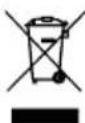
Waste electrical and electronic equipment does not belong in household waste, but must be collected and disposed of separately!
-
Used batteries or rechargeable batteries that are not installed permanently in the old device must be removed non-destructively before disposal! Their disposal is regulated by the battery act.
-
Owners or users of electrical and electronic devices are legally obliged to return them after use.
-
The end user is responsible for deleting their personal data from the old device being disposed of!
-
The symbol of the crossed-out dustbin means that waste electrical and electronic equipment must not be disposed of with household waste.
-
Waste electrical and electronic equipment can be handed in free of charge at the following places: - Public disposal or collection points (e.g. municipal works yards).
-
Points of sale of electrical appliances (stationary and online), provided that dealers are obliged to take them back or offer to do so voluntarily.
-
Up to three waste electrical devices per type of device, with an edge length of no more than 25 centimetres, can be returned free of charge to the manufacturer without prior purchase of a new device from the manufacturer or taken to another authorised collection point in your vicinity.
Further supplementary take-back conditions of the manufacturers and distributors can be obtained from the respective customer service.
- If the manufacturer delivers a new electrical device to a private household, the manufacturer can arrange for the free collection of the old electrical device upon request from the end user. Please contact the manufacturer's customer service for this.
These statements only apply to devices installed and sold in the countries of the European Union and which are subject to the European Directive 2012/19/EU. In countries outside the European Union, different regulations may apply to the disposal of waste electrical and electronic equipment.
You can find out how to dispose of the disused device from your local authority or city administration.
Fuels and oils
- Before disposing of the device, the fuel tank and the motor oil tank must be emptied!
- Fuel and engine oil do not belong in household waste or drains, but must be collected or disposed of separately!
- Empty oil and fuel tanks must be disposed of in an environmentally friendly manner.
13. Troubleshooting
| Fault Possible cause Remedy | ||
| Engine does not start, runs too slow or becomes extremely hot. | Current fault or mains voltage too low. | Check mains voltage |
| Power cable too long or thin. Get a new cable from the dealer. | ||
| Faulty pressure switch. | Have it repaired or replaced by the dealer. | |
| Faulty engine. | ||
| Main compressor goes too hard, gets stuck. | Have the faulty parts repaired or replaced by the dealer. | |
| Main compressor goes too hard, gets stuck. | Moving parts damaged by heat due to insufficient lubrication. | Have crankshaft, bearing, connecting rod, piston rings, etc., checked by the dealer and replaced if necessary. |
| Moving parts damaged or blocked by foreign object. | ||
| Vibration or abnormal noises. | Loose parts. | Have it checked by dealer and repaired if necessary. |
| Foreign object in the compressor. | ||
| Piston rod with valve seat. | Have sealing ring enlarged by the dealer. | |
| Moving parts too hot. | Have it repaired or replaced by the dealer. | |
| Insufficient pressure or outlet capacity dropped. | Engine running too slow. | Have it checked by dealer and repaired if necessary. |
| Air filter cartridge soiled. Clean or replace filter cartridge. | ||
| Safety valve leaking. | Have it checked by dealer and repaired if necessary. | |
| Pipe leaking. | ||
| Damaged seal. | ||
| Damaged or carbonised valve seat. | ||
| Damaged piston ring or cylinder. | ||
| Oil consumption too high. | Oil level too high. Keep oil level at the correct level. | |
| Hole in the oil filler plug (14) blocked. Check and clean. | ||
| Piston ring and/or cylinder worn or damaged. | Have it checked by dealer and repaired if necessary. | |
Günzburger Straße 69
D-89335 Ichenhausen
Cher client,
Günzburger Straße 69
89335 Ichenhausen, Germania
Egregio cliente,
Günzburger Straße 69
D-89335 Ichenhausen
Geachte klant,
Günzburger Straße 69
Günzburger Straße 69
D-89335 Ichenhausen
Szanowy Kliencie
Günzburger Straße 69
D-89335 Ichenhausen
Poštovani kupće
Zelimo vam mnogo zadovoljstva i uspjeha pri radu s novim urejadem.
Napomena:
Prema vazecem njemačkom Zakun o odgovornosti za proizvode, proizvodač ovog uredaja ne odgovara za stete koje nastanu na ovom uredaju ili koje ovaj uredaj uzrokuje u slučaju:
- nepropisnog rukovanja
- nepridržavanja priručnika za uporabu
- popravaka koje obave drugi, neovlašeni stručnjaci
- ugradnje i zamjene neoriginalnih rezervnih dijelova
- nenamjenske uporabe
kvarova elektricnog sustava zbog nepostivanja elektrichnih propisa i VDE propisa 0100, DIN 57113 /VDE 0113
Vodite računa o sljedecem:
Prijne montaze i stavljanja u pogon pročitajte cjelokupan tekst prisuručnika za uporabu.
Ovaj prisučnik za uporabu pomociće vam da upoznate uredaj i rabite ga na propisan način.
Priručnik za uporabu sadržava važne napomene za siguran, ispravan i učinkovit rad s uredajem te za izbegravanje opasnosti, smanjivanje troškova popravka i prekida rada te povećavanje pouzdanosti i vijeka trajanja uredaja.
Osim sigurnosnih propisa iz ovog prisučnika za uporabu svakako se pridržavajte i nacionalnih propisa koji se odnose na rad ovog ureda.
Cuvajte prirucnik za uporabu u blizini uredaja, zasti-cenog od prljavstine i vlage u plasticnoj vrecici. Prijepocetka rada svrukovatelji moraju procitati i pozorno se pridrzavati ovog prirucnika.
Na uredaju smiju raditi samo osobe koje su poducene u uporabi uredaja i upucene u opasnosti koje su povezane s njegovom uporabom. Strojem smiju rukovati samo osobe odgovarajuce minimalne dobi.
Osim sigurnosnih napomena sadrzanih u ovom prisucniku za uporabu i posebnih nacionalnih propisa valja se pridrzavati i opceprihvacenih tehnickih pravila za rad konstrukcijski identiñnih naprava.
Ne preuzimamo odgovornost za nezgode ili stete koje nastanu zbog nepridržavanja ovog prisucnika i sigur-nosnih napomena.
2. Opis uredaja (sl. 1)
- Ručka
- Tlačna sklopka
- Sklopka za uključivanje/isključivanje
- Mjerač tlaka u rezervaoru
- Regulator tlaka
- Prilagodljiv ispusni ventil
- Prilagodljiv mjerač ispusnog ventila
- Sigurnosni ventil
- Vijak za ispušanje ulja
- Vijak za ispustanje kondenzata
- Tlačni spremnik
- Kotač (2x)
- Pokrov
- Čep za transport ulja
- Filtar zraka
- Kontrolno okance za ulje
- Otvor za ulijevanje ulja
- Kompresorska pumpa
A. PlastoniciPoklopac
B. Kucište
C. Filtar
D. Krilata matica
3. Opseg isporuke
- Kompresor
- 2x kotači
- 1x filter zraka
- Gumena stopala
Montažni materijal
Zaporni cep za ulje - Priručnik za uporabu
4. Namjenskauporaba
Kompresor služi za proizvodnju stlačenog zraka za pneumatske alate koje je moguce rabiti s količinom zraka do otprilike 193 l/min (npr. punjacč guma, pistolj za ispuhivanje i pistolj za lakiranje).
Kompresor je dopusteno rabiti samu u suhim i dobro provjetravanim zatvorenim prostorijama.
Stroj je dopusteno rabiti sono namjenski. Svaka druga uporaba smatra se nenamjenskom. Za stete ili ozljede uzrokovane takvom uporabom odgovoran je korisnik/ rukovatelj, a ne proizvodač.
Imajte na umu da naši uredeji namjenski nisu konstrui-rani za komercijalnu, obrtnicku ili industrijsku uporabu. Ne preuzimamo odgovornost ak so uredaj rabi u komercijalnim, obrtnickim ili industrijskim pogonima te za srodne postupke.
5. Sigurnosne napomene
Pozor! Pri uporabi elektrichnih alata valja se pridržavati sljedecih osnovnih sigurnosnih mjera radi zašite od elektricnog udara te opasnosti od ozljeda i požara. Prie uporabe ovog elektricnog alata procitajte svesljedec napomene i cuvajte ih na sigurnom mestu.
Siguran rad
Günzburger Straße 69
D-89335 Ichenhausen
Spostovani kupec,
želimo vam veliko veselja in uspeha pri delu z vašo novo napravo.
Napotek:
Günzburger Straße 69
D-89335 Ichenhausen
Austatud klien!
Günzburger Straße 69
D-89335 Ichenhausen
Gerbiamas klien,
Günzburger Straße 69
D-89335 Ichenhausen, Vacija
Godatais client!
Günzburger Straße 69
D-89335 Ichenhausen
Bästa Kund!
Günzburger Straße 69
D-89335 Ichenhausen
Arvoisa asiakas
Günzburger Straße 69
D-89335 Ichenhausen, Tyskland
Kare kunde
Günzburger Straße 69
D-89335 Ichenhausen
Kjare kunde
Günzburger Straße 69
D-89335 Ichenhausen,Германя
YbaxaemKJIneHTn,
Kelaem Bn Mhoro npraTHm MOMHTn uynexn npna pa6oTata c Baunr HOB ypeI.
Yka3aHHe:
CbIaCHO DeIcTBaIIra 3aOH 3a IpoIyKTOBaTa OTROBOPHOCT, IpON3BOIDITeJIrH Ha TO3n ypeI He HOCNOTROBOPHOCT 3a UETn, Bb3HNKHaII N O IIIN NopadITO3N ypeI, npI:
- HenpaBnJHo 6opabeHe
- Hecna3BaHe Na pblkoBoIDCTBOTO 3a 06cnyXbaHe
PemontnOT HeynbHOMOeHN CneuaNNCTN,BAaN Ce TpeTJNca - MoHTaX N IOdMaHa Ha He opuHnHaJIHn pe3epBHN Yactn
- ynoTe6a He no npedHa3NaueHne
- OTKa3 Ha eNeKtpnueckata nHcTaJauZna npn HeCnA3BaHe Ha npEeDnncAHnra 3a pa6Ota c eNeKtpnueCTBO n pa3npoe6bnte Ha VDE 0100, DIN 57113VDE 0113
B3emete noBHHMaHHe:
PpeMOnTaKa NpckaHeTo B EKcnNoaTaunn Ppo-uetete cenT Ha pkoBDCTBOTO 3a ynotpe6a.
Lceta HbToBa pkoBocBo 3a ynoTpe6a e da BnyleChn npn 3aNo3HaBaHeto c Baunypei n3noN3BaHeto Ha HerOBITE Bb3MOxHOCTn 3a ynoTpe6a cbrrnaCHO npednncAHnraTa.
PbKOBOCTBOTO 3a ynoTpe6a cbDbpxka BaxHn yka3a-HnOTHOCHOBe3oNacHATA, npabINHATA uIKOHOMuHATA pa6ota c ypeDa, n36yRbHeTO Ha onaCHOt, CnecTBAHeTo Ha pa3XODn 3a peMOHT, HamaJIraBaHeTo Ha BpeMeHaTa Ha npceToI yBeJInuaBaHeTo Ha HAdEJKHOCTTA n EKCIIIOaTuOHHN JxNBOT Ha eJekTpueeckn IHCTpymEnT.
B donbHHeHne KbM yKa3aHnra 3a 6e3oNaChOcB TOBa pKOBODCTBO 3a yNoTpe6a, 3aNbKnTeHnTOpa6Ba Da cna3BaTe OTHacuNte Ce Do EKCnnoataaHa npeda npednncanHn Bb BaWata ctpana.
CbxpaHraBaTe pkoBODCTBOTo 3a ynoTpe6 npuypeda, 3aunTeHO OT 3ambpcaBaHe n Bnara B nlaactMacoba TOp6nka. To Tp6Ba Da 6bJe npooyeHo n BHIMATEIHO cna3BaHO OT BCEKn OepaTop npen 3aNoUbaHe Ha pa6Ota.
C ypea Morat da pa6oTc saMo Iuca, KOnto ca HnCTpykTnpaHn OTHocHO ynoTppe6ata Ha ypea n ca 3aNo3HaTn CbC CBbp3AHnTe C TOBa ONaCHOCTn. N3ncKbaHATA MNHMaIIHb3pAcT Tp6Ba Da ce cna3Ba.
OcbEH cbDbpkaunTe Ce B TOBa pbKOBOCTBO 3a ynoTpe6a yka3aHnra 3a 6e3oNaChoc T CneuaHnTe pa3npope6b VBB BaWata cTpaHa, npi pa6oTaTc MaunHn Tpr6Ba Da ce cna3Bat N obuOpn3HaNTe npabJnHa Ha texHnKata.
He noemame OTROBOPHOCT 3a 3IIOIOnyKn IIN UeTn, Bb3HnKHaJI NopaI IN HeCna3BaHe Ha TOBa pKOBoDCTBO IIN HA yKa3aHnRA Ta 3a 6e3ONaCHOCT.
2. OnncaHne Ha ypeJa (Onr. 1)
- PbKOXBaTaKa
- PpeKbcBa 3a HaJraHa
- ПразьклioчвateЛВКЛ./ИЗКЛ.
- MaHometbP Ha pe3epBOapa
- Perynalop Ha Hailrahe
- Perynpyem n3nyckaTeJeH BeHTnI
- MaHometbP ha peryInpyem n3nyckaTeJIeH BeHTIN
- Претазен В entn
- Поба за ИЗTOУBAне НА мэлJOTO
- BnHT 3a n3TOUbaHe Ha KOHDeH3aT
- CbD noD haJraHe
- KoneNo (2 6p.)
- Kanak
- Побka за Трансоптуаре на Macnoto
- Bb3dyweH pntTbp
- H6JIIOJaTeIHo CTbKJIO 3a MaCNoTo
- OTBOP 3a HAIINBaHe Ha MacNo
- Komnpecopha nomna
A. ΠιαctMacoB KαπαK
B. Kopnyc
C. Φπrtp
D.Kpunuata raika
3. 06em Ha doctabkaTa
Komnpecop
- 2x koneta
1xBb3dnyuwehΦnntbp
-Гумени Краета
- Mohtaxken MaTepuan
Tana Ha MacJNoto
PbKOBOCTBO3aynoTpe6a
4. Ynotpe6a no npedHa3HaueHne
KoMnpecopbT cnyk3a cb3daBaHe Ha cBcTeH Bb3- dyx 3a pa60TeuC bC cBcTeH Bb3dYx INCTpyMeHTN, KOINTOMorat da 6bDat 3aDvKBaHn C KOnIyceTBO Ha Bb3dyxa Do OK.193 l/min.(Hanp.npcnocobneHne 3a nomnaHe Ha rym, nIcToNET 3a npOdyXbaHe nIncToIeT 3a 6oJDCBAHe).
KomnpecopbT Tp86Ba da ce ekcnIpoatnpa camo B cyuxn ndo6pe npoBeTpNBn nomeueHna.
MaunhaTMOKe Da ce n3no3Ba cAmO cbflaCHO HeHOTOpnpedHa3NaueHne.BcKa pa3nUaua ce OT TOBa yNoTppe6a He e no npedHa3NaueHne.3a BcKaKbB BnD npOn3TuHaaN OTo BA uTeu HapAraBAHnO TROBOPHOCT HOCn Notpe6nteJIr/T/onepaTopbT, a He npOn3BOdnteJIrT.
Mol, o6bpeTe BHMaHne, Ye haunTe ypeH He ca KOHCTpynpaHn C npedHa3HaueHne 3a TbproBcKa, npo- pecnoHaHa nI npomuJleHa ynoTpe6a. He noema Me rapaHua, aKO ypeBt ce n3No13Ba B TbproBckn, 3aHaayTuCKn IIN npomuJleHn npedpnyTna, KaKTo n Pn paBHocNJH DeHOCn.
5. Yukazama 3a 6e3onachoct
BHMHHe!Pn ynoTpe6aHa eJekTpueckn HCTpymeHTu Tpa6Ba Da ce Cb6IIOdaBat CneHNte OCHOHN ppeNaa3HN MepKN CpeSy onaCHOCT OT TOKOB ydap, HapaHBAhe N noXap. IpOyTeTe BCNUK Te3nyka3AHNA, PpeDN da N3NoJI3BaTe To3N eJekTpueckN INcTpyMeHT, nCbxpaHBAaTe Do6pe yKa3AHnraTa 3a 6e3oNaCHOCT.
Be3onacha pa6ota
- Npndbpxaute BaeweTo pa6oTHO macto nope-
-Be3npaIbKbT Ha pa60THoMrcTo MoKe da DOBeDe Do 3NoNOnyKn.
- Cb6IIOdaBaIte BnHnHa Ha OKnHaTa cpea
-He n3naraTe eNeKtpuYeCKn HnCTpyMeHTn Ha 1bXk.
-He n3noJ3BaIte eJIeKTpueeCKn HNCTpyMeHTN BBB BnaXHa IIN MOKpa cpea. OnachOcT ot TOKOB yIap!
- OcnrypBaIe Do6po OcBtJIeHne Ha pa6oTHO TO MxCTO.
-He n3noJ3BaIte eIeKtpnueckn HNCTpyMeHTn Ha MeCTa,Ha KOnTO CbIeCTByBa ONaCHOCT OT NOXAP IIN EKCNIO3n.
- Na3eTe ce ot TOKOB yap
-ИЗбгваiteДOKOCBaHeHaTЯNotOДОЗa3eMeHnЧаСТи(HAnp.Tpb6u,paDnATOpN,eNeKTpnuYeCKnneuKN,xnaDnHnCn).
4.ДрьхтЕдаа далу!
-He no3B0JBAaTe Ha dpyrI Jnca Da DOKOCBaT HnCTpymEnTa n Ka6ena,dpbXte r n daIeY ot BaWata pa6oTHa 3OHa.
5.CbXpaHraBaIte Heu3noJ3BaHn eJeKtpueeCKn HCTpyMeHTN Ha CnrypHO MRCTO
-
Hen3no3BaHnte eJNEKtpnueckn HNCTpyMeHTn Tp6Ba Da Ce OCTaBt Ha cyxo, BnCOKO nIIN 3a-KJIIOHeHO MRCTo, I3BbH OBCera Ha Deua.
-
He npetobapbaTe Baun eJektpueckn nH- cTpymEnT
-
Ⅲe pa6oTnTe no-Do6pe nno-cnHypHo B nocOueHn DaIana3OH Ha pa6oTHn XapakTePncTnKn.
7.Hocete noxoadjoo oIekno
-He hocete u npokn dpexn nn 6xkyta,te 6xa MOrJn da 6bdat 3axBaHaTN OT DnKkeu ce yacTn.
-При pa6oTa Ha otKpIto ce npenopbUba n3noJ3BaHeTo Ha rymeHn pBkABuCn n ObyBKn, KOInTO Hece Xlb3rA.
-Пидьлгкocинocetempexka3aKoca.
8.He n3noJ3BaIte Ka6eJa 3a ceJI, 3a KOnTO ToJ He e npEHa3HaueH
-He n3no3BaIte Ka6ena, 3a Da n3DbpNbATE uencena ot KOHTa. Na3eTe Ka6ena ot ropeuHa, macNo oCtpn pb6oBe.
- IopnbpaKeIe rpNkNBO BaunTe HnCTpyMeHTn
-ПодьркайтБашяКOMпесорЧИСТ,заДа pa6OTtedo6peисурно.
- CneBaanTe npednicaHnra 3a noDpBxka.
-Проверяваite peDoBHO cbeHnHTeHHnI npoBODHk Ha eNeKtpuYeCKnI HnCTpyMeHT n npiNoBpeDa Bb3JaarTe NOpMaHaT My Ha npu3HaT CneuHaNCT.
-Поверявау уьлжавашиte kaбени peюн Hoи CMeHЯTe,aco ca nobpeDeH.
- BnHaHn 6bTeBnMaTeJHn
-BHIMabaIte 3a TOBa, KOeTo npaBInTe. NOpXoxJaIte pa3ymHO KbM pa6oTata. He n3noJ3BaIte eNeKTPnueckn INHCTpyMeHT, KOraTO He cTe KOHcEHTpnpaHn.
- Поверяbaite eilektpnueckna nHcTpymeHT 3a eBentyaJIHn NOBpeDi
-Ппсссдьауnotpe6ha eektpnueckmaHNCtpymeHT Tp6Ba BHNMaTeJIHO da ce npOBepraBa n3prHOTOиnpaBnJHoФyHKUOHNpaHeHaпрдн3HNTe yCTpoIcTba NNHa JNeKo NOBpeDeHInTe YactN.
-Поберява TeДAN DBNKeUTe ceЧТиФункционир ATN3PDAH NOBpeHn YactN. BcNcKu ChTn Tp6Ba Da ca MoHTnpaHn PpaBUNHO DA OTRO-BaprT Ha BCNUY cNoBnA, 3a Da ce rapaHTnpa N3PdHaTa pa6Ota Ha eJekTpueckn INHCTpyMEHT.
-Поврениnpedna3нусгposctbaичactn Tp6BaДабдатpeMOHTnpaHиИи NOmHeHcBtacHO N3NCKBaHnraTаOT npu3HaT cneuaJIIN3napaH cepBu3,OCBeH aKO He e nocOeHo dpyroВ pboBOdCTBOTO 3a ynoTe6a.
-Повреedingи певкючbatелу Трабва да се подменот OT cepви3а Тхнческо obсунжва-he.
-He n3no3BaIte deoekTHn nn noBpeHn CBbp3Baun npOBODn.
He n3no13BaIte eIeKtpnueckn HNCTpyMeHTn, HInTO npeBkIIOUbaTeI He MOKe Da cE BkIOUBA nn N3KJIIOUBA.
- Bb3naraTe peMoHTa Ha Baunr eNeKtpuYeCKn HNCTpyMeHT Ha eNEKtpoTeXHnK
-To3n eNeKtpnueckn nHCTpymeHT OTRObApHa npInIOxIMnte HOpMn 3a 6e3oNaChocT. PemOnTH mOrat Da ce N3BbPbBAT cAmO ot eNeKtpOTexHnk pRn N3NoJ3BaHe Ha opNnHaJIHn pe3epBHN qACTn; B IpOTnBeH cnyaH MoRAT Da Bb3HnKHAT 3IonoNyKn 3a Notpe6nteJ.
- Bhimmahne!
-3a Baawata co6CTBHeA 6e3oNaCHocI n3noJI3BaIte cAmO npHaIeXHOCTn IOnbIhTeJIHnypeDN, KOITO ca NOCOeHN B pKOBODCTBOTo 3a06cIyKBaHe nn Ca npenOpBuHn nn NocOueHN OT npON3BOIDNTeJy. YnOTpe6ata Ha pa3IINuHr OT npenOpBuHnTE B pKOBODCTBOTo 3a06cIyKBaHe nn B kaTaNora npiCTabKn nn npHaIeXHOCTN MOKe da npedCTabJIra BA onACHOCT OT HapAHBaHe 3a Bac.
- Wym
-ПиИЗнOL3ВаHe Na KOMпесopa Hocete 3aUNTa 3a cnyxa.
- CmHa Ha cBbP3BaUnia npOBoDNIK
Ako Cbbp3Baunr npoBOnHK ce nobpeu, TOTn Tp8Ba da 6bde cmeHeh OT npou3BoDnteIaNN OT eNeKtpotExNK, 3a Da ce n36erHAT onacHOCTN. OnachOcT OT TokOBu ydapn.
19.ПомпанеHa rymn
-ПоберявайтЕ habяганetoHa rymiteHenoCpeDCTBeHO CJIeN NOMnaHTo Upe3 NODxOJaMaHOMETbp, HAp. Ha 6eH3nHOCTaHcIy.
-
Побвжн Компесори пи pa6ota на сpondу.TENH NIOUaKn
-
CnédeTe 3a TOBa, BCNUKn MapkyuH n apMaTypN Da ca NODXODAùn 3a MaKcMmaJIHO DOnyCTMOTO pa60THo HAIraHe Ha KOMnPecopa.
-
Мясту на постаянe
-
NocTabraIte KOMnpecopa cMo Bbpxy paBHa NOBbpxHOCT.
22.Пинанягаян ha7 bar ce npenopbya 3axpaHbaunTe Mapkyu n da 6bdat Cha6deHn c npedna3eH ka6e, Hanp. c TeJeHO Bxke.
23.ИЗБЯВАТЕСИНHATOBAPBAHINBACTEMATAOT Tpb6OПОВODи,KATOИЗПОЛЗВATEгБКАВИшпAHROBСБЕДИNHITeN,3aДаИЗБERHeTeMeCTAHaOrbBaHe.
-
YBepTe ce, ye yCTpoiCTBaTa 3a oxJaXdaHe Ha MacItoCe IODIbPkaT UcTn, a 3aUHTHIne yc- TPOICTBa ca n3npaBHN.
-
OnachocT OT n3rapaHe OT ropeuTo Macno
-HocTe nOxOJaIu npEJna3Hn pbKaBUn.
- Hnkora He pa6oTe c KOMnpecopa B 6JIn3OCT DO OTKpTN NnAmbun.
-BHIMMABaIe Da He pa3JeeTe MacNo.
26.ПиннскTeMnepaTyPi noD 0°C nycbT haDbn-ratela e 3a6paHEn.
He 3aqrpaBaiTe naKOBe n pa3TbOpuTei. OnacHOCT OT EKCnIO3NIA
Ako ce 6pb60TbAT BpeHn 3a 3dpabeto TeHo- ctn, Heo6xOIMN ca pntpnpaun ypeu (mackn 3a nue) 3a 3auNTa. CbnoDaBnTe cbuo n da- dHeHnTe Upe3 MepKn 3a 6e3onacHOCT yka3AHn O T npOn3BOINTEJInTe Ha TaKnBa BeEeCTBa.
CneBa da ce cb6nOdaBAT noCTabeHnte Bbpyo onaKOBKITE Ha 06pa6OtaBHnte MaTePnaN yKa3aHN Hn MapKnPOBKeTe Ha pa3nope6ata 3a OnaChiTe BeueCTBa. EBeHTyaJIHO TpA6Ba Da ce B3eMaT DOIbLnHntENn PpeNa3Hm MepKn, No-CneuaNHO HOceHe Ha NOxOJaIO O6NeKJIO N Mackn.
IIO Bpeme Ha npoceca Ha npbckane N B pa60THOTO nomeueHne He 6nBa Da ce nyuN. ONaCHOCT OTeknnno3na! Cbpo Ni3napenraHa 6oNTe ca neHo 3anaJIMn.
He 6nBa Da mMa, CbOTB. Da ce n3NoJ3BaT orHnua, OTKpNT PnAmbK Nn Cb3DaBaAsn NCKPN MaunHn.
He cbxpanraBaiTe n He ynoTpe6raBaiTe xpaHn HAnNTKn B pa6oTHOTo nomeueHne. N3napenrTa Ha 6oNTe ca BpeHN 3a 3dpabeto.
Pa6oTHOTOn NOMEUeHHe Tp8Ba Da e No-ronMo OT 30 m³ n Tp8Ba Da e ocNrypeHa DocTaBcHa cIpKyJNaun HA Bb3dUxHa pnp npbckaHTo u Nc3cbXbaHTo.
He npbckaTe cpeuy Brtba. IIO npabnlo npippa3npbckBaHe Ha 3anaMn, CbOTB. OnaChi MaTeepnaHc6bnOdaBaTe pa3nope6nte Ha MeCTHNTe noIueckn OpraHn.
- Pn HaponeH mapky O T INBt He o6pa6oTbaTe cpeN KaTo NaKOB 6eH3nH, 6yTuNaIkoXOn n MeTnHeHXnOpND. Te3n cpeN pa3pyuwaBat HapopHna Mapky.
Pa6oTHaTa 30Ha Tp8Ba Da 6bJe OTdeneHa OT KOMnPecopa, Taka Ye Da He MoKe Da BnI3a B npKa KOHTaKT C pa6oTHna FnyI.
EcknnoataaHa cBdoBe noHnaRaHe
KoITo ekCnIooatnpa CbD noD haIraHe, Tp8Ba Da rO noDbpxKa B n3PdHO CbCToHHe, Da rO KOHTPOIIpa, Da n3BbPbWA Heo6xOIMTe pa6OTn NO npDbXka N peMOHT He3a6abHO N da n3NbJIHaBA ycNoBnRA Ta CbrracHo Heo6xOIMTe MEPKn 3a 6e30nachOCT.
- Hau3OpHne opraHn MOraB OToJeHHn CnyaHn da HNCKaT KOHTPOHN MEPKN.
CbI NOI HANRAHe He 6nBa Da ce EKcnnoaTnpa, aKO noka3Ba DepeKT, Ype3 KOITo ce 3actpaaBat pa6oteuTe NII TpeTNIua. - Ppei Bcrae keknloataa npOBepBaTe cbda nOd hAnrahe 3a pbxda n nobpei. KomnpecopbT He 6uBa da ce ekcnnoatupa c nobpeHnPi pbk-dacan cbd noD hAnrahe. Ako yctahOBnte nobpei, MoJr obpHete ce KbM cepBn3Ha pa60tHnHa.
CbxaHbAte Do6pe Te3n yka3aHn 3a 6e3onacHOCT.
OctaTbUHn pUCKOBe
MaunHata e KOHCTpynpaHa CbflacHO HNBOTo Ha pa3BNTHe Ha TexHkata N npn3HaTte npabnHa TaTexHka Ha 6e30nachOCT. Bbnpekn TOBa, npn pa6ota Morat Da Bb3HNKHAT OTDeHNN OCTaTBHy PNCKOBe.
3actpaawabaHe Ha 3dpabeto nopadn TOK npn n3- n013BaHe Ha HnnpaBnHn eJeKtpueckn CBbp3Ba- u npoBOHNu.
OcbEN TOBa, Bbnpekn BCNUK N B3eTN npedna3HmepKn, MoT Da CbIecTByBaT HeaBHN OCTaTbHnPnCKOBe.
OcTaTbUHInTe pNCKOBe MoRaT Da 6bDaT HamaJeHn, aKo 6bDat Cna3BaHn rIaBn ,Yka3aHn 3a 6e30NaCHOCT" n ,yNoTpe6a no npEHa3HaueHne", KaKTo n pbKOBOcTBOTO 3a yNoTpe6a kaTo craNo.
- IpeoTbpaTbAaTe CnyaHn BkIIOuBaHnHa MaMunHata: npn NoCTabHe Ha e HcEeBA KOTAKTa NyckOBnAT 6yToH He 6Ba Da e HATnCHa. N3noJ3BaTe HNCTpyMeHTa, npenopbuaH B TOBa pkoBODCTBO 3a yNoTpe6a. Taka noCTnraTe ONtMaHa npon3BOdntEnHOCT Ha BaWata MaUnHa.
- Ipbxte pbcTe cn daney ot pa6oTHata 30Ha, KOrato MaunHaTa pa6Otn.
6. TexHnueckn daHHN
P E D U N P E X D E H N E!
PpOdyKTbN ONAKObUHNr MaTePnA Hc Ca NrpaUka 3a Deua! Deua He 6Bb Da nrgpaT C nIaCTMacOBu Top6uKn, fONNO Ipe6Hn qact! Cb-ueCTByBa onaCHOCT OT NORbUaHe N 3aDyUbaHe!
9.1 MoHTax Ha KJIeJaTa (Φn.r. 4)
-
3a da 3akpenite konenata (12), npbpo BkapaTe 6oIHa ka koneloto c shaia npe3 koneloto. CneT OBa Doababe Tsaiba N wectocteHara raika ot BbtpeuHata cTpaHa Ha koneloto. CeraaBnTe raiKaTa Ha pka ToKOBa, ye koneloto BCE oue da MoKe Da ce Bbptn.
-
BkapaIte Bb3ena Ha konenoto npes nnaHkata noD pe3epBoapa.
-
3akpenete ro c wai6a, ocnyprntelna wai6a n raiKa n 3aterHete 3dpaBO.
-
Повторе таи оретая за второю калу.
9.2 MoTAX Ha rYmEHnTe kpaYeTa (Φn.r. 5)
3aKpenTe rMeHnTe Kpaetya KbM nHaHKata NOIpeHaTa CtpaHa Ha pe3epBoapa, KaTO n3NoJ3BaTeIOCTaBeHnTe BnHTOBe, 7aBb n raIKn.
9.3 Macno (Phi. 2)
PpeynpekdeHne: 3aNbKnteHNO npEi NbpBaTa ynoTpe6a npoBepTe HbOTo Ha Macnoto! Pa6ota 6e3 MacNo BOi Do HeonnpaBMn NobpeNi no ypeDa i npaBN rapaHua THeBaNJHa.
-
OToCTpaHHeTe npo6kata 3a nbHHeHe Ha MacNo (14) OT pIaCTMaCATA OTROpe npi KapTepa Ha Kopnyca Ha KOMnPecopa.
-
HaneiTe MacnTo B KapTepa, DOKaTo HNBTo Ha MacnTo DoCTnHe Do CpeDaTa Ha YepBeHOTo KpbCTYe Ha npO3OpyeTo (16).
-
OTHOBO NOCTABETe HOBATA npo6ka 3a NbJIHeHe Ha MacNo, KOrTO ce HAMnpa B Obema Ha DoCTaB-Kata (14) n a 3aterHete.
9.4 Bb3dyweh pntbp (Hr.6)
IpeynpexdHHe: B3dyuHnT φnntbTp rpa6Ba Da 6bJe MOHTnpaH npEi nbpBaTa ynoTppe6a. Pa6o-Ta 6e3 B3dyWeH φnntbP nobpeXda Komnpecopa n npabn rapaHnraTa HeBaIIuHa.
Bb3dyuHnT φnntbp (15) ce 3aBnHTBa n 3atra oT DaCHATA CTPaHa Ha cunnHbpa.
9.5 PnncbeHnRaBe KbM MpeXaTa
KOMnpecopbTe o6OpyDbaH cMpexkOB npoBOdHc uencen TnI Lyko. ToJ moKe da 6bJe Cbbp3aH KbM BCEKn KOHTaKT TnI Lyko 230 V~ 50 Hz, KoToe o6e3onaceH c 16 A.
-ПрешипунckeанeВЕКСПЮАТУИВНIMABAITEЗaTOBA,МржовOTOнарpeхенеДасБВпадасpa-бOTHOTHANpeхениMuOCHCTHaMaUNHaTaBbpxy TINOBATA Ta6eNka.
-ДьгглзaxpaHbauи npOBdHnU, KaKTo n ydIgKaBaun npOBdHnU, MaKapc Kabeni T.H., npuYHHaBt cnaD Ha HAnpeXeHneTO mOrat da nonpechat Ha nyckaHa DBnIraTeJI.
- Pn HnCKn TemnepaTpyn nO+5°C nycbT ha DnBn ratae e 3actpaWeH oT TpydNo DnBxKeHne.
9.6 IpeBknIOyBaTeI 3a BKnIOyBaHe/n3KnIOyBaHe (Ohr.7)
3a BKNIOUbaHe Ha KOMPecopa npeBKnIOUbaTeIa 3a BKNIOUbaHe/IN3KNIIOUbaHe (3) ce IN3TeIra HArope. 3a IN3KNIIOUbaHe npeBKnIOUbaTeJIaT 3a BKNIOUbaHe/ IN3KNIIOUbaHe ce HATNcKa HADOny.
9.7 Hacptponka Ha haJraHaTeo: (Φnr. 8)
CperyIaTopaHaHajraHeTo(5)ceHactpoBa HajraHeTo npu MaHOMeTbpa (7).
- Hacptpoehoto Hanrahe MoKe Da ce OTBeXda ot 6bp3ata Bpb3ka (6).
Ha MaHOMeTbpa (4) ce OTHa HAnraHeTo Ha Cb- da noi Hanrahe.
9.8 HacptpoKa Ha rpaHnHn npekbcBau 3a HaJraHaTe (Φnr.1)
- Празьсвачтзанлганe(2)eнactpoehфбрчho.НалганeHaBkIIOUbaHeok.8barHалганeHaN3KIOUbaHeok.10 bar
9.9 Tepmo3aunTeH npeBknUcbTeI
Tepmo3aunTHnI ppeBknOuBaTeI e BkNoueH BypeJa. Ako Tepmo3aunTHnI ppeBknOuBaTeI ce 3aJeCTBa, npoueInpaIte no cneHnHaunH:
- N3ternete 电encena ot KOHTaKaTa.
-ИЗакай Te OKОДБЕ ДОТРМИнHTN.
BknHouTe OTHOBO ypea. - Nobtopete npoueca, ako ypeDbT He ce cTaptnpa.
Ako ypeBt He ce cTapTnpa OTHOBO, n3KIOUcTe ro OT npEBKIOUcBAteIg 3a BKNIOUcBaHe/IN3KIOUcBaHe (16) nTO BKNIOUcTe OTHOBO.
AkoCTe H3nBnHnINIOCOueHInTe NO-rope CTbNk IN yCTPOIcTBOT BbnpKToBA He pa60TN, CbpxKeTe Ce cHaUNr cepBN3EH EKN.
10. EneKtpnuecko Cbbp3BaHe
MOnTupaHnIeNekTpOdBnIaTeI e Cbbp3aH B roTOBHOCT 3a ekCnIooatauHa. Cbbp3BaHeTo OTROBaPra Ha npInoXmnte pa3nope6n Ha VDE n DIN.MpeXOBOTO CBbp3BaHe ot ctpaHa Ha KlnneHTa, KaKTo n H3NoJ3BaHnT yDblnxKaBaUk Ka6eI, Tpr6Ba Da OTROBAPrT Ha Te3n NpeDnncAHn.
Pp npabota c npictabknte 3a npbckane n pa3npbcKbaHe, KaTOn npn BpeMeHHo N3NoJ3BaHe Ha OTkpNTo, ypeBt 3aBnKHTeHnTO Tpa6Ba Da ce CbpxKe KbM3aunTeH npeKbCBAu 3a yTeueH TOK C TOK Ha N3KnUoyBaHe ot 30 mA nn no-Manbk.
NoBpeDen Cbbp3Baau eJeKtpnueckn npoBoDnK
IIO CBbp3Baunte eJeKtpnueckn npoBodnq YecTo Bb3HKnBt NOBpeDn B n3OJaunTa.
PnHn3aTOBaMOratda6bDat:
ToouHa npntnckaHe, KOrato Cbbp3BaunTe npoBODHnCa npokapannpes npoepnHa npo3opU ININ BpTN.
ToykHa nperebBaHe npaHn HnpaBnHNo 3akpenBaHe nn npokapBaHe Ha Cbbp3Baun npoBOHNK.
- Mecta Ha npep3BaHe nopadn npera3BaHe Ha CBbp3Baun npoBODHk.
- Поврди визолацята поади дьрnahe ot CTehня KOHTaKT.
- NyKHATHINI npaIcTapeeHe Ha n3OJaunraTa.
TaknBa DepeKTHn Cbbp3Baun eNeKtpnueckn npoBODHn He 6nBa da ce n3noJ3Bat n nopadn nobpeDeHaTa N3Oaunca onachn 3a XNBota.
PeoBHO npOBepaIte 3a noBpeDn CBbp3BaunTe eJeKtpueeCK npoBOHn. BnImaBaIte 3a TOBa, npn npOBepKaTc CBbp3Baunr npOBODHK da He e cBbp3aH KbM eJeKtpueeckataMpexa.
Cbpb3BaIte eIeKtpnueckn npoBOHnIu Tp6Ba da OTROBAPrHa npINIOXIMTe pa3npoeIbN Ha VDE n DIN. H3non3BaIte camo Cbpb3BaIu npoBOHnIu cbc cbIoTO o6O3HaueHne.
OtneayBaHe Ha TINOBOTo 06o3HaueHne BbpxCy CbBp3BaunKa6eJe e 3aDblKntJHo npedncaHne.
BnrateJHa npomeHnVB TOK:
- Мөховоти Нархөнг e 230 V~.
- YdbJnxabaunTe npoBODnC dblxinaHdo 25 m Tp6Ba da ca c HanpeHcceHne ot 1,5 KBaIpaTHN MUNIMeTpA.
Cbbp3BaHnIpeMOHTnNo eNeKtpuYeCKoTo o6OpyD BaHe MOrat Da Ce n3BpWBat CamO OT eNeKtpoTeXHnK.
Pn 3aHTBaHn, MoJ nocOuBaTe cJeHnte DaHHN:
TnTOKHaDburatena
JaHHNOTINOBATA Ta6JIka Ha MaUNHaTa
-ДаHHN OT TINOBaTa TaBeJIka Ha DBnRaTeJIa
OTcTpaHeTeΦnITbpa3a 3acMyKBaH Bb3dYx,pa3BnBAiKn BNHTa (D).
Cbaene nactmacobna kanak (A) ot Kopnyca (B) noocteTe fntbpa (C).N3tynaTe BnImaTeHNO Bb3dyuHna fntbp, kanaKa Ha fntbpa Nkopnyca Ha fntbpa.CneToBa Te3n KOHCTpykTNBHN enemeHTn Tp8Ba Da 6bDat npOdyxAHn CbC CrbCTeH Bb3dyx (OK.3 bar) n OTHOBo Da 6bDat MOHTnpaHn B o6paTHa nocdeIOBaTeHHOCT.
11.7 CbxaheHne
BhimaHne!
N3dbpnaTe MpeXOBnI uenceI, n3nycheTe Bb3- dyxa OT ypeDa N BCNUKn CBbp3aHn NHeBMaTuHn HnctpyMeHTn. N3KnIOyete KOMnpecopa Taka, ye Toi Da He MoKe Da 6bDe nychat Be Eeknnoatauia OTHeynbHnHomOSeHn INuca.
BhimaHne!
CbXpaHbAaTe KOMnpeCopacamOBcyuN HeDocTbHN 3a HeynbHHomOeHN Nua MeCTa. He ro oBpTaate,cbXpaHbAaTe camo n3npaBeH! Macnoto moKe da n3teue!
11.7.1 3nyckaHe Ha CBpbXHaRaHTo
I3nycheTe HaJIraHTo B KOMnpecopa, KaTo N3KIOuHTe KOMnpecopa I 3pa3XoDBaTe BCE OSe HAnuHNBA NOd HAIraHe CbCTeH Bb3dyx, HAp. CnHEBMATUHe INcTpyMeHT Ha npa3eH XoD nN C NnCTOJET 3a npOdyXbaHe.
11.8 CepBn3Ha HhΦopMaun
Tp6Ba da ce nMa npedBnD, ye cneHnTe qactn Ha To3n npo4yKT ca o6eKt Ha n3HocBaHe nopadn n3HocBaHe nnHa eCTeCTBeHO n3HocBaHe, pecn. cneHNTe qactn Ca Heo6xOdIMn KaTO KOHCymATNBn.
Бьрзнocваши ce yactn*: Pembk, cbeHHeHne
- He 3a BKNIOUeHn 3aIbJIIXTeHNO B OBeMa Ha DocTabkata!
Pe3epBHTe qactn n akcecoapnte ce npednarat B hauncaepBn3en cHTbp. 3a neIta cKaHnpaTe QR Koda Ha 3arnaBHata cTpaHua.
12.ИЗXBьрЯн epeцклupaHe
Yka3aHnHa onaKOBkata

OnakobbHnTe Maepnau n capeunKnpyemn. MoJn, n3xBpIne Te onakOBkata no npnpoOcb-06pa3eH hauH.
Yka3aHn 3a 3aKaHa 3a eNeKtpuYeCKoTo n eNeK- TpoHHoTo o6OpyDbAhe (ElektroG)
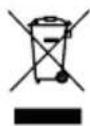
Ctapoto eNeKtpnuecko n eNeKtpoHNO o60pydBaHe He Tp86Ba Da ce n3xBbPnla 3aedHO C 6ntOBNTe OTnaDbu, a Tp86Ba Da ce cb6npa n n3XBbPnla pa3dEnHo!
- Cstapnte 6aTeepn n akymyNatOpn, KOHTo He ca HENOBHXHO MOHTpaHn B CTapn ypei, Tp6Ba da 6bDat n3BaDeHn PpeDn PpeDaBaHe 6e3 Da ce pa3pyuabaT! TxAHOTO n3XbPnne e pernaMeHTnpaHO ot 3aKoHa 3a 6aTeepnTe n akymyNatOpTe.
CobCTBeHnHTe,pecn. nOJI3BaTeJInte Ha eJIeKtpnuecko n eJIeKTPoHHO obOpyDbaHe ca 3aKOHOBO 3a-DbJxehn da rN BbPHaT cneI yNoTppe6a.
KpaHnT noTpE6nteI e OTROBOpEn 3a n3TpNBa-HeTo Ha IInuHnte My daHHN OT CTapnYpeD, KOITo Tp6Ba Da 6bJe n3XBbpJen!
CIMBOJbT Ha 3auepkHaTa KoFa Ha KOJIeJa O3Ha- YaBa, Ye OTnAdbuTe OT eNEKTPuYeCKOTO N eEKeK TPOHHTO O6OpyDbaHe He Tp8Ba Da ce N3XBpJrT 3aeNHO C 6ntOBtE OTnAbu. -
EneKtpnueckoto n eNeKtpoHHTO o6OpyDbaHe MoKe Da ce npedaba 6e3nlaTHo Ha cneHnTe Mec-Ta:
-
Np6nHn cb6npaTeHH nyHKTOBe (Ha npmeP DBOPOBE Ha o6uHcN crpaH).
-Mara3HH 3a npodax6ha ha eNeKtpoHn ypei (fN3ueeKn OHnaH), npu ycNoBne ye TbproBunTe ca nnbXHN Da rN B3eMaT o6paTHO nnnnpednarat TOBa B3emaHe Do6pOBOnHo.
-MoKTe Da npedaeTe Do TpN CTapn eKeTpnecknypeDa OT BceKn TIN ypeD C MaKcImaJIHaDbIxxHa Ha pb6a OT 25 caHTmEtpa 6e3 Da KyNyBaTe HOB ypeD OT npOn3BOJNTeN, INN daTn npedaeTe BdpY OToPn3HpaH cb6HpTaTeENpyHKT BB BaIIra paOH.
-3a DOnbHnHTeHnHTe yCNoBn 3a BpbUaHe Ha npOn3BOAnTeNn N DnCTpN6TyOpN ce OsbPheTe KbM CbOTBeTHnA ZeHTbp 3a O6cnyXBaHe Ha KJIneHTn.
Ako HOBNIeT ENEK Tpueckn ypeD CE DOCTABrO TnpoN3BOIDTeHn Ha YacTHO DOMAKINHCTBO, ToM MoKeJa opraHn3npa 6e3nIaTHo N3BO3BaHe Ha CTapnEneKTPnuCeKn ypeD npn NONCKBaHe OT KpaHnNotpe6nten. 3a cENTa ce CbbpKte COTdela 3aOBcnyKBaHe Ha KNHeHTn Ha IpnO3BOIDTeHn.
ToBa ce OTHacr cAmo 3a ypeDnTe, KOINTe CE nH-CTaInpat n npOdaB aT B Ebponecknca b03 n ca npEmdet Ha ebponeckata DnpeKtNbA 2012/19/ EC.B CTPaHn N3BbN Ebponecknca b03 Morat da ce npInarat pa3nUHN pa3nope6n 3a n3XbPnHe Ha OTNaDbuNTe OT eJNEKtpuecko n eJNEKtpoHNo o6OpyDbAhe.
MoXeTe Da ce HOpMnpaTe OTHOCHO B3MOxHocHTe 3a N3XBpIHe Ha N3Ne3n OT ynoTpe6aypeiOnOT BaunTe o6uHcN nn rpaDCN Blactn.
TopnBa m macna
- Ppei n da n3xBpnte ypea, pe3epBOapbT 3a ro-puBO n pe3epBOapbT 3a MOTOPHO macno Tpr6Ba da 6bDat n3npa3HeH!
- TOpINBOTO N MOTOPHOTOMACNO He Tpr6Ba Da ce n3-XBbPnT 3aeEDHO C 6NtOBITE OTnAdbuN IN B KaHa-n3aunrTa, a Tpr6Ba Da ce cb6npaT n n3XbPnT pa3dEJIHo!
- Ipa3HnIte pe3epBoapn 3a MacNo n ropuBO Tp6Ba Da ce N3XbPnT NO eKoJIoTuyeH NaHH.
13. OTeTpaHЯBaHe Ha HeN3nPaBHOCTn
| Heɪзправноct Bьзмохна р�чина Oтстрараване | ||
| Диогателей не с可不是ся, пботи Тьрдсбавно ини с可不是ся загая симно. | Токова гreamа по морожобно нальожения Тьрдспоско. | Проберete морожoboto засханвае. |
| Зхсанвашял табел e Тьрдс дылг по Тьрдс Тьньк. | Зakунete Нов кабел OTърравец. | |
| Дeфектenv 6утонен пькьсвач. | Вьзложete наърравец на ro nonpa вини замени. | |
| Поведен диогател. | ||
| Главший komпесор пботи Тьрдс симно, задлесен. | Вьзложete наърравец на ro ремонта по лдда замени Deфектны чASTN. | |
| Главший komпесор пботи Тьрдс симно, задлесен. | ДиьжшITE ce чastn ce пьрждат OT толлината поади неюстаьчно смаизве. | Проберete каяновия вал, лagesрп,在 себинитен范围内pbT, sbutлнite поъстenvи.T.H. поърравец и по сmedete, по re Heobхodimо. |
| ДиьжшITE ce чastn ca пьр徳eni попьр徳eni ини SFOKИРANI OTЧУЖД ПЕДМETN. | ||
| Вибрацinnii по пошу. | Разхларени чASTN. | Вьзложete и рri NeobхODIMOST peMoNT наърравец. |
| Чужду TeMa вkomпесора. | ||
| Бутален пьт сбс сedingу на клаланa. | Вьзложete уrolемявае на ультунеловия пьстenvи наърравец. | |
| ДиьжшITE ce чastn ca Тьрдс ripeши. | Вьзложete наърравец на ro поразви пошамени. | |
| Нedoстын no налгане по пошу. | Диогателей пботи Тьрдс симann. | Вьзложete и рri NeobхODIMOST peMoNT наърравец. |
| Замberseн патон на Вьздушney Филтbp. | Почистете по сmedete Филтberпma附pon. | |
| Teu вPreind�зни Клалан. | Вьзложete и рri NeobхODIMOST peMoNT наърравец. | |
| Teu в Trьбatable. | ||
| Поведен ультуненie. | ||
| Поведen no obbyлени сedingу на Клаланa. | ||
| Поведen sbutanen пьстenvи по симиндьр. | ||
| Тьрдс Висок разхду на масло. | Тьрдс Висок НИВО на масло. | Поведен улочstete. |
| OTьрber Tь робската за наливае на масло (14) e задушen. | Поведete и почstete. | |
| Пьбстenvь на sbutanoу/NЛIN zuilinHdBybtsca n3нoscenvи пор徳eni. | Вьзложete и рri NeobхODIMOST peMoNT наърравец. | |
Eynon Tov ouoalw v avw otn oukeun
Günzburger Straße 69
D-89335 Ichenhausen
Agiotie TELaTn
Zaç EUXóμaOe va aTOnlaUoεTe Tn Véa aQc OuaKEun Kai va éxETe Kaλa aTOnTeλεσμata KaT a Tn xpón TnS.
Yπóδειξη:
O kataaekuaotnc autng tsoukeunc dev eueuvetai ouuwa vtov iayovta vopo Tepi uovnc npoiovtw yia niec, Toun pokalouvtai aeutn ouoKEun n aTO autn tn ouokeun otic egnc TEPITTIwoeic:
akataaannn e taxeipion
- Tapaβλεψη Tων εντολων χερισμου
- ETIOKEUEc aTIO TpIouc, mN EGOUoiOoToNmuEvouc TEYVIKOUc
TOToTeTnON KAI AVTKaTaOtaON uN yVnoiWv AVTAaAKTIKwV
- μη ενδεδειγμένn xρήση
BlaeC tns nAekptiknE ykataoTaonc oTepTTW on TapaBaeyns Twv nAekptikwv KavovwKai Twv kavovipwVDE 0100,DIN 57113/VDE 0113
PpOeSTe:
Piv aTn ouvapnoynon kTiv n theon eAitoupyia diaaote oAo To keiEvo twv obnyiw xepiOou.
Autec oio obnyie xeiipou exouv oKoTov aocdiu kai va eKeun kai va eketaaeutei Tc evdeiyevcs duvatotntec xpns nC
Oi oyniEg xeiipouo Tepixouv onuavTKc UIOBc Eic yia va epyaceote me tn ouokeun me aqaaia, oW- ta kai oikovmuKa kai ia va atoapeuyete KIVUVouc,
va eioikovoueite eo EIOKEUNs, va eiovete Toucsxpvous aovapiac aeitoupyiac kai va auvate nV agiotia kai tn diapkeia zwn ts ouokeun.
EITIPOOeTa OTouc KAVoEs aopaaiea otTAPOU Oe oyniecs Xeiipouu, PPETe va laubavete OTWOON-TOTE UTOPN OAC TIG DIATAEIG TIOU IOXouv OTN Xwpa Oac yia tn LEITOUPyia TnC OUKeUns.
DuAxi Tc Odyie c xepiou o e eva Taaotiko kaumu Tpoataeueve c ato pttouc kai uypia, Kovta otn ouakeun. Oa ta atopa Tou Tpooswnikou xepiou Tpente i va tis diaacov Tpv an to nTv evapn Tnc epyaiaac kai va tic npouv oxoaoitka.
Tn OuaKeun EITIPTETAI VA EPyAcovai Movo aToa Tnou Exouv Evnuepwoei Yia Tn Xpnon Tns OuaKeunc KAI VwpiQouv Touc KIVduVouc Tnou oxetizovai e autn. PpeTei va Tnpetai n ataitouveyn Eaaxiotn naikia.
EKTOSI TO TIC UTODEIEGc aOaAeiac Tou avapepovtar OTIG TAPOUoEc OOnyieC Xeipiou KAI Tc EIDIKEc DIATAEiTc Xwpac OAc, YIA Tn LEIToupyia unxavnuatwv TAPoIOAC kataoKeUns, TpETTE va TnpTe Touc yEViKa avayvwpiouevouc TEXVIKOUc KAVoVc.
avalaabavoupe kapiia euvyn ia atuxnpata n Znmuic Tou opeilovtai oe napaaleun autuw two oyniowkai twv utoebieewv aqaaiaac.
To vepo ouptukwongc an to doxexio trieong TEPiExkataaotaa aoiou. ATOPPiTE to vepo ouptukwongc ME To panto oipko TPOC TO TEPiAALov OE kataaannn Oeon oulloyns.
11.3 BaIδασαλειας (Eik. 11)
H a i (8) exi puthetaiotei otn meyiotn eTTIPTIOeVNIIEoN tou doxieiouieoN. EITIpeTETai va aaaaTe Tn puOUION Tns aOaPaeia n va aopaieoTe Tnv aOaPaeia ouvdeoNs (8.2) avapeo STo Tnxiuabi EsoBou (8.1) kai To KATTAKI tou (8.3).
Tia va aeitoupynoe i owa ta n Baaiia aopaaieiac oe Tepiwn avaykns, Ptei va evpyoioietai kao30 wpc aeitoupyiaac kai toulaxiotov 3 opec kaee xpvo. Iepiotpepte to biatpnto paiaedi eodou (8.1) apotepootpopa yia va aoisei kai katotiv tpaibniete ME TO xeip TO otexos TNC baiaoc TAVW anto Tdiaptno Taiaiaei (8.1) npoc ta eew, ia va aoiveTe Tnv edo TNC baiaiaac aopaaiaic.TOTE n Balaiae TITPTEI TIV Edoa eepa eXapakntpiOTIKo hxo. Katotiv aphiTE PAAI TO TAiaipad Edou TEPIOPTPOVtac to deioortpopa.
11.4 Taktioks eAeyxos ts otatou (Eik. 2)
TOTTOETIOTE TOV OUMTIIEOTN OE MIA ETITIEDN, OPIOVTIA ETIIPAVEAIA.
H oTaeun laoiu npetie va eivai avapeo a otic evdei- 5EIG MAX kai MIN oTov uaoeiktn oTaeunlaoiu (16).
Aλayn λδiou: Suviotωενo λδi: SAE 30 (iξωδες 30) n L-DAB 100 πανω απο 10 °C
Günzburger Straße 69
D-89335 Ichenhausen
Stimate client,
Vä dorim sa avei multe satisfactii si mult succes in lucrul cu noul dumneavoastraparat.
Indicatie:
Günzburger Straße 69
D-89335 Ichenhausen
Poštovani kupće
EU Declaration of Conformity
Standard references:
EN 1012-1:2010; EN 60204-1:2018; EN IEC 61000-6-1:2019; ENIEC 61000-6-3:2021
This declaration of conformity is issued under the sole responsibility of the manufacturer.
The object of the declaration described above fulfils the regulations of the directive 2011/65/EU of the European Parliament and Council from 8th June 2011, on the restriction of the use of certain hazardous substances in electrical and electronic equipment.
Subject to change without notice
Documents registrar: Ann-Katrin Bloching Gänzburger Str. 69, D-89335 Ichenhausen
EU Declaration of Conformity
| X 2006/42/EG | |
| Annex IV Notified Body: Notified Body No.: Certificate No.: | |
| X | 2011/65/EU* |
Standard references:
EN 1012-1:2010; EN 60204-1:2018; EN IEC 61000-6-1:2019; EN IEC 61000-6-3:2021
This declaration of conformity is issued under the sole responsibility of the manufacturer.
The object of the declaration described above fulfils the regulations of the directive 2011/65/EU of the European Parliament and Council from 8th June 2011, on the restriction of the use of certain hazardous substances in electrical and electronic equipment.
Subject to change without notice
Documents registrar: Ann-Katrin Bloching Gunzburger Str. 69, D-89335 Ichenhausen
EU Declaration of Conformity
Noise: measured L_w = 96.7 dB; guaranteed L_w = 97 dB
P = xx KW; L/Ø = cm
Notified Body: TUV SUD Industrie Service GmbH
Westendstrasse 199
Notified Body No.: 0036:
2016/1628/EU
Emission. No:
Standard references:
EN 1012-1:2010; EN 60204-1:2018; EN IEC 61000-6-1:2019; EN IEC 61000-6-3:2021
This declaration of conformity is issued under the sole responsibility of the manufacturer.
The object of the declaration described above fulfils the regulations of the directive 2011/65/EU of the European Parliament and Council from 8th June 2011, on the restriction of the use of certain hazardous substances in electrical and electronic equipment.
Subject to change without notice
Documents registrar: Ann-Katrin Bloching
Günzburger Str. 69, D-89335 Ichenhausen
EU Declaration of Conformity
Standard references:
EN 1012-1:2010; EN 60204-1:2018; EN IEC 61000-6-1:2019; EN IEC 61000-6-3:2021
This declaration of conformity is issued under the sole responsibility of the manufacturer.
The object of the declaration described above fulfils the regulations of the directive 2011/65/EU of the European Parliament and Council from 8th June 2011, on the restriction of the use of certain hazardous substances in electrical and electronic equipment.
Subject to change without notice
Documents registrar: Ann-Katrin Bloching
Günzburger Str. 69, D-89335 Ichenhausen
Garantie DE
Apparent defects must be notified within 8 days from the receipt of the goods. Otherwise, the buyer loses its rights of claim due to such defects are invalidated. We guarantee for our machines in case of proper treatment for the time of the statutory warranty period from delivery in such a way that we replace any machine part free of charge which provably becomes unusable due to faulty material or defects of fabrication within such period of time. With respect to parts not manufactured by us we only warrant insofar as we are entitled to warranty claims against the upstream suppliers. The costs for the installation of the new parts shall be borne by the buyer. The cancellation of sale or the reduction of purchase price as well as any other claims for damages shall be excluded.
Garantie FR
Apparent defects must be notified within 8 days from the receipt of the goods. Otherwise, the buyer's rights of claim due to such defects are invalidated. We guarantee for our machines in case of proper treatment for the time of the statutory warranty period from delivery in such a way that we replace any machine part free of charge which provably becomes unusable due to faulty material or defects of fabrication within such period of time. With respect to parts not manufactured by us we only warrant insofar as we are entitled to warranty claims against the upstream suppliers. The costs for the installation of the new parts shall be borne by the buyer. The cancellation of sale or the reduction of purchase price as well as any other claims for damages shall be excluded.
Záruka CZ
Apparent defects must be notified within 8 days from the receipt of the goods. Otherwise, the buyer is rights of claim due to such defects are invalidated. We guarantee for our machines in case of proper treatment for the time of the statutory warranty period from delivery in such a way that we replace any machine part free of charge which provably becomes unusable due to faulty material or defects of fabrication within such period of time. With respect to parts not manufactured by us we only warrant insofar as we are entitled to warranty claims against the upstream suppliers. The costs for the installation of the new parts shall be borne by the buyer. The cancellation of sale or the reduction of purchase price as well as any other claims for damages shall be excluded.
Garanti EE
Apparent defects must be notified within 8 days from the receipt of the goods. Otherwise, the buyer is rights of claim due to such defects are invalidated. We guarantee for our machines in case of proper treatment for the time of the statutory warranty period from delivery in such a way that we replace any machine part free of charge which provably becomes unusable due to faulty material or defects of fabrication within such period of time. With respect to parts not manufactured by us we only warrant insofar as we are entitled to warranty claims against the upstream suppliers. The costs for the installation of the new parts shall be borne by the buyer. The cancellation of sale or the reduction of purchase price as well as any other claims for damages shall be excluded.
Tapaunca BG
OeBnHn HeoctaTbun Tp6Ba da 6bDat OOKnadBn B pAMKNTe Ha 8 dHn OT NONYuBaHeTo Ha cTOKn, B npOTNBc Hcyua KnyBaHT rBy6n BcKaKNB npTeHn 3a TaKINBA DepeKTN. PpeINaIarame RapaHnra Ha HauIne MaHNi C npABINHO To neHne Ha cPoka Ha deCTBne Ha KocBeHa rapAHnO t DaTaTa Ha DoCTabkA NO TaKbH NaHH, Ye Hne 3aMeHN BCRA qACT B pAMKNTe Ha TOBa BpeMe OTKPbBA EEDN B MaTePNAA IIN IN3pa60TKATA Tp6Ba Da 6bDe 6e3NoE3Ho, 6e3PiATHO. 3a Yactn, KOITo Hne He CE npON3BExkDaT, Hne npABIM CAMO KAto rapaHn, KATO IMAME nPaBO Ha rapaHIOHH INCKOB CpeUy DoCTabuHn. PaXODnte 3a BMkBbaHe Ha HOB uactn Ha KnyBaVa. Ppeo6pa3yBaHe n HAmaJIbaHe B3emAHn n Dpyr nckobete 3a oBe3IeHn, ca n3KnIOueHn.
Garancija RS
Ocigledni nedostaci se moraju prijaviti u roku od 8 dana nakon prijema robe, u suprotnom kukac gubi sva prava u pogledu takvih nedostataka. Za naše masine dajemo garanciju tokom trajanja zakonskog garantnog roka od datuma primopredaje, pod uslovom da se sa njima pravilno rukju, na taj način besplatno vršimo zamenu svakog dela masine koji tokom tog perioda postane neupotrebljiv usled greške u materijalu ili proizvodnji. Za delove koje ne proizvodimo sami, dajemo garanciju samo u okviru ostvarivanja garantnih prava koja dobijamo od PODdobavljača. Troškove za ugradnju novih delova snosi kapac. Pravo na zamenu i umanjenje i drugi zahtevi za nadoknadu šte su iskljuceni.
Garantie RO
Defecte evidente trebuie sa fie raporate in termen de 8 zile de la primirea de bunuri, altfel cmparatorul pierde toate cerirel penru astfel de defece. Oferim o garantie de pe masinile noastre cu un tratament adevat pe durata unei garantiimpicite de la data de livrare in a fa fel incat vom inlocui ficare parte in acel moment detectabil intr-un rand in material Sau manoperar ar fi inutil, gratuit. Pentru parrile care nu ne produc, vom face doar o astfel de garantie, asa cum avem dreptul la pretentii de garantie impotrivafurnizorlor. Costurile pensu introducerea de piese noi la cmparator. Conversie si reducerea createste alte cerirele de despagubire sunt excluse.
eyunon GR
Euapawv Ealattwpatw Tou Ptei va KoiVOTIOUovai Evtc 8 nepw vto Tny Tapaalabn twv eIITopeuAtw. Diaqopetik, ta biaWata buyeres tnc aIomega tyow teioiw elattwpatw akupwEe. EyyoasaTE yia TIC uXavc es ae TEPITWON katalan thepaieyia to xpovo tnc ek tou voupeipodou eyunon atno npadoon me tetoio poto wote va avkataaonoe oioobntote epoc dwev unxavn Tou aoDBeivye aaxpateutei Aoyw elattwatikou uikou n elattwata nC kataokueucn eo a eTTOIA xpvIKN peiodo. Oov apopa ta Tmuata Tou dev exouv kataoekuaotei ano esoxme mofo eyyuatai epoov exoue to dikaiwa va tic awioeis eyyunons evavti tow pountheutw. Ta ecoda yia tvv EYkataaonTwveuw Tunatw otpiptei va papuvovtov ayopaoh. PpTei va atokleietai nakupwn ts wAnong nne Iwcon n iewn Tns tiunc ayopac, kaowkai OTIEAes agwos iya attoqniwn. H Aenlida pioviu eivai avawmoio iboc kai egapouvtai pnta atco kajia eywnon.