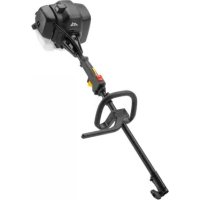
B33 PS - Lawn mower MCCULLOCH - Free user manual and instructions
Find the device manual for free B33 PS MCCULLOCH in PDF.



| Product type | Brushcutter / Multifunctional grass trimmer |
| Brand | McCulloch |
| Model | B33 PS |
| Engine | 2-stroke petrol, 33 cc |
| Maximum power | 0.9 kW at 7000 rpm |
| Max output shaft speed | 8500 rpm |
| Fuel tank capacity | 700 ml |
| Oil/fuel mixture ratio | 50:1 (2%) |
| Spark plug | RCJ6Y, gap 0.65 mm |
| Weight (without fuel or accessories) | 7.7 kg |
| Trimmer accessory length | 84.7 cm |
| Max cutting diameter (trimmer) | 43 cm |
| Cutting head type | Bump (Tap & Go) |
| Cutting line | Diameter 2.5 mm, 2 lines |
| Guaranteed sound power level | 115 dB(A) (with trimmer) |
| Vibration level (left/right handle) | 5.4 / 6.7 m/s² (trimmer) |
| Included accessories | Trimmer, brushcutter, pole pruner, telescopic hedge trimmer |
| Safety | Trigger lock, emergency stop, blade guard, harness with quick release |
| Maintenance | Washable air filter, replaceable spark plug, angle drive lubrication |
| Repairability | Spare parts available through McCulloch authorized center |
Frequently Asked Questions - B33 PS MCCULLOCH
User questions about B33 PS MCCULLOCH
0 question about this device. Answer the ones you know or ask your own.
Ask a new question about this device
Download the instructions for your Lawn mower in PDF format for free! Find your manual B33 PS - MCCULLOCH and take your electronic device back in hand. On this page are published all the documents necessary for the use of your device. B33 PS by MCCULLOCH.
USER MANUAL B33 PS MCCULLOCH
The initial language of this operator's manual is English.
Operator's manuals in other languages are translations from English.
Overview
(Fig. 1)
- Assist handle
- Suspension ring
- Stop switch
- Shaft coupling
- Throttle trigger
- Throttle lockout
- Grass trimmer and brushcutter attachment
- Combination tool
- Muffler
- Starter rope handle
- Fuel tank cap
- Spark plug/spark plug cap
- Choke control
- Air filter cover
- Hex wrench
- Harness
- Cutting attachment guard for trimmer and brushcutter attachment
- Hedge trimmer blades
- Angle adjustment lever
- Guide bar
- Saw chain
- Cap for the chain oil tank
- Sprocket cover
- Wrench, 8mm / 10mm
- Extended hedge trimmer attachment
- Pole saw attachment
- Guide bar cover for pole saw attachment)
- Blade guard for extended hedge trimmer attachment
- Nut
- Support cup
-
Bottom holder
-
Grass blade
- Trimmer head
- Transport guard for grass blade
- Operator's manual
- Air purge bulb
- Top holder
Symbols on the product
(Fig. 2) Warning
(Fig. 3) Read this manual
(Fig. 4) Wear approved head protection, hearing protection and eye protection.
(Fig. 5) Wear approved protective gloves.
(Fig. 6) Use heavy-duty slip-resistant boots.
(Fig. 7) The product can cause objects to eject, which can cause injury.
(Fig. 8) Maximum speed of the output shaft.
(Fig. 9) Safe distance
(Fig. 10) Safe distance
(Fig. 11) Risk of blade thrust if the cutting equipment touches an object that it does not immediately cut. The product can cut off body parts. Keep a minimum of 15m (50 ft) distance to persons and animals during operation of the product.
(Fig. 12) Make sure that long hair is put up above your shoulders.
(Fig. 13) The arrows show the limits for the position of the handle.
(Fig. 14) Primer bulb
(Fig. 15) Choke control
(Fig. 16) Keep all parts of your body away from the hot surfaces.
(Fig. 17) Make sure no person is within the kickback danger zone.
(Fig. 18) DANGER - Keep hands away from blade.
(Fig. 19) Sound power level
(Fig. 20) The product agrees with the applicable EC directives.
(Fig. 21) The product agrees with the applicable EAC directives.
(Fig. 22) The product agrees with the applicable Ukraine directives.
Note: Other symbols/decals on the product refer to certification requirements for other commercial areas.
EUV

WARNING: Tampering with the engine voids the EU type-approval of this product.
Product liability
As referred to in the product liability laws, we are not liable for damages that our product causes if:
- the product is incorrectly repaired.
- the product is repaired with parts that are not from the manufacturer or not approved by the manufacturer.
- the product has an accessory that is not from the manufacturer or not approved by the manufacturer.
- the product is not repaired at an approved service center or by an approved authority.
SAFETY
Safety definitions
The definitions below give the level of severity for each signal word.

WARNING: Injury to persons.

CAUTION: Damage to the product.
Note: This information makes the product easier to use.
Vibration safety
This product is for occasional operation only. Continuous or regular operation of the product can cause "white finger" or equivalent medical problems from vibrations. Examine the condition of your hands and fingers if you operate the product continuously or regularly. If your hands or fingers have discoloration, have pain, tingle, or are numb, stop work and speak to a physician immediately.
General safety instructions

WARNING: Read the warning instructions that follow before you use the product.
- Use the product correctly. Injury or death is a possible result of incorrect use. Only use the product
for the tasks found in this manual. Do not use the product for other tasks.
- Obey the instructions in this manual. Obey the safety symbols and the safety instructions. If the operator does not obey the instructions and the symbols, injury, damage or death is a possible result.
- Do not discard this manual. Use the instructions to assemble, to operate and to keep your product in good condition. Use the instructions for correct installation of attachments and accessories. Only use approved attachments and accessories.
- Do not use a damaged product. Obey the maintenance schedule. Only do the maintenance work that you find an instruction about in this manual. An approved service center must do all other maintenance work.
- This manual cannot include all situations that can occur when you use the product. Be careful and use your common sense. Do not operate the product or do maintenance on the product if you are not sure about of the situation. Speak to a product expert, your dealer, service agent or approved service center for information.
- Disconnect the spark plug cable before you assemble the product, put the product into storage or do maintenance.
- Do not use the product if it is changed from its initial specification. Do not change a part of the product without approval from the manufacturer. Only use parts approved by the manufacturer. Injury or death is a possible result of incorrect maintenance.
-
Do not breathe in the fumes from the engine. Long-term inhalation of the engine's exhaust fumes is a health risk.
-
Do not start the product indoors or near flammable material. The exhaust fumes are hot and can contain a spark which can start a fire. Not sufficient airflow can cause injury or death because of asphyxiation or carbon monoxide.
- When you use this product the engine makes an electromagnetic field. The electromagnetic field can cause damage to medical implants. Speak to your physician and medical implant manufacturer before you operate the product.
- Do not let a child operate the product. Do not let a person without knowledge of the instructions operate the product.
- Make sure that you always monitor a person, with decreased physical capacity or mental capacity, that uses the product. A responsible adult must be there at all times.
- Lock the product in an area that children and unapproved persons cannot access.
- The product can eject objects and cause injuries. Obey the safety instructions to decrease the risk of injury or death.
- Do not go away from the product when the engine is on.
- The operator of the product is responsible if an accident occurs.
- Make sure that parts are not damaged before you use the product.
- Make sure that you are at minimum 15 m (50 ft) away from other persons or animals before you use the product. Make sure that persons in the adjacent area know that you will use the product.
- Refer to national or local laws. They can prevent or decrease the operation of the product in some conditions.
- Do not use the product if you are fatigued or influenced by alcohol, drugs or medicine. They can have effects on your vision, alertness, coordination or judgment.
General safety instructions for the grass trimmer
- Use the trimmer head to cut grass.
- Always make sure the trimmer line is wound tightly and equally around the drum to prevent harmful vibration.
- Only use recommended trimmer heads and trimmer lines.
- Make sure that the cutter on the trimmer guard is not damaged. This cuts the trimmer line to the correct length.
- Operate the product with the cutting attachment below your waist.
- Do not touch the bevel gear after the engine stops.
- The bevel gear is hot after the engine stops. Hot areas can cause injury.
To trim the grass
- Hold the trimmer head immediately above the ground at an angle. Do not push the trimmer line into the grass. (Fig. 23)
- Decrease the engine speed to decrease the risk of damage to plants.
- Use 80% throttle when you cut grass near objects. (Fig. 24)
To cut the grass
- Make sure that the grass trimmer line is parallel to the ground when you cut. (Fig. 25)
- Do not push the trimmer head to the ground. The ground and the product can be damaged.
- Do not let the trimmer head touch the ground continuously, it can cause damage to the trimmer head.
- Use full throttle when you move the product from side to side to cut grass. Make sure that the grass trimmer line is parallel to the ground. (Fig. 26)
To sweep the grass
The airflow from the rotating trimmer line can be used to remove cut grass from an area.
- Hold the trimmer head and its trimmer line parallel to the ground and above the ground.
- Apply full throttle.
- Move the trimmer head from side to side and sweep the grass.

WARNING: Clean the trimmer head cover each time you assemble new trimmer line to prevent unbalance and vibrations in the handles. Also do a check of the other parts of the trimmer head and clean it if necessary.
General safety instructions for the brushcutter
- A grass blade is used for all types of tall or coarse grass.
- Grass blades and grass cutters must not be used on woody stems.
- Use head protection when you operate a product with a blade.
- Wear protective gloves when you touch the blade or do maintenance.
- Use the product with an approved blade. Do not use a blade without correct installation of all necessary parts. Make sure that the installation is done correctly and that the correct parts are used. Incorrect installation may cause the blade to fly off and cause serious injury the operator or bystanders.
-
Operate the product with the cutting attachment below your waist.
-
Do not touch the bevel gear after the engine stops.
- The bevel gear is hot after the engine stops. Hot areas can cause injury.
- A blade can cause injury when it turns after the engine is stopped or the throttle trigger is released.
- Keep hands away from blade. To touch the blade can cause serious injury.
- Stop the engine before you do work on the cutting attachment. Make sure the cutting attachment fully stops. Disconnect the lead from the spark plug.
- Make sure that the blade has fully stopped to turn before maintenance.
- Keep the teeth of the blade correctly sharpened.
- An incorrectly sharpened or damaged blade increases the risk of accidents. Keep the teeth of the blade correctly sharpened. Follow the instructions and use the recommended file gauge.
- Make sure that the blade guard is not damaged or twisted.
- Attach the transport guard to the blade before transportation or storage of the product.
Blade thrust
- A blade thrust is a sudden movement of the product to the side, forward or rearward. A blade thrust occurs when the grass blade or saw blade hits an object that cannot be cut. In areas where it is not easy to see the material being cut the risk of blade thrust increases.
- When a blade thrust occurs, there is a risk that the product or the operator moves out of position. A blade that moves can hit bystanders and there is a risk of injuries.
- If a blade is bent, has cracks, is broken or damaged, discard the blade.
- Use a sharp blade. The risk of blade thrust increases when a blade is not sharp.
To clear grass with a grass blade
- Keep your feet apart during operation of the product.
Make sure feet are tightly against the ground. - Put the support cup lightly on the ground. This prevents the blade from touching the ground.
- Use a sidewalk movement from right to left for a clear stroke. Use the left side of the blade (between 8 and 12 o'clock) to cut. (Fig. 27)
- Angle the blade to the left when you clear grass.
Note: The grass collects easily in a line.
- Use a sidewalk movement from left to right for the return stroke.
- Do the work rhythmically.
- Move forward and keep feet tightly against the ground.
- Stop the engine.
-
Remove the product from the clip on the harness.
-
Put the product on the ground.
- Collect the cut material.
General safety instructions for the pole saw
- More protective equipment for head, hands, legs and feet is recommended. Correct protective clothing can decrease injury caused by flying debris or accidental touch with the saw chain.
- When you cut with the product, do not lift your arms above your shoulders. Do not stay below the branches that are cut.
Always use gloves when you touch the chain. - Replace the guide bar and the chain immediately if it is damaged, broken or removed.
- Do not start the engine with the guide bar in a cut. Remove the guide bar from the cut before you start the engine.
- Do not use the product to cut down trees or the tree trunk.
- Do not cut small brush and saplings with the product.
- Do not let the chain touch objects when you start the engine.
- Be careful of overhead power lines.
- Do not apply pressure on the product when you complete a cut.
- When you complete a cut, always release the throttle trigger and let the engine operate at the idle speed.
- Only cut the limbs or branches with less than 15cm (6 in.) in diameter above your head.
- Hold the product tightly with your two hands to keep the product balance.
(Fig. 28)
- Operate the product slowly and cut carefully
- Be careful of the direction in which the branch falls.
- Be careful of the springpoles when you cut. Springpoles are small limbs which can catch the chain and decrease balance or control.
- Be careful of the springback when the tension in the wood releases.
- Operate the product in a clear area. Frequently clean fallen branches from the area to prevent injuries.
- Cut long branches in pieces when you remove them.
- Stop the engine, remove the harness and put the machine on the ground before you start to collect the cut material.
- Attach the guide bar cover during transportation and storage of the product.
- Make sure that the guide bar cover is not damaged or twisted.
To cut with the pole saw

WARNING: Do not cut with the product in the rearward or forward direction.
- Set the product to the full throttle and apply a light pressure.
- Cut for the first time 15cm (6 in.) away from the trunk. Cut 1/3 through the bottom of the limb. (Fig. 29)
- Move the pole saw 5 - 4cm (2-4 in.) out on the limb. Cut for the second time fully through the limb. (Fig. 29)
- Cut for the third time. Do not cut too near it can injury the tree.
Note: When you cut for the second and third time, put the product against the limb to keep the branch stable.
(Fig. 30)
General safety instructions for the extended hedge trimmer
- Keep hands away from blade. To touch the blade can cause serious injury.
- Keep all parts of the body away from the cutter blade. Do not remove cut material or hold material to be cut when the blades turn. Make sure to stop the product before you clean or do maintenance. Blades coast after turn off. Inattention during operation of the product can cause serious injury.
- When you cut with the product, do not lift your arms above your shoulders. Do not stay below the branches that are cut.
- Hold the product as near to your body as possible for the correct balance.
(Fig. 31)
- Move the product from the bottom up when you cut the sides.
(Fig. 32)
- Do not cut too quickly. Cut slowly and continuously until you get a good quality cut.
- Make sure that the point of the blade does not touch the ground.
- Be careful of overhead power lines.
- When you complete a cut, always release the throttle trigger and let the engine operate at the idle speed.
- Hold the hedge trimmer by the handle with the cutter blade stopped. Hold the product correctly during operation to decrease injury from the cutter blades.
- Stop the engine, remove the harness and put the machine on the ground before you start to collect the cut material.
- Attach the blade guard during transportation and storage of the product.
- Make sure that the blade guard is not damaged or twisted.
To adjust the angle of the cutting blades
-
Push the lever to unlock. (Fig. 33)
-
Adjust the angle of the blades to the correct position.
- Release the lever.
Safety instructions for operation
- Make sure that the product is fully assembled before operation.
- Before a start, move the product 3m (10 ft) away from the position where you filled the fuel tank. Put the product on a flat surface. Make sure that the cutting attachment does not touch the ground or other objects.
- The product can cause objects to eject, which can cause damage to the eyes. Always use an approved eye protection when you operate the product.
- Be careful, a child can come near the product without your knowledge during operation.
- Do not operate the product if there are persons in the work area. Stop the product if a person goes into the work area.
- Make sure that you are always in control of the product.
- Do not use the product if you cannot receive aid if an accident occurs. Always make sure others know you will operate the product before you start to operate the product.
- Do not turn with the product before you make sure that no persons or animals are in the safety area.
- Remove all unwanted materials from the work area before you start. If the cutting attachment hits an object, the object can eject and cause injury or damage. Unwanted material can wind around the cutting attachment and cause damage.
- Do not use the product in bad weather, such as fog, rain, strong winds, risk of lightning or other weather conditions. Dangerous conditions, such as slippery surfaces, can occur because of bad weather.
- Make sure that you can move freely and work in a stable position.
- Make sure that you cannot fall when you use the product. Do not tilt when you operate the product.
- Always hold the product with your two hands. Hold the product on the right side of your body.
- Operate the product with the cutting attachment below your waist.
- If the choke control is in the choke position when the engine starts, the cutting attachment starts to turn.
- Do not touch the bevel gear after the engine stops. The bevel gear is hot after the engine stops. Hot areas can cause injury.
- Stop the engine before you move the product.
- Do not put down the product with the engine on.
- Before you remove the unwanted materials from the product, stop the engine and wait until the cutting attachment stops. Let the cutting attachment stop before you or an aid remove the cut material.
Personal protective equipment

WARNING: Read the warning instructions that follow before you use the product.
- Always use correct personal protective equipment when you operate the product. The personal protective equipment does not erase the risk of injury. The personal protective equipment decreases the grade of injury if an accident occurs.
- Always use an approved eye protection while you operate the product.
- Do not operate the product with bare feet or with open shoes. Always use heavy-duty slip-resistant boots.
- Use heavy, long pants.
- If it is necessary, use approved protective gloves.
- Use a helmet if it is possible that objects fall on your head.
- Always use approved ear protection while you operate the product. Noise for a long period can cause noise-induced hearing loss.
- Make sure that you have a first aid kit near.
Safety devices on the product

WARNING: Read the warning instructions that follow before you use the product.
- Do not use a product with defective safety devices.
- Do a check of the safety devices regularly. If the safety devices are defective, speak to your McCulloch service agent.
Throttle trigger lockout
The throttle trigger lockout locks the throttle trigger. Push the throttle trigger lockout to release the throttle trigger. When you release the handle, the throttle trigger lockout and the throttle trigger go back to their initial positions.
- Make sure that the throttle trigger is locked at idle when you release the throttle trigger lockout.
- Push the throttle trigger lockout and make sure that it goes back to its initial position when you release it.
- Push the throttle trigger and make sure that it goes back to its initial position when you release it.
Start the engine, and then apply full throttle. Release the throttle trigger and examine if the cutting attachment stops. If the cutting attachment turns with the throttle in the idle position, examine the idle adjustment screw of the carburetor.
To do a check of the stop switch
The stop switch stops the engine.
-
Start the engine.
-
Make sure that the engine stops when you move the stop switch to the stop position.
Cutting attachment guard
The cutting attachment guard prevents a loose object to eject in the direction of the operator.
Examine the cutting attachment guard for damage and replace if it is damaged. Only use the approved guard for the cutting attachment.
Harness release function

WARNING: Do not use the harness if the release function is defective. Make sure that the harness release function operates correctly when you adjust the product.
- The harness release function is at the front of the product.
(Fig. 34)
- The harness straps must always stay at the correct position.
- In an emergency, the harness release function helps you to safely release from the product.
Muffler
- Do not use an engine with a damaged muffler. A damaged muffler increases the noise level and the risk of fire. Keep a fire extinguisher near.
- Examine regularly that the muffler is attached to the product.
- Do not touch the engine or the muffler when then engine is on. Do not touch the engine or the muffler for a while after the engine stops. Hot surfaces can cause injuries.
- A hot muffler can cause a fire. Be careful, if you use the product near flammable liquids or fumes.
- Do not touch the parts in the muffler, if the muffler is damaged. The parts can contain some carcinogenic chemicals.
Fuel safety
- Do not start the product if there is fuel or engine oil on the product. Remove the unwanted fuel/oil and let the product dry. Remove unwanted fuel from the product.
If you spill fuel on your clothing, change clothing immediately. - Do not get fuel on your body, it can cause injury. If you get fuel on your body, use a soap and water to remove the fuel.
- Do not start the engine if you spill oil or fuel on the product or on your body.
- Do not start the product if the engine has a leak.
Examine the engine for leaks regularly. -
Be careful with fuel. Fuel is flammable and the fumes are explosive and can cause injuries or death.
-
Do not breathe in the fuel fumes, it can cause injury.
Make sure that there is a sufficient airflow. - Do not smoke near the fuel or the engine.
- Do not put warm objects near the fuel or the engine.
- Do not add the fuel when the engine is on.
- Make sure that the engine is cool before you refuel.
- Before you refuel, open the fuel tank cap slowly and release the pressure carefully.
- Do not add fuel to the engine in an indoor area. Not sufficient airflow can cause injury or death because of asphyxiation or carbon monoxide.
- Tighten the fuel tank cap carefully or a fire can occur.
- Move the product at a minimum of 3m (10 ft) from the position where you filled the tank before a start.
- Do not put too much fuel in the fuel tank.
- Make sure that a leak cannot occur when you move the product or fuel container.
- Do not put the product or a fuel container where there is an open flame, spark or pilot light. Make sure that the storage area does not contain an open flame.
- Only use approved containers when you move the fuel or put the fuel into storage.
- Empty the fuel tank before long-term storage. Obey the local law on where to dispose fuel.
- Clean the product before long-term storage.
- Remove the spark plug cable before you put the product into storage to make sure that the engine does not start accidentally.
General safety instructions for maintenance
- The operator of the product is responsible for the performance of all necessary maintenance, as specified in the operator's manual. Injury or death is a possible result of incorrect maintenance.
- Make sure that you regularly do the maintenance to the product. The life of the product increases. The risk of accidents decreases.
-
Make sure that you obey the maintenance schedule. The intervals are calculated from daily use of the product. The intervals are different if you do not use the product each day.
-
Only do the maintenance work that you find an instruction about in this manual. An approved service center must do all other maintenance work.
- Have all product servicing done by an approved dealer, not including the tasks in MAINTENANCE on page 18.
- Let an approved dealer or an approved service center regularly examine the product to do adjustments or repairs.
- Make sure the product is correctly assembled.
- Do not use the product if it is changed from its initial specification.
- Do not change a part of the product without approval from the manufacturer.
- Only use parts approved by the manufacturer.
- Examine for broken or incorrectly aligned parts, and parts that do not move freely. Examine for other conditions that can have an effect on the operation of the product.
- Do not use a damaged product. Replace or repair damaged components.
- Keep caps and fasteners correctly tightened. Replacement components that are not approved or the removal of safety devices can cause damage to the product. This can also cause possible injury to the operator or bystanders.
- Only use accessories and replacement parts as recommended. Do not change your product.
- Keep handles dry, clean, and free from oil and grease. Greasy, oily handles are slippery causing loss of control.
- Obey the instructions for lubricating and changing accessories.
- Disconnect the spark plug cable before you assemble the product, put the product into storage or do maintenance.
- If you cannot adjust the idle speed to make the cutting attachment stop, speak to your service center. Do not use the product until the product is correctly adjusted or repaired.
- Make sure the product is stable during transport to prevent damage.
- When not in operation, keep the product in a dry, high or locked area away from children.
ASSEMBLY

WARNING: Read the safety chapter before you assemble the product.
To assemble the handle
-
Remove the screws (A), washers (B), top clamp (D), bottom clamp (E) and nuts (F) from the handle (C). (Fig. 35)
-
Attach the top clamp (A), handle (B), washers (C) and screws (D) to the top of the upper shaft.
- Attach the bottom clamp (E) and nuts (F) to the bottom of the upper shaft. (Fig. 36)
- Put the assist handle between the 2 arrows on the upper shaft.
- Fully tighten the screws.
Note: Make sure the handle does not move.
To assemble the trimmer attachment
- Attach the cutting attachment guard (A), braces (B), washers (C), washers (D), and screws (E). Fully tighten the screws. (Fig. 37)
- Insert the hex wrench (A) to prevent rotation of the shaft.
- Remove the nut (B), support cup (C) and holder (D) on the trimmer and brushcutter attachment. (Fig. 38)
- Tighten the trimmer head (B) onto the shaft. (Fig. 39)
To assemble the brushcutter attachment
- Attach the cutting attachment guard (A), braces (B), washers (C), washers (D), and screws (E). Fully tighten the screws. (Fig. 37)
- Insert the hex wrench (A) to prevent rotation of the shaft.
- Remove the nut (B), support cup (C) and holder (D) on the trimmer and brushcutter attachment. (Fig. 40)
- Attach the blade (B), bottom holder (C), support cup (D), and nut (E). Fully tighten the nut. (Fig. 41)
To assemble the pole saw attachment
See To do the maintenance on the pole saw attachment on page 20 for assembly instructions for the pole saw attachment.
To assemble the two-piece shaft
- Turn the knob to loosen the shaft coupling. (Fig. 42)
- Move the locking/release button (A) into the guide recess. Push the attachment into the coupler until the locking/release button sets into the primary hole (B). (Fig. 43)
- Insert the shaft into the shaft coupling. The button must go through the hole.
Note: If the attachment does not go fully into the upper shaft, use the combination tool to push the internal drive shaft deeper into the tube. It can be necessary to turn the combination tool while you push.
- Make sure that you fully tighten the knob before you operate the product. (Fig. 44)
To disassemble the two-piece shaft
- Turn the knob to loosen the shaft coupling. (Fig. 45)
- Push and hold the locking/release button (B). Pull the shafts apart. (Fig. 46)
OPERATION

WARNING: Read and understand the safety chapter before you operate the product.
Fuel
To use fuel

CAUTION: This product has a two-cycle engine. Use a mixture of gasoline and two-cycle engine oil. Make sure to use the correct quantity of oil in the mixture. Incorrect ratio of gasoline and oil can cause damage to the engine.
Gasoline

CAUTION: Do not use gasoline with an octane number less than 90 RON (87 AKI). This can cause damage to the product.

CAUTION: Do not use gasoline with more than 10% ethanol concentration (E10). This can cause damage to the product.
Always use new unleaded gasoline with a minimum octane number of 90 RON (87 AKI) and with less than 10% ethanol concentration (E10).
- Use gasoline with a higher octane number if you frequently use the product at continuously high engine speed.
Two-cycle engine oil
- Use only high quality two-cycle engine oil. Use only an air cooled engine oil.
- Do not use other types of oil.
- Mixture ratio 50:1 (2%)
| Petrol, litre Two-stroke oil, litre | |
| 5 0.10 | |
| 10 0.20 | |
| 15 0.30 | |
| 20 0.40 | |
To make the fuel mixture
Note: Always use a clean fuel container when you mix the fuel.
Note: Do not make more than 30 days quantity of fuel mixture.
- Add half of the gasoline quantity.
- Add the full quantity of oil.
- Shake the fuel mixture to mix the contents.
- Add the remaining gasoline quantity.
- Shake the fuel mixture to mix the contents.
- Fill the fuel tank.
To add fuel
- Always use a fuel container with an antispill valve.
- If there is some fuel on the container, remove the unwanted fuel and let the container dry.
- Make sure that the area near the fuel tank cap is clean.
- Shake the fuel container before you add the fuel mixture to the fuel tank.
To start and stop
To start a cold engine
(Fig. 47)
- Set the stop switch (A) to the start position.
- Push the throttle lockout (B) and then pull the throttle trigger (C).
- While the throttle trigger is engaged, push the fast idle button (D).
- Release the throttle lockout and the throttle trigger.
- Push the air purge bulb 10 times. The bulb does not need to be completely filled. (Fig. 48)
- Move the choke control to the full choke position. (Fig. 49)
- Hold the body of the machine on the ground with the left hand. (Fig. 50)
- Pull out the cord slowly with your right hand until you feel some resistance.
-
Pull the starter cord quickly and powerfully. Repeat approximately 5 times or until the engine attempts to start.
-
Move the choke control to the no choke position.
- Pull the starter cord quickly and powerfully until the engine starts.
- Let the engine run for 10 seconds.
- Pull the throttle trigger to run at low speed for 60 seconds.
To start a warm engine
Note: Obey this procedure when you start a product that has run out of fuel and has been refueled.
(Fig. 47)
- Set the stop switch (A) to the start position.
- Push the throttle lockout (B) and then pull the throttle trigger (C).
- While the throttle trigger is engaged, push the fast idle button (D).
- Release the throttle lockout and the throttle trigger.
- Push the air purge bulb 10 times. The bulb does not need to be completely filled. (Fig. 48)
- Hold the body of the machine on the ground with the left hand. (Fig. 50)
- Move the choke control to the no choke position.
- Pull out the cord slowly with your right hand until you feel some resistance.
- Pull the starter cord quickly and powerfully until the engine starts.
To stop the product
- Push the stop switch to stop the engine.
To start the engine when the fuel is too hot
If the product does not start, the fuel can be too hot.
Note: Always use new fuel and decrease the operation time during warm weather.
- Put the product in a cool area away from open sunlight.
- Let the product cool down for 20 minutes at minimum.
- Press the primer bulb again and again for 10-15 seconds.
- Obey the procedure to start a cold engine. Refer to To start a cold engine on page 18.
MAINTENANCE

WARNING: Read and understand the safety chapter before you clean, repair or do maintenance on the product.
Maintenance schedule
Make sure that you obey the maintenance schedule. The intervals are calculated from daily use of the product. The intervals are different if you do not use the product each day. Only do the maintenance work that is
found in this manual. Speak to an approved service center about other maintenance work not found in this manual.
Daily maintenance
- Clean the external surfaces.
- Clean the air filter. Replace if necessary.
- Check the harness.
- Check the throttle trigger lock and the throttle function.
- Check the handle and the handle bar.
- Check the stop switch.
- Check the guards.
- Check the cutting attachment for damage or cracks.
- Replace a damaged cutting attachment.
- Lubricate the cutting blades (extended hedge trimmer attachment).
- Check the trimmer head.
- Examine the idle speed.
- Examine for fuel leaks.
Weekly maintenance
- Examine the starter rope handle and the starter rope.
- Examine the bevel gear grease.
- Clean the outside of the carburettor and its adjacent areas.
- Clean the outside of the spark plug. Remove it and check the electrode gap. Adjust the gap or replace the spark plug. Check that the spark plug is fitted with a suppressor.
Monthly maintenance
- Clean the cooling system.
- Examine the fuel filter.
- Examine the fuel hose for damage.
- Examine all cables and connections.
- Examine the fuel filter.
To adjust the carburetor
The basic carburetor settings are adjusted during testing at the factory. Adjustment must be carried out by a trained technician.
To do a check of the muffler

WARNING: Do not use a product that has a defective muffler. Always replace a defective muffler.

WARNING: Mufflers with catalytic converters get very hot during operation. Risk of burn or fire.

WARNING: The muffler decrease the noise level and point the exhaust gases from the
operator. The exhaust gases are hot and can contain sparks. Risk of fire.

CAUTION: The spark arrestor spark arrester screen must be replaced if it is damaged. Do not use a product if the spark arrestor spark arrester screen on the muffler is missing or defective.

CAUTION: If the spark arrester spark arrester screen is blocked the product will too hot. This will cause damage to the cylinder and piston.
- Make sure that the muffler is not damaged.
- Make sure that the muffler is correctly attached to the product.
- Some mufflers have a special spark arrester spark arrester screen. Clean the spark arrester spark arrester screen minimum one a week if your product has this type of muffler. Use a wire brush. (Fig. 51)
To clean/do maintenance on the cooling system
This product has a cooling system. A dirty or blocked cooling system can make the product too hot which can damage to the piston and cylinder. Check and clean the cooling system with a brush one time each week or more frequently in demanding conditions. The cooling system consists of cooling fins on the cylinder (1) and air intake (2).
(Fig. 52)
To clean the air filter
- Remove the air filter cover and remove the air filter. (Fig. 53)
- Clean the air filter with warm soap water. Make sure that the air filter is dry before you install it.
- Replace the air filter if it is too dirty to fully clean it. Always replace a damaged air filter.
- If your product has a foam air filter, apply air filter oil. Only apply air filter oil to a foam filter. Do not apply oil to a felt filter.
Fuel filter
When the engine runs short of fuel, make sure that the air hole in the fuel tank cap and the fuel filter (A) are clean.
(Fig. 54)
To add grease to the bevel gear
Make sure that the bevel gear is filled 3/4 full with bevel gear grease.
(Fig. 55)
To examine the spark plug

CAUTION: Always use the recommended spark plug type. Incorrect spark plug type can cause damage to the product.
- Examine the spark plug if the engine is low on power, is not easy to start or does not operate correctly at idle speed.
- To decrease the risk of unwanted material on the spark plug electrodes, obey these instructions:
a) Make sure that the idle speed is correctly adjusted.
b) Make sure that the fuel mixture is correct.
c) Make sure that the air filter is clean.
- If the spark plug is dirty, clean it and make sure that the electrode gap is correct, refer to TECHNICAL DATA on page 22. (Fig. 56)
- Replace the spark plug if it is necessary.
To sharpen grass cutters and grass blades
- Sharpen grass cutters and grass blades with a single-cut flat file.
- Sharpen all edges of the grass cutters and blades equally to keep the balance. (Fig. 57)
To replace the trimmer line
(Fig. 58)
(Fig. 59)
(Fig. 60)
(Fig. 61)
(Fig. 62)
(Fig. 63)
(Fig. 64)
(Fig. 65)
To do the maintenance on the poles saw attachment

WARNING: Remove the spark plug before you do the maintenance on the attachment.
To install or replace the chain

WARNING: When the chain becomes worn or damaged, replace it with the low kickback chain. See ATTACHMENTS on page 23.
Note: Always use gloves when you touch the chain.
- Disconnect the spark plug cap.
-
Use the wrench to loosen the sprocket cover nut by turning counterclockwise. (Fig. 66)
-
Remove the sprocket cover nut, washer (B) and sprocket cover (C). (Fig. 67)
- Remove the guide bar and saw chain if they are installed.
- If you are replacing a chain, remove the old chain from the guide bar and discard it.
- Remove all sawdust, dirt and other unwanted material from the surfaces with a soft brush or a dry cloth.
- Do the maintenance on the guide bar. See To do the maintenance on the guide bar on page 21.
- Turn the adjustment screw counterclockwise until the adjustment pin is at the position shown. (Fig. 68)
- Install the new chain on the guide bar with the cutters in the correct direction. Start at the top of the guide bar and move to the front of the guide bar. (Fig. 69)
Note: Make sure the bottom of the chain is in the groove on the guide bar and engaged on the front sprocket of the guide bar.
- When the chain is on the guide bar, install them on the saw and put the chain around the sprocket. Align the sprocket teeth with the chain.
- Make sure the adjustment pin is in the adjustment pin hole of the guide bar. (Fig. 70)
Note: An adjustment pin and screw are used to adjust the tension of the chain. It is very important when you assemble the guide bar that the adjustment pin is engaged in the adjustment pin hole on the guide bar.
- Attach the sprocket cover (A), washer (B) and sprocket cover nut (C). Lightly tighten the nut with your fingers. (Fig. 71)
- Adjust the chain tension. See To adjust the chain tension on page 20.
Note: Examine the chain tension regularly. A chain that has the correct tension has better performance and longer life.
To adjust the chain tension

WARNING: Put on the gloves before you adjust the chain tension. The chain is sharp and can cause injuries to you.
Note: The chain extends during the operation, specially when you operate for the first 15 minutes. You must examine and adjust the chain tension frequently after you use or refuel the product.
-
Examine the chain and guide bar for any damage. Replace any part that is damaged.
-
Use the wrench to loosen the sprocket cover nut by turning counterclockwise. Do not remove the nut. (Fig. 66)
- Use your fingers to tighten the nut against the cover.
- Turn the adjustment screw clockwise until the saw chain touches the bottom of the guide bar, then turn the adjustment screw clockwise an additional 14 turn. (Fig. 72)
- Use the screwdriver end of the combination tool to move the chain around the guide bar. The chain must move smoothly and freely. (Fig. 73)
- If the chain does not move, it is too tight. Loosen the sprocket cover nut and turn the adjustment screw counterclockwise 14 turn. Tighten the sprocket cover nut.
- Make sure there is not a gap between the chain and the bottom of the guide bar. If there is a gap, the chain is too loose and further adjustment is needed. Do not operate the product if the chain is loose.
- When the chain has the correct tension, lift the end of the guide bar and firmly tighten the sprocket cover nut clockwise with the combination tool. (Fig. 74) (Fig. 75)
Note: The chain has the correct tension when it moves freely around the guide bar, but it does not hang below the guide bar.
To sharpen the chain

WARNING: Put on the gloves before you sharpen the chain. Sharpen the chain from inner side of the cutter to the outer side.

WARNING: Sharpen on the forward stroke only. Use 2 or 3 strokes for each cutting edge. Sharpen sufficiently to remove damage to the cutting edges, which include the side plates and the top plates of the cutters. Keep all cutters at the same length.
Sharpen the chain when:
- The wood pieces decrease in size.
- The saw cuts to one side or at an angle.
-
You must push the saw through branches with force.
-
Disconnect the spark plug.
- Adjust the chain tension if it is necessary To adjust the chain tension on page 20.
- Set the file holder (A) to 90^ . (Fig. 76)Make sure that the file holder stays on the top edges of the cutter (B) and the depth gauge (C).
Note: The chain has left and right cutters.
-
Align the 30^ file holder marks (A) with the guide bar and to the center of the chain. (Fig. 77)
-
Sharpen the cutters (B) at one side. (Fig. 77) Turn the chain around to sharpen the cutters at the other side.
- Examine the depth gauges and move them down. Put the depth gauge tool on the cutters.
- Make the depth gauge level to the top of the depth gauge tool with the flat file.
- Get a rounded front corner of the depth gauge with the flat file. Make sure that the top of the depth gauge is level.
To lubricate the guide bar and the chain

WARNING: Do not use waste oil. To use waste oil can be dangerous to you and can cause damage to the product and enviroment.
The chain oil supplies continuous lubrication to the chain and the guide bar. The oil output is automatically monitored to make sure that there is sufficient oil. If there is no sufficient oil, it will cause damage to the guide bar and the chain, and too much heat. Too much heat causes smokes in the chain and/or can change the color of the guide bar. Always fill the bar oil tank when you fill the fuel tank.
Obey these instructions to lubricate the guide bar and the chain:
- Stop the engine.
- Remove the oil cap.
- Fill the bar oil tank.
To do the maintenance on the guide bar

WARNING: Do the maintenance on the guide bar when:
- The product cuts to one side.
- You must push the product through with force.
- The lubrication of the guide bar is not sufficient.
After each operation, clean all sawdust from the guide bar and the sprocket hole.

WARNING: Replace the guide bar when:
The groove is worn.
- The guide bar bends or has cracks.
- The guide bar rails get too much heat when you cut.
- Burrs occur to the guide bar rails.
It causes damage to the chain and becomes not easy when you cut if the guide bar is worn.
- Disconnect the spark plug.
-
Loosen the clamp nut and remove the chain brake.
-
Remove the guide bar and the chain.
- Clean the oil holes and the groove.
Note: It is necessary to clean the oil holes and the groove after each 5 hours operation.
- Remove the burrs of the guide bar rails with a flat file.
Note: Burrs of the guide bar rails are a usual process when the guide bar rail wears.
-
Use a flat file to restore smooth edges and sides if the top of the guide bar rail is rough.
-
Replace the guide bar.
To lubricate the cutting blade (extended hedge trimmer attachment)
- For easier operation and longer life, lubricate the cutter blades before and after each use.
- Apply the oil until it goes between the two blades. Lubricants must be non-toxic, non-hazardous, and prevent corrosion for moving metal parts.
TRANSPORTATION AND STORAGE
- Keep equipment safe during transportation to prevent damage and accidents.
-
Keep the product and equipment in a dry and frost-proof area.
Clean the product. -
Replace or repair damaged components.
- Use the correct protective cover on the product that does not keep moisture.
- Keep the product tightly attached during transport.
TECHNICAL DATA
| unit B33 | PS(B33BCSMC) | B33 PS+(B33BCSMC) | |
| Engine Specifications | |||
| Cylinder displacement cm | 3 | 33 33 | |
| Cylinder bore mm 36 36 | |||
| Stroke mm 32 32 | |||
| Idling speed min | -1 | 2700-3200 2700-3200 | |
| Maximum speed of output shaft min | -1 | 8500 8500 | |
| Maximum power speed min | -1 | 10000 10000 | |
| Maximum engine output kW/min | -1 | 0.9/7000 0.9/7000 | |
| Spark plug | — | RCJ6Y | RCJ6Y |
| Electrode gap | mm 0.65 | 0.65 | |
| Fuel tank capacity | cm3 | 700 | 700 |
| Noise and Vibration Data | |||
| Equivalent vibration level (ahv, eq), equipped with trimmer attachment, left/right handle - see note 1 | m/s2 | 5.4/6.7 | 5.4/6.7 |
| Equivalent vibration level (ahv, eq), equipped with brush-cutter attachment, left/right handle - see note 1 | m/s2 | — | 6.6/8.1 |
| Equivalent vibration level (ahv, eq), equipped with pole saw attachment, left/right handle - see note 1 | dB(A) | — | 5.4/6.3 |
| Equivalent vibration level (ahv, eq), equipped with hedge trimmer attachment, left/right handle - see note 1 | dB(A) | — | 5.4/6.7 |
| Sound power level, guaranteed (LWA), equipped with trimmer attachment - see note 2 | dB(A) 115 115 | ||
| Sound power level, guaranteed (LWA), equipped with brushcutter attachment - see note 2 | dB(A) — 112 | ||
| Sound power level, guaranteed (LWA), equipped with pole saw attachment - see note 2 | dB(A) — 113 | ||
| Sound power level, guaranteed (LWA), equipped with hedge trimmer attachment - see note 2 | dB(A) — 112 | ||
| Sound power level, measured, equipped with trimmer attachment - see note 2 | dB(A) 112 112 | ||
| Sound power level, measured, equipped with brushcutter attachment - see note 2 | dB(A) — 109 | ||
| Sound power level, measured, equipped with pole saw attachment - see note 2 | dB(A) — 110 | ||
| Sound power level, measured, equipped with hedge trimmer attachment - see note 2 | dB(A) — 109 | ||
| Sound pressure level at operator's ear, equipped with trimmer attachment - see note 3 | dB(A) 96.8 96.8 | ||
| Sound pressure level at operator's ear, equipped with brushcutter attachment - see note 3 | dB(A) — 96.4 | ||
| Sound pressure level at operator's ear, equipped with pole saw attachment - see note 3 | dB(A) — 95.0 | ||
| Sound pressure level at operator's ear, equipped with hedge trimmer attachment - see note 3 | dB(A) — 96.6 | ||
| Product Dimensions | |||
| Weight, engine and upper shaft (without fuel, cutting attachment and guard) | kg 7.7 7.7 | ||
| Note 1: Reported data for equivalent vibration level has a typical statistical dispersion (standard deviation) of 1.5 m/s2.Note 2: Noise emissions in the environment measured as sound power (LwA) in conformity with EC directive 2000/14/EC. Reported sound power level for the machine has been measured with the original cutting attachment that gives the highest level. The difference between guaranteed and measured sound power is that the guaranteed sound power also includes dispersion in the measurement result and the variations between different machines of the same model according to Directive 2000/14/EC.Note 3: Reported data for equivalent sound pressure level for the machine has a typical statistical dispersion (standard deviation) of 3 dB (A). | |||
ATTACHMENTS
| unit B33 PS, B33 PS+ | ||
| Trimmer attachment | ||
| Attachment length (overall) cm (in) 84.7 (33.35) | ||
| Attachment weight (with cutting head and cutting attachment guard) | kg (lb) 1.84 (4.06) | |
| Shaft length cm (in) 62.6 (24.65) | ||
| Shaft diameter mm (in) 25.4 (1.0) | ||
| Arbor shaft thread — M10 | ||
| Cutting head rotation (operator view) — Countercl | clockwise | |
| Drive shaft type — Solid | ||
| Maximum cut diameter cm (in) 43 (17) | ||
| Cutting line size mm (in) 2.5 (0.095) | ||
| Number of cutting lines — 2 | ||
| Cutting head type — Bump head | ||
| Cutting head line capacity — 4 (13.12) | ||
| Cutting attachment guard design — Combination | line trimmer and grass | blade) |
| Brushcutter attachment | ||
| Attachment length (overall) cm (in) 84.7 (33.35) | ||
| Attachment weight (with grass blade and cutting attachment guard) | kg (lb) 1.72 (3.79) | |
| Shaft length cm (in) 62.6 (24.65) | ||
| Shaft diameter mm (in) 25.4 (1.0) | ||
| Arbor shaft thread — M10 | ||
| Cutting head rotation (operator view) — Countercl | clockwise | |
| Drive shaft type — Solid | ||
| Grass blade design | — 3-teeth | |
| Grass blade diameter | mm (in) 255 (10) | |
| Grass blade center hole diameter | mm (in) 25.4 (1.0) | |
| Cutting attachment guard design — Combination | line trimmer and grass | blade) |
| Pole saw attachment | ||
| Attachment length (overall) cm (in) 105.9 (41.7) | ||
| Attachment weight (dry, with guide bar and chain) | kg (lb) 1.66 (3.66) | |
| Shaft length cm (in) 65.8 (25.9) | ||
| Shaft diameter mm (in) 25.4 (1.0) | ||
| Guide bar length | cm (in) 25 (10) | |
| Number of bar sprocket teeth | — 7 | |
| Number of chain drive teeth — 7 | ||
| Maximum cut diameter cm (in) 10 (3.94) | ||
| Number of chain drive links — 40 | ||
| Chain gauge mm (in) 1.3 (0.050) | ||
| Chain pitch mm (in) 9.52 (0.375) | ||
| Reduction ratio — 0.94 | ||
| Chain type/model 91PX040G, UC 81 GS, | UC 81 G, H38 | 91PX040G, UC 81 GS, UC 81 G, H38 |
| Oil tank capacity ml (oz) 130 (4.39) | ||
| Extended hedge trimmer attachment | ||
| Attachment length (overall) cm (in) 126.1 (49.64) | ||
| Attachment weight kg (lb) 2.20 (4.85) | ||
| Shaft length cm (in) 64.4 (25.35) | ||
| Shaft diameter mm (in) 25.4 (1) | ||
| Teeth spacing (tip to tip) | mm (in) 25 (0,98) | |
| Maximum cut diameter mm (in) 15 (0.59) | ||
| Cutting length | mm (in) 360 (14.17) | |
| Bar length (gearbox to tip) | mm (in) 438 (17.24) | |
| Number of teeth per blade | — 26 | |
| Teeth pitch | mm (in) 31 (1.22) | |
| Blade action type | — Dual action reciprocating | |
| Range of angular adjustment | ° | 90° total, 45° from shaft center line |
CONTENTS OF THE EC DECLARATION OF CONFORMITY
We, Husqvarna AB, SE 561 82 Huskvarna, SWEDEN, declare under our sole responsibility that the represented product:
| Description | Gasoline Grass Trim-mer / Brushcutter |
| Brand | McCulloch |
| Platform / Type / Model | Platform B33BCSMC, repr-resenting model B33PS, B33PS+ |
| Batch | Serial number dating 2018 and onwards |
complies fully with the following EU directives and regulations:
| Directive/Regulation | Description |
| 2006/42/EC | “relating to machinery” |
| 2014/30/EU | “relating to electromagnet-ic compatibility” |
| 2000/14/EC | “relating to outdoor noise” |
Harmonized standards and/or technical specifications applied are as follows: EN ISO 12100, EN ISO 11806-1, EN ISO 11680-1, EN ISO 10517, CISPR 12, ISO 14982, ISO 3744
In accordance with directive 2000/14/EC, Annex V, the declared sound values are stated in the technical data section of this manual and in the signed EU Declaration of Conformity.
TUV Rheinland N.A. has carried out a voluntary examination on behalf of Husqvarna AB, providing a Certificate of conformity to EC Council directive 2006/42/EC for machinery.
The certificate, as provided on the signed EC Declaration of Conformity, is applicable to all manufacturing locations and Countries of Origin, as stated on the product.
The supplied gasoline grass trimmer / brushcutter conforms to the example that underwent examination.
Copepknne
BbBEHNE. 27
B30PACHOCT 28
MOHTAX 35
PABOTA. 35
TEXHNUECKO OBCJYKBAHE. 37
TPAHCNOPT IN CbXPAHEHNE 41
TEXHUNECKXAPAKTEPNCTNK 41
PINCIOCOBJEHNA. 43
CbIbPkaHHe HA IeKJIAPAUrTa 3A
CbotBetCTBNE HA EC. 45
BbBEHNE
HctpyKzna 3a ekcnloataza
OpHnHaHaTaBepnHa HAcToaTaHnCTpyKu73a ekPnloatae n e Ha aHnnckn esnk. HnctpyKuNTe 3a
Pperne
(ΦnΓ.1)
1. Nomouha npbxxka
2.Пьбтейн ha OKaUbHaTeO
3.Ппевкlioчвateлзсиранe
4.CbeDInHeHnHaBaIa
5. PerylaTop 3a ra3Ta
6.ФИКСТОРнДрОСЕНСТАКПANA
7. Tpimep 3a TpeBa n npucTabka xpaCTope3
8. Kom6HnpaH nHcTpymeHT
9. Aycnyx
10.ДрьжkaHaВьхetoHa cTapTepa
11. Kanayka Ha pe3epBoapa 3a ropuBO
12. 3anaNTenHa CBeU/nyla Ha 3anaNTenHata CBeU
13. Cmykau
14. Kanak Ha Bb3dUHHnH qnnTbp
15. WecToTeHEn KIOU
16. Camap
17.празител на ржесо obopyдвае 3a Тример Ипставka xpactope3
18. Pe3nHa Hoxn3a KaCTpeHe Ha XnB PnET
19. Ioc 3a perynipane Ha bIbna
20.BoDeuHa uHa
21. Bepira 3a MOTOPEN TpnoH
22. Kanayka Ha pe3epBoapa 3a BepnKHO MacNo
23. Kanak Ha BeHeuca
24. Fauehen KInou, 8 mm/10 mm
25.Пиставka HOKIN3a KaCTpeHe Ha JINB PJIeT C yIbJKeH 06XBaT
26.Пиставka Трнон Ha npbT
27. Kanak Ha HanpaBlaBaUaTa 1nHa Ha npncTabKaTa TpnoH Ha npbT
28. PpeIa3eH ⅢnT Ha pe3eua Ha npictabkata HOxu3a KaCTpeHe Ha JINB pIe T C yDJIkeH O6xBaT
29.Гаиka
30. CsepuHa onopa
eKcNIOaTaun Ha npytn e3uCn ca npbeDeHn OT aHJIINCKN.
31.Долендьржau
32. Pe3eU 3a KoCeHe
33. TpimepHa rnaBa
34. 3aunTa npri TpaHcnopTpnpaHe Ha pe3eLa 3a KocHe
35.Инстукцяза ekрлоатuaи
36. Kynon ha ropuBha nomna
37. TopenДьржau
CnmboN Bbpxy MaunHaTa
(Фиг.2)Ппедунржденье
(Фиг.3)ПрочerteTOBa pБКOBODCTBO
(Фиг.4) Hocete odo6peHa 3aunTa 3a rnaBa, aHTnfoHn n 3aunTHn cpeCTBa 3a OHTe.
(Фи.5) HocTe Odo6peHn 3aUHTn pBkAunu.
(Φnrg.6) IV3noJ3BaIte ycToiYuBn Ha nIb3raHe 60tyuH 3a TeKbK peKm Ha pa6oTa.
(Фиг.7)Вьзможно e n3xBьрчане Ha npeДмети OT npoДуКТа, КоЕТо може ддовеadingdo HapaHЯBaHe.
(Фг.8)МakcmaHnO6opoTnHaN3xoDnBaJ.
(Фиг.9)Бezonacho pa3ctoHne
(ФИ.10)БezonaHpa3ToHne
(Фиг.11) Cьшессва риck OT OTKaT Ha pe3eua, ako pexkeuTo obopyDbaHe DoKoche npedMeTu, KOnTO He pa3peXe BeHnHa. PpOdykTbT MOKe Da OTrpeXe YactN OT TAnOTO. PpOdbPkaTe MmHmAlHa DnCTaHnO r 15 m (50 ft) cnprMo Xopa n JxNBOTn no BpeMe Ha pa6ota c npOdykTa.
(Фиг.12) YBepete ce, Ye IbIgata Koca e npnbpaHa NaD paMeHete.
(Фиг.13) CтpenKite noka3BaT orpaHnueHnraHa no3nucyTa Ha pbkoXBaTKaTa.
(Фиг.14)Поdkачваши nomma
(ФИ.15)Смкач
(Фиг.16)Паэтete BCnukуacTN Ha TЯnoto cnДалeuyOT ropeuNTe NOBbpxHOCTN.
(Фиг.17) YBepTe ce, Ye HЯMa HIKoB B 3OHaTa Ha ONaCHOCT OT OTKaT.
(Фиг.18)ОПАСHОCT-ДрьхTe рьцete cn daney ot HOka.
(Фиг.19) HnBO Ha cnIaTa Ha 3Byka
(ФИ.20)ПодуктБЕСьOTВЕТСТВЕСпчJOXКIMNTeДиpeKТИВиHAEO.
(Фиг.21)ПpoДуКТБЕ CBOTBECTBNEc npINIOKIMTe DnpeKTNBHaEAC.
(Фиг.22)ПpoДуКтБЕВсБOTВЕТСВЕСпнлJOЖИМTeДиpeKТИЗНЯУКраиHA.
3a6eIekKa: OcTaHaJIte CmB0JI/NneHKn Ha npOdykTA ce OTHAcT Do N3NCKBaHHa NO OTHoWeHne Ha cepTnΦNKaTN 3a dpyr TbPROBcK 3OHN.
EU V

PNEpyPExEHNHe:HaMeCataB Dniratena npaBn HeBaIuNHO EC Oo6peHneTo Ha TnHa To3n IpOdyKT.
OTROBOPHOCT 3a Bpei, npuHHeH OT CTOKI
KaTo e nocOyeHO B 3aKOHHe 3a OTROBOpHoc 3a BpeN, npuHHeHn OT CTOKN, Hne He HOCm OTROBOpHOCT 3a UeTN, npuHHeHn OT Haunr npOdyKT, aKO:
- npOdyKTbTe HEnpabNInHO peMOHTnpaH.
- pOdyKTbTepeMOHTnpaH C qACTn, KONTo He ca OT npOn3BOOnTeJIy INI He ca Odo6peH N OT npOn3BOOnTeJIy.
- PpOdykTbT mMa pPnHaIeJXHOCT, KOaTO He e OT npOn3BOuNTeJI nN He e Odo6peHa ot npOn3BOuNTeJI.
- npOdyKtBt He e pemOnTHupaH B Odo6peH cepBn3eH ueTbp nn OT oO6peH opraH.
BE3ONACHOCT
Deepnncn 3a 6e3oNaCHOCT
IeHnHcHnTe No-dOny npEoCTaBrt HbTO Ha cepno3HOCT 3a BcKa eHa npEynpeDInTeJHa dMa.

PNEyPExKDEHHe:HaapanBaHe Ha liuca.

BHIMAHHE: Nobpea Ha npodykTa.
3a6eIekKa: Ta3n INΦOpMaζη npaBn npOdyKta nOJIeCEH 3a n3noJ3BaHe.
Бezonaacnoct pri Bn6paun
To3n npOdykt e camo 3a cpaBHTeHNO pIaKa pa6oTa.
PpOdbJnxTeJIHaTaNnn peOOBHata pa6oTa C npOdyKta
MOKe da DOBeHe Do, Bn6paCIOHNa 6oNecT" Nn
POnO6HN MeINuHcN nPo6NeMn, PnUHHeN O T
Bn6paUu. Ako pa6oTne npOdbJnxTeHNO nnn YecTo C
npOdyKTA, npObePraBaTe CBCToHHeTo Ha pbCeTe n
npbCTte cn. Ako pbCte Nn npbCTnte BN ce
06e3zBETBaT, IMate 6oNka, INTPbNBaHe Nn
CXBaUaHe, cPpeTa pa6oTa n He3a6abHo ce
KOhCyIITnpaIte c Jekap.
06и nHctpyKuIN 3a 6e3oNaChOCT

PNEyPExEHN: PpOeTeCneBaunTe npeynpeHnYka3aHna, npEn da n3no3BaTe MaunHaTa.
- I3noI3BaIte npabnHNO npOdykTa. HenpaBnHaTa ynoTpe6a MoKe Da DOBeDe Do HapaHraBe He nIn cMbpt. I3noI3BaIte npOdykTa caMo 3a 3aDaHTe, OINcAHN B HacToIeTO pKOBODCTBO. He I3noI3BaIte npOdykTa 3a Dpyr 3aDaH.
Cn3BaIte nHCTpyKuNTe B Ta3n HNCTpyKUa 3a ekcnnoataua. Cna3BaIte cIMBONITE 3a 6e3oNaCHOCT u INHCTpyKUInTe 3a 6e3oNaCHOCT. Ako onepaTopbT He cna3Ba uHCTpyKUInTe u cIMBOJNTe, pe3yNTaTbT MOKe Da e HapaHraBaHe, NOBpeDa nn Cmbpt.
He n3xBpIyTe TOBa pBkoBOcTBo.CneBaIte HNCTpyKUInTe 3a MOHTnpAhe, n3NoJ3BaHe n NOdpbXka Ha npOdykTa B Do6po CbCToHHe. CNeDBAIte INCTpyKUInTe 3a npabJIeH MoTax Ha npncnOco6JeHra Tn npHaadLeXhoCTnte. N3noJ3BaIte cAmO Odo6peHn npncnOco6JeHna n npHaadLeXHOCTn.
He n3noJ3BaIte NOBpeH npOyKT. Cna3BaIte rpaФИka 3a TexHnuecko O6CnyKBAhe. N3BbPwBaIte cAmO DeHOCHTe NO TexHnuecko O6CnyKBAhe, 3a KOnTO Μe HamePITe INHCTpyKcIa B TOBa pBkoBOdCTBO. BCNUk dpyu N DeHocTn no
TexHueckTo 06cnykBaHe Tp8Ba Da 6bDat n3BbpSeHH OT OoOpEn CepBu3eH cHTbp.
ToBa pBkoBOcTBo He MoKe Da BkIIOUb BA BCNUKn CNTyaun, KOINTo 6nxA MOrnn Da Bb3HKnHAT npn H3PON3BaHe Ha npOdykTa. BbTe BHNMaTeHNn I DeNCTBaHTe pa3ymHo. He pa6oTe c npOdykTa n He N3BbPbBAuTE TexHueCKO o6CnykBaHe Ha cbuJa, aKO He CTe HAreCHO CbC cTUYaunra. 3a Da NOyUnTe HHOpMaun, TOBopeTe C eKcnept No npOdykTa, Baunr DnCTpr6byTop, cepBn3 INn C ODo6peh cepBn3eH ueHTbp.
PaKaYeI npoBOnHnka Ha 3aapanTeHnHaTa CBeue npeDn crNo6BaHe, CKnAInpaHe INN TeXnuecko 06cnyBaHe Ha npOdyKta.
He n3noJ3BaIte npOyKta, aKO e npomeHcnpaMO npbPBOHaayAHnTe My CneuΦnKaun. He cMeHnTe HAKo Yact Ha npOyKta 6e3 Odo6peHne OT npOn3BOdnteJI. N3noJ3BaIte camo Odo6peHn OT npOn3BODNTeJyactN. HenpaBnHOTexHnuecko 06CnyXBAHe e Bb3MOxHO da DoBeDe do HapaHBAHe JIN CMBpT.
- He BdNWBaIte N3napenHnO TDburatela. PpOdbJxKInTeHnOTo BdNWBaHe Ha Otpa6oTeHnTe ra3OBe OT DBruratela e onacHO 3a 3dpabeto.
He cTaptnpaTe npOdykTa Ha 3akpIto nIin 6nI3o do 3aIaIMMaTePnAII. Otpa6OteHnte ra3OBe ca ropeuN 6bxa MoIgI Da cbIbpxKAT NcKpn, KOITo da npEiIN3BnKAT NoXap. HeIOCTaTbUHNr T Bb3dUweH NOtOK MOKe Da DOBede Do HapaHЯBaHe IIN CMBpT nopAIN 3aDySwAbAHe INN BvJIepODeH OKNC.
Korato n3no3BaTe TOn npOyKT, DniratEnrT cb3daaba eJektpomarHHTHO none. EJekTpomarHHTHO nOJe moKe da npedn3Bnka noBpeDa Ha MeDnHcNn HmPnAHTn. TOBopeTe C Baunna lekap nn C npOn3bOAnTeNa Ha MeDnHckn NmPnAHT, npEi Da 3anoyHeTe pa6ota c npOykTa.
- He no3B0JbAaTe Ha da pa6oTc npOyKta. He no3B0JbAaTe Ha nIua, KOInTo He ca 3anO3HaTu c HnCTpyKuInTe, da pa6oTc npOyKta.
- YBepTe ce, Ye BnHaHn Ha6IIOdaBaTe Iuca c HamaHeN fH3NuCeckn IIN yMCTBeH KanaUNTeT, KOITOn 13NoJ3Ba npOdykTa. Ppe3 qAnTo BpeMe Tp8Ba Da npNCbCTBa OTROBopeH Bb3paCTeH.
3aKnHcyTe npOdyKta B 30Ha,do KOrTo HmAt DoCTbN Deuca N HeoO6peHn Niua.
Bb3MOxHoeOT npOyKta da n3XbbpUaT npedMeTu Da npuHHaHaBaHua. Cna3BaIte HcTpykunTe 3a 6e3oNaChocT, 3a da HaMaJInte onaChocTTa OT hapaHbAhe nn cMbpt.
He ce otdaJeauBaIte ot npOdyKta, KOrato DBnIraTeJIaT pa6OtN.
- OnepaTopbT Ha npOdyKta e OTROBOpEN pN Bb3HNKBaHETo HA INHcIeHT.
- YBepTe Ce, Ye cactte He ca nobpeHn, npdi n3noJ3BaTe npOdykTa.
- YBepete ce, Ye cTe Ha pa3CToHne OT Hau-Manko 15 m (50 ft) ot npyrn Iuca nnn KINBOTHN, npedn da n3noJ3BaTe npOdykta. YBepete ce, ye xopata,
KoTo ce HAMpat 6n3o Do Bac, ca HaacHo, Ye ue n3non3BaTe npOdykTa.
- HanpaBete cnpaBka c haqnoHaHnHTe nn MeCTHnTe 3akOH. Te 6nxMa mOrJn Da npedOTbPaTAT nn orpaHnuat pa6oTaTa Ha npOdykTa npn onpeDeeneHy cNoBna.
He n3no3BaIte npOdykTa, aKo cTe yMopeH(a) nI IN CTe NOB Bb3DeiCTBnETo Ha aIKOXOI, HApKOTNU nI IN nekapCTBa. Te MoRat Da OKaKaT Bb3deiCTBnE Bbpxy BaWeTo 3peHne, 6dnteJIHOCT, KoOpDINHaUraN IIN npeueHka.
O6uHnCTpyKuIN 3a 6e3oNaChocT 3a TpMepa 3a TpeBa
- Използваши Тримерна за Косень на Трева.
BHHa nCe yBepBaIte,Ye KOpdaTa Ha TprImepa e HABnTa IIbTHO I paBHomepHo OKoNo 6apa6aHa,3a Da Ce npEDoTbpAraT BpeHn Bn6paun.
-ИЗнолзВаиTe само пpenopьанHTe Тримернглави и Тримерн Корд. - YBepete ce,Ye pe3eubT Bbpxy npedna3ntela Ha Tpimepa He e nobpehen. ToBa pexe KopdaTa Ha Tpimepa Do npabnHaTa DblxHa.
Pa6oTeTe c npOyKta c pexeIooTo o6OpyDbaHe noHNBOTO Ha KpbCTa.
HeDOKOCBAIte bIIOBata 3b6Ha npedABka Cnei cnipaHc HdbiratJI. - brrnoBata 3b6ha npedabka e ropeuca cnei cnipahe Ha Dniratela. IopeuTe 3oHn Morat da npuHnT HapaHraBaHe.
Kactpehe Ha TpeBa
1.ДьжTe TpIMepHaTa rIaBa HENOpceDCTBeHo HaJ3emraTIOID bRbI. He HATnCKaTe KOpdaTa Ha TpIMepaВ TpeBaTa.(ФИr.23)
2. HamaIeTe 6obopOTne Ha DnurataJIa, 3a Da noHIXNITE onaCHOCCTTa OT yBpeKdAnHe Ha pacteHnraTa.
3.Използвайт80%ra3,КогаTOpeжerte TpeBa 6n3odoобektu.(Фиг.24)
Pra3aHe Ha TpeBa
- YBepTe ce, Ye KOpdaTa Ha TpImepa 3a TpeBa e ycnpoepHa Ha 3eMaTa, KOraTo pexKeTe. (Φur. 25)
- He haTnCKaIte TpIMepHaTa INaBa KbM 3emrTa. MoKTe Da nobpeDIne 3emrTa n npOdykTa.
- He no3BoJraBaIte Ha TpImepHaTa rIaBa HnpeKbChato Da DOKOCBa 3emrTa, TOBa MoKe da DoBeDe Do NobPeDa Ha TpImepHaTa rIaBa.
4.ИЗнэБаITE nblna ra3, KORATO MECTIte npOdykTa NaCTpaHn 3a pr3aHe Ha TpeBa.YBepTe ce, Ye KOpДATA Ha TpImepa 3a TpeBa e yCnopeHa Ha 3emrTa.(ФИR.26)
3a nouchteBaHe Ha TpeBa
Bb3dyuHnI rnotOK OT KOpdaTa Ha BbptTuaCe TprImep MoKe Da ce N3NoN3Ba 3a OTCpaHraBaHe Ha OTPra3Ha TpeBa OT 3oHaTa.
- XbaHete TpIMepHaTa rnaBa n KOpdaTa u ycnopeHnHa 3emrTa n HaN HeR.
2.ПилжeteпьILA ra3.
3.Дингete Tprimephata rnaBa OT eHaTcTpaHa Do npyrgata n NOuNCTBaIe TpeBaTa.

IPEDyIPEXXDEHNE:IOuNCTBaIteKanaka Ha TpIMepHaTa INaBa BceKn PbT, KOraTo MOHTnpaTe HOBa KOpDa Ha TpIMepa, 3a Da npedOTbpaNTe HapUshaBaHe Ha 6aJahCa n Bn6paunB pBkoXBaTKnte. OcBeH ToBa N3BbPwete PNOBepKa Ha Dpyrnte Yactn Ha TpIMepHaTa INaBa IЯ NOuNCTeTe, aKO e Heo6xOIMO.
O6uHnCTpyKuH 3a 6e30nacHOCT 3a xpaCTope3a
-3a BCnUKN BnIOBE BnOka NnN TpeBa ce H3NOJ3BA HOK 3a KOceHe.
Hokobete n pe3uTe 3a KoceHe He Tp8Ba Da ce H3PON3BAt 3a CTb6Ha Ha DbpBeta.
- INON3BaIte 3aUNTa 3a IJIbA, KOrato pa6oTnte c npOdyKT, KOITOn UMa pe3eU.
Hocete 3aunTHn pbkabu, KOrato6opabnte c pe3eua nn n3BbPwBaTe noDpBxka.
- 3no3BaIte npOyKta c oIo6peH pe3eU. He n3no3BaIte pe3eU, aKO BcNkH Heo6xOIMn Yactn He ca npaBUNHO MOHTnpaHn. YbepTe ce, Ye MOHTaxbT e N3bJHeH npaBUNHO uYe ca n3no3BAHN TOOHTE qAcTH. Pn HnpaBInen MOHTax pe3eT MoKe Da OTXbpKHe n da HapaHn cepNo3HO OnepaTopa nn OkONHtE liua.
- Pa6oTeTe c npOdykTa c peKeuTo o6OpyDbaHe noi HnBOTO Ha KpbCTa.
He DoKocBaIte brrnoBaTa 3b6Ha npedAka cnei cnipaHc HnBiratela.
- brrnoBaTa 3b6Ha npedAba e ropeuca cneI cnipaHHe Ha DnBraTeJ. RopeuIte 3oHN MoRat da npuHnT HapaHyaBe.
- Pe3nte MoRat Da npuHHT HapaHbAHe, KOrato Ce BbptT CNeI KaTo DnurTaTeNrE cnpaH nn perylaTopbT 3a ra3Ta e ocbo6oJeH.
-ДрьктepbцeTe cn daneluy OT pe3eua.ДOKOCbaHeto Ha pe3eua MoKe da npuynn Cepno3Ho HapaHЯBaHe.
BnHa n cnnpaTe DnraTeI npEn paOta no Hkoar cact ot pexeTo o6OpyDbaHe. YBepeTe ce, Ye pexeToO o6OpyDbaHe e HanbJHo cnpraNo Pa3eHHeTKe Ka6eNa ot 3anaNTenHaTa Cbeu.
- YBepTe ce, Ye pe3eUbTe HnBbHc npraJ da ce BbpTN, npdN da N3BbPwTE NoDpBxKa.
- PóДьрхаиte pexeiHTe 3b6uHa HOxa npaBnHO 3aTOUeHn.
- HenpaBUNHO haToeHNTe HIN NOBpeHn HOXOBe yBeNuaBaT pNcKa O T3NONOyKn. POnDbpxKaIte peKeuNTe 3b6uHa HoKja npaBUNHO 3aTOUeHN. Cna3BaHTe INCTpyKUnTe N n3NON3BaIte npenopbuaHn 7a6Noh 3a Yanpa3eHe.
-Поверете далпразнгту на роза не поврeding ини наукан. - NocTaBte 3aunTa npT TpaHcnpTupaHe Hape3eua, npEi Da TpaHcnpTupate UnCbXpaHraBaTe npOdykTa.
OTkaT Ha pe3eua
- OTKaT Ha pe3eua e BHe3aHNO DnIXKeHne Ha npOdykTa HacTpauH, Hanpei nnHa3ad. OTKaT Ha pe3eua HAcTbIbA, Korato pe3eucb 3a KocHe nnuKpyIpaBt Ydapn PpeDMeT, KOITo He MoKe da 6bJe OTp3aH. B Oblaactn, KbTeTo He e JleCHO da Ce BnJda p3aHnT MaTePnJI, OnaCHOCTTa OT OTKaT Ha pe3eua HApactBa.
-Пи OTКAT Ha pe3eca cbseCTByBa onaCHOCT npOdyKTbT nJIN ONEpApTOBt Da ce OTMeCTr. OTmecTeHnT pe3eC MOKe Da ydapn cTpaHnHnTe HabIoDaTeJI N CBSeCTByBa onaCHOCT OT HapaHnBaHe. - Ako einn pe3eue oRbHaT, HanykaH, cUyneH nn noBpeDeH, ro n3XBbPJIte.
- 3n0n3BaIte 3aToeH pe3eU. OnaChocTta OTkata Ha pe3eua HapactBa, KOraTO Toi He e HaToeH.
IOnuHCTBaHe Ha TpeBa c pe3euc 3a KocceHe
- CToIe c pa3daJIeueHn KpaKa, KOraTo pa6OITne C npOdykTa. YBepTe ce, ye CTe CTbIIIn CTa6NlHO Ha 3emrTa.
-
NocTabete cfepeuHaTa onopa Ieko noOpnpHa Ha 3emrTa.ToBa He No3BoJBa pe3eT da ce DOKOCBa do 3emrTa.
3.ИЗПОЛЗВайтЕ CTРАнч"HО DBИЖЕНе OTДЯСHO HANЯBO 3a KOCEHeTO.3a KOCEHe CEи3ПОЛ3Ba JЯВаТа CTpaHa Ha pe3eua (B O6xbaTа ot 8do12 YacaHa ZIcHep6NaTа).(ФИr.27) -
HaknaHnTe pe3eHa hAnBO, KOraTo KocnTe TpeBa.
3a6eIeKka: TpeBaTa ce cb6upa IecHo Ha IBuIa.
5.ИЗПОЛЗВайтecТРанчноДВИЖЕНЕOTЯЯBO Naясно3aBpьшацOTOДВИЖЕHNE.
6. Pa6oTepeTmMnHNo.
7.Дижete ce Hanpei n CTbIbaIte cTa6HIO no 3emrta.
8.Cnpete Dnuratela.
9. OtctpaHete npOdykTa ot 3akOnyauKata Ha caMapa.
10. NocTabe Te npOdykTa Ha 3emra.
11. Cb6epete Otpra3aHnMaTePnAaN.
06и nHctpyKuIN 3a 6e3oNaChOCT 3a TpnoHa Ha npbT
- PpenopbUba ce n3noJI3BaHeTo Ha nobuepePdna3Hn CpeIcTba 3a rnaBata, PbTe, KpaKaTa NCTbIaNata. PpABINHOto 3auHTHO obNeKNo UeHAMaTI TeNECHNTe NOBpeDN OT JETAUN OTNMKNII CNyuaEH KOHTaKT C Beprata Ha MOTOpHnTPOH.
Korato pexete c npodykta, He nobDnraite pbcte cn ha paMehe. He ctoTe noD kIoHnTe, KOnTo pexete.
BUNHARN HOCTe 3aUHTn pKabu, KOraTO DOKOCBaTe Bepurata.
-Подмehete He3a6abHNo HappaBnaBaUcaTaNHaNbBepurata,akcno nobpeDeHn,CypeHnIJIOTCTpaHEn. - He CTapTnpaIte Dnuratela, KOrato HnnpabNraBaIaTa 1uHa Ce HAMnpa B Cpe3. OTrpaHete HnnpabNraBaIaTa 1uHa oT cpe3a, npedn da CTapTnpate Dnuratela.
He n3noJI3BaIte npOdykTA 3a ceuehe Ha IbPBeTa nnu Yactn OT nbHepn. - He pexkeTe Hnck Xpactn n ΦndaHKn C npOdyKta.
- He donyckaite Bepirata da e B donnp c npedmetn, KOrato cTapntipate Dbratene.
BHHMaBaTe 3a Bb3dyuHn eNeKTponpOBOAn. - He npinlaraTe HaTnCK Bbpy npOdyKta, KOraTo 3aBbPwBaTe cpe3a.
Korato 3abpbwbaTe cpe3a, BnHarin ocbo6oxdabaIte perynatopa 3ra3Ta n octaBeTe DnurataJna pa60Tu Ha npa3eH xoI. - Hān rānaBata cn peXeTe cAmo KlnOHN C dHaMaTeTbp MaKcImyM 15 cm (6 nHua).
-ДрькTe 3драВО npOуКТa C ДБeТе си рьц,за дa ro 6anaHcnpate.
(Фг.28)
Pa6oTeTe c npOdykTa 6aBHO npEkeTe BHNMaTeHNO
BHHMaBaIte 3a Nocokata, B KOrTo NaDa KIOHbT.
Korato pexkTe, BnHmAbaTe 3a npyHnHpaU KIOHN. PpyKnHpaUnte KIOHN ca MaIKN KIOHN, KOITo MOraT Da Ce 3aKaUaT BBB BepnRaTa N da HAMJr 6aHaHca UIN KOHTpOJa.
BHHMaBaTe 3a npyKnHnpaHeTo, KOraTo HAnpeXeHNeTO B DpbBeCHnTe BNaKaHa ce ocBo6OuN.
Pa6oTeC npOyKta Ha pa3uNCTeHO MrcTo. YecTo NOuchTbaIte NaHaJIte HaOKOJIO KNOHn, 3a da npEoTbpaTne HapaHraBaHna.
HapraBaIteDbIrrte KIOHNHa napyeta, KOrato rN OTCTpaHBAte.
Cnpete Dbngate,OTcpaheTa camapa noctabete MaunHaHa 3emrTa, npdi Da 3anoyhe Ta c6bnpate OTp3aHm Maepnai.
-Пикpeneteпрдзня снт Ha HanpaBnaBaцаТшИна ПО Врeme Ha TpaHcNOpTnpaHe N CBxpaHEneHa npOdykTa.
-ПюверетадпиnpeДпа3нгТитHaHanpaBЯBaцаTaшИнHa He e NOВpeDEH nINn3KpNBEN.
Pra3aHe c TpnoH Ha npbT

PNEyPExKHeHc:HepeXeTe c npOdykTaBnocKaHa3aIuHanpei.
- BkIIOUeTe npOyKTa Ha nbJHa ra3 n npunaraTe neK HATnCK.
2.ПьрвгптсржeteHa15cm(6инчa)OT CTb6JIoTO.IpopexeTe OKO1o 1/3OTДиametbpaHa KNoHaOTdoHaTATCTpaHa.(ФИR.29)
3.ПиДВИЖЕТРиОнHa npbT 5-10cm(2-4nHua) no-HanpeI NO KIOHa.HanpaBete BtOpn cpe3 HanpeuHo npe3 ueJNIA KNoH.(ФИr.29) - HanpaBete TpeTcpe3. He pexKeTe TBbpe 6n30 Do DbPBOTo, 3aOTo MOKe Da rHapaHHTe.
3a6eIeKka: KoraTo npaBnTe Btopn i TpeTn Cpe3, 06JnerHeTe npOdykTa Bbpxy KnoHa, 3a Da 6bJe cTa6uJIenH.
(ФИR.30)
O6uHcTpyKuH 3a 6e3oNaChoc3a HOxuIte 3a KaCTpeHe Ha XNBnTe C yDbJXeH 06XBaT
-ДрькTe рьцete си далуOT pe3eça.ДOKOCBaHTo Ha pe3eza MOKe Да пчHH cepno3Ho HapaHЯBaHe.
-ДрькTe BCnKuЧaCTn Ha TЯNTo Cn dAneue OT pexKeIooCTPne. He OTCpaHЯBaIte OTp3aHnMaTepeHaJI N He DpbKTe MaTePnAla 3a P3aHe, KOraTO OCTPneTATA ce BbPTaY.BePeTe ce, Ye npOyKTbTe e N3KnIOUeH, npei Da rO noNcTtE uNn Da N3BbPwITE NOdPbXka. OctPneTaTa ce DBxKaT NO INHepuN I3BeCTHO BpeMe cNeI N3KnIOUvBaHe. HeBnImaHHeTo No BpeMe Ha pa6oTa c npOdykTa MoKe Da DoBeDe IO cepNo3Ho HapaHraBaHe.
Korato pexete c npdykta, He noBuaIaTe pbcte cn haPpaMeHe. He cToite nOd kIoHnTe, KOnTO pexete.
-ДрьктЕ MaшинATERa, KOKOTO e Bb3MOxHо NO-6n3Ko Do TAnOTO cN, 3a Hau-Do6po paBHObecne.
(Фur.31)
- MecTeTe npOdyKta ot dOny Harope, KOraTo peKeTe CTpaHnTe.
(Фг.32) - He pexkTe TBbPd6bP30. PexkTe 6aBHO n HnpeKbCHaTo, DOKATO noCTurHeTe Do6po KauecTBO Ha pr3aHe.
- YBepTe Ce, Ye BbpxbHa HOka He DOKOCBa 3emrTa.
BHHMaBaTe 3a Bb3dUshn eJeKTPoPBODoN.
Korato 3abpbwbaTe cpe3a, BnHaru ocbo60kdaabaTe peryaTopa 3a ra3Ta n octaBeTe dBvraTeIa pa6OtHa npa3eH xoJ.
-ДрьжTe HOxNHTe 3a KAcTppeHa JxNB PnET 3a
ДрьЖКATA CbC CnpraHOpexKeIoo OCTpne.ДрьжTe
пpoDyKTA npabuJIHO NO BpeMe Ha pa6Ota, 3a Да
Hamajnte OnaCHocTTa OT HapaHЯBaHe OT peXeIHTe
OCTpneTa.
Cnpete DburaTeIa,OTcPaHete cama pa I noctabeTe MaunHaTa Ha 3emrTa, npEn Da 3anOHTe Da Cb6upate OTp3aHnMaTePnaJ.
- Pnikpenete npedna3Hna UHT Ha pe3eua no BpeMe Na TpaHCnpTupaHe n CbXpAHeHne Ha npOdykTa.
-Поверете далпгдпа3нглт сntн ha pe3eua He e nobpedeH nHanykaH.
PerynnpaHe Ha bBna Ha pexeunTe DnCKOBe
1.3aOTKnIOUbaHe HATNCHETe NocTa.(ΦnR.33)
2. PerynnpaTe bTbNa Ha pe3uTe Do npabnHaTa no3nua.
3.Ocbo6oTeIocTa.
Hnctpykun 3a 6e3onacnoCT no BpeMe Ha pa6ota
- YBepete ce, Ye npOdyKTbT e HanbJHo crNo6eH npEi pa6ota.
- ПпенистарниpeмecTeпpoДуКТа Ha 3 m (10 ft) ot no3nuaTа, KbdeTo cTe 3apeDnIn pe3epBoapa 3a rOpIbO. NocTaBeTe npOdyKTA Bbpxy nNoCKa nobbpxHocT. YBepTe ce, ye pexeIoTO obopydBaHe He BIn3a BdoNp C NoUbaTaNnC dpyrnpedmetn.
- PpOdyKbT MoKe Da npEiN3BnKa I3XbBpIa He Ha npEiMeTu, KOeTo MoKe Da IOBeTe Do yBpeXdaHe Ha OHTe. BnHaru N3NoJ3BaIte ODo6peHn 3aunTHn cpeCTBa 3a OHTe, KOrATo pa6OTNe C npOdyKta.
-БьдeTe BнIMaTeJIHn -6e3 da 3Haete, HЯкoe DeTe MoKe Da ce Do6IINKu IDo npOdykTa, DOKaTO ToJ pa6OTn. - He pa6oTeTe c npOdykTa, ako nMa xopa B pa6oTHaTa 30Ha. CnpTe npOdykTa, aKO B pa6oTHaTa 30Ha BJIe3e YOBek.
- YBepTe ce, ye BnHarn mMaTe KOHTpOHaN HAD npOdykTa.
He n3no3BaIte npOyKta, aKO He MoKeTe da noJyUHTe NOMOu, npn Bb3HKnBaeHo Ha INCuIeHT. BuHaRn 6bJeTe cnpyHn, ye dpyrnte ca HareCHO, ye ue pa6oTtE c npOyKta, ppei Da 3aNoCHete pa6oTa C Hero. - He BKNIOUBAIte npOdykTA, npEi Da ce yBepNTe, Yexopata N XNBOHTHnTe ca B 6e3oNaChATA 30Ha.
- OTepahe Te BCnKn HekeJaan MaTePnaJIo ot pa6oTHata 30Ha, npEi Da 3aNoOHTe pa6ota. Ako pexeIooTo o6OpyDbaHe ce yapn B npEMeT, ToJ moKe da 6bJe n3XbPJIeH n Da DOBeDe Do HapaHraBaHe nnIOBpeJa. HekeJaanTe MaTePnaJIn
MOraT Da Ce yBnT OkOTo peKeITo o6OpyDbAne I Da IOBeDat Do NOBpeHa.
- He n3no3BaIte npOyKTa npI loo BpeMe, HApnpMep npIMMbIa, DbXd, CUNHn BeTpOBe, onaCHOCT OT CBETKaBUnu nnDpyrnn MeTeOpOJorNHyu YcNoBnA. PpI noo BpeMe MoKe Da Bb3HnKHat OaChn ycNoBnA OT poJa Ha XNb3raBN IOBbpXHOCTn.
- YBepete Ce, Ye MoKeTe Da Ce DnKHTe CBO6OJHO n da pa6OTHe B cTa6NJHa N03nIur.
- YBepTe ce, Ye HMa Da naHHeTe, KOraTo n3noJ3BaTe npOdykTa. He ce HaKnHaJrTe npi pa6ota c npOdykTa.
BnHarI npbKTe npOdykTa cDbete cn pue. IpbKTe npOdykTA OTdACHO Ha TAnoto cn.
Pa6oTeTe c npOdykTa c peKeuTo o6OpyDbHe noHNBOTO Ha KpbCTa.
Ako cmykauybTe bnoJoxKeHne "3aJeNCTBaH cmykaay" KOrato 3anaIIne DBrIgatEn, pexeOTo 06OpUdBaHe 3anOvBa Da ce Bbptn.
He dokocbaite brrnoBaTa 3b6Ha npedabKa cnei cnipaHe Ha dBirateJIy. brnoBaTa 3b6Ha npedabKa e ropeuca cnei cnipaHe Ha dBirateJIy. TopeuTe 3OHn MORAT Da npuHHT HapaHBAhe.
Cnpete DvuraTeI, npeIa Ma MeCTnTe npoDyKta.
He octabraye npodykta Ha 3emrta, KOrato DBuratela pa60tu.
-П配电иOTCTpaHЯBaHeHa HeKeJAHMaTePnAInOT npOdykTa cnpete DBiratela N 3uKaaiTe,doKaTo peKeIooOBOpYDaBe cnpe.I3uKaaiTepeKeIooOBOpyDaHe da cnpe,IpeNi Bue nnn BaW nomOuzHK da OTCTpaHInTe n3p3aHnMaTePnAIn.
JIuHn npeDna3Hn cpeDcTba

PNEyPExEHNe: PpoTeTe CneBaUNte PpeynpeNTENH yKa3aHn, PpeN da n3No3BaTe MaunHaTa.
BnHaHn n3no3BaIte npaBnHnTe IuHN npEpa3Hn CpeDCTBa, KOrato pa6oTne c npOdykTa. NUnHnTe npEpa3Hn CpeDCTBa He eJIMMHnpaT onaChocTta OT HapaHbAhe. NUnHnTe npEpa3Hn CpeDCTBa HamaJbAT CTeneHTa Ha HapaHbAhe npi Bb3NkBAHeTo Ha INUdENT.
BunHn 3nON3BaIte OoOpeHn 3aUHTN CpeDCTBa 3aOHTe, KOrato pa6OTne C npOdykTa.
He pa6oTeTe c npOyKTA c roNn Kpaka nn C OTBOpEHn 06yBKn. BuHaHn 3nON3BaIte yCTOnuNBn Ha nIb3raHe 60TuUn 3a TeKbk peKIM Ha pa6oTa.
- 3anon3baIte IbIgI naHTaIOH O T3pab nnaT.
Ako Heo6xOJIMO, n3noJ3BaIte Odo6peHn 3aUHTn pKaBnU.
- 3n0n3BaIte Kaca, aK e Bb3MOxHO, 3a da ce npedna3nte OT nadaun Ha rnaBata npedMeTn.
BnHaHn 3nOJN3BaIte OoOpeHn aHTnΦOH, KOraTo pa6oTnte C npOdyKta. PpOdbJnxTeJIHNrT yM MoKe Da DoBeDe Do 3ary6a Ha cnyxa, pInuHHeHa OT yM.
- YBepTe Ce, Ye 6JIn3o Do Bac NMa KOMnneKr 3a npbPba NOMOu.
Пристороблия за бezоноаноост На машината

PNEyPExEHN: PpOeTeCneBaunTe npEynpEnTENyKa3aHn, npEn Da n3non3Bate MaunHaT.
- He n3noJ3BaIe MaunHa c Hen3npaBn npncnoc6JeHna 3a 6e3onacHOCT.
-ПоверяВаitepeDOBno npucnocO6neHnra 3a 6e3oNaChocT.Ako npucnocO6neHnra 3a 6e3oNaChocTa deΦeKTHn, roBopete c Baunr cepBn3 McCulloch.
Блорва на руларот op 3a ra3Ta
Блорькata Ha perynaTopa 3a ra3ta 3aknouBa
perynaTopa 3a ra3ta. HATINCHete 6lOKpOBkata Ha
perynaTopa 3a ra3ta, 3a da ocbo6oJte perynaTopa 3a
ra3ta. Korato OCBO6OJte pbkoXBaTKata,
6lOKpOBkata Ha perynaTopa 3a ra3ta n camyT
perynaTop 3a ra3ta ce Bpbuat KbM nbpBOHaayalHnte
cn no3ninn.
- YBepete ce, ye perylaTopbT 3a ra3Ta e 3aKlIOueH Ha npa3EH XoI, KOraTO ocBo6OJaBaTe 6JnOKIpOBkata Ha perylaTopa 3a ra3Ta.
- Hatnche Te 6IokpOBkata Ha r3Ta n ce yBepTe, Che Ce BpbUa B IIbPBOHaayHnHaTc NIO3nua, KOrato r OTnycHeTe.
- HatnchepepynaTopaHa ra3Ta n ce yBepTe,Ce Bpbua B nbpBOHaayanHaTcN pO3nqKOraTo roocbo6oDnte.
3ananeTe Dnrgatena n noaite nbHa ra3.
Ocbodote perynatopa 3a ra3Ta n npobepete daHn pekeoTo o6opydahe cnnpa.Ako pexeioTo
obopydBaHe ce 3abptn,doKaTo ra3Ta e B no3uHa na npaseh xoD, npOBepTe perynipaaunBnHT Ha ckopocTtHa npaseh xoD ha Kapbypatopa.
3a npOBepka Ha npeBknIOyBaTeJra 3a cnnpaHe
PpeBknUbTaTeIa 3a cnpuane cnupa dBnuraTeIa.
- CstaptnpaTe DburaTeJia
- YBepTe ce, Ye DnuratEnr Cnpa, KOrato npemeCTnte npeBknHouBaTeJra 3a cnnpaHe B CTOn N03nua.
PpeIa3nTeHa peXeIo o6OpyDbaHe
PpeIa3ntenrHa pexeToO o6OpyDbaHe
npedTbpaTBA nXbPnHe Ha cbo6oHn PpeMeTn No
nocoka Ha onepaTopa.
PpOBepe npEpa3nteHa pEeOTo o6OpyDbAHe 3a noBpeDa n ro cMeHete, ako e nobpeDen.
N3no3BaTe caMo Oo6peh npEpa3nteI 3a peKeIoTO o6OpyDbAHe.
Функцязаocbo6oxdabaHeHacamapa

IPEyPExEHEHe H3non3BaTe
camapa,ako yHKuYra 3a ocbo6xdaBaHe
He e n3npabHa. YbepeTe ce, ye cyHKuaTa
3a ocbo6xdaBaHepa camapa paobotn
KopeKTHO, npdi da peylnpate npodykTa.
- ΦYHKUЯTa 3a OcBo6OxJaBaHe Ha caMapa ce HAMIPA OTnped Ha npOdyKTA.
(Фг.34)
- Pembnte Ha camapa BnHn Tp6Ba da 6bdat B npabNJHaTa No3n.
- Pnp aBapnHa cnTyauuia yHKnraTa 3a ocbo6oxdabahe Ha cama pa ue Bn nomorHe da ce ocbo6oDNTe OT npOdykTA no 6e0naceHauHH.
Aycnyx
- He n3noJI3BaIte DBIgATEn C nobpeH aycnyx. NobpeHnT aycnyx NOBIuBa HNBOTo Ha yMa n pncKa OT noKap. CbXpaHraBaIte Na6JIn30 noXkaporacnteI.
- PeIOBHO npOBepeBaIte daIIaynayxbTe 3akpenEH KbM npOdykTa.
- He dokocbaite DBirateta uyn aycnyxa, korato DBirateta t BkIouyeh. He dokocbaite DBirateta uyn aycnyxa 3a n3BecTHO BpeMe CneD cNIPAHe Ha DBirateta. IopeuNTe NOBbpxHOCTn MORaT da npuHHT HapaHBAhe.
- Fopeuayx MoKe da npuHn noKap. bDeTe BHMaTeHN, aKO n3noJ3BaTe npOyKta 6JIn3o Do 3aJaNTeJHn TeUHOCTn INI IN3napEnHia.
He doKocBaIte yactnte B aycnyxa, ako e noBpeDen. Yactnte MORAT da cblbpXat KaHceporeHHN XmMkaJn.
Бezonauchocmpa6ota c roponbo
He BKJIIOUbaIte npOdykTa, aKO Bbpyx Hero mMa roPnBO nII MOTOPHO MacNo. OtCTpaHete HeXKeHaHTo rOpNBo/MacNo n OCTaBeTe npOdykTa da n3CbxHe. OtCTpaHete HeXKeHaHTo rOpNBo OT npOdykTa.
Ako pa3neete ropnBO no dpexnte cn, cMeHeTe n He3a6abHO.
BHHMabaTe da He nonaHHe rOpINBO Bbpxy TAnOTo Bu, TOBa MoKe Da DoBeDe Do TeNEChn yBpeKdaHna. Ako rOpINBO nonaHHe Bbpxy TAnOTo Bu, n3noJ3BaIe Canyn H BOda, 3a da ro OTCpaHInTe.
- He cnapaite Dbratena, ako pa3neete Macno nI rOpIBO Bbpy npOdykta nnT TAnTo cn.
He cnapaTe npOyKta, aKO OT dBVaTeNma Teu. PpOBepBaTe peoBHO dBVaTeN3a TeOBe.
BHHMaBaIe c rOpNBOTo. TOpNBOTo e 3aIaIIMo, n3napeHnraTa ca B3pNBoONaChn mOrat da npuHnT TeLeCHn yBpeKdHaHn IJIn CMBpT.
HeBnWBaIe TropBNHTe 3npHnraTOBa MoKe Da DOBeDe Do TeLeCNyBpeJdAHn. YBepTe ce, Ye mMa DOCTaTbueH B3dyuWeH NOTOK.
-He nyuweTe 6n3o Do ropuBTo nn DnBnTaTeJ.
He noctabaIte tonnn npedmetn 6n3o do ronpBoto nn DnurataTeJ.
- He do6aBnyTe rOpNBO, KOrato DnBraTeJrT pa6oTn.
- YBepete ce, Ye DnIraTeJIaT e n3CTnHaI npeIN 3apeXdaHe C rOpuBO.
-П配电и зарекданe с горив отборе 6abHo
Каначкata Ha pe3epBoapa 3a рорив oocbo6oTe
Внимателно habяганeto.
He do6abryte ropBO KbM Dnuratena Ha 3akpnto. HeoctaTbHnrt Bb3dyweH NOTOK MOKe da DOBeDe do HapaHBAhe IIN CMBPT NopaAn 3aDywaBahe IIN BbIpeOeH OKC.
- 3aterhe TE BHIMaTeHIO KaNaUKaTHa Ha pe3epBoapa 3a rOpINBO NJIM MOKe Da Bb3HNKHe NoKap.
-ПпeДи Да BкнчИte DBИгаTeЯ,прЕмстete npodukTа Ha NaH-MaIko 3 m (10 ft) OT MЯСТOTO, KbДETO cTe 3apeДиЛpeЗepBoapa.
- He npenbIbainpepeepBoapa 3a ronpBO.
- YBepTe ce, Ye HMa TeOBe, KOraTo MeCTIte npOdykTa nn pe3epBoapa 3a rOpuBO.
He noctabraIte npOdykTa nn pe3epBoapa 3a roPnBO Ha MRCTO, KbDeTo mMa OTKpNT OrB, NCKPNnn NOCToHHa MaJIka RopeJka. YBepeTe ce, Ye B 3OHata 3a CbXpaHEHne HMA OTKpNT OrB.
- Pn npemecTbaHe nnn cbxpanehne Ha ropnBO n3noJ3BaIe camo oOobpeHn 3a ueJIta KOHTeHepn.
-Ⅲπpa3HeTe pe3epBoapa 3a ropINBO npednDbJIroCpOuHO cbXpaHHe. Cna3BaIte MeCTHInTe 3aKOHn 3a TOBa KbJe Da N3XBbPnAte ropINBOTO.
-Поунstete npoДуКТа npeДи ДьлгocрочсьхpaHeHne.
- OTePAnHe Te npOBoHnka Ha 3anaJIteJIHaTa CBeU, PpeDn Da ocTabTe npOdyKTA 3a CbXpaHeHne, 3a Da ce yBepNTe, Ye DnIraTeJrT Hma cnyauHNo da ce BKNIOuN.
O6wn nHcTpkykCm 3a 6e30nacHOCT npn TexHnuecko 06cJyXBaHe
-Оператов на порукта НOCN OTROBOPHOCT 3a cna3BaHeTo Ha BCNUKn Heo6xOДIMN OpeaUNI NO TexHnueckOTO ocnykBaHe, ONUcaHN B INHCTpyKzraTa 3a ekCnloaTaun. HenpaBUNHO To TexHnuecko 6ocnykBaHe e Bb3MOxHo Da DOBeNe Do HapaHЯBaHe UNI Cmpt.
- YBepTe ce, Ye peIOBHO n3BbPWBaTe TEXHnuecko 06cnykBaHe Ha npOyKta. CpOKbT Ha ekCnnoaTaun Ha npOyKTA ce yBeJIuYaba. PuckBT ot 3nononyka HAMJBA.
- YBepete Ce, Ye cna3BaTe rpaФИka 3a TEXHnuecko 06cnykBaHe. INTepBaJInte ca n3yncIeHN B 3aBnCIMoCT OT eKedHbHaTa yNtpe6a Ha npOdykTA. INTepBaJInte ca pa3JIuHn, aKO He n3PON3BaTe npOdykTA BCEKn DeH.
- N3BbPwBaIe cAmO DeHOCHTne NO TexHnuecko 06cnykBaHe, 3a KOnTO Ue Hamepnte INHCTpyKUra B TOBa pKOBODCTBO. BCnUKN DpyrN DeHocTn no TexHnueckToO 6cnykBaHe Tpr6Ba Da 6bDat N3BbPseH N OT OJOpEn CepBn3EH UeHTbp.
- Pemontte Tp6Ba da ce n3BbpuBaT cmo OT oO6peH nCTpn6yTop, TOBa He BKnHouBa 3aDaunTe B TEXHnueCKO O5CJNYKBAHE ha ctpaHua 37.
-ПОЗВОЛЕТаHa ODo6peHДИТьрИИОdo6peH cepBn3eH ueTbpДa И3BbPswBa peOOBHa IpoBepKa Na npOdyKta 3a KopeKcHIN INIPEMOHTN DeiHOCTN. - YBepTe ce, ye npOdykTbT e npaBnHcRIO6eN.
- He n3noI3BaIte npOdyKta, ako e npomEneH cnpaMO npbPoHaayJIHHTe My cneuΦnkaun.
He CmehnIte HkOaT Ha npOdyKta 6e3 Oo6peHne OT npOn3BOdnten.
-ИЗползваitecamoОдобрениOTпpon3ВоДиTeЯCTN.
-Проверета Chуни Ии He npabnHOn пчлгаш QuaTи, KaKTo n 3a QaCTn, KOnTo He ce dBnxKa T Cbo6Ondo. Проверети 3a dpyrN пробLEMN, KOnTO MoKe Дa ce Otpa3rT Ha pa6OtaTa с порукт.
He n3noJ3BaIte NOBpeJeH npOdyKT. CMeHeTe nn peMOHTnpaIte NOBpeJeHnte KOMnOHeHTn. - ΓρικθeTe ce KaηaЧкiteи ΦικcaTOpNte Da ca 3aTeHATn KaKTo TpR6Ba.ИЗПОЛЗВaHETO Ha HeODo6peHn pe3epBHN qaCTn N OTcPaHЯBaHETO Ha npucnoCobIeHnraTa 3a 6e3OnaCHOCT e Bb3MOxH O da DoBeDe NO nobPeHa Na npOdykTa. Bb3MOxHo e CbUdo BaB3HnKHe HapaHЯBaHe Ha onepaTopa nII n CTpaHnHy nIuca.
- I3noI3BaIte npHaIeJXHocTn npe3epBn qacTn camo cnopeI npenopbKnte. He hAnacrTe npomeHn no npodykTa.
- PóndbpxkaiTe pblkoXBatKInTe cyxN, uctn i 6e3 macNo n rpec. 3açaanaHInTe c rpec n Ma3HN dpbXkn ca xnb3raBn N BOJrT Do 3ary6a Ha ynpabneHneTo.
CneBaIte HnCTpyKunTe 3a Cma3BaHe n CmHa Ha npHnAdJeXHOCTNe.
PaKaCyTe npoBOnHnKa Ha 3anaTneHHaTa CBeU npEi crNo6BaHe, cKnAInpaHe nn TExHnuecko 06cnyKbHe Ha npOdykTa. - Ako He MoKeTe Da perynuPate o6oPOnTe Ha npa3HnXoD, 3a Da Hakapate pexeToO o6OpyDbAHe Da cnpe, KOhcyTnpaIte Ce c Baunr cepBn3eH cENTbP. He n3non3BaIte npoDyKta, npeDi Da e npabInHo perynuPah nn peMOHTnpaH.
- YBepete ce, ye npodykTbTe cTa6nIeH no Bpeme Ha TpaHCnopT, 3a da ce npedna3N OT nobpeda.
Korato npoodykTbT He e B ynoTppe6a,cbxpaHraBaIte ro Ha cyxo MRCTo, HABUCOKO Nn N IOd KIOU, daNeue ot Deua.
MOHTAK

PNEyPExKDeHne: PpOeTeTe rnaBaTa 3a 6e3oNaChOcT PpeN crNo6BaHe Ha npOdykta.
3a da MOHTnPate pkoxbatkaTa
- OTePAnHeTBe BnHToBete (A), Wain6Nte (B), rOpHaTaCKo6a (D), DOnHaTa Cko6a (E) nraiknTe (F) otdpbXkKaTa (C). (ΦIr. 35)
2.ПикpenTe rohpata ckobA(A),ДрьжkaTа(B), 甲6nTe(C)иВHTOBeTe(D)КБМ rohpTa qactHa roHnIyDByCEKUNOHeH BaJI.
3.Прикpenete Долната сбоб(E)и raiknte(F)Кьм Долната уаст Ha ropnЯ DByceKциоен BaJ.(ФИr. 36) - NocTaBete NOMOuHaTApbXKa MExy DBeTe CTpeJIKN Ha rOpHnA DByceKUHOHeN BaI.
- 3aterheTe HantJIHO BnHTOBete.
3a6eIeKka: YBepTe ce, ye npbXkKaTa He ce DBNKn.
CrIIO6BaHe Ha npIcTaBkata TpIMep
- PnKpeTe npEa3nteHa pexeTo o6OpyDbaHe (A), noDbPkaUte ckoBn (B), 7aHbTe (C), 7aHbTe (D) n BnHTOBete (E). 3aterHe HAnbIno BnHTOBete. (Fur. 37)
2.BkapaiTe WectocHeHHraeueH KIOU(A),3a da npedeOTBpaNTe BbptHeTo Ha DByceKUNOHnBaJ. - OToTpaHete raKaTa (B), cΦeepuHaTa onopa (C) n Dbpxkaa (D) Ha TpImepa n npncTabkata xpacTope3. (ФИг. 38)
4.3aTeHHeTe rnaBaTa Ha TpImepa (B) KbM DByCeKUHOHHnBAJI. (ФИR. 39)
CrIIO6BaHe Ha npNCtAbKaTa xpactope3
-
PnpkpeTe npedna3nteHa pexeTo o6OpyDbaHe (A), nOndbpxkaunTe cko6n (B), 7aainBe (C), 7aainBe (D) n BnHTOBete (E). 3aterHete HantbInHO BnHTOBete. (Φnr. 37)
2.BkapaiTe IeCTOteHHnraeueHKnou(A),3a da npedeTbpaNTe BbptHeTo Ha DByceKUNOHnBaI. -
OTeTpaHete raKaTa (B), cΦePnHaTa onopa (C) n Dbpxka (D) Ha TpImepa n npncTabKaTa xpacTope3. (ФИг. 40)
4.Пикpenetepe3eua(B),dOJIHnIЯьрkau(C), cfeepuHaTAtonopa(D)ИraIkaTa(E).3aTeHete HantbIHOraIkaT.A.(ФИr.41)
CrIIO6BaHe Ha npIcTaBkata TpnoH Ha npbT
BnKTe TexHnuecka npdpbXka Ha npuctabkata TpnoH Ha npbT Ha ctpaHua 39 3a nHCTpykuu 3a MOHTnpaHTo Ha npuctabKaTa TpnoH Ha npbT.
3a MOHTIpaHe Ha DByceKcNoHHnBaJ
1.3aBbptTeФнкcaTopa,3aДа pa3xJa6nTe cbeDInHeHneTo Ha DByceKUnOHnBaJi.(ΦnR.42)
2. NocTabete 6byToHa 3aФИKcnpaHe/OCbO6xJaBaHe (A) BbB BoDeuNn KaHJI. HAtncheTe npncnocobJeHnETo B KynIyHra, DOKaTO 6byTOhT 3aФИKcnpaHe/OCbO6xJaBaHe UpaKHe B OCHOBnIOTbOp (B). (ФИr.43)
3. BkapaTe DByceKUHOHHa BaI B CbeUNHeHneTo Ha BaJa. ByTOhB Tpr6Ba Da MInHe Ipe3 OTbopa.
3a6eIeKka: Ako npncnoc6neHneTo He Bne3e HaBJIHO B TOpHnA DByceKUHOHeh BaN, N3No13BaNTe KOMbHnpAHn IHCTpyMeHT, 3a Da BkapaTe 3aDbXKaTa OC No-HabTppe B Tpb6aTa. Po BpeMe Ha BkapBaHeTo MoKe da e Heo6xOIMO da 3aBbPTtTe KOMbHnpAHn IHCTpyMeHT.
- YBepete ce, ye cTe 3aTeHann HnblNHO fHKcaTopa, npedn da n3non3BaTe npOdykTa. (Fnr. 44)
3a pa3rIIO6BaHe Ha DByCeKUHOHHBaJI
1.3aBbptTeФнкcaTopa,3aДpa3xJa6nTe CbeDInHeHneTO Ha DByCeKUHOHHBaJI.(ΦIr.45)
2. HatncheTe n 3aDpBxTe 6yToHa 3a fNkCupaHe/ oCbo6oxKdaBaHe (B). Pa3daneyeTe DByceKuOHnTe BaIOBe eINH OT dpyr. (ΦIr. 46)
PABOTA

PNEyPExEHNe: PpoyeTe n pa36epete pa3deIa c nHCTpyKcIM 3a 6e3oNaChocT npedi pa6ota c npoDyKta.
TopuBO
N3noJ3BaHe Ha TropBO

BHIMAHNE:To3n npOdyKT pa3nonara c DBytaKTOB dBiratEn. N3non3BaIte CMEc OT 6eH3nH MOTOPHO MacNo 3a DBytaKTOB n DbiratEn. He 3a6paBraTe Da N3non3BaTe npABINHOTO KOnUYeCTBO OT MACNo B CMeCTa.ΓpeShOTO CbOTHOseHne MeXdY 6eH3nH N MacNo MoKe Da DoBeDe Do NOBpeDa Ha DbiratEn.
BeH3nH

BHUMAHNE: He n3no3BaTe 6eH3nC OKtaHOBO YncNo NO-MaNko OT 90 RON (87 AKI). Toba moKe da noBpeN npOdykTa.

BHUMAHNE: He n3noJ3BaJTe 6eH3nC noBueO t 10% KOHcHTpaJNa eTaHON (E10).Toba moKe da nobpei npOdykTa.
BnHaHn n3noN3BaIte npceH 6e3oNoBc HcHsH c MInHMaHNO OKTaHOBO YncNo ot 90 RON (87 AKl) n C no-MaNKo OT 10% KOHcHTpaqna Ha eTaHOn (E10).
- 3nON3BaIte 6eH3nH C NO-BnCOKO OKTaHOBO YnCNo, aKO YecTo N3NOJ3BaTe npOdyKTA npu NoCToHHo BnCOKn O6OpOTn Ha DnIraTeJIa.
Macno 3a DByTaKToBn DBrTaTeJI
- 3nON3BaIe CaMo BnCOKOKaYeCTBeHo MaCNo 3a DByTaKToBn DnBraTeJiN. 3nON3BaIe CaMo MOTOPHO MaCNo 3a DnBraTeJiN C Bb3DyUH OXJaXDaHe.
- He n3noJ3BaIe dpyrTnIOBe macJa.
CbOTHoWeHneTo 3a CmecBaHe 50:1 (2%)
CeDMnHrTOxHnuecko 06cnyKBaHe
-ПоберетедрьжкataHaВьжeto3a cTapТираHeИ Вьжeto3a cTapТираHe.
-Поверете реста на вгnobata 3б6н п徳авka.
-ПочиTe TE BbHUnHIne NOBbpxHocTn Ha Kap6ypaTopa И 3OHNTE OKOJIO Hero.
-ПочNTeTe OTBH 3anaJIteJIHaTa Cbeu. CbaIeTeЯ
n npOBepTe xla6nHaTa MExdy eJekTpoIte.
PeryInpaIte Xna6nHaTa nn CmHeTe
3anaJIteJIHaTa Cbeu. Y6eDeTe ce, ye
3anaJIteJIHaTa CBeu e Cha6deHa cbc 3aUHTa OT
paIIOOCMyueHnra.
MeceHOTexHnuecko 06cnykBaHe
TEXHnueCKXAPAKTEPNCNUK
Evikcs oynies aqaaia

NPOEIAOIOIHsH: Ipotou XpnoiopoTioIaTe To Tpoiov, diaaote TIG Tnapakatw Tpoei0toiniKec oynieC.
Xpnoiopoioane owoTa to pioov.Aoyw tnc
eepauevns xnpnnc mTopei va npoknthetai
tpauatiaoic n avatoC. Xpnoiopoioane to pioiov
movo yia Tc epyaoc tsou avaepovtai oTo napov
eyxepio.Mnv xpnoiopoieite to pioov yia aAee
epyaoc
Tnpie TIG oyniec Tou npovtoe Exyepiiou. Tnpie Ta aumba aopaaiaac kai tig odnyie aoppaiaac. Ea v xepiotnc dev npei TIG odnyie cai ta oubola, mtopei va poknthei tpaumatiosoc, nui an thavatoC
Mny aToppieTe auto To Exyeipidio. Xpnaiotoiinote TIG oynieC yia tn ouvapnoLoynan, tn xpnan kai tn biatnpnTou TpoiovToC e KaN kataoTaon. Xpnaiotoinote Tc odnyiec yia tn Owotn EykataoTaon twv EApntmuATW KAI TWV TapeAkoEvw. Na xpnaiotOte iTe mOvo EyEeKpIeva EApntmuata kai TapeAkoEva.
TpETeVAxpnaioIOIETeTO pOioov AEXU UTOATEI Znua. Na tnpeite TO TPOpypauma ouvtnponc. Na kTeAeite mvo TIG epyaocg ouvtnponC Tou avapepovTAl OE oyieC Tou TTAPOVTOc EYxEpiDiou. OAc oUToLoiTEs EpyaieC
ouvtipnqncpiEeVAekTeaovTai aTRO eva EyKEKPIEVO KETPO oepic.
To TAPov EYxepiio 8ev TEPIAaBaveI OAE ts KATAOtAOEIC TOU MTOpeV a TPOKUPOUV KATaTn XpnoTou TPOIOvTOc. Na EIOte TPOAEKTIKoi KAI VA XPONIOTOEITE TNV KOIVN LOyIKN. MNV xPNOIOTIOIETE TO TPOIOV KAI mV EKTAEITE OUVINPNAN ae auto, eAV DEV EIOTE Aiyoupoi YIA TNV KATAOtaan. ANeUeUvTheE TE EVAV EIDIKO YIA TO TPOIOV, TOV AVITIPoosIo oac, Tov AVITIPoosIo Oepic n evA EYKEKPUEVO KEVTPO Oepic yia PAnpoopieC.
AtoovdeTe to kaWdo Tou pouci npiv an to n ouvapuooyon Tou npoiovtoc, nTv tototheTnou otnv Tepioxn atoNkeuocn nTv EkTeaen epyaowv ouvtnpns.
MnV xpnoiioIOIE TO TPOIOv EAV TPOIOIOINeI aTIO TIC apxikc TOU TPODIAYPApe. MnV aAAaEte eva EApntma Tou TPOIOVTOC Xwpié EYKpion anTOT KATAOKEUAOTN. PENTe va xnpoiioTOIE mvo EApntmuata EYEKEPIeva atTOV kATAoKEuaotn. 2E TEPiTTOWEoAALVEVNS Ouvtnpang, MTopei va TPOKAnTe Ipaumatioo n thavatoC.
Mny avantveete ta kauoepia a to tov kivntnpa. H paKpoxpovia eotvon twv avabuiacewv tnc Eatmiontou kivntnpa eivai etikivduyn ia tvuyeia.
MnV EETE TO TPOIOV OE AEITOUPYIA OE EOWTEPIKo Xwpo n Kovta OE uΦeKTA UIAKA. OI avaUmuiaeIC Tns ESATMIAnc Eivai KAUTEC KAI MTOpEi VA TEPiExouv OTIVHpeC TPOu MTOpEi va TpOKaEouv TUPKayi. H AVETAPKnC pon aepa MTOpEi va TpOKaEeI Tpaumatioo n thavato loyaw aopuiac n movoeidiou Tou avtheta.
O'Atv xnpoiouoie auto to pioov, o kivntnpac 8nuioupye i nektpoayvntiko T6io.To nektpoayvntko T6io mTopei va npokaleoei Znmu a Ota Iatpika euputeuata. Ipotou xpnioutoiote To pioov, ouBoueueite To yiato ca tov kataaekuaotn Tou Istpkiou euputeuatoC.
Mny eTIPpeyete e TAIa va xpnoiouoioouv to TPOIOv. Mny aPnvTe va xpnoiouoioouv to TPOIOV atOma Tnou dEv yywipocouv Tc odnyieC.
Φpovtiote va napakoouthe πavta ta atopua e iu oivotikic ikavotntc nou xpnoiopoiouv to piov. PpTei va evai npowevac uteuhvoc evnikac ava naa stiyun.
Aopaiotto pioov 6e anueio oTo oToio 6ev exouv npoosan Tiaia kai n yekepiEv aToa.
To npoiov mTopei va ekivalei avtikeiueva kai va TpoknOuv Tpaumatmoi. Tnpite Tc odnyiecs aopaleia c ia va meiwote Tov kivduo Tpaumatmou n thavatou.
Mny aTouakpuveote ano to npoiov otav o kivntnpac eiva o aeitoupyia.
O xeiipotnTou TpoiovToC eivai UTEuBuvoc aTepiTTwOn atuxnatoC.
Bεβaiωθeite Οι τα εξαρτηματα δεν Ὀουν οΤΟΑΤΕ ζημί πριν χροσιμοτοιησετο Ππροίδ.
PpotaXpOIOIOIeToTPOIOv,BeaioWteOt BpiokTe OAnoTaOn TouAixotov 15 m (50 ft) aTO aaataoMa n Zwa. BeaiwTeO t Ta atoMa Tou Bpiakovta KovTa VVwpiOuO tOa XpOIOIOIAeTo TPOIOv.
AvatpeTe OTnv eVikn n totiKn vopo0eia. Mtopei va Eutobaei n va eiwoe i T Aetoupyia tou TpoivTOc OE opieveC TEPITWoeiC.
Myn xpnoiopoite To Tpoiov av EIOTE Koupaoevo i unTo nV eTnpia aAkoO, vapkwIKwv npapakw. Mtopei va eTnpaeato apvtikn opan, n evpyopan, ouvtoiooC n Kpion oac.
Evikeoyniea a i a s yia to XOPTOKOTIKO
XpnoiouoTnV Kepaan XoptOKOTIKOU YIA TnV KOITn ypaaiiou.
- PπeTTI TAVTA VA βεβαινεOTE ΘΙ η εαινες Tou xOPTOKOTTIKO Eivai TUλιγένη σφiktá KAI oμοιόμρα γύρω αΤΟ TO TúμΠavo, YIA VA αΤΟΦΕΥEYE ΕΤΙΒλΑβείς κραδαμούς.
- PpTeI va xpnaioutoieite mOvo Tc ouviotwvecs KepaEc kai meoiiveceXoPTOKOTIKOU.
Baeaiwthe oTI KOITIKO epyaieo OTV Tpoopuaaknpa Tou xoptOKOTIKOU EeUTOATEI Znmu.Auto KoeT n eivcxa xoptOKOTIKOU OTo Owto mKoc.
XpnaioToinote To Tpoiov To TapeAkoEvo KOTnC kAtw aTo n o
Mny ayyige To KwviKo ypavacI eTa to Obnio Tou KIVnTnpa.
To kwviko ypavazi eivai kauro eta to oBnaio tou kivntnpa. OI kautec epioxec mTopei va Tpokalaeouv tpaupatmo.
Tia kipia Tou ypaoiou
- Kpatnote Tnv kepaan xoptokotnikou akpiibw navw aTo to ebaoc, Unto ywia. Mny tieeTe n eaiveca Tou xoptokotnikou oTo ypaaiDi.(Eik.23)
- Meiwate TIG OTPOPEG TOU KIVNTHPA YIA VA MEIWOTETOV KIVDUVO TTPOKANNG ZHMIAC OTA QUTA.
- Otav koβeTe ypaodi KovTa oE avTkeiμεva, TpεTTeI va puθμiζeTe to ykaζI σTo 80%. (Eik. 24)
Tia KOTn Tou ypaoiou
TEKNISET TIEDOT. 181
LISALAITTEET 182
EU:N VAATIMUSTENMUKAISUUSVAKUUTUS.....184
JOHDANTO
Käyttohjekirja
Précautions relatives aux vibrations
INNHOLDET I EF-SAMSVARSERKLÄERINGEN
Vi, Husqvarna AB, SE 561 82 Huskvarna, SVERIGE, erklærer under eneansvar at dette Produktet:
| Beskrivelse | Bensindrevet gresstrim-mer/ryddesag |
| Merke | McCulloch |
| Plattform/type/modell | Plattform B33BCSMC, som representer model-lene B33PS, B33PS+ |
| Parti | Serienummer datert 2018 og senere |
Afiar as lâminas e as cortadoras de relva
TEXHUNECKNE DAHHbIE 393
HACAOK. 395
CODEPKAHNE DEKNAPOAUO
COOTBETCTBUN EC. 397
BBEDEHNE
PykoBoDCTBO no 3KcPnyatauIN
IcxOdbHbTeKCT DaHHoro pyKOBoIDCTBa no pa6oTe coCTaBJIeH ha aHrnnckOM 3bIke. PyKOBoIDCTBa no
063op
(Pnc.1)
1. BcnoMOraTeIbHaY pyKoTka
2.ПeТЯДЛ NOДBEшВань
3.BbiknouaTeIb
4. CoeHHTeIbHaMyΦTa WtAHn
5. Pbyar Дрoc塞尔
6. Ctonop pbiura dpoceena
7. Hacaika-tpmmpeu Kcytope3
8. Kom6uHnpoBaHHbI INHCTpymENT
9. JnyuunTeNb
10. Puyka shhypa cTapTepa
11.KpbIIka TOnnINBHorO 6aka
12. Cbea 3axnraHna/KoJnaOc Cbeu 3axnraHna
13. 3acnoHka
14.KpbIuKa BO3dUshHOro nIbTpTa
15. ⅢeCTnIrpaHbI KJIIOU
16.Повbecka
17. ΜινΤΟκ pεχύζετο σόβρυδοῦνη ἀλη Ḥάακη-ΤρμπΜερα Ἀ Κύγθομελ
18. Hoxu trpmmepa nla n3ropoDn
19. Pbyar perynipobkn yrna
20. HanpaBnaHouaJha HnHa
21. Lien nnilb
22. KpbiIka 6aka macna dIra cma3kn ceII
23. Kpbilka 3Be3DoUKN
24. Knou, 8 MM / 10 MM
25. YdInHeHHa HacaKa-tpMmep dIy n3ropoDn
26. Hacaika-BbIcoTope3
27. KpbIka HappaBJIoueJ uINbI dNJa HacaKnBbICOTope3a
28. ΜινΤΟΚ μηεΒυγία έλργ εύληνηθηροῦ Ḥάσκα-ΤρμπΜερα έλην ΙΙΣΓΟρόπι
29.Гаиka
30. OnopHyk Kolnak
31. HnKnn depKaTeIb
pa6oTe Ha npyux Ra3bikax RaBnHOTcpebeOdaMn C aHJIINCKORO.
32.ПeЗВe ДЯТраВы
33. TOnOBKa TpIMMepa
34. TpaHcnpTnha 3aunTa dna Je3Bn dna TpaBbI
35. RykoBoDCTBO no 3KcIpyaTauH
36. Fryuha HarHeTaTeJa
37. BepxHnI depkaTeIb
YcnoBhie 0603HaueHna Hn3denn
(Pnc.2)PpeynpeKdEHe
(Pnc.3)PpoHTte daHHoe pyKOBOcTBO no 3Kcnnyatau
(Pnc.4) NcnoJb3yIte Odo6peHHb3aunTHbI uJeM n CpeIcTBA 3aunTbI rna3 n cnyxa.
(Pnc.5) HaneBaIte npoBepeHHbIe 3aunTHbIe nepuATkn.
(Pnc.6)HaedeBaIte npOuHbIe HeckoJIb3Kne 6OtNHKn.
(Pnc.7)I3dene MoKet OTo6paCbBaTb npeDMeTb, YTO MOKET CTaTb npuHnOH TpaBMbl.
(Pnc.8)MaKcImaJIbHna YacToTa BpaueHnBbIXoHOrO BaJa.
(Pnc.9)Be3oNaChaIInCTaHnIa
(Pnc.10)Be3oNaChaJnCTaHcna
(Pnc.11) PnCK OTCKaKbAHnHOxKa,ecnpeKyuuee 6opuydoBaHne kacaetc npedMeTa, KOtOpBn He pa3pe3aETc MRHOBeHNO. Pn paBoTe C n3dJIeNem cyueeCTByeT PnCK nope3a Yactei TeJa. IocToPOHHne Iua Ca JXNBOTbIe DOJXHbI HaxOAnTbcra Ha pacCToRHN He MeHee 15 M (50ФуTOB) ot pa6oTaUoIero INHCTpyMeHTa.
(Pnc.12)ДПИНье BOJIOcbl y6npaIte HaBepx.
(Pnc.13) CtrpeIikamn noka3aHbI rpaHnUbI paacnoLoKeHn pykoTkn.
(Pnc.14)Гуша
(Pnc.15)3acNoHa
(Puc.16)ДерхиTeЧтЯТелаВдалуOTHarpeTbIX NOBepxHocTeИЗдELIN.
(Pnc.17)PpocneIte,HTo6bIB3OHeOTdaHnHe6blIO JIODei.
(Puc. 18) ONACHO - He TporaTe Hox pykamn.
(Pnc.19) UpoBHeH MoUHOCn 3ByKa
(Pnc.20) N3dJIeNc COOTBeTCTByeT DeIcTBYIOUIM DnpeKtNBam EC.
(Pnc.21)N3dJIne COOTBeTCTByeT DeIcTBYIOUIM DnpeKtBam EAC.
(Pnc.22) N3dJIeNc COOTBeTCTByeT DeIcTBYIOUIM DnpeKtNBam YkpanHbl.
PnmeHne:OcTaBhIe CmBOLJI/3TNIKETKN Ha n3JeINN OTBeuAOT Tpe6oBaHnM, PpeJbYBJIeEMbIM K cepTnФkaUNB DpyrNX KOMMepecknx 3OHax.
ECV

PNEyPExEHN: B cnyae BMeWaTeJIbCTBaBpa6Otu DnIraTeJn DaHHoe n3dJeNne nepeTaHET COOTBeTCTBOBaTb HopMaTbAM EC.
OTBetCTBeHHOCTb N3rTOBNTeJIa
B COOTBECTBUN C 3aKOHAMN O6 OTBECTBEHHOCTN H3ROTOBNTeJI MBI HE HECEM OTBECTBEHHOCTN 3a yuep6, BbI3BaHbIyTAuNei HaWero N3dJIINBA pe3yJbTate:
- HeHaIeJaIero pemOnTa I3JeJIra;
- INCNoB3OBaHnI dIpeMoHTa n3dJIInHeOpuHaHaNbHbIX DeTaIe IIN DeTaIe, HeoO6peHHbIX pOn3BODntTeIem;
- INCIOJIb3OBAHnIa HeOpINHaJIbHbIX DOnONHITeJIbHbIX
- INPINAIDJIeXKHOCTe NII IN HeODo6peHHbIX
- INPOIN3BOIDHTeJIEM;
- peMOHTa n3dJIInB HeaBtOpn3OBAHHOM cepBnCHOM cHTpe INI HKeBAJIINΦuNpOBaHHbIM CneuaJIInCTOM.
MEPbI 6E3OПАСHОCTN
NONEPEKHEH: Nepu Hix po3noaTu BnKOpNCaHH BnPo6y, yBaXHO npOHTaTe HabeHeH Hxue nonepeKHeHH.
- He BnKOpncToBnyTe Bnpi6 i3 noUkoJKeHmN 3axnCHmN npucTporMn.
- Perynpho nepebiprae 3axnci npncptoi. Y BnnaKy nookdKeHHa 3axncHx npncptoiB 3BepHiTbcdo cHTpy o6cnyroByBaHHa McCulloch.
MoHTaX IBOceKciIHorO BaJa
1.Повернitsь руку дя посябениMyФти Bana. (Man.42)
2.3cYhBe KhoNky 6IOKyBaHH/PO36IOKyBaHH(A)B HaprMHy KaHbKy.BCTaBte HacaKBy B 3'EDhyBaTakIM YHOM, 0o6 KHOkKa 6JOKyBaHH/ PO36IOKyBaHH noTpapanJa B OCHOBnO TBip (B). (MaI.43)
3. BCTABTE BAJ y MyoTy Bana. KhoNka Mae npoiTu BOtBip.
3BepHb yBary: KaHacaKa He BCTaBnEbCn NOBHiCTO y BepXhI BAN, CKOpNCaTneCn KOM6IOBAHm IHCTpMentOM, 0o6 BCTaBHTBHyTpIshni npBODHn BAn rIn6we B Tpy6ky. Pid Yac BCTaBnHH MoKe 3HaIo6ntncr IpOBepHyTN KOM6IOBAHn IHCTpMENT.
4.Перед ВИКОРиСТаннЯМ ВИРОБу пЕрКоHAйТecяВ TOMу,ю рУЧКу NOВHICTЮ 3ATЯгHyTo.(Man.44)
3BepHb yBary: 3miuBaHHcymi3aBxDN BKNOPNCOBYte NCTy NAINBHcMHiCTb.
3BepHt b ybary: He 3miuyte o6'em cymiwi, kky He 3MOXeTe BUKOpNCtAn npotrrom 30 dhiB.
1.ДоаиTe noIOBHy KINbKOcTi 6eH3nHy.
2.ДоанTe BCIOJINBy.
3. 36OBtaIte naiBHy cymiu dIy 3MiuyBaHHKOMNOHeHTiB.
4.ДоаитpeewtSybeH3nHy.
5.36obTaIte naHbHy cyMiu dna 3MiUyBaHHKOMNoHEHTiB.
6. HanobHItb naIiBnH 6ak.
ДоаВання пЛиВа
3aBKn BnKOpNCToByte naNBHy EMHICTb 3 aHTnnpOnyCKHM KnaHaHOM.
- RaHcHa eMHoCTi 3haxOuMbca nannBO, npn6epiTb Ioro Ta daIte EMHOCTi npocoxHyTN.
- PepekoHaTeC8, 10 o6nactb HABKOJIO KpuuKn naNBHorO 6aka YnCTa.
- PepeДdoaBaHHm naJINBHOI cyMIiB naiNBHn 6ak 36OBtaiTe EMHicThb 3 naJINBOM.
3anyck i 3yynHeHH po60tn
3anyck xoJOnHoro DBNyHa
(Man. 47)
- NpebeDitb BmMkau (A) y noJoxeHna 3anycky.
- HatnchItb ctonop kypka r3y (B) i notim notarHitb kypok r3y (C).
- Kony Kypok ra3y akTnBOBaHo, HATNCHTb KhoNky xOIOCTOrO xOdy 3a BUCOKoi YactOTn O6epTaHHa (D).
- BiDnyctitb cTOnop Kypka ra3y N Kypok ra3y.
-
HataChiB KhoNky npOyBKn nobITpAm 10 pa3iB. BaONH He nOtpi6Ho 3anOBHOBaTn NobHicTH. (MaI. 48)
6.Перевады Вашиль ДросецьhoиЗаслIHКВЗakpnte noLoXKeHHa.(MaI.49) -
JIbIOy pykoI npTuChHtB Kopnyc IHCTpyMeHTa Do 3emJI. (Man. 50)
- NobilbNo NotarHItb Whyp npaBOO pykoIO, DOKN He BiDyTe CnpOTNB.
- Notim notarHITb nyckobn shyp i3ko nCnIbHO. Nobtopitb npoceDpy np6n3Ho 5 pa3iB a6o DOKn DBnHy H neoHre 3anyckaTcra.
- IpepeBcIb enemEn KepyBaHnCnCTeMoO 3anycky xonoHoro Dnurhya y BiDkPnte NonoKeHHn.
- 3ayncttnn DnBnHyN, nOraHitb 3a npckobn Hyp piko CnJbHO.
12.ДаиTe DBurHy nonpaIobaTn 10 cekyHd. - Notaryntb kypok ra3y my daIte dBnryHy nonpaioBAtn Ha Hn3bkii yactoti o6epTaHH npotrom 60 cekyHd.
3anyck TeNloro DBruryHa
3BepHb yBary: DToPmMyTeCb uei npoueDypn ni d Yac 3anycky Bnpo6y, y kOMy 3aKiHnIOc naJIbBO Ta Jkni DOBeNoC 3anpaBIArN.
(MaJ.47)
1. NpebeDitb BmMkau (A) y noJooKeHHa 3anycky.
2. Hatnciht b ctonop kypka ra3y (B) i notim notarHitb kypok ra3y (C).
3. Kolni Kypok ra3y aKtNBObaHo, HATNCHTb KHONKy xOIOCTOrO xOdy 3a BnCOKOi YactOTn OseptaHHa (D).
4. BiDnyctitb cTOnop Kypka ra3y N Kypok ra3y.
5. HatnchiTb KONky npOyBkn NOBITpAm 10 pa3iB. BaON He notpi6Ho 3aONOBHIOBaTu NOBHicTHo. (MaI. 48)
6. JIbOIO pykoIO npITucHiTb KOpNyc IHCTpyMeHTa Do 3emnI. (Man. 50)
7. NpebeiB enemHT KepyBaHHc nCTeMoIO 3aNycky XoIoHoro DnuryHa y BiIkPnte NOJKeHHr.
8. NobinbHO notarHITb HHyp npaBOO pykoH, DOKn He BIDyyeCTCnpOTNB.
9. Ⅲo6 3aynctntn DBNrH, notarHITb 3a npckobu Hhyp pi3KO nCnBHo.
3ynnHeHHBnpo6y
-ДяЗупнки ДВИгуHa HATNCHITb BUMNKaU.
3anyck DBNrhyHa 3 HaITo rapyHm nAINBOM
JaKIO DnBryH He 3anyckaetbcra, naJIbO MoKe 6yTu NaITo rapAum.
3BepHb yBary: 3aBXKn BnKOpncToByTe HOBe nAnBO N 3MeHwYte TpNBanictb po60Tu 3a Tennoi noro.
-
Noknaitb Bpi6 y npoxoJOnHe Micue, noaJI Bi npramnx coHryHx npomeHIB.
-
3auekaTe npHaMHi 20 XBnH,doKu Bupi6 oxoJIOHe.
-
HatnckaTe KhoNky HacOca 3HOBy N 3HOBy npoTAROM 10-15 ceKyHd.
-
Bukohai Te npoceDpy 3anycky xonoJHoro dBnHyHa. INB. 3anyck xonoJHoro dBnHyHa Ha CTopinzi 491.
TEXHlUHE OBCJnyROByBAHHa

PONEPJXEHH:IpeoOnuHnHm, peMOHTyBaHHaM YN TexHiuHm 06cIyroBvBaHHaM yBaXHO npOHTaTe po3dIn npO npabuHaTexhIKb63neKn.
Tpaqik texhiHoro o6cnyroByBaHHa
3aBxdiDopmyTecra pafikaTexHCHORO
06cnyrobyBaHH. IHTeBaNIN BnpaXOByIOb3
ypaxyBaHHm 0doEHNO BnKOpNCaHH Bnpo6y.
3NaueHHI INTeBaNIB 6yde iHsIM, RaQo BN He
BnKOpNCBOByte Bnpi6 0doEHNO. BnKOhYte IInwe Te
06cnyrobyBaHH, RaKe OnCaHe B cBOMy NociHNY.
IHOpMaio 0doI Hwix BnDIB O6cnyROByAHH, He
HaBeDeHNx yCbOMy NociHNY, MoXHa OTpMaTn B
ABTOP3OBaHOMy CepBichOMy ceHTpi.
LooenHcTexhuihe 06cnyrobyaHH
PerynIOBaHHHaTary NaHcIora

PONEPEDKEHH:peep noaTkom peryIIOBAHnHaTary naHOra OJrHiTy pykABuKn. NaHOr roCTpn i MoKe cnpruHHTu TpaBMn.
3BepHb yBary: IaHqor po3TayeTbc nIac po60tn, oOc6nBO B nepwi 15 xBUNH po60tn. CnId peryIapHO nepeBiprTu nperyIOBATn HataR IaHqora nicra BIKOPNCtAHnA a6o 3anpaBHeHH BnPo6y.
- IpebeiprTe JAnIor i NnIbHy uNHy Ha BiDcyTHicTb noUKoJKeHb. 3amIHouTe noUKoJKeHi Detani.
2.3a donomoro roaikoboro knoya BiDnyctiB raKy KpnuK 3ipoouKn, nobepHyBwN II npOTn roDHHNKOBOI cTpiKn. He BuaJraTe raKy. (Man. 66)
3. 3aTgHtBraKyHaKpuuCi6e3BnKOpncTaHHiaHCTpyMeHTiB.
4. Повертаpeулобальни Гинт 3а
roинникobоюстпкю, дOKи панцог плки He
TOPKHeTbcaнжнбою часини пльношини, NOTIM
�оверпьpeулобальни Гинт 3а roginHHNKOBOIO
cspinkoio ue ha 1/4 obepta. (MaI.72)
5. BnKOpNCToBMyTe KOM6iHOBaHm iHCTpyMeHT KINcEM i3 BnKpyTKoIO, 106 npokpyyBaTn NaHcIr HABKOIO nJIbHOI uHH. NaHcIr Mae pyxATncB iINbHO I63 pNBkIB. (MaI.73)
6.Якpo nahor He pyxaetbca, BIn HataRhytn HaTcO cnIbHo.BiDnycttbraKy KpnsKn 3ipoQkn I nobepHiB perynHOBaHbN rBNHT npOTn roHHNKoBI cTpiKn Ha 14 o6ePa. 3aTgHITb raKy KpnuK 3ipoQkn.
7. IpekoHaTecra, 0o MIX JauHcIOrOM i HxKbOu OactnHOIO NIIbHOI uHH HeMaE npomixkky. IpomixkO 03Haue, 0o JaHcIg HaTarytne HeoctaTHBO nOTpe6ye peryJIOBaHH. He npaioTe 3 npicTroem, kUo JaHcIg npOBucae.
8.Правлбно BiDperyIIOBabuHaTЯ NaHcIora,пдимить KHeць ПИьHOI ShHn HaDiHNo 3aTЯHITb raKy KpUshK3ipoQHy 3a roDHHNKOBOIO CTpiJIKOIO KOM6iHOBaHm IHCTpyMeHTom.(MaN.74)(MaN.75)
3BepHb yBary: Hata rnaHOra BiDperyIbOBaHo npabNtBHO, KOJI Bih BiJbHO pyxAcTbcra No nIIbHi uhi, aJe He npobncae Ni d Heio.
HaroctpOBAHNaHcIora

NONEPEJXEHH: Ipeid HaroctpuBaanm IaHcIora HadraIte pykabuKn. HaroctpoIte IaHcIor y Hanpymky BiD BHyTpiiHbOi CTOpOnPi3zdo 3OBHIHbOI.

NONEPEDXEHHARocTPOHTe Jnwe nocTynaIbHM xOoM. KoxHy piaaIbHy kPOMky npoxoBte 2 a6o 3 pa3n. HarocTPOHTe HactInbKn, uOb yCyHytn noWKoDxHEHH piaaIbHNK KpOMOK, BKIOUaOHu 6iHi INaCTINH N BepXHi nnactTHNI pizIB. DOBXHa BCix pizIB Ma6 ByTN OndakoBOIO.
HaroctpitbnaHyHaBeHeHXdaniBnnaKax.
- P03Mip ⅢMaTkiB DepeBnHm 3MeHsuETbcra.
- PnIka po3nnHoe TiJbKn 3 oDHoro 6oky a6o niKytom.
Heo6xio npooTobxyBaTu nnky Kpi3b rJkn i3 cnloio. - Biǎn énhai nè cbiyu 3anaJIOBaHHa.
2.3a Heo6xidnocti BiDperynioTe Hataar nauziora PerynkoBaHHHaTary JauHcIora Ha ctopiu 494.
3. YctaHOBiTb Depkak (A) HAnnIka nД kyTom 90°. (MaI. 76)YneBHTbcra, loeepkak HannIka 3anuaaetbcra Ha Bepxhix Kpomkax pizra (B) i rnnbHOMipi (C).
3BepHtB yBary: IaHIOr MaE JIBN i npabN pi3ci.
4.CymictiB no3HaKy 30^ Čepka Ka HanuKa (A) 3 nnbHOIO uHOO Ta i3 ceHTpOM naHcIora. (Man. 77)
5. HarocptpiB pi3i (B) 3 oDnHO 6Oky. (MaJ. 77) NobepHITb IaHcIg, 0o6 HaroctpntPi3ci 3 iHworo 6Oky.
6.ПepeBipTe rIi6HOMOpi n nepemictiTb ix yHn3. YcTaHObitb npucptpi nO6mExeHHra rIi6HOMipa Ha pi3x.
7. 06p06iB rIbHOMip nIacKIM HAnIikom TaKIM YHOM, 6o6 BIn 6yB ypiBeHb i3 BepxHbO YoactHoIO npicrpoIO dIg OMeKeHHra IINbHOMIPA.
8. 3aokpyrlitb nepehni KyT o6mexybaa rIn6nHpi3aHHI pIaACKM HAnlKOM. PepeKaHTeCByB TOMy, 0BepxHa YactHa rN6HOMIPA pIBHa.
3MaCyBaHHaNJIbHOI WHHn IaHcHora NNJKN

NONEPEDXEHHr:He BnKOpncToByTe BiDnpaCboBaHe MaTNo. BiDnpaCboBaHe MaCTNo MoKe 3aBdaTn 1KOOn 3dOpOB'Uc HABKoINuHbOMy cepeOBouCy I npu3BeCTn Do NpOKoJxehHry Bvpo6y.
Mactno Dna IaHcIora 3abe3neUc 6e3nepepBHe 3mauYBaHHn IaHcIora n NInbHOi uHH. BnTpata Mactnla ABtOMaTHUHO KOHTPOnIOEbCra dna 3abe3neueHHn DOCTaTHbOi KINbKocTi MaCTnla. RaKuo MaCTnla HeoCTaTHbO, Ye np3BeDe Do noWkoJKeHHn NInbHOi uHH n LaHcIora, a TAKOX Do neperpiy. Ype3 neperpiB y NaHcIpy BnHnKaTOb DMN. Lc TaKox MoKe np3BeCTn Do 3MiHN KOJIbOpy NInbHOi uHH. 3abXdN 3anOBHIOte MacJHn 6ak NInbHOi uHH n iD vac 3anOBHeHH naINBHoro 6aka.
Ia 3MaUyBaHHN NJIbHOI WnHn NaHcHOra DOTpMMyTEcra HabeDeHN DaJI IHCTpyKciJ.
- 3ynHItb DnBnyH.
2.3HIMITb KpUShky OTBOpy DnA 3aJIbBaHH OJINBn. - 3aONBHTb MacJHn 6ak NJIbHOI JINH.
Texhuihe 06cnyroByBaHHn NnIbHoi uHHN

PONEPENKHHBnKoHaTeTexHue 06cnyrobyBaHHnIbHOJuHN,kaio:
Bupi6 pike B ondy ctopohy;
Bnpi6 Heo6xio npooToBxyBaTu i3 3ycnllm;
3MaUyBaHHI NJIbHOI UINH HeIOCTaTHc.
IicnKoKHOI onepaui BuaJnAte BCIO TnpCy 3nnbHOI uHHu OTBopy 3ipoKn.

PONEPEDXEHH:3amHIOTe NINbHy
- Na3 3HOCNBCA;
- nIbHa 3nHa3rHaεTbcra a6o notpickaJac;
- peiKn NnBHoI 3aHaTcNbHO Harpiaotbcra iD yac pi3aHH;
Ha peiKax PIIbHOI UHH yTBOpNlnc3aDnPK.
KIO nIbHa IINHa 3HocnlaC, ce np3BOIDHTo IO NsKOJKeHHaIaHcIora ycklaadHIOe p3aHH.
- Biɪˈeɪnɪte CBɪyK 3ənʌliʊbaHnɪ.
- BiDnyctiB raIky 3aTnCKaY a BuaJIITb IaHIOROBE raIbMo.
- Budanitb nIbHy uHny IaHcIor.
- OuCTbTe MaCTJIbHi OTBOpN I na3.
3BepHb yBary: MaTnIbHi OTBOpN na3 Heo6XiDHO OUnIyBaTu Ype3 KoxHi 5 roDnPo6OtN.
- Buaanitb 3aunpkn 3 peoK nIbHOI uHHn pnaCKM HauNKOM.
3BepHb ybary: 3aInpKn Ha peIkax NIIbHOi SHNc HOpMaJIbHIM RAUNeM y paazi 3HOCy peIKu NIIbHOi SHINH.
6.Плackим Hanuikom BiHOBiTb KpOMKn n CTopoHn, ksoBepxHa YactHa peKn NnIbHOi WnHn Mae hepibhocti.
7. 3amihItb nJbHy shHy.
3mauBaHnpi3aIbHoro ne3a (HacaKa - noobxehn TpImep Ira XNBOi oropoxi)
-Дя noJerweHRe ekcnnyatauTt Ta 36iNbweHHa TepmiHy cnyK6n 3Maunye Ne3a pi3a nepeD KOKHM BnKOpNCaHHaM i nCJI HbOrO.
HaHocbTe MaCTnIO TaKIM YINOM, 06 BOHO notpannaIO mIX dBOMa ne3AMN. 3MaUyBaIbHi MATEpiaIIMaOTb 6yTN HeTOKCnuHMMu, 6e3NeuHMMu I nonepedkata N Kopo3iO pyxomnx yactnH.
TPAHCPIOPTYBAHHI 3BEPIRAHHI
3a6e3neuYte 6e3neky BpuOby niJ vac TpaHcnpTyBaHHy, yO6 yHnKHyTN NOWKoJKeHb i Heuacnix BnnaKnB.
36epiraIe Bnpi6 nObnaHnHnB cyxomy micci 3a temnepatypn Buue O rpayncib.
OuNCTbTe Bnpi6.
- 3aminihtb a6o BiDpeMOHTyTe NOWKOxKeHi cactHn.
BukopucobyTe npabunbHn 3axncn KOxX, O He yTpumye BOJOrn.
Пд час Транспортуваши Надино Зakpinлг TeBupi6.
TEXHIUHIXAPAKTEPNUCTUKN
