
HWS 810230 Professional - Screwdriver BOSCH - Free user manual and instructions
Find the device manual for free HWS 810230 Professional BOSCH in PDF.
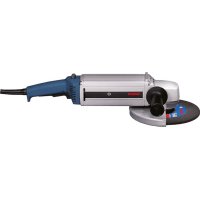



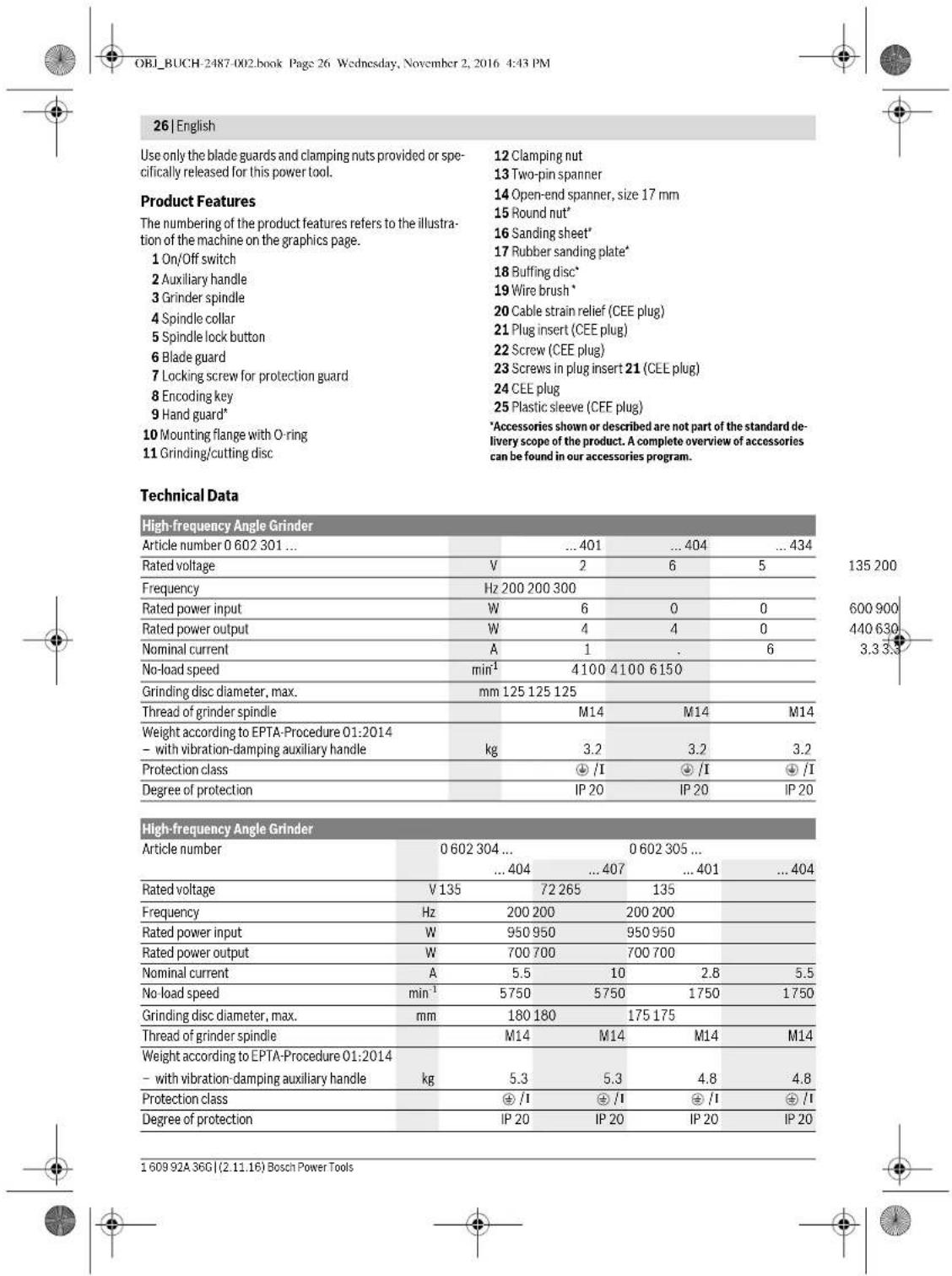
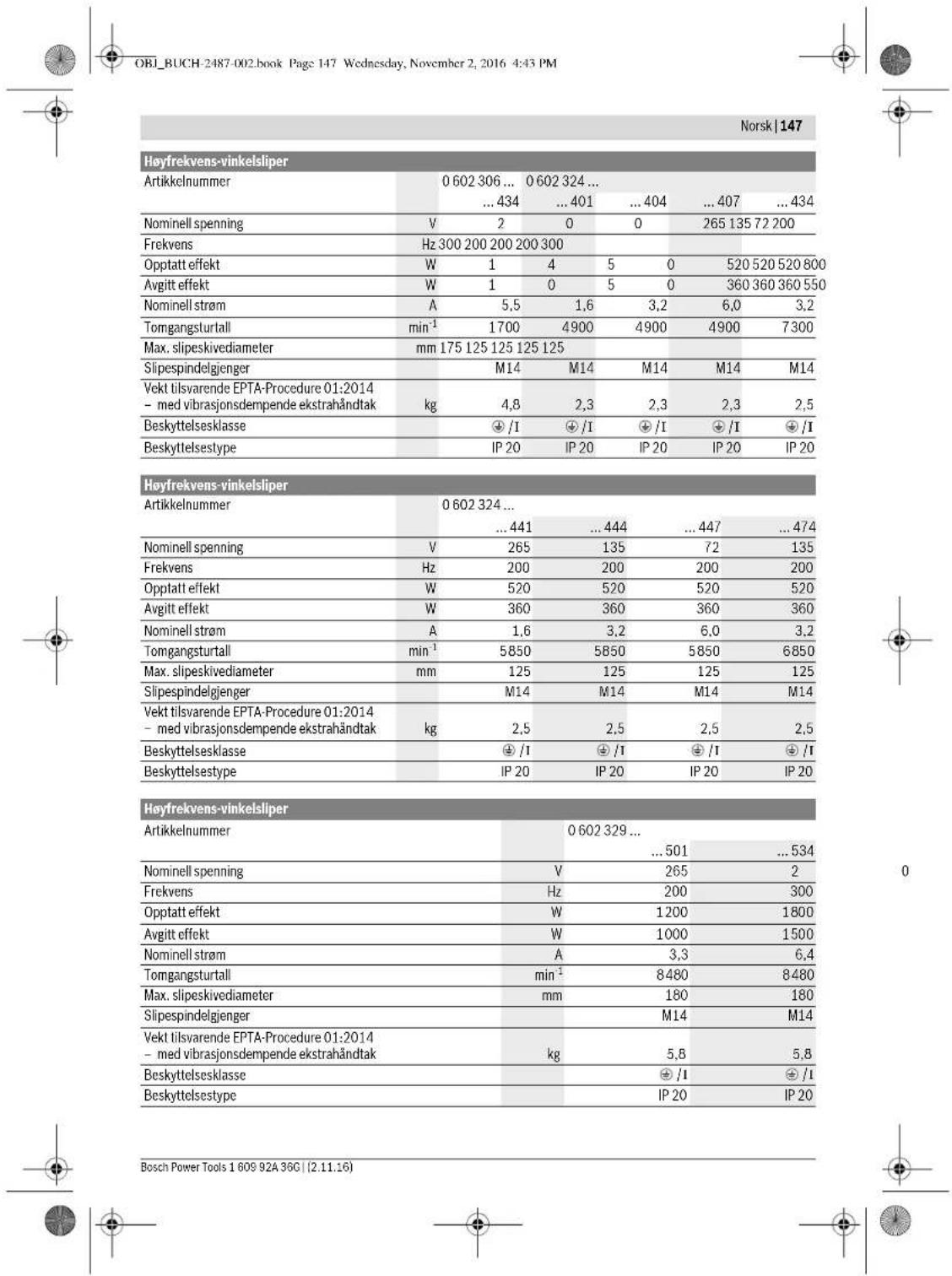
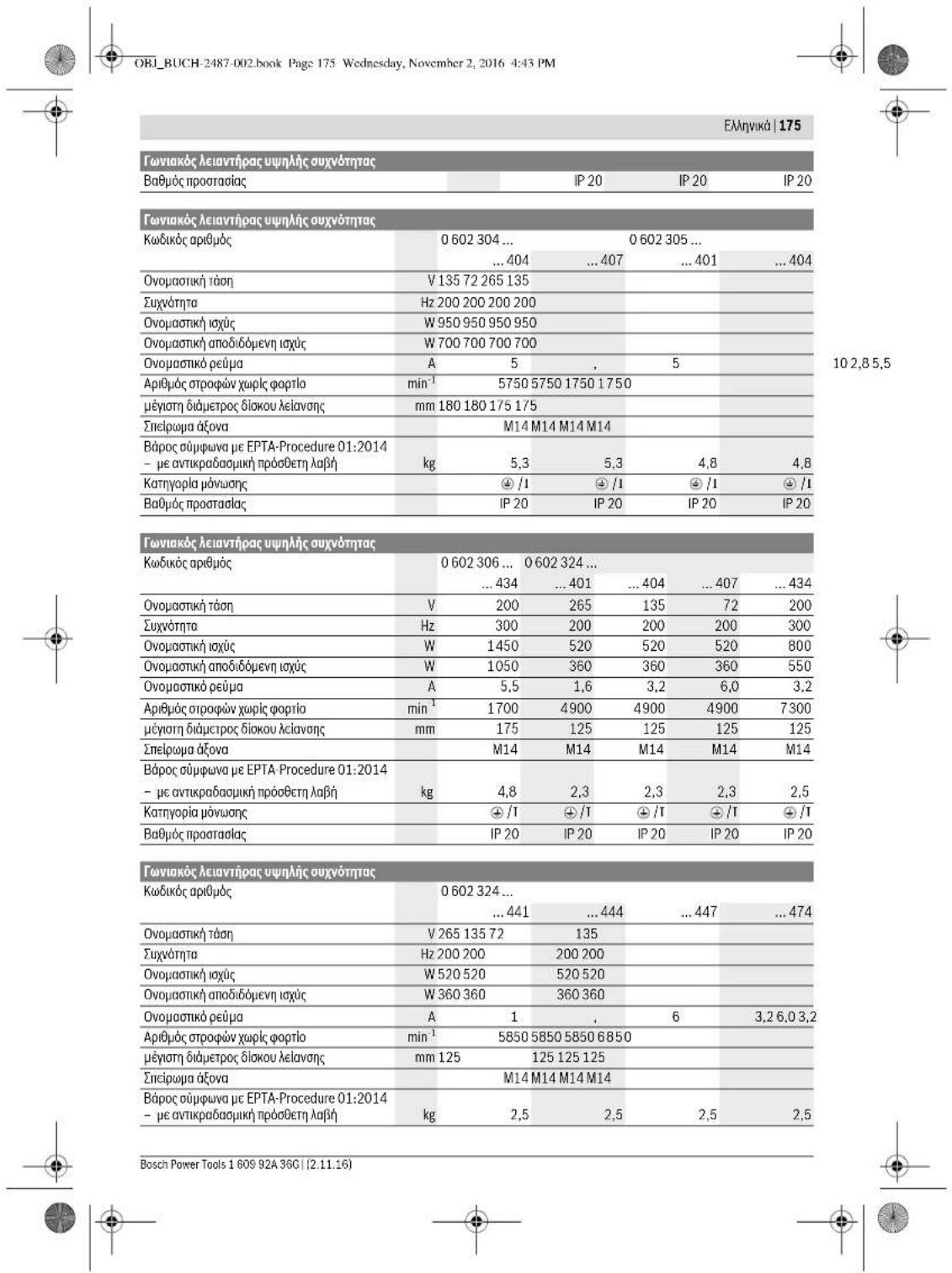
| Product type | Screwdriver |
| Brand | Bosch |
| Model | HWS 810230 Professional |
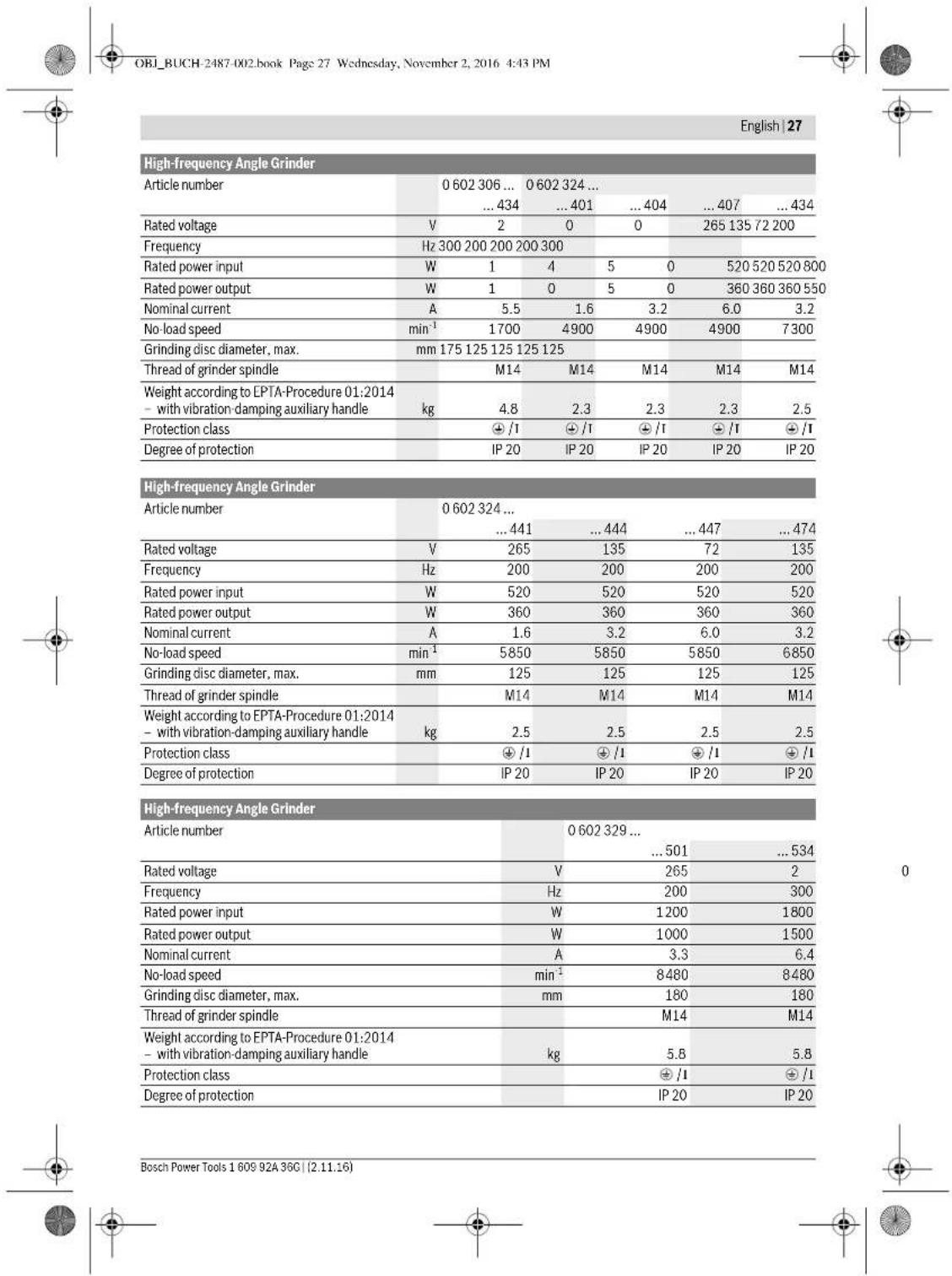
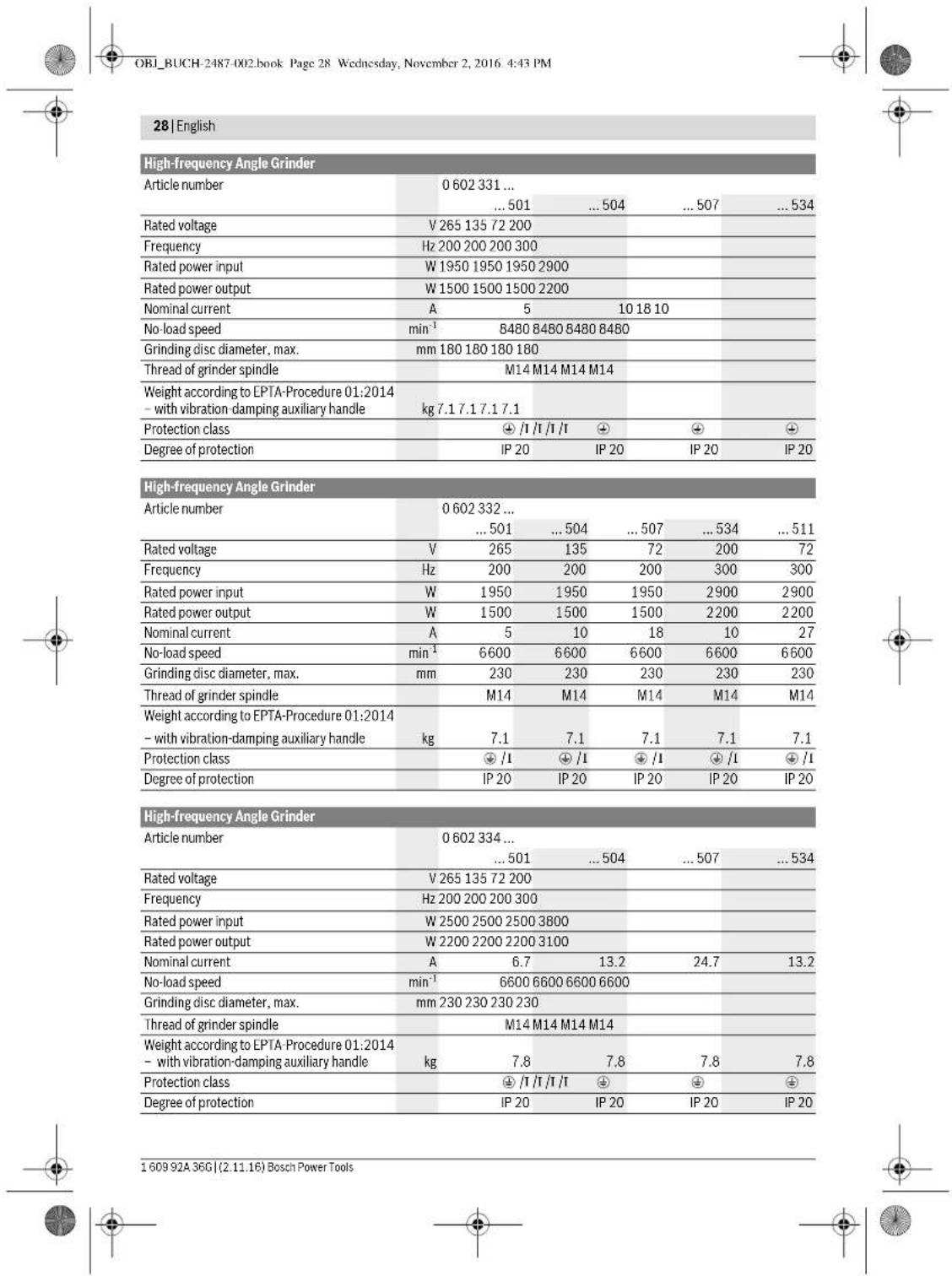
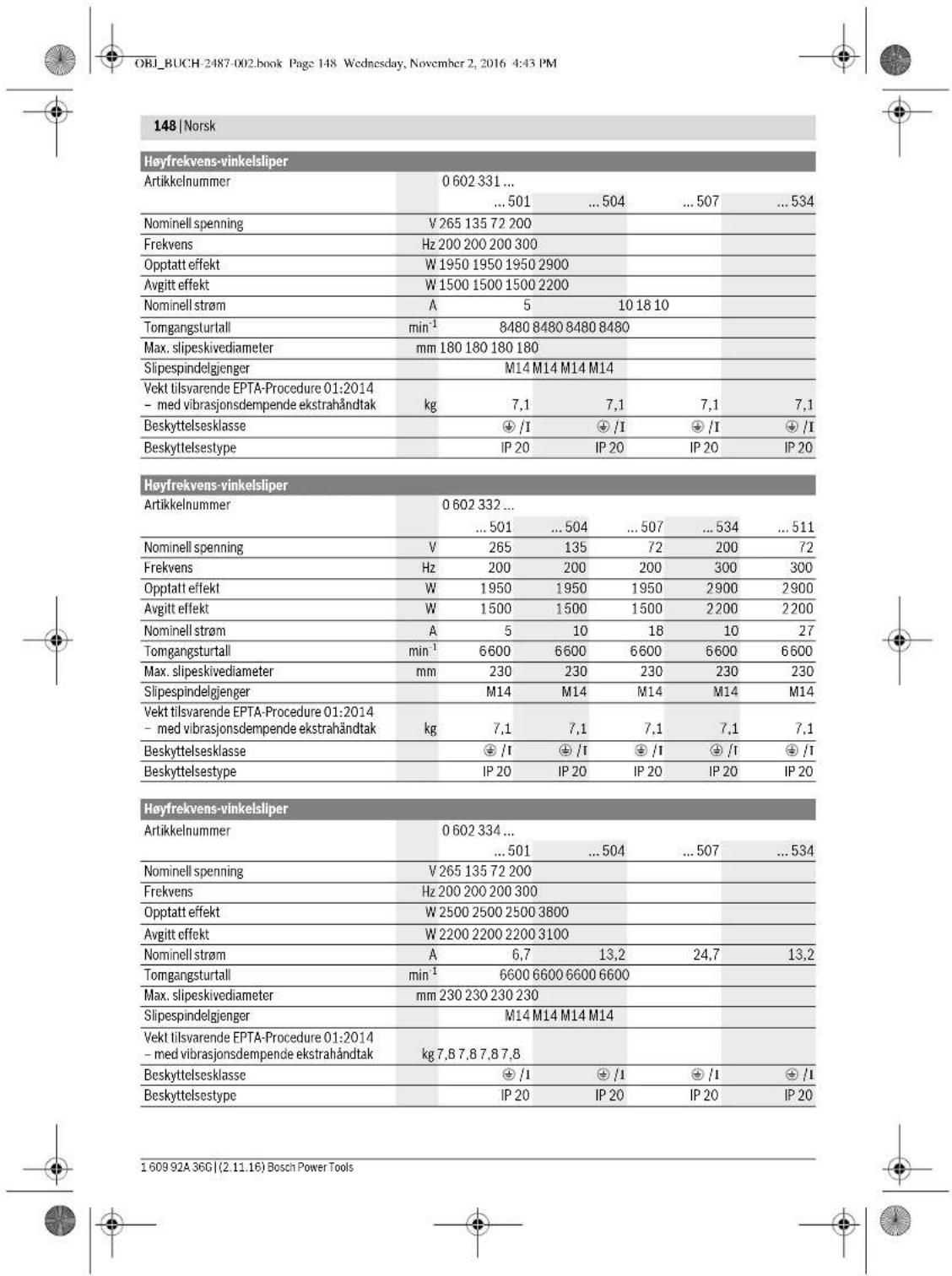
| Supply voltage | 135–265 V (depending on model) |
| Frequency | 200–300 Hz |
| No-load speed | 1750 min⁻¹ or 5750 min⁻¹ (depending on model) |
| Max. disc diameter | 180 mm |
| Spindle thread | M14 |
| Weight | Approx. 2.5 kg |
| Main functions | Grinding, cutting, sanding, brushing, polishing |
| Maintenance and cleaning | Regularly clean the ventilation slots with compressed air. Check the no-load speed and cable condition. |
| Safety | Wear safety glasses, mask, gloves, hearing protection. Use the protective guard and auxiliary handle. Follow anti-kickback instructions. |
| Spare parts and repairability | Repairs only by an authorized Bosch service center. Use original parts and specific cables. |
| General information | Manual available in several languages. Dry use on metals and stone. |
Frequently Asked Questions - HWS 810230 Professional BOSCH
User questions about HWS 810230 Professional BOSCH
0 question about this device. Answer the ones you know or ask your own.
Ask a new question about this device
Download the instructions for your Screwdriver in PDF format for free! Find your manual HWS 810230 Professional - BOSCH and take your electronic device back in hand. On this page are published all the documents necessary for the use of your device. HWS 810230 Professional by BOSCH.
USER MANUAL HWS 810230 Professional BOSCH
Robert Bosch Power Tools GmbH
70538 Stuttgart
GERMANY
www.bosch-pt.com
160992A36G(2015.07)AS/473 EURO
1609 92A 36G
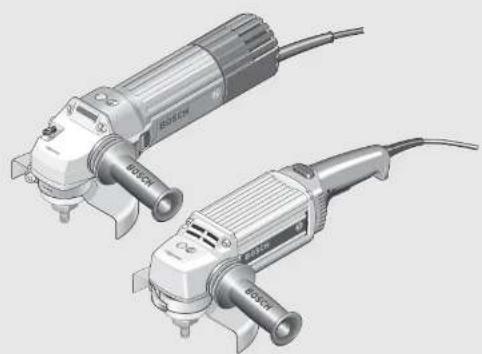
HWS
06023014.060230440.060230540.060230643406023244..
06023295..|06023315..|06023325..|06023345..

BOSCH
no Original drillsin
6 Akuperaisjt object
el npumbrncooryx yphcn
16 | German
Executive Vice President
Head of Product Certification
Engineering
PT/ECS
f( 2) = h · d
Robert Bosch Power Tools GmbH
70538 Stuttgart, GERMANY
Stuttgart, 01.01.2017
Assembly
OBI_BUCH-2487-002.book Page 17 Wednesday, November 2, 2016 4:43 PM
German 17
OBI_BUCH-2487-002.book Page 18 Wednesday, November 2, 2016 4:43 PM
18 | German
OBI_BUCH-2487-002.book Page 20 Wednesday, November 2, 2016 4:43 PM
General Power Tool Safety Warnings
WARNING: Read all safety warnings and all instructions. Failure to follow the warnings and instructions may result in electric shock, fire and/or serious injury.
Save all warnings and instructions for future reference. The term "power tool" in the warnings refers to your mains-operated (corded) power tool or battery-operated (cordless) power tool.
Work area safety
- Keep work area clean and well lit. Cluttered or dark areas invite accidents. Do not operate power tools in explosive atmospheres, such as in the presence of flammable liquids, gases or dust. Power tools create sparks which may ignite the dust or fumes.
- Keep children and bystanders away while operating a power tool. Distractions can cause you to lose control.
Electrical safety
Power tool plugs must match the outlet. Never modify the plug in any way. Do not use any adapter plugs with earthed (grounded) power tools. Unmodified plugs and matching outlets will reduce risk of electric shock. Avoid body contact with earthed or grounded surfaces, such as pipes, radiators, ranges and refrigerators. There is an increased risk of electric shock if your body is earthed or grounded. Do not expose power tools to rain or wet conditions. Water entering a power tool will increase the risk of electric shock. Do not abuse the cord. Never use the cord for carrying, pulling or unplugging the power tool. Keep cord away from heat, oil, sharp edges and moving parts. Damaged or entangled cords increase the risk of electric shock. When operating a power tool outdoors, use an extension cord suitable for outdoor use. Use of a cord suitable for outdoor use reduces the risk of electric shock.
If operating a power tool in a damp location is unavoidable, use a residual current device (RCD) protected supply. Use of an RCD reduces the risk of electric shock.
Personal safety
Stay alert, watch what you are doing and use common sense when operating a power tool. Do not use a power tool while you are tired or under the influence of drugs, alcohol or medication. A moment of inattention while operating power tools may result in serious personal injury. Use personal protective equipment. Always wear eye protection. Protective equipment such as dust mask, non-skid safety shoes, hard hat, or hearing protection used for appropriate conditions will reduce personal injuries. Prevent unintentional starting. Ensure the switch is in the off-position before connecting to power source and/or battery pack, picking up or carrying the tool. Carrying power tools with your finger on the switch or energising power tools that have the switch on invites accidents. Remove any adjusting key or wrench before turning the power tool on. A wrench or a key left attached to a rotating part of the power tool may result in personal injury. Do not overreach. Keep proper footing and balance at all times. This enables better control of the power tool in unexpected situations. Dress properly. Do not wear loose clothing or jewellery. Keep your hair, clothing and gloves away from moving parts. Loose clothes, jewellery or long hair can be caught in moving parts. If devices are provided for the connection of dust extraction and collection facilities, ensure these are connected and properly used. Use of dust collection can reduce dust-related hazards.
Power tool use and care
Do not force the power tool. Use the correct power tool for your application. The correct power tool will do the job better and safer at the rate for which it was designed. Do not use the power tool if the switch does not turn it on and off. Any power tool that cannot be controlled with the switch is dangerous and must be repaired. Disconnect the plug from the power source and/or the battery pack from the power tool before making any adjustments, changing accessories, or storing power tools. Such preventive safety measures reduce the risk of starting the power tool accidentally. Store idle power tools out of the reach of children and do not allow persons unfamiliar with the power tool or these instructions to operate the power tool. Power tools are dangerous in the hands of untrained users. Maintain power tools. Check for misalignment or binding of moving parts, breakage of parts and any other condition that may affect the power tool's operation. If damaged, have the power tool repaired before use. Many accidents are caused by poorly maintained power tools.






- Keep cutting tools sharp and clean. Properly maintained cutting tools with sharp cutting edges are less likely to bind and are easier to control. Use the power tool, accessories and tool bits etc. in accordance with these instructions, taking into account the working conditions and the work to be performed. Use of the power tool for operations different from those intended could result in a hazardous situation.
Service
Have your power tool serviced by a qualified repair person using only identical replacement parts. This will ensure that the safety of the power tool is maintained.
Safety Warnings for Angle Grinder
Safety warnings common for sanding with sanding discs and polishing
Applies for the following types:
-06023014.. -060230540 -0602306434 -060232440.
This power tool is to be used as a sander and polisher. Observe all safety warnings, instructions, illustrations and data supplied with the power tool. Non-observation of the following instructions can lead to electric shock, fire and/or serious injury. Operations such as grinding, wire brushing or cutting off are not recommended to be performed with this power tool. Operations for which the power tool was not designed may create a hazard and cause personal injury.
Safety warnings common for grinding, working with wire brushes and cut-off grinding
Applies for the following types:
-060230440 -060232444,..464,..474,..434 -06023295.. -06023315.. -06023325.. -06023345..
This power tool is to be used as a grinder, wire brush and cut off grinder. Observe all safety warnings, instructions, illustrations and data supplied with the power tool. Non-observation of the following instructions can lead to electric shock, fire and/or serious injury. Operations such as sanding or polishing are not recommended to be performed with this power tool. Operations for which the power tool was not designed may create a hazard and cause personal injury.
Safety warnings that are common for grinding, sanding, wire brushing, polishing and abrasive cutting off operations
Applies for all types
- Do not use accessories which are not specifically designed and recommended by the tool manufacturer. Just because the accessory can be attached to your power tool, it does not assure safe operation.
The rated speed of the accessory must be at least equal to the maximum speed marked on the power tool. Accessories running faster than their rated speed can break and fly apart. The outside diameter and the thickness of your accessory must be within the capacity rating of your power tool. Incorrectly sized accessories cannot be adequately guarded or controlled. Threaded mounting of accessories must match the grinder spindle thread. For accessories mounted by flanges, the arbor hole of the accessory must fit the locating diameter of the flange. Accessories that do not match the mounting hardware of the power tool will run out of balance, vibrate excessively and may cause loss of control. Do not use a damaged accessory. Before each use, inspect the accessory such as abrasive wheels for chips and cracks, backing pad for cracks, tear or excess wear, wire brush for loose or cracked wires. If power tool or accessory is dropped, inspect for damage or install an undamaged accessory. After inspecting and installing an accessory, position yourself and bystanders away from the plane of the rotating accessory and run the power tool at maximum no-load speed for one minute. Damaged accessories will normally break apart during this test time. Wear personal protective equipment. Depending on application, use face shield, safety goggles or safety glasses. As appropriate, wear dust mask, hearing protectors, gloves and shop apron capable of stopping small abrasive or workpiece fragments. The eye protection must be capable of stopping flying debris generated by various operations. The dust mask or respirator must be capable of filtrating particles generated by your operation. Prolonged exposure to high intensity noise may cause hearing loss. Keep bystanders a safe distance away from work area. Anyone entering the work area must wear personal protective equipment. Fragments of workpiece or of a broken accessory may fly away and cause injury beyond immediate area of operation. Hold the power tool by insulated gripping surfaces only, when performing an operation where the cutting accessory may contact hidden wiring or its own cord. Cutting accessory contacting a "live" wire may make exposed metal parts of the power tool "live" and could give the operator an electric shock. Position the cord clear of the spinning accessory. If you lose control, the cord may be cut or snagged and your hand or arm may be pulled into the spinning wheel. Never lay the power tool down until the accessory has come to a complete stop. The spinning wheel may grab the surface and pull the power tool out of your control. Do not run the power tool while carrying it at your side. Accidental contact with the spinning accessory could snag your clothing, pulling the accessory into your body.

Regularly clean the power tool's air vents. The motor's fan will draw the dust inside the housing and excessive accumulation of powdered metal may cause electrical hazards. Do not operate the power tool near flammable materials. Sparks could ignite these materials. Do not use accessories that require liquid coolants. Using water or other liquid coolants may result in electrocution or shock.
Kickback and related warnings
Kickback is a sudden reaction to a pinched or snagged rotating wheel, backing pad, brush or any other accessory. Pinching or snagging causes rapid stalling of the rotating accessory which in turn causes the uncontrolled power tool to be forced in the direction opposite of the accessory's rotation at the point of the binding. For example, if an abrasive wheel is snagged or pinched by the workpiece, the edge of the wheel that is entering into the pinch point can dig into the surface of the material causing the wheel to climb out or kick out. The wheel may either jump toward or away from the operator, depending on direction of the wheel's movement at the point of pinching. Abrasive wheels may also break under these conditions. Kickback is the result of power tool misuse and/or incorrect operating procedures or conditions and can be avoided by taking proper precautions as given below. - Maintain a firm grip on the power tool and position your body and arm to allow you to resist kickback forces. Always use auxiliary handle, if provided, for maximum control over kickback or torque reaction during start-up. The operator can control torque reactions or kickback forces, if proper precautions are taken. Never place your hand near the rotating accessory. Accessory may kickback over your hand. Do not position your body in the area where power tool will move if kickback occurs. Kickback will propel the tool in direction opposite to the wheel's movement at the point of snagging. - Use special care when working corners, sharp edges, etc. Avoid bouncing and snagging the accessory. Corners, sharp edges or bouncing have a tendency to snag the rotating accessory and cause loss of control or kickback. Do not attach a saw chain woodcarving blade or toothed saw blade. Such blades create frequent kickback and loss of control.
Safety warnings specific for Grinding and Abrasive Cutting-Off operations
- Use only wheel types that are recommended for your power tool and the specific guard designed for the selected wheel. Wheels for which the power tool was not designed cannot be adequately guarded and are unsafe. The grinding surface of the centre depressed wheels must be mounted below the plane of the guard lip. An improperly mounted wheel that projects through the plane of the guard lip cannot be adequately protected.
The guard must be securely attached to the power tool and positioned for maximum safety, so the least amount of wheel is exposed towards the operator. The guard helps to protect the operator from broken wheel fragments, accidental contact with the wheel, and sparks that could ignite clothing. Wheels must be used only for recommended applications. For example: do not grind with the side of the cut-off wheel. Abrasive cut-off wheels are intended for peripheral grinding; side forces applied to these wheels may cause them to shatter. Always use undamaged wheel flanges that are of correct size and shape for your selected wheel. Proper wheel flanges support the wheel, thus reducing the possibility of wheel breakage. Flanges for cut-off wheels may be different from grinding wheel flanges. Do not use worn-down reinforced wheels from larger power tools. Wheels intended for larger power tools are not suitable for the higher speed of a smaller tool and may burst.
Additional safety warnings specific for abrasive cutting-off operations
Do not "jam" the cut-off wheel or apply excessive pressure. Do not attempt to make an excessive depth of cut. Overstressing the wheel increases the loading and susceptibility to twisting or binding of the wheel in the cut and the possibility of kickback or wheel breakage. Do not position your body in line with and behind the rotating wheel. When the wheel, at the point of operation, is moving away from your body, the possible kickback may propel the spinning wheel and the power tool directly at you. When the wheel is binding or when interrupting a cut for any reason, switch off the power tool and hold the power tool motionless until the wheel comes to a complete stop. Never attempt to remove the cut-off wheel from the cut while the wheel is in motion, otherwise kickback may occur. Investigate and take corrective action to eliminate the cause of wheel binding. Do not restart the cutting operation in the workpiece. Let the wheel reach full speed and carefully re-enter the cut. The wheel may bind, walk up, or kickback if the power tool is restarted in the workpiece. Support panels or any oversized workpiece to minimize the risk of wheel pinching and kickback. Large workpieces tend to sag under their own weight. Supports must be placed under the workpiece near the line of cut and near the edge of the workpiece on both sides of the wheel. Use extra caution when making a "pocket cut" into existing walls or other blind areas. The protruding wheel may cut gas or water pipes, electrical wiring, or objects that can cause kickback. Safety warnings specific for sanding operations: Do not use excessively oversized sanding disc paper. Follow manufacturer's recommendations when selecting sanding paper. Larger sanding paper extending be

yond the sanding pad presents a laceration hazard and may cause snagging, tearing of the disc, or kickback.
Safety warnings specific for polishing operations
Do not allow any loose portion of the polishing bonnet or its attachment strings to spin freely. Tuck away or trim any loose attachment strings. Loose and spinning attachment strings can entangle your fingers or snag on the workpiece.
Safety warnings specific for wire brushing operations
Be aware that wire bristles are thrown by the brush even during ordinary operation. Do not overstress the wires by applying excessive load to the brush. The wire bristles can easily penetrate light clothing and/or skin. If the use of a guard is recommended for wire brushing, do not allow any interference of the wire wheel or brush with the guard. Wire wheel or brush may expand in diameter due to work load and centrifugal forces.
Additional safety warnings
Wear safety goggles.

environment where special protection for persons is necessary. The special protection of persons is required, for example, when working in damp rooms or with materials that can produce current-conducting dust. Not using a residual current protection device can lead to electrical shock, risk of fire, or serious injuries.
The residual current protection device should be installed in the power supply network only by a qualified electrician. Only in this manner can proper functioning be ensured. The output voltage and frequency of the frequency converter must correspond with the data on the type plate of the high-frequency tool. - Operate the power tool exclusively with a fitting plug. The CEE plug must be dimensioned for the nominal current that the power tool requires (see "Technical Data"). Plug mounting and connection to the power supply is to be carried out by a qualified electrician trained in handling high-frequency tool systems. Use only original cables! Before each use, check the power tool, cable and plug for possible damage. Cables and plugs may not be repaired, but must be exchanged in order to avoid danger.
Product Description and Specifications

Read all safety warnings and all instructions. Failure to follow the warnings and instructions may result in electric shock, fire and/or serious injury.
While reading the operating instructions, unfold the graphics page for the machine and leave it open.
Intended Use
Applies for the following types:
-06023014.. -060230540. -0602306434 -060232440.
The machine is intended for sanding and polishing metal and coated surfaces without the use of water.
Applies for the following types:
The machine is intended for cutting, roughing and brushing of metal and stone materials without the use of water.
For cutting with bonded abrasives, a special cutting guide (accessory) must be used.
When cutting in stone, provide for sufficient dust extraction. Applies for all types.
Use suitable detectors to determine if utility lines are hidden in the work area or call the local utility company for assistance. Contact with electric lines can lead to fire and electric shock. Damaging a gas line can lead to explosion. Penetrating a water line causes property damage or may cause an electric shock. Release the On/Off switch and set it to the off position when the power supply is interrupted, e.g., in case of a power failure or when the mains plug is pulled. This prevents uncontrolled restarting. Do not touch grinding and cutting discs before they have cooled down. The discs can become very hot while working. When working with the machine, always hold it firmly with both hands and provide for a secure stance. The power tool is guided more securely with both hands. Secure the workpiece. A workpiece clamped with clamping devices or in a vice is held more secure than by hand. Connect the machine to a mains supply with proper earthing connection. Socket outlet and extension cable must be equipped with an operative protective conductor.
Products sold in AUS and NZ only: Use a residual current device (RCD) with a rated residual current of 30 mA or less.
Safety Warnings for the Power Supply of High-frequency Tools
The safety warnings and working instructions of the frequency converter are to be strictly observed! For detailed information, contact the manufacturer of the frequency converter. The frequency converter must be secured with a residual current protection device when working in an environment with increased electrical risk.



Notes on the Power Supply
The power tool is part of a high-frequency system and requires three-phase current with a frequency according to the type plate.
To reach this frequency, the power tool must be connected with a frequency converter (see "Connection to the Power Supply", page 33).
Noise/Vibration Information
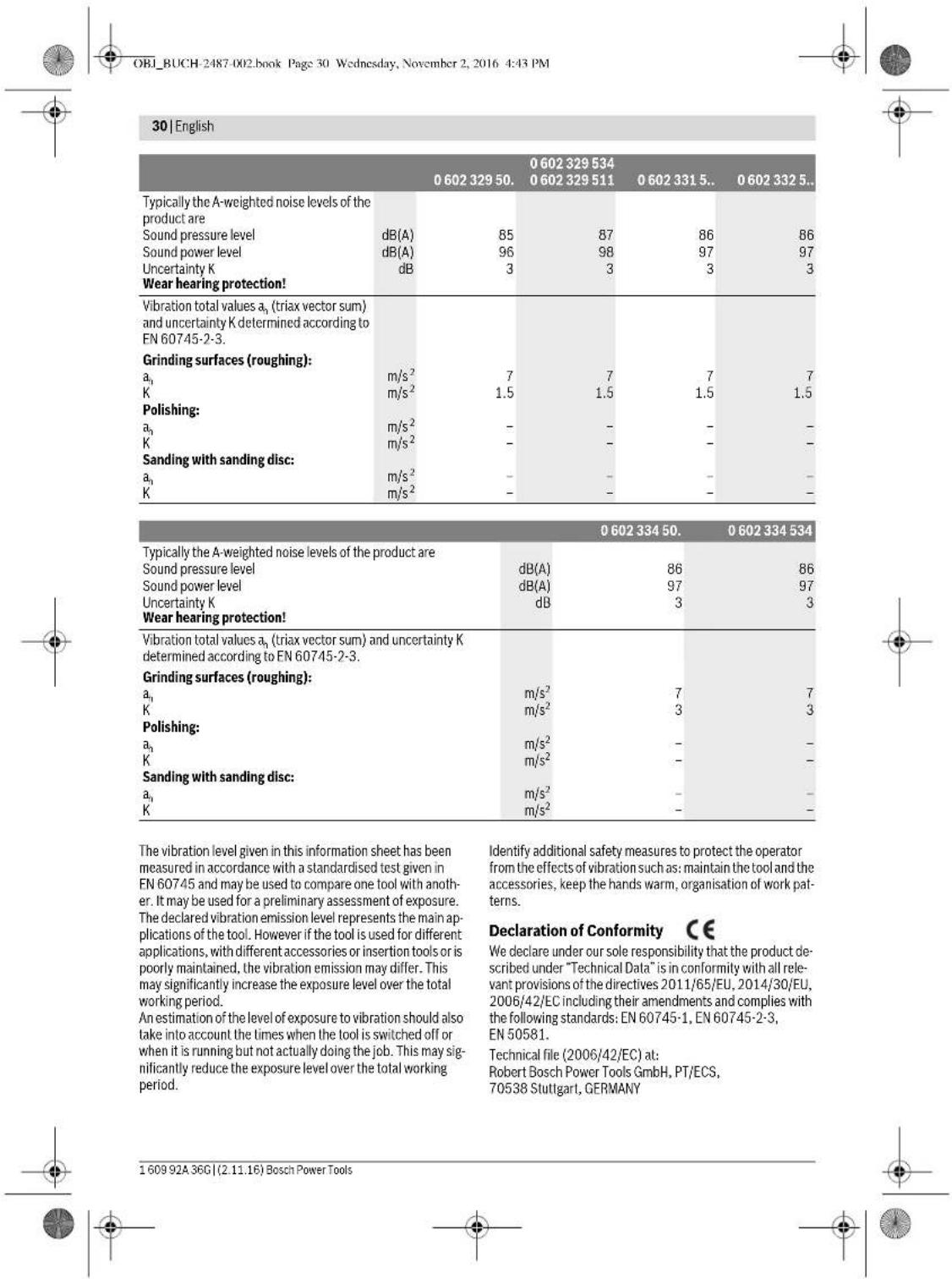
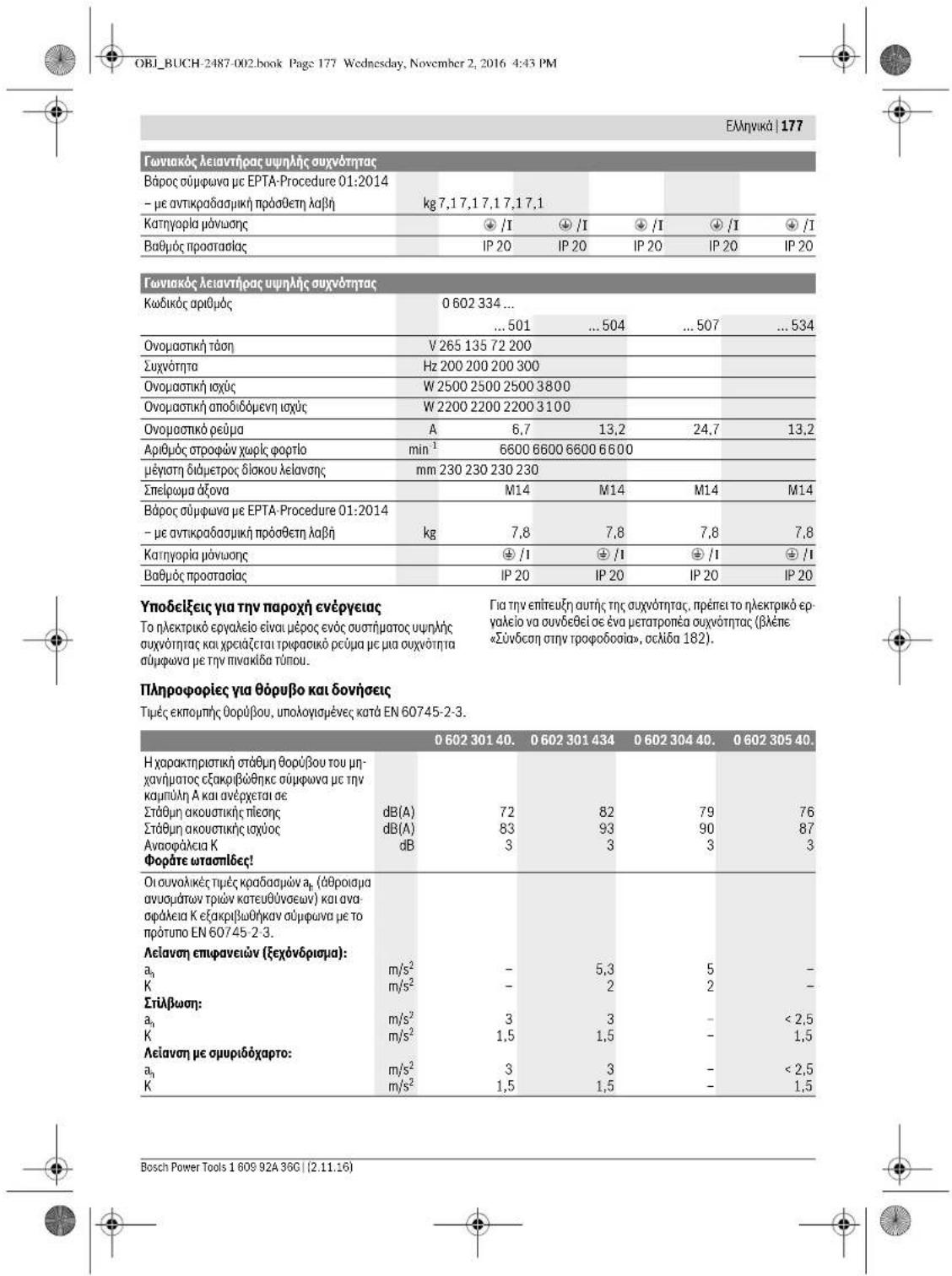
Sound emission values determined according to EN 60745-2-3.
| 0 602 301 40. | 0 602 301 434 | 0 602 304 40. | 0 602 305 40. | |
| Typically the A-weighted noise levels of the product are | ||||
| Sound pressure level | dB(A) | 72 | 82 | 79 |
| Sound power level | dB(A) | 83 | 93 | 90 |
| Uncertainty K | dB | 3 | 3 | 3 |
| Wear hearing protection! | ||||
| Vibration total values \( a_{\mathrm {n}} \)(triax vector sum) and uncertainty K determined according to EN 60745-2-3. | ||||
| Grinding surfaces (roughing): | ||||
| \( a_{\mathrm {n}} \) | m/s2 | - | 5.3 | 5 |
| K | m/s2 | - | 2 | 2 |
| Polishing: | ||||
| \( a_{\mathrm {n}} \) | m/s2 | 3 | 3 | - |
| K | m/s2 | 1.5 | 1.5 | - |
| Sanding with sanding disc: | ||||
| \( a_{\mathrm {n}} \) | m/s2 | 3 | 3 | - |
| K | m/s2 | 1.5 | 1.5 | - |
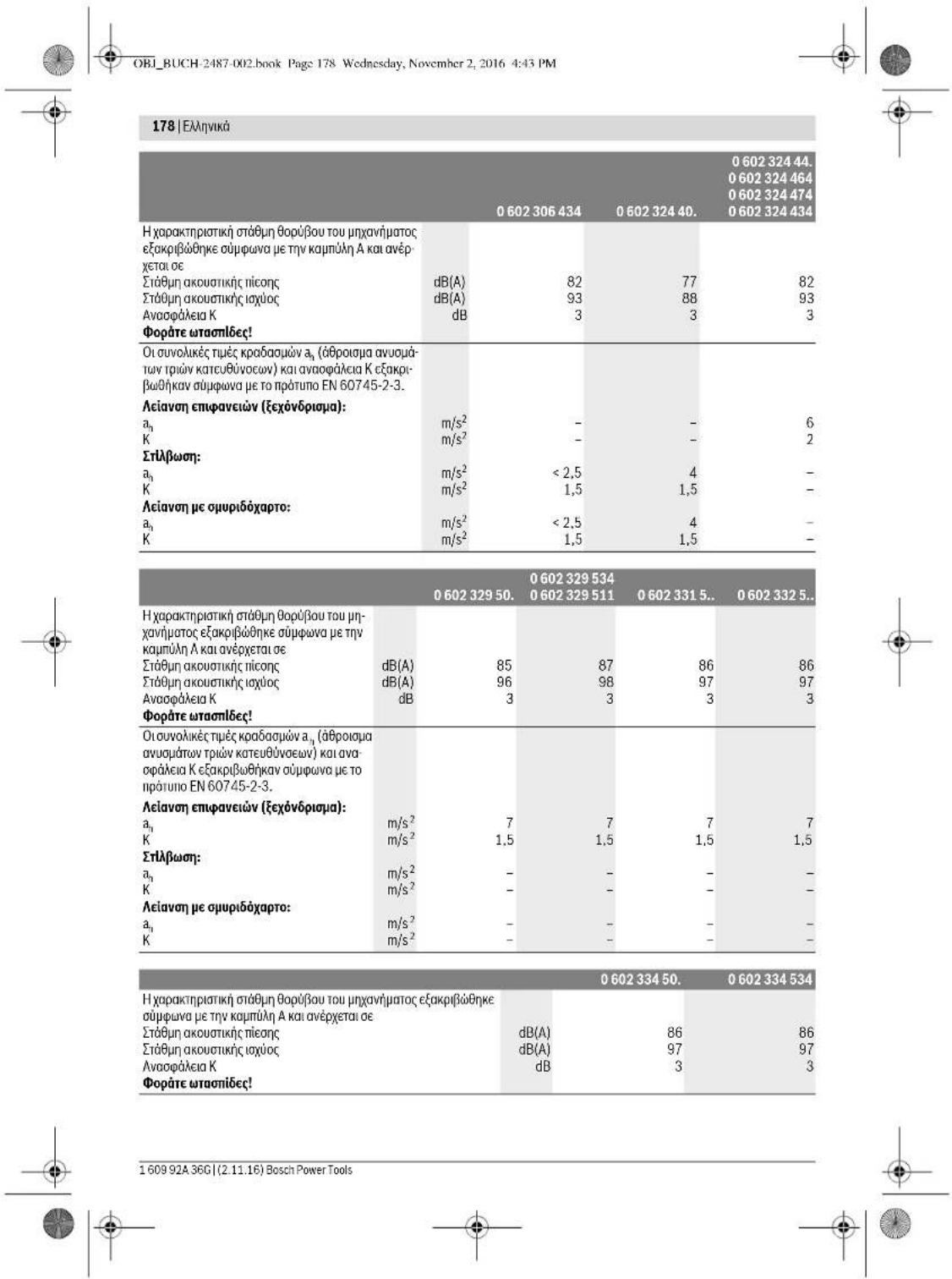
| 0 602 306 434 | 0 602 324 40. | 0 602 324 44,0 602 324 4640 602 324 4740 602 324 434 | |
| Typically the A-weighted noise levels of the product are | |||
| Sound pressure level dB(A) | 82 | 77 | 82 |
| Sound power level dB(A) | 93 | 88 | 93 |
| Uncertainty K dB | 3 | 3 | 3 |
| Wear hearing protection! | |||
| Vibration total values \( a_h \) (triax vector sum) and un- certainty K determined according to EN 60745-2-3. | |||
| Grinding surfaces (roughing): | |||
| \( a_h \)m/s2 | - | - | 6 |
| Km/s2 | - | - | 2 |
| Polishing: | |||
| \( a_h \)m/s2 | < 2.5 | 4 | - |
| Km/s2 | 1.5 | 1.5 | - |
| Sanding with sanding disc: | |||
| \( a_h \)m/s2 | < 2.5 | 4 | - |
| Km/s2 | 1.5 | 1.5 | - |

English 31
Henk Becker
Executive Vice President Engineering
Helmut Heinzelmann
Head of Product Certification PT/ECS

Robert Bosch Power Tools GmbH
70538 Stuttgart, GERMANY
Stuttgart, 01.01.2017
Assembly
Mounting the Protective Devices
General Information
- Disconnect the power supply before making any adjustments, changing accessories, or placing the machine aside. This safety measure prevents accidental starting of the power tool.
Note: After breakage of the grinding disc during operation or damage to the holding fixtures on the protection guard/power tool, the machine must promptly be sent to an after-sales service agent for maintenance. For addresses, see section "After-sales Service and Application Service".
Adjust protection guards in such a manner that sparking toward the operator is prevented.
Note: The encoding keys of the protection guards ensure that only a protection guard that fits the machine type can be mounted.
Protection Guard for Grinding (see figure A)
Applies for the following types:
-060230440. -06023295.. -0602324434 -06023315.. -0.60232444 -0.6023325 -0.602324464 -0.6023345 -0602324474
- Place the protection guard 6 with the encoding key 8 engaging into the groove on the spindle collar 4 until the shoulder of the protection guard is seated against the flange of the power tool.
- Adapt the position of the protection guard to the requirements of the work step.
- Secure the protection guard by tightening locking screw 7 with a tightening torque of at least 10Nm .
Protection Guard for Cutting
Applies for the following types:
-060230440. -06023295.. -0602324434 -06023315.. -060232444. -06023325.. -0602324464 -06023345.. -0602324474
For cutting with bonded abrasives, always use a protection guard for cutting. For cutting stone, always use a cutting guide with dust extraction protection guard (accessory).
The protection guards for cutting are mounted analogue to the standard protection guards (see figure A).
Vibration-dampening
Auxiliary Handle
(see figure B)
The vibration-dampening auxiliary handle reduces the vibrations, making operation more comfortable and secure.
Operate your machine only with the auxiliary handle 2. - Screw the auxiliary handle 2 on the right or left of the machine head depending on the working method. Do not make any alterations to the auxiliary handle. Do not continue to use an auxiliary handle if it is damaged.
Hand Guard (see figure C)
Applies for the following types: -06023014.. -060232440. -060230540. -0602306434
For operations with the rubber sanding plate 17 or with the cup brush/wheel brush/flap disc, always mount the hand guard 9. The hand guard 9 is fastened with the auxiliary handle 2.
Mounting the Grinding Tools
General Information
Disconnect the power supply before making any adjustments, changing accessories, or placing the machine aside. This safety measure prevents accidental starting of the power tool.
Pay attention to the dimensions of the grinding tools. The mounting hole diameter must fit the mounting flange without play. Do not use reducers or adapters.
Clean the grinder spindle 3 and all parts to be mounted.
After mounting the grinding tool and before switching on, check that the grinding tool is correctly mounted and that it can turn freely. Make sure that the grinding tool does not graze against the protection guard or other parts.
Mounting Grinding or Cutting Discs (see figures D1-D2)
Applies for the following types:
-060230440. -06023315.. -060232444,..464 -06023325. 474.434 -06023345
Installation
- Make sure that the fitting protection guard is mounted (see "Mounting the Protective Devices", page 31).
- Place the clamping flange 10 on the grinder spindle 3. A plastic part (O ring) is fitted around the centring collar of mounting flange 10. If the O-ring is missing or damaged, it must immediately be replaced before mounting flange 10 is mounted.
- Mount the desired grinding/cutting disc 11 in the correct rotation direction onto the grinder spindle 3.




- Place the clamping nut 12 onto the spindle thread so that the central recess of the clamping nut faces upward. Tighten the clamping nut with two-pin spanner 13, while counter-holding the spanner surfaces of the grinder spindle 3 with open-end spanner 14.
Removal
Hold the grinder spindle 3 on the spanner surfaces with open-end spanner 14. - Unscrew the clamping nut 12 from the grinder spindle with two-pin spanner 13, while counter-holding the spanner surfaces with open-end spanner 14. - Afterwards, pull the grinding tool and the mounting flange from the grinder spindle.
Machines with Spindle Lock Button 5
Applies for the following types:
-060232440. -0602324434 -060232444.
For machines with spindle lock button 5, counter-holding with an open-end spanner is not required when mounting grinding tools (see figures E1-E2).
- Actuate the spindle lock button only when the grinder spindle is at a standstill. Otherwise, the machine may become damaged.
- Before installing or removing the grinding tool, press and hold spindle lock button 5 to lock the grinder spindle 3 in place.
- Mount the desired grinding tool (see "Mounting Grinding or Cutting Discs", page 31).
- Let go of the spindle lock button 5 to release the locked grinder spindle.
Mounting the Rubber Sanding Plate (see figure F)
Applies for the following types:
-06023014, -060232440, -060230540, -0602306434
Installation
- Make sure that the hand guard and the auxiliary handle are mounted (see "Mounting the Protective Devices", page 31).
- Place the rubber sanding plate 17 onto the grinder spindle 3. Lay the sanding disc 16 on the rubber sanding plate.
- Place the round nut 15 on the spindle collar.
- Tighten the round nut with two-pin spanner 13, while counter-holding the spanner surfaces of the grinder spindle 3 with open-end spanner 14. Take care that the round nut 15 is screwed completely into the bulge of the rubber sanding plate so that it does not interfere while sanding and the sanding disc is firmly seated.
Removal
Hold the grinder spindle 3 on the spanner surfaces with open-end spanner 14.
- Unscrew the round nut 15 from the grinder spindle with two-pin spanner 13, while counter-holding the spanner surfaces with open-end spanner 14.
- Pull the sanding disc and the rubber sanding plate from the grinder spindle.
Mounting the Buffing Disc (see figure G)
Applies for the following types:
Pay attention that the thread of the buffing disc fits exactly on the grinder spindle thread (M14).
Make sure that the hand guard and the auxiliary handle are mounted (see "Mounting the Protective Devices", page 31). - Screw the buffing disc 18 so far onto the grinder spindle 3 that it rests firmly against the face surface of the grinder spindle, while counter-holding the spanner surfaces of the grinder spindle 3 with open-end spanner 14.
Removal
Unscrew the tightly seated buffing disc 18 from the grinder spindle by applying an open-end spanner to the buffing disc spanner surfaces, while counter-holding the spanner surfaces of the grinder spindle 3 with open-end spanner 14.
Mounting Wire Brushes (see figure H)
Applies for the following types:
-060230440. -06023315.. -060232444,..464, -06023325. 474.434 -06023345..
-06023295..
Installation
Pay attention that the thread of the wire brush fits exactly on the grinder spindle thread (M14).
Make sure that the hand guard and the auxiliary handle are mounted (see "Mounting the Protective Devices", page 31). Screw the desired wire brush 19 (cup brush or wire wheel) so far onto the grinder spindle 3 that it rests firmly against the face surface of the grinder spindle, while counter-holding the spanner surfaces of the grinder spindle with open-end spanner 14.
Removal
- Unscrew the tightly seated wire brush 19 from the grinder spindle by applying an open-end spanner to the wire brush spanner surfaces, while counter-holding the spanner surfaces of the grinder spindle 3 with open-end spanner 14.
Dust/Chip Extraction
Dusts from materials such as lead-containing coatings, some wood types, minerals, and metal can be harmful to one's health. Touching or breathing in the dusts can cause allergic reactions and/or lead to respiratory infections of the user or bystanders.
Certain dusts, such as oak or beech dust, are considered carcinogenic, especially in connection with wood-treatment additives (chromate, wood preservatives). Materials containing asbestos may only be worked by specialists.
- As far as possible, use a dust extraction system suitable for the material.
- Provide for good ventilation of the working place.
- It is recommended to wear a P2 filter-class respirator. Observe the relevant regulations in your country for the materials to be worked.
Prevent dust accumulation at the workplace. Dusts can easily ignite.
Connection to the Power Supply
For operation of the power tools, a frequency converter is required that generates three-phase current with a frequency according to that listed on the type plate.
Frequency converters are available in various sizes, with different frequencies, secondary voltages, and rated outputs. The choice of the frequency converter depends on the power tools to be connected. When selecting a frequency converter, contact your Bosch specialist shop for advice.
The machine is provided with a four-meter-long specialty cable without plug. To put it into operation, the specialty cable must be equipped with a four-pole CEE plug (identification colour green).
Additionally, the machine can be equipped with a commercially available motor protection switch for protection against overload. The adjustment range of the motor protection switch must cover the nominal current of the power tool (see "Technical Data"). The motor protection switch must react in less than one second.
Please observe the safety warnings and assembly instructions in the operating instructions of the motor protection switch!
Mounting the CEE Plug (see figures I1-I2)
- Loosen the two screws 22 and pull the plug insert 21 out of the plug housing of the CEE plug 24. Cut off the plastic sleeve 25 according to the diameter of the specialty cable of the power tool and insert the specialty cable through the CEE plug housing.
- Insert the four conductors through the cable strain relief 20.
- Loosen the four small screws 23 in the plug insert 21 and insert
the conductor ferrule of the brown L1 conductor into contact tube L1.
the conductor ferrule of the blue L2 conductor into contact tube L2;
the conductor ferrule of the black L3 conductor into contact tube L3,
and the conductor ferrule of the green/yellow conductor into the earthing contact tube
- Firmly tighten the four small screws 23 in the plug insert 21 to affix the conductors.
- Now, tighten the screws of the cable strain relief 20 so that the cable clamp goes around the complete cable sheath, ensuring that no pressure is on the conductor ferrules.
- Reinsert plug insert 21 into the housing of the CEE plug 24 and tighten both screws 22 again.
- Afterwards, check the proper function of the protective conductor.
- Insert the CEE plug 24 of the power tool into the connection socket of the frequency converter.
Now, connect the frequency converter to the power supply. For information on how to connect the frequency converter to the power supply, see the frequency converter operating instructions. Afterwards, check the rotation direction!
Checking the Rotation Direction
The rotation direction of the grinder spindle must correspond with the arrow on the power tool. If the grinder spindle rotates in the wrong direction when putting into operation for the first time (see "Switching the Power Tool On/Off", page 34), switch the power tool off immediately and disconnect it from the power supply. - Loosen the two screws 22 again and pull the plug insert 21 out of the plug housing of the CEE plug 24. - Loosen the conductor ferrules of the black and brown conductors from their contact tubes. - Now, insert the conductor ferrule of the black conductor L3 into contact tube L1, and the conductor ferrule of the brown conductor L1 into contact tube L3. - Firmly tighten the small screws 23 in the plug insert 21 to affix the conductors. - Reinsert plug insert 21 into the housing of the CEE plug 24 and tighten both screws 22 again. - Afterwards, check the proper function of the protective conductor. - Reconnect the power tool to the power supply.
Operation
Starting Operation
The voltage and frequency of the power source must correspond with the data on the type plate of the power tool. - Check grinding tools before using. The grinding tool must be mounted properly and be able to move freely. Carry out a test run for at least one minute with no load. Do not use damaged, out-of-centre or vibrating grinding tools. Damaged grinding tools can burst and cause injuries. If the machine should unexpectedly stop operating even though the On/Off switch 1 is in the "On" position, set the On/Off switch to "Off". This will prevent uncontrolled restarting of the machine. Before restarting the machine, check the power supply (see "Connection to the Power Supply", page 33). Always connect the power tool to the frequency converter first, before connecting the frequency converter to the mains supply.
To save energy, only switch the power tool on when using it.


Switching the Frequency Converter On/Off
The frequency converter must be put into operation first before actuating the power tool.
For this, observe the operating instructions of the frequency converter.
Switching the Power Tool On/Off with the On/Off Switch (see figure J1)
Applies for the following types:
-06023244.
- To start the machine, push the On/Off switch 1 forwards.
- To lock the On/Off switch 1, press the On/Off switch 1 down at the front until it latches.
- To switch off the power tool, release the On/Off switch 1. When the On/Off switch 1 is locked-on, briefly press it toward the rear and then release it.
Switching the Power Tool On/Off
with Safety Switch (see figure J2)
Applies for the following types:
-06023014.. -06023295.. -060230440. -06023315. -060230540. -06023325.. -0602306434 -06023345..
To start the power tool, press the On/Off switch 1 forward and then down. - To lock-on the pressed On/Off switch 1, push the On/Off switch 1 further forward. - To switch off the power tool, release the On/Off switch 1, or when it is locked, briefly press the On/Off switch 1 and then release it.
Working Advice
- Disconnect the power supply before making any adjustments, changing accessories, or placing the machine aside. This safety measure prevents accidental starting of the power tool. Exercise caution when cutting slots in structural walls; see Section "Information on Structures".
- Clamp the workpiece if it does not remain stationary due to its own weight. Do not strain the machine so heavily that it comes to a standstill. After heavily straining the power tool, continue to run it at no-load for several minutes to cool down the accessory.
Sanding with the Flap Disc
With the flap disc (accessory), curved surfaces and profiles can be worked.
Flap discs have a considerably higher service life, lower noise levels and lower sanding temperatures than conventional sanding sheets.
Cutting Metal (see figure K)
For cutting with bonded abrasives, always use a protection guard for cutting.
When cutting, work with moderate feed, adapted to the material being cut. Do not exert pressure onto the cutting disc, tilt or oscillate the machine.
Do not reduce the speed of running down cutting discs by applying sideward pressure. The machine must always work in an up-grinding motion. Otherwise, the danger exists of it being pushed uncontrolled out of the cut. When cutting profiles and square bar, it is best to start at the smallest cross section.
Cutting Stone
- Provide for sufficient dust extraction when cutting stone. Wear a dust respirator. The machine may be used only for dry cutting/grinding.
For cutting stone, it is best to use a diamond cutting disc. For safety against jamming, a special cutting guide with dust extraction protection guard (accessory) must be used. Operate the machine only with dust extraction and additionally wear a dust protection mask. The vacuum cleaner must be approved for the extraction of masonry dust. Bosch provides suitable vacuum cleaners. - Switch on the machine and place the front part of the cutting guide on the workpiece. Slide the machine with moderate feed, adapted to the material to be worked. For cutting especially hard material, e.g., concrete with high pebble content, the diamond cutting disc can overheat and become damaged as a result. This is clearly indicated by circular sparking, rotating with the diamond cutting disc. In this case, interrupt the cutting process and allow the diamond cutting disc to cool by running the machine for a short time at maximum speed with no load. Noticeably decreasing work progress and circular sparking are indications of a diamond cutting disc that has become dull. Briefly cutting into abrasive material (e.g., lime-sand brick) can reshappen the disc again.
Information on Structures
Slots in structural walls are subject to the Standard DIN 1053 Part 1, or country-specific regulations. These regulations are to be observed under all circumstances. Before beginning work, consult the responsible structural engineer, architect or the construction supervisor.
Rough Grinding
Never use a cutting disc for roughing. The best roughing results are achieved when setting the machine at an angle of 30° to 40°. Move the machine back and forth with moderate pressure. In this manner, the workpiece will not become too hot, does not discolour and no grooves are formed. Sanding with Sanding Discs and the Rubber Sanding Plate: The choice of the suitable sanding paper depends on the material to be worked. Bosch offers various sanding-paper qualities that fit the rubber sanding plate. Contact your specialist shop for advice.






Polishing with the Buffing Disc
When polishing, a polishing agent is applied to the buffing disc or the material being polished, and worked into the surface of the material by means of rotation.
When working in several polishing steps, where each polishing agent has a finer grain, a separate buffing pad must be used for each grain size.
Thoroughly clean the surface of the material being worked between each polishing step.
Maintenance and Service
Maintenance and Cleaning
Disconnect the power supply before making any adjustments, changing accessories, or placing the machine aside. This safety measure prevents accidental starting of the power tool. For safe and proper working, always keep the machine and ventilation slots clean. In extreme conditions, always use dust extraction as far as possible. Blow out ventilation slots frequently and install a portable residual current device (PRCD). When working metals, conductive dust can settle in the interior of the power tool. The total insulation of the power tool can be impaired. Regularly measure the no-load speed of the grinder spindle. When the measured value is more than 10% above or below the specified no-load speed (see "Technical Data"), have the machine checked by an authorised service agent for Bosch power tools. When the no-load speed is too high, the application tool can break; when the no-load speed is too low, the working performance is reduced. Use only original cables! Before each use, check the power tool, cable and plug for possible damage. Cables and plugs may not be repaired, but must be exchanged in order to avoid danger. Have maintenance and repair work performed only by qualified specialists. In this manner, it can be ensured that the safety of the power tool is maintained.
Clean the connection sockets, couplers and plugs of the tool, after it has been disconnected from the mains supply, using a dry, lint free cloth and remove dust and dirt particles.
Clean the gearbox after the first 150 running hours using a mild solvent. Follow the solvent manufacturers directions for use and disposal. Lubricate the gearbox using Bosch gearbox lube. Repeat the lubrication procedure every 300 hours after the initial gearbox service.
An authorized Bosch after-sales service agent will carry out this work quickly and reliably.
If the replacement of the supply cord is necessary, this has to be done by Bosch or an authorized Bosch service agent in order to avoid a safety hazard.
Please store and handle the accessory(-ies) carefully.
Accessories
Information about the complete quality accessory program can be found on the Internet at www.bosch-pt.com and www.boschproductiontools.com or at your dealer.
After-sales Service and Application Service
Our after-sales service responds to your questions concerning maintenance and repair of your product as well as spare parts. Exploded views and information on spare parts can also be found under:
www.bosch-pt.com
Bosch's application service team will gladly answer questions concerning our products and their accessories.
In all correspondence and spare parts orders, please always include the 10-digit article number given on the nameplate of the product.
Great Britain
Robert Bosch Ltd. (B.S.C.) P.O.Box 98 Broadwater Park North Orbital Road Denham Uxbridge UB95HJ At www.bosch-pt.co.uk you can order spare parts or arrange the collection of a product in need of servicing or repair. Tel. Service: (0344) 7360109 E-Mail: boschservicecentre@bosch.com
Ireland
Origo Ltd. Unit 23 Magna Drive Magna Business Park City West Dublin 24 Tel. Service: (01) 4666700 Fax: (01) 4666888
Australia, New Zealand and Pacific Islands
Robert Bosch Australia Pty. Ltd.
Power Tools
Locked Bag 66
Clayton South VIC 3169
Customer Contact Center
Inside Australia:
Phone: (01300) 307044
Fax: (01300) 307045
Inside New Zealand
Phone: (0800) 543353
Fax: (0800) 428570
Outside AU and NZ:
Phone: +61 395415555
www.bosch.com.au
Republic of South Africa
Customer service
Hotline: (011) 6519600

Executive Vice President
Engineering
Helmut Heinzelmann
Head of Product Certification
PT/ECS
Robert Bosch Power Tools GmbH
70538 Stuttgart, GERMANY
Stuttgart, 01.01.2017
Assembly
Henk Becker Helmut Heinzelmann Executive Vice President Head of Product Certification Engineering PT/ECS

Robert Bosch Power Tools GmbH
70538 Stuttgart, GERMANY
Stuttgart, 01.01.2017
Assembly
Always protect the cap of the electric tool against the blade.
-06023014.. -06023295.. -060230440. -06023315.. -0.60230540 -0.6023325 -0602306434 -06023345..
Executive Vice President
Engineering
Helmut Heinzelmann
Head of Product Certification

Robert Bosch Power Tools GmbH
70538 Stuttgart, GERMANY
Stuttgart, 01.01.2017
Assembly
arms reduce vibrations
Italian|85
Italian|91
Executive Vice President Engineering
Helmut Heinzelmann
Head of Product Certification PT/ECS
Robert Bosch Power Tools GmbH 70538 Stuttgart, GERMANY Stuttgart, 01.01.2017
Bosch Power Tools 1609 92A 36C (2.11.16)
94 Italian
Assembly
Dutch | 107
Dutch | 109
Henk Becker Helmut Heinzelmann Executive Vice President Head of Product Certification Engineering PT/ECS

Robert Bosch Power Tools GmbH 70538 Stuttgart, GERMANY Stuttgart, 01.01.2017
Assembly
110 | Dutch
| 0 602 329 50. | 0 602 329 534 | 0 602 331 5.. | 0 602 332 5.. | ||
| 0 602 329 511 | |||||
| Samléde vibrationsværddier \( a_h \) (vektorsumfor tre retninger) og usikkerhed K beregnetiht. EN 60745-2-3. | |||||
| Overfladeslibning (skrubning): | |||||
| \( a_h \) | \( m/s^2 \) | 7 | 7 | 7 | 7 |
| K | \( m/s^2 \) | 1,5 | 1,5 | 1,5 | 1,5 |
| Polering: | |||||
| \( a_h \) | \( m/s^2 \) | - | - | - | - |
| K | \( m/s^2 \) | - | - | - | - |
| Slibning med silbeblad: | |||||
| \( a_h \) | \( m/s^2 \) | - | - | - | - |
| K | \( m/s^2 \) | - | - | - | - |
| 0 602 334 50. | 0 602 334 534 | |
| Værktajets A-vurdere lydtrykniveau er typisk | ||
| Lydtrykniveau | dB(A) | 86 |
| Lydeffektniveau | dB(A) | 97 |
| Usikkerhed K | dB | 3 |
| Brug horevaarn! | ||
| Samlke vibrationsværddier \( a_{i} \) (vektorsum for tre retninger) ogusikkerhed K beregnet iht. EN 60745-2-3. | ||
| Overfladeslibning (skrubning): | ||
| \( a_{i} \) | \( m/s^2 \) | 7 |
| K | \( m/s^2 \) | 3 |
| Polering: | ||
| \( a_{i} \) | \( m/s^2 \) | - |
| K | \( m/s^2 \) | - |
| Slibning med silbeblad: | ||
| \( a_{i} \) | \( m/s^2 \) | - |
| K | \( m/s^2 \) | - |
The vibration level specified in these instructions has been measured using a standardized measurement process.
Executive Vice President
Engineering
Helmut Heinzelmann
Head of Product Certification
PT/ECS

Robert Bosch Power Tools GmbH
70538 Stuttgart, GERMANY
Stuttgart, 01.01.2017
Assembly
132 | Swedish
-060232444,464.474.434
-06023295.. -06023315.. -06023325 -06023345..
| Högtfrekvensvinkelslipar | ||||||
| Märkström A | 5 | 10 18 10 27 | ||||
| Tomgängsvartval | min1 | 6600 | 6600 | 6600 | 6600 | |
| max. slipskivsdiameter | mm 230 | 230 | 230 | 230 | ||
| Slipspindelgånga | M14 | M14 | M14 | M14 | ||
| Vikt enligt EPTA-Procedure 01:2014 - med vibrationsdämpande stöchhandtag | kg | 7,1 | 7,1 | 7,1 | 7,1 | 7,1 |
| Skyddsklass | ± /I | ± /I | ± /I | ± /I | ± /I | |
| Kapslingsklass | IP 20 | IP 20 | IP 20 | IP 20 | IP 20 | |
| Högfrektvensvinkelslipar | |||||
| Artikelnummer | 0 602 334 ... | ||||
| ... 501 | ... 504 | ... 507 | ... 534 | ||
| Märksprüning | V | 265 | 135 | 72 | 200 |
| Frekvens | Hz | 200 | 200 | 200 | 300 |
| Upptagen märkeffekt | W | 2500 | 2500 | 2500 | 3800 |
| Avgiven märkeffekt | W | 2200 | 2200 | 2200 | 3100 |
| Märkström | A | 6,7 | 13,2 | 24,7 | 13,2 |
| Tomgangsvarval | min1 | 6600 | 6600 | 6600 | 6600 |
| max. slipskivsdiameter | mm | 230 | 230 | 230 | 230 |
| Slippspindelgänga | M14 | M14 | M14 | M14 | |
| Vikt enligt EPTA-Procedure 01:2014 - med vibrationsdämpande stödhandtag | kg | 7,8 | 7,8 | 7,8 | 7,8 |
| Skyddsklass | #/1 | #/1 | #/1 | #/1 | |
| Kapslingsklass | IP 20 | IP 20 | IP 20 | IP 20 | |
Henk Becker Executive Vice President Engineering
Helmut Heinzelmann Head of Product Certification PT/ECS

Robert Bosch Power Tools GmbH 70538 Stuttgart, GERMANY Stuttgart, 01.01.2017
Assembly
138 | Swedish
Vibration-damping auxiliary handle (see figure B)
140 | Swedish
Bosch Service Center
Telegrafvej 3
2750 Ballerup
Denmark
Tel.: (08) 7501820 (in Sweden)
Fax: (011) 187691
Waste disposal
Applies to all types



Norwegian | 149
Finnish | 155
Subject to change without notice.
Finnish
Safety instructions
Finnish | 159
Finnish | 163
| 0602 301 40. | 0602 301 434 | 0602 304 40. | 0602 305 40. | |
| Värähtely nhteisarvot a, (kolmen suunnan vektorisumma) ja epävarnuus K mitattuna EN 60745-2-3 mukaan. | ||||
| Pintahionta (karhennus): | ||||
| a, | m/s2 | - | 5,3 | 5 |
| K | m/s2 | - | 2 | 2 |
| Kiillotus: | ||||
| a, | m/s2 | 3 | 3 | - |
| K | m/s2 | 1,5 | 1,5 | - |
| Honta hiomapaperilla: | ||||
| a, | m/s2 | 3 | 3 | - |
| K | m/s2 | 1,5 | 1,5 | - |
164 | Finnish
Henk Becker Executive Vice President Engineering
Helmut Heinzelmann Head of Product Certification PT/ECS
Installation
Finnish | 165
-060230440. -06023295.. -0602324434 -06023315.. -060232444. -06023325.. -0602324464 -06023345.. -0602324474
The device must be installed and connected by a qualified electrician.
Follow the safety instructions and the instructions for use to avoid danger and damage.
Read the operating instructions and safety instructions carefully before use.
The electrical connection must be carried out by a qualified electrician and must comply with the electrical regulations. The device must be connected to the electrical network (with a plug or fixed connection) or to a battery (e.g., electric vehicle).
Safety at the workplace
Keep the work area clean and well lit. Cluttered or dark work areas can lead to accidents. Do not work with the power tool in explosive atmospheres where flammable liquids, gases, or dusts are present. Power tools create sparks that can ignite dust or fumes. Keep children and bystanders away while operating the power tool. Distractions can cause you to lose control.
To reduce the risk of injury, read the instructions before use. Keep these instructions in a safe place. The term "power tool" in the warnings refers to your mains-operated (corded) power tool or battery-operated (cordless) power tool. Work area safety: Keep work area clean and well lit. Cluttered or dark areas invite accidents. Do not operate power tools in explosive atmospheres, such as in the presence of flammable liquids, gases or dust. Power tools create sparks which may ignite the dust or fumes. Keep children and bystanders away while operating a power tool. Distractions can cause you to lose control. Electrical safety: Power tool plugs must match the outlet. Never modify the plug in any way. Do not use any adapter plugs with earthed (grounded) power tools. Unmodified plugs and matching outlets will reduce risk of electric shock. Avoid body contact with earthed or grounded surfaces, such as pipes, radiators, ranges and refrigerators. There is an increased risk of electric shock if your body is earthed or grounded. Do not expose power tools to rain or wet conditions. Water entering a power tool will increase the risk of electric shock. Do not abuse the cord. Never use the cord for carrying, pulling or unplugging the power tool. Keep cord away from heat, oil, sharp edges or moving parts. Damaged or entangled cords increase the risk of electric shock. When operating a power tool outdoors, use an extension cord suitable for outdoor use. Use of a cord suitable for outdoor use reduces the risk of electric shock. If operating a power tool in a damp location is unavoidable, use a residual current device (RCD) protected supply. Use of an RCD reduces the risk of electric shock.
Personal safety
Stay alert, watch what you are doing and use common sense when operating a power tool. Do not use a power tool while you are tired or under the influence of drugs, alcohol or medication. A moment of inattention while operating power tools may result in serious personal injury. Use personal protective equipment. Always wear eye protection. Protective equipment such as dust mask, non-skid safety shoes, hard hat, or hearing protection used for appropriate conditions will reduce personal injuries.
Bosch Power Tools 1609 92A 36C (2.11.16)




170|English
Service and maintenance: Have your power tool serviced by a qualified repair person using only identical replacement parts. This will ensure that the safety of the power tool is maintained.
Always wear safety glasses. Read the operating instructions before use. Follow the operating instructions and the safety instructions. If you connect the device to the mains, it is a potential source of danger. Remove the plug from the socket before any adjustment, maintenance, or repair. A device that is connected to the mains can be dangerous if it is not used correctly. Do not overload the device. Use the correct device for your work. The correct device will do the job better and safer at the rate for which it was designed. Wear suitable work clothes. Do not wear loose clothing or jewelry. Keep your hair, clothing, and gloves away from moving parts. Loose clothing, jewelry, or long hair can be caught in moving parts. When the possibility of connecting dust extraction and collection devices exists, ensure that these are connected and used correctly. The use of dust extraction can reduce dust-related hazards.
Handling and use of power tools
Do not force the power tool. Use the correct power tool for your application. The correct power tool will do the job better and safer at the rate for which it was designed. Do not use the power tool if the switch does not turn it on and off. Any power tool that cannot be controlled with the switch is dangerous and must be repaired. Disconnect the plug from the power source and/or the battery pack from the power tool before making any adjustments, changing accessories, or storing power tools. Such preventive safety measures reduce the risk of starting the power tool accidentally. Store idle power tools out of the reach of children and do not allow persons unfamiliar with the power tool or these instructions to operate the power tool. Power tools are dangerous in the hands of untrained users. Maintain power tools. Check for misalignment or binding of moving parts, breakage of parts and any other condition that may affect the power tool's operation. If damaged, have the power tool repaired before use. Many accidents are caused by poorly maintained power tools.
Keep cutting tools sharp and clean. Properly maintained cutting tools with sharp cutting edges are less likely to bind and are easier to control. Use the power tool, accessories and tool bits etc., in accordance with these instructions, taking into account the working conditions and the work to be performed. Use of the power tool for operations different from those intended could result in a hazardous situation.
Keep the device clean and tidy. Properly maintained power tools are less likely to jam and are easier to control. Use power tools, accessories, and tool bits, etc., in accordance with these instructions, taking into account the working conditions and the work to be performed. Use of the power tool for operations different from those intended could result in a hazardous situation.
Service
Have your power tool serviced by a qualified repair person using only identical replacement parts. This will ensure that the safety of the power tool is maintained.
Safety instructions for all saws
Kovc unoeEeic aopaleac yia aeavon pe yuaoxapro Kaii
Iayei yia touc eHtumouc:
OBI_BUCH-2487-002.book Page 174 Wednesday, November 2, 2016 4:43 PM
174|Greek
Description of the product and its power

Read the safety instructions and the instructions carefully. Follow them to avoid electric shock, fire, and/or serious injury.
Please open the instruction manual with the illustrations and read the instructions carefully.
Use of the product
It applies to the following types:
-06023014 -0.60230540 -0.602306434 -0.60232440
The electric tool is intended for sawing, cutting, and sanding wood and similar materials without the use of water.
It applies to the following types:
-0.60230440 -060232444,...464,...474,...434 -06023295. -06023315 -06023325 -06023345.
The electric tool is intended for cutting, sanding, and polishing metal and plastic materials without the use of water.
For other materials, a special accessory may be required.
The power tool is intended for driving and drilling in wood, metal, ceramics and plastic.
Power tool plugs must match the outlet.
Avoid body contact with earthed or grounded surfaces, such as pipes, radiators, ranges and refrigerators.
Illustrated components
The numbering of the illustrated components refers to the illustration of the power tool on the graphic pages.
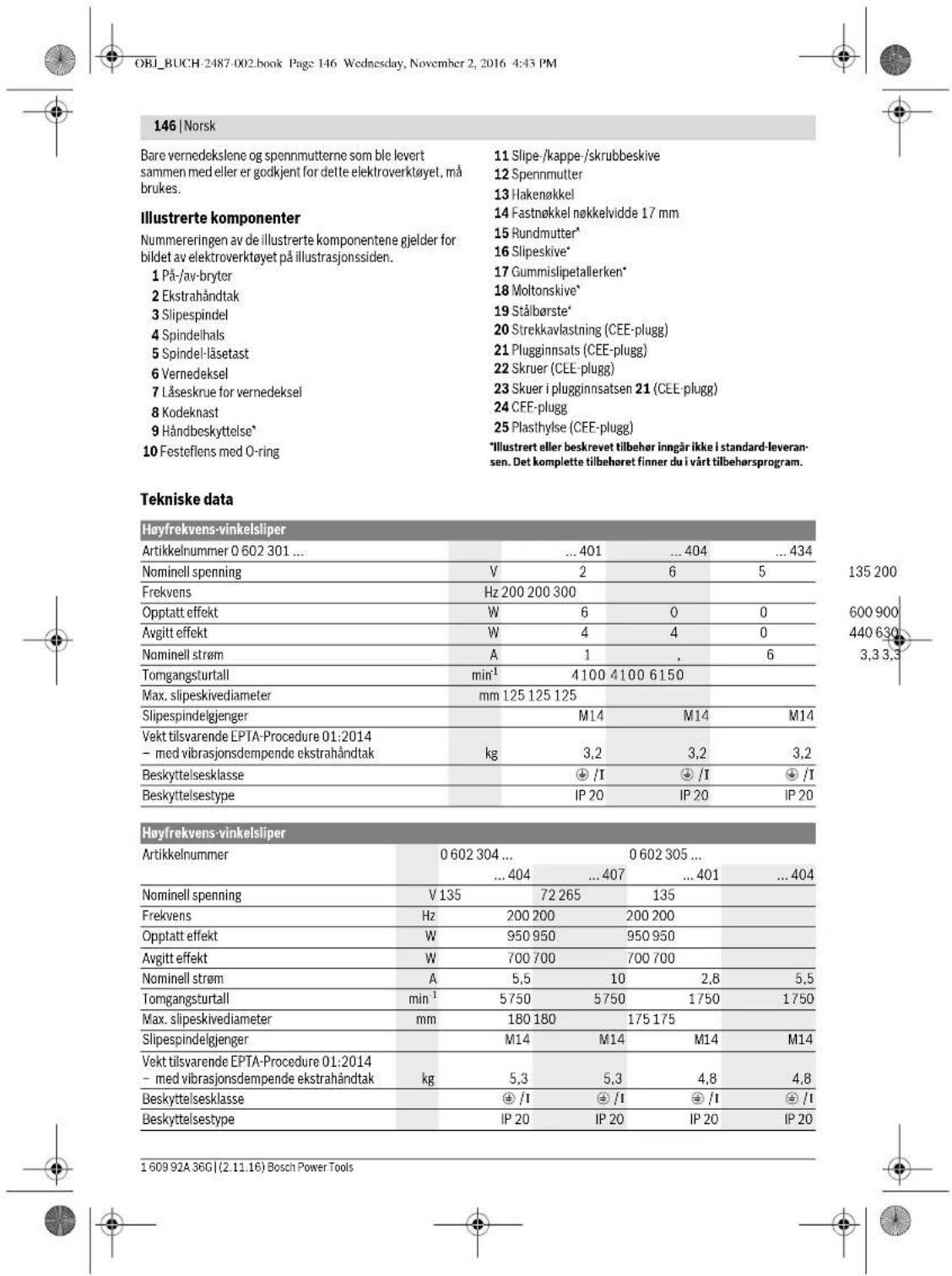
1 Lock-on button for ON/OFF switch 2 On/Off switch 3 Auxiliary handle 4 Depth stop 5 Spindle lock button 6 Dust protection cap 7 Screwdriver bit 8 Keyless chuck 9 Release button
10 Chuck with key 11 Adjusting ring for torque / drilling / impact drilling 12 Gear selector 13 Speed selector 14 Temperature control 15 Trigger 16 Lock-on button 17 Oil level indicator 18 Adjusting ring 19 Impact stop 20 Depth stop (CFE) 21 Depth stop (CFE) 22 Depth stop (CFE) 23 Depth stop (CFE) 24 CFE 25 Depth stop (CFE) The illustrated components are subject to change. For safe operation, refer to the operating instructions.
Technical data
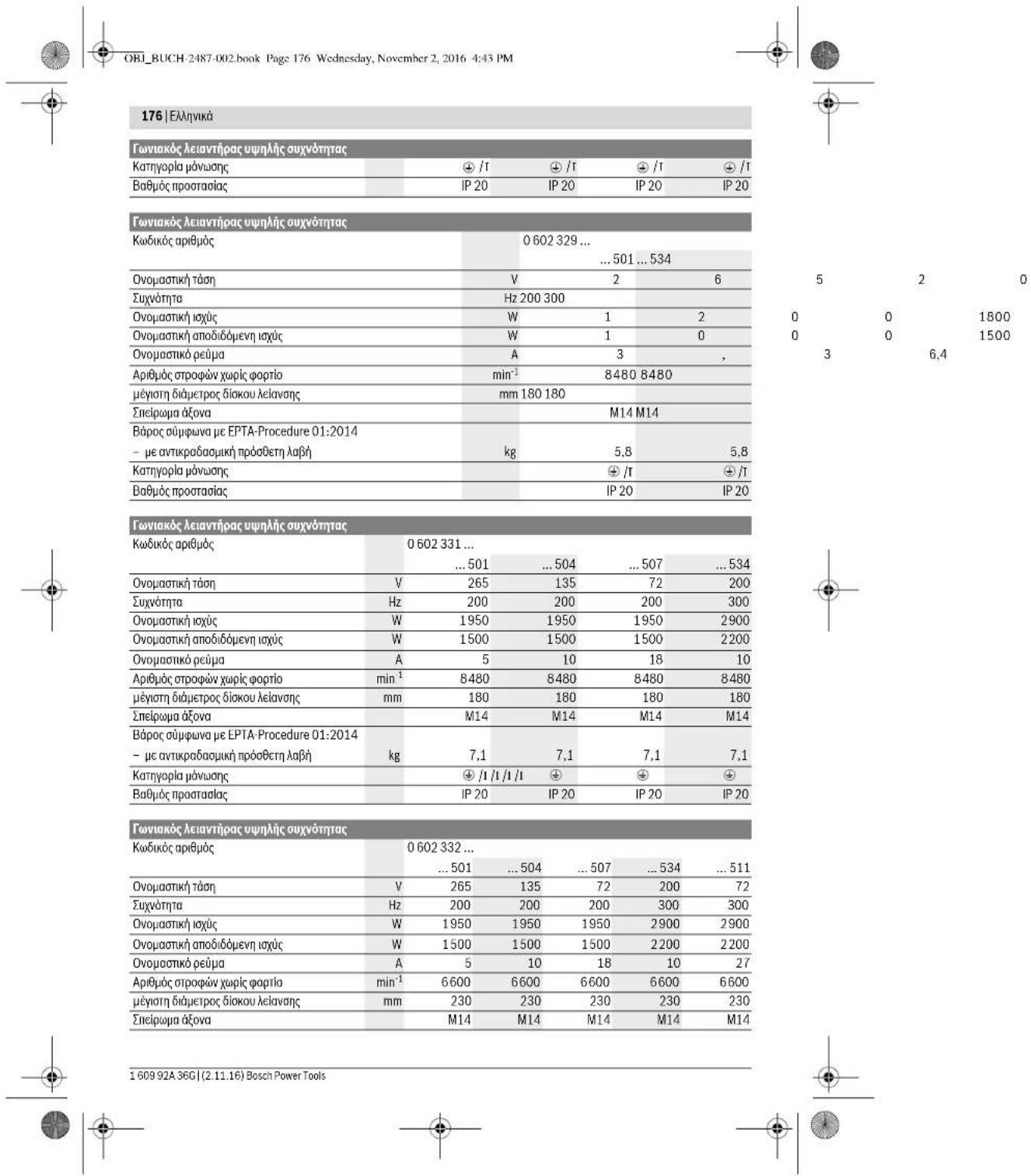
| Favivakóleiavtipac uunlncauvovmtac | ||||
| Kwδkóc apβμóc 0 602 301 ... | ...401 | ...404 | ...434 | |
| Övopaatikj táðn | V | 2 | 6 | 5 |
| Σuþvortna | Hz 200 200 300 | |||
| Övopaatikj iαúç | W | 6 | 0 | 0 |
| Övopaatikj anobidóevn iαúç | W | 4 | 4 | 0 |
| Övopaatikj oëupa | A | 1 | , | 6 |
| Apβμóc σροφών χωρίσ φοθίσ | min¹ | 4100 | 4100 | 6150 |
| μεγοιη διαμετρος διοκου λελαναίς | mm 125 125 125 | |||
| Σnelipoua áóva | M14 | M14 | M14 | |
| Bápoc ouμφωνa μe EPTA-Procedure 01:2014 | ||||
| - μe avικρaδaʊμkni προθεctη λαβή | kg 3,2 3,2 3,2 | |||
| Katzyopia pòvuaŋç | ± /I | ± /I | ± /I | |
1609 92A 36G| (2.11.16) Bosch Power Tools


135200
600900
440630
3,33,3
OBI_BUCH-2487-002.book Page 179 Wednesday, November 2, 2016 4:43 PM

| 0602 334 50. | 0602 334 534 | |
| Ötouyolçük tüpec kpaşağmá yı.(şθροιασa ayuç%päävtrpvkatacuk-θυσεων) kai avaaφλεία K εξακρβωθηκαν σύμανων με to npótnoEN 60745-2-3. | ||
| Aεiavan emφavειω (ξεχόνδριαμα): | ||
| an | m/s2 | 7 |
| K | m/s2 | 3 |
| Σιλβωση: | ||
| an | m/s2 | - |
| K | m/s2 | - |
| Aεiavan μe σρριδόχαρτο: | ||
| an | m/s2 | - |
| K | m/s2 | - |
The power tool is intended for driving and drilling in wood, metal, ceramics and plastic. It is also suitable for screwdriving and thread cutting.
The power tool is intended for grinding and cutting metal and stone materials. The user, who uses the power tool for other applications, with different accessories, is responsible for any resulting damage. This also applies to any damage caused by the tool during the intended use period of the power tool.
The power tool is intended for grinding and cutting metal and stone materials. The tool must be used with the appropriate accessories for the intended operation. However, the actual load on the tool during the operation may be higher than the specified load, depending on the material being processed.
For this reason, before starting work with the tool, the user must determine the appropriate safety measures to protect the operator. This includes checking the power tool and the accessories, ensuring the tool is in good condition, and organizing the work area.
We declare under our sole responsibility that the product described under "Technical Data" is in conformity with the following directives: 2011/65/EU, 2014/30/EU, 2006/42/EC and the following standards: EN 60745-1, EN 60745-2-3, EN 50581.
Technical file (2006/42/EC) at:
Robert Bosch Power Tools GmbH, PT/ECS, 70538 Stuttgart, GERMANY
Henk Becker Helmut Heinzelmann Executive Vice President Head of Product Certification Engineering PT/ECS

Robert Bosch Power Tools GmbH 70538 Stuttgart, GERMANY Stuttgart, 01.01.2017
Symbols
Assembly and operation
Intended use
Remove the battery from the power tool before making any adjustments, changing accessories, or storing the power tool. This safety measure prevents accidental starting of the power tool.
If the power tool is used continuously for a long period, the disc may become damaged or the power tool may overheat. In such cases, the power tool must be sent to a Service center for inspection. For more information, see the section "Service and customer support".
Hold the power tool firmly with both hands, with the auxiliary handle in the correct position.
The technical data apply at a rated voltage of 230 V. The values may vary at other voltages.
Safety instructions for assembly (see figure A) apply to the following types:
-060230440. -06023295.. -0602324434 -06023315.. -060232444. -06023325.. -0602324464 -06023345.. -0602324474 Place the product on the workbench.
Bosch Power Tools 1609 92A 36C (2.11.16)


OBI_BUCH-2487-002.book Page 180 Wednesday, November 2, 2016 4:43 PM
180|Greek
Technical data for the product.
Applies to the following types:
Applies to the following types:
-06023014.. -060232440. -060230540. -0602306434
Placement
- Ensure that the product is placed on a stable surface (see safety instructions, page 179). Place the product on the workbench. Place the saw blade guard 16 on the saw blade. Place the riving knife 15 behind the saw blade. Tighten the saw blade guard with the hex key 13, and tighten the riving knife with the hex key 14 on the saw blade guard. Make sure that the saw blade guard 15 is correctly aligned with the saw blade to ensure proper operation.
Removal
- Loosen the hex key 13 and remove the saw blade guard 15, while holding the hex key 14 on the saw blade guard. - Remove the saw blade guard and the riving knife from the saw blade.
Power supply connection (see figure G)
| Yüksek frekansl taşlama makinesi | |||||
| Ürün kodu | 0 602 334 ... | ||||
| ... 501 | ... 504 | ... 507 | ... 534 | ||
| Anma gerilimi | V 265 135 72 200 | ||||
| Frekans | Hz 200 200 200 300 | ||||
| Girgis güçü | W 2500 2500 2500 3800 | ||||
| Çişkes güçü | W 2200 2200 2200 3100 | ||||
| Anma akimi | A 6 | . | 7 | 13,2 24,7 13,2 | |
| Bostaki devirsaysı | dev/dak 6600 6600 6600 6600 | ||||
| Maks. taşlama disikiçapi | mm 230 230 230 230 | ||||
| Taşlama mili disi | M14 M14 M14 M14 | ||||
| Ağırkı EPTA-Procedure 01:2014'e gère - Titresjm onleyici ek tutamakla | kg 7,8 | 7,8 | 7,8 | 7,8 | |
| Korum sinifi | ®/I | ®/I | ®/I | ®/I | |
| Korum Türü | IP 20 | IP 20 | IP 20 | IP 20 | |
Explanations regarding the power supply
The power tool is part of a high-frequency system and requires three-phase alternating current with the frequency specified on the type plate.
To achieve this frequency, the power tool must be connected to a frequency converter (see "Connection to the power supply", page 196).
| 0 602 306 434 | 0 602 324 40. | 0 602 324 44. | |
| 0 602 324 464 | |||
| 0 602 324 474 | |||
| 0 602 324 434 | |||
| Toplam titreşimiGeorge terleri a, (ucçystemsvektör topla-mentation) ve tolerans K, EN 60745-2-3 uyarıncı. | |||
| Yüseyi taşlama(kazima): | |||
| a1 | m/s2 | - | - |
| K | m/s2 | - | - |
| Polisaj: | |||
| a1 | m/s2 | < 2,5 | 4 |
| K | m/s2 | 1,5 | 1,5 |
| Zimpara kagida ilezimpara: | |||
| a1 | m/s2 | < 2,5 | 4 |
| K | m/s2 | 1,5 | 1,5 |
The specified vibration level represents the main applications of the power tool. However, if the power tool is used for other applications, with different accessories, with different tools, or with insufficient maintenance, the vibration level may differ from the specified value. This may significantly increase the vibration exposure over the total working period.
To accurately estimate the vibration exposure, the periods when the tool is switched off or when it is running but not actually being used should also be taken into account. This can significantly reduce the vibration exposure over the total working period.
Take additional safety measures to protect the operator from the effects of vibration. For example: maintain the power tool and the tools, keep hands warm, and organize the work processes.
Declaration of conformity
C
Henk Becker Helmut Heinzelmann Executive Vice President Head of Product Certification Engineering PT/ECS
Robert Bosch Power Tools GmbH 70538 Stuttgart, GERMANY Stuttgart, 01.01.2017
Assembly




Polish 201
Service
Polish 203
204| Polish
Polish 207
Executive Vice President Engineering
Helmut Heinzelmann
Head of Product Certification PT/ECS
iV. k = m
Robert Bosch Power Tools GmbH 70538 Stuttgart, GERMANY Stuttgart, 01.01.2017
Bosch Power Tools 1609 92A 36C (2.11.16)


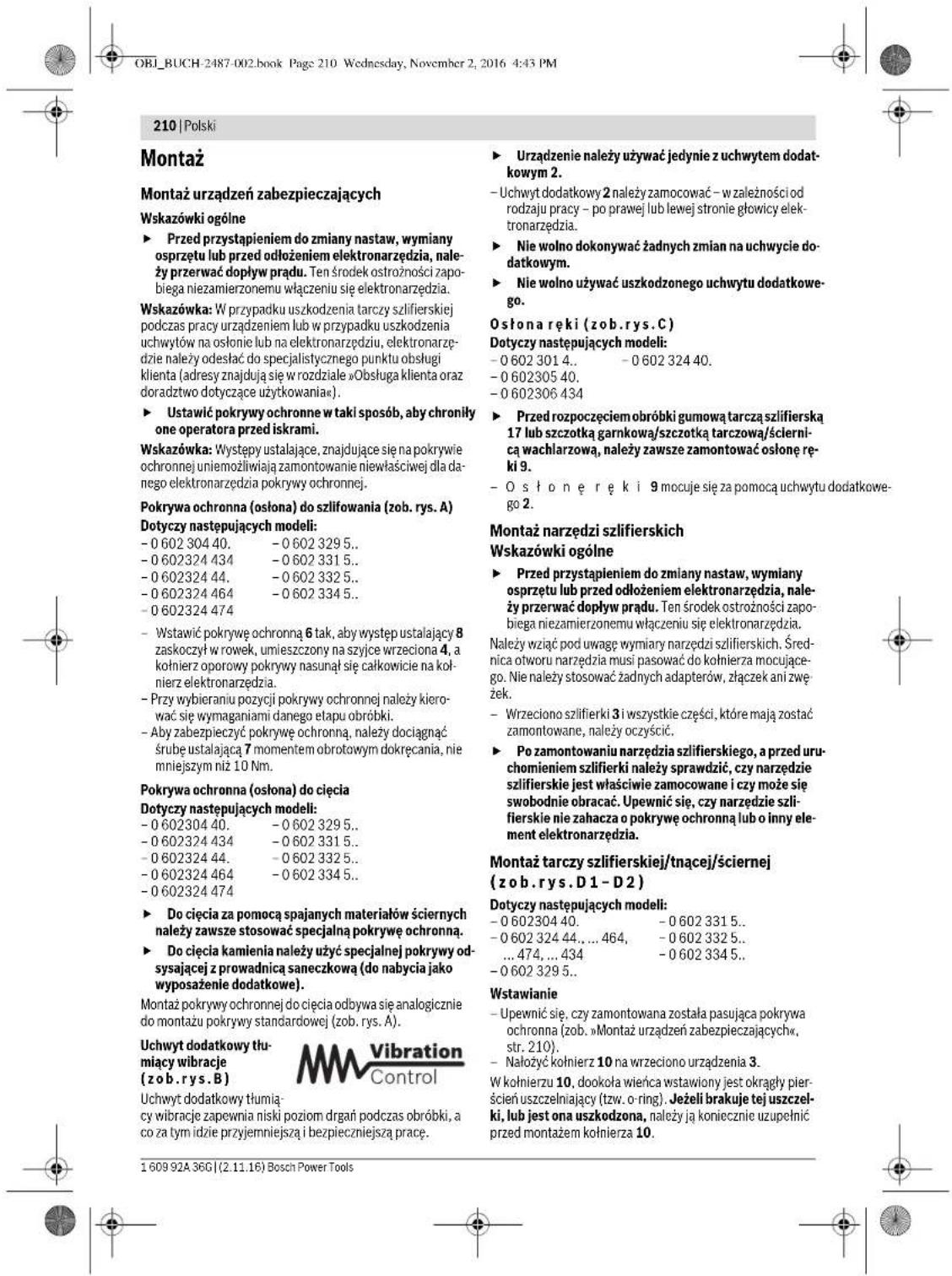
Polski 211
Robert Bosch Sp. zo.o.
OBI_BUCH-2487-002.book Page 219 Wednesday, November 2, 2016 4:43 PM
Cesky|219
trickym proudem, nebezpeci pozaru nebo vaznym zranenl.
OBI_BUCH-2487-002.book Page 223 Wednesday, November 2, 2016 4:43 PM
Cesky|223
OBI_BUCH-2487-002.book Page 224 Wednesday, November 2, 2016 4:43 PM
224|Cesky
Henk Becker Helmut Heinzelmann Executive Vice President Head of Product Certification Engineering PT/ECS
IV. k = m _____
Robert Bosch Power Tools GmbH 70538 Stuttgart, GERMANY Stuttgart, 01.01.2017
Assembly
Cutting metal (see figure K)
For cutting off with bonded abrasives, always use the protective guard for cutting.
When cutting, work with moderate feed, adapted to the material being machined. Do not exert pressure on the cutting disc, do not tilt or oscillate it.
The cutting disc must not be braked by applying lateral pressure. The power tool must always be guided in the opposite direction of rotation. Otherwise, there is a risk of it being uncontrollably pushed out of the cut.
When cutting profiles and square tubes, it is best to start at the smallest cross-section.
Cutting stone
When cutting in stone, ensure adequate dust extraction. Wear a dust protection mask. The power tool may only be used for dry cutting/grinding.



228|Czech
For cutting stone, it is best to use diamond cutting discs. As a safety measure, when cutting with a guide, you may use the protective guard for cutting with a guide rail.
Sanding with sanding sheets on the sanding plate
Bosch Service Center PT
KVapence 1621/16
69201 Mikulov
You can order the repair of your tool at www.bosch-pt.cz
Slovak | 237
Information on power supply
This power tool is part of a high-frequency system and requires three-phase alternating current with a frequency according to the type plate.
To achieve this frequency, the high-frequency power tool must be connected to a frequency converter (see "Connection to the power supply", page 241).
238 | Slovak
| 0 602 329 50. | 0 602 329 534 | 0 602 331 5.. | 0 602 332 5.. | ||
| 0 602 329 511 | |||||
| Vyhodnotné hodnota hladiny hluku A výrobku je typicky Hladina zvukového tlaku | dB(A) | 85 | 87 | 86 | 86 |
| Hladina akustického tlaku | dB(A) | 96 | 98 | 97 | 97 |
| Nepresnost merania K Používaţe chraniţe sluch! | dB | 3 | 3 | 3 | 3 |
| Celkové hodnoty vibráčii a₆ (suma vektorov troch smerov) a nepresnost merania K zistované podlă normy EN 607 45-2-3. Obrusovanie povrchovej plochy (hrubovanie): | |||||
| a₃ | m/s² | 7 | 7 | 7 | 7 |
| K | m/s² | 1.5 | 1.5 | 1.5 | 1.5 |
| Leštenie: | |||||
| a₃ | m/s² | - | - | - | - |
| K | m/s² | - | - | - | - |
| Brúsenie brúsnym listom: | |||||
| a₃ | m/s² | - | - | - | - |
| K | m/s² | - | - | - | - |
Slovak 239
Robert Bosch Power Tools GmbH, PT/ECS, 70538 Stuttgart, GERMANY
Henk Becker
Executive Vice President Engineering
Heimut Heinzelmann
Head of Product Certification PT/ECS

Robert Bosch Power Tools GmbH 70538 Stuttgart, GERMANY Stuttgart, 01.01.2017
Assembly
Assembly of protective devices
240 | Slovak
Slovak 243
For cutting stone, we recommend using a diamond cutting disc. To protect against overheating, use the dust extraction hood for cutting with guide rails.
244 Hungarian
Accessories
For the complete range of quality accessories, you can find information on the websites www.bosch-pt.com and www.boschproductiontools.com or from your authorized dealer.
Service center and usage advice
252 Hungarian



Henk Becker Helmut Heinzelmann Executive Vice President Head of Product Certification Engineering PT/ECS

Robert Bosch Power Tools GmbH 70538 Stuttgart, GERMANY Stuttgart, 01.01.2017
Assembly
258 | Hungarian
260|Russian
Russian
The set of operating documents supplied with the product may include this operating manual as well as an appendix. The information in the appendix is updated accordingly.
Information about the country of origin is indicated in the appendix.
The warranty terms are indicated on the last page of the operating manual.
Contact information regarding the importer is provided on the packaging.
Service life
Service life is 7 years. It is not recommended to use the product after 5 years of storage without prior verification (see date of manufacture on the label).
Overload of electrical equipment, misuse by the operator
- Do not use the product if it is damaged, has cracks, or is deformed - Do not use the product if it has been dropped from a height - Do not use the product if it has been exposed to open flame or electric cable - Do not use the product if it has been used in a humid environment (in splashing water) and do not immerse the product in water - Do not use the product if it has been used with a damaged cord - Do not use the product if it has been used with a damaged plug
Limit state criteria
- Overload of electrical cable
- Damage to the product body
Type and frequency of technical maintenance
It is recommended to clean the instrument after each use.
Storage
Store in a dry place - do not store near heat sources or in direct sunlight - storage in the packaging is not allowed - for detailed storage conditions, see GOST 15150 (clause 1)
Transportation
It is strictly forbidden to drop or subject the packaging to mechanical impact during transportation - when loading/unloading, it is allowed to use lifting equipment operating on the principle of a forklift - for detailed transportation conditions, see GOST 15150 (clause 5)
Shelf life is 7 years. It is not recommended to use after 5 years of storage from the date of manufacture (see the label for the date of manufacture).
List of critical indicators of the harmful effects of the product on humans
- Use only with protective gloves. Do not use if the protective cover is damaged or if the product is directly exposed from the body.
- Use with a fire or electric heater.
- Use in open spaces during rain [in scattered form] and in closed spaces when working around the product. Do not use with an open flame.
- Use when lifting heavy loads with a crane.
-Do not touch the surface of the electric cable -Do not damage the body or the product.
Periodicity of technical maintenance
It is recommended to check the instrument for any damage.
Storage
Store in a dry place - avoid storing in places with high humidity and temperatures above 30°C. Avoid sudden temperature changes - storage in the packaging is not allowed - detailed storage requirements are given in GOST 15150 (Condition 1).
Transportation
Mechanical impacts on the packaging during transportation are strictly prohibited - during loading/unloading, the use of lifting devices that operate on the principle of clamping the packaging is not allowed - detailed transportation requirements are given in GOST 15150 (Condition 5).
Safety instructions
Safety instructions for power tools
WARNING
Read all safety warnings and
all instructions. Failure to follow the warnings and instructions may result in electric shock, fire and/or serious injury.
Save all warnings and instructions for future reference.
The term "power tool" in the warnings refers to your mains-operated (corded) power tool or battery-operated (cordless) power tool.
The term "electrosensitive" used in these instructions refers to an electrosensitive material, namely a pressure-sensitive adhesive tape.
Russian | 261

Work area safety
Keep work area clean and well lit. Cluttered or dark areas invite accidents. Do not operate power tools in explosive atmospheres, such as in the presence of flammable liquids, gases or dust. Power tools create sparks which may ignite the dust or fumes. Keep children and bystanders away while operating a power tool. Distractions can cause you to lose control.
Electrical safety
Power tool plugs must match the outlet. Never modify the plug in any way. Do not use any adapter plugs with earthed (grounded) power tools. Unmodified plugs and matching outlets will reduce risk of electric shock. Avoid body contact with earthed or grounded surfaces, such as pipes, radiators, ranges and refrigerators. There is an increased risk of electric shock if your body is earthed or grounded. Do not expose power tools to rain or wet conditions. Water entering a power tool will increase the risk of electric shock. Do not abuse the cord. Never use the cord for carrying, pulling or unplugging the power tool. Keep cord away from heat, oil, sharp edges or moving parts. Damaged or entangled cords increase the risk of electric shock. When operating a power tool outdoors, use an extension cord suitable for outdoor use. Use of a cord suitable for outdoor use reduces the risk of electric shock. If operating a power tool in a damp location is unavoidable, use a residual current device (RCD) protected supply. Use of an RCD reduces the risk of electric shock.
Personal safety
The power tool must be held by insulated gripping surfaces only. Never hold the tool by the body. Do not use the tool with wet hands. Do not use the tool near flammable liquids or gases. The tool is not insulated against electric shock. Always wear safety glasses. Do not use the tool for purposes other than intended, such as using it as a hammer or pry bar. Keep the tool away from heat, oil, sharp edges, or moving parts. Damaged or tangled cords increase the risk of electric shock. When working outdoors, use an extension cord suitable for outdoor use. Use of a cord suitable for outdoor use reduces the risk of electric shock. If operating the power tool in a damp location is unavoidable, use a residual current device (RCD) protected supply. Use of an RCD reduces the risk of electric shock.
Be careful, follow what you are doing, and think before starting work with the power tool. Do not use the power tool if you are tired or under the influence of drugs, alcohol, or medication.
A moment of inattention while working with the power tool can lead to serious personal injury.
Use personal protective equipment. Always wear eye protection. Protective equipment such as a dust mask, non-skid safety shoes, hard hat, or hearing protection used for appropriate conditions will reduce personal injuries. Prevent unintentional starting. Ensure the switch is in the off-position before connecting to power source and/or battery pack, picking up or carrying the tool. Carrying power tools with your finger on the switch or energizing power tools that have the switch on invites accidents. Remove any adjusting key or wrench before turning the power tool on. A wrench or a key left attached to a rotating part of the power tool may result in personal injury. Do not overreach. Keep proper footing and balance at all times. This enables better control of the power tool in unexpected situations. Dress properly. Do not wear loose clothing or jewelry. Keep your hair, clothing and gloves away from moving parts. Loose clothes, jewelry or long hair can be caught in moving parts. If devices are provided for the connection of dust extraction and collection facilities, ensure these are connected and properly used. Use of dust collection can reduce dust-related hazards.
Power tool use and care
Do not force the power tool. Use the correct power tool for your application. The correct power tool will do the job better and safer at the rate for which it was designed. Do not use the power tool if the switch does not turn it on and off. Any power tool that cannot be controlled with the switch is dangerous and must be repaired. Disconnect the plug from the power source and/or the battery pack from the power tool before making any adjustments, changing accessories, or storing power tools. Such preventive safety measures reduce the risk of starting the power tool accidentally. Store idle power tools out of the reach of children and do not allow persons unfamiliar with the power tool or these instructions to operate the power tool. Power tools are dangerous in the hands of untrained users.

Tuatahenbho yxaknbaite 3a 3ektpoohhctpyemtom. PnoBeprebe6e3ynpnehyo kyHKNUHO xdoBnkyuXHcXaJCTaeN 3ekpOHTCPHTMENA,OTCYTBE NIOPOMK HNNOBPEKDEHN,OTPHaTeNbHO BNIHOUHXa Hx OyHKNUO 3ekTPoOHCTPMeNTa. NOBpeKDeHbIe aactn DOXkHbIb6bTbOTOPeMOTHPBABHDo HcNOHb30BaHNA 3ekTPoOHCTPMeNTa. PINOxo 6cLyNKBHAnEO 3ekTPoOHCTPMeNTOB ABBINETCRPNHNUHooBbIbTOHcNCA HeCHeAChTHbX CUYAEB. DepKHTepeKyuHnHCTpyMeHb3aTOeHHOM HCTOM COCTOHHH.3a0TINHO yXoKHeHHbepeKyuJIe HHCTPYMeTbCOpTbMHpeKyuHmKnPOMKaHmPeKe 3aKNH HBAOTCAHXJNEBcEET PnpeHMeHBe 3eNkTPOHHCTPYMENT, pNHNADNEKHOCTN, paOoHne HnCtpyMeHTb H. II. B COOTBETCBH C HACTORUHMNH CTPyHKUMN.YuTHBaIe NPH TOM paOouHe YcNoBH bblonHReMyoPAOby. IcnONs3oBAHHe 3eNkTPOHHCTpyMeHTOB Dn HENPeYCMOTPEHHbXpaOTo MOKEt IPnBECNT K ONACHBM CHITAYUMN
Service
Repair of the power tool must be carried out by qualified personnel using original spare parts. This ensures the safety of the power tool.
Safety instructions for angle grinders
General safety instructions for sanding and polishing
Valid for the following types:
-06023014.. -0.60230540 -0.602.306.434 -0.60232440
This power tool is intended for sanding and polishing. Pay attention to the safety instructions, instructions, illustrations and data that come with the tool. Failure to follow the instructions can result in electric shock, fire and/or serious injury. This power tool is not suitable for grinding with abrasive discs and cutting off. Use of the power tool for unintended purposes can lead to dangerous situations.
General safety instructions for sanding, cutting with abrasive discs and cutting off
Valid for the following types:
-060230440 -060232444.464.474.434 -06023295. -06023315. -06023325. -06023345.
This power tool is intended for cutting with abrasive discs and cutting off, as well as for
sanding with abrasive paper and abrasive cut-off machines. Pay attention to all safety instructions, instructions, illustrations and data that come with the tool. Failure to follow the instructions can result in electric shock, fire and/or serious injury. This power tool is not suitable for sanding and polishing. Use of the power tool for unintended purposes can lead to dangerous situations.
General warning instructions for sanding, polishing, working with wire brushes, and cutting off. Valid for all types.
He pmmnne nprnndncknoct, KOptbe He npdeycmOpTeHbNrTOBbENTmeCnuehAoNHaHacToaero 3eKnTPOHNCTPMeHnHepeKoMeHdyOTcHMM. Oua Tohko B03MOOKHOCTb KpennnHn PnHdAeNKeOCTH H BaWem 3eKnTPOHNCTPMeHnHe rpeapntpyet eue Hx HaeKeHHo pnnmehHe. DonyctHMOE YHCNO O60pOToB pa6oOero HNCTpyMeHTA △OnKHO 6bIbHe MeHRee Yka3aHHOrHO Ha3eKTOHNCTpyMeTaeMaKCHMaNbHOYcHnO a60pOToB.OChACTKa, BpaauoAouBaC 6bONbue, YemOxyCTMoC KOpOCTbHO, MOKeT pa3oPbTaBnH pAnTeTebBa BnpOCTpAHCTBE. HApKyHHb dHaMeTp nToUmHa paOero HnCTpyMeTHaONKbHcoOTBcTcOBaBt paoMepam Bauero 3neKtponpHTPYMeTHa. HenpaBNHcOp cpa3MepeHHBe paOo-HEHcTpyMeTHb ME OMyr bIb b DOCTAOHO CTeHNH 3aIIuENHb H MOrY BbITN H-NO KONTPOJIA. CmeHHe paOoHn HNCTPymEt b Cp36b0n DOnKbH ToOHIO IOXdoTH K Pe36be WlnHOBAnHOrO OHNHeJe B.CMeHHbIX paOoHxH NCTPymEt XaMHTpyEmbX cNoMOUbO pHaIaHa, dAmETpOT bOpEeTHn HCHPTymEt DOJKeHN IOXdoTH KdAmEtpY OTBePcTHn BO fONaue. CmeHHbIX paOoHn HNCTPymEt b, KOTOpBHe TEoHIO KpeTATc HA 3NeKtPOHcHPTymEt, BPAaTOCTa HepABOmEOH, OOeB CInbHO BnBpHpyOt HMOyT BByIMTHN-NOD KOHTpO He pmpnneHne TOBpeKdHbpeaOohn HcTpyMeH 1. POpBepRte KaxkbIpaNepE hcnnon3oBaHempe aOpOhe HhctpyMeHT, kAK To, mHfOboanbIe kpyrH, h KaCkbl I TpeuHHb, mHfObaanbIe TaPeKNHk HtpeuHHb, pCKN Hm Cnbl Bn H3oc, npBOOnuHbe 1eTKHa HsEaKpennEnHe Mnn NonoMaHBe npBOoNIOK. Iocne npopBepKn HzakpennEnHpaOoero HcTpyMeTa Bu Hce Hxoadaunec B6nHNuHa dONK. H3aHb NooJeHn 3a npdeAnm NIOckOCTBpaUeHpaOoero HcTpyMeHT, nocCe YerB KBNQHTe 3NeKTPOHcTpyMeHT Ha odHy MmHY Ha MaKcMbnLoe HcN0 O6OpToB. POpBepKdHbpeaOohn HcTpyMeHT pa3pbBaHOcB BoNlWuHcTbe cyuaeb 3a 3to BpeM KOHTPON. PnHmHnIe cpeCTbMa HmHmBdAaBbHOaauHTb. B 3aBHCmHOCTb BYoINbNHEMO paBObTo bPnMHeHRe 3aauHTbMyTOK dnnLHua, 3aauHTHOe cpeCTBO DnI
160992A36G|(2.11.16) Bosch Power Tools


Pycckn 263
rna3nnaaHTbIeOyKn.HackoNkoymecTHe, npmHMeHHe npnoTHBneBepncHpatop,cped3a3aHbTbOPAOHNbXa,aaHTNbHepePnATNNnCNEaHbNbIpaTyK,KOTOpBe 3auaHcAot BACo at o6pAsnHBxNactH NactHmtePhanA. Ta3aDnONkHbYbTb3aunHcHbNTeJTeaONX B0GJYE NOCToPOHNHXCACTHIN,KOTOpBE MOTy Opa2oBbIbTaCB npR bNtIOHEnHEHNPA3-1nHbXpabOT.PoTHOBnBneBepcnHapToHn3aauHITMAckaOPAOHOBdKaHHNDOJNkH3aZepNKbAtbOpa2yOuOyocn pnp aBoTeBnO. PpOIOKNbHnEOB3OeDeCBtEChBOHOUOMeKETPnBECTN KOTpeClyNa
Keep all body parts away from the rotating workpiece. Always wear personal protective equipment. Loose clothing or long hair can be caught in the rotating tool and cause serious injury. Hold the power tool only by the insulated gripping surfaces, because the cutting tool may contact hidden wiring or its own cord. Contact with a live wire will make exposed metal parts of the power tool live and shock the operator. Always use the auxiliary handle, if provided, for maximum control over the tool. If you lose control of the tool, the rotating accessory may cut into your hand or arm. Never release the power tool until the accessory has come to a complete stop. The rotating accessory may grab the surface and cause you to lose control of the tool. Switch off the power tool before setting it down. An accidental start could cause the rotating accessory to catch and cause injury. Regularly clean the ventilation slots of the power tool. The fan will draw dust into the housing; excessive metal dust can cause electrical hazards. Do not use the power tool near flammable materials. Sparks from the tool can ignite these materials. Do not use accessories that require liquid coolants. Using water or other liquid coolants can result in electric shock.
Pay attention to the corresponding warning symbols.
A kickback is a sudden reaction to a pinched or snagged rotating accessory, such as a grinding wheel, cutting wheel, or wire brush.
Kickback causes the power tool to be thrown in the direction opposite to the rotation of the accessory at the point of binding. This can cause loss of control and serious injury.
If the accessory is pinched or snagged, the accessory may break or cause the tool to be thrown. The direction of the kickback is dependent on the direction of rotation of the accessory at the point of binding. The accessory may also break.
Kickback is the result of tool misuse and/or incorrect operating procedures or conditions. It can be avoided by taking proper precautions as given below.
Keep the electric tool away from your body and keep your hands and feet in a position where you can resist the forces of a kickback. If possible, always use an auxiliary handle to best resist the kickback forces or reaction torque when starting the tool. The operator can counteract the kickback forces with appropriate precautions. Your hand must never be near the rotating working tool. In the event of a kickback, the working tool may jump onto your hand. - Keep the area clear, where the electric tool will be moved in the event of a kickback. Guide the electric tool against the direction of the rotation of the disc at the point of jamming. Be especially careful when working at corners, sharp edges, etc. Prevent the working tool from bouncing off the workpiece and jamming. The rotating working tool tends to jam at corners, sharp edges, or when it bounces off. This causes a loss of control and the tool may be thrown. Do not use blunt or damaged discs. Such working tools tend to jam and cause a loss of control over the electric tool.
The following safety instructions apply to grinding and cutting with discs.
Use only the electric tool with the specified discs and the protective guards provided for them. Discs not provided for this electric tool cannot be adequately shielded and are dangerous. The guard must be mounted such that the exposed surface of the disc does not protrude beyond the edge of the protective guard. Incorrectly mounted discs that protrude beyond the edge of the protective guard are not sufficiently covered.



264|Russian
The protective guard must be mounted on the electric tool such that the side facing the user is protected from the disc fragments, accidental contact with the abrasive disc, and sparks that could ignite clothing. Abrasive discs may only be used for the recommended applications. For example: when grinding with the side surface of a cutting disc. Cutting discs are intended for cutting material and edges. The action of side forces on these abrasive discs can break them. Always use the undamaged clamping flanges with the correct dimensions for the cutting disc. The correct flange supports the cutting disc and reduces the risk of breakage. Flanges for cutting discs may differ from those for grinding discs. Do not use worn cutting discs on larger electric tools. Cutting discs for larger electric tools are not suitable for the high speeds of smaller electric tools, and they may break.
Additional specific safety instructions for cutting with cutting discs
Adjusting the guard for the cutting wheel is done by loosening the screws. Do not perform this at too deep a depth. Re-adjusting the cutting wheel increases the tendency to jam and the possibility of the tool being torn from your hands. Avoid the zone of rotation of the cutting wheel. If the cutting wheel gets stuck in the workpiece, turn off the tool and hold it until the wheel stops. Never try to pull the rotating cutting wheel out of the cut, as this may cause kickback. Install and remove the guard. Do not switch the power tool on again while the abrasive tool is in the workpiece. Give the cutting wheel time to reach full speed before you carefully continue cutting. Otherwise, the wheel may jam, jump out of the workpiece, and cause serious injury. Large workpieces must be securely supported to reduce the risk of kickback and injury. Workpieces may sag under their own weight. The workpiece must be supported on both sides, both near the cut and at the edge.
Be especially careful when making cuts in walls or other areas where you cannot see what is behind. The protruding cutting wheel may cut into gas or water pipes, electrical wiring, or other objects and cause serious injury.
Special safety instructions for sanding
Do not use sanding discs larger than necessary; follow the manufacturer's instructions for the correct disc size. A sanding disc that extends beyond the sanding pad can cause tearing and jamming, and may lead to kickback or serious injury.
Special safety instructions for polishing
Ensure that the polishing bonnet is free of loose threads or fasteners. Trim any loose threads. Loose, rotating threads can catch your fingers or snag on the workpiece.
Special safety instructions for working with wire brushes
Be aware that wire brushes lose bristles even during normal use. Do not overload the brush by applying excessive pressure. Flying wire bristles can easily penetrate thin clothing and/or skin. If the use of a guard is recommended, avoid contact of the wire brush with the guard. Wire bristles may increase in diameter under the influence of normal forces and centrifugal forces.
Additional safety instructions

For the corresponding metal parts for finding the location of pipes or wiring, contact the local municipal enterprise. Contact with electrical wiring can lead to electric shock. Improper use can lead to explosion, and improper use of the wiring can cause material damage and may cause electric shock. Remove the lock of the switch and set it to the off position, if you are not using the electric tool, before connecting to the power supply or pulling out the plug. This prevents uncontrolled restart.


Russian | 265
Do not touch the cutting disc while it is still hot. The disc heats up during operation. Always hold the power tool with both hands during operation, after first ensuring a stable position. With both hands you work more safely with the power tool. Secure the workpiece. A workpiece clamped in a clamping device or in a vice is held more securely than by hand. Connect the power tool to the power supply, according to the regulations. The socket, cable, and extension cord must have a functional protective conductor.
Safety instructions for high-frequency power tools
The safety instructions and operating instructions for the frequency converter must be strictly followed! More detailed information can be found in the operating instructions of the frequency converter. For operation in environments requiring protective measures, the frequency converter must be protected by a residual current device. The protective measures, e.g., for working with wet materials, working with materials that produce conductive dust, or in the vicinity of electrical equipment, must be ensured by the residual current device. The connection of the device to the power supply network may only be carried out by a specialist, and only then can its safe operation be guaranteed. The output voltage and frequency of the frequency converter must match the data on the rating plate of the high-frequency power tool. The use of the power tool is only permitted with the intended frequency converter. The plug of the device must be designed for the current required by the tool (see technical data). The installation of the plug and the power supply connection must only be carried out by a specialist who is trained in handling high-frequency power tools. The use of original accessories and spare parts is recommended to ensure the safe operation of the power tool. To avoid any risk, the plug and the connection cable must be replaced by a new one.
Product description and services

Read all safety instructions and instructions for use. Failure to follow the safety instructions and instructions for use may result in electric shock, fire, and/or serious injury.
Attention! Open the operating instructions for foreign electrical tools and keep them until you have mastered the operation.
Intended use
The following types are affected:
-06023014. -060230540 -0602306434 -060232440.
The electrical tool is intended for grinding and polishing metal and painted surfaces using abrasive tools.
The following types are affected: -060230440 -060232444,..464,..474,..434 -06023295 -06023315.. -06023325.. -06023345..
The electrical tool is intended for cutting, grinding, and polishing metal and stone materials without using water.
To hold the tool with both hands, it is necessary to use the special protective hood and side handle.
For cutting, it is necessary to use the protective hood.
The following types are affected
The user may only use the accessories included in the delivery or those approved for use with this electrical tool. Protective hoods and clamping flanges must be used.
Illustrated components
The numbering of the illustrated components refers to the illustrations on the graphics pages.
1 On/off switch 2 Auxiliary handle 3 Grinding spindle 4 Grinding disc 5 Locking button 6 Protective hood 7 Clamping screw for protective hood 8 Guide plate 9 Protective guard 10 Support flange with clamping nut

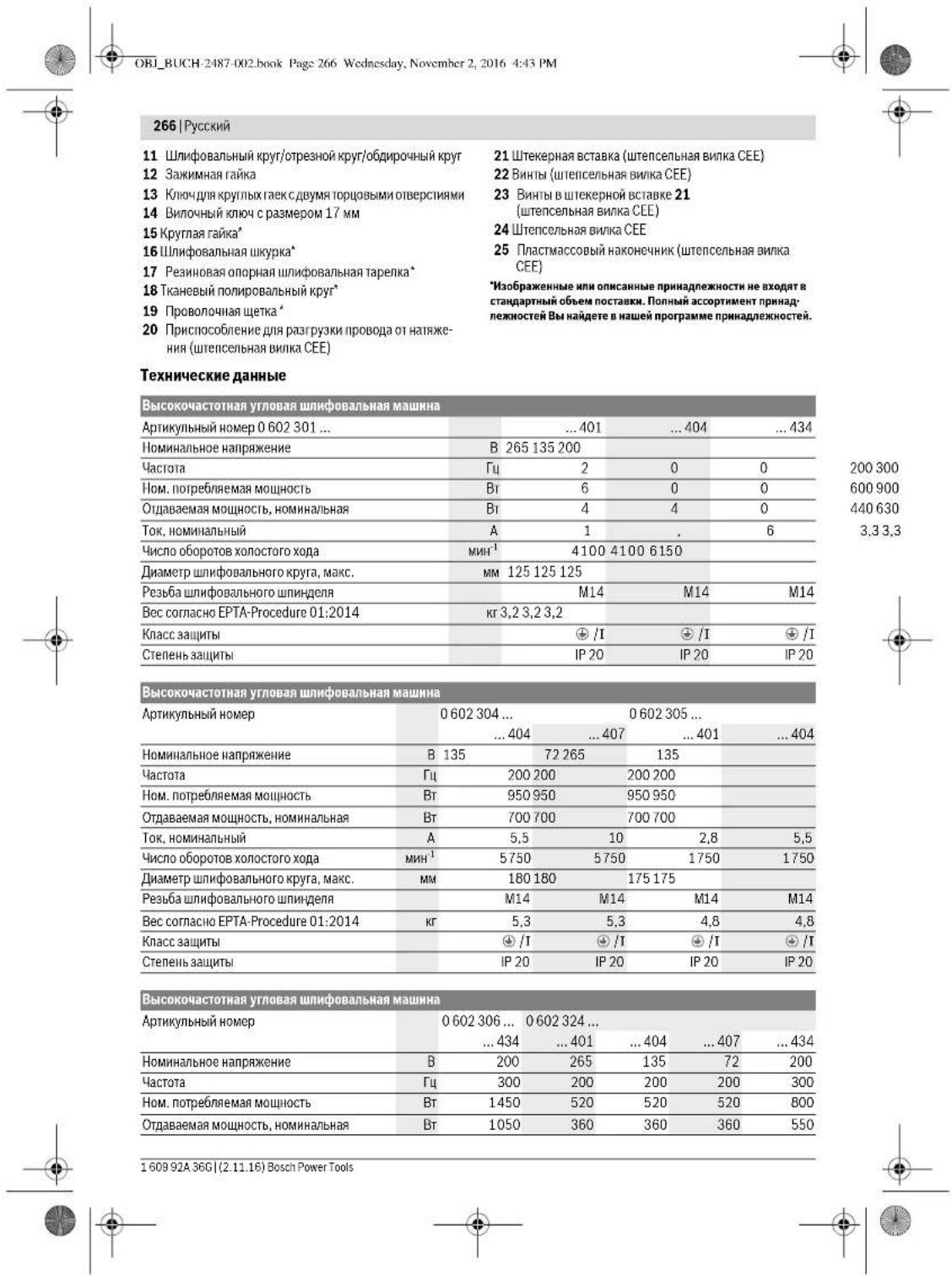
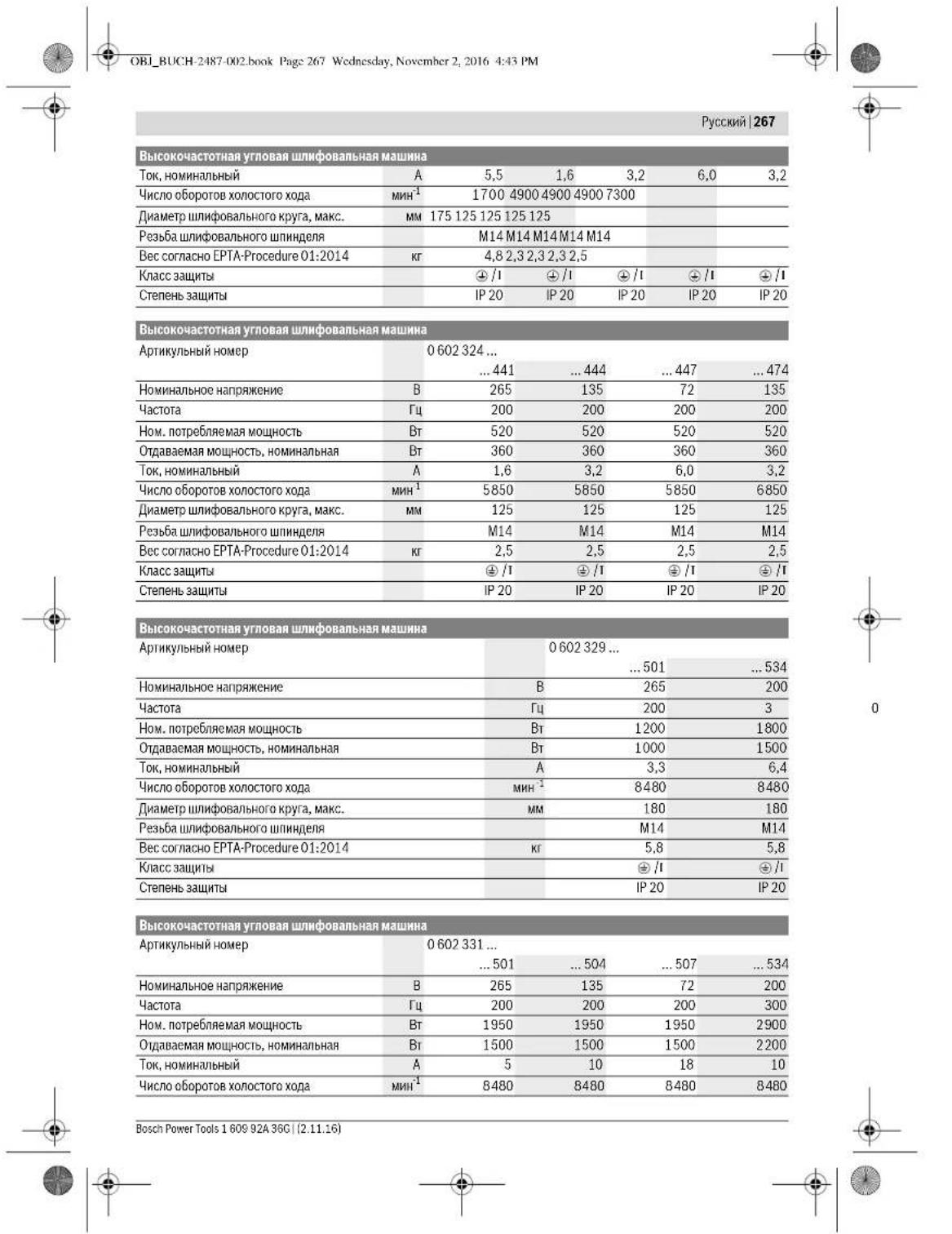
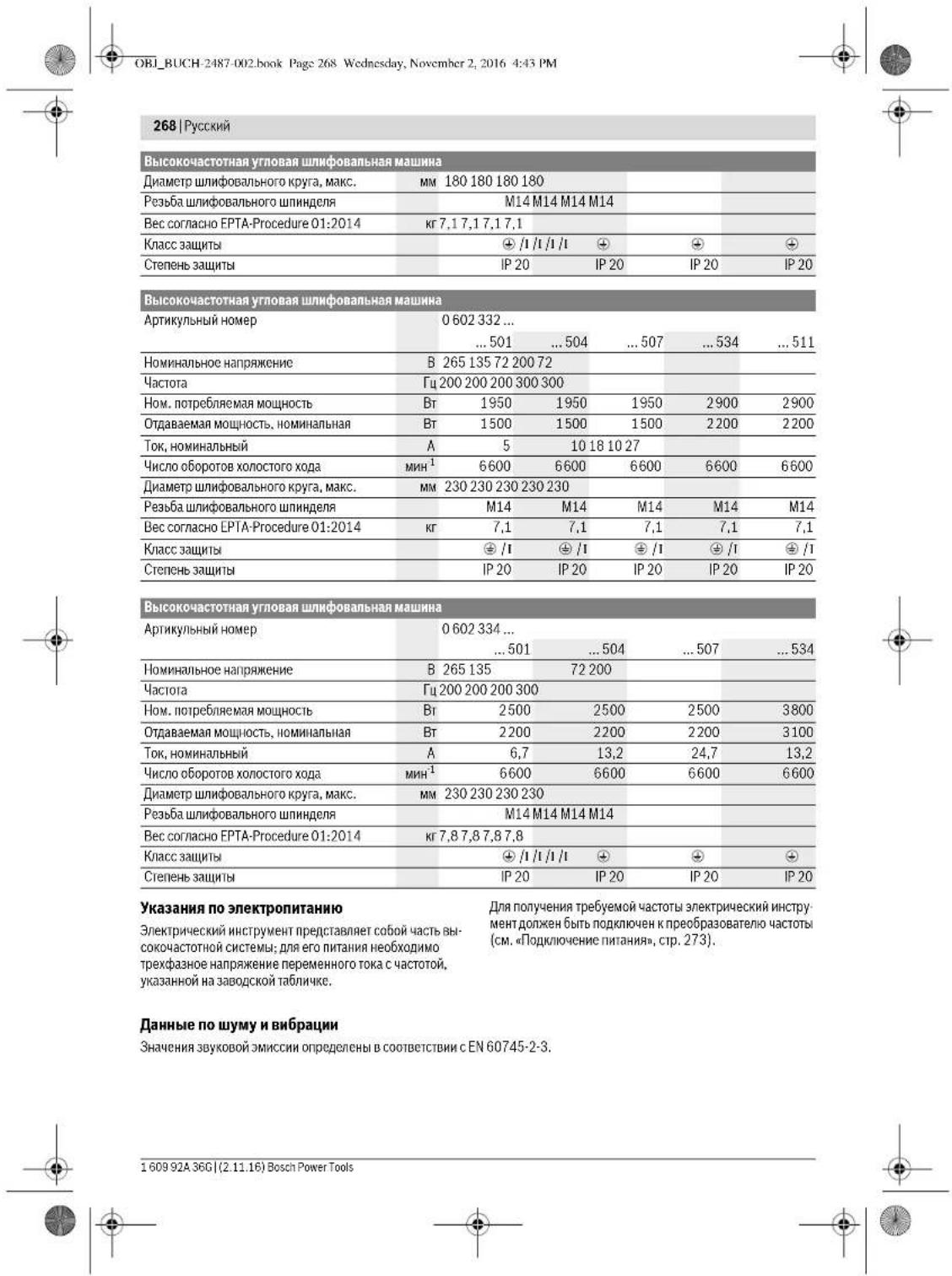



| 0602 30140. | 0602 301434. | 0602 304 40. | 0602 305 40. | |
| A-BaBSeHHeHb yPoBeH bIyMa HnCTpy-MeHTa COCTAIBRET TNIINYHOуPoBEH b 3BvKOBoI OJaBHeHb IyPoBeH b 3BvKOBoI MoUHocTb HeNDCTOBepHOcTb K ПгIMHeHЯte cpeIcTaBa 3aunHtBuoprAnOB cnlya! | ||||
| СуМарная ВИБрацья a₁ (ВEVКТОРHA CUM-Ма ТрЕХ HaNPaBIIeHи) И NOTPeSHOcTb K onpeJelenH b COOTBETCTBm cEN 60745-2-3. | 72 | 82 | 79 | 76 |
| 83 | 93 | 90 | 87 | |
| 3 | 3 | 3 | 3 | |
| ШИФОВАНО NOBEPHXOCTN (оБДИРКА): | ||||
| a₁ | M/c² | - | 5,3 | 5 |
| K | M/c² | - | 2 | 2 |
| ПОЛПОВАНО: | ||||
| a₁ | M/c² | 3 | 3 | <2,5 |
| K | M/c² | 1,5 | 1,5 | 1,5 |
| ШИФОВАНО ДИСКOM с abpa3HBHои shkypко: | ||||
| a₁ | M/c² | 3 | 3 | <2,5 |
| K | M/c² | 1,5 | 1,5 | 1,5 |
| 0 602 306 434 | 0 602 324 40. | 0 602 324 44. | |
| 0 602 324 464 | |||
| 0 602 324 474 | |||
| 0 602 324 434 | |||
| A-BBSEHENHII yPOBEH IIyMa INHCTPymEnHa co- | |||
| cTABLIET TINNIO | |||
| yPOBEH b 3bYKOBO r DaBENHII | ДБ(A) | 82 | 77 |
| yPOBEH 3bYKOBoM MoUHocTH | ДБ(A) | 93 | 88 |
| NeHOCTOBepHOCTb K | ДБ | 3 | 3 |
| ПИМЕнITE cpeIcTBa 3aUHTb OprAnOB cnyxa! | |||
| CvIMAPHAA BnBpaUH a_n (BeKTopH YA CUMMa trpex | |||
| HapRabENHII H nOpeLHocTh K onpeHeneHb B | |||
| coOTBcTBN c EN 60745-2-3. | |||
| UHΦOBAHNE NOBEXHOCTH (O6dIPkA): | |||
| a1 | M/c2 | - | - |
| K | M/c2 | - | - |
| ПОЛПОВАнHE: | |||
| a1 | M/c2 | < 2,5 | 4 |
| K | M/c2 | 1,5 | 1,5 |
| UHΦOBAHNE dNcKOM c abpa3HBNo IshKypKoH: | |||
| a1 | M/c2 | < 2,5 | 4 |
| K | M/c2 | 1,5 | 1,5 |

Henk Becker Executive Vice President Engineering
Helmut Heinzelmann Head of Product Certification PT/ECS
y 1x 1 = 2 y 2x 2 = - 4
Robert Bosch Power Tools GmbH 705.38 Stuttgart, GERMANY Stuttgart, 01.01.2017
Russian | 271
Assembly
Installation of protective devices
General instructions
Before any work on the power tool, remove the battery from the power tool. This measure prevents unintentional starting of the power tool.
Note: Use of the auxiliary handle during drilling or when checking the device is only permitted with the protective guard/guard for the auxiliary handle. For this, contact the after-sales service; see addresses in the service section.
The protective guard must be installed so that it protects the operator from sparks.
Note: The clamping levers on the protective guards allow for mounting and adjustment on the power tool without the use of tools.
The protective guard for sanding (see figure A) is suitable for the following tools:
-060230440. -06023295.. -0602324434 -06023315. -060232444. -06023325.. -0602324464 -06023345.. -0602324474
Adjust the protective cover so that it is positioned correctly relative to the electric tool's flange. - Adjust the protective cover's position relative to the working tool. - Fix the protective cover with the screw using the tightening torque.
Protective cover for cutting
Spare parts 06230440. -0623295. 06232444 -0602324434 -06023315.. 060233144 -06023325 -0623244. -0602335. 033331436 26887815 -0602324464 -06023345.. -0602324474
When cutting with bonded abrasives, always use the protective cover for cutting. Always use cutting wheels with the protective cover for cutting with guide rails (accessory).
The protective covers for cutting are mounted similarly to the standard protective cover. See Fig. A.
Supplementary manual

Supplementary manual
The rotary tool provides more comfortable operation.
It is used with the tool only by hand.
Additional handle 2 on the right or left. Do not change anything in the additional handle. Do not use a damaged additional handle.
Protective cap for the tool (see fig. C)
Additional types: -06023014. -060232440 -060230540 -0602306434 Angle grinder with cutting and grinding wheel, with flap disc, with protective cap. Secure the protective cap with the additional handle.
Installation of grinding tools General instructions
Before changing the tool, replacing accessories, or adjusting the tool, switch off the tool and disconnect it from the power supply. Take precautions to prevent accidental starting of the tool. Consider the size of the grinding tools. The spindle thread must match the spindle length. Do not use reducing adapters. Clean the spindle and all parts to be mounted. After mounting the grinding tool, check that it is mounted correctly and rotates freely. Rotate the grinding tool by hand to check for free rotation and that it does not touch the protective cap or other parts.


272 | Russian
Installation of interchangeable, cutting, and double-sided circles (see Fig. D1-D2)
DnCnCnCnCnCnCnCnCnCnCnCnCnCnCnCnCnCnCnCnCnCnCnCnCnCnCnCnCnCnCnCnCnCnCnCnCnCnCnCnCnCnCnCnCnCnCnCnCnCnCn
-060230440. -06023315.. -060232444..464. -06023325 474...434 -06023345...
-06023295.
Installation:
- Make sure that the protective cover is installed correctly (see INSTALLING THE PROTECTIVE COVER, p. 271).
- Install the support plate 10 on the spindle.
On the support plate 10, around the spindle, place the protective part (round ring). If the round ring is missing or damaged, it must be replaced with a new one before installing the support plate 10.
- Install the interchangeable, cutting, or double-sided tool 11 on the spindle in accordance with the correct direction of rotation of the spindle. Then tighten the nut 12 onto the thread, making sure that the middle part is not clamped and the nut looks upward. Tighten the clamping nut using the wrench with two holes 13, while holding the tool with the open-end wrench 14.
REMOVAL
Hold the tool firmly by its surface, and with the open-end wrench 14, loosen the clamping nut 12 on the spindle using the wrench with two holes 13. At the same time, hold the tool by its surface with the open-end wrench 14. Then remove the tool, as well as the support plate and the spindle.
Electric tool with quick-release chuck 5
The following types are available:
-060230440. -0602324434 -060232444.
For electric tools with quick-release chuck 5, there is no need to hold the tool with an open-end wrench (see Fig. E1-E2).
Press the spindle lock button and hold it down. In the event of an electric shock, the tool may be damaged. - Before using the spindle lock, press the spindle lock button 3 and hold this button down. - Install the lower guard (see Installing the spindle, cutting, or sanding discs, p.272).
-Release the spindle lock button to remove the disc.
INSTALLING THE RUBBER SUPPORT PAD (see Fig. F)
Applicable models:
-06023014. -060232440 -060230540.
-0602306434
Installation:
Make sure that the spindle lock is installed with the auxiliary handle (see Installing the auxiliary handle, p.271). - Install the rubber support pad 17 onto the spindle. Additionally, install the auxiliary handle 61 on the rubber support pad. - Install the round nut 15 onto the spindle thread. Tighten the round nut with the two-pin wrench 13, while holding the spindle lock with the auxiliary wrench 13.
Then make sure that the round nut 15 is fully seated in the recess of the rubber support pad so that it does not interfere during operation and is securely held.
REMOVAL
-Hold the spindle lock, and with the auxiliary wrench 14, turn the round nut 15 counterclockwise on the spindle. At the same time, hold the spindle lock with the auxiliary wrench 14a. Remove the rubber support pad from the spindle.
INSTALLING THE SANDING DISC (see Fig. G)
Applicable models:
-06023014. -060232440 -060230540. -0602306434
Installation:
Tightening the protective cap of the round grinding spindle (M14).
- Make sure that the protective cap is installed correctly (see Installation of protective devices, p. 271). Screw the protective cap onto the round grinding spindle by hand until it is firmly seated against the surface of the round grinding spindle, while holding the round grinding spindle in place with the wrench.
1609 92A 36G| (2.11.16) Bosch Power Tools


Russian 273
REMOVAL
Unscrew the protective cap from the round grinding spindle, while holding the round grinding spindle in place with the wrench. Then remove the protective cap from the round grinding spindle.
Mounting the long brushes (see figure H)
Valid for the following types:
- 0 602 304 40. - 0 602 331 5..
- 0 602 324 44 464 - 0 602 332 5
474A434 - 0 602 334 5
- 0 602 329 5.
Installation:
Make sure that the long brush is correctly seated against the thread of the round grinding spindle (M14).
Make sure that the protective cap is installed correctly (see Installation of protective devices, p. 271). Screw the long brush 19 (with the wrench) onto the round grinding spindle 3 by hand until it is firmly seated against the surface of the round grinding spindle, while holding the round grinding spindle in place with the wrench 14.
Open the tool by pulling the handle up over the surface by the release button, while holding the release button 14 over the surface by the handle of the tool.
Dust extraction and chips
Dust from materials such as lead-containing paints, some types of wood, minerals and metals can be harmful to health. Contact with or inhalation of dust can cause allergic reactions or respiratory diseases in the operator or bystanders.
Certain dusts, especially when combined with wood preservatives (chromate, wood preservatives), are carcinogenic. Material with such substances should only be processed by specialists.
- If possible, use a suitable material dust extraction. Ventilate the work area well.
- It is recommended to use a respirator with filter class P2. Follow the regulations applicable in your country for the materials being processed.
Avoid contact with the skin. It may cause skin irritation.
Mains connection
For operation on an electric power tool, a frequency converter is required that supplies three-phase AC voltage with a frequency corresponding to the rated value on the tool's nameplate.
The frequency converters available have different rated voltages, frequencies, and power ratings. The correct frequency converter depends on the power tool's electrical specifications. Consult a specialist when selecting a frequency converter. The power tool is equipped with a special plug for connection to the frequency converter. The frequency converter must be connected to a suitable power supply with a protective earth conductor (green-yellow).
In addition, the power tool must be connected to a residual current device (RCD) with a rated residual current of 30 mA. For this purpose, the power tool's plug must be connected to a suitable RCD. The RCD must be installed in the supply line before the power tool. (See 'Technical Data'). The RCD must be checked before each use.
The safety instructions and operating manual are supplied with the tool and must be followed. They contain instructions for the safe operation of the power tool.
Mounting the saw blades (see Fig. 1-12)
- Open both screws 22 and remove the insert 21 from the housing of the saw blade guard 24.
- The power tool must be connected to a power supply with a voltage corresponding to the data on the nameplate of the power tool. The housing of the power tool must be held firmly during operation.
- To connect the power cord, insert the plug into the socket. Tighten the screws of the cable clamp. Open the four screws 23 on the plug insert 21 and insert the brown wire into the contact socket L1.
Insert the blue wire into the contact socket L2.
Insert the green-yellow wire into the contact socket L3, and insert the green-yellow wire into the protective contact socket. Then tighten the four screws 23 on the plug insert 21 to secure the wires. Then tighten the cable clamp screw 20 around the cable. Insert the plug insert 21 into the housing of the power tool and tighten the two screws 22. Finally, check the functionality of the protective grounding.

274 | Russian
Insert the plug of the power tool into the socket. Now you can use the power tool. Before using the power tool, read the entire instruction manual. Finally, check the direction of rotation. The direction of rotation of the tool must match the arrow on the power tool. If the tool rotates in the wrong direction during the first use (see Switching On, p. 274), immediately switch off the power tool and disconnect it from the power supply.
Then open the two screws 22 and remove the plug insert 21 from the housing of the power tool.
- Open and remove the end of the brown wire from the contact socket. Insert the end of the blue wire into the contact socket L1, and the end of the brown wire into the contact socket L3.
- Then tighten the two screws 23 on the plug insert 21 to secure the wires. Insert the plug insert 21 into the housing of the power tool and tighten the two screws 22. Finally, check the functionality of the protective grounding. Connect the power tool to the power supply.
Working with the tool
Switching on the power tool
The voltage and frequency of the power supply must match the data on the nameplate of the power tool. Check the power tool for damage before use. The power tool must be in good condition and rotate freely. Switch on the power tool only when it is not under load. Do not use damaged or worn tools, as they may break and cause injury. After switching off, if the power tool stops unexpectedly during operation, check that the switch is in the off position, which prevents the possibility of unintentional restart. Before restarting the power tool, check the power supply (see Power Supply, p. 273).
Before using the electric tool, read the instruction manual carefully.
Important instructions for the electric tool must be followed when you are working with it.
Switching on and off the frequency converter: It is necessary to start the frequency converter before switching on the electric tool. Follow the instructions for the frequency converter during this.
Switching on and off the electric tool with a protective switch (see Fig. J1)
Effective for types: 0602302-4.4
- To switch on the electric tool, first press the switch. - Lock the switch in the on position by pressing the lock button. To switch off the electric tool, release the switch. With the switch locked, press it slightly and then release.
Switching on and off the electric tool with a protective switch (see Fig. J2)
Effective for types:
-06023014. -06023295.. -060230440. -06023315.. -060230540. -06023325.. -0602306434 -06023345..
- To switch on the electric tool, press the switch. - Lock the switch in the on position by pressing the lock button. - To switch off the electric tool, release the switch. If the switch is locked, press it slightly and then release.
Intended use
Before adjusting the tool, changing accessories, or storing the tool, disconnect it from the power supply. This precaution prevents accidental starting of the tool. Be careful when working in walls with electrical lines. Follow the safety instructions. Secure the workpiece if it is not held securely. Do not overload the electric tool. The working tool can be subjected to high loads, which can cause it to stop.

Russian 275
Sanding with the sanding disc
With the sanding disc (accessory), you can also sand convex surfaces (contour sanding).
Diamond cutting discs create significantly less sparks, produce less noise and lower temperatures than conventional cutting discs.
Metal cutting (see fig. K)
When cutting with bonded abrasives, always use the protective guard for cutting.
The cutting disc must be suitable for the material being cut. Do not apply pressure to the cutting disc, do not tilt or jerk it.
Unclamped cutting discs can break.
Always guide the power tool in the direction of rotation. In case of uncontrolled movement, the tool may kick back.
Before cutting pipes or similar, start cutting at the lowest possible cross-section.
Cutting stone
When cutting stone, always wear a dust mask. Use a dust extraction system. This power tool is intended only for dry cutting and dry grinding.
For cutting stone, always use the protective guard. Protect against sparks by using a spark deflector. Work only with a dust mask and additionally use a dust extraction system. The dust mask must be approved for stone dust. Bosch offers suitable dust masks.
Switch on the power tool and place it with the front part of the guard on the workpiece. Guide the power tool with moderate pressure, suitable for the material being cut.
When working with very hard materials, for example, concrete with a high content of rebar, the diamond cutting disc may overheat. A rotating diamond cutting disc with a glowing ring indicates overheating. In this case, stop the cutting process and let the diamond cutting disc run at no load at maximum speed for a short time. A significant decrease in performance and a glowing ring indicate that the diamond cutting disc is dull. You can resharpen the diamond cutting disc with short cuts in an abrasive material (for example, in a silicate brick).
Instructions for use
For cutting in masonry walls, the standard DIN 1053 part 1 or the corresponding national regulations apply. These regulations must be observed. For questions, consult the responsible specialist, architect, or engineer.
Reverse grinding
Do not use the grinding wheel for side grinding!
By setting the wheel angle from 30° to 40° to the workpiece, you will get the best results during normal grinding. Move the power tool with the grinding wheel back and forth. During this, the workpiece does not heat up significantly, does not change its color, and does not leave burrs.
Grinding with abrasive flap discs
The choice of the appropriate flap disc depends on the material being processed. The manufacturer offers flap discs of various qualities, suitable for the corresponding material. It is recommended to use the appropriate flap disc.
Surface grinding with sanding discs
For surface grinding, use a sanding disc on a backing pad. During grinding, the sanding disc is distributed over the entire surface being processed. Sanding is performed in several passes with the use of the disc. For each pass, use a fresh sanding disc with a different grit size. It is necessary to use a new sanding disc for each pass. Carefully guide the sanding disc over the surface being processed, and before each subsequent pass, check the condition of the sanding disc.
Maintenance and service
Maintenance and cleaning
Before any work on the power tool, remove the battery from the tool. This prevents unintentional starting of the power tool. For high-quality work, keep the power tool and ventilation slots clean. In extreme conditions, always use a dust extraction system if possible. Check the ventilation slots and the protective device (PRCD) regularly. If the power tool is used for a long time, the protective conductor may be damaged. This can reduce the protective effect of the power tool.
276|Russian
Regularly measure the no-load speed of the power tool. If the measured value deviates from the no-load speed by more than 10% (see Technical Data), the power tool must be sent for inspection to an authorized service center. If the no-load speed is too high, the power tool may be damaged, and if it is too low, the working efficiency decreases. Use only original spare parts and accessories for the power tool. To avoid any risks, do not repair the power tool yourself; it must be replaced with a new one. Have the power tool serviced and repaired only by qualified personnel. This ensures the safety of the power tool.
Clean the sockets, plugs, and the mains plug of the power tool with a dry cloth that does not have lint. Remove dust and particles.
After the first 150 operating hours, change the gearbox lubricant with a mild solvent. Follow the manufacturer's instructions for the lubricant. After that, lubricate the gearbox with special gearbox grease. After the first change, repeat this procedure every 300 operating hours.
CepBnCnA MaHcPcknФ HPMBo Bosch BbIIOHReI TaKyo p- 60by BctroN aHaeKeHXO.
EtnpIpeByeTOMNEHbIHyP,ObpaAHTeCtHaΦpMy Bosch HIN B ATOPTN3OBAHYIO cepBNCHIO MaCTEPCKYIO INA nENPKTOCTPMyROB Bosch.
3aboTnBOxpaHHeNobpaaItebc npHaNDneKHOCTM
PpHnHaIeXHoCTN
KomNeKekChyI npOrpamMy kaucctBeHHbI npHnAaNkHeocTeB Bui Hndere B mHrePheNa cTpaHue www.bosch-pt.com N www.boschproductiontools.com n y BaWero cneuaannnnnoPobaoHHoro dInepha.
CepBc H KOncynbTHpoBaHne Ha npEpmet HcNoIb3OBAHH npOdyKuHN
CepBncham MaCTepckan OTBETHT Ha Bce Baun Bonpocbi no pEmOTy HOBcYKNBaHIO BaWero npOdyKHa n 03aHaCTM. MoIaKaHne YpeTeXn HnFOpMaHIO No 3aHAcTREM BbHaidere TAKOE NO apDCy:
www.bosch-pt.com
KonneKTHCOTpyHKnOB Bosch, nppeOCTaBnHouN KOn cyIbTaunHa nApiedMeH cHIOBbAONHH pOyDkynn, C ydoBbctBmE OTBeHT Ha BCE BaanBONpocb OTOHCOTeBHOra HAuePnyDkynn H e PnHAnHEKHOct.
PtoKyAHTa,Bo cEXE 3APOCax HsKa3ax 3aHCTeR 683aTeBHO yk3bBAIte 10-3aHnH ToBapHbH OHeMep IIO 3aBcOck TOBANHKe INENIN.
Длретнога: Pocchna, Бенись, Ka3axctah, Ykpanha
IpaantHnHoe 06cJyKbHaHe H pemOH 3neKtpo- nHCTpyMeHTA, C cO6NIOeHN M TpeOBaHH H Hopm HTOTOBETE IPOH3BOgTc HA TeppHOpHH BCex CTpAH ToJIbKO BΦpMHENbHx Nn ABTOPH3OBAHbX cepBCHbX ceHTpax KPoBept Boa.
PPEYIPEXEHEI NcnoB3oBAAHNE KOHTpaKaTHNO npOyuknIOAChO B 3KcNlnyATAUHN,MOKET pNBECTK YuepOBy IaBauero 3doOpobra. HIOToBaeHNE HpCnpocTpanHeHNE KOHPTaPAKTHNO pOdykunN ppeCNEyETc No 3AOKHY B aMHHNCTPAIHOM H yTOONBHOM NOPRKe.
Pocchra
YinHMOHcUeHHA H30TOBHTeEN oRapha3uaH: OOO ePoeRbOo Bauytnckoe wocce,24 141400.r.XHMK,MockOBCKaO6n. Pocn Ten.: 8800 100 8007 (3BOHOK no Pocnn becnnaatbhi) E-Mail: info.powertools@ru.bosch.com Pnhya naktyaibnyu Hmfpomauu o paacnojooHn cepBCHbux ceHTPOB u pmeMbIX nyKTOB Bbo moKete noynuytB: - Ha oDHHaHbHom caIre www.bosch-pt.ru IIOIIEOHOHcnpaOHo-CepBnCHOnCJyKbB1 Bosch88001008007(3BOHO NOPOCCNBeCNMaTH)
Belarus
Robert Bosch
Service Center for Power Tools
ul. Timiryazeva, 65A-020
220035, Minsk
Belarus
Tel.: +375 (17) 254 78 71
Tel.: +375 (17) 254 79 15/16
Fax: +375 (17) 254 78 75
E-Mail: pt-service.by@bosch.com
Official website: www.bosch-pt.by
Kazakhstan
TOO Robert Bosch
Service Center for Power Tools
Almaty
Kazakhstan
050050
pr. Raivimbek 169/1
corner of Kommunalnaya street
Tel.: +7(727)2323707
Fax: +7(727)2330787
E-Mail: info.powertools.ka@bosch.com
Official websites: www.bosch.kz; www.bosch-pt.kz
Utilization
Disposal of waste electrical and electronic equipment must be carried out separately from household waste.
Do not dispose of power tools in household waste!






278|Ukrainian
Safety instructions for power tools. If you cannot avoid using the power tool in a damp location, use a residual current device (RCD) protected supply. Use of an RCD reduces the risk of electric shock.
Safety
Keep your work area clean and well lit. Cluttered or dark areas invite accidents. Do not operate power tools in explosive atmospheres, such as in the presence of flammable liquids, gases or dust. Power tools create sparks which may ignite the dust or fumes. Keep children and bystanders away while operating a power tool. Distractions can cause you to lose control. Power tool plugs must match the outlet. Never modify the plug in any way. Do not use any adapter plugs with earthed (grounded) power tools. Unmodified plugs and matching outlets will reduce risk of electric shock. Avoid body contact with earthed or grounded surfaces, such as pipes, radiators, ranges and refrigerators. There is an increased risk of electric shock if your body is earthed or grounded. Do not expose power tools to rain or wet conditions. Water entering a power tool will increase the risk of electric shock. Do not abuse the cord. Never use the cord for carrying, pulling or unplugging the power tool. Keep cord away from heat, oil, sharp edges or moving parts. Damaged or entangled cords increase the risk of electric shock. When operating a power tool outdoors, use an extension cord suitable for outdoor use. Use of a cord suitable for outdoor use reduces the risk of electric shock. If operating a power tool in a damp location is unavoidable, use a residual current device (RCD) protected supply. Use of an RCD reduces the risk of electric shock. Stay alert, watch what you are doing and use common sense when operating a power tool. Do not use a power tool while you are tired or under the influence of drugs, alcohol or medication. A moment of inattention while operating power tools may result in serious personal injury. Use personal protective equipment. Always wear eye protection. Protective equipment such as dust mask, non-skid safety shoes, hard hat, or hearing protection used for appropriate conditions will reduce personal injuries. Prevent unintentional starting. Ensure the switch is in the off-position before connecting to power source, picking up or carrying the tool. Carrying power tools with your finger on the switch or energising power tools that have the switch on invites accidents. Remove any adjusting key or wrench before turning the power tool on. A wrench or a key left attached to a rotating part of the power tool may result in personal injury. Do not overreach. Keep proper footing and balance at all times. This enables better control of the power tool in unexpected situations. Dress properly. Do not wear loose clothing or jewellery. Keep your hair, clothing and gloves away from moving parts. Loose clothes, jewellery or long hair can be caught in moving parts. If devices are provided for the connection of dust extraction and collection facilities, ensure these are connected and properly used. Use of dust collection can reduce dust-related hazards.
Do not overload the tool. Use only the tool intended for the job. Using the wrong tool increases the risk of injury and poor results. Do not work with a tool that is not suitable for the task.
Do not use power tools with a damaged cord. A power tool that cannot be turned on or off is dangerous and must be repaired. Before adjusting or replacing accessories, unplug the tool and remove the battery pack. These safety precautions reduce the risk of accidental starting. Keep power tools out of the reach of children. Do not allow people who are unfamiliar with the tool or these instructions to operate it. Improper use by untrained users can lead to injury. Maintain power tools. Check for misalignment or binding of moving parts, breakage of parts, and any other condition that may affect the operation of the power tool. If damaged, have the tool repaired before use. Many accidents are caused by poorly maintained tools. Keep cutting tools sharp and clean. Properly maintained cutting tools with sharp edges are less likely to bind and are easier to control. Use the power tool, accessories, and bits, etc., in accordance with these instructions, taking into account the working conditions and the work to be performed. Use of the power tool for operations different from those intended could result in a hazardous situation.
Service
Have your power tool serviced by a qualified repair person using only identical replacement parts. This will ensure that the safety of the power tool is maintained.
Safety instructions for circular saws
General safety instructions for power tools
The following applies:
280|Ukrainian
Regulate the ventilation of the power tool. The motor fan draws dust into the housing, and heavy accumulation of metal dust can cause electrical hazards. Do not use the power tool in a damp environment. Such materials can cause sparks. Do not use tools that require liquid cooling. Using liquid cooling may result in electric shock.
Power and residual risks
Before use, check the tool for damage or cracks. If the tool is damaged, for example, a grinding wheel is cracked, do not use it. As a result of electric tool operation, hold it with both hands, with the tool rotating away from you. If the grinding wheel gets stuck in the workpiece, the wheel may break and fly out. To avoid this, hold the tool so that the wheel rotates away from you. The wheel can also be thrown back. To avoid this, use the protective devices described in the manual. Keep your hands and body in a position where you can control the tool. Use a side handle (if available) to be able to control the tool during operation. Control and reactive moments can be managed with the use of protective devices. Never hold your hands near the rotating tool. When using the tool, it may jump and hit your hands. Protect your body with your body, as in case of a kickback, the tool may jump. The tool may jump in the direction opposite to the rotation of the wheel at the point of operation. Use the protective guard correctly, as it is designed to protect against flying fragments of the workpiece and accidental contact with the tool. The guard may be damaged if the tool is dropped. Do not use the tool without the guard or if the guard is damaged.
Use only flawless grinding discs and grinding wheels. Such an instrument is designed for grinding and cutting with an electric tool. Be careful when grinding and cutting with a grinding wheel, which is intended for an electric tool, and protect the guard that is provided for the corresponding grinding wheel. A grinding wheel that is not intended for the tool cannot be sufficiently protected, because they are unsafe. The protruding grinding wheel must be mounted in such a way that its working surface protrudes beyond the edge of the protective guard. An incorrectly mounted grinding wheel that protrudes beyond the protective guard is not sufficiently protected. The protective guard must be installed on the electric tool and adjusted so that the maximum exposed part of the grinding wheel is as small as possible for the operator. The protective guard protects the operator from fragments of the grinding wheel and from accidental contact with the grinding wheel. Grinding wheels must be used only for the recommended applications. Never grind with the side of the wheel unless it is specifically designed for that purpose. Different grinding wheels are made of different materials. Excessive pressure can break the grinding wheel. Always use a grinding wheel that is undamaged and of the correct size and shape. The grinding wheel must fit the spindle of the tool, and the safety of the grinding wheel must not be reduced by excessive force. Grinding wheels can be damaged by falling or by other grinding wheels. Do not use a damaged grinding wheel that is larger than the electric tool's specifications. Grinding wheels for larger electric tools are not suitable for smaller electric tools and can be dangerous.
Be careful when cutting grinding wheels.
Avoid jamming the cutting wheel or applying excessive pressure. Do not cut too deeply. Excessive pressure on the cutting wheel increases the load on the wheel and its susceptibility to tilting or jamming, and thus increases the risk of breakage or damage to the grinding wheel. If the cutting wheel jams or you interrupt the cut, the wheel may jump back or kick back. If the cutting wheel becomes jammed in the workpiece, it may break or cause the tool to kick back.


Ukrainian 281
Always unplug the tool before making any adjustments, changing accessories, or storing it. Such preventive safety measures reduce the risk of starting the tool accidentally. Store idle power tools out of the reach of children and do not allow persons unfamiliar with the power tool or these instructions to operate the power tool. Power tools are dangerous in the hands of untrained users. Maintain power tools and accessories. Check for misalignment or binding of moving parts, breakage of parts and any other condition that may affect the power tool's operation. If damaged, have the power tool repaired before use. Many accidents are caused by poorly maintained power tools. Keep cutting tools sharp and clean. Properly maintained cutting tools with sharp cutting edges are less likely to bind and are easier to control. Use the power tool, accessories and tool bits etc., in accordance with these instructions, taking into account the working conditions and the work to be performed. Use of the power tool for operations different from those intended could result in a hazardous situation.
Safety warnings for grinding operations
Do not use the side of the abrasive wheel for grinding, unless the wheel is specifically designed for that purpose. The abrasive wheel, which extends beyond the guard, may catch on the workpiece and cause kickback, as well as damage to the wheel.
Safety warnings for wire brushing operations. Do not allow the wire brush to come into contact with the workpiece at high speed, especially at the edges. Keep the brush at a safe distance from the workpiece. The wire bristles may break off and become projectiles, or they may get caught in the workpiece.
The device is intended for household use only. Do not use it for industrial purposes. Do not touch the device with wet hands. The device, if dropped, can be very easily damaged. We recommend that you contact a qualified specialist for repairs. The device must be used only for its intended purpose. Improper use may result in damage to the device.
Additional safety instructions
Wear protective gloves!
To avoid the risk of electric shock, do not use the device near water or wet surfaces. Do not touch the device with wet hands. Do not use the device with a damaged cord or plug. If the cord or plug is damaged, have it replaced by a qualified person. Do not pull the cord to disconnect the plug from the outlet. Instead, grasp the plug and pull it out. Keep the cord away from heated surfaces. Do not operate the device with wet hands. Keep the device away from children. Do not leave the device unattended while it is in operation. Unplug the device when not in use and before cleaning. Do not immerse the device in water or any other liquid. If the device falls into water, unplug it immediately and do not reach into the water. Do not use the device near flammable materials. Use only the accessories recommended by the manufacturer. Do not use the device outdoors. Do not use the device in a bathroom or near a swimming pool. Do not use the device with a voltage converter or transformer. Do not use the device if it has been dropped or damaged. Do not attempt to repair the device yourself. Take it to a qualified service center. Do not use the device for any purpose other than its intended use. The device is intended for household use only. Do not use it for industrial purposes. Do not touch the device with wet hands. The device, if dropped, can be very easily damaged. We recommend that you contact a qualified specialist for repairs. The device must be used only for its intended purpose. Improper use may result in damage to the device.
Safety instructions for high-frequency tools
To obtain the correct safety instructions for high-frequency tools, they must be converted accordingly! The standard safety instructions can be obtained by converting the safety instructions for high-frequency tools. The selection is made according to the type of tool, the frequency converter, and the type of protection. The main protection is against electric shock, from direct contact with live parts or from contact with conductive materials. The protection against electric shock must be ensured by the use of protective devices. The safety instructions for high-frequency tools must be observed to prevent injury from electric shock. The safety instructions for high-frequency tools must be followed when installing the frequency converter. Only qualified electricians may install the frequency converter. Only in this way can the safe operation of the tool be guaranteed. The frequency converter must be connected to the power supply according to the connection diagram. The high-frequency tool can be operated only with the specified voltage and frequency. The tool must be protected against overload and short circuit. The safety instructions for high-frequency tools must be observed.

OBI_BUCH-2487-002.book Page 282 Wednesday, November 2, 2016 4:43 PM
282 | Ukrainian
The plug and the socket must be connected only by a qualified electrician. Use only original spare parts! Before each use, check the electric tool, the plug, and the cable for damage. Do not use the tool if it is damaged; have it repaired by a qualified person using original spare parts.
OBI_BUCH-2487-002.book Page 285 Wednesday, November 2, 2016 4:43 PM
Ukrainian 285
| Ви这样做 не那么容易做到 Бага вдacons做不到 EPTA-Procedure 01:2014 | Кr 7,17,17,17,17,1 | ||||
| Клас зхису | ©/I | ©/I | ©/I | ©/I | ©/I |
| Стейнь зхису | IP 20 | IP 20 | IP 20 | IP 20 | IP 20 |
High-frequency circular saw
| Aptнкуншим Homep | 0 602 334 ... | ||||
| ... 501 | ... 504 | ... 507 | ... 534 | ||
| Hom. Hanpyra | B 265 135 72 200 | ||||
| Частora | ГИ 200 200 200 300 | ||||
| Hom. сponжва на поожи绩ь | Вт 2500 2500 2500 3800 | ||||
| Hominaльна виндна поожи绩ь | Вт 2200 2200 2200 3100 | ||||
| Hominaльный скум | A 6,7 13,2 24,7 13,2 | ||||
| Кльские оберп в hoхлостому xody | xви.1 | 6600 6600 6600 6600 | |||
| Мас. дiamетршифально круga | MM 230 230 230 230 | ||||
| Plaabшадуалыногошшидени | M14 M14 M14 M14 | ||||
| Bara bідnobідно do EPTA Procedure 01:2014 | к7,8,7,8,7,8 | ||||
| Клас зхису | ©/I | ©/I | ©/I | ©/I | |
| Стурины зхису | IP 20 | IP 20 | IP 20 | IP 20 |
Safety instructions for operation
The electric tool is designed for high-frequency operation and requires a special frequency converter. The frequency converter must be connected to the power supply according to the connection diagram.
The high-frequency tool must be operated only with the specified voltage and frequency (see "Technical Data", page 290).
Information on noise and vibration
The noise emission values were determined in accordance with EN 60745-2-3.
OBI_BUCH-2487-002.book Page 287 Wednesday, November 2, 2016 4:43 PM
Ukrainian 287
Teixhihuaoyemtuaia (2006/42/EC): Robert Bosch Power Tools GmbH, PT/EC5, 70538 Stuttgart, GERMANY
Henk Becker Helmut Heinzelmann Executive Vice President Head of Product Certification Engineering PT/ECS

Robert Bosch Power Tools GmbH 70538 Stuttgart, GERMANY Stuttgart, 01.01.2017
MOUNTING
MOUNTING Protective devices
For general instructions
Repair of power tools, mounting of accessories, and replacement of parts must be carried out only by qualified personnel using original spare parts. This ensures the safety of the power tool.
Instruction: If the power tool is dropped or if the protective devices are damaged, the power tool must be immediately checked by a qualified person or sent to an authorized service center for repair.
The protective guard must be installed so that sparks cannot reach the operator.
Instruction: With the help of the clamping lever on the protective guard, the power tool can be mounted on the corresponding machine.
Protective guard for sanding (see figure A)
It is distributed in the following types:
- -060232444. -06023325. -0602324464 -06023345.. -0602324474 Place the protective guard with the clamping lever into the groove on the spindle collar so that the collar of the protective guard is on the tool. Install the clamping lever and tighten it to secure the protective guard.
Захисний кожух для розрізання
Розповсюджується на наступні типи:
-060230440. -06023295.. -0602324434 -06023315.. -060232444. -06023325.. -0602324464 -06023345.. -0602324474
Bosch Power Tools 1609 92A 36C (2.11.16)




OBI_BUCH-2487-002.book Page 288 Wednesday, November 2, 2016 4:43 PM
288|Українська
При розрізанні за допомогою зв'язаного абразиву необхідно використовувати спеціальний захисний кожух для розрізання. Продовжуйте користуватися вимикачем для розрізання з напрямними (приладдя
Захисний кожух для шліфування використовується зі стандартним захисним кожухом (DIN, MA).
Це інферна додаткова рукоятка (Див. B)
ДИМРФІРДАТКОВАРУКОЯТКА
Ukrainian 289
Installation of the belt sanding device (see Installation of belt sanding devices, page 288). The belt sanding device is installed on the belt sanding spindle.
Installation of the brake belt sanding device (see Fig.)
The following are required:
-06023014. -060232440 -060230540.
-0602306434
Installation
The belt sanding device is installed when the clamping lever is in the installation position (see Installation of clamping devices, page 207). Install the belt sanding device 17 on the belt sanding spindle. - Place the belt sanding device 16 on the brake belt sanding device. Install the belt sanding device 15 on the belt sanding spindle. - Tighten the belt sanding device with the socket wrench 13, holding the belt sanding device with the open-end wrench 14.
Make sure that the belt sanding device 15 is fully seated on the brake belt sanding device, so that it does not slip during sanding and the sanding belt does not come off.
Removal
Remove the belt sanding device from the surface with the open-end wrench 14. Unscrew the belt sanding device 15 with the socket wrench 13 and the open-end wrench 14, holding the belt sanding device with the open-end wrench 14. - Remove the belt sanding device from the brake belt sanding device.
Installation of the belt sanding device (see Fig. G)
The following are required:
MOHTAX
Screw the guide ring onto the threaded part of the guide ring until it fits snugly against the guide ring (M14).
Insert the guide ring and tighten it by hand. Then, using a wrench, tighten the guide ring 18 onto the threaded part of the guide ring until it fits snugly against the guide ring; then tighten the locknut 14 against the guide ring.
DEMONTAGE
Unscrew the guide ring 18, then remove the locknut 14 by turning it counterclockwise. Then remove the guide ring 18 and the locknut 14 from the guide ring 3.
MAINTENANCE/REPAIR
MATERIALS: paints, varnishes, coatings, solvents, wood preservatives, mineral oils, metal, etc. Their use may cause irritation or allergic reactions in you or others. Always wear protective gloves and safety goggles. Materials are hazardous waste; dispose of them properly. Consult a specialist if necessary. - Use materials in a well-ventilated area. - Follow the manufacturer's instructions.
290|Ukrainian
Attached to the operating instructions
The power tool must only be operated with a three-phase power supply as specified in the table.
Check the power tool for damage, and for any loose or missing parts. If the power tool is damaged, it must be repaired by a qualified specialist. For repairs, contact a Bosch service center.
The power tool is supplied with a special cable without a plug. To use the power tool, a plug must be fitted to the special cable by a qualified electrician.
The power tool must be connected to a residual current device (RCD) with a rated residual current of 30 mA or less. The RCD must comply with the relevant standards. The RCD must be tested before each use. Also note the safety instructions in the operating instructions for the RCD.
Mounting the frequency converter (DIN EN 1-1-12)
Insert the frequency converter 22 into the housing 24 and install the insert 3 into the housing of the frequency converter 24. - Tighten the protective cover 25 to the diameter of the special cable entry. Insert the frequency converter 24 into the special cable entry. - Press the button through the hole in the frequency converter housing. 2 Insert the screw 23 into the threaded insert 21, insert the cable gland L1 into the contact RHIoL1, the cable gland L2 into the contact RHIoL2, the cable gland L3 into the contact RHIoL3, and the cable gland for the protective conductor # into the contact for the protective conductor. Tighten the screw 23 into the threaded insert 21, then attach the cover. Close the cover of the frequency converter 24 with the screw 22. - Then check the correct operation of the frequency converter. Insert the frequency converter 24 into the housing 24 and install the insert 3 into the housing of the frequency converter 24. - Tighten the protective cover 25 to the diameter of the special cable entry. Insert the frequency converter 24 into the special cable entry. - Press the button through the hole in the frequency converter housing. 2 Insert the screw 23 into the threaded insert 21, insert the cable gland L1 into the contact RHIoL1, the cable gland L2 into the contact RHIoL2, the cable gland L3 into the contact RHIoL3, and the cable gland for the protective conductor # into the contact for the protective conductor. Tighten the screw 23 into the threaded insert 21, then attach the cover. Close the cover of the frequency converter 24 with the screw 22. - Then check the correct operation of the frequency converter.
The frequency converter can be adjusted to the required frequency.
Information on adjusting the frequency is provided in the operating instructions for the frequency converter.
Check the supply voltage first!
Checking the supply voltage
The voltage of the power supply must match the voltage indicated on the nameplate of the frequency converter. If the voltage is incorrect, immediately disconnect the frequency converter from the power supply. Then replace the fuse 22 and the insert 3 in the housing of the frequency converter 24. Check the cable glands and the connections. - Then insert the cable gland L3 into the contact RHIoL1, and the cable gland L1 into the contact RHIoL3, and tighten the screws 2 in the threaded insert 10, so that the insert 3 is secured in the housing of the frequency converter 24. Then close the cover 22. - Then check the correct operation of the frequency converter. - Then connect the frequency converter to the power supply.
Operation
Starting the operation
The voltage and frequency of the power supply must match the data on the nameplate of the frequency converter. Check the power tool before use. The power tool must be properly installed and the protective conductor must be connected. Use only intact and undamaged power tools or those that are in good condition. Damaged power tools can cause accidents. In case of improper use, the power tool must be switched off immediately. In this way, the power tool is protected from unintentional use. Before switching on the power tool again, check the supply voltage (see section 290). First connect the frequency converter to the power supply, then switch on the frequency converter, and then switch on the power tool.
To measure the supply voltage, switch off the frequency converter before you start using it.



Ukrainian 291
Switching on and off the converter
To avoid the risk of electric shock, the converter must be connected to a grounded outlet.
Before using the device, check the converter for damage.
Switching on the converter
Press the power button (Fig. 1).
The indicator light will turn on.
To switch off the converter, press the power button again. The indicator light will go out. - If the converter is not in use, switch it off.
If the converter is not used for a long time, unplug it from the power source.
Switching off the converter
294|Kazakh
Before using the device, read the instructions carefully, especially the safety warnings.
For additional information, refer to the instructions.
The electrical connection must be made by a qualified electrician. The electrical connection must be made in accordance with the manufacturer's instructions. The electrical connection must be made in accordance with the manufacturer's instructions.
Electrical connection
The device must be installed on a dry and clean surface. If the device is not used for a long time, it should be disconnected from the power supply. The device must be protected from moisture, dust, and mechanical damage. Do not use the device if it is damaged. The electrical connections must be made by a qualified electrician. It is necessary to disconnect the device from the power supply before cleaning or maintenance.
Electrical connection
The electrical plug must be connected to a power outlet. It is possible to use an extension cord. The electrical connections must be made by a qualified electrician. The outlet must be grounded and protected by a circuit breaker. If the power cord is damaged, it must be replaced by the manufacturer or a qualified person. If the device is not working, check the power supply. Do not touch the device with wet hands. Do not immerse the device in water. Do not use the device near water or in damp places. Do not pull the cord to disconnect the plug. Do not place heavy objects on the cord. Do not use the device if the cord or plug is damaged. Do not use the device outdoors. Do not use the device with a damaged cord or plug. Do not use the device if it has been dropped or damaged. Do not use the device if it is not working properly.
Safety instructions
Be careful not to touch the device with wet hands. Do not use the device near water or in damp places.
Do not use the device if it is damaged. The electrical connections must be made by a qualified electrician.
Check the battery charge status before use. If the battery is low, charge it. The battery charge indicator shows the charge level. The battery can be charged at any time without reducing its service life. Interrupting the charging process does not damage the battery. The battery is protected against deep discharge by the "Electronic Cell Protection (ECP)". When the battery is empty, the power tool switches off automatically. Do not continue to press the On/Off switch after the power tool has switched off automatically. The battery may be damaged. Charge the battery only with the charger specified in the operating instructions. The battery is equipped with a temperature monitoring system that only allows charging within a temperature range of 0 °C to 45 °C. This significantly extends the service life of the battery. Observe the notes on disposal.
Battery charge indicator
The battery is equipped with a charge indicator. The charge indicator shows the charge status of the battery. The charge indicator consists of three green LEDs. Press the button for the battery charge indicator to show the charge status. If the battery is not inserted in the power tool, the charge indicator can be activated by pressing the button. If the battery is inserted in the power tool, the charge indicator can be activated by pressing the button. The charge indicator lights up for a few seconds. If the battery is discharged, the charge indicator does not light up. Charge the battery. The charge indicator is located on the top of the battery. The charge indicator shows the charge status of the battery. The charge indicator consists of three green LEDs. Press the button for the battery charge indicator to show the charge status. If the battery is not inserted in the power tool, the charge indicator can be activated by pressing the button. If the battery is inserted in the power tool, the charge indicator can be activated by pressing the button. The charge indicator lights up for a few seconds. If the battery is discharged, the charge indicator does not light up. Charge the battery.
160992A36G|(2.11.16) Bosch Power Tools

OBI_BUCH-2487-002.book Page 295 Wednesday, November 2, 2016 4:43 PM
Page 295
If the battery is not inserted, the charge indicator is not visible. The charge indicator is located on the top of the battery. The charge indicator shows the charge status of the battery. The charge indicator consists of three green LEDs. Press the button for the battery charge indicator to show the charge status. If the battery is not inserted in the power tool, the charge indicator can be activated by pressing the button. If the battery is inserted in the power tool, the charge indicator can be activated by pressing the button. The charge indicator lights up for a few seconds. If the battery is discharged, the charge indicator does not light up. Charge the battery.
When the battery is not in use, keep it away from paper clips, coins, keys, nails, screws, or other small metal objects that could make a connection from one terminal to another. Shorting the battery terminals together may cause burns or a fire. If the battery is damaged or used improperly, liquid may leak from the battery. Avoid contact with the liquid. If contact accidentally occurs, flush with water. If liquid contacts the eyes, additionally seek medical help. Liquid ejected from the battery may cause irritation or burns.
Maintenance
The battery must be charged before first use. Only use the charger specified in the operating instructions.
The power tool is intended for driving and removing screws, and for drilling in wood, metal, and plastic.
The power tool is not intended for use by children or by persons with reduced physical, sensory, or mental capabilities, or lack of experience and knowledge, unless they have been given supervision or instruction concerning use of the appliance by a person responsible for their safety.
The following are the technical data:
- 06023014. -060230540 -0602306434 -060232440.
This type of crane is designed for lifting and moving loads in various operating modes. The largest cranes, excavators, bulldozers, and other equipment are used in construction. The crane's lifting capacity depends on the load weight, and the operator must be careful. This type of crane is used for lifting, moving, and installing various equipment.
When lifting, moving, and installing equipment, the crane's lifting capacity must be taken into account.
-060230440 -060232444,..464,..474,..434 -06023295.. -06023315. -06023325. -06023345.
This type of crane is designed for lifting and moving loads in various operating modes. The largest cranes, excavators, bulldozers, and other equipment are used in construction. The crane's lifting capacity depends on the load weight, and the operator must be careful.
This type of crane is used for lifting, moving, and installing various equipment. The crane's lifting capacity must be taken into account when performing these operations.
When lifting, moving, and installing equipment, the crane's lifting capacity must be taken into account.
OcbI3eKtp KypaBbHa apHannmarr HKeHe
EhDpyuimEH CbyHBnMARAH XabDbkTAPdbi
naidanah6b3.3.3eKtp KypaBbHa 6epik 6ekyI
MymxHJiri 1ap KjaBbKtap Fana Kayinci naiJaanydu
kAMTAMc3eTejI
Anmblcannblacnblhpykcatetiren aHahmbdnapcaHkeHneKTPKpaanbHa daBenrtnehMaKcmnblaHahnbmdapcaHbna coKeec 60bnpek. PyKcatetireHHeHHJbAm anHahatbHka6dbk63bHIn,waBbHckTcyiMMyKH
Kymic Kpabihb ChiptkDhAmepi Xane KaibHbIbIeNtK PcAanBnUeMepHe caKeck 6onykepe. Onuemepei kate anbhtanr h cunhran Benwek xetknikipopranmaJbXane Baunaydah bbyfMyMKH
Hpeokimabtecikepi bap teritey uehbpnepi teritey uinnndinihn. hpeokimabha daan kenyi kenek. fnaeneu cemiremen opharbtaunk ypanpaabnpa nainanaanraa kypan teccirihin dmametpi fnaaneu dhametpihe cainkec keniy kepek. 3nkpk papanda Dyoibc Tpymaar anxmybc kypanaapabi corbnin ainaana, KaTb npindni jkae6aknaydbkotanyra aknyi Mymkh.
By3bHnA anmblcannanl acnantbl nainanahabib.3Xmbic Kypanapabihna,mbicn, terietey uhebpenerihe,epa nainanah anbnihda cbhikTap xane kapbikTap,terietey tapenkepeiphe cbhikTap,etnc6bonly kany xene kattro T0sy bapxbofh,cblmdu tckapanada 6ketiinimeren Hxne cbHnrae cbmnapd 6ap-oxfobn Teckepi3.3Nektp KypanbHn Hemece anmblc-ancamblacnbl acnantbl Tycpin anCahbs, onbl Teckepi3,tek 3akmbdanmafah anamblc-ancamblacnbl nainanahb13.3Anmblcannanbl acnantbl Teckepin nainanhy kezihde 03i3dn jxane 3e3 aanadpapn anhanahtb anmblc-ancamblacnantn Kaubnb Kjpe deTpyanbda rana 3NeKTP KypanbHb 6ip MHyr lihne Makcmanbl aaihbnbmdap cahnhda kocbhl3. 3Akmblanfah anmalblcannbl acnantap ocb teckepy kehige 6byanbl.
XKeKoPFAHbIC XAbdbkTApBn KInN KypiH3.
XMybCTa 6ETTI TOnBbKoPArTbMackAhb,Ke3
KaTAYbTHcEcoPFAHbS Ke3IaDipkiT KInH3.
KaKet Bocca WAnTyBbU, KopFaybU KonrAtnbl,
AnAnKnBbU HMeHc EBa KaPFAHbc KInMepin
KInH3. Ko3epeApYtpiN XmBcTapDaan Nda Bonbl
WauBnAtnb 6TeH 6bnwkeTpdeH Koprahyb KaKet.
UAnTyBbU Ke3 Ra3Karap Xymbc Ke3Ie Da na
Bonatan bHaBb 6cyiEe 103. Dabcbu KaTb
yybnda Kcn BoJy ccty KabinEni IemEnTeY MyMKH.

Before starting any work, it is necessary to read the operating instructions. The instructions must be followed when using the equipment, including the installation, commissioning, maintenance, and repair of the device. Failure to follow the instructions may result in electric shock, fire, or other hazards. The manufacturer is not liable for damages caused by failure to follow these instructions. The device must only be used by qualified personnel. The device is intended for indoor use only. Do not use the device in explosive atmospheres. Keep the device away from water and moisture. Do not touch the device with wet hands. Ensure that the power cord is not damaged. If the power cord is damaged, it must be replaced by the manufacturer or a qualified person. The device must be connected to a properly grounded outlet. Do not overload the outlet. Use only the specified voltage. The device contains no user-serviceable parts. Do not attempt to repair the device yourself. For repairs, contact a qualified service center.
Before starting any work, read the safety instructions.
Before connecting the device, ensure that the voltage and frequency of the power supply match the specifications on the rating plate. The device must be connected to a properly grounded outlet. Do not use extension cords or adapters. If the power cord is damaged, it must be replaced by the manufacturer or a qualified person. Do not operate the device with a damaged cord or plug. Keep the cord away from heated surfaces.
If the device is not used for a long time, disconnect it from the power supply. When disconnecting, pull the plug, not the cord. Do not immerse the device in water or any other liquid. Do not use the device near water. If the device falls into water, unplug it immediately and do not touch it. Contact a qualified service center for inspection. Do not use the device if it has been dropped or damaged.
The device must be used only for its intended purpose. Any other use may result in damage to the device or injury to the user.
The crane must be installed and dismantled by qualified personnel. Before starting work, check the crane's condition and the presence of all necessary components. The operator must be trained and certified to operate the crane. It is forbidden to use the crane if any defects are found. The crane must be grounded. Before operating the crane, check the grounding. The crane must be connected to the power supply only after all checks have been completed. The crane must not be used in explosive or flammable atmospheres. The crane must be inspected regularly. The inspection must be carried out by a qualified person. The crane must be maintained in accordance with the manufacturer's instructions. Any defects must be repaired before the crane is used again.
Instructions for testing and inspection
Electric kettles are intended for boiling water. It is possible to connect electric kettles to the mains and use them. If the kettle is not used for its intended purpose, it may be dangerous. Before connecting the electric kettle to the mains, make sure that the voltage indicated on the kettle matches the mains voltage. If the kettle is not used for its intended purpose, it may be dangerous. The kettle must be used only with the supplied stand. Do not immerse the kettle, cord, or plug in water or other liquids. Do not touch the kettle with wet hands. Keep the kettle out of reach of children. Do not let the cord hang over the edge of the table or counter. Do not place the kettle on or near hot surfaces. Unplug the kettle when not in use and before cleaning. Allow the kettle to cool before cleaning. Do not use abrasive cleaners or metal scouring pads.



Kazakhstan 1297
If the supply cord is damaged, it must be replaced by the manufacturer, its service agent, or similarly qualified persons in order to avoid a hazard.
Electric shock hazard. Before connecting the device to the mains, make sure that the device is properly grounded. The device must be connected to a grounded power outlet. If the device is not grounded, there is a risk of electric shock. Do not use the device if the power cord or plug is damaged. If the power cord is damaged, it must be replaced by the manufacturer, its service agent, or similarly qualified persons in order to avoid a hazard. Do not immerse the device in water or any other liquid. If the device falls into water, unplug it immediately and do not reach into the water. Do not use the device near bathtubs, showers, or swimming pools. Do not use the device with wet hands. Do not use the device outdoors. Do not use the device in areas where flammable liquids or gases are present. Keep the device away from heat sources. Do not block the ventilation openings. Do not use the device if it has been dropped or damaged. Do not attempt to repair the device yourself. Contact a qualified service technician for repairs. Use only original accessories and parts. Keep the device out of reach of children. Do not let children play with the device. This appliance is not intended for use by persons (including children) with reduced physical, sensory, or mental capabilities, or lack of experience and knowledge, unless they have been given supervision or instruction concerning use of the appliance by a person responsible for their safety. Children should be supervised to ensure that they do not play with the appliance.
Safety instructions for the device
Before using the device, read all instructions and safety warnings. Keep these instructions for future reference. The device is intended for household use only. Do not use the device for any other purpose. Use only the accessories provided with the device.
Safety instructions for the device
Do not use the device if the power cord or plug is damaged. If the power cord is damaged, it must be replaced by the manufacturer, its service agent, or similarly qualified persons in order to avoid a hazard. Do not immerse the device in water or any other liquid. If the device falls into water, unplug it immediately and do not reach into the water.
Cleaning and maintenance instructions
Before cleaning, always unplug the device from the power outlet. Clean the device with a soft, dry cloth. Do not use abrasive cleaners or solvents.
Do not immerse the device in water or any other liquid. Do not use the device near bathtubs, showers, or swimming pools. Do not use the device with wet hands.
Dispose of the device in accordance with local regulations.

The temperature of the coolant should be checked and adjusted according to the manufacturer's instructions. The coolant level should be checked when the engine is cold. If the coolant level is low, add the appropriate coolant mixture. The coolant should be a mixture of water and antifreeze in the correct proportions. The cooling system should be checked for leaks and damage. The radiator cap should be replaced if it is damaged. The cooling fan should be checked for proper operation. The thermostat should be checked for proper operation. The coolant should be replaced at the recommended intervals. The cooling system should be flushed and refilled with new coolant. The radiator should be checked for blockages and cleaned if necessary. The cooling system should be inspected for any signs of corrosion or damage.
When handling chemicals, always wear protective gloves and safety glasses.
Chemical and other hazardous materials must be stored in appropriate containers and labeled clearly. Do not mix incompatible chemicals. Store chemicals in a well-ventilated area away from heat sources and open flames. Keep chemicals out of reach of children and unauthorized personnel.

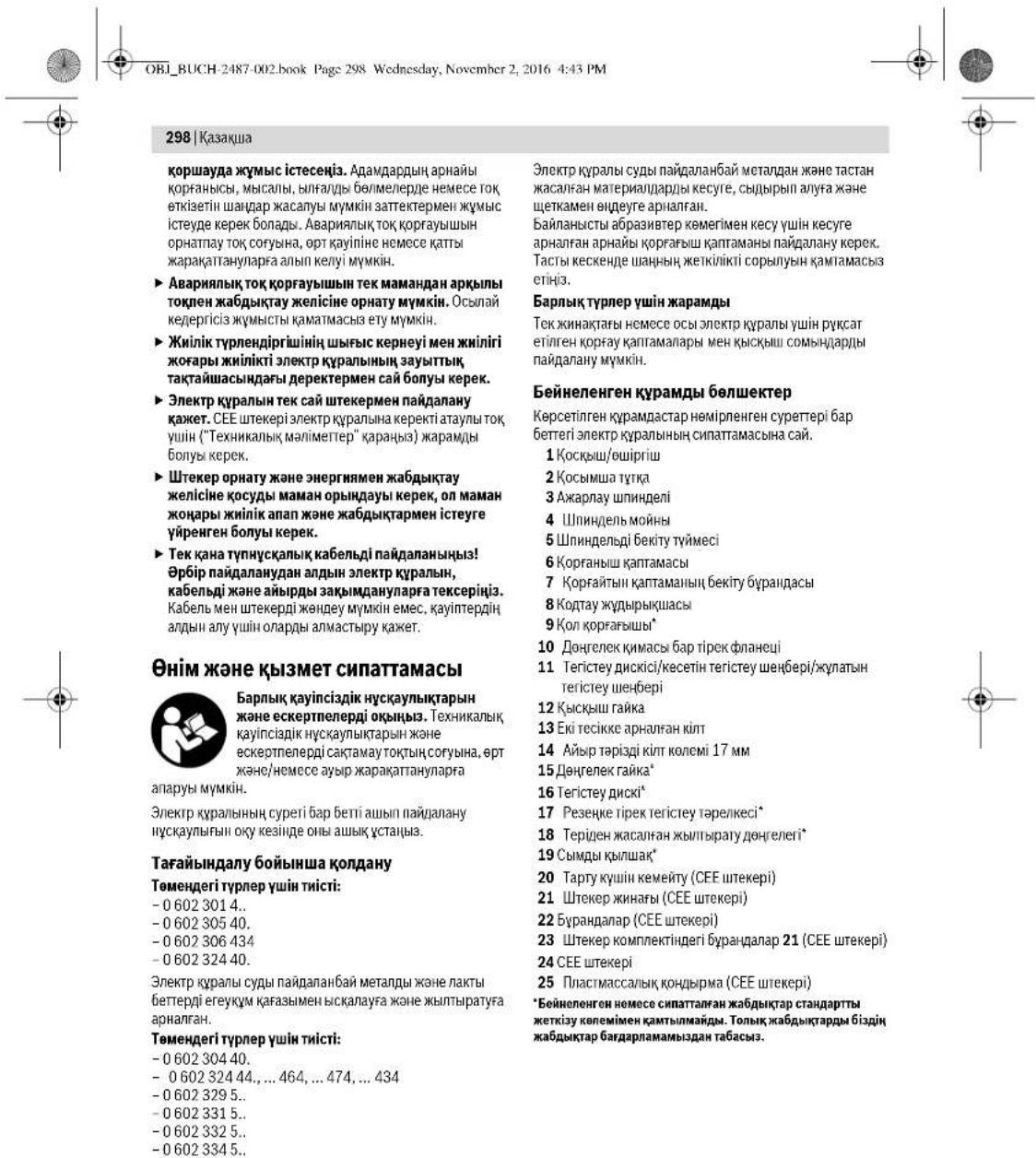
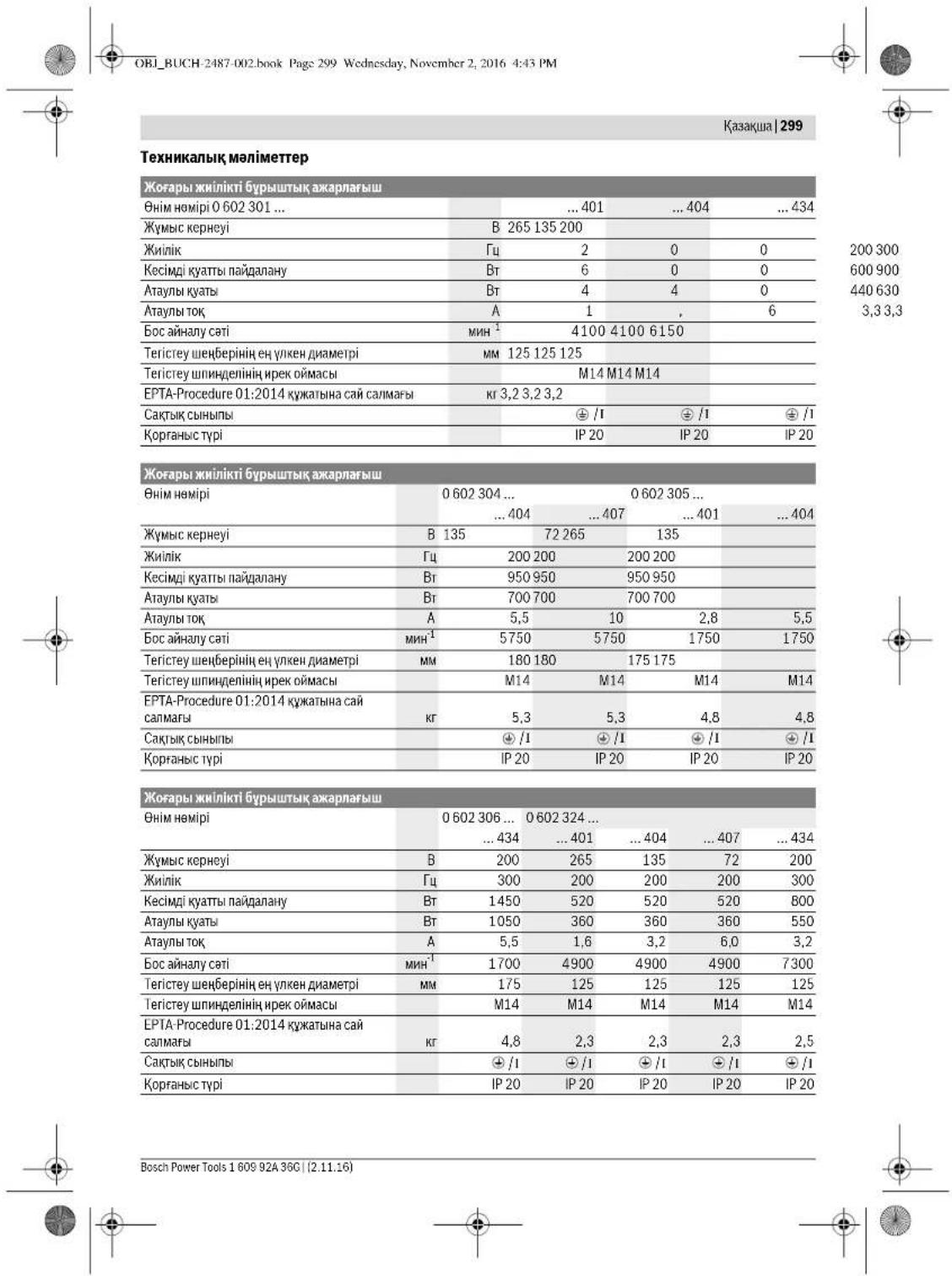
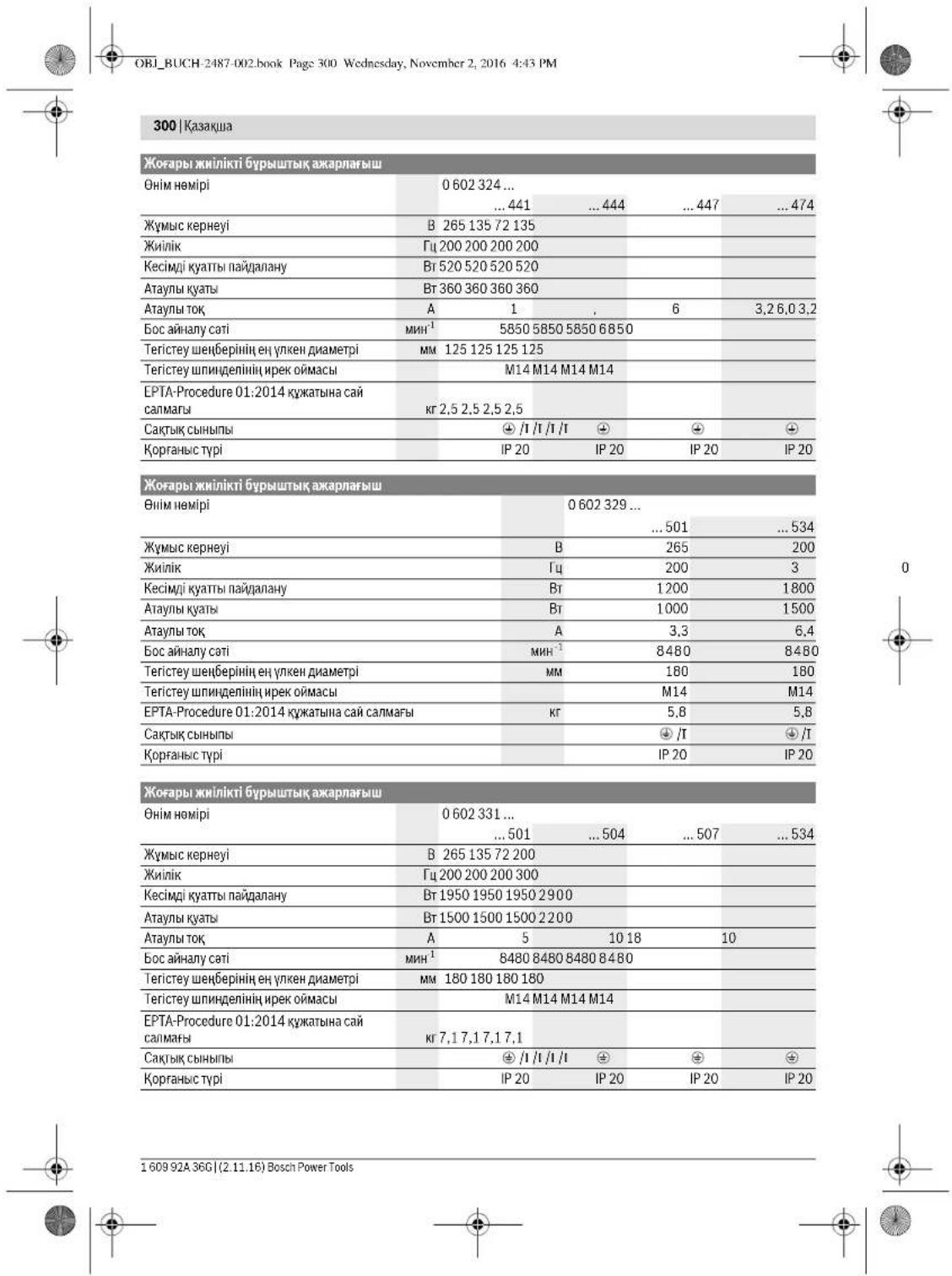
| Жогары жинникovi Бурштейх онлайна | |||||
| Одир | 0 602 332 ... | ||||
| ... 501 | ... 504 | ... 507 | ... 534 | ... 511 | |
| Жу mus керneyi | В 265 135 72 200 72 | ||||
| Жилік | ГИ 200 200 200 300 300 | ||||
| Кесimій куаты пайдану | Вt 1950 1950 1950 2900 2900 | ||||
| Атыны куаты | Вt 1500 1500 1500 2200 2200 | ||||
| Атыны тok | A 5 | 10 18 10 27 | |||
| Бос сөнүлү сati | MH1 | 6600 6600 6600 6600 6600 | |||
| Тerитек ушенийен ec уken даметri | MM 230 230 230 230 230 | ||||
| Тerитек ушенийен иrek ошмсь | M14 M14 M14 M14 M14 | ||||
| EPTA-Procedure 01:2014 куатыни саigмагы | Кr 7,1 7,1 7,1 7,1 | ||||
| СаKitь сынгы | ◎ /I | ◎ /I | ◎ /I | ◎ /I | ◎ /I |
| Коргань с typi | IP 20 | IP 20 | IP 20 | IP 20 | IP 20 |

| 0.60232950. | 0.602329534 | 0.6023315.. | 0.6023325.. | |
| a₁ kānilbī Čeρбěny māni (vú 6aβhɪtbiŋBékθoɪpьik Kocbɪnɪdci) jæne K dʌnciádiRiEN 60745-2-3 CTaɪdaptrbɪha cai aɪhɒkɪtərɪŋ. | ||||
| Bettik Āxapnay (ndepeki Āxapnay): | ||||
| a₁ | M/c² | 7 | 7 | 7 |
| K | M/c² | 1,5 | 1,5 | 1,5 |
| Жыntыратy: | ||||
| a₁ | M/c² | - | - | - |
| K | M/c² | - | - | - |
| Aşxpapnay IXcKimen Āxapnay: | ||||
| a₁ | M/c² | - | - | - |
| K | M/c² | - | - | - |
Henk Becker Executive Vice President Engineering
Helmut Heinzelmann Head of Product Certification PT/ECS
Robert Bosch Power Tools GmbH 70538 Stuttgart, GERMANY Stuttgart, 01.01.2017

304|Kasaika
XnHay
KopfahbIw Ka6bIkTapbH opHaty
Xannbi Hcyckaynbiktap
The cable must be laid with a reserve of length to allow for possible reconnection. The reserve should be placed in a coil or loop.
Excerpt: If the cable was laid with a reserve, then when reconnecting, the reserve must be used, and the excess length should be cut off and discarded.
The cable reserve should be placed so that it does not interfere with the operator's work.
Excerpt: The cable reserve should be placed only where it does not interfere with the operation of the cable reserve.
The cable reserve mentioned in the text (see figure A)
For the following types:
-060230440. -06023295.. -0602324434 -06023315.. -060232444. -06023325.. -0602324464 -06023345.. -0602324474 The cable reserve must be at least 7 meters long. The cable reserve must be laid in a coil or loop. The cable reserve must be secured so that it does not come loose. The cable reserve must be checked periodically.
OBI_BUCH-2487-002.book Page 305 Wednesday, November 2, 2016 4:43 PM


Kazakh 305
The device must be connected to a power source with a voltage of 12 V (direct current, alternating current, or three-phase current) as specified. The short circuit current must not exceed 12 A. The short circuit current must be limited by a fuse or circuit breaker. The short circuit current must be checked with a multimeter before connecting the device.
Connection
Connect the device to a 12 V power source. - The short circuit current must not exceed 12 A. - The device must be connected with a cable of sufficient cross-section.
Electrical connections must be made by a qualified electrician.
For the following types:
-060232440 -0602324434 -060232444
The control cabinet must be installed in a dry, clean, well-ventilated room, protected from dust and moisture. The degree of protection is IP54.
The cabinet is designed for indoor installation. The electrical cabinet must be installed vertically.
The cabinet must be installed on a flat, rigid surface. For installation, use 5 bolts with a diameter of 8 mm and 3 bolts with a diameter of 6 mm. The installation must be carried out in accordance with the instructions (see the installation and connection diagrams in the operating manual, section 304).
Installation of the cabinet components (see figure)
The following tools are required:
306|Kazakh
Installation
The cabinet must be installed in a place that is protected from direct sunlight and moisture. The installation surface must be flat and rigid.
Waste disposal
The equipment, its components, and materials must be disposed of in accordance with local regulations. Do not dispose of electrical equipment as unsorted municipal waste. Use separate collection for electrical and electronic equipment. The equipment may contain substances that are hazardous to health and the environment. The equipment must be handed over to an authorized collection point for recycling.
- The equipment must be disposed of in accordance with the laws and regulations of the country of use. Contact the local authorities for information on disposal.
- The equipment must not be disposed of with household waste.
The equipment must be disposed of separately from other waste.
The equipment must be disposed of in accordance with the regulations. Do not dispose of it in fire.
Before operating the electric valve, make sure that the valve is fully closed, and the product data plate is checked.
During valve operation, other valves, control units, and actuators may be in operation. The valve operation must be checked with the electric drive. For valve operation, use the electrical schematic diagram.
The electric drive must be connected to the power supply. It is necessary to check the rotation direction of the drive according to the electrical schematic diagram (class, type).
Before connecting the electric drive, it is possible to check the rotation direction of the drive manually. To do this, it is necessary to disconnect the drive from the power supply (technical, maintenance personnel). The rotation direction of the drive must be checked by a specialist.
Do not carry out maintenance or repair work on the drive while it is in operation!
Check the rotation direction of the electric drive (see figures 1-2)
- Remove the two bolts 22 from the cover 21 of the electric drive housing 24. Install the handle 25 on the drive shaft and rotate it manually to check the rotation direction of the drive shaft. Then install the cover 21 back and tighten the bolts 22.
When the handle is turned clockwise, the valve stem 21 moves upward, and the limit switch L1 is activated.
When the handle is turned counterclockwise, the valve stem moves downward, and the limit switch L2 is activated. If the handle is turned further, the valve stem will move to the limit switch L3 position. The handle should be turned until the valve is fully open or fully closed. - The valve stem 21 is connected to the electric drive shaft 24 via a coupling. The handle is not intended for continuous operation. - If the electric drive is not installed, the valve can be operated manually.
It is possible to operate the valve manually only in case of emergency.
Manual operation of the valve is possible only when the valve is not under pressure.
Do not operate the valve under pressure!
Do not operate the valve under pressure
Before starting the valve, make sure that the electric drive is correctly connected.
Before starting any work, disconnect the power tool from the mains (plug) and from the battery pack. Always switch off the power tool before making any adjustments, changing accessories, or storing the tool. This preventive safety measure reduces the risk of accidental starting.
1. Connect the battery charger to the power supply before inserting the battery pack. - Do not use another battery pack. Use only the battery charger listed in the accessories. - Keep the battery charger away from rain or moisture. Water entering the battery charger increases the risk of electric shock. - Do not charge non-rechargeable batteries. - The battery charger is intended for indoor use only. - Do not operate the battery charger on easily flammable surfaces (e.g., paper, textiles, etc.) or in combustible environments. - Always check the charger, cable, and plug before use. - Do not use the charger if it is damaged. - Have the charger repaired only by qualified personnel using original spare parts.
Safety Warnings
General Power Tool Safety Warnings
Keep the power tool's ventilation slots clear. Before making any adjustments, changing accessories, or storing the tool, disconnect the battery pack from the tool. Such preventive safety measures reduce the risk of starting the tool accidentally. If the tool is not in use, store it out of reach of children and do not allow persons unfamiliar with the tool or these instructions to operate it.
160992A36G|(2.11.16) Bosch Power Tools






OBI_BUCH-2487-002.book Page 307 Wednesday, November 2, 2016 4:43 PM
Kazakh 307
Do not use the power tool if the switch does not turn it on and off. Any tool that cannot be controlled with the switch is dangerous and must be repaired.
When using the power tool with a battery pack, use only the original battery pack and charger specified by the manufacturer. Use of any other battery packs may create a risk of injury and fire. When the battery pack is not in use, keep it away from other metal objects, like paper clips, coins, keys, nails, screws, or other small metal objects, that can make a connection from one terminal to another. Shorting the battery terminals together may cause burns or a fire.
To reduce the risk of electric shock, the power tool must be connected to a properly grounded outlet.
Charging the battery pack
Use only the original battery charger and battery pack specified for your power tool. Do not use any other battery pack.
Before first use, fully charge the battery pack.
Electric power supply for electric drives (J1 circuit breaker)
Type of circuit breaker:
- 06023244
- Electric power supply for electric drives 1 phase base. - Electric drives 1 format for electric drives 1 is the base. - Electric power supply for electric drives 1.
For electric drives 1, the circuit breaker is the base.
Electric power supply for electric drives (J2 circuit breaker)
Type of circuit breaker:
- 06023014. - 06023295. - 060230440. - 06023315. - 060230540. - 06023325. - 0602306434 - 06023345.
- Electric power supply for electric drives 1 phase, with base.
- For the base, the circuit breaker 1 is used for the circuit breaker 1 phase. - Electric power supply for electric drives 1, the circuit breaker 1 is not used, the circuit breaker 1 is used for the base.
Safety instructions
Before starting work, make sure that the electric power supply is disconnected. Do not touch the electric power supply terminals. Use insulated tools. Do not operate the equipment with wet hands. If the equipment is damaged, do not use it. Electric power supply must be disconnected before maintenance.
Before starting work, make sure that the electric power supply is disconnected, and use appropriate safety equipment.
Maintenance and repair instructions
Maintenance and repair instructions (manual) together with the equipment must be followed.
Xennyiu Taipid tericrey wengbepnepi aedter terictey wengbepeimem caihctbipraa y3aibpak Kb3me t etdi, asbpa.uy shu npapda knothe terictey temnepatypacbaasbpak bocanpa.
Metanapabibkecy (Kcypetih Kapaiba)
Baanahbctb6pa3nBtepKemirimHen Kcye yuih apkaaah KcyeapHanf KanTamahb nanaanahbH3.
TericTey weHbepimEn KcKcKeHe bipkEnki, MaepHan yuHIN IpyHCbBepmEn YXMBIC tctHJI. KecyweHbepHe KpbCM TycipMeH3, OHJ EeKHeTneHJ XHe WaiKaMaHbI3. ByipnIK kbcMbme HAnrAraHbHa KeCy wHbepiN TKotarnAbH3.
3nKpKpIaBpApaKaauHAnanyBaFbTaHaKepiXpyri3y KepeK. 0IeNne6KaIbayCb3 KecinreJkePeHbUry Kayni TbyIaIaNJI.
PnDHHJIeHJI He MeceTe KpHJIy KxSyBapnJIky KeCy KEiJIeKcEuy JEA3KaJIqHeEH KHMJAaBaIbAHJ.
Tactbi kecy
Tacta KekceKekHe MaHbH,KeTkinlIcI copblyH KAMTAMacb3 etH3. WahyTkbiuMackacbHknH3. Byn nneptkr Kpyanr bTek KpyraKcey/KpyrK teriTeey yuui naihanayna 60anai.
Tactb Kecy yuH anMac Kecy dckinepin nahdanaHan KeH. Thekepinyen Kaylinciadkti KAMTamachs ety uYHH BafttaBHTaHPb Bap Kecyr apHaFAn HbFapHb Kanamahb naananye KepK.
3nKtp KyabHIn KtsuaHcoPbUuHne NaidaHaBnKocBmuA nepcnHapuKiiHia LhOcPbHHTaTac 1sHbHnCpOrya rPyKcT aBonyu bKepek. Bosch ocb.bndai HauocPbHtuaTadby cYbnaHd. -3nektp kypandb bomega h3 kane 6bafttaybiutapabH b a/bhBb101mEH bennueke opnhbHb3.3nepK pynandb bipkkeni, MaepnAnFa caikec 6bpymen KblkbTbHb3.
Kypamblda Knbiipbuk Tac tbe ken acakatbl Maepeanapdui, Mucanbl, behotdy, eueyKeiainam wehdep kbl3bn Kery hi Xaepanbl yMmKIn. Anmac wchdeperr YuKhbpadopocBnbl BnDipc. ByxJafndaa Knymbctbl ToKtAtbHbXkHe anmAc Whebp 60cKxypIte, hKorapbl KjUdpambkTa KbckaYakB BoHb CanknOdbHbHb3.
OhiminiHnattapnbkTnTemmepeyixKHeYuKhBnDapnAmC Keeyueepi etnc Bonun kanaRbn BnDipepi. OHb abpaaNtMatePnAnda, Mucbnai, CNHKat KipniTte, Kckkaasa kecyapknblb tkiipinye boanla.
Bosch Power Tools 1609 92A 36C (2.11.16)




OBI_BUCH-2487-002.book Page 308 Wednesday, November 2, 2016 4:43 PM
308|Kasaika
The pipes are laid with a slope of 1053 mm per 1 meter. The slope is provided by installing supports under the pipes. The supports are installed at the required height and are checked for proper installation.
Testing the system
Before testing, check the tightness of all connections.
For testing, use a pressure of 30° - 40° C. The pressure is applied gradually. Check the system for leaks. If leaks are found, repair them and repeat the test.
Testing with air
For air testing, additional equipment is required.
Use a compressor for air testing. Check the pressure with a manometer. If the pressure drops, find and fix the leak.
Cleaning the filter
The filter must be cleaned regularly. To clean the filter, remove it from the system and clean it with water or a suitable cleaning agent.
If the filter is heavily soiled, replace it with a new one. The filter should be replaced according to the manufacturer's instructions.
After cleaning, install the filter back in place.
Technical maintenance and service
Service and maintenance
Before servicing, disconnect the power supply. Wait for the system to cool down. Only qualified personnel should perform maintenance. Use a residual current device (RCD) when working on the electrical system. Do not operate the system without proper grounding. If the power cord is damaged, replace it with a new one. Refer to the technical manual for more information.
Cables for the device! The device must be connected to a power source that matches the specifications on the rating plate. If the device is used in a damp environment, it must be protected by a residual current device (RCD). The use of an RCD reduces the risk of electric shock.
The total length of the cable and the extension cable, for example, the cross-section of the cable, must be at least 1.5 mm². The cable must be suitable for outdoor use. The cable must be marked with the letter designation. The cable must be at least 300 mm long. The cable must be protected against mechanical damage.
If the cable is damaged, it must be replaced by the manufacturer, its service agent, or similarly qualified persons in order to avoid a hazard.
The cable must be checked regularly.
Necessary accessories
The complete range of accessories is available at www.bosch-pt.com and www.boschproductiontools.com. You can order them online or from a dealer.
Service and customer service
The service address is indicated on the nameplate. If the cable needs to be replaced, it must be done by an authorized service center. For safety reasons, the cable must be replaced by the manufacturer or an authorized service center. www.bosch-pt.com
For service, please contact the authorized service center for your country.
The cable must be replaced if it is damaged. The cable must be replaced by the manufacturer or an authorized service center.
The power tool must be used only with the accessories specified in the operating instructions. The use of any other accessories may create a risk of injury.
The cable must be at least 300 mm long. The cable must be suitable for outdoor use. The cable must be marked with the letter designation.




310 Romana
Românește/Originea sculei electrice
cu întrerupător de siguranță (vezi figura J2)
Valid for the following types:
-06023014.. -06023295.. -060230440. -06023315.. -060230540. -06023325.. -0602306434 -06023345.
324|Bulgarian
The Bosch consulting team will be happy to answer any questions you may have about our products and their accessories.
For complaints and spare parts orders, please always indicate the identification number consisting of
Power tool service tel.: (021) 4057540
Fax: (021) 4057566
E-Mail: infoBSC@ro.bosch.com
Customer consulting tel.: (021) 4057500
Fax: (021) 2331313
E-Mail: infoBSC@ro.bosch.com
www.bosch-romania.ro
Disposal
Power tools, accessories, and packaging must be directed to an ecological recycling station.
Do not throw electric tools into household waste!
Be careful when working
Read all safety warnings and all instructions. Failure to follow the warnings and instructions may result in electric shock, fire and/or serious injury. Save all warnings and instructions for future reference. The term "power tool" in the warnings refers to your mains-operated (corded) power tool or battery-operated (cordless) power tool. Work area safety: Keep work area clean and well lit. Cluttered or dark areas invite accidents. Do not operate power tools in explosive atmospheres, such as in the presence of flammable liquids, gases or dust. Power tools create sparks which may ignite the dust or fumes. Keep children and bystanders away while operating a power tool. Distractions can cause you to lose control. Electrical safety: Power tool plugs must match the outlet. Never modify the plug in any way. Do not use any adapter plugs with earthed (grounded) power tools. Unmodified plugs and matching outlets will reduce risk of electric shock. Avoid body contact with earthed or grounded surfaces, such as pipes, radiators, ranges and refrigerators. There is an increased risk of electric shock if your body is earthed or grounded. Do not expose power tools to rain or wet conditions. Water entering a power tool will increase the risk of electric shock. Do not abuse the cord. Never use the cord for carrying, pulling or unplugging the power tool. Keep cord away from heat, oil, sharp edges or moving parts. Damaged or entangled cords increase the risk of electric shock. When operating a power tool outdoors, use an extension cord suitable for outdoor use. Use of a cord suitable for outdoor use reduces the risk of electric shock. If operating a power tool in a damp location is unavoidable, use a residual current device (RCD) protected supply. Use of an RCD reduces the risk of electric shock. Personal safety: Stay alert, watch what you are doing and use common sense when operating a power tool. Do not use a power tool while you are tired or under the influence of drugs, alcohol or medication. A moment of inattention while operating power tools may result in serious personal injury. Use personal protective equipment. Always wear eye protection. Protective equipment such as dust mask, non-skid safety shoes, hard hat, or hearing protection used for appropriate conditions will reduce personal injuries. Prevent unintentional starting. Ensure the switch is in the off-position before connecting to power source, picking up or carrying the tool. Carrying power tools with your finger on the switch or energising power tools that have the switch on invites accidents. Remove any adjusting key or wrench before turning the power tool on. A wrench or a key left attached to a rotating part of the power tool may result in personal injury. Do not overreach. Keep proper footing and balance at all times. This enables better control of the power tool in unexpected situations. Dress properly. Do not wear loose clothing or jewellery. Keep your hair, clothing and gloves away from moving parts. Loose clothes, jewellery or long hair can be caught in moving parts. If devices are provided for the connection of dust extraction and collection facilities, ensure these are connected and properly used. Use of dust collection can reduce dust-related hazards. Power tool use and care: Do not force the power tool. Use the correct power tool for your application. The correct power tool will do the job better and safer at the rate for which it was designed. Do not use the power tool if the switch does not turn it on and off. Any power tool that cannot be controlled with the switch is dangerous and must be repaired. Disconnect the plug from the power source and/or the battery pack from the power tool before making any adjustments, changing accessories, or storing power tools. Such preventive safety measures reduce the risk of starting the power tool accidentally. Store idle power tools out of the reach of children and do not allow persons unfamiliar with the power tool or these instructions to operate the power tool. Power tools are dangerous in the hands of untrained users. Maintain power tools. Check for misalignment or binding of moving parts, breakage of parts and any other condition that may affect the power tool's operation. If damaged, have the power tool repaired before use. Many accidents are caused by poorly maintained power tools. Keep cutting tools sharp and clean. Properly maintained cutting tools with sharp cutting edges are less likely to bind and are easier to control. Use the power tool, accessories and tool bits etc. in accordance with these instructions, taking into account the working conditions and the work to be performed. Use of the power tool for operations different from those intended could result in a hazardous situation. Battery tool use and care: Recharge only with the charger specified by the manufacturer. A charger that is suitable for one type of battery pack may create a risk of fire when used with another battery pack. Use power tools only with specifically designated battery packs. Use of any other battery packs may create a risk of injury and fire. When battery pack is not in use, keep it away from other metal objects, like paper clips, coins, keys, nails, screws or other small metal objects, that can make a connection from one terminal to another. Shorting the battery terminals together may cause burns or a fire. Under abusive conditions, liquid may be ejected from the battery; avoid contact. If contact accidentally occurs, flush with water. If liquid contacts eyes, additionally seek medical help. Liquid ejected from the battery may cause irritation or burns. Service: Have your power tool serviced by a qualified repair person using only identical replacement parts. This will ensure that the safety of the power tool is maintained.
1609 92A 36G| (2.11.16) Bosch Power Tools


Bulgarian|325
Before inserting the battery, make sure that the switch is in the off position. If you carry the power tool with your finger on the switch or insert the battery while the switch is on, there is a risk of injury.
Before turning on the power tool, make sure that the tool is not touching the workpiece or any other objects. A tool that is rotating and touching the workpiece can cause injury. Keep your hands away from the cutting area. Work in a stable position and hold the tool firmly. This way you can control the power tool better in unexpected situations. Work calmly and carefully. Do not work with a dull or damaged blade. Replace the blade if it is bent or cracked. Hold the tool by the insulated gripping surfaces when performing an operation where the cutting tool may contact hidden wiring or its own cord. Contact with a "live" wire will also make exposed metal parts of the power tool "live" and shock the operator. If it is possible to use a dust extraction system, make sure it is connected and functioning properly. Use of dust extraction can reduce dust-related hazards.
Proper handling of the power tool
Do not use the power tool. Use the power tool properly for its intended purpose. Before working, carefully and safely, use the appropriate power tool for the task. Do not use the power tool if it cannot be turned on and off. A power tool that cannot be turned on and off is dangerous and must be repaired. Before adjusting, changing accessories, or storing the power tool, disconnect it from the power source and/or remove the battery pack. This precaution reduces the risk of accidental starting. Store idle power tools out of reach of children and do not allow persons unfamiliar with the power tool or these instructions to operate the power tool. Power tools are dangerous in the hands of untrained users. Maintain power tools. Check for misalignment or binding of moving parts, breakage of parts and any other condition that may affect the power tool's operation. If damaged, have the power tool repaired before use. Many accidents are caused by poorly maintained power tools.
Keep cutting tools sharp and clean. Properly maintained cutting tools with sharp cutting edges are less likely to bind and are easier to control. Use the power tool, accessories and tool bits etc., in accordance with these instructions, taking into account the working conditions and the work to be performed. Use of the power tool for operations different from those intended could result in a hazardous situation.
Keep handles and gripping surfaces dry, clean and free from oil and grease. Slippery handles and gripping surfaces do not allow for safe handling and control of the tool in unexpected situations.
Service
Have your power tool serviced by a qualified repair person using only identical replacement parts. This will ensure that the safety of the power tool is maintained.
Safety warnings for drilling and general safety warnings for drilling
This applies to the following models:
-06023014.. -060230540 -0602306434 -060232440
This power tool is intended for drilling in wood, metal and plastic. Follow all safety warnings and instructions. Use the power tool only for its intended purpose. Failure to follow the warnings may result in electric shock, fire and/or serious injury. This power tool is not suitable for drilling in masonry. The power tool is not designed for that purpose. Using the power tool for operations different from those intended could result in a hazardous situation.
General safety warnings for drilling, working with masonry and abrasive materials
This applies to the following models:
-060230440 -060232444..464.474.434 -06023295.. -06023315.. -06023325.. -06023345
This power tool is intended for drilling, working with masonry and abrasive materials.




326|Bulgarian
Warning: All instructions and safety notices must be followed to ensure safe operation. Failure to follow the instructions may result in electric shock, fire, and/or serious injury.
Power tools can be dangerous if used incorrectly or without proper care. Failure to follow the safety instructions can lead to electric shock, fire, and/or serious injury.
General safety warnings for power tool use: keep work area clean and well lit, do not operate power tools in explosive atmospheres, keep children and bystanders away while operating a power tool.
Do not use accessories that are not specifically designed and recommended by the tool manufacturer. Just because the accessory can be attached to your power tool, it does not assure safe operation. The rated speed of the accessory must be at least equal to the maximum speed marked on the power tool. Accessories running faster than their rated speed can fly apart and cause injury. The outside diameter and the thickness of your accessory must be within the capacity rating of your power tool. Incorrectly sized accessories cannot be adequately guarded or controlled. The arbor size of wheels, flanges, backing pads or any other accessory must properly fit the spindle of the power tool. Accessories with arbor holes that do not match the mounting hardware of the power tool will run out of balance, vibrate excessively and may cause loss of control. Do not use damaged accessories. Before each use, inspect the accessory such as abrasive wheels for chips and cracks, backing pad for cracks, tear or excess wear, and wire brush for loose or cracked wires. If you drop your power tool or accessory, inspect for damage or install an undamaged accessory. After inspecting and placing an accessory, position yourself and bystanders away from the plane of the rotating accessory and run the power tool at maximum no load speed for one minute.
Damaged accessories will normally break apart during this test time.
When working with power tools, always use the appropriate personal protective equipment. Depending on the application, use face shield, safety goggles or safety glasses. As appropriate, wear dust mask, hearing protectors, gloves and workshop apron capable of stopping small abrasive or workpiece fragments. The eye protection must be capable of stopping flying debris generated by various operations. The dust mask or respirator must be capable of filtering particles generated by your operation. Prolonged exposure to high intensity noise may cause hearing loss. Keep bystanders a safe distance away from the work area. Anyone entering the work area must wear personal protective equipment. Fragments of workpiece or of a broken accessory may fly away and cause injury beyond immediate area of operation. When the cutting accessory is in contact with the workpiece, never hold the power tool with one hand while it is running. Always use both hands to control the tool. If the power tool is accidentally dropped, the rotating accessory may cause injury. Never leave the power tool running unattended. Do not operate the power tool while holding it in your hands. Keep the power tool away from your body. When using the power tool, always keep the ventilation slots clear of debris. The turbine fan inside the motor housing draws air through the slots, and debris may accumulate on the fan and cause damage. Do not operate the power tool near flammable materials. Sparks from the tool may ignite such materials. Do not use the power tool if the switch does not turn it on and off. Any tool that cannot be controlled with the switch is dangerous and must be repaired.
Kickback and Related Warnings
Kickback is a sudden reaction to a pinched or snagged rotating wheel, backing pad, brush or any other accessory. Pinching or snagging causes rapid stalling of the rotating accessory, which in turn forces the uncontrolled power tool to be pushed in the direction opposite to the accessory's rotation at the point of binding.

Bulgarian 327
For example, if an abrasive wheel is snagged or pinched by the workpiece, the edge of the wheel that is entering the pinch point may dig into the surface of the material, causing the wheel to climb out or kick out. The wheel may either jump toward or away from the operator, depending on the direction of the wheel's movement at the point of pinching. Abrasive wheels may also break under these conditions.
For example, if an abrasive wheel is snagged or pinched by the workpiece, the edge of the wheel that is entering the pinch point may dig into the surface of the material, causing the wheel to climb out or kick out. The wheel may either jump toward or away from the operator, depending on the direction of the wheel's movement at the point of pinching. Abrasive wheels may also break under these conditions.
The tool is designed for professional use. Improper or incorrect use may cause the tool to malfunction. This can be prevented through regular maintenance and proper use, as described in detail.
riangleright Always hold the power tool with both hands and keep your body in a balanced position to counteract the kickback force. If the power tool has a side handle, hold it firmly with both hands to better control the tool during kickback or when sudden reactions occur. If the tool is properly maintained, you can avoid injury from kickback or sudden reactions. Never place your hands near the rotating parts of the tool. If kickback occurs, the tool may be pulled from your hands. Follow the instructions in the manual for the correct use of the power tool in case of kickback. Kickback can cause the machine to jump, and the tool may be thrown out of control. Always use the auxiliary handle if provided, for maximum control. Do not use the tool with a damaged or missing guard. Improper use of the tool can cause serious injury. Always maintain control of the machine and be aware of kickback. Do not use the tool without the proper safety devices.
Special safety instructions for grinding and cutting with abrasive discs
Use only the recommended abrasive discs for your power tool and only for the intended purpose. Using discs not recommended for the power tool may cause them to break and is not safe. The abrasive disc must be mounted so that the disc surface does not protrude beyond the guard. Incorrect
If the tool is used with a damaged or missing guard, it may cause the guard to break and the tool to be thrown out of control.
Принадлежности за електроинструмента, както и принадлежностите за рязане, трябва да съответстват на инструкциите за безопасност, дадени в това ръководство. Не използвайте принадлежности, които не са предназначени за този електроинструмент. Принадлежностите за рязане трябва да бъдат монтирани така, че да не могат да се отделят от инструмента по време на работа. Използвайте само оригинални принадлежности, които са в добро състояние и отговарят на размерите и формата на използвания диск. Не използвайте повредени или деформирани дискове. Проверете дали дискът е монтиран правилно и дали не е износен. Не използвайте дискове, които са били подложени на удари или са падали. Използвайте само дискове, които са предназначени за работа с високи скорости, и не ги превишавайте.
Специални указания за безопасна работа с циркулярни дискове
Избягвайте блокиране на режещия диск в процепа. Не използвайте тъпи или повредени дискове. Претоварването на режещия диск увеличава опасността от заклинване или счупване, а също така може да доведе до откат. Избягвайте да заставате в зоната пред или зад въртящия се диск. Когато режещият диск е в процепа, при откат електроинструментът може да бъде изхвърлен към вас. Ако режещият диск се заклини или когато прекъснете работа, изключете електроинструмента и го оставете да спре напълно, преди да го извадите. Никога не се опитвайте да извадите въртящия се диск от процепа, в противен случай може да се заклини. Определете посоката на рязане и не включвайте отново електроинструмента, ако дискът е в процепа. Преди да продължите, изчакайте дискът да достигне пълната си скорост и да се върти. В противен случай дискът може да се заклини, да изхвърли отрязания детайл или да предизвика откат.

328|Български
Подкрепяйте панелите или големите детайли, за да намалите риска от заклинване и откат. Големите детайли могат да се огънат под собственото си тегло и да причинят заклинване на диска. Подкрепяйте детайла от двете страни, както в близост до линията на рязане, така и в краищата. Използвайте подходящи подпори, ако е необходимо. Не използвайте електроинструмента за рязане на материали, които не са предназначени за него, като например водопроводни тръби, електрически кабели или други.
Специални указания за безопасна работа при шлайфане с циркулярни дискове
Before using the appliance, read the instructions for use carefully. Only then should you connect the plug to the socket, so that you can avoid damage to the appliance and to the socket, as well as incorrect use and damage to the appliance or the socket.
Special instructions for safe operation
Do not leave the appliance unattended while it is plugged in. If the appliance is plugged in, unplug it and turn it off, so that the appliance does not accidentally fall into water and cause injury.
Special instructions for safe operation when using the appliance near water
Do not immerse the appliance in water or other liquids. Do not turn the appliance on while it is pressed against a hard surface. Open the appliance and let it cool down before touching the heating element. If the appliance is used with a voltage converter, it is recommended to use it correctly, so that the appliance does not overheat. The heating elements may increase the diameter of the hole in the heating plate.
General instructions for safe operation
Work with a voltage converter.
Use similar devices to open the ventilation openings on the surface of the pipe, or connect them to the appropriate socket. Contact with live parts may cause fire and electric shock. The voltage converter may cause electric shock. Check the voltage converter for damage to the material and may cause electric shock.
If the voltage converter is damaged (e.g., the plug or the cable is damaged), replace the plug or the cable to prevent uncontrolled switching on of the electric tool. Do not touch the damaged parts, let them cool down. During operation, the parts heat up strongly. When working with the electric tool, hold it firmly and keep a stable position. With both hands, hold the electric tool firmly. Ensure good ventilation, hold the tool with a firm grip, use it correctly, and do not use it with wet hands. Connect the electric tool to a properly grounded socket. The contact and the ventilation openings must have a protective conductor.
Instructions for safe use of the voltage converter with electric tools
The frequency converter must be installed and connected by a qualified electrician. Detailed information about this can be obtained from the supplier of the frequency converter. The frequency converter must be provided with a residual current device (RCD) when used in installations where increased protection of personnel is required. The increased protection of personnel is necessary when working in damp rooms or with materials that conduct electricity. If a residual current device is not used, the consequences could be serious injury or death. The residual current device must be installed and maintained only by qualified personnel. The device must be serviced to ensure uninterrupted operation. The input voltage and frequency of the frequency converter must correspond to the data specified on the nameplate of the high-frequency power tool. The power tool may only be used with a matching socket. The socket must be connected to the mains by a qualified electrician, and the connection to the power source must be made in accordance with the technical data. The installation and connection to the power source must be carried out only by qualified personnel who are trained to work with high-frequency power tools. Use only approved extension cables and check them before use.


Bulgarian | 329
The power tool's protective conductor and the extension cable's protective conductor must be checked regularly to ensure they are not damaged and to prevent danger from electric shock.
Only use the tool with the protective conductor connected to the socket outlet or with a residual current device (RCD) that has been approved by the manufacturer.
Product description and specifications

The power tool is intended for cutting. Failure to follow the instructions may lead to electric shock, fire, and/or serious injury.
The device is equipped with a protective conductor. 1000000000000000000000000000000000000000000000000000000000
The power tool is designed for the following models:
-06023014.. -060230540 -0602306434 -060232440.
The power tools are designed for cutting with diamond cutting discs on metal surfaces without the use of water.
For the following models:
-060230440 -060232444,..464,..474,..434 -06023295. -06023315.. -06023325. -06023345.
The power tools are intended for cutting and grinding metal and stone materials without the use of water. When cutting with composite discs, use only the specified cutting discs. When cutting stone materials, a suitable dust extraction system must be provided.
Important for all models
Damaged elements
Monophosphate and elements and electrical installation of the battery charger and strain relief with the filter.
1 Start button 2 Auxiliary handle 3 Shaft 4 Wrench 5 Button for locking and unlocking the shaft 6 Protective cover 7 Screw for stopping the protective cover 8 Coupling flange 9 Handle for the crank
10 Central flange O-ring
11 Disc for grinding/polishing/cutting
12 Locking flange
13 Two-pin wrench
14 Wrench size 17 mm
15 Wing nut
16 Washer
17 Bolt for mounting the disc for polishing
18 Spindle for polishing
19 Handle
20 Clamp for cable (CEE-plug) 21 Socket (CEE-plug) 22 Plug (CEE-plug) 23 Plug with socket 21 (CEE-plug) 24 CEE-plug
25 Plastic cover (CEE-plug)
The device is intended for cutting and grinding with accessories in standard equipment. The operator can use the device for cutting and grinding with accessories.
Technical data
| Ви这样做тон bг полар | ||||
| Кагалов Номер 0602 301... | ...401 | ...404 | ...434 | |
| Hommaшно начржени | V | 2 | 6 | 5 |
| Чеб耗费 | Hz 200 200 300 | |||
| Hommaшно консуmpрана мошист | W | 6 | 0 | 0 |
| Hommaшно посяпамошист | W | 4 | 4 | 0 |
| Hommaшно ток | A | 1 | , | 6 |
| Скорост на вьртени на пазенхд | min¹ | 4100 | 4100 6150 | |
| Мак. даметр нашифовашидес | mm 125 125 125 | |||
| Рezбая на залиа | M14 | M14 | M14 | |
| Мас съласно EPTA-Procedure 01:2014 | kg 3,2 3,2 3,2 | |||
| Клас на залиа | © /I | © /I | © /I | |
Bosch Power Tools 1609 92A 36C (2.11.16)
135200
600900
440630
3.3.3.3

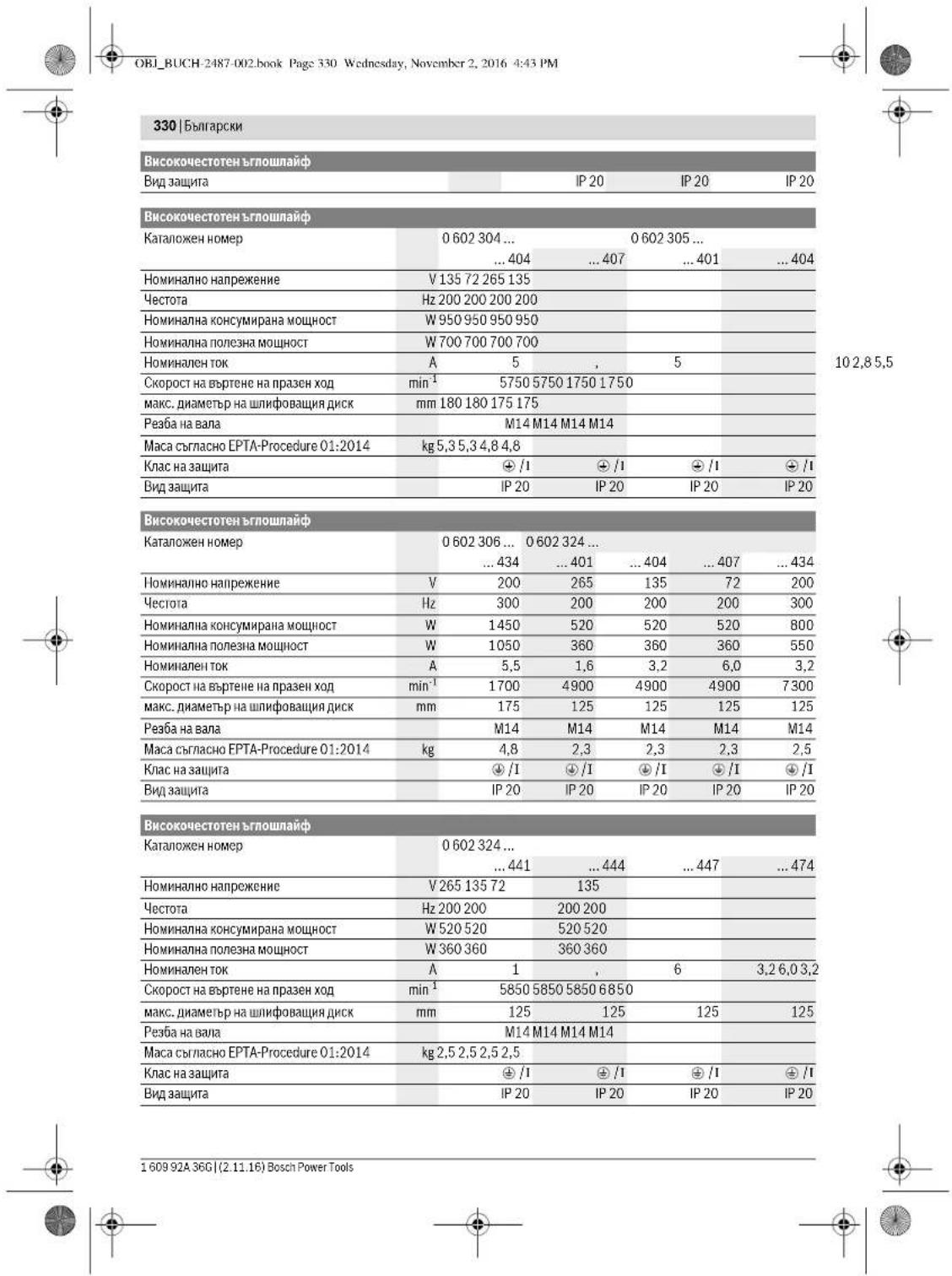
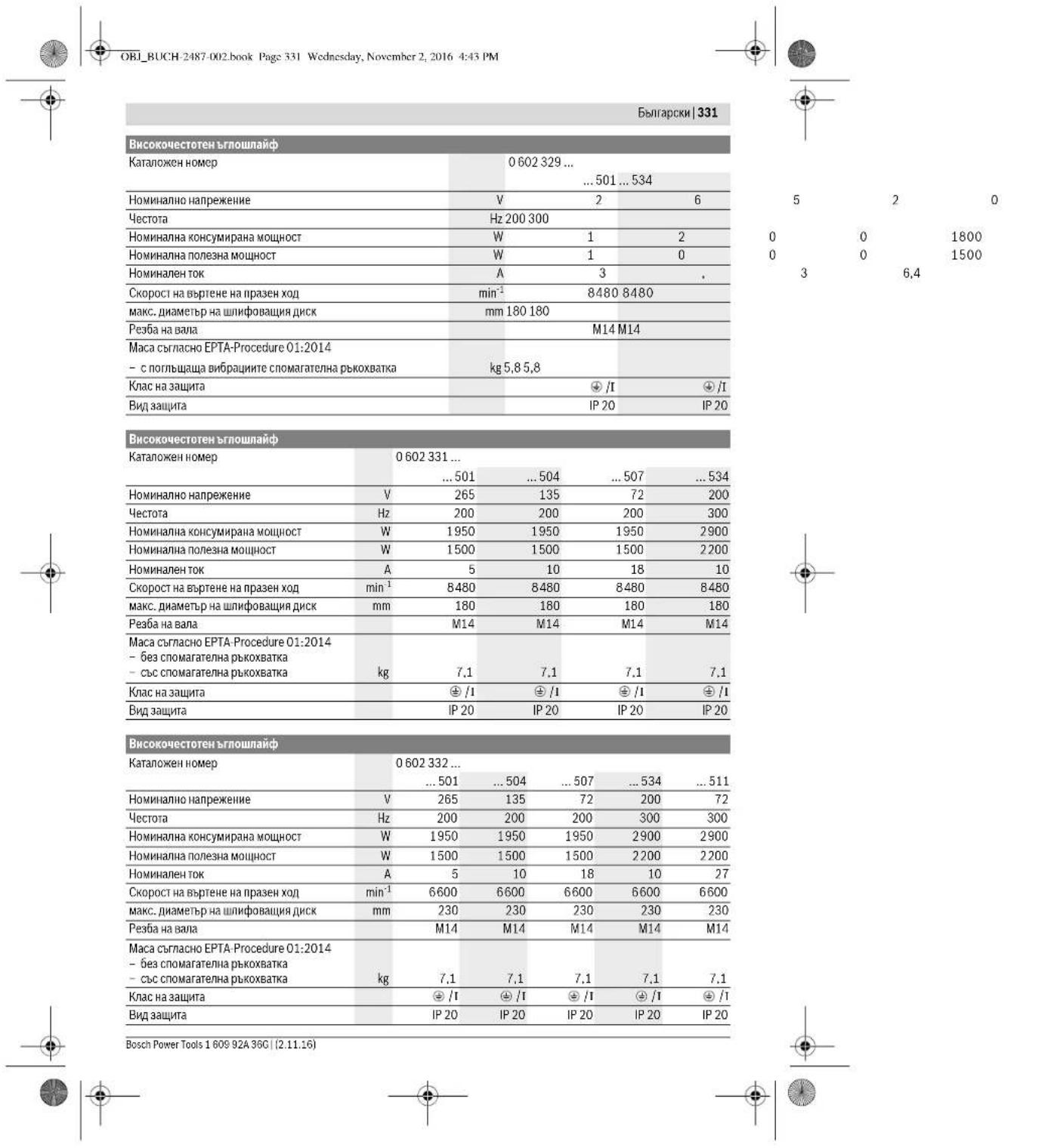
332|Bulgarian
| Ви这样做ожимаф | ||||
| Каталовен Homep | 0 602 334 ... | |||
| ...501 | ...504 | ...507 | ...534 | |
| HommaHann no HanpekeHne | V 265 135 72 200 | |||
| Yectota | Hz 200 200 200 300 | |||
| HommaHah KONcymHpaHa MoUHocT | W 2500 2500 2500 3800 | |||
| HommaHah Na NpE3Ha MoUHocT | W 2200 2200 2200 3100 | |||
| HommaHae ToK | A 6 | . | 7 | 13,2 24,7 13,2 |
| Скорост на Вьтende на праzenхоД | min-1 | 6600 6600 6600 6600 | ||
| мас.Диамерп нашикразец ДSCK | mm 230 230 230 230 | |||
| Рezба на вала | M14 M14 M14 M14 | |||
| Мас сглесно EPTA-Procedure 01:2014 - 6e3 сномагателна рыковатka | kg7,87,87,87,8 | |||
| Клас на зашипа | + /T | + /T | + /T | + /T |
| Вidдацета | IP 20 | IP 20 | IP 20 | IP 20 |
Safety instructions
Power tools are a high-frequency system and require a separate transformer with a safety isolating transformer.
For this reason, the power tool must be connected to a suitable transformer (see connection to the mains, figure 336).
The values for noise and vibration are determined according to EN 60745-2-3.
Information on noise and vibration
| 0.60230140. | 0.602301434 | 0.60230440. | 0.60230540. | |
| Равишиeto I Ha Ильчваима ум обикно- вениe | ||||
| Равишиeto Ha зуковою налгане | dB(A) | 72 | 82 | 79 |
| Мошост Ha зува | dB(A) | 83 | 93 | 90 |
| Ношpeденист K | dB | 3 | 3 | 3 |
| РавOTe creшуоагн'te: | ||||
| Пьіната стейност Ha Вибрацinteæ (be- Ктосяпа сума по trпite налравелени) in ношpeденист Ka оретени Stb- trал scho EN 60745-2-3. | ||||
| Шифobaning(rpy6ошнфobaning): | ||||
| a₁ | m/s² | - | 5,3 | 5 |
| K | m/s² | - | 2 | 2 |
| Полигане: | ||||
| a₁ | m/s² | 3 | 3 | - |
| K | m/s² | 1,5 | 1,5 | 1,5 |
| Шифobaning cшкypka: | ||||
| a₁ | m/s² | 3 | 3 | - |
| K | m/s² | 1,5 | 1,5 | 1,5 |
| 0 602 306 434 | 0 602 324 40. | 0 602 324 44. | |
| 0 602 324 464 | |||
| 0 602 324 474 | |||
| 0 602 324 434 | |||
| Пьлесастийск на Вибраценте a1 (векторна… сума по Точу наразалени) и неор federеньост… К са ор federени наразно EN 60745-2-3. | |||
| Шимфobане (груюшимфobанe): | |||
| a1 | m/s2 | - | 6 |
| K | m/s2 | - | 2 |
| Полиганe: | |||
| a1 | m/s2 | < 2,5 | 4 |
| K | m/s2 | 1,5 | 1,5 |
| Шимфobане сшкука: | |||
| a1 | m/s2 | < 2,5 | 4 |
| K | m/s2 | 1,5 | 1,5 |
| 0 602 329 50. | 0 602 329 534 0 602 329 511 | 0 602 331 5.. | 0 602 332 5.. | |
| РавлиAMENTО A на заимьденийшу'm obinquно- вени e | ||||
| РавлиAMENTе на заимьдений - Моцност на заимьд Heopendeл end ST K | dB(A) 85 | 87 | 86 | 86 |
| dB(A) 96 | 98 | 97 | 97 | |
| dB 3 | 3 | 3 | 3 | |
| Равоч'te сшу'mozartnyштени! | ||||
| Пьеда-stюност на вибрач阴道е a, (Be'vekortnata cyma по лате наразалени): и неор dedенист К са on dedени: сыrtсан EN 60745-2-3. | ||||
| шу'mobache(rpy6шу'mobache): | ||||
| a₁ m/s² | 7 | 7 | 7 | 7 |
| K m/s² | 1,5 | 1,5 | 1,5 | 1,5 |
| Полигане: | ||||
| a₁ m/s² | - | - | - | - |
| K m/s² | - | - | - | - |
| шу'mobache сшу'mobache: | ||||
| a₁ m/s² | - | - | - | - |
| K m/s² | - | - | - | - |
| 0 602 334 50. | 0 602 334 534 | |
| РавлиAMENTО А НИЛБЕВАЙ SHM обикноево e | ||
| РавлиAMENTЕ на заимовOTе налгане | dB(A) | 86 |
| Мошист на зауka | dB(A) | 97 |
| НебореденnotК | dB | 3 |
| Равotierte сшутоагушитей! | ||
| Пьнота.stоимост на виславпite a.(векторна сума по trпITE h的答案н): m onореденnotСа с орeredenhi съласно EN 60745-2-3. | ||
| Шим波特е(rрубшим波特e): | ||
| a1m/s2K | 7 | 7 |
| 3 | 3 | |
| Почиралe: | ||
| a1m/s2K | - | - |
| - | - | |
| Шим波特е сшкура: | ||
| a1m/s2K | - | - |
| - | - |
Bosch Power Tools 1609 92A 36C (2.11.16)
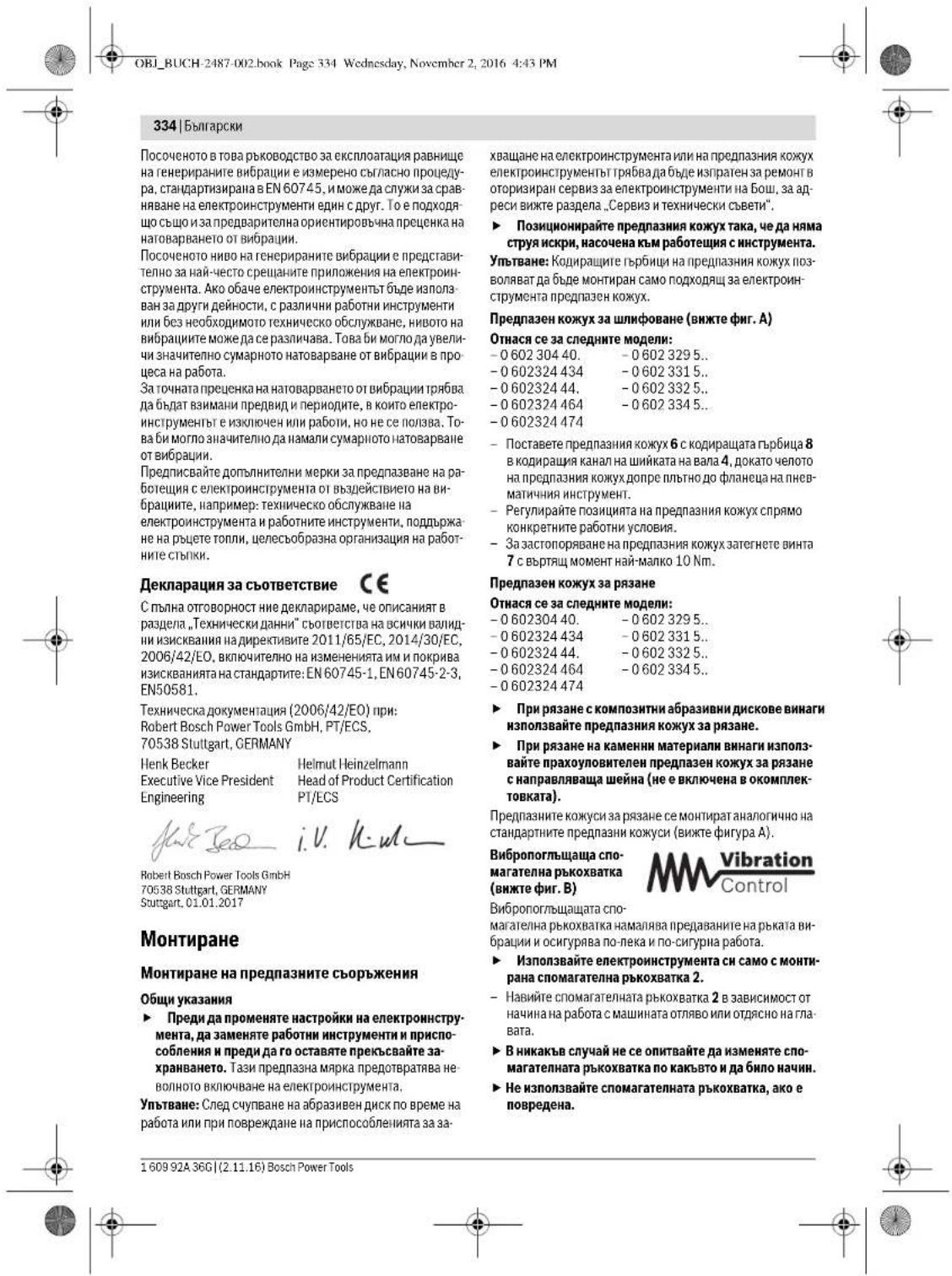
OBI_BUCH-2487-002.book Page 335 Wednesday, November 2, 2016 4:43 PM
Screen display (see figure C)
For special models: -06023014. -060232440 -060230540. -0602306434
Working with the saw blade/grinding disc: Before starting work, read the safety instructions. Hold the power tool with both hands, using the auxiliary handle 2.
Mounting the tool for cutting
Before mounting the tool, adjust the power tool so that the working tool and accessories are not in contact with the workpiece. This prevents accidental starting of the power tool. Make sure that the working tool is correctly mounted and that the arbor hole fits the spindle. Do not use adapters or reducing rings. - Clean the spindle and all parts to be mounted. After mounting, check that the tool is correctly seated and can rotate freely. Ensure that the tool is not in contact with any part of the power tool.
Mounting the cutting disc, flap disc or roughing disc (see figures D1-D2)
For special models:
-060230440. -06023315.. -060232444..464. -06023325.. ...474, 434 -06023345.. -06023295..
Mounting
Make sure that the mounting flange is correctly seated (see "Mounting the protective guard", page 334). - Place the centering collar 3 on the spindle. Around the arbor hole of the working tool, the centering collar 10 must be placed with the O-ring. If the O-ring is missing or damaged, replace it before use. - Place the working tool 11 (cutting disc, flap disc or roughing disc) on the centering collar, with the correct orientation. Tighten the clamping nut 12 on the spindle so that the collar in the middle of the nut engages. - Then tighten the clamping nut 13 with the two-pin spanner 14, while holding the spindle 3 with the other spanner, until the tool is firmly seated.
Removal
- Remove the protective cap 12 from the valve with a hex key 13, then close the valve with the hex key 14, and engage the locking device.
- Adjust the abrasive disc to the required height.
Power tool with button for locking the shaft 5
Danger! For your safety: -060232440 -0602324434 -060232444 Power tool with button for locking the shaft 5. If necessary, remove the hex key from the locking device. For maintenance or repair of the power tool (see figures E1-E2). Press the button for locking the shaft with your thumb. The power tool is then locked. - For maintenance on the power tool, press the button for locking the shaft 5, and lock the shaft 3. Check the desired tool for sharpening (see "Checking the tool for sharpening", page 335). - Release the button for locking the shaft 5 to unlock the shaft.
Mounting the grinding guard (see figure F)
Danger! For your safety:
OBI_BUCH-2487-002.book Page 337 Wednesday, November 2, 2016 4:43 PM
Bulgarian|337
- Check the tool for damage before use. In case of damage, contact the power tool service center.
You can switch on the frequency converter with the switch.
When you connect the frequency converter to the mains, follow the instructions for the frequency converter.
Check the direction of rotation!
Checking the direction of rotation
The direction of rotation of the shaft must match the direction of rotation of the power tool.
When turning on (switching on) the electrical instrument, page 337, press the switch on the back panel, you need to turn on the electrical instrument to the power supply.
- Remove the two screws 22 and pull out the cover 21 from the housing and the base 24. - Loosen the clamps of the cable and the protective conductor from the corresponding terminals. Then pull out the cable and the protective conductor from the opening. 3- Insert the cable through the opening 21, so that the conductors are secured. Insert the cable into the housing and the base 24, and tighten the screws 27. - Finally, check that the protective conductor is properly connected. - Then turn on the electrical instrument to the power supply.
Working with the electrical instrument
Starting the instrument
The frequency of the power source must correspond to the data specified on the rating plate of the electrical instrument. Check the working instruments before using them. The working instrument should be placed on a stable surface and should not be exposed to vibrations. Allow the instrument to warm up for at least one minute. Do not use damaged, worn, or vibrating working instruments. The working instrument may be damaged or cause injury if used improperly. Press the start switch 1 to the position "ON" for the electrical instrument to operate correctly. Press the start switch to the "ON" position. This will prevent uncontrolled repeated switching on of the electrical instrument.
To turn on the electrical instrument again, check the power supply (see "Connecting to the power supply", page 336).
When turning on the electrical instrument, connect it to the frequency converter, before turning on the frequency converter to the power supply. Set the switch, turn the electrical instrument on, and then turn it off.
Turning on and off the frequency converter
To turn on the electrical instrument, you must first turn on the frequency converter. Then follow the instructions for operating the frequency converter.
Turning on and off the electrical instrument with the frequency converter (see figure 1)
For models with a switch:
-06023244. - To turn on the electrical instrument, set the switch to the desired position. - To start, press the start switch 1 and hold it in the forward position until the instrument starts. - To turn off the electrical instrument, release the start switch 1.
To stop the electrical instrument, press the start switch 1 briefly and then release it.
Turning on and off the electrical instrument with the frequency converter (see figure 2)
For models with a switch:
-06023014.. -06023295.. -060230440. -06023315.. -060230540. -06023325. -0602306434 -06023345..
- Before using the electric tool, read the safety instructions carefully. The safety instructions must be followed before starting work.
- To switch off the electric tool, release the trigger switch, or if it has a lock, press the lock button and then release the trigger.
Work instructions
Before performing maintenance on the electric tool, replacing tools and accessories, or when storing it, set the switch to the locked position. This prevents accidental starting of the electric tool. WARNING: When carrying the tool, keep your fingers off the trigger. Always disconnect the plug from the power source before any maintenance or cleaning. Follow the instructions in the manual. Before using the electric tool, check that it is in good condition. If any damage is found, have it repaired by a qualified person. Do not operate the electric tool if it is damaged.



Macedonian|341
Use the electric tool, accessories, and tools according to these instructions, taking into account the working conditions and the work to be performed. Use of the electric tool for operations different from those intended could result in a hazardous situation.
Service
Have your electric tool serviced by a qualified repair person using only identical replacement parts. This will ensure that the safety of the electric tool is maintained.
Safety warnings for drills
Safety warnings for drilling with impact
Important instructions:
- -060230540. -0602306434 -060232440.
The electric tool is intended for drilling and screwdriving. Pay attention to all safety warnings, instructions, and specifications provided with the tool. Failure to follow the warnings may result in electric shock, fire, and/or serious injury. The electric tool is not intended for use with accessories other than those specified. Using the electric tool for unintended purposes may create hazards and cause damage.
Safety warnings for drilling with impact, working with chisels and drills
Back 3a CneHnTe TnIOBn:
-060230440. -060232444,..464,..474,..434 -06023295 -06023315. -06023325. -06023345
Oboj eektpnH anapat ce npntpe6yba Kako anata Ka 3a BpCSeBc, HJHAna YteKa n BpCynHs 3a CceHe co BpCynnNooH. BHNMAJBAt HA CTe 6E6HeNOHN HANOMEH, yNATCTBa, pNkHa3n H NoTaOni Hi TO CTn DObHne BO pnpnr HOpeDor. DOKONKy HE BHMNabe Ta cIeNHTE yNATCTBa, MoKe Jda NoJeDe o eektpnH ynap, NOKAPd HIN N TEEKN NOBEPDn. OeKTHAnapHe norOed3a6pycebe co 6bpychaXapnHa nonnpabe. IOKONky ro KOPHCTte ENEKTHANatapana3HeCCOOBETHN HAMEHNMOKE da CEpeNDBHKaONACHOTN NOPBENJ.
Onth6e36dnochn Hanoemn 3a 6pycehe,6pycehe co 6pycha xaptnia,paboTebe co KxHauHH YETKN,nonpaBe n cepehe co 6pycnH nOoH Baxk 3a CHTNEOB
He KopHCTeTepnBopWToHe cneuJAnHO npedBdHEn Hnpenopaaund OpoN3BODHTENOT HaOBOjEneKTPhueh anapat. He Bn e3arapanHaapaBe36eDaHaYnropeBa, caMo 3apadn fakot DeKa npbopot Moke da ce npHbPCrHa BaINOT eKeKTPHeH anapat. 103B0BENHOT 6poj Ha BPTEXH Ha anatot wto ce BMETHYBA MOPA da 6hde HTO TONKY BCOK KAKO hAJBCOKHOT 6poj Ha BPTEXH HABeHn Ha eNEKTPNHHOT anapat. PInb6opot kJc beptn no6p3o od D03BOIHOHOT MOKe Da CE CKPHN DA JneTHe OD anapatot. HAdBopeuHnOT nJametap Hde6eHHATA HA anatot HTo Ce BMeTHBa Mopa Da oOroBaPaAT HaDMHe3NHTE BA BaHnOT eEnKTPyeh Anapat. IorpeuHo DMHe3NHOHpaTe anati 3a BMeTHyBaHe He MoKe BoBOHNO Da Ce 3auTtAT NIK KOHTpONHaPT. ATHTTE 3A BMEHYBABE CO HABO JMOPA TOHO DA ODROBAPaT HA HABoJOT HA BPTeHOTAO 3a Bpycebe. Kaj ANATHE 3A BMEHYBaBe,TOC ME CMOPTA P cNOOMU NpHPa6Hnua,DJIAMETAPOT HA DYNKATA HAnATOT WTO CE BMETHyBMAPOdaOGRbApaHA DNJAMETAPOT HA NPHPcTAt HO pHbAHHNA. ANATITE 3A BMETHyBABE HE MOCKO TOHO DA cPNIPBcTAT HA ENEKTPNHHTO anapat, CE BPTAT HEPAMHomEO, BHbPpaAT MHOY jako HMOke daDobetdpoIyBcbe HA KOHPTONPA. He KOPHTe OUITETEH ANATI 3a BMETHYBAbe.Ipead Cekoe KOpHCTBe, npOBepTe rAnATIE WTO CE BMETHyBaat KAKo HA Ip. dANH BpCHNTE NPOHN HMA CKNHAT DenOBn Hnpouen, DnHn Ha BpCHTne DnCKOBn HMa NyKTHAHNN, dANH CE nCTPOeHN HnH N3AbEHn, nDANH MOnaONaBaeHN HnK CPKEN HXnHa HxNHaHATA YETKa.DOKOKBYn BnADNE ENEKTPMHOT Anapar HnHAnATI TOE CBMETHYBA, npOBepete dAn eOuTTETH NnK npYOTpebE HeOTETEN anAT 3a BMETHyBahe. OTKAKo CTro npOBepHne H CTABHne AnATOT 3a BMETHyBahe, HnEMHOZONByte HA NnHtAa Da 6hDat BO SnMnHA HnHBTOA HnBKYehNHTan APAT H octabete ro anapatot DA BPTN EdNA HmHYta Ha hJbNCoc 6poj Ma BpTeKH. TObeKeTo OD, OUIETeHNTA aAtAH 3a BMETHyBahe Ke ce cKpWt BA TKOT HA OBOJ npobEH nepNO. Hocete 3aunthn O npema.Bo 3aBCHOCOT yonTpebata,Hocete eueoNc3aunthTa 3aHnCTo, ouTHn H aunthTHO uOnHa. DOKONK E nTOptb6HO, Hocete MACKa 3a aunthTA o npab,3auTHTA 3a Cnyx,3auTHTHPAkAunu nn CneuJann PteChnHn WTO Ke B3auHTAT O qeuchuknHt NactAHNTn npb 6pybcbe Ha matepjanot. Tpeba da hn 3auTHnTte outhe od TyI'Te taeta noetaa HAOky, a ce hactahntn OD paoHHnata yonTpeBa HA ypeoT. Macktke 3na Tnp 1npab 3auTHn npn BnDnhyBaHeto MOpa Da ja fnnTPpaat npaba STno hactaHyBa npn YnOHTb6ta. DOKONK CY nIOKeHH Ha Iacia BpeBa NOIIO BpeMe, Moke da rO nrybIte cnyXOT.




Safety warnings for cutting with the chainsaw. The chainsaw is designed for cutting wood. The chainsaw is not designed for cutting other materials. Do not use the chainsaw with other electric devices. The chainsaw for cutting large electric devices is not intended for cutting metal or other electric devices. It may be damaged.
Safety warnings for felling with the chainsaw
Avoid kickback of the chainsaw for felling or cutting. Do not overreach. The chainsaw for felling is designed to increase the cutting efficiency and reduce the risk of kickback, and with that the possibility of a sudden impact or kickback of the chainsaw body. Avoid the area in front of the chainsaw for felling. While the chainsaw for felling is in operation, keep a safe distance from the chainsaw. In case of a sudden impact, the electric device with the chainsaw may be thrown suddenly. While the chainsaw for felling is in operation, if you need to stop the work, turn off the motor, wait until the chainsaw stops completely. Do not touch the chainsaw for felling while it is running to avoid a sudden impact. Start the chainsaw for felling according to the manufacturer's instructions. Do not turn on the electric device repeatedly while it is in operation. Make sure the chainsaw for felling has reached full speed before starting to cut. The chainsaw may be thrown, causing injury or a sudden impact. Follow the manufacturer's instructions for processing, to reduce the risk of sudden impact. The chainsaw for felling may be damaged according to its technical condition. The material being processed must be placed on a flat surface, both in the horizontal and vertical direction. Special attention should be paid to the cutting direction, for example, in the case of cutting. The chainsaw for felling that cuts through gas pipes, electric cables, or other objects may cause a sudden impact.
Special safety warnings for cutting with the chainsaw
Do not use the chainsaw with the chain and bar, only use the manufacturer's recommended chain and bar. Using the wrong chain and bar may cause damage such as kickback, breakage, and damage to the chain and bar.
Special safety warnings for sanding
Do not use the sanding disc and the sanding pad, especially the disc for cutting. Do not use the disc for cutting. The disc for cutting that rotates may cut your fingers or cause injury in the material being processed.
Special safety warnings for working with chemicals
IMPORTANT: To avoid damage to the device from the liquid, do not spill liquids on the surface. The liquid can leak and cause damage to the device, the electrical circuit, or the battery. If you use a protective case, do not allow it to come into contact with the liquid, as the pressure and centrifugal force can deform its shape.
ADDITIONAL EQUIPMENT AND ACCESSORIES

Electrical equipment for heating, for heating the skin, electrical cables and accessories are connected to the local network for electricity supply. Contact with electrical cables can cause electric shock. Gas leakage can cause an explosion. Follow all safety instructions to avoid injury or electric shock. Disconnect the device from the power supply before filling with water, e.g., after the water has been heated. The device will stop uncontrolled heating. Do not touch the hot surfaces and the hot surfaces of the device for the sake of safety. The device must be kept out of reach of children during operation. Keep the electrical device away from water and moisture. The electrical device will be controlled safely if you keep it away from water and moisture.

344MaKeHcKn
Before starting any work, disconnect the device from the power supply. Use the device only with the specified voltage. The device must be connected to a properly grounded outlet. Do not use the device if the power cord or plug is damaged.
Safety instructions for use with high-frequency devices
Read the operating instructions before using the high-frequency generator to avoid danger! The device may only be operated by trained personnel. The high-frequency generator must be equipped with a protective conductor system when used in damp environments, where special protection is required, for example, when working in wet areas with materials that can create conductive dust. Rejection of the protective conductor system can lead to electric shock, serious injury, or death. The protective conductor system must be checked by qualified personnel before commissioning. Only then can the high-frequency generator function safely and prevent accidents. The generator must comply with the specifications of the connected device and the high-frequency electrical apparatus. The electrical apparatus must operate exclusively with the corresponding connection cable. The connection cable must be constructed as a shielded cable, which is required for the electrical apparatus (see technical data). Installation, connection, and commissioning with energy must be carried out by trained personnel in accordance with the regulations for high-frequency equipment. Use only original cables! Incorrect use of the electrical apparatus can damage the device, cables, and connections. Cables and connections must not be repaired; they must be replaced if damaged, as this poses a danger.
Description of product power

Read the operating instructions carefully before use. Improper use can result in electric shock, fire, or serious injury.
Please unfold the page showing the electrical apparatus and read the operating instructions carefully before starting.
Intended use
Important for these models:
-06023014. -060230540. -0602306434 -060232440. -06023014. -060230540. -0602306434 -060232440.
The electrical apparatus is intended for brushing, polishing, and cleaning surfaces without the use of water.
Important for these models:
-060230440 -060232444,...464,...474,...434 -06023295.. -06023315.. -06023325.. -060230440 -060232444,...464,...474,...434 -06023295. -06023315.. -06023325..
The electrical apparatus is intended for sanding, brushing, and polishing metal and stone materials without the use of water.
For cleaning with chemical agents, special safety goggles must be used.
When cleaning stone, proceed with sufficient distance and caution.
Important for these models
Only original spare parts and accessories may be used. Use only original spare parts and accessories for the electrical apparatus.
Component illustration
Numbering of the components corresponds to the numbering of the electric tool shown on the graphic page.
1 On/off switch 2 Auxiliary handle 3 Venting slots 4 Rotational direction switch 5 Lock-on button for the On/Off switch 6 Safety guard 7 Protective guard for cutting 8 Cover 9 Protective guard for grinding 10 Cutting disc with Ø 11 Cutting/grinding/sanding 12 Guide plate 13 Keyed chuck 14 Key with width 17 mm 15 Guide plate* 16 Sanding sheet 17 Reduced grinding spindle 18 Grinding disc for polishing 19 Dust filter 1 On/off switch 2 Auxiliary handle 3 Venting slots 4 Rotational direction switch 5 Lock-on button for the On/Off switch 6 Safety guard 7 Protective guard for cutting 8 Cover 9 Protective guard for grinding 11 Cutting/grinding/sanding 12 Guide plate 13 Keyed chuck 14 Key with width 17 mm 15 Guide plate* 16 Sanding sheet 17 Reduced grinding spindle 18 Grinding disc for polishing 19 Dust filter
1609 92A 36G| (2.11.16) Bosch Power Tools




Intended use
Important notes for the following pages:
The power tool is intended for cutting cardboard, plastic, and similar materials without the use of water.
Important notes for the following pages:
-06023345.
The power tool is intended for cutting, rough cutting, and sanding metal and stone materials without the use of water.
For cutting stone, the user must use a special protective guard for cutting.
When cutting into stone, hold the tool with both hands.
Important safety notes
Only use the original protective guards and guide plates provided for the power tool.
Component illustration
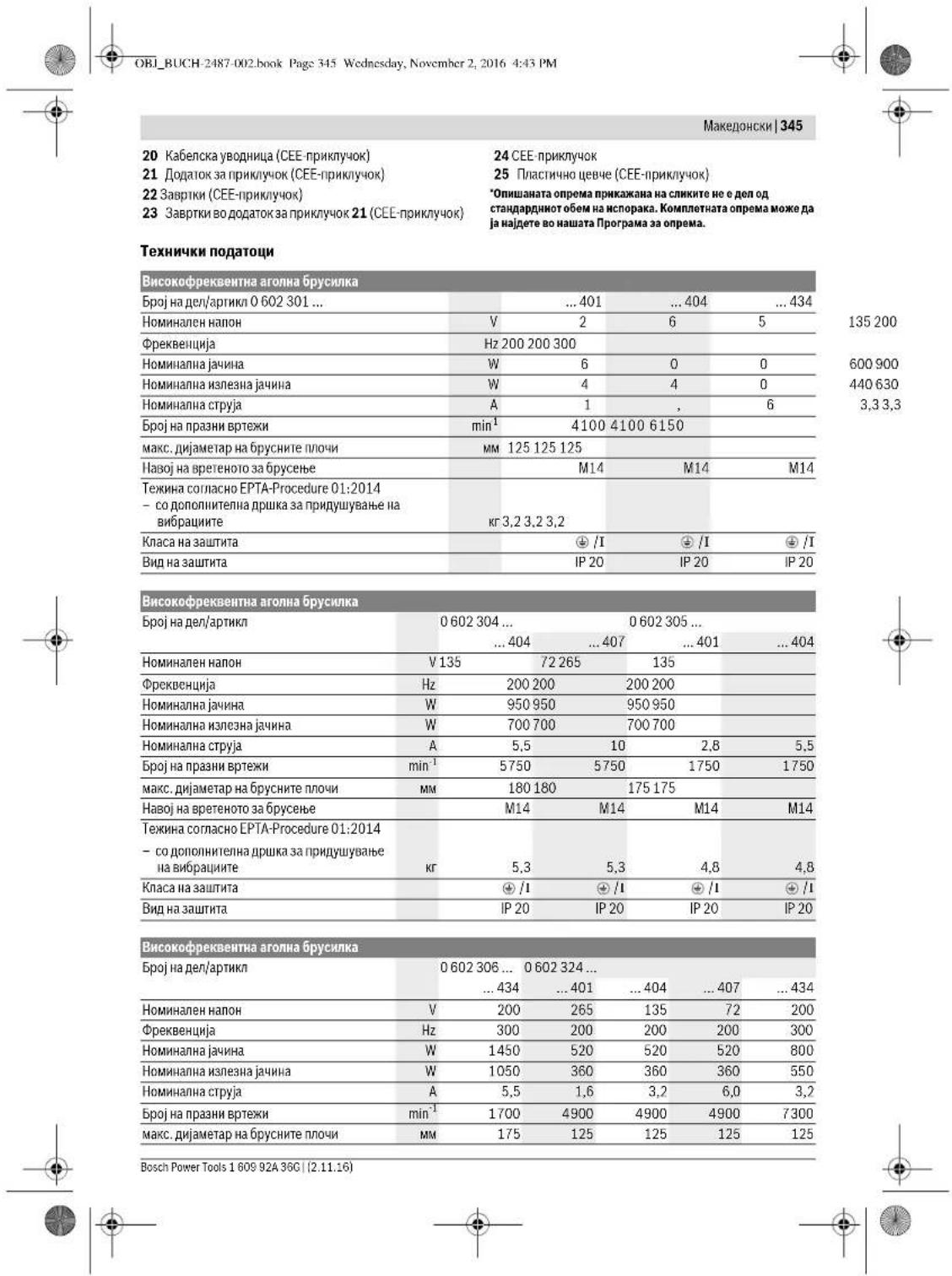
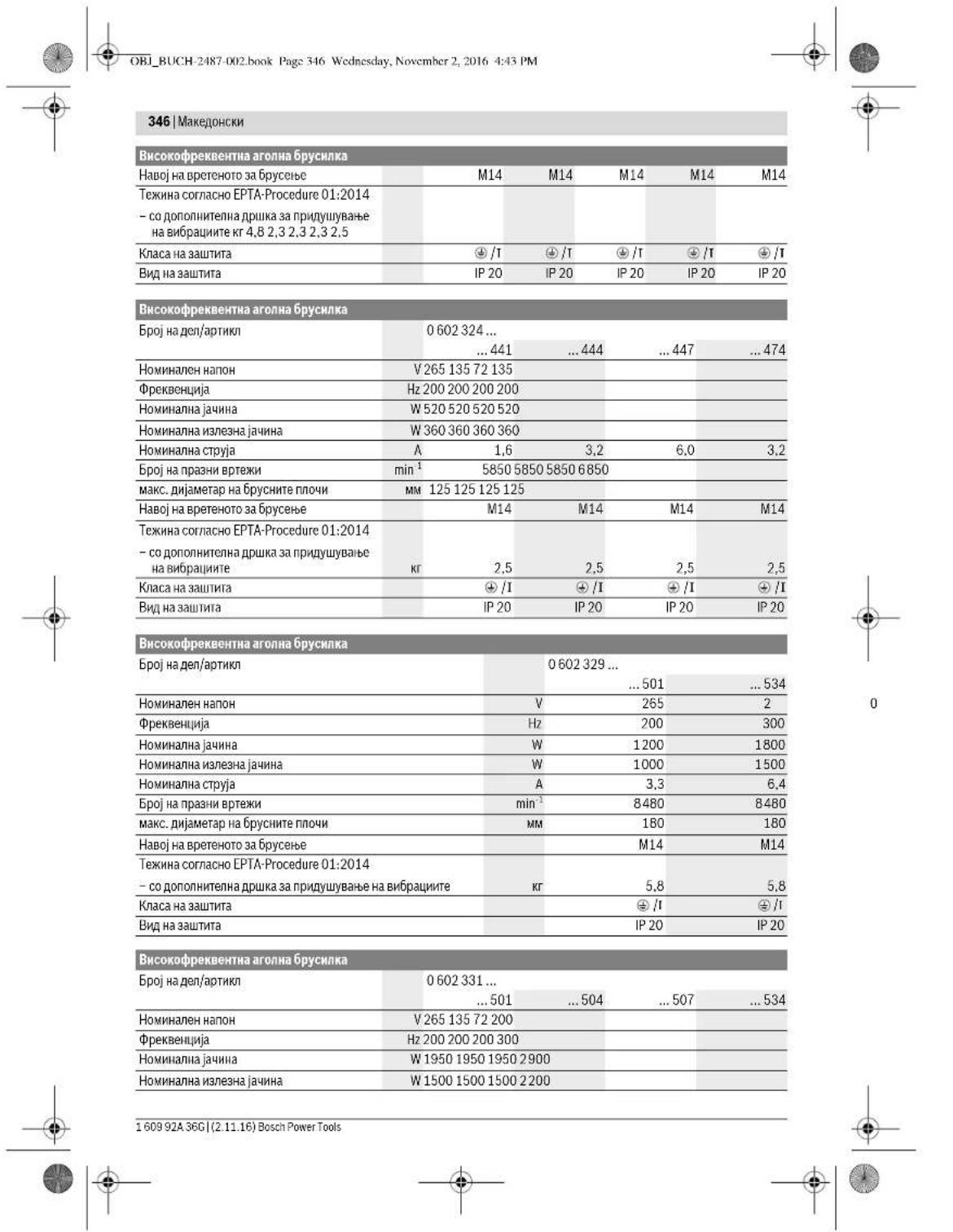
Macedonian|347
| Ви这样做�хштейнага aronna 6bychnka | ||||
| HommaHajna stryja | A | 5 | 10 | 18 |
| Бpoj ha npa3n ha bptexn | min1 | 8480 8480 8480 8480 | ||
| маск. disjametap ha 6bpycnhte почи | MM | 180 180 180 180 | ||
| HaboJ ha bprtehoto za bpycebe | M14 M14 M14 M14 | |||
| Текина соглесno EPTA-Procedure 01:2014 - co доронателна дршиka за рindушваье ha bivbaquinne | КR 7,17,17,17,1 | |||
| Клеса ha zaшпета | ± /I /I /I | |||
| Вид ha zaшпета | IP 20 | IP 20 | IP 20 | IP 20 |
High-pressure washer
| Бpoj на并向对接 | 0 602 332 ... | |||||
| ...501 | ...504 | ...507 | ...534 | ...511 | ||
| Hominen Hanoi | V | 265 | 135 | 72 | 200 | 72 |
| Ф�reichменя | Hz | 200 | 200 | 200 | 300 | 300 |
| Hominna Japana | W | 1950 | 1950 | 1950 | 2900 | 2900 |
| Hominna Japana Japana | W | 1500 | 1500 | 1500 | 2200 | 2200 |
| Hominna Stprya | A | 5 | 10 | 18 | 10 | 27 |
| Бpoj на пазни вргеля | min¹ | 6600 | 6600 | 6600 | 6600 | 6600 |
| Мас. дожаета на бруchnite пioч | MM | 230 | 230 | 230 | 230 | 230 |
| Hаов jo на ветенота за بрусяе | M14 | M14 | M14 | M14 | M14 | |
| Текиа сорлесно EPTA-Procedure 01:2014 - с准备工作драшика за рindушваende в�ы堕піе | КГ | 7,1 | 7,1 | 7,1 | 7,1 | 7,1 |
| Клеса на зашипă | + /1 | + /1 | + /1 | + /1 | + /1 | |
| Видназчпа | IP 20 | IP 20 | IP 20 | IP 20 | IP 20 | |
High-pressure washer
| Бpoj на颇ten/артык | 0 602 334 ... ...501 ...504 ...507 ...534 |
| Hominahen hanoi | V 265 135 72 200 |
| Фразбениja | Hz 200 200 200 300 |
| Hominahina jaunha | W 2500 2500 2500 3800 |
| Hominahina hyaeseia jaunha | W 2200 2200 2200 3100 |
| Hominahinaстуяа | A 6,7 13,2 24,7 13,2 |
| Бpoj на пазни вретеки | min¹ 6600 6600 6600 6600 |
| макс. диметер на брусятце почи | MM 230 230 230 |
| Haboj на розенота збухсанe | M14 M14 M14 M14 |
| Текина сорлесно EPTA-Procedure 01:2014 - co polonitienna дошka за падушвае на виравлие | Кr 7,8,7,8,7,8 |
| Класа на зашита | © /I /I /I /I |
| Вид на зашита | IP 20 IP 20 IP 20 IP 20 |
Instructions for energy supply
The electric motor is operated by a high-voltage system and requires a properly grounded and insulated power connection.
To achieve this, the electric motor must be connected to a frequency converter (see "Instructions for energy supply", page 352).

348|Macedonian
The noise emission of the machine is determined in accordance with EN 60745-2-3.
Information about noise/vibration
| 0.60230140. | 0.602301434. | 0.60230440. | 0.60230540. | |
| Hinboto ha 38uk ha ypeodot, oueheto co A, | ||||
| TINHIO H3NECBya | ||||
| Hinbo Ha 38yueh npHIncok | dB(A) | 72 | 82 | 79 |
| Hinbo Ha 38yua jaHina | dB(A) | 83 | 93 | 90 |
| HecnHypnoct K | dB | 3 | 3 | 3 |
| Hocete zauHTa 3a clyXot! | ||||
| Bkynnite bpeiNoCTHa BnBpaunia | ||||
| (BeKTopcsk 36Op Ha TPrte HacOKI) | ||||
| HeCNrpynoct K pAdenH ce Bo cornaChoct | ||||
| co EN 60745 2-3. | ||||
| PobuHNCko 6pycebe (rpy6o | ||||
| 6pycebe): | ||||
| a1 | m/s2 | - | 5.3 | 5 |
| K | m/s2 | - | 2 | 2 |
| Ponipranbe: | ||||
| a1 | m/s2 | 3 | 3 | - |
| K | m/s2 | 1.5 | 1.5 | - |
| 6pycebe co 6pycen nHcT: | ||||
| a1 | m/s2 | 3 | 3 | - |
| K | m/s2 | 1.5 | 1.5 | - |
| 0 602 306 434 | 0 602 324 40. | 0 602 324 44. | |
| 0 602 324 464 | |||
| 0 602 324 474 | |||
| 0 602 324 434 | |||
| НиматICALS: | |||
| НиматICALS | dB(A) | 82 | 77 |
| НиматICALS | dB(A) | 93 | 88 |
| Héchéneyacht K | dB | 3 | 3 |
| Hocete zaußneta 3a clyxot! | |||
| БукшпITE BrepIJICHTN ha BvIbpaunu a, (BekTopcsk)3bOp Ha trpite HacOKN) HeCIMYPCHCTK JdaTeHn ce BOcorgnachocT co EN 60745-2-3. | |||
| Повшнско 6顺序e (rpy6bpycebe): | |||
| a1 | m/s2 | - | - |
| K | m/s2 | - | - |
| Полигалы: | |||
| a1 | m/s2 | < 2,5 | 4 |
| K | m/s2 | 1,5 | 1,5 |
| Буссени co 6顺序ипст: | |||
| a1 | m/s2 | < 2,5 | 4 |
| K | m/s2 | 1,5 | 1,5 |
| 0 602 329 50. | 0 602 329 534 0 602 329 511 | 0 602 331 5.. | 0 602 332 5.. | |
| Hiberto Ha 38yK ha ypedot, oceheno co A, TININIHO KIeHcyBa | ||||
| Hibro Ha 38yuH npHTincoK | dB(A) | 85 | 87 | 86 |
| Hibro Ha 38yuHa jaYnHa | dB(A) | 96 | 98 | 97 |
| HeckryphocT K | dB | 3 | 3 | 3 |
| Hocere zaHTHna 3a clyxot! | ||||


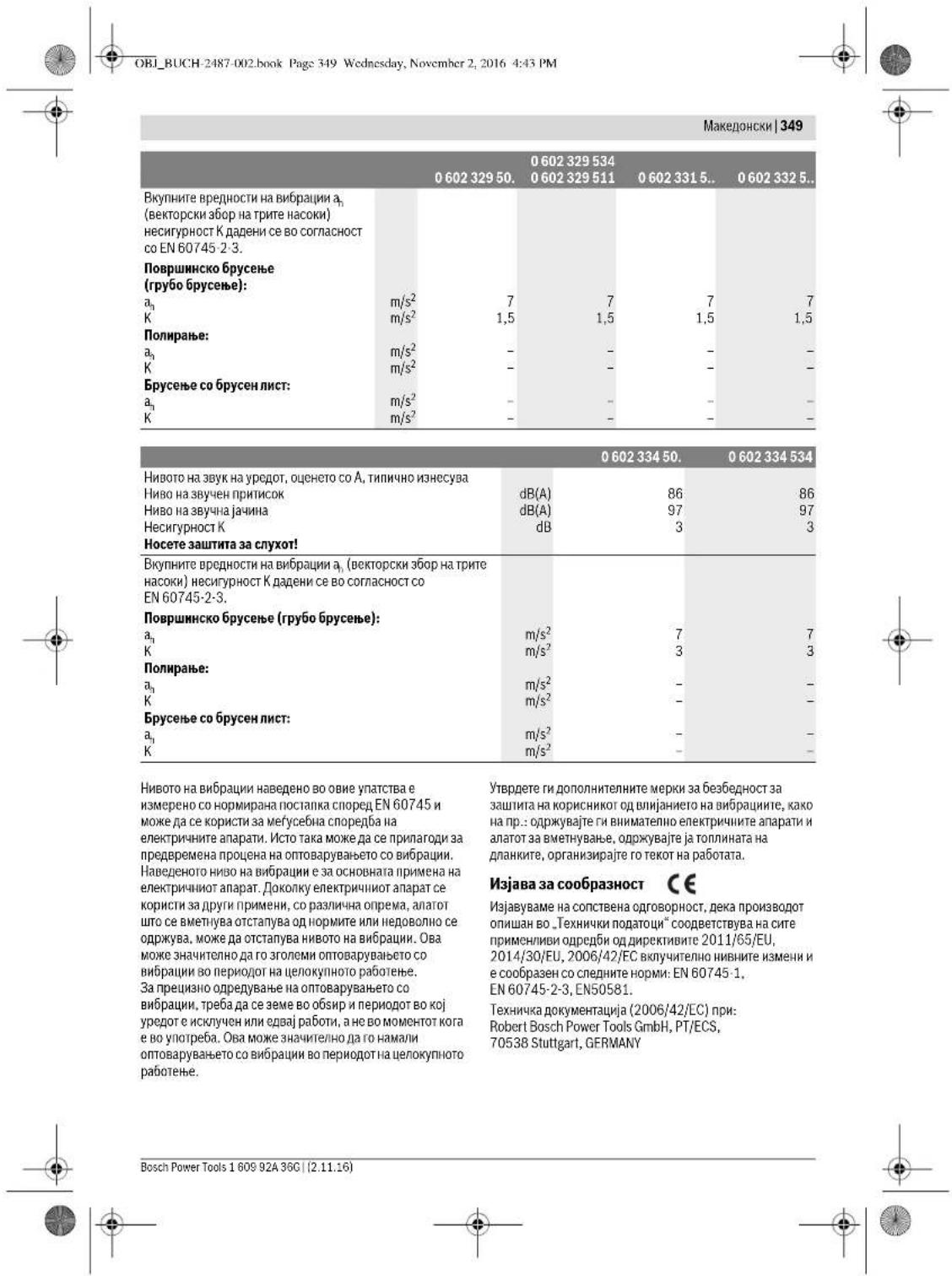
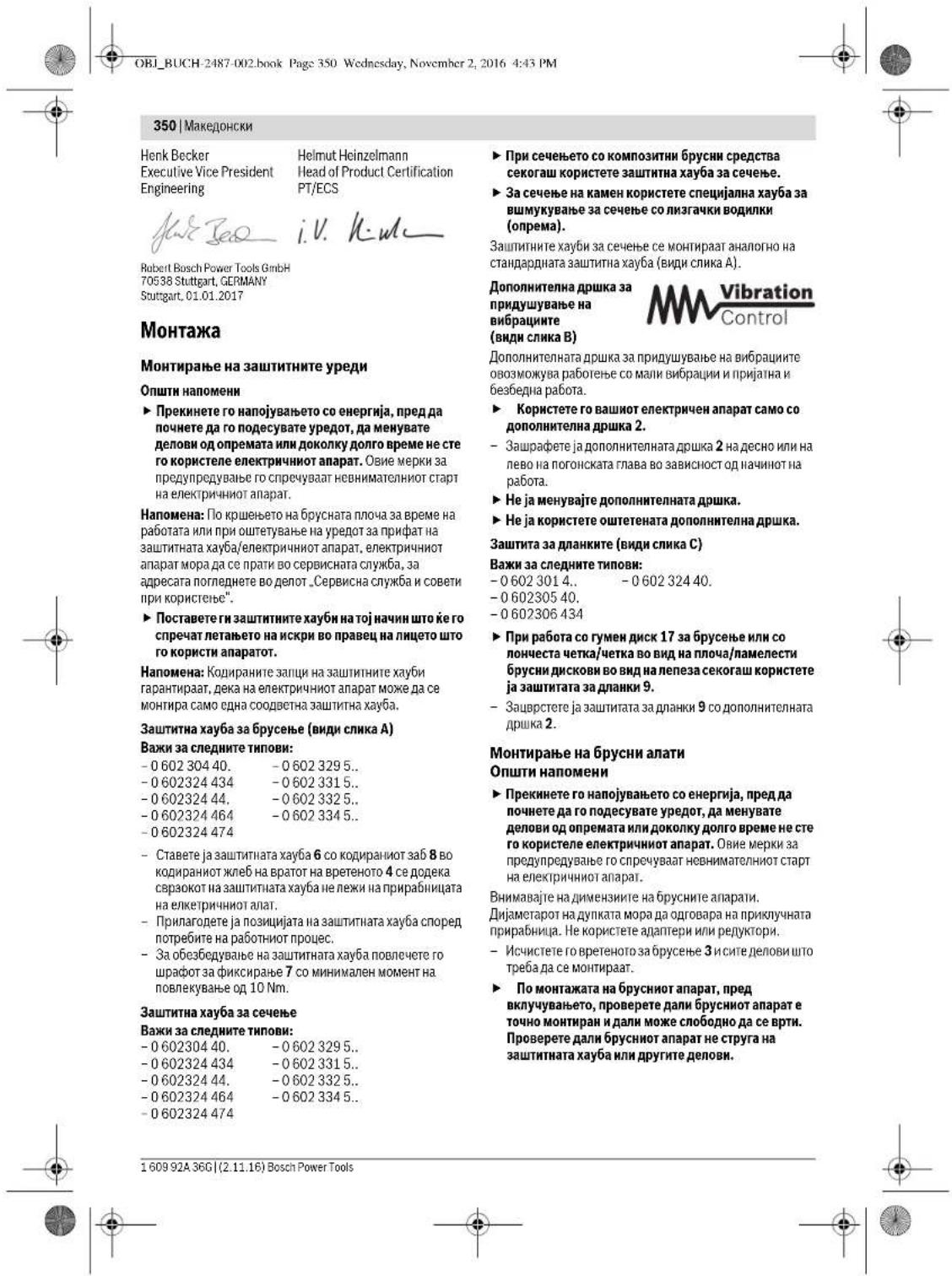
Macedonian|351
Mounting the beam, connecting the electrical part (BNDCNKND1-D2)
Important for the following types:
-060230440. -06023315.. -060232444,..464,-06023325. 474.434 06023345.. -06023295..
User
- Make sure that the mounting is done (see mounting instructions, page 350).
- Place the connection box 10 on the beam for the beam 3.
In the connection box, around the central outer part (opening), if the opening is not present, it must be made before mounting the connection box.
- The screws are used for the beam 11 (hole for the beam, connection and electrical) on the beam for the beam 3.
- Insert the screw 12 so that the screw head is visible. Tighten the screw with a key with two openings 13, while with the key 14 the surface is pressed against the beam.
Adjustment
- Check the beam with the key 14. Tighten the screw 12 with the key with two openings 13 from the beam, while with the key 14 the surface of the key is pressed.
- Repeat the same for the beam as for the connection box of the beam.
Electrical device with key for adjusting the time
Important for the following types:
-060232440 -0602324434 -060232444.
Insert the plug of the device into the socket before installation and adjustment (see figure E-12).
The device for blocking the ventilation is activated by the plug for the hose. The electrical device can be damaged. - Before use, press the plug for fixing the ventilation 5, so that the ventilation for the hose is pressed to the plug. - Install according to the instructions for the hose (see installation, connection and adjustment, page 351).
- Remove the plug for fixing the ventilation 5, so that the mechanical fixing of the ventilation is activated.
Installing the rubber hose for ventilation
(see figure F)
Spare parts for the hose: -06023014. -060232440
-060230540.
H00601806434
Use
- Make sure that the protective equipment and the additional equipment are installed (see, installation of protective equipment, page 350).
- Place the hose for ventilation 17 on the ventilation connection 3. Place the hose clamp 6 on the hose for ventilation 6. Place the round nut 15 on the ventilation connection. - Tighten the round nut with the plug with two holes 13, until it is pressed to the plug 14 and to the surface of the hose of the ventilation 3.
CAUTION: The round nut 15 must be tightened so that the hose for ventilation is not damaged, so that the ventilation hose is not damaged.
Removal
Remove the hose for ventilation 3 with the plug with two holes 13 from the ventilation connection. Loosen the round nut 15 with the plug with two holes 13 from the ventilation, until it is pressed to the plug 14 and to the surface of the hose. - Remove the hose for ventilation from the ventilation connection.
Installing the hose for suction (see figure G)
Important for the following types:
-06023014. -060232440 -060230540. -0602306434
Use
Note: The adjustment disc for the brush head (M14) must be used to properly adjust the brush head.
- Make sure that the protective guard for the side discharge (see, Mounting the protective guard, page 350) is mounted. Turn the adjustment disc for the brush head 18 until the brush head surface is at the desired height, while turning the knob 14 to lock the brush head surface in place.

352 | Macedonian
Adjustment
Turn the adjustment disc for the brush head 18 with the knob 14 to adjust the brush head surface, while turning the knob 14 to lock the brush head surface in place.
Mounting the front deflector (see figure H)
Important for the following types:
-060230440. -06023315..
-060232444,...464. -06023325..
474.434 -06023345
-06023295..
Use
BEFORE USE, READ THE INSTRUCTIONS AND THE SAFETY INSTRUCTIONS (14). - Make sure that the protective devices and the additional equipment are installed (see Installing the protective devices, page 350). Make sure that the clamping lever 19 (lower or upper position) is in the position for drilling 3, so that it does not touch the surface of the drill head, while with the release key 14 you press the surface of the drill head.
Removal
Make sure that the clamping lever 19 is fixed with the release key on the surface of the drill head, while with the release key 14 you press the surface of the drill head 3.
Activating the straightening
The material may contain hazardous substances. Some materials, such as lead, mineral metals, etc., are harmful to health. The user or the operator of such materials must be aware of the risks and take appropriate safety measures.
The user must be aware of the risks. Some materials are classified as carcinogenic, especially when they contain certain substances (chromium, nickel, etc.). The material may be harmful to health if it is not handled properly.
- If possible, use a suitable extraction system for the material being processed. - Ensure good ventilation of the work area. It is recommended to use a protective mask for dust when working with class P2 filter. Be careful with the sparks and with your hands when processing the material.
Avoid collecting dust at the work area. The dust must not be inhaled.
Risk of energy use
For the use of electrical appliances, it is necessary to convert the alternating current into a direct current that is suitable for the specific appliance.
The transformer has different voltages with different frequencies, depending on the type of appliance. The choice of the transformer and the frequency depends on the electrical appliances that need to be connected. Make sure that the distribution is correct for the choice of the transformer and the frequency.
The electrical appliance is supplied with a special cable of external diameter. To be put into operation, the special cable must be equipped with a CEE plug (according to the standard).
In addition, the electrical appliance can be equipped with a commercial protective motor switch. The installation of this protective motor switch must cover the nominal current of the electrical appliance (see "Technical data"). The protective motor switch must be set according to the instructions.
For this purpose, follow the safety instructions and the installation instructions in the operating manual of the protective motor switch!
Mounting the CEE plug (see figures 1-12)
Connect the green-yellow wire to terminal 22. Connect the protective conductor to the protective terminal of the product. The product is intended for connection to a 20 A power supply. The product must be connected to the protective conductor of the fixed installation in accordance with the instructions for the special cable of the electric apparatus. Connect the wires to the functional terminal of the product according to the instructions for the special cable. Check the connections according to the wiring diagram. Connect the green-yellow wire to terminal 22. Connect the protective conductor to the protective terminal of the product. The product is intended for connection to a 20 A power supply. The product must be connected to the protective conductor of the fixed installation in accordance with the instructions for the special cable of the electric apparatus. Connect the wires to the functional terminal of the product according to the instructions for the special cable. Check the connections according to the wiring diagram.
Connect the green-yellow wire to terminal L2.
Connect the green-yellow wire to terminal L3.
Connect the green-yellow wire to the protective terminal.
Repeat the tightening of the screws to 23 Nm for the connection terminal 21, to fix the wires. After tightening the screws, check the cable connection by pulling on the cable, so that there is no loosening of the metal parts. Repeat the insertion of the connection terminal 21 into the socket and the functional terminal 24, and repeat the tightening of the two screws 22. Finally, check the correct function of the protective conductor by setting the functional terminal 24 and the electric apparatus in the operating position.





You can now connect the frequency converter to the power supply.
To connect the frequency converter to the power supply, follow the instructions in the section on connecting the frequency converter.
Finally, check the correct time!
Checking the correct time
The time of the timer for the delay must correspond to the time setting of the electric apparatus.
If the timer for the delay at the first start is set to the wrong time, [see] "Switching on/off the electric apparatus", page 353), you must switch off the electric apparatus and disconnect it from the power supply.
Remove the two screws 22, and then remove the connection terminal 21 from the socket and the functional terminal 204. - Remove the metal parts from the cable entry and the terminal block. - Then insert the metal part of the cable entry L3 into the terminal block L1 and the metal part of the cable entry L1 into the terminal block L3. - Repeat the tightening of the screws 22 for the connection terminal 21 to fix the wires. Then insert the connection terminal 21 into the socket and the functional terminal 24, and repeat the tightening of the two screws 22. Finally, check the correct function of the protective conductor. - Connect the electric apparatus to the power supply again.
Use
Before use, the tool must be checked for damage. Check the blades for cracks. The blade must be mounted without interruption and must be able to rotate freely. Run a test at the lowest speed for 1 minute without touching the material with the appliance. Do not use cracked, broken, or damaged blades. Damaged blades may cause injury. Set the on/off switch 1 to the off position before connecting the appliance to the power supply, unless the on/off switch 8 is in the on position. This will prevent unintentional starting of the device. Check the power supply (see "Power supply", page 352) before turning on the appliance again.
Connect the appliance to the frequency converter first, before connecting the frequency converter to the mains.
To start the device, turn on the appliance only when it is in use.
On/off switch of the frequency converter
First, you must calibrate the frequency converter before you can turn on the appliance.
For this, follow the instructions for the frequency converter.
Turning the appliance on/off with the safety switch (see figure J1)
Important notes:
To turn on the appliance, press the on/off switch 1 forward.
To lock the on/off switch 1, press the on/off switch 1 forward and press the lock button.
To turn off the appliance, release the on/off switch 1. If the on/off switch 1 is locked, press it briefly and then release it.
Turning the appliance on/off with the safety switch (see figure J2)
Important notes:
Before using the power tool, read the operating instructions for switching on/off. Follow the instructions for switching on/off. Use the tool only for switching on/off. Do not switch the power tool on/off by bypassing the switch. If the power tool is switched on/off, release the switch.
Operating instructions
Before carrying out any work on the power tool (e.g., maintenance, changing tools, etc.), remove the battery from the power tool. The battery should be removed when the power tool is not in use. These measures prevent accidental starting of the power tool. Pay attention to the safety warnings in the operating instructions.

Do not modify the plug. Using the correct plug reduces the risk of electric shock.
Avoid body contact with grounded surfaces such as pipes, radiators, stoves, and refrigerators. There is an increased risk of electric shock if your body is grounded. Keep the power tool away from rain or moisture. Water entering the power tool increases the risk of electric shock. Do not carry the power tool by the cord, do not hang it, and do not pull the cord to unplug it. Keep the cord away from heat, oil, sharp edges, or moving parts. Damaged or entangled cords increase the risk of electric shock. When working outdoors with a power tool, use only extension cords suitable for outdoor use. Using a cord suitable for outdoor use reduces the risk of electric shock. If operating the power tool in a damp environment is unavoidable, use a residual current device (RCD) protected supply. Use of an RCD reduces the risk of electric shock.
Personal safety
Be careful, watch what you are doing and work sensibly with your power tool. Do not use the power tool if you are tired or under the influence of drugs, alcohol, or medication. A moment of inattention when using a power tool can lead to serious injuries. Wear personal protective equipment and always wear safety glasses. Wearing personal protective equipment, such as a dust mask, non-slip safety shoes, a hard hat, or hearing protection, depending on the type and use of the power tool, reduces the risk of injuries. Avoid unintentional starting. Make sure the power tool is switched off before connecting it to the power supply and/or battery pack, picking it up, or carrying it. If you carry the power tool with your finger on the switch or connect it to the power supply while it is switched on, this can lead to accidents. Remove adjusting tools or wrenches before switching on the power tool. A tool or wrench left attached to a rotating part of the appliance can lead to accidents. Avoid abnormal body posture. Always make sure you stand firmly and maintain your balance at all times. This way you can better control the power tool in unexpected situations. Wear suitable clothing. Do not wear loose clothing or jewelry. Keep your hair, clothing, and gloves away from moving parts. Loose clothing, long hair, or jewelry can be caught by rotating parts. If dust extraction and collection equipment can be mounted, make sure they are properly connected and used. The use of dust extraction can reduce dust-related hazards.
Careful use and handling of power tools
Properly use the device. Use the electric tool intended for your work. With the appropriate electric tool, you work better and more safely in the specified work area. Do not use any electric tool whose switch is defective. Electric tools that cannot be switched on or off are dangerous and must be repaired. Pull the plug out of the socket and/or remove the battery before making adjustments on the device, changing accessory parts, or storing the device. This precaution prevents unintentional starting of the electric tool. Keep unused electric tools out of the reach of children. Do not allow use of the device by persons who do not know the device or have not read these instructions. Electric tools are dangerous when used by inexperienced persons. Carefully maintain the electric tool. Check whether the moving parts of the device function safely and do not jam, whether parts are broken or damaged in such a way that the function of the electric tool is impaired. Repair these damaged parts before use. Many accidents have their causes in poorly maintained electric tools. Keep cutting tools sharp and clean. Carefully maintained cutting tools with sharp edges are less likely to jam and are easier to guide. Use the electric tool, accessories, inserted tools, etc. according to these instructions. Pay attention to the working conditions and the work to be performed. Use of electric tools for purposes other than those intended can lead to dangerous situations.
Service
Have your electric tool repaired only by qualified personnel and only with original spare parts. This ensures that the safety of the device is maintained.
Serbian|363
| Visokofrekventa ugaona brusilica | |||||
| Vrsta zašite | IP 20 | IP 20 | IP 20 | IP 20 | |
| Napomene o napajanju Elektronici uredaj je deo visokofrekventnogsystemi i zahteva trofaznu naizmeničnu struju sa frekvencijom koja odgovara oznaci na pločici ureduja. | Da bi se ta frekvencija postigla, elektronici alat mora da bude povezan sa frekventnim pretableam (pogledajte „Prikljucak na snabdevanje energijom", strana 367). | ||||
| Informacije o šumovima/vibracijama Vrednosti emisije šumova se odreduju u skladu sa EN 60745-2-3. | |||||
| 0 602 301 40. | 0 602 301 434 | 0 602 304 40. | 0 602 305 40. | ||
| A-vrednovan nivo šumova uredija iznosi tipićno | |||||
| Nivo zbućnog pritiska | dB(A) | 72 | 82 | 79 | 76 |
| Nivo snage vžuka | dB(A) | 83 | 93 | 90 | 87 |
| Nesigurnost K | dB | 3 | 3 | 3 | 3 |
| Nosite zašitu za sluh! | |||||
| Ukupne vrednosti vibracija a, (zbir vektora tri pracva) i nasigurnost K su dobujeni prema EN 60745-2-3. | |||||
| Brušenje povrsina (gruba obrada): | |||||
| a, | m/s2 | - | 5,3 | 5 | - |
| K | m/s2 | - | 2 | 2 | - |
| Poliranje: | |||||
| a, | m/s2 | 3 | 3 | - | < 2,5 |
| K | m/s2 | 1,5 | 1,5 | - | 1,5 |
| Brušenje sa brusnim listom: | |||||
| a, | m/s2 | 3 | 3 | - | < 2,5 |
| K | m/s2 | 1,5 | 1,5 | - | 1,5 |
| 0 602 324 44.0 0 602 324 464.0 0 602 324 474.0 0 602 324 434 | |||||
| A-vrednovan nivo šumova uredija iznosi tipićno | |||||
| Nivo zbućnog pritiska | dB(A) | 82 | 77 | 82 | |
| Nivo snage vžuka | dB(A) | 93 | 88 | 93 | |
| Nesigurnost K | dB | 3 | 3 | 3 | |
| Nosite zašitu za sluh! | |||||
| Ukupne vrednosti vibracija a, (zbir vektora tri pracva) i nasigurnost K su dobujeni prema EN 60745-2-3. | |||||
| Brušenje povrsina (gruba obrada): | |||||
| a, | m/ s2 | - | - | 6 | |
| K | m/s2 | - | - | 2 | |
| Poliranje: | |||||
| a, | m/s2 | < 2,5 | 4 | - | |
| K | m/s2 | 1,5 | 1,5 | - | |
| Brušenje sa brusnim listom: | |||||
| a, | m/s2 | < 2,5 | 4 | - | |
| K | m/s2 | 1,5 | 1,5 | - | |

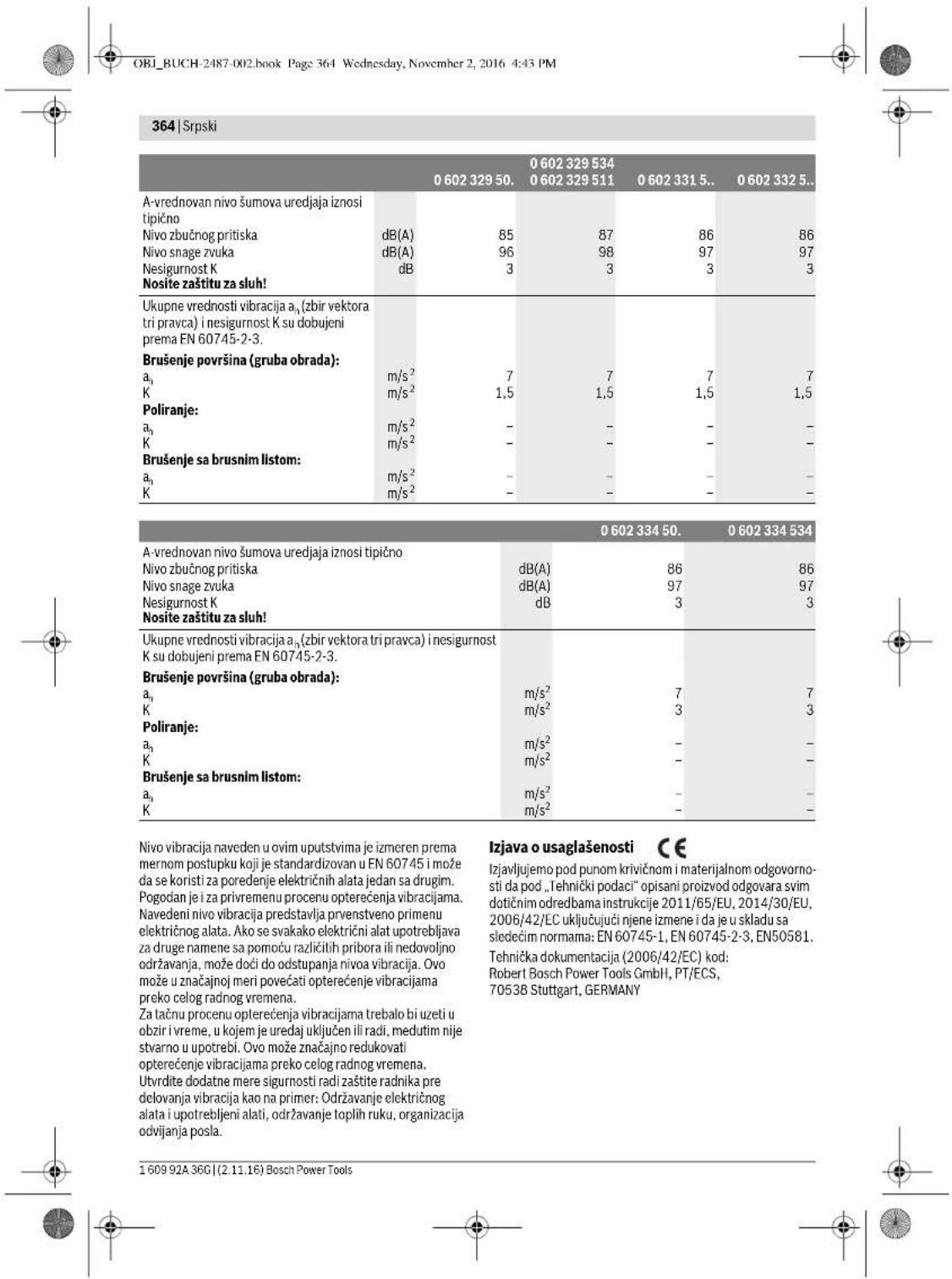
Serbian 365
Henk Becker
Executive Vice President Engineering
Heimut Heinzelmann
Head of Product Certification PT/ECS

Robert Bosch Power Tools GmbH
70538 Stuttgart, GERMANY
Stuttgart, 01.01.2017
Assembly
Assembly of protective devices
General instructions
Disconnect the power supply before making any adjustments to the device, replacing accessory parts, or leaving the power tool. This precaution prevents accidental starting of the power tool.
Note: After breakage of the grinding disc during operation or if the guard device on the protective hood/power tool is damaged, the power tool must be sent to a service center immediately. For addresses, see the section 'Service and customer advice'.
Adjust the protective hood so that sparks are prevented from flying towards the operator.
Note: The coded lugs on the protective hoods ensure that only a protective hood that matches the power tool can be mounted.
Protective hood for grinding (see figure A)
Applies to the following types:
-060230440
-06023295..
-0602324434
-06023315
-060232444.
-06023325..
-0602324464
- Place the protective hood 6 with the collar 8 into the groove on the spindle neck 4 until the snap of the hood sits on the flange of the power tool.
- Adjust the position of the protective hood to the requirements of the work step.
- To secure the protective hood, tighten the fixing screw 7 with a tightening torque of at least 10 Nm.
Serbian|367
especially in connection with additional materials for wood processing (chromates, wood preservatives). Material containing asbestos may only be worked on by specialists.
- Use the best possible dust extraction suitable for the material. Ensure good ventilation of the workplace. - It is recommended to wear a respiratory protection mask with filter class P2.
Slovenian 377
| Visokofrekvenčni kotni brusilnik | ||||
| Zašćitni razred | ©/I/I/I/I | © | © | © |
| Vrsta zašće | IP 20 | IP 20 | IP 20 | IP 20 |
Warning about energy supply.
The power tool is part of a high-frequency system and requires a 3-phase current with a frequency in accordance with the specifications on the rating plate.
To achieve the specified frequency, you must connect the power tool to a frequency converter (see "Connection to the power supply", page 381).
| 0 602 329 50. | 0 602 329 534 | 0 602 331 5.. | 0 602 332 5.. | ||
| 0 602 329 511 | |||||
| Nivo hrupa naprave po vrednotenju Aznaša tipićno | |||||
| Nivo zvočnega tlaka | dB(A) | 85 | 87 | 86 | 86 |
| Nivo jakosti zvoka | dB(A) | 96 | 98 | 97 | 97 |
| Netočnost K | dB | 3 | 3 | 3 | 3 |
| Nosite začitne glušnike! | |||||
| Skupne vrednosti vibracij a, (vektorska vsota treh smeri) in negotovost K se izraču-najo v skladu z EN 607 45-2-3. | |||||
| Bruşanje prevlek (kosmačenje): | |||||
| a, | m/s2 | 7 | 7 | 7 | 7 |
| K | m/s2 | 1,5 | 1,5 | 1,5 | 1,5 |
| Poliranje: | |||||
| a, | m/s2 | - | - | - | - |
| K | m/s2 | - | - | - | - |
| Bruşanje z brusilnim listom: | |||||
| a, | m/s2 | - | - | - | - |
| K | m/s2 | - | - | - | - |
| 0 602 334 50. | 0 602 334 534 | ||
| Nivo hrupa naprave po vrednotenju A znaša tipićno | |||
| Nivo zvočnega tlaka | dB(A) | 86 | 86 |
| Nivo jakosti zvoka | dB(A) | 97 | 97 |
| Netočnost K | dB | 3 | 3 |
| Nosite zaščitne glušnike! | |||
| Skupne vrednosti vibracij a, (vektorska vsota treh smeri) in negotovost K se izračunoj v skladu z EN 60745-2-3. | |||
| Bruşanje prevlek (kosmačanje): | |||
| a1 | m/s2 | 7 | 7 |
| K | m/s2 | 3 | 3 |
| Poliranje: | |||
| a1 | m/s2 | - | - |
| K | m/s2 | - | - |
| Bruşanje z brusilnim listom: | |||
| a1 | m/s2 | - | - |
| K | m/s2 | - | - |
Henk Becker
Executive Vice President Engineering
Heimut Heinzelmann
Head of Product Certification PT/ECS

Robert Bosch Power Tools GmbH
70538 Stuttgart, GERMANY Stuttgart, 01.01.2017
Assembly
Mounting the protective devices
General instructions
Before setting up the device, replacing accessory parts, or storing the power tool, you must disconnect the power supply. This precautionary measure prevents unintentional starting of the power tool.
Warning: If the grinding wheel breaks during operation or if the guards on the protective cover/on the power tool are damaged, you must immediately send the power tool to the service address; the address can be found in the section "Service and advice on use".
Adjust the protective covers so that sparks are prevented from flying towards the operator.
Switching the power tool on and off
with the safety lock-off switch (see figure J1)

Notes on power supply
The power tool is part of a high-frequency system and requires three-phase current with a frequency according to the rating plate.
To achieve the frequency, the power tool must be connected to a frequency converter (see "Connection to power supply", page 394).
Information on noise and vibration
392|Croatian
| 0.60232950. | 0.6023295340.602329511 | 0.6023315.. | 0.6023325.. | |
| Ukupne vrijednosti vibracija a1 (vektoriski zbor u tri smjera) i nesigurnost K odredeni su prema EN 60745-2-3. | ||||
| Bruşenje povrsina (gruba obrada): | ||||
| a1 | m/s2 | 7 | 7 | 7 |
| K | m/s2 | 1,5 | 1,5 | 1,5 |
| Poliranje: | ||||
| a1 | m/s2 | - | - | - |
| K | m/s2 | - | - | - |
| Bruşenje sa brusnim listom: | ||||
| a1 | m/s2 | - | - | - |
| K | m/s2 | - | - | - |
| 0 602 334 50. | 0 602 334 534 | ||
| Prag buke uredaja vrednovan sa A obično iznosi | |||
| Prag zvučnog tlaka | dB(A) | 86 | 86 |
| Prag učinka buke | dB(A) | 97 | 97 |
| Nesigurnost K | dB | 3 | 3 |
| Nosititišnike za sluh! | |||
| Ukupne vrijedosti vibracija a1(vektorski zbor u tri smjera) i nesi-gurnost K odredeni su prema EN 60745-2-3. | |||
| Bruşanje povrsina (gruba obrada): | |||
| a1 | m/s2 | 7 | 7 |
| K | m/s2 | 3 | 3 |
| Poliranje: | |||
| a1 | m/s2 | - | - |
| K | m/s2 | - | - |
| Bruşanje sa brusnim listom: | |||
| a1 | m/s2 | - | - |
| K | m/s2 | - | - |
Henk Becker Executive Vice President Engineering
Helmut Heinzelmann Head of Product Certification PT/ECS
Robert Bosch Power Tools GmbH 70538 Stuttgart, GERMANY Stuttgart, 01.01.2017
Assembly
Mounting the protective devices
General safety warnings
394|Croatian
Press the spindle lock button only while the grinding spindle is at a standstill. Otherwise, the power tool could be damaged. - Before mounting the grinding tool, press the spindle lock button 5 to lock the grinding spindle 3 and keep the button pressed. - Mount the required grinding tool (see "Mounting the grinding, cutting, or roughing disc", page 393). - Release the spindle lock button 5 to unlock the grinding spindle.
Mounting the rubber sanding plate (see figure F)
General safety warnings
WARNING Read all safety warnings and all instructions. Failure to follow the warnings and instructions may result in electric shock, fire and/or serious injury.
Estonian 401
Estonian 405
| 0.60230140. | 0.602301434. | 0.60230440. | 0.60230540. | |
| Vibratsionitase \( a_{\mathrm {p}} \) (kolme telje vektorsum- ma) ja mõötemääramatus K, kindlaks teh- tud kooskolas standardiga EN 60745-2-3. | ||||
| Pinna lihvinmisel: | ||||
| \( a_{\mathrm {n}} \) | \( m/s^{2} \) | - | 5,3 | 5 |
| K | \( m/s^{2} \) | - | 2 | 2 |
| Poleerimisel: | ||||
| \( a_{\mathrm {n}} \) | \( m/s^{2} \) | 3 | 3 | - |
| K | \( m/s^{2} \) | 1,5 | 1,5 | - |
| Lihvaberiga lihvinmisel: | ||||
| \( a_{\mathrm {n}} \) | \( m/s^{2} \) | 3 | 3 | - |
| K | \( m/s^{2} \) | 1,5 | 1,5 | - |
406|Estonian
Henk Becker Helmut Heinzelmann Executive Vice President Head of Product Certification Engineering PT/ECS
iV. k = m
Robert Bosch Power Tools GmbH 70538 Stuttgart, GERMANY Stuttgart, 01.01.2017
Assembly
Estonian 407
408|Estonian
Removal
Estonian 409
410|Estonian
Static guidelines
When cutting grooves into load-bearing walls, the guidelines of standard DIN 1053 Part 1 or the respective national regulations must be followed. These regulations must be observed without fail. Before starting work, consult a qualified structural engineer, architect, or site manager.
Grinding
Latvian|413
The diameter and thickness of the accessory must correspond to the design of the power tool. If the accessory dimensions are chosen incorrectly, it will not be fully seated under the guard and will make the tool difficult to control during operation. Accessories that are fastened by means of a thread must precisely match the thread of the tool spindle. Accessories that are fastened by means of a backing flange must have an opening diameter that matches the centering diameter of the backing flange. Accessories that are not precisely mounted on the tool spindle will run unevenly, vibrate excessively, and may cause loss of control over the power tool. Do not use damaged accessories. Before each use, check the accessories for damage, for example, whether grinding discs are cracked or split, whether the backing pad shows cracks or wear, and whether the bristles of wire brushes are loose or broken. If the power tool or an accessory has been dropped from a significant height, check whether it is damaged, or use an undamaged accessory for the work. After inspecting and installing the accessory, let the power tool run at maximum no-load speed for one minute, holding the rotating accessory at a safe distance from yourself and other persons nearby. Damaged accessories will usually break apart during this test. ▸ Wear personal protective equipment. Depending on the type of work, choose a full face shield, safety goggles, or standard safety glasses. As appropriate, wear a dust mask, hearing protection, and protective gloves or an apron to protect against flying fragments of the accessory and the workpiece. The operator's eyes must be protected from flying particles that may be generated during operation. The dust mask or respirator must be able to filter out dust generated during operation. Prolonged exposure to high noise levels may cause permanent hearing damage. ▸ Ensure that other persons are at a safe distance from the work area. Anyone entering the work area must wear personal protective equipment. Fragments of the workpiece or of a broken accessory may fly off at high speed and cause injury beyond the immediate area of operation. During operation, hold the power tool only by the insulated gripping surfaces, because the accessory may contact hidden wiring or the tool's own power cord. If the accessory contacts a live wire, the voltage will be transferred to the metal parts of the tool and may cause an electric shock. Keep the power cord away from the rotating accessory. If you lose control of the tool, the accessory may cut the cord or become entangled in it, and your hand or arm may come into contact with the rotating accessory.
Do not use the power tool if the accessory is not fully attached. The rotating accessory may contact the support surface, and the power tool may become uncontrollable. Do not operate the power tool while it is being carried. The operator's clothing or hair may accidentally come into contact with the rotating accessory and get caught, causing the accessory to come into contact with the operator's body. Regularly clean the power tool's ventilation openings. The motor's ventilation air flow draws dust into the tool housing, and a large accumulation of metal dust can cause an electric shock. Do not use the power tool near flammable materials. Flying sparks can ignite such materials. Do not use accessories that require liquid coolants. The use of water or other liquid coolants can result in electric shock.
Kickback and related warnings
Kickback is a sudden reaction to a pinched or snagged rotating accessory, such as a grinding disc, sanding base, or wire brush. Pinching or snagging of the rotating accessory causes rapid stopping. As a result, the power tool is forced in the direction opposite to the accessory's rotation at the point of binding, and it often becomes uncontrollable. For example, if a grinding disc snags or pinches on the workpiece, the edge of the disc that is entering the pinch point can dig into the material, causing the disc to climb out or kickback. In such a case, the grinding disc moves toward or away from the operator, depending on the direction of the disc's rotation relative to the workpiece. Additionally, the grinding disc may break. Kickback is the result of improper or unskillful use of the power tool. It can be avoided by taking certain precautions, as described below. ▸ Hold the power tool firmly and position your body and arms to allow you to resist kickback forces. Always use the auxiliary handle, if provided, to best control kickback or reactive torque and maintain control of the tool. By taking proper precautions, the operator can control kickback and reactive torque in any situation. Keep your hands away from the rotating accessory. In the event of kickback, the accessory may also strike the operator's hand. Avoid being in the area where the power tool might move during kickback. During kickback, the power tool moves in the direction opposite to the accessory's rotation at the point of binding. Use special care when working corners, sharp edges, etc. Do not let the accessory bounce off the workpiece or become snagged. When working corners or sharp edges, the rotating accessory tends to snag and kickback. This can cause loss of control or kickback.




Do not use grinding accessories that are not intended for your power tool. Using such accessories can cause kickback and loss of control over the power tool. Special safety instructions for grinding and cutting: Use only grinding accessories that are suitable for your power tool and the guard intended for such accessories. The guard may not adequately cover unsuitable grinding accessories, preventing you from achieving the desired work safety. Curved grinding wheels must be mounted so that their grinding surface does not protrude beyond the edge of the guard. An improperly mounted grinding wheel that protrudes beyond the edge of the guard cannot be adequately covered. For safety reasons, the guard must be firmly attached to the power tool and adjusted so that the smallest possible portion of the grinding accessory is exposed towards the operator. The guard helps protect the operator from fragments and accidental contact with the grinding accessory, as well as from flying sparks that can cause burns. Grinding accessories may only be used for their intended purpose. For example, never use the side of a cutting disc for grinding. A cutting disc is intended for cutting materials with its peripheral cutting edge. Excessive side pressure can break this accessory. When using a depressed-center grinding wheel, use only an undamaged clamping flange with the correct hole and thread dimensions. A properly fitted clamping flange securely supports the grinding wheel during operation and reduces the risk of breakage. The clamping flanges used with cutting discs may differ from those used with other types of grinding wheels. Do not use worn-out grinding wheels that are intended for power tools with higher power ratings. Grinding wheels intended for larger power tools are not suitable for use in smaller power tools, where the operating speed is usually higher, and they may break during operation.
Other special safety instructions for cutting
Do not apply excessive pressure to the cutting disc and do not allow it to jam. Do not make excessively deep cuts. Overloading the cutting disc increases its tendency to jam in the cut, which also increases the risk of kickback or accessory breakage. Avoid being in front of or behind the rotating cutting disc. If during operation the operator moves the cutting disc away from themselves in the direction of the workpiece, in the event of kickback, the power tool with the rotating cutting disc may be thrown directly towards the operator. When interrupting work or if the cutting disc jams, switch off the power tool and hold it still until the cutting disc has completely stopped. Do not attempt to pull a still rotating cutting disc out of the cut, as this can cause kickback. Investigate and eliminate the cause of the disc jamming.
Do not restart the power tool while the inserted tool is still in the cut. After switching on, wait until the tool reaches full speed, and only then carefully continue cutting. Otherwise, the cutting disc may catch in the cut and be thrown out, which can also cause kickback. To reduce the risk of kickback, support the workpiece or large workpieces near the cut and at the edge. Large workpieces may bend under their own weight. The workpiece must be supported on both sides of the cut, both near the cut and at the edge. When making plunge cuts in walls or other areas where the cutting disc may come into contact with gas pipes, water pipes, electrical lines, or other objects, take special precautions. Contact with such objects can cause kickback and/or injury.
Special safety instructions for sanding with sandpaper sheets: Do not use oversized sanding sheets. Choose sanding sheets of the size recommended by the manufacturer. Sanding sheets that extend beyond the sanding pad can cause injury, jamming, or tearing of the sheet, as well as kickback.
Special safety instructions for polishing: Do not leave any loose parts of the polishing bonnet, especially the retaining strings. Tuck away or shorten the retaining strings. Loose retaining strings that rotate with the bonnet can catch the operator's hands or fingers or become entangled in the workpiece.
Special safety instructions for working with wire brushes
Ensure that no individual wires come loose or break off from the wire brush during operation. Do not overload the brush wires by pressing too hard. Broken wires fly off at high speed and can easily penetrate thin clothing or skin. When using a protective guard, do not allow it to come into contact with the wire brush. The diameter of cup-shaped and disc-shaped wire brushes may increase under the influence of pressure and centrifugal force.
Additional safety instructions
Wear safety goggles.
Using a suitable metal detector, check whether the work area conceals hidden utility lines, or consult the local utility company. Contact of the tool with an electrical line can cause fire or electric shock. Damage to a gas line can cause an explosion. If the tool




contacts a water pipe, material damage may occur, and the operator may receive an electric shock.
▷ Cases of power failure, for example, if the power supply to the electronics or the mains connector is interrupted, switch off the power tool and move it to the "off" position. This prevents the power tool from starting up again unintentionally. Wait until the tool has come to a complete stop. During operation, the tool gets very hot. During operation, hold the power tool firmly with both hands and try to maintain a stable stance. It is safer to guide the power tool with both hands. ▷ Secure the workpiece. When the workpiece is secured in a vice or other clamping device, it is safer to work than when it is held by hand. Connect the power tool only to a power supply that has an effective protective earth. The mains plug and extension cable must be safely connected to a properly functioning protective earth circuit.
Safety regulations for powering high-frequency power tools
▷ Strictly observe the safety regulations and operating instructions of the frequency converter! Detailed information can be obtained from the manufacturer of the frequency converter. When using the frequency converter in conditions where increased personal protection is required, it must be connected to the power supply via a residual current device (RCD). Increased personal protection must be ensured, for example, when working in damp rooms or when processing materials from which electrically conductive dust is released during processing. Failure to use a residual current device can lead to electric shock, cause fire, or result in serious injury. The connection of the residual current device to the supply mains must only be carried out by qualified personnel. Only then can the proper functioning of the protective device be ensured. ▷ The output voltage and frequency of the frequency converter must correspond to the values specified on the rating plate of the high-frequency power tool. When using the power tool, it must be equipped with a suitable connector. The CEE connector must be selected according to the nominal current required by the power tool (see section "Technical Data"). ⊣ The installation and connection of the connector to the supply mains must be carried out by qualified personnel who are trained to work with high-frequency power tools and equipment. | Use only the original connecting cable! Before each use, check whether the power tool, the connecting cable, or the connector is damaged. To avoid accidents, the damaged connecting cable and connector must not be repaired; they must be replaced.
Product description and specifications

Read all safety warnings and all instructions carefully. Failure to follow the safety warnings and instructions may result in electric shock, fire, and/or serious injury.
Please open the fold-out page with the illustration of the power tool and keep it open while reading the operating instructions.
Intended Use
For tools:
-06023014..
060230540
-0602306434
-060232440.
The power tool is intended for sanding painted metal surfaces with sandpaper and for polishing, without using water.
For tools:
-060230440
-060232444...464...474...434
-06023295.
-06023315..
-06023325..
-06023345..
The power tool is intended for cutting metal and stone, rough sanding, and processing with wire brushes, without using water.
When grinding with composite grinding tools, a special grinding guard must be used.
When cutting stone, ensure adequate dust extraction.
Suitable for all types of power tools.
Only guards and clamping nuts supplied or recommended for use with this power tool may be used together with it.
Depicted components
The numbering of the depicted components refers to the numbers of the power tool in the illustration on the illustrated page.
1 On/off switch 2 Auxiliary handle 3 Workpiece 4 Workpiece clamp 5 Button for locking the workpiece clamp 6 Guard 7 Screw for securing the guard 8 Depth stop 9 Hand guard 10 Base plate with O-ring 11 Grinding/cutting/rough grinding disc 12 Clamping nut 13 Two-pin spanner 14 Open-ended spanner with a width of 17 mm 15 Round nut




Carefully read all safety instructions. Failure to follow the safety instructions and warnings may result in fire and cause electric shock or serious injury.
Please open the fold-out page with the illustration of the power tool and keep it open while reading the operating instructions.


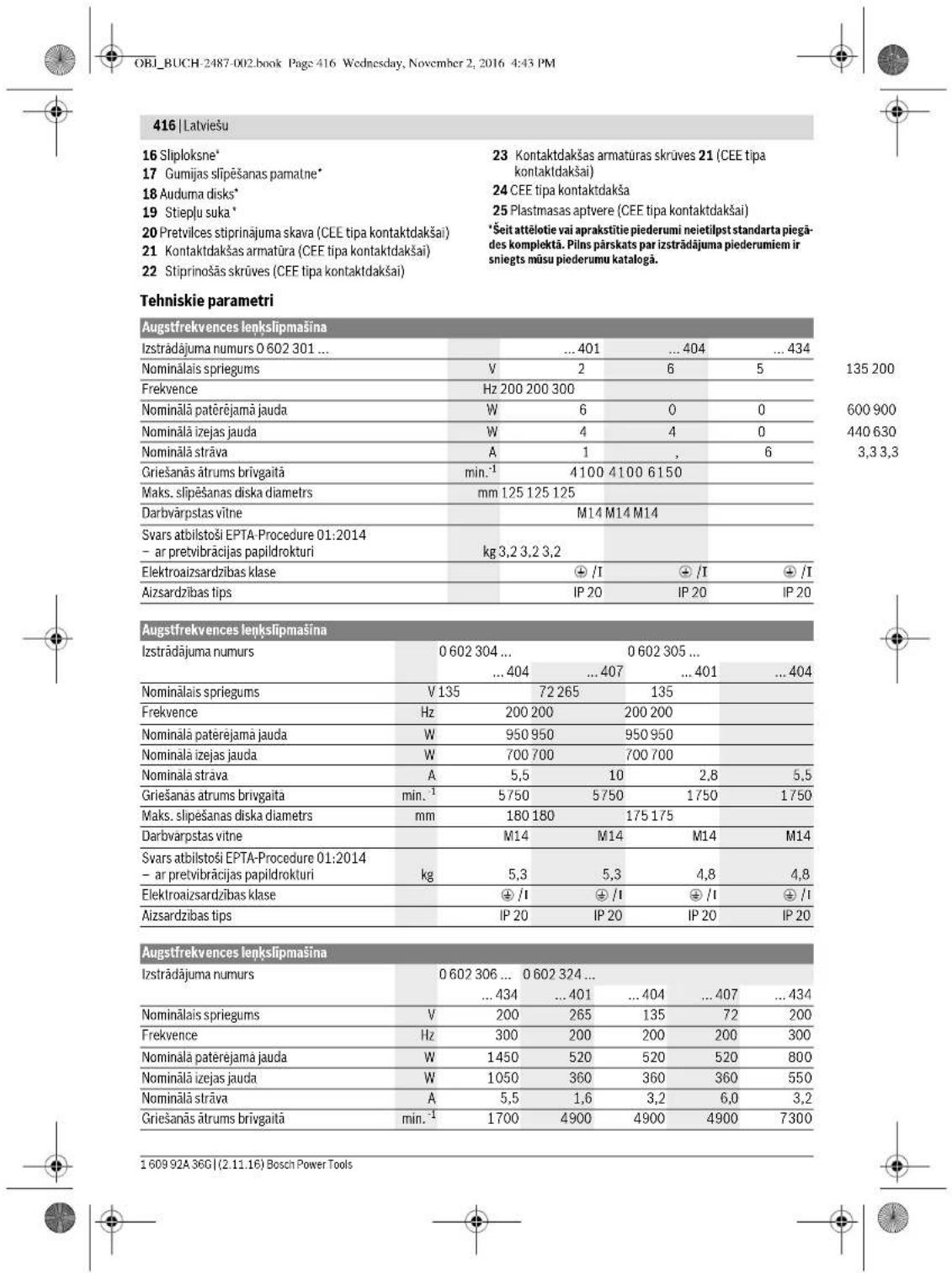
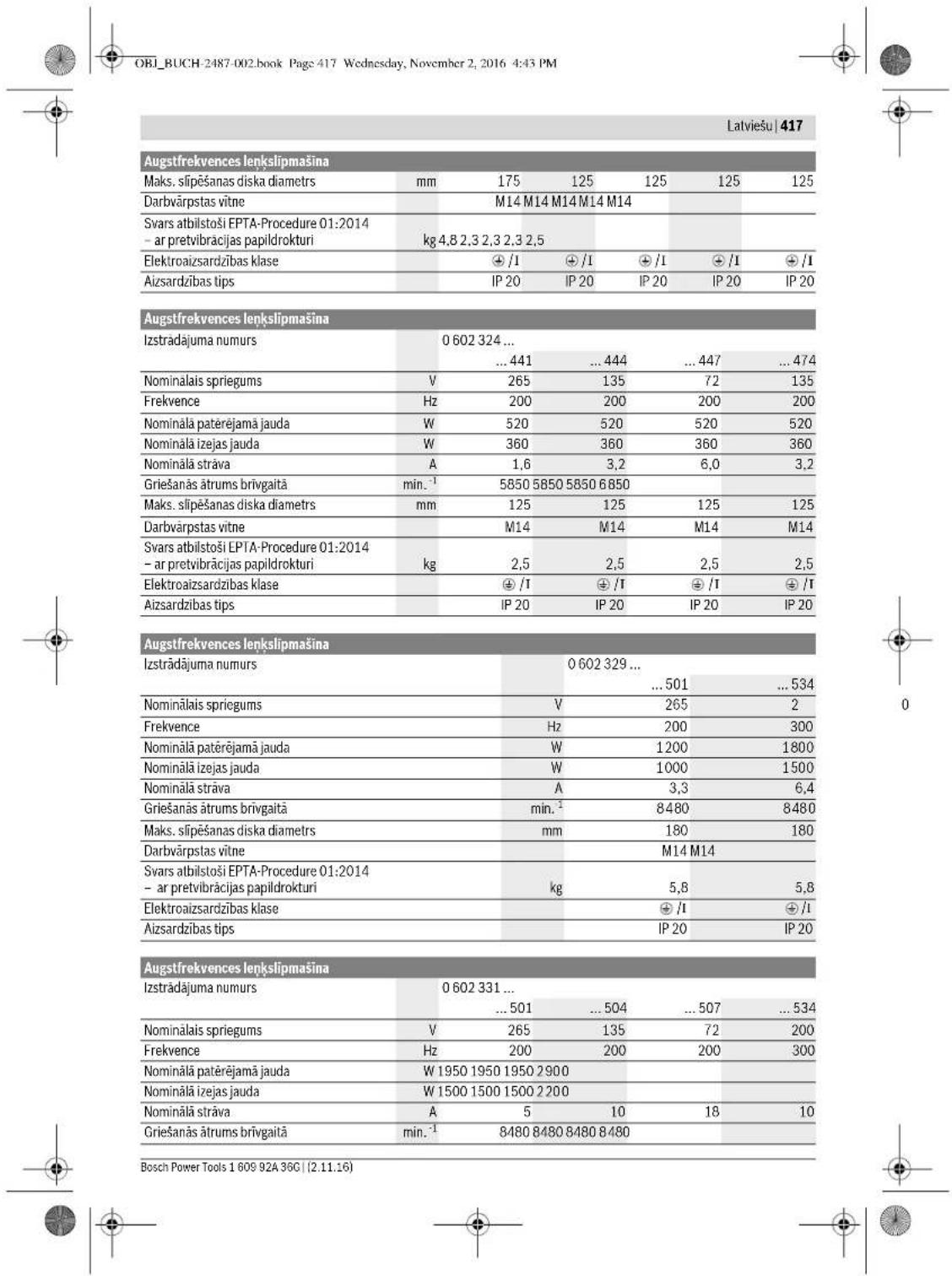
| Augstkrevnesc lenkslipmasina | ||||
| Maks. slipesanas diska diameters | mm 180 180 180 180 | |||
| Darbvärpstas vitne | M14 M14 M14 M14 | |||
| Svars atbilstoši EPTA-Procedure 01:2014 - ar pretvibracijas papildrokturi | kg 7,1 7,1 7,1 7,1 | |||
| Elektroaizsardžibas klase | ⊕ /1/1/1 | ⊕ | ⊕ | ⊕ |
| Aizsardžibas tips | IP 20 | IP 20 | IP 20 | IP 20 |
High-frequency angle grinder
| Izstradajuma numurs | 0 602 332 ... | |||||
| ... 501 | ... 504 | ... 507 | ... 534 | ... 511 | ||
| Nominálais spriegums | V 265 135 72 200 72 | |||||
| Frekveance | Hz 200 200 200 300 300 | |||||
| Nominálá paterejama jauda | W | 1950 | 1950 | 1950 | 2900 | 2900 |
| Nominálá izejas jauda | W | 1500 | 1500 | 1500 | 2200 | 2200 |
| Nominálá strava | A | 5 | 10 | 18 | 10 | 27 |
| Grieşanás átrums brivgaita | min. -1 | 6600 | 6600 | 6600 | 6600 | 6600 |
| Maks. slipşanas diska diametris | mm 230 230 230 230 230 | |||||
| Darbvarpstairs vitne | M14 | M14 | M14 | M14 | M14 | |
| Svars atbilostoji EPTA-Procedure 01:2014 - ar pretvibracjas papildrokturi | kg | 7,1 | 7,1 | 7,1 | 7,1 | 7,1 |
| Elektroaizsardzibas klase | ± /T | ± /T | ± /T | ± /T | ± /T | |
| Aizsardzibas tips | IP 20 | IP 20 | IP 20 | IP 20 | IP 20 | |
High-frequency angle grinder
| Izsträdajuma numurs | 0 602 334 ... | ||||
| ... 501 | ... 504 | ... 507 | ... 534 | ||
| Nominălais spriegums | V 265 135 | 72 200 | |||
| Frekcvence | Hz 200 200 200 300 | ||||
| Nominăl paterejama jauda | W | 2500 | 2500 | 2500 | 3800 |
| Nominăl izejas jauda | W | 2200 | 2200 | 2200 | 3100 |
| Nominăl strava | A | 6,7 | 13,2 | 24,7 | 13,2 |
| Grieşanás átrums brivgaită | min. | 6600 | 6600 | 6600 | 6600 |
| Maks. sifeşanas diska diametris | mm 230 230 230 230 | ||||
| Darbvärpstas vitne | M14 M14 M14 M14 | ||||
| Svars atbilostosi EPTA-Procedure 01:2014 | |||||
| - ar pretvibracijas papildrokturi | kg 7,8 7,8 7,8 7,8 | ||||
| Elektroaizsardžibas klase | €/1/1/1 | € | € | € | |
| Aizsardžibas tips | IP 20 | IP 20 | IP 20 | IP 20 | |
Instructions regarding the power supply
The power tool is part of a high-frequency power supply system, and its operation requires a three-phase voltage with a frequency whose value is indicated on the rating plate.
To connect the power tool to the mains with the correct frequency, the power tool must be connected to the mains supply (see section "Connecting to the mains" on page 423).
1609 92A 36G| (2.11.16) Bosch Power Tools


OBI_BUCH-2487-002.book Page 419 Wednesday, November 2, 2016 4:43 PM
Latvian|419
OBI_BUCH-2487-002.book Page 420 Wednesday, November 2, 2016 4:43 PM
| 420 | Latviešu | |||||
| 0.602 329 50. | 0.602 329 5340.602 329 511 | 0.602 331 5.. | 0.602 332 5.. | ||
| Kopějá vibracijas pažtrinajuma věříba a.(vektoru summa trijos virzienos) unizkliédeK ir noteikta atbilstoši standartamEN 60745 2-3. | |||||
| Vírsmu silpěsana (rupjá): | |||||
| a, m/s2 | 7 | 7 | 7 | 7 | |
| K m/s2 | 1,5 | 1,5 | 1,5 | 1,5 | |
| Pulësana: | |||||
| a, m/s2 | - | - | - | - | |
| K m/s2 | - | - | - | - | |
| Silpěsana ar silploksni: | |||||
| a, m/s2 | - | - | - | - | |
| K m/s2 | - | - | - | - | |
| 0 602 334 50. | 0 602 334 534 | |
| Instrumenta radità pèc raksturliknes A izsvertà trokṣa parametr tipiskās vertibas ir sādas: | ||
| skānas spiiedena limenis | dB(A) | 86 |
| skānas jaudas limenis | dB(A) | 97 |
| merijumu izkliede K | dB | 3 |
| Nēsājiet ausu aizsargus! | ||
| Kopejā vibrćijas pañtrinajuma vertiba a, (vektoru summa trijos virzienos) un izkliede K ir noteikta atbilostoši standartam EN 60745-2-3. | ||
| Virsmu slipësana (rupjā): | ||
| a1 | m/s2 | 7 |
| K | m/s2 | 3 |
| Pulešana: | ||
| a1 | m/s2 | - |
| K | m/s2 | - |
| Slipësana ar sliploksni: | ||
| a1 | m/s2 | - |
| K | m/s2 | - |
The vibration level specified in these instructions has been measured in accordance with the procedure specified in standard EN 60745 and can be used for comparing power tools with each other. It can also be used for a preliminary assessment of the vibration load.
The vibration level specified here applies to the main applications of the power tool. If the power tool is used for other applications, with other accessories or with different tools, or if it has not been adequately maintained, the vibration level may differ from the value specified here. This can significantly increase the vibration load over the entire working period.
To accurately estimate the vibration load during a given working period, you must also consider the times when the power tool is switched off or running but not actually being used for the intended work. This can significantly reduce the vibration load over the entire working period. Take additional safety measures to protect the operator from the effects of vibration, such as: servicing the power tool and the tools in good time, keeping hands warm, and organizing work processes properly.
Executive Vice President Engineering
Helmut Heinzelmann
Head of Product Certification PI/ECS
Robert Bosch Power Tools GmbH
70538 Stuttgart, GERMANY
Stuttgart, 01.01.2017
1609 92A 36G| (2.11.16) Bosch Power Tools

OBI_BUCH-2487-002.book Page 421 Wednesday, November 2, 2016 4:43 PM

Assembly
Mounting the protective devices
General instructions
Before adjusting the tool, changing accessories, or storing the tool, disconnect the power supply. Such precautionary measures prevent accidental starting of the power tool.
Note: If the grinding disc breaks during operation or the clamping device is damaged on the protective guard or on the power tool, the power tool must be sent immediately to a service center, the address of which can be found in the section 'Customer service and advice on use'.
OBI_BUCH-2487-002.book Page 422 Wednesday, November 2, 2016 4:43 PM
422 | Latvian
- Place the clamping nut 12 onto the spindle thread so that the central recess faces upward.
- Tighten the clamping nut firmly with the two-pin spanner 13, while simultaneously placing the open-end spanner 14 on the spindle lock and using it to hold the spindle 3 stationary.
Removal
- Hold the spindle 3 of the grinder firmly with the open-end spanner 14 placed on the spindle lock.
- Unscrew the clamping nut 12 from the grinder spindle with the two-pin spanner 13, while simultaneously holding the grinder spindle with the open-end spanner 14 placed on its lock. Then remove the grinding tool and the support flange from the grinder spindle.
Power tools with spindle lock button 5
Tools:
-060232440. -0602324434 -060232444
When using power tools with a spindle locking button 5, the spindle does not need to be locked with a pin-type wrench when changing tools (see figures E1-E2).
Press the spindle locking button only when the power tool spindle is not rotating. Otherwise, the power tool may be damaged. Before mounting the sanding accessory, press the spindle locking button 5 to lock the power tool spindle 3, and hold the button pressed. Insert the desired sanding accessory (see section "Mounting sanding, cutting and roughing discs" on page 421). To release the spindle, release the spindle locking button 5.
Mounting the rubber sanding pad (figure F)
Tools:
-06023014. -060232440 -060230540. -0602306434 -060230540. -0602306434
Mounting
- Ensure that the protective guard and auxiliary handle are properly attached (see section "Mounting protective devices" on page 421).
- Place the rubber sanding pad 17 onto the power tool spindle 3.
- Place the sanding sheet 16 onto the rubber sanding pad.
- Place the round nut 15 onto the spindle thread. Using the two-pin wrench 13, tighten the round nut firmly, while placing the pin-type wrench 14 on the spindle collar of the power tool spindle 3 and holding the spindle with it.
- Ensure that the protective guard and auxiliary handle are properly attached (see section "Mounting protective devices" on page 421).
- Place the rubber sanding pad 17 onto the power tool spindle 3. Place the sanding sheet 16 onto the rubber sanding pad. Place the round nut 15 onto the spindle thread.
- Using the two-pin wrench 13, tighten the round nut firmly, while placing the pin-type wrench 14 on the spindle collar of the power tool spindle 3 and holding the spindle with it.
Make sure that the round nut 15 is tightened after screwing on, so that it fits into the recess of the rubber sanding pad. Do not interrupt the sanding process and hold the sanding plate firmly.
Removal
Hold the sanding machine spindle 3 firmly with the open-end wrench 14, which is placed on the spindle flat. - Unscrew the round nut 15 from the sanding machine spindle with the two-pin wrench 13, while holding the sanding machine spindle with the open-end wrench 14, which is placed on the spindle flat. - Then remove the sanding plate and the rubber sanding pad from the sanding machine spindle.
Mounting the polishing fleece (Figure G)
Tools:
-06023014. -060232440 -060230540. -0602306434
Mounting
Make sure that the seam of the polishing fleece fits precisely into the thread of the sanding machine spindle (M14).
Ensure that the tool is not mounted without the protective guard and auxiliary handle (see section "Mounting protective devices" on page 421). Screw the polishing fleece 18 onto the sanding machine spindle 3 until it is firmly seated against the spindle flat, while holding the spindle stationary with the open-end wrench 14, which is placed on the spindle flat.
Removal
Unscrew the firmly screwed-on polishing fleece 18 from the sanding machine spindle with the open-end wrench 14, which is placed on the spindle flat.
Mounting the sanding sheet (Figure H)
Tools:
-060230440. -06023315.. -060232444,...464, -06023325.. ...474,..434 -06023345. -06023295.
Mounting
Turn the grinding spindle by hand to check that the wire brush is correctly seated on the grinding spindle (M14). Make sure that the auxiliary handle and the protective guard are properly attached (see section "Mounting the protective guard", page 421). Screw the desired wire brush onto the grinding spindle and tighten it firmly with the open-end wrench 14, which is placed on the grinding spindle flange.
Mounting the rubber sanding pad (figure F)
Mounting




Removal
- Unscrew the wire brush 19 from the grinding spindle using the open-end wrench 14, which is placed on the grinding spindle flange 3.
Dust and chip extraction
Dust from materials such as lead-containing paint, some wood types, minerals and metals can be harmful to health. Contact with or inhalation of these dusts can cause allergic reactions and/or respiratory diseases in the user or persons in the vicinity.
Accessories
To fully explore the range of high-quality Bosch accessories, visit the websites www.boschpt.com and www.boschproductiontools.com or contact your local specialized dealer.
Lithuanian 433
| Aukst dožnio kampinis šlifuoklis | |||||
| Gaminio numeris | 0 602 332 ... | ||||
| ... 501 | ... 504 | ... 507 | ... 534 | ... 511 | |
| Nominaloji Čatampa | V 265 135 72 200 72 | ||||
| Dažnis | Hz 200 200 200 300 300 | ||||
| Nominali naudojamoji galia | W 1950 1950 1950 2900 2900 | ||||
| Nominali atiduodamoji galia | W 1500 1500 1500 2200 2200 | ||||
| Nominaloji srové | A 5 | 10 18 10 27 | |||
| Tušciosios eigos sikiq skiačius | min-1 | 6600 6600 6600 6600 6600 | |||
| Maks. šlifavimo disko skersmuo | mm 230 230 230 230 230 | ||||
| Šlifavimo suklio sriegis | M14 M14 M14 M14 M14 | ||||
| Svoris pagal „EPTA-Procedure 01:2014" - su vibracija slopinancia papildoma rankena | kg | 7,1 | 7,1 | 7,1 | 7,1 |
| Apsaugos klase | /1 | /1 | /1 | /1 | |
| Apsaugos lipas | IP 20 | IP 20 | IP 20 | IP 20 | |
| Aukstoto dažnio kampinis šlifuoklis | |||||
| Gaminio numeris | 0 602 334 ... | ||||
| ... 501 | ... 504 | ... 507 | ... 534 | ||
| Nominaloji Ātampa | V | 265 | 135 | 72 | 200 |
| Dažnis | Hz | 200 | 200 | 200 | 300 |
| Nominali naudojamoji galia | W | 2500 | 2500 | 2500 | 3800 |
| Nominali atiduadamoji galia | W | 2200 | 2200 | 2200 | 3100 |
| Nominaloji srové | A | 6,7 | 13,2 | 24,7 | 13,2 |
| Tušciosios eigos sukijski skáčius | min-1 | 6600 | 6600 | 6600 | 6600 |
| Maks. šlifavimo disko skersmuo | mm | 230 | 230 | 230 | 230 |
| Šlifavimo suklio sriegis | M14 | M14 | M14 | M14 | |
| Svoris pagal „EPTA-Procedure 01:2014“ - su vibracija slopınancia papildoma rankena | kg | 7,8 | 7,8 | 7,8 | 7,8 |
| Apsaugos klase | ®/I | ®/I | ®/I | ®/I | |
| Apsaugos tipas | IP 20 | IP 20 | IP 20 | IP 20 | |
Executive Vice President Engineering
Helmut Heinzelmann
Head of Product Certification PT/ECS

Robert Bosch Power Tools GmbH
70538 Stuttgart, GERMANY
Stuttgart, 01.01.2017

436 | Lithuanian
Assembly
Lithuanian 437
Removal
- Place the wrench 14 on the edge of the spindle. Unscrew the clamping nut 12 with the ring spanner 13 from the spindle, holding the wrench 14 placed on the edge of the spindle. Then remove the tool and the clamping flange from the spindle.
Power tool with spindle lock key 5
Applies to the following types:
-060232440. -0602324434 -060232444
438|Lithuanian
- It is recommended to wear respiratory protective equipment with P2 class filter.
Lithuanian 439
To lock the switch-on/off switch 1, press the front part of the switch 1 down until it locks. - To switch off the power tool, release the switch 1.
To unlock the locked switch 1, briefly press it down and then release it.
Switching the power tool on/off
with safety switch (see figure J2)
Applies to the following types:
-06023014.. -06023295.. -060230440. -06023315.. -060230540. -06023325.. -0602306434 -06023345..
- To connect the power tool, push the on/off switch 1 forward until it engages. To lock the on/off switch 1, push the on/off switch 1 further forward.
- To switch off the power tool, release the on/off switch 1 or, if it is locked, briefly press and then release the on/off switch 1.
Working advice
06023244..
06023295.. -06023014.
-06023315.. -060230440.
-06023325.. -060230540.
-06023345.. -0602306434
113 113
.
.21
24 CEE 21 21
22 uu
aLgI Jogo lac aoJoo
Jgll Jwaa auiu<1 o24 CEE uugbui
333
aBbJU sOxU sJU Ug uSos
(GgJgJgJ)JgJgJgJ
:aiuui UjIjUuUgaaUaJluw
- --06023014..
-060230540. -0602306434
jgoo jj 20 auiy
5JgJl
#
- ()
445 aovall “ayloglluljugai csj” )
-3
Jolbolljoo 16 oaiill aagg aJgJ 15 gol JJIgdoabwgljuSdUaJgolJIbJpS 14 13 12 11 10 9 8 7 6 5 4 3 2 1 0 8 7 6 5 4
Senior Vice President
Engineering
Helmut Heinzelmann
Head of Product Certification
PT/ECS
Robert Bosch Power Tools GmbH,
70538 Stuttgart, GERMANY
Stuttgart, 01.01.2017
Laiuui jgSdJUjIjWgGuwau
EN60745 1
| 0 602 301 40.0 602 301 4340 602 304 40.0 602 305 40. | ||||||||||
| a_h ∪ ∅ ∪ ∪ ∪ ∪ ∪ ∪ ∪ ∪ ∪ ∪ ∪ ∪ ∪ ∪ ∪ ∪ ∪ ∪ ∪ ∪ ∪ ∪ ∪ ∪ ∪ ∪ ∪ ∪ ∪ ∪ ∪ ∪ ∪ ∪ ∪ ∪ ∪ ∪ ∪ ∪ ∪ ∪ ∪ ∪ ∪ ∪ ∪ ∪ ∪ ∪ ∮ ∪ ∪ ∪ ∪ ∪ ∪ ∪ ∪ ∪ ∪ ∪ ∪ ∪ ∪ ∪ ∪ ∪ ∪ ∪ ∪ ∪ ∪ ∪ ∪ ∪ ∪ ∪ ∪ ∪ ∪ ∪ ∪ ∪ ∪ ∪ ∪ ∪ ∪ ∪ ∪ ∪ ∪ ∪ ∪ ∪ ∪ ∪ ∪ ∪ ∻ ∪ ∪ ∪ ∪ ∪ ∪ ∪ ∪ ∪ ∪ ∪ ∪ ∪ ∪ ∪ ∪ ∪ ∪ ∪ ∪ ∪ ∪ ∪ ∪ ∪ ∪ ∪ ∪ ∪ ∪ ∪ ∪ ∪ ∪ ∪ ∪ ∪ ∪ ∪ ∪ ∪ ∪ ∪ ∪ ∪ ∪ ∪ ∪ ∪ ∴ ∅ ∪ ∪ ∪ ∪ ∪ ∪ ∪ ∪ ∪ ∪ ∪ ∪ ∪ ∪ ∪ ∪ ∪ ∪ ∪ ∪ ∪ ∪ ∪ ∪ ∪ ∪ ∪ ∪ ∪ ∪ ∪ ∪ ∪ ∪ ∪ ∪ ∪ ∪ ∪ ∪ ∪ ∪ ∪ ∪ ∪ ∪ ∪ ∪ ∵ ∅ ∅ ∅ ∅ ∅ ∅ ∅ ∅ ∅ ∅ ∅ ∅ ∅ ∅ ∅ ∅ ∅ ∅ ∅ ∅ ∅ ∅ ∅ ∅ ∅ ∅ ∅ ∅ ∅ ∅ ∅ ∅ ∅ ∅ ∅ ∅ ∅ ∅ ∅ ∅ ∅ ∅ ∅ ∅ ∅ ∅ ∅ ∅ ∅ ∅ ∈ ∅ ∅ ∅ ∅ ∅ ∅ ∅ ∅ ∅ ∅ ∅ ∅ ∅ ∅ ∅ ∅ ∅ ∅ ∅ ∅ ∅ ∅ ∅ ∅ ∅ ∅ ∅ ∅ ∅ ∅ ∅ ∅ ∅ ∅ ∅ ∅ ∅ ∅ ∅ ∅ ∅ ∅ ∅ ∅ ∅ ∅ ∅ ∅ ∅ ∆ ∅ ∅ ∅ ∅ ∅ ∅ ∅ ∅ ∅ ∅ ∅ ∅ ∅ ∅ ∅ ∅ ∅ ∅ ∅ ∅ ∅ ∅ ∅ ∅ ∅ ∅ ∅ ∅ ∅ ∅ ∅ ∅ ∅ ∅ ∅ ∅ ∅ ∅ ∅ ∅ ∅ ∅ ∅ ∅ ∅ ∅ ∅ ∅ ∅ ∼ ∅ ∅ ∅ ∅ ∅ ∅ ∅ ∅ ∅ ∅ ∅ ∅ ∅ ∅ ∅ ∅ ∅ ∅ ∅ ∅ ∅ ∅ ∅ ∅ ∅ ∅ ∅ ∅ ∅ ∅ ∅ ∅ ∅ ∅ ∅ ∅ ∅ ∅ ∅ ∅ ∅ ∅ ∅ ∅ ∅ ∅ ∅ ∅ ∅ ∇ ∅ ∅ ∅ ∅ ∅ ∅ ∅ ∅ ∅ ∅ ∅ ∅ ∅ ∅ ∅ ∅ ∅ ∅ ∅ ∅ ∅ ∅ ∅ ∅ ∅ ∅ ∅ ∅ ∅ ∅ ∅ ∅ ∅ ∅ ∅ ∅ ∅ ∅ ∅ ∅ ∅ ∅ ∅ ∅ ∅ ∅ ∅ ∅ ∅ ∲ ∅ ∅ ∅ ∅ ∅ ∅ ∅ ∅ ∅ ∅ ∅ ∅ ∅ ∅ ∅ ∅ ∅ ∅ ∅ ∅ ∅ ∅ ∅ ∅ ∅ ∅ ∅ ∅ ∅ ∅ ∅ ∅ ∅ ∅ ∅ ∅ ∅ ∅ ∅ ∅ ∅ ∅ ∅ ∅ ∅ ∅ ∅ ∅ ∅ ∽ ∅ ∅ ∅ ∅ ∅ ∅ ∅ ∅ ∅ ∅ ∅ ∅ ∅ ∅ ∅ ∅ ∅ ∅ ∅ ∅ ∅ ∅ ∅ ∅ ∅ ∅ ∅ ∅ ∅ ∅ ∅ ∅ ∅ ∅ ∅ ∅ ∅ ∅ ∅ ∅ ∅ ∅ ∅ ∅ ∅ ∅ ∅ ∅ ∅ ∫ ∅ ∅ ∅ ∅ ∅ ∅ ∅ ∅ ∅ ∅ ∅ ∅ ∅ ∅ ∅ ∅ ∅ ∅ ∅ ∅ ∅ ∅ ∅ ∅ ∅ ∅ ∅ ∅ ∅ ∅ ∅ ∅ ∅ ∅ ∅ ∅ ∅ ∅ ∅ ∅ ∅ ∅ ∅ ∅ ∅ ∅ ∅ ∅ ∅ ∬ ∅ ∅ ∅ ∅ ∅ ∅ ∅ ∅ ∅ ∅ ∅ ∅ ∅ ∅ ∅ ∅ ∅ ∅ ∅ ∅ ∅ ∅ ∅ ∅ ∅ ∅ ∅ ∅ ∅ ∅ ∅ ∅ ∅ ∅ ∅ ∅ ∅ ∅ ∅ ∅ ∅ ∅ ∅ ∅ ∅ ∅ ∅ ∅ ∅ ∍ ∅ ∅ ∅ ∅ ∅ ∅ ∅ ∅ ∅ ∅ ∅ ∅ ∅ ∅ ∅ ∅ ∅ ∅ ∅ ∅ ∅ ∅ ∅ ∅ ∅ ∅ ∅ ∅ ∅ ∅ ∅ ∅ ∅ ∅ ∅ ∅ ∅ ∅ ∅ ∅ ∅ ∅ ∅ ∅ ∅ ∅ ∅ ∅ ∅ ∱ ∅ ∅ ∅ ∅ ∅ ∅ ∅ ∅ ∅ ∅ ∅ ∅ ∅ ∅ ∅ ∅ ∅ ∅ ∅ ∅ ∅ ∅ ∅ ∅ ∅ ∅ ∅ ∅ ∅ ∅ ∅ ∅ ∅ ∅ ∅ ∅ ∅ ∅ ∅ ∅ ∅ ∅ ∅ ∅ ∅ ∅ ∅ ∅ ∅ ∿ ∅ ∅ ∅ ∅ ∅ ∅ ∅ ∅ ∅ ∅ ∅ ∅ ∅ ∅ ∅ ∅ ∅ ∅ ∅ ∅ ∅ ∅ ∅ ∅ ∅ ∅ ∅ ∅ ∅ ∅ ∅ ∅ ∅ ∅ ∅ ∅ ∅ ∅ ∅ ∅ ∅ ∅ ∅ ∅ ∅ ∅ ∅ ∅ ∅ ∶ ∅ ∅ ∅ ∅ ∅ ∅ ∅ ∅ ∅ ∅ ∅ ∅ ∅ ∅ ∅ ∅ ∅ ∅ ∅ ∅ ∅ ∅ ∅ ∅ ∅ ∅ ∅ ∅ ∅ ∅ ∅ ∅ ∅ ∅ ∅ ∅ ∅ ∅ ∅ ∅ ∅ ∅ ∅ ∅ ∅ ∅ ∅ ∅ ∅ ∃ ∅ ∅ ∅ ∅ ∅ ∅ ∅ ∅ ∅ ∅ ∅ ∅ ∅ ∅ ∅ ∅ ∅ ∅ ∅ ∅ ∅ ∅ ∅ ∅ ∅ ∅ ∅ ∅ ∅ ∅ ∅ ∅ ∅ ∅ ∅ ∅ ∅ ∅ ∅ ∅ ∅ ∅ ∅ ∅ ∅ ∅ ∅ ∅ ∅ ∄ ∅ ∅ ∅ ∅ ∅ ∅ ∅ ∅ ∅ ∅ ∅ ∅ ∅ ∅ ∅ ∅ ∅ ∅ ∅ ∅ ∅ ∅ ∅ ∅ ∅ ∅ ∅ ∅ ∅ ∅ ∅ ∅ ∅ ∅ ∅ ∅ ∅ ∅ ∅ ∅ ∅ ∅ ∅ ∅ ∅ ∅ ∅ ∅ ∅ ∉ ∅ ∅ ∅ ∅ ∅ ∅ ∅ ∅ ∅ ∅ ∅ ∅ ∅ ∅ ∅ ∅ ∅ ∅ ∅ ∅ ∅ ∅ ∅ ∅ ∅ ∅ ∅ ∅ ∅ ∅ ∅ ∅ ∅ ∅ ∅ ∅ ∅ ∅ ∅ ∅ ∅ ∅ ∅ ∅ ∅ ∅ ∅ ∅ ∅ ∂ ∅ ∅ ∅ ∅ ∅ ∅ ∅ ∅ ∅ ∅ ∅ ∅ ∅ ∅ ∅ ∅ ∅ ∅ ∅ ∅ ∅ ∅ ∅ ∅ ∅ ∅ ∅ ∅ ∅ ∅ ∅ ∅ ∅ ∅ ∅ ∅ ∅ ∅ ∅ ∅ ∅ ∅ ∅ ∅ ∅ ∅ ∅ ∅ ∅ ∊ ∅ ∅ ∅ ∅ ∅ ∅ ∅ ∅ ∅ ∅ ∅ ∅ ∅ ∅ ∅ ∅ ∅ ∅ ∅ ∅ ∅ ∅ ∅ ∅ ∅ ∅ ∅ ∅ ∅ ∅ ∅ ∅ ∅ ∅ ∅ ∅ ∅ ∅ ∅ ∅ ∅ ∅ ∅ ∅ ∅ ∅ ∅ ∅ ∅ ∧ ∅ ∅ ∅ ∅ ∅ ∅ ∅ ∅ ∅ ∅ ∅ ∅ ∅ ∅ ∅ ∅ ∅ ∅ ∅ ∅ ∅ ∅ ∅ ∅ ∅ ∅ ∅ ∅ ∅ ∅ ∅ ∅ ∅ ∅ ∅ ∅ ∅ ∅ ∅ ∅ ∅ ∅ ∅ ∅ ∅ ∅ ∅ ∅ ∅ ∭ � | ||||||||||
| 0 602 324 44.0 602 324 464 0 602 324 474 0 602 324 434 0 602 306 4340 602 324 40. | ||||||||||
| 82 | 77 | 82 | (A) | 2u/ρ | ah ∩ jl jj jj jj jj jj jj jj jj jj jj jj jj jj jj jj jj jj jj jj jj jj jj jj jj jj jj jj jj jj jj jj jj jj jj jj jj jj jj jj jj jj jj jj jj jj jj jj jj jj jj j jj jj jj jj jj jj jj jj jj jj jj jj jj jj jj jj jj jj jj jj jj jj jj jj jj jj jj jj jj jj jj jj jj jj jj jj jj jj jj jj jj jj jj jj jj jj jj jj jj jJ | |||||
| 93 | 88 | 93 | (A) | 2u/ρ | a h | |||||
| 3 | 3 | 3 | D | 2u/ρ | K | |||||
| 6 | - | - | 2u/ρ | 2u/ρ | ||||||
| 2 | - | - | 2u/ρ | 2u/ρ | ||||||
| - | 4 | < 2,5 | 2u/ρ | 2u/ρ | ||||||
| - | 1,5 | 1,5 | 2u/ρ | 2u/ρ | ||||||
| - | 4 | < 2,5 | 2u/ρ | 2u/ρ | ||||||
| - | 1,5 | 1,5 | 2u/ρ | 2u/ρ | ||||||
| 0 602 329 534 0 602 329 5110 602 329 529. | ||||||||||
| 86 | 86 | 87 | 85 | (A) | a h | |||||
| 97 | 97 | 98 | 96 | (A) | a h | |||||
| 3 | 3 | 3 | 3 | D | 2u/ρ | |||||
21 23 24 25 26 27 28 29 30 31 32 33 34 35 36 37 38 39 40
21 22 23 24 CEE
__SUPPIMER__
7 10 Nm jg jj
06023295.. - 060230440. -06023315.. -0602324434 -06023325.. -060232444. -06023345.. -0602324464 -0602324474
1
j) 023295..
| 0 602 329 534 | |||||
| 0 602 329 5110 6000023129.80602 332 5.. | |||||
| (aj) a h ül lal j k l al j k l al j k l al j k l al j k l al j k l al j k l al j k l al j k l al j k l al j k l al j k l al j k l al j k l al j k l al j k l al j k l al j k l al j k l al j k l al j k l al j k l al j k l al j k l al j k l al j k l all j k l j k l j k l j k l j k l j k l j k l j k l j k l j k l j k l j k l j k l j k l j k l j k l j k l j k l j k l j k l j k l j k l j k l j k l j k l j k l j k l j k l j k l j k l j k l j k l j k l j k l | (aj) a h ül lal j k l al j k l al j k l al j k l al j k l al j k l al j k l al j k l al j k l al j k l al j k l al j k l al j k l al j k l al j k l al j k l al j k l al j k l al j k l al j k l al j k l al j k l al jk l alj k l alj k l alj k l alj k l alj k l alj k l alj k l alj k l alj k l alj k l alj k l alj k l alj k l alj k l alj k l alj k l alj k l alj k l alj k l alj k l alj k l alj k l alj k l alj k l alj k l alj | ||||
| 7 | 7 | 7 | 7 | m/s2 | ah |
| 1,5 | 1,5 | 1,5 | 1,5 | m/s2 | K |
| - | - | - | - | m/s2 | ah |
| - | - | - | - | m/s2 | K |
| - | - | - | - | m/s2 | ah |
| - | - | - | - | m/s2 | ah |
| - | - | - | - | m/s2 | K |
| 0 602 334 50.0 602 334 534 | |||
| 86 | 86 | dB(A) dB(A) dB | JLJLJLJLJLJLJLJLJLJLJLJLJLJLJLJLJLJLJLJLJLJLJLJLJLJLJLJLJLJLJLJLJLJLJLJLJLJLJLJLJLJLJLJLJLJLJLJLJLJLJ |
| 97 | 97 | K (CQDQ) Lbs | |
| 3 | 3 |  | |
| 7 | 7 | m/s2 | \( \left( {{\mathrm{a}}_{\mathrm{h}}\text{ }{\mathrm{a}}_{\mathrm{h}}\text{ }}\right) {\mathrm{a}}_{\mathrm{h}} \) |
| 3 | 3 | m/s2 | K |
| - | - | m/s2 | : \( {\mathrm{a}}_{\mathrm{h}} \) |
| - | - | m/s2 | K |
| - | - | m/s2 | : \( {\mathrm{a}}_{\mathrm{h}} \) |
| - | - | m/s2 | K |

2011/65/EU 1Jg
.2004/108/EC:2016JgI.19U
2006/42/EC. 2014/30/EU: 2016/1.20.1
1s 100 pai i d
.EN50581. EN60745-2-3. EN60745-1:
awgj (2006/42/EC) jg J do
Robert Bosch Power Tools GmbH, PT/ECS
70538 Stuttgart, GERMANY
Henk Becker
Senior Vice President
Engineering
Helmut Heinzelmann
Head of Product Certification
PT/ECS
Robert Bosch Power Tools GmbH,
70538 Stuttgart, GERMANY
Stuttgart, 01.01.2017
| 0 602 301 40.0 602 301 4340 602 304 40.0 602 305 40. | |||||
| - | 5 | 5,3 | - | m/s2 | ah |
| - | 2 | 2 | - | m/s2 | K |
| <2,5 | - | 3 | 3 | m/s2 | ah |
| 1,5 | - | 1,5 | 1,5 | m/s2 | K |
| <2,5 | - | 3 | 3 | m/s2 | ah |
| 1,5 | - | 1,5 | 1,5 | m/s2 | K |


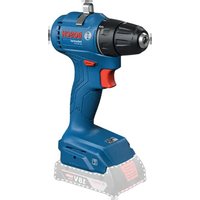


- HWS
- BOSCH
- ASSEMBLY
- GERMAN
- GENERAL POWER TOOL SAFETY WARNINGS
- WORK AREA SAFETY
- ELECTRICAL SAFETY
- PERSONAL SAFETY
- POWER TOOL USE AND CARE
- SERVICE
- SAFETY WARNINGS FOR ANGLE GRINDER
- APPLIES FOR THE FOLLOWING TYPES
- APPLIES FOR ALL TYPES
- KICKBACK AND RELATED WARNINGS
- SAFETY WARNINGS SPECIFIC FOR GRINDING AND ABRASIVE CUTTING-OFF OPERATIONS
- SAFETY WARNINGS SPECIFIC FOR POLISHING OPERATIONS
- SAFETY WARNINGS SPECIFIC FOR WIRE BRUSHING OPERATIONS
- ADDITIONAL SAFETY WARNINGS
- WEAR SAFETY GOGGLES
- PRODUCT DESCRIPTION AND SPECIFICATIONS
- INTENDED USE
- SAFETY WARNINGS FOR THE POWER SUPPLY OF HIGH-FREQUENCY TOOLS
- NOTES ON THE POWER SUPPLY
- NOISE/VIBRATION INFORMATION
- MOUNTING THE PROTECTIVE DEVICES
- GENERAL INFORMATION
- PROTECTION GUARD FOR GRINDING (SEE FIGURE A)
- PROTECTION GUARD FOR CUTTING
- HAND GUARD (SEE FIGURE C)
- MOUNTING THE GRINDING TOOLS
- MOUNTING GRINDING OR CUTTING DISCS (SEE FIGURES D1-D2)
- INSTALLATION
- REMOVAL
- MACHINES WITH SPINDLE LOCK BUTTON
- MOUNTING THE RUBBER SANDING PLATE (SEE FIGURE F)
- MOUNTING THE BUFFING DISC (SEE FIGURE G)
- MOUNTING WIRE BRUSHES (SEE FIGURE H)
- DUST/CHIP EXTRACTION
- CONNECTION TO THE POWER SUPPLY
- MOUNTING THE CEE PLUG (SEE FIGURES I1-I2)
- CHECKING THE ROTATION DIRECTION
- OPERATION
- STARTING OPERATION
- SWITCHING THE FREQUENCY CONVERTER ON/OFF
- SWITCHING THE POWER TOOL ON/OFF WITH THE ON/OFF SWITCH (SEE FIGURE J1)
- SWITCHING THE POWER TOOL ON/OFF
- WITH SAFETY SWITCH (SEE FIGURE J2)
- WORKING ADVICE
- SANDING WITH THE FLAP DISC
- CUTTING METAL (SEE FIGURE K)
- CUTTING STONE
- INFORMATION ON STRUCTURES
- ROUGH GRINDING
- POLISHING WITH THE BUFFING DISC
- MAINTENANCE AND SERVICE
- MAINTENANCE AND CLEANING
- ACCESSORIES
- AFTER-SALES SERVICE AND APPLICATION SERVICE
- WWW.BOSCH-PT.COM
- GREAT BRITAIN
- IRELAND
- AUSTRALIA, NEW ZEALAND AND PACIFIC ISLANDS
- REPUBLIC OF SOUTH AFRICA
- CUSTOMER SERVICE
- DUTCH
- SWEDISH
- VIBRATION-DAMPING AUXILIARY HANDLE (SEE FIGURE B)
- WASTE DISPOSAL
- FINNISH
- SAFETY INSTRUCTIONS
- SAFETY AT THE WORKPLACE
- ENGLISH
- HANDLING AND USE OF POWER TOOLS
- SAFETY INSTRUCTIONS FOR ALL SAWS
- KOVC UNOEEEIC AOPALEAC YIA AEAVON PE YUAOXAPRO KAII
- DESCRIPTION OF THE PRODUCT AND ITS POWER
- USE OF THE PRODUCT
- IT APPLIES TO THE FOLLOWING TYPES
- ILLUSTRATED COMPONENTS
- SYMBOLS
- ASSEMBLY AND OPERATION
- SAFETY INSTRUCTIONS FOR ASSEMBLY (SEE FIGURE A) APPLY TO THE FOLLOWING TYPES
- GREEK
- APPLIES TO THE FOLLOWING TYPES
- PLACEMENT
- POWER SUPPLY CONNECTION (SEE FIGURE G)
- EXPLANATIONS REGARDING THE POWER SUPPLY
- DECLARATION OF CONFORMITY
- C
- POLISH
- POLSKI
- CESKY
- CZECH
- SANDING WITH SANDING SHEETS ON THE SANDING PLATE
- SLOVAK
- INFORMATION ON POWER SUPPLY
- ASSEMBLY OF PROTECTIVE DEVICES
- HUNGARIAN
- SERVICE CENTER AND USAGE ADVICE
- RUSSIAN
- SERVICE LIFE
- OVERLOAD OF ELECTRICAL EQUIPMENT, MISUSE BY THE OPERATOR
- LIMIT STATE CRITERIA
- TYPE AND FREQUENCY OF TECHNICAL MAINTENANCE
- STORAGE
- TRANSPORTATION
- LIST OF CRITICAL INDICATORS OF THE HARMFUL EFFECTS OF THE PRODUCT ON HUMANS
- PERIODICITY OF TECHNICAL MAINTENANCE
- SAFETY INSTRUCTIONS FOR POWER TOOLS
- WARNING
- READ ALL SAFETY WARNINGS AND
- ALL INSTRUCTIONS. FAILURE TO FOLLOW THE WARNINGS AND INSTRUCTIONS MAY RESULT IN ELECTRIC SHOCK, FIRE AND/OR SERIOUS INJURY
- SAFETY INSTRUCTIONS FOR ANGLE GRINDERS
- PYCCKN
- PAY ATTENTION TO THE CORRESPONDING WARNING SYMBOLS
- THE FOLLOWING SAFETY INSTRUCTIONS APPLY TO GRINDING AND CUTTING WITH DISCS
- ADDITIONAL SPECIFIC SAFETY INSTRUCTIONS FOR CUTTING WITH CUTTING DISCS
- SPECIAL SAFETY INSTRUCTIONS FOR SANDING
- SPECIAL SAFETY INSTRUCTIONS FOR POLISHING
- SPECIAL SAFETY INSTRUCTIONS FOR WORKING WITH WIRE BRUSHES
- ADDITIONAL SAFETY INSTRUCTIONS
- SAFETY INSTRUCTIONS FOR HIGH-FREQUENCY POWER TOOLS
- PRODUCT DESCRIPTION AND SERVICES
- THE FOLLOWING TYPES ARE AFFECTED
- INSTALLATION OF PROTECTIVE DEVICES
- GENERAL INSTRUCTIONS
- THE PROTECTIVE GUARD FOR SANDING (SEE FIGURE A) IS SUITABLE FOR THE FOLLOWING TOOLS
- PROTECTIVE COVER FOR CUTTING
- SUPPLEMENTARY MANUAL
- PROTECTIVE CAP FOR THE TOOL (SEE FIG. C)
- INSTALLATION OF GRINDING TOOLS GENERAL INSTRUCTIONS
- INSTALLATION OF INTERCHANGEABLE, CUTTING, AND DOUBLE-SIDED CIRCLES (SEE FIG. D1-D2)
- DNCNCNCNCNCNCNCNCNCNCNCNCNCNCNCNCNCNCNCNCNCNCNCNCNCNCNCNCNCNCNCNCNCNCNCNCNCNCNCNCNCNCNCNCNCNCNCNCNCNCN
- ELECTRIC TOOL WITH QUICK-RELEASE CHUCK
- THE FOLLOWING TYPES ARE AVAILABLE
- INSTALLING THE RUBBER SUPPORT PAD (SEE FIG. F)
- APPLICABLE MODELS
- INSTALLING THE SANDING DISC (SEE FIG. G)
- MOUNTING THE LONG BRUSHES (SEE FIGURE H)
- VALID FOR THE FOLLOWING TYPES
- DUST EXTRACTION AND CHIPS
- MAINS CONNECTION
- THE SAFETY INSTRUCTIONS AND OPERATING MANUAL ARE SUPPLIED WITH THE TOOL AND MUST BE FOLLOWED. THEY CONTAIN INSTRUCTIONS FOR THE SAFE OPERATION OF THE POWER TOOL
- MOUNTING THE SAW BLADES (SEE FIG. 1-12)
- WORKING WITH THE TOOL
- SWITCHING ON THE POWER TOOL
- SANDING WITH THE SANDING DISC
- METAL CUTTING (SEE FIG. K)
- INSTRUCTIONS FOR USE
- REVERSE GRINDING
- GRINDING WITH ABRASIVE FLAP DISCS
- SURFACE GRINDING WITH SANDING DISCS
- PPHNHAIEXHOCTN
- CEPBC H KONCYNBTHPOBAHNE HA NPEPMET HCNOIB3OBAHH NPODYKUHN
- ДЛРЕТНОГА: POCCHNA, БЕНИСЬ, KA3AXCTAH, YKPANHA
- POCCHRA
- BELARUS
- KAZAKHSTAN
- UTILIZATION
- UKRAINIAN
- SAFETY
- SAFETY INSTRUCTIONS FOR CIRCULAR SAWS
- POWER AND RESIDUAL RISKS
- BE CAREFUL WHEN CUTTING GRINDING WHEELS
- SAFETY INSTRUCTIONS FOR OPERATION
- INFORMATION ON NOISE AND VIBRATION
- MOUNTING
- MOUNTING PROTECTIVE DEVICES
- FOR GENERAL INSTRUCTIONS
- PROTECTIVE GUARD FOR SANDING (SEE FIGURE A)
- IT IS DISTRIBUTED IN THE FOLLOWING TYPES
- ЗАХИСНИЙ КОЖУХ ДЛЯ РОЗРІЗАННЯ
- РОЗПОВСЮДЖУЄТЬСЯ НА НАСТУПНІ ТИПИ
- УКРАЇНСЬКА
- ЦЕ ІНФЕРНА ДОДАТКОВА РУКОЯТКА (ДИВ. B)
- INSTALLATION OF THE BRAKE BELT SANDING DEVICE (SEE FIG.)
- INSTALLATION OF THE BELT SANDING DEVICE (SEE FIG. G)
- MOHTAX
- DEMONTAGE
- MAINTENANCE/REPAIR
- ATTACHED TO THE OPERATING INSTRUCTIONS
- MOUNTING THE FREQUENCY CONVERTER (DIN EN 1-1-12)
- CHECK THE SUPPLY VOLTAGE FIRST
- CHECKING THE SUPPLY VOLTAGE
- STARTING THE OPERATION
- SWITCHING ON AND OFF THE CONVERTER
- SWITCHING ON THE CONVERTER
- SWITCHING OFF THE CONVERTER
- KAZAKH
- PAGE
- MAINTENANCE
- THE POWER TOOL IS INTENDED FOR DRIVING AND REMOVING SCREWS, AND FOR DRILLING IN WOOD, METAL, AND PLASTIC
- THE FOLLOWING ARE THE TECHNICAL DATA
- WHEN LIFTING, MOVING, AND INSTALLING EQUIPMENT, THE CRANE'S LIFTING CAPACITY MUST BE TAKEN INTO ACCOUNT
- BEFORE STARTING ANY WORK, READ THE SAFETY INSTRUCTIONS
- INSTRUCTIONS FOR TESTING AND INSPECTION
- XNHAY
- KOPFAHBIW KA6BIKTAPBH OPHATY
- XANNBI HCYCKAYNBIKTAP
- CONNECTION
- ELECTRICAL CONNECTIONS MUST BE MADE BY A QUALIFIED ELECTRICIAN
- FOR THE FOLLOWING TYPES
- INSTALLATION OF THE CABINET COMPONENTS (SEE FIGURE)
- THE FOLLOWING TOOLS ARE REQUIRED
- CHECK THE ROTATION DIRECTION OF THE ELECTRIC DRIVE (SEE FIGURES 1-2)
- DO NOT OPERATE THE VALVE UNDER PRESSURE
- SAFETY WARNINGS
- CHARGING THE BATTERY PACK
- ELECTRIC POWER SUPPLY FOR ELECTRIC DRIVES (J1 CIRCUIT BREAKER)
- TYPE OF CIRCUIT BREAKER
- ELECTRIC POWER SUPPLY FOR ELECTRIC DRIVES (J2 CIRCUIT BREAKER)
- MAINTENANCE AND REPAIR INSTRUCTIONS
- METANAPABIBKECY (KCYPETIH KAPAIBA)
- TACTBI KECY
- KASAIKA
- TESTING THE SYSTEM
- TESTING WITH AIR
- CLEANING THE FILTER
- TECHNICAL MAINTENANCE AND SERVICE
- SERVICE AND MAINTENANCE
- NECESSARY ACCESSORIES
- SERVICE AND CUSTOMER SERVICE
- ROMANA
- ROMÂNEȘTE/ORIGINEA SCULEI ELECTRICE
- CU ÎNTRERUPĂTOR DE SIGURANȚĂ (VEZI FIGURA J2)
- BULGARIAN
- DISPOSAL
- BE CAREFUL WHEN WORKING
- PROPER HANDLING OF THE POWER TOOL
- SAFETY WARNINGS FOR DRILLING AND GENERAL SAFETY WARNINGS FOR DRILLING
- GENERAL SAFETY WARNINGS FOR DRILLING, WORKING WITH MASONRY AND ABRASIVE MATERIALS
- SPECIAL SAFETY INSTRUCTIONS FOR GRINDING AND CUTTING WITH ABRASIVE DISCS
- СПЕЦИАЛНИ УКАЗАНИЯ ЗА БЕЗОПАСНА РАБОТА С ЦИРКУЛЯРНИ ДИСКОВЕ
- БЪЛГАРСКИ
- СПЕЦИАЛНИ УКАЗАНИЯ ЗА БЕЗОПАСНА РАБОТА ПРИ ШЛАЙФАНЕ С ЦИРКУЛЯРНИ ДИСКОВЕ
- SPECIAL INSTRUCTIONS FOR SAFE OPERATION
- SPECIAL INSTRUCTIONS FOR SAFE OPERATION WHEN USING THE APPLIANCE NEAR WATER
- GENERAL INSTRUCTIONS FOR SAFE OPERATION
- INSTRUCTIONS FOR SAFE USE OF THE VOLTAGE CONVERTER WITH ELECTRIC TOOLS
- THE POWER TOOL IS DESIGNED FOR THE FOLLOWING MODELS
- FOR THE FOLLOWING MODELS
- IMPORTANT FOR ALL MODELS
- DAMAGED ELEMENTS
- TECHNICAL DATA
- SCREEN DISPLAY (SEE FIGURE C)
- MOUNTING THE TOOL FOR CUTTING
- MOUNTING THE CUTTING DISC, FLAP DISC OR ROUGHING DISC (SEE FIGURES D1-D2)
- POWER TOOL WITH BUTTON FOR LOCKING THE SHAFT
- MOUNTING THE GRINDING GUARD (SEE FIGURE F)
- CHECK THE DIRECTION OF ROTATION
- CHECKING THE DIRECTION OF ROTATION
- WORKING WITH THE ELECTRICAL INSTRUMENT
- STARTING THE INSTRUMENT
- TURNING ON AND OFF THE FREQUENCY CONVERTER
- TURNING ON AND OFF THE ELECTRICAL INSTRUMENT WITH THE FREQUENCY CONVERTER (SEE FIGURE 1)
- FOR MODELS WITH A SWITCH
- TURNING ON AND OFF THE ELECTRICAL INSTRUMENT WITH THE FREQUENCY CONVERTER (SEE FIGURE 2)
- WORK INSTRUCTIONS
- SAFETY WARNINGS FOR DRILLS
- SAFETY WARNINGS FOR DRILLING WITH IMPACT
- SAFETY WARNINGS FOR DRILLING WITH IMPACT, WORKING WITH CHISELS AND DRILLS
- ONTH6E36DNOCHN HANOEMN 3A 6PYCEHE,6PYCEHE CO 6PYCHA XAPTNIA,PABOTEBE CO KXHAUHH YETKN,NONPABE N CEPEHE CO 6PYCNH NOOH BAXK 3A CHTNEOB
- SAFETY WARNINGS FOR FELLING WITH THE CHAINSAW
- SPECIAL SAFETY WARNINGS FOR CUTTING WITH THE CHAINSAW
- SPECIAL SAFETY WARNINGS FOR SANDING
- SPECIAL SAFETY WARNINGS FOR WORKING WITH CHEMICALS
- ADDITIONAL EQUIPMENT AND ACCESSORIES
- MAKEHCKN
- SAFETY INSTRUCTIONS FOR USE WITH HIGH-FREQUENCY DEVICES
- DESCRIPTION OF PRODUCT POWER
- IMPORTANT FOR THESE MODELS
- COMPONENT ILLUSTRATION
- IMPORTANT NOTES FOR THE FOLLOWING PAGES
- IMPORTANT SAFETY NOTES
- INSTRUCTIONS FOR ENERGY SUPPLY
- MOUNTING THE BEAM, CONNECTING THE ELECTRICAL PART (BNDCNKND1-D2)
- USER
- ADJUSTMENT
- ELECTRICAL DEVICE WITH KEY FOR ADJUSTING THE TIME
- INSTALLING THE RUBBER HOSE FOR VENTILATION
- (SEE FIGURE F)
- USE
- INSTALLING THE HOSE FOR SUCTION (SEE FIGURE G)
- MACEDONIAN
- MOUNTING THE FRONT DEFLECTOR (SEE FIGURE H)
- ACTIVATING THE STRAIGHTENING
- RISK OF ENERGY USE
- FOR THIS PURPOSE, FOLLOW THE SAFETY INSTRUCTIONS AND THE INSTALLATION INSTRUCTIONS IN THE OPERATING MANUAL OF THE PROTECTIVE MOTOR SWITCH
- MOUNTING THE CEE PLUG (SEE FIGURES 1-12)
- FINALLY, CHECK THE CORRECT TIME
- CHECKING THE CORRECT TIME
- ON/OFF SWITCH OF THE FREQUENCY CONVERTER
- TURNING THE APPLIANCE ON/OFF WITH THE SAFETY SWITCH (SEE FIGURE J1)
- IMPORTANT NOTES
- TURNING THE APPLIANCE ON/OFF WITH THE SAFETY SWITCH (SEE FIGURE J2)
- OPERATING INSTRUCTIONS
- PROTECTIVE HOOD FOR GRINDING (SEE FIGURE A)
- WARNING ABOUT ENERGY SUPPLY
- SWITCHING THE POWER TOOL ON AND OFF
- WITH THE SAFETY LOCK-OFF SWITCH (SEE FIGURE J1)
- NOTES ON POWER SUPPLY
- CROATIAN
- GENERAL SAFETY WARNINGS
- ESTONIAN
- STATIC GUIDELINES
- GRINDING
- LATVIAN
- OTHER SPECIAL SAFETY INSTRUCTIONS FOR CUTTING
- SAFETY REGULATIONS FOR POWERING HIGH-FREQUENCY POWER TOOLS
- SUITABLE FOR ALL TYPES OF POWER TOOLS
- DEPICTED COMPONENTS
- INSTRUCTIONS REGARDING THE POWER SUPPLY
- POWER TOOLS WITH SPINDLE LOCK BUTTON
- TOOLS
- MOUNTING THE RUBBER SANDING PAD (FIGURE F)
- MOUNTING THE POLISHING FLEECE (FIGURE G)
- MOUNTING THE SANDING SHEET (FIGURE H)
- DUST AND CHIP EXTRACTION
- POWER TOOL WITH SPINDLE LOCK KEY
- LITHUANIAN
Brand : BOSCH
Model : HWS 810230 Professional
Category : Screwdriver