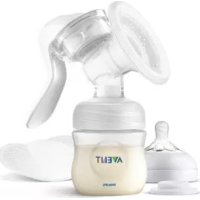
Avent SCF430 - Breast pump PHILIPS - Free user manual and instructions
Find the device manual for free Avent SCF430 PHILIPS in PDF.



| Product type | Manual breast pump |
| Brand | Philips |
| Model | Avent SCF430 |
| Category | Breast pump |
| Materials | Polypropylene, silicone |
| Operating temperature | 5 °C to 40 °C |
| Operating relative humidity | 15 % to 90 % (non-condensing) |
| Operating pressure | 700 to 1060 hPa |
| Storage and transport temperature | -25 °C to 70 °C |
| Lifespan | 500,000 cycles |
| Compatibility | Philips Avent Natural bottles and storage pots with adapter |
| Main functions | Manual suction to express and collect breast milk |
| Care and cleaning | Hand or dishwasher cleaning; disinfection by boiling in water for 5 minutes |
| Safety | Single use; do not use during pregnancy; check condition before each use |
| Spare parts | Available at www.philips.com/parts-and-accessories |
| Included accessories | Natural bottle (125 ml or 260 ml), storage pot, cushion, valve, diaphragm, etc. |
| Number of manual pages | 252 pages |
| Storage instructions | Protected from sunlight, in a clean and dry place |
Frequently Asked Questions - Avent SCF430 PHILIPS
User questions about Avent SCF430 PHILIPS
0 question about this device. Answer the ones you know or ask your own.
Ask a new question about this device
Download the instructions for your Breast pump in PDF format for free! Find your manual Avent SCF430 - PHILIPS and take your electronic device back in hand. On this page are published all the documents necessary for the use of your device. Avent SCF430 by PHILIPS.
USER MANUAL Avent SCF430 PHILIPS
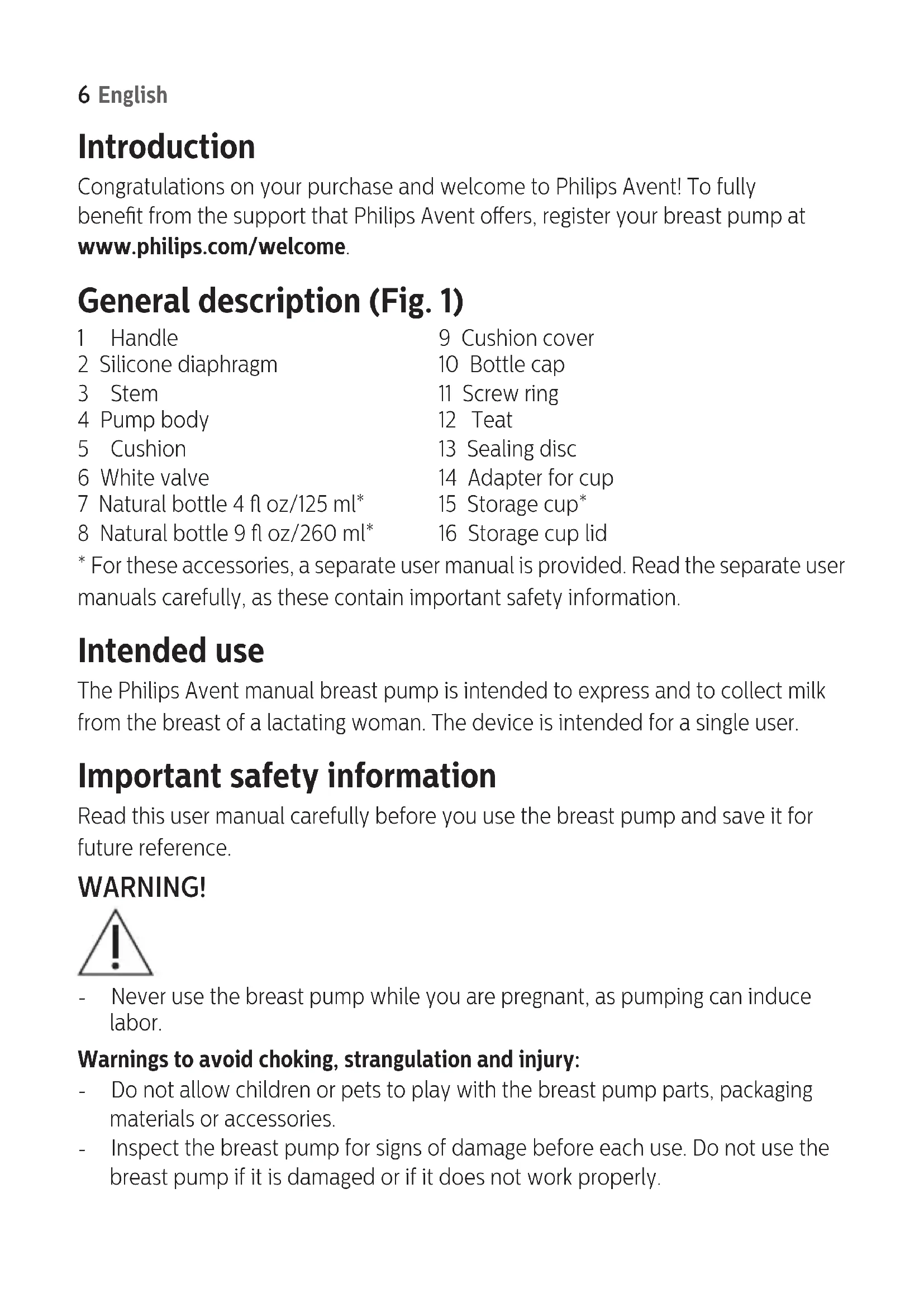
Congratulations on your purchase and welcome to Philips Avent! To fully benefit from the support that Philips Avent offers, register your breast pump at www.philips.com/welcome.
General description (Fig. 1)
1 Handle 9 Cushion cover
2 Silicone diaphragm 10 Bottle cap
3 Stem 11 Screw ring
4 Pump body 12 Teat
5 Cushion 13 Sealing disc
6 White valve 14 Adapter for cup
7 Natural bottle 4 fl oz/125 ml 15 Storage cup
8 Natural bottle 9 fl oz/260 ml* 16 Storage cup lid
- For these accessories, a separate user manual is provided. Read the separate user manuals carefully, as these contain important safety information.
Intended use
The Philips Avent manual breast pump is intended to express and to collect milk from the breast of a lactating woman. The device is intended for a single user.
Important safety information
Read this user manual carefully before you use the breast pump and save it for future reference.
WARNING!

- Never use the breast pump while you are pregnant, as pumping can induce labor.
Warnings to avoid choking, strangulation and injury:
- Do not allow children or pets to play with the breast pump parts, packaging materials or accessories.
- Inspect the breast pump for signs of damage before each use. Do not use the breast pump if it is damaged or if it does not work properly.
Warnings to avoid contamination and to ensure hygiene:
- For hygienic reasons, the breast pump is only intended for repeated use by a single user.
- Clean and disinfect all parts before first use and after each use.
- Do not use antibacterial or abrasive cleaning agents to clean the breast pump parts as this may cause damage.
- Wash your hands thoroughly with soap and water before you touch breast pump parts and breasts to prevent contamination. Avoid touching the inside of containers or lids.
Warnings to avoid breast and nipple problems including pain:
- Always release the handle before you remove the pump body from your breast in order to release the vacuum.
- If the vacuum is uncomfortable or causes pain, stop pumping and remove the breast pump from your breast.
- Do not continue pumping for more than five minutes at a time if you do not succeed in expressing any milk. Try to express at another time during the day.
- If the process becomes very uncomfortable or painful, stop using the pump and consult your healthcare professional.
-Only use accessories and parts recommended by Philips Avent.
- No modification of the breast pump is allowed.
Warning: If you are infected with Human Immunodeficiency Virus (HIV) or Hepatitis B or C, using the breast pump will not reduce or remove the risk of transmitting the virus to your baby through breast milk.
Caution

- Keep the parts away from heated surfaces to avoid deformation of these parts.
Preparing for use
Disassemble, clean and disinfect all parts before you use the breast pump for the first time and after every use.
Caution: Be careful when you remove and clean the white valve. Do not insert objects into the white valve, as this may cause damage.
Cleaning and disinfecting
Step 1: Disassembling
Disassemble the breast pump and bottle completely. Also remove the white valve from the breast pump.
Step 2: Cleaning
The parts can be cleaned manually or in the dishwasher.
Warning: Do not use antibacterial or abrasive cleaning agents to clean the breast pump parts as this may cause damage.
Step 2A: Manual cleaning
1 Rinse all parts under a running tap with lukewarm water.
2 Soak all parts for 5 minutes in warm water with some mild dishwashing liquid.
3 Clean all parts with a cleaning brush.
4 Thoroughly rinse all parts under a running tap with cold clear water.
5 Leave all parts to air-dry on a clean tea towel or drying rack.
Step 2B: Cleaning in the dishwasher
① Note: Food colorings may discolor parts.
1 Place all parts on the top rack of the dishwasher.
2 Put dishwashing liquid or a tablet in the machine and run a standard program.
3 Leave all parts to air-dry on a clean tea towel or drying rack.
Step 3: Disinfecting
Caution: During disinfection with boiling water, prevent the bottle or other parts from touching the side of the pot. This can cause irreversible product deformation or damage that Philips cannot be held liable for.
1 Fill a household pot with enough water to cover all parts and place all parts in the pot. Let the water boil for 5 minutes. Make sure the parts do not touch the side of the pot.
2 Allow the water to cool down.
3 Gently remove the parts from the water. Place the parts on a clean surface, tea towel or drying rack to air-dry.
Assembling the breast pump
Make sure you have cleaned and disinfected the parts of the breast pump that come into contact with milk.
Warning: Be careful, when you have disinfected the breast pump parts by boiling them, they can be very hot. To prevent burns, only start assembling the breast pump when disinfected parts have cooled down.
Check the breast pump kit parts for wear or damage before use and replace them if necessary.
Note: Correct placement of the cushion and the silicone diaphragm is essential for the breast pump to form a proper vacuum.
1 Insert the white valve into the pump body from underneath. Push the valve in as far as possible (Fig. 2).
2 Screw the pump body clockwise onto the bottle (Fig. 3) or storage cup (Fig. 4) until it is securely fixed.
Note: If you use a storage cup, you have to screw the adapter for cup onto the storage cup first (Fig. 4).
3 Insert the stem in the silicone diaphragm (Fig. 5).
4 Insert the silicone diaphragm into the pump body from above. Make sure it fits securely around the rim by pressing down with your fingers to ensure a perfect seal (Fig. 6).
5 Attach the handle onto the diaphragm with stem by hooking the hole in the handle over the end of the stem. Push down the handle onto the pump body until it clicks into place (Fig. 7).
6 Place the cushion into the pump body (Fig. 8) and make sure that the rim covers the pump body. Push in the inner part of the cushion into the funnel against the line indicated with an arrow (Fig. 9).
① Note: Place the cushion cover over the cushion to keep the breast pump clean while you prepare for expressing.
Using the breast pump
Warning: Always use the breast pump with the cushion.
Note: Contact your healthcare professional in case of questions or if you experience side effects.
10 English
Operating the breast pump
1 Wash your hands thoroughly with soap and water and make sure that your breast is clean.
2 Press the assembled pump body against your breast. Make sure that your nipple is centered, so that the cushion creates an airtight seal.
3 Gently start to press down the handle until you feel the suction on your breast (Fig. 10). Then allow the handle to return to its resting position. Repeat this step rapidly 5 or 6 times to initiate the 'let-down' reflex.
Note: You do not have to press down the handle fully. Press it down as much as is comfortable for you. Your milk will soon start flowing, even though you are not using all the suction the pump can generate.
4 When the milk starts flowing, adopt a slower rhythm by pressing down the handle and keeping it pressed down for a moment before you let it return to its resting position. Continue with this rhythm while your milk is flowing. If your hand becomes tired, try to use the other hand or pump from the other breast.
Note: Do not worry if your milk does not flow immediately. Relax and continue pumping. Repositioning the breast pump on your breast from time to time can help stimulate milk flow.
5 Continue pumping until you feel your breast is empty.
6 When you have finished expressing, carefully remove the breast pump from your breast and unscrew the bottle or storage cup from the pump body. Clean the other used parts of the breast pump (see 'Cleaning and disinfecting').
After use
Warning: Only store breast milk collected with a clean and disinfected pump.
If you intend to feed your baby with the expressed breast milk within 4 days, you can store the breast milk in the refrigerator in an assembled Philips Avent bottle or storage cup. Otherwise, you can store breast milk in the freezer for up to 6 months.
1 To store the breast milk: close the bottle with the sealing disc and screw ring (Fig. 11).
2 To prepare the bottle for feeding your baby: place a teat in a screw ring and screw the assembled screw ring onto the bottle. Seal the teat with the bottle cap (Fig. 12).
3 In case a storage cup is included with the manual breast pump, screw the lid onto the storage cup. Make sure you properly close it to avoid leakage (Fig. 13).
4 Disassemble and clean all parts that have been in contact with breast milk (see 'Cleaning and disinfecting').
Note: For safe use of bottles and storage cups, please read the separately provided user manuals.
Warning: Refrigerate or freeze expressed milk immediately or keep it at a room temperature for a maximum of 4 hours before you feed your baby. Never refreeze thawed breast milk to avoid a decrease in milk quality. Never add fresh breast milk to frozen breast milk to avoid a decrease in milk quality and unintended thawing of the frozen milk.
Note: For more information about the breast pump and tips for expressing milk, visit www.philips.com/avent.
Storage
Keep the breast pump out of direct sunlight as prolonged exposure may cause discoloration. Store the breast pump and its accessories in a safe, clean and dry place.
Compatibility
The Philips Avent manual breast pump is compatible with all baby bottles in the Philips Avent Natural range and Philips Avent storage cups with an adapter for cup. We do not recommend using the Philips Avent Natural glass bottles with the breast pump.
Technical information
-Operating conditions:
-Temperature 5^ to 40^ (41 F to 104 F)
-Relative humidity 15 to 90% (non-condensing)
-Pressure 700-1060 hPa (<3000 m/9842 ft. altitude)
-Storage and transportation conditions:
-Temperature -25^ to 70^ (-13 F to 158 F)
-Relative humidity up to 90% (non-condensing)
-Materials: polypropylene, silicone
-Service life: 500,000 pump cycles
12 English
Troubleshooting
This chapter summarizes the most common problems you could encounter with the manual breast pump. If you are unable to solve the problem with the information below, visit www.philips.com/support for a list of frequently asked questions or contact the Consumer Care Center in your country.
| Problem Solution | |
| I experience pain when I use the breast pump. | -Make sure that your nipple is placed in the center of the cushion. -Press the handle down to a vacuum level that is comfortable for you. -If the pain persists, stop using the breast pump and consult your healthcare professional. |
| I do not feel any suction. | -Make sure you have assembled the breast pump correctly (see 'Assembling the breast pump'). -Make sure that the breast pump is positioned correctly on the breast to allow a seal between breast pump and breast. |
| The breast pump is damaged. | In case of regular use, some light scratching is normal and does not cause problems. However, if a part of the breast pump is badly scratched or cracked, stop using the breast pump and contact the Philips Consumer Care Center or visit www.philips.com/parts-and-accessories to obtain a replacement part. |
Supplemental information
When using the breast pump, some common breastfeeding-related conditions may occur, including pain sensation, sore nipples, engorgement (swelling of the breast), bruises, thrombus resulting into redness, swelling and/or pain, injured tissue on nipple (nipple trauma), or clogged mammary ducts. If you experience any of these symptoms, contact your healthcare professional.
Explanation of symbols
The warning signs and symbols are essential to ensure that you use this product safely and correctly and to protect you and others from injury.
This symbol indicates:
-to follow the instructions for use (Fig. 14).
-important information such as warnings and cautions (Fig. 15).
-usage tips, additional information or a note (Fig. 16).
-the manufacturer (Fig. 17).
-the manufacturing date (Fig. 18).
-the catalog number (Fig. 19).
-the batch number (Fig. 20).
-Forest Stewardship Council (Fig. 21).
- that the packaging should be recycled and packaging fees have been paid to the Green Dot recycling organizations (Fig. 22).
- that an object is capable of being recycled – not that the object has been recycled or will be accepted in all recycling collection systems (Fig. 23).
14 Čeština
Uvod
Olulised ohutusjuhised
-FSC (Forest Stewardship Council) (Fig. 21).
Pasul 3: Dezinfected area
17 Steklenička Natural 125ml^*
15 Posodica za shranjevanje*
8 Steklenička Natural 260 ml*
16 Pokrov posodice za shranjevanje
CTbPk3: Ae3nHΦeKcnpaHe
BHMaHHe: Io BpeMe Ha Ae3nHΦeKcIyTa C BpIa BOa He N03BOAJaBte 6yTHaKaTa HAn ApYrN YacTn Da OOKocBaT cTpaHaTa Ha TeHdXepaTa. TOba MoJKe Da npuHHn HeNoPpaBmA DeΦOpMauzn HAn NobPeDa Ha npOaYkTa, 3a KOnto Philips He Hocn OTROBOPHOCT.
1 HanbHeTe DOMaKnHcKa TeHJKePa C DOCTaTbUHO BOa, 3a Da NOKpHe BCuKn Yactn, H NOCTaBeTe BCuKn Yactn B Hea. OCTaBeTe BOaTa Da Bpn 5 MInHyTu. IOrpHexe Ce HNKoYacT Da He DOKocBa CTpaHHHaTa CTeHa Ha TeHJKePaTa.
2 OctaBeTe BOaTa Da n3CTnHe.
3 BHIMATEAHO n3BaTe Te yactnte OT BODaTa. NocTaBeTe yactnte Bbpxy uHCTa IOBbPxHOCT, KbpNa HAn cyuHaKa, 3a Da H3CbXHaT.
YeKOp 1: PackAnonyBaHBe
LcAoOCHO packAOneTe ja nymnata 3a n3MOA3yBaHbe n shuTeTo. NcTo taKa, n3BaDeTe ro 6eAnOT BeHTnA OD nymnata 3a n3MOA3yBaHbe.
Yekop 2: YncteHe
AeIOBHTe MoKe Da ce H3MnjaT paHNO HAn BO MaunHa 3a MneHe caOBN.
I PpeAynpeyBaHbe: He KopncTeTe aHTn6aKTePncN HAn a6pa3HBn CpeAcTBA 3a YnCTeHBe Ha AeAOBNTe Od NymNaTa 3a N3MO3yBaHbe 3aToa WTO Toa MOKe Da IpeAIn3BnKa OwTeTyBaHbe.
YeKOp 2A: PaUHo YnCtTeHbE
1 IcnaKHeTe Hn CHTe AeOBn IOA Maa3 TOnA BODa Od YeMa.
2 IOTONETe Tn CNTe AeOBu 5 MmHyTu BO TOIa BOa Co MaAky 6Aaro TeHOCpeAcTBO 3a MHeBe CaOBN.
3 NcHCTeTe rH cHTe AeAOBn CO YeTKuKa 3a YnCTeHe.
4 TeMeAHO HcIIaKHeTe rCtE AeOBn IOA Maa3 YHCTa AaHa BODa Od YeIIma.
5 OctaBeTe cHTe AeIOBn Da ce HcyWat Ha BO3Ayx Ha YHCTa Kpna HAn Ha peWeTka 3a cyWeHbe caOBN.
YeKOp 2B: YnCTeHbe BO MaunHaTa 3a MneHe caOBN
① 3a6eAleuKa: BOnTe 3a XpaHa MoKe Da ja npomeHaT 6oJaTa Ha AeIoBHTe.
1 Ctabete rH cHTe aeIOBn Ha roPHaTa peWetka Ha MaunHaTa 3a MneHe caOBN.
2 Ctabete TeuHocT 3a MHe He caOBe HAn Ta6AeTa BO MaunHaTa N PywTeTe CTaHApHa IporpMa.
3 OcTaBeTe cHTe AeIOBn Da ce HcCywaT Ha BO3aYx Ha YnCTa KpNa Hn Ha peWeTKa 3a cyweHe caOBN.
YeKOp 3: Ae3nHΦnUpaHe
BHMaHHe: 3a BpeMe Ha CTePNAn3npaHbETo CO BpHeHBe BO BOda, BHMaBaJTe IINSeTO N ApyIe TcAeAOBn Da He rN AOInpaat SNIOBHTe Ha TeHcEpeto. Toa MoKe Da IpeAn3BNka HEnOBpaTHN AeOpMaun Ha Ipon3BOoT HAN OWTeTyBaHbA 3a Kon Philips He e oADROBopeH.
1 Hanoanhe TeHepe co DOBOAnHO BODa 3a Da IIN POKPne cHTe AeOBn H CTaBeTe rN CNTe AeOBn BO TeHepeTo. OCTaBeTe BODaTa Da BPne 5 MNHyTN. OcnrypeTe ce Aeka DeAOBHTe He rO dONHpaaT cTpaHNuHnot Ae Od TeHepeTo.
2 OctaBeTe BOaTa Da ce H3aAn.
3 HeKHO OTCpaHete rN DeAOBHTe OD BOaTa. CTabeTe rN DeAOBHTe Ha YnCTa NOBpUnHa/KpNa Hn peWetKa 3a cyWeHe caOBN 3a Da ce NcUwAT Ha BO3dYx.
Склоуваtheses Ha symnata 3a Измоауваtheses
OcnrypeTe ce deKa cTe rH nCnCTnAe H de3HHnUpaAe DeAOBnTe Ha nymnata 3a H3MOAnyBaHBe ITO aOaraaT BO KOHTaKT CO MKeKO.
I PpeDynppeDyBaBe: BnHmabajTe OTkaKO Ke rN De3HHΦHcHpaTe DeAOBHe Ha NymNaTa 3a H3MOA3YBaHbe CO HNBHO npeBpHbAbe 3aToa ITO MoKe Da 6HdAeMHOrgY JeShKn. 3a Da cnpeHTe H3ropeHNu, NOUHeTe Ja cKAnOpYBaTe NymPaTa 3a H3MOA3YBaHbe CaMo KOra De3HHΦHcHpaHInTe DeAOBNe Ke Ce H3AaT.
Пювере Te a He ce n3a6eHn HAN OwTeTeHn DeAOBHTe Ha KOMnAeTOT Ha NymnTa 3a n3MOAn3yBaHb e PpeA Da rN KOpNCHTe N 3aMeHeTe rN aKO e HEONXoADHO.
3a6eewka: npabnHaTa NOCTabeHocT Ha nepHneTo n cHAnKOHcKaTa AnjaΦpaMa e KAYHa 3a NymPaTa 3a H3MOA3yBaHe Da oΦOpMn npabnAeH BaKyym.
1 Ctabete ro 6eAnot BeHTnAoTeAOTO Ha IyMnata Odo3oLa. TypheTe ro BeHTnAOr KOAKy wTo e MoXHO NOBHaTpe (C.A. 2).
2 HabpTyBajTe ro TeAOTO Ha nymnata Ha shuWeTo (C. 3) nAn Ha yauaTa 3a cyBaHe majuHNO Maeko (C. 4) ce oOeKa He ce npuBpCTn ao6po.
① 3a6eAleuKa: Ako Kopructte yAsha 3a yBaHe MajUnHo MKeO, Mopate npBO Da ro 3aBPTtTe aAnTePoT 3a yAsha Ha yAshaTa 3a yBaHe MajUnHO MKeO (C.4).
3 CTabete ro BpaTOT BO cHAnKoHcKaTa AnjaΦparMa (C. 5).
4 Ctabete ja cnAnKoHcKaTa AnjaOpaMa BO TeAoto Ha Nymnata Odo3ropa. Ocnypete ce deka e uBpcto npnaeneHa OKoA y pa6OT co npntncKahe HaDoA y co npCTHTe 3a da ce o6e36eAn ueaocho dNXTyBaHe (C.6).
5 Πрнкачete ja paчka_ta ha AnjaΦpaГма_ta co ZeBYe co 3aKaUyBaHbe Ha OTBOPOT BO paчka_ta BP3 KpaJOT Ha ZeBYeTo. Πрптисе ja paчka_ta Ha TeAOTO Ha ПуМпа_ta се ДОдЕка He KaNKHe BO NOЗииja (Cλ. 7).
6 NocTaBete ro nepHnueTo BO TeAoto Ha nymnata (C. 8) n ochnypete ce deka pa6ot ro nokpnaBa TeAoto Ha nymnata. CTabeTe ro BHaTpeuHnot AeOa nepHnueTo BO INkata, do AnHHjaTa O3NaueHa co cTpeAka (C. 9).
① 3a6eAleuka: NocTaBeTe ro KaNaKOT 3a nepHnueTo Bp3 Hero co ueA NymnaTa3a H3MOA3yBaHe Da OCTaHe YnCTa OoAeKa Ce IODrOTByBaTe 3a H3MOA3yBaHe.
KopncTeHe Ha nymnata 3a n3MOA3yBaHbe
- Y JKOAnHomy pa3i He BnKOpNCToBvIe MoAOKoBicCMOKTyBaU, JaKIO Bn BariTHi, OCKIAbKn 3ciAIXyBaHHaMoAOKa MoKe BnKAInKaTH Nepeauchi NoAOrn.
3axoAn AAn 3an06iraHHyAyuweHHIO Ta TpaBMyaHHIO
-He Do3BOAJIte AiTm uN DOMaUHIM TBapHHam rpaTnC8 3 DeTaAMM MOAOKOBiACMOKTYBaHa, yNaKOBKOU uN akceCyapaMn.
3axoAnAa 3an06iraHHa6pydHeHHIO aOTpMaHH npabn ririEHN
-3 MIPkyBaHb ririEHN MOAOKOiACMOKTyBaU npu3HaueHo dAЯ NOCTiHOrO BHKOpNCtAHNЯ ANIe OdHiEIO Oco6oIO.
-Yci yactnHn caiD ouuSyBaTn N de3iHphiKyBaTN nepeA nepwnm BHKOpNCtAHnM i Haadai nicKoXHOrO BHKOpNCTaHHra.
-He qnctbTe yactHH MoAOKOiACMOKTyBaay aHTN6aKTepiAaHmN nn a6pa3NBHMn MIOUChm 3acO6amn, OCKIaBKn ue MOKe cnpuHHTn NOWKoJXeHHra.
- Uo6 yHnKHyTN 3a6pydHeHH, BmNte pyKn BOAOIO 3 MIAOM, nepu HIX TOPKaTNC AeTaAeM MOLOKOiACMOKTyBaHa Ta rpye. He TOpKaITeC8 BHyTpioHboi YactHH KOHTeHepiB a60 Kpnwok.
3axoAn AAn 3an06irahn8 6oAIO Ta npaHeHHIO rpye i cockiB
Texhivha iHΦopMaújia
-ymoBn eKcnayataui:
-TemnepaIpa 5-40 ^ C (41 ^ F-104 F)
-BiHOCha BOAnorictb Bi 15 % 90% (6e3 yTBOpEHnKoHaeHcAty)
-Tnck:700-1060 rIIa (BncoTa 3000 M)
-ymoBn 36epiraHHa Ta TpaHcnpTyBaHHa:
-TemnepaIpa-25-70 ^ C (-13F-158F)
-BiHOCha BOAorictb 90% (6e3 yTBOpEHnKOHaeHcaTy)
-MatepiAn: noAipponiAeH, cnaikOH
-TepmiH cayx6n: 500 000 uKaiB BiCMOKTyBaHHa
YcyHeHnHa HeCnpaBHOcte
Y zu bomy po3di i po3raHyTo oCHOBHI npo6aemn, kki MOxkytb BHHNKHTN iAac BHKOpNCtAHn pyuHOrO MoAOKOBIcMOKtByBaHa. Jkso BN He B 3Mo3i BnpiHTN npo6aemy 3a dONOMrOIO NOaHOI HnXue iHΦopMaui, BiDiaJTe Be6-caT www.philips.com/support i O3NaHOMTeC8 3i CnCKOM Yactnx 3aNTaHb a60 3BepHiTBc8do LcHTpy o6cAYROyBaHHRA KAIeHTIB y CBOII KpaiHi.
nr by n.ynn nn nnnn (10)
nnn nnopn nnnn 6 5 nnnn
Tby non 90n nnyn .non ty nyn by yinn noyn
xnnn nn nnnnnnnnnnnnnnnnnnnnnnnnnnnnnnnnnnnnnnnnnnnnnnnnnnnnnnnnnnnnnnnnnnnnnnnnnnnnnnnnnnnnnnnnnnnnnnnnn
.
nyn by non nynb -y nn n x y 4
nnn nn nnnn nn nnnn nn nnnnnnnnnnnnnnnnnnnnnnnnnnnnnnnnnnnnnnnnnnnnnnnnnnnnnnnnnnnnnnnnnnnnnnnnnnnnnnnnnnnnnnnnnnnnn
Tnn nn nn nn nn nn nn nn nn nn nn nn nn nn nn nn nn nn nn nn nn nn nn nn nn nn nn nn nn nn nn nn nn nn nn nn nn nn nn nn nn nn nn nn nn nn nn nn nn nn nn nn nn nn nn nn nn nn nn nn nn nn nn nn nn nn nn nn nn nn nn nn nn nn nn nn nn nn nn nn nn nn nn nn nn nn nn nn nn nn nn nn nn nn nn nn nn nn nn nn nn
nynnnnnnnnnnnnnnnnnnnnnnnnnnnnn
nnn nnna yob nyb nyn by aann nayn by vnn np
.
.77 Tnuu nn ty nXy 5
nnnnnnn nn nnnnnnnnnnnnnnnnnnnnnnnnnnnnnnnnnnnnnnnnnnnnnnnnnnnnnnnnnnnnnnnnnnnnnnnnnnnnnnnnnnnnnnnnnnnnnnnnnnnnnnnnn
nnn nn nnnnnnnnnnnnnnnnnnnnnnnnnnnnnnnnn
nnonnn nno by 3 (3) npn by nywn nnynnn 2 .nnae nnpn ynpn nny (4 n
nx (4 nx) np xanby ,nonn noonny nx ox :yn 1 .nonn n o by n ony by axnn
.(5)nnp 3
nynnn nn nynnn nnnnn nnnnn nnnnn 4 nnnnn nnnn nn nnnn nn nnnn nn nnnn nn nnnn .(6)
ynnnn nn nnnn nn -ny npn nynnnnn 5
yyn ty nxynn nn nn non nnon .npn .7 (p) np ynu
n nn nnnn nn (8) nnnnnnn 6
ny nn nn nn nn nn nn nn nn nn nn .(9 nn)yn
nnn nn nnnn nn nnnn nn nnnn nn nnnn nn nnnn nn nnnn nn nnnn nn nnnn nn nnnn nn nnnn nn nnnn nn nnnn nn nnnn nn nnnn nn nnnn nn nnnn nn nnnn nn nnnn nn nnnn nn nnnn nn nnnn nn nnnn nn nnnn nn nnnn nn nnnn nn
n nn nn
.ynon oy nn nnnn nnwnn npn nnx
nnn nn nnnnnnnnnnnnnnnnnnnnnnnnnnnnnnnnnnnnnnnnnnnnnnnnnnnnnnnnnnnnnnnnnnnnnnnnnnnnnnnnnnnnnnnnnnnnnnnnnnnnnnnnnnn
#
p:1 ty
n nn nnn nn nn nn nn nn nn nn nn nn nn nn nn nn nn nn nn nn nn nn nn nn nn nn nn nn nn nn nn nn nn nn nn nn nn nn nn nn nn nn nn nn nn nn nn nn nn nn nn nn nn nn nn nn nn nn nn nn nn nn nn nn nn nn nn nn nn nn nn nn nn nn nn nn nn nn
.
2 ty
.
n nn nnnnnnnnnnnnnnnnnnnnnnnnnnnnnnnnnnnnnnnnnnnnnnnnnnnnnnnnnnnnnnnnnnnnnnnnnnnnnnnnnnnnnnnnnnnnnnnnnnnnnnnnnnn
T:2A tyy
1
nnuynnn nnnn 5 nn nnnn 2
.
3
4
nwn by n nn by nn 5
Dn:2B ty
.
. 1
2
nwn by n nn by nn 3
m:n:3 tyy
Pn nn nnnn nn nnnn nn nnnn nn nnnn nn nnnn nn nnnn nn nnnn nn nnnn nn nnnn nn nnnn nn nnnn nn nnnn nn nnnn nn nnnn nn nnnn nn nnnn nn nnnn nn nnnn nn nnnn nn nnnn nn nnnn nn nnnn nn nnnn nn nnnn nn nnnn nn nannn nn nnnn nn nnnn nn nnnn nn nnnn nn nnnn nn nnnn nn nnnn nn nnnn nn nnnn nn nnnn nn nnnn nn nnnn nn nnnn nn nnnn nn nnnn nn nnnn nn nnnn nn nnnn nn
nn nn nnnn nn nn nn nn nn nn nn nn nn nn nn nn nn nn nn nn nn nn nn nn nn nn nn nn nn nn nn nn nn nn nn nn nn nn nn nn nn nn nn nn nn nn nn nn nn nn nn nn nn nn nn nn nn nn nn nn nn nn nn nn nn nn nn nn nn nn nn nn nn nn nn nn
. 5 nnnn nn 2
nyn, npnuyn by npnn bn nx nnn npnn nx nny 3
nwn by nn
- 5x. .nynynynynnnn nn nnnnnnnnnnnnnnnnnnnnnnnnnnnnnnnnnnnnnnnnnnnnnnnnnnnnnnnnnnnnnnnnnnnnnnnnnnnnnnnnnnnnnnnnnnnnnnnnnnnnnnnnnnnnnnnnnnnnnnnnnnnnnnnnnnnnnnnnnnnnnnnnnnnnnnnn nn n nn nn nn nn nn nn nn nn nn nn nn nn nn nn nn nn nn nn nn nn nn nn nn nn nn nn nn nn nn nn nn nn nn nn nn nn nn nn nn nn nn nn nn nn nn nn nn nn nn nn nn nn nn nn nn nn nn nn nn nn nn nn nn nn nn nn nn nn nn nn nn nn nn nn nn nn nn nn nn nn nn nn nn nn nn nn nn nn nn nn nn nn nannn nannn nannn nannn nannn nannn nannn nannn nannn nannn nannn nannn nannn nannn nannn nannn nannn nannn nannn nannn nannn nannn nannn nannn nannn nannn nannn nannn nannn nannn nannn nannn nannn nannn
wn, C ouunn B ouunn (HIV) on nnn nn nn nn nn nn nn nn nn nn nn nn nn nn nn nn nn nn nn nn nn nn nn nn nn nn nn nn nn nn nn nn nn nn nn nn nn nn nn nn nn nn nn nn nn nn nn nn nn nn nn nn nn nn nn nn nn nn nn nn nn nn nn nn nn nn nn nn nn nn nn nn nn nn nn nn nn nn nn nn nn nn nn nn nn nn nn nn nn nn nn nn nn nn

. 1
#
ynnn nn nynn ynnn npnnn nn xunn np,ynn.ynnnn
X .JnOnn ynn nnyn nynn npn nnr A .n 1x ,n nnown nn nn
nntpn
Philips-ynnnnyn by nnynnyn by nynnnnyn
,nyn Philips Avent-ynnnnn nynnn nx pyn!Avent .www.philips.com/welcome nynnnnyn nx
(1)
1 9
10
3 11
naxnn 4 nns 12
n5 nX npT 13
nnoov 6 nnn 14
Natural 7 *15
*n 125 nonnn 16
Natural 8
*n260 n
nnn nn nnnn nn nnnn nn nnnn nn nnnn nn nnnn nn nnnn nn nnnn nn nnnn nn nnnn nn nnnn nn nnnn nn nnnn nn nnnn nn nnnn nn nnnn nn nnnn nn nnnn nn nnnn nn nnnn nn nnnn nn nnnn nn nnnn nn nnnn nn nnnn nn nnnn nn
3000.054.0760.1 (2020-11-04)
- General description (Fig. 1)
- Intended use
- Important safety information
- WARNING!
- Warnings to avoid choking, strangulation and injury:
- Warnings to avoid contamination and to ensure hygiene:
- Warnings to avoid breast and nipple problems including pain:
- Caution
- Preparing for use
- Cleaning and disinfecting
- Step 1: Disassembling
- Step 2: Cleaning
- Step 2A: Manual cleaning
- Step 2B: Cleaning in the dishwasher
- Step 3: Disinfecting
- Assembling the breast pump
- Using the breast pump
- English
- Operating the breast pump
- After use
- Warning: Only store breast milk collected with a clean and disinfected pump.
- Storage
- Compatibility
- Technical information
- English
- Troubleshooting
- Supplemental information
- Explanation of symbols
- Čeština
- Uvod
- Olulised ohutusjuhised
- Pasul 3: Dezinfected area
- CTbPk3: Ae3nHΦeKcnpaHe
- YeKOp 1: PackAnonyBaHBe
- Yekop 2: YncteHe
- YeKOp 2A: PaUHo YnCtTeHbE
- Склоуваtheses Ha symnata 3a Измоауваtheses
- KopncTeHe Ha nymnata 3a n3MOA3yBaHbe
- 3axoAn AAn 3an06iraHHyAyuweHHIO Ta TpaBMyaHHIO
- 3axoAnAa 3an06iraHHa6pydHeHHIO aOTpMaHH npabn ririEHN
- 3axoAn AAn 3an06irahn8 6oAIO Ta npaHeHHIO rpye i cockiB
- Texhivha iHΦopMaújia
- YcyHeHnHa HeCnpaBHOcte
- n nn nn
- #
- nntpn
- (1)
Brand : PHILIPS
Model : Avent SCF430
Category : Breast pump