
TCS 2018 P4A - Hedge Trimmers GARDENA - Free user manual and instructions
Find the device manual for free TCS 2018 P4A GARDENA in PDF.




| Product Type | Cordless pole pruner (hedge trimmer) |
| Brand | Gardena |
| Model | TCS 2018 P4A (ref. 14770) |
| Power source | Li-Ion 18 V POWER FOR ALL System battery |
| Weight (with battery) | 3.5 kg |
| Blade length | 200 mm |
| Chain speed | 3.8 m/s |
| Oil tank capacity | 60 cm³ |
| Telescopic tube extension range | 0 to 50 cm (continuous adjustment) |
| Sound pressure level (Lpa) | 73 dB(A) |
| Guaranteed sound power level | 93 dB(A) |
| Hand-arm vibration | 1 m/s² |
| Chain type | 90 px |
| Max. cutting capacity | Branches up to 8 cm in diameter |
| Head tilt | 5 positions in 30° increments (approx.) |
| Compatible battery | POWER FOR ALL PBA 18V system (e.g., ref. 14903 2.5 Ah) |
| Charger included | AL 1810 CV P4A (ref. 14900), 220-240 V~, 50-60 Hz |
| Charging time (80%/100%) | 120 min / 154 min (2.5 Ah battery) |
| Safety device | Double switch (start lever + lock button) |
| Lubrication | Automatic, integrated oil tank |
| Wear parts | Chain and blade (ref. 4048/4049), oil (ref. 6006) |
| Warranty | 2 years (wear parts excluded) |
Frequently Asked Questions - TCS 2018 P4A GARDENA
Note: Wearing hearing protection may reduce perception of surrounding noises.
User questions about TCS 2018 P4A GARDENA
0 question about this device. Answer the ones you know or ask your own.
Ask a new question about this device
Download the instructions for your Hedge Trimmers in PDF format for free! Find your manual TCS 2018 P4A - GARDENA and take your electronic device back in hand. On this page are published all the documents necessary for the use of your device. TCS 2018 P4A by GARDENA.
USER MANUAL TCS 2018 P4A GARDENA
SV Bruksanvisning
Battery-powered pole pruner
DA Brugsanvisning
AKKymyIaTOPbIy BbICOTope3
Translation of the original instructions.
This product is not intended for use by persons (including children) with reduced physical, sensory or mental capabilities, or lack of experience and knowledge, unless they have been given supervision or instruction concerning use of the product by a person responsible for their safety. Children should be supervised to ensure that they do not play with the product. The use of this product by young people under the age of 16 is not recommended.
Intended use:
The GARDENA Battery Pole Pruner is intended for delimbing trees, hedges, shrub and bushes with limbs of up to 8 cm in diameter in private domestic gardens or allotments.
The product is not intended for long term use.

DANGER! Risk of injury!
The Pole Pruner must not be used for felling trees. Cut branches into parts to ensure that you cannot be struck by falling branches or that fallen branches can bounce up from the soil. Do not stand under the branch while cutting. Do not use for pond care.
1. SAFETY
IMPORTANT!
Read the operator's manual carefully before use and keep for future reference.
Symbols on the product:
Read the user instructions carefully to make sure you understand all the controls and what they do.

Wear eye and ear protection.
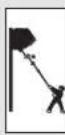
Risk of fatal injury due to electric shock! Keep at least 10 m away from electricity lines.

Always wear protective gloves.

Always wear non-slip safety shoes.

Always wear a hard hat.

Do not expose to rain.
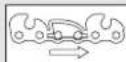
Direction of movement of the chain.

For the charger: Remove plug from the mains immediately if the cable is damaged or cut.
General safety warnings
General power tool safety warnings

WARNING!
Read all safety warnings, instructions, illustrations and specifications provided with this power tool. Failure to follow the warnings and instructions may result in electric shock, fire and/or serious injury.
Save all warnings and instructions for future reference.
The term "power tool" in the warnings refers to your mains operated (corded) power tool or battery operated (cordless) power tool.
1) Work area safety
a) Keep work area clean and well lit. Cluttered or dark areas invite accidents.
b) Do not operate power tools in explosive atmospheres, such as in the presence of flammable liquids, gases or dust.
Power tools create sparks which may ignite the dust or fumes.
c) Keep children and bystanders away while operating a power tool. Distractions can cause you to lose control.
2) Electrical safety
3) Personal safety
4) Power tool use and care
5) Battery tool use and care
a) Power tool plugs must match the outlet. Never modify the plug in any way. Do not use any adaptor plugs with earthed (grounded) power tools. Unmodified plugs and matching outlets will reduce risk of electric shock. b) Avoid body contact with earthed or grounded surfaces, such as pipes, radiators, ranges and refrigerators. There is an increased risk of electric shock if your body is earthed or grounded. c) Do not expose power tools to rain or wet conditions. Water entering a power tool will increase the risk of electric shock. d) Do not abuse the cord. Never use the cord for carrying, pulling or unplugging the power tool. Keep cord away from heat, oil, sharp edges or moving parts. Damaged or entangled cords increase the risk of electric shock. e) When operating a power tool outdoors, use an extension cord suitable for outdoor use. Use of a cord suitable for outdoor use reduces the risk of electric shock. f) If operating a power tool in a damp location is unavoidable, use a residual current device (RCD) protected supply. Use of an RCD reduces the risk of electric shock. a) Stay alert, watch what you are doing and use common sense when operating a power tool. Do not use a power tool while you are tired or under the influence of drugs, alcohol or medication. A moment of inattention while operating power tools may result in serious personal injury. b) Use personal protective equipment. Always wear eye protection. Protective equipment such as dust mask, non-skid safety shoes, hard hat, or hearing protection used for appropriate conditions will reduce personal injuries. c) Prevent unintentional starting. Ensure the switch is in the off-position before connecting to power source and/or battery pack, picking up or carrying the tool. Carrying power tools with your finger on the switch or energising power tools that have the switch on invites accidents. d) Remove any adjusting key or wrench before turning the power tool on. A wrench or a key left attached to a rotating part of the power tools may result in personal injury. e) Do not overreach. Keep proper footing and balance at all times. This enables better control of the power tool in unexpected situations. f) Dress properly. Do not wear loose clothing or jewellery. Keep your hair, clothing and gloves away from moving parts. Loose clothes, jewellery or long hair can be caught in moving parts. g) If devices are provided for the connection of dust extraction and collection facilities, ensure these are connected and properly used. Use of dust collection can reduce dust-related hazards. h) Do not let familiarity gained from frequent use of tools allow you to become complacent and ignore tool safety principles. A careless action can cause severe injury within a fraction of a second. a) Do not force the power tool. Use the correct power tool for your application. The correct power tool will do the job better and safer at the rate for which it was designed. b) Do not use the power tool if the switch does not turn it on and off. Any power tool that cannot be controlled with the switch is dangerous and must be repaired. c) Disconnect the plug from the power source and / or the battery pack from the power tool before making any adjustments, changing accessories, or storing power tools. Such preventive safety measures reduce the risk of starting the power tool accidentally. d) Store idle power tools out of the reach of children and do not allow persons unfamiliar with the power tool or these instructions to operate the power tool. Power tools are dangerous in the hands of untrained users. e) Maintain power tools. Check for misalignment or binding of moving parts, breakage of parts and any other condition that may affect the power tool's operation. If damaged, have the power tool repaired before use. Many accidents are caused by poorly maintained power tools. f) Keep cutting tools sharp and clean. Properly maintained cutting tools with sharp cutting edges are less likely to bind and are easier to control. g) Use the power tool, accessories and tool bits etc. in accordance with these instructions, taking into account the working conditions and the work to be performed. Use of the power tool for operations different from those intended could result in a hazardous situation. h) Keep handles and grasping surfaces dry, clean and free from oil and grease. Slippery handles and grasping surfaces do not allow for safe handling and control of the tool in unexpected situations. a) Recharge only with the charger specified by the manufacturer. A charger that is suitable for one type of battery pack may create a risk of fire when used with another battery pack. b) Use power tools only with specifically designated battery packs. Use of any other battery packs may create a risk of injury and fire. c) When battery pack is not in use, keep it away from other metal objects, like paper clips, coins, keys, nails, screws or other small
metal objects, that can make a connection from one terminal to another. Shorting the battery terminals together may cause burns or a fire.
d) Under abusive conditions, liquid may be ejected from the battery; avoid contact. If contact accidentally occurs, flush with water. If liquid contacts eyes, additionally seek medical help. Liquid ejected from the battery may cause irritation or burns. e) Do not use a battery pack or tool that is damaged or modified. Damaged or modified batteries may exhibit unpredictable behavior resulting in fire, explosion or risk of injury. f) Do not expose a battery pack or tool to fire or excessive temperature. Exposure to fire or temperature above 130°C may cause explosion. g) Follow all charging instructions and do not charge the battery pack or tool outside the temperature range specified in the instructions. Charging improperly or at temperatures outside the specified range may damage the battery and increase the risk of fire.
6) Service
a) Have your power tool serviced by a qualified repair person using only identical replacement parts. This will ensure that the safety of the power tool is maintained. b) Never service damaged battery packs. Service of battery packs should only be performed by the manufacturer or authorised service providers. National regulations can restrict the use of the primer.
Daily Inspect before use and after dropping or other impacts in order to identify any significant damage or defects.
Pole Pruner safety warnings
a) Keep all parts of the body away from the chain. Do not remove cut material or hold material to be cut when the chain is moving. The chain continues to move after the switch is turned off. A moment of inattention while operating the pole pruner may result in serious personal injury. b) Carry the pole pruner by the handle with the chain stopped and take care not to operate any power switch. Proper carrying of the pole pruner will decrease the risk of inadvertent starting and resultant personal injury from the chain. c) When transporting or storing the pole pruner, always fit the chain cover. Proper handling of the pole pruner will decrease the risk of personal injury from the chain. d) When clearing jammed material or servicing the unit, make sure all power switches are off and the battery pack is removed or disconnected. Unexpected actuation of the pole pruner while clearing jammed material or servicing may result in serious personal injury. e) When clearing jammed material or servicing the unit, make sure all power switches are off and the lock-off is in the locked position. Unexpected actuation of the pole pruner while clearing jammed material or servicing may result in serious personal injury. f) Hold the pole pruner by insulated gripping surfaces only, because the chain may contact hidden wiring. Chain contacting a "live" wire may make exposed metal parts of the hedge trimmer "live" and could give the operator an electric shock. g) Keep all power cords and cables away from the cutting area. Power cords or cables may be hidden in trees or bushes and can be accidentally cut by the chain. h) Do not use the pole pruner in bad weather conditions, especially when there is a risk of lightning. This decreases the risk of being struck by lightning.
Pole pruner safety warnings
a) To reduce the risk of electrocution, never use the extended-reach pole pruner near any electrical power lines. Contact with or use near power lines may cause serious injury or electric shock resulting in death. b) Always use two hands when operating the extended-reach pole pruner. Hold the extended-reach pole pruner with both hands to avoid loss of control. c) Always use head protection when operating the extended-reach pole pruner overhead. Falling debris can result in serious personal injury.
Search hedges and trees for hidden objects (e.g., wire fences and hidden wires). The use of a residual current device (RCD) with a trip current of 30 mA or less is recommended.
Hold the pole pruner with both hands on both handles.
The pole pruner is intended for use when the user is standing on the ground and not on a ladder or other unstable surface.
Before using the pole pruner, make sure that the locking devices of all moving parts (e.g., the extended shaft and the pivot element) are in the locked position.
Additional safety warnings
Battery safety

the safety and general instructions.
Failure to observe the safety and general instructions may result in electric shock, fire and/or serious injury. Store these instructions in a safe place. Only use the charger if you can fully evaluate all functions and carry them out without restrictions, or if you have received corresponding instructions. Supervise children during use, cleaning and maintenance. This will ensure that children do not play with the charger.
Charge only lithium-ion batteries of the POWER FOR ALL system type PBA 18V with a capacity of 1.5 Ah or more (5 battery cells or more). The battery voltage must match the battery charging voltage of the charger. Do not charge any nonrechargeable batteries. Otherwise there is a risk of fire and explosion.

Do not expose the charger to rain or wet conditions. Water entering a power tool will increase the risk of electric shock.
Keep the charger clean. Dirt poses a risk of electric shock. Always check the charger, cable and plug before use. Stop using the charger if you discover any damage. Do not open the charger yourself, and have it repaired only by a qualified specialist using only original replacement parts.
Damaged chargers, cables and plugs increase the risk of electric shock.
Do not operate the charger on an easily ignited surface (e.g. paper, textiles, etc.) or in a flammable environment. There is a risk of fire due to the charger heating up during operation. In order to avoid safety hazards, if the power supply cord needs to be replaced, this must be done by GARDENA or by a customer service centre that is authorised to repair GARDENA power tools.
Do not operate the product while it is charging.
Products sold in GB only: Your product is fitted with a BS 1363/A approved electric plug with internal fuse (ASTA approved to BS 1362). If the plug is not suitable for your socket outlets, it should be cut off and an appropriate plug fitted in its place by an authorised customer service agent. The replacement plug should have the same fuse rating as the original plug. The severed plug must be disposed of to avoid a possible shock hazard and should never be inserted into a mains socket elsewhere.
These safety warnings apply only for lithium-ion batteries of the POWER FOR ALL system PBA 18V.
Only use the battery with products of the POWER FOR ALL system manufacturers. This is the only way in which you can protect the battery against dangerous overload.
Recharge only with the charger specified by the manufacturer. A charger that is suitable for one type of battery pack may create a risk of fire when used with another battery pack.
The battery is supplied partially charged. To ensure full battery capacity, fully charge the battery in the charger before using your power tool for the first time.
Keep battery packs out of the reach of children.
Do not open the battery. There is a risk of short-circuiting.
In case of damage and improper use of the battery, vapours may be emitted. The battery can set alight or explode. Ensure the area is well ventilated and seek medical attention should you experience any adverse effects. The vapours may irritate the respiratory system.
If used incorrectly or if the battery is damaged, flammable liquid may be ejected from the battery. Contact with this liquid should be avoided. If contact accidentally occurs, rinse off with water. If the liquid comes into contact with your eyes, seek additional medical attention. Liquid ejected from the battery may cause irritation or burns.
If the battery is damaged liquid can be ejected and cover nearby surfaces. Check affected parts. Clean these parts or change them if necessary.
Do not short-circuit the battery pack. When the battery pack is not in use, keep it away from other metal objects, like paper clips, coins, keys, nails, screws or other small metal objects, that can make a connection from one terminal to another. Shorting the battery terminals together may cause burns or a fire.
The battery can be damaged by pointed objects such as nails or screwdrivers or by force applied externally. An internal short circuit may occur, causing the battery to burn, smoke, explode or overheat.
Never service damaged battery packs. Service of battery packs should only be performed by the manufacturer or authorized service providers.

Protect the battery against heat, e.g. against continuous intense sunlight, fire, dirt, water and moisture. There is a risk of explosion and short-circuiting.
Only operate and store the battery at an ambient temperature between -20°C and +50°C.
Do not leave the battery in your car in the summer, for example. At temperatures below 0°C some devices may experience a loss of power.
Only charge the battery at an ambient temperature which is between 0°C and +45°C. Charging outside of this temperature range can increase the risk of damage to the battery and pose a fire hazard.
Electrical safety

DANGER! Cardiac arrest!
This product makes an electromagnetic field while it operates. This field may under some conditions interfere with active or passive medical implants. To decrease the risk of conditions that can possibly injure or kill, we recommend persons with medical implants to speak with their physician and the medical implant manufacturer before you operate the product.
Only connect charger to the AC voltage specified on the rating plate.
Under no circumstances should an earth be connected to any part of the product. Do not use the product when a thunderstorm is approaching.
Protect the battery contacts from moisture.
Personal safety

DANGER! Risk of suffocation!
Small parts can be easily swallowed. There is also a risk that the polybag can suffocate toddlers. Keep toddlers away when you assemble the product.
Only use the Pole Pruner in the manner and for the functions described in these instructions. The operator or user is responsible for accidents or hazards occurring to other people or their property. Pay special attention to the hazard for third parties posed by the increased working radius when the telescopic tube is extended.

DANGER!
When wearing hearing protection, and due to the noise produced by the product, the operator may not notice persons approaching.
Always wear suitable clothing, gloves, and stout shoes.
Avoid contact to the oil of the chain in particular when you react allergic with it. Check the areas where the pole pruner is to be used and remove any wires, hidden electrical cables and other foreign objects.
All adjustments (inclining the blade head, altering the length of the telescopic tube) have to be made with the sheath in place, and the pole pruner must not rest on the blade in the process.
Before using the machine and after any impact, check for signs of wear or damage.
Have the appropriate repair work carried out if necessary.
Never attempt to use an incomplete product or one with an unauthorised modification.
Power tool use and care
Know how to stop the product quickly in an emergency. Never hold the product by the protective cover.
Do not use the pole pruner if the protection equipment is damaged.
Do not use ladders whilst operating the pole pruner.
Always use the product when standing on solid ground.
Remove the battery:
before leaving the pole pruner unattended for any period; before clearing a blockage; before checking, cleaning or working on the pole pruner; if you hit an object. Do not use your pole pruner until you are sure that the entire pole pruner is in a safe operating condition; if the pole pruner starts to vibrate abnormally. Check immediately. Excessive vibration can cause injury; before passing to another person.

RISK OF PHYSICAL INJURY!
Do not touch the chain.
When work is finished or interrupted, refit the protective cover.
All nuts and screws must be firmly tightened to ensure a safe operating condition of the product.
If the product got hot during operation, let it cool down before storage.
The pole pruner must not be stored over 35°C or under direct exposure to sunlight.
Do not store the pole pruner in places with static electricity.
Beware of falling debris.
Only work in the daylight or when visibility is good.
2. ASSEMBLY

WARNING! Risk of injury!
Injury can occur if the product starts accidentally.
Remove the battery and slide the protective cover over the bar before assembling the product.
The pole pruner, battery, battery charger, chain, bar, protective cover with Allen key, and operating instructions are included in the scope of delivery.
To assemble the telescopic handle [Fig. A1/A2]:
- Slide the telescopic tube into the motor unit until it reaches the stop position. The two markings must be opposite each other.
- Tighten the grey nut ③.
To assemble the shoulder strap [Fig. A3]:
![GARDENA TCS 2018 P4A - To assemble the shoulder strap [Fig. A3]: - 1](/content/2026/03/516743/images/831edb1a0432a92e934b7c3407d692b78d2bb361cd987974c6a43d9a2de9fdd5.jpg)
CAUTION!
The supplied shoulder strap must be used.
- Widen the belt clip ④, clamp it around the tube, and tighten it with the screw ⑤.
- Hook the carabiner onto the belt clip ④.
- Adjust the shoulder strap to the desired length with the quick release fastener.
3. OPERATION

DANGER! Risk of injury!
Injury when the product starts accidentally.
Wait for the chain to stop, remove the battery, and slide the protective cover over the bar before you adjust or transport the product.
To charge the battery [Fig. 01/02/03]:

IONI
Note the mains voltage! The voltage of the power source must match the voltage specified on the rating plate of the charger.
For the GARDENA Pole Pruner Art. 14770-55, there is no battery and no charger in the scope of delivery.
Thanks to the intelligent charging process, the charge condition of the battery is automatically detected and then charged up with the optimal charge current depending on battery temperature and voltage.
In this way, the battery is treated with care and remains permanently fully charged when it is stored in the charger.
- Push the locking button (A) and remove the battery (B) from the battery holder (D).
- Connect the battery charger into a mains socket.
- Slide the battery charger onto the battery.
When the battery charge indicator at the charger flashes green, the battery is being charged.
When the battery charge indicator at the charger illuminates permanently green, the battery is completely charged.
(Charging time, see 7. TECHNICAL DATA).
- Examine the charge status regularly while you charge.
- When the battery (B) is completely charged, you can disconnect the battery (B) from the charger (C).
Meaning of the indication elements:
Indication on the charger [Fig. O3]:
Flashing of the battery charge indicator: The charging procedure is indicated by flashing of the battery charge indicator.
![GARDENA TCS 2018 P4A - Indication on the charger [Fig. O3]: - 1](/content/2026/03/516743/images/74c6a331a7bc166d970dc2d83fc1ceaf406cfc14916b2afec313fa1796c08158.jpg)
Continuous lighting of the battery charge indicator 10
![GARDENA TCS 2018 P4A - Indication on the charger [Fig. O3]: - 2](/content/2026/03/516743/images/598179023c7d1ba477decfebabcc108018f86be12280219ff3ceb80bb3afabb4.jpg)
Note: The charging procedure is only possible when the battery temperature is within the allowable charging temperature range, see 7. TECHNICAL DATA.
Continuous lighting of the battery charge indicator indicates that the battery is fully charged or that the temperature of the battery is not within the allowable charging temperature range and can therefore not be charged.
When the battery is not inserted, continuous lighting of the battery charge indicator ① indicates that the mains plug is inserted in the socket outlet and that the battery charger is ready for operation.
Battery charge status indication on the product [Fig. O4/O14]:
After starting the product, the battery charge status indication is displayed for 5 seconds.
Battery charge status indication
| 67 - 100 % charged | ①, ② and ③ illuminate green |
| 34 - 66 % charged | ④ and ⑤ illuminate green |
| 11 - 33 % charged | ⑥ illuminates green |
0-10% charged: ① flashes green
If the LED ⑥ flashes green, the battery must be charged.
If the error LED is illuminated or flashing, see 6. TROUBLESHOOTING.
To fill in chain oil [Fig. 05]:

Physical injury due to chain breakage when the chain on the bar is not sufficiently lubricated.
→ Check whether sufficient quantities of chain oil are delivered prior to each use.
We recommend to use GARDENA Chain Saw Oil Art. 6006 or an equivalent mineral chain oil from a specialist supplier.
- Unscrew the lid ⑦ of the oil tank.
- Fill chain oil into the filler neck ⑧ until the viewing window ⑨ is completely filled with oil.
- Close the lid ⑦ of the oil tank again.
- Check the oil lubrication system.
The device must be cleaned thoroughly if oil has been spilled.
To check the oil lubrication system [Fig. 06]:
→ Point the bar 2 at a bright wood cutting surface at a distance of approx. 20 cm. After operating the machine for one minute, clear traces of oil must be visible on the surface.
![GARDENA TCS 2018 P4A - To check the oil lubrication system [Fig. 06]: - 1](/content/2026/03/516743/images/7674be2d15d864abb49bee1b2e0410dfdbe1a02b26f81c3cb73c04f7d1458227.jpg)
Never let the bar ② come into contact with sand or soil as this will lead to increased wear of the chain.
Work positions:
The Pole Pruner can be operated in 2 working positions (above / below).
To ensure a tidy cutting edge, thick branches should be cut in 2 steps (Illustrations similar).
Saw above (thick branches) [Fig. O6/O7/O8]:
- Saw the branch from below max. 1/3 of the diameter (the chain slides to the front stop ③).
- Saw off the branch from above (the chain pulls to the rear stop ④).
Saw below [Fig. 06/O9]:
Saw off the branch from above (the chain pulls to the rear stop (b)).
To tilt the motor unit [Fig. O10]:
The motor unit ① can be tilted in 15° increments from 60° to -60°.
- Keep both orange buttons pushed and tilt the motor unit in the desired direction.
- Release both orange buttons ① and let the motor unit ① engage.
To extend the telescopic tube [Fig. O11]:
The telescopic tube ② can be continuously extended by up to 50 cm.
- Loosen the orange nut 12.
- Extend the telescopic tube ② to the desired length.
- Tighten the orange nut again.
To start the pole pruner [Fig. 01/O12/O13/O14]:
![GARDENA TCS 2018 P4A - To extend the telescopic tube [Fig. O11]: - 1](/content/2026/03/516743/images/265df22b6c883e9ba93fa554d52dfb23723d6d800f599f544b71a7e5c367fd95.jpg)
GER! Risk of injury!
Risk of injury if the product does not stop when you release the start lever.
Do not bypass the safety devices or switches. For example, do not attach the start lever to the handle.
Verify that the following conditions are met before commencing work:
- The tank has been filled with sufficient chain oil and the lubrication system has been checked (see 3. OPERATION).
- The chain is tensioned (see 4. MAINTENANCE).
To start:
The product is provided with a two-switch safety device (start lever with starting lockout) to prevent the product from being turned on by accident.
- Put the battery ⑧ into the battery holder ⑨ until it audibly engages.
- Open the snap fit ⑧ of the protective cover and remove from the bar.
- Hold the pole pruner with one hand on the insulated gripping surface on the telescopic tube 2 and with the other hand on the handle 14.
- Slide the starting lockout forward and pull the start lever. The pole pruner starts and the battery charge status indication is displayed for 5 seconds.
- Release the starting lockout 19.
To stop:
- Release the start lever ⑥. The pole pruner stops.

- Slide the protective cover onto the bar and close it until the snap fit ⑬ engages.
- Push the locking button A and remove the battery B from the battery holder 0.
4. MAINTENANCE
DANGER! Risk of injury!
Injury when the product starts accidentally.
→ Wait for the chain to stop, remove the battery and slide the protective cover over the bar before you maintain the product.
To clean the Pole Pruner:
DANGER! Risk of injury!
Risk of injury and risk of damage to the product.
→ Do not clean the product with water or with a water jet (in particular high-pressure water jet). → Do not clean with chemicals including petrol or solvents. Some can destroy critical plastic parts.
The airflow slots must always be clean.
- Clean the pole pruner with a damp cloth.
- Clean the airflow slots with a soft brush (do not use a screwdriver).
- Clean the bar with a brush, if necessary.
To clean the battery and the battery charger:
Make sure that the surface and the contacts of the battery and the battery charger always are clean and dry before you connect the battery charger.
Do not use running water.
Battery charger: Clean the contacts and the plastic parts with a soft and dry cloth. Battery: Occasionally clean the ventilation slots and the terminals on the battery using a soft brush that is clean and dry.
To tension the chain [Fig. M1/M2/M3/M4]:
![GARDENA TCS 2018 P4A - To tension the chain [Fig. M1/M2/M3/M4]: - 1](/content/2026/03/516743/images/349e457a62ccbdbe0de4104750892a6c0baec7eddb64c38a3bd23887391b4f30.jpg)
OF BURN INJURIES!
A too tightly tensioned chain can lead to motor overload and damage, whereas insufficient tensioning can cause the chain to jump off the rail. A correctly tensioned chain offers the best cutting performance, optimum battery life and a longer service life. Therefore, you should check the tensioning regularly as the chain may expand when being used (especially when the chain is new; following first installation, the tensioning of the chain must be checked after the chainsaw has been used for a few minutes). However, do not tension the chain immediately after use but wait until it has cooled down.
The Allen key for the screws is situated inside the protective cover.
- Loosen the two screws (Do not unscrew the screws)
- Lift the chain in the middle of the bar ②. The gap should be approx. 2 - 3 mm
- Turn the adjusting screw clockwise if the chain tension is too low. Turn the adjusting screw counterclockwise if the chain tension is too high.
- Retighten the two screws ①
- Start the pole pruner for approx. 10 sec.
- Check the chain tension again and adjust it if necessary.
5. STORAGE
To put into storage [Fig. O12]:
The product must be stored away from children.
- Slide the protective cover onto the bar and close it until the snap fit ③ engages.
- Remove the battery.
- Charge the battery.
- Clean the pole pruner, the battery and the battery charger (see 4. MAINTENANCE).
- Store the pole pruner, the battery and the battery charger in a dry, enclosed and frost-free place.
Disposal:
(in accordance with RL2012/19/EC)

The product must not be disposed of to normal household waste. It must be disposed of in line with local environmental regulations.
IMPORTANT!
Dispose of the product through or via your municipal recycling collection centre.
Disposal of the battery:

The GARDENA battery contains lithium-ion cells that should not be disposed of with normal household waste at the end of its life.
Li-ion
IMPORTANT!
Dispose of the batteries through or via your municipal recycling collection centre. 1. Discharge the lithium-ion cells completely (contact the GARDENA Service). 2. Protect the contacts on the lithium-ion cells against short circuits. 3. Dispose of the lithium-ion cells properly.
6. TROUBLESHOOTING
DANGER! Risk of injury! Can cause injury when the product is started accidentally.
Wait for the chain to stop, remove the battery and slide the protective cover over the bar before you troubleshoot the product.
To replace the chain [Fig. M1/M2/M3/T1]:
DANGER! Risk of injury! Cut injury due to the chain.
Wear protective gloves when replacing the chain.
When the cutting performance reduces significantly (dull chain), the chain must be replaced. The Allen key for the screws is situated inside the protective cover.
Only the original GARDENA Spare Chain and Bar Art. 4048 or the GARDENA Spare Chain Art. 4049 may be used.
- Unscrew the two screws
- Remove the cover ②
- Remove the bar with the chain
- Remove the chain ⑥ from the bar ②
- Clean the motor unit ①, the bar ② and the cover ③. Pay extra attention to the rubber seals in the housing and the cover ④. 6. Pull the new chain over the front stop of the bar. Make sure that the chain is running in the right direction and that the front stop points upwards.
- Put the bar on the motor unit ① so that the pin ② is guided through the bar and the chain ③ is placed around the drive sprocket ⑧.
- Put the cover ② on the motor unit ① again. Pay attention to the rubber seal.
- Tighten the two screws slightly.
- Tighten the chain (see 4. MAINTENANCE).
Problem Possible Cause Remedy
| Low runtime Chain is tensioned too much. → | Tension the chain (see To tension the chain). | |
| Chain is not lubricated due to lack of oil. | → Fill in chain oil. | |
| Pole pruner can no longer be stopped | Start lever is stuck. | → Remove the battery and loosen the start lever. |
| Cutting pattern is not clean | Chain is blunt or damaged. | → Replace the chain. |
| Chain is jammed. | Chain is not tensioned enough. | → Tension the chain. |
| Pole pruner vibrates severely | Chain is not tensioned enough. | → Tension the chain. |
| Problem Possible Cause Remedy | ||
| Pole pruner does not start or stops. LED ①is flashing green [Fig. 04] | Battery is empty. → | Charge the battery. |
| Pole pruner does not start or stops. Error-LED ②is illuminated red [Fig. 04] | Battery temperature is outside the permissible temperature range. | → Wait until the battery temperature is between 0 °C - + 45 °C again. |
| There are drops of water or moisture between the battery contacts on the pole pruner. | → Remove the water drops / moisture with a dry cloth. | |
| Engine is blocked. → | Remove the obstacle. Start again. | |
| Pole pruner does not start or stops. Error-LED ③is flashing red [Fig. 04] | Product is defective. → | Contact the GARDENA Service. |
| Pole pruner does not start or stops. Error-LED ④is not illuminated [Fig. 04] | Battery is not put completely into the battery holder. | → Put the battery completely into the battery holder until it audibly engages. |
| Battery is defective. → | Replace the battery. | |
| Product is defective. → | Contact the GARDENA Service. | |
| Charging is not possible. Battery charge indicator ⑤is continuously illuminated [Fig. 03] | The battery is not connected (correctly). | → Connect the battery to chargercorrectly. |
| Battery contacts are dirty. → | Clean the battery contacts (e.g. by connecting and disconnecting the battery several times. Replace the battery if necessary. | |
| Battery temperature is outside the permissible charging temperature range. | → Wait until the battery temperature is between 0 °C - + 45 °C again. | |
| Battery is defective. → | Replace the battery. | |
| Battery charge indicator ⑥is not illuminated [Fig. 03] | Mains plug of the charger is not (correctly) plugged in. | → Insert the mains plug into the mains socket (completely). |
| Socket outlet, mains cable or charger is defective. | → Check the mains voltage. Let the charger be checked if necessary by an authorised specialist dealer or the GARDENAService. | |

NOTE: For any other malfunctions please contact the GARDENA service department. Repairs must only be done by GARDENA service departments or specialist dealers approved by GARDENA.
7. TECHNICAL DATA
| Battery Pole Pruner | Unit Value (Art. 14770) | |
| Chain speed m/s 3.8 | ||
| Bar length mm 200 | ||
| Chain type | px | 90 |
| Oil tank volume cm | 3 | 60 |
| Range of extension of the telescopic tube | cm | 0-50 |
| Weight (including battery) | kg | 3.5 |
| Sound pressure level \( L_{pa}^{1)} \)Uncertainty \( k_{sa} \) | dB (A) | 733 |
| Sound power level \( L_{pa}^{1)} \): measured/guaranteed Uncertainty \( k_{wa} \) | dB (A) | 90/933 |
| Hand/arm vibration \( a_{wma}^{2)} \)Uncertainty \( k_{thm} \) | m/s2 | 11.5 |
Measuring process complying with: DIN EN ISO 22868 DIN EN ISO 22867

NOTE: The stated vibration emission value has been measured according to a standardized test procedure and can be used for comparison of one electric power tool with another. It can also be used for preliminary evaluation of expo
sure. The vibration emission value can vary during actual use of the electric power tool.
| System Battery PBA 18V 2.5Ah W-B | Unit Value (Art. 14903) | |
| Battery voltage | V (DC) | 18 |
| Battery capacity | Ah | 2.5 |
System Battery Unit Value (Art. 14903) PBA 18V 2.5Ah W-B
Number of cells (Li-Ion) 5
Appropriate POWER FOR ALL system Battery Chargers: AL 18..CV.
| Battery Charger AL 1810 CV P4A | Unit Value (Art. 14900) | |
| Mains voltage | V (AC) | 220 - 240 |
| Mains frequency | Hz | 50 - 60 |
| Rated power | W | 26 |
| Battery charging voltage | V (DC) | 18 |
| Max. battery-charging current | mA | 1000 |
| Battery charging time 80 % / 97 - 100 % (approx.) | ||
| PBA 18V 2.0Ah W-B | min. | 96 / 124 |
| PBA 18V 2.5Ah W-B | min. | 120 / 154 |
| PBA 18V 4.0Ah W-C | min. | 192 / 244 |
| Permitted charging temperaturerange | °C | 0 - 45 |
| Weight according to EPTA-Procedure 01:2014 | kg | 0.17 |
| Protection class | ☐/ ☐ | |
Appropriate POWER FOR ALL system Batteries: PBA 18V.
8. ACCESSORIES
| GARDENA Replacement Chain and Bar | Chain and bar for replacement. | Art. 4048 |
| GARDENA Replacement Chain | Chain for replacement. | Art. 4049 |
| GARDENA Chalnsaw oil | For lubrication the chain. | Art. 6006 |
| GARDENA System Battery PBA 18V/45 P4A PBA 18V/72 P4A | Battery for additional duration or for replacement. | Art. 14903 Art. 14905 |
| GARDENA Battery Quick Charger AL 1830 CV P4A | Charger for fast charging the POWER FOR ALL System Batteries PBA 18V..W... | Art. 14901 |
9. SERVICE/WARRANTY
Service:
Please contact the address on the back page.
Warranty statement:
In the event of a warranty claim, no charge is levied to you for the services provided.
GARDENA Manufacturing GmbH grants a warranty for all original GARDENA new products for two years from the date of original purchase from the retailer, provided that the devices have been for private use only. This manufacturer's warranty does not apply to products acquired second hand. This warranty includes all significant defects of the product that can be proved to be material or manufacturing faults. This warranty is fulfilled by supplying a fully functional replacement product or by repairing the faulty product sent to us free of charge; we reserve the right to choose between these options. This service is subject to the following provisions:
The product has been used for its intended purpose as per the recommendations in the operating instructions. - Neither the purchaser nor a third party has attempted to open or repair the product. Only Original GARDENA replacement parts and wear parts have been used for operation. - Presentation of the receipt.
Normal wear and tear of parts and components (such as blades, blade fixing parts, turbines, light bulbs, V-belts/footbed belts, impellers, air filters, spark plugs), visual changes, wear parts and consumables are excluded from the warranty.
This manufacturer's warranty is limited to replacement and repair of products in accordance with the abovementioned conditions. The manufacturer's warranty does not constitute an entitlement to lodge other claims against us as a manufacturer, such as for damages. This manufacturer's warranty does not, of course, affect statutory and contractual warranty claims against the dealer/retailer.
The manufacturer's warranty is governed by the law of the Federal Republic of Germany.
In case of a warranty claim, please return the faulty product, together with a copy of the receipt and a description of the fault, with postage paid to the service address.
Consumables:
The chain and the bar are consumables and are not included in the warranty.
DANGER! Risk of suffocation!
Small parts can be easily swallowed. Plastic bags pose a suffocation hazard for small children. Keep small children away during assembly.
The pruning saw should only be used in the correct manner and for its intended purpose. The user is responsible for accidents or harm to other persons or their property. Pay special attention to the danger to third parties due to the larger working radius when the telescopic adjustment is set.

DANGER!
Sawing under [fig. O6/O9]:
-> Saw off the branch from above (the chain pulls on the rear stop b).
Tilt the motor unit [fig. O10]:
PBA 18V 2.0Ah W-B perc 96/124
PBA 18V 2.5Ah W-B perc 120/154
PBA 18V 4.0Ah W-C perc 192/244
Allowed charging time
Remove the battery:
- before the telescopic pruner remains without lubrication;
- before clearing a jam; before performing inspection, cleaning, or work on the telescopic pruner; if you hit an object. The telescopic pruner may only be used again once you are certain that the entire telescopic pruner is in a safe operating condition;
- if the telescopic pruner starts to vibrate abnormally. Check it immediately. Excessive vibration can cause injury; before handing the product to another person.

The power tool must be kept at a distance of no less than 10 m from electrical wires.

Always use protective gloves.

Always use protective non-flammable footwear.

Always wear protective glasses.

Rest.
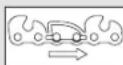
Direction of movement of the blade.

For the charging device: If the cord is damaged, immediately unplug it from the outlet.
General safety instructions
General safety instructions for working with power tools

WARNING!
Read all safety instructions, instructions, illustrations and technical specifications related to this power tool. Neglecting the safety instructions and instructions can lead to electric shock, fire and/or serious injuries.
Keep all safety instructions and instructions for future use. The term "power tool" used in the safety instructions refers to power tools powered by the mains (with a power cord) and power tools powered by rechargeable batteries (without a power cord).
1) Safety at the workplace
a) Keep your work area clean and well lit. Cluttered or dark work areas can lead to accidents. b) Do not work with the power tool in an explosive atmosphere where flammable liquids, gases or vapors are present. The power tool creates sparks that can ignite dust or fumes. c) When using the power tool, do not allow other people to come near it. Distractions can cause you to lose control of the device.
2) Electrical safety
a) The plug of the power tool must fit the outlet. Never modify the plug in any way. Do not use any adapter plugs with earthed (grounded) power tools. Unmodified plugs and matching outlets will reduce risk of electric shock. b) Avoid body contact with earthed or grounded surfaces, such as pipes, radiators, ranges and refrigerators. There is an increased risk of electric shock if your body is earthed or grounded. c) Do not expose power tools to rain or wet conditions. Water entering a power tool will increase the risk of electric shock. d) Do not abuse the cord. Never use the cord for carrying, pulling or unplugging the power tool. Keep cord away from heat, oil, sharp edges or moving parts. Damaged or entangled cords increase the risk of electric shock. e) When operating a power tool outdoors, use an extension cord suitable for outdoor use. Use of a cord suitable for outdoor use reduces the risk of electric shock. f) If operating a power tool in a damp location is unavoidable, use a residual current device (RCD) protected supply. Use of an RCD reduces the risk of electric shock.
3) Personal safety
a) By following the safety instructions, you can ensure that you are doing the right thing and carefully fulfill the requirements for power tools. Do not work with power tools while under the influence of alcohol, drugs, or medication. Carelessness when using a power tool can lead to serious injury. b) Always use personal protective equipment and safety glasses. Use protective equipment such as a dust mask, non-slip safety shoes, a hard hat, or hearing protection, depending on the type of work and the power tool being used. c) Avoid accidental starting. Before plugging the power tool into the power supply or battery pack, or before picking it up or carrying it, make sure the power tool is switched off. If you carry the power tool with your finger on the switch or connect it to the power supply while it is switched on, this can lead to accidents. d) Remove any adjusting tools or wrenches before switching on the power tool. A wrench or key left attached to a rotating part of the tool can cause injury. e) Avoid abnormal body posture. Maintain a stable stance and keep your balance at all times. This will allow you to better control the power tool in unexpected situations. f) Wear suitable clothing. Do not wear loose clothing or jewelry. Keep your hair, clothing, and gloves away from moving parts. Loose clothing, jewelry, or long hair can get caught in moving parts. g) If dust extraction and collection devices can be installed, make sure they are connected and used correctly. Using these devices can reduce dust-related hazards. h) Do not rely solely on the safety of the tool and do not neglect the safety rules for power tools, even if you have used the tool many times. Careless handling can lead to serious injury in a fraction of a second. i) When using and servicing the power tool, do not overload it. Use the power tool only for its intended purpose.
Better to use the power tool with the specified power rating.
b) Do not use power tools with a defective switch. A power tool that cannot be switched on or off is dangerous and must be repaired. c) Before setting the tool down, adjusting the tool, or changing accessories, unplug the tool from the power supply and/or remove the battery pack. This measure prevents accidental starting of the power tool. d) Store idle power tools out of the reach of children and do not allow persons unfamiliar with the power tool or these instructions to operate the power tool. Power tools are dangerous in the hands of untrained users. e) Maintain power tools carefully. Check for misalignment or binding of moving parts, breakage of parts, and any other condition that may affect the power tool's operation. If damaged, have the power tool repaired before use.
PIMHNOMHMOHNHECAHTHCNYCHARADRAHOBETCRHEHNDNEKAUGETEKHA- HECKEO6CbIyHKBAMHNEAeKPTPOVHCTDyMEHTOB.
1) NoepKBAeTe 3aOky HcToTy peXyUxHnHCTpyMeTOB. XOJKeHHbEpeXyUxHe pXyUxHTb C OCTpbMMpeXyUxHM KOPKMAM MEBHbue SBeJaOT INX NtREy BECTY.
g) PnIMeHReIe 3NkPTOMCHTPMM, PnHnAeJXHOCTN, pa6OuHE HnCTPMMH T. D. B COOTBCTCBM C 3TNMH HnCTpyKUHMN. YyTbBaIe npr stom ycnoaBpAO bTuH nCNOHNREMEIE onepaum. NcIObBOAHm 3NTKOHOCTPMMoH Bo Hn HA3HHeHHMO MOKET IPOBDDH K OTACHM CMYUUMM
h) NOpdepKNaBte pykortn H noBepxHocTH 3aXbata cyHHM, uHCTbIMN bC0obDhbmyOT mAcMn. COKLsKne pykoTkn n noBepxHOCTA 3axBaTa H8 o6eNeuBAHt HAdEHNrO yPnABHeHn KKTPOn 3a 3eKTPoHcHTpyMeHToM B HEnpeDnBeHHxK cxyBmIX.
5) NcnoB3oBAHHe n 06cnyKbAHHe aKKyMnTOpHOrn HcTpymeHaTa
a3apJHnEeKMyrTObHToNkB3apRnHbXyCTpOCTBaXpeKOHeMHOBAHHN3rOTOBHTEN. Y3apHNOHOYcTPOIcTb,npednaHaeHNoI 3apRKnOnpeDeneHNOTHnAkkmyrTOHPOgPnCnHO208HHmCdpyTMMNtBAMN AKKMYARTOPOB CYIECTBYST ONsCHoCTb BOFOPAHN.
b) PnmeHnre 3nKpOHHcPmTeaT TOnBko nppeHa3aHHeBnE HNHX AKKMYIATOpB, INoONsOBaHNe DpyrXx AKKMYIATOPOB MOHT NPOBdt K T P8BMMN YrPo06 Bo3rOgHMR.
C) DePKnHe HENONs3yEmb kAKymrTOp 8aann O cKpenok, MoHert, KNOeY, RBO3dN, BHMTOB N dpyrNx MEnKx MetannHEcKx NpeDMETOB, KOTOPhe MOrYT bblBaTb 3AmkAHKe HOKTAKTOB. KOPTOKB 3AMkAHBeM6 MeKdy KOHTAKTMn AKKYMnTATOp MAoKet NPBoCTN K OKOTAM N 805OTOPHIMIO.
d) Pn HENPAHBNHOMPnMEHHeN3AKKMYRNTOPAOKOTBtBeTbIKOKTb, N360rAHTe KOHTAKTA C HeN, Pn CNyauHOMKOHTATEPOMoHTe NOPaKeHHoe MecTo BOOp. Ecm KIOKCTb NOIana Brrtaa, OpaHTNEB KpAy. BtEeKuAaN3AKKMYRNTOPAOKIOKCTb MOKET BtSeBaT PaDpOKeHHe KOnN KmXmVmeCKHe KOnKt.
e) He nOIpb3yIte NoBpeJxHeHIIe HmN MImHeHIIe AkyMynTOpbl. NopBeJxHeHIIe HmN MImHeHIIe AkyMynTOpbl Moryr Bectn Ce6I HeripckayEmo NpOqDyIu K BoaRpaHIO, BApWy NHy TpAAMM.
f He NoBpeRaeAkkyMnTROP B03eHCTBO N OTRN NNN CmWKO BbOCHXTEMnpeAtyp. OrhN Nnn TempeAtpybl cBbue 130oMOTy BbABsBgBpB.
CnEynIe HNCTpyKUNM NO 3apRdKe HNKoDA He 3apKaJhe AKKyMNYPOTN INA KKKyMNPTOPHINB NHCPTPyMeHT BHE DnAna3oHa TEmepaTyp, Yka3aHnHO B INCTpyKUnN OKnCpYNaTaUHN. HenpaBnBnHg 3apRdKn A3apRdKn BDO nOcTHmOro DnAna3oHa TEmepaTyp MIOKOT PNPbECTK N BoPbeZdHeNIO AKKyMNPTOPN IN NOBcBNT PCKBOSGpAHN
6) CepBnC
a) POMHT 3NEKTPONHCTPymeHT ppon3BOJTe TOnbKO CnAAMK BANHΦmnpoBaHORO nepCOHana C NcNtBbOHem opnHnabHbIX 3anacbHexTae, bIgaoepaT OToMy BeonachocTb, 3NEKTPONHCTpyMeHT COXPAHETCR HauHnueuJeWMPOBE.
b) HKOraI He pemOnTHpyTe NoBpeXeHHe BkKymyIaTOpbl. IIOoe TeHXeCKeO O6OJIYKABHBe AKKyMByIaTOpB DnAHO IPOmHO DIOBcAOTBCrTObKO NArTOBHTONOM Mn yNtOHMOHCHHHMMN CTAHUNMRN TEHXeCKeO0OcJyHKBaHN.
The manufacturer intends to limit the use of the hedge trimmer. Before using it, after unpacking the hedge trimmer and before using it, check for any visible damage or defects.
Safety instructions for the hedge trimmer
a) Do not bring body parts close to the blade. Do not use the hedge trimmer to cut material other than the material to be cut. When the blade is moving, it may take some time to stop after switching off. Be careful when handling the hedge trimmer. b) Carry the hedge trimmer by the handle with the blade stopped and your fingers away from the switch. Proper handling of the hedge trimmer reduces the risk of injury. c) When transporting or storing the hedge trimmer, always put on the blade guard. Handling the hedge trimmer carefully reduces the risk of injury. d) Before removing jammed material or servicing the hedge trimmer, make sure that all switches are off and the battery pack is removed. Accidental switching on of the hedge trimmer during removal of jammed material or servicing may result in serious injury. e) Before removing jammed material or servicing the hedge trimmer, make sure that all switches are off and the battery pack is removed. Accidental switching on of the hedge trimmer during removal of jammed material or servicing may result in serious injury. f) Hold the hedge trimmer only by the insulated gripping surfaces, because the blade may come into contact with hidden wiring. If the blade comes into contact with a live wire, this voltage may be transferred to the metal parts of the tool and cause an electric shock. g) Keep the power cord away from the working area. The cord may get caught in the hedge and be cut. h) Do not use the hedge trimmer in bad weather, especially when there is a risk of lightning. This reduces the risk of injury.
Safety instructions for the hedge trimmer
a) To reduce the risk of electric shock, never use the hedge trimmer near any electrical cables. Contact with or use near power sources may cause serious injury or electric shock. b) When using the hedge trimmer, always hold it firmly with both hands. Hold the hedge trimmer firmly with both hands to avoid losing control. c) When working with the hedge trimmer above your head, use a safety helmet. Falling branches may cause serious injury.
Check that there are no hidden objects in the hedge (e.g., wire fences or cables). It is recommended to use a residual current device with a tripping current of not more than 30 mA.
Read all safety instructions and instructions.
Failure to follow the safety instructions and instructions may result in electric shock, fire, and/or serious injury.
Keep these instructions. Use the charging device only if you can fully understand all functions and perform them without restrictions in accordance with the instructions.
→When using the device, you must also observe the technical maintenance and control instructions. This ensures that the device is used safely with the charging device. →Charge only lithium-ion batteries of the POWER FOR ALL system with a capacity of at least 1.5 Ah (5 or more battery cells). The battery voltage must correspond to the charging voltage of the battery charger. Do not charge non-rechargeable batteries. Otherwise there is a risk of fire and explosion. →Protect the charging device from moisture and dampness. The device is designed for indoor use only. →Check the charger regularly. In case of damage or malfunction, have it checked by a qualified electrician. →Before use, check the charging device, cables, and plugs. Do not use the charging device if it is damaged. Do not open the charging device yourself; have it repaired only by qualified personnel using original spare parts. Damaged charging devices, cables, and plugs increase the risk of electric shock. →Do not operate the charging device on highly flammable surfaces (e.g., paper, textiles, etc.) or in explosive environments. Due to the heating of the charging device during charging, there is a risk of fire. →If the connection cable needs to be replaced, this must be done by GARDENA or an authorized GARDENA service center to avoid safety hazards.
by GARDENA specialists or an authorized GARDENA service center that services GARDENA power tools.
→Do not use the device while it is charging. →Only use the battery with the POWER FOR ALL system chargers specified for lithium-ion batteries. →Use the battery only in the intended POWER FOR ALL system devices. Only in this way can the battery be protected from dangerous overload. →Charge the battery only with the chargers recommended by the manufacturer. When charging with a charger not intended for the battery, there is a risk of fire if the battery is used with other batteries. →The battery is supplied partially charged. To ensure full battery capacity, fully charge the battery in the charger before first use. →Store batteries out of the reach of children. →Do not open the battery.
There is a risk of short circuit.
→Do not disassemble, repair, or modify the battery or battery pack. The battery may explode or catch fire. Ensure access to fresh air and consult a doctor. Vapors may irritate the respiratory tract. →Incorrect use may damage the battery and cause leakage of liquid. Avoid contact with the liquid. If liquid gets into the eyes, rinse with water and seek medical help. Leaking battery liquid may cause skin irritation or chemical burns. →If the battery is damaged, liquid may leak and contact the skin. Ventilate the area. If necessary, replace the battery. →Do not short-circuit the battery. Keep unused batteries away from paper clips, coins, keys, nails, screws, and other small metal objects that could bridge the contacts. Short-circuiting the battery contacts may cause burns or fire. →The battery may be damaged by sharp objects, such as nails or screwdrivers, or by external impact. This may cause an internal short circuit and the battery may overheat, ignite, explode, or leak. →Never repair damaged batteries. Battery service should only be performed by qualified personnel or authorized service centers. →Protect the battery from heat, such as direct sunlight, open flames, dirt, water, and moisture. There is a risk of explosion and short circuit. →Operate and store the battery only at temperatures between -20°C and +50°C. Do not leave the battery in a car, for example. At temperatures below 0°C, the performance of certain types of devices may be reduced. →Charge the battery only at the recommended temperatures between 0°C and +45°C. Charging at too high or too low temperatures may damage the battery and increase the risk of fire.
Electrical safety

DANGER! Stop series!
This device generates electromagnetic fields. In certain environments, this field may interfere with the function of active or passive medical implants. To avoid the risk of serious or fatal injury, persons with medical implants should consult with their doctor and the implant manufacturer before using this device.
Connect the charger to the power supply with the voltage indicated on the rating plate.
Under no circumstances should the grounding conductor be connected to any part of the device.
Do not work with a damaged power cord.
Protect the battery contacts from moisture.
Personal safety

DANGER! Risk of suffocation!
Small parts may be easily swallowed. Due to the included packaging and small parts, there is a risk of suffocation. During assembly and use, keep away from small children.
Use the tool only for its intended purpose. The operator is responsible for accidents or injuries to other people or their property. Do not forget about the danger of the blade.
Use of the tool with a damaged blade guard or without the guard increases the risk of injury.

DANGER!
When using the tool, wear protective equipment, including safety glasses or a face shield. Do not wear loose clothing or jewelry.
Always wear sturdy boots with non-slip soles. Avoid contact with the blade, especially if you have an allergic reaction to it. Before use, inspect the cutting area and remove all wires, hidden electrical cables, and other foreign objects. All adjustments (such as adjusting the cutting depth or changing the blade) must be made with the tool unplugged and the blade stopped. After heavy impacts, check the tool for damage and repair if necessary. Never operate the tool if it is damaged or not functioning properly.
Operation and maintenance of power tools
You must know how to switch off the tool in case of an emergency. Do not remove the protective cover. Do not use the tool without the protective devices. Do not use the tool with a damaged switch. Only use the tool on a stable base.
CHARGING THE BATTERY
Before installing the battery, and before clearing a jam, or before inspecting or cleaning the tool, or for any other work, always disconnect the battery. Only use the tool when you are absolutely sure it is in good working condition. If the tool starts to vibrate abnormally, stop and inspect it immediately. Have it repaired if necessary. Before handing the tool to another person, check it.

DANGER OF INJURY!
Do not touch the blade.
After finishing work or during pauses, put on the protective cover. The blade may be hot after use; allow it to cool before storing. Do not store the tool at temperatures above 35°C or in direct sunlight. Do not store the tool in areas with static electricity. Remember the risk of injury from the blade. Work only in daylight or with sufficient artificial light.
2. ASSEMBLY

DANGER! Risk of injury!
Risk of cuts from accidental start-up of the tool.
Replace the battery, then tighten the protective cap.
The delivery set includes: the device itself, battery, charger, cord, strap, protective cover with a carrying handle, and operating instructions.
Installing the telescopic handle [Fig. A1/A2]:
1. Insert the telescopic tube ② into the motor unit ① until it stops. The two marks must align. 2. Tighten the screw ③
Attaching the carrying strap [Fig. A3]:

ATTENTION!
Always use the provided strap for carrying.
- Open the clamp ④, place it on the handle, and tighten with the knob ⑤.
- Attach the carabiner ⑥ to the clamp ④ of the strap.
- Adjust the strap length using the quick-release fastener.
3. OPERATION

DANGER! Risk of injury.
Risk of cuts when handling the blade without protection.
Before carrying out any work on the device, disconnect the battery and put on protective gloves, before you start setting up or transporting the device.
Charging the battery [Fig. 01/02/03]:

CAUTION!
Observe the mains voltage! The voltage of the power source must correspond to the data on the type plate of the charging device.
The battery charger is not included in the delivery of the GARDENA hedge trimmer art. 14770-55.
Thanks to the intelligent charging process, the charge level of the battery is automatically detected and, depending on the temperature and voltage of the battery, charging is carried out with the optimal current for the current moment.
Due to this, the battery is protected and, when left in the charging device, is always charged to the maximum level.
- Press the unlock button A and pull the battery out of the battery compartment D.
- Plug the battery charger into the mains socket. 3. Connect the battery charger to the battery. When the battery charge indicator on the charger lights up green, the battery is charging. When the battery charge indicator on the charger flashes green, the battery is fully charged.
(Charging time, see 7. TECHNICAL DATA).
4. During charging, check the charge level regularly. 5. When the battery is fully charged, disconnect the battery from the charger.
Meaning of the indicator elements:
Indicator on the charging device [Fig. 03]:
Lights up: Battery charge indicator 1
During charging, the battery charge indicator lights up green.
![GARDENA TCS 2018 P4A - Indicator on the charging device [Fig. 03]: - 1](/content/2026/03/516743/images/d4eacab37be89b14d7922b8f930fed09eb37af517b7abaaeaf8a06ed7859e7c9.jpg)
Warning: The charging process is possible only if the battery temperature is within the permissible charging temperature range. See 7. TECHNICAL DATA.
Intermittent glow of the battery charge indicator
![GARDENA TCS 2018 P4A - Indicator on the charging device [Fig. 03]: - 2](/content/2026/03/516743/images/560d1aebca9ccd11010910da18d58c122fed8451ad4e47628c2ebc845e626c9c.jpg)
Intermittent glow of the battery charge indicator signals that the battery has been charged, but the battery temperature is outside the permissible charging temperature range. Therefore, it cannot be charged. As soon as the temperature is within the permissible temperature range, the battery will be charged.
If the battery is inserted, the intermittent glow of the battery charge indicator signals that the battery is inserted into the socket for charging, but the device is not connected to the mains.
Battery charge level indicator on the device [Fig. 04/O14]:
After starting the device, the battery charge level indicator is activated for 5 seconds.
Battery charge level indicator Battery charge level
| 3apnxéno ha 67 - 100 % | ①, ② and ③ CBETTCA 3eIeHbIM LCBETOM |
| 3apnxéno ha 34 - 66 % | ① and ② CBETTCA 3eIeHbIM LCBETOM |
| 3apnxéno ha 11 - 33 % | ① CBETTCA 3eIeHbIM LCBETOM |
| 3apnxéno ha 0 - 10 % | ① MTRAET 3eIeHbIM LCBETOM |
If the LED lights up green, the battery does not need to be charged.
If the LED lights up red, see 6. TROUBLESHOOTING.
Filling with chain oil [Fig. 05]:
![GARDENA TCS 2018 P4A - Filling with chain oil [Fig. 05]: - 1](/content/2026/03/516743/images/9ef24605ec2b2426928fbced37029cd71f63aabee6ac7ea42af3f5c5df672945.jpg)
Lubrication during cutting, when the chain is not sufficiently lubricated.
Before each use, check that there is enough oil for the chain.
We recommend GARDENA chain oil for art. 6006 or equivalent chain oil from a specialized store.
1. Unscrew the oil tank cap ① 2. Fill with chain oil up to the lower edge of the filler neck ⑧ until the sight glass ⑨ is completely filled with oil 3. Screw the oil tank cap ⑦ back onto the filler neck ⑧ 4. Check the chain lubrication system.
If oil spills out of the device, it must be thoroughly cleaned.
Checking the lubrication system [Fig. 06]:
→Point the nozzle 20 at the light-colored surface at a distance of about 20 cm from it. After operating the pump for one minute, there should be clear traces of oil on the surface.
![GARDENA TCS 2018 P4A - Checking the lubrication system [Fig. 06]: - 1](/content/2026/03/516743/images/2264e245ad271731354dbb9416f8f290500fbe1d44ac4d955285d5c2f1e2c112.jpg)
ATTENTION!
The nozzle must never come into contact with sand or earth, as this leads to increased wear of the chain!
Position during operation:
The saw can be operated in two positions (from above and from below). To obtain a clean cut of thick branches, you should cut from below (see figure).
Cutting from above (06/07/08]:
- Press the saw from below to a depth of no more than 1/3 of its diameter (it is pulled to the front stop).
- Cut the branch from above (it pulls to the rear stop (B).
Cutting from below [Fig. 06/09]:
→Cut the branch from above (it pulls to the front stop)
Tilting the motor block [Fig. 010]:
The motor unit ① can be tilted stepwise up to 15° at an angle of 60° to 60°.
1. Hold both orange buttons pressed and tilt the motor unit ① in the desired direction. 2. Release both orange buttons and let the motor unit 1 lock into place.
Extending the telescopic tube [Fig. 011]:
1. Pull the orange tab ② 2. Pull the telescopic tube ② to the required length. 3. Re-pull the orange tab (2)
Starting the hedge trimmer [Fig. 01/012/013/014]:
![GARDENA TCS 2018 P4A - Starting the hedge trimmer [Fig. 01/012/013/014]: - 1](/content/2026/03/516743/images/012f8bcc2da015aa0bb5c074f4a6dd821de1a70fac3c2ceb52fdc521afdedea1.jpg)
DANGER! Danger of injury!
There is a risk of injury if the device stops unexpectedly after releasing the start lever.
Do not bypass safety devices or switches. For example, do not secure the start lever to the handle.
Before starting work, check the following conditions:
- The oil level in the lubrication system has been checked (see 3. OPERATION). - The chain is correctly tensioned (see 4. MAINTENANCE).
Starting:
The device is equipped with a safety device with two switches (start lever with switch lock) that prevents accidental starting of the device.
1. Insert the battery 8 into the battery compartment ① until it locks into place. 2. Open the latch of the protective cover and remove it from the bar. 3. The hedge trimmer should be held with one hand on the insulated gripping surface on the telescopic tube (2), and with the other hand on the handle (4). 4. Press the switch lock button 18 forward and pull the start lever 10. The hedge trimmer starts and the battery charge indicator 1A lights up for 5 seconds. 5. Release the switch lock button 18
Stopping:
1. Release the start lever, the hedge trimmer stops. 2. Place the protective cover on the bar and latch it until the latch (1) closes. 3. Press the unlock button A and remove the battery from the battery compartment D.
4. MAINTENANCE

DANGER! Danger of injury
Danger of injury when starting the product unexpectedly.
→Before any maintenance, disconnect the battery and wait for the protective devices to cool down before performing any maintenance on the product.
Cleaning the hedge trimmer:

DANGER! Risk of injury!
Risk of injury or damage.
→Do not clean the product with water or steam (especially with high-pressure cleaners). →Do not use chemicals, including gasoline or solvents. Some substances can destroy important plastic parts.
Ventilation slots must always be kept clean.
1. Clean the hedge trimmer blades with a brush. 2. Clean the ventilation slots with a soft brush (do not use a screwdriver). 3. If necessary, clean the blade with a cloth.
Cleaning the battery and the battery charger:
Before cleaning the battery charger, make sure that the battery and the charger contacts are dry.
Do not use running water.
→Battery charger: Clean the contacts and plastic parts with a soft, dry cloth. →Battery: From time to time, clean the ventilation slots and the battery contacts with a soft, dry cloth.
Tensioning the chain [Fig. M1/M2/M3/M4]:
![GARDENA TCS 2018 P4A - Tensioning the chain [Fig. M1/M2/M3/M4]: - 1](/content/2026/03/516743/images/5aa148f69b206b89b0c0a095dc6d25458461b1697884a4371ab775d22bd0afd6.jpg)
Cooling time!
Over-tightening the chain can lead to motor overload and damage, while under-tightening can cause the chain to come off the bar. Proper chain tension provides better cutting performance, optimal working time, and extends the service life. Regularly check the chain tension, as it can change during use (especially a new chain - after the first installation, the chain tension should be checked after a few minutes of operation).
→ Turn off the hedge trimmer immediately after work, unplug it while it is still hot.
The central screw for the blades is located under the protective cover 18.
1. Unscrew both screws (do not fully remove the screws). 2. The gap between the blades should be 2-3 mm.
3. Turn the adjusting screw clockwise if the blades are too tight. Turn the adjusting screw counterclockwise if the blades are too loose. 4. Tighten both screws again. 5. Start the hedge trimmer for about 10 seconds. 6. Check the blade tension again and repeat the adjustment if necessary.
5. STORAGE
Decommissioning [Fig. 012]:
The product must be stored in a place inaccessible to children.
- Put the protective cover on the blade and latch it until the latch ⑧ closes. 2. Remove the battery.
- Charge the battery.
- Clean the hedge trimmer, battery, and charging device (see 4. MAINTENANCE). 5. Store the hedge trimmer, battery, and charging device in a dry, closed place protected from frost.
Disposal:
(according to Directive 2012/19/EC)

Do not dispose of the product with household waste. It must be disposed of in accordance with the applicable local regulations for waste disposal.
IMPORTANT!
→ Dispose of the device through a local collection point for recycling.

The GARDENA battery is a lithium-ion battery which, at the end of its service life, must be disposed of separately from normal household waste.
Li-ion
IMPORTANT!
→Dispose of batteries through municipal collection points. 1. Fully discharge lithium-ion batteries (contact GARDENA service center). 2. Protect contacts of lithium-ion batteries from short-circuiting. 3. Dispose of lithium-ion batteries in an environmentally friendly manner.
6. TROUBLESHOOTING

DANGER! DANGER of injury!
Danger of injury from unintentional start of the device.
→Wait until the blade has come to a complete stop, disconnect the battery and put on protective gloves before you begin to remedy the malfunction.
Replacing the blade [Fig. M1/M2/M3/T1]:
![GARDENA TCS 2018 P4A - Replacing the blade [Fig. M1/M2/M3/T1]: - 1](/content/2026/03/516743/images/9f191aea15fae2ff307f535c24193bd4e2aed32398ff0fde504085eecb0608e3.jpg)
DANGER! Danger of injury! Sharp blades.
→When replacing the blade, wear protective gloves.
If the blade is noticeably worn (blunt), it must be replaced. The hex key for the screws is located in the protective cover 18.
Only original GARDENA spare blades, art. 4048, or spare blades art. 4049 may be used.
1. Unscrew both screws 2. Remove the cover ② 3. Remove the blade together with the blade holder 19 4. Remove the blade from the holder 20 5. Clean the motor unit ①, the blade ② and the cover ③. Pay special attention to the rubber gaskets in the housing and the cover ④
- Turn the knob ② counterclockwise ④. Make sure that the knob ② is turning in the correct direction and that the front ⑥ is facing forward. 7. Install the motor unit ① so that the pin 2 engages the corresponding recess 2. 8. Put the cover ② back on the motor unit ①. Pay attention to the rubber gasket. 9. Tighten both screws ① slightly.
- Fill the chain (see 4. TECHNICAL MAINTENANCE).
Device for charging
the battery
AL 1830 CV P4A
Battery charging system
POWER FOR ALL PBA 18V...W...
art.14901
9. SERVICE/WARRANTY
Service:
Please contact the address provided on the reverse side.
Warranty obligations:
In the event of a warranty claim, no charge will be made for the services provided.
GARDENA Manufacturing GmbH guarantees the proper functioning of all original GARDENA products for 2 years from the date of first purchase by the end user, provided that the product is used in accordance with the instructions and for its intended purpose. This warranty does not apply to products purchased on the second-hand market. This warranty covers all material defects of the product that are demonstrably due to errors in materials or manufacturing. The warranty provides for the replacement or repair of a defective product with a fully functional product, free of charge; we reserve the right to choose one of the two options at our discretion. This service is provided under the following conditions:
The product has been used for its intended purpose in accordance with the operating instructions. Neither the purchaser nor a third party has attempted to open or repair the product. - The product has been used only with original GARDENA spare parts. - The product has been properly maintained.
13 rapid wear normal wear of components (for example, knives, knife fasteners, turbines, lighting fixtures, wedge and gear belts, working cones, glow plugs), changes in appearance, as well as wearing and consumable parts.
This manufacturer's warranty is limited to the replacement or repair of the defective product under the conditions stated above. The manufacturer's warranty cannot be the basis for other claims, for example, compensation for damages. This manufacturer's warranty naturally does not affect the statutory and contractual warranty claims against the dealer/seller.
The manufacturer's warranty is governed by the law of the Federal Republic of Germany.
In the warranty case, please pay the necessary shipping costs and send the defective product together with a copy of the sales receipt and a description of the malfunction to the service address.
Wearing parts:
For rapidly wearing parts, the warranty does not apply.
Instructions from the manufacturer for Russia and Germany
Manufacturer: GARDENA Germany AB, PO Box 7454, S-103 92 Stockholm, Sweden. The country of manufacture is indicated on the product.
Official importer for the territory
Russia:
LLC "Husqvarna"
141400, Moscow region, Khimki, Leningradskaya street, building 39, building 6.
Placement under section 04
Serial number: A2032
The device is not intended for use by persons (including children) with reduced physical, sensory or mental capabilities, or lack of experience and knowledge, unless they have been given supervision or instruction concerning use of the appliance by a person responsible for their safety.
The device must be used only for its intended purpose, as described in the operating instructions. Any other use is considered improper and may result in damage or injury. The manufacturer is not liable for damage caused by improper use.
Proper use
The high-quality GARDENA hedge trimmer is designed for cutting hedges, shrubs, and ornamental plants in private gardens and allotments.
It is not intended for commercial use.
DANGER! Risk of injury!
The hedge trimmer must not be used for cutting grass. Always hold the trimmer with both hands, so that it does not fall on you; large branches that fall to the ground may cause injury. Do not use the trimmer near cables.
1. SAFETY
IMPORTANT! Read the operating instructions carefully before use and keep them for future reference.

Symbols on the device:
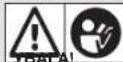
The instructions must be read carefully before use to ensure safe operation of the device and its functions.

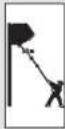


Use only original accessories and spare parts.
Danger of electric shock! Keep a distance of at least 10 m from overhead power lines.
Always wear protective gloves.
Always wear non-slip footwear.
Always wear protective goggles.

If the power cord is damaged, it must be replaced by the manufacturer or a qualified person.
General safety instructions
General safety instructions for power tools

WARNING
Read all safety warnings, instructions, illustrations and specifications provided with this power tool. Failure to follow all instructions listed below may result in electric shock, fire and/or serious injury.
Save all warnings and instructions for future reference. The term "power tool" in the warnings refers to your mains-operated (corded) power tool or battery-operated (cordless) power tool.
1) Work area safety a) Keep work area clean and well lit. Cluttered or dark areas invite accidents. b) Do not operate power tools in explosive atmospheres, such as in the presence of flammable liquids, gases or dust. Power tools create sparks which may ignite the dust or fumes. c) Keep children and bystanders away while operating a power tool. Distractions can cause you to lose control.
2) Electrical safety a) Power tool plugs must match the outlet. Never modify the plug in any way. Do not use any adapter plugs with earthed (grounded) power tools. Unmodified plugs and matching outlets will reduce risk of electric shock. b) Avoid body contact with earthed or grounded surfaces, such as pipes, radiators, ranges and refrigerators. There is an increased risk of electric shock if your body is earthed or grounded. c) Do not expose power tools to rain or wet conditions. Water entering a power tool will increase the risk of electric shock. d) Do not abuse the cord. Never use the cord for carrying, pulling or unplugging the power tool. Keep cord away from heat, oil, sharp edges or moving parts. Damaged or entangled cords increase the risk of electric shock. e) When operating a power tool outdoors, use an extension cord suitable for outdoor use. Use of a cord suitable for outdoor use reduces the risk of electric shock.
f) If operating a power tool in a damp location is unavoidable, use a residual current device (RCD) protected supply. Use of an RCD reduces the risk of electric shock.
The power tool must be used only for its intended purpose. Any other use may be considered a case of misuse.
3) Personal safety
a) Bybte yBaXnI, cIikkyte 3a TMM, IIO Bn poBite I KepyTeCz 3doOpBMM rY3dOm npEcknyatauiz eNekTPOIHCTPmEHr. He bKopncToBye eNkTPOHCTPmEHr, KOIN b CTOMneI abo nepe6yBaTe nI INNNOB HApKOHKI, ANKORIO AIO kIkapcbKx 3aco6JI. OdaMHITBHYAOKHOCTI PNY BHKOPHCTAHNI ENEKTPOHCTPYMEHTY MOKE IPOB3ECTIO NO CEPBO3NAXTIPABM. 6) OraRrAte 3ac0n HmIaIyIaHoro 3axcyTc I 3aBKn aaxhChI OynpH. HocHH 3ac0b HmIaIyIaHoro 3axcyTc TAKX, K peCipJatop, HEKo3e 6eane 8ayTT, 10om 60 3ac0b 0prHa 3nyx, 3aAemHO CT BnBnTu Ta BkOPKTaeHTYy, 3MeHlyKotb D3HK OTPMBAHTOBBAM. b) YHnKaIe HeHaBmNCHOrO BBeDeHnB E KcNnyatauio. NepeKoHaIteCe, 10 eNEKtPOHCTPMAENT BIDKnIOUeHHn, NpeD TMM Rn HNO pknIOHHTe Do IKepeJXnBHeHHra / afoa kymyIaTOpA,6yTe nIHIMATn HOrO ytnaHcNoptYBaTH.
KIOO npri nepheehHHI eNKTPOHCTPMHTy BN TPMHTAE naneJIb HnepemekHI abo pIKHOACTe PnCTPdo KINHEHHY NpONeHHI BKNLOHNO,TO CE MOKE PNISTBECHT DO HEUACHORO BUNADKY.
IpeTTHM,IKBVN BKNIOHTe eNKTPOHCTPymET,BNaIITb peryIOBbanbiHtCPmETy 60 aRnOBKINKIO. HCTPYMENT 60KNO,IKI SHAKORTBCN B HACTHIN PNTPOO,IO OBEPTA TCH,MOHY,PIBACBCN DO TPM. I) YNHKAITE HeNPABINbHORO NOJIOXeHHaTINA.CTIte BnEBBHO i 3aBHNiDhe6eprAite PbOBary. GABIKN LbOMy BN 3MOKHe KpSue KOHTponoBATy EIEKTPOHCTPmErH TY HecroDjBaHX CYtUbYk. e) HocIb npHaTTHn OAnr. He HocIb npocToHn OAnr aObo npKpacn. Obepiraite Bonocca, oAnr i pykauuN bu pyxomnx Detanei. IpocToPiOnd, npKpacc nAoBoRe Bonocca MoMyt, Notparntn Bpyxomvacttna. e) RaKo MoKH BcTaHOBHn npHcPoI dN BILCMOKTyBaHH Ta BNOBIO BAHN,TOX Heo6XIHO NIO KINIOHTH NIPABINbHO BHKOPCTOBYBAH. BnKApCTAHn HNPCTOIB Dn BILCMOKTyBaHH NITy MOKe 3MeHUMH PNHK PNKNKHeHn CPHYNHEHO TNIOM HeEeBnK. n) He TiuTe Ce6e Inio3iCIO 6e3NeKn HHe HExTyIe npabnAmn TexHikn 6e3NeKn IaIe ENEKTPOHCTpyMeHTb, HABITb RAnO nICNa 6aratopaoBoro BHKOpHCTaHHB NIO6pe 3HaTe, RIK BHKOpHCTOByBaTH eNEKTOHCTpyMENT.
He6bAeBHO 6yKBAHbHO 3MNTMOKE pNpAeCTu DO BAKX TpaAM.
4)3actocybaHH enektpoiHCTpyMeHTy Ta 06xOJKeHH 3 HMM
a) Do not use the power tool. Use it for your work only with the tool intended for the purpose. Using the power tool, you risk damaging the device. b) Do not use the power tool if it cannot be turned on and off with the switch. The tool that cannot be turned on and off is dangerous and must be repaired. c) Pull the plug out of the socket and/or remove the battery pack before making adjustments, changing accessories, or storing the tool. Such preventive safety measures reduce the risk of starting the tool accidentally. d) Store the power tool, when not in use, out of reach of children. Do not allow persons who are not familiar with the instructions to use the tool. Power tools are dangerous in the hands of untrained users. e) Maintain the power tool. Check for misalignment or binding of moving parts, breakage of parts and any other condition that may affect the power tool's operation. If damaged, have the power tool repaired before use. Many accidents are caused by poorly maintained power tools. f) Keep cutting tools sharp and clean. Properly maintained cutting tools with sharp cutting edges are less likely to bind and are easier to control. g) Use the power tool, accessories and tool bits, etc., in accordance with these instructions, taking into account the working conditions and the work to be performed. Using the power tool for operations different from those intended could result in a hazardous situation.
Use of the power tool for operations different from those intended could result in a hazardous situation.
Keep the work area clean and well lit. Cluttered or dark areas invite accidents. a) Battery tools must be charged only with the charger specified by the manufacturer. A charger that is suitable for one type of battery pack may create a risk of fire when used with another battery pack. b) Power tool. Use only with specifically designated battery packs. Use of any other battery packs may create a risk of injury and fire.
c) When battery pack is not in use, keep it away from other metal objects, like paper clips, coins, keys, nails, screws or other small metal objects, that can make a connection from one terminal to another. Shorting the battery terminals together may cause burns or a fire.
d) Under abusive conditions, liquid may be ejected from the battery; avoid contact. If contact accidentally occurs, flush with water. If liquid contacts eyes, additionally seek medical help. Liquid ejected from the battery may cause irritation or burns.
e) Do not use a battery pack or tool that is damaged or modified. Damaged or modified batteries may exhibit unpredictable behavior resulting in fire, explosion or risk of injury.
f) Do not expose a battery pack or tool to fire or excessive temperature. Exposure to fire or temperature above 130°C may cause explosion.
e) Do not use the battery charger or the battery charging tool between temperatures outside the range specified in the operating instructions. Improper charging outside the permissible temperature range can damage the battery and lead to a fire hazard.
f) Servicing
a) Have your power tool serviced by a qualified repair person using only identical replacement parts. This will ensure that the safety of the power tool is maintained.
b) Do not perform maintenance on the battery charger or the battery charging tool unless you are qualified to do so. Improper use or servicing can result in a risk of electric shock or fire.
Before using the tool for the first time, read the instructions carefully to avoid injury or damage.
Safety instructions for using the tool
a) Always hold the tool with both hands. If you do not hold the material or maintain it, when the tool is running, it may cause injury. Carelessness, improper use of the tool may cause injury. b) Carry the tool by the handle, with the switch off, and disconnect the plug from the power source before making any adjustments. Carrying the tool with your finger on the switch or plugging it in with the switch on can cause accidents. c) When transporting or storing the tool, always remove the battery pack and cover the tool with the protective cover. Improper handling of the tool may cause injury. d) Before starting work on material that may contain hidden wires or on the tool itself, make sure the tool is switched off and the battery pack is removed or disconnected. Improper use of the tool may cause injury. e) Always hold the tool by the insulated gripping surfaces, as the cutting accessory may contact hidden wiring. If the cutting accessory contacts a live wire, it may make exposed metal parts of the tool live and could give the operator an electric shock. f) Keep the power cord away from the cutting area. The cord may be cut by the tool and cause injury. Do not use the tool in wet conditions, especially in rain, as it may cause electric shock. Always follow the safety instructions when using the tool. a) To reduce the risk of electric shock, always use the tool with a residual current device (RCD) protected supply. The use of an RCD reduces the risk of electric shock. b) When using the tool, always hold it with both hands. Hold the tool firmly with both hands to maintain control. Do not operate the tool with one hand.
Before cutting, always check for hidden hazards (such as nails, wires, or pipes) in the workpiece. It is recommended to use a residual current device (RCD) with a tripping current of 30 mA or less. Hold the tool with both hands.
The tool is intended for work where the operator stands on the ground, not on a ladder or other unstable surface.
Before using the tool, make sure that the moving parts (such as the blade and the blade guard) are in good condition.
Additional safety instructions
Battery pack removal and installation

Read all safety instructions and this manual.
Improper use of the safety instructions and instructions can lead to electric shock, fire and/or serious injuries. Keep these instructions in a safe place. Use the charger only in the manner described in the corresponding instructions to avoid dangerous situations during use, maintenance and servicing. The device must be operated with the original power supply. Charge the POWER FOR ALL PBA 18V battery packs only with chargers with a charging current of at least 1.5 A (for 5 battery cells). The battery voltage must match the charger voltage. Do not charge the battery if it is already fully charged. Otherwise, there is a risk of fire or explosion. Avoid contact with water on the charger or moisture on the charger. If moisture gets on the power tool, there is a risk of electric shock. Keep the charger away from heat sources. To avoid electric shock, unplug the charger before cleaning or maintenance. Before each use, check the charger, cable and plug. Do not use the charger if it is damaged. Do not open the charger yourself; have it repaired only by qualified personnel using original spare parts. Damaged chargers, cables and plugs increase the risk of electric shock. Do not use the charger on a flammable surface (e.g., paper, textiles) or near flammable materials. The heat generated by the charger can cause a fire hazard. If the cable is damaged, have it replaced by an authorized GARDENA dealer or the GARDENA service center to avoid hazards. Do not use the device while charging. Safety instructions for lithium-ion batteries of the POWER FOR ALL PBA 18V system. Use the battery only in products from the POWER FOR ALL system. Only then can the battery be protected against dangerous overload. Charge the battery only with chargers recommended by the manufacturer. If the charger supplied with the battery is used with other batteries, there is a risk of fire. The battery is delivered partially charged. To ensure full battery capacity, charge the battery fully in the charger before first use. Store the battery away from heat. Do not open the battery. There is a risk of short circuit. Improper use or damage may cause the battery to leak. The battery may catch fire. Keep away from open flames, and in case of fire, contact the fire department. Dispose of leaking batteries properly. In case of improper use or damage, the battery may emit toxic fumes. Avoid contact with them. If contact occurs, rinse with water. If fumes get into your eyes, additionally seek medical attention. Fluids leaking from the battery may cause skin irritation. In case of battery damage, toxic substances may be released. Check for compliance. Clean the battery if necessary. Do not short-circuit the battery. Keep the battery away from metal objects such as paper clips, coins, keys, nails, screws, or other small metal objects that could cause a short circuit. Short-circuiting the battery contacts can cause burns or fire. Sharp objects such as nails or screwdrivers, or external force can damage the battery. This can cause internal short circuits, short circuits, overheating, explosion, or fire of the battery.
→3aJQDHHX 06CTABHH H BKNOHYte TEXHINHE 06CNYROBAHHN nowokDHexnKyAynrTOBHXaparE,Yc POOTn 3xTOCNYBOByBAHHRIOBHNI BKNOHBYI BAPoOHN ABO ABTOPNOBHA CEPBI CHETPHI. 3a6e3ne4te aaxHCT akymyIATOPHO batapei BnHarpIbAHHa HapnKnKnad, BhaCniOk TpBAnOI dII CoHRHOrO BNpormiHOBaHN, BOrHIO, 6pyDy, BOnD Ta BOrNOr.
Le MoKe CnpHnHT He6e3NeKy Bn6yXy Ta KOpOTKOr 3aMnKaHHA.
→BHKOPHCTOByTe Ta 36epiraTae akymyIaTOpy batapeo TInbKn 3a Temnepatyn HABKOnuHbOro cepenobua BID -20°C DO +50°C. He aamaiue akymyIaTOpy batapeo, HAPmKlA, y IITHI YAC B ABOMObi. 3aJeKHO BID pNcTPOIO, OIO zACTOCOBYCbSBA, BHKOPATANHAA 3a Temnpatyn <0°C MOKe o6MeKByTa NpOdyKTMBHCTb poBOTM. →3aŋkJnaké akymyrtnropy 6aTapeo TInbKn 3a Te mepatyparyn HABkoNHHBOrO cepeOnuBaI0 N°Cdo +45°C.
3aJpUkJHANH 3A MekAMI TmEtnpatyPFOIO JIAIa3OHO MOKOE PIKIKoQdITn AkyMnTOpHy BApatoIy Ta npiaBcTeN Do H653eOnKe BAIHNKHeHNI NOXeKI.
EneKtpo6e3neKa

HE6E3NEKA!3ynnHka cepa!
LcE Bnpi6 niacekcnnyatau cTBOpoe enektpomarHIThe none. Lc nonne npn NEbHNy yMOBAX MOe CTbOPHTN HERATMBH NnBB H naPo8Ty AKTHBHX ABO nacNBHHM MeHNHIX IMnHAHTaIb. Uo6 BNKIOUHTn He63- neHi CHTaui, Rki MOKyTb pN3BCTn DO TReKnx aOcMepeTbHNb TpaBm, Oco6n 3 MeINHIM IMnAHTaTOM Neepi BkOpNCtAHMR Ib0rBO BpOby NOBHHI POKOHcyblTyBaTHcra 3 cBoIM Ikapem I Bnp6HkOM ImnHANTy.
3aepnHnn pntpHn 0oHexIO nIOIKNIOI INTbIK DO MEeKJI 3MHHORO CTpyM 3 HAPYKO, 333aHcEHO H TaNIOB Ta5uINi.
Hi 33 RKX 06CTABIN H He DO3BIOHIECBI IIJKIOAH 3a3eMHeHHO I KOICb 13 qACTIN BIPBOy.
He 3actocobyte Bap6 3a noTAnHx nOgDnH xMOB, 10 MoKyb cnpHHNHT HebeaneK.
3axuainTe KOHTAKn AkymyIaTOpHO6aTapeBIDBOJIOr.
Ocobncta 6e3neka

HE6E3NEKA! He6e3neka 3aayx!
Dpi6hi acctHnMoKb7yN nEPKO pOKOBHTIy. Cpe3 nonIETNHOHNMIOW ICHy Hebe3neKa 3aDyXn Dn MANeBKnX dTeR. He donyckaiMe MANeBKnX dTeR do MCIc 36pKn.
Bukoprictoyte cykopi3nky tibkn 3a horo npnaeHHm. Oepatop a0o kopntyBaBIDnoiDaBnHn 3a BHNKHeHH HuaChix BnAaKB 3 HnMnnoc6amn,13a HebeNeky,ka Moke 3abDAtu XkoDn im afo xhOmy MaHn. OocNo nCnky 3a beNeKnpTeTic6 cepa 6bnenn pndycpobooohn, konN BcyHyTe TeneckonIOBAHH.

It is forbidden to use the device without the protective cover; otherwise, the device may be damaged or the user may be injured.
Wear protective goggles, gloves, and a dust mask.
Avoid contact with oil for the device, especially if you are allergic to it.
Turn off the device before using the circular saw; the blade may be damaged if it comes into contact with the workpiece.
All adjustments to the device (rotation of the saw head, raising the telescopic tube) must be made only with the device switched off, and the circular saw must not be operated without the protective cover.
Before first use, carefully read the manual and inspect the device for any damage; if damage is found, have it repaired before use.
Do not use the device with a damaged or worn power cord without proper repair.
Using the device with electric tools
Turn on the device only when necessary. Never operate the circular saw without the protective cover.
Do not use the circular saw if the protective device is damaged. When working with the circular saw, it is forbidden to use the blade. Use only the blade that is installed according to the instructions.
Remove the plug:
- Before cleaning the circular saw, make sure it is unplugged;
- before changing the blade;
- before carrying out maintenance or repair of the circular saw; if the circular saw is not in use, it must be stored on a flat surface. The circular saw can be used again only after it has been checked and the circular saw has been in proper working order. In this case, it is necessary to check it thoroughly. A qualified person may provide advice.
- npeTMMKnepoatn BnpiHwioocobi.

HE6E3NEKA OTPMAMHRA TPABM!
YcTaHOBKa HAnJIyHOro pEmeHa [306p.A3]:
![GARDENA TCS 2018 P4A - YcTaHOBKa HAnJIyHOro pEmeHa [306p.A3]: - 1](/content/2026/03/516743/images/ef9c77d62e4b248f199b9d8b6ef44314b35385d5a411357c395884f0943bb790.jpg)
YBARA!
Heo6xioBnKOpncTOByBaTH HAnPiUHn peMihb, AKN BxOHTb do noCTABKn.
- Po3kpHnTe TpMaH NoCy ④, aTnCHITb NOrO HABKOIO pyKoHTKn I TyO 3aTHITb FBHTOM ⑤. 2.Плдбсгета KapabinHa TpmaHorcy ④ 3.BiiperyHIOHT Heo6xIDHy DOBxHHy NOcy 3a DOnOMORO WbNkoDIOHOHO 3aTnCKaHa.
3. OBCNYTOBYAHH

HE6E3NEKA! He6e3neka OtpmaHH TpaBM!
He6e3neKa OTpMaHnHa npi3y npu BnnaKOBomy 3anycky Bnpo6y.
→3aekaihe,doKnAauHOr He 3yNHHbCh, BNTARHtBkyMnTropHy bapeio Ta HadihTe 3axHCN KoxyHa NnnBnHn anapat, nepu HIX peryNIOBATn A60 TPAHCNoptyBATn Bpi6.
3apnntakymytohp6atapeo[306p.01/O2/O3]:
![GARDENA TCS 2018 P4A - 3apnntakymytohp6atapeo[306p.01/O2/O3]: - 1](/content/2026/03/516743/images/0764ba6b0fff6344c9cc484bacbe7ef3858dd87def392ce34b8f55254a337e49.jpg)
YBAGA!
Bpoxayte Mepeeey HanpyrHaepenae nek- TPOKINIEHNOIHNA BIDIOBdatn daHMM Ha fipMOBI TaIINHJ 3apHnHO rnpCTPO.
ДоКOMпнгкту nocтави BUCOTOpi3a GARDENA, apt.14770-55, akymлготрнабатaperп таэрдни ппстpiи He BXOЯть.
3aBnI INTeNekTyanHbH 3apRdHn CNTeM1 3apRd akymyntopHO Batape IABOTMAtNU HO pO3NI3HaCTbcN, N akymyNTOPHa 6atape 3apNJaKAcTbCn ONIMAbHM 3apRdHM CTpyMOM 3aneKHO BID II TEMnePATy Ta Hanpyr.
Lc3axnueakymntopnybatapeioNdo3BONIE nItpmByaTNOBHN 3apn iHac 3eepirAHnB 3aprHOMy npncptpoi.
- HATNCHITb KHONky fikcatopopa A Ta BNTARHTHb akymyIANTOPHy batapeoB 3 KpInnEHNAkymyIANTOPHO Batapei D 2.Пдкючызардн npicntpiakymnytopa 6do nektpomepeki.
- HuaHHTb 3apHHnI npncptpiakymyTropHO batapei Ha akyMnyATOPHy6batapeo 8
Kkuo iHdkaTOp 3apny akymyIaTOPHO6atapei Ha zaprHomy npctpo 6nMaac 3eennm CBTnOM, To akymyIaTOpHa 6atapera 3apraKaTeBcR.
Hkuo iHdkatop 3apny aykyMnTropHObTaapei Ha 3apnHomy npctpoI rpoB NoCTNHm 3eNEHM CBTNOM,TO aykyMnTropHy 6BaTePe NOBHcTIO 3apJKeHo
(Tpmbanictb3apn,mB.7.TEXHIHIXAPAKTEPNCNTIKN)
4.B npoceci 3apn kn nepebipnte yepe3 pibHomiphi npomkny hacy cnih 3apnkn. 5. Ncna noBHOI aapKn knyakmynTOPHoi batapei 8 BN MOKeTe BiE HATN akmynTOpHy batapeio 8 BID 3apaHoro npncptpo 6
3haeHH enemehribnkaqii:
IHINKATOP Ha 3apHNOHMy npctpoi [306p. O3]:
5nMaHnHa HnKaTopp Ipo npocac 3apKcnHnAnicy 6nMaHnHa HnKaTopp 3apAyn 3apNy akymnyTopHOI akymnyTopHOiaTapei
6aTapei
![GARDENA TCS 2018 P4A - IHINKATOP Ha 3apHNOHMy npctpoi [306p. O3]: - 1](/content/2026/03/516743/images/579d67784625bb1397eeb361e09254db015dc34aa7168aa19ddab23a96f1884c.jpg)
| Noctînne cîttno |
| Indikatopataaapáhy |
| akymyntapothoi |
| 6atapei ⑥ |
Noctihe cato no nukkataoparaayakymnntofoa batapee 10 CmHAnlyc6 npno noby sapady kymnntofoi batapee a60 npo Te, zo Temepatypa kymnntofoi batapee bokxOboa 3a MeKd TcHmTOMO TemepatpyrTO pIaIaONyapadKHH, A TOMy sapadykanH C HmOKM. AkymnntofoB batapee noNue sapadytnc, oioHO dyocnH- HTO nyCTHMMI TemepatpyHJ pIaIaONo.
KkOa kymnHrpoHy batapeHo H BCTABNEHO, T noCtIHe cBtIO INdMkatoRa 3apAdy AkymnHrpoHb Batapei CmHanlJe pno Te, IO MEpeKeHH WbEeK BCTABNeHO Do pOeTKn, H aepnnn pnCtpr ITOBmD o CKCNyATAU.
Indkatop 3apny akymyntopho6atapei Ha Bnpo6i [306p.04/014]:
Iicra 3anycky Bnp6y iHdkatop 3apny akymnatapnoi 6atapei P biO6paXaetbcn npotrom 5 cekyhd.
Direction of lubrication [Fig. 05]:
DANGER!
If the device is not sufficiently lubricated, the lubricant line may rupture and cause injury.
→Before each use, check whether the lubricant level is sufficient.
We recommend using one of the GARDENA oil types, art. 6006, or an equivalent mineral oil for the lubricant, available at specialized retailers.
1. Unscrew the oil tank cap. 2. Pour oil into the filling pipe until the oil level control is completely filled with oil. 3. Screw the oil tank cap (7) back onto the filling pipe (8). 4. Check the oil lubrication system. If the oil has been spilled, it must be thoroughly cleaned.
Checking the lubrication system [Fig. 06]:
→Place the device at a distance of approx. 20 cm above a light surface of untreated wood. After a short period of operation, the surface should be well coated with oil.
![GARDENA TCS 2018 P4A - Checking the lubrication system [Fig. 06]: - 1](/content/2026/03/516743/images/bcab279317abbdbcff20e3f5ec2a2525ef49fa426672fe707f5c7ff375a0ff4c.jpg)
CAUTION!
The device must not touch the wood or the ground during operation, as this could lead to damage to the device or the lubricant line!
Working position:
The device can be used in any working position (upside down/right side up). Before starting work, the chain must be tensioned (as shown in the figures).
Chain tensioning (thick chain) [Fig. 06/07/08]:
- 1. Start the chain from the bottom up to max. 1/3 of the diameter (as shown in the figure on the front sprocket ②). 2. Tighten the chain tension (as shown in the figure on the rear sprocket ③).
Plan view [Fig. 306p.06/O9]:
→Remove the second cover (see step 3 of the installation instructions).
Engine block cover [Fig. 01]:
The engine block ① can be tilted from 60° to -60° in steps of 15°.
1. Hold the orange buttons pressed and tilt the engine block ① to the desired position. 2. Release the orange buttons (1) and let the engine block ① lock into place.
Adjusting the telescope tube [Fig. 011]:
The telescope tube ② can be adjusted by 1050 mm.
1. Loosen the orange nut (2). 2. Pull the telescope tube ② to the required length. 3. Tighten the orange nut (2) again.
Starting the compressor [Fig. 01/012/013/014]:
![GARDENA TCS 2018 P4A - Starting the compressor [Fig. 01/012/013/014]: - 1](/content/2026/03/516743/images/caa85afd729a1e92745ad17e75d2115d03e44c4ad7c26ee5b8fc3105a363718d.jpg)
DANGER! Risk of injury! There is a risk of injury if the device is not stopped before the start lever is pulled.
→Do not bypass the safety devices. For example, do not hold the start lever by hand.
Before starting the compressor, check the following parameters:
-Sufficient oil level for the compressor (see 3. MAINTENANCE). -Air filter condition (see 4. INSPECTION).
Starting:
The device is equipped with a full protection switch (start lever with lock-out), which protects the device from accidental switching on.
1. Open the battery compartment cover D until it clicks into place. 2. Open the latch of the protective cover and remove it from the device. 3. Hold the height meter with one hand by the insulated grip on the telescopic handle ②, and with the other hand by the handle ③. 4. Press the release button 1 forward and press the start button. The height meter starts, and the indicator of the battery compartment is displayed for 5 seconds. 5. Release the cover of the release button 16
Teeth:
- Release the start lever 8. The height meter extends. 2. Press the latch onto the device and close its cap so that the latch engages.
- Press the latch button A and pull the battery compartment cover 8 out of the battery compartment D
4. Maintenance

DANGER! Danger of injury!
Danger of injury when starting the device unexpectedly.
→Before maintenance, until the device is completely stopped, pull out the battery compartment and press the latch onto the device, before performing maintenance or repair.
Cleaning and care:

DANGER! Danger of injury! Risk of injury and damage to the device.
→Do not immerse in water or other liquids (especially under high pressure). →Do not use chemicals, including gasoline, solvents. Some of them can damage plastic parts.
Ventilation openings must be kept clean.
1. For cleaning the height meter, use a damp cloth. 2. Clean the ventilation openings with a soft brush (do not use a screwdriver). 3. If necessary, wipe the device dry
Cleaning the battery compartment of the battery:
Before cleaning the battery contacts, make sure that the battery contacts and the device contacts are clean.
He bends the probe to the water.
→Charge the battery. Clean the contacts and the working part with a dry cloth. →Battery: If necessary, clean the ventilation openings and the battery contacts with a dry cloth.
Tension the belt [Fig. M1/M2/M3/M4]:
![GARDENA TCS 2018 P4A - Tension the belt [Fig. M1/M2/M3/M4]: - 1](/content/2026/03/516743/images/a263fe98e1504450169b5b581b4fc6d0dbdb6eedb63ba10042ff0a8dd396cca9.jpg)
DANGER!
Tightening the belt too much can lead to overloading of the motor and damage, while insufficient tension can cause the belt to slip off the pulley. Proper belt tension ensures optimal performance and extends battery life. Therefore, regularly check the belt tension, as the belt may stretch during use (especially if the belt is new; after the first hour of operation, it is necessary to recheck the belt tension after the belt has been run for a few minutes). →Do not charge the battery immediately after use; wait until it cools down.
The device must be in the protective housing.
1. Loosen the screws (do not unscrew them completely). 2. Pull the belt through the slot in the device, aligning the holes. 3. Check the belt tension by pressing on the belt with a finger; the belt should have some slack. Check the belt tension by pressing on the belt with a finger; the belt should have some slack. 4. Retighten the screws. 5. Start the device for 10 seconds. 6. Recheck the belt tension and adjust if necessary.
5. STORAGE
Disconnect from power [Fig. O12]:
The device must be kept out of reach of children.
- Put the protective housing on the device and close it so that the latch engages.
- Remove the battery.
- Charge the battery.
- High voltage, accumulator battery and charging device of the accumulator battery (see Fig. 4.10).
- Store the high voltage, accumulator battery and charging device in a dry, closed, ventilated room protected from frost.
Disposal:
(in accordance with Directive 2012/19/EC)

The product must not be disposed of with household waste. It must be disposed of in accordance with applicable national standards for environmental protection.
ATTENTION!
Dispose of the product at or with the help of a local specialized waste collection point.
6. TROUBLESHOOTING

DANGER! Danger of injury! Danger of injury from electric shock during test start.
Wait until the device stops, disconnect the accumulator battery and provide protection against restarting before troubleshooting the product.
Repair only by [Mod. M1/M2/M3/T1]:
![GARDENA TCS 2018 P4A - Repair only by [Mod. M1/M2/M3/T1]: - 1](/content/2026/03/516743/images/f781fddcb1d0b0efb59ab5d358fc4ee1698281fc2c8323175d5dd402168b441e.jpg)
DANGER! Danger of injury! Danger of injury from electric shock through the mains voltage.
With key and diameter up to max. 8 cm, in the line and stroke of the limit.
The product is not suitable for continuous operation.
![GARDENA TCS 2018 P4A - Repair only by [Mod. M1/M2/M3/T1]: - 2](/content/2026/03/516743/images/42d64a077ab86538374c9a197b52fc6af99e7e2009540a73bcac4612172aadd8.jpg)
DANGER! Contusion!
The device must not be used for cutting and drilling. Follow the instructions for use to avoid injury. Do not use the device during operation. Do not use for surface treatment.
1. SAFETY INSTRUCTIONS
IMPORTANT!
READ THE OPERATING INSTRUCTIONS CAREFULLY AND KEEP THEM FOR FUTURE REFERENCE.
Symbols on the product:

The operating instructions must be read carefully to ensure that all operators and technical personnel are familiar with them.

Wear protective goggles and gloves.
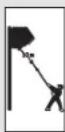
Danger of electric shock! Maintain a minimum distance of 10 m from power lines.

Wear protective gloves.

Wear safety shoes when using.

Wear protective helmet.

Watch your step.
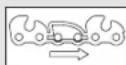
Direction of movement of the chain.

For the charging device:
Always disconnect the plug from the socket before any maintenance or cleaning.
Safety instructions for tools
Safety instructions for power tools

PENEDYNPPEKDEHNEI
Read all safety warnings, instructions
illustrations and specifications provided with this power
tool. Failure to follow the warnings and instructions may result in electric shock, fire and/or serious injury.
Save all safety warnings and instructions for future reference. The term "power tool" in the warnings refers to your mains-operated (corded) power tool or battery-operated (cordless) power tool.
Power tools are protected against battery (without cord protection).
1) Work area safety
a) Keep work area clean and well lit. Cluttered or dark areas invite accidents. b) Do not operate power tools in explosive atmospheres, such as in the presence of flammable liquids, gases or dust. Power tools create sparks which may ignite the dust or fumes. c) Keep children and bystanders away while operating a power tool. Distractions can cause you to lose control.
2) Electrical safety
a) Power tool plugs must match the outlet. Never modify the plug in any way. Do not use any adapter plugs with earthed (grounded) power tools. Unmodified plugs and matching outlets will reduce risk of electric shock.
b) Avoid body contact with earthed or grounded surfaces, such as pipes, radiators, ranges and refrigerators. c) Power tools must be kept dry. Water or moisture in power tools increases the risk of electric shock. d) Do not abuse the cord. Never use the cord for carrying, pulling or unplugging the power tool. Keep cord away from heat, oil, sharp edges or moving parts.
Damaged or entangled cords increase the risk of electric shock.
e) When operating a power tool outdoors, use an extension cord suitable for outdoor use. Use of a cord suitable for outdoor use reduces the risk of electric shock. f) Use the appropriate extension cord when using the power tool outdoors.
The power tool is intended for use with an open circuit. The risk of electric shock is reduced.
K) If you cannot avoid using the power tool in a damp location, use a residual current device (RCD) protected supply. The use of an RCD reduces the risk of electric shock.
3) Personal safety
a) Stay alert, watch what you are doing and use common sense when operating a power tool. Do not use a power tool while you are tired or under the influence of drugs, alcohol or medication. A moment of inattention while operating power tools may result in serious personal injury. b) Use personal protective equipment. Always wear eye protection. Protective equipment such as dust mask, non-skid safety shoes, hard hat, or hearing protection used for appropriate conditions will reduce personal injuries. c) Prevent unintentional starting. Ensure the switch is in the off-position before connecting to power source and/or battery pack, picking up or carrying the tool. Carrying power tools with your finger on the switch or energising power tools that have the switch on invites accidents.
r) Keep the power tool away from rain and moisture. If water enters the power tool, it increases the risk of electric shock. s) Do not use the cord for purposes other than its intended use. Never carry the power tool by the cord, pull it to disconnect from the socket, or keep it away from heat, oil, sharp edges, or moving parts. Damaged or tangled cords increase the risk of electric shock. t) When operating a power tool outdoors, use an extension cord suitable for outdoor use. Using a cord suitable for outdoor use reduces the risk of electric shock. u) If operating the power tool in a damp location is unavoidable, use a residual current device (RCD) protected supply. Use of an RCD reduces the risk of electric shock. 4) Personal safety a) Stay alert, watch what you are doing, and use common sense when operating a power tool. Do not use a power tool while you are tired or under the influence of drugs, alcohol, or medication. A moment of inattention while operating power tools may result in serious personal injury. b) Use personal protective equipment. Always wear eye protection. Protective equipment such as dust mask, non-skid safety shoes, hard hat, or hearing protection used for appropriate conditions will reduce personal injuries. c) Prevent unintentional starting. Ensure the switch is in the off-position before connecting to power source, picking up or carrying the tool. Carrying power tools with your finger on the switch or energizing power tools that have the switch on invites accidents. d) Remove any adjusting key or wrench before turning the power tool on. A wrench or a key left attached to a rotating part of the power tool may result in personal injury. e) Do not overreach. Keep proper footing and balance at all times. This enables better control of the power tool in unexpected situations. f) Dress properly. Do not wear loose clothing or jewelry. Keep your hair, clothing, and gloves away from moving parts. Loose clothes, jewelry, or long hair can be caught in moving parts. g) If devices are provided for the connection of dust extraction and collection facilities, ensure these are connected and properly used. Use of dust collection can reduce dust-related hazards. h) Do not let familiarity gained from frequent use of tools allow you to become complacent and ignore tool safety principles. A careless action can cause severe injury within a fraction of a second. 5) Power tool use and care a) Do not force the power tool. Use the correct power tool for your application. The correct power tool will do the job better and safer at the rate for which it was designed. b) Do not use the power tool if the switch does not turn it on and off. Any power tool that cannot be controlled with the switch is dangerous and must be repaired. c) Disconnect the plug from the power source and/or remove the battery pack, if detachable, from the power tool before making any adjustments, changing accessories, or storing power tools. Such preventive safety measures reduce the risk of starting the power tool accidentally. d) Store idle power tools out of the reach of children and do not allow persons unfamiliar with the power tool or these instructions to operate the power tool. Power tools are dangerous in the hands of untrained users. e) Maintain power tools and accessories. Check for misalignment or binding of moving parts, breakage of parts and any other condition that may affect the power tool's operation. If damaged, have the power tool repaired before use. Many accidents are caused by poorly maintained power tools. f) Keep cutting tools sharp and clean. Properly maintained cutting tools with sharp cutting edges are less likely to bind and are easier to control. g) Use the power tool, accessories and tool bits etc., in accordance with these instructions, taking into account the working conditions and the work to be performed. Use of the power tool for operations different from those intended could result in a hazardous situation. h) Keep handles and grasping surfaces dry, clean and free from oil and grease. Slippery handles and grasping surfaces do not allow for safe handling and control of the tool in unexpected situations. 6) Battery tool use and care a) Recharge only with the charger specified by the manufacturer. A charger that is suitable for one type of battery pack may create a risk of fire when used with another battery pack. b) Use power tools only with specifically designated battery packs. Use of any other battery packs may create a risk of injury and fire. c) When battery pack is not in use, keep it away from other metal objects, like paper clips, coins, keys, nails, screws or other small metal objects, that can make a connection from one terminal to another. Shorting the battery terminals together may cause burns or a fire. d) Under abusive conditions, liquid may be ejected from the battery; avoid contact. If contact accidentally occurs, flush with water. If liquid contacts eyes, additionally seek medical help. Liquid ejected from the battery may cause irritation or burns. e) Do not use a battery pack or tool that is damaged or modified. Damaged or modified batteries may exhibit unpredictable behavior resulting in fire, explosion or risk of injury. f) Do not expose a battery pack or tool to fire or excessive temperature. Exposure to fire or temperature above 130°C may cause explosion. g) Follow all charging instructions and do not charge the battery pack or tool outside the temperature range specified in the instructions. Charging improperly or at temperatures outside the specified range may damage the battery and increase the risk of fire.
6) CepBn3
a) The power tool should only be repaired by qualified specialists using original spare parts. This guarantees the safety of the power tool. b) Never repair damaged battery packs. All servicing of battery packs should only be carried out by the manufacturer or authorized service centers. Improper use may lead to electric shock.
Check the product for damage before use. If damage is found, do not use it.
Safety instructions for the telescopic ladder
a) Pay attention to the ladder's position to avoid falling. Do not lean over when extending the ladder to reach the remaining parts or to lift materials. The ladder is designed for a maximum load. If there are hidden defects, the ladder may break during work. b) Carry the telescopic ladder by the handle when extending the ladder. Ensure it is in a safe position before locking. The correct use of the telescopic ladder prevents accidents. c) When transporting or storing, place the protective cap on the ladder's tip. Correct use of the telescopic ladder prevents accidents. d) Ensure that all locking mechanisms are engaged and the battery is removed before extending the remaining parts or performing maintenance. Incorrect engagement of the telescopic ladder while extending the remaining parts or during maintenance may cause serious injury. e) Use the telescopic ladder only on stable surfaces for support, as the ladder may come into contact with hidden pipes. Using the ladder with a damaged part may cause electric shock or injury. Do not use the telescopic ladder in wet conditions, especially in damp environments. This may cause electric shock.
Safety instructions for the telescopic ladder
a) Keep the ladder away from electric wires when using it with an extended reach. Contact with electric wires may cause electric shock and fatal injury. b) Work with the telescopic ladder with an extended reach only when necessary. Use the telescopic ladder with an extended reach only when necessary to avoid the risk of falling. c) Working with the telescopic ladder with an extended reach on uneven ground may cause the ladder to tip over. Such situations may cause electric shock.
Protective equipment must be worn when working (e.g., safety glasses, protective gloves).
The device is intended for indoor use only, with a current of 30 mA and a voltage of 230 V.
The telescopic mast is equipped with two ropes for two pulleys.
The telescopic mast is designed for work where the operator stands on the ground, not on a ladder or other unstable support.
Ensure that the telescopic mast is not used in the vicinity of overhead power lines (e.g., near buildings with overhead lines) without proper clearance.
Safety instructions for safe work with batteries.

Read all safety instructions and the manual.
If the safety instructions and manual are not followed, there is a risk of electric shock, fire, or serious injury. Keep these instructions. For safe operation, if you do not understand the instructions, you can contact the manufacturer's customer service. Follow the instructions during use, maintenance, and technical service. Otherwise, you may damage the device.
Charge only lithium-ion batteries from the POWER FOR ALL system with 18 V. With a capacity of 1.5 Ah or higher (from 5 battery cells). The charging of the battery must comply with the charging instructions of the battery charger. Do not charge non-rechargeable batteries. In humid conditions, there is a risk of electric shock.
The charger must not be exposed to rain or moisture. Water and moisture increase the risk of electric shock.
Electrical safety

DANGER! Electric shock!
This product generates an electromagnetic field during operation. This field may affect active or passive medical implants. To reduce the risk of serious or fatal injury, persons with medical implants should consult their doctor and the implant manufacturer before using this product.
Connect the charger only to a power supply with the specified voltage.
The device must be connected to a properly grounded power outlet.
The product is dangerous in case of a storm.
Keep the battery contacts away from moisture.
Safety

DANGER! Danger of suffocation!
Small parts may be swallowed. The packaging is a danger of suffocation for small children. Keep the packaging away from children during assembly.
Follow the installation instructions for the antenna strictly. The installation must be carried out by qualified personnel. The antenna must be installed away from power lines and other electrical equipment, and must be positioned so that it cannot fall into the working area of other people.

DANGER!
The antenna and the product must be installed so that they are not accessible to people.
Wear suitable clothing, gloves and safety shoes.
Avoid contact with the antenna, especially if you are allergic to it.
Check that the antenna installation is carried out in accordance with the instructions, hidden electrical cables and other objects.
All work on the adjustment (tilting the head, changing the length of the telescopic tube) must be carried out with the antenna disconnected, and the telescopic tube must not be placed on the head.
When using the antenna for the first time, it must be checked for damage and, if necessary, repaired by qualified personnel.
The device is strictly forbidden to be stored in a damp place.
- Remove the battery from the battery compartment before disposal.
- Plug the charging device into the electrical outlet. 3. Connect the charging device to the top of the battery pack.
When the charging indicator on the battery pack is green, the battery pack is charged.
When the charging indicator on the battery pack lights up green without flashing, the battery pack is fully charged. Charging time, see 7. TECHNICAL DATA.
4. Periodically check the charging status during charging. 5. When the battery pack is fully charged, you can remove the battery pack from the charging device.
Meaning of the indicator elements:
Charging device indicator [Fig.03]:
The indicator light for the battery pack charging process lights up when the battery pack is being charged. The charging process is only possible if the temperature of the battery pack is within the permissible charging temperature range, see 4. TECHNICAL DATA.
Continuous indicator for charging the battery pack
![GARDENA TCS 2018 P4A - Charging device indicator [Fig.03]: - 1](/content/2026/03/516743/images/5e6f772d57e305de1906a4506734afeb3c4aa0ded7ec215c4dbfc196887d2bdb.jpg)
The continuous light on the indicator for charging the battery pack lights up when the battery pack is fully charged. If the temperature of the battery pack is outside the permissible charging temperature range, charging is delayed and cannot be performed. As soon as the permissible temperature range is reached, the battery pack is charged. If the battery pack is inserted, the continuous light on the indicator for charging the battery pack lights up green, indicating that the battery pack is in the electrical contact of the charging device and is ready for use.
Battery charge status indicator on the product [Fig.04/O14]:
When the product is switched on for 5 seconds, the indicator for the charge status of the battery shows
Charge status Indicator for the charge status of the battery Charge status of the battery
| 67 - 100 % зараздана | ⑤, ⑫ и ⑬ CBETT 3eLEHO |
| 34 - 66 % зар每一天на | ⑤ и ⑫ CBETT 3eLEHO |
| 11 - 33 % зараздана | ⑤ CBETN 3eLEHO |
0-10% charged Light green
When the LED ① lights up green, the battery pack needs to be charged.
When the LED for fault lights up, see 6. TROUBLESHOOTING.
Handle the oil for the chain [Fig. 05]:
![GARDENA TCS 2018 P4A - Handle the oil for the chain [Fig. 05]: - 1](/content/2026/03/516743/images/501dffcf37bb785f10ad5fb6e777fc467a51d9eb904d3fb362059fa0be8d515c.jpg)
DANGER!
Risk of injury if the chain is operated without sufficient oil.
→Check before each use that the chain is supplied with a sufficient amount of oil.
Use only GARDENA chain oil or an equivalent high-quality chain oil available at specialist retailers. 1. Unscrew the cap of the oil reservoir ⑦.
- Fill the chain oil through the filling opening ⑧ up to the oil level indicator ⑨, then close it again with the cap.
- Screw the cap of the oil reservoir ⑦ back onto the filling opening ⑧.
4. Lubricate the cutting system
If oil has spilled on the product, it must be cleaned thoroughly.
Checking the chain lubrication system [Fig. 06]:
→Hold the chain about 20 cm away from a light-colored surface.
After a short run of the machine, the surface must show a trace of oil.
![GARDENA TCS 2018 P4A - Checking the chain lubrication system [Fig. 06]: - 1](/content/2026/03/516743/images/94463b10b5457b30979d7692e5229395cfa5f09d0e3a0082400f84b65aaba530.jpg)
CAUTION!
The chain must never come into contact with the ground or any other hard surface, as this will cause excessive wear on the chain!
Working positions:
The telescopic tube can be extended in 2 working positions (upper/lower). For the lower position, the buttons must be pressed on 2 sides (see figure).
Upper position (lower buttons) [fig.06/07/08]:
- Press the button and pull the mask. Up to 1/3 of the diameter (the upper part is pulled out at the front limiter 8).
- Press the button and pull out (the upper part is pulled out at the rear limiter).
Lower position [fig.06/09]:
Press the button and pull out (the upper part is pulled out at the rear limiter b).
Adjusting the inclination of the electric motor section [fig.010]:
The electric motor section ① can be tilted continuously from 15° to 60°.
1. Press the orange button and tilt the electric motor section ① in the desired direction. 2. Release the orange button and let the electric motor section ① lock into place.
Extending the telescopic tube [fig.011]:
The telescopic tube ② can be extended up to 50 cm.
1. Turn the orange knob ②. 2. Extend the telescopic tube ② to the desired length. 3. Tighten the orange knob ② again.
Switching on the telescopic extractor [fig.01/012/013/014]:
![GARDENA TCS 2018 P4A - Switching on the telescopic extractor [fig.01/012/013/014]: - 1](/content/2026/03/516743/images/c47224f6ee4fd58195e2264aeba394aa8cce793aee2458bc0e96fb205079ac20.jpg)
DANGER! Risk of injury!
Danger of injury if the product does not stop when the switch is released.
The device is equipped with a safety mechanism that prevents accidental switching on of the device.
Before starting work, the following conditions must be checked:
There is sufficient oil for the lubrication system (see 3. MAINTENANCE). - The belt tension (see 4. TECHNICAL MAINTENANCE).
Switching on:
The device is equipped with a safety switch (button for switching on with a lock against switching on), which prevents accidental switching on of the device.
- Insert the battery into the battery compartment until it clicks into place.
- Open the protective cover to access the switch. 3. Hold the telescopic tube with one hand on the insulated surface of the telescopic tube ②, and the other hand on the handle 19
- Press the lock button against switching on and then press the switch button 9. The telescopic tube starts the indication for operation
- Press the lock button against switching on
Switching off:
- Release the switch button (6) The telescopic tube stops.
- Put the protective cover back on and close it until the lock clicks 13.
- Press the release button and remove the battery from the battery compartment ①
4. TECHNICAL SERVICE

DANGER! CONTUSION!
Risk of injury if the product is switched on incorrectly.
→ Order the spare parts before disconnecting the battery. The protective cover on the device must be replaced before servicing the product.
Cleaning the telescopic handle:

DANGER! CONTUSION!
Danger of injury and risk of damage to the product
→Do not clean the product with water or a water jet (especially a high-pressure water jet).
→Do not clean with chemicals, including benzene or solvents. Some of these may damage important plastic parts.
The ventilation openings must always be kept clean.
- Clean the telescopic handle with a damp cloth.
- Clean the ventilation opening with a soft brush (do not use a screwdriver). If necessary, clean the device with a brush.
Cleaning the battery or the charging device:
Make sure that the surface and the contacts of the battery and the charging device are clean and dry before connecting the charging device to the electrical mains.
Do not use running water.
→3apAnHOyCTpoNCTBO:IOHCTeKoHTaKTInTeIINactMaCOBnTe → Akymnatopha batepina: IOnCTBaTne NOHKArOBEHTNALIOHO HNTe OTBOpn IN KOHTaTIte HA akyMnyaTOpHaTa bATEPINA C MeKa, YmCTa N CyXa YeTka.
HaTnrahe Ha Bepurata [fHr. M1/M2/M3/M4]:
![GARDENA TCS 2018 P4A - HaTnrahe Ha Bepurata [fHr. M1/M2/M3/M4]: - 1](/content/2026/03/516743/images/0910724e8421c76c138158988e4d7ca8e76ba77ad56c238ffc2f2ffa54226fbc.jpg)
ONACHOCT OT N3ΓAPRHE!
Tbpe OHTbHaTATA Bepira Moke da DOBeDe Do npetOBapBaHe Ha eIeKTPOMOTOPa IIO IOBpei, DOKATO HeoOCTaBHO ONbHataTA Bepira Moke da npedn3BnA OKaHaHE BA Bepira oT WnHaTA. PpaBnHO ONbHata TBAPEIRA e npENoctabKa 3a HN-dOpn pe3yntaH pnp 3aHe, ONmAnHO Bpeme HA paBoTa HA BatePnra Hno-DbTrg KxBO. 3aTOBA npOBepBaIte peoBHO KOJIko e ONbHata BepiraT, 3aTOO NO Bpeme HA paBO TaBknHATA HA Bepira M0Ke Da ce yBcENH (OCO6eHO KORato Bepira e HO; cne IIpboH aHaJAHMOHTAK TpRb6A da ce npOBepn OTHaTOCTTA HA BepiraT, cne KaTO INHCTpyMeHTA e paoTIN HKnKO MNHyT). →He HataraTe Bepurata BeHara CneI ynoTppe6a,a H3uKaaiTe DOKATO Tc Ce OXlaIaI.
M6yHnT KIOU 3a 0NTOBe ① CE HAMPA B 3auTHNAK
- Pa3xla6eTe Dbata BnHTa (He OTBnBaIte Dbata BnHTa (P). 2.ПOBHnHETeBeprataBcpeIATAHaIHHATA@IIPOCTpaHCTBOTo Tp6Ba Da 6bJe OKOJ02-3 MM.
- 3abptete no nocoka Ha yacobnokobata ctpelka perynipaaa BnH 2, Ako BEprrata e TbPpe Cnao HaterHa. 3abptete perynilpa aenBHT B nocoka obaPATHa hacobnKOBATA cTpenKa, Ako BEprata B TbPpe OTHa. 4.3aterheTeOTHOBO DbTa BnHTa 5.BknoheTe TeneckonuHata KaCTpaKa 3a OKo1o 10 ckyHnI:
- PpOBepeTe KOIko e OITbHaTt Bepurata H npH HeoXoIMocCT perylnpaTne.
5.CbXPAHEHNE
CbaHHe oEcknnoataa[ΦHr.012]:
IpoNyKbT Tp86Ba Da 6bNe CbxpaHBAH Ha HeNoCTbNHO 3a Deca MRCTO.
- NocTabete 3aunTHnKanak Bbpx WnHata n ro 3aTbOpTe,doKaTo ce 3aKnOHN KIOUAnkata 2.ИЗБАДЕТЕ AkymулагорнATERbATEРЯ.
- 3apepe akymyaatohpata 6atepy
- NocHTeTe TeneckOnuHata KaTpaKa, AkymyNaToPnHaTa 6aTeepn n3apnHToO yCtpoNCTBO (BxK 4.TEXHmECKO OECJYKBAHE). 5.CbXpAHBaIte TeneckOnHHTa KaCTpaHka, AkymyNaTOphAta 6BATEMn HapADHOYcTPOYCTBO HA cyxo,3akPnTO n 3aUNTeHO OT 3AMpb3BaHE MRTO.
N3XbpyHe:
(cbrnacho Dmpekmba 2012/19/EC)

The product must be disposed of separately from household waste. It must be disposed of in accordance with local regulations for waste disposal.
IMPORTANT!
→Dispose of the product through your local recycling collection point.
Do not dispose of the battery:

Li-ion
GARDENA lithium-ion battery packs contain lithium-ion cells that must be disposed of separately from household waste at the end of their service life.
IMPORTANT!
→Dispose of the battery packs through your local recycling collection point.
- Leave the lithium-ion cells to discharge completely (contact the GARDENA service center). 2. Insulate the contacts of the lithium-ion cells before connecting the cable.
- Dispose of the lithium-ion cells properly.
6. TROUBLESHOOTING

DANGER! Electric shock!
Risk of injury if the product is switched on unintentionally.
→Switch off the product, remove the battery pack, and place the safety key on the product before troubleshooting.
Replacing the blade [M1/M2/M3/T1]:
![GARDENA TCS 2018 P4A - Replacing the blade [M1/M2/M3/T1]: - 1](/content/2026/03/516743/images/523ccb24e5c76f9ac7edfb0fb2663bb9dc05a3590ee9f0239e20ef968a2ce7c9.jpg)
DANGER! Contact!
Risk of injury from the blade.
→Use protective gloves when replacing the blade.
If the blade is damaged or worn (blade is bent), it must be replaced. The Allen key for the blade bolt is included in the protective cap.
Only original GARDENA replacement blades may be used: blade Art. 4048 or blade Art. 4049.
1. Loosen the blade bolt. 2. Remove the cap ②. 3. Remove the blade ② with the blade 10. 4. Remove the blade 10. 5. Pull the cutting head off the motor shaft ①, the blade 20 and the cap ②. Pay special attention to the rubber gaskets in the housing and in the cap ②. 6. Place the new blade 19 on the front of the blade 20. Make sure the blade is in the correct position of the front blade (8) facing upward. 7. Place the blade 20 on the cutting head of the motor 1, so that the blade 2 is in front of the front blade 20 and the blade 8 is positioned under the locking bolt 23. 8. Replace the cap ② on the cutting head of the motor ①, paying attention to the rubber gasket. 9. Tighten the blade bolt again. 10. Tighten the blade (see 4. TECHNICAL MAINTENANCE).
Possible cause: blade not properly attached
| Крату к行政处罚 на pбота | Веригата e Тьрдце ольнatable. | → Haterнete Веригата. (BИК Натогане на Беригата). |
| Веригата не e смазда,Задоно Нама масло. | → Hailынete масло за Вериги. | |
| ТелескOptionatura kastrayka п поождд дь бдд српая | Рычatable за вклочае e залуа. | → Савлente akymу latорнatable батерия и освобODEт рыч- katara за вклочае. |
| Среши не усан't Веригата e затлений лим пов体现在а. | → Заменete Веригата. | |
| Веригата e сюлочана Веригата e Тьрдце сдобо otьнatable. | → Haterнete Веригата. | |
| ТелескOptionatura kastrayka вскрпра симло | Веригата e Тьрдце сдобо otьнatable. | → Haterнete Веригата. |
| ТелескOptionatura kastrayka небусяа лим симпра. СBSTODNodt ① м大姐 эдelloн [ФИR.04] | Акиму latорнatable ватерий e падегда. | → Зардане akymу latорнatable батерия. |
Possible cause: blade worn
| Teléckonmuhata kactpauka he se Bklnouba iln cnmpa. Cebotodmoct 3a nopepa cBETN uebpeno [φmr.04] | Temneparypata ha akymy- latopnata 6baterma e i3sbln doynctmnhuaiazoH. | → Nvuchakte dokanto tempepa- typata ha akymylatopnata 6baterma oTHOBO e mekjdy 0 °C-+45 °C. |
| Mekdy konktihte ha akymyata- topnata 6baterma Ha Tetecko- niuHata kactpauka Hma kankn boda iln bnila. | → OCTpanetce kankite BODA/BNA ATA cbc cyxa Kbplna. | |
| EneKTPODBIRATEHAT e 6bnokipan. | → OCTpanetce npenrTCTBMTO. Bklnouche otTHOBO. | |
| Teléckonmuhata kactpauka he se Bklnouba iln cnmpa. Cebotodmoct 3a nopepa cMira chepebo [φmr.04] | IpoodykTB e nopepeH. | → O6bnyte CE KBM cepBX3 HA GARDENA. |
| Teléckonmuhata kactpauka he se Bklnouba iln cnmpa. Cebotodmoct 3a nopepa he cbertn [φmr.04] | Akymylatopnata 6baterma He e noctabena H3dUINO B rHexadoTo ha 6baternla. | → Poctabete akymylatopnata 6baterma i3uJIO B THe3doTo Ha 6baterna, doKATO Tc C ΦMKPMA C MIIAPAKBAHE. |
| Akymylatopnata 6baterma e nopepeH. | → 3amenehe akymylatopnata 6baterna. | |
| IpoodykTB e nopepeH. | → O6bnyte CE KBM cepBX3 HA GARDENA. | |
| IpocebsHT h a zapejdahe He e b3moxhen. Nthdkauneta 3a zapejdahe ha akymylatopnata bapetra [c] Cebttn pnoj- knteHHo [φmr.03] | Akymylatopnata 6baterma He e noctabena (IprabvnHO). | → Poctabete akymylatopnata 6baterma IprabvnHO bpxx 3aepndoto yctpoyctBO. |
| Kontakhte Ha akymylatopnata baterna ca 3ambpcenH. | → Poctabete akymylatopnata 6baterma IprabvnHO bpxx 3aepndoto yctpoyctBO. | |
| Tempeparypata Ha akymyla- topnata 6baterma e KABH doynctmnhn DmianzDOH Ha tempepatya Ha 3apcckdahe. | → Nvuchakte dokanto tempepa- typata ha akymylatopnata 6baterma oTHOBO e mekjdy 0 °C-+45 °C. | |
| Akymylatopnata 6baterma e nopepeH. | → 3amenehe akymylatopnata 6baterna. | |
| Nthdkauneta 3a zapejdahe ha akymylatopnata bapetra [c] He CBETN [φmr.03] | UpsilonCBT Ha zapejHto ycptoiCTBO He e Bklnoueh (πpawilnHO). | → Bklnouche utencela (KUHNO) B eineKTpyeeckn KaONKT. |
| Pobepeda B e nvektpueeckn Kohtakt, zaxpanBaunai Kaaben HIN 3apcndHO yctpoyctBO. | → PiopepeTe hanepeJeHeto Ha mpekta. Octabete npri hykda zapndHO yctpoyctBO da sbde nprobepeHO ot cepe- Bn3 Ha GARDENA II IN npri otopnmmpan TbproeU. |

INSTRUCTION: For any repairs, contact the GARDENA service center. Repairs must be carried out by the GARDENA service center or by specialized technicians authorized by GARDENA.
- TECHNICAL DATA
| Телеслесна akумuya-Topна Кострачka | Марka | Стойост (Apt. 14770) |
| СкорOST на вет风险管理 | M/cek | 3,8 |
| Дължина нашинata | ММ | 200 |
| Тип на вет风险管理 | px | 90 |
| Овem на розервараза Зд масло | см² | 60 |
| Демацон на удьлжаване нам телеслесниота举报а | сm 0 - 50 | |
| Терно (BКЛЮЧТELNO Батерно) | КГ | 3,5 |
| Нимо на палогенeto на ш汞ma L₃¹ Погашноct к₆甲 | ДБ (A) | 73 3 |
| Нимо на заховatable мошноct L₈¹: Измeperно/тaramп回报а Погашноct к₅甲 | ДБ (A) | 90 / 93 3 |
| Вибрацни на р委书记 a_2 Погашноct K_2甲 | M/cek² | 1 1,5 |
Noise measurement: DIN EN ISO 22868 DIN EN ISO 22867
INSTRUCTION: The specified vibration value was measured according to standard methods and may be used for comparison with other electric tools. This value may also be used for a preliminary assessment of exposure. The vibration value may vary during actual use of the electric tool.
BATTERY SYSTEM: Model Capacity (Art. 14903) BATTERY PBA 18V 2.5Ah W-B
Charger Model Capacity (Art. 14900) AL 1870 CV P4A
Rated voltage (AC) 220-240
Rated frequency Hz 50-60
Rated power W 26
Charging voltage for battery pack V (DC) 18
Max. charging current for battery pack
Charging time for battery pack 80%/97-100% (approx.) PBA 18V 2.0Ah W-B min. 96/124 PBA 18V 2.5Ah W-B min. 120/154 PBA 18V 4.0Ah W-C min. 192/244
Recommended charging temperature
Weight according to EPTA procedure 01:2014 kg 0.17
Safety class
Battery pack cooling system POWER FOR ALL: PBA 18V.
- ACCESSORIES
| GARDENA Peşechbna Bépma и чьпа | Bépma I Chmha 3a noДмн. Apt. 4048 | Apt. 4049 |
| GARDENA Bö Macno 3a верна | За смаеве на Берната. | Apt. 6006 |
| GARDENA Смtemпа akуларонбаветрь PBA 18V/45 P4A PBA 18V/72 P4A | Актуларona Бстория за посынокелю вруем За работа клиа за поимн. Apt. 14903 Apt. 14905 | Apt. 14903 Apt. 14905 |
| GARDENA Akymулагорpo Бьрз зарадно усточтв AL 1830 CV P4A | За Бьзо заразждане на Бстория PBA 18V..W... За См代表大会 POWER FOR ALL. | Apt. 14901 |
9. SERVICE / WARRANTY
Service:
Please refer to the address on the reverse side.
Warranty card:
GARDENA Manufacturing GmbH provides a 2-year warranty for all original GARDENA new products from the date of purchase, provided that the products have been used properly. The manufacturer's warranty does not apply to products that have been modified or repaired by unauthorized persons. This warranty covers all serious defects in the product that are due to material or manufacturing defects. This warranty is fulfilled by providing a fully functional replacement product or by repairing the defective product sent to us free of charge; we reserve the right to choose between these options. This warranty is subject to the special provisions of the respective country.
The products must be used in accordance with the instructions in the operating manual.
Claims for damage or repair of the product by the buyer or a third party are not covered. Only use original GARDENA spare parts and accessories. - Presentation of the receipt.
Normal wear and tear of parts and components (e.g., blades, blade fastening parts, turbines, lighting bodies, grinding and polishing tools, working tools, air filters, spark plugs, wear parts, as well as wearing parts and components) are excluded from the warranty.
This manufacturer's warranty is limited to the delivery of the product and repairs according to the above conditions. Other claims against us as a manufacturer, such as compensation for damages, are not based on the manufacturer's warranty. This manufacturer's warranty does not cover legal and contractual warranty claims of the buyer/retailer.
The manufacturer's warranty is subject to the laws of the Federal Republic of Germany.
In case of warranty, send the defective product together with a copy of the purchase receipt and a description of the defect, with sufficient postage to the GARDENA service address.
Sharpening the blades [Fig O6/O9]:
→ Sharpen the blade from above (the chain slides into the rear guide (b).
Weight according to procedure
EPTA 01:2014
kg 0.17
Protection class
1/2 =
Suitable batteries POWER FOR ALL System: PBA 18V.
- ACCESSORIES
ROBERTO C. RUMBO S.R.L.
Predio Norlog
Lote 7
Benavidez. ZC:1621
Buenos Aires
Husqvarna Australia Pty. Ltd.
Locked Bag 5
Central Coast BC
NSW 2252
Phone: (+61) (0) 24352 7400
customer.service@
husqvama.com.au
Austria
Husqvarna Austria GmbH
Industriezeile 36
4010 Linz
Tel.: (+43) 732 77 01 01-485
service.gardena@husqvarnagroup.com
Azerbaijan
Firm Progress
a. Aliyev Str. 26A
1052 Baku
Belarus
Private Enterprise
"Master Garden"
Minsk
Minsk
Sharangovich str., 7a
Phone: (+375) 17 257-00-33
Mob.: +375 29 676-16-09
mg@mastergarden.by
Belgium
Husqvarna Belgium nv
Gardena Division
Leuvensestenweg 542
Planet II E
1930 Zaventem
Belgium
Bosnia/Herzegovina
SILK TRADE d.o.o.
Industrijska zona Bukva bb
74260 Tešanj
Brazil
Brampton, Ontario L6T 4X3
Phone: (+1) 905 792 93 30
info@gardenacadada.com
Chile
REPRESENTACIONES
JCE S.A.
No207, Song Hong Rd.,
Chang Ning District,
Shanghai
PRC.200335
3rd Floor, Building B, Mingji Plaza, No. 207 Songhong Road, Changning District, Shanghai, 200335
Colombia
Husqvarna Colombia S.A
Husqvarna Colombia S.A.
Calle 18 No.68 D-31, zona
Industrial de Montevideo
Bogotá, Cundinamarca
Tel. 571 2922700 ext. 105
jairosalazar@
husqvama.com.co
Costa Rica
Compania Exim
Euroiberoamericana S.A.
LosColegios,Moravia
8/57 Beliashvili street
0159 Tbilisi, Georgia
Phone: (+995) 322 14 71 71
Great Britain
Husqvarna UK Ltd
Preston Road
Aycliffe Industrial Park
Newton Aycliffe
County Durham
DL56UF
info.gardena@
husqvama.co.uk
Greece
N.NANA△ONOYAOA EBE
AεωΦ.ABnvov92
Aθηνα
T.K.104 42
EAAδa
Tnλ. (+30) 210 5193100
info@papadopoulos.com.gr
Hungary
Husqvarna Magyarorszag Kft.
Ezred u. 1-3
1044 Budapest
Telephone: (+36) 1 251-4161
Aycliffe Industrial Park
Newton Aycliffe
County Durham
DL56UF
info.gardena@
husqvarna.co.
Italy
Husqvarna Italia S.p.A.
Via Santa Vecchia 15
23868 VALMADRERA (LC)
Phone: (+39) 0341.203.111
assistenza.italia@
lt.husqvarna.com
Japan
Husqvarna Zenoah Co., Ltd.
1-9 Minamidai
Kawagoe
350-1165 Saitama
gardena-jp@
husqvamagroup.com
Kazakhstan
LAMED Ltd.
155/1, Tazhibayevoi Str.
050060 Almaty
IP Schmidt
Abay Avenue 3B
110 005 Kostanay
Korea
Kyung Jin Trading CO.,LTD.
107-4, SunDuk Bld.,
YangJae-dong,
Seocho-gu,
Seoul, (zipcode: 137-891)
Phone: (+82) (0)2 574-6300
Kyrgyzstan
Alye Maki
av. Moladaya Guardir J 3
720014
Bishkek
Latvia
Husqvarna Latvija SIA
Ulbrokas 19A
LV-1021 Riga
info@gardena.lv
Lithuania
UAB Husqvarna Lietuva
Ateities pl. 77C
LT-52104 Kaunas
info@gardena.li
Luxembourg
Magasins Jules Neuberg
Husqvarna New Zealand Ltd.
PO Box 76-437
Manukau City 2241
Phone: (+64) (0) 9 9202410
support.nz@husqvarna.co.nz
Norway
Husqvarna Norge AS
Gardena Division
Troskenei 36
1708 Sarpsborg
info@gardena.no
Peru
Husqvarna Peru S.A.
Jr. Ramón Cárcamo 710
Lima 1
Tel: (+51) 13320400
ext. 416
juan.remuzgo@
husqvarna.com
Poland
Husqvarna
Poland Spolka z o.o.
ul. Wysockiego 15 b
03-371 Warszawa
Phone: (+48) 223309600
gardena@husqvarna.com.pl
Portugal
Husqvarna Portugal, SA
Lagoa - Albarraque
02-08 Tat Ann Building
Singapore 577185
Phone: (+65) 6253 2277
shiying@hyray.com.sg
Slovak Republic
Husqvarna Cesko s.r.o.
Turkova 2319/5b
149 00 Praha 4 - Chodov
Toll-free hotline: 800154044
servis@sk.husqvarna.com
Slovenia
Husqvarna Austria GmbH
Industriezeile 36
4010 Linz
Tel.: (+43) 732 77 01 01-485
service.gardena@
husqvarnagroup.com
South Africa
Husqvarna South Africa (Pty) Ltd
Postnet Suite 250
Private Bag X6,
Cascades, 3202, South Africa
Phone: (+27) 33 846 9700
info@gardena.co.za
Spain
Husqvarna Espana S.A.
Calle de Rivas n°10
28052 Madrid
Phone: (+34) 91708 05 00
Consumer Products Industry: 10
Industrielle 10506 Mccpwl
5506 magenwi
Phone: (+41) 0628873790info@gardans.ch
Turkey
Dost Bahce Dis Ticaret
Representative A.S
Yunus Mah. Adil Sok. No:3
Ic Kapi No: 1 Kartal
34873 Istanbul
Phone: (+90) 216 38 93 939
info@ dostbahce.com.tr
Ukraine / Ukraine


- SV BRUKSANVISNING
- DA BRUGSANVISNING
- INTENDED USE
- DANGER! RISK OF INJURY
- SAFETY
- WARNING
- ELECTRICAL SAFETY
- PERSONAL SAFETY
- POWER TOOL USE AND CARE
- BATTERY TOOL USE AND CARE
- SERVICE
- POLE PRUNER SAFETY WARNINGS
- ADDITIONAL SAFETY WARNINGS
- BATTERY SAFETY
- THE SAFETY AND GENERAL INSTRUCTIONS
- DANGER! CARDIAC ARREST
- DANGER! RISK OF SUFFOCATION
- DANGER
- RISK OF PHYSICAL INJURY
- ASSEMBLY
- WARNING! RISK OF INJURY
- TO ASSEMBLE THE TELESCOPIC HANDLE [FIG. A1/A2]
- TO ASSEMBLE THE SHOULDER STRAP [FIG. A3]
- CAUTION
- OPERATION
- FOR THE GARDENA POLE PRUNER ART. 14770-55, THERE IS NO BATTERY AND NO CHARGER IN THE SCOPE OF DELIVERY
- WHEN THE BATTERY CHARGE INDICATOR AT THE CHARGER FLASHES GREEN, THE BATTERY IS BEING CHARGED
- MEANING OF THE INDICATION ELEMENTS
- INDICATION ON THE CHARGER [FIG. O3]
- BATTERY CHARGE STATUS INDICATION ON THE PRODUCT [FIG. O4/O14]
- IF THE LED ⑥ FLASHES GREEN, THE BATTERY MUST BE CHARGED
- TO CHECK THE OIL LUBRICATION SYSTEM [FIG. 06]
- WORK POSITIONS
- SAW ABOVE (THICK BRANCHES) [FIG. O6/O7/O8]
- SAW BELOW [FIG. 06/O9]
- TO TILT THE MOTOR UNIT [FIG. O10]
- TO EXTEND THE TELESCOPIC TUBE [FIG. O11]
- VERIFY THAT THE FOLLOWING CONDITIONS ARE MET BEFORE COMMENCING WORK
- TO START
- THE PRODUCT IS PROVIDED WITH A TWO-SWITCH SAFETY DEVICE (START LEVER WITH STARTING LOCKOUT) TO PREVENT THE PRODUCT FROM BEING TURNED ON BY ACCIDENT
- TO STOP
- MAINTENANCE
- TO CLEAN THE POLE PRUNER
- THE AIRFLOW SLOTS MUST ALWAYS BE CLEAN
- TO CLEAN THE BATTERY AND THE BATTERY CHARGER
- DO NOT USE RUNNING WATER
- TO TENSION THE CHAIN [FIG. M1/M2/M3/M4]
- OF BURN INJURIES
- STORAGE
- TO PUT INTO STORAGE [FIG. O12]
- THE PRODUCT MUST BE STORED AWAY FROM CHILDREN
- DISPOSAL
- IMPORTANT
- DISPOSAL OF THE BATTERY
- LI-ION
- TROUBLESHOOTING
- DANGER! RISK OF INJURY! CAN CAUSE INJURY WHEN THE PRODUCT IS STARTED ACCIDENTALLY
- TO REPLACE THE CHAIN [FIG. M1/M2/M3/T1]
- DANGER! RISK OF INJURY! CUT INJURY DUE TO THE CHAIN
- ONLY THE ORIGINAL GARDENA SPARE CHAIN AND BAR ART. 4048 OR THE GARDENA SPARE CHAIN ART. 4049 MAY BE USED
- TECHNICAL DATA
- ACCESSORIES
- SERVICE/WARRANTY
- WARRANTY STATEMENT
- CONSUMABLES
- SAWING UNDER [FIG. O6/O9]
- TILT THE MOTOR UNIT [FIG. O10]
- REMOVE THE BATTERY
- GENERAL SAFETY INSTRUCTIONS
- KEEP YOUR WORK AREA CLEAN AND WELL LIT. CLUTTERED OR DARK WORK AREAS CAN LEAD TO ACCIDENTS. B) DO NOT WORK WITH THE POWER TOOL IN AN EXPLOSIVE ATMOSPHERE WHERE FLAMMABLE LIQUIDS, GASES OR VAPORS ARE PRESENT. THE POWER TOOL CREATES SPARKS THAT CAN IGNITE DUST OR FUMES. C) WHEN USING THE POWER TOOL, DO NOT ALLOW OTHER PEOPLE TO COME NEAR IT. DISTRACTIONS CAN CAUSE YOU TO LOSE CONTROL OF THE DEVICE
- CEPBNC
- SAFETY INSTRUCTIONS FOR THE HEDGE TRIMMER
- TO REDUCE THE RISK OF ELECTRIC SHOCK, NEVER USE THE HEDGE TRIMMER NEAR ANY ELECTRICAL CABLES. CONTACT WITH OR USE NEAR POWER SOURCES MAY CAUSE SERIOUS INJURY OR ELECTRIC SHOCK. B) WHEN USING THE HEDGE TRIMMER, ALWAYS HOLD IT FIRMLY WITH BOTH HANDS. HOLD THE HEDGE TRIMMER FIRMLY WITH BOTH HANDS TO AVOID LOSING CONTROL. C) WHEN WORKING WITH THE HEDGE TRIMMER ABOVE YOUR HEAD, USE A SAFETY HELMET. FALLING BRANCHES MAY CAUSE SERIOUS INJURY
- FAILURE TO FOLLOW THE SAFETY INSTRUCTIONS AND INSTRUCTIONS MAY RESULT IN ELECTRIC SHOCK, FIRE, AND/OR SERIOUS INJURY
- DANGER! STOP SERIES
- OPERATION AND MAINTENANCE OF POWER TOOLS
- DANGER OF INJURY
- ATTENTION
- THE BATTERY CHARGER IS NOT INCLUDED IN THE DELIVERY OF THE GARDENA HEDGE TRIMMER ART
- MEANING OF THE INDICATOR ELEMENTS
- INDICATOR ON THE CHARGING DEVICE [FIG. 03]
- BATTERY CHARGE LEVEL INDICATOR ON THE DEVICE [FIG. 04/O14]
- BATTERY CHARGE LEVEL INDICATOR BATTERY CHARGE LEVEL
- IF THE LED LIGHTS UP GREEN, THE BATTERY DOES NOT NEED TO BE CHARGED
- FILLING WITH CHAIN OIL [FIG. 05]
- CHECKING THE LUBRICATION SYSTEM [FIG. 06]
- POSITION DURING OPERATION
- CUTTING FROM ABOVE (06/07/08]
- CUTTING FROM BELOW [FIG. 06/09]
- TILTING THE MOTOR BLOCK [FIG. 010]
- EXTENDING THE TELESCOPIC TUBE [FIG. 011]
- STARTING THE HEDGE TRIMMER [FIG. 01/012/013/014]
- DANGER! DANGER OF INJURY
- STARTING
- STOPPING
- CLEANING THE HEDGE TRIMMER
- VENTILATION SLOTS MUST ALWAYS BE KEPT CLEAN
- CLEANING THE BATTERY AND THE BATTERY CHARGER
- TENSIONING THE CHAIN [FIG. M1/M2/M3/M4]
- COOLING TIME
- DECOMMISSIONING [FIG. 012]
- THE PRODUCT MUST BE STORED IN A PLACE INACCESSIBLE TO CHILDREN
- REPLACING THE BLADE [FIG. M1/M2/M3/T1]
- DANGER! DANGER OF INJURY! SHARP BLADES
- WARRANTY OBLIGATIONS
- WEARING PARTS
- INSTRUCTIONS FROM THE MANUFACTURER FOR RUSSIA AND GERMANY
- OFFICIAL IMPORTER FOR THE TERRITORY
- RUSSIA
- PROPER USE
- SYMBOLS ON THE DEVICE
- SERVICING
- SAFETY INSTRUCTIONS FOR USING THE TOOL
- ADDITIONAL SAFETY INSTRUCTIONS
- BATTERY PACK REMOVAL AND INSTALLATION
- READ ALL SAFETY INSTRUCTIONS AND THIS MANUAL
- ENEKTPO6E3NEKA
- HE6E3NEKA!3YNNHKA CEPA!
- OCOBNCTA 6E3NEKA
- HE6E3NEKA! HE6E3NEKA 3AAYX
- USING THE DEVICE WITH ELECTRIC TOOLS
- HE6E3NEKA OTPMAMHRA TPABM
- YCTAHOBKA HANJIYHORO PEMEHA [306P.A3]
- YBARA
- OBCNYTOBYAHH
- HE6E3NEKA! HE6E3NEKA OTPMAHH TPABM
- APNNTAKYMYTOHP6ATAPEO[306P.01/O2/O3]
- YBAGA
- KKUO IHDKATOP 3APNY AKYMYIATOPHO6ATAPEI HA ZAPRHOMY NPCTPO 6NMAAC 3EENNM CBTNOM, TO AKYMYIATOPHA 6ATAPERA 3APRAKATEBCR
- HKUO IHDKATOP 3APNY AYKYMNTROPHOBTAAPEI HA 3APNHOMY NPCTPOI RPOB NOCTNHM 3ENEHM CBTNOM,TO AYKYMNTROPHY 6BATEPE NOBHCTIO 3APJKEHO
- HAEHH ENEMEHRIBNKAQII
- IHINKATOP HA 3APHNOHMY NPCTPOI [306P. O3]
- INDKATOP 3APNY AKYMYNTOPHO6ATAPEI HA BNPO6I [306P.04/014]
- IICRA 3ANYCKY BNP6Y IHDKATOP 3APNY AKYMNATAPNOI 6ATAPEI P BIO6PAXAETBCN NPOTROM 5 CEKYHD
- DIRECTION OF LUBRICATION [FIG. 05]
- WORKING POSITION
- CHAIN TENSIONING (THICK CHAIN) [FIG. 06/07/08]
- PLAN VIEW [FIG. 306P.06/O9]
- ENGINE BLOCK COVER [FIG. 01]
- ADJUSTING THE TELESCOPE TUBE [FIG. 011]
- STARTING THE COMPRESSOR [FIG. 01/012/013/014]
- BEFORE STARTING THE COMPRESSOR, CHECK THE FOLLOWING PARAMETERS
- THE DEVICE IS EQUIPPED WITH A FULL PROTECTION SWITCH (START LEVER WITH LOCK-OUT), WHICH PROTECTS THE DEVICE FROM ACCIDENTAL SWITCHING ON
- TEETH
- CLEANING AND CARE
- DANGER! DANGER OF INJURY! RISK OF INJURY AND DAMAGE TO THE DEVICE
- VENTILATION OPENINGS MUST BE KEPT CLEAN
- CLEANING THE BATTERY COMPARTMENT OF THE BATTERY
- HE BENDS THE PROBE TO THE WATER
- TENSION THE BELT [FIG. M1/M2/M3/M4]
- DISCONNECT FROM POWER [FIG. O12]
- THE DEVICE MUST BE KEPT OUT OF REACH OF CHILDREN
- REPAIR ONLY BY [MOD. M1/M2/M3/T1]
- DANGER! CONTUSION
- SAFETY INSTRUCTIONS
- SYMBOLS ON THE PRODUCT
- WEAR PROTECTIVE GOGGLES AND GLOVES
- DANGER OF ELECTRIC SHOCK! MAINTAIN A MINIMUM DISTANCE OF 10 M FROM POWER LINES
- WEAR PROTECTIVE GLOVES
- WEAR SAFETY SHOES WHEN USING
- WEAR PROTECTIVE HELMET
- WATCH YOUR STEP
- DIRECTION OF MOVEMENT OF THE CHAIN
- FOR THE CHARGING DEVICE
- ALWAYS DISCONNECT THE PLUG FROM THE SOCKET BEFORE ANY MAINTENANCE OR CLEANING
- PENEDYNPPEKDEHNEI
- WORK AREA SAFETY
- CEPBN
- SAFETY INSTRUCTIONS FOR THE TELESCOPIC LADDER
- SAFETY INSTRUCTIONS FOR SAFE WORK WITH BATTERIES
- READ ALL SAFETY INSTRUCTIONS AND THE MANUAL
- DANGER! DANGER OF SUFFOCATION
- WHEN THE CHARGING INDICATOR ON THE BATTERY PACK IS GREEN, THE BATTERY PACK IS CHARGED
- CHARGING DEVICE INDICATOR [FIG.03]
- BATTERY CHARGE STATUS INDICATOR ON THE PRODUCT [FIG.04/O14]
- HANDLE THE OIL FOR THE CHAIN [FIG. 05]
- CHECKING THE CHAIN LUBRICATION SYSTEM [FIG. 06]
- WORKING POSITIONS
- UPPER POSITION (LOWER BUTTONS) [FIG.06/07/08]
- ADJUSTING THE INCLINATION OF THE ELECTRIC MOTOR SECTION [FIG.010]
- EXTENDING THE TELESCOPIC TUBE [FIG.011]
- SWITCHING ON THE TELESCOPIC EXTRACTOR [FIG.01/012/013/014]
- BEFORE STARTING WORK, THE FOLLOWING CONDITIONS MUST BE CHECKED
- SWITCHING ON
- THE DEVICE IS EQUIPPED WITH A SAFETY SWITCH (BUTTON FOR SWITCHING ON WITH A LOCK AGAINST SWITCHING ON), WHICH PREVENTS ACCIDENTAL SWITCHING ON OF THE DEVICE
- SWITCHING OFF
- TECHNICAL SERVICE
- CLEANING THE TELESCOPIC HANDLE
- THE VENTILATION OPENINGS MUST ALWAYS BE KEPT CLEAN
- CLEANING THE BATTERY OR THE CHARGING DEVICE
- HATNRAHE HA BEPURATA [FHR. M1/M2/M3/M4]
- ONACHOCT OT N3ΓAPRHE
- CBXPAHEHNE
- CBAHHE OECKNNOATAA[ΦHR.012]
- IPONYKBT TP86BA DA 6BNE CBXPAHBAH HA HENOCTBNHO 3A DECA MRCTO
- N3XBPYHE
- DO NOT DISPOSE OF THE BATTERY
- DANGER! ELECTRIC SHOCK
- REPLACING THE BLADE [M1/M2/M3/T1]
- DANGER! CONTACT
- ONLY ORIGINAL GARDENA REPLACEMENT BLADES MAY BE USED: BLADE ART. 4048 OR BLADE ART
- SERVICE / WARRANTY
- WARRANTY CARD
- SHARPENING THE BLADES [FIG O6/O9]
Brand : GARDENA
Model : TCS 2018 P4A
Category : Hedge Trimmers