USER MANUAL CSE2600 SCHEPPACH

Made in P.R.C.
CSE2600
| DE | Elektro-KettensägeOriginalbetriebsanleitung | 7 |
| GB | Electric chainsawTranslation of original instruction manual | 26 |
| FR | Tronçonneuse électriqueTraduction des instructions d'origine | 42 |
| IT | Sega a catena elettricaLa traduzione dal manuale di istruzioni originale | 60 |
| NL | Elektrische kettingzaagVertaling van de originele gebruikshandleiding | 77 |
| ES | Motosierra eléctricaTraducción del manual de instrucciones original | 94 |
| PT | Serra de corrente elétricaTradução do manual de operação original | 111 |
| CZ | Elektrická řetězová pilaPřeklad originálního návodu k obsluze | 129 |
| SK | Elektrická ret'azová pílaPreklad originálneho návodu na obsluhu | 145 |
| HU | Elektromos láncfúrészEredeti használati utasítás fordítása | 161 |
| PL | Elektryczna piła łańcuchowaTłumaczenie oryginalnej instrukcji obsług | 178 |
| HR | Električna lančana pilaPrijevod originalnog priručnika za uporabu | 196 |
| SI | Električna verižna žagaPrevod originalnih navodil za uporabo | 212 |
| EE | Elektri-kettsaagOriginaalkäitusjuhendi tõlge | 228 |
| LT | Elektrinis grandininis pjūklasOriginalios naudojimo instrukcijos vertimas | 244 |
| LV | Elektriskais motorzāgisOriginālās lietošanas instrukcijas tulkojums | 260 |
| SE | Eldriven motorsågÖversättning av original-bruksanvisning | 276 |
| FI | Sähkökäyttöinen ketjusahaKäännös alkuperäisestä käyttöohjeesta | 292 |
| DK | El-kædesavOversættelse fra den oprindelige betjeningsvejledning | 308 |
| NO | Elektrisk kjedesagOversettelse av den originale brukerveiledningen | 324 |
| BG | Електрически верижен трионПревод на оригиналното ръководство за експлоатация | 340 |
| GR | Нлектріко алусотріovoМетафраση του πρωτοτύπου των οδηγιών χρήσης | 359 |
| RO | Ferăstrău electric cu lanțTraducere din manualul de exploatare original | 378 |
| RS | Električna lančana testeraPrevod originalnog uputstva za upotrebu | 396 |
| TR | Elektrik motorlu testereOrijinal kullanım talimatı çevirisi | 413 |
flowchart
graph TD
    A["Start"] --> B{Decision}
    B -->|Yes| C["Action: Person"]
    B -->|No| D["Action: Person"]
    C --> E["Position 1"]
    D --> F["Position 1"]
    E --> G["End"]
    F --> H["End"]
    style A fill:#f9f,stroke:#333
    style B fill:#ccf,stroke:#333
    style C fill:#cfc,stroke:#333
    style D fill:#fcc,stroke:#333
    style E fill:#ffc,stroke:#333
    style F fill:#fcc,stroke:#333
    style G fill:#fff,stroke:#333
    style H fill:#fff,stroke:#333
natural_image
Illustration of a hand using a power tool to cut a wooden plank (no text or symbols present)
natural_image
Diagram of a mechanical or fluidic process with directional arrows indicating flow or movement (no text or symbols present)
natural_image
Illustration of a person using a power tool on a tree-lined path (no text or symbols)
natural_image
Illustration of a person using a belt buckle device to lift a seatbelt (no text or symbols visible)
natural_image
Close-up of a plug connecting two cables, showing internal components and wiring (no text or symbols visible)
Günzburger Straße 69
D-89335 Ichenhausen
Verehrter Kunde,
Explanation of the symbols on the product
 | Attention! Disregard results in a risk of death or injury, or damage to the tool. |
 | Before commissioning, read and observe the operating manual and safety instructions! |
  | Always wear safety goggles, hearing protection and a safety helmet. |
 | Always wear safety gloves when using the product. |
 | Always wear non-slip safety shoes with cut protection when using the product. |
 | It is important to wear protective clothing for feet, legs, hands and forearms. |
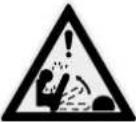 | WARNING! Risk of kick-back. Beware of the kick-back of the chainsaw and avoid making contact with the tip of the guide bar. |
 | Always use the chainsaw with both hands. |
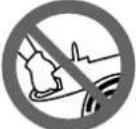 | Do not use the chainsaw one-handed. |
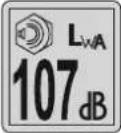 | Guaranteed sound power level of the product |
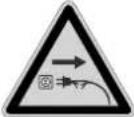  | If the mains cable is damaged or torn, it must be disconnected from the power supply immediately.Do not operate the product in rain or in humid conditions. |
 | Protection class II (double insulation) |
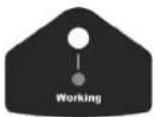 | On/off switch |
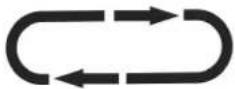 | Running direction |
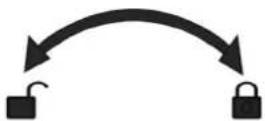 | Chain tension |
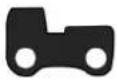 | Installation direction of the saw chain |
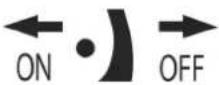 | Chain brake ON/OFF |
 | Filling port for chain oil |
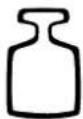 | Weight |
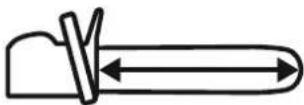 | Chainblade length |
 | The product complies with the applicable European directives. |
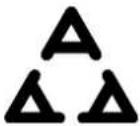 | The product complies with the applicable Serbian directives. |
| DANGER | Signal word to indicate an imminently hazardous situation which, if not avoided, will result in death or serious injury. |
| WARNING | Signal word to indicate a potentially hazardous situation which, if not avoided, could result in death or serious injury. |
| CAUTION | Signal word to indicate a potentially hazardous situation which, if not avoided, could result in minor or moderate injury. |
| ATTENTION | Signal word to indicate a potentially hazardous situation which, if not avoided, could result in product or property damage. |
| NOTE | Signal word to indicate a potentially hazardous situation which, if not avoided, could result in product or property damage. |

ATTENTION!
Before initial commissioning, read the operating manual thoroughly and be sure to follow the safety instructions!
It is recommended to attend a professional safety course “Certificate of Attendance Chainsaw Training Course” with country-specific training standard on the use, maintenance of the chainsaw as well as a first aid course. For longer periods of non-use and for practice, you should always make simple cuts in safely supported wood before starting, in order to familiarise yourself with the chainsaw again.
Keep the operating manual in a safe place!
Note:
Please note that some national regulations, e.g. occupational health and safety, environment, may restrict the use of the chainsaw.
Table of contents: Page:
- Introduction......30
- Layout (Fig. 1 - 4) ...... 30
- Scope of delivery.... 30
- Proper use....30
- Safety information .... 31
- Technical data 34
- Unpacking 34
- Attachment and operation 34
- Initial operation....35
- Working instructions....36
- Transport 39
- Maintenance....39
- Storage....39
- Electrical Connection 40
- Disposal and recycling 40
- Troubleshooting....41
- Declaration of conformity 431
1. Introduction
Manufacturer:
Scheppach GmbH
Günzburger Straße 69
D-89335 Ichenhausen
Dear customer,
We hope your new tool brings you much enjoyment and success.
Note:
According to the applicable product liability laws, the manufacturer of the device does not assume liability for damages to the product or damages caused by the product that occurs due to:
- Improper handling,
• Non-compliance of the operating instructions,
- Repairs by third parties, not by authorized service technicians,
- Installation and replacement of non-original spare parts,
• Application other than specified,
- A breakdown of the electrical system that occurs due to the non-compliance of the electric regulations and VDE regulations 0100, DIN 57113 / VDE0113.
We recommend:
Read through the complete text in the operating instructions before installing and commissioning the device.
The operating instructions are intended to help the user to become familiar with the machine and take advantage of its application possibilities in accordance with the recommendations.
The operating instructions contain important information on how to operate the machine safely, professionally and economically, how to avoid danger, costly repairs, reduce downtimes and how to increase reliability and service life of the machine.
In addition to the safety regulations in the operating instructions, you have to meet the applicable regulations that apply for the operation of the machine in your country.
Keep the operating instructions package with the machine at all times and store it in a plastic cover to protect it from dirt and moisture. Read the instruction manual each time before operating the machine and carefully follow its information. The machine can only be operated by persons who were instructed concerning the operation of the machine and who are informed about the associated dangers. The minimum age requirement must be complied with.
In addition to the safety requirements in these operating instructions and your country's applicable regulations, you should observe the generally recognized technical rules concerning the operation of woodworking machines.
We cannot accept any liability for damage or accidents which arise due to a failure to follow these instructions and the safety instructions.
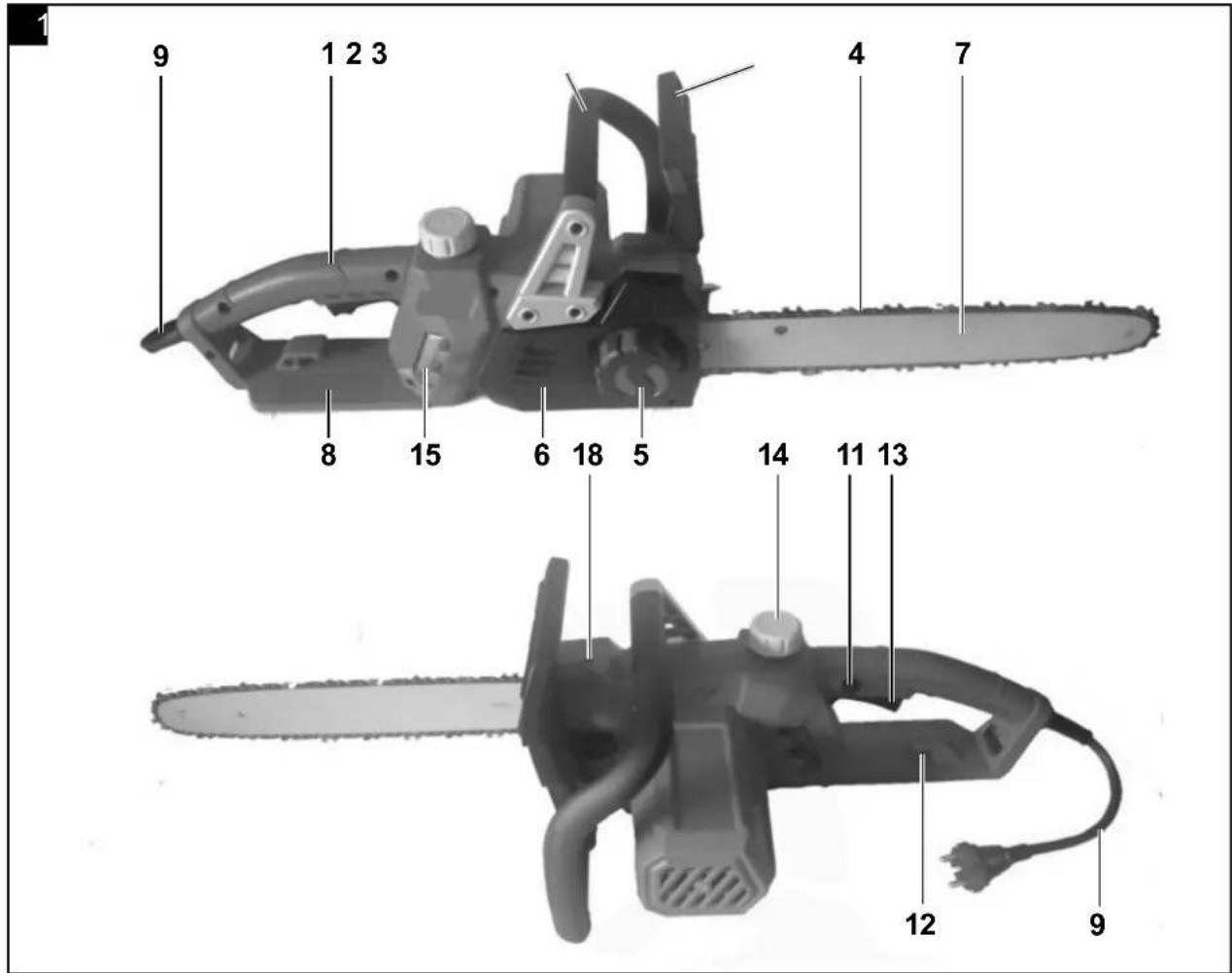
2. Layout (Fig. 1 - 4)
- Rear grip
- Front grip
- Saw chain
- SDS system
- Guide bar cover
- Guide bar
- Rear finger guard
- Power cable
- Claw stop
- Safety lock-button
- Cable hook
- ON/OFF switch
- Oil tank cap
- Oil gauge
- Chain wheel
- Guide bolt
-
Operation indicator
-
Front finger guard / Chain break
3. Scope of delivery
• 1 Electrical chainsaw
• 1 Manual
- 1 chain
- 1 bar
- 1 bar sheath
4. Proper use
The chainsaw may only be used for cutting wood outdoors. The chainsaw must not be used for any other purpose.
Do not use the chainsaw for work for which it is not intended. Example: Do not use the chainsaw to saw metal, plastic, brickwork or building materials other than wood.
The product may only be used in the intended manner. Any use beyond this is improper. The user/operator, not the manufacturer, is responsible for damages or injuries of any type resulting from this.
An element of the intended use is also the observance of the safety instructions, as well as the assembly instructions and operating information in the operating manual.
Persons who operate and maintain the product must be familiar with the manual and must be informed about potential dangers.
In addition, the applicable accident prevention regulations must be strictly observed.
Other general occupational health and safety-related rules and regulations must be observed.
The liability of the manufacturer and resulting damages are excluded in the event of modifications of the product. Please note that our products were not designed with the intention of use for commercial or industrial purposes. We assume no guarantee if the product is used in commercial or industrial applications, or for equivalent work.
⚠ WARNING - Read all safety instructions, structions, illustrations and technical data for this electric tool. Failure to follow all instructions listed below may result in electric shock, fire and/or serious injury.
The term "power tool" in the warnings refers to your mains-operated (corded) power tool or battery-operated (cordless) power tool.
1. Work area safety
a. Keep your work area clean and well-lit. Cluttered or dark areas invite accidents.
b. Do not operate power tools in explosive atmospheres, such as in the presence of flammable liquids, gases or dust. Power tools create sparks which may ignite the dust or fumes.
c. Keep children and bystanders away while operating a power tool. Distractions can cause you to lose control.
2. Electrical safety
a. Power tool plugs must match the outlet. Never modify the plug in any way. Do not use any adapter plugs with earthed (grounded) power tools. Unmodified plugs and matching outlets will reduce risk of electric shock.
b. Avoid body contact with earthed or grounded surfaces, such as pipes, radiators, ranges and refrigerators. There is an increased risk of electric shock if your body is earthed or grounded.
c. Do not expose power tools to rain or wet conditions. Water entering a power tool will increase the risk of electric shock.
d. Do not abuse the cord. Never use the cord for carrying, pulling or unplugging the power tool. Keep cord away from heat, oil, sharp edges or moving parts. Damaged or entangled cords increase the risk of electric shock.
e. When operating a power tool outdoors, use an extension cord suitable for outdoor use. Use of a cord suitable for outdoor use reduces the risk of electric shock.
f. If operating a power tool in a damp location is unavoidable, use a residual current device (RCD) protected supply. Use of an RCD reduces the risk of electric shock.
3. Personal safety
a. Stay alert, watch what you are doing and use common sense when operating a power tool. Do not use a power tool while you are tired or under the influence of drugs, alcohol or med-
in-ication. A moment of inattention while operating power tools may result in serious personal injury
b. Wear personal protective equipment and always safety goggles. Protective equipment such as a dust mask, non-skid safety shoes, hard hat or hearing protection used for appropriate conditions will reduce personal injuries.
c. Prevent unintentional starting. Ensure the switch is in the off-position before connecting to power source and/or rechargeable battery, picking up or carrying the tool. Carrying power tools with your finger on the switch or energising power tools that have the switch on invites accidents.
d. Remove any adjusting key or screwdriver before turning the power tool on. A wrench or a key left attached to a rotating part of the power tool may result in personal injury.
e.Do not overreach. Keep proper footing and balance at all times. This enables better control of the power tool in unexpected situations.
f. Dress properly. Do not wear loose clothing or jewellery. Keep hair, clothing and gloves away from moving parts. Loose clothes, jewellery or long hair can be caught in moving parts.
g. If devices are provided for the connection of dust extraction and collection facilities, ensure these are connected and properly used. Use of dust collection can reduce dust-related hazards.
h. Do not let familiarity gained from frequent use of tools allow you to become complacent and ignore tool safety principles. A careless action can cause severe injury within a fraction of a second.
a.Do not force the power tool. Use the correct power tool for your application. The correct power tool will do the job better and safer at the rate for which it was designed.
b. Do not use the power tool if the switch does not turn it on and off. Any power tool that cannot be controlled with the switch is dangerous and must be repaired.
c. Disconnect the plug from the power source and/or remove the battery pack, if detachable, from the power tool before making any adjustments, changing accessories, or storing power tools. Such precautionary measures reduce the risk of starting the power tool accidentally.
d. Store idle power tools out of the reach of children and do not allow persons unfamiliar with the power tool or these instructions to operate the power tool. Power tools are dangerous in the hands of untrained users.
e. Maintain power tools and accessories. Check for misalignment or binding of moving parts, breakage of parts and any other condition that may affect the power tool's operation. If damaged, have the power tool repaired before use. Many accidents are caused by poorly maintained power tools.
f. Keep cutting tools sharp and clean. Properly maintained cutting tools with sharp cutting edges are less likely to bind and are easier to control.
g. Use electric tools, insertion tools, etc. according to these instructions. taking into account the working conditions and the work to be performed. Use of the power tool for operations different from those intended could result in a hazardous situation.
h. Keep handles and grasping surfaces dry, clean and free from oil and grease. Slippery handles and grasping surfaces do not allow for safe handling and control of the tool in unexpected situations.
5. Service
a. Only have your electric tool repaired by qualified specialists and only with original spare parts. This will ensure that the safety of the power tool is maintained.
⚠ WARNING! This power tool generates an electromagnetic field during operation. This field can impair active or passive medical implants under certain circumstances. In order to prevent the risk of serious or deadly injuries, we recommend that persons with medical implants consult with their physician and the manufacturer of the medical implant prior to operating the power tool.
Vibration
⚠ WARNING! Raynaud's syndrome is a vascular disease that causes the small blood vessels on the fingers and toes to cramp in spasms. The symptoms include: Insensitivity, loss of sensitivity, tingling, itching, pain, loss of strength, change in colour or condition of the skin. The affected areas are no longer supplied with sufficient blood and therefore appear extremely pale. The frequent use of vibrating tools can cause nerve damage in people whose circulation is impaired (e.g. smokers, diabetics). If you notice unusual adverse effects, stop working immediately and seek medical advice. For long-term and regular users, it is therefore recommended to closely monitor the condition of your hands and fingers. Observe the following information to reduce hazards:
- Keep your body warm, especially your hands, especially in cool weather.
- Take regular breaks and move your hands to promote circulation.
- Limit the use of high vibration tools per day and spread them over several days Make a work schedule that limits vibration exposure.
- Ensure as little vibration as possible of the tool via regular maintenance and stable parts on the device. Replace worn parts immediately.
- Change your working position regularly.
- If the machine is to be used or operated frequently, you should contact your specialist dealer and request anti-vibration accessories (handles) if applicable.
Chainsaw safety features
- Front hand guard protects the operator's left hand should it slip off the front handle while the chainsaw is running.
- The rear hand guard protects the right hand from contact with a dropped or broken saw chain.
- The chain brake is a safety feature to reduce injuries due to kickback by stopping a running saw chain in milliseconds. It is activated by the front hand guard in case of kickback.
- The switch lock prevents accidental acceleration of the engine. The throttle lever can only be pressed when the switch lock is depressed.
- The claw stop supports the chainsaw on the wood during work. Never work without a claw stop, the chainsaw can pull the operator forward. Use the claw stop for cutting tree trunks or thick branches. Using the claw stop increases work safety, reduces personal strain when working and vibrations are also reduced. The claw stop must always be applied to the tree trunk when using the chainsaw. Using the rear handle, press the claw stop against the tree trunk. To cut, push the front handle towards the cutting line. The claw stop may have to be repositioned for further cutting.
General chainsaw safety warnings
a) Keep all body parts away from the saw chain when the saw is running. Before starting the pruning saw, ensure that the saw chain is not touching anything. When working with a chain-saw, a moment of carelessness can result in clothing or body parts being caught by the saw chain.
b) Always hold the chainsaw with your right hand on the rear handle and your left hand on the front handle. Holding the chainsaw using the opposite grip increases the risk of injuries and shall be avoided at all times.
c) Only hold the chainsaw by the insulated gripping surfaces, as the saw chain could hit hidden power lines or its own mains cable. Contact between the saw chain and a live power line can also electrify metal device parts and lead to an electric shock.
d) Wear eye protection. Further protective equipment for hearing, head, hands, legs and feet is recommended. Suitable protective clothing reduces the risk of injury from flying chips and accidental contact with the saw chain.
e) Do not work with the chainsaw in a tree, on a ladder, or from a roof or an unstable standing surface. There is a serious risk of injury if operated in such a manner.
f) Always make sure you have a firm footing and only use the chainsaw when standing on firm, safe and level ground. Slippery ground or unstable standing surfaces can cause loss of balance or loss of control of the chainsaw.
g) When cutting a branch that is under tension, expect it to spring back. If the tension in the wood fibres is released, the tensioned branch can hit the operator and/or wrest the chainsaw from control.
h) Be especially careful when cutting under-growth and young trees. The thin material can get caught in the saw chain and hit you or throw you off balance.
i) Carry the chainsaw by the front handle when switched off, with the saw chain facing away from your body. Always put the protective cover on when transporting or storing the chainsaw. Careful handling of the chainsaw reduces the likelihood of accidental contact with the running saw chain.
j) Follow the instructions for lubrication, chain tensioning and replacing the guide bar and chain. An improperly tensioned or lubricated chain can break or increase the risk of kick-back.
k) Only saw wood. Do not use the chainsaw for work for which it is not intended. Example: Do not use the chainsaw to saw metal, plastic, brickwork or building materials other than wood. Using the chainsaw for unintended work can cause dangerous situations.
I) Do not attempt to fell a tree until you have a clear understanding of the risks and how to avoid them. The user or other persons can be seriously injured by a falling tree.
Causes and avoidance of kickback Beware of kickback!
- Kickback may occur when the nose or tip of the guide bar touches an object, or when the wood closes in and pinches the saw chain in the cut.
- Tip contact in some cases may cause a sudden reverse reaction, kicking the guide bar up and back towards the operator.
- Pinching the saw chain along the top of the guide bar may push the guide bar rapidly back towards the operator.
- Either of these reactions may cause you to lose control of the saw which could result in serious personal injury. Do not rely exclusively upon the safety devices built into your saw.
- As a chain saw user, you should take several steps to keep your cutting jobs free from accident or injury.
Kickback is the result of tool misuse and/or incorrect operating procedures or conditions and can be avoided by taking proper precautions as given below:
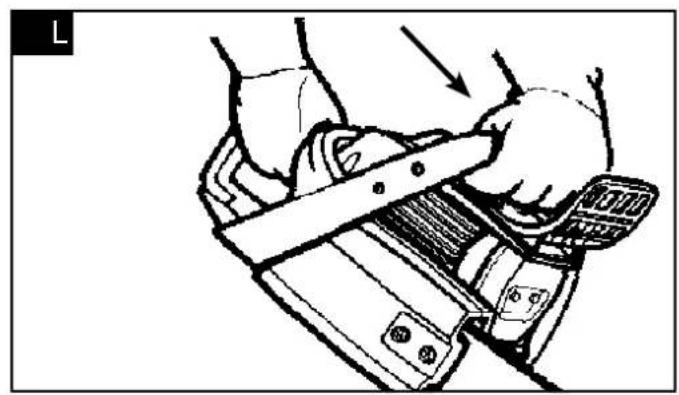
- Maintain a firm grip, with thumbs and fingers encircling the chain saw handles, with both hands on the saw and position your body and arm to allow you to resist kickback forces (Fig. L).
- Kickback forces can be controlled by the operator, if proper precautions are taken. Do not let go of the chain saw.
- Do not overreach and do not cut above shoulder height.
- This helps prevent unintended tip contact and enables better control of the chain saw in unexpected situations.
- Only use replacement bars and chains specified by the manufacturer.
- Incorrect replacement bars and chains may cause chain breakage and/or kickback.
- Follow the manufacturer's sharpening and maintenance instructions for the saw chain.
- Decreasing the depth gauge height can lead to increased kickback.
- If the power cable for this equipment is damaged, it must be replaced by the manufacturer, a customer service agent of the same or a similarly qualified person in order to prevent hazards.
- Lay the extension cable in such a way that it will not be caught by branches or similar during sawing.
- Use a surge protector with a release current of 30 mA or less.
-
Have your power tool serviced by a qualified repair person using only identical replacement parts.
-
Carefully follow the maintenance, control and service instructions in this manual.
- Practise using the saw (sawing logs on a saw-horse) and get an experienced user or a specialist to explain to you the function of the saw, the way of working, the techniques of sawing and the personal protection equipment.
6. Technical data
| Cutting data chainsaw |
| Cutting length 44 cm |
| Bar length 45.5 cm |
| Capacity oiltank 0.15 l |
| Type of oil wear resistant oil |
| Saw chain division 3/8" |
| Drive link thickness 1.27 mm |
| Saw chain type 3/8.050x62DL |
| Number of teeths drive sprocket | 7 x 9.525 |
| Tooth pitch of drive sprocket 3/8" |
| Chain brake yes |
| Guide bar type | AP18-62-507P |
| Engine |
| Motor | 230-240 V ~ / 50 Hz |
| Power | 2400 W |
| Cutting speed max. | 15 m/s |
| Weight | 5.5 kg |
| Weight without bar and chain | 4.3 kg |
Subject to technical changes!
| Information concerning noise emission measured according to relevant standards: |
| Sound pressure L_pA | 96.5 dB |
| Measurement uncertainty K_PA | 3 dB |
| Sound power L_WA | 104.5 dB |
| Measurement uncertainty K_WA | 2.36 dB |
| Guaranteed Sound power L_WA | 107 dB |
Wear ear-muffs.
| The impact of noise can cause damage to hearing. |
| Vibration A_hv (front handle) | 6.02 m/s ^2 |
| Vibration A_hv (rear handle) | 6.55 m/s ^2 |
| Measurement uncertainty K_PA | 1.5 m/s ^2 |
- The specified total vibration value and the specified noise emission value have been measured in accordance with a standardised test procedure and can be used to compare one power tool with another.
- The specified total vibration value and the specified noise emission value can also be used for an initial estimation of the exposure.
Warning:
- The vibration emission value can vary from the specified value during the actual use of the electric tool, depending on the type and the manner in which the electric tool is used;
- Try to minimise stress from vibrations as low as possible. Some examples of means for reducing the vibration stress are wearing gloves while using the tool and limiting work time. In the process all parts of the operating cycle must be taken into account (such as times in which the electric tool is switched off or time in which it is switched on, but is not running under a load).
7. Unpacking
- Open the packaging and remove the device carefully.
- Remove the packaging material as well as the packaging and transport bracing (if available).
- Check that the delivery is complete.
- Check the device and accessory parts for transport damage.
- If possible, store the packaging until the warranty period has expired.
ATTENTION!
The device and packaging materials are not toys! Children must not be allowed to play with plastic bags, film and small parts! There is a risk of swallowing and suffocation!
8. Attachment and operation
Warning!
Always wear safety goggles, ear muffs, protective gloves and heavy-duty work clothes!
Use the saw only with approved extension cables with the prescribed insulation and connections designed for outdoor use (approved rubber-sheathed cables) which fit the chainsaw plug.
The chain saw is equipped with safety switches, requiring the use of both hand. The chain saw is equipped with a safety switch. It only works if you press the switch-on lock (11) and the on/off switch (13) with one hand at the same time.
If the chainsaw does not run, the chain brake must be released at the front finger guard (3).
Assembly
Fitting the guide bar and chain (Fig. 1, 2, 3)
Warning! If the chain saw is already connected to the power supply: Pull the plug from the socket outlet. Wear protective gloves whenever doing any work on the saw chain.
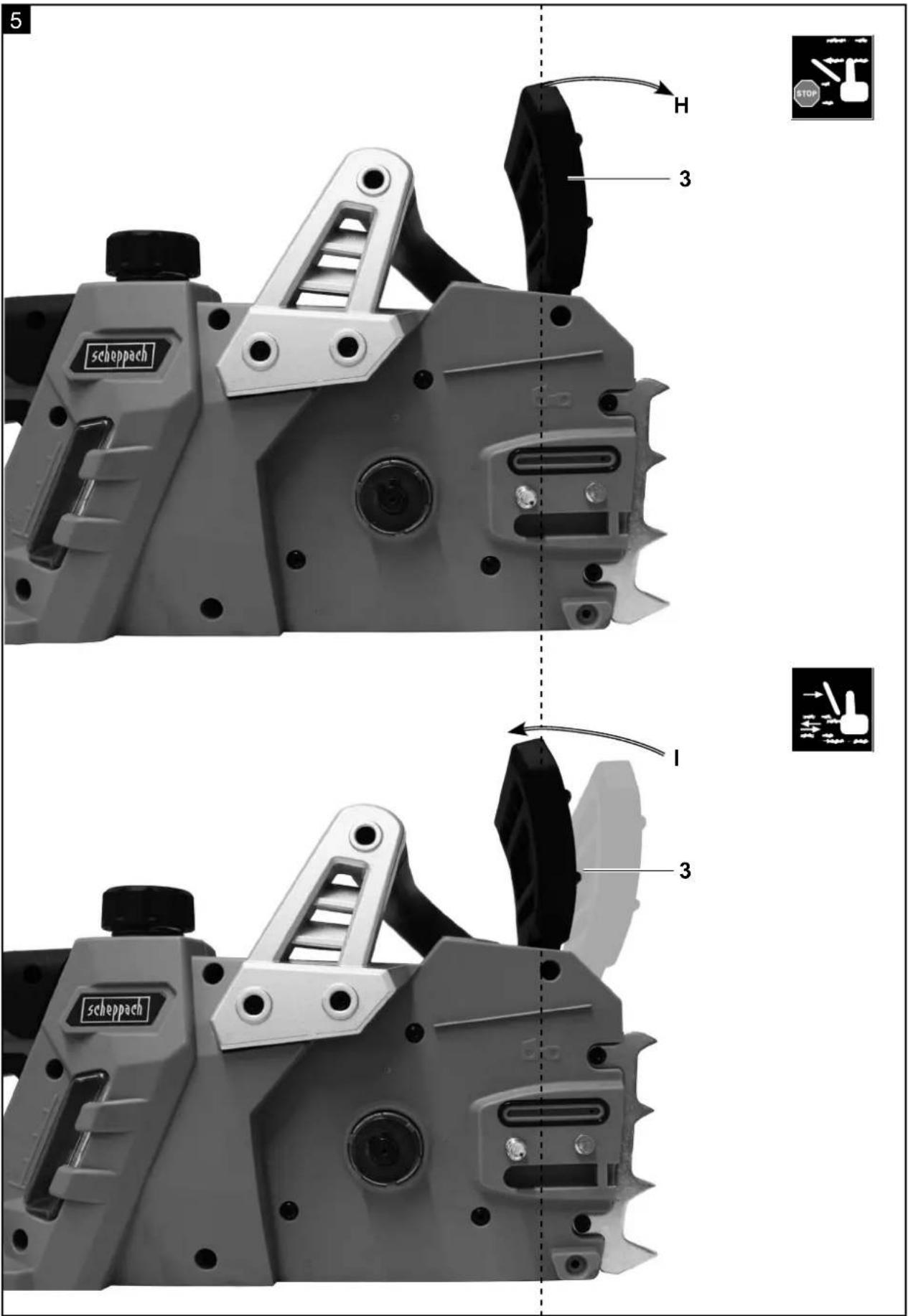
Important: The front finger guard (3) must always be in the top (vertical) position (Fig. 5).
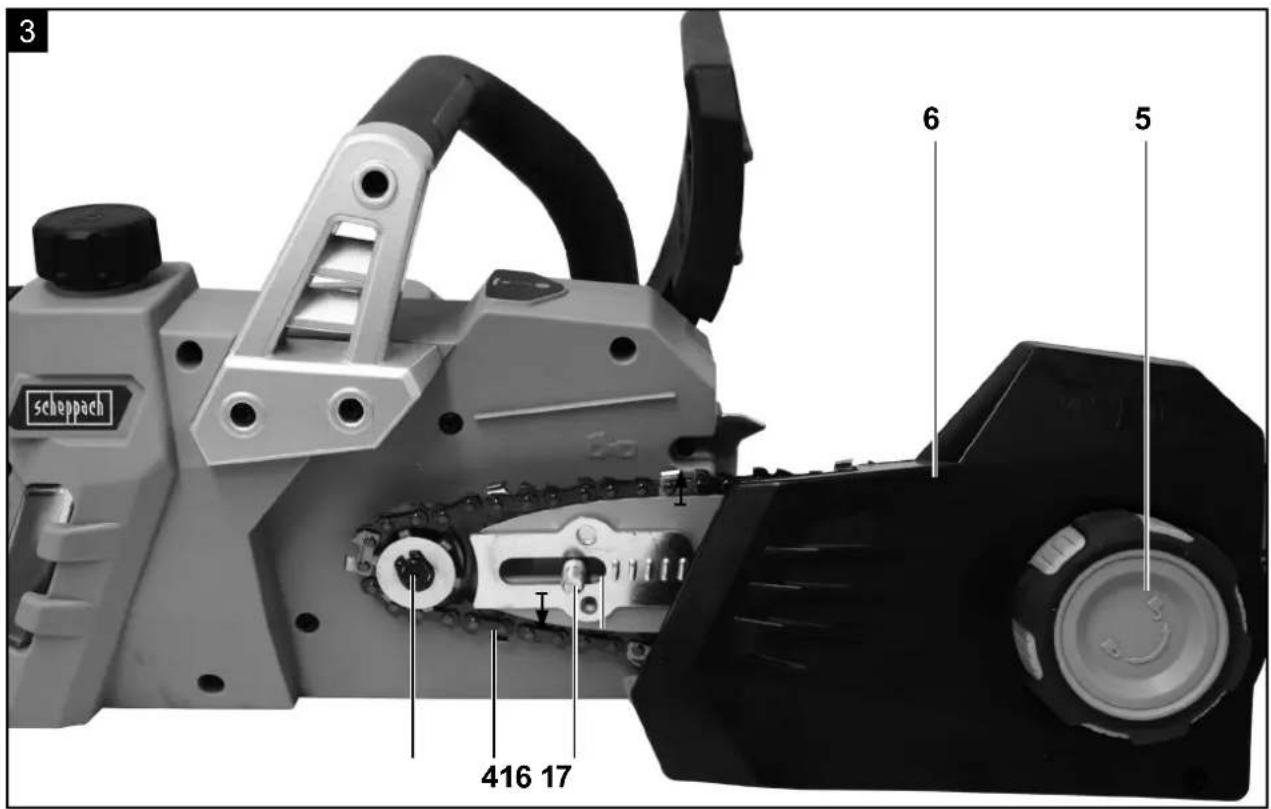
The guide rail and the saw chain are delivered separately, i.e. not assembled. When assembling, first loosen the lock nut / SDS system (5) and then remove the chain cover (6). The guide pin (17) must be in the middle of the guide.
If necessary, adjust the chain tension with the lock nut / SDS system (5) (fig. 3).
Warning! To prevent injury on the sharp cutting edges, always wear gloves when assembling, tensioning and checking the chain.
Before assembling the guide bar with the saw chain, check the cutting direction of the teeth!
The running direction is indicated by an arrow on the chain cover (6). To determine the direction of cut, it may be necessary to turn over the saw chain (4).
Hold the guide bar (7) vertically with the tip pointing upwards and put on the saw chain (4, beginning at the tip of the bar.
Then assemble the guide bar with the saw chain as follows:
- Place the guide bar with the saw chain on the chain wheel (16) and guide bolt (17).
- Place the saw chain round the chain wheel (16). Cause the chainsaw to the sprocket and check whether it is correctly.
• Install the chain cover (6) on top and carefully secure it with the lock nut (5).
Now the saw chain has to be correctly tensioned.
Tensioning the saw chain Warning!
Always pull the plug out of the power socket before doing any work on the chainsaw!
Wear safety gloves!
- Make sure the saw chain (4) is inside the guide groove of the guide bar (7).
- Turn the lock nut/SDS system (5) clockwise (fig. 3) until the saw chain is properly tensioned.
- When cold, it should be possible to lift the chain in the middle of the guide bar approx. 5 mm.
- When warm, the saw chain will expand and slacken and there is a danger of it jumping off the rail altogether. Re-tension if necessary.
- If the saw chain is re-tensioned when hot, it must be loosened again when the sawing work has been completed.
- Otherwise, the contraction which takes place as the chain cools would result in excessively high tension.
- A new saw chain requires a running-in period of approx. 5 minutes. Chain lubrication is very important at this stage. After running in, check chain tension and re-tension if necessary.
9. Initial operation
⚠️ Important!
You must fully assemble the appliance before using it for the first time!
The voltage and current supply must comply with the ratings on the type plate.
Before commencing work, always check that the chainsaw works properly and is safe to operate.
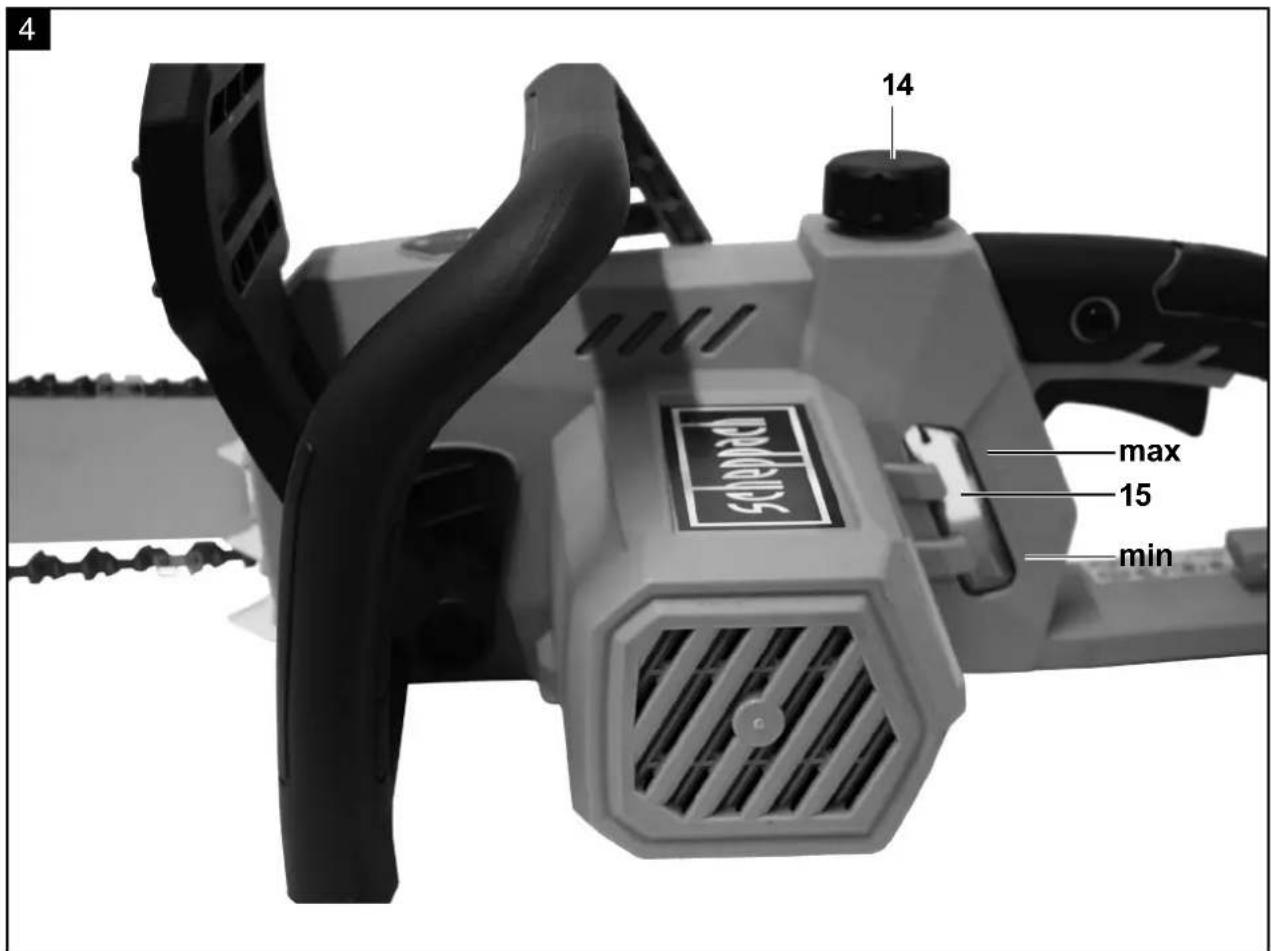
Check also that the chain lubrication and the oil gauge are in good working order (see Fig. 4). When the oil lever is approx. 5 mm from the bottom mark, you must top up with oil. When the oil level is higher you can work without worry.
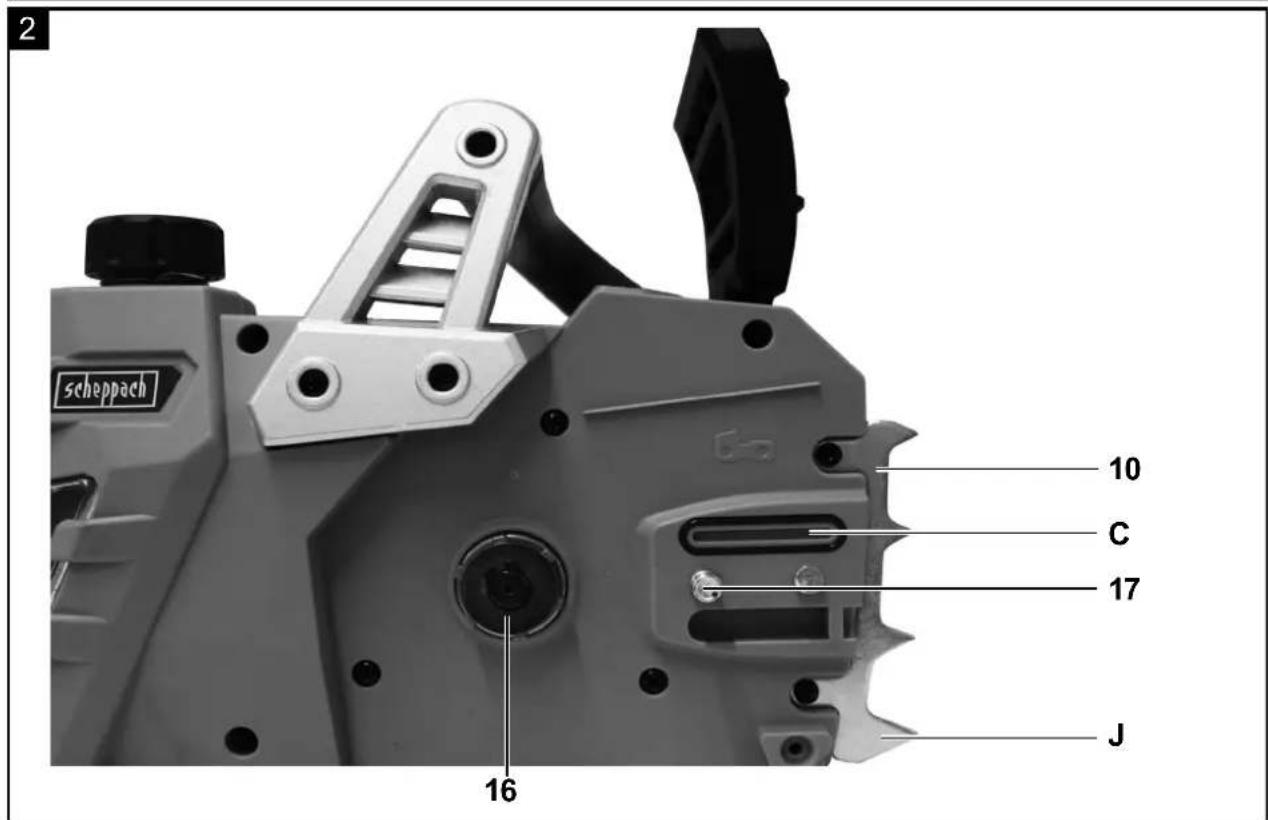
- Switch on the chain saw and hold it above the ground. Be careful not allow the chainsaw to touch the ground. For safety reasons it is best to keep a clearance of at least 20 cm. If you now see growing traces of oil, the chain lubrication system is working correctly. If there are no traces of oil at all, try cleaning the oil outlet (Fig 2, C) and the oil duct or contact your Customer Service. (Before doing this, please read the relevant instructions in the „Top up chain lubricant“ section).
- Check the chain tension and retention, if necessary (see the section "Tensioning the saw chain" on this point).
- Make sure the chain brake is working properly (see also the section "Releasing the chain brake").
To switch on:
- Release the chain brake (3), push in the lock (11) and press the power switch (13).
- Place the lowest claw (Fig 2, J) on the wood. Raise the chain saw by the rear grip (1) and saw into the wood. Move the chain saw back a little and place the claw further down.
- Be careful when sawing splintered wood as pieces of wood may be ripped off.
Attention
After switching on, the chainsaw will run immediately at high speed.
To switch off
- Release either the ON/OFF switch (13) on the rear grip.
- The release of ON/OFF switch results the stop of the chainsaw within 1sec., and heavy sparkling. This is normal and safe for the proper operation of the chainsaw.
- After working with the chainsaw, you should always: Clean the saw chain and guide bar and replace the chain guard.
- If the chain brake is activated the chainsaw will be deactivated immediately.
Explanation of the operation indicator (18)(Fig. 2):
Green LED:
The green LED comes on when the device is in use.
10. Working instructions
Transporting the chainsaw
Before transporting the chainsaw, always remove the plug from the power socket and slide the chain guard over the rail and chain. If several cuts are to be performed with the chain saw, the saw must be switched off between cuts.
Securing the extension lead
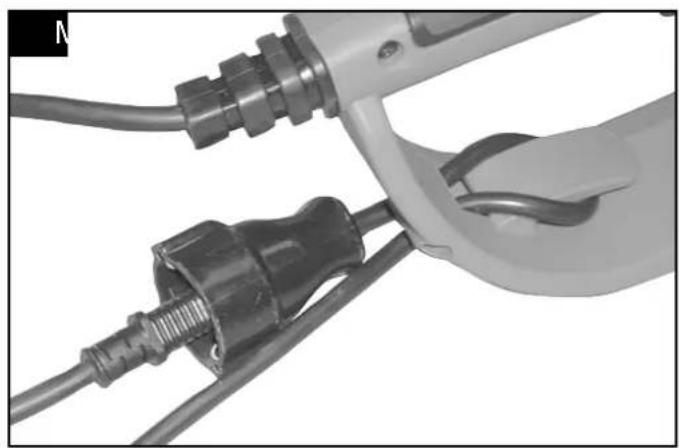
Only use extension leads suitable for outdoor use. The cross section of the cable (max. length of extension cord: 75 m) must be at least 2,5 mm ^2 . secure the chainsaw flex to the extension lead by inserting the extension lead into the strain relief gap of the housing (Fig. M). Extension leads longer than 30 m will reduce the performance of the chainsaw.
Chain lubrication
To prevent excessive wear, the saw chain and guide bar must be evenly lubricated during operation. Lubrication is automatic. Never work without chain lubrication. If the chain runs dry, the entire cutting apparatus will quickly become severely damaged.
It is therefore important to check both chain lubrication and the oil gauge every use (Fig. 4).
Never use the saw when the oil level is below the "Min." mark.
- Min.: When only approx. 5 mm of oil is visible at the lower rim of the oil gauge (15), you must top up with oil.
- Max.: Top up with oil until the window is full.
Chain lubricants
The service life of saw chains and guide bars depends to a large extent on the quality of the lubricant used. Old oil must not be used! Use only environment-friendly chain lubricant. Store chain lubricant only in containers which comply with the regulations.
Guide bar
The guide bar (7) is subjected to especially severe wear and tear at the nose and the bottom. To avoid one-sided wear and tear, turn the guide bar over every time when you sharpen the chain.
Chain wheel
The chain wheel (16) is subjected to especially high wear and tear. If you notice deep wear marks on the teeth, the chain wheel must be replaced. A worn chain wheel curtails the service life of the saw chain. Have the chain wheel replaced by a specialist dealer or your Customer Service.
Chain guard
The chain guard must be clipped onto the chain and sword as soon as the sawing work has been completed and whenever the chainsaw has to be transported.
Chain brake
In the event of kick-back, the chain brake (3) will be actuated via the front finger guard. The front finger guard is pushed forwards by the back of the hand and this causes the chain brake to stop the chain saw, or rather the motor, within 0.15 s (Fig 5, H).
Releasing the chain brake (Fig. 5)
To be able to use your chain saw again, you must release the saw chain again. First switch off the chain-saw. Then push the front finger guard (3) back into the vertical position until it locks in place (Fig 5, I). The chain brake is now fully functional again.
Chainsaw protection
Never use the chainsaw in the rain or in damp conditions.
Warning! If the extension cable is damaged, pull the plug out of the power socket immediately. Never work with a damaged cable.
- Check the chainsaw for damage. Before using your tool again, check the safety devices or any slightly damaged parts to ensure that they are in good working order.
- Make sure the moving parts are working correctly.
- All the parts must be correctly assembled and meet all the conditions required to ensure that the chainsaw works correctly.
- Any damaged safety devices and parts must be properly repaired or replaced immediately by a Customer Service workshop, unless there are instructions to the contrary in these operating instructions.
Notes on working practice
Kick-back
You can avoid accidents by not sawing with the tip of the guide bar as this may cause the saw to rear up suddenly.
Always use the complete safety equipment and clothes when working with the saw. Kick-back is an upward and/or backward movement of the guide bar which can occur if the saw chain at the tip of the guide bar encounters an obstruction.
Make sure your work-piece is firmly secured. Use clamps to stop the work-piece slipping. This also makes it easier to operate the chainsaw with both hands. Kick-back causes the saw to behave uncontrollably and thus brings with a slack or blunt chain.
A poorly sharpened chain increases the risk of kickback. Never saw above shoulder height.
Operation - tips on chain saw use Important Notes
- Use the device exclusively for sawing wood. Do not cut metal, plastics, masonry, building material that is not made of wood, etc.
- Turn off the engine when the saw comes into contact with a foreign object. Inspect the saw and repair it if necessary.
- Protect the chain from dirt and sand. Even a small amount of dirt will quickly blunt a chain and increase the risk of kickback.
- Start by cutting a few small logs, using the exercise to get a feel for your device before you tackle more difficult tasks.
- Press the casing of the chain saw against the log when you start sawing.
- Allow the saw to work. Exert only slight downward pressure.
- In order not to lose control of the device you should lean towards the end of the incision so there is no pressure on the saw.
Felling Trees – Only after appropriate training
Caution: Watch for broken or dead branches that could fall during sawing and cause serious injury. Do not saw near buildings or electrical wires if you do not know in which direction the felled tree could fall. Do not work at night since you will not be able to see properly, or in rain, snow or storm, as it is difficult to predict the direction in which the tree could fall.
- Plan your work in advance.
- The work area around the tree should be clear so you have a firm foothold.
- The operator should always stand on the uphill side of the terrain as the tree is expected to roll or slide after felling.
- Check for broken or dead branches, which can fall and cause serious injury.
The following conditions may affect the direction in which a tree falls:
• Wind direction and speed.
- Lean of the tree. The inclination is not always visible due to uneven or sloping terrain. Determine the lean of the tree using a solder or a spirit level.
- Branch growth (and hence weight) on one side only.
- Surrounding trees and obstacles.
If two or more people are involved in the cutting and felling, the distance between those who are felling and cutting should be at least twice the height of the tree to be felled. When felling trees, make sure that other people are not put at risk, that supply lines are not hit and that no material damage is caused. If a tree comes in contact with a supply line, the supply company has to be notified immediately.
Look for decay and rot. If the trunk is rotted, it may suddenly collapse and fall on you. Make sure there is enough space for the tree to fall safely. Keep a distance of 2 1/2 tree lengths from the nearest person or other objects. Engine noise can drown out a warning call.
Remove dirt, stones, loose bark, nails, staples, and wire from the tree where you are going to cut.
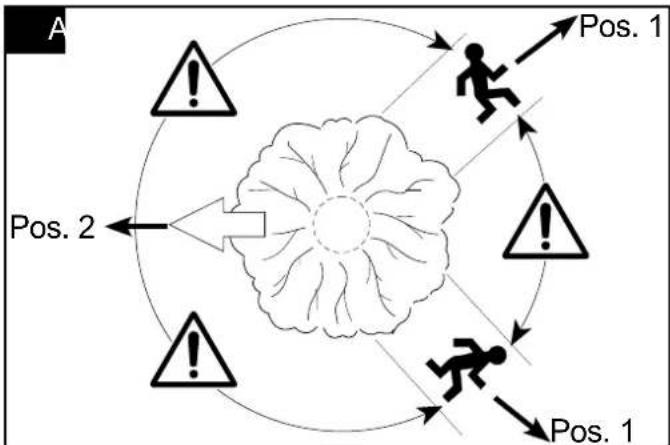
Keep an escape route (Fig. A)
Before felling, an escape route has to be planned and cleared, if necessary. The escape route should lead diagonally away from the back of the falling tree (Fig. A).
Item 1: Plan of emergency exits
Item 2: Position in which the tree falls
Felling of large trees - only with appropriate training (15 cm in diameter)
Fell large trees using the notch method. Here, a wedge is laterally cut out of the tree according to the desired direction of fall. After a cut has been made on the case of the other side of the tree, the tree will fall in the direction of the wedge.
△ Note: If the tree has large prop roots, they should be removed before making the notch. If the saw is used to remove the prop roots, the chain should not touch the ground, to prevent it from becoming become blunt.
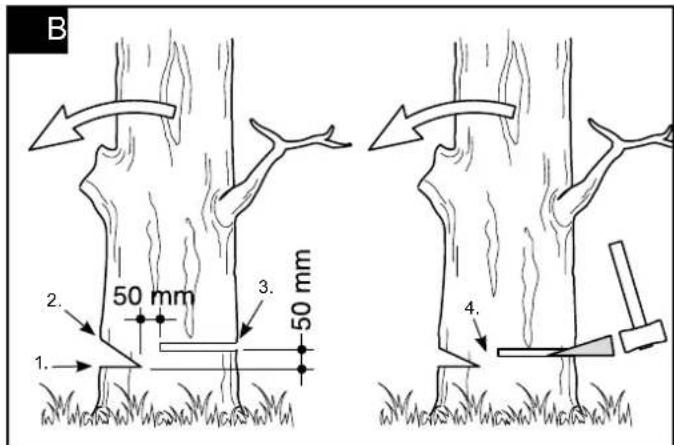
Undercut and felling of the tree (Fig. B - C)
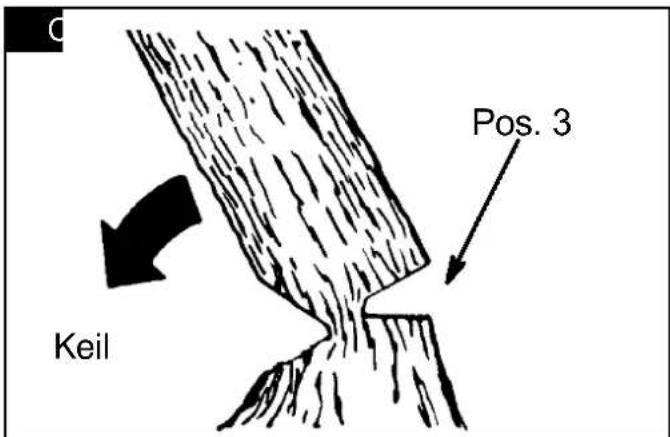
- Saw a wedge with a depth of 1/3 of the tree diameter at a right-angle to the falling direction. Make the lower horizontal wedge cut first (Fig. B, No. 1). This will prevent the saw chain or the guide bar becoming jammed when the second wedge cut (Fig. B, No. 2) is made. Now remove the excised wedge.
- Next, you can run the felling cut (Fig. B, Pos. 3) on the opposite side of the tree. Do this at approximately 5 cm above the centre of the notch. Make the dropping cut parallel to the horizontal wedge cut. For the dropping cut (No. 3), saw only to a depth so that a bridge (No. 4) (holding wood) remains which can act as a hinge. The bridge prevents the tree from turning and falling in the wrong direction. Do not cut through the bridge.
Note: When the dropping cut is made close to the bridge, the tree should start falling. If it looks like the tree may possibly not fall in the desired direction or it leans back and traps the saw chain, stop the dropping cut and use wedges of wood. plastic or aluminium to open the cut and to tilt the tree into the required falling direction.
When the tree starts falling, remove the chainsaw from the cut, turn it off, put it away and leave the danger zone via the planned escape route. Look out for falling branches and do not trip.
- Be alert to signs that the tree is starting to fall: cracking sounds, widening of the felling cut, or movement in the upper branches.
- To avoid injury, do not cut down a partially felled tree with your saw. Pay special attention to partially felled trees that may be poorly supported. If a tree does not fall completely, set the saw aside and pull with a cable winch, block and tackle, or tractor.
Sawing a felled tree (bucking)
The term "buck" means to cut a felled tree trunk into the desired log length.
Caution: Do not stand on the log while it is being cut. Any portion can roll, and you may lose your footing and control over the device. Never run the saw on sloping ground. Make sure you have secure footing and distribute your body weight evenly on both feet. If possible, put branches, beams or wedges under the tree to support it.
Important Notes
• Always only cut one log at a time.
- Be careful when cutting splintery wood. You could be hit by sharp wood particles.
- Cut small logs or branches on a sawhorse. When cutting logs, another person should hold the trunk. Do not secure the trunk with your leg or foot.
- If you use the saw in places where trunks and roots are tangled, drag the logs into a clear spot, and lift the cleared logs first.
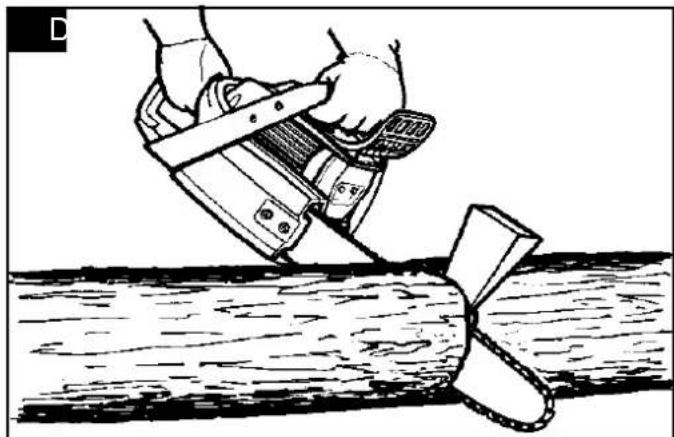
Different cuts for bucking (Fig. D)
Caution: If the saw is clamped into a log, do not pull it out by force. You risk losing control of the device, thereby resulting in injury and / or damage to the saw. Hold the saw, and drive a plastic or wood - wedge into the cut until the saw can be pulled out easily. Position the saw carefully and allow it to cut again. Start the saw if it is trapped in a trunk.
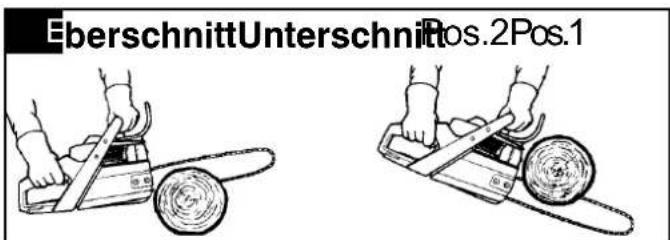
Upper section (Fig. E, item 1)
Position the saw at the upper end of the log. With the overcut apply only slight downward pressure.
Sub-section (Fig. E, item 2)
Place the undercut at the bottom of the trunk, holding the top of the saw down against the log. Practice the undercut; it is just as easy to train from the top. Hold the saw firmly and maintain control. The saw will push backwards (towards you).
Caution: Never hold the saw upside down for an undercut. In this position, you have no control over the device. Always execute the first cut on the compression side of the log. The compression side of a log is where the pressure of the root weight is concentrated.
Bucking without supports (Fig. F)
- When the whole length of the tree trunk is stable and even, start sawing from the top (No. 1).
• Make sure you do not saw into the ground.
Trunk cutting, supported on one end (Fig. G)
- When the tree trunk is propped up on one end, make the first cut (No. 1) from underneath (1/3 of the trunk diameter) in order to prevent splitting.
- The second cut is made from the top (2/3 of the diameter) in the same line as the first cut to prevent the saw from becoming jammed.
Trunk cutting, supported on both ends (Fig. H)
- When the tree trunk is propped up on both ends, make the first cut (No. 1) from the top (1/3 of the trunk diameter) in order to prevent splitting.
- The second cut is made from underneath (2/3 of the diameter) in the same line as the first cut to prevent the saw from becoming jammed.
Limbing and Trimming
Attention: Always pay attention to, and protect yourself against kickback. Never let the moving chain at the top of the guide bar come into contact with other branches or objects when limbing or trimming. Such contact can cause serious injury.
Attention: Climb the tree for pruning or trimming. Do not stand on ladders, platforms, etc. as you may lose your balance and lose control of the device.
Important Notes
- Work slowly, and hold the saw firmly with both hands. Ensure safe standing position and balance.
- Watch out for spring backs. Use extreme caution when cutting small size limbs. Pliable material may catch in the saw chain and be whipped toward you or pull you off balance.
- Watch out for spring backs. This is especially true for branches that are bent or under pressure. Avoid coming in contact with the branch or the saw when there is tension in the wood.
- Keep your work area clear. Keep the path clear of branches to avoid tripping over them.
Lopping (Fig. J)
- Lopping means removing branches from the felled tree.
- Leave the larger limbs that are underneath the felled tree, and use them as support while you continue to work.
- Start at the base of the felled tree and work your way up to the top. Remove smaller parts of the tree with a cut in the direction of growth (arrows Fig. J).
- Be sure to keep the tree between you and the saw.
-
Remove larger, supporting branches using the methods in the section „Bucking without restraints“.
-
Always cut branches under tension from the underneath to the top, so the saw does not become trapped.
- Always cut small and freely hanging limbs with one cut. By undercutting they could fall in and pinch the saw.
Trimming (Fig. I)
Attention: Leave stubs in branches or below cut them to shoulder level only. Never cut branches above shoulder height. Leave such work to an expert.
- Make the first cut (Item 1) 1/3 in the bottom of the limb.
- Then cut the second section (Item 2) all the way through the branch. The third section (item 3) is a general section that allows you to separate the branch at 2.5 to 5 cm from the trunk.
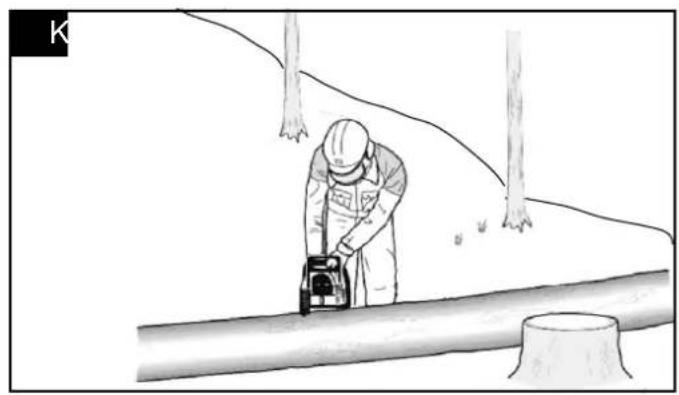
Sawing on a slope (Fig. K)
When sawing on a slope, make sure you always stand higher than the tree trunk (Fig. K). In order to maintain complete control at the moment of “sawing through”, reduce pressure towards the end of the cut without releasing your tight grip on the handles of the chainsaw.
Warning!: The saw chain must not come in contact with the ground.
After completing the cut, wait for the saw chain to come to a standstill before removing the chainsaw. Always turn off the chainsaw's motor when going from one tree to the next.
11. Transport
- To transport the product, disconnect the it from the power supply and set it up in the new position you want to use it in.
- The product must be secured against tipping and slipping during transport in vehicles in order to prevent damage and injuries.
• Always use the guide rail cover when transporting.
- Switch off the chainsaw before any transport, even over short distances. Secure the machine against tipping over during transport (including in vehicles) to prevent fuel loss, damage or injury.
- Carry the device only by the front handle. In doing so, the guide rail points backwards, away from your body.
12. Maintenance
Always pull the plug out of the power socket before doing any work on the chainsaw!
- Keep the cooling vents on the motor housing clean and unobstructed at all times.
- Only the maintenance work described in these operating instructions may be carried out. Any other maintenance work must be carried out by our Customer Service.
- Do not modify the power saw in any way as this could jeopardize its safety.
- Should the chainsaw fail despite our careful manufacturing and inspection procedures, have it repaired by an authorized Customer Service workshop.
Filling in chain oil
To prevent dirt getting inside the tank, clean the oil tank cap (21) before opening. Check the contents of the oil tank during sawing work by checking the oil gauge (15). Close the oil tank cap tightly and wipe away any spills.
Sharpening the saw chain
You can have your saw chain sharpened fast and correctly by specialist dealers, from whom you can also obtain chain sharpening equipment to enable you to sharpen the chain yourself.
Please follow the corresponding operating instructions.
Take care of your tools. Keep your tools sharp and clean to enable you to work well and safely.
Follow the maintenance regulations and the instructions for changing tools.
With this product, it is necessary to note that the following parts are subject to natural or usage-related wear, or that the following parts are required as consumables.
Wearing parts*: Saw chain, guide rail, chain oil, carbon brushes, claw stop
* May not be included in the scope of delivery!
Spare parts and accessories can be obtained from our service centre. To do this, scan the QR code on the cover page.
13. Storage
- Before every transport and storage, attach the chain guard.
- Store the device in a dry place beyond the reach of children.
- When the device is not being used, store it so it cannot be started by unauthorised persons.
Warning!
Do not store the device without protection outside or in a damp environment.
14. Electrical Connection
The installed electric motor is connected and is ready to work. The connection complies with the relevant VDE and DIN regulations. If it is necessary to replace the connection cable, this must be done by the manufacturer or their representative to avoid safety hazards. The customer-side mains supply and the used extension line must meet these regulations.
- The product meets the requirements of EN 61000-3-11 and is subject to special connection conditions. This means that use of the product at any freely selectable connection point is not allowed.
- Given unfavorable conditions in the power supply the product can cause the voltage to fluctuate temporarily.
- The product is intended solely for use at connection points that
a) do not exceed a maximum permitted supply impedance "Z" (Zmax. = 0.294 Ω), or
b) have a continuous current-carrying capacity of the mains of at least 100 A per phase.
- As the user, you are required to ensure, in consultation with your electric power company if necessary, that the connection point at which you wish to operate the product meets one of the two requirements, a) or b), named above.
In the event of an overloading the motor will switch itself off. After a cool-down period (time varies) the motor can be switched back on again.
Defective Electric Connection Lines
Often, insulation damages occur on electrical connection lines.
Causes are:
- Drag marks if connection lines are led through window or door clearances.
- Kinks due to improper attachment or routing of the connection line.
- Cuts caused by running over the connection line.
- Insulation damages caused by pulling the connection line out of the wall socket.
- Fissures caused by the ageing of the insulation. Such defective electric connection lines must not be used and are hazardous due to the insulation damages.
Regularly check the electrical connection lines for damages. Please make sure that the connection lines are disconnected from the mains supply during the check.
Electrical connection lines must comply with the relevant VDE and DIN regulations. Only use connection lines labelled with H05VV-F. The labelling of the connection cable with the type specification is required.
AC motor
- The mains voltage must be 230-240 V\~
- Extension leads up to 25 m in length must have a cross-section of 1.5 mm ^2 . Extension leads whose length is over 25 m must have a cross-section of at least 2.5 mm ^2 .
Connection type Y
If it is necessary to replace the mains connection cable, this must be done by the manufacturer or their representative to avoid safety hazards.
Connections and repairs of electrical equipment may only be carried out by an electrician.
• Type of current for the motor
• Machine data - type plate
• Machine data - type plate
15. Disposal and recycling
Notes for packaging


The packaging materials are recyclable. Please dispose of packaging in an environmentally friendly manner.
Notes on the electrical and electronic equipment act [ElektroG]
![SCHEPPACH CSE2600 - Notes on the electrical and electronic equipment act [ElektroG] - 1](/content/2026/04/622746/images/54692f9e38fc4461ca23694987bed12dc0f32ccd2780b43f327d2a811018dfa7.jpg)
Waste electrical and electronic equipment does not belong in household waste, but must be collected and disposed of separately!
- Used batteries or rechargeable batteries that are not installed permanently in the old appliance must be removed non-destructively before disposal. Their disposal is regulated by the battery law.
- Owners or users of electrical and electronic devices are legally obliged to return them after use.
- The end user is responsible for deleting their personal data from the old device being disposed of!
- The symbol of the crossed-out dustbin means that waste electrical and electronic equipment must not be disposed of with household waste.
- Waste electrical and electronic equipment can be handed in free of charge at the following places:
-
Public disposal or collection points (e.g. municipal works yards)
-
Points of sale of electrical appliances (stationary and online), provided that dealers are obliged to take them back or offer to do so voluntarily.
- Up to three waste electrical devices per type of device, with an edge length of no more than 25 centimetres, can be returned free of charge to the manufacturer without prior purchase of a new device from the manufacturer or taken to another authorised collection point in your vicinity.
- Further supplementary take-back conditions of the manufacturers and distributors can be obtained from the respective customer service.
- If the manufacturer delivers a new electrical appliance to a private household, the manufacturer can arrange for the free collection of the old electrical appliance upon request from the end user. Please contact the manufacturer's customer service for this.
• These statements only apply to devices installed and sold in the countries of the European Union and which are subject to the European Directive 2012/19/EU. In countries outside the European Union, different regulations may apply to the disposal of waste electrical and electronic equipment.
You can find out how to dispose of the disused device from your local authority or city administration.
Fuels and oils
- Before disposing of the unit, the fuel tank and the engine oil tank must be emptied!
- Fuel and engine oil do not belong in household waste or drains, but must be collected or disposed of separately!
- Empty oil and fuel tanks must be disposed of in an environmentally friendly manner.
16. Troubleshooting
| Fault Possible cause Remedy |
| Motor does not run | No electricity | Check socket, cable and plug.Damaged cable: Have repaired by Customer Service. It is prohibited to patch the cable with insulating tape. Damaged switches have to be replaced by a Customer Service workshop |
| Chain brake | See section “chain brake” and “Releasing the chain brake” |
| Running out of carbon brush | Change the carbon brush, ask a Customer Service workshop |
| Chain does not move | Chain brake | Check the chain brake, release if necessary. |
| Poor cutting performance | Blunt chainChain tensionCheck that the chain is fitted correctly | Sharpen the chainChain wrongly fittedCheck the chain tension |
| Saw works only with difficulty Chain jumps off sword | Chain tension Check the chain tension | |
| Chain becomes hot Chain lubrication | Check oil levelCheck Chain lubrication |
Günzburger Straße 69
D-89335 Ichenhausen
Cher client,
Günzburger Straße 69
D-89335 Ichenhausen
Egregio cliente,
Günzburger Straße 69
D-89335 Ichenhausen
Geachte klant,
Günzburger Straße 69
D-89335 Ichenhausen
Estimado cliente,
Günzburger Straße 69
Günzburger Straße 69
D-89335 Ichenhausen
Vážený zákazníku,
Günzburger Straße 69
D-89335 Ichenhausen
Vážený zákazník,
Günzburger Straße 69
D-89335 Ichenhausen
Tisztelt vásárló!
Günzburger Straße 69
D-89335 Ichenhausen
Szanowny kliencie,
Günzburger Straße 69
D-89335 Ichenhausen
Poštovani kupci,
Günzburger Straße 69
D-89335 Ichenhausen
Spoštovani kupec,
želimo vam veliko veselja in uspeha pri delu z vašo novo napravo.
Napotek:
Günzburger Straße 69
D-89335 Ichenhausen
Austatud klient!
Günzburger Straße 69
D-89335 Ichenhausen
Gerbiamas kliente,
Günzburger Straße 69
Günzburger Straße 69
D-89335 Ichenhausen
Bästa Kund!
Günzburger Straße 69
D-89335 Ichenhausen
Arvoisa asiakas
Günzburger Straße 69
D-89335 Ichenhausen
Kære kunde,
Günzburger Straße 69
D-89335 Ichenhausen
Kjære kunde,
Günzburger Straße 69
D-89335 Ichenhausen, Германия
Уважаеми клиенти,
Günzburger Straße 69
D-89335 Ichenhausen
Αξιότιμε πελάτη,
Günzburger Straße 69
D-89335 Ichenhausen
Stimate client,
Günzburger Straße 69
D-89335 Ichenhausen
Poštovani kupče,
Günzburger Straße 69
D-89335 Ichenhausen
ithalatçı:
Standard references:
IEC 62841-1:2015/A11:2022, EN 62841-4-1:2020; EN 55014-1:2017/A11:2020; EN IEC 55014-1:2021;
EN 55014-2:2015; EN IEC 5514-2:2021; EN IEC 61000-3-2:2019; EN IEC 61000-3-11:2019
This declaration of conformity is issued under the sole responsibility of the manufacturer.
Subject to change without notice
Documents registrar: David Rümpelein
Günzburger Str. 69, D-89335 Ichenhausen
Standard references:
IEC 62841-1:2015/A11:2022, EN 62841-4-1:2020; EN 55014-1:2017/A11:2020; EN IEC 55014-1:2021; EN 55014-2:2015; EN IEC 5514-2:2021; EN IEC 61000-3-2:2019; EN IEC 61000-3-11:2019
Subject to change without notice
Documents registrar: David Rümpelein
Günzburger Str. 69, D-89335 Ichenhausen
Standard references:
IEC 62841-1:2015/A11:2022, EN 62841-4-1:2020; EN 55014-1:2017/A11:2020; EN IEC 55014-1:2021;
EN 55014-2:2015; EN IEC 5514-2:2021; EN IEC 61000-3-2:2019; EN IEC 61000-3-11:2019
This declaration of conformity is issued under the sole responsibility of the manufacturer.
Subject to change without notice
Documents registrar: David Rümpelein
Günzburger Str. 69, D-89335 Ichenhausen
AB uygunluk beyanı
CE
Scheppach GmbH, Günzburger Str. 69, D-89335 Ichenhausen
| DE | erklärt folgende Konformität gemäß EU-Richtlinien und Normen für den Artikel |
| GB | hereby declares the following conformity under the EU Directive and standards for the following article |
| BG | декларира съответното съответствие съгласно Дирек-тива на ЕС и норми за артикул |
| GR | δηλώνει την ακόλουθη συμμόρφωση σύμφωνα με την Οδηγία ΕΕ και τα πρότυπα για το προϊόν |
Standard references:
IEC 62841-1:2015/A11:2022, EN 62841-4-1:2020; EN 55014-1:2017/A11:2020; EN IEC 55014-1:2021; EN 55014-2:2015; EN IEC 5514-2:2021; EN IEC 61000-3-2:2019; EN IEC 61000-3-11:2019
This declaration of conformity is issued under the sole responsibility of the manu facturer.
First CE: First CE: 2019
Subject to change without notice
Documents registrar: David Rümpelein
Günzburger Str. 69, D-89335 Ichenhausen
Garantie DE
Apparent defects must be notified within 8 days from the receipt of the goods. Otherwise, the buyeris rights of claim due to such defects are invalidated. We guarantee for our machines in case of proper treatment for the time of the statutory warranty period from delivery in such a way that we replace any machine part free of charge which provably becomes unusable due to faulty material
or defects of fabrication within such period of time. With respect to parts not manufactured by us we only warrant insofar as we are entitled to warranty claims against the upstream suppliers. The costs for the installation of the new parts shall be borne by the buyer. The cancellation of sale or the reduction of purchase price as well as any other claims for damages shall be excluded.
Garantie FR