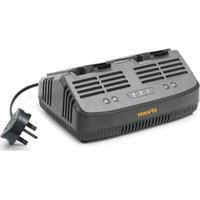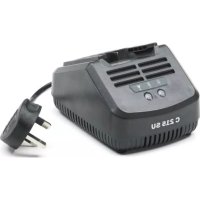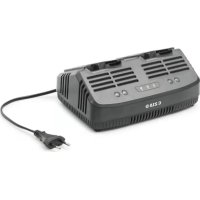
C 215 D - Battery charger STIGA - Free user manual and instructions
Find the device manual for free C 215 D STIGA in PDF.



| Product type | Battery charger |
| Brand | Stiga |
| Model | C 215 D |
| Compatible battery type | Rechargeable lithium-ion battery |
| Input voltage | 230 V AC (standard wall outlet) |
| Frequency | 50/60 Hz |
| Electrical protection class | Class II (double insulation) |
| Fuse | T2A |
| Recommended charging temperature | 0 °C to 45 °C |
| LED indicators | Yes (battery and charger status indicator) |
| Overheating protection | Yes (automatic shutdown in case of excessive temperature) |
| Short-circuit protection | Yes |
| Deep discharge protection | Yes (automatic cut-off device) |
| Indoor use | Yes (indoor only, away from moisture) |
| Cleaning | Dry, soft cloth (disconnect before) |
| Storage | Cool, dry place, away from sunlight, between 0 °C and 45 °C |
| Recycling | Do not dispose of with household waste; take to a recycling center or collection point |
| Warranty | In accordance with national provisions (defects in material and workmanship) |
Frequently Asked Questions - C 215 D STIGA
User questions about C 215 D STIGA
0 question about this device. Answer the ones you know or ask your own.
Ask a new question about this device
Download the instructions for your Battery charger in PDF format for free! Find your manual C 215 D - STIGA and take your electronic device back in hand. On this page are published all the documents necessary for the use of your device. C 215 D by STIGA.
USER MANUAL C 215 D STIGA
EN Battery / Battery charger - OPERATOR'S MANUAL
WARNING: read thoroughly the Instruction booklet before using the machine.
MK BaTepnjata / noHaay - yNATCTBA 3A yNOTPEBA
BHIMAHHE: npoHTajte ro BHHMaTeHNO OBA yNaTcTBo Ipe da ja KOpNCTne MaHnHaTa.
NL Accu / Acculader - GEBRUIKERSHANDLEIDING
Aho 6noHa Ha anymyNatopa ce Hanyha nnCe cHynn nn Ce nobpeH, cn H63 3ary6a HaXMHueChn BeueCTBa, He ro 3apeHdaIte n He roH3no3BaIte.
HE CE ONITBAIte DA FO PEMOHTIPATE!
3a da ce n36erHaT 3IonoIyHn H pncHOBe ot IONHAP, eKcnno3nn nn eneHTpueechn yapn, a Cbso n, 3a da ce n36erHe HaHacane Ha BpeHn Ha OKOHATA cpea:
NOKPHTE HJIEMHTe Ha anMynaTopa C yCTOUYBO THKCO.
HE ce onntbaite da orctpaHbate nn yHnOxohABATE HkBbTO n da 6nNo HOMnoHET ha 6noka Ha anymyNatopa.
HE ce onntbaute da otbaprte 6noka ha akymynatopa.
3xBpnte ro n ro 3ameHete c HOB 6nok Ha aKymyNatopa.
g) CbxaHbAaTe He3nOJ3BaHHTe aKymlaTOpn daJeUOT KJIaMepu, MOHeTH, KJIIOUObE, TBO3DeH, BnHTOBe HIN DpyTN MaJHK MeTaJHN PpeDMETH, KOHTO MORaT Da IpeDn3BnHaT KbCO CbeDInHeHne Ha KOHTaKTHTe. KbCO CbeDInHeHne MeJdy KOHTaKTHTe MOKe Da DOBEBe Do N3rapaHn HIN NOKApu.
h) He n3laRaIe aKymyIaTopa Ha cIaIKoBOdHa nn coJeHa BOda.
i) He n3laaiTe akymyIaTOpHnnaHETnnnHnHCTpyMeHa Ha orbH nnI ppeKomepHa temnepatypa. H3laarHeTo Ha orbH nnI Temnepatypa Ha 130° C moKe da npuHHn EKcNIO3n. CbXpaHbAaTe ro BnHarn npn HopMaHa TeMnepatypa Ha OKoJIHaTa cpeJa.
j) KHeTKeTe Ha akMyIaTopa MoRat Da pa3Bnrt MaJIHn TeOBe, aKO Ce n3NoJ3BaT TBbpDe MHOrO IIN npN ekCTpeMHN TempePaTyPi.
k) He c3daBaiTe Kbco CbeHHe B KJIeMnte Ha 6JIOHa aKymyIaTopa. He o6pbuaTe OtpucaTeHNHe n noJOHnTeHNHe KJIeMn Ha aKymyIaTopa. He
CbBp3BaIte NIOJIOHNTeJIHaTa I OTPuCaTeJIHaTa KJIeMaHa aKMyJaTopa C MeTaJIH NpeDMeTH.
I) IIO Bpeme Ha TpaHcnpOpTnpaHe Ha AkyMylaToppa, BHIMaBaTe KOHTaKTHTe Da He Ce CbbpKaT NOMeJy cn H He N3noJ3BaTe MeTaJIHn KOHTeHepn 3a TpaHCnpTnpaHeto.
m) He demoHTnpaIte akyMylaTopa.
n) He ydpnTe, He ykaTe no aHymyIaTopa, HHTO ce KaYBaIe Ha Hero.
o) He n3BbPbBaIte nonpaBkn no aKymnaTopa. PemOHTHnTe DeHocTn Tp6Ba Da ce n3BbPbBAT OT npOn3BOIDNTeJI INIOT CneuaIIIN3npaH cepBn3eH ueHTbp.
2.2 3APJHOYCTPOINCTBO
3apHnOyctpoNCTBOe npedHa3NaHeo 3a npesapeHdaunce HHTneBO-HOHn AnymnATOpn. Dpyr BuOBe anymnATOpn MoHe da n36yXnat N da npuHHT HapaHbAhe Ha Xopa n HaHacRHe Ha uetn Ha npedmetn.
a) 3a 3apeKdahe Ha akymylaTopa n3noI3BaIte eHnCTBeHO npenOpbHaHIne OT npOn3BODnTeIa 3apdHn yctpoCTBa. 3apdHTo yctpoCTBO, KOeTo e noxD0Ato 3a dahen TIN aKymylaTOp, MOHe da npedn3BnKa pNCK OT NoXkap, TOKOB yDap, nperpaBaHe IIN H3TuHaHe Ha Kopo3NBHa TeYHOCT OT aKymylaTOpa, KORAto CE n3No13Ba C dpyr TIN naKeTeH aKymylaTOp.
b) He 3apeKdaiTe 6Ioka Ha akyMylatopa npn IbXkN nn BbB BlaKHN cpeH.
c) He notanai Te HNCTpyMeHTa, 6JIOHa Ha aHymyataopa nn 3apnHOTo yCTpoiCTBO BbB BODa nn B DpyrTeuHOCTn.
d) He no3BOLaBaiTe npOHKBaHe Ha TeHocT B 3apnHOTo yCTPOIcTB0.
e) He n3laarate 3apraHTo ycTpoCtBO Ha KaneHe Ha TeuHOCTn NIN npbckAne H He NoCTaBMyTe Ha Hero CbdoBe CbDbpKaun TeuHOCTn, KaTO HanpImep CaKCN.
f) He n3no3BaIte 3apJHTo yCTpoiCTBO Ha MeTa, KbTeO HMa HAnuHe Ha napn, 3aNaJIIMN BeueCTBa HIN BbpxI IecHO 3anaIIMN NOBbpxHocTH, HApP. XapTna, NlaT N.T.H. No BpeMe Ha 3apeXHaHe, 3apJHTo yCTpoiCTBO ce 3arpBa N MoKe da npedn3BnHa noKap.
g) He no3BolnaTe 6Ioka Ha anymyataopa nn 3apnHTo yctpoictBo da ce npperpaBt. Ako ca ropeu, octaBeTe n da ce oxlaat npden ynoTpe6a.
h) Ipe3apeKdaIte camo npn ctaHa temnepaTypa MeKdy 0^ + 45^ C. He 3apeKdaIte aHymyIaTopa HIN INCTpyMeHTA n3BbH TO3N TEMpePaTypeH dana3OH. HenpaBnHTo 3apeKdaHe nn 3apeKdaHe n3BbH ONpeJeHnnaIa3OH MoKe Da NOBpeHn akymylaTopa N da yBeInu PNCKa OT NOxap.
i) HE cBp3BaIe 3apAHOTo yCTpoINCTBO C npoBOaMATEpuaII.
j) HE n3no3BaIe 3apJdHOTo yCTpoNCTBO 3a ueJI pa3JIuHN OT Te3H, yKa3aHHTe B HAcToaTeTo pbKOBODCTBO.
k) He noKpNbAaTe BENTnlauOnHnTe peSeTKn, KOITO ceHAMipatBbpxy ropHaTa Yact Ha 3apJHOTO yCTPOINCTBO. He NOCTABnIe 3apJHOTo yCTPOINCTBO Bbpxy MeKa NOBbPxHOCT KATO HAnPIMep ODeJIIO nNn Bb3rIaBnHa. IOpIbPkaTe YnCTn BENTnlaUOnHnTE peSHTKn Ha 3apJHOTo yCTPOINCTBO.
I) Da ce n36aBa Bn3aHe Ha MaJHK MeTaJIH NpeJMeTn HmMaTePnaJI KATO CTOMaHeHa BbJIHa, aJyMnHneBn JInCTObE Hn DpyrN yJkD N AcTHu B KxHnHTe Ha 3apJdHToO yCTpoiCTBO.
m) He ce onntBaIte da Cbbp3Bate DBe 3apdHn yCTPOINCTBA EDHOBpeMeHHO.
n) IpeiHn3noJI3BaHe, npOBepeTe daIIN BOITaKa Ha n3XoI H TOKa Ha 3apAHOTo yCTpoIcTBO Ha aKymyIaTopa, ca noxOJaU 3a 3apeKdAHe Ha 6Loka Ha aHyMyIaTopa.
o) B clyuayn, npn KoITo nOJIrpHocTt ha n3xoJ He OTROBapra Ha Ta3n Ha 3apeKdAHeTo, He N3NoJ3BaITe 3apJdHOTo yCTpoiCTBO.
p) He OTbaprIe BvB HnKaKbB CnyaH Kanaka. Ako KaNAna e NOBpeDeH, 3apAHOTo yCTpoiCTBO He MoKe Da 6bJe N3NoJ3BaHO NOBeYe.
q) BbHnHnT rBbKab Ka6eHa 3apAHOTo yCTpoIcBO He MOHe Da ce CMeHr; aHO Ka6eJIbT ce NOBpeDne Heo6xOdmo Da ce H3XBpNu cJIoTO 3apAHOyCTPOINCTBO. (3a CG 20 Li,CGD 20 Li).
Aho Ka6eBt e NOBpeH, ToT Tp8Ba Da 6bDe 3aMeHen Cbc CneuHaen KOMnIeHT OT Ko6eN, IpEJaRaH OT IPOH3BOdHTeJI HIN HerOBHn DnCTpn6yTop. (3a CG 20 Li B).
r) Pa3kaYbaHTo OT IINHeHOT O HAppeKeHne ce N3BbPwBA KaTO CE N3DbpNa MpeKOBnT KOHTaKT.
s)ПпддИЗПОЛ3ВATEЗAPДНOTуCTPOnCTBO, npOBepeteHaIINHOTOHaNPeJKeHnE3aBCKaCTpHa.
t) He MoHTnpaIte 3apAHyO YoCTPOHcTBO Ha cTeHaTa. NocTabeTe ro Bbpy paBaHa n 3dpaba NOBbpXHOCT.
2.3
3AUHTA HA H3XBbPnHE
OKOJIHATA
CPEDA
H
CleHnTe TOKCNHN H KOP03NBHN MaTePnAaN Ce HaMnPaT B 6IokaHa aKymyIaTopa, KOITo CE n3NoJI3Ba C TO3N INHCTpyMeHT: IINTHeBNTe NHOH Ca TOKCNHcMaTePnAa.

BcHnTOCHN MaTePnaTn TpaBa da ce
H3XBpIaT no nOxOJaH aHn, 3a da ce npedotbpatu 3ambpcBaHe Ha OHJHaTa Cpea.
IpeuHa h3xBpHte 6loHa Ha nobpehen nHTneBOHOHe anymylatop, cBpKeTe ce c MeCTHata AreHcna 3a H3XBpLnHe Ha OTnAbtu HnC MeCTHata AreHcna 3a ONa3BaHe Ha OHONHa CpeDa, 3a Da NOnyUte eBEHTyaHa HHOpMaun HA nn CneuNCHN HhCTpyHnn.
3aheceTe aKymlaTopa B ceHTbp 3a peunHnnpaHe HnHn HxBbPJIne, HoTo e cepTHnHpHaN 3a ynpabIeHne Ha MaTepeHaJInc CbDbpHaAaHn IITHeBn HOnH.
He n3XbpbJnTe akyMylatOpnte B6HTOBnTe OTNaDbu.
- He ropete aKymyntaTopa.
He nocTaBnTe aKymyIaTOpHte Ha MeCTa, KbTeO MoRaT Da cTaHaT Yact OT MecTHo CMeTHu EIN TbbpN rpaDCNHOTnDaBcN.
- PpeaIte rB OToPi3npaH ceHTbp 3a peuKlnpAne Ha OTnaDbuN.
He3xBpIyte eIeKtpnuechnte ypeN 3aeHc6bntOBHTe otnaBcu. Cnoep EbponeckataDnpkTBA 2012/19/EO 3a otnaDbnte OTeIeKtpnueckn n eIeKtpoHHn anapatn N BIn3aHETOnB DneCTBNE B cBoTBetCTBNE C HAIOHaHHTO3aHOdaTeNCTBO, H3xa6eHNTe eIeKtpnuechn anapatn Tp8Ba da ce cb6npat pa3deHNo, 3a Da
6bDat OOnI3OTBOPEHN EKOLIOHNO CbO6pa3HO. AKeEeKTPnueckNTe ypeDN CE N3XBpJrT Ha CMeTnUe HNN B 3emrA, BPeHNTE BeueCTBa MORa Da DOCTnHAT BOOCb6hpauNTe 3EMHn INaCTOBe H Da HABn3aT B XpaHtEnHaTa Bepna, YBpeHdaiKn BaWTo 3dpabe N 6laRoJeHCTBne. 3a No-3aBb16oeyHa HΦOpMaunr 3a N3XbPJIHeTo Ha TO3N IpOpyKT, Ce CBpKTe C KOMnTeHTHaTc Lyh6a 3a N3XbPJIrHe Ha 6ntobN OTnAdBuH NnC BaWnI DnCTpN6yTop.
B Kpa Ha Texnna nolzeEH Hn3HeH cNkbI,
hXbPJIeTe aHyMaJatOpHTe Hato NOxOJHTe
C Heo6XODMOTO BHMaHHe 3a ONa3BaHe
Ha OKoHata Cpeda. AHyMaJatOpBT CdbpHa
MaTeprnai, KoTo e onaceH 3a Bac N OKoHata
cpeda. ToT Tp46Ba da ce CBaIIu n PpeJaDe OTdEHO
B pInemaTeJeH NyHKT, KOTo pInema IINTHeBO-
NoHHn aHyMaJatOpn.

Pa3dHOTOCb6npaHeHaN3NOI3BaHn npOyHTn OAnHOBn,No3BOJRApeuHKnIpaHe Ha MaTePnaJIHTe H TaXHOTo NOBTOPOHa N3NOI3BaHe Ha peuKlnpaHn MaTePnaJI,nomara 3a npedOTbPaTBAhe Ha 3aMbpcBaHTo Ha OKoJIHaTa CpeDa n HamaJIba Ha3NOI3BaHTo Ha CypOBHH.
3. 3HAUN 3A BE3OINACHOCT
Ha ahymylaTopa n Ha 3apdHTo yctpoiCTBO ca ce noBnIpa3NHy CNMBOJI.
3HaHeHHe Ha CmBOJInTe:
PPOBEPHA HA 3APADHOTO YCTPOINCTBO
Ako 6loKa Ha aKymyIaTopa He ce 3apeKda npabNHO:
- PpOBepeToKa Ha H3XoD c Dpyr INHCTpyMeHT. YBepete Ce, Ye KOHTaKtA He e N3OJIpaH.
-Провереталконтгпerte Ha 3apdHOTO yctpoiCTBO He ca npeTbpneI KbCO cbeINHeHne, ppeDn3BnKaHO OT OtnaDbuN NpDpyn MaTePnAIn.
-Поверетадали Коньтobeваран добpe B Maшинота (за заряно устpoctBO CG 20 Li B)
6. NOUHCTBAHE
Ipei Da nouchnte 3apdHTo yctpoCTBO nII, KOraTO Hama 6loK Ha aHymylaTopa OTbTpe Ha 3apdHOTO ycTPOcTBO, e Heo6xOmo da ro pa3KaHTe.
3a da ce n36erHar pncHObe ot noHap, eENTpueechn yapn Hn eENTpueechn pa3paHn:
-Да He ce Trpe C MOKPn Kbpnn NIN DeTepeHTN NO aKymyIaTopa ININ 3apRdHOTO yCTpOInCTBO Ha aKymyIaTopa.
-Почистваite Вьншату acт Ha 3apяното устоCTBO cbc cyxa n Meka Kbpna. He nIлakbaite C ebeHTyaJIH NOMNn Hne Почистваite C BOda.
7. ПИБИРАЕ 3A СьХРАЕНЕ
Ako aHymyIaTOPbT n 3aprHnOTo yCTPOINCTBO He ce H3NOI3BaT 3a Dbliro BpeMe, CBanTe aHymyIaTopa OT 3aprHnOTo yCTPOINCTBO (nnn OT MaunHaTa, aHo e npedBnDEHO n N3HIOHe AC KOHTAKTa.
Ako aKymyIaTOpBt He ce 3apeHda 3a IbIbI rnePnoD OT Bpeme, e Heo6xOIMMo da ro cxbxaHbArte BNHaHn Ha cHka, Ha XnaIaHO n Cyxo, KbTeTo HMa Blara npi TemnepaTypa Ha OKoJIHaTcpeDa MeJdy 0 45^
BAHHO B CnyaHa npoDbJHHTeHNO Heu3noI3BaHe, 3apeKdaIte akyMylatopa Ha BCEKn Dba Meceua, 3a Da ydbJHHTe HReOBnT Hn3Heu KKnB.
8. TEXHnueCHO O6CJyKBAHE INNONPABHN
ToBa pBkoBOcTBo npedocTaba BcNHy nTBAHn, Heo6xOIMM 3a ynpabLeHHeTO Ha MaunHaTa N 3a H3BpWBaHe Ha npabINHa OCHOBHa noDpBXKa oT noTpbeNTeI.
BcnHKn Onerpaun no perylnpaheto n noDpBkKaTa, KOnto He ca onncaHn B TOBA pKOBODCTBO, Tpr6Ba da 6bDat N3BbPWBAH npn BaWn dNcTpn6yTop nIN B cneuaHn3npaCHTbp 3a o6cnyKBaHe, KOHTo pa3noJara c opnHaHn pe3epBHN qactn Hne0xOdMNTe NOHaHn INHCTpyMeHTN 3a npaBnHnTO n3BbPWBaHe Ha pa6oTa, KaTO ce 3ana3n CTeneHTa Ha 6e3onacHOCT n PbBOHaJHOTo CbCTOHN He MaHHaTa.
Onepaunn, n3BbpweHn OT HeKOMnTeHTN Iuca nnIin FnpMn BODr DO OTnadahe Ha BCRAkBa rapaHn IN BCRAKaBO 3aJbJIkeHne nnOTROBOPHOCT Na PpOH3BOIDTeJI.
He ce Odo6pBa H3NoJ3BaHeTo Ha HeOpnHnHaHn pe3epBHN qactu N pInHaJdEeKHOCTN; H3NoJ3BaHeTO Ha HeOpnHnHaJIHN pe3epBHN qactu N pInHaJdEeKHOCTN KOMnpomEtupa 6eOtonachocCTT a Ha MaunHata n OCbo60kDaBa Ipon3BOJnteIaT OT BcKaKBO 3aJbJkeHne HIN OTROBOPHOCT N BOIN DO OTnaJaHe Ha BCsKaΦopMa Ha rapaHcNIA.
9.「APAHUN
YcnoBnraHa rapaHnraTa ce OTHacrT caMo do notpe6nteNTe, ToecT, HenpoceNoHaHn onepaTopn.
IrapaHnraTaNOKPbBa BCNKn DcEKeKTN CbBp3AH N KaueCTBOTo Ha MaTePnaJIIne INpOIN3BOIDCTBOTo, KOINTo Ca ycTaHOBeHn NO BpeMe Ha nepNoJa Ha rapaHnraOT BaWnA JnCTpn6yTop nIIN OT CneuHaIN3npaH cepBn3EH cHTbp.
PnlaHTo Ha rapaHuaTa ce orpaHnuBa do nonpaBka Hn CMHa Ha deΦeKTeH KOMNoHEnT.
- He3ano3HaBaHe c DOhymeHTaunra, KOrTO npuDpyKaBa MaHnHaT (PbKOBOCTBa C HcTpyKun).
- PpOΦeCnOHaJIHO nI3nOJI3BaHe.
- HeBHHMaHHe, He6peXKHOCT.
BbHnHa npnHa (MbHn, yapn, HAnyHe Ha BbHnTeLa B MaHnHaTa) nn HnDHT. - HecBoiCTBeHO nHepa3peSeHo OT npOn3BOJTeJI N3NOJ3BaHe NnN MoHTaJ.
- lo7a n/nnn HnnpaBnHa nOndpBkKa.
- MoDnΦnUpaHe Ha MaunHaTa.
-Излгьане на Heopngногнп pe3epBnЧасти npinHaJIeJxHOCTN.
OcbEN TOBA, rapaHnraTa He noKpNaBa IeBHeTyaJIHN
dONbIHNTeJIHN pa3XoDN CBbp3aHN C aKTNBpaHeTO Ha
rapaHnraTa KaTO TpaHCnopTpHaPe npn Notpe6NtJRA,
TpaHCnopTpHaHe Ha MaunHaTApnp NDCtpNbyTopa,
BzemaHe NOd Haem Ha O6OpyDbaHe 3a CMHa HIN NOBnKBaHe
Ha BbHsHa QnPaMa 3a N3BbPbUbaHe Ha BCnKn pa60Tu No
NoDpBkKaTa.
Notpe6nteJIe 3aunTeH OT DeIcTBauTo HAuHOHaHIO 3akOHoDaTeJICTBO. PpaBaTa Ha Notpe6nteJI pdeBnDeH NOT DeIcTBauTo HAuHOHaHIO 3akOHoDaTeJICTBO NO HkKaTbH aHuH He ce OrpaHnHaBaT OT HactOuaTa rapaHzna.
SADRžAJ
- OPCE INFORMACIJE 1
1.1 Kako se sluziti prirucnikom 1 - SIGURNOSNI PROPISI 1
2.1 BATERIJA 1
2.2 PUNJAC BATERIJE 2
2.3 Zašita okolice i ZBRINJAVANJE. 2 - SIGURNOSNE OZNAKE 3
- PROVJERA STANJA NAPUNJENOSTI BATERIJE .... 4
- PUNJENJE BATERIJE 4
- CISCENJE 5
- SKLADIISTENJE 5
- ASISTENCIJA I POPRAVKA 5
- GARANCIJA 5
1. OPCE INFORMACJE
1.1 KAKO SE SLUZITI PRIRUCNIKOM
NAPOMENA ili VAŽNO pruža objasnjenja ili ostale elemente u vezi s prethodno navedenim, kako ne biste ošetili masinu ili napravili štetu.
Simbol 1sice opasnost. Ukolko se ne pridržavate upozorenja, mozete se povrijediti ili nanijeti povre de i/ili ostecenja trecim licima.
- Paragrafi istaknuti kvadratom s tačkastim stranama
- sive bojePokazuju opcijske karakteristike koje
- ne postojne na svim modelima masina opisanih
- u ovom Prirucniku. Provjerite je li karakteristika
- prisutna na Vašem modelu masine.
2. SIGURNOSNI PROPISI
DEN MÁ IKKE REPARERES!
- GENERAL ASPECTS 1
1.1 How to read the manual 1 - SAFETY REGULATIONS 1
2.1 BATTERY 1
2.2 BATTERY CHARGER 2
2.3 Environmental protection and DISPOSAL. 2 - SAFETY SIGNS 3
- CHECKING OF BATTERY POWER RESERVE 3
- BATTERY RECHARGING 4
5.1 CHECKING THE CHARGER 5 - CLEANING 5
- STORAGE 5
- ASSISTANCE AND REPAIRS 5
- WARRANTY COVERAGE 5
1. GENERAL ASPECTS
1.1 HOW TO READ THE MANUAL
NOTE or | IMPORTANT These give details or further information on what has already been said, and aim to prevent damage to the machine.
The symbol highlights danger. Failure to observe the warning can lead to the risk of injury to oneself and others and/or damage.
The paragraphs highlighted in a square with
grey spots indicate the optional characteristics
not on all models documented in this manual.
- Check if the characteristic is on this model.
2. SAFETY REGULATIONS
This appliance can be used by children aged from 8 years and above and persons with reduced physical, sensory or mental capabilities or lack of experience and knowledge if they have been given supervision or instructions concerning use of the appliance in a safe way and understand the hazards involved. Children shall not play with the appliance. Cleaning and user maintenance shall not be made by children without supervision.
Keep these instructions for future reference! It is important to read and understand the instructions provided in this manual in order to avoid serious injuries, fire hazards, explosions and dangers from electric shocks and electric arcs:
2.1 BATTERY
a) Use power tools only with specifically designated battery pack. Use of any other battery packs may create a risk of injury or fire.
b) Make sure that the machine is switched off before inserting the battery. Inserting a battery in a machine which is switched on can cause a fire.
c) Always remove the battery pack before cleaning, inspecting or servicing the tool.
d) Do not use a battery pack or tool that is damaged or modified. Damaged or modified batteries may exhibit unpredictable behaviour resulting in fire, explosion or risk of injury.
e) Under abusive conditions, liquid may be ejected from battery.
Electrolytes released from battery pack chemical leakage are corrosive and toxic. Liquid ejected from the battery may cause irritation or burns. Do NOT allow chemical substances to come into contact with eyes, skin and, above all, do not ingest them. If chemicals in the battery come into contact with the eyes, wash them
immediately with clean water for at least 15 minutes. Seek medical care immediately.
If the outer seal breaks and chemicals in the battery come into contact with the skin: wash immediately with soap and water, neutralise with lemon juice, vinegar or other mild acids.
f) Stop using the battery if it produces unusual smells, becomes hot or changes colour/shape and looks abnormal.
If the battery pack cracks or breaks, with or without chemical leakage, do not recharge or use it.
DO NOT ATTEMPT TO REPAIR IT!
In order to avoid accidents and risks of fire, explosion or electric shock and to prevent damage to the environment:
Cover the battery terminals with strong adhesive tape.
DO NOT attempt to remove or destroy any part of the battery pack.
DO NOT attempt to open the battery pack.
- Dispose of and replace it with a new battery pack.
g) When battery pack is not in use, keep it away from other metal objects, like paper clips, coins, keys, nails, screws or other small metal objects, that can make a connection from one terminal to another. Shorting the battery terminals together may cause burns or a fire.
h) Do not expose the battery to fresh or salt water.
i) Do not expose a battery pack or tool to fire or excessive temperature. Exposure to fire or temperature above 130^ may cause explosion. Always keep it at a normal room temperature.
j) The cells in the battery pack may leak if used too much or at extreme temperatures.
k) Do not attempt to short-circuit the battery pack terminals. Do not switch the negative and positive battery terminals. Do not connect the positive and negative terminals of the battery to metal objects.
I) When transporting accumulators, make sure the contacts never come into contact with each other and never use metal containers to transport them.
m) Do not disassemble the battery.
n) Do not hit, tap or stand on the battery.
o) Never service damaged battery packs. Service of battery packs should only be performed by the manufacturer or authorized service providers.
2.2 BATTERY CHARGER
The charger is designed for rechargeable lithium-ion batteries. Do not charge non-rechargeable batteries. Some other types of batteries may explode, resulting in personal injury and property damage.
a) Recharge only with the charger specified by the manufacturer. A charger that is suitable for one type of battery pack may create a risk of fire when used with another battery pack.
b) Do not recharge the battery pack in rain or humid conditions.
c) Do not immerse the tool, battery pack or charger in water or other liquids.
d) Do not allow liquid to get inside the charger.
e) The charger shall not be exposed to dripping or splashing, and no liquid container, such as pots, shall be placed above the charger.
f) Never use the battery charger in environments in the presence of vapours, flammable substances or on easily flammable surfaces such as paper, fabric, etc. The battery charger heats up during recharging and may cause a fire.
g) Do not let the battery pack or charger overheat. If they are hot, let them cool down before use.
h) Charge only at room temperature, between 0^ + 45^ . Do not charge the battery pack or tool outside the specified temperature range. Charging improperly or at temperatures outside the specified range may damage the battery and increase the risk of fire.
i) Do not probe the charger with conductive materials.
j) Do not use the charger for other purposes than those specified in this manual.
k) Do not cover the ventilation grids on the top of the charger. Do not place the charger on a soft surface such as a blanket or pillow. Keep the ventilation grids of the charger clean.
1) Prevent small metal objects or materials such as steel wool, aluminium foil, or other extraneous particles from entering the charger cavities.
m) Do not attempt to connect two chargers at the same time.
n) Before use, check that the output voltage and current of the battery charger are suitable for charging the battery pack.
o) If the output polarity does not match the charging polarity, Do not use the charger.
p) Do not open the cover under any circumstances. If the cover is damaged, the charger can no longer be used.
q) The charger external flexible cable cannot be replaced; if the cable is damaged, the whole charger must be disposed of (for CG 20 Li,CGD 20 Li). If the cord set is damaged, it must be replaced by a special cord set available from the manufacturer or its service agent (for CG 20 Li B).
r) The line voltage can be disconnected by pulling the mains socket.
s) Before using the charger, check the available voltage in each country.
t) Do not mount the charger on the wall. Place it on a flat, solid surface.
2.3 ENVIRONMENTAL DISPOSAL
PROTECTION AND
The following toxic and corrosive materials are found within the battery pack used with this tool: Lithium-ion is a toxic material.
All toxic materials should be disposed of properly to prevent environmental contamination.
Before disposing of damaged or broken lithium-ion battery packs, contact your local waste disposal
agency or the local Environmental Protection Agency for specific information and instructions.
Dispose of batteries in a certified lithium-ion recycling and/or disposal facility.
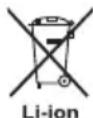
- Do not dispose of batteries with domestic waste.
- Do not burn.
- Do not place batteries where they could become part of a local waste landfill or municipal solid waste.
- Take them to an authorized recycling centre.
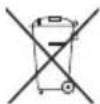
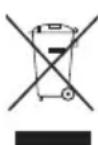
Do not throw electrical equipment away with domestic waste. In observance of Europea
Directive 2012/19/EU on electrical and electronic equipment waste and its implementation, in
observance of UK Regulation "The waste electrical
and electronic equipment regulations 2013 (as amended)" and in accordance with national regulations, electrical equipment that has reached the end of its product life must be collected separately and recycled in an ecologically compatible way. If electrical equipment is disposed of in dumps or in landfills, hazardous substances can leak into the groundwater and contaminate the food chain, damaging your health and well-being. For further information on the disposal of this product, contact your dealer or a domestic waste collection service.

At the end of their working life, dispose of batteries paying due attention to the
environment. Batteries contain material
classified as hazardous for you and the environment. They must be removed and
disposed of separately at a facility that accepts lithium-ion batteries.

Separate waste collection of the products and packaging used allows the materials to be recycled and reused. Reuse of recycled materials help to prevent environmental pollution and reduces the demand for raw materials.
3. SAFETY SIGNS
Various symbols appear on the battery and charger. Meaning of the symbols:
| MAX 45°C | Do not expose the accumulator to sunlight when the temperature is higher than 45°C. |
| Do not immerse the accumulator in water and do not expose it to humidity. | |
| Do not throw batteries into a fire. EXPLOSION HAZARD! | |
| Li-ion | At the end of their working life, dispose of batteries paying due attention to the environment. |
| Class II Dual insulation |
| For indoor use only | |
| Read the instructions before charging. | |
| T2A | Fuse |
| UKCA | conformity marking |
| Do not dispose of this product with domestic waste. |
IMPORTANT Any damaged or illegible decals must be replaced. Order replacement decals from an authorised service centre.
4. CHECKING OF BATTERY POWER RESERVE
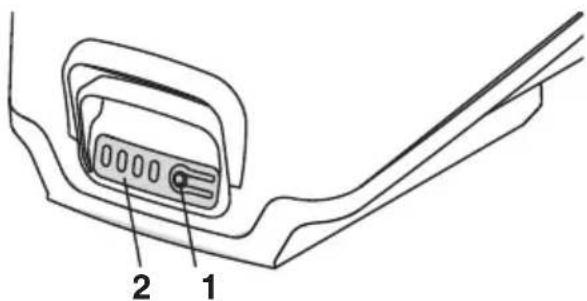
Press the battery capacity indicator key (1). The lights (2) will turn on depending on the capacity level of the battery. See the diagram below:
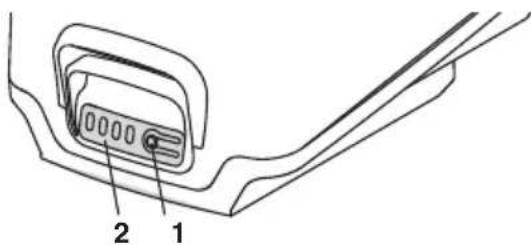
| Lights | Capacity |
| 4 green lights | Battery is 75% - 100% charged |
| 3 green lights | Battery is 50% - 75% charged |
| 2 green lights | Battery is 25% - 50% charged |
| 1 green light | Battery is 1% - 25% charged |
| 1 green flashing light | The battery is flat and needs recharging immediately. |
NOTE During use, the battery is protected against total drainage with a protective device that switches off the machine and stops it from working.
5. BATTERY CHARGING
The battery must always be charged:
- Before using the machine for the first time after purchase.
Before leaving the machine disused for a long period (over 30 days) (par. 7). - Before starting up the machine after a prolonged period of inactivity.
Failure in following the procedure or in charging the battery could permanently damage the battery elements. A flat battery must be recharged as soon as possible.
NOTE The battery can be recharged at any time, even partially, with no risk of damaging it.
NOTE The battery is equipped with a guard that inhibits recharging if the battery temperature is not between 0 and +40^
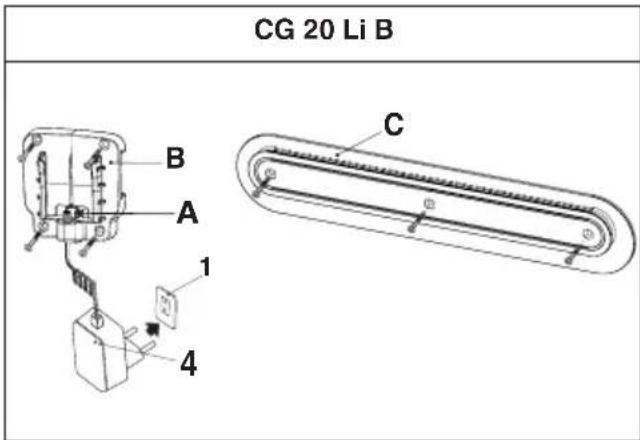
- Connect the charger to an AC outlet (1).
- Put the battery pack (2) into the charger (3).
- The LED charger lights (4) and LED battery lights (5) will light in a specific order to communicate the current battery status.
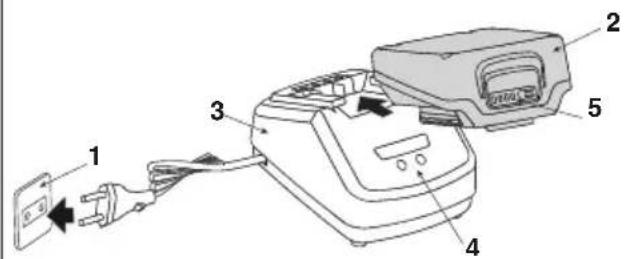
CG 20 Li
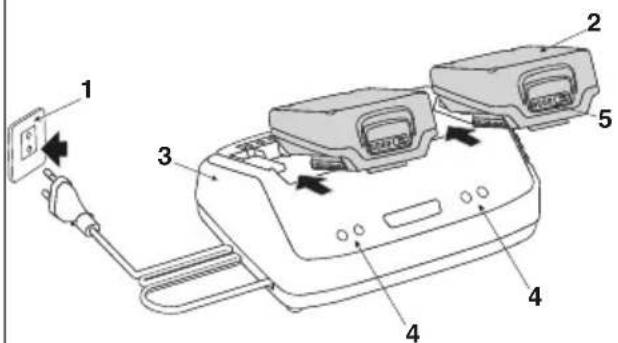
CGD 20 Li
- ONLY for charger CG 20 Li B
Charging can be done directly on the machine, leaving the batteries inserted and connecting the connector (A) to the machine, using its own charging dock (B).
The charging dock (B) can be fixed directly to the wall or slide on the rail (C).
NOTE For all the assembly operations, see the specific manual of the machine.
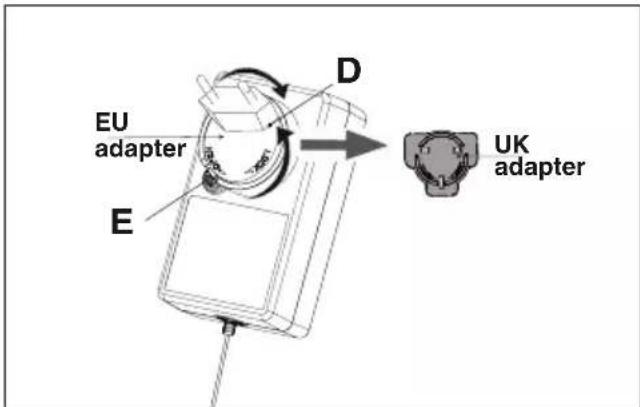
To fit/change the pin adapter (D), press (E) and rotate
The batteries remain inserted in the machine and the LED lights will illuminate to communicate the current battery status.
| DESCRIPTION | LED STATUS, CHARGER | LED STATUS, BATTERY | ||
| No battery | ● | Green | All Led swtiched off | |
| Battery charging | ● | Red | ◇ | 4 green flashing lights, progressive switch on sequence |
| Fully charged | ● | Green | ● | 4 green lights |
| Overheated battery: (remove for approx. 30 min. to allow it to cool down) | ● | Green | ◇ | 4 green flashing lights, slow sequence |
| Faulty battery (remove and replace with a new battery) | ● | Green | ◇ | 4 green flashing lights, fast sequence |
5.1 CHECKING THE CHARGER
If the battery pack does not charge properly:
- Check the output power with another tool. Make sure that the outlet is not isolated.
- Check the charger contacts against short circuit caused by debris or other materials.
- Check that the connector is fully inserted into the machine (with charger CG 20 Li B)
6. CLEANING
Unplug the charger before cleaning or when there is no battery pack inside.
To avoid the risk of fire and electric shock:
- Do not use damp cloths or detergents on the battery or the battery charger.
- Clean the outside of the charger with a soft, dry cloth. Do not rinse or clean with water.
7. STORAGE
If the battery and charger are not used for a long period of time, remove the battery from the charger (or from the machine, if provided) and disconnect the AC outlet.
If the battery is not charged for a long period of time, it must be kept in a cool, shaded place without humidity, with environmental temperature between 0 45^
IMPORTANT If unused for any length of time, recharge the battery every two months to prolong its working life.
8. ASSISTANCE AND REPAIRS
This manual provides all the necessary information to run the machine and for correct basic maintenance operations which can be performed by the user.
Any regulations and maintenance operations not described herein must be carried out by your Dealer or Authorised Service Centre, which have original spare parts and the necessary knowledge and equipment to ensure that the work is carried out correctly, maintaining the correct degree of safety and the original operating conditions of the machine.
Any operations performed in unauthorized centres or by unqualified persons will totally invalidate the Warranty and all obligations and responsibilities of the Manufacturer.
Non-original parts and accessories are not approved; use of non-original spare parts and accessories will jeopardize
the safety of the machine and relieve the Manufacturer from all obligations or liabilities.
9. WARRANTY COVERAGE
The warranty conditions are intended for consumers only, i.e. non-professional operators.
The warranty covers all material quality and manufacturing defects recognised during the warranty period by your Dealer or Authorised Service Centre.
The warranty is restricted to the repair or replacement of components recognised as faulty.
The warranty only applies to machines subjected to regular maintenance.
The warranty does not cover damages resulting from:
- Failure to become familiar with the documentation accompanying the machine (Instruction manuals).
Professional use - Carelessness, negligence
- External causes (lightning, impact, presence of foreign bodies inside the machine) or incidents
- Incorrect use or assembly or prohibited by the manufacturer
- Poor and/or incorrect maintenance
- Modification to the machine
- Use of non-genuine spare parts (adaptable parts)
The warranty does not also cover any ancillary expenses related to the enforcement of the warranty, such as costs incurred to travel to the user's location, transfer of the machine to the Dealer, rental of replacement equipment or calling of independent enterprises to perform maintenance work.
The user is protected by his or her own national legislation. The user's rights under the national laws or his or her own country are not in any way restricted by this warranty.
INDICE
1.1 KUIDAS KASUTUSJUHENDIT LUGEDA
2. 6E36EDHOCHN MEPHN
Oboj anapat mohe da ro hopnctat dea noctapn od 8 roHH, Ho n Iuca co HamaIeHN fH3NHy, ceH3OpHN u MeHTaIIHN cNoCObHocT HIN Iuca HOHTo HeMaat DOBOHN N03HaBaHa cMo DOHOJHy ce NOd HAD3Op HIN CE NOdyUBAHN 3a yNoTpe6ata Ha anapatot Ha 6e36eHn HauHn rH pa3bpaat MOHNte onachoctn. Deuata He CMeE da cHnrpaat co anapatot. Deuata He CMeE da ro cnpoBeyBaat peoBHOto UcHe H ODPHyBaHe DOHOJIHy He ce NOd HAD3Op.
3auybajTe rnoOBne ynataCTBa! 3a da roHamannTe pH3NkOT oJ noHAp Hnn eJeHTpueH yap, BaHHo e da rnpa36epete n da rnu cIeNTe cIeHNTE HaCOH.
2.1 BATEPHJA
a) KopinCTeTcMo 6aTeepn Co CneuФнkaUuN To Ce npEdbuDeHn 3a Baunot anapat. YnoTppe6a Ha dpyrn 6aTeepn MoKe Da npEdu3BnKa NOBpeDn n pnsK od PnaMeH.
b)ПювереTe ДдИ anapaTOT e ИСКлуенпpeДа ja ja CTaВITE 6aTeprjata.CТаBaHbe 6aTeprJa BO BKluyen eJIeKTPuHEN anapaT MoKe DA npEIN3BnKa nOKap.
c) Cekoraw BaTe ja 6aTepujata nped da yntte, npoBepyBaTe nn da pa60THe Ha odPxyBaHe Ha anapaToT.
d) He KopnCTeTe OwTeTeHa Hn H3MeHeta 6aTePnJa Hn anapat. OwTeTeHnte Hn H3MeHETne 6aTePn MoKAT Da pearnpaaT HenpeBnIO BO ITO pe3yItnpa co nOxap, ekCnIo3nJa Hn pN3NK oD NOBpeDa.
e) BaTepeJa BO HeNCpBaHa CoCToJ6a MoKe Da npEdn3BnKa IpOTeKyBaHc Ha TeuHOCTa.

EnentpOnHTte wTo Ke npoteayat
Og XEMNCHNTe COCTojHn BO 6aTeepnjata ce Hopo3NBHN TOKcHn. TeHocTa NCTeueHa O
6aTeepnjaMoHe da npedn3BnHa BocnaJeHJa n 13ropeHHu.
HE O03BOJyBajTe XEMNCHNTe COCTOjHn Da HABJIe3aT BO KOHTaHT CO OHTe, HOJHaT N HUNaHO He rOIJaTe rH.
AHO XeMHCHHTe COCTOJHn O6BaTePnJaTa DojdaT BO Donnp Co OHTe, MntTe rN BeHaaw Co Yncta Boda HajMaJIHy 15 MNHyTH. BeHaaw nobapajre MednunHcKa nomoi.
AHO ce cHpHn HauBOpewHata 3aTnHBn H XeMHHaHnTe codpaHn BO 6atepnjata JoJat BO KONTaT CO KOHATA: BeHn HmJte Co canyH N BODa H HeyTpapan3npajte co coh od JnMoH, Ocetnn dpyrn lechn HncenHH.
f) HekopncTeTe ja 6aTepejjata ako nCnywTa yDHa Mnpn36a, e MHory BpeLa nn mEnyBa 6ojaTa/ fOpMaTa n Hma yDeH n3rJeI.
Aho 6atepujata HanyHHe, ce cKpHn nn Ce OwTeTn, co Hn 6e3 npoTeHyBaBe Ha XemncHTe COctojHn, He nonHeTe ja n He HopNCteTe ja NObeHe.
HE ONUYBAJTE CE DA JA JNONPABNTE! 3a da n36erHete HecpeKa, pn3nK od noHap, eKnno3nJa nn eneKtpuH eJap n da n36erHete 3araudyBaHe Ha HINBOTHaTcpeNuHa:
- Iohpnjte rH TepmHaJIHTe Ha 6atepujata co uBpCTa JenNnBa JeHTa.
HE 6nhybajte ce da n3BaHTe nn da yHnWTnte HekoJ den od 6atepujata.
HE 6nhybajte ce da ja otBopnte 6aTepnjata. - Φρητε ja ὄν ὅπαmeHετε co HOBa rργηa Na 6aTeρηja.
g) Yybajte ja 6aTepnjata wTo He ja KOpNCHTe NOdaJIeKy OJ KaHcIepnacNn Pnp6op, Napu, KJyueBn, INIIN, HApPTNn IpyrMaII MAn MeTaIHN PpeDMETN WTO MOKe Da IpeDn3BnKaaT KpaTOK CNoj Ha KOHTaKTHe. KpaTOK CNoj Ha KOHTaHTNe Ha 6aTepnjata MoKe da DOBeDe Do EKcNIO3nJa nIJaMeH.
h) He n3IIOKyBajTe ja 6aTepejJaTa Ha CBeKa nn CoJeHa BOda.
i) He n3IoNoKyBajTe ja 6aTepeNjata nn anapatot Ha oran nn pIepHemepHa TemnepaTpa. N3IoKeHoCTa Ha oran nn TemnepaTpa Hd 130^ MoKe da npedn3Bnka ekcnlo3nja. CekoraawybajTe ja Ha HopMaHa aM6neHTaJHa TemnepaTpa.
j) KeHInTe Ha 6aTeepnjaTa MoHe Da HMaat MaHn npoTeKyBaHa DoKOJIHy Ce KopNCtAT npemHOry nn npn ekCTpemHn TEMpepatypn.
k) He ce obnybajte da rH 3aMeHInTe TepMNHaJInte Ha OBaa 6aTepnja. He MeHyBajTe rN NO3HTNBHnot H HeraTUBHnot noHa 6aTepnjata. He NOBp3yBajTe rN NO3HTNBHnot nIN HeraTUBHnot noHa 6aTepnjata 3a MetaJIHN ppeDmETn.
I) 3a Bpeme Ha TpaHcnpT Ha 6atepujata, o6pheTe BHIMAHHe KOHTaKTHe Da He DoJaT Bo CnoJ MeY Ce6e H He KopNCTeMeTaJIHN KyTIN 3a TpaHCnOpT.
m) He pachnlonybajte ja 6aTepejnaja.
n) He yinpajTe ja 6aTeepjata n 3actaHybajTe Ha Hea co H03eTe.
o) He BpweTe nonpaBn Ha 6aTepnjata. Pa60Tu 3a nonpaBHa Mopa da 6uDat cnpoBeDeHn od cTpaHa
Ha npOn3BONDTeIOT NnI CneuJaIN3npaH cepBnCeH ceHTap.
2.2 NOJHau 3A BATEPNJA
I Nohayot e 3a HameHer 3a 6atepnn od IHTHym-JOH wTO MOHe da ce noHnat. pyrnte TINOBH Ha 6atepnn MoKe da ehCnIOnpaaT H da npedn3BnHaat NOBpeHn Ha IInca Hn OwTeTyBaBe Ha MaTepnjAInHte do6pa.
a) KopnCTeTc cAmo nolHauN 3a noJIHeIbe Ha 6aTePnNTe ITO rnpenopayBa npOn3BODHTeNoT. NpHaOT nOrOden 3a eEHN BIVd 6aTePnMoKe Da npEni3BnKa Pn3NK OJ NOKAP, ENEHTPNueYdAp, pnerpeBaHe nn Kopo03NBHO nCTeKyBaHBe Ha TeHOCr Od 6aTePnJaTa Kora ce KopnCTn co dpyra 6aTePnJa.
b) He noJIHeTe ja 6aTepeJJaTa Ha DoXd IIN BO BnaKHN yCIOBn.
c) He notonybajTe n anapatoT, 6atepnjata nn NOJHaOT BO BODa Nn BO dpyr TeHocTn.
d) He do3BOyBaJTe TeuHoc Da HABLe3e BO nOHaTuT.
e) He n3IIOHyBaJte ro noJIhaOT Ha KaneHe IIN npCKaHe I CaIOBn CO TeUHOCTn, KaHO Ba3Hn I CaKcHn He CMeE Da Ce CTaBaAT Bp3 Hero.
f) He kopncTeTe ro noHaOT 3a 6atepnjata Ha MeCTa KaDe HMa rAcOBn, 3anaJINBn CynCTaHn NII neCHO 3anaJINBn NOBpUHHN, KaKo WTO ce XapTnja, TKAeHHHa n CInuHO. 3a BpeMe Ha noJIHeBeTo, 6atepnjata Ce 3arpeBa mOKe da npEiIN3BnKa ORAn.
g) He octabajte 6aTepejata nn noHaOT da ce npperpeat. Ako ce 3arpeaHn, octabeTe rna da ce oIadat nped ynoTpe6a.
h) NolheTc cMo Ha co6Ha TemnepaTpy, nomery 0^ +45^ . He noHete ja 6atepnjata nn anapatot HADBOP od oOBJ oncer Ha TEMnepaTpy. HenpaBnHO nn nolHeBe Ha TEMnpaTpyn HAdBop od HabeDeHNOT ONcer MoKe da ja oWTeTN 6atepnjata n Da ro 3rOJIeMn pN3IKOT OD NOxap.
i) HE noBp3yBajTe ro noHaOT co cnpoBODn MaTePnJaJI.
j) HE KOpIcTeTe ro nOlaHauOT 3a dpyrHaMeHN OcBeH OHne NocOeHn BO OBA yNaTCTBO.
k) He noKpmbajTe ja peWetKaTa 3a BeHTnlaunja rope Ha noHaoy. He cTabajTe ro noHaoy Ha Meka noBpuHa, KaKo wTo ce Ke6e nn nepHnca. OdpKybajTe ja peWetKaTa 3a BeHTnlaunja Ha noHaoy YnCTa.
I) N36eRhyBajTe CNTHMeTaJIHn PpeDMETN IIN OJ YEnuHa BOJHa, aIyMHNHyM NdpYrN TyrN PpeDMETN Da HABJIeRyBaAT BO NOJHaOT.
m) He obuBajte ce da noBp3e Te Dba noHaun HCTOBpeMeHo.
n) Ppe ynoTpe6a, npOBepTe daHn HanoHOT Ha cTpyjata 3a noHaOHOT n 3a 6atepnjata ce cooBETn 3a noHHe He 6atepnjata.
o) Bo clyuj kora nojapnteToHa n3Je3OT He e COODBeTeH co oHOj 3a NoJHeHe, He KOpNCTeTe ro NOJHaOH.
p) He OTBopajTe ro KanaKOT Bn HneJeH cnyaJ. Ako KanaKOT e OWTeTeH, NOHaQOT He CMee BeKe da ce KopNCTn.
q) HaBOpEwHNoT, ΦIeKcNbIeH Ka6e Ha noHaoyt He MoKe Da ce 3aMeHN. AHO Ka6eNoT ce OHTn, Tpe6a Da ce oTcPaHn ZeIInOT noHaY. (3a CG 20 Li,CGD 20 Li).
Ako Ka6eJIoTe oWTeTeH, Mopa da ce 3aMeHn co cneuJaJIHHOT npIbOp 3a Ka6In DoCTanEH Kaj npOn3BODHTeLTo Hn IpOdaBaYOT (3a CG 20 Li B).
r) HanojyBaHbeto MoKe Da ce npekHe aKo Ce n3BaN Od n3BOp Ha eI. eheprnja.
s) PpeI da ro KOpncTHe TnHaHOT, npOBepTe ro HANOHOt HA ctpyjata BO cekoja Od pKabNTe.
t) He moHTnpajTe ro noJhaOT 3a 6aTepuJa Ha sHa. NocTabeTe ro Ha paMaHa, ubpTa noBpwnHa.
2.3 3AUHTIHA HJHNBOTHATA CPEINHA IOTCTPAHYBAHbE
CleHnTe TOKCHN H Kopo3NBn MaTePN Ce HAOaAT Bo 6aTePnJaTa KojaTTo ce KopnCTn Co OBOj ypei: IHTyM-jOH e ToKCHHa MaTePnJa.
CHTe TOnchun MATEPN Tpe6a da ce pPnat Ha COoDBeTeH NaHH 3a da ce n36erHe 3araDyBaBe Ha HnBOThata CpeuHa.
Ipei Da oWTeHa Hn pacnana 6atepnja co nHTym-joH, oBpatete ce BO loHaHata cnyh6a 3a pakyBaHe co OTna, BO loKaHna areHcNja 3a 3awTtHa HnBOTHATA CpeHnHa 3a da do6ne TnΦopMaunu N COOdBETHN HAcOH.
Ondecete ja 6atepujata BO OBlaCTeH ueHTap 3a peunnnpahe Hnnn Ppnahe Ha MaTePNo JInTNymJoHn.
- He φρλajte ja 6aTeprjna Bo DomaunHnO TnA.
- He ropete ja 6aTepujata.
He octabajte Ha 6atepujata Ha Mecta Kaede MoKe da cTaHAT DeI OJ IOKaIIHO rY6pNIte Nn IeI OJ CBpCT OTnA. - OdheTe ja BO oblaCTe n eHTap 3a peuKlnpaBe.
He pIajTe r n eIeHTpHnHte anapatn 3aEDHO co domauehen OTna. Bo corlaacHOCT co dIpeKTHBaTa Ha EY 2012/19/UE, OTnADOT wTO ce COCTO ON eIeHTpHnHn H eIeHTPOHcN anapatne Baawa OdROBOPHOCT N, BO corlaacHOCT
co HaiznoHaJIHnTe Ope6b, eIeKtpuHnTe anapatn 3a φpIaIbe Tpe6a Da ce φpIaT 3ace6Ho 3a Da MOKe nOIOUHa NOBTOPOHa Da CE yNtpe6aT Ha EKO-KOMNaTH6nJIeH HauHH. AHO eIeKtpuHnTe anapatn Ce ODIOHAT Ha ry6puHTe IIN Ha 3emJa, WTeTHnTE COCTOJHN MOHe Da CTanat BO KOHTAK Co ELEMENTHe BO NOpBaT Na HABLe3aT BO CINHpOT Ha NCxpaHa, co wTo Ke CE HApUwAT BaWeTo 3dPaBe N 6larococTo6bTa. 3a NODeTAHN HΦOpMaun OKOly φpIaIbeto Ha OBOJ pOn3BOD, KOHTaHTnpajTe CO KOMTeHTHn INHCTHTy4uN 3a φpIaIbe DOMaWeH OTnaD nn CO 3actaNNIKOT.
OthaKo Ke n NOMHe pOHOT Ha yNoTpe6a, H3BaTeJa 6aTePnJaTa 0bpyBajn BHHMaHHe Ha HINBOTHaTa CpeDHa. BaTePnJaTa coDpKn MaTePnJal To e OnaceH 3a Bac n 3a cpeDHaTa. Tpe6a Da ce H3BaDu paChIOnn BO 3ace6eH caD To MoKe Da coDpKn IInTHyMckn JoHN.

3ace6HOTOCO6HpaHeHa npOH3BOJNTe H NCKOPHCTEHNE NaYBaHa OBO3MOHyBa peHHnPaHe Ha MaTepnJaHrte H NOBTOPha ynotpe6a. NOBTOPhaTa ynotpe6a Ha peuHKnPaHrte MaTepnJann CnpeyBa UTetHa
HINBOHTHaTcpeiHaHa ja HamaIyBa noTppe6aTa 3a npImapHn MaTepnjAIn.
3. O3HAHNI 3A B6E3BEdHOCT
Ha 6aTeepjata H noJhaOHT mHa pa3nHn Cm6oJI. 3HaueHe Ha Cm6oJIne:
| MAX 45°C | He Излобуньajte го akумалаторот на сонце кORA Temперараза e поиска од 45° C. |
| He Notonyвajte го akумалаторот в вODа и He Излобуньajte го на влага. | |
| He Фрайтги батериite bo оган. ОПАСНСТ OДЕКСПLOЗИJA! | |
| LI-ion | Отkaно не яnomине рOKOT нa уnotpeба, Изва对接е ja батерида обрнывajки Вимани нa жевOTнATA средина. |
| Стенин ha[elektричna зашпета: Клaca II, Двоюни ззолациja | |
| Само за венатешиha уnotpe6a | |
| Пред да полиnte, почитajte го упатстВOTO. | |
| T2A | Осигуруваuch |
| CE | Ознaka за усогласеньост co CE |
| He Фрайтги[elektричнite anapatni зaedно сдомашен OTпад. |
BAHHO DaehnTe eTKeTHI TO ce CHHaJIe HHe Ce YHTINB, TpeBaJa ce 3aMeHAT. NobapajTe HOBn eTKeTHo OD COODBeTeH cHTAp HN OJ OBlaCTeHnOT cepBuceP.
4. ПОВЕРHA HA COCTOJEATA HA HANOJIHETOCT HA BATEPNJATA
PnTnCHete ro konheTo co HHdkaTopoT 3a kanaunTeTOT Ha 6aTepnjata (1). CnaJIuHKeNTE (2) ce naJat corlacho HNBOTO HA KanaunTeTOT Ha 6aTepnjata. BndeTe ja cIeHaTa Wema:
Ako 6aTepnjaTa He ce noJIH npabNIHO:
- PpOBepeTe ro HanojyBaHbTe co dpyr anapaT. YBepeTe ce DeKa wTeKePoT He e n3oJIpaH.
-Поберете ДдИ КонтадтпЕ На ПОнанчOT ce npobneHn 3apadiy6pe nIpymATEpnpjaJI. - Поберете дал e пиклуокот павино BMetnat BO MaunhaTа (co noJIHau 3a 6aTePN CG 20 Li B)
6. UNCTEHE
PpeIaToHnCTHTe NOnHaOT HIn KOra HeMa 6aTepuJa BO Hero,3aOJINHtEnHO INCHyHeTe Ro Od CTpyja.

3a da n36erHete p3nK od nokap nn eKeTpuehen
yap:
- He nomHybajte co BlaJHha Kpna nn Co deTepreht npeky 6aTepnjata nn npeky noHaayo3a 6aTepnjata.
- YnCTeTe ja HaIbOpeuHOCTa Ha IOnHaCyOT CO cyBa N MeKa Kpna. He nnakHeTe H He YnCTeTe CO Boda.
7. OДЛАГАБЕ
Ako 6atepnjata n noHaoyoHema da ce Kopnctat noDoIro BpeMe, n3BaTe ja 6atepnjata oD noHaoyot (mN Od MaHHaTa, aKO e onpemeha) HcknyeTe ro HanojyBaHeTo.
Ako 6aTepejata He ce HanoHnla, a nomHaIO MHOry Bpeme, Tpe6a da ce CyBa CeKOraU BO CEHka, Ha CBeHo n cyBO MeCTO HA MeCTa 6e3 BnaHHoCT Ha am6neHTaJIHa Tempepatya od 0 45^
BAHHO Ako Hema da ja ka KOpNCTte nooJr nepno, noHHeTe ja 6atepnjata cekon dBa Meceua da na n ce npoOnn pokot Ha ynotpe6a.
8. NOMOUSHNONPABHN
Oba ynaTcBo rH npeTcTaByBa cHTe HeONXoHN HnDnKaun 3a ynpaBvBaHbe co MaunHaTa H 3a npaBnHO ODPKByBaHb ETO rH N3BpUyBa KOpNCNkOT.
CnTe INHTepBeHcHn 3a perylauJa n OdpKyBaHe WTo He ce ONHsAHN BO OBA yNaTCTBO Tpe6a Da rN cnpoBeDe 3actanHHKOT Nm CneuiJAN3npan cepBuceH CEHTap 6nJeKn rN HMaat OPunHaJIHnTE DeIOBn H NeONxOHNHe HHCTpyMeHTn CO KOnIto pa60tata Ke ce 3abpUn npabUNHO, 3emajKn rO Bo PpeBnD npBo6nTHnOT CTeneH Ha 6e36eHnOCT N yCIOBnTe Ha MaunHata.
CnTe onepaunu wTo ce n3BedeHn Ha HecooDBeTeH HaHH nOd HeKBaJIINΦIkyBaHn IInca npINOHeCyBaAT Da ce n3rHy6n Cekoja fOpMa Ha rapaHcUnJa n Cekoj o6LnK Ha 06Bpcka Ha npOn3BOIDHTeIoT.
Pe3epBHN DeNoBNI DoNoHHTeHa Onpema ITo He ce opnHnHaHn H Ce ODo6peHn; ynoTppe6ata Ha HeOpnHnHaHn pe3epBHN DeNoBNI DoNoHHTeHa Onpema ja 3arpo3yBa 6e36edHocTa Ha MaunHaT, ro ocNo6oBu npOn3bOHDTeNtO od CnTe O6BpCn N ODROBOPHOCTn HAnIOxBya YKNHyBaHe Ha cKaHb rapaHuaJa.
9. TAPAHUNJA
YcnoBte Bo rapaunjata Ce Hamehen NcknyuHBO 3a NotpoWbau, OndocHo onepaTopn, a He npocecnoHaJIu.
IrapaHnjuata nnoKpmba cnte MaTeepnajHn DepekTN n DeEeKTH NOBp3AHN CO KBaJIHTOT npn pOn3BOcTBO wTO rHaMaT HabeJeHO npOdaBaOH nIN CneJauHn3npaHnOT ceHTap N BaKaT BO rapaHTHNO T nepNO.
PpImeHaTa Ha rapaHuijata e orpaHnUyBa Ha nonpaBka nn 3aMeHa Ha DeΦeKTHNOT dI.
He cTe ce 3ano3HaJe co npHIOKeHaTa DOKymeHTaunja (ynatCTBO 3a pa60ta).
Ja Kopructte 3a npofoecnohaHn pa60tn.
- Ima HeBHHMaHHe, 3aHemApyBaHbe.
- IMa HAdBopeUHa npuHnA (rPmTeBnU, yApn, npCycTBo Ha CtpaHn TeTa BO BHaTpeWHOCTa Ha MaunHaTa) ININHnDEHTN.
- YnOTope6aTa N MoHTnpaHbETo He Ce npaBnHn Hne nI3BpUJI pOn3BOuNTeIoT.
- HeDobOJHNO H/INHnepaBnIHo OdpKyBaHe.
MaunHaTa e n3MeHeTa.
- YnOTope6a Ha HeOpuHnHaJIHn pe3epBHN DeJIOBn IdoaToU.
Nokpaj Toa, rapaHunjaTa He NOKpnBa HnKaBnDOnOJIHnTeJIHn TpoWOni NOBp3aHH Co aKTbIBpaHBe Ha rapaHUnjata, KaKo Ha npimep npeneCyBaHe Do KOpNCHIKOT, TpaHCnOPT Ha MaunHaTDo IpOdaBaQOT, n3HajMyBaHe Onpema 3a 3aMeHa INI IOBnK Do HAdBopeuHa KOMNaHJa BO BpCkCo pa60TN 3a ODpHyBaHe.
KopnCHIKOT e 3aHTIeH CO COOdBETHITe DpKaBHN 3aKOHn.
PpaBata Ha KOpNCHIKOT KOI CE IpeDBHEn BO DaJeHNTe
dPKABHN 3aKOHn HA HHeDeH HauH He ja JMMTnpaat Obaa rapaHcJna.
INHOUDSOPGAVE
- ALGEMEEN 1
1.1 Hoe de handleiding lezen.. 1 - VEILIGHEIDSVOORSCHRIFTEN 1
2.1 ACCU. 1
2.2 ACCUJLADER 2
2.3 MILIEUBESCHERMING EN VERWIJDERING....3 - VEILIGHEIDSSIGNALEN 3
- CONTROLE VAN DE STAAT VAN DE LADING VAN DE ACCU 4
- HERLADING VAN DE ACCU 4
- REINIGING 5
- STALLING 5
- ASSISTENTIE EN HERSTELLINGEN 5
- GARANTIE 5
1. ALGEMEEN
1.1 HOE DE HANDLEIDING LEZEN
IpaBaNoIb3OBATeTn3aunuTaet3aHOHOaTeJIbCTBO ero cTpaHb.HactoJuaR rapaHTnHaKak He orpaHnUHbAeT npab NoIb3OBATeTn, IpeDyCMOTpeHHbIX 3aKOHAMn erO cTpaHbI.
OBSAH
- VSEOBECNÉ INFORMACIE 1
1.1 Ako cita' navod 1 - BEZPECNOSTNÉ POKNY 1
2.1 AKUMULATOR 1
2.2 NABIJACKA AKUMULATOROV 2
2.3 OCHRANA ZIVOTNEHO PROSTREDA A LIKVIDÁCIA 2 - VYSTRAZNE SYMBOLY 3
- KONTROLA STAVU NABITIA AKUMULÁTORA......4
- NABITIE AKUMULÁTORA 4
- CISTENIE 5
- SKLADOVANIE 5
- SERVISNA SLUZBA A OPRAVY 5
- ZARUKA 5
1. VŠEOBECNÉ INFORMÁCIE
1.1 AKO CİTAT NÁVOD
INNEHALLSFÖRTECKNING
- ALLMÄN INFORMATION 1
1.1 Hur du laser handboken 1 - SÄKERHETSFORESKRIFTER 1
2.1 BATTERI 1
2.2 BATTERILADDARE 2
2.3 MILJOSKYDD OCH BORTSKAFFANDE 2 - VARNINGSSKYLTAR 3
- KONTROLL AV BATTERIETS LADDNING 4
- LADDA BATTERIET 4
- RENGORING 5
- FÖRVARING 5
- SERVICE OCH REPARATIONER 5
- GARANTI 5
1. ALLMÄN INFORMATION
1.1 HUR DU LASER HANDBOKEN
UK DECLARATION OF CONFORMITY
- The company: ST. S.p.A. - Via del Lavoro, 6-31033 Castelfranco Veneto (TV) - Italy
- Hereby declares under its own responsibility that the machine:
Battery charger
a) Homologation type: CG 20 Li, CGD 20 Li, CGW 20 Li
c) Serial number: 23A · CAC000001 ÷ 99L · CAC999999
- Conforms to UK Regulations:
S.I. 2016/1101 The electrical Equipment (Safety) Regulations 2016
S.I. 2016/1091 - Electromagnetic Compatibility Regulations 2016
S.I. 2012/3032 - The Restriction of the Use of Certain Hazardous Substances in Electrical and Electronic Equipment Regulations 2012
- Reference to harmonised standards:
EN 60335-1:2012+A11:2014+A13:2017+A1:2019+A2:2019+A14:2019
EN 60335-2-29:2004+A2:2010+A11:2018
EN 62233:2008
ENIEC55014-1:2021
ENIEC55014-2:2021
ENIEC61000-3-2:2019+A1:2021
EN 61000-3-3:2013+A1:2019+A2:2021
ENIEC63000:2018
n) Person authorised to compile the technical file:
ST.S.p.A.
Via del Lavoro, 6
31033 Castelfranco Veneto (TV) - Italia
o) Castelfranco Veneto, 01/03/2023
CEO Stiga Group
Sean Robinson
UK Importer:
STIGALTD
Unit 8, Bluewater Estate Plympton,
Devon, PL7 4JH, England

UK DECLARATION OF CONFORMITY
- The company: ST. S.p.A. - Via del Laboro, 6-31033 Castelfranco Veneto (TV) - Italy
- Hereby declares under its own responsibility that the machine:
Battery charger
a) Homologation type:
CG 20 Li B
c) Serial number:
23A*CAC000001÷99L*CAC999999
- Conforms to UK Regulations:
S.I. 2016/1101 The electrical Equipment (Safety) Regulations 2016
S.I. 2016/1091 - Electromagnetic Compatibility Regulations 2016
- S.I. 2012/3032 - The Restriction of the Use of Certain Hazardous Substances in Electrical and Electronic Equipment Regulations 2012
- Reference to harmonised standards:
EN 60335-1:2012 +A11:2014 +A13:2017 +A1:2019 +A2:2019 +A14:2019 +A15:2021
EN 60335-2-29:2021 + A1:2021
EN 62233:2008
ENIEC55014-1:2021
EN IEC 55014-2:2021
ENIEC61000-3-2:2019+A1:2021
EN 61000-3-3:2013+A1:2019+A2:2021
ENIEC63000:2018
n) Person authorised to compile the technical file:
ST.S.p.A.
Via del Lavoro, 6
31033 Castelfranco Veneto (TV) - Italia
o) Castelfranco Veneto, 01/06/2023
CEO Stiga Group
Sean Robinson
UK Importer:
STIGALTD
Unit 8, Bluewater Estate Plympton,
Devon, PL7 4JH, England

| FR (Traduction de la notice originale) Déclaration CE de Conformité 1. La Société 2. Déclaré sous sa propre responsabilité que la machine : Chargeur de batterie a) Type / Modèle de Base c) Série 3. Est conforme aux prescriptions des directives : 4. Renvoi aux Normes harmonisées n) Personne habilitée à établier le Dossier Technique : o) Lieu et Date | EN (Translation of the original instruction) EC Declaration of Conformity 1. The Company 2. Herby declares under its own responsibility that the machine: Battery charger a) Type / Base Model c) Serial number 3. Conforms to directive specifications: 4. Reference to harmonised Standards n) Person authorised to create the Technical Folder: o) Place and Date | DE (Übersetzung der Originalbetriebsanleitung) EG-Konformitätserklärung 1. Die Gesellschaft 2. Erklärrt auf eigene Verantwortung, dass die Maschine: Ladegerät a) Typ / Basismodell c) Seriennummer 3. Den Anforderungen der folgenden Richtlinien entspricht: 4. Bezugnahme auf die harmonisierten Normen n) Zur Verfassung der technischen Unterlagen befugte Person: o) Ort und Datum |
| NL (Vertaling van de oorspronkelijke gebruiksaanwijzing) EG-verklaring van overeenstemming 1. Het bedrivij 2. Verklaart onder+zijn eigen verantwoordelijkheid dat de machine: Acculader a) Type / Basismodel c) Seriennummer 3. Voldoet aan de specificaties van de richtlijnen: 4. Verwijzing maar de Geharmoniserde normen n) Bevoegt persoon voor het opstellen van het Technisch Dossier o) Plaats en Datum | ES (Traducción del Manual Original) Declaración de Conformidad CE 1. La Empresa 2. Declara bajo su propia responsibilitad que la这其中a: Cargador de batería a) Tipo / Modelo Base c) Matricula 3. Cumple con las specifications de las directivas: 4. Referencia a las Normas armonizadas n) Persona autorizada a realizar el Manual Técnico: o) Lugar y Fecha | PT (Traduição do manual original) Declaração CE de Conformidade 1. A Empresa 2. Declara sob apropria responsibilitadque a这其中a: carregarador de batería a) Tipo / Modelo Base c) Matricula 3. É conforme às espécificações das diretas: 4. Referência às Normas harmonizadas n) Pessoa autorizada a elaborar o Caderno Técnico o) Local e Data |
| EL (Métáφραηtou πρωτόμοι tawv Μθημών χρήσης) EK-Δηλωσι Σμμóρφωσης 1. H Εταρία 2. Δηλωνει μιτέυθυνα στι η μηχαύνη; ü φορτιστής μματαρίας a) Túτος / Bασικό Movenélo c) Αριθμός μμτρωou 3. Σμμορφωνεται με τις προδιαγραφες tns Μηδηλίας; 4. Αναφρος στους Kανονισμούς εναρμόνισης n) Εξουσιδοβομηνόν ατομο γία την katáρτιαη tou Teχικό Φιλαδίου: o) Túτος και Xρόνος | TR (Orijnal Talimatlarin Tercümesi) AT Uygunluk Beyani 1. Şirket 2. Şahsi sorumluluğu alto nida asagidaki makinenin: pil Şarj cihazi a) Tip / Standart model c) Sicil numarasi 3. Asagidaki direktifilerin Özelliklerine uygun oldügūnubeyan etmektedir: 4. Harmonize standartlara atif n) Teknik Dosayi olusturmaya yetkili kişi; o) Yer ve Tarih | MK (Πρυνον na opinihañnite уразства) Декларцида за усогласовост со ЕУ 1. Kompanhijsa 2. Изавва селоча лимна ODROBOPHOC Deka селоча maшина: полоча на бateрпи a) Тии / оснobен мodyел b) etniketa 3. Усоглесно с сецифрациитe с篇文章 dipekečtnibite: 4. Р federpenци за усогласени hopmat车联网 H) oblaстени лиме за с Coastabува.... na Technichkata boшура o) Meço и датум |
| NO (Oversettelse av original bruksanvising) | SV (Översättning av bruksanvising i original) | DA (Oversättelse af den origine brugsanvising) |
| EF- Samsvarserklæring1. Firmaet2. Erklaerer på etget ansvar at maskinen: Batteriladera) Type / Modellc) Serienummer3. Oppfyller kravene i direktivene:4. Henvisning til harmoniserte standardern) Person som har fullmakt til ä utferdige teknik dokumentasjon: o) Sted og dato | EG-försakran om överensstämme1. Företaget2. Försakrar på etget ansvar att maskinen : Batteriladdarea) Typ / Basmodellc) Serienummerd) Motor: forbränningsmotor3. Överensstämmer med foreskriffterna i direktivet4. Referens till harmoniserade standarder effectl) Luftflöden) Auktoriserad person forupprättandet av den teknskadinumentationen: o) Ort och datum | EF-overensstemmelseserklaering1. Firmaet2. Erklaerer på etget ansvar, at maskinen: Batteriopladera) Type / Modelc) Serienummer3. Er i overensstemmelse medspecifikationerne ifolge direktiverne:4. Henvisning til harmoniserede standardern) Person, der har bemyndigelse tilat udarbejde det tekniske dossier: o) Sted og dato |
| FI (Alkuperäisten ohjeiden käännös) | CS (Přklad původního námodu k používány) | PL (Tlumaczenie instrukcjoryginalnej) |
| EY-VAATIMUSTENMUKAISUUSVAKUUTUS1. Yritys2. Vakuuttaa omalla vastuullaan,että kone: Akkulaturi a) Typpi / Perusmallic) Sarjanumo3. On yhdenmukainen seuraavidenirektivien asettamien vaatimustenkanssa:4. Viittaus harmonisoituihinstandardeihinn) Teknisten asiakirjojen laatimisenenvaltuutettu henkilo: o) Paikka ja päävämüärä | ES - Prohlášeni o shodé1. Společnost2. Prohlásuje na vlastni odpovědnost, ze stroj: Nabiječka akumulátoru a) Typ / Základní modelc) Vyrobní Číslo3. Je ve shodě s nařizeními směrnic:4. Odkazy na Harmonizované normy n) Osoba autorizovaná pro vytrořéní Technického spisu: o) Misto a Datum | Deklaracja zgodnosci WE1. Spóka2. Oświadczna na wlasṇ odpowiedzialnosć, ze maszyna:ťadowarka akumulatorów a) Typ / Model podstawowy c) Numer seryjny3. Spelnia podstawowe wymogi nastepujaciousch Dyrektyw:4. Odniesenie do Norm zharmonizowanych n) Osoba upoważniona do zredagowania Dokumentaci technicznej: o) Miejscowość i data |
| HU (Eredeti használatiutasítás fordítása) | RU (ПелевOD opriŋнальнійинструнцу) | HR (Prijevod originalnih uputa) |
| EK-megfelelóségí nyilatkozata1. Alulirött Vállalat2. Felelòsségének teljes tudatában kijelenti, hagy az alábbi gét:p Akkumulátor toltǒt a) Tipus / Alaptipusc) Gyartási szám3. Megfelel az alábbi irányelvek előfrásainak:4. Hivatkozás a harmonizált szabývokra n) Mûszaki Dosszié szerkesztésérelhelatalmazott személy: o) Helye és ideje | Декларачné COOTBETCTBÍN HOPMAMEC1. Prépondrajné诸侯 NOCTOBETCHENHUYO TBTBCTBEHNOCTB, чу малина:zzapánhoe устюctBOa) Тин / Базовая мodyélc) Пасportсrospaný3. COOTBETCTBÉT Trésoванímemeши DipečTKIB:4. Сылкни на г装配ониимobaveníncHEnpmblyn) Лцио, утол"HOMOCHINOЕ напогotовку ТЕХИСЕКIDOKUMENTAùn: o) Мосто и Data | EK Izjava o sukladnosti1. Tvrtka2. pod vlastitom odgovornosću izjavljúje da je stroi: Punjačbaterije a) Vrsta / Osnovni modelc) Matčni broj3. sukladan s temeljinm zahtjevima direktiva:4. Primijenjene su lijedečeharmonizirane norme:n) Osoba ovlástena za pravljenje Tehnicke datoteke: o) Mjesto i datum |
| RO (Traducerea manualului fabricantului)CE -Declaratie de Conformitate 1. Societatea 2. Declară pe propria raspundere că mașina:icenscator baterie a) Tip / Model de bază c) Număr de series 3. Este în conformitate cu specificațile directivelor: 4. Referițță la Standardele armonizate n) Persoană autorizata săintocmească Dosarul Tehnic o) Locul și Data | LT (Originaliuț instrukcjù vertimas) EB atitikties deklaracija 1. Bendrové 2. Prisiima atsakomybe, kad jrenginys: Akumuliatorițu pakrovëjas a) Tipas / Bazinis Modelis c) Serifjos numeris 3. Atitinka direktyvose pateiktas specifikacijas: 4. Nuoroda j suderintas Normas n) Autorizuotas asmuo sudaryti Technine Dokumentacija: o) Vieta ir Data | LV (Instrukcjù tulkojums no originalvalodas) EK atbilstības deklarãcija 1. Uznēmums 2. Uznemoties par to pilnu atbildūb, pazino, ka mašīna: Lădētãjs a) Tips / Bazes modelis c) Sērijas numurs 3. Atbilst šādu direktīvu prasībām: 4. Atsauce uz harmonizëtiem standartiem n) Pilvarotais darbinieks, kas sagatavoja tehnisko dokumentã¡cu: o) Vieta un datums |
| SR (Prevod originalnih uputstval)EC declaracija o usaglašenosti 1. Preduzeće 2. Daje izjavu pod vlastitom odgovornòsću da je mašina: Punjac akumuladora a) Tip / Osnovni model c) Serijski broj 3. u skladu s osnovim zahtevimä direktiva: 4. Pozivanje na usklažene norme n) Osoba ovlašćena za sastavljanje tehnicke brošure o) Mesto i datum | BG (Превови на ориги�лочи внструкции) EO Dečknapauzaия за сьответс tramе 1. Дураожевто 2. На собстени OTROBOPHOCT Dečknapira, чу машинату: на зардноу усточてю a) Виц / Базисян мodyел b) Серпенnomero 3.Е в сьответс tramе сьс срецниatingу на діректів'te: 4.Баширано на zarmonиизритиюнорми p) Лице, упьлимошени по дсьстави Тхионеската Дokуменци: o) Мосто и data | ET (Algupărase kasutusjuhendi tõlge) EU vastavusdeklaratsioon 1. Firma 2. Kinnitab omal vastutusel, et masin: Akulaadijad a) Tüüp / Pöhimudel c) Matrikkel d) Mootor: Sisepõlemismootor 3. Vastab direktiviide nõuetele: 4. Viide ühlustatud standarditele n) Tehnilise Lehe autoriseeritud koostaja: o) Koht ja Kuupäev |
| SL (Prevod izvirnih navodil) ES izjava o skladnosti 1. Družba 2. pod lastno odgovornostjo izjavla, da je stroj: Polnilec za akumulator a) Tip / osnovni model c) Serijska številka 3. Skladen je z dolocili direktiv : 4. Sklicevanje na uskrajene predipse n) Oseba, pooblasčena za sestavo tehnickne knjižice: o) Kraj in datum | BS (Prijevod originalnih uputa) EZ izjava o skladnosti 1. Firma 2. Daje izjavu pod vlastitom odgovornòsću da je mašina: Punjac baterije a) Tip / Osnovni model c) Serijski broj 3. skladna s osnovnim zahtjevima direktive: 4. Pozivanje na uskladene norme n) Osoba ovlašćena za izradu tehnicke brošure: o) Mesto i datum | SK (Preklad pôvodného návodu na použitie) ES vyhlásenie o zhode 1. Spolocnost' 2. Vyhlasuje na vlastnú zodpovednost', ze stroj: Nabíjáčka a) Typ / Základný model c) Výrobné Číso 3. Je v zhode s nariadeniami smernić: 4. Odkaz na Harmonizované normy n) Osoba autorizovaná na vytvorenie Technického spisu: o) Mesto a Dátum |
EN · The content and images in this User Manual were produced expressly for ST. S.p.A. and are protected by copyright - any unauthorised reproduction or modification to the document, either partially or in full, is prohibited.