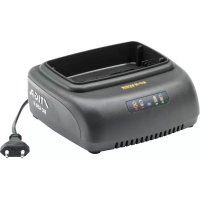
EC 430 F - Battery charger STIGA - Free user manual and instructions
Find the device manual for free EC 430 F STIGA in PDF.



| Product type | Battery charger |
| Brand | STIGA |
| Model | EC 430 F |
| Power supply | 220-240 V ~ 50 Hz |
| Nominal output voltage | 48 V |
| Output current | Up to 3 A (depending on variant) |
| Compatible battery type | STIGA 48 V lithium-ion (BT 520 Li 48, BT 720 Li 48, etc.) |
| LED indicators | Flashing green (charging), solid green (charged), red (overheat), flashing red (fault) |
| Thermal protection | Yes, shutdown on overheating |
| Double insulation | Yes (Class II) |
| Use | Indoor only |
| Recommended charging temperature | Ambient temperature (do not charge below 0 °C or above 40 °C) |
| Features | Diagnostic charging, automatic shutdown, short-circuit protection |
| Maintenance | Clean with a dry, soft cloth. Do not use water. |
| Safety | Do not open, do not expose to water, do not use outdoors |
| Warranty | Manufacturer's warranty on material and workmanship defects |
| Weight (estimate) | Approximately 0.5 kg |
| Dimensions (estimate) | Approximately 15 x 10 x 5 cm |
Frequently Asked Questions - EC 430 F STIGA
User questions about EC 430 F STIGA
0 question about this device. Answer the ones you know or ask your own.
Ask a new question about this device
Download the instructions for your Battery charger in PDF format for free! Find your manual EC 430 F - STIGA and take your electronic device back in hand. On this page are published all the documents necessary for the use of your device. EC 430 F by STIGA.
USER MANUAL EC 430 F STIGA
natural_image
Icon of a person reading a book inside a black circle (no text or symbols)EN Battery / Battery charger - OPERATOR'S MANUAL
WARNING: read thoroughly the instruction booklet before using the machine.
| Svjetla Kapacitet | |
| 4 zelena svjetla | Baterija je do kraja puna |
| 3 zelena svjetla | Baterija je napunjena oko 70% |
| 2 zelena svjetla | Baterija je napunjena oko 45% |
| 1 zeleno svjetlo | Baterija je napunjena 10% i potrebno ju je odmah napuniti |
| Ugašena svjetla | Napunjenost baterije je manja od 10%, potrebno je odmah napuniti bateriju |
 | Ikona "Pažnja" pali se kada se uključi zaštita od prevelike ili preniske temperature, ili pak ako je baterija u kvaru. |
SIGURNOSNE NAPOMENE I MJERE OPREZA
BITNE SIGURNOSNE UPUTE
- SAČUVAJTE OVA UPUTSTVA OPASNOST: DA BISTE SMANJILI RIZIK OD POŽARA ILI ELEKTRIČNOG UDARA, TREBATE PAŽLJIVO SLIJEDITI OVA UPUTSTVA.
- Prije korištenja punjača, provjerite koja je voltaža dostupna u svakoj Zemlji.
6. ČIŠĆENJE
⚠️ Da biste izbjegli rizik od požara, električnog udara ili pražnjenja:
- Nemojte prelaziti vlažnom krpom ili sredstvima za čišćenje preko baterije ili punjača baterije.
- Uvijek skinite bateriju prije čišćenja, kontrole ili održavanja uređaja.
Očistite vanjsku stranu punjača suhom i mekom krpom. Nemojte ispirati eventualnim pumpama niti čistiti vodom.
7. ZBRINJAVANJE
Nemojte bacati električne aparate u kućni otpad. Na osnovu Europske smjernice 2012/19/EZ o otpadu električnih i elektronskih aparata i njenom sprovođenju u skladu sa državnim propisima, istrošeni električni aparati se moraju odvojeno skupljati da bi se mogli ponovo iskoristiti na ekološko prihvatljiv način. Električni aparati bačeni na otpad ili u prirodu, stvaraju otrovne supstance koje mogu završiti u podzemnim vodama i lancu ishrane te na taj način štetiti vašem zdravlju. Za više informacija o zbrinjavanju ovog proizvoda, obratite se nadležnom centru za zbrinjavanje otpada iz domaćinstva ili ovlaštenom zastupniku.
Na kraju radnog vijeka baterija, zbrinite iste poštujući okolicu. Baterija sadrži materijal koji je opasan po Vas i po okolicu. Istu morate izvaditi i posebno zbrinuti u objektu koji prihvata baterije s
litijumskim jonima.

Odvojeno skupljanje korištenih proizvoda i ambalaže omogućava reciklažu materijala i njihovu ponovnu upotrebu. Ponovna upotreba recikliranog
materijala pomaže da se spriječi zagađenje okolice i smanjuje potražnju za sirovinama.
8. ASISTENCIJA I POPRAVKA
Ovaj priručnik pruža sva uputstva potrebna za upravljanje mašinom i za njeno osnovno ispravno održavanje koje može izvršti i sam korisnik. Sve operacije podešavanja i održavanja koje nisu opisane u ovom priručniku moraju se izvršiti kod ovlaštenog zastupnika ili specijalizirane servisne službe, koja posjeduje odgovarajuće znanje i alat potreban da se ispravno izvrše pomenuti zahvati te da se zadrži izvorni stepen sigurnosti mašine i izvorni uslovi. Operacije koje se izvrše u neodgovarajućim objektima ili od strane nekvalificiranih osoba dovode do prekida važenja bilo kojeg oblika garancije, dok proizvođač neće imati nikakvu obavezu niti odgovornost.
- Samo ovlašteni servisi mogu izvršiti popravku i održavanje pod garancijom.
- Originalne rezervne dijelove isporučuju ovlašćeni servisi i ovlašteni zastupnici.
- Originalni rezervni dijelovi i dodatna oprema s namjerom su razvijeni za ove mašine.
- Nisu odobreni rezervni dijelovi i dodatna oprema koji nisu originalni; upotreba neoriginalnih rezervnih dijelova i dodataka ugrožava sigurnost mašine, a proizvođač neće snositi nikakvu odgovornost niti imati bilo kakvu obavezu. Preporučujemo da povjerite mašinu jednom godišnje ovlaštenom servisu radi održavanja, asistencije i kontrole sigurnosnih uređaja.
9. POKRIĆE GARANCIJE
Garancija važi samo za potrošača, odnosno za neprofesionalne korisnike. Garancija pokriva sve nedostatke kvaliteta materijala i fabričke greške koje u periodu važenja garancije utvrdi ovlašćeni distributer ili specijalizirani servis.
Garancija se primenjuje samo za popravku ili zamjenu komponente za koju se smatra da ima nedostatak.
Preporučuje se da povjerite mašinu jednom godišnje ovlaštenom servisu koji treba izvršiti održavanje, asistenciju i kontrolu sigurnosnih uređaja.
Garancija se može primijeniti pod uslovom da mašinu redovno održavate.
Ausgang 1: 48V (Nominal) =3A
Ausgang 2: 48V (Nominal) -3A
1.1 HOW TO READ THE MANUAL
Some paragraphs in the manual contain important information regarding safety and operation and are emphasized in this manner:
The symbol highlights danger. Failure to observe the warning can lead to the risk of injury to oneself and others and/or damage.
This appliance is not intended for use by persons (including children) with reduced physical, sensory or mental capabilities, or lack of experience and knowledge, unless they have been given supervision or instruction concerning use of the appliance by a person responsible for their safety. Children should be supervised to ensure that they do not play with the appliance.
2. SAFETY SIGNS
The identification label holds the following data (fig. 1):
 | Do not expose the accumulator to sunlight when the temperature is higher than 40°C. |
 | Do not immerse the accumulator in water and do not expose it to humidity. |
 | Do not throw batteries into a fire. EXPLOSION HAZARD! |
 | Class II Dual insulation |
 | For indoor use only |
 | Read the instructions before charging. |
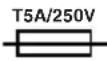 | Fuse |
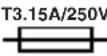 | Fuse |
 | Conformity marking |
 | Do not dispose of this product with domestic waste. |
3. BATTERY
SPECIFICATIONS
BT 520 Li 48, BT 720 Li 48
Battery: 48V Max., 86,4 Wh
Cell voltage: 3.6V ; Number of cells:12
Charging time: 90 min.
(using a CG 500 Li 48 Charger, CGD 500 Li 48
Charger, CG 700 Li 48 Charger, CGD 700 Li 48 Charger)
Charging time: 50 min.
(using a CGF 500 Li 48 Charger, CGF 700 Li 48
Charger, CGDF Li 48 Charger)
BT 520/1 Li 48, BT 720/1 Li 48
Battery: 48V Max., 88,8 Wh
Cell voltage: 3.7V ; Number of cells:12
Charging time: 90 min.
(using a CG 500 Li 48 Charger, CGD 500 Li 48
Charger, CG 700 Li 48 Charger, CGD 700 Li 48 Charger)
Charging time: 50 min.
(using a CGF 500 Li 48 Charger, CGF 700 Li 48
Charger, CGDF Li 48 Charger)
BT 540 Li 48, BT 740 Li 48
Battery: 48V Max., 172,8 Wh
Cell voltage: 3.6V ; Number of cells: 24
Charging time: 180 min.
(using a CG 500 Li 48 Charger, CGD 500 Li 48
Charger, CG 700 Li 48 Charger, CGD 700 Li 48
Charger)
Charging time: 110 min.
(using a CGF 500 Li 48 Charger, CGF 700 Li 48
Charger, CGDF Li 48 Charger)
BT 540/1 Li 48, BT 740/1 Li 48
Battery: 48V Max., 177,6 Wh
Cell voltage: 3.7V ; Number of cells: 24
Charging time: 180 min.
(using a CG 500 Li 48 Charger, CGD 500 Li 48
Charger, CG 700 Li 48 Charger, CGD 700 Li 48 Charger)
Charging time: 110 min.
(using a CGF 500 Li 48 Charger, CGF 700 Li 48 Charger, CGDF Li 48 Charger)
BT 550 Li 48, BT 750 Li 48
Battery: 48V Max., 216 Wh
Cell voltage: 3.6V ; Number of cells: 24
Charging time: 220 min.
(using a CG 500 Li 48 Charger, CGD 500 Li 48
Charger, CG 700 Li 48 Charger, CGD 700 Li 48 Charger)
Charging time: 120 min.
(using a CGF 500 Li 48 Charger, CGF 700 Li 48
Charger, CGDF Li 48 Charger)
BT 550/1 Li 48, BT 750/1 Li 48
Battery: 48V Max., 222 Wh
Cell voltage: 3.7V ; Number of cells: 24
Charging time: 220 min.
(using a CG 500 Li 48 Charger, CGD 500 Li 48
Charger, CG 700 Li 48 Charger, CGD 700 Li 48 Charger)
Charging time: 120 min.
(using a CGF 500 Li 48 Charger, CGF 700 Li 48
Charger, CGDF Li 48 Charger)
BT 775 Li 48
Battery: 48V Max., 324 Wh
Cell voltage: 3.6V ; Number of cells: 24
Charging time: 330 min.
(using a CG 500 Li 48 Charger, CGD 500 Li 48
Charger, CG 700 Li 48 Charger, CGD 700 Li 48 Charger)
Charging time: 180 min.
(using a CGF 500 Li 48 Charger, CGF 700 Li 48
Charger, CGDF Li 48 Charger)
BT 775/1 Li 48
Battery: 48V Max., 333 Wh
Cell voltage: 3.7V ; Number of cells: 24
Charging time: 330 min.
(using a CG 500 Li 48 Charger, CGD 500 Li 48
Charger, CG 700 Li 48 Charger, CGD 700 Li 48 Charger)
Charging time: 180 min.
(using a CGF 500 Li 48 Charger, CGF 700 Li 48
Charger, CGDF Li 48 Charger)
For proper use, maintenance and storage of the battery, it is important to read and understand the instructions provided in this manual.
In order to avoid serious injuries, fire hazards, explosions and dangers from electric shocks and electric arcs:
- DO NOT probe the charger with conductive materials. The charging terminals can withstand a voltage of 120 V.
- If the battery pack case is broken or damaged, DO NOT insert it into the charger. Replace it with a new battery pack.
- DO NOT charge these battery packs using a different type of charger.
- DO NOT allow liquid to get inside the charger.
- DO NOT use the charger for other purposes than those specified in this manual.
- DO NOT attempt to short-circuit the battery pack terminals.
If chemicals in the battery come into contact with the eyes, wash them immediately with clean water for at least 15 minutes. Seek medical care immediately. Do not recharge the battery pack in rain or humid conditions. Do not immerse the tool, battery pack or charger in water or other liquids.
- Be aware that the battery pack or charger do not overheat. If they are hot, let them cool down. Charge only at room temperature.
- Do not cover the ventilation grids on the top of the charger. Do not place the charger on a soft surface such as a blanket or pillow. Keep the ventilation grids of the charger clean.
- Prevent small metal objects or materials such as steel wool, aluminium foil, or other extraneous particles from entering the charger cavities.
- Unplug the charger before cleaning or when there is no battery pack inside.
- DO NOT place the battery pack in direct sunlight or in a warm environment. Always keep it at a normal room temperature.
- DO NOT attempt to connect two chargers at the same time.
- If the battery is not charged for a long time, it should always be stored in the shade, in a cool and dry place.
- Charge the battery for 2 hours every 2 months.
- The cells in the battery pack may leak if used too much or at extreme temperatures.
- If the outer seal breaks and chemicals in the battery come into contact with the skin:
- wash immediately with soap and water,
- neutralise with lemon juice, vinegar or other mild acids.
- If chemicals contained in the battery come into contact with the eyes, follow the instructions above and seek medical assistance.
- Before use, check that the output voltage and current of the battery charger are suitable for charging the battery pack.
- If the output polarity does not match the charging polarity, DO NOT use the charger.
- For indoor use only.
- DO NOT open the cover under any circumstances. If the cover is damaged, the charger can NO longer be used.
- DO NOT charge non-rechargeable batteries.
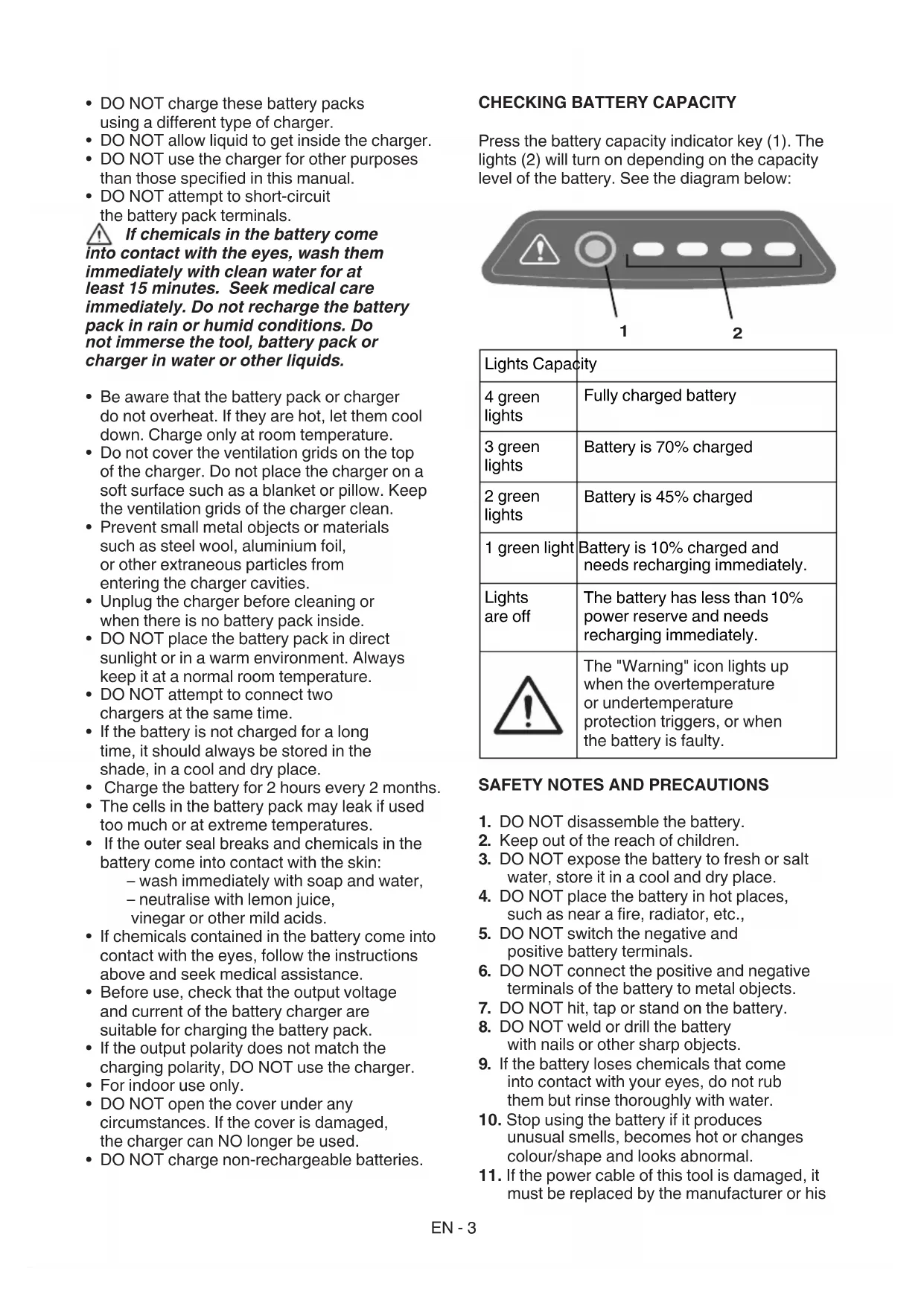
CHECKING BATTERY CAPACITY
Press the battery capacity indicator key (1). The lights (2) will turn on depending on the capacity level of the battery. See the diagram below:
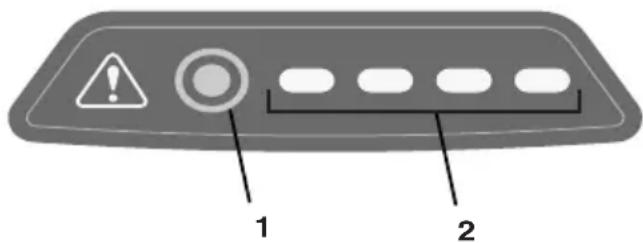
| Lights Capacity | |
| 4 green lights | Fully charged battery |
| 3 green lights | Battery is 70% charged |
| 2 green lights | Battery is 45% charged |
| 1 green light | Battery is 10% charged and needs recharging immediately. |
| Lights are off | The battery has less than 10% power reserve and needs recharging immediately. |
 | The "Warning" icon lights up when the overtemperature or undertemperature protection triggers, or when the battery is faulty. |
SAFETY NOTES AND PRECAUTIONS
- DO NOT disassemble the battery.
- Keep out of the reach of children.
- DO NOT expose the battery to fresh or salt water, store it in a cool and dry place.
- DO NOT place the battery in hot places, such as near a fire, radiator, etc.,
- DO NOT switch the negative and positive battery terminals.
- DO NOT connect the positive and negative terminals of the battery to metal objects.
- DO NOT hit, tap or stand on the battery.
- DO NOT weld or drill the battery with nails or other sharp objects.
- If the battery loses chemicals that come into contact with your eyes, do not rub them but rinse thoroughly with water.
- Stop using the battery if it produces unusual smells, becomes hot or changes colour/shape and looks abnormal.
- If the power cable of this tool is damaged, it must be replaced by the manufacturer or his
agent or by specifically qualified personnel in order to reduce any resulting risk.
4. ECO-FRIENDLY DISPOSAL OF THE BATTERY

The following toxic and corrosive materials are found within the battery pack used with this tool: Lithium-ion is a toxic material.
All toxic materials should be disposed of properly to prevent environmental contamination. Before disposing of damaged or broken lithium-ion battery packs, contact your local waste disposal agency or the local Environmental Protection Agency for specific information and instructions. Dispose of batteries in a certified lithium-ion recycling and/or disposal facility.
⚠️ If the battery pack cracks or breaks, with or without chemical leakage, do not recharge or use it. Dispose of and replace it with a new battery pack.
DO NOT ATTEMPT TO REPAIR IT! In order to avoid accidents and risks of fire, explosion or electric shock and to prevent damage to the environment:
– Cover the battery terminals with strong adhesive tape.
- DO NOT attempt to remove or destroy any part of the battery pack.
- DO NOT attempt to open the battery pack.
Electrolytes released from battery pack chemical leakage are corrosive and toxic. Do NOT allow chemical substances to come into contact with eyes, skin and, above all, do not ingest them.
- DO NOT dispose of batteries with domestic waste.
- DO NOT burn.
- DO NOT place batteries where they could become part of a local waste landfill or municipal solid waste.
- Take them to an authorized recycling centre.
5. BATTERY CHARGER
SPECIFICATIONS
CG 500 Li 48, CG 700 Li 48 Input: 220-240V \~ 50 Hz Output: 48 V (Nominal) =1.5A
CGF 500 Li 48, CGF 700 Li 48
Input: 220-240V \~ 50 Hz
Output: 48V (Nominal) =3A
CGD 500 Li 48, CGD 700 Li 48
Input: 220-240V \~ 50 Hz
Output 1: 48V (Nominal) =1.5A
Output 2: 48V (Nominal) =1.5A
CGDF Li 48
Input: 220-240V \~ 50 Hz
Output 1: 48V (Nominal) =3A
Output 2: 48V (Nominal) =3A
- The equipment shall not be exposed to dripping or splashing, and no liquid container, such as pots, shall be placed above the equipment.
- The charger is designed for rechargeable lithium-ion batteries. Some other types of batteries may explode, resulting in personal injury and property damage.
- Only charge rechargeable batteries.
- The LED lights a flashing green during charging and a steady green when charging is complete.
- The transformer external flexible cable cannot be replaced; if the cable is damaged, the whole transformer must be disposed of.
- The line voltage can be disconnected by pulling the mains socket.
- The socket must be positioned close to the tool and must be easily accessible.
CHARGING PROCEDURE
NOTE Battery is shipped not fully charged. It is recommended to charge it before use to ensure that the maximum operating time is reached. The lithium-ion battery does not have a charge memory and can be recharged at any time.
- Connect the charger to an AC outlet.
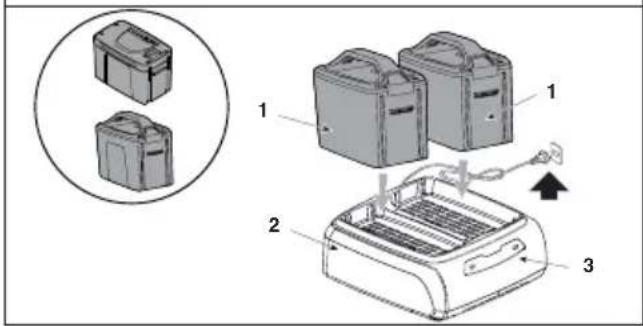
- Put the battery pack (1) into the charger (2).
This is a diagnostic charger. The LED charger lights (3) will light in a specific order to communicate the current battery status.
CG 500 Li 48 - CGF 500 Li 48 - CGD 500 Li 48 CG 700 Li 48 - CGF 700 Li 48 - CGD 700 Li 48 - CGDF Li 48
| DESCRIPTION LED STATUS | ||
| Battery charging ☆ Flashing green | green | |
| Fully charged ● Green | ||
| Overheated battery:(remove for approx. 30 min.to allow it to cool down) | ● Red | |
| No battery ○ Off | ||
| Faulty battery(remove and replacewith a new battery) | ☆ Flashing red | |
CHECKING THE CHARGER
If the battery pack does not charge properly:
- Check the output power with another tool. Make sure that the outlet is not isolated.
- Check the charger contacts against short circuit caused by debris or other materials.
If the battery is inserted into the charger when it is hot or overheated, the LED LOAD indicator light on the charger may light RED. In this case, let the battery cool down out of the charger for about 30 minutes.
NOTE If the battery and charger are not used for a long period of time, remove the battery from the charger and disconnect the AC outlet.
IMPORTANT SAFETY INSTRUCTIONS
- KEEP THESE INSTRUCTIONS DANGER: TO REDUCE THE RISK OF FIRE OR ELECTRIC SHOCK, IT IS IMPORTANT TO FOLLOW THESE INSTRUCTIONS CAREFULLY.
- Before using the charger, check the available voltage in each country.
6. CLEANING
To avoid the risk of fire and electric shock:
- Do not use damp cloths or detergents on the battery or the battery charger.
• Always remove the battery pack before cleaning, inspecting or servicing the tool.
Clean the outside of the charger with a soft, dry cloth. Do not rinse or clean with water.
7. DISPOSAL
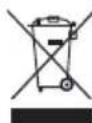
Do not throw electrical equipment away with domestic waste. In observance of European Directive 2012/19/EU on electrical and electronic equipment waste and its implementation, in observance of UK Regulation “The waste electrical and electronic equipment regulations 2013 (as amended)” and in accordance with national regulations, electrical equipment that has reached the end of its product life must be collected separately and recycled in an ecologically compatible way. If electrical equipment is disposed of in dumps or in landfills, hazardous substances can leak into the groundwater and contaminate the food chain, damaging your health and well-being. For further information on the disposal of this product, contact your dealer or a domestic waste collection service.
At the end of their working life, dispose of batteries paying due attention to the environment. Batteries contain material classified as hazardous for you and the environment. They must be removed and d of separately at a facility that accepts on batteries.

Separate waste collection of the products and packaging used allows the materials to be recycled and reused. Reuse of recycled materials help to environmental pollution and reduces the for raw materials.
8. ASSISTANCE AND REPAIRS
This manual provides all the necessary information to run the machine and for correct basic maintenance operations which can be performed by the user. Any regulations and maintenance operations not described herein must be carried out by your Dealer
or Authorised Service Centre, which have the necessary knowledge and equipment to ensure that the work is carried out correctly, maintaining the correct degree of safety and the original operating conditions of the machine. Any operations performed in unauthorized centres or by unqualified persons will totally invalidate the Warranty and all obligations and responsibilities of the Manufacturer.
- Only authorized service workshops can carry out guaranteed repairs and maintenance.
• Genuine spare parts are supplied by authorised assistance workshops and dealers.
• Genuine spare parts and accessories have been designed specifically for machines. - Non-original parts and accessories are not approved; use of non-original spare parts and accessories will jeopardize the safety of the machine and relieve the Manufacturer from all obligations or liabilities. It is recommended to send the equipment once a year to an authorised service workshop for the maintenance, assistance and control of safety devices.
9. WARRANTY COVERAGE
The warranty conditions are intended for consumers only, i.e. non-professional operators. The warranty covers all material quality and manufacturing defects recognised during the warranty period by your Dealer or Authorised Service Centre.
The warranty is restricted to the repair or replacement of components recognised as faulty.
It is advisable to send your machine once a year to an authorized service workshop for servicing, assistance and safety device inspection.
The warranty only applies to machines subjected to regular maintenance.
The user must follow all the instructions provided in the accompanying documentation.
The warranty does not cover damages resulting from:
- Failure to become familiar with the documentation accompanying the machine (Instruction manuals).
• Professional use - Carelessness, negligence
- External causes (lightning, impact, presence of foreign bodies inside the machine) or incidents
- Incorrect use or assembly or prohibited by the manufacturer
- Poor maintenance
- Modification to the machine
- Use of non-genuine spare parts (adaptable parts)
- Use of accessories not supplied or approved by the manufacturer.
The warranty does not cover:
- The routine/extraordinary maintenance operations (described in the instruction manual)
- Normal wear and tear of consumables, such as drive belts, cutting means, headlights, wheels, safety bolts and cabling.
• Normal wear and tear
• Deterioration in the appearance of the machine due to use
• The substances, oil, petrol, grease
• Cutting means supports - Any ancillary expenses related to the enforcement of the warranty, such as costs incurred to travel to the user's location, transfer of the machine to the Dealer, rental of replacement equipment or calling of independent enterprises to perform maintenance work.
The user is protected by his or her own national legislation. The user's rights under the national laws or his or her own country are not in any way restricted by this warranty.
ÍNDICE
Salida: 48V (Nominal) =3A
CGD 500 Li 48, CGD 700 Li 48
Entrada: 220-240 V \~ 50 Hz
Salida 1: 48 V (Nominal) =1,5 A
Salida 2: 48 V (Nominal) =1,5 A
CGDF Li 48
Entrada: 220-240 V \~ 50 Hz
Salida 1: 48 V (Nominal) =3A
Salida 2: 48 V (Nominal) =3A
1.1 KUIDAS KASUTUSJUHENDIT LUGEDA
| Tuled Maht |
CGD 500 Li 48
CGD 700 Li 48
CGDF Li 48
| Svjetla Kapacitet | |
| 4 zelena svjetla | Baterija je potpuno puna |
| 3 zelena svjetla | Baterija je puna 70% |
| 2 zelena svjetla | Baterija je puna 45% |
| 1 zeleno svjetlo | Baterija je puna 10% i treba je odmah napuniti |
| Svjetla su ugašena | Baterija je puna manje od 10% i treba je odmah napuniti |
 | Ikona "Pozor" se osvjetljava u slučajevima interveniranja zaštite od nadtemperature ili od podtemperature, odnosno u slučaju neispravnosti baterije. |
SIGURNOSNE NAPOMENE I MJERE OPREZA
- NEMOJTE demontirati bateriju.
- Čuvajte izvan dohvata djece.
- NEMOJTE izlagati bateriju slatkoj ili slanoj vodi; spremite je na hladnom i suhom mjestu i prostoru.
- NEMOJTE smještati bateriju na previše toplim mjestima, na primjer pored vatre, radijatora itd.
- NEMOJTE zamjenjivati negativni i pozitivni terminal baterije.
- NEMOJTE spajati pozitivni i negativni terminal baterije s metalnim predmetima.
- NEMOJTE udarati ili lupati po bateriji niti se penjati na nju.
- NEMOJTE zavarivati bateriju niti je bušiti čavlima ili drugim zašiljenim predmetima.
- U slučaju da kemijske tvari koje su iscurjele iz baterije dođu u dodir s očima, nemojte ih trljati i temeljito isperite vodom.
- Prekinite uporabu baterije ako se iz nje šire neobični mirisi, ako se ona pregrijava ili mijenja boju/oblik i nepravilnog je oblika.
- Ako se kabel za napajanje ovog alata oštetio a kako bi se smanjio bilo
VAŽNE SIGURNOSNE UPUTE
- ČUVAJTE OVE UPUTE OPASNOST: KAKO BI SE SMANJIO RIZIK OD POŽARA ILI ELEKTRIČNOG UDARA VAŽNO JE PAŽLJIVO SLIJEDITI OVE UPUTE.
- Prije uporabe punjača provjerite raspoloživi napon u dotičnoj zemlji.
6. ČIŠĆENJE
⚠️ Kako biste izbjegli rizike od požara, električni udar ili električno pražnjenje:
- Nemojte prolaziti vlažnim krpama ili sredstvima za čišćenje po bateriji ili po punjaču baterije.
- Uvijek izvadite sklop baterije prije čišćenja, pregleda ili vršenja radnji održavanja na alatu.
Vanjski dio punjača čistite suhom i mekanom krpom. Nemojte ispirati eventualnim pumpama niti čistiti vodom.
7. ODLAGANJE
DEN MÅ IKKE REPARERES!
Akumulator: Max. 48V, 216 Wh
Saída 1: 48 V (Nominal) =3A
Saída 2: 48 V (Nominal) =3A
DÔLEŽITÉ BEZPEČNOSTNÉ POKYNY
- ULOŽTE TIETO POKYNY TÝKAJÚCE SA NEBEZPEČENSTVA: NA ZNÍŽENIE RIZIKA POŽIARU ALEBO ÚRAZU ELEKTRICKÝM PRÚDOM DÔSLEDNE DODRŽIAVAJTE TENTO POKYNY.
- Pred použitím nabíjačky skontrolujte dostupné napätie.
6. ČISTENIE
Akumulator: 48 V max., 216 Wh
Napetost ene celice: 3,6 V; Število celic: 24
Trajanje polnjenja: 220 min.
(pri uporabi polnilnika CG 500 Li 48, CGD 500 Li
Akumulator: 48 V max., 222 Wh
Napetost ene celice: 3,7 V; Število celic: 24
Trajanje polnjenja: 220 min.
(pri uporabi polnilnika CG 500 Li 48, CGD 500 Li
Akumulator: 48 V max., 324 Wh
Napetost ene celice: 3,6 V; Število celic: 24
Trajanje polnjenja: 330 min.
(pri uporabi polnilnika CG 500 Li 48, CGD 500 Li
Akumulator: 48 V max., 333 Wh
Napetost ene celice: 3,7 V; Število celic: 24
Trajanje polnjenja: 330 min.
(pri uporabi polnilnika CG 500 Li 48, CGD 500 Li
| Svetla: Napunjenost | |
| 4 zelena svetla | Baterija je potpuno puna |
| 3 zelena svetla | Baterija je napunjena oko 70%. |
| 2 zelena svetla | Baterija je napunjena oko 45%. |
| 1 zeleno svetlo | Baterija je puna oko 10% i treba da je odmah napunite |
| Svetla su ugašena | Baterija je puna manje od 10% i treba da je napunite odmah. |
 | Ikona "Pažnja" pali se kada se uključi zaštita od prevelike ili preniske temperature ili u slučaju kvara baterije. |
SIGURNOSNE NAPOMENE I MERE PREDOSTROŽNOSTI
- NEMOJTE rasklapati bateriju.
- Držite van domašaja dece.
- NE izlažite bateriju slatkoj ili slanoj vodi, odložite je na sveže i suvo mesto i u svežu i suvu prostoriju.
- NE stavljajte bateriju na suviše topla mesta, na primer ne pored vatre, radijatora, itd.
- NE izmenjujte negativni i pozitivni pol baterije.
- NEMOJTE vezivati ni pozitivni ni negativni terminal baterije s metalnim predmetima.
- NE gadajte bateriju i ne udarajte baterijom i nemojte se penji na nju.
- NE vršite varenje na bateriji i ne bušite istu ekserima i drugim šiljatim predmetima.
- Ako iz baterije počnu da cure hemijske supstance koje dođu dodir s očima, nemojte trljati oči, već ih isperite vodom.
- Prekinite da koristite bateriju ako iz nje počne da se širi neobičan miris, ako se ona pregreje ili promeni boju/ oblik i ako ima neuobičajen izlged.
- Ako je kabal za napajanje ovog uređaja oštećen, isti mora zameniti proizvođač
ili njegov distributer ili kvalifikovano osoblje kako ne bi nastao nikakav rizik.
4. EKOLOŠKO ZBRINJAVANJE BATERIJE

Sledeći korozivni i toksični materijal se nalazi u bateriji koja se koristi s ovim uređajem: litijumski joni su toksični.
sav toksičan materijal mora da se koristi na odgovarajući način da ne bi došlo do zagađenja životne sredine. Pre nego što zbrinete baterije s litijumskim ionima koje su oštećene ili pokvarene, kontaktirajte lokalnu agenciju za zbrinjavanje otpada ili lokalnu agenciju za zaštitu životne sredine da dobijete više informacija i uputstava. Ponesite baterije u centar za reciklažu i7ili zbrinjavanje koji je sertifikovan za upravljanje materijalom sa litijumskim jonima.
Ako se baterija ošetiti ili pokvari, nemojte je puniti niti koristiti bez obzira da li iz nje cure hemijske supstance ili ne. Zbrinite je i zamenite novom baterijom.
NE POKUŠAVAJTE DA JE POPRAVITE! Da biste izbegli povrede i rizik od požara, eksplozije ili električnog udara i da ne biste naneli štetu životnoj sredini:
– Pokrijte terminale baterije otpornom lepljivom trakom.
– NE pokušavajte da skinete ili uništite bilo koju komponentu baterije.
– NE pokušavajte da otvarate bateriju.
⚠ Elektroliti koji izadu prilikom eventualnog curenja hemijskih supstanci iz baterije korozivni su i toksični. Pazite da hemijske supstance NE dođu u dodir s očima i kožom, a posebno pazite da ih ne progutate.
– NE bacajte bateriju u kućni otpad.
- NE palite.
– NE stavljate bateriju na mesta koja bi mogla postati deo lokalne deponije ili čvrstog komunalnog otpada.
– Ponesite je u ovlašćeni centar za reciklažu.
5. PUNJAČ BATERIJE
SPECIFIKACIJE
CG 500 Li 48, CG 700 Li 48
Ulaz: 220-240V \~ 50 Hz
Izlaz: 48 V (Nazivni) =1.5A
CGF 500 Li 48, CGF 700 Li 48
Ulaz: 220-240V \~ 50 Hz
Izlaz: 48V (Nazivni) =3A
CGD 500 Li 48, CGD 700 Li 48
Ulaz: 220-240V \~ 50 Hz
Izlaz 1: 48 V (Nazivni) =1.5A
Izlaz 2: 48 V (Nazivni) =1.5A
CGDF Li 48
Ulaz: 220-240V \~ 50 Hz
Izlaz 1: 48 V (Nazivni) =3A
Izlaz 2: 48 V (Nazivni) =3A
- Aparat ne treba da izlažete kapanju ili prskanju i ne treba da postavite iznad njega posude koje sadrže tečnosti, kao što su vaze na primer.
- Punjač je namenjen za punjenje baterija s litijumskim jonima koje se mogu puniti. Ostale vrste baterija mogle bi eksplodirati, povrediti osobe i oštetiti predmete.
- Punite isključivo baterije koje se mogu puniti.
- Za vreme punjenja LED svetlo je zelene boje i trepti; kad se punjenje završi, postaje fiksno upaljeno zeleno svetlo.
- Fleksibilni spoljašnji kabal transformatora ne može se zameniti; ako je kabal oštećen, treba da rotamirate čitav transformator.
- Isključivanje s linijskog napona vrši se povlačenjem na mrežnu utičnicu.
- Utičnica se mora nalaziti u blizini mašine i mora joj se lako pristupiti.
POSTUPAK PUNJENJA
NAPOMENA Baterija se ne šalje do kraja puna. Savetujemo da je napunite pre upotrebe da biste što duže mogli raditi. Baterija s litijumskim jonima ne razvija memoriju i može se puniti u bilo kojem trenutku.
- Povežite punjač u utičnicu AC.
- Stavite bateriju (1) na punjač (2).
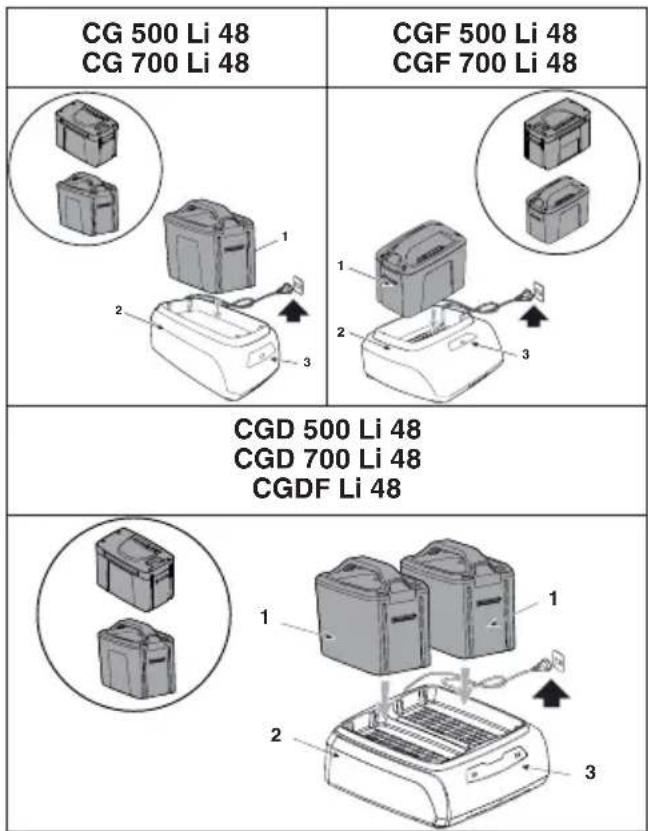
U pitanju je dijagnostički punjač. LED svetla na punjaču (3) zasvetleće u određenom redosledu da označe trenutno stanje baterije.
CG 500 Li 48 - CGF 500 Li 48 - CGD 500 Li 48 CG 700 Li 48 - CGF 700 Li 48 - CGD 700 Li 48 - CGDF Li 48
| OPIS STANJE LED SVET-LA | ||
| Baterija se puni ✝ Zeleno trepćuće svetlo | ||
| Potpuno puna ● Zeleno | ||
| Baterija pregrejana:(skinite bateriju na oko 30min. kako bi se ona ohladila) | ● Crveno | |
| Nema baterije O Ugašeno | ||
| Baterija u kvaru:(skinite bateriju izamenite je novom) | ※ Crveno trepćuće svetlo | |
KONTROLA PUNJAČA
Ako se baterija ne puni pravilno:
- Proverite izlaznu struju s drugom alatkom. Uverite se da utičnica nije izolirana.
- Proverite da na kontaktima punjača nije došlo do kratkog spoja izazvanog kršom li drugim materijalom.
Ako bateriju stavite na punjač kad je vruća ili pregrejana, LED svetlo indikatora na punjaču može postati CRVENE boje. Ukoliko nastane ova situacija, sačekajte da se baterija ohladi van punjača u trajanju od oko 30 minuta.
NAPOMENA Ako bateriju i punjač nećete duže vremena koristiti, skinite bateriju s punjača i iščupajte utičnicu AC.
VAŽNA SIGURNOSNA UPUTSTVA
- SAČUVAJTE OVA UPUTSTVA OPASNOST: DA BISTE SMANJILI RIZIK OD POŽARA ILI ELEKTRIČNOG UDARA, MORATE STROGO DA SE PRIDRŽAVATE OVIH UPUTSTAVA.
- Pre nego što počnete koristiti punjač, proverite napon u odnosnoj Zemlji.
6. ČIŠĆENJE
INNEHÅLLSFÖRTECKNING
- ALLMÄN INFORMATION ...... 1
- VARNINGSSKYLTAR.... 1
- BATTERI....2
- MILJÖVÄNLIGT BORTSKAFFANDE AV BATTERIET 3
- BATTERILADDARE 3
- RENGÖRING 4
- BORTSKAFFANDE 5
- SERVICE OCH REPARATIONER....5
- GARANTINS TÄCKNING 5
1. ALLMÄN INFORMATION
1.1 HUR DU LÄSER HANDBOKEN
DECLARATION OF CONFORMITY (Original Instruction)
| FR (Production of a material organelle)Déclaration CE de Conformité(Directive Basse Tension 2014/35/EU, Anexo II, A)1. La Societe2. Décade sous sa propre responsabilité que la machine : Changerer de batteriea) Type I Modele de Baseb) Mols / Année de constructionc) Série3. Est conforme aux prescriptions des directives:4. Renvoi aux Normes harmonisées5) Personne habitée à clérable d' Dossler Technique;o) Lieux et Date | EN (Franchise of the original structure)ED Declaration of Conformityi low Voltage Directive 2014/35/EU, Anexo II, partA) 1. The Company2. Heroby éclares under its own responsibility that the machine: Battery chargera) Type I Base Modelb) Month / Year of manufacturec) Borial number3. Conforme to directive specifications:4. Reference to harmonisé Standardsa) Person authorized to create the Technical Folder;c) Place and Date | DE (Improvement of the Original Neighborhood)ED-Konfamittelärschänung(Niederungsgegenbetriebsüsse 2014/35/EU, Akvallg II, Teil A)1. Die Gesellschaft2. Erstatt auf eigene Vorantwortung, dass die Maschitz: Ladgerichta) Type I Bandemontb) Monat / Basjahr1. Des Anforderungen der folgenden Richtelition entspricht:4. Betzahnage auf die harmonisterten Nogenm) Zur Verfassung der technischen Untertagen befügt Person:c) Ort und Datum | NO (Overestige zu kein unstandarding)EF - SamorsverklingerElevingspapierungs-derivate 2014/35/EU, Volkaag II, del A)1. Ermakt2. Einkenter på eget anvar at maskhen: Batterlackera) Type I Modelb) Monad / Byggerd) Betinummerd) Optyfär kivresse i direktivae:4. Hervolding af harmoniserte standarden af Person aan het fatmarkt te a uchtige teknik dokumentation;e) Stod og dato | SV (Overestige zu kein unstandarding)EF - Miesgran op overestigemginsde(Bredschlag op waming 2014/35/EU, biliga II, de la)1. Ferskart2. Herbstiger på eget anvar att maskhen: Batterlackera) Type I Bandemontb) Monad / Tilbreitingsar:a) Settensamerd) Motor: Berichtungsmotor3. Overversdammer med forderkluttera i direktivae:4. Referece till harmoniserte standarder aftokc) Uermiddeu: Aufkortserald person für uperaumstand er den tekniske dokumentabemen;d) Ort och datum | DA (Overestige dan o itemaleLugus der data)EF -overversstemmelslosis Nanking(Largeplaningsdansk 2014/35/EU, biliga II, del A)1. Firmast2. Einkenter på eget anvar, at maskinen: Batterlackera) Type I Modelb) Monad / Konstruktionser4) Betinummerd) Er overstelementnste med specifizionanone folige direktivreme; at Hervolding till harmonisende etpendande b) Person, des har benzyredsjede til at uchtogste dat technische densifier;e) Stod og dato |
| NL Verbindung van de overspruchte die gebruiksanteiligent):EG-verkasting van overrechnungsningEG-verkasting vergeschlossen 2014/35/EU, Biliga II, devel A)1. Diet pocrst1. Delet onder under zijn eigen veranteeiligkeheid dat de machine: Acculidera) Type I Basktmodelb) Monad / Bevoysar4) Scrimmaomer1. Veldzet aan de specifiektes van de schlijpen;4. Verfällig naar de Geharmontssende normenb) Bervengeld person voor het opstellen van het Technisch Doppstero) Plais en Datum | ES (Fractuation del Manual Original)Declaratie de Conformité CE(Revisoring Baja Tension 2014/35/EU, Anexo II, parte A)1. La Empresa2. Declares bija su propria responsabilidad que la moquecan Cargader de batertaa) Type I Modelo Baseb) Mise / Ame de fabricaciónb) Matrículba3. Cumple con las espefficaciones de las directives:4. Referencia a las Normas armonizadasb) Person autorizada a realizar al Manuel Técnico; e) Lugar y Fecha | PT (Inclupio do manuel ingeral)Declaratie CE de Conformidade(Erceftica de Baja Tensão 2014/35/EU, Anexo II, parte A)1. A Emporca2. Declares ook a prioria responsabilidad que a maquima: camrangador de batertaa) Type I Modelo Baseb) Mise / Ame de fabricao3) Matrículba3. É conforme las espefficaciones das directives:4. Referencia la Normas harmonizadasb) Passourea: autorizada a adubaran o Caderno Técnico; e) Local e Data | FI (Akquisition of Exkiden Männick):EV-AATIMUSTENMUKABUSIVAKUUTUS(Prenipinniedschränse 2014/35/EU, Liite II, aan A):1. Velhas2. Valutitas omelle valutellam, cita kons: Aktulatora;2. Type I Perunsellib) Kuukasui (Valimataucesen) Sadajarnemo3. On phlemerkauinen acueravien direktivien asstehmen vastimuten konsaat4. Viitana hemmerstaufen standerbelin5. Interlagen annaligen latentamen valutelditu horklik;6) Pathik je parvansama | CS (I Restated plazdrinho savonius konshaften):ES - Probildemi o skredé(Smirinence a makum nepatis 2014/35/EU, Pristura II, zest AI1. Spolechini2. Probitologie na vlasztal odpevčnost, zo stroj hafickta akumulculara;e) Typ I Zalkadre modelb) Mole / Rot výrobyc) Výrobi sotlae4. Ze av skoda a nafzezeni américa:4. Odkasy na Harmonizanie normy9) Oostak sullecerania pro vysteres Technickliche solusr;o) Mata a Datum | PL (I ammersione normatj oggyruje):Dekaracja zgodnički WE(Dysektiva maksomagnozione (LVD))2014/35/EU, Zahoville II, crepa A)1. Spátku2. Owiłudzka na valaną odpevčedzielnost, ze manzury, lebavu na akumulcularceb) Typ I Model podostawny3. Spätna podstawny wymogi napapapaznych Dynikryer4. Odowszaki do norm pharmacizowanych6) Osteu opwazionna da zredagownna dokumentnej technicznej: |
| EL (Ventricular non技術革新) Tax (Olivie opstning):EK-Denkning opstörpungang(Odynie Xupălc Tórgy 2014/35/EBE, Dijlupăc plintă)1. El Empin2. Δykavai urtrăbova de i n magavi: δ apogernyi prongenja;δ Pocinei, Bausar, Moinko; b) Myvas c / Eros kanarewalsc) Απράβε μεργιμαηστενού προσελογρωρες της oblygging;4. Aympogor omics Kyenaunigovac repurguem: E Kretionabdominio drupio y tuc idelapnay tony Tórgyos Baulolouc; e) Tórga con Kockovc | TR (Cofina Talmatan in Tondimely)AT Ryunkula Beynes(Alpok Gerdim Direktih 2014/35/EU, Ek II, bolim A)1. Şirkel2. Şahra squamblung elinda apugaidi mehimen: pil sarj olhaa; a) Tip i Sardari modelb) Öndzin Ay yilc) Sieli nummara3. Aságaldai direktištin belüllkitere uygurs odlusjani bayan elvolkida;4. Harmonize standierla sietb) Toliok Dosuyan duspurmaya yafiliiki klát;c) Yer ve Tarhi | MK (Proced na oprupinlanto uplastava)Daimarajada za uysoplasnost od su BY (Derektska za lišioce naion 2014/35/EU, Anexo II, diar A)1. Komunjani;2. Nahavya ou cilposna prihna otterpornost dries sliperiti immleni: palineh na Bieterpi a) Tom i oscegnem kaperi;3. Mesca / Gedina na konzisodstvo na iksveva;4. Yoostasno se co slupfinanamite spored darjavanje sevanje osetraskatske;5. Reperferde na uysoplasnost nirmetaviaa) oblastetno laje za costatuvialne na Taxiemnate Brupyruea) micta o drugy | HU (nettes termitel - Jostes konties):EK-megfeleklanagi nyitatorizata(2014/35/EU kofcsolibagii villamos baronjene varotisato irzytor, ii mitesetir "A" regy)1. Alputis Valladi2. Felicloszegrenk tojkes bodalaban kijckini, bogar na ablieju Akumulator labká;2. Trup i Asplifiusb) Houp i Gyrtse ave3. Megleid za snabbi irdyelank abizratislak;4. Navikcasa a harmonisi apzirnayrsknji horgemate ne kritanamati;5. Otoprotztržemna: 3. Son destruktura travisnamički smladručnja direjerec;4. Scevna na garamniziernarynne idemi ni 80% uysanovomnionu na nogognuky turamniskem documentaničn;e) Mota e idje | RU (Periodejne nahtomna - nejtrupuć u)Dalmiplanje cormentstevni na formy RS (Dermiplanje na ho reiznava onnu):Azdrojurnego 2014/35/EU, Tepnisamekne II, kupla AI1. Espodnirnje2. Szammet pod sobstveninyu uvracučnja, vira uva na zadravnega uvracnja3. Typ I Šomeda modelby4. Meciu na kritanamiti;5. Otoprotztržemna:3. Son destruktura travisnamički smladručnja direjerec;4. Scevna na garamniziernarynne idemi ni 80% uysanovomnionu na nogognuky turamniskem documentaničn;e) Mota e idje | HR (R. rupie ognathne uplit):K rupia o kulistnosti(Directiva o nakum naporu 2014/35/EU, Doidstorn II, dia A).1. Turris2. pod visitutiam odpovomatezu irjstujeja da in situ. Fungja betanja3. Värdej Danovski modela) Metesć Godina protyvednja4. Kukkidan a temajhim zahygdena direktiva:4. Pemijeringa az alliadece harmonizierungne norma7. Ostea ovidstena za povojlenje Technikne betiellek2. Mesta I Corlim |
Doc Sato F.23+BATT CHARGO
| SL [Proced Event - In- 2013] | ||
| EB izlava o skladnosti[Držedna 29.4/35EU i niski načajnosti, priluge II, deo A]1. Drutba2. pod linsno odgovomocijo svrijvi, da prostoj:Poblincc za akumulatora) Tip i osnovni imabel) Mieslo Lito izstavce) Sarjaka sdevita3. Skleden je izlostili direktrive4. Sklvicevanje na usklupane prograte) Ostele, postkladvene za sestavla tehnčine kralnega) ol Kraj in datum | BS [Pristetra msnolni spuri]EZ izlava o skladnosti[Držedna o isklamnogena 2014/35EU, Priefo II, deo A]1. Firma2. Ojne vyzoj pod vlastním odgovornacizda je matina: Punje obtarijea) Tipi Ocnovni modelb) Mieslo i Godna proizvodrje) Sarijiši bruj3. ukladnja a cenovnim zahljivima direklive:4. Pezviranje na uskladene ideme) Ostele ovsklave za izradau tehnčine brodurae) Mjesto i daturn | SK [Prešed procesnilo mecost na posčine]EB vyhlásenie o zhoda(Šimovna i nickom majati 2014/35EU, Prisloha II, čast A]1. Spociodnost2. Vyhlansje na vlastní zodgovadnost, za stroj: Najabkača) Tip i Záklstinyi modelb) Mieslo i Rok vryrozyc) Vysvaniš Eško3. Ja y zhoda a nasladnosti amenici:4. Odaz za Hamerizovanje normy) Ostele autorizemni na vytoremla Technického spicer; ol Mieste a Datum |
| RO [Producers manualir tukkarantur];CE -Declaratie de Conformitate[Orefectivo provind transversa josa 2014/30UE, Anoxia II, partea A]1. Sociotheca2. Ductila je propria raspundene ca masina: Indactorator botoric) Tip i Model de baza) bi Loma Apule de fabricatje) Numar de serie3. Este in conformitate cu specificatjite direktivelor4. Referanja la Standandene armonizate) Personal autorizati sa intermeasel. Desand Tehnik ol Local și Data | LT [Crishnu instruktivi vortines]EB aktivitas dokumentacijaLomos papios direktiva 2014/35ES, Predoes II, dals A)1. Handova2. Pritimla atskemybe, kad (ringlnyts: Akumulattorių pakovijas) a) Tapa i Bistne Nodelleb) Mieslo i Pagaminimo metalc) Sertijo numine3. Altinka direktyvo se patriklas specifikacijes:4. Nurodu i sudernitas Nomas) Autoionuće semuo suderyti Techniŋ Dokumentacija) Viela ir Data | LV [Instrukturi tulukuma na orjinalizabica];EK aktivitas aktivandiap (Zemspingkuma škarta direktiva 2014/35ES, piitikums II, daju A)1. Uprzemne2. Uphomites por te plini atiklibu, pazilo, ko masina: Llobitajs3) Tips i Biotro modeliteby Mieslo i Sarcicolas gads4. Sierjas numura5. Atkist šidu direktivu prasiblan;4. Atkase za harmonizavem standartirmipl Pinvantals darlinkteks, kas sagalavja tehnisko dokumentaciju; ol Viela un daturn |
| SR [Prudent originanti uplativoliEO diskularita u usagtadenosti[Držedna i nasceni naporu 2014/35EU, Priefo II, deo A]1. Prudavala) Dalo Izgovi pod vlastnom odgovornocitu da je mašina: Punje akumulatora) Tipi Ocnovni model) Mieslo: Rodina proizvodrje) Indactorator zarcicinali disminima direktiva:4. Požviranje na uskladene norme) Ostele ovsklave za sastervljanje technikke brodura) ol Mieste I datum | BG [Prasola na kontri na i ante instruktivni]EO deciparaize na ceytačstvenie[Držedna i niscro naporu 2014/35ES, Priymokone il, Uracst A]1. Drupavstroto2. Na sobstačta ottovorpić prost delarknira, che maninata na zadravnato utrojskstao3) Burs i Baskanis kodori4. Mieslo Šrodnia na proizvodstavb) Sorekno himor3. E na ceytačstvenie sčio specifnika na adporvaretna:4. Baziranao na charmonizuranite normipl) Jliine, yltimilnođeno da ceystačni Tepevnicnava do Dokumenta; ol Mieste i data | ET [Kplostrace koslautsuhond lidje]EO vastavusdekaratsjoon[Radzipingskredite 2014/35EL, Lisa II, osa A]1. Firma2. Kritlab omai vastustus, et masin: Akulsadlada) Tilip / Pihinradalby Koo spaja / Tootmissaasta2. Medina3. Mootor: Slepločkimisnotor1. Vastab direktivu idektrice;4. Više ulnituratus standarditine toTohnlitse Lehe autoriseeritud koostaja; ol Kohl je Muasdev |
C20
EN • The content and images in this User Manual were produced expressly for ST. S.p.A. and are protected by copyright – any unauthorised reproduction or modification to the document, either partially or in full, is prohibited.
CE
Type: