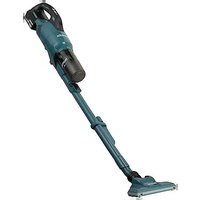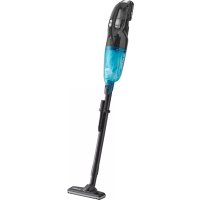
DCL501 - Cordless vacuum MAKITA - Free user manual and instructions
Find the device manual for free DCL501 MAKITA in PDF.



| Product Type | Cordless Vacuum Cleaner |
| Brand | Makita |
| Model | DCL501 |
| Dust Container Capacity | 250 mL |
| Dimensions (L x W x H) | 352 mm x 189 mm x 252 mm |
| Net Weight (with BL1850 battery) | 3.8 kg |
| Rated Voltage | 18 V DC |
| Compatible Batteries | BL1815N, BL1820, BL1820B, BL1830, BL1830B, BL1840, BL1840B, BL1850, BL1850B, BL1860B |
| Battery Life (High Mode) | Approx. 29 minutes |
| Battery Life (Low Mode) | Approx. 64 minutes |
| Filter Type | Washable cylindrical filter (upper and lower) |
| Filter Cleaning | Filter cleaning lever for shaking off dust; can be washed with water |
| Included Accessories | Nozzle, crevice nozzle, telescopic tube, shoulder strap, hose, cleaning brush |
| Intended Use | Dry dust collection only |
| Safety | Overload, low voltage and overheat protection; lithium-ion battery with protection device |
| Maintenance | Clean the filter after each use; dispose of dust before the container exceeds the indication line |
| After-Sales Service | Authorized Makita service center only |
| Spare Parts and Repairability | Professional repair using Makita spare parts |
Frequently Asked Questions - DCL501 MAKITA
User questions about DCL501 MAKITA
0 question about this device. Answer the ones you know or ask your own.
Ask a new question about this device
Download the instructions for your Cordless vacuum in PDF format for free! Find your manual DCL501 - MAKITA and take your electronic device back in hand. On this page are published all the documents necessary for the use of your device. DCL501 by MAKITA.
USER MANUAL DCL501 MAKITA
natural_image
Line drawing of a vacuum cleaner with attached hose and bulb (no text or symbols)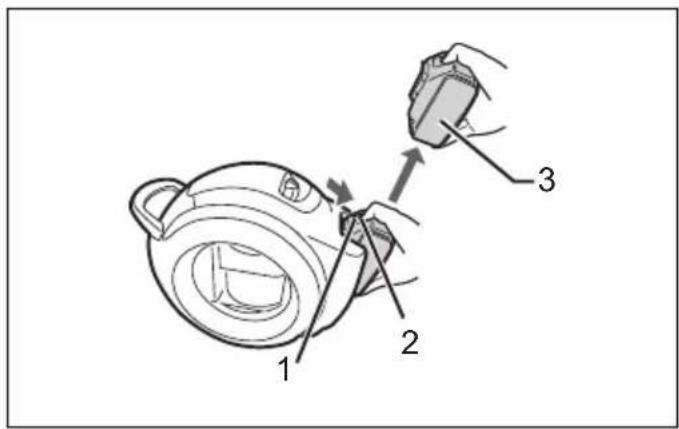
1
2
3
4
5
6
7
8
natural_image
Technical line drawing of a mechanical component with an exclamation mark and warning symbol (no text or labels)9
natural_image
Line drawing of a person using a vacuum cleaner (no text or symbols)10
11
12
13 14

15 16
17 18
19 20
21 22
23 24
natural_image
Diagram of a mechanical device with a downward arrow indicating a component or assembly (no text or symbols present)25 26
natural_image
Diagram of a vacuum cleaner with attached tubing and a close-up inset showing internal components (no text or labels)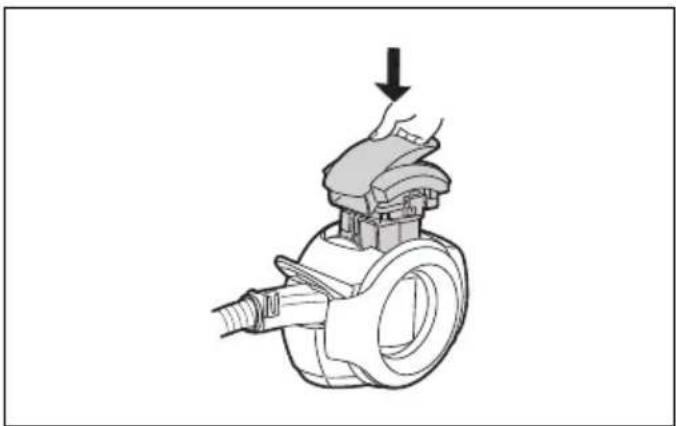
natural_image
Mechanical assembly diagram showing a hand pressing down on a valve component (no text or symbols present)27 28
natural_image
Illustration of a hand using a handheld tool to interact with a fan-shaped device (no text or symbols present)29 30
ENGLISH (Original instructions)
| Explanation of general view | ||
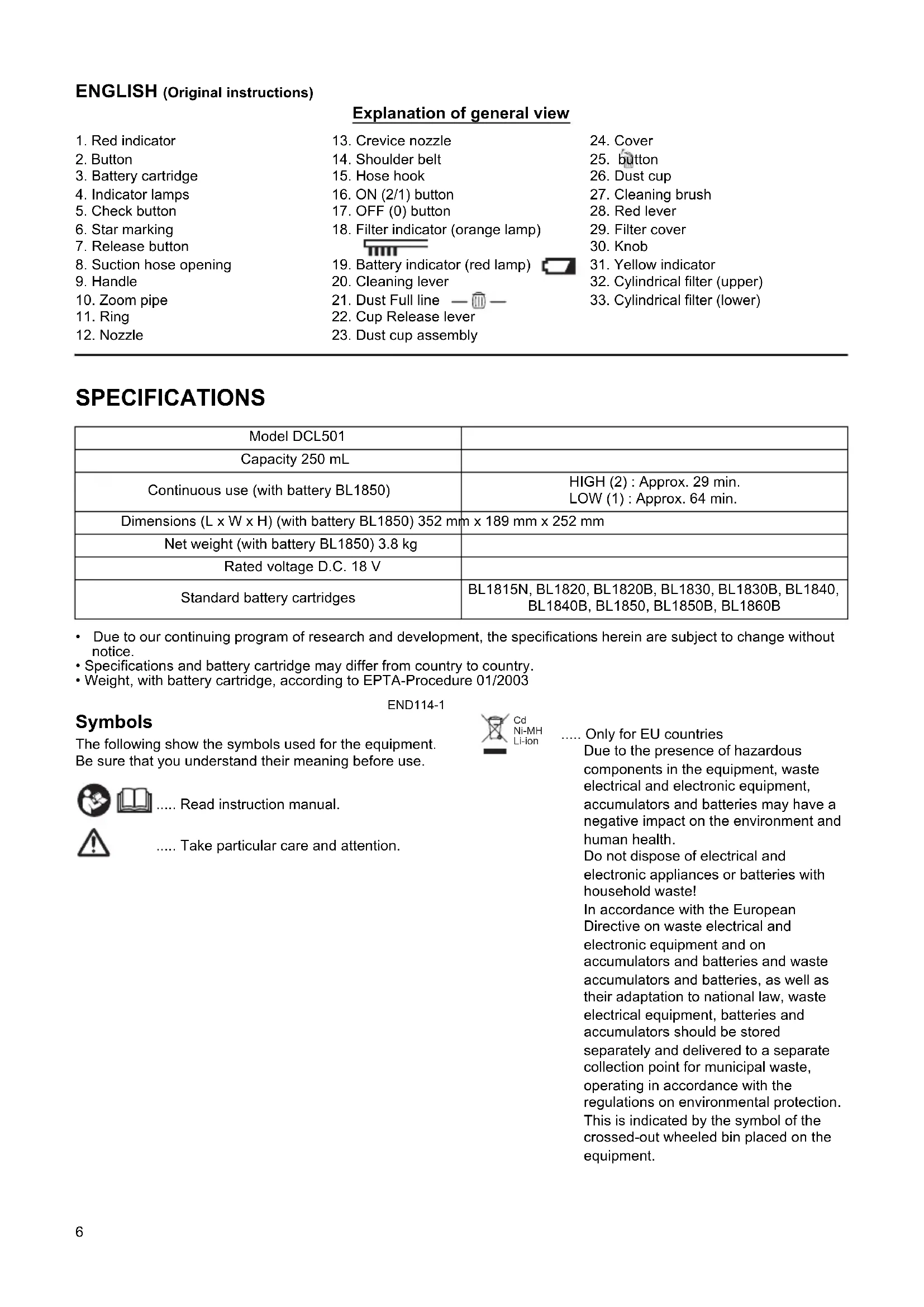
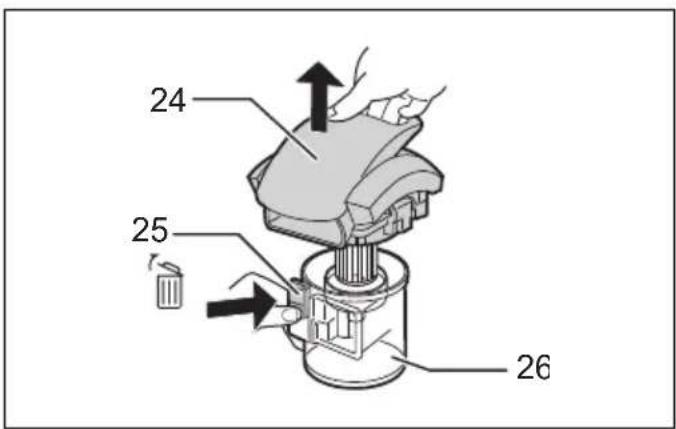
| 1. Red indicator | 13. Crevice nozzle | 24. Cover |
| 2. Button | 14. Shoulder belt | 25. button |
| 3. Battery cartridge | 15. Hose hook | 26. Dust cup |
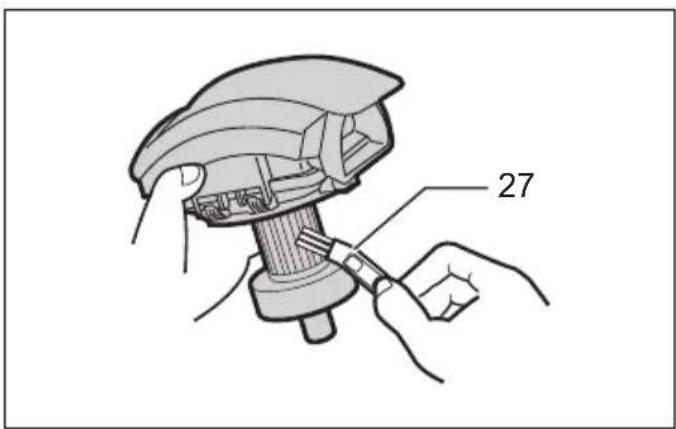
| 4. Indicator lamps | 16. ON (2/1) button | 27. Cleaning brush |
| 5. Check button | 17. OFF (0) button | 28. Red lever |
| 6. Star marking | 18. Filter indicator (orange lamp) | 29. Filter cover |
| 7. Release button | 30. Knob | |
| 8. Suction hose opening | 19. Battery indicator (red lamp) | |
| 9. Handle | 20. Cleaning lever | 31. Yellow indicator |
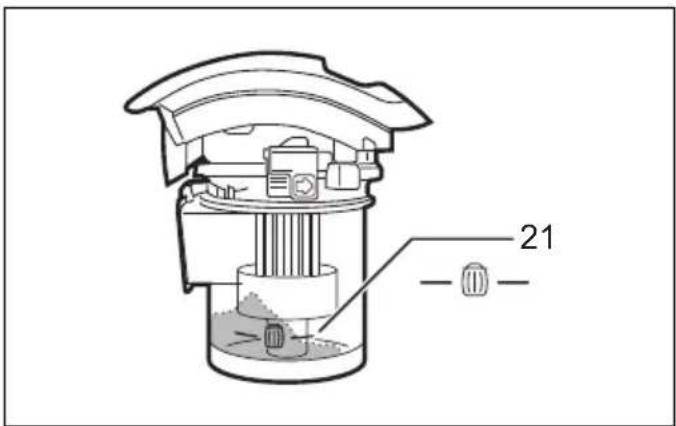
| 10. Zoom pipe | 21. Dust Full line — 📄 — | 32. Cylindrical filter (upper) |
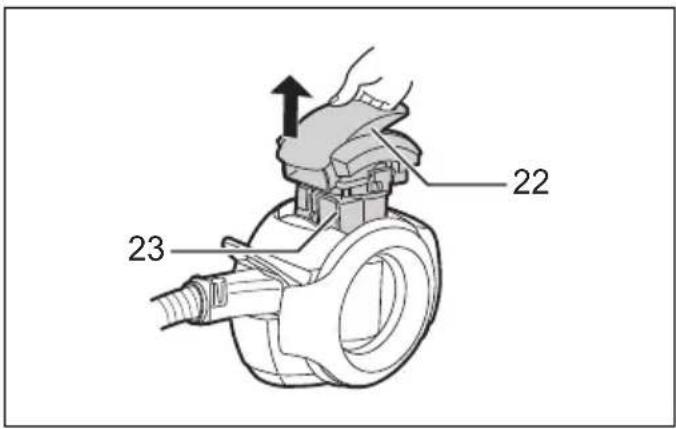
| 11. Ring | 22. Cup Release lever | 33. Cylindrical filter (lower) |
| 12. Nozzle | 23. Dust cup assembly | |
SPECIFICATIONS
| Model DCL501 | |
| Capacity 250 mL | |
| Continuous use (with battery BL1850) | HIGH (2): Approx. 29 min.LOW (1): Approx. 64 min. |
| Dimensions (L x W x H) (with battery BL1850) 352 mm x 189 mm x 252 mm | |
| Net weight (with battery BL1850) 3.8 kg | |
| Rated voltage D.C. 18 V | |
| Standard battery cartridges | BL1815N, BL1820, BL1820B, BL1830, BL1830B, BL1840, BL1840B, BL1850, BL1850B, BL1860B |
- Due to our continuing program of research and development, the specifications herein are subject to change without notice.
- Specifications and battery cartridge may differ from country to country.
- Weight, with battery cartridge, according to EPTA-Procedure 01/2003
END114-1
Symbols
The following show the symbols used for the equipment. Be sure that you understand their meaning before use.


..... Read instruction manual.

..... Take particular care and attention.

Cd Ni-MH Li-ion
..... Only for EU countries
Due to the presence of hazardous components in the equipment, waste electrical and electronic equipment, accumulators and batteries may have a negative impact on the environment and human health. Do not dispose of electrical and electronic appliances or batteries with household waste! In accordance with the European Directive on waste electrical and electronic equipment and on accumulators and batteries and waste accumulators and batteries, as well as their adaptation to national law, waste electrical equipment, batteries and accumulators should be stored separately and delivered to a separate collection point for municipal waste, operating in accordance with the regulations on environmental protection. This is indicated by the symbol of the crossed-out wheeled bin placed on the equipment.
Intended use
The appliance is intended for collecting dry dust.
IMPORTANT SAFETY INSTRUCTIONS
This appliance can be used by children aged from 8 years and above and persons with reduced physical, sensory or mental capabilities or lack of experience and knowledge if they have been given supervision or instruction concerning use of the appliance in a safe way and understand the hazards involved. Children shall not play with the appliance. Cleaning and user maintenance shall not be made by children without supervision.
When using an electrical appliance, basic precautions should always be followed, including the following:
READ ALL INSTRUCTIONS BEFORE USING THIS APPLIANCE.
WARNING - To reduce the risk of fire, electric shock or injury:
- This appliance is intended for household use.
- Do not expose to rain. Store indoors.
- Do not allow to be used as a toy. Close attention is necessary when used by or near children.
- Use only as described in this manual. Use only manufacturer's recommended attachments.
- Do not use with damaged battery. If appliance is not working as it should, has been dropped, damaged, left outdoors, or dropped into water, return it to a service center.
- Do not handle appliance with wet hands.
- Do not put any object into openings. Do not use with any opening blocked; keep free of dust, lint, hair, and anything that may reduce air flow.
- Keep hair, loose clothing, fingers, and all parts of body away from openings and moving parts.
- Turn off all controls before removing the battery.
- Use extra care when cleaning on stairs.
- Do not use to pick up flammable or combustible liquids, such as gasoline, or use in areas where they may be present.
-
Use only the charger supplied by the manufacturer to recharge.
-
Do not pick up anything that is burning or smoking, such as cigarettes, matches, or hot ashes.
-
Do not use without filters in place.
-
Do not charge the battery outdoors.
-
Do not pick up the following materials:
-
Hot materials such as lit cigarettes or spark/ metal dust generated by grinding/cutting metal
- Flammable materials such as gasoline, thinner, benzine, kerosene or paint
- Explosive materials like nitroglycerin
- Ignitable materials such as Aluminum, zinc, magnesium, titanium, phosphorus or celluloid
- Wet dirt, water, oil or the like
- Hard pieces with sharp edges, such as wood chips, metals, stones, glasses, nails, pins or razors
- Powder to clot such as cement or toner
- Conductive dust such as metal or carbon
-
Fine particle like concrete dust
Such action may cause fire, injury and/or property damage. -
Stop operation immediately if you notice anything abnormal.
- If you drop or strike the cleaner, check it carefully for cracks or damage before operation.
- Do not bring close to stoves or other heat sources.
- Do not block the intake hole or vent holes.
SAVE THESE INSTRUCTIONS.
IMPORTANT SAFETY INSTRUCTIONS
FOR BATTERY CARTRIDGE
- Disconnect the battery cartridge from the appliance before making any adjustments, changing accessories, or storing appliance. Such preventive safety measures reduce the risk of starting the appliance accidentally.
- Recharge only with the charger specified by the manufacturer. A charger that is suitable for one type of battery cartridge may create a risk of fire when used with another battery cartridge.
- Use appliances only with specifically designated battery cartridges. Use of any other battery cartridges may create a risk of injury and fire.
- When battery cartridge is not in use, keep it away from other metal objects, like paper clips, coins, keys, nails, screws or other small metal objects, that can make a connection from one terminal to another. Shorting the battery terminals together may cause burns or a fire.
-
Under abusive conditions, liquid may be ejected from the battery; avoid contact. If contact accidentally occurs, flush with water. If liquid contacts eyes, additionally seek medical help. Liquid ejected from the battery may cause irritation or burns.
-
Do not use a battery cartridge or appliance that is damaged or modified. Damaged or modified batteries may exhibit unpredictable behavior resulting in fire, explosion or risk of injury.
- Do not expose a battery cartridge or appliance to fire or excessive temperature. Exposure to fire or temperature above 130 °C (265 °F) may cause explosion.
- Have servicing performed by a qualified repair person using only identical replacement parts. This will ensure that the safety of the product is maintained.
- Before using battery cartridge, read all instructions and cautionary markings on (1) battery charger, (2) battery, and (3) product using battery.
- Do not disassemble battery cartridge.
- If operating time has become excessively shorter, stop operating immediately. It may result in a risk of overheating, possible burns and even an explosion.
- If electrolyte gets into your eyes, rinse them out with clear water and seek medical attention right away. It may result in loss of your eyesight.
- Do not short the battery cartridge:
(1) Do not touch the terminals with any conductive material.
(2) Avoid storing battery cartridge in a container with other metal objects such as nails, coins, etc.
(3) Do not expose battery cartridge to water or rain.
A battery short can cause a large current flow, overheating, possible burns and even a breakdown.
- Do not store the appliance and battery cartridge in locations where the temperature may reach or exceed 50 °C (122 °F).
- Do not incinerate the battery cartridge even if it is severely damaged or is completely worn out. The battery cartridge can explode in a fire.
- Be careful not to drop or strike battery.
- Do not use a damaged battery.
- Follow your local regulations relating to disposal of battery.
- If the appliance is not used for a long period of time, the battery must be removed from the appliance.
SAVE THESE INSTRUCTIONS.
Tips for maintaining maximum battery life
- Charge the battery cartridge before completely discharged. Always stop appliance operation and charge the battery cartridge when you notice less appliance power.
- Never recharge a fully charged battery cartridge. Overcharging shortens the battery service life.
- Charge the battery cartridge with room temperature at 10 °C - 40 °C (50 °F - 104 °F). Let a hot battery cartridge cool down before charging it.
- Charge the battery cartridge once in every six months if you do not use it for a long period of time.
PREPARATION
CAUTION:
- Always be sure that the appliance is switched off and the battery cartridge is removed before adjusting or checking function on the appliance.
Installing or removing battery cartridge (Fig. 1)
CAUTION:
• Always switch off the appliance before installing or removing of the battery cartridge.
- Hold the appliance and the battery cartridge firmly when installing or removing battery cartridge. Failure to hold the appliance and the battery cartridge firmly may cause them to slip off your hands and result in damage to the appliance and battery cartridge and a personal injury.
- Take care not to trap finger(s) between cleaner and battery as shown in diagram when loading battery. Trapping finger(s) may cause injury.
To remove the battery cartridge, slide it from the appliance while sliding the button on the front of the cartridge.
To install the battery cartridge, align the tongue on the battery cartridge with the groove in the housing and slip it into place. Insert it all the way until it locks in place with a little click. If you can see the red indicator on the upper side of the button, it is not locked completely.
CAUTION:
• Always install the battery cartridge fully until the red indicator cannot be seen. If not, it may accidentally fall out of the appliance, causing injury to you or someone around you.
- Do not install the battery cartridge forcibly. If the cartridge does not slide in easily, it is not being inserted correctly.
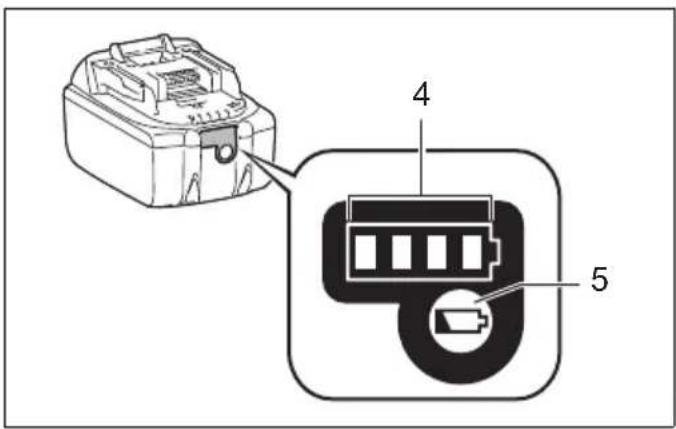
Indicating the remaining battery capacity (Fig. 2)
(Only for battery cartridges with "B" at the end of the model number.)
Press the check button on the battery cartridge to indicate the remaining battery capacity. The indicator lamps light up for few seconds.
| Indicator lamps Remaining | capacity | ||
 Lighted Off Blinking Lighted Off Blinking | (KOTT) | ||
| [CBKX] | 75% to 100% | ||
| [Σ30K] | 50% to 75% | ||
| [77X4] | 25% to 50% | ||
| [807Y] | 0% to 25% | ||
 | Charge the battery. | ||
| [7627] | The battery may have malfunctioned. | ||
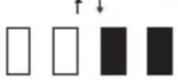 | |||
NOTE:
- Depending on the conditions of use and the ambient temperature, the indication may differ slightly from the actual capacity.
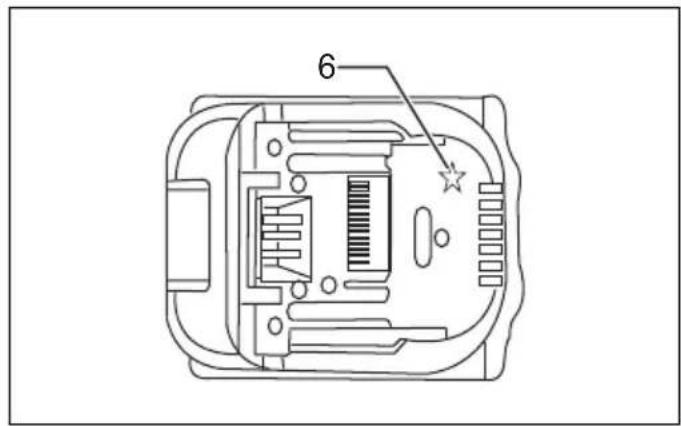
Battery protection system (Lithium-ion battery with star marking) (Fig. 3)
Lithium-ion batteries with a star marking are equipped with a protection system. This system automatically cuts off power to the appliance to extend battery life.
The appliance will automatically stop during operation if the appliance and/or battery are placed under one of the following conditions:
- Overloaded:
The appliance is operated in a manner that causes it to draw an abnormally high current.
In this situation, switch off the appliance and stop the application that caused the appliance to become overloaded. Then restart the appliance. If the appliance does not start, the battery is overheated. In this situation, let the battery cool before restarting the appliance.
- Low battery voltage:
The remaining battery capacity is too low and the appliance will not operate. In this situation, remove and recharge the battery.
Installing or removing attachments
CAUTION:
- Always be sure that the appliance is switched off and the battery cartridge is removed before carrying out any work on the appliance.
- Firmly push the nozzle or zoom pipe into the handle while twisting to securely attach to ensure that they do not come loose during use.
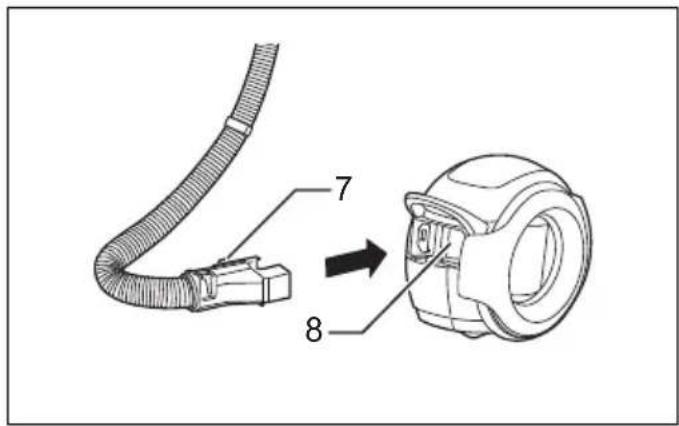
Attach the hose connector to the suction hose opening on the appliance.
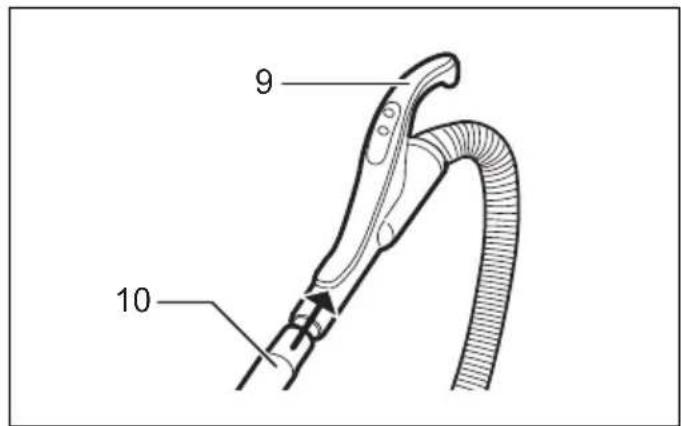
Press the release button to disconnect the hose. (Fig. 4) Insert the zoom pipe into the end of the handle. (Fig. 5)
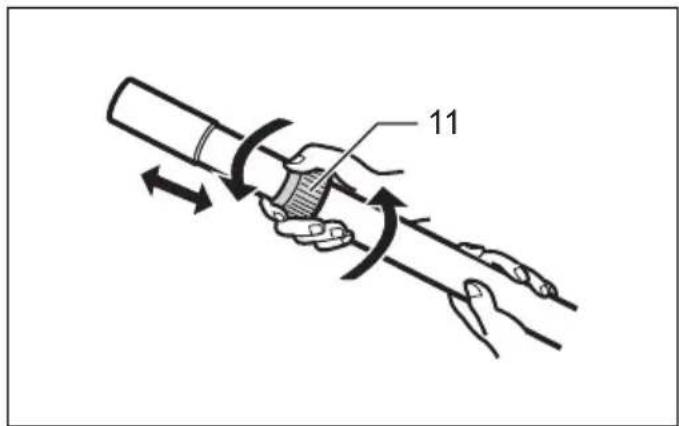
Loosen the zoom pipe ring and adjust the pipe length. After adjustment, tighten the ring. (Fig. 6)
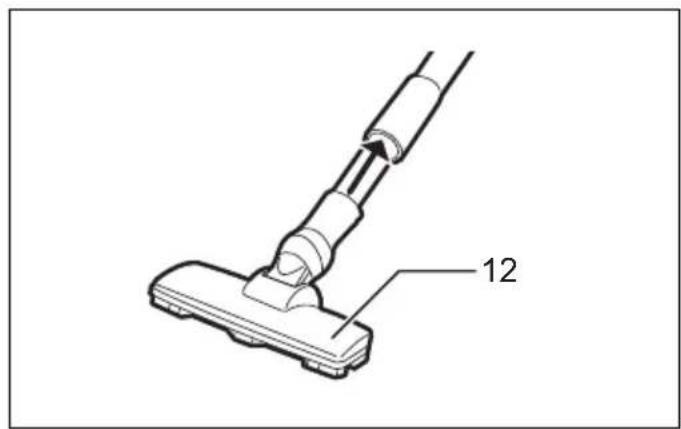
Attach the nozzle to the zoom pipe. (Fig. 7)
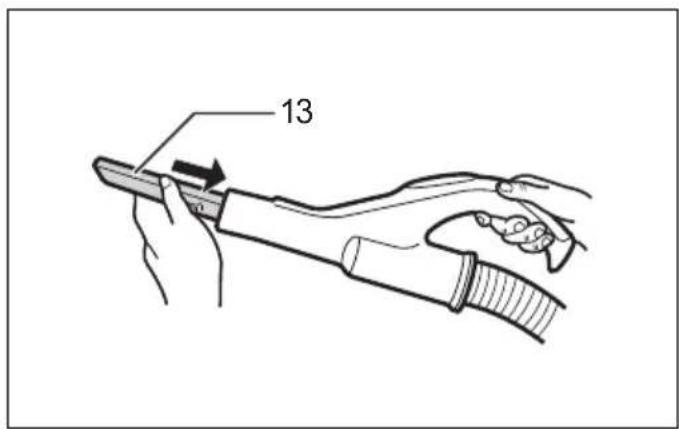
Attach the crevice nozzle to the handle or zoom pipe to use to clean crevices and other narrow, hard-to-reach areas. (Fig. 8)
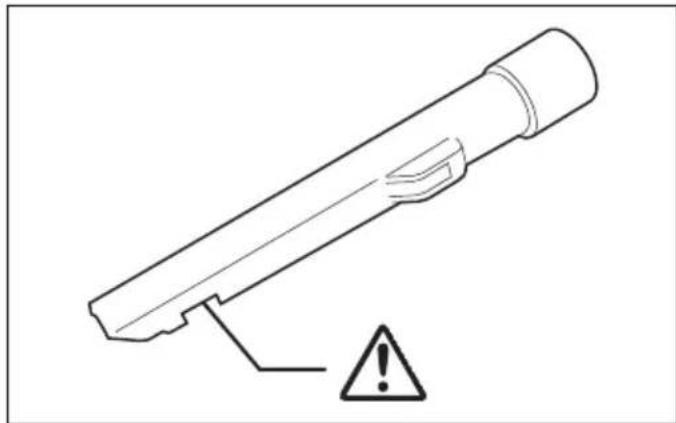
CAUTION:
- Do not cover the hole of the crevice nozzle. (Fig. 9) It may cause overheat and result in damage to the appliance.
Attaching the shoulder belt
CAUTION:
- When hanging the appliance on your shoulder, always hold the appliance itself by hand to prevent it from dropping. Dropping the appliance may cause injury or property damage.
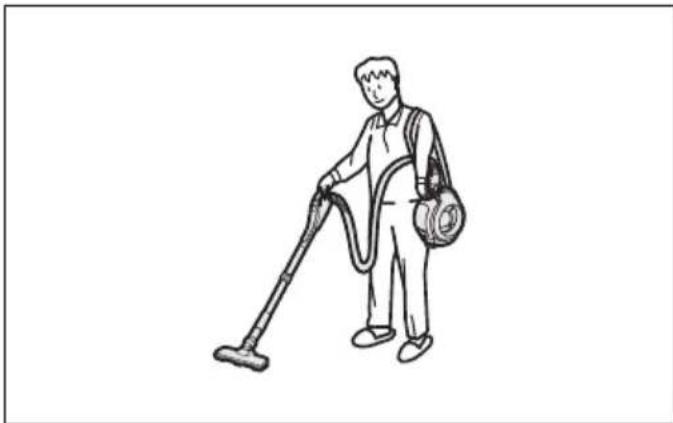
Use the shoulder belt to hang the appliance on your shoulder for cleaning a high place. (Fig. 10)
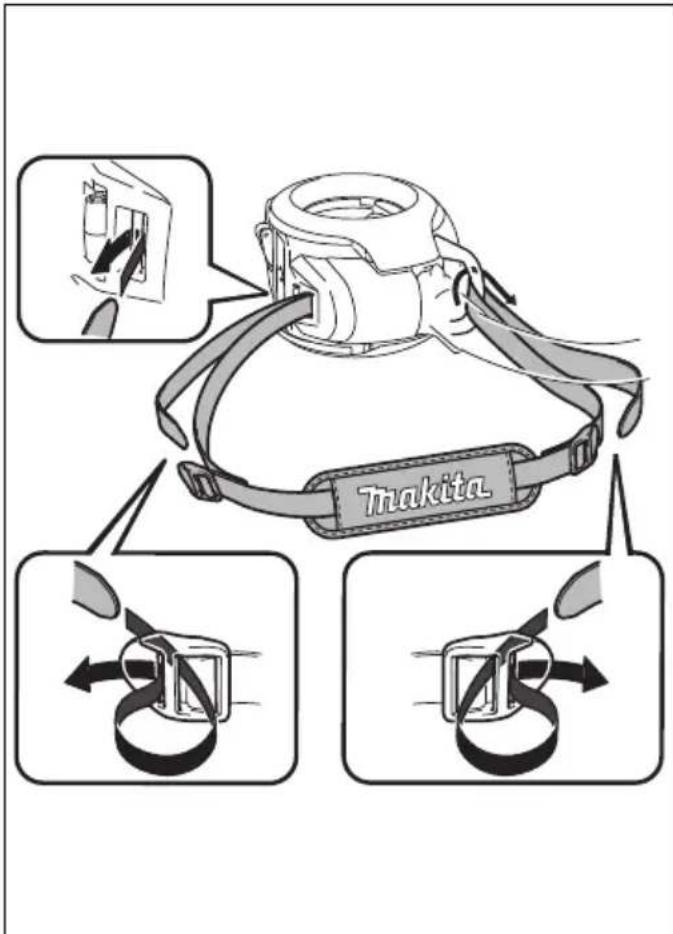
Loop the shoulder belt around both the carrying handle and the belt holder and then run it through the stopper as shown in the diagram. (Fig. 11 & Fig. 12)
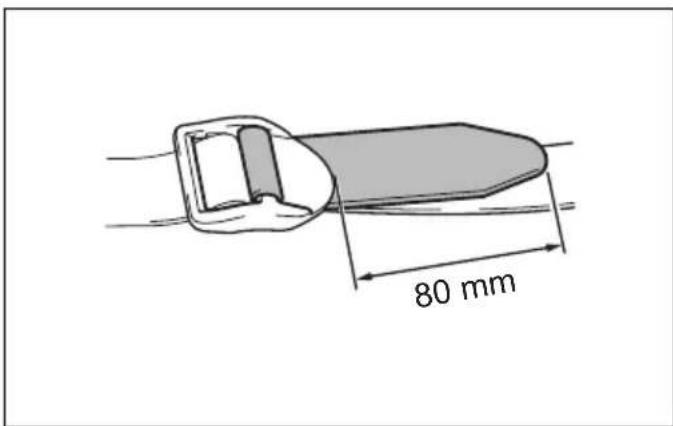
Pull the ends of the belt up so that they are at least 80 mm (3") from the top of the stopper. (Fig. 13)
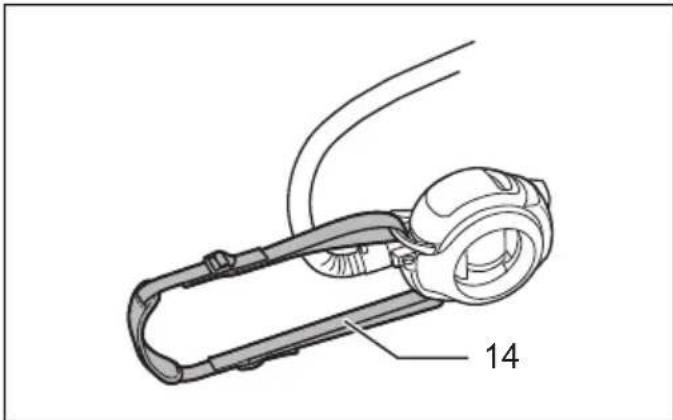
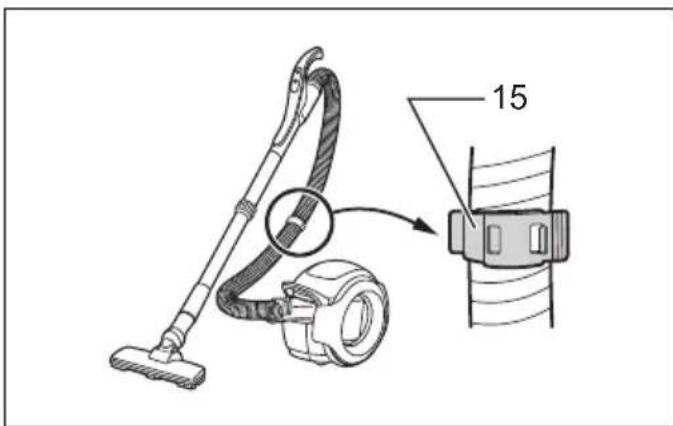
Attach the hose hook at around the midpoint along the hose. Store the shoulder belt in the hose hook when not using it. (Fig. 14 & Fig. 15)
OPERATION
Switch action (Fig. 16)
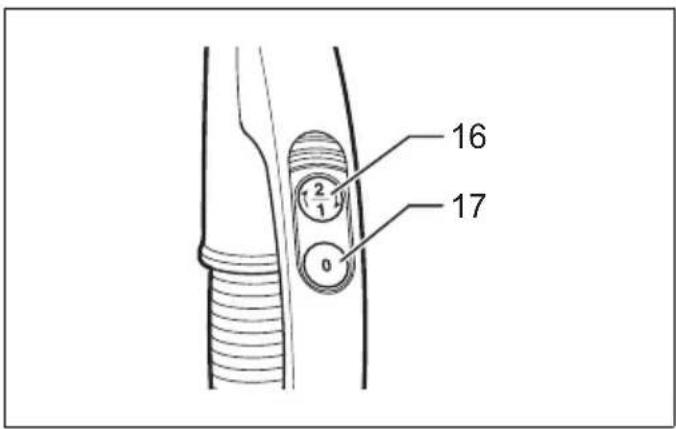
To start the cleaner, simply press the ON (2/1) button. To switch off, press the OFF (0) button. To change the cleaner speed, press the ON (2/1) button. The first press on this button is for high speed and the second press for low speed. Each press on this button repeats the speed change alternatively.
Indicator lamps (Fig. 17)
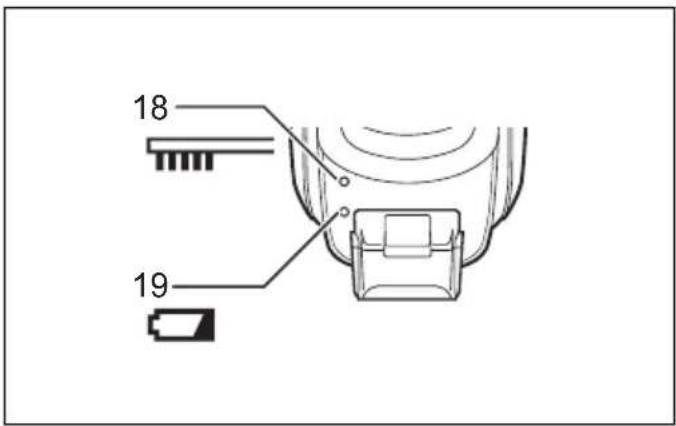
The indicator lamps light up or flash to indicate the status of the appliance.
Filter indicator (orange lamp) | Lighting on T | The filter is dirty. Clean the filter. Refer to Section “Cleaning the filter (after work)”. |
| Blinking rapidly | The filter is clogged with dust. Wash the filter. Refer to Section “Cleaning the filter (thoroughly cleaning)”. | |
Battery indicator (red lamp) | Blinking The | battery power is getting low. |
| Lighting on T | the battery is very low and the appliance will stop. Charge the battery. | |
Both filter indicator (orange lamp) and battery indicator (red lamp) | Blinking simultaneously | Ask your local authorized service center for inspection and repair. |
NOTE:
- Always remove dust frequently. Suction power will be reduced if there is too much dust in cleaner.
MAINTENANCE

CAUTION:
• Always be sure that the appliance is switched off before attempting to perform inspection or maintenance.
- Place newspapers or a garbage can underneath to work over. The newspapers or garbage can will catch any falling dust from the appliance.
Cleaning the filter (after work) (Fig. 18)
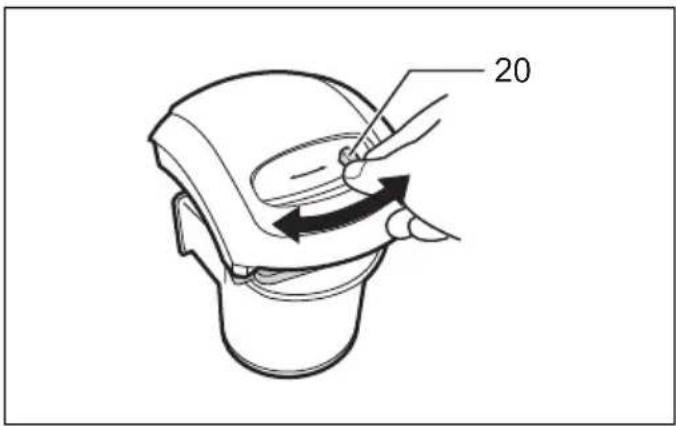
After use, move the filter cleaning lever back and forth around ten times to loosen dust from the filter.
Disposing of dust
Dispose of dust before the level exceeds the Dust Full line. The suction power may drop if the level exceeds this line. Dispose of dust before it reaches the line, including it accumulates at one side only. (Fig. 19)
To dispose of dust, follow the procedure below.
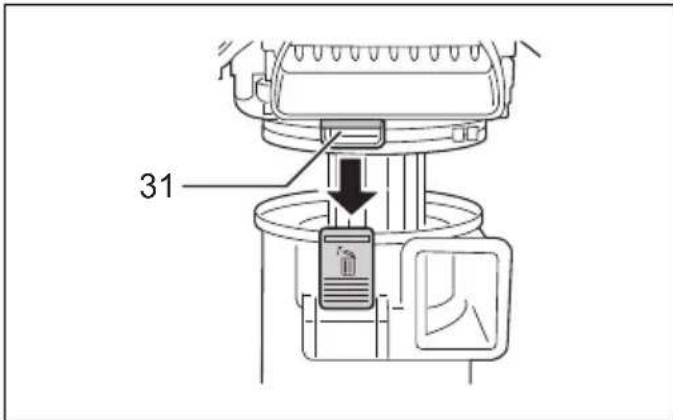
- Raise the Cup Release lever to eject the dust cup assembly. (Fig. 20)
- Press the button to remove the cover. Dispose of the dust in the dust cup. (Fig. 21)
- Use the cleaning brush attached to the dust cup to brush away dust inside the cup. (Fig. 22)
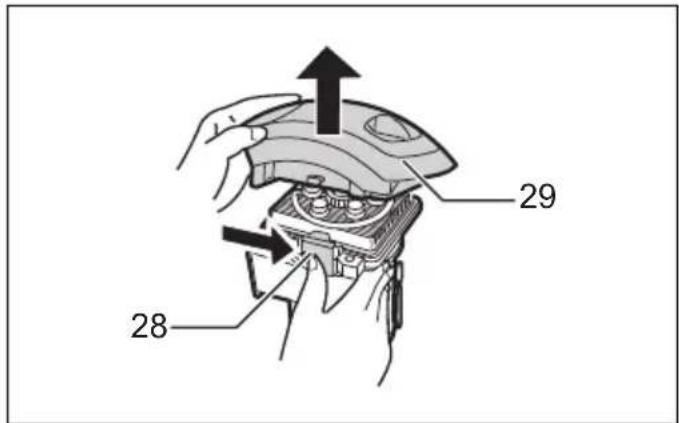
- Move the red lever on the filter cover in the direction of the arrow to flip the filter cover open. (Fig. 23)
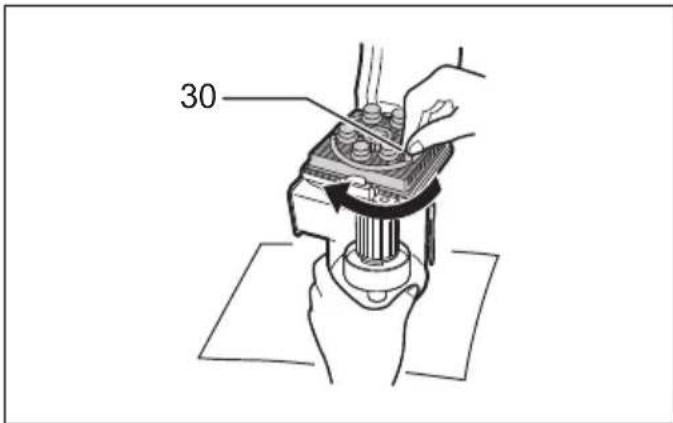
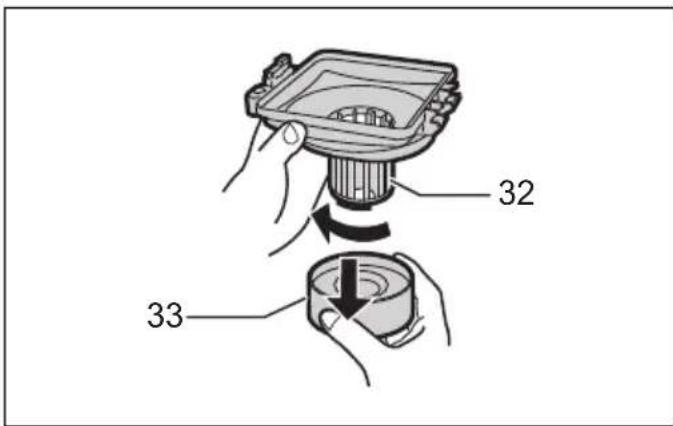
- Grasp the knob and spin it around ten times. (Fig. 24)
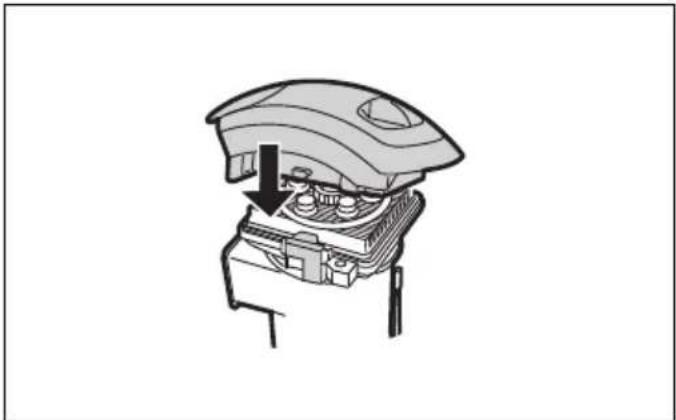
- Close the filter cover. (Fig. 25)
- Attach the dust cup to the cover. (Fig. 26)
- Attach the dust cup assembly to the appliance body. (Fig. 27)
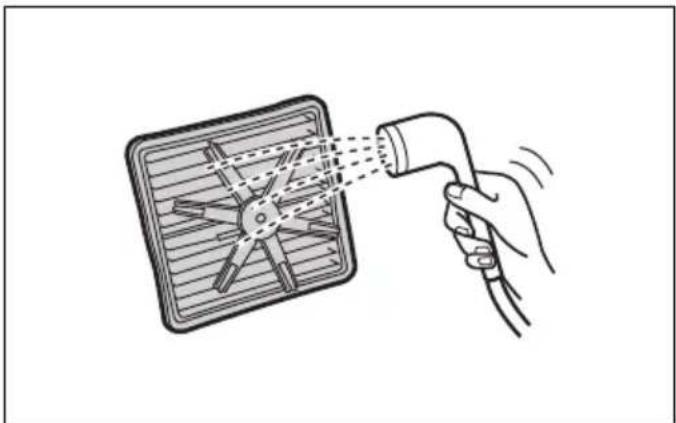
Cleaning the filter (thoroughly cleaning) (Fig. 28 & Fig. 29)
Wash out the filter if it gets too dirty, when suction power drops or the orange lamp starts flashing.
Remove the dust cup, filter cover, filter, and cylindrical filter apart and wash each separately to clean them. Use plain water or a neutral detergent solution to wash each part.
After washing the parts, leave them out to fully dry and then put them back together.
Cleaning the cleaner body
From time to time wipe off the outside (cleaner body) of the cleaner using a cloth dampened in soapy water.

CAUTION:
- Never use gasoline, benzine, thinner, alcohol or the like. Discoloration, deformation or cracks may result.
Dry it out thoroughly before use. An insufficiently dried filter may cause poor suction and shorten the service life of the motor.
Do not blow dust sticking on the cleaner by air duster. It brings dust into the housing and causes failure.
STORAGE
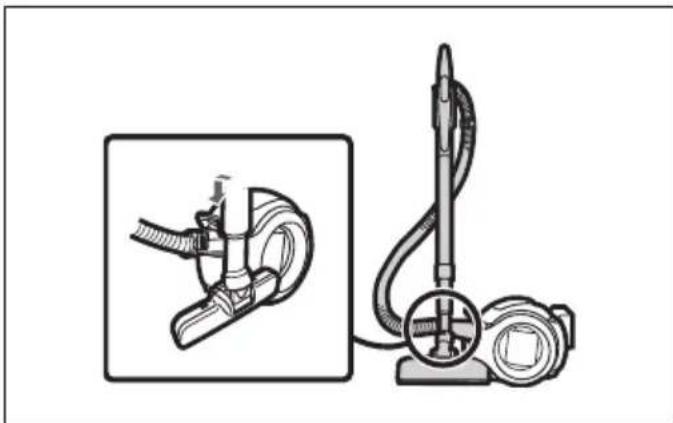
Shorten the zoom pipe and insert the hook into the holder securely. (Fig. 30)
TROUBLE SHOOTING
Before asking for repairs, check the following points.
| Symptom Area to be investigated Fixing method | ||
| Weak suction power | • Is dust cup full of dust? • Is filter clogged? • Is battery exhausted? | • Empty dust from dust cup. • Dust down or wash filter. • Recharge battery. |
| Not working • Is battery exhausted? • Recharge battery. | ||
010051
NOTE:
- Do not attempt to repair cleaner by yourself. To maintain product SAFETY and RELIABILITY, repairs, any other maintenance or adjustment should be performed by Makita Authorized Service Centers, always using Makita replacement parts.
OPTIONAL ACCESSORIES

CAUTION:
• These accessories or attachments are recommended for use with your appliance specified in this manual. The use of any other accessories or attachments might present a risk of injury to persons. Only use accessory or attachment for its stated purpose.
If you need any assistance for more details regarding these accessories, ask your local Makita Service Center.
- Makita genuine battery and charger
NOTE:
- Some items in the list may be included in the appliance package as standard accessories. They may differ from country to country.
OPTIONELE ACCESSOIRES
LET OP:
..... Kun for EU-land