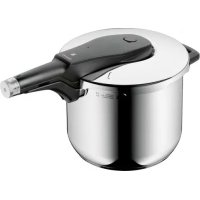
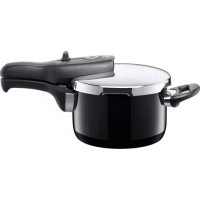
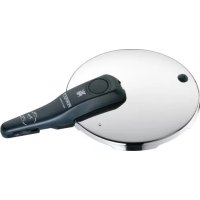
USER MANUAL Perfect Pro WMF
Operating instructions GB
Contents
- Safety Notes
- Operation of the timer*
- How to use the pressure cooker
- Notes on operation
- Cooking using your pressure cooker
- Four methods for pressure reduction
- Care and maintenance of the pressure cooker Cleaning, storage, maintenance
- Versatile use
- Guarantee statement
- Preclusion of liability
- Troubleshooting
- Table of cooking times
Accessories and spare parts See cover
*Perfect Ultra only
1. Safety Notes
- Please carefully read the operating manual and all the instructions before using the WMF pressure cooker. Improper use may result in damage.
- Do not allow anyone to use the pressure cooker unless they have first read the operating manual.
- Keep children away from the pressure cooker while it is in use.
- Never use your pressure cooker in the oven. The high oven temperatures could damage handles, valves and safety devices.
- Move the pressure cooker very carefully while it is pressurised. Do not touch hot surfaces. Use the handles and buttons provided. Use gloves if necessary.
- Only use the pressure cooker for the purpose intended.
- This appliance cooks with the aid of pressure. Improper use may result in burns. Take care to ensure that the appliance is properly closed before heating it up. You will find information on this in the operating manual.
- Never use force to open the pressure cooker. Never open it before you are sure that the interior is fully depressurised. You will find information on this in the operating manual.
- Never heat the pressure cooker without any water inside; this would cause serious damage to the pressure cooker. Minimum: 1 / 4 I water.
Important note:
Take care to ensure that the liquid never fully evaporates. This could result in food burning onto the pot and the pot being damaged by melting plastic parts. The hob could also be damaged by the aluminium in the base melting. If this should occur then switch off the heat source and do not move the pot until it has cooled down completely.
- Never fill the pressure cooker to more than 2/3 of its capacity. If using foodstuffs which expand during the cooking process, such as rice or dried vegetables, fill the pressure cooker to a maximum of half its capacity and observe any instructions detailed in the operating manual with regards to this.
- Never leave your pressure cooker unattended. Regulate the heat to ensure that the cooking indicator does not rise above the corresponding orange ring. If the heat is not turned down, steam will escape through the valve. Cooking times may change and the loss of liquid may result in function faults.
- Only use the heat sources listed in the operating manual.
- If you have cooked meat with the skin attached (such as ox-tongue), which may expand under the influence of pressure, take care not to pierce the meat while the skin remains expanded. This could result in burns.
-
In principle, always shake the pressure cooker before opening it to avoid pockets of steam spitting out; this could result in scalding. This is particularly important when releasing steam quickly or depressurising the pressure cooker under running water.
-
When releasing steam quickly or depressurising under running water, always keep your hands, head and body away from the danger area. You could otherwise be injured by escaping steam.
- Before each use of your pressure cooker, check that the safety devices, valves and seals are working properly. Only then can the safe functioning of your pressure cooker be guaranteed. You will find information on this in the operating manual.
- Do not use your pressure cooker to fry food in oil under pressure.
- Never interfere with the safety systems, except when carrying out the maintenance work specified in the operating manual.
- Replace the wear parts (see warranty statement) at regular intervals. Parts showing apparent discolouration, cracks or other damage, or which no longer sit correctly, must be replaced with original WMF spare parts.
- Only use original WMF spare parts. In particular, always use pots and lids of the same model.
- Do not use the pressure cooker if it or its parts are damaged or distorted, or if their functionality does not correspond to that described in the operating manual. If that is the case, please consult your nearest WMF dealer or WMF AG's Customer Service Department in Geislingen/Steige.
Important safety notes on timer* and battery:
The timer is not suitable for children under 3 years of age as it contains small parts that may be swallowed or inhaled by children (battery lid, sealing ring, battery).
If the LCD display should become damaged, make sure not to injure yourself on the glass splinters. Ensure that the liquid crystals do not come into contact with your skin or find their way into your eyes and mouth. The battery supplied is not rechargeable. When changing the battery, make sure that you do not injure yourself on the battery contacts.
Batteries may leak. If battery fluid should come into contact with your hands or clothing, immediately wash the affected areas with water. If battery fluid should come into contact with your eyes, rinse immediately with plenty of water and then seek medical treatment.
Batteries must never be damaged, drilled open or thrown into naked flames. Only replace the battery by a battery of the type as specified by these operating instructions. Never dispose of used batteries in your household waste but take them to a municipal recycling centres.

Please keep this operating manual in a safe place.
2. Operation of the timer*
You can use your pressure cooker to cook with or without the use of the timer.
Important note:
Do not place the timer anywhere near any magnets.
The timer is matched exactly to your lid handle and cannot be exchanged. If you own several WMF Perfect Ultra pressure cookers with timer, any interchanging of the timers may lead to an incorrect display.
2.1. Switching the pressure cooker on and programming
In principle, the timer (12) can only be switched on and operated, if it is positioned on the lid handle (5).
The timer (12) is switched on if the plus button (25) is pressed. After approximately 2 seconds the display (20) shows 00 . Now you can use the plus and minus key (25)/(26) to set the required cooking time (max. 99 minutes). If the key is kept pressed down, a rapid run-through is activated. When you heat your pressure cooker, pressure builds up. The indication on the timer is illuminated in red (24). Now you can no longer open the pot. If the preset heat setting has been reached, the cooking time commences. The timer (12) responds by sounding 3 short bleeps and the indicator counts backwards in minutes. The running seconds indicator (22) in the display (20) shows that the cooking time is expiring (V).
During the cooking time you can correct the programmed time with the plus or minus keys (25)/(26). This is only possible if the timer is located on the handle. The timer can be switched off at any time (12) by keeping the plus and minus keys (25)/(26) pressed simultaneously until the indication extinguishes.
2.2. On expiry of the cooking time
When the preset time has expired, a signal of 5 short bleeps is sounded. You can switch off the sound by briefly pressing the plus or minus
keys (25)/(26). Otherwise the signal is sounded another four times.
The pressure cooker can only be opened if it has been fully depressurized. Only then the indicator (24) on the timer (12) will change from red to green (W). The indicator flashing in green (24) will extinguish automatically after approximately 1 minute.
2.3. Removal of the timer
In order to remove the timer (12) simply withdraw it in an upward direction from the handle (X).
The earliest that you can remove the timer (12) is at the start of the cooking time, that is, when the preset heat setting has been reached and the minute time display (21) is running. When you remove the timer (12), the red indicator extinguishes (24), but the minute display (21) continues to run on.
On expiry of the preset time period, even with the timer (12) removed, the signal is sounded up to 5 times (see above). Then the indication extinguishes.
During the cooking time the timer can be removed (12) and also replaced at any time.
A correction of the preset cooking time is only possible, if the timer (12) is positioned on the lid handle (5).
2.4. Notes on care and maintenance
Only use a moist cloth to wipe down the timer (12) for cleaning.
Do not immerse in water and do not clean in the dishwasher.
2.5. Battery change
The battery compartment is located to the rear of the timer (12). Use a coin to open the compartment (Y). Place a battery into the battery compartment in accordance with the polarity specifications (Z). Lithium batteries of type CR 2450, 3 volt, are required.
Use a coin to re-close the battery compartment (Y).
3. How to use the pressure cooker
Before first use
3.1. Open the pot
Turn the rotary knob (8) to the position open/close30a and pull it backwards (30b). Pivot the lid handle (5) to the right until the indicators on the lid and on the long handle are aligned B.Lift off the lid.
3.2. Cleaning the pot
Before first use, you should remove the labels and wash all parts of your pressure cooker (see Section on »Cleaning').
Turn the lid over and detach the lid handle (5) from the lid by pulling the orange slide (7) on the underside of the handle (5) towards the end of the handle as indicated by the arrow and then lift off (C).
Remove the sealing ring (10) from the lid.
3.3. Closing the pot
Insert the handle (5) into the lid (D) and move the orange slide (7) across the lid rim until it audibly engages.
Insert the sealing ring (10) into the rim of the lid.
Replace lid (see marking on lid and pot handle) and turn lid handle (5) to the left until the stop position has been reached (B).
Press rotary knob forwards (8) (A) and set to the required heat setting 1 or 2 (30c)/(30d).
4. Notes on operation
4.1. Checking the safety devices before each use
Ensure that the sealing ring (10) and lid edge are clean. Check that the ball is sitting visibly in the safety valve (4) on the underside of the lid (E). If the balls are in the upper chamber of the safety valve (4), remove the handle (5) and press the ball into the lower chamber.
Test the main valve (3) for ease of movement by pressing gently with your finger (G). Check the cooking indicator seal (2), the seal of the residual pressure safety device (13) and the seal of the steam outlet aperture (14) for secure positioning and any damage. Insert the handle (5) into the lid. Replace lid and close.
4.2. Liquid volumes
To ensure that the correct amount of liquid is used, the pot has an internal scale (H).
At least 1/4 l of liquid is required to generate steam, regardless of whether you are cooking with or without inserts.
To ensure that your pressure cooker's functionality is not impaired, do not fill it to more than 2/3 of its capacity.
When cooking foodstuffs which foam or expand heavily (e.g. stock, pulses, innards, compotes), only fill the pot to half its capacity. (See the section on Preparing wholefood for further information).
If you want to brown your food before cooking (e.g. onions, meat pieces etc.); you can use your WMF pressure cooker as a conventional pot. In order to complete the cooking, remove the browning residue and add the requisite amount of liquid (at least 1/4 l) before closing the pressure cooker.
Caution!
Never cook without sufficient liquid and take care to ensure that the cooking liquid never evaporates fully. Failure to observe this instruction may result in food burning, damage to the pot or its plastic handles (see Safety Notes 9.).
5. Cooking using your pressure cooker
5.1. General
Your pressure cooker cooks food under pressure, i.e. at temperature above 100^ . This reduces cooking times by up to 70% , a significant energy saving. Due to the short cooking time in steam the food's flavour, taste and vitamins are largely preserved.
5.2. Cooking with inserts
Depending on the size of your pressure cooker you can cook with inserts or a trivet. Inserts and trivets are available as accessories from your WMF dealer (see Accessories and Spare Parts inside the cover).
5.3. Heating
Close pot and turn rotary knob to (8) the heat setting recommended in the cooking time table (30c)/(30d):
Heat setting 1 (slow cooking setting) first orange-coloured ring
Use heat setting 1 for preparing delicate foods such as vegetables, fish or fruit. With this heat setting, cooking is particularly slow and gentle; flavour and nutrients are better preserved. At heat setting 1 the cooking signal only rises to the first cooking ring. Excessive pressure is automatically regulated via the main valve (see Section 5.4 Cooking Times).
Heat setting 2 (fast cooking setting) second orange-coloured ring
Use heat setting 2 for preparing all other foods (see also Section 8 Versatile Use). With this heat setting you save a great deal of time and thus energy. At heat setting 2 the cooking
signal rises to second cooking ring. Excessive pressure is auto matically regulated via the main valve (see Section 5.4 Cooking Times).
Switch on timer (12) on the lid handle (5) and enter* the required cooking time. Heat pressure cooker to the highest energy setting.
During this heating phase air escapes via the safety valve (4), until the valve closes audibly and pressure can build up.
The red indicator (24) on the timer (12) signals that you can* now no longer open the pot (W). The cooking indicator (1) begins to rise. You can observe this through the recess next to the cooking indicator (I) and regulate in good time the actual energy supply.
When the preset heat setting has been reached the timer (12) sounds 3 short bleeps. From now on the preset heat setting will start to count backwards (V)^* .
5.4. Cooking times
The timer (12) signals that cooking time* has commenced. Take care to ensure that the ring position on the cooking indicator (1) remains stable. Regulate the heat accordingly. If the cooking indicator (1) falls below the required orange ring, you will have to turn up the heat again slightly. This will slightly prolong the cooking time.
If the cooking indicator (1) rises above the preset heat setting (30c) / (30d) excess steam pressure will result. This will escape audibly via the main valve (3) on the lid handle (5). Remove the pot from the hob, wait until the cooking indicator (1) has fallen to the corresponding ring, and then replace on the hob with a reduced heat setting.
Pressure cooking facilitates shorter cooking times because the steam pressure in the pot results in higher temperatures.
First ring, approximately 110^ (operating pressure 45kPa , regulating pressure 90kPa ) for delicate foods such as fish or compote
Second ring, approximately 119^ (operating pressure 95kPa , regulating pressure 130kPa , max. 150kPa ) for all other foods
Energy-conscious users will want to turn off the heat even before the end of the cooking time, since the heat stored in the pot will suffice to finish the cooking process.
Cooking times may differ for same foodstuffs depending on quantity, form, and composition.
The TransTherm® universal base (11) is suitable for all hob types, including induction hobs. When cooking on induction hobs a humming noise may develop if on a high heat setting. This noise has technical causes and does not indicate that either your hob or your pressure cooker is defective. The pot size must correspond to the size of the cooking zone. Otherwise - especially in the case of small diameters - the cooking zone (magnetic zone) may not respond to the pot base.
5.6. Opening the pot
The timer (12) signals the end of the cooking time by sounding 5 short bleeps which - if you do not switch it off - is repeated up to four times. You can switch off the sound by briefly pressing the plus or minus keys (25) / (26)^* .
You have four ways to depressurize the pot (see next page).
In principle, the lid should only be opened and removed from the pot once the pot is depressurised. This can be recognized by the display (24) on the timer (12) changing from red to green (flashing) (W)^* . Also this means that the cooking indicator (1) must have fully disappeared into the handle (5) (J).
If the red indication (24) lights up in the timer (12)^* , although the cooking indicator (1) has fully disappeared in the pot, the so-called residual pressure safety device is effective.
Release the same by pushing forward again the rotary knob (8) and then pulling the same backward again (A).
Always shake briefly before opening the pot. This will release any pockets of steam from the food. These may form especially when cooking liquid or viscous foods which can spit when removing the lid. Now turn the lid handle (5) to the right as described previously, and lift off the lid in an upward direction.
6. Four methods for depressurization
Important note:
If you have cooked foaming or expanding foods (e.g. pulses, stock, grains), you should not depressurise the pot using methods 2, 3 or 4. Jacket potatoes will burst if you release steam from the pressure cooker using Method 2, 3 or 4.
When quickly releasing steam using the rotary knob or under running water, always keep your hands, head and body away from the danger area. You could otherwise be injured by escaping steam.
Method 1
Remove the pot from the heat source. After a short time, the cooking indicator (1) will fall.
When it has disappeared completely inside the handle (J) and the indication on the (24) timer (12)^* has changed from red to green (W), turn the rotary knob (8) to the position open/close (30a) and pull it backwards (30b).
During this procedure any remaining residual steam will escape from under the lid handle (5). When all the steam has escaped, briefly shake the pot and open.
We recommend this method in particular for extended cooking times as you can use the existing residual heat.
Method 2
If you wish to release the steam slowly and softly, then select automatic steam-off. Turn the rotary knob (8) to the position open/close (30a). The steam will escape slowly from under the lid handle.
When the red indicator (24) on the timer (12) has changed from red to green () and the cooking indicator has disappeared fully into the pot (J), briefly shake the pot and open.
Method 3
If you wish to release the steam as quickly as possible, turn the rotary knob (8) to the position open/close and pull it backwards for a fast steam-off (A).
When the red indicator (24) on the timer (12) has changed from red to green (W) and the cooking indicator has disappeared fully into the pot (J), briefly shake the pot and open.
Method 4
If you are worried by the escaping steam, simply place the pot in the sink and run cold water over the lid (K). Take care to ensure that the timer (12)^* does not get wet, otherwise it might become damaged.
When the red indicator (24) on the timer (12)^* has changed from red to green (W) and the cooking indicator has disappeared fully into the pot (J), briefly shake the pot and open.
7. Care and maintenance of the pressure cooker
7.1. Cleaning
Remove timer (12) from the lid handle (5) and (X) wipe* with a moist cloth. Remove the lid handle (5) and (C) rinse under running water (L). Remove the sealing ring (10) from the lid and rinse by hand.
The pot, lid and inserts can be washed in the dishwasher.
Food residues should not be scraped off but soaked in water. Simmer a vinegar and water solution to remove lime scale deposits. The base of the pot should also be cleaned regularly.
7.2.Storage
Store the sealing ring (10) separately after cleaning in order to protect it.
7.3. Maintenance
Your pressure cooker is a technical appliance and its individual parts may be subject to wear- and-tear. Therefore, after prolonged use, you should check all the individual parts in accordance with the spare parts list. If any changes are apparent, the parts in question must be replaced. Only use original spare parts produced by the manufacturer.
Note:
Any damage to the lid handle (5) will require a factory repair by WMF.
8. Versatile use
The advantages of pressure cooking do not only apply to standard methods of food preparation:
8.1. Cooking frozen food
Frozen food can be placed in the pot directly from the freezer. Meat must be defrosted slightly before browning. Vegetables can be placed in the insert straight from the packet. While the heating up times will be prolonged, cooking times will remain the same.
8.2. Cooking wholefood
Wholefood often involves grains and pulses. Grains and pulses need not necessarily be soaked before cooking them in a pressure cooker. If they are not soaked, cooking times will be prolonged by about 50% .
As well as the minimum liquid volume of 1/4I , at least 2 parts liquid must be added to 1 part grain/pulses. The residual heat from the hob can be used for final swelling. Remember that, when cooking foaming or expanding foods (grains, pulses), the pot can only be filled to half its capacity.
8.3. Making preserves
1 I preserving jars should be cooked in a 6.5 l or 8.5 l pressure cooker, while smaller jars should be cooked in a 4.5 l pressure cooker. Prepare the food to be bottled as normal. Pour 1/4 l water into the pot. Place the preserving jars into the perforated insert.
Cook vegetable /meat on the second orange indicator for approximately 20 minutes.
Cook stoned fruit on the 1st orange indicator for approximately 5 to 10 minutes.
For releasing steam allow the pot to cool down slowly (Method 1) - do not depressurize by means of the rotary knob (8) or under running water, as otherwise the juice will be spill out of the jars.
8.4. Juicing
You can use your pressure cooker to juice small quantities of fruit.
Pour 1/4 water into the pot. Place the fruit in the perforated insert on top of the un-perforated insert; add sugar to taste. Cook using the 2^nd orange ring. The cooking time will be between 10 and 20 minutes, depending on the type of fruit.
Depressurise the pot under running water (Method 4). Shake briefly before opening.
8.5. Sterilising
Baby bottles, preserving jars etc. can be quickly sterilised.
Place them in the perforated insert with the opening facing downwards. Add 1/4 l water and sterilise for 20 minutes using the 2^nd orange ring. Allow to cool down slowly (Method 1).
8.6. Cooking with inserts
Depending on the size of your pressure cooker, you can cook with inserts or a trivet. Inserts and trivets are available as accessories from your WMF dealer.
You can also cook several foods simultaneously in your pressure cooker. The inserts are used to separate the individual foods. First, place the food requiring the longest cooking time in the pot (without insert).
Examples
Roasts (20 min) - pot base
Potatoes (8 min) - perforated insert
Vegetables (8 min) - unperforated insert
First cook the roast for around 12 minutes.
Then open the pot according to the instructions. Place the potatoes in the perforated insert on the trivet, place the vegetables in the unperforated insert, close the pot and cook for a further 8 minutes.
If there is no major difference in cooking times, all inserts can be placed in the pot at the same time.
Opening the pot during use allows steam to escape. Therefore, add a little more liquid to the pot than required.
9. Guarantee statement
We guarantee the full functionality of the product and all its parts during the guarantee period. The guarantee period is 3 years. It starts on the date the product is bought from the WMF dealer; this must be documented by a guarantee slip fully completed by the WMF dealer.
If the product becomes defective during the guarantee period, we will remedy the defect free of charge, replacing the defective parts with new ones. Defective parts can only be replaced by a WMF dealer or by the WMF AG Customer Service Department in Geislingen/Steige.
The guarantee claim extends exclusively to this claim. Any further claims deriving from the guarantee are ruled out.
The guarantee slip must be submitted when claiming under guarantee. This guarantee slip must be given to the WMF dealer together with the WMF pressure cooker. The guarantee entitlement only exists upon presentation of the fully completed slip.
Of course, this guarantee statement does not affect your statutory warranty rights. Within the warranty period, you have statutory warranty rights to retrospective performance, abatement, repudiation and damage compensation to the extent prescribed by law.
The guarantee obligation does not cover the following:
- Cooking indicator seal
- Seal, residual pressure safety device
- Seal, steam-off aperture
Safety valve
- Sealing ring
-Batteries*
These parts are subject to natural wear- and-tear. 10 year supply guarantee on the corresponding spare parts
10. Preclusion of liability
No guarantee is assumed for damage caused by the following:
- Inappropriate and improper use
- Incorrect or careless handling
- Improperly implemented repairs
- The fitting of spare parts which do not correspond to the original design
- Chemical or physical effects on the pot surfaces
Non-compliance with these operating instructions
Name and address of the warranty provider
WMF AG
Eberhardstraße
The guarantee claim must be filed either directly with the guarantee provider or with an authorised WMF dealer.

11. Troubleshooting
Pressure cooker problems
Excessive heating-up period or the cooking indicator (1) does not rise.
Steam escapes from the lid.
If there is a problem, always remove the pressure cooker from the hob. Never use force to open!
| Cause | Rectification |
| Diameter of the hob is unsuitable. | Select hob which is suitable for the pot diameter. |
| Inappropriate heat level | Set to the highest heat level. |
| Lid incorrectly positioned. | Fully depressurise the pot, open the lid. Check that the sealing ring (10) is positioned properly and close the pot again. |
| The ball in the safety valve (4) is not positioned correctly. | Fully depressurize the pot, open, remove handle, check the safety valve (4), check that the metal ball is positioned properly in the lid (E) and (F) close the pot again. |
| Inadequate liquid (at least 1/4 l). | Fully depressurise the pot, open the lid. Add liquid and close the pot again. |
| Sealing ring (10) and/or pot edge are not clean. | Fully depressurise the pot, open the lid. Clean sealing ring (10) and pot edge and close the pot again. |
| Rotary knob (8) is not set to heat setting 1 or 2. | Set rotary knob (8) to heat settings 1 or 2 (30c)/(30d). |
| Sealing ring (10) is damaged or hard (due to wear). | Replace sealing ring (10) by an original WMF sealing ring. |
| The cooking indicator seal (2) or the seal of the residual pressure safety device (13) are not correctly seated or damaged. | Correct the seating of the seals or replace by original WMF spare parts. |
11. Troubleshooting
Pressure cooker problems
Steam emerges continuously from the safety valve (4) (does not apply to the heating-up phase).
The rotary knob (8) cannot be pulled backwards and pot cannot be opened.
Faults on the timer*
No indication on the display (20)^*
The display (20) shows* E1, E6 or E7.
| Cause | Rectification |
| The ball does not sit correctly in the valve (E). The ball was forced into the upper chamber. | Fully depressurise the pot, open the lid and remove the handle. Force the ball into the lower chamber (F) Check the main valve (3) for moveability (G) and close the pot again. |
| Residual pressure safety device is blocked. | Using a needle or toothpick, exert downward pressure into the opening of the residual pressure safety device (15) on the lid cover until the rotary knob (8) can be pulled backwards. |
| The timer (12) was removed too early, that is before the start of the cooking stage. | Place timer (12) on the lid handle (5) and re-enter the required cooking time. |
| Timer (12) is not active. | Switch on timer (12) by means of the plus key (25). |
| Battery is empty (see battery indicator (23)). | Replace battery according to the instructions |
| Software fault, requires factory repair by WMF. | Hand in timer (12) at an authorized dealership or send it directly to WMF AG. |
12. Cooking time chart
Minutes
Pork and Veale
Cooking temperature is at 2nd ring. Make sure there is at least 1/4 of liquid. Special insert is not required with any dish.
| Pork cut in strips | 5-4 |
| Ragout of pork | 10-15 |
| Joint of pork | 20-25 |
| Veal cut in strips | 5-7 |
| Ragout of veal | 10-15 |
| Knuckle of veal | 25-30 |
| Veal tongue | 15-20 |
| Joint of veal | 20-25 |
Time depends on size and shape
Beef
Cooking temperature is at 2nd ring. Make sure there is at least 1/4 of liquid. Perforated insert required for beef tongue.
| Meat loaf | 10-15 |
| Marinated joint | 30-35 |
| Tongue | 45-60 |
| Strips of beef | 6-8 |
| Goulash | 15-20 |
| Roulades | 15-20 |
| Joint of beef | 35-45 |
Cover with water Time depends on size and shape
Chicken
Cooking temperature is at 2nd ring and amount of at least 1/4 l. remain the same. Perforated insert needed for boiling fowl.
| Boiling fowl | 20-25 |
| Chicken pieces | 6-8 |
| Turkey leg | 25-30 |
| Turkey ragout | 6-10 |
| Turkey escalope | 2-3 |
Time depends on size and shape
Game
Cooking temperature is at 2nd ring. Make sure there is at least 1/4 of liquid. No special insert needed.
| Rabbit | 15-20 |
| Loin of rabbit | 10-12 |
| Venison | 25-30 |
| Venison stew | 15-20 |
Max. 1/2 capacity
Lamb
Cooking temperature is at 2nd ring. Make sure there is at least 1/4 of liquid.
| Lamb stew | 20-25 |
| Joint of lamb | 25-30 |
Depending on size
Fish
Cooking temperature is at 1st ring. Make sure there is at least 1/4 of liquid. No insert needed for ragout or stew. Otherwise use solid insert.
| Fillet of fish | 2-3 |
| Whole fish | 3-4 |
| Ragout or stew | 3-4 |
Mutton requires longer cooking time. Depends on size and shape
Steamed in own juice Steamed in own juice
| Minutes |
| Soups | | | |
| Cooking temperature is at 2nd ring. Make sure there is at least 1/4 l to a maximum of 1/2 capacity of cooker. Special insert not required. | Peas, lentils | 12-15 | Soaked pulses |
| Beef broth | 25-30 | Correct for all meats |
| Vegetable soup | 5-8 | |
| Goulash soup | 10-15 | |
| Chicken soup | 20-25 | Cooking time dependent on size |
| Oxtail soup | 35 | |
| Potato soup | 5-6 | |
| Vegetables | | | |
| Cooking temperature is at 1string. Make sure there is at least 1/4 l of liquid. For sauerkraut and beetroot, no insert required. For other dishes the per -forated insert is required. From the beans onwards the cooking temperature increases (2nd ring). | Aubergines, cucumbers, tomatoes | 2-3 | Steamed vegetables keep their colour better |
| Cauliflower, peppers, leek | 3-5 | |
| Peas, celeriac, kohlabi | 4-6 | |
| Fennel, carrots, Savoy cabbage | 5-8 | |
| Beans, curly kale, red cabbage | | |
| Sauerkraut | 10-15 | |
| Bectroot | 15-25 | |
| Potatoes | 6-8 | |
| Potatoes, cooked in their skins | 6-10 | Potatoes cooked in their skins burst if in their skins steam is released fast |
| Pulses, Cereals | | | |
| Make sure there is at least 1/4 l to a maximum of 1/2 capacity of cooker. Using 2 parts water to 1 part cereal. Cereal not soaked in advanced needs 20 - 30 min. longer. | Peas, beans lentils | 10-15 | Cook large beans 10 min longer |
| Buckwheat, millet | 7-10 | Cooking time for soaked cereal |
| Maize, spelt grain | 6-15 | Cooking time for soaked cereal |
| Pudding rice | 20-25 | Cooking temperature at 1string |
| Long-grain rice | 6-8 | |
| Brown rice | 12-15 | |
| Wheat, rye | 10-15 | Cooking time for soaked cereal |
| Fruit | | | |
| Cooking temperature is at 2nd ring. Make sure there is at least 1/4 l of liquid. | Cherries, plums | 2-5 | It is advisable to use the perforated insert |
| Apples, pears | 2-5 | It is advisable to use the perforated insert |
Cooking tipps and tricks
Cooking time begins as soon as the required cooking indicator ring is visible
Times given are guides
Choose preferably shorter times as food can always be cooked longer
Times given result in firmly cooked vegetables
The cooking temperature at 1 st ring is 110^ and at 2^nd ring is 119^
Recipes are to be found at www.wmf.com
2.1. Conectary programar
He np6nxaabaTae TaMepa do MaHHTN.
TaNMePbTe CbRnacyBaH ToUHO 3a PbKoXBaTKaTa Ha KaNaka N He MoKe Da Ce CMeH. AKO NMaTe Hr-KoNko TeHJKePN OIN HAnraHe WMF Perfect Ultra c TaMep, CmHaTAt Ha TaNMePnte MoKe da DOBeDe Do HEnpaBnHa NHdNkaCua.
2.1. BkIIOUBaHne n nporpaMnpaHc
PnHcHNo TaMepbT (12) MoKe Na Ce BKnIOUba N O6cnykBa cAmo TOraba, KOrato e NoCTaBeH Ha pb-KoxBaTKaTa Ha KaNaka (5).
TaHMePbT (12) e BKNIOUeH, KOrato HATINCHTe 6yTOHa "NIIOC" (25). Ha DnCpIeR (20) cIeD 2 ceKHyDN Ce NOBRA HNDNKAuNrTa "OO". Cera MoKe Da HAcTpOnte C 6yToHa "NIIOC" IN "MmHyc" (25)/(26) XeNaHO To BpeMe 3a rotBeHe (MaKc. 99 MInHyTN). Ppr HATINCHAT N 3aIbpxAH 6yToH ce AkTINBIPA 6bp3OeJCTBaUNrT peXIM. Korato Harpra
BATE BaWata TeHJxepa NOI HaJIraHe, HAIraHeTo ce yBeNnuAba. INDnKaunraTa HA taMepa CBetu YepBeHO (24).IOBeue He MoKe Da OTbaprTe TEHJxepa. Korato Ce IOCTnHHe HAcTpoEHaTcTepeH 3a rotBeHe, BpemTo Ha rotBeHe 3anOuBa. TaMePbT (12) peAnpa Cbc 3ByKOB CNrHAn (3 nbTu 3a Kpatko) n INDnKaunraTa OTbPOBa MNHyTIte o6paTHo. HamaJIbaUata INDnKaunr Ha CEkyHNTe (22) Ha IINCnIeR (20) NOKa3Ba, Ye BpemTo 3a rotBeHe n3Tnua (V).
No BpeMe Ha rotBeHTo MoJc Da KOpHnupate npo- rpaMnpaHOTo BpeMe c 6yToHa NIIOC Hnn MmHyc(25)/(26).TOba e Bb3MOxHO CaMo, KOrato TaImepbTe Ha pbKoXbaTkata. MoJc Da n3KlIOHTe TaImepa (12) NO BcAko BpeMe, KaTO 3aIbpxNTe eHNOBpeMeHHo HATnCHaTI 6yTOHnTE NIIOC H MmHyc(25)/(26), DOKaTO INDnkaunTa N3rache.
2.2.CnEi n3TuHaHe Ha BpEmTo 3a rOtBeHe
Ako HactpoeHOTo BpeMe e n3TeKIO, np03Byuaba 3BykOB CnHaI (5 nbTn 3a KpaTko). Moke da n3- KInouHTe 3Byka, KaTO HaTnCHeTe 3a KpaTko 6yToHa "NIIOC" NII "MmHyc(25)/(26).B npotnbEn cnyaai 3BykOBnT CnHaI ce NOBapra Oue Yetnpi TbTI.
TeHxepata noHaHaRaHe moKe da ce OTBOpncamO, KOrato HaHaRaHeTo e N3ZaNo NOHNxHeHO.
EcbToraba HnDnKaunra (24)Ha TaMepa (12) ce CmeHr OT YerBeHa B 3eNeHa (W). Mrraata B 3eNEHO HnDnKaunr (24) N3racBa aBtOMaTHUHO cneI 1 MNHyTa.
2.3.CbIaHHeHaTaIMepa
3a da cBaIte taMepa (12), npocTo ro n3Dbp- nainTe Harope ot pbkoXBatkata (X).
Mоже да свалпге таймера (12) на-рано пи
Започьаго Ha Врет氧 3a rotbehe, toect toraba,
Korato Habстpoehata CTenEH 3a rotbehe e doctnH
нота и Индikacmaят ha мнутte (21) paBOTn.
Korato cBaIaTe TaMepa (12), UepBHeHata HnDnKa- una yraCba (24), nHnKauNaTa Ha MmHyTne (21) npOdbJxkaBa.
Cnei n3TuHaTo Ha HAcTpoEHO ToBpeMe I npu CBAeH taMep (12) npo3ByaBa 3ByKOBnT CnHn Do 5 nbTu (BnX rope). Cnei TOBa INnKaunTa yracBa.
No Bpeme Ha rotBeHTo MoKe Da CBAInTe TaIMepa (12) NO BCaKO Bpeme N da Ro NoCTabNTe OTHOBo. KopeKuNraHa HacTpoEHTo Bpeme 3a rotBeHe e BB3MOxHa cAmO, KOrato TaIMepbT (12) e Bbpxy PbKOxBaTKata Ha Kanaka (5).
2.4.Yka3aHnna 3a noDbprKaHe
N36bpwete TaMepa (12) 3a NOUcTBaHc cAmO C BnaXHa Kbpna. He ro Notanrte BBB Boda n He ro NocCTBaTe BCbDOMnHaTa MaunHa.
2.5.CMaHa Ha 6aTepeyra
THe3DOTO 3a 6aTePnraCe HAMnpa Ha Tbp6a Ha TaMepa (12).OTbOpete THe3DOTO C MOHeTa (Y). NocTabete 6aTePnra cnopei nocooyHn IOnpIeT B THe3DOTO 3a 6aTePnra (Z). Heo6xoJmN ca IInTneBn 6aTePnN Tn CR 2450, 3 V. 3aTbOpete THe3DOTO 3a 6aTePnra OTHOBOC MOHeTa (Y).
3. 06cnykBaHe Ha TeHJKepaTa Noid HanaRaHe
Ppei nIpbBaTa ynoIpe6a
3.1. OtbapnHa Na TeHxepaTa
3aBbptete KOnyeTo (8) Ha No3nuiyTa
OTBaPHe/3aTbapHHe(30a) n 3ndbpnaTe Ha3ad
(30b).HaKIOHete pbKOXBatkata Ha Kanaka (5)
HaIACHO,doKATO o6o3HaueHnraTa Ha KaNaka n pbKOXBatkata Ha npBXkata Ha TeHNJKePaTa ce pa3no- loXkat eDHO cpeu npyro (B). BdIrHete KaNaka.
3.2. NocntBaHe Ha TeHKepeTa
Ipei npbBata ynoptep6a Tp86Ba da cbaHte etnKeta n da n3MneTe BCnUkN uactn Ha BaWata TeHdxepa noHa HnraHe (Bnx pa3dEn 四 OounCTbAHe).3abptete KaNaka n CBAeTe pkoXBaTKata Ha KaNaka (5) ot KanaKa. N3dbpnaTe opAHKeBn rB3-rau (7) ot DonHata cTpaHa Ha pbKOxBatKaTa Ha
Kana Ka (5) no nocoka Ha CTpeKkata KbM KpaHa npkoXBaTKata, NOBnHHeTe KaNaka n ro Okayete (C). CbaIe ynnbTHnTeHHn npbcTeH (10) ot kaNaka.
3.3. 3aTbapnHe Ha TeHKepeTa
Okaute pkoxbatkata (5) Ha kanaKa (D) n KcnpaTe opaHkeBn nnb3rau (7) Hnd KpaHa Ka- naka DoKATO upaKHe.
Noctabete ynnbTHnHn npbCTeH (10) B KpaHa KaNaka Taka, ye da e pa3noJoxe H NOd 3aBNTna HABbTpe KpaHa KaNaka.
IocTabete Kanaka (BIX O6O3HaueHnra Bbpy Ka- naka n pbkoxbatkata Ha TeHxepata) n 3aBbptete pbkoxbatkata Ha Kanaka (5) HAnrBO Do OTka3 (B). Hatnche To (8) Hanpei (A) n Hactpoite XeHaHATA CTeneH Ha rotBeHe 1 nn2 (30c)/(30d).
4. Yka3aHn 3a 06cnyXbaHe
4.1. Поверка на петпа3нITE писно6леняпөдь BCЯкуnotpe6a
YBepete ce, ye ynblbTHHtENHHrT npbcten (10) n KpaT Ha KaNaka ca uNCTn. IpOBepete daHn TOnHTo Ha DoHata cTpHa Ha KaNaka ceu (E) Bnpedna3HnBEHTn (4).
Ako tonyeTo ce HaMnpaB rohpHaTa KaMepa Ha npedna3HnBaHTn/abTOMaTKaTa 3a 3aBnpaHe (4), cBaIeTe pbKOxBAkata (5) nHaTNChe ToN-yeTO C npbCT BdoHATA KaMepa (F).
PpOBepTe daHn rnaBHnAe BENTn (3) ce DnKn c HATnCKaHe C npbct (G). PpOBepTe ynnbTHnTeHa cHrHaJa 3a rotBeHe (2),ynNbTHHeHnTo Ha npedNa3nteIe CpeuOcTaTbUHO HAnraHe (13) n yNtBHeHnETo Ha OTBopa 3a N3n3aHe Ha npapa (14) KaK ca pa3noJoxeHn I daHn He ca NOpeHn. Okayete pbkOxBatKaT (5) Ha KaNaka.
IocTaBete n 3aTbOpTe KaNaKa.
4.2.KonueCTBO TeuHocT
3a da cte ynecheH npn do3npaHeto, B TeHxepara nMa BbtpeHa ckana (H).
3a noIyuaBaHTo Ha npa e Heo6xOIMMa MNHN
Mym 1/4 n TeuHocT, He3aBnCmO OT TOBa daNn Ie RotBnte c nn6e3 npncTabKn.
TeHJKePaTaNHaIraHe MoKe Da Ce HAnbIHN MaKcMym Do 2/3, 3a Da He Ce NOBpeN HeHHTO fYHKUHOHpaHe.
При КИЯи И син Ho HabбБВаши ястя (Hapr. MeceH 6yIbOH, BApNBA, BbTpewHocn, KOMOT) TeHДжЕрATA MOKE Да се HaIbHc CamO Do NOLOBHHata. (3a npuYka3aHn BxK pa3dEл ]PpuroBЯнсHa ПьluOцEHHa xpaHa).
Ako npdei rotBeHTo nckate Da 3aNbpKnte npOdyKTte (HaNP. Lyk, napceta Meco n dp.), MoKe da u3no3BaTe TeHJxepata NOD HaJIraHe Kato ObIKHOBEHa TeHJxepa. 3a Da croTBnTE OKOHuatEnHo, npdei Da 3aTbOpTe TeHJxepata NOD HaJIraHe, Tp6Ba Da 13BaAnTe npuctabKaTa 3a NeueHe i np6abTe Heo6XoDmOTO KOINueCTBO TeUHOCT (MHHmym 1/4 n).
Bhumahne!
He roTBete 6e3 doctaTbUHO TeuHoc n ce yBepete, ue TeuHocTtHa npOdyKTnTe He ce e n3napnna DOKpa. Ako He cna3BaTe TOBa, MoKe Da ce noLyuN 3aIapAne Ha npOdyKTnTe, NobpeDa Ha TEHdxKepata n pIaCTMaOCBnTe dpBXKn (cpaBHN HnCTpyKun 3a 6e3oNaChOCT 9.).
5. TOTBEHe C TeHJxepaTa NOD HAnraHe
5.1.06ua nHΦopMaun
B TeHxepata noi HaIrahe xctnTa ce npiroTBA noi HaIrahe, t.e. npri Temnepatya nad 100 °C. Ito To3n HauHn BpeMeTo 3a npiroTBAHe ce HamaJIyBa do 70% , 3HaunTeJHo ce neCTn eHepn. Ppi KpATKOTO rotBeHe Ha npa ce 3ana3Bat apomatbT, BKycbT IN BNTAMNHITE.
5.2.FOTBEHe C npucTabKn
B 3aBnCmOCT OT rONEMnHata Ha TeHNxepaT aND HAnraHe MoXeTe Da rotBeTe C npNCtABKn n ppe
rpa. NapctabKaTn nperepaTa Tne nonyute KaTo npHaJnxHocTN B CneuaHn3npaHnte MaTa-3HHN (BnK PpuHaJnxHocTN n pe3epBn Yactn Ha o6noxxkata).
5.3.HarpaBaHe
3aTbOpTe TeHxepaTa n c KOnyTo (8) HacTpOte npenopbuaHaT a B TaBnUcaT a 3a BpeMeTo 3a rotBeHe CTeEN 3a rotBeHe (30c)/(30d):
CTeHHa rotBeHe 1 (CTeH 3a BHMaTeJHo rotBeHe) npBn opaHKeB rotBapcKn npbCTeH
3a npnroTBHeTo Ha fHn rCTnKaTO 3eNeHuZn, p6a nn nIOObE n3nO3BaIte cTeEN 3a rotBeHe 1. Pn Ta3n CTenEH rotBeHTo CTaba MHOro BHMaTeNHO, no To3n HauH apOMaTne I XpaHntEnHHTe BeuecTaCe 3aNa3BAt No-dO6pe.
Pn CTeneH Ha rotBeHe 1 CnHaNbT 3a rotBeHe ce yBEnuBa cAmo Do NpBnR rOtBapKn PpCTeH. MHoro BnCokTo HanaRaHe ce perynipa aBtomaTnUHO Upe3 TnaBHn BEHTn (Bnx pa3dE 5.4 BpeMe 3a npriOTBHe).
CTeENHa rotBeHe 2 (CTeEN3a 6bp30 rotBeHe) BTOpN opAHKeB rotBapcKn npbCTeH
3a npnroTBHTo Ha BCNUKIOCTAHJN JCTN N3noI3BaIte cTeEN 3a roTBeHe 2 (BnK n pa3den8 MhoroctpaHa ynotpe6a).Pnp Ta3n cTeEN Ha rotBeHe cneCTABate ocObeHO MHORo BpeMe n ehepTn. Pnp cTeEN Ha roTBeHe 2 CnHAnbT 3a roTBeHe ce yBeHHaBA Do BVTopn rTOBapckn npbcten. MHoro BnCOKOTO HANrAHe Ce perynpa ABTOMATuHNo Upe3 rnaBHn BEHTn (BnK pa3den 5.4 BpeMe 3a npnroTBAHe).
BkIoueTe TaMepa (12) Ha pbKoXBaTkata Ha KaNaka (5) IN BBeJeTe* KeNaHOTo BpeMe 3a rotBeHe. 3a- TpeTe HxKePaTa NOd HAnraHe Ha MaKCmMaHaTa eHepnHa CTenEh.
Ipe3 aBtOMaTKaTa 3a 3aBnpaHe (4), KOrTo eHOBpemHeHO e n IpeJna3eH BeHTn, N3Nn3a Bb3dYxbT BbB p3ata Ha 3aBnpaHe DOTOraba, DOKaTO ce ue, Ye BEHTnblc Ce 3aTBapn HnHaJIraHcTo MoKe Da cCnoHNXn.
UepBeHata HnDnKaun (24) Ha TaMepa (12) cnHaHn3npa, Ye B MOMeHTa He MoKe* da OTbaprTe NOBue TeHxkepata.
CnHaJIb3a rotBeHe (1) 3anOuBa da ce yBennuaba. MoKe da Ha6IIOAbate yBENuHEnTo Upe3 np03OpHTo 3aeNHO cbc CnHaJa 3a rotBeHe (I) n CBOeBpeMeHNo da peRyInpate NODaBAHeto Ha eHepnra.
TaNMeBt (12) cnHann3npa cbc 3Byk (3 nbTu KpaTko),Ye HAcTpoeHata cTepeH 3a rotBeHe e DocTnHata. HAcTpoeHoto Bpeme 3a rotBeHe 3anOuBa da ce ot6porBa o6paTHo (V)^*
5.4.Bpeme 3a npnroTBaHe
TaHMeBt (12) cHann3npa Hauanoto Ha BpeMeTo 3a rotBeHe*. YBepTe ce, ye no3nTuHa Ha npbcteHa Ha cHana 3a rotBeHe (1) e cta6nHa. PerynpaTe CbOTBEHO NOdaBaHTo Ha eHepn.
Ako cnHaJIbT 3a rotBeHe (1) naHne noJ Heo6xOuMnI opaHKeB rotBapCKn npbCTeH, Tp6Ba OTHOBO da yBennuHte n3ToUHnka 3a HaarpBaHe. BpeMeTO 3a npnrOTBAHe MaNko ce yBennuHaBa.
Ako cnHaIbT 3a rotBeHe (1) ce yBENuHn HAcHtpoehata cTepeH 3a rotBeHe (30c)/(30d),ce nOlyuaba MHOro BnCOKo HaNraHe Ha napata, KOeTo ce cyBa da n3nn3a npes rnaBnB BeHTn (3) otnped Ha pbKOxBaTKaHa KaNaka (5). BeHara cBaIeTe TEnJKePATA OT neykata, n3yaKaIte DOkato cnHaIbT 3a rotBeHe (1) Ha cbOTBETHn rTOBapckn npbCTen NaIDHe, Cne ToBA OTHOB NOCTABeH Ha neykata npn HaMaNEHO NOdaBaHc Ha eHepn.
Pn6bP3OTOrOTBeHe eBb3MOxHO KpaTko BpeMe 3a npiroTBHe,3aIoTO Upe3 HAnraHTo Ha napata B TEHNKepeTa Ce Cb3DaBAT BUCOKI TEMepaTpN:
PbpynpbcTeH,OK.110°C
(45 kPa pa60THo HanaIaHe, 90 kPa perynpyeMo HanaIaHe) 3a qHHN ACTnKATO p6a nn KOMnOT
Btopn npbcteH,ok.119 ^ C
(95 kPa pa60THo HAnraHe, 130 kPa perynpyemohanraHe, mKc. 150 kPa) 3a BCnckn octahannactna
3a da neCTIe eHepnra, n3KIOUbaTe n3TOuHnka 3a HarpBaHe OSe npEn Kpa Ha BpeMeTo 3a npriOTBHe, 3aIoTO cbXpaHeHaT B TeHJKePaTa TOnnHa e
IOCTaTbUHa 3a IOBbPbWAHeTo Ha rotBeHcTe. BpeMeTO 3a npIrOToBHe MoKe Da e paZnUHo pRn EaHH n CbU npOyKT, 3aUTo Ce npOMeHr KOnuYeCTBOTo, fOpMaTaN KaueCTBOTo Ha XpaHntEnHnte npOdyKTH.
5.5.Yka3aHHe 3a HnDyKcNoHHnte neu
YHnBepcaHHTODbHO TransTherm(11)e noDxOJa0 3a BCNUK BINOBE neuKN KaKTo n 3a HNyKcNtA. Pn INHyKUOHHNTE Neun Pn NO-BUCOKTe CTeNEHn 3a rOTBeHe MoKe Da Ce NOnyUn Wym.To3n Wym eTexHn- CheKn OBCNOBEN HnePokaBa DepeKT Ha BaWata NeueKa IIN TeHJKePa NoI HAnraHe. TOrEmNHATA Ha TeHJKePaTa IToLEMNHa Ta HrTbapckata IIIOa Tp6Ba Da CbBnadaT,3aIoTO B IpOTNBHe CnyauM OCO- 6eHo Pn IO-MaIKte DnaMeTpN CbIeCTByBa Bb3MOX-HoCT rOTBapckata IIIOua (MaHHTHO NoJe) Da He OTROBApHa DA NbHOTO Ha TeHJKePaTa.
5.6. OТваряпс Ha Teнджерета
TaMepbT (12) cnHann3npa KpaHa BpeMeTo 3a roTBeHe Cbc 3BykoB CnHan (5 nbTu KpaTko), KOITo - aKO He To n3KJIIOUHTe - ce NOBtapr Do YeTpPr nIbTu. MoKe Da n3KJIIOUHTe 3ByKa, KaTO HATNCHTe 3a KpaTko 6yToHa "NIIIOc" NIN NMMHyC"(25)/(26)*.
MATE YETINBb3MOXHOCTN 3a HAMANBAHETO Ha HANRAHTo B TeHJKePATA-BNX CNEBaUata CTpaHnua.
PpHnHnHNO KaNaKbT MoKe Da Ce OTBOpN n CBaHn OT TeHJXePaTa, KOraTO TeHJXePaTa He e NOD HaJIraHe. TOBa Ce pa36npa, KOraTo HnDnKaunrta (24)Ha TaMepa (12)Ce CMeHr OY cepBeHa B 3eJeHa (Mra) (W)^* .OcBeH ToBa CNrHaIbT 3a RotBeHe (1) Tp8Ba Da e N3ue3HaI N3UAno B pbKOXBaTKata (5) (J).
Ako uepBeHaTa HndnKaunr (24) Ha TaMepa (12)* CBETN, Bbnpekn Ye CnHaNbT 3a RotBeHe (1) n3- cIaNO e N3ue3HaB TteHNJxepaT, 3aDenCTBaH e TaKa Hap. npedna3nten cpeuOcTaTbUHO HanraHe. N3racete r, kato HATNCHEt KOnyeto (8) OSe BeDHbxN OTHOBO r OTNyCHTe (A).
Ipei Da OTBOpHTe TeHJKePaTa, BnHaTn pa3-tpbckBaIte IeKo. Taka n3JIIN3aT eBEHTyAInHITe MeXypuTe a npa ot npOdyKTInTe, KOtTO ce 6pa3yBaT Ha-N-Beue npi TeuHInTe N KaWeCTInTe JCTnN MOrat Da n3CKOuAT npi CBAEn H Kanak. Cera 3aBbptTe
pbkoxbatkata Ha KanaKa (5) KaKTo e OnUcaHo HauChO u N3DbpNaTe KaNaka Harope.
6. YeTnpi MeToDa 3a NOHxBaHe Ha HAnrHaHTo
BaxHo yka3aHHe:
Ako cte npnroTBnN Knnau nn Ha6b6Baun
actn (HaNP. BapNBa, Mecen 6yNbOH, 3bpHeHxpaH), He Tp8Ba da OCBO6OJaBaTe HAnraHTo
OT TeHJKePaT aNo MeTOd 2, 3 nnn 4. BapeHnte
He6eneHn KapTOo Ce NyKat, Korato ce octabrt
da ce n3naprT no MeTOd 2, 3 nnn 4.
Pn 6bp30To n3napBaHe c 6byToHa nn Ha Te- yaa BODa BNHa rDpbXte pbcTe, rnaBata n TAnoto cn n3BbH 3oHata Ha onachocT. MoKe da ce HapAHTE ot n3nn3auata npa.
Moto1
CbaIe TeHJKePaTa OT N3TOUHNka 3a HarpBaHe. CneMAMKOHAMAMBA CNrHaJIbT 3a rotBeHe (1). Korato N3zIIO N3Ye3He B pBkoXBaTKaTa (J) n HnDnKaunra (24) Ha TaIMepa (12)* ce CmeHn OT YepBeHa B 3eJeHa (W), 3aBbptTe KOnyeto (8) Ha I03uNJa 'OTBaPAnHe/3aTBapAHe(30a) n rO n3DbpNaIte Ha3aI (30b).
Toraba ot pbkoxbatkata Ha kanaka (5) n3nn3a oc-tahanata npa.
Ako Bue He n3nn3a npa, neko pa3tpbckaTe TeHxepata n a OTBopete.
IpenopbUbaMe TO3n MeToD Oco6eHo npn npOdbJXntJIHO BpeMe Ha rotBeHe, 3aIoTO MoKe Da n3-NOJ3BaTe OCTaTbUHaTa TOnIIHa.
Meton 2
Ako nckate da n3napaBate 6abHO n BHnMaTeJIHO, n36epete ABtOMATUKkata 3a n3napaBaHe. 3aBbpte6byToHa (8) Ha nO3nCnra T OTBaprHe/3aTbaprHe(30a). Napata 6abHO n3nn3a NOD pBkoXBatkata Ha kaNaka.
Korato nHnkaunra (24) Ha TaMepa (12)* ce cMeHN OT cepBeHa B 3eJeHa (W) n CnHaNbT 3a roTBeHe n3uNo n3ue3He B pbKOxBaTkata (J), neko pa3TpbcKaainTe TENJKepeTa n OToBopeTe.
MToI 3
Korato nckate da n3napaBate Bb3MOxHO Ha-6bp30, 3aBbptete KOUeTo (8)Ha no3nuaTa OT-BapAHe/3aTbapAHe « I rO n3DbpNaIte Ha3ad 3a 6bp30TO n3napaBaHe (A).
Korato nHnkaunra (24) Ha TaMepa (12)* ce cMeHN OI cheBHe BA 3eNeHa (W) n CnHnblT 3a rotBeHe N3qAno N3ue3He B pBkoXBaTKata (J), neko pa3TpbcKaaiTe TeHdXepaTa I a OTbOpTe.
MTo4
Ako Bn npntecnBa n3nn3aata npapa, npocto noctabete TeHdxepata B yMBAHNka n Nychete da teue cTyeHa BOa Bbpxy KaNaka (K).BnMaBaIte TaMepbT (12)^* da He ce HAMOKpn, 3aIoTO MOKe Da Ce NOBpeiN.
Korato nHnkaunra (24) Ha TaMepa (12)* ce cmehn ot YepBeHa B 3eNeHa (W) n CnHaJIbT 3a roTBHe n3uIIO u3Ye3He B pBkoXBaTKata (J), neko pa3TpbcKaIte TeHdXepaTa I a OTBopTe.
Te3n yactn ce n3HocbaT eCTeBeHO.
10 roDHHI rapaHnHa IocTabkata Ha pe3epBHN.
uctn.
10.ИЗклюване Ha OTROBOPHOCT
He ce noema rapaunza 3a nobpei, konto ca Bb3HnKHaNn nopadn cneHnTe npuHH:
- HenoDxoJaua nn HnPaBnHa ynoTpe6a
- norpewha nn He6pexHa ynotpe6a
- HenpaBnH0 n3BbPWeHn peMOHTN
MOHTnpaHTo Ha HecbOTBcTcTaUHaOpnHaHnMaOdeJepe3epBn Yactn
- XIMNUeCKN INI ΦIN3NUeCKN BINHNA BbpxY NOBbpxHOCTTa Ha TEHNJKepaT
- Hecnna3BaHe Ha nHcTpkyKuYra 3a o6cnyXbaHe
Ime n aepes Ha npedocabraa rapaHn
WMF AG
E6epxapdmpace
73309TaicnHReH/UaIre
TapaHcHnOHnA TpeTeHcHr Tp86Ba Da ce npedBn nn DnpeKTHo pni npedocTabraunr rapaHcHn nn npu ynbHOMOueh cneuaHn3npaH Marazn Ha WMF.

11. OtrpaHЯBaHe Ha noBpei
Iobpei no TeHxepaTn NoHaJraHe
Mhoro IbIro BpeMe 3a 3aBupaHe nn cHnblT 3a rotBeHe (1) He ce yBennuBa.
Napata n3nna ot kanaka.
Hama nHnkaun Ha dncnn (20)*.
Ha nucnne (20) ce noaBba* E1u, E6u nn E7u.
TOrBete Ha BToPnI npCTeH nCn3BaIte MNHmAnHOTo KOJIuueCTBO 3a NbHe He o1/4 n TeUHOCT.
PnHkoAeHe He HcOxOIMa CneuaHa npctabKa.
Tobexdo
TOTBete Ha BTOPINPbCTEN CnA3BaIe MHHMaJIHO KOINueCTBOa NbIHeO 1/4 n TeHOCt.
PnroBekdne3Nk eHeo6xOaMaDyuecTa npctabka.
Nnleko
Tobete Ha Btopna npbcten
n Cn3BaBte MHHMaHIO KOni
ueCTBO 3a PbHcHcOT 1/4 n TeuHocI. Pn nneto 3a cyna e
Heo6xoIma DnyueCTa npCTaBA.
IINBEU
TOrBete Ha BToPn npbCTeH nCnA3BaIte MmHMaJIHO KOINuecTeBO 3a NbJIHe O T 1/4 n TeuHOCT.
He e Heo6xOuMa cneuaHa npctabka.
ArHeWko
TOrBteHa BToPn npbCTeH CnA3BaIe MmHMaJIHOTOKoJIueCTBO 3a nJIHe O T 1/4 nTeUHOCT.
Pn6a
TOTBCTe Ha npBnI npbCTe H CNa3BaIe MHHMaHHTO KOJIueCTBO 3a NpHHe O T 1/4 n TEHQCT.
PnpaIyto n rynaa He eHeo6xOJMa npuctabKa, Hnaue N3no3BaHTe HedyNcctata npuctabKa.
HakbIaHO CBNHCKO MECO
CunHcNrnaa
CINHcKo NeeHo
HbnaHO TeJeiko MecO
Teneuynrnaa
Teneewkn djkonaan,napue
Teneukn e3nk
Teewko neeHNO
PyrnoT KbIuaHMeco
NeuehoToBexJoMecO
TobexnE3nk
CnTHO HAKbIaHO Mcco
Tynaw
Pynadn
Tobckno nuecho
Pnne3acyna
Пиелшк napчета
Iyewka KbIka
Iyewko pary
Iyewkn uHnuei
3aeeko neeHc
3aewkn rpb6
Enencko neeHc
EneHcnrnaa
ArHeuko pary
ArHeeKo neeyeno
Pn6HnΦneta
Lenn p6n
Pary unu rynaw
5-7
10-15
20-25
5-7
10-15
25-30
15-20
20-25
10-15
30-35
45-60
6-8
15-20
15-20
35-45
20-25
6-8
25-30
6-10
2-3
15-20
10-12
25-30
15-20
20-25
25-30
2-3
3-4
3-4
BpemTo 3a rotBeHe cnopei oopMa n roJeMHnHaT
TbkpniTe C Boda
BpemTo 3a rotBeHe cnopeD fOpMaTn rOJIeMHHaTa
BpeMeTo 3a rotBeHe cnped fopMaTn roJeMHHaTa
MaKc. 1/2 ot o6ema
Cnped nde6eHHata Ha 6yTueta
NyaKbTe noo6eH
OBHEKOTO MECO C NO-DbIIO BPeMe 3a TOTBHeC
BpeMeTo 3a rotBeHe cnped fOpMaTn roJeMHHaTa
3aanyeHO B co6ctbeH coc
3aanyuHOBco6cbEHcOc
MnHyTN
Cynn
TOrBete Ha BToPn npbcteH n cna3BaIte KOJIueCTBO 3a nbHeO t Mm.1/4 n Do MaKc. 1/2 ot o6ema Ha TeHKePaTa.He e Heo6xOIMa CneuaHa npuctabka.
3eennuyu
TOTBETe Ha NpBn PpbcTeH n CnA3BaIte MHHMmaHIO KOINueCTBO 3a NbHHe He OT MN. 1/4 I TeHOC. PnKcENoTO 3ene HcpBeHTo UBeKIo He e Heo6XoIMNa npctABKa. Pn BCuKN dpyrN actra c Heo6XoIMNa Dnyuectata npctABKa. Ot 606a TEMpepatypata Ha BpcmTo 3a npriotBHe CE yBcHnUaba (Btopn npbcTeH).
Bapnba
3bphEnxpaHn
TOrBtEc Ha BToPn PbCTeH nCn3BaNte MmHmAnHOTo KOJnueCtBO 3a nbHHeO ot 1/4 n do MaKc. 1/2 ot o6ema Ha TeHNKePaTa. Ha 1 qacT 3bpHeHn XpaHn ce cnaRat 2 qactn BOda. HeHaKncHaTnte 3bpHeHn XpaHn Tp86Ba da ce npiroTbT 20-30 MNH. No-dIbIro. PnpiroTBAIte MmKOTO cOpn3 Ha NpBbHn npbCTeH.
Плобовс
TOTBETHe Ha NpBnI npbCTeH nCn3BaIe MHHMaJIHOTO KOINueCTBO 3a NpJIHe O T 1/4 n TEuHOCT.
Cyna ot rpa, neua
12-15
Mccch 6yNbOH
25-30
3eneHuKoBa cyna
5-8
Cyna rynauw
10-15
Пиелшкacyna
20-25
Cyna ot robeznn onaun
35
Kaptofoeha cyna
5-6
NatnajkaHn, KpaCTaBUN,DOMATn
2-3
Kapfnon,uykni,pa3
3-5
Tpax, zelenna, ana6aaw
4-6
KoIbP, MOpKOBN, KbIpaBO 3eJIe
5-8
Bo6,JIIOHO3e,YePBHeO 3e
7-10
Kuceno 3ene
10-15
UeBHeO UBeKNo
15-25
Belenchi Kaptophi
6-8
He6eHnKapToΦn
6-10
Tpax,6o6,na
10-15
Enda, npoco
7-10
UapeBua, opn3, kaJaJka
6-15
MnaKo c opu3
20-25
BbIro3bPheCtOpn3
6-8
TbHnO3bpHeCTOpn3
12-15
IWeHua,pbx
10-15
Upeewu, cunHcnnBv
2-5
86bnk, Kpyu
2-5
Hakuchatn BapuBa
OTHACA 3a BCNUKINBIOBC MCCO
Bpemeto 3a rotbehe 3abncn ot rolemnhata
PnirroTBeHnTe Ha napa 3eJeHuyn He ce
m3Cywabat torkoba 6bp30
BapeHnte He6eHen KapToOpn ce nyKaT, aKO napata ce otDen 6bp30
Ie6eHnT 606 Tp8Ba da ce npriroTBa 10 MIn. no-dbliro
Bpeme 3a rotBeHe 3a HAKnChaTn 3bPheHn xpaHn Bpeme 3a rotBeHe 3a HAKnChaTn 3bPheHn xpaHn
Ha nbpBn npbctn.
Bpeme 3a rotBehe 3a HAKnChatn 3bpeHn xpaHn
PpenopbUba ce dynuecta npucTabka
PepopbBaCeDyNueCTa npucTabka
CbBETN TpIKOBe 3a rotBEHeTo
BpeMeTo 3a npuROTBHe 3anOyBa, Korato npenOpbuaHnT npbCTeH Ha CnHaJa 3a RotBeHe ce BnKda
H IocoueHOTo BpeMe 3a npurotBHe e opneHTnpOBbUHO
No-do6pe n36npaTe no-kpatoBpeMe 3a npnroTBAHe, BnHaM MoKe da ce crotBn DOIbHHTeHNO
Ipn nocoyeHTo BpeMe 3a npnroTBHe Ha 3eNeHuUte nOlyuBaTe roTOBn ACTN
TeMnepaIypata 3a roTBeHe Ha nbpBnnpbCTeH e 110 ^ C aHa BToPn npbCTeH e 119 ^ C PeuNTn ue HamePHTe Ha www.wmf.com
Painekattilan hairiot
1^ anel, aprox. 110^
HnKaunKpaCHoro Ubeta (24) Ha TaMepe (12) CnHaN3npyEt O Tom, YTO TeNepb Bbl He MoXeTe* OTKpbITb KAcTpIIO.
CnHAnBapKn(1)HaunHaet nobbiuatbca. NobbiueHne MoXHO Ha6nIouaTb uepe3 BbyEMky prdOM C cnHAnOM BapKn (I) n CBOeBpemeHHo perynpoBaTb noDaCy 3Heprnn.
TaMep (12) n3daet 3ByKOBOU cnHnA (3 KOpOTKnx ToHa), coo6uaO TOM, yTO yCTaHOBneHHa CtypeHb tepMOo6pa6OTKn IOCTnHyta. C 3TOrO MOMeHTa HauHnaetc o6paTHb OTCyET* yCTaHOBNEHHORO BpemeHIOBedeHn DO IOTOBHOCn (V).
5.4.BpemIIOBedeHnI Do rTOBOHOCHT
Taimep (12) CnHaHn3npyTe O Hauane BpeMeHN DOBeHeHn DO rOToBHOCTN*. CneIte 3a TeM, YTO6bl NIOJKeHne KOJIbua Ha CnHane BapKn (1) CoXpaHnIOcB cTa6nJIbHbIM. COOTBetCTBEHNO peYInpnyTe IOnaUy 3Heprnn.
Ecnn CnHnBapKn ChnKaetc (1) HnKe Heo6xOIMOro BapouHoro KOnbua opaHkeBOrO cBeTa, CneDyET ycNtB DeiCtBne NCTOuHnKa HarpeBa.
BcneCTBnE 3TOrO BpEm IOBeHnI DO rTOBHOCTN HEMHOro yDInHHITc. Ecn CnHaB BApKn NOBbIaEcTc (1) Bblwe ycTaHOBHeHHo CTeNEHn TepMOo6pa6OTkn (30c)/(30d), BO3HNKaET n36bIToOHoe DaBHeHne npa, KOtOpoe C WnPeHHem c6paCbBaEtcYepe3 IaABhBn
Klaan, (3) paonnojKeHHb cnepeu, Ha pyke KpbIkw (5). KactpIIOHcIeNyET cpa3y ChrTb C nITbI, NdoXdA Tb, Noka cnHaB BapKn (1) He CNH3NTc DO COOTBETCTByIOUeBO BapOuHOro KOJIbua, 3aTeM CHOBa NOCTaBnB Ha IIHTy, yMeHbWb INPn 3TOM IOnauy 3Heprnn.
KopotKoe Bpemr IOBedeHnI DO rOToBHOCTN BCKOPOBaPKe BO3MOxHO B CBA3N C TEM, YTO BCNEcTBNe DaBHeHn I npa B KAcTpIOJe BO3HnKae T NOBbIWeHHa TEmpepa:
NepBoe KOnbUO,OK.110°C (pa6ooye daBHeHne 45KPa,perynpyEmoe daBHeHne 90KNa)IyBCTBnTeNbHbIX 6nIO, TaKnx KaK pb6a nn KOMnOT
Btopoe kOJIbUo,OK.119 ^ (pa6Ouee daBHeHne 95 KPa,peYnIpyEmoe daBHeHne 130 KPa,MAKc.150 KPa)JnA BceX octaJIbHbIX 6JIIO
3KOHOMHbIe XO3RnK OTKIOuAOT NCTOUYHK HArpeBa He3aONrTO DO OKOHuaHN BpEMEH NObEChNr DO rOTOBHOCTN, NOCKoJIbKy TeIIa, HAKONJIeHHORo B KaCTPIOJe, IOCTaTOUHO IIN 3ABepSeHNr PPOueCCA npriOTOBHeHr.
Bpem npirotoBneHn npo OndHom n Tom Jx 6JIIOe MOKET OTNuaTbCn, NockOJbky MeHReTc KOnuYeCTBO, fOpMa n CBOIcTBa npOdykTa.
5.5.Yka3aHnnaIHHyKUHOHHbIXnnT
ДноTransTherm®дялбого типа пntы (11) npirodno ДЯ BCex ПNT, takxe Дя Индукшоньх. Ha INdykuonHHbIX PINTAX npn BbICOKnx CTypeHx Tepmo06pa6OTKN MOKET BO3HnKaTb Wym. 3TOT Wym 06-ycNOBJEN TexNueeCKN H He ABJAEcTc Pn3HaKOM DeΦeKTA PINTB IIN CkOpOBaPkN. Pa3Mepbl KAcTpIoN n 3OHBi HArpeBa DOJIKHb COBNaDaTb, HNaYe, OCo6eHNo, PnMaIbX DnAmEtpax, MOKET BO3HnKHytb CHTyaCua, KOrda DHO KAcTpIOLn He 6yDet OXBaTBaTbC3OHOH HarpeBa (MarHHTHoE none).
5.6. OtkpbItne kactpOJIIN
Taimep (12) coo6uacto6 okOHuaHn BpeMeHN DOBeHnJIO TOTOBHOCTN IocpeCTBOM CnHaJa (5 KOPOTKnx TOHO), KOTOpB-ecnBbEro He BbIKIOHTe - 6ydet NOBTOPrtbcq YeTbpe pa3a. Bb MoKeTe OTKnIOHTb 3ByKOBoN CnHaI, KpaTKOBpeMeHHO Haxab KHONky NIIOC NIN MNHyC (25)/(26)*.
Y Bac ectb chebipe BO3MOxHOCTn dIa CHNKeHnAaBHeHn B KactpIOle - cM. CcEduOuSyIO CTpaHnUy. KaK npabIno, KpbuKy MOxHO OTkpblb n ChrTb CKaCTpOJI NToBko pni OTCyTCTBn DabNeHnB KactpIOJe. 06 3tOM Bby y3Haete, KOgDa INHnKaun (24) Ha taMepe (12) n3MeHnT cKpaCHOrO Ha 3eJIeHbI (MraIoUsn) (W)^ . Kpome TOrO, CnHaN BapKn (1) BpyKe DOJXeH NOnHOCTbIO (5) NcYe3HyTb (J). EcnIN HnDnKaun KpaCHOrO cBeta (24) rOpNT Ha taMepe (12)^ , xotra CnHaN BapKn (1) B KactpIOle IONHOCTbIO NcYe3, To pa6Otae TaK hAsbBAeMbI npedoxpaHnteB octatoHoro daBnEHn. Pa3beHNHT erO, BvIDBnHyB eue pa3 BnepEd BpauaIOuyoc pyKy (8) nCHOBa NotaHyB eeaHa3ad (A).
Ipejde yem OTkpblk kactpion, Bcerda BctprnBaute e. Pn 3OM OCBO6OJTCR, BO3MOxH0, npncytCTByuUne B npdykTe ny3bpi npa, KOTOpBie o6pa3yOTc8 Oo6eHHo B xNdknx N KaWeo6pa3hbx 6nIOax N npn CHrToK pBlke MOrT pa36pb3rNBatbcr. Tenepb IOBepHnte pykky Kpblkn (5) Bnpabo, Ka ONcaHO, I NOHNMTe KpblkY BBepX.
6. YeIbe cnoocoba chnxKeHn daBJIeHn
Baxhoeyka3aHne:
Ecn Bb rotobn nn nehauece nnn H6yxaioune
6noa (HaNP.6o6Oble, mChOn 6yIbOH, 3naKn), Bb
He doJXhbl ChxkaTb daBneHne no cnoc06y 2, 3 nnn
4.KaptopeB Mydnpe Ionaetc, eCn BblnapuBaete no cnoc06y 2, 3 nnn 4.
Pn 6bIcTpOM BInapuBaHHN NocpeCTBOM Bpaauoewc pyuKn Hnn NOD npotoHOn BOIOB BCerda depKnte pyKn, rOIOBy n Teno BHe onaCHO 30Hb. Bbl MoKeTe o6KeUcB bIcTynaIoUm napom.
Cnoco61
CHIMTE KACTPIONC NCTOCHNKA HArpeBa.Yepe3 KOPOTKoe Bpem CnHnBapKn CHNkAetcra (1).Ecn OH NIOHOCbIO npoanBpyKe(J) INHnKaunr (24)Ha TaImepe (12)^* cMeHNlacb CkpacHOHa 3eJeHyUoW), NOBepHTe BpaaOuOyoc pyky (8) BnoJooKeHne 'OTKpbITb/3aKpbITb(30a) n NotAHNTe eHa3ad (30b). Pn3TOM NDpyKoKpblkN5) BbDJIeETcEe IMeIoUncsOCTaTOHbI nap. Ecnnnap6oJIbe He BbIXoIN, BcTpaxHInTe KAcTPOIIO n OTKpoIte e.3tOT cnOCo6 peKOMeHdyETcOcOBeHHo Pn DInTeNBHom BpemeHn DOOBedeHHn DO rOTOBHOCTn, NocKOJIbKy Bb MoKTe NCNoJIb3OBAb Tb IMeIOUeecr OCTaTOOHoe TEnNo.
Cnoco62
Ecni Bam Heo6xOIMMO BbInapNBaTb MeJneHNO n
PnabHO, BbI6epnte ABTomAtNKy BblapNBaHn.ДJI
3TOrO NOBepHnTe BpaauIoUycry (8)В
NIOJOKeHne 0TKpbITb/3aKpbITb(30a).Iap MeJneHHO
BbIDJeTcN IOp pyKO KpbIuKn. EcNI INDkaCnR
(24)Ha TaMpe (12)* CmEHnacb C KpacHoi Ha
3eJIeHyIO (W) N cIgHan BapKN BpyKe IOnHOCTbIO
npoan (J), cIeNyET BCTpAXHyTB NOTKpbITb KaCTpIONHO.
Cnoc063
EcnBam Heo6xOJMo BbIapntb KaK MoXHO 6bIcTpe, NOBepHnte BpaAaUyIOc pyky (8) B noIOKeHne 'OTkpbl/3aKpbItbN NotHnTe eHa3aDnB 6bIcTporo BbIapNBaHnA (A). Ecn Hndkaun (24) Ha TaImpe (12)^* CMeHNlacb c KpaCHO Ha 3eHHyU (W) n CnHnBapKn BpyKe nonHOCTbIO npOnan (J), cJeNyET BCTpaxHyTB N OTkpblb KaCTpIONIO.
Cnoc064
EcnBamMewaet Bbictynaioi np, npocTo
noCTaBbTe KacTpIOIO B paKOBHy n noJeIte Ha
KpbIkyXoIoNDHyIO BDOy (K).CneIte 3a TeM, yTO6b
taHMepe (12)^ He HAMOK, INaue OH MOKeT NOBpeDHTbcra.
EcnnnHdNkaun (24)Ha TaIMepe (12)^ CmEHnIacb
cKpaCHOHa 3eJIeHyIO (W) n cInHaJ BapKn B pyKe
NoHOCbIO npOan (J), cNeDuET BcTpPaxHyTB n OTkpBTb
kAcTpIOIO.
7. YxOД 3a ckopoBapKoI
7.1.Иntka
CHTb TaIMeP (12) c pyuKn KpbIkwKn (5) (X) n npotpeTb* ero BnaJxHoi TkaHbIO. CHTb pyuKy KpbIkwKn (5) (C) n npomblb NOD npOTouHO BDOJ (L).
I3Bnuey ynnOTHnTeNbHoe KOnbO (10) n3 KpbIuKn I BbIMbITb BpyHyIO.
KactpioIO, KpbIuKy N BCTaBKn MOxHO MbITb B IocydomoeyHou MaunHe.
OctaTkn nui He cKpctn, a 3amauNBaTb. Pnp OTIOJKeHn HAKINI pOKNPTNb C yKCycHO BDOJ. TaKke perynapHO ouuataB dHO KAcTpIoN.
7.2.XpaHeneHne
YnnoTHnteHoe KOnbco (10) nocne uNCTKn cneyert XpaHnTB OTdEnbHO, YTO6bl He NOBpeNTb erO.
7.3.Tex06cnyxmbaHne
Ckopobapka yBnEeTcTexHnuecknmpedmetom no- tpe6IeHHN,OTdIeNbHbIe DetaIIKOTOpO rnoBepKeHbI n3Hocy.Po9tomy nocLe dIITeJIbHOrO npIMehHncredyet npOBepaTB Ce OTdIeNbHbIe DetaII B COOTBeCTBnco CnCKOM 3aIhacteI. PpN OueBnDhIX N3MeHeHNx DetaII HxKHO 3aMeHATb. PnpMehnTe TOnbKO opINHaIbHbIe DetaII N3rTOBNTeJI.
Yka3aHne: Pn noBpeKdEHHo pyuKe KpbuKn (5) Tpe6yetc 3aBOcKO pemOH.
8. YHnBepcaIbHoe npImeHHe
PpeMmyeCTBaCKOpOBapKn ceHrTa He ToNbKO dIa 0bHybIX cNoCobOB nprirotOBnEHNIA:
8.1. PnpuroToBHeHne CBExe3AmOpOKeHHbIX npOdyKTOB
Cbeke3amopoxeHHbIe npOdykTbIMoKHO nOmeaTaB B KacptpionIO pRMO u3 MOp03nblbHnka. MaCO dJa XapKn DoJXHo cnerKa noTartb. OBOuN 3acbInatb IprMO u3 ynaKOBKn.
BpeM IOBeHnIO KInHeNpOJaBaETc, BpeM IOBeHnIO rTOBOHOCTN OCTaETc npExHM.
8.2. PnpuroOBnneHne 6nD nIeTnueckoro nHTaHn
Дя 6июдиети ueckoro nHTaHЯ qacto nCnoNb3yIOTc
3naKn 606ObIe. 3naKOBbIe n 606ObIe MoXHO He
3amauBaTb nepei nprirotobneHem B cKOpOBapKe.
Bpem IObeHnI Do rOtOBHOt yDInHAreTc npi
3Tom npiv6n3ntelbHo HAnOLOBHy.
BnEte B KactpHIO MHNMaIbHOe KOINueCTBO XNkOCTn 1/4 n I DOONHInTeNbHO Ha 1 qAcTb 3NaKOB/6o60BbIX MNH. 2 qAChn XnIKoCTn. OcTaOuHoe TeNIO KOHopKn XopoIo NcNoIb3OBaT bIg NocJeDyUoJero HAp6xHa. CNeIte 3a TEm, YTO6bl pRi PneHraXcxn nn pa36yxaIooX npOdyKTax (3naK, 6o6OBbe) KaCTpION HAONHJaacb ToIbKO Ha IIOBHy.
8.3. KoHcepBupoBaHne
BaHKn EMKoCTbIO 1 n KOHcepBnpyIOTc B cKOpOBapKaX
ObEMOM 6,5 n 8,5 n, 60nee MeNKe 6aHN B
CKOpOBApKe O6bEMOM 4,5 n. IOnrToBk npOdyKta
BblONHReTc KaK O6bUHO. 3aINTb B KAcTpIO 1/4 n
BOJbl. CTeKNHbIe KOHcEpBbIe 6aHN NOMeCTNTb BO
BCTABKy C OTBepCTnHM.
OBOU/MrcoTOTOBHTb Ha 2-M BapoHOM KOnbue opaHxEBORO Ubeta OK.20 MmH
KoctoukOBbIe IIOMbI rTOBnTb Ha 1-M BapOuHOM KONbc OpaHKeBOr OBUtA OK.5MnH
CemeKOBbIe IIObI rTOBnTb Ha 1-M BapOuHOM KOJIbUc opaHKeBOr OBeTa OK. 10 MmH
IyBbnapuBaHnCneDyet MeHHeHO OxnaNTb KaCTpIOIO (Cnoc61)-He c6paCbBaTb daBHeHc NOMOsbIO BpaAiooEnerc pyKn8)nnno npTOOH BOIO, HNaue n3 6aHOK bICTynIT COK.
8.4. IV3BneueHnnc oKa
BCKOPOBapKe MOxHO BbIXMaTb cok n3 He60nbIoro KOJIuYeCTBa pyKTOB.
3aJIbB KAcTpIIO 1/4 I BOIbI, fpyKtI B O BCTaBKe C OTBepCTnM NOMeCTnH Ha BCTaBky 6e3 OTBepCTn, Pn HcOxOIMOCtN, IO6aBntb caXap. FOTOBtB Ha 2-M BapouHOM KOJIbue OpaHKeBOrO CBeta. B 3aBNCIMocTn OT copTa fpyKtOB BpeMa COCTaBnEe T 10-20 MmHyT.
C6pocntb daBneHne B KAcTpIone nOid npotoHoi BODo (Cnoc6 4). Ipeep otKpbItnem cIeRka BcTpyxHyt.
8.5.Ctepniln3aun
Bytboouknc dTeCKnMIuTaHneM,CTeKJIaHHbIe KOHcebpBhe 6aHKN N T.I.MoXHO 6bICTpo ctepnn3OBaTb.
PpeMTeI NOCTaBtB TOpIOBHO BHN3 BO BCTABky C OTBepCTnAMN, 3aNTb 1/4 n BOdy n CTepnIN3OBaTb 20 MNH Ha 2-M BapOCHOM KONbc OpaHKeBOrO CBeta. MeDneHHo OxnaITb (Cnoc6 1).
8.6. PnpuroToBJeHne Co BCTaBkAmN
B 3aBnCmOCTn OT pa3Mepa cKOpOBapKn, MoXHO FOToBnTb CO BcTaBkAmn IN pepeRopOdkoN. BcTaBky IN pepeRopOdky MOxHO pnpO6pctn B CneuHaUN3nPoBaH-HOM MaRa3nHe B KaueCTBe KOMJIeKTyIOxN.
BblMOXeTe rOToBbB CkOpOBapKe HeckoNbKO 6nIO OndHOBpeMeHHo. OtJeNbHbIe rApHnpb pa3dJIaOTcHa BCTaBkax.ChaJala B KAcTpIoNIO 6e3 BCTaBKn IOMeUaETcR 6nIO C cambIM dNITeNbHbIM BpeMeHem IOBeHeHr DO rTOBHOCTN.
Ppimepb
Kapkoe (20 MnH) -ДнО KaCTPIOJI
KapToΦeNb (8 MmH) -BCTaBka C OTBePcTnAMN
OBoUu (8 MmH) -BCTaBKa 6e3 OTBePcTnI
Cnaana rOToBnTB JapKoe 12 MHN.3aTeM OTKpbITb KactpHIO COIaCHO NHCPTyKUIN. IOMeCTNTb KAPTOpeJIb BO BCTaBKe C OTBepCTNm Ha nepeROpOky, OBOUII NOLOXHTB BO BCTaBky 6e3 OTBepCTN, 3aKpbITb KAcTPOJIIO I rTOBnTB cIeNyIOUne 8 MHN.
EcnBpemIIOBedeHnIO rTOOBHOCTN OTINuHaETc Hc cyueCTBeHHO,MOXHO NOMEaTb BCE BCTABKN B KactpIONOANDHOBPemEHNO.
BcneIcTBE npomexyToHOro OTKpbTnnap BbXOIT, IIO3Tomy cneNyET 3aInrB KaCTpIOnHO HemHO60JIbWe KINKOCtN, Yem O6bUHO.
9. TapaHTnHoe nncbMo
B TeueHne rapaHTnHoro cpoKaMbI rapaHTnpyem
ncpabHoe DeiCTBHe n3DeJIINu BCex erO deTanei.
rapaHTnHbI cPOK COCTABJAEET 3 roDa n HauHaetcN C daTb IpnO6peTeHnI N3DeJIINB CNEUAnN3InPObAHHom
MaRa3HHe WMF, yTO DOKUMeHTnpyETcN pOdaBcOM
nyTEm 3aONHHeHra paHTnHOro TaHOHa.
EcnBBO BpemraPANTHNO CPOKa 6hApyKNaBaeTc
deΦeKT N3DeNn, Mbl 6ecnnaTHO yCTpaHm DeΦeKT
IpyTcM 3aMeHb DetaeN hCnpabHbMn. DeΦeKThbE
TeTaN MOrY 3aMeHATbc TOnbKO B CneuHaN3uPoBaH-
Hom MaTa3nHe WMF nN B OToJe CepBnCHoro 6cbny-
XnBaHn Phmbl WMF AG B TaCnHReHe/UtAre.
TapaHTnHoe npABo paCnpocTpahReTc TOnbKO Ha 3TO
tpe6oBaHne. N3 rapaHTn NckNoueHb IpyrNe
tpe6oBaHn.
ДяnpedbAeHnTpe6oBaHnNo rapaHTnHomy npaby cneDyET npedctaBtB rapaHTnHbI TaHOh. OH blyaTeNOKyPateJIIO OndHOBpeMeHHO co CKOpOBapKO WMF. RaapHTnHoe npabo peaII3yeTc TOnbKO npi npedbAeHn 3aONHeHHoro TaHOHa.
Pa3yMeTcR, 3TO rapaHTnHoe nncbMo He
OrpaHnUHbaet Baun IOpNduNueckne npaba,
BbTEkaIOuNe n3 rapaHTn. B TeueHne rapaHTnHOro
Cpoka BbI NmCete 3aKoHHBe rapaHTnHbe npaba
Ha dONoJIHnTeJIbHoe nCOnlHeHne, yueHky, OTka3 IN
BO3MeJeHne y6bITKOB B 3aKOHHom o6bEme.
N3 rapaHTnHOrO 0683aTeNbCTBa NCKIIOUeHbI:
- YnnotHHe nHaBapKn
- YnIOTHeHne npedoxpaHnteJe octaToCHoro daBHeHH
- YnnotHeHne npoBbIpyckHOrO OTBepCTna
- IpeoopaHntbHbI KnaHaH
- YnnoTHHTeNbHoe KOnbO
- Batapeu*
3Tn DetanN noDnexkat eCTeBHOMy n3Hocy. 10 net rapaHTnn noCTaBKn Ha 3aNactn.
10.ИcklioueHneOTBETCTBeHHOCTN
TapaHTnI He npedocTabnAetc npn nobpeKdHnx, BO3HNkUnx no cneDyUoEi npuHHe:
-He COOTBcTCTByIOUe ee HHeHaIeJkaUee npIMeHHeHne
-HeBepHoeIINHe6peKHOeObpaueHne
HEKOMNEETHO BbIIOJIHeHHbI peMOHT
-MOHTaK HeOpINHHaJIbHbIX 3aIpaCTeI
-XIMNUeCKoe INIΦN3NUeCKOE BO3dEICTBNE HaIOBepxHOCTIN KAcTpOJIIN
- HecobioeHne HactoIero PykoBoCTBa no 3Kcnpnyatau
HaMeHOBaHne n aDpec rapaHTa
WMF AG
Eberhardstraße
OcuyeCTbIaTe npiroToBnHHe npn BTOPM KOBue n CneDInTe 3a TEM, YTO6bl EMKoCTb 6bIa 3aONJIHeHa ME He Meee YEm Ha 1/4 N He 60NeE Yem Ha 1/2 ot 06uero 6Obema. CneuaNbHOn BCtABKn He Tpe6yetc.
Obouni
TywnTe npn nepBOM KOnbue n Co6bnJaTe KOnHueCTBO KnU-KoCTn B O6beme He MeHee 1/4 IInpa.B Cnyae C KbAweHoN KanyToH n CBKnO BCTABKa He Tpebyetc. B Cnyae CO BCEMn OCTaBbHMn 6bnDaMn Tpebyetc BCTABKa C OTBepTnMM.HauH Hc faoCoN Temnepatypa npnTOBOTNCHH YBCNNuBaCTc (BTOpe KOJbuO).
6060bIe
3naKn
OcuycctBnIe npnrTOBnHnnpn BTOPOM KOBue n CnEInTe 3aTEM, YO6b EEMKCT 6bna 3anONHeHa He Meee Uem Ha 1/4 n HBe Oonee Hm Ha 1/2 ot o6uero Obema. Ha Ondy Mepy 3nakOB npnxOaTcBde Mpebl BOnB. B cnuyae co 3nKaMn, Hn PpOwCunmm NpCdBapntelbHoro pa3MaYChn, BpEm nprrTOBnEHn ByenNVAeTaC Ha 20-30 MNHy.Tn HA MoNK npnrTOBnBAeTc npn nepBOM KOBue.
ΦpyKtbl
Tynite npn nepBOM konbue nco6bnouaTe MHNmAbHoe KOnNueCTBO XnKoCTB O b6cMe 1/4 nnpa.
Galler for all sorts kott
Koktiden beror pa storleken
2-3
3-5
4-6
5-8
7-10
0-15
15-25
6-8
6-10
Arter, bonor, linser
Bovete, hirs
Majs, ris, speltvete
Risgrynsgrö
Längkornigt ris
Fullkornsris
Vete, rag
2-5
2-5
4. Pokyny pre obsluhu