
KM 120250 R LPG Classic - Sweeper Kärcher - Free user manual and instructions
Find the device manual for free KM 120250 R LPG Classic Kärcher in PDF.
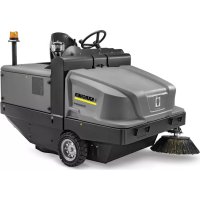



| Product type | LPG gas-powered sweeper |
| Brand | Kärcher |
| Model | KM 120/250 R LPG Classic |
| Dimensions (L × W × H) | 2082 × 1250 × 1450 mm |
| Empty weight | 851 kg |
| Maximum permissible weight | 1300 kg |
| Power source | LPG gas (propane/butane, min. 90% propane), 11 kg cylinder |
| Engine | Kubota WG 972 GL-E3, 3 cylinders, 12.7 kW (17 hp) |
| Forward travel speed | 9 km/h |
| Reverse travel speed | 4 km/h |
| Sweeping width without side brush | 900 mm |
| Sweeping width with side brush | 1200 mm |
| Sweeping capacity without side brush | 8100 m²/h |
| Sweeping capacity with side brush | 10800 m²/h |
| Dust hopper volume | 250 L |
| Maximum dumping height | 1400 mm |
| Maximum gradeability | 18 % |
| Filtration system | Pocket filter, area 6.0 m² |
| Sound level (LpA) | 83 dB(A) |
| Battery | 12 V, 52 Ah |
| Parking brake | Mechanical on front wheels |
| Daily maintenance | Check oil levels, coolant, brush condition, filters |
| Safety | Seat safety switch, parking brake, safety bar for raised hopper |
| Spare parts | Available from Kärcher; use only original parts |
| Repairability | Customer maintenance possible for simple tasks; complex repairs by authorized service center |
Frequently Asked Questions - KM 120250 R LPG Classic Kärcher
User questions about KM 120250 R LPG Classic Kärcher
0 question about this device. Answer the ones you know or ask your own.
Ask a new question about this device
Download the instructions for your Sweeper in PDF format for free! Find your manual KM 120250 R LPG Classic - Kärcher and take your electronic device back in hand. On this page are published all the documents necessary for the use of your device. KM 120250 R LPG Classic by Kärcher.
USER MANUAL KM 120250 R LPG Classic Kärcher
Czech 241
Slovenian 257
Polish 273
Romanian 289
Slovak 305
Croatian 321
Serbian 337
Bulgarian 353
Estonian 370
Latvian 385
Lithuanian 401
Ukrainian 417
Chinese 434
Arabic 462
1 Hydraulic pump
2 keys
3 nuts
1 brake pedal
1 oil drain plug
2 engine oil filters
1 key
2 side panels
1 mounting bracket
2 wing nuts
Chairman of the Board of Management
S. Reiser
Director Regulatory Affairs & Certification
71364 Winnenden (Germany)
Tel.: +49 7195 14-0
Fax: +49 7195 14-2212
Winnenden, 2020/01/01
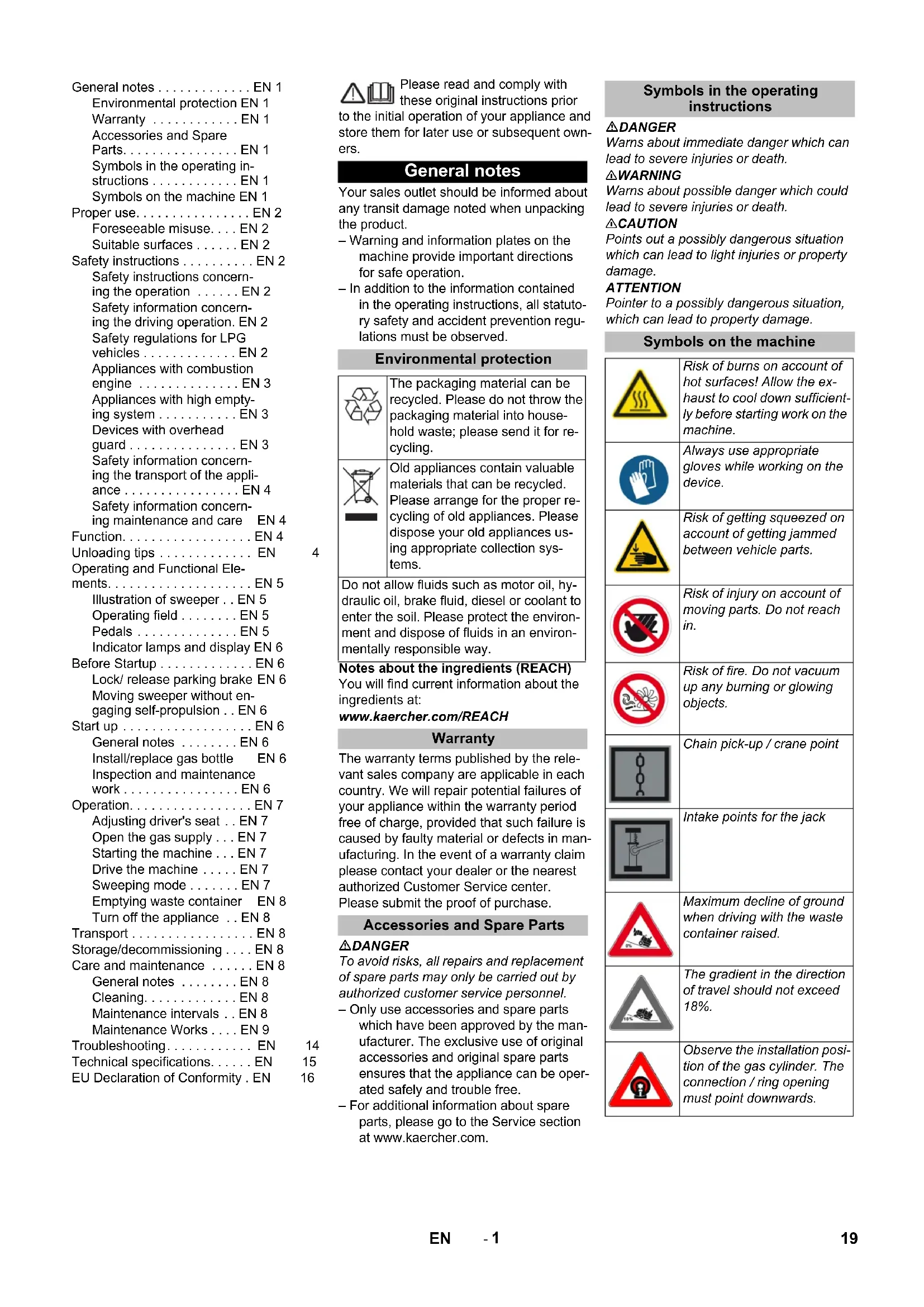
General notes ..... EN 1
Environmental protection EN 1
Warranty ..... EN 1
Accessories and Spare Parts....EN 1
Symbols in the operating instructions ..... EN 1
Symbols on the machine EN 1
Proper use.....EN 2
Foreseeable misuse....EN 2
Suitable surfaces ..... EN 2
Safety instructions ..... EN 2
Safety instructions concerning the operation ..... EN 2
Safety information concerning the driving operation. EN 2
Safety regulations for LPG vehicles ..... EN 2
Appliances with combustion engine ....EN 3
Appliances with high emptying system ....EN 3
Devices with overhead guard....EN 3
Safety information concerning the transport of the appliance ..... EN 4
Safety information concerning maintenance and care EN 4
Function.....EN 4
Unloading tips ..... EN
Operating and Functional Elements.....EN 5
Elements.....EN 5
Illustration of sweeper .. EN 5
Operating field ..... EN 5
Pedals ..... EN 5
Indicator lamps and display EN 6
Before Startup ..... EN 6
Lock/ release parking brake EN 6
Moving sweeper without engaging self-propulsion . . EN 6
Start up ...... EN 6
General notes ..... EN 6
Install/replace gas bottle EN 6
Inspection and maintenance work....EN 6
Operation.....EN 7
Adjusting driver's seat .. EN 7
Open the gas supply . . . EN 7
Starting the machine . . . EN 7
Drive the machine ..... EN 7
Sweeping mode ..... EN 7
Emptying waste container EN 8
Turn off the appliance .. EN 8
Transport....EN 8
Storage/decommissioning .... EN 8
Care and maintenance ..... EN 8
General notes ..... EN 8
Cleaning.....EN 8
Maintenance intervals .. EN 8
Maintenance Works .... EN 9
Troubleshooting..... EN 14
Technical specifications.....EN 15
EU Declaration of Conformity. EN 16

Please read and comply with these original instructions prior
to the initial operation of your appliance and store them for later use or subsequent owners.
General notes
Your sales outlet should be informed about any transit damage noted when unpacking the product.
- Warning and information plates on the machine provide important directions for safe operation.
– In addition to the information contained in the operating instructions, all statutory safety and accident prevention regulations must be observed.
Environmental protection
| The packaging material can be recycled. Please do not throw the packaging material into household waste; please send it for recycling. | |
| Old appliances contain valuable materials that can be recycled. Please arrange for the proper recycling of old appliances. Please dispose your old appliances using appropriate collection systems. | |
| Do not allow fluids such as motor oil, hydraulic oil, brake fluid, diesel or coolant to enter the soil. Please protect the environment and dispose of fluids in an environmentally responsible way. | |
Notes about the ingredients (REACH)
You will find current information about the ingredients at:
www.kaercher.com/REACH
Warranty
The warranty terms published by the relevant sales company are applicable in each country. We will repair potential failures of your appliance within the warranty period free of charge, provided that such failure is caused by faulty material or defects in manufacturing. In the event of a warranty claim, please contact your dealer or the nearest authorized Customer Service center.
Please submit the proof of purchase.
Accessories and Spare Parts
△DANGER
To avoid risks, all repairs and replacement of spare parts may only be carried out by authorized customer service personnel.
- Only use accessories and spare parts which have been approved by the manufacturer. The exclusive use of original accessories and original spare parts ensures that the appliance can be operated safely and trouble free.
- For additional information about spare parts, please go to the Service section at www.kaercher.com.
Symbols in the operating instructions
△DANGER
Warns about immediate danger which can lead to severe injuries or death.
⚠ WARNING
Warns about possible danger which could lead to severe injuries or death.
△CAUTION
Points out a possibly dangerous situation which can lead to light injuries or property damage.
ATTENTION
Pointer to a possibly dangerous situation, which can lead to property damage.
Symbols on the machine
 | Risk of burns on account of hot surfaces! Allow the ex-haust to cool down sufficiently before starting work on the machine. |
 | Always use appropriate gloves while working on the device. |
 | Risk of getting squeezed on account of getting jammed between vehicle parts. |
 | Risk of injury on account of moving parts. Do not reach in. |
 | Risk of fire. Do not vacuum up any burning or glowing objects. |
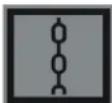 | Chain pick-up / crane point |
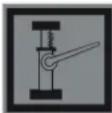 | Intake points for the jack |
 | Maximum decline of ground when driving with the waste container raised. |
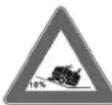 | The gradient in the direction of travel should not exceed 18%. |
 | Observe the installation position of the gas cylinder. The connection / ring opening must point downwards. |
Proper use
Use this sweeper only as directed in these operating instructions.
- This sweeper has been designed to sweep dirt and debris from outdoor surfaces.
– The machine is not suitable for being driven on public roads.
– Any use extending beyond this is not considered as proper use. The manufacturer is not liable for any losses resulting from this; the user alone bears the risk for this.
- (Gas motor)
The device is permitted for operation in confined spaces with sufficient ventilation.
– Gas bottles and appliance may only be stored on ground level.
– The machine may not be modified.
- The machine is only suitable for use on the types of surfaces specified in the operating instructions.
– The machine may only be operated on the surfaces approved by the company or its authorised representatives.
- The following applies in general: Keep highly-flammable substances away from the appliance (danger of explosion/fire).
Foreseeable misuse
- Never vacuum up explosive liquids, combustible gases or undiluted acids and solvents. This includes petrol, paint thinner or heating oil which can generate explosive fumes or mixtures upon contact with the suction air. Acetone, undiluted acids and solvents must also be avoided as they can harm the materials on the machine.
- Never sweep/vacuum up reactive metal dusts (e.g. aluminium, magnesium, zinc), as they form explosive gases when they come in contact with highly alkaline or acidic detergents.
– The appliance is not suitable for sweeping off hazardous substances.
- Do not sweep/vacuum up any burning or glowing objects.
- The machine may not be used or stored in hazardous areas. It is not allowed to use the appliance in hazardous locations.
- It is strictly prohibited to take co-passengers.
- Pushing/pulling or transporting objects by means of this appliance is prohibited.
Suitable surfaces
- Asphalt
- Industrial floor
- Screed
- Concrete
- Paving stones
Safety instructions
Safety instructions concerning the operation
→ (Applicable for Finland only) The device may not be used at low ambient temperatures (below 0°C) if it is equipped with a PVC hose line. Contact Kärcher if you have questions regarding your device. → The machine with working equipment must be checked to ensure that it is in proper working order and is operating safely prior to use. Otherwise, the appliance must not be used. → If the appliance is used in hazardous areas (e.g. filling stations) the corresponding safety provisions must be observed. It is not allowed to use the appliance in hazardous locations.
△DANGER
Risk of injury!
→ Do not use the appliance without an overhead guard in areas where the operator might get hit by falling objects. → The operator must use the appliance properly. The person must consider the local conditions and must pay attention to third parties, in particular children, when working with the appliance. → It is important to follow all safety instructions, rules and regulations applicable for driving motor vehicles. → Prior to starting work, the operator must ensure that all protective devices are properly installed and function correctly. → The operator of the appliance is liable for accidents with other individuals or their property. → Ensure that the operator wears tight-fitting clothes. Wear sturdy shoes and avoid wearing loose-fitting clothes. → Check the immediate vicinity prior to starting (e.g. children). Ensure sufficient visibility! → Never leave the machine unattended so long as the engine is running. The operator may leave the appliance only when the engine has come to a standstill, the appliance has been protected against accidental movement, and the key has been removed. → Please remove the key, when not in use, to avoid unauthorised use of the appliance. The appliance may only be used by persons who have been instructed in handling the appliance or have proven qualification and expertise in operating the appliance or have been explicitly assigned the task of handling the appliance.
→ This appliance is not intended for use by persons (including children) with limited physical, sensoric or mental capacities or lack of experience and/or skills, unless such persons are accompanied and supervised by a person in charge of their safety or if they received precise instructions on the use of this appliance. → Children should be supervised to prevent them from playing with the appliance.
CAUTION
Risk of damage! Do not sweep up straps, strings or wires as these may wrap around the brush roller.
Safety information concerning the driving operation
△DANGER
Risk of injury! Verify the stability of the ground prior to driving on it.
△DANGER
Risk of accident, risk of injury!
The travel speed must be adapted to the existing conditions. Danger of tipping if gradient is too high. The gradient in the direction of travel should not exceed 18%. Danger of tipping on unstable ground. Only use the machine on sound surfaces. Danger of tipping with excessive sideways tilt. The gradient perpendicular to the direction of travel should not exceed 10%.
Safety regulations for LPG vehicles
Hauptverband der gewerblichen Berufsgenossenschaften e.V. (HVBG / Germany). Liquefied gases (propellants) are butane and propane or a mixture of butane/propane. They are available in special cylinders. The operating pressure of these gases depends on the outside temperature.
DANGER
Risk of explosion!
Do not handle liquefied gas like petrol. Petrol evaporates slowly, liquefied gas immediately turns into gas. The risk of gas spreading in the room and getting ignited is thus higher with liquid gas than with petrol.
CAUTION
Only use LPG cylinders filled with propellant gas in accordance with DIN 51622 quality.
The use of household gas and camping gas is strictly prohibited.
Liquid gas mixtures can be different for different gas motors. The approved liquid gas mixtures can be found in the technical data.
Liabilities of the factory management and the employee
All persons handling liquid gases are liable to acquaint themselves with the special properties of the liquefied gases for hazard-free handling of operations. The current documentation is always to be kept with the sweeper.
Maintenance by expert
- Propellant-operated units are to be checked at regular intervals, at least once a year, by an expert against leaks (according to BGG 936) and ensure that the unit is functioning properly.
- The inspection must be certified and documented. The inspection guidelines are § 33 and § 37 UVV (occupation accident prevention regulations) "Use of liquid gas" (BGV D34). – General applicable regulations are the guidelines for inspecting vehicles whose engines are driven by liquefied gases of the Federal Transportation Minister.
Commissioning/Operations
- Gas must always be drawn only from one cylinder. Drawing gas from multiple cylinders simultaneously can cause liquid gas from one cylinder to flow into the other. This causes the over-filled cylinder to be subjected to an unpermitted excess pressure when the cylinder valve is closed later (refer to B.1 of these guidelines).
- Note the installation position of the gas connection during installation of the full bottle; further information is in the chapter "Installing the gas bottle".
Perform the replacement of the gas cylinder carefully. During assembly and disassembly, the gas outlet nozzle of the cylinder valve must be sealed by means of a cap nut that is tightened using a wrench.
- Discontinue the use of leaky gas cylinders. Such cylinders are to be emptied by slowly letting out the gas in open spaces, conforming to all safety regulations, and are to be indicated as leaky. Also inform the issuing company or its representative (the filling-station attendant) in writing about the damage to the cylinder while delivering or receiving the cylinders. – Before connecting the gas cylinder, check that its connection neck is in a proper state.
- After connecting the cylinder, regularly check that it is not leaky by using a foaming agent.
- Open the valves slowly. Do not use hammers to open and close the cylinders.
- Fight liquid-gas fires only from a safe distance and with protection.
- Use only dry powder carbon dioxide extinguishers or carbon dioxide gas extinguishers.
- Use abundant water to cool the gas tank.
- The entire LPG unit must be continuously checked to ensure that there are no leaks and the unit is functioning properly. Using the vehicle with a leaky gas unit is strictly prohibited.
- First close the cylinder valve before loosening the pipe or tube connection. Unscrew and loosen the connection nut of the gas cylinder slowly because otherwise the gas under pressure in the tube will flow out instantly.
- If the gas is refilled from a larger tank, then ask the sales agent of the LPG about the important regulations to be followed.
⚠ Danger
Risk of injury!
- LPG in a liquid state can cause frost bites on bare skin.
- After disconnecting the cylinder, tighten the closing nut firmly on the connecting threading of the cylinder.
- Use soap water or some such foaming agent to check whether the cylinder is leaking. The use of open flames to illuminate the LPG unit is strictly prohibited.
- Follow the manufacturer's installation specifications while changing individual parts of the LPG unit. Close all cylinder and locking valves while doing so.
- Regularly check the status of the electrical unit of the LPG vehicles. Sparks can cause explosions if the gas-carrying parts of the unit are leaky.
- If a LPG-driven vehicle has been idling for a long time, then first ventilate the setting room before commissioning the vehicle or its electrical unit.
- Immediately inform the trade association and the concerned trade supervisory authority about accidents with gas cylinders or LPG units. Store the damaged parts carefully until all investigations have been completed.
In the installation and storage rooms as well as the workshops
- Propellants or LPG cylinders must always be stored according to the regulations of TRF 1996 (Technical Regulations for Liquid Gases, refer DA to BGV D34, Appendix 4).
- Always store the gas cylinders in a vertical position. Use of open flames and smoking at the installation site of the cylinders and during repairs is strictly prohibited. Protect the stored cylinders against unauthorised access. Close all empty cylinders properly.
- Close the cylinder and main locking valves immediately when you switch off the vehicle. – Follow the regulations for garages and the construction guidelines of the respective State about the location and structure of the parking areas for LPG-driven vehicles. – Gas cylinders are to be stored in separate rooms away from the parking areas (refer DA to BGV D34, Appendix 2).
- The electrical hand-held lamps used in the rooms are to be equipped with closed, sealed case and a strong protection cover.
- Close all cylinder and main valves before working in repair workshops and protect the gas cylinders against effect of external heat. – A responsible person must check that all valves, especially the cylinder valves, are closed during operational breaks and before closing the factory.
Do not carry out any jobs involving fire - such as cutting and welding jobs - in the vicinity of the gas cylinders. Do not store gas cylinders, not even empty ones, in the workshops.
- The parking and storage rooms and the repair workshops must be ventilated properly. Please note that liquefied gases are heavier than atmospheric air. They get collected on the floor, in recesses and other holes in the floors and form a gas-air mixture that can lead to explosions.
Appliances with combustion engine
→ Do not use the device at elevations of over 1200 m.
△DANGER
Risk of poisoning!
→ (Gas motor) The device is permitted for operation in confined spaces with sufficient ventilation. → Exhaust gases are poisonous and hazardous to health, do not inhale them.
△DANGER
Risk of injury!
→ The exhaust gas opening of the combustion engine must not be closed. → The motor requires approx. 3 seconds to come to a standstill once it has been switched off. During this time, stay well clear of the drive area.
DANGER
Risk of burns!
→ Do not touch hot combustion engine. → Allow the vehicle to cool down before removing the panels. → Do not bend over the exhaust or touch it.
Appliances with high emptying system
△DANGER
Risk of injury!
→ When working on the high emptying system, completely lift and secure the waste container. → Perform the safeguarding only from outside the hazard zone.
Devices with overhead guard
NOTICE
The overhead guard (optional) protects the driver against larger falling objects. However, it does not provide rollover protection!
Check the overhead guard for damage daily. If the overhead guard, as well as individual elements, should be damaged, replace the entire overhead guard. Any modification of the overhead guard and installation of elements, components and assemblies other than those approved by Kärcher is not permitted and may limit the function of the overhead guard.
Safety information concerning the transport of the appliance
Observe the net weight (transport weight) of the device during transport on trailers or vehicles. Disconnect the battery and securely fasten the device for transport.
Safety information concerning maintenance and care
First switch off the appliance and remove the key before performing any cleaning or maintenance tasks on the appliance, replacing parts or switching over to another function. Always disconnect the battery when working on the electrics. To do this, first disconnect the negative terminal and then the positive terminal. Reconnection is performed in reverse sequence. Connect the positive terminal first, then connect the negative terminal. Do not clean the appliance with a water hose or high-pressure water jet (danger of short circuits or other damage). Maintenance work may only be carried out by approved customer service outlets or experts in this field who are familiar with the respective safety regulations. Please observe the local safety regulations regarding portable commercially used appliances. Always use appropriate gloves while working on the device.
Function
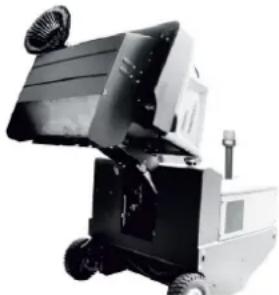
The sweeper operates using the sweep-shovel principle.
- The rotating roller brush moves the dirt directly into the waste container.
- The side brush cleans the corners and edges of the surface and moves dirt and debris into the path of the roller brush.
- The fine dust is sucked in via the dust filter through the suction blower.
Unloading tips
DANGER
Risk of personal injury or damage!
→ Observe the weight of the appliance when you load it! → Do not use a fork lift, the appliance could get damaged.
Net weight (transport weight) 851 kg*
* If upgrade kits are installed, the weight is respectively higher.
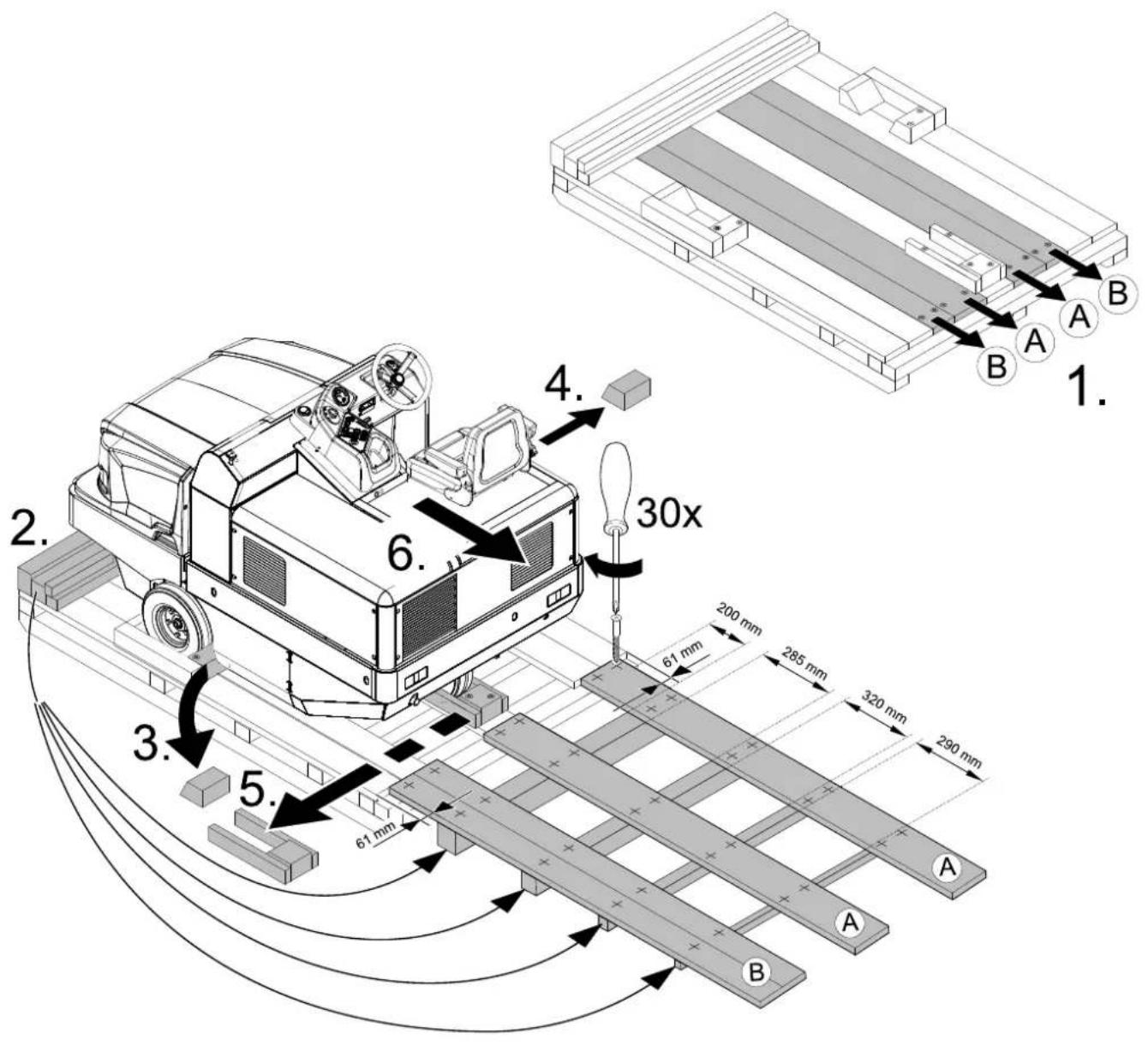
→ Use a suitable ramp or a crane to load the appliance! → Observe when using a ramp: Ground clearance 70 mm. → If the machine is delivered on a pallet, you must create an unloading ramp using the boards provided. You will find the instructions for this procedure on page 2 (inside of cover). Important instruction: every board must be attached with at least 2 screws.
Operating and Functional Elements
A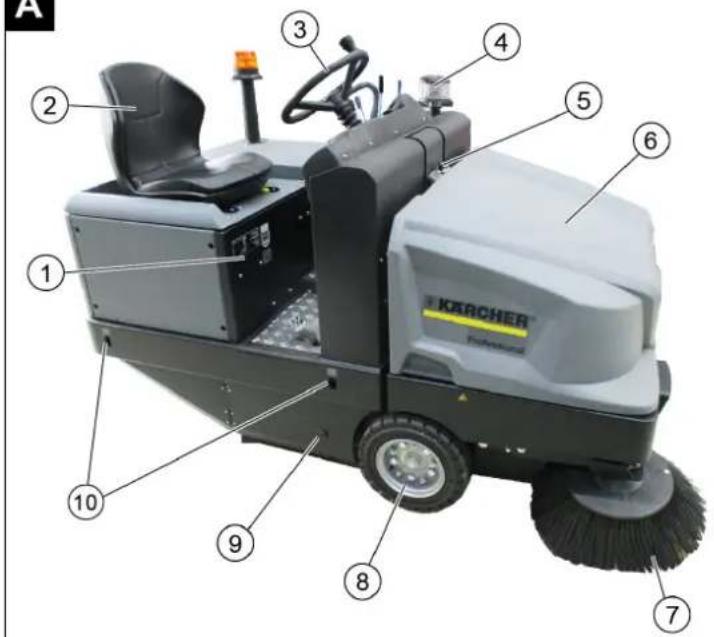
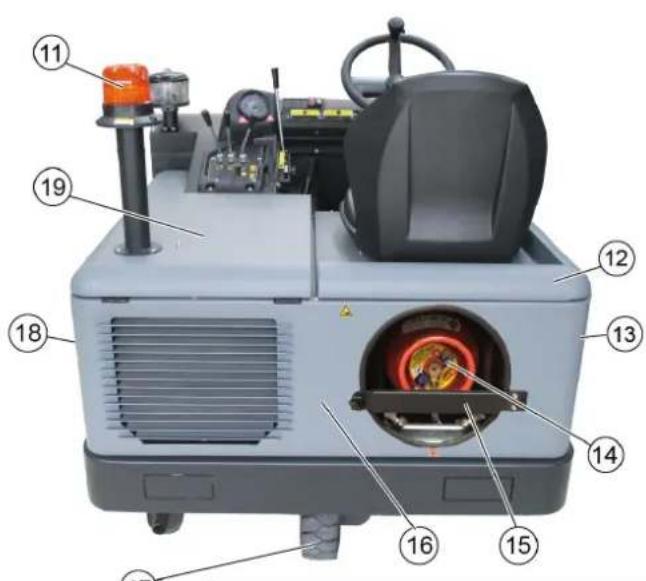
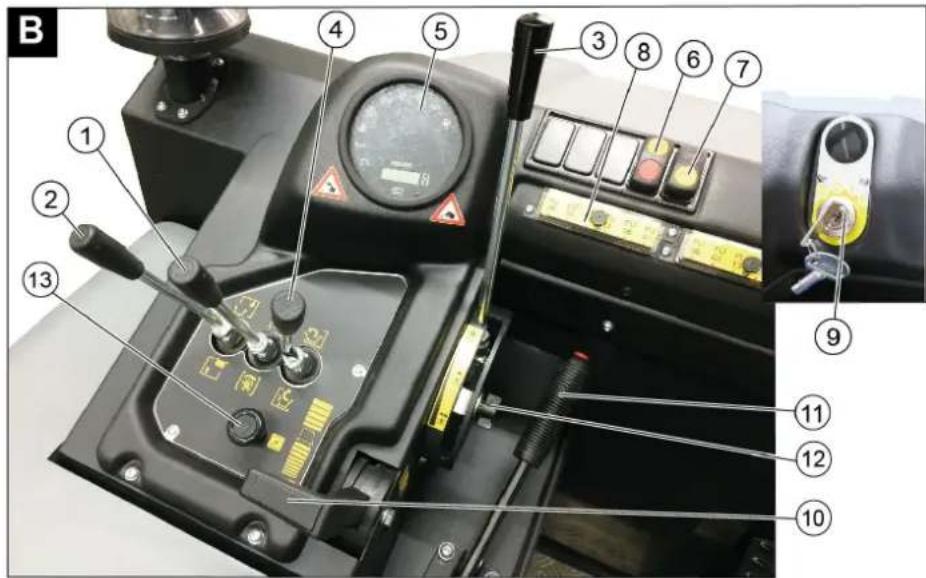
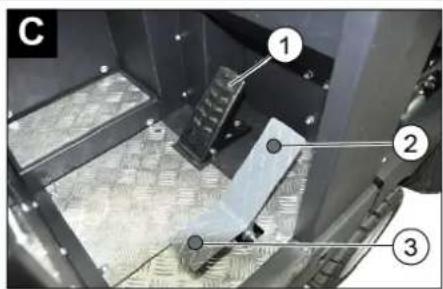
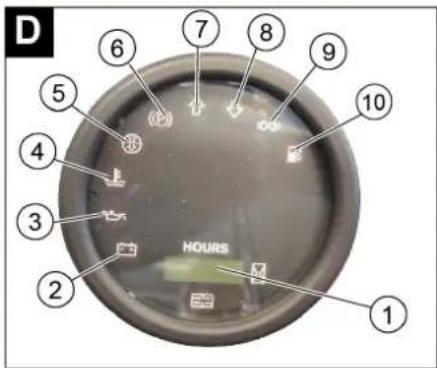
Illustration of sweeper Operating field
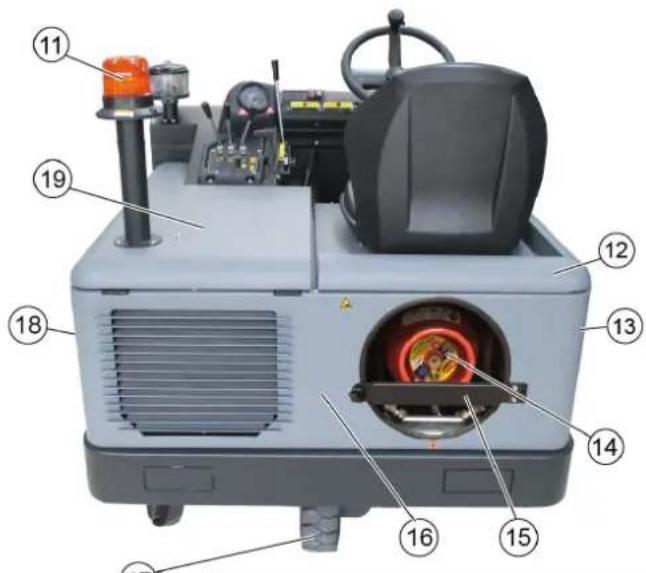
Illustration A
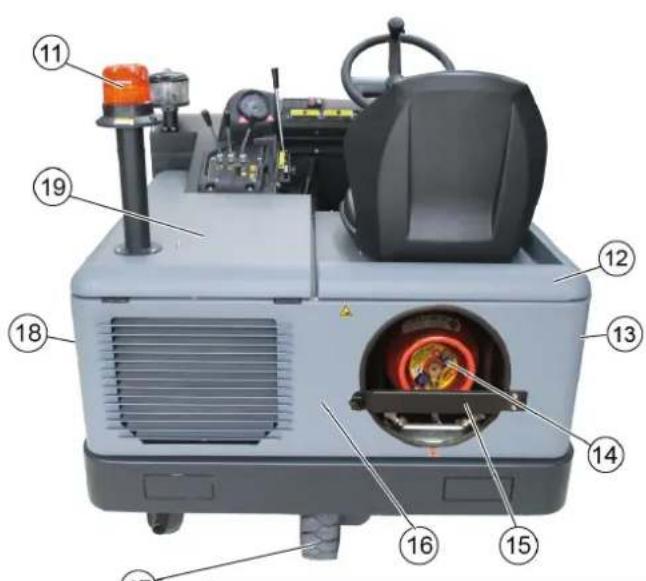
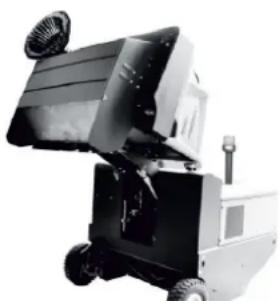
1 Nameplate 2 Seat (with seat contact switch) 3 Steering wheel 4 Centrifugal separator 5 Lock of appliance hood 6 Cover 7 Side brush, right 8 Front wheel 9 Roller brush access 10 Lashing point 11 Beacon lamp 12 Appliance cover right side 13 Cover, right 14 Gas cylinder 15 Safety rod 16 Tail panel 17 Rear wheel 18 Cover, left 19 Bonnet left side (engine bonnet)
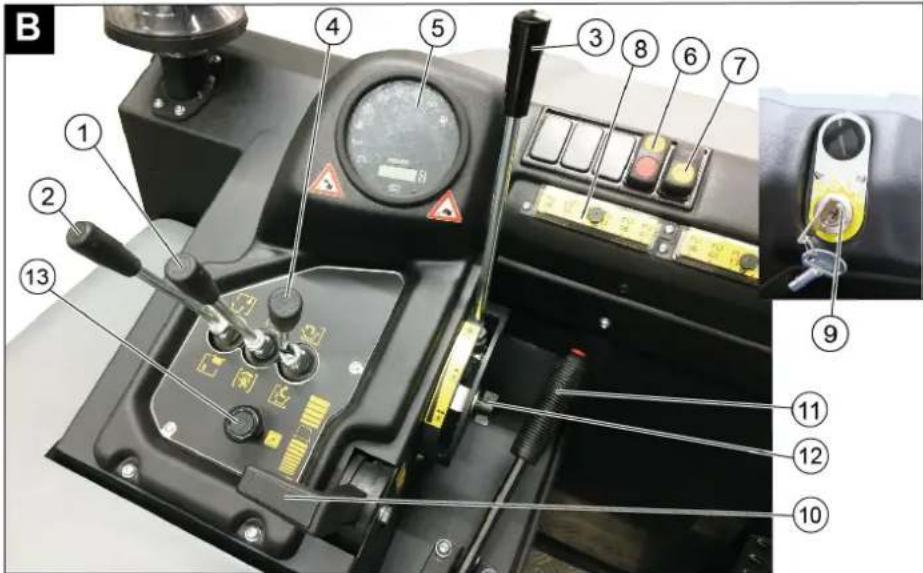
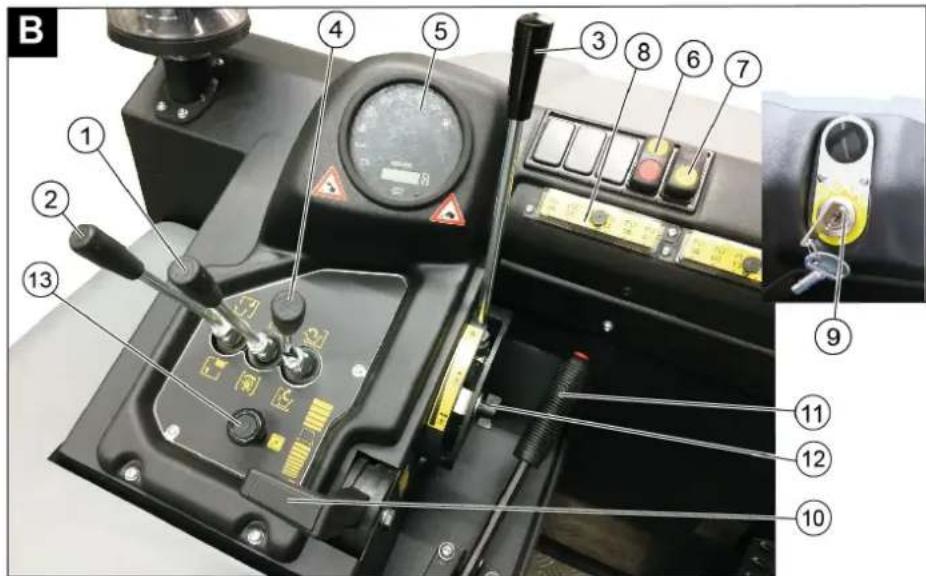
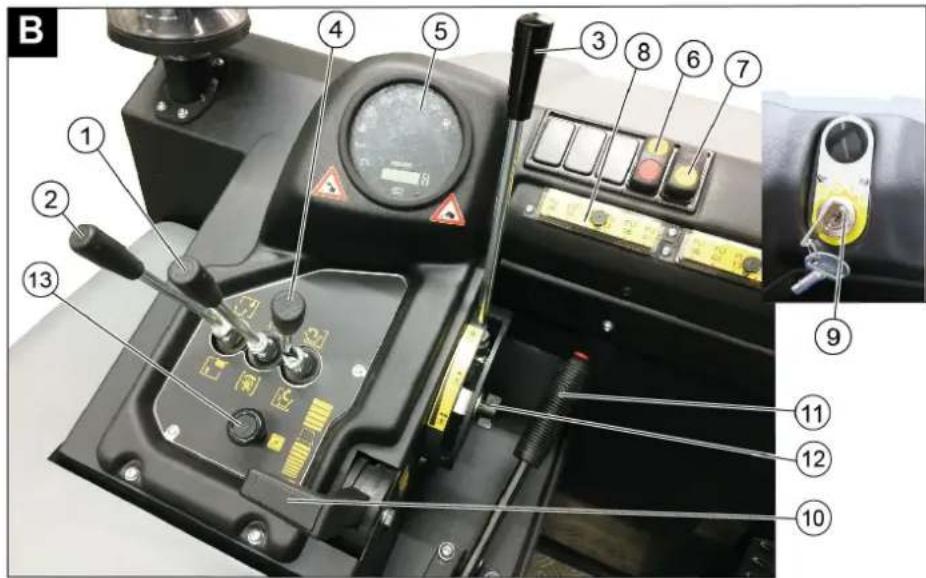
Illustration B
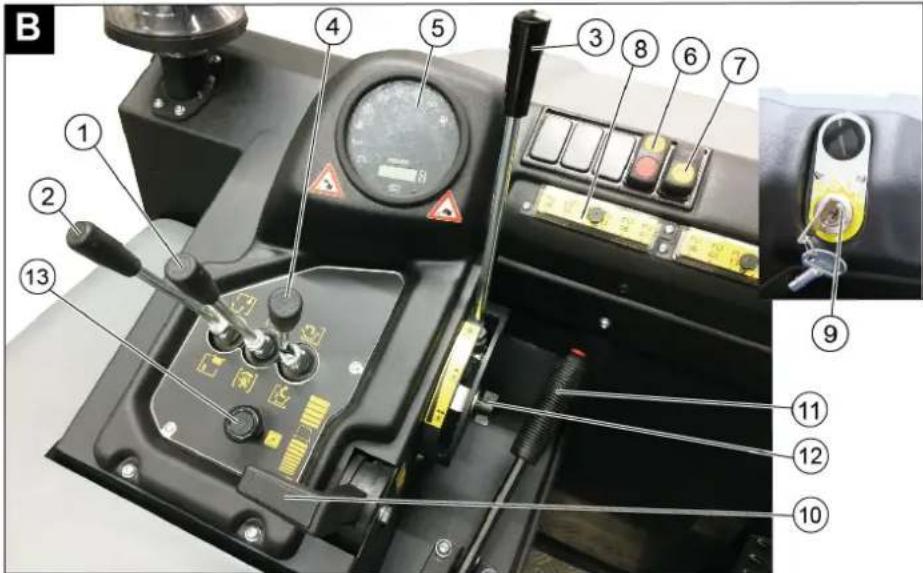
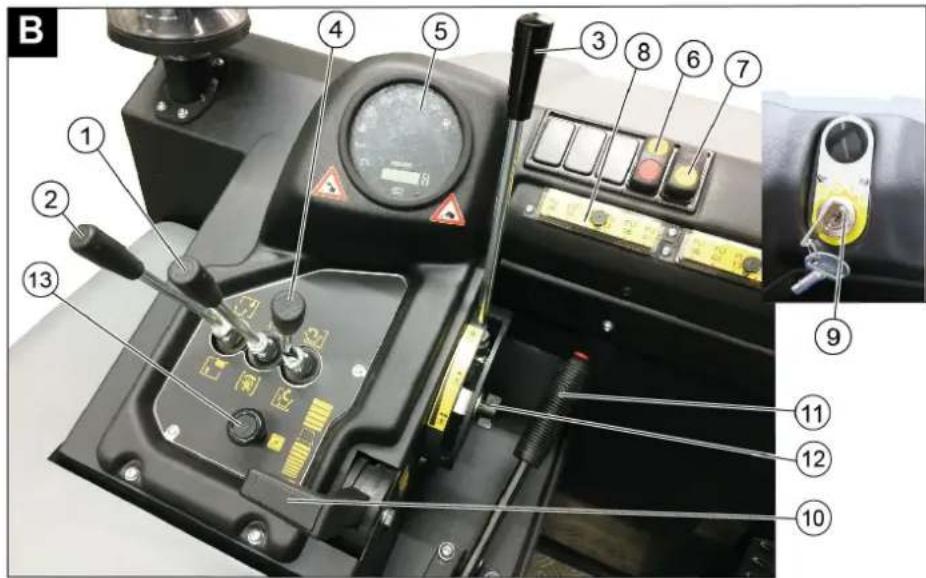
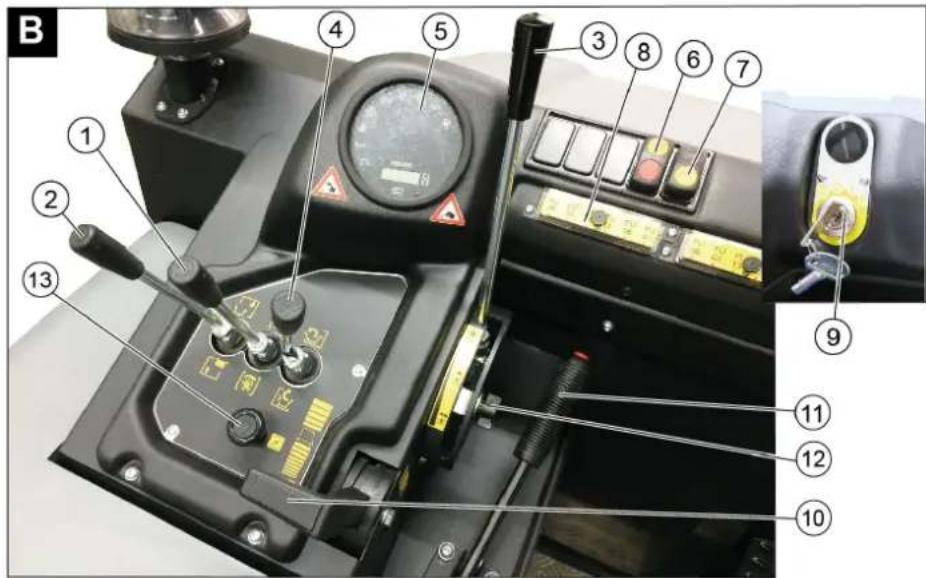
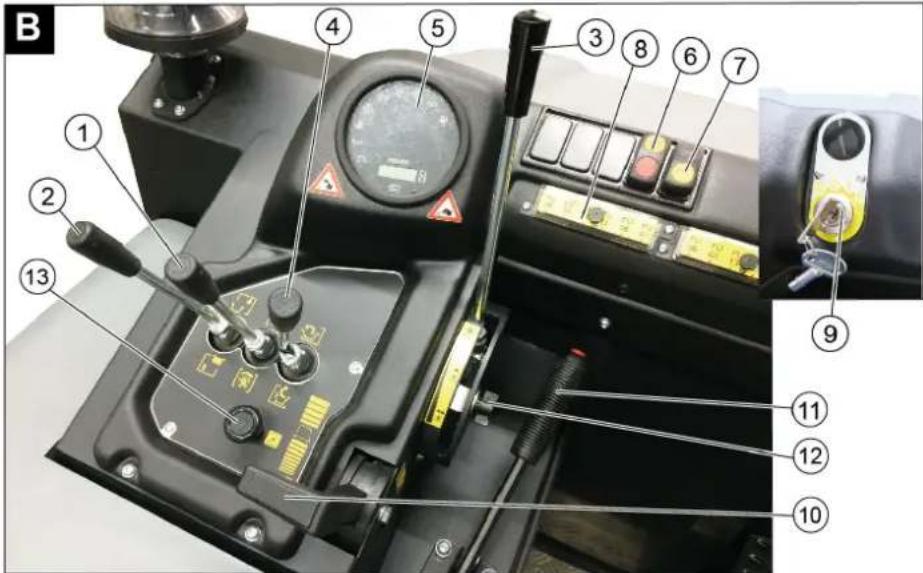
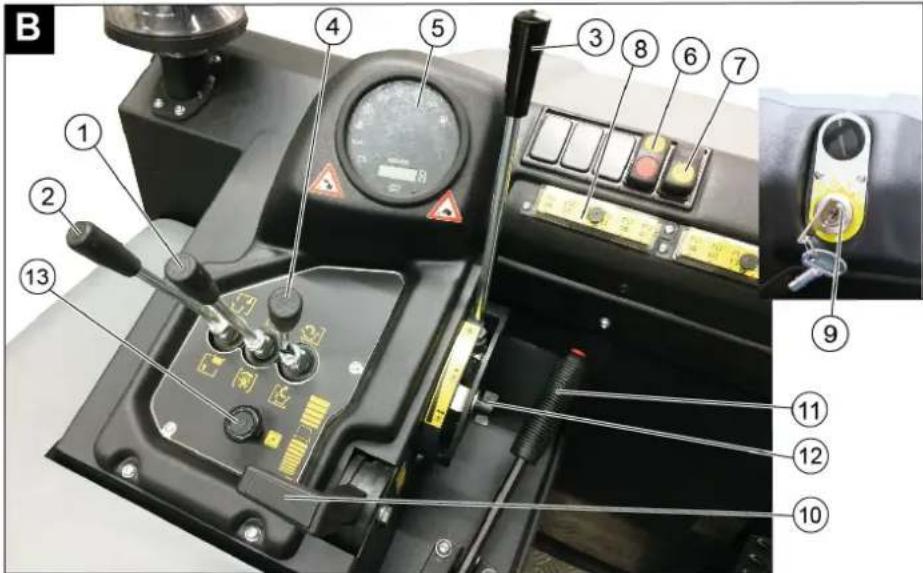
1 Roller brush and side brush control lever Lever forwards: Switches the roller brush on and lowers and switches the side brushes on. Lever backwards: Switches the roller brush on
2 Control lever waste container Raise/lower waste container 3 Roller brush control lever Raises and lowers the roller brush 4 Control lever container flap Open/close container lid 5 Indicator lamps and display 6 Switch blower and filter cleaning Position centred: Filter cleaning and blower off Front position: Blower on Rear position: Filter cleaning on and blower off
7 Horn switch 8 Fuses 9 Ignition lock
Position 0: Switch off engine
Position 1: Ignition on
Position 2: Start the engine
10 Gas lever
Motor speed adjustment
11 Parking brake 12 Roller brush wear adjustment / sweeping area setting 13 Choke
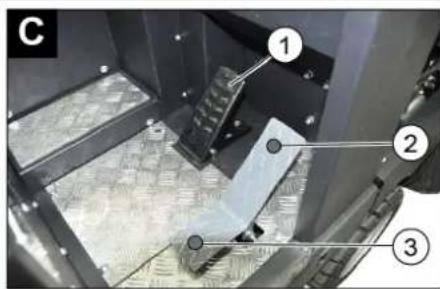
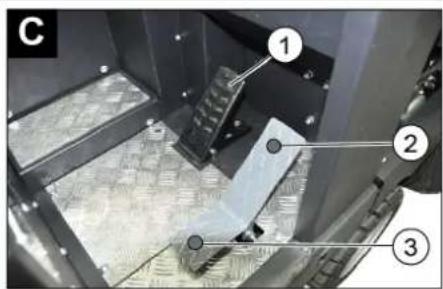
Pedals
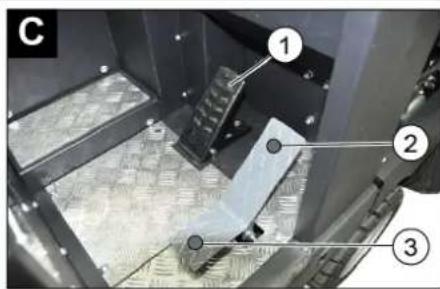
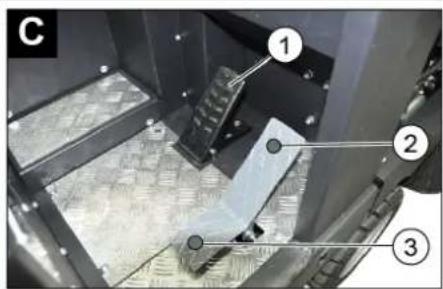
Illustration ©
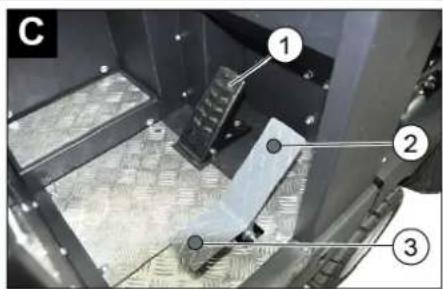
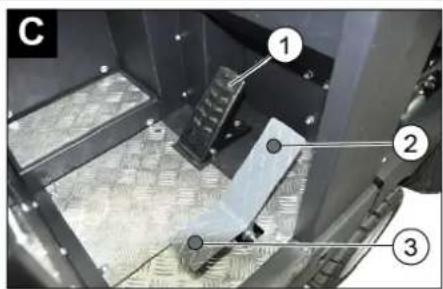
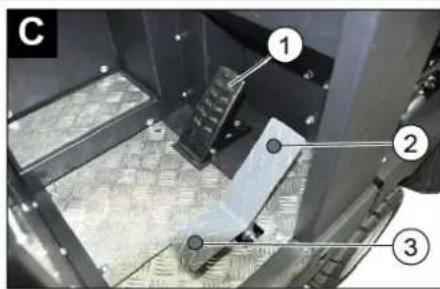
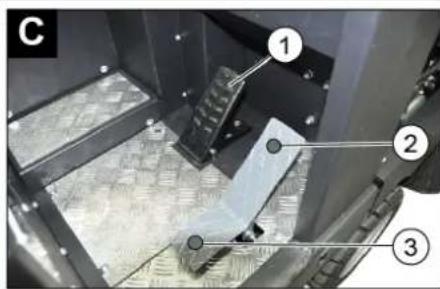
1 Brake pedal 2 Accelerator pedal, "forwards" 3 Accelerator pedal, "reverse"
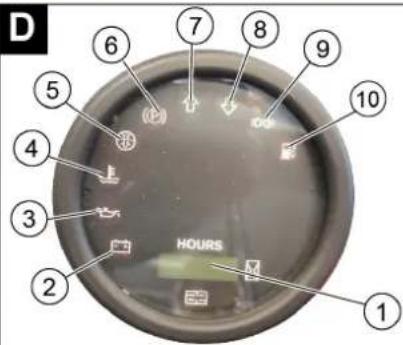
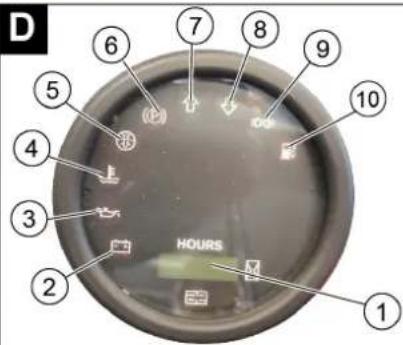
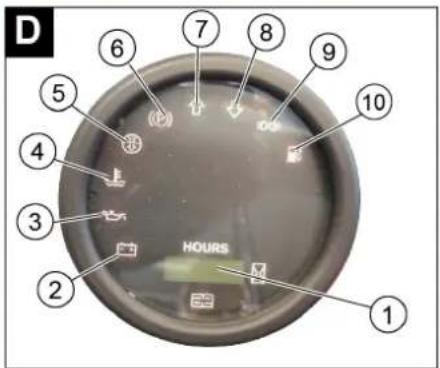
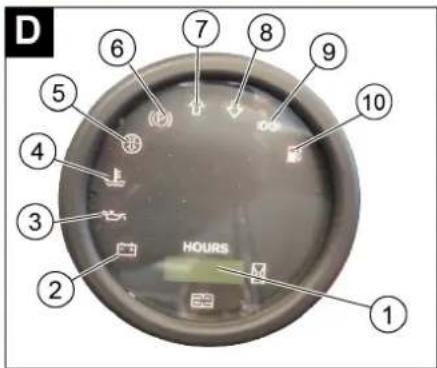
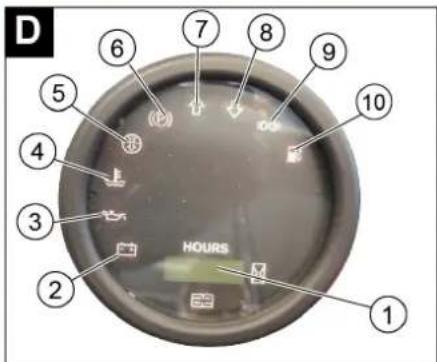
Indicator lamps and display
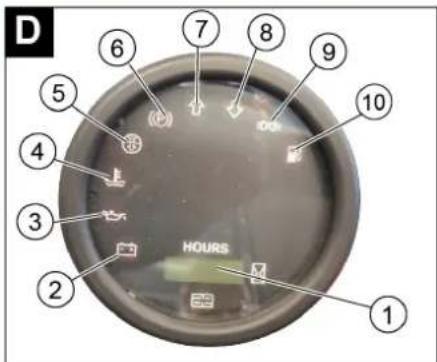
Illustration D
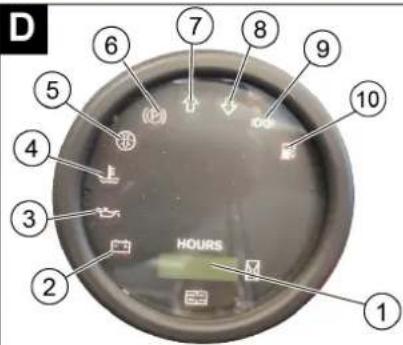
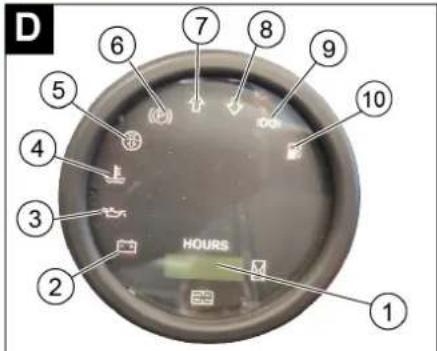
1 Operating hour counter
2 Charge warning lamp
3 Oil pressure warning lamp
4 Cooling water temperature warning lamp
5 Motor suction air
6 Warning light parking brake operated
7 Forward travel direction
8 Direction of travel reverse
9 Indicator light parking light/low beam (option)
10 Warning lamp fuel reserve
- blinks for reserve
- illuminates when gas bottle is empty
Before Startup
Lock/ release parking brake
→ Loosen parking brake; press brake pedal at the same time.
→ Activate the parking brake; press brake pedal at the same time.
Moving sweeper without engaging self-propulsion
Note
This procedure is necessary if the device needs to be pushed off the palette or towed away, or must be moved onto a transport vehicle without its own drive.
ATTENTION
Do not move the machine for long distances without engaging self-propulsion; a speed of 10 km/h should not be exceeded.
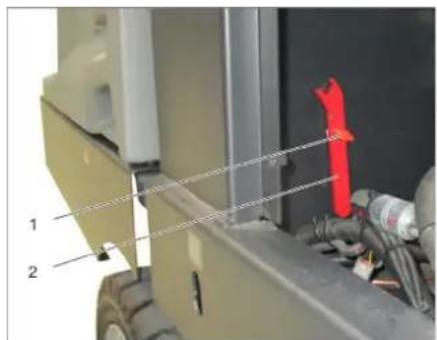
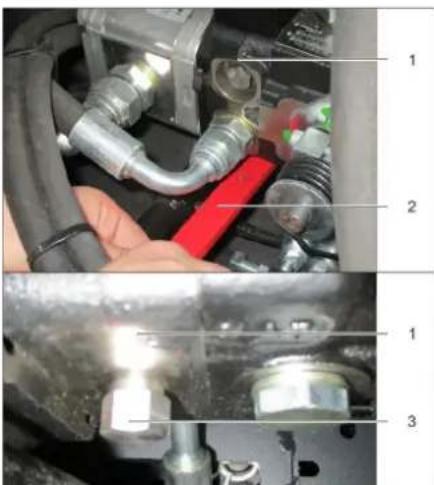
1 Screw 2 Key → Unscrew the screw. → Remove the spanner.
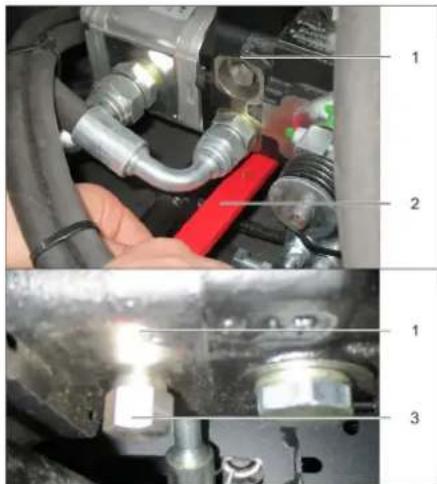
1 Hydraulic pump 2 Key 3 Nut
→ Loosen the nut using the spanner (open freewheel) until the device can be pushed. → IMPORTANT: Once pushed, reclose the nut (close freewheel = drive position).
Start up
General notes
→ Read the operating instructions of the engine manufacturer before start-up and follow the safety instructions carefully. → Park the sweeper on an even surface. → Remove ignition key. → Lock parking brake.
Install/replace gas bottle
△DANGER
Risk of injury!
→ Follow safety regulations for LPG vehicles. → Formation of crusts and yellow-frothing deposits on the gas cylinder indicate leakiness. → Cylinders must be changed only by instructed persons. → Cylinders containing propellant gases must not be changed in garages and underground areas. → Do not smoke and use uncovered light while changing the cylinder. → While changing cylinders, first close the locking valve of the LPG cylinder firmly and immediately put the protective cap on the empty cylinder.
⚠ WARNING
Only use replacement cylinders with 11 kg contents of tested models.
CAUTION
The use of household gas and camping gas is strictly prohibited.
LPG mixtures of propane and butane are permitted. The propane content must be at least 90%.
Installing the gas bottle
ATTENTION
Observe the installation position of the gas cylinder. The connection / ring opening must point downwards.
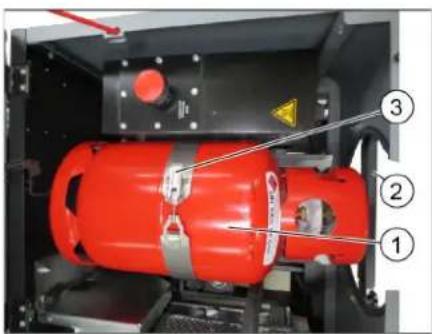
1 Gas cylinder 2 Safety rod 3 Bracket closure
→ Release the screws on the safety rod and pivot the pole away. → Replace the gas cylinder. → Unscrew the protective cap from the connecting valve of the gas cylinder. → Close the bracket closure.
Connecting gas cylinder
ATTENTION
After connecting the cylinder, regularly check that it is not leaky by using a foaming agent.
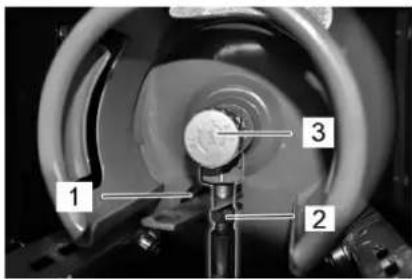
1 Protective cover
2 Gas hose with union joint
3 Gas withdrawal valve
→ Screw the gas hose to the connecting valve of the gas cylinder (30-mm spanner). → Close the safety bar, and secure it with a bolt.
Replacing the empty gas bottle
If the warning indicator for reserve fuel shows an empty gas bottle continuously during operation, proceed as follows:
→ Close gas drawing valve by turning it in clock-wise direction. → Stop the machine and continue to run it at idle speed until the motor shuts off. Note: This will ensure that all gas lines are empty and that there can be no icing which would hinder starting the motor. → Unscrew the gas hose (30-mm spanner). → Screw the protective cap onto the connecting valve of the empty gas cylinder. → Open the cliplock.
NOTICE
Connection has a left threading.
⚠ Warning
Open the gas drawing valve (3) only after starting the appliance (refer chapter Starting the appliance).
Inspection and maintenance work
Daily before starting operations
→ Check engine oil level. → Check the filling level in the coolant expansion tank. → Check the sweeping roller and the side brush for wear and wrapped belts. → Check the wheels for tied up belts. → Check the centrifugal separator and the air filter, clean if required. → Check function of all operator control elements. → Check appliance for damages. → Clean the dust filter with the filter cleaning button.
Note: For description, see section on Care and maintenance.
Operation
Adjusting driver's seat
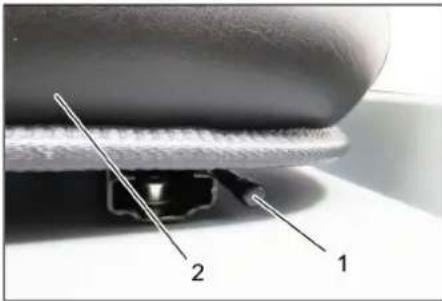
1 Lever for seat adjustment
2 Driver seat
→ Pull seat adjustment lever outwards. → Slide seat, release lever and lock in place. → Check that the seat is properly locked in position by attempting to move it backwards and forwards.
Open the gas supply
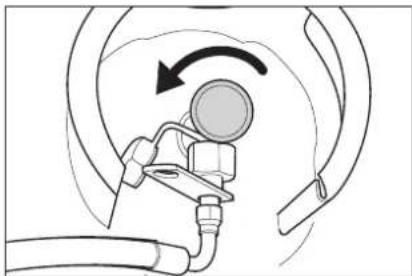
Open the gas drawing valve by turning it counterclockwise.
Starting the machine
Note: The machine is equipped with a seat contact switch. If the driver's seat is vacated, the machine is switched off.
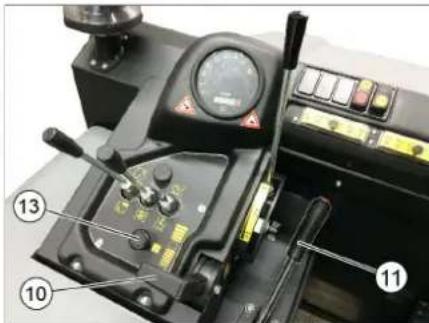
Sit on the driver's seat. Lock the parking brake (11). Push the motor speed adjustment (10) one-third of the way forward.
Start the engine
Press the brake pedal to start the engine. During cold outside temperatures, pull the choke (13). Turn the ignition switch to the right and start the device. If the machine starts, release the ignition key. If the motor runs smoothly, push in the choke.
Note: Never operate the starter motor for longer than 10 seconds. Wait at least 10 seconds before operating the starter motor again.
Drive the machine
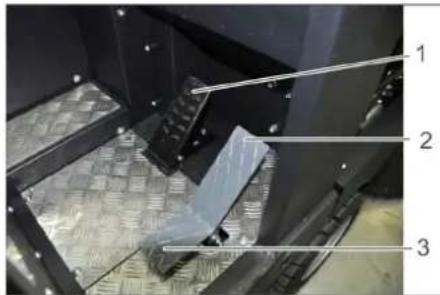
1 Brake pedal, 2 Accelerator pedal "forwards", 3 Accelerator pedal "reverse"
Push the motor speed adjustment all the way forward (operating speed). Press the brake pedal and keep it depressed. Release the parking brake.
Drive forward
Press the accelerator pedal "forward" slowly.
Reverse drive
DANGER
Risk of injury!
→ When reversing, there must not be any risk for third parties, have somebody marshal the driver if necessary. → Press slowly the accelerator pedal "reverse".
Driving method
→ The accelerator pedal can be used to vary the driving speed infinitely. → Avoid sudden operation of the pedal as this may damage the hydraulic system. → In the event of power loss on inclined surfaces, slightly reduce the pressure on the accelerator pedal.
Brakes
→ Release the accelerator pedal, the machine brakes automatically and stops.
Note: The braking effect can be supported by pressing the brake pedal.
Driving over obstacles
Driving over fixed obstacles which are 70 mm high or less:
→ Drive forwards slowly and carefully. Driving over fixed obstacles which are more than 70 mm high: → Only drive over these obstacles using a suitable ramp.
Sweeping mode
ATTENTION
Do not sweep up packing strips, wire or similar objects as this may damage the sweeping mechanism.
Note: To achieve an optimum cleaning result, the driving speed should be adjusted to take specific situations into account.
Note: During operation, the dust filter should be shaken off and cleaned at regular intervals.
Note: When frequently working in areas with fine dust, the filter must be cleaned more often.
Control lever
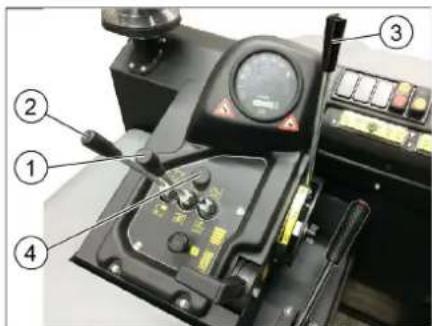
1 Roller brush and side brush control lever
2 Control lever waste container 3 Roller brush control lever 4 Control lever container flap
Roller brush and side brush control lever
→ Control lever (1) forwards: Switches the roller brush on and lowers and switches the side brushes on. → Control lever (1) backwards: Switches the roller brush on.
Control lever waste container
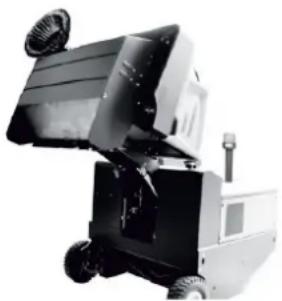
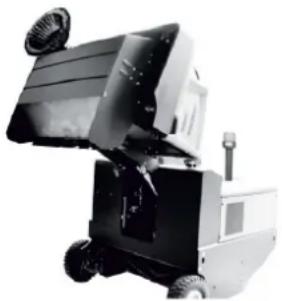
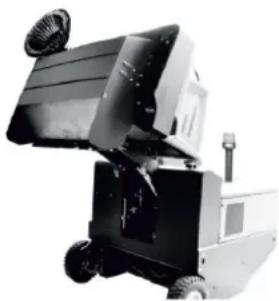
→ Control lever waste container (2) to the front: Waste container is lowered. → Control lever waste container (2) to the back: Waste container is raised.
Control lever roller brush
→ Roller brush control lever (3) forwards: Raises the roller brush. → Roller brush control lever (3) backwards: Lowers the roller brush.
Control lever container flap
→ Control lever container flap (4) to the front: The container flap of the waste container opens. → Control lever container flap (4) to the back: The container flap of the waste container closes.
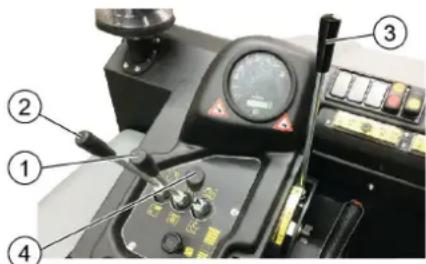
Sweeping dry floors
→ Switch on the blower. → With surface cleaning:
Roller brush and side brush control lever (1) backwards: Switches the roller brush on.
Roller brush control lever (3) backwards: Lowers the roller brush.
→ Control lever container flap (4) to the front: Container flap opens. → With cleaning of side edges:
Roller brush and side brush control lever (1) forwards: Switches the roller brush on, switches the side brushes on and lowers them.
Roller brush control lever (3) backwards: Lowers the roller brush.
Sweeping damp or wet floors
→ Switch off the blower.
→ With surface cleaning:
Roller brush and side brush control lever (1) backwards: Switches the roller brush on.
Roller brush control lever (3) backwards: Lowers the roller brush.
→ Control lever container flap (4) to the front: Container flap opens.
→ With cleaning of side edges:
Roller brush and side brush control lever (1) forwards: Switches the roller brush on, switches the side brushes on and lowers them.
Roller brush control lever (3) backwards: Lowers the roller brush.
Emptying waste container
△DANGER
Risk of injury!
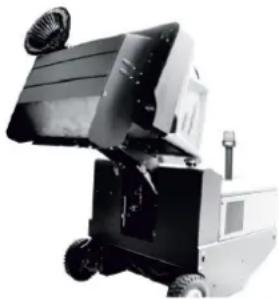
→ During the emptying process, persons and animals must not stay within the swivelling range of the waste container.
Danger of tipping!
→ Place the device on an even surface during the emptying process.
△WARNING
Risk of crushing!
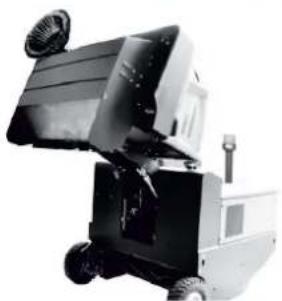
→ Never reach into the rod assembly for the drainage mechanism. Do not stay under the raised container.
ATTENTION
Risk of personal injury or damage!
→ Material of the rotating roller brush may be catapulted off during the emptying process. Keep an appropriate distance.
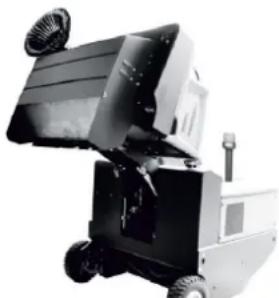
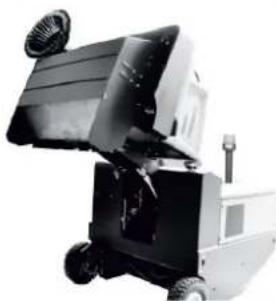
→ Raise the roller brush and side brushes using the control levers: Control lever 1 to middle position and control lever 3 forwards. → Close the container flap, in order to do so, move the control lever (4) to the back: → Raise the container flap, in order to do so, move the waste container control lever (2) to the back: → Slowly drive towards the collection container. → Lock parking brake.
→ Open the container flap, in order to do so, push the container flap operating lever (4) to the front and empty the waste container. → Close the container flap, in order to do so, push the container flap operating lever (4) to the back until it is tipped inwards in the end position. → Release parking brake. → Drive away the collection container slowly. → Lower the waste container into the end position, in order to do so, move the waste container control lever (2) to the front
Turn off the appliance
→ Raise the roller brush and side brushes using the control levers: Control lever 1 to middle position and control lever 3 forwards. → Close the container flap, in order to do so, move the control lever (4) to the back: → Pull the motor speed adjustment all the way to the back. → Press brake pedal and keep it depressed. → Lock parking brake. → Turn ignition key to "0" and remove it.
Transport
△DANGER
Transport damage!
→ Observe the net weight (transport weight) of the device during transport on trailers or vehicles. → When transporting in vehicles, secure the appliance according to the guidelines from slipping and tipping over. → Turn ignition key to "0" and remove it. → Close gas drawing valve by turning it in clock-wise direction. → Lock parking brake. → Secure the appliance at the lashing points (4x) using tension belts, ropes or chains. → Secure the wheels of the machine with wheel chocks.
Storage/decommissioning
△DANGER
Risk of injury and damage! Note the weight of the appliance in case of storage.
→ Park the sweeper on a level surface in a dry, frost protected area. Protect it against dust by means of covering material. → Raise the roller brush and the side-brushes to prevent the bristles from being damaged. → Close the container flap. → Turn ignition key to "0" and remove it. → Close gas drawing valve by turning it in clock-wise direction.
Unscrew the gas hose with union nut (use 30 mm spanner).
Lock the gas bottle with the safety cap and store upright in a suitable storage area (also see Chapter "Safety instructions).
→ Lock parking brake. → Lock the sweeper to ensure that it does not roll off.
Additionally observe the following points if the sweeper is not used over a longer period of time:
→ Change engine oil. → Drain off the cooling water if frost is expected and check whether there is adequate anti-frosting agent. → Clean the inside and outside of the sweeper. → Disconnect battery. → Charge battery and recharge it approx. every 2 months.
Care and maintenance
General notes
ATTENTION
Risk of damage!
→ Do not rinse out the dust filter. → Maintenance work may only be carried out by approved customer service outlets or experts in this field who are familiar with the respective safety regulations. → Always disconnect the battery when working on the electrics. → Mobile appliances used for commercial purposes are subject to safety inspections according to VDE 0701. → Park the sweeper on an even surface. → Turn ignition key to "0" and remove it. → Lock parking brake. → Close the gas inlet.
Cleaning
CAUTION
Risk of damage!
Do not clean the appliance with a water hose or high-pressure water jet (danger of short circuits or other damage).
Cleaning the inside of the machine
DANGER
Risk of injury!
→ Wear dust mask and protective goggles. → Clean machine with a cloth. → Blow through machine with compressed air.
External cleaning of the appliance
→ Clean the machine with a damp cloth which has been soaked in mild detergent.
Note: Do not use aggressive cleaning agents.
Maintenance intervals
Note: The elapsed-time counter shows the timing of the maintenance intervals.
Maintenance by the customer
Note: Where maintenance is carried out by the customer, all service and maintenance work must be undertaken by a qualified specialist. If required, a specialised Kärcher dealer may be contacted at any time.
Daily maintenance:
→ Check engine oil level. → Check the filling level in the coolant expansion tank. → Check the sweeping roller and the side brush for wear and wrapped belts. → Check the centrifugal separator and the air filter, clean if required. → Check function of all operator control elements. → Check appliance for damages.
Weekly maintenance:
→ Check gas lines, connections and joints → Clean the water cooler. → Clean the hydraulic oil cooler. → Check hydraulic unit. → Check the hydraulic oil level. → Check brake fluid status. → Check the pad for wear, replace if required. → Check the container lid and lubricate it.
Maintenance following wear:
→ Replace sealing strips. → Readjust the side seals or replace them. → Replace roller brush. → Replace side brush.
Note: For description, see section on Maintenance work.
Maintenance by Customer Service
Note: In order to safeguard warranty claims, all service and maintenance work during the warranty period must be carried out by the authorised Kärcher Customer Service in accordance with the maintenance booklet.
Maintenance to be carried out after 50 operating hours:
→ Have the first maintenance performed by the customer service in accordance with the inspection check list.
Maintenance after 250/500/1000/1500/2000 operating hours:
→ Have the maintenance performed by the customer service in accordance with the inspection check list.
Maintenance Works
Preparation:
Park the sweeper on an even surface. Turn the ignition key to "0" and remove it. Engage the parking brake. Close the fuel inlet.
General safety notes
DANGER
Risk of injury!
Always engage the safety rod when the waste container is raised. Perform the securing only from outside the hazard zone.
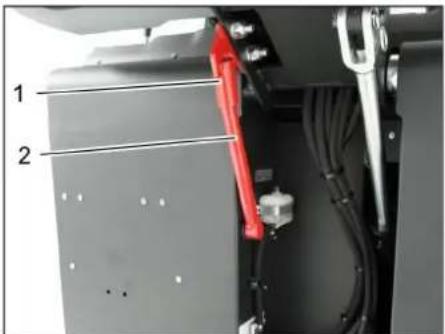
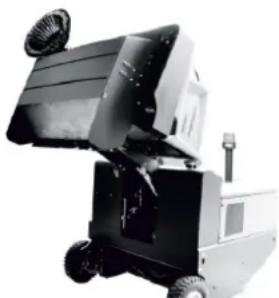
1 Holder of safety rod, 2 Safety rod. Fold the safety rod for high emptying up and insert it into the holder (secured).

Do not allow fluids such as motor oil, hydraulic oil, brake fluid, diesel, or coolant to enter the soil. Please protect the environment and dispose of fluids in an environmentally responsible manner.
Safety notes regarding the batteries
Please observe the following warning notes when handling batteries:
| Observe the directions on the battery, in the instructions for use and in the vehicle operating instructions! | |
| Wear an eye shield! | |
| Keep away children from acid and batteries! | |
| Risk of explosion! | |
| Fire, sparks, open light, and smoking not allowed! | |
| Danger of causticization! | |
| First aid! | |
| Warning note! | |
| Disposal! | |
| Do not throw the battery in the dustbin! |
DANGER
Risk of explosion!
Only use batteries with terminal cover. Restore terminal cover in the event of loss.
DANGER
Risk of explosion!
Do not place tools or similar items on the battery. Risk of short-circuit and explosion.
△DANGER
Risk of injury!
→ Ensure that wounds never come into contact with lead. Always clean your hands after working on batteries.
△DANGER
Risk of fire and explosion!
→ Smoking and naked flames are strictly prohibited. → Rooms where batteries are charged must have good ventilation because highly explosive gas is emitted during charging.
△DANGER
Danger of causticization!
→ Rinse thoroughly with lots of clear water if acid gets into the eye or comes in contact with the skin. → Then consult a doctor immediately. → Wash off the acid if it comes in contact with the clothes.
Installing and connecting the battery
Normally, the machine is equipped with a maintenance-free battery.
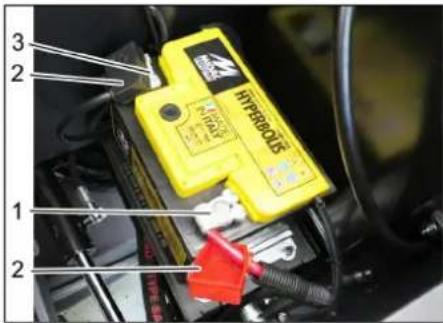
1 Positive terminal 2 Terminal cover 3 Negative terminal → Insert battery in battery mount. → Screw on mounts on battery base. → Connect pole terminal (red cable) to positive pole (+). → Connect pole terminal to negative pole (-). → Attach the pole covers. → Check that the battery poles and pole terminals are adequately protected with pole grease.
Check and correct the fluid level of the battery (only with low-maintenance battery with cell caps)
CAUTION
Risk of damage!
→ Regularly check the fluid level in acid-filled batteries. → Unscrew all cell caps. → Take a sample from each cell using the acid tester.
- The acid in a fully charged battery has a specific weight of 1.28 kg/l at a temperature of 20 °C.
- The acid in a partially discharged battery has a specific weight between 1.00 and 1.28 kg/l.
- The specific weight of the acid must be uniform in all cells.
→ Put the acid sample back into the same cell. → Where fluid level is too low, top up cells to the mark provided with distilled water. → Charge battery. → Screw in cell caps.
Charging battery
△DANGER
Risk of injury!
→ Comply with safety regulations on the handling of batteries. Observe the directions provided by the manufacturer of the charger.
△DANGER
Risk of damage!
→ Charge the battery only with an appropriate charger.
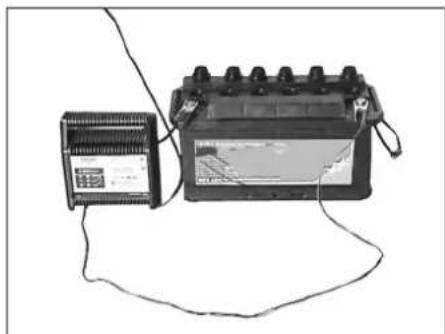
→ Unscrew all cell caps. (only with low-maintenance battery) → Connect positive terminal cable from the charger to the positive pole connection on the battery. → Connect negative terminal cable from the charger to the negative pole connection on the battery. → Plug in mains connector and switch on charger. → Charge battery using lowest possible level of charging current. → When the battery is charged, first remove the charger from the mains and then disconnect it from the battery. → Screw in cell caps. (only with low-maintenance battery)
Remove the battery
→ Disconnect the pole terminal from the negative pole (-). → Disconnect the pole terminal from the positive pole (+). → Loosen the mounts on the battery base. → Remove the battery from the battery holder. → Dispose of the used battery according to local regulations.
Checking the brake fluid level and topping up brake fluid
△DANGER
Risk of injury!
→ Always apply the safety rod when the waste container is raised. → Perform the safeguarding only from outside the hazard zone.
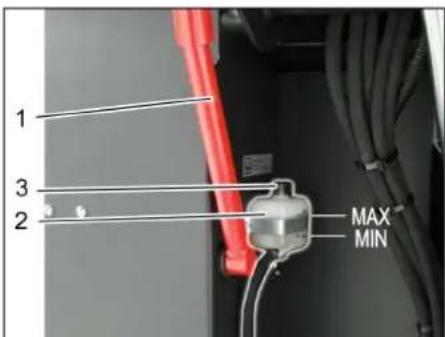
1 Holder of safety rod
2 Brake fluid container
3 Closing head
Move up the waste container and secure it by means of the safety rod, see Chapter "Emptying the waste container"
→ Check if there is enough brake fluid in the brake fluid reservoir.
Note
The filling level has to be between Min. and Max.
→ If necessary, refill with DOT brake fluid currently commercially available.
Check engine oil level and top up, if required
△DANGER
Risk of burns!
→ Allow engine to cool down. → Wait for at least 5 minutes after switching off the engine before checking the engine oil fill level.
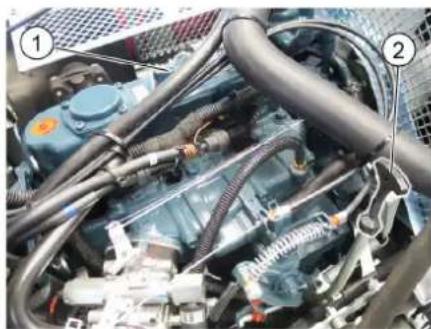
1 Oil cap (engine)
2 Oil dipstick
→ Pull out oil dipstick. → Wipe off oil dipstick and insert. → Pull out oil dipstick. → Read the value of the oil level. → Insert the oil dip again.
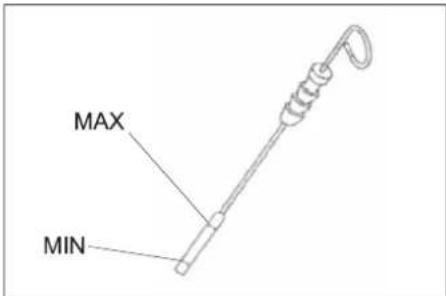
- The oil level must lie between "MIN" and "MAX" marking.
- Add motor oil if the oil level is below the "MIN" marking.
- Do not fill oil above the "MAX" marking. → Remove oil cap. → Fill in motor oil. For oil type refer to Chapter "Technical specifications". → Close oil cap. → Wait at least 5 minutes. → Check engine oil level.
Change the motor oil and the oil filter CAUTION
Risk of burns due to hot engine oil!
→ Allow engine to cool down. → Prepare a collection container for at least 6 litres of engine oil. → Allow engine to cool down.
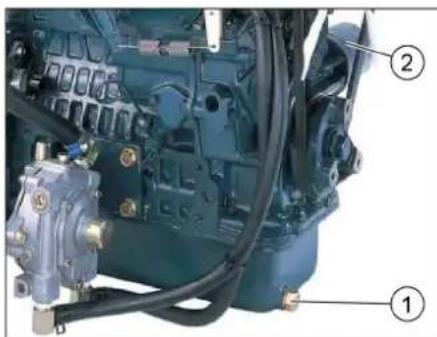
1 Oil drain screw 2 Engine oil filter → Unscrew oil drain plug. → Remove oil cap. → Drain off oil. → Unscrew the oil filter. → Clean the intake and sealing areas. → Coat the washer of the new oil filter with oil before fitting it. → Fit in the new oil filter and tighten it by hand. → Screw in the oil drain screw along with the new washer. Tightening torque: 25 Nm → Fill in motor oil. For oil type and filling quantity refer to Chapter "Technical specifications". → Close oil cap. → Let the motor run for approx. 10 seconds. → Check engine oil level.
Check hydraulic oil level and refill hydraulic oil
NOTICE
The waste container must not be raised.
Open the device hood and secure it using the hood support.
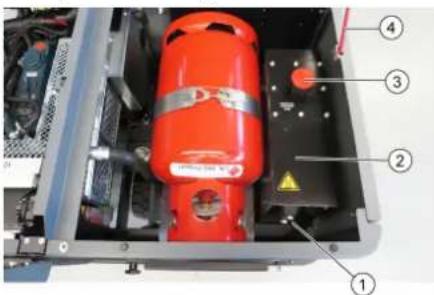
1 Hydraulic oil sight glass 2 Hydraulic tank 3 Screw cap, oil fill opening 4 Hood support Check hydraulic oil level in the sight glass. The oil level must lie between the "MIN" and "MAX" markings. Add hydraulic oil if the oil level is below the "MIN" marking. Loosen the closing cap of the oil filling opening. Clean the filling area. Refill hydraulic oil. For oil type refer to Chapter "Technical specifications". Replace and tighten the closing cap of the oil filling opening.
Check hydraulic unit
NOTICE
Only Kärcher Customer Service is authorised to carry out maintenance tasks on the hydraulic unit.
Lock parking brake. Start the motor. Check all hydraulic hoses and connections and ensure that they are leak-proof.
Check coolant level
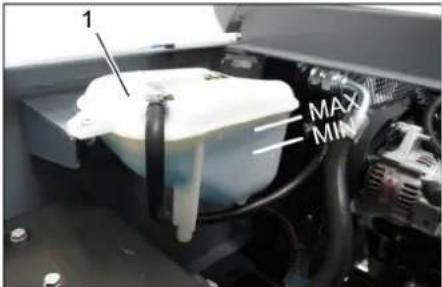
1 Coolant expansion tank
Check filling level while the motor is cold. Check the filling level in the coolant expansion tank. The correct coolant level has to be between MIN and MAX.
Checking and cleaning water/hydraulic oil cooler
DANGER
Risk of burning and scalding!
Allow the water cooler to cool down for at least 20 minutes. The coolant level of the water cooler is checked at the coolant expansion tank. See chapter "Checking the cooling water level". Clean cooler lamella. Remove soiling by means of a soft brush, compressed air or low water pressure. Check cooler hoses and connections and ensure that they are leak-proof. Clean the fan.
Checking roller brush
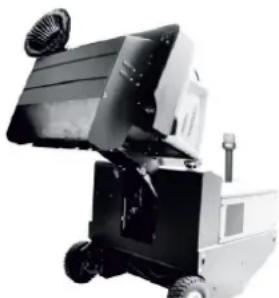
Start the motor. Raise the waste container up to the end-position. Switch off engine. Lock parking brake. Use the safety bar for emptying from a height. Remove belts or cords from roller brush. Remove the safety bar. Start the motor. Lower the waste container up to the end-position. Switch off engine.
Replacing roller brush
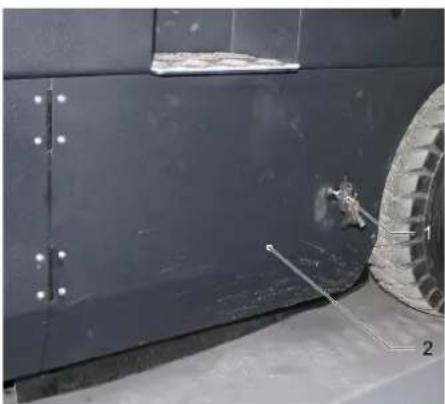
1 Key
2 Side panels
→ Drive the waste container up and support it with the safety rod. → Open the side covers using a key.
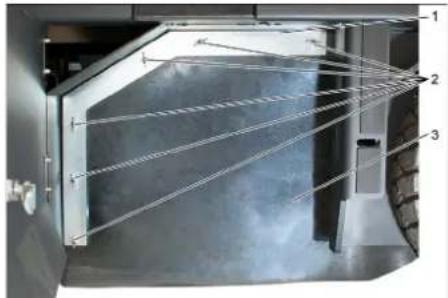
1 Holding bow
2 Wing nut
3 Side seal
→ Unscrew the wing nuts. → Remove the retaining clamp. → Flip the side seal out. → Unscrew the retaining screw of the roller brush intake, and swing the intake to the outside. → Pull out roller brush.
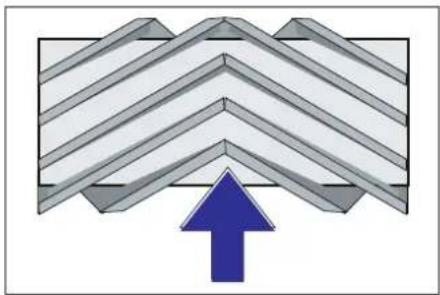
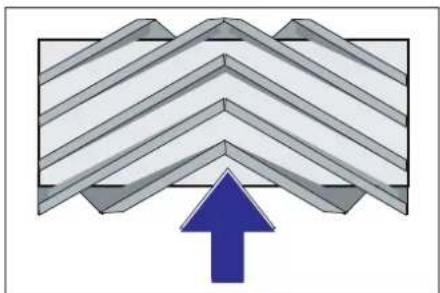
Installation position of roller brush in direction of travel (top view)
Note: When installing the new roller brush, ensure correct positioning of the bristle assembly.
→ Install new roller brush. The nuts of the roller brush must be inserted on the notches of the opposite crank.
Note: Once the new roller brush has been installed, the sweeping track must be readjusted.
Check and adjust roller brush sweeping track
Note: The sweeping track is factory-set to 80 mm; it is steplessly adjustable if the brush roller wears down.
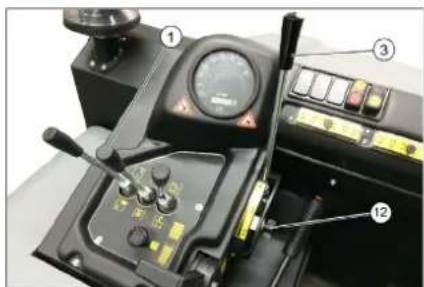
→ Check tyre pressure. → Switch off suction blower. → Drive sweeper on to a smooth, even surface covered with a visible layer of dust or chalk. → Roller brush and side brush control lever (1) backwards: Switches the roller brush on.
Roller brush control lever (3) backwards: Lowers the roller brush.
→ Allow the roller brush to run for approx. 10 seconds.
→ Roller brush and side brush control lever (1) to middle position. Roller brush control lever (3) forwards: Raises the roller brush. → Drive machine backwards. → Check sweeping mirror.
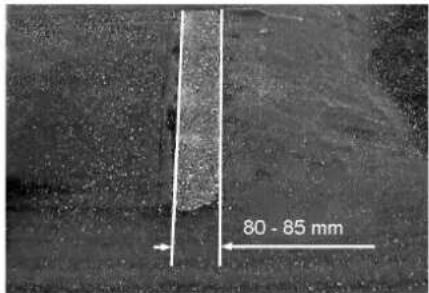
The sweeping track should have an even rectangular shape which is 80-85 mm wide.
→ Undo and adjust the stop screw for wear adjustment (12). Stop screw at the top: narrow sweeping area. Stop screw at the bottom: broad sweeping area. → Tighten the stop screw again. → Check the sweeping area of the roller brush again as described.
Check and adjust sweeping track of the side-brush
→ The side-brushes lift up. → Drive sweeper on to a smooth, even surface covered with a visible layer of dust or chalk. → Lower the side brushes using the control lever and allow them to run for approx. 10 seconds. → The side-brushes lift up. → Drive machine backwards. → Check sweeping mirror.

The width of the sweeping track should lie between 40-50 mm.
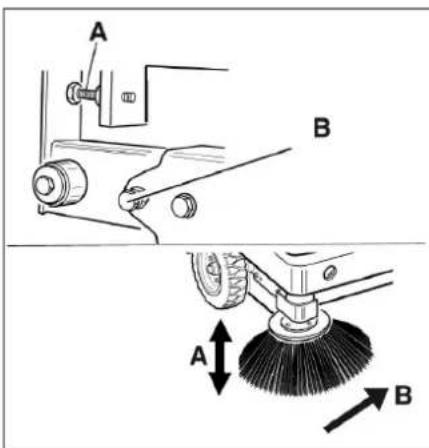
→ Set the sweeping track using the two adjusting screws. → Check sweeping mirror.
Adjust the side seals
△DANGER
Risk of injury!
→ Always apply the safety rod when the waste container is raised. → Perform the safeguarding only from outside the hazard zone. → Drive the waste container up and secure it with the safety rod. → Fold the safety rod for the high emptying up and insert it into the holder (secured).
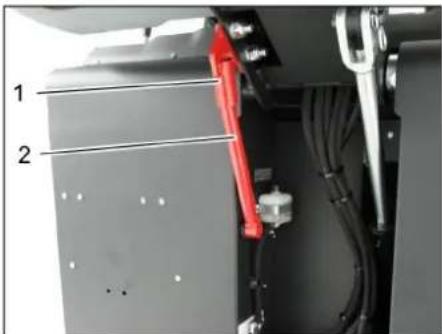
1 Holder of safety rod
2 Safety rod
→ Open the side cover as described in Chapter "Replace brush roller". → Release the 6 wing nuts on the side holding plate. → Loosen 3 nuts (SW 13) on the front holding plate. → Press the side seal down (elongated hole) until it is about 1 to 3 mm to the floor. → Screw in the holding plates. → Repeat the procedure on the other side of the appliance.
Manually clean the dust filter
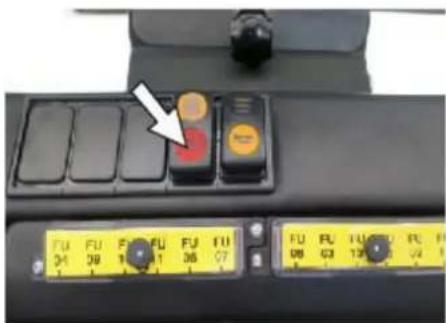
→ Switch on manual filter shake off.
Check/replace dust filter
⚠ WARNING
Risk of injury!
→ Wear a dust mask when working around the dust filter. Observe safety regulations on the handling of fine particles. → Clean the dust filter with the filter cleaning button. → Empty waste container.
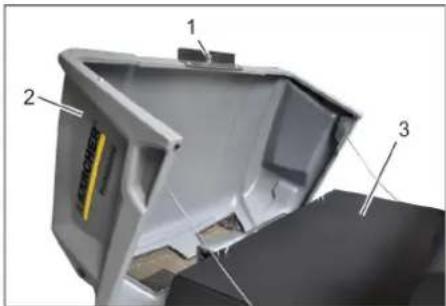
1 Lock of appliance hood 2 Cover 3 Filter cover → Open the lock, remove the star grip screw to do this. → Fold cover forwards.
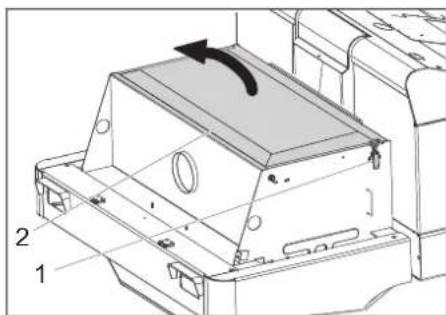
1 Lock, filter cover (2x) 2 Filter cover → Open the lock. → Open filter cap.
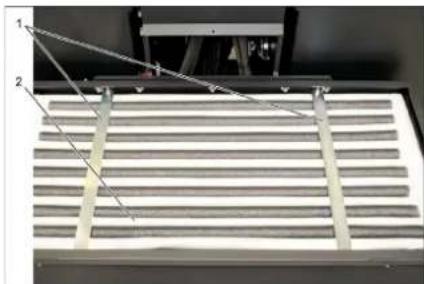
1 Cross struts 2 Dust filter → Check the dust filter, clean or replace if necessary.
Note
The dust filter may only be replaced by Kärcher Customer Service.
→ Insert and lock the filter cover.
Check and adjust the V-Belt
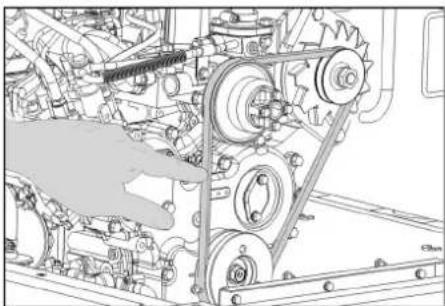
The V-Belt must deflect approx. 7-9 mm at a pressure of 10 kg.
→ Get the V-belt tension adjusted by an authorized customer service.
Check air filter and replace, if necessary
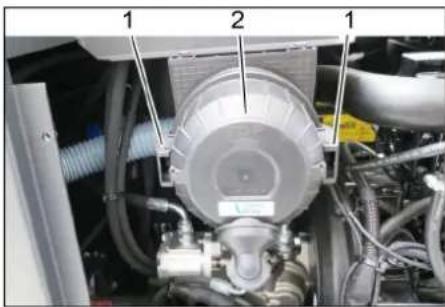
1 Lock
2 Air filter housing
→ Remove side panel. → Remove the air filter housing. → Replace the air filter insert.
Note: Installation position with blowout opening pointing down (see illustration).
Clean the centrifugal separator
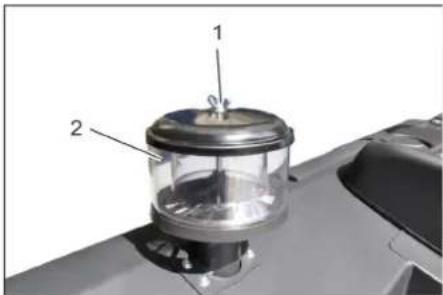
1 Wing nut 2 Centrifugal separator → Unscrew the wing nut from the centrifugal separator. → Clean the centrifugal separator.
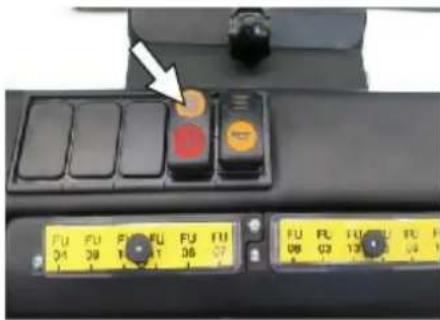
Replacing fuses
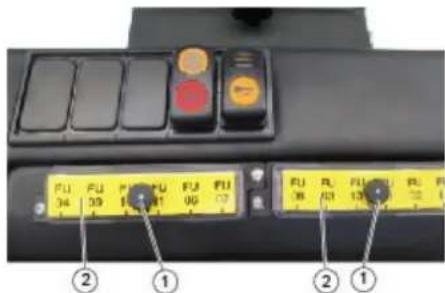
1 Lock nut
2 Cover fuse box
→ Unscrew the knurled nut. → Open the cover on the fuse box. → Check the fuses. → Replace defective fuses.
Note: Only use fuses with identical safety ratings.
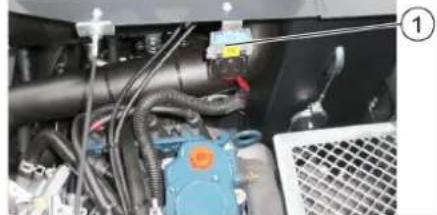
Note: The fuse FU 01 is located in the engine compartment.
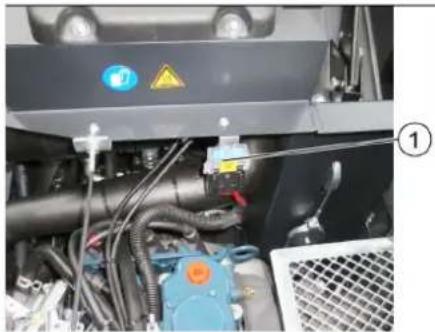
1 Fuse FU 01 (main fuse)
| FU 01* Main fuse 60 A | |
| FU 02 HornSuction blower | 20 A |
| FU 03 Multifunction display 3 A | |
| FU 04 Beacon lamp 5 A | |
| FU 05 Motor control unit 10 A | |
| FU 06 Driver cabin (optional)Wiper | 10 A |
| FU 07 LPG filling level display 5 A | |
| FU 08 Starter 10 A | |
| FU 09 Left lighting 7,5 A | |
| FU 10 Right lighting 7,5 A | |
| FU 11 Working light 10 A | |
| FU 12 Vibrator system 25 A | |
| FU 13 LPG valveBackup signal | 7,5 A |
* These fuses may only be changed by Customer Service, as it is necessary to check the device for potential faults.
Troubleshooting
| Fault Remedy | |
| Appliance cannot be started | Sit on the driver seat, the seat contact switch gets activated. |
| Press the brake pedal in order to start the engine. | |
| Charging or replacing battery | |
| Gas bottle empty - replace gas bottle. | |
| Gas removal valve closed - open the valve by turning it in anti-clockwise direction. | |
| Gas valve iced - please read the description of the gas bottle replacement procedure. | |
| Inform Kärcher Customer Service. | |
| Engine is running erratically | Clean air filter or change filter cartridge. |
| Check fuel pipes, connections and joints and maintain them if required | |
| Checking the installation position of the gas bottle: Connection or ring opening must face downwards. | |
| Inform Kärcher Customer Service. | |
| Engine is overheated Refill coolant | |
| Rinse cooler | |
| Tighten V-Belt | |
| Inform Kärcher Customer Service. | |
| Engine is running but machine is only moving slowly or is not moving at all | Release parking brake |
| Close freewheel (drive position) | |
| Move the gas lever all the way to the front (high speed). | |
| Check for trapped ribbons and strings. | |
| Inform Kärcher Customer Service. | |
| Whistling sound in the hydraulic system | Refill hydraulic fluid |
| Inform Kärcher Customer Service. | |
| Brushes are rotating slowly or not at all | Move the gas lever all the way to the front (high speed). |
| Check for trapped ribbons and strings. | |
| Inform Kärcher Customer Service. | |
| Too little or no suction power in the brush area | Check dust filter, clean or replace. |
| Inform Kärcher Customer Service. | |
| Dust gathers in the machine Adjust | the side seals |
| Switch on blower | |
| Check dust filter, clean or replace. | |
| Replace filter washers | |
| Open the container flap of the waste container. | |
| Inform Kärcher Customer Service. | |
| Sweeping unit does not pick up waste | Empty waste container |
| Check dust filter, clean or replace. | |
| Replacing roller brush | |
| Adjust sweeping track | |
| Replace sealing strips of the waste container | |
| Remove the blocking of the brush roller | |
| Open the container flap of the waste container. | |
| Inform Kärcher Customer Service. | |
| Waste container does not raise or lower | Move the gas lever all the way to the front (high speed). |
| Remove the locking support from the waste container | |
| Inform Kärcher Customer Service. | |
| The container flap of the waste container does not open. | Inform Kärcher Customer Service. |
| Operation problems with hydraulic movement parts | Inform Kärcher Customer Service. |
Technical specifications
| KM 120/250 R LPG Classic | ||
| Machine data | ||
| Drive speed, forward km/h 9 | ||
| Drive speed, reverse km/h 4 | ||
| Climbing capability (max.) % 18 | ||
| Surface cleaning performance without side brushes m | 1/2h 8100 | |
| Surface output with side-brush m | 1/2h 10800 | |
| Working width without side brushes mm 900 | ||
| Working width with side-brush mm 1200 | ||
| Protection type, drip-proof --IPX 3 | ||
| Working time with a full gas bottle | h | 4 |
| Engine | ||
| Type | -- | Kubota WG 972 GL-E3 |
| Type | -- | 3-cylinder LPG gas motor with a 3-way catalytic converter |
| CO2Emission according to the measurement procedure of EU regulation 2016/1628 (level V) | g/kWh | 844,3 |
| Cooling type | -- | Water cooling |
| Rotation direction | -- | Anticlockwise direction |
| Holes | mm 68 | |
| Hub | mm 68 | |
| Cylinder capacity | cm3 | 740 |
| Amount of oil | l | 3,25 |
| Operating speed | 1/min | 2500 |
| Max. speed | 1/min 2500 | |
| Dry run speed | 1/min | 1300 |
| Max. power | kW/PS | 12,7 / 17,0 |
| Maximum torque at 2400 rpm | Nm | 60 |
| Oil filter | -- | Filter cartridge |
| Suction air filter | -- | Internal filter cartridge, external filter cartridge |
| Fuel type | LPGLPG mixtures of propane and butane are permitted. The propane content must be at least 90%. | |
| Tank content | 11 kg / 20 litres (replacement cylinder) | |
| Electrical system | ||
| Battery | V, Ah | 12, 52 |
| Generator, rotary current | V, Watt | 12, 150 |
| Starter | -- | Electrical starter |
| Hydraulic system | ||
| Oil quantity in the entire hydraulic system | l | 26,5 |
| Oil quantity in hydraulic tank | l | 21,2 |
| Oil grades | ||
| Engine (above 25 °C) | -- | SAE 30, SAE 10W-30, SAE 15W-40 |
| Engine (0 to 25 °C) | -- | SAE 20, SAE 10W-30, SAE 10W-40 |
| Engine (below 0 °C) | -- | SAE 10W, SAE 10W-30, SAE 10W-40 |
| Hydraulics | -- | HV 46 |
| Waste container | ||
| Max. unloading height | mm 1400 | |
| Volume of waste container l250 | ||
| Roller brush | ||
| Roller brush diameter | mm 300 | |
| Roller brush width | mm 900 | |
| Speed | 1/min | 350 |
| Sweeping track | mm 80 | |
| Side brushes | ||
| Side brush diameter mm 600 | ||
| Speed (continuous) 1/min 0 - 60 | ||
| Solid rubber tyres | ||
| Size, front -- 15-4.5x8 | ||
| Size, rear -- 15-4.5x8 | ||
| Brake | ||
| Front wheels -- mechanical | ||
| Rear wheel -- hydrostatic | ||
| Filter and vacuum system | ||
| Type -- Pocket filter | ||
| Speed | 1/min | 2800 |
| Filter surface area, fine dust filter | m2 | 6,0 |
| Nominal vacuum, suction system | mbar | 15,5 |
| Nominal volume flow, suction system | m3/h | 800 |
| Vibrator system | -- | Electric motor |
| Working conditions | ||
| Temperature | °C -5 and +40 | |
| Air humidity, non-condensing | % | 0 - 90 |
| Values determined as per EN 60335-2-72 | ||
| Noise emission | ||
| Sound pressure level LpA | dB(A) | 83 |
| Uncertainty KpA | dB(A) | 3 |
| Sound power level LWA + Uncertainty KWA | dB(A) | 104 |
| Machine vibrations | ||
| Hand-arm vibration value | m/s2 | <2,5 |
| Seat | m/s2 | 0,8 |
| Uncertainty K | m/s2 | 0,1 |
| Dimensions and weights | ||
| Length x width x height | mm | 2082x1250x1450 |
| Right turning radius | mm | 1350 |
| Left turning radius | mm | 1350 |
| Unladen weight | kg | 851 |
| Permissible overall weight | kg 1300 | |
| Permissible front axle load | kg | 787 |
| Permissible rear axle load | kg | 513 |
| Subject to technical modifications! | ||
EU Declaration of Conformity
We hereby declare that the machine described below complies with the relevant basic safety and health requirements of the EU Directives, both in its basic design and construction as well as in the version put into circulation by us. This declaration shall cease to be valid if the machine is modified without our prior approval.
Product: Ride-on vacuum sweeper
Type: KM 120/250 R LPG Classic 1.186-001.0
Relevant EU Directives
2006/42/EC (+2009/127/EC)
2014/30/EU
2000/14/EC
Applied harmonized standards
EN 60335-1
EN 60335-2-72
EN 55012: 2007 + A1: 2009
EN 61000-6-2: 2005
EN 62233: 2008
Applied conformity evaluation method
2000/14/EC: Appendix V
Sound power level dB(A)
Measured: 102
Guaranteed: 104
Alfred Kärcher SE & Co. KG
71364 Winnenden (Germany)
Tel.: +49 7195 14-0
Fax: +49 7195 14-2212
Winnenden, 2020/01/01
The signatories act on behalf of and with the authority of the company management.

- Conner
Chairman of the Board of Management
S. Reiser
Director Regulatory Affairs & Certification
Documentation supervisor:
S. Reiser
www.kaercher.com/REACH
Warranty
1 Hydraulic pump
2 Wrench
3 Nut
1 Gas cylinder
2 Safety bar
1 Brake pedal
2 "Forward" pedal
1 Key
1 Wing nut
1 Fuse FU 1 (main fuse)
2006/42/EC (+2009/127/EC)
2014/30/EU
2000/14/EC
Chairman of the Board of Management

S. Reiser Director Regulatory Affairs & Certification
71364 Winnenden (Germany)
Tel.: +49 7195 14-0
Fax: +49 7195 14-2212
Winnenden, 2020/01/01
www.kaercher.com/REACH
Warranty
1 hydraulic pump
1 brake pedal
2006/42/EC (+2009/127/EC)
2014/30/EU
2000/14/EC
Chairman of the Board of Management
Director Regulatory Affairs & Certification
71364 Winnenden (Germany)
Tel.: +49 7195 14-0
Fax: +49 7195 14-2212
Winnenden, 2020/01/01
www.kaercher.com/REACH
Warranty
1 Hydraulic pump
2 Key
3 Nut
1 Gas files
2 Safety bar
3 Clasp closure
1 Lever seat adjustment
2 Driver's seat
1 Brake pedal
1 Control lever sweeping roller and side broom 2 Control lever dirt reservoir 3 Control lever sweeping roller 4 Control lever reservoir cover
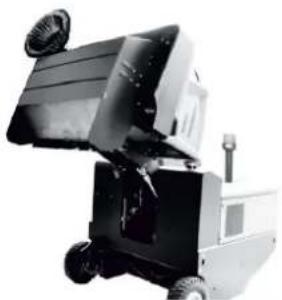
1 Oil filler cap (engine)
2 Oil dipstick
1 Oil drain plug
2 Engine oil filter
1 Coolant expansion tank
1 Key
2 Side paneling
1 Retaining bracket
2 Wing nut
→ Activate manual filter cleaning.
Check / replace dust filter
⚠ WARNING
Risk of injury!
1 Locking device cover
2 Device cover
3 Filter cover
1 Closure, filter cover (2x) 2 Filter cover → Open closure. → Open filter cover.
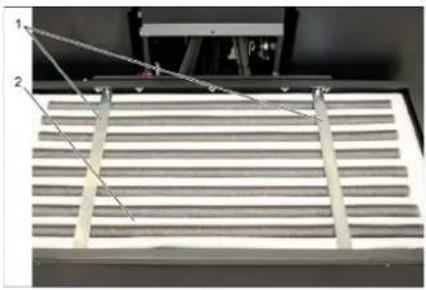
1 Crossbar
2 Dust filter
→ Check the dust filter, clean or replace it if necessary.
Tip
1 Wing nut
2 Centrifugal separator
71364 Winnenden (Germany)
Tel.: +49 7195 14-0
Fax: +49 7195 14-2212
Winnenden, 2020/01/01
www.kaercher.com/REACH
Warranty
1 Screw
2 | | a v e
1 Hydraulic pump
2 l l a v e
3 Nut
1 Gas bottle
2 Safety bar
1 Brake pedal
2 Accelerator pedal "forward"
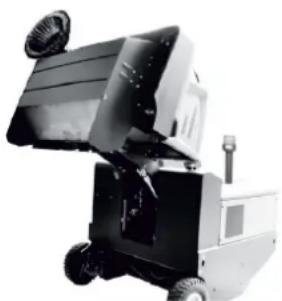
1 Coolant expansion tank
1 Wing nut
2 Centrifugal separator
1 Fuse FU 1 (main fuse)
2006/42/EC (+2009/127/EC)
2014/30/EU
2000/14/EC
71364 Winnenden (Germany)
Tel.: +49 7195 14-0
Fax: +49 7195 14-2212
Winnenden, 2020/01/01
www.kaercher.com/REACH
Warranty
1 Hydraulic pump
2 Wrenches
3 Screw
1 Gas cylinder 2 Safety bar 3 Lever lock
1 Brake pedal
1 Control lever for the cylindrical sweeping brush and side broom 2 Control lever for the waste collector 3 Control lever for the cylindrical sweeping brush 4 Control lever for the container lid
Control lever for the cylindrical sweeping brush and side broom
→ Control lever (1) forward: Cylindrical sweeping brush switched on, lower the side broom and switch it on. → Control lever (1) backward: Cylindrical sweeping brush switched on.
Control lever for the waste collector
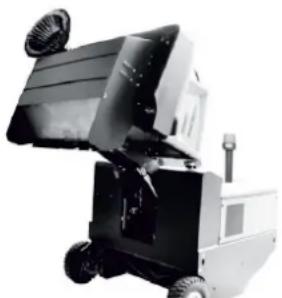
→ Clean the radiator fins.
1 Keys
2 Side panel
→ Switch on manual filter cleaning.
1 Crossbars
2 Dust filter
1 Lock
1 Wing nut 2 Centrifugal separator
→ Unscrew the wing nut on the centrifugal separator. → Clean the centrifugal separator.

2006/42/EC (+2009/127/EC)
2014/30/EU
2000/14/EC
Chairman of the Board of Management
Director Regulatory Affairs & Certification
71364 Winnenden (Germany)
Tel.: +49 7195 14-0
Fax: +49 7195 14-2212
Winnenden, 2020/01/01
General notes ..... DA 1
www.kaercher.com/REACH
Warranty
1 Hydraulic pump
2 N ∅ g l e
3 Metric
1 Gas cylinder
2 Safety bar
3 Clamp lock
1 Brake pedal
2 Drive pedal "forward"
3 Drive pedal "reverse"
→ Push the engine speed switch all the way forward (operating speed). → Press the brake pedal and hold it down. → Release the parking brake.
Drive forward
1 Positive terminal
2 Terminal cover
3 Negative terminal
1 Safety bar holder
1 Oil filler cap (engine)
2 Oil dipstick
1 Nozzle
2 Side skirts
1 Holding bracket
2 Wing nut
3 Side seal
1 Fuse rod holder 2 Fuse rod
1 Wing nut 2 Separator
→ Unscrew the wing nut on the separator. → Clean the separator.
1 Fuse FU 1 (main fuse)
| FU 01* Hovedsikring 60 A | |
| FU 02 Signalhorn Sugeturbiner | 20 A |
| FU 03 Multifunktionsdisplay 3 A | |
| FU 04 Rundomkring-advarselslys | 5 A |
| FU 05 Motor-kontrolenhed 10 A | |
| FU 06 Beskyttelsestag (option)Visker | 10 A |
| FU 07 LPG-påfyldningsviser 5 A | |
| FU 08 Starter 10 A | |
| FU 09 Belysning venstre | 7,5 A |
| FU 10 Belysning højre | 7,5 A |
| FU 11 Arøejdsbelysning | 10 A |
| FU 12 Vibratorsystem | 25 A |
| FU 13 LPG-ventilBaksignal | 7,5 A |
2006/42/EC (+2009/127/EC)
2014/30/EU
2000/14/EC
H. Jenner Chairman of the Board of Management
S. Reiser Director Regulatory Affairs & Certification
71364 Winnenden (Germany)
Tel.: +49 7195 14-0
Fax: +49 7195 14-2212
Winnenden, 2020/01/01
General notes.....NO 1
Error correction....NO 13
Technical data ..... NO 14
EU declaration of conformity ..... NO 15
www.kaercher.com/REACH
Warranty
Danger of burns!
5 Motor intake air
6 Warning lamp parking brake activated
1 Hydraulic pump
2 Key
3 Nut
1 Gas cylinder
2 Locking bar
3 Locking clamp
→ Loosen the screw on the locking bar and swing the bar to the side. → Replace the gas cylinder. → Unscrew the protective cap on the valve of the gas cylinder. → Close the locking clamp.
1 Seat adjustment lever
2 Driver's seat
→ Sit on the driver's seat. → Engage the parking brake (11). → Push the engine speed adjustment (10) forward 1/3.
Starting the engine
1 Brake pedal
2 Drive pedal "forward"
1 Control lever for sweeping roller and side brush 2 Control lever for sweeping waste container 3 Control lever for sweeping roller 4 Control lever for container flap
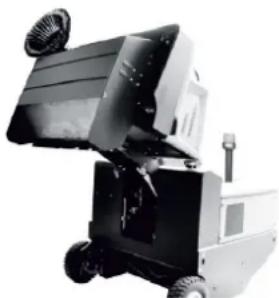
→ Lift the sweeping roller and side brush with the control levers: Control lever 1 in the middle and control lever 3 forward. → Close the container flap by pulling the control lever (4) backward. → Lift the sweeping waste container by pulling the control lever for the sweeping waste container (2) backward. → Drive slowly to the collection container. → Apply the parking brake. → Open the container flap by pushing the control lever for the container flap (4) forward and empty the sweeping waste container.
→ Close the container flap by pulling the control lever for the container flap (4) backward until it is tilted to the end position. → Release the parking brake. → Drive slowly away from the collection container. → Lower the sweeping waste container to the end position by pulling the control lever (2) forward.
Turning off the machine
→ Lift the sweeping roller and side brush with the control levers: Control lever 1 in the middle and control lever 3 forward. → Close the container flap by pulling the control lever (4) backward. → Pull the engine speed adjustment fully backward. → Press the brake pedal and hold it pressed. → Apply the parking brake. → Turn the ignition key to "0" and pull it out.
Transport
⚠️FARE
Transport damage!
1 Holder securing bar
2 Securing bar
1 Holder securing bar
Danger of burns!
→ Let the engine cool down.
1 Oil drain screw
2 Engine oil filter
1 Key
2 Side panel
→ Raise the debris container and secure it with the securing bar. → Open the side panel with the key.
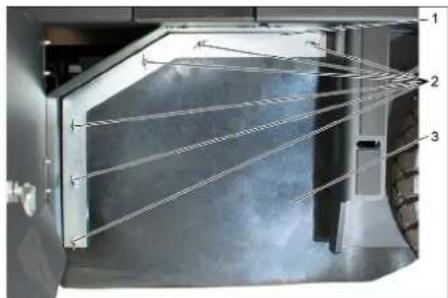
→ Check the tire pressure. → Turn off the suction fan. → Drive the sweeper on a flat and smooth surface that is visibly covered with dust or chalk. → Control lever for sweeping roller and side brush (1) backward: Sweeping roller on. Control lever for sweeping roller (3) backward: The sweeping roller is lowered. → Let the sweeping roller run for approx. 10 seconds. → Control lever for sweeping roller and side brush (1) in the middle. Control lever for sweeping roller (3) forward: The sweeping roller is lifted. → Back the machine away. → Check the sweeping pattern.
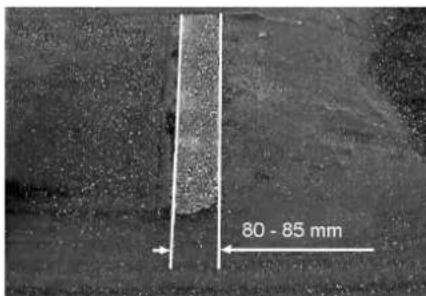
The shape of the sweeping pattern should form a square with a width of 80-85 mm.
1 Holder, locking bar 2 Locking bar
1 Lock, filter cover (2x) 2 Filter cover → Open the lock. → Open the filter cover.
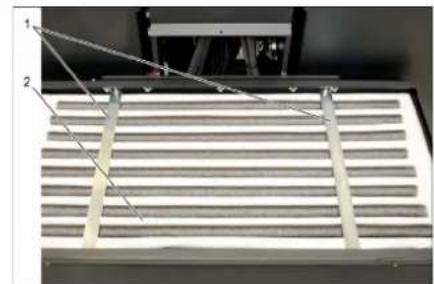
1 Cross member
2 Dust filter
1 Wing nut 2 Centrifugal separator
1 Fuse FU 1 (main fuse)
| FU 01* Hovedsikring 60 A | |
| FU 02 HornSugevifte | 20 A |
| FU 03 Multifunksjonsindikator 3 A | |
| FU 04 Roterende varsellys 5 A | |
| FU 05 Motorkontrollenhet 10 A | |
| FU 06 Førerhytte (tilleggsut-styr)Vindusvisker | 10 A |
| FU 07 LPG-påfyllingsnivå 5 A | |
| FU 08 Starter 10 A | |
| FU 09 Belysning venstre 7,5 A | |
| FU 10 Belysning høyre | 7,5 A |
| FU 11 Arbeidslys | 10 A |
| FU 12 Vibratorsystem | 25 A |
| FU 13 LPG-ventilRyggesignal | 7,5 A |
* These fuses must only be replaced by customer service, because it will be necessary to check the appliance for any faults.
Troubleshooting
2006/42/EC (+2009/127/EC)
2014/30/EU
2000/14/EC
2000/14/EC: Annex V
Sound power level dB(A)
Measured: 102
Guaranteed: 104
H. Jenner Chairman of the Board of Management
S. Reiser Director Regulatory Affairs & Certification
71364 Winnenden (Germany)
Tel.: +49 7195 14-0
Fax: +49 7195 14-2212
Winnenden, 2020/01/01
www.kaercher.com/REACH
Warranty
1 Brake pedal
2 Drive pedal "forward"
3 Drive pedal "backward"
→ Start the fan.
→ For exterior cleaning
1 Oil filler cap (engine)
2 Oil dipstick
→ Select manual filter cleaning.
Check/replace dust filter
△WARNING
Risk of injury!
1 T w i s t l o c k
2 Dust filter
1 W i n g n u t
2 Cyclone separator
→ Unscrew the wing nut on the cyclone separator. → Clean the cyclone separator.
Replacing fuses
1 Knurled nuts
Chairman of the Board of Management
S. Reiser
Director Regulatory Affairs & Certification
71364 Winnenden (Germany)
Tel.: +49 7195 14-0
Fax: +49 7195 14-2212
Winnenden, 2020/01/01
www.kaercher.com/REACH
Warranty
1 Hydraulic pump 2 Wrench 3 Nut
1 Brake pedal
1 Safety bar holder
2 Brake fluid reservoir
3 Cover cap
1 Oil drain plug
1 Wrench
2 Side panel
1 Safety bar holder
2 Safety bar
1 Cross braces
2 Dust filter
1 Wing nut 2 Cyclone separator
1 Fuse FU 1 (main fuse)
Chairman of the Board of Management
Director Regulatory Affairs & Certification
71364 Winnenden (Germany)
Tel.: +49 7195 14-0
Fax: +49 7195 14-2212
Winnenden, 2020/01/01
www.kaercher.com/REACH
Warranty
1 Screw 2 Key
1 Cross bar
2 Dust filter
Chairman of the Board of Management
S. Reiser Director Regulatory Affairs & Certification
71364 Winnenden (Germany)
Tel.: +49 7195 14-0
Fax: +49 7195 14-2212
Winnenden, 2020/01/01
www.kaercher.com/REACH
Garanti
1 Hydraulic pump 2 Switch 3 Nut
1 Seat adjustment lever
2 Driver's seat
1 Brake pedal
2 Accelerator pedal "forward"
3 Accelerator pedal "reverse"
1 Handle
2 Wing nut
3 Yan conta
1 Cross beam
2 Dust filter
1 Fuse FU 1 (main fuse)
Chairman of the Board of Management
S. Reiser
Director Regulatory Affairs & Certification
71364 Winnenden (Germany)
Tel.: +49 7195 14-0
Fax: +49 7195 14-2212
Winnenden, 2020/01/01
www.kaercher.com/REACH
Warranty
1 Brake pedal
1 Key
2 Side panel
1 Bracket
2 Wing nut
Chairman of the Board of Management
S. Reiser Director Regulatory Affairs & Certification
71364 Winnenden (Germany)
Tel.: +49 7195 14-0
Fax: +49 7195 14-2212
Winnenden, 2020/01/01
www.kaercher.com/REACH
Warranty
1 Hydraulic pump 2 Key - 3 Nut
1 Brake pedal
1 Oil filler cap (engine)
1 Key-
2 Side cover
Chairman of the Board of Management
Director Regulatory Affairs & Certification
71364 Winnenden (Germany)
Tel.: +49 7195 14-0
Fax: +49 7195 14-2212
Winnenden, 2020/01/01
www.kaercher.com/REACH
Warranty
1 Brake pedal
1 Key
2 Side panels
1 Retaining bracket
2 Wing nuts
3 Side seals
1 Hood lock
2 Device cover
3 Filter cover
1 Cross braces
2 Dust filter
1 Wing nut
2006/42/EC (+2009/127/EC)
2014/30/EU
2000/14/EC
71364 Winnenden (Germany)
Tel.: +49 7195 14-0
Fax: +49 7195 14-2212
Winnenden, 2020/01/01
General instructions ..... SL 1
Environmental protection ..... SL 1
Warranty ..... SL 1
Device and spare parts SL 1
Symbols in the operating instructions ..... SL 1
Symbols on the device ..... SL 1
Intended use ..... SL 2
Foreseeable misuse
..... SL 2
Suitable surfaces ..... SL 2
Safety instructions ..... SL 2
www.kaercher.com/REACH
Warranty
1 Screw 2 Key → Unscrew the screw. → Remove the key.
1 Gas cylinder
2 Safety bar
3 Tie closure
1 Brake pedal
2 Drive pedal "forward"
3 Drive pedal "reverse"
1 Safety bar handle
1 Key
2 Side cover
1 Support rod
2 Wing nuts
3 Side seal
→ Unscrew the wing nuts. → Remove the support rod. → Fold the side seal outward. → Unscrew the adjusting screw of the broom carrier and swivel the carrier outward. → Pull out the broom.
Installation position of the broom in the direction of travel (top view)
Warning: When installing a new broom, pay attention to the position of the brush insert.
→ Insert the new broom. The notches of the broom must fit onto the grooves of the opposite pendulum.
Warning: After installing a new broom, the sweeping area must be readjusted.
Checking and adjusting the sweeping area of the broom
Warning: The sweeping area is factory-set to 80 mm; it can be adjusted continuously as the broom wears.
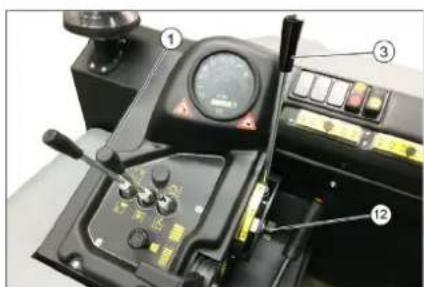
1 Safety rod holder
2 Safety rod
1 Closure, filter cover (2x) 2 Filter cover → Open the closure. → Open the filter cover.
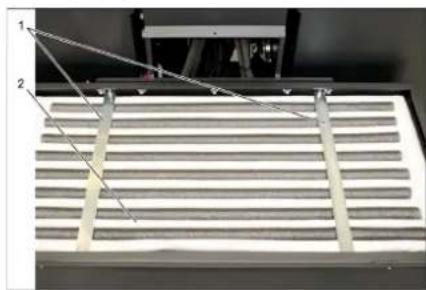
1 Cross supports
2 Dust filter
→ Check the dust filter, clean or replace it if necessary.
Note
The V-belt must give about 7-9 mm under a pressure of 10 kg.
1 Wing nut 2 Centrifugal force separator → Unscrew the wing nut on the centrifugal force separator. → Clean the centrifugal force separator.
Replacing fuses
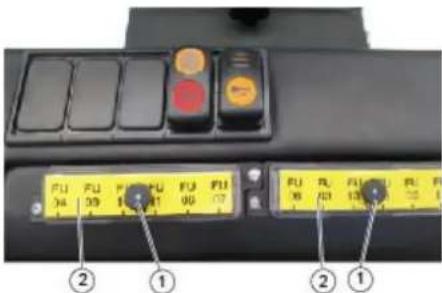
1 Knurled nut
2 Fuse box cover
→ Unscrew the knurled nuts. → Open the cover on the fuse box. → Check the fuses. → Replace defective fuses.
1 Fuse FU 1 (main fuse)
| FU 01* Glavna varovalka 60 A | |
| FU 02 TrobljaSesalni ventilator | 20 A |
| FU 03 Multifunkcijski prikaz 3 A | |
| FU 04 Vrteča opozorilna luč 5 A | |
| FU 05 Kontrolna enota motor-ja | 10 A |
| FU 06 Voznikova kabina (Op-cija)Brisalec | 10 A |
| FU 07 Prikaz stanja polnosti za UNP | 5 A |
| FU 08 Zaganjač 10 A | |
| FU 09 Osvetlitev levo 7,5 A | |
| FU 10 Osvetlitev desno 7,5 A | |
| FU 11 Delovna osvetlitev 10 A | |
| FU 12 Sistem vibratorja 25 A | |
| FU 13 Ventil za UNPSignal vzvratne vožnje | 7,5 A |
2006/42/EC (+2009/127/EC)
2014/30/EU
2000/14/EC
71364 Winnenden (Germany)
Tel.: +49 7195 14-0
Fax: +49 7195 14-2212
Winnenden, 2020/01/01
Signatories act in accordance with the instructions and with the authorization of the management.
Chairman of the Board of Management
Director Regulatory Affairs & Certification
www.kaercher.com/REACH
Warranty
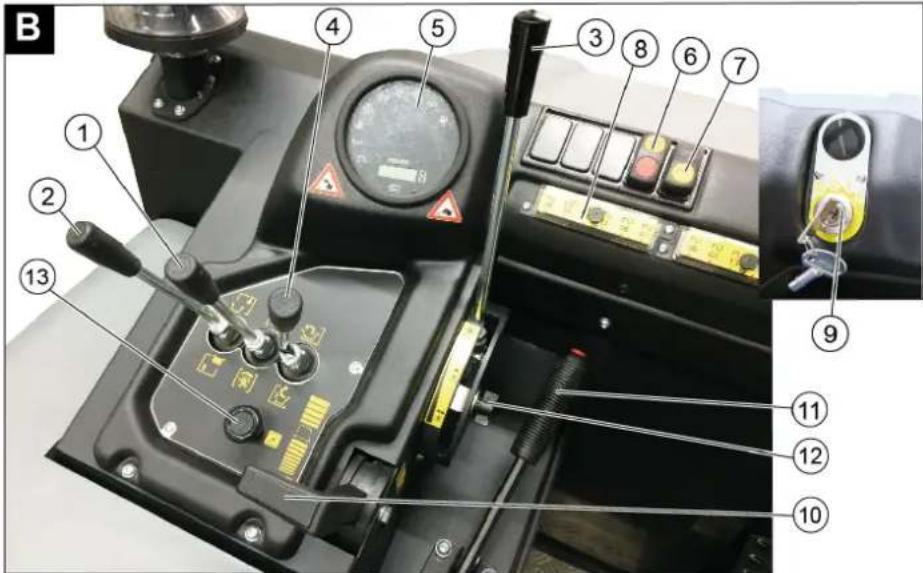
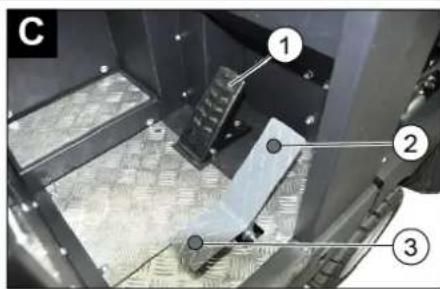
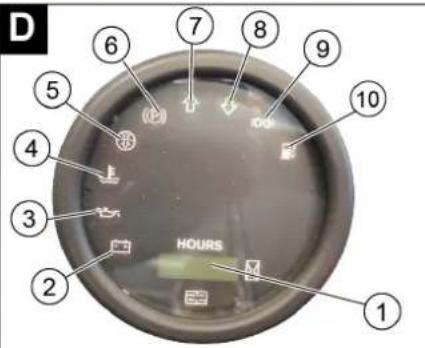
1 Brake pedal
2 Drive pedal "forward"
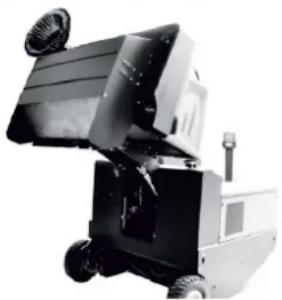
1 Key
2 Side housing
1 Stirrup
1 Cross member
2 Dust filter
2006/42/EC (+2009/127/EC)
2014/30/EU
2000/14/EC
Chairman of the Board of Management

S. Reiser
Director Regulatory Affairs & Certification
71364 Winnenden (Germany)
Tel.: +49 7195 14-0
Fax: +49 7195 14-2212
Winnenden, 2020/01/01
www.kaercher.com/REACH
Warranty
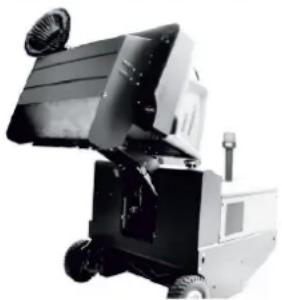
1 Oil filler cap (engine)
2 Dipstick
1 Hydraulic oil sight glass
2 Hydraulic reservoir
1 Coolant expansion tank
1 Key
2 Side cover
1 Clamp
2 Wing nut
→ Unscrew the wing nuts.
1 Wing nut
2 Centrifugal separator
EU Directives complied with:
2006/42/EC (+2009/127/EC)
2014/30/EU
2000/14/EC
Harmonized standards used:
EN 60335-1
EN 60335-2-72
EN 55012: 2007 + A1: 2009
EN 61000-6-2: 2005
EN 62233: 2008
Chairman of the Board of Management
Director Regulatory Affairs & Certification
71364 Winnenden (Germany)
Tel.: +49 7195 14-0
Fax: +49 7195 14-2212
Winnenden, 2020/01/01
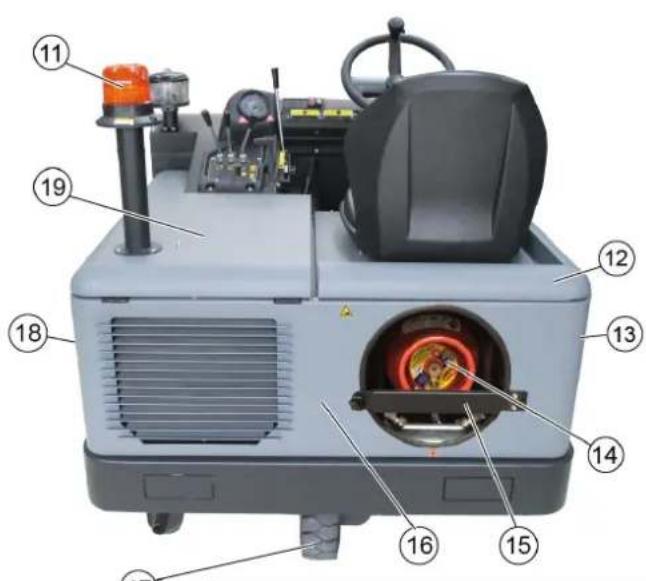
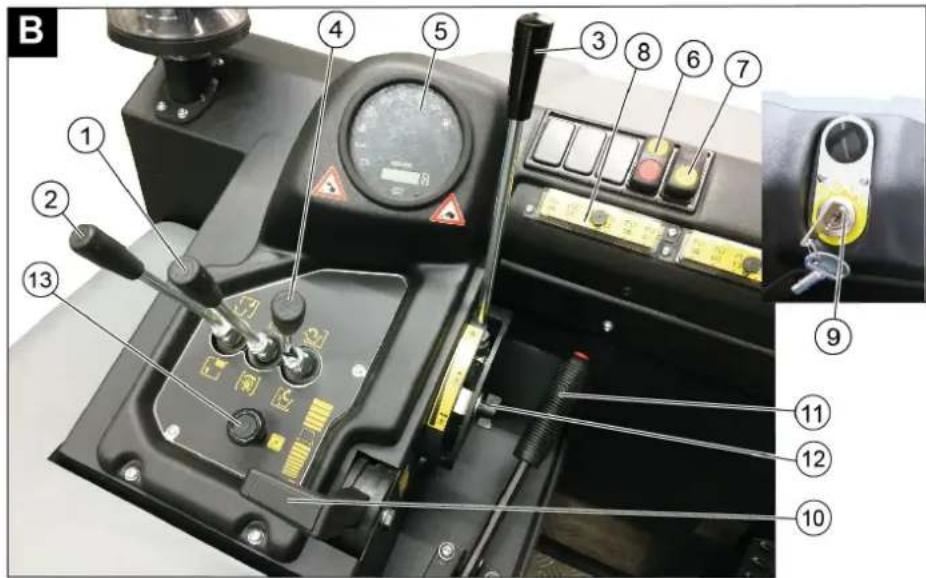
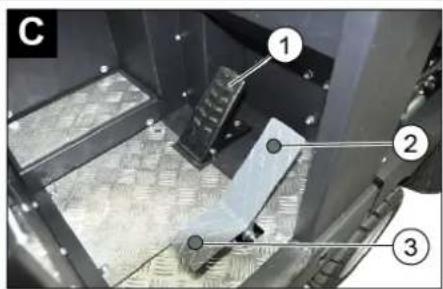
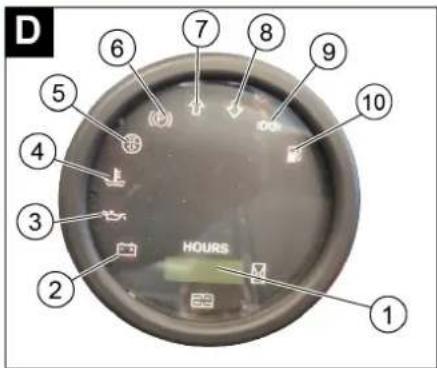
1 Seat adjustment lever 2 Driver's seat
→ Pull the seat adjustment lever outward. → Slide the seat, release the lever and let it engage in place. → Check that the seat is locked by moving it forward and backward.
→ Sit on the driver's seat. → Engage the parking brake (11). → Move the engine speed setting (10) forward by 1/3.
Start the engine
1 Control lever for the sweeping roller and side broom 2 Operating lever for the waste container 3 Control lever for the sweeping roller 4 Operating lever for the container flap
→ Switch on the blowers.
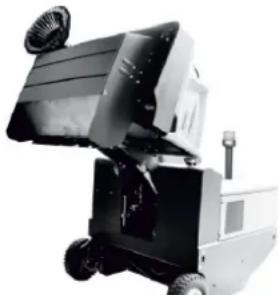
1 Positive terminal
2 Terminal cover
3 Negative terminal
1 Oil drain screw
1 Key
2 Side cover
1 Mounting bracket
2 Wing nut
3 Side seal
→ Check the tire pressure. → Switch off the suction fan. Drive the sweeping machine over a flat, smooth floor that is visibly dirty with dust or sprinkled with chalk. → Control lever for the sweeping roller and side broom (1) backward: Switch on the sweeping roller. Control lever for the sweeping roller (3) backward: The sweeping roller lowers. → Let the sweeping roller run for approx. 10 seconds. → Control lever for the sweeping roller and side broom (1) to the center. Control lever for the sweeping roller (3) forward: The sweeping roller lifts. → Move the machine backward. → Check the swept area.
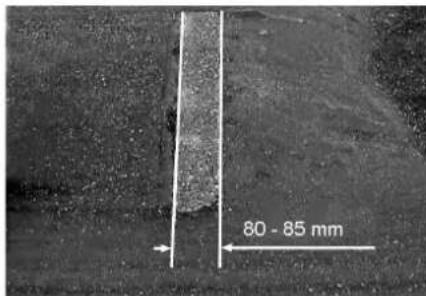
1 Cover lock of the device
2 Device cover
3 Filter cover
1 Cap, filter cover (2x)
2 Filter cover
→ Open the cap.
→ Open the filter cover.
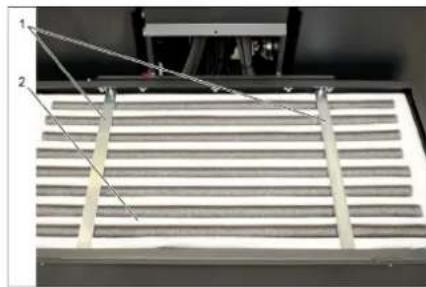
1 Partition
2 Dust filter
1 Wing nut 2 Centrifugal force separator → Unscrew the wing nut on the centrifugal force separator. → Clean the centrifugal force separator.
Replacing fuses
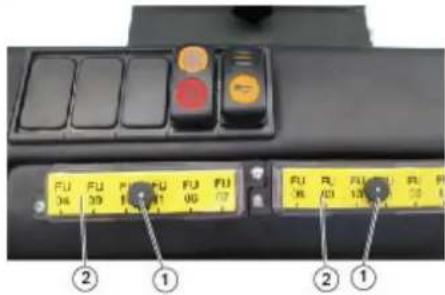
1 Grooved nut
2 Safety box cover
→ Unscrew the grooved nuts. → Open the cover on the safety box. → Check the fuses. → Replace faulty fuses.
1 Fuse FU 1 (main fuse)
| FU 01* Hlavná poistka 60 A | |
| FU 02 KlaksónNasávací ventilátor | 20 A |
| FU 03 Multifunkčný indikátor 3 A | |
| FU 04 Výstražný maják 5 A | |
| FU 05 Kontrolná jednotka motora | 10 A |
| FU 06 Kabína vodiča (volitel-né)Stierače | 10 A |
| FU 07 Indikátor stavu naplnenia LPG | 5 A |
| FU 08 Spúšťač 10 A | |
| FU 09 Osvetlenie vlavo 7,5 A | |
| FU 10 Osvetlenie vpravo 7,5 A | |
| FU 11 Pracovné osvetlenie 10 A | |
| FU 12 Vibračný systém 25 A | |
| FU 13 Ventil LPGSignál na jazdu spät' | 7,5 A |
2006/42/EC (+2009/127/EC)
2014/30/EU
2000/14/EC
Harmonised standards applied:
EN 60335-1
EN 60335-2-72
EN 55012: 2007 + A1: 2009
EN 61000-6-2: 2005
EN 62233: 2008
Chairman of the Board of Management
S. Reiser Director Regulatory Affairs & Certification
71364 Winnenden (Germany)
Tel.: +49 7195 14-0
Fax: +49 7195 14-2212
Winnenden, 2020/01/01
www.kaercher.com/REACH
Warranty
1 Screw 2 Key → Unscrew the screw. → Remove the key.
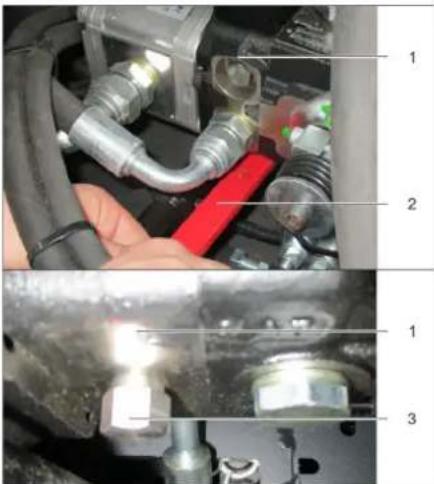
1 Hydraulic pump
2 Key
3 Nut
→ Use the key to loosen the nut (open the free play) until the device can be pushed. → IMPORTANT: After pushing, retighten the nut (close the free play = driving position).
Commissioning
General notes
→ Before commissioning, read and follow the operating instructions issued by the engine manufacturer, especially the safety instructions. → Place the sweeping machine on a level surface. → Remove the ignition key. → Engage the parking brake.
1 Gas cylinder 2 Safety bar 3 Wire lock
→ Loosen the screw on the safety lever and turn the lever. → Replace the gas cylinder. → Unscrew the protective cap from the gas cylinder connection valve. → Close the wire lock.
1 Seat adjustment lever
2 Driver's seat
→ Sit on the seat. → Engage the parking (hand) brake (11). → Push the engine speed adjuster (10) 1/3 forward.
Starting the engine
→ To start the engine, press the brake pedal. → At cold outside temperatures: Pull the choke (13). → Turn the ignition key to the right and start the device. → When the machine has started, release the ignition key. → If the engine is running, push the choke back in.
1 Brake pedal
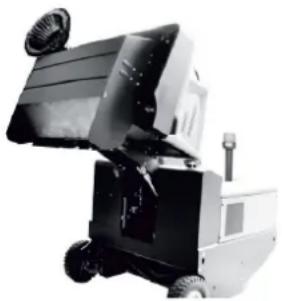
→ Raise the sweeping roller and side brush using the control levers: Control lever 1 to the middle and control lever 3 forward. → Close the hopper lid by moving control lever (4) backward. → Raise the debris hopper by moving control lever (2) backward. → Slowly drive the device to the collection container. → Engage the parking brake. → Open the hopper lid by pressing control lever (4) forward and empty the debris hopper. → Close the hopper lid by pulling control lever (4) backward until it locks into the end position. → Release the parking brake. → Slowly move the device away from the collection container. → Lower the debris hopper to the end position by moving control lever (2) forward.
1 Safety bar holder 2 Safety bar → Fold the safety bar for high dumping upward and insert it into the holder (this secures it).
| Tekućine poput motornog ulja, hidrauličkog ulja, kočione tekućine, dizela ili rashladnog sredstva ne smiju dospjeti u tlo. Štitite okoliš i zbrinite tekućine na ekološki svjestan način. |
Safety instructions for battery operation
→ Unscrew the caps of all cells. (only for low-maintenance batteries) → Connect the charger's positive pole to the battery's positive pole. → Connect the charger's negative pole to the battery's negative pole. → Plug the power plug into the socket and switch on the charger. → Charge the battery with the lowest possible charging current. → When the battery is charged, first disconnect the charger from the mains and then from the battery. → Screw the cell caps back on. (only for low-maintenance batteries)
Removing the battery
→ Disconnect the clamp from the negative terminal (-). → Disconnect the clamp from the positive terminal (+). → Release the holders at the bottom of the battery. → Remove the battery from the holder. → Dispose of the empty battery in accordance with legal regulations.
1 Safety bar holder 2 Brake fluid reservoir 3 Cap
→ Raise the debris hopper and secure it with the safety bar; see chapter "Emptying the debris hopper" → Check that there is sufficient brake fluid in the reservoir.
Note
1 Oil drain screw 2 Engine oil filter
→ Unscrew the oil drain screw. → Unscrew the oil filler cap. → Drain the oil. → Unscrew the oil filter. → Clean the catch pan and sealing surfaces. → Before installation, coat the gasket of the new oil filter with oil. → Install the oil filter and tighten it by hand. → Screw in the oil drain screw together with a new seal. Tightening torque: 25 Nm → Pour in engine oil. For oil type and filling quantity, see chapter "Technical data". → Close the oil filler cap. → Let the engine run for approximately 10 seconds. → Check the engine oil level.
1 Key
2 Side panel
→ Raise the dirt container and secure it with the safety lever. → Open the side panel with the key.
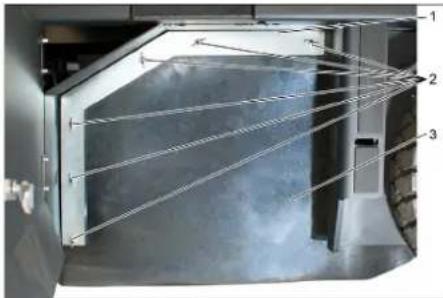
1 Mounting bracket
2 Wing nut
3 Side seal
→ Unscrew the wing nuts. → Remove the mounting bracket. → Fold the side seal outward. → Unscrew the mounting screw of the sweeping roller holder and swing the holder outward.
1 Locking slide of the device cover 2 Device cover 3 Filter cover
1 Closure, filter cover (2x)
2 Filter cover
→ Open the closure. → Open the filter cover.
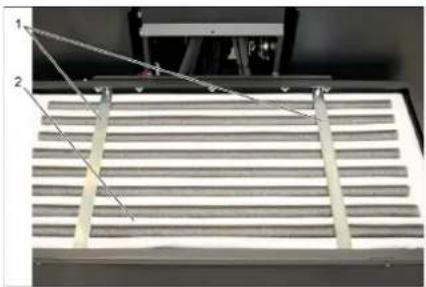
1 Cross brace
2 Dust filter
→ Check the dust filter, clean or replace if necessary.
Note
The dust filter may only be replaced by the Kärcher service department.
→ Install and secure the filter cover.
Checking and adjusting the V-belt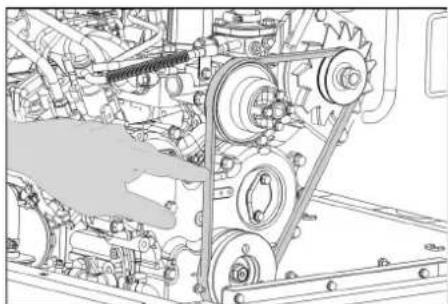
The V-belt must be pressed in approximately 7-9 mm when a force of 10 kg is applied.
→ Have the adjustment of the V-belt tension carried out by an authorized service center.
1 Wing nut
2 Centrifugal separator
→ Unscrew the wing nut on the centrifugal separator. → Clean the centrifugal separator.
Replacing the fuse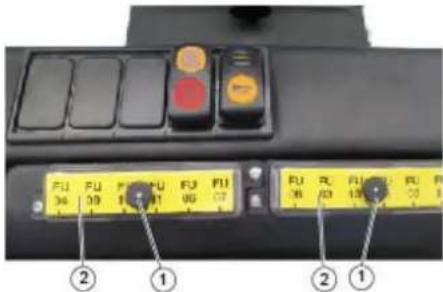
1 Serrated-head nuts
2 Fuse box cover
1 Fuse FU 1 (main fuse)
2006/42/EZ (+2009/127/EZ)
2014/30/EU
2000/14/EZ
Applied harmonized standards:
EN 60335-1
EN 60335-2-72
EN 55012: 2007 + A1: 2009
EN 61000-6-2: 2005
EN 62233: 2008
H. Jenner Chairman of the Board of Management

S. Reiser Director Regulatory Affairs & Certification
71364 Winnenden (Germany)
Tel.: +49 7195 14-0
Fax: +49 7195 14-2212
Winnenden, 2020/01/01
General notes. . . . . . . . . SR 1
www.kaercher.com/REACH
Warranty
In every country, the warranty conditions issued by our responsible distribution organization apply. We will repair any faults in the device free of charge during the warranty period, provided that the cause is a material or manufacturing defect. In the event of a warranty claim, please contact your dealer or the nearest authorized service center with your proof of purchase.
Accessories and spare parts
DANGER
To prevent danger, repairs and installation of spare parts may only be carried out by authorized service personnel.
1 Screw
2 Wrench
→ Unscrew the screw.
→ Remove the wrench.
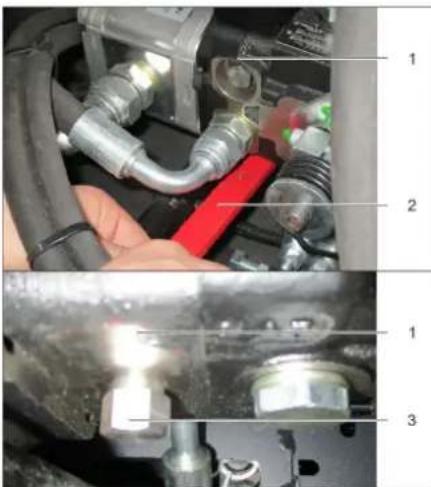
1 Hydraulic pump
2 Wrench
3 Nut
1 Gas cylinder
2 Safety lever
3 Wire lock
→ Loosen the screw on the safety lever and turn the lever.
→ Replace the gas cylinder. → Unscrew the protective cap from the connection valve of the gas cylinder. → Close the wire lock.
→ Open the gas release valve by turning it to the left.
Starting the device
Note: This device has a driver's seat contact switch. The device switches off as soon as the driver gets up from the seat.
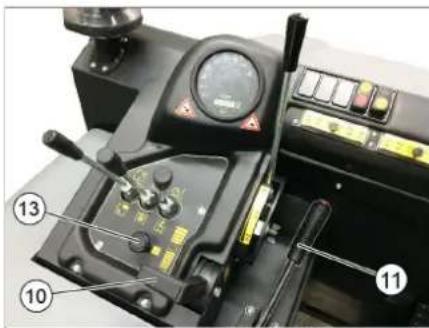
→ Sit on the seat. → Engage the parking brake (11). → Push the engine speed setting (10) 1/3 forward.
Starting the engine
→ To start the engine, press the brake pedal. → At low outside temperatures: pull the choke (13). → Turn the ignition key to the right and start the device. → When the device has started, release the ignition key. → If the engine is running properly, press the choke.
Note: The starter must never be engaged for more than 10 seconds. Wait at least 10 seconds before re-engaging the starter.
Driving the device
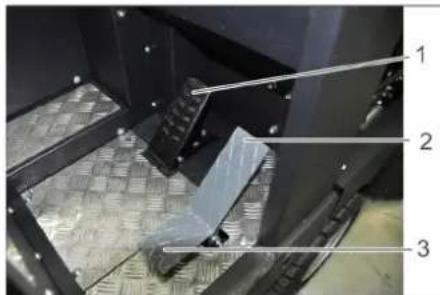
1 Brake pedal
1 Lever for operating the sweeping roller and side broom 2 Control lever for the dirt collection container 3 Lever for operating the sweeping roller 4 Control lever for the container lid
Lever for operating the sweeping roller and side broom
→ Switch on the fans. → For surface cleaning: Lever for operating the sweeping roller and side broom (1) backwards: sweeping roller engaged. Lever for operating the sweeping roller (3) backwards: sweeping roller lowers. → Control lever for the container lid (4) forward: container lid opens. For cleaning side edges: Lever for operating the sweeping roller and side broom (1) forward: sweeping roller engaged, side broom engaged and lowers. Lever for operating the sweeping roller (3) backwards: sweeping roller lowers.

→ Raise the sweeping roller and side broom using the operating levers: operating lever 1 to the middle, and operating lever 3 forward. → To close the container lid, move control lever (4) backwards. → To raise the dirt collection container, move control lever (2) backwards. → Slowly drive the device to the collection container. → Apply the parking brake. → Open the container lid by pressing control lever (4) forward and empty the dirt collection container. → To close the container lid, pull control lever (4) backwards so that it engages in the end position. → Release the parking brake. → Slowly move the device away from the collection container. → Lower the dirt collection container to the end position by moving control lever (2) forward.
1 Safety lever holder
2 Safety lever
→ Fold the safety lever for high dumping upwards and insert it into the holder (this fixes it in place).
| Tečnosti kao što su motorno ulje, hidrauličko ulje, kočiona tečnost, dizel ili rashladno sredstvo ne smeju da dospeju u zemljište. Čuvajte životnu sredinu i tečnosti odložite u otpad u skladu sa ekološkim pravilima. |
Safety notes for working with the battery
When working with batteries, always pay attention to the following warnings:
| Uzmite u obzir instrukcije na akumulatoru, u uputstvu za upotrebu i u uputstvu za rad vozila! | |
| Nosite zaštitne naočare! | |
| Kiseline i akumulatore držite van domašaja dece! | |
| Opasnost od eksplozije! | |
| Zabranjeni su vatra, varničenje, otvoren plamen i pušenje! | |
| Opasnost od povreda kiselinom! | |
| Prva pomoć! | |
| Upozorenje! | |
| Odlaganje u otpad! | |
| Akumulator se ne sme baciti u kantu za smeće! |
△DANGER
Danger of explosion!
→ Use only batteries with caps. If you lose the cap, get a new one.
△DANGER
Danger of explosion!
→ Do not place any tools or similar objects on the battery. Risk of short circuit and explosion.
△DANGER
Danger of injury!
→ Never bring wounds into contact with lead. Always wash your hands after working with the battery.
△DANGER
Danger of fire and explosion!
→ Smoking and open flames are prohibited. → Rooms where batteries are charged must be well ventilated, as highly explosive gas is produced during charging.
△DANGER
Danger of acid injuries!
→ If acid splashes into eyes or onto skin, rinse immediately with plenty of clean water. → Then consult a doctor without delay. → Wash contaminated clothing in water.
1 Positive terminal
2 Battery terminal cap
3 Negative terminal
→ Place the battery in the battery holder. → Secure the holders to the bottom of the battery with screws. → Connect the clamp (red cable) to the positive terminal (+). → Connect the other clamp to the negative terminal (-). → Place the cap on the battery terminal. → Check that the battery terminals and clamps are adequately protected with grease.
Checking and topping up battery acid (only for low-maintenance batteries with cell caps)
CAUTION
Danger of damage!
→ For acid-filled batteries, check the fluid level regularly. → Unscrew the caps of all cells. → Take a sample from each cell using the acid measuring device. – The specific gravity of the acid in a fully charged battery at 20°C is 1.28 kg/l. – For a partially discharged battery, the specific gravity of the acid is between 1.00 and 1.28 kg/l. – The specific gravity of the acid must be the same in all cells. → Return the acid sample to the same cell. → If the fluid level is too low, top up the cells with distilled water to the mark. → Charge the battery. → Screw the cell caps back on.
Charging the battery
△DANGER
Danger of injury!
→ Unscrew the caps of all cells. (only for low-maintenance batteries) → Connect the charger's positive terminal to the battery's positive terminal. → Connect the charger's negative terminal to the battery's negative terminal. → Plug the power plug into the socket and switch on the charger. → Charge the battery with the lowest possible charging current. → When the battery is charged, first disconnect the charger from the mains and then from the battery. → Screw the cell caps back on. (only for low-maintenance batteries)
Removing the battery
→ Disconnect the clamp from the negative terminal (-). → Disconnect the clamp from the positive terminal (+). → Release the retainers at the bottom of the battery. → Remove the battery from the retainers. → Dispose of the empty battery in accordance with applicable regulations.
Checking the brake fluid level and topping up ⚠ DANGER
Risk of injury!
→ Always set the safety lever when the dirt collection container is raised. → Perform securing only outside the danger area.
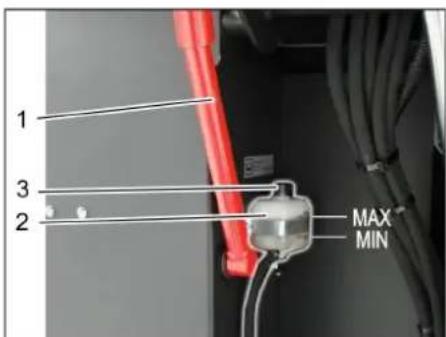
1 Oil filler cap (engine)
2 Oil level dipstick
→ Pull out the dipstick. → Wipe it and push it back in. → Pull out the dipstick. → Read the oil level. → Push the dipstick back in.
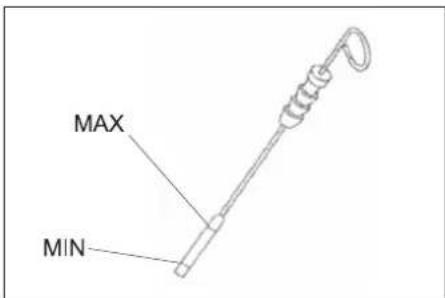
– The oil level must be between the "MIN" and "MAX" marks. - If the level has dropped below the "MIN" mark, add engine oil. – Do not fill above the "MAX" mark. → Unscrew the oil filler cap. → Pour in engine oil. For the oil type, see the chapter "Technical Data". → Close the oil filler cap. → Wait at least 5 minutes. → Check the engine oil level.
Changing the engine oil and engine oil filter
CAUTION
Risk of burns from hot engine oil!
→ Let the engine cool down. → Prepare a catch container for at least 6 liters of engine oil. → Let the engine cool down.
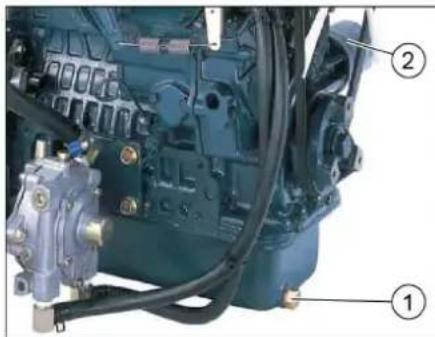
1 Oil drain plug
2 Engine oil filter
→ Unscrew the oil drain plug. → Unscrew the oil filler cap. → Drain the oil. → Unscrew the oil filter. → Clean the catch container and sealing surfaces. → Before installation, coat the gasket of the new oil filter with oil. → Install the oil filter and tighten it by hand. → Screw in the oil drain plug with a new gasket. Tightening torque: 25 Nm → Pour in engine oil. For the oil type and filling quantity, see the chapter "Technical Data". → Close the oil filler cap. → Let the engine run for approximately 10 seconds. → Check the engine oil level.
Checking and adding hydraulic oil TIP
The dirt container must not be raised.
→ Open the engine cover and support it with the prop rod.
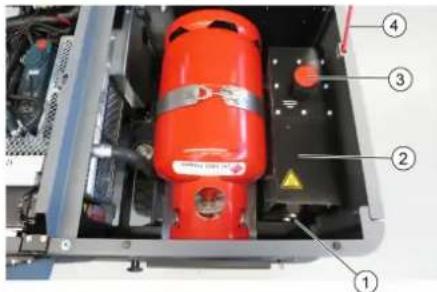
1 Coolant expansion tank
→ Check the fill level when the engine is cold. → Check the fill level of the coolant expansion tank. The correct coolant level is between the MIN and MAX marks.
1 Wrench
2 Side panel
→ Raise the dirt container and secure it with the safety lever. → Use the wrench to open the side panel.
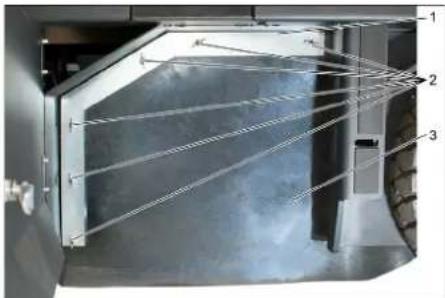
1 Holding hook
2 Wing nut
3 Side seal
Installation position of the sweeping roller in the direction of travel (top view)
Note: When installing a new sweeping roller, pay attention to the position of the bristle set.
→ Install the new sweeping roller. The grooves of the sweeping roller must fit onto the lugs of the opposite holders.
Note: After installing a new sweeping roller, the sweeping profile must be readjusted.
Checking and adjusting the sweeping profile of the sweeping roller
Note: The sweeping profile is factory-set to 80 mm, and in case of wear of the sweeping roller, it can be continuously adjusted.
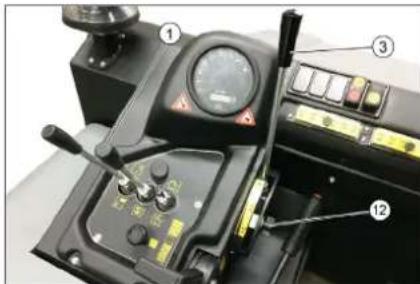
→ Check the tire pressure. → Switch off the suction fan. → Drive the sweeping device onto a flat and smooth surface that is visibly covered with dust or crushed chalk. → Operating lever for sweeping roller and side broom (1) to the rear: sweeping roller engaged. Operating lever for sweeping roller (3) to the rear: sweeping roller lowers. → Let the sweeping roller run for about 10 seconds. → Operating lever for sweeping roller and side broom (1) to the middle. Operating lever for sweeping roller (3) to the front: sweeping roller raises. → Move the device by driving it backwards. → Check the sweeping profile.
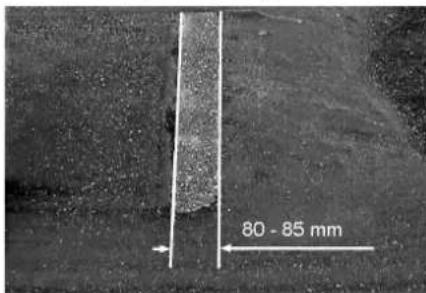
The swept area should have the shape of a regular rectangle with a width between 80 and 85 mm.
→ Open and adjust the limit screw for wear adjustment (12). Limit stop upwards: narrower sweeping profile. Limit stop downwards: wider sweeping profile. → Retighten the limit screw firmly. → Check the sweeping profile of the sweeping roller again as already described.
Checking and adjusting the sweeping profile of the side broom
→ Raise the side broom. → Drive the sweeping device onto a flat and smooth surface that is visibly covered with dust or crushed chalk.
→ Lower the side broom with the operating lever and let it run for about 10 seconds. → Raise the side broom. → Move the device by driving it backwards. → Check the sweeping profile.
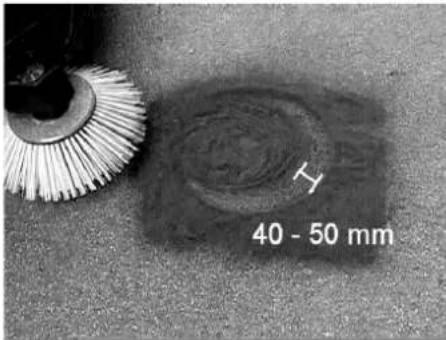
1 Safety lever holder 2 Safety lever → Open the side panel as described in the chapter "Replacing the sweeping roller".
→ Loosen the 6 pcs. wing nuts on the side sheet metal holder. → Loosen the 3 pcs. nuts (wrench size 13) on the front sheet metal holder. → Press the side seal downwards (longitudinal hole) so that it is 1 - 3 mm from the floor. → Screw on the sheet metal holders. → Repeat the procedure on the other side of the device.
Manual cleaning of the dust filter
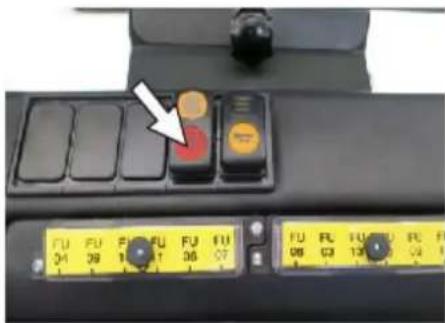
1 Device cover lock 2 Device cover 3 Filter cover
1 Closure, filter cover (2x) 2 Filter cover → Open the closure. → Open the filter cover.
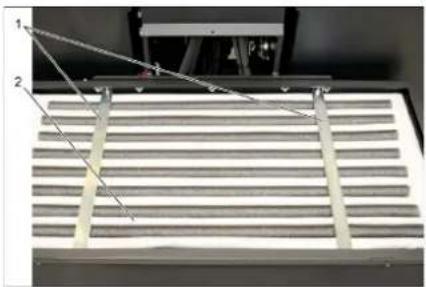
1 Cross holder
2 Dust filter
Check the dust filter, clean or replace it if necessary.
Note
The dust filter may only be replaced by Kärcher service personnel.
Install and secure the filter cover.
Check and adjust the V-belt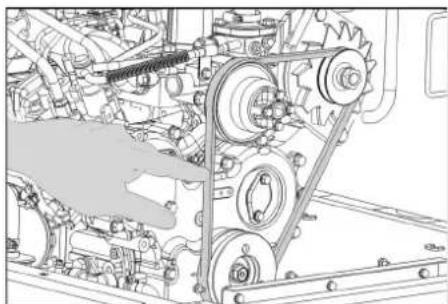
The V-belt must depress approximately 7-9 mm when pressed with a force of 10 kg.
Leave the adjustment of the V-belt tension to an authorized service center.
Check and replace the air filter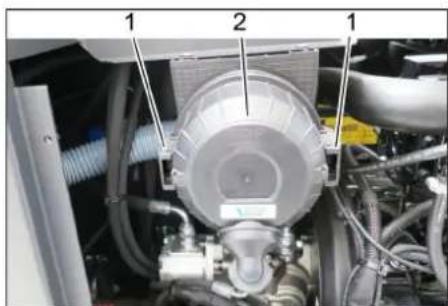
1 Lock
1 Wing nut
2 Cyclone separator
Unscrew the wing nut on the cyclone separator.
Clean the cyclone separator.
Replacing the fuse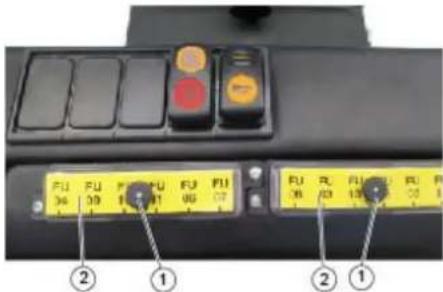
1 Fuse FU 1 (main fuse)
| FU 01* Glavni osigurač 60 A | |
| FU 02 SirenaUsisni ventilator | 20 A |
| FU 03 Višenamenski ekran 3 A | |
| FU 04 Rotirajuće svetlo 5 A | |
| FU 05 Kontrolna jedinica motora | 10 A |
| FU 06 Upravljačka kabina (opcija)Brisač stakla | 10 A |
| FU 07 LPG pokazivač napunjenosti | 5 A |
| FU 08 Pokretač 10 A | |
| FU 09 Svetlo s leve strane 7,5 A | |
| FU 10 Svetlo s desne strane 7,5 A | |
| FU 11 Radno svetlo 10 A | |
| FU 12 Vibracioni sistem 25 A | |
| FU 13 LPG ventilSignalizacija vožnje unazad | 7,5 A |
These fuses may only be replaced by the service department, as the device must be checked for all possible faults.
Troubleshooting
| Smetnja Otklanjanje | |
| Uređaj se ne može pokrenuti | Sedite na sedište vozača, kontaktni prekidača sedišta vozača se aktivira. |
| Za pokretanje motora treba pritisnuti kočnu pedalu. | |
| Punjenje ili zamena akumulatora | |
| Prazna boca za gas - zamenite je. | |
| Zatvoren ventil za ispuštanje gasa - otvorite ga okretanjem ulevo. | |
| Ventil za gas je zaleđen - pogledajte opis zamene boce za gas. | |
| Obavestite Kärcher servisnu službu. | |
| Motor radi neravnomerno | Očistite filter za vazduh ili zamenite filterski uložak. |
| Proverite i po potrebi popravite sistem vodova za gorivo, priključke i spojeve. | |
| Proveriti položaj ugradnje gasne boce: priključak odn. prstenasti otvor mora da pokazuje prema dole. | |
| Obavestite Kärcher servisnu službu. | |
| Pregrejan motor Dopunite rashladno sredstvo | |
| Motor radi, ali se uređaj kreće sporo ili nikako | Otkočite pozicionu kočnicu |
| Zatvorite slobodan hod (položaj za vožnju) | |
| Papučicu za gas postavite sasvim prema napred (visok broj obrtaja). | |
| Proverite da nema upletenih traka ili petlji. | |
| Obavestite Kärcher servisnu službu. | |
| Pišteći zvuk u hidraulici Sipajte hidrauličku tečnost | |
| Četke se vrte polako ili se uopšte ne vrte | Papučicu za gas postavite sasvim prema napred (visok broj obrtaja). |
| Proverite da nema upletenih traka ili petlji. | |
| Obavestite Kärcher servisnu službu. | |
| U prostoru četki je usisna snaga mala ili je uopšte nema | Proverite, očistite ili zamenite filter za prašinu. |
| Obavestite Kärcher servisnu službu. | |
| Uređaj diže prašinu Podešavanje b | bčnih zaptivki |
| Uključite ventilator. | |
| Proverite, očistite ili zamenite filter za prašinu. | |
| Zamenite filterske zaptivke | |
| Otvorite poklopac posude za nakupljenu prljavštinu. | |
| Obavestite Kärcher servisnu službu. | |
| Jedinica za čišćenje ostavlja prljavštinu da leži | Ispraznite posudu za nakupljenu prljavštinu |
| Proverite, očistite ili zamenite filter za prašinu. | |
| Zamenite valjak za metenje. | |
| Naknadno podesite profil metenja | |
| Zamenite zaptivne trake na posudi za prljavštinu | |
| Uklonite strana tela koja blokiraju valjak za metenje | |
| Otvorite poklopac posude za nakupljenu prljavštinu. | |
| Obavestite Kärcher servisnu službu. | |
| Posuda za prljavštinu ne može da se podigne ili spusti | Papučicu za gas postavite sasvim prema napred (visok broj obrtaja). |
| Ukloniti saigurnosni podupirač sa posude za nakupljenu prljavštinu | |
| Obavestite Kärcher servisnu službu. | |
| Poklopac posude za nakupljenu prljavštinu se ne otvara. | Obavestite Kärcher servisnu službu. |
| Smetnje u radu s hidrauličkim pokretnim delovima | Obavestite Kärcher servisnu službu. |
Technical data
| KM 120/250 R LPG Classic | ||
| Podaci uređaja | ||
| Brzina vožnje prema napred km/h 9 | ||
| Brzina vožnje unazad km/h 4 | ||
| Savladavanje uspona (maks.) % 18 | ||
| Površinski učinak bez bočnih metli m | 2 /h 8100 | |
| Površinski učinak s bočnom metlom m | 2 /h 10800 | |
| Radna širina bez bočne metle mm 900 | ||
| Radna širina sa bočnom metlom mm 1200 | ||
| Stepen zaštite, zaštićeno od kapajuće vode -- IPX 3 | ||
| Trajanje primene sa potpuno napunjenom gasnom bocom h | 4 | |
| Motor | ||
| Tip | -- | Kubota WG 972 GL-E3 |
| Tip | -- | 3-cilindarski LPG gasni motor sa 3-krakim katalizatorom |
| CO 2 Emisija u skladu sa postupkom merenja EU odredbe 2016/1628 (stepen V) | g/kWh | 844,3 |
| Način hlađenja | -- | Hlađenje vodom |
| Smer obrtanja | -- | Suprotno smeru kazaljke sata |
| Otvor | mm 68 | |
| Hod | mm 68 | |
| Radna zapremina | cm 3 | 740 |
| Količina ulja | I | 3,25 |
| Broj obrtaja pri radu | 1/min 2500 | |
| Maksimalan broj obrtaja | 1/min | 2500 |
| Broj obrtaja u praznom hodu | 1/min | 1300 |
| Maks. snaga | kW/PS | 12,7 / 17,0 |
| Najviši obrtni momenat pri 2400 1/min | Nm | 60 |
| Filter za ulje | -- | Filterski uložak |
| Filter za usisni vazduh | -- | Unutrašnji/spoljašnji filterski uložak |
| Vrsta goriva | LPGDozvoljene su smeše tečnog gasa od propana i butana.Udeo propana mora biti najmanje 90%. | |
| Zapremina rezervoara | 11 kg odn. 20 litara (rezervna boca) | |
| Električne komponente | ||
| Akumulator | V, Ah | 12, 52 |
| Generator trofazne struje | V, Watt | 12, 150 |
| Pokretač | -- | Elektrostarter |
| Hidrauličke komponente | ||
| Količina ulja u kompletnom hidrauličkom sklopu | I | 26,5 |
| Količina ulja u hidrauličkom rezervoaru | I | 21,2 |
| Vrste ulja | ||
| Motor (preko 25 °C) | -- | SAE 30, SAE 10W-30, SAE 15W-40 |
| Motor (0 do 25 °C) | -- | SAE 20, SAE 10W-30, SAE 10W-40 |
| Motor (ispod 0 °C) | -- | SAE 10W, SAE 10W-30, SAE 10W-40 |
| Hidraulika | -- | HV 46 |
| Posuda za nakupljenu prljavštinu | ||
| Maksimalna visina pražnjenja | mm 1400 | |
| Zapremina posude za prljavštinu | I | 250 |
| Valjak za metenje | ||
| Prečnik valjka za metenje | mm 300 | |
| Širina valjka za metenje | mm 900 | |
| Broj obrtaja | 1/min | 350 |
| Profil metenja | mm | 80 |
| Bočna metla | ||
| Prečnik bočnih metli | mm 600 | |
| Broj obrtaja (kontinualno) | 1/min | 0 - 60 |
| Pneumatici od pune gume | ||
| Veličina napred -- 15-4.5x8 | ||
| Veličina pozadi -- 15-4.5x8 | ||
| Kočnica | ||
| Prednji točkovi -- mehanička | ||
| Zadnji točak -- hidrostatička | ||
| Filterski i usisni sistem | ||
| Tip -- Vrećasti filter | ||
| Broj obrtaja 1/min 2800 | ||
| Površina filtera za finu prašinu m | 2 | 6,0 |
| Nominalni podpritisak usisnog sistema | mbar | 15,5 |
| Nominalni zapreminski protok usisnog sistema | m3/h | 800 |
| Vibracioni sistem | -- | Elektromotor |
| Okolni uslovi | ||
| Temperatura | °C | -5 do +40 |
| Vlažnost vazduha, bez stvaranja kondenzata | % | 0 - 90 |
| Izračunate vrednosti prema EN 60335-2-72 | ||
| Emisija buke | ||
| Nivo zvučnog pritiska LpA | dB(A) | 83 |
| Nepouzdanost KpA | dB(A) | 3 |
| Nivo zvučne snage LWA + nepouzdanost KWA | dB(A) | 104 |
| Vibracije uređaja | ||
| Vrednost vibracije na ruci | m/s2 | <2,5 |
| Sedište | m/s2 | 0,8 |
| Nepouzdanost K | m/s2 | 0,1 |
| Dimenzije i težine | ||
| Dužina x širina x visina | mm | 2082x1250x1450 |
| Poluprečnik okretanja udesno | mm | 1350 |
| Poluprečnik okretanja ulevo | mm | 1350 |
| Prazna težina | kg | 851 |
| Dozvoljena ukupna težina | kg | 1300 |
| Dozvoljeno opterećenje prednje osovine | kg | 787 |
| Dozvoljeno opterećenje zadnje osovine | kg | 513 |
| Zadržavamo pravo na tehničke promene! | ||
EU Declaration of Conformity
We hereby declare that the machine described here, by its design and construction, and in all models we have placed on the market, complies with the essential requirements of the following European Community directives on safety and health protection. This declaration becomes invalid if any changes are made to the machine without our consent.
Product: Self-propelled sweeping machine with suction Type: KM 120/250 R LPG Classic 1.186-001.0
2006/42/EC (+2009/127/EC)
2014/30/EU
2000/14/EC
Applied harmonized standards:
EN 60335-1
EN 60335-2-72
EN 55012: 2007 + A1: 2009
EN 61000-6-2: 2005
EN 62233: 2008
Chairman of the Board of Management
Director Regulatory Affairs & Certification
Authorized for documentation: S. Reiser
Alfred Kärcher SE & Co. KG
71364 Winnenden (Germany)
Tel.: +49 7195 14-0
Fax: +49 7195 14-2212
Winnenden, 2020/01/01
General instructions.....BG 1
www.kaercher.com/REACH
Warranty
1 Hydraulic pump
1 Gas cylinder
2 Protective bar
3 Clamp with clamp
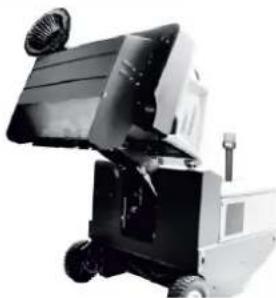
1 Key
1 Wing nut


1 Serrated nut
①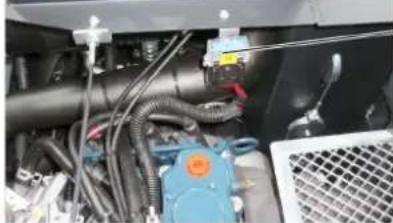
Chairman of the Board of Management

S. Reiser
Director Regulatory Affairs & Certification
71364 Winnenden (Germany)
Tel.: +49 7195 14-0
Fax: +49 7195 14-2212
Winnenden, 2020/01/01
General notes.... EN 1
www.kaercher.com/REACH
Warranty
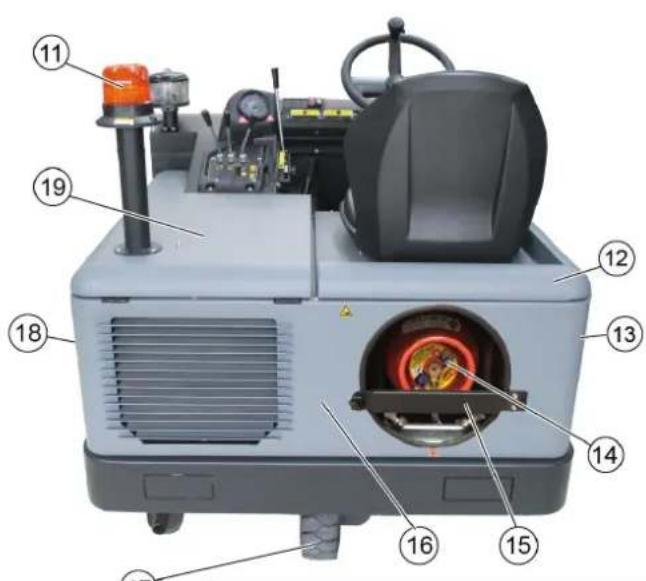
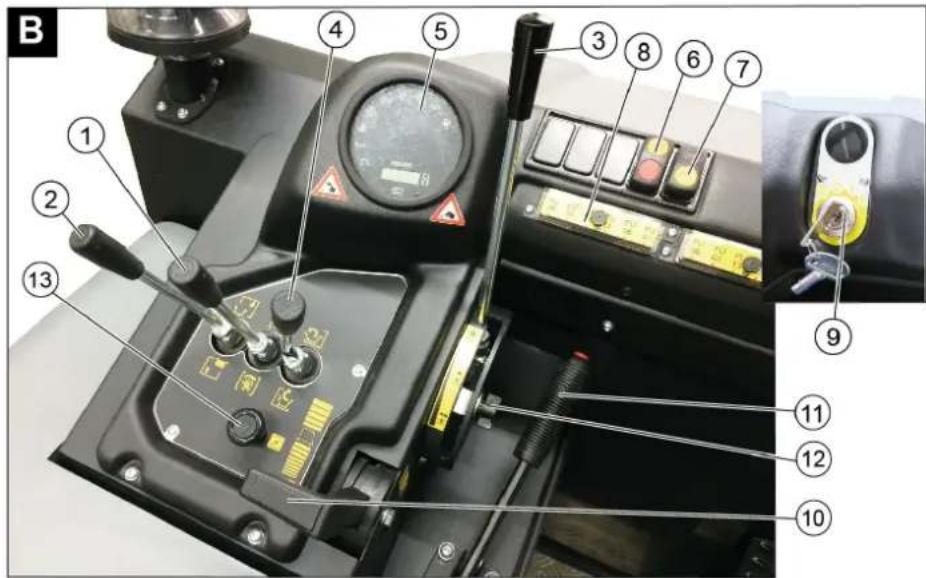
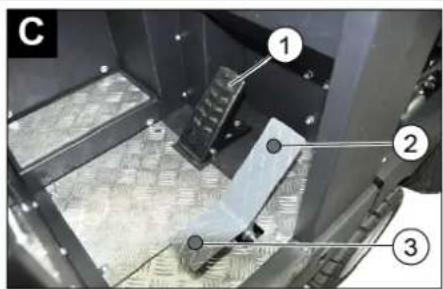
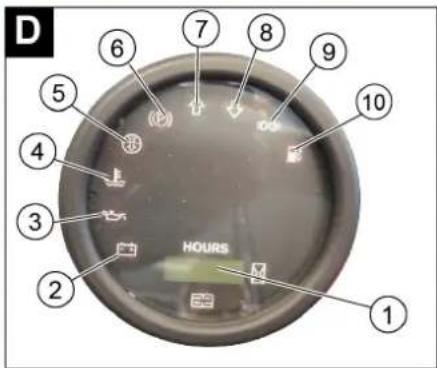
1 Hydraulic pump
2 V ö t i
3 M u t t e r
Installing/replacing the gas cylinder
⚠️DANGER
Risk of injury!
Installing the gas cylinder
CAUTION
1 Gas cylinder
2 Mounting bar
3 Clamp lock
1 Seat adjustment lever
2 Driver's seat
1 Brake pedal 2 Accelerator pedal forward 3 Accelerator pedal backward
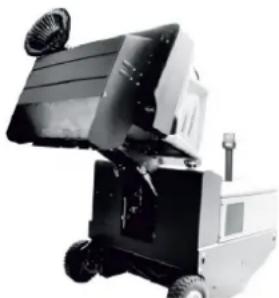
1 Mounting bar holder
2 Brake fluid reservoir
3 Lockable cover
1 Key
2 Side panel
1 Lock, filter cover (2x) 2 Filter cover → Open the lock. → Open the filter cover.
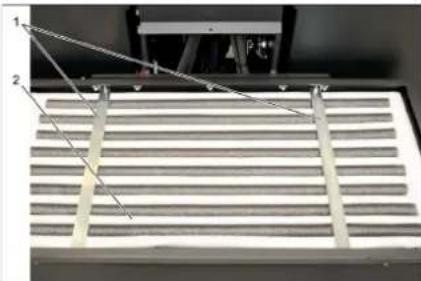
1 Wing nut
Product: Vacuum sweeper with seat
Type: KM 120/250 R LPG Classic 1.186-001.0
Chairman of the Board of Management

S. Reiser
Director Regulatory Affairs & Certification
71364 Winnenden (Germany)
Tel.: +49 7195 14-0
Fax: +49 7195 14-2212
Winnenden, 2020/01/01
www.kaercher.com/REACH
Warranty
8 Accessories
1 Hydraulic pump
2 Wrench
3 Nut
1 Gas cylinder
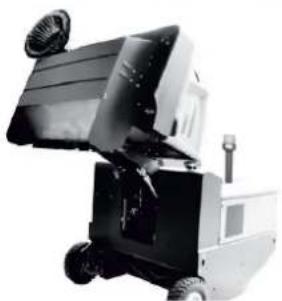
1 Wrench
2 Side panels
1 Lock, filter cover (2x) 2 Filter cover → Open the lock. → Open the filter cover.
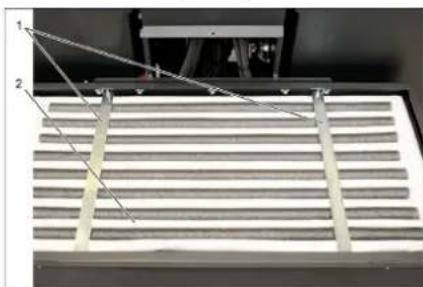
The belt should give way by 7-9 mm at a load of approx. 10 kg.
Chairman of the Board of Management
S. Reiser
Director Regulatory Affairs & Certification
71364 Winnenden (Germany)
Tel.: +49 7195 14-0
Fax: +49 7195 14-2212
Winnenden, 2020/01/01
General instructions....EN 1
www.kaercher.com/REACH
Warranty
1 Hydraulic pump
2 Wrench
3 Nut
1 Seat adjustment lever
2 Driver's seat
1 Brake pedal
→ Switch on the blower. → When cleaning areas:

1 Oil filler cap (engine)
2 Oil dipstick
1 Wrench
2 Side curtain
1 Bracket
2 Wing nut
3 Side seal
→ Unscrew the wing nuts. → Remove the bracket. → Turn the side seal outward.
1 Filter cover latch (2x) 2 Filter cover → Open the latches. → Open the filter cover.
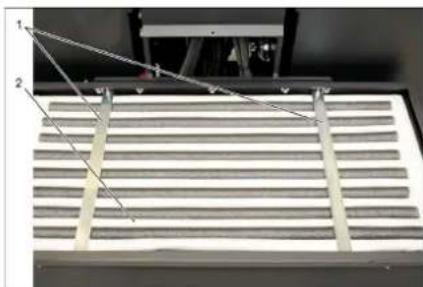
1 Fuse FU 1 (main fuse)
71364 Winnenden (Germany)
Tel.: +49 7195 14-0
Fax: +49 7195 14-2212
Winnenden, 2020/01/01
1. Conner Chairman of the Board of Management
S. Reiser Director Regulatory Affairs & Certification
www.kaercher.com/REACH
Warranty
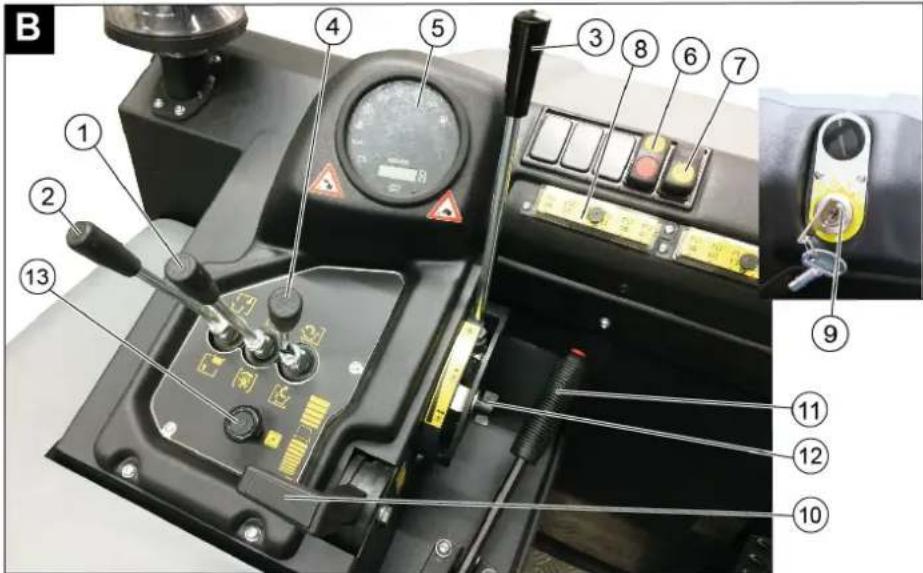
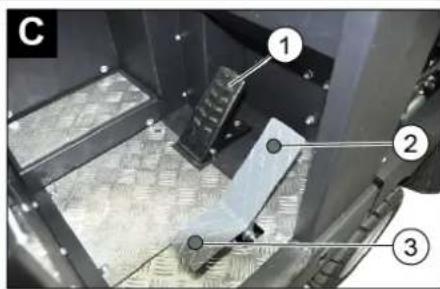
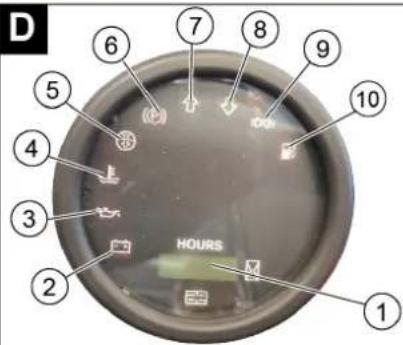
1 Brake pedal
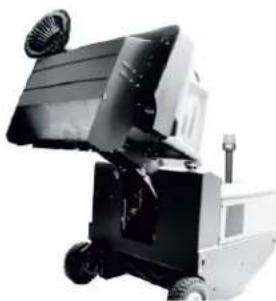
1 Key
2 Side panels
1 Support
2 Slotted nut
3 Side seal
Chairman of the Board of Management
S. Reiser Director Regulatory Affairs & Certification
71364 Winnenden (Germany)
Tel.: +49 7195 14-0
Fax: +49 7195 14-2212
Winnenden, 2020/01/01
www.kaercher.com/REACH
Quality assurance
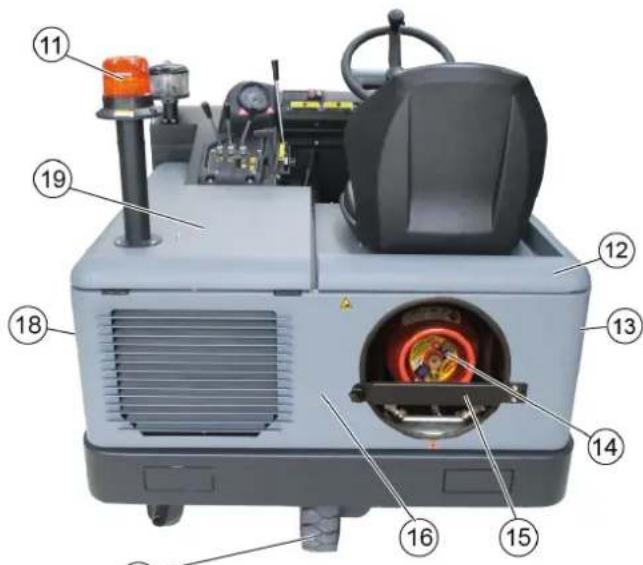
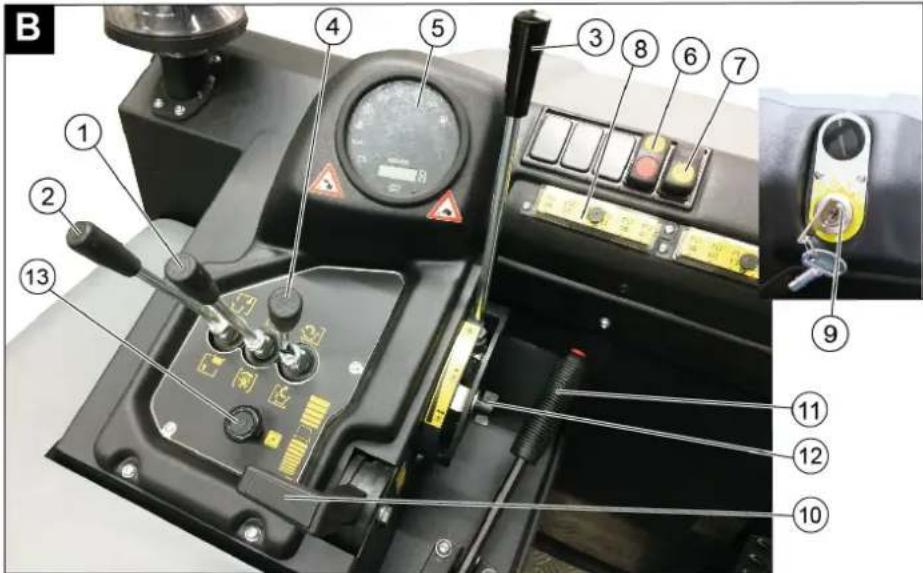
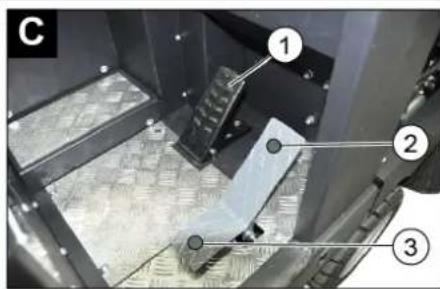
D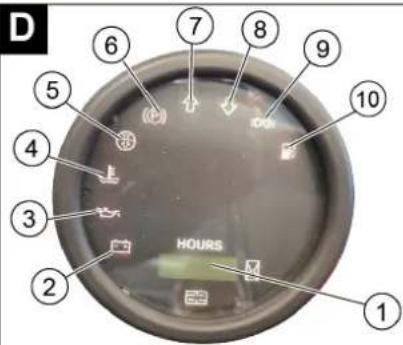
Sweeper image Operating area
Figure A
1 Nameplate
2 Seat (with seat contact switch)
3 Steering wheel
4 Centrifugal force separator
5 Equipment cover locking device
6 Equipment cover
7 Right side brush
8 Front wheel
9 Sweeping roller inlet
10 Fixed towing point
11 Rotating warning light
12 Right side cover
13 Right protective cover
14 Gas cylinder
15 Bumper
16 Tailgate
17 Rear wheel
18 Left protective cover
19 Left side cover (engine cover)
Figure B
1 Sweeping roller and side brush operating lever
1 Gas cylinder
2 Bumper
3 Clamp
→ Turn the air extraction valve counterclockwise to open it.
Starting the equipment
→ Turn on the blower. → When sweeping flat surfaces:
Sweeping roller and side brush operating lever (1) backward: sweeping roller starts.
Sweeping roller operating lever (3) backward: sweeping roller lowers.
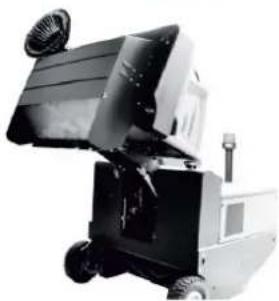
→ Unscrew all battery covers.
(Only for batteries that have not been maintained)
1 Bumper bracket
2 Brake fluid reservoir
3 Cap
1 Filler bolt (motor)
2 Oil dipstick
1 Drain plug
2 Oil filter
1 Coolant expansion tank
1 Bumper bracket
2 Bumper
→ Open the side housing as described in the chapter "Replacing the sweeping roller".
→ Activate manual filter cleaning.
Check / replace dust filter
Warning
Danger of injury
1 FU 1 fuse (main fuse)
1 IF source
1 mounting bracket
2 flat nut
1 coolant hose
to engine
cold
to coolant
cooling
1 oil drain screw
2 engine oil filter
1 locking bar holder
2 brake fluid reservoir
3 Sealing plug
Garbage tank drain
Line
Danger of injury!
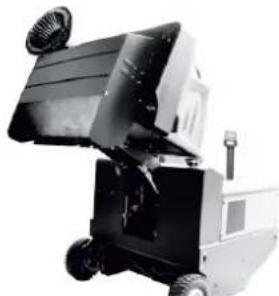
Turn on the fan.
Operating the device
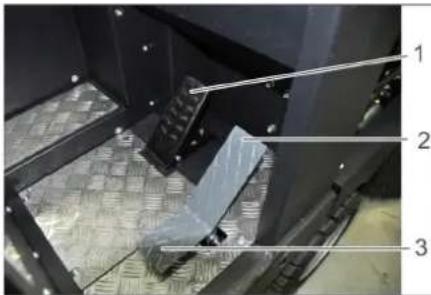
1 Brake pedal
← Direction
1 Gas cylinder
2 Locking bar
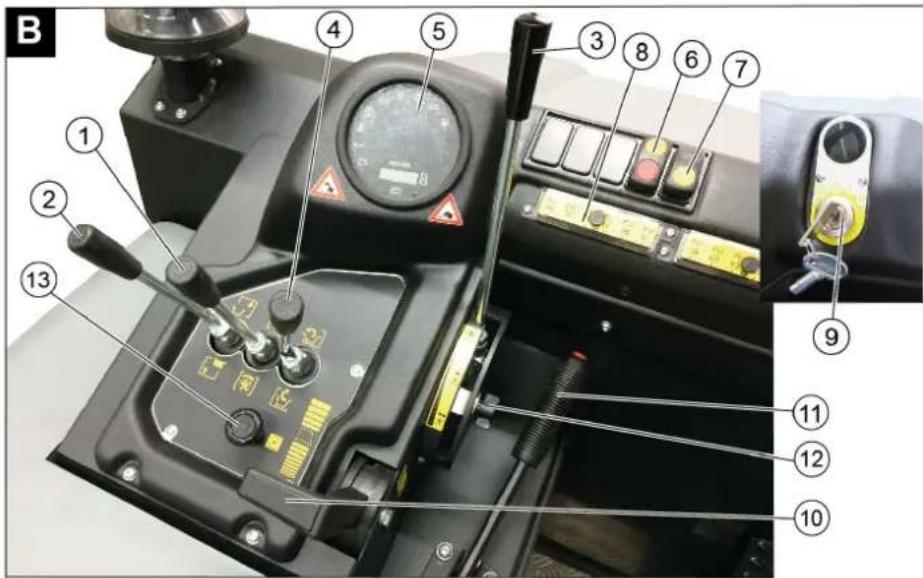
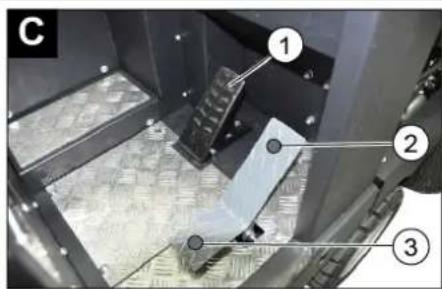
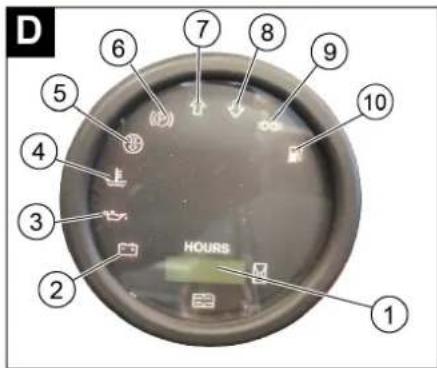
Register your product and benefit from many advantages. Register your product and benefit from many advantages. Register your product and benefit from many advantages. Register your product and benefit from many advantages.

Rate your product and tell us your opinion.

Alfred Kärcher SE & Co. KG
Alfred-Kärcher-Str. 28-40
71364 Winnenden (Germany)
Tel.: +49 7195 14-0
Fax: +49 7195 14-2212

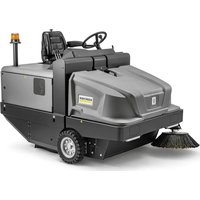
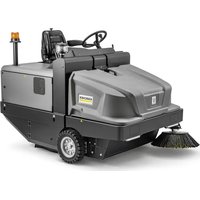
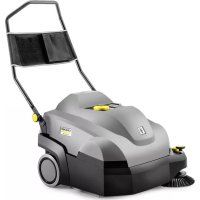
- GENERAL NOTES
- WARRANTY
- ACCESSORIES AND SPARE PARTS
- △DANGER
- SYMBOLS IN THE OPERATING INSTRUCTIONS
- ⚠ WARNING
- △CAUTION
- ATTENTION
- PROPER USE
- (GAS MOTOR)
- FORESEEABLE MISUSE
- SUITABLE SURFACES
- SAFETY INSTRUCTIONS
- SAFETY INSTRUCTIONS CONCERNING THE OPERATION
- CAUTION
- SAFETY INFORMATION CONCERNING THE DRIVING OPERATION
- SAFETY REGULATIONS FOR LPG VEHICLES
- DANGER
- LIABILITIES OF THE FACTORY MANAGEMENT AND THE EMPLOYEE
- MAINTENANCE BY EXPERT
- COMMISSIONING/OPERATIONS
- ⚠ DANGER
- IN THE INSTALLATION AND STORAGE ROOMS AS WELL AS THE WORKSHOPS
- APPLIANCES WITH COMBUSTION ENGINE
- APPLIANCES WITH HIGH EMPTYING SYSTEM
- DEVICES WITH OVERHEAD GUARD
- NOTICE
- SAFETY INFORMATION CONCERNING THE TRANSPORT OF THE APPLIANCE
- SAFETY INFORMATION CONCERNING MAINTENANCE AND CARE
- FUNCTION
- UNLOADING TIPS
- OPERATING AND FUNCTIONAL ELEMENTS
- ILLUSTRATION OF SWEEPER OPERATING FIELD
- ILLUSTRATION A
- ILLUSTRATION B
- PEDALS
- ILLUSTRATION ©
- INDICATOR LAMPS AND DISPLAY
- ILLUSTRATION D
- BEFORE STARTUP
- LOCK/ RELEASE PARKING BRAKE
- MOVING SWEEPER WITHOUT ENGAGING SELF-PROPULSION
- NOTE
- START UP
- INSTALL/REPLACE GAS BOTTLE
- INSTALLING THE GAS BOTTLE
- CONNECTING GAS CYLINDER
- REPLACING THE EMPTY GAS BOTTLE
- INSPECTION AND MAINTENANCE WORK
- DAILY BEFORE STARTING OPERATIONS
- OPERATION
- ADJUSTING DRIVER'S SEAT
- OPEN THE GAS SUPPLY
- STARTING THE MACHINE
- START THE ENGINE
- DRIVE THE MACHINE
- DRIVE FORWARD
- REVERSE DRIVE
- DRIVING METHOD
- BRAKES
- DRIVING OVER OBSTACLES
- SWEEPING MODE
- CONTROL LEVER
- ROLLER BRUSH AND SIDE BRUSH CONTROL LEVER
- CONTROL LEVER WASTE CONTAINER
- CONTROL LEVER ROLLER BRUSH
- CONTROL LEVER CONTAINER FLAP
- SWEEPING DRY FLOORS
- SWEEPING DAMP OR WET FLOORS
- EMPTYING WASTE CONTAINER
- △WARNING
- TURN OFF THE APPLIANCE
- TRANSPORT
- STORAGE/DECOMMISSIONING
- CARE AND MAINTENANCE
- CLEANING
- CLEANING THE INSIDE OF THE MACHINE
- MAINTENANCE INTERVALS
- MAINTENANCE BY THE CUSTOMER
- DAILY MAINTENANCE
- WEEKLY MAINTENANCE
- MAINTENANCE FOLLOWING WEAR
- MAINTENANCE BY CUSTOMER SERVICE
- MAINTENANCE TO BE CARRIED OUT AFTER 50 OPERATING HOURS
- MAINTENANCE AFTER 250/500/1000/1500/2000 OPERATING HOURS
- MAINTENANCE WORKS
- PREPARATION
- GENERAL SAFETY NOTES
- SAFETY NOTES REGARDING THE BATTERIES
- INSTALLING AND CONNECTING THE BATTERY
- CHECK AND CORRECT THE FLUID LEVEL OF THE BATTERY (ONLY WITH LOW-MAINTENANCE BATTERY WITH CELL CAPS)
- CHARGING BATTERY
- REMOVE THE BATTERY
- CHECKING THE BRAKE FLUID LEVEL AND TOPPING UP BRAKE FLUID
- CHECK ENGINE OIL LEVEL AND TOP UP, IF REQUIRED
- CHANGE THE MOTOR OIL AND THE OIL FILTER CAUTION
- CHECK HYDRAULIC OIL LEVEL AND REFILL HYDRAULIC OIL
- CHECK HYDRAULIC UNIT
- CHECK COOLANT LEVEL
- CHECKING AND CLEANING WATER/HYDRAULIC OIL COOLER
- CHECKING ROLLER BRUSH
- REPLACING ROLLER BRUSH
- CHECK AND ADJUST ROLLER BRUSH SWEEPING TRACK
- CHECK AND ADJUST SWEEPING TRACK OF THE SIDE-BRUSH
- ADJUST THE SIDE SEALS
- MANUALLY CLEAN THE DUST FILTER
- CHECK/REPLACE DUST FILTER
- CHECK AND ADJUST THE V-BELT
- CHECK AIR FILTER AND REPLACE, IF NECESSARY
- CLEAN THE CENTRIFUGAL SEPARATOR
- REPLACING FUSES
- EU DECLARATION OF CONFORMITY
- WWW.KAERCHER.COM/REACH
- CHECK / REPLACE DUST FILTER
- SCREW
- HYDRAULIC PUMP
- GAS BOTTLE
- CONTROL LEVER FOR THE WASTE COLLECTOR
- KEYS
- POSITIVE TERMINAL
- TERMINAL COVER
- STARTING THE ENGINE
- TURNING OFF THE MACHINE
- ⚠️FARE
- SECURING BAR
- KEY
- DUST FILTER
- → FOR EXTERIOR CLEANING
- GARANTI
- BRACKET
- CHECKING AND ADJUSTING THE SWEEPING AREA OF THE BROOM
- EU DIRECTIVES COMPLIED WITH
- HARMONIZED STANDARDS USED
- COMMISSIONING
- SAFETY INSTRUCTIONS FOR BATTERY OPERATION
- REMOVING THE BATTERY
- STARTING THE DEVICE
- DRIVING THE DEVICE
- LEVER FOR OPERATING THE SWEEPING ROLLER AND SIDE BROOM
- SAFETY NOTES FOR WORKING WITH THE BATTERY
- CHECKING AND TOPPING UP BATTERY ACID (ONLY FOR LOW-MAINTENANCE BATTERIES WITH CELL CAPS)
- CHARGING THE BATTERY
- CHECKING THE BRAKE FLUID LEVEL AND TOPPING UP ⚠ DANGER
- CHANGING THE ENGINE OIL AND ENGINE OIL FILTER
- CHECKING AND ADDING HYDRAULIC OIL TIP
- CHECKING AND ADJUSTING THE SWEEPING PROFILE OF THE SWEEPING ROLLER
- CHECKING AND ADJUSTING THE SWEEPING PROFILE OF THE SIDE BROOM
- MANUAL CLEANING OF THE DUST FILTER
- APPLIED HARMONIZED STANDARDS
- INSTALLING/REPLACING THE GAS CYLINDER
- ⚠️DANGER
- INSTALLING THE GAS CYLINDER
- SWEEPER IMAGE OPERATING AREA
- FIGURE A
- FIGURE B
- STARTING THE EQUIPMENT
- BUMPER BRACKET
- FILLER BOLT (MOTOR)
- COOLANT EXPANSION TANK
- WARNING
- GARBAGE TANK DRAIN
Brand : Kärcher
Model : KM 120250 R LPG Classic
Category : Sweeper