82UC - Motorized trailer Cramer - Free user manual and instructions
Find the device manual for free 82UC Cramer in PDF.


User questions about 82UC Cramer
0 question about this device. Answer the ones you know or ask your own.
Ask a new question about this device
Download the instructions for your Motorized trailer in PDF format for free! Find your manual 82UC - Cramer and take your electronic device back in hand. On this page are published all the documents necessary for the use of your device. 82UC by Cramer.
USER MANUAL 82UC Cramer
natural_image
Line drawing of a grasshopper cart with visible wheels and handle (no text or symbols)CE

cramer.eu
Product Overview
Your machine has been engineered and manufactured to high standard for dependability, ease of operation, and operator safety. When properly cared for, it will give you years of trouble-free performance.
Know your Garden Cart
Packing List
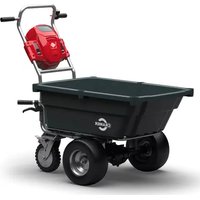
1 Self propelled utility cart
3 Knobs and Bolts
2 Handle assembly
4 Operator's Manual
The recommended ambient temperature range:
Garden cart storage Temperature range -4 °F (-20 °C) \~ 158 °F (70 °C)
Battery Charging Temperature Range 43°F (6°C) \~ 104 °F (40 °C)
Charger Operation Temperature Range 39°F (4°C) \~ 104 °F (40 °C)
Battery storage Temperature range 1 month: 32°F (0°C) \~ 122°F (50°C)
Battery Discharging temperature Range 6.8 °F (-14 °C) \~ 113 °F (45°C)
Safety Precautions

Carefully read all the safety warnings and instructions in this manual before operating this garden cart. Save this operator's manual for future reference.

These garden carts conform to CE safety standards and directives concerning electromagnetic compatibility, machines and low voltage.
General Safety Rules
- Read, understand, and follow all instructions on your utility cart's label and in this guide. Be thoroughly familiar with the controls and the proper use of your utility cart before starting.
- Only allow responsible individuals who have a thorough understanding of these instructions to operate your utility cart. Never allow children to operate your utility cart.
- Use extra care when approaching blind corners, shrubs, trees, or other objects that may obscure your vision.
- Wear shoes with non-slip treads. If you have safety shoes, wear them. Do not use your utility cart while barefoot or wearing open sandals.
- If you are ever unsure about an action you are about to take, please don't do it.
- Thoroughly inspect the area where your utility cart is to be used, and remove all stones, sticks, wire, pet supplies or lawn toys, and any other foreign objects that you could run over. Also note the location of holes, ruts, bumps, stumps, and other possible hazards.
- Use your utility cart only in daylight or in an area well lit by artificial light.
• Do not put your hands or feet near or under the rotating
wheels.
- Do not operate your utility cart if it does not start or stop normally.
- Stay alert and watch what you are doing.
• Always be sure of your footing.
- Do not operate your utility cart when you are tired or under the influence of drugs or alcohol.
- Do not use your utility cart for any job other than those for which it is intended.
- Use only manufacturer-recommended replacement parts and accessories.
- Do not modify your utility cart in any way. Modifications void your warranty.
- When operating over uneven terrain and slopes, use extreme caution to ensure solid and firm footing.
- Do not pull your utility cart backwards while running in forward gear. This can damage the motor and ruin the gears.
- Prevent damage to the motor and gears – do not tow anything behind your utility cart or overload it.
- Evenly disperse the load in your utility cart's bucket.
• Use caution when travelling on slopes.
- Do not use the power tool if the switch does not turn it on and off.

WARNING!
Do not operate the utility cart on the road.
- Do not operate across steep slopes; always travel up and down slopes.
- Do not use on slopes over 16.7 degrees.
- Park on level surfaces for stability when loading or unloading.
• Weight limit is:
• 150kg on flat ground up to 5 degrees slope.
• 100kg on flat ground up to 16.7 degrees slope.
- Only load with as much weight as you can control when machine is moving.
• Never carry passengers. - Do not use if forward/backward button or power switch or safety button is not working properly.
• Use caution when operating in wet conditions. - Do not operate in explosive atmospheres such as in the presence of flammable liquids, gasses or flammable dust. If in doubt, wait for dust to settle before using.
- Be sure the area is clear of other people before moving. Do not allow children, bystanders, or pets in your work area when your utility cart is being moved.
- Do not charge appliance in rain, or in wet locations.
- Remove or disconnect battery before servicing, cleaning.
- Do not dispose of the battery(ies) in a fire. The cell may explode. Check with local codes for possible special disposal instructions.
- Do not open or mutilate the battery(ies). Released electrolyte is corrosive and may cause damage to the eyes or skin. It may be toxic if swallowed.
- Exercise care in handling batteries in order not to short the battery with conducting materials such as rings, bracelets, and keys. The battery or conductor may overheat and
cause burns.
- Dress Properly - Do not wear loose clothing or jewelry. They can be caught in moving parts. Use of rubber gloves and substantial footwear is recommended when working outdoors.
- Don't Force Appliance - It will do the job better and with less likelihood of a risk of injury at the rate for which it was designed.
- Store Idle Appliance Indoors - When not in use, appliances should be stored indoors in dry or lockedup place - out of reach of children.
- Check Damaged Parts - Before further use of the appliance, a guard or other part that is damaged should be carefully checked to determine that it will operate properly and perform its intended function. Check for alignment of moving parts, binding of moving parts, breakage of parts, mounting, and any other condition that may affect its operation. A guard or other part that is damaged should be properly repaired or replaced by an authorized service center unless indicated elsewhere in this manual.
- Do not overreach. Keep proper footing and balance at all times. This enables better control of the power tool in unexpected situations.
- Do not let familiarity gained from frequent use of tools allow you to become complacent and ignore tool safety principles. A careless action can cause severe injury within a fraction of a second.
- Keep handles and grasping surfaces dry, clean and free from oil and grease. Slippery handles and grasping surfaces do not allow for safe handling and control of the tool in unexpected situations.
MOVING ON SLOPES

WARNING!
Slopes are a major factor related to slip and fall accidents, which can result in severe injury. All slopes require caution. If you feel uneasy on a slope, do not drive on it.
- Watch for holes, ruts, or bumps. Be careful on uneven terrain to avoid overturning your utility cart. Tall grass can hide obstacles.
- When moving down slopes, always keep your utility cart in low gear and moving. The friction of the motor helps you keep better control of your utility cart.
- Use caution when carrying heavy loads up slopes. If your utility cart is overloaded, the safety fuse may trip and allow the utility cart to rollback toward you, which may cause severe injury.
- Do not turn on slopes unless necessary, and then, turn slowly and gradually.
- Do not move near drop-offs, ditches, or embankments. The utility cart could suddenly turnover if a wheel is over the edge of a cliff or ditch or if an edge caves in.
- Do not park your utility cart on hills or steep slopes.
CHILDREN

WARNING!
This unit shall not be operated by children.
- Tragic accidents can occur if the operator is not aware of the presence of children. Keep children out of the work area and under the watchful care of a responsible adult.
Stay alert, and turn the utility cart off if a child enters the work area. Look behind and down for small children before and while driving backwards. Use extreme care when approaching blind corners, doorways, shrubs, trees, or other objects that may obscure your view of a child who may run into the work area.
- Do not allow children under the age of 14 to operate this utility cart. Children who are 14 years of age and older must read and understand the operating instructions and safety rules in this manual, and must be trained and supervised by a parent.
BATTERY TOOL USE AND CARE
- For safety, battery only can be used at -14\~45°C for discharge, and 6\~40°C for charge.
• The charging voltage must be less than 84V.
- For battery tools:
- Instructions regarding battery charging, information regarding ambient temperature range for tool and battery use and storage, and the recommended ambient temperature range for the charging system during charging;
- For a battery-operated tool intended for use with a detachable battery pack or a separable battery pack: instructions indicating the appropriate battery packs for use, such as by a catalog number, series identification or the equivalent;
- Instructions indicating the appropriate charger for use, such as by a catalog number, series identification or the
equivalent.
NOTE: In Europe (EN 62841-1), the following additional requirement applies:
- Ensure the switch is in the off position before inserting battery pack. Inserting the battery pack into power tools that have the switch on invites accidents.
- Recharge only with the charger specified by the manufacturer. A charger that is suitable for one type of battery pack may create a risk of fire when used with another battery pack.
- Use power tools only with specifically designated battery packs. Use of any other battery packs may create a risk of injury and fire.
- When battery pack is not in use, keep it away from other metal objects like paper clips, coins, keys, nails, screws, or other small metal objects that can make a connection from one terminal to another. Shorting the battery terminals together may cause burns or fire.
- Under abusive conditions, liquid may be ejected from the battery; avoid contact. If contact accidentally occurs, flush with plenty of soap and water. If liquid contacts eyes, immediately seek medical help. Liquid ejected from the battery may cause irritation or burns.
- Do not expose a battery pack or tool to fire or excessive temperature.
- Follow all charging instructions and do not charge the battery pack or tool outside the temperature range specified in the instructions.

WARNING!
Altering the electrical system could cause a fire resulting in serious injury.
- Using components other than those supplied could cause overheating, fire, or explosion.
- Never make adjustments or repairs with the motor running.
- Keep all nuts and bolts tight, and keep the equipment in good condition.
- Keep your utility cart's wheels free of grass, leaves, or other debris build-up.
- Keep your utility cart clean and dry. Use a damp cloth or sponge with a mild soap or detergent when cleaning your utility cart. Never use gasoline, solvents, or other petroleum based or solvent-based products when cleaning.
- When not in use, store your utility cart indoors in a dry place.
- Servicing requires extreme care and knowledge and should be performed only by a qualified service technician. For service we suggest you return the product to your nearest AUTHORIZED SERVICE CENTER for repair. When servicing, use only identical replacement parts.
SAVE THESE INSTRUCTIONS. REFER TO THEM FREQUENTLY AND USE THEM TO INSTRUCT OTHERS WHO MAY USE THIS UNIT. IF YOU LOAN SOMEONE THIS UNIT, LOAN THEM THESE INSTRUCTIONS ALSO.
Disposal

Do not dispose of the power tool with other household waste. Dispose of power tool in return and collection systems designated for environmental safe recycling.

Separate collection of used products and packaging allows materials to be recycled and used again. Re-use of recycled materials helps prevent environmental pollution and reduces the demand for raw materials.

At the end of their useful life, discard batteries with due care for our environment. The battery contains material which is hazardous to you and the environment. It must be removed and disposed of separately at a facility that accepts lithium-ion batteries.
Symbol
| SYMBOL DESCRIPTION/EXPLANATION | |
| V | Volts |
| A | Amperes |
| Hz | Hertz |
| W | Watts |
| min | Time |
| --- | Type or a characteristic of current |
 | To reduce the risk of injury, user must read and understand user's manual before using this product. |
 | Precautions that involve your safety. |
 | Do not operate on inclines greater than 16.7°. |
| IPX4 | All weather proof |
Before Operation
The safe use of this product requires an understanding of the features on the product and the information in the operator's manual. Before use of this product, familiarize yourself with all operating features and safety rules. (see Figure 1)
1 Power switch
11 Washer
2 Forward/Reverse button
12 Battery cover
3 High/Low speed button
13 Battery
4 Lock-out button
14 Battery key
5 Thumb paddle
15 Brake
6 Bucket
16 Caster wheel
7 Bucket release lever
17 Front wheel
8 Bolt
18 Drain plug
9 Nut
19 Oil plug
10 Gasket
Assembly

WARNING!
To prevent accidental starting that could cause serious personal injury, always remove the batterypack from the tool when assembling parts.

WARNING!
Do not use this product if any parts on the Packing List are already assembled to your product when you unpack it. Parts on this list are not assembled to the product by the manufacturer and require customer installation. Use of a product that may have been improperly assembled could result in serious personal injury.

WARNING!
Do not attempt to modify this product or create accessories not recommended for use with this product. Any such alteration or modification is misuse and could result in a hazardous condition leading to possible serious personal injury.
Attach the Upper Handle (see Figure 2)
1 Slide the upper handle over the lower handle tubes on the bucket assembly.
Make sure the bolt holes align.
2 Insert a bolt from the outside of the handle, passing through the bolt hole where the upper and lower handles attach.
3 Connect connector and attach cable with stripes.
4 Attach the washer and gasket through.
5 Install and turn clockwise the nut to tighten the bolt.
6 Install the other three bolts in the same way.
To Install/ Remove the Battery

WARNING!
Follow these instructions in order to avoid injury and to reduce the risk of electric shock or fire:
- Replace the battery pack or the charger immediately if the battery case or charger cord is damaged.
- Verify that the switch is in the OFF position before inserting or removing the battery pack.
- Verify that the battery pack is removed and the switch is in the OFF position before inspecting, adjusting, or performing maintenance on any part of the machine.
- Read, understand, and follow the instructions contained in the section entitled Charging Procedure.

WARNING!
Always take care of your feet, children, or pets around you when pressing the battery release button. Serious injury could result if the battery pack falls. NEVER remove the battery pack when in a high location.
To Install (see Figure 3)
1 Open the battery cover.
2 Align the raised rib inside the panel with the groove on the battery pack.
3 Ensure the battery pack is secured in place in the battery compartment.
4 Insert the battery key.
5 Close the battery cover.
To Remove (see Figure 3)
1 Press the power switch to "OFF" position to stop the product.
2 Open the battery door to access the battery compartment.
3 Remove the battery key.
4 Depress the latch on the back of the battery pack to release the battery.
5 Remove the battery pack.
Operation

WARNING!
Do not allow familiarity with this product to make you careless. Remember that a careless fraction of a second is sufficient to inflict serious injury.

WARNING!
Do not use any attachments or accessories not recommended by the manufacturer of this product. The use of attachments or accessories not recommended can result in serious personal injury. Before each use, inspect the entire product for damaged, missing, or loose parts, such as screws, nuts, bolts, caps, etc. Tighten securely all fasteners and caps and do not operate this product until all missing or damaged parts are replaced.
Loading your Utility Cart
Load your utility cart carefully; disperse the load evenly across the bucket. When moving up and down hills, limit your load to 331 pounds (150 kilograms) up to 5 degrees slope. If you think you are carrying too much, remove some material from your utility cart.
Lock/Unlock the Brake (see Figure 4)
• Step on both brakes, the brakes will be locked, and the utility cart will stop.
- Step on both brakes again, the brakes will be unlocked.
Starting (see Figure 5)
• To utilize your utility cart set the power switch to the ON position.
Moving Forward/Reverse (see Figure 6)
- Select forward/reverse.
- Select high/low speed.
- Press lock-out button.
- Press the thumb paddle down to start the utility cart.
NOTE! You can press the thumb paddle again to restart the utility cart within 30 seconds after releasing it. Move in reverse only for short distances. If you have a long distance to travel, turn your utility cart around and go forward.

WARNING!
When moving in reverse. Be careful; Step back and be prepared to walk backwards. Consider standing to the side of the utility cart until you get used to moving backwards.
Stopping (see Figure 7)
- Release the thumb paddle. Because of its momentum, your utility cart might continue to move a bit after you release the thumb paddle. Don't let go of the handle until your utility cart stops completely. Park your utility cart in a level area so it doesn't roll away.
- Set the power switch to the "OFF" position. Remove the battery and store in a safe place to prevent unauthorized use of the utility cart.
Unloading Your Utility Cart (see Figure 8)
- Stop the utility cart.
- Step on the brakes to prevent the cart accident moving.
- Squeeze the release lever on the bucket to release the bucket.
- Grasp the handles on the bucket to raise and unload the bucket.
Maintenance

WARNING!
Do not at any time let brake fluids, gasoline, petroleum based products, penetrating oils, etc. come in contact with plastic parts. They contain chemicals that can damage, weaken or destroy plastic.

WARNING!
To avoid serious personal injury, always remove the battery pack from the tool when cleaning or performing any maintenance.
- Check all screws and nuts regularly; tighten them as needed. Regularly check the plastic parts for cracks or broken pieces.
• Periodically check the tire pressure on all two tires. Keep the tire pressure between 22 psi (1.5 bar) and 30 psi (2.0 bar).

WARNING!
Never over inflate the tires. If you over inflate the tires, you could cause them to explode resulting in severe injury. Maximum inflation pressure is 30 PSI.
- Do not spray the electrical areas of your utility cart with a hose. Water and moisture in the motors and electrical switches can cause them to corrode, which then causes them to fail.
- Wash your utility cart using a mild automotive type detergent and water with a soft brush or rag. Do not use any alkaline-based soaps or pressure water wash your utility cart.
Storing Your Utility Cart
- Store your utility cart inside or under a protective cover.
- Charge the battery before storing your utility cart. If you store your utility cart for extended periods of time, periodically recharge the battery. Once a month is a good rule of thumb.
- Store your utility cart in a dry environment. Water will damage your utility cart and the battery.
- Do not store your utility cart near chemicals (such as fertilizers), or organic or other solvents. These products are often highly corrosive and may cause permanent damage to your utility cart.
- Do not store your utility cart close to a source of heat, sparks, or open flames.
Change The Oil
To ensure this product's best performance and extend its life, please change the oil every half year in the first working year and every year in the rest years.
Draining the oil (see Figure 9)
- Remove the drain plug with a wrench to drain the oil.
• After the oil is drained, screw the drain plug back in again.
Refilling the oil (see Figure 9)
- Remove the oil plug with a wrench.
• Refill the oil from the oil hole. The oil capacity is about 150 ml.
- Screw the oil plug back in again.
Troubleshooting
| PROBLEM PROBABLE CAUSE POSSIBLE SOLUTION * | ||
| The utility cart does not run. | The battery is not properly installed. | To secure the battery pack, make sure the latch on bottom of the battery pack snaps into place. |
| Lock-out button has timed out. | Press and hold the lock-out button, and then thumb paddle. | |
| Power switch is off. Turn on power switch. | ||
| The controller is damaged. | Contact an authorized service center. | |
| The cable connector gets separated. | Connect the cable connector into place. | |
| The utility cart runs sluggishly. | Battery volume is low. | Charge the battery pack according to the instructions. |
| The battery does not accept full charge. | Replace the battery with a new 82 Volt battery. | |
| Too much weight or slopes too steep. | Reduce the weight in the bucket; operate on slopes that are less steep. | |
| Sometimes the utility cart runs, but other times it does not. | Damaged or worn electrical switches. | Contact an authorized service center. |
| Loud clunking or grinding noise from the gearbox. | The motor's gears are broken. | Contact an authorized service center. |
* If the fault is not solved, you must go to your distributor and/or nearest Authorized Technical Service.
Technical Data
| PROPERTY VALUE | |
| Rating | Nominal voltage: 72V Rating power: 300W |
| Loading capacity | 150kg up to 5 degrees slope. |
| 100kg up to 16.7 degrees slope. | |
| Inflation pressure 22 psi (1.5 bar) to 30 psi (2.0 bar) | |
| Weight (tool only) 40kg(±2kg) | |
| Capacity (Volume) 106L / 3.74CUFT | |
| Length 51.8" (131.5cm) | |
| Width 26.4" (67cm) | |
| Height 43.3" (110cm) | |
| Speed | High: 5.2 km/h (±0.5km/h)/ 3.2 mph (±0.31 mph) Low: 4.0 km/h (±0.5km/h)/ 2.5 mph (±0.31 mph) Reverse: 3.0 km/h (±0.5km/h)/ 1.86 mph (±0.31 mph) |
| Front Tire 12x5.0-6" Pneumatic wheel | |
| Rear Tire | 8" Solid caster wheel |
| Oil type | Automatic Transmission Fluid |
| Oil capacity | 150ML |
| Battery pack | 82V220G/82V430G/82V220/82V430 |
| Charger | 82C1G/82C2/82C6 |
| Sound pressure level | < 70 dB(A) |
| Vibration level | < 2.5 m/s ^2 |
CE Declaration of Conformity
Manufacturer Name: Changzhou Globe Co., Ltd.
Address: No.65 Xinggang Road Zhonglou Zone Changzhou, Jiangsu 213000
P.R.China
Name and address of the person authorised to compile the technical file
Name: Peter Söderström
Address: Propellergatan 1
211 15 Malmö
Sweden
WE HEREBY DECLARE UNDER OUR OWN RESPONSIBILITY THE MACHINE
| Original Instruciotn | |
| Type 82UC | |
| Brand Cramer | |
| Model 7400086 (82UC) | |
| Serial No See product rating label | |
Has been manufactured in accordance with the standards or regulatory documents:
| Electromagnetic compatibility EN-55014-1/EN-55014-2 | |
| Electrical safety | EN-60335-1/EN 50636-2-100/ EN 62233 |
And conforms to the essential requirements of the following directives:
Machine directive 2006/42/CE
Electromagnetic compatibility directive 2014/30/EU
Ted Qu
Ted Qu Haichao
Quality Director
Changzhou, 22/07/2017
Produktüberblick
DE
Your machine has been engineered and manufactured to high standard for dependability, ease of operation, and operator safety. When properly cared for, it will give you years of trouble-free performance.
Slopes are a major factor related to slipand-fall accidents, which can result in severe injury. All slopes require caution. If you feel uneasy on a slope, do not drive on it.
This is not a toy. Children under 14 years of age are not allowed to operate it.
Address: Propellergatan 1
211 15 Malmö
Sweden
Endereço: No.65 Xinggang Road Zhonglou Zone Changzhou, Jiangsu 213000
P.R.China
Address: No.65 Xinggang Road Zhonglou Zone Changzhou, Jiangsu 213000
P.R.China
Address: Propellergatan 1
211 15 Malmö
Sweden
Kjøring Forover/Revers (Se Fig 6)
• Velg forover/revers.
• Velg høy/lav hastighet.
• Trykk inn läseknappen.
- Trykk tommelgirspaken ned for ä starte trillebären.
there isn't the world's own country.
Never over inflate the tires. If you over inflate the tires, you could cause them to explode resulting in severe injury.
Adrese: No.65 Xinggang Road Zhonglou Zone Changzhou, Jiangsu 213000
P.R.China
Paigaldamine (Vaata Joonist 3)
1 Avage akupesa kate.
2 Joondage paneelis olevad körgendatud ribid akupaketi soonega.
3 Veenduge, et aku on kindlalt akupesas.
4 Pange akuvõti sisse.
5 Sulgege akupesa kaas.
Aku Eemaldamine (Vaata Joonist 3)
Peatamine (Vaata Joonist 7)
- Remove the drain plug with a wrench to drain the oil.
• After the oil is drained, screw the drain plug back in again.