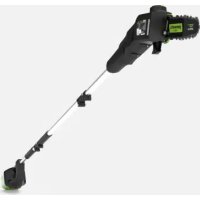
GD60PS - Saw GREENWORKS - Free user manual and instructions
Find the device manual for free GD60PS GREENWORKS in PDF.



User questions about GD60PS GREENWORKS
0 question about this device. Answer the ones you know or ask your own.
Ask a new question about this device
Download the instructions for your Saw in PDF format for free! Find your manual GD60PS - GREENWORKS and take your electronic device back in hand. On this page are published all the documents necessary for the use of your device. GD60PS by GREENWORKS.
USER MANUAL GD60PS GREENWORKS
text_image
greenworks™ TOOLS1400407
EN 60V CORDLESS POLESAW USER'S MANUAL 2
DE 60V KABELLOSER HOCHENTASTER BEDIENUNGSANLEITUNG 8
ES PODADORA DE ALTURA INALÁMBRICA 60V MANUAL DE UTILIZACIÓN 15
IT SEGA TELESCOPICA DA 60V MANUALE D'USO 21
FR ÉLAGUEUSE SUR PERCHE SANS FIL DE 60V MANUE L D'UTILISATION 27
PT SERRA DE PODAR SEM FIOS DE 60V MANUAL DE UTILIZAÇÃO 33
NL 60V SNOERLOZE TELESCOPISCHE ZAAG GEBRUIKERSHANDLEIDING 39
RU БЕСПРОВОДНАЯ ШТАНГОВАЯ ПИЛА 60В РУКОВОДСТВО ПО ЭКСПЛУАТАЦИИ 45
FI 60V JOHDOTON VARSISAHA KÄYTTÄJÄN KÄSIKIRJA 51
SV 60V TUMS KABELFRI STÅNGSÅG INSTRUKTIONSBOK 57
NO 60V BATTERIDREVET GRENSAKS BRUKSANVISNING 63
DA 60V TRÅDL∅S STANGSAV BRUGERVEJLEDNING 69
PL BEZPRZEWODOWA PODKRZESYWARKA NA WYSIEGNIKU 60V INSTRUKCJA OBSŁUGI 75
CS AKUMULÁTOROVÁ VYVĚTVOVACÍ PILA 60V NÁVOD K OBSLUZE 81
SK 60V BEZKÁBLOVÁ STOJANOVÁ PÍLA NÁVOD NA POUŽITIE 87
SL 60V BREZŽIČNA ŽAGA NA ROČAJU INSTRUKTIONSBOK 93
HR 60V BEŽIČNA PILA S MOTKOM KORISNI ČKI PRIRU ČNIK 99
HU 60V AKKUMULÁTOROS MAGASSÁGI FÜRÉSZ HASZNÁL ATI ÚTMUTATÓ 105
RO FERĂSTRĂU TELESCOPIC DE 60V FĂRĂ CA-BLU ELECTRIC MANUAL DE UTILIZARE 111
BG 60V БЕЗЖИЧЕН ТРИОН С УДЪЛЖИТЕЛ РЬКОВ РЬКОВ ОДСТВО ЗА УПОТРЕ БА 117
EL ΑΣΥΡΜΑΤΟ ΠΡΙΟΝΙ ΜΕ ΚΟΝΤΑΡΙ 60V ΕΓΧΕΙΡΙΔΙΟ ΧΡΗΣΗΣ 124
AR 60V يكلىس ال يدوماع راشنم مدخت سملا ليلد 130
TR 60V KABLOSUZ UZATMALI TESTERE KULLANICI KILAVUZU 136
HE 60V א'בַרְעָה א'בַרְעָה א'בַרְעָה א'בַרְעָה א'בַרְעָה א'בַרְעָה א'בַרְעָה א'בַרְעָה א'בַרְעָה א'ב'
LT 60V BELAIDĖ AUKŠTAPJOVĖ NAUDOJIMO VADOVAS 148
LV 60V BEZVADA ZĀGIS AR TELESKOPISKO KĀTU LIETOTĀJA ROKASGR ĀMATA 154
ET AKUTOITEGA VARSSAAG 60V KASUTAJAUHEND 160
English (original instructions)
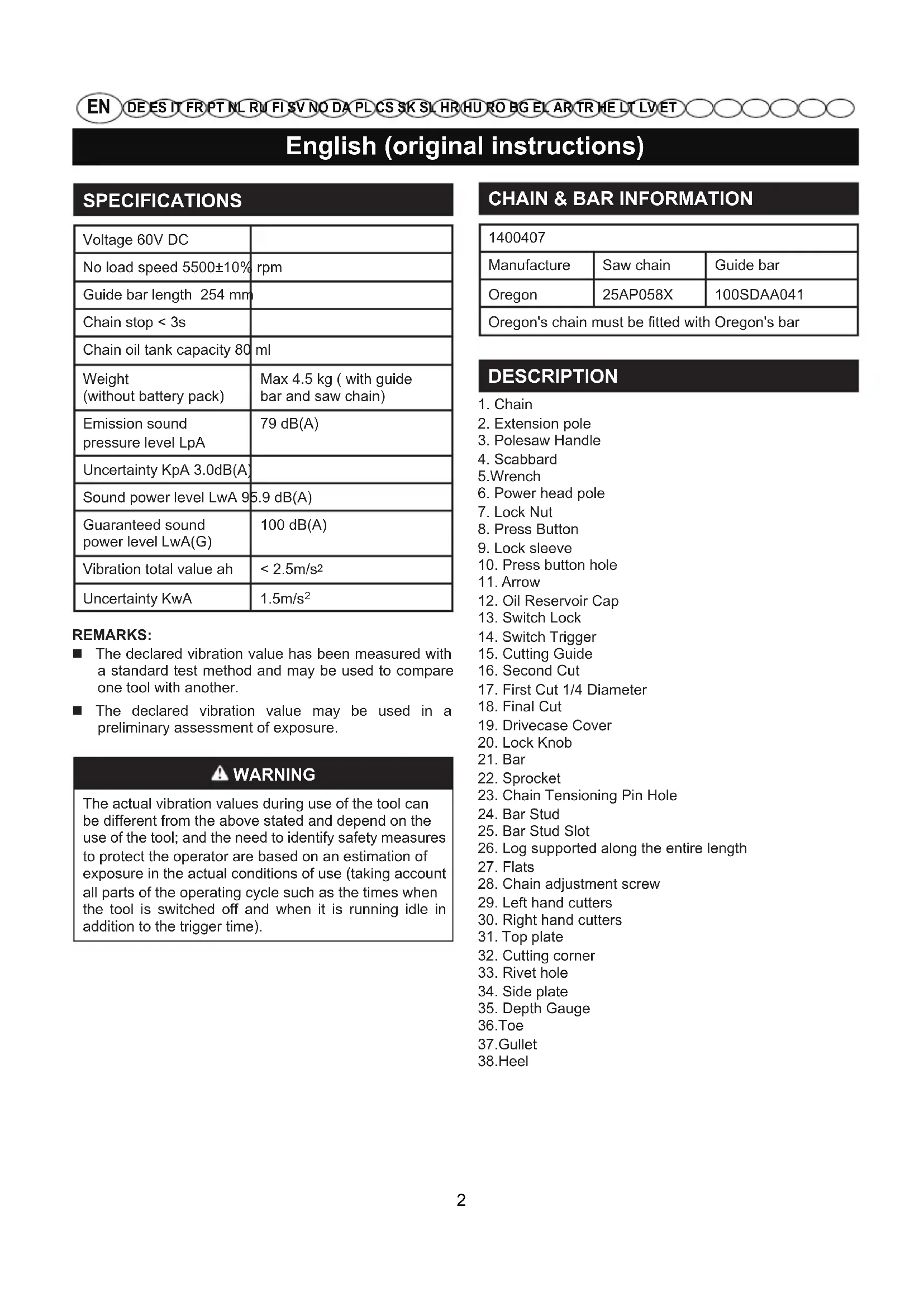
SPECIFICATIONS
| Voltage 60V DC | |
| No load speed 5500±10% | rpm |
| Guide bar length 254 mm | |
| Chain stop < 3s | |
| Chain oil tank capacity 80 | ml |
| Weight (without battery pack) | Max 4.5 kg ( with guide bar and saw chain) |
| Emission sound pressure level LpA | 79 dB(A) |
| Uncertainty KpA 3.0dB(A) | |
| Sound power level LwA 9 | 5.9 dB(A) |
| Guaranteed sound power level LwA(G) | 100 dB(A) |
| Vibration total value ah | < 2.5m/s2 |
| Uncertainty KwA | 1.5m/s2 |
REMARKS:
■ The declared vibration value has been measured with a standard test method and may be used to compare one tool with another.
■ The declared vibration value may be used in a preliminary assessment of exposure.
WARNING
The actual vibration values during use of the tool can be different from the above stated and depend on the use of the tool; and the need to identify safety measures to protect the operator are based on an estimation of exposure in the actual conditions of use (taking account all parts of the operating cycle such as the times when the tool is switched off and when it is running idle in addition to the trigger time).
CHAIN & BAR INFORMATION
| 1400407 | ||
| Manufacture | Saw chain | Guide bar |
| Oregon | 25AP058X | 100SDAA041 |
| Oregon's chain must be fitted with Oregon's bar | ||
DESCRIPTION
- Chain
- Extension pole
- Polesaw Handle
- Scabbard
5.Wrench - Power head pole
- Lock Nut
- Press Button
- Lock sleeve
- Press button hole
- Arrow
- Oil Reservoir Cap
- Switch Lock
- Switch Trigger
- Cutting Guide
- Second Cut
- First Cut 1/4 Diameter
- Final Cut
- Drivecase Cover
- Lock Knob
- Bar
- Sprocket
- Chain Tensioning Pin Hole
- Bar Stud
- Bar Stud Slot
- Log supported along the entire length
- Flats
- Chain adjustment screw
- Left hand cutters
- Right hand cutters
- Top plate
- Cutting corner
- Rivet hole
- Side plate
- Depth Gauge
36.Toe
37.Gullet
38.Heel
English (original instructions)
ASSEMBLY
UNPACKING
This product requires assembly.
■ Carefully remove the product and any accessories from the box. Make sure that all items listed in the package contents section are included.
■ Inspect the product carefully to make sure no breakage or damage occurred during shipping.
■ Do not discard the packing material until you have carefully inspected and satisfactorily operated the product.
■ If any parts are damaged or missing, please contact your authorised Greenworkstools service cneter for assistance.
PACKING LIST See Figure 1
■ Power head pole
■ Extension pole
■ Handle pole
Wrench
Scabbard
■ Operator's manual
WARNING
Before assembly, remove the battery from the tool. Do not insert the battery until assembly is complete. Failure to comply could result in accidental starting and possible serious personal injury.
CONNECTING THE POLES See figure 2
Before using the pole saw, assembly is required. When removed from the box, there are the three poles.
■ Insert the extension pole into the handle pole and slide together. The tubes are oval-shaped and will only install one way.
■ Push the extension pole into the lock sleeve in the handle pole and the press button will lock into the press button hole. Then use a wrench to secure the lock nut.
■ Repeat this process to attach the extension pole to the power head pole.
WARNING
Do not attempt to modify this product or create accessories not recommended for use with this product. Any such alteration or modification is misuse and could result in a hazardous condition leading to possible serious personal injury.
OPERATION
APPLICATIONS
You may use this product for the purposes listed below:
Limbing
Pruning
ADDING BAR AND CHAIN LUBRICANT See figure 3
Use Lubricant. It is designed for chains and chain oilers, and is formulated to perform over a wide temperature range with no dilution required.
NOTE: Pole saw comes from the factory with no bar and chain oil added. Level should also be checked after every 30 minutes of use and refilled as needed.
■ Remove oil cap.
■ Carefully pour the bar and chain oil into the tank.
■ Wipe off excess oil.
■ Check and fill the oil tank when there is no oil in the oil tank.
■ Repeat as needed.
NOTE: It is normal for oil to seep from the saw when not in use. To prevent seepage, empty the oil tank after each use then run for one minute. When storing the unit for a long period of time (three months or longer) be sure the chain is lightly lubricated; this will prevent rust on the chain and bar sprocket.
REMOVING THE BATTERY PACK See figure 4
■ Press the latch button on the battery pack down and hold.
■ Grasp the pole saw firmly, and pull the battery pack out of the handle.
NOTE: The battery pack fits into the handle snugly in order to prevent accidental dislodging. It may require a strong pull to remove it.
INSTALLING THE BATTERY PACK See figure 4
■ Align the tongue of the battery pack with the cavity.
■ Grasp the pole saw firmly.
■ Push the battery pack into the handle until the latch locks into place.
- Do not use force when inserting the battery pack. It should slide into position and "click".
WARNING
Do not use any attachments or accessories not recommended by The manufacture of this product. The use of attachments or accessories not recommended can result in serious personal injury.
English (original instructions)
STARTING AND STOPPING See Figure 5
TO START THE MOTOR:
■ Fit the battery pack into the pole saw.
■ Press and hold the switch lock. This makes the switch trigger operational.
■ Press and hold the switch trigger, release the switch lock and continue to squeeze the switch trigger for continued operation.
TO STOP THE MOTOR:
■ Release the switch trigger.
PREPARATION FOR CUTTING
■ Wear non-slip gloves for maximum grip and protection.
- Maintain a proper grip on the unit whenever the motor is running. Use your right hand to firmly grip the rear handle while your left hand has a firm grip on the pole shaft.
■ Hold unit firmly with both hands. Always keep your left hand on the pole shaft and your right hand on the rear handle, so your body is to the left of the chain line. Never use a left-handed (cross handed) grip, or any stance that places your body or arm across the chain line.
- Never stand directly under the limb you are cutting.
- Be certain the collars are fully tightened before operating equipment; check them periodically for tightness during use to avoid serious injury.
BASIC CUTTING PROCEDURE
See Figures 6-7
Follow the steps below to prevent damage to tree or shrub bark. Do not use a back-and-forth sawing motion.
■ Make a shallow first cut (1/4 of limb diameter) on the underside of the limb close to the main limb or trunk.
■ Make a second cut from the top side of the limb outboard from the first cut. Continue the cut through the limb until the limb separates from the tree. Be prepared to balance the weight of the tool when the limb falls.
■ Make a final cut close to trunk.
NOTE: For second and final cuts (from top of limb or branch), hold front cutting guide against the limb being cut. This will help steady the limb and make it easier to cut. Allow chain to cut for you; exert only slight downward pressure. If you force the cut, damage to the bar, chain, or motor can result.
■ Release the trigger as soon as the cut is completed. Failure to follow proper cutting procedures will result in the bar and chain binding and becoming pinched or trapped in the limb. If this should happen:
■ Stop the motor and remove the battery pack.
If the limb can be reached from the ground, lift the limb while holding the saw. This should release the "pinch"
and free the saw.
■ If the saw is still trapped, call a professional for assistance
LIMBING AND PRUNING See Figure 8-9
This unit is designed for trimming small branches and limbs up to 15 cm in diameter. For best results, observe the following precautions
■ Plan the cut carefully. Be aware of the direction in which the branch will fall.
■ Branches may fall in unexpected directions. Do not stand directly under the branch being cut.
■ The most typical cutting application is to position the unit at an angle of 60^ or less, depending on the specific situation. As the angle of the pole saw shaft to ground increases, the difficulty of making the first cut (from the underside of limb) increase.
■ Remove long branches in several stages.
■ Cut lower branches first to allow the top branches more room to fall.
■ Work slowly, keeping both hands on the saw with a firm grip. Maintain secure footing and balance.
- Keep the tree between you and the chain while limbing. Cut from side of tree opposite branch you are cutting.
■ Do not cut from a ladder; this is extremely dangerous. Leave this operation for professionals.
■ Do not make the flush cut next to the main limb or trunk until you have cut off the limb further out to reduce the weight. Following proper cutting procedure will prevent stripping the bark from the main member.
■ Do not use the pole saw for felling or bucking
■ To prevent electrocution, do not operate within 15m of overhead electrical lines.
- Keep bystanders at least 15m away.
MAINTENANCE
REPLACING THE BAR AND CHAIN See Figure 10-12
■ Remove the lock knob and drivecase cover.
■ The bar contains a bar stud slot that fits over the bar stud. The bar also contains a chain tension pin hole which fits over the chain tensioning pin.
■ Place the bar onto the bar stud so that the chain tensioning pin fits into the chain tensioning pin hole.
■ Fit the chain over the sprocket and into the bar groove. The cutters on the top of the bar should face toward the bar tip, in the direction of the chain rotation.
- Replace the drivecase cover and install the lock knob. Tighten the lock knob finger tight only. The bar must be free to move for tension adjustment.
■ Remove all slack from chain by turning the chain tensioning screw clockwise, assuring that the chain
English (original instructions)
seats into the bar groove during tensioning.
■ Lift the tip of the bar up to check for sag. Release the tip of the bar, and turn the chain tensioning screw 1/2 turn clockwise. Repeat this process until sag does not exist.
■ Hold the lip of the bar up and tighten the lock knob securely.
- Chain is correctly tensioned when there is no slack on the underside of the bar, the chain is snug, but it can be turned by hand without binding.
ADJUSTING THE CHAIN TENSION
See Figure 13-16
■ Loosen the chain cover lock knob. The chain cover does not have to be completely removed in order to adjust the chain tension.
■ Rotate the chain adjustment screw clockwise to increase the chain tension and rotate counterclockwise to decrease the chain tension.
■ Once the chain is at the desired tension, tighten the chain cover lock knob.
WARNING
Do not over-tension the chain as this will lead to excessive wear and will reduce the life of the bar and chain.
WARNING
When the saw chain is new, check the tension frequently during the first two hours of use as a new saw chain stretches slightly.
CHAIN MAINTENANCE See Figure 17
For smooth and fast cutting, the chain needs to be maintained properly. The following conditions indicate that the chain requires sharpening:
■ Wood chips are small and powdery.
■ Chain must be forced through the wood during cutting.
■ Chain cuts to one side.
During maintenance of the chain, consider the following:
■ Improper filling angle of the side plate can increase the risk of severe kickback.
■ Depth gauge (or raker clearance) setting determines the height the cutter enters the wood and the size of the wood chip that is removed. Too much clearance increases the potential for kickback. Too little clearance decreases the size of the wood chip thus decreasing the chain's cutting ability.
If the cutter teeth hit hard objects such as nails or stones, or are abraded by mud or sand on the wood, have an authorized service center sharpen the chain.
NOTE: if there're any cracks on chain pitch or guide bar, stop to use the tool at once and replace the damaged parts. Refer to Replacing The Bar And Chain.
HOW TO SHARPEN THE CUTTERS
See Figure 18-21
Be careful to file all cutters to the specified angles and to the same length, as fast cutting can be obtained only when all cutters are uniform.
■ Tighten the chain tension enough that the chain does not wobble. Do all of your filling at the mid-point of the bar. Wear gloves for protection.
■ Use a 5/32 in. diameter round file and holder.
- Keep the file level with the top plate of the tooth. Do not let the file dip or rock.
■ Using light but firm pressure, stroke towards the front corner of the tooth. Lift file away from the steel on each return stroke.
- Put a few firm strokes on every tooth. File all left hand cutters in one direction. Then move to the other side and file the right hand cutters in the opposite direction. Occasionally remove filings from the file with a wire brush.
WARNING
Dull or improperly sharpened chain can cause excessive motor speed during cutting which may result in severe motor damage.
WARNING
Improper chain sharpening increases the potential of kickback. Failure to replace or repair damaged chain can cause serious injury.
STORAGE
STORING THE PRODUCT
■ Clean all foreign material from the product. Store idle unit indoors in a dry, well-ventilated area that is inaccessible to children. Keep away from corrosive agents such as garden chemicals and de-icing salts.
■ Always place the scabbard on the saw bar when transporting or storing the pole saw. The scabbard is a snug fit and must be attached very carefully due to the sharp teeth on the saw chain. This is best done by grasping the scabbard at one end, in the center portion of the scabbard, and carefully sliding it over the chain as shown. Use caution to avoid the sharp teeth of the chain.
NOTE: The saw chain is very sharp. Always wear protective gloves when handling the chain.
English (original instructions)
TRANSPORTATION
For transportation, secure the machine against movement or falling to prevent injury to persons or damage to the machine.
DISPOSAL
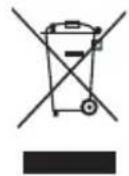
Separate collection. This product must not be disposed of with normal household waste. Should you find one day that your Greenworkstools product needs replacement, or if it is no further use to you, do not dispose of it with household waste. Make this product available for separate collection.

Separate collection of used products and packaging allows materials to be recycled and used again. Re-use of recycled materials helps prevent environmental pollution and reduces the demand for raw materials.
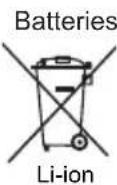
At the end of their useful life, discard batteries with due care for our environment. The battery contains material which is hazardous to you and the environment. It must be removed and disposed of separately at a facility that accepts lithium-ion batteries.
English (original instructions)
TROUBLESHOOTING
| PROBLEM POSSIBLE CAUSE SOLUTION | ||
| Polesaw fails to switch | The poles are not assembled correctly. | Reassemble the poles according to the instructions. |
| No electrical contact between the polesaw and battery. | To secure the battery, make sure the latches on the battery compartment snap into place. | |
| The battery pack is depleted. Charge | the battery pack. | |
| The lock-off lever and trigger are not depressed simultaneously. | Press down the lock-off lever and hold it, then depress the trigger to turn on the pole saw. | |
| The battery and power tool is too hot or too cold. | Refer to the battery and charger maintenance part in the manual. | |
| Bar and chain running hot and smoking. | No oil in the oil tank. Refill oil into the oil tank. | |
| The discharge port is blocked by debris. | Refer to the manual to remove the bar and clean out the debris. | |
| Inlet opening in inner oil tank is blocked by debris. | Clean the oil tank, and refill with clean bar and chain lubricant. | |
| The sprocket is stuck and clogged with debris. | Clean the sprocket and refill with clean bar and chain lubricant. | |
| The chain and bar running too hot and can not cutting. | Chain tension for overtightened or loose condition. | Refer to Re-tensioning the saw chain in the manual. |
| Dull chain. Sharpen or replace the chain. | ||
| Chain on backwards. Refer to Replacing the Bar and Chain assembly earlier in this manual. | ||
| Motor running, but cutting abnormal | Motor stops after about 3 seconds. | Recharge the battery. |
| When using the polesaw under load, it stops. | Release trigger. Restart the polesaw. Do not force the polesaw. Refer to the manual for proper use. | |
| Battery is not charged. | Charge the battery. Refer to the battery and charger manual for correct charging procedures. | |
| Lack of bar and chain lubricant can cause increased friction. Chain needs to be properly maintained. | Make sure the polesaw always has bar and chain lubricant. | |
| Incorrect battery storage temperature. | Allow the battery pack to cool until the temperature drops to room temperature. | |
CARACTÉRISTIQUES DU PRODUIT
Consulte as Imagens 6 e 7
Consulte as Imagens 8 e 9
SUBSTITUIR A BARRA E A SERRA Consulte as
Imagens 10-12
Consulte as Imagens 13-16
Consulte as Imagens 18 e 21
TUOTTEEN TEKNISET TIEDOT
KUINKA TEROTTAA KOURUHAMPAAT
VEDLIKEHOLD PÅ KJEDE
Se figur 17.
KORREKT AVHENDING AV DETTE PRODUKTET
OPBEVARING AF PRODUKTET
■ The declared vibration value has been measured with a standard test method and may be used to compare one tool with another.
■ The declared vibration value may be used in a preliminary assessment of exposure.
BRĪDINĀJUMS
Greenworks Tools Warranty Policy for DIY machines
PERIOD OF WARRANTY
All new Greenworks Tools machinery is supplied with a 2 year parts and labour warranty from original date of purchase. A 30 day warranty is available for machines used professionally as Greenworks Tools are designed primarily to be used by DIY consumers. This warranty is non-transferable.
LIMITATIONS
This warranty applies only to defective parts/components and does not cover repairs due to:
- Normal wear and tear.
- Routine tune up or adjustment.
- Damage caused by improper handling/abuse/misuse or neglect.
- Overheating due to lack of maintenance.
- Damage due to fittings/fasteners becoming loose/detached through lack of maintenance.
- Damage caused by cleaning with water.
- Machines serviced or repaired by non-authorised Greenworks Tools service centres.
- Machines incorrectly assembled or adjusted.
- Damage caused by improper use of the machine.
- Damage caused by improper winterisation (pressure washers)
- Items considered as consumable parts are not normally covered by the warranty, including but not limited to:
- Batteries
- Electric cables
- Blade and blade assemblies
- Belts
- Filters
-
Chucks and tool holders
-
Certain products may contain components such as engines, transmissions from an alternative manufacturer, these items will be subject to the appropriate manufacturer's warranty policy except where Greenworks Tools Europe GmbH agrees to underwrite any claims outside the said manufacturer's warranty period.
- Second hand goods are not covered under this warranty policy.
- The fitting of spares, replacements or extra components which are not supplied or approved by Greenworks Tools Europe GmbH.
Warranty
To claim a warranty on any product under this policy a proof of original purchase is required. Credit card statement do not qualify as sufficient proof of purchase. In the first instance of a warranty event occurring the consumer should return the product to the original place of purchase with their proof of purchase. The machine will be sent to our central service facility and an inspection made. If the machine be found to be at fault it will be repaired and sent back to the address of the consumer free of charge. Machines that retail for less than €100 euros including sales taxes will generally be replaced.
If the central service facility finds that machine is not found to be at fault then the consumer will be advised they will need to pay for the cost of the repair.
This warranty policy is subject to change from time to time to accommodate the needs of new products. A copy of the latest warranty policy will be available at www.greenworkstools.eu.

Greenworks Tools (DIY)
نامضلا قدم
Greenworks Tools "הכלה"
תְקָרִי אַרְהָה
EN EC DECLARATION OF CONFORMITY
Manufacturer: Changzhou Globe Co., Ltd.
Address: No. 65 Xinggang Rd., Zhonglou Zone, Changzhou, Jiangsu, China
Name and address of the person authorised to compile the technical file:
Name: Ted Qu Haichao (Quality Director)
Adress: Greenworks Tools Europe GmbH,
Wankelstrasse 40. 50996 Cologne Germany
Herewith we declare that the product
Category POLESAW
Model 1400407
Serial Number ...... See product rating label
Year of Construction ...... See product rating label
■ is in conformity with the relevant provisions of the Machinery Directive (2006/42/EC)
■ is in conformity with the provisions of the following other EC-Directives
EMC Directive (2014/30/EU),
Noise Emission Directive (2000/14/EC amended by 2005/88/EC)
And furthermore, we declare that
■ The following (parts/clauses of) European harmonised standards have been used
EN 55014-1, EN 55014-2, EN 60745-1, EN ISO 11680-1, EN ISO 3744
Measured sound power level 95.9 dB(A)
Guaranteed sound power level 100 dB(A)
Conformity assessment method to Annex V / Directive 2000/14/EC
The EC type-examination certificate number: 17SHW0090-01 issued by
Place, date: Changzhou, 04/20/2016
Quality Director
Signature: Ted Qu Haichao
Ted Qu
DE
Adresse: No. 65 Xinggang Rd., Zhonglou Zone, Changzhou, Jiangsu, China
Indirizzo: No. 65 Xinggang Rd., Zhonglou Zone, Changzhou, Jiangsu, China
FR DÉCLARATION DE CONFORMITÉ EC
Fabricant : Changzhou Globe Co., Ltd.
Adresse : No. 65 Xinggang Rd., Zhonglou Zone, Changzhou, Jiangsu, China
Endereço: No. 65 Xinggang Rd., Zhonglou Zone, Changzhou, Jiangsu, China
Local, data: Changzhou, 04/20/2016
Adres: No. 65 Xinggang Rd., Zhonglou Zone, Changzhou, Jiangsu, China
Osoite: No. 65 Xinggang Rd., Zhonglou Zone, Changzhou, Jiangsu, China
Adress: No. 65 Xinggang Rd., Zhonglou Zone, Changzhou, Jiangsu, China
Adress: Greenworks Tools Europe GmbH,
Wankelstrasse 40. 50996 Cologne Germany
Adresse: No. 65 Xinggang Rd., Zhonglou Zone, Changzhou, Jiangsu, China
Adresse: No. 65 Xinggang Rd., Zhonglou Zone, Changzhou, Jiangsu, China
Adres: No. 65 Xinggang Rd., Zhonglou Zone, Changzhou, Jiangsu, China
Adresa: No. 65 Xinggang Rd., Zhonglou Zone, Changzhou, Jiangsu, China
Adresa: No. 65 Xinggang Rd., Zhonglou Zone, Changzhou, Jiangsu, China
Naslov: No. 65 Xinggang Rd., Zhonglou Zone, Changzhou, Jiangsu, China
Adresa: No. 65 Xinggang Rd., Zhonglou Zone, Changzhou, Jiangsu, China
Ime i prezime, i adresa osobe ovlaštene da sastavi tehničku datoteku:
Ime i prezime: Ted Qu Haichao (Direktor odjela za kvalitetu)
Adresa: Greenworks Tools Europe GmbH,
Wankelstrasse 40. 50996 Cologne Germany
Cím: No. 65 Xinggang Rd., Zhonglou Zone, Changzhou, Jiangsu, China
Adresa: No. 65 Xinggang Rd., Zhonglou Zone, Changzhou, Jiangsu, China
Adres: No. 65 Xinggang Rd., Zhonglou Zone, Changzhou, Jiangsu, China
Yer, tarih: Changzhou, 04/20/2016
Kalite Müdürü
Ímza: Ted Qu Haichao
Ted Qu
'ַרְּר: Changzhou Globe Co., Ltd.
תְרָה: No. 65 Xinggang Rd., Zhonglou Zone, Changzhou, Jiangsu, China
Adresas: No. 65 Xinggang Rd., Zhonglou Zone, Changzhou, Jiangsu, China
Adrese: No. 65 Xinggang Rd., Zhonglou Zone, Changzhou, Jiangsu, China
Aadress: No. 65 Xinggang Rd., Zhonglou Zone, Changzhou, Jiangsu, China
Aadress: Greenworks Tools Europe GmbH,
Wankelstrasse 40. 50996 Cologne Germany
Kinnitame, et see toode
Nimetus AKUGA KETTSAAG
Mudel 1400407
Seerianumber ...... vaadake toote tehasesilti