DH36DPE - Hammer HiKOKI - Free user manual and instructions
Find the device manual for free DH36DPE HiKOKI in PDF.


| Product Type | Cordless Rotary Hammer |
| Brand | HiKOKI |
| Model | DH36DPE |
| Rated Voltage | 36 V |
| No Load Speed | 0 – 950 rpm |
| Full Load Impact Rate | 0 – 4900 bpm |
| Max Drilling Diameter (Concrete) | 40 mm |
| Max Drilling Diameter (Steel) | 13 mm |
| Max Drilling Diameter (Wood) | 32 mm |
| Weight (According to Battery) | Approx. 6.5 kg |
| Battery Type | Lithium-ion 36 V (Multivolt) |
| Charger | UC18YSL3 |
| Tool Holder Type | SDS-plus |
| Operating Modes | Rotation + Hammering, Rotation Only, Hammering Only |
| Special Features | Auto Stop, Reactive Force Control (RFC), LED Light |
| Sound Pressure Level | 91 dB(A) |
| Sound Power Level | 102 dB(A) |
| Vibration (Concrete Drilling) | 14.8 m/s² (Uncertainty 1.5 m/s²) |
| Vibration (Chiseling) | 9.7 m/s² (Uncertainty 1.5 m/s²) |
| Warranty | According to national regulations |
| Maintenance | Clean regularly, use specified grease, check screws |
| Safety | Wear hearing protection, dust mask, safety glasses |
| Spare Parts | SDS-plus drill bits, chisels, batteries, charger |
Frequently Asked Questions - DH36DPE HiKOKI
User questions about DH36DPE HiKOKI
0 question about this device. Answer the ones you know or ask your own.
Ask a new question about this device
Download the instructions for your Hammer in PDF format for free! Find your manual DH36DPE - HiKOKI and take your electronic device back in hand. On this page are published all the documents necessary for the use of your device. DH36DPE by HiKOKI.
USER MANUAL DH36DPE HiKOKI
Read all safety warnings, instructions, illustrations and specifi cations provided with this power tool.
Failure to follow all instructions listed below may result in electric shock, fire and/or serious injury.
Save all warnings and instructions for future reference.
The term "power tool" in the warnings refers to your mains-operated (cored) power tool or battery-operated (cordless) power tool.
1) Work area safety
a) Keep work area clean and well lit.
Cluttered or dark areas invite accidents.
b) Do not operate power tools in explosive atmospheres, such as in the presence of flammable liquids, gases or dust.
Power tools create sparks which may ignite the dust or fumes.
c) Keep children and bystanders away while operating a power tool.
Distractions can cause you to lose control.
2) Electrical safety
a) Power tool plugs must match the outlet. Never modify the plug in any way. Do not use any adapter plugs with earthed (grounded) power tools.
Unmodified plugs and matching outlets will reduce risk of electric shock.
b) Avoid body contact with earthed or grounded surfaces, such as pipes, radiators, ranges and refrigerators.
There is an increased risk of electric shock if your body is earthed or grounded.
c) Do not expose power tools to rain or wet conditions.
Water entering a power tool will increase the risk of electric shock.
d) Do not abuse the cord. Never use the cord for carrying, pulling or unplugging the power tool.
Keep cord away from heat, oil, sharp edges or moving parts.
Damaged or entangled cords increase the risk of electric shock.
e) When operating a power tool outdoors, use an extension cord suitable for outdoor use.
Use of a cord suitable for outdoor use reduces the risk of electric shock.
f) If operating a power tool in a damp location is unavoidable, use a residual current device (RCD) protected supply.
Use of an RCD reduces the risk of electric shock.
3) Personal safety
a) Stay alert, watch what you are doing and use common sense when operating a power tool.
Do not use a power tool while you are tired or under the influence of drugs, alcohol or medication.
A moment of inattention while operating power tools may result in serious personal injury.
b) Use personal protective equipment. Always wear eye protection.
Protective equipment such as a dust mask, non-skid safety shoes, hard hat or hearing protection used for appropriate conditions will reduce personal injuries.
c) Prevent unintentional starting. Ensure the switch is in the off -position before connecting to power source and/or battery pack, picking up or carrying the tool.
Carrying power tools with your finger on the switch or energising power tools that have the switch on invites accidents.
d) Remove any adjusting key or wrench before turning the power tool on.
A wrench or a key left attached to a rotating part of the power tool may result in personal injury.
e) Do not overreach. Keep proper footing and balance at all times.
This enables better control of the power tool in unexpected situations.
f) Dress properly. Do not wear loose clothing or jewellery. Keep your hair and clothing away from moving parts.
Loose clothes, jewellery or long hair can be caught in moving parts.
g) If devices are provided for the connection of dust extraction and collection facilities, ensure these are connected and properly used.
Use of dust collection can reduce dust-related hazards.
h) Do not let familiarity gained from frequent use of tools allow you to become complacent and ignore tool safety principles.
A careless action can cause severe injury within a fraction of a second.
4) Power tool use and care
a) Do not force the power tool. Use the correct power tool for your application.
The correct power tool will do the job better and safer at the rate for which it was designed.
b) Do not use the power tool if the switch does not turn it on and off. Any power tool that cannot be controlled with the switch is dangerous and must be repaired.
c) Disconnect the plug from the power source and/ or remove the battery pack, if detachable, from the power tool before making any adjustments, changing accessories, or storing power tools.
Such preventive safety measures reduce the risk of starting the power tool accidentally.
d) Store idle power tools out of the reach of children and do not allow persons unfamiliar with the power tool or these instructions to operate the power tool.
Power tools are dangerous in the hands of untrained users.
e) Maintain power tools and accessories. Check for misalignment or binding of moving parts, breakage of parts and any other condition that may affect the power tool's operation. If damaged, have the power tool repaired before use.
Many accidents are caused by poorly maintained power tools.
f) Keep cutting tools sharp and clean.
Properly maintained cutting tools with sharp cutting edges are less likely to bind and are easier to control.
g) Use the power tool, accessories and tool bits etc. in accordance with these instructions, taking into account the working conditions and the work to be performed.
Use of the power tool for operations diff erent from those intended could result in a hazardous situation
h) Keep handles and grasping surfaces dry, clean and free from oil and grease.
Slippery handles and grasping surfaces do not allow for safe handling and control of the tool in unexpected situations.
5) Battery tool use and care
a) Recharge only with the charger specified by the manufacturer.
A charger that is suitable for one type of battery pack may create a risk of fire when used with another battery pack.
b) Use power tools only with specifically designated battery packs.
Use of any other battery packs may create a risk of injury and fire.
c) When battery pack is not in use, keep it away from other metal objects, like paper clips, coins, keys, nails, screws or other small metal objects, that can make a connection from one terminal to another.
Shorting the battery terminals together may cause burns or a fire.
d) Under abusive conditions, liquid may be ejected from the battery; avoid contact. If contact accidentally occurs, fl ush with water. If liquid contacts eyes, additionally seek medical help.
Liquid ejected from the battery may cause irritation or burns.
e) Do not use a battery pack or tool that is damaged or modified.
Damaged or modifi ed batteries may exhibit unpredictable behaviour resulting in fire, explosion or risk of injury.
f) Do not expose a battery pack or tool to fire or excessive temperature.
Exposure to fire or temperature above 130^ cause explosion.
g) Follow all charging instructions and do not charge the battery pack or tool outside the temperature range specified in the instructions.
Charging improperly or at temperatures outside the specified range may damage the battery and increase the risk of fire.
6) Service
a) Have your power tool serviced by a qualified repair person using only identical replacement parts.
This will ensure that the safety of the power tool is maintained.
b) Never service damaged battery packs. Service of battery packs should only be performed by the manufacturer or authorized service providers.
PRECAUTION
Keep children and infirm persons away. When not in use, tools should be stored out of reach of children and infirm persons.
CORDLESS ROTARY HAMMER SAFETY WARNINGS
Safety instructions for all operations
- Wear ear protectors
Exposure to noise can cause hearing loss.
- Use auxiliary handle(s), if supplied with the tool.
Loss of control can cause personal injury.
- Hold the power tool by insulated gripping surfaces, when performing an operation where the cutting accessory may contact hidden wiring.
Cutting accessory contacting a "live" wire may make exposed metal parts of the power tool "live" and could give the operator an electric shock.
Safety instructions when using long drill bits with rotary hammers
- Always start drilling at low speed and with the bit tip in contact with the workpiece.
At higher speeds, the bit is likely to bend if allowed to rotate freely without contacting the workpiece, resulting in personal injury.
- Apply pressure only in direct line with the bit and do not apply excessive pressure.
Bits can bend causing breakage or loss of control, resulting in personal injury.
ADDITIONAL SAFETY WARNINGS
- Do not allow foreign matter to enter the hole for connecting the rechargeable battery.
- Never disassemble the rechargeable battery and charger.
- Never short-circuit the rechargeable battery. Shortcircuiting the battery will cause a great electric current and overheat. It results in burn or damage to the battery.
- Do not dispose of the battery in fire. If the battery is burnt, it may explode.
- When using this unit continuously, the unit may overheat, leading to damage in the motor and switch. Please leave it without using it for approximately 15 minutes.
- Do not insert object into the air ventilation slots of the jet charger. Inserting metal objects or inflammables into the charger air ventilation slots will result in electrical shock hazard or damaged charger.
- Bring the battery to the shop from which it was purchased as soon as the post-charging battery life becomes too short for practical use. Do not dispose of the exhausted battery.
- Before starting to break, chip or drill into a wall, floor or ceiling, thoroughly confirm that such items as electric cables or conduits are not buried inside.
- Ensure that the power switch is in the OFF position. If the battery is installed while the power switch is in the ON position, the power tool will start operating immediately, which could cause a serious accident.
- Do not touch the bit during or immediately after operation. The bit becomes very hot during operation and could cause serious burns.
- Always hold the body handle and side handle of the power tool firmly. Otherwise the counterforce produced may result in inaccurate and even dangerous operation.
- Wear a dust mask Do not inhale the harmful dusts generated in drilling or chiseling operation. The dust can endanger the health of yourself and bystanders.
- Make sure that the battery is installed firmly. If it is at all loose it could come off and cause an accident.
- To prevent accidents, make sure to turn the switch off and pull out the battery before changing accessories, storing, carrying or when not using the tools.
- Mounting the drill bit
To prevent accidents, make sure to turn the switch off and pull out the battery. - When using tools such as bull points, drill bits, etc., make sure to use the genuine parts designated by our company.
Clean the shank portion of the drill bit.
Check the latching by pulling on the drill bit. - Operate the change lever only when the motor is at a full stop. Operating the change lever while the motor is running may cause the tip tool to unexpectedly rotate and result in an accident. (Fig. 11)
English
- Rotation + hammering
When the drill bit touches construction iron bar, the bit will stop immediately and the rotary hammer will react to revolve. Therefore firmly tighten the side handle, hold the body handle and side handles. - Rotation only
To drill wood or metal material using the drill chuck and chuck adapter (optional accessories).
Not using dust extractor system - Do not apply excessive force during operation. Doing so will not only damage the tip of the drill bit, but also reduce the service life of the rotary hammer.
- A drill bit can snap off upon penetrating a drilled hole. When the drill is near penetration, lighten the pressure on the rotary hammer and continue drilling until penetration is achieved.
- Do not attempt to drill anchor holes or holes in concrete with the machine set in the rotation only function.
Do not attempt to use the rotary hammer in the rotation and striking mode with the drill chuck and chuck adapter attached. This would seriously shorten the service life of every component of the machine. - Hammering only
Not using dust extractor system - Do not look directly into the light. Such actions could result in eye injury. Wipe off any dirt or grime attached to the lens of the L light with a soft cloth, being careful not to scratch the lens.
Scratches on the lens of the LED light can result in decreased brightness. - Always use the tool and battery at temperatures between -5^ and 40^ .
- Always charge the battery at an ambient temperature of 0 - 40^
- Make sure to securely hold the tool as shown in Fig. 22 during operation.
CAUTION ON LITHIUM-ION BATTERY
To extend the lifetime, the lithium-ion battery equips with the protection function to stop the output.
In the cases of 1 to 3 described below, when using this product, even if you are pulling the switch, the motor may stop. This is not the trouble but the result of protection function.
- When the battery power remaining runs out, the motor stops.
In such a case, charge it up immediately. - If the tool is overloaded, the motor may stop. In this case, release the switch of tool and eliminate causes of overloading. After that, you can use it again.
- If the battery is overheated under overload work, the battery power may stop.
In this case, stop using the battery and let the battery cool. After that, you can use it again.
Furthermore, please heed the following warning and caution.
In order to prevent any battery leakage, heat generation, smoke emission, explosion and ignition beforehand, please be sure to heed the following precautions.
- Make sure that swarf and dust do not collect on the battery.
During work make sure that swarf and dust do not fall on the battery. - Make sure that any swarf and dust falling on the power tool during work do not collect on the battery.
-
Do not store an unused battery in a location exposed to swarm and dust.
Before storing a battery, remove any swarf and dust that may adhere to it and do not store it together with metal parts (screws, nails, etc.). -
Do not pierce battery with a sharp object such as a nail, strike with a hammer, step on, throw or subject the battery to severe physical shock.
- Do not use an apparently damaged or deformed battery.
- Do not use the battery in reverse polarity.
- Do not connect directly to an electrical outlets or car cigarette lighter sockets.
- Do not use the battery for a purpose other than those specified.
- If the battery charging fails to complete even when a specified recharging time has elapsed, immediately stop further recharging.
- Do not put or subject the battery to high temperatures or high pressure such as into a microwave oven, dryer, or high pressure container.
- Keep away from fire immediately when leakage or foul odor are detected.
- Do not use in a location where strong static electricity generates.
- If there is battery leakage, foul odor, heat generated, discolored or deformed, or in any way appears abnormal during use, recharging or storage, immediately remove it from the equipment or battery charger, and stop use.
- Do not immerse the battery or allow any fluids to flow inside. Conductive liquid ingress, such as water, can cause damage resulting in fire or explosion. Store your battery in a cool, dry place, away from combustible and flammable items. Corrosive gas atmospheres must be avoided.
CAUTION
- If liquid leaking from the battery gets into your eyes, do not rub your eyes and wash them well with fresh clean water such as tap water and contact a doctor immediately.
If left untreated, the liquid may cause eye-problems. - If liquid leaks onto your skin or clothes, wash well with clean water such as tap water immediately.
There is a possibility that this can cause skin irritation. - If you find rust, foul odor, overheating, discolor, deformation, and/or other irregularities when using the battery for the first time, do not use and return it to your supplier or vendor.
WARNING
If a conductive foreign matter enters in the terminal of lithium ion battery, the battery may be shorted, causing fire. When storing the lithium ion battery, obey surely the rules of following contents.
- Do not place conductive debris, nail and wires such as iron wire and copper wire in the storage case.
To prevent shorting from occurring, load the battery in the tool or insert securely the battery cover for storing until the ventilator is not seen.
REGARDING LITHIUM-ION BATTERY TRANSPORTATION
When transporting a lithium-ion battery, please observe the following precautions.
WARNING
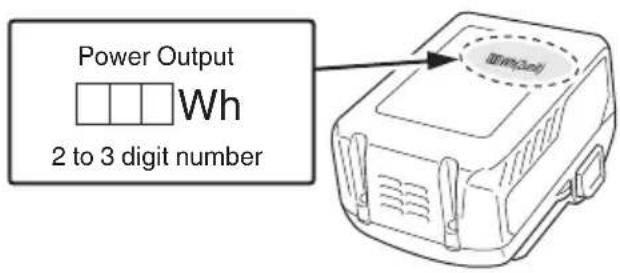
Notify the transporting company that a package contains a lithium-ion battery, inform the company of its power output and follow the instructions of the transportation company when arranging transport.
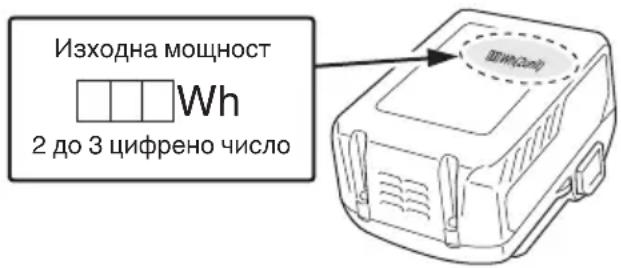
Lithium-ion batteries that exceed a power output of 100 Wh are considered to be in the freight classification of Dangerous Goods and will require special application procedures.
For transportation abroad, you must comply with international law and the rules and regulations of the destination country.
USB DEVICE CONNECTION PRECAUTIONS (UC18YSL3)
When an unexpected problem occurs, the data in a USB device connected to this product may be corrupted or lost. Always make sure to back up any data contained in the USB device prior to use with this product.
Please be aware that our company accepts absolutely no responsibility for any data stored in a USB device that is corrupted or lost, nor for any damage that may occur to a connected device.
WARNING
Prior to use, check the connecting USB cable for any defect or damage.
Using a defective or damaged USB cable can cause smoke emission or ignition.
- When the product is not being used, cover the USB port with the rubber cover.
Buildup of dust etc. in the USB port can cause smoke emission or ignition.
NOTE
There may be an occasional pause during USB recharging.
- When a USB device is not being charged, remove the USB device from the charger.
Failure to do so may not only reduce the battery life of a USB device, but may also result in unexpected accidents.
- It may not be possible to charge some USB devices, depending on the type of device.
NAMES OF PARTS (Fig. 1-Fig. 22)
| ① | Handle Motor | ⑭ | |
| ② | Switch trigger LED light | ⑮ | |
| ③ | Pushing button Battery | ⑯ | |
| ④ | Housing Display panel | ⑰ | |
| ⑤ | Side handle Changeover switch | ⑱ | |
| ⑥ | Depth gauge Display lamp | ⑲ | |
| ⑦ | Drill bit Auto stop lamp | ⑳ | |
| ⑧ | Front cap Indicator lamp | ㉑ | |
| ⑨ | Grip Nozzle | ㉒ | |
| ⑩ | Name plate | ㉓ | Depth adjustment button |
| ⑪ | Change lever | ㉔ | Nozzle adjustment button |
| ⑫ | Gear cover Dust housing | ㉕ | |
| ⑬ | Cap* Dust box | ㉖ |
| 27 | Dust box latch | 37 | Auto stop lamp: Lights |
| 28 | Filter | 38 | Battery sliding grooves |
| 29 | Adapter | 39 | Terminal (Product) |
| 30 | Latch | 40 | Air gun |
| 31 | Charge indicator lamp | 41 | Terminal (Battery) |
| 32 | Indicator lamp: Lights | 42 | Sliding grooves |
| 33 | Grease | 43 | Rubber cover |
| 34 | Pushing button (Change lever) | 44 | USB port |
| 35 | Cold chisel | 45 | USB cable |
| 36 | Auto stop lamp: Blinks |
- Do not remove the cap (13) from the rotary hammer unless you are installing the dust extractor system. Operating the tool with the cap removed will decrease work output. In addition, dust can clog the net which may result in malfunction.
SYMBOLS
WARNING
The following show symbols used for the machine. Be sure that you understand their meaning before use.
| DH36DPE: Cordless Rotary Hammer | |
| To reduce the risk of injury, user must read instruction manual. | |
| Only for EU countries Do not dispose of electric tools together with household waste material! In observance of European Directive 2012/19/EU on waste electrical and electronic equipment and its implementation in accordance with national law, electric tools that have reached the end of their life must be collected separately and returned to an environmentally compatible recycling facility. | |
| V | Rated voltage |
| n0 | No-load speed |
| Bpm | Full-load impact rate |
| φmax | Drilling diameter, max. |
| Weight* (According to EPTA-Procedure 01/2014) | |
| Concrete | |
| Steel | |
| Wood | |
| Hammering only function | |
English
| Rotation only function | |
| IT | Rotation and hammering function |
| Disconnect the battery | |
| I | Switching ON |
| O | Switching OFF |
| Low mode | |
| Normal mode | |
| R | Clockwise rotation |
| L | Counterclockwise rotation |
- Depending on attached battery. The heaviest weight is measured with BSL36B18 (sold separately).
Battery
| Lights; The battery remaining power is over 75% | |
| Lights; The battery remaining power is 50%-75%. | |
| Lights; The battery remaining power is 25%-50%. | |
| Lights; The battery remaining power is less than 25% | |
| Blinks; The battery remaining power is nearly empty. Recharge the battery soonest possible. | |
| Blinks; Output suspended due to high temperature. Remove the battery from the tool and allow it to fully cool down. | |
| Blinks; Output suspended due to failure or malfunction. The problem may be the battery so please contact your dealer. |
STANDARD ACCESSORIES
In addition to the main unit (1 unit), the package contains the accessories listed on page 263.
Standard accessories are subject to change without notice.
APPLICATIONS
Rotation and hammering function
Drilling anchor holes
Drilling holes in concrete
O Drilling holes in tile
Rotation only function (without dust extractor system)
Drilling in steel or wood
(with optional accessories)
- Tightening machine screws, wood screws (with optional accessories)
Hammering only function (without dust extractor system)
Light-duty chiselling of concrete, groove digging and edging.
SPECIFICATIONS
The specifications of this machine are listed in the Table on page 263.
*1 Specifications are for when a dust extractor system has been installed.
NOTE
Existing batteries (BSL3660/3626X/3626/3625/3620, BSL18xx and BSL14xx series) cannot be used with this tool.
Due to HiKOKI's continuing program of research and development, the specifi cations herein are subject to change without prior notice.
CHARGING
Before using the power tool, charge the battery as follows.
- Connect the charger's power cord to the receptacle.
When connecting the plug of the charger to a receptacle, the charge indicator lamp will blink in red (At 1-second intervals).
- Insert the battery into the charger.
Firmly insert the battery into the charger as shown in Fig. 4 (on page 3).
- Charging
When inserting a battery in the charger, the charge indicator lamp will blink in blue.
When the battery becomes fully recharged, the charge indicator lamp will light up in green. (See Table 1)
(1) Charge indicator lamp indication
The indications of the charge indicator lamp will be as shown in Table 1, according to the condition of the charger or the rechargeable battery.
Table 1
| Indications of the charge indicator lamp | ||||
| Charge indicator lamp (RED / BLUE / GREEN / PURPLE) | Before charging | Blinks (RED) | Lights for 0.5 seconds. Does not light for 0.5 seconds. (off for 0.5 seconds) | Plugged into power source |
| While charging | Blinks (BLUE) | Lights for 0.5 seconds. Does not light for 1 second. (off for 1 second) | Battery capacity at less than 50% | |
| Blinks (BLUE) | Lights for 1 second. Does not light for 0.5 seconds. (off for 0.5 seconds) | Battery capacity at less than 80% | ||
| Lights (BLUE) | Lights continuously | Battery capacity at more than 80% | ||
| Charging complete | Lights (GREEN) | Lights continuously (Continuous buzzer sound: about 6 seconds) | ||
| Overheat standby | Blinks (RED) | Lights for 0.3 seconds. Does not light for 0.3 seconds. (off for 0.3 seconds) | Battery overheated. Unable to charge. (Charging will commence when battery cools) | |
| Charging impossible | Flickers (PURPLE) | Lights for 0.1 seconds. Does not light for 0.1 seconds. (off for 0.1 seconds) (Intermittent buzzer sound: about 2 seconds) | Malfunction in the battery or the charger | |
(2) Regarding the temperatures and charging time of the rechargeable battery The temperatures and charging time will become as shown in Table 2.
Table 2
| Charger | UC18YSL3 | ||||||
| Battery | Type of battery Li-ion | ||||||
| Temperatures at which the battery can be recharged | 0°C-50°C | ||||||
| Charging voltage V | 14.4 18 | ||||||
| Charging time, approx. (At 20°C) | BSL14xx series BSL18xx series | Multi volt series | |||||
| (4 cells) (8 cells) (5 cells) (10 cells) (10 cells) | |||||||
| BSL1415S: 15 | BSL1430 : 20 | BSL1815S: 15 | BSL1830 : 20 | BSL36A18:32 | |||
| BSL1415 : 15 | BSL1440 : 26 | BSL1815X: 15 | BSL1840 : 26 | BSL36B18:52 | |||
| BSL1415X: 15 | BSL1450 : 32 | BSL1820 : 20 | BSL1850 : 32 | ||||
| BSL1420 : 20 | BSL1460 : 38 | BSL1825 : 25 | BSL1860 : 38 | ||||
| BSL1425 : 25 | BSL1830C: 30 | ||||||
| BSL1430C: 30 | BSL1460 : 38 | BSL1850C: 32 | |||||
| USB | Charging voltage V | 5 | |||||
| Charging current A | 2 | ||||||
NOTE
The recharging time may vary according to the ambient temperature and power source voltage.
English
- Disconnect the charger's power cord from the receptacle.
5. Hold the charger firmly and pull out the battery. NOTE
Be sure to pull out the battery from the charger after use, and then keep it.
Regarding electric discharge in case of new batteries, etc.
As the internal chemical substance of new batteries and batteries that have not been used for an extended period is not activated, the electric discharge might be low when using them the first and second time. This is a temporary phenomenon, and normal time required for recharging will be restored by recharging the batteries 2-3 times.
How to make the batteries perform longer.
(1) Recharge the batteries before they become completely exhausted.
When you feel that the power of the tool becomes weaker, stop using the tool and recharge its battery. If you continue to use the tool and exhaust the electric current, the battery may be damaged and its life will become shorter.
(2) Avoid recharging at high temperatures.
A rechargeable battery will be hot immediately after use. If such a battery is recharged immediately after use, its internal chemical substance will deteriorate, and the battery life will be shortened. Leave the battery and recharge it after it has cooled for a while.
CAUTION
If the battery is charged while it is heated because it has been left for a long time in a location subject to direct sunlight or because the battery has just been used, the charge indicator lamp of the charger lights for 0.3 seconds, does not light for 0.3 seconds (off for 0.3 seconds). In such a case, first let the battery cool, then start charging.
- When the charge indicator lamp flickers (at 0.2-second intervals), check for and take out any foreign objects in the charger's battery connector. If there are no foreign objects, it is probable that the battery or charger is malfunctioning. Take it to your authorized Service Center.
Since the built-in micro computer takes about 3 seconds to confirm that the battery being charged with UC18YSL3 is taken out, wait for a minimum of 3 seconds before reinserting it to continue charging. If the battery is reinserted within 3 seconds, the battery may not be properly charged.
MOUNTING AND OPERATION
| Action Figure Page | ||
| Names of parts - Cordless rotary hammer | 1 | 2 |
| Names of parts - Dust extractor system for Rotary hammer* | 2 | 2 |
| Removing and inserting the battery | 3 | 3 |
| Charging 4 3 | ||
| Remaining battery indicator 5 3 | ||
| Indicator lamp lights when battery is low | 6 | 3 |
| Installing / Removing the side handle | 7 | 3 |
| Inserting SDS-plus drilling tools 8 4 | ||
| Removing SDS-plus drilling tools | 9 4 | |
| Selecting rotation direction | 10 4 | |
| Selecting the operating mode | 11 4 | |
| Adjusting the drilling depth | 12 4 | |
| Changing the chisel position | 13 4 | |
| Switch operation | 14 5 | |
| Setting the speed | 15 5 | |
| Auto stop function | 16 5 | |
| How to use the LED light | 17 5 | |
| Cleaning of the battery installation compartment | 18 | 5 |
| Charging a USB device from a electrical outlet | 19-a | 6 |
| Charging a USB device and battery from a electrical outlet | 19-b | 6 |
| How to recharge USB device | 20 6 | |
| When charging of USB device is completed | 21 | 6 |
| Selecting accessories | - | 264, 265 |
- For details on how to use the Dust extractor system, refer to the system's instruction manual.
Pressing the changeover switch allows the selection of rotation speed and the auto stop function.
Rotation speed (Low mode/Normal mode) (Fig. 15)
Select either Low mode or Normal mode and operate the tool in the selected speed.
Auto stop mode (on/off) (Fig. 16)
This product is equipped with an auto stop function to support continuous drilling work. The function features a memory mode for storing the work time for drilling from switch ON to switch OFF, and an auto stop mode that automatically stops the motor from the second drilling onward should the work exceed the stored work time while the switch is ON.
AUTO STOP FUNCTION
In selection mode, pressing the button for longer than two seconds will move to memory mode. (Fig. 16)
(At the same time the auto stop lamp will blink.)
Conduct drilling when the auto stop lamp is flashing. The time between switching ON and switching OFF is stored by the tool.
(At the same time, the auto stop lamp will light up.)
Conduct drilling when the auto stop lamp is flashing. Continuous drilling is possible as the memory storage time will be recorded by the tool until the auto stop function's auto stop mode is cancelled.
The auto stop function is cancelled by pressing the changeover switch once again for over two seconds.
(At the same time, the auto stop lamp will switch off.)
CAUTION
- Switch ON the tool once you place the tip of the tool on the work material.
The rotation speed and the level at which the switch is pulled during drilling is not stored to memory.
O Fully carry out drilling in one go during auto stop mode.
The motor will stop even if you switch OFF within the memory storage time. - When you switch OFF within the memory storage time, the count will be reset. If you rework a task in which a hole has been partially drilled, the memory storage time will be fully recounted.
The auto stop function will remain active until canceled.
REACTIVE FORCE CONTROL
This product is equipped with a Reactive Force Control (RFC) feature that reduces jerking of the tool body. If the tool bit is suddenly overburdened, any jerking of the tool body is reduced by activation of the slip clutch or by stopping of the motor by the sensor built into the tool body. If the motor is stopped because of overburdening detection by the controller, the RFC indicator lamp will blink while the switch is pulled. In addition, the lamp will continue blinking for approximately three seconds after the switch is released. The motor will remain stopped while the lamp is blinking. (Fig. 23)
Because the RFC feature may not activate or its performance may be insufficient depending on the working environment and conditions, be careful not to suddenly overburden the tool bit while operating.
Possible causes of sudden overburdening
① Tool bit biting into material
② Impact against nails, metal or other hard objects
③ Tasks involving prying or any excess application of pressure, etc.
Also, other causes include any combination of the aforementioned.
- When the reactive force control (RFC) is triggered When the RFC is triggered and the motor stops, turn off the tool's switch and remove the cause of the overburdening before continuing operation.
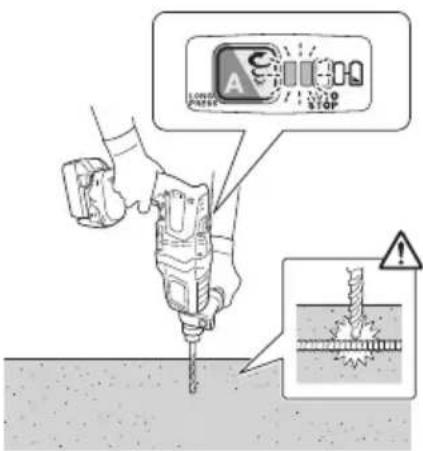
Fig. 23
ABOUT THE PROTECTION FUNCTION
This tool has a built-in protection circuit for preventing damage to the unit in the event of an abnormality. Depending on the following, the display lamp and the indicator lamp will flash, and the unit will cease to operate. Verify the problem indicated by the flashing and take the necessary steps to correct the problem.
When pressing the changeover switch, do so when the switch is not being pulled.
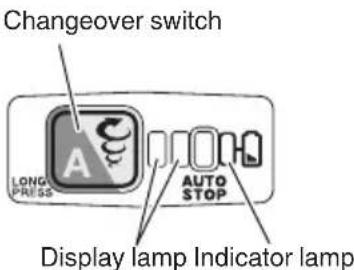
Fig. 24
Table 3
| Display lamp fl ashing | Cause Solution | |
| Operation has ceased because the internal temperature has exceeded the temperature limit. (High temperature protection function) | Allow the unit to cool for 15 to 30 minutes. When the temperature goes down and the display lamp and the indicator lamp blinking stops, pull the switch trigger to recover operation. | |
| Sudden overburdening of the tool bit has activated the RFC, stopping further operation of the tool. RFC (See page 15 “REACTIVE FORCE CONTROL”) | Release the switch trigger and leave it until the display lamp blinking stops. Pull the switch trigger again to recover operation. Before continuing operation, remove the cause of the overburden. |
NOTE
Despite taking steps to correct a problem, the display lamp may continue to blink. Should this be the case, the unit may require repair. If so, please contact the outlet from which this product was purchased for repairs.
LUBRICATION
This Rotary Hammer is of full air-tight construction to protect against dust.
Therefore, this Rotary Hammer can be used without lubrication for long periods.
After purchase, periodically replace grease. Ask for grease replacement at the nearest authorized Service Center.
CAUTION
A specific grease is used with this machine, therefore, the normal performance of the machine may be badly affected by use of different grease. Please be sure to let one of our service centers to undertake replacement of the grease.
MAINTENANCE AND INSPECTION
WARNING
Be sure to turned off the switch and remove the battery before maintenance and inspection.
1. Inspecting the tool
Since use of as dull tool will degrade efficiency and cause possible motor malfunction, sharpen or replace the tool as soon as abrasion is noted.
2. Inspecting the mounting screws
Regularly inspect all mounting screws and ensure that they are properly tightened. Should any of the screws be loose, retighten them immediately. Failure to do so could result in serious hazard.
3. Maintenance of the motor
The motor unit winding is the very "heart" of the power tool. Exercise due care to ensure the winding does not become damaged and/or wet with oil or water.
4. Inspection of terminals (tool and battery)
Check to make sure that swarf and dust have not collected on the terminals.
On occasion check prior, during and after operation.
CAUTION
Remove any swarf or dust which may have collected on the terminals.
Failure to do so may result in malfunction.
5. Cleaning on the outside
When the power tool is stained, wipe with a soft dry cloth or a cloth moistened with soapy water. Do not use chloric solvents, gasoline or paint thinner, for they melt plastics.
6. Cleaning the battery installation compartment and the battery
After drilling concrete, if concrete dust has accumulated on the battery installation compartment and the battery, clean off the accumulated concrete dust with an air gun or a dry cloth before using the tool. (Fig. 18)
Also, after cleaning, ensure that the battery can be installed and removed smoothly from the tool.
CAUTION
Using the tool when the battery is covered with concrete dust may lead to accidents such as the battery falling during use.
Furthermore, such use may cause a malfunction or contact failure between the battery and the terminals.
7. Storage
Store the power tool and battery in a place in which the temperature is less than 40^ and out of reach of children.
NOTE
Storing lithium-ion batteries.
Make sure the lithium-ion batteries have been fully charged before storing them.
Prolonged storage (3 months or more) of batteries with a low charge may result in performance deterioration, signifi cantly reducing battery usage time or rendering the batteries incapable of holding a charge.
However, signifi cantly reduced battery usage time may be recovered by repeatedly charging and using the batteries two to five times.
If the battery usage time is extremely short despite repeated charging and use, consider the batteries dead and purchase new batteries.
CAUTION
In the operation and maintenance of power tools, the safety regulations and standards prescribed in each country must be observed.
Important notice on the batteries for the HiKOKI cordless power tools
Please always use one of our designated genuine batteries. We cannot guarantee the safety and performance of our cordless power tool when used with batteries other than these designated by us, or when the battery is disassembled and modifi ed (such as disassembly and replacement of cells or other internal parts).
GUARANTEE
We guarantee HiKOKI Power Tools in accordance with statutory/country specific regulation. This guarantee does not cover defects or damage due to misuse, abuse, or normal wear and tear. In case of complaint, please send the Power Tool, undismantled, with the GUARANTEE CERTIFICATE found at the end of this Handling instruction, to a HiKOKI Authorized Service Center.
Information concerning airborne noise and vibration
The measured values were determined according to EN62841 and declared in accordance with ISO 4871.
Measured A-weighted sound power level: 102 dB (A)
Measured A-weighted sound pressure level: 91 dB (A)
Uncertainty K: 3 dB (A).
Wear hearing protection.
Vibration total values (triax vector sum) determined according to EN62841.
Hammer drilling into concrete:
Vibration emission value a_h HD = 14.8m / s^2
Uncertainty K = 1.5m / s2
Equivalent chiselling value:
Vibration emission value a_h , CHeq = 9.7 m/s2
Uncertainty K = 1.5m / s2
The declared vibration total value and the declared noise emission value have been measured in accordance with a standard test method and may be used for comparing one tool with another.
They may also be used in a preliminary assessment of exposure.
WARNING
The vibration and noise emission during actual use of the power tool can differ from the declared total value depending on the ways in which the tool is used especially what kind of workpiece is processed; and
Identify safety measures to protect the operator that are based on an estimation of exposure in the actual conditions of use (taking account of all parts of the operating cycle such as the times when the tool is switched off and when it is running idle in addition to the trigger time)
NOTE
Due to HiKOKI's continuing program of research and development, the specifications herein are subject to change without prior notice.
TROUBLESHOOTING
Use the inspections in the table below if the tool does not operate normally. If this does not remedy the problem, consult your dealer or the HiKOKI Authorized Service Center.
- Power tool
| Symptom Possible | cause Remedy | |
| Tool doesn't run No remaining | battery power Charge the battery. | |
| Battery isn't securely attached. Push in the battery until a click is heard. | ||
| Concrete dust has accumulated on the terminals of the battery installation compartment as well as on the battery sliding grooves. | Clean off the accumulated concrete dust with an air gun or a dry cloth. | |
| Tool suddenly stopped Tool | was overburdened Get rid of the problem causing the overburden. | |
| Reactive force control was activated | ||
| The battery is overheated. Let the battery cool down. | ||
| Tool bits -can't be attached -fall off | The shape of the attachment portion doesn't match | For the SDS-plus shank type, use a bit with a diameter that is within the designated range. |
| Holes can't be smoothly drilled. | The drill is worn Replace with a new drill. | |
| The drill is rotating in reverse Switch to forward rotation. | ||
| Screw head slips or comes loose. | Bit number doesn't match with the screw size | Install a suitable bit. |
| The bit is worn Replace with a new bit. | ||
| Battery cannot be installed | Attempting to install a battery other than that specified for the tool. | Please install a multi volt type battery. |
- Charger
| Symptom Possible | cause Remedy | |
| The charge indicator lamp rapidly flickers purple, and battery charging doesn't begin. | The battery is not inserted all the way. | Insert the battery firmly. |
| There is foreign matter in the battery terminal or where the battery is attached. | Remove the foreign matter. | |
| The charge indicator lamp blinks red, and battery charging doesn't begin. | The battery is not inserted all the way. | Insert the battery firmly. |
| The battery is overheated. If left alone, the battery will automatically begin charging if its temperature decreases, but this may reduce battery life. It is recommended that the battery be cooled in a well-ventilated location away from direct sunlight before charging it. | ||
| Battery usage time is short even though the battery is fully charged. | The battery's life is depleted. Replace the battery with a new one. | |
| The battery takes a long time to charge. | The temperature of the battery, the charger, or the surrounding environment is extremely low. | Charge the battery indoors or in another warmer environment. |
| The charger's vents are blocked, causing its internal components to overheat. | Avoid blocking the vents. | |
| The cooling fan is not running. Contact a HiKOKI Authorized Service Center for repairs. | ||
| Charging of a USB device pauses midway. | The charger was plugged into an electrical socket while the USB device was being charged using the battery as the power source. | This is not a malfunction. The charger pauses USB charging for about 5 seconds when it is diff erentiating between power sources. |
| A battery was inserted into the charger while the USB device was being charged using a power socket as the power source. | ||
English
| Symptom Possible | cause Remedy | |
| Charging of the USB device pauses midway when the battery and the USB device are being charged at the same time. | The battery has become fully charged. This is | not a malfunction. The charger pauses USB charging for about 5 seconds while it checks whether the battery has successfully completed charging. |
| Charging of the USB device doesn’t start when the battery and the USB device are being charged at the same time. | The remaining battery capacity is extremely low. | This is not a malfunction. When the battery capacity reaches a certain level, USB charging automatically begins. |
VOORZORGSGMAATREGELEN
VOORZORGSGMAATREGELEN AANSLUITING USB-APPARAAT (UC18YSL3)
As especials 登aWhile you're looking for a website, you can use the following links to get more information about this site.
STYRING AF REAKTIONSKRAFT
VEDLIKEHOLD OG INSPEKSJON
ADVARSEL
IPOΦYΛΑΞEΙΣ Σ'YNΔΕΣΗΣ ΣΥΣKEYΗΣ USB (UC18YSL3)
OTav eufaviotk kanoio anpoosoknto npoBna, mnpei va 0aapouv n xa0ouv ta d6oEvva o ia oukeun USB nou evai ouv666eyn e auto to npoiov. Na povrtcTe naVta va 8nuioupyeite avtypapa aoaiaac twv 66oEvwv nou nepiaaubavovtai otn oukeun USB npiv ano tn xpnoj me auto to npoiov.
Napakaoue unoyn oti n eiaeia mac 6ev
fepeia anolutwcaeovn yia tuxov 6edoeva
noiv ano9keuvea oia ouakeun USB ta onoi
kataotpov n xaov, oute ia onoiadnote baoi
nou npoei va eufavioei oia ouvdeeevno ouakeun.
NPOEIQIOIHZH
O Pniv ano Tn xphon, Elambda to ouvdeltaKaalwo USB yia tuxov ealattwmaata n baa.
XpouonouvTac eva eAattwpatiko n 0hapuevo kaowio USB mtopei va npokn0eiknountkantvo u avaphx
O Otav to npoiov xpoaonoeitai, va kaunntet Tn Upa USB to eaaotiko kauuua.
PREPRAVA TYKAJUCA SA LITIOVIOIónovych BATERI
Pri preprave litiovo-ionovej baterie dodrziavaje nasledovne opatrenia.
VYSTRAHA
Pri organizovani prepravy ohlaste prepravnej spolocnosti, ze balenie obsahuje litiovo-ionov bateriu, informujte ju o vystupnom vykone a postupujte podlaPokynov prepravnej spolocnosti.
1) Be3onachOcH Ha pa6oTHOT MRCTO
a) PpKaTe paOHTo MRCTo IOpeHn Do6pe OCBeteHO. HnopeHn nn He do6pe ocBteHn paOHTn MeCTa ca npEINocTaBA 3a INuIeHTN.
b) He n3noJ3BaIte eIeKtpnueChn HNCTpyMeHT BbB B3pHBOONacHa CpeJa, npn HaJIuYHe Ha 3aNaIMn TeUHOCTn, ra3 nII npax. EJeKtpnuecknte INHCTpyMeHTn IPOV3BeJdaT NcKPN, KOINTo MORaT da DOBeJaT Da Bb3JIaMaHEBAHe.
c) He no3BOJBAIte DocTbN Ha cTpaHnUHn IInca H Deca npaPabota c eJeKtpnueckn HhCTpyMeHTn. HeBHMaHHe NO BpeMe Ha pa6oTa MoKe Da IOBeDe Do 3aY6Ba HA KOHTpObl Bbpxy Ipoueca.
IpehaHeTo Ha HnctpyMeHTn C npbCT Ha CTapT 6yToHa, HnHa NpeBKnUOyBaTeJHa 3axpaHbaHeTo, HOCn ONaCHOCT OT INuJeHTN.
d) OtcpaHete BCnH pa60TH npncTabHN, npei Da BkIOUHTe ypea KbM 3axpaHbaHETo. fauehen HIOU HIN HNCTpyMeHT, 3a6paBEN B potaunOHn KOMNOHENT Ha eNEKtpueckn INHCTpyMeHT, MOHe da DOBeDe Do HapaHBAHe.
e) He ce npecaraTe. Ppe3 qraIoto Bpeme Tpr6Ba Da HMaTe Cta6HnHa onopa N da NODbPkaTe 6aHaHC Ha TJIATO.
Toba OCHyprBa NO-06bP KOHTpO Bbpxy eNeKtpnuecknte INHCTpyMeHTn npN HeoayKaBAHN cnTyauuN.
f) Hocete noxdxogio 6nEkn. He hocete npekaneho wipokn dpexn nn 6nkyta. Dpbhte hocata n dpexnte cn daJeY ot DBnHexnte ce yactn. Wipoknte dpexn, 6nkyta n dIyra KOca MoarT da 6bDat 3axBaHaTHN OT NOBnHHTe KOMTOHEHTN.
g) Aho ca ocHrypeH yctpoNCTBa 3a npncbEduHHBaHe KbM npaxoyIOBHTeHH HcTaIauu, yBepTe ce, ye ca npabUNHO npncbEduHEn. H3noJ3BaHTo Ha npaxoyIOBHTeIN u cIKHO MOHe Da HamaJI N Cbbp3aHHTe Cbc 3aMbpcRABaHETo pckOBe.
h) He no3BoJBAIte ONTHOCTTbN, npHIO6bTa OT YecTOTO n3NoJ3BaHe Ha HnCTpyMeHTn, da BN Cb3daJe cAmOyBcTBnE, 3apaJn KoEtO da NrHOpnPate npHUnnTe Ha 6e3oNaChOCT npn pa6ota c HnCTpyMeHTn. HeBHmATEJIHO DeIcTBnE MoHe Da IOBeDe Do TeHHn HapAHJBAHnB PaMHIne Ha qAcTn OT CEHyHdAta.
4) EKnloaatau n noDpBHHHa Ha eJeKtpnueckn HHCTpyMeHTn
a) He hacnBaIte eIeHTpNueeCHnte HNCTpyMeHTN. 3noJ3BaIte NOxOJaU eIeHTpNueeCHN HHCTpyMeHrT3 a CbOTBeTHnte cJIH.
Iopxoadnay eNektpueeckn HnctpyMeHT
OCHyprBa 6e3oNaCHOTo H NO-IObPo N3BbPswBaHe Ha pa60THnTe DeHOCrN PnnppeBnDeHNTE HOMHaJIHn NapaMeTpN.
b) He n3no13BaIte eIeHTpHuecHn HNCTpyMeHT, aHO He MoHe da 6bJe BKNIOUeH Nnn N3KIOUeH OT cBOTBeTHnCtApT 6yTOH Nnn npEbnIOu4BaTeJ.
BceKn eJeKtpnueChn HNCTpyMeHT, KOHTo He MoKe Da ce KOHTpOInpa OT npEBKJIIOUbATEeIa, e OnaceH I NOJNeHN Ha peMOHT.
c) N3KIOUcTe ⅢeCena Ha HnCTpyMeHTa OT n3TOUHnKa Ha 3axpaHbAHe H/INn IN3BaJeTe 6aTePmHHn NaKeT OT INHCTpyMeHTa, aHO ToI NO3BOJBA CBaJIHe, PpeDn Da IN3BbPWBaTe HAcTPOiKn, pN CmHa Ha npNCtABKn HIn pN pN cBxpaHeHne.
Te3n npedna3HmepKn HamaJIaBaT pNcKa OT CnyauHo N HeKeHaHO BkJIIOUbaHe Ha eJeHTpnueChnHhCTpyMeHt.
d) CbXpaHbAHTe HEn3nO3BaHHTe eIeHTpuecHn HhCTpyMeHTn DaJIeY OT DocTbn Ha Deua n He No3BOJRABaHTe Ha IInca, He3aNo3HaTHn C HauHnHa Ha pa6oTa c HhCTpyMeHTte N Te3n HhCTpyKuIN, da pa6oTATC Tax.
Enektpueechnte HnctpymEnTH npedCTaBnBaT onachocT BpbTeHa HeonHTHnIuca.
e) NpOdIbPkaHte eEKeTPOHcTpymeHTnTe n aHcecoapnte. PpOBepBaHTe cHTpOBKaTa H 3aHpenBaHTo Ha NOdBUNHHTe qACTn, PpOBepBaHTe 3a NOBpeDeHn qACTn, HONTO MORa Tda ce OTPa3rT Ha pa6oTata Ha eEKeTpUeChnTe HhCTpyMeHTn. AHO yCTaHOBHTe NOBpeHn OTCTpaHete rN ppeHn da H3NoJ3BaTe eEKeTpUeChnTe HhCTpyMeHTn.
Mhoro 3IIOIOnOlyNuCe IbIHaT Ha IOWa IoIpBHKHa Ha eIeKTPnueckHte INHCTpyMeHTN.
f) IopdIbpaHaepeKeuHte HcTpymeHTn 3aToueHN uHCTN.
PpaBnHO NOIbPkaHHTpeKeuINHCTpyMeHTN, C HatoyeHN peKeuIN eJeMeHTN, ce ynpabJIraBaT N KOHTPOIIpAT No-JeCHO.
g) N3noI3BaIe eIeHTpHueChn HNCTpyMeHTN, npHcTAbHN aKceCoapn, n T.H., cBrlaCHO Te3n HNCTpyKunn, KaTO B3EmTe PpeBnD pa60THte ycNoBnN bNda pa60TN, KOHTO ue ce N3BbPWBaT.
H3noI3BaHe Ha eIeKTPnueckNte HnCTpyMeHTn 3a pa60TH, pa3NIuHN OT Te3N, 3a KOHTo Ca npEbnIeHN, MOKe Da IIOBeE Do IOBnWeH PnCK N ONaCHN CNTyaUN.
h) Na3eTe pbKoXBaTHNte n NOBbpxHOCTnTE 3a 3axBaUaHe cyxN, YHCTn, 6e3 MacNo I rpec.
Xlb3raBHTpe pbKoXBaTKn n NOBbpxHocTn 3a 3axBa7aHe He N03BOJRAbT 6e3OnaChata pa6ota n ynpabIeHHe Ha HNCTpyMeHt a B HeOyakBaHN cnTyauu.
5) EKcnoaataunn noDpBbHa Ha eJeKtpnueckn HhCTpyMeHTn 3axpaHbAHn OT 6atePN
a) 3apeHdaTe ypeDHTe cMo cbc 3apAHNTE yctpOcTBA, NOcoyEn O T pON3BOUnteJr.
3apnHO yctpoNCTBO, nOxOaIO 3a eINH TnN Batepnn, MoHe Da cB3daIe pICH OT noHAp npn N3noJ3BaHe 3a dpyr TnN Batepnn.
b) H3noJ3BaIe eIeKTPnueckHte NHCtpymentncamO c onpeJeHn 3a Tx Tn 6aTepn.
H3noJI3BaHeTo Ha npTn 6aTeepn Cb3daBa pNCK OT HapaHBAHe N NOkap.
c) Horato He H3noJ3BaTe 6atepHnTe, Te Tp86Ba Da ce CbXpaHBAt Daley OT dpyr MeTaJIHN PpeDMeTH KATO HJaMepH, MOHeTn, HIOOBe, RBO3DeH, BHTOBe HIN dpyr MaIKH MeTAJIHN PpeDMeTH, KOHTO MORaT Da OcbIeCTBAT KOHTAKT MeHdy KInEMnTE nM.
KoHTaKT MeJxIy KHeMIte Ha 6aTeepHnTe MoKe da DOBeEOT NcKpN Nn NnKap.
d) Pn HenoDxOJHn ycIOBn Ha cbXpaHeHne, 6aTePnHTe MORaT da n3TeKaT; n36rBaHTe KOHTaKT. AHO CnyauHNO BJe3eTe B KOHTaKT C eNEKTPoINTHATA TeuHOCT, n3NlaKHHeTe O6NJHO C BOJa. AHO nonaHHe eNEKTPoINb OvHTe, n3NlaKHHeTe O6NJHO NOTbpcTe MeuHCHa NOMOU.
EeKpOHTbT Ha 6aTePnTe MoHe Da npuHnB3naJeHne Hn H3rapHn.
e) He n3noJ3BaIte 6aTePnI INn HcTpymENT, KOHTO ca NOBpeHn IIN MoNΦnIpaHn.
Iobpehente NIM MOINHcypaHbATEPM MORAT Da HMaT HENPeBnIMNOBEHeHne, KOETO DaIOBeE Do NOHap, EKCNIO3N NIN Pnck OT HapaHraBaHe.
f) He n3larate 6aTeepnTa Hn HnctpyMeHa Ha orbH nn Ha npekalneHO BncoKa TemnepaTpa. H3lararHeTo Ha orbH nn Ha TemnepaTpa Ha 130°C MoKe Da npedn3BnKa ekcnno3n.
g) CneBaIte BCnHn HNCTpyKcHn 3a 3apeHdaHe n He 3apeXdaiTe 6atePnTa nn HNCTpyMeHTa H3BbH TemnepaTypHnA dHaana3OH, yKa3aH B HNCTpyKcHnTe.
HenpaBnHTo 3apeKdahe nnn 3apeKdahe npntempeatypn H3BbN onpeDeIeHn ynaHaOH MoKe da noBpeDn batepnaTa n da yBeJIuHu pncA oT noJap.
6) 06cnyHbAe
a) O6cIyHbAHeTo Ha eJIeKtpnuecknte HNCTpyMeHTn Tp8Ba Da ce N3BbpWba cAmO OT KBAJIHΦHnpuHn cepBn3HN pa6OTnHn, npn H3NOJ3BaHe HaOpuHHaJIHn pe3epBHN qAcTn.
Toba ue rapaHTnpa 6e3onacHocCTTa npn paBota c eIeKtpueeKeHte HNcTpymEnTH.
b) HnHora He 06cnyBaTe NOBpeDeHN 6aTePN. O6cnyKbaHTo Ha 6aTePNtE Tpr6Ba da ce n3BbPwBa cAmO OT npOn3BOJNTeJI nn OT oTOpu3nPaHtE DoCTaBuNz Ha ycnyr.
BHIMAHNE
He donychaite B 30HaTa Ha pa6ota deua N Bb3paCTHn Xopa.
Horato He n3noI3BaTe eIeHTpHuecKHe HHCTpyMeHTn, cBxpaHbAaIte rHa daJeY OTO DCtbn Ha deua N Bb3pacTHN Xopa.
PPEyPENPEHNA
3A B6E30NACHOCT 3A
ANKMYJATOPHN IEPΦOPATOPN
Hnctpykun 3a 6e3onacnoct 3a BCnKn onepaTopn
- Hocete aHTnfoHn.
H3naraHeTo Ha Bb3deiCTBHeTo Ha Wym MoKe da doBeDe Do 3ary6a Ha cIyxa.
- H3noJ3BaIte DOJIbJIHNTeJIHaTa pBJHOXBaTHa(И), aHO ca npedocTabeHc ypeDA.
3ary6a Ha KOHTpO Bbpxy ypea MoKe Da DoBeDe Do HapaHraBaHe.
Блгарскn
- Ipn pa6ota, dpbhte ypea 3a n30lnpaHnte pbkoxbaTHN, ako peheuHT eJeMeHT HMa onachocT da BHe3e B KOHTaHT Cbc ChpTN npoBODHN.
HOnTaKT Ha npuctabKnTe n KpeEnKnTe eIeMeHTN C npOBODHnI NOd HAnpeKeHne, MoHe Da DoBeDe DO npOTnHaHE Ha TOK Ipe3 eIeKTPnuecknI INHCTpyMeHT N TOKOB ynap.
Yka3aHn 3a 6e3oNaChocT npn H3noJ3BaHe Ha Dbln CBpeJa c nepfopatop
- BnHaru 3anoUbaIte da npo6nbate c HnCHa cHOpocT n C Bbpxa Ha CBpeJIoTO B KOHTaNT C DeTaIIa.
Pn no-BucoKa ChopocT, CBpeIIOTo BepoTHO ue Ce OfBHe, aKO CE OCTaBN Da CE BBpTN CBObOAnHO, 6e3 da KOHTaHTyBa C DeTaIINa, KOeTO Ue DOBeDe Do TeLeCha NOBpeJa.
- H3NoI3BaIte HaTnCK Camo B npraHa IInHnC bCc CBpeIIOTo H He H3NoI3BaIte IpeKomePHO HaTnCK. CBePeIaT a Morat da ce orbBat, nopauN ToBa MOraT da ce ChyIaT nn Da ce n3ry6 N KOHTpO L Bbpxy Tx, KoETo ige DoBeDe Do HapaHbaHe.
ДОПьЛНITEЛНМЕРКИЗАБЕЗПАСХОТ
1.HeOnyckaTe npOHKBaHeTo Ha yHJn TeJa BOTBopaHa Bp3KaTa 3a 6aTepuHte.
2. Hnkora He pa3rno6BaIte npe3apeHdaunTe ce akyMylatopn 6aTePNn 3apdHoto.
3. Hnkora He daBaIte Ha Kbco aKymlaTOpHnTe 6aTepn. Kbco CbeHNHeHne MoKe Da npuHnnpHaNpeHnpeKeHne n pperpaBe. Toba MoKe Da DOBeDe Do NOBpeDa nnN3rapAHe Ha 6aTepeHraTa.
4. OTPa6bTeHnTe 6aTePmH He Tp86Ba Da ce n3raprT. ToBa MoKe Da DOBeE Do EKcPiIO3N.
5. Ппnpнрдьлнгтелна pa6oTa nHCTpyMeHTbT MoHe da npperpeeи cBoTBeTHO da ce CTnRhe Do NOBpeHa Ha DBnIraTeЯ ИnpeBknIOuBaTeЯ. OcTaBeTe ro, 6e3 da ro N3NoI3BaTe 3a OKOJO 15 MInHyTu.
6.He noctabryte npedmetn Bbpxy OTBOpnte 3a oxlaackahe Ha 3apraHOTO yCTPOcTBO.BkapBaHeTO Ha MeTaJIHNIII3anaJIIMNIPpeMeTHBBBBEHTNIaUIOHHNTe CLOTOb e eoBeDe Do onACHOCT OT eJeKTPuueckn ydap IINI ue NOBpeRt 3apraHOTO yCTPOcTBO.
7. Bbphete 6atepnite B mara3nHa, OT KOHTO ca 6nHn 3aKnyeHn, Behdara cIeJ KaTO uKbJa Ha JNBOr Ha npesapepeHte 6atepn CTaHe NpeKaJIeHO KbC 3a Da ce H3IOJ3BaT. Otpa6oteHnte 6atepn He Tp8Ba da Ce n3XBpbJrT.
8. Праздддддддддддддддддддддддддддддддддддддддддддддддддддддддддддддддддддддддддддддддддддддддддддддддддддд徴пьаане влл пбиванeВ стehа,пordи.TaBaH,уверетe ce,чЕВсBOTBETHITE 30н He МИнБaT eJektpnueckn пobODHnU nIIN cKpNTn Ka6JIHn Tpaceta.
9. YBepete ce, ye npekbcbaht 3a 3axpaHbaHeTo e B no3nna I3KJI.AKO aKymlaTOpbTe nocTaBeH,doKaTO npBkIIOvBaTeJIra 3a 3axpaHbaHe e B noJIOKeHne ON, eJEKTpnueCKnRT HcTpymeHT ue 3anOuH de pa60TH He3a6abHO, KOEtO 6n MoIgNo da npuHH cepno3eH INHCNDHT.
10.He DoKocBaIte PnCTaBkata No BpeMe nn HEnocpeDCTBeHo CLePa6Ta. PnCTaBkata Ce HaRopeuBaNo BpeMe Ha pa6Toa N MoKe da npHnHn cepno3HN 3rnapHHN.
11. Binhari npbhte 3npaBo dpbKaTa Ha Kopnyca n ctpaHnHaTa pbKoXBaTKa Ha eIeKtpnueckn INhCTpyMeHT. B npOTnBEH cnUyai npOTnBOeNCTBHeTo MOKe da DOBeDe Do HnPaBnHa onaCha pa6Ota.
- Hocete npOTnBONpaxOba MaCA.
He BnBaaTe BpeHnI npax, KOTo ce 06pa3yBa npnnpo6nbAhe nJn KbPteHe. PpaxbT MoHe Da 3acTpawnBaWeTO 3dpabe, KaKTo n Ha OKOJIHNTe. - YBepete ce, ye 6aTePnIa e dope n 3paBO noCTabeHa. Ako e Hn HaN-MaIko pa3xJa6eHo, TO MoKe da Ce I3BaDn I Da npuHn 3IoONyka.
14.3a npeoTbpataHnHnDentH, yBepete ce, ye cTe H3KIOUINI KIOUa I N3BaIINI aKymJaNTopa, npEIN Da CMeHrTe akcecoapn, da pN6pate INI ppehacrTe ypeHTe, KOrato He ca B ynotpe6a. - NocTaBnHe Ha CBpeDIOTo
O 3a Da npedOTbpaTne HnCnIeHTn, yBepTe ce, ye CTe N3KIIIOUJIIN KIIIOUa IN3BaUNIN aKymyIaTopa.
O Korato n3noJ3BaTe NHCtpymeHTn KaTo uHa, CBpeJa n DpyrHu, yBepTe Ce, Ye N3noJ3BaTe OpuHnHaHn YactN, PpoEKTnpaHn OT HaWata PhpMa.
O NouncTeTe onaunKaTa Ha CBpeJIoTO.
O PpBnHeTcBpeIIOTo, 3a Da npOBepnte 3axBaUaHETo. - Pa6oTeTe c loCTa 3a CmHa, cAmo KOrato MOTOpbTe e HanbIHO n3HIOUeyen. Pa6oTaTa c loCTa 3a npOMHa DOkato MOTOpbT pa60Tu, MoKe Da IOBeEe Do BHe3aNHO 3aBbPtaHe Ha BbPxOBu INcTpymeHT N da PpeDn3BnKa 3IOnOlyka. (Φnr.11)
- PoTauny n nepΦopnpaHe
Korato cBpeIIOTo ce Do CTpOHTeJH CTOMaHeH IocT, To ue CnpE BeHara, a nepOpaTOpt ue pearnpa c potaun. 3aTOBa 3dpaBO 3aTeHete CtpaHnHaTa pBkoXbATka, DpBXTe PbHKata Ha Kopnyca nCTpaHnHnTE TaKNBa.
- Camo poTaunia
3a npobBaHe Ha IbPBeH nIeM TaIeH MaTepeHaI C NaTpoHHNK 3a CBpeJa nAaIaTep 3a NaTpoHHNK (DonbHNHTeJIHn AKeceCoapn).
He ce n3no3Ba cnCTema 3a npaxoynaBHe
He npinlaraTe npekomepHa cnla no Bpeme Ha pa6oTa. ToBa He cAmO Ue NOBpeDN BbPxHa HCpeDIOTo, HO uIe HamaJIH EKcNLOaTaUHOHHJ XHBOT Ha nepΦopaTopa.
CbpeIIOTo MOKe Da ce OTKbcHe npn IpoHnKBaHe B npo6nt OTbOp. Korato CBpeIIOTo e 6JIn3O do npoHnKBaHe, HamaTe HaTnCKa Bbpxy nepΦopatopa N npoBJIkeTe C npo6nBaHETo, DOkaTo ce NOCTnHRe npoHnKBaHe.
He onntbaTe da npo6nBaTe anKepHn OTBOpn Hn OTBOpn B 6eToH, KOrato ypeT e B peKIM cMo Ha potaun.
He onntBaIte da n3noI3BaTe nepphiopatopa B peHm Ha potaunnepoipapahe, KORato ca noCTaBeHN NaTPOHNIK 3a CBpeJna aadantep 3a NaTPOHNIka. ToBa cepno3HO ue HamaJIEN EKCNIOaTaUOHHN JHBOT Ha BCEKN KOMNOHEHT Ha ypeJa.
19. Camo nepfopnpahe,
He ce n3noJ3Ba cncTeMa 3a npaxoylaBAre
20. He rIeJaTe DnpeKTHo B INHnHaTopa. ToBa MoKe Da DOBeE Do yBpeKDaHe Ha OChTE.
N36bpweTE BCRAKKB 3aMbpcBaHHNo JLeuataHa LED CBeTInHaTa CnapYe MEK PnAT, KaTO BHNMaBaTe Da He N3dpackaTe JeuaTa.
ДраскOTин no Лeша Na LED CBETиHata Morat Da IOBEda Tdo NO-cna6aЯркocT.
- Binhari n3noI3BaIte HnCTpyMeHTa n 6aTepeHra npi TemepaTypn MeJy -5°C n 40°C.
- Binhari 3apejdaite 6atepna npn TempepaTpa Ha OKoHaTa Cpea 0 - 40^
- NocTapaIte ce da IdbpHInTe 3dpabo HNCTpyMeHTa NO BpeMe Ha pa60Ta, KaKTo e NOKa3aHo Phr. 22.
ГРИЖА 3A ЛNTHEBO-иOHHATA BATEPЯ
3a da ydbnHNTe XHBOTA Ha IHTneBO-IOHHaTa 6aTePn, TnIMa 3aunTHa FyHKnra 3a npEkbCbaHe Ha nOdaBaHeTo Ha 3apn.
B clyuante 1 do 3, onncan no-dony, korato n3noI3BaTe TOBA u3dJIe, dOpn npn HATNCKaHe Ha cnycbKa, MOTOpbT MOHe da cnpe. TOBa He e B cIeDCTBHe Ha nobpeDa, a Ha 3aunTHa cyHKcJy.
- HoraTo pa3pIbT ha 6aTePnra T haMaJIee 3HaUHTeJIHO, MOTOpbT cIIpa.
B TaKbB Cnyaay, 3apeTe 6atepeyraTa He3a6abHO.
-
Ako INHCTpyMeHTbT e 6nI npTeOBapeH, MOTOpbT MOHe Da cnpe. B To3n CnyaH, OCBO6oTe CnycbKa H OTcPaHete npuHHata 3a npetOBapBaHe. CneJ TOBa MOHe Da n3No3BaTe ypeDa OTHOBO.
-
Ako 6aTeepnra Ta e nperepna npn npetobapbahe, TMOKe Da OTKaKe Da pa60Tu.
BTo3n cIyai, cnpeTe n3noJI3BaHeTO n I oCTaBeTe da ce oxlaDi. CneT TOBa MoKe Da n3noJI3BaTe ypeDa OTHOBO.
OcBeHToBa,MOJIa3BaIte CJIeHNITe npeynpKdEHH. IPEyPENDEHNE
3a Da npedotBpatae pa3peKaDaHe Ha 6aTeepnraTa, 3aRpaBaHe, NOBa Ha dM, 3anaIbAe n EKcNIO3n, yBepeTe ce, ye cna3BaTe yKa3aHnraTa 3a 6e3oNaChocT.
- YbepeTe ce, Ye no 6aTeepnraTa He ce HaTpynBaT npax n CTpyKnn.
O YbepeTe ce, He no 6aTePnra Ta He ce HaTpynBaT npax n CTpyKnn No Bpeme Ha pa60Ta.
O YBepeTe Ce,Ye npax N CTrpyHKn He ce HaTpyNBaT Bbpxy 6aTeepra Tn Bpeme Ha pa6ota.
He cxbxaHbAaTe Heu3no3BaHnTe 6aTeepn B MeTa, KbTeO Ca H3IOKeHN Ha Bb3dEiCTBneTo Ha npax N CTpyKKn.
OПисьханене Haбateг,在OTcpaHTe eBENTyaJIHO HATpynaHn CTpyKn n npax,KaTO He Tp8Ba Da ce CbXpaHra 3aeJHo C MeTaJIHn PpeMEn (6oJIToBe, rBO3deN np.). - Πa3eTe 6aTepeHraTa OT npObBaHe C octpn npeMentn KaTo rBO3dE,OT yAp C uK, HAcTbNBAHe, INI ON cnJIen fH3nueCn yAp.
3.He n3noJI3BaIteBnDnMoIOBpeDeHa nnIeΦopMnpaHa 6aTePnIy. - He n3no3BaIte 6aTepeTc o6paTeH noJIpyrTeT.
5.He cBbP3BaIe 6aTepeHra Ta HpeKTHo KbM eJektpnueckn n3ToUHnCn, nn KbM KynnyHra Ha 3anaikata B Jeka KOJa. - He n3noI3BaIte 6aTepeHraTa 3a ueH, pa3nUHn OTo npedHa3NaueHneHTo H.
- Ako 6aTeepnra He MoKe Da Ce 3apei HAnbJHo, DOpN CteI KaTO N3TeHe PpeOpBvBaHn IepNoD OT BpeMe, He3a6abHO npeKpaTeTe NocJeBaun OOnTn 3a 3apeKdaHe.
- He n3laIte 6aTepeTHa H BnCOH TempeTpyn nn HaIraHe, He NoCTaBMyTe B MmKpObJHOba npHa, CywnIHn NIKoHTeHepn IOD BnCOKO HaIraHe.
-
Pn yctaHOBAHe Ha Teu HnHnepnTHa Mnpn3Ma OT 6aTepeNa, He n3JaTaIe Ha Bb3JeCTBnETo Ha CNHa TOIIHa HnO TkPntn IJIaMbU.
10.He n3no3BaIte 6aTepeyTa B MeTa, KbTeTo ce reHepnpa cnJHo CTaTnHOb eKeKtpnEcTBO.
11.Ako 6aTepeyra Teue, HMa He npnTHa Mnpn3Ma, 3aRpaBa nn Ce oBe3cBETn N DeOpMnpa, nn aKo ce nOBaHT Heo6uayHn npn3Haun npn ynoTpe6a, npe3apeKdaHe n CbXpaHHeHne, He3abHO Y OTCTpaHHeOT ObopydBaHTo nn 3apJNDHO He Jn3NoI3BaNte. -
He notanrnte 6aTepeHra Hne no3BOJBAHTe HABIN3aHTo Ha TeuHOCTn B He. IpoHNKBaHTo Ha npOBODMN TeuHOCTn KaTO HApNIMep BOda, MOHe Da DOBeDe Do NOBpeDN Da IpruHNIOKap NInn EHCnIO3N. CbXpaHRAIte 6aTepeHra HA XlaDHO n Cyxo MRCTo, daLev OT rOpHMn I JecHO3anaJIIMM MaTepeHaN. H36BraHTe aTMocfepn c Kopo3NBn ra3OBe.
BHIMAHNE
- Ako eIeKToPiNt OT 6aTePnra TnopaHb B Ovnte, He rTbPkAaTe, a n3PiakHeTe 06NJHO C NcCTa, HApN. YeIMHa, BOda n NotbpcTe He3a6aBHO Jekapcka NOMOu.
Ako He ce B3emat Mepkn, eJeKtpoJNTbT MoHe da npuHHOCHN pO6JIeMn. - Ako eIektpoIIT O6aTepeHra IOnaIHe Bbpxy KOHaTa HIN dpexHTe, He3a6abHO N3MnIte C YnCTa, HApP. YeIIMRAHa, BOda.
Bb3MOxHo e eJeKtpoJNTbT Da npuHn KOxHO Bb3paleHne.
3.AKOp npn pBpBOTo H3NOJ3BaHe Ha 6aTePnraTa 3a6eJeHnTe pBjda, HenpNtEn Mnpuc, nperpaBaHe, Obe3cBeTBAhe, DeOpMnpaHe uuIu Dpyu HpeDHOCTn, He a N3NoJ3BaHTe u BbPHeTe Ha DOCTaBvNka uIN TbproBeua, OT KOITcTe JaKyNil.
PNEyPPEKDEHNE
Ako yHdo TnIO, KOeTo e npoBOHNK, nonaDHe Bbpxy KJIeMITE Ha NHTneBO-NOHHATA 6aTePnra, TRe MoKe Da daDe Ha KbCO n Da npuHHn NoKap. Korato cBxpaHraBaTe JNTneBO-NOHHata 6aTePnra Cna3BaIte CneDHnre IpaBnla 3a 6e3ONaCHOCT.
O B kytna 3a cxbxaHbAhe He nocTaBnTe npoBoaI npedMeTn KaTo rBO3dE, NapYeTa npoBoHNu n MeDHa TeJ.
O 3a Na npedotBpaTne Kbco CbeDnHeHne, CneBkapBaHe Ha 6aTepeNra Ta B eJeKtpnueckn INHCTpyMeHT NoCTabRnTe Kanaka N Taka, Ye BEHTnlaTopbT da He ce BnKa.
OTHOCHO TPAHCIOPTA HA JIHTHEBO-NOHHA BATEPNA
Ptp TaHcnpTupaHe Ha IHTneBO-IOHHa 6aTePN, MoJcna3BaIte CLeHnTe PpeNa3HN MepKn.
PNEyPENKDEHNE
YBeDomete TpaHcnpTHaTa KOMnHn, Ye npaTkata CbDbpKa IITHeBO-IOHHa 6aTePnI, HΦOpMnPaIte KOMnHnIa 3a HeHnATA N3XoHa MOuHCT IN Cna3BaIte IHCTpyKuNTe Ha TpaHCnpTHaTa KOMnHn, KOraTo ypeJdAte TpaHCnpTa.
OЛNTHeBO-NOHHTe 6aTePN, KOINTo HADBnBaBAT3XoJHa MoUHOCr OT 100 Wh, ce CHTat 3aTpaHCnOpTHa KaTEROpNr ONaCHn CTOKn N I3NCBbAT npIlaRaHTo Ha CneuaJIHn IpOeDpyn.
O 3a TpaHcnpOpTnpe B UyKbHa Tp6Ba Da CnAsnte MeJdyHapOdHnTe 3aKOHn IN paBnla n pa3nopeDn Ha CTpaHaTa, Do KOrTo Ce TpaHCnpOpTnpat.
ПЕДПА3НМЕРИЗA CBБР3BAHE HA USB YCTPOИCTBO (UC18YSL3)
PnBb3HnKBaHe Ha HeoayKaBHa np6JIeM, DaHHnte B USB yCTpoiCTBO, CBp3aHO KbM TO3n IpOdyKT, Moat Da 6bDaT NOpeHEn HIN 3ary6eHN. BuHaN OcHpyraBaTe pe3epBHO KOIIne Ha BCNU DNHH, CbDpKaUc CE B USB yCTPOICTBOTO, PpeH N3NOJ3BaHETo HA TO3N IpOdyKT.
Moi, mai Te pndn, che hawaTa KOMnaHn He Hocn OTROBOPHOCT 3a daHHnte, cxbpaHen B USB ycTpoNcTBO, KOHTO ca NOBpeHn nn 3aIy6Hn, HTO 3a NOBpeDa, KOHTO MOKe Da Bb3HKnHe B Hero.
PNEyPENKDEHNE
O Ipeyn ynoTpe6a npOBepTe cBbP3Baunr USB ka6eJ 3a deEKeTNnIIOBpeN.
N3noJ3BaHeTo Ha DeΦeKTeH nI IN nobpeDen USB Ka6eI MoKe Da IOBeDe Do IIOBbTa Ha dIM nI IN da npUHH 3anaJIbaHe.
O KoraTo npoDyKTBHe Ce n3noJ3Ba, NOCTaBeTe rymeHn KaanBbpxy USB nopTa.
HaTpynBaHTo Ha npax ndpyrn OTnaDbuB USB npota MoKe Da DoBeDe Do NoRaTa Ha dIm nn Da npHuHn 3anaIbAHe.
3ABEJIEXHA
O Bb3MOxHo e USB 3apeHdaHeTo da npekbcba Ha MOMeHTN.
O H3BaTe USB yCTpoiCTBOTO OT 3apJHOTo, KOraTO He ce 3apeKJa.
B npoTHBEN clyaH HnBOrT ha 6aTepeRtHa USB yCTpOJCTBOTO MOHe Da ce CkbcN, KaKTo N da Ce CTnHRe DO HeOyakBaHN NHUdENTN.
O Bb3MOxHNo e da He MoXeTe da 3apeiTe HkON USB yCTpOJCTBa, B 3aBNCMOCT OT Tnna yCTpOJCTBO.
TbN KaTO H3NOJ3BaHETO Ha H3HOCEHN IHCTpyMeHTN HAmaJIrae eΦeHTNBHOCCTTa N 3aTpPydHRAB pa6oTaTaHa MOTopa, 3aToHeTe IIN NOmHeTe npHCTaBHKe TcOM 3aBeJeKHTe CJIeDN OT H3HOCBaHe.
OTctpaHeTe eBeHTyaJIHO HaTpynHn CtpyKn n npax OT KJIeMITE.
B npTbEn cnyaH mHa onaChocOT nobpeja.
5. BbHsHo nouNCTBaHe
Pn3aMbpcaBaHe n36bpweTe HNcTpymeHa C MeKa, cyxa Kbpna nn Kbpna, HABlaXHeHa Cbc CaNYHeHa Boda. He n3no3BaIte pa3TbOpnten Ha aIKOXoJHa, 6eH3nHOba OCHOBA, nn pa3peDInTeIN 3a 60n, TbKATO Te ue pa3dA T NlactMacOBHT NOBbpxHOCTn.
6. NocntBaHe Ha OTdeJeHneTo 3a MOHTaK Ha 6atepnaTn 6atepnaTa
CneI npo6nBaHe Ha 6eToH, aKc ce e HaTpynA npax Bbpxy OTdeneHHeTO 3a MOHTaK Ha 6aTePnAra N 6aTePnAra, NOHCteTe HATpynAHnT npax OT 6eToH C Bb3dyWeH NCTOJe T CyXa KbpNa, PpeN Da n3NoJ3BaTe INCHtpMeHa. (ФИr.18)
Cbto TaKa, CneI NOHCTBaHe, yBepTe ce, ye 6aTePnra MoKe Da Ce NoCTaBn OTCpaHBA 6e3npo6lemHO OT HCTpyMeHTa.
BHIMAHNE
N3noJ3BaHeto Ha HnCTpyMeHTa, Korato 6atepnaTae NOKPNTa C npax, MoKe Da DOBeDe Do INHCnDEHTN, KaTo HApnPmep NaDaHe Ha 6atepnaTn BO BpeMe Ha ynotpe6a.
OcbEN TOBa, TaKOba H3NoJ3BaHe MoKe Da OBeDe Do HeN3PnABHOCT NIN NOBpeDa Ha KOHTaKT MeXdY BaTePNrTa N KJIeMNTe.
7. CbxpaaHeHne
CbXpaHbAte HcTpymeHTa 6aTepeHra npi TemepaTypa no4 40^ Ha MRCTO, HeoctbNHO 3a deca.
3ABEJIEXHKA
CbxpaHHeHa JNTHeBO- HONHH 6aTeepn.
YBepTeCe,YeIHTHeBO-IOHHNTE6aTePNCa HnBbHO 3apeHn,IpeIN Da Tn OCTaBtE 3a CbXpaHHeHne.
PpOdbJIHNTeHNO cbXpaHeHne (3 Meceua nn noBce) Ha HEnbIHO 3apeDeHN 6aTePN MoKe Da DOBeDe Do loa pa6oTa, 3HaunTeHNO ChbcraBaHe Ha KINBOTa Ha 6aTePNTe Nn da rN HanpaBN HerODHN 3a yNtpe6a.
BbnpeknTOBa,6aTePNcBc3HaunTeHNO CkbcenHXBOT MORaTda 6bDaT Bb3CTaHOBEHN, Ype3 HAKOLKOPaTHO 3apeJdaHe n PbIHOTo m pa3peXdaHe OT Dba Do Net TbTN.
Ako nol3HnT JHBOT Ha 6aTePnTa e 3HaunTeJHo CbKpaTeH, He3aBNCmO OT MHOKpaTHOTO 3apeJdaHe Hn3NoJ3BaHe, CHTaJTe 6aTePnTa 3a N3HOceHa n CMeHeTe C HOBA.
BHIMAHNE
IIO Bpeme Ha pa6oTa H NOIDpBxHa Ha eJIeKtpueChn Upei Tpr6Ba Da ce cna3BaT pa3npoe6bTe N CTaHapTtTe 3a 6e30nacHOCT 3a BCra CtpaHa.
BaxHa HhOpMaqna 3a 6aTePnN 3a 6e3HnHn HHcTpymEnHiKOKI
Moln, BnHaHn n3NOJ3BaHTe HaWNTe opnHnAJIHn 6aTePN. He rapaHTnpame 6e3OanacHocTt a pa6oTaT ha ypeDa, Korato Ce n3NoJ3BAT 6aTePN, pa3IuHN OT NOCOeHNTe OT HAC, NN KOrato Ca npabeHn IpomEHN no 6aTePNTE (KATO pa3rIo6BaHe n NOmHa Ha KLeTKHTE Nn DpyrNBbTpEHN KOMNOHEHTN).
TAPAHU
Ipeoctabme rapaun 3a Eektpueckn HihtpmeHT HiKOKI cbrlacho CneuHnHTe MeCTEH 3aKOHOdaTeJICTBa Ha CbOTBeTHNTE IbpaBn. HactoJUata rapaun He NOKPBA DeEeKTn IIN NOBpeH, npuHHEn OT HnpaBUNHO IIN He6peHHO n3NOJ3BaHe, KaTO N DblKaUc Ce Ha ObnuaHn 13HocBaHe Ha KOMNoHEHTte. B Cnyau Ha peKlamaqur, MoJ, N3npaTeE EKeTpueeKnT HiCTpymENT, B Hepa3rlo6eH BID, C TAPAHUOHHATA KAPTA, npoIOBOJCTBeHa B Kpar Ha IHCTpyKUnTe, Ha oTopu3napaH cepBn3eH ueTbp Ha HiKOKI.
HhOpmaqna 3a WymoBO 3aMbpcBaHe n Bn6paqnn
I3MepeHnte CTOnHOCTN OTROBAPr HA I3NCKBAHNrTa Ha EN62841 n CbOTBeTcTBaT Ha ISO 4871.
I3mepeHO A-npeterHeo UyMoBO HnBO: 102 dB (A)
I3mepeHO A-npeterHea cnla Ha 3Byka: 91 dB (A)
HeToHocT K: 3 dB (A).
HocTe aHTnfoHn.
O6u n cToHocTn Ha Bn6paunn (BeKTopHa cyMa) onpeJeHen CbIacHo EN62841.
YdapHo npo6nBaHe B 6eToH:
CTOnHocT Ha BnBpaunu a h, HD = 14,8 M/ceK
HeTOuHOCT K=1,5M/ceK2
EKBVAJIeHTHa CTOnHOCT npKbPTeHe:
EmnHnHa cToHocT Ha Bn6paunTe a,h, CHeq= 9,7 M/ceK2
HeTOuHOCT K = 1,5 M/ceK²
DeklapupaHata 067a CToHoc Ha Bn6paunTe N DeKlapnpaHata CToHOCHa WymOBITE EMHCN Ca H3MepEHN B CbOTBETCTBHe CbC CTaHApTeH MeTOd 3a H3NTBaHE MOrat Da 6bDat N3NoJ3BaHN 3a CpaBHraBe Ha eINH IHCTpymeHT C dpyr.
Te MoRaT Da Ce 3nOlaBat N npN ppeBaPteHa OeHka Ha ekCNo3nIraTa.
IPEdynPEXHEHNE
O H3JIbUbaHeTo Ha Bn6paunu N Wym No BpeMe Ha DeIcTBInTeJHaTa yN0Tpe6a Ha eJeKtpOnHCTpyMeHTa MOKe Da ce pa3JInu4Ba OT DeKlnapnpaHaTa O6ua CToHOC T 3aBnCmOCT OT HaYINHTe, NO KOnTO Ce H3IOJ3Ba INHCTpyMeHTbT, Oco6eHO KaKbB BnD DeTaII CE 6b6oTBA; n
O NdENTnHcHnpaHe Ha MepKHTe 3a 6e3onacHocT 3a onepaTopa, Bb3 OCHOBa OueHka Ha Bb3dEInCTBHeTO npn DeNCTBNTeJIHN YCIOBnHa N3NOJ3BaHe (KaTO ce B3emAT PpeBnD BCNUH eIeMeHTn OT pa6OTnur cKbI, KaTO nepNoHn HA BKJIOUbaH n3KJIOUBAHe, KaKTo n pa6ota Ha npa3Hn O6OpOTn HENOCpeCDtBeHO npedn CJIed MOMeTa Ha N3NOJ3BaHe).
3A6EJEKHA
IopaHn HnpekbCHaTTo pa3BNTHe Ha HayuHO-pa3BOHHaTa nporpama Ha HiKOKI, daeHnte tyk cneuΦnKaun ca npedMeT Ha npomHa 6e3 yBeDOMJIeHne.
OTCTPAHRAHE HA HEN3INPABHOCTN
N3noJ3BaIte INCnEKnITe B Ta6nIaT aNo-DoIy, aKO INHCTpyMeHTbT He fynKuOnHpa HOpMaJIHO. AKO C TOBa Ipo6JIembT He 6bJe OTCpaHeN, o6bpHeTe Ce KbM Baunr nnBp NkM OTOpn3npaHn cepBn3eH ceHTbp Ha HiKOKl.
- EneKtpnueckn HnctpymeHT
Siemensring 34, 47877 willich, Germany
Tel: +49 2154 49930
Fax: +49 2154 499350
URL: http://www.hikoki-powertools.de
Hikoki Power Tools Norway AS
Kjeller Vest 7, N-2007 Kjeller, Norway
Tel: (+47) 6692 6600
Fax: (+47) 6692 6650
URL: http://www.hikoki-powertools.no
Hikoki Power Tools Netherlands B.V.
Brabanthaven 11, 3433 PJ Nieuwegein, The Netherlands
Tel: +31 30 6084040
Fax: +31 30 6067266
URL: http://www.hikoki-powertools.nl
Hikoki Power Tools Sweden AB
Rotebergsvagen 2B SE-192 78 Sollentuna, Sweden
Tel: (+46) 859899900
Fax: (+46) 859899940
URL: http://www.hikoki-powertools.se
Hikoki Power Tools (U.K.) Ltd.
25 Majestic Road, Southampton, SO16 OYT,
United Kingdom
Tel: +44 1908 660663
Fax: +44 1908 606642
URL: http://www.hikoki-powertools.uk
Hikoki Power Tools Denmark A/S
Lillebaeltsvej 90,6715 Esbjerg N,Denmark
Tel: (+45) 75 14 32 00
Fax: (+45) 75 14 36 66
URL: http://www.hikoki-powertools.dk
Hikoki Power Tools France S.A.S.
Parc de I'Eglantier 22, rue des Cerisiers, Lisses-C.E. 1541,
91015 EVRY CEDEX, France
Tel: +33 169474949
Fax: +33 1 60861416
URL: http://www.hikoki-powertools.fr
Hikoki Power Tools Belgium N.V./S.A.
Koningin Astridlaan 51, B-1780 Wemmel, Belgium
Tel: +32 2 460 1720
Fax: +32 2 460 2542
URL http://www.hikoki-powertools.be
Hikoki Power Tools Italia S.p.A
Via Piave 35, 36077, Altavilla Vicentina (VI), Italy
Tel: +39 0444 548111
Fax: +39 0444 548110
URL: http://www.hikoki-powertools.it
Hikoki Power Tools Ibérica, S.A.
C/ Puigbarral, 26-28, Pol. Ind. Can Petit, 08227 Terrassa
(Barcelona), Spain
Tel: +34 93 735 6722
Fax: +34 93 735 7442
URL: http://www.hikoki-powertools.es
Hikoki Power Tools Romania S.R.L.
Ring Road, No. 66, Mustang Traco Warehouses, Warehouse
No.1, Pantelimon City, 077145, Ilfov County, Romania
| DECLARATION OF CONFORMITY We declare under our sole responsibility that Cordless Rotary Hammer, identified by type and specific identification code *1), is in conformity with all relevant requirements of the UK regulations *2) and Designated standards *3). Technical file at *4) - See below. This declaration is applicable to the product affixed UKCA marking. |
| *1) DH36DPE C360943S *2) S.I. 2008/1597, S.I. 2016/1091, S.I. 2016/1101, S.I. 2012/3032 *3) EN62841-1:2015 EN IEC 62841-2-6:2020+A11:2020 EN60335-1:2012+A11:2014 EN60335-2-29:2004+A2:2010 EN55014-1:2006+A1:2009+A2:2011 EN55014-2:1997+A1:2001+A2:2008 |
| *4) Importer and authorized person to compile the technical file Hikoki Power Tools (U.K.) Ltd. 25 Majestic Road, Southampton, SO16 OYT, United Kingdom UKCA 31.1.2023 Head office in Japan Koki Holdings Co., Ltd. Shinagawa Intercity Tower A, 15-1, Konan 2-chome, Minato-ku, Tokyo, Japan K. Yokoyama General Manager of Quality Assurance Division |

- PRECAUTION
- CORDLESS ROTARY HAMMER SAFETY WARNINGS
- Safety instructions for all operations
- ADDITIONAL SAFETY WARNINGS
- English
- CAUTION ON LITHIUM-ION BATTERY
- CAUTION
- WARNING
- REGARDING LITHIUM-ION BATTERY TRANSPORTATION
- USB DEVICE CONNECTION PRECAUTIONS (UC18YSL3)
- NOTE
- SYMBOLS
- STANDARD ACCESSORIES
- APPLICATIONS
- Rotation and hammering function
- SPECIFICATIONS
- CHARGING
- Hold the charger firmly and pull out the battery. NOTE
- Regarding electric discharge in case of new batteries, etc.
- How to make the batteries perform longer.
- MOUNTING AND OPERATION
- AUTO STOP FUNCTION
- REACTIVE FORCE CONTROL
- ABOUT THE PROTECTION FUNCTION
- LUBRICATION
- MAINTENANCE AND INSPECTION
- Inspecting the tool
- Inspecting the mounting screws
- Maintenance of the motor
- Inspection of terminals (tool and battery)
- Cleaning on the outside
- Cleaning the battery installation compartment and the battery
- Storage
- Important notice on the batteries for the HiKOKI cordless power tools
- GUARANTEE
- Information concerning airborne noise and vibration
- TROUBLESHOOTING
- VOORZORGSGMAATREGELEN
- VOORZORGSGMAATREGELEN AANSLUITING USB-APPARAAT (UC18YSL3)
- STYRING AF REAKTIONSKRAFT
- VEDLIKEHOLD OG INSPEKSJON
- ADVARSEL
- IPOΦYΛΑΞEΙΣ Σ'YNΔΕΣΗΣ ΣΥΣKEYΗΣ USB (UC18YSL3)
- NPOEIQIOIHZH
- PREPRAVA TYKAJUCA SA LITIOVIOIónovych BATERI
- VYSTRAHA
- 1) Be3onachOcH Ha pa6oTHOT MRCTO
- 4) EKnloaatau n noDpBHHHa Ha eJeKtpnueckn HHCTpyMeHTn
- 6) 06cnyHbAe
- BHIMAHNE
- PPEyPENPEHNA
- 3A B6E30NACHOCT 3A
- ANKMYJATOPHN IEPΦOPATOPN
- Блгарскn
- ДОПьЛНITEЛНМЕРКИЗАБЕЗПАСХОТ
- ГРИЖА 3A ЛNTHEBO-иOHHATA BATEPЯ
- PNEyPPEKDEHNE
- OTHOCHO TPAHCIOPTA HA JIHTHEBO-NOHHA BATEPNA
- PNEyPENKDEHNE
- ПЕДПА3НМЕРИЗA CBБР3BAHE HA USB YCTPOИCTBO (UC18YSL3)
- 3ABEJIEXHA
- BbHsHo nouNCTBaHe
- NocntBaHe Ha OTdeJeHneTo 3a MOHTaK Ha 6atepnaTn 6atepnaTa
- CbxpaaHeHne
- 3ABEJIEXHKA
- BaxHa HhOpMaqna 3a 6aTePnN 3a 6e3HnHn HHcTpymEnHiKOKI
- TAPAHU
- IPEdynPEXHEHNE
- 3A6EJEKHA
- OTCTPAHRAHE HA HEN3INPABHOCTN
- Hikoki Power Tools Norway AS
- Hikoki Power Tools Netherlands B.V.
- Hikoki Power Tools Sweden AB
- Hikoki Power Tools (U.K.) Ltd.
- Hikoki Power Tools Denmark A/S
- Hikoki Power Tools France S.A.S.
- Hikoki Power Tools Belgium N.V./S.A.
- Hikoki Power Tools Italia S.p.A
- Hikoki Power Tools Ibérica, S.A.
- Hikoki Power Tools Romania S.R.L.
Brand : HiKOKI
Model : DH36DPE
Category : Hammer