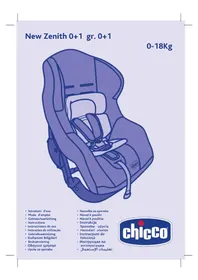
New Zenith - Car seat CHICCO - Free user manual and instructions
Find the device manual for free New Zenith CHICCO in PDF.



| Product type | Car seat group 0+/1 |
| Brand | Chicco |
| Model | New Zenith |
| Category | Car seat |
| Approval | ECE R44/04, universal |
| Weight groups | Group 0+: 0-13 kg (birth to approx. 15 months) Group 1: 9-18 kg (approx. 9 months to 4 years) |
| Approximate dimensions | 44 x 40 x 65 cm (L x W x H) |
| Approximate weight | 5 kg |
| Power supply | No power supply (mechanical) |
| Main functions | Rear-facing use (Gr.0+) and forward-facing use (Gr.1) Adjustable height harness (4 positions) Reclining adjustment Newborn mini-insert (up to 6 kg) Integrated carrying handle |
| Installation | 3-point seat belt in Gr.0+ 2 or 3-point seat belt in Gr.1 Do not use on front seat with active airbag |
| Safety | 5-point harness with red buckle Padded shoulder pads Side protection Use in maximum reclined position for Gr.0+ |
| Maintenance and cleaning | Removable and washable cover (follow label) Clean plastic parts with damp cloth and mild detergent Do not use solvents or abrasives |
| Spare parts and repairability | Replacement cover approved by manufacturer only Do not modify the product |
| General information | Manufactured by Artsana S.p.A. For children from birth to 18 kg Use only in the vehicle |
Frequently Asked Questions - New Zenith CHICCO
User questions about New Zenith CHICCO
0 question about this device. Answer the ones you know or ask your own.
Ask a new question about this device
Download the instructions for your Car seat in PDF format for free! Find your manual New Zenith - CHICCO and take your electronic device back in hand. On this page are published all the documents necessary for the use of your device. New Zenith by CHICCO.
USER MANUAL New Zenith CHICCO
natural_image
Illustration of a purple car seat with seatbelt and seatbelt (no text or symbols)- Istruzioni d'uso
- Mode d'emploi
- Gebrauchsanleitung
- Instructions
- Instrucciones de uso
- Instruções de utilização
- Gebruiksaanwijzing
• Kullanim bilgileri - Bruksanvisning
• Οδηγιεσ χρησησ - Upute za uporabu
• Navodila za uporabo
• Návod k použití
• Návod k použitiu
- Instrukcja
Sposobu użycia
- Használati utasítás
- Instructiuni de folosință
- Инструкция по эксплуатации
cdotsimat esestogmal

Importante: prima dell'uso leggere attentamente e integralmente questo libretto d'istruzioni per evitare pericoli nell'utilizzo e conservarlo per ogni futuro riferimento. per non compromettere la sicurezza del vostro bambino seguite attentamente queste istruzioni
F Important: lire attentivement et intégralement la notice d'instructions avant de se servir du produit. pour éviter tout risque pendant l'utilisation, conserver la notice d'instructions pour pouvoir vous y référer ultérieurement. suivre attentivement ces instructions pour ne pas compromettre la sécurité de votre enfant.
D Wichtig: vor benutzung sorgfältig und vollständig diese gebrauchsanleitung lesen, um gefahren bei der verwendung zu vermeiden und für zukünftiges nachschlagen aufbewahren. befolgen sie bitte aufmerksam diese anleitung, um nicht die sicherheit ihres kindes zu beeinträchtigen
GB Important: please read these instructions carefully before use and keep them for future reference. for your child's safety, read these instructions carefully.
E Importante: antes del uso lea atenta e íntegramente este manual de instrucciones para evitar peligros y consérvelo para futuras consultas. para no comprometer la seguridad de su hijo, siga atentamente estas instrucciones.
P Importante: antes de utilizar esta cadeira auto, leia atenta e integralmente este livro de instruções para evitar perigos durante a utilização e guarde-o para consultas futuras. para não pôr em risco a segurança do seu fi lho siga escrupulosamente estas instruções.
NL Belangrijk: lees deze gebruiksaanwijzing voor het gebruik aandachtig en helemaal door, om gevaren bij het gebruik te voorkomen. bewaar haar voor latere raadpleging. houd u zorgvuldig aan deze instructies, om de veiligheid van uw kind niet op het spel te zetten.
TR Önemli: kullanım sırasında ortaya çıkabilecek tehlikeleri önlemek için kullanmaya başlamadan önce bu kullanım kilavuzunun tümünü dikkatle okuyunuz ve ilerde referans olmak üzere saklayiniz. çocuğunuzun güvenliğini tehlikeye atmamak için bu önerileri dikkatle uygulayiniz.
S Viktigt: innan användningen ska denna bruksanvisning läsas noga och helt och hålet för att undvika faror vid användningen. spara den för framtida bruk. ditt barns säkerhet kan äventyras om du inte noga följer dessa instruktioner.
GR Σημαντικο: πριν απο τη χρηση διαβαστε προσεκτικα ολεσ τισ οδηγιεσ χρησησ για να αποφυγετε κινδυνουσ κατα τη χρηση και κρατηστε τισ για να τισ συμβουλευεστε στο μελλον. για να μη θεσετε σε κινδυνο την ασφαλεια του παιδιου σασ ακολουθηστε προσεκτικα αυτεσ τισ οδηγιεσ.
HR Važno: prije primjene proizvoda pažljivo i potpuno pročitati ovaj priručnik za uporabu kako bi se izbjegle opasnosti tijekom uporabe. priručnik sačuvati za buduću konzultaciju. kako ne bi bila ugrožena sigurnost vašeg djeteta, pažljivo slijediti ove upute.
SL Opozorilo: pred uporabo pazljivo in v celoti preberite ter shranite navodila, da bi se izognili nevarnostim med uporabo, da jih boste imeli na vpogled v prihodnosti. da bi ne ogrožali varnosti vašega otroka natan no upoštevajte ta navodila.
CS Důležité: před použitím si pozorně pročtete celý návod k použití, abyste se vyhnuli možným nebezpečím při používání výrobku a návod uschovejte pro případné další použití. říd'te se pokyny uvedenými v návodu, abyste neohrozili bezpečnost vašeho dítěte.
SK Dôležité: pred použitím si pozorne a úplne prečítajte tento návod k použitiu. vyhnete sa tak nebezpečiu nesprávneho použitia výrobku, odložte si ho pre d'alšiu konzultáciu. aby ste neohrozili bezpečnost vášho dietáta, riad'te sa pozorne týmto navodom.
PL Ważne: przed przystąpieniem do użytkowania produktu proszę uważnie przeczytać całą instrukcję w celu zapewnienia jego bezpiecznego użycia. zachować instrukcję na przyszłość. aby zapewnić dziecku bezpieczeństwo należy dokładnie stosować się do zaleceń niniejszej instrukcji.
Fontos: használat előtt a megfelelő alkalmazás érdekében fi gyel-mesen olvassa el a kézikönyvet és tegye el későbbre is. gyermeke biztonságát szolgálja, ha gondosan betartja az itt szereplő útmuta-tásokat.
R Important: înainte de folosire citiți în întregime aceste instrucțiuni pentru a evita eventualele pericole în utilizarea produsului și pastrați acest carnet pentru a fi consultat pe viitor. pentru a nu compromite siguranța copilului urmați cu atenție aceste instrucțiuni.
RU Внимание: чтобы обеспечить безопасность при эксплуатации изделия, перед использованием внимательно прочтите эту инструкцию от начала и до конца и сохраните её для последующих консультаций. строго придерживайтесь данной инструкции, чтобы не подвергнуть опасности вашего ребёнка.
natural_image
Line drawing of a car seatbelt with a blue bandage, no text or symbols present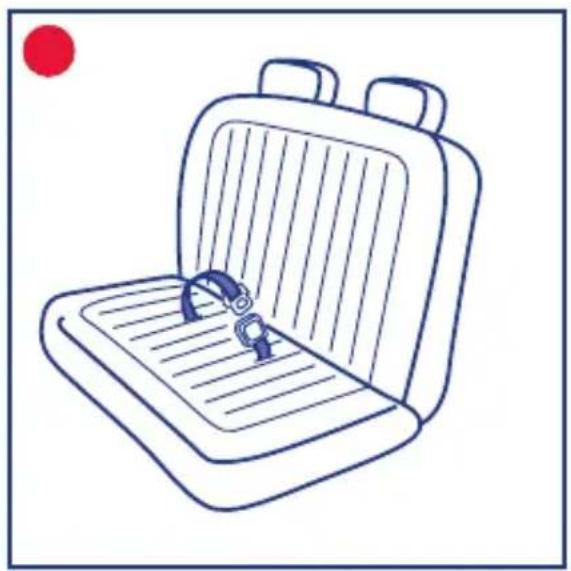
natural_image
Line drawing of a car seat with a handle and seatbelt, no text or symbols present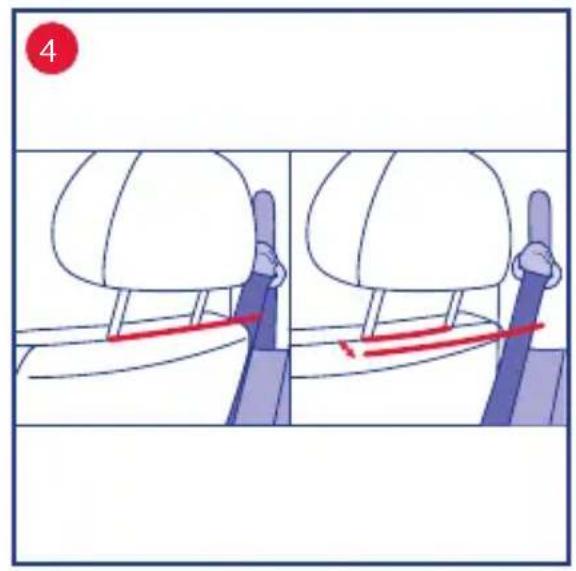
natural_image
Illustration of a baby car seat with purple and white coloring, no text or symbols present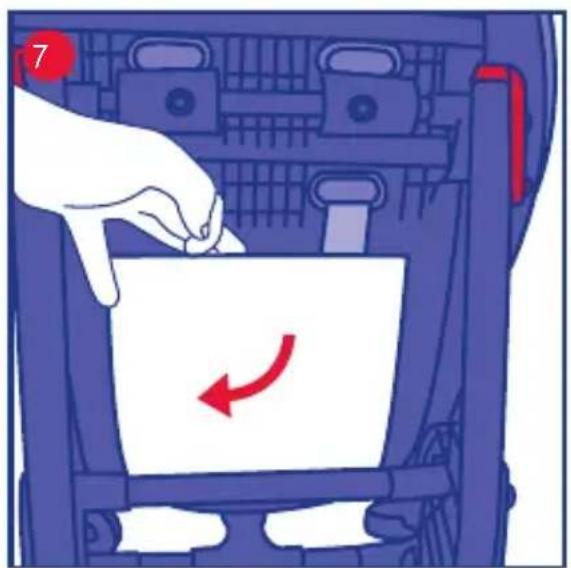

natural_image
Illustration of a hand holding a small object with a red arrow pointing to it, next to a vehicle interior panel (no text or symbols)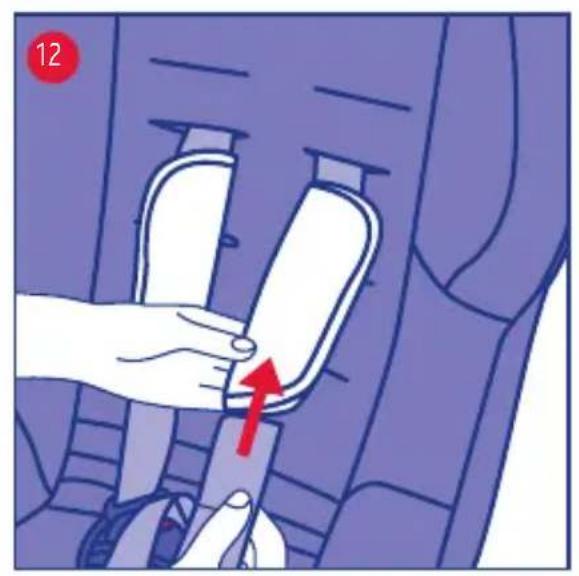
natural_image
Illustration of a person adjusting a seatbelt inside a vehicle (no text or symbols visible)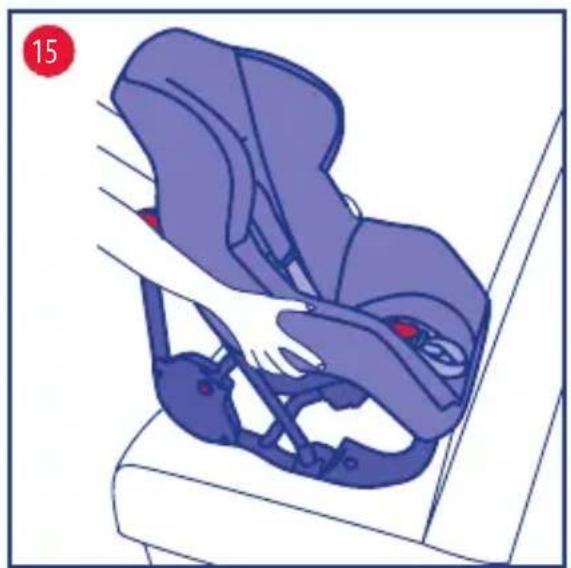
natural_image
Illustration of a car seatbelt device with blue mesh and red buttons, no text or symbols present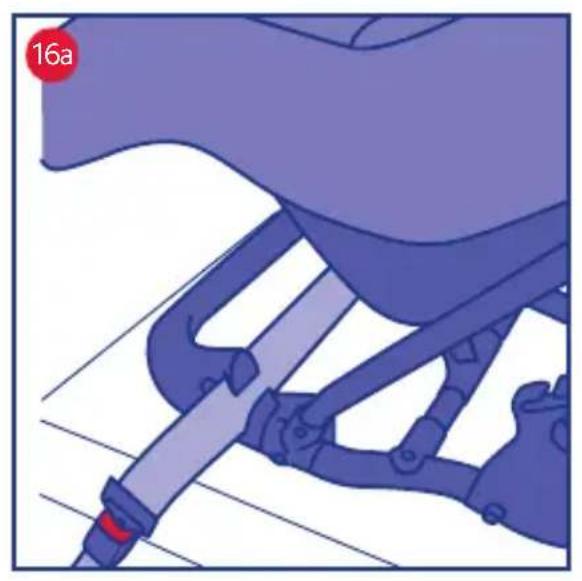
natural_image
Illustration of a car's wheel assembly with a purple gear and blue body (no text or symbols)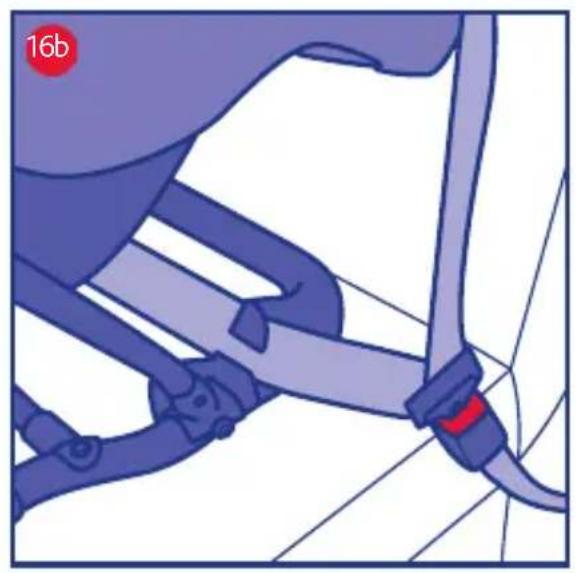
natural_image
Illustration of a car seatbelt with blue bands and a red accent (no text or symbols)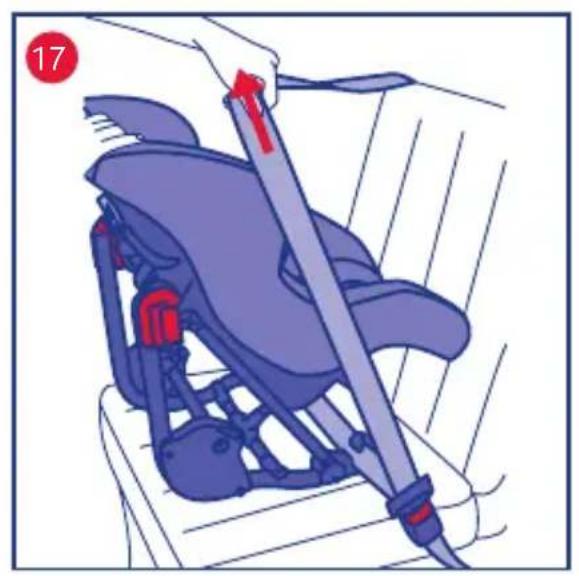
natural_image
Illustration of a baby car seatbelt with a hand adjusting the belt (no text or symbols)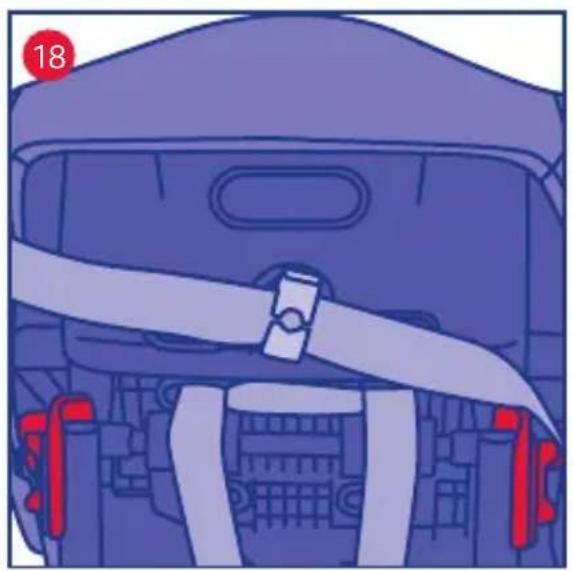
natural_image
Illustration of a car seatbelt with red straps and a white strap (no text or symbols)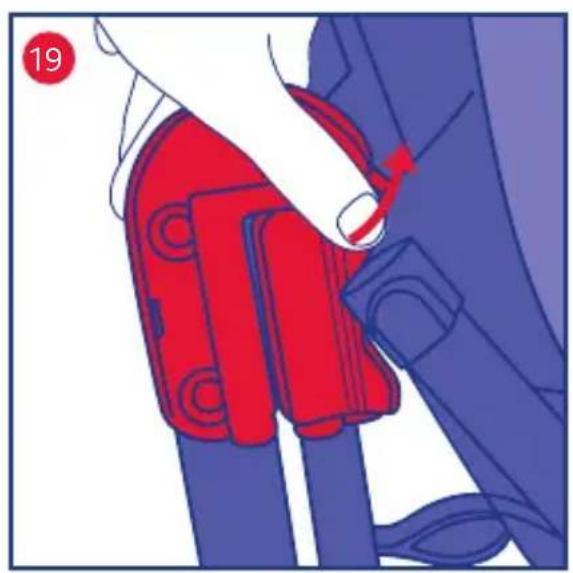
natural_image
Illustration of a hand holding a red and blue mechanical device (no text or symbols visible)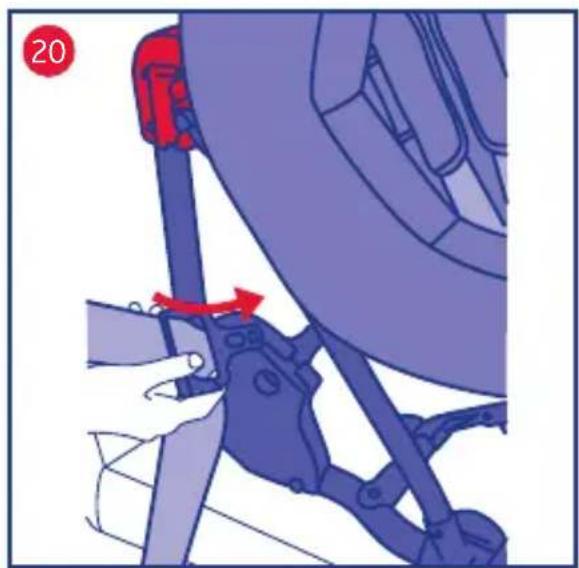
natural_image
Mechanical assembly diagram showing a blue linkage mechanism with red directional arrows indicating motion (no text or symbols)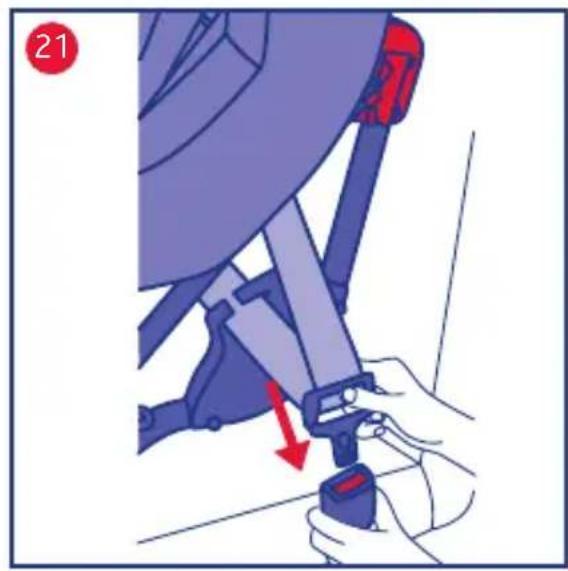
natural_image
Illustration of a person adjusting a seatbelt using a red arrow (no text or symbols present)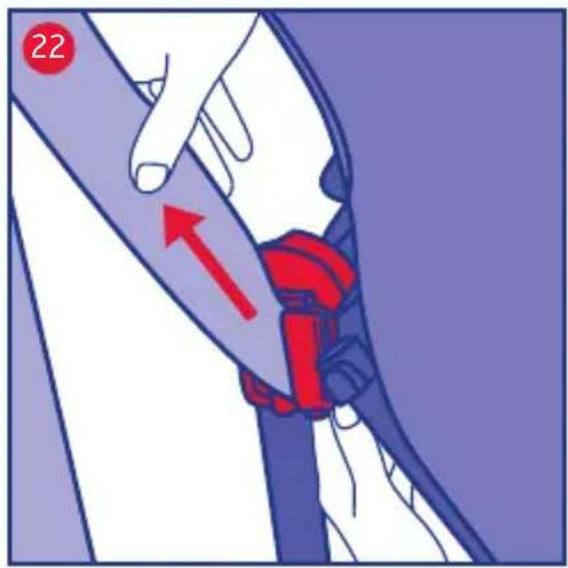
natural_image
Illustration of a red and blue mechanical component being adjusted, with a red arrow indicating the process (no text or symbols present)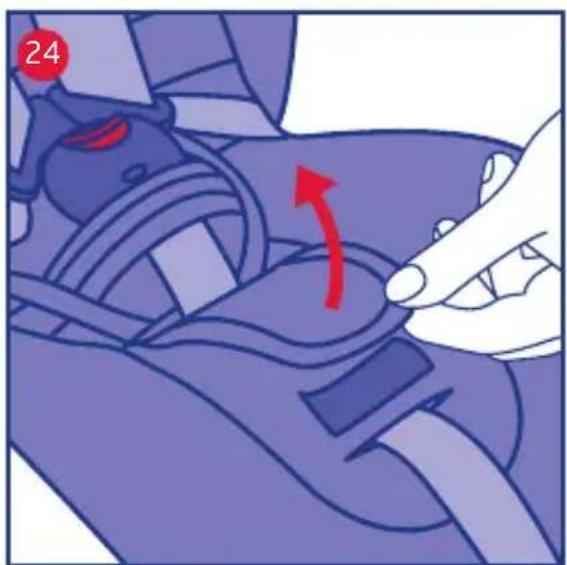
natural_image
Illustration of hands adjusting a car seatbelt with a red arrow indicating the adjustment (no text or symbols present)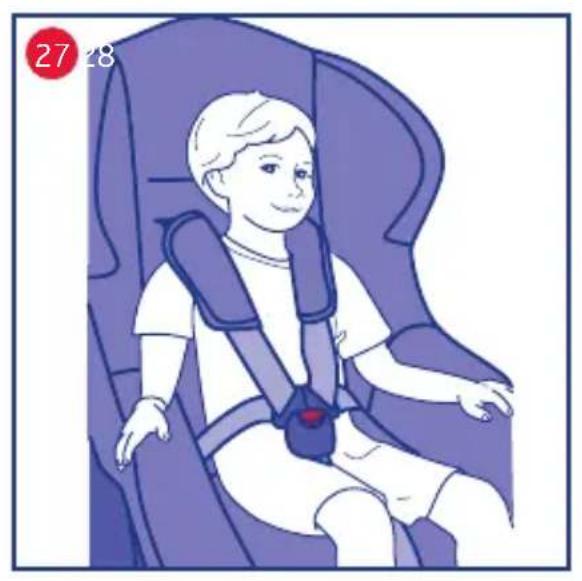
natural_image
Illustration of a child wearing a baby seatbelt and vest, seated in a purple car seat (no text or symbols)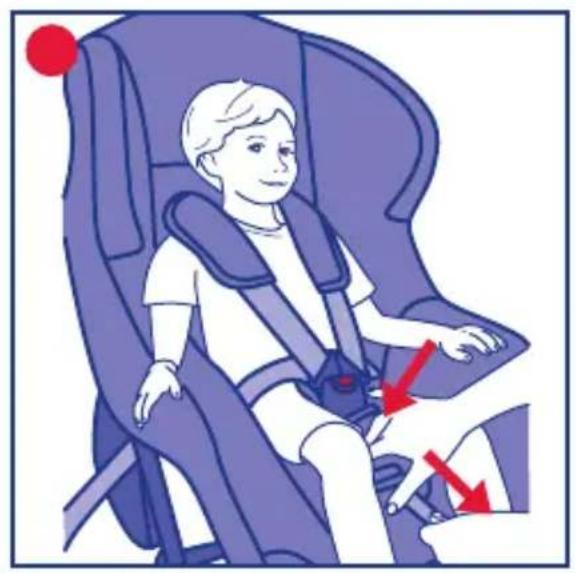
natural_image
Illustration of a child wearing a seatbelt in a car seatbelt seat, with red arrows indicating pressure points (no text or symbols present)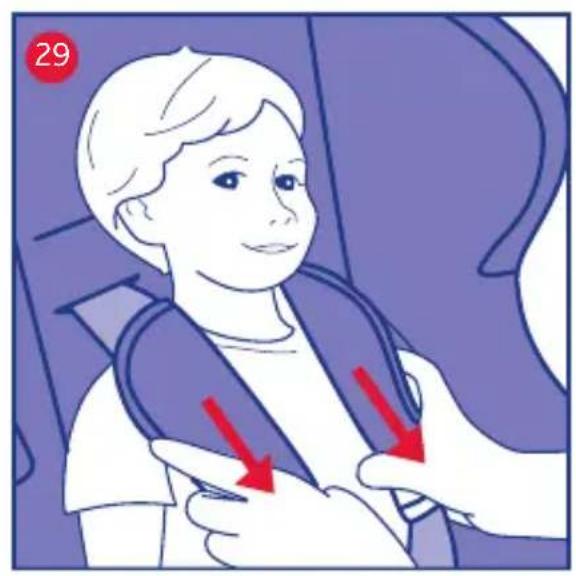
natural_image
Illustration of a person seated in a car seat with a red arrow indicating motion (no text or symbols)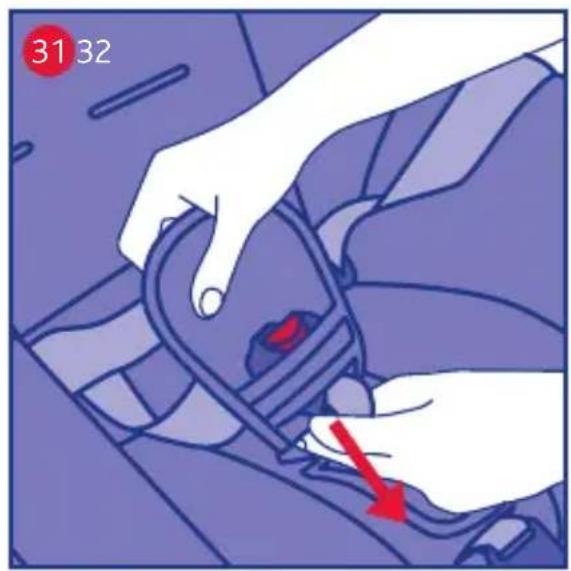
natural_image
Illustration of a person adjusting a seatbelt with red arrows indicating movement or pressure points (no text or symbols present)I Istruzioni d'uso
IMPORTANTE: PRIMA DELL'USO LEGGERE ATTENTAMENTE E INTEGRALMENTE QUESTO LIBRETTO D'ISTRUZIONI PER EVITARE PERICOLI NELL'UTILIZZO E CONSERVARLO PER OGNI FUTURO RIFERIMENTO. PER NON COMPROMETTERE LA SICUREZZA DEL VO-STRO BAMBINO SEGUITE ATTENTAMENTE QUESTE ISTRUZIONI
ATTENZIONE! PRIMA DELL'USO RIMUOVE-RE ED ELIMINARE EVENTUALI SACCHETTI DI PLASTICA E TUTTI GLI ELEMENTI FACENTI PARTE DELLA CONFEZIONE DEL PRODOTTO O COMUNQUE TENERLI LONTANI DALLA PORTATA DEI BAMBINI. SI RACCOMANDA DI EFFETTUARE LO SMALTIMENTO DI QUESTI ELEMENTI OPERANDO LA RACCOLTA DIFFERENZIATA IN CONFORMITA' ALLE LEGGI VIGENTI
IMPORTANTISSIMO! DA LEGGERE SUBITO
IMPORTANT: PLEASE READ THESE INSTRUCTIONS CAREFULLY BEFORE USE AND KEEP THEM FOR FUTURE REFERENCE. FOR YOUR CHILD'S SAFETY, READ THESE INSTRUCTIONS CAREFULLY.
WARNING: BEFORE USE, REMOVE AND DISPOSE OF ALL PLASTIC BAGS AND PACKAGING MATERIALS AND KEEP THEM OUT OF REACH OF CHILDREN. IT IS RECOMMENDED TO DISPOSE OF THESE ITEMS AT AN APPROPRIATE DIFFERENTIATED COLLECTION POINT, AS REQUIRED BY THE REGULATIONS IN FORCE.
VERY IMPORTANT: TO BE READ IMMEDIATELY
- This child car seat is approved for "Group 0+ / 1", for the transport of children from 0 to 18 Kg of weight, and conforms to European norm ECE R 44/04.
- This child car seat is approved for Group 0+ (fi tted into the car seat in a rearward facing direction), for the transportation of children from 0 up to 13 Kg of weight, and it is approved for Group 1 (fi tted into the car seat in a forward facing direction), for the transportation of children from 9 up to 18 Kg.
- The child car seat adjustment operations must only be carried out by an adult.
- The product must not be used by anybody who has not read these instructions.
- The risk of serious injuries to the child increases, not only in the case of accidents, but also in other circumstances (i.e.: sudden braking, etc.) if these instructions are not followed carefully.
- This product is expressly intended to be used only as a child car seat; it should not be used indoors.
- Artsana declines all responsibility for any inappropriate use of the product and for any use not in compliance with these instructions.
- WARNING! SERIOUS DANGER! Never use this child car seat for Group 0+ fitted in the
rearward facing position into a front seat equipped with a frontal airbag. It is possible to fit the child car seat into a front seat only if the frontal airbag has been deactivated: check with the car manufacturer, or in the car instructions manual, whether the airbag can be deactivated.
- No child car seat can guarantee the total safety of your child in the event of an accident, but the use of this product reduces the risk of serious injuries or death.
- Always use the child car seat, fitted correctly and with the safety harness fastened, including short journeys. Not using the child car seat constitutes a danger to your child's safety. In particular, check that the safety harness is tensioned correctly, is not twisted and that it is fastened in the correct position.
- An accident, even a minor incident, may cause damages to the child car seat, which are not visible to the naked eye: it is therefore necessary to replace the child car seat.
- Do not use second-hand child car seats: they may have suffered structural damages not visible to the naked eye, which could compromise the safety of the product.
- The child car seat must be replaced if it is damaged, deformed, worn out or if any of its parts are missing, since it may no longer comply with the original safety standards.
- The fabric cover can be replaced only with another fabric cover approved by the manufacturer, because it is an integral part of the child car seat. The child car seat must never be used without fabric cover.
- This product must not be modified in any way, unless the modification is approved by the manufacturer. Do not install accessories, spare parts or components not supplied or approved by the manufacturer.
- Do not use anything, for example pillows, blankets, etc., to distance the child car seat from the car seat or to distance the child from the child car seat: in the event of an accident, the child car seat may not operate correctly.
-
Check that there are no lose objects between the child car seat and the car seat or between the child car seat and the door of the car.
-
Check that folding, adjustable or rotating car seats are secured correctly.
- Do not transport loose or unsecured objects or baggage on the back shelf of the vehicle: in the event, of an accident or sudden braking, they may injure the passengers.
- Do not let children play with the components or parts of the child car seat.
- Never leave your child unattended in the car, it can be dangerous!
- Do not carry more than one child at a time in the child car seat.
- Ensure that all the car passengers fasten their seat belt, for their own safety and because, during the journey, they may injure the child in the event of an accident or sudden braking of the car.
- When travelling, stop the vehicle in a safe place before carrying out any adjustment operations on the child car seat or for the child.
- Check periodically that your child does not unfasten the buckle of the safety harness, or that it does not tamper with the child car seat or any of its parts.
- Avoid giving food to your child while travelling, in particular lollypops, ice lollies or other foods on sticks: it may injure your child in the event of an accident or sudden braking.
- On long journeys, it is recommended to make frequent stops: children tire very easily in child car seats and need to move. Never remove the child from the child car seat when the car is moving. If baby needs attention, it is necessary to find a safe place to stop the car.
- Do not remove any labels or brands from the fabric cover; since this operation may damage the cover of the child car seat.
- Prolonged exposure of the child car seat to direct sunlight may cause the materials or fabric to fade.
- If the vehicle has been left in the sun, check that the different parts of the child car seat are not too hot: in such an event, let the child car seat cool down first before placing the child into it, in order to avoid burns.
- When the child car seat is not in use, it should be left secured to the car's seat, or stowed in the car's boot with the seat inclination adjuster handle completely inserted
into the lower part of the child car seat. An unsecured child car seat may be a source of danger in the event of an accident or sudden braking
IMPORTANT WARNING
- This is a "Universal" child restraint. It is approved to Regulation No. 44.04 series of amendments, for general use in vehicles, and it will fit most, but not all car seats.
- A correct fit is likely if the vehicle manufacturer has declared that the vehicle is capable of accepting a "Universal" child restraint for this age group.
- This child restraint has been classified as "Universal" under more stringent conditions than those that were applied to earlier designs not displaying this notice.
- Only suitable if the vehicle is fitted with a 2-point safety belt (only for Group 1) or with a 3-point static or 3-point retractor safety belt (for Group 0+ and Group 1 approved to UN/ECE Regulation No. 16, or other equivalent standards.
- If in doubt, consult either the child restraint manufacturer or the retailer.
PRODUCT AND CAR SEAT USE RESTRICTIONS AND REQUIREMENTS
WARNING! Please read the following instructions carefully when using the product with the car seat. Failure to comply with these introductions may affect the safety of your child.
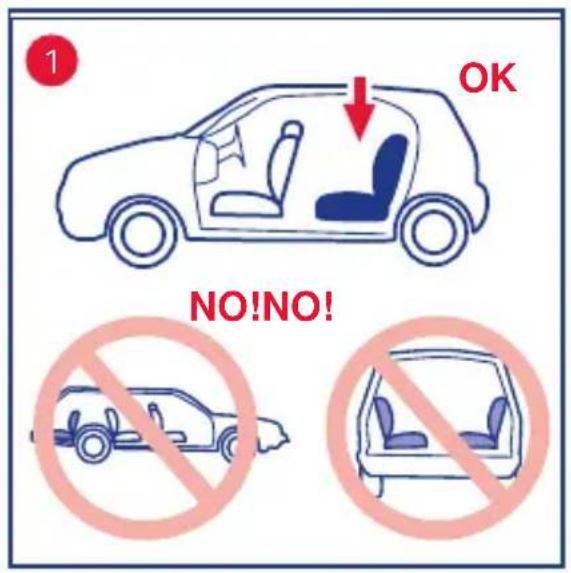
Never use this child car seat fitted into car seats facing sideways or facing rearwards (diag. 1)
When the child car seat is used for Group 0+, it must be fitted into the car only with a 3-point safety harness (diag. 2). It is also necessary to recline the child car seat as much as possible (see paragraph "How to Recline the Child Car Seat").
When the child car seat is used for Group 1, it can be fitted into the car with a 2-point or 3-point safety belt (diag. 3).
WARNING! According to car accident statistics, the rear seats of a car are generally safer than the front seat: it is therefore recommended to fit the child car seat into the rear seats of the car. In particular, the central rear seat
is the safest; in this case, it is recommended to fit the child car seat into the central rear seat of the car.
If the child car seat is fitted in the front seat of the car, in order to ensure maximum safety, it is recommended to push the seat back as much as possible, bearing in mind the comfort of the passenger sitting in the seat directly behind it.
If the car is equipped with a safety belt height adjuster, fi x it in the lowest position, then check that the car seat safety belt adjuster is either in a backward position with respect to the backrest of the car seat (or at least aligned to it)(see diag. 4).
If you wish to fit the child car seat in any seat protected by airbag, always refer to the vehicle instructions manual.
MAINTENANCE
The cleaning and maintenance operations must only be carried out by an adult.
How to Clean the Fabric cover
The child car seat's fabric cover can be removed and cleaned. Please refer to the care label for instructions on cleaning the seat fabric.
Clean the fabric cover only with a sponge, neutral detergent and water.
Never use abrasive detergents or solvents.
Do not spin the fabric cover, let it dry without wringing.
How to Clean the Plastic Parts
Clean the plastic parts with a soft, damp cloth or a neutral detergent.
Never use abrasive detergents or solvents.
The movable parts of the child car seat must not be lubricated.
Checking the Condition of the Components
It is recommended to check regularly the condition of the following components to ensure that they are not worn out:
- Fabric cover: Check that the padding does not come out from the seams. Check the condition of the seams: they must always be intact and undamaged.
- Plastic parts: Check that the plastic parts are not worn out, damaged or faded.
Storing the Product
When it is not fitted into the car, it is recommended to store the child car seat in a dry place, away from sources of heat and to protect it from dust, humidity and direct sunlight.
INSTRUCTIONS
Components
A. Fabric cover
B. Headhugger
C. Triple padding (shoulder straps and central bumper bar)
D. Child car seat safety harness holes
E. Button for adjusting the length of the safety harness
F. Strap for adjusting the length of the safety harness
G. Adjustment lever for reclining the child car seat
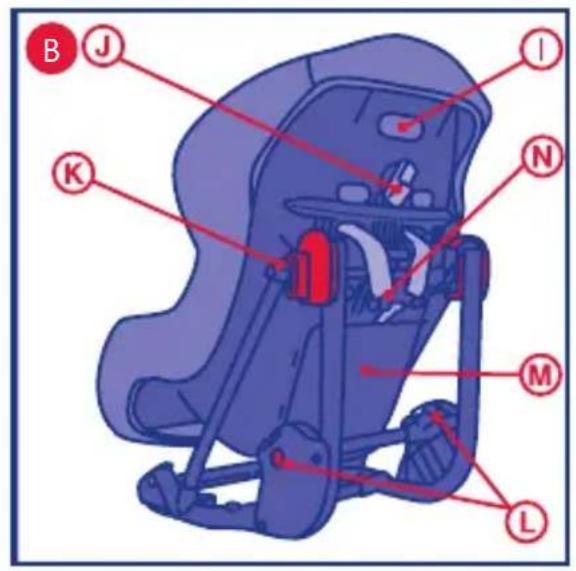
H. Side guides for lap belt section of car safety belt, for Group 0+
I. Carry handle
J. Guide for diagonal section of car safety belt, for Group 0+
K. Side clamps for diagonal section of car safety belt used for Group 1.
L. Side guides for lap section of car seat belt used for Group 1
M. Rear side joint
N. Anchor-shaped buckle
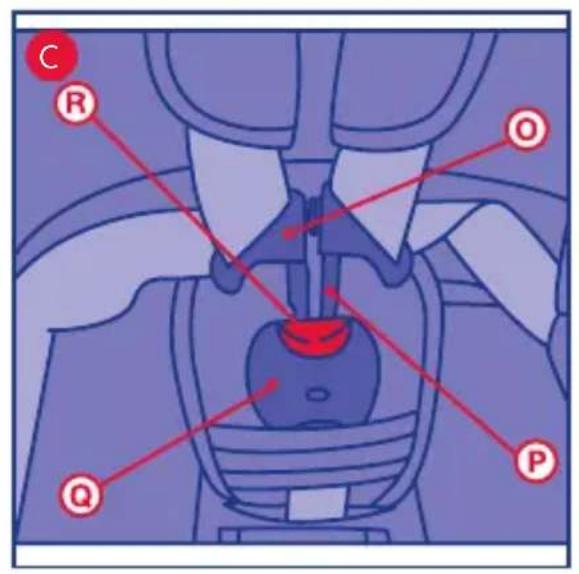
O. Safety belts
P. Safety belt straps
Q. Safety belt buckle
R. Button for opening the buckle
Index
• How to adjust the safety harness of the child car seat
• How to fit the child car seat into the car for Group 0+ (from 0 up to 13 Kg)
• How to fit the child car seat into the car for Group 1 (from 9 up to 18 Kg)
• How to place baby into the child car seat
• How to recline the child car seat
• How to remove the fabric cover
How to Adjust the Safety Harness of the Child Car Seat
WARNING! The safety harness must always be adjusted to suit baby's growth.
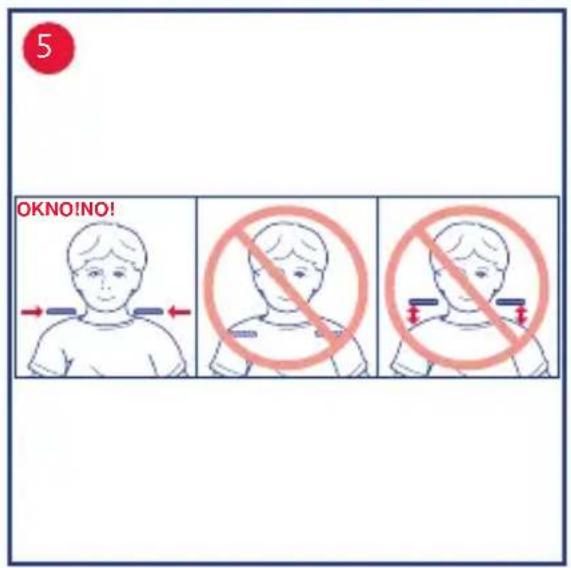
Before fi tting the child car seat into the car, it is necessary to adjust the height of the safety harness correctly. The correct height of the safety harness is slightly below shoulder level (diag. 5). The height of the child car seat can be adjusted to 4-positions.
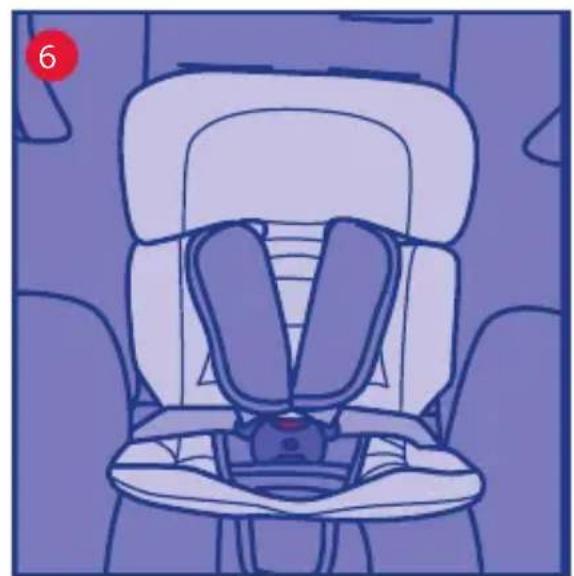
The child car seat has a headhugger to ensure maximum protection and comfort for children, from birth up to 6 Kg of weight (diag. 6).
Before fi tting the headhugger, check that the safety harness is inserted into the hole located in the lowest position: this is the only position allowed for the use of this accessory.
WARNING: To ensure maximum safety for your child, do not use the headhugger if the weight of baby is above 6 Kg.
To adjust the height of the safety harness, proceed as follows:
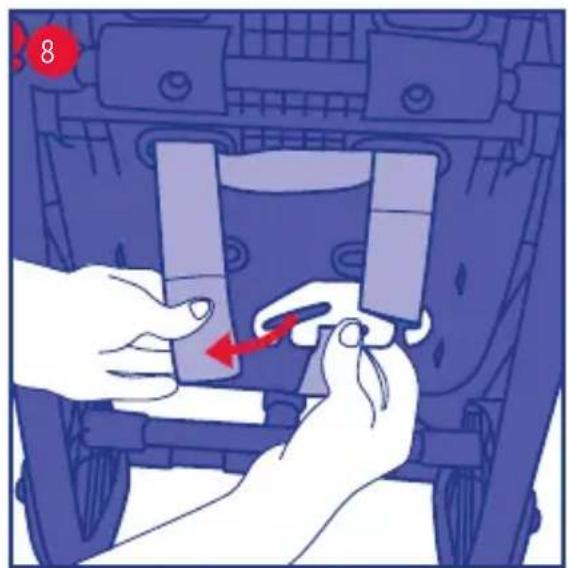
- Remove the side joint, located at the rear of the child car seat (diag. 7); then remove the two ends of the safety harness from the anchor-shaped buckle (diag. 8).
- Remove the ends of the safety harness from the backrest of the child car seat and from the shoulder straps (diag. 9).
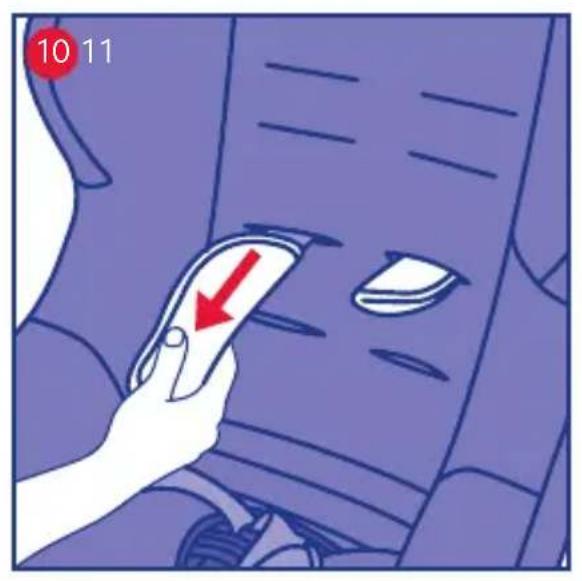
- Remove the shoulder straps from the child car seat (diag. 10).
After adjusting the safety harness to the correct height for your child's body, fit the harness again, as indicated below:
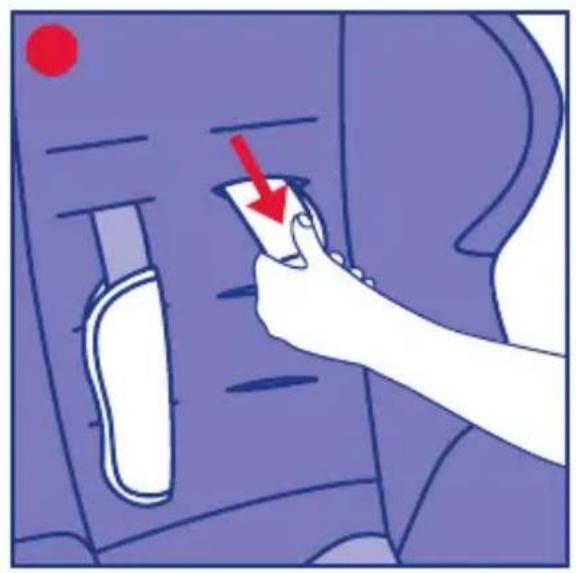
- Insert the shoulder straps into the hole selected (diag. 11).
- Insert the ends of the harness into the shoulder straps, and then into the two holes of the harness (diag. 12).
- After checking that the safety harness is not twisted, fasten the two ends into the specific anchor-shaped buckle, located at the rear of the child car seat, and replace the side joint.
WARNING: When the safety harness is inserted into the hole located on the lowest position, it is necessary to ensure that the harness is inserted as indicated below:
-
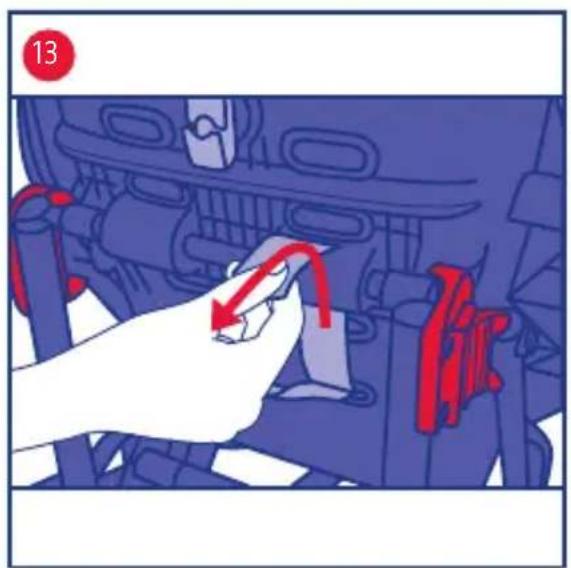
Insert the safety harness around the guide on the horizontal tube, located at the rear of the backrest (diag. 13)
-
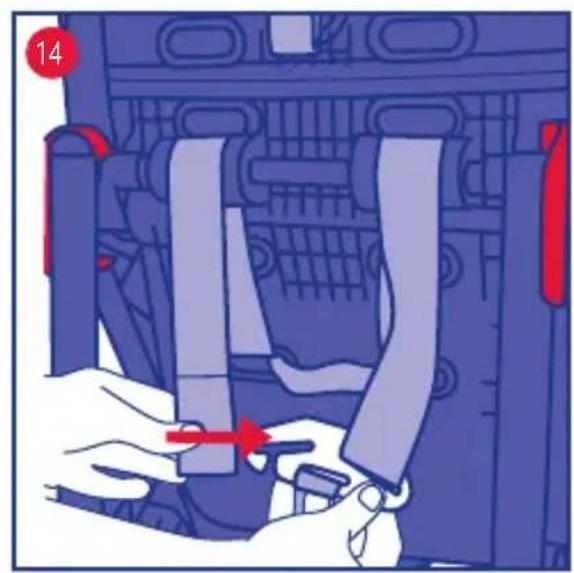
Then fasten the two ends of the safety harness to the anchor-shaped buckle (diag. 14).
How to Fit the Child Car Seat into the Car for Group 0+ (From 0 up to 13 Kg of Weight).
When the child car seat is used for Group 0+, it must be fitted into the car only with a 3-point safety belt. It is also necessary to recline the child car seat as much as possible (see paragraph: "How to Recline the Child Car Seat").
- Place the child car seat onto the car seat where you wish to fit it (diag. 15).
- Slide the lap section of the safety belt into the two side guides, as shown in diagram 16.
- Pull the lap belt, ensuring that it does not come out of the guides and that the child car seat is placed correctly into the car seat (diag. 17).
- Slide the diagonal section of the safety belt into the light blue rear guide, located at the top, on the rear of the backrest (diag. 18). Always tension the safety belt, ensuring that the belt is not slack or twisted.
How to Fit the Child Car Seat into the Car for Group 1 (From 9 up to 18 Kg of Weight).
When the child car seat is used for Group 1, it can be fitted into the car with a 2-point or a 3-point safety belt.
-
Place the child car seat onto the car seat where you wish to fit it.
-
Open the side clamp (diag. 19).
-
Pull the car safety belt, and slide it behind the backrest of the child car seat (diag. 20).
-
Pull the safety belt to the other side of the child car seat, and then lock the car seat belt into the specific fastening buckle (diag. 21).
Check that the lap section of the safety belt is inserted correctly into the specific guides.
-
Hold and pull the diagonal section of the safety belt, then slide it into the specific clamp, as shown in diagram 22.
-
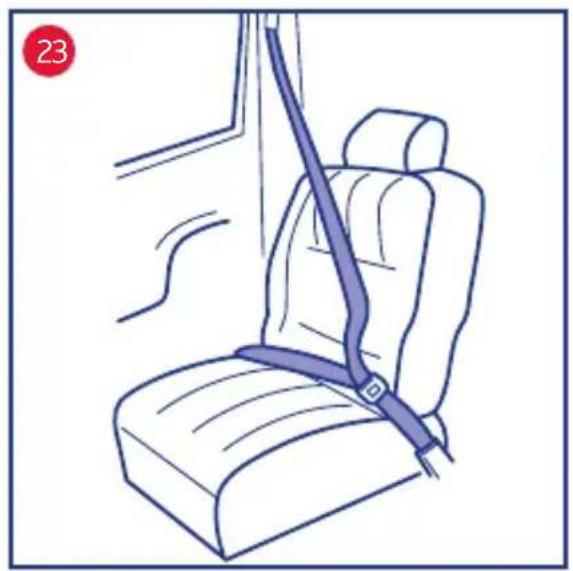
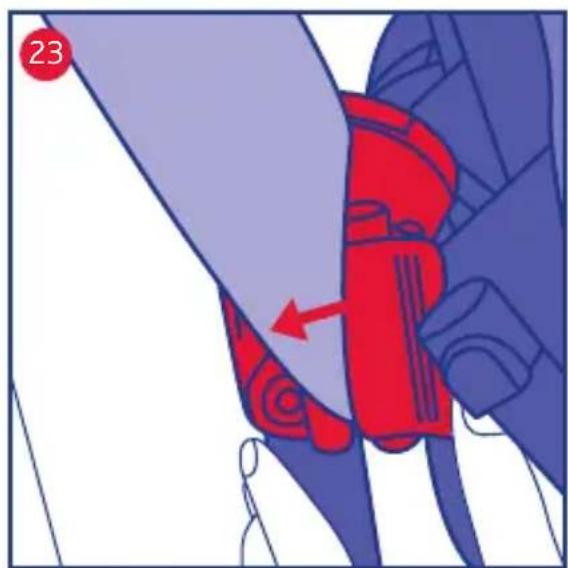
Close the locking clamp (diag. 23). The child car seat is now fixed into position.
If you wish to fit the child car seat into the central rear seat that is equipped with a 2-point safety belt, proceed as follows:
-
Place the child car seat into the car seat where you wish to fit it.
-
Pull the safety belt of the car, and slide it behind the backrest of the child car seat.
- Pull the safety belt to the other side of the child car seat, and then lock the car seat belt into the specific fastening buckle.
- Pull the free end of the car safety belt, ensuring that the child car seat adheres correctly to the car seat.
After fi tting the child car seat into the car, ei-ther for Group 0+ or for Group 1, always check that the car safety belt is tensioned correctly, and that the buckle does not force the belt out of the specifi c housing. Also check that the buckle of the car safety belt is not in contact with the side guides of the lap belt: it could make the child car seat unsafe in the event of an accident.
How to Place the Child into the Child Car Seat
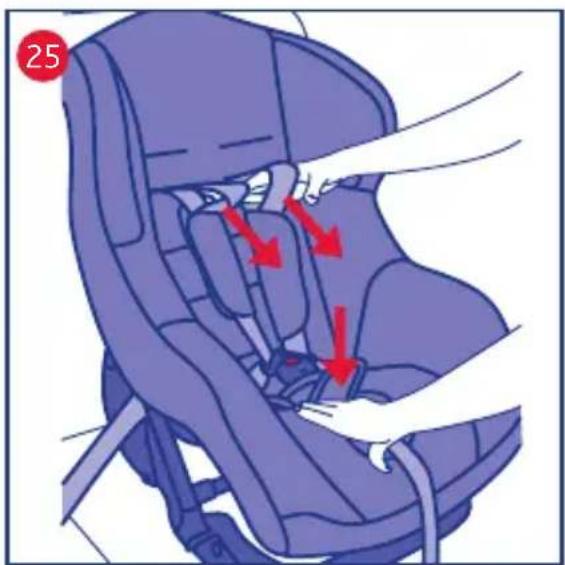
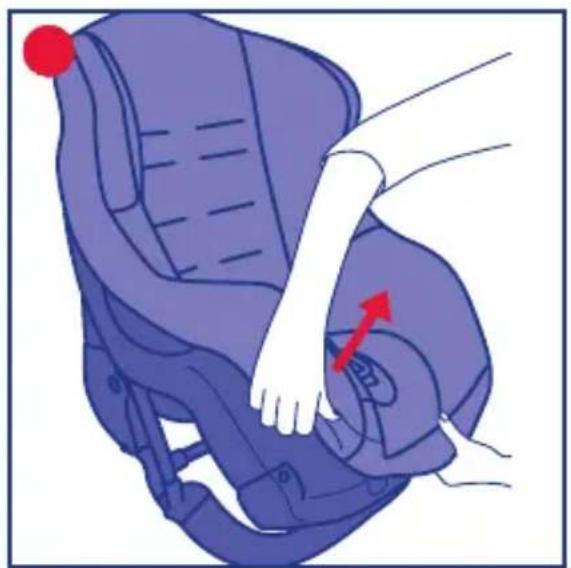
- Open the fabric panel, located on the seat (diag. 24). Press the adjustment metal button, located underneath, and pull the two belts of the child car seat to the end whilst keeping the button pressed (diag. 25).
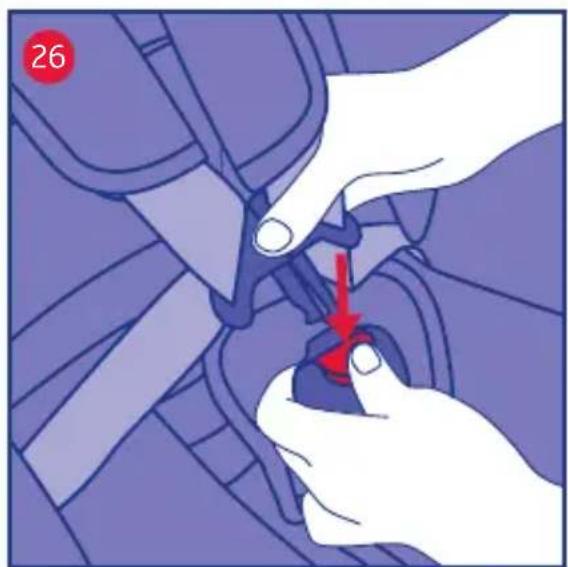
- Unfasten the buckle of the safety belt by pressing the red button (diag. 26), and then place the child into the child car seat.
- Fasten the safety harness of the child car seat (diag. 27). Due to the particular shape of the metal buckles, it is not possible to insert just one buckle.
- Tension the safety harness of the child car seat correctly by pulling the specific adjustment strap. Remember that the safety harness must adhere correctly to the child's body (diag. 28).
- Adjust the shoulder straps by pulling them (diag. 29).
How to Recline the Child Car Seat
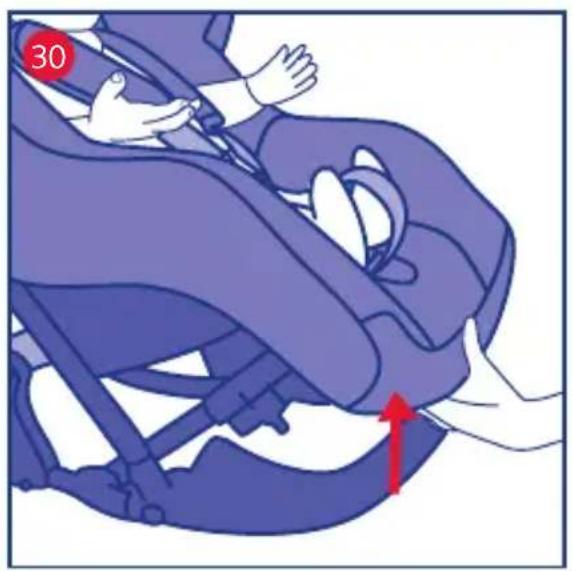
- To adjust the child car seat to the position which is most appropriate for the child, pull the lever, located under the child car seat (diag. 30); select the position you wish, then release the lever and ensure that the child car seat is locked into position.
For Group 1, the child car seat is approved for the transportation of children both in the most reclined and in the least reclined position. For Group 0+, the child car seat must only be used in the most reclined position.
How to Remove the Fabric Cover
-
Carry out the operations indicated from point 1 to point 3, then remove the fastening buckle of the safety harness from the central bumper bar (diag. 31).
-
Remove the fabric cover (diag. 32).
To replace the fabric cover onto the child car seat, repeat the operations described above in the reverse order.
FOR FURTHER INFORMATION:
Chicco UK Ltd
Prospect Close
Lowmoor Road Business Park
Kirkby in Ashfi eld
Notts NG17 7LF
Tel:01623 750870
www.chicco.com
CHICCO CAR SEATS ARE TESTED BY:
TNO
The Research Institute for Road Vehicle
Schoemakerstraat 97
2628 VK Delft
The Netherlands
WARNING! The child car seat comes in different versions: the type and number of accessories available varies depending on the country of use.
Estrucciones de uso
IMPORTANTE: ANTES DEL USO LEA ATENTA E ÍNTEGRAMENTE ESTE MANUAL DE INSTRUCCIONES PARA EVITAR PELIGROS Y CONSÉRVELO PARA FUTURAS CONSULTAS. PARA NO COMPROMETER LA SEGURIDAD DE SU HIJO, SIGA ATENTAMENTE ESTAS INSTRUCCIONES.
PARA MAIS INFORMAÇÕES:
FARSANA PORTUGAL, S.A.