HYPRESSO 36/105 - Pressure washer EINHELL - Free user manual and instructions
Find the device manual for free HYPRESSO 36/105 EINHELL in PDF.


User questions about HYPRESSO 36/105 EINHELL
0 question about this device. Answer the ones you know or ask your own.
Ask a new question about this device
Download the instructions for your Pressure washer in PDF format for free! Find your manual HYPRESSO 36/105 - EINHELL and take your electronic device back in hand. On this page are published all the documents necessary for the use of your device. HYPRESSO 36/105 by EINHELL.
USER MANUAL HYPRESSO 36/105 EINHELL
GB Original operating instructions Cordless high-pressure cleaner
When using the equipment, a few safety precautions must be observed to avoid injuries and damage. Please read the complete operating instructions and safety regulations with due care. Keep this manual in a safe place, so that the information is available at all times. If you give the equipment to any other person, hand over these operating instructions and safety regulations as well. We cannot accept any liability for damage or accidents which arise due to a failure to follow these instructions and the safety instructions.
Explanation of the symbols used (see Fig. 12)
- Danger! - Read the operating instructions to reduce the risk of injury.
- Caution! Wear ear-muffs. The impact of noise can cause damage to hearing.
- Caution! Wear safety goggles. Sparks generated during working or splinters, chips and dust emitted by the device can cause loss of sight.
- Warning! High-pressure jets can be dangerous if not used properly. Do not direct the jet at persons, animals, live electrical equipment or the tool itself.
- This machine is not designed for connecting to the drinking water network (see 5.2.4).
- Protect from moisture!
- Important! Use only batteries which are charged to the same level. Never combine full and half-full batteries.
1. Safety regulations
The corresponding safety information can be found in the enclosed booklet.
Danger!
Read all safety regulations and instructions. Any errors made in following the safety regulations and instructions may result in an electric shock, fire and/or serious injury.
Keep all safety regulations and instructions in a safe place for future use.
2. Layout and items supplied
2.1 Layout (Fig. 1,2,5,6,8)
- Pedestal
- Housing
- Battery compartment cover
- Carry-handle
- Accessory compartment
- Equipment charge status display
- On/Off switch
- Mode switch
- Mode indicator light
-
Water inlet connector
-
Gun
- Trigger lock
- Trigger
- High-pressure hose
- Water connector with fi Iter element
- Water intake filter with backflow stop
- Intake hose
- High-pressure connection to equipment
- High-pressure hose release button on washer
- High-pressure connection to gun
- High-pressure hose release on gun
- Extension
- Extension release button
- Washing brush
- Water connector fi Iter element
- Nozzle cleaning needle
- Battery (not included in delivery)
- Pointed / wide jet lance
- Lance with rotating nozzle
2.2 Items supplied
Please check that the article is complete as specified in the scope of delivery. If parts are missing, please contact our service center or the nearest branch of the DIY store where you made your purchase at the latest within 5 work days after purchasing the article and upon presentation of a valid bill of purchase. Also, refer to the warranty table in the warranty provisions at the end of the operating instructions.
- Open the packaging and take out the equipment with care.
- Remove the packaging material and any packaging and/or transportation braces (if available).
• Check to see if all items are supplied. - Inspect the equipment and accessories for transport damage.
- If possible, please keep the packaging until the end of the guarantee period.
GB
Danger!
The equipment and packaging material are not toys. Do not let children play with plastic bags, foils or small parts. There is a danger of swallowing or suff ocating!
• High-pressure hose
• Water connector with filter element
• Water intake filter with backflow stop
• Extension
- Washing brush
- Pointed / wide jet lance
• Lance with rotating nozzle
- Nozzle cleaning needle
• Original Operating Instructions
• Safety Information
3. Proper use
This tool is designed for domestic use in cleaning vehicles, machines, buildings, façades, etc.
The equipment is to be used only for its prescribed purpose. Any other use is deemed to be a case of misuse. The user / operator and not the manufacturer will be liable for any damage or injuries of any kind caused as a result of this.
Please note that our equipment has not been designed for use in commercial, trade or industrial applications. Our warranty will be voided if the machine is used in commercial, trade or industrial businesses or for equivalent purposes.
This machine is not allowed to be used by persons (including children) with reduced physical, sensory or mental capacities or those with a lack of experience and knowledge.
4. Technical data
Motor power supply: 36 V DC
Rated pressure (BOOST mode): 7 MPa (70 bar) ^*
Permissible pressure: ... max. 10.5 MPa (105 bar)
Rated flow rate (BOOST mode): .....210 l/h
Max. flow rate: 270 l/h
Max. water inlet pressure: .....1.2 MPa (12 bar)
Water inlet temperature: 5-50°C
Max. suction height 1 m
Protection class: IPX5
Weight: 5.5 kg
* The rated pressure depends on the accessories used with the pressure washer.
Important!
The equipment is supplied without batteries and without a charger and is allowed to be used only with the lithium-ion batteries of the Power X-
Change series!
The lithium-ion batteries of the Power X-Change series are allowed to be charged only with Power X-Chargers.
Suitable batteries and chargers from the Power X-Change series are for example:
• Battery: Power X-Change 1.5
• Battery: Power X-Change 5.2
• Charger: Power X-Charger 3A
• Charger: Power X-Charger
Danger!
Sound and vibration
The sound and vibration values were measured in accordance with EN 60335-2-79.
Sound pressure level L_pA .....73,9 dB(A)
Uncertainty K_pA .....3 dB
Sound power level L_w .....83,2dB(A)
Uncertainty K_WA .....3 dB
Wear hearing protection.
Noise can cause loss of hearing.
Total vibration values (vector sum of three directions) determined in accordance with EN 60335-2-79.
Vibration emission value a_b ≤ 3,24 m/s ^2
Uncertainty K = 1,5m / s^2
GB
The specified vibration value was established in accordance with a standardized testing method. It may change according to how the electric equipment is used and may exceed the specified value in exceptional circumstances.
The specified vibration value can be used to compare the equipment with other electric power tools.
The specified vibration value can be used for initial assessment of a harmful effect.
Keep the noise emissions and vibrations to a minimum.
- Only use appliances which are in perfect working order.
• Service and clean the appliance regularly.
• Adapt your working style to suit the appliance.
• Do not overload the appliance. - Have the appliance serviced whenever necessary.
- Switch the appliance off when it is not in use.
• Wear protective gloves.
Caution!
Residual risks
Even if you use this electric power tool in accordance with instructions, certain residual risks cannot be rules out. The following hazards may arise in connection with the equipment's construction and layout:
- Lung damage if no suitable protective dust mask is used.
- Damage to hearing if no suitable ear protection is used.
- Health damage caused by hand-arm vibrations if the equipment is used over a prolonged period or is not properly guided and maintained.
5. Before putting into operation
Caution!
Protect your batteries against moisture, rain and high humidity. Make sure that no water runs over the batteries or their contacts during operation.
Warning!
Always remove the batteries before making adjustments to the equipment.
5.1 Using the tool correctly
- The tool must be stood on a level, stable surface.
- It is recommended that you adopt the correct operating position every time you use the equipment, i.e. one hand on the gun and the other hand on the lance.
- Never direct the water jet at electric cables or at the equipment itself.
- So that the pump does not suffer any damage when it is not in use, a small amount of leakage from the pump is normal.
- Never use the machine in potentially explosive areas under any circumstances!
- The operating temperature must be between +5 and +40°C.
- Do not cover or modify the lance or the spray nozzles in any way.
- The tool is designed to be used with cold or lukewarm water (max. 50°C); higher temperatures will result in damage to the pump.
- Do not use water that is dirty, gritty or contains any chemical products, as these could impair operation and shorten the life of the equipment.
- Aerosols may be released when using high-pressure cleaners, which can be hazardous to your health if inhaled. When it is not possible to use a fully shielded nozzle, wear an appropriate FFP2 respiration mask or a mask with a comparable safety level, depending on the cleaning area, to prevent aerosol inhalation.
WARNING
This machine was developed for use with suitable cleaning agents. The use of any unsuitable cleaning agents or chemicals can negatively affect the safety and performance of the machine. Use only cleaning agents that are suitable for this type of machine.
GB
Warning - Risk of explosion
Never spray any fl ammable liquids such as gasoline, alcohol or solvents.
Warning
Water that has passed through the non-return valve is not drinkable.
Warning
If cleaning agent gets into contact with your skin or into your eye, rinse immediately with lots of clean water. Then consult a doctor or follow the steps described on the safety data sheet or provided by the manufacturer of the cleaning agent.
5.2 Assembly
5.2.1 Fitting the carry-handle (Fig. 3)
Fit the carry handle (4) as shown in Fig. 3.
5.2.2 Fitting the extensions/nozzles (Fig. 2)
Connect the extension (22) to the gun (11) and twist to secure it (you will notice slight spring resistance). You can fit the pointed/wide jet lance (28) or the lance with rotating nozzle (29) to the extension. Make sure that the lances latch correctly into place, observing the markings. To remove the lance, press the release button (23) on the extension. The washing brush (24) can be fitted directly onto the gun (11).
Note: Before starting the cleaning process, make sure that all attachments are securely fastened.
5.2.3 Connecting the high-pressure hose (Fig. 4-5)
Connect the high-pressure hose (14) to the high-pressure connections (18) on the cleaner and on the gun (20). Press the hose ends firmly into the connectors until they latch into place. Check that they are secure, to prevent water leakage.
To remove the hose:
- Remove the batteries.
- Press the trigger on the gun to release pressure from the high-pressure hose.
- Press the release button (21 on the gun) or pull upwards on the button (19 on the cleaner) to remove the hose.
Lance with rotating nozzle (29)
To remove particularly stubborn dirt, use the lance with the rotating nozzle (29).
Pointed / wide jet lance (28)
The shape of the water jet can be changed from pointed to a wide jet by twisting the nozzle (a) (Fig. 2).
Washing brush (24)
The washing brush (24) is intended for gentle cleaning at low pressure.
5.2.4 Water supply from water pipe
The connection for the water inlet (10) is equipped with a connector for standard hose coupling systems. Plug the hose coupling on the supply hose (min. ∅ 1/2" / approx. 13 mm) to the water inlet connector (15).
A backflow stop must be installed between the drinking water and the tool! Ask your local plumber about this.
5.2.5 Water supply from an open container
Use the supplied suction hose (17) to use water from a container. In this case always make use of the suction hose filter (16).
Important!
The tool can run dry for up to 90 seconds. If no pressure has built up by that time, switch the tool off and check for the possible causes of failure in section 10.
5.3 Charging the Li battery pack (Fig. 9-10)
- Remove both battery packs (27) from the housing, pressing the pushlock button (b) downwards as you do so.
- Check that your mains voltage is the same as that marked on the rating plate. Insert the power plug of the charger (c) into the socket outlet. The green LED will begin to blink.
- Push the battery (27) onto the charger (c).
- In the section entitled „Charger indicator“ you will find a table with explanations of the LED display on the charger.
The battery can become a little warm during the charging. This is normal.
If the battery pack fails to charge, check for the following:
• Is there voltage at the power socket?
- whether there is good contact at the charging contacts
whether the charging unit is in place
GB
If the battery pack still fails to charge, please send
• the charger and charging adapter
• and the battery pack
to our customer service center.
To ensure that items are properly packaged and delivered when you send them to us, please contact our customer service or the point of sale at which the equipment was purchased.
When shipping or disposing of batteries and cordless tools, always ensure that they are packed individually in plastic bags to prevent short circuits and fi res.
To ensure that the battery pack provides long service, you should take care to recharge it promptly. You must recharge the battery pack when you notice that the performance of the device drops. Never allow the battery pack to become fully discharged. This will cause it to develop a defect.
Important!
Use only batteries which are charged to the same level. Never combine full and half-full batteries. Always charge the two batteries simultaneously.
The machine's operating time depends on the battery with the lower charge level. The two batteries must always be fully charged before use. Close the battery cover by swinging it down, and make sure that it latches in place correctly.
5.4 Battery capacity indicator (Fig. 9 /Item d) Press the button for the battery capacity indicator (e). The battery capacity indicator (d) will indicate the charge status of the battery by means of 3 LEDs.
The tool features LED indicators that show the battery status in standby mode and during operation (Fig. 1/Item 6).
All 3 LEDs are lit:
The battery is fully charged.
2 or 1 LED(s) are lit:
The battery has an adequate remaining charge.
1 LED fl ashes:
The battery is empty, recharge the battery.
All LEDs blink:
The battery temperature is too low. Remove the battery from the equipment, keep it at room temperature for one day. If the fault reoccurs, this means that the rechargeable battery has undergone exhaustive discharge and is defective. Remove the battery from the equipment. Never use or charge a defective battery.
6. Operation
Once you have made all the connections, the tool is ready for use.
6.1 On/Off switch (Fig. 1)
Press the On/Off switch (7) once to switch the tool on and press it again to switch it off. After the pressure builds up, the tool switches over to standby mode, keeping the pressure constant but switching off the motor.
6.2 Mode switch (Fig. 1)
Using the mode switch (8) to toggle between the different pressure settings:
• ECO: Reduced pressure and water flow (green LED (9) is lit).
ECO mode extends the battery operating time and is perfect for light cleaning work.
- Standard/BOOST: Higher pressure and water flow (blue LED (9) is lit).
BOOST mode offers increased cleaning performance and is perfect for cleaning stubborn dirt.
Note: It takes a bit longer for the tool to build up pressure when the intake hose is used, depending on the suction height.
The tool begins operating when you press the trigger (13) and goes into standby mode when you release it.
After 5 minutes of inactivity, the tool automatically switches off and the LED (9) goes out. To restart the tool, press the On/Off switch (7) again.
6.3.1 Testing the filter
Check the filter regularly in order to prevent clogging that could jeopardize the pump's operation. Unscrew the water connector with filter element (15) and remove the water intake filter (16), then rinse the exposed sieve with running water.
GB
6.3.2 Prolonged non-use of the electric pump The equipment should be completely emptied of water each time after it is used. To do this, switch on the equipment without a connected water supply (10) and press the trigger (13) (max. 1 min.) until no more water emerges. Then switch off the equipment. If the equipment is not used for a prolonged period of time, lime deposits will begin to form in the electric pump, which in turn can lead to starting difficulties.
6.3.3 Cleaning the nozzle (Fig. 11)
Use a safety pin, for example, to clean a clogged nozzle (28).
7. Cleaning, maintenance and ordering of spare parts
Danger!
Always remove the batteries before starting any cleaning work.
7.1 Cleaning
- Keep all safety devices, air vents and the motor housing free of dirt and dust as far as possible. Wipe the equipment with a clean cloth or blow it with compressed air at low pressure.
• We recommend that you clean the device immediately each time you have finished using it. - Clean the equipment regularly with a moist cloth and some soft soap. Do not use cleaning agents or solvents; these could attack the plastic parts of the equipment. Ensure that no water can seep into the device. The ingress of water into an electric tool increases the risk of an electric shock.
7.2 Ordering replacement parts:
Please quote the following data when ordering replacement parts:
• Type of machine
• Article number of the machine
• Identification number of the machine
• Replacement part number of the part required
For our latest prices and information please go to www.Einhell-Service.com
8. Disposal and recycling
The equipment is supplied in packaging to prevent it from being damaged in transit. The raw materials in this packaging can be reused or recycled. The equipment and its accessories are made of various types of material, such as metal and plastic. Never place defective equipment in your household refuse. The equipment should be taken to a suitable collection center for proper disposal. If you do not know the whereabouts of such a collection point, you should ask in your local council offices.
9. Storage
Warning!
Remove the batteries, release all the pressure from the tool and any connected attachments and completely empty all the hoses. Make sure that the tool is secured in such a way that it cannot be started up again by any unauthorized person.
Store the equipment and accessories in a dark and dry place at above freezing temperature. The ideal storage temperature is between 5 and 30 °C. Store the electric tool in its original packaging.
10. Transport
- Transport the equipment only by carrying it by the transport handle.
- Protect the equipment against unexpected knocks and vibrations.
• Completely empty the tool and all hoses.
GB
11. Possible causes of failure
| Fault Cause | Remedy | |
| The equipment does not work. | - No electrical voltage at the equipment.- The pump is frozen. | - The battery is not charged.- The battery is not correctly connected.- Check and thaw if necessary. |
| The motor starts but there is no pressure build-up. | - The water intake fi liter is clogged.- Air intake in the water inlet.- The discharge nozzle is too large.- The water cock is closed. | - Clean the water intake fi liter.(see 6.3.1)- Check the supply hose and hose connectors and replace if necessary.- Check and replace if necessary.- Turn open the water cock. |
| The operating pressure is irregular. | - Air intake in the water inlet. - Check the supply hose and hose connectors and replace if necessary. | |
GB
12. Charger indicator
| Indicator status Explanations and actions | ||
| Red LED Green LED | ||
| Off | Flashing | Ready for useThe charger is connected to the mains and is ready for use; there is no battery pack in the charger |
| On Off Charging | The charger is charging the battery pack in quick charge mode. The charging times are shown directly on the charger.Important! The actual charging times may vary slightly from the stated charging times depending on the existing battery charge. | |
| Off | On | The battery is charged and ready for use. (READY TO GO)The unit then changes over to gentle charging mode until the battery is fully charged.To do this, leave the rechargeable battery on the charger for approx. 15 minutes longer.Action:Take the battery pack out of the charger. Disconnect the charger from the mains supply. |
| Flashing Off | Adapted charging | The charger is in gentle charging mode.For safety reasons the charging is performed less quickly and takes more time. The reasons can be:- The rechargeable battery has not been used for a very long time.- The battery temperature is outside the ideal range.Action:Wait for the charging to be completed; you can still continue to charge the battery pack. |
| Flashing Flashing Fault | Charging is no longer possible. The battery pack is defective.Action:Never charge a defective battery pack.Take the battery pack out of the charger. | |
| On On Temperature fault | The battery pack is too hot (e.g. due to direct sunshine) or too cold (below 0^ ).Action:Remove the battery pack and keep it at room temperature (approx. 20^ ) for one day . | |
GB
Disposal
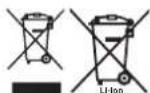
Power tools, rechargeable batteries, accessories and packaging should be sorted for environmental-friendly recycling.
Do not dispose of power tools and batteries/rechargeable batteries into household waste!
Only for EU countries:
According to the Directive 2012/19/EU on waste electrical and electronic equipment and its transposition into national law, power tools that are no longer usable, and, according to the Directive 2006/66/EC, defective or drained batteries must be collected separately and disposed of in an environmentally correct manner.
If disposed incorrectly, waste electrical and electronic equipment may have harmful effects on the environment and human health, due to the potential presence of hazardous substances.
Only for United Kingdom:
According to The Waste Electrical and Electronic Equipment Regulations 2013 (SI 2013/3113) (as amended) and the Waste Batteries and Accumulators Regulations 2009 (SI 2009/890) (as amended), products that are no longer usable must be collected separately and disposed of in an environmentally friendly manner.
The reprinting or reproduction by any other means, in whole or in part, of documentation and papers accompanying products is permitted only with the express consent of the Einhell Germany AG.
Subject to technical changes
GB
Service information
We have competent service partners in all countries named on the guarantee certificate whose contact details can also be found on the guarantee certificate. These partners will help you with all service requests such as repairs, spare and wearing part orders or the purchase of consumables.
Please note that the following parts of this product are subject to normal or natural wear and that the following parts are therefore also required for use as consumables.
| Category Example | |
| Wear parts* Battery, Lance, hose | |
| Consumables* | |
| Missing parts |
* Not necessarily included in the scope of delivery!
In the effect of defects or faults, please register the problem on the internet at www.Einhell-Service.com. Please ensure that you provide a precise description of the problem and answer the following questions in all cases:
• Did the equipment work at all or was it defective from the beginning?
• Did you notice anything (symptom or defect) prior to the failure?
• What malfunction does the equipment have in your opinion (main symptom)?
Describe this malfunction.
F
Danger!
(mode BOOST): 7 MPa (70 bar)*
Pression admissible : ... max. 10,5 MPa (105 bar)
Débit assigné (mode BOOST) : .....210 l/h
6.1 Aan/Uit-schakelaar (afb. 1)
Sapma K _wA ....3dB
Kulaklık takın.
X 2006/42/EC
Annex IV
Notified Body:
Reg. No.:
X 2000/14/EC_2005/88/EC
X Annex V
□ Annex VI
Noise: measured L_w = 83,2 dB (A); guaranteed L_w = 86 dB (A)
P = kW; L/∅ = cm
Notified Body:
2012/46/EU_(EU)2016/1628 Emission No.:
Standard references: EN IEC 60335-1; EN IEC 60335-2-79; EN IEC 55014-1; EN IEC 55014-2
Subject to change without notice
Archive-File/Record: NAPR029019
Documents registrar: Sergey Hirsekorn
Wiesenweg 22, D-94405 Landau/Isar
* BV Cordless high-pressure cleaner - F Nottoysur heat release prossin III - I Propulitosa a battery - OKN Akku-nettyksomast - S Barlandabad högnyckstadt. CZ Akumulatiorovy vryskotisky östeß. SK Akumulatiorovy vryskotisky östeß. NL Acu-hogedrutekningir - E Implicatora a alta pressión inalmarze. SZ AKku-saturapneasur. SLO Akumulatorski visokolati dištinik. A Akku-nogynomsa- tisitro - RO Agar da curitati sub presunie cu accumulator - GR Kodavortnoo sejreno mizmy. µ je umtapa. P Lesedora da alta pressaz som fio. HR/HBH Baterjuk visokolati dišsto. RZ Mkumula- lorski viskopolistni peri- PE. Z Alkumulatoroma mytka yusokoclonienioca. TII Akuli yuksek baspiči lemlacite takines: LRS Akumupratornai onima высakovic darleneni : EE Akuda sinterpesur : LV Akumulatora uksatzpedreni iBijlde - Z Alkumulatioritas uicklo slėgio pirovimo iemigris - BG Beskinen ured za signihstane pod inovko naht ovje : UKP Akumulatiorina mihišni viparat высokolo tinsky : NK Bateriskis novikidi za secebne trenki

Declaration of conformity
We, Einhell UK Ltd
Champions Business Park, First Floor Unit 10, Arrowe Brook Rd, Upton, Wirral CH49 0AB, United Kingdom
declare the conformity to UK standards and legislation was assessed for:
Cordless High Pressure Cleaner HYPRESSO 36/105 (Einhell)
UK legislation
□ Simple Pressure Vessels (Safety) Regulation
□ Electrical Equipment (Safety) Regulation
□ Radio Equipment Regulation
□ Personal Protective Equipment Regulation
☐ The Ecodesign for Energy-Related Products and Energy Information Regulation
X The Restriction of the Use of Certain Hazardous Substances in Electrical and Electronic Equipment Regulation
X Noise Emission in the Environment by Equipment for use Outdoors Regulation
X Electromagnetic Compatibility Regulation
□ Measuring Instruments Regulation
☐ Pressure Equipment (Safety) Regulation
[Non-Text]
Information Regulation
ces in Electrical and Electronic Equipment Regulation
e Outdoors Regulation
X Annex V
Annex VI
Noise:measuredL WA =83.2 dB (A); guaranteed L WA =86 dB (A)
P = kW; L/∅ = cm
UK Approved Body:
[Non-Text]
X Supply of Machinery (Safety) Regulation
Annex IV
UK Approved Body:
UKTE Certifi cate No.:
[Non-Text]
[Non-Text]
[Non-Text]
[Non-Text]
[Non-Text]
[Non-Text]
1
[Non-Text]
[Non-Text]
[Non-Text]
[Non-Text]
[Non-Text]
[Non-Text]
[Non-Text]
[Non-Text]
[Non-Text]
[Non-Text]
[Non-Text]
[Non-Text]
[Non-Text]
[Non-Text]
[Non-Text]
[Non-Text]
[Non-Text]
[Non-Text]
[Non-Text]
[Non-Text]
[Non-Text]
[Non-Text]
[Non-Text]
[Non-Text]
[Non-Text]
[Non-Text]
[Non-Text]
[Non-Text]
[Non-Text]
[Non-Text]
[Non-Text]
[Non-Text]
[Non-Text]
[Non-Text]
[Non-Text]
[Non-Text]
[Non-Text]
[Non-Text]
[Non-Text]
[Non-Text]
[Non-Text]
[Non-Text]
[Non-Text]
[Non-Text]
[Non-Text]
[Non-Text]
[Non-Text]
[Non-Text]
[Non-Text]
[Non-Text]
[Non-Text]
[Non-Text]
[Non-Text]
[Non-Text]
[Non-Text]
[Non-Text]
[Non-Text]
[Non-Text]
[Non-Text]
[Non-Text]
[Non-Text]
[Non-Text]
[Non-Text]
[Non-Text]
[Non-Text]
[Non-Text]
The Ground Truth image displays a single, solid horizontal line. According to Rule 2 (UNDERSCORE & LINE RULES), if the GT contains lines used for stylistic emphasis or as background elements (like ruled paper), the OCR result must ignore them. The line in the GT is clearly a stylistic/background line, not a placeholder for text. Therefore, the OCR should not have output any underscores. Outputting `____` constitutes an error under Rule 2, as it hallucinates placeholder symbols where none are semantically intended. Hence, the OCR result is inconsistent with the Ground Truth.
[Non-Text]
[Non-Text]
[Non-Text]
[Non-Text]
[Non-Text]
[Non-Text]
[Non-Text]
[Non-Text]
[Non-Text]
[Non-Text]
[Non-Text]
[Non-Text]
[Non-Text]
[Non-Text]
[Non-Text]
[Non-Text]
[Non-Text]
[Non-Text]
[Non-Text]
[Non-Text]
[Non-Text]
[Non-Text]
[Non-Text]
[Non-Text]
[Non-Text]
|
|
|
[Non-Text]
[Non-Text]
[Non-Text]
[Non-Text]
[Non-Text]
[Non-Text]
[Non-Text]
|
|
|
[Non-Text]
[Non-Text]
[Non-Text]
[Non-Text]
[Non-Text]
The Ground Truth image displays a single, solid horizontal line. According to Rule 2 (UNDERSCORE & LINE RULES), if the GT contains lines used for stylistic emphasis or as background elements (like ruled paper), the OCR result must ignore them. The OCR content provided is "____", which represents four underscores. This is incorrect because underscores are not equivalent to a solid line in this context; they are a different character often used as placeholder underscores. Since the OCR output incorrectly rendered a stylistic line as underscores (which should be ignored), this violates the rule that stylistic/background lines must be ignored. Therefore, the OCR result is inconsistent with the Ground Truth.
The Ground Truth image displays a single, solid horizontal line. According to Rule 2 (UNDERSCORE & LINE RULES), if the GT contains lines used for stylistic emphasis or as background elements (like ruled paper), the OCR result must ignore them. The OCR content provided is "____", which represents four underscores. This is incorrect because underscores are not equivalent to a solid line and are not permitted under the “Stylistic/Background Lines (Ignore)” rule. The OCR has hallucinated text (underscores) where none should exist, violating the rule to ignore stylistic lines. Therefore, the OCR result is inconsistent with the Ground Truth.
The Ground Truth image displays a single, solid horizontal line. According to Rule 2 (UNDERSCORE & LINE RULES), if the GT contains lines used for stylistic emphasis or as background elements (like ruled paper), the OCR result must ignore them. The OCR content provided is "____", which represents four underscores. This is incorrect because underscores are not equivalent to a solid line and are not permitted under the “Stylistic/Background Lines (Ignore)” rule. The OCR has hallucinated text (underscores) where none should exist, violating the rule to ignore stylistic lines. Therefore, the OCR result is inconsistent with the Ground Truth.
(No text)
(No text)
(No text)
(No text)
(No text)
(No text)
(No text)
(No text)
(No text)
The Ground Truth image displays a single, solid horizontal line. According to Rule 2 (UNDERSCORE & LINE RULES), if the GT contains lines used for stylistic emphasis or as background elements (like ruled paper), the OCR result must ignore them. The provided OCR content is "____", which consists of four underscores. This is incorrect because underscores are not equivalent to a solid line and are not permitted under the “Stylistic/Background Lines (Ignore)” rule. Outputting underscores for a stylistic line violates the rule and constitutes an error. Therefore, the OCR result is inconsistent with the Ground Truth.
-1; BS EN IEC 60335-2-79;
-1; BS EN IEC 60335-2-79;
-1; BS EN IEC 60335-2-79;
-1; BS EN IEC 60335-2-79;
-1; BS EN IEC 60335-2-79;
0335-1; BS EN IEC 60335-2-79;
-1; BS EN IEC 60335-2-79;
-1; BS EN IEC 60335-2-79;
-1; BS EN IEC 60335-2-79;
(No text)
(No text)
(No text)
(No text)
The Ground Truth image displays a single, solid horizontal line. According to Rule 2 (UNDERSCORE & LINE RULES), if the GT contains lines used for stylistic emphasis or as background elements (like ruled paper), the OCR result must ignore them. The OCR content provided is "____", which represents four underscores. This is incorrect because underscores are not equivalent to a solid line and are not permitted under the “Stylistic/Background Lines (Ignore)” rule. The OCR has hallucinated text (underscores) where none should exist, violating the rule to ignore stylistic lines. Therefore, the OCR result is inconsistent with the Ground Truth.
(No text)
(No text)
(No text)
(No text)
EH 03/2025 (01)