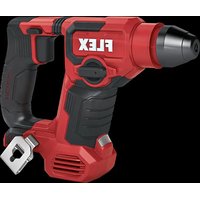
FHE 1-16 12-EC - Electric drill Flex - Free user manual and instructions
Find the device manual for free FHE 1-16 12-EC Flex in PDF.


| Brand | Flex |
| Model | FHE 1-16 12-EC |
| Product Type | Cordless rotary hammer |
| Nominal Voltage | 12 Vdc |
| No-load speed | 0 - 810 /min |
| Impact rate | 0 - 4500 /min |
| Impact energy (according to EPTA) | 1.3 J |
| Tool holder | SDS-plus |
| Max. drilling diameter (wood) | 13 mm |
| Max. drilling diameter (metal) | 8 mm |
| Max. drilling diameter (concrete) | 16 mm |
| Weight (without battery) | 1.4 kg |
| Compatible battery | 12V: AP 12/2.5, AP 12/5.0, AP 10.8/2.5, AP 10.8/4.0, AP 10.8/6.0 |
| Battery weight | 0.3 - 0.4 kg |
| Operating temperature | -10°C to 40°C |
| Charging temperature | 4°C to 40°C |
| Storage temperature | Below 50°C |
| Recommended charger | CA 12/18, CA 12, CA 10.8/18.0, CA 10.8 |
| Functions | Drilling, percussion, variable speed, forward/reverse, central lock |
| Included accessories | Auxiliary handle, depth gauge, belt clip |
| Lighting | Automatic LED work light |
| Maintenance and cleaning | Regularly clean the tool and ventilation slots with dry compressed air |
| Spare parts | Available at www.flex-tools.com |
| Certifications | Compliant with EU directives (2014/30/EU, 2006/42/EC, 2011/65/EU), standard EN 62841 |
Frequently Asked Questions - FHE 1-16 12-EC Flex
User questions about FHE 1-16 12-EC Flex
0 question about this device. Answer the ones you know or ask your own.
Ask a new question about this device
Download the instructions for your Electric drill in PDF format for free! Find your manual FHE 1-16 12-EC - Flex and take your electronic device back in hand. On this page are published all the documents necessary for the use of your device. FHE 1-16 12-EC by Flex.
USER MANUAL FHE 1-16 12-EC Flex
natural_image
Line drawing of a Flex motor with visible branding and 12V power rating (no text or symbols beyond branding)en Original operating instructions....15
natural_image
Illustration of a tool being inserted into a drill bit, showing the tip and base (no text or symbols)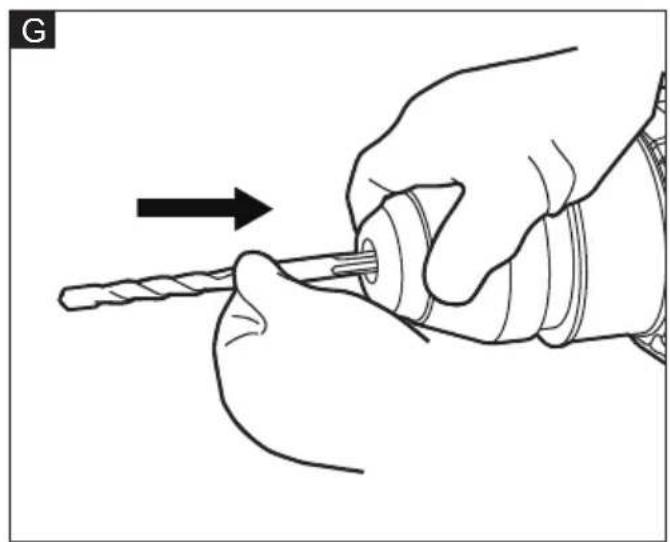
natural_image
Illustration of a hand holding a coiled cable with an arrow indicating direction (no text or symbols)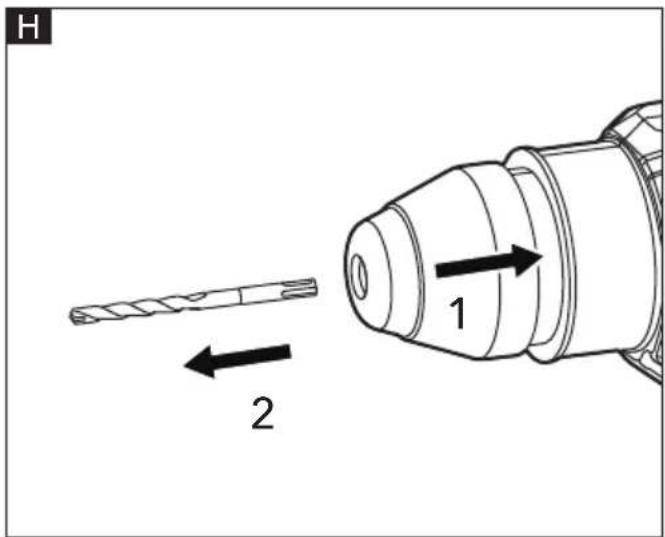
natural_image
Line drawing of a mechanical component with no visible text or symbols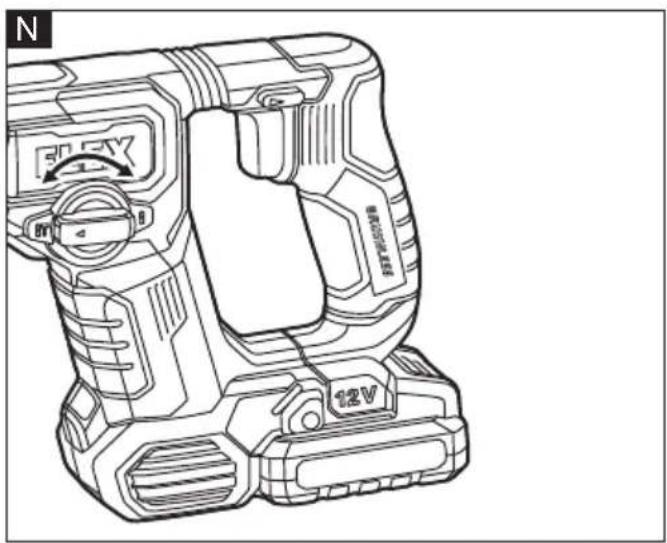
natural_image
Line drawing of a futuristic electronic device with labeled components (no readable text or symbols)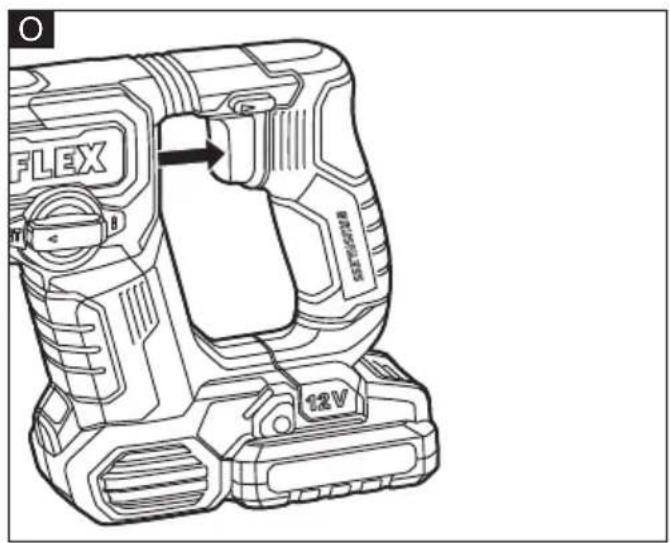
natural_image
Line drawing of a mechanical device with labeled components (FLEX, BLU, C2V) and an arrow indicating direction (no text beyond labels)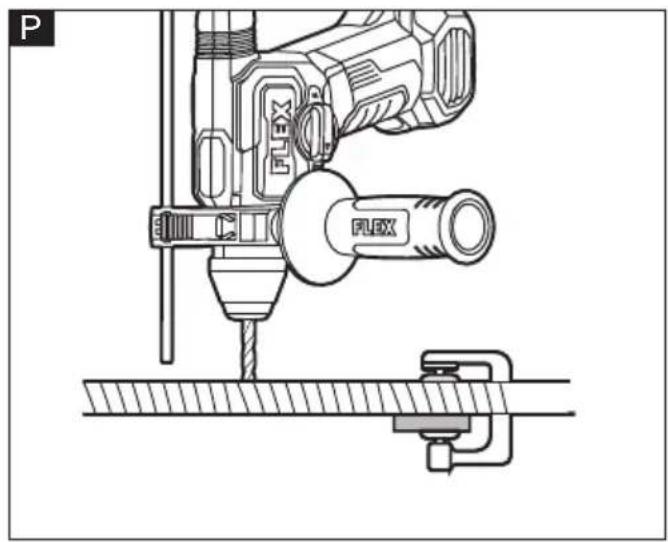
natural_image
Technical line drawing of a 3D printer with a flexible drill, showing mechanical components and base connection (no text or symbols)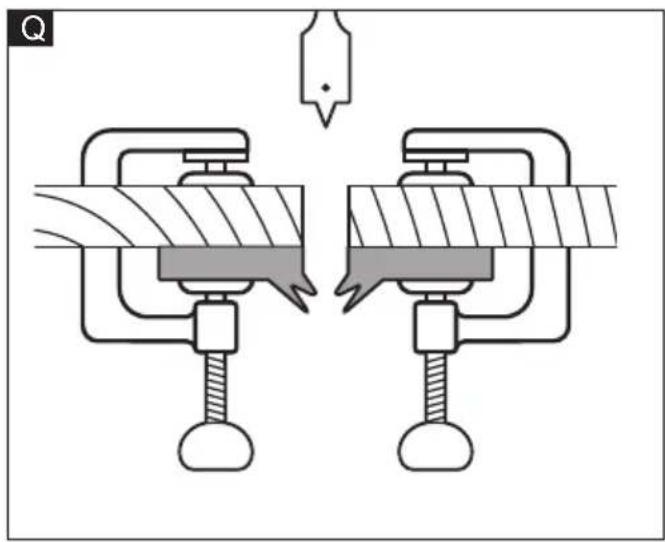
natural_image
Diagram of two mechanical clamping or fastening setups with no visible text or symbols
natural_image
Line drawing of a FLEX electric drill with grid array and power input (no text or symbols)Important safety Information

WARNUNG!
Symbols used in this manual

WARNING!
Denotes impending danger. Non-observance of this warning may result in death or extremely severe injuries.

CAUTION!
Denotes a possibly dangerous situation. Non-observance of this warning may result in slight injury or damage to property.

NOTE
Denotes application tips and important information.
Symbols on the power tool

To reduce the risk of injury, read the operating instructions!
V Volt
/min Rotation rate

Disposal information for the old machine (see page 20)!
Important safety Information

WARNING!
Before using the power tool, please read the follow:
- these operating instructions,
- the "General safety instructions" on the handling of power tools in the enclosed booklet (leaflet no.: 315.915),
– the currently valid site rules and the regulations for the prevention of accidents.
This power tool is state of the art and has been constructed in accordance with the acknowledged safety regulations.
Nevertheless, when in use, the power tool may be a danger to life and limb of the user or a third party, or the power tool or other property may be damaged.
The cordless rotary hammer may be operated only if it is
- for its intended use,
- in perfect working order.
Faults which compromise safety must be repaired immediately.
Intended use
The cordless rotary hammer is intended
– for commercial use in industry and trade,
– for hammer drilling in concrete, brick and stone.
- for drilling without impact in wood, metal, ceramic and plastic.
– to be used with suitable tools recommended by the manufacturer for this power tool.
Safety instructions for cordless rotary hammer

WARNING!
Read all safety warnings, instructions, illustrations and specifications provided with this power tool. Failure to follow all instructions listed below may result in electric shock, fire and/or serious injury. Save all warnings and instructions for future reference.
■ Wear ear protectors. Exposure to noise can cause hearing loss.
■ Use auxiliary handle(s), if supplied with the tool. Loss of control can cause personal injury.
- Hold the power tool by insulated gripping surfaces, when performing an operation where the cutting accessory may contact hidden wiring. Cutting accessory contacting a "live" wire may make exposed metal parts of the power tool "live" and could give the operator an electric shock.
Safety instructions when using long drill bits with rotary hammers
■ Always start drilling at low speed and with the bit tip in contact with the workpiece. At higher speeds, the bit is likely to bend if allowed to rotate freely without contacting the workpiece, resulting in personal injury.
■ Apply pressure only in direct line with the bit and do not apply excessive pressure. Bits can bend, causing breakage or loss of control, resulting in personal injury.
Additional safety rules
- Secure the workpiece. Clamping devices or a vise will hold the workpiece in place better and more safely than holding it by hand.
■ Do not drill, fasten or break into existing walls or other blind areas where electrical wiring may exist. If this situation is
unavoidable, disconnect all fuses or circuit breakers feeding this worksite.
■ Position yourself to avoid being caught between the tool or side handle and walls or posts. Should the bit become bound or jammed in the work, the reaction torque of the tool could crush your hand or leg.
■ Use suitable detectors to detect concealed power supply cables or consult your local supply company. Contact with electric cables may result in a fire and/or electric shock. A damaged gas pipe may cause an explosion. Cutting into a water pipe will cause damage to property or may cause an electric shock.
■ When working, hold the power tool firmly with both hands and ensure that you have a secure footing. The power tool is controlled more securely if held with both hands.
■ Only use tools with SDS-plus tool holder. Pull on the tool to check that it is locked properly.
■ Dust released from materials, such as lead paints, some types of wood, minerals and metal, may be hazardous to the operator or people in the vicinity. Inhaling or touching such dust may result in respiratory diseases and/or allergic reactions.
– Ensure the workplace is well-ventilated.
- If possible, use external dust extraction.
- It is recommended to wear a respirator mask belonging to filter class P2.
■ Do not work on materials which release hazardous substances (e.g. asbestos).
■ Use only original batteries with the voltage indicated on the type plate of your power tool. The use of other batteries, e.g. imitations, reconditioned batteries or other makes, increases the risk of injury and damage to property by exploding batteries.
■ Recharge batteries only with chargers recommended by the manufacturer. A charger that is suitable for one type of battery may create a fire hazard when used with another battery.
■ The battery may be damaged by pointed objects such as e.g. nails or screwdrivers or by external application of force. This may give rise to an internal short circuit,
causing the battery to burn, smoke, explode or overheat.
■ Before carrying out any work on the power tool, move the direction preselector switch to the middle position.
■ Operate the direction preselector switch only when the tool is stopped.
■ Identify the power tool with stickers only. Do not drill any holes into the housing.
Noise and vibration
The noise and vibration values have been determined in accordance with EN 62841.
The A-weighted noise level of the power tool is typical:
– Sound pressure level L_pA : 87 dB(A);
- Sound power level L_WA : 95 dB(A);
- Uncertainty: K = 3 dB.
Total vibration value when hammer drilling:
- Emission value a_h : 8.7 m/s
- Uncertainty: K = 1.5 m/s

CAUTION
The indicated measurements refer to new power tools. Daily use causes the noise and vibration values to change.

NOTE
The declared vibration total value(s) and the declared noise emission level given in this information sheet has been measured in accordance with a measurement method standardized in EN 62841 and may be used to compare one tool with another.
It may be used for a preliminary assessment of exposure. The specified vibration emission level represents the main applications of the tool. However, if the tool is used for different applications, with different cutting accessories or poorly maintained, the vibration emission level may differ.
This may significantly increase the exposure level over the total working period.
To make an accurate estimation of the vibration exposure level, it is also necessary to take into account the times when the tool is switched off or running but not actually in use.
This may significantly decrease the exposure level over the total working period.
Identify additional safety measures to protect the operator from the effects of vibration such as: maintain the tool and the
cutting accessories, keep the hands warm, organization of work patterns.

WARNING:
- that the vibration and noise emissions during actual use of the power tool can differ from the declared value depending on the ways in which the tool is used especially what kind of workpiece is processes; and
- of the need to identify safety measures to protect the operator that are based on an estimation of exposure in the actual conditions of use (taking account of all parts of the operating cycle such as the times when the tool is switched off and when it is running idle in addition to the trigger time).

CAUTION!
Wear ear defenders at a sound pressure above 85 dB(A).
Technical data
| Tool FHE 1-16 12-EC | ||
| Type Rotary hammer | ||
| Rated voltage Vdc | 12 | |
| No-load speed /min | 0-810 | |
| Impact rate /min 0-4500 | ||
| Max. drill diameter | ||
| Drilling in wood mm | 13 | |
| Drilling in meatal mm | 8 | |
| Drilling in concrete | mm 16 | |
| Impact energy (according to „EPTA procedure 05/2009”) | J | 1.3 |
| Tool holder | SDS-plus | |
| Weight according to“EPTA Procedure 01/2003” (without battery) | kg | 1.4 |
| Battery | 12V | AP 12/2.5AP 12/5.0AP 10.8/2.5AP 10.8/4.0AP 10.8/6.0 |
| Weight of battery | kg | AP 12/2.5 | 0.3 |
| AP 12/5.0 | 0.4 | ||
| AP 10.8/2.5 | 0.3 | ||
| AP 10.8/4.0 | 0.4 | ||
| AP 10.8/6.0 | 0.4 | ||
| Working Temperature | -10~40°C | ||
| Charging Temperature | 4~40°C | ||
| Storage Temperature | <50°C | ||
| Charger | CA 12/18, CA 12CA 10.8/18.0, CA 10.8 | ||
Overview (see figure A)
The numbering of the product features refers to the illustration of the machine on the graphics page.
- Depth gauge
- Locking sleeve
- Auxiliary handle
- LED worklight
- Function selector
- Handle
- Variable-speed trigger switch
- Direction selector switch (forward/center-lock/reverse)
- Depth gauge clamp
- Belt clip
- Screw
Instructions for use
Before switching on the power tool
Unpack the power tool and accessories and check that no parts are missing or damaged.

NOTE
The batteries are not fully charged on delivery. Prior to initial operation, charge the batteries fully. Refer to the charger operating manual.
Inserting/replacing the battery
■ Press the charged battery into the power tool until it clicks into place (see figure B).
■ To remove, press the release button (1) and pull out the battery (2) (see figure C).

CAUTION!
When the device is not in use, protect the battery contacts. Loose metal parts may short circuit the contacts; explosion and fire hazard!
Battery state of charge
■ Press the button to check the state of charge at the state of charge indicator LEDs. (see figure D).
If one of the LEDs flashes, the battery must be recharged. If none of the LEDs light up after the button is pressed, the battery is faulty and must be replaced. The indicator goes out after 5 seconds.

NOTE
Follow the instructions for charging the battery set out in the charger operating manual.
Removable belt clip
■ Remove the battery pack from the tool.
■ Align the hole of the belt clip 10 with the threaded hole on the base of the tool (see figure E).
■ Insert the fastening screw 11 and securely tighten the screw with a screwdriver (not included).
Inserting tools with SDS-plus shank

WARNING
Remove the battery before carrying out any work on the power tool.

CAUTION!
Used cutting accessories may become hot. Wear protective gloves!
■ Place the direction selector switch 8 in the center position to lock the trigger switch 7.
■ Clean tools and lightly grease the shank (see figure F)
■ Insert the SDS drill bit into the bit holder with a turning motion until it automatically locks (see figure G).
■ Check lock by pulling on the cutting accessory.
Removing the accessories

WARNING
Remove the battery before carrying out any work on the power tool.

CAUTION!
Used cutting accessories may become hot. Wear protective gloves!
■ Pull the locking sleeve backwards (1) (see figure H).
■ Remove the cutting accessory (2) (see figure H).
Auxiliary handle
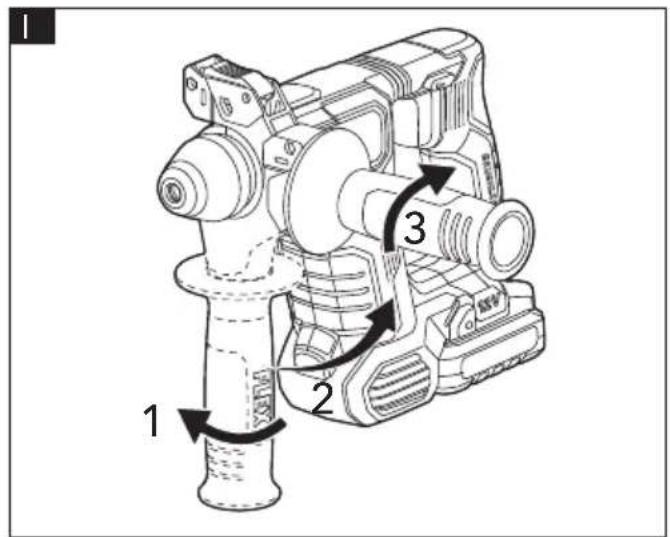
To install the auxiliary handle 3, loosen the hand grip, move the handle onto the tool and adjust it to a desired position. Securely retighten the handle grip (see figure I).
To remove the auxiliary handle 3, loosen the hand grip and remove the handle from the tool.
Depth gauge
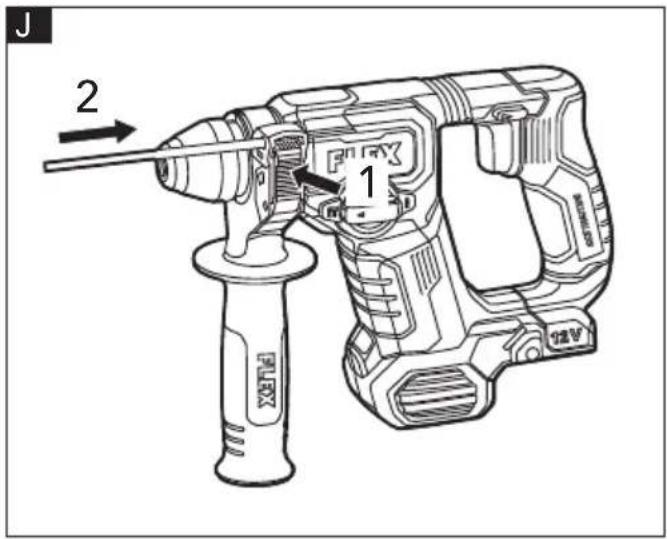
To install the depth gauge 1, press the depth gauge clamp 9, fully insert the depth gauge 1 into the depth gauge holder and slide it backward or forward until it is set for the desired depth, and then release the clamp 9 (see figure J).

NOTE
When installing depth gauge, align the teeth on the depth gauge with the teeth on the clamp.

NOTE
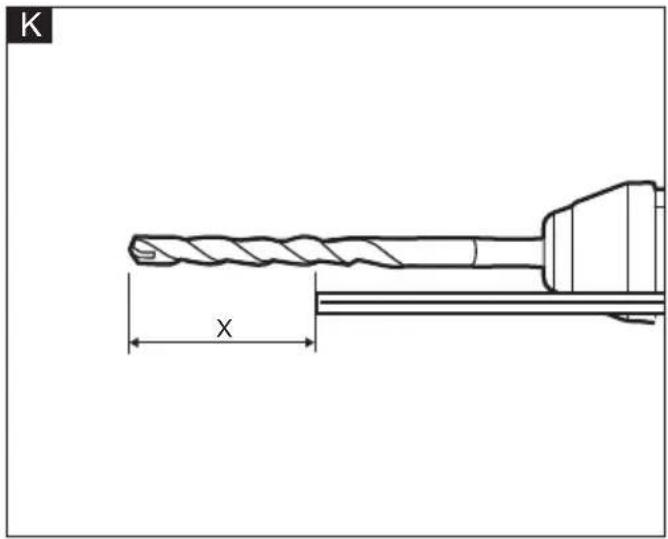
The drilling depth (X) is the distance between the tip of the bit and the tip of the depth gauge (see figure K).
Direction preselection

CAUTION!
Change the direction of rotation only when the tool is stopped.
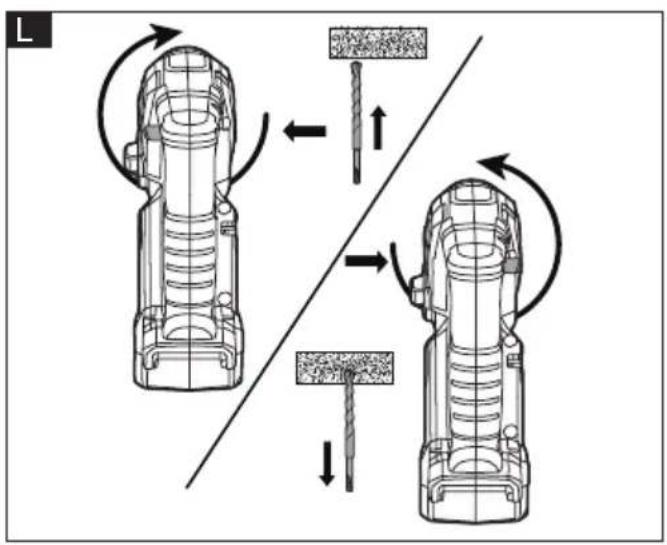
Move the direction selector switch 8 to the required position (see figure L):
- Right: counterclockwise (remove screws, release screws)
- Left: clockwise (drill, insert screws, tighten down screws)
- Middle: switch-on interlock (tool change, when working on the power tool)

NOTE
The hammer will not run unless the direction selector switch 8 is engaged fully to the left or to the right.

WARNING
Battery tools are always in operating condition. Therefore, the direction preselector switch 8 should always be locked in the center position when the tool is not in use or when carrying it at your side.
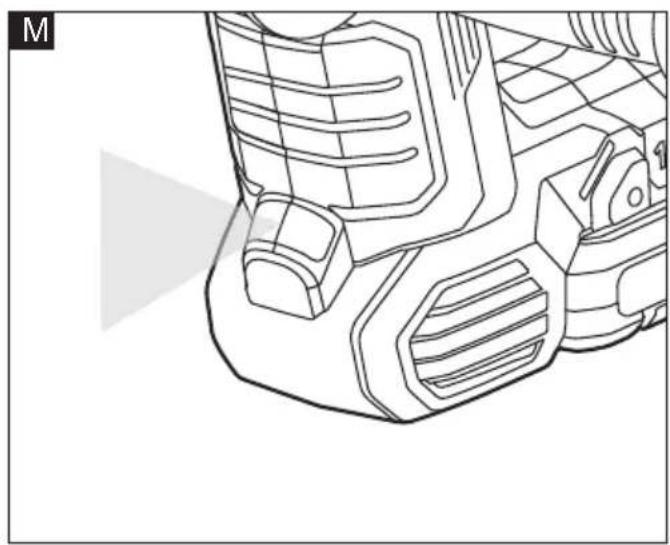
LED worklight (see figure M)
The tool has an LED worklight 4 to illuminate the work area and improve vision when working in areas with insufficient light. The LED worklight 4 will switch on automatically while the trigger switch 7 is depressed.
If the LED worklight 4 begins to rapidly and continuously flash when the switch on the tool is depressed, the battery pack power has run out, and the battery pack should be recharged.
Setting the operating mode
CAUTION!
Do not change the operating mode until the power tool has come to a stop.
■ It is possible to use the hammer drill in two different modes.
To select the required mode of operation, turn the function selector 5 to the positions indicated (see figure N)
Drilling
iT Hammer drilling
NOTE
The rotary knob must audibly click into place in all positions.
Switching on the power tool (see figure O)
■ To switch the tool on:
Press and hold down the trigger switch 7. The power tool trigger switch enables the speed or impact rate to be increased slowly to the maximum value.
■ To switch the tool off:
Release the trigger switch 7.
The variable-speed feature is particularly useful. It also enables you to select the best speed for a particular application.
i NOTE
It is recommended to use the variable-speed feature for a short time only. Do not continuously operate the tool at different speeds. It may damage the switch.

WARNING
Please start the tool for 2-3 minutes first before use, while the temperature is below zero and there is no impact phenomenon after you turn on the tool.
Hole drilling (see figure P)
When attempting to drill a large diameter hole, it is sometimes best to start with a smaller drill bit then work up to the required size. This prevents overloading the drill. If the drill bit snags, switch off immediately to prevent permanent damage to the drill. Try running the drill in reverse to remove the bit. Keep the drill in line with the hole. Ideally, the drill bit should enter at right angles to the work. If the angle is changed during drilling, this could cause the bit to snap off blocking the hole and perhaps causing injury.
Reduce pressure as the drill is about to break through the item being drilled.
Don't force the tool, let it work at its own pace.
Keep the bit sharp.
Drilling wood (see figure Q)
For maximum performance when drilling larger holes, use auger bits or spade bits for wood drilling.
■ Set the tool to the drill mode.
■ Begin drilling at a very low speed to prevent the bit from slipping off the starting point. Increase the speed as it bites into the wood.
■ When drilling through holes, place a block of wood behind the work piece to prevent ragged or splintered edges on the back of the hole.
Drilling metals
For maximum performance, use HSS drill bits for metal drilling.
■ When drilling metals, use light oil on the drill bit to keep it from overheating. The oil will prolong the life of the bit and increase the drilling efficiency.
■ Set the tool to the drill mode.
■ Begin drilling at a very low speed to prevent the bit from slipping off the starting point.
■ Maintain a speed and a pressure that allow cutting without overheating the bit.
Applying too much pressure will:
- Overheat the tool.
- Wear the bearings.
- Bend or burn bits.
- Produce off-center or irregularly shaped holes.
Drilling masonry (see figure R)
For maximum performance, use high quality carbide-tipped masonry drill bits when drilling holes in brick, tile, concrete etc.
■ Maintain a speed and a pressure that allow cutting without overheating the bit or tool.
Applying too much pressure will:
- Overheat the tool.
- Wear the bearings.
- Bend or burn bits.
– Produce off-center or irregular-shaped holes.
■ Apply light pressure and medium speed for best results in brick. Apply additional pressure for hard materials such as concrete.
- When drilling holes in tile, practice on a scrap piece to determine the best speed and pressure. To prevent the drill bit from skidding/ sliding, first apply two pieces of masking tape to create an "X" shape over the intended drilling spot.
■ Begin drilling at a very low speed to prevent the bit from slipping off the starting point.
Maintenance and care

WARNING
Remove the battery before carrying out any work on the tool.
Cleaning
■ Clean the power tool and grille in front of the vent slots regularly. Frequency of cleaning is dependent on the material and duration of use.
■ Regularly blow out the housing interior and motor with dry compressed air.
Spare parts and accessories
Other accessories, see the manufacturer's catalogues. Exploded drawings and spare-part lists can be found on our homepage:
www.flex-tools.com
Disposal information

WARNING!
Render redundant power tools unusable:
- battery operated power tool by removing the battery.

EU countries only
Do not throw electric power tools into the household waste!
In accordance with the European Directive 2012/19/EU on Waste Electrical and Electronic Equipment and transposition into national law used electric power tools must be collected separately and recycled in an environmentally friendly manner.

Raw material recovery instead of waste disposal.
Device, accessories and packaging should be recycled in an environmentally friendly manner. Plastic parts are identified for recycling according to material type.

WARNING!
Do not throw batteries into the household waste, fire or water. Do not open used batteries. EU countries only:
In accordance with Directive 2006/66/EC defective or used batteries must be recycled.

NOTE
Please ask your dealer about disposal options!
C €-Declaration of conformity
We declare on our sole responsibility that the product described in "Technical specifications" conforms to the following standards or normative documents:
EN 62841 in accordance with the regulations of the directives 2014/30/EU, 2006/42/EC, 2011/65/EU.
Responsible for technical documents:
Technical Director Head of Quality
Department (QD)
Exemption from liability
The manufacturer and his representative are not liable for any damage and lost profit due to interruption in business caused by the product or by an unusable product.
The manufacturer and his representative are not liable for any damage which was caused by improper use of the product or by use of the product with products from other manufacturers.

Declaration of Conformity
We as the manufacturer: FLEX
declare under our sole responsibility, that the product(s) described under „Technical specifications“ fulfills all the relevant provisions of The Supply of Machinery
(Safety) Regulations S.I. 2008/1597 and also fulfills all the relevant provisions of the following UK Regulations:
Electromagnetic Compatibility Regulations
S.I. 2016/1091, The Restriction of the Use of Certain Hazardous Substances in Electrical and Electronic Equipment Regulations
S.I. 2012/3032 and are manufactured in accordance with the following designated Standards:
BS EN 62841-1:2015+A11:2022
BS EN 62841-2-6:2020+A11:2020
BS EN IEC 55014-1:2021
BS EN IEC 55014-2:2021
Place of declaration: Steinheim, Germany.
Responsible person: Peter Lameli, Technical
Contact details for Great Britain: FLEX Power
Tools Limited, Unit 8 Anglo Office Park,
Lincoln Road, HP 12, 3RH Buckinghamshire, United Kingdom.
Peter Lameli Klaus Peter Weinper
Technical Director Head of Quality
Department (QD)
01.10.2023
- Incertitude: K = 3 dB.
Hullboring (se figur P)
Peter Lameli Klaus Peter Weinper Technical Head Head of Quality Department