
LB 144i - Electric mower HUSQVARNA - Free user manual and instructions
Find the device manual for free LB 144i HUSQVARNA in PDF.



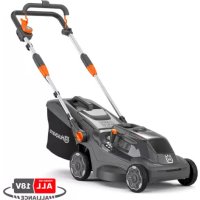
| Product type | Electric push mower |
| Brand | Husqvarna |
| Model | LB 144i |
| Cutting width | 44 cm |
| Cutting height | 25-75 mm (6 positions) |
| Weight (without battery) | 15.5 kg |
| Weight (with BLi30 battery) | 17.5 kg |
| Motor type | BLDC (brushless) 36 V |
| Motor speed (nominal) | 3,200 rpm |
| Motor speed (SavE) | 2,600 rpm |
| Motor speed (high load) | 3,500 rpm |
| Motor rated power | 0.75 kW |
| Battery type | Husqvarna lithium-ion (BLi30, 40-B140) |
| Runtime (SavE, 7.5 Ah battery) | 170 min |
| Runtime (standard, 7.5 Ah battery) | 135 min |
| Guaranteed sound power level | 92 dB(A) |
| Sound pressure level at ear | 77 dB(A) |
| Vibrations (handle) | 0.7 m/s² |
| Main features | BioClip, SavE (energy saving), anti-restart, motor brake |
| Maintenance and cleaning | Clean without water, use a brush; blade sharpening and balancing by authorized center |
| Safety | Safety key, motor brake handle, anti-restart, blade cover |
| Spare parts and repairability | Original Husqvarna parts; repairs by authorized workshop |
| General information | Compliant with EU and UK directives; recycling at waste collection point |
Frequently Asked Questions - LB 144i HUSQVARNA
User questions about LB 144i HUSQVARNA
0 question about this device. Answer the ones you know or ask your own.
Ask a new question about this device
Download the instructions for your Electric mower in PDF format for free! Find your manual LB 144i - HUSQVARNA and take your electronic device back in hand. On this page are published all the documents necessary for the use of your device. LB 144i by HUSQVARNA.
USER MANUAL LB 144i HUSQVARNA
natural_image
Silhouette of a lawn mower (no text or symbols)LB 144i

EN Operator's manual 7-23
2
6

8
1




14
15

natural_image
Simple line drawing of a mechanical component with a circular body and rectangular slot, no text or symbols present.17
natural_image
Diagram of a mechanical clamp or bracket assembly with no visible text or symbols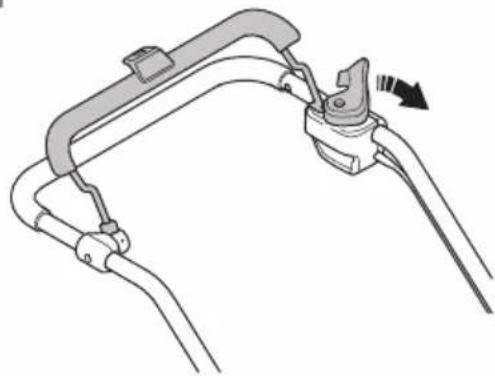
natural_image
Diagram of a mechanical clamp or bracket with a directional arrow indicating motion (no text or symbols present)19
natural_image
Line drawing of a lawn mower with attached frame and wheels, shown in two views (no text or symbols)21
22
natural_image
Technical line drawing of a mechanical assembly with a wheel and gear (no text or symbols)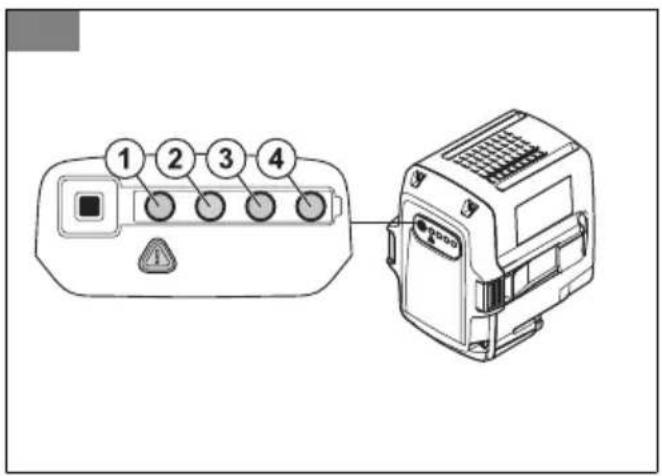
natural_image
Line drawing of a device with a switch and warning symbol, connected to an electrical outlet (no text or labels)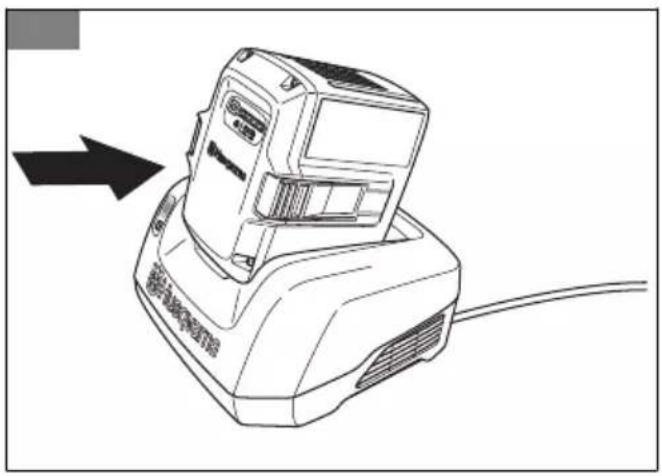
natural_image
Line drawing of a portable electronic device with a cable, showing no text or symbols on the device itself.
natural_image
Diagram showing a car interior with a steering wheel and dashboard, alongside a close-up of the wheel (no text or symbols)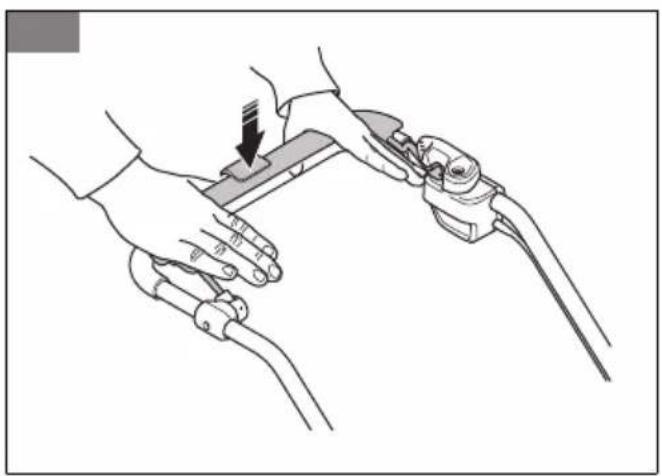
natural_image
Illustration of hands using a tool to adjust or install a component, showing a downward arrow indicating motion (no text or symbols present)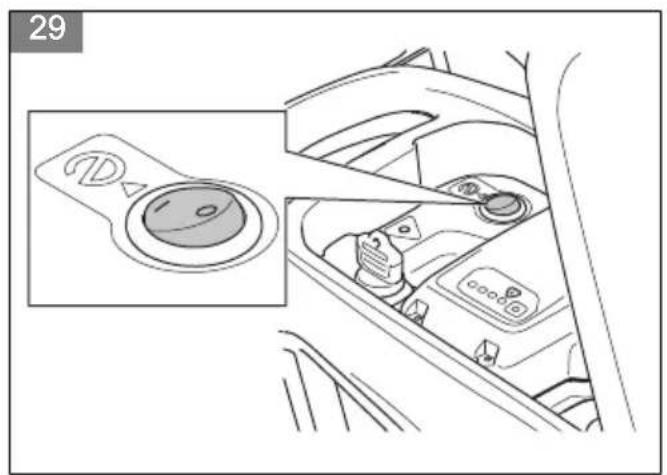
natural_image
Interior view of a car showing the dashboard and steering wheel (no text or symbols visible)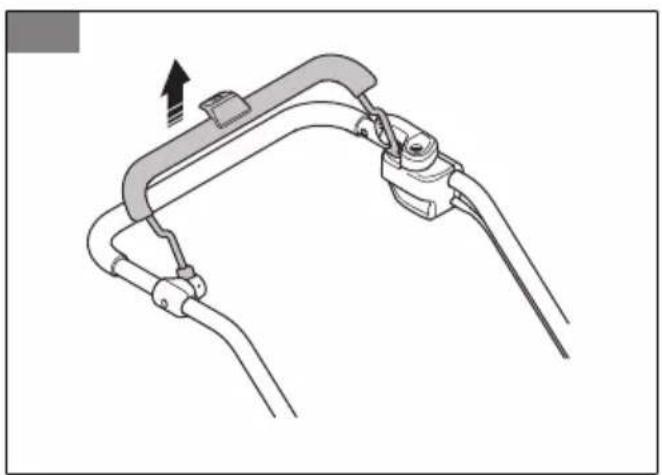
natural_image
Diagram of a mechanical clamp or bracket assembly with a directional arrow indicating motion (no text or symbols present)31
natural_image
Diagram showing a car interior with a circular switch and directional arrow, no text or symbols present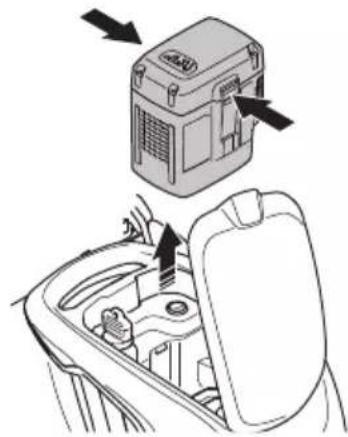
natural_image
Diagram showing a device with arrows pointing to a component inside a vehicle's gear (no text or symbols present)33
natural_image
Technical line drawing of a vehicle's wheel assembly with a brush and bracket (no text or symbols)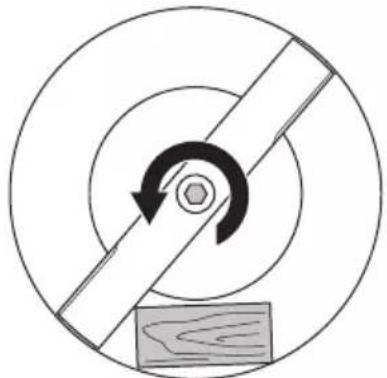
natural_image
Diagram of a circular mechanical or electrical component with concentric rings and a central hexagonal nut, featuring a diagonal stripe and a wooden block below (no text or symbols)35
natural_image
Technical line drawing of a mechanical assembly with a circular component and a separate blade-like structure (no text or symbols)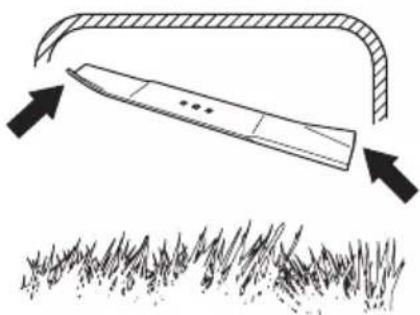
natural_image
Diagram showing a blade under an arch with arrows indicating direction, above grass (no text or symbols)37
natural_image
Diagram of a mechanical or electrical component with concentric circles and a rotating arrow, no text or symbols present.38
natural_image
Line drawing of a cartoon-style golf cart with a curved arrow indicating motion (no text or symbols)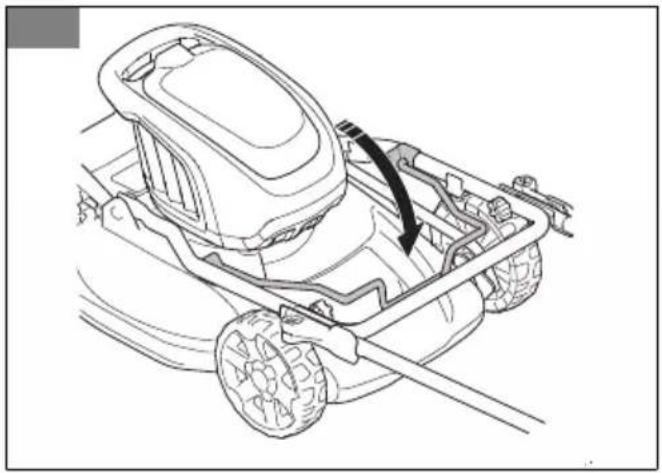
natural_image
Line drawing of a lawn mower frame with visible tire, wheels, and handle (no text or symbols)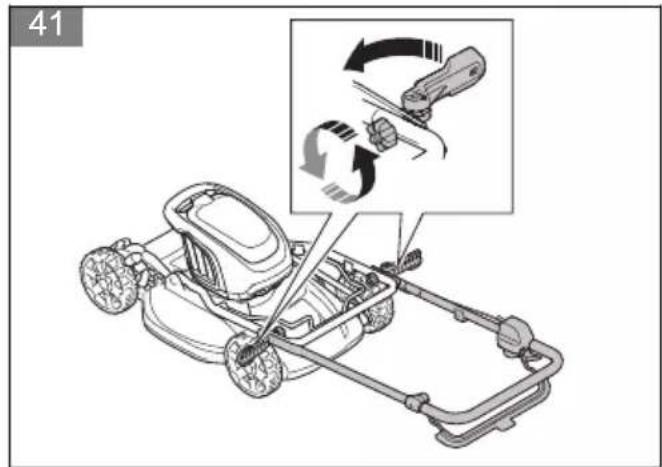
natural_image
Line drawing of a grass lawn mower with motion arrows indicating clockwise motion (no text or symbols)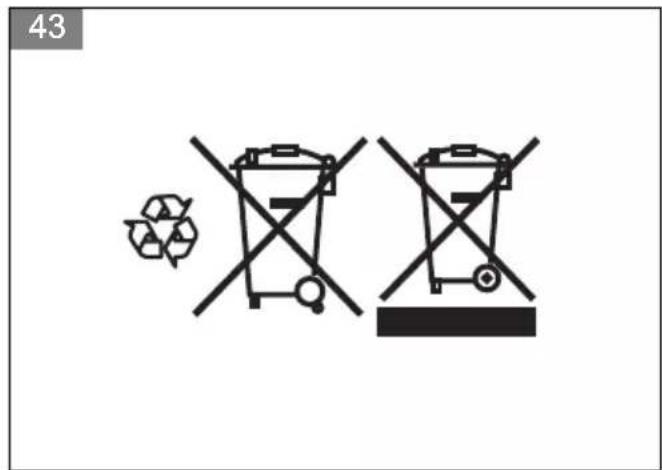
Contents
| Introduction | 7 |
| Safety | 8 |
| Assembly | 13 |
| Operation | 13 |
| Maintenance | 15 |
| Troubleshooting | 17 |
| Transportation, storage and disposal | 18 |
| Technical data | 19 |
| Declaration of Conformity | 22 |
Introduction
Product description
The product is a pedestrian-controlled rotary lawn mower that uses BioClip to cut the grass into fertilizer.
Product overview
(Fig. 1)
- Handle / Handlebar
- Motor brake handle
- Start inhibitor
- Lift handles
- Cutting deck
- Cutting height lever
- Safety key
- Battery lid
- Height adjustment bail for the handlebar
- SavE button
- Warning indicator (error LED)
- Operator's manual
- Battery charger (Accessory)
- Battery (Accessory)
Symbols on the product
(Fig. 2) WARNING
(Fig. 3) Read the instructions.
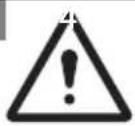
(Fig. 4) WARNING - Beware of thrown objects.
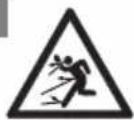
(Fig. 5) Keep bystanders away.
(Fig. 6) WARNING – Keep hands and feet away from the blades.
(Fig. 7) WARNING – Disconnect battery before maintenance.
(Fig. 8) The product or package of the product is not domestic waste. Recycle it at a recycling station for electrical and electronic equipment.
Intended use
Use the product to cut grass. Do not use the product for other tasks.
| (Fig. 9) | Noise emission to the environment label as per EU and UK directives and regulations, and New South Wales legislation "Protection of the Environment Operations (Noise Control) Regulation 2017". The guaranteed sound power level of the product is specified in Technical data on page 19 and on the label. |
| (Fig. 10) | This attachment is in accordance with applicable EC directives. |
| (Fig. 11) | This product conforms to applicable UK regulations. |
| (Fig. 12) | The product is drip protected. |
| (Fig. 13) | Release the motor brake handle to stop. |
| (Fig. 14) | Scannable code. |
Note: Other symbols/decals on the product refer to certification requirements for some markets.
Label on the product
(Fig. 15)
DANGER – Keep hands and feet away.
Product damage
We are not responsible for damages to our product if:
• the product is incorrectly repaired.
- the product is repaired with parts that are not from the manufacturer or not approved by the manufacturer.
- the product has an accessory that is not from the manufacturer or not approved by the manufacturer.
Safety
Safety definitions
Warnings, cautions and notes are used to point out specially important parts of the manual.

WARNING: Used if there is a risk of injury or death for the operator or bystanders if the instructions in the manual are not obeyed.

CAUTION: Used if there is a risk of damage to the product, other materials or the adjacent area if the instructions in the manual are not obeyed.
Note: Used to give more information that is necessary in a given situation.
General product safety warnings

WARNING: Read all safety warnings, instructions, illustrations and specifications provided with this product. Failure to follow all instructions listed below may result in electric shock, fire and/or serious injury.
Save all warnings and instructions for future reference. The term "product" in the warnings refers to your mains-operated (corded) product or battery-operated (cordless) product.
Work area safety
- Keep work area clean and well lit. Cluttered or dark areas invite accidents.
- Do not operate the product in explosive atmospheres, such as in the presence of flammable liquids, gases or dust. The product create sparks which may ignite the dust or fumes.
- Keep children and bystanders away while operating the product. Distractions can cause you to lose control.
Electrical safety
- Product plugs must match the outlet. Never modify the plug in any way. Do not use any adapter plugs with earthed (grounded) products. Unmodified plugs and matching outlets will reduce risk of electric shock.
-
Avoid body contact with earthed or grounded surfaces, such as pipes, radiators, ranges and refrigerators. There is an increased risk of electric shock if your body is earthed or grounded.
-
Do not expose products to rain or wet conditions. Water entering a product will increase the risk of electric shock.
- Do not abuse the cord. Never use the cord for carrying, pulling or unplugging the product. Keep cord away from heat, oil, sharp edges or moving parts. Damaged or entangled cords increase the risk of electric shock.
- When operating a product outdoors, use an extension cord suitable for outdoor use. Use of a cord suitable for outdoor use reduces the risk of electric shock.
- If operating a product in a damp location is unavoidable, use a residual current device (RCD) protected supply. Use of an RCD reduces the risk of electric shock.
Personal safety
- Stay alert, watch what you are doing and use common sense when operating a product. Do not use a product while you are tired or under the influence of drugs, alcohol or medication. A moment of inattention while operating products may result in serious personal injury.
- Use personal protective equipment. Always wear eye protection. Protective equipment such as dust mask, non-skid safety shoes, hard hat or hearing protection used for appropriate conditions will reduce personal injuries.
- Prevent unintentional starting. Ensure the switch is in the off-position before connecting to power source and/or battery pack, picking up or carrying the product. Carrying products with your finger on the switch or energising products that have the switch on invites accidents.
- Remove any adjusting key or wrench before turning the product on. A wrench or a key left attached to a rotating part of the product may result in personal injury.
- Do not overreach. Keep proper footing and balance at all times. This enables better control of the product in unexpected situations.
- Dress properly. Do not wear loose clothing or jewellery. Keep your hair and clothing away from moving parts. Loose clothes, jewellery or long hair can be caught in moving parts.
- If devices are provided for the connection of dust extraction and collection facilities, ensure these are connected and properly used. Use of dust collection can reduce dust-related hazards.
- Do not let familiarity gained from frequent use of products allow you to become complacent and ignore product safety principles. A careless action can cause severe injury within a fraction of a second.
Product use and care
- Do not force the product. Use the correct product for your application. The correct product will do the job better and safer at the rate for which it was designed.
- Do not use the product if the switch does not turn it on and off. Any product that cannot be controlled with the switch is dangerous and must be repaired.
- Disconnect the plug from the power source and/or remove the battery pack, if detachable, from the product before making any adjustments, changing accessories, or storing products. Such preventive safety measures reduce the risk of starting the product accidentally.
- Store idle products out of the reach of children and do not allow persons unfamiliar with the product or these instructions to operate the product. Products are dangerous in the hands of untrained users.
- Maintain products and accessories. Check for misalignment or binding of moving parts, breakage of parts and any other condition that may affect the product's operation. If damaged, have the product repaired before use. Many accidents are caused by poorly maintained products.
- Keep cutting tools sharp and clean. Properly maintained cutting tools with sharp cutting edges are less likely to bind and are easier to control.
- Use the product, accessories and tool bits etc. in accordance with these instructions, taking into account the working conditions and the work to be performed. Use of the product for operations different from those intended could result in a hazardous situation.
- Keep handles and grasping surfaces dry, clean and free from oil and grease. Slippery handles and grasping surfaces do not allow for safe handling and control of the product in unexpected situations.
Battery tool use and care
- Recharge only with the charger specified by the manufacturer. A charger that is suitable for one type of battery pack may create a risk of fire when used with another battery pack.
- Use products only with specifically designated battery packs. Use of any other battery packs may create a risk of injury and fire.
- When battery pack is not in use, keep it away from other metal objects, like paper clips, coins, keys, nails, screws or other small metal objects, that can make a connection from one terminal to another. Shorting the battery terminals together may cause burns or a fire.
- Under abusive conditions, liquid may be ejected from the battery; avoid contact. If contact accidentally occurs, flush with water. If liquid contacts eyes, additionally seek medical help. Liquid ejected from the battery may cause irritations or burns.
- Do not use a battery pack or tool that is damaged or modified. Damaged or modified batteries may exhibit
unpredictable behavior resulting in fire, explosion or risk of injury.
- Do not expose a battery pack or tool to fire or excessive temperature. Exposure to fire or temperature above 130ircC / 265ircF may cause explosion.
- Follow all charging instructions and do not charge the battery pack or tool outside the temperature range specified in the instructions. Charging improperly or at temperatures outside the specified range may damage the battery and increase the risk of fire.
Service
- Have your product serviced by a qualified repair person using only identical replacement parts. This will ensure that the safety of the product is maintained.
- Never service damaged battery packs. Service of battery packs should only be performed by the manufacturer or authorized service providers.
Lawnmower safety warnings
- Do not use the lawnmower in bad weather conditions, especially when there is a risk of lightning. This decreases the risk of being struck by lightning.
- Thoroughly inspect the area for wildlife where the lawnmower is to be used. Wildlife may be injured by the lawnmower during operation.
- Thoroughly inspect the area where the lawnmower is to be used and remove all stones, sticks, wires, bones, and other foreign objects. Thrown objects can cause personal injury.
- Before using the lawnmower, always visually inspect to see that the blade and the blade assembly are not worn or damaged. Worn or damaged parts increase the risk of injury.
- Check the grass catcher frequently for wear or deterioration. A worn or damaged grass catcher may increase the risk of personal injury.
- Keep guards in place. Guards must be in working order and be properly mounted. A guard that is loose, damaged, or is not functioning correctly may result in personal injury.
- Keep all cooling air inlets clear of debris. Blocked air inlets and debris may result in overheating or risk of fire.
- While operating the lawnmower, always wear non-slip and protective footwear. Do not operate the lawnmower when barefoot or wearing open sandals. This reduces the chance of injury to the feet from contact with the moving blade.
- While operating the lawnmower, always wear long trousers. Exposed skin increases the likelihood of injury from thrown objects.
-
Do not operate the lawnmower in wet grass. Walk, never run. This reduces the risk of slipping and falling which may result in personal injury.
-
Do not operate the lawnmower on excessively steep slopes. This reduces the risk of loss of control, slipping and falling which may result in personal injury.
- When working on slopes, always be sure of your footing, always work across the face of slopes, never up or down and exercise extreme caution when changing direction. This reduces the risk of loss of control, slipping and falling which may result in personal injury.
- Use extreme caution when reversing or pulling the lawnmower towards you. Always be aware of your surroundings. This reduces the risk of tripping during operation.
- Do not touch blades and other hazardous moving parts while they are still in motion. This reduces the risk of injury from moving parts.
- When clearing jammed material or cleaning the lawnmower, make sure all power switches are off and the battery pack is disconnected. Unexpected operation of the lawnmower may result in serious personal injury.
- When clearing jammed material or cleaning the lawnmower, make sure all power switches are off and remove the disabling device. Unexpected operation of the lawnmower may result in serious personal injury.
Residual current device
- Use a residual current device with a tripping current of maximum 30 mA.
General safety instructions

WARNING: Read the warning instructions that follow before you use the product.
- This product is dangerous if used incorrectly or if you are not careful. Injury or death can occur if you do not obey the safety instructions.
- This product produces an electromagnetic field during operation. This field may under some circumstances interfere with active or passive medical implants. To reduce the risk of serious or fatal injury we recommend persons with medical implants to consult their physician and the medical implant manufacturer before operating this product.
• Always be careful and use your common sense. If you are not sure how to operate the product in a special situation, stop and speak to your Husqvarna dealer before you continue. - Keep in mind that the operator will be held responsible for accidents that involve other persons or their property.
-
Keep the product clean. Make sure that you can clearly read signs and decals.
-
Never allow children or people unfamiliar with these instructions to use the appliance. Local regulations may restrict the age of the operator.
• Always monitor a person, with decreased physical capacity or mental capacity, that uses the product. A responsible adult must be there at all times. - Do not use the product if you are tired, ill, or under the influence of alcohol, drugs or medicine. This has a negative effect on your vision, alertness, coordination and judgment.
- Do not use the product if it is damaged or does not operate correctly.
- Do not change this product or use it if it is possible that it has been changed by others.
Work safety
WARNING: Read the warning instructions that follow before you use the product.
- Use this product to cut grass lawns only. It is not permitted to use it for other tasks.
- Use personal protective equipment. Refer to Personal protective equipment on page 11.
- Make sure that you know how to stop the motor quickly in an emergency.
- Do not operate the product in rain or wet conditions. The risk of electrical shock increases if water enters the product.
- Do not operate the product unless the blade and all covers are attached correctly. An incorrectly attached blade can come loose and cause personal injury.
- Make sure that the blade does not hit objects such as stones and roots. This can do damage to the blade and bend the motor shaft. A bent axle causes heavy vibration and a very high risk that the blade becomes loose.
- If the blade hits an object or if vibrations occur, stop the product immediately. Stop the motor, turn the safety key to 0 and remove the battery. Wait until moving parts stop. Examine the product for damages. Tighten loose parts. Repair damages and replace damaged parts. Let an approved service agent do the repair.
- Never attach the motor brake handle permanently to the handle when the motor is started.
- Put the product on a stable, flat surface and start it. Make sure that the blade does not hit the ground or other objects.
• Always stay behind the product when you operate it. - Let all the wheels stay on the ground and keep 2 hands on the handle when you operate the product. Keep your hands and feet away from the rotating blades.
- Do not tilt the product when you start the motor or during operation of the product.
-
Be careful when you pull the product rearward.
-
Never lift up the product when the motor is started. If you must lift the product, first stop the motor, turn the safety key to 0 and remove the battery.
- Do not walk rearward when you operate the product.
- Stop the motor when it is necessary to tilt the product for transportation or before you move across areas without grass, for example paths made of gravel, stone and asphalt.
- Do not run with the product when the motor is started. Always walk when you operate the product.
- Stop the motor before you change the cutting height. Never make adjustments with the motor started.
- Never let the product stay out of view with the motor started. Stop the motor and make sure that the cutting equipment does not rotate.
- The vibrations in the product during operation can be different from the declared vibration value in Technical data on page 19. The difference is caused by variations in how the product is used. If you operate the product frequently or for long periods of time, take breaks regularly to prevent injury from vibrations.
Safety instructions for operation
Personal protective equipment

WARNING: Read the warning instructions that follow before you use the product.
- Personal protective equipment cannot fully prevent injury but it decreases the degree of injury if an accident does occur. Let your dealer help you select the right equipment.
- Use heavy-duty slip-resistant boots or shoes. Do not use open shoes or go with bare feet.
- Use heavy, long pants.
- Use protective gloves when necessary, for example when you attach, examine or clean the cutting equipment.
- We recommend to use hearing protection.
Safety devices on the product

WARNING: Read the warning instructions that follow before you use the product.
- Do not use a product with safety devices that are damaged or do not operate correctly.
- Do not remove or do modifications to safety devices.
- Do a check of the safety devices regularly. If the safety devices are damaged or do not operate correctly, speak to your Husqvarna service agent.
To do a check of the cutting cover
The cutting cover decreases vibrations in the product and decreases the risk of injury from the blade.
- Examine the cutting cover to make sure that there are no damages such as cracks.
To do a check of the safety key
The safety key is below the battery lid. The safety key connects the battery that supplies the motor with power.
- Start and stop the motor to do a check of the safety key.
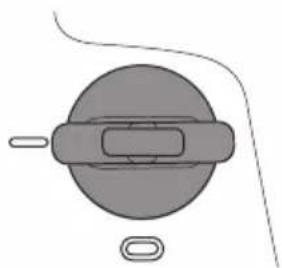
- If the safety key operates correctly, the motor can only start when the safety key is in position 1. (Fig. 16)
To do a check of the motor brake handle
The motor brake handle stops the motor. When the motor brake handle is released, the motor stops.
- Start the product. Refer to To start the product on page 14.
- Release the motor brake handle. (Fig. 17)
- Make sure that the product stops. If the motor does not stop in 3 seconds, let an approved Husqvarna service agent adjust the motor brake.
To do a check of the start inhibitor
Do a check of the start inhibitor to make sure that it prevents operation of the motor.
- Push the motor brake handle in the direction of the handlebar. The start inhibitor stops the movement.
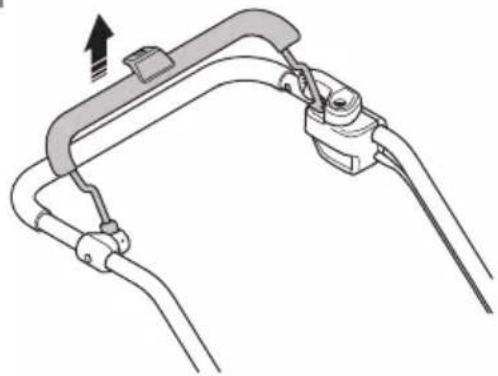
- Push the start inhibitor out. (Fig. 18)
- Release the start inhibitor and make sure that it goes back to its initial position.
Battery safety
WARNING: Read the warning instructions that follow before you use the product.
- Use Husqvarna rechargeable batteries as a power supply for related Husqvarna products only. To prevent injury, do not use the battery as a power supply for other devices.
- Do not use non-rechargeable batteries.
- Risk of electrical shock. Do not connect the battery terminals to keys, coins, screws or other metal. This can cause a short circuit of the battery.
- Do not put objects into the air slots of the battery.
- Keep the battery away from sunlight, heat or open flame. The battery can explode and cause burns and/or chemical burns.
- Keep the battery away from rain and wet conditions.
- Keep the battery away from microwaves and high pressure.
- Do not try to disassemble or break the battery.
- If the battery leaks, do not let the liquid touch your body or eyes. If you have touched the liquid, clean
the area with a large quantity of water and get medical aid.
- Use the battery in the product only when the ambient temperature is between 5ircC - 40ircC .
- Use the battery charger only when the ambient temperature is between 5ircC - 40ircC .
- The battery will not charge if the battery temperature is more than 50ircC .
- Do not clean the battery or the battery charger with water. Refer to To clean the battery and the battery charger on page 16.
- Do not use a damaged battery.
- Keep batteries in storage away from metal objects such as nails, coins, jewellery.
Battery charger safety

WARNING: Read the warning instructions that follow before you use the product.
- Use the QC battery chargers to charge Husqvarna replacement batteries only.
- Risk of electrical shock or short circuit. Do not put objects into the air slots of the charger. Do not try to disassemble the battery charger. Do not connect the charger terminals to metal objects. Use an approved mains socket.
- This product produces an electromagnetic field during operation. This field may under some circumstances interfere with active or passive medical implants. To reduce the risk of serious or fatal injury, we recommend persons with medical implants to consult their physician and the medical implant manufacturer before operating this product.
- Regularly make sure that the power cord of the battery charger is not damaged and that there are no cracks in it.
- Do not lift the battery charger by the power cord. To disconnect the battery charger from a mains socket, pull out the plug. Do not pull the power cord.
- Keep the power cord and extension cables away from water, oil and sharp edges. Make sure that the cable is not pinched in doors, fences or equivalent. It can cause the charger to become energized.
- Do not clean the battery charger with water.
- The battery charger can be used by children aged from 8 years and above and persons with reduced physical, sensory, or mental capabilities or lack of experience and knowledge if they have been given supervision or instruction concerning use of the battery charger in a safe way and understand
the hazards involved. Children shall not play with the battery charger. Cleaning and user maintenance shall not be made by children without supervision.
- Do not charge non-rechargeable batteries in the battery charger.
- Do not use the battery charger near flammable materials or materials that can cause corrosion. Do not cover the battery charger. Pull out the plug to the battery charger if there is smoke or fire.
- Do not use a damaged battery charger.
- Only charge the battery indoors in a room with good airflow and away from sunlight. Do not charge the battery in wet conditions.
Safety instructions for maintenance
WARNING: Read the warning instructions that follow before you use the product.
- To prevent accidental start during maintenance, turn the safety key to 0 and remove the battery. Wait at minimum 5 seconds before you start the maintenance.
- Only do the maintenance work written in this operator's manual. More extensive work and professional repairs must be done by an approved service agent. Speak to your nearest service agent for more information.
- Do the maintenance work correctly to increase the lifetime of the product and decrease the risk of accidents.
- Replace damaged, worn or broken parts. Always use original spare parts from the manufacturer. Other spare parts can cause damage to the product and increase the risk of accidents.
- To prevent injury, do not remove or do modifications to safety devices.
- Put on heavy duty gloves when you use the cutting equipment. The blade is very sharp and cuts can easily occur.
- Keep the cutting edges sharp and clean for the best and safest performance.
- Let your service agent regularly examine the product and make necessary adjustments and repairs.
- Obey the instructions for how to change accessories. Only use accessories from the manufacturer.
- When not in operation, keep the product, battery and battery charger apart in a dry, indoor and locked area. Make sure that children and persons that are not approved cannot get access to the product, battery or battery charger.
Assembly
Introduction

WARNING: Before you assemble the product, read the safety chapter.

WARNING: To prevent accidental start during assembly, turn the safety key to 0, remove the battery and wait at minimum 5 seconds.
To assemble the handle
-
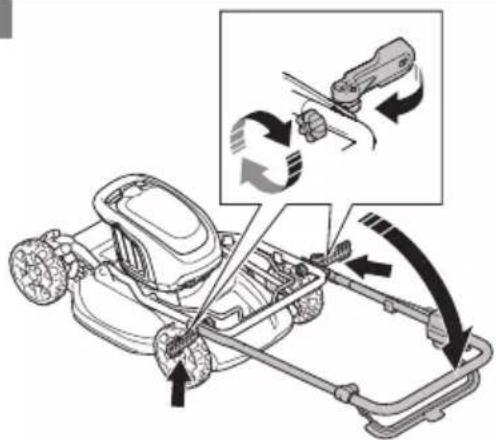
Fold the upper handle forward.
-
Tighten the handle knobs. (Fig. 19)
-
Pull the handle rearward until it is in the end position.
-
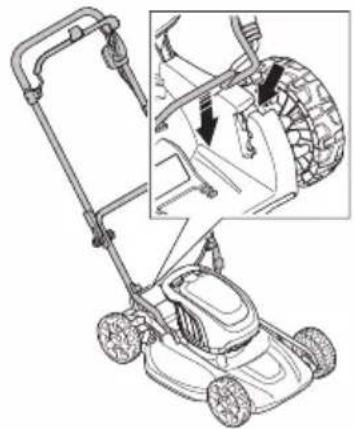
Fold down the height adjustment bail and put it into the groove. (Fig. 20)
-
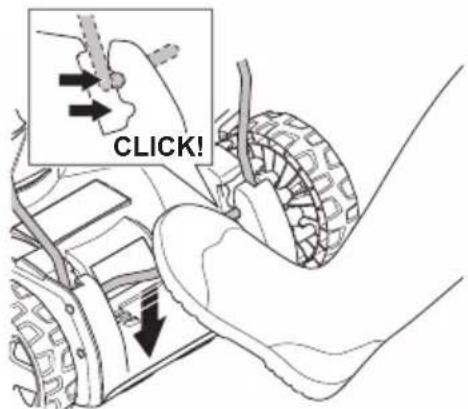
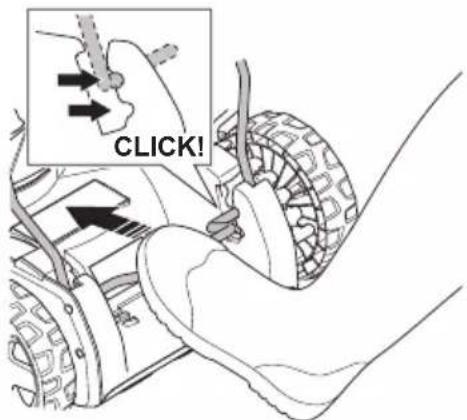
Press down the height adjustment bail with your foot. (Fig. 21)
To adjust the handle height
- Make sure that the height adjustment bail is in the groove. Press down the height adjustment bail with your foot, if the height adjustment bail is not put in the groove. (Fig. 21)
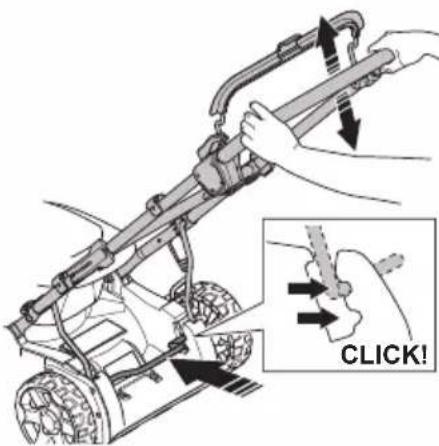
- Press in the height adjustment bail with your foot.
- Put the handlebar in the correct position and release the handlebar. (Fig. 22)
Operation
Introduction

WARNING: Before you operate the product, you must read and understand the safety chapter.
Husqvarna Connect
Husqvarna Connect is a free app for your mobile device. The Husqvarna Connect app gives extended functions for your Husqvarna product:
• Extended product information.
• Information about, and help with, product parts and servicing.
To start to use Husqvarna Connect
- Download the Husqvarna Connect app on your mobile device.
- Register in the Husqvarna Connect app.
- Do the instruction steps in the Husqvarna Connect app to connect and register the product.
To set the product in operation position
- Assemble the handle. Refer to To assemble the handle on page 13.
- Adjust the handle height. Refer to To adjust the handle height on page 13.
CAUTION: Make sure that there is not too much tension in the cables. Too much tension can cause damage to the cable if the handle is folded into transport position.
WARNING: Do not operate the product unless the handle is fully folded up and set in one of the applicable height positions. Refer to To adjust the handle height on page 13.
To set the cutting height
The cutting height can be adjusted in 6 different steps.
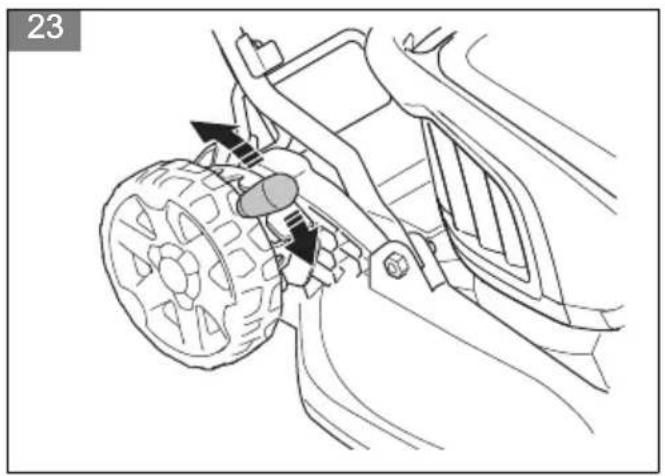
- Move the cutting height lever rearward to increase the cutting height. (Fig. 23)
- Move the cutting height lever forward to decrease the cutting height.
CAUTION: Do not set the cutting height too low. The blades can hit the ground if the surface of the lawn is not level.
Battery
WARNING: Before you use the battery, you must read and understand the safety chapter. You must also read and understand the operator's manual for the battery and the battery charger.
Keep the battery and the battery charger in correct ambient temperatures.
| Ambient temperature | |
| Operation of the battery | 5 °C - 40 °C |
| Charging of the battery | 5 °C - 40 °C |
Battery status
The display shows the remaining battery capacity and if there are problems with the battery. Push the battery indicator button to get information of the state of charge of the battery. The warning symbol on the battery is on when an error has occurred. Refer to Battery on page 17.
(Fig. 24)
| LED lights Battery status | |
| All LEDs are lit Fully charged (76-100%) | |
| LED 1, LED 2, LED 3 are lit | The battery is 51%-75% charged |
| LED 1, LED 2 are lit | The battery is 26%-50% charged |
| LED 1 is lit | The battery is 6%-25% charged. |
| LED 1 flashes | The battery is 0%-5% charged. |
To charge the battery
Charge the battery before the first use. The battery is only 30% charged when supplied to the customer.
Note: The battery charger must be connected to the voltage and frequency specified on the rating plate.
The battery does not charge if the battery temperature is above 50irc C. The battery charger decreases the temperature of the battery before it starts to charge.
- Connect one end of the power cord for the battery charger into the socket of the battery charger.
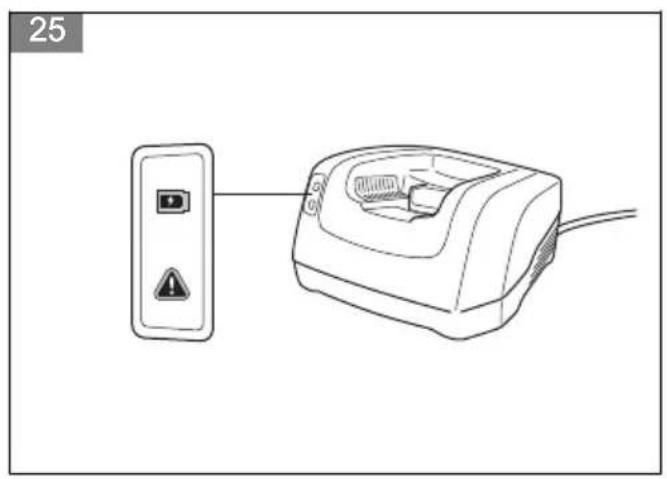
- Connect the other end of the power cord for the battery charger in an grounded mains socket. The LED on the battery charger flashes green one time. (Fig. 25)
- Put the battery in the battery charger. The green light on the charger comes on when the battery is correctly connected to the battery charger. (Fig. 26)
- When all LEDs on the battery have come on the battery is fully charged. Charge the battery for maximum 24 hours.
- To disconnect the battery charger from the mains socket, pull the plug, not the power cord.
- Remove the battery from the battery charger.
To start the product
- Open the battery lid.
- Put a charged battery in the battery holder.
- Turn the safety key to 1. (Fig. 27)
- Stay behind the product.
- Loosen the start inhibitor. (Fig. 18)
- Push the motor brake handle in the direction of the handlebar. (Fig. 28)
To use the SaveE TM function
The product has a battery saving function (SaveE ™ ) that gives longer operation time.
- Push the SaveE™ button to position 1 to start the function. (Fig. 29)
- Push the SaveE TM button to position 0 to stop the function.
Note: The SaveE ™ function stops automatically if the ground conditions make it necessary to have a higher output. The SaveE ™ function starts automatically again when the ground conditions let it.
High load function
When the product cuts long or wet grass, the motor automatically increases rpm. The motor goes back to standard mode when high load is not necessary.
Motor stalling
During operation, the blade and motor can temporarily stop because of obstacles such as grass blockage below the cutting cover. If this occurs and you keep the motor brake handle pushed down, the product restarts automatically. If the product does not restart in 5-10 seconds, it can be necessary to clean below the cutting cover. Refer to To clean the product on page 16.
WARNING: If the motor stops, the product tries to restart automatically for 5-10 seconds. Wait for a minimum of 15 seconds before you do a check of the cutting cover.
WARNING: Before a check of the cutting cover, release the motor brake handle, turn the safety key to 0, remove the battery and wait for a minimum of 5 seconds. There is a risk of injury if the obstacle is removed and the product accidentally starts.
To stop the product

WARNING: Turn the safety key to 0 before you let the product out of view.
- Release the motor brake handle to stop the motor. (Fig. 30)
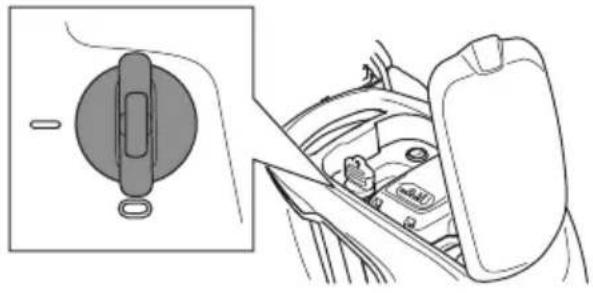
- Open the battery lid and turn the safety key to 0. (Fig. 31)
- To remove the battery, push the 2 release buttons and pull out the battery. (Fig. 32)
- Charge the battery if it is weak. For more information, refer to To charge the battery on page 14.
To get a good result
• Always use a sharp blade. A blunt blade gives an irregular result and the cut surface of the grass becomes yellow. A sharp blade also uses less energy than a blunt blade.
- Do not cut more than 13 of the length of the grass. Cut first with the cutting height set high. Examine the result and lower the cutting height to an applicable level. If the grass is very long, drive slowly and cut 2 times if necessary.
- Cut in different directions each time to prevent stripes in the lawn.
- Keep the cutting cover clean. Buildup from grass and dirt on the inner side of the cutting cover can decrease the cutting result. Refer to To clean the product on page 16.
Maintenance
Introduction
WARNING: Before you do maintenance, you must read and understand the safety chapter.
For all servicing and repair work on the product, special training is necessary. We guarantee the availability of professional repairs and servicing. If your dealer is not a service agent, speak to them for information about the nearest service agent.
For more detailed information, refer to www.husqvarna.com.
Maintenance schedule
The maintenance intervals are calculated from daily use of the product. The intervals change if the product is not used daily.
For maintenance identified with * see instructions in Safety on page 8.
| Each use | Monthly | Each season | |
| Do a general inspection. X | |||
| Clean the product. X | |||
| Clean the area around the handle height adjustment bail. X | |||
| Do a check of the start inhibitor. * X | |||
| Make sure that the safety devices on the product operate correctly. * X | |||
| Examine the cutting equipment. X | |||
| Examine the cutting cover. * X | |||
| Do a check of the motor brake handle. * X | |||
| Examine the battery for damage. X | |||
| Do a check of the battery charge. X | |||
| Make sure that the release buttons on the battery operates correctly and that the battery locks into the product. | X | ||
| Examine the battery charger for damage and make sure that it operates correctly. | X | ||
| Examine the connections between the battery and the product. Also examine the connection between the battery and the battery charger. | X |
To do a general inspection
- Make sure that the nuts and screws on the product are tightened.
- Make sure that the cables on the product are not in a position where they can get damaged.
To clean the product
- Clean plastic parts with a clean and dry cloth.
- Do not use water to clean the product. Water can enter the battery or the motor and cause short circuit or damage to the product.
- Do not use a high pressure washer to clean the product.
- Do not flush water directly on the motor.
- Use a brush to remove leaves, grass and dirt.
To clean the battery and the battery charger

WARNING: Do not clean the battery or the battery charger with water.

WARNING: Do not use any chemical substances to clean the battery.
- Make sure that the battery and the battery charger are clean and dry before you put the battery into the battery charger.
- Clean the battery terminals with compressed air or use a soft and dry cloth.
- Clean the surfaces of the battery and the battery charger with a soft and dry cloth.
To clean the area around the handle height adjustment bail
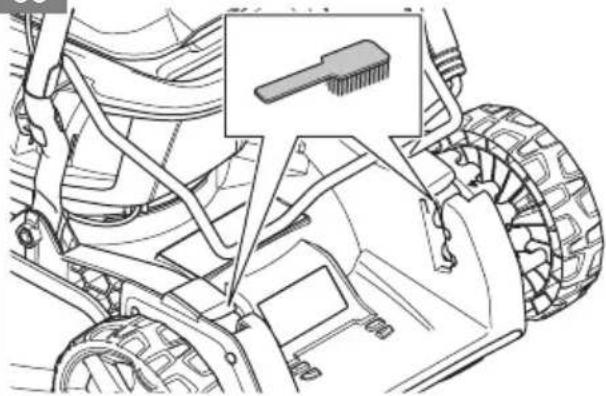
- Use a brush to remove leaves, grass and dirt. (Fig. 33)
To examine the cutting equipment
WARNING: To prevent accidental start, turn the safety key to 0, remove the battery and wait a minimum 5 seconds.
WARNING: Use protective gloves when you do maintenance on the cutting equipment. The blade is very sharp and cuts can easily occur.
- Examine the cutting equipment for damage or cracks. Always replace a damaged cutting equipment.
- Look at the blade to see if it is damaged or blunt.
Note: It is necessary to balance the blade after it is sharpened. Let a service center sharpen, replace and balance the blade. If you hit an obstacle that causes the product to stop, replace the damaged blade. Let the service center estimate if the blade can be sharpened or must be replaced.
To replace the blade
Refer to Technical data on page 19 for the correct type of blade.
WARNING: Lock the blade with a piece of wood to prevent injury to fingers when you replace the blade. The blade can be moved when the motor is off and fingers can become trapped between the blade and stationary parts.
-
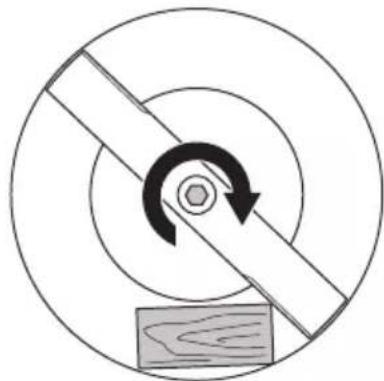
Lock the blade with a piece of wood. (Fig. 34)
-
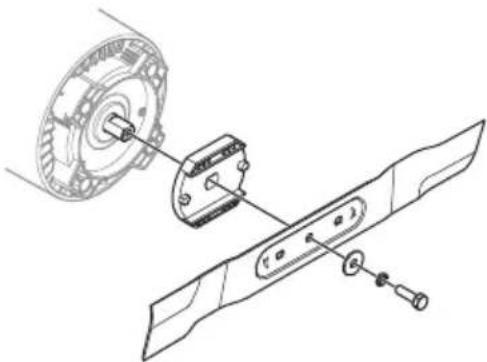
Remove the blade bolt, the washers and the blade. (Fig. 35)
-
Examine the blade support and blade bolt to see if there are damages.
- Examine the motor shaft to make sure that it is not bent.
- When you attach the new blade, point the angled ends of the blade in the direction of the cutting cover. (Fig. 36)
- Make sure that the blade is aligned with the center of the motor shaft.
- Lock the blade with a piece of wood. Attach the washers and tighten the bolt with a torque of 23–28 Nm. (Fig. 37) (Fig. 35)
- Pull the blade around by hand and make sure that it turns freely.

WARNING: Use heavy duty gloves.
The blade is very sharp and cuts can easily occur.
- Start the product to do a test of the blade. If the blade is not correctly attached, there is vibration in the product or the cutting result is unsatisfactory.
Troubleshooting
Battery
| LED on the battery Cause | Solution | |
| The green LED flashes. | The battery voltage is low. | Charge the battery. Refer toTo charge the battery on page 14. |
| The battery error LED flashes. | The battery is too cold or too hot to use. | Let the battery cool down or move it indoors to warm it up.When the battery has the correct temperature, it can be used again. Use the battery in the product only when the ambient temperature is 5 °C–40 °C. |
| The battery is empty. Charge the battery. Refer toTo charge the battery on page 14. | ||
| The battery error LED comes on. | There is a permanent battery error. | Speak to your Husqvarna servicing dealer. |
Battery charger
| LED on the battery charger | Cause Solution | |
| The error LED flashes or comes on. | The battery charger is too cold or too hot to use. | Let the battery charger cool down or move it indoors to warm it up. When the battery charger has the correct temperature, it can be used again. Use the battery charger when the ambient temperature is 5 °C–40 °C. |
| Other errors. Speak to your Husqvarna servicing dealer. | ||
Lawn mower
The warning indicator (error LED) is found below the battery lid.
| Problem | Number of flashes on the error LED | Cause Solution | |
| Error LED flashes. The product does not operate correctly. | 5 | The blade is blocked. | Turn the safety key to 0 to prevent accidental start. Remove the battery and wait a minimum of 5 seconds. Remove possible obstacles and make sure that the blade can rotate freely. If the problem continues, speak to your Husqvarna servicing dealer. |
| The motor speed drops too much, and the motor stops. | Increase the cutting height. Refer to To set the cutting height on page 13. | ||
| 10 | The motor control is too hot. | Stop the motor and wait until it has become cool. | |
| Error LED flashes. The product stops. | 0 | Battery connector failure. | Examine the battery connector. |
| 3 | There is overload in the motor. | Increase the cutting height. Refer to To set the cutting height on page 13. | |
| 8 The | battery is weak. | Charge the battery. Refer to To charge the battery on page 14. | |
| 9 | Battery error or no signal from battery. | Put the battery in the product correctly and examine the battery connector. If the error LED on the battery flashes. Refer to Battery on page 17. | |
| 12 | Incorrect start procedure. The motor brake handle has been engaged before the motor starts. | Release the motor brake handle and wait approximately 5 seconds. Push the motor brake handle down again to start the product. | |
| Other errors. | If other errors occur, turn the safety key to 0, remove the battery and speak to your Husqvarna servicing dealer. | ||
Transportation, storage and disposal
Introduction

WARNING: To prevent accidental start during transport and storage turn the safety key to 0, remove the battery and wait a minimum of 5 seconds.
To set the product in transport position
-
Push the height adjustment bail with your foot. (Fig. 38)
-
Pull up the handle and pull out the height adjustment bail from the groove.
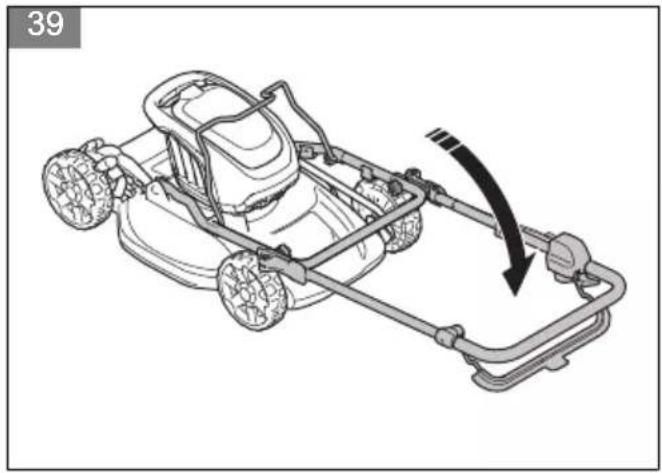
- Fold the handle forward until it has reached the end position. (Fig. 39)
- Fold the height adjustment bail towards the cutting cover. (Fig. 40)
- Release the handle knobs. (Fig. 41)
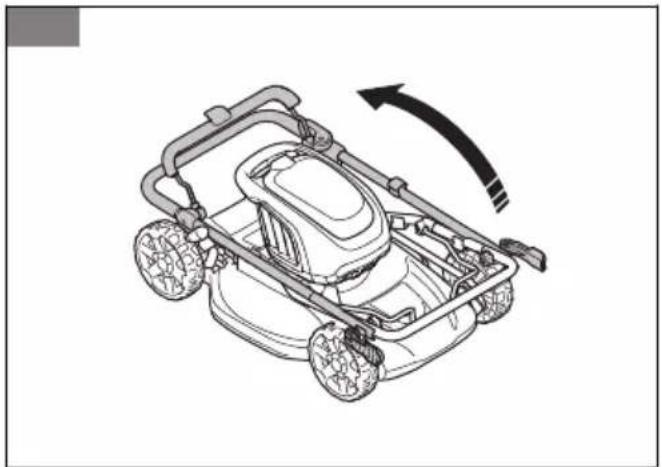
- Fold the upper handle rearwards. (Fig. 42)
Transportation
- The Dangerous Goods Legislation requirements apply to the contained Li-ion batteries.
- For commercial transports special requirements on package and labels must be obeyed.
- Make sure that you obey the regulations for dangerous material when you prepare the product for transport. Local regulations can apply.
• Always remove the battery for transport. - Put tape on the battery connectors and make sure that the battery cannot move around during transport.
- Attach the product during transport.
Storage
- Before storage, let the product become cool.
- Always remove the battery for storage.
- To prevent accidents, make sure that the battery is not connected to the product during storage.
- Keep the battery charger in a closed and dry space.
- Keep the battery and the battery charger in a dry space where there is no moisture or frost.
- Disconnect the battery from the battery charger during storage.
- Do not keep the battery where static electricity can occur. Do not keep the battery in a metal box.
- Keep the product where the ambient temperature is between -10ircC and 40ircC .
-
Keep the battery where the ambient temperature is between 5ircC and 25ircC and out of sunlight.
-
Keep the battery charger where the ambient temperature is between 5 °C and 45 °C and out of sunlight.
- Make sure that the battery is charged to 30% - 50% before you put it in storage for long periods.
- Keep the product, battery and battery charger in a locked area out of reach for children and not approved persons.
- Clean the product and make sure that the grass catcher is empty.
- Do the maintenance procedures given in this operator's manual. Refer to Maintenance schedule on page 15.
- Do a complete servicing before you put the product in storage for a long time.
Disposal
Symbols on the product or the packaging of the product indicate that this product cannot be handled as domestic waste. It must be submitted to an appropriate recycling station for the recovery of electrical and electronic equipment.
By ensuring that this product is taken care of correctly, you can help to counteract the potential negative impact on the environment and people that can otherwise result through the incorrect waste management of this product. For more detailed information about recycling this product, contact your municipality, your domestic waste service or the shop from where you purchased the product.
(Fig. 43)
Technical data
| LB 144i | |
| Cutting motor | |
| Motor type BLDC (brushless) 36V | |
| Motor speed – SavE, rpm 2600/min | |
| Motor speed – Nominal, rpm 3200/min | |
| Motor speed – High load, rpm 3500/min | |
| Motor output – max. kW 0.9 | |
| Motor output – Nominal, kW 0.75 | |
| Drive motor | |
| Motor output – Nominal, kW N/A | |
| Self walk speed, km/h N/A | |
| Speed adjustment levels N/A | |
| Weight | |
| Weight (excl. battery), kg 15.5 | |
| Weight (incl. 1x BLi30), kg 17.5 | |
| Battery | |
| Type of battery Husqvarna Battery Series | |
| Battery runtime | |
| Battery runtime, min, (free run) with SavE activated, with one Husqvarna 7.5 Ah battery (Bli30). | 170 |
| Battery runtime, min, (free run) with standard mode activated, with one Husqvarna 7.5 Ah battery (Bli30). | 135 |
| Noise emissions 1 | |
| Sound power level, measured dB (A) 90 | |
| Sound power level, guaranteed LWA dB (A) 92 | |
| Sound levels 2 | |
| Sound pressure level at the operator's ear, dB (A) 77 | |
| Vibration levels 3 | |
| Handle, m/s2 | 0.7 |
| Cutting equipment | |
| Cutting height, mm 25-75 | |
| Cutting width, cm 44 | |
| Blade Standard Mulch 5298073-10 | |
| Blade accessory N/A | |
| Approved batteries Type Battery capacity, | Ah | Voltage, V Weight, lb/kg |
| 40-B140 Lithium-ion 4.0 36 | 2.6/1.2 | |
| BLi30 | Lithium-ion 7.5 36 | 4.2/1.9 |
| Approved chargers for the specified batteries, BLi | Input voltage, V | Frequency, Hz | Power, W |
| 40-C80 | 100–240 50–60 | 68.8 | |
| Approved chargers for the specified batteries, BLi Input voltage, V Frequency, Hz Power, W | |||
| QC250 220-240 50 250 |
Declaration of Conformity
EU Declaration of Conformity
We, Husqvarna AB, SE-561 82 Huskvarna, Sweden, tel: +46-36-146500, declare on our sole responsibility that the product:
| Description Lawn Mower | |
| Brand Husqvarna | |
| Type / Model LB 144i | |
| Identification Serial numbers dating from 2022 and onwards | |
complies fully with the following EU directives and regulations:
| Regulation Description | |
| 2006/42/EC "relating to machinery" | |
| 2014/30/EU "relating to electromagnetic compatibility" | |
| 2000/14/EC "relating to the noise emissions in the environment" | |
| 2011/65/EU | "on the restriction of the use of certain hazardous substances in electrical and electronic equipment" |
and that the following standards and/or technical specifications are applied: EN 62841-1:2015/AC:2015, EN IEC 62841-4-3:2021/A11:2021, EN ISO 12100:2010, EN 55014-1:2017/A11:2020, EN 55014-2:1997/A1:2001/A2:2008, EN IEC 63000:2018
Notified Body: 0404, RISE SMP Svensk Maskinprovning AB, Box 4053, SE-904 03 Umeå, Sweden has certified conformity with the council's directive 2000/14/EC, conformity assessment procedure: Annex VI.
For information relating to noise emissions, refer to Technical data on page 19.
Huskvarna, 2022-11-24
Claes Losdal, Development Manager/Garden Products Husqvarna AB
Responsible for technical documentation
UK Declaration of Conformity
We, Husqvarna AB, SE-561 82 Huskvarna, Sweden, tel:
+46-36-146500, declare on our sole responsibility that
the product:
| Description Lawn Mower | |
| Brand Husqvarna | |
| Type / Model LB 144i | |
| Identification Serial numbers dating from 2022 and onwards | |
complies fully with the following UK regulations:
| Description |
| The Restriction of the Use of Certain Hazardous Substances in Electrical and Electronic Equipment Regulations 2012 |
| The Supply of Machinery (Safety) Regulations 2008 |
| Electromagnetic Compatibility Regulations 2016 |
| The Noise Emission in the Environment by Equipment for use Outdoors Regulations 2001, schedule 9 |
and that the following standards and/or technical specifications are applied: EN 62841-1:2015/AC:2015, EN IEC 62841-4-3:2021/A11:2021, EN ISO 12100:2010, EN 55014-1:2017/A11:2020, EN 55014-2:1997/A1:2001, A2:2008, EN IEC 63000:2018
Approved Body: 0888, HORIBA MIRA Certification Ltd. Watling Street, Nuneaton, Warwickshire, CV10 0TU, UK has carried out certified conformity according to the Outdoor Noise Regulations of 2001, conformity assessment procedure: Schedule 9.
For information relating to noise emissions, refer to Technical data on page 19.
Huskvarna, 2023-06-30
UK Importer:
Husqvarna UK Ltd
Preston Road, Co. Durham
DL5 6UP
Δdot du
Claes Losdal, Development Manager/Garden Products Husqvarna AB
Responsible for technical documentation

Съдържание
IEC 62841-4-3:2021/A11:2021, EN ISO 12100:2010,
EN 55014-1:2017/A11:2020, EN 55014-2:1997/A1:2001/
A2:2008, EN IEC 63000:2018
Organismo notificado: 0404, RISE SMP Svensk
Maskinprovning AB, Box 4053, SE-904 03 Umeå,
(Fig. 2) WAARSCHUWING
Claes Losdal, Development Manager/Garden Products, Husqvarna AB
- Extended product information.
• Information about, and help with, product parts and servicing.
AC:2015, EN IEC 62841-4-3:2021/A11:2021, EN
ISO 12100:2010, EN 55014-1:2017/A11:2020, EN
55014-2:1997/A1:2001/A2:2008, EN IEC 63000:2018
EN IEC 62841-4-3:2021/A11:2021, EN ISO 12100:2010,
EN 55014-1:2017/A11:2020, EN 55014-2:1997/A1:2001/
A2:2008, EN IEC 63000:2018
Original instructions
Оригинални инструкции
Původní pokyny

- Contents
- Introduction
- Product description
- Product overview
- (Fig. 1)
- Symbols on the product
- (Fig. 2) WARNING
- Intended use
- Label on the product
- (Fig. 15)
- Product damage
- Safety
- Safety definitions
- General product safety warnings
- Work area safety
- Electrical safety
- Personal safety
- Product use and care
- Battery tool use and care
- Service
- Lawnmower safety warnings
- Residual current device
- General safety instructions
- Work safety
- Safety instructions for operation
- Personal protective equipment
- Safety devices on the product
- To do a check of the cutting cover
- To do a check of the safety key
- To do a check of the motor brake handle
- To do a check of the start inhibitor
- Battery safety
- Battery charger safety
- Safety instructions for maintenance
- Assembly
- To assemble the handle
- To adjust the handle height
- Operation
- Husqvarna Connect
- To start to use Husqvarna Connect
- To set the product in operation position
- To set the cutting height
- Battery
- Battery status
- To charge the battery
- To start the product
- To use the SaveE TM function
- High load function
- Motor stalling
- To stop the product
- To get a good result
- Maintenance
- Maintenance schedule
- To do a general inspection
- To clean the product
- To clean the battery and the battery charger
- To clean the area around the handle height adjustment bail
- To examine the cutting equipment
- To replace the blade
- Troubleshooting
- Lawn mower
- Transportation, storage and disposal
- To set the product in transport position
- Transportation
- Storage
- Disposal
- Declaration of Conformity
- EU Declaration of Conformity
- UK Declaration of Conformity
- Съдържание
Brand : HUSQVARNA
Model : LB 144i
Category : Electric mower