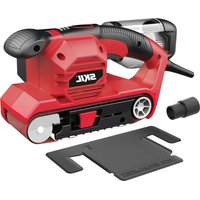
7314 MA - Sander SKIL - Free user manual and instructions
Find the device manual for free 7314 MA SKIL in PDF.



User questions about 7314 MA SKIL
0 question about this device. Answer the ones you know or ask your own.
Ask a new question about this device
Download the instructions for your Sander in PDF format for free! Find your manual 7314 MA - SKIL and take your electronic device back in hand. On this page are published all the documents necessary for the use of your device. 7314 MA by SKIL.
USER MANUAL 7314 MA SKIL
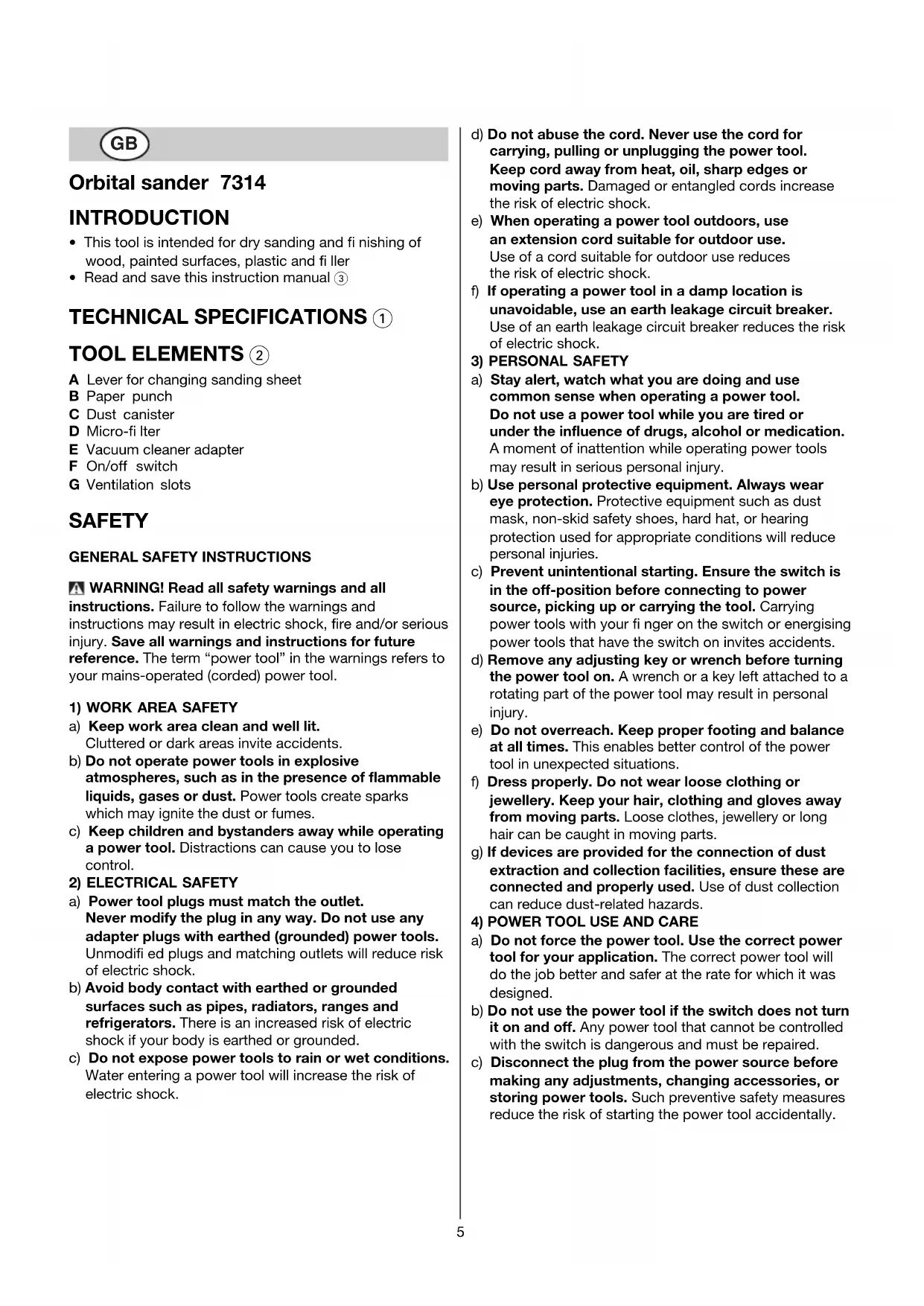
- This tool is intended for dry sanding and finishing of wood, painted surfaces, plastic and filer
- Read and save this instruction manual ③
TECHNICAL SPECIFICATIONS ①
TOOL ELEMENTS ②
A Lever for changing sanding sheet
B Paper punch
C Dust canister
D Micro-fi Iter
E Vacuum cleaner adapter
F On/off switch
G Ventilation slots
SAFETY
GENERAL SAFETY INSTRUCTIONS
WARNING! Read all safety warnings and all
instructions. Failure to follow the warnings and instructions may result in electric shock, fire and/or serious injury. Save all warnings and instructions for future reference. The term "power tool" in the warnings refers to your mains-operated (cored) power tool.
1) WORK AREA SAFETY
a) Keep work area clean and well lit. Cluttered or dark areas invite accidents
b) Do not operate power tools in explosive atmospheres, such as in the presence of flammable liquids, gases or dust. Power tools create sparks which may ignite the dust or fumes.
c) Keep children and bystanders away while operating a power tool. Distractions can cause you to lose control.
2) ELECTRICAL SAFETY
a) Power tool plugs must match the outlet. Never modify the plug in any way. Do not use any adapter plugs with earthed (grounded) power tools. Unmodified plugs and matching outlets will reduce risk of electric shock.
b) Avoid body contact with earthed or grounded surfaces such as pipes, radiators, ranges and refrigerators. There is an increased risk of electric shock if your body is earthed or grounded.
c) Do not expose power tools to rain or wet conditions. Water entering a power tool will increase the risk of electric shock.
d) Do not abuse the cord. Never use the cord for carrying, pulling or unplugging the power tool. Keep cord away from heat, oil, sharp edges or moving parts. Damaged or entangled cords increase the risk of electric shock.
e) When operating a power tool outdoors, use an extension cord suitable for outdoor use. Use of a cord suitable for outdoor use reduces the risk of electric shock.
f) If operating a power tool in a damp location is unavoidable, use an earth leakage circuit breaker. Use of an earth leakage circuit breaker reduces the risk of electric shock.
3) PERSONAL SAFETY
a) Stay alert, watch what you are doing and use common sense when operating a power tool. Do not use a power tool while you are tired or under the influence of drugs, alcohol or medication. A moment of inattention while operating power tools may result in serious personal injury.
b) Use personal protective equipment. Always wear eye protection. Protective equipment such as dust mask, non-skid safety shoes, hard hat, or hearing protection used for appropriate conditions will reduce personal injuries.
c) Prevent unintentional starting. Ensure the switch is in the off-position before connecting to power source, picking up or carrying the tool. Carrying power tools with your finger on the switch or energising power tools that have the switch on invites accidents.
d) Remove any adjusting key or wrench before turning the power tool on. A wrench or a key left attached to a rotating part of the power tool may result in personal injury.
e) Do not overreach. Keep proper footing and balance at all times. This enables better control of the power tool in unexpected situations.
f) Dress properly. Do not wear loose clothing or jewellery. Keep your hair, clothing and gloves away from moving parts. Loose clothes, jewellery or long hair can be caught in moving parts.
g) If devices are provided for the connection of dust extraction and collection facilities, ensure these are connected and properly used. Use of dust collection can reduce dust-related hazards.
4) POWER TOOL USE AND CARE
a) Do not force the power tool. Use the correct power tool for your application. The correct power tool will do the job better and safer at the rate for which it was designed.
b) Do not use the power tool if the switch does not turn it on and off. Any power tool that cannot be controlled with the switch is dangerous and must be repaired.
c) Disconnect the plug from the power source before making any adjustments, changing accessories, or storing power tools. Such preventive safety measures reduce the risk of starting the power tool accidentally.
d) Store idle power tools out of the reach of children and do not allow persons unfamiliar with the power tool or these instructions to operate the power tool. Power tools are dangerous in the hands of untrained users.
e) Maintain power tools. Check for misalignment or binding of moving parts, breakage of parts and any other condition that may affect the power tool's operation. If damaged, have the power tool repaired before use. Many accidents are caused by poorly maintained power tools.
f) Keep cutting tools sharp and clean.
Properly maintained cutting tools with sharp cutting edges are less likely to bind and are easier to control.
g) Use the power tool, accessories and tool bits etc., in accordance with these instructions, taking into account the working conditions and the work to be performed. Use of the power tool for operations different from those intended could result in a hazardous situation.
5) SERVICE
a) Have your power tool serviced by a qualified repair person using only identical replacement parts. This will ensure that the safety of the power tool is maintained.
SAFETY INSTRUCTIONS FOR SANDERS
- Avoid damage that can be caused by screws, nails and other elements in your workpiece; remove them before you start working
- Always keep the cord away from moving parts of the tool; direct the cord to the rear, away from the tool
- When you put away the tool, switch off the motor and ensure that all moving parts have come to a complete standstill
- Use completely unrolled and safe extension cords with a capacity of 16 Amps (U.K. 13 Amps)
- In case of electrical or mechanical malfunction, immediately switch off the tool and disconnect the plug
- SKIL can assure flawless functioning of the tool only when the correct accessories are used which can be obtained from your SKIL dealer
- This tool should not be used by people under the age of 16 years
- The noise level when working can exceed 85 dB(A); wear ear protection
- If the cord is damaged or cut through while working, do not touch the cord, but immediately disconnect the plug
- Never use the tool when cord is damaged; have it replaced by a qualified person
- Always check that the supply voltage is the same as the voltage indicated on the nameplate of the tool (tools with a rating of 230V or 240V can also be connected to a 220V supply)
- This tool is not suitable for wet sanding
-
Secure the workpiece (a workpiece clamped with clamping devices or in a vice is held more securely than by hand)
-
Do not work materials containing asbestos (asbestos is considered carcinogenic)
- When sanding metal, sparks are generated; do not use dust canister/vacuum cleaner and keep other persons and combustible material from work area
- Do not touch the moving sanding sheet
- Do not continue to use worn, torn or heavily clogged sanding sheets
- Wear protective gloves, safety glasses, close-fitting clothes and hair protection (for long hair)
- Dust from material such as paint containing lead, some wood species, minerals and metal may be harmful (contact with or inhalation of the dust may cause allergic reactions and/or respiratory diseases to the operator or bystanders); wear a dust mask and work with a dust extraction device when connectable
- Certain kinds of dust are classified as carcinogenic (such as oak and beech dust) especially in conjunction with additives for wood conditioning; wear a dust mask and work with a dust extraction device when connectable
- Follow the dust-related national requirements for the materials you want to work with
- Always disconnect plug from power source before making any adjustment or changing any accessory WHEN CONNECTING NEW 3-PIN PLUG (U.K. ONLY):
- Do not connect the blue (= neutral) or brown (= live) wire in the cord of this tool to the earth terminal of the plug
- If for any reason the old plug is cut off the cord of this tool, it must be disposed of safely and not left unattended
USE
- Mounting of sanding sheet ④
! disconnect the plug
- mount VELCRO sanding sheet as illustrated
- use lever A for mounting regular sanding sheets
! the dust suction requires the use of perforated sanding sheets
- use paper punch B for adapting non-perforated sanding sheets to dust suction
! perforation in sanding sheet should correspond with perforation in sanding foot
! replace worn sanding sheets in time
! always use the tool with the total sanding surface covered with sanding paper
Dust suction ⑤
For optimal dust pick-up performance
- empty dust canister C frequently (lift lid of canister)
- remove dust out of micro-fi liter D (do not wash micro-fi liter with soap and water)
! do not use dust canister when sanding metal
- Mounting/removing of vacuum cleaner adapter E 6
! do not use vacuum cleaner when sanding metal - On/off switch
- switch on/off the tool by pushing switch F in "I"/"O" position
! before the sanding surface reaches the workpiece, you should switch on the tool
! before switching off the tool, you should lift it from the workpiece
- Holding and guiding the tool ⑦
! while working, always hold the tool at the greycoloured grip area(s)
- guide the tool parallel to the working surface
! do not apply too much pressure on the tool; let the sanding surface do the work for you
- do not tilt the tool in order to avoid unwanted sanding marks
- keep ventilation slots G ② uncovered
APPLICATION ADVICE
- Move the tool in straight movements in line with the grain
- for sanding bare wood surfaces
- for extra fine finishing
- Never use the same sanding sheet for wood and metal
- Recommended sanding sheet grits:
coarse - for removing paint;
for sanding of extremely rough wood
medium - for sanding of rough or plain wood
fine - for smoothing of wood;
for finishing of bare wood;
for smoothing surfaces with old paint
- Use different grit sizes when the working surface is rough:
- start sanding with coarse or medium grit
- finish with fine grit
Vibration level
The vibration emission level stated at the back of this instruction manual has been measured in accordance with a standardised test given in EN 60745; it may be used to compare one tool with another and as a preliminary assessment of exposure to vibration when using the tool for the applications mentioned
- using the tool for different applications, or with different or poorly maintained accessories, may signifi cantly increase the exposure level
- the times when the tool is switched off or when it is running but not actually doing the job, may signifi cantly reduce the exposure level
! protect yourself against the effects of vibration by maintaining the tool and its accessories, keeping your hands warm, and organizing your work patterns
MAINTENANCE / SERVICE
Always keep tool and cord clean (especially the ventilation slots G ②)
- remove adhering sanding dust with a brush
! disconnect the plug before cleaning
- If the tool should fail despite the care taken in manufacturing and testing procedures, repair should be carried out by an after-sales service centre for SKIL power tools
- send the tool undismantled together with proof of purchase to your dealer or the nearest SKIL service station (addresses as well as the service diagram of the tool are listed on www.skileurope.com)
ENVIRONMENT
- Do not dispose of electric tools, accessories and packaging together with household waste material (only for EU countries)
- in observance of European Directive 2002/96/EC on waste of electric and electronic equipment and its implementation in accordance with national law, electric tools that have reached the end of their life must be collected separately and returned to an environmentally compatible recycling facility
symbol ⑧ will remind you of this when the need for disposing occurs
(F
Ponceuse vibrante 7314
INTRODUCTION
For optimal stovoppsuging
VEDLIKEHOLD / SERVICE
TEXHnueCKNE DAHHbIE ①
DETAJI INHCTPYMEHTA ②
A PyuIaI 3aMeHbI IINIOBOOBOHOro IInCTa
B DbipoKoJ
C Pe3epByap dna c6opa nbin
DMKpOcbnIbTp
E AanTep nbIeNecoca
F BbIKIIOUaTeNb BKN/BbIKN
G BeHTnIaHIOHHbIe OTBepCTHa
БЕЗПАСНОCTБ
OCHOBHBIE HHTPYKLIMI NO TEXHNIKE BE30NACHOCTN
BHHMAHNE! PpoHTte Bce yka3aHn HNCTpyKUN NO TEXHNKe 6e3oNaCHOCTn.
YnyuHn, donyueHHbIe npc co6IOJeHN yka3AHn n HNCTpyKcN no Texnke 6e30NaChOcTn, MOryt cTaNb npuHnOH 3NeKtpueeCKoro nopaxHeHn, NoXapa n TAgKeJIbIX TpaBM. CoxpanHrTe 3TN NCHCTpyKcNn yka3AHn dnn 6dyUeero nCNoJb3OBaHHn.
NcnoIb3ObaHoe B HacToIuNX INHCTpyKUHX yKa3aHnX NOHrTne "JNEKTPoHnHCTpymENT"pacnpoctpaHReTcHa 3JekTPoHnHCTpymENT C NtTaHnEM OT CETn (C Ka6eNm NITaHnOT JNEKTPocETn).
1) B30NACHOCTb PABOYERO MECTA
a) Co6IIOJaTe YnCTOTy n NOIDepKINBaHTe HAnLeXaUyIO OCBeUeHHOCtB Ha pa6OeM MeCTe. EecnpAOK Ha pa6OeM MeCTe IIN erO nIOxoe OCBeUeHne MOrT pNBEcTN K HeCuaCTbIM ClyuAAM.
b) He nCnoJb3yIte c 3JIeKTPoHnCTpyMeHTOM BO B3pblBOOAnCHo CpeDe, T.e. B HEnOCpeDCTBeHHoB 6JIn3OCTn OT JERKOBCPNaMeHraUxxCa XnDKoCTe, ra3OB nIN nbIN. B npouecce pa60TbI 3JIeKTPoHnCTpyMeHT NCKpIT IN NCKpbI MoryT BOCPNaMeHHTb Ra3bl NIN nbINbIb.
c)Пи pa6oTe c 3NeKtponHCTpyMeHTOM He donyckaIte Detey nnn noctopohnHex Ha Bawe pa6ooye MeCTO. OTBneHHe BaWero BHMaHm MOxet npuBecTn Knotepe KOHTpOHaD pa6oToH INHCTpyMeHTa.
2) 3JIKTPUeCKA B3ONACHOCTb
a) 7TeNceIbHaB BnIka Ka6eJI NHTAHIN 3JIeKTPoHnHCTpyMeHTa DOJXHa COOTBeTCTBOBaTb PO3eTKe 3JIeKTPocEtH. He BHOCHe HnKaKx 3MeHEnB KOHCTpyKcUHO BnIK. He nCNoJIb3yIte aAnTopbI DnA 3JIeKTPoHnHCTpyMeHTa C 3aUHTbIM 3aEMLHeHem. 3aOBoDcKne 7TeNceIbHbIe BnIKN I COOTBETCTByIOUe IM CETeBBie PO3eTKn CyUecTBEHHO CHNXaIOT BepoRTHOCTb 3JIeKTPoWoka.
b) 36eAte MeXaHueckx KOHTAKTOB CTAKIMN 3a3eMJIeHHbIMN IOBepxHOCTAMN, KaK Tpy6oPBOObl,CnCTeMbI OTONJIeHNA, PINTbI XOLOJNbHNKn. Ipn CoPnIKoCHOBeHm YeIOBeKa C 3a3eMJIeHHbIMN IpEIMTaMn BO BpeMa pa6OTbl INHCTpyMeHTOM BepoTHOCTb 3JeKTPoWoka CyueCTBeHHO Bo3pactaet.
c) O6epaTe 3JKeTPOHCTpymeHT OT BO3dEInCTBn DOxN BnAtn. IonaDaHne BOIbI B 3JKeTPOHCTpymeHT NOBbIaet BEporTHOCTb 3JKeTpueckoro yDapa.
d) NcnoJb3yIte Ka6eJIb cTporo no Ha3HaueHIO. He dOnyckaTeC TAnHyTb I nepeDbIratb 3NeKtpoHnCTpyMeHT 3a Ka6eJIb nn HcNoJb30BaTb Ka6eJIb DnB BtARnBaHn BnIKn n3 Po3EtKn. O6eperaIte Ka6eJIb nHCTpyMeHTa OT Bo3DeiCTBn BBICOKHX TemnepaTyp, Macna, OcPbIX KpOMOK nn DBNXUxxCaCTe 3NeKtpoHnCTpyMeHTa. NOBpeXJeHHb nn CnyTaHHb Ka6eJIb NOBblAaeT BO3MOXHOCTb 3NeKtpuYeCKOrO yDapa.
e) Pn pa6ote Ha yInue nCnoIb3yIte yDInHnteIb, npedHa3NaHeHHbI dIra pa6Otbl BHe NOMEueHna. IcNoIb3OBaHne TaKOro yDInHnteJIa CHNJaET BepoAHTHOCTb 3JeKTPnueckoro ydapa.
f) EcIn HeBO3MOXHO N36EkaTb npMmeHnnaektpoHHCTpyMeHTa B cbIpom NOMEueHN,TO yCTaHaBJIHBAIte yCTpOcTBO 3aunTbI OT yTeKN B 3emJIO. IVcnoJIb3OBaHne yCTpOcTBA 3aunTbI OT yTeKN B 3emJIO CHNXaET PnCK 3JeKTPnueckoro nopaxKeHnA.
3)JIHHA B63ONACHOCTb
a) Bybte BHMMaTeIbHbI, cIeInte 3a TeM, yTo Bbl DeJaete N BblOnnHrIe pa6Oy 06dymHaHO. He nolb3yIteCb 3neKtpoHcTpymeHTOM, ecN Bbl YcTaNN HaxoDnTcB NOJ BO3deNCTBnEM TpaKNBUN3aTOPOB, aIKORON NNI MeINuHcknx npenapaTOB. CekYHdHra Notepa KOHcETpauN B pa6Ote C 3neKtpoHcTpymeHTOM MOXET pPBeCTN K cepBe3HbIM TpaBMam.
b) IcnoIb3yIte cpeCTBa HnDnBnDyaIbHO 3aunTbI. 3aunTHbIe OOK nO6ra3aTeNbHbI. CpeCTBa HnDnBnDyaIbHO 3aunTbI, TAKne KaK npOTNBONblNeBO peCnnpaTOp, HeCKoJIb3aua 3aunTHaOB oByB, WlEM-KACKa, CpeCTBa 3aunTbI opraHOB CnyxA pImMeHIOTC B COOTBeTCTBYUUX yCIOBnM paOToI bO6CTOReTbCTBax N MInHMn3NpyIOT BO3MOXHOCTb NOUYEHHa TpaBM.
c) PpeoTbpaaIte HnpeDHaMepeHHoe BkHIOueHne 3NEKTPoHCTpymeHTa. Npeep NOkHIOueHem 3NEKTPoHCTpymeHTa K 3NEKTPoNTaHHIO y6eINTecB BBIKHOueHHOM COCTOHHN 3NEKTPoHCTpymeHTa. EcnBb npu TpaHCnOpTnpOBKe 3NEKTPoHCTpymeHTa DEpxHtE NaJeuC Ha BBKIIIOUaTeNe IIN BKIIIOUeHHbI 3NEKTPoHCTpymeHT NOkKIOUaTe K CETN INTAHNA, TO 3TO MOKET PnPBecTI K HeCHACTHOM CnyaIO.
d)Bo n36eXaHne TpaBM nepei BKJIIOueHnEM HnCTpyMeHTa ydaIInTe peRyIINpOBOuHbI INrAeHbIKNIOU3 BpaauoJeCraCTn HnCTpyMeHTa.
e) He nepeoueHbAite CBOI BO3MOxHocTn. TBePdo cToIte Ha Horax n ydepxBaIte paBHOBeCne.B TaKOM noJIOXeHN Bbl cMOxTe JyUwe KOHTpOJInpOBaTB IHCTpyMeHT B HeOxNdaHHbIX CNTyaIAX.
f) IcnoIb3yIte noIxoOaIyIO pa6OyIO oDeKdy. He naIeBaIte cbo6oHyIO oDeKdy u ykpaSeHnBolocbl, oDeKda n nepuATKn DoJIKHbI HaxOnITbcn OdaJIbWe OT DBNcxxCra Yacte 3NeKtpOHcTpymEHTa.Cbo6oHaJ ODeXda, ykpaSeHnI INI dIIHHbIE BOLOcbI IerKO MOrYT nonActb B DnBxUncECACTN 3NeKtpOHcTpymEHTa.
g)Пин haNCHn nblneOTcabIBaHoux n nbIe6bOpHBIX npucno6JIeHn y6eIntecb B TOM, 7TO OHN NOdCOeINHeHbI NcNoJIb3yOTcH naJexkaunm obpa3OM.ПиMuHeHne nbIeOTcoCA MOXET CHN3NTb ONaCHOCTN, CO3DaBaAembIe nbIJIbIO.
4) 3KCNJYATAUH N YXOD 3A 3JEKTPONHCTPYMEHTOM
a) He neperpykaTe INHCTpymeHT. NcNoIb3yIte TOT INHCTpymeHT, KOTOpbI INpeHa3HaueH DJIaDHHo pa60tbl. C NOxOAnuIM INHCTpymeHTOM Bbl BbINOHNTE pa60Tu IyUwe HnAdeJXHei, INcNoIb3yI BeCb dnaNa3OH erO BO3MOXHOCTeI.
b) He nCnoJb3yIte mHCTpyMeHT C HeNCnpaBhbIM BblKJIIOUaTeJIeM. INHCTpyMeHT C HeNCnpaBhbIM BblKJIIOUaTeJIeM ONaCeH N NOJLeXHT peMOHTy.
c) BbInbTe BnIky n3 ceTeBOy po3eTKn nepeTEm, KaK npHCTynITb K HAcTPOKe IHCTpyMeHTa, 3ameHe npHaJdJIeXHocTe NII erO yNaKOBke. DaHHaMepa npedocTopoxHOCTn npedOTBpauaeT cnUayaiHoe BKIOueHne IHCTpyMeHTa.
d) XpaHnTe HEnCNoJb3yEmbI 3JeKtpOnHCTpyMeHT B HeOCTynHom dIa DeTeM MeCTe N He I03BOJIaTHe NCNoJb3OBaTb ero JNuCaM, He yMeIOUcIM C Hm O6paTaTbcA HnHe O3HaKOMJehHBIM C HnHCTpyKqueN NO 3KcnJnyatauN.
3NeKTPoHCTpyMeHTb IpeDcTaBJIaHOT CO60OnaCHOCTb B pyKaX HeONbITHbIX NOJb3ObaTeJeI.
e) 3NeKtpoHnCTpyMeHT Tpe6yEt HaJIeXaUero yxOda. PpOBepaIte 6e3ynpueHocTbФyHKuIM NOBHXhIX qacte, JERKOCt bix XOda, CEIOCTHOcTB BCEX qACTe INOTCYTCTBne NOBpeJxDeHNI, KOTOpblE MOrYT HeaTINBHO cKa3aTbcN Ha paBoTe HnCTpyMeHTa. Ppi O6hApYKeHN NOBpeXJDeHN CdaIte HnCTpyMeHT B peMOHT. BoNbIo eHcNo HeCuaCTbIX cIyuaEB CBra3aHO C HeyDoBJIeTBOpNTeJIbHbIM yXoDOM 3a 3NeKtpoHnCTpyMeHTOM.
f) Pexyuüe yactn uHcTpymenta Heo6xOIMPOndepKuBaTb B 3aTOueHHOM uYnCTOM COCTOAHIN. PnHaJIeXaUem yxoJe 3a peXyUIMnpHaIeXHOCrMn C OcTpblm KpOMKaMn OHnpeKe 3aKInHNBaiOTcR u INcTpymENT lyUwe nOJaETCk KOHTPOnIO.
g) IcnoIb3yIte 3JIeKTPoHnCTpyMeHT, npHaIaJIeJXHOCTN, 6NTbI N T.D. B COOTBETCTBIM C DaHHbIMN IHCTpyKUAMM, INCXODN3 OCO6eHHOCTeY cNoBm I xapaKTepa BblIOJIHReMo pa60tbl. IcnoIb3ObaHne 3JIeKTPoHnCTpyMeHTa He nO Ha3NaueHInIO MOKeT pINBeCTN K ONaCHbIM NocJIeDCTBnAM.
5)CEPBNUCHOE OBCJNYXKNBAHNE
a)петаьтейнстуремп на сервсhoe
облуживаиме толбко KBалифиц的一项
песон Any, И сюль зушему толбко полинь;
3аасные ча.
это обсячп сокраен;
6e3oanachoctи лжелков。
YKA3AHNIO B6E3OINACHOCTNДЛA WJINΦOBAJbHbIX MAUNH
I36eraute NOBpeKJeHn, KOtOpbIe MOryT 6blTb Bbl3BaHbI BNHTaMn, rBO3dAMN INpoQHM NJIeMeHTaMn, HaxOJaUcIMcR B O6pa6aTbIbAemOM PpeJMeTe; nepei Haayalom pa60Tb Ix HyXHO ydaNITb
CneIte 3a Tem, cyObI ceTeBOH uHyp He haxoDnncpAOM C DvNcxuMmca DeTaNMy INHCTpyMeHTa;HyXHO BcerDa HappaBnTb 3NeKtpueckn IuHyp K3aDHeuactn INHCTpyMeHTa, NCKIOUaerero 3aXBaTHNCTpyMeHTom
- Ipeed TEM KAK NOLOXHTb INHCTpyMeHT, BbIKIOHITe DBNraTeJIb y6eIHTecB TOM, YTO BCE DBNKUINCeCdETaJI N OJHOCTbIO OCTaHOBUNICb
- IcnoIb3yIte IONHOCTbIO pa3MOTaHHbIe I 6e3onacHbIe ydInHHTeJI, paCCHTaHHbIe Ha TOK He MeHee 16 A
Bcnyae IIO60 3NEKTPnuecko INMexaHnuecko HEnCnpabHOCTH NHEMeIeHHO BbIKNIOHTe IHCTpyMeHT N BBInbTe BNkky n3 po3ETKN
SKIL obecneuBaet haedxHyo paobTy nHcTpymeHTa TOnbKO npn NcNoB3ObaHH COOTBeTCTByIOuei OchactKn, KOTopyIO MOxHO npnoObpctyn y BaWero dInnepa pnpmbi SKIL
- INHCTpymEnr HeIb3a IcNoIb3OBaTb IucaM B BO3paTe do 16 net
- PockoJbky ypoBeH wyMa npn pa6oTe daHHoro HcTpyMeHTa MoKeT npeBbIwAtb 80 dB(A); Bcerda NcNoJIb3yInTe 3aunTy dIny uwei
- Пп NOВрждени Илп pa3pe3aHm cTeBo rO shypa BO BpeM pa60TbI He npKacaiTeCb K HEmy, n HemeДлЕнHO BblbTe BnIky N3 po3eTKn
HnKOrda He nCnoJIb3yIte HNCTpymeHT,ecnI cTeBOI shHyp noBpeXkD;H;Heo6xOdIMO,TO6bl KBaJINΦuIpOBaHHbI CneuaJIcT 3aMeHN cTeBOI shHyp - O6H3aTeIbHo y6eIITecb, YTO HAnpJxHeHne NITAHncoOTBcTCTByET HApJxHeHIO, Yka3aHHOMy HaΦnpMeHHOM wTemnene INCTpyMeHTa (INCTpyMeHTbl, paccuHaHHBe Ha HApJxHeHne 230 B nnn 240 B,MOKHO NOdkIIOUaTb K NITAHnIO 220 B)
-Данн布局HCTpymENT He NOxOuNT IINIPOBaHnBlaaKbIX NOBepXHOCTe
3aKpEnIte 06pa6aTbIBaEmyIO deTalb (O6pa6aTbIBaEMaI DeTaN, 3aФИКсИРОВаHHa NOCpeIcTBOM 3aXIMHbIX YcTpOINCTB INN TnCKOB, 3aKpENIIeTcJIyUHe, HeKeJI IN pR NOMOu pyK)
He 6pa6aTbIbAte MaTePnaIbI c oepKaHneM ac6eCTa (ac6eCT cHTaETcKaHcEporEHom) - Пи оьразовке металлочков поверхноч
наблдадается Иckрөнue; He седует Исплььзоват
pe3epыapom Дяс CBopa пьлл/Nьлесoc, a ТAKж
нельзд ONуСКаТВ рабочую 30Hy NOCTOPOHнx
ЛIOдe N BOCПЯмehЯemble MaTeprnablbl
He cneyuET npKacatbC K DnKyuein C WnDpOBAJIbHOJ NCTa
He cneJeT nCNOIb3OBA Tb N3HOweHHyIO, NOPBaHHyIO nn CnIbHO 3aPr3HHeHHyIO WJIOBOaJIbHHyIO JNCTbl - Heo6xOIMO Hocntb 3aunTHbIe NepuATKn, 3aunTHbIe OyKn, PnToH npIneraIOUyO OJExNy I 3aunTy DJI BOLOC (DJI RINHHbIX BOLOC)
- Пылб OT TaKnx MaTePnaJIOB, KaC CBnHcOBOcoDEpKxAaJa KpaCKa, HeKOToPbIe NopoDbI DepeBa, MInHepaIbI N MeTaN, MoXeT 6bITb BpeDHa (KoHTaKT C TaKoN PbIbIO NIN ee BDbIxHaHne MoXeT CTaTb PnUHHo BO3HNKHOBeHnY OnePaTopa NIN HaxOJaUHXcPraDOM NIIc AAnPeprueckx PeakuN N/ NIN PecnnpaTOPbIX 3a6OJIeBaHn); NaDeBaIte peCnnpaTopu pa6OaIte c PbIyeJaIauHouzM yCTpoIcTBOM PnB KblIOUeHm INHCTpyMeHTa
- HeKoTOpbIe BnDbI nbIIN KJIacCnФUcPuyOTc KaK KaHcEporeHHbIe (HaNPmEep, dyobBaHn 6yKOBaB nIb),OCObeHNO B COUeTaHn C Do6aBkAm N Ia KOnDnIOHOpOBaHn DpeBecnHbI; HAdeBaHTe pecnnpaTop n pa6oTaIe C nbIeYdaJIAIOUM yCTpoNCTBOM npu BKNIOUeHN mHCTpyMeHTa
CneyntpHnHTbIMBaWae CtpaHe TpeboAHm/ HOpMaTnBAM OTHOCNTeBHO NblIN DnA Tex MaTePnaIOB, C KOTOpbIM Bbl Co6HpaeTecb paOtaTb - Pered perylnipOBKo nIcMeHOn npHaJdxKHOteO6raTeJIbHO BblbTe BUNKy 13 ceTeBOI po3eTKI
NCIOJIb3OBAHNE
- YcTaHOBka WIMNOBOOBOHOro JnCTa ④
!pa3bêdHHTb wTeNceJIbHbI pa3bēM
- yCTaHOBnTe HaxJaHbI JnC T VELCRO KaK nOKa3aHo
- nCnoJb3yIe pIyIar A IJIy yCTaHOBKn CTaH,IapTHbIX WInIOBOaJIbHbIX JNCTOB
!cnCTemaOTcCabBaHnIbIIN Tpe6yETNCNoJIb3OBAHnI nepΦopnpoBaHHbIXJINΦOBOUHbIX JNCTOB
- nCnoJb3yIe TbIpOKoB N, YTo6bI npOJaTaB OTBepCTnB WInPObaJIbHbIX JNCTax DJIa OTCocA IIbII
!nepopauBwlnfoBOHybIXNCTAXdoJXHa COOTBeTcBOBaTbp nepopauBBOCHOBAHm WlnmaHHbI
!MeHnTe CtePbIe WJNFOBOUHbIe JINCTbI BOBpeMa
!Bcerda nCnoJb3yIte HnctpyMeHT npu ycNoBuH, yTO WnfoBOOHyI JnCT HOKpbIBaet BcIO WnfoBOOHyIO NOBCpxHOCTb HnctpyMCNTa
OTcacbBaHne nbJIN 5
IЯ obecneueHn ONTmAlbHOrO OTCoca nbIn
-perynapno onyctowaanpe3epbyap nla c6opa nbln C (noHnB KpbIkw KaHnCTpbl)
- ydaHnTe NbIb n3 MKNpOΦnIbTp a D (He npOMbIbAaTe MKNpOΦnIbTp BOIo C MbIOnM)
!He nCnoB3yIe pe3epByapom dJIa c6opa IIJI npu ⅢnΦOBKe MetaIIa
- YctaHOBka/CHTne aanTepa nbilecoca E ⑥
! He nCnoJb3yIe TbIJIecoc npu IJINΦOBKe MetaJIJa
- PepeKnHouaTeIb "BkHIOueHo/BbIKHoueHO"
I"0
I NHCTpymeHT CJeDyET BKNIOHTb DO TOROMOmeHTa, KOrda WlnofoBaJbHnA NOBepxHOCTbDOCTURHT O6pa6aTbIBaEMoro N3dennr
!nepeTeM KaK BbIKIOHTb NHCtpyMeH,ero CnEduyET NOHrTb HaD o6pa6aTbIBaEMbIM H3DeIeHem
- YdepxkBaHne HnHaPbAeHne HcHcTpyMeHTa ⑦
! BO Bpempa60bI, Bcerda depxKnte HNCTpyMeHT 3a Mecta npabnHoro XBata, KOTOpbie 06o3HaehbI cepbIM UBeTOM
- BECTN INHCTPymeT npaannelbHo pa6oey IOBepxHOCTN
!He npKJaIbIbAaTe n3nHrero daBHeHnHa HnHCTpyMeHT;No3BOJNTb WInΦOBaJIbHOI NOBepxHOctn pa6oTaTb 3a Bac
-HeHaKJIOHAnTe INHCTpyMeHT BO N36eKaHne NOBJIeHnHEKeJaTeNbHbIX rJy6OKnx LapaINH
- CoDepKNTe BEHTNIAUHOHHbIe OTBepCTnG ② He 3aKpbITbIMN
COBETbI NO NcNoJIb3OBAHnIO
- PepemelauTe HCTpyMeHT npAmbIMn DBUXKeHnMn NO JINHm pncyHka
- npu wJinpoBKe Heo6pa6OtaHHoN IOBepxHocTn N3 DepeBa
-ДЯЧИСТОЛOTДЕКIN NOBEPXHOCTN
HnKOrda He CneDyET NcNoB3ObTaB OdHn Te Xe WnΦoBaNbHbIe JNCTbI DnA o6pa6OTKn MeTaNlNeCKoN DEpeBraHHoN NOBepxHOcTei - PeKOMeHnyEma3epHnCToCTb WJnFOBaJIbHOrO JNCTa
rpy6bI -ДЯ ydaJIeHnKpackn; DЯ WInΦOBaHnCobepSeHNo Heo6pa6OtaHHoДpeBecnHbI
cpeHn- DЯ WInΦOBaHnHeo6pa6OtaHHo IIN O6pa6OtaHHoДpeBecnHbI
TOHKn -DЯ CrlJaXBaHnDpeBecnHbI; DЯ OTdEJIKN Heo6pa6OtaHHoДpeBecnHbI; DЯ BbIpaBHNBaHnIOBepxHocTeN Co CTapoN KpackoN
- YcTaHOBka HaxDaHOrO JnCTa 4
!BUNHATNBUNky3pO3eTKN
- BCTaHOBITb HaxJaHm Jnct VELCRO nKa3aHo Ha MaJIIOHKy
- BaxiB A KOpNCTyITeCb IJRA BCTaHOBJIeHHA 3BNUaHOrO HxKJaHOrO JnCTa
!ДЯЗмOKТУВАнгпИу NOTPI6HINePФОРOBAHnHxDauHInNCTn
- npo6nBaHHIipOK B dIaH HenepΦopOBaHIX WlidiyBaIbHnx INCtIB Do nINOBNBOHIOHO BiDcIKy
!nepopauizBnaHdauHMyIncti NOBHHa cnibnadaT3 nepoopaieIO Bpo6oui nlaactnHi
!cBocuacHO 3amHIOte HaKdaUHJI NCTN
1 3aBxKn NOBHCtNo 3aKpNBaIte po6Oy nlaCTnHy HaxDaHm nanePOM
- INIOBNOIBOBAHHA 5
Ia3ae3neueHHN ONTmAmlbHOro BIOBnIOBaHHN Nny
- yacto cnopokhnaTe emHictb dna nny C (niDnHimtB Kpnkky emHOcti)
- BnIaJIaTI NII 3 MIKPOcIpINbTpA D (He MNTN MIKPOcIpINbTp i3 MNlOM i BOIO)
!He BnKOpNCToByTe cMHiCTb dIa NmIy npu wliPyBaHHi Metany
MoHTyBaHHa/3HimaHa aanTepa nInococa E ⑥
! He BnKOpncToBMyTe NnIOcO npu 7NIiDyBaHHi MeTany
BmNkau
BKNI/BNKII. IHCTpyMeHT, HATNCKaIOUH/NEpeCTabJIHOuBNMKAUY noIOJXeHHRA "I"/"O"
! nepsh hix npklaactn po6oy nobepxno do Bnpo6y Notpi6HO BKIOuHTN IHcTpymENT
! nepu HIX BnMKHyTu IHcTpMeHT, NOro Tpe6a BiDBeCTNu BiO obpo6JIbOHaHO Rbpo6y
- YtpmMyBaHHI pO6To iHCTpyMeHtOM ⑦
!nicp060t,3aBXdtnPmaTeiHctpymENT3a qactHH3axBaTy ciporoKoIbOpy
- HaprablanTe iHCTpymeHT npaIeIbHo pOboiINOBepxHi
!He npnknaaTe Do iHctpymEnTy dYxE BeJIHKn TnCK
-He haxiIaIe iHcTpymeHT,io6 yHnKaTu He6aXaHnx dIJIaHOK
- TpMaTe BeHTnlauiHi OTBOpN G ② He3aKpTuTmM
TEXHnueCKn NAPAMETPN ①
EJIEMEHTN HA UNHCTPYMEHTA ②
A JIOCT 3a CMAHa Ha IINIOOBbHHa JIcT
B Ⅲa6bnoh 3a oTbOpn
C Pe3epBoapa 3a npax
D MinkpoqnTbpa
E AanTep 3a npaxocmykaKa
F PnepKbcbay 3a BkIIOUbaHe/IN3KJIIOUbaHe
G BeHTnlaaHOnHHte OTBOpN
BE3OJIACHOCT
OBUYKA3AHN3A BE3ONACHAPABOT
BHHMAHHE! IpOoTeTe BHHMaTeJHO BCuKN yka3aHa. Hecna3BaHeTo Ha npBBeJeHnTe no DoNy yka3aHaMoKeJa doBoeDe DO TOKOB ydap, noXap n/nn TeKKn TpaBMN. CbXpaHaBaIte Te3n Yka3aHaHa CNrpyHo MAcTo. 3noJ3BaHnTnNo-dOny TepMH
"eJektpoHCTpyMeHT" Ce OTHacr DO 3axpaHbAHN OT eJektpuYeCKaTa MpeXa eJektpoHCTpyMeHTn (cbc 3axpaHbau Ka6en).
1) B3ONACHOCT HA PABOTHOTO MRACTO
a) Nopdbpkaite pa60HTO cM MCTO n nopeDeHo. Be3npAIBkbT INI HEDoCTaTBHOTOCBETJIeHHe MOrAT Da CNOMORHaT 3a Bb3HNKBAHeTO HaTPyIOBa 3JNONJYKa.
b) He pa6oTeTe c eNeKtpOnHcTpymeHTa B cpea C NOBnWeHa ONaCHOCT OT Bb3HNKBAHe Ha ekCnIO3na, B 6IIN3OCT Do IecHO3aNaJIMN TeHOCtN, Ra3OBe Nnn npaxoo6pa3Hm MaTePnAn. No Bpeme Ha pa6oTa B eJeKtpOnHcTpymeHTnte Ce OTdJIaT NCKpn, KOITOM ORat Da Bb3PiMaEHr Tnpaxoo6pa3Hm MaTePnAn Nnn napn.
c)ДрьхTe Decaи CTpaHnHn JInca Ha 6e3oNaCHO pa3cTOAHHe,doKATO pa6OTnte c eNEKTPoHHCTpyMeHTa.AKO BHMaHneTo Bn 6bJe OTKNoHEHO,MOKe Da 3ary6bTe KOHTpOHaJa eNEKTPoHHCTpyMeHTa.
2) BE30PACHOCT PPN PAEBOTA C ENEKTPNUECKN TOK
a) ΜεπceJIbT ha eNeKtpOnHcTpymeHTa TpI6Ba da e noIxOJaU 3a noI3BaHnA KOHTaKT. B HnKaKbB cIyauH He ce doNycKa n3MeHHe Ha KOHCTpyKuHrTa Ha uencela. Korato pa6oTnte cbc 3aHyJeHn eNeKtpoypeu, He n3NoJ3BaIte aIaITeprn 3a uencela. IOn3BaHTo Ha opRnHaHn N ePcEiN KoHTaKTn HaMaJIra Ba PnCKa OT Bb3HnKBAHe Ha TOKOB yIap.
b) N36aRbaTe Do npHa TaIto Bn Do 3a3eMeHn TeJa, HAp. Tpb6u, OTOpJInTeHNy Upeu, Neu IN XnaJInHnCn. KoraTo TaIto Bn e 3a3eMeHo, PnCKbT OT Bb3HnKBaHe Ha TOKOB ydap e NO-TOJAM.
c)ПпдзВаite eнкгponHCTpyMeHTa cN OТДьжди Bnara.ПонкBaHeTo Ha BOda B eнкгponHCTpyMeHTa NOBniaba onachOCTTa OT TOKOB ydap.
d) He n3noJ3BaIte 3axpaHbAunna Ka6eJ 3a ceJn, 3a KOInTo ToH e npEdbuDeH, HAp. 3a Da Hocnte eJeKtpoHHcTpymEtHa Ka6eJa nn Da n3BaJnte 7enCeJa ot KOnTaKa. IpeNa3BaJTe Ka6eJa ot HarpBaHe, OmacJIbBaHe, dOINp Do ocTpN p6OBe Nn DO NOBHXHN 3BeHa Ha MaUnH. NOBpeJEnn nn ycKaHN Ka6eJyVeJIuYBaT pNcKa OT Bb3HKnBaHe Ha TOKOB yJap.
e) Korato pa6OTnTe c eJENKTPoHnCTpymeHT HaBbH, H3noI3BaIte cAmO yDbJXnIeHN Ka6eHN, npedHa3HaueHn 3a pa6Ota Ha OTKpNTo. H3noI3BaHeTo Ha yDbJnxIeTEn, npedHa3HaueH 3a pa6Ota Ha OTKpNTo, HamaJIraBa PnCKa OT Bb3HnKBaHe Ha TOKOB yDap.
f) Ako ce Hanara n3noJ3BaHeTo Ha eJekTponHCTpyMeHTa BbB BlaXHa cpeDa, n3noJ3BaIte npedna3eH npekbcBau 3a yTeHH TOKOb. N3noJ3BaHeTo Ha npedna3eH npekbcBau 3a yTeHH TOKOb HamaJIra Ba OnaCHOCTTa OT Bb3HNKBAHe Ha TOKOB yIap.
3) B3OONACEH HAHIN HA PABOTA
a)БbTe KOHcHTppaHn, CJeTe BHNMaTeJHO DeIcTBnraTcNIOCTbNbaTe NpeDna3JIbBO npa3ymHo.He n3NoJ3BaTe eNEKtpoHcTpymeHa, KOrato cTe yMopeHn Nn IOd BnHHeTo Ha HApKOTuHn BeUcTBA,aNKoxOJI Nn yOnBaun neKapCTBa.EINMHr pa3ceHHocT npu pa6ota c eNEKtpoHcTpymeHT MoKe Da NmA 3a NocNeCDTBue N3KJIIOHTeHNO TeKKn HapaHbAHn.
b) Pa6oTeTe c npedna3BaIo pa6oTHO o6IeKNo n BnHaRc npedna3Hn OuHJa. HocHeTo Ha noDxOJaU 3a IOn3BaHnEneKtpOnHCTpyMeHT n N3BbPbBaHaTa DeHOCr LNHyN npedna3Hn CpeCtBA, KaTO dNxAteJHa MaCKa, 3dpaBn PbTHO3aTBoPeHn O6yBKn CbC CTaBnJeH rpaJpep, 3aUnTHa KacKa nIu N yM03arLywnTei (aHTnfoH), HamaJIraBa pNcKa OT Bb3NKBaHe Ha TpyIOBa 3IOnOlyKa.
c)ИЗБЯВаTeОпАССТТаOTВКЛЮУВаHeHa eNEKTPOINHCTPymeHTaNo HeBHMmaHne.ПpeДa BKNIOUHTe цENCEJaВ3axpaHbAuaTa МрЕжа,ce yBepHBaIte,Ye NcSKOBnT ppeKbCBAue B NOLOXKeHne N3KJIQUHeO.AKO,KORAto HOCITE eNEKTPOINHCTPymeHTa,IbpxNte npbcta Cn Bbpxu NcCKOBnI ppeKbCBaue,NII aKO NOdaBaTe 3axpaHbAzo HaNPexEHe Ha eNEKTPoINHCTPymeHTa,KORAto E BKIOUeH,CSüeCTByBa ONaCHOCT OT Bb3HNKBaHe Ha TpyIDOba 3JIoONJyKa.
d)ПрдиДаВКЛIOчITE eJENKTPOMHCTPymeHTa,ce yBepaBaIte,у cTe OTcTpaHnIbOT HeRo BCuKn NOMOuHN HNCTpymeHTn IraeHn KJIIOHOBe. ПOMoSeH INHCTpymeHT,3a6paBeH Na BbPTaIcO ce 3BEHO,MOKeДЯпИHIN TpaBMN.
e) He haundehraBte Bb3MOxHocHTne cn. Pa6oTe B CTa6nH0 NOJIOXeHne Ha TANOTO N BB BCEKN MOMENT NOIDbPkaIte paBHOBecne. Taka ue MOxTe Da KOHTpOInpaTe eNEKTPOnHCTpyMeHTa NO-Do6pe I No-6e3ONaCHO, aKO Bb3HNKHe HeOyakBaHa CNTyaCnIa.
f) Pa6oTeTe c noxOaIoo oIeKJIo. He pa6oTe c shpOKn dpexn nn yKpaWeHn. DpbXTe Kocata cn, dpexnte n pbKaBnHa Ha be3oNaCHO pa3cTOrHne OT BbPTaNc 3BeHa Ha eJeKTPoHnCTpyMeHTnTe. ShpOKnTe dpexn, yKpaWeHnTa, bJIrnte KOci MoT a Da 6bDaT 3axBaHaTu n yBNeueHn OT BbPTaNc ce 3BeHa.
g) Ako e Bb3MOxHO n3NoI3BaHeTo Ha BbHuaHa acnnpaunOHHa cncTeMa, ce yBepraBaIe, ye Ta e BKIOUeHa H cyHKcNOHpa N3npaBHO.
N3noI3BaHeTo Ha acnpaunOHHa cncTeMa hAmajpnuCKOBTe, IbJkaun Ce Ha OTdEnJaTa ce npia pa6ota npax.
4) BHIMATEJIHO OTHOUIEHNKbM EJEKTPOHHCTPYMEHTN
a) He npetobapBaIte eNEKtpOHcTpymeHTa. 3no13BaIte eNEKtpOHcTpymeHTte camo cbo6pa3HO TxAHOTo ppeHa3NaHeHne. Ie pa6oTnte no-dO6pe nNo-6e30nacHo, KOraTO n3no13BaTe nOxOJaUNeENEKtpOHcTpymeHT B 3aJaDeHnA OT npOn3BOIDNTeJdnaNa3OH Ha HtOBapBaHe.
b) He n3noJ3BaIte eJNEKtpOnHCTpymeHT, uHTo npckOB npekbcBaue nobpehen. EneKtpOnHCTpymeHT, KOTo HE moKe da 6bJe n3KJIIOUvBaH IN BKJIIOUvBaH NO npEdbnDEHn O T npOIN3BOIDNTeJI HaunH, e OnaceH n Tp8Ba Da 6 peMOHTnpaH.
c)Ппсддпрмнге HabcpoNKte Ha eNeKtpoHnCtpymeHTa,ДаЗamHЯTe pa6OTHn HnCtpymeHTN IdoNbIHNTEHLN IIpncNoCo6JIeHNA, KaKTo N KOrato IpoDbJIXeTIHO BpeMe HMa da n3NoI3BaTe eNeKtpoHnCtpymeHTa,ИЗКЛIOuYBaIte 7eNceJa OT 3axpaHbAaTa MpeKa. Ta3n МRPka IpeMaxBa OAnacHOCTTa OT 3aDeiCTBaHe Ha eNeKtpoHnCtpymeHTa NO HeBHMaHne.
d) CbxpahraBaTe eJektpoHcTpymeHTnte Ha MeCTa, KbdeTo He Morat Da 6bDaT DOCTNRHaTn OT Deca. He donyckaTe Te Da 6bDat N3NoJ3BaHN OT INuca, KOnto He ca 3ano3HaTn C HauHa Ha pa6ota c TExn He ca npOeyIe3n INCtpyKznn. Korato ca B pbueTe Ha HeONiTHN NOTpe6uTEnn, eJektpoHcTpymeHTnte MoRat Da 6bDaT n3KJIIOUHTeJIHO ONaCHN.
e)Подьркайе eNEKTPONHCTPymeHTnte cn rpnxlnBO. ПоверяBaIte Далу NOBnXHNTe 3BeHa ФункюнрAT 6e3yKOpHO,Далу He 3aklnHBat, Далу Има Chypenи Ил NOBpeHEn DeTaJIIn, KOnTO HApUwABaT Ил ИЗMeHAT Функuante Ha eNEKTPONHCTPymeHTa. ПpeДу ИЗNoJ3BaTe eNEKTPONHCTPymeHTa, ce IORpXKeTe NOBpeHNTe DeTaN Da 6bDat peMOHTnpaHm. MHorO OT TpydoBITE 3IonoInyKc CE IbIxAkT Ha HeDobpe IoNDbpxKaHn eNEKTPONHCTPymeHTn upeDi.
f) PnDbpxaTe pexeunTe HNcTpymEnu BNHaUNo6pe 3atoyeH uNCTn. No6pe NDoIbpxaHnTepexeu INHcTpymEnTu C OCTp n Pb6OBe OKa3BaT NO-MaJIKO CbnpOTNBHeHne n Ce BOJAT NO-JeKO.
g)ИЗнOL3BaIte eNEKTPOINHCTPymeHTnte, DOINbHNITeHNITe npMCNOC6JIeHn, pa6OTHNTe INHCTPymeHTn T.H., c6o6pa3HO INHCTpyKUInTe Ha npOn3BOIDHTeN.C DeHocTn n PPOeDpyn, eBENTyaIaHNO ppeDNiCsAHn OT pa3NIuHn HOpMaTHNBn DOkymeHTn.ИЗнOL3BaHeTO Ha eNEKTPoINHCTPymeHTn 3a pa3NIuHn OT ppeDbNdeHnTe OT pON3BOIDHTeN npINIOXeHn IOBNUaBA OnaCHOCTTa OT Bb3HnKBaHe Ha TpyIOBn 3ILONOLyKn.
5)ПОДьРЖАСЕ
a)Дonyckaite peMOHTbT Ha eJektpoHnCTpyMeHTte Bn da ce n3BbPwBa cAmO OT KBaJIuФицpaHn CneUHaNCTn N cAmO C n3NoJ3BaHTo Ha opRnHaJHH pe3epBHN qactN. ITO TO3n HauNH ce rapaHTnpa cbXpAHBaHe Ha 6e3onacHoCTTa Ha eJektpoHnCTpyMeHTa.
YKA3AHN 3A 6E3OПАСHA PABOTA 3A UJINФОВьЧHA MAИNHN
-ИЗбягваite NOBpeи,КонTO MOraT da 6ьдат npuHHeHOT BnHTOBe, rBO3dEN IpyrM MeTaJIHneIeMeHtN B O6pa6oTBaHnI DeTaI;OTcTpaHete rInpeNi Da 3anOChTe pa6Ota
BHHaHn OTbExKaIte 3axpaHbauNt Ka6e IaNeu O T BnXeUInTe Ce 3BeHa Ha eNEKtpOnHCTpyMeHTa; npexBbPneTe Ka6eIaOT3aD, DaNeu OT eNEKtpOnHCTpyMeHTa
-Ппдддддддддддддддддддддддддддддддддддддддддддддддддддддддддддддддддддддддддддддддддддддддддддддддддддд徳сьнл дынгсьнл dынгсьнл dынгсьнл dынгсьнл dынгсьнл dынгсьнл dынгсьнл dынгсьнл dынгсьнл dынгсьнл dынгсьнл dынгсьнл dынгсьнл dынгcьнл dынгсьнл dынгсьнл dынгсьнл dынгсьнл dынгсьнл dынгсьнл dынгсьнл dынгсьнл dынгсьнл dынгсьнл dынгсьнл dынгсьнл
- ⅠЗнлзВаиTe HanьЛHo pa3ВИТи N obe3ОпасEH pa3KЛIOHHTeJIc KanaUNTet 16 A
B CnyaHa Ha eJektpnuecka Nm MexaHnHa He3npabHocT, nKIOUOte He3a6abHO anapaTa n npekbcHeTe KOHTaKa c eJektpnueckata MPeka
- SKIL moxe da ocnrypn 6e3aBapnHa pa6oTa Ha eIeKTPoHnCTpyMeHTa cAmO aKO ce n3NoJ3BaT NOxOJaUHTe KOHCymATNB, KOnTO MOxTe Da hamePte npO oTopuHaHne dNcTpnuByTopn Ha SKIL
MaunhaTa He Tpa6Ba Da ce n3non3Ba OT Iuca no1 16 roDHH - Ppi pa6oTa HnBTo Ha Wyma MoKe Da HaDbuWn 85 dB(A); HocTe aHTtnΦoHn
Ako Ka6eBbT ce nobpeu nn cpexe no BpeMe Ha pa6oTa, He To DoKocBaIte, BeDHaHa N3KJIIOHeTe UenCeNa, HNKOra He n3PON3BaIte INHCTpyMeHTa C nobpeDen Ka6eJ
He n3no3BaIte INHCTpyMeHa, KOraTo e NOBpeDeH HHypt; 3amHaTa My CneBa Da ce N3BbPn OT KBaInΦnUpaHo Niue - PnB BKJIIOUbaHe B KOHTaKTA, ce yBepeTe, ye HNCTpyMeHtA e N3KJIIOUeHa (INCHCTpyMeHtN C HOMHaJIHO HanpeXeHne 230V INIIN 240V MoRat da 6bDat BKJIIOUeHN KbM 3axpaHbAHe C HanpeXeHne 220V)
- YpeIbT He e noDxoJH 3a MOKpo WnfoBaHe
- Obezonacete pa60THMaTePnA (MaTePnaI, 3aTeHnat B 3aTgAu INCTpyMeHT NmB MeHReMe eNo-ycTouHB, OTKoJkOTO aKO Ce DbpxN b Pka)
He 6paobTaBte a36ecToCbDbPkaMATEpnaI (a36ecTbTe KaHcpeoreHeH)
-ПришлincфobaineHaMeTaNceO6pa3yBaNTNCKP;He n3nON3BaTepe3epBOapa 3a npax/npaxOCMyKaYKaTa NdpBXTeDpyrNIIucaNb3pIaMnHRAaCeMaTePnaI n3BbHObceraHaDeiCTBne
HeDOKOCBaIteUINIOBbHnAJIcT
He n3no3BaIte n3HOceHn,pa3KbcaHn nnCnH0 3aMbpcEHnUHPOBbHn JNCTOBe
Hocete npedna3n pbkauu, ouila 3a 6e3onacnoct, npienBaio no TAnoTO oJIeKIO u B3MeTe npedna3n Mepkn 3a Kocata cn (npn Dblra Koca) - PpaxbT OT hAkon MaTePnAIn, KaTo HApnpMep cbDbpxkaa OJIOBO 608, HAKON BINOBE IbpBecNuHa, MInHepaN mMetAn MoKe Da 6bDe BpeDeH (KOHTaKT nnBnWBaHe Ha TaKbB npax Morat Da npuHnHrT aIepnUHN peAkUnn N/nnn pecnPapTopHn 3a6oJIbAHnHa onepaTopa Un CTOIuTE Ha6IIN3O Lnua); n3No13BaIte npOTNBopXoBA macka n pa6oTe c acnPnpauo npaxTa yCTpoiCTBO, KOrato TaKoBA moKe da 6bDe CBbp3aHO
-Опраздени вид范围内 прах с Класицрайни Като Карциногенни (КаTo прах OT дб и 6ук) особeho KORAto ca komбинрани с Добавки за пообраве Ha CBCTOHRHNeTO HaДьрБecIHnHATA; ИЗПОЛЗВaHTe празвОпразхова мackа и работete с acпирпашо празхая усточь, korato takobamоже на 6ыд СБьрзаHO
CneBaiTe DeHnHpaHnTe No BDCn3NcKbHnOTHOCHO 3anpaueHoCTTa 3a MaTePnaHnTe, KOUTKeJaeTe Da o6pa6oTBate
-ПпедиИЗБьршВаHeToHa KaKBaTo Ида 6ино Настpoиka ИлсмЯнHa пинадлжХоct BUNaHn ИЗВaxДаNTe цeпсela OT KOТаКТа Ha eNeKtpo3axpaHbAHeTO
YNOTPEBA
- TocTabeHHe Ha WInpoBbHnA JNCT ④
!n3KJIOUeTe 电encena - MoHTnpaIte ⅦnΦOBbUHnJIncT OT BEJIKPO, KaKTo e NOKa3aHo
- n3noJ3BaIe IocT A 3a MOHTnpaHe Ha obuKHOBeHa Wkypka
!npaxoON3cMyKbaHeTo N3NCKBa N3NoJ3BaHeTo Ha nepΦopupaHn WJINΦOBbHn JNCTOBe - n3nol3BaIte 7a6I0Ha 3a OTBOpn B, 3a da CBbpxKeTe HenepeopnpaHITe 7KypKn C npaxooTBeXJaHeTo
!nepopauraHa wJINFOBbHNA JNCT TpRaBa Da cBBNaAHe C nepopauaTa B WJINFOBbHaTa OCHOBA
!CMEHnTe CBOeBpBMehHO 3HOceHnTe JIOOBbHyJNCTOBE
I n3noN3BaHnTe anapaTa CzJaTa WJINΦOBbUHa NOBbPxHOCT BnHaHn HAnbJIHo NOKpNTa C WJINΦOBbUeH JnCT - N3cMyKBaHe Ha npaxa 5
3a onTmmaJHa pa6oTa npn Cb6npaHeTo Ha ctpyKnte
- peIOBHO n3npa3BaIte pe3epBoapa 3a npax C (NOBdInrHeTe KaNaKa Ha pe3epBoapa)
-OTCTpaHBAIte npaxa OT MKNpOΦnITbpa D (npu YnCTeHe Ha MKNpOΦnITbpa He N3PON3BaIte BOda n canyH)
!He n3noJ3BaIte pe3epBoapa 3a npax npn JnfoBaHe Ha MeTal
MoHTaK/JeMOHTaK Ha aJaTepa 3a npaxOcMyKaUkata E6
!He n3noJ3BaIte npaxocMykaKa npu ⅢnΦoBaHe Ha MeTal
BkIIOUBaHe/I3KJIIOUBaHe
- INHCTpyMeHTA BKNIOUBAIte Yepe3 IpeBKNIOUBAHe He KJIIOuA F B NO3NIN "I"/"O"
! BKJIIOUeTe anapata npedn da DOKOCHe pa6oTHata NOBbpxHOCT
!npeNi Da n3KJIIOUHTe INHCTpymEHTa,TPr6Ba da RA BdInrHeTe OT pa6oTHaT NOBbpxHOCT
-ДьрханHaCoOuBaHe Ha nHCTpyMeHTa ⑦
! no BpeMe Ha pa6oTa, BnHaRn DpbXkTe ypeDa 3a ouBteHata(NTe) B CnBO 30Ha(1) 3a XBaUaHe
-ДвЖerte anapata ycnopeДно Ha pa60HaTa NOBbpxHOCT
!He ynpaxHBAIte Oo6eHN HATNCK Bbpxy anapata; octabeTe WnfoBbHaTaNOBbpxHOCT cama da Bbpwn pa6ota
- He NOBdIraTe anapaTa 3a Da npEDoTbpaTInTe HekEnaTeHnCneDn no pa6OThATo NOBbpxHOCT
- OCTABRITe BEHTINaIauHOHHITE OTBOPn G ② HENOKPNTN
YKA3AHN3A PABOTA
-Движete anapata c npabn Движен no nocoka Ha Hepba
-3aIINIOBaHeHa roLO nbpBO
-3a MHOOΦmHO NOJnPaHe
He n3noJ3BaIte HNKOra eINH n CbUe INnfoBueH NICT 3a DbpBO mMeTJ
- PpenopbUba ce wlnpoBbHa xaptna cbc cneHaTa 3bpHnCTOCT:
eDpa 3aOTcpanHbAHeHa6o; 3aUINFOBaHeHaMHOrO rpy6oDbpBO
CpeHa-3aUINFOBaHeHa rpy6oIraKnO DpBO
fHa 3aNIIpaHeHaDpBO; 3aOKOHATeHNO3rJaXDaHeHaTIO DpBO; 3aNIIpaHeHaNOBpxHOCTn CbC CTapa60
-
3nON3BaIe npn rpanaba nobbpxHocp a3nHa 3bpHMOCT Ha JINΦOBbYHaTa XapTnA
-
3anoyheTe c eDpa n cpeDHa 3bphmOCT
-
3aBbPwTe NOHtypata C cHnHa 3bPnHMoCT
-
HnBO Ha Bn6paun
HnBTo Ha npEaJeHIne Bn6paun,OT6eJ3aHo Ha Tbp6a Ha TOBa pKoBOcTBo 3a ekCnloaTaun e N3MepeHO B CbOTBeTCTBne Cbc CTaHdApTN3npaHn Tect, ONpeDelen B EN 60745;TO moKe Da ce n3NoI3Ba 3a CpabHeHn Ha eDHHNCHTpMEnT C Dpyr N KaTO PpeDbapNTeHa OueHka Ha NOJaRaHeTo Ha Bn6paun PpN I3NoI3BaHeTo Ha INCTpymEnTa 3a NocOueHInTe PpNIOKeHN
- IN3NOJ3BaHeTO Ha INHCTpyMeHTa 3a pa3JIuHn OT Te3N INPNILOXKeHNA INC pUrN, ININ NOIIO NOIDbPjKaHN akcecoapm MOKe 3HaunTeJIHO DA NOBUN HNBOTO HA KOET CTE NOINOXKeH N
- nepnoDHTe OT BpeMe, KORATO INHCTpyMeHTa e N3KJIQUeH INN CbOTBEHO BKIOUeH, HO C HrO He CE pa60TN B MOMeTA MORAT 3HaUNTeHNO Da HaMaJrT HNBOTO HA KOETO CTE NOINOXKeHn
!npedna3BaIte ce oTeefekTnte O T Bn6paunnte, KaTO NOdIbPkaTe HNCTpyMeHTa N akcecoapnte My, na3nte pBcTe cN TOJIIN N opraHn3npate BaunTe MoJeN Ha pa6ota
ПОДДРБЖKA/CEPBN3
-ПодьрkaиTe BINHarн eNEKtpOHNCTpyMeHTa n 3axpaHbauЯ Ka6e YnCTn (OCO6eHO BEHTnlaUOnHHnTe OTBOpn G ②)
- NOUncBaIte NOpEnIc Ce cptyKOB npax C YeTka
!npedn nouchTahe n3KIOueTe uencena
Ako BbnpkeN peneu3HOT npo3BOJCTBO IN BHIMaTeIHO n3nITBaHe Bb3HnKHe NOBpeJa, INCHTpymeHTa Da ce 3aHece 3a peMOHT B OTOpN3npaH cepBn3 3a eJeKTPoHnCTpymeHTn Ha SKIL
- 3aHeCeTe INCTpyMeHTA B Hepa3rIIO6e H BnD 3aeHNO C DOKa3aTeNCTBO 3a NOKyNkATA My B TbprOBCKnO bEKT,OTKbDETo CTe ro 3akynu,INB HnB-6bn3kn cepBn3 ha SKIL (aJpeCnTe, KaKTo n CXemata 3a cepBn3Ho o6cnyXBaHe Ha eNeKTPOINHCTpyMeHTA,MOxTe Da HamePnTe Ha aJpec www.skileurope.com)
ОПАЗВАЕ HA OKOLHATA CРEDA
He n3xBbPnIte eJekTpoypeInte, npncnoc6beHnra TOnaKOBknte 3aeHNO c 6HTOBn OTnaDbu (cAmO 3a CtpanOT EC)
-cb6pa3Ho DnpeKTHBaTa Ha EC 2002/96/EG OTHOCHO n3HOceHn eJektpnueckn n eJektpoHHuypeN n OTPa3RAHeTo N B HauNoHaJIHOTo 3aKOHOdaTeJICTBO n3HOceHnTe eJektpoypeDN CNeDBA Da Ce c6bnapat OTdEHNo I da Ce npedAbaT 3a peUKNIPAhe CnpopeN n3VCKBaHnraTa 3a ONa3BaHe Ha OKONHaTa CpeDa
-3aTOBaYka3Ba CmMBoJIbT ⑧TORaBA KOraTO Tp6Ba Da6bDat yHnIOxKeHN
SK
OPSTAUPUTSTVAOSIGURNOSTI
PAZNJA! Citajte sva upozorenja i uputstva.
Propustikod pridržavanja upozorenja i uputstava mogu imati za posledicu elektrichi udar, pozar i/ili teske povrede. Cuvajte sva upozorenja i uputstva za buducnost. Pojam upotrebljen u upozorenjima "elektrichi alat" odnosi se na elektriche alate sa radom na mrezi (sa mreznim kablom).
1) SIGURNOST NA RADNOM MESTU
a) Držite Vase područje rada Čisto i pospremljeno.
Nered ili neosvetljena radna područja mogu voditi nasrećama.
b) Ne radite sa aparatom u okolini ugrozenoj od eksplozija u kooj se nalaze zapaljve technosti, gasovi ili prasine. Elektrni alati proizvode varnice, koje mogu zapaliti prasinu ili isparenja.
c) Za vreme koriścenja elektrńog alata držite podalje decu i druge osobe. Kod skretanja moźete izgubiti kontrolu nad aparatom.
2) ELEKTRICNA SIGURNOST
a) Utikač za priključak aparata mora odgovarati utićnoj kutijici. Utikač se nesme nikako menjati.
Ne upotrebljavte adaptere utikača zajedno sa aparatima sa uzemljenom zašitom. Ne promenjeni utikači i odgovarajuće uticnice smanjuju rizik od elektricnog udara.
b) Izbegavajte telesni kontakt sa uzemljenim gornjim povrsinama, kao sto su cevi, grejanja, sporeti i rashladni ormani. Postoji povecani rizik od elektric nog udara, ako je Vase telo uzemljeno.
c) Držite aparat podalje od kiše ili vlage.
Prodiranje vode u elektricni aparat povecava rizik od elektricnog udara.
d) Ne koristite kabl da bi aparat nosili, obesili ili ga izvlačili iz uticnice. Držite kabl dalje od vreline, ulja, oštrih ivica iliPokretnih delova aparata. Oštećeni ili zamršeni kablovi povećavaju rizik od elektrinog udara.