
YT-84893 - Saw Yato - Free user manual and instructions
Find the device manual for free YT-84893 Yato in PDF.


| Product type | Gasoline chainsaw |
| Brand | Yato |
| Model | YT-84893 |
| Weight | 3.94 kg |
| Fuel tank capacity | 280 cm³ |
| Chain oil tank capacity | 200 cm³ |
| Cutting length | 30 cm / 12 inches |
| Chain pitch | 9.525 mm |
| Maximum chain speed | 12.95 m/s |
| Chain type | HY-JL9D-0.050*45 |
| Guide bar type | ZLA12-45-509P 12" |
| Engine | Single-cylinder, 2-stroke, air-cooled |
| Displacement | 25.4 cm³ |
| Power | 0.75 kW |
| Maximum engine speed | 8500 min⁻¹ |
| Idle speed | 3000 min⁻¹ |
| Fuel consumption at max power | 0.360 kg/h |
| Noise - sound pressure | 95.4 ± 3.0 dB(A) |
| Noise - sound power | 108.4 ± 3.0 dB(A) |
| Vibrations - front handle | 7.199 ± 1.5 m/s² |
| Vibrations - rear handle | 7.492 ± 1.5 m/s² |
| Spark plug type | L8RTF |
| Fuel | Gasoline/oil mixture 40:1 |
| Safety | Chain brake, anti-kickback device, personal protective equipment required |
| Routine maintenance | Air filter cleaning, chain sharpening, guide bar lubrication |
Frequently Asked Questions - YT-84893 Yato
User questions about YT-84893 Yato
0 question about this device. Answer the ones you know or ask your own.
Ask a new question about this device
Download the instructions for your Saw in PDF format for free! Find your manual YT-84893 - Yato and take your electronic device back in hand. On this page are published all the documents necessary for the use of your device. YT-84893 by Yato.
USER MANUAL YT-84893 Yato
CAUTION! Carefully read the text of the operating instructions before starting up the device for the first time.
natural_image
Close-up of a hand using a screwdriver to adjust mechanical components (no visible text or symbols)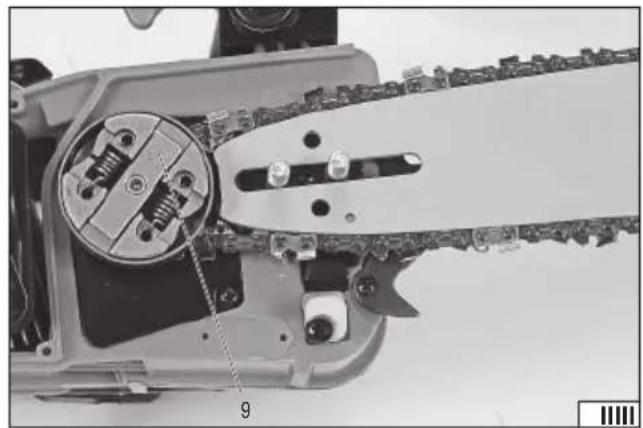
natural_image
Close-up of a mechanical chain-linking device with visible gears and chains (no text or symbols)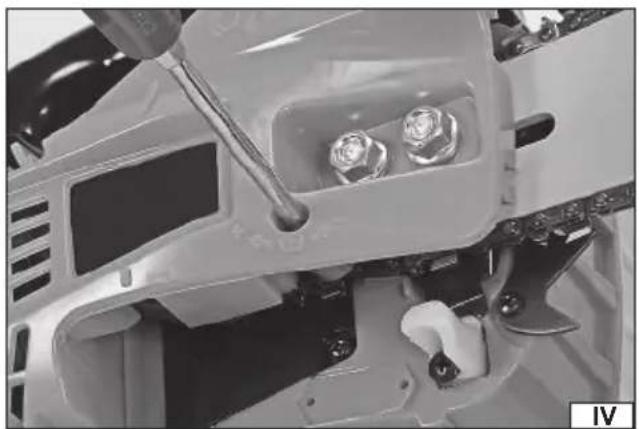
natural_image
Close-up of a mechanical assembly with a tool inserted, showing internal components and no visible text or symbols.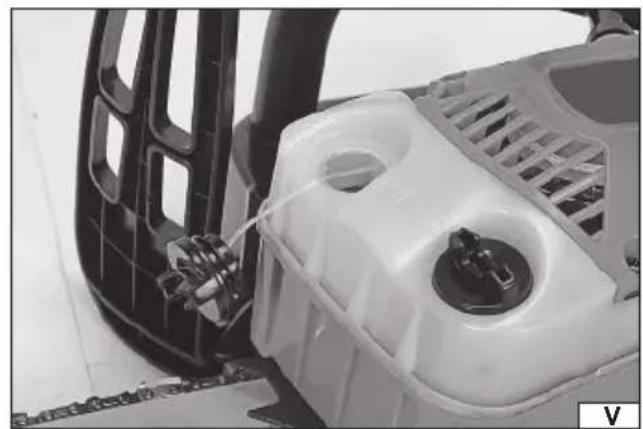
natural_image
Close-up of a white plastic water heater with a black plastic cover and coiled cable, mounted on a metal frame (no visible text or symbols)natural_image
Close-up of a white chain-link robotic device with visible blades and meshing (no text or symbols)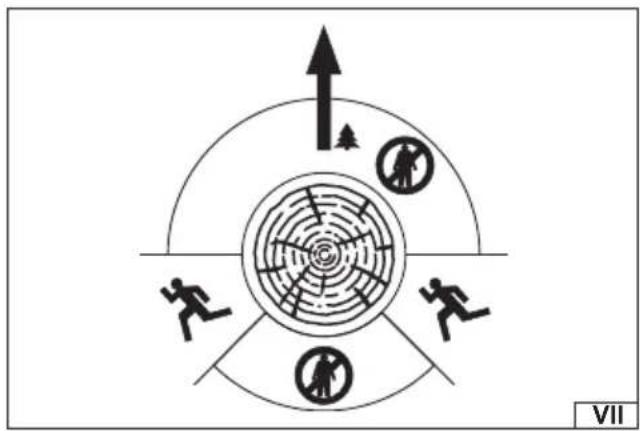
natural_image
Close-up of a hand operating a car steering wheel, no visible text or symbols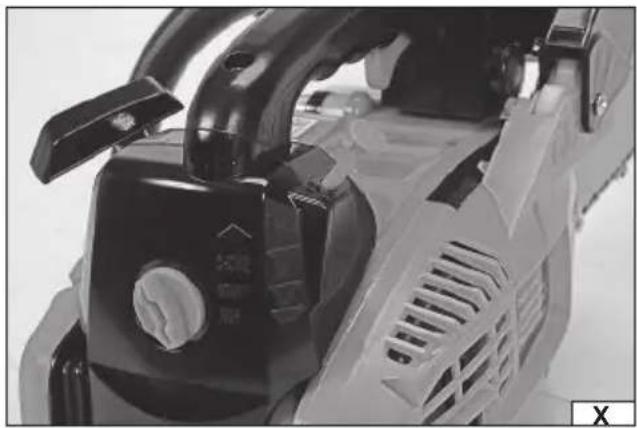
natural_image
Close-up of a mechanical device with a black handle and control knob (no visible text or symbols)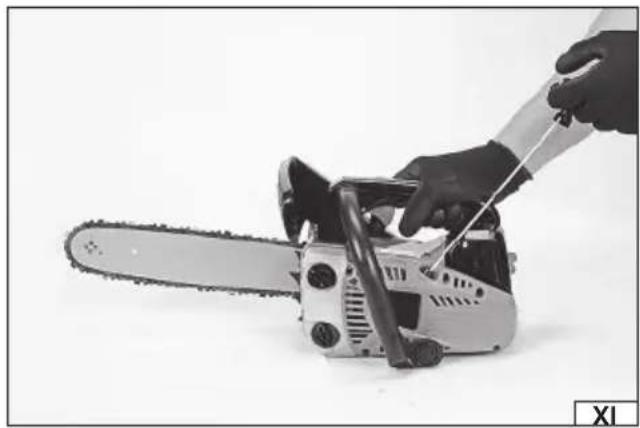
natural_image
Close-up of a hand using a power tool to cut a chain drive (no text or symbols visible)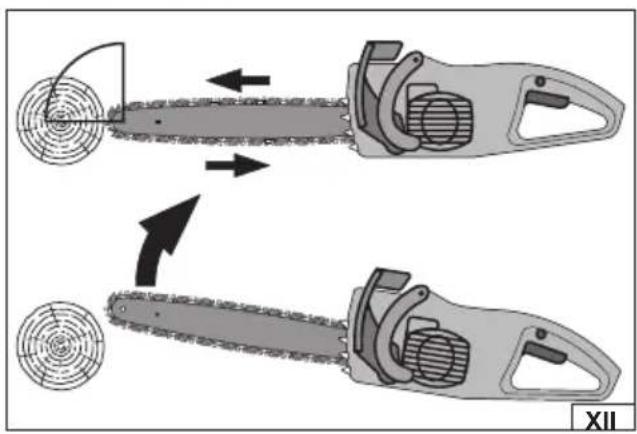
natural_image
Diagram of a chain saw with gear and blade, showing two states of cutting process (no text or symbols)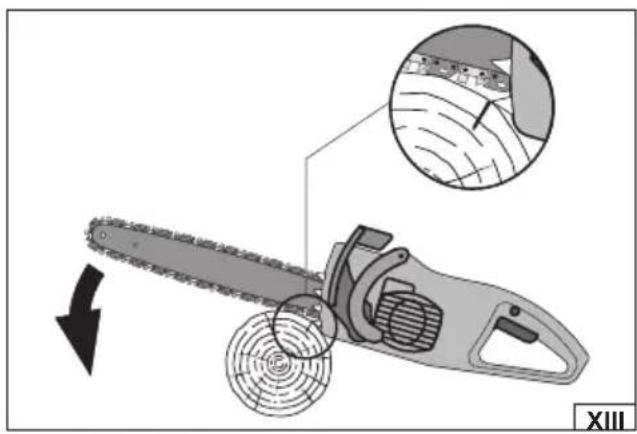
natural_image
Diagram of a chain saw with gear and blade, showing mechanical components and a magnified inset (no text or symbols)PL EN DE RU UA LT LV CZ SK HU RO ES FR IT NL GR BG
natural_image
Two figures climbing a ladder, one with arms raised and the other with a cross-shaped object (no text or symbols)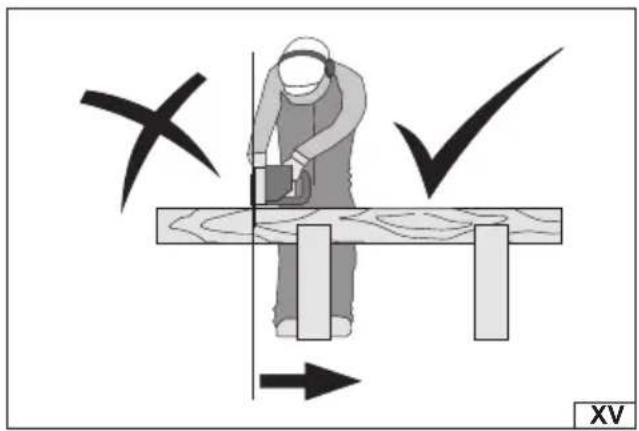
natural_image
Line drawing of two workers in safety gear, one climbing a pole and the other using a harness (no text or symbols)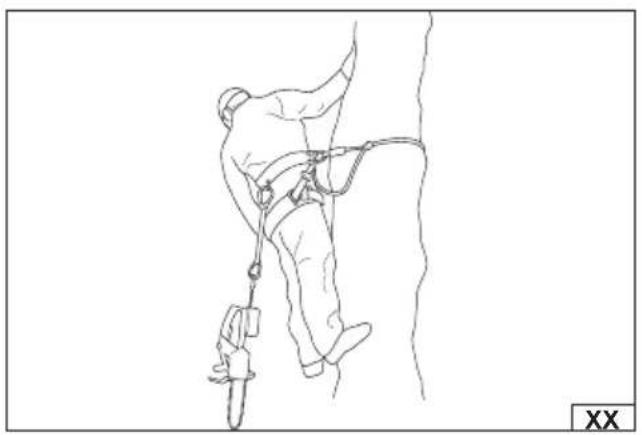
natural_image
Line drawing of a person climbing a rope, no text or symbols present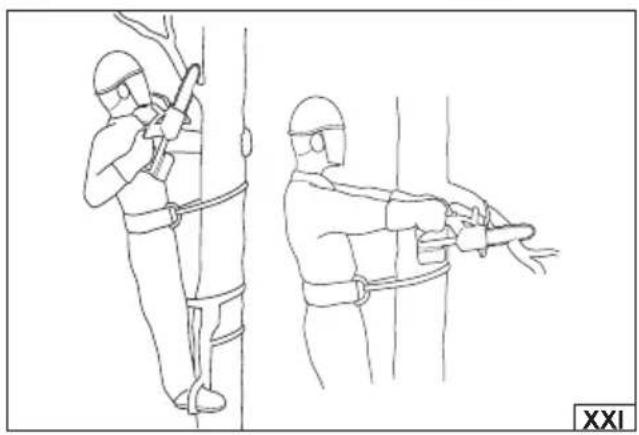
natural_image
Line drawing of two workers in safety gear, one climbing a rope and the other holding a tool, both wearing helmets (no text or symbols)PL EN DE RU UA LT LV CZ SK HU RO ES FR IT NL GR BG
natural_image
Line drawing of a person in protective gear holding a tool, with motion arrows indicating movement (no text or symbols)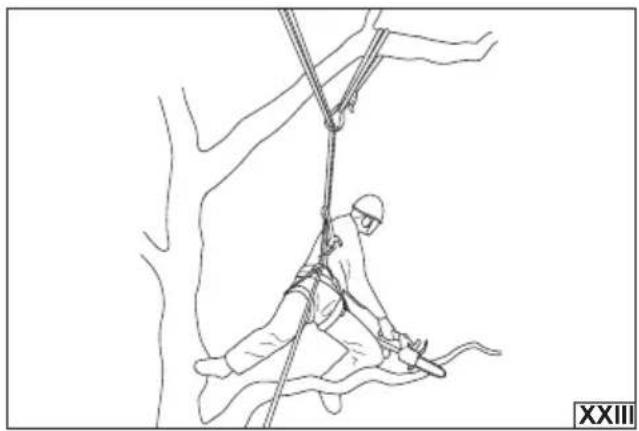
natural_image
Line drawing of a person climbing a tree with ropes and chains (no text or symbols)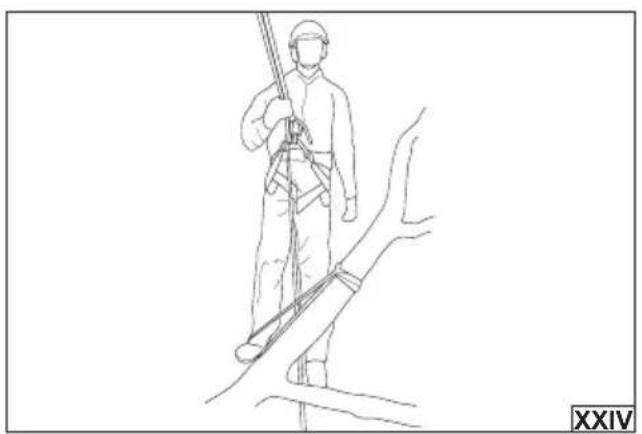
natural_image
Line drawing of a person climbing a rope, wearing safety harness and helmet (no text or symbols)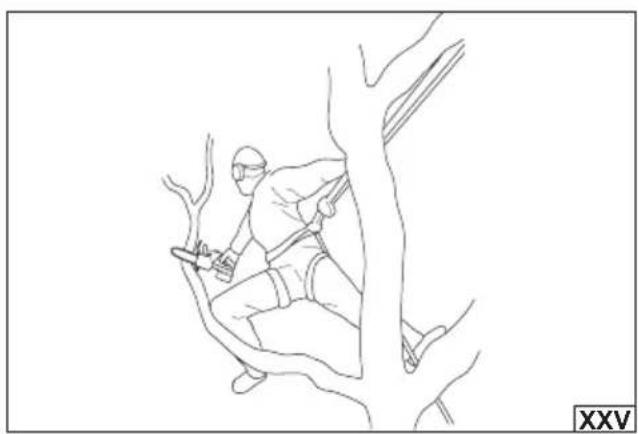
natural_image
Line drawing of a person climbing a tree with a ladder, no text or symbols present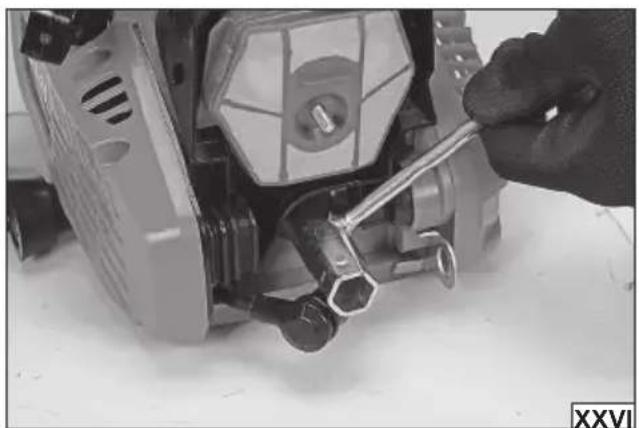
natural_image
Close-up of a hand using a wrench to adjust mechanical components (no visible text or symbols)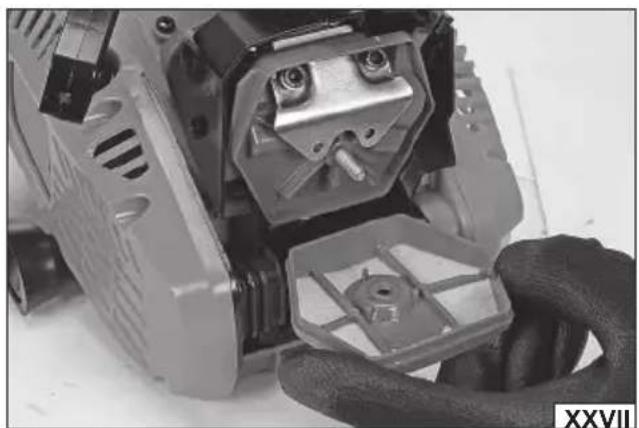
natural_image
Close-up of a mechanical assembly with hands adjusting components (no visible text or symbols)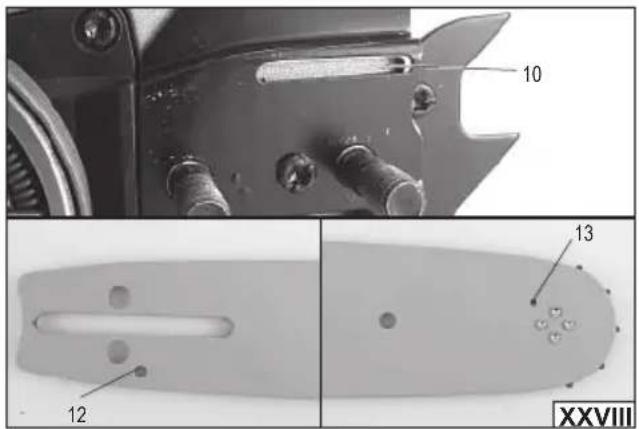
natural_image
Two abstract geometric shapes with black and white blocks, no text or symbols presentPL EN DE RU UA LT LV CZ SK HU RO ES FR IT NL GR BG
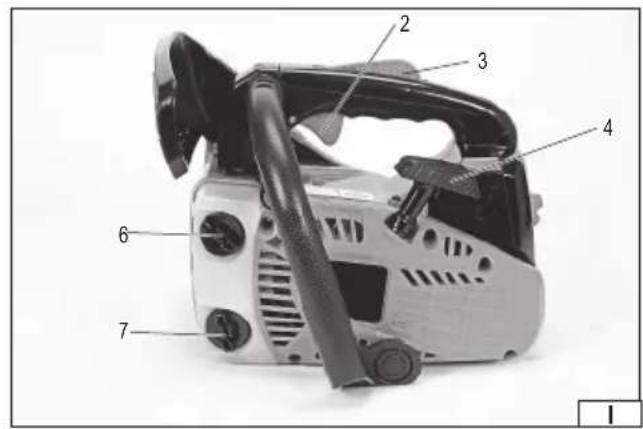
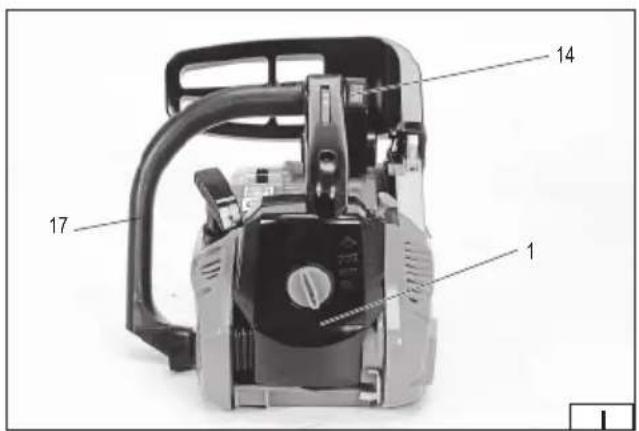
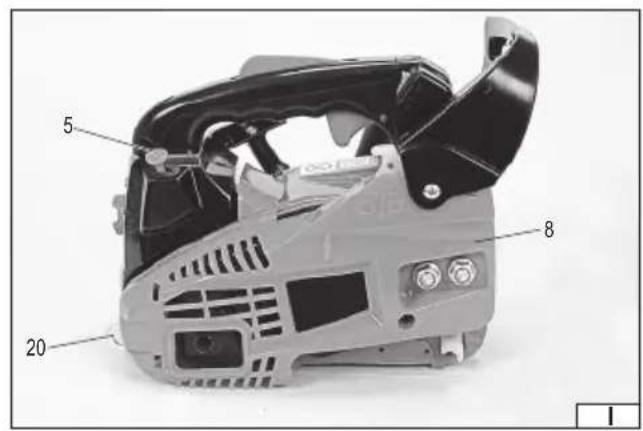
PL
-
air filter cover
-
throttle lever
-
throttle lock
-
starter cord holder
-
choke lever
-
fuel fi ller
-
oil fi ller
-
side panel
-
chain drive wheel
-
oil gap
-
guide bar
-
guide bar oil hole
-
gear lubrication hole
-
power switch
-
kickback brake
-
chain
-
front handle
-
back handle
-
bumper with spikes
-
cord attachment
DE
Read the operating instruction
Wear protective goggles
Wear hearing protectors
Wear protective footwear
Wear protective clothing
Beware of the power saw kickback towards the operator and avoid contact with the tip of the guide bar
Always hold the chain saw with both hands
Do not expose to precipitation
Always hold the chain saw with both hands
Principle of rebound brake operation
Petrol is to be mixed with oil in the following proportions: petrol: oil - 40:1
CHARAKTERYSTYKA WYROBU
PRODUCT CHARACTERISTICS
The chainsaw is only intended for cutting wood. Due to the combustion engine used to drive the saw, it is only possible to cut in open spaces or in suitably prepared rooms. The chainsaw can also be used for cutting trees and taking care of them, but due to the hazard, it is required that an experienced user performs these operations. Proper, reliable and safe operation of the tool depends on appropriate use, that is why you should:
Read the entire instructions manual before the first use of the tool and keep it for future reference.
The supplier shall not be held liable for any damage or injury resulting from improper use of the tool, failure to observe the safety regulations and recommendations of this manual. Using the tool for purposes other than those for which it was intended shall cause the loss of the user's rights to a warranty and statutory warranty.
EQUIPMENT
The chainsaw is supplied complete but requires assembly before first use. The following elements are supplied with the power saw: a chain guide bar, a cutting chain and a guard for the guide bar.
- TECHNICAL DATA
| Parameter Unit Value | ||
| Part no. YT-84893 | ||
| Weight [kg] 3.94 | ||
| Fuel tank capacity [cm] | ^3 ] 280. | |
| Chain lubrication oil tank capacity [cm] | ^3 ] 200. | |
| Cutting length [cm / ,] 30 / 12 | ||
| Chain scale [mm] | 9.525 | |
| Max. chain speed [m/s] | 12.95 | |
| Guide link thickness | [mm] 1.27 | |
| Chain type | HY-JL9D-0.050*45 | |
| Chain guide bar type | ZLA12-45-509P 12" | |
| Number chain drive wheel teeth and scale | 6T x 9.525 mm | |
| Engine | ||
| number of cylinders | 1. | |
| number of strokes | 2. | |
| cooling | Air cooling | |
| Sparking plug type | L8RTF | |
| Engine displacement | [cm^3] | 25.4. |
| Engine power | [kW] | 0.75 |
| Maximum recommended engine speed with cutting system | [min^-1] | 8500. |
| Recommended idling speed | [min^-1] | 3000. |
| Fuel consumption at max. engine power | [kg/h] | 0.360. |
| Noise | ||
| sound pressure | [dB (A)] | 95.4 ± 3.0 |
| power L_WA | [dB (A)] | 108.4 ± 3.0 |
| Vibration level - front / back handle | [m/s^2] | 7.199 ± 1.5 / 7.492 ± 1.5 |
GENERAL SAFETY INSTRUCTIONS
Warning! The chainsaw is of a special type, designed especially for tree care. The chainsaw is intended for use only by a trained operator using carefully designed work safety systems. The chainsaw may only be used for tree care if the above conditions are met. The chainsaw is designed to be held with two hands just like a traditional chainsaw.
WARNING! When operating the tool, it is recommended that you always observe basic safety principles, including those listed below, to reduce the risk of fire, electric shock and avoid injury.
Read the entire instruction manual before operating the tool and keep it.
CAUTION! Read all the following instructions. Failure to do so may result in electric shock, fire, or personal injury.
OBSERVE THE FOLLOWING INSTRUCTIONS
Place of work
EN
Keep the workplace well lit and clean. Clutter and poor lighting can cause accidents. Do not operate the equipment indoors. Fuel fumes and vapours are toxic. Poisoning them can lead to accidents and cause serious injuries. Do not allow children and third persons to enter the workplace. Loss of concentration can result in loss of control of the tool.
Occupational safety
Do not modify the tool or accessories. All accessories and parts of the tool must be clean, undamaged, in good working order and intended for use with the type of tool. Avoid body and tool contact with earthed surfaces such as pipes, radiators and refrigerators. Grounding of the body increases the risk of electric shock. Do not expose the device to any precipitation or moisture. Water and moisture getting into the tool increases the risk of damaging the tool and injuring yourself. Do not overload the tool. Use the right tools and accessories for the type of work; work is then more efficient and safer. When lending, selling or in any other way transferring a tool to another person, always include the operating instruction with it.
Personal safety
Proceed to work in good physical and mental condition. Pay attention to what you are doing. Do not work when tired or under the influence of drugs or alcohol. Even a moment's distraction while working can lead to serious personal injury. Wear personal protective equipment. Always wear protective goggles. The use of personal protective equipment such as dust masks, slip-resistant safety shoes, helmets and hearing protectors reduce the risk of serious personal injuries. Avoid accidentally switching on the tool. Ensure that the switch is in the "off" position before servicing or transporting the tool. Holding or carrying the tool with your finger on the switch or when the switch is in the "on" position can lead to serious injury. Before turning on the tool, remove any spanners and other tools that have been used to adjust it. A spanner left on rotating parts of the tool can lead to serious injury. Maintain balance. Maintain proper posture at all times. This will allow for easier control of the tool in the event of unexpected situations during operation. Wear protective clothing. Do not wear loose clothing or jewellery. Keep hair, clothing and work gloves away from moving parts of the tool. Loose clothing, jewellery or long hair can catch on the moving parts of the tool. Use dust extraction or a dust container if the tool is equipped with one. Ensure that they are connected correctly. The use of dust extraction reduces the risk of serious injury.
Use of the tool
Do not use the tool in a way contrary to its intended use. Do not overload the tool. The right choice of tool for a given job will ensure more efficient and safer work. Remove the spark plug before adjusting, replacing accessories or storing the tool. This will avoid accidental activation of the tool. Store the machine in a place inaccessible for children. Do not allow people untrained in the use of the tool to work. The tool can be dangerous in the hands of untrained operators. Ensure that the tool is properly maintained. Inspect the tool for mismatches and backlash of moving parts. Check that no part of the tool is damaged. If defects are found, they must be repaired before being used again. Many accidents are caused by improperly maintained tools. Keep the cutting tools clean and sharp. Properly maintained cutting tools are easier to control during operation. Use tools and accessories in accordance with the above instructions. Use tools as intended, taking into account the type and working conditions. Using tools for other work than they were designed for increases the risk of dangerous situations occurring. Make sure of the direction of rotation of the tool. Unexpected direction of rotation can cause dangerous situations. Do not bring your hands or other parts of your body close to the moving blades. The cause of the greatest number of injuries during the use of the tool is the contact of moving blades with body parts. Adopt an appropriate working posture and be prepared for an unexpected reaction from the tool. Only original accessories may be used. The use of inappropriate equipment can lead to serious injury.
Repairs
Only repair the device at an authorised centre using only original spare parts. This will ensure the proper safety of the device. Do not clean the housing, rubber and plastic covers with petrol, solvent or other corrosive liquid. Use only high-quality products to maintain the tool. It is forbidden to use means other than those listed in the operating instructions.
ADDITIONAL SAFETY INSTRUCTIONS
It is forbidden to expose the chainsaw to precipitation and use it in an atmosphere of increased humidity. It is also forbidden to use the chainsaw in an atmosphere with an increased risk of fire or explosion.
Avoid contact with grounded, conductive, and non-insulated objects such as pipes, radiators, or refrigerators during operation.
When not in use, store the device in a dry, secured place inaccessible to unauthorised persons.
Use the cutting chain adapted to the given load. Do not use cutting chains designed for light or heavy-duty work.
Always wear protective gloves when replacing, repairing, and adjusting the cutting chain.
When transporting the chainsaw, make sure it is switched off. A guard must be fitted on the cutting chain guide bar. Carry the chainsaw with the guide bar pointing backwards and keep the muffler away from the body.
Always wear rigid helmets and safety helmets when working.
Always wear eye and face protection, this will protect the eyes, face and respiratory tract from dust, fumes and pieces of wood generated during cutting.
Always wear suitable protective clothing adhering to the body. Use protective gloves and hearing protectors.
Operate the chainsaw holding it with both hands. Hold the rear handle with the right hand and the front handle with the left hand.
EN
Exposure to prolonged vibration can cause nerve damage, especially in people with circulatory disorders. If the following are observed during work: pain, numbness, pallor in the hands, wrists and/or arms, stop work immediately and consult a doctor. You can reduce the risk of these symptoms by following the recommendations below: keep your hands warm when the workplace temperature is low, use regular breaks, move your hands during breaks to stimulate blood circulation.
When working, secure loose pieces of wood so that they cannot move, for example, by placing them in a saw-horse. Avoid cutting wood that lays on the ground. Avoid processing wood that is not protected against movement during cutting.
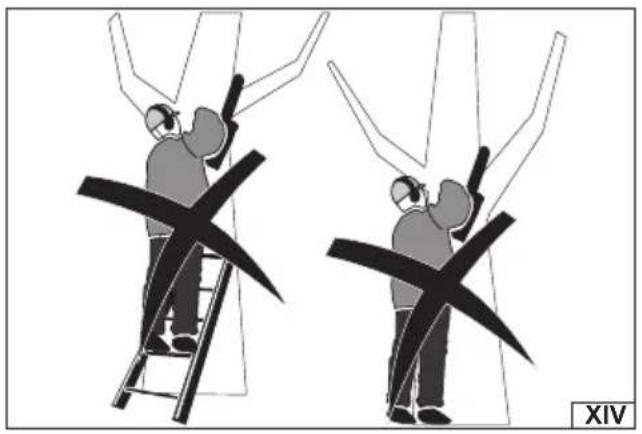
Do not hold the chainsaw above your arms during operation. Do not operate the chainsaw while standing on the ladder. During work, adopt such a posture to eliminate the need to extend the hands to the full length.
Keep the chain clean. The chain must be sharpened and lubricated. This will ensure more efficient and safer work. The chain can be sharpened in a specialised service centre. Check the condition of the chain before each use. In the event of cracks, broken teeth, or any other damage, replace the chain with a new one before starting work.
Keep the chainsaw's handles clean and free of any oil or grease.
In case of finding any damaged or broken chainsaw parts, stop working or do not start working. It is essential to replace damaged parts before starting work.
Use the chainsaw as intended. The chainsaw is designed only for cutting wood. When working, watch out for metal elements or stones that may be in the processed wood.
Use original spare parts only. Failure to use original spare parts may increase the risk of failure and lead to injuries. Have your chainsaw repaired only by authorised service centres. using original spare parts. This will minimise the risk of accidents and damage to the equipment.
Store the chainsaw in a well-ventilated dry and closed room. When storing the chainsaw for an extended period of time, empty the fuel and oil tanks. The chainsaw must also be subjected to the maintenance procedures described in the section CHAINSAW MAINTENANCE.
The tool produces an electromagnetic field of low intensity. The electromagnetic field may affect the work of electrical equipment in the vicinity of the tool including pacemakers. Before starting work, it is recommended to consult a physician and/or a pacemaker manufacturer.
CHAINSAW OPERATION
Preparing the chainsaw for operation
The guide bar, cutting chain and spiked bumper must be fitted before first use.
All chain assembly and adjustment should be carried out with protective gloves.
To do this, make sure that the kickback brake is in the rear position. This will facilitate the removal and installation of the side panel. Unscrew both fixing nuts and remove the side panel.
Caution! On some chainsaw models, an oil system sealing plate may be fitted, for transport. Before fitting the guide, remove the plastic sealing plate fitted to the side panel fixing screws. Leaving the plate will prevent lubrication of the chain and risks irreparable damage to the saw.
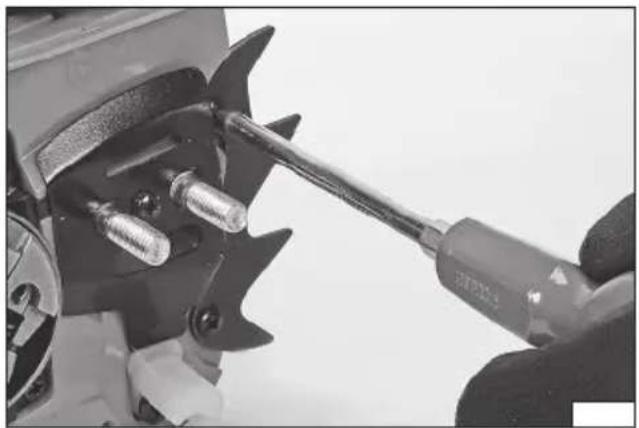
Using two screws, screw on the bumper with spikes. (II)
Fit the guide bar and chain (III). The chain should be fitted according to the direction marked on the links. The chainsaw body shows the link symbol and the direction of rotation of the chain. The chain links on the bar must face the same way as on the symbol on the chainsaw housing. Once you have ensured that the chain is correctly positioned in the bar groove, fit the side panel so that the tension adjustment projection hits the correct hole on the bar.
Screw in the side panel nuts, but do not tighten them yet.
Adjust the chain tension (IV), to do this hold the top of the bar and at the same time turn the chain tension screw until the chain is in the bottom part of the bar. Turning in the direction marked “+” increases the chain tension and turning in the direction marked “-” decreases the chain tension. Tighten the fixing nuts and check the chain tension by moving the chain by hand.
Readjust the chain tension if necessary. Once correctly adjusted, tighten the fixing nuts.
Caution! The new chain will stretch as it works. Check chain tension frequently. A loose chain can cause damage to the bar and the chain itself.
Make sure there is lubricating oil in the container before switching on the saw. The oil level cannot be lower than the minimum indication.
Ensure that the kickback brake lever is in the rear position.
Refuelling (V)
A fuel mixture intended for two-stroke engines is used to drive the chainsaw. The use of pure fuel is prohibited. Petrol should be mixed with oil in the following ratio: petrol : oil - 40 : 1.
The mixture should be mixed before pouring into the fuel tank. Mixing and pouring fuel should be carried out away from fire sources. Never smoke while refuelling. Refuelling must be carried out at a distance of at least 3 metres from the area where the chainsaw is started and used.
In order to protect the engine, use good quality unleaded petrol and good quality oil for two-stroke air-cooled engines. Do not use
EN
oil intended for four-stroke engines. Before refuelling, lay the chainsaw down so that the fuel filler is facing upwards. The use of funnels, pouring devices etc. is recommended to reduce the risk of fuel spillage when filling the tank. In case of spilling the fuel, thoroughly wipe off its residues before starting the chainsaw.
Topping up chain lubrication oil (VI)
Use a good quality oil designed for chainsaw chain lubrication.
It is forbidden to use the chainsaw with the empty oil tank. This can damage the chain, guide bar, and mechanisms of the chainsaw.
Switch off the chainsaw before refilling the oil.
It is recommended to start and operate the chainsaw at least 3 meters from the place where the oil topping-up procedure was performed. It is forbidden to use worn-out motor oil. It does not fulfil its purpose, which can lead to damage to the chainsaw mechanism.
Perform oil topping-up away from fire and heat sources.
In case of spilling the oil, thoroughly wash off any debris before connecting the chainsaw to the power supply.
You can regulate the amount of oil the chainsaw lubricates the chain, using the oil metering knob on the underside of the chainsaw.
Preparing the workplace
Before cutting with the chainsaw, properly prepare the workplace to minimise the risks associated with the chainsaw's operation.
Make sure that only authorised persons are present at the workplace.
In the case of tree felling, danger zones and escape routes should be designated. A zone with a radius of 180^ around the planned tree fall plane and a zone with a radius of 90^ in the opposite direction to the planned tree fall plane are treated as danger zones.
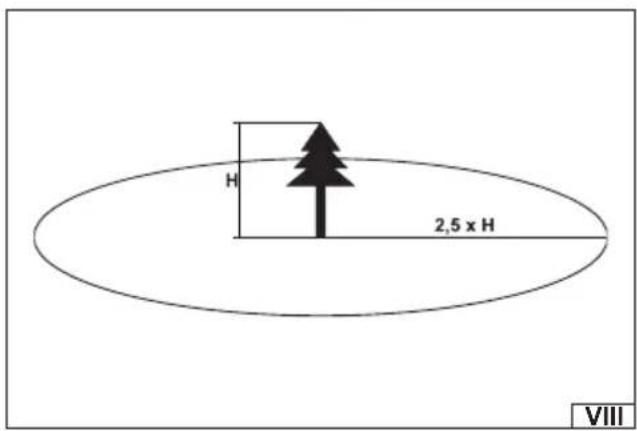
The remaining zones form escape routes (VII). Remember that a falling tree can also overturn other trees. Therefore, the next workstation must not be closer than 2,5 x the height of the felled tree (VIII).
Ensure good visibility from the workplace; that is why take special care when cutting trees in difficult terrain conditions, e.g., mountains.
It is forbidden to start work during precipitation and in case of high air humidity, e.g., fog.
Wear protective clothing and personal protective equipment.
Before starting cutting, perform a trial wood cut in safe conditions, e.g., cutting wood placed on the saw-horse.
Avoid cutting wires, young trees, and wooden beams.
Do not stand on cut wood.
Starting and stopping the chainsaw
Make sure that the kickback brake is in the rear position.
Remove the guard from the guide bar and chain.
Do not start the chainsaw without the following parts being correctly fitted: guide bar and chain.
Set the switch to the on - I position.
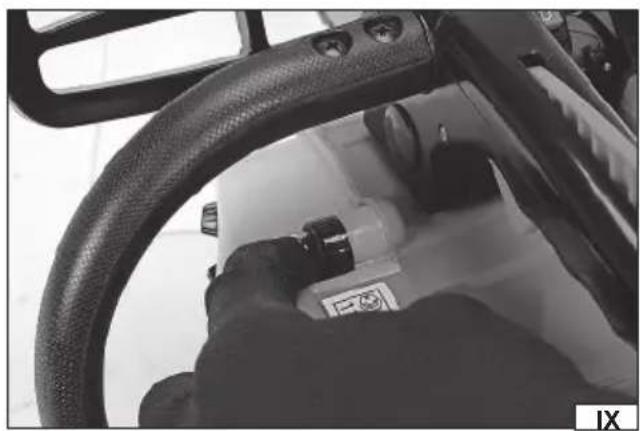
Slowly and fully press the fuel pump 7-10 times. The fuel should be visible inside the pump (IX).
Pull the choke lever out and move it to the CHOKE (X) position.
Rest the chainsaw on a stable surface, ensuring that the chain and bar do not touch anything. Hold the handle with your left hand while pulling the starter rope vigorously with your right hand. (XI)
Caution! Do not start the chainsaw while holding it in your hands. The chain can touch body parts and cause serious injury.
This will allow the fuel to be distributed around the saw's fuel system. Then close the choke lever to the START position and pull the starter cord vigorously once more. When starting the engine, let go of the starter cord. Allow the engine to warm up with the choke lever slightly extended and then close it fully to the RUN position.
If you hear any suspicious sounds or vibration, switch the chainsaw off immediately.
To switch off the chainsaw when you have finished working, release pressure on the handle lever and let the engine idle for a while. Then switch it to the off - O position and wait for the chain to stop. Once the chain has stopped, the chainsaw should be serviced.
Before starting work, it is still important to check the extent to which the chain is oiled. To do this, check at the medium speed setting that the chain splashes oil slightly. With the chainsaw switched on, tilt the guide bar slightly downwards. And if an oil stain is visible under the bar after 1 minute, this indicates proper chain lubrication. If it is necessary to adjust the amount of oil dispensed, it must be adjusted using the knob on the underside of the saw.
Chain lubrication oil and fuel should wear off fairly evenly. Each time you top up the fuel, you should also top up the chain lubrication oil.
Working with the power saw
Once all the steps described in the above sections have been completed, you can start using the saw.
Check the correct operation of the kickback brake before each start of the saw. To do this, hold the chainsaw horizontally, let go of the front handle and let the guide hit a stump or piece of wood. The height from which the chainsaw must be let go depends on the length of the chain guide. If the brake does not work, have the chainsaw repaired and adjusted at an authorised repair shop.
EN
If the brake is applied during operation, let go of the handle lever and allow the engine to idle. Otherwise, the running engine will heat up the clutch disc, which can lead to damage to the saw.
Persons who intend to work with a chainsaw for the first time should seek advice on work and safety from a qualified chainsaw operator before starting work. The first works with the chainsaw should consist of cutting the prepared logs placed on a saw-horse.
During work, observe the basic occupational safety principles. Consider also the possibility of kickback in the operator's direction. The chainsaw may kickback in the operator's direction when the cutting chain encounters resistance. To reduce this risk:
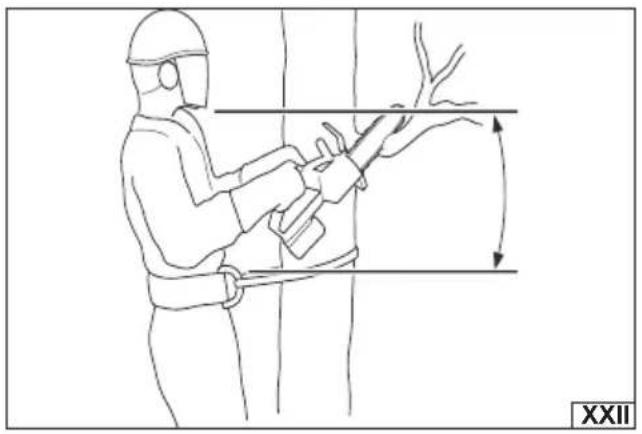
Pay attention to the placement of the guide bar top when cutting. It is forbidden to cut with the upper quarter of the guide bar top (XII).
Cut only with the chain which moves along the bottom part of the guide bar. When cutting wood, the lower bumper tooth can be used as a hook for the chainsaw's axis of rotation (XIII).
Only apply the started chainsaw to the wood to be cut. Do not start the chainsaw after having applied it to the wood being processed.
When working, do not lift the chainsaw to arm height or higher (XIV).
Do not stand in the cutting plane. This will reduce the risk of injury in case of kickback (XV).
During work, always hold the chainsaw with both hands.
Make sure that the chain is always sharp and appropriately tensioned.
TIPS FOR WORKING WITH THE CHAINSAW
Take a comfortable position and ensure full freedom of movement when cutting.
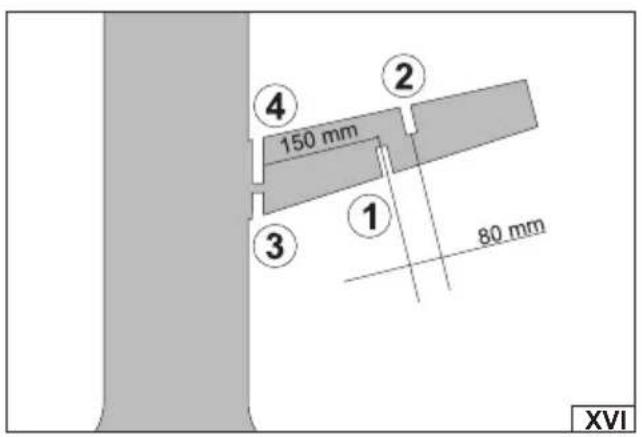
When cutting branches and boughs, do not cut them at the trunk, but at a distance of about 15 cm from the trunk. Make two cuts to a depth of 1/3 of the branch diameter, approximately 8 cm apart – One cut from below, one from above. Then cut the branch just at the trunk to a depth equal to 1/3 of the branch diameter. Finish the process by cutting the branch at the trunk from above. Do not cut the branches by cutting from the bottom (XVI).
When felling a tree, the felling site must be prepared in advance as described under “Preparing the work site”. Additionally, prepare a safe substrate for tree felling.
When a tree falls, stand at a safe distance to the plane of the tree fall, on the side.
When choosing a fall path for the tree, factors such as terrain, the tree's centre of gravity, the distribution of the tree's crown, and wind direction should be taken into account.
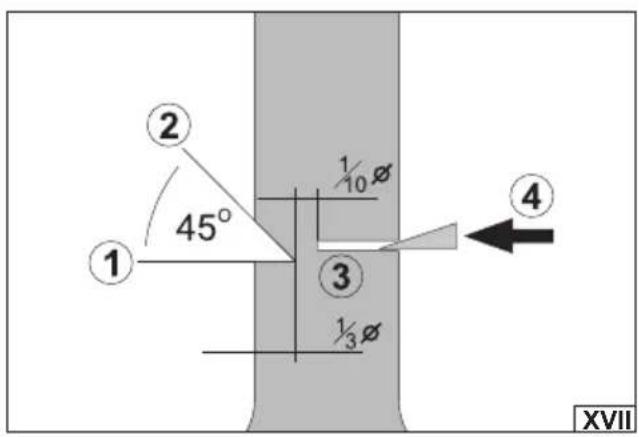
To properly prepare the tree for felling, make a cut in the trunk to a depth of 1/3 of the trunk diameter on the side to which the tree is to fall, and then cut another at an angle of 45 degrees to the first so as to cut a “wedge” in the trunk. On the other side of the trunk, start cutting perpendicular to the trunk axis, slightly higher (approx. 4 cm) than the cut “wedge” base. Do not cut the trunk. Leave a section of approximately 1/10 of the trunk diameter. Then insert the wedge for splitting the tree into the cut on the opposite side to the planned side of the tree fall (XVII).
If the tree already falls during cutting, pull the chainsaw out of the trunk and move away along the prepared escape route to a safe distance.
If the chainsaw gets stuck while cutting the trunk, never leave it in this position with the motor running. Switch off the chainsaw engine and use wedges to extract the chainsaw from the trunk.
When cutting a tree that has already been felled into pieces, follow the rules indicated below.
Place the wood on the saw-horse or a stand so the cut piece can freely fall off to the ground without causing the chainsaw to jam. If the chainsaw is jammed, proceed as described above.
Do not touch the chain and guide bar of the chainsaw to the ground or allow them to become soiled with earth.
It is forbidden to use a chainsaw to form hedges or shear bushes.
When working on a slope, stay above the cut wood.
Exercise particular caution when cutting a tensioned tree and entrust this activity to a qualified lumberjack, if possible.
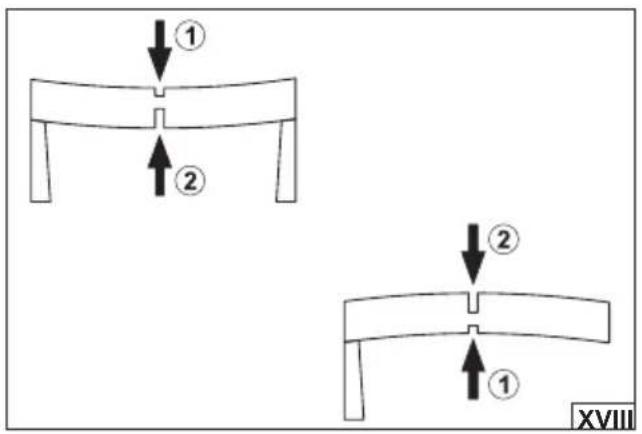
When cutting tensioned wood and supported on both ends, cut it from above to a depth of 1/3 of the diameter, and then finish the cut from the bottom.
If the wood is supported only at one end, cut the wood from the bottom to a depth equal to 1/3 of the diameter, and then finish the process by cutting from the top (XVIII).
This will reduce the risk of the power chainsaw jamming during cutting.
Working with chainsaws for tree care with rope and carrying strap
Risk of injury! The chainsaw must only be used by trained operators. The user of a tree care chainsaw, who works at height with a rope and carrying strap, should never work alone. He or she should always work with a ground support person with appropriate emergency training. The user should be generally trained in safe climbing techniques and working positions and should be equipped with the support belt, ropes, loops, snap hooks and other equipment necessary to maintain a safe and correct working position for both the person and the chainsaw.
Preparing the chainsaw for use
The chainsaw must be tested, filled, started and warmed up by a person on the ground and then switched off before being lifted to the user on the tree.
EN
The chainsaw must be equipped with a suitable loop to attach it to the user's carrying belt:
- The loop should be attached to the suspension mechanism on the back of the chainsaw;
- suitable snap hooks must be available for indirect (via the loop) and direct (via the chainsaw suspension mechanism) attachment of the chainsaw to the user's belt.
- Ensure that the chainsaw is securely fixed when it is raised to the user;
- make sure that the chainsaw is attached to the carrying strap before it is released from the lifting rope.
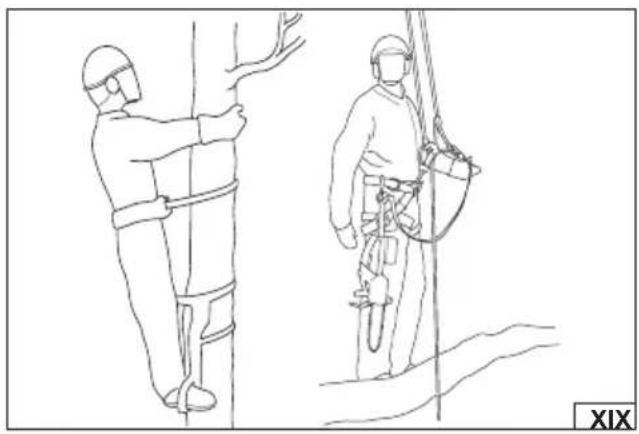
Example of attaching an operator to a tree and a tree care chainsaw to a user's carrying strap (XIX). Attach the carrying strap with a suitable snap hook to the suspension mechanism of the chainsaw. The ability to attach the chainsaw directly to the carrying strap reduces the risk of damage to the equipment when moving through the tree. Always switch off the chainsaw when it is attached directly to the carrying strap. Attach the chainsaw only to the recommended attachments on the carrying strap. They can be in the middle (front or back) or on the sides. Where possible, the chainsaw should be secured at the centre point of the rear carrying strap to keep it away from climbing ropes and to support the weight centrally located under the user's spine (XX).
If the chainsaw is moved from one suspension mechanism to another, the user should make sure that the chainsaw is secured in its new position before unhooking from the first mechanism.
Using the chainsaw on a tree
An analysis of accidents involving this chainsaw during tree care work indicates that the main causes are incorrect one-handed operation of the saw.
In most cases, the user does not adopt a safe working position to hold the chainsaw by both handles leading to an increased risk of injury as a result:
– lack of a firm grip when the chainsaw moves back towards the operator;
– lack of control of the chainsaw to facilitate contact with the climbing ropes and the user's body (especially the left hand and arm)
– loss of control due to an unsafe working position and thus contact with the chainsaw (unexpected movements when working with the chainsaw).
Safe working position for two-handed operation
- Never cut branches above the shoulders or hands (XXI).
– Never cut with arms fully extended (XXI).
– Never cut branches that are out of reach.
In order to be able to hold the chainsaw with both hands, the user should always try to adopt a safe working position (XXII) in which the chainsaw can be guided as follows: at hip height when cutting horizontal parts or at abdominal height when sawing vertical parts.
If the user is working close to a vertical trunk with low lateral forces relative to the working position, a secure foot rest may be sufficient to ensure a safe working position. As soon as the user moves away from the trunk, additional measures should be taken to reduce or counteract the increasing lateral forces.
For example, by rerouting the main rope through an additional suspension mechanism (XXIII) or using an adjustable guide loop from the harness to the additional suspension mechanism (XXIV). For good support in the working position, the endless loop can serve temporarily as a support stirrup.
Starting a chainsaw on a tree
When starting a chainsaw on a tree, the user must: move the kickback brake to the rear position before starting and hold the chainsaw on the left or right side of the body when starting. Hold the chainsaw on the left side with the left hand on the front handle and the guide bar facing away from the body while holding the starter rope in the right hand, or hold the chainsaw on the right side with the right hand on one of the two handles and the guide bar facing away from the body while holding the starter rope in the left hand.
The rebound brake should always be in the forward position before lowering the chainsaw on the support cable.
The user should always ensure that the chainsaw has sufficient fuel before carrying out difficult sawing work.
One-handed operation of the chainsaw (XXV)
Users should not hold a tree care chainsaw with one hand in unstable working positions or instead of a hand chainsaw to remove the tip of small diameter branches. The chainsaw should only be used for tree care with one hand if: it is not possible for the user to assume a working position that allows operation with both hands, it is necessary to use one hand to secure the working position, the chain is used in a fully extended position, at right angles to the user's body and not in line with the user. Users should never: cut with the area of the guide causing a bounce towards the operator, hold on to the branch they are sawing, try to catch falling objects.
Releasing a blocked chainsaw
If the chainsaw locks up during cutting, the user should: switch off the saw, securely fasten it to the tree (i.e. to the trunk) or to a separate operating line, pull the chainsaw out of the cut while lifting the branch to a suitable height, if necessary use a hand chainsaw or a second chainsaw to free the jammed chainsaw by cutting off the branch at least 30 cm from the jammed chain.
0Regardless of whether a hand chainsaw or chainsaw is used to free a jammed chainsaw, cuts to free the chainsaw must always
EN
be made outwards (towards the ends of the branches) so that the chainsaw does not fall along with the sawn-off parts and further complicate the situation.
Before starting any activities described below, turn off the chainsaw. Make sure that the engine is cooled down. Unscrew the spark plug to avoid accidental starting of the chainsaw.
Protective gloves are required when doing any work on the chain.
Spark plug replacement and maintenance (XXVI)
To replace the spark plug, remove the air filter cover.
Remove the rubber plug contact cover and unscrew the plug using the spanner provided.
Check the condition of the sparking plug electrodes. In case of noticing dirt, try to clean the sparking plug electrodes with a brass wire brush. If the cleaning does not bring the expected results, replace the sparking plug with a new one. Check the condition of the sparking plug at least once a month.
Maintaining the air fi Iter (XXVII)
Maintain the air fi Iter after each use of the chainsaw.
Dust and larger contaminants from the filter can be removed by tapping lightly the filter frame against a hard surface. The filter mesh is cleaned by disassembling the filter in half and cleaning the mesh using extraction gasoline. Using a jet of compressed air, dirt can be blown from the mesh to the outside.
Maintenance and cleaning of the oil installation (XXVIII)
Clean the oil gap and oil channel in the guide bar after each use of the chainsaw.
After removing the side panel and guide, check the condition of the oil gap and remove any dirt.
Remove the chain from the bar. Clean the guide bar of shavings and dirt. Clean the chain guide groove and oil feed hole. Lubricate the gear wheel at the top of the guide with a few drops of oil through the lubrication hole.
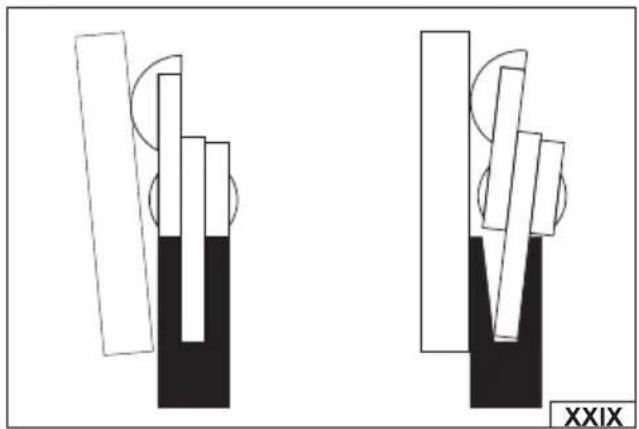
The chain guide groove in the guide bar wears out during operation. Turn the guide periodically and check the shape of the groove. If the groove shape as shown in figure (XXIX) is observed, replace the guide with a new one. The wear of the bar groove can be checked by applying a ruler to the bar with the chain in place. If the ruler does not stick to the guide the condition of the groove is good. Otherwise, the guide is suitable for replacement.
Other maintenance activities
After each use, also check the general condition of the device. Tighten loose screw connections. Check for fuel and oil leaks. Make sure that the ventilation openings are clear. Check that all covers and housings are in good working order and free from cracks. Any defects observed should be rectified before further work is undertaken.
Chain drive wheel
The condition of the chain drive wheel should be checked periodically. If you notice signs of wear, cracks or damage which may affect the drive train, replace the drive wheel with a new one at an authorised repair shop.
Never put a worn chain on a new drive wheel or a new chain on a worn drive wheel.
Chain maintenance
The chain must always be sharpened and in good working order. Check the chain for wear before each use. Whether it has damaged links or broken teeth. If any damage is noticed, further work with the damaged chain is prohibited. This can lead to serious injuries.
The chain also requires regular sharpening. Sharpening is necessary if at least one of the following is observed: the sawdust created during cutting resembles powder, additional force is needed for cutting, the cut is not straight, vibrations increase or fuel consumption increases.
Sharpening is an activity that requires both special tools and the right experience. It is therefore required that sharpening is carried out at specialist service centres.
PRODUKTBESCHREIBUNG
CARACTÉRISTIQUES DU PRODUIT
Appoint de carburant (V)
DECLARATION OF CONFORMITY
0125/YT-84893/EC/2025
We declare and guarantee with full responsibility that the following products:
Gasoline chainsaw; item no. YT-84893
meet requirements of the following European Standards / Technical Specifications:
EN ISO 11681-2:2011
EN ISO 14982:2009
and fulfill requirements of the following European Directives:
2006/42/EC Machinery and safety elements
2014/30/EU Electromagnetic compatibility (EMC) Directive
Serial number: concern all serials numbers of item(s) mentioned in this declaration
The person authorized to compile the technical file:
Agnieszka Rędziak
(Place and date of issue)
V-CE PREZES ZARZADU
JAN SZMIDT
(Name and signature of authorized person)
TOYA S.A.
DECLARATION OF CONFORMITY
0125/YT-84893/EC/2025
We declare and guarantee with full responsibility that the following products:
Gasoline chainsaw; item no. YT-84893
fulfil requirements of the following European Directive: 2000/14/WE
Conformity assessment procedure:
Manufacturer quality-control system, examination of the manufacturer's technical file and periodical inspection by notified body
Notified body:
TÜV SÜD Product Service GmbH; notification no. 0123
Ridlerstraße 65, 80339 MÜNCHEN, Germany
EC-type certificate: M6A 091651 0080 Rev. 01
Measured sound power level on an equipment representative for this type: 108,4 dB(A)
Guaranteed sound power level for this equipment: 113 dB(A)
conformity and references of the other Community Directives applied:
2006/42/EC Machinery and safety elements
2014/30/EU Electromagnetic compatibility (EMC) Directive
Wrocław, 2025.01.07
(Place and date of issue)
V-CE PREZES ZARZADU
JAN SZMIDT
(Name and signature of authorized person)
TOYA S.A.