
YT-85600 - Sweeper Yato - Free user manual and instructions
Find the device manual for free YT-85600 Yato in PDF.


User questions about YT-85600 Yato
0 question about this device. Answer the ones you know or ask your own.
Ask a new question about this device
Download the instructions for your Sweeper in PDF format for free! Find your manual YT-85600 - Yato and take your electronic device back in hand. On this page are published all the documents necessary for the use of your device. YT-85600 by Yato.
USER MANUAL YT-85600 Yato
natural_image
Close-up of a mechanical assembly with a cylindrical component mounted on a flanged base (no visible text or symbols)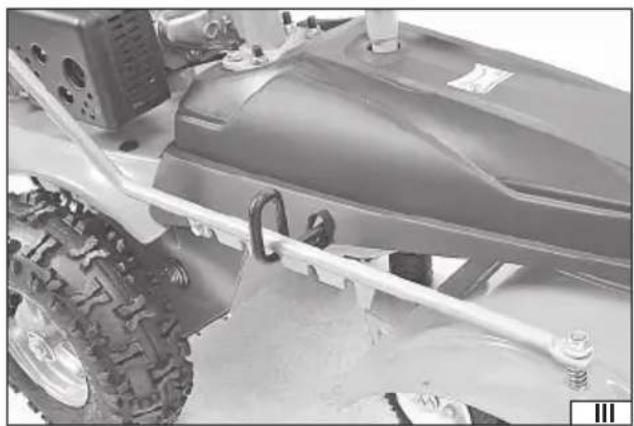
natural_image
Close-up of a vehicle chassis with visible tire, spring, and mounting bracket (no text or symbols)
natural_image
Two technical diagrams showing mechanical components: left with a vehicle suspension system and right with a close-up of a mechanical bracket (no text or symbols visible)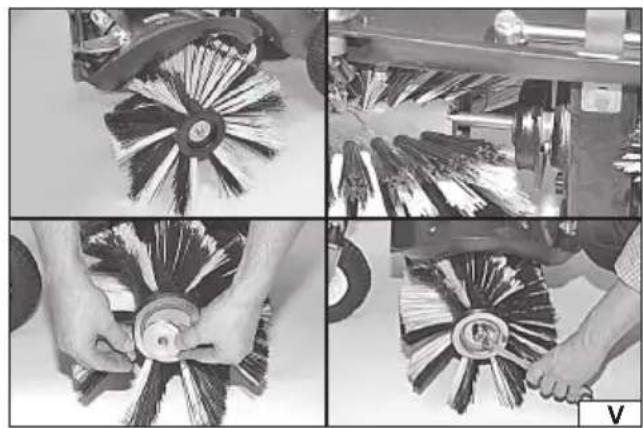
natural_image
Four-panel black-and-white photo showing a person cleaning a broom with blades, including hands and tool (no text or symbols visible)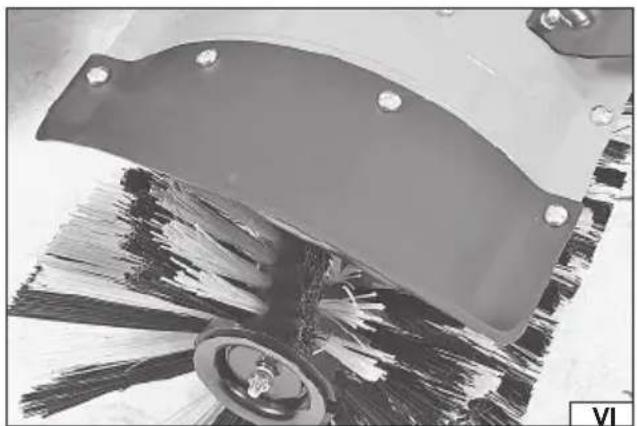
natural_image
Close-up of a cleaning brush with bristles and a circular blade (no text or symbols visible)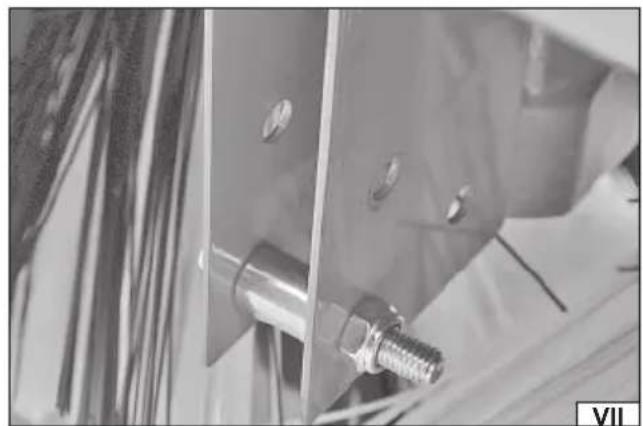
natural_image
Close-up of a mechanical assembly with metal components and bolts (no visible text or symbols)natural_image
Exterior view of a gray industrial machine casing with metal frame and mounting feet (no visible text or symbols)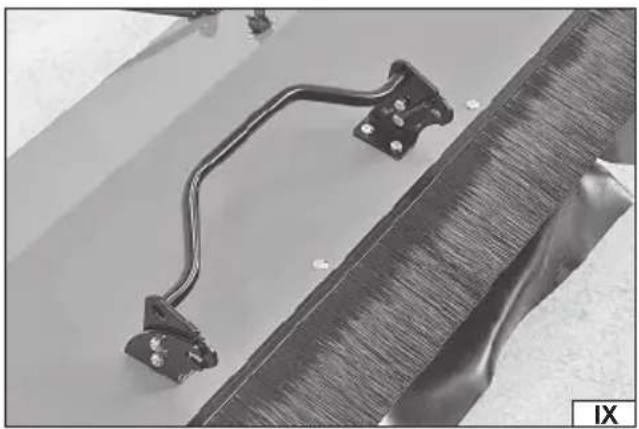
natural_image
Mechanical assembly with metal bracket and textured surface (no visible text or symbols)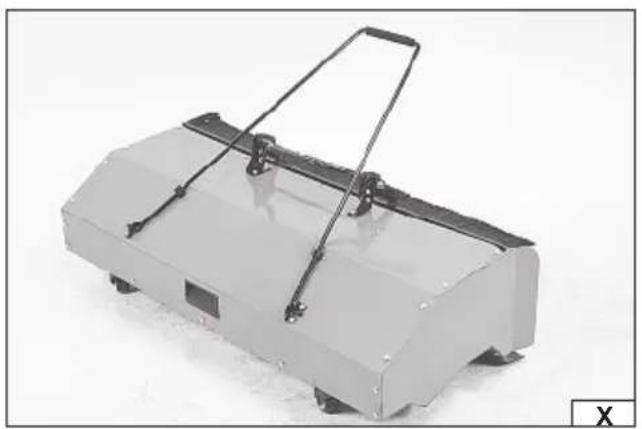
natural_image
Exterior view of a metal mechanical device with handle and mounting feet (no text or symbols visible)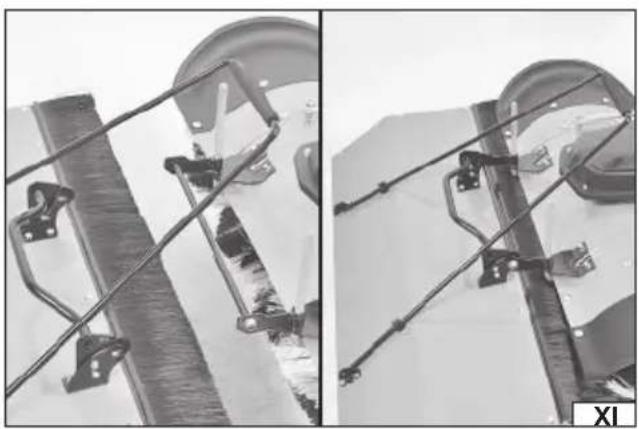
natural_image
Two-panel black-and-white photo showing mechanical components with no visible text or symbols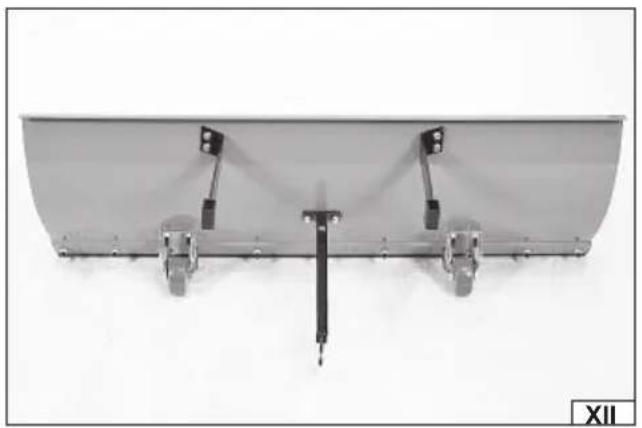
natural_image
Mechanical assembly with two vertical supports and a central vertical rod, mounted on a curved metal frame (no text or symbols visible)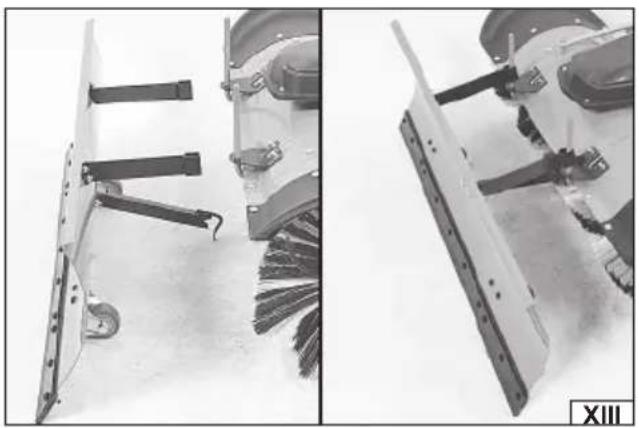
natural_image
Two-panel black-and-white photo showing a robotic arm and a vehicle chassis with visible brush (no text or symbols)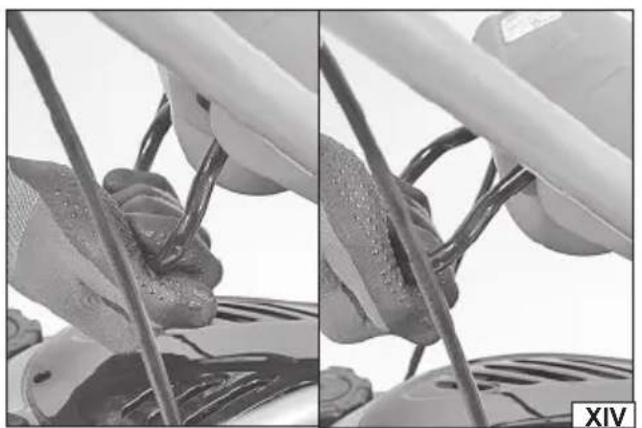
natural_image
Close-up of hands using a tool to lift a car body, showing mechanical components and motion (no text or symbols visible)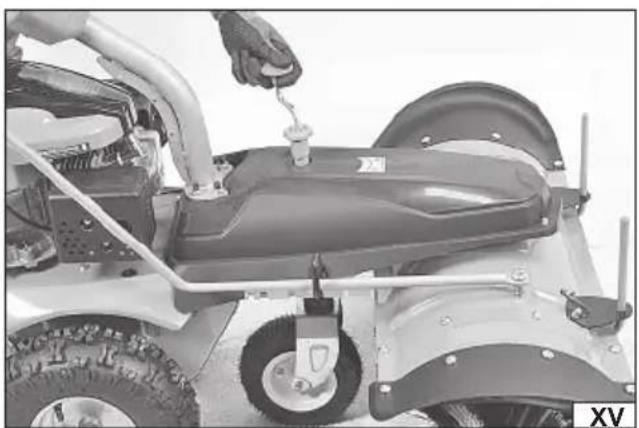
natural_image
Close-up of a small wheeled vehicle with visible wheels and a hand adjusting the seat (no text or symbols)PL EN DE RU UA LT LV CZ SK HU RO ES FR IT NL GR BG PT HR AR

natural_image
Two-panel black-and-white photo showing a lawn mower being adjusted, with no visible text or symbols.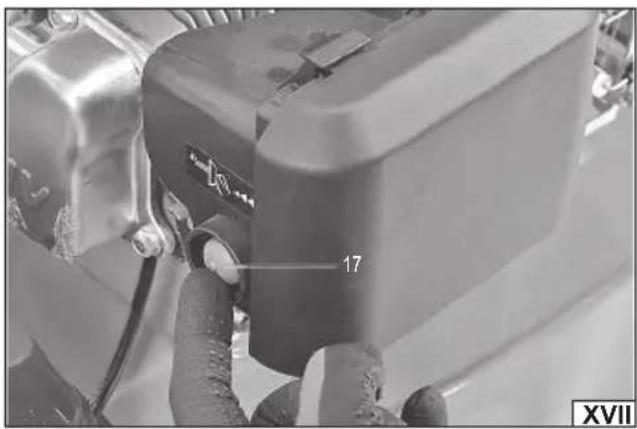
natural_image
Close-up of a hand holding a handheld electronic device with a label, no visible text or symbols on the device itself.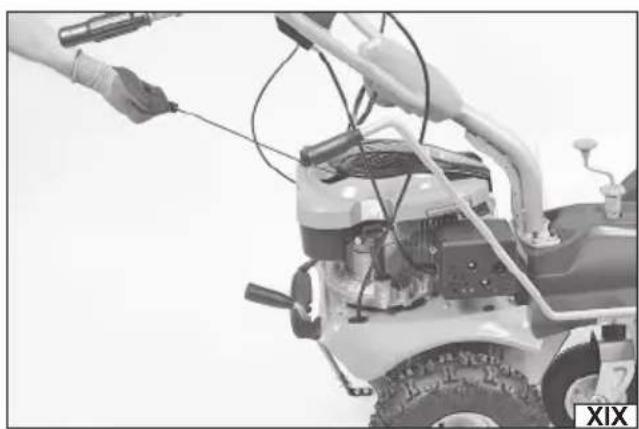
natural_image
Close-up of a manual tiller machine with attached power supply and wiring (no visible text or symbols)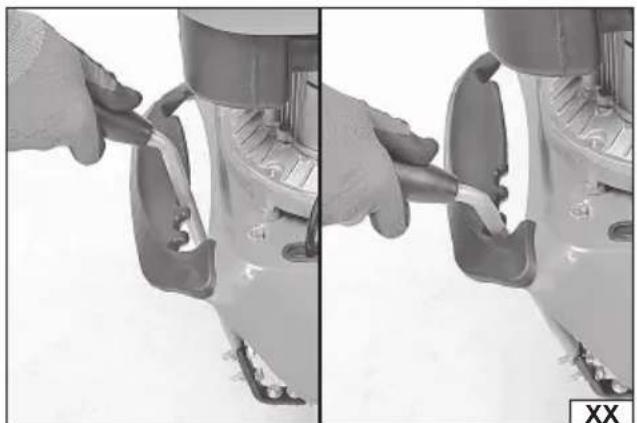
natural_image
Two-panel black-and-white photo showing hands using a tool to adjust or install a mechanical component, no visible text or symbols.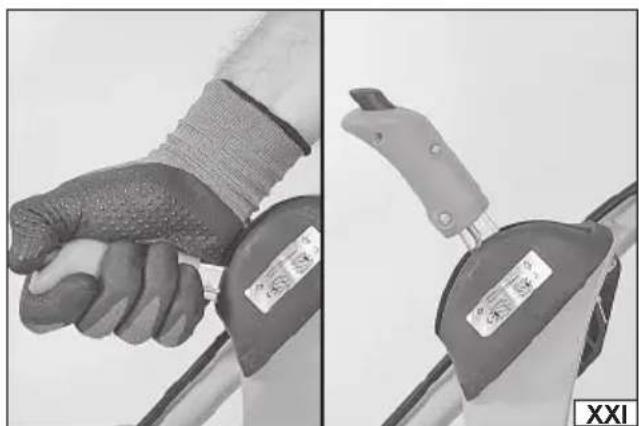
natural_image
Two-panel image showing a hand gripping a device with a tool, no visible text or symbols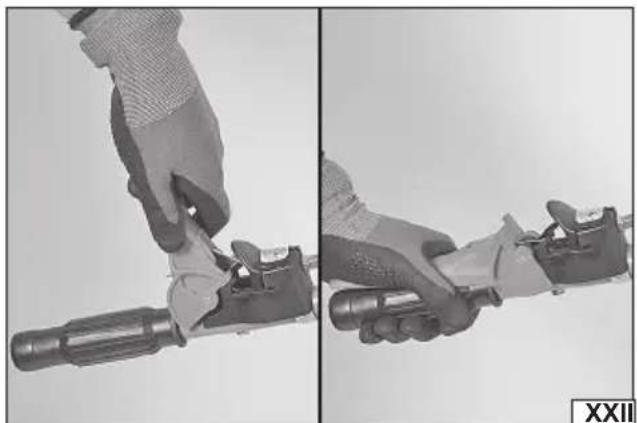
natural_image
Two-panel black-and-white photo showing hands adjusting a mechanical component, no visible text or symbols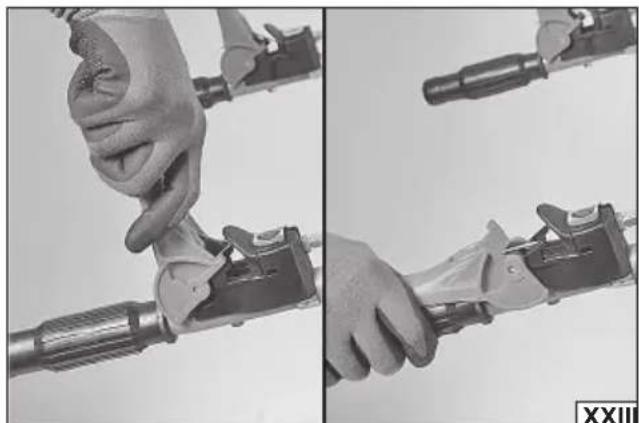
natural_image
Two-panel black-and-white photo showing hands adjusting mechanical components on a tool, no visible text or symbolsPL EN DE RU UA LT LV CZ SK HU RO ES FR IT NL GR BG PT HR AR

natural_image
Close-up of a hand holding an electric vehicle charging plug, no visible text or symbols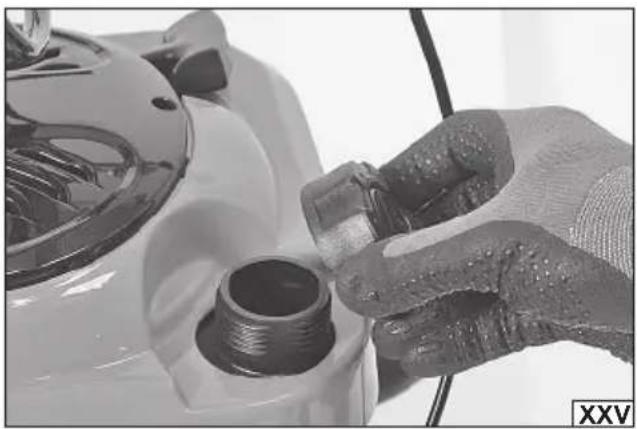
natural_image
Close-up of a hand adjusting a mechanical component with a threaded fitting (no visible text or symbols)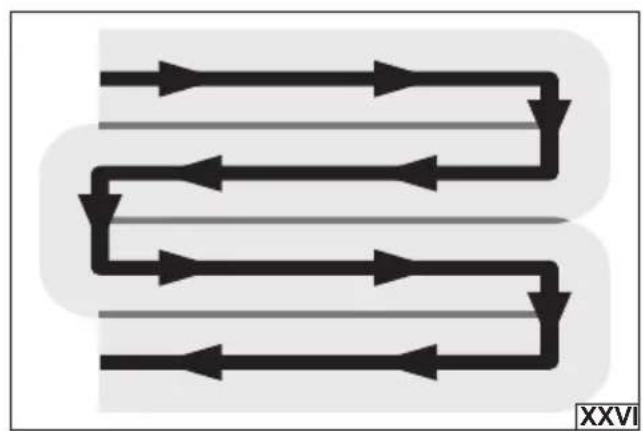
flowchart
graph TD
    A["Start"] --> B["Path 1"]
    B --> C["Path 2"]
    C --> D["..."]
    D --> E["End"]
    style A fill:#000,stroke:#000,color:#fff
    style E fill:#000,stroke:#000,color:#fff
    style B fill:#000,stroke:#000,color:#fff
    style C fill:#000,stroke:#000,color:#fff
    style D fill:#000,stroke:#000,color:#fff
    style E fill:#000,stroke:#000,color:#fff
natural_image
Close-up of a mechanical component with hoses and wiring, no visible text or symbols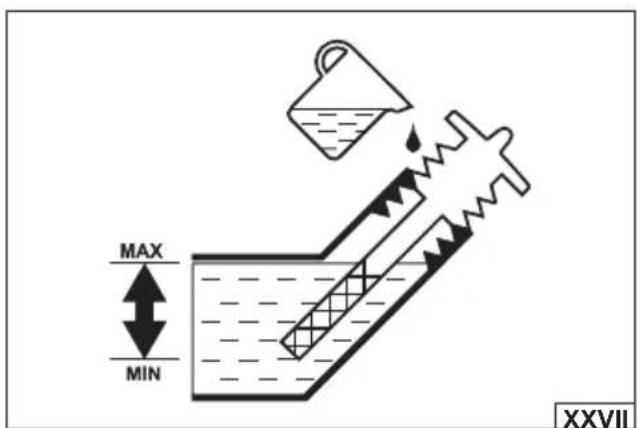
natural_image
Close-up of a mechanical assembly with visible wiring and components, no readable text or symbols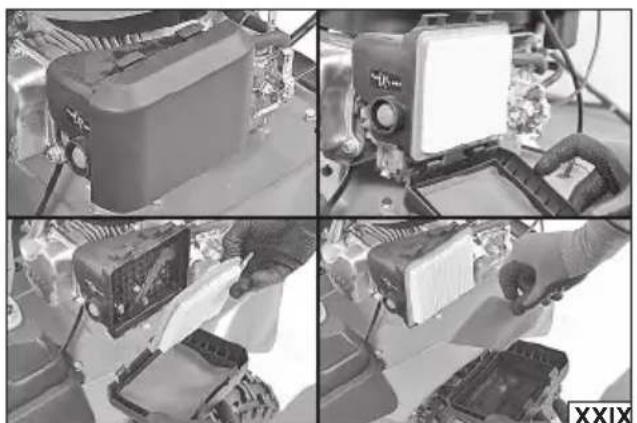
natural_image
Four-panel black-and-white photo showing a battery component being processed, with hands adjusting components (no visible text or symbols)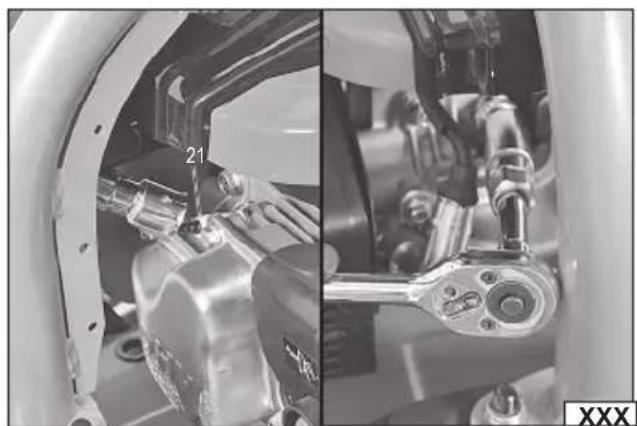
natural_image
Close-up mechanical assembly showing internal components and a numbered label '21' (no readable text or symbols beyond the number)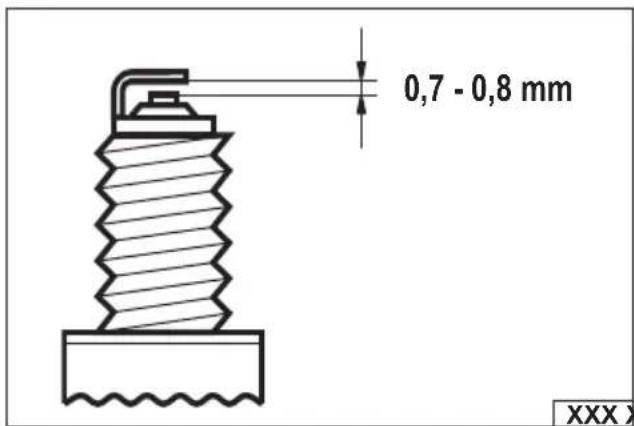
natural_image
Close-up of a mechanical component with a directional indicator and arrow pointing to a small component (no readable text or symbols)PL
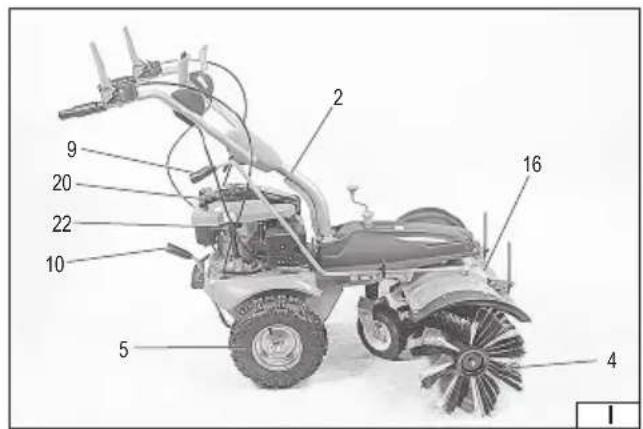
- engine
- handle
- height adjustment lever
- brush
- rear wheel
- auxiliary wheel
- brush height adjustment lever
- brush height lock knob
- brush direction change lever
- gearshift lever
- wheel drive lever
- brush drive lever
- throttle lever
- brush speed adjustment lever
- accessory holder
- brush cover
- fuel pump
- fuel filler cap
- air filter
- starter pull cord
- sparking plug
- oil fi ller
DE
Read the operating instruction
Wear protective goggles
Wear hearing protectors
Beware of ejected objects.
The petrol sweeper is used for mechanical sweeping and maintenance of hardened outdoor surfaces such as squares, driveways, car parks, pavements and domestic areas. Thanks to the combustion engine and the possibility of fitting additional accessories, it is possible to quickly and efficiently remove various types of dirt. Proper, reliable, and safe operation of the machine depends on appropriate use, that is why you should:
Read this entire manual before the first use of the machine and keep it for future reference.
The supplier shall not be held liable for any damage or injury resulting from improper use of the machine, failure to observe the safety regulations and recommendations of this instructions manual. Using the machine for purposes other than those for which it was intended shall cause the loss of the user's rights to a warranty and statutory warranty.
ACCESSORIES
The sweeper is supplied complete but requires assembly before first use.
SPECIFICATIONS
| Parameter Unit Value | ||
| Part No. YT-85600 | ||
| Weight [kg] 81 | ||
| Fuel tank capacity [l] 1.0 | ||
| Oil tank capacity [l] 0.6 | ||
| Engine oil type SAE 15W-40 | ||
| Working width [mm] | 1000 | |
| Number of cylinders | 1 | |
| Number of strokes | 4 | |
| Cooling | Air cooling | |
| Spark plug type | E7RTC | |
| Air filter type | T320 | |
| Engine displacement | [cm^3] | 196 |
| Engine power | [kW] | 3.5 |
| Maximum engine rotational speed | [min^-1] | 2800 |
| Noise | ||
| sound pressure | [dB (A)] | 80.9 ± 3.0 |
| power L_WA | [dB (A)] | 94.41 ± 3.0 |
| Vibration level | [m/s^2] | 4.646 ± 1.5 |
SAFETY INSTRUCTIONS
IMPORTANT! PLEASE READ THESE INSTRUCTIONS CAREFULLY BEFORE USE KEEP FOR FUTURE REFERENCE
Instructions
Read the manual carefully. Familiarise yourself with the controls and proper use of the machine. If the machine is passed on to another person, the operating instructions must be included. Always use the machine in accordance with the guidelines in the manual.
The sweeper is designed for cleaning hardened outdoor surfaces such as concrete, asphalt, cobblestones, on car parks, pavements, driveways and other hardened domestic surfaces. The sweeper is used to remove dust, sand, fine dirt and fresh snow from paved surfaces. The machine cannot be used to remove coarse debris such as rubble, gravel and stones. It is forbidden to use the machine against its intended use. Remember that it is the operator or the user who is responsible for accidents or hazards to other people or the environment.
Do not allow children or anyone not familiar with the machine instructions to operate the machine.
Never work with the machine when anyone else, especially children or pets, is around. Before starting work, designate a safety zone within which bystanders and pets will not be allowed. A space with a radius of at least five metres must be maintained from the working machine.
EN
Preparation
Always wear sturdy footwear and long trousers when working, and do not work with bare feet or in sandals.
Personal protective equipment such as safety goggles and ear defenders should be used during work. The use of personal protective equipment such as dust masks, slip-resistant safety shoes, helmets and hearing protectors reduce the risk of serious personal injuries.
Keep hair, clothing and work gloves away from moving parts of the machine. Loose clothing, jewellery or long hair can catch on moving parts of the machine and be caught, which can cause serious injury.
Avoid wearing damaged clothing which is too loose or has hanging straps or ribbons. Loose clothing parts can be caught by the machine moving parts which can lead to injuries.
Check the area where the unit will be working carefully and remove any stones, branches, wires, bones, toys and other foreign objects. Caught objects can cause damage to the machine, or can be ejected at high speed, which poses a threat to the operator and the environment.
Before turning on the machine, remove any spanners and other tools that have been used to adjust it. A spanner left on rotating parts of the machine can lead to serious injury.
Always check the brushes, fixing bolts and guards for wear or damage before use. Replace worn brushes, screws and guards before starting work. Check also whether the screw connections are not loose. Tighten the loose screws.
Using the sweeper
Do not work when tired or under the influence of drugs or alcohol. Even a moment's distraction while working can lead to serious personal injury.
WARNING! Do not operate the machine indoors or in confined space where vapours of dangerous carbon monoxide may accumulate. Fuel fumes and vapours are toxic. Intoxication can lead to accidents and cause serious injury or even death.
Never operate the machine in an explosive atmosphere in the presence of flammable liquids, gases or dust.
Work only in daylight or in good artificial lighting.
Do not operate the machine when there is a risk of lightning strikes.
Do not work in the rain.
Do not use the machine on wet, slippery or icy surfaces.
Do not work on bumpy, uneven or hollow surfaces.
Make sure your feet are always standing firmly on the incline.
Maintain balance. Maintain proper posture at all times. This will allow for easier control of the machine in the event of unexpected situations during operation.
Take special care when changing driving direction on a slope. Do not work on excessively inclined slopes. When working on slopes, move across the slope, never up or down.
Do not point the brush towards bystanders or animals.
Never use the sweeper near cars, fences, window panes without proper adjustment of the brush direction.
Pay particular attention when reversing or pulling the machine backwards. Keep feet and hands away from rotating parts.
Do not operate the sweeper with damaged guards and guards and without them. If guards or enclosures are damaged, they must be replaced with new ones free of defects before operation.
The sweeper must not be used to carry passengers.
The machine is not suitable for working on roofs.
Start the engine as instructed, ensure that the feet are away from the machine brush.
Keep hands and feet away from rotating parts.
Do not lift or carry the unit with the engine running.
Stop the sweeper engine and ensure that all moving parts have stopped:
- every time you need to step away from the machine
- before cleaning, checking, replacing accessories or repairing the machine
- after it being hit by a foreign object. Check the sweeper for damage and repair if necessary before restarting it
- before transport to and from the workplace
- if the machine starts to vibrate excessively (check immediately)
ATTENTION! After the engine is switched off, the brush continues to rotate for some time. Wait for the moving parts of the machine to stop.
If the machine starts to vibrate excessively (check immediately)
- check for damage,
- replace or repair any defective part,
- check and tighten loose parts.
Maintenance and storage
Warning! Disconnect the spark plug before adjusting, changing accessories or storing the machine. This will allow for avoiding accidental turning on of the machine.
Keep all nuts, bolts and screws in good condition to ensure safe device operation.
Do not store the sweeper with fuel in the tank.
EN
Check the grass bin frequently for wear or damage.
Replace worn or damaged parts to ensure safety.
Be careful when adjusting the machine to avoid getting your fingers between moving and fixed parts of it.
Do not disconnect or modify the guards and safety components of the machine. Improper operation of the machine's guards and safety components can cause accidents.
Use original spare parts and equipment only. The use of unsuitable equipment can lead to damage to the machine and/or serious injury.
Ensure that the correct type of accessories are used.
ADDITIONAL SAFETY INSTRUCTIONS FOR SWEEPERS
Recommended fuel, unleaded petrol E10, with an octane number of at least 95.
Use four-stroke engine fuel and oil which are free from solid impurities. Premium quality products are recommended. They will extend the service life of the engine.
Check the oil level in the engine regularly. Operating the sweeper with too low or no oil level can lead to damage and even fire.
Ensure that the sweeper is properly assembled before starting work.
Do not expose the machine to moisture. Do not use the sweeper during precipitation or when there is a risk of lightning. Do not use the sweeper in a humid and wet environment.
Before using the machine, it is recommended to ask your dealer or specialist to demonstrate how to use it safely and effectively.
Do not modify the machine in any way. Non-original spare parts must not be used.
Always start operation wearing work clothing, gloves, full footwear and safety glasses protecting against mechanical hazards.
If during work the operation of the sweeper seems suspicious (increased vibration, noise, odour, etc.), it should be immediately turned off and handed over to a repair centre.
The sweeper must be regularly maintained and kept clean.
For repairs and maintenance use only original spare parts.
The engine ventilation openings must be kept clear at all times.
Do not run the sweeper in enclosed or unventilated areas. The exhaust gases contain substances that are harmful to health and must not be inhaled.
The fuel feed system must be checked periodically. If you notice leaks, have the unit repaired by an authorised servicing centre.
Wait until the engine has reached its rated speed before working.
Do not allow fuel to run out while the engine is running!
Do not cover the ventilation inlets and outlets Even when the machine is not running.
Before transporting and storing the machine for an extended period of time, it is essential to empty the fuel tank.
Do not touch the engine surfaces that become hot during operation. This may cause burns.
ATTENTION! The fuel is highly flammable! Do not fill the fuel tank while the machine is running. Do not refuel near an open flame. Do not spill fuel. In the event of a fuel spillage, dry up the spilled fuel thoroughly before starting the machine.
Tighten the fuel filler cap firmly and securely.
If leaving the machine unattended, switch off the engine and wait for the brushes to stop rotating
Do not modify the engine or other mechanisms of the sweeper in any way.
Do not operate the sweeper without the air filter correctly fitted.
Do not operate the machine when the guards are not in place.
Do not touch the rotating brush!
SAFETY INSTRUCTIONS FOR THE PLOUGH
The plough is used to shovel away fresh snow on paved surfaces such as concrete, asphalt and cobblestones.
Do not work on icy surfaces, especially on icy hills.
Do not work on bumpy, uneven or hollow surfaces.
Take extra care when working on snow-covered surfaces to avoid slipping and falling.
Before fitting or removing accessories, switch off the engine, wait for moving parts to stop, wait for all machine components to cool down completely and then disconnect the spark plug wire.
Before starting work, make sure that the screw connections have not come loose. Tighten the loose screws.
SAFETY INSTRUCTIONS FOR THE COLLECTOR
The collector serves as a basket for collecting fine dirt, dust and sand on paved surfaces such as concrete, asphalt and cobblestones.
The collector should not be used to collect coarse debris such as rubble, gravel and stones.
Do not work on bumpy, uneven or hollow surfaces.
It should be emptied regularly. Do not overfill the collector. Overfilling the collector can lead to brush blockage and damage to the machine.
Transport the collector to the emptying point on transport castors.
EN
Before fitting or removing the collector, switch off the engine, wait for moving parts to stop, wait for all machine components to cool down completely and then disconnect the spark plug wire.
Before starting work, make sure that the screw connections have not come loose. Tighten the loose screws.
ASSEMBLING THE SWEEPER
Preparation for assembly
Unpack the product by removing all packaging components. It is recommended to retain the packaging, which can be of use when transporting or storing the product.
Check that no part of the product has been damaged during transport. In case of damage detection, such as cracks or deformations, it will disqualify the product from further use until it is repaired or damaged components are replaced.
It is recommended to place all the components on a flat, hard, and clean surface.
Use personal protective equipment such as protective gloves, eye protection, and protective clothing during assembly.
Before assembling the machine and accessories, switch off the machine and allow the engine and its components to cool down completely, then disconnect the spark plug wire.
Machine assembly
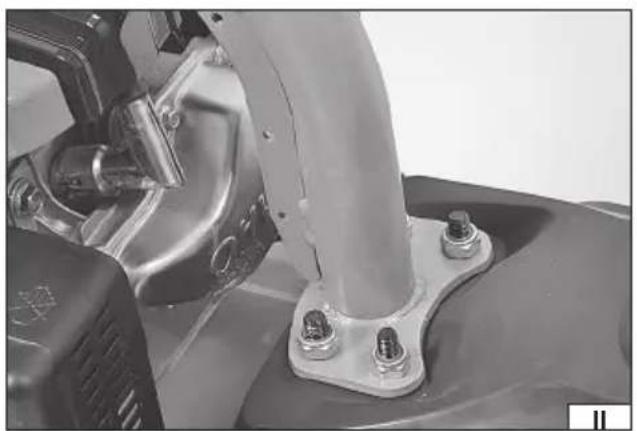
Install the handle first. The handle attachment is located in the centre of the machine. Unscrew the fixing nuts, place the handle in the mount and then fix it to the machine using the nuts (II). Ensure that the nuts securing the handle are tightened firmly and securely.
Attach the brush direction change lever to the brush guard. To do this, unscrew the nut from the fixing. Pass the lever through the clamp that locks its position, place it in the mount so that the spring is under the lever, and then install it using the nut (III). Mount the gearshift lever to the attachment at the rear of the machine using the fixing bolts and nuts (IV). The sweeper brush consists of two components. The brush should be seated on the axle on each side of the sweeper and then secured to the axle with washers and nuts as shown in the figure (V). Ensure that the brush drive lugs hit the notches on the inside of both brush components.
Ensure that the nuts securing the brush to the axle on each side are tightened firmly and securely. Secure the secondary guards to the brush guard using the fixing bolts and nuts (VI). On the inside of the brush elements, there is an accessory holder where the sleeve must be inserted and then secured in the holder with a bolt and retaining nut (VII). A correctly installed unit should look like in the figure (I).
Installation instructions for additional accessories (available separately)
YATO YT-85605 collector
Fit a transport handle to the collector. Insert the lower hooks of the transport handle into the fixings and then into the hooks (VIII). Fit the first part of the collector mounting bracket to the sweeper with bolts and nuts (IX) to the holes in the top of the collector housing. A properly assembled collector should look like the figure (X). Slide the second part of the collector mounting bracket onto the accessory holder at the front of the sweeper, and then connect the collector to the sweeper by connecting the two parts of the mounting bracket (XI) together.
YATO YT-85606 plough
Mount the plough mounting brackets to the sweeper and the transport wheels to the plough with nuts and bolts. Ensure that all bolts are tightened firmly and securely. A properly assembled plough should look like the figure (XII). Connect the plough to the sweeper by placing the plough mounting brackets in the sweeper accessory holders (XIII).
Preparing for operation
Before starting work, check that the machine is not damaged, is correctly assembled and that all safety components are correctly attached. If the machine is found to be incomplete or damaged, further work is prohibited!
Clear the work area of all visible stones, roots, wires, toys and other obstacles that can be picked up by the machine brushes and thrown in a different direction. Particular attention must be paid to electrical cables to ensure that they do not enter the work zone.
Leaving electrical cables in the work area can lead to damage to the wires, resulting in electric shock and even death.
ATTENTION! Only the amount of oil needed for engine maintenance was poured into the engine. Before the first start-up, the oil must be topped up to the required level.
In a factory state, there is only a small amount of oil in the engine to protect it during transport and storage. Prepare oil for four-stroke engines in viscosity class SAE 15W40.
Before replenishing the oil, place the machine on a flat surface, then unscrew the oil tank cover and wipe the oil bayonet attached to it dry. Fill the tank with oil. When filling, it is recommended to use a funnel or filler nozzle to avoid spilling oil. In case of spilling the oil, thoroughly wipe off its residues before starting the engine. Check that the level is appropriate. To do this, insert the bayonet into the inlet and screw the tank cover. Then unscrew it and check the oil level on the bayonet. The oil level should be between
EN
the maximum and minimum levels on the bayonet (XXVII). After making sure that the oil level is correct, close the inlet with a cap. Note! Check the oil level before each use.
After refilling oil, refill fuel. Use 95-octane unleaded petrol or better. To refuel, unscrew the fuel tank cover (XXV) and pour the fuel into the tank. When filling fuel, it is recommended to use a filler nozzle or funnel to reduce the risk of fuel splashes. If the fuel is splashed, thoroughly wipe off its residues. Wait until the vapours have completely evaporated and carry out the start-up at a different place than at which the fuel was filled. Close the fuel tank inlet with the cover after filling.
The rear wheels of the sweeper are inflatable. The recommended tyre pressure is 20 psi/1.38 bar. Inflate the tyres before starting work. Do not exceed the recommended tyre pressure. Check tyre pressure before starting work. Tyres should always be inflated to an even pressure level. Incorrect or uneven tyre pressure can lead to dangerous situations such as the machine tipping over on its side.
Handle height adjustment (XIV)
ATTENTION! Switch off the sweeper engine before adjusting the brush height.
To adjust the handle height, pull back the handle height adjustment lever, set the desired handle height and then lock the handle position by moving it to the forward position. Ensure that the handle is properly locked and will not change its position during operation.
Brush height adjustment
ATTENTION! Switch off the sweeper engine before adjusting the brush height.
Before using the sweeper, check that the brush is at the correct distance from the work surface. The brush may change its diameter as a result of wear and tear. In this case, it may be necessary to adjust the height of the brush to set the correct distance from the work surface. To do this, unscrew the brush height lock knob and then set the correct brush height using the height adjustment lever (XV). When the adjustment is complete, tighten the brush height lock knob firmly and securely. Ensure that the brush height adjustment lever is correctly locked and will not change its position during operation.
Brush direction adjustment
ATTENTION! Switch off the engine before adjusting the brush direction.
It is possible to change the direction of the brush by a maximum of 25 degrees in each direction. To do this, lift up the brush direction change lever, rotate the brush and then release the lever so that it locks into one of the five possible positions (XVI).
Starting and stopping the machine
Set the sweeper in the place where the work is to commence. Ensure that the brush drive lever and wheel drive lever are in the upper position. Only in this position will the brush and wheels do not rotate immediately after starting the engine.
If the engine is cold, depress the fuel pump 3 times (XVII).
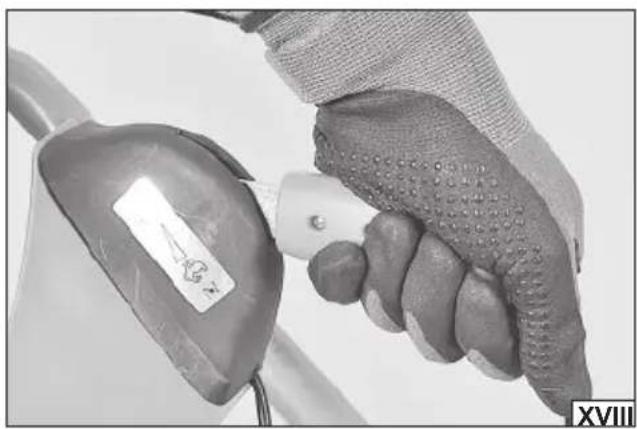
Push the throttle lever fully forward into the position marked by the suction symbol (XVIII).
Pull the starter pull cord smoothly until you feel the resistance caused by the engine compression, which is when you should pull it vigorously and firmly (XIX). After a few pulls, the engine should start.
Once the engine has started, the starter cord handle should not be released from the hand, it should be brought to the lower position.
As the engine warms up, set the throttle lever in the working position, between the rabbit symbol — faster rotation and the turtle — slower rotation. Allow the engine to start running smoothly every time you reposition the throttle lever. The rate at which the throttle lever should be reversed depends on the ambient temperature in which you start the engine. The lower the ambient temperature, the slower the lever should be reversed.
Use the gearshift lever to set the direction of travel. It is possible to set three forward gears or a reverse gear.
ATTENTION! Shifting gears while the sweeper is in operation must only be done when the wheels and brush have come to a complete stop. To do this, release pressure on the wheel and brush drive lever. Ensure that both levers have returned to the upper position. Wait for the wheels and brushes to stop, change gear and proceed.
To do this, push the gearshift levers forward slightly, move the lever to the right or left to the position marked 1, 2, 3 – forward gear or R1 – reverse gear, then release pressure on the lever so that it locks into the selected position (XX).
ATTENTION! Ensure that the area around the machine is clear of obstructions before setting reverse gear and starting to turn. Do not turn the sweeper near walls of buildings, trees or other fixed obstacles to avoid dangerous situations. Keep hands, feet and clothing away from rotating parts of the machine!
Use the brush speed adjustment lever to set the brush speed. To unlock the speed control lever, press and hold the lever lock button, moving the lever towards the hare symbol will set a higher brush speed, while moving the lever towards the tortoise symbol will set a lower brush speed (XXI). Once the setting has been made, release pressure on the lock button.
To start the brush drive, pull the brush drive lever against the handle (XXII). The lever cannot be locked in the bottom position. It should be held down at all times during work.
To start the wheel drive, pull the wheel drive lever against the handle (XXIII). The lever cannot be locked in the bottom position. It should be held down at all times during work.
EN
Warning! It is forbidden to lock the wheel drive lever or brush drive lever in the lower position. If this happens, the wheel drive and/or brush drive will be activated as the engine starts, which can lead to uncontrolled situations and cause serious injury.
Stop the machine following below steps: Release pressure on the brush drive lever and wheel drive lever and allow both levers to return to the upper position. Check that the brushes and wheels have stopped. Move the throttle lever to the position O; this will stop the engine (XXIV). Warning! The engine and exhaust system become hot during operation. Be careful not to get burned.
Refuelling
The fuel is highly flammable! All safety precautions regarding the handling of fuel must be observed. Do not fill the fuel tank while the machine is running. Do not refuel near an open flame. Smoking is not permitted in the refuelling area. Do not spill fuel. In the event of a fuel spillage, dry up the spilled fuel thoroughly before starting the machine. Tighten the fuel filler cap firmly and securely. Store fuel in tightly closed, approved containers away from heat sources and out of the reach of children.
Stop the engine according to the procedure described above.
Allow the engine to cool down.
Use 95-octane unleaded petrol or better. To refuel, unscrew the fuel tank cover (XXV) and pour the fuel into the tank. When filling fuel, it is recommended to use a filler nozzle or funnel to reduce the risk of fuel splashes. If the fuel is splashed, thoroughly wipe off its residues. Wait until the vapours have completely evaporated and carry out the start-up at a different place than at which the fuel was filled. Close the fuel tank inlet with the cover after filling.
Restart the engine according to the procedure under "Starting and stopping the machine".
Working with the sweeper.
Before starting work, prepare the area to be cleaned. Check that there are no obstacles in the mowing area that could be caught by the brush and damage the sweeper, or be ejected and pose a risk to an operator or bystanders.
Check that there are no electrical cables in the work area that could be caught by moving machine parts. Damage to an electrical cable presents a risk of electric shock, which can lead to serious injury or death.
Make sure that there are no bystanders or pets in the work area. If such persons appear during operation, stop the machine immediately and only then warn people of the danger.
Check all sweeper components before starting work. In case the damage is detected, do not start work before removing the damage or replacing the damaged components with new ones. Make sure that the ventilation openings are clear. If necessary, clean them with a soft cleaning tool or brush. Do not use sharp or metal objects for cleaning the product ventilation openings.
Check the tightness of the screw connections. Tighten if necessary.
Check that the handlebars are clean, free of grease and other contamination. If necessary, clean them with a soft cloth.
Take regular breaks during work to avoid fatigue and overwork. This will allow better product control and reduce the risk of accidents.
During operation, move along the rows (XXVI). Rows should be kept equal in width, slightly overlapping so as not to leave any space. Take special care when changing the direction.
Ensure that the area around the machine is clear of obstructions before turning. Do not turn the sweeper near walls of buildings, trees or other fixed obstacles to avoid dangerous situations. Keep hands, feet and clothing away from rotating parts of the machine!
When work is complete, switch off the sweeper, make sure the wheels and brushes have stopped, allow all machine components to cool, disconnect the spark plug wire and then proceed with maintenance.
Note! If a foreign object hits the machine during operation, immediately switch off the machine, make sure the wheels and brushes have stopped, allow all machine components to cool down and disconnect the spark plug wire. Then check the machine for damage. If the damage is detected, it is forbidden to continue working before removing the damage. Excessive vibration during operation can be caused by damage to the sweeper. In that case, stop working, disconnect the spark plug cable, and check the product.
SWEEPER MAINTENANCE
During the warranty period, the user cannot disassemble the machine or replace other assemblies or components than those listed below, as this will result in the loss of warranty rights. Any irregularities found during the inspection or the operation signal the need for repair to be done at the service centre.
Having finished your work, clean the housing, the ventilation openings, switches, additional handle, guards and accessories with compressed air jet at 0.3 MPa maximum, a brush or a dry cloth. Do not use any chemicals or cleaning agents. Clean the tools and handles with a clean and dry cloth.
Scheduled inspections
Periodic inspection and maintenance of the following machine assemblies must be carried out.
EN
ATTENTION! All maintenance must be carried out with the machine switched off and not running. After switching off the engine, allow the engine and machine components to cool down completely and then disconnect the spark plug wire.
ATTENTION! If a service operation is not described below, This means that the machine must be serviced by a specialist service centre for this purpose.
ATTENTION! Where solvent is used for cleaning, avoid contact of the solvent with skin and eyes. Use personal protective equipment.
General maintenance activities
The product cannot be cleaned with a water jet or by immersion in water.
Check for wear and damage to the brush. If excessive wear or damage is found, replace the brush with a new one. Always replace the brushes with the original ones, identical to the ones installed in the sweeper at the factory. Only the use of original spare parts can maintain product safety. The sweeper brushes should be replaced every two years or after every 50 hours of operation. Disassembly of the brushes must be carried out in reverse to the assembly described in the section of the instructions "Assembling the machine".
Checking the oil level
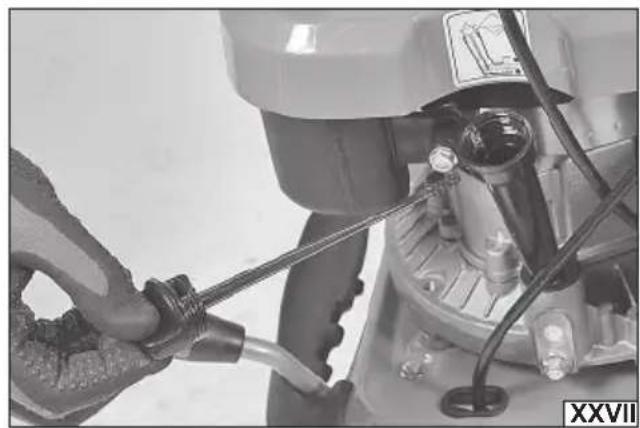
Unscrew the oil cap and remove the oil level indicator (XXVII).
Clean and dry the indicator with a clean cloth.
Insert the indicator back into the hole, but do not turn it. Then remove and check the oil level indicated. If the indicated level is too low, the oil must be topped up to the upper level of the indicator (dashed box). Screw the indicator into the oil filling hole.
Changing the engine oil
The engine oil should be changed after the first 2 to 4 hours of operation. Every subsequent oil change should be carried out every 25 hours of operation.
Note! It is best to change the engine oil as soon as the engine has come to a standstill. Then the oil is the thinnest and will flow out of the engine gearbox the fastest.
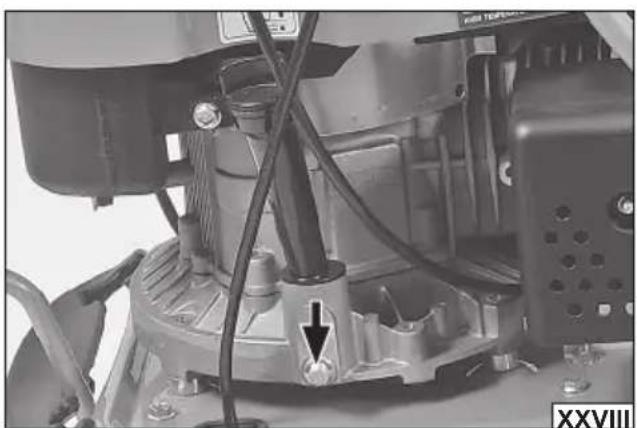
Care must be taken when changing the oil. As soon as the engine stops, the oil is hot and can cause burns. Each oil tank has a drain opening. Place a container with a capacity greater than that of the oil tank underneath the drain opening. Unscrew the drain valve (XXVIII) completely using a wrench. Allow the oil to flow into the tank and then screw in the drain valve using a wrench. Wipe any oil residue dry.
Top up the oil according to the procedure described under "Preparing for operation".
Note! Dispose of used engine oil in accordance with the local regulations. It is forbidden to spill engine oil into the sewer system.
Air fi Iter maintenance (XXIX) - every 25 hours of operation
Note! Do not operate the tool without a correctly installed air filter or with a defective air filter. Otherwise the combustion engine may aspirate impurities that would normally settle on the air filter. Impurities can lead to malfunctions or, ultimately, cause its failure. Unlock the fixing lugs and open the filter housing. Remove the filter and then replace it with a new one. It is possible to use a type T320 filter with part number YT-855491. Install the filter in place and fix the filter cover. Ensure that the filter housing is tightly closed and that all housing lugs are in place.
Spark plug maintenance (XXX) - every 100 hours of operation
Disconnect the cable from the spark plug. Unscrew the spark plug with the spark plug wrench. Use a wire brush to clean carbon deposits off the electrodes (so-called combustion deposits). Check the distance between the electrodes, it should range between 0.7 mm and 0.8 mm.
If burned electrodes or the ceramic casing is broken, replace the spark plug with a new one. It is possible to use spark plug type E7RTC with part number YT-855488.
Screw in the spark plug. Connect the cable to the spark plug.
STORAGE AND TRANSPORT
Note! Always empty the fuel tank before storing or transporting the tool.
Place a container with a capacity greater than that of the oil tank underneath the drain opening.
Use a spanner to unscrew the fuel drain valve (XXXI). After emptying the machine of fuel, turn the fuel drain valve off.
Clean according to the instructions.
Store in the dark, dry, frost-free, and well-ventilated areas. The place of storage should protect the tool from access by children. The product should be stored at a temperature between 10^ C and 30^ C. It is recommended that the product is stored in its original packaging or another packaging that protects it from dust. Store the tool in a vertical position.
Transport the product by carrying it by the handles. Protect the product from impacts and strong vibrations during transport. Secure the product against slipping or tipping over during transport.
DE
PRODUKTBESCHREIBUNG
CARACTÉRISTIQUES DU PRODUIT
DEKLARACJA ZGODNOŚCI | DECLARATION OF CONFORMITY DECLARATIE DE CONFORMITATE
1225/YT-85600/EC/2025
We declare and guarantee with full responsibility that the following products:
meet requirements of the following European Standards / Technical Specifications:
and fulfill requirements of the following European Directives:
Machinery and safety elements
Emissions from non-road mobile machinery
Serial number: concern all serials numbers of item(s) mentioned in this declaration
Measured sound power level on an equipment representative for this type:
Guaranteed sound power level for this equipment:
The person authorized to compile the technical file:
