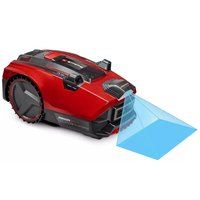
USER MANUAL FREELEXO CAM PLUS EINHELL
GB Original operating instructions Robot lawn mower
- Safety Information
- Layout and items supplied
- Intended use
- Technical data
- Starting up
- Operation
- Cleaning, maintenance and ordering spare parts
- Storage
- Transport
- Disposal and recycling
- Charging station display and troubleshooting
- Robot lawn mower display and troubleshooting
- FREELEXO CAM PLUS data protection notice
- Charger indicator

Danger! - Read the operating instructions to reduce the risk of injury.
Children are not allowed to use this equipment. This equipment can be used by people with limited physical, sensory or mental capacities or those with no experience and knowledge if they are supervised or have received instruction in how to use the equipment safely and understand the dangers which result from such use. Children are not allowed to play with the equipment.
Children are not allowed to clean the equipment or carry out user-level maintenance work.
GB
Danger!
When using this equipment, a number of safety precautions must be observed to avoid injuries and damage. Please read the complete operating instructions and safety information with due care. Keep these operating instructions in a safe place so that the information is available at all times. If you give the equipment to any other person, hand over these operating instructions and the safety information as well. We cannot accept any liability for damage or accidents which arise due to failure to follow these instructions and the safety information.
For the relevant safety information please refer to the booklet included in delivery.
Warning!
Read all the safety information, instructions, illustrations and technical data provided on or with this power tool. Failure to adhere to the following instructions may result in electric shock, fire and/or serious injury.
Keep all the safety information and instructions in a safe place for future use.
Explanation of the symbols used (see Fig. 13)
A. WARNING - Read the operating instructions before you start using the machine!
B. WARNING - Keep a safe distance away from the machine when it is in operation!
C. WARNING - Always actuate the locking mechanism before carrying out any work on the machine or before lifting the machine! CAUTION - Do not touch rotating blades!
D. WARNING - Do not ride on the machine!
CAUTION - Do not touch rotating blades!
E. Protection class II (double-insulated).
F. Store the battery only in dry rooms with an ambient temperature of +10°C to +40°C . Place only charged batteries in storage (charged at least 40% ).
G. Protection class III
H. Slow fuse 2 A
1. For use in dry rooms only.
J. WARNING: To charge the battery, use only the removable power supply unit NT24/1 / PS24/ 1 delivered with this tool.
Important!
Pull out the power plug and disconnect the guide cable from the charging station during a thunder storm.
2. Layout and items supplied
2.1 Layout (Fig. 1/2)
- Robot lawn mower
- Control panel
- "STOP" button / release button for the control panel cover
- Cutting height adjustment facility
- Rain sensor
- Carry-handle
- Main switch
- Rear wheel
- Battery compartment cover
- Blades
- Blade plate
- Front wheel
- Control panel cover
- USB connection
- Camera unit
- Distance sensors
- Charging station
19a. Charging station LED display
19b. Charging station charging pin
- Power supply unit (cable)
- Fastening screw
- Hexagon key
- Fastening peg
- Guide cable
- Cable connector
- Spare blades
- Magnetic tape
- Ruler (for detaching)
- Magnetic sensor
2.2 Items supplied and unpacking
Please check that the article is complete as specified in the scope of delivery. If parts are missing, please contact our service center or the store where you made your purchase at the latest within 5 work days after purchasing the article and upon presentation of a valid bill of purchase. Also, refer to the warranty table in the service information at the end of the operating instructions.
- Open the packaging and take out the equipment with care.
- Remove the packaging material and any packaging and/or transportation braces (if present).
- Check to see if all the items are present.
- Inspect the grass trimmer and accessories for transport damage.
If possible, keep the packaging until the end of the guarantee period.
GB
Danger!
The equipment and packaging material are not toys. Do not let children play with plastic bags, foils or small parts. There is a risk of choking and suffocating!
Scope of delivery, assembly material and accessories (some not included):
Details of the scope of delivery can be found in the enclosed related information sheet.
Robot lawn mower
Power supply unit (cable)
Chargingstation
Fastening screws (4 pcs)
- Spareblades
Fasteningpegs
- Guideable
- Cableconnector
Magnetictape
- Hexagonkey
Battery
Ruler (for detaching)
Original Operating Instructions
SafetyInformation
Required aids (not supplied)
- Hammer
- Pair of pliers
Wirestripper
Spirit level (optional)
3. Intended use
The robot lawn mower is intended for private use, i.e. for use in home and garden environments and only for mowing lawns.
The equipment is allowed to be used only for its prescribed purpose. Any other use is deemed to be a case of misuse. The user/operator and not the manufacturer will be liable for any damage or injuries of any kind resulting from such misuse.
Please note that our equipment has not been designed for use in commercial, trade or industrial applications. Our warranty will be voided if the equipment is used in commercial, trade or industrial businesses or for equivalent purposes.
4. Technical data
Voltage 18V
Motor speed 3400 min
Protection . IPX4
Protection class .
Weight 8.75 kg
Cutting width 18 cm
Number of blades 3
Max. gradient 25%
Sound pressure level LNA 46 dB(A)
Uncertainty K 2.3 dB
Sound power level LWA .57dB(A)
Uncertainty K 2.3 dB
Cutting height adjustment ... 20-60 mm; infinitely adjustable
Guide cable antenna
Operating frequency band: 0-148.5 KHz
Maximum transmission power: ....67.05 dBuA/m
WiFi:
Operating frequency band: ....2400-2483.5 MHz
Maximum transmission power: 20dBm
Bluetooth:
Operating frequency band: ....2400-2483.5 MHz
Maximum transmission power: 10dBm
GNSS:
Operating frequency band: 1559-1610MHz
Power supply unit
Input voltage: 100-240 V ~ 50/60 Hz
Output voltage: 24 V DC
Output current: 1.5 A
Protection class: .II/回
Sound values were measured in accordance with the standards EN ISO 3744:1995 and ISO 11094: 1991.
Warning!
This equipment generates an electromagnetic fi eld during operation. Under certain circumstances this fi eld might actively or passively impede medical implants. To reduce the risk of serious or fatal injuries, we recommend persons with medical implants to consult their doctor and the manufacturer of the medical implant prior to using the
GB
equipment.
5. Starting up
Read the operating instructions fully before you start work on the installation of the robot lawn mower. The quality of the installation work has a direct effect on the mowing results.
5.1 How it works
Follow the operating instructions carefully in order to ensure that the robot lawn mower works correctly and safely.
The robot lawn mower chooses its direction on a random basis. The entire garden gets mowed by the robot lawn mower reaching all areas that are not blocked off by boundaries and obstacles. When the robot lawn mower discovers that it has reached a lawn boundary or recognizes an obstacle, it will change its direction and mow in a different random direction. Using sensors the robot lawn mower can distinguish between obstacles and lawn areas, enabling it to move freely within its work area.
The robot lawn mower has a camera unit which generates and processes images of the area lying ahead. On this basis the area lying ahead is examined as to whether it is an area for mowing or a lawn boundary or an obstacle. If the area lying ahead is assessed as being an area for mowing, the robot lawn mower will move straight ahead with the mower unit activated. If the area lying ahead is assessed as being a lawn boundary or an obstacle, the robot lawn mower will stop, check again for an area for mowing and continue mowing in a random direction. The area for mowing must be checked and adapted carefully so that the robot lawn mower has enough room to recognize where it ends. The lawn boundaries must be clearly defined so that the robot lawn mower can recognize them within its reaction time.
The purpose of the laid guide cable (24) is to get the robot lawn mower to dock punctually in the charging station (19); it does not set any limits during mowing. It is imperative therefore for the robot lawn mower to be on a lawn area with clear optical or physical limits. For the robot lawn mower to find the guide cable (24) and subsequently the charging station (19) it must be in the charging
station (19) when mowing mode is started for the first time. It uses a global navigation satellite system (GNSS) to determine the position of the charging station (19). If the position of the charging station (19) is ever changed, it is essential for the robot lawn mower to be placed again in the charging station (19) for calibration. Make sure that there is no shielding or roofi ng which could prevent the positioning operation. Avoid placing the charging station (19) near high buildings. Under some circumstances calibration might fail In such cases due to a poor signal. When the battery charge level is low, the robot lawn mower will return to the charging station (19). With the help of the GNSS module the robot lawn mower will determine its distance from the charging stations (19) and look for it. If the robot lawn mower comes up against a garden boundary or any obstacles on its way to the search loop, it will save its position and the mowing area will be mapped. This will help the robot lawn mower to return to the charging station (19) faster in future use. When the robot lawn mower arrives at the guide cable (24) it will return to the charging station (19) using its wire recognition sensors. This can take several minutes depending on the garden's size and complexity.
The global navigation satellite system (GNSS) is also used to acquire location-specific sunrise and sunset data. There must be sufficient daylight for the robot lawn mower to work properly. Check the lens of the camera unit (15) regularly for signs of dirt.
5.2 Sensors
The robot lawn mower is equipped with a number of safety sensors. These sensors enable the robot lawn mower to move within its mowing area.
Lifting sensor:
If the robot lawn mower is raised at the back by more than 30° from the ground or if a front wheel (12) loses contact with the ground, the robot lawn mower and the rotation of the blades (10) will be stopped immediately.
- Tilting sensor:
If the robot lawn mower tilts severely in any direction, the robot lawn mower and the rotation of the blades (10) will be stopped immediately.
Obstacle sensor:
The robot lawn mower is able to detect obstacles in its path. If the robot lawn mower collides with an obstacle, the robot lawn mower and the rotation of the blades (10) will
GB
be stopped immediately and the mower will reverse away from the obstacle.
- Camera unit:
The robot lawn mower comes with a camera unit (15) which analyzes the mowing area (approx. 1m2 ) lying ahead of it. The camera is directed at the ground so that the objects lying in the screen area appear with a maximum height of 50 cm. The image material to be processed is saved only locally and temporarily on the robot lawn mower and is continually overwritten. The robot lawn mower can recognize obstacles and the work area in which there is no longer any lawn. When the robot lawn mower comes across an obstacle or no longer detects any lawn, it will stop and begin to mow again in a random direction. Because of the camera unit it is impossible for the robot lawn mower to work in twilight or during the night. The selected work window should lie within daytime hours when there is enough daylight for the robot lawn mower to work reliably. This also helps to protect semi-nocturnal animals such as hedgehogs.
Distance sensors:
The robot lawn mower is equipped with distance sensors (16) which enable it to detect obstacles along its path. When the robot lawn mower comes across an obstacle, it will stop and begin to mow again in a random direction.
Magnetic tape sensor
The robot lawn mower (29) is equipped with a magnetic tape sensor for recognizing a magnetic tape (27) lying on the ground. When the robot lawn mower comes across a magnetic tape it will stop and begin to mow again in a random direction. The magnetic tape serves as a virtual boundary for creating areas of the garden where the robot lawn mower is not allowed to mow.
Rain sensor:
The robot lawn mower is equipped with a rain sensor (5) to prevent it from operating in the rain. When the robot lawn mower detects rain it will return to the charging station (19) and be completely recharged there. Once the rain sensor (5) is dry again, the robot lawn mower will stay in the charging station (19) for the preselected delay time. Only then will it begin working again, provided it is still in an active time window. If the rain sensor (5) has been activated (this is recommended in order to exert less stress on the lawn), you will see a bright cloud in the display (50). If the
sensor triggers, a dark cloud with rain drops will appear. Do not short-circuit the two metal sensors with metal or any other conductive material. This will impede the correct operation of the robot lawn mower.
GNSS module
The robot lawn mower determines its position and the position of the charging station (19) by means of a global navigation satellite system (GNSS). This helps the robot lawn mower to find its way back to the charging station (19).
The robot lawn mower can use the GNSS module to determine the local times for sunrise and sunset so that it is prevented from mowing in twilight and during the night. This also means that the robot lawn mower can work reliably with its camera unit (15).
The robot lawn mower also uses the GNSS module at all times to determine its distance from the charging station (19). The robot lawn mower is allowed to move no more than 1000 m from the charging station (19) or else a fault message will appear on the display and the robot lawn mower cannot be operated in Main Area mode. The mower's distance from the charging station (19) is irrelevant for operation in Secondary Area mode.
Wi-Fi:
The robot lawn mower is equipped with a Bluetooth WLAN module. The status and signal strength of the WLAN are indicated accordingly on the display.
5.3 Preparations
If the grass is taller than 60 mm it has to be shortened first to avoid exposing the robot lawn mower to excessive load and adversely affecting its operating efficiency. Use a conventional lawn mower or trimmer to do this. Remove all loose objects from the lawn which could get damaged by the robot lawn mower or cause damage to the robot lawn mower itself.
Check the mowing area, the lawn boundary and any areas that you don't want to be mowed. The following sections of these operating instructions contain information about how you can defi ne precise lawn boundaries and protect specific areas. Some obstacles can be detected by the robot lawn mower in good time and require no elaborate protection.
Have the following tools ready: A hammer, tongs, a wire stripper and a spirit level (optional).
GB
5.3.1 Calculating the gradient of the lawn
The robot lawn mower can cope with gradients of up to 25% . You therefore need to avoid steeper gradients. The gradient can be determined on the basis of height divided by distance (Fig. 3a).
Example: a/b = 25 cm/100 cm = 25 %
5.3.2 Installing the battery
A battery (A) from the Power-X-Change series is needed to operate the robot lawn mower. Important: Depending on the model of your robot lawn mower, it might not come complete with the battery (A). Open the battery compartment cover (9). Press the pushlock button of the battery (A) and push the battery (A) into the mount provided. Close the battery compartment cover (9) and make sure that it latches in place correctly (Fig. 3b). To remove the battery (A), open the battery cover (9). Press the pushlock button of the battery (A) and pull out the battery (A).
5.4 Charging station
5.4.1 Position of the charging station
Begin by determining the best position for the charging station (19). You need an outdoor socket outlet with a permanent supply of electricity so that the robot lawn mower works at all times. The charging station (19) must be placed on a fl at area at the level of the turf. Make sure that the area is fl at and dry. Ideally you should position the charging station (19) at the edge of the mowing area. Please note that the power cable for the charging station (19) should not be laid inside the mowing area. If it is, it will need to be buried to avoid it being damaged by the robot lawn mower. Position the charging station (19) together with the guide cable (24) on an open area free of obstacles which is as accessible as possible from all directions. Avoid positioning the charging station (19) in hard-to-reach corners or in areas that can be reached only through bottlenecks. Make sure that when the robot lawn mower is in the charging station it has an adequate connection to WLAN. The maximum distance from the charging station (19) to a lawn boundary is not allowed to exceed 1000m . This serves to reduce the risk of theft. At greater distances a fault message will appear on the display (50) and the robot lawn mower cannot be operated in Main Area mode. The mower's distance from the charging station (19) is irrelevant for operation in Secondary Area mode. To guarantee effi cient and automatic mowing it is recommended to restrict the distance from the
lawn boundary to the charging station (19) to 50 m. As the distance from the charging station (19) increases, it is possible that the robot lawn mower will no longer have enough battery power for it to return to the charging station (19). Use a battery with greater capacity for larger mowing areas. Select a position in the shade because it is best to charge the battery in cool surroundings. Tall buildings or trees can weaken the GNSS signal so that the robot lawn mower is no longer able to find its way back to the charging station (19) automatically. It is important therefore to keep a reasonable distance away from tall buildings and trees and to make sure that the charging station (19) lies under the open sky. Also note that the guide cable (24) must be laid in a straight line for least 1m in front of the charging station (19) and for at least 0.5m behind the charging station (19) (Fig. 4a). Curves immediately in front of the charging station (19) could cause problems when docking for charging.
5.4.2 Localization of the charging station
When the battery is almost empty, the robot lawn mower will return to the charging station (19) by following the guide cable (24). The robot lawn mower compares its actual position with the calibrated position of the charging station in regular intervals with the help of GNSS. The robot lawn mower travels in the direction of the charging station (19) and looks for the guide cable (24) in several steps. As it does so, the robot lawn mower stops now and again before setting off if necessary in a different direction in order to reach the guide cable (24). When the robot lawn mower gets near to the guide cable (24) it will begin to detect its position with the help of rotary movements and the strength of the signal transmitted by the guide cable (24). If the robot lawn mower comes across an obstacle or a lawn boundary while mowing, this position will be saved. The map produced as the result helps the robot lawn mower to find the charging station (19) more quickly. When the robot lawn mower reaches the guide cable (24) it will follow it counter-clockwise to the charging station (19). Make sure, therefore, that the charging station (19) faces in the right direction when you position it (Fig. 4a).
5.4.3 Connecting the charging station to the power supply unit
- Before you connect the charging station (19) to the power supply, check that the mains power supply is 100 - 240V at 50 / 60Hz .
GB
- Connect the power supply unit (20) directly to a socket outlet. Do not use the cable for any other use.
- Do not use the power supply unit if it is damaged (20). In the event of any damage to cables or the power supply unit (20), contact an authorized professional immediately for replacement.
- Do not charge the robot lawn mower in a damp location. Do not charge the robot lawn mower at temperatures above 40°C or below 5°C .
- Keep the robot lawn mower and the power supply unit (20) away from water, sources of heat and chemicals. Keep the cable of the power supply unit (20) away from sharp edges in order to prevent damage.
- Connect the power supply unit (20) to the charging station (19) (Fig. 4b).
- With the main switch (7) set to ON and with a battery inserted, place the robot lawn mower in the charging station (19) and charge it fully before you use it for the first time.
The robot lawn mower will return to the charging station (19) in each of the following situations:
- You send the robot lawn mower back manually.
The battery charge level drops below 30% .
The end of the daily work time has been reached.
The rain sensor has tripped.
The robot lawn mower has become overheated.
- When twilight falls, making it impossible for the camera unit to work correctly.
In this case the robot lawn mower looks for the guide cable (24) and then travels automatically clockwise along the guide cable (24) as far as the charging station (19).
The LED indicator (19a) on the charging station lights up red while the battery is being charged. When the battery is fully charged, the LED display (19a) at the charging station (19) will light up green. A battery symbol will also indicate the battery charge level in the display. A lightning flash will appear in the battery symbol while the battery is being charged.
If there is an obstacle on the guide cable (24) during the trip back to the charging station (19), the robot lawn mower will come to a stop in front of the obstacle after several attempts and will not be able to get back to the charging station (19).
Remove all obstacles on the guide cable (24). If the temperature of the battery exceeds 45°C , charging will stop in order to prevent damage to the battery. Charging will resume automatically once the temperature has dropped again.
If the temperature of the robot lawn mower controller exceeds 65°C , the robot lawn mower will return to the charging station (19). Operation will resume in accordance with the settings once the temperature has dropped again. If the battery becomes empty before the robot lawn mower has returned to the charging station (19), the robot lawn mower will be unable to start up again. Bring the robot lawn mower back to the charging station (19) and leave the main switch (7) switched on. The robot lawn mower will be charged up automatically.
5.5 Guide cable
IMPORTANT! A severed guide cable and any consequential damages are not covered by the warranty!
5.5.1 Laying the guide cable
The guide cable (24) can be laid both on the ground and in the ground. The fastening pegs (23) might break while they are being hammered into hard or dry ground. If the ground is very dry, water the lawn before installing the guide cable (24).
Installation on the ground
Lay the guide cable (24) securely on the ground and fasten it with the supplied fastening pegs (23). You can adjust the position of the guide cable (24) during the first weeks of using the robot lawn mower. In the course of time, however, the guide cable will become overgrown with grass and will be no longer visible. Install the guide cable (24) with a maximum distance of 1m between the fastening pegs (23). Avoid situations in which the guide cable (24) is not actually lying on the ground. Make sure that the guide cable (24) cannot be severed by the robot lawn mower. While the robot lawn mower is mowing, it will travel with its activated mower unit over the guide cable.
Installation in the ground
Bury the guide cable (24) in the ground at a depth of up to 5cm . This will prevent damage to the guide cable (24) during for example scarfying or aeration.
Important!
Because the guide cable (24) is not always laid along the lawn boundary, it is important to make
GB
a note of where the guide cable (24) is positioned so that it is not damaged during future garden projects. Make a drawing or take photos to document the arrangement. If the guide cable (24) is not buried in the ground you should not scarify or aerate near the guide cable (24) so as to avoid damaging it.
5.5.2 Installing the search loop
The guide cable (24) forms a search loop which is used by the robot lawn mower to find its way back to the charging station (19).
- Lay the guide cable (24) in a straight line for least 1m in front of the charging station (19) and for at least 0.5m behind the charging station (19) (Fig. 4a). Curves immediately in front of the charging station (19) could cause problems when docking for charging.
The guide cable (24) should enclose a minimum area of 5m2 (Fig. 4a). It is recommended to use the entire length of the guide cable (24) and to lay it in the shape of a square as far as possible. The search loop should be orientated so that the robot lawn mower is well able to get to the charging station (19) from any point in the garden.
The distance between two guide cables (24) should amount to at least 0.8m Fig.4a
The guide cable (24) is not allowed to cross over itself.
Make sure there are no obstacles on the guide cable (24).
Make sure there are no obstacles within a distance of approx. 30 cm to the left and right of the guide cable (24) (Fig. 4c). Keep away from the garden boundary and from overly high paving stones. If the path runs at ground level with the lawn you can lay the guide cable (24) there without leaving a gap.
5.6 Connecting the charging station
Finish laying the complete guide cable (24) before you connect the free end to the charging station (19).
Pull out the power plug before you connect the guide cable (24) to the charging station (19). The guide cable is already partly fitted to the charging station. Namely, the guide cable is already laid underneath the charging station and is connected to the left black connector. Check that this connection is securely seated.
After the guide cable (24) has been laid, pass the free end through the hole and connect it to the red connection on the right (Fig. 4d).
Important! The guide cable (24) is not allowed to cross over itself!
Then connect the power supply. When the installation is completed correctly, the LED display (19a) on the charging station (19) should light up green permanently. If the LED does not light up, check the connections first.
If the LED lights up green but not permanently, read the table entitled "Display on the charging station and troubleshooting" at the end of these operating instructions.
5.7 Mowing area - Obstacles and mowing area boundaries
5.7.1 Lawn boundary
The mowing area must have a precise and fully enclosing lawn boundary. Familiarize yourself with the possibilities for defining a lawn boundary as described in this section. Then start at any point of the lawn boundary with an examination of the garden boundary and follow the boundary in a circle until you arrive back at your starting point. Any sections of the work area that you want to exclude must be enclosed likewise with a precise lawn boundary. Proceed in the same way as for the outer boundaries of the mowing area.
Bottlenecks
If the lawn area has a bottleneck, your robot lawn mower will be able to operate there as long as the corridor has a width of at least 1.2 m and a maximum length of 8 m (Fig. 5a). In the case of long and narrow bottlenecks, the robot lawn mower might no longer be able to find its way back to the charging station (19).
- Distance from the lawn boundary When the robot lawn mower approaches the lawn boundary, this will be detected by the camera unit (15) at the front of the robot lawn mower. The lawn-free distance should amount to at least 30cm (Fig. 5b). Check that there is no difference in height at the lawn boundary as the robot lawn mower might travel beyond the exact lawn boundary before it stops and sets off again in a different direction. Deeper lying garden beds or elevated paving edges might result in damage to the robot lawn mower. Check the lawn boundaries regularly because if they become overgrown this could result in the robot lawn mower leaving the
GB
mowing area. It is also possible for the lawn boundary to be edged in with fl at path stones to create a clear separation from the mowing area.
Lawn boundary with water
As a general rule the robot lawn mower will reliably recognize the lawn boundary as described above. However, given the possibility that the robot lawn mower will overrun the lawn boundary we recommend a gap of approx. 50 cm between the lawn boundary and any water feature (a pond, pool, etc.) (Fig. 5c). Alternatively we recommend isolating the water feature with a raised all-round edge in order to protect the robot lawn mower more reliably.
- Lawn boundary with a raised edge higher than 25cm
The robot lawn mower can use the distance sensors (16) to recognize obstacles with a minimum height of 25cm (Fig. 5d). You can also use high obstacles to demarcate your lawn boundary. The robot lawn mower will stop at a distance of approx. 20cm in front of the obstacle and turn so that it can continue moving in another direction. Important! - This means that the robot lawn mower does not mow as far as the lawn boundary but leaves an area of approx. 20cm unmowed.
- Lawn boundary with a raised edge higher than 10cm
The robot lawn mower can use the collision sensors to collide with obstacles below 25 cm. This function can also be used to defi ne a lawn boundary. In this case make sure that the edging is sturdy and at least 10cm high (Fig. 5e).
5.7.2 Obstacles
Obstacles are objects situated in the mowing area. The robot lawn mower can recognize many obstacles by means of the sensors. Soft, unstable and valuable objects must be protected where necessary. See the possibilities described above for separation from the lawn boundary.
- Obstacles with a height over 25cm (Fig. 5f)
Solid obstacles which are over 25 cm in height and have a minimum width of 3cm , e.g. trees, walls, fences, garden furniture, etc., are detected by the distance sensors (16). If the robot lawn mower comes up against an obstacle, it will stop and continue mowing in a different direction. In this case the area stretching approx. 20 cm to the obstacle will not be mowed.
- Obstacles with a height under 25 cm (Fig. 5g)
If an obstacle is not recognized by the distance sensors (16), the robot lawn mower will collide with the obstacle and trigger the collision sensors. The robot lawn mower will stop and continue mowing in a different direction. The obstacles must have a height of at least 10cm . Protect sensitive and unstable objects with all-round edging.
- Stones and low obstacles under 10 cm
Stones, rocks and low obstacles of less than 10 cm in the mowing area need to be protected because otherwise the robot lawn mower could run over them. If not, this could result in the robot lawn mower getting damaged or blocked. (See the section "Lawn boundary"). The robot lawn mower treats trees as obstacles. However, where any tree roots project above the ground to a height of less than 10 cm, the area in which they are located needs to be protected. This will prevent damage to the roots and to the robot lawn mower.
5.7.3 Magnetic tape (Fig. 5h-l)
Obstacles such as fences and hedges which poorly reflect the distance signal transmitted by the robot lawn mower are not detected in part or only very late. Obstacles with a weak optical contrast relative to the mowing areas can also be difficult to recognize. Such areas can be protected by magnetic tape (27) as a safe and contact-free means of getting the robot lawn mower to change its direction.
The magnetic tape (27) serves as a mobile and temporary boundary in the mowing area. The magnet sensors installed in the robot lawn mower detect the magnetic tape (27) and turn away at its limits. In this way you can separate off parts of the garden which are off limits, for example:
- Short-term separation of a part of the garden for a garden party where the robot lawn mower is not allowed to enter.
- Placement of a trampoline or swimming-pool in the mowing area over the summer months.
- A recently planted tree is still very sensitive and is best protected at an early stage from collisions with the robot lawn mower.
- A seasonal flower meadow is planned to attract insects. This area is off-limits for the robot lawn mower and needs to be protected from the outset.
- A new lawn has been sown in one area and you want to protect this area initially. The subsoil is still not firm and you want to wait for
GB
strong turf to form.
Lay the magnetic tape (27) a few centimeters away from the area or object in question. Shorten the magnetic tape (27) to suit your requirements (50 cm minimum length). To enable a boundary made up of several magnetic tape elements to be recognized reliably, the maximum distance between the respective ends should not exceed 8 cm (Fig. 5k). Make sure that the outer boundary of the mowing area is defined by an optical or physical separation. Fasten the magnetic tape (27) to the ground by means of pegs (23) spaced a maximum of 1 m apart.
Keep a distance of at least 80 cm away from the guide cable (24) and between two independent boundary areas so that the robot lawn mower can travel through without difficulty. (Fig. 5l).
Avoid laying the magnetic tape (27) on gradients because in such cases there is a risk of the robot lawn mower slipping out over the boundary area and the boundary not being recognized.
Like the guide cable (24), the magnetic tape (27) can be installed both on the ground and at a depth of approx. 5cm in the ground. Take care not to lay the magnetic tape (27) too deep in the ground because then there is no longer any guarantee that it will be recognized by the robot lawn mower.
5.7.4 Main area and secondary area (Fig. 5m) A secondary area (B) refers to a work area that is not directly connected to the main area (A), e.g. a bottleneck. The robot lawn mower cannot reach a secondary area directly and independently.
To be able to mow the secondary area (B) you must carry the robot lawn mower manually into the secondary area (B). The robot lawn mower must be switched on with the main switch (7). Start the required mowing program and select "Secondary area" in the sub-menu (see "Settings of the robot lawn mower"). When the robot lawn mower is in the secondary area (B) it will not try to return to the charging station (19) if the battery charge level is low. The robot lawn mower will mow until the battery is empty. Then you must either charge the battery or carry the robot lawn mower back to the charging station (19).
Important!
The robot lawn mower is allowed to move no more than 1000m from the charging station (19) or else a fault message will appear on the display (50) and the robot lawn mower cannot be operated in Main Area mode. The mower's distance from the charging station (19) is irrelevant for operation in
Secondary Area mode.
5.7.5 Distance from mowed areas not belonging to you
Keep away from mowed areas which do not belong to you but to your neighbors, for example, and which are operated with a perimeter wire. The signal produced by the perimeter wire can lead to problems when your robot lawn mower tries to find its way back to its charging station.
5.8 GNSS module
5.8.1 Calibrating the position of the charging station
The robot lawn mower must calibrate the position of the charging station (19) with the help of a global navigation satellite system (GNSS) in order to find its way back to the search loop and to the charging station (19).
For this purpose you must place the robot lawn mower in ready-to-use condition and with the main switch (7) activated in the charging station (19). The GNSS symbol in the display (50) will oscillate during the calibration process. Once this operation is completed carefully, the GNSS symbol will light up continuously or it will blink if the signal is weak. This process can take several minutes.
Make sure that there is no shielding or roofof which could prevent the positioning operation. Avoid placing the charging station (19) near tall buildings. Keep a reasonable distance away from tall buildings and trees. Under some circumstances calibration might fail due to poor signal coverage.
5.8.2 Mapping
When the robot lawn mower needs to return to the charging station (19), it determines its distance to the charging station (19) with the help of the GNSS module. If the robot lawn mower comes up against a garden boundary or any obstacles on its way to the charging station (19), it will save its position and the mowing area will be mapped. This will help the robot lawn mower to return to the charging station (19) faster in future use.
5.8.3 Deleting the map
To delete all the GNSS data on your robot lawn mower, first select the point "Mower protocol" in the settings menu, then select the point "Delete map" and confirm. Then you must reinsert the robot lawn into the charging station (19) in order to recalibrate the position of the charging station
GB
(19). If you carry out any major alterations to the mowing area in your garden it is recommendable to delete the map from the robot lawn mower. The robot lawn mower's map can also be affected by weather-caused yellow areas in the lawn during the summer months and by falling leaves in the autumn. In these cases you should also delete the map as described above. We recommend in such cases to refrain from using automatic mode and to switch instead to using secondary area mode in suitable parts of the garden.
5.9 Garden boundaries and their quality
To ensure that your robot lawn mower works safely without a perimeter wire, the robot lawn mower uses the camera unit (15) to check the boundaries of the mowing area. The camera unit (15) analyzes the mowing area lying ahead of it (approx. 1m2 ). If the robot lawn mower comes up against a boundary of the mowing area, it can use various parameters to determine a boundary quality value.
5.9.1 Initialization run - getting started Make sure that the robot lawn mower's battery is fully charged at the beginning of the initialization run.
Then the robot lawn mower can complete the definition of a reference value in one operation. If one battery charge is not enough for the initialization run, the robot lawn mower will automatically return to the charging station (19) and automatically continue its run when it is restarted.
For the reliability of the mowing area boundaries to be determined, an individual reference value must be created per mowing area for the robot lawn mower's operation.
To determine the reference value the robot lawn mower will move as usual in a random direction within the mowing area. If the robot lawn mower comes up against a boundary or an obstacle, it will stop and evaluate the mowing area ahead of it. Then the robot lawn mower will start moving again in a random direction.
For safety reasons the initialization run takes place with the mower unit switched off.
If the lawn mower comes up against a boundary of the mowing area, this boundary will be evaluated and shown in the display. A permanently appearing lawn symbol on the display signals a reliable boundary of the mowing area, and a permanently blinking symbol signals an unreliable boundary. For reliable determination of the reference value you need at least 200 contacts with a boundary of the mowing area. The boundary quality value is checked for its reliability after more than 200
contacts. If the robot lawn mower decides that the value is not yet reliable enough, it will continue its initialization run for a further 200 contacts. If the initialization run was successful so that it was possible to create a reliable boundary quality value, the robot lawn mower will begin to mow the mowing area in accordance with its mowing time setting.
If there was no success in creating a reliable reference value, the robot lawn mower will stop and a fault message will appear on the display (50). Check the boundaries of the mowing area and correct the boundaries which do not differ clearly from the mowing area. Make sure that the mowing area differs clearly from the surrounding area. Now delete the existing reference value (see 5.9.4) and then repeat the initialization.
5.9.2 Checking the boundary's quality during operation
When the robot lawn mower is in automatic mode, it checks in regular intervals whether the current boundary quality value of the mowing area has changed compared to the reference value determined in its initialization run. If the boundary quality of the lawn area has worsened greatly, the robot lawn mower will remain in the charging station and will indicate this accordingly in a fault message on the display.
The guide cable symbol lights up continuously
The robot lawn mower is situated inside or near the search loop. Or the robot lawn mower is in the charging station (19) but is not being charged.
The guide cable symbol is fl ashing
The robot lawn mower is far away from the search loop or the power supply to the charging station (19) has been interrupted. The guide cable (24) was wrongly connected or has been damaged. The lawn mower is in the charging station (19) and is being charged.
5.9.3 Operating the robot lawn mower in secondary areas
The robot lawn mower can create an individual value for the main area and the secondary area. This means that you must carry out an initialization run in each new secondary area. You are only allowed to use the robot lawn mower on one secondary area. If you want to mow with the robot lawn mower on an additional secondary area it is absolutely essential to delete the boundary quality value of the secondary area and to carry out an
GB
initialization run.
5.9.4 Deleting the values
If the last time you mowed was ages ago, e.g. at the end of the previous season, the boundary quality values might have changed in the meantime. This could lead to mistakes when the new season gets underway. It is recommended therefore to delete the boundary quality value every year at the beginning of the season and to determine a new reference value. This can help to guarantee that the robot lawn mower works safely and reliably.
To delete the reference values on your robot lawn mower, first select the point "Mower protocol" in the settings menu, then select the point "Delete limit values" and confirm.
5.10 Switching on and checking the installation
5.10.1 Checking the installation of the guide cable and the charging station (Fig. 6a)
As soon as the LED display (19a) on the charging station (19) lights up green, the mowing area is ready for the robot lawn mower. First check that all the fastening pegs (23) for the guide cable (24) have been fully tapped in.
Place the robot lawn mower in the search loop a short distance behind the charging station (19) in order to check as far as possible the complete distance of the guide cable (24). The robot lawn mower should not yet be on the guide cable (24) but should be facing the guide cable (24). Switch on the main switch (7) (ON) (Fig. 8).
Press the "STOP" button (3) and open the control panel cover (13). Unlock the robot lawn mower by entering the PIN (see the section "Locking mechanism / PIN"). Press the "MODE" button (52). Then use the navigation buttons (55) to select the point "To the charging station" and confirm with the "OK" button (56). Press the "START" button (53) and then close the display cover. Now the robot lawn mower will search for the guide cable (24) in order to find the charging station (19). First it will travel forwards until it arrives at the guide cable (24). Depending on the situation the robot lawn mower might stop briefly before hand in order to re-orientate. Then the robot lawn mower will follow the guide cable (24) counterclockwise. Make sure there are no objects lying on the guide cable (24). The battery of the robot lawn mower will now be fully charged. If any problems occur with docking, you might need to adjust the orientation of the charging station (19) until docking works without any problems. To stop the robot lawn mower at
any time, press the red STOP button (3). When you press the STOP button (3), the robot lawn mower will come to a stop and wait for further instructions. Check in addition those places which lie far away from the search loop and those areas which are connected by bottlenecks. Repeat the process as described above and send the robot lawn mower back to the charging station (19).
5.10.2 Checking the mowing area (Fig. 6b)
To check the boundaries of the mowing area, walk along the lawn boundary and check if the mowing area is completely surrounded by boundaries or obstacles. Repeat this with all areas which are to be excluded, e.g. flower beds, pools or ponds, and check whether these areas are clearly separated from the mowing area at all points. It is recommended to examine critical points which you doubt that the robot lawn mower will recognize. For this purpose place the robot lawn mower a distance of 1m away from the point you want to check. The robot lawn mower needs to be facing the point you want checked. Areas protected by a magnetic tape (27) must also be checked. Then start the lawn mower as described in section 6.5.3 First the robot lawn mower will travel forwards and should then recognize the lawn boundary or the obstacle. You can interrupt the process at any time with the help of the STOP button (3). Repeat this process at all points where you feel unsure.
5.10.3 Checking the position of the charging station (Fig. 6c)
Check the position of the charging station (19) by positioning the robot lawn mower at various points of the lawn after calibration is completed and have the mower search for the charging station (19). Now send the robot lawn mower back to the charging station as described in section 6.5.4. You can interrupt the process at any time with the help of the STOP button (3). If necessary adapt the area, the laying of the guide cable (24) and the position of the charging station (19).
5.11 Securing the charging station
Once the robot lawn mower is working properly and a suitable position for the charging station (19) has been found, the charging station (19) must be fixed in place using the fastening screws (21). Use the hexagon key (22) to secure the fastening screws (21) fully in the ground (Fig. 7).
GB
5.12 Battery charge level indicator
Press the button for the battery charge level indicator. The battery charge level indicator indicates the charge state of the battery by means of 3 LEDs (Fig. 12b).
All 3 LEDs are lit:
The battery is fully charged.
2 or 1 LED(s) are lit:
The battery has an adequate remaining charge.
1 LED fl ashes:
The battery is empty, recharge the battery.
All LEDs blink:
The battery temperature is too low. Remove the battery from the equipment, keep it at room temperature for one day. If the fault reoccurs, this means that the battery has undergone exhaustive discharge and is defective. Remove the battery from the tool. Never use or charge a defective battery.
Important!
When using a multi-Ah pack (e.g. 4-6Ah), always set the higher capacity. Thanks to the gentle charging and discharging of the robot lawn mower there is no need to use the lower capacity in order to extend the working life.
5.13 Charging the battery with the charger
In normal operation the battery (A) of the robot lawn mower is charged via the charging station (19). For independent use of the battery (A) from the Power-X-Change series it can also be charged in the external Power-X-Charger. Important! - Depending on the model of your robot lawn mower, it might not come complete with the battery charger (B).
- Check that your mains voltage is the same as that marked on the rating plate. Insert the power plug of the charger (B) into the socket outlet. The green LED will begin to blink.
- Insert the battery (A) into the battery charger BFig.12a
- In the section entitled „Charger indicator“ you will find a table with an explanation of the LED display on the charger.
The battery can become a little warm during the charging. This is normal.
If the battery pack fails to charge, check: Is there voltage at the power socket?
Is there good contact at the charging contacts?
If the battery pack still fails to charge, please send the charger
and the battery pack to our customer service center.
To ensure that items are properly packaged and delivered when you send them to us, please contact our customer service or the point of sale at which the equipment was purchased.
When shipping or disposing of batteries and cordless tools, always ensure that they are packed individually in plastic bags to prevent short circuits and fire.
To ensure that the battery pack provides long service, you should take care to recharge it promptly. You must recharge the battery pack when you notice that the performance of the device drops. Never allow the battery pack to become fully discharged. This will cause it to develop a defect.
6. Operation
6.1 Main switch
The robot lawn mower is equipped with a main switch (7). Use the main switch (7) to switch the robot lawn mower on (ON) and off (OFF) (Fig. 8). Once the robot lawn mower has been switched on it will be locked by the PIN.
6.2 Control panel
The robot lawn mower has already been programmed at the factory and default settings have been made for it. However, these can be changed if required. Even though the factory settings will be suitable for most gardens, you should still familiarize yourself with the available options nevertheless.
Explanation of the control panel with LCD (Fig. 9)
- LCD
- "SET" button
- "MODE" button
- "START" button
- "BACK" button
GB
- Navigation buttons
- "OK" button
6.3 Cutting height adjustment facility
Important! Adjust the cutting height only when the robot lawn mower has been switched off. Do this by pressing the STOP button (3). The cutting height adjustment facility (4) allows the cutting height of the robot lawn mower to be set to infi ntiely adjustable settings between 20 and 60mm , which can be viewed on the scale.
If the grass is taller than 60 mm it must first be shortened to a maximum of 60 mm to avoid exposing the robot lawn mower to excessive load and adversely affecting its operating efficiency. Use a conventional lawn mower or trimmer to do this. After installation has been completed, the cutting height can be adjusted using the cutting height adjustment facility (4). Always start with a higher cutting height and reduce it in small steps until you reach the desired height.
6.4 Locking mechanism / PIN
The locking mechanism prevents the unauthorized use of the robot lawn mower without a valid code. You have to enter a personal four-digit security code for this.
Lock release
Before you start using the robot lawn mower, you have to enter the correct PIN (standard PIN: "0-0-0-0"). Enter the PIN with the help of the navigation buttons (55).
Standard PIN: New PIN:
0000
Changing the PIN
To change the PIN, proceed as follows.
- Unlock the control panel.
- First press the "SET" button (51) in order to make your settings.
- Use the navigation buttons (55) to navigate in the menu on the LCD (50) to the point "General information" and then "PIN code".
- First enter the current PIN (standard PIN 0-0-0-0) with the help of the navigation buttons (55).
- Then use the navigation buttons (55) to enter your personal PIN.
- Confirm the settings you have just made.
- Repeat step 5 and step 6 in order to confirm the new PIN.
- Important! Make a note of the new PIN.
Requesting your PIN if you lose it
Have the receipt and the serial number of the robot lawn mower ready. You need them in order to get your PIN.
Version A:
- Press and hold the "SET" button (51) for 6 seconds in locked status.
- The PUK will now appear in the display (50).
- Contact the customer services team to obtain your PIN.
Version B:
- Connect an empty USB stick to the USB connection (14) as shown (Fig. 11).
- The robot lawn mower will automatically save the PUK to your USB stick and will then end the operation with a beep.
- Pull out the USB stick. Import the data from the USB stick to a computer. A text file (*.txt) will have been created by the robot lawn mower. This file contains a PUK (Personal Unlocking Key). Contact the customer services team to obtain your PIN.
6.5 Settings of the robot lawn mower
The main menu on the LCD (50) shows you the current date and time settings of the robot lawn mower, as well as the current state of the battery level. At the same time the status of the rain sensor, the wire signal, the selected mode, the GNSS module and WLAN will appear in the toolbar. On the control panel you can use either the "SET" button (51) to make settings on the robot lawn mower or the "MODE" button (52) to start the robot lawn mower with various mowing programs. Use the navigation buttons (55) to go to the option where you want to make the settings. Press the "BACK" button (54) in order to exit the respective menu.
6.5.1 Mowing programs - "MODE" button (52) In the "MODE" menu you can use the navigation buttons (55) on the one hand to choose between the two operating modes "Manual" and "Schedule" and on the other hand to send the lawn mower back to the charging station.
Manual:
Here you can choose - outside the set schedule - whether you want to let the robot lawn mower mow as normal or whether you want it to perform spot mowing. In each case you can choose between main area and secondary area. More details of the two areas can be found in the section "Before using for the first time" under "Main area and
GB
secondary area".
Spot mowing
It might happen that your robot lawn mower fails to mow some spots suffi cientsly. Place the robot lawn mower on the spot in question and start the mower. The robot lawn mower will then begin to mow the lawn in a spiral pattern until it collides with an obstacle or the camera no longer detects a lawn area that can be mown. The lawn mower will now continue to mow until the battery becomes empty, after which it will return to the charging station.
Back to the charging station
Now send the robot lawn mower back to the charging station (19) as described in section 6.5.4.
Time schedule:
The lawn mower's work window is limited by sunrise and sunset. The current values are shown on the display under the "Schedule" menu.
If the set mowing start time lies before the indicated sunrise time (shown at top left of the display), the robot lawn mower will not begin to mow until the indicated sunrise time is reached.
If the set mowing end time lies after the indicated sunset time (shown at top right of the display), the robot lawn mower will return to the charging station at the indicated sunset time and not at the set time.
Important!
The sunrise time and the sunset time calculated by the robot lawn mower is presented with a 30 minute safety margin in order to ensure fault-free operation.
In this mode you can use the navigation buttons (55) to set the mowing times per day. You can define two mowing windows per day. You can transfer the defi ned mowing windows to other days or plan each day individually.
If you set two mowing windows on one day, the mowing windows are not allowed to overlap. Furthermore, the mowing windows must lie within a single day. The mowing times are not allowed to extend from one day into the next.
To remove a set mowing window you must reset the mowing window to 00:00-00:00.
As a coarse guideline it is recommended to base the mowing time setting on 8 hours per day for 500m2 . The selected working time must be adapted to take account of the garden's size and complexity.
The "SET" button (51) can be used to make the basic settings on your robot lawn mower. Use the navigation buttons (55) to move to where you want to go and then use the "OK" button (56) to confirm or the "BACK" button (54) to discard the settings you have made.
Reversing distance
You can set how far and where the robot lawn mower travels when it reverses out of the charging station (19). First the robot lawn mower reverses over the set distance before it turns into the area to be mowed. Make sure that the set reversing distance does not cause the robot lawn mower to leave the area to be mowed.
Rain sensor
The rain sensor (5) can be programmed using this setting. The default factory setting for the sensor is "On". You can activate or deactivate the rain sensor (5) and set its delay time. The delay time defi nes how long the robot lawn mower continues to remain in the charging station (19) after the rain sensor (5) has dried.
Mower protocol
In this subsection you can view the error memory and delete the map or delete the limit values or delete the images.
- PIN code: You can replace the default PIN for the robot lawn mower with your own choice of PIN. To do so, proceed as described in the chapter "Locking mechanism / PIN". Important! Make a note of the new PIN.
- Date & time: Use the navigation buttons (55) to go to the point that you want to change and make the settings accordingly.
- Language: Using the navigation buttons (55), go to the language that you require.
- Software version: The current version of the robot lawn mower software is noted here.
App link
In this subsection you can set up the Wi-Fi connection for the robot lawn mower with the help of your smartphone. Furthermore you can reset the Wi-Fi connection and obtain information about the Wi-Fi connection.
GB
Reset
Here you can reset the robot lawn mower to its factory settings. All previously made settings will be deleted and the Wi-Fi connection will be canceled.
6.5.3 Start procedure
- Press the "STOP" button (3) and open the display cover (23) fully.
- Unlock the control panel (2).
- Use the "MODE" button (52) to select the required mowing program along with the respective work area.
- Press the "START" button (53).
- Close the display cover (23).
The robot lawn mower will now operate in accordance the set operating mode. The battery charge level will appear on the LCD (50) during work time. Whenever the battery charge level drops to 30% , the robot lawn mower will return automatically to the charging station (19).
Note: A reference value of the quality value is needed for the robot lawn mower to operate. This reference value is determined as described in the section "Garden boundaries
- Boundary quality value", which is why the robot lawn mower begins initially with its mower unit switched off. If the value was determined already, the robot lawn mower will begin with the starting procedure in accordance with the selected mowing time setting.
6.5.4 Canceling the mowing operation
- To bring the robot lawn mower to an immediate stop, press the STOP button (3).
- Open the display cover (23) fully.
- Unlock the control panel (2).
- Press the "MODE" button (52) and select "To the charging station" in order to send the robot lawn mower back to the charging station (19).
- Press the "START" button (53).
- Close the display cover (23).
6.5.5. STOP status:
When you press the STOP button (3), the robot lawn mower will adopt a STOP status. This will be indicated in the LCD (50). The robot lawn mower will interrupt its mowing until this STOP status is canceled.
When the control panel (2) is unlocked, a window will appear and ask if you want to cancel the STOP status. If you confirm, the status will be canceled. If you don't confirm, the robot lawn mower
will remain stopped. If the robot lawn mower is started or returned to the charging station (19), the STOP status will be canceled likewise. Close the display cover (23).
6.6 Controlling the robot lawn mower with the help of the Einhell Connect app
Using the Einhell Connect app you can control the robot lawn mower easily from wherever you might be. Download the app with the following links or QR codes:
iOS: http://qr.einhell.com/12e103ce

Android: http://qr.einhell.com/176c0443
Connect the robot lawn mower with your smart phone and follow the steps shown there.
Instructions concerning the connection:
To register the device, press on the control panel button "Set" (51). Then use the navigation buttons (55) to click downwards and select the "APP link" sub-menu.
To register devices you need a user account in the Einhell Connect app.
The device's location must be approved in order to use the Bluetooth connection.
To register the robot lawn mower, start Coupling Mode via the lawn mower display. The app will guide you in detail through the registration process.
- Connect the robot lawn mower only within the Einhell Connect app.
The range of a Bluetooth connection is limited. It is important, therefore, to stay close to the lawn mower when you start it for the first time.
GB
7. Cleaning, maintenance and ordering spare parts
Danger!
The equipment must be disconnected from the power supply (pull out the power plug and switch off the equipment by the main switch 7) (OFF) (Fig.8)) prior to performing any cleaning and maintenance work. Also take the battery A) out of the robot lawn mower (Fig.3b).
Caution! Wear working gloves!
- Keep all safety devices, air vents and the motor housing free of dirt and dust as far as possible. Wipe the equipment with a clean cloth or blow over it with compressed air at low pressure.
- Do not clean the robot lawn mower with running water, particularly at high pressure.
Clean the equipment regularly with a damp cloth and some soft soap. Do not use cleaning agents or solvents; these might be aggressive to the plastic parts in the equipment. Ensure that no water can get into the interior of the equipment.
- For best results, clean the robot lawn mower with a brush or rag.
- Check the freedom of movement of the blades (10) and the blade plate (11).
Use cleaning product for metal or very fine abrasive paper to clean the charging contacts on the robot lawn mower (1) and the charging station (19). Clean them in order ensure efficient charging.
7.2 Maintenance
- Check the lens of the camera unit (15) regularly for signs of dirt and clean if necessary. The lens is likely to become dirty particularly when it rains. Do not use any aggressive cleaning agents or solvents.
Worn or damaged blades (10) and their fastening screws must always be replaced as a set.
- Replace excessively worn or damaged parts immediately.
In order to ensure that you enjoy the equipment for many years to come, all screwed parts, as well as the wheels and axles, should be cleaned and lubricated.
- Keeping your robot lawn mower in good condition not only ensures a long lifespan and high performance, but also enables the equipment to thoroughly cut your grass with
minimal effort.
The blades (10) are subject to more wear and tear than any other component. Therefore, routinely check the condition of the blades (10) and make sure that they are tightly fastened. An excessively vibrating robot lawn mower can indicate that the blades (10) are damaged or have become deformed from striking an object. If the blades (10) are worn or damaged, they must be replaced immediately.
- Check the appearance of the cut lawn at regular intervals. The grass will not be cleanly cut if the blades are not sharp. This can result in the surface of the lawn drying out easily and turning brown. It is important therefore to change the blades regularly in order to obtain a clean and straight cut.
- Check the bottom of the robot lawn mower for dirt at regular intervals. Clean the robot lawn mower regularly. Remove heavy soiling immediately.
Heavy soiling of the robot lawn mower is possible in the first weeks of its use if you previously worked with a conventional lawn mower. In these first few weeks you should check the bottom of your robot lawn mower more often.
- Shorten the lawn only in small steps in order to prevent heavy soiling.
There are no other parts inside the tool which require maintenance.
7.2.1 Replacing the blades
Remove battery before changing blade.
Use only original blades or correct performance and safety cannot be guaranteed.
The robot lawn mower is equipped with three blades (10) fitted to a blade plate (11). These blades (10) have a service life of up to 3 months (if they do not strike any obstacles). Please replace all three blades (10) at the same time to ensure that there is no possibility of any impairment to the efficiency and balance of your equipment.
To change the blades (10), proceed as follows (Fig. 10 - Caution! - Wear work gloves:
- Use a screwdriver to block the rotation of the blade plate (11). Do this by inserting the screwdriver through the holes in the blade plate (11) and the protective ridge.
- Undo the fastening screws.
- Remove the blades (10) and replace them with new ones. Always replace all three blades (10) as a set.
- Then retighten the fastening screw. Check that the new blades (10) are able to rotate
GB
freely.
Perform a general inspection of the robot lawn mower at regular intervals and remove any deposits which have accumulated. At the start of each season, ensure that you check the condition of the blades (10). If repairs are necessary, please contact our customer service center. Use only genuine spare parts.
7.2.2 Software update
If you want to update the software, copy the new software to an empty USB stick (format the USB stick first if necessary). Make sure that the battery is fully charged before you carry out the following steps.
- Place the robot lawn mower in the area to be mowed. The robot lawn mower must not be in the charging station during the software update.
- Connect a USB stick to the USB connection as shown (Fig. 11).
- The robot lawn mower will now start updating the software and will display the current status.
- When the update process is completed, pull out the USB stick and restart the robot lawn mower with the main switch (7).
Alternatively you can also carry out the software update via the Einhell Connect app. Select "Settings" and then "Firmware Update" in the app, after which you will receive further instructions from the app.
7.2.3 Repairing the guide cable
First disconnect the charging station (19) from the power supply. If the guide cable (24) has been severed at any point, use the supplied cable connectors (25) to repair it. To do so, insert both ends of the severed guide cable (24) into the cable connector (25) and squeeze it with the help of a pair of pliers. Connect the power plug to the socket outlet. Finally, check the LED display (19a) on the charging station (19) to see if the function is working.
7.3 Ordering spare parts
Please provide the following information on all orders for spare parts:
Type of unit
Article number of the unit
ID number of the unit
- Spare part number of the required spare part
For the latest prices and information go to www.
Einhell-Service.com
Replacement blades Art. No.: 34.140.20
8. Storage
Fully charge the battery (A) before putting it into storage over winter and switch off the robot lawn mower at the main switch (7) (OFF). Take the battery (A) out of the equipment. Disconnect the power supply unit (20) from the power supply and the charging station (19).
The guide cable (24) can be left outdoors over winter. However, make sure that the connections are protected against corrosion. To do so, disconnect the connections of the guide cable (24) from the charging station (19).
Store the equipment and accessories out of children's reach in a dark and dry place at above freezing temperature. The ideal storage temperature is between 5 and 30°C . Store the equipment in its original packaging.
9. Transport
- Switch off the equipment at the main switch (7) (OFF) (Fig. 8).
Fit transport guards if available.
- Protect the machine from damage and the strong vibrations that can occur particularly when transporting in vehicles.
- Secure the machine against slipping and tipping over.
- Carry the robot lawn mower by the carryhandle (6) with the blade plate (11) facing away from your body.
GB
10. Disposal and recycling
The equipment is supplied in packaging to prevent it from being damaged in transit. The raw materials in this packaging can be reused or recycled. The equipment and its accessories are made of various types of material, such as metal and plastic. Never place defective equipment in your household refuse. The equipment should be taken to a suitable collection center for proper disposal. If you do not know the whereabouts of such a collection point, you should ask in your local council offices.
Disposal
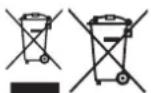
Power tools, rechargeable batteries, accessories and packaging should be sorted for environmental-friendly recycling.
Do not dispose of power tools and batteries/re-chargeable batteries into household waste!
Only for EU countries:
According to the Directive 2012/19/EU on waste electrical and electronic equipment and its transposition into national law, power tools that are no longer usable, and, according to the Directive 2006/66/EC, defective or drained batteries must be collected separately and disposed of in an environmentally correct manner.
If disposed incorrectly, waste electrical and electronic equipment may have harmful effects on the environment and human health, due to the potential presence of hazardous substances.
Only for United Kingdom:
According to The Waste Electrical and Electronic Equipment Regulations 2013 (SI 2013/3113) (as amended) and the Waste Batteries and Accumulators Regulations 2009 (SI 2009/890) (as amended), products that are no longer usable must be collected separately and disposed of in an environmentally friendly manner.
The reprinting or reproduction by any other means, in whole or in part, of documentation and papers accompanying products is permitted only with the express consent of the Einhell Germany AG.
Subject to technical changes
11. Charging station display and troubleshooting
| LED display (19a) | Description Solution | |
| Off - No power supply | - Check the power supply | |
| Lit green - Ready for | mowing
- The battery is fully charged
- The guide cable (24) is con- nected | |
| Flashing green - The | guide cable (24) is se- vered | - Examine the guide cable (24) for a break |
| Lit red - The battery is | being charged - Wait until the battery is fully charged | |
| Flashing red - Fault at | the station - Check the power cable to the charging station | |
12. Robot lawn mower display and troubleshooting
Fault message from the robot lawn mower in the LCD (50)
| Fault Possibl e cause | Remedy |
| No signal | - Guide cable (24) is not pro-p erly connected - No power supply - The guide cable (24) is se- vered | Check whether the LED indicator (21) on the charging station (19) is lit up green - Make sure that the guide cable (24) is laid correctly and centrally underneath the charging station (19). - Check the position of the charging station (19). |
| Outside | - The robot lawn mower cannot recognize any lawn area or lawn boundaries and therefore lies outside the mo- wing area | Press the Stop button in order to open the display cover (13). Re-start the mowing operation via the control panel. - Make sure that the robot lawn mower is in the mowing area, check the position at which the robot lawn mower has come to a standstill. |
| Battery fault | - The robot lawn mower has a battery fault - The battery cannot be char- ged - The battery has reached the end of its service life | - Make sure that the battery was correctly fi tted. - Check whether the main switch (7) is swit- ched on (ON) while the robot lawn mower is in the charging station (19). - Check the position of the charging station (19). Replace the battery if necessary. |
GB
| Fault Possibl e cause Remedy | |
| Battery temperature fault | The temperature of the rechar-geable battery is too high/low or the controller is overheatedIf the battery temperature exceeds 65 °C, the robot lawn mower will return to the charging station (19).If the battery temperature ex-ceeds 45°C or drops below 0°C, charging will be stopped and the robot lawn mower will wait at the charging sta- ton (19). |
| The mower is lifted - | The lifting sensor has been continually tripped for 10 se-conds |
| The mower is blo- cked | - The obstacle sensor has been activated several times in one minuteThe obstacle sensor has been constantly activated for 10 secondsThe obstruction sensor has tripped three times on the way back to the charging sta- tion (19) |
GB
| Fault Possibl e cause Remedy | |
| Too close to the station | - The robot lawn mower was sent back too close to the charging station (19).Press the STOP button (3) in order to open the display cover (13). Re-start the mowing operation on the control panel (2): - The robot lawn mower should be sent back to the charging station (19) at a mini-mum distance of 2 m. |
| Toppled - The robot | lawn mower was constantly tilted for 10 seconds - The robot lawn mower has been tilted for a long time in one directionPress the STOP button (3) in order to open the display cover (13). Re-start the mowing operation on the control panel (2): - Move the robot lawn mower to a level area and restart it. - If the robot lawn mower is tilted because of a steep slope in the mowing area, use the supplied magnetic tape (27) to make the lawn mower keep away from this point and therefore avoid severe inclines. |
| Wheel fault - The rear | wheels (8) were lifted by an obstacle - The rear wheels (8) can rota- te freely due to unevenness in the lawnPress the STOP button (3) in order to open the display cover (23). Re-start the mowing operation on the control panel (2): - Move the robot lawn mower to a level area and restart |
| STOP button error The | display cover (13) is open but the STOP button (3) was not activatedPress the STOP button (3) in order to open the display cover (13). Re-start the mowing operation via the control panel (2): - Check if the display cover (13) can be freely opened and closed with the STOP button (3). - Check the functionality of the STOP but- ton (3). |
GB
| Fault Possible cause Remedy | |
| PCB overheated The | temperature of the rechar-geable battery is too high/low or the controller is overheated - If the battery temperature exceeds 65 °C, the robot lawn mower will return to the charging station (19). - If the battery temperature ex-ceeds 45°C or drops below 0°C, charging will be stopped and the robot lawn mower will wait at the charging stati-on (19). | - Set the work time in summer to the early hours of morning and avoid running the robot lawn mower during the hours of the day when it is hot. - After the battery or controller has cooled down to the permissible temperature range, the robot lawn mower automatically returns to programmed operation. |
| Rain - The rain sensor (5) has trip-ped. | - Wait until the robot lawn mower is dry. - A detailed description of the sensor can be found in section 5.2. |
| Sensor fault (guide cable sensor, dis-tance sensor, mag-net sensor) | - The robot lawn mower was stopped due to a sensor fault | Switch off the main switch (7) (OFF) and then switch it back on again (ON) to restart the robot lawn mower. |
| Motor fault/motor overcurrent | - The robot lawn mower has come to a stop because of overcurrent in the motor or because of a motor fault | Switch off the main switch (7) (OFF) and then switch it back on again (ON) to restart the robot lawn mower. - Check the height of the grass in the mowing area and, if necessary, mow the grass to below 60 mm using a conventio-nal lawn mower. - Increase the cutting height. Always start with a higher cutting height and reduce it in small steps until you reach the desired height. - Inspect the blade plates (11) and wheels for dirt and give these parts a thorough clean. - Check the rear wheels and the blade plate (11) for blockages. If you are unable to remove the blockages, contact the res-pondible customer service center. |
| Operating fault: - The robot lawn mower was stopped due to an operating fault | Switch off the main switch (7) (OFF) and then switch it back on again (ON) to restart the robot lawn mower. |
| Poor boundary The robot lawn mower is situated in the charging station or within the search loop, and the deviation from the reference quality value has greatly w-or-sened. | Check the boundaries of the mowing area. Then delete the reference value and carry out a new initialization of the boundary qua-lity value. |
GB
| Fault Possible cause Remedy | |
| No camera signal The robot lawn mower does not receive a signal from the camera unit | Switch off the main switch (OFF) and then switch it back on again (ON) to restart the robot lawn mower. |
| Too far away The robot lawn mower is too far away from the charging station (19) | Move the robot lawn mower into the mowing area which is near the charging station Switch off the main switch (OFF) and then switch it back on again (ON) to restart the robot lawn mower. |
| Too close to the magnetic tape | The lawn mower detects a magnetic tape signal in the immediate vicinity | For starting purposes, the robot lawn mower must be a minimum of 1m from the magnetic tape. |
Wi-Fi symbol:
| Fault Possible | Cause Remedy | |
| WLAN symbol with line through it | The robot lawn mower is not receiving a WLAN signal | - Restart the robot lawn mower
- Check the WLAN connection
- If necessary, reset the WLAN connection. |
| The WLAN signal is weak | The robot lawn mower responds with great delay or does not respond at all. | Check the WLAN cover in your garden. |
GNSS symbol:
| Fault Possib|e cause Remedy | | |
| GNSS symbol with line through itNo GPS data | The robot lawn mower is not receiving a GNSS signal | Make sure that the robot lawn mower is out- side and that the GNSS signal is not being blocked |
| The GNSS symbol is blinking | The GNSS signal is not precise If | the GNSS signal blinks permanently, the received signal is very weak (blocked by a building or tree) and the position of the char- ging station should be adapted. |
| The GNSS symbol is oscillating | The robot lawn mower is se-arching for a GNSS connection and is calibrating the position of the charging station. | Wait for the calibration to be completed. |
GB
Troubleshooting
| Fault Possible cause Remedy | |
| The robot lawn mo-ter comes to a stop in the mowing area.The robot lawn mower cannot be switched on: | - Battery voltage too low- Fault in the power circuit or the electronic components | - Bring the robot lawn mower back to the charging station (19) for charging.- Switch on the main switch (7) (ON).- Contact your customer service center. |
| The robot lawn mower cannot move into the charging station. | - The charging station (19) is not correctly installed. | - Bring the robot lawn mower back to the charging station (19) for charging.- Switch on the main switch (7) (ON).- Contact your customer service center. |
| The robot lawn mo-ter is very loud. | - Damaged blades (10)- A large amount of foreign bodies adhere to the blades (10)- The robot lawn mower has started too close to obstacles- Damaged blade drive or drive motor- Other parts of the robot lawn mower are damaged | - Replace the blades (10). The 3 blades (10) must all be replaced together at the same time.- The operating efficiency of the robot lawn mower is dependent on the sharpness of the blades (10). You should therefore ensure that the blades (10) are maintained in good condition.- To avoid cutting yourself, be sure to switch off the robot lawn mower and wear work gloves while you clean the blades (10).- Arrange for the motor to be repaired or replaced by your customer service center. |
| The robot lawn mower stays in the charging station.The robot lawn mo-ter keeps returning to the charging station. | - Incorrect work time settings- The battery charge level is too low and drops below 30%.- The rain sensor has tripped.- The robot lawn mower has become overheated.- Twilight is falling, making it impossible for the camera unit to work correctly. | - Check the work time settings.- The robot lawn mower will begin and end its work in accordance with the set time window. Outside this time window the robot lawn mower stays in the charging station (19). |
| The robot lawn mo-ter cannot find the charging station | - The charging station (19) is in a position that receives only a weak GNSS signal- Obstacles in the immediate vicinity of the guide cable loop are preventing the mo-ter from reaching the loop. | - Adapt the position of the charging station (19) and delete the mapping as described in the operating instructions.- Adapt the shape of the guide cable loop / enlarge the guide cable loop. |
IMPORTANT! A severed guide cable and consequential damages are not covered by the warranty!
GB
Magnetic tape troubleshooting (27)
| Fault Possible cause Remedy | |
| The robot lawn mower fails to recognize the magnetic tape (27) and travels over it and past it. | - The magnetic tape (27) is laid too deep in the ground.- The magnetic tape (27) does not work properly because the outside temperature is too high. |
| The robot lawn mo-wer stops or travels out of control when it is near the bound-ary area. | - The magnetic tape (27) is laid too close to the guide cable (24). The distance between two independent boundary areas with magnetic tape (27) is too small.- Interference arises in the mowing area due to electric cables. |
| The robot lawn mo-wer intrudes in the boundary area. | - The robot lawn mower slips over the magnetic tape (27). |
GB
13. FREELEXO CAM PLUS data protection notice
Einhell Germany AG is delighted that you are using the FREELEXO CAM PLUS robot lawn mower. The protection of personal data is an important concern for us. Below is a description of the data processed in general when the equipment is used.
- Location of the charging station
The location of the charging station is determined by means of GNSS positioning and saved locally on the robot lawn mower. This is required in order to navigate the mower back to the charging station when it has finished its mowing work. When servicing is required, this information can be read out of the equipment physically via the logfi le.
Sunrise time and sunset time
Sunrise time and sunset time are determined by means of GNSS positioning and saved locally on the robot lawn mower. This is necessary so that the equipment can be started only in a time interval when the camera unit is able to generate images with sufficient brightness. When servicing is required, this information can be read out of the equipment physically via the logfile.
Images produced by the camera unit
Images generated via the camera unit are saved locally by the robot lawn mower on the device. This is required by the system in order to constantly improve the robot lawn mower's algorithm. On the mower you will find images which were generated during the last 15 minutes of mowing work. This data set is overwritten continuously. No images are generated when the lawn mower is situated in the charging station. When servicing is required, these images can be read out locally in order to understand any faults which have occurred. These images are then deleted.
Both the location-specific data and the generated images can be deleted from the equipment by you yourself. To do so, actuate the SET button and select the submenu Mower Protocol. You can then use either "Delete map" to remove the site data from the device or "Delete images" to delete the camera's saved images.
Detailed documentation on our data protection guidelines can be found on our homepage under "Data protection".
GB
14. Charger indicator
| Indicator status | Explanations and actions |
| Red LED Green LED |
| Off Flashing Ready for use | The charger is connected to the mains and is ready for use; there is no battery pack in the charger |
| On Off Charging | The charger is charging the battery pack in quick charge mode. The charging times are shown directly on the charger. Important! The actual charging times may vary slightly from the stated charging times depending on the existing battery charge. |
| Off On The battery is charged and ready for use. (READY TO GO) | The unit then changes over to gentle charging mode until the battery is fully charged. To do this, leave the rechargeable battery on the charger for approx. 15 minutes longer. Action: Take the battery pack out of the charger. Disconnect the charger from the mains supply. |
| Flashing Off | Adapted charging | The charger is in gentle charging mode. For safety reasons the charging is performed less quickly and takes more time. The reasons can be:- The rechargeable battery has not been used for a very long time. - The battery temperature is outside the ideal range. Action: Wait for the charging to be completed; you can still continue to charge the battery pack. |
| Flashing Flashing Fault | Charging is no longer possible. The battery pack is defective. Action: Never charge a defective battery pack. Take the battery pack out of the charger. |
| On On Temperature fault | The battery pack is too hot (e.g. due to direct sunshine) or too cold (below 0°C). Action: Remove the battery pack and keep it at room temperature (approx. 20°C) for one day. |
GB
We have competent service partners in all countries named on the guarantee certificate whose contact details can also be found on the guarantee certificate. These partners will help you with all service requests such as repairs, spare and wearing part orders or the purchase of consumables.
Please note that the following parts of this product are subject to normal or natural wear and that the following parts are therefore also required for use as consumables.
| Category Example | |
| Wear parts* Battery | |
| Consumables* Blades | |
| Missing parts | |
- Not necessarily included in the scope of delivery!
In the effect of defects or faults, please register the problem on the internet at www.Einhell-Service.com. Please ensure that you provide a precise description of the problem and answer the following questions in all cases:
Did the equipment work at all or was it defective from the beginning?
Did you notice anything (symptom or defect) prior to the failure?
What malfunction does the equipment have in your opinion (main symptom)?
Describe this malfunction.
F
Sommaire
PIN standard: Nuovo PIN:
0000
Cambiare PIN
Akumulator je uplne nability.
Svietia 2 alebo 1 kontrolka LED:
Akumulator ma dostatochné zvyskové nabitie.
1 kontrlka LED bliká:
Akumulator je vybity, nabite akumulator.
SK
6.1 Interruptor principal
Evnpwon yia to epbic
Acendem 2 ou 1 LED(s):
6.1 Interruptor principal
PIN standard: Novo PIN:
0000
Alterar o PIN
Sve 3 LED diode svettle:
Standart PIN: Yeni PIN:
0000
PIN değistir
PIN numarasini degistirmek icin asagidaki islemleri yapin:
Nokta biçme (Spot-Mowing)
Subject to change without notice
Archive-File/Record: NAPR029830
Documents registrar: Daniel Laubmeier
Wiesenweg 22, D-94405 Landau/Isar
190 Ror 150. Roat t r . 200800000000000000000000000000000000000000000000000000000000000000

We, Einhell UK Ltd
Champions Business Park, First Floor Unit 10, Arrowe Brook Rd, Upton, Wirral CH49 0AB, United Kingdom
declare the conformity to UK standards and legislation was assessed for:
Robot Lawn Mower FREELEXO CAM PLUS (Einhell)
UK legislation
Simple Pressure Vessels (Safety) Regulation
Electrical Equipment (Safety) Regulation
X Radio Equipment Regulation
Personal Protective Equipment Regulation
The Ecodesign for Energy-Related Products and Energy Information Regulation
The Restriction of the Use of Certain Hazardous Substances in Electrical and Electronic Equipment Regulation
Nolse Emisslon in the Environment by Equipment for use Outdoors Regulation
Annex V
Annex VI
Noise:measuredL = dB A):guaranteed Lw = dB A
P = kW; L/0 = cm
UK Approved Body:
Supply of Machinery (Safety) Regulation
Annex IV
UK Approved Body:
UKTE Certificat No.:
Standard References: BS EN 60335-1; BS EN 50636-2-107; BS EN 62233; BS EN IEC 55014-1; BS EN IEC 55014-2; BS EN IEC 61000-3-2; BS EN 61000-3-3; BS EN 301 489-1; BS EN 301 489-3; BS EN 301 489-19; BS EN 303 447; BS EN 303 413; BS EN 50663; BS EN 62311; BS EN 50665; BS EN 300 328
Wirral, 2024.08.26
Tom Chambers, Managing Director Einhall UK Ltd
Archive-File/Record: NAPR029830
Article Number:34.139.76 I-No.:21013
Subject to change without notice Wiesenweg 22, 94405 Landau/Isar, Germany
Documents registrar: Daniel Laubmeier
EH 08/2024 (01)