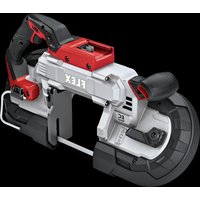
SBE 127 18-EC - Saw Flex - Free user manual and instructions
Find the device manual for free SBE 127 18-EC Flex in PDF.


| Product type | Cordless deep cut band saw |
| Brand | Flex |
| Model | SBE 127 18-EC |
| Rated voltage | 18 V DC |
| No-load speed | 0 - 192 m/min |
| Blade dimensions | 1,140 x 13 x 0.5 mm |
| Max. cutting depth (round) | 127 mm |
| Max. cutting depth (rectangular) | 127 x 127 mm |
| Weight (without battery) | 5.9 kg |
| Battery type | Lithium-ion 18 V (compatible with AP 18.0/2.5, AP 18.0/5.0, AP 18.0/8.0) |
| Operating temperature | -10 °C to 40 °C |
| Charging temperature | 4 °C to 40 °C |
| Lighting | Integrated LED light with pre-illumination |
| Variable speed control | Yes, adjustment wheel (positions 1 to 5) |
| Adjustable workpiece guide | Yes (3 positions) |
| Hanging hook | Yes, foldable |
| Sound pressure level (LpA) | 81.9 dB(A) |
| Sound power level (LWA) | 92.9 dB(A) |
| Vibration (cutting steel tube) | < 2.5 m/s² (K=1.5 m/s²) |
| Maintenance | Regular cleaning of ventilation grilles and housing |
| Spare parts | Available at www.flex-tools.com |
Frequently Asked Questions - SBE 127 18-EC Flex
User questions about SBE 127 18-EC Flex
0 question about this device. Answer the ones you know or ask your own.
Ask a new question about this device
Download the instructions for your Saw in PDF format for free! Find your manual SBE 127 18-EC - Flex and take your electronic device back in hand. On this page are published all the documents necessary for the use of your device. SBE 127 18-EC by Flex.
USER MANUAL SBE 127 18-EC Flex
SBE 64 18-EC/SBE 127 18-ECSBI
de Originalbetriebsanleitung....8
en Original operating instructions....16
fr Notice d'instructions d'origine 24
it Istruzioni per l'uso originali....32
es Instrucciones de funcionamiento originales....39
pt Instruções de serviço originais ....46
nl Originele gebruiksaanwijzing....54
da Originale driftsvejledning 62
no Originale driftsanvisningen....69
SV Originalbruksanvisning 76
fi Alkuperäinen käyttöohjekirja....83
el Auθεντικές οδηγίες χειρισμού....90
tr Orijinal işletme kılavuzu....98
pI Instrukcja oryginalna....105
hu Eredeti üzemeltetési útmutató .... 113
cs Originální návod k obsluze 120
sk Originálny návod na obsluhu 127
hr Originalna uputa za rad....134
sl Izvirno navodilo za obratovanje 141
ro Instructiuni de functionare originale....148
bg Оригинално упътване за експлоатация 156
ru Оригинальная инструкция по эксплуатации.... 164
et Originaalkasutusjuhend 172
It Originali naudojimo instrukcija 179
Iv Lietošanas pamācības oriģināls......186
ar
ترجمة لإرشادات التشفيل الأصلية 193
A
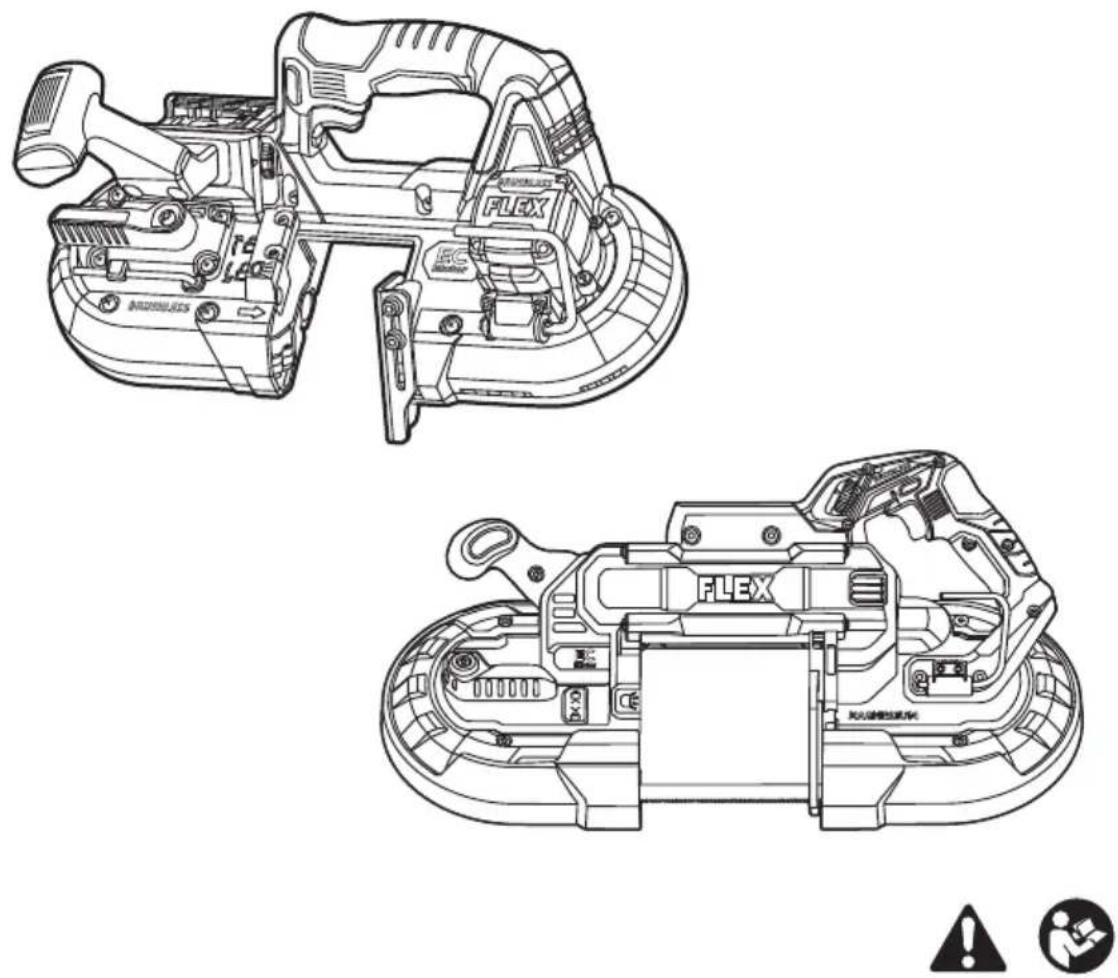
SBE 127 18-EC
B1
SBE 64 18-EC
natural_image
Technical line drawing of a mechanical component with no visible text or symbols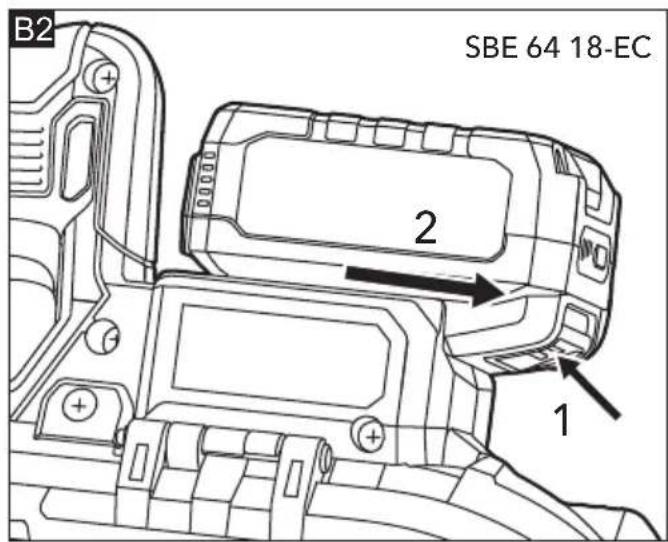

SBE 127 18-ECSBE 127 1
BE 127
natural_image
Four abstract geometric shapes with varying line styles and shading, including a cross symbol (no text or labels)Symbols used in this manual

WARNING!
Denotes impending danger. Non-observance of this warning may result in death or extremely severe injuries.

CAUTION!
Denotes a possibly dangerous situation. Non-observance of this warning may result in slight injury or damage to property.

NOTE
Denotes application tips and important information.
Symbols on the power tool
VVolts
/minRotationrate

Read the instructions

Wear eye protection.

Wear mask!

Disposal information for the old machine (see page 21)!
For your safety

WARNING!
Before using the power tool, please read the follow:
– these operating instructions,
- the "General safety instructions" on the handling of power tools in the enclosed booklet (leaflet-no.: 315.915),
- the currently valid site rules and the regulations for the prevention of accidents.
This power tool is state of the art and has been constructed in accordance with the acknowledged safety regulations.
Nevertheless, when in use, the power tool may be a danger to life and limb of the user or a third party, or the power tool or other property may be damaged.
The cordless compact band saw and deep cut band saw may be used only
-asintended,
– in perfect working order.
Faults which impair safety must be repaired immediately.
Intended use
The cordless compact band saw and deep cut band saw is intended
– for commercial use in industry and trade,
– for professional metal and plastics cutting applications.
- for use with saw bands and accessories which are recommended by the manufacturer.
– not designed for cutting wood or similar materials.
Safety instructions for band saw WARNING!
Read all safety warnings, instructions, illustrations and specifications provided with this power tool. Failure to follow all instructions listed below may result in electric shock, fire and/or serious injury. Save all warnings and instructions for future reference.
- Hold power tool by insulated gripping surfaces when performing an operation where the cutting accessory may contact hidden wiring. Cutting accessories contacting a "live" wire may make exposed metal parts of the power tool "live" and could give the operator an electric shock.
- Secure the workpiece. Clamping devices or a vise will hold the workpiece in place better than the hand.
- Secure material before cutting. Never hold it in your hand or across legs. Small or thin material may flex or vibrate with the blade, causing loss of control.
- Keep hands away from cutting area and blade. Keep your other hand on the front handle. If both hands are holding the saw, they cannot be cut by the blade.
- Do not use a damaged blade. Before each use inspect the blade for cracks, chips or other damage. Replace a damaged blade immediately.
- Keep hands from between the blade and material guide. Always start cut with workpiece on the material guide. When tool starts work will be pulled to the material
guide and can pinch your fingers.
■ Before starting to cut, turn tool "ON" and allow the blade to come to full speed. Tool can chatter or vibrate if blade speed is too slow at beginning of cut.
■ Do not touch the blade or the workpiece immediately after operation. Blade and workpiece will be hot.
■ When removing the blade from the tool avoid contact with skin and use proper protective gloves when grasping the blade or accessory. Accessories may be hot after prolonged use.
- Do not "jam" the blade or apply excessive pressure to the tool when cutting.
Overstressing the blade increases the loading and susceptibility to twisting or binding of the blade in the cut and the possibility of blade breakage.
Noise and vibration
The noise and vibration values have been determined in accordance with EN 60745.
The A evaluated noise level of the power tool is typically:
- Sound pressure level L_pA :
SBE 64 18-EC 82.3 dB(A);
SBE 127 18-EC 81.9 dB(A);
- Sound power level L_WA :
SBE 64 18-EC 93.3 dB(A);
SBE 127 18-EC 92.9 dB(A);
- Uncertainty: K = 3 dB.
Total vibration value when sawing steel tube:
The indicated measurements refer to new power tools. Daily use causes the noise and vibration values to change.

NOTE
The declared vibration total value(s) and the declared noise emission level given in this information sheet has been measured in accordance with a measurement method standardized in EN 60745 and may be used to compare one tool with another.
It may be used for a preliminary assessment of exposure. The specified vibration emission level represents the main applications of the tool.
However, if the tool is used for different applications, with different cutting accessories or poorly maintained, the vibration emission level may differ.
This may significantly increase the exposure level over the total working period.
To make an accurate estimation of the vibration exposure level, it is also necessary to take into account the times when the tool is switched off or running but not actually in use.
This may significantly decrease the exposure level over the total working period.
Identify additional safety measures to protect the operator from the effects of vibration such as: maintain the tool and the cutting accessories, keep the hands warm, organization of work patterns.

WARNING!
The vibration and noise emissions during actual use of the power tool can differ from the declared value in which the tool is used; In order to protect the operator, user should wear ear protectors in the actual conditions of use.

CAUTION!
Wear ear defenders at a sound pressure above 85 dB(A).
Technical data
| Tool | SBE 6418-EC | SBE 12718-EC | |
| Type | CompactBand Saw | Deep CutBand Saw | |
| Rated voltage Vdc 18 | 18 | ||
| No-load speed | m/min | 0-192 0-192 | |
| BladeDimension | mm | 835x 13x0.5 | 1140 x 13x 0.5 |
| Max. CuttingDepth | mm | Round Stock | |
| 64 127 | |||
| Rectangular Stock | |||
| 64x64 127x | 127 | ||
| Weight according to"EPTA Procedure 01/2003" (without battery) | kg 3.3 | 5.9 | |
| Battery 18V | AP 18.0/2.5AP 18.0/5.0AP 18.0/8.0 | ||
| Weight of battery | kg | AP 18.0/2.5 0.42AP 18.0/5.0 0.72AP 18.0/8.0 1.1 | |
| Working temperature | -10-40°C | ||
| Storage temperature | < 50°C | ||
| Charging temperature | 4-40°C | ||
| Charger CA 10. | 8/18.0, CA 18.0-LD | ||
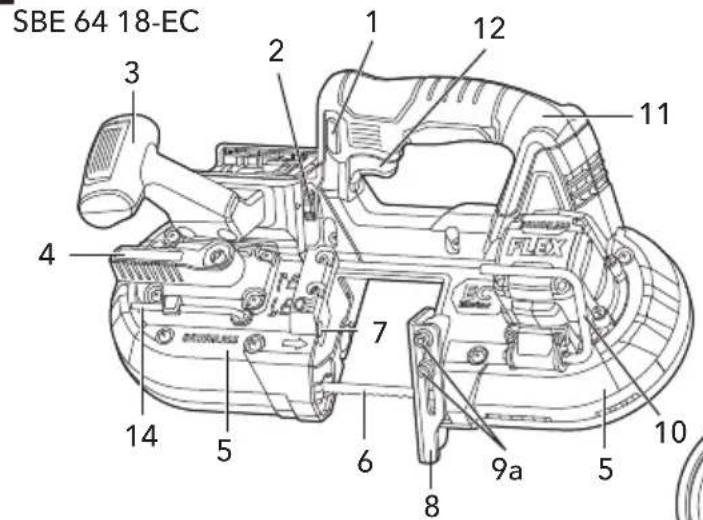
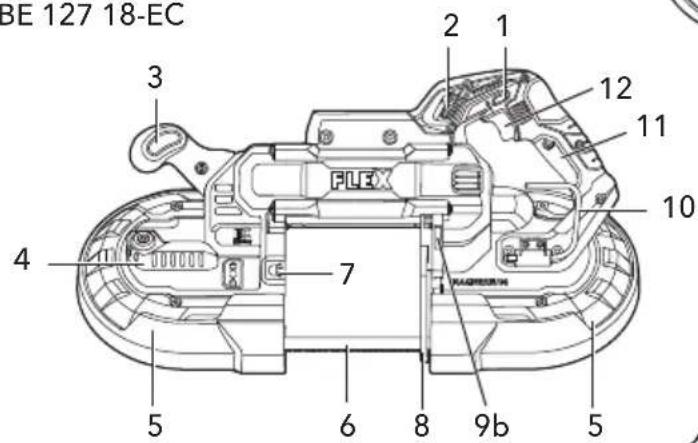
Overview (see figure A)
The numbering of the product features refers to the illustration of the machine on the graphics page.
- Lock-off button
- Speed dial
- Front handle
- Tension lock lever
- Guard
- Blade
- LED light
- Workpiece guide
- 9a Guide adjustment screw (SBE 64 18-EC)
9b Guide adjustment button (SBE 127 18-EC)
- Saw hook
- Main handle
- Variable-speed trigger switch
- 13a Blade cover lock (SBE 64 18-EC)
13b Blade cover lock screw (SBE 127 18-EC)
-
Hex key
-
Blade cover
- Pully
Operating instructions

WARNING!
Remove the battery before carrying out any work on the power tool.
Before switching on the power tool
Unpack the cordless compact band saw and deep cut band saw, check that here are no missing or damaged parts.

NOTE
The batteries are not fully charged on delivery. Prior to initial operation, charge the batteries fully. Refer to the charger operating manual.
Inserting/replacing the battery
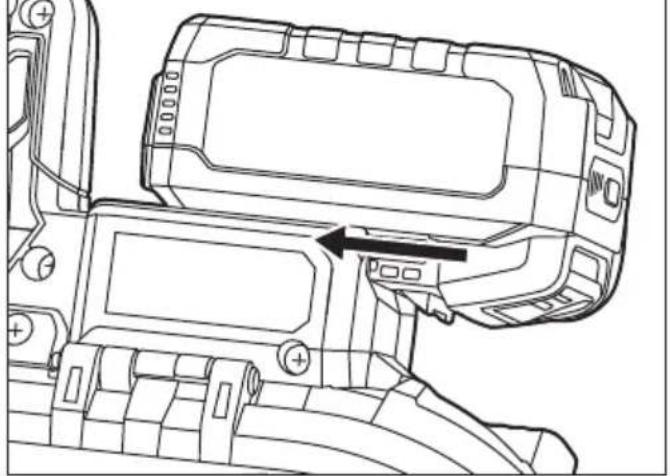
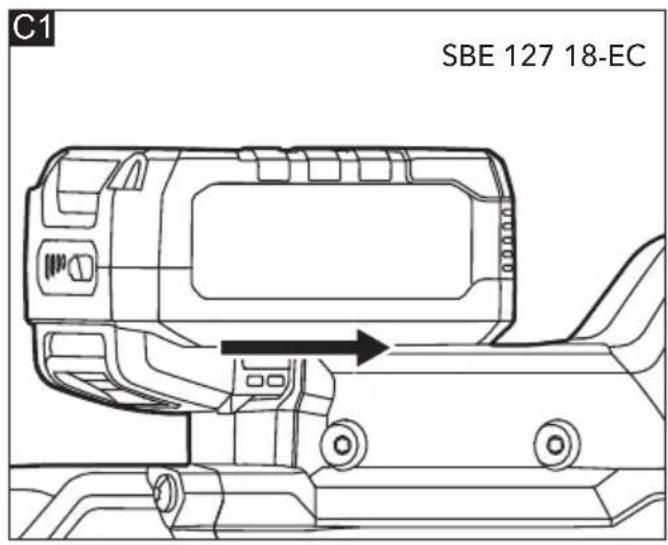
■ Press the charged battery into the power tool until it clicks into place (see figure B1 & C1).
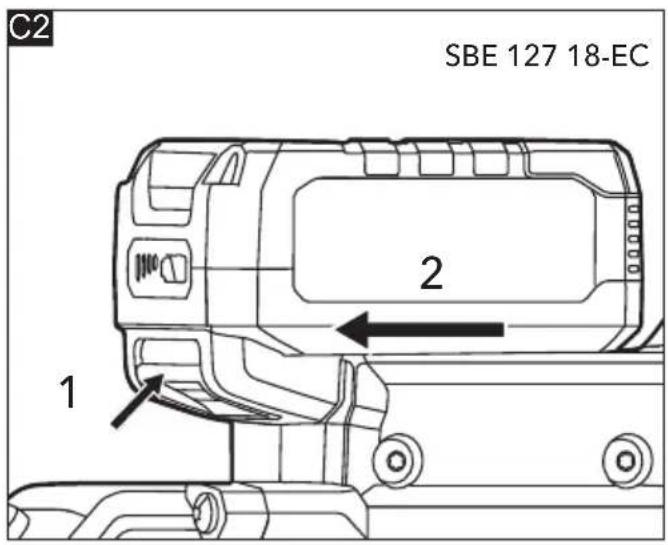
■ To remove, press the release button (1.) and pull out the battery (2.) (see figure B2 & C2).

CAUTION!
When the tool is not in use, protect the battery contacts. Loose metal parts may short circuit the contacts; explosion and fire hazard!
Blades and blade selection
The SBE 64 18-EC band saw is designed to use 0.5mm thick, 13mm wide, 835 mm long blades and the SBE 127 18-EC band saw is designed to use 0.5mm thick, 13mm wide, 1140mm long blades. DO NOT use more than 0.5mm thick blades.
Use a blade with the correct pitch for the specific cutting job.
To select the proper blade, three factors should be considered: The size, shape, and type of material to be cut.
The following suggestions are for selecting the right blade for various cutting operations. Blade requirements may vary depending upon the specific size, shape and type of material to be cut.
| 10 Teeth | For tough stock 4.8mm up to 82.6mm in diameter or width. |
| 14 Teeth | For tough stock 4mm up to 19mm in diameter or width. |
| 18 Teeth | For thin-wall tubing and thin sheets heavier than 21 gauge. |
| 24 Teeth | For thin-wall tubing and thin sheets heavier than 21 gauge. |
Installing/removing blade
WARNING!
An unsuitable or incorrectly fitted band saw blade can damage the saw. Use only band saw blades that are suitable for this saw.

WARNING!
Always remove the battery pack from the tool before installing or removing the blade.
To install the blade (SBE 64 18-EC)
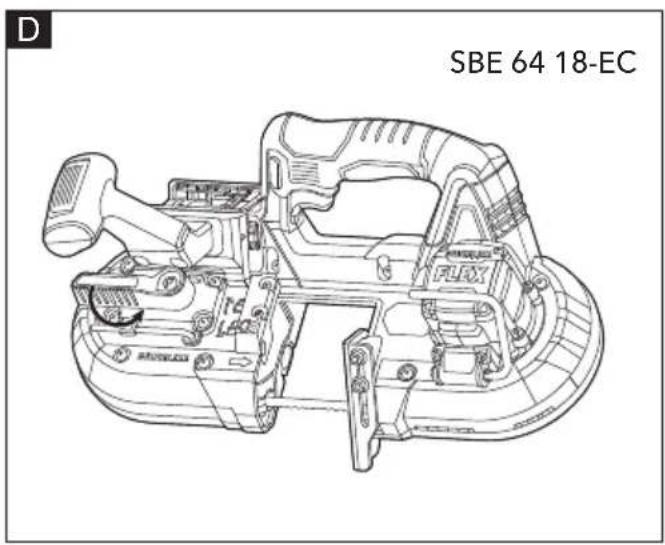
■ Turn the tension lock lever (4) 180° counterclockwise(see figure D).
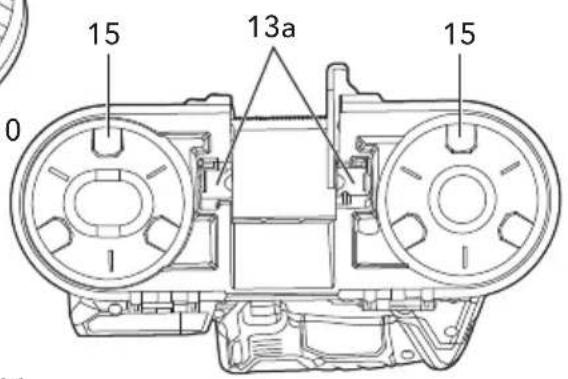
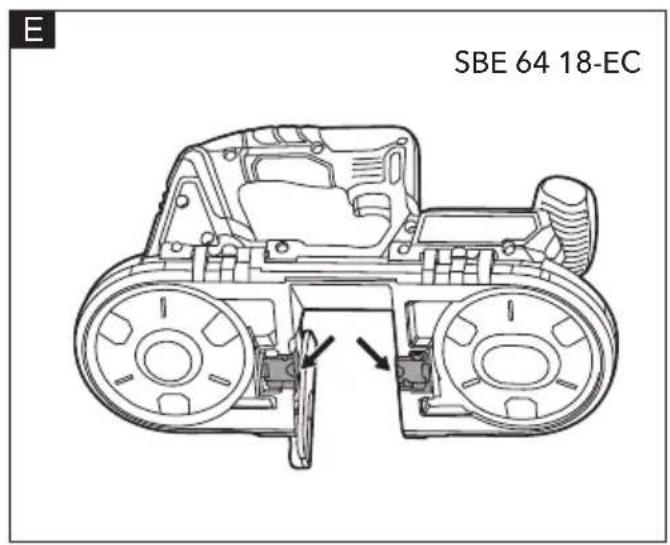
■ Turn the band saw over. Lift both blade cover locks (13a) and open the blade cover(15) (see figure E).
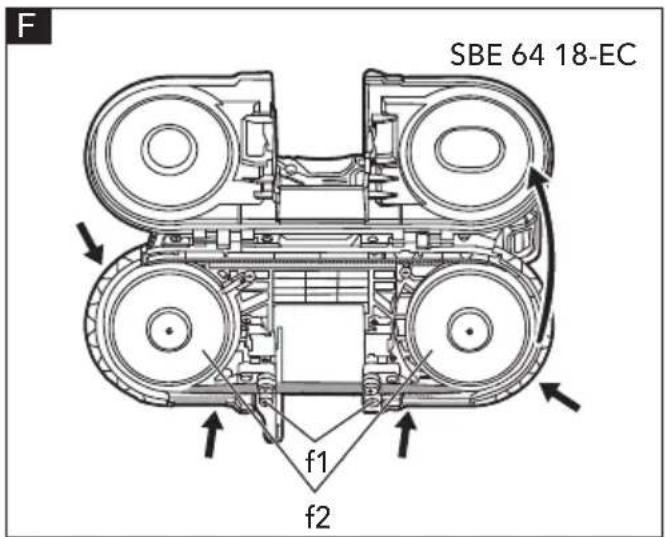
■ Firmly press the new blade between the blade guide rollers (f1) (see figure F).

NOTE
Be sure the teeth face down and point to the workpiece guide (see figure G).
■ Holding the blade in the guide rollers (f1), route it around both pulleys (f2) and through the workpiece guide (8).
■ Make sure that the blade is fully inserted into the guide rollers (f1) and positioned squarely against the pulleys (f2).
■ Close the blade cover (15) and press down the blade cover locks(13a).
■ Turn the tension lock lever (4) 180° clockwise.

NOTE
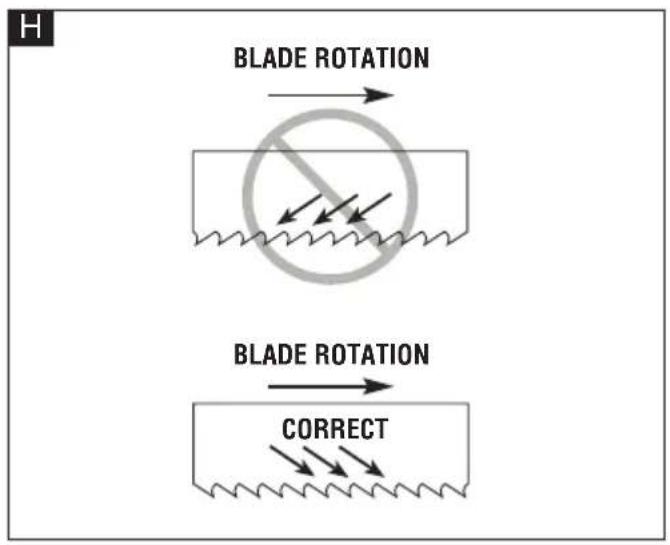
The cutting teeth of the blade should always point towards the direction of blade rotation(see figure H).
To remove the blade

WARNING!
The saw blade may be very hot after use. Allow the blade to cool down when removing a saw blade.
■ Turn the tension lock lever (4) 180° counterclockwise.
■ Turn the band saw over. Lift both blade cover locks (13a) and open the blade cover(15).
■ Begin removing the blade at the upper portion and continue around the pulleys (f2). The blade may spring free during removal. saw blades are sharp. use care in handling them.
■ The rubber surface of the pulleys should be inspected for looseness or damage when changing the blade.
To install the blade (SBE 127 18-EC)
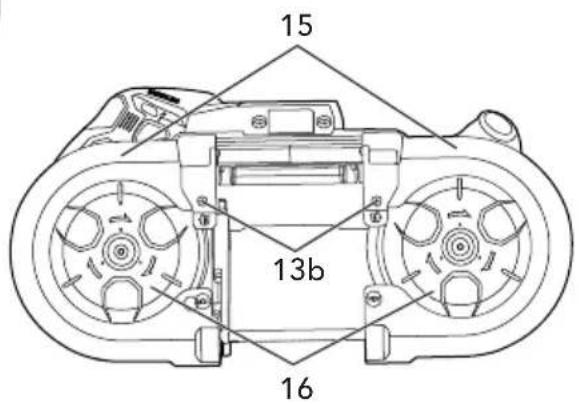
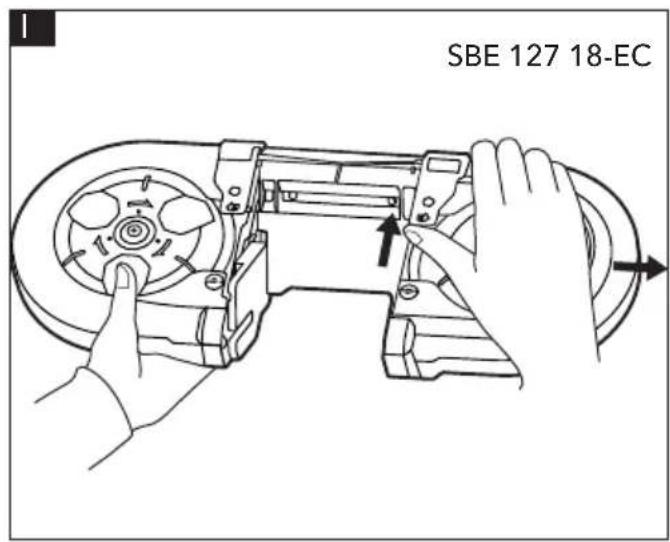
■ Turn the band saw over. Remove the two blade cover lock screws (13b) on the blade cover (15) first. Raise up the upper corner of blade covers (15), pull out and remove the blade covers (15) (see figure I).
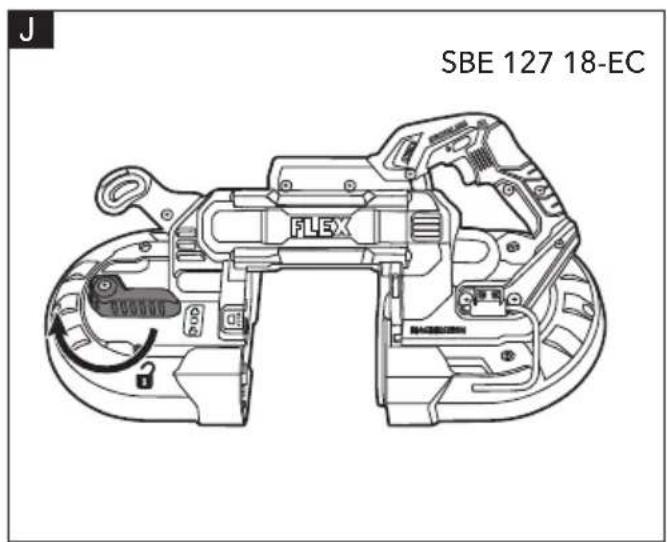
■ Turn the tension lock lever (4)180° clockwise (see figure J).
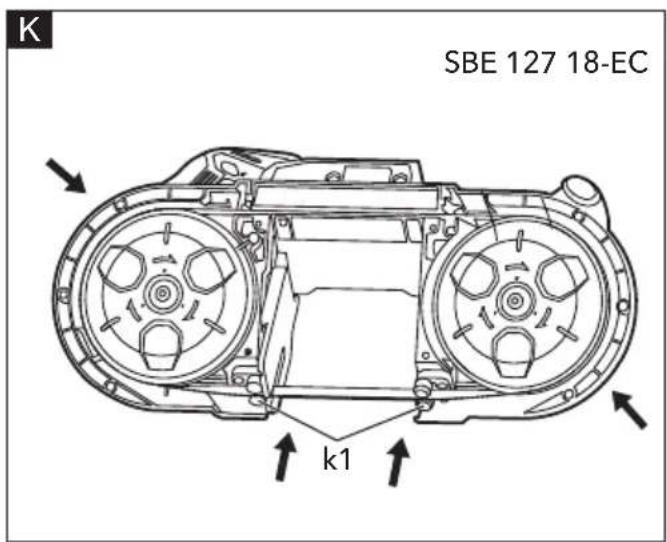
■ Turn the band saw over, firmly press the new blade between the blade guide rollers (k1) (see figure K).

NOTE
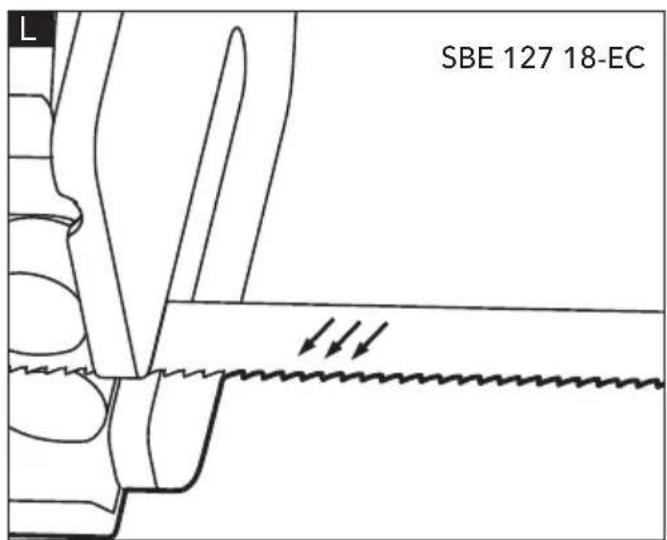
Be sure the teeth face down and point to the workpiece guide (see figure L).
■ Holding the blade in the guide rollers(k1), route it around both pulleys (13b) and through the workpiece guide (8).
■ Make sure that the blade is fully inserted into the guide rollers (k1) and positioned squarely against the pulleys (16).
■ Turn the tension lock lever (4) 180° counterclockwise.
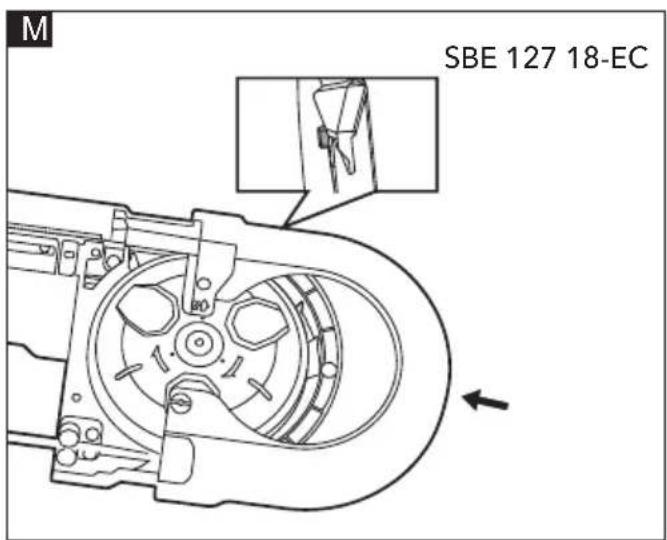
■ Snap the blade covers (15) into place. Ensure all cover snaps are properly seated (see figure M).
■ Retighten the two blade lock screws.

NOTE
The cutting teeth of the blade should always point towards the direction of blade rotation(see figure H).
To remove the blade

WARNING!
The saw blade may be very hot after use.
Allow the blade to cool down when removing a saw blade.
■ Remove the two blade covers (15) from the band saw.
■ Turn the tension lock lever (4) 180° clockwise.
■ Begin removing the blade at the upper portion and continue around the pulleys (16). The blade may spring free during removal. saw blades are sharp. Use care in handling them.
■ The rubber surface of the pulleys (16) should be inspected for looseness or damage when changing the blade.
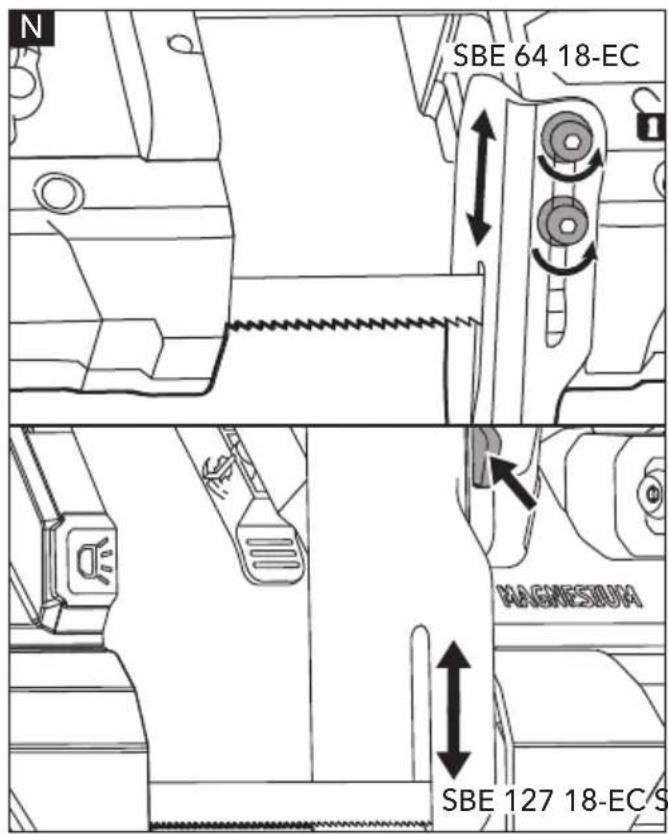
Adjust the workpiece guide (see figure N)
WARNING!
Remove the battery pack before adjustment. SBE 64 18-EC
■ Loosen the two guide adjustment screws (9a) with the included hex key (14).
■ Move the workpiece guide (8) to the desired position.
■ Securely tighten both screws (9a).
■ To adjust the three position workpiece guide, press the guide adjustment button(9b) and slide the workpiece guide (8) to the desired position detent.
SBE 127 18-EC
LED light (see figure O)
The LED light (7) will automatically turn on with a slight squeeze on the variable-speed trigger switch before the tool starts running and will turn off approximately 10 seconds after the trigger switch is released.
The LED light will rapidly flash when the tool and/or battery pack becomes overloaded or too hot, and the internal sensors will turn the tool off. Rest the tool for a while or place the tool and battery pack separately under air flow to cool them.
The LED light will flash more slowly to indicate that the battery is at low-battery capacity. Recharge the battery pack.
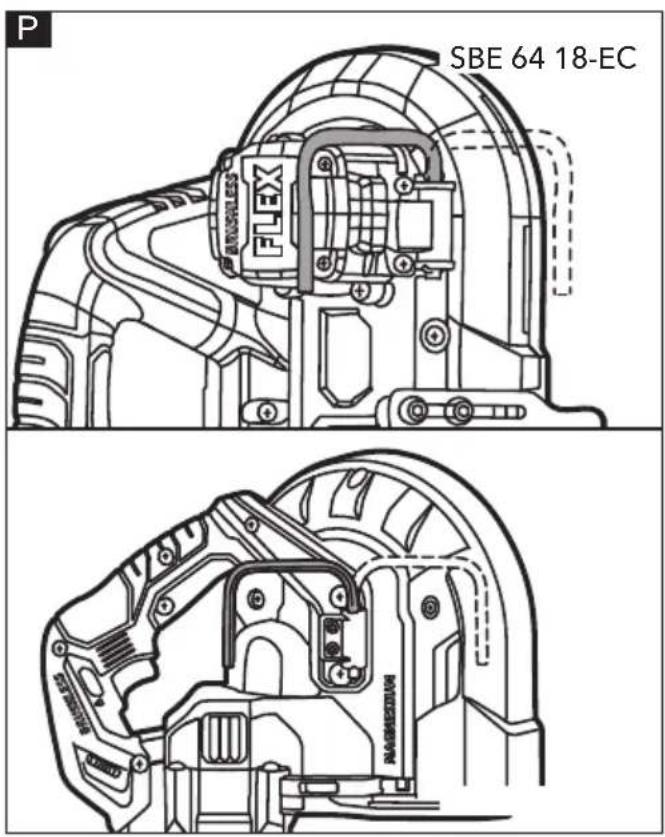
Saw hook (see figure P)
WARNING!
When the saw is hung by the hook, do not shake the saw or the object that it is hanging from.
WARNING!
Make sure that the structure used to hang the saw is secure. Personal injury or property damage may occur.
WARNING!
Only use the hook for hanging the saw.
Using the hook to hang anything else could lead to serious injury.
To use, lift up the saw hook (10) until it snaps into the open position.
When not in use, always lower the hook until it snaps into the closed position.
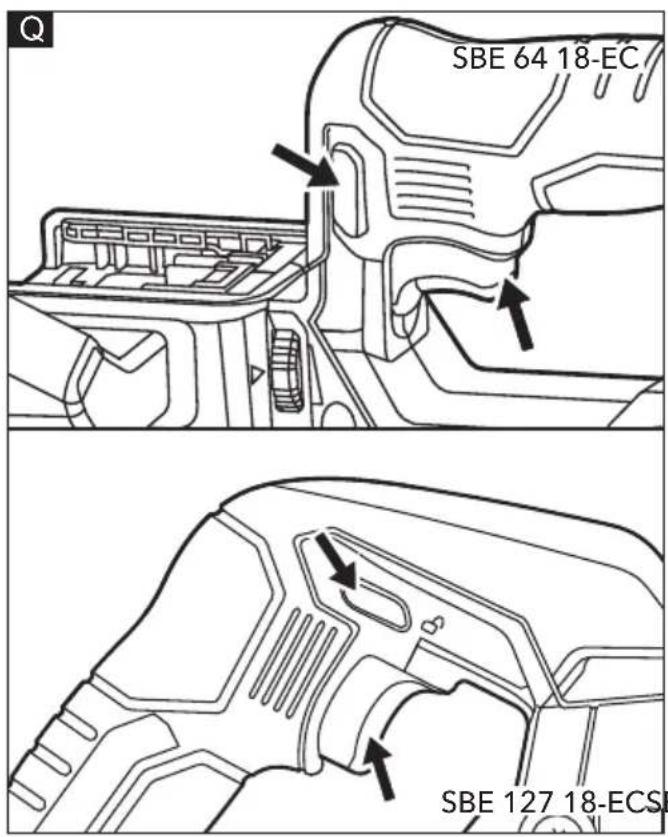
Variable speed trigger switch(see figure Q)
SBE 64 18-EC
To turn the tool "ON", press and hold the lock-off button (1), then squeeze the trigger switch(12). Release the lock-off button (1) and continue to squeeze the trigger switch (12) for continued operation.
To turn the tool "OFF", release the trigger switch (12).
The variable-speed trigger switch (12) delivers higher speed with increased trigger pressure and lower speed with decreased trigger pressure.
SBE 127 18-EC
To turn the tool "ON", depress the lock-off button from the side marked with " 🔍 ", then squeeze the trigger switch(12).
To turn the tool "OFF", release the trigger switch (12).
To prevent the saw from being activated unintentionally, depress the lock-off button from the side marked with "🔒" and the trigger switch will be locked.
The variable-speed trigger switch (12) delivers higher speed with increased trigger pressure and lower speed with decreased trigger pressure.
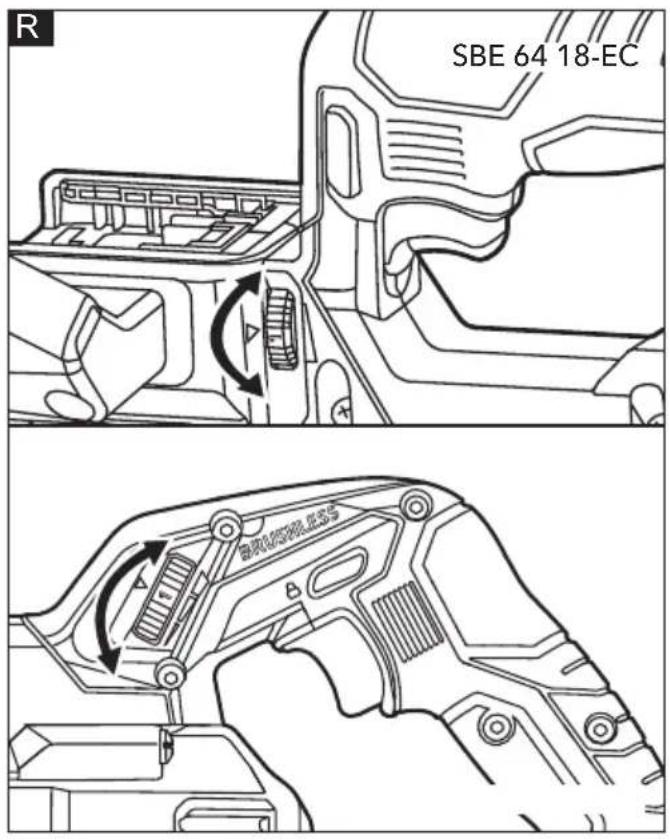
Speed dial (see figure R)
The band saw has a speed dial (2) to set the different speed.
Rotate the speed dial (2) to "6" for maximum speed or to "1" for minimum speed (SBE 64 18-EC).
Rotate the speed dial (2) to "5" for maximum speed or to "1" for minimum speed(SBE 127 18-EC).
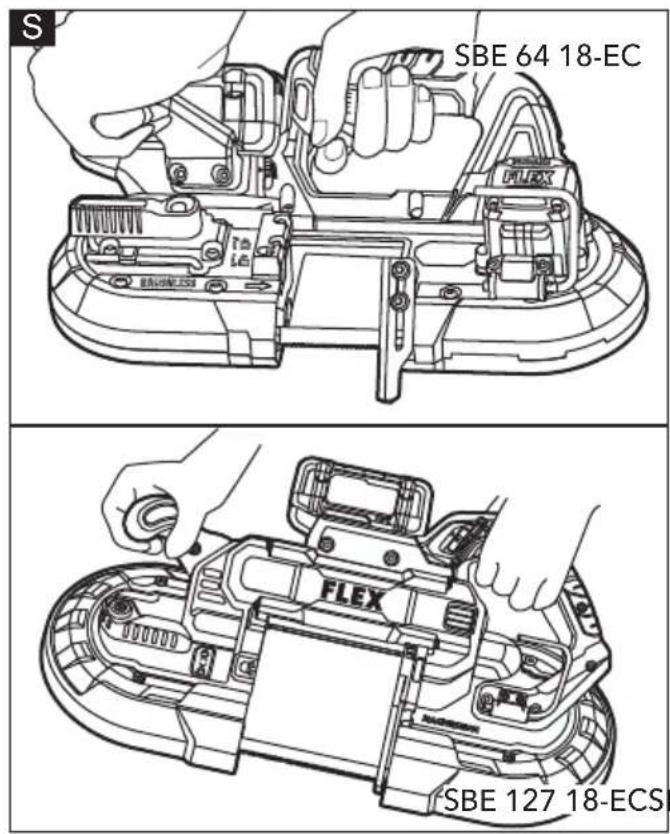
Proper hand position (see figure S)

WARNING!
To reduce the risk of serious personal injury, always use proper hand position.
Proper hand position requires one hand on the main handle (11) and one hand on the front handle (3).
General cutting
■ Remove the battery pack from the tool.
■ Make sure that the workpiece is firmly clamped in place to keep it from slipping or moving while cutting.
■ Install the appropriate type and size of blade for the workpiece material and size.
■ Mark the line of cut clearly on workpiece, if needed.
■ Attach the battery pack to the band saw.
■ Hold the saw firmly with both hands. Make sure to keep your hands on the insulated gripping areas only.
■ Bring the workpiece guide into contact with the workpiece while keeping the blade off of the workpiece.
■ Start the saw and bring it to the maximum desired cutting speed before applying the blade to the workpiece.
■ Slowly and gently tilt the tool to bring the band saw blade into contact with the workpiece. Use only enough steady pressure on the blade to keep the saw cutting. Do not force the tool.

NOTE
During cutting, if the band saw becomes locked or jammed in the workpiece material, release the switch immediately to avoid damage to the band saw blade and motor.

WARNING!
End pieces, which would be heavy enough to cause injury when they drop, after cut-off, should be supported. End pieces may be hot and sharp. Safety shoes and heavy gloves are strongly recommended.
Tips for better cutting
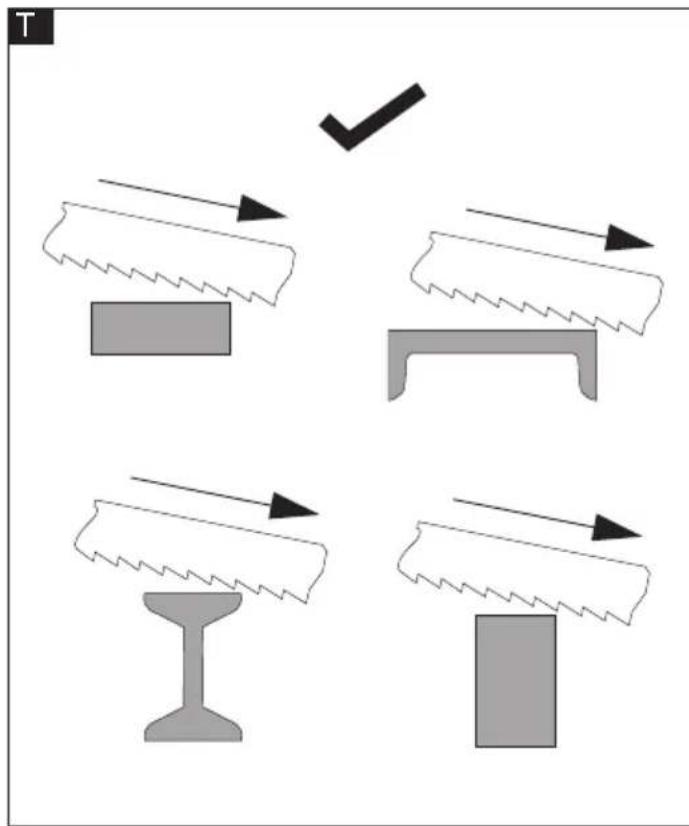
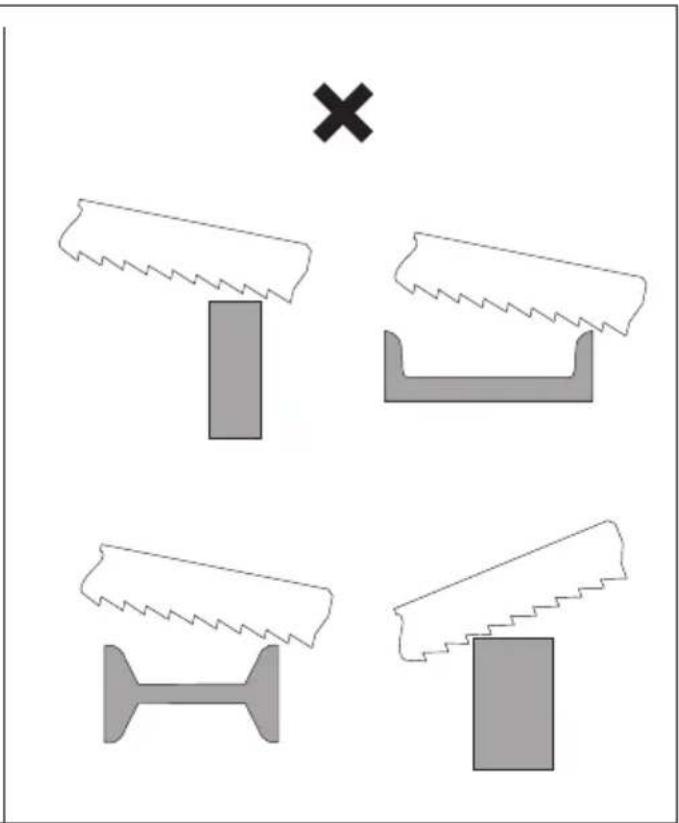
■ Start cutting on a surface where the greatest number of teeth will be in contact with the workpiece at one time (see figure T).
■ Never twist the band saw blade during cutting operation.
■ Never use liquid coolants with portable band saws. Use of liquid coolants will cause buildup on pulleys and reduce
performance.
■ If excessive vibration occurs during the cut, ensure that the material being cut is securely clamped down. If vibration continues, change the band saw blade.
Maintenance and care

WARNING!
Remove the battery before carrying out any work on the power tool.
Cleaning
■ Clean the power tool and grille in front of the vent slots regularly. Frequency of cleaning is dependent on the material and duration of use.
■ Regularly blow out the housing interior and motor with dry compressed air.
Spare parts and accessories
For other accessories, see the manufacturer's catalogues.
Exploded drawings and spare-part lists can be found on our homepage:
www.flex-tools.com.
Disposal information

WARNING!
Render redundant power tools unusable:
- battery operated power tool by removing the battery.

EU countries only
Do not throw electric power tools into the household waste!
In accordance with the European Directive 2012/19/EU on Waste Electrical and
Electronic Equipment and transposition into national law used electric power tools must be collected separately and recycled in an environmentally friendly manner.

Raw material recovery instead of waste disposal.
Device, accessories and packaging should be recycled in an environmentally friendly manner. Plastic parts are identified for recycling according to material type.

WARNING!
Do not throw batteries into the household waste, fire or water. Do not open used batteries.
EU countries only:
In accordance with Directive 2006/66/EC defective or used batteries must be recycled.
NOTE
Please ask your dealer about disposal options!
(€-Declaration of conformity
We declare on our sole responsibility that the product described in "Technical specifications" conforms to the following standards or normative documents:
EN 60745 in accordance with the regulations of the directives 2014/30/EU, 2006/42/EC, 2011/65/EU.
Responsible for technical documents:
Technical Director Head of Quality
Department (QD)
Exemption from liability
The manufacturer and his representative are not liable for any damage and lost profit due to interruption in business caused by the product or by an unusable product.
The manufacturer and his representative are not liable for any damage which was caused by improper use of the product or by use of the product with products from other manufacturers.
UKCA Declaration of Conformity
We as the manufacturer: FLEX
declare under our sole responsibility, that the product(s) described under „Technical specifications“ fulfills all the relevant provisions of The Supply of Machinery
(Safety) Regulations S.I. 2008/1597 and also fulfills all the relevant provisions of the following UK Regulations:
Electromagnetic Compatibility Regulations S.I. 2016/1091, The Restriction of the Use of Certain Hazardous Substances in Electrical and Electronic Equipment Regulations
S.I. 2012/3032 and are manufactured in accordance with the following designated Standards:
BS EN 60745-1:2009+A11:2010
BS EN 60745-2-20:2008
BS EN IEC 55014-1:2021
BS EN IEC 55014-2:2021
Place of declaration: Steinheim, Germany. Responsible person: Peter Lameli, Technical Director - FLEX-Elektrowerkzeuge GmbH
Contact details for Great Britain: FLEX Power Tools Limited, Unit 8 Anglo Office Park, Lincoln Road, HP 12, 3RH Buckinghamshire, United Kingdom.
Peter Lameli Klaus Peter Weinper Technical Director Head of Qualit Department (QD)
1.07.2023
| 10 Δόντια | For tough stock 4.8mm up to 82.6mm in diameter or width. |
| 14 Δόντια | For tough stock 4mm up to 19mm in diameter or width. |
| 18 Δόντια | For thin-wall tubing and thin sheets heavier than 21 gauge. |
| 24 Δόντια | For thin-wall tubing and thin sheets heavier than 21 gauge. |
Technical Director Head of Quality
Department (QD)
Ładowarka CA 10.8/18.0, CA 18.0-LD
- Negotovost: K = 3 dB(A).