MFZ-KT60VA - Air Conditioning MITSUBISHI - Free user manual and instructions
Find the device manual for free MFZ-KT60VA MITSUBISHI in PDF.


User questions about MFZ-KT60VA MITSUBISHI
0 question about this device. Answer the ones you know or ask your own.
Ask a new question about this device
Download the instructions for your Air Conditioning in PDF format for free! Find your manual MFZ-KT60VA - MITSUBISHI and take your electronic device back in hand. On this page are published all the documents necessary for the use of your device. MFZ-KT60VA by MITSUBISHI.
USER MANUAL MFZ-KT60VA MITSUBISHI
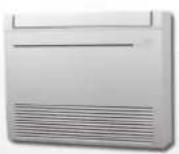
FLOOR-TYPE AIR CONDITIONERS
INDOOR UNIT
MFZ-KT25VG
MFZ-KT35VG
MFZ-KT50VG
MFZ-KT60VG
CE
OPERATING INSTRUCTIONS
BEDIENUNGSANLEITUNG
NOTICE D'UTILISATION
BEDIENINGSINSTRUCTIES
EN Go to the above website to download manuals, select model name, then choose language.
Meanings of symbols displayed on indoor unit and/or outdoor unit
| WARNING(Risk of fi re) | This unit uses a fl ammable refrigerant.If refrigerant leaks and comes in contact with fire or heating part, it will create harmful gas and there is risk of fire. | |
| Read the OPERATING INSTRUCTIONS carefully before operation. | ||
| Service personnel are required to carefully read the OPERATING INSTRUCTIONS and INSTALLATION MANUAL before operation. | ||
| Further information is available in the OPERATING INSTRUCTIONS, INSTALLATION MANUAL, and the like. | ||
- Since rotating parts and parts which could cause an electric shock are used in this product, be sure to read these "Safety Precautions" before use.
- Since the cautionary items shown here are important for safety, be sure to observe them.
- After reading this manual, keep it together with the installation manual in a handy place for easy reference.
Marks and their meanings

WARNING :
Incorrect handling could cause serious hazard, such as death, serious injury, etc. with a high probability.

CAUTION :
Incorrect handling could cause serious hazard depending on the conditions.
Meanings of symbols used in this manual

: Be sure not to do.

: Be sure to follow the instruction.

: Never insert your finger or stick, etc.

: Never step onto the indoor/outdoor unit and do not put anything on them.

: Danger of electric shock. Be careful.

: Be sure to disconnect the power supply plug from the power outlet.

: Be sure to shut off the power.

: Risk of fire.
WARNING
| Do not connect the power cord to an intermediate point, use an extension cord, or connect multiple devices to a single AC outlet.· This may cause overheating, fi re, or electric shock. | |
| Make sure the power plug is free of dirt and insert it securely into the outlet.· A dirty plug may cause fi re or electric shock. | |
| Do not bundle, pull, damage, or modify the power cord, and do not apply heat or place heavy objects on it.· This may cause fi re or electric shock. | |
| Do not turn the breaker OFF/ON or disconnect/connect the power plug during operation.· This may create sparks, which can cause fi re.· After the indoor unit is switched OFF with the remote controller, make sure to turn the breaker OFF or disconnect the power plug. | |
| Do not expose your body directly to cool air for a prolonged length of time.· This could be detrimental to your health. | |
| The unit should not be installed, relocated, disassembled, altered, or repaired by the user.· An improperly handled air conditioner may cause fi re, electric shock, injury, or water leakage, etc. Consult your dealer.· If the power supply cord is damaged, it must be replaced by the manufacturer or its service agent in order to avoid a hazard. | |
| When installing, relocating, or servicing the unit, make sure that no substance other than the specifi ed refrigerant (R32 R410A) enters the refrigerant circuit.· Any presence of foreign substance such as air can cause abnormal pressure rise and may result in explosion or injury.· The use of any refrigerant other than that specifi ed for the system will cause mechanical failure, system malfunction, or unit breakdown. In the worst case, this could lead to a serious impediment to securing product safety. | |
| This appliance is not intended for use by persons (including children) with reduced physical, sensory or mental capabilities, or lack of experience and knowledge, unless they have been given supervision or instruction concerning use of the appliance by a person responsible for their safety. | |
| Children should be supervised to ensure that they do not play with the appliance. | |
| Do not turn the breaker OFF except the case of burning smell, or when performing maintenance or inspection.· The refrigerant leakage cannot be detected, and this may cause a fi re. | |
| Do not install the unit in a place where smoke, gas, or chemicals may fi ll.· Do not use any gas equipment for propane, butane or methane, sprays such as bug killer, and paint etc., near by the indoor unit.· The refrigerant sensor reacts to it and displays an error. This may cause the unit not to operate. |
 | [WWAVI] | (Procedure in case of refrigerant leakage)If the refrigerant leaks, extinguish a fi re such as a heater,and ventilate the room adequately by opening the window.· Then contact your dealer.· The indoor unit spreads the refrigerant by FAN mode toprevent a fi re. Do not turn the breaker OFF during this situation. |
| [ZZZC] | [60HA] | Do not insert your fi nger, a stick, or other objects into the air inlet or outlet.· This may cause injury, since the fan inside rotates at high speeds during operation. |
| [ZZAY] | [0YEA] | In case of an abnormal condition (such as a burning smell),stop the air conditioner and disconnect the power plug orturn the breaker OFF.· A continued operation in the abnormal state may cause amalfunction, fi re, or electric shock. In this case, consult your dealer. |
| [WWOSI] | [0XCH] | When the air conditioner does not cool or heat, there is a possibility of refrigerant leakage. If any refrigerant leakageis found, ventilate the room well and consult your dealerimmediately. Do not turn the breaker OFF. If a repair involves recharging the unit with refrigerant, ask the servicetechnician for details.· The refrigerant used in the air conditioner is not harmful.Normally, it does not leak. However, if refrigerant leaks andcomes in contact with fi re or heating part of such a fan heaterkerosene heater, or cooking stove, it will create harmful gasand there is risk of fi re. |
| The user should never attempt to wash the inside of theindoor unit. Should the inside of the unit require cleaning,contact your dealer.· Unsuitable detergent may cause damage to plastic materialinside the unit, which may result in water leakage. Shoulddetergent come in contact with electrical parts or the motor,it will result in a malfunction, smoke, or fi re.· The appliance shall be stored in a room without continuouslyoperating ignition sources (for example: open fl ames, anoperating gas appliance or an operating electric heater).· Be aware that refrigerants may not contain an odour.· Do not use means to accelerate the defrosting process orto clean the appliance, other than those recommended bythe manufacturer.· Do not pierce or burn. | ||
| This unit should be installed in rooms which exceed thefl oor space specifi ed in outdoor unit installation manual.· Refer to outdoor unit installation manual. | ||
| This appliance is intended to be used by expert or trainedusers in shops, in light industry and on farms, or for com-mercial use by laypersons. | ||
SAFETY PRECAUTIONS
| CAUTION | |
| Do not touch the air inlet or the aluminum fi ns of the indoor outdoor unit.· This may cause injury. | |
| Do not use insecticides or fl ammable sprays on the unit.· This may cause a fi re or deformation of the unit. | |
| Do not expose pets or houseplants to direct airfl ow.· This may cause injury to the pets or plants. | |
| Do not place other electric appliances or furniture under the indoor/outdoor unit.· Water may drip down from the unit, which may cause damage or malfunction. | |
| Do not leave the unit on a damaged installation stand.· The unit may fall and cause injury. | |
| Do not step on an unstable bench to operate or clean the unit.· This may cause injury if you fall down. | |
| Do not pull the power cord.· This may cause a portion of the core wire to break, which may cause overheating or fi re. | |
| Do not charge or disassemble the batteries, and do not throw them into a fi re.· This may cause the batteries to leak, or cause a fi re or explosion. | |
| Do not operate the unit for more than 4 hours at high humidity (80% RH or more) and/or with windows or outside door left open.· This may cause the water condensation in the air conditioner, which may drip down, wetting or damaging the furniture.· The water condensation in the air conditioner may contribute to growth of fungi, such as mold. | |
| Do not use the unit for special purposes, such as storing food, raising animals, growing plants, or preserving precision devices or art objects.· This may cause deterioration of quality, or harm to animals and plants. | |
| Do not expose combustion appliances to direct airfl ow.· This may cause incomplete combustion. | |
| Never put batteries in your mouth for any reason to avoid accidental ingestion.· Battery ingestion may cause choking and/or poisoning. | |
| Before cleaning the unit, switch it OFF and disconnect the power plug or turn the breaker OFF.· This may cause injury, since the fan inside rotates at high speeds during operation. | |
| Replace all batteries of the remote controller with new ones of the same type.· Using an old battery together with a new one may cause overheating, leakage, or explosion. | |
| If the battery fluid comes in contact with your skin or clothes, wash them thoroughly with clean water.· If the battery fluid comes in contact with your eyes, wash them thoroughly with clean water and immediately seek medical attention. | |
| Ensure that the area is well-ventilated when the unit is operated together with a combustion appliance.· Inadequate ventilation may cause oxygen starvation. | |
| Turn the breaker OFF when you hear thunder and there is a possibility of a lightning strike. The unit may be damaged if lightning strikes. | |
| After the air conditioner is used for several seasons, perform inspection and maintenance in addition to normal cleaning. Dirt or dust in the unit may create an unpleasant odor, contribute to growth of fungi, such as mold, or clog the drain passage, and cause water to leak from the indoor unit. Consult your dealer for inspection and maintenance, which require specialized knowledge and skills. | |
| Do not operate switches with wet hands. This may cause electric shock. | |
| Do not clean the air conditioner with water or place an object that contains water, such as a flower vase, on it. This may cause fl re or electric shock. | |
| Do not step on or place any object on the outdoor unit. This may cause injury if you or the object falls down. |
| IMPORTANT |
| Dirty fi liters cause condensation in the air conditioner which will contribute to the growth of fungi such as mold. It is therefore recommended to clean air fi liters every 2 weeks. |
For installation
| WARNING | |
| Consult your dealer for installing the air conditioner.It should not be installed by the user since installation requires specialized knowledge and skills. An improperly installed air conditioner may cause water leakage, fi re, or electric shock. | |
| Provide a dedicated power supply for the air conditioner.A non-dedicated power supply may cause overheating or fi re. | |
| Do not install the unit where fl ammable gas could leak.If gas leaks and accumulates around the outdoor unit, it may cause an explosion. | |
| Earth the unit correctly.Do not connect the earth wire to a gas pipe, water pipe, lightning rod, or a telephone earth wire. Improper earthing may cause electric shock. | |
| CAUTION | |
| Install an earth leakage breaker depending on the installation location of the air conditioner (such as highly humid areas).If an earth leakage breaker is not installed, it may cause electric shock. | |
| Ensure that the drain water is properly drained.If the drain passage is improper, water may drip down from the indoor/outdoor unit, wetting and damaging the furniture. | |
In case of an abnormal condition
Immediately stop operating the air conditioner and consult your dealer.
DISPOSAL
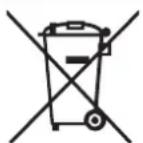
Fig. 1
To dispose of this product, consult your dealer.
Note:
This symbol mark is for EU countries only.
This symbol mark is according to the directive 2012/19/EU Article 14 Information for users and Annex IX, and/or to the directive 2006/66/EC Article 20 Information for end-users and Annex II.
Your MITSUBISHI ELECTRIC product is designed and manufactured with high quality materials and components which can be recycled and/or reused.
This symbol means that electrical and electronic equipment, batteries and accumulators, at their end-of-life, should be disposed of separately from your household waste.
If a chemical symbol is printed beneath the symbol (Fig. 1), this chemical symbol means that the battery or accumulator contains a heavy metal at a certain concentration. This will be indicated as follows:
Hg: mercury (0.0005%), Cd: cadmium (0.002%), Pb: lead (0.004%)
In the European Union there are separate collection systems for used electrical and electronic products, batteries and accumulators.
Please, dispose of this equipment, batteries and accumulators correctly at your local community waste collection/recycling centre.
Please, help us to conserve the environment we live in!
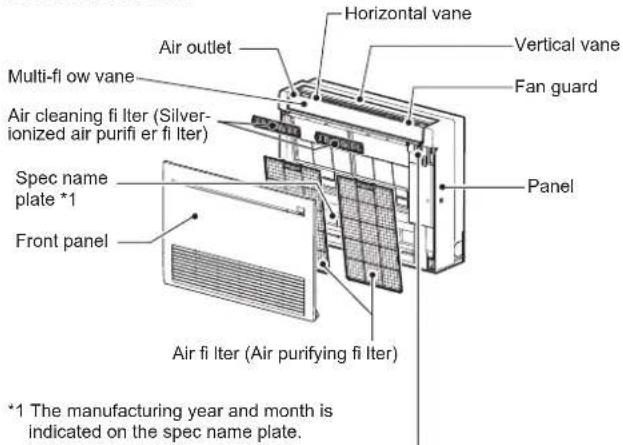
NAME OF EACH PART
Indoor unit
Display and operation section (When the front panel is opened)
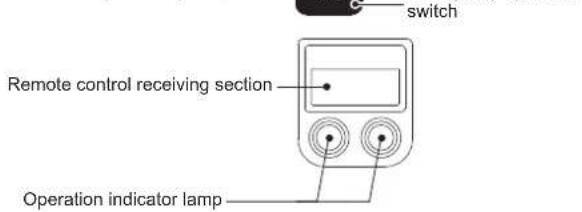
When the remote controller cannot be used...
Emergency operation can be activated by pressing the emergency operation switch (E.O SW) on the indoor unit.
Each time the E.O SW is pressed, the operation changes in the following order:
Operation indicator lamp
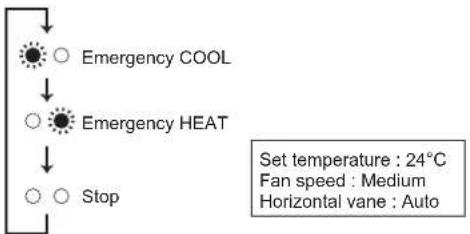
flowchart
graph TD
    A["Emergency COOL"] --> B["Emergency HEAT"]
    B --> C["Stop"]
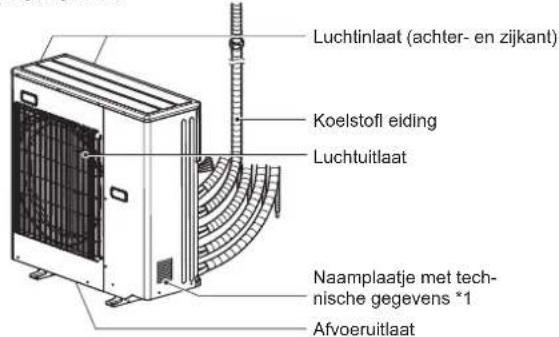
Outdoor unit

Outdoor units may be different in appearance.
*1 The manufacturing year and month is indicated on the spec name plate.
Before operation: Insert the power supply plug into the power outlet and/or turn the breaker on.
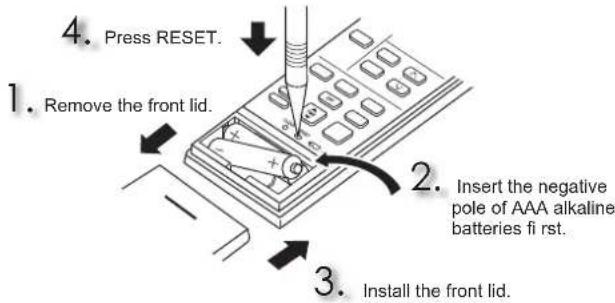
Installing the remote controller batteries
Setting current time
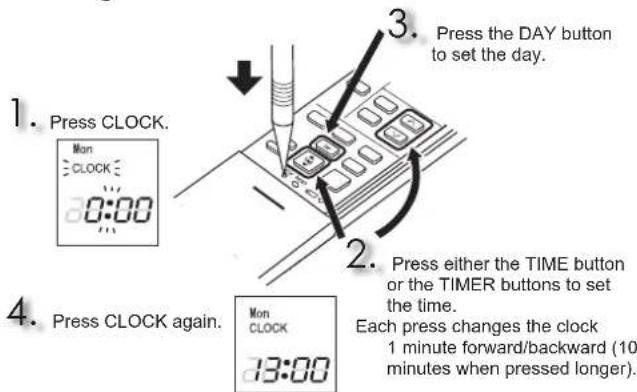
TIME, TIMER set buttons
Change the time forward/backward
ON (ON timer) : The unit turns ON at the set time.
OFF (OFF timer): The unit turns OFF at the set time.
Press △ (forward) and ▼ (backward) to set the time of timer.
WEEKLY TIMER set buttons
Press to enter the weekly timer setting mode.
Press DAY and to select setting day and number.
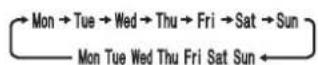
Press ON/OFF, TIME and to set ON/OFF, time, and temperature.
Press EDIT/SEND SET to complete and transmit the weekly timer setting.
Press WEEKLY TIMER ON/OFF to turn the weekly timer ON. (Weights.)
Press WEEKLY TIMER KNOFF again to turn the weekly timer OFF. (WK10)es out.)

OFF/ON (stop/operate) button

Operation select button


Temperature buttons

FAN speed control button


VANE control button
Press VANE to select vertical airflow direction. Each press will change airflow direction in the following order:

flowchart
graph LR
    A["(AUTO)"] --> B["1"]
    B --> C["2"]
    C --> D["3"]
    D --> E["4"]
    E --> F["(SWING)"]
- Two short beeps will be heard from the indoor unit when set to AUTO.
- Moving the horizontal vane/multi-flow vane manually can cause trouble.
- The horizontal vane/multi-flow vane automatically moves in certain intervals to determine its position, and then it returns to the set position.
- When the air outlet is switched between 1 FLOW and 2 FLOW, the horizontal vanes may move and change their positions.

VANE control button
2FLOW/1FLOW
Press to select the air outlet(s).
When 2 FLOW is selected, air blows from the top and the front of the unit. When 1 FLOW is selected, air blows only from the top of the unit.
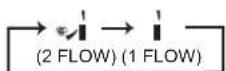
The multi-flow vane is automatically set to the appropriate position. Even if 2 FLOW is selected, air will blow only from the top of the un in the following conditions:
- During COOL/DRY: The room temperature is close to set temperature. The air conditioner has operated for 0.5 to 1 hour.
- During HEAT: The air flow temperature is low. (During defrosting operation, start of operation, etc.)

ECONO COOL button
The set temperature and the airflow direction are automatically changed by the microprocessor.

i-save button
A simplifi ed set back function enables to recall the preferred (preset) setting with a single push of the button. Press the button again and you can go back to the previous setting in an instance.
CLEANING
Instructions:
- Switch off the power supply or turn off the breaker before cleaning.
- Be careful not to touch the metal parts with your hands.
-
Do not use benzine, thinner, polishing powder, or insecticide.
• Use only diluted neutral detergents. -
Do not expose parts to direct sunlight, heat, or flames to dry.
- Do not use water hotter than 50°C.
- Do not use a scrubbing brush, a hard sponge, or the like.
- Do not soak or rinse the horizontal vane.
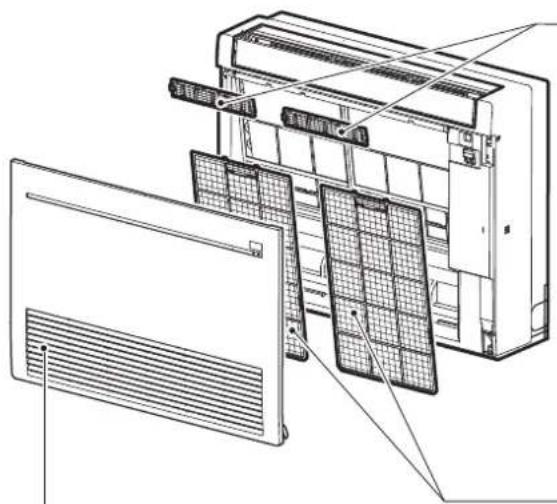
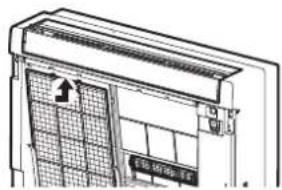
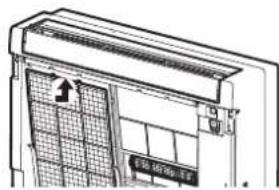
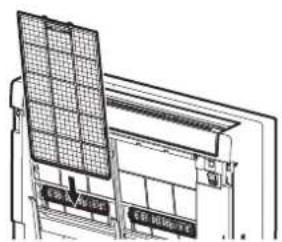
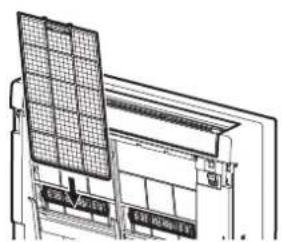
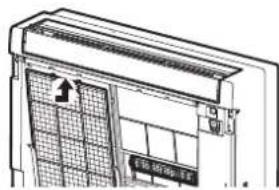
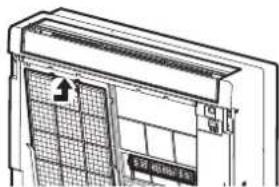
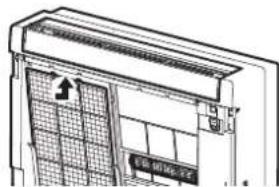
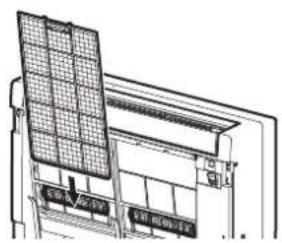
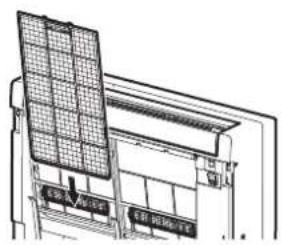
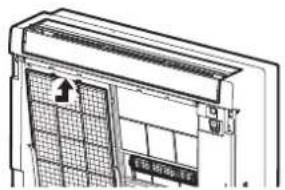
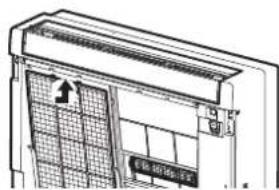
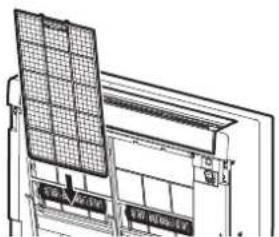
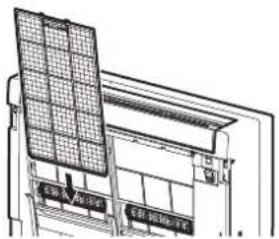
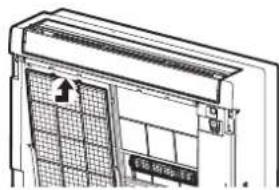
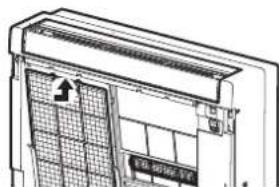
Air cleaning fi lter (Silver-ionized air purifi er fi lter)
Back side of air fi lter Clean every 3 months:
- Remove dirt by a vacuum cleaner.
When dirt cannot be removed by vacuum cleaning:
- Soak the filter and its frame in lukewarm water before rinsing it. (Diluted mild detergents can be used when dirt cannot be removed.)
• After washing, dry it well in shade.
Every year:
- Replace it with a new air cleaning filter for best performance.
• Parts Number MAC-2370FT-E
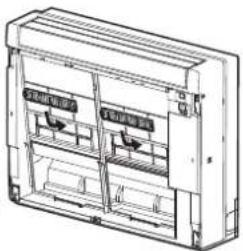
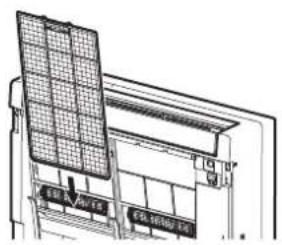
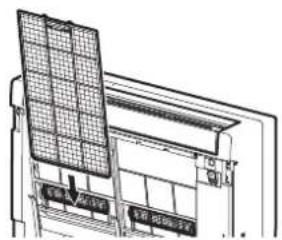
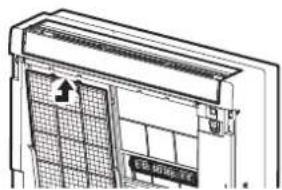
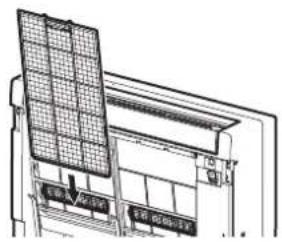
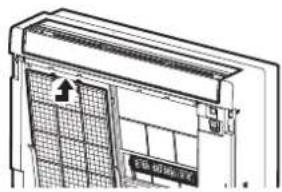
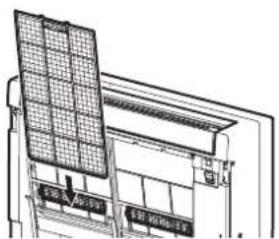
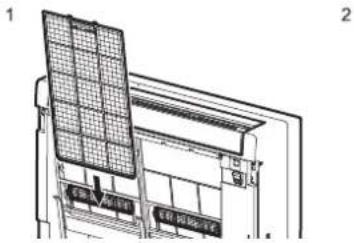
Air fi lter (Air purifying fi lter)
• Clean every 2 weeks
- Remove dirt by a vacuum cleaner, or rinse with water.
• After washing with water, dry it well in shade.
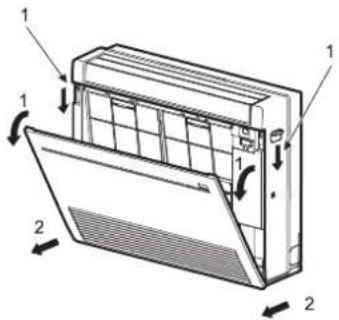
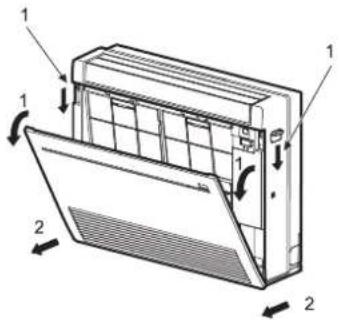
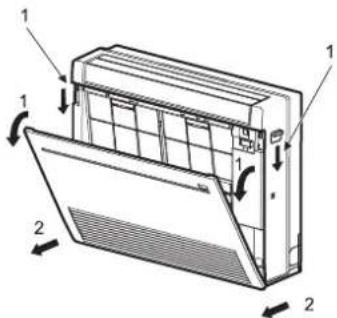
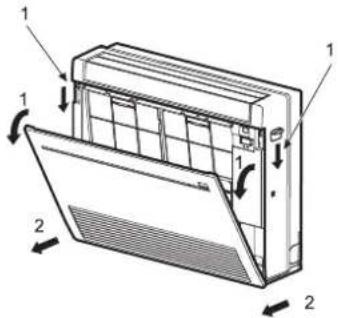
Front panel
- Push down the tab on the both sides of the unit to open the front panel.
- Pull the front panel toward you to remove it.
- Open the front panel completely and then remove it.
- Wipe with a soft dry cloth or wash it with water.
- Do not soak it in water for more than two hours.
• Dry it well in shade before installing it. - Install the front panel by following the removal procedure in reverse.
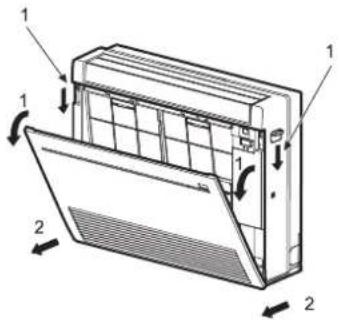
1 2

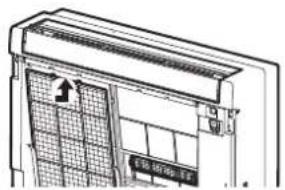
Important
- Clean the filters regularly for best performance and to reduce power consumption.
- Dirty fi liters cause condensation in the air conditioner which will contribute to the growth of fungi such as mold. It is therefore recommended to clean air fi liters every 2 weeks.
This information is based on REGULATION (EU) No 528/2012
| MODEL NAME | Treated Article(Parts name) | Active Substances(CAS No.) | Property | Instruction for Use(Safe handling information) |
| MFZ-KT25/35/50/60VG FILTER | FILTER | Silver sodium hydrogen zirconium phosphate(265647-11-8) | Antibacterial Antimold | Use this product in line with the instruction manual indications and for the intended purpose only.Do not put into mouth. Keep away from children. |
| Silver zinc zeolite (130328-20-0) Antibacterial | Use this product in line with the instruction manual indications and for the intended purpose only.Do not put into mouth. Keep away from children. | |||
| MAC-2370FT-E | FILTER | Silver zinc zeolite (130328-20-0) | Antibacterial | Use this product in line with the instruction manual indications and for the intended purpose only.Do not put into mouth. Keep away from children. |
WHEN YOU THINK THAT TROUBLE HAS OCCURRED
Even if these items are checked, when the unit does not recover from the trouble, stop using the air conditioner and consult your dealer.
| Symptom Explanation & Check points | |
| Indoor Unit | |
| The unit cannot be operated. • Is the breaker turned on?• Is the power supply plug connected?• Is the ON timer set? | |
| The unit cannot be operated for about 3 minutes when restarted. | • This protects the unit according to instructions from the microprocessor. Please wait. |
| Mist is discharged from the air outlet of the indoor unit. | • The cool air from the unit rapidly cools moisture in the air inside the room, and it turns into mist. |
| The swing operation of the HORIZONTAL VANE is suspended for a while, then restarted. | • This is for the swing operation of the HORIZON-TAL VANE to be performed normally. |
| The air flow direction changes during operation.The direction of the horizontal vane/multi-flow vane cannot be adjusted with the remote controller. | • In the heating operation, if the air flow temperature is too low or when defrosting is being done, the horizontal vane is automatically set to vertical position. The multi-flow vane is set to the closed position.• When the air conditioner is operated in COOL or DRY mode, if the operation continues with air blowing horizontally for 1 hour, the direction of the air flow is automatically set to position (1) to prevent condensed water from dropping. The multi-flow vane is set to the closed position.• The horizontal vane and the multi-flow vane automatically moves in certain intervals to determine its position, and then it returns to the set position. |
| The operation is stopped for about 10 minutes in the heating operation. | • Defrosting of the outdoor unit is being done. Since this is completed in max.10 minutes, please wait. (When the outside temperature is too low and humidity is too high, frost is formed.) |
| The unit starts operation by itself when the main power is turned on, though it isn't operated with the remote controller. | • These models are equipped with an auto restart function. When the main power is turned off without stopping the unit with the remote controller and is turned on again, the unit starts operation automatically in the same mode as the one set with the remote controller just before the shutoff of the main power. Refer to "Auto restart function". |
| The multi-flow vane opens and closes automatically. | • The multi-flow vane is automatically controlled by a microcomputer according to the air flow temperature and operation time of the air conditioner. |
| The indoor unit which is not operating becomes warm and a sound, similar to water flowing, is heard from the unit. | • A small amount of refrigerant continues to flow into the indoor unit even though it is not operating. |
| The indoor unit discolors over time. | • Although plastic turns yellow due to the influence of some factors such as ultraviolet light and temperature, this has no effect on the product functions. |
| Outdoor Unit (Multi system) | |
| When heating operation is selected, operation does not start right away. | • When operation is started during defrosting of outdoor unit is done, it takes a few minutes (max. 10 minutes) to blow out warm air. |
| The fan of the outdoor unit does not rotate even though the compressor is running. Even if the fan starts to rotate, it stops soon. | • When the outside temperature is low during cooling operation, the fan operates intermittently to maintain sufficient cooling capacity. |
| Water leaks from the outdoor unit. | • During COOL and DRY operations, pipe or pipe connecting sections are cooled and this causes water to condense.• In the heating operation, water condensed on the heat exchanger drips down.• In the heating operation, the defrosting operation makes water frozen on the outdoor unit melt and drip down. |
| White smoke is discharged from the outdoor unit. | • In the heating operation, vapor generated by the defrosting operation looks like white smoke. |
| Remote controller | |
| The display on the remote controller does not appear or it is dim. The indoor unit does not respond to the remote control signal. | • Are the batteries exhausted?• Is the polarity (+,-) of the batteries correct?• Are any buttons on the remote controller of other electric appliances being pressed? |
| Symptom Explanation & Check points | |
| Does not cool or heat | |
| The room cannot be cooled or heated suffi ciently. | • Is the temperature setting appropriate?• Is the fan setting appropriate? Please change fan speed to High or Super High.• Is the air outlet selection is set to 1 FLOW? Set it to 2 FLOW.• Is the filter clean?• Is the fan or heat exchanger of the indoor unit clean?• Are there any obstacles blocking the air inlet or outlet of the indoor or outdoor unit?• Is a window or door open?• It may take a certain time to reach the setting temperature or may not reach that depending on the size of the room, the ambient temperature, and the like. |
| The room cannot be cooled suffi ciently. | • When a ventilation fan or a gas cooker is used in a room, the cooling load increases, resulting in an insuffi cient cooling effect.• When the outside temperature is high, the cooling effect may not be suffi cient. |
| The room cannot be heated suffi ciently. | • When the outside temperature is low, the heating effect may not be suffi cient. |
| Air does not blow out soon in the heating operation. | • Please wait as the unit is preparing to blow out warm air. |
| Air flow | |
| The air from the indoor unit smells strange. | • Is the filter clean?• Is the fan or heat exchanger of the indoor unit clean?• The unit may suck in an odor adhering to the wall, carpet, furniture, cloth, etc. and blow it out with the air. |
| Sound | |
| Cracking sound is heard. • This sound is generated by the expansion/contraction of the panel, etc. due to change in temperature. | |
| The sound as burbling is heard. • This sound is heard when the outside air is absorbed from the drain hose by turning on the range hood or the ventilation fan, making water fl owing in the drain hose to spout out.This sound is also heard when the outside air blows into the drain hose in case the outside wind is strong. | |
| Mechanical sound is heard from the indoor unit. | • This is the switching sound in turning on/off the fan or the compressor. |
| The sound of water flowing is heard. | • This is the sound of refrigerant or condensed water flowing in the unit. |
| Hissing sound is sometimes heard. | • This is the sound when the flow of refrigerant inside the unit is switched. |
| The sound of motor and swirling sound is heard from the indoor unit. | • This is the sound of water condensed during COOL/DRY operation being drained from the indoor unit.• Sound of water draining may also be heard from indoor units which are not operating. (The sound will stop automatically. Please wait.) |
| Timer | |
| Weekly timer does not operate according to settings. | • Is the ON/OFF timer set?• Transmit the setting information of the weekly timer to the indoor unit again. When the information is successfully received, a long beep will sound from the indoor unit. If information fails to be received, 3 short beeps will be heard. Ensure information is successfully received.• When a power failure occurs and the main power turns off, the indoor unit built-in clock will be incorrect. As a result, the weekly timer may not work normally.Be sure to place the remote controller where the signal can be received by the indoor unit. |
| The unit starts/stops the operation by itself. | • Is the weekly timer set? |
WHEN YOU THINK THAT TROUBLE HAS OCCURRED
In the following cases, stop using the air conditioner and consult your dealer.
- When water leaks or drips from the indoor unit.
- When the left operation indicator lamp blinks.
- When the breaker trips frequently.
• The remote control signal is not received in a room where an electronic ON/OFF type fluorescent lamp (inverter-type fluorescent lamp, etc.) is used.
• Operation of the air conditioner interferes with radio or TV reception. An amplifier may be required for the affected device. - When an abnormal sound is heard.
- When any refrigerant leakage is found.
SPECIFICATIONS
| Model | Set name — — — — | |||||||||
| Indoor MFZ-KT25VG MFZ-KT35VG MFZ-KT50VG MFZ-KT60VG | ||||||||||
| Outdoor — — — — | ||||||||||
| Function Cooling Heating Cooling Heating Cooling Heating Cooling Heating | ||||||||||
| Power supply ~/N, 230 V, 50 Hz | ||||||||||
| Capacity kW — — — — — — — | ||||||||||
| Input | kW | 0.020 | 0.024 | 0.020 | 0.024 | 0.037 | 0.052 | 0.063 | 0.059 | |
| Weight | Indoor | kg | 14.5 | 15.0 | ||||||
| IP code | Indoor | IP20 | ||||||||
| Permissible excessive operating pressure | LP ps | MPa | — | |||||||
| HP ps | MPa | 4.15 | ||||||||
| Noise level (Single) | Indoor (Super High/High/Med./Low/Silent) | dB(A) | 41/37/31/24/19 | 44/37/30/23/19 | 41/37/31/24/19 | 44/37/30/23/19 | 48/42/37/32/28 | 49/44/40/35/29 | 53/46/40/36/28 | 51/47/41/35/29 |
| Air flow volume (Single) | Indoor (Super High/High/Med./Low/Silent) | m3/min | 8.9/7.8/6.5/4.8/3.9 | 9.7/7.3/5.6/4.0/3.5 | 8.9/7.8/6.5/4.8/3.9 | 9.7/7.3/5.6/4.0/3.5 | 12.3/10.4/8.6/6.7/5.6 | 14.0/11.6/9.4/7.7/6.0 | 15.0/12.3/9.6/8.0/5.6 | 14.6/12.5/9.7/7.7/6.0 |
| Noise level (Multi) | Indoor (Super High/High/Med./Low/Silent) | dB(A) | 43/38/33/28/23 | 44/39/34/28/24 | 43/38/33/28/23 | 44/39/34/28/24 | 48/42/37/32/28 | 49/44/40/35/29 | — | — |
| Air flow volume (Multi) | Indoor (Super High/High/Med./Low/Silent) | m3/min | 9.0/7.8/6.5/4.8/4.2 | 9.7/7.8/6.3/4.9/4.2 | 9.0/7.8/6.5/4.8/4.2 | 9.7/7.8/6.3/4.9/4.2 | 12.3/10.4/8.6/6.7/5.6 | 14.0/11.6/9.4/7.7/6.0 | — | — |
Guaranteed operating range
| Indoor | Outdoor | ||
| Cooling | Upper limit | 32°C DB23°C WB | *Note 2 |
| Lower limit | 21°C DB15°C WB | ||
| Heating | Upper limit | 27°C DB— | |
| Lower limit | 20°C DB— | ||
DB: Dry Bulb
WB: Wet Bulb
Note:
- Rating condition
Cooling — Indoor: 27°C DB, 19°C WB
Outdoor: 35^ DB
Heating — Indoor: 20°C DB
Outdoor: 7°C DB, 6°C WB
- As for specifications, please confirm your dealer and/or refer to the catalogue.
| Model | MFZ-KT25VG | MFZ-KT35VG | MFZ-KT50VG | |||
| Cooling Capacity | sensible | P_rated,c | kW | 1.98 | 2.45 | 3.60 |
| latent | P_rated,c | kW | 0.52 | 1.05 | 1.40 | |
| Heating Capacity | P_rated,h | kW | 2.90 | 4.00 | 5.70 | |
| Total electric power input | P_elec | kW | 0.024 | 0.024 | 0.052 | |
| Sound power level(per speed setting, if applicable) | L_WA | dB(A) | 54/47/43/37/35 | 54/47/43/37/35 | 60/54/49/42/39 | |
(EU)2016/2281
VORSICHTSMASSNAHMEN
natural_image
Technical line drawing of an air conditioner unit with internal panel layout (no text or symbols)natural_image
Technical line drawing of a dual-chamber air conditioner unit (no text or symbols)Wichtig
1 2
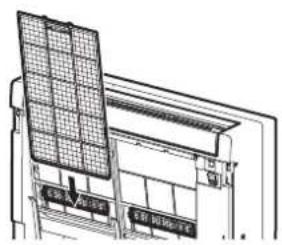
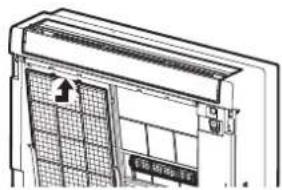
Important
flowchart
graph TD
    A["Emergency COOL (noodkoeling)"] --> B["Emergency HEAT (noodverwarming)"]
    B --> C["Stop"]
Buitenunit
natural_image
Technical line drawing of an air conditioner unit with internal panel layout (no text or symbols)2

Belangrijk
natural_image
Technical line drawing of a rectangular electronic device with internal compartments and mounting holes (no text or symbols)m = 311

m = 311

ell

The Ground Truth image displays a single, solid horizontal line. According to Rule 2 (UNDERSCORE & LINE RULES), this is a stylistic or background line, not a placeholder underscore. Therefore, the OCR result must ignore it and output nothing or only meaningful text. The provided OCR content is "____", which consists of four underscores. This is an incorrect interpretation of the line as a placeholder, violating the rule that stylistic lines must be ignored. The OCR has hallucinated underscores where none should exist based on the GT's visual context. Hence, the OCR result is inconsistent with the Ground Truth.

m ca


[Non-Text]

[Non-Text]

The Ground Truth image displays a single, solid horizontal line. According to Rule 2 (UNDERSCORE & LINE RULES), if the GT contains lines used for stylistic emphasis or as background elements (like ruled paper), the OCR result must ignore them. The OCR content provided is "____", which consists of four underscores. This is incorrect because underscores are not equivalent to a solid line and are not permitted under the “Stylistic/Background Lines (Ignore)” rule. The OCR has hallucinated underscores where none should exist in the GT, violating the rule to ignore stylistic lines. Therefore, the OCR result is inconsistent with the Ground Truth.


The Ground Truth image displays a single, solid horizontal line. According to Rule 2 (UNDERSCORE & LINE RULES), this is a stylistic or background line, not a placeholder underscore. Therefore, the OCR result must ignore it and output nothing or only meaningful text. The provided OCR content is "____", which consists of four underscores. This is an incorrect interpretation of the line as a placeholder, violating the rule that stylistic lines must be ignored. The OCR has hallucinated underscores where none should exist based on the GT's visual context. Hence, the OCR result is inconsistent with the Ground Truth.

[Non-Text]


[Non-Text]

[Non-Text]

[Non-Text]

[Non-Text]

[Non-Text]

[Non-Text]

[Non-Text]

[Non-Text]

[Non-Text]

[Non-Text]

[Non-Text]

[Non-Text]

[Non-Text]

[Non-Text]

[Non-Text]

[Non-Text]

[Non-Text]

[Non-Text]

The Ground Truth image displays a single, solid horizontal line. According to Rule 2 (UNDERSCORE & LINE RULES), if the GT contains lines used for stylistic emphasis or as background elements (like ruled paper), the OCR result must ignore them. The OCR content provided is "____", which consists of four underscores. This is incorrect because underscores are not equivalent to a solid line and are not permitted under the “Stylistic/Background Lines (Ignore)” rule. The OCR has hallucinated underscores where none should exist in the GT, violating the rule to ignore stylistic lines. Therefore, the OCR result is inconsistent with the Ground Truth.

-

m = 311

The Ground Truth image displays a single, solid horizontal line, which is a stylistic or background element (like a rule line on paper). According to Rule 2, such lines must be ignored by the OCR result. The provided OCR content is "____", which consists of underscores. Underscores are not equivalent to a solid line and are not permitted under the “Stylistic/Background Lines (Ignore)” rule. Outputting underscores for a stylistic line is incorrect because it misinterprets the line as a placeholder fill-in-the-blank area. Hence, the OCR result is inconsistent with the Ground Truth.

[Non-Text]

[Non-Text]

[Non-Text]

[Non-Text]

[Non-Text]

m = 311

m = 311

m = 311

ell

The Ground Truth image displays a single, solid horizontal line, which is a stylistic or background element (like a rule line on paper). According to Rule 2, such lines must be ignored by the OCR result. The provided OCR content is "____", which consists of underscores. Underscores are not equivalent to a solid line and are not permitted under the “Stylistic/Background Lines (Ignore)” rule. Outputting underscores for a stylistic line is incorrect because it misinterprets the line as a placeholder fill-in-the-blank area. Hence, the OCR result is inconsistent with the Ground Truth.

ifi ca

The Ground Truth image displays a single, solid horizontal line. According to Rule 2 (UNDERSCORE & LINE RULES), if the GT contains lines used for stylistic emphasis or as background elements (like ruled paper), the OCR result must ignore them. The provided OCR content is "____", which consists of four underscores. This is an incorrect interpretation of the line as a placeholder symbol, violating the rule that stylistic lines must be ignored. Therefore, the OCR output hallucinated symbols where none should exist. Hence, the result is inconsistent with the Ground Truth.


[Non-Text]

[Non-Text]


PRECAUZIONI PER LA SICUREZZA
Importante
1 2
Σημαντικό
Filtro de limpeza de ar (Filtro purifi cador de ar com prata ioni- zada)
1 2
natural_image
Architectural line drawing of a building facade with solar panels and doorways (no text or symbols)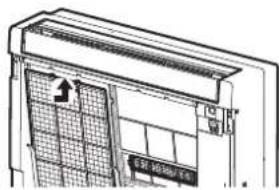
Importante
natural_image
Technical line drawing of an air conditioner unit with internal panel layout (no text or symbols)-Luftrensningsfi Iter (Sølv-ion-fi Iter til luftrenser)
Luftfi Iterets bagside
1
natural_image
Architectural detail drawing of a building facade with solar panels and doorways (no text or symbols)2

Vigtigt
Luftrengöringsfilter (Silverjoniserat luftrenarfilter)
Luftfiltrets baksida
1 2
! Viktigt
NÄR DU TROR ATT DET HAR UPPSTÅTT PROBLEMV
NÄR DU TROR ATT DET HAR UPPSTÅTT PROBLEMV
natural_image
Diagram of a door with a grid-patterned panel and an arrow indicating upward motion (no text or symbols)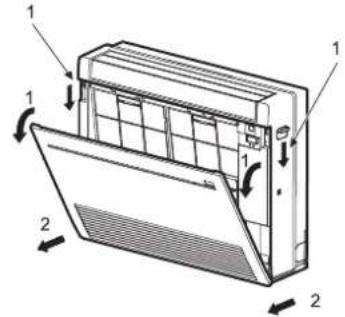
Важно
natural_image
Technical line drawing of a dual-chamber electrical enclosure (no text or symbols)1

Ważne
OFF/ON (stopp/drift)-knapp
MODE

Driftsvalgknapp

+

Temperaturknapper

FAN

Knapp for viftehastighet

flowchart
graph LR
    A["→"] --> B["(AUTO)"]
    B --> C["→"]
    C --> D["(Stille)"]
    D --> E["→"]
    E --> F["(Lav)"]
    F --> G["→"]
    G --> H["(Med.)"]
    H --> I["→"]
    I --> J["(Høy)"]
VANE
VANE-kontrollknapp (spjeld)
natural_image
Technical line drawing of an air conditioner unit with internal panel layout (no text or symbols)1
! Viktig
natural_image
Technical line drawing of an air conditioner unit with internal panel layout (no text or symbols)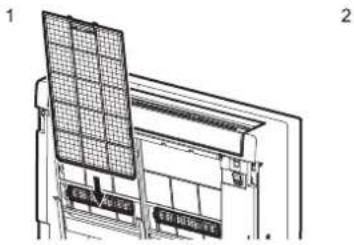
! Tärkeää
natural_image
Technical line drawing of an air conditioner unit with internal panel layout (no text or symbols)natural_image
Technical line drawing of a mechanical enclosure or enclosure with internal compartments and mounting brackets (no text or symbols)2

Důležité
natural_image
Technical line drawing of a rectangular electronic device with internal compartments and labeled ports (no text or symbols)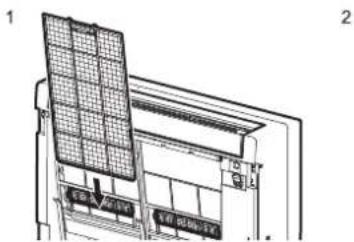
natural_image
Architectural line drawing of a building facade with window and door (no text or symbols)Dôležité
1 2
natural_image
Architectural detail drawing of a building facade with solar panels and doorways (no text or symbols)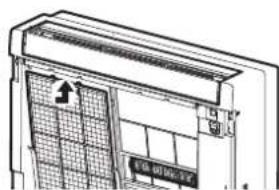
! Fontos
HAÚGY VÉLI, HOGY VALAMI MEGHIBÁSODOTT
HAÚGY VÉLI, HOGY VALAMI MEGHIBÁSODOTT
natural_image
Technical line drawing of an air conditioner unit with ventilation grilles and a door panel (no text or symbols)1 2
Pomembno
Filtrul epurator de aer
Important

Tähtis
natural_image
Technical line drawing of an air conditioner unit with panel and door assembly (no text or symbols)1 2
natural_image
Technical line drawing of a solar panel installation with no visible text or symbols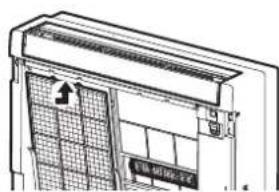
Svarigi
Oro valymo fi ltras (sidabro jonizuotas oro valymo fi ltras)
Oro fi ltro galinè pusé
Valykite kas 3 mènesius:
1 2
Svarbu
natural_image
Technical line drawing of an air conditioner unit with internal panel layout (no text or symbols)natural_image
Technical line drawing of a dual-chamber air conditioner unit (no text or symbols)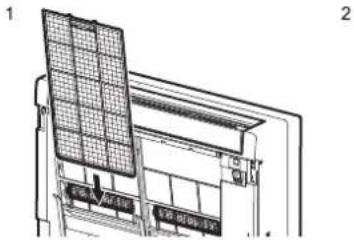
! Važno
natural_image
Technical line drawing of an air conditioner unit with panel and ventilation slots (no text or symbols)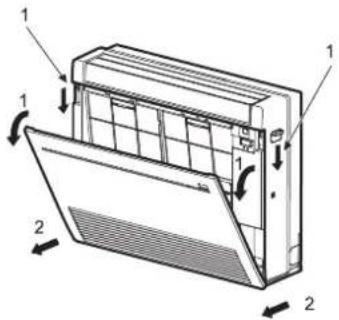

Važno
- Redovno čistite filtere da biste postigli najbolje performanse i smanjili potrošnju struje.
- Zaprljani filteri prouzrokuju kondenzaciju vode u klima- uređaju, koja pogoduje razvoju gljivica kao što je buđ. Zato se preporučuje čišćenje filtera za vazduh na svake 2 nedelje.
Ove informacije su zasnovane na UREDBI (EU) br. 528/2012
| IME MODELA | Obraden član (Ime delova) | Aktivne supstance (CAS br.) | Vlasništvo | Uputstvo za upotrebu (Informacije o bezbednom rukovanju) |
| MFZ-KT25/35/50/60VG | FILTER | Srebro-natrijum-hidrogen-cirkonijum-fosfat (265647-11-8) | Antibakterijsko dejstvo Antigljivično dejstvo | Koristite ovaj proizvod u skladu sa indikacijama u uputstvu za upotrebu i samo u predviđenu svrhu.Ne stavljajte u usta. Držite van dohvata dece. |
| Srebro-cink-zeolit (130328-20-0) | Antibakterijsko dejstvo | Koristite ovaj proizvod u skladu sa indikacijama u uputstvu za upotrebu i samo u predviđenu svrhu.Ne stavljajte u usta. Držite van dohvata dece. | ||
| MAC-2370FT-E | FILTER Srebro-cink-zeolit (130328-20-0) | Antibakterijsko dejstvo | Koristite ovaj proizvod u skladu sa indikacijama u uputstvu za upotrebu i samo u predviđenu svrhu.Ne stavljajte u usta. Držite van dohvata dece. | |
KADA MISLITE DA JE DOŠLO DO PROBLEMA
Čak i ako su ove stavke proverene, kada se uređaj ne oporavi od problema, prekinite korišćenje klima-uređaja i obratite se prodavcu.
| Simptom Objasnjenje I stavke za proveru | |
| Unutrašnja jedinica | |
| Jedinica ne radi. • Da li je osigurač uključen? | • Da li je utikač uključen u utičnicu?• Da li je podešen tajmer za UKLJUČIVANJE? |
| Jedinica ne radi oko 3 minuta kada se ponovo pokrene. | • Na ovaj način se štiti jedinica prema uputstvima sa mikroprocesora. Sačekajte. |
| Iz otvora za ispuštanje vazduha na unutrašnjoj jedinici izlazi para. | • Hladan vazduh iz jedinice naglo hladi vlagu iz vazduha u prostoriji i ona se pretvara u paru. |
| Podešavanje krilaca HORIZONTALNE LOPATICE se prekine na neko vreme, a zatim se ponovo pokrene. | • Ovo pomaže da se obezbedi ispravan rad HORIZONTALNE LOPATICE u režimu podešavanja krilaca. |
| Smer vazdušne struje se menja tokom rada.Smer horizontalne lopatice/ lopatice za više smerova ne može da se podesi daljinskim upravljačem. | • U režimu grejanja, ako je temperatura vazdušne struje suviše niska ili kada se vrši odleđivanje, horizontalna lopatica se automatski postavlja u vertikalan položaj. Lopatica za više smerova se automatski postavlja na zatvoreni položaj.• Kada klima uređaj radi u režimu HLAĐENJA ili ISUŠIVANJA, ako rad sa izduvavanjem vazduha horizontalno traje 1 sat, smer vazdušne struje se automatski postavlja u položaj (1) kako bi se sprečilo kapanje kondenzovane vode. Lopatica za više smerova se automatski postavlja na zatvoreni položaj.• Horizontalna lopatica i lopatica za više smerova se automatski porera u određenim intervalima kako bi odredila svoj položaj i zatim se vraća na podešeni položaj. |
| Rad se zaustavlja na oko 10 minuta tokom grejanja. | • Odleđivanje spoljašnje jedinice je u toku.To će se završiti za najviše 10 minuta, sačekajte.(Kada je spoljna temperatura suviše niska a vlažnost visoka, formira se led.) |
| Jedinica počne sama da radi kada se uključi napajanje, iako se njome ne upravlja putem daljinskog upravljača. | • Ovi modeli su opremljeni funkcijom automatskog ponovnog pokretanja. Kada se isključi glavno napajanje bez zaustavljanja jedinice daljinskim upravljačem i kada se ponovo uključi, jedinica automatski počinje sa radom u istom režimu rada koji je bio podešen daljinskim upravljačem neposredno pre isključivanja glavnog napajanja. Pogledajte odeljak „Funkcija automatskog ponovnog pokretanja”. |
| Lopatica za više smerova se otvara i zatvara automatski. | • Lopaticu za više smerova automatski kontroliše mikroračunar na osnovu temperature strujanja vazduha i vremena rada klima-uredaja. |
| Unutrašnja jedinica koja ne radi se zagreva i zvuk nalik na vodu koja teče se može čuti iz jedinice. | • Mala količina rashladne tečnost nastavi da ulazi u unutrašnju jedinicu, čak iako ona ne radi. |
| Unutrašnja jedinica menja boju tokom vremena. | • Iako plastika požuti usled uticaja nekih faktora kao što su ultraljubičasti zraci i temperatura, to nema uticaja na funkcije proizvoda. |
| Spoljna jedinica (Multisistem) | |
| Kada se odabere grejanje, uređaj ne počinje odmah sa radom. | • Kada se započne rad tokom odleđivanja spoljne jedinice, potrebno je nekoliko minuta (naviše 10 minuta) da bi se izduvavao topao vazduh. |
| Ventilator na spoljnoj jedinici se ne okreće iako kompresor radi. Čak i kada počne da se okreće, brzo prestane. | • Kada je spoljna temperatura niska tokom hlađenja, ventilator radi sa prekidima kako bi se održao dovoljan kapacitet hlađenja. |
| Iz spoljne jedinice curi voda. • Tokom HLAĐENJA i ISUŠIVANJA cev ili delovi koji spajaju cevi se hlade i to prouzrokuje kondenzaciju vode.Kod grejanja, voda koja se kondenzuje na izmenjivaču toplote može da kaplje.Kada je uključen režim grejanja, rad na odleđivanju topi zamrznutu vodu sa spoljašnje jedinice i dolazi do kapanja. | |
| Iz spoljne jedinice izlazi beli dim. | • Tokom grejanja, isparenja nastala odleđivanjem izgledaju kao beli dim. |
| Daljinski upravljač | |
| Displej na daljinskom upravljaču se ne pojavljuje ili je taman. Unutrašnja jedinica ne reaguje na signal daljinskog upravljača. | • Da li su baterije prazne?• Da li su polovi baterija (+,-) ispravno postavljeni?• Da li je pritinsut bilo koji taster na daljinskom upravljaču ili drugom električnom uređaju? |
| Simptom Objasnjenje i stavke za proveru | |
| Ne hladi ili ne greje | |
| Prostorija ne može dovoljno da se ohladi ili zagreje. | Da li je postavka temperature odgovarajuća?Da li je postavka ventilatora odgovarajuća?Promenite brzinu ventilatora u „High“ (velika) ili „Super High“ (super velika).Da li je otvor za ispuštanje vazduha postavljen na 1 FLOW? Postavite ga na 2 FLOW.Da li je fi iter čist?Da li su ventilator ili izmenjivač toplote unutrašnje jedinice čisti?Da li postoje prepreke koje blokiraju izduvni ili usisni otvor na unutrašnjoj ili spoljnoj jedinici?Da li su otvorena vrata ili prozor?Možda će biti potrebno određeno vreme da se postigne temperatura za podešavanje ili se ta temperatura ne može postići, u zavisnosti od veličine sobe, temperature okoline i sličnog. |
| Prostorija ne može dovoljno da se ohladi. | Kada se u prostoriji koristi ventilator ili plinsk štednjak, opterećenje hlađenja se povećava, što dovodi do nedovoljnog efekta hlađenja.Kada je spoljna temperatura visoka, efekał hlađenja može da bude nedovoljan. |
| Prostorija ne može dovoljno da se zagreje. | Kada je spoljna temperatura niska, efekał grejanja može da bude nedovoljan. |
| Vazduh se ne izduvava odmah kod grejanja. | Sačekajte dok se jedinica priprema za izduvavanje toplog vazduha. |
| Protok vazduha | |
| Vazduh iz unutrašnje jedinice miriše neobično. | Da li je fil ter čist?Da li su ventilator ili izmenjivač toplote unutrašnje jedinice čisti?Jedinica može da usisa mirise zidova, tepiha, nameštaja, odeće itd. i da ih izduvava zajedno sa vazduhom. |
| Zvuk | |
| Čuje se zvuk pucketanja. | Ovaj zvuk nastaje usled širenja/skupljanja ploče itd., koje nastaje zbog promene temperature. |
| Čuje se zvuk žuborenja. | Ovaj zvuk nastaje kada se spoljašnji vazduh apsorbuje iz odvodnog creva okretanjem štitnika ili ventilatora, zbog čega se voda koja ulazi odvodno crevo izliva.Ovaj zvuk se može čuti i kada spoljašnji vazduh uđe u odvodno crevo kada napolju duva jak vetar. |
| Čuje se mehanički zvuk iz unutrašnje jedinice. | Ovaj zvuk nastaje prilikom uključivanja/iskiljučivanja ventilatora ili kompresora. |
| Čuje se zvuk vode koja teče. | Ovo je zvuk rashladne tečnosti ili kondenzovane vode koja ulazi u jedinicu. |
| Ponekad se čuje zvuk šištanja. | Ovo je zvuk promene toka rashladne tečnosti unutar jedinicu. |
| Iz unutrašnje jedinice se čuje zvuk rada motora i zvuk „vrtloženja“. | Ovo je zvuk ispuštanja kondenzovane vode koja je nastala tokom rada u režimu HLĂĐENJA/ISUŠIVANJA, iz unutrašnje jedinic.Zvuk ispuštanja vode se takođe može čuti iz unutrašnjih jedinica koje trenutno ne rade.(Zvuk će se automatski zaustaviti. Sačekajte.) |
| Tajmer | |
| Nedeljni tajmer ne radi u skladu sa postavkama. | Da li je podešen tajmer za UKLJUČIVANJE ISKLJUČIVANJE?Prenesite ponovo informacije o postavkama nedeljnog tajmera unutrašnjoj jedinici. Kada se informacije uspešno prime, iz unutrašnje jedinice se čuje dugi zvučni signal. Ako informacije nisu primljene, začuće se 3 kratka zvučna signala. Proverite da li su informacije uspešno primljene.Kada dođe do nestanka struje i isključi se glavno napajanje, sat koji je ugrađen u unutrašnju jedinicu neće biti tačan. Kao posledica toga nedeljni tajmer možda neće raditi ispravno.Proverite da li je daljinski postavljen na mesto sa kog unutrašnja jedinica može da primi signal. |
| Jedinica sama otpočinje/zaustavlja rad. | Da li je podešen nedeljni tajmer? |
KADA MISLITE DA JE DOŠLO DO PROBLEMA
Westgate Business Park, Ballymount, Dublin 24, Ireland
Italian Branch
Travellers Lane, Hatfield, Herts., AL10 8XB, England, U.K.
Polish Branch
Krakowska 50, PL-32-083 Balice, Poland
EC DECLARATION OF CONFORMITY
DÉCLARATION DE CONFORMITÉ CE
EG-CONFORMITEITSVERKLARING
DEKLARACJA ZGODNOŚCI WE
CE-ERKLÆRING OM SAMSVAR
EY-VAATIMUSTENMUKAISUUSVAKUUTUS
ES PROHLÁŠENÍ O SHODĚ
VYHLÁSENIE O ZHODE ES
EK MEGFELELÖSÉGI NYILATKOZAT
IZJAVA O SKLADNOSTI ES
DECLARATIE DE CONFORMITATE CE
EÜ VASTAVUSDEKLARATSIOON
EK ATBILSTÍBAS DEKLARÁCIJA
EB ATITIKTIES DEKLARACIJA
EC IZJAVA O SUKLADNOSTI
EZ IZJAVA O USAGLAŠENOSTI
hereby declares under its sole responsibility that the air conditioners and heat pumps described below for use in residential, commercial and light-industrial environments:
Note: Its serial number is on the nameplate of the product.
2006/42/EC: Machinery Directive
2014/30/EU: Electromagnetic Compatibility Directive
2011/65/EU: RoHS
Issued: 7 May. 2019 Katsuo YABUTA
JAPAN Senior Manager, Quality Assurance Department