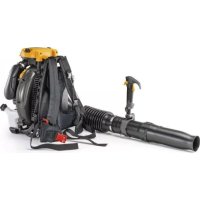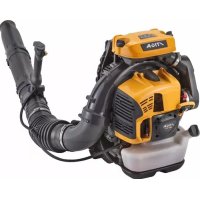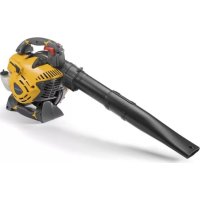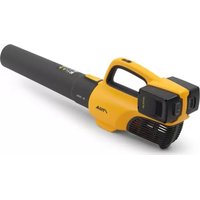
BL 300e - Blower STIGA - Free user manual and instructions
Find the device manual for free BL 300e STIGA in PDF.


| Product Type | Portable Garden Blower |
| Brand | STIGA |
| Model | BL 300e |
| Power Source | Battery (cordless) |
| Battery Type | Lithium-ion (rechargeable) |
| Number of batteries required | 2 (inserted simultaneously) |
| Charger included | Yes, with charging base |
| Charging on the machine possible | Yes, via charging base |
| Wall mount | Yes, with rail and screws provided |
| Blowing speed | Variable: medium and maximum |
| Intended use | Blowing leaves, grass, light debris |
| Improper use | Do not blow hot or dangerous objects |
| Hearing protection recommended | Yes (check noise level) |
| Safety glasses recommended | Yes |
| Safety distance people/animals | At least 15 m |
| Operating temperature | -10°C to 60°C |
| Battery charging temperature | 0°C to 40°C |
| Machine storage | Dry place, protected from weather, out of reach of children |
| Battery storage | Closed place, without humidity, 0-25°C for long periods |
| Maintenance | Cleaning with damp cloth and mild detergent; avoid water jets |
Frequently Asked Questions - BL 300e STIGA
User questions about BL 300e STIGA
0 question about this device. Answer the ones you know or ask your own.
Ask a new question about this device
Download the instructions for your Blower in PDF format for free! Find your manual BL 300e - STIGA and take your electronic device back in hand. On this page are published all the documents necessary for the use of your device. BL 300e by STIGA.
USER MANUAL BL 300e STIGA
natural_image
Icon of a person reading a book inside a circle (no text or symbols)EN Portable battery-powered garden blower OPERATOR'S MANUAL
WARNING: read thoroughly the instruction booklet before using this machine.
MANUAL DE INSTRUÇÕES
MANUAL DE INSTRUCTIUNI
natural_image
Technical line drawing of a mechanical device with three components and directional arrows indicating assembly (no text or symbols)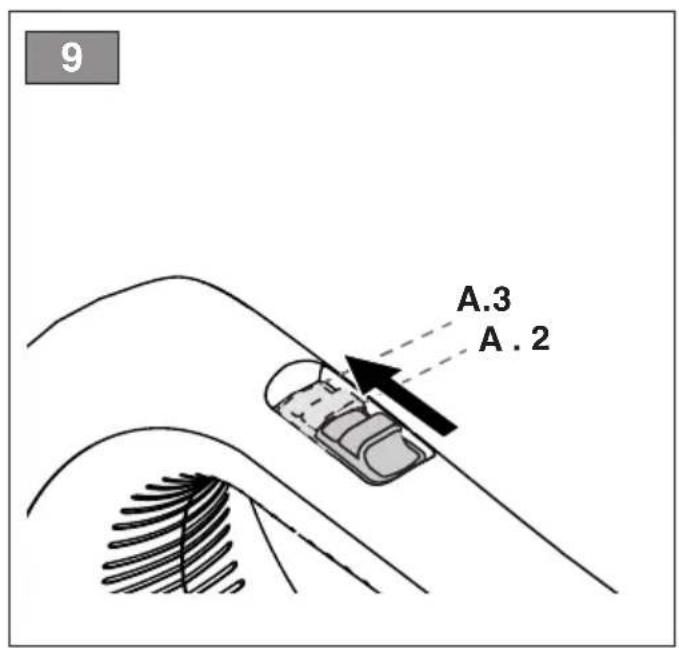
natural_image
Illustration of a person in protective gear using a handheld power tool (no text or symbols)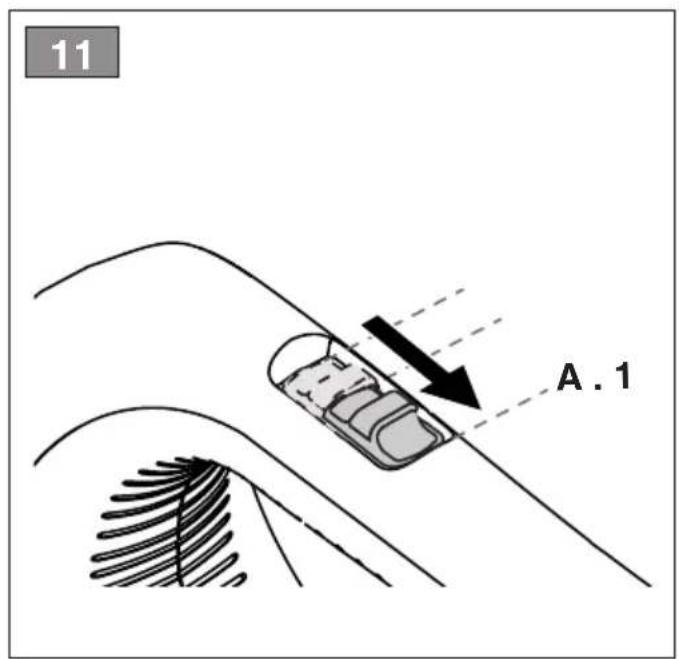
natural_image
Line drawing of a rectangular electronic device with a port and ventilation grille (no text or symbols)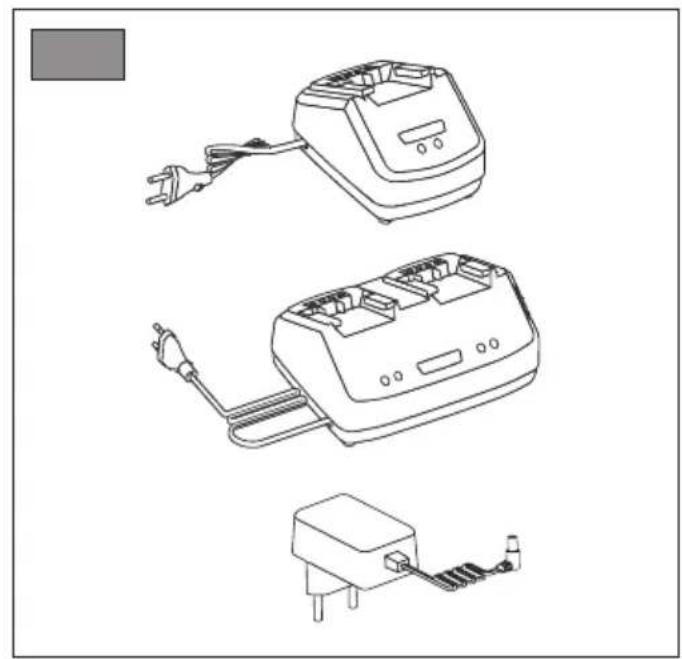
natural_image
Line drawings of three different electronic devices with power and plug connectors (no text or symbols)[3] Spänning NOMINAL
[4] Hastighet utan belastning (Spänning NOMINAL)
[5] Maximal lúfthastighet
[6] Luftflöde
[7] Vikt utan batterigrupp
[8] Ljudtrycksnivå
[9] Tvivel med mått
2.3 MANUTENZIONE, RIMESSAGGIO
6. USO DELLA MACCHINA
4.2 MONTÁŽ NABÍJECÍ ZÁKLADNY (OBR. 3)
6.4 PRACOVNÍ ČINNOST
3.3 PRODUKTETS TYPESKILT (Fig. 1)
3.2 KYPIA EΞAPTHMATA (Eικ. 1)
- GENERAL INFORMATION .... 1
- SAFETY REGULATIONS....1
- ABOUT THE MACHINE .... 5
3.1 Machine description and intended use......5
3.2 Main components (Fig.1) 5
3.3 Product identification label (Fig.1) 6
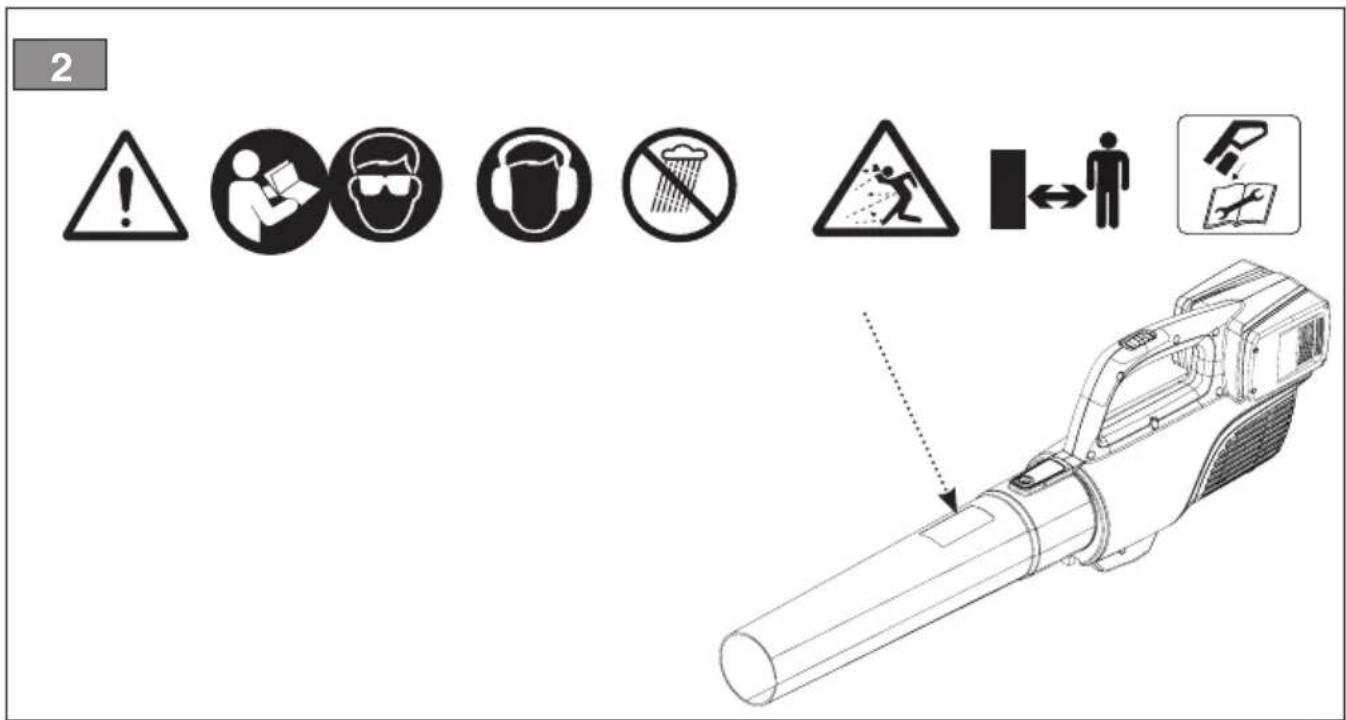
3.4 Safety signs (Fig. 2)....6
- ASSEMBLY 6
4.1 Unpacking....7
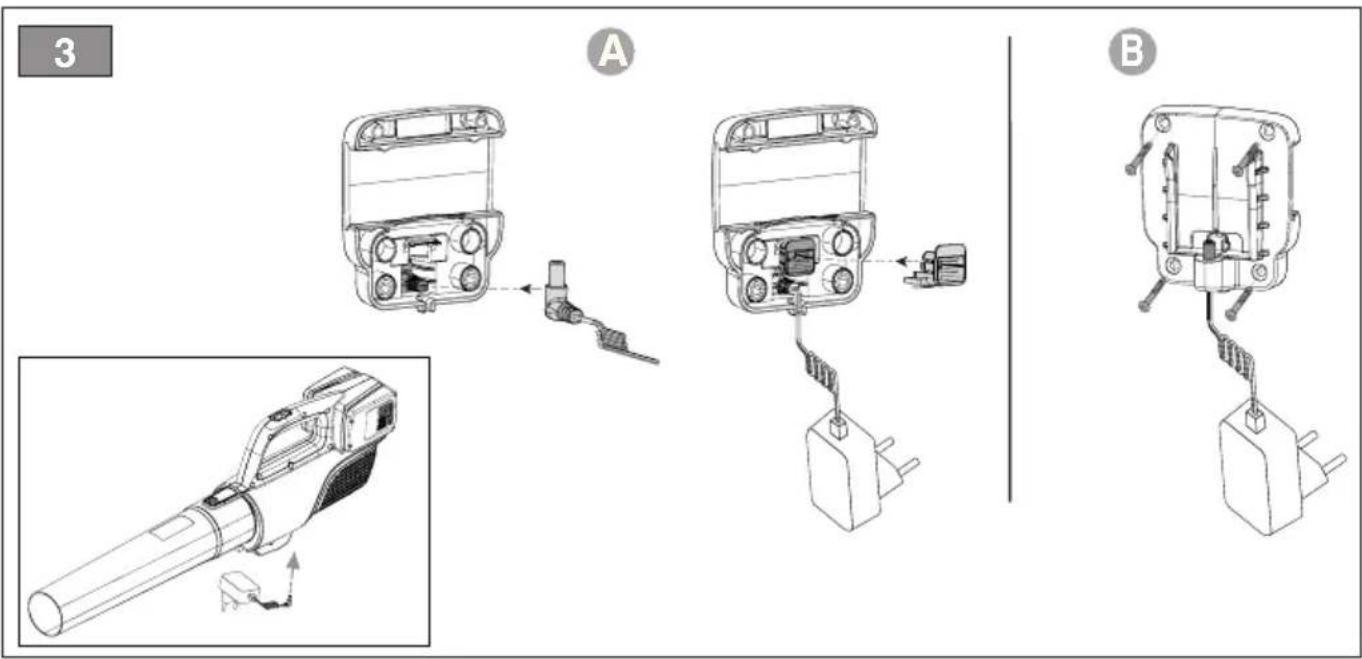
4.2 Assembly of the charging DOCK (Fig. 3) ..... 7
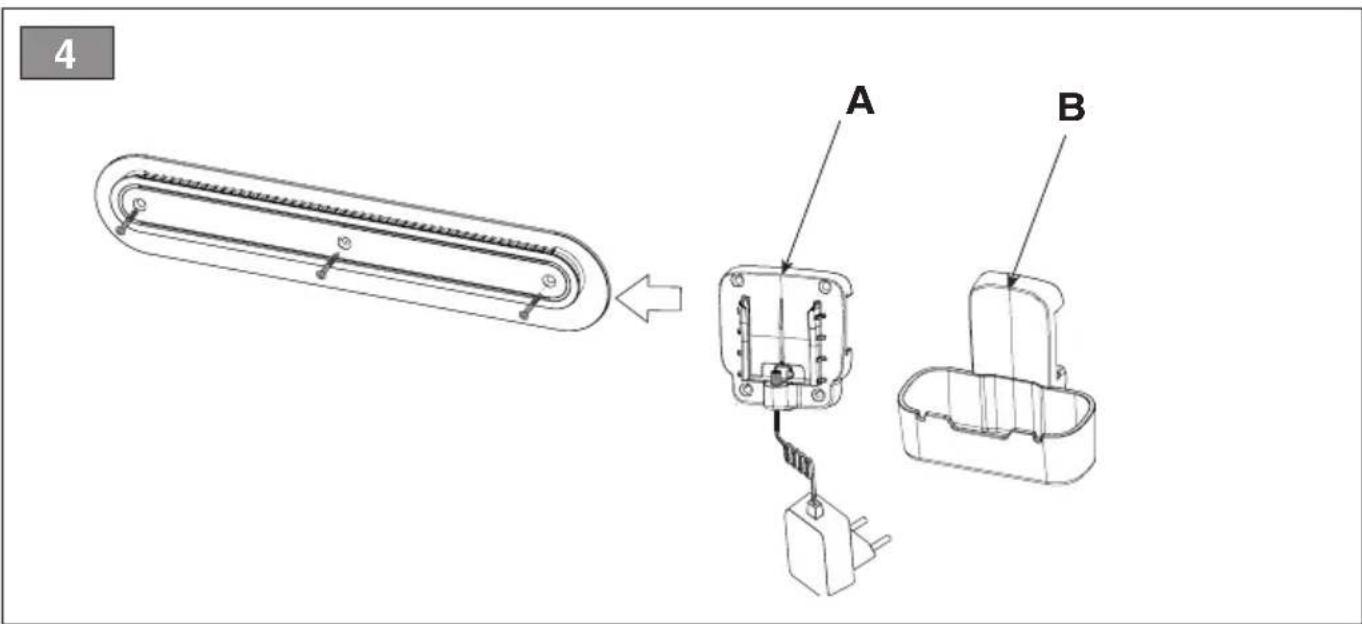
4.3 Assembly of the Rail for wall fixing (Fig. 4)..... 7
4.4 ASSEMBLY / DISASSEMBLY OF THE BLOWER TUBE 7
- CONTROLS....7
5.1 START/STOP SWITCH 7
- USING THE MACHINE 7
6.1 Preliminary operations....7
6.2 Safety checks....8
6.3 Start-up 8
6.4 Operation 8
6.5 Stop....8
6.6 After use....9
- ROUTINE MAINTENANCE....9
7.1 General Information....9
7.2 Battery....9
7.3 Cleaning the machine.... 10
7.4 Nuts and bolts 10
- STORAGE....10
8.1 Storing.... 10
8.2 Storing the battery....10
-
HANDLING AND TRANSPORT 10
-
ASSISTANCE AND REPAIRS 11
- WARRANTY COVERAGE....11
- TROUBLESHOOTING 12
- ATTACHMENTS ON REQUEST 13
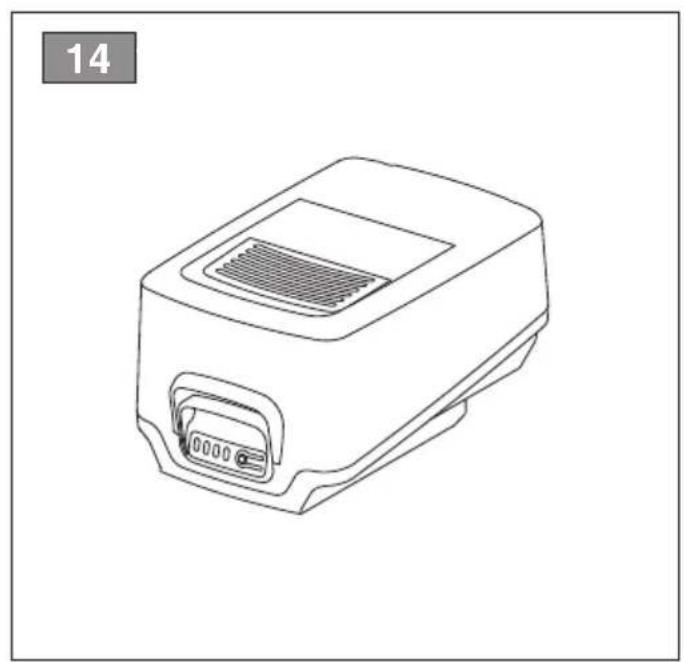
13.1 Batteries (Fig. 14).... 13
13.2 Battery charger (Fig. 15)....13
1. GENERAL INFORMATION
1.1 HOW TO READ THIS MANUAL
NOTE or IMPORTANT These give details or further information on what has been previously indicated and aim to prevent damage to the machine or cause other damage.
The symbol highlights danger. Failure to observe the warning can lead to possible personal and/or third party injury and/or damage.
The paragraphs highlighted in a dotted grey square indicate optional characteristics not available on all models documented in this manual. Check if the characteristics are available on this model.
Whenever reference is made to a position on the machine "front", "back", "left" or "right" hand side, this refers to the operator's working position.
2. SAFETY REGULATIONS
2.1 GENERAL SAFETY GUIDELINES FOR POWER TOOLS
Read all safety warnings and all instructions and specifications provided with this power tool. Failure to follow the warnings and instructions may result in electric shock, fire and/or serious injury.
Save all warnings and instructions for future reference.
The term “power tool” in the warnings refers to your battery-operated (cordless) power tool.
1) Work area safety
a) Keep the work area clean and well lit. Cluttered and dark areas invite accidents.
b) Do not operate power tools in explosive atmospheres, such as in the presence of flammable liquids, gases or dust. Power tools create sparks which may ignite the dust or fumes.
c) Keep children and bystanders away while operating a power tool. Distractions can cause you to lose control.
2) Electrical safety
a) Power tool plugs must match the outlet. Never modify the plug in any way. Do not use any adapter plugs with earthed (grounded) power tools. Unmodified plugs and matching outlets will reduce risk of electric shock.
b) Avoid body contact with earthed or grounded surfaces, such as pipes, radiators, ranges and refrigerators. There is an increased risk of electric shock if your body is earthed or grounded.
c) Do not expose power tools to rain or wet conditions. Water entering a power tool will increase the risk of electric shock.
d) Do not abuse the cord. Never use the cord for carrying, pulling or unplugging the power tool. Keep cord away from heat, oil, sharp edges or moving parts. Damaged or entangled cords increase the risk of electric shock.
e) When operating a power tool outdoors, use an extension cord suitable for outdoor use. Use of a cord suitable for outdoor use reduces the risk of electric shock.
f) If operating a power tool in a damp location is unavoidable, use a residual current device (RCD) protected supply. Use of an RCD reduces the risk of electric shock. NOTE The term “residual current device (RCD)” can be replaced by the term “ground fault circuitinterrupter (GFCI)” or “earth leakage circuit breaker (ELCB)
3) Personal safety
a) Stay alert, watch what you are doing and use common sense when operating a power tool. Do not use a power tool while you are tired or under the influence of drugs, alcohol or medication. A moment of inattention while operating power tools may result in serious personal injury.
b) Use personal protective equipment. Always wear eye protection. Protective equipment such as a dust mask, non-skid safety shoes, hard hat or hearing protection used for appropriate conditions will reduce personal injuries.
c) Prevent unintentional starting. Ensure the switch is in the off-position before connecting to power source and/or battery pack, picking up or carrying the tool. Carrying power tools with your finger on the switch or energising power tools that have the switch on invites accidents.
d) Remove any adjusting key or wrench before turning the power tool on. A wrench or a key left attached to a rotating part of the power tool may result in personal injury.
e) Do not overreach. Keep proper footing and balance at all times. This enables better control of the power tool in unexpected situations.
f) Dress properly. Do not wear loose clothing or jewellery. Keep your hair and clothing away from moving parts. Loose clothes, jewellery or long hair can be caught in moving parts.
g) If devices are provided for the connection of dust extraction and collection facilities, ensure these are connected and properly used. Use of dust collection can reduce dust-related hazards.
h) Do not let familiarity gained from frequent use of tools allow you to become complacent and ignore tool safety principles. A careless action can cause severe injury within a fraction of a second.
4) Power tool use and care
a) Do not force the power tool. Use the correct power tool for your application. The correct power tool will do the job better and safer at the rate for which it was designed.
b) Do not use the power tool if the switch does not turn it on and off. Any power tool that cannot be controlled with the switch is dangerous and must be repaired.
c) Disconnect the plug from the power source and/or remove the battery pack, if detachable, from the power tool before making any adjustments, changing accessories, or storing power tools. Such preventive safety measures reduce the risk of starting the power tool accidentally.
d) Store idle power tools out of the reach of children and do not allow persons unfamiliar with the power tool or these instructions to operate the power tool. Power tools are dangerous in the hands of untrained users.
e) Maintain power tools and accessories. Check for misalignment or binding of moving parts, breakage of parts and any other condition that may affect the power tool's operation. If damaged, have the power tool repaired before use. Many accidents are caused by poorly maintained power tools.
f) Keep cutting tools sharp and clean. Properly maintained cutting tools with sharp cutting edges are less likely to bind and are easier to control.
g) Use the power tool, accessories and tool bits etc. in accordance with these instructions, taking into account the working conditions and the work to be performed. Use of the power tool for
operations different from those intended could result in a hazardous situation.
h) Keep handles and grasping surfaces dry, clean and free from oil and grease. Slippery handles and grasping surfaces do not allow for safe handling and control of the tool in unexpected situations.
5) Battery tool use and care
a) Make sure that the machine is switched off before inserting the battery. Inserting a battery in an electric device which is switched on can cause accidents.
b) Recharge only with the charger specified by the manufacturer. A charger that is suitable for one type of battery pack may create a risk of fire when used with another battery pack.
c) Use power tools only with specifically designated battery packs. Use of any other battery packs may create a risk of injury and fire.
d) When battery pack is not in use, keep it away from other metal objects, like paper clips, coins, keys, nails, screws or other small metal objects, that can make a connection from one terminal to another. Shorting the battery terminals together may cause burns or a fire.
e) Under abusive conditions, liquid may be ejected from the battery; avoid contact. If contact accidentally occurs, flush with water. If liquid contacts eyes, additionally seek medical help. Liquid ejected from the battery may cause irritation or burns.
f) Do not use a battery pack or tool that is damaged or modified. Damaged or modified batteries may exhibit unpredictable behaviour resulting in fire, explosion or risk of injury.
g) Do not expose a battery pack or tool to fire or excessive temperature. Exposure to fire or temperature above 130 °C may cause explosion. NOTE The temperature „130 °C“ can be replaced by the temperature „265 °F“.
h) Follow all charging instructions and do not charge the battery pack or tool outside the temperature range specified in the instructions. Charging improperly or at temperatures outside the specified range may damage the battery and increase the risk of fire.
6) Service
a) Have your power tool serviced by a qualified repair person using only identical replacement parts. This will ensure that the safety of the power tool is maintained.
b) Never service damaged battery packs. Service of battery packs should only
be performed by the manufacturer or authorized service providers.
2.2 SPECIFIC SAFETY GUIDELINES FOR ELECTRIC GARDEN BLOWER
In the safety warnings below, the term "machine" may be replaced by alternate wording (e.g. "garden blower", "garden vacuum", "garden blower/vacuum", "leaf blower" or "leaf collector").
a) Do not use the machine in bad weather conditions, especially when there is a risk of lightning. This decreases the risk of being struck by lightning.
b) Wear eye protection and ear protection. Adequate protective equipment will reduce the risk of personal injury.
NOTE 302 The ear protection portion of the warning in item c) above can be optionally omitted if the measured emission sound pressure level at the operator's ear in accordance with Annex I does not exceed 85 dB(A).
c) While operating the machine, always wear non-slip and protective footwear. Do not operate the machine when barefoot or wearing open sandals. This reduces the risk of injury to the feet.
d) Do not wear loose fitting clothing or articles such as scarves, strings, chains, ties, etc., that could get drawn into the air inlets. Tie back or cover long hair to make sure it does not get drawn into the air inlets. If any of these items are drawn into the air inlets, it can increase the risk of personal injury.
e) Do not use the machine to blow anything that is burning or smoking, such as cigarettes, matches or hot ashes. These ignition sources may increase the risk of fire.
f) Do not touch the fan while still in motion. Turn off the machine and wait until the fan stops before removing any part that may give access to the fan. This reduces the risk of injury from moving parts.
g) When clearing jammed material or servicing the machine, make sure the power switch is off. Unexpected starting of the machine while clearing jammed material or servicing may result in serious personal injury.
⚠️ If something breaks or an accident occurs during work, turn off the motor immediately and move the machine away to prevent further damage; if an accident occurs with injuries or third parties are injured, carry out the first aid measures most suitable for the situation immediately and contact the medical authorities for any necessary health
care. Carefully remove any debris which could cause damage or injury to persons or animals if ignored.
Prolonged exposure to vibrations can cause injuries and neurovascular disorders (also called “Raynaud’s syndrome” or “white finger”), especially to people suffering from circulation disorders. The symptoms can regard the hands, wrists and fingers and are shown through loss of sensitivity, torpor, itching, pain and discolouring of or structural changes to the skin. These effects can be worsened by low ambient temperatures and/or by gripping the hand grips excessively tightly. If the symptoms occur, the length of time the machine is used must be reduced and a doctor consulted.
Ensure regular maintenance and correct storage to maintain machine safety and high performance levels.
a) When the machine is stopped for servicing, inspection, or storage, or to change an accessory, shut off the power source, disconnect the machine from the supply and make sure that all moving parts are come to a complete stop.
b) Allow the machine to cool beforemaking any inspections, adjustments, and before storing.
c) Maintain the machine with care and keep it clean in a dry place out of the reach of children.
d) Never use the machine with worn or damaged parts. Faulty or worn-out parts must always be replaced and never repaired. Use original replacement parts only.
e) To reduce fire risks, do not leave containers with debris inside a room.
f) Never attempt to override the interlocked feature of the guard.
The noise and vibration levels shown in these instructions are the maximum levels for use of the machine. Suitable preventive measures must be adopted to eliminate possible harm caused by high noise levels and vibration-induced stresses; utilise the machine at constant speed, firmly hold the handgrip with adequate strength, utilise the machine at the minimum speed required to perform the work, wear ear-protection devices, make frequent and adequate pauses during the work.
2.4 BATTERY / BATTERY CHARGER
ATTENTION
The following safety rules complement the safety rules contained in the battery charger manual.
- Only use battery chargers recommended by the manufacturer to recharge batteries. An inadequate battery charger may cause electric shock, overheating or corrosive liquid to leak from the battery.
- Use only batteries specifically designed for your power tool. The use of other batteries may cause injuries and fire risks.
- Keep all unused batteries at a distance from paper clips, coins, keys, nails, screws or other small metal objects as contact with the same can cause short circuits. Short circuits between battery contacts can lead to explosion or fires.
- Never use the battery charger in environments in the presence of vapours, flammable substances or on easily flammable surfaces such as paper, fabric, etc. The battery charger heats up during recharging and may cause a fire.
- When transporting batteries, make sure the contacts never come into contact with each other and never use metal containers to transport them.
2.5 PROTECTING THE ENVIRONMENT
Safeguarding the environment must be a relevant and priority aspect of machine use, of benefit to the community and the environment we live in.
- Avoid being a disturbance to the neighbourhood. Use this machine at reasonable times of the day only (not early morning or late evening when the noise could cause disturbance).
- A certain amount of chain lubricating oil is released into the environment when the machine is running, so only use biodegradable oils made specifically for this use. Use of a mineral oil or motor oil causes serious damage to the environment.
- Comply with local regulations for the disposal of packaging, deteriorated parts or any elements with a strong environmental impact; this waste must not be disposed of as normal waste, it must be separated and taken to specified waste disposal centres where the material will be recycled.
- Comply with local regulations for the disposal of waste materials
- When the machine is withdrawn from service, do not dispose of it in the environment, but take it to a waste disposal facility in accordance with the local regulations in force.

Do not throw electrical equipment away with domestic waste. According to the European Directive 2012/19/EU on electrical and electronic equipment waste and its implementation, according to UK Regulation “The waste electrical and electronic equipment regulations 2013 (as amended)” and according to national regulations, old electrical equipment must be collected separately, for eco-compatible recycling. If electrical equipment is disposed of in landfills or in the ground, hazardous substances can leak into the groundwater and contaminate the food chain, damaging your health and well-being. For further information on the disposal of this product, contact your dealer or a domestic waste collection service.
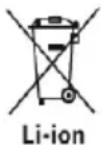
At the end of their working life, dispose of batteries paying due attention to the environment. Batteries contain material classified as hazardous for you and the environment. They must be removed and disposed of separately at a facility that accepts lithium-ion batteries.

Separate waste collection of the products and packaging used allows the materials to be recycled and reused. Reuse of recycled materials help to prevent environmental pollution and reduces the demand for raw materials.
2.6 RESIDUAL RISKS
Even when all safety rules are observed, there may still be certain residual risks which cannot be excluded. From the kind and construction of the tool the foreseeable potential endangerments can be:
- Hurled materials that may injure the eyes;
- Damage of the hearing, if no protection of the ears is carried.
3. ABOUT THE MACHINE
3.1 MACHINE DESCRIPTION AND INTENDED USE
This machine is a garden tool, specifically a portable battery-powered garden blower.
It basically consists in a motor that activates a rotor which is able to produce a high-speed air flow.
3.1.1 Intended use
This machine was designed and manufactured for:
- the movement and accumulation, by blowing, of leaves, grass, debris of various limited weight and modest dimensions.
3.1.2 Improper use
Any other use that does not comply with the above, can be dangerous and cause damage to people and/or property. Examples of improper use may include, but are not limited to:
- accumulation and collection of inflammable or explosive products, hot embers or combustion material without a flame, lit cigarettes, pieces of glass, sharp objects, metal objects, stones and any other object that could be dangerous to the operator and others;
- aiming the air shot towards persons and/or animals;
- allowing object to enter the suction grid;
- using of the machine by more than one person.
IMPORTANT Improper use of the machine will void the warranty and relieves the Manufacturer of any liability, placing all responsibility for damage or injury, to him/herself or third parties, on the user.
3.1.3 Type of users
This machine is intended for use by consumers, i.e. non-professional operators. It is intended for "hobby-related activities".
3.2 MAIN COMPONENTS (Fig.1)
A. Power unit: it drives the rotor.
B. Blower tube: it is the component through which the air flow is discharged.
C. Handgrip: it makes it possible to control the machine.
D. Battery (if it is not supplied with the machine, see chapter 13 "accessories on request"): device that supplies electric current to the tool; its specifications and regulations for use are described in a specific manual.
E. Battery charger (if it is not supplied with the machine, see chapter 13 “accessories on request”): device used to charge the battery; its specifications and regulations for use are described in a specific manual.
F. Blower tube release button
G. Start/stop switch
H. Rail for wall fixing
I. Charging dock
J. Loop
K. Screws and plastic dowels supplied
IMPORTANT The machine works only with both batteries inserted.
NOTE The batteries can be charged directly on the machine with its charging dock.
3.3 PRODUCT IDENTIFICATION LABEL (Fig.1)
- Name and address of Manufacturer
- Type of machine
- Sound power level
- Conformity marking
- Power voltage
- Year of manufacture
- Serial number
- Article code
- No load speed
Write the identification data of the machine in the specific space on the label on the back of the cover page.
IMPORTANT Quote the information on the product identification label whenever you contact an Authorised Service Centre.
3.4 SAFETY SIGNS (Fig.2)
The machine has various symbols on it. Meanings of the symbols:

WARNING! DANGER! The failure to use this machine correctly can be hazardous for oneself and others.








WARNING! Read the owner's manual before using the machine.
Use ear protection devices and goggles.
Do not leave the machine in the rain (or in damp conditions).
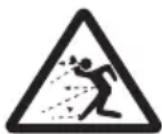
PROJECTION HAZARD! Pay attention to possible flying debris projected by the air flow: which may cause serious injuries to persons or damage to objects.
PROJECTION HAZARD! People or pets must be kept at least 15m away when using the machine!
Remove the batteries before any inspection, cleaning or maintenance/adjustment operation on the machine.
WARNING! For battery and battery charger see the dedicated manual
IMPORTANT Any damaged or illegible decals must be replaced. Order replacement decals from an Authorised Service Centre.
4. ASSEMBLY
IMPORTANT The safety regulations to follow are described in chap. 2. Strictly comply with these instructions to avoid serious risks or dangers.
For storage and transport purposes, some components of the machine are not installed in the factory and have to be assembled after unpacking. Follow the instructions below.
⚠️ Unpacking and completing the assembly should be done on a flat and stable surface, with enough space for machine handling and
its packaging, always making use of suitable equipment. Do not use the machine until all the instructions provided in the "ASSEMBLY" section have been carried out.
4.1 UNPACKING
- Carefully open the packaging, paying attention not to lose components.
- Consult the documentation in the box, including these instructions.
- Remove all the unassembled parts from the box.
- Remove the machine from the box.
- Dispose of the box and packaging in compliance with local regulations.
Before assembling, make sure the batteries are not inserted in their housing.
4.2 ASSEMBLY OF THE CHARGING DOCK (Fig. 3)
NOTE The machine can be hung on the wall.
The batteries can be charged directly on the machine with its charging dock (Fig. 3.A).
NOTE The charging dock can be fixed to the wall (Fig. 3.B) (with the screws and the plastic dowels supplied, Fig. 1. K).
4.3 ASSEMBLY OF THE RAIL FOR WALL FIXING (Fig. 4)
Once the rail (Fig. 1. H) has been fixed to the wall (with the screws supplied), slide the charging dock (Fig. 4. A) and the loop (Fig. 4. B).
4.4 ASSEMBLY / DISASSEMBLY OF THE BLOWER TUBE
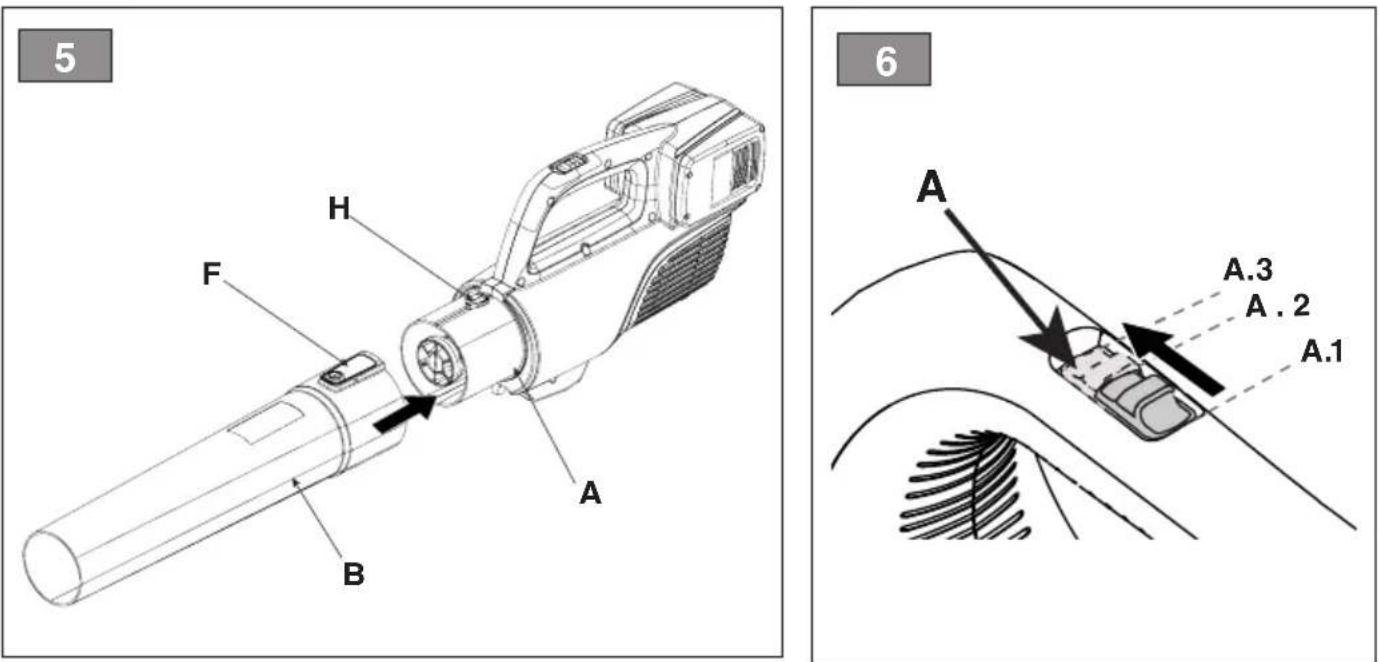
- Align the blower tube (Fig. 5.B) with the air outlet mouth of the drive unit (Fig. 5.A) and push it all the way down so as to hook it permanently.
NOTA Assembly is correct when the tab (Fig. 5.H) locks into place.
- To remove the blower tube (Fig. 5.B) press the release button (Fig.5. F.).
IMPORTANT Stop the machine and always remove the batteries (Fig. 12) whenever the blower tube is removed.
5. CONTROLS
5.1 START/STOP SWITCH
The start/stop switch (Fig. 6.A) performs two functions:
- it starts/stops the machine and, at the same time, it engages/disengages the rotation of the rotor;
- it makes it possible to control the speed of the rotor.
To start the machine, move the switch from the stop position (Fig. 6.A.1) to the start position (Fig. 6.A.2).
Starting the machine causes the simultaneous rotation of the rotor.
To stop the machine, move the switch to the stop position (Fig. 6.A.1).
The rotor's speed must be adapted to the type of work being performed (chapter 6.4.1) and can be adjusted by moving the switch to the required position:
- start position (Fig. 6.A.2) for average blowing speed;
– high speed position (Fig. 6.A.3) for maximum blowing speed.
6. USING THE MACHINE
IMPORTANT The safety rules to be followed are described in chap. 2. Scrupulously respect these indications in order not to run into serious risks or dangers.
6.1 PRELIMINARY OPERATIONS
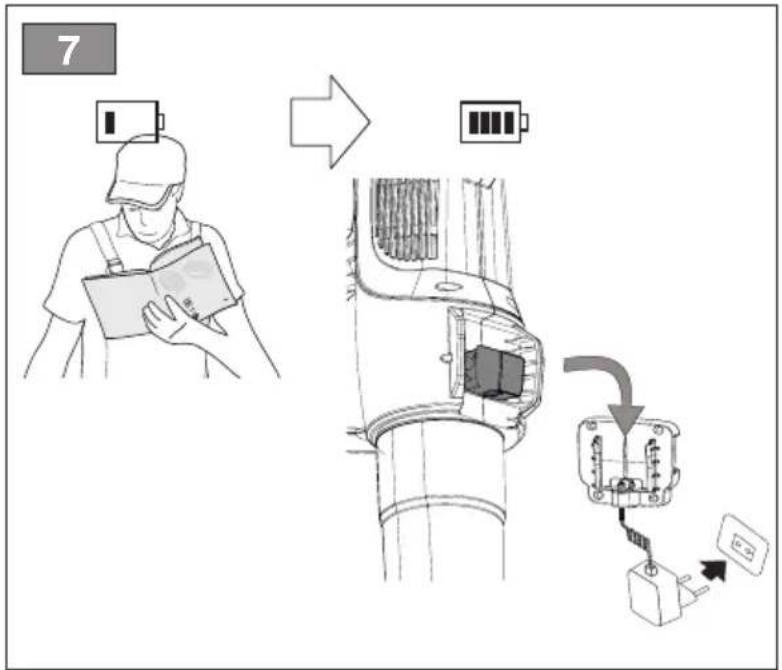
6.1.1 Checking and charging the batteries (Fig. 7)
Before each use check the battery charge status following the instructions provided in the battery booklet.
NOTE The machine works only with both batteries inserted.
6.2 SAFETY CHECKS
Always carry out the safety checks before use.
6.2.1 General check
| Object Result | |
| Hand grips (Fig. 1.C.) Are cl | clean, dry and fixed firmly to the machine |
| Screws on the machine Correctly tightened (not loose) | |
| Cooling air ducts Not clogged | |
| Blower tube (Fig. 1.B) Correctly installed.No signs of damageNo obstruction. | |
| Rotor No signs of damage | |
| Battery (Fig. 1.D.) No damage to the casing,no liquid leakage | |
| Start/stop switch (Fig. 6.A) It must easily move from one position to the other. | |
| Machine No signs of damageor wear.No abnormal vibrations.No abnormal sound | |
6.2.2 Machine operating test
| Action Result | |
| 1. Start the machine (para. 6.3) | The machine starts and the rotor starts rotating. |
| 1. Move the switch to the stop position (Fig. 6 .A.1) | 1. The switch should move easily and the machine should stop. |
⚠️ If any of the results fail to match the indications provided in the tables below, do not use the machine! Take it to a service centre to be checked and repaired if necessary.
6.3 START-UP
Don't start the machine when it's under charging status.
- Adopt a firm and well-balanced position;
- Make sure that the blower tube is not directed towards any bystanders or debris;
Make sure the start/stop switch (Fig. 6.A) is in the "A. 1" position.
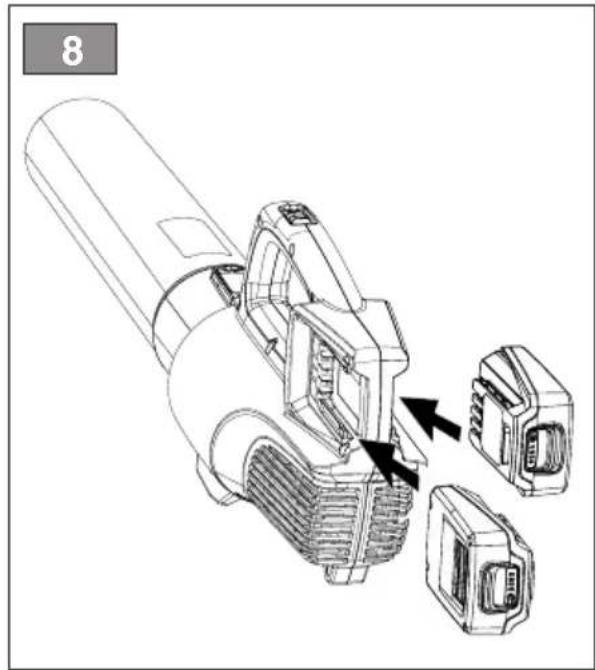
- Fit the batteries (Fig. 8) inside their housing pressing down until you hear it clicks firmly into position and assure the electrical contact;
NOTE The machine works only with both batteries inserted.
- Move the switch to the start position (Fig. 9.A.2, Fig. 9.A.3).
Starting the machine causes the simultaneous rotation of the rotor.
NOTE Operate the machine only on a firm, level surface.
6.4 OPERATION
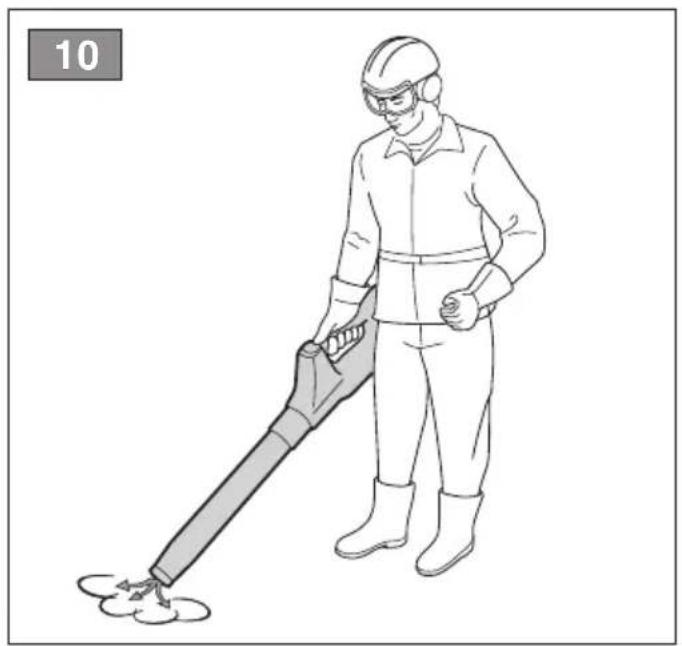
While working, the machine must always be held firmly with the hand on the handgrip (Fig. 10).
NOTE During use, the battery is protected against total drainage with a protective device that switches off the machine and stops it from working.
6.4.1 Adjusting the speed
It is always advisable to set the rotor speed in relation to the type of material to be removed:
– average blowing speed (Fig. 9.A.2) for light materials and small shrubs on the lawn, to move light grass and leaves on pavement or solid ground;
– high blowing speed (Fig. 9.A.3) for wet leaves, heavier material, such as fresh snow or bulky rubbish.
6.4.2 Operating suggestions
- It is recommended to use the machine at a temperature between -10°C and 60°C
• Proceed slowly keeping the end of the blower tube at a suitable distance from the ground (Fig. 10). - To avoid dispersing the material to be removed, direct the air flow towards the outer edges of the pile of material. Never direct the air flow to the middle of the pile.
6.5 STOP
To stop the machine, move the switch to the stop position (Fig. 11.A.1).
The rotor will continue to rotate for a few seconds after you have switched off the motor.
Always stop the machine when moving between different work areas.

When moving, never keep your hand on the ignition switch to avoid accidental starting.
6.6 AFTER USE
- Remove the batteries from their housing.
- Allow the engine to cool before storing in an enclosed space.
- Clean (para. 7.3).
- Check there are no loose or damaged components. If necessary, replace the damaged components and tighten any screws and loose bolts or contact the authorised service centre.
- Check there are no damages on the machine. If necessary contact the authorised service centre.
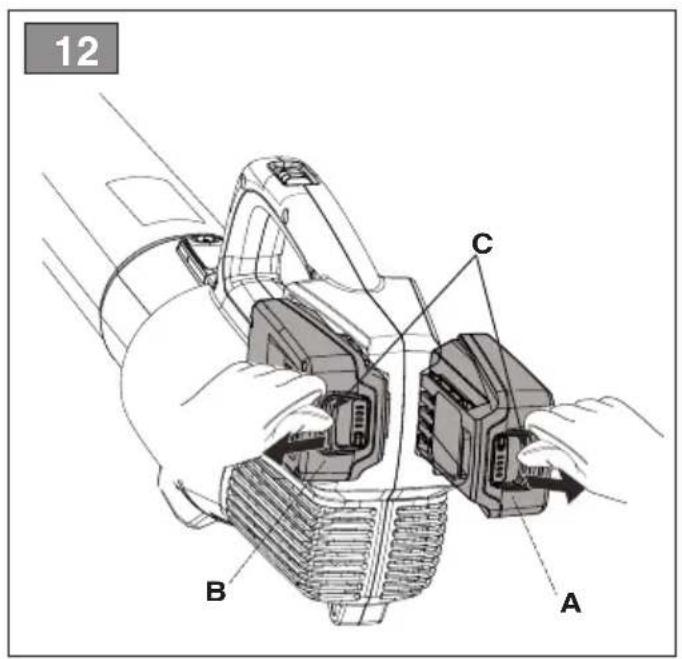
IMPORTANT Always remove the batteries (Fig. 12) whenever the machine is unused or left unattended, If not in charge.
6.6.1 Removing the batteries
To remove the batteries press the lock button on the battery (Fig. 12. C).
7. ROUTINE MAINTENANCE
7.1 GENERAL INFORMATION
IMPORTANT The safety regulations to follow are described in chap. 2. Strictly comply with these instructions to avoid serious risks or dangers.

Before performing any inspections, cleaning or maintenance/adjustment interventions on the machine:
- Stop the machine (para. 6.5);
- Remove the batteries (never leave the battery inserted or within the reach of children or unauthorised persons);
- Make sure that all moving parts have come to a complete stop;
- Allow the engine to cool before storing in an enclosed space.
- Wear suitable clothing, protective gloves and goggles;
- Read the relevant instructions.
IMPORTANT
Any
maintenance
adjustment operations not described in this manual must be carried out by your dealer or Authorised Service Centre.
7.2 BATTERY
7.2.1 Battery power reserve
Battery power reserve (and therefore the cuttable area before charging is required) mainly depends on how the operator works. who should avoid:
– switching the machine on and off frequently whilst working;
- a rotor speed not suited to the type of material to be removed (para. 6.4.1).
To optimise battery power reserve it is always recommended to:
- set a rotor speed suited to the type of material to be removed.
If the need arises to use the machine for sessions which exceed the capability of the standard batteries, it is possible to:
• purchase other two standard batteries to immediately replace the discharged battery, without compromising the continuity of operations;
- purchase two batteries with an extended power reserve compared to the standard version (para. 13.1).
7.2.2 Battery charge directly on the machine (Fig. 17)
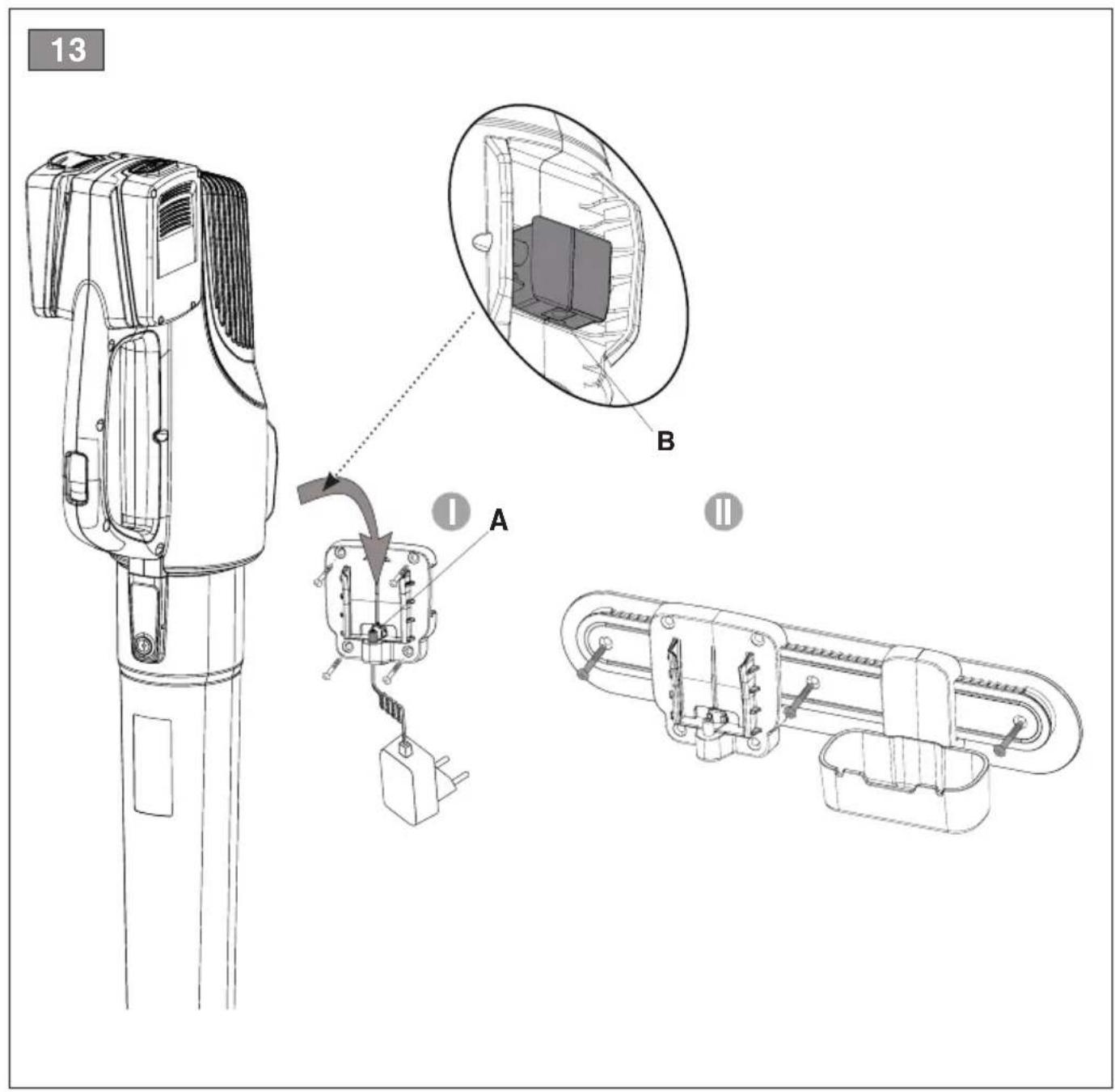
The batteries can be charged directly on the machine by connecting the connector (Fig. 13. A) to the machine (Fig. 13. B) via its charging dock.
⚠️ Before charge the machine, put the switch in "A. 1" position (Fig. 6).
The machine can be hung on the wall (Fig.13):
- fixing the charging dock directly to the wall (Fig.13.1);
- fixing the rail on the wall on which to slide the charging dock and the loop (Fig.13.II).
NOTE The battery is equipped with a guard that inhibits charging if the environmental temperature is not between 0^ C - 40^ C.
IMPORTANT The battery can be charged at any time, even partially, with no risk of damaging it.
The batteries are partially charged in sequence as and per the scheme:
| Phase Battery(Fig.12) | Charger |
| 1 A (right) 40% | |
| 2 B (left) 40% | |
| 3 A (right) 100% | |
| 4 B (left) 100% |
NOTE Partial charge allows you to use the machine to finish the job without waiting for a full charge.
NOTE Don't remove the battery when the machine is under charging.
NOTE Don't start the machine when it's under charging status.
7.3 CLEANING THE MACHINE
- To reduce the risk of fire, keep the machine free of leaves and twigs.
• Always clean the machine after use with a damp cloth dipped in neutral detergent. - Remove all traces of humidity using a soft damp cloth. Humidity can generate risks of electric shocks.
- Do not use aggressive detergents or solvents to clean the plastic parts or hand grips.
- Do not spray water onto the motor and electrical components and prevent them from getting wet.
- Always keep the rotor clean and free of dust and debris, by blowing compressed air through the grille. Do not spray water on the rotor.
- To avoid overheating and damage to the motor or the battery, always keep the cooling air vents clean and free of debris.
7.4 NUTS AND BOLTS
- Keep all nuts, bolts and screws tight to be sure the equipment is in safe working condition.
- Check regularly that the handles are fixed firmly.
8. STORAGE
8.1 STORING
When the machine is to be stored away:
- Remove the batteries from their housing.
- Allow the engine to cool before storing in an enclosed space.
- Clean (para. 7.3).
-
Make sure there are no loose or damaged components. If necessary, replace the damaged components and tighten any screws and loose bolts or contact the authorised service centre.
-
Store the machine:
-
in a dry place
- protected from inclement weather
- in a place where children cannot get to it
-
making sure that keys or tools used for maintenance are removed.
-
The machine can be hung on the wall (Fig.14. I - II).
NOTE Make sure that the wall can hold loads of minimum 20 kg
8.2 STORING THE BATTERY
Charge the batteries (par. 7.2.2)
The batteries must be stored in closed and humidity-free environments, at a temperature between:
0°C - 60°C for 1 month
0°C - 45°C for 3 months
0°C-25°C for 1 year
NOTE If unused for any length of time, charge the battery every two months to prolong its working life.
9. HANDLING AND TRANSPORT
Whenever the machine is to be handled or transported you must:
- Stop the machine (par. 6.5);
- Make sure that all moving parts have come to a complete stop;
- Remove the battery from its housing and charge it;
- Only take hold the machine using the handgrips and position the pipes so that they do not case obstruction.
- Make sure that machine movements do not cause damage or injuries.
When transporting the machine on a vehicle, always:
- remove the tubes;
– position it so that it does not cause a hazard to anyone.
10. ASSISTANCE AND REPAIRS
This manual provides all the necessary information to run the machine and for correct basic maintenance operations which can be performed by the user. Any regulations and maintenance operations not described herein must be carried out by your Dealer or Authorised Service Centre.
Any operations performed in unauthorised centres or by unqualified persons will totally invalidate the Warranty and all obligations and responsibilities of the Manufacturer.
- Non-original parts and attachments are not approved; use of non-original spare parts and attachments will jeopardise the safety of the machine and relieve the Manufacturer from all obligations or liabilities.
- Original spare parts are supplied by authorised Dealers and by Authorised Service Centres.
11. WARRANTY COVERAGE
The warranty conditions are intended for consumers only, i.e. non-professional operators. The warranty covers all material quality and manufacturing defects recognised during the warranty period by your Dealer or Authorised Service Centre.
The warranty is restricted to the repair or replacement of components recognised as faulty. The warranty only applies to machines subjected to regular maintenance.
The warranty does not cover damages resulting from:
- Failure to become familiar with the documentation accompanying the machine (Instruction manuals).
• Professional use. - Carelessness, negligence.
- External causes (lightning, impact, presence of foreign bodies inside the machine) or incidents.
- Incorrect use or assembly are prohibited by the manufacturer.
- Poor maintenance.
- Modification to the machine.
- Use of non-genuine spare parts (adaptable parts).
- Use of accessories not supplied or approved by the manufacturer.
The warranty does not cover:
- The maintenance operations (described in the instruction manual).
• Normal wear and tear of consumables.
• Normal wear and tear. - Deterioration in the appearance of the machine due to use.
- Any ancillary expenses related to the enforcement of the warranty, such as costs incurred to travel to the user's location, transfer of the machine to the Dealer, rental of replacement equipment or calling of independent enterprises to perform maintenance work.
The user is protected by his or her own national legislation. The user's rights under the national laws or his or her own country are not in any way restricted by this warranty.
12. TROUBLESHOOTING
| PROBLEM PROBALE CAUSE SOLUTION | ||
| 1. The machine does not start when the switch is moved | Battery is not inserted or is inserted incorrectly | Make sure that the batteries are inserted correctly (chapter 6.3) |
| Low battery capacity Check the batteries | es status and charge if necessary (chapter 7.2) | |
| Defective start/stop switch or damaged blower | Do not use the machine. Immediately turn off the machine, remove the batteries and contact a service centre. | |
| 2. The motor shuts down whilst working | Battery is not inserted correctly Make sure | re that the batteries are inserted correctly (chapter 6.3) |
| Low battery capacity Check the batteries | es status and charge if necessary. (chapter 7.2) | |
| 3. The rotor rotates, but the air does not come out from the blower tube | Blocked or clogged blower tube | Stop the machine, remove the batteries and remove any obstructions. |
| 4. Excessive noise and/or vibration is experienced whilst working | Loose or damaged parts | Turn off the machine remove the batteries and: - inspect for damage; - check for and tighten any loose parts; - have any damaged parts replaced or repaired with parts having equivalent specifications. |
| 5. The machine gives off smoke whilst working | Damaged blower. Do not use the machine. Immediately turn off the machine, remove the batteries and contact a service centre. | |
| 6. Battery power reserve is low | Severe working conditions requiring greater current absorption | Optimise operations (chapter 7.2) |
| Battery is insufficient for operating requirements | Use extended batteries (chapter 13) | |
| Decrease in battery capacity Purchase new batteries | ||
| 7. The battery charger is not charging the battery | Battery is not correctly inserted in the battery charger or plug not properly connected to the machine | Check it is correctly inserted (chapter 6.3) |
| Unsuitable environmental conditions | Charge the batteries in places with suitable temperatures (see battery/battery charger instruction manual) | |
| Dirty contacts | Clean the contacts | |
| The battery charger is not energised | Check it is plugged in and the power socket is energised | |
| Faulty battery charger | Replace with an original spare part | |
| Battery too hot or too cold | Bring the battery to an ambient temperature between 0-40°C | |
| If the problem persists, refer to the battery/battery charger manual | ||
If problems persist after implementing the solution, contact your Dealer.
13. ATTACHMENTS ON REQUEST
13.1 BATTERIES (Fig. 14)
Different capacity batteries are available to suit specific operating requirements.
The list of homologated batteries for this machine can be found in the "Technical Data" table.
13.2 BATTERY CHARGER (Fig. 15)
There are several devices for charging the battery.
The list of homologated battery chargers for this machine can be found in the "Technical Data" table.
ÍNDICE
- KORRALINE HOOLDUS....9
7.1 Üldandmed....9
7.2 Aku....9
7.3 Masina puhastamine....9
7.4 Lukustusmutrid- ja kruvid 10
- HOIDMINE....10
8.1 Masina hoiustamine 10
8.2 Aku hoiule panemine....10
-
TEISALDAMINE JA TRANSPORT 10
-
TEENINDUS JA REMONT....10
- GARANTII KATE....10
- RIKETE TUVASTAMINE....11
- TELLITAVAD LISASEADMED 12
13.1 Akud (Jn 14).... 12
13.2 Aku laadimine (Jn 15)....12
1. ÜLDANDMED
1.1 KUIDAS KASUTUSJUHENDIT LUGEDA
3.2 PÕHIKOMPONENDID (Jn 1)
3.3 TOOTE ANDMESILT (Jn 1)
9. MANUTENTION ET TRANSPORT
7. PLĀNOTĀ TEHNISKĀ APKOPE
7.1 VISPĀRĒJA INFORMĀCIJA
2.5 BESCHERMING VAN DE OMGEVING
7.4 MOEREN EN SCHROEVEN VOOR BEVESTIGING
13.1 ACCU'S (AFB. 14)
2.3 VEDLIKEHOLD, LAGRING
3. BLI KJENT MED MASKINEN
3.1 BESKRIVELSE AV MASKINEN OG BEREGNET BRUK
7. ORDINÆRT VEDLIKEHOLD
7.1 GENERELT
3.2 GŁÓWNE CZĘŚCI (Rys. 1)
6.1 CZYNNOŚCI WSTĘPNE
6.4 PRACOVNÁ ČINNOST
Počas pracovnej činnosti je potrebné pevne držat' stroj rukou za rukovat' (obr. 10).
INNEHÅLLSFÖRTECKNING
- ALLMÄN INFORMATION ...... 1
- SÄKERHETSNORMER 1
- LÄRA KÄNNA MASKINEN 5
- Reference to harmonised standards:
EN 62841-1:2015+A11:2022
EN ISO 12100: 2010
EN IEC 55014-1:2021
EN IEC 55014-2:2021
EN IEC 63000:2018
Other standards:
prEN IEC 62841-4-6:2021/prAA:2021
UK DECLARATION OF CONFORMITY
(Supply of Machinery (Safety) Regulations 2008, S.I. 2008 No. 1597, Annex II, part A)
- The company: ST. S.p.A. – Via del Lavoro, 6 – 31033 Castelfranco Veneto (TV) – Italy
- Hereby declares under its own responsibility that the machine (function):
Hand-held garden Blower
a) Homologation type:
BL 20 Li B
c) Serial number:
23A••BLO000001 ÷ 99L••BLO999999
d) Engine: battery-operated
- Conforms to UK Regulations:
• S.I. 2008/1597 - Supply of Machinery (Safety) Regulations 2008
• S.I. 2001/1701 - Schedule 8 - Noise Emission in the Environment by Equipment for use Outdoors Regulations 2001
• S.I. 2016/1091 - Electromagnetic Compatibility Regulations 2016
• S.I. 2012/3032 - The Restriction of the Use of Certain Hazardous Substances in Electrical and Electronic Equipment Regulations 2012
- Reference to harmonised standards:
EN 62841-1:2015+A11:2022
EN ISO 12100: 2010
EN IEC 55014-1:2021
EN IEC 55014-2:2021
EN IEC 63000:2018
Other standards:
prEN IEC 62841-4-6:2021/prAA:2021
g) Measured sound power level: 95 dB(A)
h) Guaranteed sound power level: 96 dB(A)
n) Person authorised to compile the technical file:
ST. S.p.A.
Via del Lavoro, 6
31033 Castelfranco Veneto (TV) - Italia
o) Castelfranco Veneto, 10/10/2023
CEO Stiga Group
Sean Robinson
UK Importer:
STIGA LTD
Unit 8, Bluewater Estate Plympton,
Devon, PL7 4JH, England

| FR (Traduction de la notice originale)Déclaration CE de Conformité(Directive Machines 2006/42/CE, Annexe II, partie A)1. La Société2. Déclare sous sa propre responsabilité que la machine : Souffleur de jardin portatifa) Type / Modèle de Basec) Série d) Moteur: accu3. Est conforme aux prescriptions des directives :e) Organisme de certification4. Renvoi aux Normes harmoniséesg) Niveau de puissance sonore mesuréh) Niveau de puissance sonore garanti k) Flux d'airn) Personne habilitée à établir le Dossier Technique :o) Lieu et Date | EN (Translation of the original instruction)EC Declaration of Conformity(Machine Directive 2006/42/EC, Annex II, part A)1. The Company2. Herby declares under its own responsibility that the machine: Hand-held garden Blowera) Type / Base Modelc) Serial numberd) Engine: battery-operated3. Conforms to directive specifications:e) Certifying body4. Reference to harmonised Standardsg) Sound power level measuredh) Sound power level guaranteedk) Flow of airn) Person authorised to create the Technical Folder:o) Place and Date | DE (Übersetzung der Originalbetriebsanleitung)EG-Konformitätserklärung(Maschinenrichtlinie 2006/42/EG, Anhang II, Teil A)1. Die Gesellschaft2. Erklärt auf eigene Verantwortung, dass die Maschine:Handgehaltener Laubbläsera) Typ / Basismodellc) Seriennummerd) Motor: Batterie3. Den Anforderungen der folgenden Richtlinien entspricht:e) Zertifizierungsstelle4. Bezugnahme auf die harmonisierten Normeng) Gemessener Schalleistungspegelh) Garantierter Schalleistungspegelk) Luftstromn) Zur Verfassung der technischen Unterlagen befugte Person:o) Ort und Datum |
| NL (Vertaling van de oorspronkelijke gebruiksaanwijzing)EG-verklaring van overeenstemming(Richtlijn Machines 2006/42/CE, Bijlage II, deel A)1. Het bedrijf2. Verklaart onder zijn eigen verantwoordelijkheid dat de machine: Draagbare Blazera) Type / Basismodelc) Serienummerd) Motor: accu3. Voldoet aan de specificaties van de richtlijnen:e) Certificatie-instituut4. Verwijzing naar de Geharmoniseerde normeng) Gemeten niveau van geluidsvermogenh) Gegarandeerd niveau van geluidsvermogenk) Luchtstroomn) Bevoegd persoon voor het opstellen van het Technisch Dossiero) Plaats en Datum | ES (Traducción del Manual Original)Declaración de Conformidad CE(Directiva Máquinas 2006/42/CE, Anexo II, parte A)1. La Empresa2. Declara bajo su propia responsabilidad que la máquina: Soplador portátil de jardina) Tipo / Modelo Basec) Matriculad) Motor: bateria3. Cumple con las especificaciones de las directivas:e) Ente certificador4. Referencia a las Normas armonizadasg) Nivel de potencia sonora medidoh) Nivel de potencia sonora garantizadok) Flujo de airen) Persona autorizada a realizar el Manual Técnico:o) Lugar y Fecha | PT (Traducción do manual original)Declaração CE de Conformidade(Diretiva de Máquinas 2006/42/CE, Anexo II, parte A)1. A Empresa2. Declara sob a própria responsabilidade que a máquina: : Soplador portátil de jardima) Tipo / Modelo Basec) Matriculad) Moto: Bateria3. É conforme às especificações das diretivas:e) Órgão certificador4. Referência às Normas harmonizadasg) Nivel medido de potência sonorah) Nivel garantido de potência sonorak) Fluxo de arn) Pessoa autorizada a elaborar o Caderno Técnicoo) Local e Data |
| EL (Μετάφραση του πρωτοτύπου των οδηγιών χρήσης)ΕΚ-Δήλωση συμμόρφωσης(Οδηγία Μηχανών 2006/42/CE, Παράρτημα II, μέρος A)1. H Εταιρία2. Δηλώνει υπεύθυνα ότι η μηχανή: φορητός φυσητήρας κήπουa) Túπος / Βασικό Μοντέλοc) Αριθμός μητρώουd) Κινητήρας: μπαταρία3. Συμμορφώνεται με τις προδιαγραφές της οδηγίας:e) Οργανισμός πιστοποίησης4. Αναφορά στους Κανονισμούς εναρμόνισηςg) Στάθμη μέτρησης ακουστικής ισχύοςh) Στάθμη εγγυημένης ακουστικής ισχύοςk) Ροή αέραn) Εξουσιοδοτημένο άτομο για την κατάρτιση του Τεχνικού Φυλλαδίου:o) Τόπος και Χρόνος | TR (Orijinal Talimatların Tercümesi)AT Uygunluk Beyanı(2006/42/CE Makine Direktifi, Ek II, bölüm A)1. Şirket2. Şahsi sorumluluğu altında aşağıdaki makinenin: : Bahçe için elde taşinabilir Üfleyici) Tip / Standart modelc) Sicil numarasıd) Motor: batarya3. Aşağıdaki direktiflerin özelliklerine uygun olduğunu beyan etmektedir:e) Sertifikalandiran kurum4. Harmonize standartlara atıfg) Ölçülen ses güç seviyesih) Garanti edilen ses güç seviyesik) Hava akışın) Teknik Dosyayı oluşturmaya yetkili kişi:o) Yer ve Tarih | MK (Превод на оригиналните упатства)Декларација за усогласеност со ЕУ(Директива за машини 2006/42/CE, АнексII, дел A)1. Компанијата2. изјавува со целосна лична одговорностдека следната машина: : ПреносенРаздувувача) Тип / основен моделс) етикетад) мотор: акумулатор3. Усогласено со спецификациите спореддирективите:e) тело за сертификација4. Референци за усогласени нормативид Акустички притисокh) измерено ниво на звучна мойностk) вибрации на рацетен) овластено лице за составување наТехничката брошурао) место и датум |
| NO (Oversettelse av original bruksanvisning)EF- Samsvarserklæring (Maskindirektiv 2006/42/EF, Vedlegg II, del A)1. Firmaet2. Erklærer på eget ansvar at maskinen: blåsemaskin for hagera) Type / Modellc) Serienummerd) Motor: batteri3. Oppfyller kravene i direktivene:e) Sertifiseringsorgan4. Henvisning til harmoniserte standarderg) Målt lydeffektnivåh) Garantert lydeffektnivåk) Luftstrømningn) Person som har fullmakt til å utferdige teknisk dokumentasjon:o) Sted og dato | SV (Översättning av bruksanvisning i original)EG-försäkran om överensstämmelse (Maskindirektiv 2006/42//EG, bilaga II, de la)1. Företaget2. Försäkrar på eget ansvar att maskinen: Bärbar Lövblås– för trädgårdsbruka) Typ / Basmodellc) Serienummerd) Motor: batteri3. Överensstämmer med föreskrifterna i direktivet e) Intygsorgan _ Anmält organ4. Referens till harmoniserade standarderg) Uppmätt ljudeffektnivåh) Garanterad ljudeffektnivåk) Luftflöden) Auktoriserad person för upprättandet av den tekniska dokumentationen:o) Ort och datum | DA (Oversættelse af den originale brugsanvisning)EF-overensstemmelseserklæring (Maskindirektiv 2006/42/EF, bilag II, del A)1. Firmaet2. Erklærer på eget ansvar, at maskinen: bærbar haveblæsera) Type / Modelc) Serienummerd) Motor: batteri3. Er i overensstemmelse med specifikationerne ifølge direktiverne:e) Certificeringsorgan4. Henvisning til harmoniserede standarderg) Målt lydeffektniveauh) Garanteret lydeffektniveauk) Luftflown) Person, der har bemyndigelse til at udarbejde det tekniske dossier:o) Sted og dato |
| FI (Alkuperäisten ohjeiden käännös)EY-VAATIMUSTENMUKAISUUSVAKUUTUS (Konedirektivi 2006/42/EY, Liite II, osa A)1. Yritys2. Vakuuttaa omalla vastuullaan, että kone: Kannettava puutarhapuhallina) Tyyppi / Perusmallic) Sarjanumerod) ) Moottori : akku3. On yhdenmukainen seuraavien direktiivien asettamien vaatimusten kanssa:e) Sertifointiyritys4. Viittaus harmonisoituihin standardeihing) Mitattu äänitehotasoh) Taattu äänitehotasok) Ilmavirtausn) Teknisten asiakirjojen laatimiseenvaltuutettu henkilö:o) Paikka ja päivämäärä | CS (Překlad původního návodu k používání)ES – Prohlášení o shodě (Směrnice o Strojních zařízeních 2006/42/ES, Přiloha II, část A)1. Společnost2. Prohlašuje na vlastní odpovědnost, že stroj: Přenosný zahradní foukača) Typ / Základní modelc) Výrobní číslod) Motor: akumulátor3. Je ve shodě s nařízeními směrnic:e) Certifikační orgán4. Odkazy na Harmonizované normyg) Naměřená úroveň akustického výkonuh) Zaručená úroveň akustického výkonuk) Proud vzduchun) Osoba autorizovaná pro vytvořeníTechnického spisu:o) Misto a Datum | PL (Ttumaczenie instrukcji oryginalnej)Deklaracja zgodności WE (Dyrektywa maszynowa 2006/42/WE, Załącznik II, część A)1. Spółka2. Oświadcza na własną odpowiedzialność, że maszyna: Przenośna dmuchawa ogrodowaa) Typ / Model podstawowyc) Numer seryjnyd) Silnik: akumulator3. Spełnia podstawowe wymoginastępujących Dyrektyw:e) Jednostka certyfikująca4. Odniesienie do Norm zharmonizowanychg) Zmierzony poziom mocy akustycznejh) Gwarantowany poziom mocy akustycznejk) Przepływ powietrzan) Osoba upoważniona do zredagowania Dokumentacji technicznej:o) Miejscowość i data |
| HU (Eredeti használati utasítás fordítása)EK-megfelelőségi nyilatkozata (2006/42/EK gépirányelv, ll. melléklet "A" rész)1. Alulirott Vállalat2. Felelősségének teljes tudatában kijelenti, hogy az alábbi gép: Hordozható kerti Lombfúvó–Lombsztivó /a) Típus / Alaptípusc) Gyártási számd) Motor: akkumulátor3. Megfelel az alábbi irányelvekelőírásainak:e) Tanúsító szerv4. Hivatkozás a harmonizált szabványokrag) Mért zajteljesítmény színth) Garantált zajteljesítmény szintk) Levegőáramlásn) Műszaki Dosszié szerkesztésérefelhatalmazott személy:o) Helye és ideje | RU (Перевод оригинальных инструкций)Декларация соответствия нормам EC (Директива о машинном оборудовании 2006/42/EC, Приложение II, часть A)1. Предприятие2. Заявляет под собственнуюответственность, что машина: Портативный садовый воздухудува) Тип / Базовая модельc) Паспортd) Двигатель: батарея3. Соответствует требованиям следующих директив:e) Сертифицирующий орган4. Ссылки на гармонизированные нормыg) Измеренный уровень звуковой мощностиh) Гарантируемый уровень звуковой мощностиk) Поток воздуха n) Лицо, уполномоченное на подготовку технической документации:o) Место и дата | HR (Prijevod originalnih uputa)EK Izjava o sukladnosti (Direktiva 2006/42/EZ o strojevima, dodatak II, dio A)1. Tvrtka:2. pod vlastitom odgovornošću izjavljuje da je stroj: Prijenosna vrtna puhalicaa) Vrsta / Osnovni modelc) Matični brojd) Motor: baterija3. sukladan s temeljnim zahtjevimadirektiva:e) Certifikacijsko tijelo4. Primijenjene su slijedeće harmonizirane norme:g) Izmjerena razina zvučne snageh) Zajamčena razina zvučne snagek) Protok zrakan) Osoba ovlaštena za pravljenje Tehničke datoteke:o) Mjesto i datum |
| SL (Prevod izvirnih navodil)ES izjava o skladnosti(Direktiva 2006/42/ES), priloga II, del A)1. Družba2. pod lastno odgovornostjo izjavlja, da je stroj: Prenosni vrtni Puhalnika) Tip / osnovni modelc) Serijska številkad) Motor: baterija3. Skladen je z določili direktiv :e) Ustanova, ki izda potrdilo4. Sklicevanje na usklajene predpiseg) Izmerjen nivo zvočne močih) Zagotovljen nivo zvočne močik) Pretok zrakan) Oseba, pooblaščena za sestavo tehničneknjižice:o) Kraj in datum | BS (Prijevod originalnih uputa)EZ izjava o sukladnosti(Direktiva o mašinama 2006/42/EZ, Prilog II, deo A)1. Firma2. Daje izjavu pod vlastitom odgovornošćuda je mašina: Baštenski ručni Duvača) Tip / Osnovni modelc) Serijski brojd) Motor: akumulator3. sukladna s osnovnim zahtjevimadirektive:e) Certifikaciono tijelo4. Pozivanje na usklađene normeg) Izmjereni nivo zvučne snageh) Garantovani nivo zvučne snagek) Protok vazduhan) Osoba ovlaštena za izradu tehničkebrošure:o) Mjesto i datum | SK (Preklad pôvodného návodu na použitie)ES vyhlásenie o zhode(Smernica o Strojných zariadeniach 2006/42/ES, Príloha II, čast' A)1. Spoločnost'2. Vyhlasuje na vlastnú zodpovednosť, žestroj: Prenosný záhradný fúkača) Typ / Základný modelc) Výrobné číslod) Motor: akumulátor3. Je v zhode s nariadeniami smerníc:e) Certifikačný orgán4. Odkaz na Harmonizované normyg) Nameraná úroveň akustického výkonuh) Zaručená úroveň akustického výkonuk) Prúd vzduchun) Osoba autorizovaná na vytvorenieTechnického spisu:o) Miesto a Dátum |
| RO ( Traducerea manualului fabricantului)CE -Declaratie de Conformitate(Directiva Mašini 2006/42/CE, Anexa II,partea A)1. Societatea2. Declară pe propria răspundere că mašina:Suflantă portabilă de grădinăa) Tip / Model de bazăc) Număr de seried) Motor: baterie3. Este în conformitate cu specificațiiledirectivelor:e) Organism de certificare4. Referință la Standardele armonizateg) Nivel de putere sonoră măsurath) Nivel de putere sonoră garantatk) Flux de aern) Persoană autorizată să întocmeascăDosarul Tehnico) Locul și Data | LT (Originalių instrukciju vertimas)EB atitikties deklaracija(Mašinų direktyva 2006/42/CE, Priedas II,dalis A)1. Bendrové2. Prisiima atsakomybę, kad jrenginys:Rankinis lapų Pūstuvasa) Tipas / Bazinis Modelisc) Serijos numerisd) Variklis: baterija3. Atitinka direktyvose pateiktasspecifikacijas:e) Sertifikavimo įstaiga4. Nuoroda į suderintas Normasg) Išmatuotas garso galios lygish) Užtikrinamas garso galios lygisk) Oro srautasn) Autorizuotas asmuo sudaryti TechninęDokumentaciją:o) Vieta ir Data | LV (Instrukciju tulkojums no originălvalodas)EK atbilsfības deklarācija(Direktīva 2006/42/EK par mašinām,pielikums II, daja A)1. Uznēmums2. Uznemoties par to pilnu atbildību, paziņo,ka mašina: Rokturamais dârza Pūtējsa) Tips / Bāzes modelisc) Sērijas numursd) Motors: akumulators3. Atbilst šādu direktīvu prasībām:e) Sertifikācijas iestāde4. Atsauce uz harmonizētiem standartiemg) Izměřitais skaņas intensitātes līmenish) Garantētais skaņas intensitātes līmenisk) Gaisa plūsman) Pilnvarotais darbinieks, kas sagatavojatehnisko dokumentāciju:o) Vieta un datums |
| SR (Prevod originalnih uputstval)EC deklaracija o usaglašenosti(Direktiva o mašinama 2006/42/EC, Prilog II,deo A)1. Prezuzeće2. Daje izjavu pod vlastitom odgovornošćuda je mašina: Baštenski ručni Duvača) Tip / Osnovni modelc) Serijski brojd) Motor: akumulator3. u skladu s osnovnim zahtevima direktiva:e) Sertifikaciono telo4. Pozivanje na usklađene normeg) Izmereni nivo zvučne snageh) Garantovani nivo zvučne snagek) Protok vazduhan) Osoba ovlašćena za sastavljanjetehničke brošureo) Mesto i datum | BG ( Превод на оригиналните инструкции)EO декларация за съответствие(Директива Машини 2006/42/EO,Приложение II, част A)1. Дружеството2. На собствена отговорност декларира,че машината: Преносима градинскадухалка) Вид / Базисен моделс) Сериен номерd) Мотор: акумулатор3. E в съответствие със спецификата надирективите:e) Сертифициращ орган4. Базирано на хармонизираните нормig) Ниво на измерена акустична мощностh) Гарантирано ниво на акустичнамощностk) Въздушен потокn) Лице, упълномощено да съставиТехническата Документация:o) Място и дата | ET (Algupārase kasutusjuhendi tõlge)EÜ vastavusdeklaratsioon(Masinadirektiiv 2006/42/EÜ, Lisa II, osa A)1. Firma2. Kinnitab omal vastutusel, et masin:Kaasaskantav aiapuhura) Tüüp / Põhimudelc) Matrikkeld) Mootor: aku3. Vastab direktiivide nõuetele:e) Kinnitav asutus4. Vilde ühtlustatud standarditeleg) Möödetud helivõimsuse taseh) Garanteeritud helivõimsuse tasek) Ōhuvooln) Tehnilise Lehe autoriseeritud koostaja:o) Koht ja Kuupäev |
EN • The content and images in this User Manual were produced expressly for ST. S.p.A. and are protected by copyright – any unauthorised reproduction or modification to the document, either partially or in full, is prohibited.