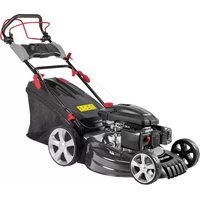
52G673 - Lawn mower Graphite - Free user manual and instructions
Find the device manual for free 52G673 Graphite in PDF.




| Product type | Petrol lawn mower |
| Brand | Graphite |
| Model | 52G673 |
| Cutting width | 525 mm |
| Cutting height range | 25 - 65 mm (8 positions) |
| Grass catcher capacity | 60 L |
| Engine capacity | 196 cm³ |
| Maximum power | 3,2 kW (4,35 ch) |
| Maximum speed without load | 2 850 min⁻¹ |
| Fuel type | Unleaded petrol 95 |
| Fuel tank capacity | 1,0 L |
| Oil tank capacity | 0,6 L |
| Engine oil type | 4-stroke oil for garden equipment |
| Spark plug | F7RTC |
| Self-propelled | Yes |
| Mulching function | Yes |
| Side discharge | Yes |
| Weight | 36,5 kg |
| Sound pressure level (LpA) | 83,4 dB(A) K=3 |
| Sound power level (LwA) | 97 dB(A) K=3 |
| Vibrations (ah) | 3,36 m/s² K=1,5 |
| Year of manufacture | 2020 |
Frequently Asked Questions - 52G673 Graphite
User questions about 52G673 Graphite
0 question about this device. Answer the ones you know or ask your own.
Ask a new question about this device
Download the instructions for your Lawn mower in PDF format for free! Find your manual 52G673 - Graphite and take your electronic device back in hand. On this page are published all the documents necessary for the use of your device. 52G673 by Graphite.
USER MANUAL 52G673 Graphite
DANE DOTYCZACE HAIASU I DRGAN
No. 0359 INTERTEK TESTING & CERTIFICATION LTD Intertek House, Cleeve Road Leatherhead, Surrey KT22 7SA United Kingdom
/Signed for and on behalf of:/
/A tanusitvanyt a kovetkez neveben es megbizasabol irtek ala/
/Podpisané v mene:/
/Podepsano jménem:/
//ToDnucHo om umemo Ha:/
/Semnat in numele:/
/GRUPA TOPEX Quality Agent/
WARNING! IMPORTANT! BEFORE USING THE DEVICE, READ THIS MANUAL CAREFULLY AND KEEP IT FOR FUTURE REFERENCE.
DETAILED SAFETY REGULATIONS
SAFETY INSTRUCTIONS FOR THE USE OF PETROL MOWERS
Safety of using petrol lawn mowers in practice
1. Teaching
a) Read the instructions carefully. Become familiar with the controls and the correct use of the device.
b) Never allow the device to be operated by children or persons unfamiliar with the device's operating instructions. National regulations may specify the exact age of the operator.
c) Never mow when other people, especially children or pets, are nearby.
d) Remember that the operator or user is responsible for accidents or threats to other people or the environment.
2. Preparation
a) Always wear sturdy shoes and long trousers when mowing. Do not operate the device with bare feet or in open sandals. Avoid damaged clothing that is too loose or has hanging straps or ribbons.
b) Check the area where the device is to be operated and remove any objects that might get into the device.
c) Before use, always check the blades, screws and knife assembly accessories for wear or damage. Replace worn or damaged parts in kits to keep them balanced. Replace damaged or illegible labels.
d) Refuel outdoors, with the engine cold. Never refuel or unscrew the fuel tank while the engine is running.
e) Be careful when refueling and make sure that there is no source of fire nearby.
3.Use
a) Never block device controls. This may cause you to lose control of the equipment and cause an accident.
b) Do not start up the device indoors. There is a risk of poisoning or suffocation from the accumulation of exhaust gases.
c) Mow only in daylight or under good artificial light.
d) Avoid mowing wet grass.
e) Always make sure your feet are firmly on the slope.
f) Come on, never run.
g) Mow across the slope, never up or down.
h) Be especially careful when changing direction on a slope.
i) Do not mow on excessively sloped slopes - up to a maximum of 15 degrees.
j) Be especially careful when backing up or pulling the machine towards you.
k) Switch off the drive of the cutting element (s) if the machine must be tilted when it is being moved over non-grass surfaces and when it is being transported to and from the mowing area.
I) Do not use the machine with damaged covers or housings and without a safety device such as attached covers and / or grass catchers.
m) Start the engine carefully as instructed, taking care that your feet are away from the cutting element (s).
n) Do not tilt the machine when starting the engine, except where it needs to be tilted to start. In this case, do not tilt more than necessary and only lift the part that is away from the operator.
o) Do not start the device while standing in front of the discharge opening.
p) Keep your hands and feet away from rotating parts. Make sure that the discharge opening is not blocked at all times.
q) Do not carry the power tool with the engine running.
r) Stop the device. Make sure all moving parts are not moving - every time you walk away from the device.
before cleaning or pushing through the outlet.
before checking, cleaning or repairing the device.
- after being hit by a foreign object. Check that the device is not damaged and, if necessary, repair it before restarting and operating the device if the device starts to vibrate excessively (check if it is clamped).
(check immediately)
- check for damage,
-- replace or repair any damaged part,
- check and tighten loose parts.
4. Maintenance and storage
a) Stop the engine and remove the spark plug leads before servicing or repairing
b) Keep all nuts, bolts, and screws in good condition to ensure that the unit operates safely.
c) Check the grass collector frequently for wear or damage.
d) With multi-knife implements, be careful as the rotation of one cutting element may cause the rotation of the other blades.
e) Be careful when adjusting the machine to avoid getting your fingers caught between the moving knives and fixed parts of the machine.
f) Be careful when handling the knives, even though the drive is disengaged as the knives may still rotate.
g) Replace worn or damaged parts for safety. Use only original spare parts and accessories.
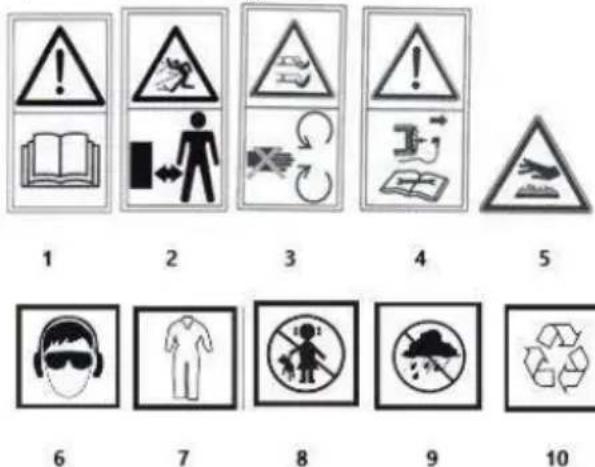
Explanation of the pictograms used
- WARNING: READ INSTRUCTIONS FOR USE!
- WARNING: KEEP OUT OF REACH OF ANOTHER PERSON!
- WARNING: KEEP HANDS AND FEET AWAY FROM THE BLADES!
- Stop the engine and remove the spark plug wires before starting any maintenance or repair work
- Keep a safe distance from the hot surface
- Use personal protective equipment (safety goggles, hearing protection)
- Use protective clothing
- Keep children away from the tool
- Protect the device against moisture
- Recycling
CONSTRUCTION AND APPLICATION
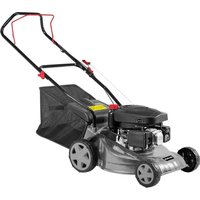
The petrol mower is a device powered by a four-stroke internal combustion engine, it has a wheel drive system, which makes it easy to drive on uneven terrain. The petrol lawn mower is used for mowing lawns in home gardens as well as larger areas planted with grass, e.g. sports fields and recreational areas. The grass clippings can be collected in the grass catcher, thrown from the side through the side discharge opening, or ground. Only use accessories that are
suitable for your device and follow the instructions in the operating manual. The petrol lawn mower is intended only for amateur use.
WARNING! Do not use the device contrary to its intended use.
DESCRIPTION OF GRAPHIC PAGES
The numbering below refers to the components of the device shown on the graphic pages of this manual.
- Wheel drive clutch lever
2.Top handle - Engine brake lever
- Shelf for drinks
- Handle fixing nut
- Rear discharge cover
- Bottom handle
- The fuel filler cap
- Air filter housing
- Manual fuel pump
- Side discharge cover
- The oil filler cap
- Driving wheel
- Cutting height adjustment lever
- Grass catcher
- Boot rope
- Rear discharge shutter
- Oil level indicator
- Oil drain plug
- Cutting knife
- Cutting knife mounting bolt
- Air filter cover
- Air filter
- Spark plug wire
- Spark plug
- Spark plug wrench
- Spark plug contacts
- There may be differences between the drawing and the product.
EQUIPMENT AND ACCESSORIES
- Grass catcher - 1 pc.
- Bottom handle -1 pc.
3.Top handle -1 pc. - Shelf brackets drinks + -1 set.
- Rear discharge shutter - 1 pc.
- Side discharge element -1 pc.
- Starting rope holder -1 pc.
- Clips -2 pcs.
- Bolts, nuts, screws -1 set.
PREPARATION TO WORK
WARNING! Do not operate the petrol mower without the grass catcher with the rear discharge cover raised.
WARNING! All maintenance, repairs, adjustments and work preparation activities must be performed with the engine off.
HANDLE ASSEMBLY
- Install the lower handle (7) to the mower housing and fasten with bolts and nuts (you can adjust the angle of the handle).
- Attach the upper handle (2) to the lower handle (7) with the supplied bolts and nuts (lever for 52G673).
- Install the starter rope handle on the right side of the upper handle (2) and pass the starter rope (16) through the handle.
- Attach the control cables to the handlebar with the clips provided (Fig. A).
ATTACHING GRASS BASKET
- Lift the rear discharge guard (6).
- Hang the grass catcher (15) from the rear discharge outlet using the two catches " a " on the top of the mower housing (fig. B).
- Lower the rear discharge guard (6).
The grass catcher is held in place by the spring force of the rear discharge guard. The grass catcher has a convenient carrying handle to empty it of grass clippings.
WARNING! Always make sure that the grass catcher is properly attached.
SIDE-DISCHARGE GUARD ADJUSTMENT
- Remove the grass catcher (15) and lower the rear discharge cover (6).
- Turn the mower "on its side".
Install the rear discharge shutter (17). - Pull the side discharge cover (11) away from the mower housing.
- Install the side discharge shroud on the housing hooks and release the side discharge shroud (11)
- Place the mower on wheels.
SETTING THE GRINDING FUNCTION
- Remove the grass catcher (15) and lower the rear discharge shield (6).
Install the rear discharge shutter (17). - Remove the side discharge element (if fitted) and release the side discharge shroud (11).
ADJUSTING THE CUTTING HEIGHT
The cutting height is adjusted with the cutting height lever (14) in 5 (or 8 for 52G673) positions from 25 - 65mm .
- Pull back the cutting height adjustment lever (14) (fig. D).
- Select the desired mowing height by moving the mowing adjustment lever.
- Place the cutting height adjustment lever in one of the selected recesses of the cutting height adjustment lever lock (14) on the mower housing (fig. D).
WARNING! The cutting height is set simultaneously on all four road wheels.
FILLING WITH ENGINE OIL
WARNING! Do not start the petrol mower without oil, such starting will damage the engine.
- Unscrew the oil filler cap (12).
- Pour in the prepared amount of oil.
- Check the oil level on the dipstick (12) (fig. E).
- Screw on the oil filler plug (12).
WARNING! Change the oil for the first time after 5 hours of operation and then every 25 hours of operation. Drain the oil into an oil-resistant container by unscrewing the oil drain plug (19) (fig. E).
FILLING WITH GASOLINE
WARNING! Unleaded petrol with an octane number of 95 should be used as a fuel for a petrol lawn mower.
- Unscrew the fuel filler cap (8).
- Pour gasoline into the tank and tighten the fuel filler cap (8).
WARNING! After refueling, make sure the fuel filler cap is tightened securely. Do not allow fuel to spill.
WARNING! Most of the problems with internal combustion engines are directly or indirectly related to the type of fuel used.
ASSEMBLY OF THE BEVERAGE RACK
- Attach the drinks shelf (4) to the brackets on the upper handle (2) and fasten it by tightening the plastic parts from below with screws.
WARNING! Under no circumstances should the mower be used without the guards installed. The use of incorrect or damaged guards can cause serious injury.
WARNING! Using an incorrect or worn cutting knife will increase vibration.
The petrol lawn mower is equipped with a system to prevent accidental start-up.
- Pump up the fuel with the hand fuel pump (10) by pressing the button a few times (fig. F).
- Pull the engine brake lever (3) (fig. G) against the upper handle (2).
Pull the starter rope (16) sharply.
STOPPING THE ENGINE
- Release the engine brake lever (3) from the upper handle (2).
WARNING! The blade continues to move for a few seconds after the engine stops.
WARNING! Never use the petrol mower in rain or in a wet environment. Never work with a damaged device. All parts should be properly installed and meet the requirements ensuring proper operation of the petrol lawn mower. Any damaged safety component or part should be repaired or replaced immediately.
- Start the engine.
- Pull the wheel drive clutch lever (1) against the upper handle (2).
Each time the pressure on the clutch lever of the wheel drive (1) is released, the transmission of drive to the wheels is stopped while the engine is still running. Mowing can also be performed without using the wheel drive function by pushing the mower.
WARNING! Before starting the wheel drive, make sure that there is no obstacle in the way of the mower.
TIPS FOR SAFE USE
- Move the mower in a smooth motion, holding the handle with both hands.
- When the mower is running, keep it away from hard objects and crops.
- The mower may only be used when the grass is dry.
- Frequent emptying of the grass catcher (after 2/3 full of it) will ensure a more efficient mowing process (the plastic flap on the top cover of the grass catcher indicates how full the catcher is)
The mower can be used with or without the grass catcher fitted. Note, however, that the rear discharge guard must be folded down when mowing without the grass catcher.
WARNING! The mower engine gets very hot both during operation and immediately after operation. Touching it may cause skin burns.
WARNING! The exhaust fumes contain carbon monoxide, the inhalation of which may cause poisoning. Therefore, never run the device indoors or in poorly ventilated areas. Never start the mower indoors or near flammable materials.
CARE AND MAINTENANCE
WARNING! Before commencing cleaning, checking or repairing the mower, make sure that the machine's engine is stopped and not hot. Disconnect wire from spark plug to prevent accidental engine starting.
CHANGING THE CUTTING KNIFE
- Remove the grass catcher (15).
- Lay the mower "aside".
- Firmly grasp the cutting knife (20) (wear protective gloves) (fig. H).
- Unscrew the cutting knife mounting bolt (21) with a spanner by turning it to the left (fig. H).
- Replace or sharpen the cutting knife (when replacing the cutting knife with a new one, it must be of the same size).
- Attach the cutting knife in the reverse order as above.
- The sharpening or replacement of the cutting knife is best entrusted to a qualified person using original parts.
AIR FILTER
A dirty air filter reduces the power of the combustion engine and increases fuel consumption. The air filter should be cleaned after every 5 hours of mower operation.
- Remove the air filter cover (22) (Fig. 1).
- Remove the air filter (23) from the air filter cover (Fig. 1).
- Knock dust off and blow air filter clean with low pressure compressed air.
- Install the air filter and the air filter cover.
WARNING! To avoid the risk of fire or the formation of hazardous vapors, the air filter must not be washed in gasoline or other flammable solvents.
SPARK PLUG
For reliable operation of the device, the condition of the spark plug should be checked periodically.
- Remove spark plug wire (24) from spark plug (25) (Fig. J).
- Install the spark plug wrench (26) and remove the spark plug.
Clean the spark plug contacts (25) (fig. K). - Check the gap between the spark plug contacts (27) (fig. L).
- If necessary, replace the spark plug with a new one.
STORAGE
- When storing the mower, empty the fuel system completely.
- Drain the fuel tank, start the engine, and allow it to stop running for lack of fuel.
- Use fresh fuel every season. Never use any cleaning agents in the fuel tank as this may damage the engine.
- Make sure that the ventilation holes of the motor housing are not obstructed.
- Only the maintenance procedures described in this manual may be carried out on the mower. Any other activities may only be performed by an authorized service center.
- It is not allowed to make any changes to the mower's structure.
-
When not in use, the mower should be stored clean, on a flat surface, in a dry place, out of the reach of children.
-
Regularly remove grass residues.
- Never clean the petrol lawn mower with water, aggressive fluids or solvents. Clean the petrol mower with a brush, compressed air or a soft cloth.
- Periodically check the condition of the spark plug of the combustion engine. Replace the worn spark plug with a new one recommended by the manufacturer.
- Use the cutting knives recommended by the manufacturer.
WARNING! Fuels with an admixture of alcohol (ethyl or methyl) can absorb moisture, which during storage leads to separation of fuel mixture components and formation of acids. Acidified gasoline can damage the engine.
All kinds of faults should be removed by the manufacturer's authorized service.
TECHNICAL SPECIFICATIONS
RATED DATA
| Petrol lawn mower with drive | |||
| Parameter | Value | ||
| Model | 52G671 | 52G672 | 52G673 |
| Engine capacity | 139 cm³ | 173 cm³ | 196 cm³ |
| Maximum engine power | 2.2 kW (3 HP) | 3.0 kW (4 HP) | 3.2 kW (4.35 HP) |
| Maximum speed without load | 2850 min-1 | 2800 min-1 | 2850 min-1 |
| Carburetor | 1P65FA | H127-3A; KDH107A; 1P70-1A; DY1P70FA; 1P70F; DY1P70FA | DY1P70FB |
| Type of fuel | 95 lead-free petrol | 95 lead-free petrol | 95 lead-free petrol |
| Engine oil | For 4-stroke garden equipment | For 4-stroke garden equipment | For 4-stroke garden equipment |
| Spark plug | F7RTC | F7RTC | F7RTC |
| Fuel tank capacity | 1.3 l | 1.5 l | 1.0 l |
| Oil tank capacity | 0.6 l | 0.6 l | 0.6 l |
| Grass box capacity | 55 l | 55 l | 60 l |
| Range and number of cutting height settings | 25-65 mm 5 items | 25-65 mm 5 items | 25-65 mm 8 items |
| Self-propelled drive | Yes | Yes | Yes |
| Mulching | Yes | Yes | Yes |
| Side discharge | Yes | Yes | Yes |
| Cutting width | 460 mm | 502 mm | 525 mm |
| Knife thickness | 2.5 mm | 3.0 mm | 3.0 mm |
| Mass | 31 kg | 36 kg | 36.5 kg |
| Year of production | 2020 | 2020 | 2020 |
| 52G671, 52G672, 52G673 means both the type and the designation of the machine | |||
NOISE AND VIBRATION DATA
| Model | 52G671 | 52G672 | 52G673 |
| Sound pressure level | \( {\mathrm{{Lp}}}_{\mathrm{A}} = {80.3}\mathrm{\;{dB}} \) (A) \( \mathrm{K} = 3\mathrm{\;{dB}} \) (A) | \( {\mathrm{{Lp}}}_{\mathrm{A}} = \) 83.4 dB (A) \( \mathrm{K} = 3 \) dB (A) | \( {\mathrm{{Lp}}}_{\mathrm{A}} = \) 83.4 dB (A) \( \mathrm{K} = 3 \) dB (A) |
| Measured sound power level | \( {\mathrm{{Lw}}}_{\mathrm{A}} = {94}\mathrm{\;{dB}} \) (A) \( \mathrm{K} = 3\mathrm{\;{dB}} \) (A) | \( {\mathrm{{Lw}}}_{\mathrm{A}} = {96} \) dB (A) \( \mathrm{K} = \) 3 dB (A) | \( {\mathrm{{Lw}}}_{\mathrm{A}} = {97} \) dB (A) \( \mathrm{K} = \) 3 dB (A) |
| The value of vibration accelerations | \( {\mathrm{a}}_{\mathrm{h}} = {4.52}\mathrm{\;m}/ \) s \( {}^{2}\mathrm{\;K} = {1.5}\mathrm{\;m}/ \) s \( {}^{2} \) | \( {\mathrm{a}}_{\mathrm{h}} = {3.37} \) m/s \( {}^{2}\mathrm{\;K} = \) \( {1.5}\mathrm{\;m}/{\mathrm{s}}^{2} \) | \( {\mathrm{a}}_{\mathrm{h}} = {3.36} \) m/s \( {}^{2}\mathrm{\;K} = \) \( {1.5}\mathrm{\;m}/{\mathrm{s}}^{2} \) |
Information on noise and vibration
The level of noise emitted by the device is described by: the level of the emitted sound pressure Lp A and the sound power level Lw A (where K is the measurement uncertainty). The vibrations emitted by the device are described by the value of the vibration acceleration a_h (where K is the measurement uncertainty).
The following information: emitted sound pressure level LpA, sound power level Lw A and the value of vibration acceleration an were measured in accordance with Directive 2000/14 / EC on noise emission into the environment. The given vibration level a can be used to compare devices and for a preliminary assessment of vibration exposure.
The stated vibration level is representative only for the basic use of the device. If the machine is used for different applications or with different work tools, the vibration level may change. The higher vibration level will be influenced by insufficient or too rare maintenance of the device. The reasons given above may result in an increased exposure to vibration during the entire period of operation.
To accurately estimate exposure to vibration, consider periods when the equipment is turned off or when it is turned on but not in use. After all factors have been carefully assessed, the overall vibration exposure may be significantly lower.
In order to protect the user against the effects of vibrations, additional safety measures should be implemented, such as: periodic maintenance of the device and working tools, protection of the appropriate temperature of hands and proper organization of work.
ENVIRONMENTAL PROTECTION
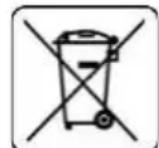
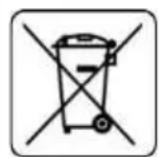
Electrical equipment must not be disposed off with household waste and, instead, should be utilized at appropriate facilities. Information on utilization can be provided by the product vendor or the local authorities. Waste electrical and electronic equipment contains substances that are not neutral to the natural environment. Equipment that is not recycled constitutes a potential hazard to the environment and to human health.
- Right to introduce changes is reserved.
"Grupa Topex Spóka z ograniczona odpwiedzialnosci" Spóka komandytowa with seat in Warsaw at ul. Pograniczna 2/4 (hereinafter Grupa Topex) informs, that all copyrights to this instruction (hereinafter Instruction), including, but not limited to, text, photographs, schemes, drawings and layout of the instruction, belong to Grupa Topex exclusively and are protected by laws accordingly to Copyright and Related Rights Act of 4 February 2004 (ustawa o sprawie autorskim i prawach pokrewnych, Dz. U. 2006 No 90 item 631 with later amendments). Copying, processing, publishing, modifications for commercial purposes of the entire Instruction or its parts without written permission of Grupa Topex are strictly forbidden and may cause civil and legal liability.
WARNING! WICHTIG! BEVOR SIE DAS GERAT VERWENDEN, LESEN SIE DIESES HANDBUCH SORGFALTIG DURCH UND BEWAHREN SIE ES FÜR ZUKUNFTIGE REFERENZEN AUF.
q) He Hecyt B cnIOBoH nHCTpyMeH C DnBraTeJIeM pa6oTaHOUeM.
r)OctaHOBHTyeCTPOIcTO. Y6eINTECb, YBepeHb BCE DnKxUneCRAACTN ABJHOCTC Hd BnKETCA-KaxDbPi a3 Bbl XoAnTb daleko OT yCTPOIcTBa, -Pepe NcCTKO nn TOLKa qpe3 K po3eTKe, -Pepe npOBepKO, ONUCTKNnn peMOHTa Ha yCTPOIcTBO, -noCte TOROpopaeHo nHOCTpaHHbIO obbekt. Y6eINTECB, 10yCTPOIcTBo 6ydt He NOBpeXeHO n, eCNn Heo6xoIMo, OTPeMOHTnpoBaT bero, ppeXeJe cem nepe3arpy3Kn u 3KcnlnyatauHN Ha yCTPOIcTBe ecn yCTPOIcTBo HaunHaet C Bn6pnpoBaTb Upe3MepHO (npOBepTe HEmeDJIeHNO) -npOBepTb Ha npEMeT NobpeXeHn, -3aMeHNTb Nn OTpeMOHTnpoBaTb IIO6yIO NobpeXeHHyo Detalb, -npOBepTe n 3aTaNHTe HezakpenJIeHHbIe DetaII.
4.06cnykubHne n xpaHeHne
a)OctaHOBnTB DnIraTeInb n CHrTb C nCKpO 3axnHaHn npoBoDa nepeTEM o6ClyKnBaHne nn peMOHT
b) Depxte Bce raKn, 60JIbI b BNHTbB XOPOwEM COCToHN, 4TO6bI o6ecneHTb, yTO YCTpOINCTBO pa6otaET 630NaCHO.
DAHHbIE O Wyme N BnBPALUN
| Mодelines | 52G671 | 52G672 | 52G673 |
| Урочевы 3Вукового давлиения | Lp_A = 80,3 ήБ (A) K = 3 ήБ (A) | Lp_A = 83,4 ήБ (A) K = 3 ήБ (A) | Lp_A = 83,4 ήБ (A) K = 3 ήБ (A) |
| Измерений урочевы 3Вукового мошности | Lw_A = 94 ήБ (A) K = 3 ήБ (A) | Lw_A = 96 ήБ (A) K = 3 ήБ (A) | Lw_A = 97 ήБ (A) K = 3 ήБ (A) |
| Знauthnéеиз Вибрацонnéх ускорень | a_h= 4,52 M / c^2 K = 1,5 M / c^2 | a_h= 3,37 M / c^2 K = 1,5 M / c^2 | a_h = 3,36 M / c^2 K = 1,5 M / c^2 |
HOpMaunOwymeBn6paun
YpOBeHbOT Wyma, n3JyuaEMoro c NOMOuBHO yCTPOINCTBa 6yDet OINCAHO C NOMOuBHO: HA ypOBHe OT n3JyuaEMoro 3BYKOBORo DaBJIeHnla Lp A N 3ByKOBoM MoUHcTn ypOBHn LW A (rDe K npEcdTabIeR n3MepeHne HeONpeDeneHHocTH). 3TN KOJIe6AHn, nCNYckaMbte C NOMOuBHO yCTPOINCTBa 6yDyT ONICAHbI NO 3HaueHIO OT Bn6paun yCKOpEHn q (rDe K npEcdTabIaeR n3MepeHne HeONpeDeneHHocTB).
CneIyUOaI INHOpMaIIN3Iyuaembl 3ByKOoe DaBJIeHne YPOBeH IIN A3BYKOBA MOUHOCTb YPOBEH LW N 3HaueHne OT Bn6paun yCKopeHNA 6blIMN3MepeHb B COOTBETCBN C dInpeKTHBOI 2000/14 / EC OT WymA 3MnCCnB OKpyKaHOuOcpeHy. C yUeTOM Bn6paun yPOBHA MOKet 6blb NcNoJb3OBaHa, QTobbl cpaBHNT bYcTpoiCTBa n IIN PpeBaPnteHbOH OeHKn OT Bn6paun BO3dEChTBnA.
Yka3aHa Bn6paqun ypoBHe JBnIeTc npECTaBnteEm TolbKO dno OCHOBHO NcNoJIb3OBAHn 3TOrO yCtpoNCTBa. EcnMaUNHa 6yDet NCNoJIb3OBAbTaCn IA pa3LIuHbIX nPIMHeHn nn Cpa3LIuHbIMn pa6oUmN INcTpymeHTAm, TO Bn6paqun ypoBHe MoKeT N3MeHnTBcR. Bblwe Bn6paqun ypoBn 6yDet 6bITb BnInHne Ha HeIOCTaTOUHOM NN CInWKOM peKoe 0cbLyKNBaHnn OT
yctpoicTBa.3TN npuHbI, npBBeEHbIe BbiSe, MoryT npBecn B KaueCTBe NOBbHHeHNo NOBBepKeHHocN K Bn6paun BO BpeMa H BeCb nepnoD 3KcPnyataun.
YTo6bI ToH OeHHTb Bo3deJCTBne Ha Bn6paunHO, paccMOTpT nepnoDbI, KOrda 06OpyDobAHne 6ydet npeBpaueHO OT NnKorDa OH 6yDet NOBepHyInCb BKIOUeHbI, HO He B NcNoJIb3OBaHm. NocTe TOR, KAK BCE qakTopbl, KOtOpblie 6bln TuaTeJIbHO OueHeHbI, To 06uJa Bn6paunr BO3deJCTBne MoKET 6blb 3NaHTeJIbHO HIXKe.
IIToro,TO6b3aunTnBHaNolb3OBateJrOTex3ofoKTOBOT Bn6paun,DOJOLHInTeBhBle 3aunTHbIe MePbI DOJXHbI 6bITb peaIN3OBAHbI, HApnPmep,KaK: nepnoDnueckoe Texnueckoe 0cbnykBaHne n3 yctpoCTB n pa6oUHX nHcTpymeHTOB, 3aunTa OT COOTBeTCTByUoSei TempePaTypb IB pykax n npabUNbHOJ opraHn3aun no pa6ote.
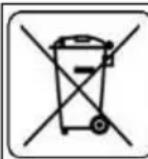
3Jektpnpn6bpI He cJeTy Bb6paBtB Bmcte CDOMaHMMN OTXoAMN. NcJeTy nepeDaT B CneuaJIbHbI pyHK T yTNIn3aCm. HfOpMaunHO Ha TeMy yTNIn3aMm MoKET npdeocTabH bpOpaBeu H3dEIN nn MeCThIbe Blactn. 3JektpOnHoe n 3JekTpUceKoe o6opyDoBaHne, Otpa6ToBaUee CBoi CpOK EKnpyatauIN, COepxnt OnacHbe IIA OKpyKaHOeI CpeBb BeueCTBA. HeyTuIN3uPobAHHoe 6opdyOBaHne npedCTabJIet NOteHuaJIbHyO yrpo3y IIA OKpyKaHOeI CpeBb I 3DopOBbI loJeI.
- Octablaem 3a coobn npabo BVbOuTb n3MeHeHn.
KoMnAnHra Grupa Topex Spokka z ogranizona odpwiedzialnosci" Spokka komandytowa, pacnoLoxeHNbA Bapuabe no aepcy: ul. Pograniczna 2/4 (danee Grupa Topex) coo6aet, yTo BCE aBtOPckne npaba Ha cOpexhane HactoIeH INCTpykun (daane "NHTpykun), B T.U.TekCT, fOToRpaFm, cxembl, pucyHKn I cepTeXn, a TAKKE KOMNOHOBA, pnHauLnxkAT NCKHOnUHe bKO mCmAnHr Grupa Topex n 3auiuHbI 3akoHOM ot 4 febpaln 1994 roa ob abTOpckom npabe n CMeKbHbIX npabax (BeCTHMZakHOaDteJIbHbIX AKTOB PNI No 90 nO3. 631 cNoceJd, IM). KOnPobAOHBE, BocPon3BedeHne, ny6bnKaUN, n3MeHHe nEmeHOB INCTpykUn 6e3 nmbMeHHORO corlacn KOMnAHnGrupa Topex cTporo 3anpeueho I MOKeT NOBLech 3a c6oON rpaKDaHcKyIO u yroLoBHyo OTBETCBEHOCb.IHfOpMaun O date h3ROTOBHeY kca3Ha B cepMHOM Homepe, KOtpbI HAXODITcRa HA 3deIN.
HnfoMaua o dame u3zomO8Heu yka3Ha 6 cepuiHom Homepe, KomopbH hXodumca Ha u3denu
IopraokpacunuΦpOBKnHΦOpMaun
2XXXXYYG****
Tae
2XXX- roD n3rotOBHeHHa
YY-Mecu n3ROTOBHeHn
G-KoT ToproBmApKn (nepBa 6yKba)
**** -npaikobbHomep n3delen
YBARA! Pkya BnCota 6yde BcTahOBJIeHa OndHouacHO Ha BCIX qOtnpbox dopoxhix Koiic.
HANOBHEHHMOTOPHOIO MACJIO
YBATA! He 3aObTe 6eH3nKocapky 6e3 Macna, HanpknlaBiDnpabHO 6yde nowKOxyBaTu Ha ABnHy.
- BiKpyTnTn B MaCIO 3aIINBHy npo6Ky (12).
- HanneB n iDROTOBHeHomy KInbKoCTi BiMaIa.
- PnepeBipka Ha Nafty pibHa uyni (12) (pnc. E).
- ΓΒνΗΝ ḌΑ Μαςλο 3αλινβών ἡροδκη (12).
YBATA! 3MiHa B MaCNI IJI npworo yacy nicIe 5 roHN B Eeknnyatauii i notim uepe3 KoxHI 25 roHN no ekcnnyatauii. 3InB Ha HApTy B JKOCTI MacNoctoKocTbIO KOHTeHepa WJXOM BiDrBnHcyBaHHB B MaCNI 3JINBHn npo6Kn (19) (pnc. E).
HANOBHEHHBAEH3INHOM
YBAGA! HeetnbobAHm 6eH3nH 3 OKtaHOBM uCLOM 95 MaE 6ytn BnKOpNCtAHn B JKOcTI nAINBa dIg 6eH3nHy ra3OHy KocapKn.
- OTBnHTTE B naINBHH HAnOBHOBaY KOBnaQK (8).
- HAIINTE 6eH3nB 6ak i 3aTyrHyTN B NaINBHOmy HAnOBHOBaui KOBNaUOK (8).
YBAR! NcIa 3anpaBkn, 3po6ntn BneBHei naIbA HanOBHOBaKpnka 6yde 3ataryHytn HaIIHO. Hn He donyckatn naiNBO dIra po3JIBy.
YBARGA! BiIbIwIcIb npo6JIem 3 BHyTpIiHIMN 3rOpAHHn ABuRyHIB
Jki 6e3NocepEepHbO qN ONocepEkoBOHO NOB'3aHI 3 TINOM BID
NAJINBA, BIKOPNCTOByBaHO.
MOHTAX CTOIKH HANITKIB
-ДoklaTи Ha HanoI NOIKN (4)do IyKn Ha BepXHi pyKOaTK (2) 13aKpInNTi NOrO 3 DOnOMoROIO 3aTAYBaHHra TnaCTMaCOBx DeTaJIe 3 HIXKHe 3DOnOMoROIO rBHTiB.
PO5OTA/HANAHTYBAHHRA
3ANYCK DBNIGYHA
YBARGA! Hi 3a JIKNX O6CTaBH N CIId KOCAPKa 6yTN BUNKOpNCTaHa 6e3 Tnx OXOPOHcIB, BCTAHOBJIeHNx. BUNKOpNCTaHH B HENpABINbHnX a60 NOIWKoDKeHnX OXOPOHcIB MOKe npN3BeCTn DO cepNo3HnX TpaBM.
YBARGA! BnKOpNCtAHN B HEnpAbNbHomy a6o 3HOweHn pIXyUn HOxI 6yde 36iNbSyBaTn Bi6paio.
Bci BnD 3 HeoNikIB NOBHHI 6yTN BuaJIeHI 3 DOonomoro UboRBOBPO6HnKa CaHKUIOHOBaHOrO O6ClyrOByBaHH.
TEXHIYHXAPAKTEPVICTUKN
OLIHIOBAHIAHAI
DAHI IPO WUMI BIEPALIO
| Mодель | 52G671 | 52G672 | 52G673 |
| Рівени Звукового{TИСКУ} | Lp A=80,3 ДБ(A)K= 3ДБ(A) | Lp A=83,4 ДБ(A)K= 3ДБ(A) | Lp A=83,4 ДБ(A)K= 3ДБ(A) |
| Виимяпий piвени ПOTУЖностi Звуку | LW_A=94 ДБ(A)K= 3ДБ(A) | LW_A=96 ДБ(A)K= 3ДБ(A) | LW_A=97 ДБ(A)K= 3ДБ(A) |
| Знayaшия 3 Вібраційни Прinc所需要 | a h = 4,52 М / c 2 K= 1,5 M / c 2 | a h = 3,37 М / c 2 K= 1,5 M / c 2 | a h = 3,36 М / c 2 K= 1,5 M / c 2 |
Infopmaia npo wym Ta Bi6paio
PibbB iD ymy, BnnpomihBOHaHO 3 donomoro npctpo 6ye OncaHO 3 donomoro: Ha pBI Hi BnnpomHOBaHO 3ByKOBO Tncky LpA i 3ByKOBn noTyXHoCTi pIBH Lw A (de K npedctabnae Bmip HeBn3HauehoCTi). Li KOINBaHH, IIO BnyncKaHO 3 donomoro npictpo 6dyTB oncaHI NO 3haueHHo BiD Bi6paii npickopeHHu (De K npedctabnaE Bmip HeBn3HaueHicTb).
HaCtynha iHOpMaiaB: BnnpomHoeTbcra 3BykoBe Tck PibeHb JI
A, 3ByKoBa NotyXhictb PibeHb Lw i 3HaueHHa BiD Bi6paui
npucKeHHa 6yln Bmiparhi B iDnOBiIdno Do nipeKTHBn 2000/14
/EC BiD wmy emici B HABKOJIuHc cepedOBuJe. 3ypaxyBaHHAM
BbpauiipBnMoKe 6ytn BnKOpncTaHa,0o6 npiBHTnpictpoio I dIa nonepedhbooi OciHKn BiB iBpaui BnNBy.
Bka3aHa Bi6paiaipieBHeNcpeDCTaBHnKOM TIIbKn dIa OCHOBHOro BVKOpNCtAHN cboRo npCtpoJ. KaO MaunHa 6yde BVKOpNCTOByBaTncdI p3Hnx 3aCToCyBaHb a6o 3 pi3HMn
po6oumni IHCTpymeHTamn,TO Bi6paiaipiehbo Moxe 3miHNTncra. Bnue Bi6paiaipibn6yde 6ytN BnINB Ha HeIOCTaTHbOMy a60 3aHaTTO pIKcIe OBCnyROByBaHHi Bi npiCTpOo. Li npuHNH, HabeHeHi Bnue, MoxytbpnpvBeCTn B kOci NiIBuEHOi CXNBHOcti do Bi6paui niuc Ha BeC nepioD ekcnlyataii.
Uo6 TouHO ouHHTn BnINb Ha Bi6paIIO, po3rHaHyb nepioAn, KOIN 06NaadHnn 6yde nepetBopeHo Bi a6o KOIN BIn 6yde NOBepHyncb BKNoeHi, ae He B BnKOpNCtahHi. Picra TorO, kBCi fakTopn, kki 6yIn petelbHO ouineHi, to 3araIbHa Bi6paIIN BnINB MoKe 6ytn 3HaUHO HxKue.
IITTO,IO6 3axnCTHTN Ha KOpncTyBaaya BiD Tnx efeKtIB BiD BIBpaui,doaTkoBI 3axnChi 3axoNi NOBHHI 6yTN peaHIOBAHI, HApnKnlaA, k: nepioDuHne TexHnue OcbnyroBuHaHH 3 npicTpOIB i pObouHx IHcTpymEnTIB, 3axnCT BiD BiNobIDHOI Tempeatypn B pykax i npabInbHOi opraHizaui no po6oti.
OXOPOHA CEPEIOBUNLA
3yjnt npdyktn, 10 npauoHb Ha eektpnHomy XNBLeHHI, He cIa BnKdaTn pa3om 3 nobyobmB iXoamn, a yTni3OByBatn B cneuaJIbHnx 3akJaIax. BiOomcti npo yTni3aio HOxHa OtpMaTn B npOabu npdykuii n B oprahax MicceBoi adMinichpaui. BiPpauboBaHI eneKtpnuHt Ta eektpoHHi npilaMn MiCTaB peOBOHN, 10 He cnpraTINBMn dI npnpoHoro cepeoBUNa. O6laHaHnH, 10 He nepeaETbCdo nepepo6Kn, MoKe CTaHOBnT He63neky dIa CEpeoBUNa Ta 3dOpOB'JIOHN.
Bnpo6HnK 3aJIiuae 3a co6oHO npabo BHOCHTN 3miHn.

AZ EREDETI KÉZIKÖNYV FORDITÁSA
GRIESANAS NAZA MAINA
TEXHNUCKN CIELINIKALUN
OUEHEH DAHHN
DAHHN3A WYM N BnBPAuY
| Mодeн | 52G671 | 52G672 | 52G673 |
| Звек налariaно НИВО | Lp A = 80,3 dB (A) K = 3 dB (A) | Lp A = 83,4 dB (A) K = 3 dB (A) | Lp A = 83,4 dB (A) K = 3 dB (A) |
| Измерени На звекова Мошноct | LW A= 94 dB (A) K = 3 dB (A) | LW A= 96 dB (A) K = 3 dB (A) | LW A= 97 dB (A) K = 3 dB (A) |
| На стойскTTа Вибрацдипte ускоренья | a_h = 4,52 m / s^2 K = 1,5 m / s^2 | a_h = 3,37 m / s^2 K = 1,5 m / s^2 | a_h = 3,36 m / s^2 K = 1,5 m / s^2 |


- DETAILED SAFETY REGULATIONS
- SAFETY INSTRUCTIONS FOR THE USE OF PETROL MOWERS
- Teaching
- Preparation
- 3.Use
- Maintenance and storage
- CONSTRUCTION AND APPLICATION
- WARNING! Do not use the device contrary to its intended use.
- DESCRIPTION OF GRAPHIC PAGES
- EQUIPMENT AND ACCESSORIES
- PREPARATION TO WORK
- HANDLE ASSEMBLY
- ATTACHING GRASS BASKET
- WARNING! Always make sure that the grass catcher is properly attached.
- SIDE-DISCHARGE GUARD ADJUSTMENT
- SETTING THE GRINDING FUNCTION
- ADJUSTING THE CUTTING HEIGHT
- WARNING! The cutting height is set simultaneously on all four road wheels.
- FILLING WITH ENGINE OIL
- FILLING WITH GASOLINE
- ASSEMBLY OF THE BEVERAGE RACK
- WARNING! Using an incorrect or worn cutting knife will increase vibration.
- STOPPING THE ENGINE
- TIPS FOR SAFE USE
- CARE AND MAINTENANCE
- CHANGING THE CUTTING KNIFE
- AIR FILTER
- SPARK PLUG
- STORAGE
- WARNING! Fuels with an admixture of alcohol (ethyl or methyl) can absorb moisture, which during storage leads to separation of fuel mixture components and formation of acids. Acidified gasoline can damage the engine.
- TECHNICAL SPECIFICATIONS
- Information on noise and vibration
- ENVIRONMENTAL PROTECTION
- 4.06cnykubHne n xpaHeHne
- HOpMaunOwymeBn6paun
- HnfoMaua o dame u3zomO8Heu yka3Ha 6 cepuiHom Homepe, KomopbH hXodumca Ha u3denu
- HANOBHEHHMOTOPHOIO MACJIO
- YBATA! He 3aObTe 6eH3nKocapky 6e3 Macna, HanpknlaBiDnpabHO 6yde nowKOxyBaTu Ha ABnHy.
- HANOBHEHHBAEH3INHOM
- YBAR! NcIa 3anpaBkn, 3po6ntn BneBHei naIbA HanOBHOBaKpnka 6yde 3ataryHytn HaIIHO. Hn He donyckatn naiNBO dIra po3JIBy.
- MOHTAX CTOIKH HANITKIB
- PO5OTA/HANAHTYBAHHRA
- 3ANYCK DBNIGYHA
- YBARGA! BnKOpNCtAHN B HEnpAbNbHomy a6o 3HOweHn pIXyUn HOxI 6yde 36iNbSyBaTn Bi6paio.
- Infopmaia npo wym Ta Bi6paio
- OXOPOHA CEPEIOBUNLA
- AZ EREDETI KÉZIKÖNYV FORDITÁSA
- GRIESANAS NAZA MAINA
Brand : Graphite
Model : 52G673
Category : Lawn mower