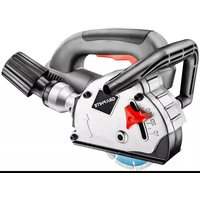
59G370 - Saw Graphite - Free user manual and instructions
Find the device manual for free 59G370 Graphite in PDF.



| Product Type | Groove cutter (wall chaser) for masonry |
| Brand | Graphite |
| Model | 59G370 |
| Supply Voltage | 230 V AC, 50 Hz |
| Power Consumption | 1320 W |
| No-Load Speed | 9000 min⁻¹ |
| Disc Diameter | 125 mm |
| Disc Arbor | 22.2 mm |
| Spindle Thread | M14 |
| Groove Width | 8 – 26 mm (adjustable with spacers) |
| Adjustable Cutting Depth | 8 – 30 mm |
| Weight | 4.2 kg |
| Protection Class | II (double insulation) |
| Sound Pressure Level (LpA) | 97.16 dB(A) (K = 3 dB) |
| Sound Power Level (LWA) | 108.16 dB(A) (K = 3 dB) |
| Vibration (ah) | 7.451 m/s² (K = 1.5 m/s²) |
| Compatible Materials | Concrete, stone, brick (dry use) |
| Disc Capacity | 1 or 2 dry diamond discs |
| Dust Extraction Connection | Yes (adapter for external vacuum) |
| Safety Functions | Anti-restart switch, overload protection, automatic shut-off |
| Maintenance | Clean ventilation slots, replace brushes (length < 5 mm) |
| Included Accessories | Special wrench, hex key, adapter, spacers (5x 3.8 mm + adapted), chisel, carrying case |
Frequently Asked Questions - 59G370 Graphite
User questions about 59G370 Graphite
0 question about this device. Answer the ones you know or ask your own.
Ask a new question about this device
Download the instructions for your Saw in PDF format for free! Find your manual 59G370 - Graphite and take your electronic device back in hand. On this page are published all the documents necessary for the use of your device. 59G370 by Graphite.
USER MANUAL 59G370 Graphite

TRANSLATION OF THE ORIGINAL INSTRUCTIONS
WALL CHASER
59G370
CAUTION: BEFORE USING THE POWER TOOL READ THIS MANUAL CAREFULLY AND KEEP IT FOR FUTURE REFERENCE.
DETAILED SAFETY REGULATIONS
- Use the power tool only when included guard is installed. Guard must be securely fitted to power tool and adjusted to guarantee the best possible safety level, which means that cutting blade part facing operator must be shielded as much as possible. The guard must protect the operator against splinters and accidental contact with cutting blade.
- Use only diamond cutting blades. Possibility of equipment installation in the power tool alone does not guarantee safe use.
- Maximum permissible rotary speed of a working tool must not be lower than maximum rotary speed specified for the power tool. Working tool that exceeds permissible rotary speed may crack and part of it may splinter.
- Use diamond cutting blades only for tasks they are designed for. For example, never grind with side surface of a cutting disc. Cutting discs are designed to remove material with disc edge. Applying side force may break disc of this type.
- Always use undamaged fixing flanges with size matching to cutting disc or blade. Proper flanges support cutting blade and reduce risk of breaking.
- Outer diameter and thickness of working tool must match to power tool dimensions. Working tools with incorrect dimensions may be insufficiently shielded or controlled.
- Discs, blades, pads, flanges and other equipment must exactly match to spindle of the power tool. Working tools that do not match precisely to power tool spindle rotate unevenly, produce hard vibrations and may cause loss of control over the power tool.
- Do not use damaged working tools under any circumstances. Check working tools for cracks and dents before each use. In case of dropping power tool or working tool, make sure it is not damaged or use other, undamaged tool.
Once the working tool has been checked and installed, start the power tool and allow it to work for one minute at maximum speed. Make sure that user and bystanders stay away from range of the rotating working tool. Damaged tools usually break during this test. - Wear personal protection equipment. Depending on the task, use protective mask that shields whole face, eye protection or safety glasses. When necessary use anti-dust mask, hearing protectors, work gloves or special apron that protects against small particles of grinding and grinded material. Protect eyes against particles produced at work and floating in the air. Anti-dust mask and respiratory protection must filter dust produced at work. Prolonged exposure to noise may lead to hearing loss.
- Make sure to keep bystanders at safe distance from the power tool range. Each person close to operating power tool must use personal protection equipment. Splinters of processed piece or cracked working tool can chip off and cause damage also beyond direct range.
- Whenever power tool can hit hidden electric wires or its own power cord during operation, hold it only by insulated handle. When in contact with live wires all metal parts of the power tool are live too, this may cause electric shock of the operator.
- Keep power cord away from rotating working tools. Loss of control over the power tool can lead to cutting or catching the power cord, also hand or whole arm can get into rotating work tool.
- Never put away the power tool before working tool comes to complete stop. Rotating tool can contact the surface it is put on, which can cause loss of control over the power tool.
- Do not carry power tool when it is rotating. Accidental contact of rotating working tool with clothes may cause its catching and plunging of working tool into operator's body.
-
Clean ventilation holes of the power tool on regular basis. Motor blower sucks dust into casing and large depositions of metal dust may cause electric hazards.
-
Do not use power tool in proximity of flammable materials. Sparks can cause ignition.
- Do not use tools that require liquid coolant. Use of water or other liquid coolants may cause electric shock.
Kick back and relevant safety tips
Kick back is a sudden power tool reaction to jamming or catching of rotating work tool, such as grinding wheel, plate, wire brush etc. Catching or locking causes sudden stop of rotating work tool. Uncontrolled power tool is then pulled in direction opposite to work tool rotations.
- Hold the power tool firmly, position your hands and body to limit kick back effect. Always use additional handle when it is included in standard equipment, to have the greatest possible control of kick back forces and counter torque during start up. Tool operator can control sudden pulling and kick back effect by observing appropriate safety precautions.
- Always keep your hands away from rotating working tools. As a result of kick back, working tool may cause hand injury.
- Stay away from zone of power tool potential movement at kick back. At kick back the power tool moves in direction opposite to movement of grinding disc at the place of jamming.
- Be very careful when processing corners, sharp edges etc. Prevent rebound or jamming of work tools. Rotating work tool is more susceptible to jamming when processing corners, sharp edges or after rebound. It can cause loss of control or kick back.
- Do not use blades for wood or toothed blades. Work tools of this type often cause kick back or loss of control over power tool.
- Avoid jamming of cutting wheel and excessive pressure. Do not make too deep cuts. Overloading cutting blade increases its load and risk of jamming or locking, and in consequence kick back or blade breaking.
- In the event of jamming of cutting blade or having a break in work, switch off the power tool and wait until wheel comes to complete stop. Never attempt to remove rotating wheel from cut material, as this may cause kick back. Find and remove cause of jamming.
- Do not switch on the power tool back, when it is still in processed material. Before cutting again, cutting blade should reach its full rotational speed. Otherwise the blade may catch material, bounce out of work piece or cause kick back.
- Support sheets and large objects before processing to minimise risk of kick back caused by jammed blade. Large objects can bend under own weight. Support work piece on both sides, at cutting line and near edge.
- Be careful when cutting holes in walls and operating in other areas with reduced visibility. Blade plunging into material may cause kick back after hitting gas lines, water pipes, electric wires and other objects.
Additional safety instructions
- Mains voltage should match the voltage specified on the rating plate of the power tool.
- Do not start working before the power tool reaches its full rotary speed.
- Use proper detection tools for hidden power lines, gas and water pipes, or ask housing cooperative for schemes and help. Contact with live wires may cause fire, damage of gas pipe may cause explosion. Plunging into a water pipe causes material losses, it may also cause electric shock.
- Use dust extraction when processing stone. Vacuum cleaner must be designed to remove stone dust. Use of such devices reduces risks resulting from dust.
- Hold the power tool firmly in both hands when working, maintain safe working position. The power tool is safer when used in both hands.
- Check the power cord each time before connecting the power tool to mains socket. Do not use the power tool with damaged power cord. Do not touch damaged power cord. If the power cord gets damaged during operation, unplug it from the mains socket. Damaged power cord increases risk of electric shock, have it replaced in authorised service point.
CAUTION! This device is designed to operate indoors.
The design is assumed to be safe, protection measures and additional safety systems are used, nevertheless there is always a small risk of operational injuries.
Explanation of used symbols


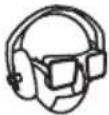
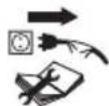


123456
- Read instruction manual, observe warnings and safety conditions therein
- Device with class II insulation.
- Use personal protection measures (protective goggles, earmuff protectors, anti-dust mask)
- Disconnect the power cord before starting maintenance or servicing.
- Keep the tool away from children.
- Protect against rain.
CONSTRUCTION AND USE
Wall chaser is a hand-held power tool driven by single-phase commutator motor with insulation class II. The power tool is designed for cutting and making chases in walls, floors etc. in materials like concrete, stone, brick etc. without use of water.
The wall chaser is equipped with system that allows connecting external dust extraction, e.g. industrial vacuum cleaner, which should be operating during work.
Range of use covers repair and building works, and any work from the range of individual, amateur activities (tinkering).

Use the power tool according to the manufacturer's instructions only.
DESCRIPTION OF DRAWING PAGES
Below enumeration refers to the device elements depicted on the drawing pages of this manual.
- Front handle
- Handle
- Adaptor
- Dust extraction outlet
- Cutting blades shield
- Cutting blade
- Base locking knob
- Base
- Switch
- Switch lock lever
- Spindle lock button
- Guiding roller
- Nut
- Screws
- Outer flange
* Differences may appear between the product and drawing.
MEANING OF SYMBOLS

CAUTION

WARNING

ASSEMBLY/SETTINGS

INFORMATION
EQUIPMENT AND ACCESSORIES
- Special key - 1 pce
- Adaptor - 1 pce
- Hexagonal key - 1 pce
- Spacing washer, 3.8 mm thick - 5 pcs
- Spacing washer with neck - 1 pce
- Chisel - 1 pce
- Transport case - 1 pce
- Slide the adaptor (3) into the dust extraction outlet (4) (be careful to place protrusions in notches) and turn clockwise to secure (fig. A).
- Adaptor removal is similar to installation, only the sequence of actions is reversed.

DUST EXTRACTION
During operation the wall chaser should be connected to external dust extraction device.

- Loosen nut (13) of the adaptor (3).
- Put end of hose of dust extraction system into the adaptor (3) and secure by tightening nut (13) (fig. B) (make sure the connection is tight).

When starting to work, first switch on the dust extraction system, e.g. industrial vacuum cleaner, next switch on the wall chaser. When the work is finished proceed inversely – switch off the wall chaser first, next the vacuum cleaner. This procedure allows to avoid unnecessary dustiness in the workplace. Some types of industrial vacuum cleaners are equipped with power supply socket for power tools and switching the vacuum cleaner on and off is automated, controlled with switching the power tool.
SETTING CHASE WIDTH / CUTTING BLADES REPLACEMENT

Use only diamond cutting blades designed for dry operation, consider maximum allowable rotational speed specified on cutting blade.

Chase width depends on number of spacing washers placed between cutting blades, and on thickness of cutting blades. Chase width range is 8 to 26 mm.
You can calculate chase width with the following formula:
Chase width = number of spacing washers x thickness + thickness of cutting blades.

Regardless of number of spacing washers between cutting blades, the spacing washer with neck must be used and placed under the second cutting blade to keep its concentricity.

The wall chaser can be used with one or two cutting blades.
- Unscrew the base locking knob (7) and turn the base downwards (8).
- Undo screws (14) that fix the cutting blades shield (5) (fig. C).
- Pull away the front handle (1) and remove the cutting blades cover (5) (fig. D).
- Press and hold the spindle lock button (11), use special key (included) to remove the outer flange (15) (fig. E).
- Important! Turn the nut counter-clockwise, according to direction of rotation of cutting blades.
- Take cutting blades, spacing washers and inner flange off the spindle and clean thoroughly.
- Important! Inner flange coupling should be properly seated on the spindle.
- Install inner flange and cutting blades with spacing washers to get required chase width (consider appropriate direction of cutting blades rotation – see arrows on cutting blades and the protection shield).
- Tighten the outer flange (15) while holding the spindle lock button (11) pressed.
• Install other parts in reversed sequence of disassembly.

Regardless required chase width install all the spacing washers to avoid loosening the cutting blades. There must be at least one spacing washer between cutting blades. When working with two cutting blades, always replace both blades at a time.
SETTING CHASE DEPTH

Adjustable wall chaser base is also a cutting depth limiter. Cutting depth can be set from the range of 8 to 30 mm.
- Loosen the base locking knob (7).
- Move the base (8) to required cutting depth, use the scale located on the cutting blades shield (5).
- Tighten the base lock knob (7) to secure the chosen value.
Check condition of cutting blades before use. Do not use cuttnig blades that are warped, with dents, cracks or other damages. Replace worn out cutting blades with new ones. Before starting to work start up the tool and let it run without load for at least one minute.
After work is finished always turn the wall chaser off and wait until the cutting blades stop completely. Only then you can put the wall chaser away.

- Cutting blades must be installed properly and must be free to rotate.
- Never overload the wall chaser. Overloading and too strong pressure may cause dangerous crack of cutting blades.
- Never hit processed material with cutting blades.
- Never use cutting blades for circular saws designed for cutting wood. Use of such cutting blades often results in the tool kickback, losing control and may cause operator injury.
SWITCHING ON / SWITCHING OFF

Mains voltage must match the voltage on the wall chaser rating plate. Hold the wall chaser with both hands when starting and during operation.

The wall chaser features switch that protects against unintentional starting up.
Switching on:
- Move the switch locking lever (10) to the front.
- Press the switch button (9) (fig. F).
Switching off:
- Release pressure on the switch (9).
WORKING WITH WALL CHASER

The wall chaser is designed only for straight cuts. Making curved or round cuts is forbidden. The tool is designed for dry operation only.
Before starting to work examine the place where the operation will take place, check for hidden plumbing, electrical and gas installations. You can find it with special device for wire localization.

Wait a while after starting the wall chaser until the cutting blades reach their top speed, only then you can proceed with your work. Do not switch the wall chaser on or off in the middle of a cut. Operate the switch only when the cutting blades are away from the processed material.

- Set chase width and depth.
- Put back of the base (8) with guiding roller (12) to a wall (cutting blades must be lifted above the wall surface).
- Start the wall chaser and wait until cutting blades reach full rotational speed.
- Gradually lower the wall chaser and plunge the cutting blades into the wall (during this move rear edge of the base should have contact with surface of the wall) (fig. G).
- As soon as the wall chaser base fully rests on the wall, continue with the cut and move the wall chaser towards yourself (in direction opposite to rotation of cutting blades).
- Finish cutting in reverse order it was started, by turning the wall chaser around line of contact of the rear edge of the tool base and the wall.
- After switching off allow the cutting blades to stop completely, only then you can put the wall chaser away.
- Use a chisel to remove material remaining in the chase.
To even up irregularities produced when making a chase, set chasing depth approx. 3mm deeper than required. When hammering through a wall, e.g. with a hammer drill, you can largely prevent chipping material on the wall surface by making a preliminary cut with the wall chaser set to maximum chasing depth.
After switching the wall chaser off, do not stop rotating cutting blades by pushing them against processed material or pressing the spindle lock button.
Do not press the wall chaser too hard. Pressure should be moderate and uniform on the whole surface of contact of base and processed material. Applying too big pressure onto wall chaser may cause motor overheating, cutting blades damage or actuation of overload protection. Make periodic breaks in operation.
The device is equipped electronic system, ensuring features for rotational speed stabilization and overload protection. In case of an overload the wall chaser motor will be stopped automatically. In such case remove load from the wall chaser and switch it on without load for approximately 1 minute to cool down.
Cutting blades during operation heat up to high temperatures – do not touch them with unprotected parts of your body.
When cutting very hard materials, cutting blade may be overheated and damaged in consequence. Shower of sparks around the cutting blade indicates overheating. When it appears, immediately stop cutting and cool the blade by running it with full rotational speed with no load for 3-5 minutes.
Noticeable decrease of cutting efficiency and sower of sparks around the cutting blade may indicate blunt cutting blade.
⚠️ Unplug the power cord from the mains socket before commencing any activities related to installation, adjustment, repair or maintenance.

- Soft brush or compressed air are best for cleaning the wall chaser.
- Do not clean the wall chaser with water or chemical cleaning agents.
- Store the wall chaser in dry place, beyond reach of children.
- Keep ventilation holes of the motor unobstructed.
- In case of excessive commutator sparking have the technical condition of carbon brushes of the motor checked by a qualified person.
- Regularly check that all bolts and fixing screws are tightened. During operation they may get loosened after some time.
- Entrust replacement of power cord and other repairs only to authorized service workshop.
REPLACEMENT OF CARBON BRUSHES
Replace immediately worn out (shorter than 5 mm), burnt or cracked motor carbon brushes. Always replace both carbon brushes at a time.
Entrust replacement of carbon brushes only to a qualified person. Only original parts should be used.

All faults should be repaired by service workshop authorized by the manufacturer.
TECHNICAL PARAMETERS
RATED PARAMETERS
| Wall Chaser | |
| Parameter Value | |
| Supply voltage 230 V AC | |
| Current frequency 50 Hz | |
| Rated power 1320 W | |
| Idle rotational speed 9000 rpm | |
| Protection class II | |
| Cutting blade diameter 125 mm | |
| Inner diameter of cutting blade 22,2 mm | |
| Spindle thread diameter M14 | |
| Chase width range 8 - 26mm | |
| Chase depth range 8 - 30 mm | |
| Weight 4,2 kg | |
| Year of production 2021 | |

NOISE LEVEL AND VIBRATION PARAMETERS
Information regarding noise and vibration
The following levels of emitted noise, such as emitted acoustic pressure L_pA and acoustic power level L_WA and measurement uncertainty K have been given in the instruction manual as defined in the EN 60745 standard.
The following vibration value (acceleration value) a_h and measurement uncertainty K have been determined as defined in the EN 60745-2-22 standard.
The vibration level provided in this instruction manual have been determined according to the measurement procedure as defined in the EN 60745 standard and can be used for comparison of power tools. This can be used for preliminary assessment of exposure to vibrations.
The provided vibration level is representative for main applications of the power tool. If the power tool is used for other applications or with other working tools, and if it is not sufficiently maintained, the vibration level may vary. The aforementioned reasons may increase the exposure to vibrations during the entire operating period.
In order to precisely estimate the exposure to vibrations, periods should be accounted for, in which the power tool is switched off, or when it is switched on, but not operated. Thus, the total exposure to vibration may prove considerably lower.
Additional safety measures should be taken to protect the user against effects of vibrations, such as: maintenance of the power tool and its working tools, ensuring proper temperature of the hands and proper organisation of work.
Sound pressure: L_pA = 97,16 dB(A) K = 3 dB(A)
Sound power: L_WA = 108,16 dB(A) K = 3 dB(A)
Vibration acceleration: a_b=7,451 m/s^2 K=1,5 m/ s^2
ENVIRONMENT PROTECTION
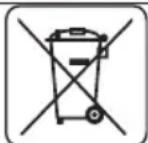
Do not dispose of electrically powered products with household wastes, they should be utilized in proper plants. Obtain information on waste utilization from your seller or local authorities. Used up electric and electronic equipment contains substances active in natural environment. Unrecycled equipment constitutes a potential risk for environment and human health.
* Right to introduce changes is reserved.
"Grupa Topex Spółka z ograniczoną odpowiedzialnością" Spółka komandytowa with seat in Warsaw at ul. Pograniczna 2/4 (hereinafter Grupa Topex) informs, that all copyrights to this instruction (hereinafter Instruction), including, but not limited to, text, photographies, schemes, drawings and layout of the instruction, belong to Grupa Topex exclusively and are protected by laws accordingly to Copyright and Related Rights Act of 4 February 2004 (ustawa o prawie autorskim i prawach pokrewnych, Dz. U. 2006 No 90 item 631 with later amendments). Copying, processing, publishing, modifications for commercial purposes of the entire Instruction or its parts without written permission of Grupa Topex are strictly forbidden and may cause civil and legal liability.
POSEBNI PROPISI O SIGURNOSTI
- Električni alat koristite isključivo zajedno s isporučenim štitnikom. Štitnik mora biti dobro pričvršćen do električnog alata i postavljen tako da sigurnost bude što veća, odnosno tako da dio ploče, otvoren i okrenut prema korisniku, bude što manji. Štitnik treba zaštititi operatera od odlomaka i slučajnog kontakta s reznom pločom.
- Koristite isključivo dijamantne rezne ploče. Sama činjenica da neku opremu možete montirati na električni alat, ne podrazumijeva sigurnu upotrebu te opreme s uređajem.
- Dopuštena brzina okretaja korištenog radnog alata ne smije biti manja nego što je maksimalna brzina okretaja navedena na električnom alatu. Radni alat koji se okreće s brzinom većom od dopuštene, može se slomiti a njegovi dijelovi rasprsnuti.
- Dijamantne ploče koristite isključivo za radove za koje su predviđene. Na primjer nikad nemojte brusiti bočnom površinom ploče za rezanje. Rezne ploče su namijenjene za uklanjanje materijala rubovima ploče. Bočna sila djelujuća na te ploče može ih polomiti.
- Za odabranu ploču uvijek koristite neoštećene prirubnice za pričvršćivanje, pravilne veličine. Odgovarajuće prirubnice podupiru reznu ploču i smanjuju opasnost od njenog puknuća.
- Vanjski promjer i debljina radnog alata moraju odgovarati dimenzijama električnog alata. Radni alati neodgovarajućih dimenzija ne mogu biti dovoljno zaštićeni i kontrolirani.
- Ploče, podlošci i drugi radni alati moraju idealno odgovarati vretenu električnog alata. Radni alati koji ne mogu biti precizno namješteni na vreteno električnog alat, nejednolično se okreću, jako vibriraju i mogu dovesti do gubitka kontrole nad uređajem.
- Ni u kojem slučaju ne koristite oštećene radne alate. Prije svake upotrebe kontrolirajte opremu na odlamanje komadića i pukotine. Ako sam uređaj ili njegov radni alat padne, provjerite nije li oštećen ili upotrijebite drugi, neoštećen alat.
Ako je uređaj provjeren i pričvršćen, uključite ga na minutu s najvećim okretajima obraćajući pri tom pozornost da radnik i druge osobe koje se nadu u blizini, ostanu van radne zone rotirajućeg alata. Oštećeni alati najčešće se lome u vrijeme takvih ispitivanja. - Nosite sredstva individualne zaštite. Ovisno o vrsti izvođenih radova, nosite zaštitnu masku preko cijelog lica, zaštitu za oči ili zaštitne naočale. Ako je to potrebno, upotrijebite masku za zaštitu od prašine, antifone, zaštitne rukavice ili posebnu kutu koja štiti od malih komadića brušenog i obrađivanog materijala. Štitite oči od kontakta sa stranim tijelima koji se nalaze u zraku, a nastali su tokom rada. Maska protiv prašine i sredstva za zaštitu dišnih puteva moraju filtrirati prašinu koja nastaje tokom rada. Duža izloženost na djelovanje buke može uzrokovati gubitak sluha.
- Druge osobe držite na sigurnoj udaljenosti od radne zone električnog alata. Svaka osoba koja se nalazi blizu uključenog električnog alata, mora koristiti sredstva individualne zaštite. Odlomljeni komadići izratka ili odlomljeni radni alati mogu odletjeti i uzrokovati ozljede također van direktne radne zone.
- Za vrijeme izvođenja radova kod kojih bi alat mogao naići na skrivene električne vodove ili na vlastiti mrežni kabel, držite ga isključivo za izoliranu površinu rukohvata. Kontakt s električnim vodom pod naponom mogao bi staviti pod napon metalne dijelove uređaja i prouzročiti strujni udar.
- Mrežni kabel držite podalje od rotirajućih radnih alata. U slučaju gubitka kontrole nad alatom, može doći do oštećenja ili povlačenja mrežnog kabela, a dlan ili cijelu ruku može zahvatiti rotirajući radni alat.
- Nikada ne odlazite električni uređaj prije nego se radni alat potpuno ne zaustavi. Rotirajući alat može doći u kontakt s površinom na kojoj se nađe, zbog čega može doći do gubitka kontrole nad električnim alatom.
-
Zabranjeno je premještati uključen električni alat. Slučajni kontakt odjeće s rotirajućim radnim alatom može dovesti do toga da je radni alat povuče pa se zarine u tijelo korisnika.
-
Redovito čistite otvore za ventilaciju električnog alata. Ventilator motora uvlači prašinu u kućište, a veće nakupine metalne prašine mogu predstavljati električnu opasnost.
- Ne koristite električni alat blizu lako zapaljivih materijala. Iskrenje može zapaliti te materijale.
- Ne koristite alate koje zahtijevaju tekuća sredstva za hlađenje. Korištenje vode ili drugih tekućih sredstava za hlađenje može uzrokovati strujni udar.
Povratni udar i odgovarajuće sigurnosne naputke
Povratni udar je pojava kad se električni alat blokira ili dođe do zaglavljivanja rotirajućeg radnog alata, na primjer brusne ploče, brusnog tanjura, čelične četke itd. Zbog zaglavljivanja ili blokiranja dolazi do naglog zaustavljanja rotirajućeg radnog alata. Nekontrolirani električni alat je povučen u smjeru suprotnom do smjera okretanja radnog alata.
REPLACEMENT DES CHARBONS

EC Declaration of Conformity
Manufacturer: Grupa Topex Sp. z o.o. Sp.k., Pograniczna 2/4 02-285 Warszawa
Product: Paving machine
Model: 59G370
Trade name: GRAPHITE
Serial number: 00001 ÷ 99999
This declaration of conformity is issued under the sole responsibility of the manufacturer.
The product described above complies with the following documents:
Machinery Directive 2006/42/EC
Electromagnetic Compatibility Directive 2014/30/EU
RoHS Directive 2011/65/EU as amended by Directive 2015/863/EU And meets the requirements of the standards:
EN 62841-1:2015+AC:15; EN 60745-2-22:2011+A11:2013;
EN IEC 55014-1:2021; EN IEC 55014-2:2021;
EN IEC 61000-3-2:2019+A1:2021; EN 61000-3-3:2013+A1:2019
EN IEC 63000:2018
This declaration relates only to the machinery as placed on the market and does not include components
added by the end user or carried out by him/her subsequently. Name and address of the EU resident person authorised to prepare the technical dossier:
Signed on behalf of:
Grupa Topex Sp. z o.o. Sp.k.
TOPEX GROUP Quality Officer
Warsaw, 2020-06-18
DE
59G370
Directive Machines 2006/42/CE
- TRANSLATION OF THE ORIGINAL INSTRUCTIONS
- WALL CHASER
- 59G370
- DETAILED SAFETY REGULATIONS
- Kick back and relevant safety tips
- Additional safety instructions
- CAUTION! This device is designed to operate indoors.
- Explanation of used symbols
- 123456
- CONSTRUCTION AND USE
- Use the power tool according to the manufacturer's instructions only.
- DESCRIPTION OF DRAWING PAGES
- MEANING OF SYMBOLS
- EQUIPMENT AND ACCESSORIES
- DUST EXTRACTION
- During operation the wall chaser should be connected to external dust extraction device.
- SETTING CHASE WIDTH / CUTTING BLADES REPLACEMENT
- Use only diamond cutting blades designed for dry operation, consider maximum allowable rotational speed specified on cutting blade.
- Regardless of number of spacing washers between cutting blades, the spacing washer with neck must be used and placed under the second cutting blade to keep its concentricity.
- SETTING CHASE DEPTH
- SWITCHING ON / SWITCHING OFF
- Switching on:
- Switching off:
- WORKING WITH WALL CHASER
- REPLACEMENT OF CARBON BRUSHES
- TECHNICAL PARAMETERS
- NOISE LEVEL AND VIBRATION PARAMETERS
- Information regarding noise and vibration
- ENVIRONMENT PROTECTION
- POSEBNI PROPISI O SIGURNOSTI
- Povratni udar i odgovarajuće sigurnosne naputke
- REPLACEMENT DES CHARBONS
Brand : Graphite
Model : 59G370
Category : Saw