
GWS 2200230 H Professional - Coffee grinder BOSCH - Free user manual and instructions
Find the device manual for free GWS 2200230 H Professional BOSCH in PDF.
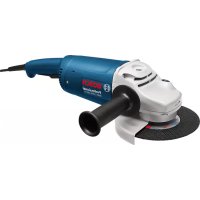


| Product type | Angle grinder |
| Brand | Bosch |
| Model | GWS 2200-230 H Professional |
| Nominal power input | 2200 W |
| Power output | 1380 W |
| Rated speed | 6600 rpm (for 230 mm) |
| Max disc diameter | 180 mm / 230 mm |
| Spindle thread | M14 |
| Weight (with standard auxiliary handle) | 5.0 kg |
| Protection class | Double insulation □/II |
| Sound pressure level | 92 dB(A) |
| Sound power level | 103 dB(A) |
| Vibration (grinding) | a_h = 9.5 m/s², K = 1.5 m/s² |
| Vibration (sanding) | a_h = 4.0 m/s², K = 1.5 m/s² |
| Main functions | Grinding, sanding, cutting, wire brushing |
| Power supply | Mains (cord), 230 V |
| Protective guard | Included for grinding and cutting |
| Auxiliary handle | Anti-vibration included |
| Maintenance | Clean ventilation slots and use a vacuum in extreme conditions |
| Safety | Double insulation, spindle lock, protection against unintentional restarts |
| Spare parts | Available at bosch-pt.com |
| After-sales service | Direct service within 5 days in France |
Frequently Asked Questions - GWS 2200230 H Professional BOSCH
User questions about GWS 2200230 H Professional BOSCH
0 question about this device. Answer the ones you know or ask your own.
Ask a new question about this device
Download the instructions for your Coffee grinder in PDF format for free! Find your manual GWS 2200230 H Professional - BOSCH and take your electronic device back in hand. On this page are published all the documents necessary for the use of your device. GWS 2200230 H Professional by BOSCH.
USER MANUAL GWS 2200230 H Professional BOSCH
General Power Tool Safety Warnings
WARNING
Read all safety warnings and all instructions. Failure to follow the warnings and instructions may result in electric shock, fire and/or serious injury.
Save all warnings and instructions for future reference.
Save all warnings and instructions for future reference.
The term "power tool" in the warnings refers to your mains-operated (corded) power tool or battery-operated (cordless) power tool.
Keep work area clean and well lit. Cluttered or dark areas invite accidents. Do not operate power tools in explosive atmospheres, such as in the presence of flammable liquids, gases or dust. Power tools create sparks which may ignite the dust or fumes.
- Keep work area clean and well lit. Cluttered or dark areas invite accidents. Do not operate power tools in explosive atmospheres, such as in the presence of flammable liquids, gases or dust. Power tools create sparks which may ignite the dust or fumes.
- Keep children and bystanders away while operating a power tool. Distractions can cause you to lose control.
Electrical safety
Power tool plugs must match the outlet. Never modify the plug in any way. Do not use any adapter plugs with earthed (grounded) power tools. Unmodified plugs and matching outlets will reduce risk of electric shock. Avoid body contact with earthed or grounded surfaces, such as pipes, radiators, ranges and refrigerators. There is an increased risk of electric shock if your body is earthed or grounded. Do not expose power tools to rain or wet conditions. Water entering a power tool will increase the risk of electric shock. Do not abuse the cord. Never use the cord for carrying, pulling or unplugging the power tool. Keep cord away from heat, oil, sharp edges or moving parts. Damaged or entangled cords increase the risk of electric shock. When operating a power tool outdoors, use an extension cord suitable for outdoor use. Use of a cord suitable for outdoor use reduces the risk of electric shock. If operating a power tool in a damp location is unavoidable, use a residual current device (RCD) protected supply. Use of an RCD reduces the risk of electric shock.
Personal safety
Stay alert, watch what you are doing and use common sense when operating a power tool. Do not use a power tool while you are tired or under the influence of drugs, alcohol or medication. A moment of inattention while operating power tools may result in serious personal injury. Use personal protective equipment. Always wear eye protection. Protective equipment such as dust mask, non-skid safety shoes, hard hat, or hearing protection used for appropriate conditions will reduce personal injuries. Prevent unintentional starting. Ensure the switch is in the off-position before connecting to power source and/or battery pack, picking up or carrying the tool. Carrying power tools with your finger on the switch or energising power tools that have the switch on invites accidents. Remove any adjusting key or wrench before turning the power tool on. A wrench or a key left attached to a rotating part of the power tool may result in personal injury.
Do not overreach. Keep proper footing and balance at all times. This enables better control of the power tool in unexpected situations. Dress properly. Do not wear loose clothing or jewellery. Keep your hair, clothing and gloves away from moving parts. Loose clothes, jewellery or long hair can be caught in moving parts. If devices are provided for the connection of dust extraction and collection facilities, ensure these are connected and properly used. Use of dust collection can reduce dust-related hazards.
Power tool use and care
Do not force the power tool. Use the correct power tool for your application. The correct power tool will do the job better and safer at the rate for which it was designed. Do not use the power tool if the switch does not turn it on and off. Any power tool that cannot be controlled with the switch is dangerous and must be repaired. Disconnect the plug from the power source and/or the battery pack from the power tool before making any adjustments, changing accessories, or storing power tools. Such preventive safety measures reduce the risk of starting the power tool accidentally. Store idle power tools out of the reach of children and do not allow persons unfamiliar with the power tool or these instructions to operate the power tool. Power tools are dangerous in the hands of untrained users. Maintain power tools. Check for misalignment or binding of moving parts, breakage of parts and any other condition that may affect the power tool's operation. If damaged, have the power tool repaired before use. Many accidents are caused by poorly maintained power tools. Keep cutting tools sharp and clean. Properly maintained cutting tools with sharp cutting edges are less likely to bind and are easier to control. Use the power tool, accessories and tool bits etc. in accordance with these instructions, taking into account the working conditions and the work to be performed. Use of the power tool for operations different from those intended could result in a hazardous situation.
Service
Have your power tool serviced by a qualified repair person using only identical replacement parts. This will ensure that the safety of the power tool is maintained.
Safety information for the angle grinder
Safety Warnings common for Grinding, Sanding, Wire Brushing or Abrasive Cutting Off operations
This power tool is intended to function as a grinder, sander, wire brush or cut-off tool. Read all safety warnings, instructions, illustrations and specifications provided with this power tool. Failure to follow all
instructions listed below may result in electric shock, fire and/or serious injury.
Operations such as polishing are not recommended to be performed with this power tool. Operations for which the power tool was not designed may create a hazard and cause personal injury. Do not use accessories which are not specifically designed and recommended by the tool manufacturer. Just because the accessory can be attached to your power tool, it does not assure safe operation. The rated speed of the accessory must be at least equal to the maximum speed marked on the power tool. Accessories running faster than their rated speed can break and fly apart. The outside diameter and the thickness of your accessory must be within the capacity rating of your power tool. Incorrectly sized accessories cannot be adequately guarded or controlled. Threaded mounting of accessories must match the grinder spindle thread. For accessories mounted by flanges, the arbour hole of the accessory must fit the locating diameter of the flange. Accessories that do not match the mounting hardware of the power tool will run out of balance, vibrate excessively and may cause loss of control. Do not use a damaged accessory. Before each use inspect the accessory such as abrasive wheels for chips and cracks, backing pad for cracks, tear or excess wear, wire brush for loose or cracked wires. If power tool or accessory is dropped, inspect for damage or install an undamaged accessory. After inspecting and installing an accessory, position yourself and bystanders away from the plane of the rotating accessory and run the power tool at maximum no load speed for one minute. Damaged accessories will normally break apart during this test time. Wear personal protective equipment. Depending on application, use face shield, safety goggles or safety glasses. As appropriate, wear dust mask, hearing protectors, gloves and workshop apron capable of stopping small abrasive or workpiece fragments. The eye protection must be capable of stopping flying debris generated by various operations. The dust mask or respirator must be capable of filtrating particles generated by your operation. Prolonged exposure to high intensity noise may cause hearing loss. Keep bystanders a safe distance away from work area. Anyone entering the work area must wear personal protective equipment. Fragments of workpiece or of a broken accessory may fly away and cause injury beyond immediate area of operation. Hold the power tool by insulated gripping surfaces only, when performing an operation where the cutting accessory may contact hidden wiring or its own cord. Cutting accessory contacting a "live" wire may make exposed metal parts of the power tool "live" and could give the operator an electric shock.
Position the cord clear of the spinning accessory. If you lose control, the cord may be cut or snagged and your hand or arm may be pulled into the spinning accessory. Never lay the power tool down until the accessory has come to a complete stop. The spinning accessory may grab the surface and pull the power tool out of your control. Do not run the power tool while carrying it at your side. Accidental contact with the spinning accessory could snag your clothing, pulling the accessory into your body. Regularly clean the power tool's air vents. The motor's fan will draw the dust inside the housing and excessive accumulation of powdered metal may cause electrical hazards. Do not operate the power tool near flammable materials. Sparks could ignite these materials. Do not use accessories that require liquid coolants. Using water or other liquid coolants may result in electrocution or shock.
Kickback and Related Warnings
Kickback is a sudden reaction to a pinched or snagged rotating wheel, backing pad, brush or any other accessory. Pinching or snagging causes rapid stalling of the rotating accessory which in turn causes the uncontrolled power tool to be forced in the direction opposite of the accessory's rotation at the point of the binding.
For example, if an abrasive wheel is snagged or pinched by the workpiece, the edge of the wheel that is entering into the pinch point can dig into the surface of the material causing the wheel to climb out or kick out. The wheel may either jump toward or away from the operator, depending on direction of the wheel's movement at the point of pinching. Abrasive wheels may also break under these conditions. Kickback is the result of power tool misuse and/or incorrect operating procedures or conditions and can be avoided by taking proper precautions as given below.
- Maintain a firm grip on the power tool and position your body and arm to allow you to resist kickback forces. Always use auxiliary handle, if provided, for maximum control over kickback or torque reaction during start-up. The operator can control torque reactions or kickback forces, if proper precautions are taken. Never place your hand near the rotating accessory. Accessory may kickback over your hand. Do not position your body in the area where power tool will move if kickback occurs. Kickback will propel the tool in direction opposite to the wheel's movement at the point of snagging. Use special care when working corners, sharp edges etc. Avoid bouncing and snagging the accessory.
Corners, sharp edges or bouncing have a tendency to snag the rotating accessory and cause loss of control or kickback.
Do not attach a saw chain woodcarving blade or toothed saw blade. Such blades create frequent kickback and loss of control.
Safety Warnings specific for Grinding and Abrasive Cutting-Off operations
Use only wheel types that are recommended for your power tool and the specific guard designed for the selected wheel. Wheels for which the power tool was not designed cannot be adequately guarded and are unsafe. The grinding surface of center depressed wheels must be mounted below the plane of the guard lip. An improperly mounted wheel that projects through the plane of the guard lip cannot be adequately protected. The guard must be securely attached to the power tool and positioned for maximum safety, so the least amount of wheel is exposed towards the operator. The guard helps to protect the operator from broken wheel fragments, accidental contact with the wheel, and sparks that could ignite clothing. Wheels must be used only for recommended applications. For example: do not grind with the side of a cut-off wheel. Abrasive cut-off wheels are intended for peripheral grinding; side forces applied to these wheels may cause them to shatter. Always use undamaged wheel flanges that are of the correct size and shape for your selected wheel. Proper wheel flanges support the wheel, thus reducing the possibility of wheel breakage. Flanges for cut-off wheels may be different from grinding wheel flanges. Do not use worn-down wheels from larger power tools. A wheel intended for a larger power tool is not suitable for the higher speed of a smaller tool and may burst.
Additional Safety Warnings Specific for Abrasive Cutting-Off Operations
Do not "jam" the cut-off wheel or apply excessive pressure. Do not attempt to make an excessive depth of cut. Overstressing the wheel increases the loading and susceptibility to twisting or binding of the wheel in the cut and the possibility of kickback or wheel breakage. Do not position your body in line with and behind the rotating wheel. When the wheel, at the point of operation, is moving away from your body, the possible kickback may propel the spinning wheel and the power tool directly at you. When the wheel is binding or when interrupting a cut for any reason, switch off the power tool and hold the power tool motionless until the wheel comes to a complete stop. Never attempt to remove the cut-off wheel from the cut while the wheel is in motion, otherwise kickback may occur. Investigate and take corrective action to eliminate the cause of wheel binding. Do not restart the cutting operation in the workpiece. Let the wheel reach full speed and carefully re-enter the cut. The wheel may bind, walk up, or kickback if the power tool is restarted in the workpiece.
Support panels or any oversized workpiece to minimize the risk of wheel pinching and kickback. Large workpieces tend to sag under their own weight. Supports must be placed under the workpiece near the line of cut and near the edge of the workpiece on both sides of the wheel. Use extra caution when making a "pocket cut" into existing walls or other blind areas. The protruding wheel may cut gas or water pipes, electrical wiring, or objects that can cause kickback.
Safety Warnings specific for Sanding operations
Do not use excessively oversized sanding disc paper. Follow manufacturers recommendations when selecting sanding paper. Larger sanding paper extending beyond the sanding pad presents a laceration hazard and may cause snagging, tearing of the disc, or kickback.
Safety Warnings specific for Wire Brushing operations
Be aware that wire bristles are thrown by the brush even during ordinary operation. Do not overstress the wires by applying excessive load to the brush. The wire bristles can easily penetrate light clothing and/or skin. If the use of a guard is recommended for wire brushing, do not allow any interference of the wire wheel or brush with the guard. Wire wheel or brush may expand in diameter due to work load and centrifugal forces.
Additional safety information
Wear safety goggles.
Use suitable detectors to determine if utility lines are hidden in the work area or call the local utility company for assistance. Contact with electric lines can lead to fire and electric shock. Damaging a gas line can lead to explosion. Penetrating a water line causes property damage or may cause an electric shock. Do not touch grinding and cutting discs until they have cooled down. The discs can become very hot while working. Release the On/Off switch and set it to the off position when the power supply is interrupted, e.g., in case of a power failure or when the mains plug is pulled. This prevents uncontrolled restarting.
Products sold in GB only:
Your product is fitted with a BS 1363/A approved electric plug with internal fuse (ASTA approved to BS 1362). If the plug is not suitable for your socket outlets, it should be cut off and an appropriate plug fitted in its place by an authorised customer service agent. The replacement plug should have the same fuse rating as the original plug.
The severed plug must be disposed of to avoid a possible shock hazard and should never be inserted into a mains socket elsewhere.
18 | English
- Secure the workpiece. A workpiece clamped with clamping devices or in a vice is held more secure than by hand.
Product Description and Specifications

Read all the safety and general instructions.
Failure to observe the safety and general instructions may result in electric shock, fire and/or serious injury.
Please observe the illustrations at the beginning of this operating manual.
Intended use
The power tool is intended for cutting, roughing and brushing metal and stone materials without the use of water.
A special protective guard for cutting must be used when cutting bonded abrasives.
Sufficient dust extraction must be provided when cutting stone.
With approved abrasive tools, the power tool can be used for sanding with sanding discs.
Product features
The numbering of the product features refers to the diagram of the power tool on the graphics page.
(1) Spindle lock button
(2) On/off switch (3) Side handle (insulated gripping surface) (4) Grinding spindle (5) Protective guard for grinding (6) Locking screw for protective guard (7) Hub flange with O-ring (8) Grinding disc (9) Clamping nut (10) Two-pin spanner for clamping nut (11) Quick-clamping nut SDS-clip (12) Carbide grinding head (13) Protective guard for cutting (14) Cutting disc (15) Hand guard A (16) Spacer discs (17) Rubber sanding pad (18) Abrasive disc (19) Round nut (20) Cup brush (21) Extraction guard for cutting with a guide block (22) Diamond cutting disc (23) Handle (insulated gripping surface)
A) Accessories shown or described are not included with the product as standard. You can find the complete selection of accessories in our accessories range.
Technical data
Angle grinder GWS 2200-180 H GWS 2200-230 H
| Article number | 3601 H51 X.. | 3601 H52 X.. | |
| Rated power input W 2200 2200 | |||
| Power output W 1380 1380 | |||
| Rated speed min | -1 | 8500 | 6600 |
| Max. grinding disc diameter mm 180 230 | |||
| Grinding spindle thread M 14 M 14 | |||
| Max. thread length of grinding spindle mm 25 25 | |||
| Weight according to EPTA-Procedure 01:2014 | |||
| with additional low-vibration auxiliary handle | kg | 5.1 | 5.1 |
| with standard auxiliary handle | kg | 5.0 | 5.0 |
| Protection class | ☐/II | ☐/II |
The specifications apply to a rated voltage [U] of 230 V. These specifications may vary at different voltages and in country-specific models.
When switching on power tools with starting current limitation, the voltage drops briefly. Interference with other equipment may occur in the event of unfavourable conditions in the electricity supply. Malfunctions are not expected if the impedances in the electricity supply are below 0.25 ohms.
Noise/Vibration Information
Noise emission values determined according to EN 60745-2-3.
Typically the A-weighted noise level of the power tool is: Sound pressure level 92 dB(A); sound power level 103 dB(A). Uncertainty K = 3 dB.
Wear hearing protection!
Total vibration values a_h (triax vector sum) and uncertainty K determined according to EN 60745-2-3:
Surface grinding (roughing):
a_n = 9.5 m/s^2, K = 1.5 m/s^2
Grinding with abrasive disc:
a_n = 4.0 m/s^2, K = 1.5 m/s^2
The vibration level given in these instructions has been measured in accordance with a standardised measuring procedure and may be used to compare power tools. It can also be used for a preliminary estimation of exposure to vibration.
The stated vibration level applies to the main applications of the power tool. However, if the power tool is used for different applications, with different application tools or poorly maintained, the vibration level may differ. This can significantly increase the exposure to vibration over the total working period.
To estimate the exposure to vibration accurately, the times when the tool is switched off or when it is running but not actually being used should also be taken into account. This can significantly reduce the exposure to vibration over the total working period.
Implement additional safety measures to protect the operator from the effects of vibration, such as servicing the power tool and application tools, keeping the hands warm, and organising workflows correctly.
Fitting
Fitting Protective Equipment
Pull the plug out of the socket before carrying out any work on the power tool.
Note: If the grinding disc breaks during operation or the holding fixtures on the protective guard/power tool become damaged, the power tool must be sent to the after-sales service immediately; see the "After-sales service and advice on using products" section for addresses.
Protective guard for grinding
Place the protective guard (5) on the spindle collar. Adjust the position of the protective guard (5) to the requirements of the operation and lock the protective guard (5) with the locking screw (6).
Adjust the protective guard (5) such that sparking in the direction of the operator is prevented.
Protective guard for cutting
Always use the protective guard for cutting (13) when cutting bonded abrasives. Provide sufficient dust extraction when cutting stone.
The protective guard for cutting (13) is fitted in the same way as the protective guard for grinding (5).
Extraction guard for cutting with a guide block
The extraction guard for cutting with a guide block (21) is fitted in the same way as the protective guard for grinding (5).
Side handle
Do not operate your power tool without the side handle (3).
Screw the side handle (3) on the left or right of the machine head depending on how you are working.
Hand guard
Always fit the hand guard (15) when working with the rubber sanding pad (17) or with the cup brush/disc brush/flap disc.
Attach the hand guard (15) to the side handle (3).
Fitting the abrasive tools
Pull the plug out of the socket before carrying out any work on the power tool. Do not touch grinding and cutting discs until they have cooled down. The discs can become very hot while working.
Clean the grinding spindle (4) and all the parts to be fitted.
Lock the grinding spindle with the spindle lock button (1) before clamping and releasing the abrasive tools. Do not press the spindle lock button while the grinding spindle is moving. The power tool may become damaged if you do this.
Grinding/cutting disc
Pay attention to the dimensions of the abrasive tools. The diameter of the hole must match that of the hub flange. Do not use an adapter or reducer.
When using diamond cutting discs, make sure that the arrow indicating the direction of rotation on the diamond cutting disc matches the direction of rotation of the power tool (see the direction of rotation arrow on the machine head).
See the graphics page for fitting instructions.
To fasten the grinding/cutting disc, screw on the clamping nut (9) and tighten with the two-pin spanner; see the "Quick-clamping nut" section.
After fitting the abrasive tool, check that the abrasive tool is fitted correctly and can turn freely before switching on the power tool. Make sure that the abrasive tool does not brush against the protective guard or other parts.
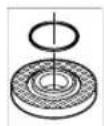
A plastic part (O-ring) is fitted around the cent-ring collar in the hub flange (7). If the O-ring is missing or damaged, the hub flange (7) must be replaced before operation can resume.
Flap disc
Always fit the hand guard (15) when working with the flap disc.
Rubber sanding pad
Always fit the hand guard (15) when working with the rubber sanding pad (17).
See the graphics page for fitting instructions.
Before fitting the rubber sanding pad (17), place the two spacer discs (16) on the grinding spindle (4).
Screw on the round nut (19) and tighten with the two-pin spanner.
Cup brush/disc brush
Always fit the hand guard (15) when working with the cup brush or disc brush.
See the graphics page for fitting instructions.
The cup brush/disc brush must be screwed onto the grinding spindle until it rests firmly against the grinding spindle flange at the end of the grinding spindle thread. Tighten the cup brush/disc brush with an open-ended spanner.
Quick-clamping nut SDS-e/ic
To change the abrasive tool easily without having to use any additional tools, you can use the quick-clamping nut (11) instead of the clamping nut (9).
The quick-clamping nut (11) may be used only for grinding or cutting discs.
Only use quick-clamping nuts (11) that are in good working order and not damaged.
When screwing on, make sure that the printed side of the quick-clamping nut (11) is not facing the grinding disc; the arrow must be pointing towards the index mark (24).
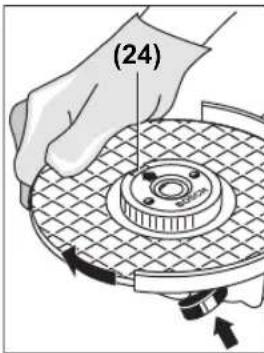
Press the spindle lock button (1) to lock the grinding spindle. To tighten the quick-clamping nut, turn the grinding disc firmly clockwise.
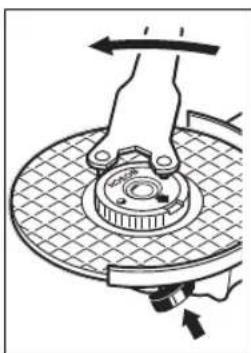
If the quick-clamping nut has been attached correctly and is not damaged, you can loosen it by hand by turning the knurled ring anticlockwise. If the quick-clamping nut is stuck, do not attempt to loosen it with pliers - always use the two-pin spanner. Position the two-pin spanner as shown in the figure.
Approved abrasive tools
You can use all the abrasive tools mentioned in these operating instructions.
You can use all the abrasive tools mentioned in these operating instructions.
It is therefore important to observe the permissible rotational/circumferential speed on the label of the abrasive tool.
It is therefore important to observe the permissible rotational/circumferential speed on the label of the abrasive tool.
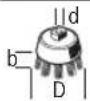
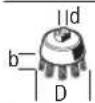
| max. [mm] [mm] | |||||
| D b d [min] | 1] [m/s] | ||||
| b | 180 | 8 | 22.2 | 8500 | 80 |
| 230 | 8 | 22.2 | 6600 | 80 | |
| D | 180 | - | - | 8500 | 80 |
| 230 | - | - | 6600 | 80 | |
Rotating the machine head
Pull the plug out of the socket before carrying out any work on the power tool.
Pull the plug out of the socket before carrying out any work on the power tool.
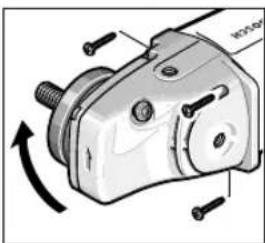
The machine head can be rotated in 90° increments. This enables the on/off switch to be brought into a more convenient position for particular working situations, such as cutting operations using the extraction guard for cutting with a guide block (21) or for left-handed persons.
Completely unscrew the four screws. Rotate the machine head carefully, without removing it from the housing, into the new position. Screw in and retighten the four screws.
The dust from materials such as lead paint, some types of wood, minerals and metal can be harmful to human health. Touching or breathing in this dust can trigger allergic reactions and/or cause respiratory illnesses in the user or in people in the near vicinity.
The dust from materials such as lead paint, some types of wood, minerals and metal can be harmful to human health. Touching or breathing in this dust can trigger allergic reactions and/or cause respiratory illnesses in the user or in people in the near vicinity.
Certain dusts, such as oak or beech dust, are classified as carcinogenic, especially in conjunction with wood treatment additives (chromate, wood preservative). Materials containing asbestos may only be machined by specialists.
- Use a dust extraction system that is suitable for the material wherever possible.
- Provide good ventilation at the workplace.
- It is advisable to wear a P2 filter class breathing mask.
The regulations on the material being machined that apply in the country of use must be observed.
- Avoid dust accumulation at the workplace. Dust can easily ignite.
Operation
Start-up
Pay attention to the mains voltage. The voltage of the power source must match the voltage specified on the
rating plate of the power tool. Power tools marked with 230V can also be operated with 220V.
Hold the tool by the insulated gripping surfaces and auxiliary handle only. The application tool could come into contact with hidden wiring or its own cord. Contact with live wires may make metal parts of the tool live, posing a risk of electric shock.
When operating the power tool using a mobile generator that does not have sufficient reserve capacity or an adequate voltage control system with inrush current boost converter, loss of performance or atypical behaviour may occur upon switch-on.
Please check the suitability of the power generator you are using, particularly with regard to the mains voltage and frequency.
▶ Products that are only sold in AUS and NZ: Use a residual current device (RCD) with a nominal residual current of 30 mA or less.
Switching on/off
To start the power tool, push the on/off switch (2) forward and then press it down.
To lock the on/off switch (2) in position, push the on/off switch (2) further forward.
To switch off the power tool, release the on/off switch (2); or, if the switch is locked, briefly press the on/off switch (2) and then release it.
Switch without locking mechanism (country-specific):
To start the power tool, push the on/off switch (2) forward and then press it down.
To switch off the power tool, release the on/off switch (2).
Always check abrasive tools before using them. The abrasive tool must be fitted properly and be able to move freely. Carry out a test run for at least one minute with no load. Do not use abrasive tools that are damaged, run untrue or vibrate during use. Damaged abrasive tools can burst apart and cause injuries.
Working Advice
Pull the plug out of the socket before carrying out any work on the power tool. Exercise caution when cutting slots in structural walls; see the "Information on structures" section. - Clamp the workpiece if it is not secure under its own weight. Do not load the power tool so heavily that it comes to a stop. If the power tool has been subjected to a heavy load, continue to run it at no-load for several minutes to cool down the accessory. Do not touch grinding and cutting discs until they have cooled down. The discs can become very hot while working. Do not use the power tool with a cut-off stand.
Note: Remove the plug from the socket when not using the tool. When the power tool is plugged in, mains voltage is
present and the tool consumes a small amount of electricity, even if switched off.
Rough grinding
Never use cutting discs for rough grinding.
The best rough grinding results are achieved with a set angle of 30° to 40°. Move the power tool back and forth with moderate pressure. This will ensure that the workpiece does not become too hot or discolour and that grooves are not formed.
Flap Disc
With the flap disc (accessory), curved surfaces and profiles can be worked. Flap discs have a considerably higher service life, lower noise levels and lower sanding temperatures than conventional sanding sheets.
Cutting Metal
Always use the protective guard for cutting (13) when cutting bonded abrasives.
When carrying out abrasive cutting, use a moderate feed that is suited to the material being machined. Do not exert pressure on the cutting disc and do not tilt or swing the power tool.
Do not attempt to reduce the speed of a cutting disc coming to a stop by applying pressure from the side.
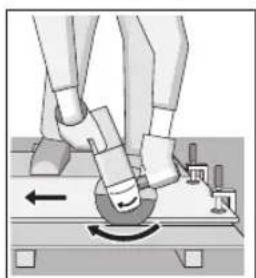
The power tool must always work in an up-grinding motion. Otherwise, there is a risk that it will be pushed uncontrolled out of the cut. For best results when cutting profiles and rectangular tubing, start at the smallest cross section.
Cutting stone
Provide sufficient dust extraction when cutting stone. Wear a dust mask. The power tool may be used only for dry cutting/grinding.
For best results when cutting stone, use a diamond cutting disc.
When using the extraction guard for cutting with a guide block (21), the vacuum cleaner must be approved for vacuuming stone dust. Suitable vacuum cleaners are available from Bosch.
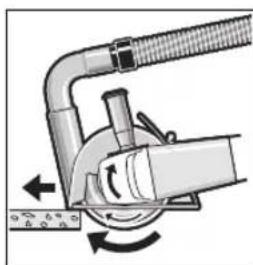
Switch on the power tool and position it with the front part of the guide block on the workpiece. Move the power tool with a moderate feed motion that is suited to the material being machined.
When cutting especially hard materials such as con
crete with a high pebble content, the diamond cutting disc can overheat and become damaged as a result. This is
22 | English
clearly indicated by circular sparking, rotating with the diamond cutting disc.
If this happens, stop cutting and allow the diamond cutting disc to cool down by running the power tool for a short time at maximum speed with no load.
Working noticeably slower and with circular sparking indicate that the diamond cutting disc has become dull. You can resharpen the disc by briefly cutting into abrasive material (e.g. lime-sand brick).
Information on structural design
Slots in load-bearing walls are subject to DIN 1053 part 1 or country-specific regulations. These regulations must be observed under all circumstances. Seek advice from the responsible structural engineer, architect or construction supervisor before starting work.
Maintenance and Servicing
Maintenance and cleaning
Pull the plug out of the socket before carrying out any work on the power tool. To ensure safe and efficient operation, always keep the power tool and the ventilation slots clean. In extreme conditions, always use a dust extractor if possible. Blow out ventilation slots frequently and install a residual current device (RCD) upstream. When machining metals, conductive dust can settle inside the power tool, which can affect its protective insulation.
Store and handle the accessories carefully.
In order to avoid safety hazards, if the power supply cord needs to be replaced, this must be done by Bosch or by an after-sales service centre that is authorised to repair Bosch power tools.
After-sales service and advice on using products
Our after-sales service responds to your questions concerning maintenance and repair of your product as well as spare parts. You can find explosion drawings and information on spare parts at: www.bosch-pt.com
The Bosch product use advice team will be happy to help you with any questions about our products and their accessories.
In all correspondence and spare parts orders, please always include the 10-digit article number given on the nameplate of the product.
Great Britain
Robert Bosch Ltd. (B.S.C.)
P.O. Box 98
Broadwater Park
North Orbital Road
Denham Uxbridge
UB9 5HJ
At www.bosch-pt.co.uk you can order spare parts or arrange the collection of a product in need of servicing or repair.
Tel. Service: (0344) 7360109
E-Mail: boschservicecentre@bosch.com
Ireland
Origo Ltd.
Unit 23 Magna Drive
Magna Business Park
City West
Dublin 24
Tel. Service: (01) 4666700
Fax: (01) 4666888
Australia, New Zealand and Pacific Islands
Robert Bosch Australia Pty. Ltd.
Power Tools
Locked Bag 66
Clayton South VIC 3169
Customer Contact Center
Inside Australia:
Phone: (01300) 307044
Fax: (01300) 307045
Inside New Zealand:
Phone: (0800) 543353
Fax: (0800) 428570
Outside AU and NZ:
Phone: +61 3 95415555
www.bosch-pt.com.au
www.bosch-pt.co.nz
Republic of South Africa
Customer service
Hotline: (011) 6519600
Gauteng - BSC Service Centre
35 Roper Street, New Centre
Johannesburg
Tel.: (011) 4939375
Fax: (011) 4930126
E-mail: bsctools@icon.co.za
KZN - BSC Service Centre
Unit E, Almar Centre
143 Crompton Street
Pinetown
Tel.: (031) 7012120
Fax: (031) 7012446
E-mail: bsc.dur@za.bosch.com
Western Cape - BSC Service Centre
Democracy Way, Prosperity Park
Milnerton
Tel.: (021) 5512577
Fax: (021) 5513223
E-mail: bsc@zsd.co.za
Bosch Headquarters
Midrand, Gauteng
Tel.: (011) 6519600
Fax: (011) 6519880
E-mail: rbsa-hq.pts@za.bosch.com
Disposal
The power tool, accessories and packaging should be recycled in an environmentally friendly manner.

Do not dispose of power tools along with household waste.
Only for EU countries:
According to the European Directive 2012/19/EU on Waste Electrical and Electronic Equipment and its implementation into national law, power tools that are no longer usable must be collected separately and disposed of in an environmentally friendly manner.
French
Calle Robert Bosch No. 405
C.P. 50071 Zona Industrial, Toluca - Estado de Mexico
Tel.: (52) 55 528430-62
Tel.: 800 6271286
Mount the sanding tools
SDS-clic quick-release nut
Bosch Service Center
Telegrafvej 3
2750 Ballerup
At www.bosch-pt.dk you can order spare parts online or create a repair order.
Service Center phone: 44898855
Fax: 44898755
E-mail: vaerktoej@dk.bosch.com
Disposal
Bosch Service Center
Telegrafvej 3
2750 Ballerup
Denmark
Tel.: (08) 7501820 (within Sweden)
Fax: (011) 187691
Waste management
Only for EU countries:
Surface grinding (scrubbing):
an = 9.5m / s2,K = 1,5m / s2
Protective guard for grinding
a _ n = 4, 0 m / s ^ 2, K = 1, 5 m / s ^ 2.
Tawiaokc leavntpac GWS 2200-180 H GWS 2200-230 H
Kwdiokc api0muC
3601H51X..3601H52X..
OvopaotiknToxucW2.2002.200
Bosch Power Tools 1609 92A 435| (27.11.2018)
Xpnooupwva me rov npoopuapo
To nAekptko epyaaleio npoopietai yia konh, Exovbipua kai Boupraqa petaaikw kai netpiwv uikw xwpic tn xpoh nepu.
Tia nyn konm me akajma eo aieavonnpenei va xnpoanoine i evacipok npopuaakntpac.
Tia mny konn netpwpatuv npene va povtioete yia pa etapkn avapppon oKovnc.
Me ta emtpenoeva eAprimuTa aeivanc unopei va xpanonoiTei to nekpkiO epaiao yia aeian oyeuaoxapro.
Anekovicioeva oToixeia
The list of spare parts is shown in the spare parts diagram on the graphics page.
(1) On/Off switch
(2) Delta On/Off
Service and consultation
Our service department will answer your questions regarding the repair and maintenance of your product as well as spare parts. Exploded views and information on spare parts can be found at: www.bosch-pt.com The Bosch service team will gladly answer your questions about our products and their accessories. Please include the 10-digit product code from the type plate when making inquiries.
Greece
Robert Bosch A.E.
Ergias 37
19400 Koropi-Athens
Tel.: 2105701258
Fax: 2105701283
www.bosch.com
www.bosch-pt.gr
ABZ Service A.E.
Tel.: 2105701380
a_n = 4.0 m/s^2, K = 1.5 m/s^2.
Robert Bosch Sp. z o.o.
Bosch Service Center PT
K Vapence 1621/16
692 01 Mikulov
On www.bosch-pt.cz you can order the repair of your machine or spare parts online.
a_n = 4.0 m/s^2, K = 1.5 m/s^2.
The vibration level given in these instructions was measured according to a standardized measuring procedure and can be used for
We recommend cleaning the tool from dust after each use.
Storage
It is necessary to store in a dry place. It is necessary to store away from sources of high temperatures and exposure to sunlight. When storing, avoid sudden temperature changes. Storage without packaging is not allowed. For storage requirements, see GOST 15150 (Condition 1).
Transportation
152 | Russian
The manufacturer does not allow the package to fall or be subjected to mechanical impacts during transportation - during unloading/loading it is not allowed to use any type of equipment operating on the principle of gripping the package - for detailed requirements for transportation conditions, see GOST 15150 (condition 5).
Safety instructions
General safety instructions for power tools
WARNING
Read all safety instructions and instructions. Failure to follow the instructions and
instructions for safety can cause electric shock, fire and serious injury.
Keep these instructions and instructions for future use.
The term "power tool" used in these instructions and instructions applies to a power tool powered from the mains (with a mains cable) and to a battery-powered power tool (without a mains cable).
Workplace safety
Keep your work area clean and well lit. Cluttered or unlit work areas can lead to accidents. Do not work with power tools in explosive atmospheres, e.g., containing flammable liquids, gases or dust. Power tools create sparks, which can ignite dust or vapors. While working with a power tool, do not allow other people or bystanders near your work area. If distracted, you may lose control of the power tool.
Electrical safety
The power tool plug must fit the outlet. Never modify the plug in any way. Do not use adapter plugs with earthed power tools. Unmodified plugs and matching outlets reduce the risk of electric shock. Avoid body contact with earthed surfaces such as pipes, radiators, stoves and refrigerators. There is an increased risk of electric shock if your body is earthed.
Protect the power tool from moisture. Water entering a power tool increases the risk of electric shock. Do not use the cord for purposes other than intended. Never use the cord for carrying or hanging the power tool, or for pulling the plug out of the outlet. Keep the cord away from heat, oil, sharp edges or moving parts of the power tool. Damaged or entangled cords increase the risk of electric shock. When working with a power tool outdoors, use an extension cord suitable for outdoor use. Using a cord suitable for outdoor use reduces the risk of electric shock. If it is unavoidable to use a power tool in a damp location, connect the power tool through a residual current device (RCD). Using an RCD reduces the risk of electric shock.
Personal safety
Be attentive, watch what you are doing, and use common sense when working with a power tool. Do not use a power tool while you are tired or under the influence of drugs, alcohol, or medication. A moment of inattention while operating a power tool may result in serious personal injury. Use personal protective equipment. Always wear eye protection. Protective equipment such as a dust mask, non-skid safety shoes, hard hat, or hearing protection used for appropriate conditions will reduce personal injuries. Prevent unintentional starting. Ensure the switch is in the off-position before connecting to power source and/or battery pack, picking up or carrying the tool. Carrying power tools with your finger on the switch or energizing power tools that have the switch on invites accidents. Remove any adjusting key or wrench before turning the power tool on. A wrench or a key left attached to a rotating part of the power tool may result in personal injury. Do not overreach. Keep proper footing and balance at all times. This enables better control of the power tool in unexpected situations. Dress properly. Do not wear loose clothing or jewelry. Keep your hair, clothing and gloves away from moving parts.
Loose clothes, jewelry or long hair can be caught in moving parts.
If dust extraction and collection facilities are available, ensure these are connected and properly used. Use of dust collection can reduce dust-related hazards. WARNING! In case of interruption of power supply to the power tool, e.g. due to partial or complete failure of the power supply or damage to the power supply cable, set the switch to the OFF position and make sure it is not blocked (if present). Disconnect the mains plug from the socket or disconnect the battery pack. This prevents unintentional restarting.
Use of the power tool and its care
Never use the power tool. Use the appropriate power tool for your application. The correct power tool will do the job better and safer at the rate for which it was designed. Do not use the power tool if the switch does not turn it on and off. Any power tool that cannot be controlled with the switch is dangerous and must be repaired. Before plugging in the power tool, before changing accessories, or before storing the tool, disconnect the plug from the power source and/or remove the battery pack. This precaution reduces the risk of accidental starting. Store power tools out of the reach of children. Do not allow persons unfamiliar with the power tool or these instructions to operate the power tool. Power tools are dangerous in the hands of untrained users. Maintain power tools. Check for misalignment or binding of moving parts, breakage of parts and any other condition that may affect the power tool's operation. If damaged, have the power tool repaired before use. Many accidents are caused by poorly maintained power tools. Keep cutting tools sharp and clean. Properly maintained cutting tools with sharp cutting edges are less likely to bind and are easier to control. Use the power tool, accessories and tool bits etc., in accordance with these instructions, taking into account the working conditions and the work to be performed. Use of the power tool for operations different from those intended could result in a hazardous situation.
Service
Power tool repair must be performed only by qualified personnel and only with original spare parts. This ensures the safety of the power tool.
Safety instructions for angle grinders
General safety warnings for grinding, sanding, wire brushing, or cutting-off operations
3TOT 3NEKTPONHCTPymeHT PpeHa3HaueH dIa HINHPOBAAH, IINHFOBAHNA HxJaCHoH 6yMaRoH, KpaueBaHH NPOBOJOnHbIMN UeTKAMn HnA6p3HBHO Tpe3AH. IpoHTaTe Bce yKa3AHn NO TexNHke 6e3OanachOCTH, HNCTpyKUnn, INIOCTpaUHN CneuΦHKaUN, IpeOCTaBHeHHBe BmecTe C HAcTOAUM 3NEKTPONHCTPymeHTOM. HecobJeHne KaHX-Imbo Yka3aHHbIX HInke HNCTpyKUn MoKet CTaTB IpNUHOH NopaeHHa 3NEKTPuueckm TOKOM, NoXapa N/nn TAnKeJIbIX TpaBM. 3T0T3NeKTPoHHCTpMyeHHeNpHroDeHnIINpOBAHH. PmmeHHe 3NeKTPoHHCTpMyeHTa He No Ha3HaueHHio UpeBaTO OAnCHOCTrMn H TpaBMAMN. He npHMeHTe npHaIeXHoCTn, KOtOpbIe He npEpyCMTopeHbI H He peKOMeHyOTcN 3rTOBHTenEM CneuaHbHO nHn HAcToHJero 3NeKTponHCTpyMehta. OHaTOnbKO Bo3MOxHOCTb KpEnHeHn PnpHaIeXHOCTe Ha 3NeKTPOHCTpyMeHTe eH eHa raPaHTnpyETnx HAdexHoe pPmHeHne. DonyctHMoe uHcNo 06OpOTOB pa6oery HnCTpyMeHTa DOnxHO 6bITb He MeHee yKa3aHHoro Ha 3neK- TPOHNCTpyMeHTe MaKCHMaIbHOrO YHcNa O6OpOTOB. Pa6oHm INCTpyMeHT, BpaauoHncr C 60nbwe, yem DonyctMO, CKOPcTBIO, MOKeT pa3OpBaTbcN pa3JeTeTbC B InpCTpaHCTBE. Hapyxhbl dHaMeTp nToUuHa npMHeHemorpa6o yero HnctpymEna DOJXHB CoOTBcTcBOBaTB pa3pepam 3neKtpOnHcTpymEna. HenpaBnblHo noOp6paHbIe npHnAdJeNkOCTn He MOyT 6blb B DoCTaTOHcHTeNEHN 3aunueHbI MOryT BblTN 3-NOJ KOHTPOJRA. CMeHHbI pa6OuHHe HnCTpyMeHTbI cpe3b6oJIoNxHbI TOHO IOxOaHTb K pe3b6e WnHΦOBaHbHO WnHHe- I.B CMeHHbIX pa6OuHX HnCTpyMeHTax, MOHTpyE mbIX C NOMOuBHO φηaHua, dHaMeTp OTBepCTHb PA6Oero HnCTpyMeHTa DOXKeH IOxOaHTb K dHaMeTp OTBepCTHb BO φηaHue. CMeHHbI pa6OuHHe HnCTpyMeHTbI, HETOUHO 3aKpeINJIeHHbI He 3aNeKTPOINCTpyMeHTe, Bpa- UOTcHepaBHomePHO, OueHb CInbHO Bn6pnpYOT, YTO MOXET pINBecTH K BbIXOy INCTpyMeHTa N3-IOJ KOHTpo- Ia. He npmehnTe NOBpeXeHbI pa6Ouy HNcTpyment. IpoBepaTe kaxdbI pa3 nepeI nCnoIb3oBaHNem yctahABnBaembI e npHaIeJXHOCTN, KAK TO: WnHFOBaIbHbIe KpyrH Na CkOnbl N TpeuHbI, WnHFOBaIb
154 | Russian
HbIE TapeKN Ha TpeuHNbI, PNCKN HIN CNbHBn H3Hoc, NpOBOJOnHbIe UeTKHa He3aKpENHeHbIe HIN NonoMaHHbIe NpOBOJOnK. PIn NaDeHNN 3JIeKTPoHNCTpyMeNTa HIN pa6oeyo HHcTpyMeNTa NpOBepbTe, He NpBexDen Hn OH, Hn YCTaHOBNTe HNOBpeXeHbIy pa6oyn HNcTpymENT. Nocne npOBepKn 3aKpENHeHpa6oeryo HNcTpymEnta Bbl H BCE haxOJauneCBA6NIHn IINa DOJXbI 3aHbTb NONOKeHne 3a NpeJeAMN NIOCKoCTn BpaueHnn HNcTpymEnta, Nocne Yero BKIOUHTe 3JIeKTPoHNCTpymENT Ha ONDHYaMAKCMAbHoE uNcNo 06OpOTob 6e3 Harpy3Kn. NObpeXeHNbIpa6oyn HHcTpyMeNT pa3pyuaetCB 6ONbUHNCTBe CnyaEB 3a 3TO BpEMr KOHTpon.
Personal protective equipment. Depending on the work being performed, use protective goggles, eye protection, or protective glasses. If necessary, use a respirator, hearing protection, protective gloves, or special clothing that protects against abrasive particles and material particles. Eyes must be protected from foreign particles suspended in the air that may be generated during various operations. A respirator or protective mask for respiratory organs must filter out dust generated during work. Prolonged exposure to high noise levels may lead to hearing loss. Ensure that all personnel are at a safe distance from the work area. Every person within the work area must have personal protective equipment. Fragments of workpieces or broken tools may fly off and cause injury beyond the immediate work area. When performing work where the tool may come into contact with hidden wiring or its own power cord, hold the tool only by insulated surfaces. Contact with a live wire may electrify metal parts of the tool and cause an electric shock to the operator. Keep the power cord away from the rotating tool. If you lose control of the tool, the cord may be cut or caught by rotating parts, and your hand may be pulled into the rotating tool. Never set down the power tool until the rotating accessory has come to a complete stop. The rotating accessory may catch on the surface, causing you to lose control of the power tool. Always switch off the power tool when transporting it. If the rotating accessory comes into contact with the cord, it may cut it and cause injury.
Regularly clean the ventilation slots of the power tool. The motor fan draws dust into the housing, and excessive accumulation of metal dust may create a risk of electric shock. Do not use the power tool near flammable materials. Sparks may ignite these materials. Do not use the tool if it requires the use of coolant liquids. Using water or other cooling liquids may result in electric shock.
Kickback and corresponding safety instructions
Kickback is a sudden reaction to a pinched or jammed rotating accessory, such as a grinding wheel, grinding disc, wire brush, etc. Pinching or jamming causes a sudden stop of the rotating accessory, and as a result, the uncontrolled power tool is thrown in the direction opposite to the rotation of the accessory.
The abrasive wheel can burst during use. If the wheel is pinched or snagged in the workpiece, the protruding edge of the wheel may catch and cause the wheel to kick out of the cut or break. In this case, the wheel may fly toward the operator or bystanders, depending on the direction of rotation at the point of pinching. The wheel may also break.
Kickback is a sudden reaction to a caught or snagged rotating wheel, or to a misused power tool. It can be prevented by taking the precautions described below.
Hold the power tool firmly with both hands and position your body and arms to allow you to resist kickback forces. Always use the auxiliary handle, if provided, for maximum control over kickback or torque reaction during start-up. The operator can control torque reactions or kickback forces with proper precautions. Never place your hands near the rotating accessory. During kickback, the accessory may jump over your hand. Keep your body to the side of the wheel, away from the direction of kickback. Kickback will propel the tool in the direction opposite to the wheel's movement at the point of snagging. Be especially careful when working corners, sharp edges, etc. Avoid bouncing or snagging the accessory. A rotating wheel is prone to snagging when working in corners, on sharp edges, or if it bounces.
This causes loss of control or kickback.
Do not use damaged or incorrect accessories. Such accessories often break during kickback or loss of control over the power tool.
Special safety warnings for grinding and cutting-off operations
Worn-out grinding wheels must be used exclusively for the intended power tool and for the protective guards provided for them. Grinding wheels not intended for the power tool cannot be adequately covered and present a hazard. Bent grinding wheels must be mounted in such a way that their grinding surface does not protrude beyond the edge of the protective guard. An incorrectly mounted grinding wheel that protrudes beyond the edge of the protective guard is not adequately covered. The protective guard must be securely attached to the power tool and adjusted with the maximum level of safety so that the smallest possible part of the unguarded grinding wheel faces the operator. The protective guard protects the operator from fragments, accidental contact with the grinding wheel, and sparks that could ignite clothing. Grinding wheels are only permitted for the recommended applications. For example: never grind with the side surface of a cutting-off wheel. Cutting-off wheels are intended for cutting material with the edge. Side forces can break the abrasive tool. Always use undamaged clamping flanges with the correct dimensions and shape for the selected grinding wheel. Correct flanges support the grinding wheel and reduce the risk of breakage. Flanges for cutting-off wheels may differ from flanges for grinding wheels. Do not use worn-out grinding wheels on larger power tools. Grinding wheels for larger power tools are not suitable for the high speeds of smaller power tools; they may burst.
Additional specific safety warnings for cutting-off wheels
Prevent blocking of the cutting-off wheel and reduce the feed pressure. Do not make excessively deep cuts. Excessive pressure on the cutting-off wheel increases its load and susceptibility to twisting or blocking, and also the risk of kickback or breakage of the abrasive tool.
Kickback is a sudden reaction of a rotating cut-off wheel. If you are using a cut-off wheel in a workpiece, in the event of a kickback the power tool with the rotating wheel may jump directly at you. The risk of kickback of the cut-off wheel is increased when you interrupt work and switch off the power tool, holding it still and motionless until the wheel stops. Never try to pull a still rotating cut-off wheel out of a cut, as this can lead to kickback. Identify and correct the cause of kickback. Do not switch the power tool on again while the abrasive wheel is in the workpiece. Let the cut-off wheel reach full speed before carefully continuing the cut. Otherwise, the wheel may jam, jump out of the workpiece, and cause kickback. Large workpieces must be securely supported to reduce the risk of kickback from a jammed cut-off wheel. Large workpieces may sag under their own weight. The workpiece must be supported on both sides of the cut-off wheel, both near the cut and at the edges. Be especially careful when making cuts in walls or other blind areas. A protruding cut-off wheel may cut into gas or water pipes, electrical wiring, or other objects, leading to kickback.
Special safety instructions for sanding
Do not use sanding discs larger than the specified size. Follow the manufacturer's recommendations for the size of sanding discs. A sanding disc that extends beyond the sanding pad can cause tearing and kickback, and may lead to injury.
Special safety instructions for working with wire brushes
Be aware that wire brushes lose wire pieces even during normal operation. Do not overload the brush by applying excessive pressure. The wire pieces can easily penetrate thin clothing and/or skin. If a face shield is recommended, avoid contact of the brush with the face shield or clothing. Wire bristles may increase in diameter under the influence of applied pressure and centrifugal forces.
Additional safety instructions
Use safety glasses.

Use appropriate metal detectors to locate hidden pipes or wires, or consult your local utility company. Contact with electrical wires can cause fire or electric shock. Damage to a gas line can lead to explosion. Damage to a water line can cause property damage or electric shock. Do not touch sanding or cut-off wheels until they have cooled down. Wheels become very hot during operation. Remove the plug from the socket and set the switch to the off position before any adjustments or when the tool is not in use.
The tool is equipped with restart protection.
Prepare the workpiece. A workpiece installed in a clamping device or a vise is held more securely than in your hand.
Product description and services

Read all safety instructions for the power tool. Failure to follow the safety instructions and instructions may result in electric shock, fire, and/or serious injury.
Injury.
Please follow the illustrations at the beginning of the operating manual.
Intended use
The power tool is intended for cutting, brushing, and sanding metal and stone materials without the use of water.
Cutting bonded abrasives requires the use of a protective guard for cutting.
When cutting, it is necessary to ensure adequate dust extraction.
In combination with the supplied sanding accessories, the power tool can be used for sanding on sandpaper.
Illustrated components
The numbering of the illustrated components refers to the illustration on the graphics page.
(1) Spindle lock button (2) On/off switch (3) Auxiliary handle (insulated gripping surface) (4) Grinding spindle (5) Protective guard for grinding (6) Clamping screw for protective guard (7) Support flange with O-ring (8) Grinding wheel (9) Filler neck (10) Rocker switch for two clamping positions (11) Quick-release nut SDS-click (12) Hard grinding wheel (13) Protective guard for cutting (14) Cutting wheel (15) Protective guard for sanding (16) Spacer rings (17) Rubber sanding pad (18) Sanding sheet (19) Round nut (20) Cup brush (21) Protective guard for cutting with guide rail (22) Diamond cutting wheel (23) Handle (insulated gripping surface)
A) The illustrated or described accessories are included in the standard scope of delivery. The complete range of accessories can be found in our accessories program.
Technical data
Yrnoan mfoanbnaMaHnGWS 2200-180 HGWS 2200-230 H
Yrnoa WnfoBaHMa GWS 2200-180 H GWS 2200-230 H
Macca cornacho EPTA-Procedure 01:2014
-cdoonHHTeBHOB B6po3aunTHHO pyKoTko K5,15,1 -cdoonHHTeBHO CTaHdapTHO pyKoTko K5,05,0
Knaacc3aunTb/II/II
回
回
IpaMaTePbI yka3aHbI IyHO HMOHNbHO rHO HApJxKeHH [U] 230 B. PnDpyrHex3HaueHHeX HApJxKeHH, a TAKKe B CneuHueCKOM dNCTpaHbI HCIOJIeHH HcHTpMeHTA Bo3MOKHeI HbIe IpaMaTePbI. IJI 3NEKTOHCTpyMeHTOB 6e3 OPAHHueHn IyCKOBOPO TOKa: PPOUECCBKIOUeHn Bb3bBAOT KpAITKOBpeMeHHbe NaedeHHn HapRAeHH. PnH He6IaONPHTHBIX YCNOBHX B CETN BO3MOHOO OTPuCATeHBoE Bo3deCTBHe Ha DpyrHe npHbOpbl. Pn NtHOM cOnPOTBHeHH CTeH He 60lee 0,25 OM HNKAKX NOMEX He OKHaeTc.
DaHHbIeNoWymuNvB6paunu
UymoBa3MmCCnONpeDeneHaB COOTBeTCTBnC EN60745-2-3.
A-BBSeHHeHHy yPOBeHb 7uMa O3NeKtPOnHCTpyMeHTa coCTaBnETo6bUHO: yPOBeHb 3ByKOBOrO daBnEHn92D5(A); yPOBeHb 3ByKOBoMooHocTn103D5(A).IorpeuHocTb K=3D5.
IcnoIb3yIte cpeDCTBa 3aunItb opranOB cnyxa!
CymmaHnB6paunah(BeKToHnCymMaTpExHanpaBneHH)HnOpeuHocbKOnpeJeHeBbCOOTBeCTBnC EN60745-2-3:
山HPOBaHne NOBepxHOCTe (O6DnPka): a=9,5M/c²,K=1,5M/c²,
山HΦOBaHne r6KmN a6pa3nBaMn: an = 4,0M /c2,K = 1,5M /c2.
The vibration value specified in this instruction manual was measured according to a standard measurement method and can be used for comparison of power tools. It is also suitable for a preliminary assessment of vibration load.
The vibration level is specified for the main types of work with the power tool. However, if the power tool is used for other work with accessories not recommended by the manufacturer, or if maintenance is not performed as specified, the vibration level may differ. This may significantly increase the vibration load over the entire working period.
For an accurate assessment of the vibration load over a certain time interval, it is necessary to take into account the time when the tool is switched off or when it is running but not actually in use. This can significantly reduce the vibration load over the total working time.
Provide additional safety measures to protect the operator from the effects of vibration, such as: maintenance of the power tool and working tools, measures to keep hands warm, and organization of technological processes.
Assembly
Mounting of protective devices
Before any manipulation with the power tool, pull the plug out of the socket.
Note: If during operation of the grinding wheel or during checking of the fastening devices of the protective cover/power tool, the power tool must be immediately sent to a service center; addresses are given in the section "Service and consultation on product use".
Protective cover for grinding
Install the protective cover (5) on the spindle. Adjust the position of the protective cover (5) according to the requirements of the working process and secure it with the clamping screws (6).
Install the protective cover (5) in such a way that it prevents sparks from flying towards the user.
Protective cover for cutting
For cutting with cutting wheels, always use the protective cover for cutting (13). When cutting, it is necessary to ensure sufficient distance.
The protective cover for cutting (13) is mounted in the same way as the protective cover for grinding (5).
Protective cover for cutting with guide rails
The protective cover with guide rails (21) is also mounted on the guard for the grinding wheel (5).
Additional handle
Work with the power tool only with the additional handle (3).
Screw the additional handle (3) on the right or left of the gear head depending on the working method.
Protective guard for sanding
For work with sanding sheets (17), cup brushes, disc brushes, or flap discs, mount the protective guard for sanding (15).
Secure the protective guard (15) with the additional handle (3).
Mounting the sanding accessories
Pull the plug out of the socket before any work on the power tool.
Do not touch the sanding or cutting discs until they have cooled down. The discs become very hot during work.
Clean the sanding spindle (4) and all parts to be mounted.
To lock the sanding spindle, press the spindle lock button (1) to fix the sanding spindle.
Press the spindle lock button only when the spindle is at a standstill! Otherwise, the power tool may be damaged.
Sanding/cutting discs
Check the dimensions of the grinding attachment. The diameter of the mounting hole must match the support flange. Do not use adapters or reducers.
When using diamond cutting wheels, make sure that the direction of rotation arrow on the diamond cutting wheel matches the direction of rotation of the power tool (see the rotation direction arrow on the gear head).
The assembly sequence is shown on the illustration page.
To secure the grinding/cutting wheel, screw on the clamping nut (9) and tighten it with a pin wrench through the two holes. See the "Quick-clamping nut" section.
After mounting the grinding attachment on the tool, check the projection, the correctness of the mounting, and the free rotation of the attachment. Check the free rotation of the grinding attachment without friction against the protective guard or other parts.
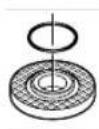
On the support flange (7) around the centering collar there is a plastic ring (round cross-section). If the round cross-section ring is missing or damaged, the support flange (7) must be
replaced before further use.
All grinding wheels
For work with all grinding wheels, always install the protective guard for the hands (15).
Rubber grinding pad
When sanding, make sure that the side with the label (11) is not facing the grinding wheel; the arrow must point to the index mark (24).
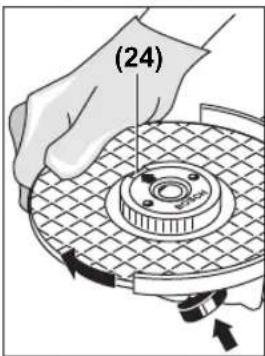
To lock the grinding spindle, press the spindle lock button (1). To tighten the quick-clamping nut, turn the grinding wheel clockwise.
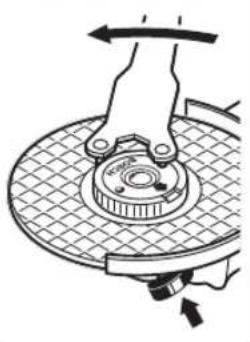
In the same way, to loosen the quick-clamping nut, turn the wheel counterclockwise by hand. Never use pliers to tighten or loosen the quick-clamping nut; always use the pin wrench through the two holes. Insert the pin wrench into the two
holes as shown in the figure.
Permissible grinding attachment
All types of abrasive accessories specified in this operating manual are permitted for use.
The permissible speed [min-1] or peripheral speed [m/s] of the abrasive accessory used must at least correspond to the values given in the following table.
Observe the permissible speed or peripheral speed indicated on the label of the abrasive accessory.
| MaKc. [MM] [MM] | |||||
| D bd [MnH] | -1] [M/c] | ||||
| 180 | 8 | 22,2 | 8500 | 80 | |
| 230 | 8 | 22,2 | 6600 | 80 | |
| 180 | - | - | 8500 | 80 | |
| 230 | - | - | 6600 | 80 | |
Turning the gear head
Before any work on the power tool, pull the plug out of the socket.
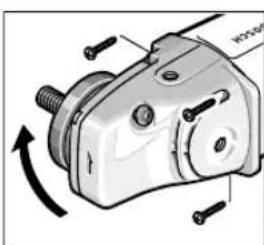
The gear head can be turned in 90° increments. This allows the switch to be placed in a convenient position for the work, e.g., for cutting work with the extraction guard and guide shoe (21) on the left.
Completely unscrew the 4 screws. Carefully, without lifting off the housing, turn the gear head to the new position. Tighten the 4 screws again firmly.
Dust and chip removal
Dust from materials such as lead-containing paint, some types of wood, minerals and metals can be harmful to health. Contact with or inhalation of dust can cause allergic reactions and/or respiratory diseases of the operator or bystanders.
Certain dusts, e.g., oak or beech dust, are classified as carcinogenic, especially in combination with wood treatment additives (chromate, wood preservative). Material containing asbestos may only be processed by specialists.
- Use a dust extraction system suitable for the material where possible. - Ensure good ventilation of the workplace. - It is recommended to wear a respirator with filter class P2.
Observe the regulations applicable in your country for the materials to be processed.
Dust can easily ignite at the workplace.
Working with the tool
Electric power tool
Pay attention to the mains voltage! The voltage of the power source must correspond to the data on the nameplate of the power tool. Power tools rated for 230 V can also operate at 220 V. Hold the power tool by the insulated gripping surfaces and the auxiliary handle. The working tool may come into contact with hidden electrical wiring or its own power cord. Contact with a live wire can make the metal parts of the power tool live and lead to electric shock.
When operating the power tool from portable generators that do not have sufficient power reserve or are not equipped with a voltage regulator with starting current boost, a drop in power or unusual behavior of the power tool may occur when switching on.
Please check the suitability of the generator you are using, especially with regard to the mains voltage and frequency.
Switching On/Off
To switch on the power tool, push the switch (2) forward, then press it.
To lock the switch (2), push the switch (2) further forward.
To switch off the power tool, release the switch (2), and if it is locked, briefly press the switch (2) and then release it.
Do not switch off the power tool without load (see separate pages):
To switch on the power tool, push the switch (2) forward, then press it.
To switch off the power tool, release the switch (2).
Before starting work, check the saw blade guard. The guard must be correctly mounted and move freely. Perform a trial run for at least 1 minute without load. Do not use damaged, deformed, or vibrating saw blades. A damaged saw blade may break and cause injury.
Application instructions
Before performing any work on the power tool, pull the plug out of the socket.
Exercise caution when cutting into load-bearing walls, see section "Instructions for static". Secure the workpiece if its own weight does not ensure a stable position. Do not overload the power tool beyond its rated capacity. After heavy load, let the power tool run for a few more minutes at no load to cool down. Do not touch the diamond cutting discs until they have cooled down. The discs get very hot during operation. Do not use the power tool on an abrasive cutting machine.
Warning: Unplug the tool from the outlet when the power tool is not in use. When plugged into the outlet, the power tool consumes a small amount of electricity even when switched off.
Safety information
Always use sharp grinding discs or blades.
For best results when grinding, move the power tool back and forth while applying light pressure. This will prevent the workpiece from overheating, changing color, or becoming damaged.
Fiber sanding discs
Fiber sanding discs (accessory) can also be used for grinding curved surfaces. Fiber sanding discs have a significantly longer service life, produce less noise, and generate less heat than conventional sanding discs.
Cutting metal
For cutting with cutting discs, always use the protective guard for cutting (13).
When cutting with a cutting disc, work at a moderate feed rate appropriate to the material being cut. Do not apply pressure to the cutting disc, do not tilt it, or swing it.
Do not brake the cutting disc by applying lateral pressure.
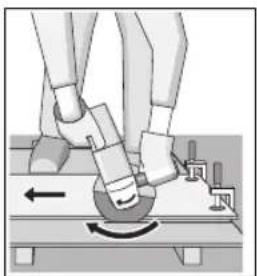
Always hold the power tool firmly with both hands and keep it in a safe position. Otherwise, there is a risk of uncontrolled kickback of the tool from the cut. When cutting profiles or square tubes, start the cut at
the smallest cross-section.
Cutting stone
When cutting stone, ensure adequate dust extraction. Use a dust extraction system. This power tool is only permitted for dry cutting/dry grinding.
For cutting stone, it is best to use diamond cutting discs.
The machine must be equipped with a guide rail (21) for cutting with a guide rail. The machine must be used with a guide rail. The manufacturer recommends similar saws.
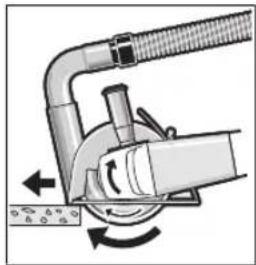
Switch on the power tool and guide the front part of the guide rail onto the workpiece. Feed the pneumatic tool evenly, at a rate appropriate for the material being processed. When processing particularly
hard materials, such as concrete with a high gravel content, the diamond cutting disc may overheat and be damaged. A glowing diamond cutting disc indicates this situation.
In such a case, interrupt the process and let the diamond cutting disc run at no load at maximum speed for a short time.
A noticeable decrease in the working performance of the diamond cutting disc indicates that the disc is dull. The diamond cutting disc can be sharpened by making short cuts in an abrasive material (e.g., in a silicate brick).
Specified application
For walls in masonry, the standard DIN 1053 part 1 or the regulations applicable in the respective country apply. These regulations must be complied with. Before starting work, consult the responsible specialist for masonry, architect, or site manager.
Maintenance and service
Maintenance and cleaning
Before any work on the power tool, pull the plug out of the socket. To ensure safe and efficient operation, keep the power tool and the ventilation slots clean. In extreme working conditions, always use a dust extraction device if possible. Blow out the ventilation slots frequently.
Connect the tool through a residual current device (PRCD). When processing metals
conductive dust may deposit inside the power tool. This can impair the protective insulation of the power tool.
Store the power tool and accessories carefully. If replacement is required, to avoid danger, have the power tool repaired by an authorized Bosch service center.
Service and consultation on application
The service department will answer your questions regarding repair and maintenance of your product, as well as spare parts. Exploded views and information on spare parts can also be viewed at: www.bosch-pt.com
Bosch employees will be happy to advise you on the use of our products and answer all your questions about our products and their accessories.
When making inquiries and ordering spare parts, always quote the 10-digit product number shown on the nameplate of the product.
Countries: Russia, Belarus, Kazakhstan, Ukraine
Warranty service and repair of power tools, in compliance with the requirements and standards of the manufacturer, are carried out in all countries only in authorized service centers "Robert Bosch". WARNING! Use of counterfeit products is dangerous during operation and may cause harm to your health. Manufacturing and distribution of counterfeit products is prosecuted in administrative and criminal proceedings.
Russia
Authorized by the manufacturer organization: LLC "Robert Bosch", Varshavskoe shosse, bld. 1, 24141400, Khimki, Moscow region
Tel.: +7 800 100 8007
E-Mail: info.powertools@ru.bosch.com
www.bosch-pt.ru
Belarus
Robert Bosch LLC
Service center for power tools, ul. Timiryazeva, 65A-020
220035, Minsk
Tel.: +375 (17) 254 78 71
Tel.: +375 (17) 254 79 16
Fax: +375(17)2547875
E-Mail: pt-service.by@bosch.com
Internet: www.bosch-pt.by
Kazakhstan
Service Center and Claims Acceptance: Robert Bosch LLC
Almaty,
Republic of Kazakhstan 050012
Murabaeva St., 180
Armenia, Azerbaijan, Georgia, Kyrgyzstan, Moldova, Tajikistan, Turkmenistan, Uzbekistan
Robert Bosch LLC
Power Tools after-sales service, prospect Rañymbek 169/1
050050 Almaty, Kazakhstan
Service hotline: service.pt.ka@bosch.com
Mounting and operation of power tools
Before any work on the electric tool, pull the plug out of the socket. Do not touch the grinding or cutting discs until they have cooled down. The disc becomes very hot during operation.
The tool must be installed for mounting.
During installation and dismantling of the working tool, press the spindle lock (1) to secure the spindle. Then press the spindle lock and turn the working tool until it locks! Otherwise, the power tool may be damaged.
Working/grinding discs
Pay attention to the dimensions of the working tools. The hole diameter must fit the support flange. Do not use adapters or reducers. When using diamond cutting discs, follow the direction of rotation of the diamond cutting disc, which must correspond to the direction of rotation of the power tool (see the direction of rotation arrow on the gear head). The mounting sequence is shown on page 3 with figures. To lock the working/cutting disc, press the locking button (9) and turn it with the ring wrench at the two holes, see section "Locking button". After mounting the working tool, before switching on the device, check that it is correct.
168|Ukrainian
The mounted working tool may rotate. Make sure that the working tool does not touch the guard or other parts.
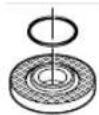
On the support flange (7) on the centering collar there is a plastic part (ring of circular cross-section). If the ring of circular cross-section is missing or damaged, the support flange (7)
must be replaced before further use.
Matching working disc
For work with the matching disc, mount the guard (15). To mount the working disc, use the matching disc (17) and mount the guard (15).
The mounting sequence is shown on page 3 with figures.
Before mounting the support flange for the working disc (17), place 2 spacers (16) on the working spindle (4).
Screw on the round nut (19) and tighten it with the ring wrench at the two holes.
Brush/ Disc brush
For work with the brush or disc brush, mount the guard (15).
The installation procedure is shown on the page with pictures.
The left/right thread must be screwed onto the threaded spindle of the part so that it fits completely against the flange of the threaded spindle before the thread. If the left/right thread is tightened with a special key.
SDS-clic chuck key
For sanding without using additional tools and accessories, you can use the SDS-clic chuck (11).
Using the chuck key (11) allows you to use the sanding accessories.
Use only an undamaged, unmodified SDS-clic chuck (11).
When tightening, make sure that the marked side of the SDS-clic chuck (11) does not point to the sanding circle; the arrow must point to the index mark (24).

Press the spindle lock (1) to fix the sanding spindle. To tighten the SDS-clic chuck with the tool, turn the sanding circle clockwise.
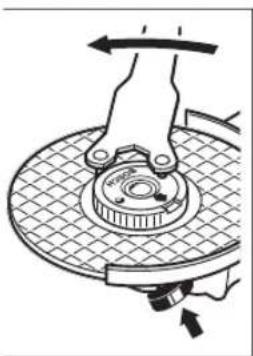
With the spindle lock engaged, the undamaged SDS-clic chuck can be released by turning the sanding circle counterclockwise. If you do not turn the SDS-clic chuck, which is very tight, use the key on the two holes. Place
the key on the two holes as shown in the picture.
Permitted sanding tools
You may use all sanding tools mentioned in these instructions.
The permissible speed [min-1] or oscillation frequency [m/s] of the sanding tools used must correspond to the data specified in the table. For this reason, pay attention to the permissible speed or oscillation frequency specified on the label of the sanding tool.
| MaKc. [MM] [MM] | |||||
| D b d [xBn]. | 1] [M/c] | ||||
| 180 | 8 | 22,2 | 8500 | 80 | |
| 230 | 8 | 22,2 | 6600 | 80 | |
| 180 | - | - | 8500 | 80 | |
| 230 | - | - | 6600 | 80 | |
| 100 30 M 14 8600 45 | |||||
Turning the grinder head
Before any work on the machine, pull the plug out of the socket.
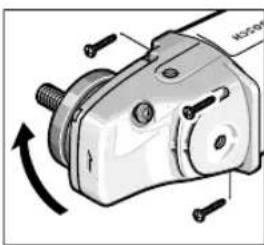
The tool head can be turned at 90° intervals. After turning, the tool head will be in a more convenient position for the work, e.g., for cutting with a cutting disc with a support flange (21) or for sawing.
Fully unscrew the screws. Carefully turn the tool head, without lifting the housing, to the new position. Tighten the screws again.
Dust/Chips Extraction
With such materials, e.g., lacquer coatings that contain lead, some types of wood, minerals and metals, it may be unsafe for health. Touching or inhaling the dust can cause allergic reactions and/or respiratory diseases in you or in persons nearby.
Certain types of dust, e.g., oak or beech dust, are considered carcinogenic, especially when combined with additives for wood treatment (chromate, wood preservatives). Materials containing asbestos may only be worked on by specialists.
- Use the extraction device with the supplied material. - Ensure good ventilation of the workplace. - It is recommended to wear a respirator mask with filter class P2.
Follow the regulations for the disposal of waste materials applicable in your country.
Indicate the accumulation of dust at the workplace. It can easily ignite.
Operation
Starting Operation
Pay attention to the mains voltage! The voltage of the power source must match the data on the rating plate of the power tool. Power tools rated for 230 V can also operate at 220 V. Hold the tool only by the insulated gripping surfaces and by the auxiliary handle. The working tool can hit a hidden power cord or its own power cord. Contact with a live wire can also electrify the metal parts of the tool and lead to electric shock.
Connecting the power cord to portable power generators (generators) that do not have sufficient power reserve or have a voltage regulator with high starting current may cause power loss or unexpected shutdown when switching on.
Note the suitability of the power generator used, especially regarding the voltage and frequency of the current.
Switching On/Off
To switch on the power tool, slide the switch (2) forward and press it. To lock the switch (2), press it further forward.
Switch on the power tool, press the switch (2) or, if it is locked, press briefly on the switch (2) and then release it.
Model of switch without lock (depending on the country):
To switch on the power tool, slide the switch (2) forward and press it. To switch off the power tool, release the switch (2).
Before use, check the tool for damage. The tool must be in perfect condition and fully functional. Test the tool by switching it on for 1 minute without load. Do not use damaged, worn, or defective tools. Damaged tools may break and cause injury.
Operating instructions
Before use, check that the power supply voltage matches the voltage on the rating plate. Be careful when using the tool near live parts. If the workpiece is not stable under its own weight, it must be secured. Do not overload the power tool. After switching on, let the power tool run for a few minutes at no load to allow the tool to reach operating temperature. Do not touch the sanding disc or cutting disc until they have cooled down. The disc gets very hot during operation. Do not use the power tool with a damaged or worn sanding disc.
Note: When the power tool is not in use, unplug it from the mains. Even with the plug inserted and the power tool switched off, a small amount of electrical energy is still consumed.
Maintenance and cleaning
Never use damaged or worn sanding discs.
170|Ukrainian
For best results, move the power tool back and forth over the workpiece at an angle of 30° to 40° to the sanding surface. Apply moderate pressure. The workpiece will not overheat, and the sanding disc will not wear unevenly or clog.
Sanding discs
With sanding discs (accessory), you can also sand profiles and curved surfaces. Sanding discs have a longer service life, produce less noise, and generate less heat than traditional sanding discs.
Cutting metal
For cutting metal with a bonded abrasive, you must use the cutting guard (13).
The power tool must be guided with both hands in accordance with the processed material. Do not press on the cutting disc, do not tilt it, and do not jerk it.
After switching on, do not press the cutting disc sideways.
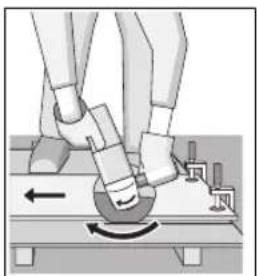
The power tool should be used against the direction of rotation. There is also a risk of uncontrolled movement into the cut. When cutting profiles of square tubes, it is better to start with the smallest cross-section.
Cutting disc
For cutting discs, it is necessary to ensure sufficient ventilation. Wear a dust mask. The power tool allows use only for dry cutting/dry grinding.
For cutting discs, it is better to use a diamond cutting disc.
When using the protective cover for cutting with a guide rail (21), the guide rail must be equipped with a suction adapter. Bosch recommends attaching the adapter.
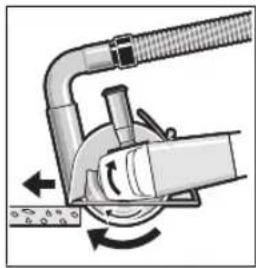
Switch on the power tool and place its front part on the surface of the workpiece to be processed. Guide the power tool with moderate feed in accordance with the processed
material.
When cutting very hard materials, e.g., concrete with a high content of gravel, the diamond cutting disc may stop, which can damage it. If this happens, lift the disc out of the cut and let it run at full speed for a short time.
In this case, stop cutting and let the diamond cutting disc cool down, then continue at reduced speed for a short time.
If you notice a decrease in productivity or an increase in sparks, this indicates a dull diamond cutting disc. You can sharpen it again by making short cuts in an abrasive material, e.g., in sandstone.
Instructions for walls
Load-bearing walls must comply with DIN 10534 or national regulations. These regulations must be strictly observed. Before starting work, consult the responsible structural engineer, architect, or site manager.
Maintenance and service
Technical data and safety instructions
Before any manipulation, unplug the power tool from the socket. For safe operation, keep the power tool and ventilation slots clean. In extreme conditions of use, if possible, use a residual current device (RCD). If the ventilation slots become blocked, insert the instrument through the protective device (PRCD) to clean. When drilling into metal, metal dust may accumulate inside the power tool. This can lead to electric shock. Therefore, clean the ventilation slots regularly.
Store the tool carefully and handle it with care.
If the cable needs to be replaced, this must be done by Bosch or a Bosch service center to avoid danger.
Service and consultation on usage
In the service center, you will receive answers to your questions regarding repair and technical maintenance of your product. You can find detailed information about spare parts at: www.bosch-pt.com The Bosch team of advisors will be happy to answer your questions regarding the use of products and their accessories.
For all further questions and orders for spare parts, please quote the 10-digit order number from the product nameplate. Warranty service and repair of the power tool are carried out in accordance with the requirements of the standards of the manufacturing countries and only in direct or authorized service centers of the company "Robert Bosch". WARNING! Use of counterfeit products is dangerous and may have negative consequences for health. Distribution and sale of counterfeit products is prohibited by law in administrative and criminal proceedings.
Ukraine
Bosch Service Center for Power Tools, Kyiv 10260 Kyiv
Tel.: +380 44 490 2407
Fax: +380445120591
E-Mail: pt-service@ua.bosch.com
www.bosch-professional.com/ua/uk
Addresses of regional warranty service centers are listed in the warranty card.
Disposal
Enekponpnai npnana i ynakobky tpe6a 3daBaN ha ekonoriuho ncty nobtopny nepepo6ky.

He BHKnDaIe eNeKtpoiHcTpymEnTH B No6yTOBe CMITT!
ПишдякраинEC:
BIDIOBIDHO IO CBPoneCbKOI DupeKTHBN 2012/19/EU OIO BIDnpaocBaHnx eKeTpuHHx i eKeTPOHHX PiNAdiB i II nepeTbopeHH BAuioHaJIbHe 3aKoHOdaBCTO HenpndHi I DO BkBaHn EKeTpoIHCTpyMeHTn Tpe6a 3bnpaTH OkpemO i 3DaBaTH Ha ekOlorHQ uChTy pekyepaio.
Ka3ak
Eypa3nna 3KoHOMnKaIbIK OdaftbHa (KeJeH OdaftbHa) Mywe MemLeKeTtep aymafbIHda KOnDaHbIaNbl
HdiPywiin HcHIM yiwin Kapactbipfah naaanaHy KxKaTapbHbN Kypambln aNaIaHaNy XeHHeiOCbl HCKaybnk,cohBmeh bipre KocbImanap da bony MyMkiH.
Caikekti paetay kaiblb aknapat Kocmbada 6ap.
EHnDipren Memneket TpaIb aKnapaT eHIMHH KopnycbIHda XHe Kocmbada KepcetinreH.
EHdpinreH Mep3iHiyckaybIK Myka6acbIHcHcHbI 6etihKepeCtinreH.
HmnpTepeKaTbIcTb 6aNaHbCaknapaOHIM KaTAMacbHda KepcetinreH.
Ehimi nai danany Mep3iM
HIMHHKbI3MeTetyMep3iM7KbI. HdipinreHmep3imHe6bacn (eHipy KyHi 3aybITKaTaNacbiHaJka3bnFaH) icTeN5 KbIcakTaFahHaH coH, eHIMTeKcepyci3 (cepBnCTIK TeKcepy) naDnAHy YcbHInMaIdbl.
Kb3MeTKeHemece naDanahyuBihhKatenikTepi MeH icten bHy ce6entepinH t3imi
TytKacbMeH Kopnycbl 6y3bINFaH 60nca, eHIMni naDanaHa6aHb3 -ehim KopnycbHAn TikeNe TytIN WbIKca, naJaIaHa6aHb3 -TOKcbIMb6y3bIFAHHEMeCEOKUayIaycbI360nca, naDanaH6aHbI3 JkayBH-1aWbHKe3IHDe cbiPTa(daIada) naDanaH6aHb3 Kopnyc ihihe cy Kipce Kypbifhbl Kocybl 60MaHb3 KENyWKBbIH WbIKca,naHdaHaHbI3 KaTbI Dipin Ke3iHne NaDaaHaBb3
Safety instructions for operation and maintenance
Read the operating instructions before use.
Maintenance
Maintenance should be carried out taking into account the effect of high temperatures. During maintenance, protect against temperature fluctuations. Maintenance is not possible when the equipment is in operation. Maintenance intervals must be observed in accordance with GOST 15150 (part 1).
Storage
During storage, the equipment must be protected from mechanical impacts and repeated freezing and thawing.
During operation/transportation, do not allow the equipment to be subjected to impacts. Read the storage conditions in accordance with GOST 15150 (part 5).
Safety precautions
Electrical safety precautions
WARNING
All safety precautions must be observed.
Technical safety measures must be observed. It is prohibited to touch live parts and/or rotating mechanisms.
Warning: this device must be connected to the mains power supply through a safety switch.
The device must be connected to the mains power supply (via a power cord) and to the battery power supply (via a battery cable).
Safety instructions
Safety instructions and installation. It is possible that the device may be used in hazardous areas. The power supply must be disconnected from the atmosphere, water, moisture, or dust. The power cord and plugs must be dry, and they must not be damaged. Children and untrained persons must not use the device. They must be kept away from the device.
Electrical safety
The electrical device must be grounded. Do not modify the device in any way. Do not connect adapters to the power cords. The device and its sockets must be kept away from heat sources. Do not place the device on soft surfaces such as carpets, blankets, or fabrics. If the device is placed on a soft surface, it may overheat and cause a fire. The power cords must not be pinched or damaged. The device must be disconnected from the power supply before cleaning. Do not use the device if the cord is damaged. Do not pull, carry, or unplug the device by the cord. Do not use the device with wet hands or in damp conditions. If the cord is damaged or worn, it must be replaced. The device must be disconnected from the power supply before any maintenance or cleaning. The device must be kept away from
the power cord must be kept away from the device's moving parts.
If the device must be connected to the power supply, it must be connected through a residual current device (RCD) to protect against electric shock. The RCD must be installed in the power supply circuit.
Electrical safety
Electric cranes must be grounded, have their current collectors checked, and their rails grounded. Electric cranes should not be operated during thunderstorms or strong winds. It is possible to bring the electric crane's current collector to the contact wire only when the switch is off. Both contact wires must be grounded. The switch must be turned off during breaks. If the contact wires or their insulators, or the contact network supports, are damaged, the crane operator must immediately stop work and report to the supervisor. Do not touch the wires. If the current collector or its parts are damaged, or if the current collector is disconnected from the wire, it is forbidden to bring the current collector to the contact wire. Do not touch the current collector with your hands or tools. It is forbidden to bring the current collector to the contact wire if the insulation is damaged or if the wire is broken. Do not work for a long time. During breaks, the switch must be turned off. If the crane's current collector is disconnected from the wire, it must be turned off. Do not touch the wires or the equipment. Keep your hands, feet, and clothing away from moving parts. It is forbidden to touch the wires, equipment, or moving parts. If the warning signals are not working, do not operate the crane. If the crane is not working properly, do not operate it. WARNING! When the crane is being moved or when the current collector is being moved, or when the current collector is being operated, if the crane's current collector is in contact with the wire, it must be turned off (if it is on). Turn off the power. Do not touch the socket or the battery terminals. If the socket is damaged, do not use it.
Electric cranes: maintenance and repair
Do not use the electric heater. The electric heater must be connected to a grounded outlet. Do not use the electric heater with an extension cord or adapter. If the electric heater falls into water, unplug it immediately. Do not touch the heater, its cord, or plug with wet hands. Do not immerse the heater, its cord, or plug in water or any other liquid. This can cause electric shock, fire, or serious injury. Do not use the heater outdoors or in damp areas. Do not place the heater near flammable materials such as curtains, bedding, or clothing. Keep the heater away from children and pets. Do not cover the heater or block its air vents. Do not use the heater if it is damaged or malfunctioning. If the heater is damaged, have it repaired by a qualified technician. Do not attempt to repair the heater yourself. Always unplug the heater when not in use. Do not pull the cord to unplug the heater. Keep the cord away from heated surfaces. Do not use the heater in areas where flammable liquids are present. Follow all safety instructions provided in this manual.
Maintenance
The electric heater should only be serviced by qualified personnel. This is to ensure the safety of the heater.
Safety instructions for use in industrial environments
Safety instructions for cleaning, maintenance, and repair
This electric heater is intended for use in industrial, commercial, or agricultural environments. Do not use this heater for purposes other than those described in this manual. Always follow all safety instructions and warnings. Failure to follow these instructions may result in fire, electric shock, or serious injury.
Kbntbtpaty CnKtB apKeTepre 0cbl 3neKtp KypanbI apHaMaFaH. 3neKtp KypaBHa apHaMaFaH apeKeTep 3nH, Kayin KeTipin XeKe JapaKaTTaHyfA anbl Kenyi MymkiH.
AcanenHdpyimEnKacanmaHanHeMeecYcbH6aHan Kepek-JkapaKapTApBnIpaNdaHa6aHbI3.KepeK-JkapA 3NeKtp KypalbHbI3Fa caNKeCeJe, Kayinc3XMybcicictey KaMTaMaCbI3 etINMeHdi
KymbIC KypanblaAhnBIMapbHbIHyFapbHbI caHbI 3NeKtp-KypanblHa-KepcetinReh MAKCNMaNblaAHNbIMap cAHbHa-TeH-6onybl-Kepek. EcentenreH XblnAaMblfBHaH Te3ipeK ICTEN TpyFaH KepeK-JkapaKTap CblHybl, YblnIKeTyI MymKH.
PaiDanaHaTbH JyMbIC KypaBbHbHc biptKbl-tnaMeTpim HeKaIbHdbIfbl 3NeKTp-KypaBbHbH-EnWeMepine ca-B6onybi-Kepek. Dypbc TaHdaImarHan Kepek-JapaKtap Dypbc-KopraJMaBayxHe-6akblaydaH WbIFybl MymKiH.
KepeK-JkapakTapdbH 6ypaHdabI KockbIbMaJdaNafBtWmHdEniH 6ypaHdacbHa caI 6onykepe.ФnaheuHepaTbIFAH KepeK-JkapakTap yin OnapdbH opta Teciri fnaheutih opnaty DnAmetpiHe caI 6onybKepe.3neKtp KpaBbHbOpHaty acnTapbHa cai 6oImraH KepeK-JkapakTap TeHrepIMHe H bIfIn, KaTb Tep6enin, 6aKbIaydbj KOfAITyFA eKeenei.
3aKbIMdAnFaH Kepek-XapakTapDbn NaDanaan6aHbI3. 2p naDanahydAn dbn H a6pa3nBti DeHreNeK CnAeKtB1 KepeK-XapakTapDbcHbIK NeH XapbIKTapFA,ETK DnCKHI XapbIKTapFA,TO3y HeMece apTBkUdbIKTapbHa,CbIM KbluWAsKtbI 6oc Hemece cbIHfAH cbIMdApra TeKcepH3.Erep 3neKtp Kypanbl Hemece KepeK-XapakTAP Tycin KETce, OHbIH 3aKbIMdAmFaHbIH TeKcepH3,Kaxet 60nc 3aKbIMdAmFaH KepeK-XapakTAPDbOpHaTbHbI3. KepeK-XapakTapDbTeKcepIN opHAtyad coH, 3iH3di XeHe 6acKa aDAMapDbI aHaHbIN TypFAn KepeKXapakTap aMafBHaH aNbCTaTbIN, 3JeKTP Kypanbl HAKykbTbHaCbHaDbI.
Keke-KopraHbc KypanapbHn (Kayinci3dk Ke3indpirih, KopraHbc KaikahbI, 6ac Km Jxhe T.6.) naDanaHbHb3. NaDanaHyfa 6aNanHbCTbl KopraBIMackaHb, Kayinci3dk Ke3indpikTePH KOnDaHbHb3.KepeK 6oNFAHa, WAn MackacBH, Kynak KopraFbiHTapbH, Konran XeHe KiUa6pa3NBt 6oJWeKtePd HEmec DaBHHaDMa 6oJWeKtePih Yctai anatbH we6epxha AnXaKbHbHn NaidanaHbHb3. Typni-xymbicap 6apbcibHa da na Da 6oataBH ywaTbH-6oTeH 6oJWeKtePdeH-KopraTbH Kayinci3dk Ke3iDipiriH naDanaHbHb3. WaH MackacB HeMece pecnPapat ycaK 6oJWeKtePdeH, wAHHaH Kopraybl KepeK. Y3ak Wynap ecty-kaBineHH Kofantyfa Akenyi MymkIH.
BTeH-aDAMapdbH XyMbIC-ahMaFbIHAn-Kayinc3 aMakTa bonybH KAMTaMaCbI3 etiH3. XyMbIC
The cable must be laid in accordance with the requirements for cable lines. Before installation, the necessary preparations must be made, and the installation must be carried out carefully.
Depending on the nature of the work, it is possible to perform electrical welding or other types of welding. If the operator needs to perform welding work, it is possible to install electrical protective metal shields. Install them on all types of equipment. If they are not installed, it is possible to damage the equipment or parts. When performing welding work, connect the electrical ground. When performing welding work, it is possible to disconnect the electrical ground. When disconnecting the electrical ground, install the parts in the correct order. When performing welding work, install the parts in the correct sequence, and it is possible to connect the parts correctly. Disconnect the electrical ground from the power source. The outer casing of the device must be connected to the protective ground. The electrical ground must be connected to the protective material. It is possible to use these materials. We connect the electrical ground to the wet and damp places. It is possible to connect the electrical current to water or other wet places.
Repair and maintenance specialists
Repair of the device or installation of the equipment must be carried out by qualified personnel. It is prohibited to operate the equipment without proper grounding or to operate it without the protective ground connected.
For example, if the device is connected to the mains, water can enter the device and cause electric shock or fire. If the device is damaged or malfunctioning, it can be dangerous. It is possible to repair the device only after disconnecting it from the power source. When repairing the electrical ground, follow the safety instructions and use appropriate protective equipment.
Install the electrical ground, connect it to the ground terminal, and install the protective ground. If the installation is done correctly, it will ensure maximum safety during repair or maintenance.
Follow the safety instructions when performing maintenance and repair work.
Do not operate the device without proper grounding. It is possible to repair the device only after disconnecting it from the power source. Do not touch the electrical ground with wet hands. When repairing the ground, disconnect the device from the power source. Do not touch the wires or cables with wet hands. Do not operate the device with wet hands or in wet conditions. It is possible to disconnect the wires, cables, or devices from the power source and bring them to the repair area. Do not place the device in a location where it can be exposed to water or moisture. Connect the ground wires to the ground terminal and the protective ground.
Use only non-flammable materials for maintenance and repair work.
This electrical appliance is intended for use by adults and trained personnel. This electrical appliance is not a toy; it can be dangerous. It is necessary to place the appliance and its cord out of reach of children. If the cord is damaged, the appliance must not be used. The appliance must be installed in accordance with the manufacturer's instructions to avoid hazards. The appliance must be connected to a power supply with the voltage specified on the rating plate. Do not use the appliance with a damaged cord or plug. The appliance must be kept away from moisture and heat sources. For example: cutting tools. Cutting tools are intended for cutting materials, and it is possible to use them with appropriate attachments. For trained personnel, it is necessary to follow the instructions for use and maintenance. Cutting tools must be stored separately from other tools. Do not use the appliance if it has been dropped or damaged. If the appliance is damaged, it must be repaired by a qualified person.
Safety instructions for abrasive cutting
Do not use the cutting tool if it is cracked or damaged. Do not use the tool with excessive force.
Do not use the tool for purposes other than cutting, and do not use it in a way that could cause injury or damage.
Do not operate the tool with wet hands or in wet conditions. The tool is not intended for use in explosive atmospheres. If the tool is used in a damp location, it must be connected to a power supply protected by a residual current device (RCD). If the tool is used outdoors, use an extension cord suitable for outdoor use. Do not touch the cutting tool while it is running. Keep hands away from the cutting area. Do not use the tool if the switch does not turn it on and off. If the tool is damaged, have it repaired by a qualified person. Always wear safety glasses and hearing protection when using the tool. Use only accessories recommended by the manufacturer. Do not use the tool near flammable liquids or gases. Keep the tool clean and free of dust.
Safety instructions for maintenance
Do not use the device if it is damaged. If the device is damaged, contact the manufacturer or supplier for repair. The device may be used only for its intended purpose. It is forbidden to use the device for any other purpose.
Safety instructions for using the device
When using the device, be careful not to damage the device. Do not drop the device or expose it to strong impacts. The device can be used by children or persons with reduced physical, sensory or mental capabilities, or lack of experience and knowledge, if they have been given supervision or instruction concerning use of the device in a safe way and understand the hazards involved. Children shall not play with the device. Cleaning and user maintenance shall not be made by children without supervision.
The device is intended for household use only.

Do not use the device near flammable materials or explosive atmospheres. Do not immerse the device in water or other liquids. Do not use the device with wet hands. Do not use the device if the power cord or plug is damaged, or if the device has been dropped or damaged. If the device is damaged, unplug it and contact a qualified service representative. Do not attempt to repair the device yourself. Do not use the device near bathtubs, showers, or swimming pools.
Device Description

Remove all packaging materials and labels. Keep the packaging materials and labels away from children. Dispose of them in accordance with local regulations.
Do not dispose of the device in household waste.
Check the device for any damage.
Intended Use
The device is designed for use with water, non-abrasive cleaning agents, and similar liquids. Do not use the device with flammable or corrosive liquids.
Before cleaning, always unplug the device from the power outlet. Do not immerse the device in water or any other liquid.
Use the device only with the provided accessories and attachments.
Corset with built-in battery
The device has a built-in rechargeable battery. Do not expose the device to high temperatures.
(1) Angle grinder (2) Auxiliary handle (3) Guard (for grinding) (4) Grinding disc (5) Cutting disc (6) Cutting disc guard (7) Wrench for disc guard
176|Kazakh
(8) Grinding disc (9) Quick-release nut (10) Quick-release nut with SDS-clic (11) Quick-release nut with SDS-clic (12) Metal cutting disc (13) Cutting disc guard (14) Cutting disc (15) Multi-purpose guard (16) Abrasive
(17) Rubber grinding pad (18) Grinding disc (19) Dremel (20) Felt polishing wheel (21) Guide for cutting (22) Diamond cutting disc (23) Cup (for grinding)
A) The device is not intended for use by persons with limited physical, sensory or mental capabilities, or lack of experience and knowledge, unless they have been given supervision or instruction concerning use of the appliance by a person responsible for their safety.
Technical data
Angle grinder GWS 2200-180 H GWS 2200-230 H
| Фг.Н.М.Н.М.И.Р. | 3601 H51 X.. | 3601 H52 X.. |
| Homina/Dbl/TyBb/HaTbH Kyat Bt 2200 2200 | ||
| Фг.И.М.Д.П.К.В. 1380 1380 | ||
| Homina/Dbl/айнау XXHINIRI Мн | -1 | 8500 6600 |
| Жарлай диссicont Мас. Диметри MM 180 230 | ||
| Жарлайшинденинчпек ошмсы M 14 M 14 | ||
| шпндань орек ошмсынбін Мас. уздыfы MM 25 25 | ||
| Салmarы EPTA-Procedure 01:2014 саï | ||
| - діріді басьш кocьIMSHA TуТкасы 6ap Kr | 5,1 | 5,1 |
| -.stандартсы КocьIMSHA TуТкасы 6ap | Kr | 5,0 |
| Корганьс Класы | ☐ / ☑ |
The machine is intended for cutting and roughing metal, stone, and other materials without the use of water.
Only use the machine with the appropriate guard for cutting and grinding. Always use the guard for cutting with the closed side facing the operator. The guard for cutting must be adjusted so that the open side faces away from the operator.
This machine is not suitable for use with diamond cutting discs.
The vibration emission value according to EN60745-2-3 is given below.
The vibration emission value according to EN60745-2-3 is: a) for grinding: 92 dB(A); b) for cutting: 103 dB(A). Uncertainty K = 3 dB.
Wear ear protection!
The vibration emission value (three-axis vector sum) according to EN60745-2-3 is:
Vibration (surface grinding):
an = 9.5 M/C2, K = 1.5 M/C2,
Akapaydncikimehakapay:
an = 4.0 M/C2, K = 1.5 M/C2.
Before using the device, it is necessary to check the compliance of the mains voltage with the rated voltage indicated on the nameplate. The device is designed for operation with alternating current only.
Before connecting the device to the mains, check the grounding. If the mains plug is not grounded, use appropriate adapters.
If the device is not used for a long time, disconnect it from the mains. This will prevent possible damage.
To connect the device to the mains, use only the supplied power cord. Do not use extension cords or adapters.
When operating the device, follow the safety rules: do not touch the mains plug with wet hands, do not pull the cord, do not expose the device to moisture.
Cleaning
Before cleaning, disconnect the device from the mains.
Do not immerse the device in water. Clean the housing with a damp cloth. Do not use abrasive cleaners.
Dispose of batteries and accumulators properly.
The device contains materials that may be harmful to health if disposed of improperly. Do not dispose of it with household waste. Contact local waste disposal authorities for proper recycling.
WARNING: Do not use the device near flammable materials. - Keep the device away from heat sources. - Do not operate in areas with high humidity.
For devices with batteries, remove them before disposal.
KymbocpHbHaJhaHHbHxHHaMbayH KaaraHanbi3. HohohyTuTaHybIMykH.
PaindanaHy
Icke kocy
Keni KyaTbHa Ha3ap aydapbHb3! Tok Ke3iHn KyaTb 3neKtp KypaIbH 3aybITbIK TaKaTaNacBHaFbIMonimETepine caN bony KaXeT.230 B6enricimen 6enrinEnre HneKtp KypaIaPmEn 220 Bxymbc icteyRe 6onaBl. KypbInfbHbOkwaynHaF Kbickb6tMeKocbIMwa KbcickbApkbInbYcTaHb3.AmManbIcAmanblacnXacbPbIH TOKcbIMdApbHa Hemece 3Xeni KaBenine THoi MYMkn. ToK eTeTih CBIMFa THO MetaIIbIkyan6eWekTepeHTo6epin,cofByHa anbn Kenyi MyMKIN.
3NeKT KypaIbI Kyat Kopby JKeTkiNikci HeMece icke Kocy ToBih KUWeTeIH CAnKec KepHey peTteriImeH Ka6bIKTaMafAH 3NeKTp THePaTOpIaPbIHan Kyat aIca, Kocy Ke3IHe Kyat TEmHeyI Hemece 3NeKTp KypaIbI aTeTTbTbcpekET etyi MymKiH.
TeHepaTopdbHkapaMdbIbIbFbIH,acipece,xeni yuHJ kapaMdbIbIbFbIH TeKcepH3.
Kocy/ewipy
3JnKtp KpaanbI Kocy yinH cenipriuT (2) anFa KblnnBtBhl3, codah Kein 6acbl3.
BacbnFaH cehdipriuTl (2)6ekity yuih cehdipriuTl (2) oana piaJfA KblKbITbIb3.
3Jektp Kypanbl eipiy ywih cehdipriwi (2) xibiepiH3 Hemece 6eKITince, cehdipriwi (2) kbcKa yaKbI 6oBl bacbH3 Xane Xbi6epiH3.
Bekirinmeiin cengdpriu (enre 6aiahbaictb):
3nEeKtp Kpaanbkyin ceHnpriu (2) anFa XblkbltbHb3, cOaH KeIN 6acblb3.
3nKtp Kypandbu eupiy ywiH KockbiWbI/ewipriiTi (2) xi6epiH3.
Pnndanhyd anndbH axapnay KpaandpBn KaTateKcepini3.Axapnay KpaBb6epik opnatbnin,ewKepepriciaHanyibKaKet.1MHyT iWInde cbHAYKymbcBn XyKTeMeCi3OpbHdaHb3.Akaybl6ap,doManak eMc xHe dipIneTIN axapnay KpaandpBn naDanaH6aHb3.By3bnfah axapnay KpaandpBxaPbBb,3aKbIMDaPfa anbl Kenyi MymknH
Painanany Hycaynapbi
Before connecting the electric curling iron to the socket, check for damage. If any defects are found, refer to the "Static Troubleshooting" section. Do not use the device if the cord is damaged. Do not immerse the electric curling iron in water. If the electric curling iron gets wet, unplug it immediately and do not touch it until it has dried completely. Do not touch the heating elements or the cutting edges. Do not use the electric curling iron near bathtubs, sinks, or other containers with water.
Do not use the electric curling iron near bathtubs, sinks, or other containers with water. If the electric curling iron falls into water, unplug it immediately before reaching into the water.
Dry cleaning
For dry cleaning of the cutting blades, use a dry cloth.
During dry cleaning with a cloth at an angle of 30° - 40°, the best results are achieved. Do not press the electric curling iron too hard. In this case, the cord may be damaged, so do not pull or twist it.
Cleaning the heating plate
The heating plate cleaning cloth (curling iron) is included with the device. The cleaning cloth
The heating plate cleaning cloths work better when replaced with new ones, and the cleaning temperature should be lower.
Cutting metal
For cutting metal with an abrasive wheel, use the cutting guard (13).
Do not use the cleaning cloth with the cutting wheel. Do not press the cutting wheel, do not tilt it, and do not use excessive force. If the cutting wheel gets stuck, stop the cutting wheel.
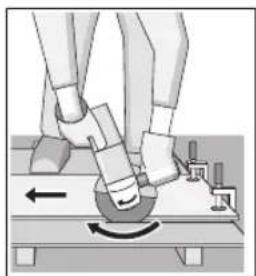
The electric curling iron must be unplugged before any cleaning. Do not touch the heating elements until they have cooled down.
Do not start cutting profiles or other curved shapes until the cutting wheel has reached full speed.
Cutting part
Before cutting, make sure the cutting guard is in place. Use the guard. This electric curling iron is only intended for cutting and dry cleaning.
Tactbkecywih anmac kecy dckinepih naDanaHaHKeH BafttaybiuTp 6ap kopfaBkiKanTamaHb (21) naDanaHy wih tac wahbH copbin any wih waHCOPfBiTu naDanaHy Kepek. Bosch ocbldai wacopfbiTapdb ycbHaBl.
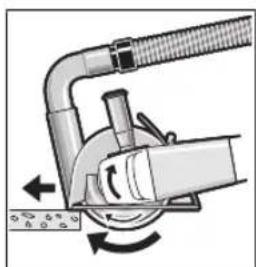
3neKtp KpyanDbI eWipHj3 XaHe 6aftTaybIuTpDbIH aBbHfB 6eRIMeH 6enweke OPhaTbHb3. 3neKtp KpyanDbI bipKeKi, MaTePnAra CaiKec 6epyMeH XblkbTbHb3.
KypambHda KnbipWbTKac eTe Ke n aca KaTbbl MaTePnAaapBbl, MbCaNbl,
6eToHbI, 0hJeY Ke3iHne anMac weH6ep Kbi3bn KeTyjXaHe 3aKbIMdanybl MyMKIH.AnMac weH6epderiyuKbIHnapocBHBi 6inipedi.
BynKaJaDnJa KMyMbIcTb TOKTaTbHb3KHeAnMaNaeHBepePi 6oc KypicTe, eH Kofapbl KbldAmblkTa Kbicka yaKbIT BoNb bCaIKbIHDaTbHb3.
OHIIMINIITIaIapbIKTaTeMeHJeYxHe yuKbIHAp anMac Kecy wehbpEi eTnec 60bn KanFaHbN biDipepi. OHbl abpa3nBTi MaepnAJa, MbcAnb, CNHKAT KipniWTe, Kbickaawa Kecy apkblnb otKipneye 60anaBbl.
180|Romána
Ctathka Tpyanbl Hcykaynap
TipeK Ka6bIpFaIapdaFbO MyKTapFa DIN 1053 HopMaBbH 1 TapMaFb HeMece caikec enderi epexe KonDaHbIaBb. Byn HcyKaynapdb MinDetTI typeOpbHay Kepe.Kymbictb bactamac 6pyh CTatNkaKeHHderi MaamHmeh, caYnetwimeh HeMece npopabneH Kehecihi3.
TexHnKaIbIK KYTIM XaHe KbI3MeT
KbI3MeT KepCeTy XKeH e Ta3anay
BapnbKxymbIcTapaH andbH 3neKtp KypanbHbH Xeninik aibpbH po3eTKaDah WbIFapbHb13. Xakcbi api ceHimdi Kymblc icTey yuH 3neKtp KypanbI MEH KeJETKiTecIKTI Ta3a YCTaHb3. TeTeHHe JxMByC KfAaBbHdMa MymKIn 6oNFaHwa WanCOPbIbTb naDanaHbHb3. XeNdtKtiw TecikTi Xhi yPlen, Ta3apTbn apTbIK TOkTaH cKaTahBn KocKbIbTb (PRCD) KocbHb3. MetanDbI eHcyde ToK OTK3eTIH WAn aNeKtp KypaBbHbIH iwiHne XHHanybl MYMKH. 3NeKTP KypaBbHbIK OKhaynaBbIb 3aKbIMDaanybl MYMKH.
Ka6bikTapdbMyKMTcKaTahb3 KHe KYtiH3.
Erep6aHnHaBc bIMbH anMactbpy kKaTe 60nc, KayincdikTHeMeHdeyIe KOn 6epMey yuHIOcbKyMbIC TeK Bosch KOMNaHnCbI HeMece Bosch 3JekTp KypaIapbl 6oBbHwa eKInETi KbImET KepeTy optanbIKTapbHda Kypriainyi Tnic.
TytbHybIfa KbI3MeT KepCety XHe naiDanaHy Kehectepi
Keep the operating instructions and safety instructions in a safe place for future reference. For questions about the product and spare parts, please contact: www.bosch-pt.com
Bosch provides a warranty for the product in accordance with the legal provisions of the country of purchase.
The warranty claim must be submitted within 10 days of the discovery of the defect, along with the original purchase receipt.
For repairs and maintenance, contact the authorized service centers of "Robert Bosch" or its authorized service partners. Using original spare parts is recommended. Warranty claims are subject to the terms and conditions of the warranty.
KAZAKHSTAN
Service center for customer inquiries:
"Robert Bosch" LLC
Almaty
Republic of Kazakhstan
050012
Muratbaev St., 180
"Teremok" 50.7 kV
Tel.: +7 (727) 3313100
Fax: +7 (727) 2330787
E-Mail: ptka@bosch.com
You can find the spare parts and accessories for your power tool at: www.bosch-professional.kz, where you can also purchase them online.
Maintenance and cleaning
Before any work on the power tool itself (e.g., maintenance, changing tools, etc.) as well as during transport and storage, remove the battery from the power tool.

Do not touch the power tool's cutting edges!
Only for EO products:
Power tools, rechargeable batteries, accessories, and packaging should be sorted for environmental-friendly recycling. Do not dispose of power tools and batteries/rechargeable batteries in household waste!
Româna
Instrucțiuni de siguranță
Weight according to EPTA-Procedure 01:2014
-with auxiliary handle with vibration damping kg 5.1 5.1
-with standard auxiliary handle kg 5.0 5.0
Service scule electrice
Strada Horia Macelariu Nr. 30-34, sector 1
013937 București
Instrucțiuni de siguranță
Safety instructions
WARNING! Read all safety instructions carefully. Failure to follow the instructions may lead to
electric shock, fire and/or serious injuries.
Keep these instructions in a safe place.
The term "power tool" in the instructions refers to power tools powered by the mains (with a power cord) and power tools powered by a battery (without a power cord).
Workplace safety
Keep your workplace clean and well lit. Cluttered and dark workplaces are a prerequisite for accidents. Do not work with the power tool in explosive atmospheres, in the vicinity of flammable liquids, gases or dust. During work, the power tool emits sparks that can ignite dust or vapors. Keep children and bystanders at a safe distance while working with the power tool. If your attention is distracted, you may lose control of the power tool.
Electrical safety
The plug of the power tool must match the socket. Never modify the plug in any way. When working with earthed power tools, do not use adapter plugs. The use of original plugs and sockets reduces the risk of electric shock. Avoid body contact with earthed surfaces, e.g. pipes, radiators, stoves, refrigerators. When your body is earthed, the risk of electric shock is higher. Protect the power tool from rain and moisture. The penetration of water into the power tool increases the risk of electric shock. Do not use the power cord for purposes for which it is not intended. Never use the power cord for carrying, pulling or unplugging the power tool. Protect the cord from heat, oil, sharp edges or moving parts of machines. Damaged or
tangled cords increase the risk of electric shock.
When working with a power tool outdoors, use only extension cords suitable for outdoor use. The use of extension cords intended for outdoor use reduces the risk of electric shock. If the use of the power tool in a humid environment is unavoidable, use a residual current device (RCD). The use of an RCD reduces the risk of electric shock.
Personal safety
Be careful and concentrated, act prudently and reasonably. Do not use the power tool when you are tired or under the influence of drugs, alcohol, or medication. A moment of inattention while operating the power tool may result in serious personal injury. Use personal protective equipment. Always wear eye protection. Protective equipment such as dust mask, non-skid safety shoes, hard hat, or hearing protection used for appropriate conditions will reduce personal injuries. Avoid accidental starting. Ensure the switch is in the off-position before connecting to power source and/or battery pack, picking up or carrying the tool. Carrying power tools with your finger on the switch or energizing power tools that have the switch on invites accidents. Remove any adjusting key or wrench before turning the power tool on. A wrench or a key left attached to a rotating part of the power tool may result in personal injury. Do not overreach. Keep proper footing and balance at all times. This enables better control of the power tool in unexpected situations. Dress properly. Do not wear loose clothing or jewelry. Keep your hair, clothing and gloves away from moving parts. Loose clothes, jewelry or long hair can be caught in moving parts. If devices are provided for the connection of dust extraction and collection facilities, ensure these are connected and properly used. Use of dust collection
can reduce dust-related hazards.
Careful handling and use of power tools.
Before using the power tool, read all safety warnings, instructions, illustrations and specifications provided with this power tool. Failure to follow all instructions listed below may result in electric shock, fire and/or serious injury. Save all warnings and instructions for future reference. The term "power tool" in the warnings refers to your mains-operated (corded) power tool or battery-operated (cordless) power tool. Work area safety: Keep work area clean and well lit. Cluttered or dark areas invite accidents. Do not operate power tools in explosive atmospheres, such as in the presence of flammable liquids, gases or dust. Power tools create sparks which may ignite the dust or fumes. Keep children and bystanders away while operating a power tool. Distractions can cause you to lose control. Electrical safety: Power tool plugs must match the outlet. Never modify the plug in any way. Do not use any adapter plugs with earthed (grounded) power tools. Unmodified plugs and matching outlets will reduce risk of electric shock. Avoid body contact with earthed or grounded surfaces, such as pipes, radiators, ranges and refrigerators. There is an increased risk of electric shock if your body is earthed or grounded. Do not expose power tools to rain or wet conditions. Water entering a power tool will increase the risk of electric shock. Do not abuse the cord. Never use the cord for carrying, pulling or unplugging the power tool. Keep cord away from heat, oil, sharp edges or moving parts. Damaged or entangled cords increase the risk of electric shock. When operating a power tool outdoors, use an extension cord suitable for outdoor use. Use of a cord suitable for outdoor use reduces the risk of electric shock. If operating a power tool in a damp location is unavoidable, use a residual current device (RCD) protected supply. Use of an RCD reduces the risk of electric shock. Personal safety: Stay alert, watch what you are doing and use common sense when operating a power tool. Do not use a power tool while you are tired or under the influence of drugs, alcohol or medication. A moment of inattention while operating power tools may result in serious personal injury. Use personal protective equipment. Always wear eye protection. Protective equipment such as dust mask, non-skid safety shoes, hard hat, or hearing protection used for appropriate conditions will reduce personal injuries. Prevent unintentional starting. Ensure the switch is in the off-position before connecting to power source and/or battery pack, picking up or carrying the tool. Carrying power tools with your finger on the switch or energising power tools that have the switch on invites accidents. Remove any adjusting key or wrench before turning the power tool on. A wrench or a key left attached to a rotating part of the power tool may result in personal injury. Do not overreach. Keep proper footing and balance at all times. This enables better control of the power tool in unexpected situations. Dress properly. Do not wear loose clothing or jewellery. Keep your hair, clothing and gloves away from moving parts. Loose clothes, jewellery or long hair can be caught in moving parts. If devices are provided for the connection of dust extraction and collection facilities, ensure these are connected and properly used. Use of dust collection can reduce dust-related hazards. Power tool use and care: Do not force the power tool. Use the correct power tool for your application. The correct power tool will do the job better and safer at the rate for which it was designed. Do not use the power tool if the switch does not turn it on and off. Any power tool that cannot be controlled with the switch is dangerous and must be repaired. Disconnect the plug from the power source and/or the battery pack from the power tool before making any adjustments, changing accessories, or storing power tools. Such preventive safety measures reduce the risk of starting the power tool accidentally. Store idle power tools out of the reach of children and do not allow persons unfamiliar with the power tool or these instructions to operate the power tool. Power tools are dangerous in the hands of untrained users. Maintain power tools. Check for misalignment or binding of moving parts, breakage of parts and any other condition that may affect the power tool's operation. If damaged, have the power tool repaired before use. Many accidents are caused by poorly maintained power tools. Keep cutting tools sharp and clean. Properly maintained cutting tools with sharp cutting edges are less likely to bind and are easier to control. Use the power tool, accessories and tool bits etc. in accordance with these instructions, taking into account the working conditions and the work to be performed. Use of the power tool for operations different from those intended could result in a hazardous situation.
Maintenance
Have your power tool serviced by a qualified repair person using only identical replacement parts. This will ensure that the safety of the power tool is maintained.
Safety instructions for all operations: General power tool safety warnings for sanding, sanding with sandpaper, working with wire brushes or abrasive cutting-off operations.
To prevent electric shock, injury, or damage to the tool, read all warnings, instructions, and specifications provided with this power tool. Failure to follow the instructions listed below may result in electric shock and/or serious injury. - Do not use the power tool if it is damaged. Damaged tools, for which the power tool is not intended, may increase the risk of injury and cause damage. Do not use working tools with accessories that are not specifically designed and approved for use with this power tool. Just because the accessory can be attached to the power tool does not guarantee safe operation. The rated speed of the working tool must be at least equal to the maximum speed marked on the power tool. Working tools that rotate faster than their rated speed can break and fly apart. The outer diameter and thickness of the working tool must be within the capacity rating of your power tool. Incorrectly sized working tools cannot be adequately guarded or controlled. The arbor hole of the accessory must fit the spindle of the power tool. For working tools mounted on a center flange, the arbor hole of the accessory must fit the centering bore of the flange. Working tools that do not match the mounting hardware of the power tool will run out of balance, vibrate excessively, and may cause loss of control. Do not use damaged working tools. Before each use, inspect the working tool, e.g., abrasive discs for chips and cracks, backing pad for cracks, tear, or excessive wear, and wire brushes for loose or cracked wires. If the power tool or the working tool is dropped, inspect for damage or use another tool. After inspecting and mounting the working tool, position yourself and bystanders away from the plane of the rotating working tool and run the power tool at maximum no-load speed for one minute. Damaged working tools will usually break apart during this test time.
When working with power tools, depending on the specific conditions, use the appropriate protective equipment. If necessary, work with protective goggles, ear protection (anti-noise), work gloves, and a respirator that can filter out abrasive particles. Always wear protective equipment for the eyes from flying particles that may be generated during work. The protective goggles must be able to filter out dust generated during work. If you are exposed to noise for a prolonged period, you may suffer partial hearing loss. Keep bystanders at a safe distance from the work area. Anyone entering the work area must wear personal protective equipment. Fragments of the workpiece or of a broken accessory may fly off at high speed and cause injury beyond the immediate work area. When performing operations where the cutting accessory may contact hidden wiring or its own cord, hold the power tool only by insulated gripping surfaces. Contact with a live wire will make the metal parts of the tool live and will shock the operator. The kickback safety distance is increased. If the power tool is dropped, the cord may be damaged, increasing the risk of electric shock. Never leave the power tool running unattended. A running power tool can grab the surface and accelerate uncontrollably. Do not switch on the power tool while carrying it, with the switch facing you. Accidental activation may cause the power tool to jerk and injure you. Periodically clean the ventilation openings of the power tool. The fan of the motor draws dust into the housing, and excessive accumulation of metal dust may create a risk of electric shock. Do not work with the power tool near flammable materials. Sparks may ignite these materials. Do not use accessories that require liquid coolants. The use of water or other liquid coolants may create a risk of electric shock.
Kickback causes and prevention
Kickback is a sudden reaction to a pinched or jammed rotating abrasive disc,
disc, wire brush, or other accessory. Jamming or pinching causes a sudden stop of the rotating accessory, which results in an uncontrolled, abrupt acceleration of the power tool in the direction opposite to the rotation of the accessory at the point of jamming.
A sharp blade can be thrown into the workpiece with great force, causing the blade to bounce off strongly. The blade accelerates towards the power tool operator or in the opposite direction depending on the direction of its movement at the point of jamming. In such a case, the sharp blades can break.
Kickback as a result of incorrect or erroneous use of the power tool can be avoided through appropriate precautionary measures, as described below.
Maintain a firm grip with both hands on the power tool and position your body and arms to allow you to resist kickback forces. If appropriate precautionary measures are taken, the operator can control kickback forces. Never place your hands near the cutting area. In the event of kickback, the power tool may cause injury. Never place your hands in the zone where the power tool is operating in case of kickback. Kickback accelerates the power tool in the direction opposite to the movement of the cutting tool at the point of jamming. Be extremely careful when working with sharp blades. Avoid sudden insertion of the blade. Sharp blades and sudden insertion are prerequisites for jamming of the cutting tool and loss of control. Do not mount saw blades, router bits, or discs with teeth. Such tools frequently cause kickback and loss of control.
Safety warnings specific for grinding and abrasive cutting operations
Use only blade types that are recommended for your power tool and that are designed for the specific application. Blades for which the power tool is not intended cannot be adequately secured. The working surface of eccentric abrasive discs must be concealed in the protective guard. An incorrectly mounted blade that protrudes beyond the protective guard cannot be adequately secured.
The guard must be fitted to the power tool to ensure maximum safety, so that part of the disc is free towards the operator. The guard is intended to protect the operator from disc fragments, contact with the disc, and sparks that could ignite clothing. The disc must be used only for the applications for which it is intended. For example: do not use the disc for cutting. Abrasive discs for cutting are intended for removing material; the disc's side load may cause it to break. Always use the correct flanges that match the standard dimensions for the selected disc. Proper flanges support the disc and thus reduce the risk of breakage. Flanges for cutting discs may differ from flanges for grinding discs. Do not use worn discs from larger tools. Discs intended for larger power tools are not suitable for the higher speeds of smaller power tools and may shatter.
Additional safety instructions specific to abrasive cutting
Avoid jamming the cutting disc or applying excessive pressure. Do not attempt to make excessively deep cuts. Overloading the cutting disc increases its tendency to bind and the risk of kickback or disc breakage. Do not position your body in line with or behind the rotating disc. When the disc is at the point of operation, in the event of a kickback, the disc may jump directly towards you. If the cutting disc binds or when you interrupt a cut, switch off the power tool and hold it steady until the disc has come to a complete stop. Never attempt to remove a still-spinning disc from the cut; otherwise kickback may occur. Determine and correct the cause of the binding. Do not switch the power tool on while the disc is in the cut. Examine the cut carefully before continuing; make sure the disc is rotating at full speed before re-entering the cut. If the power tool is switched on while the disc is in the cut, the disc may bind, jump out of the cut, or cause kickback. Support panels or large workpieces to reduce the risk of disc pinching and kickback. Large workpieces may sag under their own weight. Supports must be placed under the workpiece on both sides of the cut, near the cut line and at the edge of the workpiece. Use extra caution when cutting into existing walls or other areas where you cannot see what is behind.
The opposite side. The rotating disc may cause kickback if it comes into contact with gas, water, electrical lines, or other objects.
Specific safety instructions for sanding
Do not use excessively large sanding sheets. Follow the manufacturer's recommendations when selecting sanding sheets. If the sanding sheet extends beyond the backing pad, there is a risk of tearing and catching of the sheet, which can cause the disc to snag or tear.
Specific safety instructions for working with wire brushes
The device is designed for normal use with the angle grinder. Do not rely on the protective devices of the tool; the tool can easily cut through the skin. If working with the angle grinder requires the use of the protective guard, the angle grinder must not be used without the guard. Due to the forces of pressure or centrifugal forces, the diameter of the angle grinder may increase during operation.
General safety instructions

Work with protective glasses.
Use suitable detectors to locate hidden cables under the surface, or consult the local utility company. Contact with live wires can cause fire and electric shock. Damaged cables can cause electric shock. The surface of the cable has a large material thickness that can cause electric shock. Do not touch the cable until it has cooled down. During operation, the discs heat up considerably. If the power supply was interrupted (e.g., due to a power cut or the plug was pulled out), switch the power switch to the off position. This prevents uncontrolled starting of the power tool. Ensure that the workpieces are properly secured. Workpieces that are held with suitable clamps or vices are held more securely than by hand.
Product description and specifications

Read all safety warnings and instructions carefully. Failure to follow the safety warnings and instructions may result in
electric shock, fire and/or serious injury.
Keep all safety warnings and instructions for future reference.
Intended use of the power tool
The power tool is intended for abrasive cutting, rough sanding and brushing with angle grinders on metal and stone materials without the use of water.
When cutting with composite discs for cutting, a special protective guard for cutting must be used.
When cutting stone materials, a sufficiently powerful dust extraction system must be provided.
The manufacturer of the work tools or the power tool can be used for grinding with a brush.
Illustrated components
The numbering of the components of the power tool refers to the illustrations on the graphics pages.
(1) Guard for grinding (2) Trigger switch (3) Auxiliary handle (insulated gripping surfaces)
(4) Spindle lock button
(5) Grinding guard
Take appropriate measures to protect operators from the effects of vibration, e.g.: technical maintenance of the power tool and working tools, keeping the tool sharp, proper organization of work breaks.
Mounting
Mounting the protective guard
Before any work on the power tool, disconnect the plug from the mains.
Note: If the abrasive disc breaks during work or if the accessories for gripping are damaged, the power tool must be sent for repair to an authorized service center for power tools. See section "Service and consultation" in the appendix.
Grinding guard
Place the protective guard (5) on the spindle collar. Adjust the protective guard (5) to the required working procedure and secure the protective guard (5) with the clamping screw (6).
Adjust the protective guard (5) so that sparks are prevented from flying towards the operator.
Cutting guard
Use when cutting with a bonded abrasive cutting wheel. When cutting in stone, use a sufficiently powerful extraction system.
The cutting guard (13) is mounted like the grinding guard (5).
The cutting guard (13) is mounted like the grinding guard (5).
The protective cover for cutting with a cutting disc is mounted as an accessory for grinding (5).
Auxiliary handle
Use the power tool only with the auxiliary handle (3) mounted.
Screw the auxiliary handle (3) depending on the type of work on the right or left of the gearbox head.
Protection for cutting
For work with a cutting disc (17) or with a diamond cutting disc, mount the protection for cutting (15).
Secure the protection for cutting (15) with the auxiliary handle (3).
Mounting the abrasive tool
Before performing any work on the power tool, disconnect the mains plug. Do not touch the discs before they have cooled down. During work, the discs become very hot.
Clean the tool (4) and the parts to be mounted.
To release the tools for grinding, press the spindle lock button (1) to lock the spindle. Press the spindle lock button only when the spindle is at a standstill. Otherwise, the power tool may be damaged.
Diamond cutting disc / cutting disc
For work with a diamond cutting disc or a cutting disc, mount the protection for cutting (15).
The mounting sequence is shown on the graphic page.
The diamond cutting disc / cutting disc must be able to be screwed onto the spindle, so that it fits in the recess and the spindle is on the face of the spindle. Tighten the diamond cutting disc / cutting disc with the wrench.
Quick-release chuck SDS-clic
To change the tool without using a wrench, you can use the quick-release chuck (11) instead of the standard chuck (9). The quick-release chuck (11) can only be used for grinding and cutting discs.
Use only the quick-release chuck in undamaged condition (11).
Be careful when tightening the threaded side of the quick-release chuck (11) not to turn it towards the grinding side; the arrow must point towards the index mark (24).
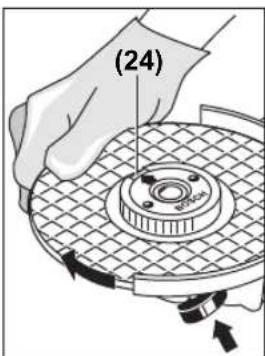
Press the spindle lock button (1) to lock the spindle for grinding. To tighten the quick-release chuck, turn the grinding disc clockwise in the direction of the arrow.
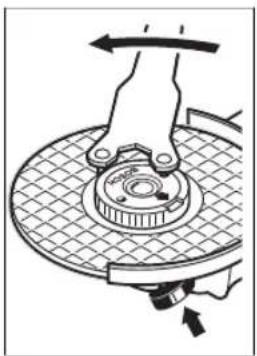
The correctly tightened and adjusted quick-release chuck can be released by turning the ring counterclockwise against the arrow direction. In exceptional cases, if you need to release a stuck chuck, use the pin wrench. Use the two-hole wrench as shown in the figure.
Permitted tools for grinding
You can use any tools listed in this operating manual for grinding. The permissible speed [min] resp. peripheral speed [m/s] of the tools used for grinding must correspond at least to the values given in the table below. Always observe the permissible speed, resp. peripheral speed on the label of the grinding tool.
| MAKC. [mm] [mm] | |||||
| D bd [min] | 1] [m/s] | ||||
| 180 | 8 | 22,2 | 8500 | 80 | |
| 230 | 8 | 22,2 | 6600 | 80 | |
| 180 | - | - | 8500 | 80 | |
| 230 | - | - | 6600 | 80 | |
| 100 30 M 14 8600 45 | |||||
Turning the gear head
Before performing any work on the power tool, disconnect the plug from the mains.
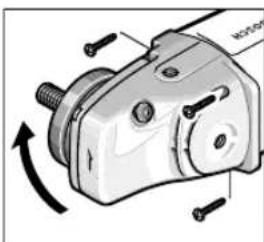
You can turn the gear head up to 90°. This way the switch can be placed in a convenient position for special working situations, e.g. for work in dusty conditions with the extraction hood (21) or for left-handed people.
working.
Unscrew all 4 screws. Carefully tilt the gear head without removing it from the housing and place it in the new position. Retighten the 4 screws.
Dust extraction system
Dusts from materials such as lead-containing paint, some types of wood, minerals and metals can be hazardous to health. Contact with or inhalation of such dusts can cause allergic reactions and/or respiratory diseases in the operator or persons nearby.
Wear protective gloves, e.g. when handling bulk material, especially in combination with chemicals for surface treatment (chromates, preservatives, etc.). Handling of asbestos-containing materials is permitted only by appropriately trained personnel.
- Where possible, use a suitable extraction system for the material being processed. - Ensure good ventilation of the work area. - It is recommended to use a dust mask with filter class P2.
Store your tools in your legal storage area, especially when working with the corresponding materials.
Avoid accumulation of dust at the workplace. Dust can easily self-ignite.
Working with the power tool
Switching on/off
Pay attention to the mains voltage! The voltage of the power source must match the data on the nameplate of the power tool. Devices marked with 230 V can also be operated with 220 V. Other voltages are only for insulated surfaces for additional safety. The tool can reach hidden power lines or its own power cord. If the power cord is damaged, it can be dangerous and cause electric shock.
Using the power tool with a mobile generator that has insufficient power reserve, or has poor voltage regulation with high starting current, can lead to power limitations or abnormal behavior during startup.
Please note the suitability of the generator you are using, especially with regard to the required voltage and frequency.
Switching on/off
To switch on the power tool, press the on/off switch (2) and hold it down.
To lock the on/off switch (2), press the on/off switch (2) and hold it down.
To switch off the power tool, release the on/off switch (2), or if it is locked, press the on/off switch (2) briefly and then release it.
Changing the switch without locking (country-specific):
To switch on the power tool, press the on/off switch (2) and hold it down.
Before switching on the power tool, release the start switch (2).
Before use, always check the power tool. The power tool must be mounted securely and must be able to rotate freely. Leave the tool running for at least 1 minute before use. Do not use damaged, cracked, or deformed power tools. Damaged power tools can break and cause injury.
Work instructions
Before carrying out any work on the power tool, disconnect the plug from the mains socket. Be careful when making cutouts in load-bearing walls, see section "Instructions for static". Secure the workpiece if it is not safely held by its own weight. Do not overload the power tool to the extent that it comes to a standstill. Especially important: let the power tool run at no load for a few minutes so that the tool can cool down. Do not touch it until it has cooled down. During operation, the discs heat up considerably. Do not use the power tool mounted in a stand for cutting.
Note: The power tool produces an electric field when in use. The power tool produces an electric field when switched on, and in the presence of mains voltage, there is a current flow even when switched off.
Rough sanding
Never use cutting discs for rough sanding.
The best results for rough sanding are achieved with a tilt angle of 30° to 40°. Move the power tool with moderate pressure back and forth. This way, the workpiece does not overheat, and no discoloration or grooves are formed.
Ventilated sanding disc
With the ventilated sanding disc (accessory), you can sand surfaces and pro
files. The ventilated sanding discs have a significantly longer service life, lower noise level, and lower temperature during sanding compared to conventional sanding discs.
Cutting metal
Use a bonded cutting disc for cutting with a guard (13).
When cutting, work with moderate, consistent feed pressure. Do not press the disc, do not tilt it, and do not swing it.
Do not brake the cutting disc by pressing it against the side.
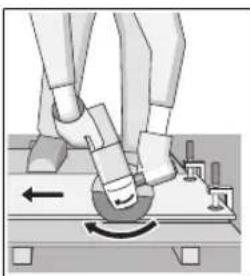
Wear protective gloves when working with the saw blade. In case of danger, the blade must be removed from the tool. Adjust the cutting depth and the protective devices according to the material being cut.
Cutting stone
When cutting stone, ensure sufficient dust extraction system. Work with protective mask. The use of the pneumatic tool is only allowed for dry cutting/grinding.
For cutting stone materials, it is best to use diamond cutting discs.
When using the dust extraction hood for cutting with water (21), the dust extraction hood must be approved for stone dust extraction. Bosch offers suitable dust extraction hoods.
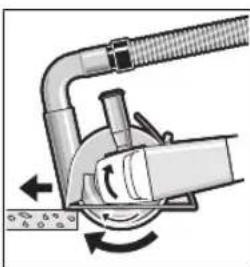
Switch on the power tool and place it with the front part of the base plate on the workpiece. Guide the power tool evenly, collecting the removed material.
When cutting hard materials, e.g.
concrete with high reinforcement content, the diamond cutting disc may overheat and be damaged. Sparks around the diamond cutting disc are a sign of this.
In this case, stop the cutting operation and let the diamond cutting disc run at maximum speed for a short time to cool down.
Significant reduction of sparks around the disc indicates a dull diamond cutting disc. You can sharpen it by making a few cuts in an abrasive material, e.g. sand-lime brick.
Instructions for static
The cuts in load-bearing walls are subject to DIN 1053 part 1 and the country-specific regulations. These regulations must be observed at all times. Before starting work, consult the responsible structural engineer, architect, or competent site manager.
Maintenance and service
Maintenance and cleaning
Before any work on the power tool, disconnect the plug from the mains. For safe and efficient operation, keep the power tool and its ventilation slots clean. Use only approved accessories and original spare parts. Regularly clean the ventilation openings and use a residual current device (PRCD). Metal dust on the inside of the power tool may cause a short circuit. This can damage the protective insulation of the power tool.
Read and keep these instructions with the additional accessories.
When replacement of the supply cord is required, this must be done by Bosch or an authorized Bosch service center in order to avoid a safety hazard.
Customer service and application advice
The service department will answer your questions regarding repairs and maintenance of your product, as well as spare parts. Spare parts and service information can be found at: www.boschpt.com
The Bosch application advice team will be happy to help you with any questions about our products and their accessories.
When ordering spare parts, please quote the 10-digit catalog number given on the type plate of the tool.
Bulgaria
Robert Bosch SRL
Power tool service
Strada Horia Macelariu Nr. 30-34, sector 1
013937 Bucuresti, Romania
Tel.: +359(0)700 13667 (Bulgarian)
Fax: +40212331313
Email: BoschServiceCenterBG@ro.bosch.com
www.bosch-pt.com/bg/bg/
According to the designation of the final product, the electrical instrument, the additional accessories and the packaging must be disposed of at a suitable recycling point for repeated use of the materials contained in them.

Do not throw electrical instruments into household waste!
Only for EU countries:
According to European Directive 2012/19/EC, harmonized with national legislation, electrical and electronic devices that cannot be used must be collected separately and handed over for recycling of the materials contained in them.
Safety warnings for electrical appliances
Read all safety warnings carefully.
Failure to follow the safety warnings and instructions may result in electric shock, fire and/or serious injury.
Keep all safety warnings and instructions for future use.
The term "electrical appliance" in the safety warnings refers to appliances that use mains (corded) or battery (cordless) power.
Work area safety
Keep the work area clean and well lit. Cluttered or dark areas can lead to accidents. Do not operate electrical appliances in explosive atmospheres, such as in the presence of flammable liquids, gases or dust. Electrical appliances create sparks that can ignite dust or fumes. Keep children and bystanders away while operating an electrical appliance. Distractions can cause you to lose control.
Electrical safety
The plug of the electrical tool must match the outlet. Never modify the plug in any way. Do not use any adapter plugs with earthed (grounded) power tools.
Modified plugs and matching outlets will reduce risk of electric shock.
Avoid body contact with earthed or grounded surfaces, such as pipes, radiators, ranges and refrigerators. There is an increased risk of electric shock if your body is earthed or grounded. Do not expose power tools to rain or wet conditions. If water enters a power tool, it will increase the risk of electric shock. Do not abuse the cord. Never use the cord for carrying, pulling or unplugging the power tool. Keep cord away from heat, oil, sharp edges or moving parts. Damaged or entangled cords increase the risk of electric shock.
Keep the cord away from heat, oil, sharp edges or moving parts. Damaged or entangled cords increase the risk of electric shock.
When operating a power tool outdoors, use an extension cord suitable for outdoor use. Use of a cord suitable for outdoor use reduces the risk of electric shock. If operating a power tool in a damp location is unavoidable, use a residual current device (RCD) protected supply. Use of an RCD reduces the risk of electric shock.
Personal safety
Stay alert, watch what you are doing and use common sense when operating a power tool. Do not use a power tool while you are tired or under the influence of drugs, alcohol or medication. A moment of inattention while operating power tools may result in serious personal injury. Use personal protective equipment. Always wear eye protection. Protective equipment such as dust mask, non-skid safety shoes, hard hat, or hearing protection used for appropriate conditions will reduce personal injuries. Prevent unintentional starting. Ensure the switch is in the off-position before connecting to power source and/or battery pack, picking up or carrying the tool. Carrying power tools with your finger on the switch or energising power tools that have the switch on invites accidents. Remove any adjusting key or wrench before turning the power tool on. A wrench or a key left attached to a rotating part of the power tool may result in personal injury.
Do not overreach. Keep proper footing and balance at all times. This enables better control of the power tool in unexpected situations. Dress properly. Do not wear loose clothing or jewellery. Keep your hair, clothing and gloves away from moving parts. Loose clothes, jewellery or long hair can be caught in moving parts. If devices are provided for the connection of dust extraction and collection facilities, ensure these are connected and properly used. Use of dust collection can reduce dust-related hazards.
Use and care of power tools
Unplug the power tool. Use the appropriate power tool for the job. With the appropriate power tool, you will work better, safer, and more efficiently at the task for which it is intended. Do not use the power tool if it cannot be turned on and off with the switch. Any power tool that cannot be controlled with the switch is dangerous and must be repaired. Unplug the power tool from the power source and/or remove the battery pack before making any adjustments, changing accessories, or storing the power tool. These preventive safety measures reduce the risk of accidental starting. Store idle power tools out of the reach of children and do not allow persons unfamiliar with the power tool or these instructions to operate it. Power tools are dangerous in the hands of untrained users. Maintain power tools. Check for misalignment or binding of moving parts, breakage of parts, and any other conditions that may affect the operation of the power tool. If damaged, have the power tool repaired before use. Many accidents are caused by poorly maintained power tools. Keep cutting tools sharp and clean. Properly maintained cutting tools with sharp cutting edges are less likely to bind and are easier to control. Use the power tool, accessories, bits, etc., in accordance with these instructions, taking into account the working conditions and the work to be performed. Using the power tool for operations different from those intended could result in a hazardous situation.
Service
Have your power tool serviced by a qualified repair person using only identical
replacement parts. This will ensure that the safety of the power tool is maintained.
Safety warnings for angle grinders
Safety warnings for grinding, sanding, wire brushing, and abrasive cutting-off operations
Read all safety warnings, instructions, illustrations and specifications supplied with this power tool. Failure to follow all instructions listed below may result in electric shock, fire and/or serious injury. Save all warnings and instructions for future reference. The term "power tool" in the warnings refers to your mains-operated (corded) power tool or battery-operated (cordless) power tool. Work area safety: Keep work area clean and well lit. Cluttered or dark areas invite accidents. Do not operate power tools in explosive atmospheres, such as in the presence of flammable liquids, gases or dust. Power tools create sparks which may ignite the dust or fumes. Keep children and bystanders away while operating a power tool. Distractions can cause you to lose control. Electrical safety: Power tool plugs must match the outlet. Never modify the plug in any way. Do not use any adapter plugs with earthed (grounded) power tools. Unmodified plugs and matching outlets will reduce risk of electric shock. Avoid body contact with earthed or grounded surfaces, such as pipes, radiators, ranges and refrigerators. There is an increased risk of electric shock if your body is earthed or grounded. Do not expose power tools to rain or wet conditions. Water entering a power tool will increase the risk of electric shock. Do not abuse the cord. Never use the cord for carrying, pulling or unplugging the power tool. Keep cord away from heat, oil, sharp edges or moving parts. Damaged or entangled cords increase the risk of electric shock. When operating a power tool outdoors, use an extension cord suitable for outdoor use. Use of a cord suitable for outdoor use reduces the risk of electric shock. If operating a power tool in a damp location is unavoidable, use a residual current device (RCD) protected supply. Use of an RCD reduces the risk of electric shock. Personal safety: Stay alert, watch what you are doing and use common sense when operating a power tool. Do not use a power tool while you are tired or under the influence of drugs, alcohol or medication. A moment of inattention while operating power tools may result in serious personal injury. Use personal protective equipment. Always wear eye protection. Protective equipment such as dust mask, non-skid safety shoes, hard hat, or hearing protection used for appropriate conditions will reduce personal injuries. Prevent unintentional starting. Ensure the switch is in the off-position before connecting to power source, picking up or carrying the tool. Carrying power tools with your finger on the switch or energising power tools that have the switch on invites accidents. Remove any adjusting key or wrench before turning the power tool on. A wrench or a key left attached to a rotating part of the power tool may result in personal injury. Do not overreach. Keep proper footing and balance at all times. This enables better control of the power tool in unexpected situations. Dress properly. Do not wear loose clothing or jewellery. Keep your hair, clothing and gloves away from moving parts. Loose clothes, jewellery or long hair can be caught in moving parts. If devices are provided for the connection of dust extraction and collection facilities, ensure these are connected and properly used. Use of dust collection can reduce dust-related hazards. Power tool use and care: Do not force the power tool. Use the correct power tool for your application. The correct power tool will do the job better and safer at the rate for which it was designed. Do not use the power tool if the switch does not turn it on and off. Any power tool that cannot be controlled with the switch is dangerous and must be repaired. Disconnect the plug from the power source and/or the battery pack from the power tool before making any adjustments, changing accessories, or storing power tools. Such preventive safety measures reduce the risk of starting the power tool accidentally. Store idle power tools out of the reach of children and do not allow persons unfamiliar with the power tool or these instructions to operate the power tool. Power tools are dangerous in the hands of untrained users. Maintain power tools. Check for misalignment or binding of moving parts, breakage of parts and any other condition that may affect the power tool's operation. If damaged, have the power tool repaired before use. Many accidents are caused by poorly maintained power tools. Keep cutting tools sharp and clean. Properly maintained cutting tools with sharp cutting edges are less likely to bind and are easier to control. Use the power tool, accessories and tool bits etc. in accordance with these instructions, taking into account the working conditions and the work to be performed. Use of the power tool for operations different from those intended could result in a hazardous situation. Service: Have your power tool serviced by a qualified repair person using only identical replacement parts. This will ensure that the safety of the power tool is maintained.
The accessory is generally intended to be used during the entire period of this test.
Always wear protective equipment. Depending on the application, the user may need a safety helmet. As appropriate, after the dust mask, wear eye protection, gloves, and protective clothing when handling abrasive or corrosive materials. The protection must allow the removal of residues generated during work. The mask against dust and respirator must filter the particles generated during work. Prolonged exposure to high noise levels can lead to hearing loss. Keep your distance from the work area. Anyone entering the work area must wear protective equipment. Protective clothing that has been processed may spread dust and cause damage to the surface from the direct work area. Keep the electrical cable away from the insulated surface while cutting to avoid contact with hidden wires or their cable. If the protective equipment for cutting comes into contact with a live wire, it may cause electric shock to the operator. Pull the cable from the socket with additional protective equipment. If you lose control of the cable, it may cut and your hand or arm may enter the additional protective equipment. Do not leave the electrical cable near the additional protective equipment. The protective equipment may damage the surface and lift the electrical cable out of your control. Do not plug in the electrical cable while holding the switch. Accidental contact with additional protective equipment may cause your clothing to be pulled, pulling the additional equipment towards your body. Regularly clean the air vents of the electrical tool. The fan motor pulls dust into the housing, and excessive accumulation of metal dust may cause an electric shock hazard. Do not work with electrical tools near flammable materials. Sparks may ignite these materials. Do not use additional equipment that requires liquid cooling. The use of water or liquid cooling may lead to fatal electric shock.
Cleaning and related warnings
The blade can be placed on the attached or ordered guard, attached guard, or another additional equipment. Placing or ordering the blade requires quick maneuvering of the additional equipment, which, on the other hand, requires careful handling of the uncontrolled electric tool in the working area of the equipment during the operation. For example, if the abrasive disc is attached or placed on the tool you are working with, the sharp edges of the disc that enter the attached current may get caught in the surface of the material and the disc may be pulled or thrown. The disc may jump or be thrown from the operator, depending on the direction of movement of the disc during the operation. Abrasive discs, likewise, may be damaged under certain conditions. The damage is a result of improper use and/or non-compliant operating procedures or conditions and can be avoided with the implementation of the appropriate protective measures provided below.
Firmly grip the electric tool and position your body and arm to be able to resist the forces of the kickback. Always use the auxiliary handle, if available, for maximum control of the kickback or the reaction torque during start-up. The operator can control the reaction forces of the torque or the kickback forces, if appropriate protective measures are taken. Do not place your hand near the rotating additional equipment. The additional equipment may be thrown over your hand. Do not position your body in the area where the electric tool will move if a kickback occurs. The kickback will push the tool in the opposite direction of the movement of the disc at the point of the jam. Pay special attention when working with corners, sharp edges, etc. Avoid bouncing and jamming of the additional equipment. Corners, sharp edges, or bouncing may cause jamming of the additional equipment and lead to loss of control or kickback. Do not use saw chains or toothed blades. Such blades cause frequent kickbacks and loss of control.
Safety warnings specific for grinding and abrasive cutting operations
Use only the types of discs that are recommended for your electric tool and the specific guard designed for the selected disc. Discs that are not designed for the particular electric tool cannot be properly guarded and are not safe. The guard for the central recess of the disc must be installed under the plane of the
guard flange. A properly mounted disc that extends beyond the plane of the guard flange cannot be properly guarded.
The guard must be fitted to the electric tool and properly positioned to ensure maximum safety, so that the minimum part of the disc is exposed towards the operator. The guard protects the operator from fragments of the disc, accidental contact with the disc, and sparks that may ignite clothing. Disc guards must be used only for the appropriate applications. For example: Do not use cutting discs for grinding. Abrasive cutting discs are intended for peripheral grinding; the sides of the disc are subject to wear and may cause the disc to shatter. Always use the correct disc guard for the disc size and shape. The correct guard supports the disc and reduces the risk of disc breakage. Guards for cutting discs may differ from guards for grinding discs. Do not use worn-out discs on electric tools. The disc for cutting metal is not suitable for high speeds and may shatter.
Additional safety warnings specific for abrasive cutting
Do not "jam" the cutting disc or apply excessive pressure. Do not attempt to make an excessively deep cut. Overstressing the disc increases the load and susceptibility to twisting or binding of the disc in the cut, and the possibility of kickback or disc breakage. Do not position your body in line with or behind the rotating disc. When the disc, during operation, moves away from the operator, the kickback may propel the rotating disc directly towards you. When the disc is binding or when you interrupt a cut for any reason, switch off the tool and hold it motionless until the disc comes to a complete stop. Never attempt to remove the cutting disc from the cut while it is still moving, as kickback may occur. Investigate and take corrective action to eliminate the cause of disc binding. Do not restart the cutting operation in the workpiece. Wait until the disc reaches full speed before carefully re-entering the cut. The disc may bind, walk, or kickback if you restart the tool in the workpiece.
Support the panels or oversized workpieces to minimize the risk of disc pinching and kickback. Large workpieces tend to sag under their own weight. Supports must be placed under the workpiece near the line of cut and near the edge of the workpiece on both sides of the disc. Use extra caution when making a "pocket cut" in existing walls or other blind areas. The protruding disc may cut gas or water pipes, electrical wiring, or objects that can cause kickback.
Safety warnings specific for sanding
Do not use oversized sanding discs. Follow the manufacturer's recommendations when selecting sanding discs. Oversized sanding discs that extend beyond the backing pad pose a laceration hazard and may cause snagging, tearing of the disc, or kickback.
Safety instructions for using the device
Pay attention to the device instructions before starting operation. Do not overload the device. Overloading the device may cause damage to the device/accessories. If you use the device for cleaning, do not allow contact between the cleaning disc and the device. The cleaning disc may be damaged if it comes into contact with the device. Follow the instructions for proper use and maintenance.
Additional safety warnings
Follow the instructions.
Use appropriate personal protective equipment to avoid contact with live electrical cables or consult a local electrician for compliance with electrical energy. Contact with electrical cables can lead to fire and electric shock. Damage to the gas pipe can lead to explosion. Immersion in water poses a risk of injury and can cause electric shock. Do not touch the brushes or discs until they have stopped. Keep hands away from moving parts. Disconnect the device from the power supply and place it in the off position before performing maintenance or cleaning. Follow the instructions for use with electricity, e.g., after a power outage or when connecting to the power supply.
Risk. This will prevent uncontrolled restarting of the device.
Secure the workpiece that is being processed. If you secure it with clamps or other means, the workpiece will be held firmly with both hands.
Description of the product and its features

Read all safety warnings and instructions. Failure to follow
the warnings and instructions may result in electric shock, fire and/or
serious injury.
Pay attention to the symbols in the instruction manual.
Intended use
The device is intended for cutting, roughing and polishing metal materials without the use of water.
For cutting with composite discs, a special protective guard for cutting must be used.
Read the operating instructions before using the tool.
With the permission of the power tool, it can be used for brushing with a brush cap.
Component illustration
The numbering of the parts with components is described in the illustration of the power tool on the graphics page.
(1) Locking collar for the spindle (2) Switch for on/off (3) Additional handle (insulated gripping surface) (4) Spindle for brushing (5) Protective guard for brushing (6) Locking screw for the protective guard (7) Ring wrench with O-ring (8) Brush cap (9) Tension nut (10) Key with two holes for tension nut (11) Quick-tension nut SDS-clic (12) Rest plate made of hardened steel (13) Protective guard for cutting (14) Cutting disc (15) Guard for grinding (16) Spacer (17) Rubber backing pad (18) Brush cap
(19) Tension nut (20) Rest plate (21) Guard for cutting with guide rails
(22) Diamond cutting disc (23) Guard (insulated gripping surface) A) The illustration shows the standard scope of delivery. The complete equipment can be found in our accessories program.
Technical data
| Агonaьбрушика GWS 2200-180 H GWS 2200-230 H | ||
| Бpoj на дeн/артукл | 3601 H51 X.. 3601 H52 X.. | |
| Номинална щашина W 2200 2200 | ||
| Излесна мokhoct W 1380 1380 | ||
| Номинален bpoj на вртуken min | -1 | 8500 6600 |
| макс. диаметар на брусанта пioча mm 180 230 | ||
| Навoj на вртуною за вртутою M 14 M 14 | ||
| макс. должina на habоют за вртутою за вртутою mm 25 25 | ||
| Текина сordласно EPTA-Procedure 01:2014 | ||
| - сдополителна рачka за придуншваце на вибацнистуke 5,1 5,1 | ||
| - с.stандарда на дополителна рачka | kg 5,0 5,0 | |
| Клaca на зашита | ☐ / ☑ | ☐ / ☑ |
The rated voltage [U] is 230 V. However, it may vary depending on the mains supply in the respective country.
Power tool without speed limitation: Switching on and off creates brief voltage drops. Under unfavorable mains conditions, flickering may occur with other devices. With a power tool with a rated current of 0.25 A, no flickering occurs.
Noise information
The noise values are determined according to EN 60745-2-3.
The sound level of the power tool is typically: Sound pressure level 92 dB(A); Sound power level 103 dB(A). Uncertainty K=3 dB.
Wear hearing protection!
The vibration total value (vector sum of three directions) and uncertainty are determined in accordance with EN 60745-2-3:
Surface treatment (processing pipe): an = 9.5 m/s2, K = 1.5 m/s2
Surface treatment with brush: an = 4.0 m/s2, K = 1.5 m/s2
The vibration level indicated is measured with a standardized test method and can be used for comparison with other electric tools. It can also be used for preliminary assessment of exposure to vibrations.
The indicated vibration level is for the main application of the electric tool. If the electric tool is used for other applications, with accessories that differ from the standard ones, or with insufficient maintenance, the vibration level may differ. This can significantly increase the exposure to vibrations during the total working period.
For a precise assessment of vibration exposure, the periods when the tool is switched off or is running but not actually used should be taken into account, not just the moment
when it is in use. This can significantly reduce the vibration exposure during the total working period.
Take additional safety measures to protect the operator from the effects of vibrations, such as: maintain the electric tool and accessories carefully, keep the handles warm, organize the work schedule.
Assembly
Mounting the protective devices
Before any intervention on the electric tool, pull the plug out of the socket.
Note: After the brush wears down during work or when servicing the device for replacing the protective brush/electric tool, it must be sent to the service department for repairs described in the section "Service and customer service".
Protective brush for surface treatment
Place the protective brush (5) on the handle and the spindle. Adjust the position of the protective brush (5) according to the needs of the working process and tighten the protective brush (5) with the tightening screw (6).
Place the protective brush (5) in such a way that it prevents sparks from flying in the direction of the user.
Protective brush for cutting
Before using the device, always attach the protective hood for cutting (13). Attach the hood in the same way as for grinding.
The protective hood for cutting (13) is mounted in the same way as the protective hood for grinding (5).
Hood for cutting with guide rail
The protective hood for cutting with guide rail (21) is mounted in the same way as the protective hood for grinding (5).
Additional handle
Use your electric tool only with the additional handle (3).
Mount the additional handle (3) on the right or left of the gearbox depending on the type of work.
Protection against kickback
For work with the cutting disc for grinding (17) or with a wire brush/brush/grinding wheel, always mount the protection against kickback (15).
Secure the protection against kickback (15) with the additional handle (3).
Mounting the grinding disc
Before any intervention on the electric tool, pull the plug out of the socket. Do not touch the grinding discs and cutting discs until they have cooled down. During work, the discs become very hot.
Clean the grinding guard (4) and all mounting parts.
To lock and release the spindle, press the spindle lock button (1) to lock the spindle for grinding.
Press the spindle lock button only when the spindle is at a standstill. Otherwise, the electric tool may be damaged.
6pycnn nnoyn/6pycnn nnoyn 3a ceuehe
Pay attention to the dimensions of the grinding disc. The diameter of the disc must correspond to the specified one. Do not use adapters or reducers.
When using diamond grinding discs, pay attention to the fact that the direction of rotation of the diamond disc for cutting must match the direction of rotation of the electric motor (check that the direction of rotation of the motor head is correct).
The assembly diagram can be found on the last page.
To fasten the grinding disc/cutting disc, tighten the nut (9) and pull it with the key through the two holes, then tighten the nut. When mounting the grinding disc, before switching on, check that it is correctly mounted and can rotate freely. Check that the grinding disc does not rub against the guard or other parts.
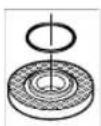
In the attached accessory (7) around the spindle for centering, a plastic part (O-ring) is placed. If the O-ring is missing or worn, the attached accessory (7) must be replaced before
further use.
Changing the grinding disc in the angle grinder
When working with the grinding disc, always mount the protective guard (15).
Cutting disc
When working with the cutting disc (17), always mount the protective guard (15).
The assembly diagram can be found on the last page.
To replace the cutting disc (17), place the 2-hole wrench (16) on the spindle for cutting (4).
Tighten the clamping nut (19) and pull it with the key through the two holes.
With the grinding disc in the angle grinder (accessory), you can process flat surfaces and profiles. Grinding discs in the angle grinder have a direction of use, depending on the type of disc and the temperature during grinding, as well as the type of grinding discs.
Before using the diamond cutting disc, carefully read the safety instructions for the saw (13).
When cutting with the disc, always work with moderate pressure and do not apply excessive force to the material. Do not press the cutting disc sideways, do not bend it, and do not tilt it.
Do not brake the cutting disc by pressing it against the workpiece with the side of the disc.
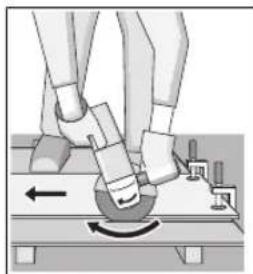
The electric tool must be used in the correct direction of rotation. There is always a danger if
uncontrolled
cutting with the disc. When cutting profiles and sheet metal, it is best to set the tool to the lowest speed.
Cutting stone
When cutting stone, be careful to avoid excessive dust. Use the dust protection mask. The electric tool must be used with the cutting/grinding disc for masonry materials.
For cutting stone, it is best to use a diamond cutting disc.
When using the dust extraction for cutting with diamond discs (21), the dust is extracted from the cut
must be allowed for cutting stone.
Use the appropriate cutting disc for the material.
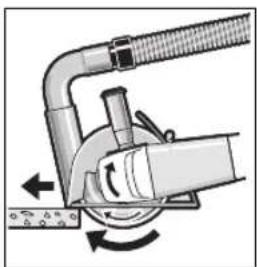
Turn on the electric tool and place it with the front part of the diamond disc on the workpiece to be processed. Guide the electric tool with moderate pressure along the material to be processed.
The cutting depth is set by the guide. The diamond cutting disc can be adjusted and sharpened. The arrow on the diamond cutting disc clearly indicates the direction of rotation.
Before using the product, read the instructions and keep them for future reference. Briefly explain the diamond drill bit for drilling in concrete, in case of high bit number, to be able to identify it. Significant wear on the outer edge of the drill bit can be noticed for a worn diamond drill bit. You can re-sharpen it with short cuts in an abrasive material, e.g., attached stone.
WARNING FOR THE MACHINE
The products in the accessories are subject to the standard 1053 and the relevant specifications for the material. These specifications must be strictly followed. Before starting work, consult the responsible standard, architect, and the relevant construction supervisor for advice.
Maintenance and Service
Maintenance and Cleaning
Before any intervention on the electrical tool, unplug the power cord from the socket. Clean the electrical tool and the ventilation openings regularly to ensure good and safe operation. In extreme conditions of use, if possible, use a vacuum cleaner. Blow out the openings for ventilation and connect a residual current device (PRCD). When processing metal, conductive dust may accumulate inside the electrical tool. The protective insulation of the electrical tool may be damaged.
Store and handle the device with care. If it is necessary to use an extension cable, then use one from Bosch or a specialized dealer for Bosch electrical tools, to avoid endangering safety.
Service and advice for use
The service will take care of your rights regarding repairs and maintenance of your product.
HOW TO ORDER SPARE PARTS. Identification labels for spare parts and information about spare parts can also be found at: www.bosch-pt.com
The advice team for using Bosch will help you if you have questions about our products.
For all rights and spare parts, you can find the 10-digit number from the specification plate of the product.
Macedonian
D.D. Enkips
SabaKovayevn 47H, number 3
1000 Skopje
E-mail: dimce.dimcev@servis-bosch.mk
Internet: www.servis-bosch.mk
Tel./fax: 02/2467610
Mob.: 070595888
D.I.T.Y "ROJKA"
Jane Sandanski 66; T.C. Avtokomanda, Lokal 69
1000 Skopje
E-mail: servisrojka@yahoo.com
Tel: +389 2 3174-303
Mob: +389 70 388-520, -530
Disposal
Electric tools, accessories and packaging should be sorted for environmentally-friendly recycling.

Do not dispose of electric tools into household waste!
Only for EU countries:
According to European Directive 2012/19/EU on waste electrical and electronic equipment and its implementation in national law, electrical tools that are no longer usable must be collected separately and recycled in an environmentally friendly manner.
Serbian
Weight according to EPTA-Procedure 01:2014
- with additional handle with vibration damping kg 5.1 5.1 - with standard additional handle kg 5.0 5.0
Protection class / II / II
Data applies to rated voltage [U] of 230 V. In case of voltage deviations and in versions specific to the respective country, this data may vary. Only for power tools without inrush current limiting: switching procedures cause short-term voltage drops. Under unfavorable mains conditions, interference with other devices may occur. With mains impedances less than 0.25 ohm, no interference is to be expected.
Noise and vibration information
General safety instructions
WARNING
Read all safety instructions and guidelines. Failure to follow safety instructions and guidelines
Weight according to EPTA-Procedure 01:2014
- with vibration damping additional handle kg 5.1 5.1
with standard additional handle kg 5.0 5.0
Protection class / II / II
an = 4.0 m/s2, K = 1.5 m/s2.

__SUPPIMER__

262
(A)
22 (wlaIgai)
17 (ablaal)
23 ((gjao eloo ggo) jao)
18 (duJUU)
Jg 10aabwglg bblsie gblly (13) abjpal
sic aqls jie bao oogj ggej
.ajgJg
j
Jaue Jauil dll aagg uu p
(15) uj j 0j p
gulal j
jblal jilill jao pdiwly jssll sic

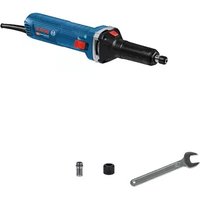
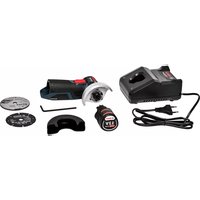

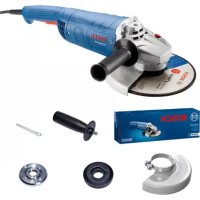
- GENERAL POWER TOOL SAFETY WARNINGS
- WARNING
- SAVE ALL WARNINGS AND INSTRUCTIONS FOR FUTURE REFERENCE
- KEEP WORK AREA CLEAN AND WELL LIT. CLUTTERED OR DARK AREAS INVITE ACCIDENTS. DO NOT OPERATE POWER TOOLS IN EXPLOSIVE ATMOSPHERES, SUCH AS IN THE PRESENCE OF FLAMMABLE LIQUIDS, GASES OR DUST. POWER TOOLS CREATE SPARKS WHICH MAY IGNITE THE DUST OR FUMES
- ELECTRICAL SAFETY
- PERSONAL SAFETY
- POWER TOOL USE AND CARE
- SERVICE
- SAFETY INFORMATION FOR THE ANGLE GRINDER
- SAFETY WARNINGS COMMON FOR GRINDING, SANDING, WIRE BRUSHING OR ABRASIVE CUTTING OFF OPERATIONS
- KICKBACK AND RELATED WARNINGS
- SAFETY WARNINGS SPECIFIC FOR GRINDING AND ABRASIVE CUTTING-OFF OPERATIONS
- ADDITIONAL SAFETY WARNINGS SPECIFIC FOR ABRASIVE CUTTING-OFF OPERATIONS
- SAFETY WARNINGS SPECIFIC FOR SANDING OPERATIONS
- SAFETY WARNINGS SPECIFIC FOR WIRE BRUSHING OPERATIONS
- ADDITIONAL SAFETY INFORMATION
- PRODUCTS SOLD IN GB ONLY
- ENGLISH
- PRODUCT DESCRIPTION AND SPECIFICATIONS
- READ ALL THE SAFETY AND GENERAL INSTRUCTIONS
- INTENDED USE
- PRODUCT FEATURES
- TECHNICAL DATA
- NOISE/VIBRATION INFORMATION
- WEAR HEARING PROTECTION
- FITTING
- FITTING PROTECTIVE EQUIPMENT
- PROTECTIVE GUARD FOR GRINDING
- PROTECTIVE GUARD FOR CUTTING
- EXTRACTION GUARD FOR CUTTING WITH A GUIDE BLOCK
- SIDE HANDLE
- HAND GUARD
- FITTING THE ABRASIVE TOOLS
- GRINDING/CUTTING DISC
- FLAP DISC
- RUBBER SANDING PAD
- CUP BRUSH/DISC BRUSH
- QUICK-CLAMPING NUT SDS-E/IC
- APPROVED ABRASIVE TOOLS
- YOU CAN USE ALL THE ABRASIVE TOOLS MENTIONED IN THESE OPERATING INSTRUCTIONS
- PULL THE PLUG OUT OF THE SOCKET BEFORE CARRYING OUT ANY WORK ON THE POWER TOOL
- THE DUST FROM MATERIALS SUCH AS LEAD PAINT, SOME TYPES OF WOOD, MINERALS AND METAL CAN BE HARMFUL TO HUMAN HEALTH. TOUCHING OR BREATHING IN THIS DUST CAN TRIGGER ALLERGIC REACTIONS AND/OR CAUSE RESPIRATORY ILLNESSES IN THE USER OR IN PEOPLE IN THE NEAR VICINITY
- OPERATION
- START-UP
- SWITCHING ON/OFF
- SWITCH WITHOUT LOCKING MECHANISM (COUNTRY-SPECIFIC)
- WORKING ADVICE
- ROUGH GRINDING
- NEVER USE CUTTING DISCS FOR ROUGH GRINDING
- CUTTING METAL
- CUTTING STONE
- INFORMATION ON STRUCTURAL DESIGN
- MAINTENANCE AND SERVICING
- MAINTENANCE AND CLEANING
- AFTER-SALES SERVICE AND ADVICE ON USING PRODUCTS
- GREAT BRITAIN
- IRELAND
- AUSTRALIA, NEW ZEALAND AND PACIFIC ISLANDS
- REPUBLIC OF SOUTH AFRICA
- CUSTOMER SERVICE
- KZN - BSC SERVICE CENTRE
- WESTERN CAPE - BSC SERVICE CENTRE
- BOSCH HEADQUARTERS
- DISPOSAL
- ONLY FOR EU COUNTRIES
- FRENCH
- MOUNT THE SANDING TOOLS
- SDS-CLIC QUICK-RELEASE NUT
- WASTE MANAGEMENT
- XPNOOUPWVA ME ROV NPOOPUAPO
- ANEKOVICIOEVA OTOIXEIA
- SERVICE AND CONSULTATION
- GREECE
- STORAGE
- TRANSPORTATION
- RUSSIAN
- SAFETY INSTRUCTIONS
- GENERAL SAFETY INSTRUCTIONS FOR POWER TOOLS
- KEEP THESE INSTRUCTIONS AND INSTRUCTIONS FOR FUTURE USE
- WORKPLACE SAFETY
- USE OF THE POWER TOOL AND ITS CARE
- SAFETY INSTRUCTIONS FOR ANGLE GRINDERS
- KICKBACK AND CORRESPONDING SAFETY INSTRUCTIONS
- SPECIAL SAFETY WARNINGS FOR GRINDING AND CUTTING-OFF OPERATIONS
- ADDITIONAL SPECIFIC SAFETY WARNINGS FOR CUTTING-OFF WHEELS
- SPECIAL SAFETY INSTRUCTIONS FOR SANDING
- SPECIAL SAFETY INSTRUCTIONS FOR WORKING WITH WIRE BRUSHES
- ADDITIONAL SAFETY INSTRUCTIONS
- USE SAFETY GLASSES
- PRODUCT DESCRIPTION AND SERVICES
- ILLUSTRATED COMPONENTS
- YRNOA WNFOBAHMA GWS 2200-180 H GWS 2200-230 H
- DAHHBIENOWYMUNVB6PAUNU
- ASSEMBLY
- MOUNTING OF PROTECTIVE DEVICES
- PROTECTIVE COVER FOR GRINDING
- PROTECTIVE COVER FOR CUTTING
- PROTECTIVE COVER FOR CUTTING WITH GUIDE RAILS
- ADDITIONAL HANDLE
- PROTECTIVE GUARD FOR SANDING
- MOUNTING THE SANDING ACCESSORIES
- SANDING/CUTTING DISCS
- ALL GRINDING WHEELS
- RUBBER GRINDING PAD
- PERMISSIBLE GRINDING ATTACHMENT
- TURNING THE GEAR HEAD
- DUST AND CHIP REMOVAL
- WORKING WITH THE TOOL
- ELECTRIC POWER TOOL
- DO NOT SWITCH OFF THE POWER TOOL WITHOUT LOAD (SEE SEPARATE PAGES)
- APPLICATION INSTRUCTIONS
- SAFETY INFORMATION
- FIBER SANDING DISCS
- SPECIFIED APPLICATION
- MAINTENANCE AND SERVICE
- SERVICE AND CONSULTATION ON APPLICATION
- COUNTRIES: RUSSIA, BELARUS, KAZAKHSTAN, UKRAINE
- RUSSIA
- BELARUS
- KAZAKHSTAN
- ARMENIA, AZERBAIJAN, GEORGIA, KYRGYZSTAN, MOLDOVA, TAJIKISTAN, TURKMENISTAN, UZBEKISTAN
- WORKING/GRINDING DISCS
- UKRAINIAN
- SDS-CLIC CHUCK KEY
- PERMITTED SANDING TOOLS
- TURNING THE GRINDER HEAD
- DUST/CHIPS EXTRACTION
- STARTING OPERATION
- OPERATING INSTRUCTIONS
- SANDING DISCS
- CUTTING DISC
- MATERIAL
- INSTRUCTIONS FOR WALLS
- TECHNICAL DATA AND SAFETY INSTRUCTIONS
- SERVICE AND CONSULTATION ON USAGE
- UKRAINE
- ПИШДЯКРАИНEC
- KA3AK
- EYPA3NNA 3KOHOMNKAIBIK ODAFTBHA (KEJEH ODAFTBHA) MYWE MEMLEKETTEP AYMAFBIHDA KONDAHBIANBL
- EHIMI NAI DANANY MEP3IM
- KB3METKEHEMECE NADANAHYUBIHHKATENIKTEPI MEH ICTEN BHY CE6ENTEPINH T3IMI
- SAFETY INSTRUCTIONS FOR OPERATION AND MAINTENANCE
- MAINTENANCE
- SAFETY PRECAUTIONS
- ELECTRICAL SAFETY PRECAUTIONS
- ALL SAFETY PRECAUTIONS MUST BE OBSERVED
- WARNING: THIS DEVICE MUST BE CONNECTED TO THE MAINS POWER SUPPLY THROUGH A SAFETY SWITCH
- ELECTRIC CRANES: MAINTENANCE AND REPAIR
- SAFETY INSTRUCTIONS FOR USE IN INDUSTRIAL ENVIRONMENTS
- REPAIR AND MAINTENANCE SPECIALISTS
- SAFETY INSTRUCTIONS FOR MAINTENANCE
- SAFETY INSTRUCTIONS FOR USING THE DEVICE
- THE DEVICE IS INTENDED FOR HOUSEHOLD USE ONLY
- DEVICE DESCRIPTION
- CORSET WITH BUILT-IN BATTERY
- KAZAKH
- THIS MACHINE IS NOT SUITABLE FOR USE WITH DIAMOND CUTTING DISCS
- WEAR EAR PROTECTION
- CLEANING
- DISPOSE OF BATTERIES AND ACCUMULATORS PROPERLY
- PAINDANAHY
- ICKE KOCY
- KOCY/EWIPY
- BEKIRINMEIIN CENGDPRIU (ENRE 6AIAHBAICTB)
- PAINANANY HYCAYNAPBI
- DRY CLEANING
- CLEANING THE HEATING PLATE
- CUTTING PART
- ROMÁNA
- CTATHKA TPYANBL HCYKAYNAP
- TEXHNKAIBIK KYTIM XAHE KBI3MET
- KBI3MET KEPCETY XKEH E TA3ANAY
- TYTBHYBIFA KBI3MET KEPCETY XHE NAIDANAHY KEHECTEPI
- ONLY FOR EO PRODUCTS
- ROMÂNA
- INSTRUCȚIUNI DE SIGURANȚĂ
- KEEP THESE INSTRUCTIONS IN A SAFE PLACE
- CAREFUL HANDLING AND USE OF POWER TOOLS
- KICKBACK CAUSES AND PREVENTION
- SAFETY WARNINGS SPECIFIC FOR GRINDING AND ABRASIVE CUTTING OPERATIONS
- ADDITIONAL SAFETY INSTRUCTIONS SPECIFIC TO ABRASIVE CUTTING
- SPECIFIC SAFETY INSTRUCTIONS FOR SANDING
- SPECIFIC SAFETY INSTRUCTIONS FOR WORKING WITH WIRE BRUSHES
- GENERAL SAFETY INSTRUCTIONS
- WORK WITH PROTECTIVE GLASSES
- INTENDED USE OF THE POWER TOOL
- MOUNTING THE PROTECTIVE GUARD
- BEFORE ANY WORK ON THE POWER TOOL, DISCONNECT THE PLUG FROM THE MAINS
- PLACE THE PROTECTIVE GUARD (5) ON THE SPINDLE COLLAR. ADJUST THE PROTECTIVE GUARD (5) TO THE REQUIRED WORKING PROCEDURE AND SECURE THE PROTECTIVE GUARD (5) WITH THE CLAMPING SCREW (6)
- USE WHEN CUTTING WITH A BONDED ABRASIVE CUTTING WHEEL. WHEN CUTTING IN STONE, USE A SUFFICIENTLY POWERFUL EXTRACTION SYSTEM
- AUXILIARY HANDLE
- PROTECTION FOR CUTTING
- MOUNTING THE ABRASIVE TOOL
- DIAMOND CUTTING DISC / CUTTING DISC
- QUICK-RELEASE CHUCK SDS-CLIC
- USE ONLY THE QUICK-RELEASE CHUCK IN UNDAMAGED CONDITION (11)
- PERMITTED TOOLS FOR GRINDING
- DUST EXTRACTION SYSTEM
- WORKING WITH THE POWER TOOL
- CHANGING THE SWITCH WITHOUT LOCKING (COUNTRY-SPECIFIC)
- WORK INSTRUCTIONS
- ROUGH SANDING
- VENTILATED SANDING DISC
- INSTRUCTIONS FOR STATIC
- CUSTOMER SERVICE AND APPLICATION ADVICE
- BULGARIA
- SAFETY WARNINGS FOR ELECTRICAL APPLIANCES
- KEEP ALL SAFETY WARNINGS AND INSTRUCTIONS FOR FUTURE USE
- WORK AREA SAFETY
- USE AND CARE OF POWER TOOLS
- SAFETY WARNINGS FOR ANGLE GRINDERS
- CLEANING AND RELATED WARNINGS
- ADDITIONAL SAFETY WARNINGS SPECIFIC FOR ABRASIVE CUTTING
- SAFETY WARNINGS SPECIFIC FOR SANDING
- ADDITIONAL SAFETY WARNINGS
- DESCRIPTION OF THE PRODUCT AND ITS FEATURES
- READ ALL SAFETY WARNINGS AND INSTRUCTIONS. FAILURE TO FOLLOW
- COMPONENT ILLUSTRATION
- NOISE INFORMATION
- MOUNTING THE PROTECTIVE DEVICES
- PROTECTIVE BRUSH FOR SURFACE TREATMENT
- PROTECTIVE BRUSH FOR CUTTING
- HOOD FOR CUTTING WITH GUIDE RAIL
- PROTECTION AGAINST KICKBACK
- MOUNTING THE GRINDING DISC
- PYCNN NNOYN/6PYCNN NNOYN 3A CEUEHE
- CHANGING THE GRINDING DISC IN THE ANGLE GRINDER
- WARNING FOR THE MACHINE
- SERVICE AND ADVICE FOR USE
- MACEDONIAN
- SERBIAN
- NOISE AND VIBRATION INFORMATION
Brand : BOSCH
Model : GWS 2200230 H Professional
Category : Coffee grinder