
WWP 45 - Water pump Kärcher - Free user manual and instructions
Find the device manual for free WWP 45 Kärcher in PDF.
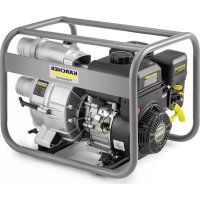



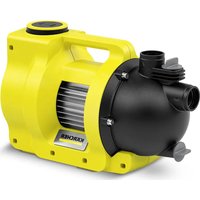
| Product type | Dirty water pump |
| Brand | Kärcher |
| Model | WWP 45 |
| Use | Outdoor, fresh water transport only |
| Maximum flow rate | 45 000 l/h |
| Max suction height | 7 m |
| Max delivery height | 25 m |
| Engine type | Single-cylinder 4-stroke, air-cooled |
| Displacement | 196 cm³ |
| Engine power | 5.1 kW / 6.9 HP |
| Fuel | Unleaded gasoline, min. 88 octane |
| Fuel tank capacity | 3.6 L |
| Runtime | 2.1 h |
| Engine oil | 0.5 L, type 10W-30 or 15W-40 |
| Spark plug | F5T, F6TJC, F7TJC |
| Dimensions (L × W × H) | 580 × 440 × 450 mm |
| Weight (without fuel) | 36 kg |
| Warranty | According to country conditions, against material and manufacturing defects |
| Spare parts | Use exclusively original Kärcher accessories and spare parts |
| Maintenance | Air filter cleaning every 50 h (10 h in dusty environment), oil change every 100 h |
| Safety | Do not use indoors, risk of explosion; wear hearing and eye protection; min. distance 2 m from flammable objects |
Frequently Asked Questions - WWP 45 Kärcher
User questions about WWP 45 Kärcher
0 question about this device. Answer the ones you know or ask your own.
Ask a new question about this device
Download the instructions for your Water pump in PDF format for free! Find your manual WWP 45 - Kärcher and take your electronic device back in hand. On this page are published all the documents necessary for the use of your device. WWP 45 by Kärcher.
USER MANUAL WWP 45 Kärcher
Director Regulatory Affairs & Certification
71364 Winnenden (Germany)
Tel.: +49 7195 14-0
Fax: +49 7195 14-2212
Winnenden, 2018/10/01
Contents
General notes
Intended use
Environmental protection
Accessories and spare parts
Scope of delivery
Safety instructions
Device description
Initial start-up
Initial startup.
Operation
Transport
Storage
Care and service
Troubleshooting guide
Warranty.
Technical data
EU Declaration of Conformity
General notes

Read these original operating instructions and the enclosed safety instructions before using the device for the first time.
Proceed accordingly.
Keep both books for future reference or for future owners.
Intended use
This waste water pump must not be operated in enclosed spaces and is only approved for outdoor operation.
This waste water pump is not approved for use in the food industry.
Only fresh water may be delivered using the pump. Using the pump for inflammable substances such as petrol, diesel or heating oil is prohibited due to the danger of fire and explosion.
Delivering salt water, acidic chemicals and other corrosive substances can damage the pump.
As delivered, this waste water pump is intended for use at heights of up to 1500 m above sea level. It can be adjusted by an authorised Customer Service department for use at higher elevations.
If a device that has been adjusted for use at higher elevations is used below this height then this can result in destruction of the motor through overheating.
Environmental protection

The packing materials can be recycled. Please dispose of packaging in accordance with the environmental regulations.
Electrical and electronic appliances contain valuable, recyclable materials and often components such as batteries, rechargeable batteries or oil, which is handled or disposed of incorrectly.
which is intended or disposed of incorrectly - can pose a potential threat to human health and the environment. However, these components are required for the
correct operation of the appliance. Appliances marked by this symbol are not allowed to be disposed of together with the household rubbish. Notes on the content materials (REACH) Current information on content materials can be found at: www.kaercher.com/REACH
Accessories and spare parts
Only use original accessories and original spare parts. They ensure that the appliance will run fault-free and safely.
Information on accessories and spare parts can be found at www.kaercher.com.
Scope of delivery
Check the contents for completeness when unpacking. If any accessories are missing or in the event of any shipping damage, please notify your dealer.
Safety instructions
Hazard levels
DANGER
- Indication of an imminent threat of danger that will lead to severe injuries or even death.
WARNING
- Indication of a potentially dangerous situation that may lead to severe injuries or even death.
CAUTION
- Indication of a potentially dangerous situation that may lead to minor injuries.
ATTENTION
- Indication of a potentially dangerous situation that may lead to damage to property.
Safety instructions
DANGER
- Danger of injury. The device is not intended for use by persons with restricted physical, sensory or mental abilities or those lacking in experience and / or lacking in knowledge. Children must be supervised to prevent them from playing with the device. Children and minors must not use the device.
- Danger of explosion.
- Never operate the device in potentially explosive environments.
- Observe the corresponding safety instructions when operating the device in hazard zones (e.g. a petrol station).
- Only fill the fuel specified in the operating instructions.
- Only refuel with the engine switched off.
- Do not refuel in confined spaces. Smoking and open flames are prohibited.
- Ensure that no fuel gets on hot surfaces during refuelling.
- Close the fuel tank cap after refuelling.
- Do not operate the device if fuel has been spilt. Move the device to another location and avoid generating sparks.
- Store fuel only in approved containers.
- Do not store fuel in the vicinity of open flames or devices having an ignition flame or that generate sparks (e.g. oven, heating boiler or water heater).
- Do not spray start spray into the air filter.
- Danger of fire.
- Maintain a minimum distance of 2m between inflammable objects and the muffler.
- Do not operate the device in forests, bushy or grassy areas unless the exhaust pipe has been equipped with a spark catcher.
- Keep grass and other soiling substances away from the cooling fins.
- Do not operate the device if the fuel system is damaged or leaking. Check the fuel system regularly.
- Allow the device to cool down before storing in closed rooms. Danger of electric shock.
- Do not touch the spark plug or ignition lead when the device is in operation.
WARNING
Health risk - Exhaust gases are toxic. Never breathe in the exhaust gases. Never operate the device in confined spaces. Ensure sufficient ventilation and extraction of the exhaust gases. Make sure that no exhaust gases are emitted close to air vents. Avoid repeated or prolonged contact with fuel or engine oil and do not inhale the fuel vapours.
CAUTION
- Danger of burns
- Do not touch any hot parts such as the muffler, cylinder or cooling fins. Danger of hearing damage.
- Do not operate the device without a muffler. Check the muffler regularly and have a damaged muffler replaced.
ATTENTION
- Risk of damage
- Use only spare parts from the original manufacturer.
- Old fuel can lead to deposits in the carburettor and impair the engine performance. Use only new fuel.
- Do not adjust any control springs or linkages that might
increase the speed of the engine.
- Do not operate the device with the air filter removed.
- Do not pull the starter cord while the device is running.
- Ensure adequate ventilation so that the device does not overheat.
- Drain all water from the pump if there is a danger of frost.
Symbols on the device
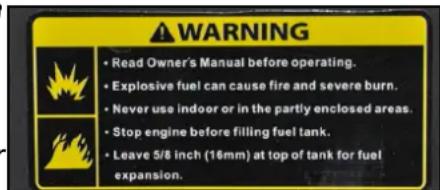
WARNING
Danger of explosion, risk of fire. Petrol can cause fires or explosions if handled incorrectly. Read these operating instructions before using the device.
Do not operate the device in confined spaces or partially enclosed areas.
Shut the motor down prior to refuelling. Fill the tank only up to 16 mm below the upper edge of the tank to allow room for expansion of the fuel.

CAUTION
Hot surface
The exhaust pipe of the device becomes very hot during operation and can cause burns. Avoid touching the exhaust pipe.

WARNING
Risk of eye injuries and hearing damage.
Wear safety goggles and hearing protection when operating the device.
Device description
See cover page for pictures. Illustration A
1 Power switch (2) Starter cord (3) Air filter (4) Filling hole (5) Fuel tank cap (6) Fuel tank (7) Oil dipstick (8) Oil drain plug (9) Output (10) Suction hose port (11) Water drain screw (12) Type plate (13) Fuel cock (14) Choke lever (15) Accelerator lever
Symbols on the device
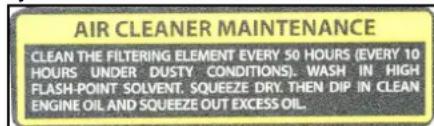
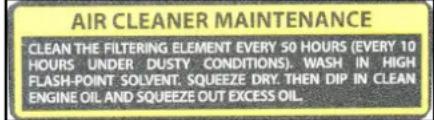
Clean the air filter every 50 operating hours or every 10 operating hours in the case of dusty environments (see "Care and maintenance/Cleaning the air filter").
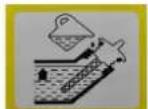
Note on checking the oil level.
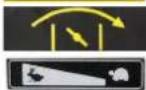
Choke lever
Accelerator lever
Initials
Fill with oil
- Position the device on a level surface.
- Unscrew the oil dipstick.
- Fill with engine oil.
Note: The engine oil is not included in the scope of delivery. The filling quantity and oil type are specified in the section "Technical data".
- Wipe off the oil dipstick.
- Insert the oil dipstick as far as it will go, but do not screw in.
- Pull out the oil dipstick. The oil level must lie in the marked section of the oil dipstick.
- Top up the engine oil if the level is too low.
- Screw in and tighten the oil dipstick.
Initial startup
Check the oil level
- Position the device on a level surface.
- Unscrew the oil dipstick.
- Wipe off the oil dipstick.
- Insert the oil dipstick as far as it will go, but do not screw in.
- Pull out the oil dipstick. The oil level must lie in the marked section of the oil dipstick.
- Top up the engine oil if the level is too low.
- Screw in and tighten the oil dipstick.
Refuelling
- Unscrew the fuel tank cap.
- Fill fuel up to a maximum of the lower edge of the filling nozzle.
- Fit the fuel tank cap and screw tight.
Positioning the pump
The delivery performance of the pump is heavily dependent on the operating conditions. Adhering to the following rules will ensure optimum performance.
- Keep the height difference between the water surface and the pump as small as possible.
- Position the pump so that the suction hose is as short as possible. A long pressure hose is better than a long suction hose. Do not use unnecessarily long hoses.
Connecting the hoses
- Push the hose clip onto the suction hose. Illustration B
Suction hose (not in scope of delivery) (2) Hose clip (3) Hose nipple (4) Union nut (5) Flat seal
- Slide the union nut onto the hose nipple.
- Push the suction hose onto the hose nipple.
- Position and tighten the hose clip.
- Fit a flat seal between the suction nozzle and hose nipple. Note: A reinforced hose suitable for vacuum applications must be used for the suction hose.
- Connect the suction hose to the suction nozzle and tighten the union nut.
- Fit the suction filter to the other end of the suction hose.
Illustration C
(1) Suction hose (not in scope of delivery)
(2) Hose clip (3) Suction filter
- Fit a hose nipple, union nut and hose clip to the pressure hose (not included in the scope of delivery).
- Fit a flat seal between the hose nipple and outlet.
- Connect the pressure hose to the outlet and tighten the union nut.
Operation
Venting the pump
ATTENTION
Risk of damage
The seals will be damaged if the pump runs dry. Vent the pump before starting. If the pump is accidentally run dry then stop the engine immediately and allow the pump to cool down before starting the venting procedure.
- Unscrew the cap from the filler opening.
- Fill the pump completely with water.
- Screw the cap back into the filler opening and tighten.
Starting the device
- Vent air from the pump.
- Open the fuel cock.
- Push the choke lever to the left.
- Push the accelerator lever to approximately 1/3 of the total range.
- Set the power switch to "l"
- Pull the starter cord slowly until a strong resistance is discernible then pull strongly.
- Slowly return the starter cord.
ATTENTION
Risk of damage
A rapidly returning starter cord damages the device. Slowly return the starter cord. 8. Push the choke lever to the right once the engine has started. 9. Push the accelerator lever to the left until reaching the desired speed. The flow rate of the pump depends on the engine speed. 10. Check the function of the pump. Dry running damages the pump. Switch off the engine and repeat venting of the pump if the pump does not deliver water.
Switching the device off in an emergency
- Set the power switch to "0".
Switching off the device
- Push the accelerator lever all the way to the right.
- Set the power switch to "0".
- Close the fuel cock.
Draining the water
- Unscrew the water drain screw.
- Allow the water to drain from the pump.
- Unscrew the cap from the filler opening.
- Flush the pump with fresh water
- Allow the fresh water to drain away.
- Screw the cap into the filler opening and tighten
- Screw in and tighten the water drain screw
Transport
- Set the power switch to "0" before transport.
- Allow the engine to cool down for at least 15 minutes before loading.
- Keep the device horizontal during transport to prevent fuel from spilling out.
- When transporting in vehicles, secure the device against rolling away, slipping and tipping according to the respectively applicable guidelines.
- Be aware of the weight of the device during transport.
Storage
CAUTION
Failure to observe the weight
Risk of injury and damage
Be aware of the weight of the device during storage.
ATTENTION
Risk of damage
Do not place any heavy objects on the device.
Store the device in a dry and dust-free place.
Cleaning the device
The device must be cleaned before storage. 1. Allow the device to cool down for a half-hour if it was recently in operation. 2. Flush the pump with clear water. 3. Manually wash the exterior of the device with a small amount of water. 4. Rub all accessible surfaces dry. 5. Unscrew the water drain screw and allow the water to drain out. 6. Screw in and tighten the water drain screw. 7. Lightly oil rust-prone surfaces. 8. Spray the control elements with silicone spray.
Storage duration of 1...2 months
- Add petrol stabiliser to the fuel tank.
- Top up the fuel tank.
Storage duration of 2...12 months
Additionally: 1. Close the fuel cock. 2. Place a container under the carburettor. Illustration D
①Carburettor
(2)Drain screw
- Unscrew the drain screw.
- Collect the fuel in the container.
- Screw in and tighten the drain screw.
- Empty the settling cup (see "Care and Maintenance/ Cleaning the settling cup").
Storage duration longer than 12 months
Additionally:
- Unscrew the spark plug.
- Add 5–10 cm³ of engine oil to the cylinder.
- Slowly pull the starter cord several times to distribute the oil in the engine.
- Screw in the spark plug.
- Change the oil (see "Care and Maintenance/Changing the oil").
- Pull the starter cord slowly until a strong resistance is discernible.
Care and service
DANGER
Danger of injury from electric shock
The device can start unintentionally. You can be injured by moving parts.
Remove the spark plug connector before performing any maintenance work.
CAUTION
Danger of burns.
Hot device components cause burns if touched. Allow the device to cool down before working on it. See "Startup" for a description. * See "Maintenance work" for a description.
Maintenance intervals
Each time before use
- Check the device for correct condition and operational safety. Do not start up a damaged device.
- Check the oil level.
- Check the air filter.
Once after 1 month or 20 operating hours
- Change the oil.
Every 3 months or 50 operating hours
- Clean the air filter.
Perform cleaning more frequently in a dusty application environment.
Every 6 months or 100 operating hours
- Change the oil.
- Clean the settling cup.
- Check and clean the spark plug.
- Clean the spark catcher (not included in the scope of delivery).
Annually by the authorised Customer Service
- Check and adjust the valve play.
- Clean the fuel tank and fuel filter.
- Replace the air filter insert.
- Replace the spark plug.
- Check/adjust the idling mixture speed.
- Check/adjust the valve play.
- Check the pump impeller.
- Check the gap between the casing and impeller.
- Check the pump inlet valve.
Every 2 years by the authorised Customer Service department
- Check the fuel line and replace if necessary.
- Clean the engine combustion chamber.
Maintenance work
Check the air filter
- Lift the strap and remove the cover. Illustration E
1 Cover ②Lap
③ Air filter insert
- Check the air filter insert for soiling. Clean the air filter if necessary or replace if damaged (see "Cleaning the air filter").
- Fit the cover and latch into place.
Cleaning the air filter
ATTENTION
Risk of damage
Penetrating dust can destroy the engine if the air filter insert is absent.
Do not operate the device without an air filter insert. 1. Open the air filter (see "Checking the air filter"). 2. Remove the air filter insert.
- Wash the air filter insert in warm water and household cleaner then rinse with clear water. Note: Dispose of the oil contaminated washing solution in an environmentally friendly manner.
- Allow the air filter insert to dry.
- Saturate the air filter insert in clean engine oil and press out the excess oil.
- Fit the air filter insert back into place.
- Fit the cover.
- Close the latches.
Changing oil
Illustration F
Perform the oil change on a warm engine. 1. Unscrew the oil dipstick. Oil dipstick (2) oil drain plug 2. Unscrew the oil drain screw with seal and catch the escaping oil. 3. Screw in and tighten the oil drain screw with seal. 4. Position the device on a level surface. 5. Measure the correct quantity of engine oil (for oil type see "Technical data") and fill through the oil dip-stick hole. 6. Check the oil level (see "Starting up"). 7. Screw in and tighten the oil dipstick 8. Dispose of the old oil in accordance with the environmental regulations.
Cleaning the settling cup
The settling cup separates water from the petrol. 1. Close the fuel cock. 2. Unscrew the settling cup.
Illustration G
① Settling cup ② Screw 3. Remove the settling cup with O-ring. 4. Clean the settling cup and O-ring using a non-inflammable solvent and allow to dry. 5. Fit the settling cup and O-ring and screw tight. 6. Open the fuel cock.
- Check the seal between the settling cup and carburettor.
- Close the fuel cock.
Checking and cleaning the spark plug
- Pull off the spark plug connector. Illustration H
① Spark plug connector ② Spark plug
- Clean the region around the spark plug to prevent dirt from entering the engine when the spark plug is removed.
- Unscrew the spark plug
- Replace a spark plug that has worn electrodes or a broken insulator.
- Check the electrode gap of the spark plug. Target value 0.7...0.8 mm.
- Check the spark plug seal for damage.
ATTENTION
Risk of damage
A loose spark plug can overheat and damage the engine. An overtightened spark plug can damage the thread in the engine. Observe the following instructions for tightening the spark plug. 7. Carefully screw the spark plug in by hand. Do not cross the thread. 8. Screw the spark plug all the way in using the plug spanner and then tighten as follows. a. Tighten a used spark plug by an additional 1/8...1/4 turn. b. Tighten a new spark plug by an additional 1/2 turn. 9. Plug on the spark plug connector.
Troubleshooting guide
Have all checks and work on electrical parts performed by an expert.
In case of any malfunctions not mentioned in this chapter, contact the authorised Customer Service.
The engine does not start.
- Open the fuel cock.
- Push the choke lever to the left.
- Set the power switch to "I".
- Fill the tank with fuel.
- Check the oil level and top up if necessary.
- Clean the fuel tank and carburettor. Refuel with fresh fuel.
- Check the spark plug (see "Care and maintenance/ Checking and cleaning the spark plug").
- Allow a wet spark plug to dry. Then start the engine with the accelerator lever at the full speed position.
- Clean the settling cup (see "Care and Maintenance/ Cleaning the settling cup").
Low engine performance
- Check the air filter.
- Clean the fuel tank and carburettor. Refuel with fresh fuel.
Pump does not deliver any water
- Vent air from the pump.
- Check the suction hose for leaks and holes.
- Check the flat seal between the device and the suction hose.
- Use a more sturdy suction hose.
- Completely immerse the suction filter.
- Clean the suction filter.
- Position the pump closer to the water source. Reduce the height difference between the pump and water surface.
Use shorter hoses.
Low delivery rate.
- Check the suction hose for leaks and holes.
- Check the flat seal between the device and the suction hose.
- Use a more sturdy suction hose.
- Completely immerse the suction filter. Clean the suction filter.
- Position the pump closer to the water source. Reduce the height difference between the pump and water surface.
- Use shorter hoses.
Warranty
The warranty conditions issued by our relevant sales company apply in all countries. We shall remedy possible malfunctions on your appliance within the warranty period free of cost, provided that a material or manufacturing defect is the cause. In a warranty case, please contact your dealer (with the purchase receipt) or the next authorised customer service site.
(See overleaf for the address)
Technical data
WWP 45
Pump weight without fuel: 36 kg
| Nominal width* 3 | |||
| Maximum flow rate l/h 45000 | |||
| Suction height (max.) m | 7 | ||
| Delivery height (max.) m | 2 | 5 | |
| Internal combustion engine | |||
| Engine type Single-cylinder | |||
| Type | 4-stroke | ||
| Cooling type | Air-cooled | ||
| Engine capacity | cm3 | 196 | |
| Engine performance | kW/PS | 5,1/6,9 | |
| Fuel type | Petrol, min. 88 octane | ||
| Fuel tank capacity | l | 3,6 | |
| Working time with a fully filled fuel tank | h | 2,1 | |
| Engine oil volume | l | 0,5 | |
| Oil type | 10 W-30 | ||
| 15 W-40 | |||
| Spark plug type | F5T, F6TJC, F7TJC | ||
| Dimensions and weights | |||
| Length | mm | 580 | |
| Width | mm | 440 | |
| Height | mm | 450 | |
CO2 emissions according to the measurement procedure of EU regulation 2016/1628 Euro V
| Motor | g/kWh | 790 |
| Subject to technical modifications. | Currently applicable EU Directives2006/42/EC (+2009/127/EC)2014/30/EU2011/65/EU | H. JennerChairman of the Board of ManagementS. ReiserDirector Regulatory Affairs & Certification |
| EU Declaration of Conformity | ||
| We hereby declare that the machine described below complies with the relevant basic safety and health requirements in the EU Directives, both in its basic design and construction as well as in the version placed in circulation by us. This declaration is invalidated by any changes made to the machine that are not approved by us. | Harmonised standards usedEN 809: 1998: A1: 2009 + AC: 2010EN 61000-6-3: 2007+A1: 2011+AC: 2010EN 61000-6-1: 2007 | Documentation supervisor: S. ReiserAlfred Kärcher SE & Co. KG |
| Product: Waste water pump | Conformity evaluation procedure used2000/14/EC: Appendix V | Alfred-Kärcher-Str. 28 - 4071364 Winnenden (Germany) |
| Type: 1.812-xxx | The signatories act on behalf of and with the authority of the company management. | Ph.: +49 7195 14-0Fax: +49 7195 14-2212Winnenden: 0210/10/04 |
Content
General remarks. 10
2006/42/EC (+2009/127/EC)
2014/30/EU
2011/65/EU
Chairman of the Board of Management
S. Reiser
Director Regulatory Affairs & Certification
Responsible for documentation: S. Reiser
Alfred Karcher SE & Co. KG
Alfred-Karcher-Str. 28 - 40
71364 Winnenden (Germany)
Tel.: +49 7195 14-0
Fax: +49 7195 14-2212
Winnenden, 01/10/2018
Indices
Chairman of the Board of Management

S. Reiser
Director Regulatory Affairs & Certification
71364 Winnenden (Germany)
Tel.: +49 7195 14-0
Fax: +49 7195 14-2212
Winnenden, 01/10/2018
Contents
H. Jenner Chairman of the Board of Management
S. Reiser Director Regulatory Affairs & Certification
71364 Winnenden (Germany)
Tel.: +49 7195 14-0
Fax: +49 7195 14-2212
Winnenden, 2018/10/01
Table of contents
General notes 20
Intended use 20
Environmental protection 21
CLEAN THE FILTERING ELEMENT EVERY 50 HOURS (EVERY 10 HOURS UNDER DUSTY CONDITIONS), WASH IN HIGH FLASH-POINT SOLVENT, SQUEEZE DRY. THEN DIP IN CLEAN ENGINE OIL AND SQUEEZE OUT EXCESS OIL.
2006/42/EC (+2009/127/EC)
2014/30/EU
2011/65/EU
Chairman of the Board of Management

S. Reiser
Director Regulatory Affairs & Certification
Documentation manager: S. Reiser
Alfred Karcher SE & Co. KG
Alfred-Karcher-Str. 28 - 40
71364 Winnenden (Germany)
Tel.: +49 7195 14-0
Fax: +49 7195 14-2212
Winnenden, 01/10/2018
- Lift the flaps and remove the cover. Figure E
Chairman of the Board of Management

S. Reiser
Director Regulatory Affairs & Certification
Documentation representative: S. Reiser
Alfred Karcher SE & Co. KG
Alfred-Karcher-Str. 28 - 40
Winnenden, 01/10/2018
Contents
www.kaercher.com/REACH
2006/42/EC (+2009/127/EC)
2014/30/EU
2011/65/EU
2000/14/EC: Annex V
Chairman of the Board of Management

S. Reiser
Director Regulatory Affairs & Certification
71364 Winnenden (Germany)
Tel.: +49 7195 14-0
Fax: +49 7195 14-2212
Winnenden, 2018/10/01
Contents
General notes 31
2006/42/EC (+2009/127/EC)
2014/30/EU
2011/65/EU
Harmonised standards applied
EN 809:1998:A1:2009+AC:2010
EN 61000-6-3:2007+A1:2011+AC:2010
EN 61000-6-1:2007
Chairman of the Board of Management
S. Reiser
Director Regulatory Affairs & Certification
71364 Winnenden (Germany)
Tel.: +49719514-0
Winnenden, 10/01/2018
Contents
General information 35
EN 61000-6-3: 2007+A1: 2011+AC: 2010
EN 61000-6-1:2007
Applied conformity assessment procedure 2000/14/EC: Annex V
H. Jenner Chairman of the Board of Management
S. Reiser Director Regulatory Affairs & Certification
Documentation authorized: S. Reiser
Alfred Karcher SE & Co. KG
Alfred-Karcher-Str. 28 - 40
D-71364 Winnenden (Germany)
Tel: +49 7195 14-0
Fax: +49 7195 14-2212
Winnenden, 2018/10/01
Contents
General instructions 38
Intended use 38
www.kaercher.com/REACH
Chairman of the Board of Management
S. Reiser
Director Regulatory Affairs & Certification
Documentation responsible: S. Reiser
Kärcher SE & Co. KG
Alfred-Karcher-Str. 28 - 40
71364 Winnenden (Germany)
Phone: +49 7195 14-0
Winnenden, 2018/10/01
Spare parts
Accessories 42
Intended use 42
Environmental protection 42
Spare parts and accessories 42
2006/42/EC (+2009/127/EC)
2014/30/EU
2011/65/EU
Chairman of the Board of Management

S. Reiser
Director Regulatory Affairs & Certification
Winnenden, 2018/10/01
CodelpkaHne
General instructions 49
Intended use 49
Protection of the environment 49
Spare parts and accessories 49
Scope of delivery 49
Safety instructions for the technician 49
Description of the device 50
First commissioning 51
Commissioning 51
Operation 51
Transport 51
Storage 51
Maintenance and servicing 52
Troubleshooting 52
TapaHTN 52
Technical specifications 53
Declaration of Conformity with EU standards ... 53
General instructions

Before using the device, read the operating instructions carefully.
Operation is carried out in accordance with the attached instructions.
TECHNICAL SAFETY. FOLLOW THE INSTRUCTIONS.
Keep the packaging for future use.
Intended use
This device is intended for indoor use; it can only operate on mains power.
This device is not intended for use in the food industry. The pump is designed to pump only fresh water.
Using the pump to pump flammable liquids: gasoline, diesel fuel, or fuel oil is strictly
prohibited due to the risk of fire and explosion.
Pumping acids, alkalis, chemicals, and abrasive substances that cause corrosion of pump materials is prohibited. This pump for water and the supplied motor is designed for operation at altitudes not exceeding 1500 m above sea level. The authorized customer service may modify the device or adjust it for higher altitudes.
Operating such a device at altitudes higher than it is designed for may cause the motor to overheat and be damaged as a result of overheating.
Environmental protection
Packaging materials can be recycled. Please dispose of packaging in an environmentally responsible manner.
Electrical and electronic devices often contain valuable materials, which can be recycled, or components that can be reused. These include batteries.
Batteries and oils, which, if handled improperly or disposed of incorrectly, can pose a potential hazard to health and the environment. Nevertheless, these components are necessary for the proper operation of the device. Devices marked with this symbol are prohibited from being disposed of with household waste.
Information on ingredients (REACH)
For current information on ingredients,
see www.kaercher.com/REACH
Accessories and spare parts
Use only original accessories and spare parts. Only they guarantee safe and trouble-free operation of the device.
For information on accessories and spare parts, see www.kaercher.com.
Scope of delivery
When unpacking the device, check the scope of delivery. If accessories are missing or damage occurred during transport, notify the sales organization that sold the device.
Safety instructions
Hazard levels
DANGER
- Indication of an immediate danger that leads to severe injuries or death.
DANGER
- Indication of a potentially dangerous situation that may lead to severe injuries or death.
WARNING
- Indication of a potentially dangerous situation that may lead to minor injuries.
CAUTION
- Indication of a potentially dangerous situation that may result in material damage.
Safety instructions
DANGER
Risk of injury. - The device is not intended for use by persons with reduced physical, sensory or mental capabilities or with lack of experience and/or knowledge. Ensure that children do not play with the device. Keep the device away from children. Explosion hazard. It is forbidden to operate the device in explosive atmospheres. - When operating the device in hazardous areas (e.g., at a gas station), follow the applicable safety regulations.
Only use the fuel specified in the operating instructions. Refuel only with the engine switched off. - Refueling in enclosed spaces is not permitted. Smoking and open flames are prohibited. During refueling, do not allow fuel to come into contact with hot surfaces. - After refueling, close the fuel tank cap. Do not start the device if fuel has been spilled. Move the device to another location and avoid sparks. Store fuel only in approved containers. It is forbidden to store fuel near open flames or devices that use pilot lights or produce sparks (e.g., heaters, heating boilers, or water heaters). It is forbidden to use the device in explosive atmospheres. - Fire hazard. The distance between flammable materials and the muffler must be at least 2 m. - Use the device on terrain overgrown with trees, bushes, or grass is permitted only if the exhaust pipe is equipped with a spark arrester.
Do not allow grass or debris to come into contact with the cooling fins. Do not use the device if the fuel system is damaged or leaking. Check the fuel system regularly. - Before storing in an enclosed space, allow the device to cool down. Risk of electric shock: do not touch the spark plug or ignition cable while the device is operating.
DANGER
- Health hazard
- Exhaust gases are toxic. Do not inhale exhaust gases. It is forbidden to operate the device in enclosed spaces. Adequate ventilation and exhaust gas removal must be ensured.
- Ensure that in the area of the air intake there are no protruding gases.
- Avoid repeated or prolonged skin contact with fuel or lubricating oil; do not inhale fuel vapors.
CAUTION
Danger of burns. Do not touch hot parts: muffler, cylinder or cooling fins.
Danger of hearing damage
Do not operate the device without a muffler. It is necessary to regularly check the muffler and replace it if it is damaged.
WARNING
- Danger of damage
- Use only original parts from the manufacturer. Old fuel can cause the formation of deposits in the carburetor and, consequently, a decrease in engine power. Use only new fuel. It is forbidden to change the position of the governor spring or other parts to increase the engine speed. It is forbidden to operate the device without an air filter. Do not pull the starter rope while the device is running.
- Provide sufficient ventilation to avoid overheating of the device.
- If severe frosts occur, it is necessary to drain the water from the pump.
Device design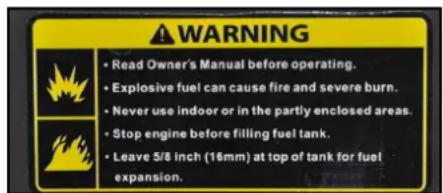
WARNING
Danger of explosion, danger of fire.
If handled improperly, gasoline can become a cause of fire or explosion.
Before operating the device, read the instruction manual.
Do not use the device in enclosed areas or on flammable territory.
Before refueling, turn off the engine. Fill the tank only up to 16 mm below the top edge, so that there is room for fuel expansion.

CAUTION
Hot surface
The exhaust pipe of the device becomes very hot during operation and can cause burns.
Avoid contact with the exhaust pipe.

WARNING
Danger of injury to the eye or hearing.
During operation, use protective glasses and hearing protection.
Device description
Illustrations on the reverse side
Figure A
①Device switch ②Cable starter ③Air filter ④Fuel tank cap ⑤Fuel tank cap ⑥Fuel tank ⑦Oil level gauge ⑧Oil filler plug ⑨Exhaust ⑩Suction pipe ⑪Oil drain plug ⑫Water drain plug ⑬Nameplate ⑭Fuel valve ⑮Air damper lever
Symbols on the device
Clean the air filter every 50 hours, or every 10 hours when working in dusty environments (see "Maintenance/Cleaning the Air Filter").

Checking the oil level.

Air filter lever
Lever
First use
Oil filler cap
1. Place the device horizontally. 2. Unscrew the oil dipstick. 3. Fill with engine oil. Note: Engine oil is not included in the delivery. Quantity and type of oil: see section "Technical Specifications". 4. Screw the oil dipstick back in. 5. Insert the oil dipstick fully without screwing it in. 6. Pull out the oil dipstick. The oil level should be between the markings on the dipstick. 7. If the oil level is too low, add engine oil. 8. Screw the oil dipstick back in.
First use
Checking the oil level
1. Place the device horizontally. 2. Unscrew the oil dipstick. 3. Pull out the oil dipstick. 4. Insert the oil dipstick fully without screwing it in. 5. Pull out the oil dipstick. The oil level should be between the markings on the dipstick. 6. If the oil level is too low, add engine oil. 7. Screw the oil dipstick back in.
Refueling
- 1. Open the fuel tank cap. 2. Add fuel not above the lower edge of the filler neck.
- Close and tighten the fuel tank cap.
Pump installation
The pump performance largely depends on its operating conditions. By following the rules below, you can achieve optimal performance. The height difference between the water surface and the pump should be as small as possible. - Install the pump so that the suction hose is as short as possible.
Use a reinforced suction hose. Do not use hoses without reinforcement.
Connecting the hoses
- Put the hose on the suction port. Figure ① Suction hose (not included in delivery)
② Hose clamp (3) Connect the connecting pipe (4) Flat gasket (5) Flat seal
- Put the union nut on the connecting pipe of the hose.
- Put the suction hose on the connecting pipe of the hose.
- Install the clamp in place and tighten. 5. Install the flat seal between the suction pipe and the connecting pipe of the hose.
Note: As a suction hose, use a reinforced hose designed for vacuum operation.
6. Connect the suction hose to the suction pipe and tighten the union nut. 7. After connecting the suction hose, install the suction filter. Figure C
① Suction hose (not included in delivery)
(2) Hose clamp ③ Suction filter
- Put the pressure hose (not included in delivery) on the connecting pipe of the hose, the union nut and the hose clamp. 9. Install the flat seal between the connecting pipe of the hose and the outlet pipe. 10. Connect the pressure hose to the outlet and tighten the union nut.
Operation
Remove air from the pump
CAUTION
Onachocmb nopekdeHua
Paboma hacoc aecxyu eedem knoepexdehuynomnenuhui.
ydanumb 03dyx u3 hacocapepeeodom e kcnnyamauio. Ecnu KOcmamupoeaHO, ymo haco pabomaem cxyyo, Heo6xOMMO HemeOnHe ocmaohumb deuaenb u damb hacocy ocmbim pepeyanaehm u3 heo 03dyxa.
- BbIBHHTnTb np6ky 3aJIINBHO O TBePcTna.
- NonHocTbIO 3aONHHTb HaCOC BOHOI.
- CHOBA BvEBPHTb np06ky B 3aJIINBHOE OTBepCTME W 3ATyHBt.
3anyck yctpOcTBA
- YdaHb Bo3dyx H3 Haocca.
- OTKpbITb TOJINBHBbl KpaH.
- OTBeCTn pbIar BO3dyuHoi 3acJNoHKn BneBO
- OTBeCTn pbHar r3a npMepHo Ha 1/3 xOJa BNeBO. 5.YCTAHOBNTB BYBKKIOHTAeYbCTPOIcTBA B NOJONKHeMe
- MedenHNO TNOTAHyTb TPOCOBBI CTAPTEP DO OUYTMORO CONOTINBNEHNA,3aTeM NOTAHyTb 3a TPOC CINBHO.
- MeiNeHNO OTBECTI TPOCOBBI CTAPTEP H3aD, BHUMAHNE
The pump and its components may not be used to design other devices.
Slowly turn the starter handle. 8. After starting, close the air vent screw.
- Turn the handle to the left as far as possible so that the frequency of rotation of the pump shaft is minimal. The pump pressure depends on the rotation frequency.
- Check the pump operation. Dry running damages the pump. If the pump does not deliver water, stop the engine and repeat the procedure for removing air from the pump.
Turning off the device
- Set the device switch to the «O» position.
Turning off the device
- Turn the gas handle to the right to the end. 2. Set the device switch to the «O» position.
- Close the fuel valve.
Power
- Unscrew the drain plug of the water drain hole. 2. Drain the water from the pump.
- Unscrew the filler plug.
- Rinse the pump with fresh water. 5. Drain the fresh water.
- Unscrew the filler plug. 7. Screw in the threaded plug of the water drain hole.
Transportation
- Before transporting the device, turn off the device and disconnect it from the mains. Wait at least 15 minutes after switching off. During transportation, keep the device horizontally to prevent fuel spillage. When transporting the device in vehicles, secure it against sliding and tipping in accordance with applicable regulations.
- Consider the weight of the device when transporting.
Storage
CAUTION
Risk of injury
Danger of injury and damage
During storage, consider the weight of the device.
ATTENTION
Risk of damage
Do not place heavy objects on the device.
When storing, protect the device from moisture and dust.
Cleaning the device
Before cleaning or storing, the device must be cleaned.
1. Make sure the device is switched off and cannot be switched on accidentally. 2. Rinse the device with water. 3. Wash the device by hand with a soft cloth and water. 4. Dry all accessible surfaces thoroughly. 5. Unscrew the drain plug from the water inlet and drain the water. 6. Screw the drain plug back in. 7. Lubricate the surfaces susceptible to corrosion with oil. 8. Lubricate the control levers with grease.
Storage 1-2 months
- Drain the fuel stabilizer from the fuel tank.
- Fill the fuel tank
Storage 2-12 months
Additionally:
- Close the fuel valve.
- Place a container under the carburetor, Figure D
① Carburetor
② Threaded plug of the drain hole
- Unscrew the threaded plug of the drain hole.
- Collect the fuel in the container
- Screw in the threaded plug of the drain hole.
- Empty the sediment bowl (see "Maintenance/Cleaning the sediment bowl").
Storage more than 12 months
Additionally:
- Drain the oil while it is hot.
- Pour 5-10 cm of motor oil into the cylinder.
- Crank the engine several times with the starter to distribute the oil.
- Screw the spark plug back in.
- Change the oil (see "Maintenance and Technical Service/Oil Change").
- Slowly pull the starter rope until resistance is felt.
Maintenance and Technical Service
DANGER
Danger of rotating parts, danger of electric shock.
Possible self-starting of the device. There is a risk of injury from moving parts.
Before carrying out maintenance, it is necessary to disconnect the ignition cable.
CAUTION
Danger of burns.
When touching hot parts, use protective gloves.
Low engine power
- Check the air filter.
- Empty the fuel tank at the carburetor. Fill with fresh fuel.
Pump does not transfer water
1. Remove air
- Check the tightness of the suction hose and the presence of holes in it. 3. Check the flat seal between the device and the suction hose. 4. Use a stronger suction hose.
- Fully immerse the suction strainer.
- Clean the suction strainer
- Place the pump closer to the water source. Reduce the height difference between the pump and the water surface.
- Use a shorter hose. Low productivity
- Check the tightness of the suction hose and the presence of holes in it.
- Check the hose for leaks between the device and the suction hose.
- Use a more stable suction hose.
- Immerse the pump intake into the suction hose.
- Remove the suction hose.
- Place the hose closer to the water source. Reduce the height difference between the pump and the water surface.
- Use a shorter hose.
Warranty
In each country, the corresponding warranty conditions established by the authorized representative for our products apply. Possible malfunctions of the device during the warranty period will be eliminated
free of charge, if the defect is due to material or manufacturing defects. In case of claims during the warranty period, please contact the organization that sold the product or the authorized service center.
(Address indicated on the back)
The production date is indicated on the factory label on the packaging.
The production date code has the following meaning:
Example: 30190
3 year of production 0 century of production 1 decade of production 9 second digit of month of production 0 first digit of month of production
Thus, in this example, code 30190 indicates the production date 09/(2)013.
Technical characteristics
| Hacoc | ||
| HOMINAHBLYДиамету"3 | ||
| Pacxod mack. | I/h | 45000 |
| Высota васьваня(Makc.) | m | 7 |
| Высota поаду(Makc.) | m | 25 |
| Диогател Bvyтpenнero cropannna | ||
| Тулдаггалу Odoшлindroрь | ||
| Тул 4-taktnhny | ||
| Тул oxлajdeninna | С ВОЗДУЛБМoxлajdeninne | |
| Равочи obleм | cm3 | 196 |
| Мошисть ддаггалу | kW/PS | 5,1/6,9 |
| Тул толпILA | 6eH3M, MIn. OKТанове чИС lo 88 | |
| Емкость толпьного бака | I | 3,6 |
| Верma paobotу priо палного баke | h | 2,1 |
| Колчесъ моторного масla | I | 0,5 |
| Сорт масla | 10 W-30 15 W-40 | |
| Тул севе зжигалу | F5T, F6TJC, F7TJC | |
| Размрьи и Бec | ||
| Длina | mm | 580 |
| Ширна | mm | 440 |
| Высota | mm | 450 |
| Весь Золпьа | kg | 36 |
| CO2-змбся B coOTьтCTьнс c proцедурии ИЗмерени Согларно рergлamedу EC 2016/1628Еро V | ||
| Диогател | g/kWh | 790 |
| Сохразнегся право на Небесенные Тechнiques Истддгам EC | ||
| Декларачи O coOTьтCTьн STANДAPTAM EC | ||
| Ноставима заavedл.ЧTO кONSДПИЙ, КONТСТУСПЕ I NOLTNENHE YAZAKHIM NOHIX MAJIINH IOBEHAOCT COOTВETYROU M OCSOBHIM TReBбOBANHIM DmpeKTEB INEC no BeZMAHACNCTH NOXAPANE 3DOPOBLY.Прлп NOБХ IMENHIX M MAJINH, He COTLBOANHbC Na Staile KMONMANH, Данный Дддгам Рету.TСБОСИ.ИЗДLE: HACOC Ддгу prazhen BDу | ||
| Тул 1.812-xxx | ||
| Демстуши ддгКВь BC | ||
| 2006/42/EC (+2009/127/EC) | ||
| 2014/30/EC | ||
| 2011/65/EC | ||
| Приименны rapamonsriPoRavBNHs CTANDArtB | ||
| EN 809: 1998; A1: 2009 + AC: 2010 | ||
| EN 61000-6-3: 2007+A1: 2011+AC: 2010 | ||
| EN 61000-6-1: 2007 | ||
| Приименны метod очесни COOTВETBNN | ||
| 2000/14/EC: Плиожende V | ||
| H.Neogen dmncabuimec nIIa DeYCTBYOT OT IMENH IN no DoberpennoCTn Ppavlenia. | ||
| H.J. Jenner Chairman of the Board of Management S. Reiser Director Regulatory Affairs & Certification | ||
| ПлLO, OTВТСТВНОЕ 3A ВIDLENDEДOKUMENTАП. ILI. | ||
| Райser(S. Reiser) | ||
| Alfred Karcher SE & Co. KG | ||
| Alfred-Karcher-Str. 28-40 | ||
| 71364 Winnenden (Germany) | ||
| TeR.: +49 7195 14-0 | ||
| Фанк: +49 7195 14-2212 | ||
| r. Виненьden, 01.10.2018 | ||
| Tartalom | ||
| Altalanos utasitask... | 53 | A csomolgoyanyagujahrasnosilhatto. Kárjuk, környezelbarat modyon semmisitse meg a csoma-golast. |
| RendelteteSzerü hasznalat... | 53 | Az elektromos elektronikus keszülekek értes, üjrahansnosilhatto anyogakot, égyakran olyan alkoztelemeket, peldaal elementek, akku-mulatorokat vay olajt isartalmzak, melyek nem megefello kezellese vay hylteken megesmirite-se potenciális verzétyl jentehet az emberek egészségre é a környezelte. Ezek et al ozlatolelemek azonban a kszülek rendeltete sres zuemelseshez szukségek. AZ ezzel a szimbulmua jelölt keszülekeket nem szabad a haztarasti hulladekkal yegtug megsemissite-ni. |
| Környezelvadelem | ||
| Tartzórekós pólalktrészek... | 53 | Összvetovkre vonatkozó utasitask (REACH) |
| Szállott tartozék... | 53 | Az öszvetovkre vonatkozó aktuális informaciokat ltt ta-lajla: www.kercher.com/REACH |
| Biztonsagi ultasitask... | 53 | Czajtskiy okres konatkozó utasitask (REACH) |
| A keszülk leirasa... | 54 | Az öszvetovkre vonatkozó aktuális informaciokat ltt ta-lajla: www.kercher.com/REACH |
| Elsö uzembe helyezés... | 55 | Czajtskiy okres konatkozó aktuális informaciokat ltt ta-lajla: www.kercher.com/REACH |
| Uzembe helyezés... | 55 | Czajtskiy okres konatkozó aktuális informaciokat ltt ta-lajla: www.kercher.com/REACH |
| Uzemelletés... | 55 | Czajtskiy okres konatkozó aktuális informaciokat ltt ta-lajla: www.kercher.com/REACH |
| Szajtslats... | 55 | Czajtskiy okres konatkozó aktuális informaciokat ltt ta-lajla: www.kercher.com/REACH |
| Tárolas... | 55 | Czajtskiy okres konatkozó aktuális informaciokat ltt ta-lajla: www.kercher.com/REACH |
| Apoias es kardanlarlmas... | 55 | Czajtskiy okres konatkozó aktuális informaciokat ltt ta-lajla: www.kercher.com/REACH |
Chairman of the Board of Management

S. Reiser
Director Regulatory Affairs & Certification
Winnenden, 2018/10/01
Contents
General instructions 57
Use in accordance with intended purpose 57
Environmental protection 57
Accessories and spare parts 57
Scope of delivery 57
2006/42/EC (+2009/127/EC)
2014/30/EU
2011/65/EU
Applied harmonized standards
EN 809:1998:A1:2009+AC:2010
EN 61000-6-3:2007+A1:2011+AC:2010
EN 61000-6-1:2007
Valid conformity assessment procedure
2000/14/EC: Annex V
The signatories act in accordance with the instructions and with the authorization of the management.
H. Jenner Chairman of the Board of Management
S. Reiser Director Regulatory Affairs & Certification
Authorized person for documentation: S. Reiser
Alfred Karcher SE & Co. KG
Alfred-Karcher-Str. 28 - 40
71364 Winnenden (Germany)
Tel.: +49 7195 14-0
2006/42/EC (+2009/127/EC)
2014/30/EU
2011/65/EU
Chairman of the Board of Management

S. Reiser
Director Regulatory Affairs & Certification
Documentation administrator: S. Reiser
Alfred Karcher SE & Co. KG
Alfred-Karcher-Str.28-40
71364 Winnenden (Germany)
Tel.: +49 7195 14-0
Winnenden, 2018/10/01
Table of contents
Relevant EU directives
2006/42/EC (+2009/127/EC)
2014/30/EU
2011/65/EU
Harmonized standards applied
EN 809:1998:A1:2009+CA:2010
EN 61000-6-3:2007+A1:2011+AC:2010
EN 61000-6-1:2007
Procedure applied for conformity assessment 2000/14/EC: Annex V
The signatories act on behalf of and with the authorization of the Board of Management.

H.Jenner
Chairman of the Board of Management

S. Reiser
Director Regulatory Affairs & Certification
Responsible for the compilation of the technical documentation: S. Reiser
Alfred Karcher SE & Co. KG
Alfred-Karcher-Str. 28 - 40
71364 Winnenden (Germany)
Tel.: +49 7195 14-0
Fax: +49 7195 14
Winnenden, 01.10.2018
Contents
2000/14/EC: Annex V
H. Jenner Chairman of the Board of Management
S. Reiser Director Regulatory Affairs & Certification
71364 Winnenden (Germany)
Tel.: +49 7195 14-0
Fax: +49 7195 14-2212
Winnenden, 01.10.2018
Contents
General notes 75
Chairman of the Board of Management
S. Reiser Director Regulatory Affairs & Certification
Authorized representative for documentation: S. Reiser
Alfred Karcher SE & Co. KG
Alfred-Karcher-Str. 28-40
71364 Winnenden (Germany)
Tel.: +49 7195 14-0
Fax: +49 7195 14-2212
Winnenden, 1. 10. 2018.
Contents
General notes 78
Intended use 78
Environmental protection 78
Accessories and spare parts 78
Scope of delivery 78
Safety instructions 78
Description of the device 79
First commissioning 80
BbeHn Beknnyataio 80
Eknnnyataia 80
TpaHcnpTyBaHH 80
36epiranra 80
Dorra Ta texhuihe o6cyroBaHHa 80
DonomoraBpa3i HecnpaBHOCTe 81
Tapahtia 81
TexhihixapakTepcntkN 81
Deknapaia npo BiNobiHicb CTanapTAMC. 82
3araanbHI Bka3iBKn

Neped nepuBnKOpNCaHHM
nPcTpoO 03HaHOMNTncb 3 UIEIO
OpriHaIbHOIO IHCTpyKJIEIO 3
zangya did yac nobomu I moxe
cnpuunmu oniku.

Risk of injury to hearing organs and health. Use protective headphones and hearing protection.
Device description
Figures on the reverse side
Figure A
1 Device body 2 Sterile handle 3 Pressure gauge 4 Drain hole 5 Fuel tank cap 6 Fuel tank 7 Hose 8 Drain plug 9 Outlet 10 Silencer pipe 11 Drain plug 12 Factory plate
13 Fuel valve
14 Air filter cover
15 Air filter element
Symbols on the device
AIR CLEANER MAINTENANCE
CLEAN THE FILTERING ELEMENT EVERY 50 HOURS (EVERY 10 HOURS UNDER DUSTY CONDITIONS). WASH IN HIGH FLASH-POINT SOLVENT. SQUEEZE DRY. THEN DIP IN CLEAN ENGINE OIL AND SQUEEZE OUT EXCESS OIL.
Clean the air filter every 50 hours, and every 10 hours in dusty conditions (see Maintenance / Cleaning the air filter).
Check the oil level.

Important: pour in oil
Drain plug
First commissioning
Filling
- Set the device in a horizontal position. 2. Unscrew the plug.
- Fill the engine with oil. Note: The engine oil is not included in the delivery package. The quantity and brand of oil are given in the [Technical Specifications].
- Wipe off the plug.
- Insert the plug into the hole, but do not tighten.
- Tighten the plug, the oil level should be at the lower edge of the plug hole. 7. If the level is low, add engine oil.
- Tighten the plug.
Commissioning
Check the oil level
- Set the device in a horizontal position. 2. Unscrew the plug.
- Check the plug.
- BCTABNTN uyn do KINr, ane He 3akpyyBaTH. 5.BNTIITnIyN.PiBHeN OINBNI NOBInH3HAxQDITnCb yNoTHaENH YactHnIyNa.
- 3a Hn3bkoro pibra donnt MToTpy OINBy.
- BkpyTnTn i 3aTnHyTu uyn.
3aBHHnJIbHorO
- BiDrBnHTTN KPNKV NaNHBHO 6aKa. 2.HaHTINnIbHE MAKCMYMdo HNKHbOro KpAO HANHOIBTOPOBHHI.
- BcTaHOBnTH KpUk Ky NaHbHorO 6aka i 3aTyrHyTN.
YcTaHOBJIeHHHaCocA
PpOdyKTHBHCtBpepeKaUyBaHnHaCoca B3HaHHi Mpi B3HaHaCTbC yMOBAMu BkOPnCTAHn. DOpHMaHH HabeDeHHxHxHcpe npabHn 3abe3neHy cOnTmAbhBy npOdyKTHBcTb.
P13HIIA BWCOT MIX NOBEXHEO BOI TA HACOCOM NOHNHA 6yTN AOKOMA MEHNE. BCTAHOBHTH HACOC TAK, LIO6 UIJAH FCBMOKTYBAHH 6yB KOMORA KOPOTUHM. Kpaue doBriH HanipHn WnAHr HJk doBriWn WnAHr BCMOKTYBAHHa. He BnKOpNCTOByBaTn 7naHn 3aBoi DOBxHn.
PpEHaHHaHrib
1.HacyHynXOMYT DnKpINJIeHHrIaHaBCMOKTYBaHbHIuHaHrManHOHOKB
① BCMOKTOBAHbHnIuNaHr (He BXOaNTbdo KOMNNEKTY NOCTABKN) ②XomyTДЯKpInnEHHShaHa ③ PnpEHyBaHbHn naTpy6ok 1naHry (4)HaKaɪdHa raiKa ⑤Пиocke yuinbHeHHH
2.HacyHyn HAKNDHryraKyHa npCndhyBaIbHn natpy6ok ⅢnaHra. 3.HacyHyTN BCMOKTyBaJbHNI JNaHr H npEeHyBaJbHNI NaTpy6ok JNaHra. 4. Po3mictnI 3aTARHyTN XOMyT.
- TOKnactn NIOCKe yuJIbHeHnMIX BCMOK TYBaJIbHM nATpy6kOM I npHeDHyBaJIbHM nATpy6kOM UIHaRA. BkaIiBka:BCMOK TYBaJIbHM uHaR NOBHeH 6yTIN iDCInHEHm I npDAthHM DO TnCKy HnKHe ATmOCpeHOrO.
- PnEHDATN BCMOKTYBaHbHm 1aHaR D0 BCMOKTByBaHbHO NaTybKa i 3aTnHyTu KaHdhy raKy.
- Install the filter according to the installation plan. The filter (not included in the delivery set) ② mounting bracket ③ filter
- The filter housing (not included in the delivery set) with union nut, gasket, and clamp
- Place the flat gasket between the filter housing and the inlet.
- Tighten the union nut to the inlet.
Operation
Bleeding the pump
CAUTION
Risk of damage
If the pump runs dry, it will be damaged.
Bleed the pump before starting. If the pump runs dry, turn it off immediately and let it cool down before restarting.
- Unscrew the priming plug.
- Fill the pump completely with water.
- Screw the priming plug back in tightly.
Starting the device
- Bleed the pump
- BiKpyTu nAnuBnKpaH.
- Перемістити важіль повітряної заслінки ВПЛО
- Перемістити важіль керування дросельною заслінкою в положення «I». 5. Встановити вимикач пристрою у положення «I»
- Повільно потягнути ручку стартера, поки не відчується більший опір, а потім потягнути її швидко.
- Повільно відпустити ручку стартера.
УВАГА
Небезпека пошкодження
У разі швидкого відпускання ручки стартера є ризик пошкодження пристрою. Тільки повільно відпускати ручку стартера. 8. Закрити дросельну заслінку, перемістити важіль повітряної заслінки вправо. 9. Перемістити важіль керування дросельною заслінкою до досягнення необхідного числа обертів. Продуктивність насоса залежить від числа обертів. 10. Перевірити роботу насоса. Слідкувати, щоб насос не подавав воду, вимкнути двигун і повторити видалення повітря з насоса.
Вимкнення пристрою в аварійній ситуації
1. Встановити вимикач пристрою в положення 0
Вимкнення пристрою
- Перемістити важіль керування дросельною заслінкою вправо до упору.
- Встановити вимикач пристрою в положення «0»
- Закрити паливний кран
Зливання води
- Screw the plug into the filler opening.
- Remove the pump.
- Screw the plug into the filler opening.
- Flush the pump with clean water.
- Remove the plug.
- Screw and tighten the plug into the filler opening.
- Screw and tighten the plug into the filler opening.
Transportation
Before transportation, set the switch to the OFF position (0). Before starting the engine, let it idle for at least 15 minutes. Keep the device level during transportation to prevent tipping. Secure the device in the transport vehicle according to the requirements.
Indications and prohibitions according to current standards.
During transportation, pay attention to the device.
Storage
Surface
Improper storage
Improper storage can lead to damage to the device.
Do not place the device on flammable surfaces.
Store the device in a dry place when not in use.
Cleaning the device
After storage, the device must be inspected. 1. Check the fuel tank for leaks or damage. 2. Rinse the pump with clean water. 3. Wipe the outside of the device with a small amount of water. 4. Dry all accessible surfaces. 5. Unscrew the fuel cap and drain the fuel. 6. Screw the fuel cap back on. 7. Slightly tilt the device to drain any remaining water. 8. Check the control elements for proper operation.
Storage duration: 1-2 months
- Add gasoline stabilizer to the fuel tank. 2. Fill up.
Storage duration: 2-12 months
Additionally:
1. Close the fuel valve. 2. Drain the carburetor.
Figure D
①Carburetor
Before performing work with the mechanism
Maintenance and care are required.
Danger of electric shock.
Before performing any work on the device, disconnect it from the power supply. Let the device cool down before starting work. *Detailed information in the section "Commissioning". **Detailed information in the section "Maintenance".
Maintenance periodicity
Before each use
- Check the device for visible damage and safe operation. Do not use a damaged device.
- Check the power cord.
- Check the air filter.
Once every 1 month or 20 hours of operation
- Replace the oil.
Every 1 month or 50 hours of operation
- Clean the air filter.
If used in a dusty environment, check more often.
Every 6 months or 100 hours of operation
- Replace the oil.
- Clean the air filter.
- Check the oil level.
- Clean the spark plug (not included in the delivery kit).
Provision of authorized service.
- Check and adjust the valve clearance.
- Clean the fuel tank and fuel filter.
- Replace the air filter element.
- Replace the oil.
- Check/adjust the number of idle revolutions.
- Check and adjust the valve clearance.
- Check the pump wheel play.
- Check the gap between the housing and the pump wheel.
- Check the pump inlet valve.
Every 2 years at an authorized service center.
- Check the tension of the main lines, replace if necessary.
- Ouchnttu KaMepy 3ropaHHa DnBHyHa
Po60Tu 3 TexhiuHoro 06cIyroByaHHr
Ipebipka noBirpHoro fInbtpa
1.Плдгтк крпнггТа 3нгкршКу. ManhoHok E
1Kpnska 2KpinneHH ③ Φɪbtpуйчй eneMeNT noBITpaHOrO φɪbtpa 2. IpeBipNTn fInbtpyOuHneIeMeHT nobITpHoro fInbtpa Ha 3a6pyDHeHHa. 3a Heo6xIDHOCTi OHCTNt NIOBITpRHa fInbTp a60 3aMHHTn y pa3i NOUKOxHEHn (dM, B. OcUeHHn nobITpHoro fInbtpa). 3.YcTaHOBHTN KPNUKy Ta 3aKpINTN.
OuHHeHH NOBITpHoro OfIbTpA
YBAGA
He6e3neKa nowkodkeHHa
Kqio pfimbyu HnemHm noeimphno fipmpa iocymhui, nun, npohukac, moke apyhyamu duayhu.
He ekcnnyamyamnpucmpiip63 fInbmpyoozo enemema noeimprnoo fInbmpa.
- Bixkpnt noBipraHn fInbTp (mB. «Ipeepika noBipraHoro fInbtpA).
- BnHrtn pifnbtpyouH eneMeHT nobitprHoro pifnbtpa.
- Ppomntn pifbtpyohm enement noBITpHoro PfIbTpa B TeNII BODI 3 No6yTOBM MNOOHM 3acobom i npomntn YIcTHO BOIO. Bka3iBaK:YTNI3yBaTN BOY, IO MtHTb ONIBY, nicra MTTB EKOJOrIHHO CYtHn CnOIC5.
- PocyuHTn pInbtpyHouH enemt nobitpHoro pInbtpa.
- IpoocuHTn fIpIbtpuyOHy nEmeHNT nobITpHaHO fIpIBTa YCHTOO MOTOPHO OINBOIO I BIXaTn HADNIWOK ONBIVN
- Install the fuel filter element.
- Install the cap.
- Close the clamp.
Replace.
Replace the filter element after warming up the engine.
Figure F
- Turn the plug. 1. Plug 2. Drain plug of the fuel filter
- Turn the drain plug of the fuel filter with a wrench and remove it. B. Turn the drain plug of the fuel filter with a wrench.
- Install the device in a horizontal position.
- Start the engine (see "Technical specifications") and check for leaks through the drain hole. 6. Check the fuel filter (see "Maintenance"). 7. Turn and tighten the plug.
- Use the repaired fuel without any additives for operation.
Fuel filter
Water accumulates in the fuel filter.
1. Close the fuel valve. 2. Turn the fuel filter.
Figure G
- 3. Remove the air filter together with the sealing ring and the round cross-section.
- Clean the air filter and the sealing ring with a non-flammable solvent and dry them. 5. Install and tighten the air filter and the sealing ring.
- Open the fuel valve.
- Check the connection between the air filter and the carburetor.
- Close the fuel valve.
Checking and cleaning the spark plug
1. Remove the spark plug cap.
①Spark plug cap (2)Spark plug
- Clean the area around the spark plug to prevent dirt from entering the cylinder when removing the spark plug.
- Unscrew the spark plug. 4. Replace the spark plug with a new one if the electrodes are worn or the insulator is damaged.
- Check the gap between the electrodes of the spark plug. The required value is 0.7...0.8 mm.
- Important: All filling operations must be performed with the engine off.
ATTENTION
Safety during filling
The fuel filler cap may be under pressure and may cause injury. The fuel filler cap must be turned slowly. For filling the fuel tank, follow the instructions below.
- Carefully turn the fuel filler cap. Do not over-tighten. Using the auxiliary key, turn the fuel filler cap and tighten it until it clicks.
Turn the fuel filler cap counterclockwise by 1/8 to 1/4 turn.
In the fuel filler cap, tighten by 1/2 turn.
- Install the fuel filler cap.
Troubleshooting
All checks and work on electrical parts of the device must be performed by a qualified specialist.
In case of malfunctions not listed in this chapter, contact an authorized service center.
Low fuel pump pressure
- Check the fuel filter.
- Clean the carburetor float chamber. Replace the fuel filter.
The pump does not transfer water.
- Pump the pump.
- Check the suction hose for tightness and leaks.
- Check the hose for kinks and the suction hose.
- Use a stable suction hose.
- Completely immerse the suction hose.
- Clean the suction hose.
- Place the hose end into the water source. Adjust the height difference between the pump and the water surface.
- Use a short hose. Low pumping performance.
- Check the suction hose for tightness and leaks.
- Check the hose for kinks and the suction hose. Use a more stable suction hose.
- Completely immerse the suction filter.
- Clean the suction filter.
- Install the pump at a height above the water surface. Change the height difference between the pump and the water surface.
- Use only short hoses.
Warranty
The manufacturer guarantees compliance with the warranty terms established by the authorized organization for the purchase of our products in Ukraine. Possible malfunctions during the warranty period are eliminated free of charge if the malfunction is caused by defects in materials or workmanship. In case of claims during the warranty period, please contact the store where the product was purchased, or the authorized service center. (Addresses on the back cover)
Technical specifications
Therefore, the area of triangle OBC equals the area of triangle COD plus the area of triangle BOC minus the area of triangle BOC.
7
8
1
2
3
1
2
3
4
5
1005>1g c. all a>29 021w cos
7
2009
J 1
#
111111111111111
1011 1010
a
J 1
11110000g 1500 j
1. θ
- Read Owner's Manual before operating.
- Explosive fuel can cause fire and severe burn.

- Never use indoor or in the partly enclosed areas.

- Stop engine before filling fuel tank.

- Leave 5/6 inch (16mm) at top of tank for fuel
expansion
∴ an + 1 = 2( 3n + 1) ( 3n + 2) > 13n + 1 - 13n + 2 < 13n + 3 - 13n + 4
j123 + 1
1
2
3p
- | ab| = a + b
5gall
6
C. Si 为 Al , Si 为 Al , Al 为 Si
8
已知 ⑨
baill aolc 10
wJy
12 × 12 = 64 \ 12 × 12 = 128 .
AIR CLEANER MAINTENANCE
CLEAN THE FILTERING ELEMENT EVERY 50 HOURS (EVERY 10
HOURS UNDER DUSTY CONDITIONS). WASH IN HIGH-FLASH POINT SOLVENT. SQUEEZE DRY THEN DIP IN CLEAN
www.kaercher.com/REACH
www.kaercher.com

THANK YOU!
MERCI! DANKE! iGRACIAS!

Register your product and benefit from many advantages.
www.kaercher.com/welcome


Rate your product and tell us your opinion.
www.kaercher.com/dealersearch
Alfred Kärcher SE & Co. KG
Alfred-Karcher-Str. 28-40
71364 Winnenden (Germany)
Tel.: +49 7195 14-0
Fax: +49 7195 14-2212



- CONTENTS
- GENERAL NOTES
- INTENDED USE
- ENVIRONMENTAL PROTECTION
- ACCESSORIES AND SPARE PARTS
- SCOPE OF DELIVERY
- SAFETY INSTRUCTIONS
- HAZARD LEVELS
- DANGER
- WARNING
- CAUTION
- ATTENTION
- SYMBOLS ON THE DEVICE
- HOT SURFACE
- DEVICE DESCRIPTION
- INITIALS
- FILL WITH OIL
- INITIAL STARTUP
- CHECK THE OIL LEVEL
- REFUELLING
- POSITIONING THE PUMP
- CONNECTING THE HOSES
- ILLUSTRATION C
- OPERATION
- VENTING THE PUMP
- RISK OF DAMAGE
- STARTING THE DEVICE
- SWITCHING THE DEVICE OFF IN AN EMERGENCY
- SWITCHING OFF THE DEVICE
- DRAINING THE WATER
- TRANSPORT
- STORAGE
- FAILURE TO OBSERVE THE WEIGHT
- CLEANING THE DEVICE
- STORAGE DURATION OF 1...2 MONTHS
- STORAGE DURATION OF 2...12 MONTHS
- STORAGE DURATION LONGER THAN 12 MONTHS
- CARE AND SERVICE
- DANGER OF INJURY FROM ELECTRIC SHOCK
- DANGER OF BURNS
- MAINTENANCE INTERVALS
- EACH TIME BEFORE USE
- ONCE AFTER 1 MONTH OR 20 OPERATING HOURS
- EVERY 3 MONTHS OR 50 OPERATING HOURS
- EVERY 6 MONTHS OR 100 OPERATING HOURS
- ANNUALLY BY THE AUTHORISED CUSTOMER SERVICE
- EVERY 2 YEARS BY THE AUTHORISED CUSTOMER SERVICE DEPARTMENT
- MAINTENANCE WORK
- CHECK THE AIR FILTER
- CLEANING THE AIR FILTER
- CHANGING OIL
- ILLUSTRATION F
- CLEANING THE SETTLING CUP
- ILLUSTRATION G
- CHECKING AND CLEANING THE SPARK PLUG
- TROUBLESHOOTING GUIDE
- THE ENGINE DOES NOT START
- LOW ENGINE PERFORMANCE
- PUMP DOES NOT DELIVER ANY WATER
- USE SHORTER HOSES
- LOW DELIVERY RATE
- WARRANTY
- TECHNICAL DATA
- WWP
- CONTENT
- INDICES
- TABLE OF CONTENTS
- SPARE PARTS
- CODELPKAHNE
- GENERAL INSTRUCTIONS
- FIGURE A
- FIRST USE
- OIL FILLER CAP
- CHECKING THE OIL LEVEL
- REFUELING
- PUMP INSTALLATION
- REMOVE AIR FROM THE PUMP
- ANYCK YCTPOCTBA
- TURNING OFF THE DEVICE
- POWER
- TRANSPORTATION
- STORAGE 1-2 MONTHS
- STORAGE 2-12 MONTHS
- STORAGE MORE THAN 12 MONTHS
- MAINTENANCE AND TECHNICAL SERVICE
- LOW ENGINE POWER
- PUMP DOES NOT TRANSFER WATER
- TECHNICAL CHARACTERISTICS
- RELEVANT EU DIRECTIVES
- HARMONIZED STANDARDS APPLIED
- ARAANBHI BKA3IBKN
- AIR CLEANER MAINTENANCE
- FIRST COMMISSIONING
- FILLING
- COMMISSIONING
- ABHHNJIBHORO
- YCTAHOBJIEHHHACOCA
- PPEHAHHAHRIB
- BLEEDING THE PUMP
- УВАГА
- НЕБЕЗПЕКА ПОШКОДЖЕННЯ
- ВИМКНЕННЯ ПРИСТРОЮ В АВАРІЙНІЙ СИТУАЦІЇ
- ВИМКНЕННЯ ПРИСТРОЮ
- ЗЛИВАННЯ ВОДИ
- SURFACE
- IMPROPER STORAGE
- STORAGE DURATION: 1-2 MONTHS
- STORAGE DURATION: 2-12 MONTHS
- FIGURE D
- MAINTENANCE PERIODICITY
- BEFORE EACH USE
- EVERY 1 MONTH OR 50 HOURS OF OPERATION
- EVERY 6 MONTHS OR 100 HOURS OF OPERATION
- PROVISION OF AUTHORIZED SERVICE
- EVERY 2 YEARS AT AN AUTHORIZED SERVICE CENTER
- PO60TU 3 TEXHIUHORO 06CIYROBYAHHR
- IPEBIPKA NOBIRPHORO FINBTPA
- OUHHEHH NOBITPHORO OFIBTPA
- YBAGA
- HE6E3NEKA NOWKODKEHHA
- REPLACE
- FIGURE F
- FUEL FILTER
- FIGURE G
- SAFETY DURING FILLING
- TROUBLESHOOTING
- LOW FUEL PUMP PRESSURE
- A
- Θ
- THANK YOU
- MERCI! DANKE! IGRACIAS
Brand : Kärcher
Model : WWP 45
Category : Water pump