USER MANUAL Monto Krause
PykoBODCTBO NO IcNoIb30BaHnIO n 3KcPlyaTaUIN/PacKnJaHaN TaTeleCKoNuecka JecTHMa
RU
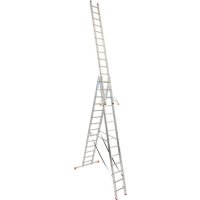
User manual Hinge/telescopic hinge ladder
GB
Introduction: This User Manual contains important safety information regarding the use of this hinge ladder, which is suitable for use as a stepladder, leaning ladder and work platform. Please read this manual carefully before using the ladder and keep it safe for future reference. Always include this user and operating guide when handing the ladder over to a new owner.
-
Intended use: This ladder is a mobile piece of equipment that can be used in different locations. It is designed for performing small-scale jobs at heights that would make the use of other types of equipment inappropriate (see the German Ordinance on Industrial Safety and Health). This ladder must only be used as described in this User Manual. All other uses are regarded as inappropriate use. We do not accept any liability for damage arising from the inappropriate use of the ladder. Any changes made to the ladder without the manufacturer's authorisation will void the warranty.
-
Technical information: Drawing showing the hinge ladder in different configurations and list of components. The technical information specific to this ladder is affixed to the ladder itself. Please refer to the table for more information.
-
Scope of delivery: List of all of the components that are supplied with the ladder (example): Ladder components (all) + platform (2 components) + user manual + stabiliser + nuts & bolts
-
Assembly instructions: Depending on the ladder type and delivery condition, the ladder may yet have to be fully assembled before use. Description / illustration of the assembly work required before the ladder can be used. Example: Fitting the stabiliser.
-
General safety information: The packaging can pose a suffocation hazard. Ladders and packaging materials are not toys. Use of this ladder is always associated with a risk of falling off the ladder and of the ladder tipping over. This can result in injury to persons and damage to objects. All of the work performed with and on the ladder must be performed in such a way as to minimise these risks as much as possible. This ladder is only designed for light work and short periods of use. Do not work on the ladder for too long without taking regular breaks. Fatigue is a hazard and can impact on the safe use of the ladder. The ladder must be suitable for its relevant use and must only be used in the specified position. Only ever use the treads provided. The ladder and ladder components must not be modified. Always make sure to have a safe handhold and foothold when working on and climbing the ladder. Always observe the national rules and regulations, in particular if using this ladder for professional work. Only use manufacturer-approved accessories.
-
Assembly/Use: Always observe the instructions provided in the user and operating guide and on the ladder itself when assembling and using the ladder. Important information on using and setting up the hinge ladder: How to use the safety hinges. Changing the ladder's set up/configuration. Configurations (schematic diagrams): Leaning ladder that can be configured in a number of different ways. Suitable for use as a stepladder and work platform for a range of different applications.
- Caution: Risk of falling off the ladder.
2.

Read the entire User Manual For more information on this ladder, please visit our website.
3.

Check the ladder for damage after delivery and every time before use. Do not use ladders that are damaged.
4.

Maximum load
5.

Set up the ladder on a level, horizontal and solid surface. The ladder's feet must not be sinking into the ground.
| 6. Do not clean out to the side while standing on the ladder! |
| 7. | Make sure the ground is free from dirt and hazardous substances. |
| 8. | The ladder must not be used by more than one person at a time. |
| 9. | Always ascend and descend the ladder facing the ladder. |
| 10. | Always make sure to have a safe handhold when climbing and working on the ladder. If necessary, take extra precautions. |
| 11. | Do not put any excessive loads onto the sides of the ladder such as, e.g. when drilling into masonry and concrete. |
| 12. | Any objects carried up and down a ladder must be light and easy to hold. |
| 13. | Always wear suitable footwear when climbing the ladder. |
| 14. | Do not use a ladder if your physical fitness is compromised or insufficient for using a ladder. Certain health problems, medication, alcohol and drug misuse can pose a safety hazard when using the ladder. |
| 15. | Do not work on the ladder for too long without taking regular breaks. (Tiredness is a hazard). |
| 16. | Securely and appropriately fasten and tie down ladders when transporting them on roof racks or in vans/lorries to avoid damage. |
| 17. | Check whether the ladder is suitable for the relevant application and free from damage before use. |
| 18. Clean and make sure the ladder is free from e.g. wet paint, dirt, oil or snow, before use. |
| 19. | Do not use the ladder outdoors in poor weather conditions (e.g. strong winds, frost, ice and snow). |
| 20. | When using ladders in a professional context, always assess the risks involved taking into account the legal regulations in the country of use before use of the ladder |
| 21. | Beware of the risk of collision with e.g. pedestrians, vehicles or doors when setting up the ladder. Lock doors (with the exception of emergency exits) and windows near the ladder. |
| 22. | Take note of all of the hazards posed by electrical equipment, e.g. overhead power lines or other exposed electrical equipment, within the work area. |
| 23. | Do not use conductive ladders for work on live equipment or near overhead power lines (e.g. aluminium ladders). |
| 24. | × | Do not use the ladder as a bridge. |
| 25. | × | any structural changes to the ladder. |
| 26. | Never move the ladder into a different position while standing on it! |
| 27. | Do not use the ladder outdoors in high winds. |
| 28. | ↑ | If a ladder comes with stabilisers, they must be fitted by the user before first use. |
| 29. | × | Do not position from above |
| 30. | Pertorm a visual inspection |
| 31. | | Perform a visual inspection |
| 32. | × | |
| 33. | Professional ladders | |
6.2. Using the ladder as a leaning ladder
| 1. | 65-75° | The ladder has to be set up in the correct position, e.g. at the correct angle for leaning ladders (at an angle of 65 to 75 degrees) and ensuring that the rungs or steps are horizontal. |
| 2. | # | Leaning ladders with steps must be set up in such a way that the steps are horizontal. |
| 3. | min.1m | Take note of the minimum projection beyond the ladder's contact point. |
| 4. | UP | The ladder must only be used in the specified direction. |
5.

Lean the leaning ladder against an even, solid surface and secure before use by e.g. tying it down or using equipment that will ensure that the ladder is stable.
- Do not change position from above!
7.

Never stand on the top three steps of a leaning ladder.
6.3. Using the ladder as a stepladder
- Do not use the ladder for climbing onto platforms.
2.

Fully open the ladder before use. Make sure the spreader brace is working properly!
3.
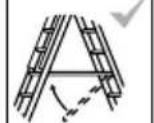
If the ladder is fitted with an extra spreader brace, this extra brace must only be used if the main spreader brace is locked!
4.

Do not use the stepladder as a leaning ladder.
5.

Only step onto the step ladder once the platform is in the correct position.
6.

Never stand on the top two rungs/steps of ladders that do not have a platform!
7.

Only stand on or use as a foothold those of the ladder's rungs/steps and platforms intended for this purpose. E.g. do not stand or use trays as footholds.
8.

Standing height of double-sided ladders NL
9.
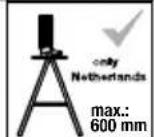
Max. permissible height without handrail is 600mm
10.

Adjust hinge point 1
11.
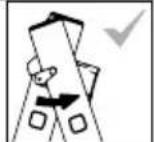
Adjust hinge point 2
6.4. Using the single or multiple hinge ladder
| 1. | | When not in use, this single or multiple hinge ladder must be stored either fully extended and resting flat against the floor, or folded together in an upright position standing on the floor. |
| 2. | 1. | Important information on using the hinge ladder as a work platform: This ladder must only be used with platforms recommended for such use by the manufacturer. Always secure the platform before use in such a way that it cannot be accidentally moved. |
| 3. | x | Never use this hinge ladder in this position. |
| 4. | max. 150 kg | Important information on using the hinge ladder as a work platform: Observe the manufacturer's information on the platform's maximum load capacity. |
| 5. | | Always make sure that all of the safety hinges have properly engaged / are safely locked in place before using the ladder. |
| 6. | | The inner ladder section of BG 1223 must only be used with an additional stabiliser. |
| 7. | x | BG 1223 must not be used with both extensions on both sides being extended at the same time. |
| 8. | x | BG 1220 + 1221 (4 x 3) Do not use the top ladder section as a platform. |
| 9. | | Joints/hinges must be regularly lubricated |
- Maintenance/Servicing: The maintenance and servicing work performed on the ladder is intended to make sure that the ladder is working properly. The ladder must be regularly checked for damage. Make sure all of the ladder's moving parts are in proper working order. All moving parts must be regularly lubricated. Any repairs to the ladder must be performed by a qualified person and in correspondence with the manufacturer's instructions. Always clean the ladder and the moving parts in particular immediately after use if the ladder becomes dirty. Only use conventional, water-soluble cleaning agents. Do not use aggressive or abrasive cleaning agents. If the ladder is being used commercially, it must be regularly inspected by an authorised person to make sure that it is in proper working order (visual inspection and performance test). In this case, it is essential to draw up an inspection schedule that defines the type, scope and intervals at which the requisite inspections are performed. The intervals between these inspections have to be determined in accordance with the relevant operating conditions, in particular the relevant frequency of use, loads applied to the ladder during use and the frequency and severity of any defects identified during previous inspections. The owner is also responsible for removing defective ladders from use and storing them in such a way as to prevent their use until they have been properly repaired or disposed of.
Ladder component(s): Inspection point: yes/no
1.General
inspection points
All connecting elements (rivets, screws, bolts etc.) have to be in place. Are any of the connecting elements loose or corroded? Is there any dirt (e.g. soil, mud, paint, oil or grease) on the ladder?

| 2. Side rails/rungs or steps/safety rail | None of the rungs / steps must be missing. Are the side rails, rungs or safety rails bent, twisted, dented, cracked or corroded? Are the rungs or steps worn, loose, corroded or damaged? Is the platform (if available) or are any of the platform components/fastening elements corroded or missing? | |
| 3. Connecting elements, guides, fittings | Check ladder guides, locking devices and safety equipment for proper function, tightness, damage and corrosion. Are the locking devices or safety equipment damaged, loose or corroded or completely missing? | |
| 4. Feet Stabilizer | Check feet and stabiliser brace for proper function, tightness, damage and corrosion. None of the ladder feet / end caps must be missing. Are the ladder feet loose, worn or corroded? | |
| 5. Ladder labels/ User manual | Are all of the ladder labels and the user and operating guide available and easily legible? | |
| RESULT | The ladder is in good working order and is fit for use. | |
| The ladder must only be used after having been repaired. | |
| The ladder is broken and must be disposed of. | |
- Storage: Securely fasten and tie down ladders when transporting them (e.g. on roof racks or in cars) to avoid any damage. The ladder should be stored in a dry environment either standing upright, flat on the ground or hung on a wall with a suitable wall holder. It must be stored in such a way as to prevent it from becoming damaged and all of its components must be protected from the weather. The ladder must be stored in such a way as to be protected from children and such that it does not represent a hazard (e.g. tripping hazard). It must furthermore be stored in such a way that it cannot be used / removed for unlawful purposes.
- Packaging / Disposal: The packaging must be disposed of in correspondence with the relevant regulations and laws. When having reached the end of its service life, the ladder must be disposed of in compliance with the relevant regulation. Aluminium is a high quality material and should be recycled. Please refer to your local authority for more information on recycling.
- Service life: This ladder is a high quality product and designed to have a long service life if it is used as intended and regularly serviced.
- Manufacturer: KRAUSE-Werk GmbH & Co. KG • Am Kreuzweg 3 • D-36304 Alsfeld Tel.: +49 (0) 66 31 / 7 95-0 • Fax: +49 (0) 66 31 / 7 95-139 • E-Mail: info@krause-systems.de www.krause-systems.com • Issue date: 1.08.2020
6.1 06uHcTpyKm3a6e3oNaCHOCT
1.Прдураждени,паданеOT cTBлбараз
2.

YnbTbaHeto da ce npoye Te 3aIIO. DonbHnTeHa nHOpMaua 3a CTb6aTa MoKe da ce noJyN B INHTepHET.
| 3. | | Следdoes not appear in the text. |
| 4. | max. 150 kg | Мakcimailno haToBapBaHe |
| 5. | | Сълбараза дд сълбь вьрху paВнa,хориэталнa и здрава ochoba.
Кракaita Ha cълбыт a He bИва дд поъВат b поа. |
| 6. | | He e pasreшени погетанeto hactpan! |
| 7. | | Да сизлочat 3ambrcBaHnraHa Na noDa. |
| 8. | max. 1 | Mоже дд сълбь рао. |
| 9. | | Качвано и сизаныдд STaba C liuce KbM Stlb6ata. |
| 10. | | Дръжte с заразов prin Качвае, сизаи prabotа Ha cълбыт, pri
НебхODIMOCT B3eMeTe ДОпьIHNTENH Прдпзн Мерк. |
| 11. | | He e pasreшени пекомерно STparuHNo hATOBAPBaHne, habrimep pri proobuBaHne
В ЗИД И БЕТОH. |
| 12. | | ПраздmetITE, кONDTo CE HOCrT pri Качвае Ha cълбыт, He bИва дд с TeЖКИ
ТравБа дд с lechn 3a pa60ta. |
| 13. | | При Качвае Ha cълбыт дд с HoCrt ПОДХODЯШи obvBKN. |
| 14. | | ЗдравосLOВно B cStorHme ЛС TE Дд ИЗПОЛЗВATE cълбыт? Няков ЗдравосLOVBH
ДаденoctN, Рпимьт Ha MeDINKAMENTN, 3JOUYOTpe6bAta C aIKOXOL I NapKOTNUI PRI
ИЗПОЛЗВАе Ha cълбыт MOrat dд habретг Ha beZOpaNacHOCTTA. |
| 15. | | He octabaite Ha cълбь ріркален Toblgo Be3 peDOBH II peKbCSBAHn (yMopata
e onaHa). |
| 16. | | При ТраHCNoptnPaHTo Ha cълбь Ha TabAHnIB baraxHnii NII B TOBapeH
ABTOMO6JI 3a B3IprPnTCTBAHn Ha nobpei ce yBepTe,Ye TE ca 3akpepeHNI NII
MOHTIPANII NO POKOJDAH NaHIn. |
| 17. | | Пробdi yUOTpe6a pOBopeTe,Ддс cълбыт e POKOJDAHа 3a cSbTBETHATA
yNotpe6a n HЯMa NobpeDi. |
| 18. | Отсторическая Величесу Самberговская OT Stlb6а, Като Наример мokра 608,
Замberговая, Масло ял сныя. |
| 19. | Самberговая дд He се Изпалды на OTКрпTO рpr Иеблагограду Климатуни
Усlobия (Налимер сален Ваятб, Залдыа), Ралдуа). |
| 20. | Здотаньда унотрава Трава дд се Извршо оочka на риска, като с
салдыт павнITE радною в Стабата на унотрава. |
| 21. | При постовке на Stlb6а на се Вимава 3a риска OT сбльськ, Наример с
пew_EXODДИ, певозн сретсва ял врати. Вразпite (Но He abарейнITE ИЗХODI)
и позорцITE в рад_STНATA зORA дд се осигура!. |
| 22. | Да се устов SpeakВалчесу ТхелLOГУно obstavkaDE, Наример СвобODи Кабел
Зд Виског наржени ял дуго СвобODи радноюgesho eilektpruepecko
ТхелLOГУно obstavkaDE. |
| 23. | Здотаюпюногов STB6Hnн рад Stlb6e и в STlb6e STB6Hnн рад Stlb6e STB6Hnн рад Stlb6e STB6Hnн рад Stlb6e STB6Hnн рад Stlb6e STB6Hnн рад Stlb6e STB6Hnн рад Stlb6e STB6Hnн рад Stlb6e STB6Hnн рад Stlb6e STB6Hnн рад Stlb6eSTB6Hnн рад Stlb6e STB6Hnн рад Stlb6e STB6Hnн рад Stlb6e STB6Hnн рад Stlb6e STB6Hnн рад Stlb6e STB6Hnн рад Stlb6e STB6Hnн рад Stlb6e STB6Hnн рад Stlb6e STB6HN.
Самberговая дд He се Изпалды на OTКрпTO рpr Иеблагограду Климатуни
УсLOBия (Налимер сален Ваятб, Ралдуа). |
| 24. | Самbergовая дд He се Изпалды като мост. |
| 25. | Дд He се Извршват COHCTpryKTBVBHNI помени на Stlb6a. |
| 26. Дд He се Извршват COHCTpryKTBVBHNI помени на Stlb6a. |
| 27. Стббата дд He се Изпалды на OTКрпTO рpr Иеблагограду Климатуни YCSOBY. |
| 28. | Ако Stlb6a на се Достава сбс StabuINs3atopri, п徴и пьвату унотрава
СамBERGовая дд се Stlb6a дд Stlb6a.dд мостирани OT пOTpebinteя. |
| 29. | СамBERGовая дд He се Извршват COHCTpryKTBVBHNI помени на Stlb6a. |
| 30. Дд се Извршв�у ORLEД |
| 31. | Дд се Извршν Onorod |
| 32. Стббата STB6HnDIBa YNTPB6a |
| 33. | СамBERGовая дд Stlb6Hn
СамBERGовая dд STlb6Hn
СамBERGовая dд STlb6Hn
СамBERGовая dд STlb6Hn
СамBERGовая dд STlb6Hn
СамBERGовая dд STlb6Hn
СамBERGовая dд STlb6Hn
СамBERGовая dд STlb6Hn
СамBERGовая dд STlb
СамBERGовая dд STlb6Hn
СамBERGовая dд STlb6Hn
СамBERGовая dд STlb6Hn
СамBERGовая dд STlb6Hn
СамBERGовая dд STlb6Hn
СамBERGовая dд STlb6Hn
СамBERGовая dд STlb6Hn
Ctlb6Hn 3a CTONANSCA yNOTPB6a |
6.2. Ynotpeba KaTo noDnnpaCa ce Ctbla6a
Ipepe nCpONb3OBAHnEM nonHOCTbIO packpoite neCTNuCy. CneiTe 3a pa60TOcNOcO6HOCTbIO 3auNTbI OT pa3dBnraHnia!
3.

Ecnn JecTHnca OchaueHa DOnONHnTeBHO 3aHTOOT pa3dBnraHn,TO nCNoJIb3yIte ee TOnbKO C 3actoNOpEHNO 3auHTOOT pa3dBnraHn!
4.

3anpeaaetcnaonb30BaTb neCTHnCy-CTpeMnKy B KaueCTBe npntabHOJNECTHnbl.
5.

HactynaiTe Ha JecTHnuy TOnbKO TOrda, KOrda PnlaTOpMa npabNlbHo yCTaHOBJIeHa.
6.

Ha leCTnuax 6e3 nloaakn/nilatcpopMbI 3anpeaaetcra NcnoB30BaTb B KaueCTBe ONOpHbIX NOBepxHOCTe DBe BEpXHne CTyNEH!
7.
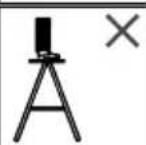
B KaueCTBe NOBepxHocTeI dIy ONOpbl N HAcTyNaHn MOnHO NcNoJb30BaTb TOnbKO npedHa3HaueHHbIe Iy 3TOrO CTynEH N POnHOKKn, HApnpMeP, Iy 3TOrO HeJb3a NcNoJb30BaTb KOp3HbI dIy pa3MeUeHn PpeDMToB.
8.

BbICota yCTaHOBKn DBOHbIX JecTHNI, NL.
9.

BbICota yCTaHOBKn 6e3 npedeoxpAHnTeJIbHOJ cKObbl MeHee 600 MM.
10.

HnphnyoToky 1
11.

Co3daTb ⅢaHnHpyIO TocKy 2
6.4.Примеони packKnaHbIX NeCTHnC OdHIM NIN HeCKOJIbKmM WapHnpaM
1.
Ipn HeNCNoJIb3OBAHn paCKJaHyIO JeCTHcUy C OdHM NIN HECKoJIbKIMN ⅢapHnpaMn yJIOXHTb Ha NOB B NOJIHOCTbIO pa3JIOXeHHOM COCTOHRN NIN YCTaHOBTb Ha NOB C6paHHOM BIne.
| 2. | 1. | УказанUE по prIMENHIO packKIAJHOJ leCTHICbI B KauceTBe pa6ooye
ПлатфорMbI: Pa3pe7aETcRЯ ИСпЛьЗВaТ b TОЛБК ПлATфOPMbI, peKOMeHIOBANHbIe
К prIMENHIO predprnTHeM-ИЗROTOВITeLem. ПepeД prIMENHEm pa6ooye
ПлатфорMbI eE HeO6XODIMO 3aФИКСИРOBaTb OT CMEUeHry. |
| 3. | X | ЗаразшЕнhoe положенUE по IncnoJIb3OBAHmI packKIAJHOJ leCTHICbI. |
| 4. | max.
150 kg | УказанUE по prIMENHIO packKIAJHOJ leCTHICbI B KauceTBE pa6ooye
ПлатфорMbI: ДАнные predprnTу-ИЗROTOВITeLЯ ПО MaKcIMaJIbHоHагуЗKE Ha
ПлатфорMy. |
| 5. | | Прedes рIMENHEm поверпь, чTO СЕ prideoxpaHITeLbHbIe Шарнирь
Задиксюваны. |
| 6. | | ВунтейнIOю leCTHICu BG 1223 IncnoJIb3OBAt b TОЛБК C доноHITeLbHоH
Траверсо. |
| 7. | X | ЗаразшаETcRЯ IncnoJIb3OBAt b BG 1223 c удINHITeLЯМI, bblDInHyTbIMI c обeHx
сторон. |
| 8. | X | BG 1220 = 1221 (4 x 3) 3аразшаETcRЯ IncnoJIb3OBAt b ВерхЮч actb ЛeCTHICbI B
КачесТBE платфорMbI. |
| 9. | oil | Perugярно сMaЗыВайTe Шарнирь |
- Texo6cnyxuBAHne/NoepxHHe B nCnpaBHom COCTOHN: YxOJ n Texo6cnyxuBAHne IecTHNtIdoJXHO rapaHTnpOBaTb ee pa60TOcNOcO6HocTb. IecTHNuCy cJeDyET pErYJrAHO npOBepaTb Ha NOBpeKDeHNA. DOnJXHa 6bITb OeCneUeHa pa6Oa TnoBnXhBX qAcTeH. Heo6XoIMo pErYJrAHO CMA3bIBaTb NOpBxHbIe qAcTn. PEmOHThbIe pa6ObTIb Ha JecTHNue DOJXKeH BByINONHbT CNeUAnCT H B COOTBcTCTBm C yKa3AHmMn N3OTOBuTEJIa. UcCTky JecTHNcbl, OCOBeHNO BCEN NOBnXhBX qAcTeH, CJeDyET BByINONHbT IIpN BnIMOM 3aRpy3HeHm Cpa3y JKe NocLe NcPONb3OBAHn. NcPONb3yIte TOJbKO CTAndapTHbE, pACTBOPMbIe B BOe, YcCTaUe CpeCDTBa. 3aNpeUaETCnOJb3OBAbT bArpeCCNBbIe TpyUe CpeCDTBa. IIpN KOMMepeCKOM NcPONb3OBAHm HEO6XoDMa pErYJrPAH a nepNoDInueckra IpOBepka JecTHNtBiHa HnADLekXaUee CoCTOHNye UPOJHMOUEHHbIM LInOm (Bn3yaJIbHaj NФyHKUHOJIbHaj npOBepka). IJRA ETO Ro Heo6XoIMo UCTaHOBNTB BIV, O6bEM N CpOKn Heo6XoIMbIX npOBepok. BpemeHbIe INTEpBaJIb IJa npOBepkN 3aBUCrT OT YcIOBn 3KcNJyatauH, B YAcTHOCTN, OT YAcTObIb3OBAHn, Harpy3Kn IIpN NcPONb3OBAHm, a TaKKe YAcTObI b CpeBe3HOCTN BByJREHHbIX HeIOCTaTKOB IIpN IIpeDiWeCTByIOUxN npOBepkax. IIpeDprnHMateJIb DOnJXeH TAKKe 3a60NTbCra 0 TOM, YTo6bl N3BJrTb N3 NcPONb3OBAHn NOBpeKDeHHble JecTHNtBI XpaHHTb IN TAK, YTo6bl IN DaJIbHeIJWe NCIOJIb3OBAHne IO npOpeCCNOHaJIbHorO peMOHTa N/INn YTNIN3aUN 6blIO HeBO3MOxHO
3JIeMeHT (JIeMeHTbI) IecTHnUcbl: TOnKn npOBepKn: Da/HeT
- 06uue Toouk npoBepkn BCE KpenneHn (3aKlenKn, BnHTbI, naJIbUti T.I.)
DOLJXHbI NOJIHOCTbIO NMeTbCBAHANuN.KpeJIeHnB03MOxHOb,paCaTaHbINNoDBeprncbKoppo3n?
IIMEJOTcIHaJIeCTHnCe3aIrp3HeHnI (HaIpIMep, rpa3b,IIJI,IaK,MacNo IJIINKnp)?

| 2. Пroduльный брас/пroduльные брас/пroduльные срас/пroduльные срас/пroduльные срас/пroduльные срас/пroduльные срас/пroduльные срас/пroduльные срас/пroduльные срас/пroduльные срас/пroduльные срас/пroduльные срас/пroduльные срас/пroduльные срас/нлд
Лесену leе leе lee lee lee lee lee lee lee lee lee lee lee lee lee lee lee lee lee lee lee lee lee lee lee lee lee lee lee lee lee lee lee lee lee lee lee lee lee lee lee lee lee lee lee lee lee lee lee lee lee lee leu
Стоштаба и релеговы
Кретлесь
Кретлесь
Кретлесь
Кретлесь
Кретлесь
Кретлесь
Кретлесь
Кретлесь
Кретлесь
Кретлесь
Кретлесь
Кретлесь
Кретлесь
Кретлесь
Кретлесь
Kретлесь
Кретлесь
Кретлесь
Кретлесь
Кретлесь
Кретлесь
Кретлесь
Кретлесь
Кретлесь
Кретлесь
Кретлесь
Кретлесь
Кретлесь
Кретлесь
Кр�нчы
Фурнчы
Зоштаба
Налразы
Лесену leе lee lee lee lee lee lee lee lee lee lee lee lee lee lee lee lee lee lee lee lee lee lee lee lee lee lee lee lee lee lee lee lee lee lee lee lee lee lee lee lee lee lee lee lee lee lee lee lee leu
3.Cоединтульные
элемны,
Налразы
Лесену lee lee lee lee lee lee lee lee lee lee lee lee lee lee lee lee lee lee lee lee lee lee lee lee lee lee lee lee lee lee lee lee lee lee lee lee lee lee lee lee lee lee lee lee lee lee lee lee lee lea
4.Оп友们,пonepeши
5.Маркирobва
PE3yЛьТAT | В级以上 постору в几乎所有 лесену.
Пrelугочны в几乎所有 лесену.
Пrelугочны в几乎所有 лесену.
Пrelугочны в几乎所有 лесену.
Пrelугочны в几乎所有 лесену.
Пrelугочны в几乎所有 лесену.
Пrelугочны в几乎所有 лесену.
Пrelугочны в几乎所有 лесену.
Пrelугочны в几乎所有 лесену.
Пrolугочны в几乎所有 лесену.
Пrelугочны в几乎所有 лесену.
Пrelугочны в几乎所有 лесену.
Пrelугочны в几乎所有 лесену.
Пrelугочны в几乎所有 лесену.
Пrelугочны в几乎所有 лесену.
Пrelугочны в几乎所有 лесену.
Пrelугочны в几乎所有 лесen;
Пrelугочны в几乎所有 лесен;
Пrelугочны в几乎所有 лесен;
Пrelугочны в几乎所有 лесен;
Пrelугочны в几乎所有 лесен;
Пrelугочны в几乎所有 лесен;
Пrelугочны в几乎所有 лесен;
Пrelугочны в几乎所有 лесен;
Пrelугочны в几乎所有 лесen;
Пrelугочны в几乎所有 лесen;
Пrelугочны в几乎所有 лесen;
Пrelугочны в几乎所有 лесen;
Пrelугочны в几乎所有 лесen;
Пrelугочны в几乎所有 лесen;
Пrelугочны в几乎所有 лесen;
Пrelугочны в几乎所有 лесen;
Пrelугочны в几乎所有 лесen;
Пrelyб�ы
Пrelуб�ы
Пrelуб�ы
Пrelуб�ы
Пrelуб�ы
Пrelуб�ы
Пrelуб�ы
Пrelуб�ы
Пrelуб�ы
Пrelуб�ы
Пrelуб�ы
Пrelуб�ы
Пrelуб�ы
Пrelуб�ы
Пrelуб�ы
Пrelуб�ы
Пrelуб�ы
Пrelуб�ы
Пrelуб�ы
Пrelуб�ы
Пrelуб�ы
Пrelуб�ы
Пrelуб�ы
Пrelуб�ы
Пrelуб�ы
Пrelуб�ы
Пrelуб�ы
Пrelуб�ы
Пrelуб�ы
Пrelуб�ы | Пrelуб�ы
Пrelуб�ы
Пrelуб�ы
Пrelуб�ы
Пrelуб�ы
Пrelуб�ы
Пrelуб�ы
Пrelуб�ы
Пrelуб�ы
Пrelуб�ы
Пrelуб�ы
Пrelуб�ы
Пrelуб�ы
Пrelуб�ы
Пrolуб�ы
Пrelуб�ы
Пrelуб�ы
Пrelуб�ы
Пrelуб�ы
Пrelуб�ы
Пrelуб�ы
Пrelуб�ы
Пrelуб�ы
Пrelуб�ы
Пrelуб�ы
Пrelуб�ы
Пrelуб�ы
Пrelуб�ы
Пrelув
Пrelув
Пrelув
Пrelув
Пrelув
Пrelув
Пrelув
Пrelув
Пrelув
Пrelув
Пrelув
Пrelув
Пrelув
Пrelув
Пrelув
Пrelув
Пrelув
Пrelув
Пrelув
Пrelув
Пrelу体
Пrelу体
Пrelу体
Пrelу体
Пrelу体
Пrelу体
Пrelу体
Пrelу体
Пrelу体
Пrelу体
Пrelу体
Пrelу体
Пrelу体
Пrelу体
Пrelу体
Пrelу体
Пrelу体
Пrelу体
Пrelу体
Пrelу体
Пrelу休
Пrelу休
Пrelу休
Пrelу休
Пrelу休
Пrelу休
Пrelу休
Пrelу休
Пrelу休
Пrelу休
Пrelу休
Пrelу休
Пrelу休
Пrelу休
Пrelу休
Пrelу休
Пrelу休
Пrelу休
Пrelу休
Пrelу休
Пrelу体
Пrelу休
Пrelу休
Пrelу休
Пrelу休
Пrelу休
Пrelу休
Пrelу休
Пrelу休
Пrelу休
Пrelу休
Пrelу休
Пrelу休
Пrelу休
Пrelу休
Пrelу休
Пrelу休
Пrelу休
Пrelу休
Пrelу体
Пrelу体
Пrelу休
Пrelу休
Пrelу休
Пrelу休
Пrelу休
Пrelу休
Пrelу休
Пrelу休
Пrelу休
Пrelу休
Пrelу休
Пrelу休
Пrelу休
Пrelу休
Пrelу休
Пrelу休
Пrelу休
Пrelу体
Пrelу休
Пrelу体
Пrelу休
Пrelу休
Пrelу休
Пrelу休
Пrelу休
Пrelу休
Пrelу休
Пrelу休
Пrelу休
Пrelу休
Пrelу休
Пrelу休
Пrelу休
Пrelу休
Пrelу休
Пrelу休
Пrelу休
Пrelу体
Пrelу体
Пrelу体
Пrelу休
Пrelу休
Пrelу休
Пrelу休
Пrelу休
Пrelу休
Пrelу休
Пrelу休
Пrelу休
Пrelу休
Пrelу休
Пrelу休
Пrelу休
Пrelу休
Пrelу休
Пrelу休
Пrelу体
Пrelу休
Пrelу休
Пrelу体
Пrelу休
Пrelу休
Пrelу休
Пrelу休
Пrelу休
Пrelу休
Пrelу休
Пrelу休
Пrelу休
Пrelу休
Пrelу休
Пrelу休
Пrelу休
Пrelу休
Пrelу休
Пrelу休
Пrelу体
Пrelу休
Пrelу体
Пrelу体
Пrelу休
Пrelу休
Пrelу休
Пrelу休
Пrelу休
Пrelу休
Пrelу休
Пrelу休
Пrelу休
Пrelу休
Пrelу休
Пrelу休
Пrelу休
Пrelу休
Пrelу休
Пrelу休
Пrelу体
Пrelу体
Пrelу休
Пrelу体
Пrelу休
Пrelу休
Пrelу休
Пrelу休
Пrelу休
Пrelу休
Пrelу休
Пrelу休
Пrelу休
Пrelу休
Пrelу休
Пrelу休
Пrelу休
Пrelу休
Пrelу休
Пrelу休
Пrelу体
Пrelу体
Пrelу体
Пrelу体
Пrelу休
Пrelу休
Пrelу休
Пrelу休
Пrelу休
Пrelу休
Пrelу休
Пrelу休
Пrelу休
Пrelу休
Пrelу休
Пrelу休
Пrelу休
Пrelу休
Пrelу休
Пrelу体
Пrelу休
Пrelу休
Пrelу休
Пrelу体
Пrelу休
Пrelу休
Пrelу休
Пrelу休
Пrelу休
Пrelу休
Пrelу休
Пrelу休
Пrelу休
Пrelу休
Пrelу休
Пrelу休
Пrelу休
Пrelу休
Пrelу休
Пrelу体
Пrelу休
Пrelу休
Пrelу体
Пrelу体
Пrelу休
Пrelу休
Пrelу休
Пrelу休
Пrelу休
Пrelу休
Пrelу休
Пrelу休
Пrelу休
Пrelу休
Пrelу休
Пrelу休
Пrelу休
Пrelу休
Пrelу休
Пrelу体
Пrelу休
Пrelу体
Пrelу休
Пrelу体
Пrelу休
Пrelу休
Пrelу休
Пrelу休
Пrelу休
Пrelу休
Пrelу休
Пrelу休
Пrelу休
Пrelу休
Пrelу休
Пrelу休
Пrelу休
Пrelу休
Пrelу休
Пrelу体
Пrelу休
Пrelу体
Пrelу体
Пrelу体
Пrelу休
Пrelу休
Пrelу休
Пrelу休
Пrelу休
Пrelу休
Пrelу休
Пrelу休
Пrelу休
Пrelу休
Пrelу休
Пrelу休
Пrelу休
Пrelу休
Пrelу休
Пrelу体
Пrelу体
Пrelу休
Пrelу休
Пrelу体
Пrelу休
Пrelу休
Пrelу休
Пrelу休
Пrelу休
Пrelу休
Пrelу休
Пrelу休
Пrelу休
Пrelу休
Пrelу休
Пrelу休
Пrelу休
Пrelу休
Пrelу休
Пrelу体
Пrelу体
Пrelу休
Пrelу体
Пrelу体
Пrelу休
Пrelу休
Пrelу休
Пrelу休
Пrelу休
Пrelу休
Пrelу休
Пrelу休
Пrelу休
Пrelу休
Пrelу休
Пrelу休
Пrelу休
Пrelу休
Пrelу休
Пrelу体
Пrelу体
Пrelу体
Пrelу休
Пrelу体
Пrelу休
Пrelу休
Пrelу休
Пrelу休
Пrelу休
Пrelу休
Пrelу休
Пrelу休
Пrelу休
Пrelу休
Пrelу休
Пrelу休
Пrelу休
Пrelу休
Пrelу休
Пrelу体
Пrelу体
Пrelу体
Пrelу体
Пrelу体
Пrelу休
Пrelу休
Пrelу休
Пrelу休
Пrelу休
Пrelу休
Пrelу休
Пrelу休
Пrelу休
Пrelу休
Пrelу休
Пrelу休
Пrelу休
Пrelу休
Пrelу体
Пrelу休
Пrelу休
Пrelу休
Пrelу休
Пrelу体
Пrelу休
Пrelу休
Пrelу休
Пrelу休
Пrelу休
Пrelу休
Пrelу休
Пrelу休
Пrelу休
Пrelу休
Пrelу休
Пrelу休
Пrelу休
Пrelу休
Пrelу体
Пrelу休
Пrelу休
Пrelу休
Пrelу体
Пrelу体
Пrelу休
Пrelу休
Пrelу休
Пrelу休
Пrelу休
Пrelу休
Пrelу休
Пrelу休
Пrelу休
Пrelу休
Пrelу休
Пrelу休
Пrelу休
Пrelу休
Пrelу体
Пrelу休
Пrelу休
Пrelу体
Пrelу休
Пrelу体
Пrelу休
Пrelу休
Пrelу休
Пrelу休
Пrelу休
Пrelу休
Пrelу休
Пrelу休
Пrelу休
Пrelу休
Пrelу休
Пrelу休
Пrelу休
Пrelу休
Пrelу体
Пrelу休
Пrelу休
Пrelу体
Пrelу体
Пrelу体
Пrelу休
Пrelу休
Пrelу休
Пrelу休
Пrelу休
Пrelу休
Пrelу休
Пrelу休
Пrelу休
Пrelу休
Пrelу休
Пrelу休
Пrelу休
Пrelу休
Пrelу体
Пrelу休
Пrelу体
Пrelу休
Пrelу休
Пrelу体
Пrelу休
Пrelу休
Пrelу休
Пrelу休
Пrelу休
Пrelу休
Пrelу休
Пrelу休
Пrelу休
Пrelу休
Пrelу休
Пrelу休
Пrelу休
Пrelу休
Пrelу体
Пrelу休
Пrelу体
Пrelу休
Пrelу体
Пrelу体
Пrelу休
Пrelу休
Пrelу休
Пrelу休
Пrelу休
Пrelу休
Пrelу休
Пrelу休
Пrelу休
Пrelу休
Пrelу休
Пrelу休
Пrelу休
Пrelу休
Пrelу体
Пrelу休
Пrelу体
Пrelу体
Пrelу休
Пrelу体
Пrelу休
Пrelу休
Пrelу休
Пrelу休
Пrelу休
Пrelу休
Пrelу休
Пrelу休
Пrelу休
Пrelу休
Пrelу休
Пrelу休
Пrelу休
Пrelу休
Пrelу体
Пrelу休
Пrelу体
Пrelу体
Пrelу体
Пrelу体
Пrelу休
Пrelу休
Пrelу休
Пrelу休
Пrelу休
Пrelу休
Пrelу休
Пrelу休
Пrelу休
Пrelу休
Пrelу休
Пrelу休
Пrelу休
Пrelу休
Пrelу体
Пrelу体
Пrelу休
Пrelу休
Пrelу休
Пrelу体
Пrelу休
Пrelу休
Пrelу休
Пrelу休
Пrelу休
Пrelу休
Пrelу休
Пrelу休
Пrelу休
Пrelу休
Пrelу休
Пrelу休
Пrelу休
Пrelу休
Пrelу体
Пrelу体
Пrelу休
Пrelу休
Пrelу体
Пrelу体
Пrelу休
Пrelу休
Пrelу休
Пrelу休
Пrelу休
Пrelу休
Пrelу休
Пrelу休
Пrelу休
Пrelу休
Пrelу休
Пrelу休
Пrelу休
Пrelу休
Пrelу体
Пrelу体
Пrelу休
Пrelу体
Пrelу休
Пrelу体
Пrelу休
Пrelу休
Пrelу休
Пrelу休
Пrelу休
Пrelу休
Пrelу休
Пrelу休
Пrelу休
Пrelу休
Пrelу休
Пrelу休
Пrelу休
Пrelу休
Пrelу体
Пrelу体
Пrelу休
Пrelу体
Пrelу体
Пrelу体
Пrelу休
Пrelу休
Пrelу体
Пrelу休
Пrelу休
Пrelу体
Пrelу休
Пrelу休
Пrelу体
Пrelу休
Пrelу体
Пrelу休
Пrelу体
Пrelу休
Пrelу体
Пrelу休
Пrelу体
Пrelу休
Пrelу体
Пrelу休
Пrelу体
Пrelу休
Пrelу体
Пrelу休
Пrelу体
Пrelу休
Пrelу体
Пrelу休
Пrelу休
Пrelу体
Пrelу休
Пrelу体
Пrelу休
Пrelу体
Пrelу休
Пrelу体
Пrelу休
Пrelу体
Пrelу休
Пrelу体
Пrelу休
Пrelу体
Пrelу休
Пrelу体
Пrelу体
Пrelу休
Пrelу体
Пrelу休
Пrelу体
Пrelу休
Пrelу体
Пrelу休
Пrelу体
Пrelу休
Пrelу体
Пrelу休
Пrelу体
Пrelу休
Пrelу体
Пrelу休
Пrelу体
Пrelу休
Пrelу体
Пrelу体
Пrelу休
Пrelу体
Пrelу体
Пrelу休
Пrelу体
Пrelу休
Пrelу体
Пrelу休
Пrelу体
Пrelу休
Пrelу体
Пrelу休
Пrelу体
Пrelу休
Пrelу体
Пrelу休
Пrelу体
Пrelу休
Пrelу休
Пrelу体
Пrelу休
Пrelу休
Пrelу体
Пrelу休
Пrelу体
Пrelу休
Пrelу体
Пrelу休
Пrelу体
Пrelу休
Пrelу体
Пrelу休
Пrelу体
Пrelу休
Пrelу休
Пrelу体
Пrelу休
Пrelу体
Пrelу休
Пrelу体
Пrelу体
Пrelу休
Пrelу体
Пrelу休
Пrelу体
Пrelу休
Пrelу体
Пrelу休
Пrelу体
Пrelу休
Пrelу体
Пrelу休
Пrelу体
Пrelу体
Пrelу休
Пrelу体
Пrelу休
Пrelу体
Пrelу休
Пrelу休
Пrelу体
Пrelу休
Пrelу体
Пrelу休
Пrelу体
Пrelу休
Пrelу体
Пrelу休
Пrelу体
Пrelу休
Пrelу体
Пrelу休
Пrelу休
Пrelу体
Пrelу休
Пrelу休
Пrelу体
Пrelу休
Пrelу休
Пrelу体
Пrelу休
Пrelу体
Пrelу休
Пrelу体
Пrelу休
Пrelу体
Пrelу休
Пrelу体
Пrelу休
Пrelу休
Пrelу体
Пrelу休
Пrelу体
Пrelу休
Пrelу体
Пrelу休
Пrelу体
Пrelу体
Пrelу休
Пrelу体
Пrelу休
Пrelу体
Пrelу休
Пrelу体
Пrelу休
Пrelу体
Пrelу休
Пrelу体
Пrelу体
Prolly体
Prolly体
Prolly体
Prolly体
Prolly体
Prolly体
Prolly体
Prolly体
Prolly体
Prolly体
Prolly体
Prolly体
Prolly体
Prolly体
Prolly体
Prolly体
Prolly体
Prolly体
Prolly体
Prolly体
Proll体
Proll体
Proll体
Proll体
Proll体
Proll体
Proll体
Proll体
Proll体
Proll体
Proll体
Proll体
Proll体
Proll体
Proll体
Proll体
Proll体
Proll体
Proll体
Proll体
Prolll体
Proll体
Proll体
Proll体
Proll体
Proll体
Proll体
Proll体
Proll体
Proll体
Proll体
Proll体
Proll体
Proll体
Proll体
Proll体
Proll体
Proll体
Proll体
Proll体
ProlI体
ProlI体
ProlI体
ProlI体
ProlI体
ProlI体
ProlI体
ProlI体
ProlI体
ProlI体
ProlI体
ProlI体
ProlI体
ProlI体
ProlI体
ProlI体
ProlI体
ProlI体
ProlI体
ProlI体
Proll体
Proll体
Proll体
Proll体
Proll体
Proll体
Proll体
Proll体
Proll体
Proll体
Proll体
Proll体
Proll体
Proll体
Proll体
Proll体
Proll体
Proll体
Proll体
Prol1体
Prol1体
Prol1体
Prol1体
Prol1体
Prol1体
Prol1体
Prol1体
Prol1体
Prol1体
Prol1体
Prol1体
Prol1体
Prol1体
Prol1体
Prol1体
Prol1体
Prol1体
Prol1体
Prol1体
Proll体
Proll体
Proll体
Proll体
Proll体
Proll体
Proll体
Proll体
Proll体
Proll体
Proll体
Proll体
Proll体
Proll体
Proll体
Proll体
Proll体
Proll体
Proll体
ProlII体
ProlII体
ProlII体
ProlII体
ProlII体
ProlII体
ProlII体
ProlII体
ProlII体
ProlII体
ProlII体
ProlII体
ProlII体
ProlII体
ProlII体
ProlII体
ProlII体
ProlII体
ProlII体
ProlII体
ProlI体
ProlI体
ProlI体
ProlI体
ProlI体
ProlI体
ProlI体
ProlI体
ProlI体
ProlI体
ProlI体
ProlI体
ProlI体
ProlI体
ProlI体
ProlI体
ProlI体
ProlI体
ProlI体
Prol1体
Prol1体
Prol1体
Prol1体
Prol1体
Prol1体
Prol1体
Prol1体
Prol1体
Prol1体
Prol1体
Prol1体
Prol1体
Prol1体
Prol1体
Prol1体
Prol1体
Prol1体
Prol1体
ProlI体
ProlI体
ProlI体
ProlI体
ProlI体
ProlI体
ProlI体
ProlI体
ProlI体
ProlI体
ProlI体
ProlI体
ProlI体
ProlI体
ProlI体
ProlI体
ProlI体
ProlI体
ProlI体
ProlII体
ProlII体
ProlII体
ProlII体
ProlII体
ProlII体
ProlII体
ProlII体
ProlII体
ProlII体
ProlII体
ProlII体
ProlII体
ProlII体
ProlII体
ProlII体
ProlII体
ProlII体
ProlII体
ProlⅡ体 |
- XpaheHHe: TTo6bI N36ExKaTb JIO6bIX NOBpeXJdeHn, JecTHNu Pnp TpaHCnOpTnOBke (HaNPmep, Ha CTPOINbHbIX fepMax INN B ABTOMo6bJIe) CJeNyET HAdEJHO 3aKpeINtB. XpaHTb JecTHNu HyxHO B CYXOM MceTe, CTOJSeB BEPTKAbHo, JexaSeH Na IIOCKOCTN INN PODBeUHEHON HA CTEny C NOMOuBcIO COOTBcTCTByIOSeIHO HAcTeHHORO KpeJIeHn. JIO6bIE NOBpeXJdeHn DOJXHbI 6bITb NCKJIOUeHbI, a BCE YACTN 3aUuIeHbI OT BO3DeNCTBn IORODhBX YCIOBn. JecTHNu aDOJXHa XpaHTbCra TAK, YTO6bI OHa 6bIIa 3auuIeHa OT IRpaIoUx DeTeN i HNKOMy HE CO3DaBAJa npenrTCTBn (BO3MOXHa ONACHOCTb CNOTKHytcb). KpOME TORO, OHa DOJXHa XpaHTbcra TaK, YTO6bI ee HeNb3a 6blIO pPIMEHNTb/NCNOlb30BaTb B KpIMMHaJIbHbIX cEJAX.
9.YnaKOBka/ytNn3auny:YnaKOBky CJeIyEt yTNUN3nPOBaTb B COOTBETCTBNC DJeIcTBYIOUIMM NOJIOXeHnA M 3aKOHaM. IocNe OKOHuaHn rOdHOCTN K 3KcNpyatauM NecTHNu a DOJXHa 6bITb YTNIN3nPOBaHn B COOTBETCTBNm C DeIcTBYIOUIMM PpeDnucHnMn. AnOMnHn ABJIeTcMaTePnALOM BBICOKO KAeCTBa n DOJXeH 6bITb NepepaOtaH. 3a NoDpObHn HnΦopMaunne ObaaTteCB B COOTBETCTBYIOUne OprAhbl Blaactn.
- Cpok cnyx6bI: PnHaJnxKaUeM nCNoJb3OBAHn n peryJyRPHo Texo6cJyXnBaHn JleCTHua ABJIETCA 6OpuyoBAHmE dInTeJbHOrO nCNoJb3OBAHn.
- Данные onиз�отовета: KRAUSE-Werk GmbH & Co. KG • Am Kreuzweg 3
D-36304, Г. Асфелд • Тел.: +49(0)6631/795-0 • Фаль: +49(0)6631/795-139
эл. пота: info@krause-systems.de • www.krause-systems.com • Датуиздун: 1.08.2020
Multimatic Hinged univ. ladder 4x3 rg.
MultiMatic univer.csuk. letra 4x3 Fok
Drabina MultiMatic 4x3 Monto
MultiMatic crpeM- rpaHcphiP., 4 x 3

Certificate
EN 131
Norm

eannnnnne
()
P
1
1
ca.
kg