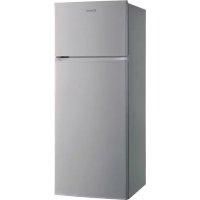
CMDDS 5142SN - Fridge CANDY - Free user manual and instructions
Find the device manual for free CMDDS 5142SN CANDY in PDF.


| Brand | Candy |
| Model | CMDDS 5142SN |
| Product Type | Double-door refrigerator-freezer |
| Climate Class | SN (10 °C to 32 °C), N (16 °C to 32 °C), ST (16 °C to 38 °C), T (16 °C to 43 °C) |
| Refrigerator Capacity | Approximately 180 L (estimate) |
| Freezer Capacity | Approximately 80 L (estimate) |
| Dimensions (W × D × H) | 550 × 600 × 1440 mm (estimate) |
| Net Weight | Approximately 45 kg (estimate) |
| Power Supply | 220-240 V, 50 Hz |
| Energy Consumption | Energy class not specified, estimated 250 kWh/year |
| Refrigerant | R600a (isobutane), flammable |
| Defrosting | Manual (no automatic defrost) |
| Thermostat | Adjustable from OFF to MAX, MED position recommended |
| Door Reversal | Possible, manual with tools |
| Interior Lighting | LED, class G, replacement by professional |
| Child Safety | Lock possible (key to be kept out of reach) |
| Cleaning | Warm water and baking soda, vacuum cleaner for condenser |
| Spare Parts Available | Thermostats, sensors, boards, light sources (7 years); handles, hinges, shelves, bins (7 years); door gaskets (10 years) |
| Warranty | 2 years (EU), varies by country |
| Use | Domestic only, not for built-in |
| Transport | Only vertical, if horizontal rest for 4 hours before powering on |
Frequently Asked Questions - CMDDS 5142SN CANDY
User questions about CMDDS 5142SN CANDY
0 question about this device. Answer the ones you know or ask your own.
Ask a new question about this device
Download the instructions for your Fridge in PDF format for free! Find your manual CMDDS 5142SN - CANDY and take your electronic device back in hand. On this page are published all the documents necessary for the use of your device. CMDDS 5142SN by CANDY.
USER MANUAL CMDDS 5142SN CANDY
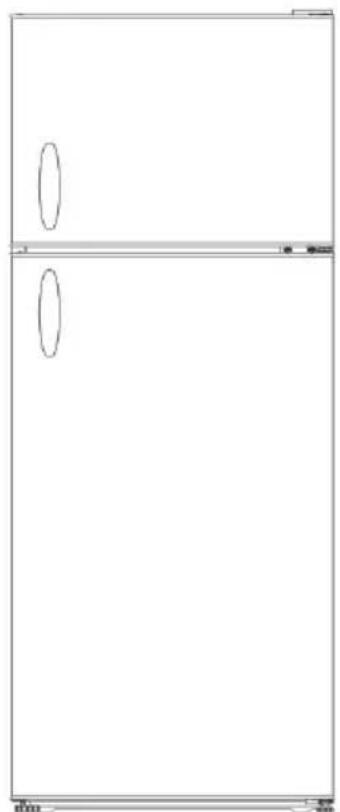
USER MANUAL
DOUBLEDOOR
LANGUAGES
English 3
Italiano 24
Francais 45
Espanol. 67
Deutsch. 89
Portuguese 111
Nederlands. 134
Elambdanuka 155
Dansk. 177
Svenska. 196
Suomi 216
Norsk 237
Hrvatski 256
Srpski 277
Čestina 298
Polski 318
Slovenscina 339
Slovenský 359
Romana 379
Българск. 399
Magyar 421
Pycckn 442
SUMMARY
SAFETY INFORMATION 4
ENERGYSAVING 12
PRODUCT OVERVIEW 13
Climate Class. 13
TRANSPORTATION INSTRUCTIONS. 14
INSTALLATION INSTRUCTIONS. 14
STARTING TO USE 14
OPERATION 15
Switching on your unit 15
Operation instructions. 15
Tips for keeping food perfect in the Fridge. 16
If you're not at home for a long time 16
TAKE CARE. 16
Defrosting. 16
Cleaning and Care. 17
REVERSING THE DOOR SWING. 18
DOOR HANDLE INSTALLATION (optional). 21
Door Space Requirements. 21
Levelling the Unit. 21
TROUBLESHOOTING 22
SCRAPPING OLD APPLIANCES. 23
Conformity 23
Thank you for purchasing this product.
Before using your refrigerator, please carefully read this instruction manual in order to maximize its performance. Store all documentation for subsequent use or for other owners. This product is intended solely for household use or similar applications such as:
- the kitchen area for personnel in shops, offices and other working environments
- on farms,by clientele of hotels,motelsand other environmentsof a residential type
- at bed and breakfasts(B & B)
- for catering services and similar applications not for retail sale.
This appliance must be used only for purposes of storage of food, any other use is considered dangerous and the manufacturer will not be responsible for any omissions. Also, it is recommended that you take note of the warranty conditions. Please, to obtain the best possible performance and trouble free operation from your appliance it is very important to carefully read these instructions. Failure to observe these instructions may invalidate your right to free service during the guarantee period.
SAFETY INFORMATION
This guide contains many important safety information. Please, we suggest you keep these instructions in a safe place for easy reference and a good experience with the appliance.
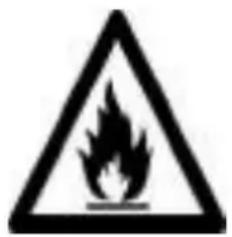
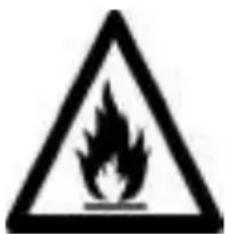
The refrigerator contains a refrigerant gas (R600a: isobutane) and insulating gas (cyclopentane), with high compatibility with the environment, that are, however, inflammable.
Caution: risk of fire
If the refrigerant circuit should be damaged:
- Avoid opening flames and sources of ignition.
Thoroughly ventilate the room in which the appliance is situated
WARNING!
-
Care must be taken while cleaning/carrying the appliance to avoid touching the condenser metal wires at the back of the appliance, as you might injure your fingers and hands or damage your product.
-
This appliance is not designed for stacking with any other appliance. Do not attempt to sit or stand on top of your appliance as it is not designed for such use. You could injure yourself or damage the appliance.
-
Make sure that mains cable is not caught under the appliance during and after carrying/moving the appliance, to avoid the mains cable becoming cut or damaged.
-
When positioning your appliance take care not to damage your flooring, pipes, wall coverings etc. Do not move the appliance by pulling by the lid or handle. Do not allow children to play with the appliance or tamper with the controls. Our company declines to accept any liability should the instructions not be followed.
-
Do not install the appliance in humid, oily or dusty places, nor expose it to direct sunlight and to water.
-
Do not install the appliance near heaters or inflammable materials.
-
If there is a power failure do not open the lid. Frozen food should not be affected if the failure lasts for less than 20 hours. If the failure is longer, then the food should be checked and eaten immediately or cooked and then refrozen.
- If you find that the lid of the chest freezer is difficult to open just after you have closed it, don't worry. This is due to the pressure difference which will equalize and allow the lid to be opened normally after a few minutes.
- Do not connect the appliance to the electricity supply until all packing and transit protectors have been removed.
- Leave to stand for at least 4 hours before switching on to allow compressor oil to settle if transported horizontally.
- This freezer must only be used for its intended purpose (i.e. storing and freezing of edible foodstuff).
- Do not store medicine or research materials in the Wine Coolers. When the material that requires a strict control of storage temperatures is to be stored, it is possible that it will deteriorate or an uncontrolled reaction may occur that can cause risks.
- Before performing any operation, unplug the power cord from the power socket. On delivery, check to make sure that the product is
not damaged and that all the parts and accessories are in perfect condition.
- If in the refrigeration system a leak is noted, do not touch the wall outlet and do not use open flames. Open the window and let air into the room. Then call a service center to ask for repair.
- Do not use extension cords or adapters.
- Do not excessively pull or fold the power cord or touch the plug with wet hands.
- Do not damage the plug and/or the power cord; this could cause electrical shocks or fires.
- If the supply cord is damaged, it must be replaced by the manufacturer, its service agent or similarly qualified person in order to avoid a hazard.
- Do not place or store inflammable and highly volatile materials such as ether, petrol, LPG, propane gas, aerosol spray cans, adhesives, pure alcohol, etc. These materials may cause an explosion.
- Do not use or store inflammable sprays, such as spray paint, near the Wine Coolers. It could cause an explosion or fire.
- Do not place objects and/or containers filled with water on the top of the appliance.
- We do not recommend the use of extension leads and multi-way adapters.
- Do not dispose of the appliance on a fire. Take care not to damage, the cooling circuit/pipes of
the appliance in transportation and in use. In case of damage do not expose the appliance to fire, potential ignition source and immediately ventilate the room where the appliance is situated.
- The refrigeration system positioned behind and inside the Wine Coolers contains refrigerant. Therefore, avoid damaging the tubes.
- Do not use electrical appliances inside the food storage compartments of the appliance, unless they are of the type recommended by the manufacturer.
- Do not damage the refrigerant circuit.
- Do not use mechanical devices or other means to accelerate the defrosting process, other than those recommended by the manufacturer.
- Do not use electrical appliances inside the food storage compartments, unless they are of the type recommended by the manufacturer.
- Do not touch internal cooling elements, especially with wet hands, to avoid cracks or injuries.
- Maintain the ventilation openings in the appliance enclosure or in the built-in structure, free of obstruction.
- Do not use pointed or sharp-edged objects such as knives or forks to remove the frost.
-
Never use hairdryers, electrical heaters or other such electrical appliances for defrosting.
-
Do not scrape with a knife or sharp object to
remove frost or ice that occurs. With these, the refrigerant circuit can be damaged, the spill from which can cause a fire or damage your eyes.
- Do not use mechanical devices or other equipment to hasten the defrosting process.
- Absolutely avoid the use of open flame or electrical equipment, such as heaters, steam cleaners, candles, oil lamps and the like in order to speed up the defrosting phase.
- Never use water wash the compressor position, wipe it with a dry cloth thoroughly after cleaning to prevent rust.
- It is recommended to keep the plug clean, any excessive dust residues on the plug can be the cause fire.
- The product is designed and built for domestic household use only.
- The guarantee will be void if the product is installed or used in commercial or non-residential domestic household premises.
- The product must be correctly installed, located and operated in accordance with the instructions contained in the User Instructions Booklet provided.
- The guarantee is applicable only to new products and is not transferable if the product is resold.
-
Our company disclaims any liability for incidental or consequential damages
-
The guarantee does not in any way diminish your statutory or legal rights.
- Do not perform repairs on this Wine Coolers. All interventions must be performed solely by qualified personnel.
- If you are discarding an old product with a lock or latch fitted to the door, ensure that it is left in a safe condition to prevent the entrapment of children.
- This appliance can be used by children aged from 8 years and above and by persons with reduced physical, sensory or mental capabilities or with a lack of experience and knowledge; provided that they have been given adequate supervision or instruction concerning how to use the appliance in a safe way and understand the hazards involved.
Children should not play with the appliance. Cleaning and user maintenance should not be made by children without supervision. -
Locks :If your Fridge/Freezezer is fitted with a lock, to prevent children being entrapped keep the key out of reach and not in the vicinity of the appliance. If disposing of an old Fridge/Freezezer break off any old locks or latches as a safeguard.
FOR a free standing appliance: this refrigerating appliance is not intended to be used as a built-in appliance -
ANY replacement or maintenance of the LED lamps is intended to be made by the manufacturer, its service agent or similar qualified person. The energy efficiency class of the lamp is grade G.
DO not store explosive substances such as aerosol cans with a flammable propellant in this appliance. - THE appliance has to be unplugged after use and before carrying out user maintenance on the appliance.
- WARNING: Please scrap the refrigerator according to local regulators for it uses flammable blowing gas and refrigerant.
- WARNING: Do not locate multiple portable socket-outlets or portable power supplies at the rear of the appliance.
- DANGER: Risk of child entrapment. Before you throw away your old refrigerator or freezer:
- Take off the doors.
- Leave the shelves in place so that children may not easily climb inside.
- THE refrigerator must be disconnected from the source of electrical supply before attempting the installation of accessory.
ENERGYSAVING
For better energy saving we suggest:
- Installing the appliance away from heat sources and not exposed to direct sunlight and in a well-ventilated room.
- Avoid putting hot food into the refrigerator to avoid increasing the internal temperature and therefore causing continuous functionalizing of the compressor.
- Do not excessively stuff foods so as to ensure proper air circulation.
- Defrost the appliance in case there is ice to facilitate the transfer of cold.
- In case of absence of electrical energy, it is advisable to keep the refrigerator door closed.
- Open or keep the doors of the appliance open as little as possible.
- Avoid adjusting the setting to temperatures too cold.
- Remove dust present on the rear of the appliance.
- Refrigerating appliances might not operate consistently (possibility of defrosting of contents or temperature becoming too warm in the frozen food compartment) when sited for an extended period of time below the cold end of the range of temperatures for which the refrigerating appliance is designed.
The fact that effervescent drinks should not be stored in food freezer compartments or cabinets or in low-temperature compartments or cabinets, and that some products such as water ices should not be consumed too cold; - The need to not exceed the storage time(s) recommended by the food manufacturers for any kind of food and particularly for commercially quick-frozen food in food-freezer and frozen-food storage compartments or cabinets;
- The precautions necessary to prevent an undue rise in the temperature of the frozen food while defrosting the refrigerating appliance, such as wrapping the frozen food in several layers of newspaper.
The fact that a rise in temperature of the frozen food during manual defrosting, maintenance or cleaning could shorten the storage life. - The necessity that, for doors or lids fitted with locks and keys, the keys be kept out of the reach of children and not in the vicinity of the refrigerating appliance, in order to prevent children from being locked inside.
- Opening the door for long periods can cause a significant increase of the temperature in the compartments of the appliance.
- Clean regularly surfaces that can come in contact with food and accessible drainage systems.
- Clean water tanks if they have not been used for 48h ; flush the water system connected to a water supply if water has not been drawn for 5 days.
- Store raw meat and fish in suitable containers in the refrigerator, so that it is not in contact with or drip onto other food.
If the refrigerating appliance is left empty for long periods, switch off, defrost, clean, dry, and leave the door open to prevent mould developing within the appliance
PRODUCT OVERVIEW
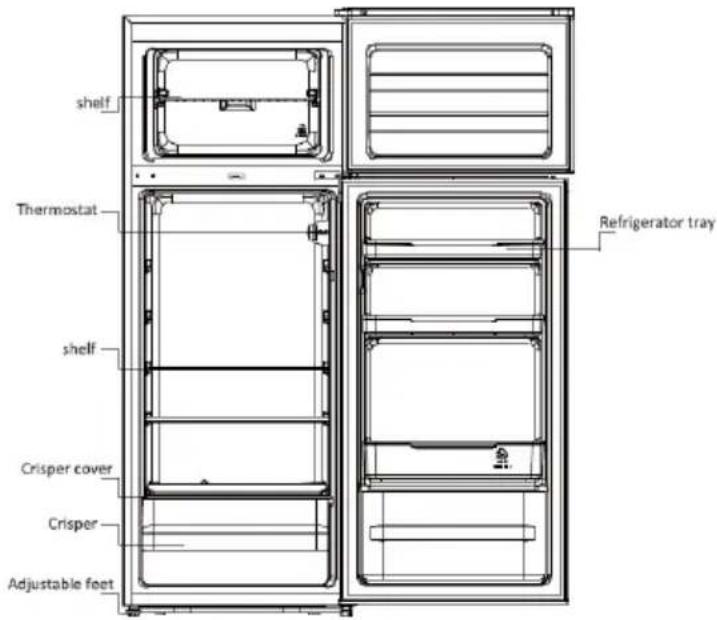
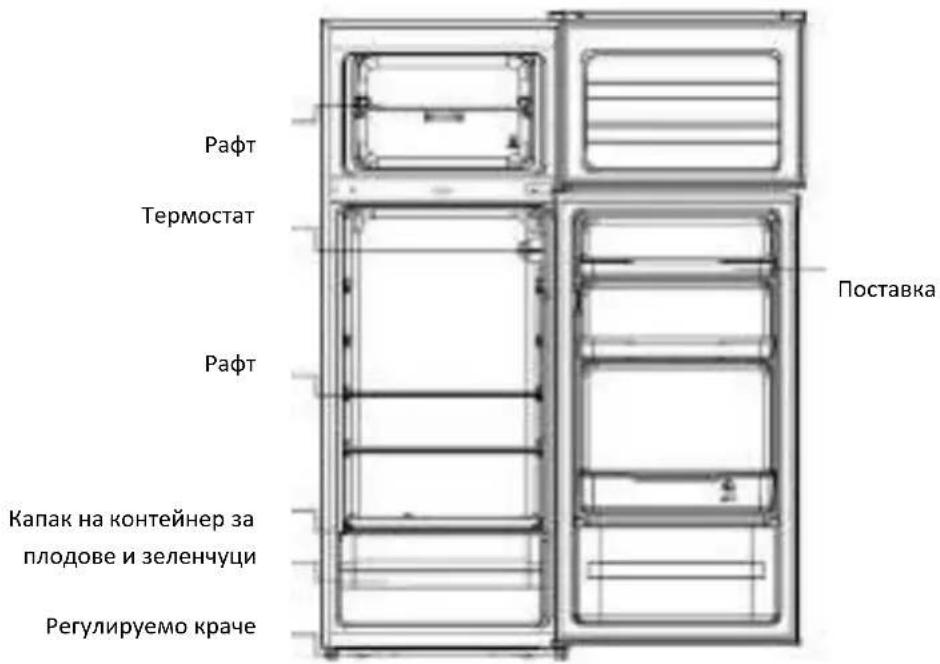
The most energy-saving configuration requires drawers, food box and shelves to be positioned in the product, please refer to the above pictures.
*The picture above is only for reference. The actual configuration will depend on the physical product or statement by the distributor
Climate Class
The appliance is designed to operate at the limited range of ambient temperature, depending on climate zones. Do not use the appliance at the temperature out of the limit. Climate class of your appliance is indicated on the label with technical description inside the fridge compartment.
| Climate Class | Amb. T. (°C) | Amb. T. (°F) |
| SN | From 10 to 32 | From 50 to 90 |
| N | From 16 to 32 | From 61 to 90 |
| ST | From 16 to 38 | From 61 to 100 |
| T | From 16 to 43 | From 61 to 110 |
- extended temperate: 'this refrigerating appliance is intended to be used at ambient temperatures ranging from 10^ to 32^ ;
- temperate: 'this refrigerating appliance is intended to be used at ambient temperatures ranging from 16^ C to 32^ C' ;
- subtropical: 'this refrigerating appliance is intended to be used at ambient temperatures ranging from 16^ C to 38^ C' ;
- tropical: 'this refrigerating appliance is intended to be used at ambient temperatures ranging from 16 °C to 43 °C';
TRANSPORTATION INSTRUCTIONS
The appliance should be transported only in a vertical upright position. The packing as supplied must be intact during transportation. If during the course of transport the product has been transported horizontally, it must only be laid on its left hand side (when facing the door front) and it must not be operated for at least 4 hours to allow the system to settle after the appliance is brought back to upright position.
- Failure to comply with the above instructions could result in damage occurring to the appliance. The manufacturer will not be held responsible if these instructions are disregarded.
- The appliance must be protected against rain, moisture and other atmospheric influences.
INSTALLATION INSTRUCTIONS
- If possible avoid placing the appliance near cookers, radiators or in direct sunlight as this will cause the compressor to run for long periods. If installed next to a source of heat or refrigerator, maintain the following minimum side clearances:
From Cookers 4^ (100 mm)
From Radiators 12" (300 mm)
From Fridges 4" (100 mm)
- Make sure that sufficient room, with an average temperature of between 16^ and 32^ , is provided around the appliance to ensure free air circulation. Ideally, a space of no less than 9cm on the back and 2cm on the sides.
- The appliance should be located on a smooth surface.
- It is forbidden to use the refrigerator outdoors.
- Protection from moisture. Do not locate the freezer in moist space to avoid the metal parts rusty. And do not spray water to the freezer, otherwise it will weaken the insulation and causes current leakage.
- Refer to "Cleaning and Care" section to prepare your appliance for use.
- If the freezer is installed in unheated areas, garages etc., in cold weather condensation may form on the outer surfaces. This is quite normal and is not a fault. Remove the condensation by wiping with a dry cloth.
- Never place Refrigerator in a wall recessed or into fitted cabinets or furniture when it is working, the grille at the back may become hot and the sides warm. Do not drape the Refrigerator with any covering.
STARTING TO USE
Before you starting to use the freezer, please check that:
- The interior is dry and air can circulate freely at the rear.
- Clean the interior as recommended under "TAKE CARE" section (electric parts of the refrigerator can only be wiped by dry cloth).
- Do not switch on until 4 hours after moving the fridge/freezer. The coolant fluid needs time to settle. If the appliance is switched off at any time, wait 30 minutes before switching back on to allow the coolant fluid to settle.
- Before connecting the Refrigerator to the mains supply position. The thermostat control
dias is located inside the Fridge compartment.
- Turn the thermostat knob to the "3" position and turn on the electricity. The compressor and the light inside the refrigerator will begin to work.
- Before storing foods in your refrigerator, turn the refrigerator on and wait for 24 hours, to make sure it is working properly and to allow the Fridge/Freezer to fail to the correct temperature.
- Open the door 30 minutes later, if the temperature in the refrigerator decreased obviously, it shows that the refrigerator system works well. When the refrigerator operates for a period of time, the temperature controller will automatically set the temperature within limits it opens.
OPERATION
Switching on your unit
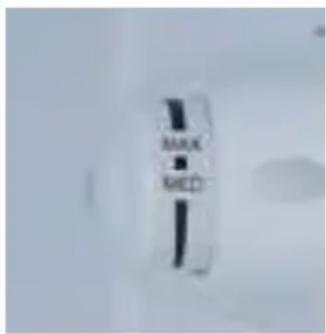
The temperature selector Knob is located on the right hand side wall of the refrigerator interior.
Setting "Off": unit is off.
Setting "MIN": less cool temperature.
Setting "MED": normal operation (adequate for most situations)
Setting "MAX": coolest Temperature
During high ambient temperature: it may be necessary to set the thermostat to the coolest setting (position "MAX"). This may cause
the compressor running continuously in order to maintain a low temperature in the cabinet.
For the first time you install your refrigerator, set the thermostat knob at "MED". Give your
refrigerator time to cool down completely before adding food. It is the best to wait 24 hours before adding food. The thermostat knob controls the temperature. When the thermostat control knob is set to "OFF", the refrigerator will not be running.
The temperature of the refrigerator is controlled by the thermostat in the fridge compartment.
- Under the normal operng condi on (in spring and autumn), it is recommended to set at Model MED.
- In winter when the ambient temperature is low, it is recommended to set at Model MAX.
Operation instructions
- The appliance might not operate consistently (possibility of defrosting of contents or temperature becoming too warm in the frozen food compartment) when sited for an extended period of time below the cold end of the range of temperatures for which the refrigerating appliance is designed
- The information about the climate range of the appliance is provided on the ratedplate.
- The fact that the internal temperatures could be affected by such factors as the location of the refrigerating appliance, ambient temperature and the frequency of door opening, and, if appropriate, a warning that the setting of any temperature control device might have to be varied to allow for these factors
- The fact that effervescent drinks should not be stored in food freezer compartments or cabinets or in low-temperature compartments or cabinets, and that some products such as water ices should not be consumed too cold
- The need to not exceed the storage time(s) recommended by the food manufacturers for any kind of food
Tips for keeping food perfect in the Fridge
Take extra care with meat and fish: cooked meats should always be stored on a shelf above raw meats to avoid bacterial transfer. Keep raw meats on a plate which is large enough to collect juices and cover it with cling film or foil.
Leave space around food: this allows cold air to circulate around the Fridge, ensuring all parts of the Fridge are kept cool.
Wrap up food! to prevent transfer of flavors and drying out, food should be separately packed or covered. Fruit and vegetables need not be wrapped.
Pre-cooked food should be cooled properly: allow pre-cooked food to cool down before placing in the Fridge. This will help to stop the internal temperature of the Fridge from rising.
Shut the door! to prevent cold air escaping, try to limit the number of times you open the door. When retuning from shopping, sort foods to be kept in your Fridge before opening the door. Only open the door to put food in or take it out.
If you're not at home for a long time
- Turn off the refrigerator first and then unplug the unit from the wall outlet.
- Remove all the food.
Clean the refrigerator. - Leave the lid open slightly to avoid possible formation of condensation, mold, or odors.
Use extreme caution in the case of children. The unit should not be accessible to child's play. - Short vacations: Leave the refrigerator operating during vacations of less than three weeks.
- Long vacations: If the appliance will not be used for several months, remove all food and unplug the power cord. Clean and dry the interior thoroughly. To prevent odor and mold growth, leave the door open slightly: blocking it open if necessary or have the door removed.
TAKE CARE
Defrosting
NOTE THIS UNIT DOES NOT HAVE AN AUTO DEFROST SYSTEM.
Please use a plastic ice shovel when clearing the frosting of the evaporator. Do not use metal sharp objects.
Defrost twice a year or when a frost layer of around 5mm has formed.
Alternatively you may switch off the freezer at the socket outlet and pull out the mains plug. Extract the water conduit and put in a water container.
As a temporary measure, this frost should be scraped away using a plastic scraper. NEVER use a metal or sharp instrument. This should be carried out if the frost build-up cannot be scraped away, or if it begins to interfere with the food storage. Chose a time when the stock of frozen food is low and proceed as follow:
- Take out the frozen food, turn the Refrigerator off at the mains supply and leave the doors open. Ideally the frozen food should be put into another Fridge/Freezer or refrigerator. If this is not possible wrap the food, firstly in several sheets of newspaper or large towels and then in a thick rug or blanket and keep it in a cool place.
- Scrape away as much frost build-up as possible using the plastic scraper. To accelerate the thawing process place bowls of hot water inside the Fridge/Freezer cabinet. As the solid frost
loosens, prize it away with the plastic scraper and remove.
- When defrosting is completed, clean your Fridge/Freezer as described.
Cleaning and Care
After defrosting you should clean the Fridge/Freezezer internally with a weak solution of bicarbonate of soda. Then rinse with warm water using a damp sponge or cloth and wipe dry. Wash the baskets in warm soapy water and ensure they are completely dry before replacing in the Fridge/Freezezer.
Condensation will form on the back wall of the Fridge; however it will normally run down the back wall and into the drain hole behind the salad bin.
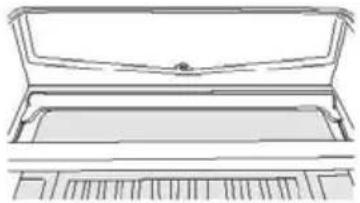
The drain hole will have a "cleaning spike" inserted into it. This ensures that small pieces off food can not enter the drain. After you have cleaned the inside of your Fridge and removed any food residues from around the whole, use the "cleaning spike" to make sure that there are no blockages. Use standard furniture polish to clean the Fridge/Freezer exterior. Make sure that the doors are closed to prevent polish getting on the magnetic door seal or inside.
The grille of the condenser at the back of the Fridge/Freezer and the adjacent components can be vacuumed using a soft brush attachment.
Do not use harsh cleaners, scouring pads or solvents to clean any part of the Fridge/Freezer.
REVERSING THE DOOR SWING
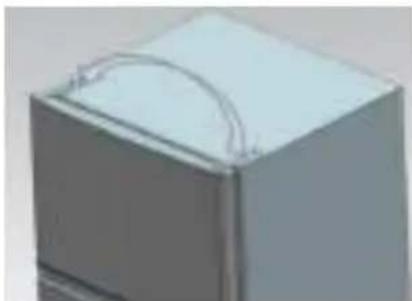
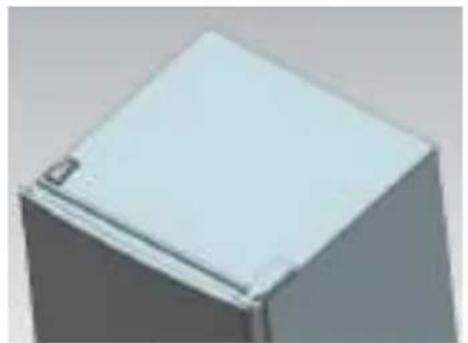
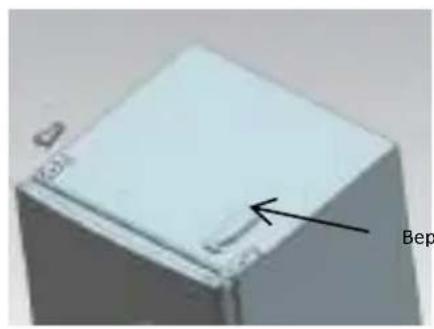
- Remove the right top hinger cover.
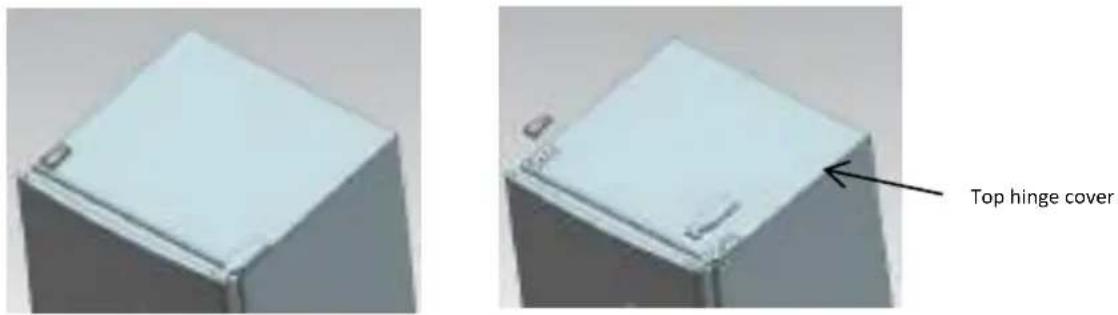
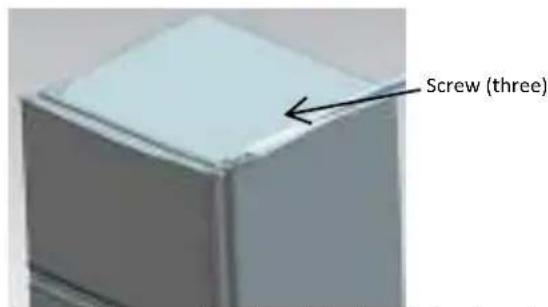
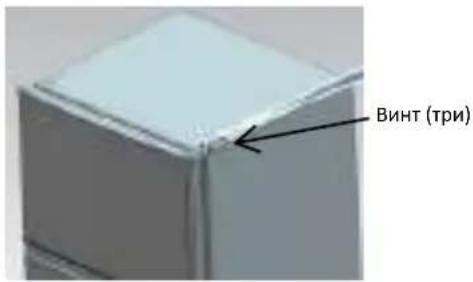
- Remove the screws fixed the top-hinge with cross-slot screwdriver.
- Replace the top-hinge and the top-door limit block and the door bearing bush to the other side.
A. Remove the nut with sleeve. Take off the washer then remove the axes to the other side and fixed. Remove the door limit block

B. Please taking out another door limit block, with screw mounting to the door
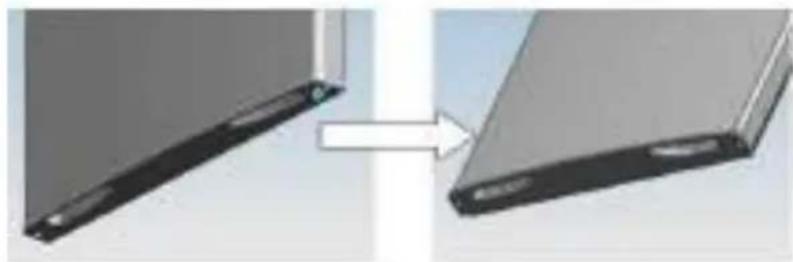
C. Please taking out another door limit block, with screw mounting to the door
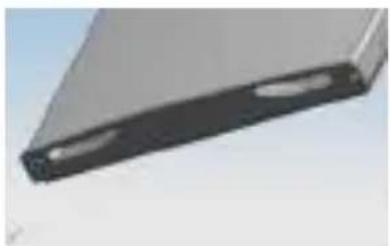
- Disassemble the screws fixed the bottom-hinge with cross-slot screwdriver.
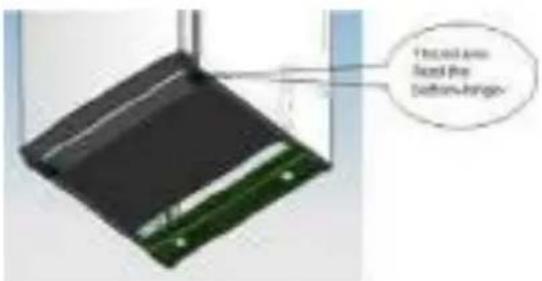
Note: the refrigerator-freezer incline angle less 45^ .
- Replace the bottom door bearing bush and the limit block.
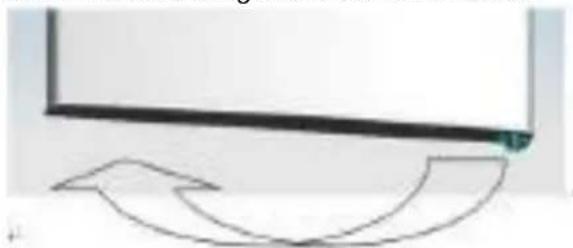
- Replace the bottom hinge to the other side then fix it with
screws.
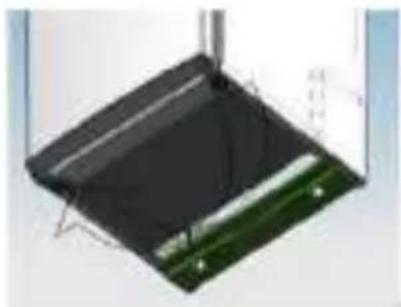
- Replace the mid-hinge.
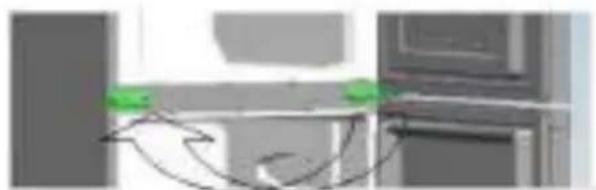
- Set the bottom door right position, fix the mid-hinge.
- Replace the top-hinge.
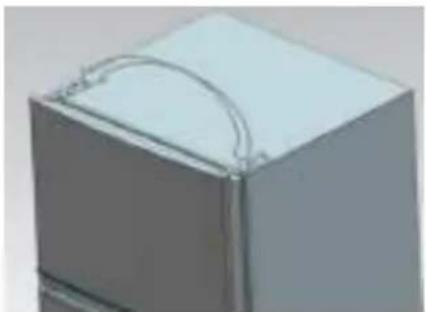
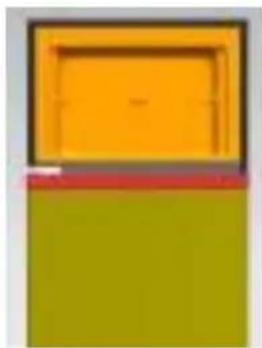
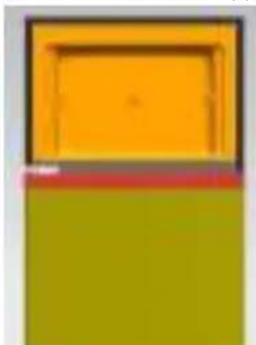
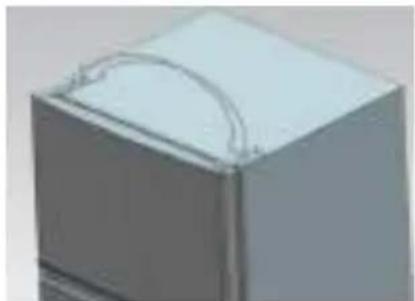
- Set the top door right position, fix the top-hinge and the cover.
-
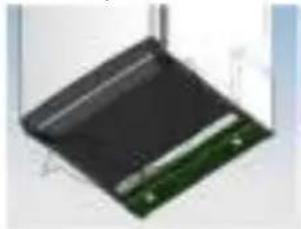
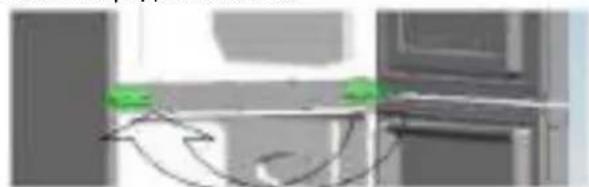
Install the four screw caps and two catches to corresponding position.
-
Ensure the Appliance is unplugged and empty.
-
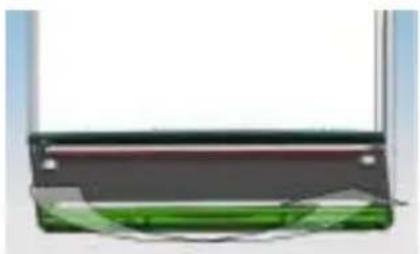
Adjust the two leveling feet to their highest position.
We recommend you have someone to assist you. -
replace the leveler to the other side and adjust it to make sure the cabinet level.
DOOR HANDLE INSTALLATION (optional)
Note: Figures in the user manual are only for reference. The actual product may differ slightly. The refrigerator must be disconnected from the source of electrical supply before attempting the installation of accessory.
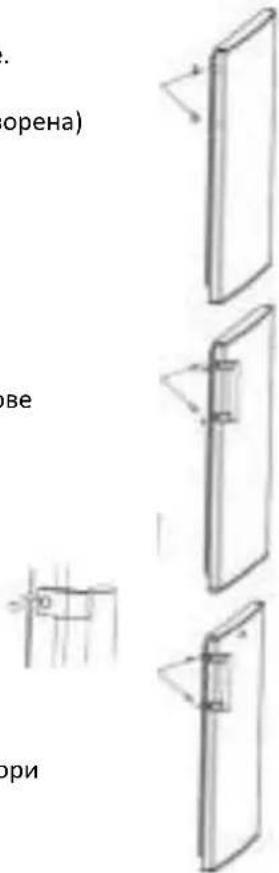
Step 1: take out two plug pins from the door (Side of door open)
Step 2: Install the door handle to the door and fasten it with screws
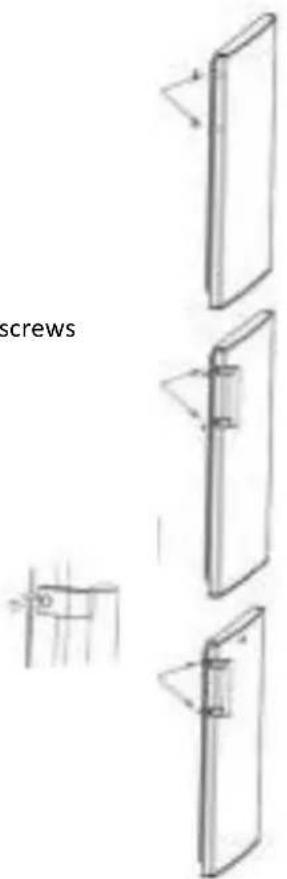
Step 3: Cover screw caps of the handle into screw holes
*The picture above is only for reference. The actual configuration will depend on the physical product or statement by the distributor
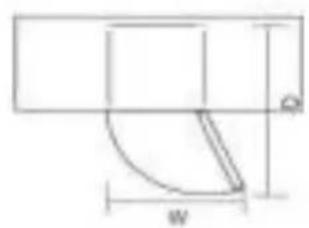
Door Space Requirements
The unit's door must be able to open fully as shown.
W×D≥902×1052mm
Levelling the Unit
To do this adjust the two levelling feet at the front of the unit. If the unit is not level, the door and magnetic seal alignments will not be covered properly.
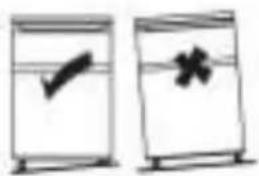
Make sure that the foot touches the ground before use. Look down from the top, clockwise and counterclockwise loosening, tightening.
TROUBLE SHOOTING
- If the appliance does not operate when switched on, check.
- Power cut: If the internal temperature of the Fridge/Freezer compartment is -18^ or less when the power returns, your food is safe. The food in your Fridge/Freezer will remain frozen for approx 16 hours with the door closed. Do not open the Fridge/Freezer door more than necessary.
- The product is designed and built for domestic household use only.
- The plug is inserted properly in the socket and that the power supply is on. (To check the power supply to the socket, plug in another appliance).
- The fuse has blown/circuit breaker has tripped/main distribution switch has been turned off.
- The temperature control has been set correctly.
If the refrigerator is exceptionally cold, you may have accidentally adjusted the thermostat control dial to a higher position. - If the refrigerator is exceptionally warm, the compressor may not be working. Turn the thermostat control dial to the maximum setting and wait a few minutes. If there is no humming noise, it is not working. Contact the local store where your purchase was made.
If condensation appears outside of the Refrigerator, this may be due to a change in the room temperature. Wipe off any residue of moisture. If the problem continues contact the local store where your purchase was made.
If the provided plug has been replaced, make sure the new plug is properly connected. If the appliance is still not operating after the above checks, please contact Customer Service.
SCRAPPING OLD APPLIANCES
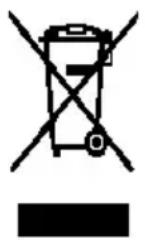
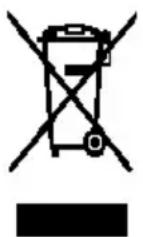
This appliance is marked according to the European directive 2012/19/EU on Waste Electrical and Electronic Equipment (WEEE).
WEEE contains both polluting substances (which can cause negative consequences for the environment) and basic components (which can be re-used). It is important to have WEEE subjected to specific treatments, in order to remove and dispose properly all pollutants, and recover and recycle all materials.
Individuals can play an important role in ensuring that WEEE does not become an environmental issue; it is essential to follow some basic rules:
WEEE should not be treated as household waste.
WEEE should be handed over to the relevant collection points managed by the municipality or by registered companies. In many countries, for large WEEE, home collection could be present.
In many countries, when you buy a new appliance, the old one may be returned to the retailer who has to collect it free of charge on a one-to-one basis, as long as the equipment is of equivalent type and has the same functions as the supplied equipment.
Conformity
By placing the mark on this product, we are confirming compliance to all relevant European safety, health and environmental requirements which are applicable in legislation for this product
Dear customer
If you want to return or replace the product, please contact the store where you buy.
(Remember to bring the purchase invoice)
SOMMARIO
INSTALLATIONSANWEISUNG. 101
INBETRIEBNAHME 102
SKROTNING AV GAMLA APPARATER
SIGURNOSNE INFORMACije
RIESENIE PROBLEMOV 377
LIKVIDÁCIA STARYCH SPOTREBIČOV 378
OBII IPEIJI E H A IPOyKTA
Ha- INKOHOMNHaTa KOHnIgpyaunr N3NcKbA YeKMeJxTeTa, KytNa Ta 3a XpaHa n paTOBete Da 6bDaT No3nOHHpaHn B npOdykTa, MoJI, BnXTe TOpHIne CHMKn.
*NlnctpaunraTno-rope e camo 3a cnpaBka. DeicTBnTeJHaTa KOHnfpyaunrue 3abucn ot pealHnte fniueckn pa3Mepn Ha eJeKTPooyeda nn OT deKnapaunraT aOT nctpnbyTopa
KlHMaTHueH KJIac
UpeIbTe npoeKtnpaH da pa6OuB B OpaHnueH TemnepaTypeH dnaana3OH Ha OKoHaTa CpeDa B 3aBnCmOcT OT KInMaTnUHnTe 3OHN. He n3noJ3BaIe Te ypeJa npi TemnepaTypr N3BbN dnaana3OHa. KInMaTnUHnT KlaC Ha BaShra YpeE e nocOeH Ha CTnKePa c TexnueckOTO ONncAHne B OTdJeHeHTo 3a 3Ampa3RaHe.
| Климатчesen Клас | okedona среда Temпература (°C) | okedona среда Temпература (°F) |
| Субнормален | ОТ 10 до 32 | ОТ 50 до 90 |
| Hормален | ОТ 16 до 32 | ОТ 61 до 90 |
| Суб探测ен | ОТ 16 до 38 | ОТ 61 до 100 |
| Т探测ен | ОТ 16 до 43 | ОТ 61 до 110 |
—pa3upeh ymepeh: ,to3xnaIuIeH ypeE npedHa3HaueH da ce n3noI3Ba npn TeMnpaTpa Ha OKoJIHaTa cpea ot 10°C do 32°C";
C. MoIa, moHTnpaTe C BnHT dpyr orpaHnHTeI Ha BpaTaTa
- Pa3BnTe BnHToBeTe, 3aKpeHn Ha DoHaTa NaHTa, C KpbctTa oTBeTpKa.
3a6eJekKa: pns3epbT Ha xHaanHnKa e HAKIOHeH noD bTbN, no-MaBk OT 45^
- Pa3MeHeTe D0HnIaReep n OrpaHnUHTeJIa
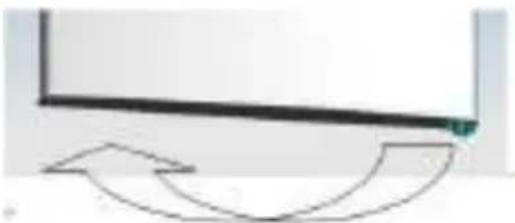
- Pa3MeHeTe DoJIHaTa NaHTa Ha DpyraTa CtpaHa N a3aKpeNeTe C BnHTOBe.
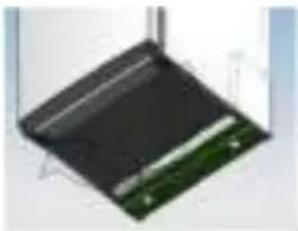
- Pa3MeHeTe CpeHaTa nHaTa.
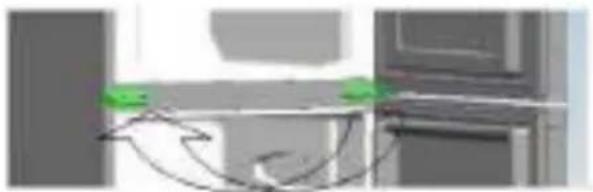
- HacpoTe No3nIaTa Ha BpaTaT aOJy BdaCHO n KcpaTe cpeHaTa naHa.
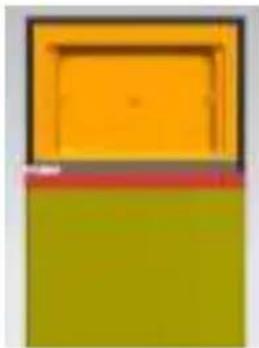
- Pa3MeHete rohpata naHTa.
- HactpoIte nO3nUraTa Ha BpaTata rope BdACHO nΦHKcpaTe roPHaTa NaHTa NKaNaKa.
-
MoHTnpaIte YeTnpTe BnHTOBu KaNauKu N DBeTe BTyLKn Ha CbOTBeTHnTe No3NuH.
-
YBepete ce, ue ypeDbTe n3KIOHoeH OT KOHTaKaTaN e npa3eH.
- PerynnpaTe DBeTe HNBenpaun Kpaeta Do HaB-BnCOKOTo NM NIOJIOKeHne.
-
PpenopbBaMe Bn Da n3BbPbBaTe TOBa C NOMOu OTHAKORO.
-
NocTabeTe HnBeJaTopa Ha dpyraTa cTpaHa n HnBeInpaTe XlaIaNHka.
3A INHCTAJINPAHE HAДРБЖКATA HA BPATATA (no n360p)
3a6eJekka: Hnpynte B pBkoBOcTBOTO 3a nOtpe6ntela ca cmo 3a cnpaBka. DeiCTBNTENHnT npOdyKT MoKe JIeKO da ce pa3JIuYaba.
XlaIINHbT Tp6Ba Da ce N3KIOUO NT3TOUHNKa Ha eJektpueecko 3axpaHbHe, npden da ce ONHTaTe da MOHTnpaTe npHaJeHHocHTne.
CTbIka 1: n3BaTe DBA uHΦTa OT BpaTa (ctpaHaTa Ha BpaTaTa e OTBopeHa)
Ctbnka 2: HnctaunpaTe dpbkkata Ha BpataTЯ n 3akpenete C BNHTObe
Ctbnka 3: NokpnTe BnHTOBnTe KanaaKn Ha dpbkKaTa C BNHTOBN OTBOPn
*NIOCTpauneta no-rope e camo 3a cnpaBka. JeicbnteHaT KoHpyraqua 3aBnCn ot peaHnTe Hnueckn pa3mepn Ha eektpoypea nIOn OT deklapaunraTo DTnctpn6ytopa.
He noIb3yItecb OTKpbITbIM PIIaMeHem I
NCTOCHKAMN BOCnJaMeHeHn;
TüaTeIbHo npOBeTpIte NOMEuEHe, B KOTOpOM yCTaHOBJIeH əJIeKTPoPnp6Op.
BHIMAHHE!
- He npebblaIte cpoKn xpaHeHna, peKOMeHNyEmbIe n3roTOBnteJIaMn BCExBNIOB npOdykTOB.
CobetbI IO xpaHeHHIO npOdyKToB B XoIoAnJIbHHKe
Ydienrteoc6oe BnHMaHne Mcy npb6: nprirotOBHeHbIe MChbIe 6JIOda cJeMyTeO83aTeBHO XpaHITb Ha noJIke BblIe cbIporo Mca, yTO6bl NCKLIOHTb 6aKTePnaJIbHoe 3aRpa3HeHne. XpaHITe cbIpble MCoIPOyKTbHa TapeJIke DoCTaTOHc 6OJIbUoro pa3Mepa, yTO6bl n3 Hee He BbITeKaII McHbIe COK; TaKHe ee cLeDyET 3akpBaTb NiueEBoN PNeHKO nnfoBtro.
OctabIaTe BOKpy npOdyKToB DOCTaTOUHO MecTa: TaKIM o6pa3OM XoJIoHbI B03dUx 6yJeT UINPKyIInpOBAbTB B XoJIoDIIbHnKe, IOnDEpHXIBa Hn3KoI TempePaTyP BCEx KOMNoHErTOB BHyTpN Hero.
3aBopauBaIe npOdyKt!:UTo6bln36eKaTbpeepaH3anaXOBnBblicxHaHnnpOdyKTOB,INxCneLyET pa3deJIbHO ynaKOBBiBaTnnnpNKpbIbT.ΦpyKtI IN OBOUHe HnyKHO 3aBopauBaTb ByNaKOBky.
IOTOBbIe 6JIoDa cIeMyer npabWbHOb OxJaXdA Tb: npeKJe Yem nomeMaTb nprirotobHeHoe 6JIIOB XOJIoNtBnK, NOdoXdTe, Noka OHO OCTbIHET. 3TO n03BOInr N36ExKaTb NOBbIeHnra TemnepaTypb I BHyTpN XOJIoNtBnKa.
3aKpbBaIe DBepy!: yTo6bl n36ExKaTb yTeuKN XoNoHOrO BO3dyxa, noCTapaItecb peXe oTKpbBaTb DBepy xoNoDnBnHa. PpeXe Yem NOMEuaTb KynIeHHbIe npOdykTb I B XoNoDnBnHK, paccOpTnpYIte nx. OTKpbBaIe DBepy TOnbKO dJa TORO, yTo6bl BByHtB nnN NoLOXHTb npOdykTb.
EcIn BbI HaioJro ye3Xaete n3 dOmy
- OTKJIIOUHTe XOLOdINbHnK: cHaayana nobepHnTe BblKnHcy Ta, a 3aTeM BblHbTe BnIKy n3 po3eTkn.
BbIHbTe Bc npOdykTbl.
OuHCTnTe XoJIoNJIbHNK.
OCTaBbTe DBepeU OTKpbIToI, UTo6bI He IOnyCTuTb O6pa3OBaHnKoHdeHcTa, PnecEHn NIOABJIeHn NOCTOpOHnX 3anaxOB.
Oco6oRO BnMaHnTpe6yIOT Detn. He donyckaIte nIrp c np6Opom.
Kopotkn Otnyck: Ye3xqA MeHee Yem Ha Tprn HeJeN, OCTaBraTe XoIoOnIbHnK BKJIIOUeHHbIM.
-ДиTeIbHbI OTnycK: EcIn Bbl He nlaHpye Te Nol3oBaTcB np6Opom B TeueHne HeckOJIbKnx MecaueB, BblbTe H3 Hero BCE npodykTbI N OTKIOUHTe OT ceTn. TuaTeIbHO ouHCTnte INpocuWnte XoIoAnlbHnK n3HyTpN. Bo n36ExaHne NOABLeHnHEnpraThbIX 3anaxOB n PnleceHN, OCTaBBte DBepuy XoIoAnlbHnKa OTKpbITOn, 3a6LoKnipobab ee B OnpeJeHHom IIOLOXHeHH, INI NOLHOCTbIO CHAB.
yXoI
Pa3MopαЖиBaHne
ПРИМЕЧАНЕ:ETA YCTAHOBKA HE OCHAUIEHA CNUCTEMOД ABTOMATUHECKOJ OTTAJKN AN. Пп очирные от гаурни спльугп пл actikobую leяну lo naTy. He nspoIb3yTe MeТАЛ ИИ OCTpbIе рpeMeTbl.
Ipn3BODnTe pa3MopaxKuBaHne Dba pa3a B rOd, nIIN KOrda cIcIy IbDa DOCTnHET ToIuHbI np6IIn3ntelbHO 5 MM.
B KaueCTBe aJIbTePHaTINbbl MoKHO BbIKIOUHTb MOpO3nIbHnK Ha WTeNCEbHOB pO3eTKe I N3BLeuY bTeNcEJIbHyIO BnIKy I3 3JIeKTPocEtN. DocTaHbTe BOoOTBOHDHyIO Tpy6Ky I BCTaBBte ee B KOHTeHep dIra Bobl.
B KaueCTBe BpeMeHHoM Mepb TaKo HHe CLeDyET COCKpctn NlaactNKOBbIM CKpe6Kom.
3AIPPEUAETCNIOB3OBaTbMeTALIueckne NINOCPTpBEHCTpyMeHTb.3Ty npOeDpy CneDyET npoBODITb TOM cLyuae,ecnCNOI HHe He ydaetcAoCKpeCTn,NNecn OH npenrTCTByET XpaHeHIO npOdyKTOB.Bb6epnte Bpem, KOrDa 3anacbl 3amOpoxeHHbIX npOdyKTOB 6ydyT He6oJIbShMn,N BbINOJHNTe TaKe DeICTBn:
- BbHbTe 3amopoxeHHbIe npOyKbI, OTKnIOHTe XoIoNtBnK OT ceTn 3JeKTpONtAHn I octaBbTe DBePcbl OTKpbITbIMN. B nDeaIe 3amopoxeHHbIe npOyKbI HxKHO NOMEcTbB DpyroXoIoNtBnK/MOpOzNtBHyO Kamepy. Ecn 3TO HeBO3MOxH0, 3aBepHtE npOyKbI - Chayana B HeckOJbKO CnoEB ra3ET nn 6OJIbWe NoIOTeHca, 3aTeM B TOIcTbI KOBpIK NN OdeJLO, INOMeCTnTE B npOxlaADHo MeCTo.
- Cockpe6nte KaK MoJHo 60JIbWe INHe C NOMOuBIO NlaCTNKOBOro cKepe6ka. YTo6bl yckopntb npoueeC OTaUNBaHnra, NmecTe HeCKoJIbKO MUCOK C rOpAeN BOOn BHyTpB xIoJNbHnKa/MOpO3NbHnK KamepbI. No Mepe TORO, KaK ToJIcTaH AmOpO3b 6yDet Cna6eTb, CHImaIte ee NlaCTNKOBbIM cKepe6kom N bblpaCbBAHTe.
- ⅡaBepueHn pa3MopaxuBaHn OuncTe XoIoIbHnK/Mopo3NlbHyIO KaMepy B COOTBetCTBn C ONncaHneM.
Hnctka H yxOJ
Iocne pa3MopaxnBaHnCneDyET BbIMbITb XoJOniNbHNK/MOpO3NtHyIO KaMepy n3HHTp n Cna6bIM pactBOPOM coDbI. 3aTe m cnoLoCHnte TeIIOB BOIO C NMOUBo BnAHO H y6Kn N BbITPte HAcXo. BbIMoTe RaIKN TcIIOB MblBOH BOIO N y6eINTecb, YTO OHI NPOHOCTBIO CyXNE, IpexKe Yem UCTaHaBnBaTb IH HA MeTo B XoJOniNbHNK/MOpO3NtHyIO KaMepy. Ha 3aDHeN cTeHKe XoJOniNbHNka 6pa3yETcKOHDeHcAT; Ondako ObuHNO OH cTeKaet NO 3aDHeN cTeHKe B OTBepCTne DIA CTOKA BODbI 3a KOHTeHepom IJIeJeHn OBOUeI.
B OTBepCTne dIra cTOKa BObI BcTaBHeH 3oHd IINI npOuHCTK.N OH npEdoXpaHReT OTBepCTne OT
IOnaDaHnMeJIKx KycOuKOB eIb.I PocLe OUcHcN BHyTpEHHeN NOBepXHOCTN XoIoDInbHnKa N
ydaJIeHnBCEx OCTaTKOB IIuIN BOKpyr OTBepCTNa BOCNoJIb3yIteCb 3OHOM dIra IpOuHCTK, YTO6bl
YDOCTOBepNTbcRA BOTCYCTBn IIO6blx 3akynopok. IJIra BHeunix NOBepXHOCTe
XIoOduNbHKa/MOpO3NbHOk KaMepbl nCNOJb3yIte CTAHdApTHbI NOIpOJIb dJIra Me6JIi.
PiobepTe, YTO6bl BCE dBePcbl 6bln 3akpbl, -3To npEDoTbpATNT NOJaDAHne NOIpOJIPOHa
MaHRHTbI yNlOTnHTeJI bDepe Hn BVHTpb 3JeKTPponpnp6opa.
PeWetky KOHandcaTopa Ha 3aJHNe NOBepXHOCTN XoIoDInbHnKa/MOpO3NbHOk KaMepbl
IpnJIeraIOUe KOMnoHENTbl MoKHO NoUcHtTB nbJIeCOCOM C MArKOI UeTKoI.
3anpeaaetc nCnoB3OBaTb IJy ONUCTKN KaKnx-Ⅱ6o YacteY XOLOINbHnKa/Mopo3nIbHO KamepbI arpeccNBhIE cHCTBa, a6pa3NBhIE r6Kn nn pactbOpnten.
H3MEHEHNE HAPPABJIEHN OTKPbIBAHN DBEPEI
- Chrtb KpbIy BepxHe neTIN.
BepxHnKpbIwKa nTnn
- OTeBepTKoN C KpeCTOo6pa3HbIM WInuem BblKpyTNTb BNHTbI, KOToPbIMN KpeNTcR BepxHra NtJr.
- Npehectn BepxHIOI neTIO C BepxHm CTOpOpM DBepn BVklaDbIeM NOuHHNHa dpyryo CTOpOHy.
A. ChaTb raiKy co BtynKo. ChaTb wai6y, nepheNcTu OcHa npIpyIIO cToPOHy n3akpenNTb.

B. CHaTb cToonop DBepubl.
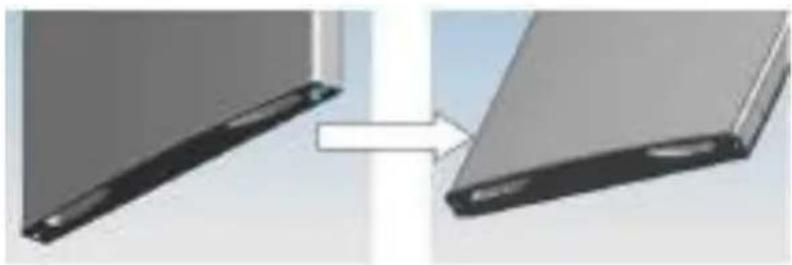
C. BToPoN cTOnOp Heo6xOJIMo CHImaTb BMeCTe C MOHTaXHbIM BNHTOM.
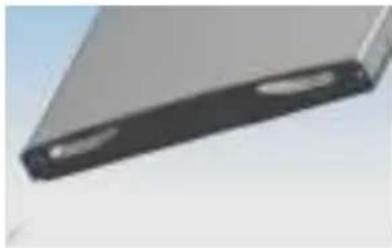
- OTBepTKoC KpeTo06pa3HbIM ⅢNlueM BblkpyTntb BNHTbI, KOtOpbIMKpeNTcA HxHnA neTla.
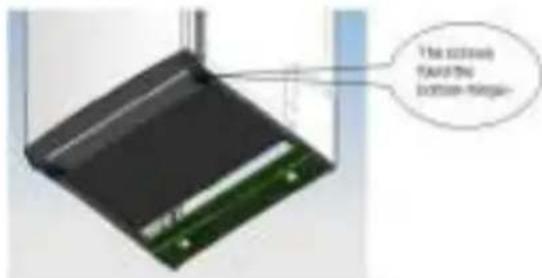
PpmeaHne:HaKloHnTe XoIoDunbHnK-MOpOzNkY Ha yron He 60nee 45^
- Iepemecntb HnKnn Bknaibn noaHnKa co cTOnopom.
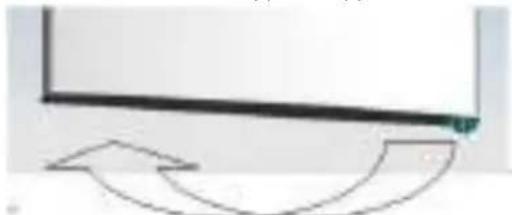
- Npeheecn HNkHIO neTIO Ha npTyIO CTOpOHy n 3aKpenNTb BNHTaMn.
- Iepemecntb cpeHIO neTIO.
- YcTaHOBnTb HnKHHIO DBePcy B HyKHOe NIOJOKeHHe, 3aKpeNtB cpeHIO neTIO.
- IpeheNcT BepxHIO neTIO
- YcTaHOBnTb BepXHIOU DBepuy B HuyKHOe NpOJOKeHne, 3aKpeNtB BepXHIOU NeTIO U KpbIiKy.
-
YcTaHOBnTB YeTbIpe KOJNaUHa Ha BnHTbI n Da 3aueBa HHyKHOe NOLOXHeHne.
-
Pnp6opdoJnKeH 6bIb TcyTbIM NOTCOeINHeHHbIM OTcETN3JIeKTpOHTaHna.
- BbIKpyTNb DBe BbIPaBnBaIOUe HOxKn B BepXHee NIOJKeHne.
-
PekomeHnyem obpaHTcra K komy-JIb6 3a NOMOsbIO npN BbINOJIHeHN 3TOI onepaun.
-
Nepemecntb peryIaTOp ypoBHa Ha npryu CToPOHy n OtperyIuPoBaTb TaK, TTo6bl uKaΦ paCnoJalarIc rOpN3OHTaJIbHO.
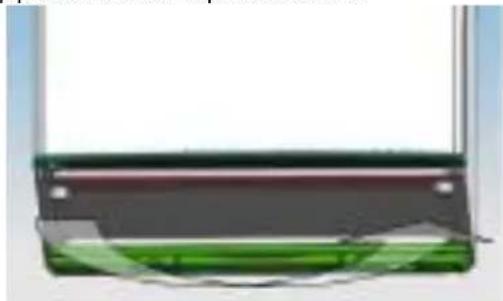
YCTAHOBKA Puykn IBePcbl (no JeaHnO)
PpmeaHne. UoepbI B pykoOAcTBe NOJIb3OBaTeI npBHeJeHbI TOJIbKO dJIra CnpaBKn. AKTueckn IpoDyKToMooKet HEMHOOTJNUaTbcra.
Ipeed yctahOBKO KOMnJIeKTyIOUeJ DeTaJI XOJOINbHNK Heo6xoJIMO OTCoeHNHTb OT ICTOCHNka 3JIeKTPoNTaHn.
Uar 1: n3BleKeIte DaBa WtBtpbKa n3 DBePn (CTopoHa DBePn OTKpbIta)
Uar 2. UctaHOBInTe DBePHyO pyKu Ha DBeBn 3akpeNITe ee BHTAM
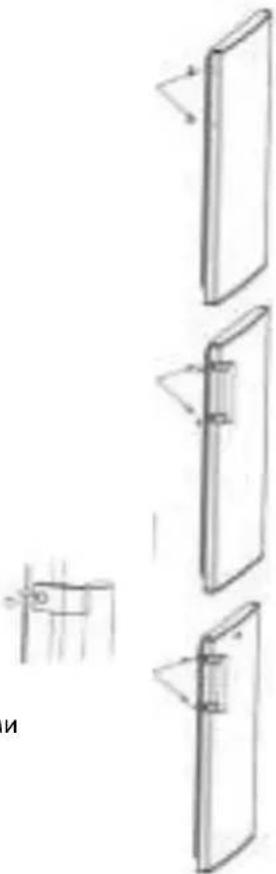
Uar 3.3akpoTe BnHTObBie KOJNauchy pyKoRrKn BnHTOBbIMN OTBepCTHAM
*H3o6paKeHHe BbIe npBODnTcToIbKO IJIy NIIIOCTpaun. FoakTupecka KOHpypaun 6ydt 3aBnCeTb OT fN3ueeckoRo H3dEINr INHOpMaun paCnpocTpaHnteJr
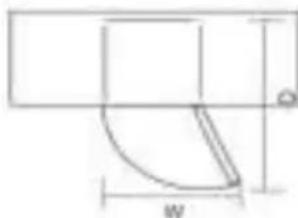
Tpe6oBaHnK npocTpahcTBy IBePn
Heo6xOaIMO o6ecneuHb DocTaOuHoe IpocTpaHCTBO Ira NIOHO OTKpbBaHHa DBepuI np6opa KaK Noka3aHo Ha pncyHke.
$$ \mathrm {L I} \times \Gamma \geq 9 0 2 \times 1 0 5 2 \mathrm {M M} $$
BbipabaHbHaHHe arperata
Длг STOn peRyI npOBK moXHO BOCNoJIb3OBAtbcr DBYMaH OXXKaMn B nepeJHeJ qaTn np6opa.
Ecnn npnbop cTOnr He rOpn3oHTaIbHo, DBepua 6yDeT HEnlnotHO npJneratb K MaTHNTHOMY yNtOHeHIO.
IpeHnauHm nCNoB3OBaHn y6eHntecb, YTO HOKKn KacaHTcnoJa.
TnBcBepxBy Bn3, NOBOPaNBaTb peryIaTOp HOKe N O YacOBo CTpeJIke I npOTNB YacOBo CTpeJIkn.
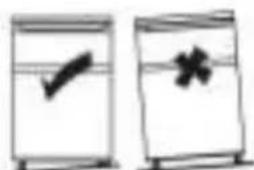
FOR appliances without a 4-star compartment: this refrigerating appliance is not suitable for freezing foodstuffs
FOR a free standing appliance: this refrigerating appliance is not intended to be used as a built-in appliance
FOR Wine Coolers: this appliance is intended to be used exclusively for the storage of wine
FOOD STORAGE
Position different food in different compartments according to be below table
| Refrigerator compartment | Type of food |
| Door or balconies of fridge compartment | ·Foods with natural preservatives, such as jams, juices, drinks, condiments. ·Do not store perishable foods |
| Crisper drawers (salad drawer) | ·Fruits, herbs and vegetables should be placed separately in the crisper bin ·Do not store bananas, onions, potatoes, garlic in the refrigerator |
| Fridge shelf – middle | ·Dairy products, eggs |
| Fridge shelf – top | ·Foods that do no need coocking, such as ready-to-cat foods, deli meats, leftovers. |
| Freezer drawer(s)/tray | ·Foods for long-term storage ·Bottom drawer for raw meet, poultry, fish ·Middle drawer for frozen vegetables, chips. ·Top tray for ice cream, frozen fruit, frozen baked goods. |
- It's suggested to set the temperature at 4^ in the fridge compartment, and, whether possible, at -18^ in the freezer compartment.
- For most food categories, the longest storage time in the fridge compartment is achieved with colder temperatures. Since some particular products (as fresh fruits and vegetables) may be damaged with colder temperatures, it is suggested to keep them in the crispier drawers, whenever present. If not present, maintain an average setting of the thermostat.
- For frozen food, refer to the storage time written on the food packaging. This storage time is achieved whenever the setting respects the reference temperatures of the compartment (one-star -6^ , two stars -12^ , three stars -18^
POSITIONING
Install the appliance at a location where the ambient temperature corresponds to the climate class indicated on the rating plate of the appliance:
- Extended temperate (SN): 'this refrigerating appliance is intended to be used at ambient temperatures ranging from 10^ to 32^
- Temperate (N): 'this refrigerating appliance is intended to be used at ambient temperatures ranging from 16^ to 32^
-
Subtropical (ST): 'this refrigerating appliance is intended to be used at ambient temperatures ranging from 16^ to 38^
-
Tropical (T): 'this refrigerating appliance is intended to be used at ambient temperatures ranging from 16^ to 43^
AVAILABILITY OF SPARE PARTS
"Thermostats, temperature sensors, printed circuit boards and light sources are available for a minimum period of seven years after placing the last unit of the model on the market. Door handles, door hinges, trays and baskets for a minimum period of seven years and door gaskets for a minimum period of 10 year, after placing the last unit of the model on the market".
GUARANTEE
Minimum guarantee is: 2 years for EU Countries, 3 years for Turkey, 1 year for UK, 1 year for Russia, 3 years for Sweden, 2 years for Serbia, 5 years for Norway, 1 year for Morocco, 6 months for Algeria, Tunisia no legal warranty required.
TECHNICAL ASSISTANCE
To contact the technical assistance, visit our website: https://corporate.haier-europe.com/en/ Under the section "website", choose the brand of your product and your country. You will be redirected to the specific website where you can find the telephone number and form to contact the technical assistance
For further information about the product, please consult https://eprel.ec.europa.eu/ or scan the QR on the energy label supplied with the appliance
BG
3a oxIaIITeIITe 3a BnHO: ,TO3H ypeI e IpeIHa3HaueH Ja ce H3IOJ3Ba eINHCTBeHO 3a cbXpaHRAHe Ha BnHO
3a cbo6oHocToIypei:TO3N XJIaIHHe ypeI He e IpeHa3HaueH 3a BrpaKaJhaHe
3a ypeH 6e3 oTJeIeHne 4 3Be3H: ,TO3H XJaIHHeH ypeH He e IIOxOJH 3a 3aMpa3BaHe Ha xpaHHTeJIHH pOyKTH
CKJIAD3AXPAHA
IocTabaHTe pa3JHHTte xpaHH B pa3JHHTte OTJeHn, KaKTo c HocOueHO Ta6JIHntaTIO-JOly.
| Од��елене нахладилика | Видхраиа |
| Врараза плп поставкITE на врараза нахладилиото отд��елене | •Храни с ecTeCTBeHи KOнсерВaHTи KaTo KOнфПИори, сokOBc, habNTKN, пДПравКи. •He Дрьжte Там sbp3opaЗВаЛяпи ceхраии. |
| Чекmedжke 3a плобови и зелени (чекmedжke 3a сбсжо сьхсанни) | •Плобовete, билкITEи 3eЛeнчуиITE trябва за споставгт OTдELПИо. •He сьхсанявaite 6aHaHи, ЛуК, картофи и чесьи вхладилика. |
| Рафт нахладилика - средEN | •Млесни подуктNi, рицa |
| Рафт нахладилика - ГорсEN | •Х рани, Конто Нс Сс Нждайт O налprимер ГOTOBи 3a KOнсумаIGNIЯхраии, DeЛикateСНМeca, OCTaТБПИ. |
| Чекmedжete/поставka нахлдзера | •Храни 3a Дьлгocрочи сьхсанни. •Най-дOLIHOTO чекmedжke e 3a cypobO месо, пТиПи и риба. •СрсIHOTO чекmedжke e 3a Замразсн 3сЛeнчуии 6лЯнширани karртофи. •Най-горната поставka e 3a сладолед, 3ampaЗEHи плобови и 3ampa3eHN пechINA. |
- IpeIopbUba ce TeMIIepaTypa Ta B XIAHJHOTO OTJeHHe Da ce 3aJaTe Ha 4^ n, ako e BB3MOKHO, Ha -18^ BBB pH3epHOTo OTJeHHe.
3a IOBeyTo KaTeOpHN XpaHn Hau-NbIbIc pOK Ha cbXpaHeHne B XJaHJHOto OTJeHHe ce NoCTHra IIpN IIO-HNCKN TeMnepaTyprn. Tb Kato OIIpeJeHn IpOyKTH (KATO IIpeCHN IIIOIOBE n 3eJIeHu) MoKe Ja ce pa3BaJIr TpN IIO-HNckN TeMnepaTyprn, ce IIpeIOpBuBa Da TN cbXpaHRABe B YceKMEdKeTaTa 3a CBeKO cbXpaHeHne, aKO HMa TaKNBa. B IIpoTHBeH cIyau NIOIbPkaIte TepMoCTaHa cpeHa IIO3HIN.
3a 3ampa3eHH xpaHH cna3BaHTe cpoKa 3a cbxpaHeHHe, nocoueH Ha oHaKOBkata Ha xpaHHTeJIHHIPOyKT. To3n cpoK Ha cbxpaHeHHe ce IocTHra, KOrato HAcTPOhKaTa OTROBapra Ha pepepeHTHHTe TEMIIepaTpyH B OTJeJIeHHeTo (eHa 3Be3Ja -6°C, DBe 3Be3HN -12°C, Tprn 3Be3JN -18°C).
IIO3NIOHHPAHE
HcTaIHpAte ypeHa Ha MxCTO, KbTeTo TeMIIepaTypaTa Ha OKoJIHaTa cpea CbOTBeTcTBa Ha KJIImaTHUHHa KJIac, NOCOueH Ha Ta6eJIkata C daHHH Ha ypeHa:
- Pa3HInpeH yMepeH (SN): ,To3N xJaIJIeH ypeI e IpeHa3HaueH Ja ce H3IOJ3Ba IIpH TeMIIepaTypa Ha OKoJIHaTa cpeIa ot 10^ do 32^
- YMepeH (N): ,To3n XIIaIJIeH ypeI e IpeIHa3HaueH da ce H3IOJ3Ba IIpn TeMIIepaTypa Ha OKoJIHaTa cpeIa or 16°C do 32 °C
Cy6tpoHueh (ST):,TO3n XlaIINJIe HyeJe IpeJHa3HaueH da ce H3IOJI3Ba IIpn TeMIIepaTpa Ha OKOJIHaTa cpeJa ot 16 ^ C do 38^
TpoHHueH (T): ,TO3N XIAIINJIe HyeE e IpeHnA3HaueH Ja ce H3IOJ3Ba IIpr TEmIIepaTypa Ha OKoJIHaTa cpeJa ot 16^ lo 43°C
HAJIINHOCHT HA PE3EPBHN YACTN
TePMOCTaTH, TeMIIepaTyPhN DaTChN, NeaTHN IIaTKn H N3ToHNN Ha CBeTJINHa HAI-MaIKO B IpoIbJIkeHHe Ha CeIeM ToHHN CJeI PycKaHeTO Ha Na3apa Ha IocJIeIHATA 6pOJa OT MoJIeJa. PbKOXBaTKN 3a BpaTH, NaHTN 3a BpaTH, paTOBe H YeKMeJKeTa HAI-MaIKO B IpoIbJIkeHHe Ha CeIeM ToHHN, H yIbTIHeHNA 3a BpaTH HAI-MaIKO B IpoIbJIkeHHe Ha 10 ToHHN CJeI PycKaHeTO Ha Na3apa Ha IocJIeIHATA 6pOJa OT MoJIeJa;
TAPAHIIH
MHHMaJIHaTa rapaHnna c: 2 roIHn3a cTpaHnTe ot EC, 3 roIHn3a Typnna, 1 roIHn3a O6eINHeHTo KpaJIcTBo, 1 roIHn3a Pycnna, 3 roIHn3a IIBeuHn, 2 roIHn3a CbP6nna, 5 roIHn3a HopBerHn, 1 roIHn3a MapoKo, 6 Meceua 3a AJIkp; 3a TyHnc He ce H3NCKBa 3aKOHOba rapaHnna.
TEXHNUECKA HOMOII
3a da ce cbbpxkeTe c TexHHueckata NOMOII, Nocetete HaHINy ye6caIT: https://corperate.haier-europe.com/en/. B pa3JeIa „websites" H36epeTe Mapkata Ha BaIIH N IpOdyKT N BaIIATA IIpKAb. Ile 6bIeTe IpeHacoeyH KbM KOHKpeTHN yE6caIT, KbIeTO MOKeTe Ja HAmepHT TeJIefoHHN HOpE HΦopMyJpa 3a Bpb3Ka c TexHHueckata NOMOII
3a IIOJIbIINTeJIHa HhOpMaIIHr OTHoCHO pOdyKtA, MoJIa, KOHCyJIITnpaIte ce c https://eprel.ec.europa.eu/ Hn cKaHpAIe QR Ha eHepRnHn erHKeT, IocTaBeH cypeJa