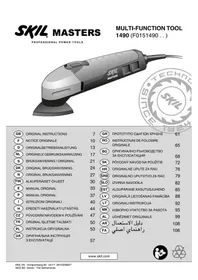
1490 MA - Multitools SKIL - Free user manual and instructions
Find the device manual for free 1490 MA SKIL in PDF.



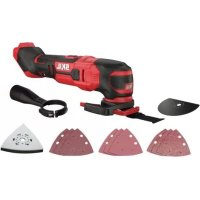
| Product Type | Oscillating Multitool |
| Brand | Skil |
| Model | 1490 MA |
| Supply Voltage | 230-240 V AC |
| Frequency | 50/60 Hz |
| Oscillations per Minute | 0 - 22,000 min⁻¹ (adjustable) |
| Oscillation Angle | 3° |
| Accessory Compatibility | OIS and Starlock Accessories |
| Sound Level (Pressure) | 85 dB(A) |
| Sound Level (Power) | 96 dB(A) |
| Vibrations (Sanding) | 4.1 m/s² (K=1.5 m/s²) |
| Vibrations (Plunge Cut) | 7.4 m/s² |
| Vibrations (Segment Cut) | 7.1 m/s² |
| Double Insulation | Yes |
| Dust Extraction Device | Attachable (included) |
| Speed Regulator | Yes (6 positions) |
| Switch | On/Off Slider |
| Maintenance | Clean ventilation slots regularly |
| Safety | Use gloves, safety goggles, dust mask |
| Spare Parts | Accessories available (blades, sandpaper) |
| Repairability | Have repaired at an authorized Skil service center |
| General Information | For sawing and sanding wood, plastic, metals, soft wall tiles |
Frequently Asked Questions - 1490 MA SKIL
User questions about 1490 MA SKIL
0 question about this device. Answer the ones you know or ask your own.
Ask a new question about this device
Download the instructions for your Multitools in PDF format for free! Find your manual 1490 MA - SKIL and take your electronic device back in hand. On this page are published all the documents necessary for the use of your device. 1490 MA by SKIL.
USER MANUAL 1490 MA SKIL
- This tool is intended for sawing and cutting in wood, plastic, plaster, metals and soft wall tiles as well as for dry sanding of small surfaces.
- Due to the oscillating drive the accessory swings up to 22000 times per minute for 3^ , which makes the tool particularly suitable for precise work on edged, narrow and other hard-to-reach places.
- This tool accepts most commonly available multi-tool accessories, including existing OIS and Starlock accessories (3)
- Read and save this instruction manual (4)
TECHNICAL DATA ①
TOOLELEMENTS ②
A Clamping screw with washer
B Hex key
C Sanding pad
D Dust extraction device
E On/off switch
F Speed selection wheel
G Ventilation slots
H Segment saw blade
J Plunge-cut saw blade (metal, 20 mm)
K Plunge-cut saw blade (metal, 10 mm)
L Plunge-cut saw blade (wood, 20 mm)
M Plunge-cut saw blade (wood, 10 mm)
P Sanding sheet (coarse)
Q Sanding sheet (fine)
SAFETY
GENERAL POWER TOOL SAFETY WARNINGS
WARNING Read all safety warnings, instructions, illustrations and specifications provided with this power tool. Failure to follow all instructions listed below may result in electric shock, fire and/or serious injury.
Save all warnings and instructions for future reference.
The term "power tool" in the warnings refers to your mains-operated (corded) power tool or battery-operated (cordless) power tool.
1) WORK AREA SAFETY
a) Keep work area clean and well lit. Cluttered or dark areas invite accidents.
b) Do not operate power tools in explosive atmospheres, such as in the presence of flammable liquids, gases or dust. Power tools create sparks which may ignite the dust or fumes.
c) Keep children and bystanders away while operating a power tool. Distractions can cause you to lose control.
2) ELECTRICAL SAFETY
a) Power tool plugs must match the outlet. Never modify the plug in any way. Do not use any adapter plugs with earthed (grounded) power tools. Unmodified plugs and matching outlets will reduce risk of electric shock.
b) Avoid body contact with earthed or grounded surfaces such as pipes, radiators, ranges and refrigerators. There is an increased risk of electric shock if your body is earthed or grounded.
c) Do not expose power tools to rain or wet conditions. Water entering a power tool will increase the risk of electric shock.
d) Do not abuse the cord. Never use the cord for carrying, pulling or unplugging the power tool. Keep cord away from heat, oil, sharp edges or moving parts. Damaged or entangled cords increase the risk of electric shock.
e) When operating a power tool outdoors, use an extension cord suitable for outdoor use. Use of a cord suitable for outdoor use reduces the risk of electric shock.
f) If operating a power tool in a damp location is unavoidable, use a residual current device (RCD) protected supply. Use of an RCD reduces the risk of electric shock.
3) PERSONAL SAFETY
a) Stay alert, watch what you are doing and use common sense when operating a power tool. Do not use a power tool while you are tired or under the influence of drugs, alcohol or medication. A moment of inattention while operating power tools may result in serious personal injury.
b) Use personal protective equipment. Always wear eye protection. Protective equipment such as dust mask, non-skid safety shoes, hard hat, or hearing protection used for appropriate conditions will reduce personal injuries.
c) Prevent unintentional starting. Ensure the switch is in the off-position before connecting to power source and/or battery pack, picking up or carrying the tool. Carrying power tools with your finger on the switch or energising power tools that have the switch on invites accidents.
d) Remove any adjusting key or wrench before turning the power tool on. A wrench or a key left attached to a rotating part of the power tool may result in personal injury.
e) Do not overreach. Keep proper footing and balance at all times. This enables better control of the power tool in unexpected situations.
f) Dress properly. Do not wear loose clothing or jewellery. Keep your hair and clothing away from moving parts. Loose clothes, jewellery or long hair can be caught in moving parts.
g) If devices are provided for the connection of dust extraction and collection facilities, ensure these are connected and properly used. Use of dust collection can reduce dust-related hazards.
h) Do not let familiarity gained from frequent use of tools allow you to become complacent and ignore
tool safety principles. A careless action can cause severe injury within a fraction of a second.
4) POWER TOOL USE AND CARE
a) Do not force the power tool. Use the correct power tool for your application. The correct power tool will do the job better and safer at the rate for which it was designed.
b) Do not use the power tool if the switch does not turn it on and off. Any power tool that cannot be controlled with the switch is dangerous and must be repaired.
c) Disconnect the plug from the power source and/or remove the battery pack, if detachable, from the power tool before making any adjustments, changing accessories, or storing power tools. Such preventive safety measures reduce the risk of starting the power tool accidentally.
d) Store idle power tools out of the reach of children and do not allow persons unfamiliar with the power tool or these instructions to operate the power tool. Power tools are dangerous in the hands of untrained users.
e) Maintain power tools and accessories. Check for misalignment or binding of moving parts, breakage of parts and any other condition that may affect the power tool's operation. If damaged, have the power tool repaired before use. Many accidents are caused by poorly maintained power tools.
f) Keep cutting tools sharp and clean. Properly maintained cutting tools with sharp cutting edges are less likely to bind and are easier to control.
g) Use the power tool, accessories and tool bits etc., in accordance with these instructions, taking into account the working conditions and the work to be performed. Use of the power tool for operations different from those intended could result in a hazardous situation.
h) Keep handles and grasping surfaces dry, clean and free from oil and grease. Slippery handles and grasping surfaces do not allow for safe handling and control of the tool in unexpected situations.
5) SERVICE
a) Have your power tool serviced by a qualified repair person using only identical replacement parts. This will ensure that the safety of the power tool is maintained.
SAFETY INSTRUCTIONS FOR MULTI-FUNCTION TOOLS
GENERAL
- This tool should not be used by people under the age of 16 years
- Use completely unrolled and safe extension cords with a capacity of 16 Amps (U.K. 13 Amps)
- Always check that the supply voltage is the same as the voltage indicated on the nameplate of the tool (tools with a rating of 230V or 240V can also be connected to a 220V supply)
- Avoid damage that can be caused by screws, nails and other elements in your workpiece; remove them before you start working
-
Use clamps or another practical way to secure and support the workpiece to a stable platform (holding the workpiece by hand or against your body leaves it unstable and may lead to loss of control)
-
Do not work materials containing asbestos (asbestos is considered carcinogenic)
- Always disconnect plug from power source before making any adjustment or changing any accessory
- When working, always hold the tool firmly with both hands and take a secure stance
- Always keep the cord away from moving parts of the tool; direct the cord to the rear, away from the tool
- Use protective gloves when changing accessories (contact with the accessory can lead to injuries)
- In case of electrical or mechanical malfunction, immediately switch off the tool and disconnect the plug
- If the cord is damaged or cut through while working, do not touch the cord, but immediately disconnect the plug
- Never use the tool when cord is damaged; have it replaced by a qualified person
- When you put away the tool, switch off the motor and ensure that all moving parts have come to a complete standstill
WHEN SAWING/CUTTING
- Hold the power tool by insulated gripping surfaces, when performing an operation where the cutting accessory may contact hidden wiring or its own cord (cutting accessory contacting a "live" wire may make exposed metal parts of the power tool "live" and could give the operator an electric shock)
- Keep hands away from cutting area; never reach underneath the material for any reason while cutting
- Use suitable detectors to find hidden utility lines or call the local utility company for assistance (contact with electric lines can lead to fire or electrical shock; damaging a gas line can result in an explosion; penetrating a water pipe will cause property damage or an electrical shock)
- Do not use a saw blade which is cracked, deformed or dull
WHEN SANDING
- Dust from material such as paint containing lead, some wood species, minerals and metal may be harmful (contact with or inhalation of the dust may cause allergic reactions and/or respiratory diseases to the operator or bystanders); wear a dust mask and work with a dust extraction device when connectable
- Certain kinds of dust are classified as carcinogenic (such as oak and beech dust) especially in conjunction with additives for wood conditioning; wear a dust mask and work with a dust extraction device when connectable
- Follow the dust-related national requirements for the materials you want to work with
- Use the tool only for dry sanding (penetration of water into the tool increases the risk of an electric shock)
- Do not touch the moving sanding sheet
- Do not continue to use worn, torn or heavily clogged sanding sheets
- When sanding metal, sparks are generated; do not use vacuum cleaner and keep other persons and combustible material from work area
EXPLANATION OF SYMBOLS ON TOOL
③ This tool accepts most commonly available multi-tool accessories, including existing OIS and Starlock accessories
④ Read the instruction manual before use
Double insulation (no earth wire required)
Do not dispose of the tool together with household waste material
WHEN CONNECTING NEW 3-PIN PLUG (U.K. ONLY):
- Do not connect the blue (= neutral) or brown (= live) wire in the cord of this tool to the earth terminal of the plug
- If for any reason the old plug is cut off the cord of this tool, it must be disposed of safely and not left unattended
USE
- Changing accessories (7)
! disconnect the plug
- remove/mount the required accessory as illustrated
- ensure that the openings of the accessory engage into the tabs of the tool head (any snap-in position possible)
- mount the accessory with the depressed centre pointing downwards
- loosen/fasten screw A with hex key B
-
check the tight seating of the accessory (incorrect or not securely fastened accessories can come loose during operation and create a hazard)
-
Mounting of sanding sheet 8
-
tap the dust out of the VELCRO material on sanding pad C ② before mounting the sanding sheet
-
mount VELCRO sanding sheet as illustrated
! the dust suction requires the use of perforated sanding sheets
! perforation in sanding sheet should correspond with perforation in sanding foot
! replace worn sanding sheets in time
! always use the tool with the total VELCRO surface covered with sanding paper -
Dust/chip extraction ⑨
-
mount dust extraction device D as illustrated
- connect vacuum cleaner
! do not use dust extraction device/vacuum cleaner when sanding metal - clean dust extraction device D regularly for optimal dust pick-up performance
On/off
- switch on/off the tool by pushing switch E (2) in "I"/"O" position
! before the accessory reaches the workpiece, the tool should run at full speed
! before switching off the tool, you should lift it from the workpiece
Adjusting working speed 10
with wheel F the required oscillating frequency can be adjusted from low (1) to high (6) (also while tool is running)
- the optimal working speed depends on the material and can be determined with practical trials
- Holding and guiding the tool
! while working, always hold the tool at the grey-coloured grip area(s) ⑪
- keep ventilation slots G ② uncovered
- do not apply too much pressure on the tool (excessive pressure will cause excessive heat and may shorten the service life of the accessory)
APPLICATION ADVICE
- Use segment saw blade H ② for separating and plunge cuts in wood, plaster, gypsum and plastics (also for sawing close to edges, in corners and other hard-to-reach areas)
- Use plunge-cut saw blade J ② for separating and deep plunge cuts in ferrous and non-ferrous metals
- Use plunge-cut saw blade K (2) for smaller separating and plunge cuts in ferrous and non-ferrous metals
- Use plunge-cut saw blade L ② for separating and deep plunge-cuts in wood, plaster, gypsum and soft plastics (also for sawing close to edges, in corners and other hard-to-reach areas)
- Use plunge-cut saw blade M ② for smaller separating and plunge-cuts in wood, plaster, gypsum and soft plastics
MAINTENANCE / SERVICE
Always keep tool and cord clean (especially ventilation slots G ②)
! disconnect the plug before cleaning
- If the tool should fail despite the care taken in manufacturing and testing procedures, repair should be carried out by an after-sales service centre for SKIL power tools
- send the tool undismantled together with proof of purchase to your dealer or the nearest SKIL service station (addresses as well as the service diagram of the tool are listed on www.skil.com)
ENVIRONMENT
-
Do not dispose of electric tools, accessories and packaging together with household waste material (only for EU countries)
-
in observance of European Directive 2012/19/EC on waste of electric and electronic equipment and its implementation in accordance with national law, electric tools that have reached the end of their life must be collected separately and returned to an environmentally compatible recycling facility
symbol ⑥ will remind you of this when the need for disposing occurs
NOISE / VIBRATION
-
Measured in accordance with EN 62841 the sound pressure level of this tool is 85dB(A) and the sound power level 96dB(A) (standard deviation: 3dB ), and the vibration (triax vector sum; uncertainty K = 1.5m/s^2 )
-
when sanding 4.1m / s^2
- when cutting with plunge-cut saw blade 7.4 m/s²
-
when cutting with segment saw blade 7.1 ~m / s^2
-
The vibration emission level has been measured in accordance with a standardised test given in EN 62841; it may be used to compare one tool with another and as a preliminary assessment of exposure to vibration when using the tool for the applications mentioned
-
using the tool for different applications, or with different or poorly maintained accessories, may significantly increase the exposure level
- the times when the tool is switched off or when it is running but not actually doing the job, may significantly reduce the exposure level
! protect yourself against the effects of vibration by maintaining the tool and its accessories, keeping your hands warm, and organizing your work patterns
F
WAARSCHUWING Lees alle
Stov-/spaneopsugning 9
1) SIKKERHET PÅ ARBEIDSPLASSEN
! stovavsuget krever perforert splicepapir
! perforeringen i landslidepapiret m'a passer til slipesalen
! bytt brukte slimepapir i tide
! bruk alltid verktøyet med hele BORRELÁS-flatentildekket med slipepapir
Stov-/sponavsug 9
VEDLIKEHOLD / SERVICE
EJIEMHTN IHCTPymeHTA ②
A 3aKpInHHn TBnHT 3 wain6oio
B WecTnIpaHnn KJIIOU
C A6pa3nBHa NaKlaJaKa
Mexahi3M BvdaJIeHHI NIIy
E BIMnKaU XnVBJIeHHA
F Holoeco Bn6bpy WbNdkocti
G BeHTnJIaCmHi OTBOPN
H Cermenthe Ie3o nn
JLe30nnnDnIobp6KnBpi3aHHm (MeTaN,20 MM)
K Je30 nnn nn o6p6kn Bpi3aHnM (MeTaN, 10 MM)
L Je3o nnIy dIy o6pO6Kn Bpi3aHHM (dpeBo, 20 MM)
M Je3o nnIy dny o6po6Kn Bpi3aHHM (dpebo, 10 MM)
P HaJdaunn nCT (py6o3epnctn)
Q HaKaHnI JnCT (dp6Ho3epnctn)
BE3NEKA
3AΓΑβHIBK3IBKN 3TEXHIKNEHNIOBODHEHH3 EJEHTPOIHCTPYMEHTAMN
N ONEPEHHEHHI PpoHTaTe BcI Bka3IBKn 3 TexHn 6e3neHn, IHCTpyKci, IIOCTpaCiTi Ta CneuHfKaUII, HadaHI 3 cIM eEHTPOINCTpymENTOM. HeBnKOHaHHYycix NOaHnx Hxue IHCTpyKci MOKe np3BeCTn DO ypaKeHH eJIeKTPNHm CTpyMOM, POKeHi i/ a6o cepno3HOITpaBMn.
Dó6pe 36epiraTe Ha MaI6yTHc i nonepeJHeHHa BHa3iBn.
Пд NOнгТЯМ "еLEКТРОприлад" B сх поореджнгх Maetbся на увазiе leKTPoPnIaD, lo npaцioe BiMpeXi (3 eLEKTPoKa6eIem) a60 BiD aKymyIaTOpHoi 6aTapei (6e3 eLEKTPoKa6eIIO).
1) B3NEKA HA POBOOYM MICLI
a)ПимаTe cBoePo6Oe Mioe B YnCTOTI Ta np6bpaTe Noro.БeznaJ a6o norahe OCBiTJIeHnHa ha po6OChMy MiCi MoHyTb Pn3BODHTn Do HeuacnX BnJaKIB.
b) He npaioIte 3 npnaIam o y cepeobnui, de icHyec He6e3neHa Bn6yxy BnacIIOK npncyTHocTi ropounx piINH, ra3iB a6o nny. EJeKtpoPnlaDi MOKyTB nopOAnByBaTn ickpn, BiJ RAHX MoKe 3aMmTaNcR nn a6o napn.
c)Пд ус пацюваньглрпаладом Heплпуншай Tedo po6oуо Micua ditey ta inuXn lodei. BmMOKeTe BTPaTITN KOHTpoJIb NaI prpnladom,Якso BaSha yBara 6yde BiDBePhyTa.
2) ELEKTPNHYA BE3NEKA
3) B63NEHA JIODEI
a) WTeNceIb npHnady nobHHe nacyBaTH Do po3eTHN. He do3BOLAeTbc8 0o-He6ydb MInrTa B wTeNceIi. Dnpo6Otn 3 npHnadaMn, 0o MaIOb 3axNChe 3a3emLeHH, He BnKOpHCTOByIte aadAnTePN. BnKOpHCTaHH opRiHaJIbHO r WoTeC9eJa Ta HaleHHOI po3ETKn 3MeHwye pN3NK yApdy eJeKTpUHNm CTpyMOM.
b) YHnKaIe KOHTaKTu cAteT iJa i3 3a3EmJeHMn NOBepXHaMn, Ra HAnp., Tpy6amn, 6aTapeaMn ONaJIeHHra, neaMn Ta XoNoJNbHnKaMaN. KoI BaWe TiIO 3a3eMJIeHe, icHyE 36IbSeHa He6e3neKa ydApy eJIeKTPuHm CTPymom.
c)3axnauTe npnlaB iD douTy Ta BOJOrn. IOnaHaHRA BODI B eJeKtpoiHCTpymeHT 36iJIbUyE pN3IK ydApyeJeKTPnHIM CTpyMOM.
d) He BnHOpNCToBvIe Na6eIb dJI nepeHeceHH npInaIy, nIDBiWsyBaHH a6o BNTaRyBaHH wTeNcEJI 3po3eTHN. 3axuaiTe Ka6eJIb BiJ HapN, oJIi, roCTpIX KpaIIB Ta DeTale NpInaIy, 1O pyXaOTbcra. IOnKoDKeHN a6o 3aKpyeHN Ka6eJIb 36JIbUye pIN3IK yIapY eJeHTpNUHM CTpyMOM.
e)ДЯЗOBHIshixpo6itO6OB'3HOBOBHHOPnCTOBYIte IINHe TaKnNoOBHBya,IoOnyueHnДЯ 3OBHIshixpo6it.BHKOpnCTaHHNoOBHByaHa,IO pO3paxOBaHnHa 3OBHIshipo60TH,3MeHUe pN3NK ydApy eJIeKTPnHmCtpyMOM.
f) RaHIO He MoHHa 3ano6irTH BnHOpNCTaHHIO eJeKtpoPnHaJdy y BOIoromy cepeOboHsi, BnKOpNCTOByIte npNCTpii 3axNctTy BiD BtOKy B 3emLIO. BnKOpNCTaHHra 3pncTpoHO 3axNctTy BiD BtOKy B 3eMJIIO 3MeHwye pINIK ydApy eJeKtpuHIM CTpyMOM.
a) BybTe yBaHHmN, cIiHynte 3a Tm, IIO Bn po6nte, Ta po3CyJINBO NOBOBtecr Niacpo60Tu 3 eJeHTponpniladom. He KopHCTyTecr npiladom, HxO Bu CTOMLeHi a6o 3hAxODNTecr niD iEIO HApOTnHIB, CnnpTHNX HanoIB a6o liK. MItb HeyBaJHKoCTI pRn KopHCTyBaHHI npiladom MoHe npIN3BOIDNTu DO cepno3HNX TpaBM.
b) BdraTe 0oc6ncte 3axnche cnopndHeHH Ta 0ob'3HOBO BdraTe 3axnci OkyIapn. BdraHHO c06nCTOro 3axnCHOrO cnopdKeHH, RaHAp., -B 3aJeHHocTi BiD BVdy po6iT - 3axnCHOI MaCN, CneuB3yTT, 10 He KOB3aE7bc4, KaCN a6o HabyuHNKIB,3MeHwE pN3NCK TpaBM.
c) YHnKaIe HeHaBMnCHOrO BMnKaHH. NepH HIX BMnKATn eJeKTPoPnIaD B eJeKTPoMepeHy a60 BCTPOMJTHn AChyMylTOpHy 6atapeO, 6paTH noRo BVpyu a6o nepeHocHTN, BneBHITbcraB TOMy, zo eJeKTPoPnpHaBmKhTyH. TpMaHn NaIbua Ha BMnKaHi iD yac NepeHeceHHr eJeKTPoPnIaDy a60 BCTPOMJIaHHB P03ETHy yBIMKHytO r npJaMy Mohe npIN3BOIDHTN DO TpaBM.
d) Npeq THM, HK BMnKaTH npHJaD, npN6epiB HanaRoDHyBaIbHi iHCTpyMeHTu Ta raHOBn KJIIOU. 3HaXoJKeHHa HanaRoDHyBaIbHorO iHCTpyMeHTa a60 KIOUca B DeTal, IIO o6ePaETbcra, MOHe npN3BOIDTN Do TpaBM.
e) He nepeoiciHoiTe ce6e. 36epiraTe ctiHne nolooHenHa Ta 3aBnD 36epiraTe pIBHObary. Lcdo3BOJITb Bam Kpaue 36epirAtn KOHTpOJIb NaI npIIaOM y HecnoiBaHnx CNTyaicix.
f) BdraTe npdaTHn OJr. He BdaTe npocToPi Ta npHpaCn. He ndaTbAte BOLOccN OJr DO Detale, 0p yxaOTbcr. PocToPi OJra, npKpaCn Ta DObre BOLOccMOnyTb nonadATn B deTani, 0p pyxaOTcbr.
g)Якwo icHyc MOKlnBicTh MOHTyBaTHnnIOBicMOKTOBAHbHI a60 NIOOyIOBIOBaHbHI npnCTpoI,nepeHOaHTEcA,oo6 BOHN 6yHn Do6peNiD'EDHaHI Ta npaBnHbNO BHKOpNCTOBaJNcB. BHKOpNCtAHnna NIOBIDCMOKTOBaHbHO npnCTpO MoKe 3MeHUnTI He6e3NeKn, 3yMOBJIeHi NlOM.
h) Do6pe 3HaHH eJENTPOiHCTpyMeHTiB, OTPMaHe B pe3yIbTaTi Yactoro IX BnKOpHCTaHH, He NOBHHo npn3BOdHTn Do camOBneBHeHOcti N irHOpYBaHH npnucnnib TexHInk 6e3NeHN. Heo6epeKaHa DIA MoHe B Ody Mntb npn3BeCTn Do BaHKoi TpaBMN.
4) INPABNJIbHE NOBODJHEHHRA TAHOPNUCTYBAHNA EJEKTPONPNIAAMN
a) He nepeBaHTaHyTe npHaJ. BnHOpNCTOByIte TaHn npHaJ, 10 cneiaIbHo npH3HaueHn dIra NeBHOi pO6OTn. 3 npHaTnM npHaJOM Bn 3 MeHsIMn Pn3HKOM OTpMaTe KpaI pe3yIbTaTHpo6OTn, RaIcO 6yDeTe npaIOBaTH B 3a3HaueHOMy diaNa3OHi NOTyHKHOCTI.
b) HekopnctyTecn npnaDom 3 nooHODKeHNBMnHaeym. Pnla, knn He MOxHa yBIMKHyTu a60BMKNHTu, c He6e3neuHm i Ioro Tpe6aBiDpemOHTyBaTu.
c) Npeed THM, Rn perylOBaTH 0o-He6yDb Ha npnilaDi, MInrtn npniladra 6o XOBaTH npnilad, BNTarHITb WTeNCEJI 3po3eTN Ta/a6o BNTarHITb aKymyIaTophy 6aTaapeO, Rnso BOHa 3Himaetbc. Li nOpereJxByalbHi 3axOOn 3 TexHki 6e3neKn 3MeHswIOTb PN3NK HeHaBMnCHOrO 3anycky npnilady.
d) 36epiraTe eIeHTponpnilaDi, AKNIM Bn Came He HOpNCTyTeCtB, daJIeHO BiD iITEH. He Do3BOJnTe HOpNCTyBaTHcA eIeHTponpnilaOM Oco6am, 0o He 3Haomi 3 NOrO po6ToIO a60 He YHTaNIu BHa3IBH.N. y pa3i 3actocyBaHHr HeIOCBiDyeHNMI Oco6Amn pnilaHn HecTyB C6bi He6e3neKy.
e) CtapaHNO dOrJaAaTe 3a eJekTpoiHCTpymentamn i npHaadm. NepeBipTe, 06 pyxomi detani npHaay 6e3dorAHNO npauOBAHn Ta He 3aiJaH, He 6yIn noJamAHMN a6o HactInbHN NOWKDoHeHMn, 06 ce MorNo BnHHHT Ha FyHHcIOHyBaHn npHaay. NooKDHeI detaJI Tpe6a BiDpeMOHTyBaTH B aBTOpH3OBaHi MauCTepHI, nepu HIX HMM MoHHa 3HOBy HOpNCTyBaTHc. BeNka KIlbkicTB HeUacHnx BnAdKIB cnpuHReTbcra NorAHM DOrJaDM 3a eJekTpponlaamn.
f) TpmaIte pi3aIbHi IHcTpymEnTn do6pe HaroctpeHMM Ta B uHCTOTi. CtapaHHo dOrJIaHyTi pi3aJIbHi IHcTpymEnTH 3 rOCTpM p3aJIbHMM Kpaem MeHwe 3acTpraIOb Ta iX IeJWe BECTn.
g) BnHOpNCTOByIe eIeHTpOpiNuIaI, npIuaIaIdo Hnx,po6oHi nCTpyMeHTn T.i. BiIDNoBIdHO do uix Bha3IBoH. BepItb Do yBaH npu cIbOMy yMOBN po6OTn Ta CneUphiKy BnKOHyBaHOi po6OTn. BnKOpNCTaHH eIeKTpOpiNuIaIb DnI pO6IT, DnI aHKX BOHN He nepeD6aueHi, MoKe npu3BOJHTn Do He6e3neuHX cITyaui.
h) TpHMaTe pyHOaTHN i NOBepXHi 3axBaTy cyxHm i YnCTHMn, CnIDKyIte, 0o6 Ha Hnx He 6yNo OJNBn a6o rYcTOrO MaCTnla.CnIsbKi pyKoAaTHN i NOBepXHi 3axBaTy yHEMOHJIINBIIIOITb 6e3NeueH NOBOdKeHHra 3 eJeHTPOIHCTpyMeHToM Ta INoTO KOHTPOJIHOBaHHRA B HeOuyiKaBHx CNTyaUix.
5) CEPBIC
a) BiDnabaIte cBm npHJaHa peMOHT nIwe KBaIiΦIOBAHIM φaxIBcμrTa IINHe 3 BHKOpHCTaHHM OpRHaJIbHNx 3aNpactnH. Lc 3a6e3neuTb 6e3neuHicTb npHJaHy Ha DoBriy qac.
INPABNIA TEXHIKN B3NEHN JIAR B4ATOΦYHKUHOHAJIbHNX IHCTPYMEHTIB
3AΓΑJIbHE
Ley iHCTpyMeHT He MOxHa BnKOpNCTOByBaTH Oco6aM BiKOMdo16pokIB
BnKOpNCToByIe NOBHCtIO po3rOpHeH NHyp noOBoHcyBaHa, kH MOnKe BHTpMByTa HabaHTaKeHHA B 16 Amnp
- Ipeepo60toI nepeBipTe BiINOBiHicThcTpmy B mepeXi i3 ctpyMOM, PO3HaueHi Ha IHcTpymeHTi (IHcTpymeHTn, po3paxObaHi Ha 230B a6o 240B, taKoMoKHyTbPiKnIOuATncra Do mepeXi 220B)
He donyckaIte noikokJeHb, kI MoKytb HaHeCTN Wypyni, cBaxn iIHwi eIeMeHTN BaWOMY Bnpo6y; BndaJIITb ix neped noaTHKom po6OTn
3actocobyte 3aTHcahi a6o iHsi 3ac06n fihcaii ta onopn Bnp6y Ha cta6ibhi nlaTfOpmi (3aTHCKAHHH Bnp6y pykami a6o 3 npHTNCHAHRM do Tila pObIb HOrO HeCTa6JIbHM Ta MoKe npN3BecTN DO BTPATN KOHTPOJIO 3a IHCTpyMeHtOM)
He 6o6o6bIe MaTepiA,io MicTb ac6ect (ac6ecT BBAHkaETbcra KaHcepeRHHM)
- Ppeep peryIIOBaHHa 6o3amHIO npHaJaO 06OB'3HOBO BnIMtB BNkHy i3 CItboOoi PO3eTHN
- Pnpo6oTi 3aBKnMiUHO TpMaIte IHCTpyMeHT DbOMa pyKaMn Ta 3aMaIte HaIHy no3y
He do3BolnTe 7hpy JHNBleHHCTNkTaTNC3 pyxOMMn YactINHaMn IHCTpymeHTy;3aBKn BnKlaadAte 7hyp 3a aDhbOIO YactInHOIO IHCTpymeHTy
-ПдчacЗamHnHacaOнОдra耶Te3axnChi pyKaBnUHN(TopKaHHЯДоГocTpnxHacaOнMOHe cnPnHnHTnTpaBMn)
- Y paazi eIeKtprHoi a6o mexaHiHOi HecnpaBnOcTi, HeraHb BiDknIOHTe IHCTpymEt I BmMkhITb 3 p03eTKI
-Якцошнур пошджениablo npopizahni npu po60ti, He doTOPHaItecdo Hboro i HeraHOBHTb NOro 3 po3eTkn
HiKoH He BnKOpNCToBvIe IHCTpyMeHT 3 NOxKOJxHeHm IHyPOM; NOrO IOBnHE 3aMInHTN KBaJIiΦIKOBaHN ΦaxiBeμ
- Koln Bn 3aKInHnI npo60Ty 3 iHCTpyMeHToM, BmKHiTb MOTop i nepeKoHaIteCra, IIO Bci pyxomi YactHHIOBHCtTO 3yNHHINCR
ПД YAC PO3ПЛIOBAHHI/PI3AHH
- Pnpo6oTaX, KOJI np6OuH iNCTpymeHT MoHe 3aueHNTn 3axOBaHy eJeHTpOpBOyDHy a60 BlaChn shyp HNBLeHH, TpMaIte eJeHTpoiHCTpymeHT 3a i3OJbOaHi pyHOaTHN (3aueHHeHH npoBDoH, lo 3hAxOHTbcr Ni d HanpyroIO, MOKe 3apAaKyBaTn TaKoK i MeTaJIeBi YacTHIN
eNEKtpoiHCTpyMeHTa Ta npu3BOUHTn Do ydApy eNEKtpuHNM CTpyMOM)
TpmaTe pyKn nOaJI BiD 30HN BHKOHHaHn piaHHr; niI qac piHaHH y KODHomy pa3i He TOpKaTEc3H3y MaTePnaIy, 10o p03pi3aETbcR
BnKOpNCToByTe npHaTHi noUyHOBI npHJaDN JI3hAxOHeHHaXOBaHNb6yDIBJI Tpy6 Ta Ka6eJIb a6o 3BepHITbcg 3a DOnOMorOo B Micuebe NiIpncmCTBO eEHTPO-,ra30-Ta BOOnocTauHHa (3aueHHeHH eEHTponpOBoDN MoKe np3BOdHTN Do IooHexi Ta yDapye EeKTPuHNM CTPYMOM; 3aueHHeHH ra3OBoI Tpy6 MoKe np3BOdHTN Do BN6bxy; saeHHeHH BDOnpOBoDHOiT py6MoKe 3aBdaTN WKOdy MaTepiAlbHM ciHHOCTAM a6o np3BOdHTN Do yDapye eEeKTPuHNM CTPYMOM)
He BnKOpNCTOByIe Tyni, DeΦopMoBaHi Ta nolamHi NnJHK
IⅡYACABPA3HBHOIJIΦYBAHH
ПиьВдТанх MaTepiajIb,ЯС CBnHcOBoyTpmyUOa phap6a,ДягИnpОДn DepeBa,MinepaIIM MeTaN,MOKe 6yTu WkIDJIbNIM (KoHTaKT i3 TaHIM PIIOM a60 NOro BdIXaHHaMoE cTaTN pPunHIOB BuHKnHeHHa B onepaTopa a60 oc6,ю nepe6yBaHOb npuy, anepriHnx peakui i/a60 pecnPiaTopHnx 3axBOpIOBaHb);HaJaRaIte pecnPiaTop i npauoiTe 3 ПИLOBuaIaIouHM npIcTpoeM nId Yac yBIMKHeHHa IHCTpyMeNTa
-ДякИВИДПИЛУКЛACNФIKIYOTBCЯK KaHцePOREHII (HANPINKIAID,ДубOBи a60 6yKOBи ПИ),OCOБЛBO BCNoJUYeHHI 3do6aBkAMn IJI KOnDnIIOBAHнЯ DepeBUNH;HADraTe pecnipatop i npaioIte 3 PINOBnDAJIIOUM npiCtpoem nId Yac yBIMHNHeHHI INCTpyMeHTa
CiiyTe iHCTpyiAm no po6oTi 3 MaTeiaamn, npOduuOuHMn nII
BnKOpncToByTe daHn IHcTpymeT tIbHn Ia cyxoro wliyBaHHa (noTpapanHn BOnn BCEpeDnHy IHcTpymeHaPiDbNpUcP3NK ypaKeHHa eJeKTpoCTpyMOM)
- He TopkaItecdo pyxomoro hankdaHoro IInCTa
- He BnKOpNCTObyIte 3HouWeHi, nopBaHi a6o 3aCmUeHi HauKaHHi JInCTN
- PnO6pO6ci MeTaNMy MoKyTb 3'ABNITnC iCKPn; He BnHOpNCtAte NIIococ i BnDaIiTb 3aMnCTi MaTePiAn 3 pOboQoi 3OnH
IORCHEHHA DO YMOBHINX I03HAQOK HA IHCTPYMEHTI
③ДлдяданоинстчрменипixодьбьшicьнадokДлдяунеберcaльнхинстчрментов,внioчho3HaBHHMny npodaKy hacaikamOIS ta Starlock
④ Npeed BHKOpCTaHHM npoHTaTe iHCTpyKciio 3actocyBaHH
⑤ПоДынHa i3OЛЯця (3a3eMЛIOUOH npOBiD He noTppi6eH)
⑥ He BnKnJaIte iNCTpyMeHT pa30m 3i 3BvauHIM CMIITAM
BHKOPNCTAHH
- 3amHa npHua
! BnHrTHBnHy 3 PO3eTHN
-3HimaiTe/BCTaHOBNIIOIte Heo6xIDHy HacaIHy 3riDHO 3 iHCTpyKicIMn Ha MaJIHOHky
- NepekoHaItec, 10 nepe6aehi Ha Hacaui OTBOpn BXoAryb B BVCTyHrToJIbKIn IHCTpyMeHTy (By cix MOxJINBHX 3auiIIIOBaJIbHNX NIOJOKeHHx)
- BCTAHOBJIIOIte HaCaIKy BTINCHEHIM CEHTPOM BHN3
-po3kpuyyTe/3aTgryTe rBnHT A IeCTnIrpaaHHm HIOUcEM B -
nepeBipTe, 10 HacadHa cnntb Tyro (HepaBnIbHO Ta HeaIiHO 3aKpInHeHa HacaHa MoKe ocA6nTcra NiD Yac EKcnNyatauTa T npN3BeCTn DO BHNkHeHHa He6e3neHnx CNTyaui)
-
YctaHOBka HaKaHdauHOro IInCTa 8
-
Bn6Hne nI3 MaTepiAly VELCRO Ha a6pa3nBHi Haua, C ② nepu HIX BCTaHOBIOBaTH NaKdauHIN JNCT
-
BCTaHOBITb HaKdauHn IINCT VELCRO JN NOKa3aHoHa MaJIIOHKy
!Ia3acMOKtYBaHHnNny notpi6Hi nepΦopOBaHnKaDaHi nCTn
!nepopauBHaHdauHMyIncTi NOBHHa cnibnadaT3 nepopaoieoBpo6oui nlaactnHi
!cBoeueachO3amHIOHTeHaHdauHiJInCTN
!3aBHHnIOBHCtIO 3aHpNBaIePo6Oy NOBepxHIO VELCRO HauDauHm nanepom -
Pnp6npaHHo6pi3KIB/CTpyHKN 9
-
BCTaHOBIOHTe MExaHIMBnIaJIeHHNny D3riIHO 3 iHCTpyKciJMyHaMaJIIOHky
-πiD'εHnAηTe nHnOoc
! He BnKOpHcTObyIe MexaHImBnDaJIeHHN NnIy/ NnIOOC npn 1uIΦyBaHHi MetaIy
-peryIpaH0OuNcUyTeMexaHImBnDaaJIeHHnIyD
BMMKaHHRAHMMKaHHA
-BH/BNK.IIHCtpymENT NOCTaBbBn BmHKaE ② y IIOJOKeHHra "I"/"O"
!nepH HIX npHJaTOpKHeTbC8 06po6JIIOBaHO Bnpo6y, IHcTpymeHT NOBHHa6paTH NOBHi O6epTu
! nepu HIX BHMKHyTN iHCTpyMeHT, NOro Tpe6a BiDBeCTN BiD o6pO6JIbOHaHO Rnpo6y
BipperyIIOItepo6OuyWbNkictb 10
KollecomДЯperyIIOBAHHFHeo6xIDHycaCTOTy KOJIINBaHbMOJHapeRyIIOBATN BiD Hn3bKOi(1)do BnCOKOi(6)(TaOKnIidYacpo6Otn)
- ONTIMaIbHa po6o7a WbUdKicTb 3aJIeKHTb BiD MaTePiaIy i MoJc Bn3HaUaTncr WJIaXOM ppaKTtHnx BInpO6yBaHb
- YtpmByaHHia pO6oTa iHcTpymeHTOM
! nɪd yac po60TH, 3aBxHn TpHMaIte iHcTpymeHT 3a qactHH 3axBaTy ciporo KoIbOpy
-TPMaaTe BEHTnlauiHi OTBOpN G ② He3aKpTtMM
- yHnKaIe HaMpHOrO HaTnCHy Ha IHCTpyMeHT (CINbHn HAtnCK CnpNnHRe HaMpHn HaRpiB PnIKn Ta MoKe np3BeCTn Do II nepedacHOrO 3HOuBaHHa)
IOPAINIO BHKOPNCTAHIO
BnKOpncToByTe cerMeHThe Ie3o nH ② dIpa03nIOBAHH Ta Bpi3HOrO nIIaHHa DepeBHH,StyKaTpyKn, rincy Ta nIaCTNky (TaKOH dIaNNHb6iJa KpaIB, B KyTHax Ta iHux BaKKoDCtynHnx Micx)
BnKOpncToBynteJe30nnnIyIobpO6Kn Bpi3aHnJ ②IPO3nNIOBaHHTaTn6oKOrOBpi3HOrOnnJIaHH YOpHnx Ta KOnbOpOBnx MetaJIb
BnKOpNCToByTeJe3oNNIINJrO6p06Hn Bpi3aHHM K ②Iy BNKOHaHHHeJIb6OKOro p03NIOOBaHH Ta Bpi3HO r NIIAHH YOpHX Ta KOJIbOpOBx MeTAlIB
BnKopncToBynteJe30nnnDnIgob6Kn Bpi3aHnM L ② npo3nnIOBAHH Ta rIIN6OHO Bpi3HO IOJIHHn DepeBnHn, WtYkATypKn, RinCy Ta M'HOrO NlaCTNHy (TaKoJn PnIIaHH 6iJa KpaIB, B KyTHax Ta iHux BaHKoDOCTyNHnx Micx)
BnKOpNCToByTeJe3oNNI DnI O6pO6Kn Bpi3aHHM M ②DnBnKOHaHH HeJIb6OKOro po3NIIIOBaHH Ta Bpi3HOro NIIJAHN DepeBnH, WTyKaTpyKn, RinCy Ta M'AKOrO PnactNY
OJRA/O6CnyROBYAHH
3aBKnTpImaTe iHcTpMeHT Ta HOro UHyp B UHcTOTi (ocO6JIbBO BEHTnlauiHi OTBOpu G ②)
!pepeq uHCTHOIO iHCTpymeHTy Heo6xIDHO po3'edHATN wTeNCelbHn po3IM
Якшо He3BaKaHOnHa peTeIbHy TexHOJorIO BnroTOBLeHHia I nepeBipKn IHCTpyMeHT BCE-TaKn Bnnde 3 NaDy, NOro peMOHT Do3BOJaTbcra BnKOHyBaTH NIIe B abTopn3ObaHi cepBicHi MaNCTepHi dny eNeKTpOpnpnlaqIB SKIL
-надиліпь Нерозбраим iHctpymeHT pa30m 3doKa3OM KynibI do BaWOrO dHnepa a6o do NaB6JIHHQrO zuHrpy o6ClyROByBaHHa SKIL (aDpeCN, a TaKoK diarpaMa o6ClyROByBaHHa npHcTpoU, noDAIObCSHa caTI www.skil.com)
OXOPOHA HABKOLINHbOICPEDN
-
He BHKnJaIte eIeKtpoiHcTpymEHT, npHnAJIeHHocTi Ta ynaHObHy pa3OM 3I 3BnuaHm CmITTAM (TINbKn dIa KpaIH EC)
-
BiДибИнОdo eBpOeHcBkoI dIpEeTbN Bu 2012/19/EC ПОДо yTnIi3aqiI CTapnx eJIeKTPuHnX Ta eJIeKTPoHnX прладь,ВЗALEJHOCtI 3MiCsqEBM 3aKHOJaBCTBOM, eJIeKTPoiHcTpymENT,Янпpe6yBaB B eKcnIyataqiI NOВинен 6ByTN yTnIi3OBaHIn OkpeMo,6e3NeuHm ДЯ HabKoJINHbOrO cepeDObNuaшЯxOM
- ManIOHOK 6 HaraDae Bam IpO ue
WYM/BIBPAJI
3MipHn BiINOBiHO Do EN 62841 pIBeHb TnCHy 3ByKy daHOro IHCTpyMeHTy 85 d(A) i NOTyHHICTb 3ByKy 96 d(A) (cTaNdAPThe BiXnJIeHHr: 3 d), i BiaPuaJ / c^2 (BeKTOpHa cyMa TpOx HAnpRmKIB; NOxN6Ka K = 1,5 M/c²) uIiΦyBaHHr 4,1 M/c²
- npn po3nnIOBaHHi 3a DOonomoTOIe3a nnJIN DIAO6p06Kn Bpi3aHHm 7,4 M/c2
- npn po3nnIOBAHHi 3a donomoroO cerMeHTHOrO ne3a nn7,1 M/c²
PibbBippaqii 6yNo BmipraHo y BiIDnoBIDHOCTi 3i cTahdaptn3OBAHm Bnnpo6yBaHHaM, IIO MICTHTbcB EN 62841; daHa xapaKTepcntka MoKe BHKOpNCTOBvBaTncI JI NopIBHNNH ODHOR IHcTpymeHTa 3 IHsIM, a TaKOH IJI nonepedHbooi OciHNK
BnBy Bi6paii niac 3actocybaHHaHOr iHCTpyMeHTa nBkA3aHnx ciJeN
- pRn BnKOpNCtAHHi IHcTpymeHaT B iHux zIyX a6o 3 iHIMN/HeCnpaBHmN dONOMiKHMn npICTOcYBaHHaMn pIBeHb BpIbBy Bi6paqii MoKe 3HaHNO iDnBuCyBaTncr
-y nepioi, KOJI iHCTpyMeHT BIMNKHeHn a60 ΦyHKUIOHye 6e3 paHTNHO BIKOHAHH po6OTn, pIBeHb BNJBy Bi6paui MoKe 3HaHo 3HNKByATNCa
I 3axnauTe ce6e BiD BnInBy Bi6paui, nIDtpmyuOni HcTpyment I Ioro DonomixHn IpncTOcyBaHHB CnpaBHOMy CtaHi, nIDtpmyuOn pyKn B TepnI, a TaOH npabNbHO OrpaHn3OByuOn CBi pOboOnn Ppoec
GR
EpyaIio noAanAnc xPnOnc 1490
EIZARQH
AutoTo epyaIio npooiEeai yia npiova ka koiu oE ula, nlaotiká, oobá, metalaa ka maaka aakkia toixou, kaowc ka yia to oteyv o triymu ikpwv Epiavew
KaTaNvTaIavTWTIKN KIVNO,TO EApTNa KaVEIeXpU 22000 TaIavTWOEIC TO AENToE NAtoc 3^ ,KAI KAta auvEeia Eiva KaTALnlo YIA epyaiec akpiEiaC Oe akec, ywivec kai alla duoiPooita eepn
AutoTo epyaIeio deXeTai ta nepiaootepa aEouap ano Ekeiva nou ouvnoC diatioevtaia nouepyaa, ouinepilaamavouevwTwv aEouap TcOIS kai Starlock ③
- 4
TEXNIKA XAPAKTHPISTIKA ①
APKALPOŠANA / APKOPE
Uzturiet tiru instrumentu un elektrokabeli (ipasi ventilacijas atveres G ②)
! pirms instrumenta tirisanas atvienojiet to no elektrotikla
TECHNINIAI DUOMENYS ①
PRIETAISO ELEMENTAI ②
A Fiksatoriaus varžtas su poveržle
B Seiabriaunis raktas
C Silavimo padas
D Dulkiu iStraukiklis
E Jungimo/isjungimo jungiklis
F Suki regulatoriaus ratukas
G Ventiliacinés angos
H Segmentinis pjuklelis
J Smeigiamasis pjuklelis (metalas, 20mm
K Smeigiamasis pjuklelis (metalas, 10mm
L Smeigiamasis pjuklelis (medis, 20mm
M Smeigiamasis pjuklelis (medis, 10mm
P Slifavimo popierius (rupus)
Q Slifavimo popierius (smulkus)
SAUGA
BENDRIEJI ELEKTRINIJ I RANKIJA SAUGOS ISPEJIMAI
j0j0j0j0j0j0j0j0j0j0j0j0j0j0j0j0j0j0j0j0j0j0j0j0j0j0j0j0j0j0j0j0j0j0j0j0j0j0j0j0j0j0
aLi jgaiyio V,2 gao oJ aai L yuoyo
aJgjio/ijv,1gl aiaai 1i j
EN1A2JgOo
y
J 1 L 1 1 1 1 1 1 1 1 1 1 1 1 1 1 1 1 1 1
0505aiwjg6sL
LaeIeIg jlg I L2.oglao sLoaJSL gj J 1
jio 0i joo ooi 0o i 0o 00
20 1
g 1 L g L g
y j 1
jai gji jilalolg jglg jjwlio gj
1 1 1 1 1 1 1 1 1 1 1 1 1 1 1 1 1 1 1 1 1 1 1 1
15 15
j 1
()
i:0saiw 1j jaiwliy ojL Joeo slo w i ic5j
jagssaaai jggsa
Jg j 1 Jg g
j51sglaoLe gaoLc
OIS aJgbiobioi glaJg ygaoLalaeo jst Ldgi
Starlock
aalb01Laiol aagaae Lao j
()-j0aJdai jgj)Lg
aJbJgJgJgJgJgJgJgJg
0.01 = 0.1
V LALaLIOJg
1
1jgwsjLjLsJgIb0, jLzjgolalao
Lols jyswslauiu Lalaio gloasas Jololjol
(y≤Lc
a 1
125 1000BJLILA
wjlaas galeio) jis Jjss Jgds Joo oJolleio jog
j0aolwolw0o jglg1gawL yduuolaoaow iLs gglgagw
iis joge ggo 41, Joeimn gloosh iic!
iLj (j) gJg chw Js uJ j105LeW fgo a
()
1JgwsJgwhdJzg2s
L 1
g,1/2j g j 0 aLw g;J d j j oJ w p
WISOLLI
Jauw logewall jSjll jaiy jaiy jaiy Sj
B. 100000000000000000000000000000000000000000
1
(1) f( x) ≤ f( 0) ,f( x) > 0.
A aJz
c0yaiAaIg ySlo aL
:
:J5iJIg Coo gLoS gSlo yioo Gcui
aagao aoyoo cglplssnn 2y21 bai
y 1
:ai
JL31 4a aai jyaoai Jjaywlype
joe joo o 0012
④ aLJgJb/1
:J<111 1000000000000000000000000000000000000000000
:iUg≤11aui≤11Jg
jai jiaiie a jyglwaiislljaijgpa
jlll lai jilto jil jgssd jyulipuul D jalil Jg
J 1
g ① Eclall g0 J1s o 821 Jz 1Jz
1J 1
Lgicjuy 121 Jooji JwJooJIeBzJ gollnol JoI
:LaL
JaeBcjcgjyj 1
1Jooell aewb
(1) jia 10000000000000000000000000000000000000000000
()
aLaiayyly Luyd 0cog aLl Jaoe
4gjgol81JLw0!
jgljLay jiaalf (gblio) aafio no lahts bslal Jaoell
:
1Gggllglj
g aal lgl 11l bll gss
(1)
pLx
HgjLioJai
J5j 100000000000000000000000000000000000000000
aglll algl plasw Jao jilj aalalalalal
aJgSJI cI aJgBJI gJI JJI aJI gSJI aJI aJI (c)
aal Jd JcJl Jlaeul g 7. JcJ1 plaeuiol ocl! pue y ( 8
sle jlc lal nssall no slln glg dai g aIyrg
jasal jglsl aegglg dglg g
aJySJI 100000000000000000000000000000000000000
Lioic Laij JIquiuUdAaill uaiiHs iip
Jus Jus Jus Jus Jus Jus Jus Jus Jus Jus Jus Jus Jus Jus
a 100000000000000000000000000000000000000000000
aLgSlllloalj
Jolai jolal
JzaiyjgSll oell abwJaoJIyagaleo JIauiig Lus 1
JzaiyjgSll oell loic gioo Si Ioc aLgS Oe piaiui
JzaiyjgSll oell plaiwi! ic aoJIg abnol alni yie agsgl JgSll g
a#
LgJlls
aIg gJg JxJxJxJxJxJxJxJxJxJxJxJxJxJxJxJxJxJxJxJxJxJxJxJxJxJxJxJxJxJxJxJxJxJxJxJxJxJxJxJxJxJxJxJx
y 1
abfo ailyg5h ooll g5o 5u saoaooj jie
- LgLa gIg2, jag aS 11 g/9 JyJySJI JyJyJyLgAog
jglalog j!g ailyy gll Jao slil jie all jiee eee
g jll gj 1000
.
gss 2. aJy gJ 1000 J 1000 J 1000 J 1000 J 1000 J 1000
C
LoljcljglcBbIogJol: aasauJI JxuE Lg
a 1
a0b0 = 1
1 2
L
aLs11g2Lggbalgldlgalaaeall
i 1
y 1
a
jol jolj 111 111 111
a 1
i
aIgSll sall pfsswlog aLoe o
yJgSsI aai Iaiai paaiai jgaiaia
auiy 51 2001 a b w llo j 51g Joo Joo Joo
SdJIJAA
aLg≤lll lglg
gai j 1 gai gai
Jgjglge jgglg jgglg
aill jiai oio 121 1jg i jla jgl g
gao zj 5i jiu g
Jlizb Jio jie golaiy 8 gill ygSll sll
1 1
0gololololololololololololololololololololololololololololololololololololololololololololololololololololololol
.
jclcijlcsblocgaae jckyagdy
15 15
aJgSJI aai jss Lgj gjj JJJg ojj
y
sJLgJyIyJyJyJyJyJy
aalll aalll aalll aalll aalll aalll aalll aalll aalll aalll aalll aalll aalll aalll aalll aalll aalll aalll aalll aalll aalll aalll aalll aalll aalll aalll aalll aalll aalll aalll aalll aalll aalll aalll a
J L 150g 150g 150g 150g 150g 150g 150g
Laeilaoaagg jiejss aegg gajg jss
auiy 111 111 111 111 111 111 111 111 111 111
y131 1g

129. a5[1b] 0000
#

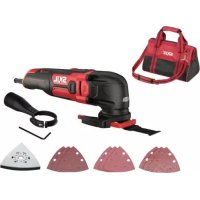

- TECHNICAL DATA ①
- TOOLELEMENTS ②
- SAFETY
- GENERAL POWER TOOL SAFETY WARNINGS
- Save all warnings and instructions for future reference.
- 1) WORK AREA SAFETY
- 2) ELECTRICAL SAFETY
- 3) PERSONAL SAFETY
- 4) POWER TOOL USE AND CARE
- 5) SERVICE
- SAFETY INSTRUCTIONS FOR MULTI-FUNCTION TOOLS
- GENERAL
- WHEN SAWING/CUTTING
- WHEN SANDING
- EXPLANATION OF SYMBOLS ON TOOL
- USE
- APPLICATION ADVICE
- MAINTENANCE / SERVICE
- ENVIRONMENT
- NOISE / VIBRATION
- F
- WAARSCHUWING Lees alle
- VEDLIKEHOLD / SERVICE
- EJIEMHTN IHCTPymeHTA ②
- BE3NEKA
- 3AΓΑβHIBK3IBKN 3TEXHIKNEHNIOBODHEHH3 EJEHTPOIHCTPYMEHTAMN
- 2) ELEKTPNHYA BE3NEKA
- 3) B63NEHA JIODEI
- INPABNIA TEXHIKN B3NEHN JIAR B4ATOΦYHKUHOHAJIbHNX IHCTPYMEHTIB
- 3AΓΑJIbHE
- ПД YAC PO3ПЛIOBAHHI/PI3AHH
- IⅡYACABPA3HBHOIJIΦYBAHH
- IORCHEHHA DO YMOBHINX I03HAQOK HA IHCTPYMEHTI
- BHKOPNCTAHH
- IOPAINIO BHKOPNCTAHIO
- OJRA/O6CnyROBYAHH
- OXOPOHA HABKOLINHbOICPEDN
- WYM/BIBPAJI
- GR
- EpyaIio noAanAnc xPnOnc 1490
- EIZARQH
- TEXNIKA XAPAKTHPISTIKA ①
- APKALPOŠANA / APKOPE
- TECHNINIAI DUOMENYS ①
- PRIETAISO ELEMENTAI ②
- SAUGA
- BENDRIEJI ELEKTRINIJ I RANKIJA SAUGOS ISPEJIMAI
- = 0.1
- pLx
- a5[1b] 0000
- #
Brand : SKIL
Model : 1490 MA
Category : Multitools