1023 MA - Electric drill SKIL - Free user manual and instructions
Find the device manual for free 1023 MA SKIL in PDF.



| Technical Features | Not specified |
|---|---|
| Usage | Not specified |
| Maintenance and Repair | Not specified |
| Safety | Not specified |
| General Information | Not specified |
Frequently Asked Questions - 1023 MA SKIL
User questions about 1023 MA SKIL
0 question about this device. Answer the ones you know or ask your own.
Ask a new question about this device
Download the instructions for your Electric drill in PDF format for free! Find your manual 1023 MA - SKIL and take your electronic device back in hand. On this page are published all the documents necessary for the use of your device. 1023 MA by SKIL.
USER MANUAL 1023 MA SKIL
PROFESSIONAL POWER TOOLS

GB ORIGINAL INSTRUCTIONS 9
F NOTICE ORIGINALE 11
D ORIGINALBETRIEBSANLEITUNG 14
NL ORIGINELE GEBRUKSAANWIJZING 18
S BRUKSANVISNING I ORIGINAL 21
DK ORIGINAL BRUGSANVISNING 23
N ORIGINAL BRUKSANVISNING 26
FIN ALKUPERAISET OHJEET 29
E MANUALORIGINAL 32
P MANUALORIGINAL 35
IISTRUZIONI ORIGINALI 38
EREDETI HASNZALATI UTASITAS 41
CZ PUVODNIM NAVODEM KPOUZIVANI 44
TR ORIJNAL ISLETME TALIMATI 47
PL INISTRUKCJA ORYGINALNA 50
UA OPINHAJIbHA IHCTPYKlIa 3 EKCnIyATAUII 53
GR IPOTOTYIO OADHIGXPHZH56
RO INSTRUCTIUNI DE FOLOSIRE ORIGINALE 60
BG OPINHAIHO PbKOBOCTBO 3A EKCIIOATAU 63
SK PÖVODNY NÁVOD NA POUŽITIE 66
HR ORIGINALNEUPUTEZA RAD 69
SRB ORIGINALNOUPUTSTVOZA RAD 72
SLO IZVIRNA NAVODILA 75
EST ALGUPARANE KASUTUSJUHEND 78
LV ORIGINALA LIETOŠANAS PAMACIBA 80
LT ORIGINALI INSTRUKCIJA 84
MK H3BOPHO YNATCTBO 3A PABOTA 87
AL UDHEZIMET ORIGJINALE 90
AR JooJ 98
FA
www.skil.com


| GB EU Declaration of conformity Impact drill Article number | We declare under our sole responsibility that the stated products comply with all applicable provisions of the directives and regulations listed below and are in conformity with the following standards. Technical file at* | |
| F Déclaration de conformité UE | Nous déclarons sous notre propre responsabilité que les produits décrits sont en conformité avec les directives, règlements normatifs et normes définirés ci-dessus. Dossier technique auprès de:* | |
| Perceuse à percussion Numéro d'article | ||
| D EU-Konformitätserklärung Schlagbohrmaschine Sachnummer | Wir erklären in alleiniger Verantwortung, dass die genannten Produkte allen einschlädigten Bestimmungen der nachfolgenden aufgeführten Richtlinien und Verordnungen entsprechen und mit folgenden Normen übereinstimmen. Technische Unterlagen bei:* | |
| NL EU-conformiteitsverklaring Klopboormachine Productnummer | Wij verklaren op eigengerichted dat de genoemde producten voldoen aan alle desbetreffende bepalingen van de hierma genoemde richtlijnen en verorderingen en overeenstemmen met de volgende normen. Technisch dossier bij* | |
| S EU-konformitetsförklaring Slagborraskin Produktnummer | Vi fókrar an under eget ansvar att de námnda produktura uppyller kraven i alla gällande bestämelse i de nedan angiva direktiven och förordningarnas och att de stämmer överens med följande normer. Teknisk dokumentation* | |
| DK EU-overensstammelseserklaring Slagboremaskine Typenummer | Vi erklær som eneansvallige, at det beskreve Produkt er i overensstammelse med alle gällende bestämelse i folgende direktiver og forordninger og opfylder folgende standarder. Tekniske bilag ved* | |
| N EU-samsvarserkläring Slagbormaskin Produktnummer | Vi erklær under eneansvar at de nevnte Produktene er i overensstammelse med alle relevante bestämelse i direktivene og forordningen e nedenfor og med folgende standarder. Teknisk dokumentasjon hos* | |
| FIN EU-vaatimustemmukaisuusvakuutus Iskuporakone Tuotenumero | Vakutamme täten, etc. mainut tuotteet vastaavat kaikkia seuraavien direktivien ja asetusten asiaankuluulia vaatimuksaia ji ovat seuraavien standardien vaatimusten mukaisia. Tekniset asiakirjat saatakana* | |
| E Declaración de conformidad UE | Declarados bajo这是我们 exclusiva responsabilitad, que los produits nombrados cumplen con todas las dispositions correspondientes de las directivas y los relogimientos Mentionados a continuación y está en conformidad con las sigüentes normas. Documentos tíncicos de:* | |
| Taladradora Número de articulo | ||
| P Declaração de conformidade CE | Declarados sob这是我们 exclua responsabilitad que os produits Mentionados cumprim das as disposções e os regulamentos indicados e estao em conformidade com as seguentes normas. Documentação técnica pertentente à:* | |
| Berbequim de percussão Número do produits | ||
| I Dichiarazione di conformità UE | Dichiariamo sulla nostra piena responsabilità che i prodotti indiciati sono conformi a tutte le dispositions pertinenti delle direttive e dei regolamenti elencati di seguito, nonché alle segunti normative. Documentazione tecnia presso* | |
| Trapano a percussione Codice prodotto | ||
| H EU konformità niyilatkozat Ütvefūró Cikkszám | Egyedūl felelo ségel kijelentjūk, hogy a megnevezett termékek megfeilenek az alábbiakban felsorolásra kerulō irányelvek éns rendeletek valamennyi idevágó elórisainak é megfeilenek a követkežo szabványoknak. Mûszaki dokumentumok megörzési pontja:* | |
| CZ EU prohläseni o shodē | Prohrašujeme na vyhradni zodpovednost, ze uvedeny vyrobek splùne vsechna príslu-naystanoveni nihe uvedenyuch smérnic a naízeni a je v souladu s nasledujicimi normami. Technické podklady u:* | |
| Priklepová vrtáčka Objednaci Čislo | ||
| TR AB Uygunluk beyani Darbeli matkap Ürún kodu | Tek sourmlu olarek, tanilmanan urün un asagidaki yönnetmelik ve direktiflerin geceri būtūhūkūmarine ve asagidaki standartlara uygun oldugunu byan edériz. Teknik belgelerin bulundugu yer:* | |
| PL Deklaracja zgodnosci UE | Oswiadczamy z pelna odpwiedzialnoscią, ze niniejsze produkty odpwiedzaj wyszystkim wymaganium ponizej wyszczególniych dyrektwy i rozporzędź, oraz ze są zgodne z nastepujczymi normami. Dokumentacja techniczna:* | |
| Wiertarka udarowa Numer katalogowy | ||
| RU 3aavblæme o cootbctbncn EC Ydapnaya dpeyb Tobarhni Hoomep | Mbl 3aavblæme pod nauy einynoi nuhyo OTBETCTBEHOCSTb,чTO Na3BaHnbleп рpondутltb cootbctbnuOT BcEM DeiyETBUTUQUIM INPEINCAHNH MInKeYKazAHbIXДирЕNTB IN PaCnOPRAJENH, a TAKON HInKeYKazAHbIX HOpM. TechnuehackdokuymertaцьххраhanitcR y:* | |
| UA 3aav npro Bvdnojdnicb cC Ydapnii dprnilb Tobarhni Hoomep | Mn3aavblæme noi da nauy Odoocoboy Bvdnoi daJIbNcStb, zuo Na3BaHnbi BINOPIAIOAOT YcIM QYINHIM POnLOXENHAM NIIeO3HaChNHx DipeKTHB I pO3IPOJdHe, a TAKON NInKeYKazAHcHbIX HOpM. Technuehau doKuymertaцьx 3ebipiraTbcsy y:* | |
| GR | Δηλωοπι ποτότητας EE | Δηλωνουμε με αποκλεισική μας ευθύνη, στι τα αυαφερόμενα προίνταν αντιοιαχούν σε δλες τις σχετικές διατάεις των πία κατωναναφερόμενων οδηγών κα κανονιαχούν κα ταικόνοια με τα ακόλουθα πρότημα. |
| Kρονοτικό δράπανο | Αρθμος ευεπηρίου | Τέχινα ἀγμαρα σθή.* |
| RO | Declaraţie de conformitate UE | Declarăm pe proprie raspundere că produselementionate corespund tuturor disposoțiilor relevante ale directivel si reglementărilor enumerate in cele ce urmeazeăși sunt in conformitate cu urmâtoarele standarde. |
| Maşină de găurit cu percutie | Număr de identificare | Documentaţie tehnică Ia.* |
| BG | EC dehnapazua 3a cboTbctCTBne | С пьліна оттоворностные дкеларпаме, чу пооченITE рождун'tи отвогацгет на BCИЧИВАЛДИНИЗКВИЗНУ на Діректубіпіе и разретedlyпіо-дані сьотberтбва на сіл'dнite CTANДAPТи. |
| Udapna 6obmaшиna | Каталожен Homep | Тechинісяда дokументаць пі.* |
| SK | EU vyhlasenie o zhode | Vyhlasujeme na vyhradnú zodpovednost, ze uvedeny výrobok spína všetky prislušné ustanovenia nižsèu uvedenych smernic a nariadeni a je v súlade s naseludjucimi normami. |
| Priklepová vřtackа | Vecné cislo | Technické podklady má spolocnosti:* |
| HR | EU izjava o sukladnosti | Pod punom odgovornóću izjavljemo da navedeni proizvodi odgovaraju svim relevantnim odredbama direktiva i propisima navedenina u nestavku i da su sukladni sa sljedecim norma. |
| Udarna bušilica | Kataloški broj | Тechинісяда dokumentacja se moze dobiti kod:* |
| SRB | EU-izjava o usaglasenosti | Na sopstvenu odgovornost izjavljemo, da navedeni proizvodi odgovaraju svim dotčićim odredbama naknadno navedenih smernica u ureduba i da su skladu sa sledečim standardima. |
| Vibraciona bušilica | Broj predmeta | Тechинісяда dokumentacja kod:* |
| SLO | Izjava o skladnosti ES | Izjavljamo pod izklučno odgovornostj, da je omenjen izdelek v skladu z vsemi relevantimi dolo'sili direktiv in uredb ter ustreza naslednjim standardom. |
| Vibracijski vrtalnik Številka artikla | Vibracijski | Тechинісяда dokumentacja pri:* |
| EST | EL-vastavusdeklaratsion | Kinnitame ainuvastutajatena, et nimetatud tooted vastavad jargnevalt loettud direktiviide ja măruste kõikiidele asjaomastele nouetele ja onkoşólas järgmiste normidega. |
| Löökpuurtrell | Tootenumber | Тechиніsid'dokumendid saadaval:* |
| LV | Deklaracija par atbilistibu EK standartiem | Mész ar pilnu atbildibu pazinojam, ka šeit aplukotie izstradājumi atbilst visiem tālak minētajás direktivas un ríkojumos iletvertajām saistosajémnostadnem, kã ari sekojosiem standartiem. |
| Tricelenurbjmasina | Izstradājuma numurs | Тechинісяда dokumentacja no:* |
| LT | ES atitikties deklaracija | Atsakingai paireiskiame, kad išvardtyi gaminiai atitinka visus privalomusŽemiaiu nurodytu direktvyu ir reclamation reikalavimus ir siuos standartus. |
| Smūginis gržtivas | Gaminio numeris | Techniède dokumentacja saugoma:* |
| MK | EU-Nзава за coobpaэност | Соцелесна одговорност有很大ав各方面,.Decka опишиание рожимбдом сьо cóлал�сьгско сичп repelled на сіл'dнite ретулathи и рожиси в сьо cóлал�сьгско сичдл'te chop'm. |
| Bùropaц�а дучална | Бpoj на aptrinkl | Тechинісяда dokumentacja kaj:* |
| AL | EU Deklarata e konformitetit | Ne deklarojmě me përgegjësiné toné tê vetme se produktet e paraqittura janë né pëpurnhjme tê giitha disposizat e zbatueshme tê direktivave dhe regulloreve tê listuara mè posthé dhe janë né pëpurnhjme me standardet si mè poshtë. |
| Trapano me goditje Numri i nenit | Dosja teknike nè:* | |
| 1023 F0151023.. | 2006/42/EC EN 60745-1:2009 + A11:2010 2014/30/EU EN 60745-2-1:2010 2011/65/EU EN 55014-1:2006 + A1:2009 + A2:2011 EN 55014-2:2015 EN 61000-3-2:2014 EN 61000-3-3:2013 EN 50581:2012 | |
| * SkIL * Skil BV Konijnenberg 62 4825 BD Breda The Netherlands | ||
| Olat Dijkgraaf Approval Manager | ||
| Skil BV, Konijnenberg 62, 4825 BD Breda, NL 01.04.2017 | ||

(14)
GB
Impact drill 1023
INTRODUCTION
- This tool is intended for impact drilling in brick, concrete and stone as well as for drilling in wood, metal, ceramic and plastic
- Read and save this instruction manual ③
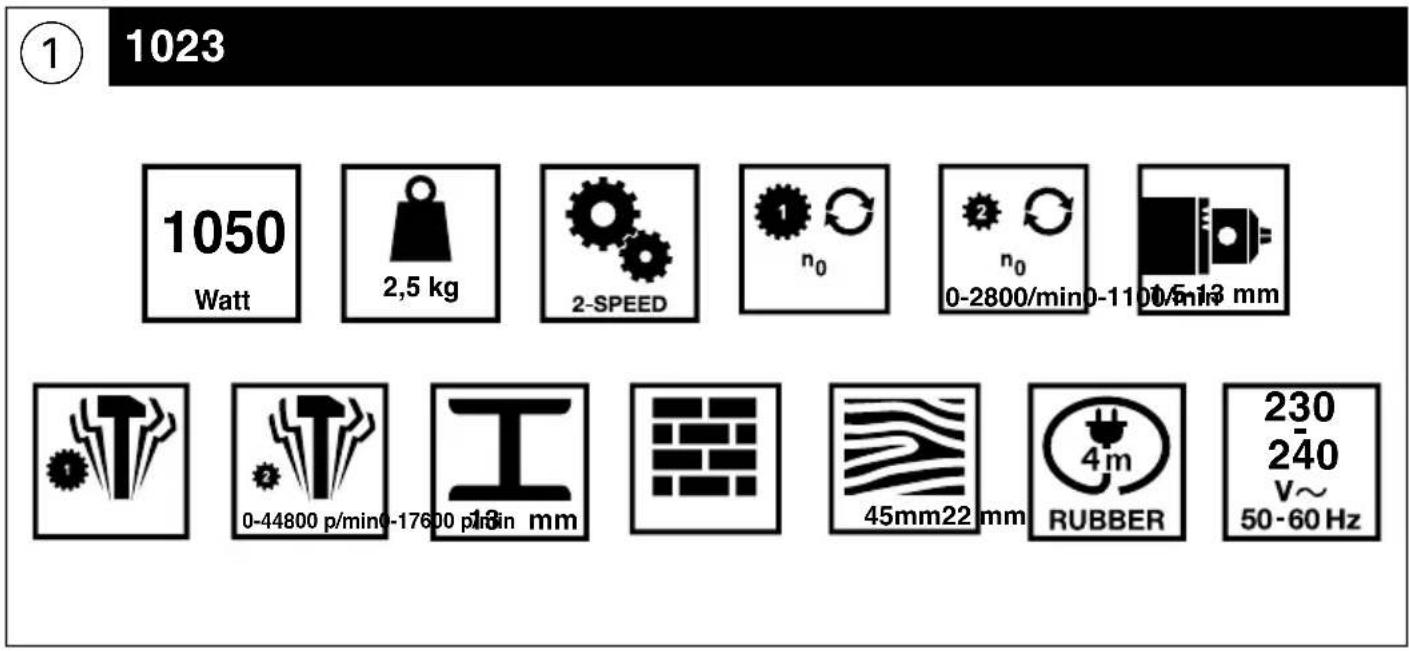
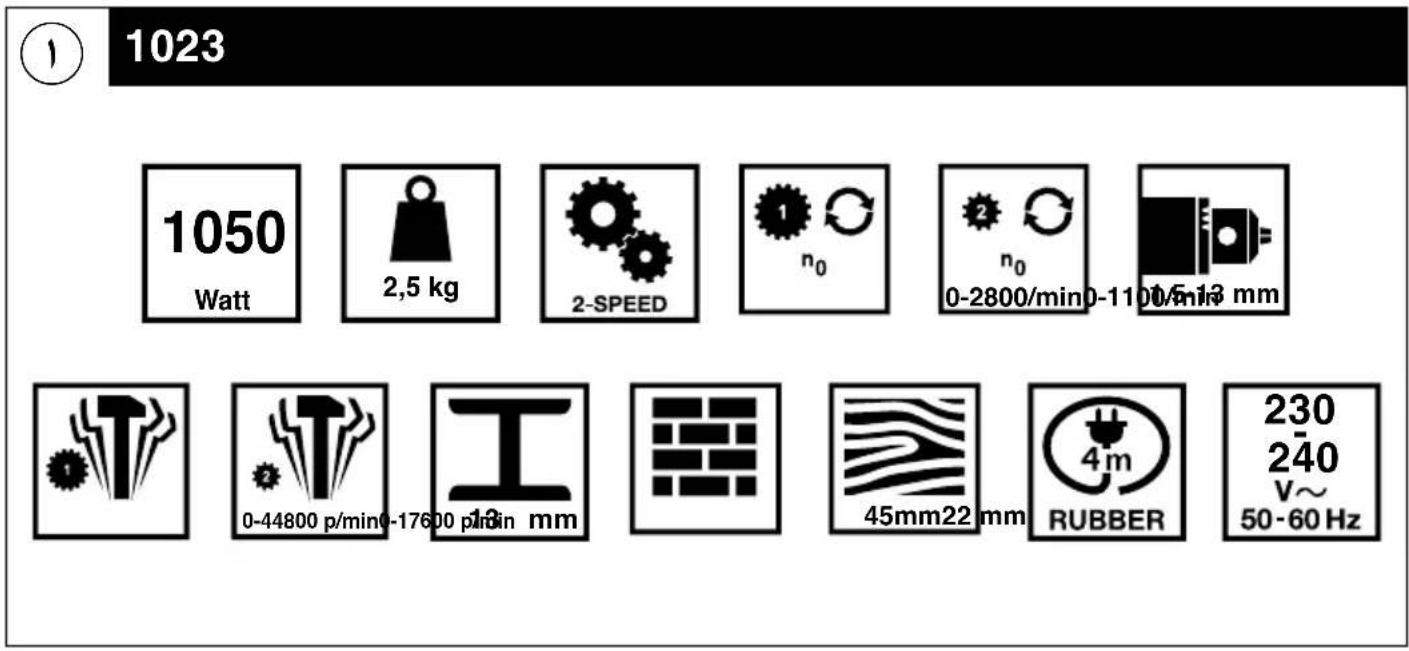
TECHNICAL DATA ①
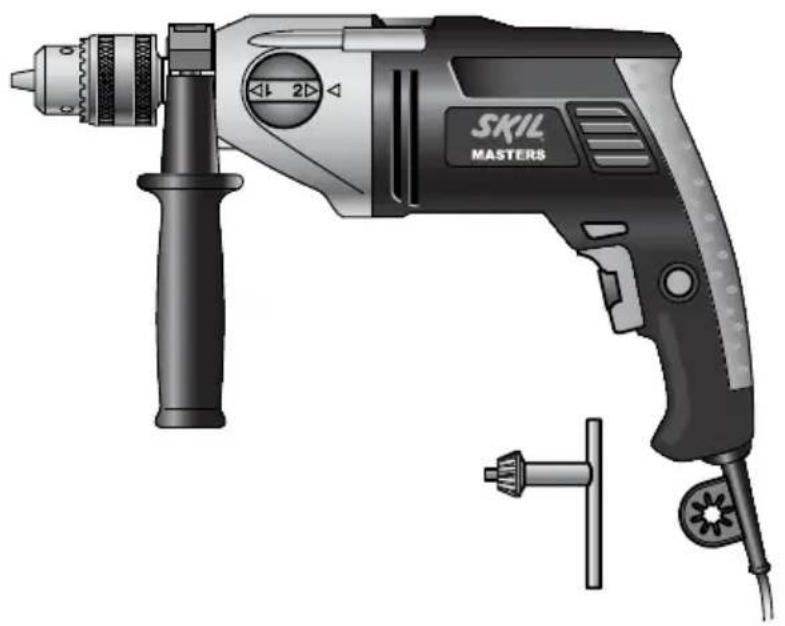
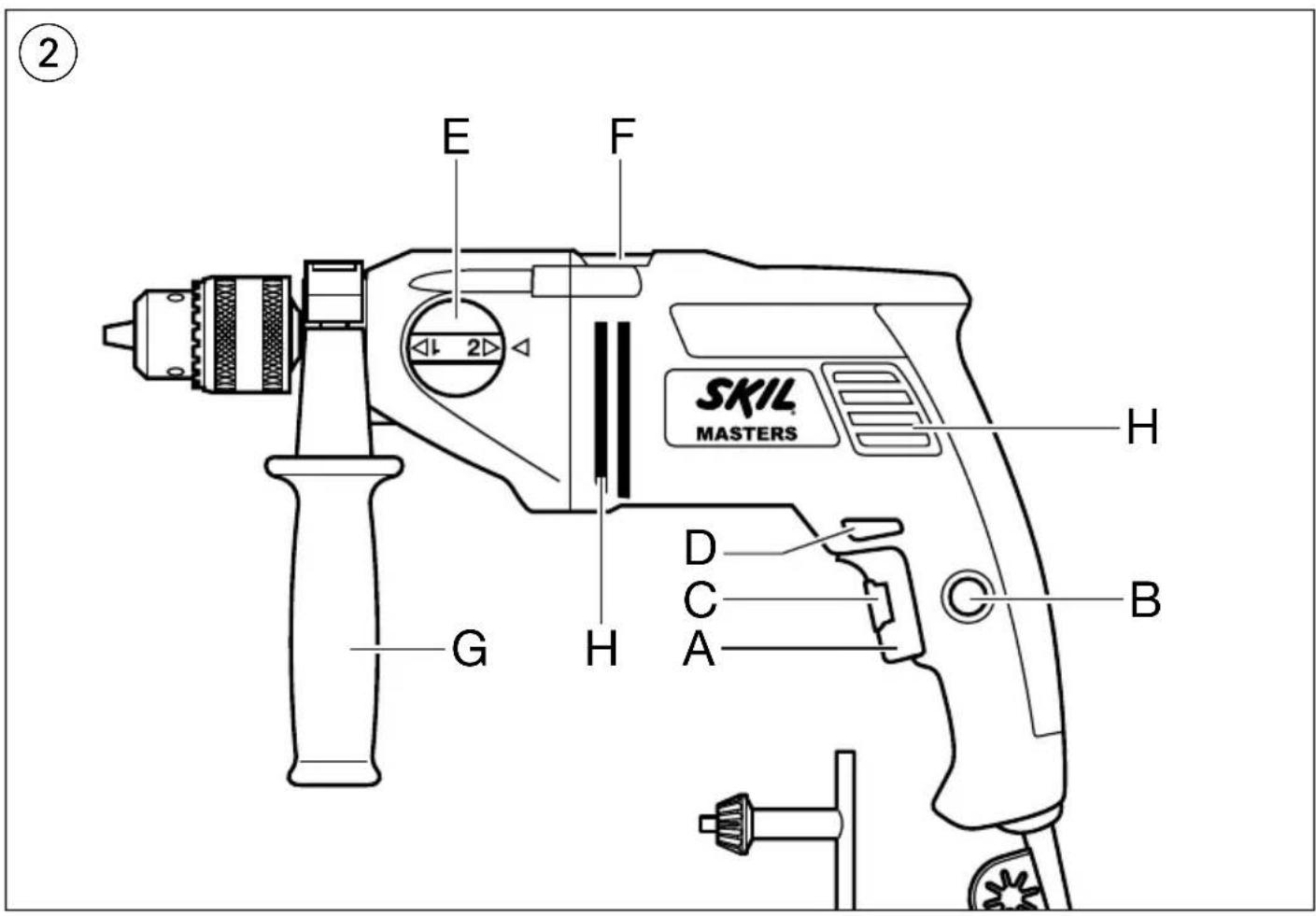
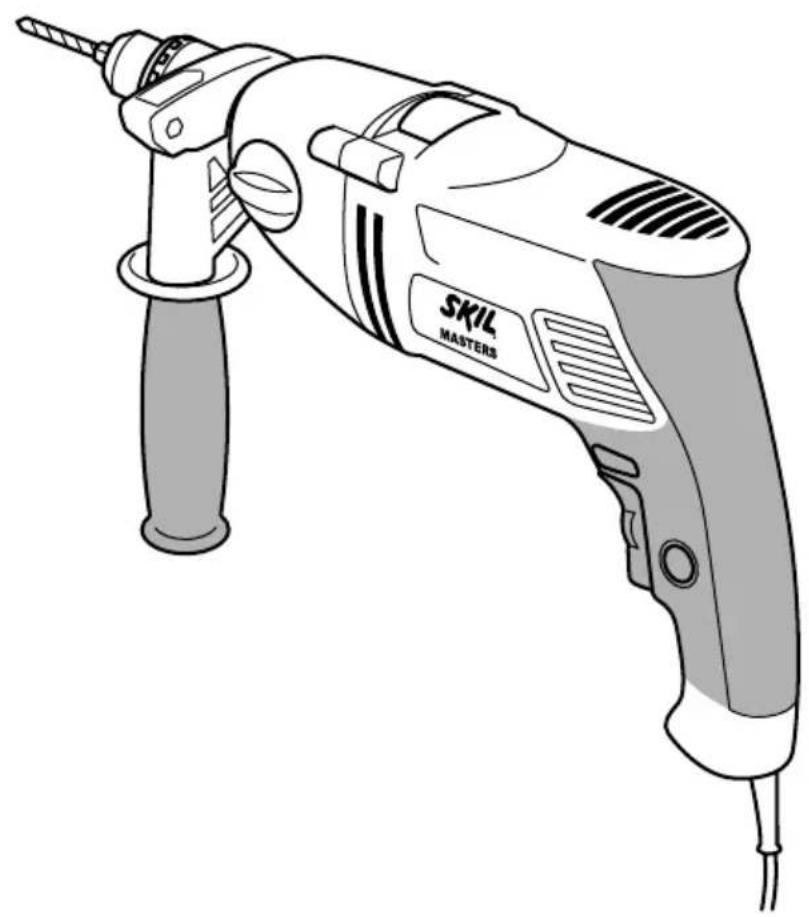
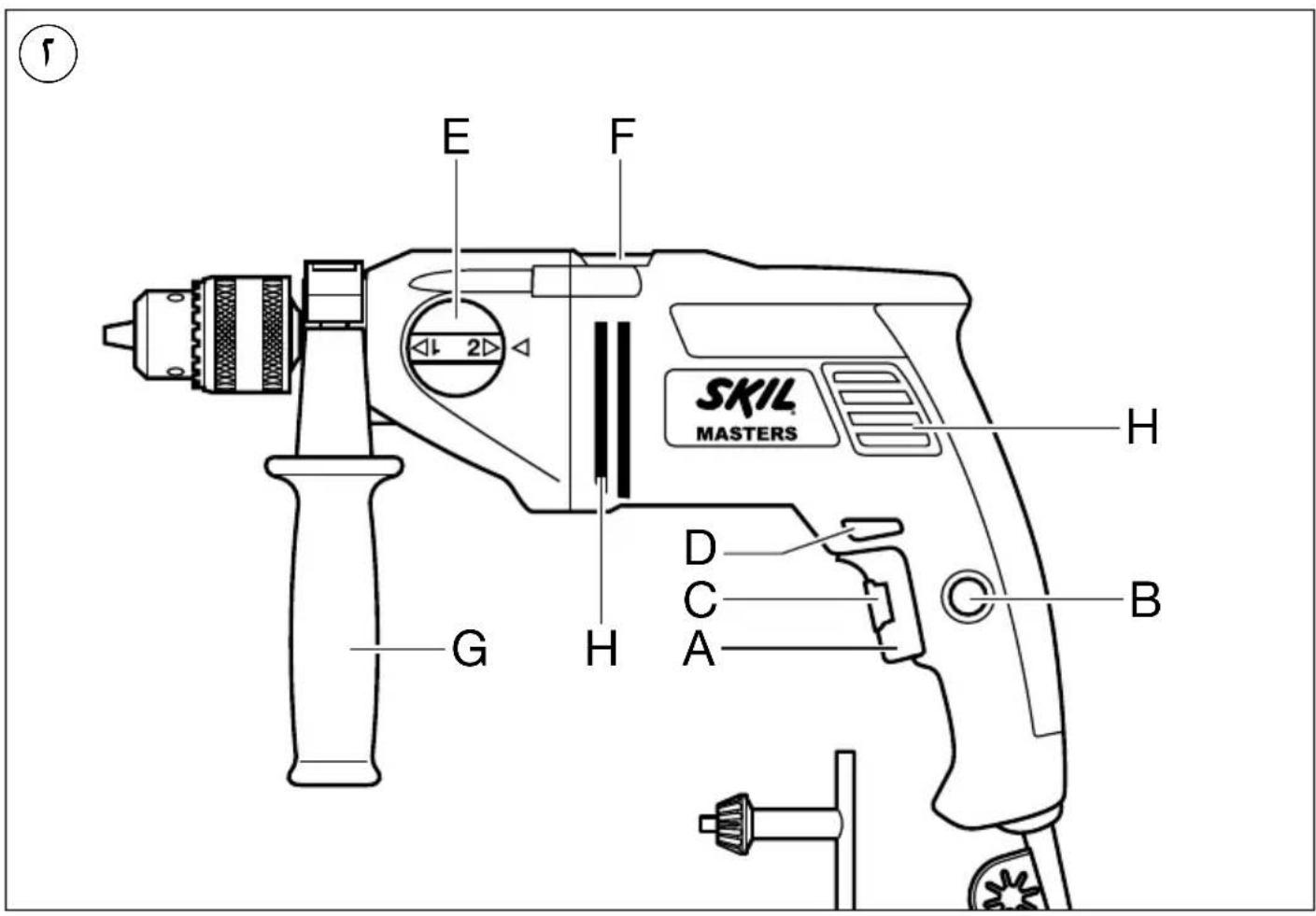
TOOLELEMENTS ②
A Switch for on/off and speed control
B Button for switch locking
C Wheel for maximum speed control
D Switch for changing direction of rotation
E Gear selector
F Switch for selecting drilling function
G Auxiliary handle
H Ventilation slots
SAFETY
GENERAL POWER TOOL SAFETY WARNINGS
WARNING Read all safety warnings, instructions, illustrations and specifications provided with this power tool. Failure to follow all instructions listed below may result in electric shock, fire and/or serious injury.
Save all warnings and instructions for future reference.
The term "power tool" in the warnings refers to your mains-operated (corded) power tool or battery-operated (cordless) power tool.
1) WORK AREA SAFETY
a) Keep work area clean and well lit. Cluttered or dark areas invite accidents.
b) Do not operate power tools in explosive atmospheres, such as in the presence of flammable liquids, gases or dust. Power tools create sparks which may ignite the dust or fumes.
c) Keep children and bystanders away while operating a power tool. Distractions can cause you to lose control.
2) ELECTRICAL SAFETY
a) Power tool plugs must match the outlet. Never modify the plug in any way. Do not use any adapter plugs with earthed (grounded) power tools. Unmodified plugs and matching outlets will reduce risk of electric shock.
b) Avoid body contact with earthed or grounded surfaces such as pipes, radiators, ranges and refrigerators. There is an increased risk of electric shock if your body is earthed or grounded.
c) Do not expose power tools to rain or wet conditions. Water entering a power tool will increase the risk of electric shock.
d) Do not abuse the cord. Never use the cord for carrying, pulling or unplugging the power tool. Keep cord away from heat, oil, sharp edges or moving parts. Damaged or entangled cords increase the risk of electric shock.
e) When operating a power tool outdoors, use an extension cord suitable for outdoor use. Use of a cord suitable for outdoor use reduces the risk of electric shock.
f) If operating a power tool in a damp location is unavoidable, use a residual current device (RCD) protected supply. Use of an RCD reduces the risk of electric shock.
3) PERSONAL SAFETY
a) Stay alert, watch what you are doing and use common sense when operating a power tool. Do not use a power tool while you are tired or under the influence of drugs, alcohol or medication. A moment of inattention while operating power tools may result in serious personal injury.
b) Use personal protective equipment. Always wear eye protection. Protective equipment such as dust mask, non-skid safety shoes, hard hat, or hearing protection used for appropriate conditions will reduce personal injuries.
c) Prevent unintentional starting. Ensure the switch is in the off-position before connecting to power source and/or battery pack, picking up or carrying the tool. Carrying power tools with your finger on the switch or energising power tools that have the switch on invites accidents.
d) Remove any adjusting key or wrench before turning the power tool on. A wrench or a key left attached to a rotating part of the power tool may result in personal injury.
e) Do not overreach. Keep proper footing and balance at all times. This enables better control of the power tool in unexpected situations.
f) Dress properly. Do not wear loose clothing or jewellery. Keep your hair and clothing away from moving parts. Loose clothes, jewellery or long hair can be caught in moving parts.
g) If devices are provided for the connection of dust extraction and collection facilities, ensure these are connected and properly used. Use of dust collection can reduce dust-related hazards.
h) Do not let familiarity gained from frequent use of tools allow you to become complacent and ignore tool safety principles. A careless action can cause severe injury within a fraction of a second.
4) POWER TOOL USE AND CARE
a) Do not force the power tool. Use the correct power tool for your application. The correct power tool will do the job better and safer at the rate for which it was designed.
b) Do not use the power tool if the switch does not turn it on and off. Any power tool that cannot be controlled with the switch is dangerous and must be repaired.
c) Disconnect the plug from the power source and/or remove the battery pack, if detachable, from the power tool before making any adjustments, changing accessories, or storing power tools. Such preventive safety measures reduce the risk of starting the power tool accidentally.
d) Store idle power tools out of the reach of children and do not allow persons unfamiliar with the power tool or these instructions to operate the power tool. Power tools are dangerous in the hands of untrained users.
e) Maintain power tools and accessories. Check for misalignment or binding of moving parts, breakage of parts and any other condition that may affect the power tool's operation. If damaged, have the power tool repaired before use. Many accidents are caused by poorly maintained power tools.
f) Keep cutting tools sharp and clean. Properly maintained cutting tools with sharp cutting edges are less likely to bind and are easier to control.
g) Use the power tool, accessories and tool bits etc., in accordance with these instructions, taking into account the working conditions and the work to be performed. Use of the power tool for operations different from those intended could result in a hazardous situation.
h) Keep handles and grasping surfaces dry, clean and free from oil and grease. Slippery handles and grasping surfaces do not allow for safe handling and control of the tool in unexpected situations.
5) SERVICE
a) Have your power tool serviced by a qualified repair person using only identical replacement parts. This will ensure that the safety of the power tool is maintained.
SAFETY INSTRUCTIONS FOR IMPACT DRILLS
GENERAL
- This tool should not be used by people under the age of 16 years
- Always disconnect plug from power source before making any adjustment or changing any accessory
- Wear ear protectors (exposure to noise can cause hearing loss)
- Use auxiliary handle(s), if supplied with the tool (loss of control can cause personal injury)
- Use completely unrolled and safe extension cords with a capacity of 16 Amps (U.K. 13 Amps)
- Do not work materials containing asbestos (asbestos is considered carcinogenic)
- Dust from material such as paint containing lead, some wood species, minerals and metal may be harmful (contact with or inhalation of the dust may cause allergic reactions and/or respiratory diseases to the operator or bystanders); wear a dust mask and work with a dust extraction device when connectable
- Certain kinds of dust are classified as carcinogenic (such as oak and beech dust) especially in conjunction with additives for wood conditioning; wear a dust mask and work with a dust extraction device when connectable
- Follow the dust-related national requirements for the materials you want to work with
BEFORE USE
- Always check that the supply voltage is the same as the voltage indicated on the nameplate of the tool (tools with a rating of 230V or 240V can also be connected to a 220V supply)
-
Avoid damage that can be caused by screws, nails and other elements in your workpiece; remove them before you start working
-
Use suitable detectors to find hidden utility lines or call the local utility company for assistance (contact with electric lines can lead to fire or electrical shock; damaging a gas line can result in an explosion; penetrating a water pipe will cause property damage or an electrical shock)
- Secure the workpiece (a workpiece clamped with clamping devices or in a vice is held more securely than by hand)
- Never use the tool when cord is damaged; have it replaced by a qualified person
ACCESSIONS
- SKIL can assure flawless functioning of the tool only when original accessories are used
- Use only accessories with an allowable speed matching at least the highest no-load speed of the tool
DURING USE
- Always keep the cord away from moving parts of the tool
- If the drill bit becomes unexpectedly jammed (causing a sudden, dangerous reaction), immediately switch off the tool
- Be aware of the forces that occur as a result of jamming (especially when drilling metals); always use auxiliary handle G ② and take a secure stance
- Hold the power tool only by the insulated gripping surfaces when performing an operation where the accessory may contact hidden wiring or its own power cord (contact with a "live" wire will also make exposed metal parts of the power tool "live" and shock the operator)
- In case of electrical or mechanical malfunction, immediately switch off the tool and disconnect the plug
- If the cord is damaged or cut through while working, do not touch the cord, but immediately disconnect the plug
AFTER USE
- When you put away the tool, switch off the motor and ensure that all moving parts have come to a complete standstill
EXPLANATION OF SYMBOLS ON TOOL
3 Read the instruction manual before use
Double insulation (no earth wire required)
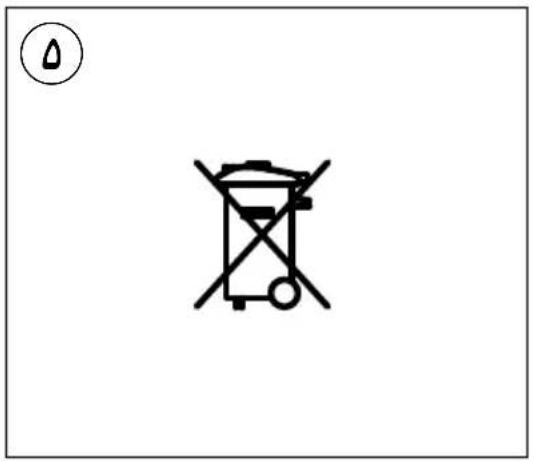
⑤ Do not dispose of the tool together with household waste material
WHEN CONNECTING NEW 3-PIN PLUG (U.K. ONLY):
- Do not connect the blue (= neutral) or brown (= live) wire in the cord of this tool to the earth terminal of the plug
- If for any reason the old plug is cut off the cord of this tool, it must be disposed of safely and not left unattended
USE
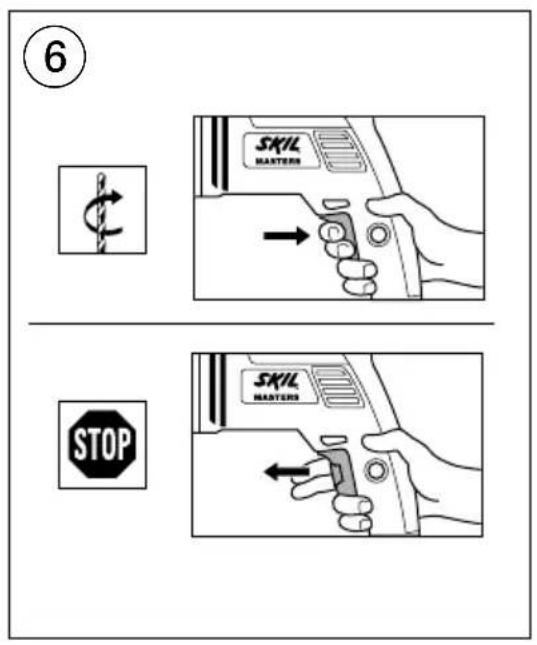
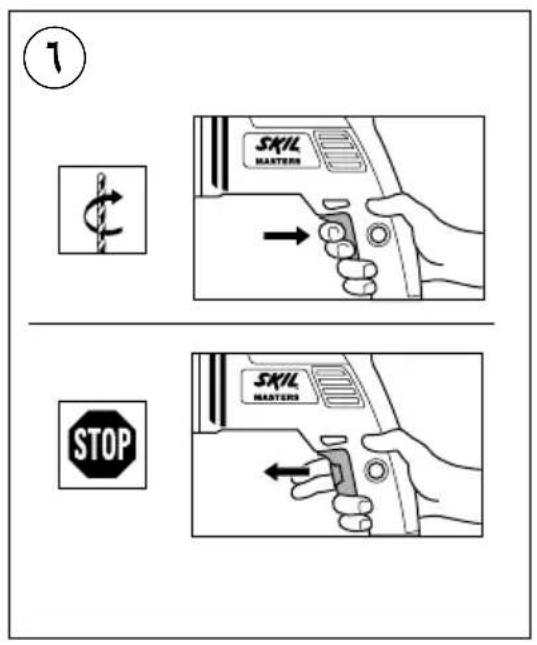
On/off 6
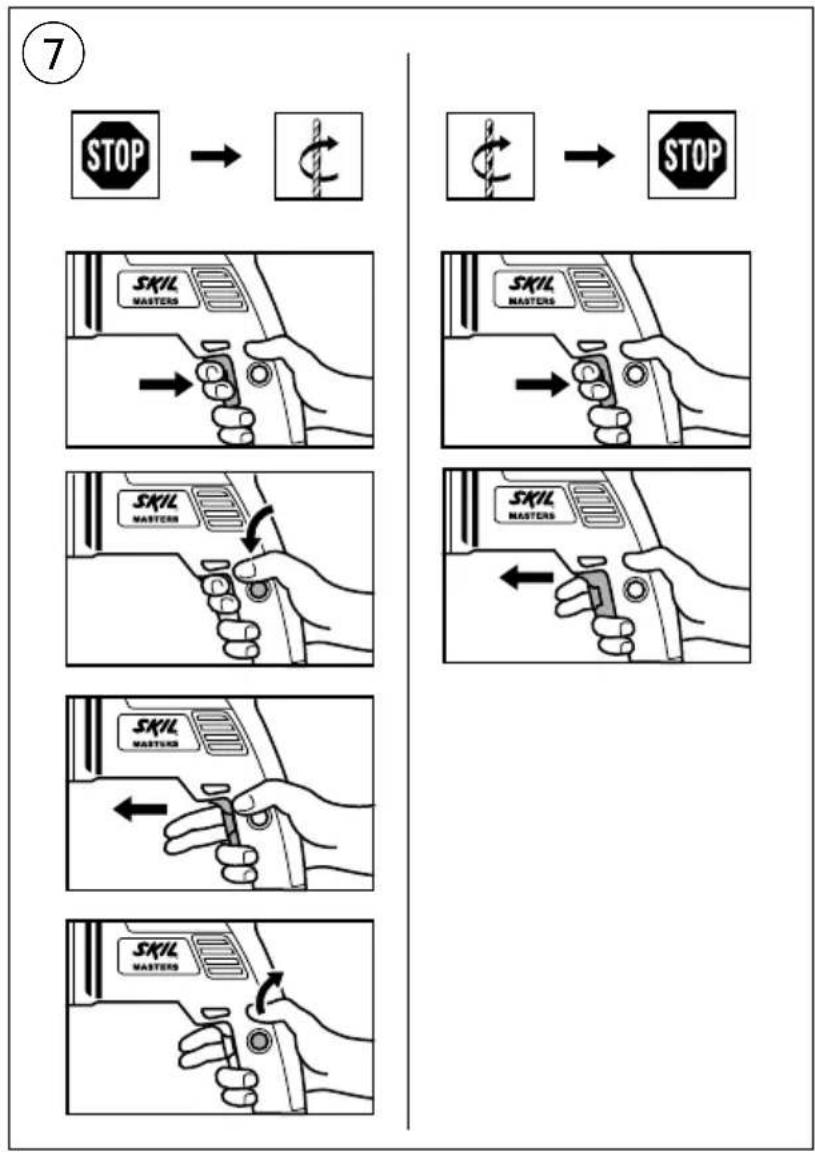
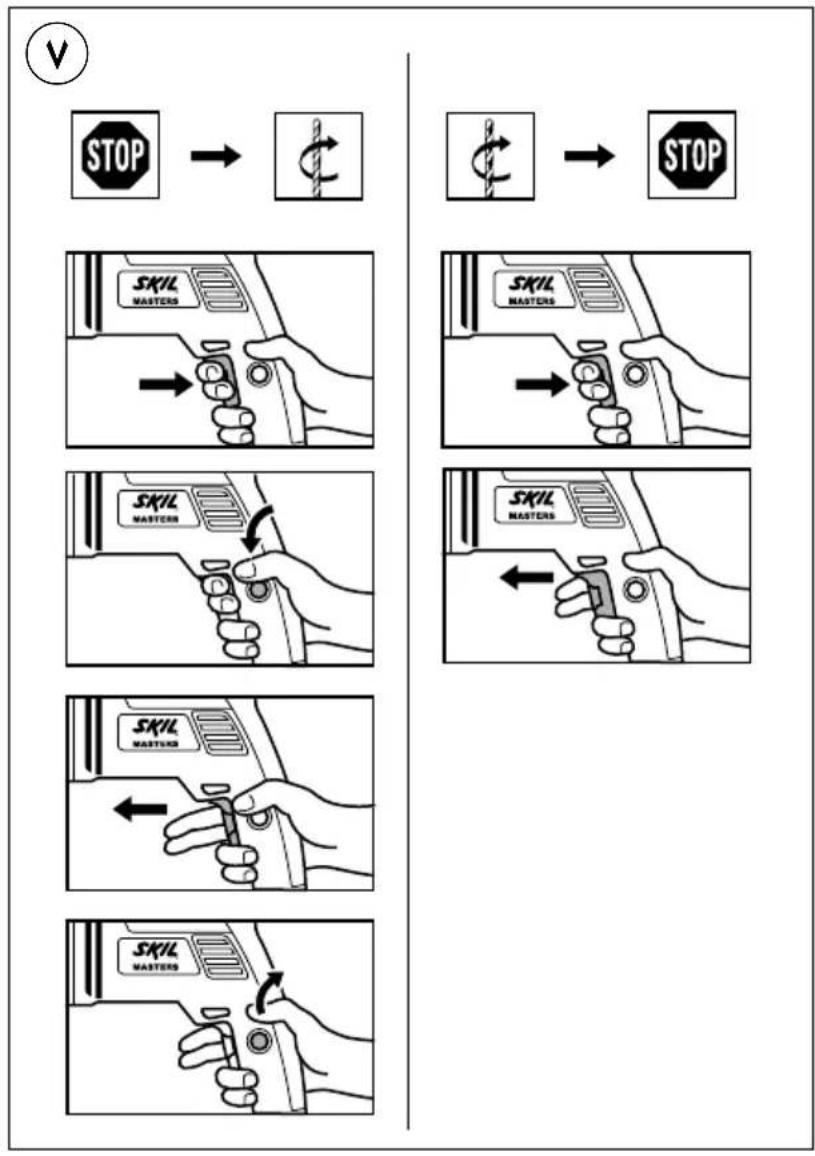
- Switch locking for continuous use ⑦
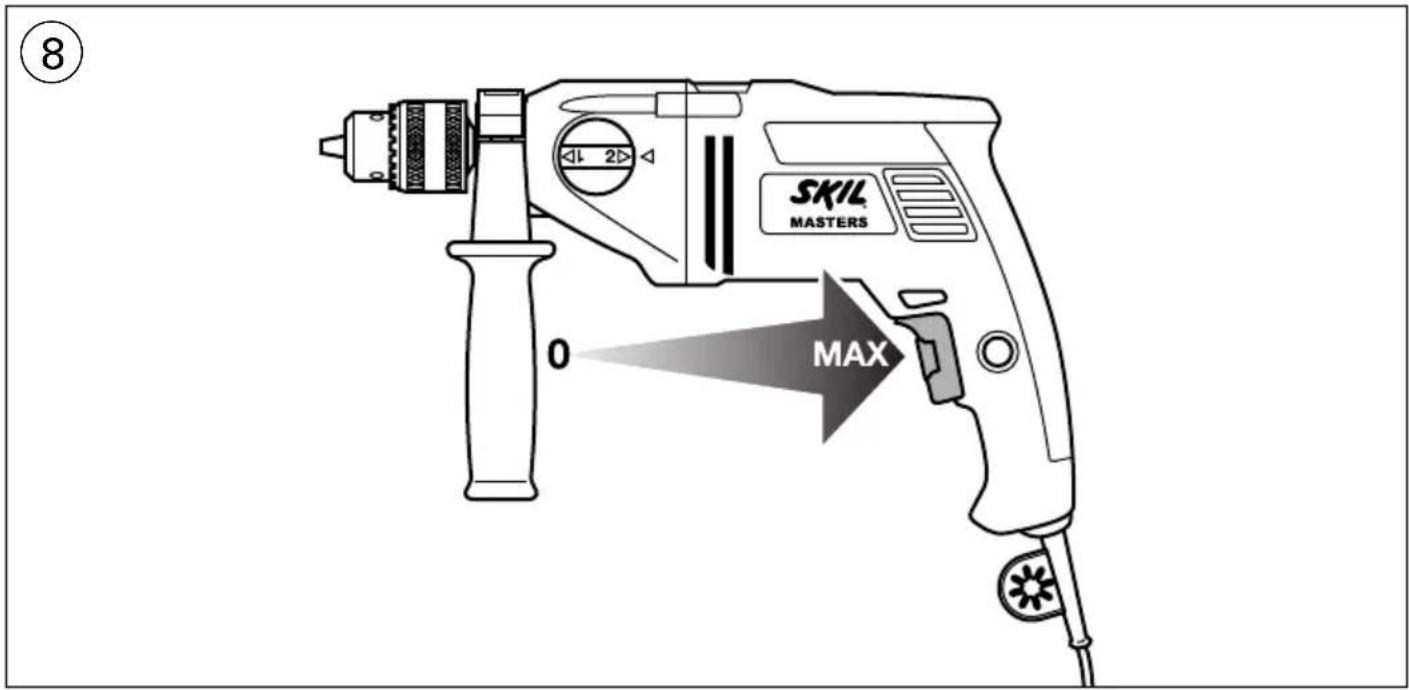
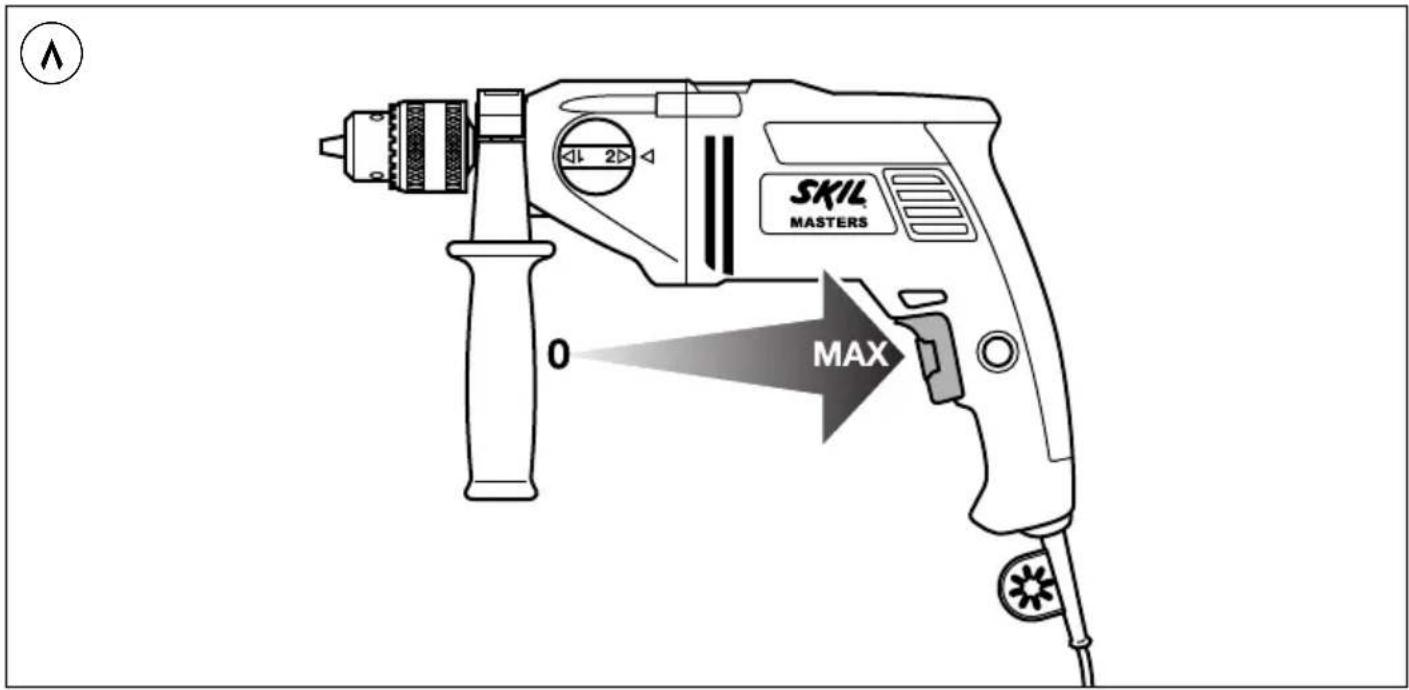
- Speed control for smooth starting ⑧
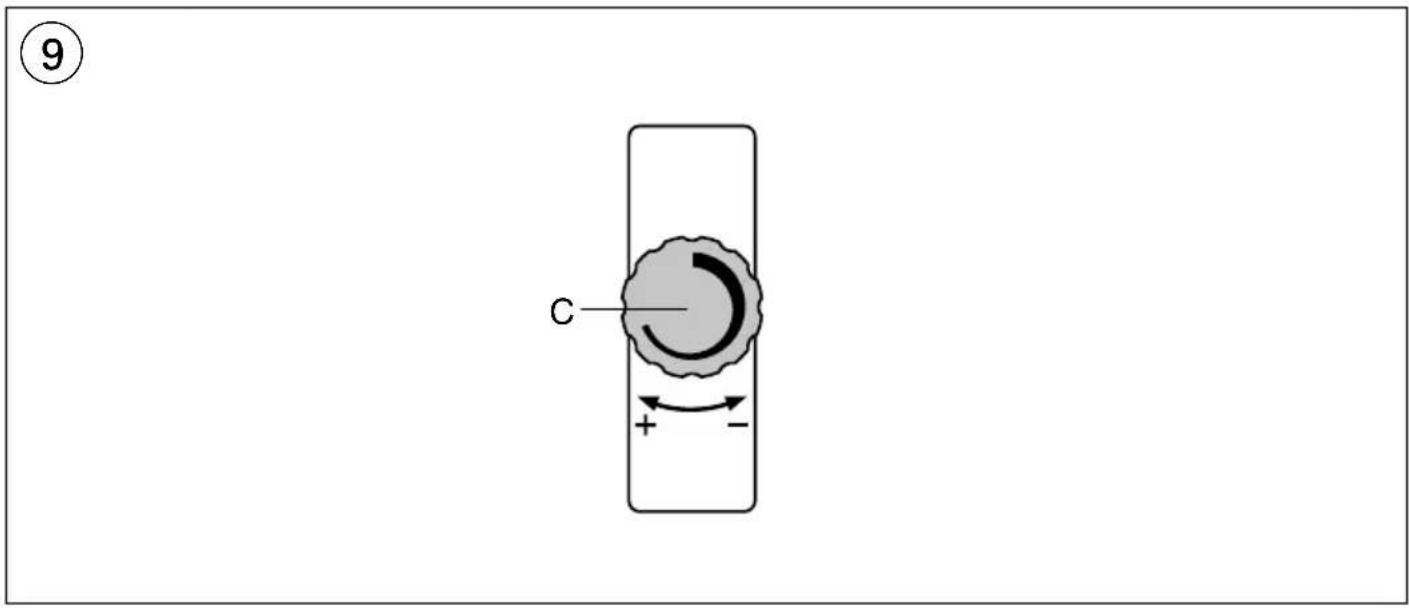
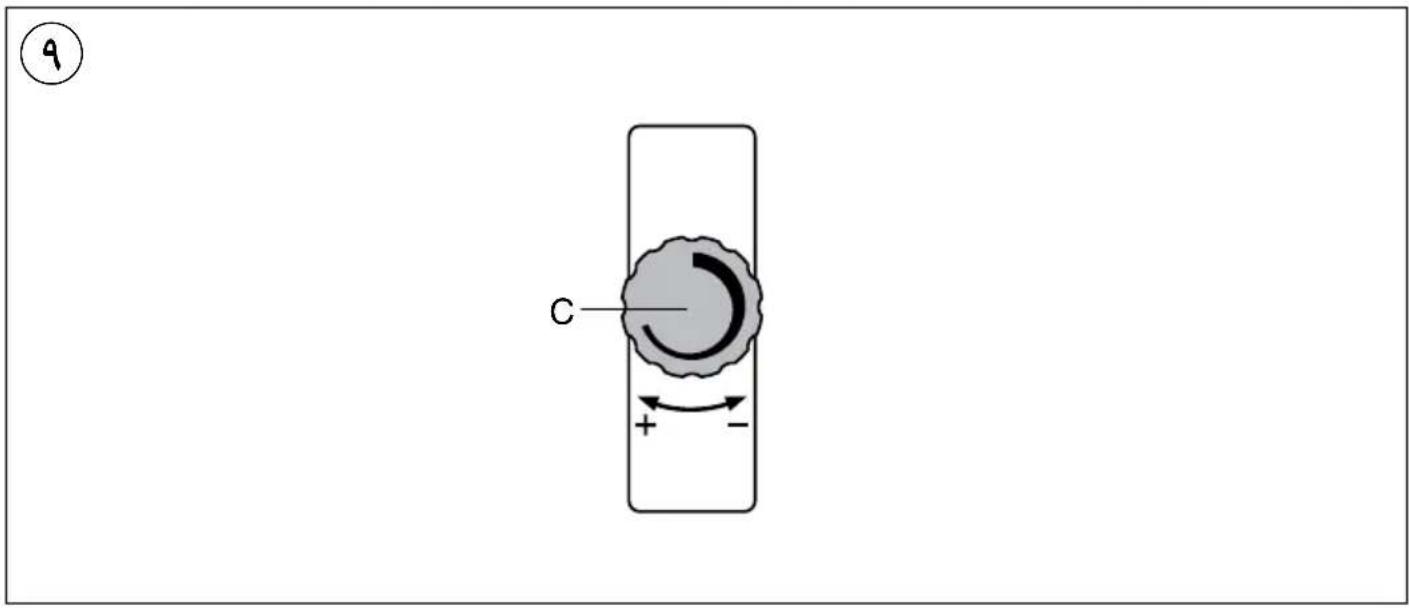
Maximum speed control ⑨
With wheel C the maximum speed can be adjusted from low to high
- switch on the tool
- lock the switch
-
turn wheel C to select maximum speed
-
Mechanical gear selection
-
set selector E ② to desired speed
! actuate the gear selector while tool is running slowly
1 = LOW SPEED -
high torque
-
for drilling large diameters
- for tapping thread
2 = HIGH SPEED - lower torque
-
for drilling small diameters
-
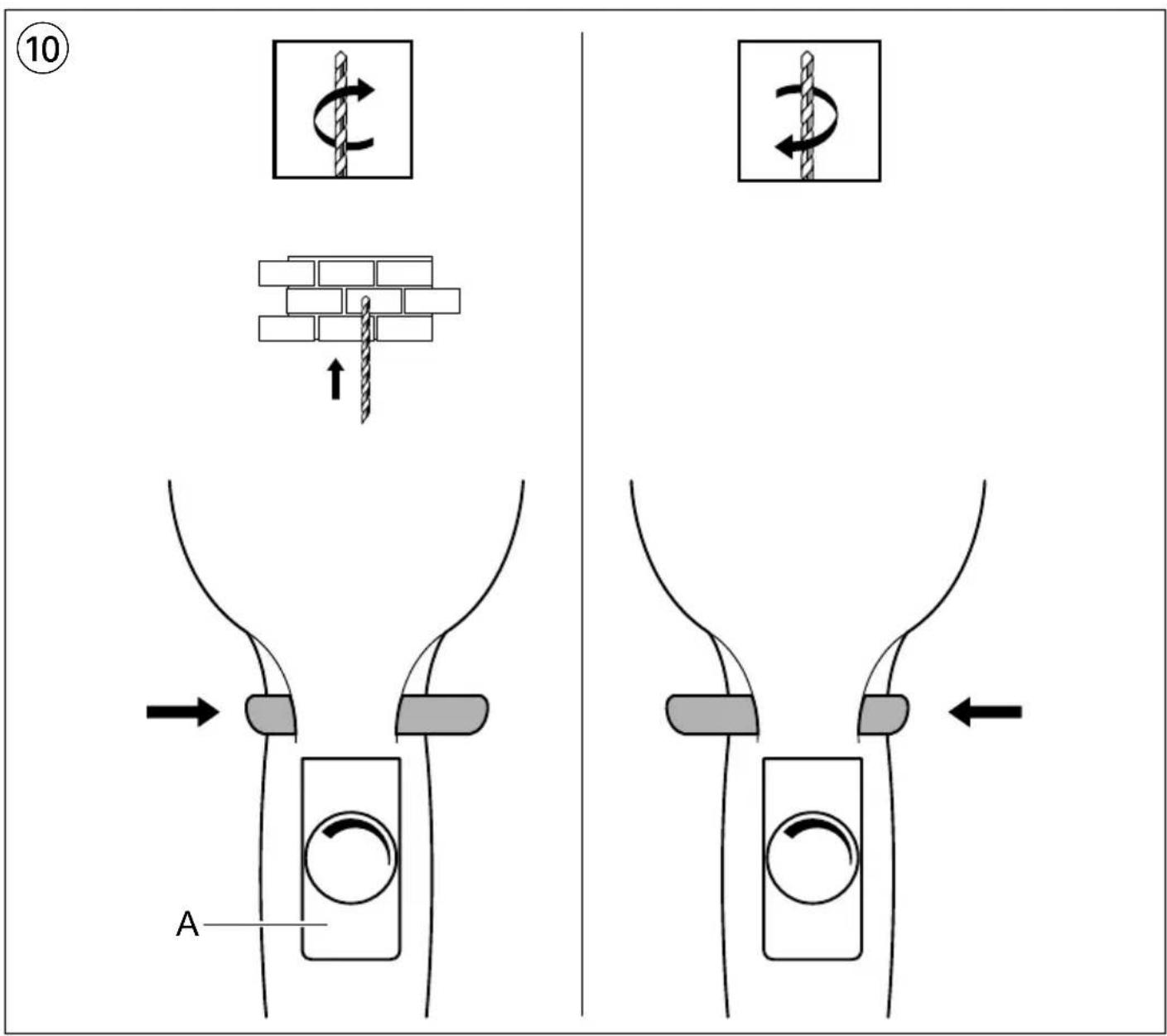
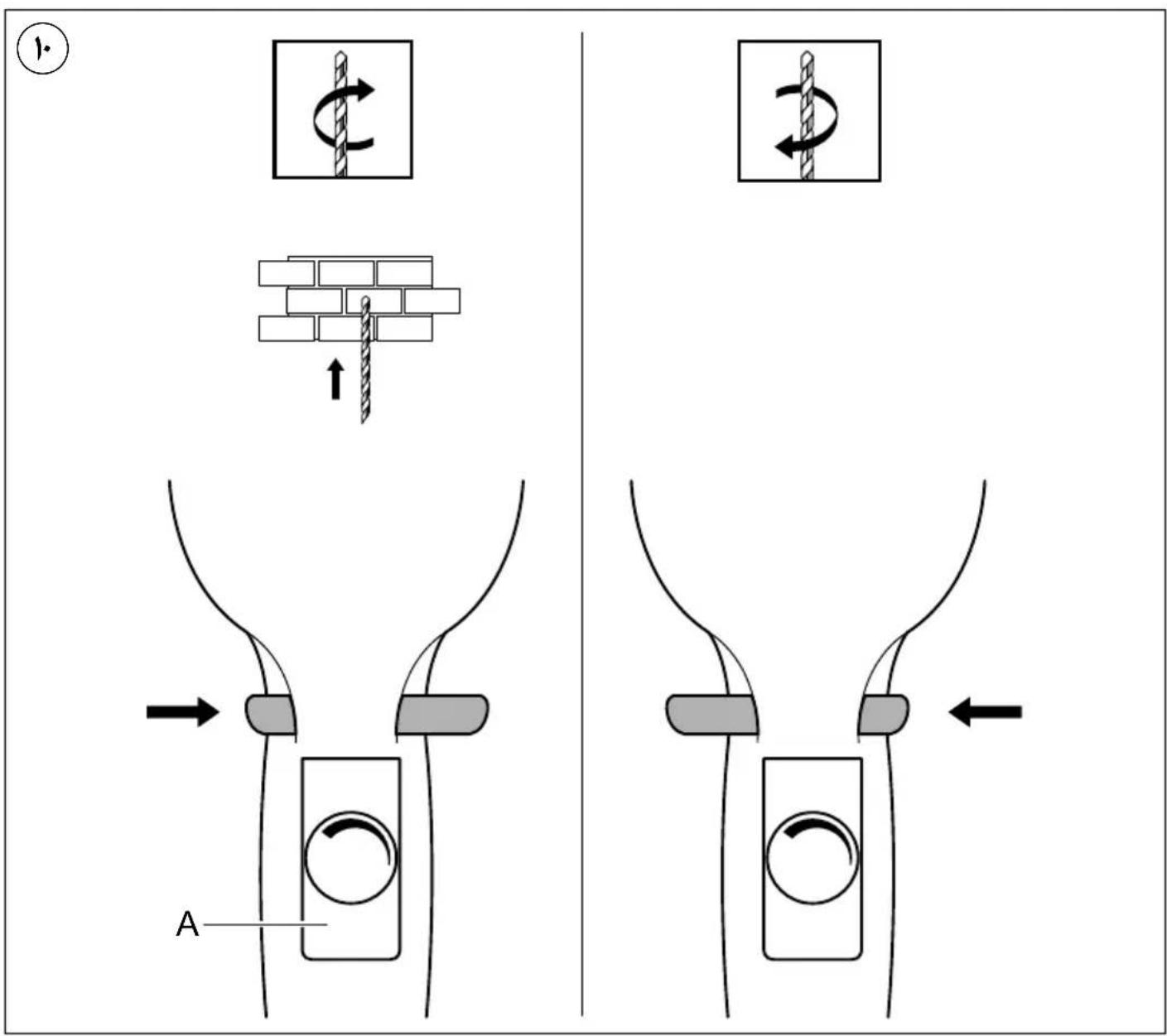
Changing direction of rotation 10
-
when not properly set in left/right position, switch A ② cannot be activated
! change direction of rotation only when tool is at a complete standstill
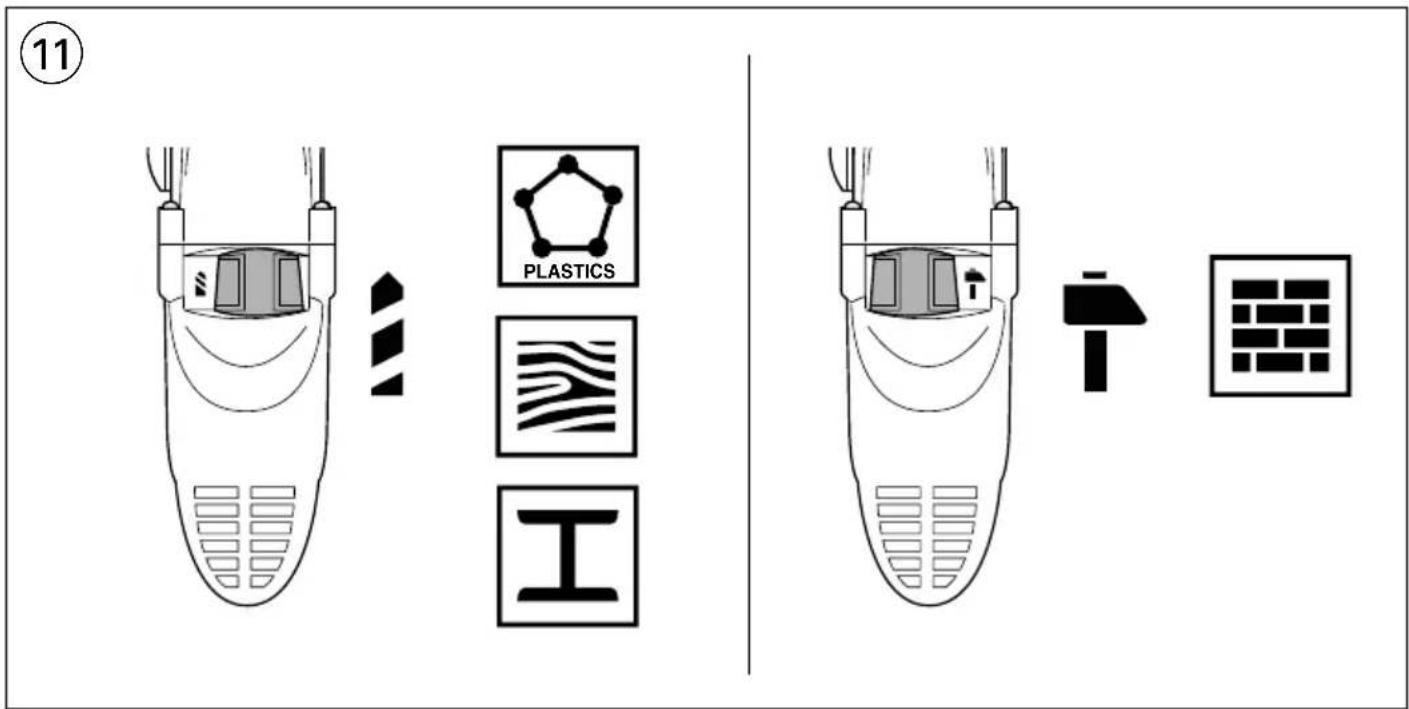
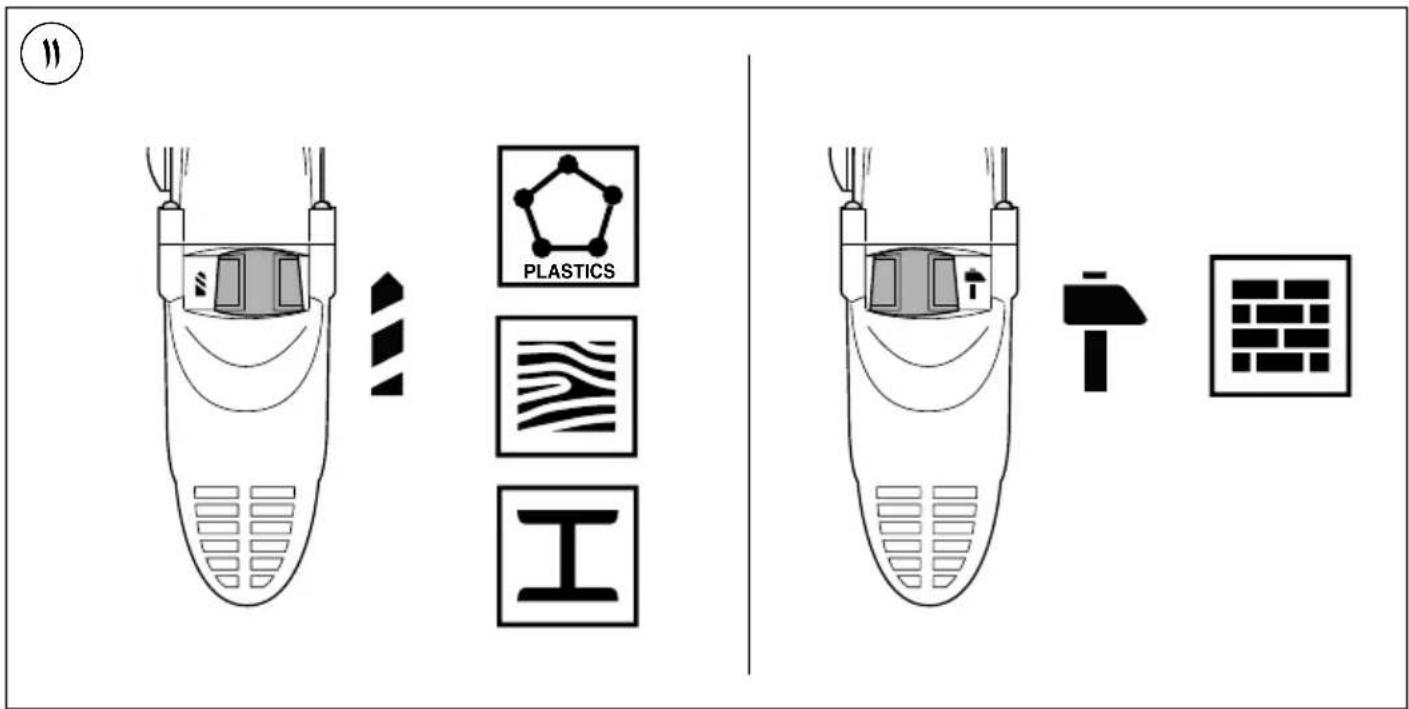
Normal drilling versus impact drilling 1
! select drilling function only when tool is switched off and plug is disconnected
-
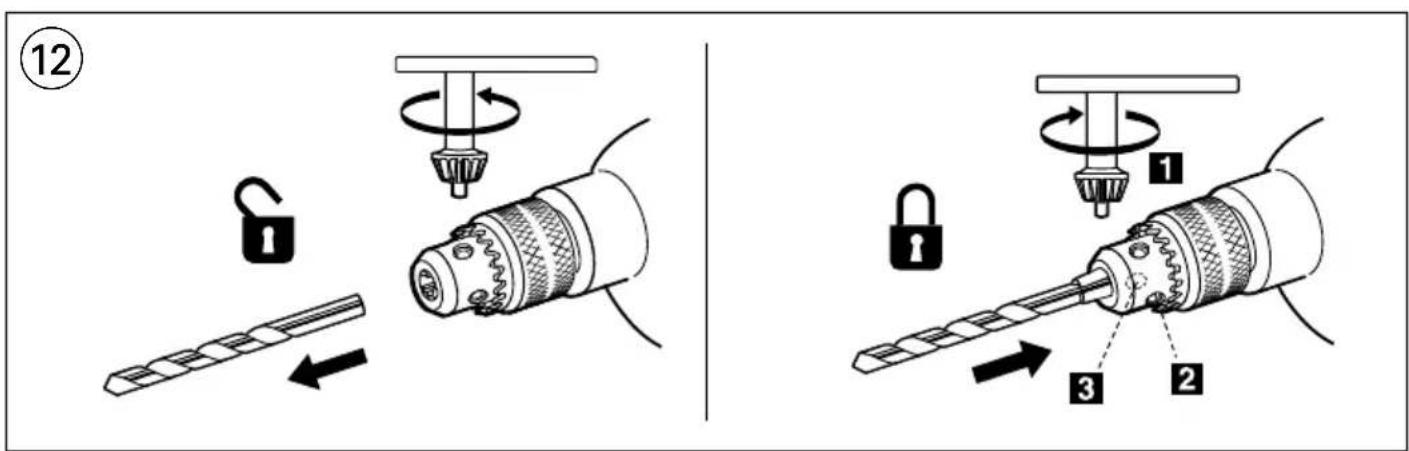
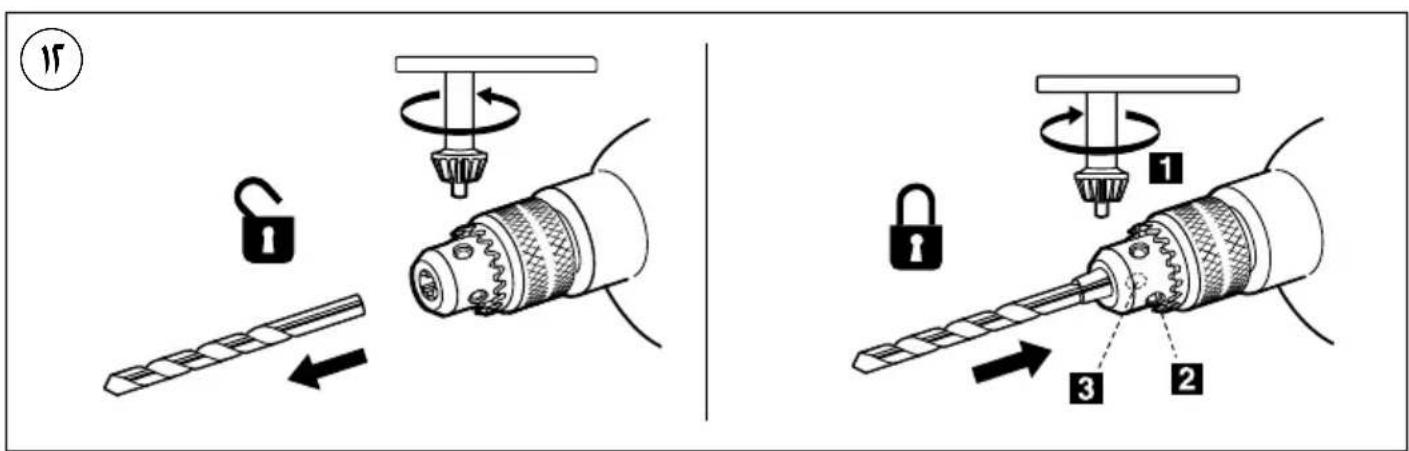
Changing bits 12
-
insert the bit as deep as possible in the chuck
! do not use bits with a damaged shank
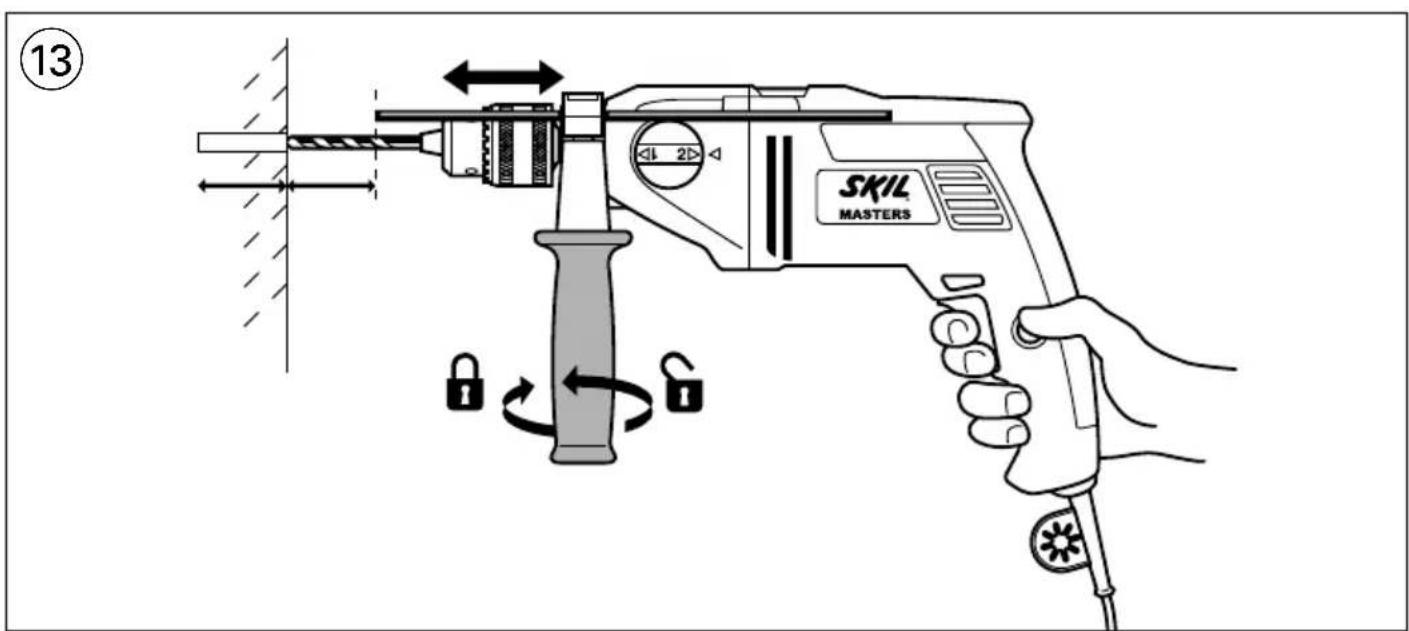
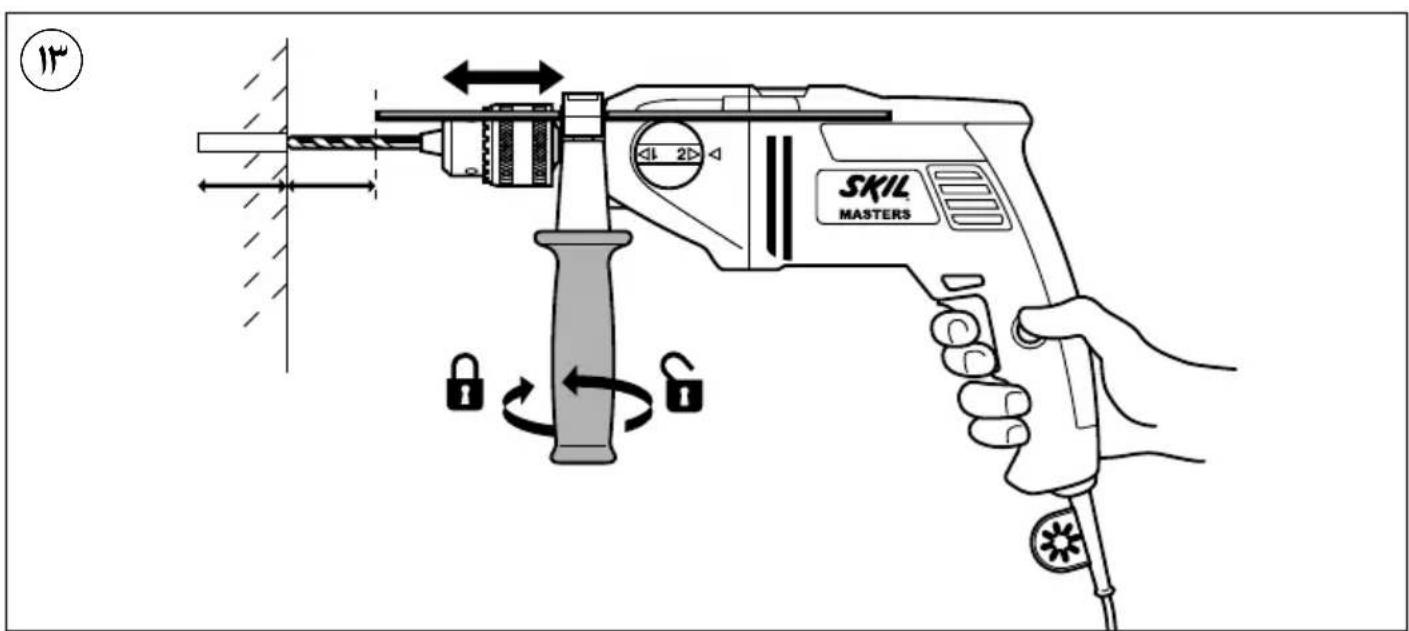
Adjusting drilling depth 13
-
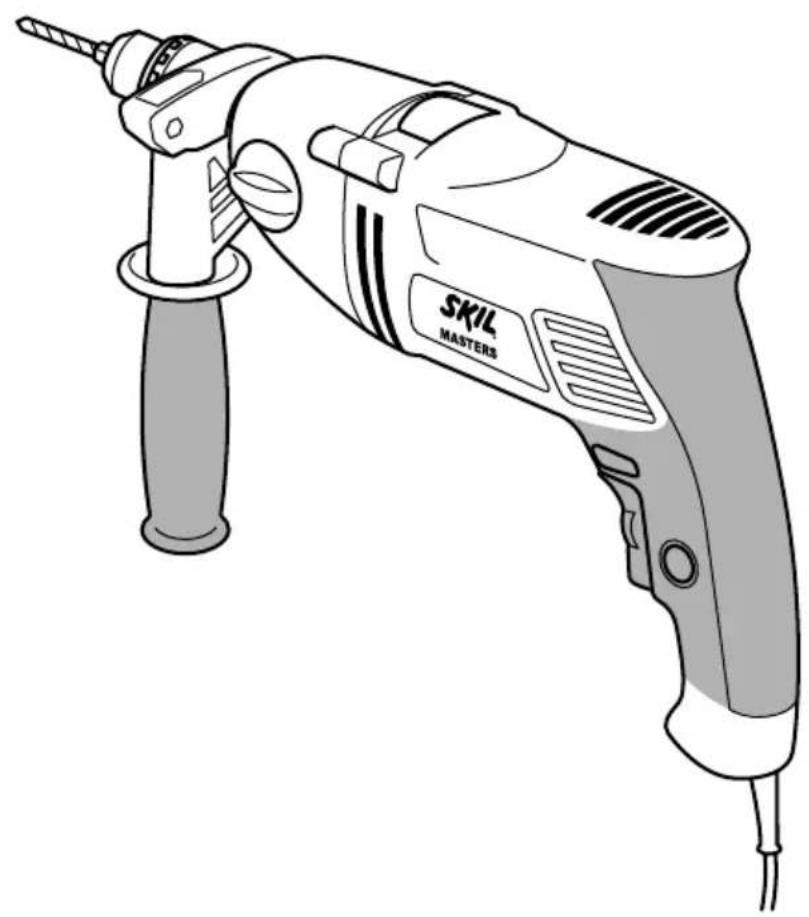
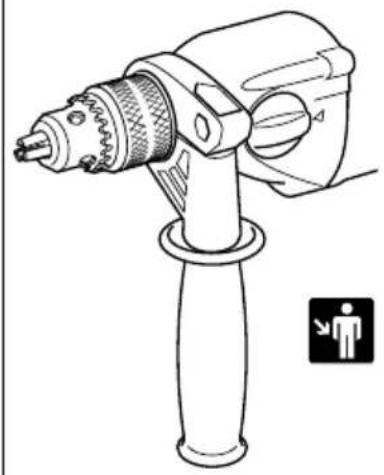
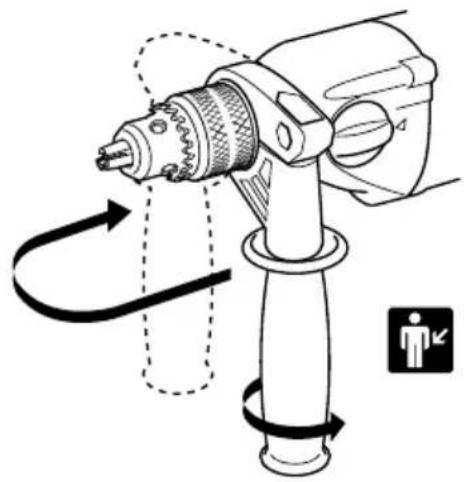
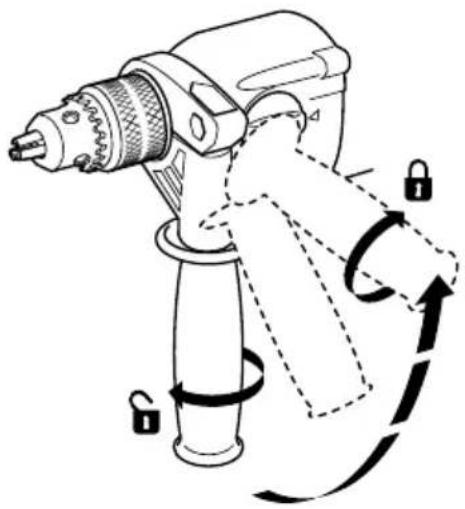
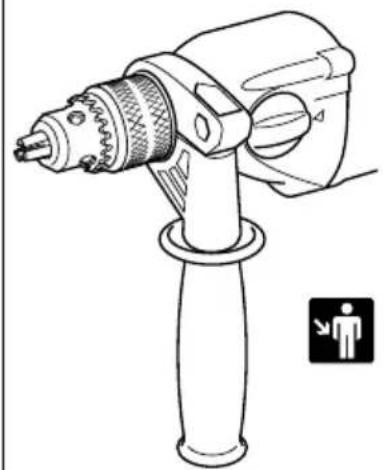
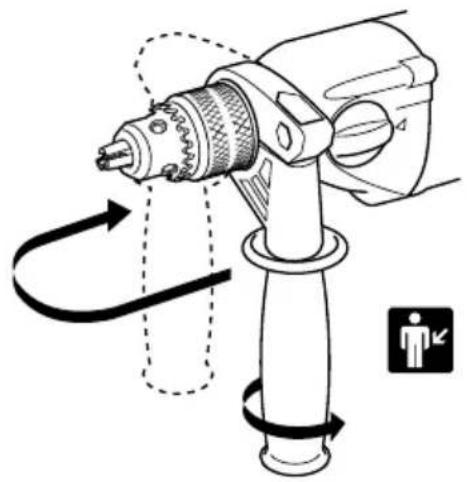
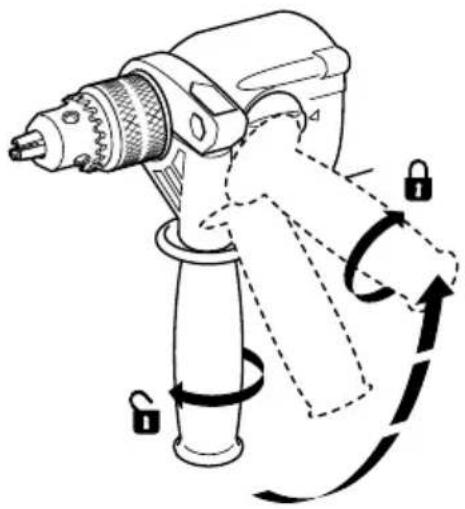
Holding and guiding the tool 14
-
always use auxiliary handle G (2) (can be adjusted as illustrated)
! while working, always hold the tool at the grey-coloured grip area(s) - keep the ventilation slots uncovered
- do not apply too much pressure on the tool; let the tool do the work for you
APPLICATION ADVICE
- For drilling in concrete or stone a steady pressure on the drill is required
-
When drilling ferrous metals
-
pre-drill a smaller hole, when a large hole is required
- lubricate drill bit occasionally with oil
MAINTENANCE / SERVICE
Always keep tool and cord clean (especially ventilation slots H ②)
! disconnect the plug before cleaning
- If the tool should fail despite the care taken in manufacturing and testing procedures, repair should be carried out by an after-sales service centre for SKIL power tools
- send the tool undismantled together with proof of purchase to your dealer or the nearest SKIL service station (addresses as well as the service diagram of the tool are listed on www.skil.com)
ENVIRONMENT
-
Do not dispose of electric tools, accessories and packaging together with household waste material (only for EU countries)
-
in observance of European Directive 2012/19/EC on waste of electric and electronic equipment and its implementation in accordance with national law, electric tools that have reached the end of their life must be collected separately and returned to an environmentally compatible recycling facility
- symbol ⑤ will remind you of this when the need for disposing occurs
NOISE / VIBRATION
-
Measured in accordance with EN 60745 the sound pressure level of this tool is 93dB(A) and the sound power level 104dB(A) (standard deviation: 3dB ), and the vibration (triax vector sum; uncertainty K = 1.5m/s^2 )
-
when drilling in metal 5.5 ~m / s^2
-
when impact drilling in concrete 10.6 m/s^2
-
The vibration emission level has been measured in accordance with a standardised test given in EN 60745; it may be used to compare one tool with another and as a preliminary assessment of exposure to vibration when using the tool for the applications mentioned
-
using the tool for different applications, or with different or poorly maintained accessories, may significantly increase the exposure level
- the times when the tool is switched off or when it is running but not actually doing the job, may significantly reduce the exposure level
! protect yourself against the effects of vibration by maintaining the tool and its accessories, keeping your hands warm, and organizing your work patterns
F
WAARSCHUWING Lees alle
2 = HOOG TOERENTAL
1) SIKKERHET PÅ ARBEIDSPLASSEN
VEDLIKEHOLD / SERVICE
I eEeTe Tov tpo n aeitoupyiac mvo otav to epyaaleio ivai oBnoEvo kai otav to fic iva ByaAmevo
Alambda ⑫
1) B3ONACHOCT HA PAEOTHOTO MRCTO
a) NopdpbhaTe pa60HTOcM HCTO uH NOpeDeHo. Be3npaBbKbT HIN HeoCTaTbHOTOCBETJIeHHe MOraT Da cNoMOrHaT 3a Bb3HNKBaHETo Ha TpyDOba 3JIOJNYka.
b) He pa6oTe c eJeHTpOHcTpymeHa b Cpea c NOBHeHa ONaCHOCT OT Bb3HNKBaHe Ha eHCnIO3H, B 6In3OCT Do JeCHO3aIaNIM TeHOCTH, Ra3OBe Hn npaxoo6pa3Hn MaTePnA. No BpeMe Ha pa6oTa B eJeHTpOHcTpymeHTte CE OTdJIaT NCKPi, KOHTOMorat Da Bb3JIaMeHr Tpaxoo6pa3Hn MaTePnA. nI npa.
c)ДрькTe Deua n CtrpaHnHn LInca Ha 6e3onacHo pa3ctoHHe,doKATO pa6OTnte c eIeKtpoHnCtpyMeHa. Ako BHNMaHneTo Bu 6bDe OTHIOHeHO,MOKe Da 3aRy6nte KOHTpOla HaI eJIeKtpoHnCtpyMeHa.
2) B3ONACHOCT INPNA PABOTA C EJEHTPNUECHN TOK
a) UeencenbT Ha eIeHTponHCTpyMeHTa Tp6Ba da e NOxOJa3a NoI3BaHnHOHT. B HnHaKbB cIyau He ce dOnycha n3MeHHe Ha KOHcTpkyuHrTa Ha uenceLa. Korato pa6oHTte cbc 3aHyJeH eIeHTpoypedn, He n3NoI3BaIte aadTepn 3a uenceLa. IOn3BaHTo Ha opINHaJIHn UeIeCenI N KOHTaHTn HAamJIbRa pNcKa OT Bb3HNKBaHe Ha TOKOB yIap.
b) N368BaTe DoHnpa Ha TaIIOTo Bu Do 3a3Emu Hela, Hapr. Tpb6n, OTOnnInTeHNypeu, Neun XlaHnHnCn. Horato TaIIOTo Bu e 3a3EmeHo, PnckbT OT Bb3HNKBAHe Ha TOKOB yAp e No-rotJAM.
c)Ппдзвге eнТронстчм enta cn OT bHД n Blara. ПонкBaHeTo Ha BOda B eEeKtpOnHCTPymeHTa NOBnAba OanCHOCTTa OT KOK ydap.
d) He n3noI3BaIte 3axpaHbAun Ha6eI 3a ceI, 3a KOHTo ToI He e npEdbuDen, HAp. 3a da HocHTe eIeKTPoHHCTpyMeHa 3a Ka6eI aII Na I3BaIte uencela ot KOnTaKa. IpeIpa3BaIte Ka6eI aOT HarpBaHe, OmacJIBaHe, dOINp Do OcTpN Pb6Obe II NIOBHN 3BeHa HA MaUNH. NobpeDeHn IIN yCyKaHn Ka6eIyVeJIuHaBaT pICHa OT Bb3HNkBaHe Ha TOKOB yIap.
e) Horato pa6OTnte c eIeHTpOHCTpyMeHt HaBbH, H3noJ3BaIte cAmO ydJIHNHeHH Ka6eHn, npedHa3HaueHn 3a pa60Ta Ha OTHpHTo. H3noJ3BaHTo Ha ydJIHKTeI, npedHa3HaueHn 3a pa60Ta Ha OTKpHTo, HamaJIraBa pNcKa OT Bb3HKnBaHe Ha TOKOB ydap.
f) Ako ce HaIana H3NoJ3BaHeTo Ha eJeKtpOnHcTpymeHTa BbB BlaaHa CpeDa, H3NoJ3BaTe npedna3eH npekbcBau 3a yTeHN TOHOBe. H3noJ3BaHeTO Ha npedna3eH npekbcBau 3a yTeHN TOKObe HaamJIba ONaCHOCTTa OT Bb3HnKBaHe Ha TOKOB ydap.
3) B3ONACEH HAHIN HA PABOTA
a)БbTe KOHcEHTpnpaHn, CLeTe BHNMaTeJHo DeIcTBnIa TcN I NocTbNBAite PpeJa3JIbOu pa3ymHO.He n3NoI3BaIte eJeKTPoHcTpymeHa, KOrato cTe yMopeHn Hn IOB BLnHHeTo Ha HApHOTnHbWeEcCTBa,aNkoXoI Hn YnoBaun HeHapcTa. EINH MmP a3ceHoc Tnp pa60Ta c eJEKTPoHcTpyMeH TMOKe Da I Ma 3a NocJeCTBne N3KIIIOHTeJIHO TeKKn HapaHBAHH.
b) Pa6oTeTe c npedna3Baaso pa6oTHO 6nEHNIO HINHARc npedna3HN OUHNA.HocHeTo Ha NOxOJa3aNoI3aNo3BAHn eJeKTPoHHCTpyMeHT N3BbPbWAHaTa DeHOC TnUHn npedna3HN CpeCDTB, KaTO dNxAteJIHa MaCha, 3dpABn NtBTHO3aTBopeHn 6yBKn CcC tA6nJeh rpaJfep, 3aunTHa KAcKa nHn WymO3aflnyuNTeJI (aHTnfoH), HamaJIra Ba pncs oT Bb3HnKBaHe Ha TpyDOba 3IonoLyka.
c) N368BaTe onachocTToBHLIOUbaHe Ha eIeHTponHCTpyMeHTa No HeBHnMaHne. IpeDn da BHLIOuHTe 7eNCELa B3axpaHbAaTa MpeHa Hn da NOCTaBte aHymylaTophata 6aTePn, Ce yBepraBeTe, Ye NcKOBnT PpeKbCBau E B NOLOKeHHe N3HIOUeHO.AKO, KOraTO HOCITE eJIeHTponHCTpyMeHTa, DbpJHrTe npbCTa CN Bbpxy NcKOBnI PpeKbCBaY, INI aKO NODaBaTe 3axpaHbAio HAnpeXeHHe Ha eJIeHTponHCTpyMeHTa, KOraTO e BHLIOUeH, CbIeCTByBa ONACHOCT OT Bb3HNKBAHe Ha TpyDoBa 3IOnoLyka.
4) BHIMATEJIHO OTHOUIEHNKbM EJIENTPOINHCTPYMEHTN
d)Ппдддддддддддддддддддддддддддддддддддддддддддддддддддддддддддддддддддддддддддддддддддддддддддддддддддд徴аунOT HeRo BCnH NOMOuHN HNCTpMeHTN rAeHN HJIouOBe. IOMoUeH INHCTpMEnT,3a6paBeH Ha BbptraIo Ce 3BeHo,MOKe Da npuHH TpaBMn.
e) He haIeHBAIte Bb3MOHIOCTHTE CN. Pa6OTe B CTA6HnHO NOLOHEHHe HA TAIOTO H BbB BCEHN MOMENT NODbPHaIte paBHOBecne. TaKa ige MOKeTe Da HOHTPOINpATE eJIeKTPoIHcTpymeHTa No-dO6pe I No-6e3OnaCHO, aHO Bb3HnKHe HeOuaKbHaCITyaIyA.
f) Pa6oTe c nOxOJaIo o6IeKnIo. He pa6oTe c WnpOnn dpexn nn yKpaSeHn. DpbXte Hocata n dpexnte cn Ha 6e3oNacHO pa3ctOaHne OT dBnHexu ce 3BeHa. WnpOnHe dpexn, yKpaSeHnra, dblrnte KOCn MOraT da 6bDaT 3aXBaHaTHn YBLeueHn OT BbpTAAU CE 3BeHa.
g) AHO e Bb3MOHHO n3nOJ3BaHeTo Ha BbHJHa acnnpaunOHha cnCTema, ce yBepraBaiTe, ye TRe E BkIIOeHa n FyHHNooHnpa n3npabHo. N3noJ3BaHeto Ha acnnpaunOHHa cnCTema HamaJIraBa pICHOBeTe, DblkaUc He Ha OTdJIaTaCe npn pa6oTa npax.
h)ДобpoTo NO3HаBaHe Ha eJeHTpOHcTpymeHTa BCJIeCTBHe Ha YeCTa pa6Ota C Hero He e NObOd 3a HamaJIraBaHe Ha BHIMaHHeTo N IpeHe6peRBaHe Ha MEPKHe 3a 6e3OnacHocT. EdHO HeBHMaTeJIHo DeIcTBHe MOKe Da IpeDn3BnKa TeKKn HapaHЯBaHna Camo 3a YactN OT cEkyHdaTa.
a) He npetobapBaIte eIeHTpOHcTpymeHTa. H3noI3BaIte eIeHTpOHcTpymeHTnte cAmo cbO6pa3HO TAXHOT OpeHa3NaHeHne. Ie pa6oTnte no-dO6pe nIO-6e30nacHo, KOrato N3NoI3BaTe NOxOJa7N EJIeKTHPOINHCTPymeHT B 3aJaDeHnO T pON3BOIDTEJ DnAna3OH Ha HATOBaHe.
b) He n3noI3BaIte eIeHTpOHcTpymeHT, uHTo nychOB npEhbcBau e nobpeH. EJeHTpOHcTpymeHT, KOITo He MoKe Da 6bDe I3KJIIOUbaH IN BKLIOUbaH NO npEduHnO T pON3BOJNTeJI HaUNH, e ONaCEH Tp6Ba Da 6bDe pEmOHtIpaH.
c)ПпддднИЗВьршВаTe HAHВNTOиДa e DeHOCTN NO eIeHTpOHNCHTpymEHTa,HaNP.HacTpoINBaHe,CMHa Ha pa6OTeH INCHTpymEHT,KaHTOиHorato ro np6nPaTe,H3NIOUVAITE ueCenla OT KOHTaTa, pecn.N3BaHdaIte 6atePnRA,T,aHO e Bb3MOHHO. Ta3n Мярka npemaxBa onachocCTTA OT 3aJeNCTBaHe Ha eJIeKTHPOINCHTpymEHTa NO HeBHMaHne.
d) CbxpahraBaTe eJeHTpOHCTpyMeHTnte Ha Mecta, KbDeTo He Morat Da 6bDat DOCTHRaTHo OT Deua. He DOnychaTe Te Da 6bDat N3NoJ3BaHn OT LInca, KOnto He ca 3aNo3HaTHc HauNHa Ha pa6ota c TExn He ca IpOeJIu Te3n HNCTpyKUn. KoraTo ca B pBcTeHa He ONIHTn NOTpe6HTeJI, eJeHTpOHCTpyMeHTnte MORaT Da 6bDat N3KIOUHTeJIHO ONaCHn.
e)Подьрнай Te Do6pe eJENTPOHCTPymeHTte Chn aKcecoapTe HM. ПpoBepaBte DaJI N IOBnHNHe 3BeHaФyHKUONHpaT 6e3yKOpHO,ДaJI N He 3aJIINHBaT,ДaJI N Ma CHyNeH N IIN NOBpeH N DeTaIIN, HOnTO HApUwABat NIn N3MeHr T ΦyHKUHNTe Ha eJENTPOHCTPymeHTa. ПpeHd a N3NoI3BaTe eJENTPOHCTPymeHTa, ce nOrpHHeTe NOBpeH NTe DeTaIIN Da 6bDat peMOHTnpAHN.
MHorO O T TpyoBHTe 3IonoJyKn Ce IbNHaT Ha HeDo6pe NoDlbpKaHn eIeKToPOnHCTpyMeHTn Uypeu.
f) IopIbpaHaiTe peKeuHte HnCtpymeHTN BnHaHn Do6pe 3aToUeHN uHcTn. D6pe npDbprKaHHTe peKeuHnHCTpymeHTN C oCTpn p6oBe OKa3BaT NO-MaIKO CbIpOTNBLeHne n Ce BoJrT No-JeKO.
g) N3noJ3BaIte eJEnKtpOHCTpymeHTHe, DOnbJIHNTeJIHNTe npncnOCO6JeHHa,pa6OTHIne HCTpyMeHTn T.H., CbO6pa3HO HNCTpyKUHTe Ha npOn3BOJNTeJI.C DeHocTH n IpOceDpyn, EBeHTyAJHO npEJnCAnH OT pa3JIuHN HopMaTHBHN DOkymeHTn. N3noJ3BaHETo HA eJEnKtpOHCTpyMeHTn 3a pa3JIuHNOT ppeBvIeHNTe OT pOn3BOJNTeJI npINIOJKeHH NOBIIaBA ONaCHOCTTa OT Bb3HNIKBaHe Ha TpyDOBNI 3JLOJNYKN.
h) IopdbpaHte dpbHHHTe npbHOXBaTHTE cyHN, nCTn HcOmacLeHN. XIb3raBNTe dpbHKn n PbKOXBaTHn He NsOBJIbaT 6e3oNaChata pa60Ta n Do6pOTO KOHTPOJInpHa Ha eJeKTPOnHCTpyMeHTa pN Bb3NHKBaHe Ha HeOuaKaBaHa cITyaUria.
5)ПОДТБРЖАСЕ
a)Донусан Te peMOHTbT Ha eJektpoHnCTpyMeHTte Bn da ce n3BbPwBa camo OT KBaHnΦnucpaHn cneuaJIncTn H camo C n3NoI3BaHeTo Ha opuHaJIHn pe3epBHN qactn. Ito To3n NaHn ce rapaHTnpa CbXpAHBaHe Ha 6e3ONaChocTTa Ha eJektpoHnCTpyMeHTa.
YHA3AHN 3A 6E3ONACHA PABOTA 3A YDAPHA BOPMAUHHA
OBUH
MaunHaTa He Tp6Ba Da ce n3noJ3Ba ot Iina noi 16
- Ппеди n3BbршваHETo Ha nAkhBaTO n da 6nIHOHAcTpoiHa nIIN cMaHa Ha npHnAdJIeXHOCr BnHaRnN3BaJdaIte IeNCeJa OT KOHTaHTa HaeLEHTpO3aXpaHBAHeTO
Pa6oTeTe c wymo3aIpyuHNTeIN (Bb3dEInCTBHeTO Ha Wym MoKe Da npEiN3BnKa 3aIy6a Ha Clyx)
- I3noI3BaIte BkIIOyeHITe BOHOMJIeHTOBHaTcNOMarateJHn PbHOXBaTHN (npn 3ary6a Ha KOHTpOHaND HCTpyMeHTa MOKe Da ce CTNRHe Do TpaBMn)
- 13noJI3BaIte HAnbIHO pa3BHTn I o6e3oNaceHpa3KIOHITeIc KaIauTeT 16 A
He 06pa6oTbaIte a36ecToCbIbprHauMATEpHaI (a36ecTbTe KaHuePoreHeH)
- PpaxbT OT HЯкоMaTePnaJI, KaTO HaIpyMep CbIbprkaaOJIOBO 60J, HЯко BnIOBe DbPBeCnHa, MInHepaJI N MeTaJI MoKe Da 6bJe BpeDeH (KoHTaKT IIN BdNtBaHe Ha TaKbB npax MoRat Da npuHrT aIeprUHn peakun N/II npeCnnpaTopHn 3a6OJIbaHn Ha OepaTopa NIN cToAUnITE Ha6NtO Jnua); N3NoJ3BaIte npOTbONpaxOBA MacHa N pa6Otete c acnPnpaIo npaxTa yCTpoiCTBO, KOrato TaHOBA MOHe Da 6bJe Cbbp3aHo
- OnpeJeHn BnIbe npax ca KlaacnHnupaHn KaTO KapuHoreHHN (KATO npax OT db6 n 6yK) oco6eHO KOrato ca KombHnpAHn Cdo6aBKn 3a noo6pBaHe Ha CbCTOaHNETo Ha DpbBeCInHaTa; H3NoJ3BaIte npOTbONpaxOBA MaCha n pa6oTe c acnnpaio npaxTa yctpoiCTBO, HORato TaHOBA MoHe da 6bDe CBbp3aHo
CneBaTe DeHnHaHTe No BDCnHcBAHnOTHOCHOaPaHeHOCTTa 3a MaTePnaHTe, KOHTKeJaTe da o6pa6oTBate
PENEYN YNOTPEBA
-Пре徳иВКЛЮУBAHeHaИНСТPyMeHTAВKOHTaCe yBepTe,YeМржОВOTOHапeЖeHneOTROВApЯHa HappeJeHnETo,ObO3HaueHoHaФИРMeHaTa Ta6JIka Ha HNCTpyMeHTA(HNCTpyMeHTNCHOMINHAJIHOHappeJeHne 230VIIIN240VMoratda6bDaT BKNIOUeHnI KbM 3axpaHbaHe c HappeJeHne 220V)
- I368raBnTe nobpeHn, KOHTo MORaT da 6bdaT npuHHEnO TBnHTOBe, rBO3Den H dpyrMaTHN elemEtN B o6pa60TaBnHaJe TaI; OTcPaHeTe rnpedeN da 3anoHHeTe pa60Ta
3a da OTnphneTe cKpHTn NOI NOBbpxHocTTa eJekTPO-, BDO- I ra3OpBOOu, H3noL3BaJIte NOxOJaUypeN nnCe O6bPHeTe KbM MeCTHOTo CHa6dnteHNO dpyHexTO (IpeKbcBAHeTO Ha eJekTPOnpoBOOHNIOI NOI HanpeKeHne MOHe Da npedN3BnKa POJap N/IN TOKOB yIap; yBpeKDaHETo Ha ra3OpBOODMOHe Da npedN3BnKa eHCnlo3nIA; 3acraHaHTo HA BOOpBOoD MoKe Da npedN3BnKa 3NaHTeHN MaTePnAALn UeTn N/IN TOKOB yIap)
- Obezonacete pa60THnMaTePnA1 (MaTePnA1, 3aTeHnat B 3aTgAaU INHCTpyMeHT NIN B MeHReMe e NO-yCTOuHB, OTKoIKKTo aKO ce DbpHN B pKa)
He n3no3BaIte HNCTpyMeHTa, KOrato e NOBpeDeH uHypbT; 3amHaTa My cNeDbA da ce N3BbPsh OT KBaJIINΦnIupaHO JInCe
DONJIHNTEJIHN AHCECOAPN
SKILMOHe da ocnrgyn6e3abapnHa pa6oTa Ha eIeKTPOnHCTpymeHTa cAmO aKO CE H3NOJ3BaT OPNrHaJIHN DOJIbJIHNTeJIHN pINCnocO6JIeHnA
- I3noI3BaIe cAmo npHaIeKHOCTn, YIaTO DoNcTImaCKOpocT Ha BbPteHe e NOrOJIMa HIn paBHa HaMAKcIMaJIHaTa cHOPocT Ha BbPteHe Ha Ipa3eH XoJ Ha eJeKTpOHcTHpyMeHTa
IPN YIOTPEBA
BnHa nOTBeKdAaTe 3axpaHbauIr Ka6eI daJeu OT DnHexnte ce 3BeHa Ha eIekTpOINHCTpyMeHTa
Ako CBpeJIoTO Ha npo6nBHaTa NHCTpyMeHT HeouaKbAoHO 3aceHe (PpeIN3BVKBaIKn BHE3aHNO, OnaCHO npOTNbOdeiCTBne), He3a6abHo n3HIOyete eJeKTpOHcTpyMeHTa
- ImaTe npeBnCnJIte, KOIO Bb3HnKBaT B pe3yIITaT Ha 3acraHaHe Ha CBpeJIoTO (ocO6eHO npn npo6nBaHe Ha MeTaJIi); BnHaHn H3NoJ3BaIte CnOMarateJIHa pb4Ha G ② nIOJIbPJaHTe yCTOHNBO NIOJOKeHHe HA TJIATO
AHO n3nBnHBAte DeHocTH, pni KOnTO cbueCTByBa ONaCHOCT pa6OTNHT HNCTpymeHT da nonaIHe Ha cHpTN npOBoHNu NOD hAnpeKeHne Hn Da 3aceHr He 3axpaHbauNHa6eI, DonnpaTe eKTPoHNCTpymeHTCa mo Do eKTPoHN0JIpaHNTe PbHOXBaTHN (Pn KoHTaKT C npOBoHNk NOd HappeKeHne TO ce npedaba Ha MeTaJHInTe DeTaN Ha eEeKTPoHNCTpymeHTa N TOBa MoJe Da npedn3BnKa TOKOB ynap)
B clyaHa ha eIektpnuecka nHm MexaHnHa He3npabHocT, hKIOUeTe He3a6aBHO anapaTa n IpeKbcHeTe KOHTaKTc eIektpnueckaTa MpeKa
Ako Ka6eIbT ce NOBpeN nI cpeKe no BpeMe Ha pa6oTa, He ro DoKocBaIte, BeHaRa n3KnIOHcTe
IeNcena, HNKOra He N3No13BaITe INHCTpyMeHTa C NOpehen Ka6eJ
CJIED PABOTA
-Ппедида ппберете ИНСТРМЕТа,ИЗКИЧЕТЕ MOTОРА и ce уверетe, Ye BCИЧКДВИЖЕЦи ce YAчТи ca пpeустановилдВИЖЕΗΝΕΤΟ
OBRCHEHNE HA CHMBOJNTE IO INHCTPYMEHTA
③Ппeиуnotpe6a npoHTeTe pboBOcTBOTO c yka3aHn
4 BoHnHa n3oJaun (He ce n3nCHBa Ka6eJ 3a 3a3eMBAhe)
⑤ He n3xBpIaIe HnCtpymeHTa 3aeHc C 6ntOBn OTnAdbu
YNOTPEBA
BnIIOUBaHe/H3KIIIOUBaHe 6
3actonopraBeHaBnUOyBaunCnycbK3a HnpeKbchata pa6oTa ⑦
- PerynipaneHaCKOpocTtA3aIIaBNoNyckaHe B XoD ⑧
- UnpabJIeHHe Ha MaKcIMaJIHaTa cHOpocT ⑨ C dNcKa C MaKcIMaJIHaTa cHOpocT MoKe da ce peYInpa OT HcKa Do BnCOka
-BKIOUeTe INHCTpyMeHTa
- 6loKupaTe KJIIOHa
- 3aBbptTe DnCkA C 3a MaKcImaHa cHocOCT
MexaHnueh peykTop
- nocTaBeTe npeBknOuBaTeIe E ② Ha JeHaHaTaCKopoCt
! 3aedcBaIte npBHLIOUbATEJIra 3a npedeABHnTe, KOrato HnctpyMeHTbT pa6OTn 6abHO
1 = HUCHA CHOPOCT
-ROJAM BbptTMMOmeHT
-3a npo6nbAHe Ha roJleMn DnaMeTpN - 3a HapraBaHe Ha pe36a
2 = BINGOHA CHOPOCT -
NO-MaJIbK BbPTrA MOMEHT
-3a npo6nBaHe Ha MaJIKN DnAmEtprn -
06pbuHaHe Ha NocKaTa Ha BbTeHe 10
aKIOCTbT He e TOnHO B NIOJOKeHHe BKNIOUBaHe/ n3KJIIOUBAHe, CnycbkbT A ② He MoKe da 6bDe aHTNBpuHa
! o6pbuatae nocohata Ha Bbptene caMo KOrato eJeKtpoHHCTpyMeHTbTe HAnbIHO cnprJl
HopmaJnHO npo6nBaHe n ydapHo npo6nBaHe 11
!n36bpaIte npo6NBHaФyHKnIcmaO npn H3KIOUeH INHCTpymeHT N ⅢeNCEJIbT e H3KIOUeH OT KOHTaHTA
CmHa Ha 6nT (12)
-
NOCTaBeTe 6HTa KOJIHOTe E Bb3MOJHXO NIO-HaBbTpe B NaTpOHHNka
!HeH3noJ3BaIte6ntcNoBpeHaOnaHa -
PerylnipaHe Ha IbIbOuHHaTa Ha npo6BaHe (13)
-Дыржани Наочbaне Ha ИнстумERTa 14
-BHnHnH3noJI3BaIte CnOMaTeJHa pByKa G ② (HaJIacCe KaKTo e NOKa3aHO Ha NIOCTpaJrTa)
! no Bpeme Ha pa6oTa, BnHaHr npbXTe ypea 3a ouBeteHaTAtneB CnBO 30Ha(n) 3a XBaUaHe
- OCTABYIte BEHTINaIauNHOHHITE OTBOp HENOKpNTI
- He npinlaarTe TBbpeIe rOJIaM HATNcK Bbpxy eJeHTpOHnHCTpyMeHTa; HeKa ToJ Da CbbpSNa pa6oTaTa BMecTo Bac
YKA3AHN3A PABOTA
- PpI npO6nBaHe B 6eToH nIIN KaMbE Heo6xoIIM NOCTOReH HATNCH BbPxy dpelkata
-
Пп побиBaHe Na CBETHN MeTaJI
-
aKOBn TpR6Ba rOJAM OTBOP, nbpBO npo6HrTe MaJIbK
-OTBpeMeHaBpeMe Cma3BaIe CBpeIaTa CMaSHHHO MaCIO
ПОДДРьЖHA/CEPBИЗ
ПодьрнATE BINHANeENEKTPOHNcTpymeHTa 3axpaHbauuHa6eJI YnCTn (OCO6eHO BeHTnlaUHOHHNTe OTBOpH H②)
!npedn nouchBaHe n3KIOueTe uencela
Ako Bbnpekn npeun3HOT npoN3BOcTBO HBNMaTeJHO 3nNTBaHe Bb3HnKHe NOBpeJa, INCTpyMeHTa Da ce 3aHece 3a peMOHT B OToPn3npaH cepBn3 3a eNeKTPOINHCTpyMeHTHa SKIL
-3aHeceTe INCTpyMeHTa B Hepa3rIIO6eB VID 3aeEDHO C DOKa3aTeJICTBO 3a NOKyIKNaTA My B TbPROBCKH OBeKT,OTKbDeTo CTe FO 3aKUINi,IIIN B HaN- 6JIn3KHN cepBn3 Ha SKIL (aDpeCtte,KaKTOn i CXemTa 3a CepBn3HO 06cJyXkBaHe Ha eJeKTPoINHCTpyMeHTa,MOHeTe Da HaMEpNIte Ha aDpec www.skil.com)
ОПАЗВАЕ HA OKOLHATA CРЕДА
He n3xBbPJIte eIeHTpOpypeHITpe, npncnoc6JIeHNrTa n ONaOBKHTe 3aEHDc 6HTOBn OTnaDbu (cAmO 3a cTpaHn OT EC)
-cb6pa3No DnpeKTHBaTa Ha EC 2012/19/EG OTHOCHO3HOceHN eJektpnueckn H eJektpoHHuypeN OTPa3RAHeTo N B HauNoHaJIHOTo 3aHOHOdaTeJICTBO H3HOceHHTe eJektpoypeDN CJeDBA da ce c6bnpaT OTdJIHO N Da ce npedABat 3a pezHKInpae Cnpoped N3NCKBAHnraTa 3a ONa3BaHe Ha OKOHnHaTa CpeDa
-3aTOBa yKa3Ba CnMBOJIbT ⑤ TORaba KOraTo TpR6Ba Da6bDatYHnOxKeHN
WYM/BNBPACIN
-ИзмеренOBcBOTBETBNEcEN60745HIBOTOHa 3ByKOBO HaJIraHe Ha TO3N INHCTpyMeHT e 93 dB(A)a HIBOTO Ha 3ByKOBA MoHOCTe 104 dB(A) (CTaHapTHO OTHIOHEHe:3dB),a Bn6paunTe ca M / C^2 (BeHTOpHATA cyMa NO TpIte HAnpaBJeHn; HeonpeJeHoCT K=1,5 M/c²)
- npn npo6nbAhe B metan 5,5 m/c²
- npu ydaHno npo6nBaHe B 6eToH 10,6 m/c²
HnBoto Ha npedeAeHnte Bn6paunn en3mepeHO BCbOTBeTCTBNE CbC CTaHdapTN3npaHn TcT, ONpeJeEN B EN 60745;TO MOKe Da Ce n3noJ3Ba 3a CpabHeHne Ha eHN INCTpyMeHTC dpyr N KaTo ppeBapNTeHa OceHka Ha NOJaRaHTo Ha Bn6paunn PpN I3NoJ3BaHeTo Ha INHCTpyMeHTa NOCOueHte PpNIOJKeHn
-
IN3NOJ3BaHeTO Ha INHCTpyMeHTa 3a pa3JIuHn OT Te3n PpNIOJKeHn HIN C DpyH, HIN LOJO NOJbPkaHn AKCECoApn MOHe 3HaUHTeJIHO da NOBUN HNBOTO Ha KOeTO CTe NIOJIOKeHn
-
nepnoDHTe OT BpeMe, KOrato INHCTpyMeHTa e N3KJIoueH HIN CBoTBeTHO BKIOUeH, HO C Hero He Ce pa60tB MOMeHTa MORat 3HaunTeIHO Da HamaJrT HNBOTO Ha KOETO CTI NOLOKeHN
I npedna3BaHte ce ot efeHTnte OT Bn6paunnte, Hato NOdBpHaTe HHCTpyMeHTa n akcecoapnte My, na3nte pbcTe cn TOnn n opraHn3npate BaunTe MoJEn Ha pa6ota
SK
UPUTE ZA SIGURAN RAD S UDARNA BUŠILICAMA
OPCENITO
- Uredaj ne bi smjele koristiti osobe mlade od 16 godina
-
Prije svih radova odrzavanja, podesavanja ili izmjene alata i pribora treba izvuci utikač iz mrežne uticnice
-
Nosite štitnike za sluh (djelovanje buke može dovesti do gubitka sluha)
- Koristite pomocne ručke isporučene sa alatom (gubitak kontrole nad alatom moze uzrokovati ozljede)
- Upotrebljavaje samo neodmotane i zašićene produžne kabele kapaciteta 16 ampera
- Ne obradujte materijal koji sadrži azbest (azbest se smatra kancerogenim)
- Prašina od materijala kao što su boje koje sadrze olovo, neke vrste driveča, minerali i metal mogu biti opasne (dodir s prašinom ili njeno udisanje mogu prouzročiti allergicne reakcije i/ili respiratorna oboljenja rukovatelja ili posmatrača); nosite masku za zašititu od prašine i radite s urežajem za ekstrakciju prašine ukoliko ga možete priključiti
- Odreğene vrste prăsine klasificiraju se kao karcinogenske (kao što su prăsina hrastovine i bukovine), osobito u sudejstvu s aditivima za kondcioniranjeDRVeta; nosite masku za zašitu od prăsine i radite s ureăjem za ekstrakciju prăsine ukoliko ga možete priključiti
- Nacionalni uvjeti za materijale s kojima zelite raditi PRIJE UPORABE
- Uvijek provjerite je li napon napajanja isti kao onaj naveden na tipskoj pločici uredaja (uredaji označeni s 230V ili 240V mogu raditi i na 220V)
- Izbajgavajte ostecenja od vijaka, cava i silcnih predmeta na vašem izratku; prije početka rada ih izvadite
- Koristite prikladne uredaje zaTRAzenje napona kako bi se pronašli skriveni napojni vodovi ili se savjetujeslokalmindistributerom (kontakt s elektricnimvodovima mogao bi doci do pozara i elektrcnog udara;ostećenje plinske cijevi moglo bi dovesti do eksplozije;probijanjevodovodne cijevi uzrokuje materijalne stete ili moze uzrokovati elektricni udar)
- Osigurajte izradak (izradak je sigurnije pricvrscen pomocu stezaljke ili skripa nego da ga držite rukom)
- Nikad ne upotrebljavaje alat kad su kabel oštećeni; neka iz zamijeni kvalificirana osoba
PRIBOR
APKALPOŠANA / APKOPE
TECHNINIAI DUOMENYS ①
PRIETAISO ELEMENTAI ②
A Jungiklis jungimui/ishungimui ir greiciui valdyti
B Jungiklio fiksatorius
C Ratukas maksimaliu suki reguliavimui
D Sukimosi krypties perjungiklis
E Greiciy perjungiklis
F Grezimo fungcijos perjungiklis
G Pagalbiné rankena
H Ventiliacines angos
SAUGA
BENDRIEJI ELEKTRINIJ I RANKIJA SAUGOS ISPEJIMAI
ISPEJIMAS Perskaity kite visus su siuo elektriniu jrankiu pateikiamus saugos ispjimus, instrukcijas, perziurekite ilustracijas ir specifikacijas. Jei nepaisysite visu zemiau pateiktu instrukciju, galite patirti elektros smugi, sukelti gaisrqrunkiai susizaloti arba suzaloti kitus asmenis.
1) B63B6HOCHT HA PABOTHOTO MECTO
a) OdpHybajre ro BaWeTo pa6oTHo MecTo N ypeHNo. HeypeDen HnTemeh pa6oTeH npocTo p MoKe Da npeDn3BnKaat He3roN.
b) Hemojte da pa6oTHe co ypeoT Bo cpeHnHa BO KOja HMa onaCHOCT OEHCnIO3nJa, BO Koja HMa 3anaJIINBn TeHOCTH, racOBn n PpaHnHa. EeKtpruHnTe aIaN TPOn3BeyBaat NCKPN KON MOxHa Ta 3anaJAT npaHnHa nn Napea.
c) 3a BpeMe Ha ynoTppe6ata Ha eEnktpnHnO tAnaT, Deuata N octaHaNTte Iua dPKeTe rN NOdaJeKy Od MeCTOTO Hae pa6oTHe. ODbpaKaHbe, 6n MoKeJe Da n3ry6bTe KOHTpOJa Bp3 ypeDTo.
2) EJEKTPNUHACNΓYPHOCT
a) YtHaMpa Da oDROBapa Ha npHkyoHOT. HnKaHO He cMee da ce npabat n3MeHN Ha wTekepot. He
3) B63B6EDHOCT HA JYTE
KOpHCTeTe aanTepckn 7teHep 3aeEHO co ypeIOT Koj e 3aunTHo 3aemjeH. He npomeHETn 7teKepeN COODBeTHn pInKJyOuCn FO HamaJIyBaat Pn3IKOT od eJeKTpuYeh ydap.
b) N36erHyBaJTe DoHnHa TeNoTo Co 3a3emjeHN NOBpHHN, KaHO uTo ce ueHN, padnjaTOpn, pepHn HΦpHHnepn. IocToH 3roJeMaHa onaHocT od cTpyeH yap,doKoIky BaWeto TeIo e 3a3emjeHo.
c) YybajTe ro ypeoT noaIeHy oDdoHnBnara. IpOpaHeTo Ha BOa BO eJeKtpuHnOT ypeJ a 3roJeMyBa onaCHOCTa OD cTpyeH yap.
d) He 3noptpe6ybajte ro npnkyuHnot ka6e 3a Hocbe, 6cebe Ha ypeot nnn 3a n3BneKyaBe Ha wTehepOT od MPexHHOT npnHnyoK. Ybajte ro Ka6eIOT ndaJeKy oD TonnHa, MacNo, ocTpna pa6obn nn DeIOBHTe Ha anapaTOT KOH CE DnHAT. OwteteHn nn 3anletkaHn ka6n ja 3roJemyBaat onaCHOCTa OD cTpyen ydap.
e) Hora ro ynotpe6yBaTe noHaCyOT HaBOp, KopnCTete npoDolKeH Ka6e HoJ e COOBeTeH 3a ynotpe6a Ha OTBOpE HnpocTOp. PpImeHaTa Ha npoDolKeH Ka6e CoOdBTeH 3a pa60Ta Ha OTBOpE npocTOp ja HAmalyBa onaCHOCTa OD CTpyEH yap.
f) DoHOLHy He MoHe Da Ce n36erHe pa60Ta co eJeHTpnuHNoT aIaT BO BlaJHa CpeMHa, KopnCTeTe npEHHyBaay 3a cTpyJa 3auTNTa npn TexHNuN pO6JIem. Ynotpe6aTa Ha npEHHyBaoy 3a cTpyJa 3auTNTa npn TexHNuN np6JIemr Ro HamaNyBa pN3IKOT o JeKTPnuH ydap.
a) BnTe BHNMaTeJIHH, BHIMAbJTe wTo npabnte n noCTanyBajTe BHNMaTeJIHO DoJeHa pa6oTnte co eIektpuHnot anat. He pa6oTe co ypeodot DOKOLHy CTe YMOpHn HIN NOd JeCTBO Ha dpora, aHoxOJI HIN JekOBn. EdeH MOMHT Ha HEBHMaHHe npH yNOTpeBaTa MOKe da IOBeDe DO CENO3H NOBpeHn
b) Hocete ja IInuHaTata 3aWHTTHa onpema n ceHoraaHocete 3aWHTTHO OUnla.HoceHeTo Ha IInuHaTa3aWHTTHa ONpema, KaKo UTo e MacKaTa 3a npaunHa,6e36eHochata Oblke Koja He Ce Ln3ra, 3aWHTTeHNiem NnI WHTTHNK 3a Cnyx, 3aBnCHO OD BnDT INpimHeHa Ta Ha eJeKTPnHnOT aIaT, Ja HamaLyBaONaCHOCTa Od NOBpeJa.
c) N36erHyBaJte HeBnMaTeIHO BkLyCyBaHbe 3a BpeMe Ha pa6oTaT. OcnrypajTe ce npeHHyBaOT Da 6nde Bo "OFF" no3uNja nped da ro CTabnte WTeHepot BO npKnyOHot. DOKOLky FO HOCHTe eNEKtpuHnot aIal T CO npCTOT Ha npEHHyBaOT IINr PO npHKlyyBaTe anapaTOT KoJ e npKluyeh Co HanojyBaHe Ha cTpyJa, MoKe Ja npEdu3BnKaTe He3roDn.
d) IpeB BVnyyBaHe Ha ypeDoT, TprHete rnaIaNTte 3a noDecyBaHe Hn KnyOT 3a HbPtyBaHe. AiaToT Hn KnyOT KoJ ce Haora BO BPTINBnOT deJI Ha ypeDoT, MOKe Da IpeDn3BnKa He3roJa.
e) He ng npeuhenybajte cBOnte cnocO6HcTn. 3aB3emTe CNpyen H CTaBnJIeH CTAB N BO ceHOJ MOMeHT ODPXyBaJTE pAMHOTeka.Ha ToJ Haunm OMOKeTe NOIObpo Da r GOHTPOJIpaTe ypeDTo BO HeoueKByBaHN CNTyaUN.
f) Hocete cooDbetHa o6leHa. He hocete shpoka 6leHa nn HaKHT. Hocata n anWtata Tpe6a da
6nDat noaIeHy od noBHHHnte deIOBN.
山npoKaTa obNeKa,HaKHTOT NIN DOJrata KOa MoKe da ce 3aKaayat 3a NOBnHnTe DeIOBn.
4) BHIMATEJIHA YNOTPEBA IN PAKYBAHbE CO EJELHTPNUHNTE AJATN
g)ДOKOLNY MOHe Da ce MoHTnpaAT HAnpaBn 3a BwmyHyBaHBe NФaHaBe npaunHa, npOBepTe daHn Ce BknyeHn DaHIMoHAT NcnpabHNo da Ce KOpNCTa.T.ПрIMeHATA Ha OBHe HApPaNJa HAmayBa onacHOCTa Ond npaunHaTa.
h) He do3BOJyBajte NcKcYTBOTcTeKHATO co YecTa ynoTpe6a Ha anatite Da Be HnpaBn cNoHOJH N da rHnrOpnpate 6e36eHocHTne npHHuNn npn HerOBOTO KopncTeHe. HeBHnMaTeJIHO DnKHeBe MOKe Da npedn3BnKa cepno3Hn NobpeDn BO JeI od ceHyHa.
a) He ro npeontepetybajte ypeod. Ipn Baawata pa6ota hopnctete ro npedBnDEHnot eIeHTpueh aalat 3a taa ynoTpe6a. Co cooDBetHNOT eJIeKtpueh aalat Ke pa60nte noO6po n noCnryphNO BO HabeDeHaTa YHKUHOHaJHa o6naCT.
b) He Kopnctete eIektpuueh anat qJ npeknHyBae HencnpaBeH. EneKtpuHNoT aalat kOj noBeKe He moKe Da ce BklyyBa n NcKnyyBa e ONaCeH mOpa da ce nonpaBn.
c) Hcnyte ro ehtpnHnot aalat od ctpya n/nnn 3BaTe ro HOMnIeTOT co 6aTePn, ao ce OdJeLyBa, nped da npabnte HeKaHBn npHaOyBaHa, MeHyBaTe DOnoJIHtEnHa onpema nn Da ro ChnaDnpaTe ehtpnHnot aalT. Co OBHe MEPKn Ha BHMaTeJHocT Ke ce N36erHe HEBHMATEJHOTO BkIyUyBaHe Ha ypeDoT.
d) Tprhete ro eIeKtpnHnot anat hoJ he ro KopnCTte od donnpot ha deuata. He donyustajre pa6ota co ypeoT ha Iua kon He ce 3ano3haeH co Hero nnn KOH ro Hemaat npouHTaHO b YAATCTBO. EKeKtpnHnte aIaTn ce onacn doKOJIky co HNB pa6oTaT HenCKcHNI Iua.
e) OdpHyBaJTe ro eIeHTpHNoT aIaT n DoIOLHnTeJIHaT oIpeMa. IMaJTe KOHTpOla OHOly Toa dAn NDbNHeuKHe Te DeIOBn Ha ypeoT pa6Otat 6ecPepOpHo n daH He ce 3arNaBeHN, daH DeIOBHe Ce cHpWeH n Hn OWTeTeHN Do Taa MePa h wTo He MoHe Da ce 06e36eHn FyHKnOHHpaHe Ha ypeoT. Ppe npImeHaT, OBne OWTeTeHN DeIOBn Tpe6a Da ce nonpaBat. PnpHnHa 3a MHOry He3rOdn e loWo ODpHyBaHNoT eIeKtpUeH aIaT.
f) AaIATnTe 3a ceHebe OpHyBaJte rN OCTPN NCHNTBHNMaTeJIHO odPxyBaHIne aIaNTHa CEHeBe CO OCTPN OOTPiN NOMALKy Ke Ce 3aIaNabyBaat CO HNB pa6oTaTa Ke 6nnde nolecha.
g) EneKtpnHnO t aIaT, np6Op, pa60TH n aIaT nTH. Tpe6a da rH KopnCTnTe cnopei OBHe yNaTcTba, HHa NaHH KoJ e Onnuah 3a cooDbetHnOT TnH Ha ypei. Ppi Toa, zemete rN npEbnD pa60HTne YcIOBn i pa6otata koja ce n3BpUyBa. Ynotpe6aTa Ha eNeKtpnHnTe aIaTn 3a dpyrI uei KOn He ce npEbnDeHn, MoKe Da npEtn3BnKa OnacHn CNTyaun.
h) PaKHTe H NOBpHnHtTe 3a dpHebe ODPKyBaJte rN cyBN, NCTH H HeN3MaCTeHN. PaKHTe H NOBpHnHtTe 3a DpKeHBe ITO Ce IIN3raaT He OBO3MOxYBaAT 6e36eIHO paKyBaHbe H KOHTpOJa Ha aIaNToT BO HeOueKByBaHn CNTyaUHN.
5)CEPBNCUPAHe
a) EneKtpnHnot aIaT cepBnchpajTe ro Haj KBaIIHnHyBaHO IInce Hoe HopnCTn cAmO NDeHTnHH pe3epBHN DeIOBN. Co Oba ce 6e36eYBa 6e36eHNO oDpKByBaHe Ha eNeKtpnHnot aIaT.
BE3BEOCHN YIATCTBA 3A BNBPNPAH N DYNUAJIKI
ONHTN
- Oboj aIaT He Tpe6a da ro KopncTaT Iuca nop16 roDInH
- 06e36eTe ce anaTOT da e nchnyeh od ctpya nped da Bpwnte 6nlo kakBO noDecyBaHe nn 3ameHa Na np6bopot
Hocete 3aWNTa 3a ywnte (n3JIOHeHOCT Ha Tne 3ByuN 6yka,MOKe Da IOBede fo TpaJHo OWTeYBaHe Ha cnIyXOT)
Hopnctete rntcpanHHNTe dpwn HONce nCnpaayBaat 3aeHNO co MaunHaT (ryebeTo Ha KOHTPOJa MOKe Da IOBeDe Do NOBpeN)
-ПюдлжehнOTКабелкоиукптte,MopaДaби dedocemaOdmotahN6e36eDEH,coKanaHTetODA
He 6pa6otybajte HnHaHOB MaTepnjaJ Koj coDpHn a36ecT (a36ecToT BaHHa 3a npedn3BnkyBauch paK) - Прашинна од MaTeрижл КаКо6JA KoJa coDpHKn OLOBO, HeKoN BnOBoДРBO, MInHepaJI N MeTAlN, MoJKe Da 6nIe 7TeTHa 3a 3dpaBjeTo (KOHTaKTOT co Прашинна ИИн Hej3INHO T BnUyBaHbe MOJKe Da 7peDn3BnKa aIeprnN n/IIIN 60IeCTn Ha DnIshHITe OprAHN 3a OHOJ Koj pa6OTn CO aIaNOT IIN LyreTO BO 6Iln3Ha); Hocete MacHa 3a Прашинha n pa6OteTe co npabOCMyHaJIH N DOHOLHy MoHeTe Da rN NOBp3eTe
- Hekon BINOHa Na paaHnHa ce KaHcpeOReHN (KaKo Ha npimep npaunHaTa od da6 nIn 6yka), oO6eHO 3aeHCO co aINTBn 3a ODPHyBaHe Ha dpBOTo; HocTe MaCha 3a npaunHa n pa6oTe Co npabocmykAhn DOHOJMy MoKeTe Da rN NOBp3eTe
CleTe Tn npoueDpynte Ha BaWata 3emJa 3a npaunHaTa Koja ce jabyBa KaKo pezytat Od MaTepnajNTe co kon paOtnTe
IPEA yNOTP6A
- Cekoraw npobepybajte HanoHOT da e nct co ohoj koj e Ha3hauehen Ha IIIOUkata Ha aIaTOT (aIaTnTe 3a HanoH od 230V nn 240V nTo TaKa MoKe da ce nobp3at Ha HanoH od 220V)
I36erHybajTe OwTeTyBaHa oJ WTPaΦOBu, WajKn I pyrN npedMeTn BO MeCTO KaJe pa6OTHe; TprHETe rN nped Da noHTe co pa6Ota - KopncTeTe COOBeTHn DeTeKTOpn 3a HaoTaBe Ha cHpneHn IHCTaIauIIN NII NOBHKajTe COoDBetHa HOMNaHnJa 3a NOMOw (KOHTaKToT CO eJIeKtpNHyNTe IINHN MOKe Da IOBeDe Do CTpyEn ydAp; OJTeTyBaHaTa BO rACOBODHa CEbKa MOHe Da pe3yJItnpa Co EKcNIO3nJa; NeHeTpnpaBe BO BODOBODHa IHCTaIauIJa MOKe Da DOBeDe Do OJTETa HA ppeMeTn INI eJIeKtpuHen ydAp)
3aucbpcTe ro MaTepujanol Koj ro 06pa6oTybaTe (O6pa6oTHa Koja e 3auBpcTeHa CO CTern NIN BO MeHreMe e NObe36eHa OTKolny da ja dpKHTe co paue) - HnKorai He KOpnteTe aIaT aHO Ka6eIoTe oWTeTeH; 3aMeHaTa Ha Ka6eIoT Mopa da ja I3BpHi CTpyuH0 IInCe IPNIEOP
-
SKIL MoKe Da npH3Hae rapaHcNja cAmo DoKoJky e KopncTeH opuHnHaJIe np6Op
-
Kopnctete camo npnbop yna do3boJeHa 6p3Ha e BO HajmaJa paka edHaKBa Ha HajroIeMaTa 6p3Ha npn npa3eH oHa eJekTpnuHnot aat
BO TEKOT HA YNOTPEBATA
Ha6eJIoT cekoraw dpKHeTo noJaIeKy oD JeIOBnTe Ha aJatOT KOn ce DBNkAT
- Bo clyuj ha Hehaejha 6lokaHa ha 6yprnjaTa, co co3daBaHbe Ha nobpaTHn CnJn Kaj aJatOT, BeHaaw Tpe6a Da ro nckJnyHTe aJatOT
BHHMabajTe Ha co3daJeHnte cnH kaj aJatOT, 3a BpeMeHa 6lokaTata (oco6eHO npn dynuehe MeTal); aJATOTceKoraw Da ce dpHn 3a cTpAnHnHaTa DpHkA G ② nDa ce 3aB3eMe cnIpyeh CTaB
-Држete ro eIeTpHnOT aalat cmo 3a
нзолиразнite deprшкн HORA n3BpUyBaTe pa6To BA
Слчан KORA anapatot MOHe DAdoJde BO HOHTaHT
CO eIeHTPCHN INHCTaIIaIcH NIN CO CONCTBeHnOT
Ка6eI (KOHTaKT CO COROJIeHa JIXuA INTO TaKa MOKe DA
ГИН НаелЕТРИЗпа MeTAlHInTe DeJIOBn Ha aIaNtOT И Д
прden3Виka CTpyeH ydap)
Bo cnyujaJ da dojde do eJeKtpuH en mExaHnKn dfeKT, BeHaaw nckIyueTe ro aIaTOT uNcKlyueTe ro od npHKlyOkoT
Ako Ka6eIOT ce OwTeTn HIn IpceSe 3a BpeMe Ha pa6oTaTa, BeHaaw NcHnyeTe ro He ro DonnpajTe NO YNOTPE6A
HoraKe ja 3aBpuHte pa6oTaTa co aIaTOT, HcKlyUeTe ro MOTOpOT n npOBepTe daHn CHTe NOdBHXHn DeIOBn Ce 3aCTaHaTHN
OBJACHYBAHbE 3A CHMBOJNTE 3A AJATOT
③ Ппсд уnotpe6а почитajte Г порачнкOTауnotpe6a
④ДBojHaи3Olaunja(He e nOTpe6Ha 3a3EmHa Hnua)
⑥ He Φρλajte ro aλaTOT 3aeHNO co dpyrHOT OTnaD OДOMaKnHCTBOTO
YNOTPEBA
BknyeHo/IncknyeHo 6
- BIoKnpaHBe Ha npeKNHyBaHT 3a noctoJaHa ynoTpe6a ⑦
3aKoyBaHbHe Ha npeknHyBaQT 3a JecH CTapT 8
KoHTpoHa Ha MaKcHMaJIHaTa 6p3nHa ⑨ Co TpKaIaTO C MaKcHMaJIHaTa 6p3nHa MoKe da ce npncnocobn Od HnCKa Do BnCOHa
-BKnyTeToaJATOT
- 6Ioknupajte ro npeknhybaoy
- BpTeTe ro TpkaiTo C 3a H36op Ha MaKcImaHa 6p3Ha
-
N360p Ha MexaHnUKN 3aIaHeNk
-
nocTabete ro ceilekTopoE ② Ha cakahata 6p3nHa
! Bknyute ro n36opot Ha 6p3HH DoeHa aIaTOT pa60Tu 6abHo
1=ПОИСКА БРЗИHA
- BINGBPTJINMBOMEHT
- 3a DnyuHe OToBOpn Co roJeM dJaMaTeAp
-3aBn6pauncknHaBoj
2=IOBNCOKA BP3NHA
- HN3OK BPTJINB MOMENT
-
3a Дунчеве OTBOPи с MaJДиJaMeTap
-
Помена на нахокараз на ротацида 10
-
aHO JEBaTa/DECHaTa N03nUja He JERHaT KaHO ITo Tpe6a, npeKHyBaHOT A ② Hema Da MoKe Ja cTapTyBa
! Mehybajte ja Hacohata Ha potaunjata camo hora anaTOT ce HAOFA BO ueLOCHO MHPyBaHe
HopmaJHo DnyuHe HacnpToN Bn6paunCko DnyuHe ⑪
!6npajTe ro peHMMOT Ha dynpeHe caMo Hora aIaNToT e NcHlyuEn I npHKnyUohOT e N3BaDeH Od cTpyja
- PpomeHa Ha 6yprrnTe ⑫
-BMETHete ja 6yprnjaTahajna6oKO wTO MOKeTe BO DpKaoy
! He ynOtpe6yBajTe 6yprHn co ouTeteHa dpuHa
- Pnncoc6yBaHe Ha dla6OuHaTa Ha dynpeHBeTo 13
15420sLaoL aauuLaoJosLgLdo
J 1 J 1 J 1 J 1 J 1 J 1 J 1 J 1 J 1 J 1 J 1 J 1 J 1 J 1 J 1 J 1 J 1 J 1 J 1 J 1 J 1 J 1 J 1 J 1 J 1 J 1 J 1 J 1 J 1 J 1 J 1 J 1 J 1 J 1 J
g jyj yj yj yj yj yj yj yj yj yj yj yj yj yj yj yj yj yj yj yj yj yj yj yj yj yj yj yj yj yj yj yj yj yj yj yj yj yj yj yj yj yj yj yj yj yj yj yj yj yj yj
1 1 1 1 1 1 1 1 1 1 1 1 1 1 1 1 1 1 1 1 1 1 1 1 1 1 1 1 1 1 1 1 1
03 : 1
①
V
A
④ jgj
25 a b c d e f g h i j k l m n o p q r s t u v w x y z
100 1 E 25
100 100 100 100 100 100 100 100 100 100 100 100 100 100 100 100 100 100 100 100 100 100 100 100 100 100
a 10
a 1 a 1 1 1 1 1 1 1 1 1 1 1 1 1 1 1 1 1 1 1 1 1 1 1 1 1 1 1 1 1 1 1 1 1 1 1 1 1 1 1 1 1 1 1 1 1 1
sio gao aas yu bgyo yg ygey j 1
jolal oabaaas nssnag yg ayys lgs yog al
jolal yooaay aoaay aoyd yg yacw y
jolal caypocg yg yag ybnydyg y
yolai yg aay gao ayg ayg yg yg yg y
yolai yg ao yag yg ayg yg ayg y
yolai yg agy gao ayol eey g yg yg y
yolai yg agy gao ayol eey g yg yg
yolai yg agy gao ayol eey g yg yg
yolai yg agy gao ayol eey g yg
g j 1 g j 1 L a y w g L a
j b i o j 1 1 s 1 1 s 1 1 s 1 1 s 1 1 s 1 1 s 1 1 s 1 1 s 1 1 s 1 1 s 1 1 s 1 1 s 1 1 s 1 1 s 1 1 s 1 1 s 1 1 s 1 1 s 1 1 s 1 1 s 1 1
aagg aaiy aaii yaiy jay ly ayly aay aay aay aay aay aay aay aay aay aay aay aay aay aay aay aay aay aay aay aay aay aay aay aay aay aay aay aay aay aay aay aay aay aay aay aay aay aay aay aay aay aay aay aay aay aay aay aay aay aay ayy
aJgIaLo (o) jy a Jlau 100000000000000000000000000000000000000000000000000000000000000000000
Joo joo joo joo ooloo oo ooo ooo ooo ooo ooo ooo ooo ooo ooo ooo ooo ooo ooo ooo ooo ooo ooo ooo ooo ooo ooo ooo ooo ooo ooo ooo ooo ooo ooo ooo ooo ooo ooo ooo ooo ooo ooo ooo ooo ooo ooo ooo ooo ooo ooo oooo
j 1 j 1 j 1 j 1 j 1 j 1 j 1 j 1 j 1 j 1 j 1 j 1 j 1 j 1 j 1 j 1 j 1 j 1 j 1 j 1 j 1 j 1 j 1 j 1 j 1 j 1 j 1 j 1 j 1 j 1 j 1 j 1 j 1 j 1 j
J 1
J 1
J 1
J 1
J 1
J 1
J 1
J 2
J 3
J 4
J 5
J 6
J 1
A
A
A
A
A
A
A
A
A
A
A
A
A
A
A
A
A
A
A
A
A
A
A
A
A
A
A
A
A
A
A
A
A
A
A
A
A
A
A
A
A
A
A
A
A
A
A
12

PROFESSIONAL POWER TOOLS
JL
FA