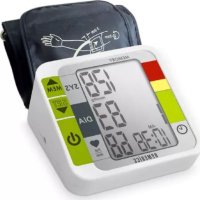
BPA2000EU - Sphygmomanometer HOMEDICS - Free user manual and instructions
Find the device manual for free BPA2000EU HOMEDICS in PDF.



| Product Type | Digital Arm Blood Pressure Monitor |
| Brand | HoMedics |
| Model | BPA2000EU |
| Dimensions | Approximately 140 x 120 x 70 mm |
| Weight | Approximately 353 g (without batteries) |
| Power Supply | 4 AA batteries (6V) or AC adapter 100-240V~, 50-60Hz, 400mA (model PP-ADPR2K3K-EU) |
| Measurement Method | Oscillometric |
| Measurement Range | Pressure: 0-300 mmHg (0-40 kPa), Pulse: 40-199 beats/min |
| Accuracy | Pressure: ±3 mmHg (15-25°C), ±6 mmHg (10-40°C); Pulse: ±5% |
| Cuff Size | Standard 22-32 cm (large size 32-42 cm available separately) |
| Display | LCD screen with level indicator, arrhythmia detection, memory for 60 measurements |
| Functions | Memory, low battery alarm, auto shut-off, movement detection, automatic deflation |
| Classification | Class IIa medical device, type B applied part, IPX0 (not waterproof) |
| Operating Conditions | Temperature 5°C-40°C, humidity ≤80% |
| Storage Conditions | Temperature -20°C-60°C, humidity 10%-93% |
| Maintenance and Cleaning | Clean with a soft cloth dampened with a non-aggressive product; do not use alcohol, thinner, or kerosene |
| Safety | Do not use on infants; avoid strong electromagnetic fields; automatic deflation if pressure >300 mmHg |
| Spare Parts and Repairability | AC adapter available (PP-ADPR2K3K-EU); do not open the device, contact customer service |
| Package Contents | Monitor, cuff, 4 AA batteries, instruction manual |
Frequently Asked Questions - BPA2000EU HOMEDICS
User questions about BPA2000EU HOMEDICS
0 question about this device. Answer the ones you know or ask your own.
Ask a new question about this device
Download the instructions for your Sphygmomanometer in PDF format for free! Find your manual BPA2000EU - HOMEDICS and take your electronic device back in hand. On this page are published all the documents necessary for the use of your device. BPA2000EU by HOMEDICS.
USER MANUAL BPA2000EU HOMEDICS
Instruction Manual
BPA-2000-EU
2year guarantee
HOMEDICS BLOOD PRESSURE MONITOR
Before use
Before the blood pressure monitor is taken into use, a number of basic steps should be observed. Please read this manual thoroughly before the blood pressure monitor is used for the first time and keep the manual for future use.
The blood pressure monitor is intended for home use only. Any measurement is solely for your information and can under no circumstances replace a visit to the doctor. The blood pressure measurements should always be assessed by a qualified person (a doctor, nurse or similar) who is familiar with the user's general medical condition. By regular use and by keeping a record of the results, this person can be kept well informed about developments in the user's blood pressure. Measurements must never be interpreted by the user with the aim of changing levels in the use of medicine as prescribed by a doctor. The doctor's instructions must be followed AT ALL TIMES.
Use of appropriate cuff size is crucial to correct measurement. Follow the instructions presented in this manual and printed on the cuff to ensure that the correct cuff size is used.
The blood pressure monitor is not suited for users who suffer from arrhythmia (heart rhythm disturbances) and errors may occur in the measurement results if the user has suffered a stroke, suffers from cardiovascular diseases, has a very low blood pressure, or suffers from other symptoms such as circulatory diseases (diabetes, kidney diseases, arterial sclerosis (deposits in the arteries), or poor peripheral blood circulation (e.g. in hands and feet).
Electromagnetic disturbances: The device contains sensitive electronic components. Keep it clear of strong electric or electromagnetic fields in the immediate surroundings (e.g. mobile telephones, microwave ovens) as these may temporarily reduce measurement accuracy.
Use the blood pressure monitor only for its original purpose.
The device is intended for measurement of blood pressure and pulse with adult persons. Do not apply the monitor to infants nor to persons who cannot express their permission. The device must not be operated by children.
The blood pressure monitor functions in accordance with the oscillometric measurement principle. These blood pressure changes are measured in the cuff on the basis of the arm pulse and are converted into a numerical value of the current blood pressure. Simultaneously, the number of pulse beats are registered and calculated as number of pulse beats per minute.
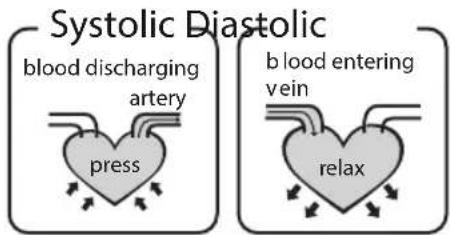
There are two kinds of discernible blood pressures. Both are expressed in mmHg (millimetres on the mercury column): The systolic and the diastolic. The systolic ('the high blood pressure') states the pressure when the heart chambers contract to send blood through your body, and the diastolic ('the low blood pressure') states the pressure when the heart is at ease and filling with blood before the next muscle contraction. The connection between values (mmHg) is expressed as e.g. 130 over 85 which means that the systolic pressure is 130 and the diastolic pressure is 85.
Why is it important to keep an eye on your blood pressure?
Many of today's most common diseases are connected to hypertension, also referred to as 'high blood pressure'. Hypertension is closely connected to cardiovascular diseases, and for people in the danger zone the blood pressure provides an important tool to keep an eye on the development.
What are systolic pressure and diastolic pressure?
When ventricles contract and pump blood out of the heart, blood pressure reaches its maximum value, the highest pressure in the cycle is known as systolic pressure. When the heart relaxes between heartbeats, the lowest blood pressure is diastolic pressure.
What is the standard blood pressure classification?
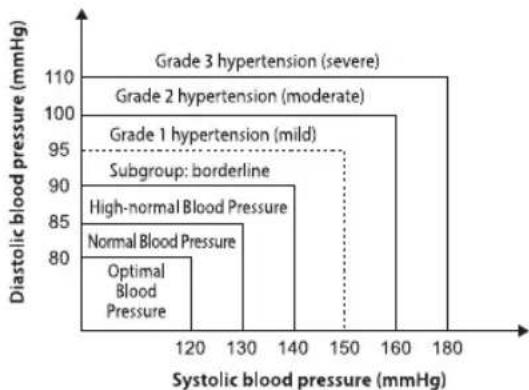
Below illustrates the blood pressure classification mode by World Health Organization (WHO) and International Society of Hypertension(lsa) in 1999.
bar
| Category | Diastolic blood pressure (mmHg) | |---|---| | Optimal Blood Pressure | 80 | | High-normal Blood Pressure | 85 | | Subgroup: borderline | 90 | | Grade 1 hypertension (mild) | 95 | | Grade 2 hypertension (moderate) | 100 | | Grade 3 hypertension (severe) | 110 || Blood Pressure (mmHg)\Level | Optimal | Normal Hig | -normal Mild M | Moderate Severe | G3 | |
| Optimal Norm. | Norm. | G1 | G2 | |||
| SYS <120 | 120~129 130~1 | 39 140~159 160 | ~179 >180 | - | ||
| DIA <80 80 | 80~84 85~89 90 | ~99 100~109 >1 | 10 | - |

CAUTION
Only a physician/GP can tell you your normal blood pressure range and the point at which you are at risk. Consult your physician to obtain these values. If the measurements taken with this product fall outside the range, consult your physician/GP.
SAFETY INFORMATION
| [c6TX] | Caution: consult accompanying documents |  | Type B applied part |
 | CE mark: conforms to essential requirements of the Medical Device Directive 93/42/EEC. |  | Disposal: do not dispose of this product as unsorted municipal waste. Collection of such waste separately for special treatment is necessary. |
 | Manufacturer | [254H] | Direct current |
| SN | Specifies serial number |

CAUTION
• This device is intended for adult use only.
- This device is intended for non-invasive measuring and monitoring of arterial blood pressure. It is not intended for use on extremities other than the arm.
- Do not confuse self-monitoring with self-diagnosis. This unit allows you to monitor your blood pressure. Do not begin or end medical treatment based solely on the readings from this unit. Always consult your physician first.
- If you are taking medication, consult your physician to determine the most appropriate time to measure your blood pressure. Never change a prescribed medication without consulting your physician.
- This unit is not suitable for continuous monitoring during medical emergencies or operations.
- If the cuff pressure exceeds 40 kPa (300 mmHg), the unit will automatically deflate. Should the cuff not deflate when pressures exceeds 40 kPa (300 mmHg), detach the cuff from the arm and press the button to stop inflation.
- To avoid measurement errors, carefully read this manual before using the product.
- The equipment is not AP/APG equipment and not suitable for use in the presence of a flammable anesthetic mixture with air of with oxygen or nitrous oxide.
- The operator shall not touch output of AC adapter and the patient simultaneously.
- To avoid measurement errors, please avoid the condition of strong electromagnetic field radiated interference signal or electrical fast transient/burst signal when using the AC adaptor.
- The user must check that the equipment functions safely and see that it is in proper working condition before being used.
- Please note that Luer lock connectors are not used on the product and please DO NOT change any provided connectors.
LCD display signal
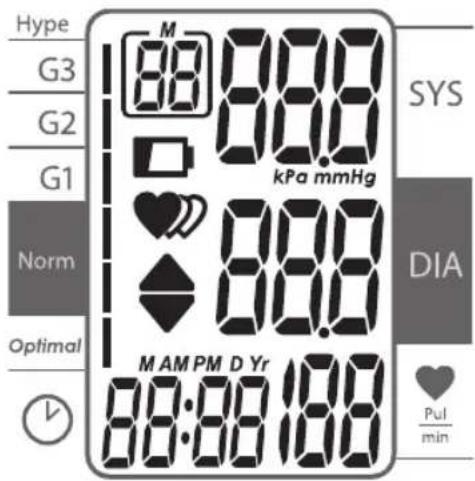
| Symbol Description Explanation | ||
| SYS | Systolic blood pressure High pressure result | |
| DIA | Diastolic blood pressure Low pressure result | |
| Pul/min | Pulse Pulse/minute | |
| Deflating CUFF is deflating | ||
| 7:38 | Time (hour:minute) Current time | |
| 18 | Memory | The displayed measurement values is from the memory. |
| kPa | kPa Measurement Unit of the blood pressure | |
| mmHg | mmHg Measurement Unit of the blood pressure | |
| Lo+ | Low battery Batteries are low and need to be replaced | |
| Arrhythmia Irregular heartbeat | ||
| Grade The grade of the blood pressure. | ||
MONITOR COMPONENTS
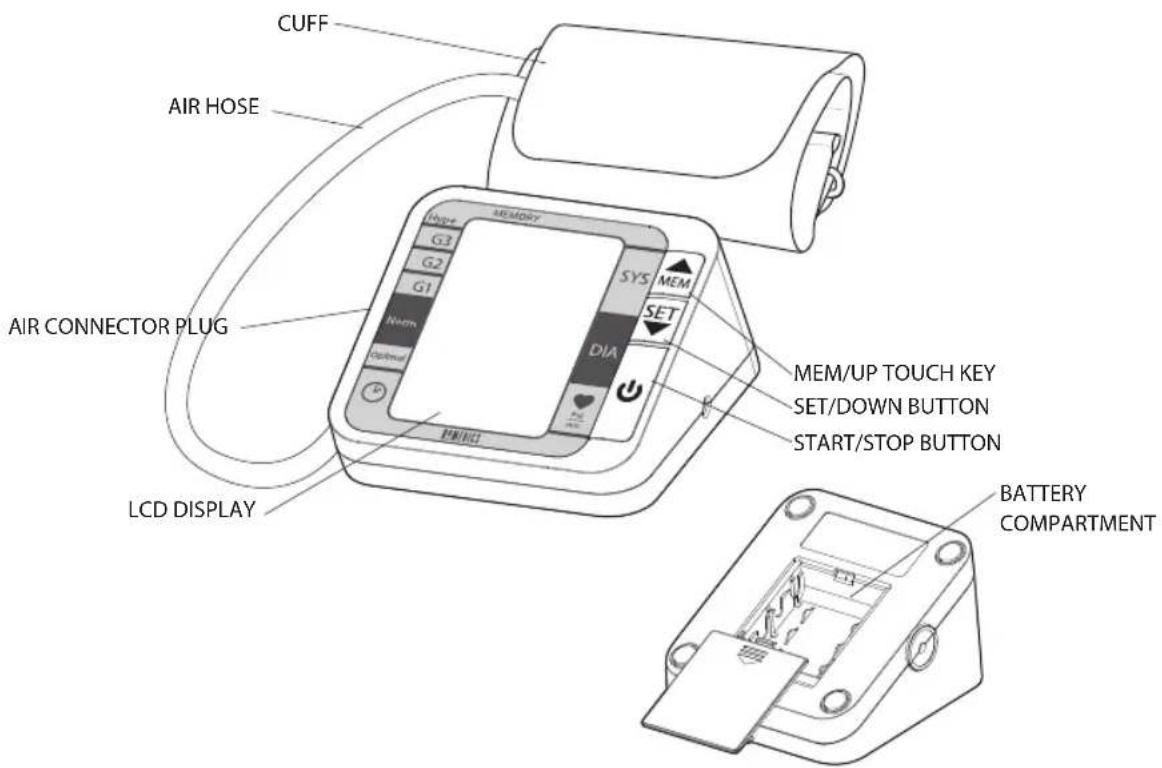
List
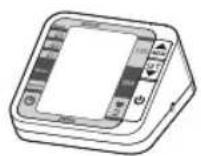
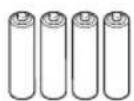
- Blood Pressure Monitor 2. Cuff
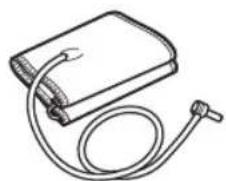
natural_image
Line drawing of a medical device with a coiled tube and attached bandage (no text or symbols)Inserting and Changing Batteries
natural_image
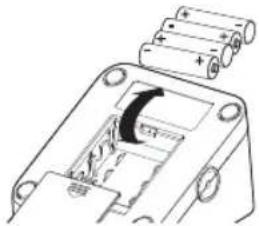
Diagram of a battery pack with an open circuit board and cylindrical batteries (no text or symbols)-
Slide off the battery cover.
-
User manual3. 4*AA batteries install the batteries by matching the correct polarity, as shown.
-
Replace the cover.
Replace the batteries whenever the below happen
• The shows
• The display dims
• The display does not light up

CAUTION
Remove batteries if the device is not likely to be used for some time.
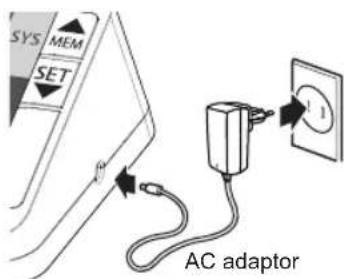
Alternatively an AC adaptor powered mode is available: 100-240V\~, 50-60HZ, 400mA (You can purchase the AC adaptor PP-ADPR2K3K-EU from the HoMedics website).
This product uses the Oscillometric Measuring method to detect blood pressure. Before every measurement, the unit establishes a "zero pressure" equivalent to the air pressure. Then it starts inflating the arm cuff, meanwhile, the unit detects pressure oscillations generated by beat-to-beat pulsatile, which is used to determine the systolic and diastolic pressure, and also pulse rate.
The device also compares the longest and the shortest time intervals of detected pulse waves to mean time interval then calculates standard deviation. The device will display a warning signal with the reading to indicate the detection of irregular heartbeat when the difference of the time intervals is over 25%.
SETTING DATE, TIME AND MEASUREMENT UNIT
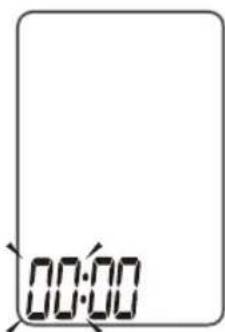
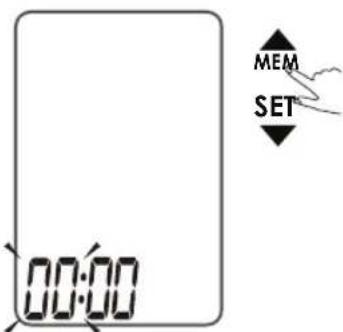
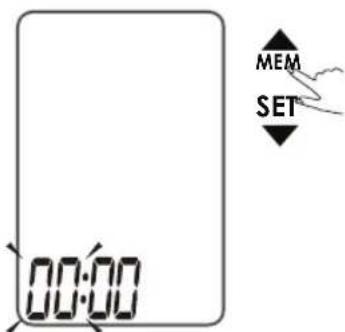
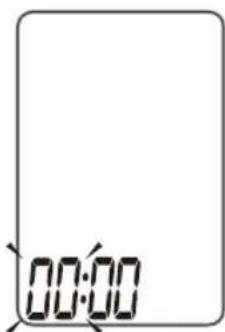
It is important to set the clock before using your blood pressure monitor, so that a time stamp can be assigned to each record that is stored in the memory. (year: 2000–2050, time: 24 H)
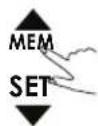
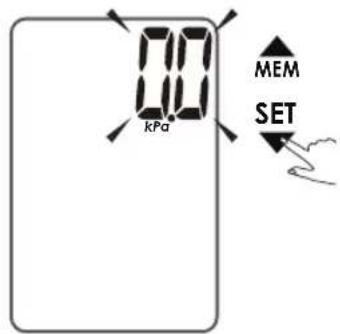
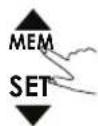
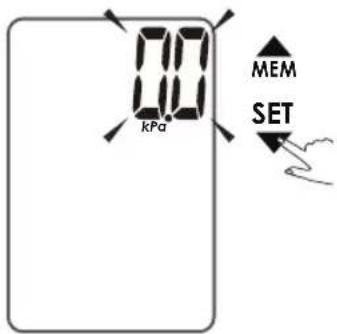
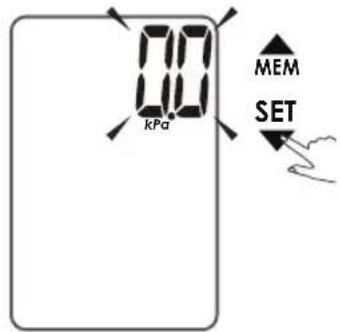
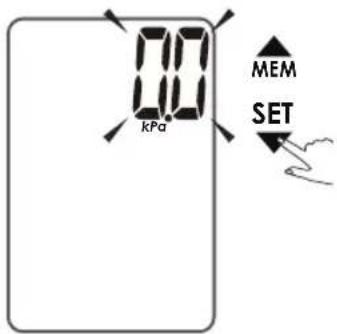
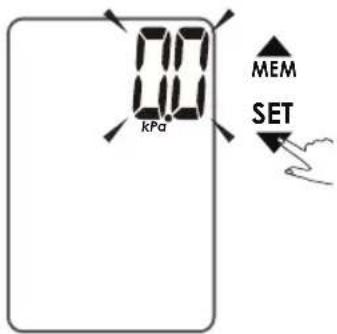
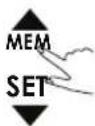
- When the unit is off, hold pressing "SET" for 3 seconds to enter the mode for year setting.
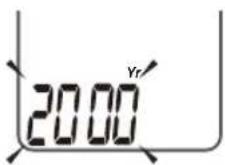

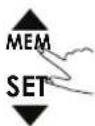
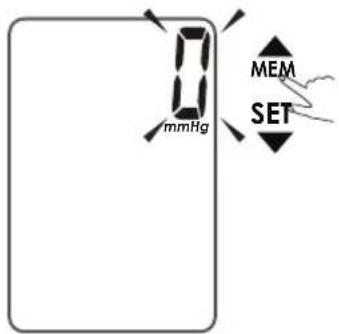
- Press the "MEM" to change the [YEAR].
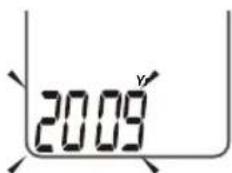

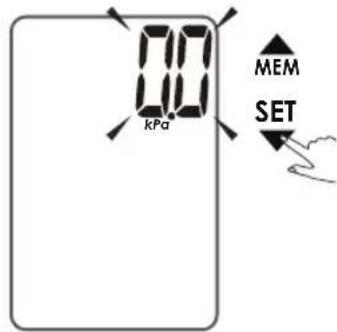
- When you get the correct year, press "SET" and it will turn to the next step automatically.
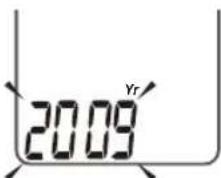

-
Repeat step 2 and 3 to set the [MONTH] and [DAY].
-
Repeat step 2 and 3 to set the [HOUR] and [MINUTE].
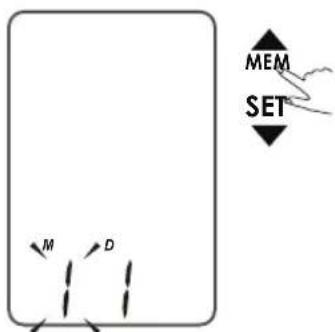
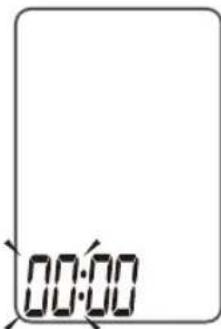
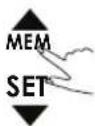
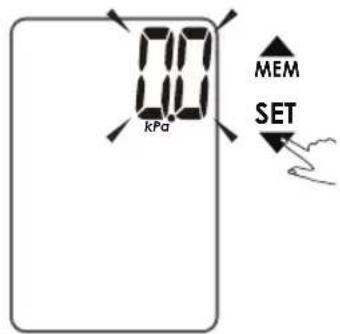
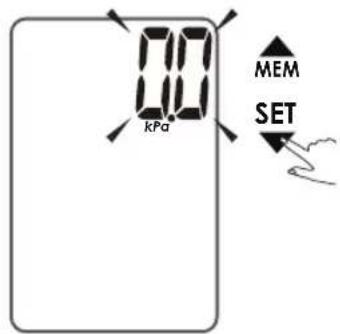
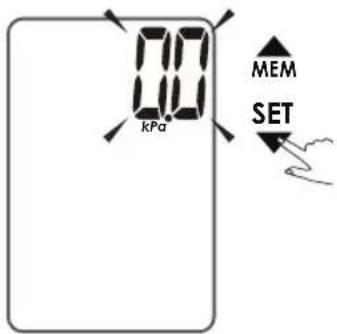
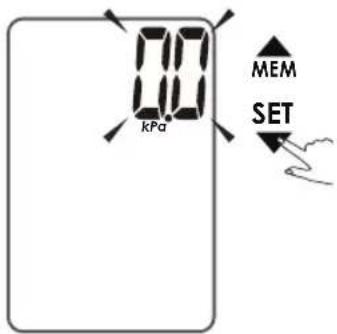
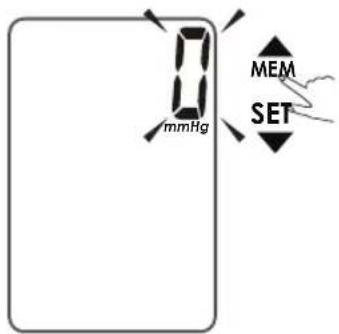
- Repeat step 2 and 3 to set the [UNIT].
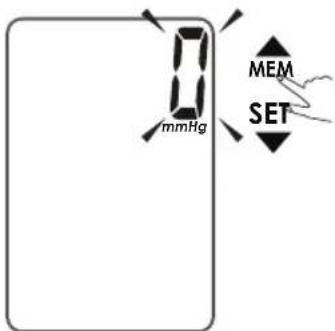
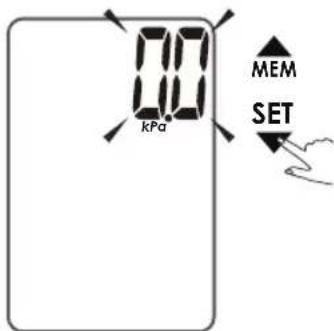
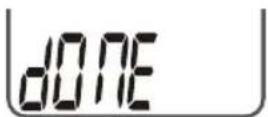
- After the unit is set, done will show, then turn off automatically.
HoW to UsE tHE Blood PrEssUrE dEVicE
Fitting the cuff
Correct cuff size is critical to accurate measurement. This monitor comes with a standard size 22-32cm arm cuff. A large size cuff 32-42cm is available from the HoMedics website www.homedics.co.uk
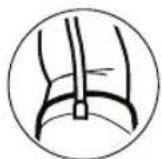
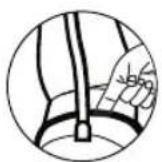
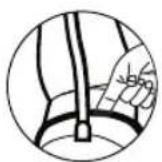
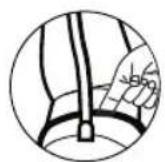
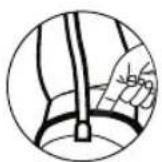
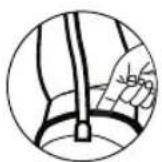
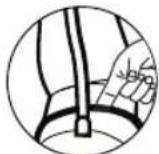
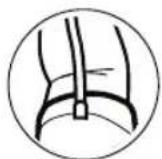
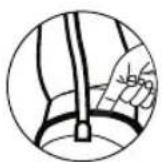
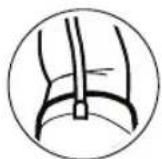
- If the cuff is not assembled at first use, put the end of the cuff which is furthest away from the tube through the D-ring to form a noose.
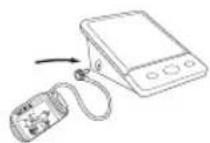
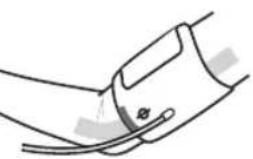
- Apply the tube to the left side of the device.
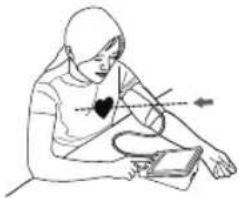
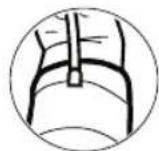
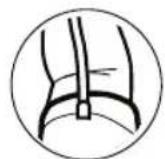
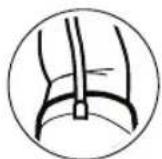
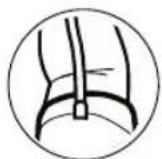
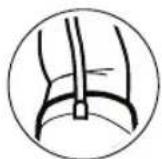
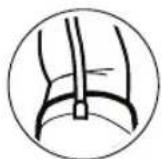
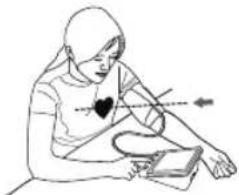
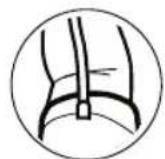
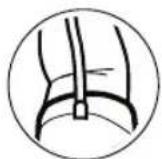
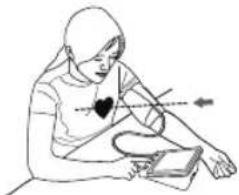
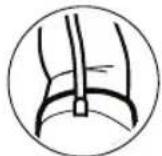
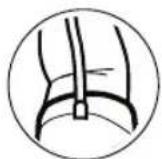
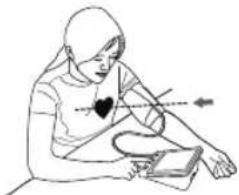
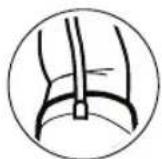
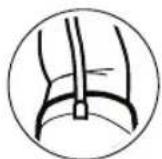
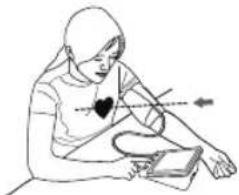
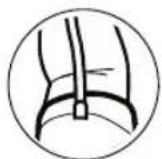
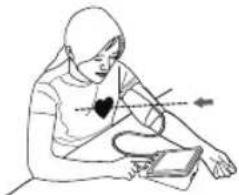
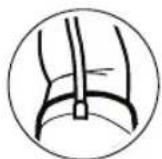
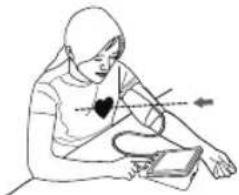
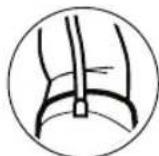
- Remove tight-fitting clothing from your left upper arm and position the cuff at approximately 2-3 cm above the elbow so that the tube is centred at the middle of the arm. The tube must face downward towards the hand.
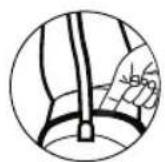
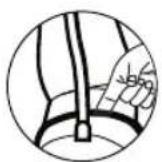
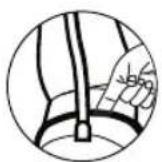
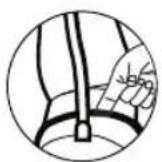
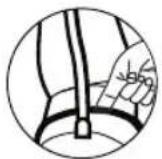
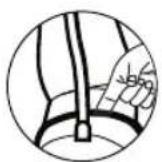
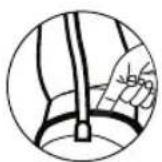
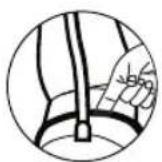
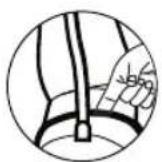
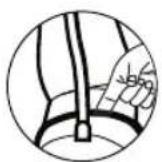
- Pull gently at the end of the cuff so that it tightens easily and smoothly around the arm. The cuff is secured by pulling the Velcro fastener towards the cuff.
- You should be able to fit one finger between the cuff and your arm. The cuff should not be fitted any tighter than this.
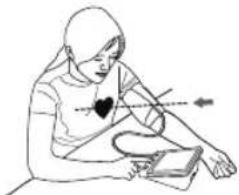
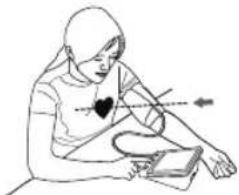
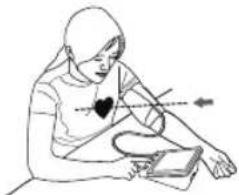
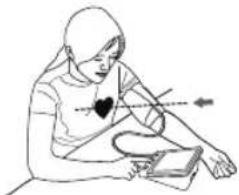
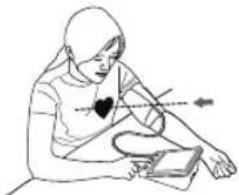
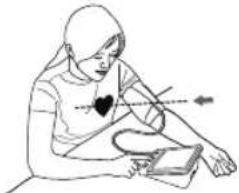
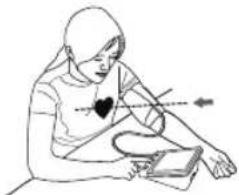
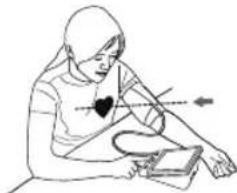
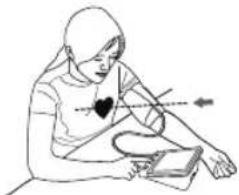
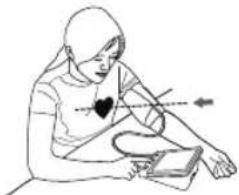
- Relax your body and rest your arm on a table with your palm up so that the cuff is positioned at the same height as the heart. Make sure that the tube does not bend.
If it is not possible to fit the cuff on the left arm, it can be placed on the right arm instead. However, it is important that all measurements are carried out on the same arm. If the measurement is to be taken on the right arm, the artery symbol on the cuff should be positioned above the main artery. Press the arm's arteries with two fingers at approximately 2 cm above the elbow on the inside of the arm to find out where the pulse is strongest. This is the main artery.

natural_image
Illustration of a person sitting with hands placed on the floor, showing pressure point on chest (no text or symbols)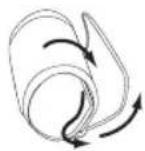
natural_image
Line drawing of a hand holding a medical device with attached tubing (no text or symbols)Worth knowing about blood pressure measurement
- Blood pressure measurements should be performed in quiet and comfortable surroundings as measurements can be affected by high or low temperatures. The blood pressure should be measured at normal body temperatures.
- Do not move or speak during measurement. Keep your feet flat on the floor.
- Do not touch the cuff or the blood pressure device during measurement.
• To obtain the best possible measurement, the blood pressure should be measured at approximately the same time every day, and on the same arm. - If you are to perform several successive measurements, please wait 5 minutes between each measurement.
- The measurements are for guidance only. If you have doubts about your blood pressure, consult your doctor.
• The blood pressure device automatically deflates when the pressure exceeds 300 mmHg.
• The product is not suited for persons suffering from arrhythmia (heart rhythm disturbances). - Measurement errors may occur if the user suffers from diabetes, poor blood circulation, kidney problems, or has suffered a stroke.
• The blood pressure changes with every heartbeat and is consequently changing constantly 24 hours a day. - The measurement of blood pressure can be influenced by the user's position, condition, or other factors. To obtain the highest degree of accuracy it is recommended that the measurement is taken 1 hour after workout, bathing, finishing a meal, consuming alcoholic or caffeine beverages, or after smoking.
- Before measurement it is recommended that you sit still and relax for 15 minutes. The user should not be physically tired or exhausted when the measurement is taken.
- The user must not talk or move arm or hand during measurement.
How to measure blood pressure
- Press the ⏻ to turn on the monitor, and it will start and finish the whole measurement automatically.
- When the measurement is completed, the cuff automatically deflates and the display will show the systolic pressure, the diastolic pressure, and the pulse. The measurement is simultaneously stored in the monitor's memory.
- The device automatically switches off approximately 1 minute after use but can also be switched off manually by pressing the button.
NOTE
If necessary, a measurement can be interrupted by pressing the button. The cuff will subsequently deflate immediately.
The cuff will automatically re-inflate if the device determines that the body requires higher pressure to complete the measurement.
Recalling records
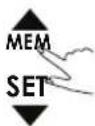
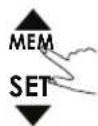
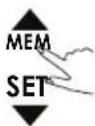
- Please press the "MEM" to show the recent record.
- Press the "MEM" or "SET" to get the record you want.
- Press the "MEM" or "SET" to get the record you want.
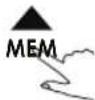
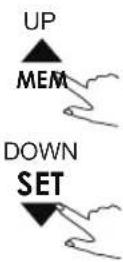
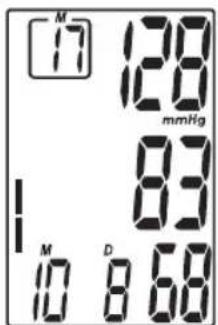
The number of the record, date and time will be shown accordingly.

The current record is shown


The month and day The corresponding time will show and alternate with date.

CAUTION
The most recent record (1) is shown first. Each new measurement is assigned to the first (1) record. All other records are pushed back one digit (e.g., 2 becomes 3, and so on), and the last record (60) is dropped from the list.
Deleting your records
If you did not get the correct measurement, you can delete all results using the following steps.
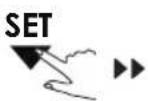
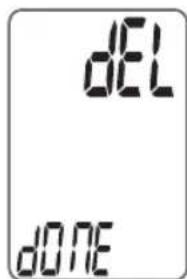
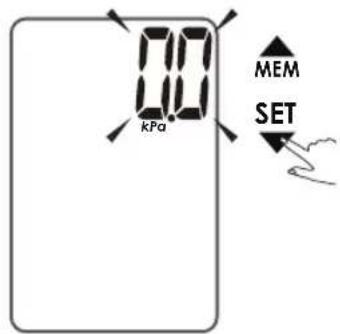
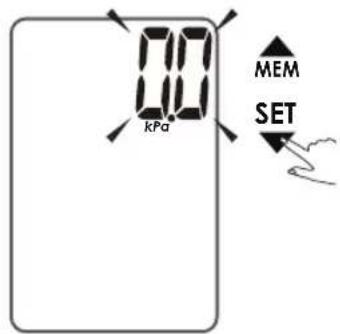
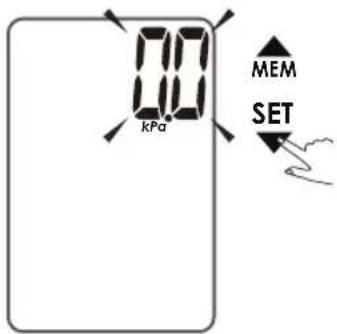
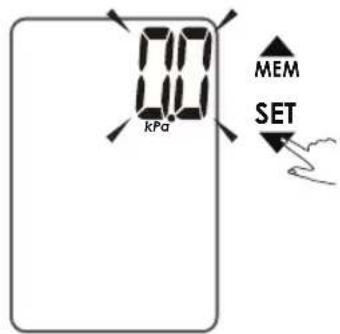
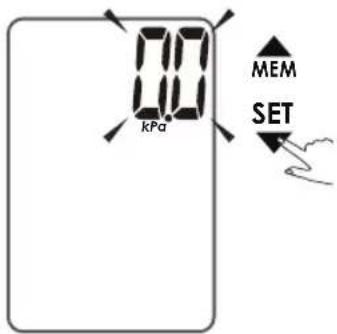
- When the device is off, hold "MEM" for 3 seconds. The flash display will show dEL ALL.
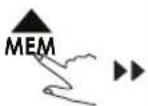
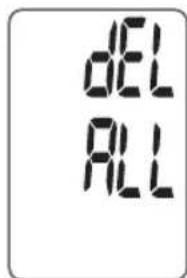
- Press "SET" to confirm deleting and the monitor will turn off automatically.
-
If you do not want to delete the record, press to cancel.
-
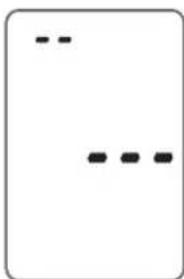
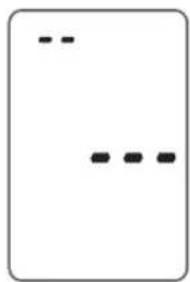
If there is no record the right display will show.
natural_image
Simple diagram with three black dots arranged horizontally inside a rounded rectangle (no text or symbols)Error search
This section includes a list of error messages and frequently asked questions for problems you may encounter with your blood pressure monitor. If irregularities occur during use, please check the following items.
| PROBLEM SYMPTOM CHECK THIS REMEDY | |||
| No power | Display is dim or will not light up. | Batteries are exhausted. Replace with new batteries | |
| Batteries are inserted incorrectly | Insert the batteries correctly | ||
| Low batteries | Show on the display | Batteries are low. Replace with new batteries | |
| Error Message | E 1 shows The cuff is not secure. | Refasten the cuff and then measure again | |
| E 2 shows The cuff is very tight | Refasten the cuff and then measure again | ||
| E 3 shows | The pressure of the cuff is excess. | Refasten the cuff and then measure again | |
| E 10 or E 11 shows | The monitor detected motion while measuring | Movement can affect the measurement. Relax for a moment and then measure again | |
| E 20 or E 21 shows Measure incorrectly | Relax for a moment and then measure again | ||
| Eexx, shows on the display. | System error. | Retake the measurement. If the problem persists, contact the retailer or our customer service department for further assistance. Refer to the warranty for contact information and return instructions. | |
If the device still does not function, please contact the store where the device was purchased. Do not attempt to open the device or adjust any of the inner parts yourself.
Specifications
| Power supply | Battery powered mode: 6VDC 4*AA batteriesAC adaptor powered mode: 100-240V~, 50-60HZ, 400mA(You can purchase the AC adaptor PP-ADPR2K3K-EU from the HoMedics website). |
| Display mode Digital LCD V.A.93*61mm | |
| Measurement mode Oscillographic testing mode | |
| Measurement range | Pressure: 0~40kpa (0~300mmHg)Pulse value: (40~199) times/minute |
| Accuracy | Pressure:15~25°C within ± 0.4kpa (3mmHg)10°C~40°C (out of 15°C~25°C)within ± 0.8kpa (6mmHg)pulse value: ±5% |
| Normal working condition Temperature: 5 °C~40°C Relative humidity ≤80% | |
| Storage & transportation condition | Temperature: -20°C~60°CRelative humidity: 10%~93% |
| Measurement perimeter of the upper arm | About 22cm~32cm |
| Weight Approx. 353g (Excluding the batteries) | |
| External dimensions Approx.140*120*70mm | |
| Attachment 4*AA batteries, user manual, cuff | |
| Mode of operation Continuous operation | |
| Degree of protection Type B applied part | |
| Protection against ingress of water IPX-0 | |
Cleaning and maintenance
The blood pressure monitor and the cuff can be wiped with a soft cloth moistened with a mild detergent and wiped dry with a soft, dry cloth or paper towel. Never use strong, caustic detergents as these may cause damage to the synthetic parts. Also, never use diluents, alcohol or kerosene to clean the device.
Safety and electrical devices
- When the device is not used, store it in a safe place.
- Only use the device on the upper arm, not on other body parts.
- When the device is not used for extended periods of time, it is recommended that you remove the batteries to avoid leakage which may cause damage to the device.
- If the device has been stored at very low temperatures near the freezing point, please allow it to obtain room temperature before using it again.
- Neither device nor cuff must be dissembled as this may cause serious damage to the device. If repair is necessary, the device must be returned to the store where it was purchased. Do not attempt to open the device or adjust the inner parts yourself.
- Do not submerge the device in water or other liquids as this will cause damage to the device.
- Do not expose the device nor the cuff to extreme temperatures, moisture or direct sunlight. Protect the device against dust.
- The cuff and the tube should not be folded up tightly. The device must not be activated if it is not appropriately fitted to the upper arm.
- Avoid dropping the device and do not subject it to heavy pressure.
- The device must not be exposed to extreme shocks such as being dropped on the floor.
- The device is intended for use in private households only and is only suited for use with adults (over 18 years of age).
- If the highly unlikely incident should occur that the cuff continues to inflate and does not stop, immediately remove the cuff from the upper arm.
Battery Directive

This symbol indicates that batteries must not be disposed of in the domestic waste as they contain substances which can be damaging to the environment and health. Please dispose of batteries in designated collection points.
WEEE explanation
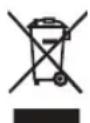
This marking indicates that this product should not be disposed with other household wastes throughout the EU. To prevent possible harm to the environment or human health from uncontrolled waste disposal, recycle it responsibly to promote the sustainable reuse of material resources. To return your used device, please use the return and collection systems or contact the retailer where the product was purchased. They can take this product for environmental safe recycling.
Table 1 Guidance and manufacture's declaration – electromagnetic emissions for all EQUIPMENT and SYSTEMS
| Guidance and manufacture's declaration – electromagnetic emission | ||
| The BPA-2000-EU is intended for use in the electromagnetic environment specified below. The customer of the user of the BPA-2000-EU should assure that it is used in such and environment. | ||
| Emission test Compliance | Electromagnetic environment – guidance | |
| RF emissionsCISPR 11 | Group 1 | The BPA-2000-EU uses RF energy only for its internal function. Therefore, its RF emissions are very low and are not likely to cause any interference in nearby electronic equipment. |
| RF emissionCISPR 11 | Class B | The BPA-2000-EU is suitable for use in all establishments other than domestic and those directly connected to the public low-voltage power supply network that supplies buildings used for domestic purposes. |
| Harmonic emissionsIEC 61000-3-2 | Not applicable | |
| Voltage fluctuations/flicker emissions IEC61000-3-3 | Not applicable | |
Table 2 Guidance and manufacture's declaration – electromagnetic immunity – for all ME EQUIPMENT and ME SYSTEMS
| Guidance and manufacture's declaration - electromagnetic immunity | |||
| The BPA-2000-EU is intended for use in the electromagnetic environment specified below. The customer or the user of BPA-2000-EU should assure that it is used in such an environment. | |||
| Immunity test | IEC 60601 test level | Compliance level E | Electromagnetic environment - guidance |
| Electrostatic discharge (ESD) IEC 61000-4-2 | ±6 kV contact ±8 kV air | ±6 kV contact ±8 kV air | Floors should be wood, concrete or ceramic tile. If floor are covered with synthetic material, the relative humidity should be at least 30%. |
| Electrical fast transient/burst IEC 61000-4-4 | ±2 kV for power supply lines | ±2kV for power supply lines | Mains power quality should be that of a typical commercial or hospital environment. |
| Surge IEC 61000-4-5 | ±1 kV line(s) to line(s) | ±1 kV differential mode | Mains power quality should be that of a typical commercial or hospital environment. |
| Voltage dips, short interruptions and voltage variations on power supply input lines IEC 61000-4-11 | <5% UT (>95% dip in UT) for 0.5 cycle | <5% UT (>95% dip in UT) for 0.5 cycle | Mains power quality should be that of a typical commercial or hospital environment. If the user of the BPA-2000-EU requires continued operation during power mains interruptions, it is recommended that the BPA-2000-EU be powered from an uninterruptible power supply or a battery. |
| 40% UT (60% dip in UT) for 5 cycles | 40% UT (60% dip in UT) for 5 cycles | ||
| 70% UT (30% dip in UT) for 25 cycles | 70% UT (30% dip in UT) for 25 cycles | ||
| <5% UT (>95% dip in UT) for 5 sec | <5% UT (>95% dip in UT) for 5 sec | ||
| Power frequency (50Hz) magnetic field IEC 61000-4-8 | 3A/m 3A/m Power frequency magnetic fields should be at levels characteristic of a typical location in a typical commercial or hospital environment. | ||
| NOTE: UT is the a.c. mains voltage prior to application of the test level. | |||
Table 3 Guidance and manufacture's declaration – electromagnetic immunity – for ME EQUIPMENT and ME SYSTEMS that are not LIFE-SUPPORTING
| Guidance and manufacture's declaration - electromagnetic immunity | |||
| The BPA-2000-EUi is intended for use in the electromagnetic environment specified below. The customer or the user should assure that it is used in such an environment. | |||
| Immunity test | IEC60601 test level | Compliance level | Electromagnetic environment - guidance |
| Conducted RF IEC61000-4-6 | 3 Vr ms 150 kHz to 80 MHz | 3 Vr ms | Portable and mobile RF communications equipment should be used no closer to any part of the YS-6100, including cables, than the recommended separation distance calculated from the equation applicable to the frequency of the transmitter.Recommen ded separation distance d = 1.167 d = 1.167 80 MHz to 800 MHz d = 2.333 800 MHz to 2.5 GHzwhere P is the maximum output power rating of the transmitter in wat ts (W) according to the transmitter manufacturer and d is the recommended separation distance in metres (m).Field strengths from fixed RF transmitters, as determined by an electromagnetic site survey, a should be less than the compliance level in each frequency range.Interference may occur in the vicinity of equipment marked with the following symbol: |
| Radiated RF IEC61000-4-3 | 3 V/m 80 MHz to 2.5 GHz | 3 V/m | |
| NOTE 1 At 80 MHz and 800 MHz, the higher frequency range applies.NOTE 2 These guidelines may not apply in all situations. Electromagnetic propagation is affected by absorption and reflection from structures, objects and people. | |||
| a Field strengths from fixed transmitters, such as base stations for radio (cellular/cordless) telephones and land mobile radios, amateur radio, AM and FM radio broadcast and TV broadcast cannot be predicted theoretically with accuracy.To assess the electromagnetic environment due to fixed RF transmitters, an electromagnetic site survey should be considered. If the measured field strength in the location in which the ELE007839V1 is used exceeds the applicable RF compliance level above, the ELE007839V1 should be observed to verify normal operation. If abnormal performance is observed, additional measures may be necessary, such as reorienting or relocating the ELE007839V1.b Over the frequency range 150 kHz to 80 MHz, field strengths should be less than 3 V/m. | |||
Table 4 Recommended separation distances between portable and mobile RF communications equipment and the EQUIPMENT or SYSTEM – for ME EQUIPMENT or ME SYSTEM that are not LIFE-SUPPORTING
| Recommended separation distances between portable and mobile RF communications equipment and the ELE007839V1 Fitness Equipment. | |||
| The BPA-2000-EU is intended for use in an electromagnetic environment in which radiated RF disturbances are controlled. The customer or the user of the BPA-2000-EU can help prevent electromagnetic interference by maintaining a minimum distance between portable and mobile RF communications equipment (transmitters) and the BPA-2000-EU as recommended below, according to the maximum output power of the communications equipment. | |||
| Rated maximum output power of transmitter W | Separation distance according to frequency of transmitter m | ||
| 150 kHz to 80 MHz d = 1.167 | 80 MHz to 800 MHz d = 1.167 | 800 MHz to 2,5 GHz d = 2.333 | |
| 0,01 0.167 0.167 0 | 233 | ||
| 0,1 0.369 0.369 0.738 | |||
| 1 1.167 1.167 2.333 | |||
| 10 3.690 3.690 7.338 | |||
| 100 11.67 11.67 23.330 | |||
| For transmitters rated at a maximum output power not listed above, the recommended separation distance d in meters (m) can be estimated using the equation applicable to the frequency of the transmitter, where P is the maximum output power rating of the transmitter in watts (W) according to the transmitter manufacturer.NOTE 1 At 80 MHz and 800 MHz, the separation distance for the higher frequency range applies.NOTE 2 These guidelines may not apply in all situations. Electromagnetic propagation is affected by absorption and reflection from structures, objects and people. | |||
MONITEUR DE PRESSION ARTÉRIELLE HOMEDICS
natural_image
Line drawing of a medical device with a coiled tube and attached tubing (no text or symbols)natural_image
Diagram of a battery pack with an open circuit board and cylindrical batteries (no text or symbols)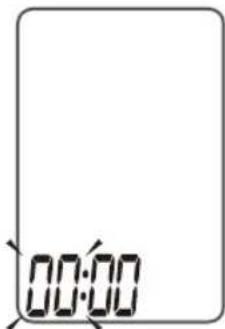
natural_image
Illustration of a medical device with a curved arrow indicating rotation and a connected device (no text or symbols)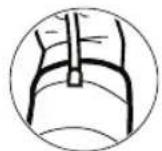
natural_image
Illustration of a person sitting with hands placed on the floor, showing pressure point and directional arrow (no text or symbols)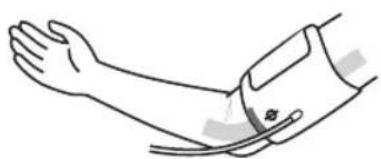
natural_image
Line drawing of a human hand receiving blood pressure measurement (no text or symbols)natural_image
Simple diagram with three black dots arranged horizontally inside a rounded rectangle (no text or symbols)Recherche d'erreur
HOMEDICS BLUTDRUCKMESSGERÄT
Vor der Verwendung
natural_image
Line drawing of a medical device with a coiled tube and attached bandage (no text or symbols)natural_image
Diagram of a battery pack with two batteries and a rotating mechanism (no text or symbols)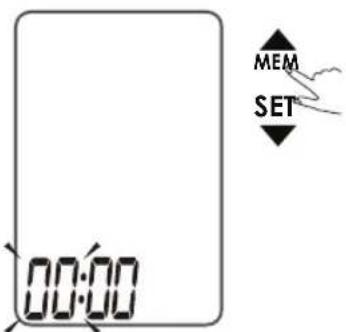
natural_image
Illustration of a medical device with a curved arrow indicating rotation and a connected device (no text or symbols)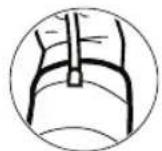
natural_image
Illustration of a person sitting with hands placed on the floor, showing pressure point and directional arrow (no text or symbols)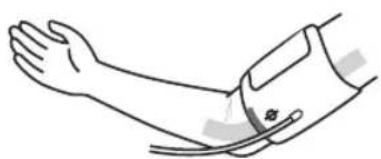
natural_image
Line drawing of a human hand receiving blood pressure measurement (no text or symbols)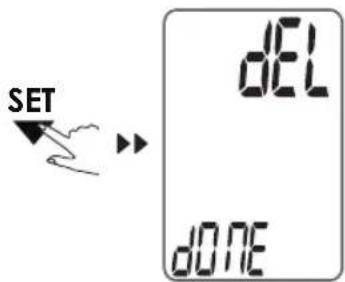
natural_image
Simple diagram with three horizontal lines and two dots inside a rounded rectangle (no text or symbols)Fehlersuche
natural_image
Line drawing of a medical device with a coiled tube and attached bandage (no text or symbols)natural_image
Diagram of a battery pack with two batteries and a rotating mechanism (no text or symbols)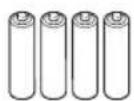
Replace the batteries whenever the below happen

PRECAUCIÓN
natural_image
Illustration of a person sitting with hands placed on the floor, showing pressure point and directional arrow (no text or symbols)natural_image
Line drawing of a human hand receiving blood pressure measurement (no text or symbols)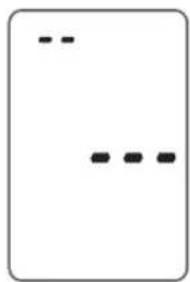
natural_image
Simple diagram with three black dots arranged horizontally inside a rounded rectangle (no text or symbols)Búsqueda de errores
natural_image
Line drawing of a medical device with a coiled tube and attached band (no text or symbols)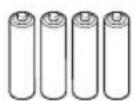

ATTENZIONE
natural_image
Illustration of a medical device with tubing and a connected device (no text or symbols)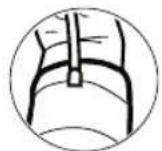
natural_image
Illustration of a person sitting with hands placed on the floor, showing a heart symbol and directional arrow (no text or labels)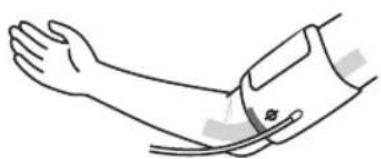
natural_image
Line drawing of a human hand receiving blood pressure measurement (no text or symbols)natural_image
Simple diagram with three black dots arranged horizontally inside a rounded rectangle (no text or symbols)natural_image
Line drawing of a medical device with a coiled tube and attached band (no text or symbols)natural_image
Diagram of a battery pack with two batteries and a rotating mechanism (no text or symbols)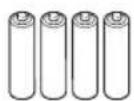
natural_image
Illustration of a medical device with tubing and a connected device (no text or symbols)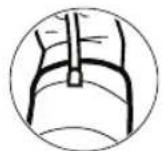
natural_image
Illustration of a person sitting with hands placed on the floor, showing pressure point and directional arrow (no text or symbols)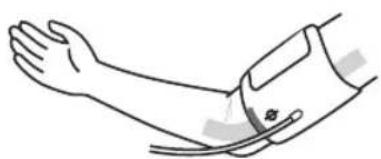
natural_image
Line drawing of a human hand receiving blood pressure measurement (no text or symbols)
natural_image
Simple diagram with three black dots arranged horizontally inside a rounded rectangle (no text or symbols)Busca de erro
natural_image
Line drawing of a medical device with a coiled tube and attached bandage (no text or symbols)natural_image
Diagram of a battery pack with an open circuit board and cylindrical batteries (no text or symbols)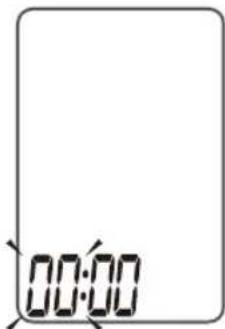
natural_image
Illustration of a medical device with tubing and a connected device (no text or symbols)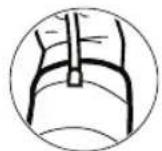
natural_image
Illustration of a person sitting with hands placed on the floor, showing a heart symbol and directional arrow (no text or labels)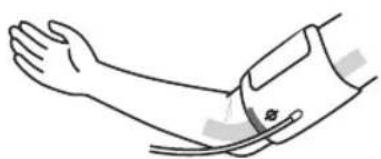
natural_image
Line drawing of a human hand receiving blood pressure measurement (no text or symbols)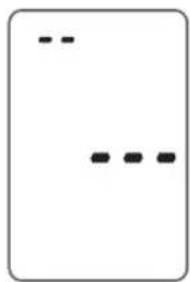
natural_image
Simple diagram with three black dots arranged horizontally inside a rounded rectangle (no text or symbols)Problemen oplossen
natural_image
Line drawing of a medical device with a coiled tube and attached bandage (no text or symbols)natural_image
Diagram of a battery pack with an open circuit board and cylindrical batteries (no text or symbols)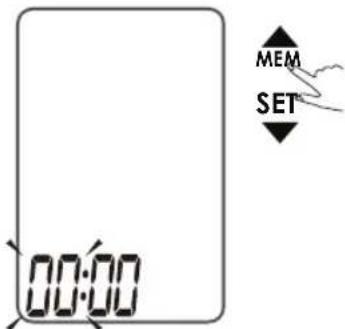
natural_image
Illustration of a medical device with tubing and a connected device (no text or symbols)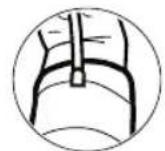
natural_image
Illustration of a person sitting with hands placed on the back, showing pressure point on chest (no text or symbols)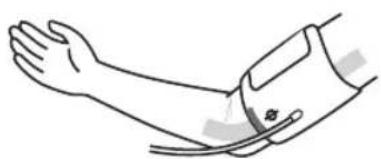
natural_image
Line drawing of a human hand receiving blood pressure measurement (no text or symbols)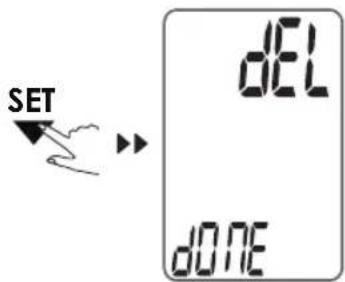
natural_image
Simple diagram with three black dots arranged horizontally inside a rounded rectangle (no text or symbols)Hata bulma
natural_image
Line drawing of a medical device with a coiled tube and attached cable (no text or symbols)- Εγχειρίδιο χρήστη
natural_image
Diagram of a battery pack with an arrow indicating internal movement, no text or symbols present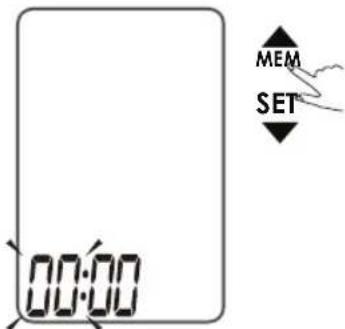
natural_image
Illustration of a medical device with tubing and a connected device (no text or symbols)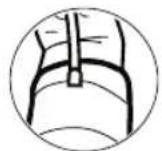
natural_image
Illustration of a person sitting with hands placed on the floor, showing a heart symbol and directional arrow (no text or labels)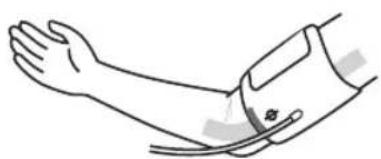
natural_image
Line drawing of a human hand receiving blood pressure measurement (no text or symbols)natural_image
Simple diagram with three black dots arranged horizontally inside a rounded rectangle (no text or symbols)Αναζήτηση σφαλμάτων
natural_image
Line drawing of a medical device with a coiled tube and attached band (no text or symbols)natural_image
Diagram of a battery pack with two batteries and a rotating switch (no text or symbols)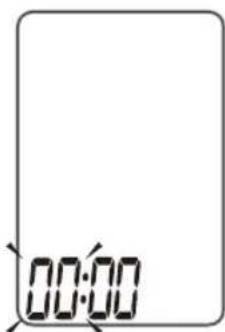
natural_image
Illustration of a medical device with a curved arrow indicating rotation and a connected device (no text or symbols)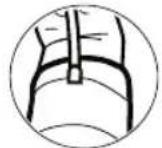
natural_image
Illustration of a person sitting with hands placed on their back, showing pressure point and directional arrow (no text or symbols)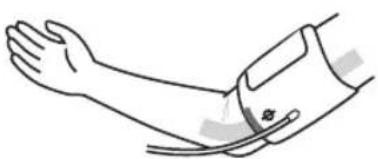
natural_image
Line drawing of a human hand receiving blood pressure measurement (no text or symbols)natural_image
Simple diagram with three black dots arranged horizontally inside a rounded rectangle (no text or symbols)natural_image
Line drawing of a medical device with a coiled tube and attached band (no text or symbols)natural_image
Diagram of a battery pack with an open circuit board and cylindrical batteries (no text or symbols)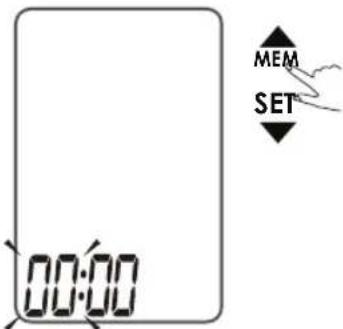
natural_image
Illustration of a medical device with tubing and a connected device (no text or symbols)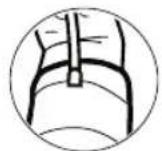
natural_image
Illustration of a person sitting with hands placed on the floor, showing a heart symbol and directional arrow (no text or labels)natural_image
Line drawing of a human hand receiving blood pressure measurement (no text or symbols)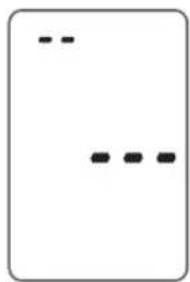
natural_image
Simple diagram with three black dots arranged horizontally inside a rounded rectangle (no text or symbols)Wykrywanie usterek
natural_image
Line drawing of a medical device with a coiled tube and attached band (no text or symbols)natural_image
Diagram of a battery pack with an open circuit board and cylindrical batteries (no text or symbols)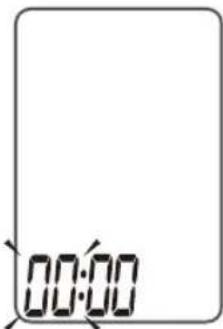
natural_image
Illustration of a medical device with tubing and a connected device (no text or symbols)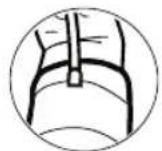
natural_image
Illustration of a person sitting with hands placed on the floor, showing pressure point and directional arrow (no text or symbols)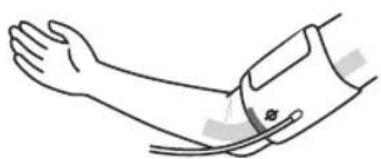
natural_image
Line drawing of a human hand receiving blood pressure measurement (no text or symbols)natural_image
Simple diagram with three black dots arranged horizontally inside a rounded rectangle (no text or symbols)Felsökning
natural_image
Line drawing of a medical device with a coiled tube and attached bandage (no text or symbols)natural_image
Diagram of a battery pack with two batteries and a rotating mechanism (no text or symbols)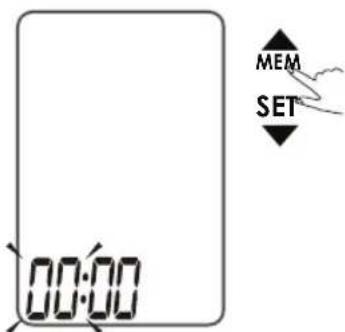
- Gentag trin 2 og 3 for at indstille [MÅLEENHED].
natural_image
Illustration of a medical device with tubing and a connected device (no text or symbols)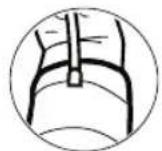
natural_image
Illustration of a person sitting with hands placed on the floor, showing pressure point and directional arrow (no text or symbols)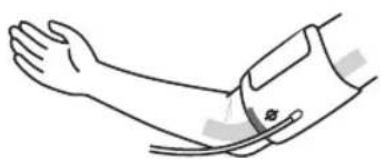
natural_image
Line drawing of a human hand receiving blood pressure measurement (no text or symbols)Målingens nummer, dato og tid vil blive vist skiftevis.

natural_image
Simple diagram with three black dots arranged horizontally inside a rounded rectangle (no text or symbols)Fejlfinding
natural_image
Illustration of a medical device with tubing and a connected device (no text or symbols)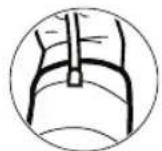
natural_image
Illustration of a person sitting with hands placed on the floor, showing a heart symbol and directional arrow (no text or labels)natural_image
Line drawing of a human hand receiving blood pressure measurement (no text or symbols)natural_image
Simple diagram with three black dots arranged horizontally inside a rounded rectangle (no text or symbols)Feilsøk
natural_image
Line drawing of a medical device with a coiled tube and attached bandage (no text or symbols)natural_image
Diagram of a battery pack with two batteries and a rotating switch (no text or symbols)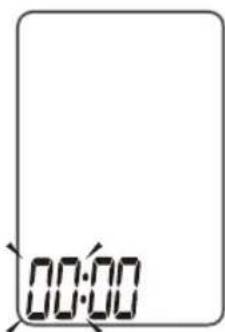
natural_image
Illustration of a medical device with a curved arrow indicating rotation and a connected device (no text or symbols)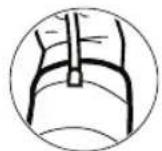
natural_image
Illustration of a person sitting with hands placed on the floor, showing pressure point and directional arrow (no text or symbols)natural_image
Line drawing of a human hand receiving blood pressure measurement (no text or symbols)natural_image
Simple diagram with three black dots arranged horizontally inside a rounded rectangle (no text or symbols)Vianetsintä
When ventricles contract and pump blood out of the heart, blood pressure reaches its maximum value, the highest pressure in the cycle is known as systolic pressure. When the heart relaxes between heartbeats, the lowest blood pressure is diastolic pressure.
natural_image
Line drawing of a medical device with a coiled tube and attached bandage (no text or symbols)natural_image
Diagram of a battery pack with an open circuit board and cylindrical batteries (no text or symbols)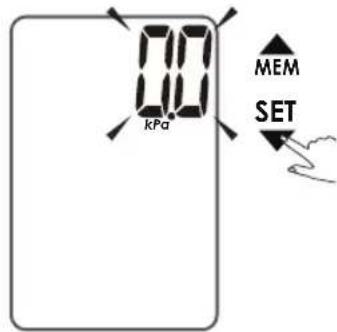
natural_image
Illustration of a handheld device connected to a device with curved arrows indicating motion (no text or symbols present)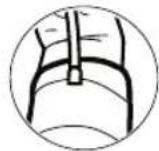
natural_image
Illustration of a person sitting with hands placed on a table, showing a heart symbol and directional arrow (no text or labels)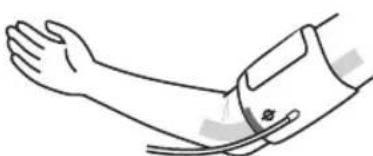
natural_image
Line drawing of a human arm with a medical device attached (no text or symbols)natural_image
Simple diagram with three black dots arranged horizontally inside a rounded rectangle (no text or symbols)Hledání chyb
natural_image
Line drawing of a medical device with a coiled tube and connector (no text or symbols)natural_image
Diagram of a battery pack with a rotating switch and battery, showing internal components (no text or symbols)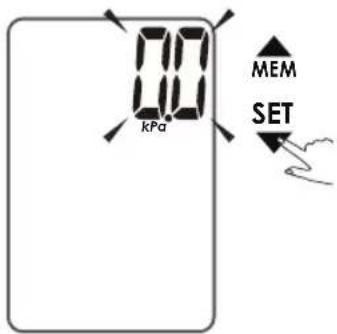
natural_image
Illustration of a medical device with tubing and a connected device (no text or symbols)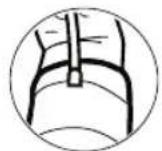
natural_image
Illustration of a person sitting with hands placed on the floor, showing a heart symbol and directional arrow (no text or labels)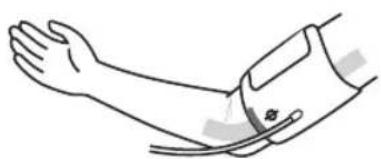
natural_image
Line drawing of a human hand receiving blood pressure measurement (no text or symbols)natural_image
Simple diagram with three black dots arranged horizontally inside a rounded rectangle (no text or symbols)Hibakeresés
natural_image
Line drawing of a medical device with a coiled tube and attached bandage (no text or symbols)natural_image
Diagram of a battery pack with an open circuit board and cylindrical batteries (no text or symbols)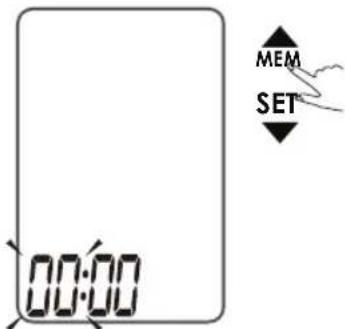
- Zopakovaním kroku č. 2 a 3 nastavte položku [UNIT] (JEDNOTKA).
natural_image
Illustration of a medical device with tubing and a connected device (no text or symbols)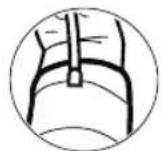
natural_image
Illustration of a person sitting with hands placed on the floor, showing pressure point and directional arrow (no text or symbols)natural_image
Line drawing of a human hand receiving blood pressure measurement (no text or symbols)natural_image
Simple diagram with three black dots arranged horizontally inside a rounded rectangle (no text or symbols)Chyba vyhl'adávania

- HOMEDICS BLOOD PRESSURE MONITOR
- Before use
- Why is it important to keep an eye on your blood pressure?
- What are systolic pressure and diastolic pressure?
- What is the standard blood pressure classification?
- CAUTION
- SAFETY INFORMATION
- MONITOR COMPONENTS
- List
- Inserting and Changing Batteries
- Replace the batteries whenever the below happen
- SETTING DATE, TIME AND MEASUREMENT UNIT
- HoW to UsE tHE Blood PrEssUrE dEVicE
- Fitting the cuff
- Worth knowing about blood pressure measurement
- How to measure blood pressure
- NOTE
- Recalling records
- Deleting your records
- Error search
- Cleaning and maintenance
- Safety and electrical devices
- Battery Directive
- WEEE explanation
- MONITEUR DE PRESSION ARTÉRIELLE HOMEDICS
- Recherche d'erreur
- HOMEDICS BLUTDRUCKMESSGERÄT
- Vor der Verwendung
- Fehlersuche
- PRECAUCIÓN
- Búsqueda de errores
- ATTENZIONE
- Busca de erro
- Problemen oplossen
- Hata bulma
- Αναζήτηση σφαλμάτων
- Wykrywanie usterek
- Felsökning
- Fejlfinding
- Feilsøk
- Vianetsintä
- Hledání chyb
- Hibakeresés
- Chyba vyhl'adávania
Brand : HOMEDICS
Model : BPA2000EU
Category : Sphygmomanometer