USER MANUAL GSR 10 82LI Professional BOSCH
A. A. supercalset object
Ukrainian ......... Page 109
Kazakh ......... Page 115
Romanian ......... Page 122
Bulgarian ......... Page 128
Macedonian ......... Page 134
Serbian ......... Page 140
Slovenian ......... Page 146
Croatian ......... Page 151
Estonian ......... Page 157
WARNING
Read all safety warnings, instructions, illustrations and specifications provided with this power tool.
Failure to follow all instructions listed below may result in electric shock, fire and/or serious injury.
Save all warnings and instructions for future reference.
The term "power tool" in the warnings refers to your mains-operated (corded) power tool or battery-operated (cordless) power tool.
Work area safety
- Keep work area clean and well lit. Cluttered or dark areas invite accidents. Do not operate power tools in explosive atmospheres, such as in the presence of flammable liquids, gases or dust. Power tools create sparks which may ignite the dust or fumes.
- Keep children and bystanders away while operating a power tool. Distractions can cause you to lose control.
Electrical safety
Power tool plugs must match the outlet. Never modify the plug in any way. Do not use any adapter plugs with earthed (grounded) power tools. Unmodified plugs and matching outlets will reduce risk of electric shock. Avoid body contact with earthed or grounded surfaces, such as pipes, radiators, ranges and refrigerators. There is an increased risk of electric shock if your body is earthed or grounded. Do not expose power tools to rain or wet conditions. Water entering a power tool will increase the risk of electric shock. Do not abuse the cord. Never use the cord for carrying, pulling or unplugging the power tool. Keep cord away from heat, oil, sharp edges or moving parts. Damaged or entangled cords increase the risk of electric shock. When operating a power tool outdoors, use an extension cord suitable for outdoor use. Use of a cord suitable for outdoor use reduces the risk of electric shock. If operating a power tool in a damp location is unavoidable, use a residual current device (RCD) protected supply. Use of an RCD reduces the risk of electric shock.
Personal safety
Stay alert, watch what you are doing and use common sense when operating a power tool. Do not use a power tool while you are tired or under the influence of drugs, alcohol or medication. A moment of inattention while operating power tools may result in serious personal injury. Use personal protective equipment. Always wear eye protection. Protective equipment such as a dust mask, non-skid safety shoes, hard hat or hearing protection used for appropriate conditions will reduce personal injuries. Prevent unintentional starting. Ensure the switch is in the off-position before connecting to power source and/or battery pack, picking up or carrying the tool. Carrying power tools with your finger on the switch or energising power tools that have the switch on invites accidents. Remove any adjusting key or wrench before turning the power tool on. A wrench or a key left attached to a rotating part of the power tool may result in personal injury.
Do not overreach. Keep proper footing and balance at all times. This enables better control of the power tool in unexpected situations. Dress properly. Do not wear loose clothing or jewellery. Keep your hair and clothing away from moving parts. Loose clothes, jewellery or long hair can be caught in moving parts. If devices are provided for the connection of dust extraction and collection facilities, ensure these are connected and properly used. Use of dust collection can reduce dust-related hazards. Do not let familiarity gained from frequent use of tools allow you to become complacent and ignore tool safety principles. A careless action can cause severe injury within a fraction of a second.
Do not force the power tool. Use the correct power tool for your application. The correct power tool will do the job better and safer at the rate for which it was designed. Do not use the power tool if the switch does not turn it on and off. Any power tool that cannot be controlled with the switch is dangerous and must be repaired. Disconnect the plug from the power source and/or remove the battery pack, if detachable, from the power tool before making any adjustments, changing accessories, or storing power tools. Such preventive safety measures reduce the risk of starting the power tool accidentally. Store idle power tools out of the reach of children and do not allow persons unfamiliar with the power tool or these instructions to operate the power tool. Power tools are dangerous in the hands of untrained users. Maintain power tools and accessories. Check for misalignment or binding of moving parts, breakage of parts and any other condition that may affect the power tool's operation. If damaged, have the power tool repaired before use. Many accidents are caused by poorly maintained power tools. Keep cutting tools sharp and clean. Properly maintained cutting tools with sharp cutting edges are less likely to bind and are easier to control. Use the power tool, accessories and tool bits etc. in accordance with these instructions, taking into account the working conditions and the work to be performed. Use of the power tool for operations different from those intended could result in a hazardous situation. Keep handles and grasping surfaces dry, clean and free from oil and grease. Slippery handles and grasping surfaces do not allow for safe handling and control of the tool in unexpected situations.
Recharge only with the charger specified by the manufacturer. A charger that is suitable for one type of bat
tery pack may create a risk of fire when used with another battery pack.
Use power tools only with specifically designated battery packs. Use of any other battery packs may create a risk of injury and fire. When battery pack is not in use, keep it away from other metal objects, like paper clips, coins, keys, nails, screws or other small metal objects, that can make a connection from one terminal to another.
Shorting the battery terminals together may cause burns or a fire.
Under abusive conditions, liquid may be ejected from the battery; avoid contact. If contact accidentally occurs, flush with water. If liquid contacts eyes, additionally seek medical help. Liquid ejected from the battery may cause irritation or burns. Do not use a battery pack or tool that is damaged or modified. Damaged or modified batteries may exhibit unpredictable behaviour resulting in fire, explosion or risk of injury. Do not expose a battery pack or tool to fire or excessive temperature. Exposure to fire or temperature above 130°C may cause explosion. Follow all charging instructions and do not charge the battery pack or tool outside the temperature range specified in the instructions. Charging improperly or at temperatures outside the specified range may damage the battery and increase the risk of fire.
Service
Have your power tool serviced by a qualified repair person using only identical replacement parts. This will ensure that the safety of the power tool is maintained. - Never service damaged battery packs. Service of battery packs should only be performed by the manufacturer or authorized service providers.
Safety Instructions for Drill/Driver
Safety instructions for all operations
Hold the power tool by insulated gripping surfaces, when performing an operation where the cutting accessory or fasteners may contact hidden wiring. Cutting accessory or fasteners contacting a "live" wire may make exposed metal parts of the power tool "live" and could give the operator an electric shock.
Safety instructions when using long drill bits
Never operate at higher speed than the maximum speed rating of the drill bit. At higher speeds, the bit is likely to bend if allowed to rotate freely without contacting the workpiece, resulting in personal injury. Always start drilling at low speed and with the bit tip in contact with the workpiece. At higher speeds, the bit is likely to bend if allowed to rotate freely without contacting the workpiece, resulting in personal injury.
Apply pressure only in direct line with the bit and do not apply excessive pressure. Bits can bend causing breakage or loss of control, resulting in personal injury.
- Secure the workpiece. A workpiece clamped with clamping devices or in a vice is held more secure than by hand. Always wait until the power tool has come to a complete stop before placing it down. The application tool can jam and cause you to lose control of the power tool.
- Switch the power tool off immediately if the application tool becomes blocked. Be prepared for high torque reactions which cause kickback. The application tool becomes blocked when it becomes jammed in the workpiece or when the power tool becomes overloaded. Use suitable detectors to determine if there are hidden supply lines or contact the local utility company for assistance. Contact with electric cables can cause fire and electric shock. Damaging gas lines can lead to explosion. Breaking water pipes causes property damage. Hold the power tool securely. When tightening and loosening screws be prepared for temporarily high torque reactions. In case of damage and improper use of the battery, vapours may be emitted. The battery can set alight or explode. Ensure the area is well ventilated and seek medical attention should you experience any adverse effects. The vapours may irritate the respiratory system. Do not open the battery. There is a risk of short-circuiting. The battery can be damaged by pointed objects such as nails or screwdrivers or by force applied externally. An internal short circuit may occur, causing the battery to burn, smoke, explode or overheat. Only use the battery with products from the manufacturer. This is the only way in which you can protect the battery against dangerous overload.
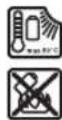
Protect the battery against heat, e.g. against continuous intense sunlight, fire, dirt, water and moisture. There is a risk of explosion and short-circuiting.
Product Description and Specifications

Read all the safety and general instructions. Failure to observe the safety and general instructions may result in electric shock, fire and/or serious injury.
Please observe the illustrations at the beginning of this operating manual.
Intended use
The power tool is intended for driving and loosening screws and for drilling in wood, metal, ceramic and plastic.
Product features
The numbering of the product features refers to the diagram of the power tool on the graphics page.
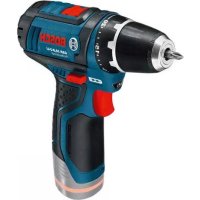
(1) Keyless chuck (2) Torque presetting ring (3) Gear selector switch (4) Battery release button (5) Rechargeable battery (6) Rotational direction switch (7) On/off switch (8) Battery charge indicator (9) "PowerLight" lamp (10) Handle (insulated gripping surface) (11) Universal bit holder (12) Screwdriver bit
A) Accessories shown or described are not included with the product as standard. You can find the complete selection of accessories in our accessories range.
Technical Data
Cordless Drill/Driver GSR 12V-15
| Article number | 3601 H68 1.. |
| Rated voltage V= 12 | |
| No-load speedA) | |
| - First gear min | -1 0-400 |
| - Second gear min | -1 0-1300 |
| Max. torque, hard/soft screwdriving application ac-cording to ISO 5393A) | Nm 30/15 |
| Max. drilling diameter | |
| - Steel mm 10 | |
| - Wood mm 19 | |
| Max. screw diameter mm 7 | |
| Chuck capacity mm 1.0-10 | |
| Weight according to EPTA-Procedure 01:2014B) | kg 1.0-1.2 |
| Recommended ambient tem-perature during charging | °C 0 to +35 |
| Permitted ambient temperat-ure during operationC) and during storage | °C -20 to +50 |
| Recommended rechargeable batteries | GBA 12V... |
Cordless Drill/Driver GSR 12V-15
Recommended chargers
GAL 12...
A) measured at 20 - 25°C with battery GBA 12V 1.3Ah. B) Depends on battery in use. C) Limited performance at temperatures < 0°C.
Noise emission values determined according to EN 62841-2-1.
Typically, the A-weighted sound pressure level of the power tool is 71 dB(A). Uncertainty K = 5 dB. The noise level when working can exceed the volume stated. Wear hearing protection!
Vibration total values ah (triax vector sum) and uncertainty K determined according to EN 62841-2-1:
Drilling in metal: an < 2.5 m/s2, K = 1.5 m/s2
The vibration level and noise emission value given in these instructions have been measured in accordance with a standardised measuring procedure and may be used to compare power tools. They may also be used for a preliminary estimation of vibration and noise emissions.
The stated vibration level and noise emission value represent the main applications of the power tool. However, if the power tool is used for other applications, with different application tools or is poorly maintained, the vibration level and noise emission value may differ. This may significantly increase the vibration and noise emissions over the total working period.
To estimate vibration and noise emissions accurately, the times when the tool is switched off or when it is running but not actually being used should also be taken into account. This may significantly reduce vibration and noise emissions over the total working period.
Implement additional safety measures to protect the operator from the effects of vibration, such as servicing the power tool and application tools, keeping their hands warm, and organising workflows correctly.
Assembly
Remove the battery from the power tool before carrying out work on the power tool (e.g. maintenance, changing tool, etc.). The battery should also be removed for transport and storage. There is risk of injury from unintentionally pressing the on/off switch.
Use only the chargers listed in the technical data. Only these chargers are matched to the lithium-ion battery of your power tool.
Note: The battery is supplied partially charged. To ensure full battery capacity, fully charge the battery in the charger before using your power tool for the first time.
The lithium-ion battery can be charged at any time without reducing its service life. Interrupting the charging process does not damage the battery.
The lithium-ion battery is protected against deep discharge by the "Electronic Cell Protection (ECP)". When the battery is discharged, the power tool is switched off by means of a protective circuit: The application tool no longer rotates.
Do not continue to press the On/Off switch after the power tool has automatically switched off. The battery can be damaged.
To remove the battery (5), press the release buttons (4) and pull the battery downwards out of the power tool. Do not use force to do this.
Follow the instructions on correct disposal.
- Remove the battery from the power tool before carrying out work on the power tool (e.g. maintenance, changing tool, etc.). The battery should also be removed for transport and storage. There is risk of injury from unintentionally pressing the on/off switch.
The drill spindle is locked when the on/off switch (7) is not pressed. This makes it possible to change the application tool in the drill chuck quickly, conveniently and easily.
Open the keyless chuck (1) by turning it in the direction of rotation until the tool can be inserted. Insert the tool.
Firmly tighten the sleeve of the keyless chuck (1) by turning it by hand in the direction of rotation until it audibly clicks into place. This will automatically lock the drill chuck.
Dust from materials such as lead-containing coatings, some wood types, minerals and metal can be harmful to one's health. Touching or breathing in the dust can cause allergic reactions and/or lead to respiratory infections of the user or bystanders.
Certain dust, such as oak or beech dust, is considered carcinogenic, especially in connection with wood-treatment additives (chromate, wood preservative). Materials containing asbestos may only be worked by specialists.
- Provide for good ventilation of the working place.
- It is recommended to wear a P2 filter-class respirator.
Observe the relevant regulations in your country for the materials to be worked.
- Avoid dust accumulation at the workplace. Dust can easily ignite.
Operation
Starting Operation
Inserting the battery
Note: The use of batteries unsuitable for your power tool can lead to malfunctions or damage to the power tool. Set the rotational direction switch (6) to the middle position to avoid unintentionally switching it on. Insert the charged
battery (5) into the handle until you feel it engage and it is flush with the handle.
The rotational direction switch (6) is used to change the rotational direction of the power tool. However, this is not possible while the on/off switch (7) is being pressed.
Right rotation: To drill and to drive in screws, press the rotational direction switch (6) through to the left stop.
Left Rotation: To loosen and unscrew screws and nuts, press the rotational direction switch (6) through to the right stop.
Preselecting the Torque
The torque presetting ring (2) can be used to preselect the required torque in 20 stages. When the correct setting is used, the application tool will be stopped when the screw is driven flush into the material or once the set torque has been reached. In position the overload clutch is deactivated, e.g. for drilling.
When unscrewing screws, you can select a higher setting or set the tool to the symbol.
Mechanical gear selection
Only operate the gear selector (3) when the power tool is not in use.
You can preselect two speed ranges with the gear selector (3).
First gear:
Low speed range; for working with a large drilling diameter or for screwdriving.
Second gear:
High speed range; for working with a small drilling diameter. If the gear selector switch (3) cannot be pushed all the way, turn the drill chuck slightly with the drill.
Switching on/off
To start the power tool, press and hold the on/off switch (7).
The lamp (9) lights up when the on/off switch (7) is lightly or fully pressed, meaning that the work area is illuminated in poor lighting conditions.
To switch off the power tool, release the on/off switch (7).
Adjusting the Speed
You can adjust the speed of the power tool when it is on by pressing the on/off switch (7) to varying extents.
A light pressure on the on/off switch (7) results in a low rotational speed. Increased pressure on the switch causes an increase in speed.
Fully automatic spindle lock (Auto-Lock)
The drill spindle, and therefore the tool holder, are locked when the on/off switch (7) is not pressed.
This enables screws to be screwed in even when the battery (5) is empty and allows the power tool to be used as a screwdriver.
Run-out brake
Upon releasing the on/off switch (7), the drill chuck is slowed down, which prevents the application tool from continuing to rotate.
When driving in screws, you should therefore only release the on/off switch (7) once the screw has been inserted flush into the workpiece. This way, the head of the screw will not penetrate the workpiece.
Battery charge-control indicator
When the on/off switch (7) is pressed in halfway or completely, the battery charge-control indicator (8) indicates the charge condition of the battery for several seconds. The indicator consists of three green LEDs.
LEDs Capacity
3× continuous green light ≥ 66% 2× continuous green light ≥ 33% 1× continuous green light < 33% 1× flashing green light Reserve
Temperature-dependent overload protection
In normal conditions of use, the power tool cannot be overloaded. In the event of heavy loading or the temperature rising/falling outside the permitted battery temperature range, the speed will be reduced. The power tool will not run at full speed again until the permitted battery temperature has been reached.
Practical advice
Only apply the power tool to the screw/nut when the tool is switched off. Rotating tool inserts can slip off.
After working at a low speed for an extended period, you should operate the power tool at the maximum speed for approximately three minutes without load to cool it down.
When drilling into metal, only use sharpened HSS drills (HSS = high-speed steel) which are in perfect condition. The
Bosch accessory range guarantees appropriate quality. Before screwing larger, longer screws into hard materials, it is advisable to pre-drill a pilot hole with the core diameter of the thread to approx. 2/3 of the screw length.
Maintenance and Service
Maintenance and Cleaning
- Remove the battery from the power tool before carrying out work on the power tool (e.g. maintenance, changing tool, etc.). The battery should also be removed for transport and storage. There is risk of injury from unintentionally pressing the on/off switch. To ensure safe and efficient operation, always keep the power tool and the ventilation slots clean.
After-Sales Service and Application Service
Our after-sales service responds to your questions concerning maintenance and repair of your product as well as spare parts. You can find explosion drawings and information on
spare parts at: www.bosch-pt.com
The Bosch product use advice team will be happy to help you with any questions about our products and their accessories.
In all correspondence and spare parts orders, please always include the 10-digit article number given on the nameplate of the product.
Australia, New Zealand and Pacific Islands
Robert Bosch Australia Pty. Ltd.
Power Tools
Locked Bag 66
Clayton South VIC 3169
Customer Contact Center
Inside Australia:
Phone: (01300) 307044
Fax: (01300) 307045
Inside New Zealand:
Phone: (0800) 543353
Fax: (0800) 428570
Outside AU and NZ:
Phone: +61 3 95415555
www.bosch-pt.com.au
www.bosch-pt.co.nz
Great Britain
Robert Bosch Ltd. (B.S.C.)
P.O. Box 98
Broadwater Park
North Orbital Road
Denham Uxbridge
UB9 5HJ
At www.bosch-pt.co.uk you can order spare parts or arrange the collection of a product in need of servicing or repair.
Tel. Service: (0344) 7360109
E-Mail: boschservicecentre@bosch.com
Ireland
Origo Ltd.
Unit 23 Magna Drive
Magna Business Park
City West
Dublin 24
Tel. Service: (01) 4666700
Fax: (01) 4666888
Republic of South Africa
Customer service
Hotline: (011) 6519600
Gauteng - BSC Service Centre
35 Roper Street, New Centre
Johannesburg
Tel.: (011) 4939375
Fax: (011) 4930126
E-Mail: bsctools@icon.co.za
KZN - BSC Service Centre
Unit E, Almar Centre
143 Crompton Street
Pinetown
Tel.: (031) 7012120
16 | English
Fax: (031) 7012446
E-Mail: bsc.dur@za.bosch.com
Western Cape - BSC Service Centre
Democracy Way, Prosperity Park
Milnerton
Tel.: (021) 5512577
Fax: (021) 5513223
E-Mail: bsc@zsd.co.za
Bosch Headquarters
Midrand, Gauteng
Tel.: (011) 6519600
Fax: (011) 6519880
E-Mail: rbsa-hq.pts@za.bosch.com
Armenia, Azerbaijan, Georgia
Robert Bosch Ltd.
David Agmashenebeli ave. 61
0102 Tbilisi, Georgia
Tel. +95322510073
www.bosch.com
Kyrgyzstan, Mongolia, Tajikistan, Turkmenistan, Uzbekistan
TOO "Robert Bosch" Power Tools, After Sales Service
Muratbaev Ave., 180
050012, Almaty, Kazakhstan
Service Email: service.pt.ka@bosch.com
Official Website: www.bosch.com, www.bosch-pt.com
Transport
The contained lithium-ion batteries are subject to the Dangerous Goods Legislation requirements. The batteries are suitable for road transport by the user without further restrictions.
When shipping by third parties (e.g., by air transport or forwarding agency), special requirements on packaging and labelling must be observed. For preparation of the item being shipped, consulting an expert for hazardous material is required.
Dispatch battery packs only when the housing is undamaged. Tape or mask off open contacts and pack up the battery in such a manner that it cannot move around in the packaging. Please also observe the possibility of more detailed national regulations.
Disposal

Power tools, rechargeable batteries, accessories and packaging should be sorted for environmental-friendly recycling.
Do not dispose of power tools and batteries/re-chargeable batteries into household waste!

Only for EU countries:
According to the Directive 2012/19/EU, power tools that are no longer usable, and according to the Directive 2006/66/EC, defective or used battery packs/batteries, must be collected separately and disposed of in an environmentally correct manner.
Battery packs/batteries:
Li-ion:
Please observe the notes in the section on transport (see "Transport", page 16).
Français
Robert Bosch (France) S.A.S.
Robert Bosch Argentina Industrial S.A.
Calle Blanco Encalada 250 - San Isidro
28 | Portugues
B1642AMQ
Calle Robert Bosch No. 405
C.P. 50071 Zona Industrial, Toluca - Estado de Mexico
Tel.: (52) 55 528430-62
Tel.: 8006271286
Pre-selection or binary
Bosch Service Center
Telegrafvej 3
2750 Ballerup
On www.bosch-pt.dk you can order spare parts online or create a repair order.
Service Center phone: 44898855
Fax: 44898755
E-Mail: vaerktoej@dk.bosch.com
Transport
Bosch Service Center
Telegrafvej 3
2750 Ballerup
Denmark
Tel.: (08) 7501820 (within Sweden)
Fax: (011) 187691
Transport
The lithium-ion batteries included are subject to dangerous goods requirements. The user can transport the batteries on public roads without further obligations.
Robert Bosch Sp. z o.o.
Bosch Service Center PT
K Vapence 1621/16
692 01 Mikulov
The specified data is indicated on the last page 60
Contact information regarding the importer is contained in the packaging.
Service life
The service life is 7 years. It is not recommended to operate after 5 years of storage from the date of manufacture without prior inspection (see date of manufacture on the label).
The specified service life is valid provided the consumer complies with the requirements of this manual.
List of critical failures
- Do not use with a damaged power cord or plug.
- Do not use with a damaged power cord or plug.
- Do not use with a damaged power cord or plug.
- Do not use with a damaged power cord or plug.
- Do not use with a damaged power cord or plug.
Possible erroneous actions of personnel
- Do not use with a damaged handle or damaged protective cover.
- Do not use in open spaces during rain.
- Do not turn on if water gets inside the housing.
Criteria for limit states
- Wear or damage to the electric cable.
- Damage to the product housing.
Type and frequency of technical maintenance
- It is recommended to clean the tool after each use.
Storage
- Store in a dry place. Keep away from sources of high temperatures and exposure to sunlight.
- When storing, avoid sharp temperature changes. Storage without packaging is not allowed.
- For detailed requirements for storage conditions, see GOST 15150 (Condition 1). Store in the manufacturer's packaging in dry rooms at ambient temperature from +5 to +40°C. Relative air humidity should not exceed 80%.
Transportation
Dropping and any mechanical impacts on the packaging during transportation are strictly not allowed. When unloading/loading, the use of any type of equipment operating on the principle of gripping the packaging is not allowed. For detailed requirements for transportation conditions, see GOST 15150 (Condition 5).
Transport at ambient temperature from -50°C to +50°C. Relative air humidity should not exceed 100%.
Safety instructions
According to the safety instructions for power tools
WARNING
Read all safety instructions, instructions, illustrations and specifications provided with this power tool. Failure to follow any of the instructions listed below may result in electric shock, fire and/or serious injury.
Save all instructions and warnings for future reference.
The term "power tool" used in the instructions and warnings applies to power tools operated from the mains (with a power cord) and to battery-operated power tools (without a power cord).
Work area safety
Keep your work area clean and well lit. Cluttered or dark areas can lead to accidents. Do not operate power tools in explosive atmospheres, such as in the presence of flammable liquids, gases or dust. Power tools create sparks, which may ignite the dust or fumes. Keep children and bystanders away while operating a power tool. Distractions can cause you to lose control of the tool. The equipment is intended for use in dry conditions, commercial areas and public places, and in industrial areas with low power consumption, without exposure to harmful environmental factors. The equipment is intended for operation without constant presence of service personnel.
Electrical safety
The power tool plug must match the outlet. Never modify the plug in any way. Do not use adapter plugs with earthed (grounded) power tools. Unmodified plugs and matching outlets will reduce risk of electric shock. Avoid body contact with earthed or grounded surfaces, such as pipes, radiators, ranges and refrigerators.
There is an increased risk of electric shock if your body is earthed or grounded.
Protect the power tool against moisture. Water entering a power tool will increase the risk of electric shock. Do not use the cord for purposes other than its intended use. Never use the cord for carrying, pulling or unplugging the power tool. Keep the cord away from heat, oil, sharp edges or moving parts. Damaged or entangled cords increase the risk of electric shock. When operating a power tool outdoors, use an extension cord suitable for outdoor use. Use of a cord suitable for outdoor use reduces the risk of electric shock. If it is unavoidable to use the power tool in a damp location, use a residual current device (RCD) protected supply. Use of an RCD reduces the risk of electric shock.
Personal safety
By the way, be careful what you do, think carefully before starting work with the power tool. Do not use the power tool if you are tired or under the influence of drugs, alcohol, or medication. One moment of inattention while working with the power tool can lead to serious injuries. Use personal protective equipment. Always wear protective glasses. The use of personal protective equipment, such as a protective mask, non-slip footwear, a protective helmet, or hearing protection, depending on the type of work with the power tool, reduces the risk of injury. Prevent unintentional starting. Before connecting the power tool to the mains and/or battery, lifting or carrying the power tool, make sure it is switched off. Carrying the power tool with your finger on the switch or connecting it to the power supply while it is switched on can lead to accidents. Remove the adjusting tool or wrench before switching on the power tool. A wrench or key left attached to a rotating part of the power tool can lead to injuries. Do not overreach. Always maintain a stable stance and keep your balance. This allows you to better control the power tool in unexpected situations.
Dress properly. Do not wear loose clothing or jewelry. Keep your hair away from moving parts. Loose clothing, jewelry, or long hair can get caught in moving parts. If dust extraction and collection equipment can be installed, check that it is connected and used correctly. Using a dust collector can reduce dust-related hazards. Good knowledge of power tools, gained through frequent use, should not lead to overconfidence and ignoring safety rules for handling power tools. One careless action in a fraction of a second can lead to serious injuries. ATTENTION! In case of interruptions in the operation of the power tool due to a power outage or an unexpected interruption of the power supply, set the switch to the off position and make sure it is not locked (if it has one). Disconnect the mains plug from the socket or remove the battery pack. This prevents an uncontrolled restart. Qualified personnel in accordance with this manual means persons who are familiar with the setup, assembly, commissioning, and operation of the power tool. Persons under 18 years of age are allowed to work with the power tool only after studying the technical description, operating instructions, and safety rules. The product is not intended for use by persons (including children) with reduced physical, sensory, or mental capabilities, or lack of experience and knowledge, unless they are under supervision or have been instructed in the use of the power tool by a person responsible for their safety.
Use of the power tool and handling of it
Use the correct power tool. Use the appropriate power tool for your application. The correct power tool will do the job better and safer at the rate for which it was designed. Do not use the power tool if the switch does not turn it on and off. Any power tool that cannot be controlled with the switch is dangerous and must be repaired. Disconnect the plug from the power source and/or remove the battery pack, if detachable, from the power tool before making any adjustments, changing accessories, or storing power tools. Such preventive safety measures reduce the risk of starting the power tool accidentally.
Store idle power tools out of the reach of children and do not allow persons unfamiliar with the power tool or these instructions to operate the power tool. Power tools are dangerous in the hands of untrained users. Maintain power tools and accessories. Check for misalignment or binding of moving parts, breakage of parts and any other condition that may affect the power tool's operation. If damaged, have the power tool repaired before use. Many accidents are caused by poorly maintained power tools. Keep cutting tools sharp and clean. Properly maintained cutting tools with sharp cutting edges are less likely to bind and are easier to control. Use the power tool, accessories and tool bits etc. in accordance with these instructions, taking into account the working conditions and the work to be performed. Use of the power tool for operations different from those intended could result in a hazardous situation. Keep handles and grasping surfaces dry, clean and free from oil and grease. Slippery handles and grasping surfaces do not allow for safe handling and control of the tool in unexpected situations.
Battery tool use and care
Recharge only with the charger specified by the manufacturer. A charger that is suitable for one type of battery pack may create a risk of fire when used with another battery pack. Use power tools only with specifically designated battery packs. Use of any other battery packs may create a risk of injury and fire. When battery pack is not in use, keep it away from other metal objects, like paper clips, coins, keys, nails, screws or other small metal objects, that can make a connection from one terminal to another. Shorting the battery terminals together may cause burns or a fire. Under abusive conditions, liquid may be ejected from the battery; avoid contact. If contact accidentally occurs, flush with water. If liquid contacts eyes, additionally seek medical help. Liquid ejected from the battery may cause irritation or burns.
Do not use damaged or modified battery packs or tools. Damaged or modified batteries may behave unpredictably, which can lead to fire, explosion, or risk of injury. Do not place the battery or tool in fire or expose them to high temperatures. Fire or temperatures above 130°C may cause explosion. Follow all charging instructions and do not charge the battery or tool at temperatures outside the range specified in the instructions. Incorrect charging or charging at temperatures outside the specified range may damage the battery and increase the risk of fire.
Service
Repair of the power tool must be carried out only by qualified personnel and only with original spare parts. This ensures the safety of the power tool. Never dispose of damaged batteries. Disposal of batteries is permitted only by the manufacturer or an authorized service organization.
Safety instructions for impact wrenches
Safety instructions for all operations
When performing work where the cutting accessory or fasteners may contact hidden wiring, hold the tool by insulated gripping surfaces. Contact of the cutting accessory or fasteners with a live wire may energize exposed metal parts of the power tool and lead to electric shock.
Safety instructions when using long drill bits
Never operate at a speed higher than the maximum rated speed of the drill bit. At high speeds, the drill bit may bend if it rotates freely without contacting the workpiece, which can lead to personal injury. Always start drilling at low speed, with the bit tip in contact with the workpiece. At higher speeds, the drill bit may bend if it rotates freely without contacting the workpiece, which can lead to personal injury. Apply pressure only in line with the drill bit and do not apply excessive pressure. Drill bits may bend and break, or cause loss of control, resulting in personal injury.
Additional safety instructions
Prepare the workpiece. A workpiece clamped in a clamping device or a vise is held more securely than in your hand. Release the power tool switch only after it has come to a complete stop. The power tool may jam, which can lead to loss of control over the power tool. Immediately switch off the power tool if the power tool jams. Be prepared for high reaction torques that can occur. The power tool jams when it is overloaded or when the tool becomes caught in the workpiece. Use appropriate metal detectors to locate hidden pipes and wires, or contact the local utility company. Contact with a live wire can lead to fire and electric shock. Damage to a gas line can lead to an explosion. Damage to a water line leads to property damage. Keep the power tool firmly. When tightening or loosening screws, brief high reaction torques can occur. Improper use of the battery can cause liquid to leak. The battery can ignite or explode. Ensure fresh air supply and consult a doctor if complaints arise. Gases can irritate the respiratory tract. Do not open the battery. There is a risk of short circuit. Sharp objects, e.g., nails or screwdrivers, or external force can damage the battery. This can lead to internal short circuit, ignition with smoke, explosion, or overheating of the battery. Use only the battery specified by the manufacturer. Only this battery is protected against overload.


Protect the battery from high temperatures, e.g., from prolonged exposure to sunlight, fire, water, and moisture. There is a risk of explosion and short circuit.
Product description and specifications

Read all safety warnings and instructions. Failure to follow the warnings and instructions may result in electric shock, fire, and/or serious injury.
Please observe the illustrations at the beginning of the operating manual.
Illustrated components
The numbering of the components shown refers to the illustration on the graphics page.
(1) Quick-release chuck (2) Torque setting ring (3) Gear selector (4) Battery unlock button (5) Battery (6) Rotation direction switch (7) On/Off switch (8) Battery charge indicator (9) PowerLight (10) Handle (insulated gripping surface) (11) Universal bit holder (12) Bit
A) The accessories shown or described are not included in the standard delivery. The complete range of accessories can be found in our accessories program.
Technical data
Operation
Switching the power tool on/off
Battery installation
Warning: Using batteries not intended for this power tool may cause malfunctions or damage to the power tool.
Set the direction switch (6) to the middle position to prevent accidental starting. Insert the charged battery pack (5) into the handle so that it engages and clicks into place.
Setting the direction of rotation (see figure C)
The direction of rotation of the power tool can be changed using the direction switch (6). However, this is not possible while the tool is running with the switch (7) pressed.
Right rotation: For driving in screws and tightening nuts, press the direction switch (6) to the left stop.
Left rotation: For loosening and removing screws/nuts or for loosening nuts, press the direction switch (6) to the right stop.
Setting the torque
With the torque setting ring (2), you can set one of 20 torque levels. The correct setting depends on the tool and is reached as soon as the screw is turned into the material or the set torque is reached. In the position - the overload clutch is disengaged, e.g., for drilling.
When removing screws, select a higher setting level or set the ring to the symbol
Mechanical gear selection
Operate the gear selector (3) only when the power tool is stopped.
With the gear selector (3), you can select one of two speed ranges.
1st gear:
Low speed range for working with large diameter drills or for driving in screws.
2nd gear:
If the chuck (3) does not move when the switch is pressed, turn the drill chuck by hand.
Switching On/Off
To switch on the power tool, press the on/off switch (7) and hold it down.
The work light (9) lights up when the on/off switch (7) is pressed lightly or fully, allowing you to illuminate the work area when ambient lighting is insufficient.
To switch off the power tool, release the on/off switch (7).
Setting the Speed
The speed of the power tool when switched on can be smoothly adjusted by varying the pressure applied to the on/off switch (7).
With light pressure on the on/off switch (7), the power tool operates at a low speed. Increasing the pressure increases the speed.
Automatic Spindle Lock (Auto-Lock)
When the on/off switch (7) is pressed, the drill spindle locks together with the chuck.
This allows the drill bit to be inserted even when the battery (5) is inserted, or the power tool to be used as a screwdriver.
Brake
When the on/off switch (7) is released, the drill chuck brakes, preventing the tool from continuing to rotate due to inertia.
When driving screws, only press the on/off switch (7) when the screw is inserted into the material. In such cases, the screw head does not sink into the workpiece.
Battery charge indicator
The battery charge indicator (8), consisting of green LEDs, shows the charge level of the battery for several seconds when the on/off switch (7) is pressed briefly or fully.
Light-emitting diodes
| HenpepbHbCBeT 3zeHebxCBeto- |
| dnoob | ≥66% |
| HenpepbHbCBeT 2zeHebxCBeto- | ≥33% |
| dnoob | |
| HenpepbHbCBeT 1zeHehoro CBeto- | <33% |
| dnoa | |
LEDs
Flashing green LED
Thermal protection against overload
Using the power tool for purposes for which it is not intended can cause overload. In case of severe overload or if the battery temperature exceeds the permissible range, the speed is reduced. The power tool will only operate at full speed once the battery temperature has returned to the permissible range.
Operating instructions
Only mount the power tool on the bit or socket when it is switched off. Rotating tools can cause injury.
After prolonged work at low speeds, the power tool should be run at maximum speed for about 3 minutes to cool down.
Always use sharp, correctly inserted drill bits made of high-speed steel with the HSS marking. The quality of these bits is guaranteed by the Bosch accessories program. Before driving large screws into hard materials, it is advisable to pre-drill a hole with a diameter corresponding to the inner diameter of the thread, up to 2/3 of the screw length.
Maintenance and service
Maintenance and cleaning
Before carrying out any maintenance or cleaning, changing tools, or before transporting or storing the power tool, remove the battery from the tool. There is a risk of injury if the tool is switched on accidentally. To ensure safe and proper operation, keep the power tool and its ventilation slots clean.
If the product is found to be defective (deficiency) during use, the consumer must be provided with information about this.
During the implementation of the product, the following safety requirements must be met:
- The seller is obliged to bring to the attention of the buyer the company name of his organization, its location (address) and operating mode; - Product samples in retail premises must provide the opportunity for the buyer to familiarize themselves with the inscriptions on the products and exclude the buyer's independent actions with the product that lead to its launch, except for visual inspection; - The seller is obliged to provide the buyer with information confirming the compliance of these products with the established requirements, namely certificates or declarations of conformity; - The sale of products is prohibited in the absence (loss) of identification features, with an expired shelf life, as well as without instructions (manual) for operation, a mandatory certificate of conformity or a mark of conformity.
Service consulting on application issues
The service department will answer all your questions regarding the repair and maintenance of your product, as well as spare parts. An illustration with a spatial separation of spare parts can also be viewed at the address: www.bosch-pt.com
The Bosch team of employees, providing consulting on the use of products, will gladly answer all your questions regarding our products and their accessories.
Please, in all requests and orders for spare parts, be sure to indicate the 10-digit product number according to the factory plate of the product.
Russia, Belarus, Kazakhstan, Ukraine Warranty service and repair of power tools, in compliance with the requirements and norms of the manufacturer, are carried out on the territory of all countries only in authorized or proprietary service centers "Robert Bosch". WARNING! The use of counterfeit products is dangerous in operation and can lead to harm to your health. The production and distribution of counterfeit products is prosecuted by law in administrative and criminal proceedings.
Russia
Authorized by the manufacturer organization:
LLC "Robert Bosch" Vashutinskoye shosse, bld. 24 141400, Khimki, Moscow region
Tel.: +7 800 100 8007
E-Mail: info.powertools@ru.bosch.com
www.bosch-pt.ru
Belarus
LLC "Robert Bosch" OOO
Service Center for Power Tools Maintenance, Timiryazeva St., 65A-020
220035, Minsk
Tel.: +375 (17) 254 78 71
108|Russian
Tel.: +375 (17) 254 79 16
Fax: +375 (17) 254 78 75
E-Mail: pt-service.by@bosch.com
Official website: www.bosch-pt.by
Kazakhstan
Consultation and acceptance of claims
LLC "Robert Bosch"
Almaty,
Republic of Kazakhstan
050012
yn. Mypa76aeba, d. 180
BU «Fepmec》,73tax
Ten.: +7 (727) 331 31 00
ΦaKc: +7 (727) 2330787
E-Mail: ptka@bosch.com
HIO hAkyaIbHyIO HfOpMaHIO o pacnoJooKeHH cepBnchbIX CEHTPOB I pHMeMHbIX NyHKTOB Bbl MoKTe NOyUHTbHa OoHuaNbHOM CaHe:
www.bosch-professional.kz
MOnDOba
RIALTO-STUDIO S.R.L.
П. KaHTemnpa 1, 3tax 3, ToproBbI ueHtp TONA3
2069 KIshinHeB
Ten.: +373 22 840050/840054
akc: + 37322840049
Email: info@rialto.md
Knpn3ctan, MoHronn, TaXnKnCTah, TypkMeHHCTah, y36eknCTah
TOO «PoBepr Bow» (Robert Bosch)
Power Tools after-sales service
ul. Murabaeva, 180
050012 Almaty, Kazakhstan
Service postal address: service.pt.ka@bosch.com
Official website: www.bosch.com,
www.bosch-pt.com
In case of power tool failure during the warranty period due to the manufacturer's fault, the owner has the right to free warranty repair under the following conditions:
Absence of mechanical damage;
Absence of signs of violation of the requirements of the operating instructions;
Presence in the operating instructions of the seller's mark and the buyer's signature;
Compliance of the serial number of the power tool with the serial number in the warranty card;
Absence of traces of unqualified repair.
The warranty does not apply to:
Any damage related to the use of non-original accessories;
Normal wear: of the power tool, as well as all electrical.
The warranty does not cover repairs necessitated by normal wear and tear, or
shortening the service life of such parts of the tool as contact brushes, wires, etc.: - natural wear (normal resource consumption); - equipment and its parts, the failure of which is caused by improper installation, unauthorized modification, improper use, violation of operating or storage rules; malfunctions arising from overloading the power tool. (Indirect signs of overloading include: increased brightness of the workpiece, deformation or melting of parts and components of the power tool, darkening or charring of the insulation of wires due to high temperature.)
Transport
The supplied lithium-ion rechargeable batteries are subject to the requirements for the transport of dangerous goods. The rechargeable batteries may be transported by the user by road without the need to comply with additional regulations.
When transporting with the involvement of third parties (e.g., by air or freight forwarder), special requirements for packaging and labeling must be observed. In this case, the preparation of the cargo for shipment must involve an expert on dangerous goods.
Send the rechargeable battery only with an undamaged housing. Cover the open contacts and pack the rechargeable battery so that it cannot move inside the packaging. Please also observe any possible additional national regulations.
Disposal

Power tools, rechargeable batteries, accessories and packaging must be sent for environmentally friendly recycling.
Do not dispose of power tools and rechargeable batteries/batteries in household waste!
Only for EU countries:
In accordance with European Directive 2012/19/EU, used power tools, and in accordance with European Directive 2006/66/EC, defective or exhausted rechargeable batteries/batteries must be collected separately and sent for environmentally friendly recycling.
Rechargeable batteries/batteries:
Lithium-ion:
Please note the instructions in the Transport section (see "Transport", page 108).
Safety instructions
General safety instructions for power tools
WARNINGS
Read all safety instructions, instructions, illustrations and specifications supplied with this power tool. Failure to follow all instructions listed below may result in electric shock, fire and/or serious injury.
Keep all warnings and instructions for future reference.
The term "power tool" in the warnings refers to your mains-operated (corded) power tool or battery-operated (cordless) power tool.
Work area safety
Keep work area clean and well lit. Cluttered or dark areas invite accidents. Do not operate power tools in explosive atmospheres, such as in the presence of flammable liquids, gases or dust. Power tools create sparks which may ignite the dust or fumes. Keep children and bystanders away while operating a power tool. Distractions can cause you to lose control.
Electrical safety
Power tool plugs must match the outlet. Never modify the plug in any way. Do not use any adapter plugs with earthed (grounded) power tools. Unmodified plugs and matching outlets will reduce risk of electric shock. Avoid body contact with earthed or grounded surfaces, such as pipes, radiators, ranges and refrigerators. There is an increased risk of electric shock if your body is earthed or grounded. Do not expose power tools to rain or wet conditions. Water entering a power tool will increase the risk of electric shock. Do not abuse the cord. Never use the cord for carrying, pulling or unplugging the power tool. Keep cord away from heat, oil, sharp edges or moving parts. Damaged or entangled cords increase the risk of electric shock.
When operating a power tool outdoors, use an extension cord suitable for outdoor use. Use of a cord suitable for outdoor use reduces the risk of electric shock. If operating a power tool in a damp location is unavoidable, use a residual current device (RCD) protected supply. Use of an RCD reduces the risk of electric shock.
Personal safety
Stay alert, watch what you are doing and use common sense when operating a power tool. Do not use a power tool while you are tired or under the influence of drugs, alcohol or medication. A moment of inattention while operating power tools may result in serious personal injury. Use personal protective equipment. Always wear eye protection. Protective equipment such as dust mask, non-skid safety shoes, hard hat, or hearing protection used for appropriate conditions will reduce personal injuries. Prevent unintentional starting. Ensure the switch is in the off-position before connecting to power source and/or battery pack, picking up or carrying the tool. Carrying power tools with your finger on the switch or energising power tools that have the switch on invites accidents. Remove any adjusting key or wrench before turning the power tool on. A wrench or a key left attached to a rotating part of the power tool may result in personal injury. Do not overreach. Keep proper footing and balance at all times. This enables better control of the power tool in unexpected situations. Dress properly. Do not wear loose clothing or jewellery. Keep your hair, clothing and gloves away from moving parts. Loose clothes, jewellery or long hair can be caught in moving parts. If devices are provided for the connection of dust extraction and collection facilities, ensure these are connected and properly used. Use of dust collection can reduce dust-related hazards.
Power tool use and care
Bybte yBaxnHm, cnikyute 3a THM, uo Bn po6nte, ta po3cydNBO NOOBtceg niq vac po6otn 3 eKtpoincTpymentOM. He Kopnctyntecr eKtpoincTpymentOM, kUO Bu CTomneHi a60 3haoNTceg nD iEIO HApKOTkIB, CNPTHx HanoiB a60 NIKIB. MHTb HeyBaXHOCTI npH KopnCTyBAHHI eKtpoincTpymentOM MOKe pIn3BcETn Do cepNo3HNx TpaBM. BnKOpHCTOByIte 3ac06n iHnBiDyIaIbHoro 3axHcy. 3aBXDN BnraIte 3axNCHIO kynp. 3actOcYBaHH 3ac06i HINBIyIaHoro 3axHcyIgNIOBIDHX yMOB, HApP., 3axNCHOI MaCKN, CNEuBzITT, IIO He KOB3aETbC, KACKN Ta HabyHNIKIB, 3MeHwye PN3IK TpaBM. YHKAHTBnnaKOBOrBMKaHH. Nepu hIX yBIMKHyTN eneKTpoiHCTpyMeHT B eneKTpOmepexy a60 nIcDHaTH akymyIaToPny 6ataeIO, 6patN Ioro B pyKn a6o nepeHoCHTBneBHITbC B TOMy, 10 eNEKTOIHCTpyMeHT BmKHeHN. TpMaHHNaJIbuaHa BmHKaui niucpeHeceHH eneKTPOiHCTpyMeHTa60 nIKNoueHH B PO3ETky YBIMKHYTORO eNEKTOIHCTpyMeHTaMOKe pIn3BeCTN Do TpaBM. IpeepTNM,HKBMKATn eNkTPOiHCTpymENT, npnbepitb HanaorDxyBaBbHi IHCTpymENTn a60 raIKOBNI KIOU. Ipe6yBaHHHa HanaorDxyBaBbHOrO IHCTpymENTa a6oKnIOu B uactHI eNkTPOiHCTpymENTa, 0o o6epTaetcb,MOKe pIN3BecTH Do TpaBM. YHnKaIe HENpHPOHOro NOnOKeHHaTina.3aBXn 36epiraTe CTiKe NOnOKeHHaTa TpMaIte pIBHOBary.LcIO3BOJNTb Bam KpaJe KOHTPOBaTH enEeKTOPiHCTpyMeHT y He6e3neuHX CNrTuayix. BdraTe npdaTnOJr. He BdaRaTe npocToPn OJr Ta npKpacn. He ndabnTe BoNocn OJr Do Detaneu, pO pyXaOTbcn. IpocToPn OJr, doBre BOLOCC Ta npKpaCm MoKyTb NotpanHTn B DeTani, 0o pyXaOTbcn. Akyo icHye MOKnHBiCb MoTyBaTH nnoBIDCMOKTyBaHbHI a60 NnooyOBIOHOI npCTpoI, nepeKaOHtecA, 06 BOH 6yH No6pe NiEduHAI Ta npaBnBHO BHKOpNCTOByBaHc. BkOpNCTaHH NNOBIIDCMOKTyBaJIbHO rnpCTpO MOKe 3MeHNHTn He6e3NeK, 3yMOBHeI HINOM.
10|YkpaHcbka
D6pe 3haHH enektpoiHcTpymeHtIB,OTpmaHe B pe3yIbTaTI qactoro IX BHKOpHCTaHH, He NOBHHO np3BOaHTN Do camOBnBeHHeOCTi irHopyBaHH npHHunibTexhIKn 6e3neKn. Heo6epexHa iir MoKe B ONDy MNTb pni3BecTIO BAKKoITpaBMn.
IpaBnIbHe NOBdoXeHHa Ta KOpNcTyBaHna eNEKtpoHCTpyMeHTaM
Do not use the power tool incorrectly. Use the power tool only for the intended purpose. Using the power tool for operations different from those intended could result in a hazardous situation. Do not use the power tool if the switch does not turn it on and off. Any power tool that cannot be controlled with the switch is dangerous and must be repaired. Before adjusting, changing accessories, or storing the power tool, disconnect the plug from the power source and/or remove the battery pack from the power tool. Such preventive safety measures reduce the risk of starting the power tool accidentally. Store idle power tools out of the reach of children and do not allow persons unfamiliar with the power tool or these instructions to operate the power tool. Power tools are dangerous in the hands of untrained users. Maintain power tools and accessories. Check for misalignment or binding of moving parts, breakage of parts and any other condition that may affect the power tool's operation. If damaged, have the power tool repaired before use. Many accidents are caused by poorly maintained power tools. Keep cutting tools sharp and clean. Properly maintained cutting tools with sharp cutting edges are less likely to bind and are easier to control. Use the power tool, accessories and tool bits etc. in accordance with these instructions, taking into account the working conditions and the work to be performed. Use of the power tool for operations different from those intended could result in a hazardous situation. Keep handles and grasping surfaces dry, clean and free from oil and grease. Slippery handles and grasping surfaces do not allow for safe handling and control of the tool in unexpected situations.
Proper use and handling of power tools with battery packs
Charge the battery packs only with the chargers recommended by the manufacturer. Using a charger for battery packs for which it was not intended may result in damage. Use only the recommended battery packs. Using other battery packs may result in injury and damage. Do not store the battery pack that you are not using for a long time in places with paper clips, coins, screws, nails, or other small metal objects that can short-circuit the contacts. Short-circuiting the battery pack contacts may cause a fire or damage. When used improperly, battery fluid may leak from the battery. Avoid contact with it. In case of accidental contact, rinse the affected area with water. If the fluid gets into the eyes, seek additional medical attention. Battery fluid may cause skin irritation or burns. Do not use damaged or modified batteries or power tools. Damaged or modified batteries may behave unpredictably, which can lead to fire, explosion, or risk of injury. Do not expose the battery or power tool to fire or high temperatures. Fire or temperatures above 130°C may cause an explosion. Follow all charging instructions and do not charge the battery or power tool outside the temperature range specified in the instructions. Incorrect charging or charging at temperatures outside the specified range may damage the battery and increase the risk of fire.
Service
Have your power tool serviced by a qualified repair person using only identical replacement parts. This will ensure that the safety of the power tool is maintained. Never service damaged battery packs. Service of battery packs should only be performed by the manufacturer or authorized service providers.
Safety instructions for the reciprocating saw
Safety instructions for all operations
When performing cutting operations that may involve cutting into hidden wiring, hold the tool by insulated gripping surfaces. Contact with a "live" wire may make exposed metal parts of the tool "live" and could give the operator an electric shock.
Safety instructions when working with the saw blade
Never work with the saw blade at a speed exceeding the maximum rated speed of the saw blade. At high speeds, the saw blade may bend if it is held freely without contact with the workpiece, which can lead to personal injury. To start drilling at low speed, the saw blade must be in contact with the workpiece. At high speeds, the saw blade may bend if it is held freely without contact with the workpiece, which can lead to personal injury. Apply pressure to the saw blade only in a straight line and do not apply excessive pressure. The saw blade may bend due to jamming or loss of control, resulting in personal injury.
Additional safety instructions
Prepare the workpiece properly. Using a suitable device or a tool rest, clamp the material securely. Keep your hands away from the cutting area. Never reach under the material while the power tool is running. If the power tool is jammed, release the trigger immediately. Be prepared for high reactive moments that may occur if the power tool jams. The power tool may jam if it is overloaded or if the tool becomes caught in the workpiece. To locate hidden power lines, use suitable detectors or contact the local utility company. Contact with power lines can lead to fire or electric shock. Contact with gas lines can lead to explosion. Contact with water lines can cause property damage.
Hold the power tool firmly. When tightening or loosening screws, high reactive moments may occur. If the battery is damaged or used incorrectly, vapor may escape. The battery may catch fire or explode. Ventilate the area and seek medical help if you feel unwell. Vapor may irritate the respiratory tract. Do not open the battery. There is a risk of short circuit. Protect the battery from contact with conductive objects, e.g., keys, screws, or other metal objects, or from external influences. This can cause a short circuit, fire, burns, or damage to the battery. Use the battery only in the intended product. Under these conditions, the battery is protected from dangerous overload.

Protect the battery from heat, e.g., from direct sunlight, fire, water, and moisture. There is a risk of explosion and short circuit.
Illustrated components
The numbering of the illustrated components refers to the illustration of the power tool on the graphics page.
(1) Quick-release chuck (2) Torque presetting ring (3) Liquid level switch (4) Battery unlocking button (5) Battery (6) Torque setting switch (7) On/off switch (8) Battery charge indicator (9) PowerLight (10) Handle (with insulated gripping surface) (11) Universal bit holder
112|Ukrainian
Charging the battery (see figure A)
Use only the charger specified in the technical data. Only this charger is suitable for the lithium-ion battery used in your tool.
Note: The battery is supplied partially charged. To ensure full battery capacity, fully charge the battery in the charger before first use.
The lithium-ion battery can be charged at any time without reducing its service life. Interrupting the charging process does not damage the battery.
The battery is protected against deep discharge by the "Electronic Cell Protection (ECP)" system. When the battery is discharged, the device switches off due to the protection circuit. The power tool no longer moves.
Before automatic shutdown of the power tool, do not press the switch again. This could damage the battery.
To remove the battery (5), press the release button (4) and pull the battery out of the power tool, pulling it downwards. Do not use force.
Pull on the release button.
Changing the tool (see Fig. B)
Before any work on the power tool (e.g., maintenance, changing the tool), as well as during transport and storage, remove the battery from the power tool. There is a risk of injury if the switch is accidentally pressed.
When the switch is pressed, the spindle lock is activated. Turn the tool slowly and simply into the drill chuck.
Open the chuck (1) by turning it in the direction of rotation ① until the tool can be inserted. Insert the tool.
Turn the chuck sleeve (1) by hand in the direction of rotation ② until it locks. The drill chuck then closes automatically.
Dust/chips removal
Dust from materials such as lead-containing paint, some types of wood, minerals, and metals can be harmful to health. Touching or inhaling the dust can cause allergic reactions and/or respiratory diseases in you or bystanders.
Certain dusts, e.g., oak or beech dust, are considered carcinogenic, especially when combined with additives for wood treatment (chromate, wood preservatives). Material containing asbestos may only be processed by specialists.
- Ensure good ventilation of the workplace.
- It is recommended to wear a respirator with filter class P2.
Make sure to follow the instructions for handling materials, as per your country's regulations.
Keep the work area clean. It can easily catch fire.
Operation
Starting the tool
Installing the battery
Warning: Using batteries not intended for this power tool may
cause interruptions in operation or damage to the power tool.
Set the direction switch (6) to the middle position to prevent accidental starting. Insert the charged battery (5) into the handle until it is visibly locked and is flush with the handle.
Setting the direction of rotation (right/left)
Using the direction switch (6), you can change the direction of rotation of the tool. However, this is not possible while the tool is running (7).
Right rotation: For screwing in screws, tightening nuts, and drilling, press the direction switch (6) to the left.
Left rotation: For loosening screws, unscrewing nuts, and drilling, press the direction switch (6) to the right.
Setting the torque
Using the torque setting ring (2), the required torque can be set in 20 steps. With the correct setting, the tool will stop as soon as the screw is fully screwed into the material or the set torque is reached. In the middle position, the clutch is deactivated, e.g., for drilling. When screwing, set a higher torque level or set the ring to the symbol.
Liquid transfer switch
riangleright Liquid transfer switch (3), until the power tool is completely filled.
Using the liquid transfer switch (3), you can set 2 speed ranges.
Speed 1:
Low speed; for large hole diameters and for drilling.
Speed 2:
High speed; for small hole diameters. If the liquid transfer switch (3) does not move to the stop, turn the drill chuck slightly with the drill bit.
To turn on the power tool, press the trigger (7).
The lighting can be turned on by lightly or fully pressing the trigger (7), which allows illuminating the work area when the ambient lighting is insufficient.
To turn off the power tool, release the trigger (7).
Adjusting the speed
The number of revolutions of the switched-on power tool can be adjusted steplessly by varying the pressure on the trigger (7).
With light pressure on the trigger (7), the power tool operates at a low number of revolutions.
Increasing the pressure on the trigger increases the number of revolutions.
ABTomTuHa fikcaia uHHdienA(Auto-Lock)
PnHeHaTHCyTOMy BmNkayi(7)CBepdInMbHnnHneIb,a3HmI nATPOH,CTONOPaTBc. Le Do3B0LnE 3akpyBuTa RbHTn,HAVITb KOnn akymyTOpHa 6atape(5)ro3pAnac,Ta BHKOPNCTOByaTH eneKTPponPiad B kOkti BnkyTKn.
TepmiuHH 3axHCT BiD nepeBaHTaKeHHA
PnBVKOpNCTAHHIENEKtpoiHCTpyMeHTy3npn3HaueHHM Ioro nepeBaHTaxeHHHe MoXINBE.Pn3aHaTO CnIbHOMy HabaHTaxeHHi a60 npn BHXoDi 3a MEXKi DOnycTmOrO TEMepaTyPHO DIanaoHy akymJATopa KInbKictb o6epTiB 3MeHNyEbCra.ENEKtpoiHCTpyMeHT NOuHae 3HOBy IpaQOBaTH Ha NobHI KInbKocTi o6epTi BnWe nICna DOcRHeHHH DOnyCTHMOTempeAtpyn AkymJATopa.
Bka3iBKn odo p6oToN
PnctabnIte eNktpoiHcTpymENT do raikn/ribHTa Nne y BHMKHTOMy cTahi. Po6oyi IHCTpyMeHTN, 0o o6epTaIObC, MoKyTB 3ICKOB3yBatN.
PnBaoi06toHaH3bkiyacto1o6eTIBaTe eEeKtponpnaNy nonpaQOBaTHnOxOIOJKeHH np6I. 3Xbn.3MaKcMamlbHOIOyactTOIO6eTIBHaXOIOCTOMy xOy.
BnKOpncTobyTe npn CBepeHInHi B Metani Iiue 6e3dOraHH, 3aToeehi CBeepna 3 BnCOkOerOBaHOI WbNkOpi3aHbHOI cTani (HSS). BiNoBDHy kictb rapaHTc opriHaJIbHe npnlaDb Bosch.
Pn3kpyyBaHHIOBCTNXIOBTHRBHTIBYTBepnn MATEpian peKOMeHnyTbcra CNOaTKy IpocBepnHTNOTBip 3 iAmETpOM,IO BIDNOBIAE BHYTIuHbOmyiAImETpy p3b6n, np6n. Na 2/3 DOBxHHrBHTA.
Texhihe 06cnyrobybaHHi cepbic
Texhihe 06cnyrobyaHH i ouheneHH
Ipeed ycima Mahinnyuizimn 3 eneKtpoiHCTpymentom (hanp.,TexhiuHM o6cyroBvBAHHM,3amHoIO p06oOro iHcTpymenta too),a TAKOX npn Horo TpaHCnpTyBaHHi 136epirAHHi BmMaite akymyIaTophy 6ataeio 3 eneKtpoiHCTpymenty. Pn HeHaBMNCOMY BKJIoueHHI BmHKaua icHyec He6e3neKa nopaHeHHr. Jaikichoi i63neuhoipo60ntpmaite enektpponpnaiaBentnauIOInBTpOpBnCHCTOI.
Cepbic i koncynbtaqii 3 nntaHb 3actocybaHH
B cepbichm MaCtepHi Bn OTPMaete BIDNOIBh BaWi 3aHTAHH CTOCBOHO pEMOHTI TEXHIORO o6cnyroByaHHBaWOro npOkykTy. ManHKnB DeTanX i INfOpMaUio 0do 3aYacTHM MoKHa 3HaHTN 3a aDpecoHO: www.bosch-pt.com Komahda cnBpOihNKiB Bosch 3 HadaHn KOHCytaiu 0do BHKOPCTAHH npOyKii i3 3aOBoneHHM BiINOBICTb Ha BaWi 3aHTAHH CTOCBOHO hawoi npOyKii Ta npHaJaDo no Hei.
PnB BCix DoaTKBHX 3aHHTAHHx Ta 3aMOBneHHI 3aHuaCTIH, 6yNb Nacka, 3a3Naaynte 10-3NaHnn Homep dnia 3aMOBHeHH, 5o CToITb Ha NaCnpTHI TabNmu npodykTy. FapantHe O6cnyROByBaHH I pemOHTEJekTPOiHCTpyMeHTy 3dIChHOBJcB BIDNOBIDHO IO BHMOr I HOPM BnTOBOJIIOBaHa TepNTopII BcIX KpaIH NHeU y fipMOBnx a6o ABTOPIN3OBaHHxCepBichNX CEHTPax fipMN «Po6pt Bou». PONEPENKHEHH! BnKOpNCTAHN KOHTpApaKaTHOi npOkyu He6e3neue H BekCnlyatau i MoKe Matn HeratNBH i HacNiKn DnIzDopOB'a. BnroTOBHeHH I po3NobckJKeHHN KOHTpApKaTHOI npOdyKuii nepeCNIyETCBs3a 3aKOHOM B adMinHCTpATNBHomY i KPMiHaNBHomY nopAky.
Ukraine
Bosch Service Center for Power Tools in Ukraine
02660 Kyiv 60
Tel.: +380 44 490 2407
Fax: +380 44 512 0591
E-Mail: pt-service@ua.bosch.com
www.bosch-professional.com/ua/uk
The addresses of regional warranty service centers are listed in the national warranty certificate.
Transport
The contained lithium-ion batteries are subject to the Dangerous Goods legislation. The batteries can be transported by the user by road without further requirements.
When transported by third parties (e.g. by air transport or forwarding agency), the requirements of the packaging and labelling must be observed. In the preparation of the consignment, the involvement of a hazardous goods expert is required.
Dispatch the battery only if the housing is undamaged. Tape or mask off open contacts and pack up the battery in such a manner that it cannot move around in the packaging. Please also observe possibly more detailed national regulations.
Disposal

Power tools, rechargeable batteries, accessories and packaging should be sorted for environmental-friendly recycling.

Do not dispose of power tools and rechargeable batteries/batteries into household waste!
Disposal EC:
In accordance with European Directive 2012/19/EU on waste electrical and electronic equipment (WEEE), and in accordance with European Directive 2006/66/EC on batteries and accumulators, used batteries and accumulators must be collected separately and disposed of in an environmentally friendly manner.
Batteries/Accumulators:
Lithium-ion:
Bulgaria, waste collection in accordance with the transport regulations (see "Transport", page 114).
Kazakh
Eurasian Economic Union (EEU) member states
Kazakhstan
The first use of the product may be accompanied by a slight odor, which is normal.
Do not use the product if it is damaged. If the product is damaged, do not use it and contact the manufacturer.
Do not disassemble the product yourself.
Do not use the product if it is damaged.
Product warranty period
The warranty period is 12 months from the date of purchase (if not specified otherwise). The warranty covers defects in materials and workmanship.
The warranty period is valid only if the product is used in accordance with the operating instructions.
The device is designed for operation in a temperate and cold climate, but it can be used in a tropical climate if the device is placed in a tropical version.
Main technical characteristics
When using the device in a tropical climate, it is necessary to ensure that the device is protected from direct exposure to water and moisture.
Operating conditions
- The device must be protected from impacts and vibrations. - The device must be protected from moisture.
Service types and maintenance
Before starting work, it is necessary to check the device for damage.
Storage
The device should be stored in a dry, heated room at a temperature not exceeding +40°C and relative humidity not exceeding 80%. Avoid sudden temperature changes. Storage conditions must comply with GOST 15150 (version 1).
Transportation
Transportation is allowed by any type of transport in the manufacturer's packaging, provided that the device is protected from mechanical damage. During loading and unloading, do not subject the device to shocks. Transportation conditions must comply with GOST 15150 (version 5). The ambient temperature during transportation can range from -50°C to +50°C. Relative humidity can be up to 100%.
Safety instructions
General safety instructions for electrical devices
WARNING
Do not touch electrical appliances with wet hands,
switches, or sockets with wet hands.
If it is impossible to avoid touching electrical appliances, first disconnect them from the power supply or turn off the main switch.
Keep children away from electrical appliances and do not let them touch them.
When using electrical appliances, use only the power cords and plugs specified for the appliance.
116|Kazakh
with grounding (three-pin plug) or without grounding (two-pin plug) as applicable.
Electrical Safety
Install the appliance in a dry place. It is possible that malfunctions may occur in damp or wet conditions. Do not use the appliance in an atmosphere with high humidity, dust, or corrosive gases, or where there is a risk of fire or explosion. The electrical cords should be intact, and they should not be bent or damaged. Children and caregivers should not install the appliance. It is possible that they may be injured. In industrial areas, commercial areas, and other workplaces, the appliance is intended for use in accordance with the safety regulations for electrical equipment.
Electrical Safety
The electrical plug must fit securely into the socket. Do not modify the plug in any way. Do not use adapters with electrical cords and plugs. Modified plugs and unsuitable sockets increase the risk of electric shock. Do not connect the appliance to extension cords, power strips, or other devices. If the appliance is connected to a power strip, the risk of electric shock increases. Do not use the appliance if the cord or plug is damaged. If the cord is damaged, it must be replaced by the manufacturer or a qualified person. Do not use the appliance if it has been dropped or damaged. Do not carry the appliance by the cord, and do not pull the cord to disconnect it from the socket. Keep the cord away from heat, oil, sharp edges, and moving parts. Do not use the appliance outdoors. If it is necessary to use the appliance outdoors, use an extension cord suitable for outdoor use. If the appliance is used in a damp location, use a residual current device (RCD) to reduce the risk of electric shock.
Safety
Do not use the appliance if it is damaged, and do not operate it with wet hands. Do not use the appliance if it has been dropped or if it has been exposed to water or other liquids. Do not use the appliance
if it shows signs of damage, as this may lead to injury.
Keke KopraTbIH Xa6bIKTapbl naIaHaHbHb3. 0paBIM Ke3 KopraHbICbIH TaftbHb3. UaH macKacbl, cbipraHbAHbIH Kayinci3ik aR KIMpei, Wem HeMece ecty KopraHbHTapbl CNKTbl KopraBbIH Xa6bIKTapbl Tnicti Xa4dIaNapDa KOaHbIN XeKe XapaKaTaHynapbl KEmTei.
Ke3neCOKicke KocbinydbH anDbH any. Tok Ke3iHe XaHE/Hemece 6atapennap XHaHbHa KocydaH anDbH, KypaNbIe KeTepy Hemece TacydHa anDbH eipriu wik Kyide bonyha Ke3Xekizih3.3nKtp KypaNbIH CaycaKtBt Ewipriuwe KOBin Tacy Hemece KockblbKocybl3nEeKTP KypaNbIH TOKa KOCy catci3 OKfara aBn Kenyi MymkH.
3NeKtp KypalbH KocyaH andbH KeRhen pettey cblhacbH Hemece KINTI anbH KOJIbH3. 3NeKtp KypalbHbH aHanaTbH 6nirHne Kanfah KINT Hemece cblHa JKeE KaapaKaTTaHyfa anbH Kenyi MymkiH.
Ken Kyu icTeTneH3. OpaBIM Tnicti TaHbIe NnEH caMaKaBtBnIKTb CaTbH3. Byn KytimmerE JkaFdaa npda 3neKtp KyaPbHbN 6aKbIaNHybH caTaHbI.
Tnti KIM KINH3. Boc KIM Men Owekeinepdi KIMMeH3. WauhHb3 6en KIMdePj XblnKbImaBb 6eWekTepeH anbc yctahb3. Boc KIMdep, awekeinep Hemece y3bH Wau WxblnxMaBb 6eWekTeapkblb TaTpblIybl MyMkh.
ErepunbifapbnxHnayXa6bikTapbiHaKocy Kypbnfbnapbl6epireh 6oNca,Onda onap Kocynbl 6onybHa XHe Tnicti peTte KOJaHyBaHa Ke3 XeTKi3H3.7aHxHaybl naJdanaHy waHa 6aJIaNbIcTb 3nHApDbKeMeTeJI.
Acantrapbki nai naIanaHbnj kacbs biIreHHen coH macaipan Ketnekayinci3ik npHHunTepin eneme OtbipMaB13.6aCb3 opeket cekyd iwiHde aybp JapaKaTaHaYfa aBnI KenyIMMKIH.
HA3AP AYDAPbIHbI3!3heprnmeHxa6dbkTaydbH TObIKaH He XeKeene ToKtaBbNyI Hemece 3heprnmeH xa6dbkTaydbI bckapy Ti36erHH aKaynahybI caNapabHah 3neKtp KypalnbHbI JxmbicbHda Kiipic naDa 6onfAH KaFdaJa, 6yattanMafAHaBIFbHa Ke3XeTKiIN (6onfAH KaFdaJa) 6apBIn, axbpaTkbWtBbIK. (ΘiPy) KaNbHa KeTIpiH3. Keninik awahbI po3etKaadH 1bIfapbHbI3 Hemece anbin - canmabI aKKymyTAOpDbI axbipatbHbI3. Ocbpeket apkbbl 6akbilaHbAHTbH kaTa icke KocbnyDbH anDbH anacb3.
Atanmbi naiDanaHy KehHderi HcyaNkcaKcKec 6nIKTI Kbi3MeTKePlep KypaMbHa 3neKTP KpaBbH peTey, MOHTaXdAy, KOJaHaBcKa eHri3y XHe OFaH Kb3MeT KepcTepeKETepImeTaHbC TynFaJap KaTaBl.
3NeKtp KypaIbIme HxMlbc icteyre 18 Xacka tonfah, TexHnKaIbIK CnAaTTaMaHbI, naDanaHy XehiHderi HycKayIbIKTb XHe Kayinci3ik epexeepin OKbin 1bIKKaH TynFaIapF pyKcat etinei.
Dehe,ceim Hemece akbn-ou kabineTepi wkeyni Hemece Taxipnb6ci meh 6nimi kekiniikci3 aamdap
If the specified backup is not available or if the power supply has not been disconnected, the backup will not be performed.
| Актуларовский Дерьшурун Бурайш | GSR 12V-15 |
| Фим Немир | 3601H681.. |
| Номнады Керhey V=12 | |
| Бос курс Кушей Diяйниу КшилиiA) | |
| -1-bepinic МИN | -1 0-400 |
| -2-bepinic МИN | -1 0-1300 |
| ISO 5393站起来МЛь | HM 30/15 |
| Бочиша Каты//ЖумсakМaterпалдары БуранБекиту Кezih径я МасК.айhalу мореньiA) | |
| Мас.Бурты Даметri | |
| -Болat МЛ 10 | |
| -Afaш МЛ 19 | |
| Актуларын Мамс.
Диаметри | GSR 12V-15 |
| Буртынардын Мамс.
Диаметри | MM | 7 |
| Буртынардын Мамс.
Диаметri | MM 1,0-10 | |
| Салмагы EPTA-Procedure
01:2014 К��аты саь | Кr 1,0-1,2 | |
| Зapгдану keziнderi
Усындахларын коршafан opta
Temператypасы | °C 0 ... +35 | |
| ЖуMbIC keziнderiC)ЖаHE
сakтay keziнderi руkscat
етілтейн коршafан opta
Temператypасы | °C -20 ... +50 | |
| Усындахларын
Актуларпap | GBA 12V... | |
| Усындахларын зардагыш
Куртынар | GAL 12...
GAX 18... | |
A) 20-25°C Temperature in the battery compartment GBA 12V 1.3Ah. B) Insert the battery. C) If temperature < 0°C, warm the battery.
EN62841-2-1 specifies the requirements for electric motor-operated hand-held tools.
The electric current drawn by the tool may be higher than the rated current of 71.5 A. For a 5D extension cord, the voltage drop may be significant. Be careful with the cord!
The vibration emission (hand-arm vibration) and the noise emission are in accordance with EN 62841-2-1.
For metal drilling: a = 2.5 m/s², K = 1.5 m/s²
The instructions for use must be followed before using the device. The device must be used only for its intended purpose. Do not use it for other purposes.
Before connecting the device to the power supply, check that the voltage matches the electrical specifications. If the electrical voltage is too high or too low, or if the device has been dropped, do not connect it to the power supply. This may cause damage to the device.
To avoid injury, follow the instructions for use carefully.
Keep the device away from children. This device is not intended for use by persons with reduced physical, sensory or mental capabilities.
To avoid damage to the device, do not use it in places with high humidity, such as bathrooms, or in places with water splashes. Do not use it near flammable materials.
Charging
When charging the battery with the power adapter (e.g., for the first time, after a long period of storage, etc.), make sure the power adapter is unplugged from the mains and the device is turned off. Do not charge the battery in a place with high temperature.
Battery charging (see figure)
Use only the charger supplied with the device. Using a different charger may damage the battery or the device.
Note: The battery must be charged before first use. To ensure a long battery life, charge the battery fully before first use.
The battery can be charged at any time without reducing its capacity. Charging the battery fully will not damage it.
The battery is protected against overcharging and deep discharge by the "Electronic Cell Protection (ECP)" system. If the battery is deeply discharged, the protection circuit will disconnect it from the power supply.
The power adapter is not a toy. Do not let children play with it. The battery must not be short-circuited.
To remove the battery (5), press the battery release button (4) and pull the battery out of the device. Do not force it.
Follow the instructions for use and keep them for future reference.
Kypandbi anMaTbipy (B cypetih kapaHb3)
AkkymyTopbl3neKtp KypamMeK 3 KeIreH XMybICTapbl(Mblicanbl,opHaTy,KbIMeTKePcTeY, T.6.)Bactay andbIHda,cohdai-Ak,3neKtp Kypanbl TaCbImaNDay XHe caTay Ke3iHde WbIFrapbHb13. Kockbl/ewipriWke3eienCOK TIO JkapakattHy Kayin H Tybpadbl.
Akkipatki (7) 6acbimFaH Ke3ne 6yfbnay WnnHdeni 6ekitinedi. Byn 6yfbnatpOnbHa aIImaIb-CanMaJIb acnantbl Kblmam, OHa XHe KaI aImactbyf MyMKHdk 6epedi.
XbIaTaptbIaNtBbI 6ypfblay natpoHbI (1) aHany 6aftbHa 6bpay apKbIbI acnI opHaTbIraHbIa aHbI3. AcnTbI opHaTbIbI3.
120|Ka3aKa
XbIaam TapTy 6yPbI NaTPOHbIHIN (1)TeKecin 6bypay 6aFbITbHa opHbHa cbiptetIN TYCKeHHe KOImEH 6ypaHbI3. 6yPbInay NaTPOHbI ABTOMaTTbI Typde bekitinei.
UaHdbI KHe KOHKanapDbI copy
KopfacbH 6oay, Kei6ip aaraa copTtapbi, MHeepaIapxhe MeTaalnap 6ap Kei6ip MaTePnAanapDbH WAnbI dehCaYbIKKa 3nHdbI 6oynb MyMknH. UHaFa TIO XaHcTa HIO WaNbI Kyt NaIaIaNHyBda HeMece XaHbINaFb aadMaaPda anNeprnnbIK peakunapDbXaHE/HMece TbHbc KOndApbHbH aypyanbpH Tydbipyb MyMKH. Kei6ip wan Typnepi, cipece emeH xane WAMuAT aafwblHbH waHb, ecipece, aafwbl EHey KaNbIKTapbMeH (xpomat, aafwblk KopFay 3aTb) 6ipre KaHeporeHep 60bn ecentenei. Ac6ectik MaTePnA Te Kaha MaMaHdpMeH eHNenyi KepeK.
-χMbic opHbHbHxakcbxKeJeIeTinyHe Ke3KetKiaiH3. -P2 cy3ri cblhblnbdaflra3kafapdbnaaHnycblhlalbl.
HneneTIN MATEpHaIaIap yuH eniH3e KOnDaHbIaNbIH yFapbIMapDbI naHaIaNbIHbI3.
KymbocpHbHaWahHbHxHhaMbayH KaadFaanaHb3. Haohai TyaHyb MyMKIN.
PaindanaHy
PaindanaHyaf eHdpy
AkkymyIaTOPbI opHaTy
Hyckay: ΕπeKtp KypaIbIbIbIa apHaImaFaH aKKyMyIaTOpdbI naIdaIaNHy KATE KymBic ICTeyIHe HEmec EπeKtp KypaIbIbIH 3aKbIMdaHybHa aIbI KeNyi MyMKiH.
The battery compartment cover (6) is secured with two screws and the battery compartment cover is secured with a screw. The installed batteries (5) are secured in the compartment and the compartment is closed with a screw.
To remove the battery cover (see figure C)
The battery compartment cover (6) is opened and the battery compartment is emptied. The batteries can be removed or inserted.
To insert the batteries: place the batteries and contacts in the battery compartment cover (6) without pressing them in.
To insert the batteries: place the batteries and contacts in the battery compartment cover (6) without pressing them in.
Setting the operating time
The operating time can be set using the setting knob (2) up to 20 minutes before the operating time. The setting knob can be turned clockwise or counterclockwise to set the operating time.
For daily use, press the button.
If the parameters are set incorrectly or if the device is not working properly, the setting is incorrect.
Setting the thermostat
The thermostat setting knob (3) can be turned to set the temperature.
The thermostat setting knob (3) can be turned to set the temperature range.
1st setting:
Set the temperature range; for daily use, press the button.
2nd setting:
KofapbaiHanyxminirihinDnana3oHb;Kiwi6ypfbl dAmetpimEnXymbcicTey yuiH.
Bepinic aybictbipknockkbiu (3) TipeireHwe kblkbimaca, 6yfbnay natpohhi 6yfbmeh 6ipre cai anHaandbipnbH3.
Kocy/ewipy
3nKtp KpaNbI Kocy yuH KocBbHTb/ewipriwi (7) 6acbl Tpybl3.
山bipak(9)Kockbiw/ewipriwiT(7)KaH Hemece TOnbik 6acblfHaJa KteKiniKciaBonFaH KapblkXaFdaHdaXyMbic aMaFbHJkapblKaTaHDbpaDbl.
3NeKtp KypanDbI owipy ywH KockbIuTb/ewipriTi (7) 6i6epin3.
AHHany MOMENTIH OPHATY
KocbIHTb/ewipriwi(7)6acykyuinE3eprteOTbipbn, KocBnFaH KypaIbH aHaJIbIMap caHbH biptiHpen peTeyre 60ana.
KockbIHTb/ewipriwi(7)kaBacKaHa,3neKtp Kypan TEmHepeaHbIMap caHbMeHxMbcicTei. Bacy Kyui Kyweire He aHany caHb apTabl.
TobikabTOMaTTbIuHHndel6ekitkiwi (Auto-Lock)
AkkpataKbI (7) 6acblmaHaKe3e, 6yprblay WnHdieni MeN Kypan 6ekitkiwi 6yrtanaabi.
Byn akymyntop (5) 3apybl TaybnaHa da 6paHdaapbl 6papan kipri3yre Hemece 3neKtp KypaBn 6paybi peHne naIanahyf MyMKHHdik 6pepi.
Kypic texkeriwi
KockbIHTb/ewipriuT(7)xibeprenHe,6yfbnay natpoHbI Tekeenei xane ocbnai Kymbc Kypanbln Hkypici TOKTaBnabbl.
UppynTapdb6ypan 6eKtKeHne KockbIbI/ewipriTI (7) Uppyn DaBnHaMaF6 bipTeRic 6ypan 6eKITInReHne RaHa Xi6epiH3. BykFaDaJaWpynTBH 6acbdaBnHaMaF aTapbIMaNbl.
Battery charge indicators
Battery charge indicators (8) indicate the remaining charge level. (7) When the battery is charged, the indicators light up.
Charge level indicators
Charge level ≥ 66%
Charge level ≥ 33%
Charge level indicators
Charge level < 33%
Reserve charge
Additional power supply protection
Maximum permissible current, additional power supply circuit. If the additional power supply is overloaded or the battery temperature exceeds the permitted range, the current is limited. The power supply circuit limits the current to the permitted temperature and continues to operate.
Operating instructions
Operate the power switch only with dry hands. The switch may be damaged by moisture.
After using the power switch for a long time, wait at least 3 minutes before switching it on again.
For metal cutting, use a high speed, but do not exceed the maximum speed. Use only sharp blades. Bosch recommends using original accessories.
When drilling into metal, first drill a pilot hole with a diameter of 2/3 of the final hole diameter, then enlarge it to the required size.
This text is not in English and appears to be garbled OCR output. It is unusable.
This text is not in English and appears to be garbled OCR output. It is unusable.
Before starting work with the electric tool, read all safety warnings, instructions, illustrations and specifications provided with this power tool. Failure to follow all instructions listed below may result in electric shock, fire and/or serious injury.
This text is not in English and appears to be garbled OCR output. It is unusable.
To use the tool properly, install the electric tool and the accessories correctly.
Store idle power tools out of the reach of children and do not allow persons unfamiliar with the power tool or these instructions to operate the power tool. Power tools are dangerous in the hands of untrained users. Maintain power tools and accessories. Check for misalignment or binding of moving parts, breakage of parts and any other condition that may affect the power tool's operation. If damaged, have the power tool repaired before use. Many accidents are caused by poorly maintained power tools.
If the power tool is dropped or has been subjected to impact, or if it appears to be damaged, have it checked by a qualified person before further use.
The following safety instructions apply to the use of this tool:
- Keep the work area clean and well lit. Cluttered or dark areas invite accidents. - Do not operate power tools in explosive atmospheres, such as in the presence of flammable liquids, gases or dust. Power tools create sparks which may ignite the dust or fumes. - Keep children and bystanders away while operating a power tool. Distractions can cause you to lose control. - Do not expose power tools to rain or wet conditions. Water entering a power tool will increase the risk of electric shock. - Do not abuse the cord. Never use the cord for carrying, pulling or unplugging the power tool. Keep cord away from heat, oil, sharp edges or moving parts. Damaged or entangled cords increase the risk of electric shock. - When operating a power tool outdoors, use an extension cord suitable for outdoor use. Use of a cord suitable for outdoor use reduces the risk of electric shock. - If operating a power tool in a damp location is unavoidable, use a residual current device (RCD) protected supply. Use of an RCD reduces the risk of electric shock.
Service and maintenance
Have your power tool serviced by a qualified repair person using only identical replacement parts. This will ensure that the safety of the power tool is maintained. For service information, contact: www.bosch-pt.com
Bosch service provides advice on questions regarding your power tool and its accessories.
If you have any questions, please contact our customer service. We will be happy to help you. You can also find information about service and spare parts on our website. Please note that the warranty does not cover damage caused by improper use or unauthorized modifications. For warranty claims, contact the authorized service center.
Kazakhstan
Contact information for service and advice:
"Poepb Bow" (Robert Bosch) KLIJC
AnMaTbIK.
Kaazakctan Pecny6nIkaCabi
050012
Mypat6aebK.,180y
"TepeMec" BO,7 ka6aT
Tel.: +7 (727) 331 3100
Fax: +7 (727) 233 0787
E-Mail: ptka@bosch.com
Service centers and repair points for maintenance and repair
122 Romana
You can find us at: www.bosch-professional.kz
If the power tool is damaged due to improper use, the warranty becomes void if the following conditions are met:
- Mechanical damage; - Damage due to improper use; - Damage due to non-compliance with the operating instructions; - Damage due to improper connection to the power supply; - Damage due to unauthorized repairs.
The warranty does not cover: - Consumables that have been used; - Damage to the power tool caused by overloading.
Before using the device, carefully read the instructions for use and safety warnings provided in this manual. Keep the manual for future reference. Use the device only for its intended purpose as described in this manual: - for tableting (pressing tablets from powder); - for mixing, granulating, and coating tablets, as well as for other operations requiring careful handling of powders and their components; - for additional equipment supplied with the device. (Unauthorized modifications to the device are not allowed: changing the design or using the device with damaged or deformed parts, or at temperatures outside the specified range, may lead to malfunctions or injuries.)
Storage
Store the device and its accessories in a dry place, out of reach of children. When storing, avoid exposing the device to moisture or direct sunlight.
For devices with moving parts (such as blades or rollers), ensure they are properly secured before storage. When storing, take care to prevent accidental activation of the device.
If the device is not going to be used for a long time, remove the batteries and store them separately. If necessary, clean the device before storage.
Cleaning

Clean the device and batteries with a dry cloth. Do not use water or solvents.

Dispose of materials in an environmentally friendly manner.
Do not dispose of electrical devices and batteries/accumulators in household waste!
For EU countries only:
According to European Directive 2012/19/EU, electrical devices must be disposed of separately, and according to European Directive 2006/66/EC, used batteries/accumulators must be disposed of separately.
Batteries/accumulators:
Ni-MH:
Do not dispose of batteries in household waste (see "Disposal", section 122).
Romanian
Safety instructions
Power tool service
Horia Macelariu Street No. 30-34, sector 1
013937 Bucharest
Safety instructions
General power tool safety warnings
WARNING: Read all safety warnings and all instructions. Failure to follow the warnings and instructions may result in electric shock, fire and/or serious injury.
Save all warnings and instructions for future reference.
The term "power tool" in the warnings refers to your mains-operated (corded) power tool or battery-operated (cordless) power tool.
Work area safety
Keep work area clean and well lit. Cluttered or dark areas invite accidents. Do not operate power tools in explosive atmospheres, such as in the presence of flammable liquids, gases or dust. Power tools create sparks which may ignite the dust or fumes. Keep children and bystanders away while operating a power tool. Distractions can cause you to lose control.
Electrical safety
Power tool plugs must match the outlet. Never modify the plug in any way. Do not use any adapter plugs with earthed (grounded) power tools. Unmodified plugs and matching outlets will reduce risk of electric shock. Avoid body contact with earthed or grounded surfaces, such as pipes, radiators, ranges and refrigerators. There is an increased risk of electric shock if your body is earthed or grounded. Do not expose power tools to rain or wet conditions. Water entering a power tool will increase the risk of electric shock. Do not abuse the cord. Never use the cord for carrying, pulling or unplugging the power tool. Keep cord away from heat, oil, sharp edges or moving parts. Damaged or
entangled cords increase the risk of electric shock.
The cable must be secured to reduce the risk of damage from impact.
When working with power tools outdoors, use an extension cable suitable for outdoor use. Using an extension cable intended for outdoor use reduces the risk of electric shock. If the use of a power tool in a damp environment is unavoidable, use a residual current device (RCD) protected supply. The use of an RCD reduces the risk of electric shock.
Workplace safety
Stay alert, watch what you are doing and use common sense when operating a power tool. Do not use a power tool while you are tired or under the influence of drugs, alcohol or medication. A moment of inattention while operating power tools may result in serious personal injury. Use personal protective equipment. Always wear eye protection. Protective equipment such as dust mask, non-skid safety shoes, hard hat or hearing protection used for appropriate conditions will reduce personal injuries. Prevent unintentional starting. Ensure the switch is in the off-position before connecting to power source and/or battery pack, picking up or carrying the tool. Carrying power tools with your finger on the switch or energising power tools that have the switch on invites accidents. Remove any adjusting key or wrench before turning the power tool on. A wrench or a key left attached to a rotating part of the power tool may result in personal injury. Do not overreach. Keep proper footing and balance at all times. This enables better control of the power tool in unexpected situations. Dress properly. Do not wear loose clothing or jewellery. Keep your hair and clothing away from moving parts. Loose clothes, jewellery or long hair can be caught in moving parts. If devices are provided for the connection of dust extraction and collection facilities, ensure these are connected and properly used. Use of dust collection
can reduce dust-related hazards.
The correct use of the power tool in accordance with these instructions is not sufficient to divert attention from the fact that neglecting safety measures can lead to accidents. Even a moment of inattention can cause serious injury in just a fraction of a second.
Careful handling of power tools
Safety of power tools. Use power tools only for their intended purpose. For safe and efficient operation, use the appropriate power tool for the task. Do not use power tools that are defective or damaged. A power tool that cannot be switched on or off is dangerous and must be repaired before use. Disconnect the plug from the power source and/or remove the battery pack before making adjustments, changing accessories, or storing the tool. Such preventive safety measures reduce the risk of accidental starting. Store power tools out of the reach of children and do not allow persons unfamiliar with the tool or these instructions to operate it. Power tools are dangerous in the hands of untrained users. Maintain power tools and accessories. Check for misalignment or binding of moving parts, breakage of parts, and any other condition that may affect the tool's operation. If damaged, have the tool repaired before use. Many accidents are caused by poorly maintained power tools. Keep cutting tools sharp and clean. Properly maintained cutting tools with sharp cutting edges are less likely to bind and are easier to control. Use the power tool, accessories, and tool bits, etc., in accordance with these instructions, taking into account the working conditions and the work to be performed. Use of the power tool for operations different from those intended could result in a hazardous situation.
Keep handles dry, clean, and free from oil and grease. Slippery handles do not allow safe operation and control of the power tool in unexpected situations.
Battery tool use and care
When charging the battery pack, always charge the device itself. The device is designed to charge the battery pack. When charging the battery pack, there is a risk of fire. To protect the electronic device, use only the charger specified for your battery pack. Using a different battery pack may cause injury or fire. Dispose of unused battery packs away from metal objects such as paper clips, coins, keys, nails, screws, or other small metal objects that can make a connection from one terminal to another. Shorting the battery terminals together may cause burns or a fire. Under abusive conditions, liquid may be ejected from the battery; avoid contact. If contact accidentally occurs, flush with water. If liquid contacts your eyes, seek medical help immediately. Liquid ejected from the battery may cause irritation or burns. Do not use a battery pack or tool that is damaged or modified. Damaged or modified batteries may exhibit unpredictable behavior resulting in fire, explosion, or risk of injury. Do not expose a battery pack or tool to fire or excessive temperature. Exposure to fire or temperature above 130°C may cause explosion. Follow all charging instructions and do not charge the battery pack outside the temperature range specified in the instructions. Charging improperly or at temperatures outside the specified range may damage the battery and increase the risk of fire.
Maintenance
Have your power tool serviced by a qualified repair person using only identical replacement parts. This will ensure that the safety of the power tool is maintained. Never service damaged battery packs. Service of battery packs should only be performed by the manufacturer or authorized service providers.
Safety Warnings for Drill Driver
Safety Instructions for All Operations
When performing an operation where the cutting accessory or fastener may contact hidden wiring, hold the power tool by insulated gripping surfaces. Contact with a 'live' wire will also make exposed metal parts of the power tool 'live' and could give the operator an electric shock.
Safety Instructions When Using Long Drill Bits
Risk of injury at higher than maximum drilling speed. High drilling speed can be avoided if the drill is allowed to turn freely without contact with the material, but this can lead to personal injury. Always test drilling at low speed and with the drill in contact with the material. At high speed, the drill can be avoided if it is allowed to turn freely without contact with the material, but this can lead to personal injury. Always apply pressure only in a straight line to the drill and do not press too hard. Drills can overheat and lead to loss of control, leading to personal injury.
Additional safety instructions
Secure the workpiece. A workpiece clamped with clamping devices or in a vice is held more securely than by hand. Before leaving the power tool, pull out the plug. In the opposite case, the power tool can hit another object and cause uncontrolled movement of the power tool. If the power tool jams, immediately pull out the plug. Be prepared for a strong reaction moment that can cause kickback. The power tool blocks if the power tool is overloaded or tilted in the workpiece. Use suitable detectors to locate hidden utility lines or consult the local utility company. Contact with live lines can cause fire or electric shock. Damage to gas lines can lead to explosion. Damage to water pipes leads to material damage.
Drilling into metal can cause sparks. Unscrewing and screwing in screws can cause strong reaction moments. If the rechargeable battery is damaged or improperly used, vapors may escape. The rechargeable battery can catch fire or explode. Ensure good ventilation when using the device and consult a doctor if you feel unwell. Vapors may irritate the respiratory tract. Do not open the rechargeable battery. There is a risk of short circuit. The rechargeable battery must not be damaged by pointed objects, e.g. nails or screwdrivers, or by impact. An internal short circuit can occur and the rechargeable battery can catch fire, smoke, explode or overheat. Use the rechargeable battery only in products from the manufacturer. Only then is it protected against dangerous overload.

Protect the rechargeable battery from high temperatures, e.g. from prolonged exposure to direct sunlight, fire, moisture, water and moisture. There is a risk of explosion and short circuit.
Product description and performance

Read all safety instructions carefully. Failure to follow the safety instructions and operating instructions can result in electric shock, fire and/or serious
injury.
Keep the illustrations in the operating instructions for future reference.
Intended use of the power tool
The power tool is intended for driving and loosening screws, bolts, and for drilling in wood, metal, ceramics, and plastics.
Illustrated components
The numbering of the components of the power tool refers to the illustrations on the pages shown.
(1) Quick-release chuck (2) Torque pre-setting ring (3) Adjuster for preselecting (4) Battery release button (5) Battery pack (6) Adjuster for speed of rotation (7) On/off switch (8) Battery charge indicator
(9) "PowerLight" lamp (10) Insulated gripping surface (11) Universal bit holder (12) Screwdriver bit
A) Illustration of accessories. Accessories are not included in the standard scope of delivery. The complete range of accessories can be found in the catalog or in the accessories section.
Technical data
Cordless screwdriver GSR 12V-15
The more the on/off switch (7) is pressed, the higher the speed of rotation. Increasing the pressure increases the speed of rotation.
Automatic spindle lock (Auto-Lock)
When the on/off switch (7) is not pressed, the spindle of the power tool, and thus the bit holder, is locked.
This allows screws to be driven even when the battery pack (5) is discharged, i.e., the power tool can be used as a manual screwdriver.
Torque limiter for overload protection
When the on/off switch (7) is released, the bit holder is stopped by the torque limiter, which prevents the spindle from rotating due to inertia after the power tool is switched off.
To loosen screws, press the on/off switch (7) only after the screw is firmly seated in the material. This prevents the screw from slipping out of the material.
The green LED indicator for battery charging (8) lights up to show how many seconds the battery charge status is, when the trigger (7) is pressed halfway or fully.
Charge level
Continuous lighting ≥66%
Continuous lighting 2× 3 eNo ≥ 33%
Continuous lighting 1×3eNo<33%
Miraasa light 1x3eNeho reserve
Temperature protection against overloading
Use according to the intended purpose and the instructions in this manual. Power tools must not be overloaded. When working at high temperatures or when using the tool, the permissible temperature range for the battery is reduced, and the speed of rotation decreases. The power tool will only operate at full speed once the battery temperature reaches the permissible operating range.
Operating instructions
Place the power tool on the table or workbench only when it is switched off. The working tool can be changed.
After prolonged work at low speed or high vibration frequency, you must cool the power tool by letting it run idle for approximately 3 minutes at maximum vibration frequency.
Testing of metal screws: only use sharpened screws in good condition. The screwdriver bit (marked HSS = High Speed Steel) is suitable. The quality is covered by the warranty program for Bosch accessories.
Screwing in long or thin screws requires a pilot hole with an inner diameter of 2/3 of the screw length.
Maintenance and service
IopdbpxaHe n nounchBaHe
Before carrying out any work on the electric tool (e.g. maintenance, changing the tool, etc.), remove the battery pack from the electric tool when transporting or storing it. There is a risk of injury if the trigger is accidentally pressed. To work safely, keep the electric tool and its ventilation slots clean.
After-sales service and application service
Our after-sales service responds to your questions concerning maintenance and repair of your product as well as spare parts. Exploded drawings and information on spare parts can be found at: www.bosch-pt.com
The Bosch application service team will be happy to help you with any questions about our products and their accessories.
Please state the product number (10-digit) given on the rating plate when ordering spare parts.
Bulgaria
Robert Bosch SRL
Service sculelectric
Strada Horia Macelariu Nr. 30-34, sector 1
013937 Bucuresti, Romania
Tel.: +359(0)700 13667 (Bulgarian)
Fax: +40 212 331 313
Email: BoschServiceCenterBG@ro.bosch.com
www.bosch-pt.com/bg/bg/
Transport and packaging of lithium-ion batteries. The batteries must be transported in accordance with the regulatory documents concerning products with increased danger. The batteries can be transported from the consumer to public places by road transport.
For transport from the country (e.g., by road transport or courier service) and special requirements for packaging and labeling. For this purpose, the packaging must be prepared by qualified personnel in the relevant field.
Transport the batteries only if the housing is not damaged. Insulate the open contacts with insulating tape. Package the batteries so that they cannot move in the packaging. Follow the national and international regulations.
Disposal

The power tool, the batteries, and the accessories must be handed in for recycling in accordance with the regulations in force.

Do not dispose of power tools and batteries in household waste!
Only for EU countries:
According to the European Directive 2012/19/EC, power tools that can no longer be used, and according to the European Directive 2006/66/EC, damaged or exhausted batteries must be collected separately and handed in for recycling in accordance with the regulations in force.
Batteries or rechargeable batteries:
Lithium-ion:
Please follow the instructions in the section "Transport" (see "Transport" on page 134).
Macedonian
Safety instructions
Warning for electrical safety
Read all safety warnings and all instructions. Failure to follow the warnings and instructions may result in electric shock, fire and/or serious injury.
Electrical appliances. Improper use of the appliance can lead to electric shock, fire and/or serious injury.
Save all safety warnings and instructions for future reference.
The term "electrical appliance" in the safety warnings refers to your mains-operated (corded) electrical appliance or battery-operated (cordless) electrical appliance.
Workplace safety
Keep the workplace clean and well lit. Cluttered or dark areas can lead to accidents. Do not operate electrical appliances in explosive atmospheres, such as in the presence of flammable liquids, gases or dust. Electrical appliances create sparks that can ignite dust or fumes. Keep children and bystanders away while operating an electrical appliance. Distractions can cause you to lose control.
Electrical safety
The plug of the electrical appliance must match the outlet. Never modify the plug in any way. Do not use any adapter plugs with earthed (grounded) electrical appliances. Unmodified plugs and matching outlets will reduce the risk of electric shock. Avoid body contact with earthed surfaces, such as pipes, radiators, ranges and refrigerators. There is an increased risk of electric shock if your body is earthed. Do not expose electrical appliances to rain or wet conditions. If water enters an electrical appliance, it will increase the risk of electric shock. Do not abuse the cord. Never use the cord for carrying, pulling or unplugging the electrical appliance. Keep the cord away from heat, oil, sharp edges or moving parts. Damaged or entangled cords increase the risk of electric shock. When operating an electrical appliance outdoors, use an extension cord suitable for outdoor use. Use of a cord suitable for outdoor use reduces the risk of electric shock. If operating an electrical appliance in a damp location is unavoidable, use a residual current device (RCD) protected supply. Use of an RCD reduces the risk of electric shock.
Personal safety
Stay alert, watch what you are doing and use common sense when operating an electrical appliance. Do not use an electrical appliance while you are tired or under the influence of drugs, alcohol or medication. A moment of inattention while operating electrical appliances may result in serious personal injury.
Protective equipment. Always wear protective gear. The protective equipment, such as a proper mask, must not be loose, and the protective gear for eyes that is used for appropriate purposes must lead to proper functioning. Stop unintentional activation. Check that the switches are in the off position before plugging into the mains and/or battery, before picking up or carrying the device. Carrying electric devices with your finger on the switch or plugging in electric devices while they are switched on can lead to accidents. Remove any adjusting key or wrench before switching on the electric device. A wrench or key left attached to a rotating part of the electric device can lead to personal injury. Do not overreach. Always maintain proper footing and balance. This enables better control of the electric device in unexpected situations. Dress properly. Do not wear loose clothing or jewelry. Keep your hair and clothing away from moving parts. Loose clothes, jewelry, or long hair can get caught in moving parts. If dust extraction and collection equipment are used, check that they are properly connected. The use of these devices can reduce dust-related hazards. Do not let familiarity gained from frequent use of the device make you complacent and ignore safety principles. Careless action can cause severe injury within a fraction of a second.
Use and care of electric devices
Do not overuse the electric device. Use the correct electric device for your application. The correct electric device will do the job better and safer at the rate for which it was designed. Do not use the electric device if you cannot switch it on and off with the switch. Any electric device that cannot be controlled with the switch is dangerous and must be repaired. Unplug the electric device from the power source and/or remove the battery pack, if detachable, before making any adjustments, changing accessories, or storing the electric device. Such preventive safety measures reduce the risk of starting the electric device accidentally. Store idle electric devices out of reach of children and do not allow
persons unfamiliar with the electric device or these instructions to operate it. Electric devices are dangerous in the hands of untrained users.
Improper use of the electric tool and the additional equipment. Check them regularly for the presence of worn parts, the condition of the parts, and other conditions that may negatively affect the functioning of the electric tool. If it is damaged, take it to the electric tool repair service before using it. Many accidents are caused by improperly maintained electric tools. Keep the cutting tools sharp and clean. Properly maintained cutting tools with sharp edges are less likely to bind and are easier to control. The electric tool, additional equipment, parts, etc. Use them in accordance with these instructions, taking into account the working conditions and the work to be performed. Using the electric tool for other purposes may lead to dangerous situations. Keep handles and gripping surfaces dry, clean, and free of oil and grease. Slippery handles and gripping surfaces do not allow safe handling and control of the tool in unexpected situations.
Use and care of the battery tool
Charge the battery only with the charger specified by the manufacturer. A charger that is suitable for one type of battery may create a risk of fire when used with another type of battery. Electric tools use only with specifically designated battery packs. Use of any other battery packs may create a risk of injury or fire. When not in use, keep the battery away from other metal objects, like paper clips, coins, keys, nails, screws, or other small metal objects that can make a connection from one terminal to another. Shorting the battery terminals together may cause burns or a fire. Under abusive conditions, liquid may be ejected from the battery; avoid contact. If contact accidentally occurs, flush with water. If liquid contacts eyes, additionally seek medical help. Liquid ejected from the battery may cause irritation or burns. Do not use a battery pack or tool that is damaged or modified. Damaged or modified batteries may behave unpredictably and may cause fire, explosion, or risk of injury. Do not expose a battery pack or tool to fire or excessive temperature. Exposure to fire
or temperature above 130°C may cause explosion.
Follow all instructions for charging and do not charge the battery pack or tool outside the temperature range specified in the instructions. Charging improperly or at temperatures outside the specified range may damage the battery and increase the risk of fire.
Service
Have your electric tool serviced by a qualified repair person using only identical replacement parts. This will ensure that the safety of the electric tool is maintained. Never repair damaged battery packs. Service of battery packs should only be performed by the manufacturer or authorized service providers.
Safety warnings for drilling
Safety instructions for all operations
Keep the electric tool away from the prepared surface to avoid contact with the saw blade. If the cutting tool or you are working under the workpiece, the metal parts of the electric tool under voltage may be touched, and the operator may get an electric shock.
Safety instructions for the router
Never use the router at a speed higher than the maximum rated speed. At excessive speed, the router may bend if the cutter rotates freely in the workpiece, and it may be damaged. Always operate at a low speed, and the router bit should be in contact with the workpiece. At excessive speed, the router may bend if the cutter rotates freely in the workpiece, and it may be damaged. Do not use the router in a straight line without a guide. The router may bend, break, or you may lose control and get injured.
Additional safety instructions
Clamp the workpiece. Secure it with a clamping device or a vise. Then the workpiece is held firmly with both hands. Wait until the electric tool has completely stopped before pulling it away. The inserted tool may jam and lead to loss of control over the device. If the inserted tool jams, switch off the electric tool immediately. Be careful with high reaction torque, which may cause a kickback. The tool that is
inserted may jam if the electric tool is overloaded or tilted in the workpiece.
Use appropriate detectors to find hidden electrical cables or consult the local utility company for working with electrical energy. Contact with electrical cables can lead to electric shock. Gas pipes can lead to explosion. Water pipes can cause property damage. Hold the electric tool firmly. When clamping and operating, high reaction torques may occur. Improper use of the battery may cause leakage. The battery may ignite or explode. Keep it away from heat and fire. If damaged, take it to a doctor. The battery may leak and damage your hands. Do not open the battery. There is a risk of short circuit. The battery can be damaged by sharp objects such as nails or by dropping it.
Excessive impact. It may cause internal short circuit, and the battery may ignite, explode, or overheat.
Use the battery only in products from the manufacturer. Only in this way will the battery be protected against dangerous overload.

Protect the battery from heat, e.g., from prolonged exposure to sunlight, fire, dirt, water, and moisture.
Never, there is a risk of explosion and short circuit.
Description of the product and performance

Read all safety instructions. Failure to follow them may result in
The safety instructions may cause electric shock, fire, and/or
TeuKIOBpeHn.
BHHMaBaJTe Ha cIHKnTe BO npeHnO T dE Ha yNaTcBoTo 3a KopncTeHe.
YnOte6a co cooDbetHa HameHa
EneKtpnHnoT aIaTe HameHeT 3a 3aBpTyBaHbe N ODbPtyBaHbe Ha 3aBPTKn KaKO n 3a DynpeHb Bo DpBO, Metan, KepaMnKa n Pnactnka.
HnyctpaqnaHa KOMnOHeHTN
HymepnpaheTo Ha cInKHe Co KOMNoHeHTe Ce OndecyBa Ha npka30Ha eEeKTPuHnot anat Ha rpaFnuKaTc TpaHnua.
(1) Bp3o3aTeHryBaKa rnaBa 3a dynueHe
(2) PpCTeH 3a IOnecyBaHBe BO npTeXoJHO n36paH BpTeXeH MOMeHT (3) PpeKHyBaH 3a n36op Ha 6p3nHa (4) Konue 3a oTkyBaHa he Ha 6aTepeHja (5) BaTepeNja (6) PpeKHyBaH3a MeHyBaHe Ha npaBeIOT Ha BpTeHb (7) IpeKnHyBaU 3a BknyyBaHbE/INckNyUyBaHe (8) Pnka3a HanoHHeTcHa 6abepejata (9) CBeTno „PowerLight" (10) Paça (изолпа на повшина на paçaкata) (11) yHnBep3aenDpKaa 3a 6ntOBN4 (12) Bnt 3a 0dBpyBa
A) NmyctpnpaHATA HnONnHnHaHAnOpema He e den od CTanapdHHoT o6eMa HcNopaka. LcnOchata onpeMa moKe da ja hajdtE BO nauata Pporpama 3a onpeMa.
Texnukn noaToun
BcncybaheHa npaB/ctpyrotHH
PpABTa OJ MaTeHjaJIHe KaKo Ha np. CNoeBn 6oJa, HeKOH BnOBn DpBO, MInHepaNn H MetaI MoKe Da 6nDE WtETHa NO 3JpaBjeto. DOnIPAbETo Nn BnWbYBaBeTo Ha TaKaBATA npab MoKe da IpeIN3BnKa aIeprncKn peakun n/nn 3a6OyBaHa NaIIuHHe NaTnUHa KOpCHNKOT nn Niuata BO OKONIHata.
OndepenHueCTnKINpabKaKoHa np. npab Ond a6 HnN 6yka Baxat KaKo KaHeporeHn,OC6eHO DOKONKY CE BO KOMBnJaJcCoDOnONHTENHy CynctaHn (xPOMAT, cpeCTBa3a3aHTNa Ha dpBO).MATEpnjAnITE wTO codpxkat a36ecT CMeAt Da 6nDat 6pb60TyBaHn CaMo OD CTpaHa Ha CTpyHn Nla.
- Iopnke ce 3a do6pa npoBepeHocT Ha pa60HTo MeCTO.
—Ce npenopayBa HocHe Ha MaKa 3a 3aHTTa npn BnHyBaBeTo co KlaCa Ha qntep P2.
Place the device on a stable surface before processing.
Avoid collecting debris at the work site. The device may tip over.
Use
Inserting the battery
Replacing the battery
Note: A battery that is not fully charged for the specified voltage may lead to reduced functionality or damage.
To adjust the torque (6), set it to the middle position to prevent accidental activation. The battery (5) is inserted into the handle until it clicks into place.
Adjusting the torque (see figure C)
With the adjustment ring for the torque (6), you can change the torque of the electric tool. When the adjustment ring for on/off (7) is pressed, this is not possible.
Direction: For screwing and unscrewing screws, press the adjustment ring for the direction of rotation (6) to the left.
Rotation to the left: For loosening screws. To unscrew screws, press the adjustment ring for the direction of rotation (6) to the right.
Selecting the torque moment
With the ring for adjusting the torque moment (2), you can select the required torque moment in 20 steps. With correct adjustment, the tool will stop as soon as the screw is firmly tightened in the material. Once the set torque moment is reached, the clutch is activated, e.g., for drilling.
The screw can be turned in the tool. Setting the indicator
Mechanical speed selection
Press the switch for selecting the speed (3) only when the electric tool is switched off.
With the switch for selecting the speed (3), you can select 2 speeds.
Speed 1:
Low speed; for working with large diameter drilling.
Speed 2:
High speed; for working with small diameter drilling.
If the switch for selecting the speed (3) cannot be pressed to the end, turn the spindle for drilling with the chuck.
Switching on/off
To put the electric tool into operation, press the switch for switching on/off (7) and keep it pressed.
The light (9) lights up when the switch for switching on/off (7) is pressed or locked, and enables illumination of the work area under poor lighting conditions.
To switch off the electric tool, release the switch for switching on/off (7).
Setting the speed
The speed of the electric tool can be adjusted steplessly, depending on how far you press the switch for switching on/off (7).
With light pressure on the switch for switching on/off (7), a low speed is achieved. With increasing pressure, the speed also increases.
Automatic spindle lock (Auto-Lock)
The buttons for switching on/off (7) are not pressed, the time for switching on and the operation of the device is fixed.
This enables the tightening of the screws and the fixing of the battery (5) with the help of the electric screwdriver.
Protection against rapid
When the switch for switching on/off (7) is pressed, the head for switching on is locked and with this the repeated starting of the device is prevented.
Tightening the screw, press the switch for switching on/off (7) and release it after the screw is tightened in the material. In this way the head of the screw will not stick out of the material.
Battery charge indicator
The battery charge indicator (8) when the switch for switching on/off (7) is pressed briefly for a few seconds shows the charge of the battery and consists of 3 LED lights.
LED lights capacity
Green light 3× 3 ≥ 66%
Green light 2× 3 ≥ 33%
Green light 1× 3 <33%
Red light 1× 3 reserve
Protection against overloading depending on temperature
Correct use cannot be guaranteed by the electric device. In case of high load or working above the allowed limit temperature for the battery, the number of revolutions is reduced. After reaching the allowed temperature of the battery, the electric device works again with the full number of revolutions.
Working advice
The electrical tool can be switched on/off only when the safety lock is released. Since the tool is switched on, it can be turned off.
For longer work with a small number of revolutions, to protect the electrical tool, leave it running at maximum number of revolutions for a short time. For drilling in metal, use only perfectly sharpened HSS drills (HSS = high-speed steel). Quality is guaranteed by the Bosch program for drills.
For drilling large, similar to a crown drill, first drill 2/3 of the shell of the drill bit to the inner diameter of the guide.
Maintenance and service
Maintenance and cleaning
Before any intervention on the electrical tool (e.g., maintenance, replacement of the tool, etc.) as well as during its transport, disconnect the battery from it. There is a risk of injury if the tool is unintentionally switched on/off. Maintain the electrical tool and open it for inspection, so that it can work well and safely.
After-sales service and advice on use
The after-sales service will answer your questions regarding the repair and maintenance of your product as well as spare parts. Explosion drawings and information about spare parts can also be found at: www.bosch-pt.com
The Bosch advice team will help you if you have questions about our products.
For all spare parts orders, please quote the 10-digit number from the specification plate of the product.
North Macedonia
D.D. Eletps
Sabbakovec 47H, no. 3
1000 Skopje
E-mail: dimce.dimcv@servis-bosch.mk
Website: www.servis-bosch.mk
Tel./fax: 02/2467610
Mob.: 070595888
D.P.T.U "ROJKA"
Janukrovski 66; T.L. Vtokomanaloka 69
1000 Skopje
E-mail: servisrojka@yahoo.com
Tel: +389 2 3174-303
Mob: +389 70 388-520, -530
Transport
Lithium-ion batteries are subject to the requirements of the Law on Dangerous Substances. Batteries can be transported only by the user, without the need for additional qualifications.
When transporting batteries by a third party (e.g., by air transport or shipping), it is necessary to observe the special warnings on the label and marking. In such case, when preparing the package, an expert for dangerous substances must be consulted.
Transport the batteries only when the device is turned off. Protect the open contacts and make sure that the battery is packed in such a way that it cannot move in the packaging. Always pay attention to the additional national regulations.
Disposal

Electrical appliances, batteries, tools, and packaging must be disposed of in an environmentally friendly manner.

According to European regulation 2012/19/EU, electrical appliances that are in use must be collected and recycled for reuse, in accordance with directive 2006/66/EC.
Batteries:
Lithium-ion:
Please pay attention to the notes in the transport section (see Transport, page 140).
__SUPPIMER__
josephkr@aaalmutawa.com
g 90
0
+9611255211
service-pt@tehini-hana.com
U
Robert Bosch Morocco SARL
+212529314327
sav.outillage@ma.bosch.com
lac
+968 2479 4035/4089/4901:
:Jlg+968-91315465
+968 2479 4058:μsLg
sudhirkumar@malatan.net:gjgjSxJy
p.o. jw lJI JgJd gJd
ggsuysgss51
+974 40065458:ddgJlJJ
+974 4453 8585 :μs
csd@icsdoha.com:gj
aJgwsJdSlaJI
(g)aiaJUulaaJUaJUa
+21671427496/879:
+216 71 428 621
sav.outillage@tn.bosch.com
26255
00971 (0) 43090920/3090930:
Sahba Technology Group
+964(0)7901930366:
+971 (0) 4 422 1898:
duraid@sahbatechnology.com:
RootsArabia
110068:
+962 6 4398990:
bosch@rootsjordan.com:
.
__SUPPIMER__


__SUPPIMER__