
ND 1200 - Industrial measuring instrument HEIDENHAIN - Free user manual and instructions
Find the device manual for free ND 1200 HEIDENHAIN in PDF.



| Product Type | Industrial measuring instrument |
| Brand | HEIDENHAIN |
| Model | ND 1200 |
| Supply voltage | 100 V~ to 240 V~ (−15 % to +10 %) |
| Mains frequency | 43 Hz to 63 Hz |
| Fuse | T1600 mA, 250 V, 5 x 20 mm |
| Display | LCD screen |
| Interfaces | RS-232-C, USB type A (printer/backup), RJ-45 (foot switch/keyboard), fiber optic (sensor and reference), 3.5 mm audio jack output |
| Measurement functions | Measurement of points, lines, circles, distances, angles, magic measurement, optical probing with edge detection |
| Programming | Recording, execution, editing, backup on USB key |
| Tolerances | Application and editing of tolerances with visual indicator (checkmark/cross) |
| Alignment | Skew alignment for workpiece alignment error correction |
| Error correction | Linear, segmented linear and non-linear correction (SLEC, NLEC) |
| Measurement scale | Adjustable scale factor for expanded or reduced parts |
| Safety | Do not open the housing, do not connect under power, power cable replaceable only by technician |
| Maintenance | Replaceable backup battery; clean the screen with a soft cloth |
| Configuration | Password protected, accessible via SETUP menu |
| Mounting | Support grooves with shoulder screw and socket head cap screw |
| Weight | Approximately 2.5 kg (estimated) |
| Dimensions (W x H x D) | Approximately 250 x 150 x 200 mm (estimated) |
Frequently Asked Questions - ND 1200 HEIDENHAIN
User questions about ND 1200 HEIDENHAIN
0 question about this device. Answer the ones you know or ask your own.
Ask a new question about this device
Download the instructions for your Industrial measuring instrument in PDF format for free! Find your manual ND 1200 - HEIDENHAIN and take your electronic device back in hand. On this page are published all the documents necessary for the use of your device. ND 1200 by HEIDENHAIN.
USER MANUAL ND 1200 HEIDENHAIN
Quick Reference Guide
Kurzanleitung
Electrical connection
Line voltage: 100 V~ to 240 V~ (-15 % to +10 %)
Line frequency: 43 Hz to 63 Hz
Line fuse: T1600 mA, 250 V 5 × 20 ~mm
Power connector wiring
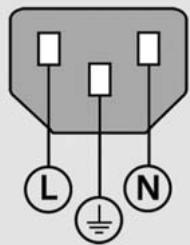
L: Line voltage (brown)
N: Neutral (blue)
Earth ground (yellow/green)

Danger of electrical shock!
- Do not open the enclosure
- Never use 3-wire to 2-wire adapters or allow the ground connection to the ND 1200 to be interrupted or disconnected.

Caution
Changes to the power cable may be made only by an electrical technician.

Caution
Do not make connect encoders or other equipment to the ND 1200 when the power is on.
Safety Considerations
General accepted safety precautions must be followed when operating the ND 1200. Failure to observe these precautions could result in damage to the equipment, or injury to personnel. It is understood that safety rules within individual companies vary. If a conflict exists between the material contained in this guide or the and the rules of a company using this system, the more stringent rules should take precedence.
Controls and Displays
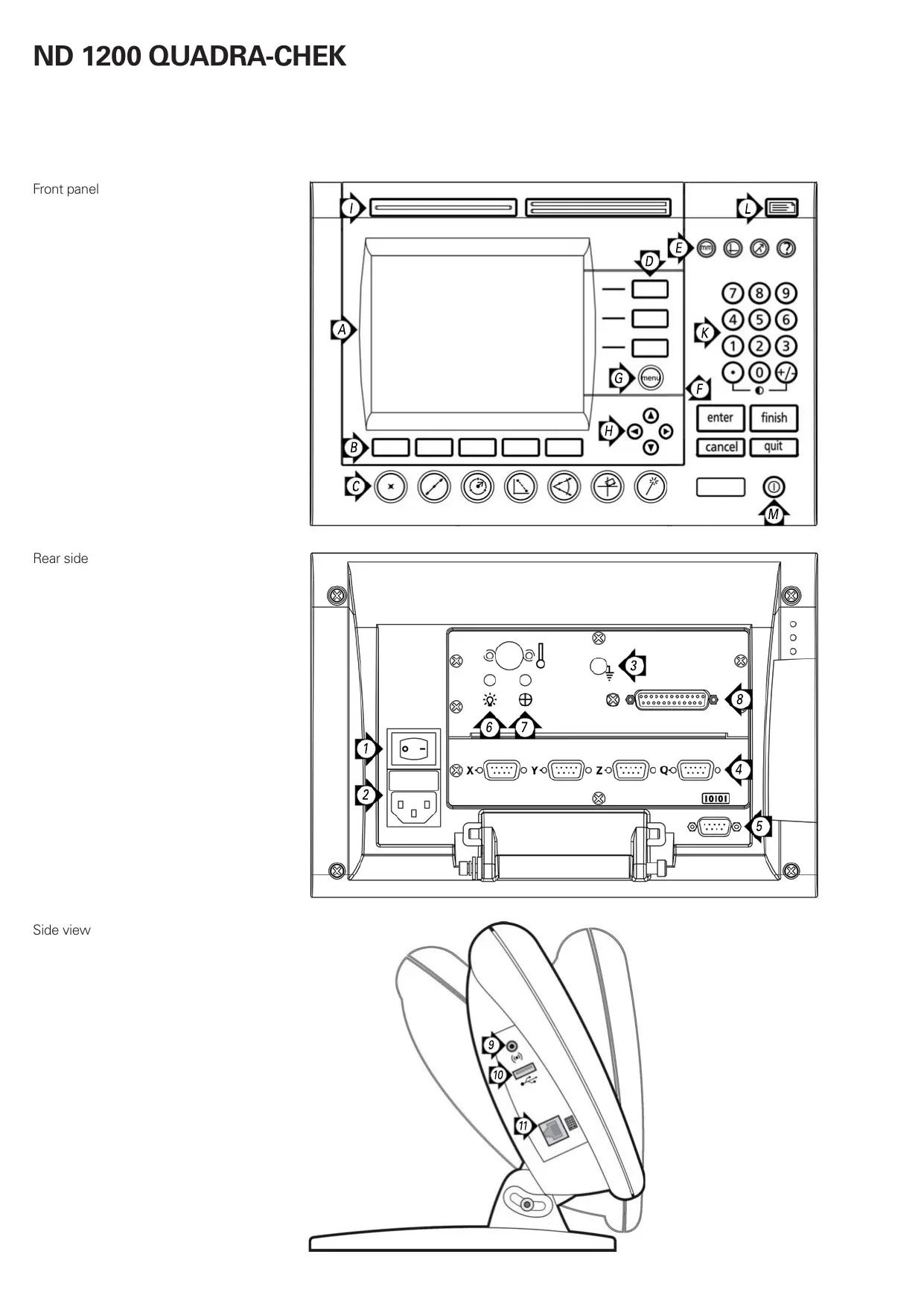
| A | LCD screen |
| B | Soft keys: Change to support functions |
| C | Measure keys: Initiate measurements |
| D | Axis keys: Zero or preset datum |
| E | Mode keys: Select unit of measure, datum, coordinate system or help |
| F | Command keys: Control measurement |
| G | Menu key: Displays user menus |
| H | Arrow cursor keys: Menu navigation |
| I | Fast track keys: Programmable for frequently used functions |
| K | Numeric keypad: Enter numeric data |
| L | Send key: Transmit measurement data to PC, USB printer or USB drive |
| M | LCD on/off key: Turn LCD on or off, clear data, datum and skew alignments |
Connections rear side
| 1 | Power switch |
| 2 | Power connection with fuse |
| 3 | Ground (protective ground) |
| 4 | Encoder inputs, X, Y, Z, Q axis for linear and rotary encoders. Interface specified at the time of purchase. |
| 5 | RS-232-C interface for PC connection. RS-232 cable must not include crossovers. |
| 6 | Optical cable connector for comparator screen sensor |
| 7 | Optical cable connector for Comparator reference light source |
| 8 | Unused |
Connections side view
| 9 | Audio out, for 3,5 mm headphone /speaker jack, monaural, 8 Ohm |
| 10 | USB type A interface for printer or data storage |
| 11 | Remote accessory interface RJ-45 for optional foot switch or keypad accessory. Two optional remote accessories can be used simultaneously using an RJ-45 splitter. |
Very important
Please note
For your information
Mounting
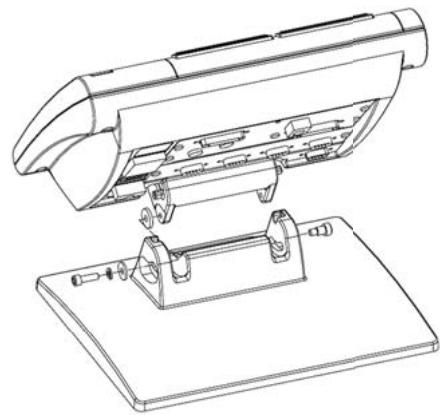
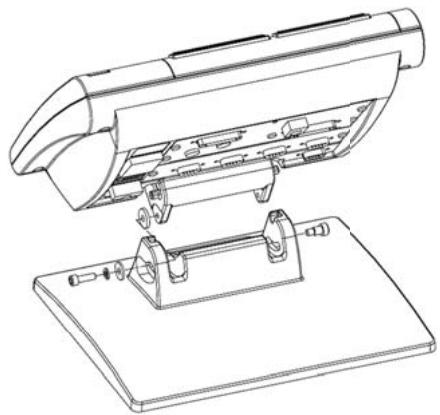
The ND 1200 is secured to the swivel slots of the mounting stand or arm mount by a shoulder screw, a cap screw mount is shown and associated washers.
HEIDENHAIN
- Press the FINISH key to display the current axis positions on the DRO screen.
Software setup
The operating parameters of the ND 1200 must be configured prior to using it for the first time, and any time part measurement, reporting or communication requirements change.
Settings will be retained until:
- The data-backup battery is changed
- The data and settings are cleared
- Software upgrades are performed

Caution
Setup parameters control the operation of the ND 1200 and are password-protected. Only qualified personnel should be given password access to setup screens.
1. Access setup menu
Press the MENU key and then press the SETUP soft key. The setup menu is displayed.
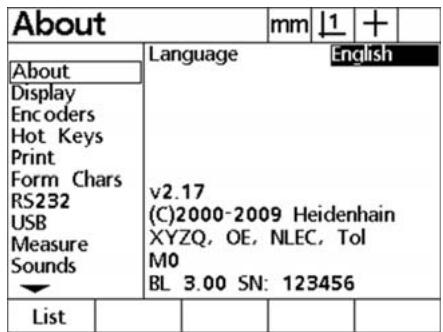
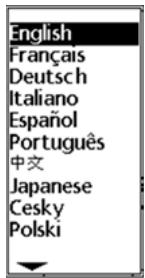
2. Select the language
Highlight the LANGUAGE field and press the LIST soft key. A list of languages is displayed. Highlight the desired language and press the ENTER key.
3. Enter Password
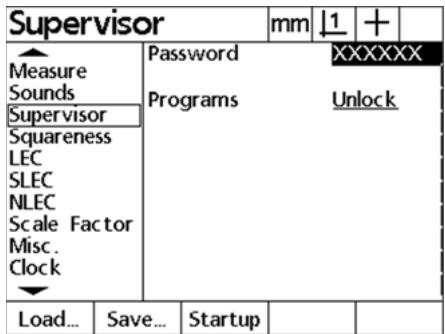
- Use the ARROW CURSOR keys to navigate to the SUPERVISOR setup screen.
- Highlight the PASSWORD field and enter the password.
4.Encoder setup
- Use the ARROW CURSOR keys to navigate to the ENCODERS setup screen.
- Select an axis and enter the required encoder parameters
- Enable STARTUP ZERO if a machine zero will be used for error correction.
- Repeat setup for all axes.
5. Calibrate edge detector (optional)
- Press the MENU key, press the EDGE soft key and then press the INSTALL soft key. The LIGHT LEVELS screen is displayed.
- Adjust the position of the sensor and reference cable ends to achieve approximately:
REF = 255
SCR = 128
6. Calibrate stage squareness
- Align the squareness calibration artifact to the reference axis.
- Press the MENU key, press the SETUP soft key and then navigate to the Squareness screen.
- Enter the calibration artifact ANGLE, choose a MASTER AXIS and press the TEACH soft key.
- Follow instructions on the screen.
7. Error correction
Linear, segmented linear and nonlinear error correction methods can be used to compensate for encoder and machine measurement errors. Refer to the ND 1200 User Guide for instructions.
8. Measurement scaling
Linear measurement scaling can be applied when measuring parts that expand or shrink.
- Press the MENU key, press the Setup soft key and then navigate to the SCALE FACTOR screen.
- Enter the desired MULTIPLIER, highlight the ACTIVE field and press the YES soft key to enable scaling.
9. Measurement annotation setup
- Press the MENU key, press the SETUP soft key and then navigate to the MEASURE screen.
- Highlight the ANNOTATION field and press the BACK or FORW soft key to determine the number of points probed during a measurement.
BACK: Probe desired points FORW: Probe pre-defined points The pre-determined number can be entered for point, line and circle measurements.
10. Display formatting
- Press the MENU key, press the SETUP soft key and then navigate to the DISPLAY SCREEN.
- Enter the desired display resolutions and other parameters.

Note:
Many more setup functions are available beyond the minimum parameters discussed here. Refer to the ND 1200 User Guide for detailed instructions.
Operation
Preparing to measure
1. Power up the ND 1200
- Check connections to the ND 1200.
- Press the POWER SWITCH to power the ND 1200. Then press the FINISH key to display the DRO screen.
2. Find machine zero (otional)
Move the stage to cross reference marks or find hard stops if your system was set up to establish machine zero at startup.

Note:
A repeatable machine zero is required when SLEC or NLEC error correction is used. Refer to the User's Guide for detailed information.
3. Select a unit of measure
Press the mode key UNIT OF MEASURE to toggle between inches and mm.

4. Select a datum
Press the DATUM key to toggle between datum 1 and datum 2.

5. Select coordinates
Press the COORDINATES key to toggle between rectangular and polar coordinates.

6. Select a probe (optional)
Press the PROBE soft key to cycle through probe types displayed in the top-right corner of the DRO screen.
7. Teach optical edge (optional)
Press the TEACH soft key to calibrate the optical edge probe.
Probing points
Points are probed with crosshairs or with (optional) optical edge detection. The number of probed points will be displayed in the upper left corner of the LCD.
1. Probing with crosshairs
- Move the stage to position the crosshairs over the desired feature point.
- Press the ENTER key.
2. Probing with edge detection
- Move the stage to pass the optical sensor across an edge. The ND 1200 will beep when the edge is detected.

Note:
Try to cross the edge in a perpendicular path.
- Press the ENTER key when automatic point entry (Auto E) is not used.
Aligning the part
Perform a skew alignment to eliminate cosine errors resulting from misaligned parts.
1. Align the part on the stage
Align the reference edge of the part to a measurement axis.
2. Perform a skew alignment
- Press the SKEW MEASURE key to begin the alignment.
Probe points along the part edge aligned to the reference axis. - Press the FINISH key to complete the alignment.
Creating a datum
Probe, construct or create a reference point and press the X and Y Axis keys to zero or preset a datum for measurements.
Measuring Features
Features are measured by selecting the feature type (or Measure Magic), probing points and then pressing the FINISH key.
1. Measure a point
Press the POINT MEASURE key, probe a point and press the FINISH key.

2.Measure a line
Press the LINE MEASURE key, probe points on the line and press the FINISH key.

3. Measure a circle
Press the CIRCLE MEASURE key, probe points on the circumference of the circle and press the FINISH key.

4. Measure a distance
Press the DISTANCE MEASURE key, probe a point on each end of the distance and press the FINISH key.

5.Measure an angle
Press the ANGLE MEASURE key, probe two points on each leg of the angle and press the FINISH key.

6. Use measure Magic
Press the MEASURE MAGIC key, probe points on a feature and press the FINISH key. The feature type will be determined based on probed points.

Creating Features
Features are created by selecting the feature type to be created, entering the required feature data and then pressing the FINISH key.
1. Specify feature type
Press a MEASURE key to specify the type of feature to be created and then press the CREATE soft key.

2. Enter the feature data
Enter data into fields shown on the screen.
3.Complete the creation
Press the FINISH key to complete the feature creation. The new created feature will be shown in the feature list.
Constructing Features
Features are constructed by selecting the feature type to be constructed, selecting the parent features and then pressing the FINISH key.
1. Specify feature type
Press a MEASURE key to specify the type of feature to be constructed.

2. Enter a parent feature
Highlight a parent feature in the feature list and press the ENTER key. A check mark will be shown near the parent feature.
3. Enter all other parent features
Continue highlighting and entering parent features until all desired parent features show check marks.
4.Complete the construction
Press the FINISH key to complete the construction. The new constructed feature will be shown in the feature list.
Applying Tolerances
Tolerances are applied by selecting a feature, pressing the TOL soft key, entering tolerance data and pressing the FINISH key.
1. Select a feature
Use the ARROW CURSOR keys to highlight a feature in the feature list.
2. Press the TOL soft key
Tolerance types are displayed at the bottom of the screen.
3. Select a tolerance type
Press a soft key to select the desired tolerance type.
4. Enter data
Enter nominal and tolerance data into data fields provided in the tolerance screen.
5. Apply the tolerance data
Press the FINISH key to apply the tolerance data. A check mark indicates passed tolerances. A cross indicates failed tolerances. Edit the tolerance data if desired by pressing the EDIT soft key.
6. Complete the tolerance
Press the FINISH key to complete the tolerance. A pass or fail indication will be shown near the TOL soft key.
Programming
Programs are recorded sequences of measurement and other operator keypress activities stored by the ND 1200 to be played back later when inspecting identical parts. This guide discusses recording and running programs.

Note:
Programs can also be edited, copied, backed up and deleted. Refer to the User's Guide for detailed information.
1. Record a program
- Press the MENU key.
- Press the PROG soft key.
- Press the RECORD soft key.
- Enter a program number.
- Perform measurement or other steps as usual. Program recording is indicated in the top right corner of the screen.
- To end recording, press the MENU key, press the PROG soft key again and then press the END REC soft key. The new program will be stored.
- Press the FINISH key to end the programming session.
2. Run a program
- Press the MENU key.
- Press the PROG soft key.
- Highlight a program number.
- Press the RUN soft key. The Current Position screen is displayed.
- Press the VIEW soft key to see point targeting while points are probed.
- The program will stop automatically when all program steps have been played.
- Press the FINISH key to end the programming session.
3. Delete a program
- Press the MENU key.
- Press the PROG soft key.
- Highlight a program number.
- Press the DELETE soft key. The program will be deleted.

Note:
Use caution when deleting programs, and store a backup of the program first. Deleted programs cannot be restored.
- Press the FINISH key to end the programming session.
4. Backup programs
Programs can be backed up by saving them in a ND 1200 settings file to a USB drive.
- Plug an empty USB drive into the USB port on the side of the ND 1200.
- Press the MENU key.
- Press the SETUP soft key.
- Highlight the SUPERVISOR menu item.
- Highlight the PASSWORD data field.
- Enter the Supervisor password.
- Press the SAVE... soft key to save the programs with the ND 1200 settings file.
- Press the FINISH key to end the programming session.
Reporting Results
Reports of results can be sent to a USB printer, USB flash drive or a PC. The report destination is specified in the PRINT, RS-232 and USB SETUP screens.

Note:
Refer to the ND 1200 user guide on our web site at: www.heidenhain.de for details.
- Press the SEND key to report results.

4. Reestablisher programs
6. Anvanda measure Magic
4. Programma's backuppen
He npKJIIOUaIte n3MepeNTbHbIe DaTcNk nn IpyrIe npIbOpbl K ND 1200, kOrda OH BKJIIOUeH.
06ecneueHHe 6e3oNaChOCTn
При рабote c ND 1200 DeiCtByIOT пизнньe Меры ПО obecneчehIO Бe3OanachocTn. HecobIoJdeHne 3TNX Мер можET пиВeCTN K NOBpeJdeHIO прбopa ИПИ Травмam. Pa3yMeetcR, Меры obecneчehЯ Бe3OanachocTn MOrTy pa3IuYaTbcra B pa3HbIX КOMпаняx. B clyuae OTПИЧИ ВИТРeHнХ ПраВИЛ KOMпани,В КOTOPО ИСПОЛьЗУЕТСДАНьI Пru6bOp, OT пeДпсани КраТКОу ryKOBODCTBa DeiCtByIOT BoJIe CTpOrNe PpaBnla.
Зкрази злем entblуnpaBneHnA
Kak noka3aHo Ha pncyHke HnKe ND 1200 KpeiNTcHa NoCTabKe nIM MOHTaXHM pbUaRe C NOMOuBbTaC bypTtKom, CTaKHO BnHTa N Wai6bl.
OuehbBaXHo
Ha 3aMeTky
IJIa INHOpMaUIN
HEIDENHAIN
5. KaJIIN6pOBkA KpOMOuHOrO uyna (onzna)
- Haxmte KhoIky MENU, a 3aTe m haxmte Softkey UyIu N Softkey YCTAHOBITb. Ha 3kpahe oTo6pa3ntc rnoDmeHIO YPOBHN JRPKOCTN.
- OTPeryIpyuIte noIooKeHne daTnka N NOIROTOBbTe COeINHITeNbHbI Ka6eIb, pa3Mepbl KOTOPOro DoJIxHbI 6bItb OK.
REF = 255
SCR = 128
6. KaJIb6pOBKa neppeHdIkyIyIpyHOcTn
- Bыровнай Te KOHцeByU Mepy Дя Калибравки перпehДиКулярноCTИ BDOЛь OCU.
- HaxmTe KhoNkY MENU, HaxmTe Softkey HACTPOIKN, a 3aTe m peeynte B noDmeHIO Kopp. yrna
BVeIte YTOJ DnJa KOHcEBoM Mepbl, BbIbepnte TJIABHAR OCb n HaxMnte Softkey 3ANOMHITb.
CneyuTe HNCTpyKUmaM, OTo6paKaembIM Ha 3KpaHe.
7. Kompehcaunia norgpuhoctn
ДЯ KOMпeHcaUи NOrpeShOcTn ДaTчИкa И NOrpeShOcTn ИЗМерeHni CTaHka MoXHo IСПОЛь3OBaTb KOMпeHcaUIO JINHeHoi NOrpeShOcTn, KOMпeHcaUIO JINHeHoi NOrpeShOcTn Ha cerMeHTe И НELHeyHocTn. Болee IOnpO6Hoe OINCaHne MoXHo HaITN B pykoBOdCTBe IOnb3ObaTeY na ND 1200.
8. MacstTa6bOpBaHne
JIINHeHoeMacUTabuBOpBaHneMOKET npIMeHrTbCpIuN3MepeHmIDeTaJe, KOtOpblpepaTcHryTbIuNcKaTbI.
- HaxmTe KhoNky MENU, 3aTeM Softkey HactpoiKu n pepeiDnte B MeHIO KO3Φ. MACUJTAB.
- BBeДиTe JKeJaembI MHOKHTeJIb, BbIeДиTe IOne AKTINBEH n BBeДиTe c nOMOuBIO Softkey DA.
9. Hac troponka KoJInyeCTBa ToueK n3MepenHn
3. Olusturmayi tamamlayin
Technical support FAX +49 8669 32-1000
Measuring systems ⑥ +49 8669 31-3104
E-mail: service.ms-support@heidenhain.de
TNC support +49 8669 31-3101
E-mail: service.nc-support@heidenhain.de
NC programming +49 8669 31-3103
E-mail: service.nc-pgm@heidenhain.de
PLC programming +49 8669 31-3102
E-mail: service.plc@heidenhain.de
Lathe controls +49 8669 31-3105
E-mail: service.lathe-support@heidenhain.de
www.heidenhain.de
For complete and further addresses see www.heidenhain.de
B1653AOX Villa Ballester, Argentina
www.heidenhain.com.ar
AU FCR Motion Technology Pty. Ltd
Laverton North 3026, Australia
E-mail: vicsales@fcrmotion.com
BA Bosnia and Herzegovina SL
BE HEIDENHAIN NV/SA
1760 Roosdaal, Belgium
www.heidenhain.be
BG ESD Bulgaria
Sofia 1172, Bulgaria
www.esd.bg
50354 Huerth, Germany
www.gertner.biz
CA HEIDENHAIN CORPORATION
Mississauga, OntarioL5T2N2, Canada
www.heidenhain.com
Beijing 101312, China
102 00 Praha 10, Czech Republic
www.heidenhain.cz
DK TPTEKNIKA/S
2670 Greve, Denmark
www.tp-gruppen.dk
ES FARRESA ELECTRONICA S.A.
08028 Barcelona, Spain
www.farresa.es
FI HEIDENHAIN Scandinavia AB
02770 Espoo, Finland
www.heidenhain.fi
FR HEIDENHAIN FRANCE sarl
92310 Sèvres, France
www.heidenhain.fr
GB HEIDENHAIN (G.B.) Limited
Burgess Hill RH15 9RD, United Kingdom
www.heidenhain.co.uk
GR MB Milionis Vassilis
17341 Athens, Greece
www.heidenhain.gr
HK HEIDENHAIN
Kowloon, Hong Kong
E-mail: service@heidenhain.com.hk
HR Croatia SL
India Private Limited
Chennai-600 031,India
www.heidenhain.in
IT HEIDENHAIN ITALIANA S.r.l.
20128 Milano, Italy
www.heidenhain.it
JP HEIDENHAIN K.K.
Tokyo 194-0215, Japan
www.heidenhain.co.jp
KR HEIDENHAIN Korea LTD.
Gasan-Dong, Seoul, Korea 153-782
www.heidenhain.co.kr
ME Montenegro SL
MK Macedonia BG
MX HEIDENHAIN CORPORATION MEXICO
20235 Aguascalientes, Ags., Mexico
E-mail: info@heidenhain.com
MY ISOSERVE Sdn. Bhd
56100 Kuala Lumpur, Malaysia
E-mail: isoserve@po.jaring.my
7300 Orkanger, Norway
www.heidenhain.no
PH Machinebanks' Corporation
Quezon City, Philippines 1113
E-mail: info@machinebanks.com
PL APS
02-489 Warszawa, Poland
www.apserwis.com.pl
PT FARRESA ELECTRONICA, LDA.
4470 - 177 Maia, Portugal
www.farresa.pt
125315 Moscow, Russia
www.heidenhain.ru
SE HEIDENHAIN Scandinavia AB
12739 Skärholmen, Sweden
www.heidenhain.se
SG HEIDENHAIN PACIFIC PTE LTD.
Singapore 408593
www.heidenhain.com.sg
SK KOPRETINATN s.r.o.
91101 Trencin, Slovakia
www.kopretina.sk
Bangkok 10250, Thailand
www.heidenhain.co.th
TR T&M Muhendislik San. ve Tic. LTD. STI.
34728 Umraniye-Istanbul, Turkey
www.heidenhain.com.tr
TW HEIDENHAIN Co., Ltd.
Taichung 40768, Taiwan R.O.C.
VN AMS Advanced Manufacturing
Solutions Pte Ltd
HCM City, Viet Nam
E-mail: davidgoh@amsvn.com
ZA MAFEMA SALES SERVICES C.C.
Midrand 1685, South Africa
www.heidenhain.co.za