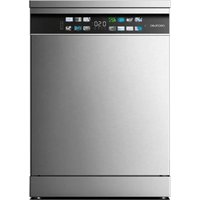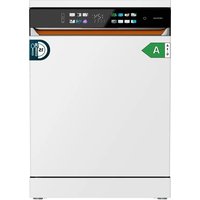
Bolero Aguazero 6900 - Dishwasher CECOTEC - Free user manual and instructions
Find the device manual for free Bolero Aguazero 6900 CECOTEC in PDF.


| Product Type | Built-in or freestanding dishwasher, 15 place settings |
| Brand | Cecotec |
| Model | Bolero Aguazero 6900 |
| Dimensions (H x W x D) | Approximately 850 x 600 x 600 mm (freestanding), adjustable for built-in |
| Weight | Not specified, estimated ~45 kg |
| Power supply | 220-240 V ~ 50/60 Hz, 15 A (recommended circuit breaker) |
| Water pressure | 30 kPa – 1000 kPa (0.3 – 10 bar) |
| Capacity | 15 place settings |
| Number of programs | 8 programs: Eco 50°C, Intensive 65°C, Glass 40°C, Hybrid 60°C, Prewash 45°C, Super 60°C, Hygiene 70°C, Machine Care |
| Water consumption (Eco program) | 10 L |
| Energy consumption (Eco program) | 0.650 kWh |
| Duration of Eco program | 288 min |
| Noise level | Not specified, estimated ~45-50 dB(A) |
| Special functions | Half load, Delay start (1-24h), Turbo Dry+ drying, UV Hygiene, Dual Zone, Child lock (KidLock) |
| Water softener | Yes, adjustable from H0 to H8 |
| Rinse aid dispenser | Yes, adjustable from d0 to d8 |
| Tub material | Stainless steel |
| Baskets | Lower basket, height-adjustable upper basket, removable cutlery tray |
| Filter | Removable filter set (cup, mesh, microfilter) |
| Safety | Child lock, automatic stop when door opened, leak protection (error code E4) |
| Installation | Freestanding or built-in, adjustable feet, cold water connection, drainage |
| Box contents | Dishwasher, lower basket, upper basket, cutlery tray, salt funnel, drain hose, manual, quick guide |
Frequently Asked Questions - Bolero Aguazero 6900 CECOTEC
User questions about Bolero Aguazero 6900 CECOTEC
0 question about this device. Answer the ones you know or ask your own.
Ask a new question about this device
Download the instructions for your Dishwasher in PDF format for free! Find your manual Bolero Aguazero 6900 - CECOTEC and take your electronic device back in hand. On this page are published all the documents necessary for the use of your device. Bolero Aguazero 6900 by CECOTEC.
USER MANUAL Bolero Aguazero 6900 CECOTEC
natural_image
Exterior view of a modern stainless steel kitchen appliance with digital display screens (no visible text or symbols)Safety instructions 9
- Parts and components 71
- Before use 71
- Installation 72
- Operation 76
- Cleaning and maintenance 85
- Troubleshooting 88
- Recycling of electrical and electronic equipment 92
- Copyright 92
- Simplified Declaration of Conformity 93
SOMMAIRE
EN • The coding in this manual is generic and applies to all code variants of the appliance.
Read the following instructions carefully before using the appliance. Keep this instruction manual for future reference or new users.
- Read these instructions carefully before assembling or using the appliance. These instructions contain important information that will help you get the best out of your equipment. It is your responsibility to make sure every user is informed about the warnings and precautions stated in this instruction manual.
- Warning: Knives and other utensils with sharp points should be loaded in the basket with the points facing downwards or placed in a horizontal position.
- The maximum number of cutlery to be washed is 15.
- This appliance is intended for domestic use only and is not suitable for use in commercial establishments such as bars, restaurants, farms, hotels, motels, and offices.
- Check the power cable regularly for visible damage. If the power cord is damaged, it must be replaced by Cecotec's Official Technical Support Service or similar qualified personnel to avoid risks.
- This appliance can be used by children aged 8 years and above and people with reduced physical, sensory, or mental capabilities or lack of experience and knowledge if they have been given supervision or instruction concerning the use of the appliance in a safe way and understand the hazards involved.
- Children must not play with the appliance.
-
Cleaning and user maintenance must not be carried out by children without supervision.
-
After using the dishwasher, there may be remains in the interior. Keep children away from the appliance when it is open.
- WARNING: check the dishwasher and package are not damaged. Never use the dishwasher if it is damaged, contact the official Cecotec Technical Support Service immediately.
- Packaging material may be dangerous to children. Remove it and place it out of their reach.
- Choose a suitable and safe place to install the dishwasher.
- Never use an extension cord or a multi-socket connection.
- The socket must be accessible after the dishwasher installation.
- After the installation, the first time you run the dishwasher, do it while it is empty.
- Always use the plug provided with the dishwasher. Do not modify the plug provided with the appliance if it does not match the power socket.
- Do not operate the appliance if its cable, plug, or structure show visible damage, do not operate properly, or have been dropped.
- In case of malfunctioning, repairs must be carried out by the official Cecotec Technical Support Service; otherwise, the warranty will be void. Before repairing the dishwasher, you must disconnect it from the power supply and close the stopcock.
- To unplug the dishwasher, pull from the socket, never from the cord.
- During use, the dishwasher uses less energy and water than washing dishes by hand, provided that the household dishwasher is used according to these instructions.
-
Do not misuse it, do not stand, sit or place any heavy object on the door or baskets of the dishwasher.
-
Do not use the dishwasher if all interior elements are not correctly placed.
- Only use detergents and rinse aids specific for dishwashers.
- Some dishwasher detergents are very alkaline. They may be extremely dangerous if you ingest them. Avoid contact with skin and eyes and keep children away from the dishwasher when the door is open.
- Due to the danger of explosion, do not place chemical solvents in the interior of the machine.
- Do not place tableware which is not dishwasher safe in the appliance.
- Do not fill the baskets over their capacity.
- Cecotec shall not be held liable for any deformation that may occur inside the dishwasher due to misuse.
- Do not open the door while the dishwasher is running, as it could spill hot water.
- Do not leave the door open, as it could cause accidents.
- To avoid electric shock, do not disconnect the dishwasher with your hands wet.
- Cecotec shall not be held liable for any damage, accident, or incident resulting from the misuse of this dishwasher. It is the user's responsibility to operate and maintain the dishwasher according to the instructions and recommendations detailed in this manual. Failure to follow instructions may result in personal injury, property damage, or loss of product warranty.
INSTRUCTIONS DE SÉCURITÉ
UV Hygiene (Higiene UV)
- Control panel
- Door
- Anti-shock plate
- Top cover
- Side panel
- Feet
Internal components
Fig. 2
- Top wash impeller
- Central spray arm
- Bottom spray arm
- Filter assembly
- Rinse aid and detergent dispenser
- Interior light
- Cutlery tray
- Upper basket
- Cutlery basket (not included in this model)
- Lower basket
Note:
The graphics in this manual are schematic representations and may not exactly match the product.
2. BEFORE USE
- This appliance comes in a packaging designed to protect it during transport. Remove the appliance from its box. You can keep the original box and other packaging materials in a safe place to prevent damage to the appliance if you need to transport it in the future. If you wish to dispose of the original packaging, make sure all items are recycled properly.
- Check that all parts and components are included and in good condition. If any of them are missing or damaged, please contact Cecotec's Official Technical Support Service immediately.
ENGLISH
Box content:
- Dishwashers
- Lower basket
- Upper basket
- Cutlery tray
- Salt funnel
- Drain hose
- Instruction manual
- Quick start guide
- Do not remove the product's serial number in order to keep proper traceability if technical assistance is required.
Tip:
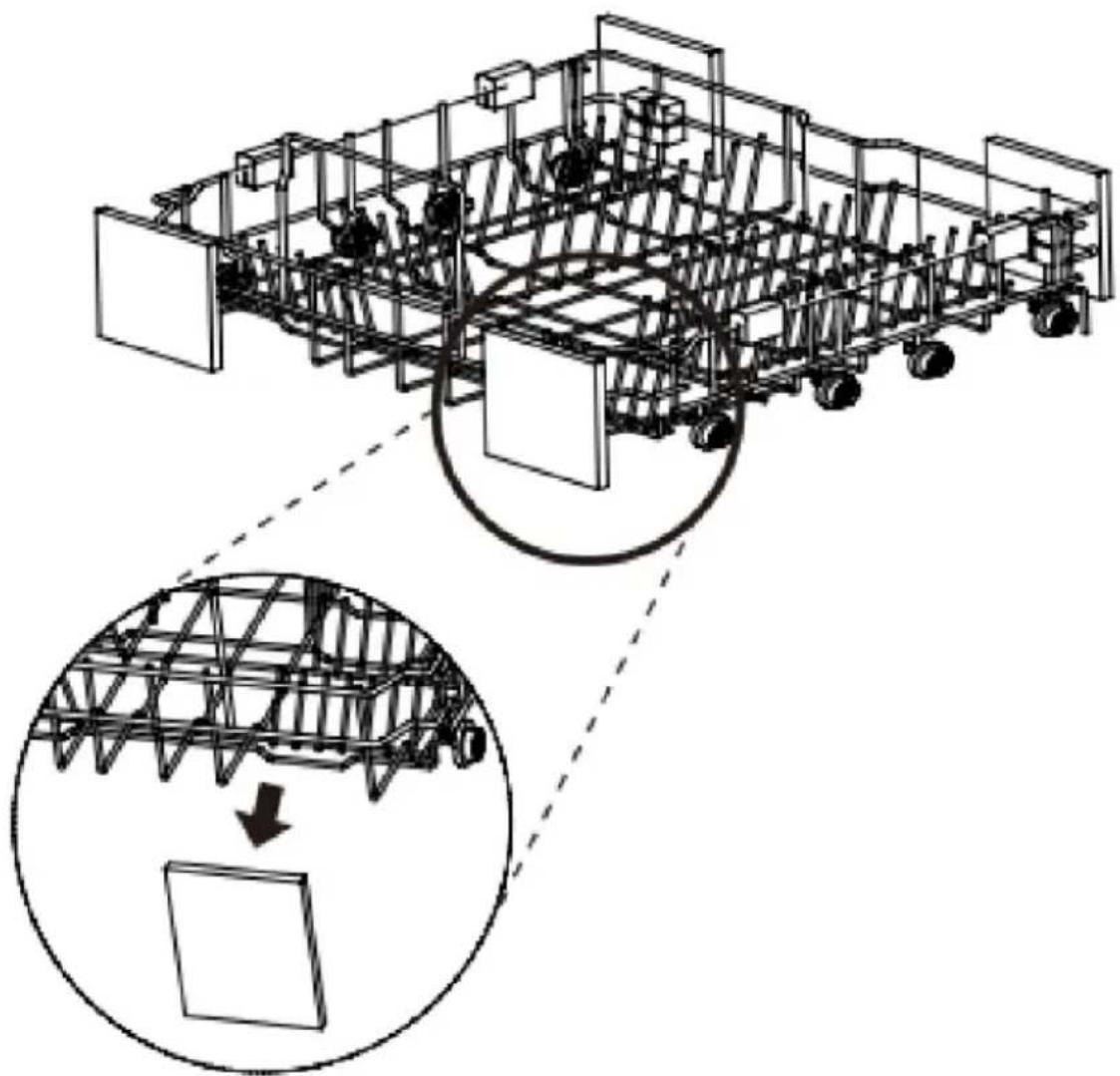
Please remove all packaging materials from the exterior and interior of the dishwasher before installation, including the items shown in Figure 3.
3. INSTALLATION
Product dimensions
Figure 4 shows the dishwasher dimensions required for installation.
Select the installation mode that best suits your needs.
Mode 1: Stand-alone installation mode
- Install the dishwasher on a flat and stable surface. Figure 5 shows the specific dimensions for this type of installation.
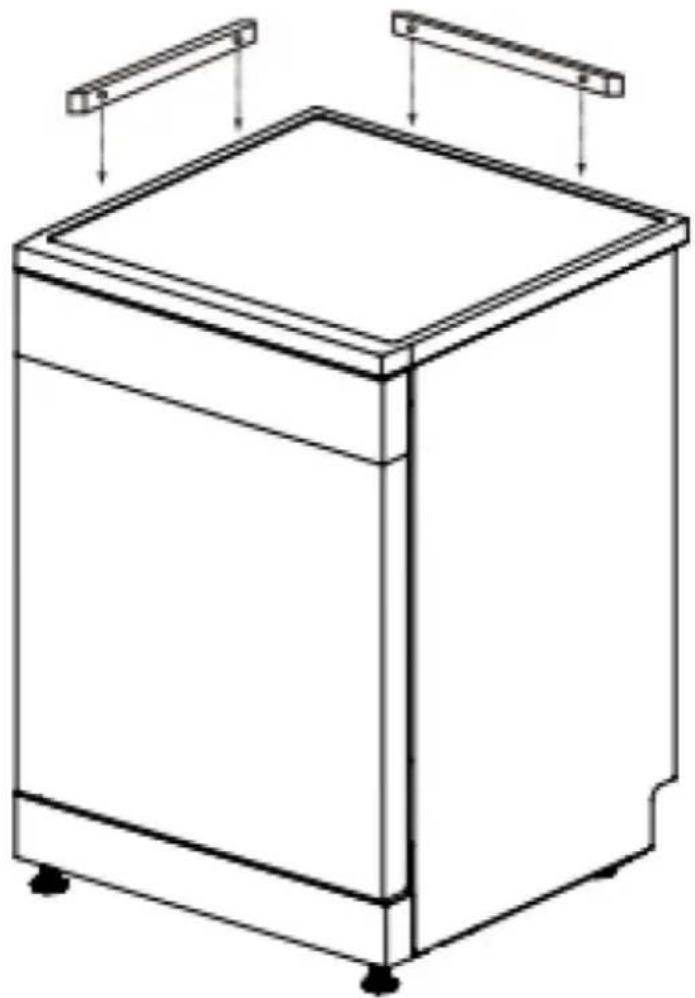
- If the dishwasher is installed in a corner, you should reserve at least 50 mm between the dishwasher and the adjacent wall to ensure that there is enough space to open and close the door, and it is recommended to reinforce it with wooden slats as shown in Figure 6.

CAUTION:
- Place the dishwasher on firm, level ground.
- Do not install the dishwasher on an elevated surface.
Mode 2: Flush-mounted installation mode
- Install the dishwasher on a flat and stable floor. Figure 7 shows the specific dimensions for this type of installation.
-
Drill holes in the cabinet on both sides to allow passage of hoses and cables (approximately 100 mm x 76 mm), if necessary.
-
The holes should be positioned as close as possible to the sink to facilitate the connection of the water inlet hose and drain hose.
- To ensure proper drainage, the installation position of the dishwasher should be no more than 1 meter away from the drainage system.
- Make any necessary height adjustments before positioning the dishwasher.

CAUTION:
- Exposed wood around this dishwasher should be sealed with waterproof paint or sealant to prevent expansion in case of contact with water.
- Place the dishwasher in the cabinet space and make sure the drain hose at the back of the dishwasher and in the cabinet are not kinked or crushed.
- Install the dishwasher in a flat place. Do not place anything between the floor and the dishwasher feet.
- Do not use the handle to pull or lift the dishwasher, to avoid damaging the door and hinges.
- Do not push the dishwasher door with your knees.
Tip:
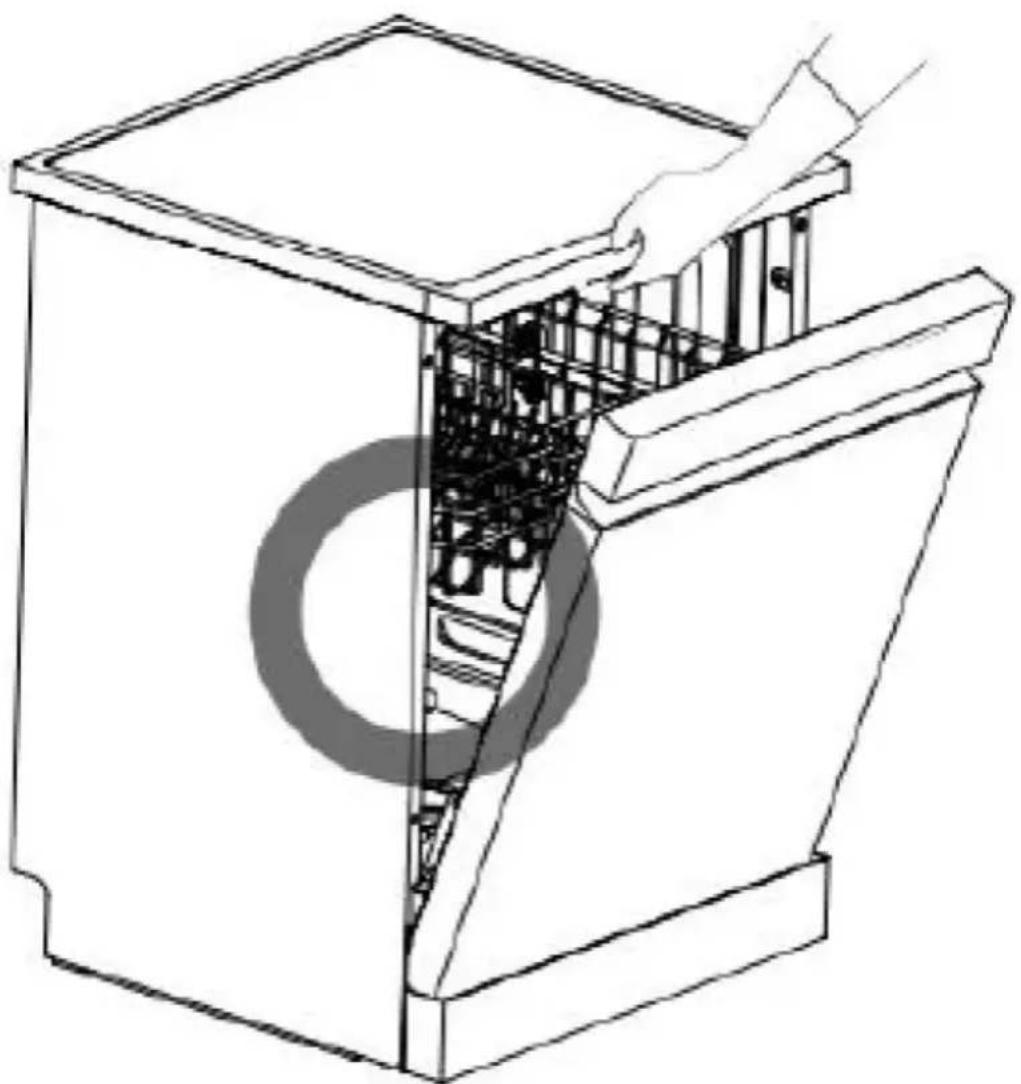
Open the Door and grasp the front opening at the top of the main frame and liner to move or lift the dishwasher. Fig. 8
Removing the top cover
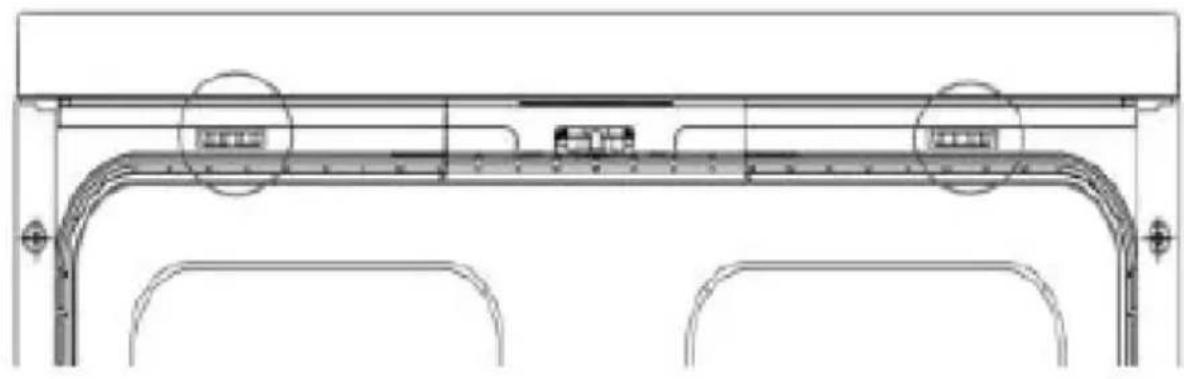
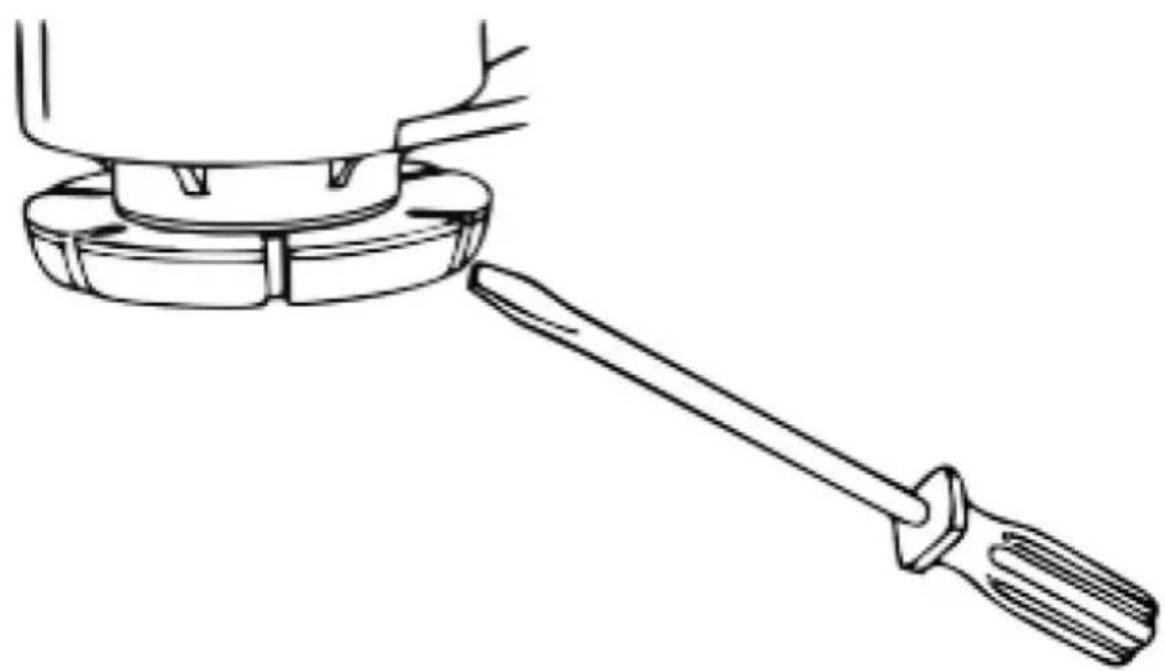
If the opening height is less than 850 mm, follow the instructions below:
- Use tools to press the two locating pins of the top cover. Fig. 9
- Lift the top cover and remove it.
Levelling the dishwasher
Please level the dishwasher to avoid leaks and poor washing performance. Check if the dishwasher has been properly leveled after installation. If the dishwasher moves when the top cover is pressed diagonally, the legs must be readjusted.

WARNING
- Failure to properly level the dishwasher may result in water leaks, difficulty closing the door or noises.
- If the cabinet opening in which it is installed is narrower than the recommended size, the dishwasher must be carefully leveled and aligned.
- Any rubbing sound or jamming sensation when opening the door indicates that the dishwasher is not leveled properly.
Adjusting the feet
- Adjust the feet as necessary until the dishwasher is completely level.
ENGLISH
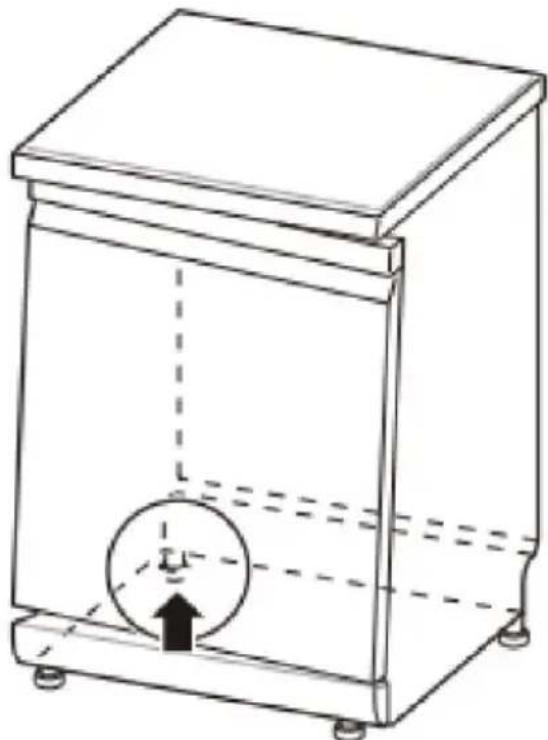
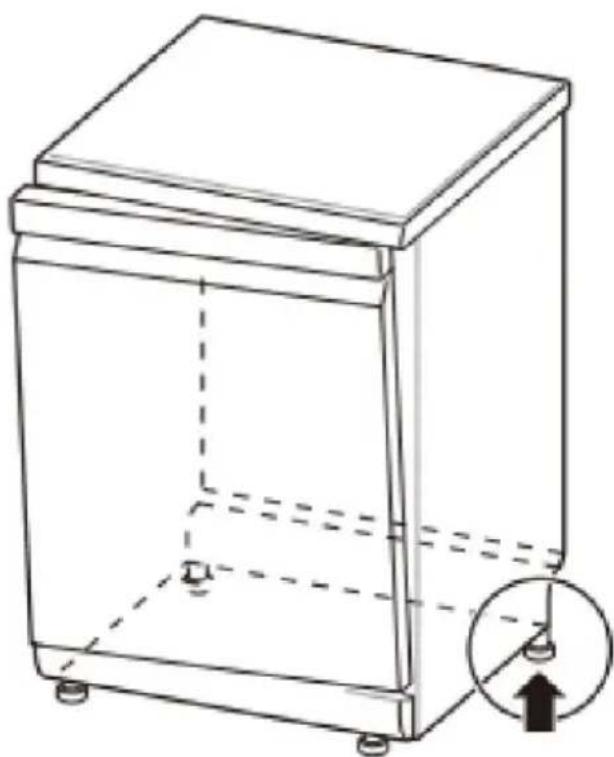
- The legs adjust clockwise to raise and counterclockwise to lower. This applies to front-to-back, side-to-side and diagonal adjustments. Fig. 10
Case I: door tilts to the right
Fig. 11
- Unscrew (counterclockwise) the left rear leg and level.
- Check the door opening operation and repeat if necessary until the door can open and close normally.
Case II: door tilts to the left
Fig. 12
- Unscrew (counterclockwise) the right rear leg and level.
- Check the door opening operation and repeat if necessary until the door can open and close normally.
Connecting the drain hose
- If the end of the drain hose is not compatible with the facility's drain pipe, use a heat and detergent resistant drain extension (not included).
- Please check the piping during installation. If the drain pipe cannot discharge water normally, the E2 error may appear.

CAUTION
Carefully pass the drain hose through the hole in the cabinet. The cabinet orifice may have sharp edges, which can damage the hose. Sharp edges should be filed to ensure that they do not damage the hoses.
Methods to prevent siphon effect:
Method 1:
When the drain hose is connected to the drain pipe, it should be arched upward and secured to the bottom surface of the kitchen countertop. Fig. 13
Method 2
When the drain hose is connected to a separate standpipe, it must be ensured that the connector is watertight. Otherwise, it may cause odor leakage. Fig. 14
- The diameter of the vertical pipe must be at least 40 mm.
Water inlet hose connection
- The joint must be connected to the water inlet hose. Please use the new inlet hose (included). To ensure quality, all dishwashers have been subjected to water injection tests before leaving the factory. Therefore, there may be water in the dishwasher, which is a normal phenomenon.
- The water supply pressure must be between 30 kPa and 1000 kPa.
- Do not damage the thread when connecting the water inlet hose to the valve.
- Install a pressure reducing device if water supply pressure exceeds 1000 kPa.
- Open the faucet and check the connection for leaks.
- Inspect the hoses regularly and replace them if necessary.
- Make sure that the hoses are not damaged or criss-crossed.
Fig. 15 key:
- Rubber seal
-
Water supply hose
-
Check the rubber seals on both sides of the hose. Insert the rubber seal in the threaded union of each hose to prevent leakage. Fig. 15
- Connect the water inlet hose to the faucet by hand, then tighten it 2/3 turn with pliers. Fig. 16
- Open the faucet to remove foreign particles (such as dirt, sand or sawdust) in the water pipe after connecting the inlet hose to the faucet. Drain the water into a bucket and check the water temperature. Fig. 17
- Connect the hose to the water inlet valve firmly by hand, then tighten it 2/3 turn with pliers. Fig. 18
- Open the faucet to check for leaks. In case of water leakage, please review steps 1-4.
Power supply connection
- Connect the dishwasher to a grounded outlet according to current electrical wiring specifications and protect it with a circuit breaker or time delay fuse of at least 15 amps.
- A two-wire grounded system should be adopted for wiring.
- Do not place the power cord behind the dishwasher.

WARNINGS
- For personal safety, remove the fuse, disconnect the circuit breaker or turn off the power plug before installation.
- Do not use extension cords or double adapters.
- The plug must be inserted into a suitable, properly installed and grounded outlet in accordance with all local regulations.
- This dishwasher may only be serviced by qualified service personnel. Repair by inexperienced personnel may cause personal injury or serious failure.
- Connect it to a suitable, protected and properly sized electrical circuit to avoid electrical overloads.
Final installation and inspection
Before using the dishwasher, check that it is installed correctly.
- Turn on the power supply.
ENGLISH
- Open the water supply.
- Make sure the dishwasher door can be opened and closed smoothly.
- Level the dishwasher again, if necessary.
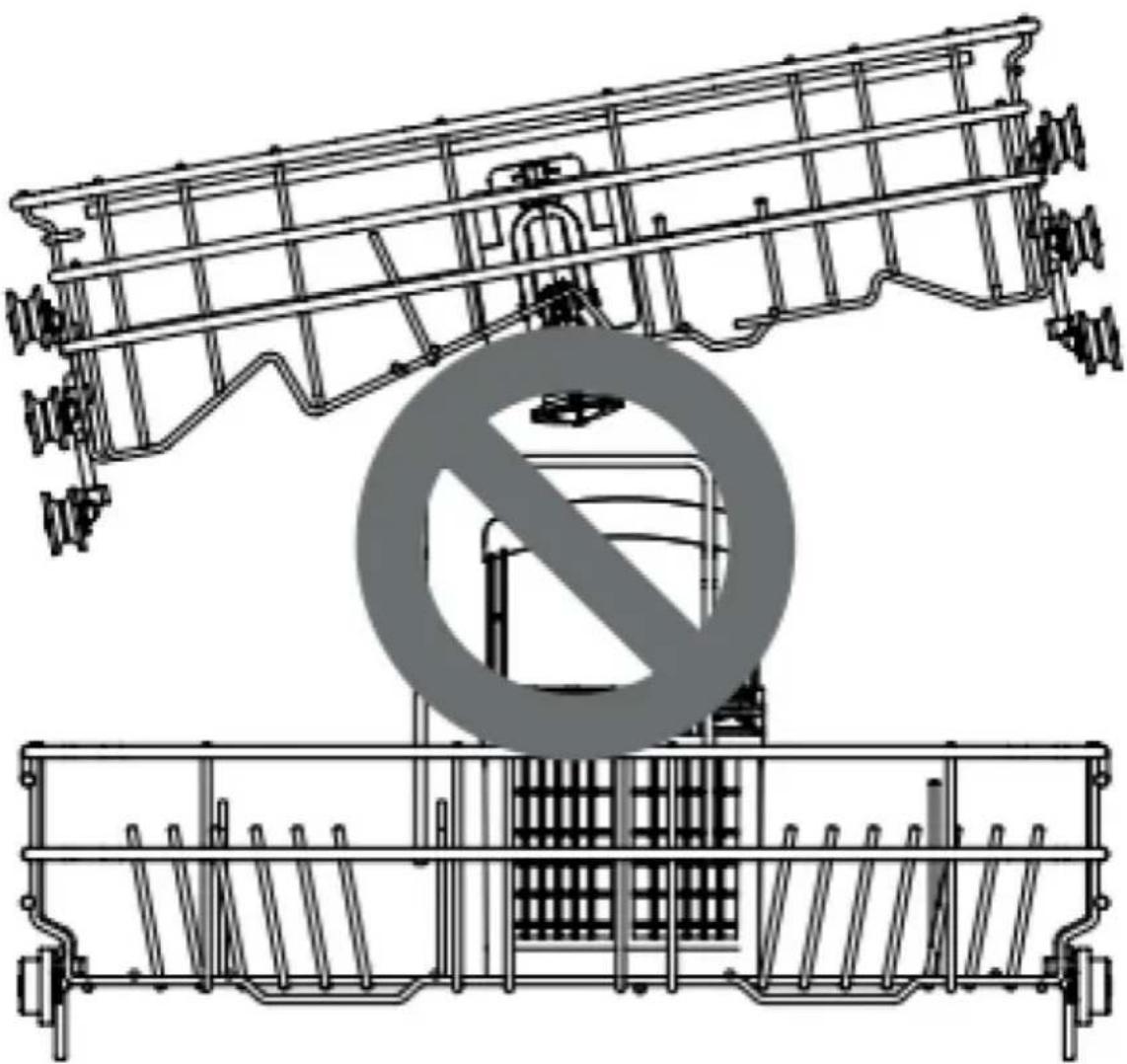
- If the door cannot close, make sure the upper basket is level. Figure 19 shows the inclined basket.
- Make sure all packing materials have been removed.
- Switch on the dishwasher and run the Intensive 65 °C programme to verify proper operation.
- Check for leaks in the drain and inlet hoses.
4. OPERATION
How to use
- Read the safety instructions.
- Follow the instructions when loading items to be cleaned into the dishwasher to ensure effective cleaning.
- Remove insoluble substances such as bones, toothpicks and pieces of paper when loading items in the dishwasher.
Charging
- Load only dishwasher safe items.
- Remove any solid and burnt-on food residue from dishes before loading them into the dishwasher.
- Place items with long edges at an angle to facilitate water loss and speed up the drying process.
- Do not load thermolabile items or items with metal decorations in the dishwasher.
Quick Start
- When loading dishes into the dishwasher: remove excess food, bones and any other hard and insoluble residue from the dishes. Slide the baskets to load the items according to the instructions in this manual.
- Add detergent: add the recommended amount of detergent to the dispenser and close the lid according to the instructions in this manual. If pre-washing is required, the slot on the top of the lid should also be filled with detergent.
- Close the dishwasher door.
- Switch on the dishwasher: Press the power button to turn on the control panel.
- Add rinse aid: If the rinse aid level in the dishwasher is low, the rinse aid indicator will flash. Add rinse aid to improve the drying performance.
-
Select the program and option: Select the most suitable program and additional option. See the programme guide in this manual. The display will show the estimated programme time and the selected option.
-
Close the dishwasher door first, then press the start/pause button to operate the dishwasher. If the door is opened during program operation, the dishwasher will stop. In this case, you can close the door to resume the program.
- Completion: after completing the program, a warning tone will be played and the dishwasher will automatically switch off after a few minutes.

CAUTION
Do not open the door during operation or immediately after the end of the washing programme, as steam build-up may cause burns.
Tips:
- Remove items from the lower basket first, then from the upper basket. This order can prevent water from dripping from the upper basket onto the items in the lower basket.
- For optimal dishwashing, make the most of the baskets> capacity without overloading the dishwasher. This results in optimal dishwashing in terms of energy and water consumption.
Before use
Water softener
This dishwasher is equipped with a water softener which reduces water hardness. This system softens the water to a certain extent, allowing the dishes to be washed without mineral residues.
- If the water softener is not needed, it can be used without dishwasher salt, but the hardness level must be set to H0 so that the salt indicator does not stay on all the time.
- To achieve satisfactory washing results, this dishwasher requires soft water; otherwise, water spots will remain on dishes and inside the dishwasher.
- If the hardness of the tap water exceeds a certain level, it should be softened, i.e. decalcified, by adding dishwashing salt. The amount of salt required is set according to tap water hardness.
Check the water hardness
- Check local water hardness. The water company can help verify this.
- Set the dishwasher water softener level according to the water hardness level.
x0\_»Set water softener levelSet water softener level
Adjust the setting according to the level of water hardness used in the water supply. The water softener has 9 setting levels, and the dishwasher was set to water hardness level H5 when it left the factory.
- Ensure the dishwasher is switched off and press and hold the "Dual Zone" button for 3 seconds to configure the programme.
- Press the «Dual Zone» button to display the current setting.
ENGLISH
- Press the «Turbo dry+» button and set the desired value. The range of established values is H0-H8.
- After completing the water softener settings, press the «on/off» button to turn off and save the settings.
Add salt

CAUTION
The salt tank of the dishwasher must be full before starting the washing programme. In case of insufficient salt, the salt indicator on the display will light up (unless the hardness level is set to H0).
After loading the dishwasher salt, the wash program should be started immediately to remove the salt and salt water around the inner cylinder and prevent corrosion.
- Remove the lower basket.
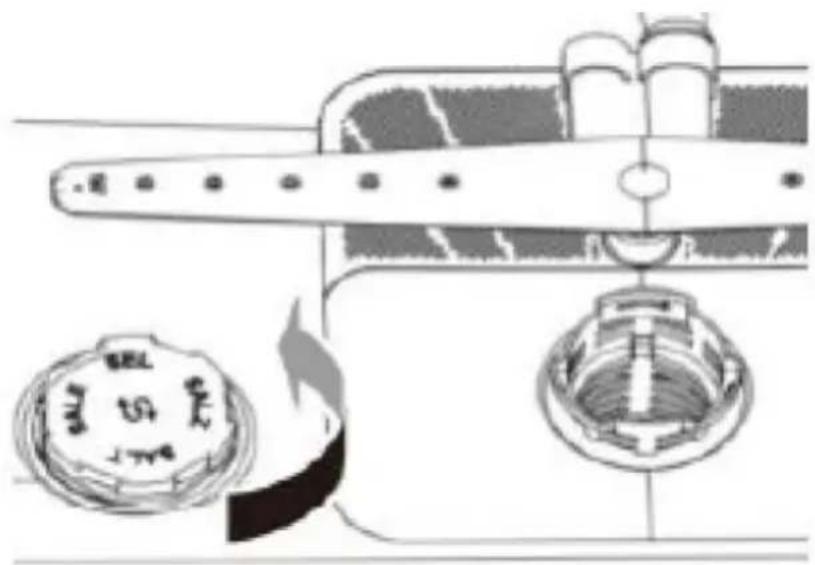
- Turn the salt tank lid counterclockwise to open it. Fig. 20
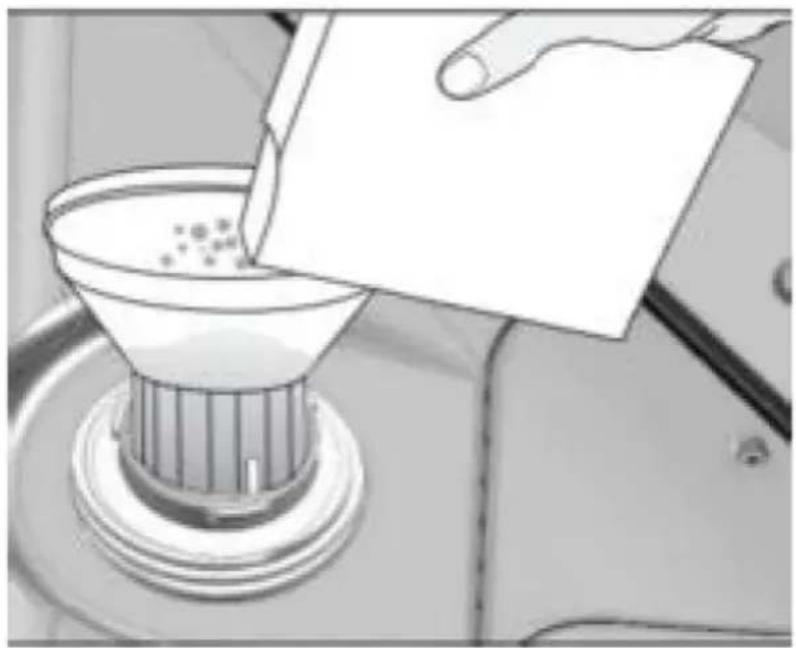
- Use the funnel to add the salt, do not add more than 650 g. Fig. 21
- Only before the first use, fill the salt tank with water.
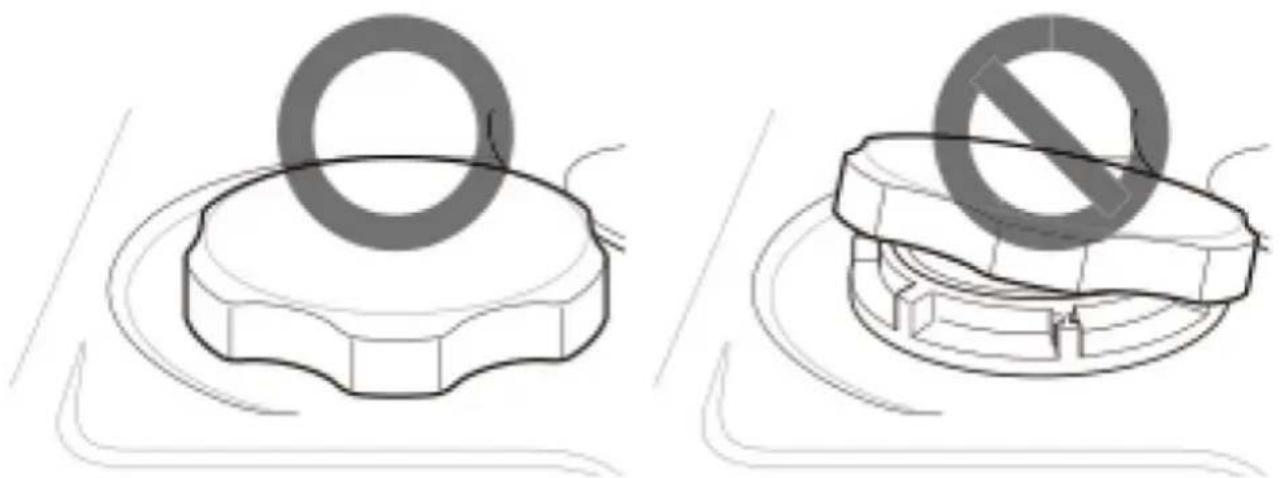
- Close the cover again. Fig. 22
- Run the rinse program without dishes.

CAUTION
- Do not pour detergent into the salt tank to avoid failures.
- Clean the salt residues around the salt tank lid. Otherwise, the salt solution may corrode the dishwasher and dishes.
- Align the lid horizontally and turn it clockwise to close it properly. A loose lid can cause the salt solution to leak from the salt reservoir back into the inner tank and cause corrosion. Fig. 22
- After adding dishwasher salt, the wash program should be run without dishes. Otherwise, any spilled salt may cause rust or damage the dishwasher.
Add detergent
- The amount of detergent required depends on the number of place settings and the soil level of the dishes.
-
Place the detergent in the detergent compartment before starting any program.
-
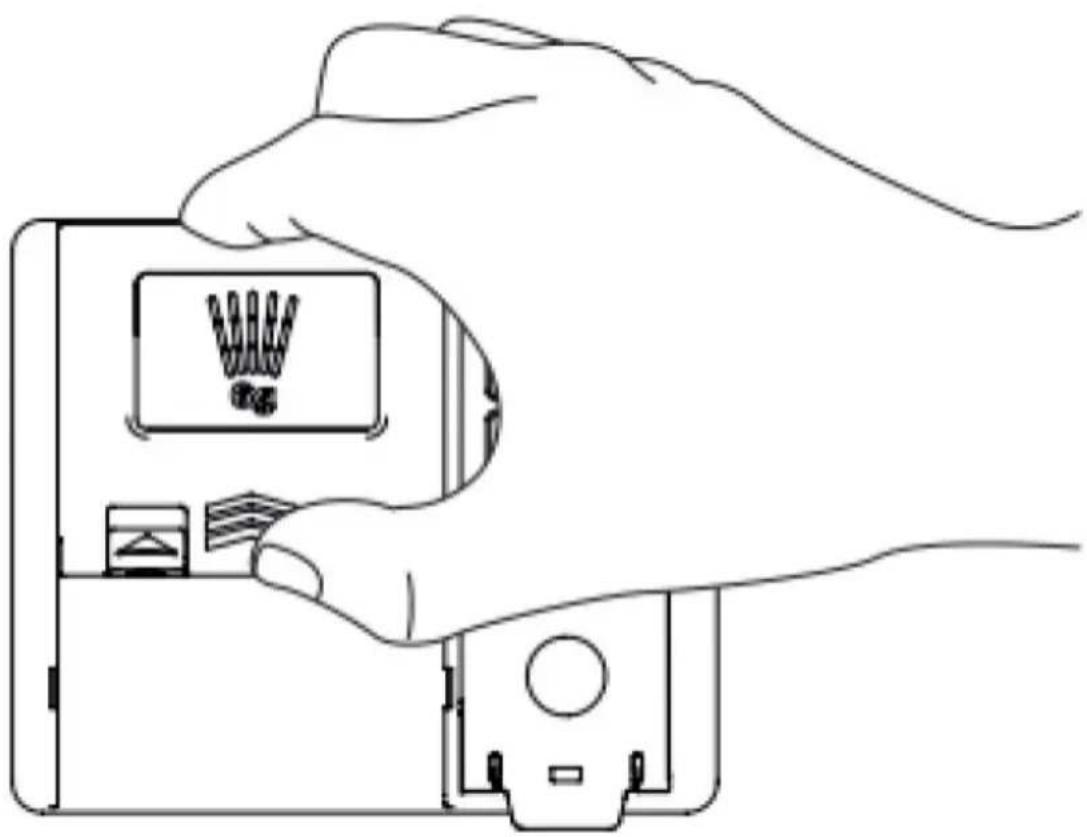
Press the button on the dispenser lid to open it. Fig. 23
- Add dish detergent to the main wash compartment until it is between the level 16 mark and the level 25 mark. Fig. 24
- Fill above the 25 level mark in case of hard water or very dirty dishes.
-
Fill up to level mark 15 in case of soft water or slightly dirty dishes.
-
Push the detergent cover and slide it until you hear a click. Fig. 25
-
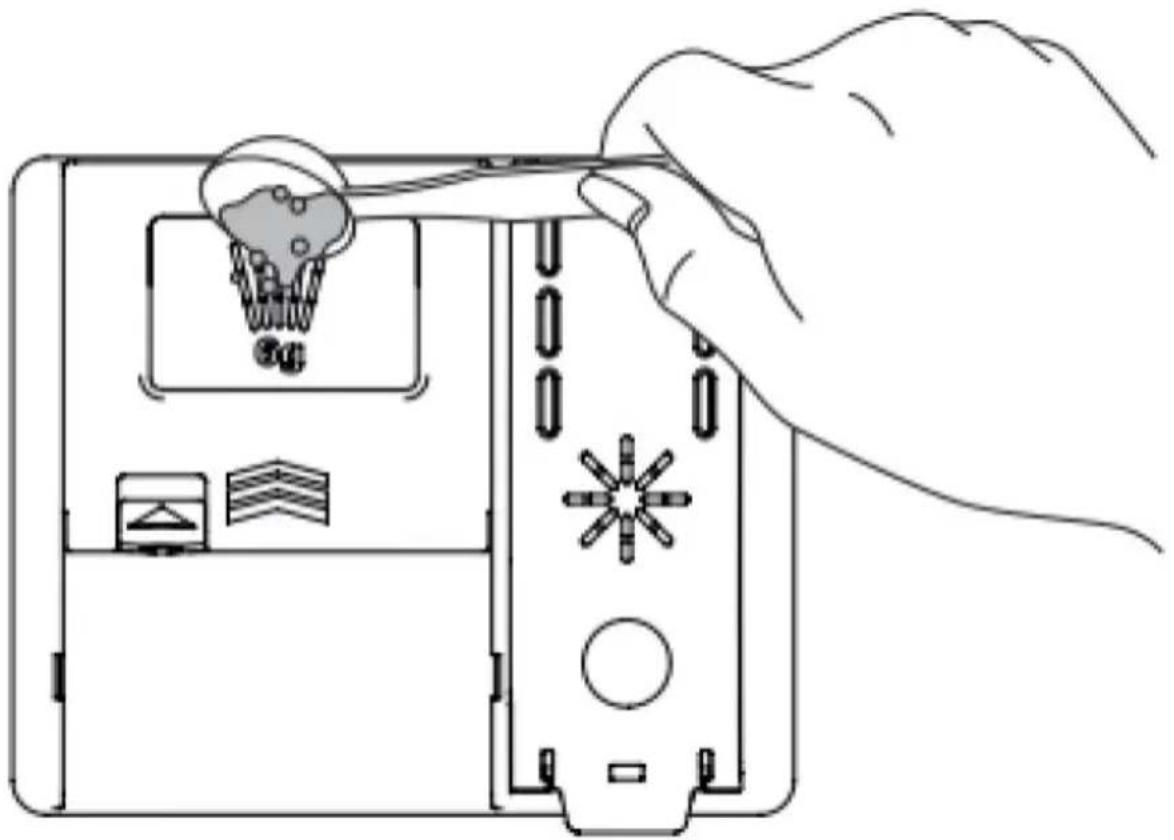
If pre-washing is required, fill the pre-wash compartment located on the lid with detergent. Fig. 26

WARNING
Dishwasher detergents and rinse aids should be kept out of the reach of children.

CAUTION
- Use only dishwasher detergent. Unsuitable detergent can cause the dishwasher to foam during operation. Excessive foam can reduce washing performance and cause dishwasher leakage.
- Do not pull the dispenser to close the dishwasher door to avoid damaging the dispenser.
Tips:
- Too much detergent will leave a film on the dishes and in the dishwasher, resulting in a poor washing effect.
- If liquid rinse aid is used, water can be drained from the dishes after the final rinse to improve drying performance.
- Do not use detergent tablets to shorten the wash cycle. The tablets may not dissolve completely, resulting in detergent residues on the dishes and poor cleaning efficiency.
- Rinse aid helps to remove stains, residues and white film caused by hard water, but does not help to remove excess detergent residues.
Add rinse aid
When the amount of rinse aid is insufficient, the rinse aid indicator will light up on the display. The use of rinse aid is recommended, it helps to remove water stains on dishes and improve drying performance.
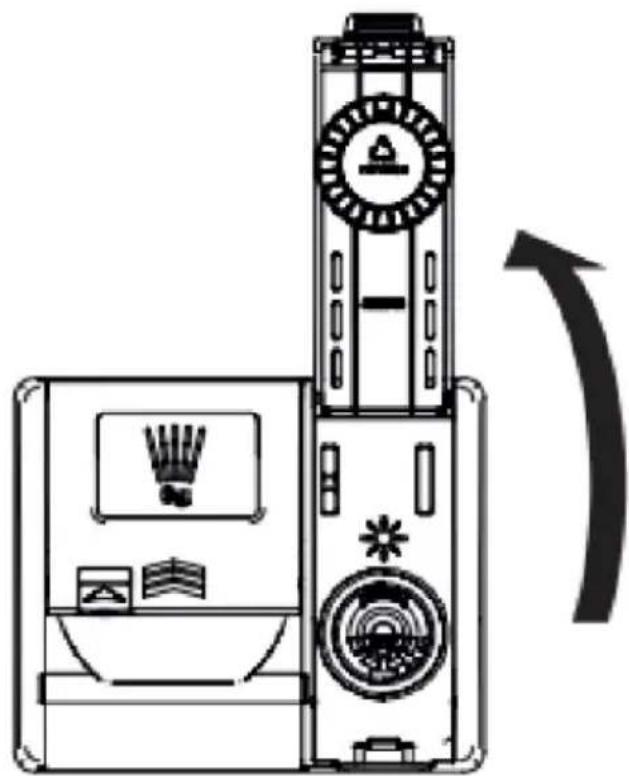
- Lift the cover and open the lid of the rinse aid compartment. Fig. 27
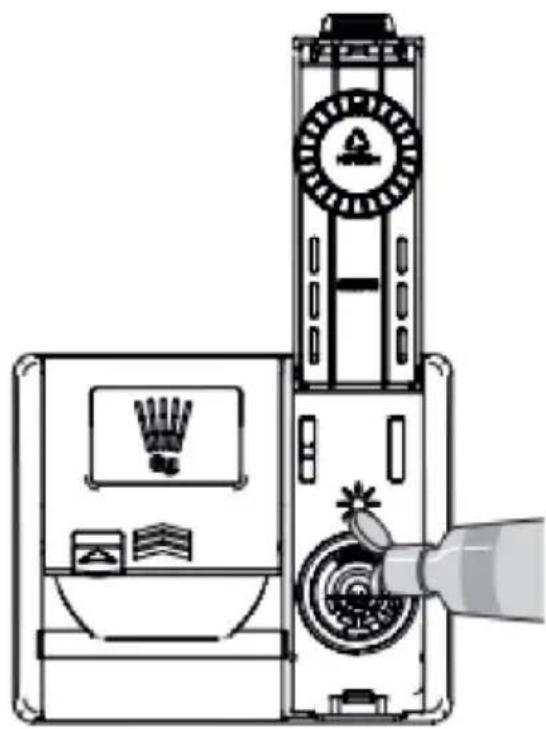
- Add rinse aid liquid up to the maximum fill level. The rinse aid must be inserted into the dispenser. Do not overfill the dispenser. Fig. 28
- Close the lid to lock the dispenser. During the final rinse cycle, the rinse aid will be dispensed automatically.
Tips:
- Use only liquid rinse aid designed for dishwashers.
- Do not overfill the rinse aid dispenser.
- Clean any rinse aid spillage around the dispenser.
Adjusting the rinse aid dispenser
The dispenser has 9 levels of adjustment. The rinse aid dispenser was set to level d3 when leaving the factory. You can check and change these settings:
- Ensure the dishwasher is switched off and press and hold the "Dual Zone" button for 3 seconds to configure the programme.
ENGLISH
- Press the «Dual Zone» button to display the current setting.
- Press the «Turbo Dry+» button to change the rinse aid dispenser setting. The level from d0 to d8 can be gradually adjusted by pressing this button.
- After completing the rinse aid dispenser settings, press the «on/off» button to turn the dishwasher off and save the settings.
Tips:
- If you use hard water and find mineral build-up on the dishes, set the dishwasher to a higher level.
- Too low a level in the rinse aid dispenser will cause stains and streaks on the dishes and poor drying performance.
- Too high a level will cause foaming, resulting in a poor washing effect.
Replenish rinse aid
- The frequency of dispenser refills depends on how often the dishwasher is used and the rinse aid setting.
- When more rinse aid is required, the rinse aid indicator will flash, unless the rinse aid dispenser is set to level d0.
Control panel
Fig. 29
- On/Off button: press this button to turn the dishwasher on/off.
- Start/Pause button: press this button to start/pause the program. Press and hold for 3 seconds to cancel the program and drain the water.
- Program button: press the corresponding icon to select from the available programs.
- Display: shows the estimated time of the program and the different status indicators. When the program and the additional option are selected, the display shows the total estimated time the program will take to run. During operation, the display shows the estimated remaining running time. The programme running time may adjust according to the soil level of the dishes.
A Abnormal Water Inlet Indicator: this icon flashes when the water inlet is abnormal (e.g., tap turned off or water cut-off).
B Rinse aid indicator: this icon lights up when the rinse aid liquid level is low, and turns off automatically when the rinse aid is replenished or the liquid level is set to d0.
C Indicator of the additional Delay Start function: When the «Delay Start» option is activated, this icon lights up, and the display shows the delay time in hours.
D Salt indicator: this icon lights up when the salt level is insufficient, and turns off automatically when salt is replenished.
E Half Load indicator: this icon flashes when the «Half Load» option is selected.
F UV Hygiene Indicator: this indicator flashes when the «UV Hygiene» function is selected.
G KidLock indicator: this icon remains lit when the child lock is activated.
H Hot Air Drying Indicator: this icon flashes and the display counts down.
I Dual Wash Indicator: this icon flashes when the «Dual Zone» option is selected.
Programmes
| Programme | Soiling level | |
| ***ECO50°C | More energy efficient wash program for cleaning moderately soiled everyday dishes. | Balanced |
| Intensive65°C | Suitable for dishes, pots and pans with stubborn stains. Intense | |
| Glass 40°C S | special program for gentle cleaning of glassware. Light | |
| Hybrid 60°C | Suitable for cleaning common sticky, burnt-on or dried food residues containing starch or protein. | All |
| Prewash45 °C | Suitable for removing residues from dirty dishes that remain in the dishwasher for several days, thus preventing the accumulation of odors. | - |
| Super 60 °C | Suitable for quick cleaning of fresh and slightly sticky food residues. Light | |
| Hygiene70 °C | Special programme for cleaning common dry and solid food residues, as well as wear-resistant items. | Light |
| Machine Care | This cycle is designed to clean the inside of the dishwasher. Use it without crockery inside. Removes dirt, odors, white spots and other residues. Add citric acid or other cleaning agent for more effective results. | - |
| Programme *Water consumption (l) | **Time (min) | Temperature (°C) *Power consumption (kWh) | ||
| ***ECO 50°C 10.0 288 50 0.650 | ||||
| Intensive 65°C 14.2 120 65 1.08 | ||||
| Glass 40°C | 10.7 | 135 | 40 | 0.96 |
| Hybrid 60°C 14.2 105 60 1.04 | ||||
| Prewash 45 °C | 3.7 | 20 | 45 | 0.28 |
| Super 60 °C | 7.2 | 29 | 60 | 0.66 |
| Hygiene 70 °C | 10.7 | 90 | 70 | 1.07 |
| Machine Care | - | - | - | - |
*Actual water and energy consumption may vary depending on the level of soiling and water hardness.
**Actual running time and displayed programme time may vary depending on the programme options selected, soil level, water temperature and water hardness. Therefore, the displayed time and the actual operating time may be different.
ENGLISH
***Select the ECO 50°C programme for energy and water-efficient dishwashing. This programme is the most efficient in terms of combined energy and water consumption for cleaning normally soiled dishes.
KidLock
- The child lock can prevent the settings from being changed during operation. All control panel buttons, except the On/Off button, will be locked when this function is activated. This function does not lock the door.
- While the program is running, you can press and hold the selected program icon for 3 seconds to activate or deactivate the child lock.
- Deactivate the child lock function to start a new program.
Additional functions
Delay Start
- Press the «Delay start» button to set the delay time. This function can delay the start time of the selected programme. Each time you press this button, the delay time will increase by one hour. The time delay setting range is 1 to 24 hours, and the single setting range is 1 hour. You can press it to cancel after 24 hours.
- During the delay time, you can cancel the delay time by opening the door and holding down the «Delay Start» button. At this point, it will return to the state of having no delay timer selected.
- The delay time shown on the panel is the time at which the program ends.
Half Load
This optional function is used to adjust the water flow to clean less dishes.
Dual Zone (Dual Washing)
It is used to operate the machine without fully charging it. With the "Dual Zone" function, you can save both water and energy whilst using the upper and lower baskets of the dishwasher.
x0\_»UV Hygiene»
This optional function is used to sterilize and sanitize the inside of the dishwasher or the dishes before the end of the program.
Intensive+
This optional function is used to adjust the temperature and time to achieve better washing results.
Turbo Dry+ (Hot Air Drying)
This optional function activates hot air drying after the end of the wash program to effectively dry the dishes.
Loading the dishwasher
- Always follow these instructions for effective washing:
- Remove large food debris, including bones, before loading dishes.
- Soak dishes with burnt-on food before placing them in the dishwasher.
- Place deep pots or dishes face down.
- Make sure that the items do not touch each other.
- Wide crockery should be placed at an angle to allow water to flow freely.
- Dishes should not be placed face up.
- High crockery should not be placed in the corners of the baskets.
- Ensure that small items do not fall out of baskets
- The interior of the small ware is not easily reached or cleaned by the water sprinklers, resulting in poor washing. Washing small dishes in the dishwasher is not recommended.
Items not suitable for dishwashers
The combination of high temperatures and detergent may damage certain items. Do not wash the following in the dishwasher:
- Copper or anodised aluminium.
- Ceramics with hand-painted silver leaf or gold leaf details.
- Wooden or treated bone utensils.
- Iron or non-stainless steel utensils.
- Plastics not dishwasher safe.
- Expensive utensils, such as silver cutlery or plates with golden rings.
- Fragile items such as crystal glasses.

CAUTION
- Do not use pots or pans with plastic handles, as they can be damaged by heat and detergent.
- Waterproof lipstick stains on glasses may not be removed during washing.
- Some foods contain natural dyes, such as carrots and tomatoes. These may discolor plastic items, although they do not affect their stability. Cleaning silverware can also cause discoloration on plastic utensils.
Loading in the lower basket of the dishwasher
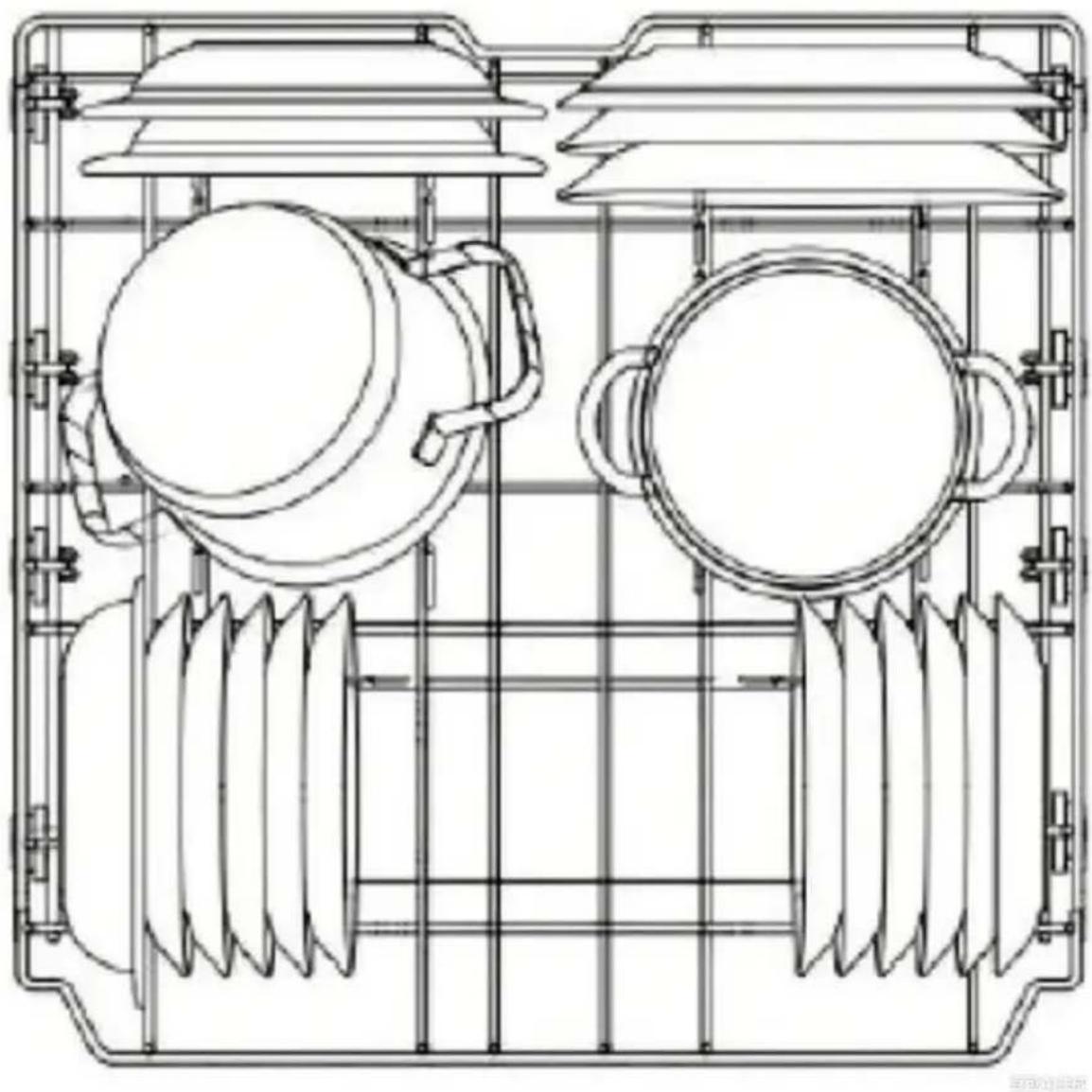
- Figure 30 shows the most efficient way to place the dishes in the lower basket.
- Dishes should be placed vertically and oriented toward the center of the rack, and pots, pans and large plates should be inverted.
- Load plates, bowls and soup bowls between the teeth of the basket.
- Make sure that pan handles and other large items do not interfere with the rotation of the spray arm.
- Small items such as cups and glasses should go in the top basket.
- Make sure that large items do not impede the rotation of the spray arm or block the detergent dispenser.
ENGLISH
- Heavily soiled dishes (pots and pans) should be placed in the lower basket.
Loading in the upper basket of the dishwasher
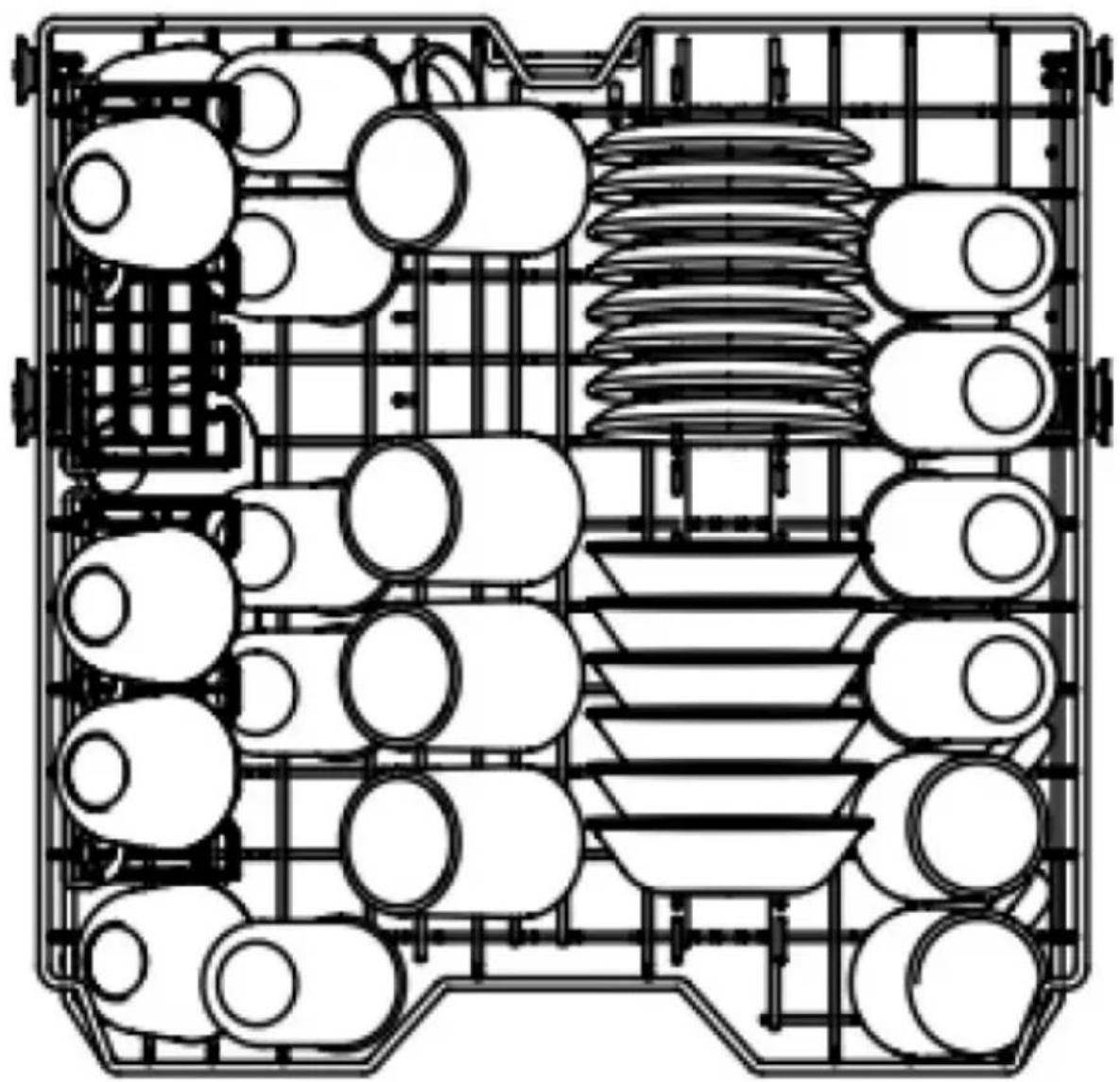
- Figure 31 shows the most efficient way to place the dishes in the upper basket.
- Place cups and glasses in the row between the rack supports. Placing them directly on the shelf may cause damage and water stains.
- Do not allow cups to touch other items to avoid breakage.
- Do not stack crockery.
- Cups, glasses and bowls must be placed face down.
- Place additional cups or dishes in the folding holder (available on some models only).
- Make sure that the crockery does not interfere with the rotation of the upper and lower spray arm.
- When loading large items into the upper basket, such as wine glasses or tall cups, it may be necessary to remove the folding support.
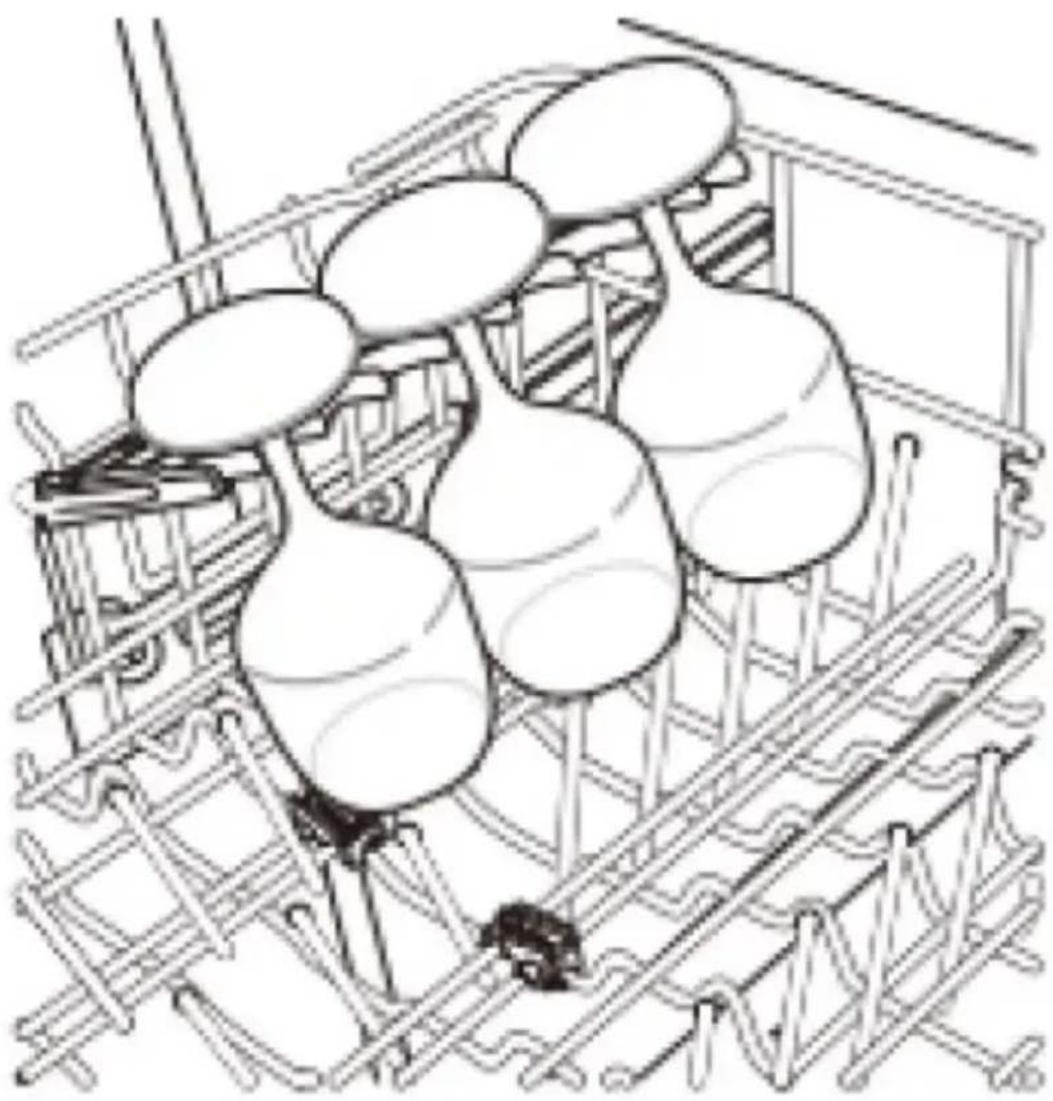
Load on folding stand
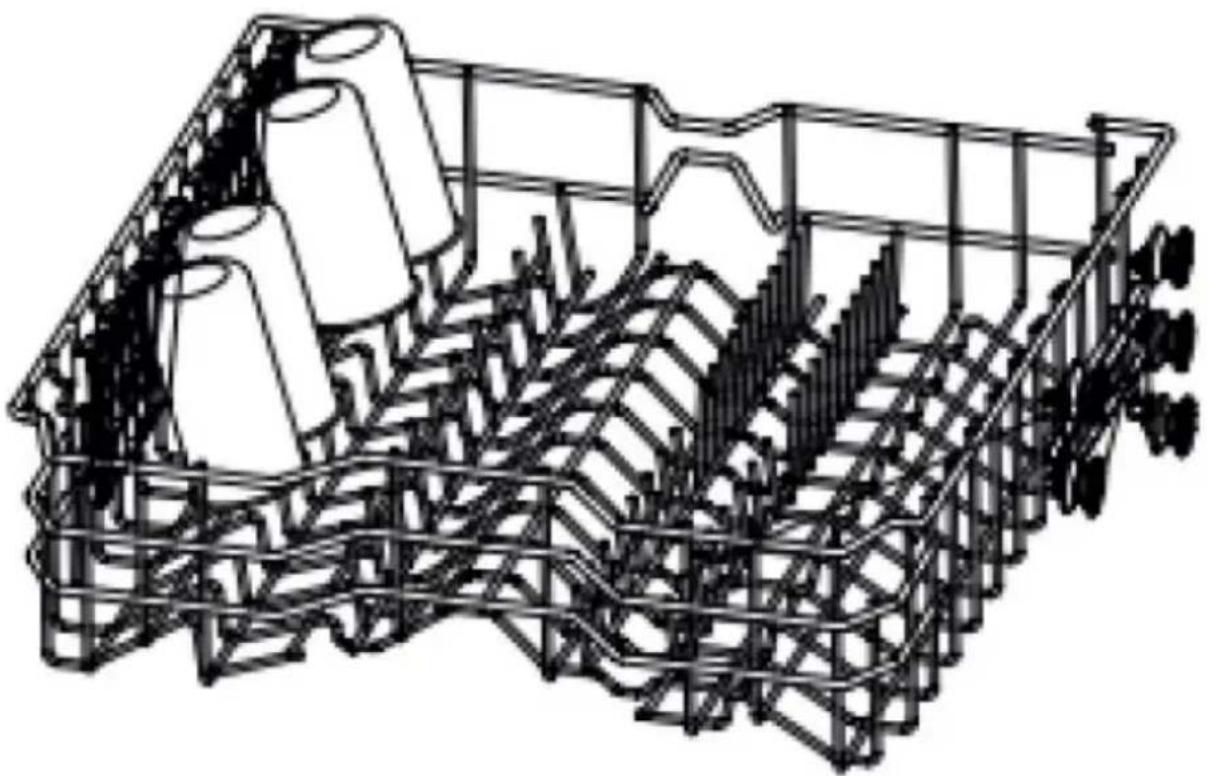
- This dishwasher has a folding cup holder. Fig. 32
- It can be folded to accommodate tall cups, as shown in Figure 33.
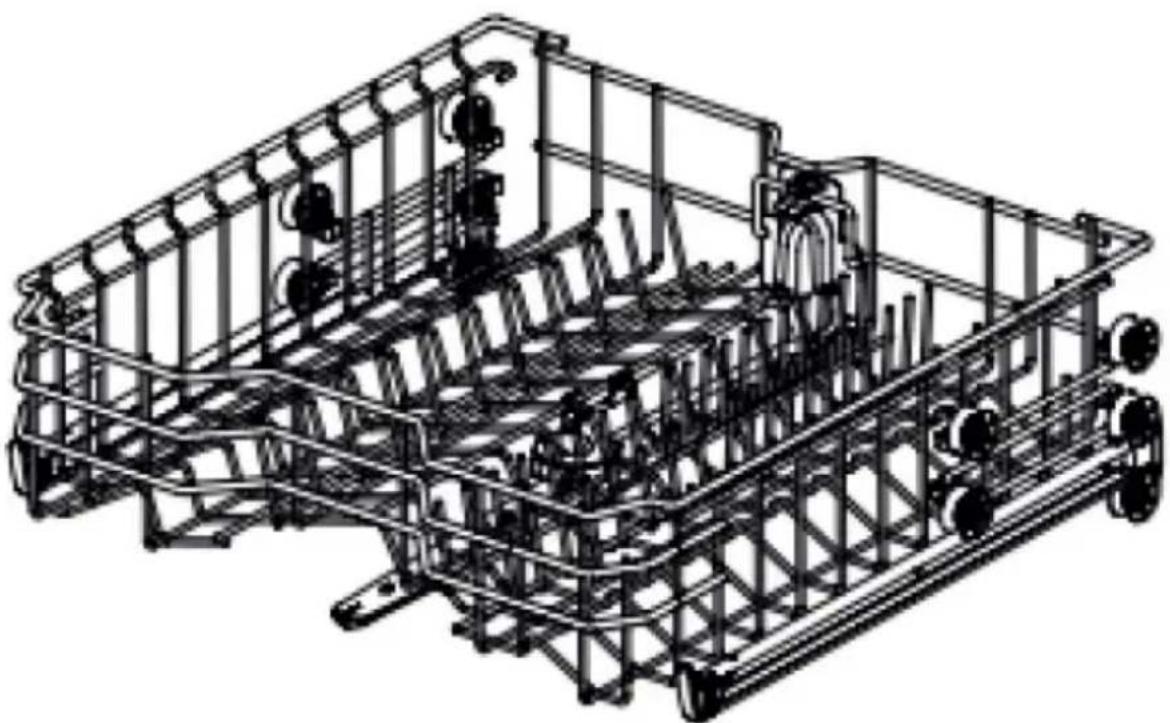
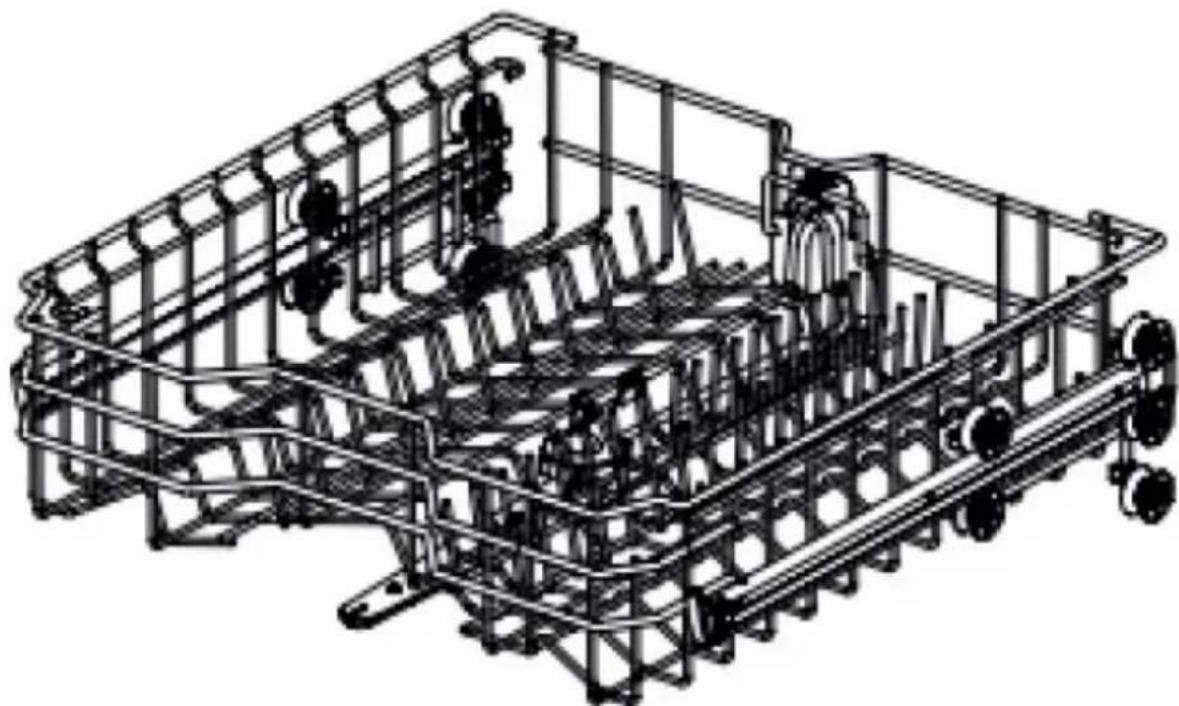
Upper basket height adjustment
The upper basket features a height adjustment mechanism designed to create more space at the bottom or top depending on your needs.
Lower the basket: Remove the top shelf from the guide and place it between the second and third row of shelf rollers. Fig. 34
Lift the basket: Remove the top shelf from the guide and place it between the first and second row of rollers. Fig. 35

WARNING:
- Make sure there is no crockery in the basket when adjusting the height to avoid damage or injury.
- Ensure both sides of the upper basket are at the same height before sliding it back into the dishwasher. If not, the door will not close and the spray arm will not connect to the water supply.
- After adjusting the height, verify that the spray arm can rotate freely.
- Verify that the spray arm does not interfere with items in the lower basket.
Loading the cutlery tray
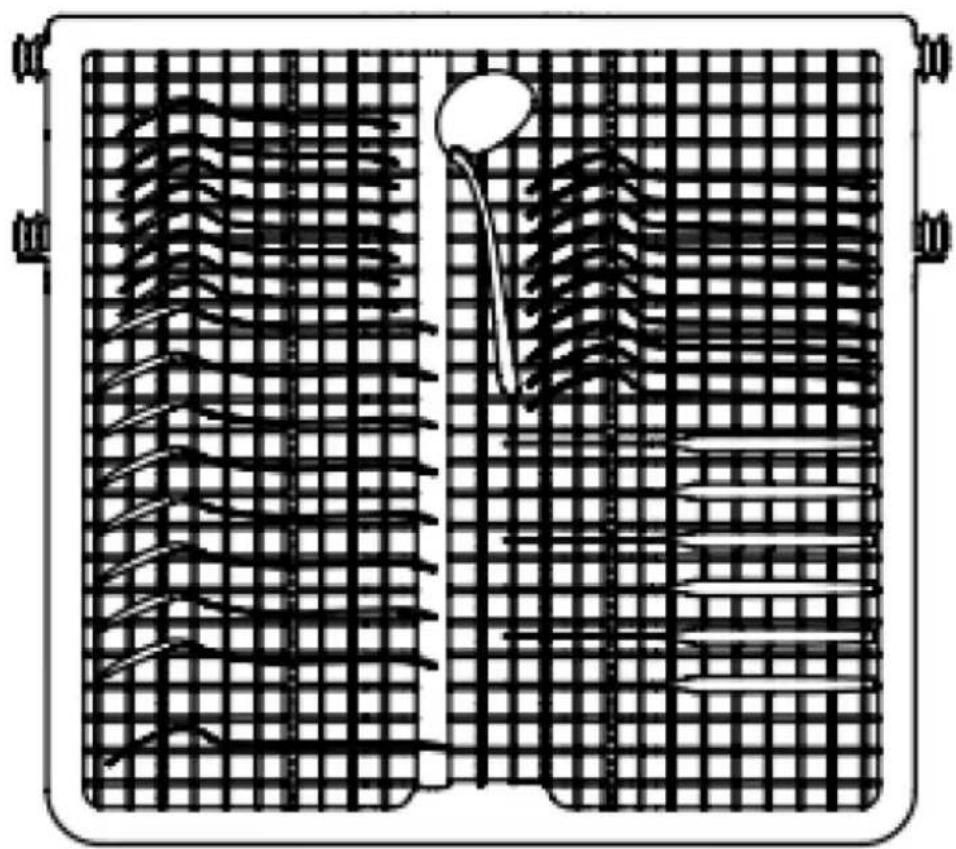
- The cutlery tray is ideal for flat cutlery and kitchen utensils. Separation on the shelf helps keep cutlery separate to prevent damage and improve cleanliness.
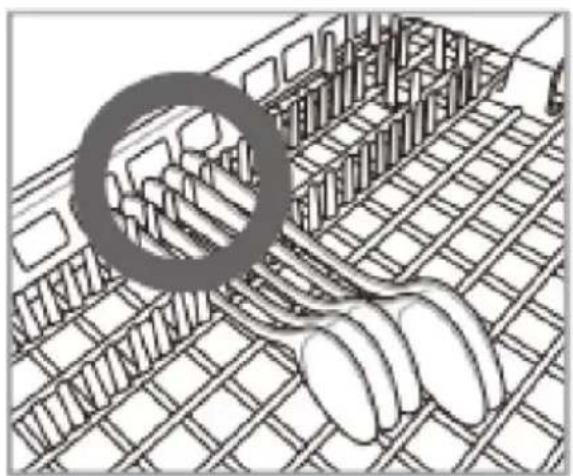
- In Figure 36 and Figure 37 you can see the best way to distribute and place the cutlery in the cutlery tray.
Tip:
84
For best cleaning performance, place the cutlery in the cutlery tray.
Removing the cutlery tray
- The cutlery tray can be removed if more space is needed in the upper basket for larger items.
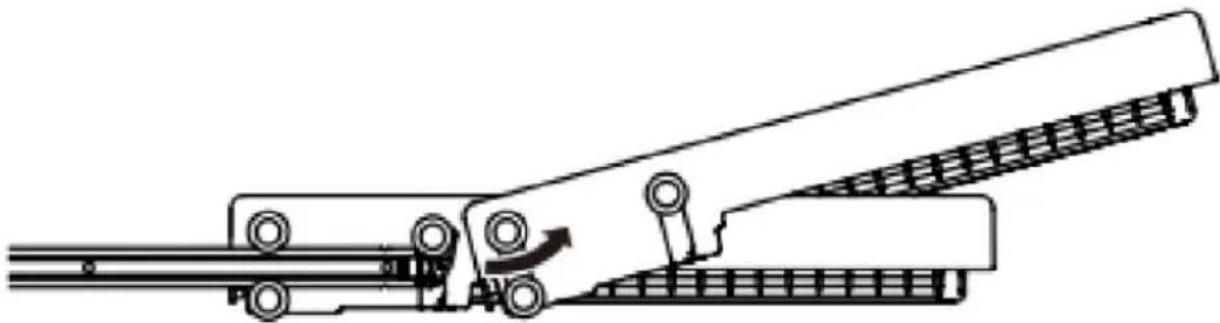
- Pull out the cutlery tray to the end of the rails. Then, lift the front of the shelf so that the rollers pass the stop at the end of the rail. The shelf can be slid forward and removed from the rails. Fig. 38

WARNING:
Use care when loading and unloading items with sharp edges. Load sharp knives with the blade down to reduce the risk of injury.
Tips for better performance
To ensure that your dishwasher performs optimally and to prolong its life, consider the following tips:
Use of rinse aid: the use of rinse aid is strongly recommended to improve the drying performance of the dishwasher. This helps the water to be removed at the end of the rinse, ensuring that the dishes are ready for the drying cycle without leaving water residue.
Amount of detergent: be sure to use the correct amount of detergent. Using too much can cause residue buildup and poor cleaning.
Regular cleaning: Keep the filter and inside of the dishwasher clean to prevent odors and ensure efficient operation. Perform regular cleaning following the manual instructions.
Placing the dishes: place the dishes correctly so as not to hinder the rotation of the spray arm or interfere with the dispenser. This will improve cleaning efficiency.
Dish prewashing: it is not necessary to wash dishes before loading, as the dishwasher is designed to clean without prewashing.
Dishwasher Noise: A hissing noise may be normal when water is absorbed by the dishwasher, especially if the water pressure is high. Adjust the water valve if the noise is excessive.
«Drain Only»: To drain the accumulated water, press and hold the Start/Pause button for 3 seconds, and the program will restart for draining.
5. CLEANING AND MAINTENANCE
Maintenance
To maintain performance and prevent failures, it is important to regularly check the exterior and interior of the dishwasher (including the filter and spray arms).
ENGLISH

WARNING:
- Do not use benzene or solvents when cleaning the exterior and interior of the dishwasher to prevent fires or explosions.
- Use gloves and/or protective clothing to prevent injury during dishwasher care and maintenance.
Tips:
- If the dishwasher remains inactive for an extended period, run the "Machine Care" programme without dishes and detergent to refresh the interior. When finished, clean the inside and outside of the dishwasher according to the following instructions.
- If you are away for a long period of time during the hot season, close the water valve and disconnect the power cord, or turn off the circuit breaker, and clean the filter, inner tank and dispenser to prevent odors.
- If you are away for a long period of time during the cold season and there is a risk of freezing temperatures, take anti-cold measures for the water inlet hose and the dishwasher. These measures should be performed by qualified maintenance personnel.
External cleaning
In most cases, the dishwasher's external surface can be cleaned with a soft, damp cloth or sponge, then dried with a soft cloth. If the dishwasher has a stainless steel housing, you can use a stainless steel specific cleaner.

CAUTION:
Any cooking oil splashed on the dishwasher's external surface should be cleaned immediately. Do not use cleaners that may contain alcohol, solvents, bleach, benzene, flammable liquids or abrasives to clean the external surface of this dishwasher to avoid discoloration or damage.
Internal Cleaning
- Regularly clean the dishwasher's internal surface with a soft, damp cloth or sponge to remove food particles and dirt.
- To remove white stains and odors inside the dishwasher, run the «Machine Care» program without dishes and detergent, put white vinegar in a glass or dishwasher-safe container and place it in the upper basket. Vinegar, being an acid, can damage appliances if used frequently.
Cleaning the filter
- Remove the lower basket from the dishwasher and attach the lower spray arm.
-
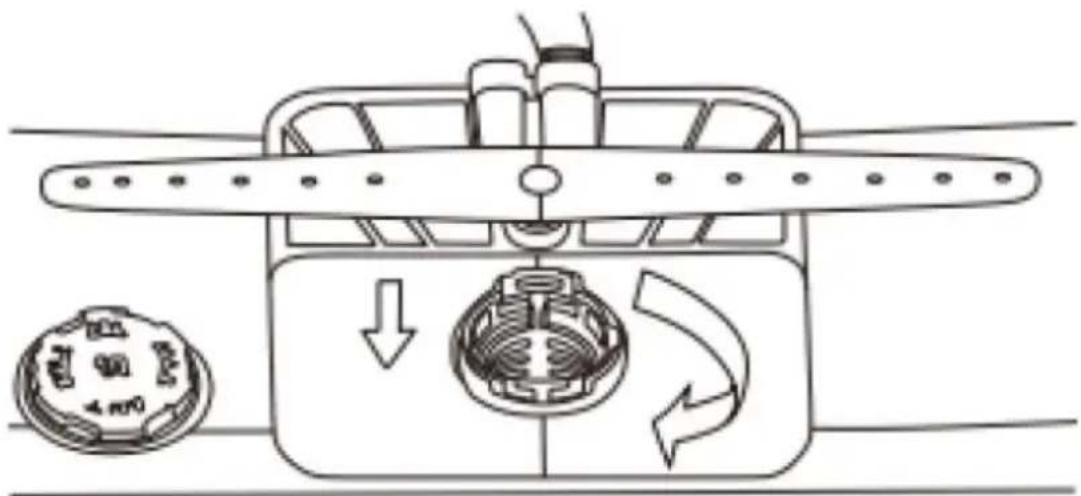
Rotate the filter cup counterclockwise (as shown in Figure 39) and remove the filter assembly, which consists of the filter cup, wire mesh and microfilter. After removing the filter assembly, check and remove any foreign objects (if necessary).
-
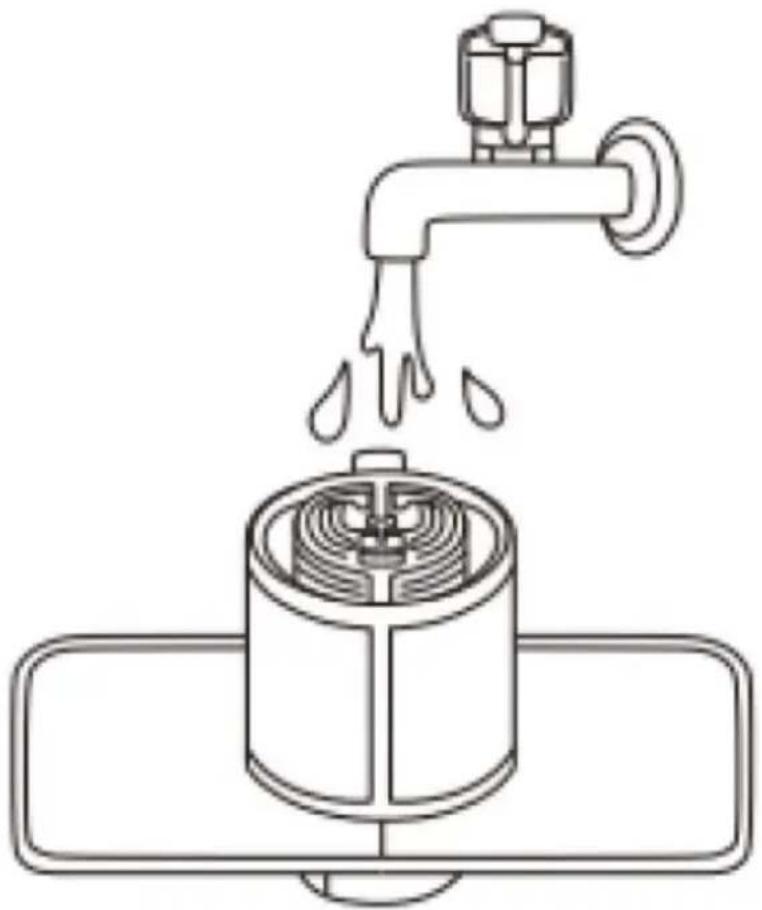
Clean each filter with running water and a soft brush. Reassemble the filter assembly before reinstalling. Fig. 40
- Reinstall the filter assembly and secure it by turning the filter cup clockwise until it clicks into place. Fig. 41

WARNING:
Be careful with sharp edges when cleaning the metal filters.

CAUTION:
Remove food debris from the filter to prevent foul-smelling bacteria and possible drainage problems.
Tips:
- Clean the filter after each load for best washing results. Food debris left in the filter may cause unpleasant odours.
- Clean the filter with a soft brush at least once a month.
- Clean the filter with non-abrasive materials and warm water.
- Ensure the filter is correctly assembled before starting the dishwasher. Turn firmly until a click is heard during assembly of the filter assembly.
Cleaning the spray arms
If the spray arm orifices are blocked by food debris, the dishes may not be cleaned properly due to inefficient water distribution. It is suggested to clean the spray arm every two weeks.
Cleaning the lower spray arm
- Make sure that the holes in the spray arm are not blocked by food particles.
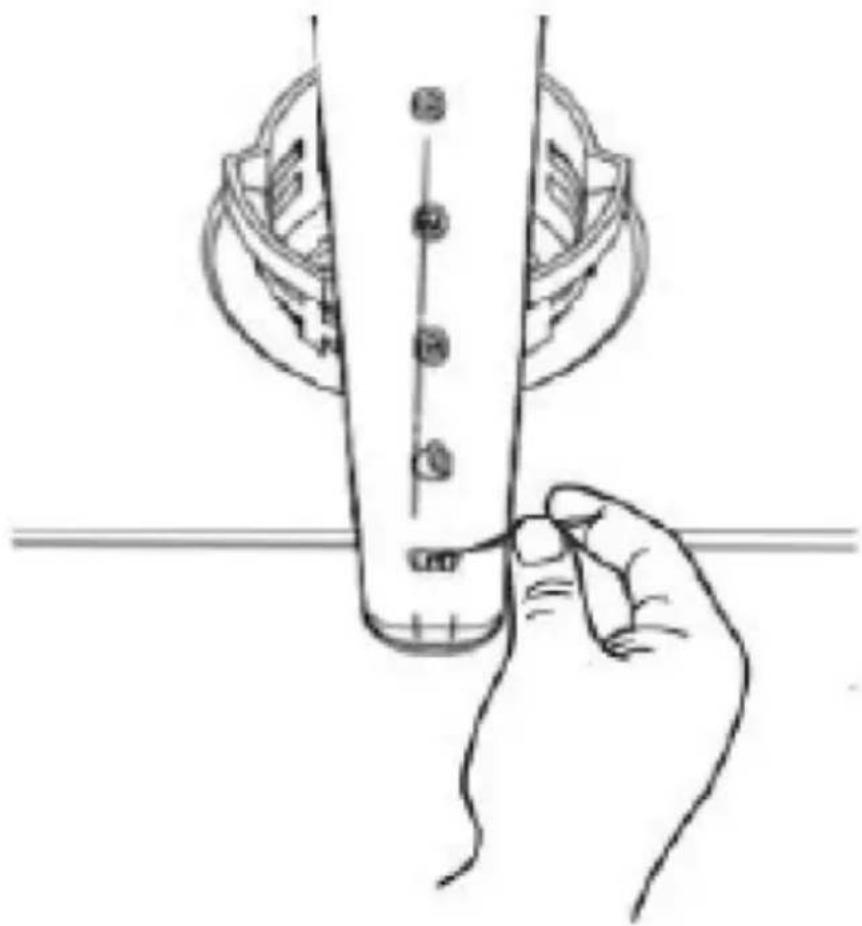
- Remove any debris blocking the spray arm holes with a pin or any sharp tool. Fig. 42
Cleaning the central spray arm
- Pull the upper basket forward to ensure that the holes in the spray arm are not blocked by food debris.
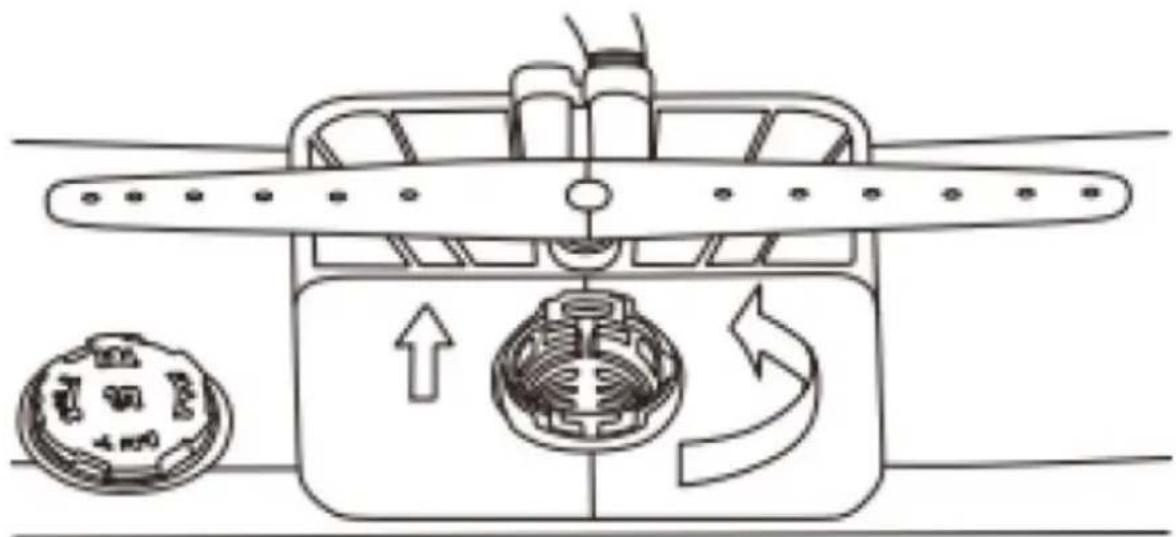
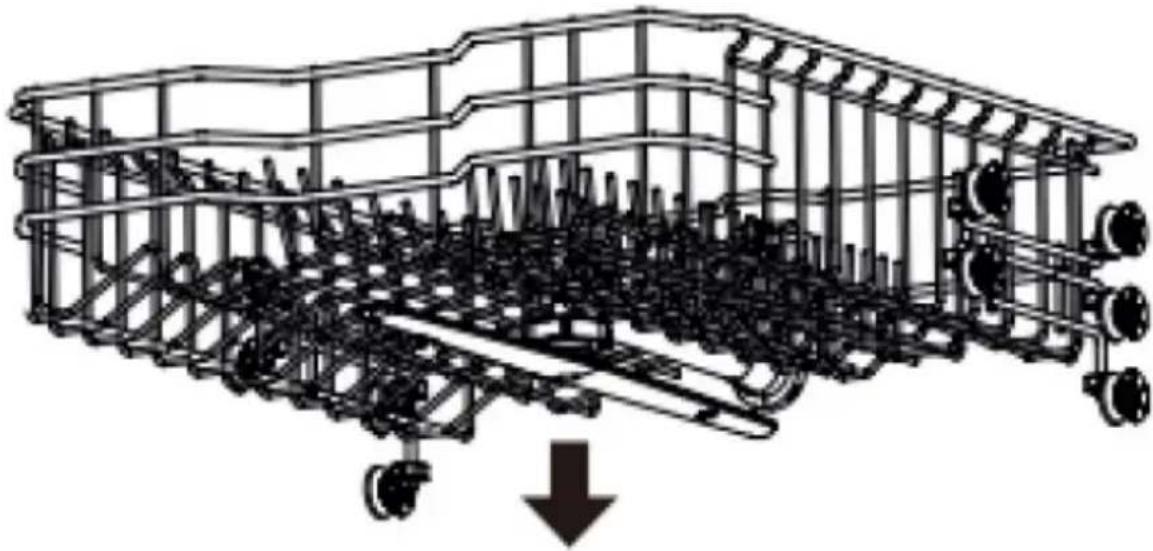
- Before cleaning, turn the nut on the bottom of the spray arm counterclockwise and pull down to remove the center spray arm. Fig. 43
- Remove food particles by rinsing or shaking the spray arm.
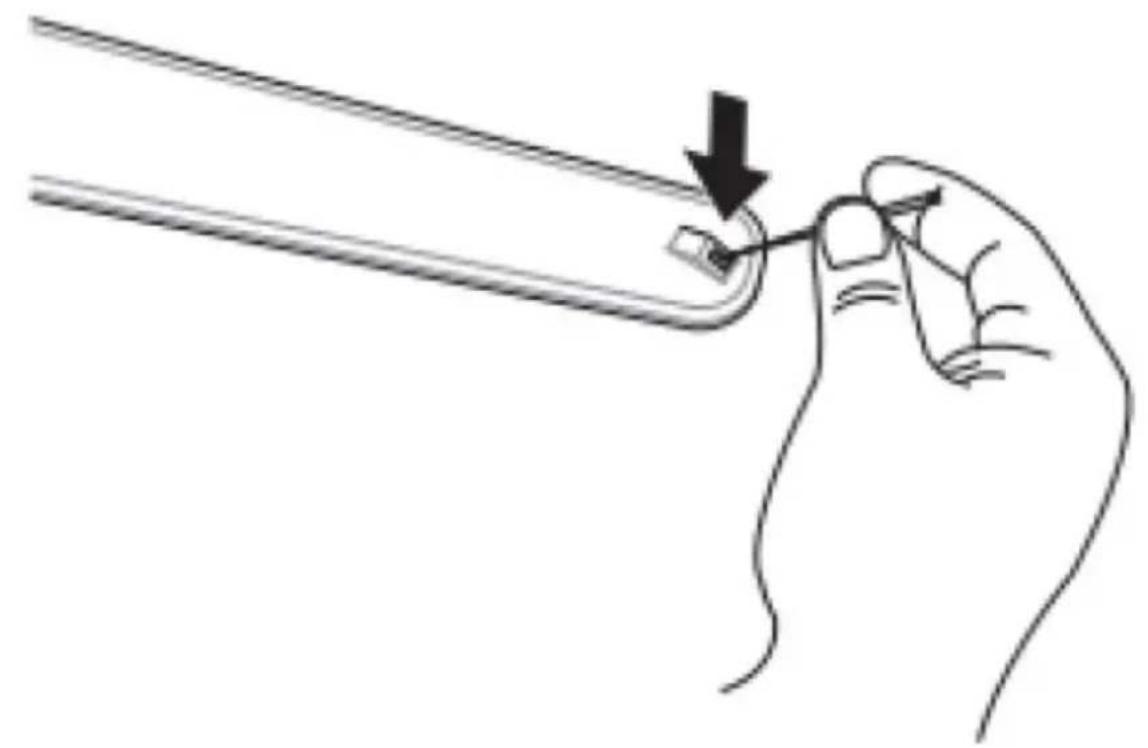
- Remove food debris blocking the orifice of the spray arm with a pin or any sharp tool. Fig. 44
- Clean the spray arm hole with water after removing food debris.
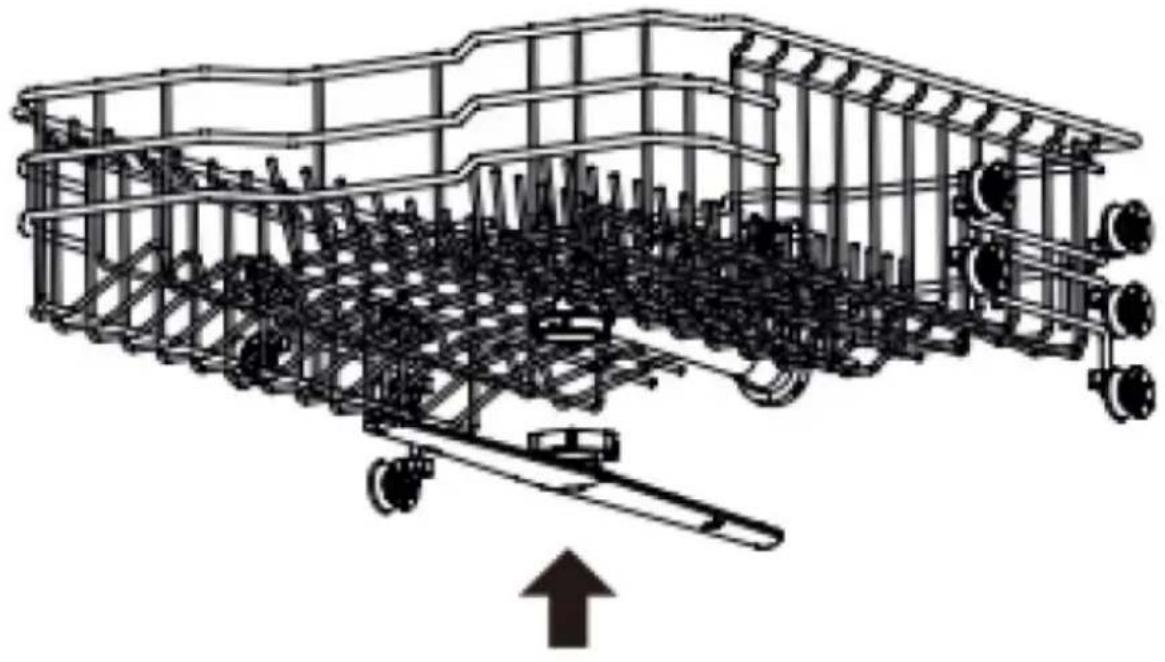
- Reinstall the middle spray arm in its position after cleaning. Turn the nut clockwise to ensure that the nut locks the spray arm in its original position. Fig. 45
- After assembly, check that the spray arm rotates freely.
ENGLISH
6. TROUBLESHOOTING
This dishwasher is equipped with an automatic error monitoring system to detect and diagnose problems at an early stage. If your dishwasher is not working properly or not working at all, please review the following instructions before contacting the official Cecotec Technical Assistance Service.
| Problem Possible cause Solution | ||
| The dishwasher does not work. | You have not turned on the dishwasher. | Press the power button. |
| The door is not completely closed. | Make sure the door is completely closed and locked. | |
| Power supply or power cord not connected. | Correctly connect the power supply or power cord. | |
| Fuse blown or circuit breaker tripped. | Replace the fuse or reset the circuit breaker. | |
| Safety child lock activated. | Deactivate the child lock. | |
| The door does not close completely. | The baskets are not properly installed. | Properly install the dishwasher baskets. |
| Water leakage at the front. | The dishwasher is not correctly levelled. | Ensure the dishwasher is level. Refer to the "Installation" section for leveling instructions. |
| Use of incorrect detergent. | Excess foam can cause water leaks, allow the foam to dissipate for 24 hours and then clean the inside of the dishwasher. | |
| Odour. The program was stopped before the end and there is residual water left in the dishwasher. | Empty the dishwasher, switch on the appliance and run the “Intensive” program with detergent to remove residual water. | |
| There is food debris at the bottom of the dishwasher or in the filter. | Clean the filter and the inside of the dishwasher according to the “Cleaning and Maintenance” section of this user manual. | |
| Unwashed dishes remained in the dishwasher for too long. | Empty the dishwasher, place a cup of white vinegar in the upper basket and run the “Machine Care” program. (Note that vinegar is an acid that can damage the inside of the dishwasher if used frequently). | |
| Water remains inside the dishwasher after washing. | The drain hose is kinked or blocked. | Make sure the hose is properly or remove the blockage. |
| Food residues are left on the dishes. | You did not select the most appropriate program. | Select the correct programme according to soil level and type of dishes. |
| No detergent was used. | Use dishwasher detergent. | |
| Low water inlet pressure. | Water pressure should be 0.03 - 1 MPa. | |
| Spray arm holes blocked. | Clean the spray arms. | |
| Improper loading of dishes. | Ensure the dishes do not obstruct the spray arm rotation or interfere with the dispenser. | |
| Blocked filter. Clean | the filter. | |
| Opaque or fogged glassware. | Too much detergent mixed with hard water. | Use less detergent and adjust the rinse aid level. |
| Black or gray marks on the plates. | Aluminum items rub against dishes during washing. | Be sure to place the dishes properly. |
| Yellow or brown film on the interior. | Coffee or tea stains. | Use a specific stain remover for dishwashers, designed to remove coffee or tea stains. |
| Stains on dishes. Over | load. Do not overload | d the dishwasher. |
| Incorrect placement of tableware. | Be sure to follow the loading instructions detailed in this manual. | |
| Low water pressure. | Water pressure should be 0.03 - 1.0 MPa. | |
| Insufficient detergent. | Add the recommended amount of detergent. | |
| The rinse aid dispenser is empty. | Refill the rinse aid dispenser. | |
| Hard water accumulation. | Remove all crockery and the cutlery basket from the dishwasher. Place 3 tablespoons (40 g) of citric acid in the main wash compartment. If citric acid is not available, put about 1 cup (200-300 ml) of white vinegar in a shallow container and place it in the upper basket, then run the "Machine Care" program without detergent. | |
| Noise. Some noise level during operation is normal.In addition, the drain pump will operate when the detergent lid is opened to drain. | ||
| The dishes do not dry. | The rinse aid dispenser is empty. | Check and refill the rinse aid dispenser. |
| The light is off. Power supply not connected. | Switch on the power supply. | |
| The spray arm does not rotate smoothly. | Spray arm orifices blocked by food particles. | Clean the spray arm. |
| The upper basket is inclined. | The upper basket is not properly installed. | Position the upper basket correctly. |
| Code d1, d2, d3, d4, d5, d6, d7, or d8 appears on the display. | Selection of rinse aid level. | It is not an error code. Indicates the current rinse aid level. |
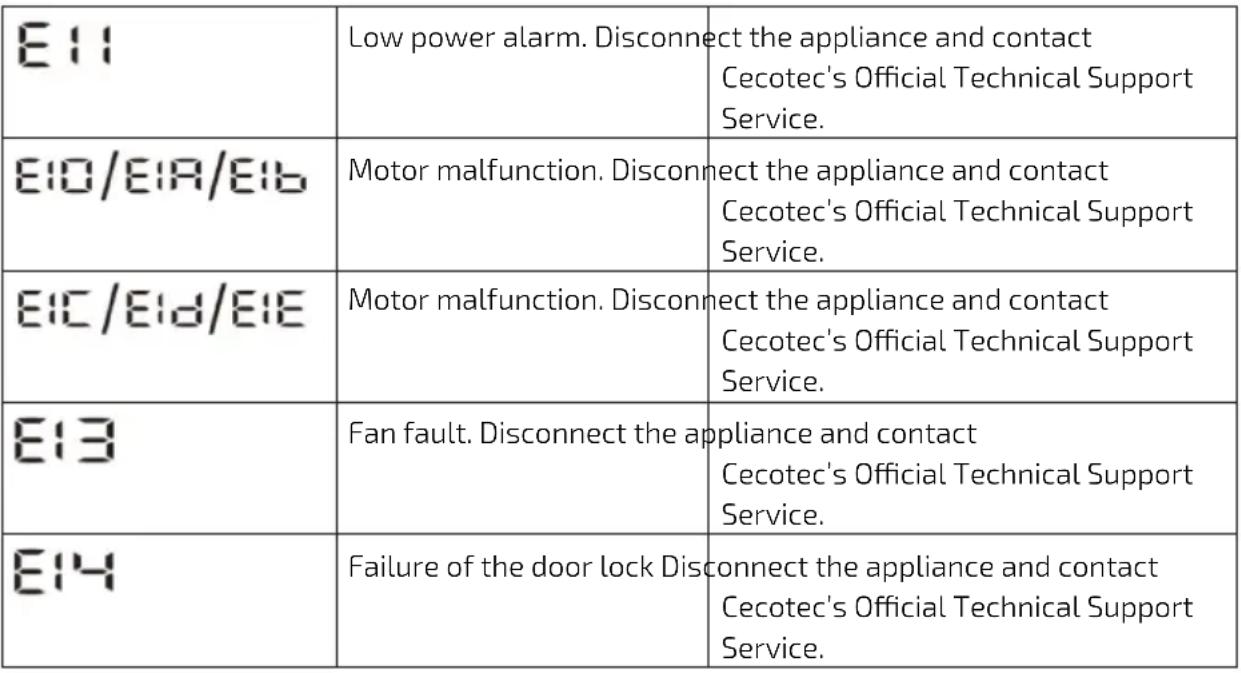
Error codes
| Error code Possible cause | Solution | |
| E1 | Problems in the water inlet. | Check if the water inlet hose is blocked, kinked or frozen. Check the water supply. |
| E2 | Drainage problems. Check if the drain hose is blocked, kinked or frozen. | |
| The air gap is blocked. Clean the air gap or discard it. | ||
| Filter blocked. Clean the filter. | ||
| E3 | Abnormal heating alarm. Disconnect the appliance and contact Cecotec's Official Technical Support Service. | |
| E4 | Water leakage. Turn off the dishwasher's water supply and contact Cecotec's Official Technical Support Service. The dishwasher stops operating, the alarm sounds, and the drain pump operates intermittently. | |
| E5 | Temperature sensor failure. | Disconnect the appliance and contact Cecotec's Official Technical Support Service. |
| E61/E62 | Communication circuit failure. | Disconnect the appliance and contact Cecotec's Official Technical Support Service. |
| E7 | Failure due to excessive water supply. | Disconnect the appliance and contact Cecotec's Official Technical Support Service. |
| E9 | Bypass valve failure. Disconnect the appliance and contact Cecotec's Official Technical Support Service. | |
ENGLISH
 |
7. RECYCLING OF ELECTRICAL AND ELECTRONIC EQUIPMENT
This symbol indicates that, according to the applicable regulations, the product and/or batteries must be disposed of separately from household waste. When this product reaches the end of its service life, you must remove the batteries/accumulators and take it to a collection point designated by local authorities.
For detailed information on how to properly dispose of electrical and electronic
equipment and/or the corresponding batteries, consumers should contact their local authorities.
Compliance with the above guidelines will help to protect the environment.
8. COPYRIGHT
The intellectual property rights over the texts in this manual belong to CECOTEC INNOVACIONES, S.L. All rights reserved. The content of this publication may not, either in part or in its entirety, be reproduced, stored in a retrieval system, transmitted or distributed by any means (electronic, mechanical, photocopying, recording or similar) without prior authorisation from CECOTEC INNOVACIONES, S.L.
9. SIMPLIFIED DECLARATION OF CONFORMITY
CE Cecotec Innovaciones hereby declares that this appliance complies with the essential requirements and other relevant provisions of the regulations applicable in the European Union. This appliance has been designed, manufactured and tested in compliance with required safety and quality
standards. The full text of the EU Declaration of Conformity can be found on the following website: https://cecotec.es/es/information/declaration-of-conformity
FRANÇAIS
1. PIÈCES ET COMPOSANTS
Composants externes
Img. 1
Demi-charge (Half Load)
Dual Zone (Double lavage)
Intensif+ (Intensive+)
Dual Zone (Dual Wash)
Intensive+ (Intensiv+)
UV Hygiene (Igiene UV)
UV Hygiene (Higiene UV)
6. PROBLEEMOPLOSSING
UV Hygiene (Higiene UV)
Intensive+ (Intensiu+)
Fig./Img./Abb./Afb./Rys.2
natural_image
Technical line drawing of a mechanical assembly with internal components and a magnified inset showing structural details (no text or symbols)Fig./Img./Abb./Afb./Rys. 3
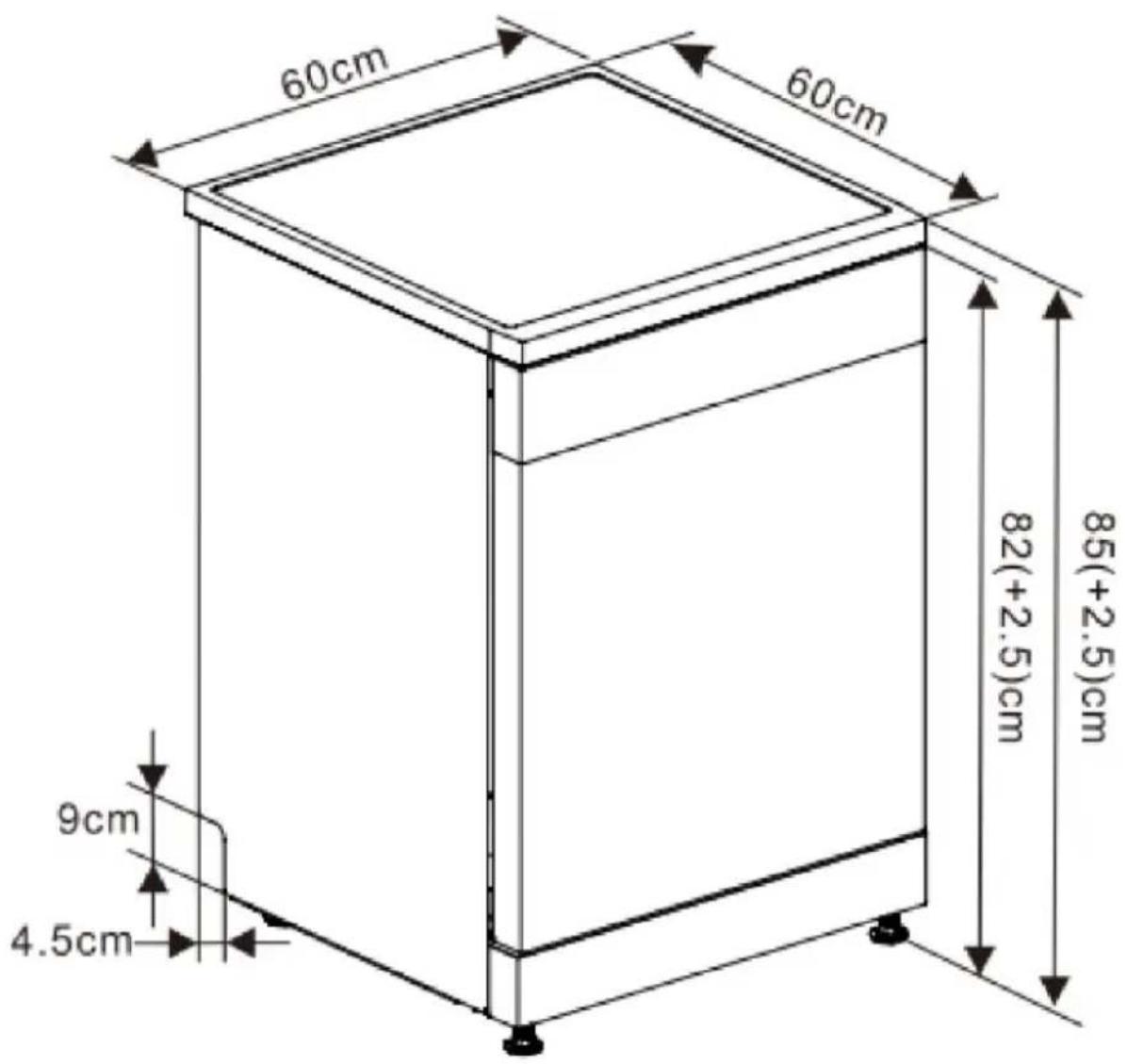
Fig./Img./Abb./Afb./Rys. 4
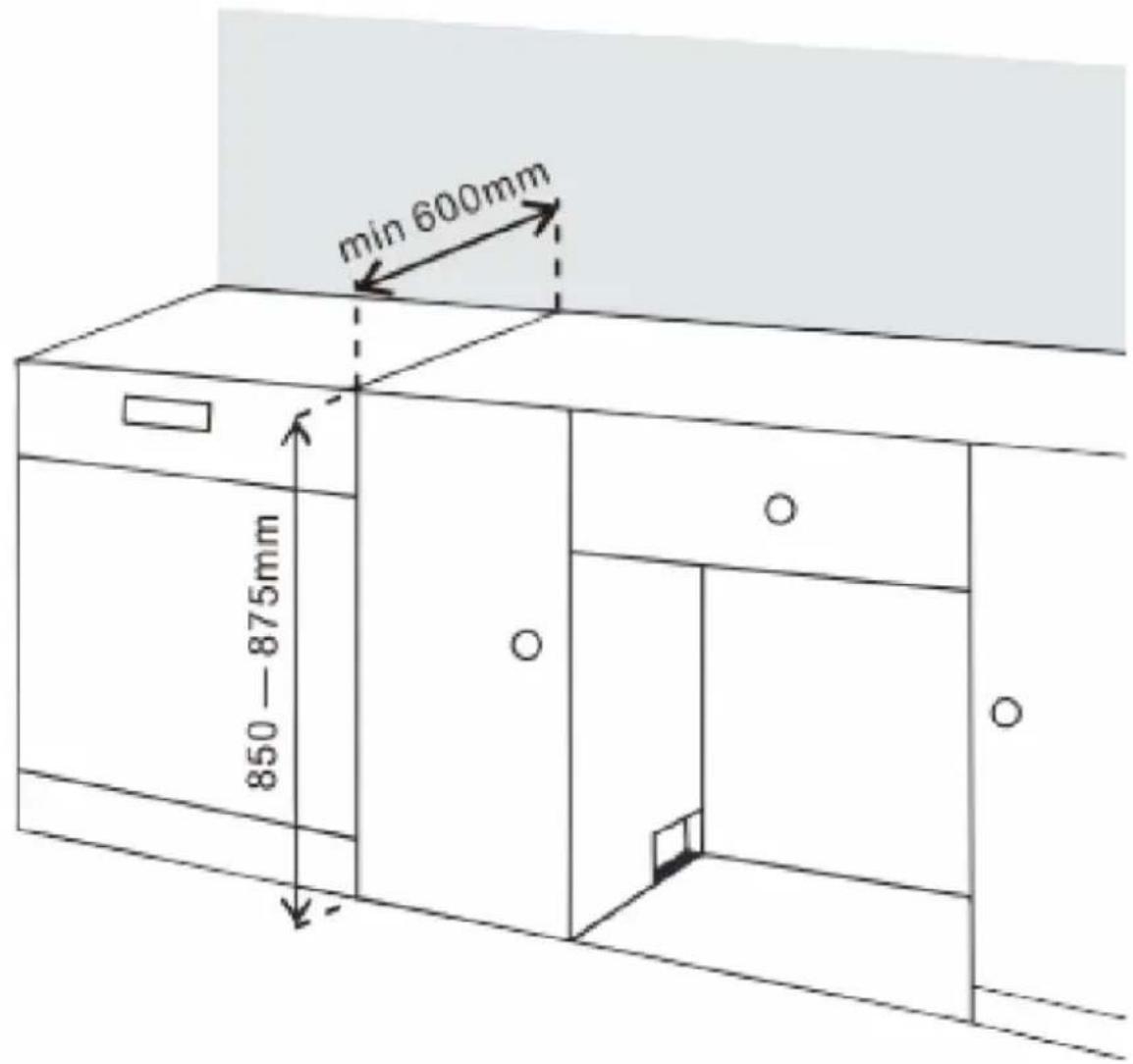
Fig./Img./Abb./Afb./Rys. 5
natural_image
Line drawing of a rectangular kitchen appliance with a square top and side legs, no text or symbols present.Fig./Img./Abb./Afb./Rys. 6
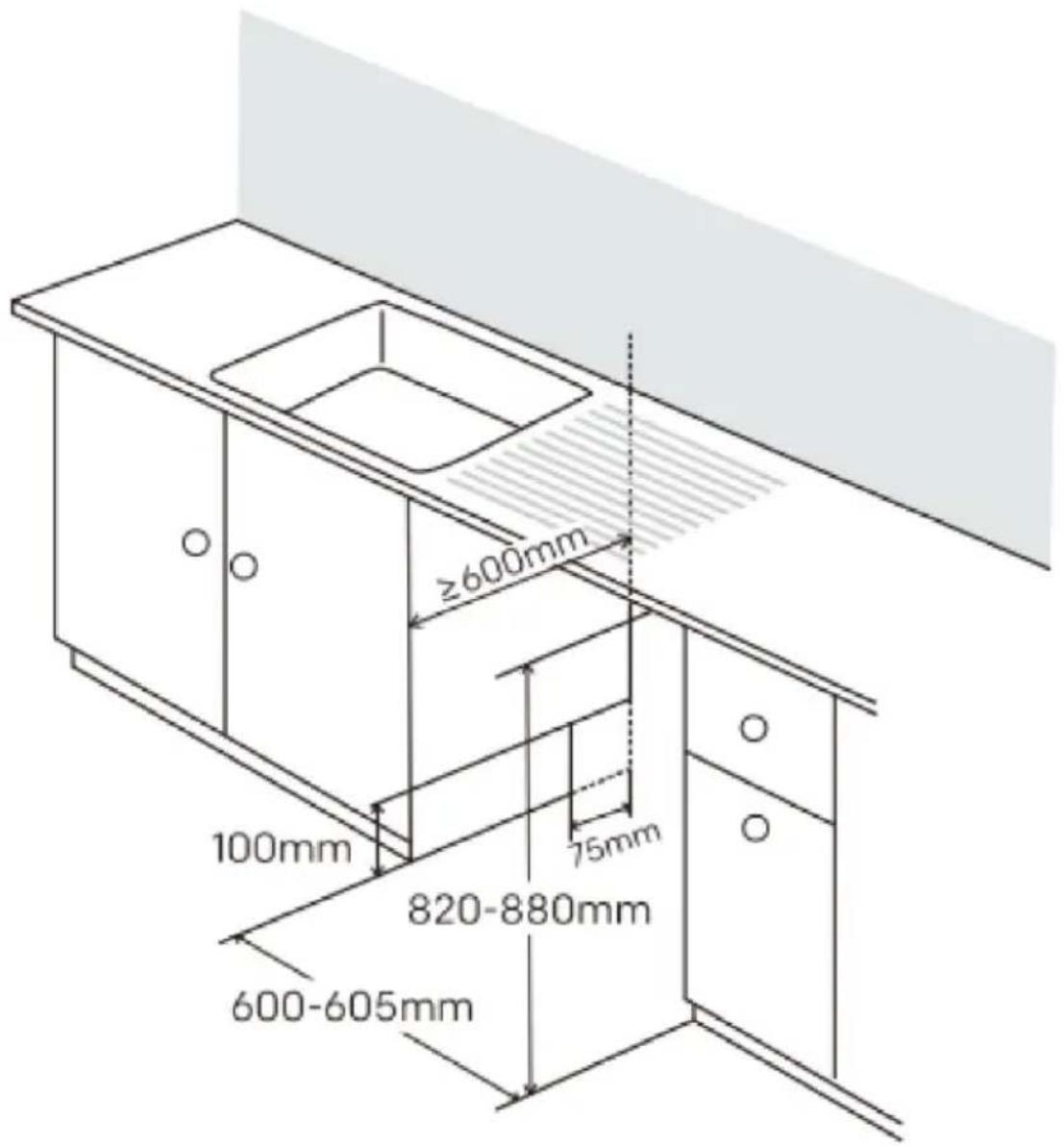
Fig./Img./Abb./Afb./Rys. 7
natural_image
Technical line drawing of a mechanical device with internal components and a circular base (no text or symbols)Fig./Img./Abb./Afb./Rys. 8
natural_image
Technical line drawing of a structural frame with supports and a vehicle, no text or symbols presentFig./Img./Abb./Afb./Rys. 9
natural_image
Line drawing of a mechanical component with a lever and circular base (no text or symbols)Fig./Img./Abb./Afb./Rys. 10
natural_image
Line drawing of a simple rectangular box with a circular component and an upward arrow, no text or symbols present.Fig./Img./Abb./Afb./Rys. 11
natural_image
Line drawing of a rectangular cabinet with a circular inset showing a force or pressure indicator (no text or symbols)Fig./Img./Abb./Afb./Rys. 12
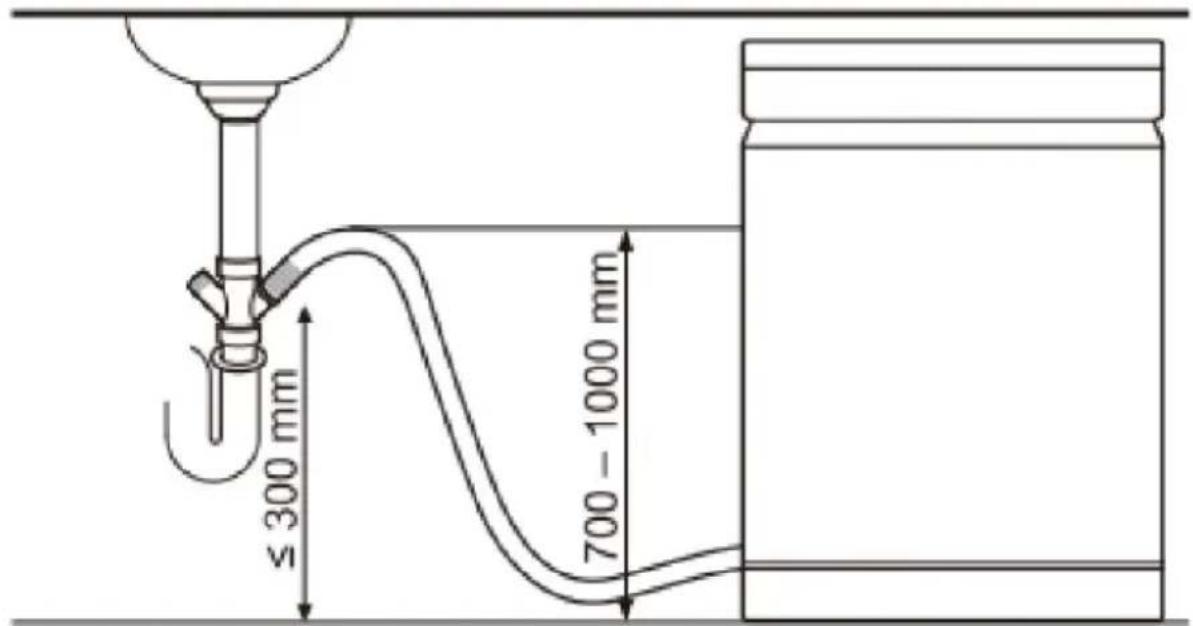
Fig./Img./Abb./Afb./Rys. 13
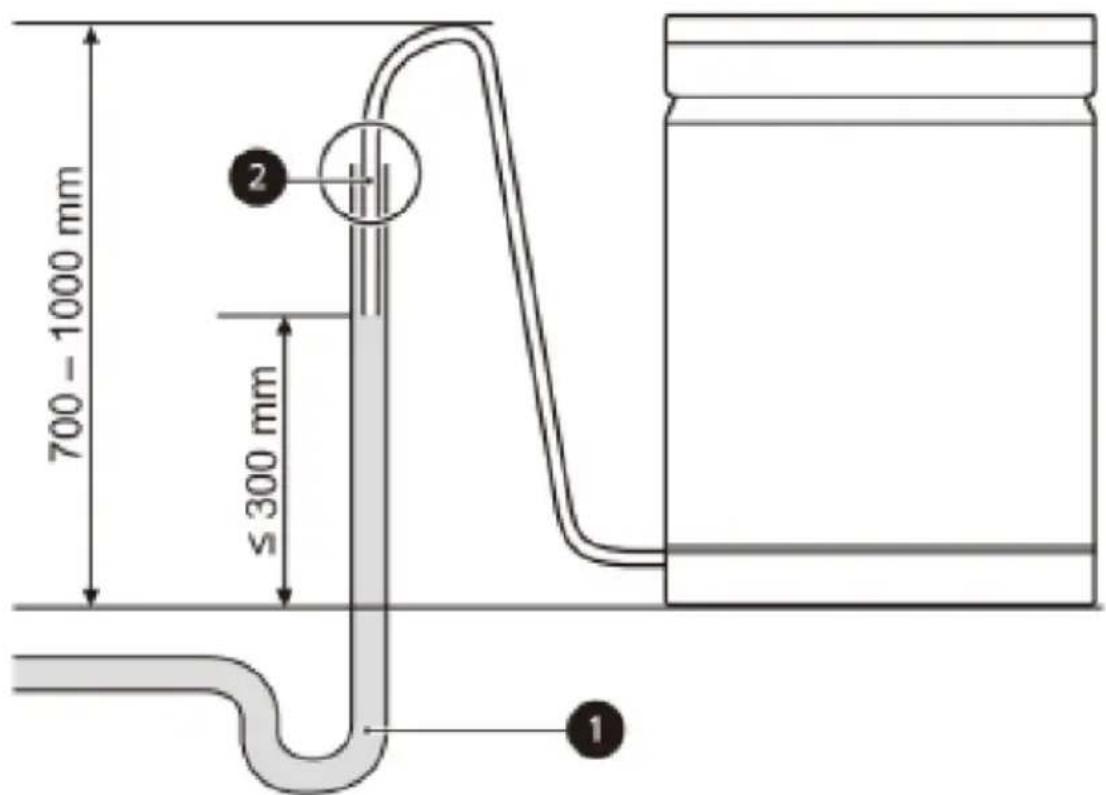
Fig./Img./Abb./Afb./Rys. 14
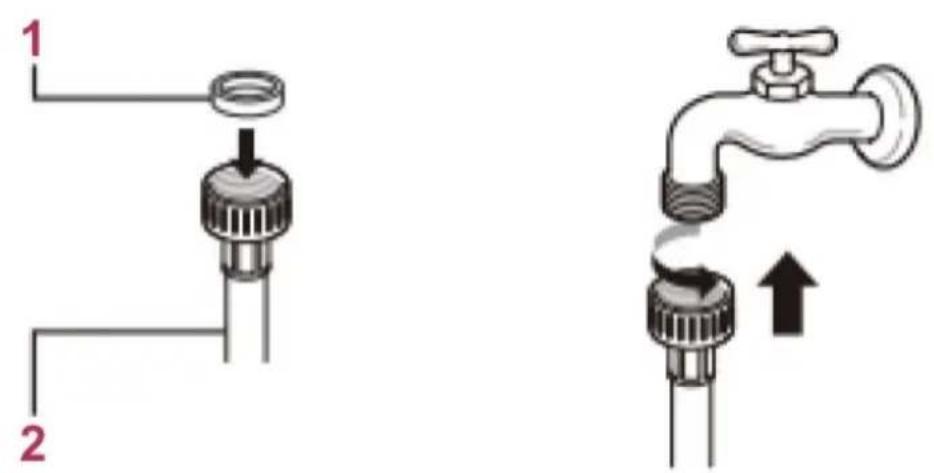
Fig./Img./Abb./Afb./ Rys. 15 Fig./Img./Abb./Afb./ Rys. 16
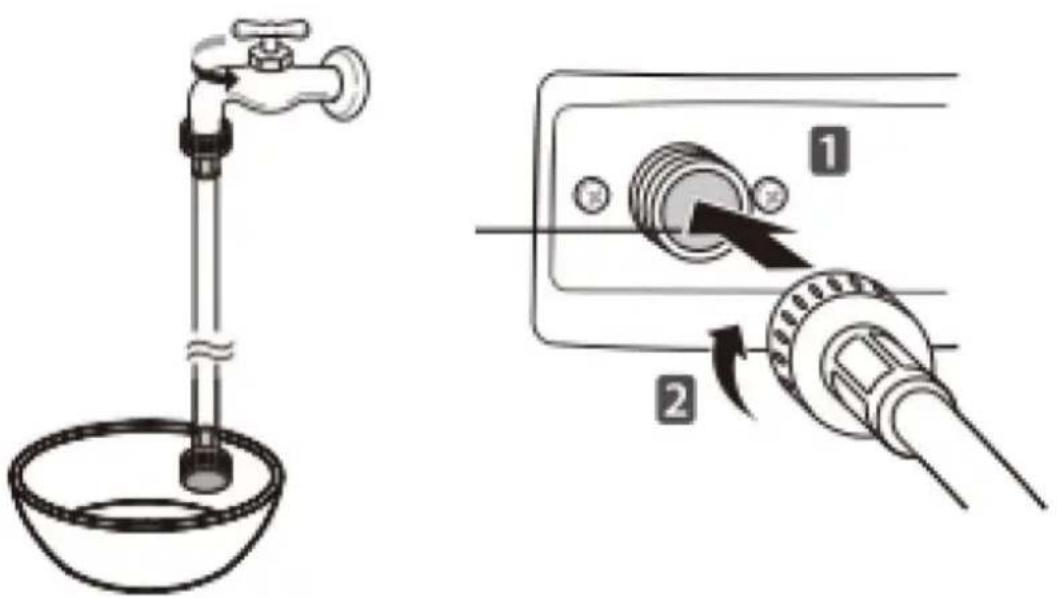
Fig./Img./Abb./Afb./Rys. 17 Fig./Img./Abb./Afb./Rys. 18
natural_image
Technical line drawing of a mechanical structure with no visible text or symbols, including a circular annotation highlighting a no-smoking symbol (no text present)Fig./Img./Abb./Afb./Rys. 19
natural_image
Diagram of a mechanical device with a circular component and a rotating knob, showing no text or symbols.Fig./Img./Abb./Afb./Rys.20
natural_image
Illustration of a hand pouring liquid into a funnel-shaped container with a lid, no text or symbols presentFig./Img./Abb./Afb./Rys. 21
natural_image
Two technical line drawings of a mechanical component with a circular ring above it, one showing a cross-section and the other a prohibition symbol (no text or labels)Fig./Img./Abb./Afb./Rys. 22
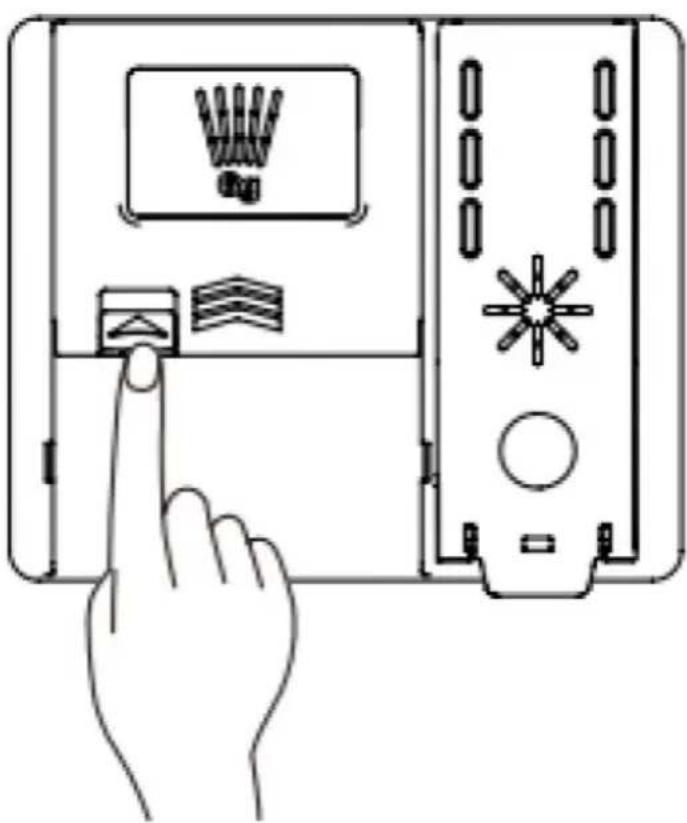
Fig./Img./Abb./Afb./Rys. 23

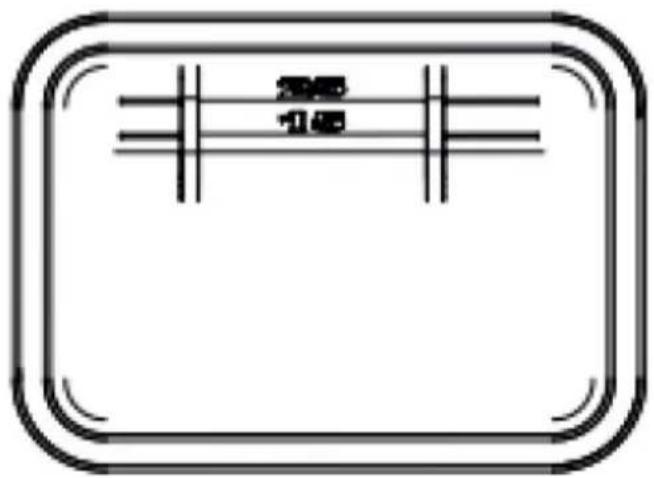
Fig./Img./Abb./Afb./Rys. 24
natural_image
Line drawing of a hand inserting a device into a mobile phone (no text or symbols)Fig./Img./Abb./Afb./Rys. 25
natural_image
Line drawing of a hand inserting a device into a device casing, showing internal components and a battery icon (no text or symbols)Fig./Img./Abb./Afb./Rys. 26
natural_image
Diagram of a mobile phone with a hand icon and directional arrow, no text or symbols presentFig./Img./Abb./Afb./Rys. 27
natural_image
Line drawing of a bathroom sink with shower icon and mirror (no text or symbols)Fig./Img./Abb./Afb./Rys. 28
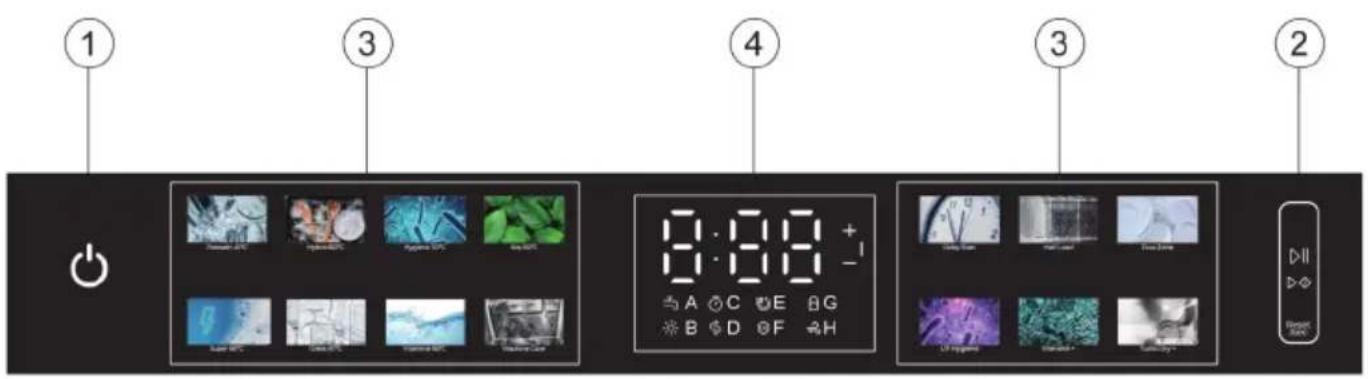
Fig./Img./Abb./Afb./Rys. 29
natural_image
Technical line drawing of a mechanical assembly with two circular components and internal gear-like structures (no text or symbols)Fig./Img./Abb./Afb./Rys. 30
natural_image
Technical line drawing of a mechanical assembly with multiple circular components and grid lines (no text or symbols)Fig./Img./Abb./Afb./Rys. 31
natural_image
Line drawing of a mechanical structure with multiple circular components and supports (no text or symbols)Fig./Img./Abb./Afb./Rys. 32
natural_image
3D wireframe model of a mechanical assembly with no visible text or symbolsFig./Img./Abb./Afb./Rys. 33
natural_image
Technical line drawing of a vehicle chassis frame structure (no text or symbols)Fig./Img./Abb./Afb./Rys. 34
natural_image
Technical line drawing of a mechanical assembly frame with internal components (no text or symbols)Fig./Img./Abb./Afb./Rys. 35
natural_image
Diagram of a grid-patterned structure with two vertical panels, one containing tree-like patterns and the other a curved object (no text or symbols)Fig./Img./Abb./Afb./Rys. 36
natural_image
Illustration of a shopping basket with a magnifying glass overlay (no text or symbols)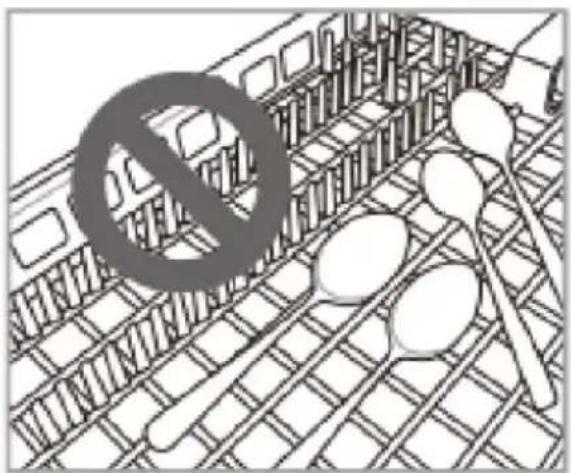
natural_image
Illustration of a shopping cart filled with shoppers and a large 'no' symbol overlay (no text or symbols present)Fig./Img./Abb./Afb./Rys. 37
natural_image
Technical line drawing of a conveyor belt system with roller and pulley components (no text or symbols)Fig./Img./Abb./Afb./Rys. 38
natural_image
Diagram of a mechanical device with internal components and directional arrows indicating motion (no text or symbols)Fig./Img./Abb./Afb./Rys. 39
natural_image
Line drawing of a faucet with water droplets falling from the drain, above a cylindrical water dispenser (no text or symbols)Fig./Img./Abb./Afb./Rys. 40
natural_image
Diagram of a mechanical device with internal components and directional arrows indicating motion (no text or symbols)Fig./Img./Abb./Afb./Rys. 41
natural_image
Line drawing of a hand holding a small electronic device with a vertical panel and leaf-shaped components (no text or symbols)Fig./Img./Abb./Afb./Rys. 42
natural_image
Technical line drawing of a mechanical assembly with structural framework and internal components, showing a downward arrow (no text or symbols)Fig./Img./Abb./Afb./Rys. 43
natural_image
Line drawing of a hand holding a tool with a black arrow pointing to the tip (no text or symbols)Fig./Img./Abb./Afb./Rys. 44
natural_image
Technical line drawing of an aircraft fuselage structure with visible propellers and wheels, no text or symbols present.Fig./Img./Abb./Afb./Rys. 45
www.cecotec.es