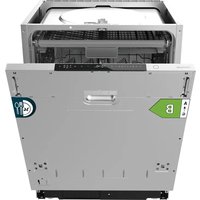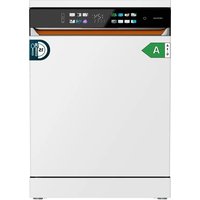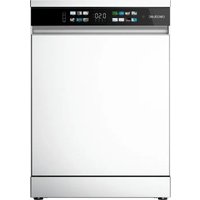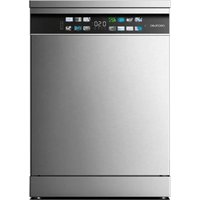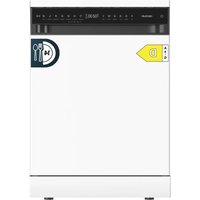
Bolero Aguazero 6205 - Dishwasher CECOTEC - Free user manual and instructions
Find the device manual for free Bolero Aguazero 6205 CECOTEC in PDF.


| Product type | Dishwasher |
| Brand | Cecotec |
| Model | Bolero Aguazero 6205 |
| Capacity | 15 place settings |
| Wash programs | Eco, Intensive, Rapid, Universal, Hygiene, Glass |
| Additional functions | Delay start (0-24h), Half load, Extra quick, Super dry, Extra hygiene, Silent wash, Save+ |
| Power supply | 220-240 V ~ 50 Hz |
| Installation type | Freestanding or built-in (with removal of top panel) |
| Child safety | Yes (touch lock) |
| Filtration system | Coarse filter, flat filter, microfilter |
| Water softener | Yes, adjustable (levels H1 to H6) |
| Rinse aid dispenser | Yes, adjustable (levels R1 to R5) |
| Salt reservoir | Yes, funnel filling (500 g) |
| Spray arms | Upper and lower, removable for cleaning |
| Control panel | Touch screen with icons |
| Display | Digital with program, salt, rinse aid, water inlet indicators |
| Delay start | 0 to 24 hours |
| Self-cleaning | Yes, 90-minute program |
| Audible signal | Enabled/disabled by key combination |
| Warranty | Not specified (contact Cecotec technical support) |
Frequently Asked Questions - Bolero Aguazero 6205 CECOTEC
User questions about Bolero Aguazero 6205 CECOTEC
0 question about this device. Answer the ones you know or ask your own.
Ask a new question about this device
Download the instructions for your Dishwasher in PDF format for free! Find your manual Bolero Aguazero 6205 - CECOTEC and take your electronic device back in hand. On this page are published all the documents necessary for the use of your device. Bolero Aguazero 6205 by CECOTEC.
USER MANUAL Bolero Aguazero 6205 CECOTEC
Safety instructions 9
-
Parts and components 69
-
Before use 69
-
Installation 70
-
Operation 71
-
Cleaning and maintenance 80
-
Troubleshooting 83
-
Recycling of electrical
and electronic equipment 87
-
Copyright 87
-
Simplified EU Declaration of Conformity 87
SOMMAIRE
EN • The coding in this manual is generic and applies to all code variants of the appliance.
Read the following instructions carefully before using the appliance. Keep this instruction manual for future reference or new users.
- Read these instructions carefully before assembling or using the appliance. These instructions contain important information that will help you get the best out of your equipment. It is your responsibility to make sure every user is informed about the warnings and precautions stated in this instruction manual.
- Warning: Knives and other utensils with sharp points should be loaded in the basket with the points facing downwards or placed in a horizontal position.
- The maximum number of cutlery to be washed is 15.
- This appliance is intended for domestic use only and is not suitable for use in commercial establishments such as bars, restaurants, farms, hotels, motels, and offices.
- Check the power cable regularly for visible damage. If the power cord is damaged, it must be replaced by Cecotec's Official Technical Support Service or similar qualified personnel to avoid risks.
- This appliance can be used by children aged 8 years and above and people with reduced physical, sensory, or mental capabilities or lack of experience and knowledge if they have been given supervision or instruction concerning the use of the appliance in a safe way and understand the hazards involved.
- Children must not play with the appliance.
- Cleaning and user maintenance must not be carried out by children without supervision.
- After using the dishwasher, there may be remains in the
interior. Keep children away from the appliance when it is open.
- WARNING: check the dishwasher and package are not damaged. Never use the dishwasher if it is damaged, contact the official Cecotec Technical Support Service immediately.
- Packaging material may be dangerous to children. Remove it and place it out of their reach.
- Choose a suitable and safe place to install the dishwasher.
- Never use an extension cord or a multi-socket connection.
- The socket must be accessible after the dishwasher installation.
- After the installation, the first time you run the dishwasher, do it while it is empty.
- Always use the plug provided with the dishwasher. Do not modify the plug provided with the appliance if it does not match the power socket.
- Do not operate the appliance if its cable, plug, or structure show visible damage, do not operate properly, or have been dropped.
- In case of malfunctioning, repairs must be carried out by the official Cecotec Technical Support Service; otherwise, the warranty will be void. Before repairing the dishwasher, you must disconnect it from the power supply and close the stopcock.
- To unplug the dishwasher, pull from the socket, never from the cord.
- During use, the dishwasher uses less energy and water than washing dishes by hand, provided that the household dishwasher is used according to these instructions.
- Do not misuse it, do not stand, sit or place any heavy object on the door or baskets of the dishwasher.
-
Do not use the dishwasher if all interior elements are not correctly placed.
-
Only use detergents and rinse aids specific for dishwashers.
- Some dishwasher detergents are very alkaline. They may be extremely dangerous if you ingest them. Avoid contact with skin and eyes and keep children away from the dishwasher when the door is open.
- Due to the danger of explosion, do not place chemical solvents in the interior of the machine.
- Do not place tableware which is not dishwasher safe in the appliance.
- Do not fill the baskets over their capacity.
- Cecotec shall not be held liable for any deformation that may occur inside the dishwasher due to misuse.
- Do not open the door while the dishwasher is running, as it could spill hot water.
- Do not leave the door open, as it could cause accidents.
- To avoid electric shock, do not disconnect the dishwasher with your hands wet.
- Cecotec shall not be held liable for any damage, accident, or incident resulting from the misuse of this dishwasher. It is the user's responsibility to operate and maintain the dishwasher according to the instructions and recommendations detailed in this manual. Failure to follow instructions may result in personal injury, property damage, or loss of product warranty.
INSTRUCTIONS DE SÉCURITÉ
- Upper basket
- Lower basket
- Upper spray arm
- Cutlery basket
- Lower spray arm
- Salt container
- Detergent dispenser
Note:
The graphics in this manual are schematic representations and may not exactly match the product.
2. BEFORE USE
- This appliance comes in a packaging designed to protect it during transport. Remove the appliance from its box. You can keep the original box and other packaging materials in a safe place to prevent damage to the appliance if you need to transport it in the future. If you wish to dispose of the original packaging, make sure all items are recycled properly.
- Check that all parts and components are included and in good condition. If any of them are missing or damaged, please contact Cecotec's Official Technical Support Service immediately.
Box content:
- Dishwashers
- Lower basket
- Upper basket
- Cutlery basket
- Drain hose
- Salt funnel
- Instruction manual
- Do not remove the product's serial number in order to keep proper traceability if technical assistance is required.
ENGLISH
3. INSTALLATION
You can use your undercounter dishwasher according to your needs. To do this, you will need to remove the top plate of the dishwasher using the two screws on the back.
Fig. 2
A. Remove the two screws at the rear.
B. Push back to remove the top plate.
Drain hose connection
Insert the drain hose into a drain pipe with a minimum diameter of 4 cm, or let it run into the sink, making sure to avoid bending or crushing it. The height of the drain pipe must be less than 600 mm.
Note: The free end of the hose must not be immersed in water to prevent backflow.
Fig. 3
A. Back of the dishwasher
B. Drain hose
C. Water inlet
D. Drain pipe
E. Power cord
F. Worktop
G. Drain pipe
! Be sure to fix the drain hose in position A or in position B in figure 3.
How to drain excess water from hoses
If the connection to the drain pipe is more than 600 mm away, excess water may remain in the drain hose. It will be necessary to drain excess water from the hose into a suitable container that is kept outside and below the sink.
Water outlet
Connect the water drain hose. The drain hose must be correctly installed to prevent water leakage. Make sure the drain hose is not bent or crushed.
Extension hose
If you need a drain hose extension, be sure to use a similar hose. It must not be longer than 4 metres; otherwise, the cleaning effect of the dishwasher may be reduced.
Siphon connection
The waste connection must have a height of less than 600 mm (maximum) from the bottom of the dishwasher.
Location of the appliance
Place the appliance in the desired location. The rear must rest against the wall behind it, and the sides should be positioned next to adjacent cabinets or walls.
The dishwasher is equipped with water supply and drain hoses that can be positioned on the right or left side to facilitate proper installation.
! Attention!
- Place the dishwasher on a firm, flat floor.
- Do not install the dishwasher on an elevated surface.
4. OPERATION
Each dishwasher has undergone rigorous quality control before leaving the factory to ensure reliability.
You may find water drops or water marks generated by our quality control in your new dishwasher.
Place the cutlery basket on the lower rack. For best performance, install it in the centre. Remove all packaging materials from the exterior and interior of the dishwasher before installation.
Before first use:
- Adjust the water softener level according to the water hardness in the area.
- Add 500 g of salt in the salt compartment and then fill it with water up to the edge of the compartment.
- Refill the rinse aid dispenser.
- Add detergent.
Control panel
Fig. 4
- Power on/off touch icon
- Schedules
- Extra functions
- Start/Pause touch icon
Display operation
| Touch icon Description | |
Power on/off  | This touch icon turns the dishwasher on and off. |
| Programme Select the appropriate wash program, the program indicator will light up. | |
| Extra functions Select the appropriate extra wash program, the indicator will light up. While the machine is on, the extra functions that can be selected will flash, the indicator will light up after they are selected. | |
Start/Stop  | Press this touch icon to start/pause a program.* Reset: Press 3 seconds to cancel the existing program and select a new program. |
Child lock | Press and hold the Delay Start and Half Wash keys for three seconds at the same time, the child lock indicator will illuminate and the child lock status will be activated. All touch icons will be locked.Repeat the above steps to exit the child lock status. |
Self-cleaning | Press and hold the Half Wash and Extra Rapid touch icons for 3 seconds at the same time to start the self-cleaning program, the digital display will show a 90-minute countdown. |
Display
| Programme indicator | [3045] ECO. Eco mode saves energy and water, suitable for general cleaning needs. INTENSIVE. Powerful cleaning mode, suitable for dishes, pots and pans with stubborn stains. INTENSIVE. Powerful cleaning mode, suitable for dishes, pots and pans with stubborn stains. RAPID. Suitable for cleaning fresh and slightly sticky food residues at maximum speed.[T2XY] UNIVERSAL. Daily cleaning mode, suitable for moderately contaminated dishes.[6006] HYGIENE. Suitable for heavily soiled dishes that require hygienic washing. RAPID. Suitable for cleaning fresh and slightly sticky food residues at maximum speed.[T2XY] UNIVERSAL. Daily cleaning mode, suitable for moderately contaminated dishes.[6006] HYGIENE. Suitable for heavily soiled dishes that require hygienic washing. -ASS. Suitable for washing fine glassware. -ASS. Suitable for washing fine glassware. |
Extra functions
Delay Start. It can delay the onset of the cycle from 0 to 24 hours.
Press the Delay Start touch icon to change the time and then press the Start/Pause touch icon.
Note: To change the time delay icon once the dishwasher has started, press the On touch icon and restart the dishwasher.
1/2 HALF WASH (Half load). Reduces water and electricity consumption, you can select three states of top wash, bottom wash and top and bottom wash at the same time.

EXTRA RAPID (Extra fast). Shorten the wash cycle time by increasing the wash temperature to achieve a fast wash.
Implementation: The washing time in the main wash stage is reduced by 10 minutes, the rinse temperature is increased by 3^ C, the drying time is shortened by 15 minutes, and the total time is reduced by 25 minutes. *
SUPER DRY. Additional drying time is added to the main washing
—procedure to make the dishes drier. Implementation: turn on hot air for 20 minutes and cold air for 10 minutes in the drying stage, increase the total time by 30 minutes, increase the hot wash temperature by 3^ C above the original maximum rinse temperature, and if the maximum temperature is 75^ C, the temperature will remain unchanged.

EXTRA HYGIENE (Extra hygiene). A temperature rise time is added for complete sterilization during the washing process. Implementation:
The hot wash temperature is increased by 3 °C above the original maximum rinse temperature, and if the maximum temperature is 75^ C, the temperature remains unchanged. Heats and maintains the temperature during the rinsing phase, increasing the total time by 30 minutes.

SILENT WASH. It reduces the motor speed increasing the washing time during the process, reducing the noise effect. Method of realization: the main washing time is extended by 45 minutes, and speed is reduced by 100 revolutions during operation, but the engine should not be less than 2600 revolutions*.

SAVE+. Saves energy by reducing time and temperature during drying. Recommended for a capacity of 8 plates or less.
Implementation: 10 minutes in the main washing stage, 15 minutes in the drying stage, and 25 minutes in the total time. After selecting this function, it cannot be superimposed to improve drying (Super Dry), strengthen sterilization (Extra Hygiene) or accelerate time saving (Extra Rapid).
| Warning indicator lights |  | Rinse aid. If the indicator light is lit, it means the dishwasher is low on rinse aid and requires refilling. |
 | Salt If the indicator light is lit, it means the dishwasher is low on salt and requires refilling. | |
 | Water inlet. If the indicator is lit, it means that the water inlet is closed or blocked. |
*Please note: These times are approximate and may vary depending on the type of dishware, level of soiling and other factors."
Water hardness level adjustment
The dishwasher is designed to allow adjustment of salt consumption based on the hardness of the water used. This is intended to optimize the level of salt consumption.
To adjust salt intake, proceed as follows:
- Turn on the appliance.
- Within 60 seconds after turning on the appliance, press the Start/Pause touch icon for 5 seconds while the machine is in standby mode. This action will enter the setting mode, then switch to the default water hardness level, and the digital display will show the hardness level as "H3."
- Press the Start/Pause touch icon to select the appropriate setting according to your local environment. The settings will change in the following sequence: H1□H2□H3□H4□H5□H6
- After that, turn off the machine to save the settings.
It is recommended that adjustments be made in accordance with the following table:
| Selector position | Water hardness Indicator when | adjusting water hardness | Salt consumption (g/cycle) | ||
| dH dF dE | |||||
| H1 0-5 0-9 0-6 H1 | 0 | ||||
| H2 | 6-11 | 10-20 | 7-14 | H2 | 20 |
| H3 (Default) | 12-17 | 21-30 | 15-21 | H3 | 30 |
| H4 | 18-22 | 31-40 | 22-28 | H4 | 40 |
| H5 | 23-24 | 41-60 | 29-42 | H5 | 50 |
| H6 | 35-55 | 61-98 | 43-69 | H6 | 60 |
Contact your local water agency for information on the hardness of your water supply.
Salt load on the water softener
Water hardness varies from location to location. If hard water is used in the dishwasher, deposits will form on dishes and utensils. The appliance is equipped with a special water softener that uses salts specifically designed to remove lime and minerals from water.
Always use salt intended for dishwasher use.
The salt container is located under the lower tray and should be filled as follows:
! Attention!
- Only use salt specifically designed for dishwasher use. Any other type of non-dishwasher-specific salt, especially table salt, will damage the water softener. In case of damage caused by the use of unsuitable salt, the manufacturer offers no warranty nor accepts responsibility for any damage caused.
- Only fill with salt just before starting one of the complete washing programmes. This will prevent any grains of salt or salt water that may have spilled from remaining in the bottom of the machine for any period of time, which could cause corrosion.
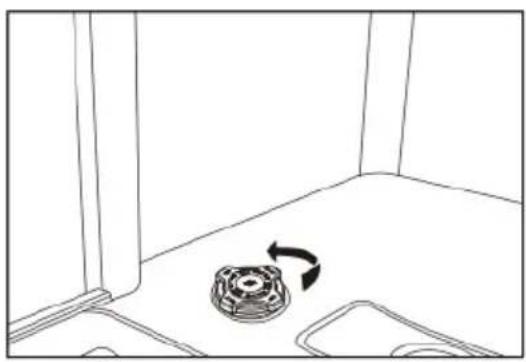
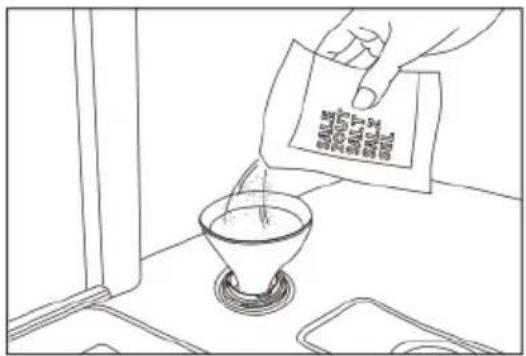
Fig. 5
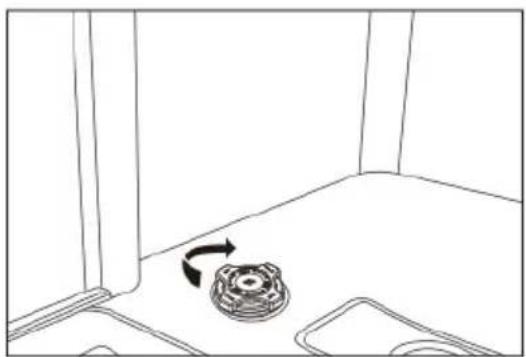
A. Remove the bottom tray and then unscrew and remove the salt container lid.
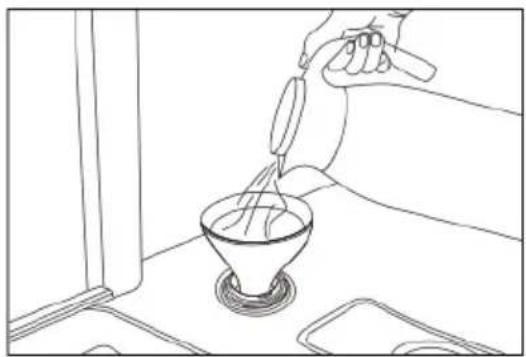
B. Place the end of the funnel in the hole and introduce about 500 g of salt.
C. If you are filling the container for the first time, fill it completely with water (about 700 ml).
D. Carefully screw the cap back on.
E. Normally, the salt warning light will turn off after filling the salt container.
NOTE:
- The salt container must be refilled when the salt warning light on the control panel illuminates. Although the salt container may be sufficiently full, the indicator light may not turn off until the salt has completely dissolved.
- If there is no salt warning light on the control panel (on some models), you can judge when to load salt into the descaler by the cycles the dishwasher has run.
- Be careful not to overfill the salt container and be sure to wipe up any spills.
Detergent usage
All dishwasher cycles require detergent in the appropriate compartment. Add the correct amount of detergent for the cycle selected to ensure the best performance.
Only detergents specifically designed for dishwashers should be used. Keep your detergent fresh and dry. Do not put powder detergent into the dispenser until you are ready to wash dishes.
ENGLISH
! Never use soap, laundry detergent or hand dishwashing detergent in your dishwasher.
Do not ingest dishwasher detergent. Avoid inhaling vapours. Dishwasher detergent contains irritants and caustic chemicals that can cause respiratory problems. If you have ingested dishwashing detergent or inhaled the fumes, seek medical attention immediately.
! Keep dishwasher detergent out of children's reach.
Filling the detergent dispenser
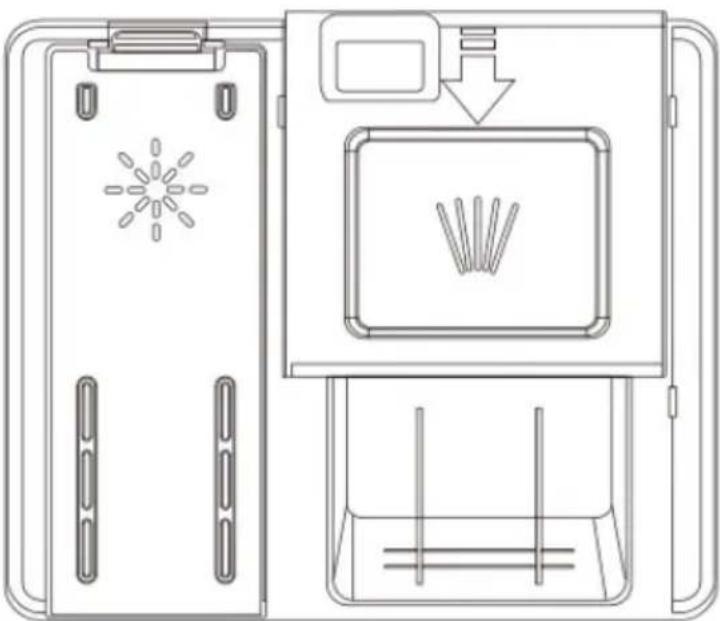
- Open the detergent compartment by pressing the button.
- Add the recommended amount of detergent to the main wash compartment. The main detergent compartment has lines to allow for specific amounts of detergent. These are marked with 15 ml or 25 ml, depending on how dirty the dishes are. If your dishes need intensive washing, then add 5 ml of detergent in the pre-wash section of the compartment.
- Then close the detergent compartment by sliding the lid in the direction of the arrow. Fig. 6.
NOTE:
Please follow the manufacturer's recommendation on the detergent package.
Rinse aid use
Filling the rinse aid dispenser helps to ensure better wash results and higher drying performance.
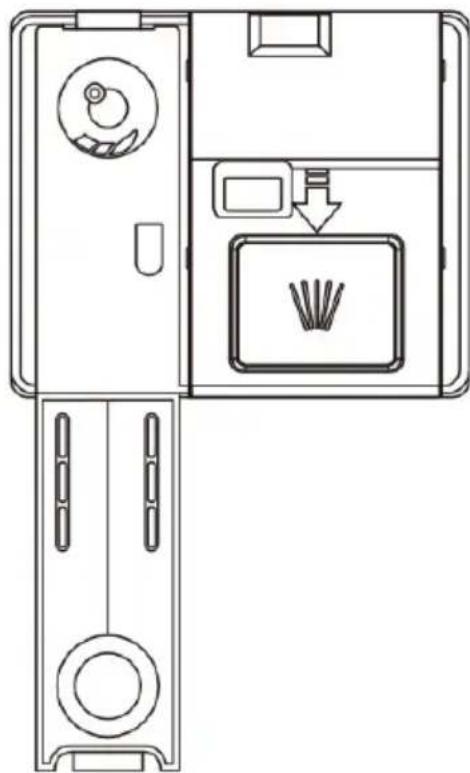
- To fill the rinse aid compartment, open the compartment lid. Fig. 7
- Fill the compartment with rinse aid to MAX level and then close the lid. Be careful not to overfill the rinse aid compartment and be sure to wipe up any spills.
- Close the lid to lock the rinse aid compartment.
- Rinse aid is automatically added during the last rinse, ensuring thorough rinsing and spot-free drying.
! Attention!
Use only brand-name dishwasher rinse aid. Never fill the rinse aid dispenser with any other substances (e.g., dishwasher cleaning agent, liquid detergent). This will damage the appliance.
To change the rinse aid level, follow the steps below before turning on the machine:
- Open the door, press the On touch icon to activate the dishwasher.
- Within 60 seconds after turning on the appliance, press the Delay Start touch icon for 5 seconds while the machine is in standby mode to enter the setting mode, then switch to the default rinse aid level, the digital display will show the level as "R3".
- To adjust the rinse aid level, press the Delay Start touch icon, the digital display will show the level information and with each press of the icon, the level will cycle through "R1→R2→R3→R4→R5".
- After selecting the appropriate level, press the Power touch icon to save the settings.
Buzzer sound on and off
In the default state, the buzzer sound is activated.
- Turn on the appliance.
- Press the ECO and Start/Pause touch icons for 3 seconds at the same time, the buzzer sound will turn off and the interior lamp will not light up when the door is opened.
- Press the ECO and Start/Pause touch icons for 3 seconds at the same time again, the buzzer sound will turn on.
Note: This function can only be configured in standby mode. After switching the appliance off and on again, the buzzer sound will be activated by default.
Loading of dishwasher trays
For best dishwasher performance, follow these loading guidelines.
! Attention!
Items not suitable for dishwasher cleaning:
- Temperature-sensitive plastic tableware, copper and tin containers, aluminium and silver cutlery.
- Exquisite glassware, printed decorative porcelain
- Items with absorbent properties (sponges, household fabrics).
Precautions when loading or after loading dishwasher trays.
- Remove any large food debris.
- It is not necessary to rinse the dishes under running water.
- If baked-on, burnt or stuck-on food particles on dishes or cooking utensils are difficult to remove, it is recommended to soak them for a while before washing.
Place items in the dishwasher in the following order:
- Items such as cups, glasses, pots/pans, etc., should be placed upside down.
- Curved items or those with recesses should be tilted so water can drain.
- They must be stacked securely and may not tip over.
ENGLISH
- They should not prevent the spray arms from rotating while washing is in progress.
- Place cutlery, chopsticks and small items in the cutlery tray. Very small items should not be washed in the dishwasher as they could easily fall from the racks.
Remove the dishes
To prevent water from dripping from the upper rack to the lower rack, we recommend emptying the lower rack first, then the upper rack.
Load the upper tray
The upper rack is designed to hold more delicate and lighter tableware such as glasses, coffee and teacups and saucers, as well as plates, small bowls and shallow pans (as long as they are not too soiled).
Position dishes and cookware so they do not move under the water spray.
Always place glasses, cups and bowls upside down.
Upper basket
Fig. 8
- Mugs
- Saucers
- Cups
- Dessert bowls
- Glasses
- Serving spoons
- Forks
- Table knives
Adjustment of the upper tray
Fig. 9
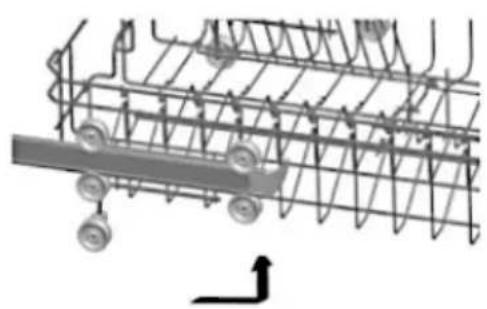
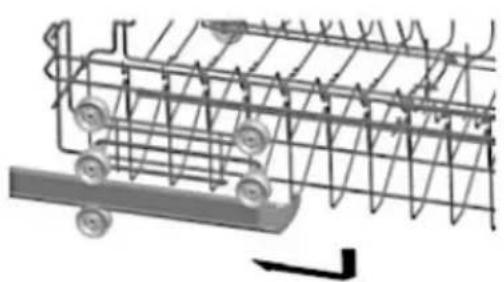
You can adjust the height of the upper tray of your machine in positions 1 and 2 according to your needs.
To adjust the height of the upper tray, remove the tray completely and reassemble it on the wheel level shown in 1 and 2.
When in position 1, the height of the upper tray will be 5 cm higher. In position 2, the height of the lower tray will be 5 cm higher. In this position, you can place large items such as pots, etc., on the lower tray.
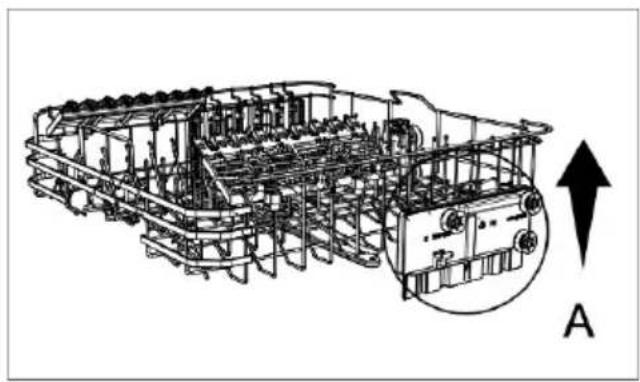
If you have a tray with a height adjustment mechanism shown in figure 10, you can adjust the position of the tray up and down by holding it from both sides.
! CAUTION:
We recommend adjusting the height of the upper tray before loading the dishes into the tray. If you adjust the tray after loading the dishes, you may damage them.
Load lower tray
We recommend placing large items that are more difficult to clean on the lower tray: pots, pans, lids, dishes and bowls, etc.
It is preferable to place serving dishes and lids at the sides of the racks to avoid blocking the rotation of the upper spray arm.
Pots, dishes, etc., should always be placed upside down. Deep pots should be tilted to allow water flow.
The lower tray has rows of folding tines so that more pots and large pans can be loaded.
Lower rack
Figure 11
- Soup plates
- Oven pans
- Glass bowl
- Small pots
- Melamine bowls
- Flat dishes
- Oval fountains
- Dessert plates
WASHING PROGRAMME
Switching on the appliance
Starting a washing programme
- Remove the lower and upper trays, load the plates and push them back in. It is recommended to load the lower rack first, then the upper rack.
- Pour the detergent.
- Insert the plug into the power socket.
- Ensure the water supply is turned on at full pressure. Close the door, press the Power touch icon, press the Program touch icon to select the desired "Wash program". Apply a little force to ensure that the door is securely closed.
NOTE: A click can be heard when the door is perfectly closed.
ENGLISH
Changing the programme
- Premise: An ongoing cycle can only be modified if it has been running for a short time. Otherwise, the detergent may have been released, and the appliance may have drained the wash water. If this is the case, the detergent dispenser must be refilled.
- During the washing process, press the On touch icon to turn off the machine.
- Press the Power touch icon again to turn on the machine, then you can change the program to the desired cycle.
NOTE: If you open the door while washing, the machine will pause, and the countdown will stop. When you close the door, the machine will continue to run after 10 seconds.
Forgetting to add a plate
A forgotten dish can be added at any time before the detergent compartment is opened.
- Press the Start/Pause touch icon to stop the wash.
- After the spray arms stop working, you can open the door fully.
- Add the forgotten dishes.
- Close the door, the dishwasher will operate after ten seconds.
! WARNING!
It is dangerous to open the door during washing, as hot water may scald you. If the door is opened while the dishwasher is running, the machine will stop automatically.
Unloading the dishwasher
It is normal for the dishwasher interior to be damp. Empty the lower tray first and then the upper tray. This will prevent water from dripping from the upper pan onto the dishes in the lower pan.
6. CLEANING AND MAINTENANCE
Before starting any care or maintenance, you should always disconnect the appliance from the power supply and also turn off the water supply.
Filtering system
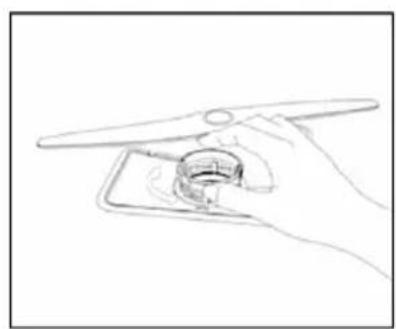
The filtration system consists of a coarse filter, flat filter and microfilter.
Fig. 12
- Flat filter: Food and debris will be caught by a special jet in the lower spray arm.
-
Coarse filter: Large debris, such as bone pieces or glass that could clog the drain, will be trapped in the coarse filter. To remove an item caught in this filter, gently squeeze the tabs on top of this filter and lift it out.
-
Microfilter: This filter holds soil and food waste in the sump area and prevents it from being redeposited on dishes during a cycle.
Check the filters for blockages every time the dishwasher is used.
! By unscrewing the coarse filter, you can remove the filtering system. Remove any food debris and clean the filters under running water.
The filter can effectively prevent dishware residues from falling into the washing system. However, food residues can sometimes clog the filter, affecting washing performance. It is recommended to check the flat filter for food residue immediately after completing the wash program and clean it if necessary.
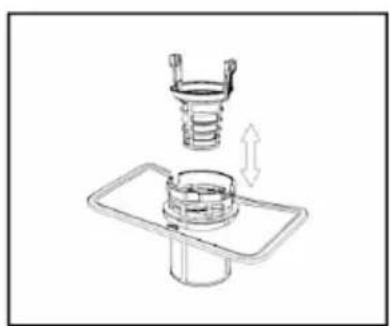
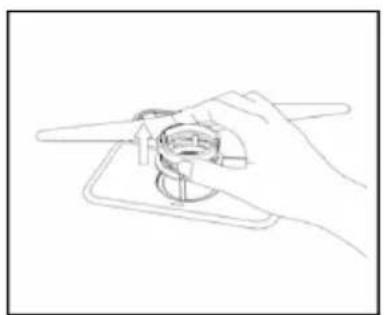
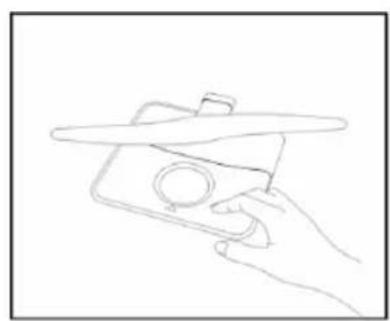
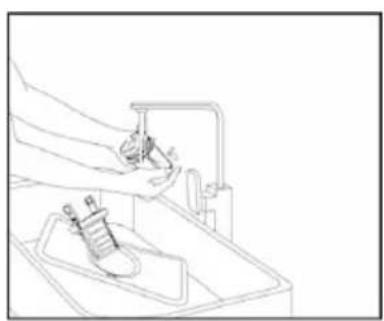
In addition, it is advisable to disassemble and clean the filter at least once a week. The steps to clean the filter are as follows:
Fig. 13
- Remove the coarse filter from the microfilter.
- Turn the microfilter clockwise.
- Remove the microfilter.
- Remove the flat filter from the dishwasher compartment.
- Clean the filters under running water.
You should clean and rinse the filters thoroughly before replacing all sections in reverse order.
Consider:
- Never run a program without the filters in place.
- Incorrect filter placement can reduce wash performance and potentially damage your appliance.
- When cleaning the filters, do not knock them. Otherwise, the filters could become deformed and dishwasher performance could decrease.
Cleaning of the spray arms
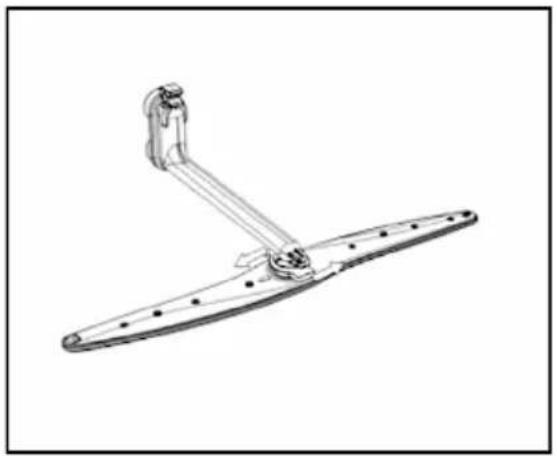
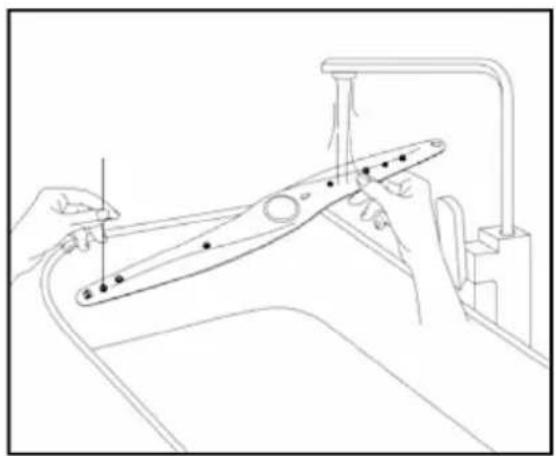
It is necessary to clean the spray arms regularly, as chemicals in the hard water can clog the spray arm jets and bearings.
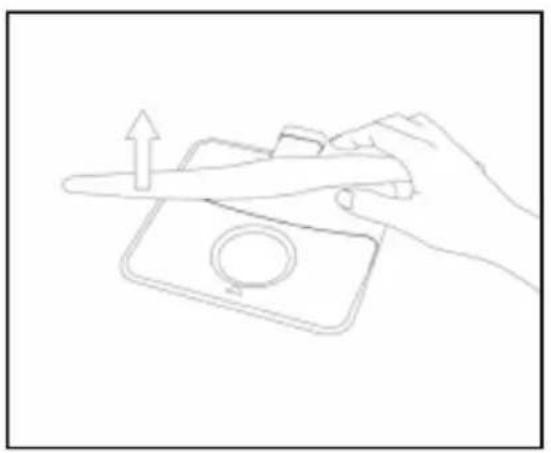
Figure 14
- Pull the lower spray arm upward to remove it.
- To remove the upper spray arm, first remove the upper spray arm lock by turning it.
ENGLISH
- The spray arms should be thoroughly cleaned and rinsed before reattaching them.
Note: Make sure the upper spray arm lock is tight when reattaching the upper spray arm.
Care of the dishwasher
To clean the control panel, use a slightly damp cloth and then dry thoroughly.
Never use sharp objects, scouring pads or harsh cleaners on any part of the dishwasher.
Cleaning the door
To clean the edge around the door, you must use only a soft, warm, damp cloth.
To prevent water penetration into the door lock and electrical components, do not use any type of spray cleaner.
! WARNING!
Never use a spray cleaner to clean the door panel, as this may damage the door latch and electrical components. It is not allowed to use a scouring pad or some paper towels due to the risk of scratching or leaving stains on the stainless steel surface.
Protection against freezing
If your dishwasher is left in an unheated location during winter, ask a service technician to: Disconnect the electrical power to the dishwasher.
Turn off the water supply and disconnect the water inlet pipe from the water valve.
Drain water from the inlet pipe and water valve. (Use a pot to collect the water)
Reconnect the water inlet pipe to the water valve.
Remove the filter from the tub and bottom and use a sponge to remove water in the sump.
How to maintain your dishwasher
After each wash
After each wash, turn off the appliance's water supply and leave the door slightly ajar so moisture and odours are not trapped inside.
Remove the plug
Before cleaning or performing maintenance, always remove the plug from the socket. Do not take risks.
Without solvents or abrasive cleaning
To clean the exterior and rubber parts of the dishwasher, do not use solvents or abrasive
cleaning products. Use only a cloth and warm soapy water. To remove spots or stains from the interior surface, use a cloth dampened with water and a little white vinegar, or a cleaning product specifically made for dishwashers.
When going on holiday
When going on holiday, it is recommended to run a wash cycle with the dishwasher empty and then remove the plug from the socket, turn off the water supply and leave the appliance door slightly ajar. This will help the gaskets last longer and prevent odours from forming in the appliance.
Moving the appliance
If it is necessary to move the appliance, try to keep it in an upright position. If absolutely necessary, it can be placed on its back.
Gaskets
One of the factors that cause odours in the dishwasher is food trapped in the seals. Regular cleaning with a damp sponge will prevent this.
7. TROUBLESHOOTING
Before contacting technical support, reviewing the information on the following pages may save you the need to do so.
| Problem Possible | cause Possible solution | |
| The dishwasher does not work | Fuse blown or circuit breaker tripped | Replace the fuse or reset the circuit breaker. Remove any other appliance sharing the same circuit with the dishwasher. |
| Power supply is not turned on. | Ensure the dishwasher is switched on and the door is securely closed. Make sure the power cord is properly plugged into the wall socket. | |
| Water pressure is too low | Verify that the water supply is connected correctly and that the water is turned on. | |
| The drain pump does not stop | Overflow The system is designed to detect an overflow. When doing so, it turns off the circulation pump and turns on the drain pump. | |
| Problem Possible | cause Possible solution | |
| Noise Some audible | sounds are normal. | Sound of the detergent compartment opening. |
| Utensils are not properly secured in baskets or something small has fallen into the basket | Make sure everything is secured in the dishwasher. | |
| The engine hums | The dishwasher has not been used regularly. If you do not use it often, remember to programme it to fill and pump out every week, which will help keep the seal moist. | |
| There is foam inside the dishwasher | Unsuitable detergent | Use only special dishwasher detergent to avoid foaming. If this occurs, open the dishwasher and let the foam evaporate. Add 4 litres of cold water inside the dishwasher. Close and secure the dishwasher, then start the “pre-rinse” wash cycle to drain the water. Repeat if necessary. |
| Spilled rinsing agent | Always clean up rinsing agent spills immediately. | |
| Stained dishwasher interior | Detergent with colourant was used. | Ensure the detergent is free of colourant. |
| Unclean plates and cutlery | Incorrect program Incorrect basket loading | Select a stronger programme. Ensure the detergent dispenser and spray arms are not blocked by large dishes. |
| Problem Possible | cause Possible solution | |
| Stains and film on glasses and cutlery | 1. Extremely hard water.2. Low inlet temperature.3. Dishwasher overloading. Improper loading.4. Old or damp powder detergent.5. Empty rinse aid dispenser.6. Incorrect detergent dosage. | To remove stains from glasses:1. Remove all metal utensils from the dishwasher.2. Do not add detergent.3. Choose the longest cycle.4. Start the dishwasher and let it run for about 18 to 22 minutes, then it will be in the main wash.5. Open the door to pour 2 cups of white vinegar into the bottom of the dishwasher.6. Close the door and let the dishwasher finish the cycle. If vinegar does not work: Repeat as directed, except use 1/4 cup (60 ml) citric acid crystals instead of vinegar. |
| Opacity in glassware | Combination of soft water and too much detergent | Use less detergent if you have soft water and select a shorter cycle to wash glassware and clean it. |
| Yellow or brown film on internal surfaces. | Tea or coffee stains | Use a mixture of white vinegar and warm water or a paste of baking soda to safely remove stains. Apply, let stand, then rinse well. |
| White film on the interior surface | Hard water minerals | To clean the interior, use a damp sponge with dishwasher detergent and rubber gloves. Never use another cleaner to avoid foam. |
| The detergent dispenser lid cannot close properly. | Detergent residue is blocking the opening. | Clean the detergent from the seal. |
| Detergent left in the compartments | Dishes blocking the detergent compartments | Reload the plates correctly. |
| Steam Normal | phenomenon. | There is some steam coming out of the vent near the door closure during drying and water drainage. |
ENGLISH
| Problem Possible | cause Possible solution | |
| Black or grey marks on plates | Aluminium utensils have rubbed against dishes. | Use a mild abrasive cleaner to eliminate those marks. |
| There is water in the bottom of the dishwasher interior. | This is normal. A small amount of clean water around the outlet on the tub bottom keeps the water seal lubricated. | |
| Dishwasher leaks | Overfilled dispenser or rinse aid spills. | Take care not to overfill the rinse aid dispenser. Spills can cause excessive foaming and overflow. Wipe any spills with a damp cloth. |
| Dishwasher is not level | Ensure the dishwasher is level. | |
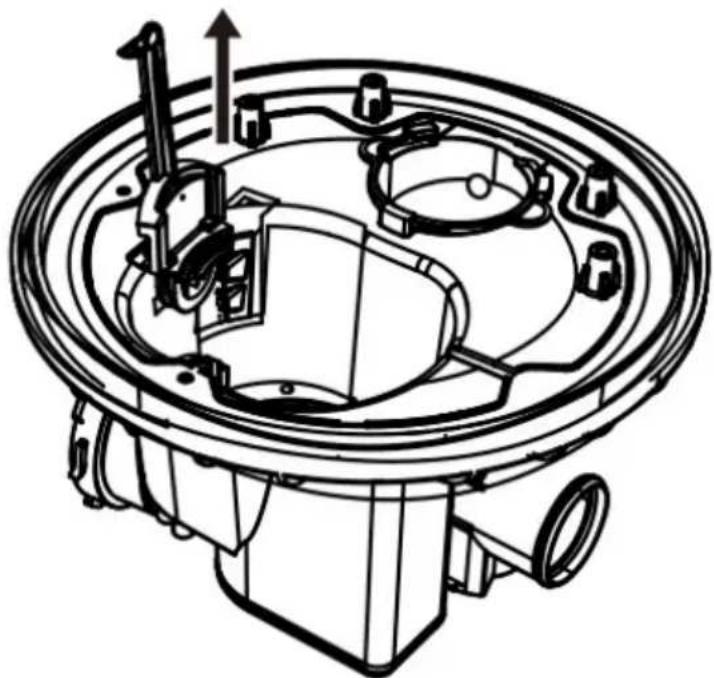
NOTE: Olive seeds or similar objects can pass through the filter system and reach the drain pump area. In this case, the drain pump is blocked and needs to be cleaned. Please remove the pump cover by pushing the tail out, then you can clean the pump impeller by yourself. After that, put the cover back in position. Fig. 15
Improper maintenance of the machine may endanger the safety of the users. Any repairs must be carried out by professionals.
Error codes
After starting the wash cycle, if there is a malfunction, the dishwasher will display an error code.
The following table shows possible error codes and the faults they represent, and the error indicator will continue to flash and beep.
| Error code Problem | |
| E1 Overflow/leakage. | |
| E2 Water inlet malfunction. | |
| E4 Malfunction of the water distribution valve. | |
| E5 Fan malfunction. | |
| E6 Abnormal heating. | |
| E7 Thermistor open/short circuit. | |
| EA Abnormal communication. |
! Attention!
For E2, please refer to the troubleshooting tips first before calling Cecotec Technical Support. For E1, turn off the main water supply before contacting Cecotec's Official Technical Support Service.
For E4, E5, E6, E7, EA, please call the Official Cecotec Technical Assistance Service.
8. RECYCLING OF ELECTRICAL AND ELECTRONIC EQUIPMENT
This symbol indicates that, according to the applicable regulations, the product and/or battery must be disposed of separately from household waste. When this product reaches the end of its shelf life, you should dispose of the batteries/accumulators and take them to a collection point designated by the local authorities.
For detailed information on how to properly dispose of electrical and electronic equipment and/or the corresponding batteries, consumers should contact their local authorities.
Compliance with the above guidelines will help protecting the environment.
Information regarding national packaging recycling systems and their marking can be found on our website.
9. COPYRIGHT
The intellectual property rights over the texts in this manual belong to CECOTEC INNOVACIONES, S.L. All rights reserved. The content of this publication may not, either in part or in its entirety, be reproduced, stored in a retrieval system, transmitted or distributed by any means (electronic, mechanical, photocopying, recording or similar) without prior authorisation from CECOTEC INNOVACIONES, S.L.
10. SIMPLIFIED EU DECLARATION OF CONFORMITY

Cecotec Innovaciones hereby declares that this appliance complies with the essential requirements and other relevant provisions of the regulations applicable in the European Union. This appliance has been designed, manufactured and tested in compliance with required safety and quality
standards. The full text of the EU Declaration of Conformity can be found on the following website: https://cecotec.es/es/information/declaration-of-conformity
FRANÇAIS
1. PIÈCES ET COMPOSANTS
Image 1
7. PROBLEEMOPLOSSING
ulaşabilirsiniz: https://cecotec.es/es/information/declaration-of-conformity
ΕΛΛΗΝΙΚΑ
1. MEPH KAI EΞAPTHMATA
Σχήμα 1
Fig./Img./Abb./Afb./Rys.1
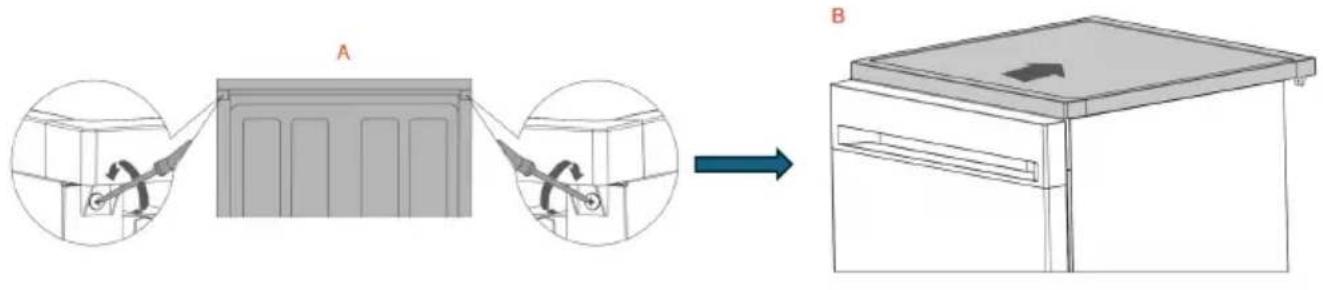
Fig./Img./Abb./Afb./Rys.2
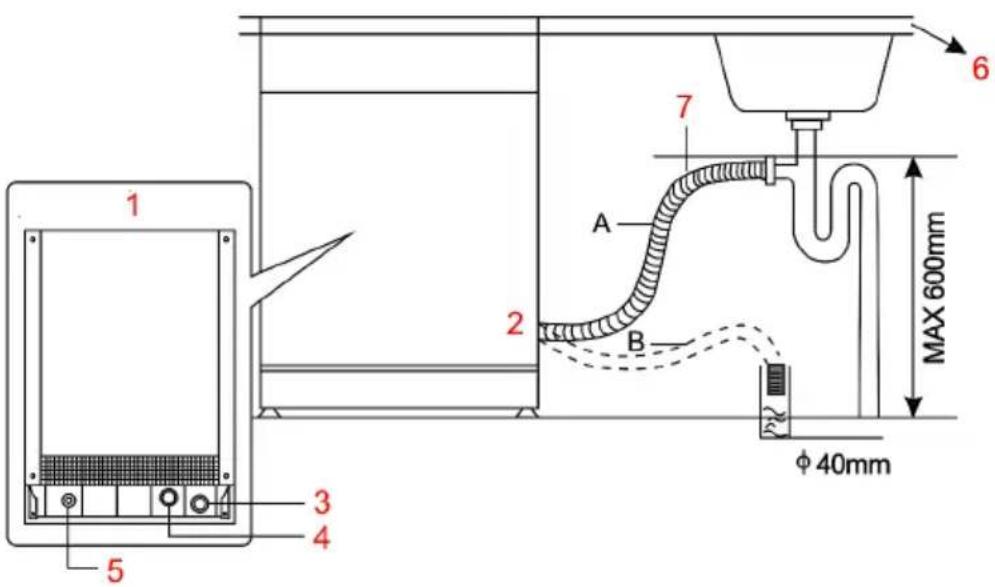
Fig./Img./Abb./Afb./Rys.3
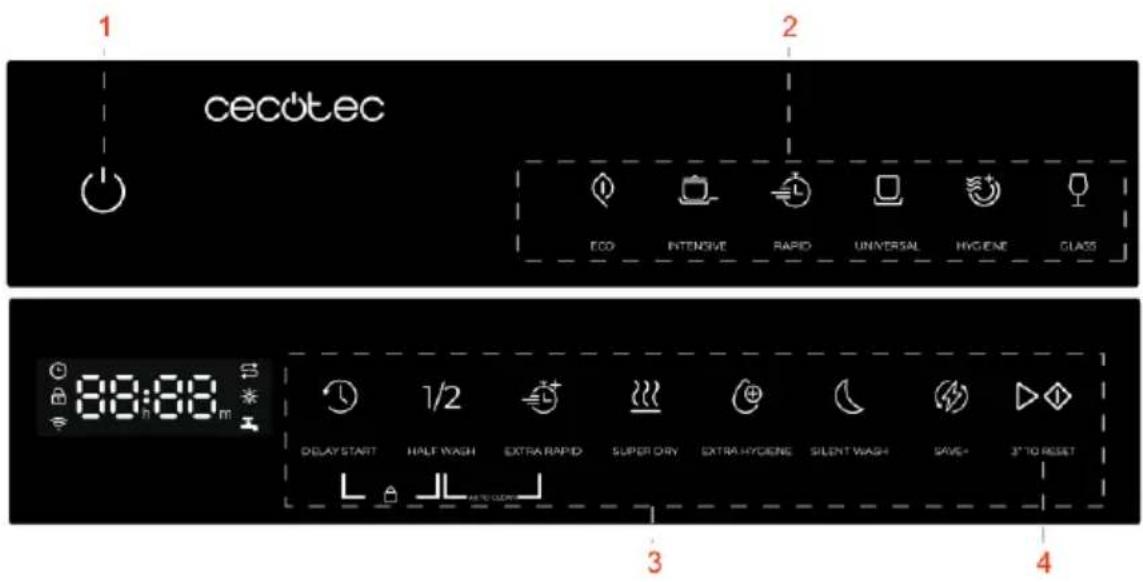
Fig./Img./Abb./Afb./Rys. 4
natural_image
Line drawing of a kitchen sink with a circular object on the floor and an arrow indicating rotation (no text or symbols)A
B
natural_image
Line drawing of a hand pouring liquid into a conical flask on a kitchen counter (no text or symbols)C

natural_image
Line drawing of a kitchen sink with a hand cleaning the surface and a cloth on top (no text or symbols)D
natural_image
Line drawing of a kitchen sink with a circular object on the floor and a curved arrow indicating rotation (no text or symbols)E
Fig./Img./Abb./Afb./Rys. 5
natural_image
Line drawing of a kitchen appliance with a tray, drawer, and window (no text or symbols)Fig./Img./Abb./Afb./Rys. 6
natural_image
Line drawing of a refrigerator interior with doors, wheels, and a tray (no text or symbols)Fig./Img./Abb./Afb./Rys. 7
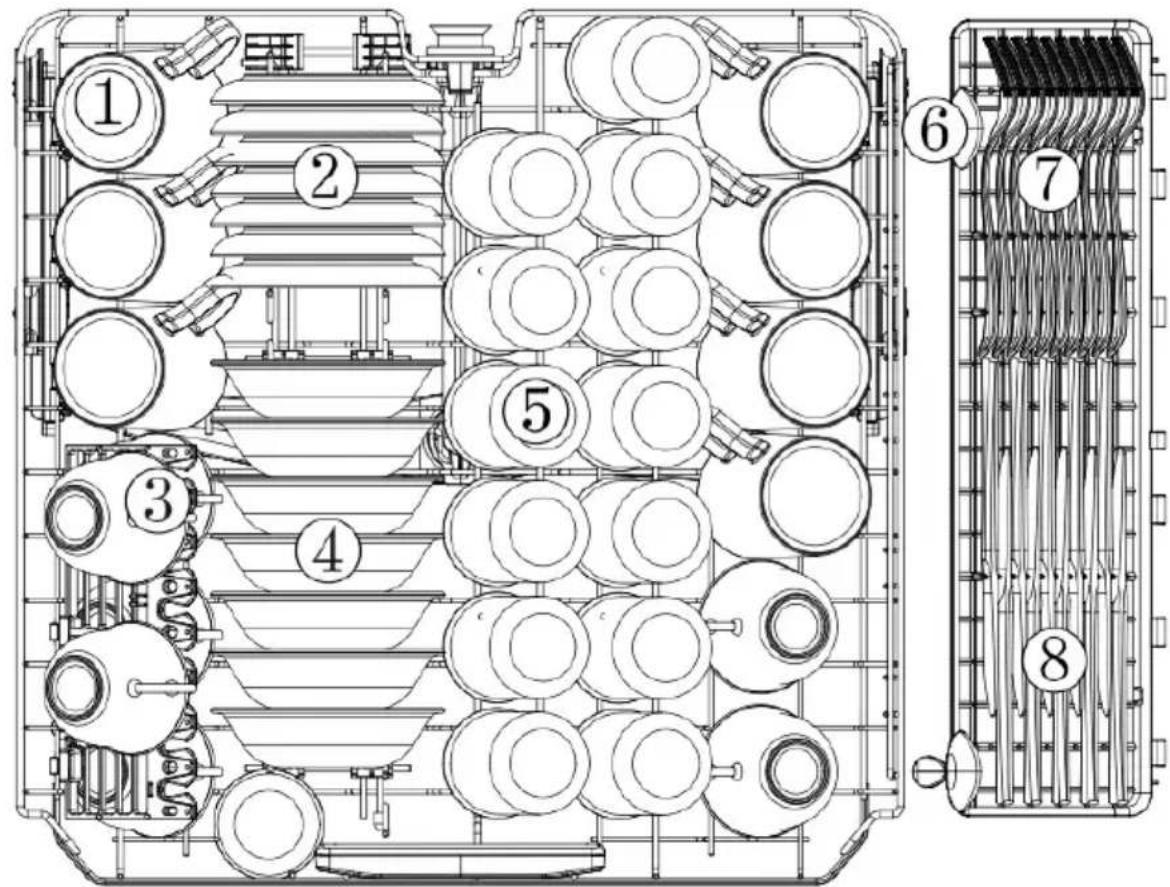
Fig./Img./Abb./Afb./Rys. 8
natural_image
Mechanical assembly diagram showing a conveyor system with rollers and a roller wheel (no text or symbols)1
natural_image
Mechanical diagram of a spring-loaded cart with wheels and spring (no text or symbols)2
Fig./Img./Abb./Afb./Rys. 9
natural_image
Technical line drawing of an automotive chassis with internal components and a directional arrow labeled A (no text or symbols beyond label)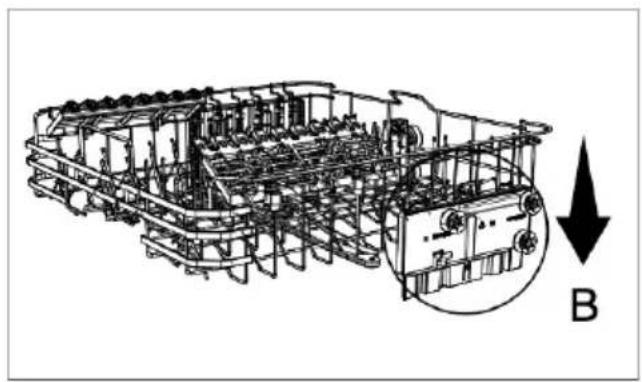
natural_image
Technical line drawing of a mechanical assembly with internal components and a labeled arrow (B), no readable text or symbols present.Fig./Img./Abb./Afb./Rys. 10
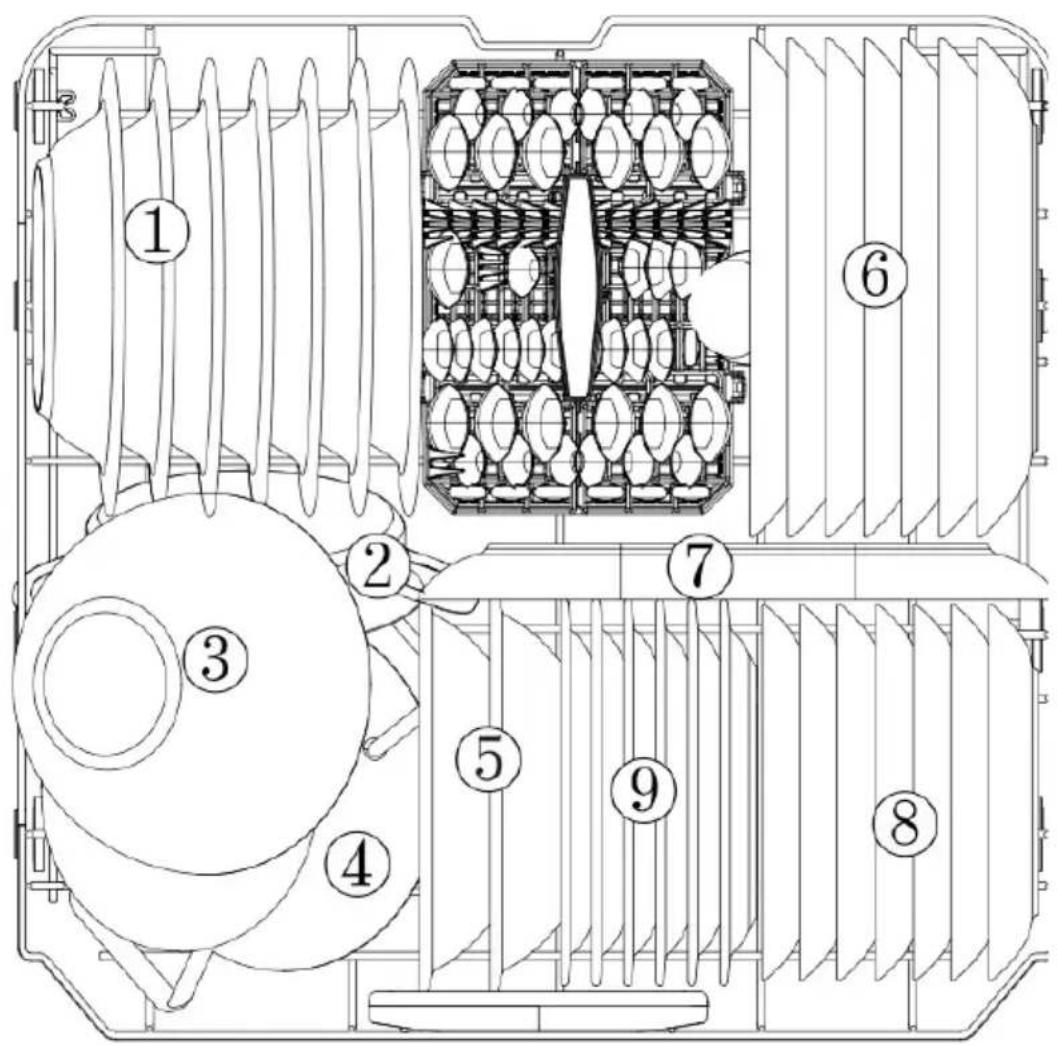
Fig./Img./Abb./Afb./Rys. 11
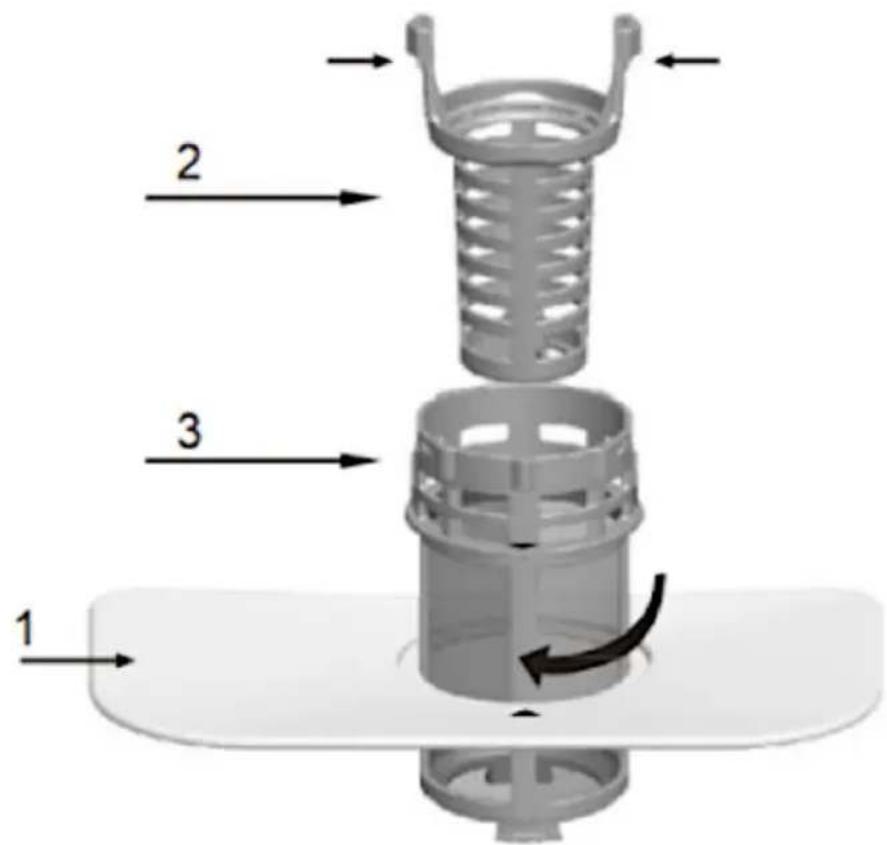
Fig./Img./Abb./Afb./Rys. 12
natural_image
Technical line drawing of a mechanical assembly with a spring and housing component (no text or symbols)1
natural_image
Line drawing of a hand holding a propeller with a small cylindrical component (no text or symbols)2
natural_image
Line drawing of a hand holding a small mechanical component on a flat surface (no text or symbols)3
natural_image
Line drawing of a hand holding a smartphone with a flat top (no text or symbols)4
natural_image
Line drawing of a hand using a tool to clean or wash a surface, with no text or symbols present.5
Fig./Img./Abb./Afb./Rys. 13
1
natural_image
Line drawing of a hand holding a tablet device with an upward arrow, no text or symbols present2
natural_image
Technical line drawing of a mechanical linkage or support structure (no text or symbols)3
natural_image
Line drawing of a hand using a tool to adjust or install a mechanical component, no text or symbols presentFig./Img./Abb./Afb./Rys. 14
natural_image
Technical line drawing of a mechanical assembly with no visible text or symbolsFig./Img./Abb./Afb./Rys. 15
www.cecotec.es