SS-25140 - Flower pot Sogo - Free user manual and instructions
Find the device manual for free SS-25140 Sogo in PDF.


| Product type | Pressure cooker |
| Brand | Sogo |
| Model | SS-25140 |
| Body material | 304 stainless steel |
| Bottom material | Pure aluminum and 430 steel (double layer) |
| Capacity | Approximately 6 liters (max fill 2/3) |
| Diameter | 22, 24 or 26 cm (depending on model) |
| Working pressure | 54-66 kPa (60 kPa nominal) |
| Safety pressure | 90-100 kPa |
| Resistance pressure | 320 kPa |
| Cooking types | All hobs (gas, electric, induction) |
| Safety devices | Control valve, safety valve, sealing gasket, safety lock |
| Maintenance and cleaning | Clean with mild detergent; do not wash lid in dishwasher; regularly clean valves and gasket |
| Spare parts | Gasket, control valve, safety valve, threaded cap |
| Repairability | Repair by authorized center only; do not disassemble yourself |
| Usage | Indoor domestic use only |
| Standards | Compliant with EN12778:2004, directive 97/23/EC, directive 2015/863/EU |
| Country of manufacture | China |
| After-sales service | www.sogosat.com / sogosat@sogosat.com / 0034 902 222 161 |
Frequently Asked Questions - SS-25140 Sogo
User questions about SS-25140 Sogo
0 question about this device. Answer the ones you know or ask your own.
Ask a new question about this device
Download the instructions for your Flower pot in PDF format for free! Find your manual SS-25140 - Sogo and take your electronic device back in hand. On this page are published all the documents necessary for the use of your device. SS-25140 by Sogo.
USER MANUAL SS-25140 Sogo
natural_image
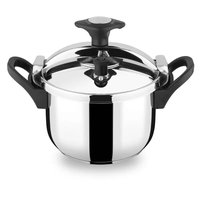
Two stainless steel cooking pot containers with black handles, shown from different angles (no text or symbols visible)
ref. SS-25140

Descarga tu manual
Download your manual
Téléchargez votre manuel
Baixe seu manual
Laden Sie Ihr Handbuch herunter
Scarica il tuo manuale
Stáhněte si manuál
Download din manual
Prenesite svoj priročnik
Preuzmite svoj priručnik
Pobierz swoją instrukcję
Descărcați manualul dvs
Завантажте посібник
Descàrrega el teu manual
ref. SS-25140 / SS-25145
Declaration of conformity, Responsibility of Electronic products disposal, Importers Details and After-sales service on the last pages.
natural_image
Line drawing of a cooking pot with red X mark and flame-like base (no text or symbols)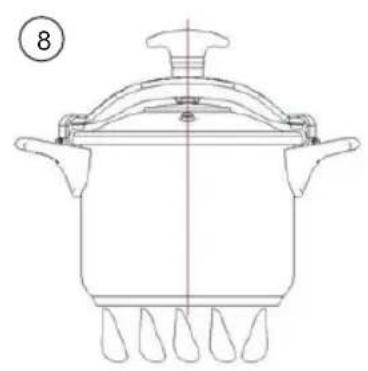
natural_image
Line drawing of a cooking pot with handles and lid, no text or symbols present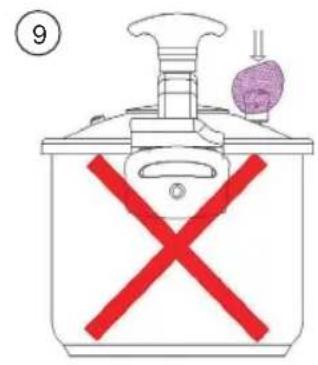
natural_image
Line drawing of a cooking pot with lid and side handles, no text or symbols present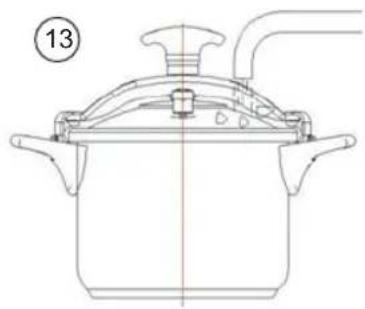
natural_image
Line drawing of a cooking pot with handles and lid, no text or symbols present
natural_image
Line drawing of a cooking pot with lid and side handles (no text or symbols)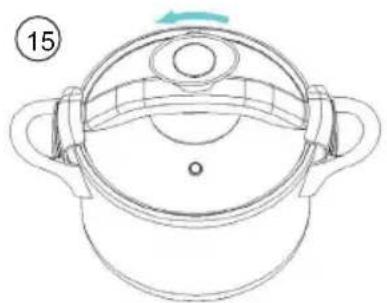
natural_image
Line drawing of a cooking pot with lid and side handles, no text or symbols present• Always read the instruction manual carefully before use.
- This manual can be downloaded from our website www.sogo.es.
- Keep these instructions for future reference.
2. Safety instructions for the user
GENERAL PRECAUTIONS
General precautions during the use of electrical equipment
- Do not use the appliance for any other purpose than described in this manual.
- Do not use or store the appliance outdoors.
- This product is intended for indoor, non-industrial, non-commercial and only for household use. Do not use the item outdoors or for any other purpose. Misuse or improper handling may cause problems in the appliance.
- The unit must be used only for the intended purposes. No liability is accepted for damages arising from improper use or wrong handling.

Restrictions on use to avoid personal injury
- Never use accessories that are not recommended by the manufacturer.
- The use of accessories not recommended or sold by the appliance manufacturer may result in fire, electric shock or injury to persons.
- All the pressure cooker parts must be this pressure cooker.
- In case of appliance malfunction, or if it has been damaged in any manner, return the appliance to the nearest authorized service facility for examination, repair or adjustment.
- If you find an abnormal phenomenon while using the pressure cooker or the safety device does not work normally, you should stop using it immediately and send it to our authorized service centre for inspection and repair. Do not attempt to repair it by yourself.

Restrictions for use with children and the elderly
- Children should be supervised to ensure that they do not play with the appliance.
- Children are prohibited to use the pressure cooker.
- Keep an eye on the pressure cooker when in use, especially at the place or time when children are near it.

Instructions to be followed when using the device
- Do not touch the hot surface straight away. Use the handle and the regulator.
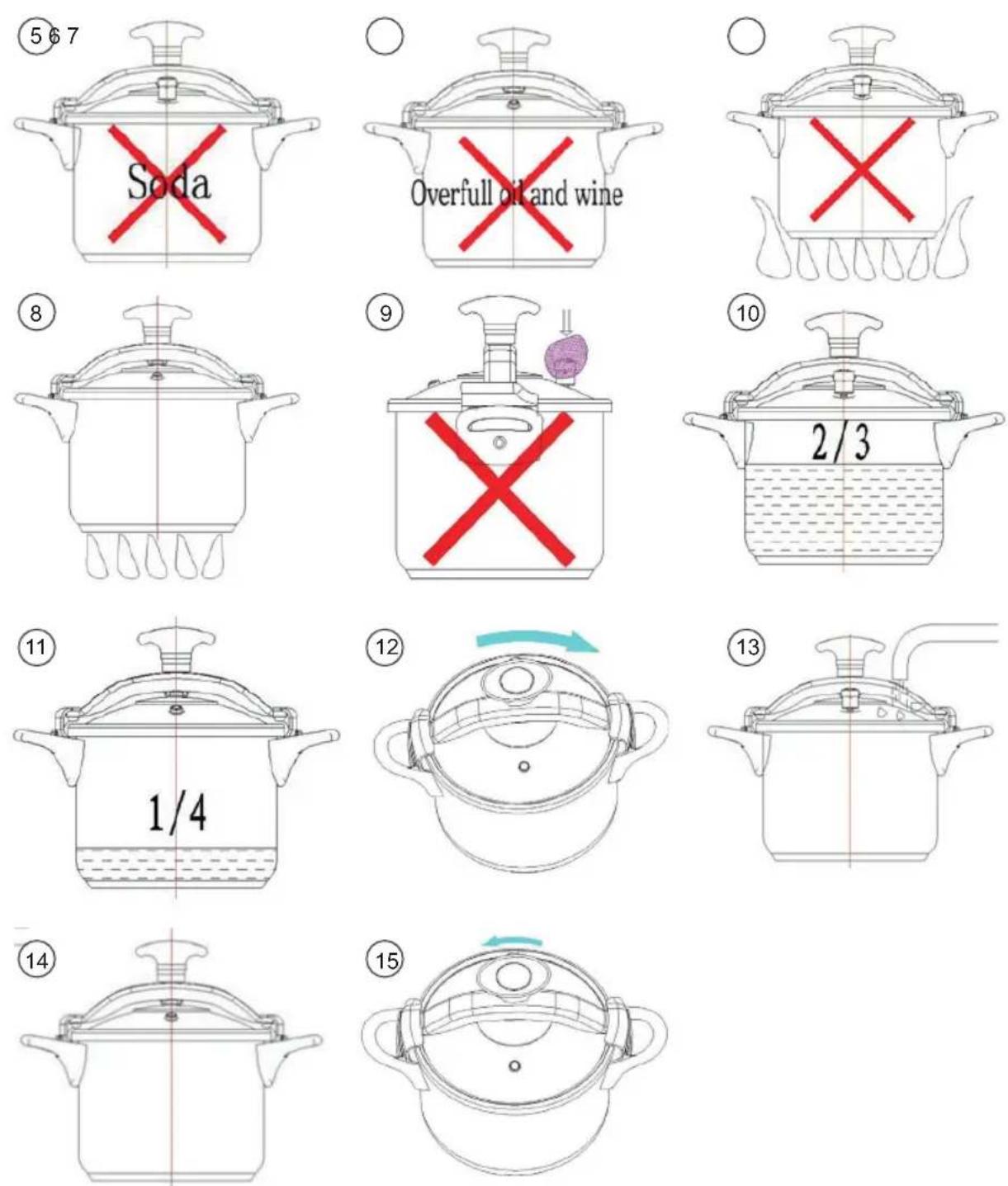
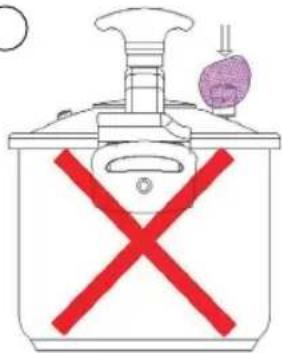
- Do not press down the pressure-control valve or use others to take place of it. (Picture1)
- Do not place the pressure cooker on the cooktop when it is empty. Do not use it for frying.
- Do not use pressure cooker for other than intended use.
- The pressure cooker should be heated on a stable fire.
- You should be very careful while moving the pressure cooker which is under pressure or full of hot liquid.
- Do not let the decompression window and the pressure control valve point towards a persons direction.
- You can open the pressure cooker only when there is no pressure inside. Do not force it to open.
- Always inspect before using if the exhaust pipe and the clog proof filter is jammed.
- This appliance cooks under pressure. Improper use may result in scalding injury. Make sure to close if properly before use. Please follow “Operating instructions”
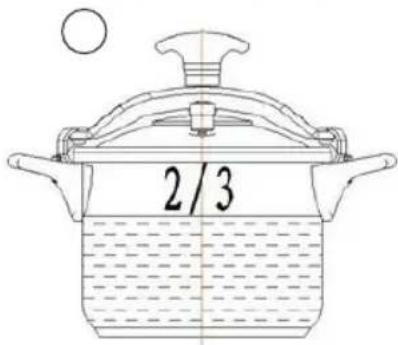
- Do not fill the unit over 2/3 full. While cooking foods which tend to expand during cooking such as rice or dried vegetables, do not fill the unit over 1/2 full. Over filling may cause a risk of clogging the vent pipe and developing excess pressure. See “Food Preparation instructions.”
- Be aware that certain foods, such as applesauce, cranberries, pearl barley, oatmeal or other cereals, split peas, noodles, macaroni, rhubarb, or spaghetti can foam, froth, and sputter, and clog the pressure release device (steam vent). These foods should not be cooked in a pressure cooker.
- Always check the pressure release devices are not clogged before use.
- Do not open the pressure cooker until the unit has cool down and all internal pressure has been released. If the handles are difficult to push apart, this indicates that the cooker is still pressurized-do not force it open. Any pressure in the cooker can be hazardous.
- When the unit arrive at normal pressure, turn the heat down, so that all the liquid, which creates the steam, does not evaporate.
- Do not put the pressure cooker into a heated oven.
- Never use your pressure cooker without adding water, it will completely damage it.
- Never use the pressure cooker in its pressurized mode for deep or shallow frying.
- Do not tamper with any of the safety systems beyond the maintenance instructions specified in the instructions for use.
- When cooking the sticky foods, make sure not much sticky.
3. INTRODUCTION
Welcome to use our stainless-steel pressure cooker. In order to provide you goods' safe, resistance and well-designed product, not only the high-end material is used but the working procedure as well tested properly.
You can use the pressure cooker as long as you can by using it in a correct way. This instruction manual will provide you the instructions to use it in a correct way. Make sure to read it carefully.
The pressure cooker is made of 304 stretched stainless steel material and the cooker base is made of pure aluminium and double wall 430 material with strong temperature and good transmission to make it suitable for being heated by electromagnetism and made fully use of resource.
The cooker's lid is equipped with many kinds of safety to assure safe usage, which meet with the new standard requirements and can bring customers convenience.
4. ARTWORK AND MODEL NUMBER
- Side handle
- Ear of cooker body
- Cooker body
- Crossbeam
- Lid
- Strengthen flake
- Knob
- Screw
- Screw cap
- Bearing flake
- Safety valve
- Gasket
- Trachea
- Pressure control valve
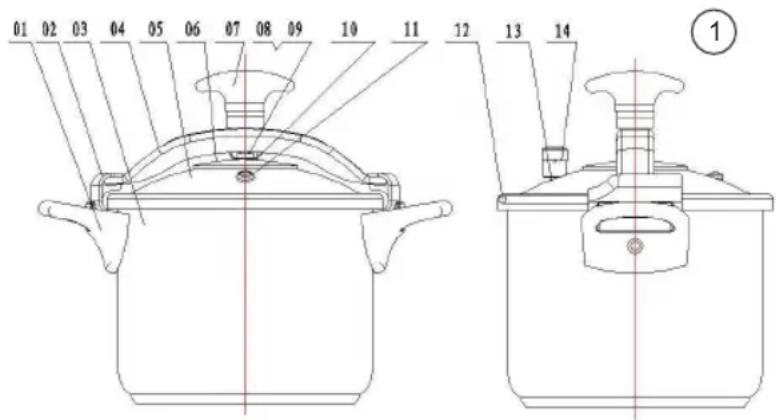
5. SAFETY PRECAUTIONS
Please read and understand all instructions before using.
- The boiling point of the pressure cooker is below 120 centigrade, and can produce large amount of steam, water, soup and syrup etc...
- Don't use pressure cooker to cook apple juice, wheat, bean...etc, which can make a lot of bubble, split matters. it can block valve. pay more attention if you can't prevent cooking this kind of food..
- Keep regulator, safety valve, gasket, stop opening valve, lid and body tidy and dry.
- Don't put soda directly for cooking (picture 2), overfull oil and wine.(picture 3)
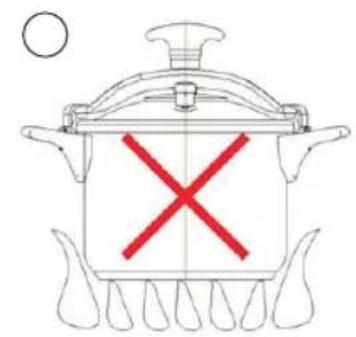
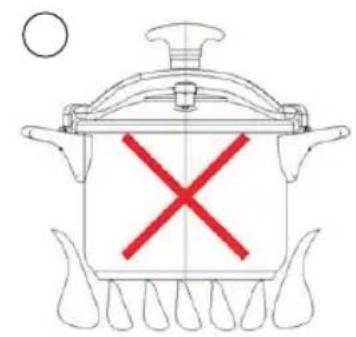
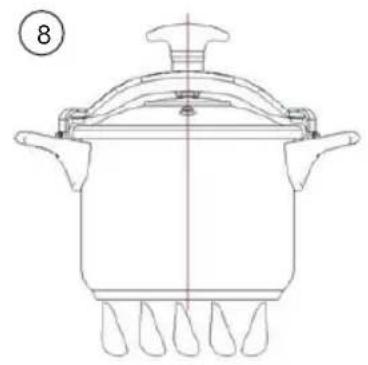
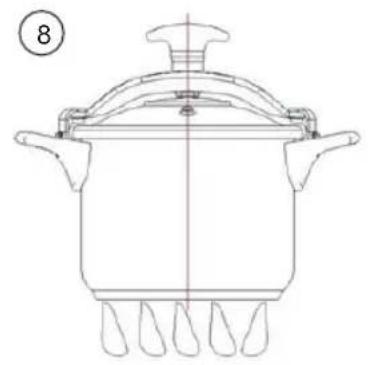
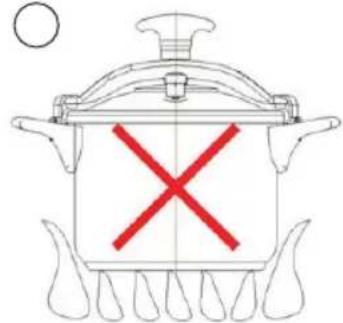
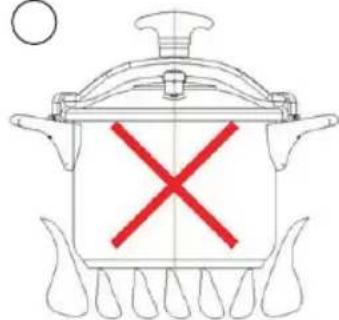
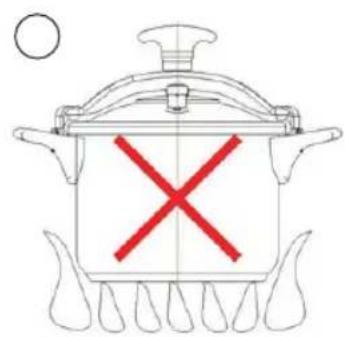
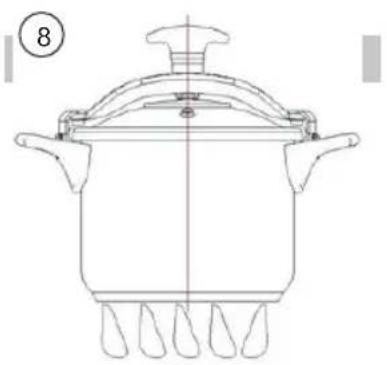
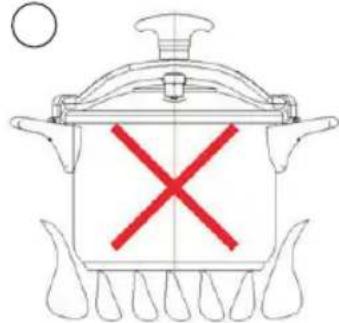
- Make sure to cook on stable oven. While cooking on gas oven, the fire flame should not touch the body wall.(picture 4) on the other hand while cooking on Electric hob, the diameter of oven should be smaller than the bottom's (picture 5)
- Don't use the pressure cooker for frying and dry cooking to avoid any damage and the shortage of lifespan. Do not use it in the very high compressive oil, also do not cook empty, so that improve the service life and avoid to damage the pot.
- If the steam emits from the safety valve or from the safety window, turn off the fire immediately. Don't use until the problem is solved.
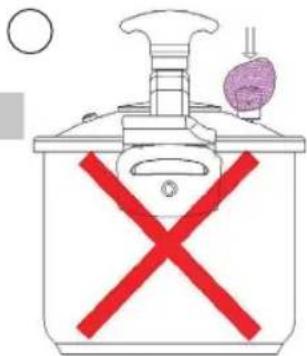
- Never cover anything on the regulation valve.(Picture 6)
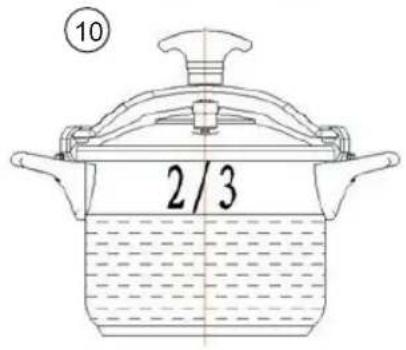
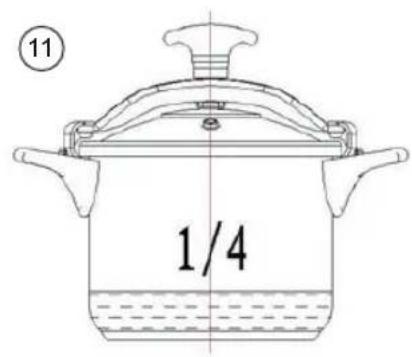
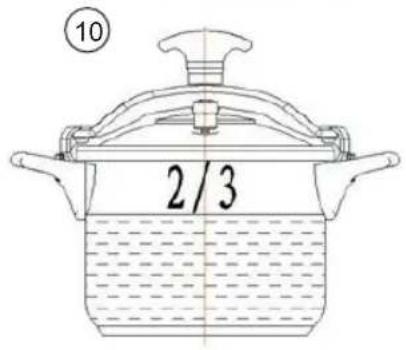
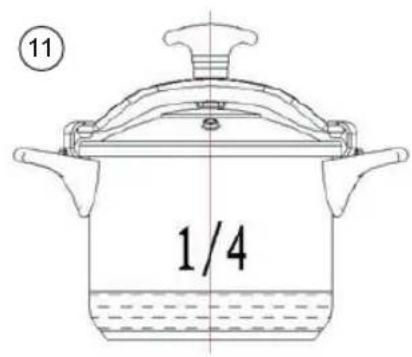
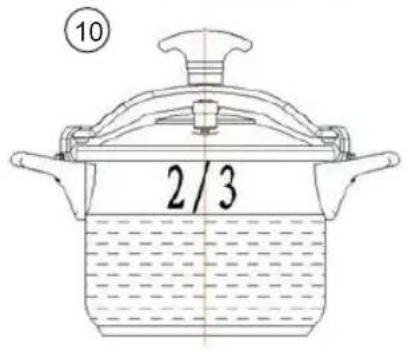
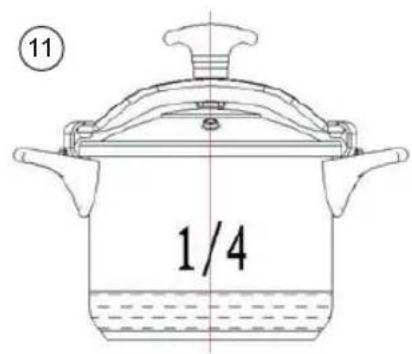
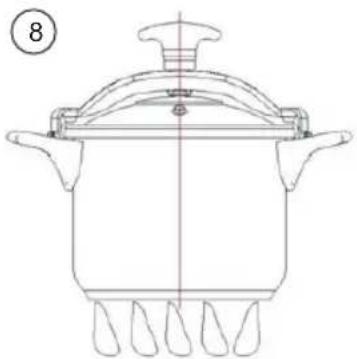
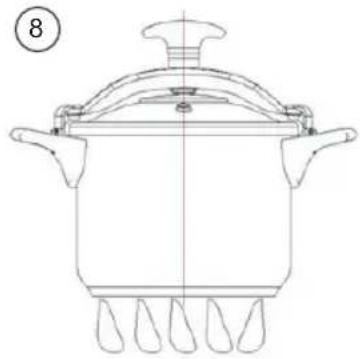
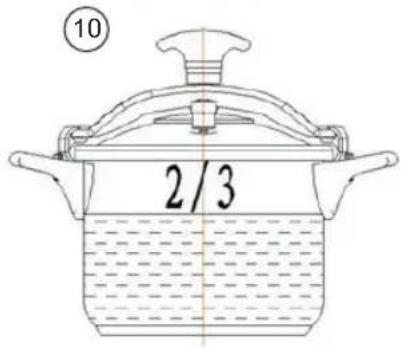
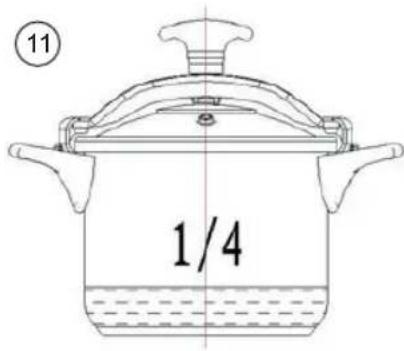
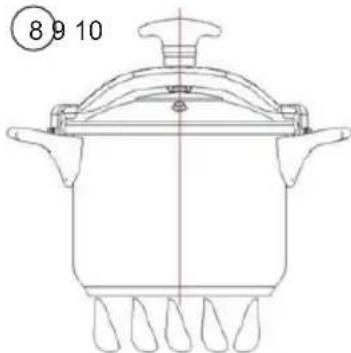
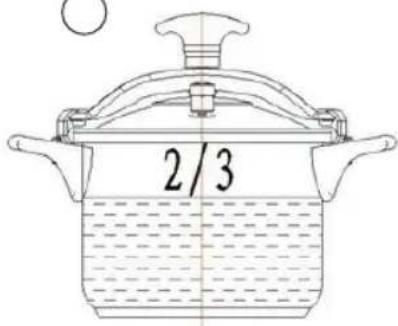
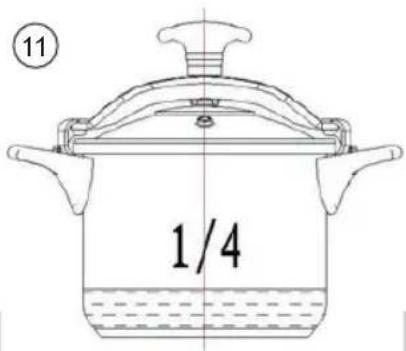
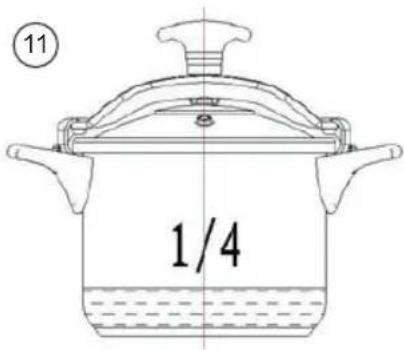
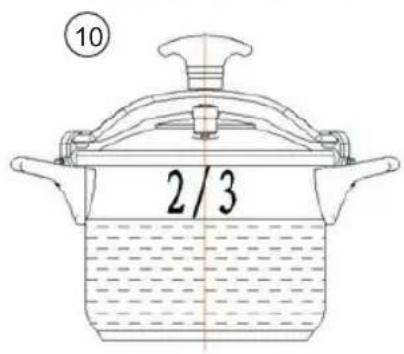
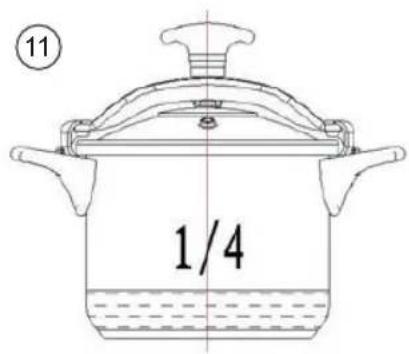
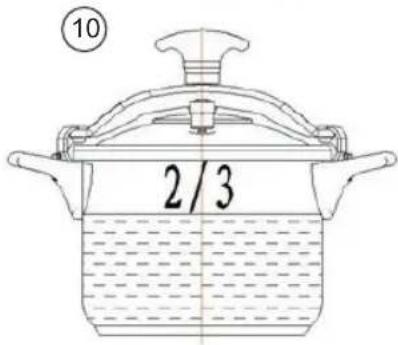
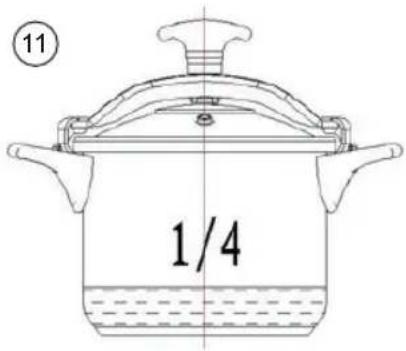
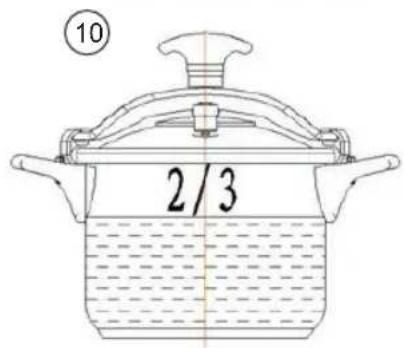
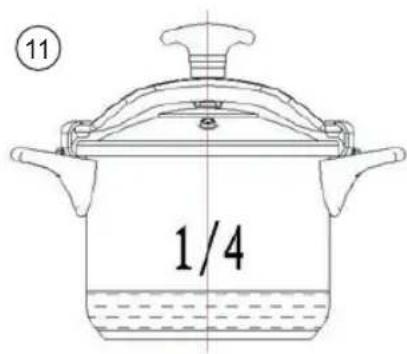
- Cooking food or water not exceed 2/3 volume (picture 7), cooking rice, vegetable and bean not exceed 1/3. In any case fill the cooker at least up to 1/4 volume.(picture 8)
- heat when the lid is not in correct direction.
6. FUNCTIONS
1) The pressure cooker design for home use, the lid and body is made of high quality stainless steel, beautiful and durable, the bottom with double layers, available for magnetic oven, electricity, common gas oven.
2) Multiple safety device, for safety assurance.
Control valve: it's work is stable and reliable.
Safety valve: will automatically check the internal pressure. when the internal pressure is too high the safety valve will vent the over steam to make safe.
Before use the pressure cooker for the first time
1) Read the instruction manual carefully before first time use for safety. Especially the "safety rules".
2) Fill pressure cooker with 1/2 cold water, close lid for heating till the steam is emitted from the control valve. Remove the pressure cooker from the stove and leave it standing closed for about 10 minutes in order to exclude the smell of new cooker.
3) Open the lid when the cooker cools down. Remove the water and make the cooker clean and dry.
Normal operations
1) Make sure the vent-pipe is not blocked. If there is a jam use a small stick to clean. Make sure the safety valve is clean. The gasket must be put on correct position.
2) The cooker must be filled with at least 1/4 L water or other liquids to make steam when using the pressu-
re cooker. The food or water can't exceed 2/3 volume of the cooker. If the food will easily make steam the food can't exceed 1/2 volume.
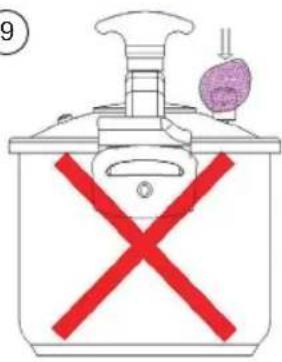
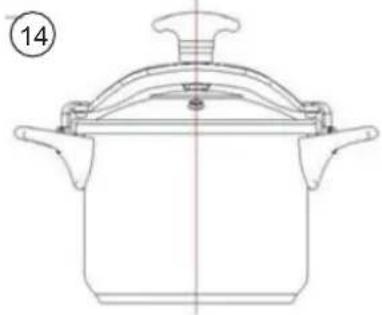
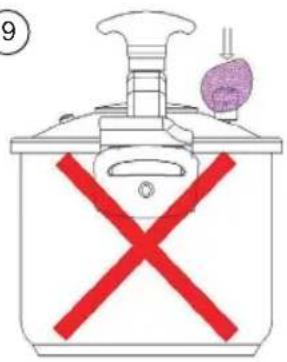
3) Closed lid: placing the lid onto the cooker body and put the crossbeam under the ear of the cooker body with same direction in one line. Turn the button clockwise when the crossbeam touched the ear of the cooker body, please turn the knob once or twice, until it stop turning more. It means the lid is well closed. (picture 9) and can put on heating.
Heating
1) When moving and laying the pressure cooker, do not hold it by middle knob to prevent destroying components.
2) The pressure cooker must be put on the flat surface. When heated, the diameter of oven can't exceed the diameter of cooker. When using gas oven make sure the flame not wrap up the oven.
3) In order to make the temperature to rise up immediately use strong fire for heating to make the control valve work but the flame shouldn't be too strong. After heating for a while, there is a little steam comes out from control valve which is a normal situation. If the control valve work under normal condition there should be no steam out. When the control valve has steam out and it keeps working please check the heat. Turn off the heat resource or downgrade the heating level, so that the cooking can save the energy in a most reasonable way. If the control valve stop emitting the steam during cooking, heat power can be upgraded. If the control valve emits the steam quickly, please downgrade the heating power.
Turn off the heat
After turning off the heat, control valve will stop emit the steam. (this is also the cooking time).
Cooling down
1) The condition of instant cooling down
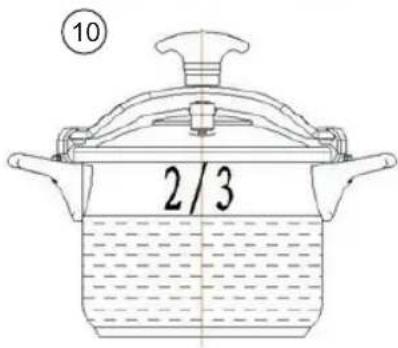
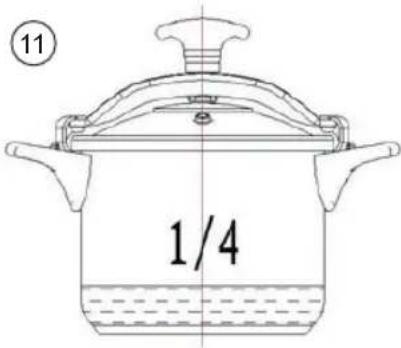
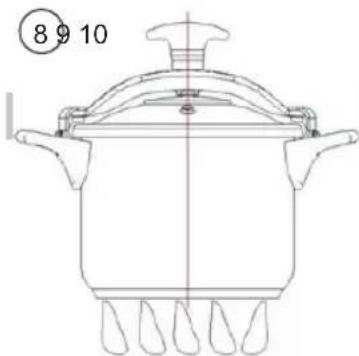
In order to reduce the temperature and pressure instantly you can push the button to make control valve release steam (picture 11) or put the cooker under cold water for cooling. (Picture 10). Then you can turn the knob anticlockwise to open the lid.
2) The condition of normal cooling down
After cooking let the cooker cool down on its own.
Open the pressure cooker
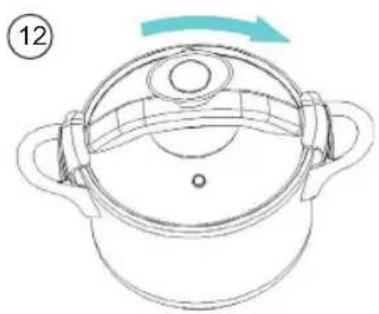
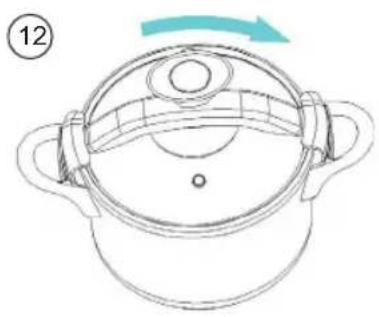
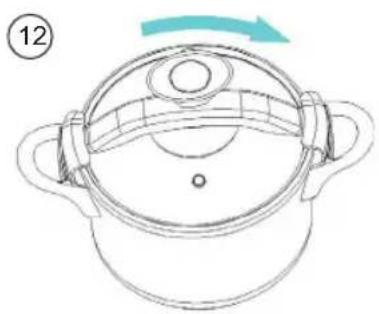
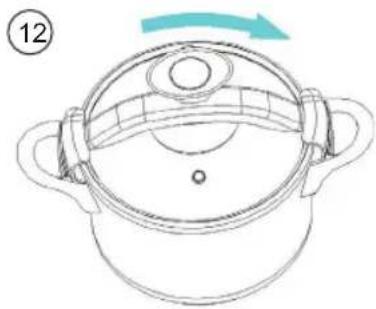
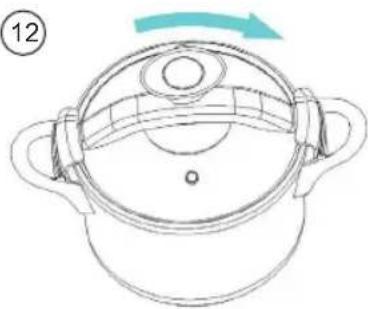
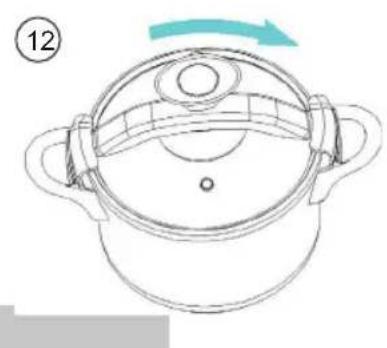
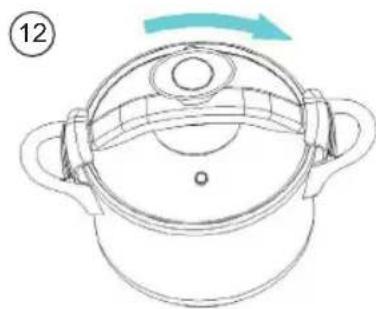
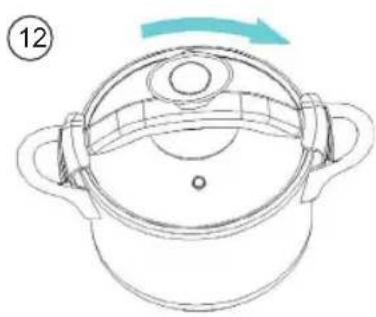
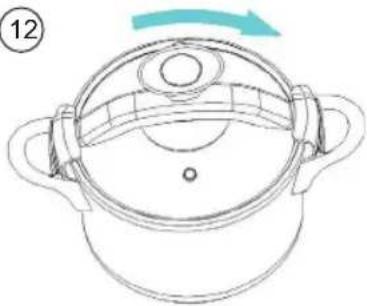
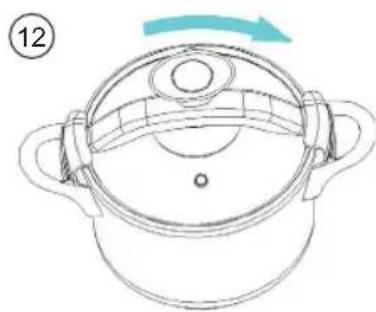
As soon as the pressure cooker cool off, then turn the button anticlockwise and open the lid. (picture 12)
1) Please operate carefully and wearing glove will be preferable in case of burning.
2) Shake the cooker lightly to balance the difference of inside. Especially when you cook porridge or any other sticky foods.
3) Do not rotate the knob by force. Make sure to rotate slowly in order to avoid any accident arise.
4) Do not open the lid with excessive force.
Attention
1) Before using, please check the vent-pipe carefully to see whether blocked.
2) Make sure to wash the safety valve as per the instruction manual.
3) Don't change the components at will; please contact the after-sale department when the component is not easy to get.
- TROUBLESHOOTING
| Problems Causes | Solution | |
| Heating for a while regulator has a sound / noise | 1.regulator is blocked2.food remains are in the ventilator of open area3.Dry heating4. Cooker declined | 1. Clean it2. Remove with the needle3. Switch off, place the cooker flat and let the control valve incline to release pressure and then open the lid to check.4. place the cooker on a flat surface |
| No steam comes out | 1.The ventilator hole blocked2. there is lot of food inside3. flame is too strong | 1. Get rid of matters2. Get rid of part food3. use middle fire to heat, adjust the control valve and choose suitable pressure |
| The Steam emits from safety valve | 1. The control valve and safety valve are out of order2. The gasket laid incorrectly3. The gasket was destroyed4. The gasket is not clean5. The lid is not locked fully | 1. Remove with needle2. Laid the gasket in correct position3. Replace a new gasket4. Clean the gasket5. Lock the lid properly |
8. MAINTENANCE
1) Cooker body
Use detergent to clean dirty areas. Dry the cooker. Don't touch the cooker body directly with the metal tool. Don't let the cooker touch the iron-related metal.
2) Gasket
Use detergent to clean impurities on the lid. Dry up the gasket totally. Install the gasket in the proper position. Use detergent or water to wash the gasket after used. After drying up the gasket, put it in the proper position in the lid and keep it flat. Replace the original gasket after long time used.
3) Control valve, vent-pipe, safety valve
If the control valve, vent-pipe and safety valve jammed with residual foods and other things, use small stick to clean and make sure the water pass fluently. Please check the screw cap is flexible or not. if flexible, reassemble again. After every single use, you should clean the control valve, it will be easy to pull the control valve directly to clean with flowing water.
4) Remove the scorched matters
Use soft wood products to remove. If the scorched matters are sticky enough let the cooker shine in the sun to dry then dip in the oil fully, then soaked in hot water for a while and remove the scorched matters. Do not remove them with sharp tools.
5) Maintenance
Clean the body and lid. Get the gasket out for cleaning. Use small stick to remove the scorched matters in the control valve, vent-pipe and safety valve and some smell. Please keep it in the dry places. Please keep the cooker body and lid separately.
Special notice
- Don't use frictional washing articles.
- Don't machine wash cooker lid.
-Lay edible oil on the gasket to extend the life and better the performance. - Don't lock the lid after use or if the gasket does not work.
- Defrost the frozen goods before cooking. Wash the bean or dry food in advance.
- Open the lid first when cooked the easy bubble food. when the bubble removed close the lid to cook..
- It is hard to lose water while long cooking is another thing.
- Put more colour seasoning into the meat to prevent colour reducing caused by cooking.
- Turn down the heat resource if the soup overflows.
6) Replacement
Gasket is replaced once every one or two years. If damage, crack or crinkle please replace immediately.
Attention: Never use substitute when you replace the components. please contact the original supplier immediately.
7) User guidance
The steam emit from around area, the control valve can not work.
- The lid is not properly locked, please check and close the lid again in correct way.
- The gasket laid incorrectly or the gasket was destroyed. Please check the gasket and laid it in correct position or replace a new one.
Special advise:
Never change any parts or reassemble in other way. please use the original spare parts from our company.
Major technology parameter
1) Model : CS 22 (24/26) ---60 kPa
2) Sealing reliable: under 20kpa working pressure, no water or steam leakage
3) Working pressure: on the 0.9 to 1.1 times, the working pressure are 54-66kPa.
4) Safety pressure: between 90+10kPa.
5) Resistance pressure: 320kpa
6) Open lid safety: if the pressure inside is over 4kpa, the lid will not open
7) Closed lid safety: the pressure inside is less than 4kpa if the lid is not locked properly.
8) Destructible pressure: over 500kPa
9. COOKING TIME
The list below is just for reference. the exact time is up to individual taste.
| Food | Food and water qty. | After regulator stability small hob | Pressure | Normal Cool off Ripe degree | Remark |
| Rice 1/3 5 | -10 60kPa Ripe | ||||
| Porridge 1/3 | 10-15 60kPa Ripe | Add little Soda | |||
| Chop 1⁄2 10 | -12 60kPa Ripe | Piece | |||
| Beaf 1⁄2 16 | -25 60kPa Ripe | Piece | |||
| Chicken 1⁄2 1 | 2-18 60kPa Ripe | Whole Chicken | |||
| Fish 1/3 5 | -10 60kPa Ripe | ||||
| Palm 2/3 10 | -15 60kPa Ripe | ||||
| Corn 2/3 5 | -10 60kPa Ripe |
10. OTHERS
This cooker can be used with all kind of kitchen hobs. Estimated Cooking time is calculated when the control valve emit steam normally.
The cooking time will be restricted by the quantity of food, temperature and the strong of the heat resource, etc factor so the time is just for your reference.
Our pressure cooker meet Europe standard EN12778:2004

VIS IMPORTANT :
natural_image
Line drawing of a cooking pot with handles and lid, no text or symbols present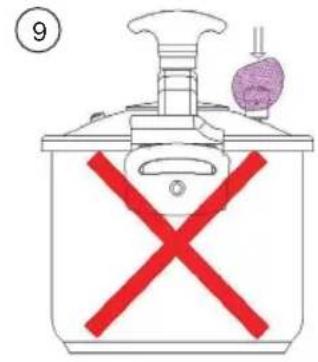
natural_image
Line drawing of a cooking pot with lid and side handles, showing a blue arrow indicating rotation (no text or symbols)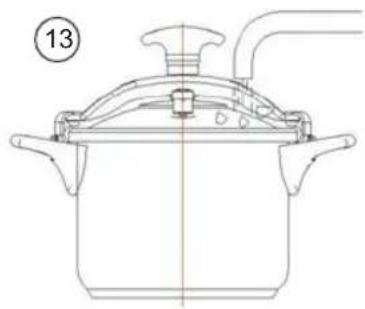
natural_image
Line drawing of a cooking pot with lid and side handles, no text or symbols present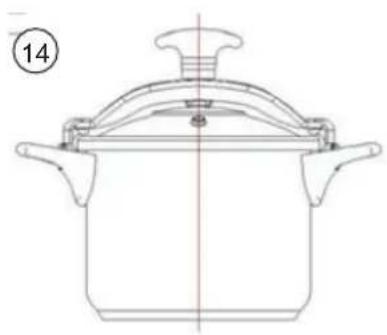
natural_image
Line drawing of a cooking pot with lid and side handles (no text or symbols)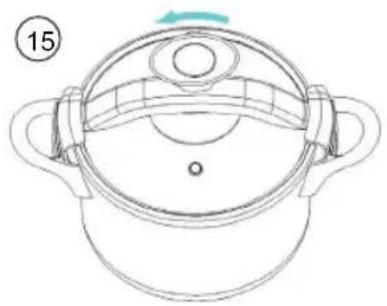
natural_image
Line drawing of a cooking pot with lid and side handles, no text or symbols present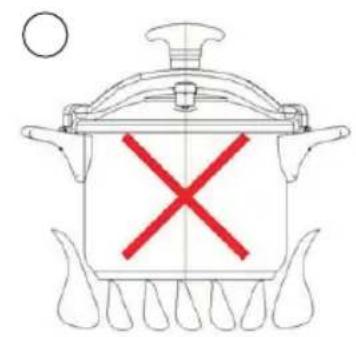
natural_image
Line drawing of a cooking pot with handles and lid, no text or symbols present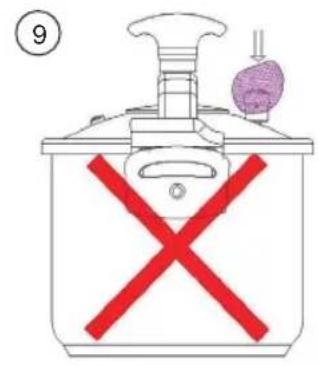
natural_image
Line drawing of a cooking pot with lid and side handles, no text or symbols present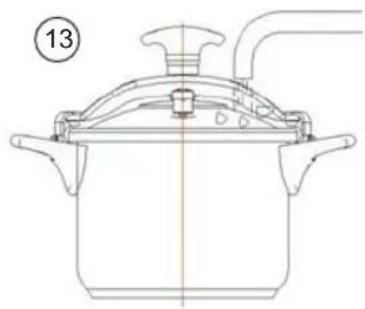
natural_image
Line drawing of a cooking pot with lid and side handles, no text or symbols present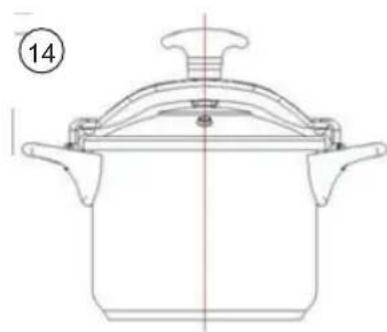
natural_image
Line drawing of a cooking pot with lid and side handles (no text or symbols)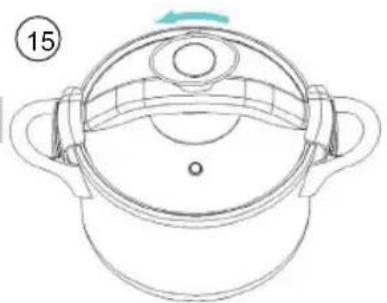
natural_image
Line drawing of a cooking pot with lid and side handles, no text or symbols present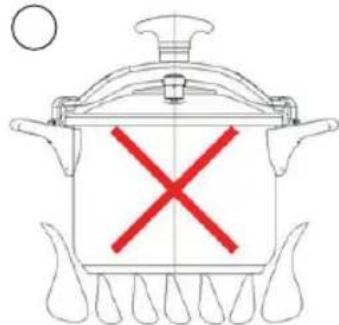
natural_image
Line drawing of a cooking pot with lid and side handles (no text or symbols)
natural_image
Line drawing of a cooking pot with lid and side handles, no text or symbols present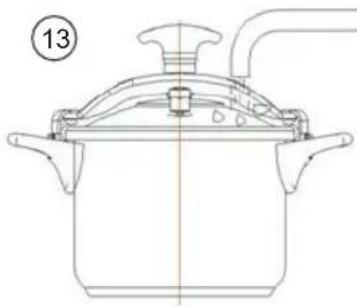
natural_image
Line drawing of a cooking pot with lid and side handles (no text or symbols)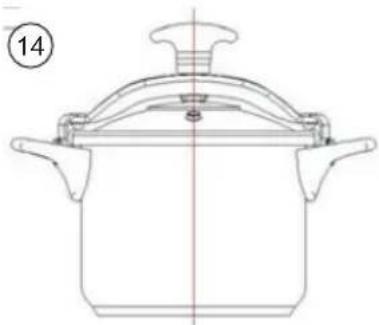
natural_image
Line drawing of a cooking pot with lid and side handles (no text or symbols)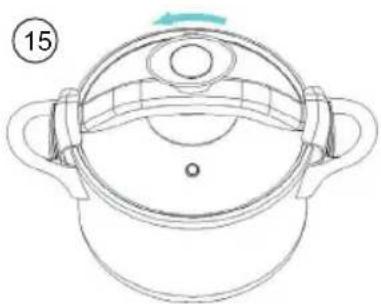
natural_image
Line drawing of a cooking pot with lid and side handles, no text or symbols presentO
natural_image
Line drawing of a cooking pot with handles and lid, no text or symbols present9
12
natural_image
Line drawing of a cooking pot with lid and side handles, showing a blue arrow indicating rotation (no text or symbols)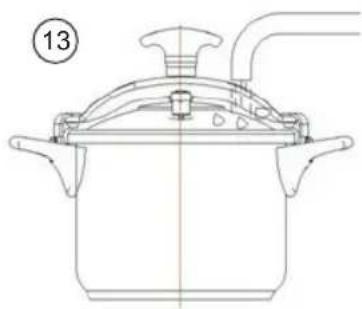
natural_image
Line drawing of a cooking pot with lid and side handles (no text or symbols)
natural_image
Line drawing of a cooking pot with lid and side handles (no text or symbols)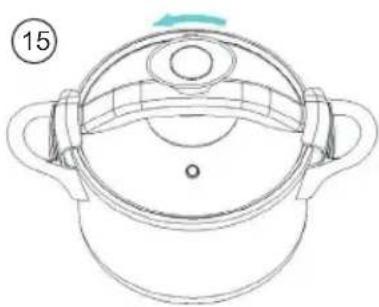
natural_image
Line drawing of a cooking pot with lid and side handles, no text or symbols present6. FUNKTIONER
O
O
O
natural_image
Line drawing of a cooking pot with lid and side handles, showing a blue arrow indicating rotation (no text or symbols)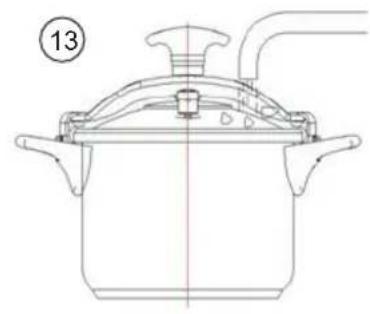
natural_image
Line drawing of a cooking pot with lid and side handles, no text or symbols presentnatural_image
Line drawing of a cooking pot with lid and side handles (no text or symbols)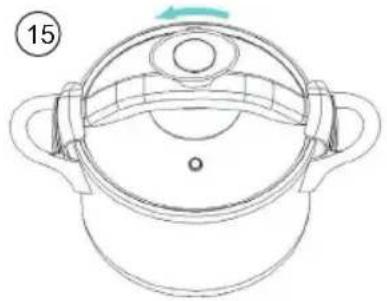
natural_image
Line drawing of a cooking pot with lid and side handles, no text or symbols present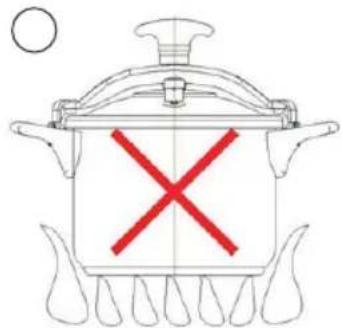
natural_image
Line drawing of a cooking pot with lid and side handles, no text or symbols present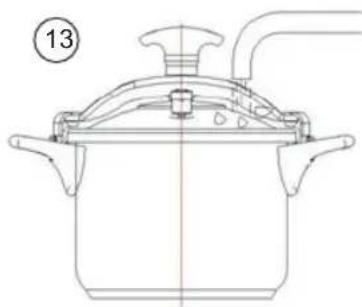
natural_image
Line drawing of a cooking pot with lid and side handles (no text or symbols)što može blokirati ventil. Obratite posebnu pažnju ako ne možete izbjeći kuhanje ove vrste hrane.
natural_image
Line drawing of a cooking pot with lid and side handles (no text or symbols)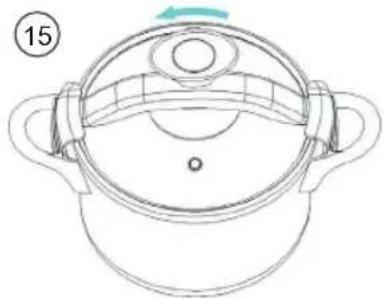
natural_image
Line drawing of a cooking pot with lid and side handles, no text or symbols present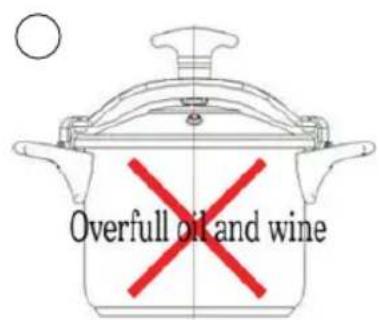
natural_image
Line drawing of a cooking pot with handles and lid, no text or symbols present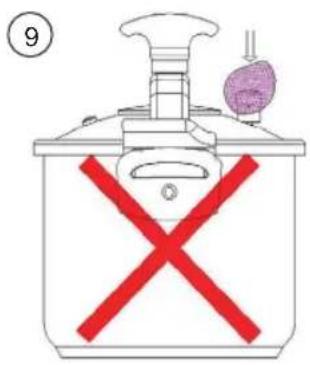
natural_image
Line drawing of a cooking pot with lid and side handles, no text or symbols present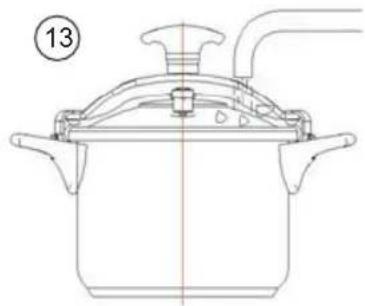
natural_image
Line drawing of a cooking pot with handles and lid, no text or symbols present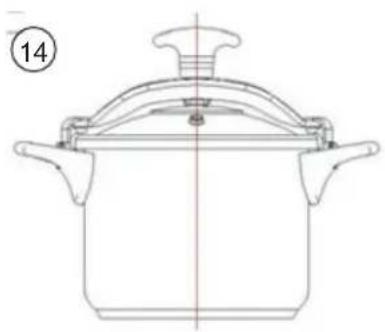
natural_image
Line drawing of a cooking pot with lid and side handles (no text or symbols)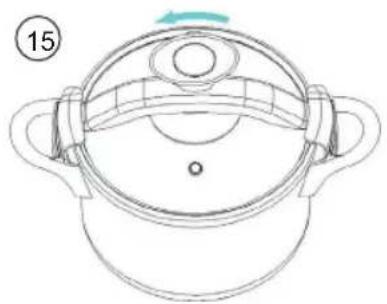
natural_image
Line drawing of a cooking pot with lid and side handles, no text or symbols presentO
natural_image
Line drawing of a cooking pot with a red X mark on its side, no text or symbols present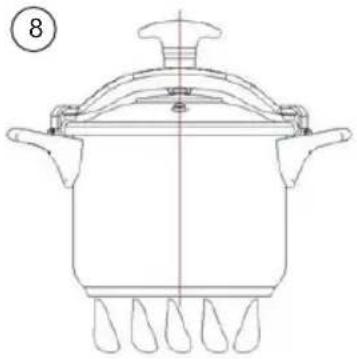
natural_image
Line drawing of a cooking pot with handles and lid, no text or symbols present⑨
12
natural_image
Line drawing of a cooking pot with lid and side handles, no text or symbols present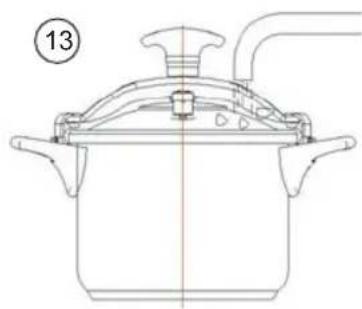
natural_image
Line drawing of a cooking pot with lid and side handles (no text or symbols)
natural_image
Line drawing of a cooking pot with lid and side handles (no text or symbols)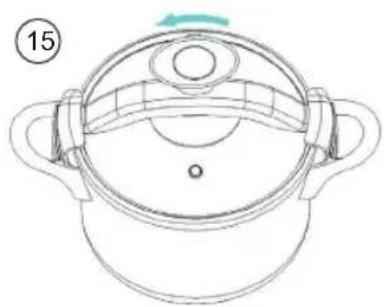
natural_image
Line drawing of a cooking pot with lid and side handles, no text or symbols present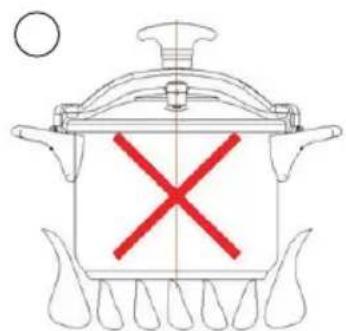

natural_image
Line drawing of a cooking pot with handles and lid, no text or symbols present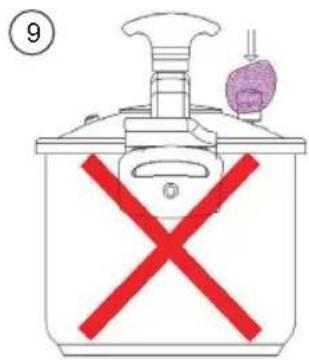
natural_image
Line drawing of a cooking pot with lid and side handles, showing a blue arrow indicating rotation (no text or symbols)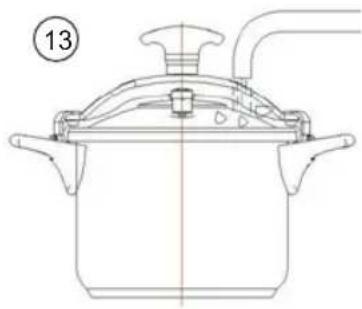
natural_image
Line drawing of a cooking pot with handles and lid, no text or symbols present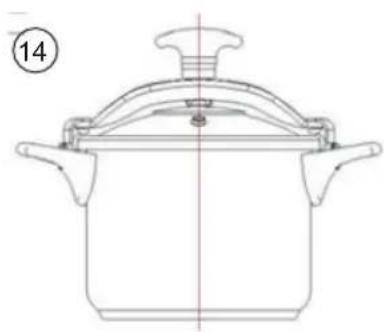
natural_image
Line drawing of a cooking pot with lid and side handles (no text or symbols)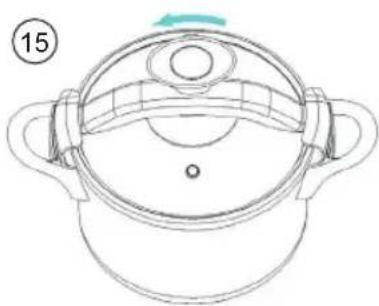
natural_image
Line drawing of a cooking pot with lid and side handles, no text or symbols presentDÉCLARATION DE CONFORMITÉ
DECLARATION OF CONFORMITY
This device complies with the pressure equipment directive 97/23/EC, Directive 2015/863/EU on the restriction of the use of certain hazardous substances in electrical and electronic equipment.

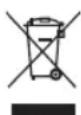
This symbol on the product or on the packaging indicates that this product can't be disposed as normal rubbish or household waste. All the electrical, electronic equipment's and battery-operated units must recycle in proper manner and according to the local municipal laws. You can recycle them by taking them to government authorized disposal centres or specialized bins which you can find in any nearby big super markets, electronics or electro domestics products stores or malls who have these types of facilities available.
Designed by: SOGO based on European quality standards Imported by: Sanysan Appliances S.L, NIF: B98753056, C/ Barcas 2, 2, 46002 Valencia, Spain Product manufactured in CHINA. After-sales service: www.sogosat.com sogosat@sogosat.com / 0034 902 222 161