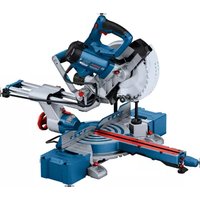
GCM 305-216 D Professional - Saw BOSCH - Free user manual and instructions
Find the device manual for free GCM 305-216 D Professional BOSCH in PDF.
 FR
FR
 BG
BG
 CS
CS
 DA
DA
 DE
DE
 EL
EL
 EN
EN
 ES
ES
 ET
ET
 FI
FI
 HU
HU
 IT
IT
 KK
KK
 KO
KO
 LT
LT
 LV
LV
 MK
MK
 NL
NL
 NO
NO
 PL
PL
 PT
PT
 RO
RO
 RU
RU
 SK
SK
 SL
SL
 SV
SV
 TR
TR
 UK
UK
| Brand | Bosch |
| Model | GCM 305-216 D Professional |
| Product type | Radial miter saw |
| Rated power input | 1200 W |
| No-load speed | 5200 rpm |
| Weight | 16.8 kg |
| Blade diameter | 216 mm |
| Arbor hole | 30 mm (or 25.4 mm depending on version) |
| Miter angle range (horizontal) | 48° left to 48° right |
| Bevel angle range (vertical) | 47° left to 47° right |
| Maximum workpiece dimensions (0°/0°) | 70 x 305 mm (height x width) |
| Max. cutting depth (0°/0°) | 70 mm |
| Laser | Class 2, 650 nm, <1 mW |
| Lighting | Integrated LED |
| Special functions | Soft start, brake, spindle lock |
| Included accessories | Dust bag, clamp, adjustable stop, hex key |
| Maintenance | Regularly clean the ventilation slots and the protective guard |
| Repairability | Bosch customer service, spare parts available at www.bosch-pt.com |
| Safety | Pendulum guard, switch lock |
Frequently Asked Questions - GCM 305-216 D Professional BOSCH
User questions about GCM 305-216 D Professional BOSCH
0 question about this device. Answer the ones you know or ask your own.
Ask a new question about this device
Download the instructions for your Saw in PDF format for free! Find your manual GCM 305-216 D Professional - BOSCH and take your electronic device back in hand. On this page are published all the documents necessary for the use of your device. GCM 305-216 D Professional by BOSCH.
USER MANUAL GCM 305-216 D Professional BOSCH
natural_image
3D rendering of a mechanical cutting machine with visible blades and base components (no text or symbols)English ...... Page 26
Français......Page 38
natural_image
Exploded view of a cutaway view of a saw cutting machine and its internal components (no text or labels visible)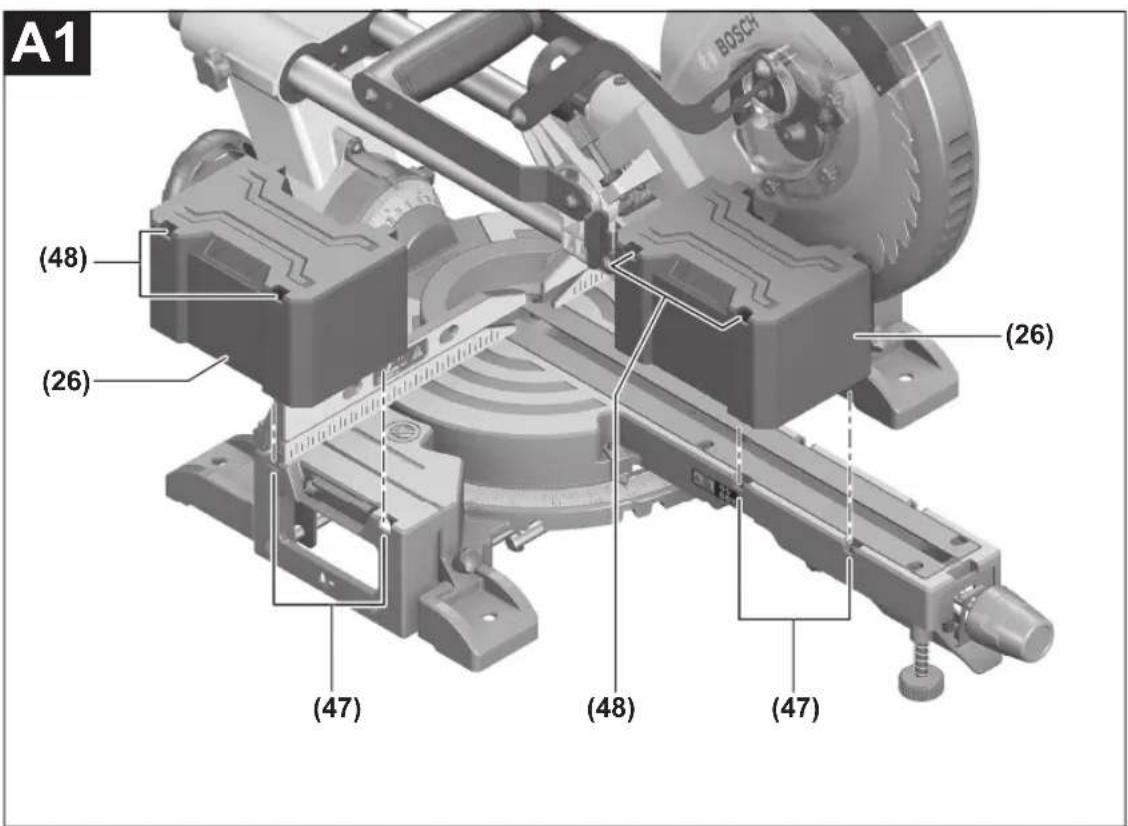
natural_image
Mechanical assembly diagram showing a cutting machine with a magnified inset view (no text or symbols)8
natural_image
Mechanical assembly diagram showing a shaft and bearing mechanism (no text or symbols)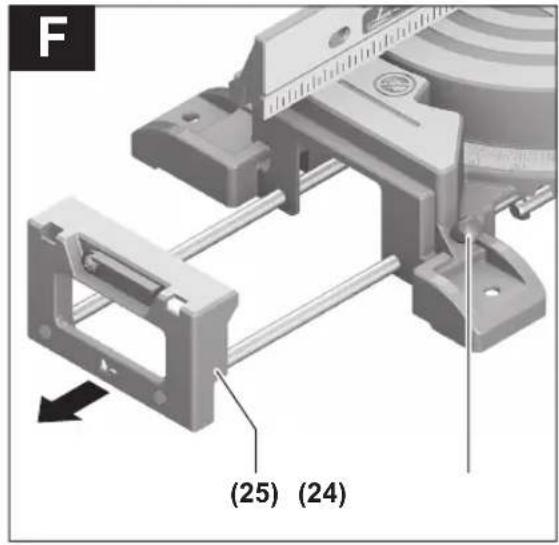
natural_image
Group of 3D mechanical components arranged in two rows, each with a cutaway view showing internal gear and base (no text or symbols visible)10
1 609 92A 9PM | (18.04.2024) Bosch Power Tools
natural_image
Person using a power tool on a workbench, no visible text or symbols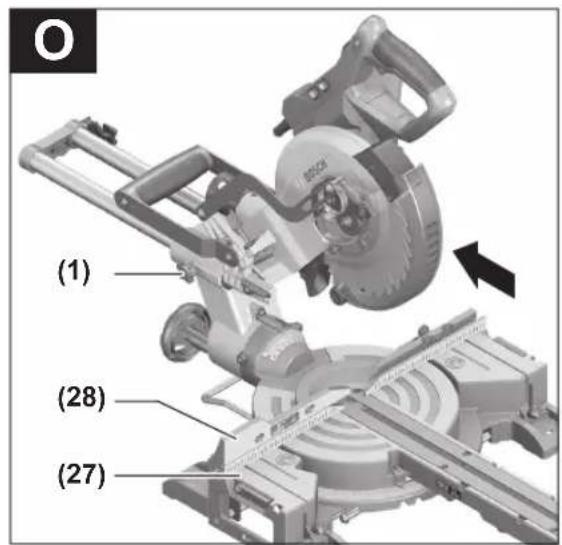
12
1 609 92A 9PM | (18.04.2024) Bosch Power Tools
| 13
W
Deutsch
Sicherheitshinweise
www.bosch-pt.com/serviceaddresses
Entsorgung
General Power Tool Safety Warnings
WARNING
Read all safety warnings, instructions, illustrations and specifica-
tions provided with this power tool. Failure to follow all instructions listed below may result in electric shock, fire and/or serious injury.
Save all warnings and instructions for future reference.
The term "power tool" in the warnings refers to your mains-operated (corded) power tool or battery-operated (cordless) power tool.
Work area safety
▶ Keep work area clean and well lit. Cluttered or dark areas invite accidents.
▶ Do not operate power tools in explosive atmospheres, such as in the presence of flammable liquids, gases or dust. Power tools create sparks which may ignite the dust or fumes.
▶ Keep children and bystanders away while operating a power tool. Distractions can cause you to lose control.
Electrical safety
▶ Power tool plugs must match the outlet. Never modify the plug in any way. Do not use any adapter plugs with earthed (grounded) power tools. Unmodified plugs and matching outlets will reduce risk of electric shock.
▶ Avoid body contact with earthed or grounded surfaces, such as pipes, radiators, ranges and refrigerators. There is an increased risk of electric shock if your body is earthed or grounded.
▶ Do not expose power tools to rain or wet conditions. Water entering a power tool will increase the risk of electric shock.
▶ Do not abuse the cord. Never use the cord for carrying, pulling or unplugging the power tool. Keep cord away from heat, oil, sharp edges or moving parts.
Damaged or entangled cords increase the risk of electric shock.
- When operating a power tool outdoors, use an extension cord suitable for outdoor use. Use of a cord suitable for outdoor use reduces the risk of electric shock.
▶ If operating a power tool in a damp location is unavoidable, use a residual current device (RCD) protected supply. Use of an RCD reduces the risk of electric shock.
Personal safety
▶ Stay alert, watch what you are doing and use common sense when operating a power tool. Do not use a power tool while you are tired or under the influence of drugs, alcohol or medication. A moment of inattention while operating power tools may result in serious personal injury.
▶ Use personal protective equipment. Always wear eye protection. Protective equipment such as a dust mask, non-skid safety shoes, hard hat or hearing protection used for appropriate conditions will reduce personal injuries.
▶ Prevent unintentional starting. Ensure the switch is in the off-position before connecting to power source and/or battery pack, picking up or carrying the tool. Carrying power tools with your finger on the switch or energising power tools that have the switch on invites accidents.
Remove any adjusting key or wrench before turning the power tool on. A wrench or a key left attached to a rotating part of the power tool may result in personal injury.
▶ Do not overreach. Keep proper footing and balance at all times. This enables better control of the power tool in unexpected situations.
▶ Dress properly. Do not wear loose clothing or jewellery. Keep your hair and clothing away from moving parts. Loose clothes, jewellery or long hair can be caught in moving parts.
▶ If devices are provided for the connection of dust extraction and collection facilities, ensure these are con-
nected and properly used. Use of dust collection can reduce dust-related hazards.
▶ Do not let familiarity gained from frequent use of tools allow you to become complacent and ignore tool safety principles. A careless action can cause severe injury within a fraction of a second.
Power tool use and care
▶ Do not force the power tool. Use the correct power tool for your application. The correct power tool will do the job better and safer at the rate for which it was designed.
▶ Do not use the power tool if the switch does not turn it on and off. Any power tool that cannot be controlled with the switch is dangerous and must be repaired.
▶ Disconnect the plug from the power source and/or remove the battery pack, if detachable, from the power tool before making any adjustments, changing accessories, or storing power tools. Such preventive safety measures reduce the risk of starting the power tool accidentally.
▶ Store idle power tools out of the reach of children and do not allow persons unfamiliar with the power tool or these instructions to operate the power tool. Power tools are dangerous in the hands of untrained users.
- Maintain power tools and accessories. Check for misalignment or binding of moving parts, breakage of parts and any other condition that may affect the power tool's operation. If damaged, have the power tool repaired before use. Many accidents are caused by poorly maintained power tools.
▶ Keep cutting tools sharp and clean. Properly maintained cutting tools with sharp cutting edges are less likely to bind and are easier to control.
▶ Use the power tool, accessories and tool bits etc. in accordance with these instructions, taking into account the working conditions and the work to be performed. Use of the power tool for operations different from those intended could result in a hazardous situation.
▶ Keep handles and grasping surfaces dry, clean and free from oil and grease. Slippery handles and grasping surfaces do not allow for safe handling and control of the tool in unexpected situations.
Service
▶ Have your power tool serviced by a qualified repair person using only identical replacement parts. This will ensure that the safety of the power tool is maintained.
Safety Warnings for Mitre Saws
- Mitre saws are intended to cut wood or wood-like products, they cannot be used with abrasive cut-off wheels for cutting ferrous material such as bars, rods, studs, etc. Abrasive dust causes moving parts such as the lower guard to jam. Sparks from abrasive cutting will burn the lower guard, the kerf insert and other plastic parts.
28 | English
▶ Use clamps to support the workpiece whenever possible. If supporting the workpiece by hand, you must always keep your hand at least 100 mm from either side of the saw blade. Do not use this saw to cut pieces that are too small to be securely clamped or held by hand. If your hand is placed too close to the saw blade, there is an increased risk of injury from blade contact.
The workpiece must be stationary and clamped or held against both the fence and the table. Do not feed the workpiece into the blade or cut "freehand" in any way. Unrestrained or moving workpieces could be thrown at high speeds, causing injury.
▶ Push the saw through the workpiece. Do not pull the saw through the workpiece. To make a cut, raise the saw head and pull it out over the workpiece without cutting, start the motor, press the saw head down and push the saw through the workpiece. Cutting on the pull stroke is likely to cause the saw blade to climb on top of the workpiece and violently throw the blade assembly towards the operator.
▶ Never cross your hand over the intended line of cutting either in front or behind the saw blade. Supporting the workpiece “cross handed” i.e. holding the workpiece to the right of the saw blade with your left hand or vice versa is very dangerous.
▶ Do not reach behind the fence with either hand closer than 100 mm from either side of the saw blade, to remove wood scraps, or for any other reason while the blade is spinning. The proximity of the spinning saw blade to your hand may not be obvious and you may be seriously injured.
Inspect your workpiece before cutting. If the workpiece is bowed or warped, clamp it with the outside bowed face toward the fence. Always make certain that there is no gap between the workpiece, fence and table along the line of the cut. Bent or warped workpieces can twist or shift and may cause binding on the spinning saw blade while cutting. There should be no nails or foreign objects in the workpiece.
▶ Do not use the saw until the table is clear of all tools, wood scraps, etc., except for the workpiece. Small debris or loose pieces of wood or other objects that contact the revolving blade can be thrown with high speed.
▶ Cut only one workpiece at a time. Stacked multiple workpieces cannot be adequately clamped or braced and may bind on the blade or shift during cutting.
▶ Ensure the mitre saw is mounted or placed on a level, firm work surface before use. A level and firm work surface reduces the risk of the mitre saw becoming unstable.
▶ Plan your work. Every time you change the bevel or mitre angle setting, make sure the adjustable fence is set correctly to support the workpiece and will not interfere with the blade or the guarding system. Without turning the tool "ON" and with no workpiece on the table, move the saw blade through a complete simulated cut to assure there will be no interference or danger of cutting the fence.
▶ Provide adequate support such as table extensions, saw horses, etc. for a workpiece that is wider or longer than the table top. Workpieces longer or wider than the mitre saw table can tip if not securely supported. If the cut-off piece or workpiece tips, it can lift the lower guard or be thrown by the spinning blade.
▶ Do not use another person as a substitute for a table extension or as additional support. Unstable support for the workpiece can cause the blade to bind or the workpiece to shift during the cutting operation pulling you and the helper into the spinning blade.
The cut-off piece must not be jammed or pressed by any means against the spinning saw blade. If confined, i.e. using length stops, the cut-off piece could get wedged against the blade and thrown violently.
▶ Always use a clamp or a fixture designed to properly support round material such as rods or tubing. Rods have a tendency to roll while being cut, causing the blade to "bite" and pull the work with your hand into the blade.
▶ Let the blade reach full speed before contacting the workpiece. This will reduce the risk of the workpiece being thrown.
If the workpiece or blade becomes jammed, turn the mitre saw off. Wait for all moving parts to stop and disconnect the plug from the power source and/or remove the battery pack. Then work to free the jammed material. Continued sawing with a jammed workpiece could cause loss of control or damage to the mitre saw.
▶ After finishing the cut, release the switch, hold the saw head down and wait for the blade to stop before removing the cut-off piece. Reaching with your hand near the coasting blade is dangerous.
▶ Hold the handle firmly when making an incomplete cut or when releasing the switch before the saw head is completely in the down position. The braking action of the saw may cause the saw head to be suddenly pulled downward, causing a risk of injury.
▶ Do not let go of the handle once the saw head has reached the lowest position. Always guide the saw head back to the top position by hand. There is a risk of injury if the saw head moves in an uncontrolled manner.
- Keep your work area clean. Material mixtures are particularly hazardous. Light metal dust may catch fire or explode.
▶ Do not use dull, cracked, bent or damaged saw blades. Unsharpened or improperly set saw blades produce narrow kerf causing excessive friction, blade binding and kickback.
▶ Do not use saw blades made from high speed steel (HSS). Such saw blades can easily break.
▶ Always use saw blades with correct size and shape (diamond versus round) of arbour holes. Saw blades that do not match the mounting hardware of the saw will run off-centre, causing loss of control.
▶ Never remove cuttings, wood chips, etc. from the cutting area while the power tool is running. Always guide
the tool arm back to the neutral position first and then switch the power tool off.
▶ Do not touch the saw blade after working before it has cooled. The saw blade becomes very hot while working.
Products sold in GB only:
Your product is fitted with an BS 1363/A approved electric plug with internal fuse (ASTA approved to BS 1362).
If the plug is not suitable for your socket outlets, it should be cut off and an appropriate plug fitted in its place by an authorised customer service agent. The replacement plug should have the same fuse rating as the original plug.
The severed plug must be disposed of to avoid a possible shock hazard and should never be inserted into a mains socket elsewhere.
The power tool is delivered with a laser warning sign (see table: "Symbols and their meaning").
▶ If the text of the laser warning label is not in your national language, stick the provided warning label in your national language over it before operating for the first time.
▶ Never make warning signs on the machine unrecognisable.

Do not direct the laser beam at persons or animals and do not stare into the direct or reflected laser beam yourself. You could blind somebody, cause accidents or damage your eyes.
▶ If laser radiation hits your eye, you must close your eyes and immediately turn your head away from the beam.
▶ Do not make any modifications to the laser equipment. The setting options described in these operating instructions can be used safely.
▶ Do not let children use the power tool unsupervised. They could unintentionally blind themselves or other persons
Symbols
The following symbols may be important for the operation of your power tool. Please take note of these symbols and their meaning. Correctly interpreting the symbols will help you to operate the power tool more effectively and safely.
Symbols and their meaning
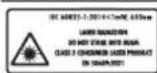
Laser radiation Do not look directly into the beam Class 2 consumer laser product EN 50689:2021

Keep hands away from the cutting area while the power tool is running. Contact with the saw blade can lead to injuries.
Symbols and their meaning

Wear a dust mask.
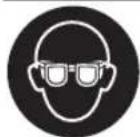
Wear safety goggles.

Wear hearing protection. Exposure to noise can cause hearing loss.

Danger area! Keep hands, fingers and arms away from this area.
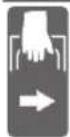
When transporting the power tool, hold it only at the locations indicated (recessed handles) or by the transport handle.
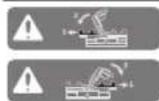
When sawing bevel angles, the adjustable fences must be pulled outwards or removed completely.
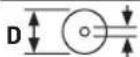
d Take note of the dimensions of the saw blade (saw blade diameter D, hole diameter d). The hole diameter d must match the tool spindle without play. If it is necessary to use reducers, ensure that the dimensions of the reducer are suitable for the base blade thickness and the saw blade hole diameter, as well as the tool spindle diameter. Wherever possible, use the reducers provided with the saw blade.
The saw blade diameter D must match the information specified on the symbol.
See also: "Dimensions of suitable saw blades" in the "Technical Data" section.
Product Description and Specifications

Read all the safety and general instructions. Failure to observe the safety and general instructions may result in electric shock, fire and/or serious injury.
Please observe the illustrations at the beginning of this operating manual.
30 | English
Intended Use
The power tool is intended as a stationary machine for making straight cuts in wood with and against the grain. Mitre angles of -48^ to +48^ as well as bevel angles of 47^ (left-hand side) to 47^ (right-hand side) are possible.
The power tool is designed with sufficient capacity for sawing hardwood and softwood as well as chipboard and fibre-board.
When using appropriate saw blades, sawing aluminium profiles and plastic is also possible.
This product is a consumer laser product in accordance with EN 50689.
Product Features
The numbering of the product features refers to the diagram of the power tool on the graphics page.
(1) Locking screw for slide device
(2) Slide device
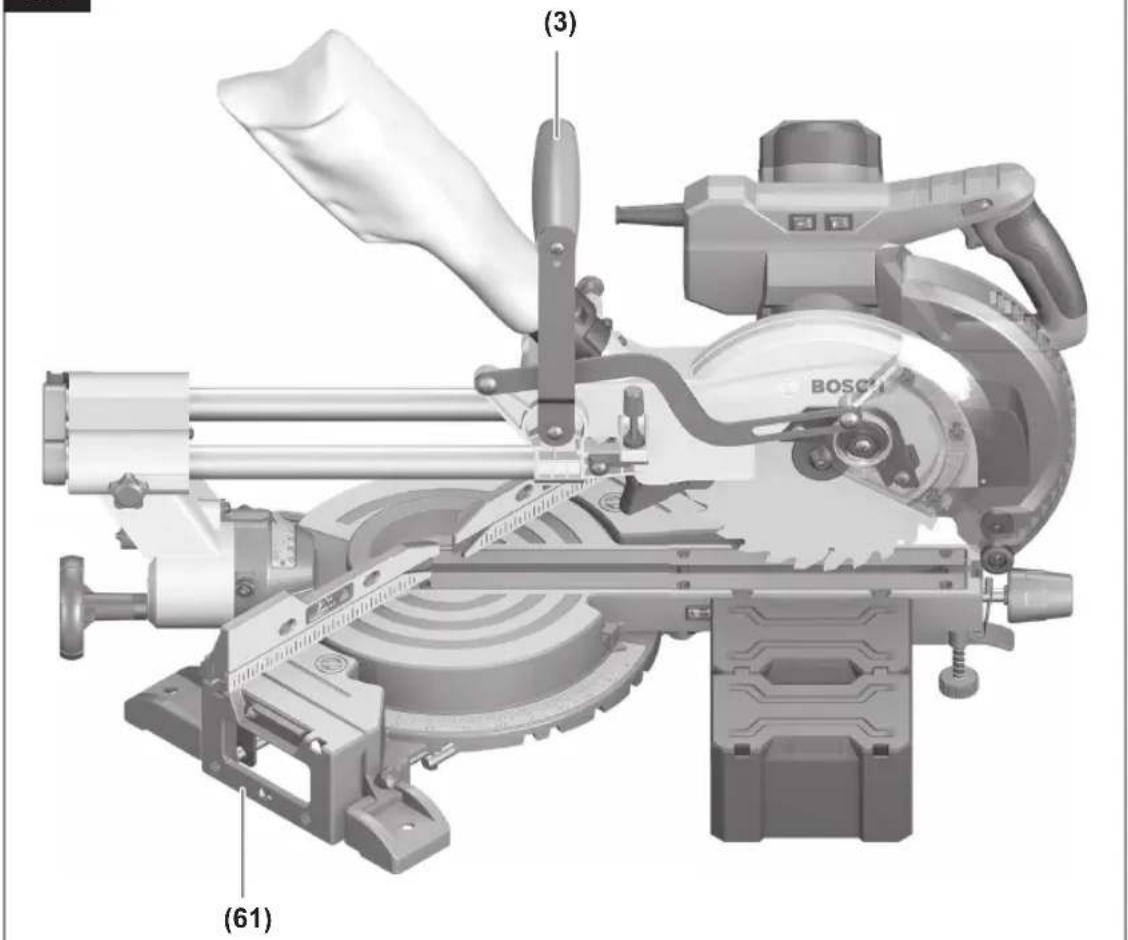
(3) Transport handle
(4) Protective guard
(5) On/Off switch for worklight
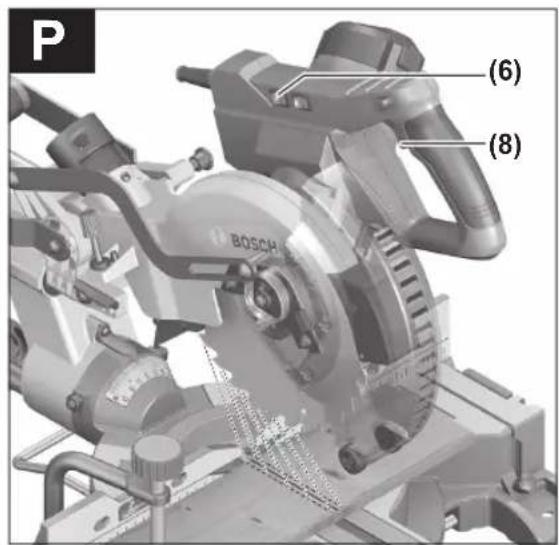
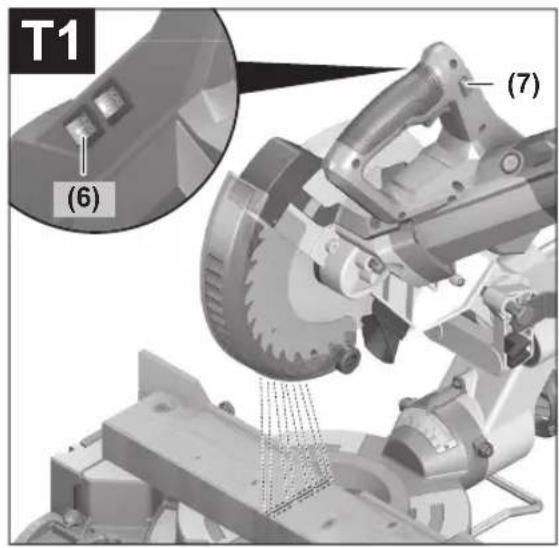
(6) On/Off switch for laser (cutting line indication)
(7) Lock-off function for On/Off switch
(8) On/Off switch
(9) Handle
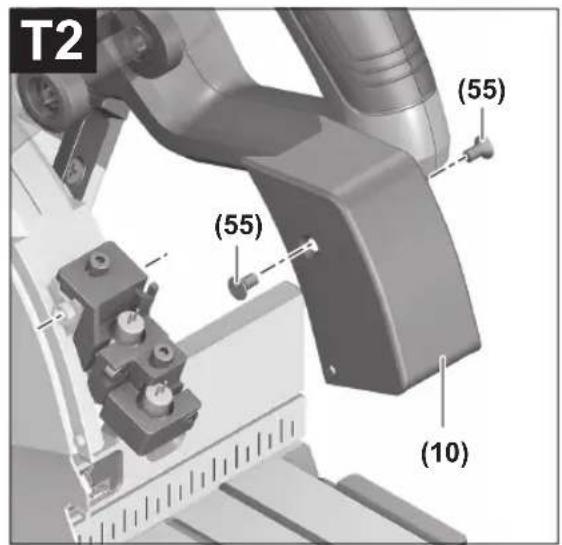
(10) Laser protection cap
(11) Laser beam outlet aperture
(12) Retracting blade guard
(13) Guide roller
(14) Saw table
(15) Mounting holes
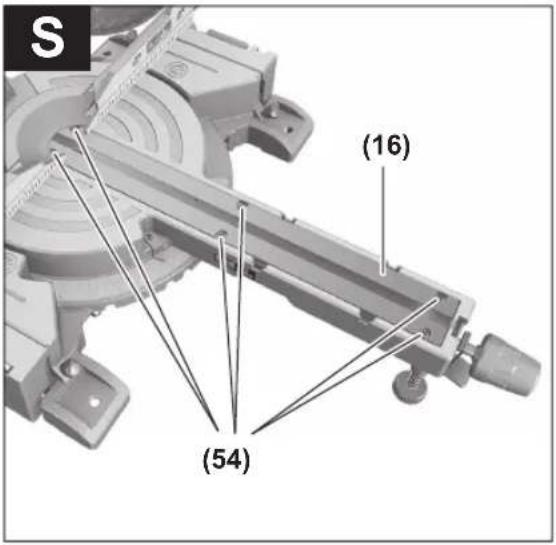
(16) Insert plate
(17) Locking clamp
(18) Locking knob for various mitre angles
(19) Mitre pre-setting lever
(20) Tilt protector
(21) Laser warning label
(22) Detents for standard mitre angles
(23) Scale for mitre angles
(24) Clamping screw for saw table extension
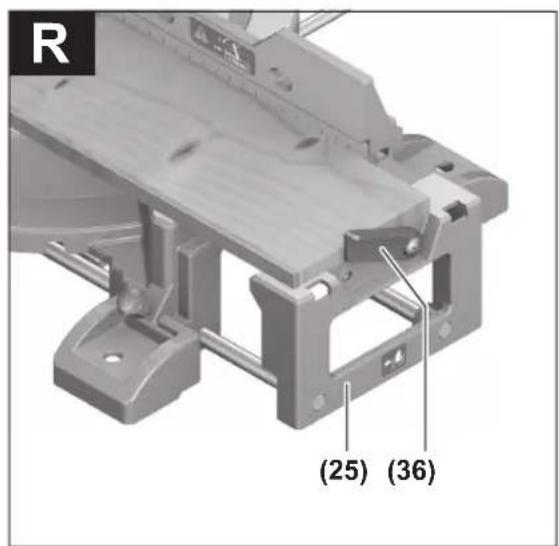
(25) Saw table extension
(26) Workpiece support (flexibly pluggable)
(27) Fixed fence
(28) Adjustable fence
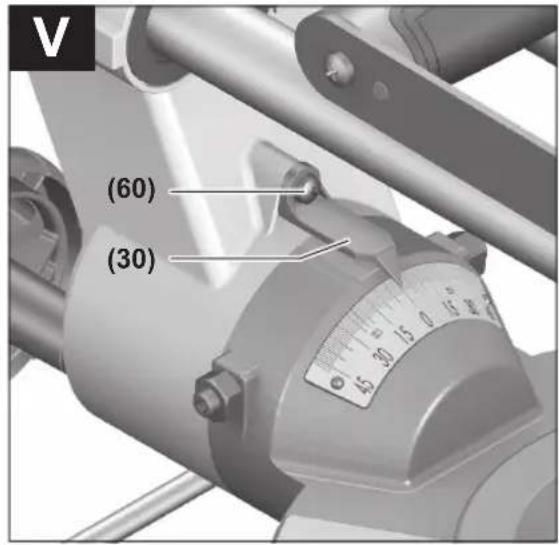
(29) Scale for bevel angle
(30) Angle indicator for bevel angles
(31) Chip deflector
(32) Saw blade
(33) Spindle lock
(34) Transport safety lock
(35) Tilt protector
(36) Length stop
(37) Dust bag
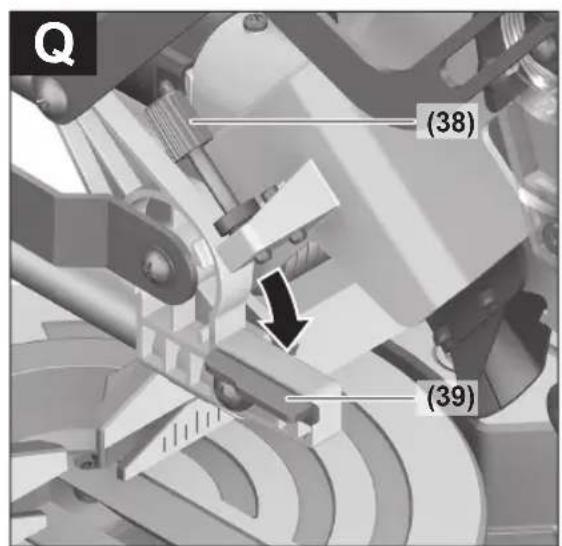
(38) Depth stop adjusting screw
(39) Depth stop
(40) Threaded rod
(41) Screw clamp
(42) Holes for screw clamp
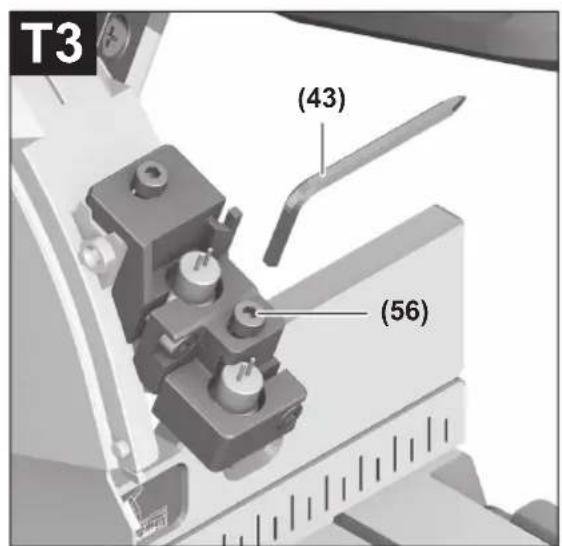
(43) Hex key/slotted screwdriver
(44) Locking screw for the adjustable fence
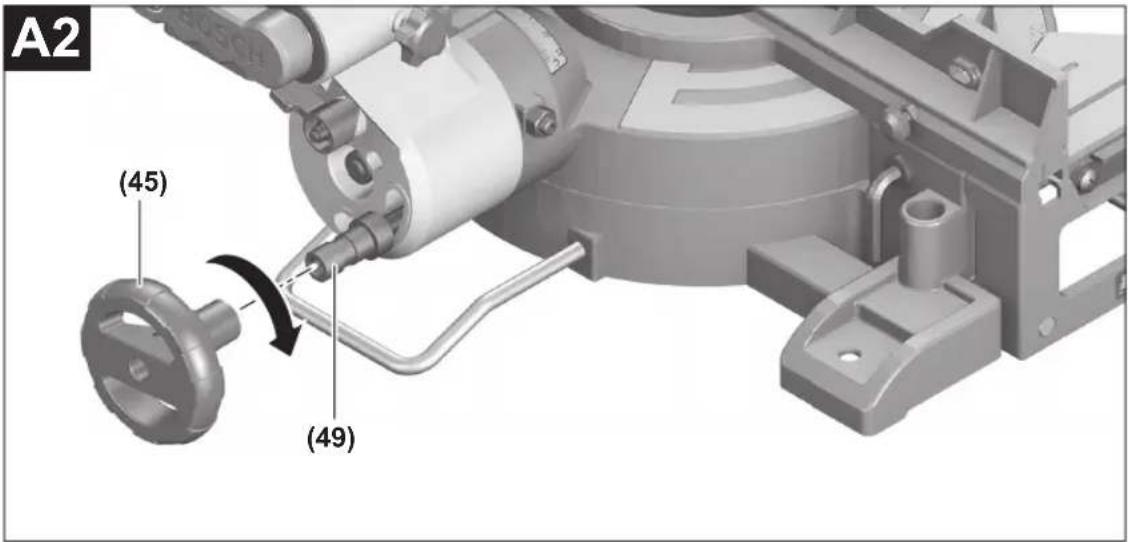
(45) Clamping wheel for bevel angle
(46) Locking lever for bevel angle
(47) Opening for workpiece support (on power tool)
(48) Opening for second workpiece support (on workpiece support)
(49) Threaded bolts
(50) Dust extraction adapter
(51) Hex socket screw for mounting the saw blade
(52) Clamping flange
(53) Inner clamping flange
(54) Fastening screws for insert plate
(55) Screw for laser protection cap
(56) Fastening screw for laser housing
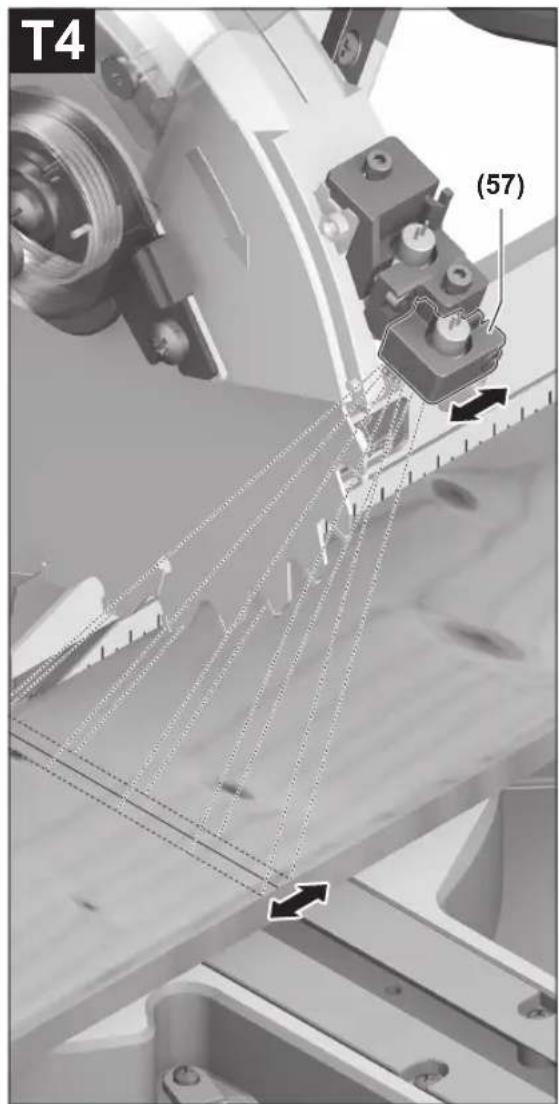
(57) Laser housing
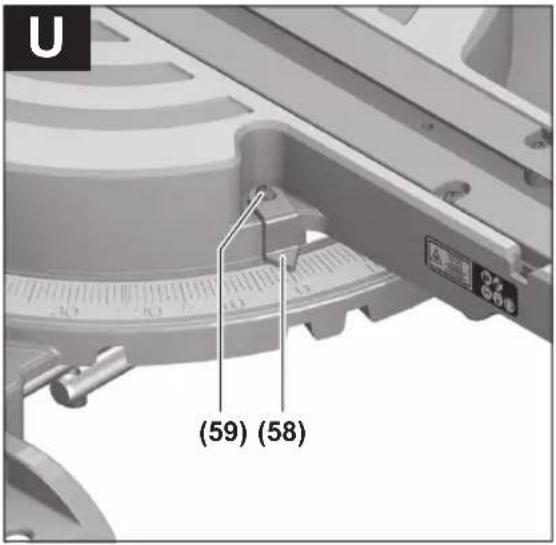
(58) Angle indicator for mitre angles
(59) Screw for mitre angle indicator
(60) Screw for bevel angle indicator
(61) Recessed handles
Technical Data
| Sliding Mitre Saw GCM 305-216 D GCM 305-216 D | ||
| Article number | 3 601 M49 0.. | 3 601 M49 0B. |
| Rated power input W 1200 1200 | ||
| No-load speed min | -1 | 5200 5200 |
| Soft Start ● ● | ||
| Laser type nm 650 650 | ||
Sliding Mitre Saw GCM 305-216 D GCM 305-216 D
| mW < 1 < 1 | ||
| Laser class 2 2 | ||
| Weight ^A) | kg 16.8 16.8 | |
| Protection class | ☐ / II / II ☐ | |
| Dimensions of suitable saw blades | ||
| Saw blade diameter D | mm 216 216 | |
| Base blade thickness mm 1.2-1.8 1.2-1.8 | ||
| Hole diameter d | mm 30 25.4 | |
A) Weight without mains connection cable and without mains plug
The specifications apply to a rated voltage [U] of 220 V. These specifications may vary at different voltages and in country-specific models.
Permitted workpiece dimensions (maximum/minimum): (see "Permissible workpiece dimensions", page 35)
Values can vary depending on the product, scope of application and environmental conditions. To find out more, visit www.bosch-professional.com/wac.
Noise Information
Noise emission values determined according to EN IEC 62841-3-9.
Typically, the A-weighted noise level of the power tool is: Sound pressure level 95 dB(A); sound power level 109 dB(A). Uncertainty K = 3 dB.
Wear hearing protection!
The noise emission value given in these instructions has been measured in accordance with a standardised measuring procedure and may be used to compare power tools. It may also be used for a preliminary estimation of noise emissions.
The noise emission value given represents the main applications of the power tool. However, if the power tool is used for other applications, with different application tools or is poorly maintained, the noise emission value may differ. This may significantly increase noise emissions over the total working period.
To estimate noise emissions accurately, the times when the tool is switched off, or when it is running but not actually being used, should also be taken into account. This may significantly reduce noise emissions over the total working period.
Assembly
▶ Avoid starting the power tool unintentionally. The mains plug must not be connected to the power supply during assembly or when carrying out any kind of work on the power tool.
Items included

See the list of items included at the start of the operating manual.
Check to ensure that all the parts listed below have been supplied before using the power tool for the first time:
- Sliding mitre saw with fitted saw blade
-
Clamping wheel (45)
-
Adjustable fence (28)
- Screw clamp (41)
- Hex key/slotted screwdriver (43)
- Dust bag (37)
- Workpiece supports (26) (2 pieces)
Note: Check the power tool for possible damage.
Before continuing to use the power tool, carefully check that all protective devices or slightly damaged parts are working perfectly and according to specifications. Check that the moving parts are working perfectly and without jamming; check whether any parts are damaged. All parts must be fitted correctly and all the conditions necessary to ensure smooth operation must be met.
If the protective devices or any parts become damaged, you must have them properly repaired or replaced by an authorised service centre.
Fitting individual components
- Carefully remove all parts included in the delivery from their packaging.
- Remove all packing material from the power tool and the accessories provided.
- For ease of assembly when fitting the tool elements that are provided, be aware that the power tool is supplied in the transport position.
Installing Workpiece Supports (see figure A1)
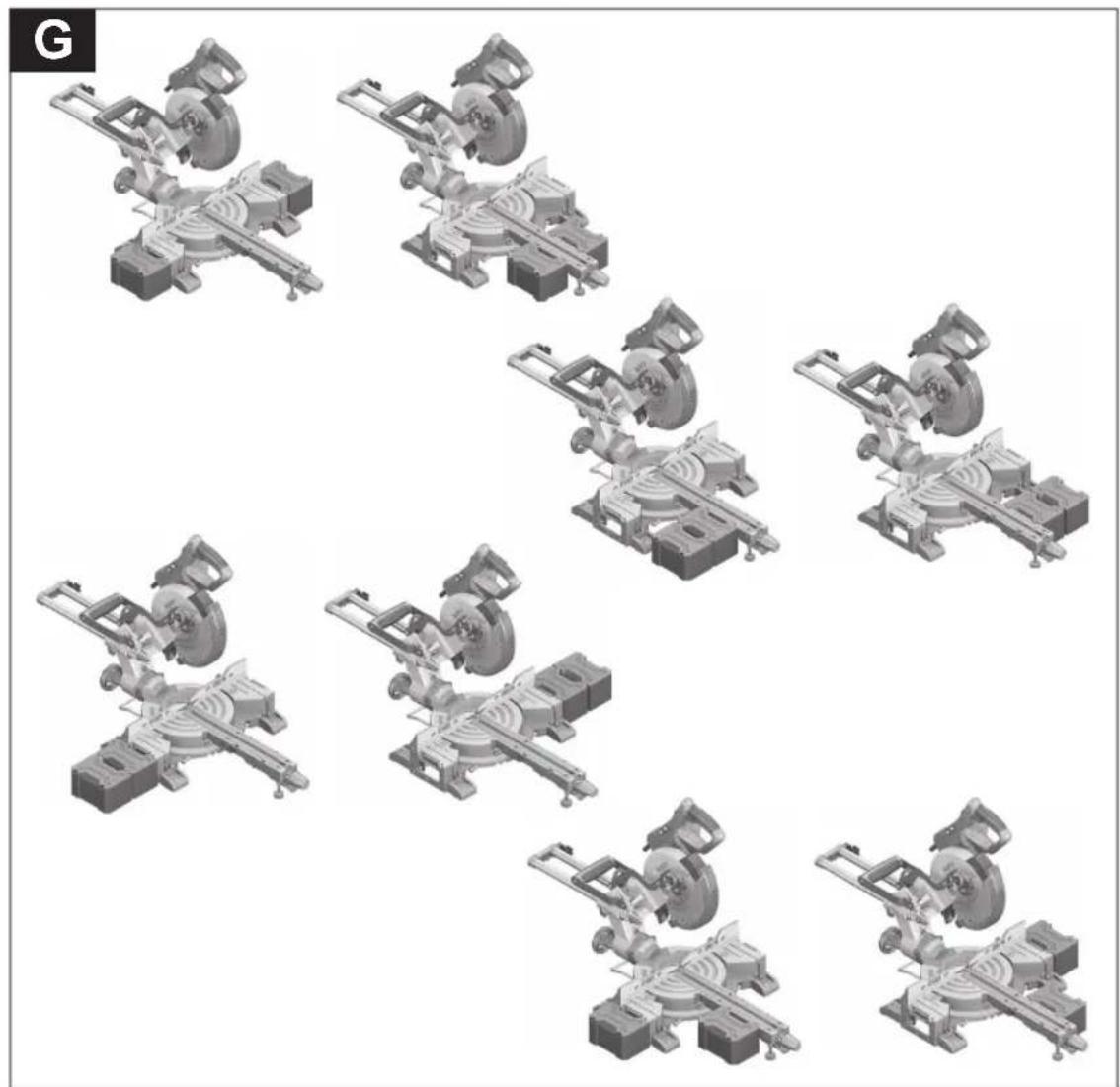
The workpiece supports (26) can be positioned left, right or in front of the power tool. The flexible connector system enables a multitude of extension or expansion variants (see figure G).
- Insert the workpiece support (26) into the openings (47) on the power tool or into the openings (48) of the second workpiece support as required.
▶ Never carry the power tool using the workpiece supports.
Only use the transport devices to transport the power tool.
32 | English
Fitting the Clamping Wheel (see figure A2)
The clamping wheel (45) fixes the selected bevel angle and is required for safe operation.
- Unscrew the hex nut from the threaded bolts (49).
- Screw the clamping wheel (45) clockwise onto the threaded bolts (49) and tighten it.
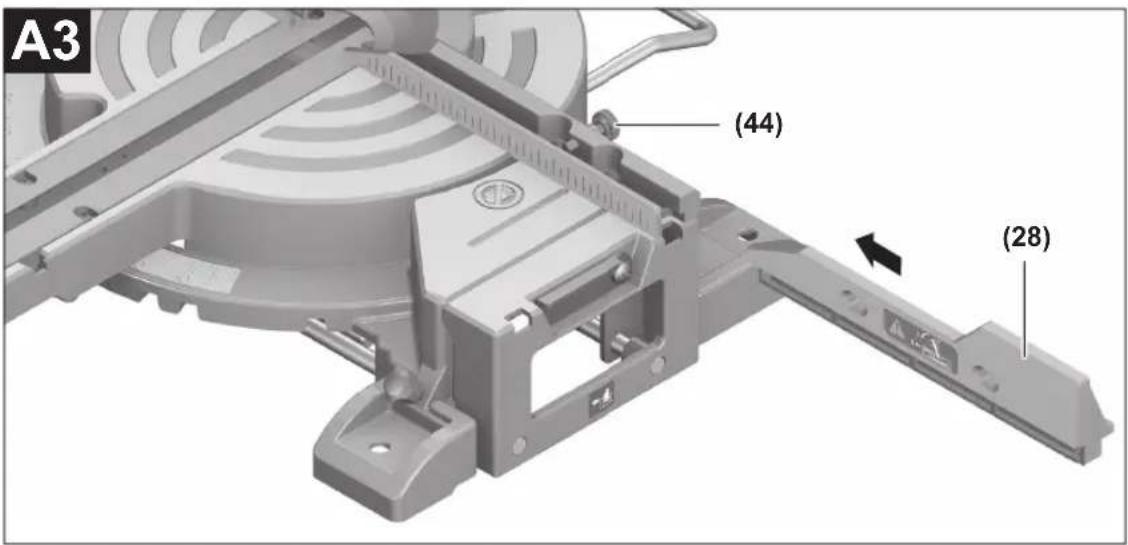
Fitting the Adjustable Fence (see figure A3)
The adjustable fence (28) must be fitted before sawing.
- Slide the fence (28) on the right of the saw blade into the corresponding groove and tighten the locking screw (44). The levelled side of the fence must face inwards towards the saw blade.
Stationary or flexible mounting
▶ To ensure safe handling, the power tool must be mounted on a flat, stable work surface (e.g. work bench) before use.
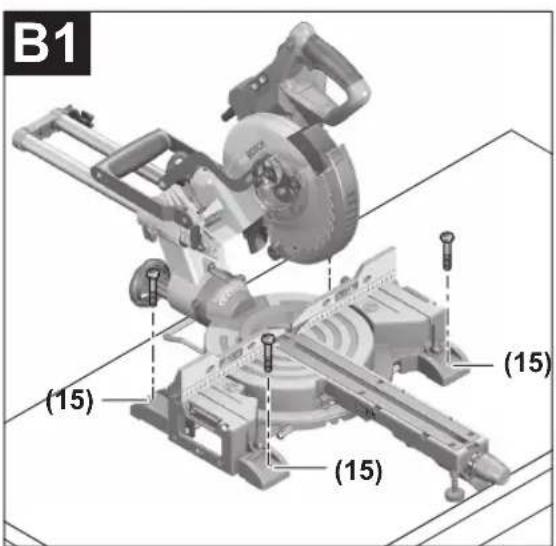
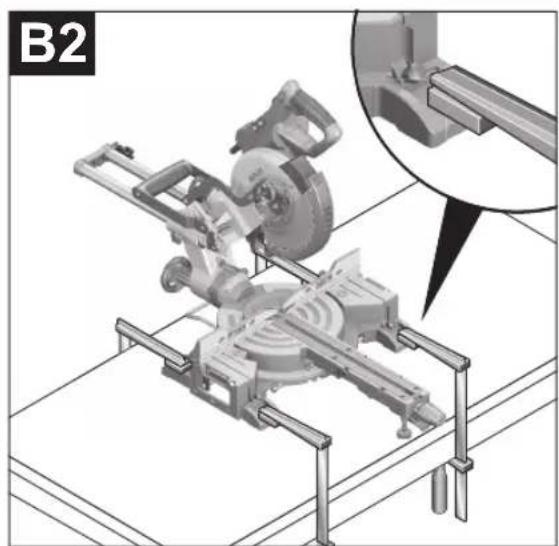
Mounting on a work surface (see figure B1-B2)
- Use suitable screw fasteners to secure the power tool to the work surface. The holes (15) are used for this purpose.
or
- Firmly clamp the base of the power tool to the work surface with commercially available screw clamps.
Mounting on a Bosch saw stand
With the height-adjustable legs, Bosch GTA saw stands provide firm support for the power tool on any surface. The workpiece supports of the saw stand are used for underlaying long workpieces.
▶ Read all the warnings and instructions included with the saw stand. Failure to observe the warnings and follow instructions may result in electric shock, fire and/or serious injury.
▶ Assemble the saw stand properly before mounting the power tool. Correct assembly is important to prevent the risk of collapsing.
- Mount the power tool on the saw stand in the transport position.
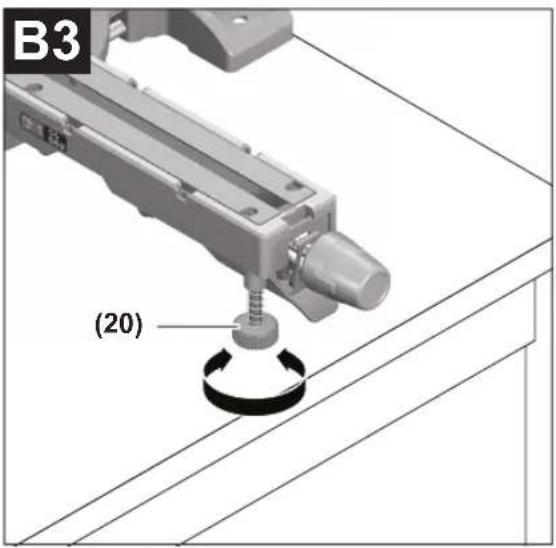
Flexible installation (not recommended) (see figure B3)
If, in exceptional circumstances, it is not possible to mount the power tool on a flat and stable work surface, you can improvise by setting it up with the tilt protector.
▶ Without the tilt protector, the power tool will not be stable and can tip over especially when sawing maximum mitre and/or bevel angles.
- Rotate the tilt protector (20) inwards or outwards until the power tool is positioned straight on the work surface.
Dust/Chip Extraction
The dust from materials such as lead paint, some types of wood, minerals and metal can be harmful to human health. Touching or breathing in this dust can trigger allergic reactions and/or cause respiratory illnesses in the user or in people in the near vicinity. Certain dusts, such as oak or beech dust, are classified as carcinogenic, especially in conjunction with wood treatment additives (chromate, wood preservative). Materials containing asbestos may only be machined by specialists.
- Use a dust extraction system that is suitable for the material wherever possible.
- Provide good ventilation at the workplace.
- It is advisable to wear a P2 filter class breathing mask.
The regulations on the material being machined that apply in the country of use must be observed.
- Avoid dust accumulation at the workplace. Dust can easily ignite.
The dust/chip extraction system can be blocked by dust, chips or fragments of the workpiece.
- Switch the power tool off and pull the mains plug out of the socket.
- Wait until the saw blade has come to a complete stop.
– Determine the cause of the blockage and eliminate it.
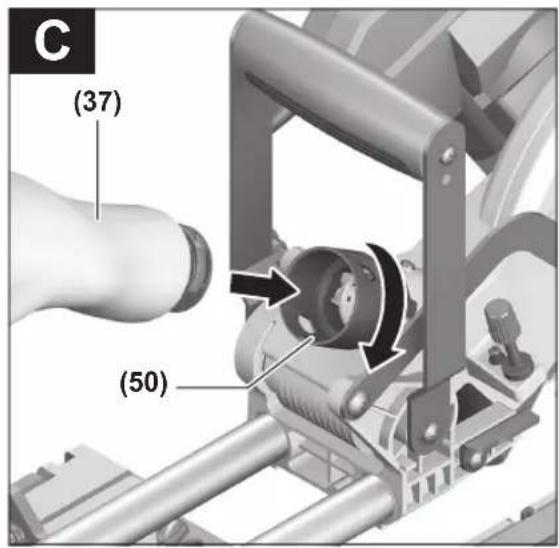
Self-generated dust extraction (see figure C)
For basic chip collection, use the dust bag (37) provided.
- Turn the transport handle (3) so that it is vertical.
- Place the dust bag (37) onto the extraction adapter (50) and turn so that the pin of the dust bag locks in place in the recess of the extraction adapter.
During sawing, the dust bag must not come into contact with moving tool components.
Always empty the dust bag in good time.
▶ Check and clean the dust bag each time after using.
▶ When sawing aluminium, remove the dust bag to avoid the risk of fire.
External Dust Extraction
You can also attach a dust extraction hose (35 mm diameter) to the extraction adapter (50) for extraction.
- Connect the dust extraction hose to the extraction adapter (50).
The dust extractor must be suitable for the material being worked.
When extracting dry dust that is especially detrimental to health or carcinogenic, use a special dust extractor.
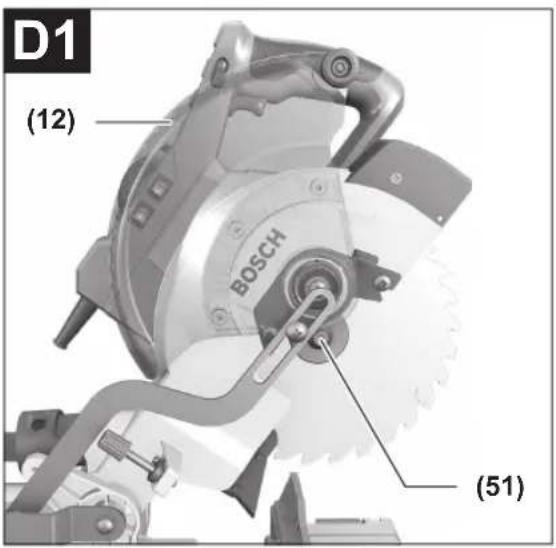
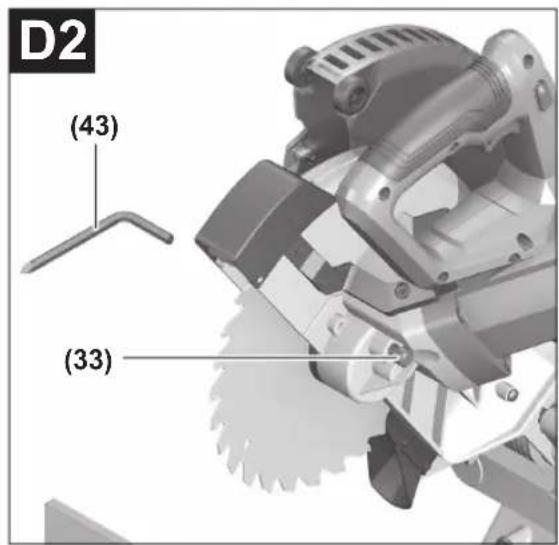
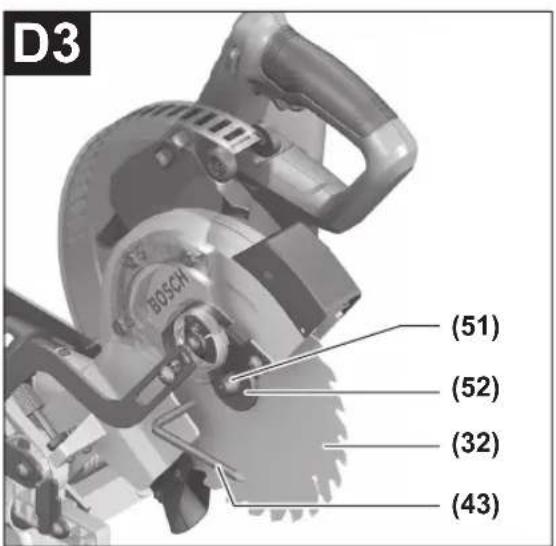
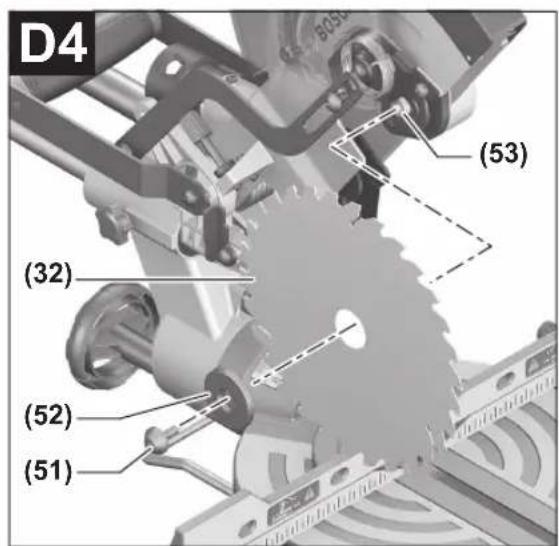
Changing the saw blade (see figures D1–D4)
▶ Pull the plug out of the socket before carrying out any work on the power tool.
▶ Wear protective gloves when fitting the saw blade.
There is a risk of injury when touching the saw blade. Only use saw blades that have a maximum permitted speed higher than the no-load speed of the power tool.
Only use saw blades that match the specifications given in this operating manual and that have been tested and marked in accordance with EN 847-1.
Only use saw blades that are recommended by the power tool manufacturer and are suitable for use on the material you want to saw. This will prevent the saw teeth overheating when sawing.
Removing the Saw Blade
- Bring the power tool into the work position.
- Swivel the retracting blade guard (12) to the back and hold it in this position.
- Turn the hex socket screw (51) with the hex key (6 mm) (43) and at the same time push the spindle lock (33) until it engages.
- Keep holding the spindle lock (33) and loosen the hex socket screw (51) by turning it clockwise (left-hand thread).
- Remove the clamping flange (52).
- Remove the saw blade (32).
- Slowly push the retracting blade guard back down.
Fitting the saw blade
▶ When fitting the saw blade, make sure that the cutting direction of the teeth (arrow direction on the saw blade) matches the direction of the arrow on the protective guard.
If required, clean all the parts you want to fit before installing them.
- Swivel the retracting blade guard (12) to the back and hold it in this position.
- Place the new saw blade on the inner clamping flange (53).
- Fit the clamping flange (52) and the hex socket screw (51). Press the spindle lock (33) until it engages and tighten the hex socket screw by turning it anticlockwise.
- Slowly push the retracting blade guard back down.
Operation
▶ Pull the plug out of the socket before carrying out any work on the power tool.
▶ Products that are only sold in AUS and NZ: Use a residual current device (RCD) with a nominal residual current of 30 mA or less.
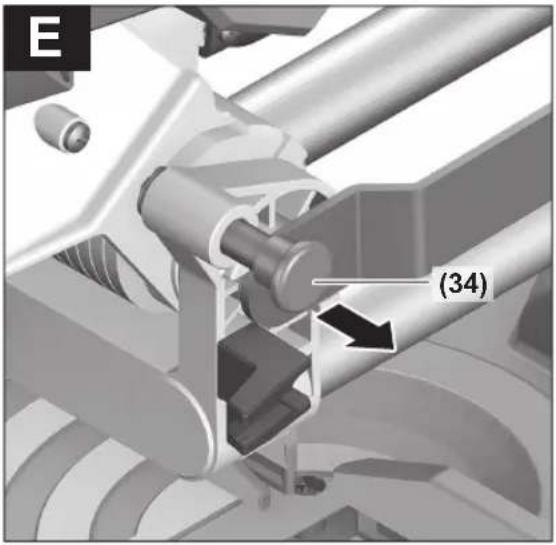
Transport Safety Lock (see figure E)
The transport safety lock (34) makes it easier to handle the power tool when transporting it to various working locations.
Unlocking the power tool (work position)
- Press the tool arm down slightly by the handle (9) to release the transport safety lock (34).
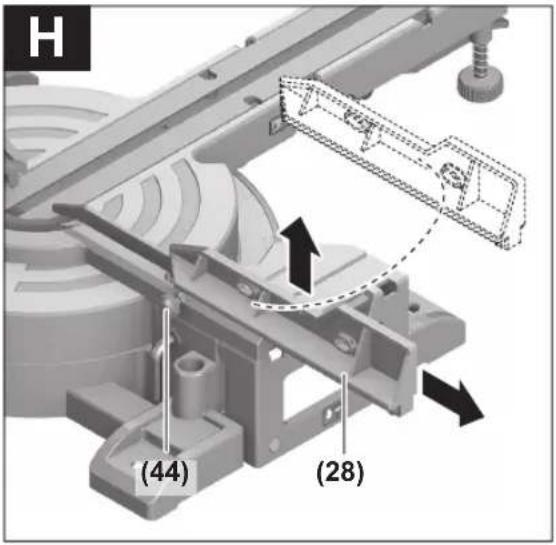
Moving the fence (see figure H)
When sawing mitre and/or bevel angles, you have to pull the left-hand or right-hand adjustable fence (28) outwards depending on the cutting direction, or remove it completely.
| 0°-22.5°(left/right) | >0° | - Loosen the left-hand/right-hand locking screw (44).- Pull the left-hand/right-hand adjustable fence (28) all the way out. |
| 22.5°-47°(left/right) | ≤ 48°(left/right) | - Loosen the left-hand/right-hand locking screw (44).- Pull the left-hand/right-hand adjustable fence (28) all the way out. |
– Pull the transport safety lock (34) all the way out.
- Slowly guide the tool arm upwards.
- Loosen the locking screw (1) if it is clamping the slide device (2) in place. Pull the tool arm fully forward and tighten the locking screw again to lock the slide device.
– Pull the depth stop (39) upwards.
- To lock the saw table (14) in place, tighten the locking knob (18).
- Swing the tool arm downwards by the handle (9) until you can press the transport safety lock (34) all the way in.
The tool arm is now securely locked and ready for transportation.
Locking the power tool (transport position)
Preparing for operation
To ensure precise cuts, the basic settings of the power tool must be checked and adjusted as necessary after intensive use. Experience and suitable special tools are required for this. A Bosch after-sales service point will handle this work quickly and reliably.
Extending/Expanding the Saw Table (see figures F-G)
The free end of long and heavy workpieces must have something placed underneath it or be supported.
The saw table can be extended left and right using the saw table extensions (25).
- Loosen the clamping screw (24).
– Pull out the saw table extension (25) to the required length. - Retighten the clamping screw (24) to fix the saw table extension.
The flexible connector system of the workpiece supports (26) enables a multitude of extension or expansion variants.
- Insert the workpiece support (26) into the openings (47) on the power tool or into the openings (48) of the second workpiece support as required.
▶ Never carry the power tool using the workpiece supports.
Only use the transport devices to transport the power tool.
- Lift the adjustable fence upwards and out of the way.
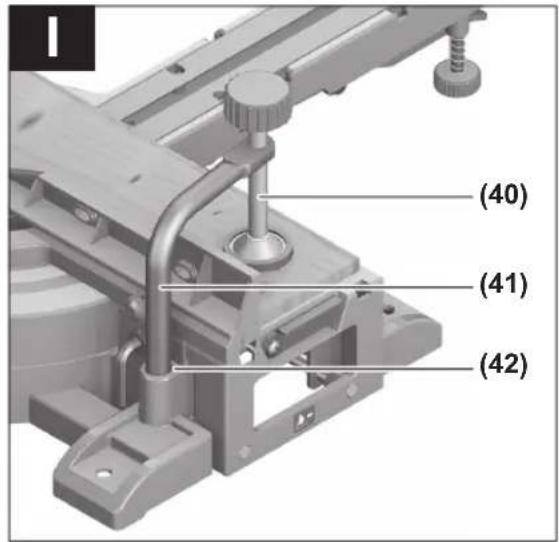
Clamping the Workpiece (see figure I)
To ensure maximum safety while working, the workpiece must always be firmly clamped.
Do not saw workpieces that are too small to clamp firmly.
- Press the workpiece firmly against the fences (28) and (27).
- Insert the supplied screw clamp (41) into one of the corresponding holes (42).
- Adjust the threaded rod (40) of the screw clamp to the workpiece height.
- Tighten the threaded rod (40) to fix the workpiece in place.
Adjusting mitre angles
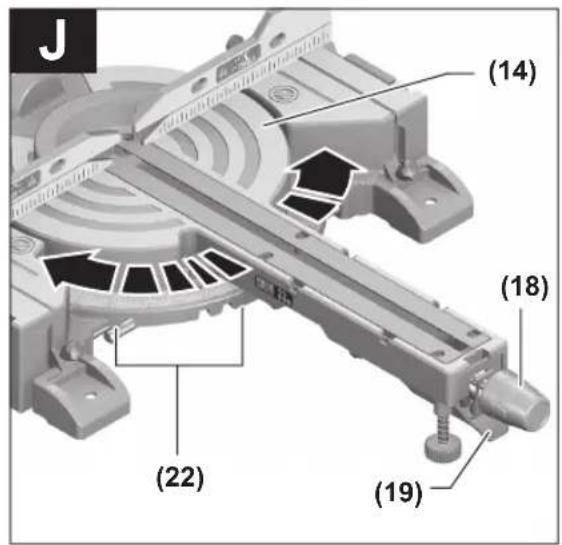
Setting Standard Mitre Angles (see figure J)
For quick and precise setting of commonly used mitre angles, detents (22) are provided on the saw table:
Left Right
0^
45^;30^;22.5^;15^15^;22.5^;30^;45^
- Loosen the locking knob (18) if it is tightened.
- Pull the lever (19) and rotate the saw table (14) left or right to the required detent.
- Release the lever again. The lever must be felt to engage in the detent.
- Retighten the locking knob (18).
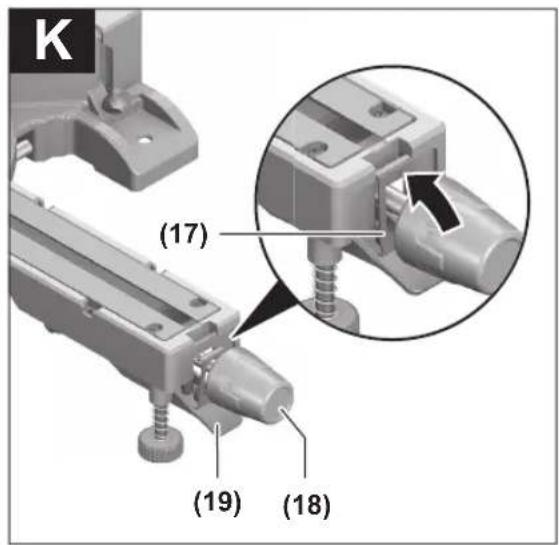
Setting Any Mitre Angle (see figure K)
The mitre angle can be set between 48^ (left-hand side) and 48^ (right-hand side).
- Loosen the locking knob (18) if it is tightened.
- Pull the lever (19) and at the same time press the locking clamp (17) until this clicks into the slot provided for it. This means the saw table can now move freely.
- Turn the saw table (14) left or right by the locking knob until the angle indicator (58) shows the required mitre angle.
- Retighten the locking knob (18).
- To loosen the lever (19) again (for setting standard mitre angles), pull the lever upwards.
The locking clamp (17) springs back into its original position and the lever (19) can click back into the detents (22).
Adjusting bevel angles
The bevel angle can be set between 47^ (left-hand side) and 47^ (right-hand side).
For quick and precise setting of frequently used bevel angles, fixed positions have been provided for the angles 0^ , 22.5^ and 45^ .
- Make sure that the clamping wheel (45) is fitted (see "Fitting the Clamping Wheel (see figure A2)", page 32).
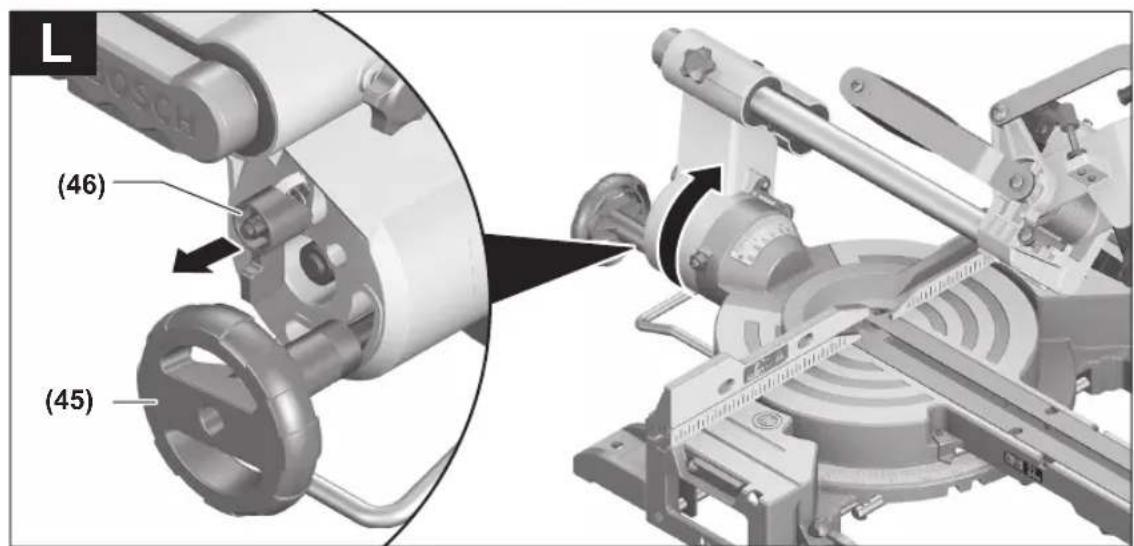
Setting Standard Bevel Angles (see figure L)
- Pull the adjustable fences (28) all the way out or remove them completely.
- Release the clamping wheel (45).
- Pull the locking lever (46) out and engage it in the free running position.
This enables you to use the complete bevel angle range (left and right).
- Swivel the tool arm left or right by the handle (9) until the angle indicator (30) shows the required standard bevel angle.
- Turn the locking lever (46). The locking lever must be felt to engage in the position of the required standard bevel angle.
- Retighten the clamping wheel (45).
Setting any bevel angle
- Pull the adjustable fences (28) all the way out or remove them completely.
- Release the clamping wheel (45).
- Pull the locking lever (46) out and engage it in the free running position. This enables you to use the complete bevel angle range (left and right).
- Swivel the tool arm left or right by the handle (9) until the angle indicator (30) shows the required bevel angle.
- Retighten the clamping wheel (45).
Start-up
▶ Pay attention to the mains voltage. The voltage of the power source must match the voltage specified on the rating plate of the power tool.
▶ Always tighten the locking knob (18) and the clamping wheel (45) firmly before sawing. Otherwise the saw blade can become wedged in the workpiece.
Switching On the worklight
The worklight improves visibility in the immediate work area. You can achieve particularly good sawing results by using the worklight together with the cutting line that is marked by the laser beams.
- Switch on the worklight with the switch (5).
▶ Do not look directly into the worklight; it can blind you.
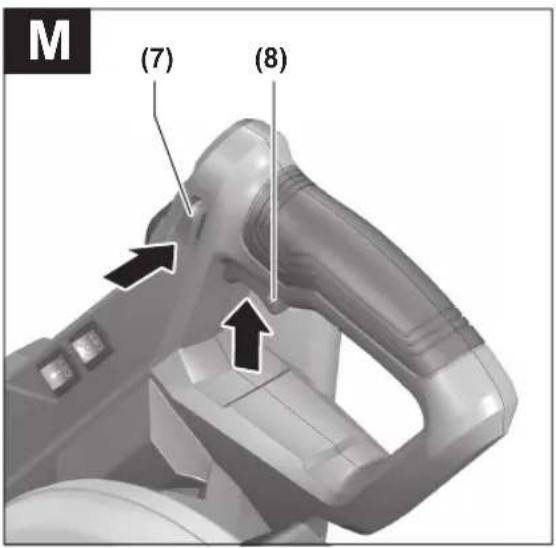
Switching on (see figure M)
- To switch on the power tool, first slide the lock-off button (7) to the middle and then press and hold the on/off switch (8).
Note: For safety reasons, the on/off switch (8) cannot be locked; it must remain pressed during the entire operation.
Switching off
- To switch off, release the on/off switch (8).
Soft Start
The Soft Start restricts the power consumption when the power tool is switched on and enables operation with a 16 A fuse.
Note: If the power tool runs at full speed immediately after being switched on, this means that the Soft Start has failed. The power tool must be sent to the after-sales service without delay.
Sawing
General sawing instructions
▶ Always tighten the locking knob (18) and the clamping wheel (45) firmly before sawing. Otherwise the saw blade can become wedged in the workpiece.
For all cuts, it must first be ensured that the saw blade at no time can come in contact with the fence, screw clamps or other machine parts. Remove any mounted auxiliary stops or adjust them accordingly.
Protect the saw blade against impact and shock. Do not subject the saw blade to lateral pressure.
Only saw materials which are permitted within the scope of the intended use.
Do not saw warped/bent workpieces. The workpiece must always have a straight edge to face against the fence.
The free end of long and heavy workpieces must have something placed underneath it or be supported.
Make sure that the retracting blade guard operates properly and that it can move freely. The retracting blade guard must open when the tool arm is guided downwards. When the tool arm is guided upwards, the retracting blade guard must close again over the saw blade and lock in the uppermost position of the tool arm.
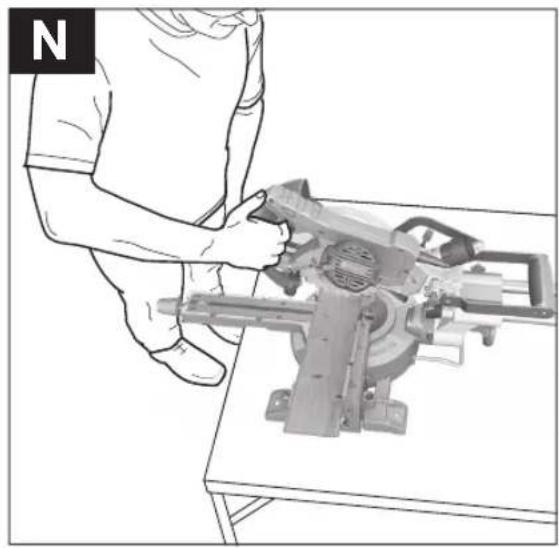
Position of the operator (see figure N)
▶ Do not stand in line with the saw blade in front of the power tool. Always stand to the side of the saw blade. This protects your body against possible kickback.
- Keep hands, fingers and arms away from the rotating saw blade.
- Do not reach one hand across the other when in front of the tool arm.
Sawing with slide movement
- For cuts made using the slide device (2) (wide workpieces), loosen the locking screw (1) if it is tightened.
- Set the required mitre and/or bevel angle as necessary.
- Press the workpiece firmly against the fences (27) and (28).
- Firmly clamp the workpiece as appropriate for its dimensions.
- Pull the tool arm away from the fence (27) until the saw blade is in front of the workpiece.
-
Switch the power tool on.
-
Slowly guide the tool arm downwards using the handle (9).
- Now push the tool arm towards the fences (27) and (28) and saw through the workpiece with uniform feed.
- Switch off the power tool and wait until the saw blade has come to a complete stop.
- Slowly guide the tool arm upwards.
Sawing without slide movement (cutting off) (see figure 0)
- For cuts without slide movement (small workpieces), loosen the locking screw (1) if it is tightened. Push the tool arm all the way towards the fence (27) and retighten the locking screw (1).
- Set the required mitre and/or bevel angle as necessary.
- Press the workpiece firmly against the fences (27) and (28).
- Firmly clamp the workpiece as appropriate for its dimensions.
- Switch the power tool on.
- Slowly guide the tool arm downwards using the handle (9).
- Saw through the workpiece applying uniform feed.
- Switch off the power tool and wait until the saw blade has come to a complete stop.
- Slowly guide the tool arm upwards.
Practical advice
Marking the cutting line (see figure P)
Two laser beams indicate the cutting width of the saw blade. This allows for exact positioning of the workpiece for sawing, without having to open the retracting blade guard.
- Switch on the laser beams with the switch (6).
- Position your mark on the workpiece between the two laser lines.
Note: Before sawing, check if the cutting width is still indicated correctly (see "Adjusting the laser", page 36). Vibrations during intensive use, for example, can cause the laser beams to become misaligned.
Permissible workpiece dimensions
Maximum workpiece dimensions:
Mitre angle Bevel angle Height x width
[mm]
| 0° 0° 70 x 305 | |
| 45° (left/right) 0° 70 x 215 | |
| 45° (left) 45° (left) 42 x 215 | |
| 45° (right) 45° (right) 20 x 215 | |
| 0° 45° (left) 42 x 305 | |
| 0° 45° (right) 20 x 305 |
Minimum workpiece dimensions (= all workpieces that can be secured left or right of the saw blade using the supplied screw clamps (41)): 100 x 40 mm (length x width)
Maximum cutting depth (0°/0°): 70 mm
36 | English
Adjusting the Depth Stop (Sawing the Groove) (see figure Q)
The depth stop needs to be adjusted if you wish to saw a groove.
- Swivel the depth stop (39) forwards.
- Swivel the tool arm by the handle (9) into the required position.
- Turn the adjusting screw (38) until the end of the screw touches the depth stop (39).
- Slowly guide the tool arm upwards.
Sawing workpieces of the same length (see figure R)
The left or right length stop (36) can be used for easily sawing workpieces of the same length.
- Turn the length stop (36) upwards.
- Set the saw table extension (25) to the required workpiece length.
Special workpieces
When sawing curved or round workpieces, these must be especially secured against slipping. At the cutting line, there should be no gap between the workpiece, fence and saw table.
If necessary, you will need to manufacture special fixtures.
Replacing insert plates (see figure S)
The insert plates (16) can become worn after prolonged use of the power tool.
Replace faulty insert plates.
- Bring the power tool into the work position.
- Unscrew the screws (54) using a commercially available cross-headed screwdriver and remove the old insert plate (16).
- Insert the new insert plate and screw the screws (54) in tight again.
Adjusting the laser
Note: To test the laser function, the power tool must be connected to the power supply.
▶ While adjusting the laser (e.g. when moving the tool arm), never activate the on/off switch. Starting the power tool accidentally can lead to injuries.
- Bring the power tool into the work position.
- Turn the saw table (14) to the 0^ detent (22). The lever (19) must be felt to engage in the detent.
To ensure precise cuts, the laser beams must be checked and adjusted as necessary after intensive use.
Experience and suitable special tools are required for this.
A Bosch after-sales service point will handle this work quickly and reliably.
Checking (see figure T1)
- Draw a straight cutting line on the workpiece.
- Slowly guide the tool arm downwards using the handle (9).
-
Position the workpiece so that the teeth of the saw blade line up with the cutting line.
-
Hold the workpiece in this position and slowly guide the tool arm back up.
- Clamp the workpiece.
- Switch on the laser beams with the switch (6).
The laser beams must be at the same distance from the marked cutting line on the workpiece left and right along the entire length, even if the tool arm is being guided downwards.
Removing the Laser Protection Cap (see figure T2)
- Unscrew the two screws (55) of the laser protection cap (10) using a hex key/slotted screwdriver (43) and remove the laser protection cap.
Adjusting the Lateral Deviation when Moving the Tool Arm (see figures T3-T4)
- Loosen the fastening screw (56) (by approx. one to two turns).
Do not unscrew the screw completely. - Move the laser housing (57) right or left until the laser beams no longer laterally deviate when the tool arm moves downwards.
- Hold the laser housing (57) in this position and retighten the fastening screw (56).
- Reattach the laser protection cap (10).
Checking and Adjusting the Basic Settings
To ensure precise cuts, the basic settings of the power tool must be checked and adjusted as necessary after intensive use.
Experience and suitable special tools are required for this.
A Bosch after-sales service point will handle this work quickly and reliably.
Aligning the mitre angle indicator (see figure U)
- Bring the power tool into the work position.
- Turn the saw table (14) to the 0^ detent (22). The lever (19) must be felt to engage in the detent.
Checking
The angle indicator(58) must be in line with the 0^ mark of the scale (23).
Setting
- Loosen the screw (59) using a cross-headed screwdriver and align the angle indicator along the 0^ mark.
- Retighten the screw.
Aligning the Angle Indicator (Vertical) (see figure V)
- Bring the power tool into the work position.
- Release the clamping wheel (45).
- Pull the locking lever (46) out and set the bevel angle to 0^ with the tool arm.
- Let go of the locking lever (46). The locking lever must be felt to engage in the position
- Retighten the clamping wheel (45).
Checking
The angle indicator(30) must be in line with the 0^ mark of the scale (29).
Setting
- Loosen the screw (60) using a cross-headed screwdriver and align the angle indicator along the 0^ mark.
- Retighten the screw.
Transporting the Power Tool (see figure W)
Before transporting the power tool, the following steps must be carried out:
- Loosen the locking screw (1) if it is tightened. Pull the tool arm fully forwards and retighten the locking screw.
- Ensure that the depth stop (39) is swung all the way back and the adjusting screw (38) does not touch anything when you move the tool arm.
- Bring the power tool into the transport position.
- Remove all accessories that cannot be securely fitted to the power tool. If possible, transport unused saw blades in an enclosed container.
- Turn the transport handle (3) so that it is vertical.
- Carry the power tool by the transport handle (3) or hold it by the recessed handles (61) on the sides of the saw table.
▶ Only use the transport devices to transport the power tool and never the protective devices or workpiece supports.
Maintenance and Service
Maintenance and Cleaning
▶ Pull the plug out of the socket before carrying out any work on the power tool.
▶ To ensure safe and efficient operation, always keep the power tool and the ventilation slots clean.
In order to avoid safety hazards, if the power supply cord needs to be replaced, this must be done by Bosch or by an after-sales service centre that is authorised to repair Bosch power tools.
The retracting blade guard must always be able to move freely and retract automatically. It is therefore important to keep the area around the retracting blade guard clean at all times.
Always remove dust and chips after working by blowing out with compressed air or using a brush.
Clean the guide roller (13) regularly.
Noise reduction measures
Measures implemented by the manufacturer:
- Soft start
– Provided with a saw blade specially developed for noise reduction
Measures implemented by the operator:
– Low-vibration mounting on a stable work surface
- Use of saw blades with noise-reducing functions
- Regular cleaning of the saw blade and power tool
After-Sales Service and Application Service
Our after-sales service responds to your questions concerning maintenance and repair of your product as well as spare parts. You can find explosion drawings and information on spare parts at: www.bosch-pt.com
The Bosch product use advice team will be happy to help you with any questions about our products and their accessories.
In all correspondence and spare parts orders, please always include the 10-digit article number given on the nameplate of the product.
Great Britain
Robert Bosch Ltd. (B.S.C.)
P.O. Box 98
Broadwater Park
North Orbital Road
Denham Uxbridge
UB 9 5HJ
At www.bosch-pt.co.uk you can order spare parts or arrange the collection of a product in need of servicing or repair.
Tel. Service: (0344) 7360109
E-Mail: boschservicecentre@bosch.com
You can find further service addresses at:
www.bosch-pt.com/serviceaddresses
Disposal
The power tool, accessories and packaging should be recycled in an environmentally friendly manner.
Do not dispose of power tools along with household waste.
Only for EU countries:
Power tools that are no longer suitable for use must be disposed of separately. Use the designated collection systems. If disposed incorrectly, waste electrical and electronic equipment may have harmful effects on the environment and human health, due to the potential presence of hazardous substances.
Only for United Kingdom:
According to The Waste Electrical and Electronic Equipment Regulations 2013 (SI 2013/3113) (as amended), products that are no longer usable must be collected separately and disposed of in an environmentally friendly manner.
Français
(20) Protection anti-basculement
Robert Bosch (France) S.A.S.
www.bosch-pt.com/serviceaddresses
Calle Robert Bosch No. 405
www.bosch-pt.com/serviceaddresses
Eliminación
www.bosch-pt.com/serviceaddresses
Eliminação
Stationaire of flexibele montage
www.bosch-pt.com/serviceaddresses
Afvalverwijdering
Bosch Service Center
Telegrafvej 3
2750 Ballerup
På www.bosch-pt.dk kan der online bestilles reservedele eller oprettes en reparations ordre.
Tlf. Service Center: 44898855
Fax: 44898755
E-Mail: vaerktoej@dk.bosch.com
www.bosch-pt.com/serviceaddresses
Bortskaffelse
Bosch Service Center
Telegrafvej 3
2750 Ballerup
Danmark
Tel.: (08) 7501820 (inom Sverige)
Fax: (011) 187691
www.bosch-pt.com/serviceaddresses
Avfallshantering
www.bosch-pt.com/serviceaddresses
Deponering
www.bosch-pt.com/serviceaddresses
Hävitys
www.bosch-pt.com/serviceaddresses
Απόσυρση
www.bosch-pt.com/serviceaddresses
Tasfiye
Robert Bosch Sp. z o.o.
www.bosch-pt.com/serviceaddresses
Utylizacja odpadów
Bosch Service Center PT
K Vápence 1621/16
692 01 Mikulov
www.bosch-pt.com/serviceaddresses
Likvidace
www.bosch-pt.com/serviceaddresses
Likvidácia
www.bosch-pt.com/serviceaddresses
Eltávolítás
www.bosch-pt.com/serviceaddresses
www.bosch-pt.com/serviceaddresses
Service scule electrice
Strada Horia Măcelariu Nr. 30-34, sector 1
013937 Bucureşti
www.bosch-pt.com/serviceaddresses
Eliminare
Service scule electrice
Strada Horia Măcelariu Nr. 30-34, sector 1
013937 Bucureşti, România
www.bosch-pt.com/bg/bg/
www.bosch-pt.com/serviceaddresses
Бракуване
www.bosch-pt.com/serviceaddresses
Отстранување
www.bosch-pt.com/serviceaddresses
Uklanjanje dubreta
www.bosch-pt.com/serviceaddresses
Odlaganje
Električno orodje, pribor in embalažo je treba dostaviti v okolju prijazno ponovno predelavo.
www.bosch-pt.com/serviceaddresses
Zbrinjavanje
www.bosch-pt.com/serviceaddresses
www.bosch-pt.com/serviceaddresses
www.bosch-pt.com/serviceaddresses
Šalinimas
www.bosch-pt.com/serviceaddresses
처리
45^,30^,22,5^,15^ 15^,22,5^,30^,45^
m = 311
www.bosch-pt.com/serviceaddresses
Robert Bosch Morocco SARL
45^:30^:22.5^:15^ 15^:22.5^:30^:45^
کنید.
رت مximo بودن، شل-
- تا (14) و ميز اره
www.bosch-pt.com/serviceaddresses
natural_image
Two gray 3D-rendered mechanical components with cutouts, shown side by side (no text or symbols)1 609 B07 930 1 609 B06 930 1 609 B07 675
natural_image
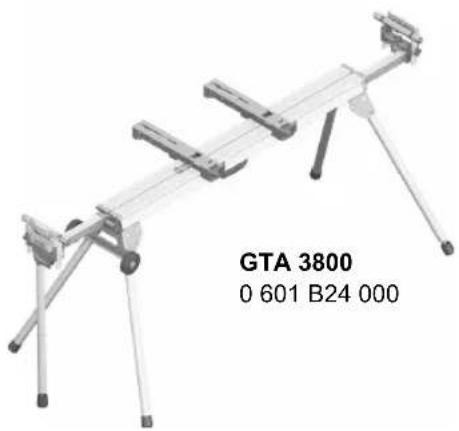
Technical illustration of a mechanical assembly with labeled components (GTA 3800, 0 601 B24 000), no readable text or symbols beyond labels.0 601 B24 000
natural_image
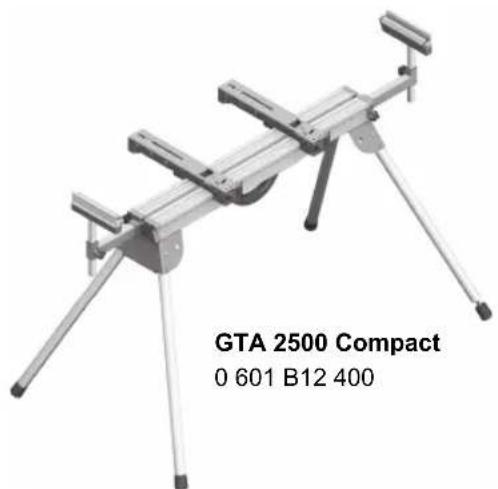
GTA 2500 Compact optical bench with tripod support (no text or symbols on the device itself)0 601 B12 400
natural_image
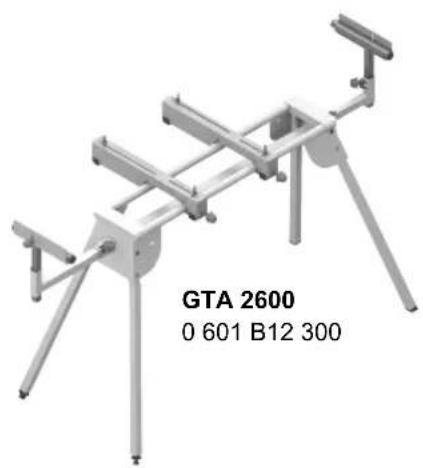
3D mechanical assembly diagram with labeled components (GTA 2600, 0 601 B12 300), no readable text or symbols beyond labels.0 601 B12 300
natural_image
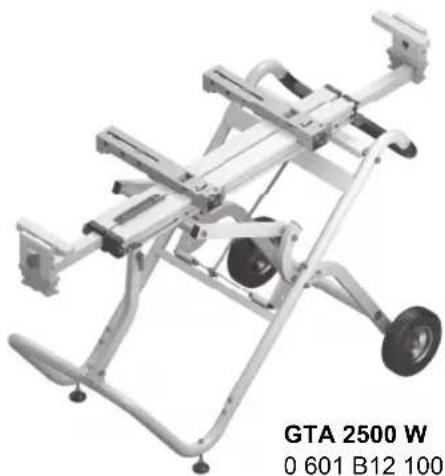
Mechanical support frame with wheels and mounting brackets, labeled GTA 2500 W (no other text or symbols)0 601 B12 100
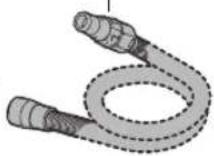
2 607 002 632
GAS 20 L SFC
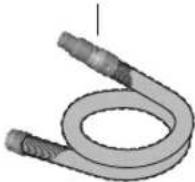
∅ 38 mm:
1 600 A00 0JF (3 m)
natural_image
Mechanical assembly diagram showing a cutting machine with rotating blades and housing (no text or symbols visible)
natural_image
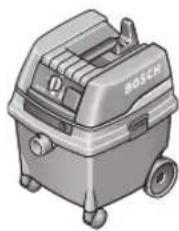
Illustration of a Bosch vacuum cleaner with visible wheels and control knobs (no text or symbols)natural_image
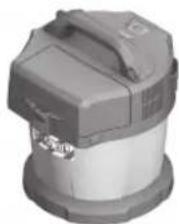
Exterior view of a portable industrial vacuum cleaner (no visible text or symbols)GAS 55 M AFC
2 608 000 585
natural_image
3D rendered image of a mechanical device with no visible text or symbolsCopyright © 2011 Petteri Aimonen
This software is provided 'as-is', without any express or implied warranty. In no event will the authors be held liable for any damages arising from the use of this software.
Permission is granted to anyone to use this software for any purpose, including commercial applications, and to alter it and redistribute it freely, subject to the following restrictions:
- The origin of this software must not be misrepresented; you must not claim that you wrote the original software. If you use this software in a product, an acknowledgment in the product documentation would be appreciated but is not required.
- Altered source versions must be plainly marked as such, and must not be misrepresented as being the original software.
- This notice may not be removed or altered from any source distribution.
CE
|
| de | EU-Konformitätserklärung | Wir erklären in alleiniger Verantwortung, dass die genannten Produkte allen einschlägigen Bestimmungen der nachfolgend aufgeführten Richtlinien und Verordnungen entsprechen und mit folgenden Normen übereinstimmen.Technische Unterlagen bei:* | |
| Paneelsäge | Sachnummer | ||
| en | EU Declaration of Conformity | We declare under our sole responsibility that the stated products comply with all applicable provisions of the directives and regulations listed below and are in conformity with the following standards.Technical file at:* | |
| Sliding mitre saw | Article number | ||
| fr | Déclaration de conformité UE | Nous déclarons sous notre propre responsabilité que les produits décrits sont en conformité avec les directives, règlements normatifs et normes énumérés ci-dessous.Dossier technique auprès de:* | |
| Scie à onglets radiale | N° d'article | ||
| es | Declaración de conformidad UE | Declaramos bajo nuestra exclusiva responsabilidad, que los productos nombrados cumplen con todas las disposiciones correspondientes de las Directivas y los Reglamentos mencionados a continuación y están en conformidad con las siguientes normas.Documentos técnicos de:* | |
| Ingleadora telescópica | N° de artículo | ||
| pt | Declaração de Conformidade UE | Declaramos sob nossa exclusiva responsabilidade que os produtos mencionados cumprem todas as disposições e os regulamentos indicados e estão em conformidade com as seguintes normas.Documentação técnica pertencente à:* | |
| Serra para painéis | N.° do produto | ||
| it | Dichiarazione di conformità UE | Dichiariamo sotto la nostra piena responsabilità che i prodotti indicati sono conformi a tutte le disposizioni pertinenti delle Direttive e dei Regolamenti elencati di seguito, nonché alle seguenti Normative.Documentazione Tecnica presso:* | |
| Troncatrice radiale | Codice prodotto | ||
| nl | EU-conformiteitsverklaring | Wij verklaren op eigen verantwoordelijkheid dat de genoemde producten voldoen aan alle desbetreffende bepalingen van de hierna genoemde richtlijnen en verordeningen en overeenstemmen met de volgende normen.Technisch dossier bij:* | |
| Radiaalzaag | Productnummer | ||
| da | EU-overensstemmelseserklæring | Vi erklærer som eneansvarlige, at det beskrevne produkt er i overensstemmelse med alle gældende bestemmelser i følgende direktiver og forordninger og opfylder følgende standarder.Tekniske bilag ved:* | |
| Kap- og geringssav | Typenummer | ||
| sv | EU-konformitetsförklaring | Vi förklarar under eget ansvar att de nämnda produkterna uppfyller kraven i alla gällande bestämmelser i de nedan angivna direktiven och förordningarnas och att de stämmer överens med följande normer.Teknisk dokumentation:* | |
| Panelsåg | Produktnummer | ||
| no | EU-samsvarserklæring | Vi erklærer under eneansvar at de nevnte produktene er i overensstemmelse med alle relevante bestemmelser i direktivene og forordningene nedenfor og med følgende standarder.Teknisk dokumentasjon hos:* | |
| Kapp- og gjæringssag | Produktnummer | ||
| fi | EU-vaatimustenmukaisuusvakuutus | Vakuutamme täten, että mainitut tuotteet vastaavat kaikkia seuraavien direktiivien ja asetusten asiaankuuluvia vaatimuksia ja ovat seuraavien standardien vaatimusten mukaisia.Tekniset asiakirjat saatavana:* | |
| Katkaisu- ja jiirisaha | Tuotenumero | ||
| el | Δήλωση πιστότητας EE | Δηλώνουμε με αποκλειστική μας ευθύνη, ότι τα αναφερόμενα προϊόντα αντιστοιχούν σε όλες τις σχετικές διατάξεις των πιο κάτω αναφερόμενων οδηγιών και κανονισμών και ταυτίζονται με τα ακόλουθα πρότυπα.Tεχνικά έγγραφα στη:* | |
| Σταθερό φαλτσοπριονο Radial | Αριθμός ευρετηρίου | ||
| tr | AB Uygunluk beyani | Tek sorumlu olarak, tanımlanan ürünün aşağıdaki yönetmelik ve direktiflerin geçerli bütün hükümlerine ve aşağıdaki standartlara uygun olduğunu beyan ederiz.Teknik belgelerin bulunduğu yer:* | |
| Panel testere | Ürün kodu | ||
||
CE
| pl | Deklaracja zgodności UE | Oświadczamy z pełną odpowiedzialnością, że niniejsze produkty odpowiadają wszystkim wymaganiom poniżej wyszczególnionych dyrektyw i rozporządzeń, oraz że są zgodne z następującymi normami.Dokumentacja techniczna:* | |
| Piła do cięcia paneli | Numer katalogowy | ||
| cs | EU prohlásení o shodė | Prohlašujeme na výhradní zodpovědnost, że uvedený výrobek splňuje všechna příslušná ustanovení niže uvedených směrnic anařízení aje vsouladu snásledujícími normami:Technické podklady u:* | |
| Pokosová pila se zákluzem | Objednací číslo | ||
| sk | EÚ vyhlásenie o zhode | Vyhlasujeme na výhradní zodpovednosť, że uvedený výrobok splňa všetky príslušné ustanovenia nižšie uvedených smerníc anariadení aje vsúlade snasledujúcími normami:Technické podklady má spoločnosť:* | |
| Píla na obklady | Vecné číslo | ||
| hu | EU konformitási nyilatkozat | Egyedüli felelőséggel kijelentjük, hogy a megnevezett termékek megfelelnek az alábbiakban felsorolásra kerülő irányelvek és rendeletek valamennyi idevágó előírásainak és megfelelnek a következő szabványoknak.Műszaki dokumentumok megőrzési pontja:* | |
| Lapfűrész | Cikkszám | ||
| ru | Заявление о соответствии EC | Мы заявляем под нашу единоличную ответственность, что названные продукты соответствуют всем действующим предписаниям нижеуказанных директив и распоряжений, а также нижеуказанных норм.Техническая документация хранится y:* | |
| Панельная пила | Товарный No | ||
| uk | Заява про відповідність ЄС | Мизаявляємо під нашу одноособову відповідальність, що названі вироби відповідають усім чинним положенням нищеозначених директив і розпоряджень, а також нижчеозначеним нормам.Технічна документація зберігається y:* | |
| Панельна пила | Товарний номер | ||
| kk | EO сәйкестік маглумдамасы | Өз жауапкершілікпен біз аталған өнімдер төменде жзылған директикалар мен жарлыктардың тиісті қағидаларына сәйкестігін және төмендегі нормаларға сай екенін білдіреміз.Техникалық кужаттар:* | |
| Панельдік ара | Өнім нөмірі | ||
| ro | Declarație de conformitate UE | Declarăm pe proprie răspundere că produsele mentionate corespund tuturor dispozițiilor relevante ale directivelor și reglementărilor enumerate în cele ce urmează și sunt în conformitate cu următoarele standarde.Documentаție tehnică la:* | |
| Ferăstrău circular staționar cu sanie de glisare | Număr de identificare | ||
| bg | EC декларация за съответствие | С пълна отговорност ние декларираме, че посочените продукти отговарят на всички валидни изисквания на директивите и разпоредбите по-долу и съответства на следните стандарти.Техническа документация при:* | |
| Циркуляр за ламперия | Каталожен номер | ||
| mk | EU-Изjava за сообразност | Со целосна одговорност изјавуваме, дека опишаните производи се во согласност со сите релевантни одредби на следните регулативи и прописи и се во согласност со следните норми.Техничка документација кaj:* | |
| Пила за оплата | Број на дел/артик | ||
| sr | EU-izjava o usaglašenosti | Na sopstvenu odgovornost izjavljujemo, da navedeni proizvodi odgovaraju svim dotičnim odredbama naknadno navedenih smernica u uredaba i da su u skladu sa sledećim standardima.Tehnička dokumentacija kod:* | |
| Testera za panel | Broj predmeta | ||
| sl | Izjava o skladnosti EU | Izjavljamo pod izključno odgovornostjo, da je omenjen izdelek v skladu z vsemi relevantnimi določili direktiv in uredb ter ustreza naslednjim standardom.Tehnična dokumentacija pri:* | |
| Potezna žaga | Številka artikla | ||
| hr | EU izjava o sukladnosti | Pod punom odgovornošću izjavljujemo da navedeni proizvodi odgovaraju svim relevantnim odredbama direktiva i propisima navedenima u nastavku i da su sukladni sa sljedećim normama.Tehnička dokumentacija se može dobiti kod:* | |
| Pila za panel ploče | Kataloški br. | ||
CE
III
| et | EL-vastavusdeklaratsioon | Kinnitame ainuvastutajatena, et nimetatud tooted vastavad järgnevalt loetletud direktiivide ja määruste köikidele asjaomastele nõuetele ja on kooskõlas järgmiste normidega.Tehnilised dokumentid saadaval: * | ||
| Järkamissaag | Tootenumber | |||
| Iv | Deklaräcija par atbilstībuES standartiem | Mës ar pilnu atbildibu paziņojam, ka šeit aplūkotie izstrādājumi atbilst visiem tālāk minētajās direktīvās un rīkojumos ietvertajām saistošajām nostādnēm,kā arī sekojošiem standartiem.Tehniskā dokumentācija no: * | ||
| Pane|zāgis | Izstrādājuma numurs | |||
| It | ES atitikties deklaracija | Atsakingai pareiškiame, kad išvardyti gaminiai atitinka visus privalomusžemiau nurodytų direktyvų ir reglamentų reikalavimus ir šiuos standartus.Techninė dokumentacija saugoma: * | ||
| Stacionarusis diskinis pjūklas | Gaminio numeris | |||
| GCM 305-216 D | 3 601 M49 0003 601 M49 0303 601 M49 070 | 2006/42/EC2014/30/EU2011/65/EU | EN 62841-1:2015+A11:2022EN IEC 62841-3-9:2020+A11:2020EN IEC 55014-1:2021EN IEC 55014-2:2021EN IEC 61000-3-2:2019+A1:2021EN 61000-3-3:2013+A1:2019+A2:2021EN IEC 63000:2018 | |
| (H)BOSCH | * Robert Bosch Power Tools GmbH(PT/ECS)70538 StuttgartGERMANY | |||
| Henk BeckerChairman ofExecutive Management | Helmut HeinzelmannHead of Product Certification | |||
| Robert Bosch Power Tools GmbH, 70538 Stuttgart, GERMANYStuttgart, 09.11.2022 | ||||
IV
CE
Declaration of Conformity
Sliding mitre saw Article number GCM 305-216 D 3 601 M49 070
We declare under our sole responsibility that the stated products comply with all applicable provisions of the regulations listed below and are in conformity with the following standards. Technical file at: Robert Bosch Ltd. (PT/SOP-GB), Broadwater Park, North Orbital Road, Uxbridge UB9 5HJ, United Kingdom
The Supply of Machinery (Safety) Regulations 2008
The Electromagnetic Compatibility Regulations 2016
The Restriction of the Use of Certain Hazardous Substances in Electrical and Electronic Equipment Regulations 2012
EN 62841-1:2015+A11:2022
EN IEC 62841-3-9:2020+A11:2020
EN IEC 55014-1:2021
EN IEC 55014-2:2021
EN IEC 61000-3-2:2019+A1:2021
EN 61000-3-3:2013+A1:2019+A2:2021
EN IEC 63000:2018

BOSCH
Vonjy Rajakoba Managing Director - Bosch UK
Robert Bosch Power Tools GmbH, 70538 Stuttgart, Germany represented (in terms of the above regulations) by Robert Bosch Limited, Broadwater Park, North Orbital Road, Uxbridge UB9 5HJ, United Kingdom
Martin Sibley Head of Sales Operations and Aftersales
Robert Bosch Ltd. Broadwater Park, North Orbital Road, Uxbridge UB9 5HJ, United Kingdom, as authorised representative acting on behalf of Robert Bosch Power Tools GmbH, 70538 Stuttgart, Germany
Place of issue: Uxbridge Date of issue: 08/11/2022