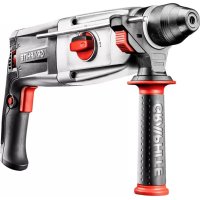
58G529 - Drill Graphite - Free user manual and instructions
Find the device manual for free 58G529 Graphite in PDF.



| Product type | Hammer drill (impact drill) |
| Brand | Graphite |
| Model | 58G529 |
| Category | Drill |
| Supply voltage | 230 V AC |
| Supply frequency | 50 Hz |
| Rated power | 800 W |
| No-load speed | 0 – 1 200 min⁻¹ |
| Impact rate | 0 – 5 300 min⁻¹ |
| Impact energy | 3.2 J |
| Chuck type | SDS Plus |
| Max. drilling diameter (concrete) | 28 mm |
| Max. drilling diameter (steel) | 13 mm |
| Max. drilling diameter (wood) | 30 mm |
| Weight | 3.2 kg |
| Protection class | II (double insulation) |
| Sound pressure level (LpA) | 92.64 dB(A) (K=3 dB) |
| Sound power level (LwA) | 103.64 dB(A) (K=3 dB) |
| Vibration (percussion drilling in concrete) | a_h = 13.772 m/s² (K=1.5 m/s²) |
| Vibration (chiseling) | a_h = 13.115 m/s² (K=1.5 m/s²) |
| Included accessories | Auxiliary handle, depth stop, drill chuck + key, drill bits, carrying case |
| Compatible materials | Concrete, stone, brick, steel, wood, plastic |
| Functions | Drilling without impact, drilling with impact, chiseling, chisel position adjustment |
| Reversible rotation direction | Yes (clockwise/counterclockwise) |
| Overload clutch | Yes |
| Maintenance and cleaning | Clean with a dry cloth, do not use water or solvents, check carbon brushes |
Frequently Asked Questions - 58G529 Graphite
User questions about 58G529 Graphite
0 question about this device. Answer the ones you know or ask your own.
Ask a new question about this device
Download the instructions for your Drill in PDF format for free! Find your manual 58G529 - Graphite and take your electronic device back in hand. On this page are published all the documents necessary for the use of your device. 58G529 by Graphite.
USER MANUAL 58G529 Graphite
PL MLOTOWIERTARKA
ROTARY HAMMER DRILL
HAMMERBOHRMASCHINE
RUP NEPΦOPATOP
A IEPΦOPATOP
FUROKALAPACS
BORMASINA PERCUTANTA
(2) VRTACÍ KLADIVO
VRTACIE KLADIVO
S1 VRTALNO KLADIVO
PERFORATORIUS
PERFORATORS
LOÖKTRLLEL
BOPMALUNHA YAPHA
CEKIC-BUSILICA
BUSILICA SA CEKICEM
G YPA
MARTILLO-TALADRO
MARTELLO PERFORATORE
NO BOORHAMER
FR MARTEAU PERFORATEUR
10* LAT DOSTEPNOSCI CZESCI ZAMIENNYCH
DETAILED SAFETY REGULATIONS
PRECAUTIONS FOR USING ROTARY HAMMER
Wear ear protectors. Exposure to noise can cause hearing loss.
Use auxiliary handle(s), if supplied with the tool. Loos of control can cause personal injury.
Hold power tool by insulated gripping surfaces, when performing an operation where the cutting accessory may contact hidden wiring or its own cord. Cutting accessory contacting a "live" wire may make exposed metal parts of the power tool "live" and could give the operator an electric shock.
Use proper equipment to locate hidden power lines. Contact with live wires may cause fire or electric shock. Damage of gas installation pipe may cause explosion. Ingress to water line may cause electric shock and cause major property damage.
Each time before connecting the power tool check the power cord, in case of damage hand over to authorized workshop for replacement.
When operating the power tool hold it in both hands while keeping stable body position. Keep the handles clean. Power tool is safer when held with two hands.
When operating the power tool held high, stand firmly on the ground and ensure there are no bystanders below.
Avoid touching rotating parts. Touching of rotating power tool parts, equipment in particular, may cause body injury.
Wait until power tools comes to a complete stop before putting it away. Working tool may jam and cause loss of control over the power tool.
Do not direct operating power tool at other persons or at yourself.
Use anti dust mask during operation to protect respiratory system.
CAUTION: This device is designed to operate indoors.
The design is assumed to be safe, protection measures and additional safety systems are used, nevertheless there is always a small risk of injuries at work.
Explanation of used symbols

1

2
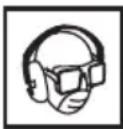
3
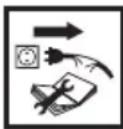
4

5

6
- Read instruction manual, observe warnings and safety conditions therein.
- Device with class II insulation.
- Use personal protection measures (protective goggles, earmuff protectors, anti-dust mask)
- Disconnect the power cord before starting maintenance or operation.
- Protect against rain.
- Keep the tool away from children.
CONSTRUCTION AND USE
Rotary hammer is a hand-operated power tool with insulation class II. The tool is driven by single-phase commutator motor with rotational speed reduced with gear transmission. Rotary hammer can be used for drilling holes in working modes: with impact, rotation only, chasing or surface processing of materials such as concrete, stone, brick etc. Range of use covers repair and building works, woodworking and any work from the scope of individual, amateur activities (tinkering).

Use the power tool in accordance with the manufacturer's instructions only.
DESCRIPTION OF DRAWING PAGES
Below enumeration refers to the device elements depicted on the drawing pages of this manual.
- SDS-Plus chuck
- Fixing sleeve
- Direction selector switch
- Switch lock button
- Switch
- Operation mode switch
- Additional handle
- Depth gauge rod
- Lock button for depth gauge rod
- Differences may appear between the product and drawing.
MEANING OF SYMBOLS

CAUTION

WARNING

ASSEMBLY/ SETTINGS

INFORMATION
EQUIPMENT AND ACCESSORIES
- Additional handle - 1 pce
-
Depth gauge rod -1 pce
3.Drill chuck -1 pce -
Drill chuck adapter - 1 pce
5.Drills -1 pce - Carrying case - 1 pce
INSTALLATION OF ADDITIONAL HANDLE
Due to safety issues, always use additional handle when operating the rotary hammer. It can be fixed in any position on the fixing cylindrical section.

Turn lower part of the additional handle (7) counter-clockwise to loosen.
Slide the additional handle collar (7) over cylindrical section of the rotary hammer body.
Turn to the most comfortable position for the work at hand.
Turn lower part of the additional handle (7) clockwise to securely lock in selected position.

INSTALLATION OF DEPTH GAUGE ROD

Press the lock button for depth gauge rod (9) (fig. A).
9)lide the depth gauge rod (8) into the hole in the additional handle collar (7).
Release the lock button for depth gauge rod (9) to lock in desired position.

Notches on the depth gauge rod (8) should be in level plane, perpendicular to the additional handle (7). This position allows to optimally secure lock of the depth gauge rod.
INSTALLATION OF WORKING TOOLS

Rotary hammer is designed to operate with working tools with SDS Plus shanks. Prior to operation clean the chuck of the rotary hammer and working tools.
Disconnect the power tool from power supply.

Rotary hammer incorporates click-clic system, which does not require to pull off the fixing sleeve (2) when installing a working tool.

Put the rotary hammer against stable surface.
Insert working tool shank into chuck (1) and slide it to mechanical stop (it may be necessary to turn the working tool so it can reach appropriate position) (fig. C).
Working tool is properly seated if it cannot be removed without pulling off the fixing sleeve (2) of the chuck (1).

If the fixing sleeve (2) does not return to its default position after working tool has been placed in the chuck, remove the working tool and repeat the whole operation.

High efficiency of the rotary hammer operation can be achieved by using sharp and undamaged working tools. Sharpen or replace working tools when needed.
DEINSTALLATION OF WORKING TOOL

Just after the operation is finished the working tool may be hot. Avoid direct contact and use appropriate protective gloves. Clean the working tool after removal.

Disconnect the power tool from power supply.

Pull the fixing sleeve (2) to the back and hold.
Pull the working tool out of the chuck (1) with your second hand.
OVERLOAD CLUTCH

Rotary hammer is equipped with internally set overload clutch. Spindle of the rotary hammer stops immediately after working tool jams, which could overload the power tool.
SWITCHING ON / SWITCHING OFF

The mains voltage must match the voltage on the label of the rotary hammer.

Switching on - press the switch button (5) and hold in this position.
Switching off - release pressure on the switch (5).
Locking the switch (continuous operation)
Switching on:
Press the switch button (5) and hold in this position.
Press the switch lock button (4) (fig. D).
Release pressure on the switch button (4).
Switching off:
Press and release the switch button (5).

Rotational speed of the spindle is controlled with pressure on the switch button (5).
Rotary hammer is equipped with 4 position switch of the working mode (6). Depending on the setting you can perform a drilling only, impact drilling, chiselling or set chisel to desired position. Press the lock button 'a' prior change of position of the operation mode switch (6) (fig. E).

Pos 0 = position for setting chisel in desired position (chisel symbol)
Pos 1 = regular drilling/screwing (symbol of a drill)
Pos 2 = impact drilling (symbol of a drill and a hammer)
Pos 3 = chiselling (symbol of a hammer)

Do not try to change position of the working mode switch when the rotary hammer motor is operating. Such action may lead to serious damage of the rotary hammer, or even injury of the user. Do not use three jaw drill chuck when the rotary hammer is set to impact drilling. This chuck is designed for regular drilling only (in wood or steel).
LEFT - RIGHT DIRECTION OF ROTATION
Choose direction of rotary hammer spindle rotation with the selector switch (3). When setting direction of rotation, refer to graphic symbols located on the tool body.
Clockwise rotation - set the direction selector switch (3) to proper position.
Counter-clockwise rotation - set the direction selector switch (3) to proper position (fig. F).
Do not change direction of rotation when the spindle of the rotary hammer is rotating. Check if the position of the selector switch is correct before starting the tool. Do not use left direction of rotation when impact function is on.
DRILLING HOLES
When drilling a hole with large diameter, it is recommended to drill smaller hole and then ream it to desired diameter. It prevents overloading the rotary hammer.
When drilling deep holes drill gradually to smaller depths, then slide the drill out of the hole to remove chips and dust.
a drill jam occurs during drilling, the overload clutch will disengage. Turn off the rotary hammer immediately to prevent its damage. Remove jammed drill from the hole.
Keep the rotary hammer in the axis of the hole. Keeping the drill perpendicular to the surface of the processed material ensures the most effective operation. If drill is not kept perpendicular to the surface during operation, it may get jammed or broken in the hole.
! Long lasting drilling at low rotational speed of the spindle may cause motor overheating. Provide regular breaks during operation or let the tool operate at maximum speed with no load for approximately 3 minutes. Do not cover holes for motor ventilation in the rotary hammer body.
DRILLING WITHOUT IMPACT
Materials like steel, wood and plastics can be drilled with rotary hammer with use of three jaw drill chuck with intermediate adapter. Mount together three jaw chuck and adapter by thread joint and then place it in the rotary hammer chuck (proceed like with SDS-Plus drills) (fig. G).
Use drills of high speed steel or carbon steels (only for wood and wood-like materials).
Do not use three jaw drill chuck when the rotary hammer is set to impact drilling. This chuck is designed for regular drilling only (in wood or steel).
IMPACT DRILLING
To get the best results for drilling use high quality drills with sintered carbide inserts.
Dust produced during renovation and construction works is harmful. To limit its adverse effects it is recommended to use anti dust mask and provide good ventilation of the workplace.
Choose appropriate mode of drilling, impact drilling in this case.
Insert appropriate drill with SDS-Plus shank into the chuck (1).
Press the drill against processed material.
Switch on the rotary hammer (the rotary hammer mechanism should operate smoothly and the working tool should not bounce on the processed material surface).
Increase speed when needed by pressing the switch button (5).
Slight run out of the working tool that can be sometimes observed after starting the tool without load is normal. Working tool centres automatically at touching processed material. In no way it affects precision of drilling.
ADDITIONAL HINTS FOR USING ROTARY HAMMER
Impact drilling and chiselling requires slight pressing on the rotary hammer. To achieve the best efficiency possible during operation, apply uniform and moderate (not excessive) pressure on the tool, as excessive pressure would lead to efficiency loss and overloading the motor. Rotary hammer filled with solid lubricant requires some time to heat up, depending on the surrounding temperature. If the rotary hammer is not used for a long time, or operates in low temperature, allow the rotary hammer to work with no load for 2-3 minutes. Sharp working tools improve work efficiency. Clean ventilation holes reduce risk of motor overheating.
Unplug the power cord from mains socket before commencing any activities related to installation, adjustment, repair or maintenance.
MAINTENANCE AND STORING

Cleaning the device after each use is recommended.
Do not use water or any other liquid for cleaning.
Do not use any cleaning agents or solvents, they may damage plastic parts.
Clean the tool with a dry cloth or blow with compressed air at low pressure.
Clean ventilation holes in the motor casing regularly to prevent device overheating.
In case of excessive commutator sparking, have the technical condition of carbon brushes of the motor checked by a qualified person.
In case of power cord damage replace it with a cord with the same specification. Entrust the repair to a qualified specialist or return the tool to a service point.
Always store the tool in a dry place, beyond reach of children.
REPLACEMENT OF CARBON BRUSHES

Immediately replace worn out (shorter than 5mm ), burnt or cracked motor carbon brushes. Always replace both carbon brushes at a time.
Entrust replacement of carbon brushes only to a qualified person. Only original parts should be used.
All defects should be repaired by service workshop authorized by the manufacturer.
TECHNICAL PARAMETERS
RATED PARAMETERS
| Rotary Hammer | ||
| Parameter Value | ||
| Supply voltage 230 V AC | ||
| Power supply frequency 50 Hz | ||
| Rated power 800 W | ||
| Rotational speed 0-1200 min | -1 | |
| Impact rate 0 - 5300 min | -1 | |
| Impact energy 3,2 J | ||
| Working tool shank SDS Plus | ||
| Maximum drilling diameter | concrete 28 mm | |
| steel 13 mm | ||
| wood 30 mm | ||
| Protection class II | ||
| Weight 3,2 kg | ||
| Year of production 2021 | ||
NOISE AND VIBRATION DATA

Information regarding noise and vibration
The following levels of emitted noise, such as emitted acoustic pressure LpA and acoustic power level LwA and measurement uncertainty K have been given in the instruction manual as defined in the EN 60745 standard.
The following vibration value (acceleration value) a_h and measurement uncertainty K have been determined as defined in the EN 60745-2-6 standard.
The vibration level provided in this instruction manual have been determined according to the measure
ment procedure as defined in the EN 60745 standard and can be used for comparison of power tools. This can be used for preliminary assessment of exposure to vibrations.
The provided vibration level is representative for main applications of the power tool. If the power tool is used for other applications or with other working tools, and if it is not sufficiently maintained, the vibration level may vary. The aforementioned reasons may increase the exposure to vibrations during the entire operating period.
In order to precisely estimate the exposure to vibrations, periods should be accounted for, in which the power tool is switched off, or when it is switched on, but not operated. Thus, the total exposure to vibration may prove considerably lower.
Additional safety measures should be taken to protect the user against effects of vibrations, such as: maintenance of the power tool and its working tools, ensuring proper temperature of the hands and proper organisation of work.
Sound pressure level Lp_A = 91.54dB(A) K = 3dB(A)
Sound power level: LW_ = 102,54 dB(A) K = 3 dB(A)
Vibration acceleration (impact drilling in concrete) a_h,HD = 11.63 m/s^2 K = 1.5 m/s^2
Vibration acceleration (chiselling) a_h,Cheg = 14,54m / s^2K = 1,5m / s^2
ENVIRONMENT PROTECTION
Do not dispose of electrically powered products with household wastes, they should be utilized in proper plants. Obtain information on waste utilization from your seller or local authorities. Used up electric and electronic equipment contains substances active in natural environment. Unrecycled equipment constitutes a potential risk for environment and human health.
*Right to changes is reserved.
"Grupa Topex Spóka z ograniczona odpowiedzialnosci" Spóka komandytowa with seat in Warsaw at ul. Pograniczna 2/4 (hereinafter Grupa Topex) informs, that all copyrights to this instruction (hereinafter Instruction), including, but not limited to, text, photographs, schemes, drawings and layout of the instruction, belong to Grupa Topex exclusively and are protected by laws accordingly to Copyright and Related Rights Act of 4 February 2004 (ustawa o sprawie autorskim i prawachPokrewnych, Dz. U. 2006 No 90 item 631 with later amendments). Copying, processing, publishing, modifications for commercial purposes of the entire Instruction or its parts without written permission of Grupa Topex are strictly forbidden and may cause civil and legal liability.

IpefoaTOp npncnoc6bneK pa6oTe c pa6oUHMn INHCTpymeHTAMc XBOCTOBkAmn Tnna SDS Plus. Ipeed Naayanom pa6oTbOuNCTnte natpoH nepoAToPA n pa6oUHMn INHCTpymeHT.

OTKIOUHTe 3JNEKTPoHnCTpymENT OT cETN.

Pepopatop ochaen Cnctemoi KpenneHna clic-clic (He HxKHO TAnHyTb Ha ce6a KpeeXHyO Btynky (2) BO Bpem KpenneHpa6oeryn HcTpyMeHa).

Npnte nepphiopatB cTa6nIbHyIO NOBepxHocTb.
CTabBte CTePxeHpa6OeRo IHCTpMeHTa B NaTPOH (1)do ynpa (ecn Tpe6yeTc, noBepHnte pa6oey INCTpMeHT,TO6bOH 3aHJN HyXHoe NIOJOxHeHne)(pnc.C).
a60nMHCTpymeHT yctaHOJIeH npabunbHO, eCNI eRO HeBO3MOXHO BbyHyTb, He OTTARNBa KpeNEXHYBtynky (2) naTPOHa (1).

Ecnn noce yctaHOBKn pa6oOero nHcTpymeHa B naTpoHe KpeNexKnaB Tynka (2) He Bo3BaPaaetcB Cboe IcxOHOe noLoXeHne NoIHOCTbIO, BbIHbTe pa6oOHN HcTpymeHT N NOBTopuTE BCIO OepaCNU C hauana.

BbICOKa 3ΦΦeKTHBHOCTb pa60TbI c nepΦopatopom 6ydet DoCTURHyTa TOnbKO B cnyuae npIMHeHnOcTpBix n HEnOBpeXdEHHbIX pa6oUHX uHcTpymeHTOB. Ecnn Tpe6yeTcR, 3aTouHrTe nn 3aMeHnte pa6oUne uHcTpymeHTbl.
BbIEMKA PABOYERO HCHPTPYMEHTA

Iocne 3aBepweHn pa60bI pa6OuH mHCTpymeHT moKet 6bITb ropyHm. N36eraTe npMoro KOtAKTa c pa6OuH mHCTpymeHOM n NOJb3yIteCb COOTBeTcTBYIOUmm 3aUHTbIMn nepaTkAMn. OuchTe pa6OuH mHCTpymeHT noCne BblEMKn n3 naTPOHa.

OTKIIouHTe 3JneKTponHcTpymENT OT cETN.

OTTAAHNTe n npupepkxnte KpenexHyo Btynky (2).
pyroynykoBbHbTe pa6oounnHCTpymeHT n3 naTpoHa (1).
PPEOXPAHHTIELbHAMyΦTA

Pepopatop ochaueh npedoxpaHntelbHO myToI. UHHneB nepopatopa octaHaBnBaETcB cnyae 3aklnHbAHNA pa6oeryo HNCTpyMeHTa, a 3TO MOKe TnpuBecT K nepeRpy3Ke 3eKTPoHCTpyMeHTa.
PABOTA/HACTPOIKA
BKJIIOYEHNE/BbIKJIIOYEHNE

HanpaxKeHne cetn doJxHo COOTBeTCTBOBaTb HapxKeHIO, yKa3aHHOMy B nacnpTHoT a6nUKe nepΦopatopa.
Bknouhe - HaxmTe KONky BkIoueHn (5) n npuepeKnte B 3TOM NOLOKeHH.
BbIKIOueHne -OTNCTNE KHOKNy BKNIOUeHnA (5).
Фнкаця Khonkn BKNIOueHna (henpepbBHa pa60Ta)
BkloueHne:
Haxmte KhoNkY BkIoueHn (5) n npuepeXnTe B 3Tom NonoKeHH.
HaKMTe KOKcaTOP KONKN BKNIOUeHn4 (4) (pnc. D).
OTnyCTTe KONKy BKNIOUeHnA (4).
BbIKIOueHne:
Jlaxmnte n OTnyCTnTe KhONky BkHIOueHnA (5).

Hactota BpaueHnIepeRynpyeTcCnIOHaXnMa Ha KhoNky BKnIoUeHn (5).
PEEKIOUATEJIb PEXIMA PABOTbl

Iepfopatop ochaen 4-no3nOHHbIM nepeKIOUaTeJem pexIma pa60tbl (6).B 3abucmoctn ot noloxhenna peeklouateT, moKHO pa60taB B pexime „cBepJIeHne 6e3 ydapa", „CBePJIeHne C ydapom", "doJIeHne", IIO6OyCTaHOBNT b 3y6NIO B BB6paHHOM nOLOXeHN. Ipeed nepeKIOUeHHeM nepeKIOUaTeJr peKIMa pa60tbl (6) cIeNyET hKaTaB KONkCyΦIKcaUNa" (pnc. E).

- 0 = no3nucia, no3BONJIOUa yCTaHOBNTb 3y6HNO B Bbl6paHHOM nOLOXKeHN (3HaoyK,3y6HNo")
103.1 = HopMaIbHoe CBepeHne/BBINHcYBaHne (CmBON, CBePINO")
103.2 = CBepnene C ydpom (CMBON ,CBepno CMONOTKOM")
103.3 =Долблелнe (CIMBOI „MOJOTOK")

3anpeuetaTc nItaTbC nomeHtB noLoXeHne nepeKIOUaTeJ na60tbpn pa6oTaIouem Dbratane nepoopata.3To moKeT npNBecTN K cepbe3Homy nobpeXdeHIO nepoapota, a TaKKe npunHtB TeneChtle NOpeXdHn OepaTopy. 3anpeuaetc noIb3ObaTcR TpexkynauKObbIM CBePnIbHbIM nAtPOHOM, eCNI nepeKIOUaTeJI b nepoopataCTOUT B noLOXeHN "CBepHeNc c Udpom".Takoi natpon npedHa3NaueH ToIbKO dner CBepHeHn 6e ydapa (B dpeBecnHe nn CTaII).
ПРABОCTОPOHHEE-JIEBOCTOPOHHEE BPAUSEHNE

C nomoBIO nepeKIOUaTeIe HApabLeHnBpaSeHn (3) MoXHO BbIbPaTb HApabLeHne BpaSeHn 1nnHdJIe NepOpatopa. BbIbpaHnPabLeHne BpaSeHn, oBaPsAaTe BHMaHne Ha rpaNueckne CmBOLbl Ha Kopnyce 3JIeKTpOHnHCTpyMeHTa.

IpaoctopoHHe BpaueHne - noCTaBbTe nepeKJIouaTeJb HnPaBHeHn BpaueHn (3) COOTBeTCTByIOUeE NOLOKeHne.
JeBocToPOHHe BpaueHne - NoCTaBbTe nepeKJIouaTeIb HAnpAbIeHnB BpaueHn (3) COOTBeTCTByIOUee NOLOKeHnE (Pnc.F).

3anpeuaeTc nImeHb HnpaBneHne BpaueHn npn Bpaauoemc nHHnde nepphiopatopa. Neped BKIOUeHmE y6eNTecb, YTO nepeKIOUaTeNb HnpaBneHn BpaueHn yCTaHOBHe B hJxHoe noLoXeHne. B pexHme ,CBepLeHne c ydapom" He cIeDyET pa6OtaTb C neBOCTOPOHm BpaueHm.
CBEPJEHNE OTBEPCTNI

Pnctyna K CbepeHIO OTBepCTn 6oIbwoRo pa3Mepa, Chayana peKOMeHdyetc npocBepntb OTBepCTne nomeHbwe, a 3aTe m pacuipntb erO do Heo6xOdAmoro pa3Mepa. 3To n03BOJNT n36exKaTb neperpy3Kn nepopopatopa.
Pn CbepeHnn rny60knx OTBepCTn, CBepInte B HeckOJIbKO npneMOB, KaKdbI pa3 BblTaCKNBaCbePNO n3 OTBepCTn dny ydaene Hn n3 Hero ctpyKKn nn nbJIn.
CIN BO Bpempa60tbpon3oien3aknHbAHne Cbepna,cpa6oTaET npedoxpaHntbHa MyfTa. HeMeJeHHO BbIKIOHTe nepOpatop,TO6blnpedotBpaNTb ero nobpeXdHne.BbHbTe 3aknnHBwe CBepno 3OTBePCTnI.
Jepxnte nepoopatop B ocn npocbepnnaemoro OTbepctn. Han6onee 000ektnbna pa6ota 6ydet
Oecneeta np pacnoIooKeHH CBepn noi npMblm yrIOM K NOBepxHOCTN 6pa6aTbBAeMO
MaTePnana.Ecnn BO Bpema CbepeHnnpaON He 6ydet BbIDepXaH, 3TO MoKet npNBecTN K
3aklnnBaHHo CBepn nnnoomke.

Динтьhoe CBeplenne C H3K0 JAcTToB BpaueHn 7nnHdJIe MoKeT Bb3BaTb nepepeB Dnuratena. Pa6otaTe c nepepbiam, n6o daIte 3NeKtpOnHCTpyMeHTy nepnoDnueckn nop6oTaB T TeueHne OK. 3 MInyt 6e3 Harpy3Kn C MaKcImaJIbHOJ qAcTToB BpaueHn. CneIte 3a Tem, YTO6bl He 6bln 3acNoHeHbI OTBepCTnB KOpnyce, cnYkaune dIra BeHTnlaUIM Dnuratena nepphiopatopa.
CBEPJIENHEBE3YDAPA

Takne MaTePnAbl, KaK CTAJIb, DpeBecuHa, PnAcTMaCCa H T.N. CNeJeYe T CBePInTb C NOMOuIbIe npEΦopAtopa, IcNoJIb3yI npN 3ToM TpExKUNaUkOBiB CBePInHbHbI NaTPOH C npEpxoHnKOM. PnPbUHTte npEpxoHnK K TpExKUNaUkOBomy NaTPOHy, a 3aTeM BCTaBBTe B NaTPOH npEΦopATopa (JeIcTByIte KaK B Cnyuae CbePn C XBOCTOBuKOM SDS-Plus) (pnc.G).
Pa6oTaIe co cBepnamn n3 6bIcTpopeKyuue nnn yrIepOndTo CTaII (TolbKO dJa CbePHeHna OTBepCTn B dpeBeCInHe n dpeBeChbIX MaTePnAnax).

3anpeuataeTc nnojIb3OBAtB TpexKynauKObI BcBepnIbHbI NaTPOH, cIIN nepΦopatop nepeKnIOueH Ha pexm CBePHeHc yIapOM. TaKo naTPOH npedHa3NaueH ToIbKO dIa CBePHeH 6e3 yIapa (B dpeBecnHe mIcTaII).
CBEPJIeHHe C yIaPOM

Дяdoctижен Haunluyuixx pe3yIbTaTOB NOlb3yIteCb BbICOKOKaYeCTBeHHbIMN CBepnAMN TBePDCnlaBHBIMHaapanKaMn.

BbIMKHeHHa:HaTNCiB KHOIky (Kypok) BBIMKHeHHa (5) n yTpmyTe II HaNTCHyTOH.
BIMKHeHHa: BiDnyCTiTb KONKy (kypok) BBIMKHeHHa (5).
HANPROMOK OBEPTAHHA BNPABO-BJIBO (PEBEPC)

IpeemuKaTu HnnpaMOK o6epTaHn (peBepc) uHHdJIa DOnyckaTbc3a DonomoroIO nepemkaua (3) nepoapTopHO rnil. HnnpaMOK o6epTaHn (peBepc) no3HaueHn IpaqiuHMn CmBolamn Ha Kopnyci eNeKTpoiHCTpyMeHTa.

06eptn Bnpabo: BCTaHObit nepemnkaaypebepcy (y) y biNobiJe noJoxeHHa.
06epTu BnIO: BCTaHOBiTb nepemKaupeBepCy (3) y BiIDNoBIDHe nIOJoxeHHa (MaN.F).

He donyckaetbcra 3miHOBaTu HAnpMaK O6eptAHHa (peBepc) uHHdJIe NiJ qac o6eptAHn octahhboro. Nepu hIX npCTynatu do pObotu cnid yneBHHTnc, zo nepemkauch HanpMaKy o6eptIB nepemkhyTo B notpi6He noLoXeHHa. He donyckaetbcra nepemkaHHa Ha peBepc niJ qac npaui B pexkmi 3 ydpom.
CBEPJIENHRAOTBOPIB

pa3i notpe6n cBepdneHHra OTbopy 6inbIomega iAmeTppy peKOMeHnycTcpePuy npocBepdntu OTbip MeHwOro diametpy, a ToDi p03CBepdntu noo do notpi6Horo diametpy. Ue 3anobira 3aibomy o6TJxehHIO nepopopatophoro dpnna.
Iid cBepdienHryDyKoi rN6HH peKomeHdyETbCn PPOCBepdIOBAtn OTBip NOCTynoBO, CTyneHMn, KOKeH pa3 npocCybaIOuHcBepdno Ha3a3 MeTOIO ycHeHH Nny, TnpCn Ipyck 3 OTBopy.
pa3i 3aknHeHH CBePdna nIac npaic npaocboBye npotnnepeBaHTaKyBaJIbHa MyfTa. B TaKOMy Bnpanky cIid HeraHIO BmKHyTN eNeKTpOIHCTpyMeHT, 0o6 3ano6irN Ioro NOnKOJKeHHIO. BntarHITb CBePdno, 0o NOro 3aknHNO, 3 OTBOPY.
Bicb Cbeprna, BCTabneHoro B naTPOH nepphiopatpHoro dpnna, NOBHHa cnibnadaTn 3 BiccIO npocBepdneHoro OTbOpy. CbePno HaleKntb po3TaWOByBaTu Ni npramM Kytom Do nobepxHi, B kN npocBepdIOeTbcra OTbip. B pa3i HeDToPMaHNr nepneHdkyIapHocTi Bici CbePdEHHr i NIoUHNr NOBepxHi, B kIK BNKOHyTbcra OTbip, icHy e MoKJNBicTb 3aknnHeHHr nn 3JaMaHHa CbePda B OTbopi.

Tpmbale cbepeHnna 3a Hn3bKoi Wbndkocti o6epTaHHn nnHdnel 3arpoxye neperpiBaHHm DByrHa. 0o6 3ano6irtn cybomy pekomehdyetbcra po6ntn nepioanyni nepepbn B po6oti, a6o daTn enektpoinhctpymeHTy nonpaucobatn Ha nIOBOMy xOdi Ha mKcmmalbHex o6epTx np6n. 3 XBNHN. Pid qac npaici 3BaXaTn Ha Te, 0o6 BeHTnlauihi zllnnn B Kopnyci, 0o npu3Nauehi do oxolodxgeHHn eektpoDburyHa dpnna nepfopatophoro, He 3aTyIaIncra.
CBEPДLEHЯBE3YAPY

B TaKnx MaTepianax,Як StaNB,ДepeBO,ПlaCTMaChi TToIO,ДоуСkaTbCЯ npocBepdIIOBaTH OTBOPn 3a DoNOMOROIO nepΦopatOpHOrO Дрпя 3a yMOBN BnKOpIcTaHHДрИbOBOrO NaTpOHa Ha Tpr ry6Kn 3 nepexiHNKOM. 3rBnHTtN nAtpoH i nepexiDnHK, a ToDi BCTaBtN B nAtpoH nepΦopatOpHOrO DpUJIa (B cIbOMy pa3i NocIiIOBHiCTb DiAnlOriHa Do BCTaBnHnC bEpDen 3 XBOCTOBuKOM TIny SDS-Plus) (MaI.G).
OTbOpn B depebi Ta DepeBOMaTePiaIax BIKOHyIObCra 3a DonOMoroIO CBepen 3i WbNkOpi3aIbHOI Ta ByrIeueBoI CTani (BKNIOUHO B depeBi Ta DepeBOMaTePiaIax).

He donyckaetbca BkOpncToByBaTH npnbobn naTPOH Ha TPN r6Kn, kkuo nepphiopot 3haxoundbcB peKmI cBepdneHHa yapom. TaKni naTPOH npn3HaueHn dny BxNTKy BKNIOUHO do CbePdienHH 6e3 ydpay (no depeBy nn CTani).
CBEPДLEHЯ3YДAPOM

Дя CBepdneHЯ 3 yapedom peKOMeHdyetbCЯ BnKOpNCTOByBaTи BnCOKOJIcHi CBepdna 3 Kap6iHNMn Hanaikamn.

Pnn, no nobcta nic yac pemohtho-6yibbHex po6it, e wkiinbum dna 3doob'. 3 metoio o6mexehnno heratubhoro BnNBBy peKomeHdyetbcra BnkopncTOBbATn npOTnIOby Macky, a TAKOX 3a6e3neHTn do6py BEHTnlaio Ha po6oymy micui.

Bn6epiB BiINOBiHn pexKIM CBepdneHHy, y daHOMy BnnaKy CBepdneHHa 3 ydaPOM.
KnaiItb y natpoH (1) BiINOBiIHe CBepnO 3 XBOCTOBUKOM TIny SDS-PLUS.
PnCTaTe CBepeNo Do MaTepiany, 0o Noro o6po6HIOyTb.
BbIMKnHtB nepΦopatOpHnДprnIb (MexaHImM nepΦopatOpHoro DpNIO NOBHeN IpaCIOBaTn PIIHHO, a po6oui IHCTpyMeHT He NOBHeN BIDCKaKyBaTn BiD NOBepxHi MaTepiany, 0io NOro 6bo6JIIOuTb).
B pa3i notpe6n MOxHa 36iNbWHTN WBNKICTb O6epTaHHa HATNCHeHHa KHONKy-KypOK BBIMKHeHHA (5).

He3nahe 6nTTa po6oOro iHcTpymeHa nicra BBIMKHeHHy yCTaTKyBaHHa H aIOBOMy XoDi, oio hOdi Ma e Micue, cTATHOIO NOBeiHKoIO yCTaTKyBaHH. Po6ouh iHcTpymeHT aBtOMaTHUHO ceHTpycBcR B MOMENT TOpKaHHdo MaTepiany. Lc y JxodHi Mpi He BnIbAe Ha ToCHicTb CBePdneHH.
JOATKOBI PEKOMEHDAUII 3 KOPNUCTYBAHHI NEPΦOPATOPOM

CbepeHn 3 yapom i do6aHH Bmarae cnpuHHeHH Ha nepoapopn npnb deKoro 3cunnn. Dna doceHHeHH MaKcMaIbHOi ekeTubHOCTi nid uac npaqi pekomeHdyetbcra cnpuHnHTn Ha yctaTKBaHH noCTiHn NOMipHn TCK (He HAdMIPHn, AKN MoKe cnpuHnHTn CKOpouEHn ekeTubHOCTi npaqi Ta 3aHaTO CnIbHe HabaHTaxeHHn Ha DBnHy). Nepopatop, 0o 3MaUyETbcra rYCTIM MaCTINOM, notpe6ye neBHorO qacy Ha po3irpib - B 3aJeXHoCTi BiD Tempepatypn OTOuyOOro cepenobuHa. B pasi notpe6n BVKOpNCtAHn nepoapopHoro dpinB Hn3bKOtempepaTyPHomy cepenobuNi, a6o nicna TpNBanoro 36epiraHH, cnD BBIMKHytn eektpoiHCTpymEnI dAtn Nomy nporpiTncs 6e3 obTaeHH 2-3 XbUNH. EeKTHNtBHiCTb npaqi po6oim IHCTpymENTom 3aJeXHTb BiD JKOCTI Noro HarocTeHH. IpeBiprJte BEHTNauiHi OTbOpN. B pazi ix 3a6NoKvBaHH 36InbSyETbcpn3NK neperpiBaHHneEeKTPomotopy.
36EPIAHHTA OBCIyTOBYBAHH

Iepu hix perynIOBaTu, peMOHTyBaTu yctaKyuBaHH a6o BkOHyBaTu perlanMeHTHi po6OTn 3 Hm, Ioro cnId BmKHyTu KONKOIO BBIMKHeHH N BuTArTN BnDEJky 3 P03eTKn.
DOJRAI3BEPIRAHH

InCTttn eNEKtpoiHcTpymeHT peKOMeHyEbC6e3nocepEnHbO nICnKoXHOro BUKOpncTaHH.
JeOnyckaetcbn eHCTnEeKtpoiHcTpyMeHT 3a Donomoro BOu n Hwoi piHn.
He DonyckaETbcBnKOpNCTOByBaTn npn cboMy aHI MNHi 3acO6n, aHI PO3HNNKN, OCKInbKn BOHN 3daTHI NOxKOUnTN NlactNKOBi eIemENTn eEeKTpOHCTpyMeHTy.
NekptpoHCTpymeHT donyckaTbC qHCTnTN BkIIOHO 3a DOnOMoro cyxoI raHupKn, neH3nA6O CTpyMeHEM CTUCHeHORO NOBITPra H3bkoro TNCky.
BentnuiiH iinHH B Kopnyci DnHyHa HaneKytb yTpmyBaTu B uCToTi, 063ano6irn neperpiBaHHo eNekTPOiHCTpymeHTa.
paiz noBn HAdmipHoro icKeHH KOMyTaOpy eNeKtpoIHCTpymeHT cnI nepeaTN KBaJIiKOBAHOMcneuaIicTy Ha nepeBipKy cTahy ByrIbHnx uItOouk DBruryHa.
Bpaizi nookjehn eektpuHoro dpoty noRo cIi Ha oIN 3 aHaONrHmXapaKepntkam. Bybji Kepbici Hi ta peMOHTHi pO6OTn CII BIKOHByaTn BKNIOUHO B ABTOpN3ObaHomy cepbichOMy ceHTpi.
NeKTpoIHCTpymeHT 36epiraIOTb y cyxomy micui, HeIOCTynHOMy dna iTei.
3AMIHA BYTINbHNX UITOK

Byrilbhi u Bnuryh, 30 3nncra (to6to kopotwi 5 MM), cnaehi nn Tpichyti, CII HeraiHo 3amHHTN. 3aBXKn cnid 3amHrtu 6nDbI itOtuKN ODHouacHO.
3amHy ByrilbHnx 1iTo0K 3aBxDn cnI dOpyuATn KBaniΦikOBAHm CneuiianCTam Ta BKNkopuctOByBaTN BKNlOuHO opurihalbHi 3anactHH.

Bpa3i 6ydb-kynx HnnonaoK cnid 3BepTaTncd o aBtOpu3oBaHoro cepBicHoro uehtpy Bnpo6hka.
TEXHIYHXAPAKTEPNUKU
HOMIHJIbHI XAPAKTEPNCTIKU
DALSIE INSTRUKCIE PRE PRACU S VRTACIM KLADIVOM

DODATNA NAVODILA ZA UPORABO VRTALNEGA KLADIVA

TEXHNUECKN IAPAMETPN
HOMHHAJIHN DAHHN
DAHHN 3A WUMA N BUNPAUINTE

HOpmaqna OTHOCHO Wyma n Bn6paunTe
HNBata Ha reHeepnpanHa yM, TaKbA KaTO HnBO Ha reHeepnpaHOTo akCTnUHO HaIrahe LpA n HnBOTO Ha akCTnUHaTAMOuHcT LwA, KaKTo N HeCunpyHoCTTa Ha n3MePbaHETo K, nocoueHO no-dony B uHCTpyKzrrta CbIacHO HopMaTa EN 60745.
CToHocHTte Ha Bn6paunite (cToHocTtHa yckOpeneHra) a, n HecnrypHocTtHa n3MepBaHeTo K ca 0603haeHN cbrJlacHO HopMaTa EN 60745-2-6, nocoeHa no-dony.
IocoyHOTOBnCToata HNCTpyKunHBOHa Bn6paunTe e 6nIO n3MepeHO cbrlaCHO ONpeJeHATAOT Hopmata EN 60745 npoueypa Ha n3MepBaHe mOKe da 6bNe n3NoJ3BaHO 3a CpaBHeHne Ha eJektpOnHCTpymEn. MoKe da 6bNe n3NoJ3BaHO cbUTo Taka 3a BCTbInTeJHa OceHka Ha EKCNO3uJrTaHa Bn6paunTe.
Iocouehoto HnBO Ha Bn6paunite e penpe3eHTaTNBHO 3a OCHOBHnte npinloxeHnna Cdpynte pa60THn IHCTpyMeHTn, a cbso, aKO He 6bnde DOCTaTBuHO NODbpxHaHO, HNBOTo Ha Bn6paunite MoKe da ce npomeH. Iocouehinte no-rope npuHHte MORaT da npedn3BnKAT OKaYBaHe Ha EKCNO3nraTa cpeuy Bn6paunite no Bpeme Ha ueiia nepnoiHa pa6ota.
3a da ce oueHn ToUHO ekCno3uqraTa Cpeuy Bn6paunnte, Tpr6Ba da ce B3emat npedBnepnoDnte, KOrato eIektpoHnHCTpymeHTbTe e N3KIOUey Hnn KOrato e BKNIOUey, Ho He e N3NoN3BaH 3a pa6ota. Ito To3n NaHH O67ata ekCNO3uqra Cpeuy Bn6paunnte MoKe Da ce OKaKe 3HaUnTeHNO No-HnCKa. Tpr6Ba da ce BBBeDaT DOnBJHNtENH CpeCDTBa 3a 6eONaCHOCT C qel 3auNTaHa NoTpE6NTeJr nped NocNeCTBnTA ot Bn6paunnte, TaKINBa KaTo: NOdPbXkHa eNEKTPoHnHCTpymeHTn n Pa6OTHn IHCTpymeHTn, OCNpyRBAHe Ha CbOTBETHATA TemnepaTpya Ha pbute, PpaBnHa OprAHN3aunna Ha pa6OTata.
HnBOHaakycntuHOToHaJIaIgAhe Lp_A = 91.54dB(A) K = 3dB(A)
HnBOHaakyctunhaTaMoohoc:T LW_ = 102,54 dB(A)K=3dB(A)
CToHocT Ha Bn6paunOHnTe yckopeHna (npo6nbAhe cyapB 6eToH) a1,HD = 11,63 m/s² K = 1,5 m/s²
CTOHHCT Ha Bn6paunOHnTe yckopeHnna (dbl6aHe) a h,Cheq = 14,54 m/s² K = 1,5 m/s²
ONA3BAHE HA OKOJIHATA CPEDA

EneKtpnueckn 3axpaHbAHnTe n3dennHe Tp86Ba Da ce n3xBbPnT C DomaunHte OtnaBc, a Tpr6Ba Da Ce npedaDat 3a ONoN3OTBOPBAHe B CbOTBeTHnte 3aBOy. NfOpMaunr 3a ONoN3OTBOPBAHTo MoKe Da 6bJe NOUyeHa OT PpOaBAu HA n3denneto OT MeCTHnte Bnactn. HeroHnTo eNeKtpnuecko n eneKtpoHNO obOpyDaBe cBdpXa HenacNBn cy6ctAHm 3a ecTeCTBeHata CpeLa. ObOpyDbaHeTo, HeoTaDeHo 3a peuKnnpaHe, npedTablaBa NotehuaHa 3anlaxa 3a OKonHata CpeLa n 3a 3dpabeto Ha xopaTa.
- 3ana3Ba ce npaBOTo 3a n3BbPpBaHe Ha npOMeHn.
Grupa Topex Spolka z ograniczona odpwiedzialnosci" Spolka komandytowa cbc ceanuie BbB Bapwaba, yn. IorpaHnHa 2/4 (HapuHa no-HaTbK : Grupa Topex") INphiOpMnpa, Ye BCaKaBn ABTopCK npaba OTHOCHo CbIbpKaHHeTo Ha IHCTpyKUnna (HapuaHa no-HaTbK: INCTpyKUnna), BKIOUbaunm Mekdy DpyrTO HeHNRA TEKT, NOMeCTEHNE FOTORPAHN, CXEM, YpeTeKIn, a CbIoo n HEnHNTe KOMNo3uN, npHaNDLeKAT NkLNIOHTENHO Ha Grupa Tope x NoDnEeKnat Ha npBaHs 3aUNTA cbIaNCHO 3aKOnAOT 4 eEBpyApn 1994 roNuHa OTHOCBOBATCKO TpaboN CPOdNMe My npaba (eHOPoDenTEKT B DpbKaBeH BEcTHNK 2006 Ne 90 No3.631 c no-KbCHNTe NImHeHnNA. KonPiHaTe, npepa6oTaBAHeTo, NyblnkyBaHeTo, MoDnPhiUpaHeTo C Komepecka ueH NaIATA INCTpyKUnna, KaKTo n Ha OTenHnTe n ElenMeHTn 6e3 cbIaNteto Ha Grupa Tope InpaaTeHo B INCMeHa fOpMa, e CTporo 3abpaHeo n Moke n Mooke da DObeDe do pinnBnuHaHTo KbM rpaXdaHcKa n Haka3aTeJIHa OTROBOPHOCT.

PRIJEVOD ORIGINALNIH UPUTA
ČEKÍC-BUSILICA
58G529
POZOR: PRIJE POÇETKA KORISTENJA ELEKTRICNOG ALATA PAŽLJIVO PROÇITAJE OVE UPGTE I SPREMITE IH ZA DALNJU PRIMJENU.
POSEBNI PROPISIO SIGURNOSTI
UPOZORENJA VEZANA ZA RAD SČEKICEM-BUSILICOM
Nosite štitnike sluha. Ako se izlažete buci, to moze dovesti do gubitka sluha.
Alat koristite zajedno s dodatnim drskama koje su isporučene s alatom. Gubitak kontrole moze uzrokovati nastanak tjelesnih ozljeda korisnika.
Za vrijeme izvodenja radova kod kojih bi radni alat mogao zahvatiti skrivene elektricne vodove ili svoj priključni kabel, urežaj držite isključivo za izolirane povrsine rukohvata. Kontakt s vodom napojne mreže moze staviti pod napon metalne elemente alata, što predstavlja opasnost od elektricnog udara.
Upotrebljavaje odgovarajuce alate za lociranje skrivenih napojnih vodova. Kontakt s vodovima pod naponom moze uzrokovati izbijanje pozara ili strujni udar. Osteciwanje plinskog voda moze izazvati eksploziju. Prodor u vodovodnu mrezu moze izazvati strujni udar a takoder uzrokovati vecu materijalnu stetu.
-1 4. Pooaaoyea cia took
-1 x
TONOeTHsH TON EPAAELN EPTAIAZ

To kpootikó δpántavo εival oxδiaouévo yia λεitoupyia με ερyαεia εpyaioic με to οτέλεxoc túnou SDS Plus. Ipotou npoβeite σtnv εpyaia, kaθapiote tnv undoxñ tou kpootikou δpanavou kai to εpyaεio εpyaioac.

AnouvdeoTo nAekptko epyaio ano todeltannapoxicpeuatoC.

To kpoovtiko panao eivai oniauveo to ouotnua oTepewoclic-clic (ev xpeiaetai va ekete tov daKtuio oukpatnoC (2) katayntoTheon Tou epaaiou epaaiac).

TnpieTe to kpooutiko 8papanavo navw oε mia oTaepn εniapaveia.
Eoiayete To otexoc Tou epyaieou epaiaac oyn unooyn (1) ec to teioc n ciaopounc (eav xpeiaotei, otpeTE to epyaio epaiaac me tetoio tpono, outwc wote va anoktnoei tn owtn theon) (EK.C).
To epyaieio epyaoiaeivai owa ta tonoetnevo, evivai aduvatov va to apaipoeetxwpic va TpaBnEteTov daKtuio ouykpataonc (2) tnc undooxn (1).

Eav katoniv tono the nonc tou epyaieou epyaiaoc otnv unodoxn o daKTuioc ouykpatnonc (2) dev enavepxetai nnpwc otnv apxikn tou thoan, apaipote to epyaieio epyaiaac kai enavaalabe tns diakkaia ano tnv apxh.

Ypsn anoteeouatikotnta tnc epyaiac me to kpoovtiko spanavo 0a eniteuxei mvo uno tnv npounoetan xponc aixnpwv kai apaptwv Eaptnmuatwv epyaiaac. Akovite n avtkataotnta epyaiaepaiaic, otav xpeiaotei.
AΦAIPEΣH TOY EPΓΑΛΕΙΟΥ EPΓΑΣΙΑΣ

Katoniv oloknpomega ntc λeitoupyiac, to εpyaleio εpyaiaic μnopei va εivai θερó. AnoΦeuγte Tnv anevθeiac εnaφη μe to εpyaleio εpyaiaic kai xρησιμοηieite katáλλλπpσtateutiká yávtia. Kaapioté to εpyaleio εpyaiaic katoniv aφaipεoç tou ano tvn unodoxn.

Anouvdeote to nEeKtpko epyaleio ano todeltan npoxicpeuatoC.

Papntov daKtuO ukypatnoC npoc ta niow kal ouykpatnoTe tov (2). ApaipoteTo epyaio epyaiaac ano tv undoxn (1) eTo aAoo xepi.
- DETAILED SAFETY REGULATIONS
- PRECAUTIONS FOR USING ROTARY HAMMER
- CONSTRUCTION AND USE
- DESCRIPTION OF DRAWING PAGES
- MEANING OF SYMBOLS
- EQUIPMENT AND ACCESSORIES
- INSTALLATION OF ADDITIONAL HANDLE
- INSTALLATION OF DEPTH GAUGE ROD
- INSTALLATION OF WORKING TOOLS
- DEINSTALLATION OF WORKING TOOL
- OVERLOAD CLUTCH
- SWITCHING ON / SWITCHING OFF
- Switching on:
- Switching off:
- LEFT - RIGHT DIRECTION OF ROTATION
- DRILLING HOLES
- DRILLING WITHOUT IMPACT
- IMPACT DRILLING
- ADDITIONAL HINTS FOR USING ROTARY HAMMER
- MAINTENANCE AND STORING
- REPLACEMENT OF CARBON BRUSHES
- TECHNICAL PARAMETERS
- NOISE AND VIBRATION DATA
- Information regarding noise and vibration
- ENVIRONMENT PROTECTION
- OTKIOUHTe 3JNEKTPoHnCTpymENT OT cETN.
- BbIEMKA PABOYERO HCHPTPYMEHTA
- PPEOXPAHHTIELbHAMyΦTA
- PABOTA/HACTPOIKA
- BKJIIOYEHNE/BbIKJIIOYEHNE
- BkloueHne:
- BbIKIOueHne:
- PEEKIOUATEJIb PEXIMA PABOTbl
- ПРABОCTОPOHHEE-JIEBOCTOPOHHEE BPAUSEHNE
- CBEPJEHNE OTBEPCTNI
- CBEPJIENHEBE3YDAPA
- CBEPJIeHHe C yIaPOM
- HANPROMOK OBEPTAHHA BNPABO-BJIBO (PEBEPC)
- CBEPJIENHRAOTBOPIB
- CBEPДLEHЯBE3YAPY
- CBEPДLEHЯ3YДAPOM
- JOATKOBI PEKOMEHDAUII 3 KOPNUCTYBAHHI NEPΦOPATOPOM
- 36EPIAHHTA OBCIyTOBYBAHH
- DOJRAI3BEPIRAHH
- 3AMIHA BYTINbHNX UITOK
- TEXHIYHXAPAKTEPNUKU
- DALSIE INSTRUKCIE PRE PRACU S VRTACIM KLADIVOM
- DODATNA NAVODILA ZA UPORABO VRTALNEGA KLADIVA
- TEXHNUECKN IAPAMETPN
- HOMHHAJIHN DAHHN
- DAHHN 3A WUMA N BUNPAUINTE
- HOpmaqna OTHOCHO Wyma n Bn6paunTe
- ONA3BAHE HA OKOJIHATA CPEDA
- PRIJEVOD ORIGINALNIH UPUTA
- ČEKÍC-BUSILICA
- 58G529
- POSEBNI PROPISIO SIGURNOSTI
- UPOZORENJA VEZANA ZA RAD SČEKICEM-BUSILICOM
- TONOeTHsH TON EPAAELN EPTAIAZ
- AΦAIPEΣH TOY EPΓΑΛΕΙΟΥ EPΓΑΣΙΑΣ
Brand : Graphite
Model : 58G529
Category : Drill